EP1508978B1 - Leistungsregelungsverfahren und -vorrichtung für ein paketvermittelndes Funksystem - Google Patents
Leistungsregelungsverfahren und -vorrichtung für ein paketvermittelndes Funksystem Download PDFInfo
- Publication number
- EP1508978B1 EP1508978B1 EP04103933A EP04103933A EP1508978B1 EP 1508978 B1 EP1508978 B1 EP 1508978B1 EP 04103933 A EP04103933 A EP 04103933A EP 04103933 A EP04103933 A EP 04103933A EP 1508978 B1 EP1508978 B1 EP 1508978B1
- Authority
- EP
- European Patent Office
- Prior art keywords
- packet
- sir
- target
- retransmission
- arrangement
- Prior art date
- Legal status (The legal status is an assumption and is not a legal conclusion. Google has not performed a legal analysis and makes no representation as to the accuracy of the status listed.)
- Expired - Lifetime
Links
- 238000000034 method Methods 0.000 title claims abstract description 16
- 230000005540 biological transmission Effects 0.000 claims abstract description 76
- 238000005259 measurement Methods 0.000 claims abstract description 11
- 238000004891 communication Methods 0.000 claims abstract description 9
- 230000004044 response Effects 0.000 claims abstract description 6
- 230000007423 decrease Effects 0.000 claims description 12
- 238000004422 calculation algorithm Methods 0.000 claims description 4
- 230000015654 memory Effects 0.000 description 7
- 230000003247 decreasing effect Effects 0.000 description 6
- 101000741965 Homo sapiens Inactive tyrosine-protein kinase PRAG1 Proteins 0.000 description 5
- 102100038659 Inactive tyrosine-protein kinase PRAG1 Human genes 0.000 description 5
- 230000007480 spreading Effects 0.000 description 4
- 238000005562 fading Methods 0.000 description 3
- 230000007246 mechanism Effects 0.000 description 3
- 125000004122 cyclic group Chemical group 0.000 description 2
- 230000011664 signaling Effects 0.000 description 2
- 238000004088 simulation Methods 0.000 description 2
- 230000003321 amplification Effects 0.000 description 1
- 230000006399 behavior Effects 0.000 description 1
- 238000004364 calculation method Methods 0.000 description 1
- 230000008859 change Effects 0.000 description 1
- 230000001419 dependent effect Effects 0.000 description 1
- 230000000694 effects Effects 0.000 description 1
- 238000010295 mobile communication Methods 0.000 description 1
- 238000003199 nucleic acid amplification method Methods 0.000 description 1
Images
Classifications
-
- H—ELECTRICITY
- H04—ELECTRIC COMMUNICATION TECHNIQUE
- H04W—WIRELESS COMMUNICATION NETWORKS
- H04W52/00—Power management, e.g. Transmission Power Control [TPC] or power classes
- H04W52/04—Transmission power control [TPC]
- H04W52/06—TPC algorithms
- H04W52/12—Outer and inner loops
-
- H—ELECTRICITY
- H04—ELECTRIC COMMUNICATION TECHNIQUE
- H04L—TRANSMISSION OF DIGITAL INFORMATION, e.g. TELEGRAPHIC COMMUNICATION
- H04L1/00—Arrangements for detecting or preventing errors in the information received
- H04L1/12—Arrangements for detecting or preventing errors in the information received by using return channel
- H04L1/16—Arrangements for detecting or preventing errors in the information received by using return channel in which the return channel carries supervisory signals, e.g. repetition request signals
- H04L1/18—Automatic repetition systems, e.g. Van Duuren systems
- H04L1/1812—Hybrid protocols; Hybrid automatic repeat request [HARQ]
- H04L1/1819—Hybrid protocols; Hybrid automatic repeat request [HARQ] with retransmission of additional or different redundancy
-
- H—ELECTRICITY
- H04—ELECTRIC COMMUNICATION TECHNIQUE
- H04L—TRANSMISSION OF DIGITAL INFORMATION, e.g. TELEGRAPHIC COMMUNICATION
- H04L1/00—Arrangements for detecting or preventing errors in the information received
- H04L1/20—Arrangements for detecting or preventing errors in the information received using signal quality detector
-
- H—ELECTRICITY
- H04—ELECTRIC COMMUNICATION TECHNIQUE
- H04W—WIRELESS COMMUNICATION NETWORKS
- H04W52/00—Power management, e.g. Transmission Power Control [TPC] or power classes
- H04W52/04—Transmission power control [TPC]
- H04W52/06—TPC algorithms
- H04W52/14—Separate analysis of uplink or downlink
- H04W52/143—Downlink power control
-
- H—ELECTRICITY
- H04—ELECTRIC COMMUNICATION TECHNIQUE
- H04W—WIRELESS COMMUNICATION NETWORKS
- H04W52/00—Power management, e.g. Transmission Power Control [TPC] or power classes
- H04W52/04—Transmission power control [TPC]
- H04W52/38—TPC being performed in particular situations
- H04W52/48—TPC being performed in particular situations during retransmission after error or non-acknowledgment
-
- Y—GENERAL TAGGING OF NEW TECHNOLOGICAL DEVELOPMENTS; GENERAL TAGGING OF CROSS-SECTIONAL TECHNOLOGIES SPANNING OVER SEVERAL SECTIONS OF THE IPC; TECHNICAL SUBJECTS COVERED BY FORMER USPC CROSS-REFERENCE ART COLLECTIONS [XRACs] AND DIGESTS
- Y10—TECHNICAL SUBJECTS COVERED BY FORMER USPC
- Y10S—TECHNICAL SUBJECTS COVERED BY FORMER USPC CROSS-REFERENCE ART COLLECTIONS [XRACs] AND DIGESTS
- Y10S370/00—Multiplex communications
- Y10S370/912—Packet communications
- Y10S370/913—Wireless or radio
Definitions
- the invention relates to a communication method and arrangement based on a packet switched connection in a radio system.
- the power control mechanism comprises an inner loop power control and an outer loop power control.
- the purpose of the inner loop power control is to eliminate rapid variations in the strength of a received signal caused by the radio channel.
- a base station compares the SIR (Signal Interference Ratio) of the received signal to a target SIR. If the SIR of the received signal is below the target SIR, the base station transmits a signal commanding the user terminal to increase its transmission power. Correspondingly, if the SIR of the received signal is above the target SIR, the base station transmits a signal commanding the user terminal to decrease its transmission power.
- SIR Signal Interference Ratio
- a radio network controller compares the quality of service to a target quality.
- the quality can be measured as, for instance, BER (Bit Error Rate), BLER (Block Error Rate), FER (Frame Error Rate), CRC (Cyclic Redundancy Check), soft information from the decoder, ratio of received bit energy and noise, etc. If the quality of service is below the target quality, the RNC commands the base station to increase its target SIR. Similarly, if the quality of service is above the target quality, the RNC commands the base station to decrease its target SIR.
- the packets are usually protected against noise, fading and interference by channel coding, such as FEC (Forward Error correction Coding).
- FEC Forward Error correction Coding
- failure may occur in the reception of a packet, which can be compensated for by retransmission.
- the retransmission takes place when the receiving transceiver of packets requests the faulty packet to be repeated. This can be performed by an ARQ (Automatic Repeat Request) mechanism.
- ARQ Automatic Repeat Request
- the faulty packet and the retransmitted packet can be combined. The combining can be especially effective if different transmissions of the same packet are utilized in decoding.
- An object of the invention is to provide an improved power control mechanism.
- a communication method in a CDMA radio system using a transmission power control based on a SIR measurement comprising: communicating between at least two transceivers of the radio system using a packet switched connection through a radio interface, measuring a quality of the packet switched connection, adjusting a target SIR based on the quality measured, transmitting, from a transceiver receiving packets, a request to retransmit at least one packet having failure in reception, retransmitting, from a transceiver transmitting packets, each packet requested as a response to the request.
- the method comprises controlling a transmission power by setting a lower target SIR for retransmission of a packet than the target SIR for the first transmission of the corresponding packet.
- a communication arrangement in a CDMA radio system using a transmission power control based on a SIR measurement comprising: at least two transceivers of the radio system being configured to communicate with a packet switched connection through a radio interface, means for measuring a quality of the packet switched connection, the arrangement is configured to adjust a target SIR based on the quality measured, a transceiver receiving packets is configured to transmit a request to retransmit in the case of failure in reception of at least one packet, a transceiver transmitting packets is configured to retransmit each packet requested as a response to the request. Moreover, the arrangement is configured to set a lower target SIR for retransmission of a packet than the target SIR for the first transmission of the corresponding packet.
- the invention provides several advantages.
- the present solution provides a specific way to control the transmission power of retransmissions and it improves the capacity of a cell by reducing interference.
- the radio system can be based on, for example, UMTS (Universal Mobile Telephone System) or WCDMA (Wide-band Code Division Multiple Access).
- UMTS Universal Mobile Telephone System
- WCDMA Wide-band Code Division Multiple Access
- the core network may, for example, correspond to the combined structure of the GSM (Global System for Mobile Communications) and GPRS systems.
- the GSM network elements are responsible for the implementation of circuit-switched connections, and the GPRS network elements for the implementation of packet-switched connections, some of the network elements being, however, shared by both systems.
- a mobile services switching centre (MSC) 100 enables circuit-switched signalling in the radio system.
- a serving GPRS support node (SGSN) 101 in turn enables packet-switched signalling. All traffic in the radio system may be controlled by the MSC 100.
- the core network may have a gateway unit 102, which represents a gateway mobile service switching centre (GMSC) for attending to the circuit-switched connections between the core network and external networks, such as a public land mobile network (PLMN) or a public switched telephone network (PSTN).
- GMSC gateway mobile service switching centre
- PLMN public land mobile network
- PSTN public switched telephone network
- GGSN gateway GPRS support node
- the MSC 100 and the SGSN are connected to a radio access network (RAN) 104, which may comprise at least one base station controller 106 controlling at least one base station 108.
- the base station controller 106 can also be called a radio network controller, and the base station can be called a node B.
- a user terminal 110 communicates with at least one base station 108 over a radio interface.
- the user terminal 110 can communicate with the base station 108 using a GPRS method.
- Data in packets contain address and control data in addition to the actual traffic data.
- Several connections may employ the same transmission channel simultaneously.
- a packet-switching method is suitable for data transmission where the data to be transmitted is generated in bursts. In such a case, it is not necessary to allocate a data link for the entire duration of transmission but only for the time it takes to transmit the packets. This reduces costs and saves capacity considerably during both the set-up and use of the network.
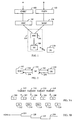
- Figure 2 represents both outer and inner loop power control.
- the base station 108 When the user terminal 110 transmits a signal 200, such as a packet, to a base station 108, the base station 108 forms a SIR (Signal-to-Interference Ratio) estimate of the received signal.
- the base station compares the SIR estimate to a target SIR, and transmits a signal 202 with a command, which depends on the comparison. If the value of the SIR estimate is smaller than the value of the target SIR, the base station 108 commands the user terminal 110 to increase its transmission power. If, on the other hand, the SIR estimate is higher than the target SIR, the base station commands the user terminal to decrease its transmission power.
- SIR Signal-to-Interference Ratio
- the base station 108 sends the radio network controller 106 a signal 204 having information on the quality of the connection.
- the quality can be the quality of service and the information can indicate frame reliability, which can be based on the use of a reliability indicator.
- the reliability indicator can be CRC (Cyclic Redundancy Check), estimated BER, soft information from a decoder, E b /N 0 , etc.
- the radio network controller 106 in turn sends the base station 108 a signal 206 having effect on the target SIR according to the formula (1). If the value of the quality of service is below a quality target value, which is true in the case of failure in reception of a packet, the radio network controller 108 increases the target SIR in the base station 108. As a result of this, the average transmission power of a retransmission of a packet is higher than during the first transmission of the packet, assuming the interference level is the same. The interference is also considered to include noise. If the value of the quality of service is above a target value, the radio network controller 108 decreases the target SIR in the base station 108, which lowers the average transmission power with respect to interference. This takes place when a packet is received successfully.
- Target_SIR(master) can be adjusted e.g. according to the formula (1).
- the present solution can be configured to define a specific target SIR for each retransmission of a packet.
- Figures 3A and 3B show transmission and retransmission of packets using the stop and wait principle, which is known per se by a person skilled in the art.
- the stop and wait principle corresponds to the case where a transmitter is capable of memorizing only one packet at a time. The transmitter does not transmit a packet before it receives an ACK (Acknowledge) signal or a NACK (Not Acknowledge) signal from the receiver.
- ACK Acknowledge
- NACK Not Acknowledge
- the target SIR is lowered because of a successful transmission.
- the transmission power is adjusted according to the decreased target SIR leading to a lowered average transmission power (if the noise level has not increased).
- the receiver of the packet 302 transmits a NACK signal 314 requesting a retransmission of the faulty packet.
- the target SIR for retransmissions is adjusted differently from the first transmission of a packet. Hence, the target SIR is lowered according to formula (2) at moment 326.
- Target_SIR(1 st ) Target_SIR(master) - Step(1 st ), where the term Target_SIR(master) is the target SIR at moment 322.
- the transmission power at moment 328 is adjusted according to the decreased target SIR.
- the transmitter transmits the packet again (packet 304) at a lowered transmission power with respect to the interference level. However, the transmission fails again and the receiver transmits a NACK signal 316.
- the target SIR can be adjusted again, and in this example it is decreased at moment 330.
- the transmission power at moment 332 is adjusted according to the decreased target SIR.
- the transmitter transmits the packet once again (packet 306) at a lowered transmission power. This time the packet is correctly received and the receiver transmits an ACK signal 318.
- the target SIR is increased at moment 334 leading to an increased transmission power (relative to the interference) at moment 336 for the first transmission of a packet 308, the successful reception of which is acknowledged by an ACK signal 320.
- Figure 4 illustrates the communication in the case of the selective repeat scheme.
- both the transmitter and the receiver have buffer memories for storing packets.
- the first packet 400 is successfully transmitted, which is acknowledged by an ACK signal 414 from the receiver.
- the target SIR is adjusted at moment 430.
- the second packet 402 is transmitted, but as it fails, the receiver transmits a NACK signal 416.
- the target SIR is adjusted similarly to the prior art at moment 432, and the third packet 404 is transmitted successfully and acknowledged with an ACK signal 418 from the receiver.
- the target SIR at moment 434 is calculated using formula (2) such that the term Target_SIR(master) is the target SIR at moment 432.
- the retransmission fails, however, and the receiver transmits a NACK signal 420.
- the target SIR for the packet 408, which is the first transmission, is formed conventionally according to the prior art at moment 436. Since the transmission is successful, the receiver transmits an ACK signal 422.
- the target SIR for the packet 410 is formed by formula (2) such that the term Target_SIR(master) is the target SIR 436.
- Target_SIR(2 nd ) Target_SIR(master) - ⁇ (2 nd ), which lowers the average transmission power of the packet 410 in relation to interfe r-ence.
- This transmission leads to an ACK signal 424 from the receiver.
- the transmission of packets continues similarly with the packet 412, etc.
- the present solution lowers the absolute transmission power of the retransmission compared to the first transmission of a particular packet, if the channel keeps unchanged (no change, for example, in path loss, slow fading and fast fading). Since this is rarely the situation in a radio system, the transmission power depends on both the interference level and the transmission power of the first transmission of the packet, resulting usually in a lowered average transmission power.
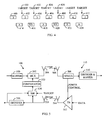
- Figure 5 illustrates a closed loop power control.
- the data for the user can be input from a buffer memory 500 to a multiplexer 502, which multiplexes the power control bits to the data stream in a base station 108.
- the buffer memory is not always needed.
- the data is encoded by a FEC code, such as a turbo code, and the data may also include information on the type of HARQ (type I HARQ, type II HARQ).
- the baseband signal with data and power control bits is spread by a CDMA spreading code and mixed with a desired carrier frequency (coding, type defining, spreading and mixing are not shown in Figure 5 ) in order to transmit the radio frequency signal from an antenna 504.
- An antenna 506 of a user terminal 110 receives the signal.
- the signal is mixed to a baseband signal and despead by a spreading code (despreading and mixing are not shown in Figure 5 ).
- the signal is demultiplexed in a demultiplexer 508, which separates data and power control bits.
- the data is fed to a block 510 to be decoded.
- the block 510 may include a buffer memory for storing a packet.
- the power control bits are fed to a power amplifier 512, which adjusts its amplification according to the power control bits.
- the power amplifier 512 amplifies the signal to be transmitted by the user terminal 110.
- the transmitter of the user terminal is basically similar to the transmitter of the base station.
- the signal is transmitted from an antenna 514, which may be the same as the antenna 506.
- the antenna 516 which may the same as the antenna 504, receives the signal which is mixed to a baseband signal and despead by a spreading code (despreading and mixing are not shown in Figure 5 ).
- the signal is then fed to a decoding block 518.
- the SIR measurement in the block 520 can be made before or after the decoding (either of the two arrows).
- the block 520 performs the SIR estimation for the despread control symbols.
- the SIR measurement is divided into a signal power measurement and an interference power measurement.
- the measurement is performed on the DPCCH channel (Dedicated Physical Control Channel).
- the measured SIR is compared with the target SIR received from the radio network controller in the block 522. Based on the comparison, the block 522 inputs the power control bits to the multiplexer 502.
- the power control bits may define a specific transmission power for each retransmission of a packet.
- a way to implement HARQ is to use chase combining where a retransmitted packet is similar to the originally transmitted packet. To further improve performance, it is also possible to use incremental redundancy (IR), where a retransmitted packet comprises new redundancy bits.
- IR incremental redundancy
- the receiving transceiver is equipped with a buffer memory in which faulty packets can be stored (in Figure 5 the block 510 includes the buffer memory). To operate like in Figure 4 the transmitter also needs a memory (in Figure 5 the block 500).
- FIG. 6 shows again the main steps of the presented method.
- step 600 at least two transceivers of the radio system communicate using a packet switched connection through a radio interface.
- step 602 the quality of the packet switched connection is measured.
- the power control system adjusts a target SIR based on the quality measured in step 604.
- a transceiver receiving packets transmits a request to retransmit at least one packet having failure in reception.
- step 608 a transceiver transmitting packets transmits each packet requested as a response to the request.
- step 610 the transmission power is controlled by setting a lower target SIR for retransmission of a packet than the target SIR for the first transmission of the corresponding packet.
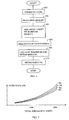
- Figure 7 shows simulation results of the use of the present solution.
- the user terminal moves 3 km/h
- data rate is 384 kbps with 1/3 turbo coding
- HARQ with chase combining is used and the maximum number of retransmissions is 2.
- Curve 700 represents a case where the failed transmission (first transmission or first retransmission) of a packet is not utilized in the combining.
- Curves 702 to 706 represent cases where the failed transmission of a packet is utilized in the combining.
- a retransmitted packet is transmitted using the same power as the first packet.
- a retransmitted packet transmitted is transmitted using 2 dB smaller target SIR value than the first packet.
- a retransmitted packet is transmitted using 5 dB smaller target SIR value than the first packet.
- the communication capacity increases. If the case represented by curve 700 is selected as a reference the case of curve 702 increases capacity by 5.1%, the case of curve 704 increases capacity by 13.30%, and the case of curve 706 increases capacity by 15.96%. Actually, the highest increase (16.41%) in capacity takes place close to the decrease of 4dB for the retransmission of a packet in this configuration.
- the transmission power of the dedicated control channel may also be lowered during a retransmission of a packet or between transmissions of packets in order to decrease interference. This is achieved by adjusting the target SIR value properly.
Landscapes
- Engineering & Computer Science (AREA)
- Computer Networks & Wireless Communication (AREA)
- Signal Processing (AREA)
- Quality & Reliability (AREA)
- Mobile Radio Communication Systems (AREA)
- Transceivers (AREA)
Claims (10)
- Kommunikationsverfahren in einem CDMA-Funksystem, das eine Übertragungsleistungssteuerung verwendet, die auf einer SIR-Messung beruht, wobei das Verfahren umfasst:Kommunizieren (600) zwischen wenigstens zwei Sende-Empfängern (108 bis 110) des Funksystems, das eine paketvermittelte Verbindung durch eine Funkschnittstelle verwendet,Messen (602) einer Qualität der paketvermittelten Verbindung,Einstellen (604) eines Ziel-SIR, basierend auf der gemessenen Qualität,Übertragen (606), von einem Pakete empfangenden Sende-Empfänger (110), einer Anfrage, wenigstens ein Paket, das einen Fehler beim Empfang hatte, erneut zu übertragen,Neuübertragen (608), von einem Pakete übertragenden Sende-Empfänger (108), jedes angefragten Paketes als eine Antwort auf die Anfrage, gekennzeichnet durchSteuern (610) einer Übertragungsleistung durch Setzen eines Ziel-SIR für die erneute Übertragung eines Pakets, das niedriger ist, als ein Ziel-SIR für die erste Übertragung des entsprechenden Pakets.
- Verfahren nach Anspruch 1, dadurch gekennzeichnet, dass es ferner das Festlegen eines spezifischen Ziel-SIR für eine Neuübertragung eines Pakets umfasst.
- Verfahren nach Anspruch 1, dadurch gekennzeichnet, dass es ferner das Setzen eines Ziel-SIR für den zugewiesenen Steuerkanal umfasst, das zwischen Übertragungen von Paketen niedriger ist, als während den Paketen.
- Verfahren nach Anspruch 1, dadurch gekennzeichnet, dass es ferner das Übertragen, von dem Pakete empfangenden Sende-Empfänger, einer Übertragungsstärke umfasst, bei welcher wenigstens das eine Pakete mit dem Fehler beim Empfang neu übertragen wird.
- Verfahren nach Anspruch 1, dadurch gekennzeichnet, dass es ferner das Setzen des Ziel-SIR entsprechend dem Algorithmus umfasst:

wobei Target_SIR(N-ter) das SIR der N-ten Neuübertragung eines Pakets bedeutet, Target_SIR(master) das Ziel-SIR der ersten Übertragung eines Pakets bedeutet, Step(N-ter) der Verringerungsbetrag bei der Übertragungsleistung der Neuübertragung bedeutet und N eine Ordnungszahl ist, die den Index der Neuübertragung bezeichnet. - Kommunikationsanordnung in einem CDMA-Funksystem, das eine Übertragungsleistungssteuerung verwendet, die auf einer SIR-Messung basiert, wobei die Anordnung umfasst:wenigstens zwei Sende-Empfänger (108 bis 110) des Funksystems, die eingerichtet sind, mit einer paketvermittelten Verbindung durch eine Funkschnittstelle zu kommunizieren,ein Mittel (520) zum Messen einer Qualität der paketvermittelten Verbindung,wobei die Anordnung eingerichtet ist, ein Ziel-SIR basierend auf der gemessenen Qualität einzustellen,einen Pakete empfangenden Sende-Empfänger (110), der eingerichtet ist, eine Anfrage zur Neuübertragung zu übertragen, im Falle eines Fehlers beim Empfang wenigstens eines Paketes,einen Pakete übertragenden Sende-Empfänger (108), der eingerichtet ist, jedes angefragte Paket als eine Antwort auf die Anfrage neu zu übertragen, dadurch gekennzeichnet, dassdie Anordnung eingerichtet ist, ein SIR für die Neuübertragung eines Pakets zu setzen, das niedriger ist, als das Ziel-SIR für die erste Übertragung des entsprechenden Pakets.
- Anordnung nach Anspruch 6, dadurch gekennzeichnet, dass die Anordnung eingerichtet ist, ein spezifisches Ziel-SIR für jede Neuübertragung eines Pakets festzulegen.
- Anordnung nach Anspruch 6, dadurch gekennzeichnet, dass die Anordnung eingerichtet ist, ein Ziel-SIR für den zugewiesenen Steuerkanal zu setzen, das zwischen Übertragungen von Paketen niedriger ist als, während den Paketen.
- Anordnung nach Anspruch 6, dadurch gekennzeichnet, dass der Pakete empfangende Sende-Überträger eingerichtet ist, eine Übertragungsstärke zu übertragen, bei welcher wenigstens das eine Paket mit dem Fehler beim Empfang neu übertragen wird.
- Anordnung nach Anspruch 6, dadurch gekennzeichnet, dass die Anordnung eingerichtet ist, das niedrigere SIR entsprechend dem Algorithmus zu setzen:

wobei Target_SIR(N-ter) das SIR der N-ten Neuübertragung eines Pakets bedeutet, Target_SIR(master) das Ziel-SIR der ersten Übertragung eines Pakets bedeutet, Step(N-ter) der Verringerungsbetrag bei der Übertragungsleistung der Neuübertragung bedeutet und N eine Ordnungszahl ist, die den Index der Neuübertragung bezeichnet.
Applications Claiming Priority (2)
| Application Number | Priority Date | Filing Date | Title |
|---|---|---|---|
| FI20031176 | 2003-08-21 | ||
| FI20031176 | 2003-08-21 |
Publications (2)
| Publication Number | Publication Date |
|---|---|
| EP1508978A1 EP1508978A1 (de) | 2005-02-23 |
| EP1508978B1 true EP1508978B1 (de) | 2008-02-13 |
Family
ID=27838860
Family Applications (1)
| Application Number | Title | Priority Date | Filing Date |
|---|---|---|---|
| EP04103933A Expired - Lifetime EP1508978B1 (de) | 2003-08-21 | 2004-08-17 | Leistungsregelungsverfahren und -vorrichtung für ein paketvermittelndes Funksystem |
Country Status (5)
| Country | Link |
|---|---|
| US (1) | US7352725B2 (de) |
| EP (1) | EP1508978B1 (de) |
| CN (1) | CN100341258C (de) |
| AT (1) | ATE386373T1 (de) |
| DE (1) | DE602004011707T2 (de) |
Families Citing this family (20)
| Publication number | Priority date | Publication date | Assignee | Title |
|---|---|---|---|---|
| US7190749B2 (en) * | 2001-06-06 | 2007-03-13 | Qualcomm Incorporated | Method and apparatus for canceling pilot interference in a wireless communication system |
| US8611311B2 (en) * | 2001-06-06 | 2013-12-17 | Qualcomm Incorporated | Method and apparatus for canceling pilot interference in a wireless communication system |
| JP3679089B2 (ja) * | 2002-11-20 | 2005-08-03 | 松下電器産業株式会社 | 基地局装置および再送パケットの送信電力制御方法 |
| CN1617479A (zh) * | 2003-11-14 | 2005-05-18 | 北京三星通信技术研究有限公司 | 在宽带码分多址上行专用信道增强中支持导频增强的方法 |
| JP2005277570A (ja) * | 2004-03-23 | 2005-10-06 | Fujitsu Ltd | 送信装置、受信装置、再送制御方法 |
| FI20045244A0 (fi) * | 2004-06-28 | 2004-06-28 | Nokia Corp | Lähetystehon ohjaus |
| KR100902297B1 (ko) * | 2004-11-19 | 2009-06-10 | 가부시키가이샤 엔.티.티.도코모 | 이동 통신 방법 및 이동국 |
| US7706745B2 (en) * | 2004-12-03 | 2010-04-27 | M&Fc Holding, Llc | Method, system, apparatus, and computer program product for communications relay |
| US8406695B2 (en) * | 2004-12-23 | 2013-03-26 | Qualcomm Incorporated | Joint interference cancellation of pilot, overhead and traffic channels |
| US8442441B2 (en) * | 2004-12-23 | 2013-05-14 | Qualcomm Incorporated | Traffic interference cancellation |
| US8422955B2 (en) * | 2004-12-23 | 2013-04-16 | Qualcomm Incorporated | Channel estimation for interference cancellation |
| US8099123B2 (en) * | 2004-12-23 | 2012-01-17 | Qualcomm Incorporated | Adaptation of transmit subchannel gains in a system with interference cancellation |
| US7853283B2 (en) | 2005-03-18 | 2010-12-14 | Ntt Docomo, Inc. | Transmission power control method, mobile station, radio base station, and radio network controller |
| US8472877B2 (en) * | 2005-10-24 | 2013-06-25 | Qualcomm Incorporated | Iterative interference cancellation system and method |
| US8385388B2 (en) * | 2005-12-06 | 2013-02-26 | Qualcomm Incorporated | Method and system for signal reconstruction from spatially and temporally correlated received samples |
| JP4589249B2 (ja) * | 2006-02-21 | 2010-12-01 | 富士通株式会社 | 無線通信システムにおける電力制御装置 |
| JP4589250B2 (ja) | 2006-02-21 | 2010-12-01 | 富士通株式会社 | 無線通信システムにおける電力制御装置 |
| GB0712701D0 (en) * | 2007-06-29 | 2007-08-08 | Inc Icera | Processing transmission in a wireless communication system |
| US8059759B2 (en) * | 2008-05-19 | 2011-11-15 | Qualcomm Incorporated | Methods and systems for initial FCH processing |
| CN103002557B (zh) * | 2011-09-13 | 2016-02-17 | 中磊电子(苏州)有限公司 | 功率控制方法及无线通讯系统 |
Family Cites Families (9)
| Publication number | Priority date | Publication date | Assignee | Title |
|---|---|---|---|---|
| FI103541B1 (fi) * | 1997-04-28 | 1999-07-15 | Nokia Mobile Phones Ltd | Menetelmä pakettikytkentäisen datan siirtoon matkapuhelinjärjestelmässä |
| US6101168A (en) * | 1997-11-13 | 2000-08-08 | Qualcomm Inc. | Method and apparatus for time efficient retransmission using symbol accumulation |
| US6317854B1 (en) * | 1999-05-14 | 2001-11-13 | Nokia Corporation | Apparatus, and associated method, for selecting retransmission of packet data |
| US6507572B1 (en) * | 1999-06-11 | 2003-01-14 | Lucent Technologies Inc. | Primary transfer for simplex mode forward-link high-speed packet data services in CDMA systems |
| US6711150B1 (en) | 2000-04-07 | 2004-03-23 | Telefonktiebolaget L.M. Ericsson | System and method for data burst communications in a CDMA network |
| EP1238476B1 (de) | 2000-10-09 | 2011-12-14 | Koninklijke Philips Electronics N.V. | Verfahren und vorrichtung zur datenübertragung und leistungsregelung |
| US7203182B2 (en) * | 2000-11-17 | 2007-04-10 | Lg Electronics Inc. | Method of link adaptation of blind type using acknowledgements in ARQ system |
| SE0101281D0 (sv) * | 2001-04-06 | 2001-04-06 | Ericsson Telefon Ab L M | Method and system of link control |
| CN1151620C (zh) | 2002-04-28 | 2004-05-26 | 武汉汉网高技术有限公司 | 码分多址通信系统中多用户下行分组传输质量控制方法 |
-
2003
- 2003-10-15 US US10/684,825 patent/US7352725B2/en not_active Expired - Fee Related
-
2004
- 2004-08-04 CN CNB2004100558480A patent/CN100341258C/zh not_active Expired - Fee Related
- 2004-08-17 DE DE602004011707T patent/DE602004011707T2/de not_active Expired - Lifetime
- 2004-08-17 EP EP04103933A patent/EP1508978B1/de not_active Expired - Lifetime
- 2004-08-17 AT AT04103933T patent/ATE386373T1/de not_active IP Right Cessation
Also Published As
| Publication number | Publication date |
|---|---|
| CN100341258C (zh) | 2007-10-03 |
| CN1585293A (zh) | 2005-02-23 |
| DE602004011707T2 (de) | 2009-01-29 |
| EP1508978A1 (de) | 2005-02-23 |
| US20050041626A1 (en) | 2005-02-24 |
| DE602004011707D1 (de) | 2008-03-27 |
| US7352725B2 (en) | 2008-04-01 |
| ATE386373T1 (de) | 2008-03-15 |
Similar Documents
| Publication | Publication Date | Title |
|---|---|---|
| EP1508978B1 (de) | Leistungsregelungsverfahren und -vorrichtung für ein paketvermittelndes Funksystem | |
| EP1522154B1 (de) | Adaptive verstärkungsregelung mit rückkopplung | |
| CN100468984C (zh) | 链路不平衡期间的外环上行链路功率控制 | |
| EP1645051B1 (de) | Sekundär-verbindungs-leistungsregelung in einem drahtlosen kommunikationsnetz | |
| KR101067281B1 (ko) | 이동체 통신 단말기 및 송신 전력 제어 방법 | |
| US20090290559A1 (en) | Method and apparatus for harq autonomous retransmissions | |
| US20020028691A1 (en) | Method for the communication of information and apparatus employing the method | |
| US7573860B2 (en) | Method, device and system for determining a transmission power for ARQ related re-transmissions | |
| US20050288053A1 (en) | Transmission power control | |
| US20090150738A1 (en) | Data communication apparatus, data receiving apparatus, data transmitting apparatus, and retransmission control method | |
| US20060268789A1 (en) | Radio resource control in HSUPA system | |
| CN101341666A (zh) | 确定无线通信网络中下行链路信令功率的系统和方法 | |
| EP1774676B1 (de) | Leistungsregelung mit äusserer schleife mit transportblock-diversity-übertragung | |
| CN100384099C (zh) | 上行高速专用物理控制信道的功率控制方法 | |
| EP1220472A1 (de) | Verfahren und Anordnung zur Durchführung von Leistungssteuerung | |
| US7653857B2 (en) | Power control of packet data transmission in cellular network | |
| KR20030000007A (ko) | 이동통신 시스템에서 다중 채널 신호의 전력 제어 방법 | |
| KR20040071554A (ko) | 복합 자동 재전송 방식을 지원하는 이동통신 시스템에서역방향 전력 제어 장치 및 방법 | |
| HK1082606B (en) | Adaptive gain adjustment control with feedback | |
| HK1081354B (en) | Method to check communication link reliability | |
| HK1081354A1 (zh) | 检验通信链路可靠性的方法 | |
| HK1104156A (en) | Method and apparatus for power control in a wireless communication system |
Legal Events
| Date | Code | Title | Description |
|---|---|---|---|
| PUAI | Public reference made under article 153(3) epc to a published international application that has entered the european phase |
Free format text: ORIGINAL CODE: 0009012 |
|
| AK | Designated contracting states |
Kind code of ref document: A1 Designated state(s): AT BE BG CH CY CZ DE DK EE ES FI FR GB GR HU IE IT LI LU MC NL PL PT RO SE SI SK TR |
|
| AX | Request for extension of the european patent |
Extension state: AL HR LT LV MK |
|
| 17P | Request for examination filed |
Effective date: 20050801 |
|
| AKX | Designation fees paid |
Designated state(s): AT BE BG CH CY CZ DE DK EE ES FI FR GB GR HU IE IT LI LU MC NL PL PT RO SE SI SK TR |
|
| GRAP | Despatch of communication of intention to grant a patent |
Free format text: ORIGINAL CODE: EPIDOSNIGR1 |
|
| GRAS | Grant fee paid |
Free format text: ORIGINAL CODE: EPIDOSNIGR3 |
|
| GRAA | (expected) grant |
Free format text: ORIGINAL CODE: 0009210 |
|
| AK | Designated contracting states |
Kind code of ref document: B1 Designated state(s): AT BE BG CH CY CZ DE DK EE ES FI FR GB GR HU IE IT LI LU MC NL PL PT RO SE SI SK TR |
|
| RAP1 | Party data changed (applicant data changed or rights of an application transferred) |
Owner name: NOKIA SIEMENS NETWORKS OY |
|
| REG | Reference to a national code |
Ref country code: GB Ref legal event code: FG4D |
|
| REG | Reference to a national code |
Ref country code: CH Ref legal event code: EP |
|
| REG | Reference to a national code |
Ref country code: IE Ref legal event code: FG4D |
|
| REF | Corresponds to: |
Ref document number: 602004011707 Country of ref document: DE Date of ref document: 20080327 Kind code of ref document: P |
|
| PG25 | Lapsed in a contracting state [announced via postgrant information from national office to epo] |
Ref country code: FI Free format text: LAPSE BECAUSE OF FAILURE TO SUBMIT A TRANSLATION OF THE DESCRIPTION OR TO PAY THE FEE WITHIN THE PRESCRIBED TIME-LIMIT Effective date: 20080213 Ref country code: ES Free format text: LAPSE BECAUSE OF FAILURE TO SUBMIT A TRANSLATION OF THE DESCRIPTION OR TO PAY THE FEE WITHIN THE PRESCRIBED TIME-LIMIT Effective date: 20080524 |
|
| NLV1 | Nl: lapsed or annulled due to failure to fulfill the requirements of art. 29p and 29m of the patents act | ||
| ET | Fr: translation filed | ||
| PG25 | Lapsed in a contracting state [announced via postgrant information from national office to epo] |
Ref country code: AT Free format text: LAPSE BECAUSE OF FAILURE TO SUBMIT A TRANSLATION OF THE DESCRIPTION OR TO PAY THE FEE WITHIN THE PRESCRIBED TIME-LIMIT Effective date: 20080213 |
|
| PG25 | Lapsed in a contracting state [announced via postgrant information from national office to epo] |
Ref country code: PL Free format text: LAPSE BECAUSE OF FAILURE TO SUBMIT A TRANSLATION OF THE DESCRIPTION OR TO PAY THE FEE WITHIN THE PRESCRIBED TIME-LIMIT Effective date: 20080213 Ref country code: SI Free format text: LAPSE BECAUSE OF FAILURE TO SUBMIT A TRANSLATION OF THE DESCRIPTION OR TO PAY THE FEE WITHIN THE PRESCRIBED TIME-LIMIT Effective date: 20080213 Ref country code: BE Free format text: LAPSE BECAUSE OF FAILURE TO SUBMIT A TRANSLATION OF THE DESCRIPTION OR TO PAY THE FEE WITHIN THE PRESCRIBED TIME-LIMIT Effective date: 20080213 |
|
| PG25 | Lapsed in a contracting state [announced via postgrant information from national office to epo] |
Ref country code: SK Free format text: LAPSE BECAUSE OF FAILURE TO SUBMIT A TRANSLATION OF THE DESCRIPTION OR TO PAY THE FEE WITHIN THE PRESCRIBED TIME-LIMIT Effective date: 20080213 Ref country code: SE Free format text: LAPSE BECAUSE OF FAILURE TO SUBMIT A TRANSLATION OF THE DESCRIPTION OR TO PAY THE FEE WITHIN THE PRESCRIBED TIME-LIMIT Effective date: 20080513 Ref country code: CZ Free format text: LAPSE BECAUSE OF FAILURE TO SUBMIT A TRANSLATION OF THE DESCRIPTION OR TO PAY THE FEE WITHIN THE PRESCRIBED TIME-LIMIT Effective date: 20080213 Ref country code: DK Free format text: LAPSE BECAUSE OF FAILURE TO SUBMIT A TRANSLATION OF THE DESCRIPTION OR TO PAY THE FEE WITHIN THE PRESCRIBED TIME-LIMIT Effective date: 20080213 Ref country code: NL Free format text: LAPSE BECAUSE OF FAILURE TO SUBMIT A TRANSLATION OF THE DESCRIPTION OR TO PAY THE FEE WITHIN THE PRESCRIBED TIME-LIMIT Effective date: 20080213 Ref country code: PT Free format text: LAPSE BECAUSE OF FAILURE TO SUBMIT A TRANSLATION OF THE DESCRIPTION OR TO PAY THE FEE WITHIN THE PRESCRIBED TIME-LIMIT Effective date: 20080714 |
|
| PG25 | Lapsed in a contracting state [announced via postgrant information from national office to epo] |
Ref country code: RO Free format text: LAPSE BECAUSE OF FAILURE TO SUBMIT A TRANSLATION OF THE DESCRIPTION OR TO PAY THE FEE WITHIN THE PRESCRIBED TIME-LIMIT Effective date: 20080213 |
|
| PGFP | Annual fee paid to national office [announced via postgrant information from national office to epo] |
Ref country code: FR Payment date: 20080813 Year of fee payment: 5 |
|
| PLBE | No opposition filed within time limit |
Free format text: ORIGINAL CODE: 0009261 |
|
| STAA | Information on the status of an ep patent application or granted ep patent |
Free format text: STATUS: NO OPPOSITION FILED WITHIN TIME LIMIT |
|
| 26N | No opposition filed |
Effective date: 20081114 |
|
| PG25 | Lapsed in a contracting state [announced via postgrant information from national office to epo] |
Ref country code: MC Free format text: LAPSE BECAUSE OF NON-PAYMENT OF DUE FEES Effective date: 20080831 |
|
| REG | Reference to a national code |
Ref country code: CH Ref legal event code: PL |
|
| PG25 | Lapsed in a contracting state [announced via postgrant information from national office to epo] |
Ref country code: EE Free format text: LAPSE BECAUSE OF FAILURE TO SUBMIT A TRANSLATION OF THE DESCRIPTION OR TO PAY THE FEE WITHIN THE PRESCRIBED TIME-LIMIT Effective date: 20080213 Ref country code: BG Free format text: LAPSE BECAUSE OF FAILURE TO SUBMIT A TRANSLATION OF THE DESCRIPTION OR TO PAY THE FEE WITHIN THE PRESCRIBED TIME-LIMIT Effective date: 20080513 |
|
| PG25 | Lapsed in a contracting state [announced via postgrant information from national office to epo] |
Ref country code: CH Free format text: LAPSE BECAUSE OF NON-PAYMENT OF DUE FEES Effective date: 20080831 Ref country code: LI Free format text: LAPSE BECAUSE OF NON-PAYMENT OF DUE FEES Effective date: 20080831 |
|
| PG25 | Lapsed in a contracting state [announced via postgrant information from national office to epo] |
Ref country code: IE Free format text: LAPSE BECAUSE OF NON-PAYMENT OF DUE FEES Effective date: 20080818 Ref country code: CY Free format text: LAPSE BECAUSE OF FAILURE TO SUBMIT A TRANSLATION OF THE DESCRIPTION OR TO PAY THE FEE WITHIN THE PRESCRIBED TIME-LIMIT Effective date: 20080213 |
|
| PGFP | Annual fee paid to national office [announced via postgrant information from national office to epo] |
Ref country code: IT Payment date: 20090819 Year of fee payment: 6 |
|
| REG | Reference to a national code |
Ref country code: FR Ref legal event code: ST Effective date: 20100430 |
|
| PG25 | Lapsed in a contracting state [announced via postgrant information from national office to epo] |
Ref country code: FR Free format text: LAPSE BECAUSE OF NON-PAYMENT OF DUE FEES Effective date: 20090831 Ref country code: HU Free format text: LAPSE BECAUSE OF FAILURE TO SUBMIT A TRANSLATION OF THE DESCRIPTION OR TO PAY THE FEE WITHIN THE PRESCRIBED TIME-LIMIT Effective date: 20080814 Ref country code: LU Free format text: LAPSE BECAUSE OF NON-PAYMENT OF DUE FEES Effective date: 20080817 |
|
| PG25 | Lapsed in a contracting state [announced via postgrant information from national office to epo] |
Ref country code: TR Free format text: LAPSE BECAUSE OF FAILURE TO SUBMIT A TRANSLATION OF THE DESCRIPTION OR TO PAY THE FEE WITHIN THE PRESCRIBED TIME-LIMIT Effective date: 20080213 |
|
| PG25 | Lapsed in a contracting state [announced via postgrant information from national office to epo] |
Ref country code: GR Free format text: LAPSE BECAUSE OF FAILURE TO SUBMIT A TRANSLATION OF THE DESCRIPTION OR TO PAY THE FEE WITHIN THE PRESCRIBED TIME-LIMIT Effective date: 20080514 |
|
| PG25 | Lapsed in a contracting state [announced via postgrant information from national office to epo] |
Ref country code: IT Free format text: LAPSE BECAUSE OF NON-PAYMENT OF DUE FEES Effective date: 20100817 |
|
| REG | Reference to a national code |
Ref country code: DE Ref legal event code: R082 Ref document number: 602004011707 Country of ref document: DE Representative=s name: SAMSON & PARTNER, PATENTANWAELTE, DE |
|
| REG | Reference to a national code |
Ref country code: DE Ref legal event code: R082 Ref document number: 602004011707 Country of ref document: DE Representative=s name: SAMSON & PARTNER, PATENTANWAELTE, DE Effective date: 20140521 Ref country code: DE Ref legal event code: R081 Ref document number: 602004011707 Country of ref document: DE Owner name: NOKIA SOLUTIONS AND NETWORKS OY, FI Free format text: FORMER OWNER: NOKIA SIEMENS NETWORKS OY, ESPOO, FI Effective date: 20140521 Ref country code: DE Ref legal event code: R082 Ref document number: 602004011707 Country of ref document: DE Representative=s name: SAMSON & PARTNER PATENTANWAELTE MBB, DE Effective date: 20140521 |
|
| PGFP | Annual fee paid to national office [announced via postgrant information from national office to epo] |
Ref country code: DE Payment date: 20140821 Year of fee payment: 11 |
|
| PGFP | Annual fee paid to national office [announced via postgrant information from national office to epo] |
Ref country code: GB Payment date: 20140820 Year of fee payment: 11 |
|
| REG | Reference to a national code |
Ref country code: DE Ref legal event code: R119 Ref document number: 602004011707 Country of ref document: DE |
|
| GBPC | Gb: european patent ceased through non-payment of renewal fee |
Effective date: 20150817 |
|
| PG25 | Lapsed in a contracting state [announced via postgrant information from national office to epo] |
Ref country code: GB Free format text: LAPSE BECAUSE OF NON-PAYMENT OF DUE FEES Effective date: 20150817 Ref country code: DE Free format text: LAPSE BECAUSE OF NON-PAYMENT OF DUE FEES Effective date: 20160301 |