EP1506769A1 - Utilisation de micro-objets adhésifs non-sphériques pour le coiffage et/ou le maquillage des cheveux - Google Patents
Utilisation de micro-objets adhésifs non-sphériques pour le coiffage et/ou le maquillage des cheveux Download PDFInfo
- Publication number
- EP1506769A1 EP1506769A1 EP20040292023 EP04292023A EP1506769A1 EP 1506769 A1 EP1506769 A1 EP 1506769A1 EP 20040292023 EP20040292023 EP 20040292023 EP 04292023 A EP04292023 A EP 04292023A EP 1506769 A1 EP1506769 A1 EP 1506769A1
- Authority
- EP
- European Patent Office
- Prior art keywords
- micro
- adhesive
- polymer
- spherical
- objects
- Prior art date
- Legal status (The legal status is an assumption and is not a legal conclusion. Google has not performed a legal analysis and makes no representation as to the accuracy of the status listed.)
- Granted
Links
Classifications
-
- A—HUMAN NECESSITIES
- A61—MEDICAL OR VETERINARY SCIENCE; HYGIENE
- A61Q—SPECIFIC USE OF COSMETICS OR SIMILAR TOILETRY PREPARATIONS
- A61Q5/00—Preparations for care of the hair
- A61Q5/06—Preparations for styling the hair, e.g. by temporary shaping or colouring
-
- A—HUMAN NECESSITIES
- A61—MEDICAL OR VETERINARY SCIENCE; HYGIENE
- A61K—PREPARATIONS FOR MEDICAL, DENTAL OR TOILETRY PURPOSES
- A61K8/00—Cosmetics or similar toiletry preparations
- A61K8/02—Cosmetics or similar toiletry preparations characterised by special physical form
- A61K8/0241—Containing particulates characterized by their shape and/or structure
- A61K8/0254—Platelets; Flakes
-
- A—HUMAN NECESSITIES
- A61—MEDICAL OR VETERINARY SCIENCE; HYGIENE
- A61K—PREPARATIONS FOR MEDICAL, DENTAL OR TOILETRY PURPOSES
- A61K8/00—Cosmetics or similar toiletry preparations
- A61K8/18—Cosmetics or similar toiletry preparations characterised by the composition
- A61K8/72—Cosmetics or similar toiletry preparations characterised by the composition containing organic macromolecular compounds
- A61K8/81—Cosmetics or similar toiletry preparations characterised by the composition containing organic macromolecular compounds obtained by reactions involving only carbon-to-carbon unsaturated bonds
- A61K8/8105—Compositions of homopolymers or copolymers of unsaturated aliphatic hydrocarbons having only one carbon-to-carbon double bond; Compositions of derivatives of such polymers
- A61K8/8117—Homopolymers or copolymers of aromatic olefines, e.g. polystyrene; Compositions of derivatives of such polymers
-
- A—HUMAN NECESSITIES
- A61—MEDICAL OR VETERINARY SCIENCE; HYGIENE
- A61K—PREPARATIONS FOR MEDICAL, DENTAL OR TOILETRY PURPOSES
- A61K2800/00—Properties of cosmetic compositions or active ingredients thereof or formulation aids used therein and process related aspects
- A61K2800/40—Chemical, physico-chemical or functional or structural properties of particular ingredients
- A61K2800/41—Particular ingredients further characterized by their size
- A61K2800/412—Microsized, i.e. having sizes between 0.1 and 100 microns
-
- A—HUMAN NECESSITIES
- A61—MEDICAL OR VETERINARY SCIENCE; HYGIENE
- A61K—PREPARATIONS FOR MEDICAL, DENTAL OR TOILETRY PURPOSES
- A61K2800/00—Properties of cosmetic compositions or active ingredients thereof or formulation aids used therein and process related aspects
- A61K2800/40—Chemical, physico-chemical or functional or structural properties of particular ingredients
- A61K2800/60—Particulates further characterized by their structure or composition
- A61K2800/61—Surface treated
- A61K2800/62—Coated
- A61K2800/624—Coated by macromolecular compounds
-
- A—HUMAN NECESSITIES
- A61—MEDICAL OR VETERINARY SCIENCE; HYGIENE
- A61K—PREPARATIONS FOR MEDICAL, DENTAL OR TOILETRY PURPOSES
- A61K2800/00—Properties of cosmetic compositions or active ingredients thereof or formulation aids used therein and process related aspects
- A61K2800/40—Chemical, physico-chemical or functional or structural properties of particular ingredients
- A61K2800/60—Particulates further characterized by their structure or composition
- A61K2800/65—Characterized by the composition of the particulate/core
- A61K2800/654—The particulate/core comprising macromolecular material
-
- Y—GENERAL TAGGING OF NEW TECHNOLOGICAL DEVELOPMENTS; GENERAL TAGGING OF CROSS-SECTIONAL TECHNOLOGIES SPANNING OVER SEVERAL SECTIONS OF THE IPC; TECHNICAL SUBJECTS COVERED BY FORMER USPC CROSS-REFERENCE ART COLLECTIONS [XRACs] AND DIGESTS
- Y10—TECHNICAL SUBJECTS COVERED BY FORMER USPC
- Y10T—TECHNICAL SUBJECTS COVERED BY FORMER US CLASSIFICATION
- Y10T428/00—Stock material or miscellaneous articles
- Y10T428/24—Structurally defined web or sheet [e.g., overall dimension, etc.]
- Y10T428/24942—Structurally defined web or sheet [e.g., overall dimension, etc.] including components having same physical characteristic in differing degree
-
- Y—GENERAL TAGGING OF NEW TECHNOLOGICAL DEVELOPMENTS; GENERAL TAGGING OF CROSS-SECTIONAL TECHNOLOGIES SPANNING OVER SEVERAL SECTIONS OF THE IPC; TECHNICAL SUBJECTS COVERED BY FORMER USPC CROSS-REFERENCE ART COLLECTIONS [XRACs] AND DIGESTS
- Y10—TECHNICAL SUBJECTS COVERED BY FORMER USPC
- Y10T—TECHNICAL SUBJECTS COVERED BY FORMER US CLASSIFICATION
- Y10T428/00—Stock material or miscellaneous articles
- Y10T428/29—Coated or structually defined flake, particle, cell, strand, strand portion, rod, filament, macroscopic fiber or mass thereof
- Y10T428/2982—Particulate matter [e.g., sphere, flake, etc.]
- Y10T428/2991—Coated
- Y10T428/2998—Coated including synthetic resin or polymer
-
- Y—GENERAL TAGGING OF NEW TECHNOLOGICAL DEVELOPMENTS; GENERAL TAGGING OF CROSS-SECTIONAL TECHNOLOGIES SPANNING OVER SEVERAL SECTIONS OF THE IPC; TECHNICAL SUBJECTS COVERED BY FORMER USPC CROSS-REFERENCE ART COLLECTIONS [XRACs] AND DIGESTS
- Y10—TECHNICAL SUBJECTS COVERED BY FORMER USPC
- Y10T—TECHNICAL SUBJECTS COVERED BY FORMER US CLASSIFICATION
- Y10T428/00—Stock material or miscellaneous articles
- Y10T428/31504—Composite [nonstructural laminate]
- Y10T428/31855—Of addition polymer from unsaturated monomers
Definitions
- the present invention relates to non-spherical adhesive micro-objects, their use for makeup and / or styling fibers keratinous as well as hair compositions containing such micro-objects.
- compositions that allow the hair remodeling or remodeling without the addition of material consisted of to associate with the usual fixing polymers, at least one thermofusible polymer with low melting point for plasticizing the polymeric deposit by heating, remodeling and fixing the new shape by simple cooling (see application FR 2 811 886).
- Adhesive links thus established between the keratinous fibers allow, according to the stickiness formed deposits, a strong or supple fixation of the hair, but especially a reversible fixation, that is to say the maintenance of a form that is possible to modify at any time by a simple passage of the hand or a tool appropriate.
- the invention therefore relates to non-micro-objects adhesive spheres having a size of between 1 and 1000 ⁇ m, comprising at least one organic adhesive polymer.
- the invention also relates to micro-objects non-spherical, adhesive, having a size of between 1 and 1000 ⁇ m, comprising at least a first solid phase, preferably non-coalescing, covered, on at least part of its surface, with at least one organic polymer adhesive.
- said first solid phase is Non-coalescent.
- the micro-objects are constituted only one or more adhesive polymers.
- the invention also relates to the use of such micro-objects non-spherical and adhesive for styling and / or makeup of fibers keratinous, and in particular hair.
- compositions for the styling and / or makeup of keratinous fibers, in particular hair comprising such non-spherical adhesive micro-objects dispersed in a cosmetically acceptable liquid medium.
- micro-objects of the present invention adhere to the surface of hair and thus make it possible to make the keratin fibers stick to each other. other.
- adhesive particles described for example in US 2002/0041858, this adhesion is reversible and thus allows the hair regrinding.
- non-spherical encompassing here all the forms that could be described as “anisotropic", that is to say all forms presenting to the eye, contrary to the form spherical, a different aspect depending on the direction considered.
- This variation of the aspect as a function of the relative position of the eye with respect to the micro-object allows the obtaining of varied and very original decorative effects.
- the size, the absorbance or the reflectance of the micro-objects used we observe in particular effects of gloss, nacration, moiré.
- micro-objects of the present invention have a shape with one or more planar faces and / or one or more curved faces.
- micro-objects include tetrahedra, cubes, parallelepipeds, pyramids, prisms, platelets, cylinders, cones, truncated cones, concave or convex lenses.
- the micro objects have at least a flat surface, and ideally at least two flat surfaces.
- micro-objects also preferably have a shape exhibiting minus a plane, axis or center of symmetry.
- the micro-objects comprise at least one less a first solid phase, preferably non-coalescent.
- non-coalescing phase or non-coalescing particle in this invention of particles which, after deposition on the keratin fiber and evaporation of the liquid phase of dispersion, remain in a well individualized form without forming with the adjacent particles a continuous or discontinuous film.
- non-film-forming or non-film-forming are also called non-film-forming or non-film-forming
- a polymer volume ratio adhesive / non-coalescent solid phase of from 0.02 to 1.0, preferably between 0.05 and 0.8, guaranteed sufficient adhesion of the particles to keratin fibers without hiding the geometric shape particular of the solid phase.
- the entire surface of the micro-objects is covered by the deposit of adhesive polymer.
- the proportion of area covered by a polymeric deposit adhesive is however preferably sufficient to allow not only the adhesion of the micro-objects of the present invention to the keratinous fiber treated, but also the adhesion of this same immobilized micro-object to a second keratin fiber or possibly to a second micro-object immobilized on a second fiber.
- the all or almost all of the surface of the solid part is covered by the adhesive polymer.
- the quantity of polymer adhesive deposited or fixed on the surface of the non-coalescent solid phase of micro-objects of the present invention is just sufficient to adhere said micro-objects on the surface of the fiber without allowing the establishment of adhesive bonds between different keratin fibers. It will be the case for example when a single flat face of micro-objects is covered by an adhesive polymer deposit.
- Such low adhesive micro-objects and their use for makeup keratin fibers are also encompassed by the present invention.
- the solid phase preferably non-coalescent micro-objects of the The present invention may be organic or inorganic in nature.
- mineral materials that can be used for the non-coalescent solid phase, metals and metal alloys, oxides, carbides or nitrides metals, ceramic materials and mineral glasses.
- the solid phase preferably non-coalescing is a phase organic
- it is usually an organic polymer.
- this polymer must be in the vitreous state, that is to say have a glass transition temperature significantly higher than the ambient temperature or the temperature of use (eg human body temperature), and / or must be crosslinked.
- the glass transition temperature of organic polymers can be used for the solid phase is preferably greater than 40 ° C, preferably greater than 60 ° C and in particular between 80 ° C and 200 ° C.
- polystyrene polyvinyl acetate, poly ( ⁇ -methylstyrene), polyacrylamide, polyacrylonitrile and polyvinyl chloride.
- copolymers based on styrene and C 1-4 alkyl (meth) acrylate copolymers based on styrene and acrylamide, copolymers based on styrene and acrylonitrile, copolymers based on styrene and vinyl acetate
- copolymers based on acrylonitrile and acrylamide terpolymers based on styrene, acrylonitrile and acrylamide
- poly (ethyl methacrylate) poly (methyl methacrylate)
- the solid phase preferably non-coalescent micro-objects of the the present invention relates to a part or to all of its surface, a deposit of organic adhesive polymer.
- the adhesive polymer can be immobilized on the surface of the phase solid preferably non-coalescent by covalent chemical bonds (grafting) or by weak physico-chemical interactions such as hydrophobic interaction, hydrogen bonds and van der Waals forces (adsorption).
- the micro-objects are consisting entirely of one or more adhesive organic polymers.
- the adhesive nature of an organic polymer is generally related to the glass transition temperature thereof.
- a necessary but not sufficient condition for a polymer to be adhesive is a glass transition temperature (T g ) significantly lower than the ambient temperature or the temperature of use.
- the organic adhesive polymers used for the preparation of the micro-objects of the present invention preferably have a glass transition temperature of less than or equal to 10 ° C, preferably less than or equal to 0 ° C.
- the organic adhesive polymers used in the present invention preferably have a self-adhesiveness such that the tensile force (F max (in N)) necessary to separate two coated surfaces of said polymer is greater than 1 N, preferably greater than 3 N and in particular greater than 5 N.
- This tensile force F max is measured under the following conditions: Two disks each having a surface of 38 mm 2 , made of a solid, rigid, inert and non-absorbent material, preferably glass, are coated with a layer of the adhesive polymer to be tested. The polymer is deposited in an amount of 519 ⁇ g / mm 2 from a solution in a suitable solvent. After evaporation of the said solvent for 24 hours at 22 ° C. under a relative humidity of 50%, the two coated surfaces of the discs are superimposed and the discs pressed against each other for 20 seconds at a pressure of 3 Newtons. using an LLOYD model LR5K extensometer.
- the glued discs are then pulled away from one another at a speed of 20 mm / minute and the traction force is continuously recorded.
- the maximum tensile force recorded at the time of the separation of the two surfaces called F max, characterizes the self-adhesiveness of the polymer. The greater this force, the greater the self-adhesiveness of the polymer.
- the adhesive polymers that can be used for the present invention can also be characterized by their adhesiveness to an inert material, such as glass.
- This adhesiveness can be expressed as energy (E s ) provided by the same extensometer (LLOYD model LR5K) to separate a surface of 38 mm 2 coated, under the conditions above (519 mg / mm 2 , drying 24 hours at 22 ° C., 50% RH) of an adhesive polymer, of a polished glass surface, after compression of these two surfaces for 30 seconds with a force of 3 Newton.
- E s energy provided by the same extensometer (LLOYD model LR5K) to separate a surface of 38 mm 2 coated, under the conditions above (519 mg / mm 2 , drying 24 hours at 22 ° C., 50% RH) of an adhesive polymer, of a polished glass surface, after compression of these two surfaces for 30 seconds with a force of 3 Newton.
- the pulling speed is 20 mm / min.
- This energy E s corresponding to the sum of work supplied up to the detachment, can be calculated according to the following formula: or F (x) is the force required to produce a displacement (x), Xs1 is the displacement (expressed in mm) produced by the maximum tensile force, and Xs2 is the displacement (expressed in mm) produced by the pulling force allowing the total separation of the two surfaces.
- the separation energy E s is preferably at most equal to 300 ⁇ J, preferably at most equal to 250 ⁇ J.
- adhesive organic polymers are not determining for the present invention as long as the polymer deposition exhibits the tack and / or self-adhesive characteristics above. These adhesive polymers may be crosslinked or not. To find examples concrete adhesive polymers, reference may be made to the following applications describing particles or adhesive polymers:
- WO98 / 38969 FR 2833960 (Cationic polyurethanes or amphoteric self-adhesive), FR 2833959 (cationic radical polymers or amphoteric self-adhesive).
- the micro-objects of the present invention have a size between 1 micron and 1000 microns, preferably between 10 and 900 microns. This size is that of the largest dimension of each micro-object. It is of course that, in the case of a population of micro-objects of different sizes, the indicated size is the average size of the population.
- the present invention also relates to compositions of styling and / or makeup of keratinous fibers.
- the micro-objects are dispersed in a liquid medium cosmetically acceptable.
- the cosmetically acceptable liquid medium is generally formed of water and / or one or more organic solvents used commonly in cosmetics.
- These cosmetically acceptable solvents are liquids at room temperature and at atmospheric pressure.
- These solvents are preferably monoalcohols, polyols or ethers of these alcohols or polyols. For example, ethanol, isopropanol, glycerol, propylene glycol, propylene glycol monomethyl ether.
- This liquid medium will, of course, have to be chosen so as not to dissolving the organic adhesive polymer and the solid phase preferably non-coalescing.
- the concentration of micro-objects in the hair compositions of the present invention is preferably between 1 and 90% by weight, in between 1 and 80% by weight, and ideally between 1 and 50% by weight, relative to the total weight of the composition.
- the hair compositions of the present invention may contain in addition, active ingredients and cosmetic adjuvants commonly used in the capillary field.
- active ingredients and cosmetic adjuvants commonly used in the capillary field.
- These additives are chosen for example from vitamins, amino acids, oligopeptides, peptides, proteins hydrolyzed or not, modified or not, enzymes, acids and fatty alcohols branched or unbranched, animal, vegetable or mineral waxes, ceramides and pseudo-ceramides, hydroxylated organic acids, UV filters, agents anti-oxidants and anti-free radical agents, chelating agents, agents antidandruff agents, seborrhea regulating agents, soothing agents, cationic surfactants, anionic, nonionic or amphoteric surfactants, cationic, anionic, neutral or amphoteric polymers, silicones organomodified or not, mineral, vegetable or animal oils, polyisobutenes and poly ( ⁇ -olefins), fatty esters, coloring agents such as direct
- micro-objects of the present invention can be prepared according to any suitable process for the manufacture of such objects of small size having a particular shape.
- the solid phase preferably non-coalescing can be prepared for example by casting a thin film to from a solution of a polymer, drying and cutting of this film by a appropriate tool such as a laser beam, a blade or a punch.
- the film polymer may optionally be subjected to a heating step or irradiation for crosslinking.
- the adhesive polymer deposit can be applied to the film before cutting, for example by spraying, immersion, centrifugation or spreading by means of a roller or doctor blade.
- the solid phase preferably non-coalescent can still be prepared by extrusion of leaves or very fine strands with circular section or polygon, from a polymer in the molten state or a solution of polymer having a suitable viscosity. These strands or leaves will then be cut to give micro-objects according to the invention.
- the layer of adhesive polymer can be applied to the non-coalescing solid phase of the described above or by coextrusion of the adhesive polymer and the polymer forming the non-coalescent solid phase.
- composition according to the invention Polystyrene platelet particles totally covered with AQ® 1350 polymer (20 ⁇ m x 5 ⁇ m) 2g Crosslinked polyacrylic acid 0.3g Water 100g
- Polystyrene can be replaced by boron nitride.
Landscapes
- Life Sciences & Earth Sciences (AREA)
- Health & Medical Sciences (AREA)
- Animal Behavior & Ethology (AREA)
- General Health & Medical Sciences (AREA)
- Public Health (AREA)
- Veterinary Medicine (AREA)
- Birds (AREA)
- Epidemiology (AREA)
- Cosmetics (AREA)
- Adhesives Or Adhesive Processes (AREA)
Abstract
Description
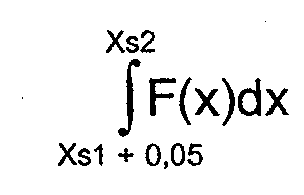
F(x) est la force nécessaire pour produire un déplacement (x),
Xs1 est le déplacement (exprimé en mm) produit par la force de traction maximale, et
Xs2 est le déplacement (exprimé en mm) produit par la force de traction permettant la séparation totale des deux surfaces.
| Composition selon l'invention | |
| Particules plaquettaires en polystyrène totalement recouvertes de polymère AQ® 1350 (20 µm x 5 µm) | 2g |
| Acide polyacrylique réticulé | 0,3g |
| Eau | 100g |
Claims (19)
- Micro-objet non-sphérique adhésif, ayant une taille comprise entre 1 et 1000 µm, comprenant au moins un polymère organique adhésif.
- Micro-objet non-sphérique adhésif selon la revendication 1, caractérisé par le fait qu'il comprend au moins une première phase solide, recouverte, sur au moins une partie de sa surface, d'au moins un polymère organique adhésif.
- Micro-objet non-sphérique adhésif selon la revendication 2, caractérisé par le fait que la première phase solide est non-coalescente.
- Micro-objet non-sphérique adhésif selon la revendication 1, caractérisé par le fait qu'il est constitué uniquement d'un ou de plusieurs polymères organiques adhésifs.
- Micro-objet non-sphérique selon l'une quelconque des revendication précédentes, caractérisé par le fait que le polymère organique adhésif a une température de transition vitreuse (Tg) inférieure à 10 °C, de préférence inférieure à 0 °C.
- Micro-objet non-sphérique selon l'une quelconque des revendications précédentes, caractérisé par le fait que le polymère organique adhésif a une auto-adhésivité telle que la force de traction (Fmax (en N) nécessaire pour séparer deux surfaces enduites dudit polymère, est supérieure à 1 N, de préférence supérieure à 3 N et en particulier supérieure à 5 N.
- Micro-objet non-sphérique selon l'une quelconque des revendications précédentes, caractérisé par le fait que le polymère organique adhésif a une adhésivité telle que l'énergie Es fournie pour séparer une surface de 38 mm2 enduite dudit polymère d'une surface en verre poli est inférieure à 300 µJ, de préférence inférieure à 250 µJ.
- Micro-objet non-sphérique selon l'une quelconque des revendications précédentes, caractérisé par le fait qu'il a une forme présentant une ou plusieurs faces planes et/ou courbes, de préférence au moins une face plane et en particulier au moins deux faces planes.
- Micro-objet non-sphérique selon la revendication 8, caractérisé par le fait qu'il a la forme d'un tétraèdre, d'un cube, d'un parallélépipède, d'une pyramide, d'un prisme, d'une plaquette, d'un cylindre, d'un cône, d'un cône tronqué ou d'une lentille concave ou convexe.
- Micro-objet non-sphérique selon la revendication 8 ou 9, caractérisé par le fait qu'il présente au moins un centre, axe ou plan de symétrie.
- Micro-objet non-sphérique selon l'une des revendications 2, 3 et 5 à 10, caractérisé par le fait que la première phase solide est formée par un matériau minéral choisi parmi les métaux et alliages métalliques, les oxydes, carbures ou nitrures métalliques, les matériaux céramiques et les verres minéraux.
- Microobjet non-sphérique selon l'une quelconque des revendications 2, 3 et 5 à 10, caractérisé par le fait que la première phase solide est formée par un polymère organique ayant une température de transition vitreuse supérieure à 40 °C, de préférence supérieure à 60 °C et en particulier comprise entre 80 °C et 200 °C.
- Micro-objet selon l'une quelconque des revendications 2, 3 et 5 à 11, caractérisé par le fait que la première phase solide est formée par un polymère organique réticulé.
- Micro-objet selon l'une quelconque des revendications 2, 3 et 5 à 13, caractérisé par le fait que le polymère adhésif recouvre la totalité ou la quasi-totalité de la surface dudit micro-objet.
- Micro-objet selon l'une quelconque des revendications 2, 3 et 5 à 14, caractérisé par le fait que le polymère adhésif est fixé sur la phase solide par des liaisons chimiques covalentes et/ou par des interactions physico-chimiques faibles.
- Micro-objet selon l'une quelconque des revendications précédentes, caractérisé par le fait que le rapport volumique du polymère adhésif à la phase solide est compris entre 0,02 et 1,0, de préférence entre 0,05 et 0,8.
- Utilisation des micro-objets selon l'une quelconque des revendications précédentes, pour le maquillage et/ou le coiffage des fibres kératiniques, en particulier des cheveux.
- Composition cosmétique pour le coiffage et/ou maquillage des fibres kératiniques, comprenant des micro-objets selon l'une quelconque des revendications 1 à 16, en dispersion dans un milieu liquide cosmétiquement acceptable.
- Composition selon la revendication 18, caractérisée par le fait que la concentration des micro-objets est comprise entre 1 et 90 % en poids, de préférence entre 1 et 80 % en poids, et en particulier entre 1 et 50 % en poids rapporté au poids total de la composition cosmétique.
Applications Claiming Priority (2)
| Application Number | Priority Date | Filing Date | Title |
|---|---|---|---|
| FR0309917A FR2858819B1 (fr) | 2003-08-13 | 2003-08-13 | Utilisation de micro-objets adhesifs non-spheriques pour le coiffage et/ou le maquillage des cheveux |
| FR0309917 | 2003-08-13 |
Publications (2)
| Publication Number | Publication Date |
|---|---|
| EP1506769A1 true EP1506769A1 (fr) | 2005-02-16 |
| EP1506769B1 EP1506769B1 (fr) | 2007-01-24 |
Family
ID=33561171
Family Applications (1)
| Application Number | Title | Priority Date | Filing Date |
|---|---|---|---|
| EP20040292023 Revoked EP1506769B1 (fr) | 2003-08-13 | 2004-08-10 | Utilisation de micro-objets adhésifs non-sphériques pour le coiffage et/ou le maquillage des cheveux |
Country Status (6)
| Country | Link |
|---|---|
| US (1) | US7655305B2 (fr) |
| EP (1) | EP1506769B1 (fr) |
| AT (1) | ATE352277T1 (fr) |
| DE (1) | DE602004004452T2 (fr) |
| ES (1) | ES2276252T3 (fr) |
| FR (1) | FR2858819B1 (fr) |
Cited By (1)
| Publication number | Priority date | Publication date | Assignee | Title |
|---|---|---|---|---|
| WO2019129702A1 (fr) * | 2017-12-28 | 2019-07-04 | L'oreal | Composition d'aérosol comprenant un polymère de fixation et un matériau particulaire lamellaire, procédé et dispositif |
Families Citing this family (2)
| Publication number | Priority date | Publication date | Assignee | Title |
|---|---|---|---|---|
| FR2939660B1 (fr) * | 2008-12-17 | 2013-05-31 | Oreal | Composition cosmetique comprenant un polyester sulfonique ramifie et un epaississant particulier et utilisations en coiffage |
| FR2946871B1 (fr) * | 2009-06-19 | 2013-01-04 | Oreal | Procede de maquillage des fibres keratiniques |
Citations (3)
| Publication number | Priority date | Publication date | Assignee | Title |
|---|---|---|---|---|
| JPH07157672A (ja) * | 1993-12-10 | 1995-06-20 | Matsumoto Yushi Seiyaku Co Ltd | 中空非球状樹脂粒子および化粧料 |
| US5441728A (en) * | 1994-06-22 | 1995-08-15 | Chesebrough-Pond's Usa Co., A Division Of Conopco, Inc. | Hairspray compositions |
| EP1072650A1 (fr) * | 1999-07-29 | 2001-01-31 | MERCK PATENT GmbH | Pigment à base de particules minces, revêtu de carbonate de calcium et procédé de fabrication |
Family Cites Families (13)
| Publication number | Priority date | Publication date | Assignee | Title |
|---|---|---|---|---|
| US5019377A (en) * | 1987-12-11 | 1991-05-28 | The Procter & Gamble Company | Low glass transistion temperature adhesive copolymers for use in hair styling products |
| US4963348A (en) * | 1987-12-11 | 1990-10-16 | The Procter & Gamble Company | Styling agents and compositions containing the same |
| FR2760360B1 (fr) * | 1997-03-04 | 1999-12-24 | Oreal | Composition de coiffage remodelable |
| FR2795636B1 (fr) | 1999-06-29 | 2001-09-14 | Oreal | Compositions capillaires comprenant au moins un polymere adhesif et des particules solides |
| FR2798586B1 (fr) | 1999-09-20 | 2003-08-29 | Oreal | Compositions capillaires comprenant des plaquettes organiques, insolubles et deformables |
| FR2811886B1 (fr) | 2000-07-18 | 2003-01-31 | Oreal | Composition de coiffage des cheveux permettant un remodelage de la coiffure et procede de remodelage de la coiffure utilisant une telle composition |
| AU2001290200A1 (en) * | 2000-08-16 | 2002-02-25 | L Oreal | Hair styling composition comprising adhesive particles |
| US6689346B1 (en) * | 2000-10-25 | 2004-02-10 | L'oreal | Reshapable hair styling composition comprising acrylic copolymers |
| US6667378B2 (en) * | 2001-06-22 | 2003-12-23 | L'oreal, S.A. | Reshapable hair styling composition comprising heterogeneous (meth)acrylic copolymer particles |
| FR2833959B1 (fr) * | 2001-12-20 | 2004-03-19 | Oreal | Polymeres radicalaires cationiques ou amphoteres auto-adhesifs et leur utilisation en cosmetique |
| FR2833960B1 (fr) * | 2001-12-20 | 2007-04-13 | Oreal | Polyurethannes cationiques ou amphoteres auto-adhesifs |
| US20060024255A1 (en) * | 2004-07-30 | 2006-02-02 | L'oréal | Hair styling compositions comprising adhesive particles and non-adhesive particles |
| US20080124296A1 (en) * | 2006-11-22 | 2008-05-29 | L'oreal S.A. | Compositions containing microspheres |
-
2003
- 2003-08-13 FR FR0309917A patent/FR2858819B1/fr not_active Expired - Fee Related
-
2004
- 2004-08-10 AT AT04292023T patent/ATE352277T1/de not_active IP Right Cessation
- 2004-08-10 DE DE200460004452 patent/DE602004004452T2/de not_active Revoked
- 2004-08-10 ES ES04292023T patent/ES2276252T3/es not_active Expired - Lifetime
- 2004-08-10 EP EP20040292023 patent/EP1506769B1/fr not_active Revoked
- 2004-08-13 US US10/917,278 patent/US7655305B2/en not_active Expired - Fee Related
Patent Citations (3)
| Publication number | Priority date | Publication date | Assignee | Title |
|---|---|---|---|---|
| JPH07157672A (ja) * | 1993-12-10 | 1995-06-20 | Matsumoto Yushi Seiyaku Co Ltd | 中空非球状樹脂粒子および化粧料 |
| US5441728A (en) * | 1994-06-22 | 1995-08-15 | Chesebrough-Pond's Usa Co., A Division Of Conopco, Inc. | Hairspray compositions |
| EP1072650A1 (fr) * | 1999-07-29 | 2001-01-31 | MERCK PATENT GmbH | Pigment à base de particules minces, revêtu de carbonate de calcium et procédé de fabrication |
Non-Patent Citations (1)
| Title |
|---|
| DATABASE WPI Week 199533, Derwent World Patents Index; AN 1995-252428, XP002278202 * |
Cited By (2)
| Publication number | Priority date | Publication date | Assignee | Title |
|---|---|---|---|---|
| WO2019129702A1 (fr) * | 2017-12-28 | 2019-07-04 | L'oreal | Composition d'aérosol comprenant un polymère de fixation et un matériau particulaire lamellaire, procédé et dispositif |
| FR3076210A1 (fr) * | 2017-12-28 | 2019-07-05 | L'oreal | Composition aerosol comprenant un polymere fixant et un materiau particulaire lamellaire, un procede et un dispositif |
Also Published As
| Publication number | Publication date |
|---|---|
| FR2858819A1 (fr) | 2005-02-18 |
| DE602004004452D1 (de) | 2007-03-15 |
| ES2276252T3 (es) | 2007-06-16 |
| DE602004004452T2 (de) | 2007-11-08 |
| US20050079207A1 (en) | 2005-04-14 |
| EP1506769B1 (fr) | 2007-01-24 |
| ATE352277T1 (de) | 2007-02-15 |
| FR2858819B1 (fr) | 2005-10-28 |
| US7655305B2 (en) | 2010-02-02 |
Similar Documents
| Publication | Publication Date | Title |
|---|---|---|
| EP1249225B1 (fr) | Mascara comprenant un polymère acrylique | |
| EP1068854B1 (fr) | Composition sous forme solide comprenant une huile et un composé gélifiant particulier, procédé de traitement cosmétique et utilisation dudit composé | |
| EP1023033B1 (fr) | Composition de coiffage remodelable | |
| FR2946871A1 (fr) | Procede de maquillage des fibres keratiniques | |
| WO1998031329A1 (fr) | Composition cosmetique comprenant comme agent de revetement des fibres keratiniques un melange filmogene constitue de particules de polymere filmifiables et de particules non-filmifiables | |
| EP1421928A2 (fr) | Composition de vernis à ongles comprenant un polymère séquencé | |
| EP1895974A1 (fr) | Compositions de maquillage des matieres keratiniques | |
| FR2721511A1 (fr) | Composition topique comprenant une phase aqueuse et un agent épaississant. | |
| EP1493433A1 (fr) | Particules poreuses chargées en composé(s) actif(s) cosmétique(s) ou pharmaceutique(s) | |
| EP0693279B1 (fr) | Composition dépilatoire solide contenant un agent structurant particulaire | |
| FR3088198A1 (fr) | Cosmetique liquide a base d'eau | |
| EP1506769B1 (fr) | Utilisation de micro-objets adhésifs non-sphériques pour le coiffage et/ou le maquillage des cheveux | |
| FR2902647A1 (fr) | Compositions de maquillage des matieres keratiniques | |
| EP1746970A1 (fr) | Film de vernis a ongles aqueux | |
| FR2801201A1 (fr) | Composition cosmetique haute tenue comprenant au moins un polymere filmogene | |
| FR3021546A1 (fr) | Ensemble cosmetique pour le traitement des fibres keratiniques | |
| EP1083866A1 (fr) | Composition cosmetique comprenant au moins un polymere collant d'ester acrylique ou methacrylique | |
| WO2013030485A2 (fr) | Mascara sous forme de poudre | |
| CA2376942A1 (fr) | Compositions capillaires comprenant au moins un polymere adhesif et des particules solides | |
| EP1481662A1 (fr) | Kit de maquillage ou de soin des ongles | |
| FR2858228A1 (fr) | Composition comprenant un solvant volatile, une charge organique et une charge inorganique, et ses utilisations | |
| WO2001021142A1 (fr) | Compositions capillaires comprenant des plaquettes organiques, insolubles et deformables | |
| FR2949678A1 (fr) | Procede de maquillage des ongles et article pour la mise en oeuvre du procede | |
| FR3166077A1 (fr) | Dispersion comprenant une phase grasse sous forme de gouttes dispersée dans une phase aqueuse gélifiée fluide sans carbomère et procédé de fabrication associé | |
| WO2024261214A1 (fr) | Dispersions comprenant des pigments et au moins deux agents gelifiants lipophiles |
Legal Events
| Date | Code | Title | Description |
|---|---|---|---|
| PUAI | Public reference made under article 153(3) epc to a published international application that has entered the european phase |
Free format text: ORIGINAL CODE: 0009012 |
|
| 17P | Request for examination filed |
Effective date: 20040830 |
|
| AK | Designated contracting states |
Kind code of ref document: A1 Designated state(s): AT BE BG CH CY CZ DE DK EE ES FI FR GB GR HU IE IT LI LU MC NL PL PT RO SE SI SK TR |
|
| AX | Request for extension of the european patent |
Extension state: AL HR LT LV MK |
|
| 17Q | First examination report despatched |
Effective date: 20050420 |
|
| AKX | Designation fees paid |
Designated state(s): AT BE BG CH CY CZ DE DK EE ES FI FR GB GR HU IE IT LI LU MC NL PL PT RO SE SI SK TR |
|
| GRAP | Despatch of communication of intention to grant a patent |
Free format text: ORIGINAL CODE: EPIDOSNIGR1 |
|
| RIC1 | Information provided on ipc code assigned before grant |
Ipc: A61Q 5/06 20060101ALI20060714BHEP Ipc: A61K 8/11 20060101AFI20060714BHEP Ipc: A61K 8/81 20060101ALI20060714BHEP |
|
| GRAS | Grant fee paid |
Free format text: ORIGINAL CODE: EPIDOSNIGR3 |
|
| GRAA | (expected) grant |
Free format text: ORIGINAL CODE: 0009210 |
|
| AK | Designated contracting states |
Kind code of ref document: B1 Designated state(s): AT BE BG CH CY CZ DE DK EE ES FI FR GB GR HU IE IT LI LU MC NL PL PT RO SE SI SK TR |
|
| PG25 | Lapsed in a contracting state [announced via postgrant information from national office to epo] |
Ref country code: IE Free format text: LAPSE BECAUSE OF FAILURE TO SUBMIT A TRANSLATION OF THE DESCRIPTION OR TO PAY THE FEE WITHIN THE PRESCRIBED TIME-LIMIT Effective date: 20070124 Ref country code: FI Free format text: LAPSE BECAUSE OF FAILURE TO SUBMIT A TRANSLATION OF THE DESCRIPTION OR TO PAY THE FEE WITHIN THE PRESCRIBED TIME-LIMIT Effective date: 20070124 Ref country code: DK Free format text: LAPSE BECAUSE OF FAILURE TO SUBMIT A TRANSLATION OF THE DESCRIPTION OR TO PAY THE FEE WITHIN THE PRESCRIBED TIME-LIMIT Effective date: 20070124 Ref country code: AT Free format text: LAPSE BECAUSE OF FAILURE TO SUBMIT A TRANSLATION OF THE DESCRIPTION OR TO PAY THE FEE WITHIN THE PRESCRIBED TIME-LIMIT Effective date: 20070124 Ref country code: SI Free format text: LAPSE BECAUSE OF FAILURE TO SUBMIT A TRANSLATION OF THE DESCRIPTION OR TO PAY THE FEE WITHIN THE PRESCRIBED TIME-LIMIT Effective date: 20070124 Ref country code: NL Free format text: LAPSE BECAUSE OF FAILURE TO SUBMIT A TRANSLATION OF THE DESCRIPTION OR TO PAY THE FEE WITHIN THE PRESCRIBED TIME-LIMIT Effective date: 20070124 Ref country code: PL Free format text: LAPSE BECAUSE OF FAILURE TO SUBMIT A TRANSLATION OF THE DESCRIPTION OR TO PAY THE FEE WITHIN THE PRESCRIBED TIME-LIMIT Effective date: 20070124 |
|
| REG | Reference to a national code |
Ref country code: GB Ref legal event code: FG4D Free format text: NOT ENGLISH |
|
| REG | Reference to a national code |
Ref country code: CH Ref legal event code: EP |
|
| REG | Reference to a national code |
Ref country code: IE Ref legal event code: FG4D Free format text: LANGUAGE OF EP DOCUMENT: FRENCH |
|
| GBT | Gb: translation of ep patent filed (gb section 77(6)(a)/1977) |
Effective date: 20070215 |
|
| REF | Corresponds to: |
Ref document number: 602004004452 Country of ref document: DE Date of ref document: 20070315 Kind code of ref document: P |
|
| PG25 | Lapsed in a contracting state [announced via postgrant information from national office to epo] |
Ref country code: SE Free format text: LAPSE BECAUSE OF FAILURE TO SUBMIT A TRANSLATION OF THE DESCRIPTION OR TO PAY THE FEE WITHIN THE PRESCRIBED TIME-LIMIT Effective date: 20070424 |
|
| PG25 | Lapsed in a contracting state [announced via postgrant information from national office to epo] |
Ref country code: BG Free format text: LAPSE BECAUSE OF FAILURE TO SUBMIT A TRANSLATION OF THE DESCRIPTION OR TO PAY THE FEE WITHIN THE PRESCRIBED TIME-LIMIT Effective date: 20070425 |
|
| REG | Reference to a national code |
Ref country code: ES Ref legal event code: FG2A Ref document number: 2276252 Country of ref document: ES Kind code of ref document: T3 |
|
| PG25 | Lapsed in a contracting state [announced via postgrant information from national office to epo] |
Ref country code: PT Free format text: LAPSE BECAUSE OF FAILURE TO SUBMIT A TRANSLATION OF THE DESCRIPTION OR TO PAY THE FEE WITHIN THE PRESCRIBED TIME-LIMIT Effective date: 20070625 |
|
| NLV1 | Nl: lapsed or annulled due to failure to fulfill the requirements of art. 29p and 29m of the patents act | ||
| REG | Reference to a national code |
Ref country code: IE Ref legal event code: FD4D |
|
| PLBI | Opposition filed |
Free format text: ORIGINAL CODE: 0009260 |
|
| PG25 | Lapsed in a contracting state [announced via postgrant information from national office to epo] |
Ref country code: SK Free format text: LAPSE BECAUSE OF FAILURE TO SUBMIT A TRANSLATION OF THE DESCRIPTION OR TO PAY THE FEE WITHIN THE PRESCRIBED TIME-LIMIT Effective date: 20070124 |
|
| PLAX | Notice of opposition and request to file observation + time limit sent |
Free format text: ORIGINAL CODE: EPIDOSNOBS2 |
|
| 26 | Opposition filed |
Opponent name: HENKEL KOMMANDITGESELLSCHAFT AUF AKTIEN Effective date: 20071019 |
|
| PG25 | Lapsed in a contracting state [announced via postgrant information from national office to epo] |
Ref country code: CZ Free format text: LAPSE BECAUSE OF FAILURE TO SUBMIT A TRANSLATION OF THE DESCRIPTION OR TO PAY THE FEE WITHIN THE PRESCRIBED TIME-LIMIT Effective date: 20070124 Ref country code: RO Free format text: LAPSE BECAUSE OF FAILURE TO SUBMIT A TRANSLATION OF THE DESCRIPTION OR TO PAY THE FEE WITHIN THE PRESCRIBED TIME-LIMIT Effective date: 20070124 |
|
| BERE | Be: lapsed |
Owner name: L'OREAL Effective date: 20070831 |
|
| PLAF | Information modified related to communication of a notice of opposition and request to file observations + time limit |
Free format text: ORIGINAL CODE: EPIDOSCOBS2 |
|
| PG25 | Lapsed in a contracting state [announced via postgrant information from national office to epo] |
Ref country code: GR Free format text: LAPSE BECAUSE OF FAILURE TO SUBMIT A TRANSLATION OF THE DESCRIPTION OR TO PAY THE FEE WITHIN THE PRESCRIBED TIME-LIMIT Effective date: 20070425 Ref country code: MC Free format text: LAPSE BECAUSE OF NON-PAYMENT OF DUE FEES Effective date: 20070831 |
|
| PLAF | Information modified related to communication of a notice of opposition and request to file observations + time limit |
Free format text: ORIGINAL CODE: EPIDOSCOBS2 |
|
| PLAB | Opposition data, opponent's data or that of the opponent's representative modified |
Free format text: ORIGINAL CODE: 0009299OPPO |
|
| R26 | Opposition filed (corrected) |
Opponent name: HENKEL AG & CO. KGAA Effective date: 20071019 |
|
| PLBB | Reply of patent proprietor to notice(s) of opposition received |
Free format text: ORIGINAL CODE: EPIDOSNOBS3 |
|
| PG25 | Lapsed in a contracting state [announced via postgrant information from national office to epo] |
Ref country code: BE Free format text: LAPSE BECAUSE OF NON-PAYMENT OF DUE FEES Effective date: 20070831 |
|
| PG25 | Lapsed in a contracting state [announced via postgrant information from national office to epo] |
Ref country code: EE Free format text: LAPSE BECAUSE OF FAILURE TO SUBMIT A TRANSLATION OF THE DESCRIPTION OR TO PAY THE FEE WITHIN THE PRESCRIBED TIME-LIMIT Effective date: 20070124 |
|
| REG | Reference to a national code |
Ref country code: CH Ref legal event code: PL |
|
| PG25 | Lapsed in a contracting state [announced via postgrant information from national office to epo] |
Ref country code: LI Free format text: LAPSE BECAUSE OF NON-PAYMENT OF DUE FEES Effective date: 20080831 Ref country code: CH Free format text: LAPSE BECAUSE OF NON-PAYMENT OF DUE FEES Effective date: 20080831 |
|
| PG25 | Lapsed in a contracting state [announced via postgrant information from national office to epo] |
Ref country code: CY Free format text: LAPSE BECAUSE OF FAILURE TO SUBMIT A TRANSLATION OF THE DESCRIPTION OR TO PAY THE FEE WITHIN THE PRESCRIBED TIME-LIMIT Effective date: 20070124 |
|
| PG25 | Lapsed in a contracting state [announced via postgrant information from national office to epo] |
Ref country code: LU Free format text: LAPSE BECAUSE OF NON-PAYMENT OF DUE FEES Effective date: 20070810 |
|
| PG25 | Lapsed in a contracting state [announced via postgrant information from national office to epo] |
Ref country code: TR Free format text: LAPSE BECAUSE OF FAILURE TO SUBMIT A TRANSLATION OF THE DESCRIPTION OR TO PAY THE FEE WITHIN THE PRESCRIBED TIME-LIMIT Effective date: 20070124 Ref country code: HU Free format text: LAPSE BECAUSE OF FAILURE TO SUBMIT A TRANSLATION OF THE DESCRIPTION OR TO PAY THE FEE WITHIN THE PRESCRIBED TIME-LIMIT Effective date: 20070725 |
|
| PGFP | Annual fee paid to national office [announced via postgrant information from national office to epo] |
Ref country code: ES Payment date: 20090902 Year of fee payment: 6 Ref country code: FR Payment date: 20090814 Year of fee payment: 6 |
|
| PGFP | Annual fee paid to national office [announced via postgrant information from national office to epo] |
Ref country code: DE Payment date: 20090806 Year of fee payment: 6 Ref country code: GB Payment date: 20090805 Year of fee payment: 6 |
|
| RDAF | Communication despatched that patent is revoked |
Free format text: ORIGINAL CODE: EPIDOSNREV1 |
|
| APBM | Appeal reference recorded |
Free format text: ORIGINAL CODE: EPIDOSNREFNO |
|
| APBP | Date of receipt of notice of appeal recorded |
Free format text: ORIGINAL CODE: EPIDOSNNOA2O |
|
| APAH | Appeal reference modified |
Free format text: ORIGINAL CODE: EPIDOSCREFNO |
|
| APBU | Appeal procedure closed |
Free format text: ORIGINAL CODE: EPIDOSNNOA9O |
|
| RDAG | Patent revoked |
Free format text: ORIGINAL CODE: 0009271 |
|
| STAA | Information on the status of an ep patent application or granted ep patent |
Free format text: STATUS: PATENT REVOKED |
|
| 27W | Patent revoked |
Effective date: 20100430 |
|
| GBPR | Gb: patent revoked under art. 102 of the ep convention designating the uk as contracting state |
Effective date: 20100430 |
|
| PGFP | Annual fee paid to national office [announced via postgrant information from national office to epo] |
Ref country code: IT Payment date: 20100817 Year of fee payment: 7 |