EP1504550B1 - Endbenutzersteuerung eines telekonferenznetzwerks durch ein datennetzwerk - Google Patents
Endbenutzersteuerung eines telekonferenznetzwerks durch ein datennetzwerk Download PDFInfo
- Publication number
- EP1504550B1 EP1504550B1 EP03736618.4A EP03736618A EP1504550B1 EP 1504550 B1 EP1504550 B1 EP 1504550B1 EP 03736618 A EP03736618 A EP 03736618A EP 1504550 B1 EP1504550 B1 EP 1504550B1
- Authority
- EP
- European Patent Office
- Prior art keywords
- data network
- teleconferencing
- teleconference
- computerized method
- data
- Prior art date
- Legal status (The legal status is an assumption and is not a legal conclusion. Google has not performed a legal analysis and makes no representation as to the accuracy of the status listed.)
- Expired - Lifetime
Links
- 238000000034 method Methods 0.000 claims description 98
- 230000009471 action Effects 0.000 claims description 40
- 230000008569 process Effects 0.000 claims description 14
- 230000008859 change Effects 0.000 claims description 7
- 230000000977 initiatory effect Effects 0.000 claims description 6
- 230000004044 response Effects 0.000 claims description 3
- 238000004590 computer program Methods 0.000 claims description 2
- 238000012544 monitoring process Methods 0.000 claims description 2
- 238000012545 processing Methods 0.000 description 7
- 238000004891 communication Methods 0.000 description 5
- 230000006870 function Effects 0.000 description 5
- 238000010586 diagram Methods 0.000 description 4
- 238000007726 management method Methods 0.000 description 4
- 230000008878 coupling Effects 0.000 description 3
- 238000010168 coupling process Methods 0.000 description 3
- 238000005859 coupling reaction Methods 0.000 description 3
- 230000005540 biological transmission Effects 0.000 description 2
- 230000007423 decrease Effects 0.000 description 1
- 230000001419 dependent effect Effects 0.000 description 1
- 238000005516 engineering process Methods 0.000 description 1
- 230000014509 gene expression Effects 0.000 description 1
- 239000004973 liquid crystal related substance Substances 0.000 description 1
- 239000000463 material Substances 0.000 description 1
- 230000003287 optical effect Effects 0.000 description 1
- 230000002093 peripheral effect Effects 0.000 description 1
- 230000003068 static effect Effects 0.000 description 1
- 238000012546 transfer Methods 0.000 description 1
- 238000013519 translation Methods 0.000 description 1
- 238000010200 validation analysis Methods 0.000 description 1
- 230000000007 visual effect Effects 0.000 description 1
Images


Classifications
-
- H—ELECTRICITY
- H04—ELECTRIC COMMUNICATION TECHNIQUE
- H04M—TELEPHONIC COMMUNICATION
- H04M7/00—Arrangements for interconnection between switching centres
- H04M7/0024—Services and arrangements where telephone services are combined with data services
- H04M7/0027—Collaboration services where a computer is used for data transfer and the telephone is used for telephonic communication
-
- H—ELECTRICITY
- H04—ELECTRIC COMMUNICATION TECHNIQUE
- H04M—TELEPHONIC COMMUNICATION
- H04M3/00—Automatic or semi-automatic exchanges
- H04M3/42—Systems providing special services or facilities to subscribers
- H04M3/56—Arrangements for connecting several subscribers to a common circuit, i.e. affording conference facilities
- H04M3/563—User guidance or feature selection
-
- H—ELECTRICITY
- H04—ELECTRIC COMMUNICATION TECHNIQUE
- H04M—TELEPHONIC COMMUNICATION
- H04M3/00—Automatic or semi-automatic exchanges
- H04M3/42—Systems providing special services or facilities to subscribers
- H04M3/56—Arrangements for connecting several subscribers to a common circuit, i.e. affording conference facilities
- H04M3/567—Multimedia conference systems
-
- H—ELECTRICITY
- H04—ELECTRIC COMMUNICATION TECHNIQUE
- H04M—TELEPHONIC COMMUNICATION
- H04M2201/00—Electronic components, circuits, software, systems or apparatus used in telephone systems
- H04M2201/38—Displays
-
- H—ELECTRICITY
- H04—ELECTRIC COMMUNICATION TECHNIQUE
- H04M—TELEPHONIC COMMUNICATION
- H04M2203/00—Aspects of automatic or semi-automatic exchanges
- H04M2203/50—Aspects of automatic or semi-automatic exchanges related to audio conference
- H04M2203/5081—Inform conference party of participants, e.g. of change of participants
-
- H—ELECTRICITY
- H04—ELECTRIC COMMUNICATION TECHNIQUE
- H04M—TELEPHONIC COMMUNICATION
- H04M3/00—Automatic or semi-automatic exchanges
- H04M3/38—Graded-service arrangements, i.e. some subscribers prevented from establishing certain connections
-
- H—ELECTRICITY
- H04—ELECTRIC COMMUNICATION TECHNIQUE
- H04M—TELEPHONIC COMMUNICATION
- H04M3/00—Automatic or semi-automatic exchanges
- H04M3/42—Systems providing special services or facilities to subscribers
- H04M3/42025—Calling or Called party identification service
- H04M3/42034—Calling party identification service
- H04M3/42042—Notifying the called party of information on the calling party
-
- H—ELECTRICITY
- H04—ELECTRIC COMMUNICATION TECHNIQUE
- H04M—TELEPHONIC COMMUNICATION
- H04M3/00—Automatic or semi-automatic exchanges
- H04M3/42—Systems providing special services or facilities to subscribers
- H04M3/42136—Administration or customisation of services
- H04M3/42153—Administration or customisation of services by subscriber
- H04M3/42161—Administration or customisation of services by subscriber via computer interface
-
- H—ELECTRICITY
- H04—ELECTRIC COMMUNICATION TECHNIQUE
- H04M—TELEPHONIC COMMUNICATION
- H04M3/00—Automatic or semi-automatic exchanges
- H04M3/42—Systems providing special services or facilities to subscribers
- H04M3/56—Arrangements for connecting several subscribers to a common circuit, i.e. affording conference facilities
- H04M3/568—Arrangements for connecting several subscribers to a common circuit, i.e. affording conference facilities audio processing specific to telephonic conferencing, e.g. spatial distribution, mixing of participants
- H04M3/569—Arrangements for connecting several subscribers to a common circuit, i.e. affording conference facilities audio processing specific to telephonic conferencing, e.g. spatial distribution, mixing of participants using the instant speaker's algorithm
Definitions
- This invention relates generally to teleconferencing networks, and more particularly to end user control of a teleconferencing network through a data network.
- a participant in a voice teleconferencing session generally may control his/her participation in the session by pressing key combinations on the telephone key pad, which sends DTMF signals to a conference controller.
- a menu of available options for the teleconference may be presented on a workstation connected to a data network.
- a data network server sends signals equivalent to the corresponding DTMF signals to the conference controller.
- an end user is able to affect only his/her own participation in the conference and is unable to assert control over other participants.
- US 4796293 discloses a conferencing system in which a conference coordinator has access to various commands for controlling a conference, including adding a conferee, splitting off a sub-conference, and changing a conferee between "talk" and "listen-only” modes.
- US 6148068 discloses a conferencing system that includes a voice processing server and a web server. Conference participants can participate in a web portion of the conference as well as an audio portion. A conference control panel is provided allowing users to input commands that are relayed to the web server. The control panel can be viewed by each participant.
- a user connected to a data network controls a parallel teleconference network by sending requests through the data network.
- the requests are validated against permissions granted to the user and an action associated with a request is performed at the teleconferencing network if the request is validated.
- a status for a teleconference hosted by the teleconferencing network may be sent when the action is performed or when other changes occur during the teleconference.
- a voice and/or data message also may be sent to the user(s) that are affected by the action.
- the allowed actions are presented to the user through the data network.
- a graphical user interface for controlling the teleconferencing network is presented to the user through the data network.
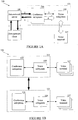
- FIG. 1A illustrates a teleconferencing system 100 consisting of a teleconferencing network server 101 and a data network server 109.
- the teleconferencing network server 101 controls a voice network for a teleconference session and a parallel data-based conference, such as may be conducted over the World Wide Web.
- the data network server 109 and the teleconferencing network server 101 may be connected through directly or through a standard computer network topology, such as a local or wide-area network, operating in accordance any communication protocol, and through any communications medium.
- the data network server 109 is coupled to one or more client systems, illustrated generally as data network client 111, using any standard computer network, protocol and medium.
- a teleconference participant receives and sends information for the parallel data conference through the client 111 using, for example, a graphical user interface.
- the graphical user interface may implemented as web pages sent from the data server 109 for presentation to the user through a web browser executing on the client 111.
- the teleconferencing network server 101 comprises a conference subsystem 103 and a voice subsystem 105.
- the voice subsystem 105 controls the operation of the voice network, illustrated generally as voice terminal 107, during a teleconferencing session.
- the voice subsystem 105 may be a telephone switch for a PBX (private branch exchange) or PSTN (public switched telephone network) voice network.
- the voice terminal 107 may be a standard telephone set or one with voice-over-IP capability that is connected into the voice subsystem 105 through the Internet.
- the conference subsystem 103 receives the user input from the data network server 109 and sends the appropriate control signals to the voice subsystem 105.
- the conference subsystem 103 is also responsible for setting up and monitoring a teleconference session through the voice subsystem 103.
- the control actions available to all users include temporarily muting, and subsequently un-muting, oneself.
- the user may move to a voice breakout room, and optionally a data breakout room.
- Actions affecting other teleconference participants are restricted to certain users, such as muting the person who is currently talking in the teleconference, muting other people in the teleconference, permanently changing the speaking ability of someone in the teleconference, or renaming a participant.
- Additional restricted actions include ejecting someone from the teleconference session and the parallel data session, locking the teleconference session, and optionally the parallel data session, from entry by new users, and setting up the teleconference, such as by calling individual people or by instructing the conference subsystem 104 call a set of people.
- the data network client 111 receives user input and forwards the input in a message to the data network server 109 as illustrated by arrow 1. If the input is a control action that is restricted, the data network server 109 verifies that the particular user has the appropriate level of permission for the action. In one embodiment, the user's permission levels are stored in a user profile created when the user registers for a teleconference session. Assuming the user is permitted to request the action, the data network server 109 sends a request message to the conference subsystem 103 as illustrated by arrow 2. In an alternate embodiment, the user profiles are stored on the conference subsystem 103 and server 109 sends the input to the conference subsystem 103 for validation.
- the conference subsystem 103 evaluates the request message and sends the corresponding control signal to the voice subsystem 105 as illustrated by arrow 3.
- the conference subsystem 103 may also send a message to the voice terminal 107 through the voice subsystem 105 as illustrated by arrows 4 and 5.
- the conference subsystem 103 also receives control information from the voice subsystem 105 through the connection illustrated as arrow 3, which enables the conference subsystem 103 to update the status of the teleconference session at the data network client 111 interface.
- the conference subsystem 103 informs the data network server 109 of the current speaker(s) so that information can be presented to the user.
- Teleconferencing network server 101 controls the voice terminals 107 in one region while teleconferencing network server 121 controls the voice terminals 127 in a different region.
- the teleconference network server in the conference scheduler's region would initiate a call to the other teleconference network server(s) to set up the teleconference.
- Each participant is connected to the teleconferencing network server nearest them.
- the teleconferencing network server 101 is located in New York and the server 121 is located in London, the participants in the United States and those in the United Kingdom can hold a joint teleconference that requires only a single transatlantic connection between the servers 101, 121.
- the data network is a wide-area network, such as the Internet
- a single data network server can control the data network clients in both countries, sending and receiving messages to/from the teleconference network servers 101, 121 as appropriate.
- the methods to be performed by a computer constitute computer programs made up of computer-executable instructions illustrated as blocks (acts). Describing the methods by reference to a flowchart enables one skilled in the art to develop such programs including such instructions to carry out the methods on suitably configured computers (the processing unit of the computer executing the instructions from computer-readable media) acting as clients or servers in accordance with the invention.
- the computer-executable instructions may be written in a computer programming language or may be embodied in firmware logic. If written in a programming language conforming to a recognized standard, such instructions can be executed on a variety of hardware platforms and for interface to a variety of operating systems.
- the method performed by the data network client 111 is illustrated in Figure 2A and the method performed by the data network server 109 is illustrated in Figure 2B .
- Two flowcharts in Figures 2C-D illustrated the methods performed by the teleconference network server 101 and include the functions described above for the conference subsystem 103 and for the voice subsystem 105.
- the methods executed by the data network client and data network server are described in terms of a web-based data conference but are equally applicable to other types of data sessions that parallel teleconference sessions. Furthermore, the methods are described as exchanging data in messages but no particular message protocol is implied or required.
- a data client method 200 is executed by a data client upon receipt of input from the user or a message from the data server (block 201).
- User input is formatted into a message and sent to the data server (block 203) where it is processed as described below in conjunction with Figure 2B .
- the user When the user requests an action be performed on another participant, the user selects the participant, which sends an identifier for the participant to the data server at block 203.
- the data server may return an error message if the user does not have permission to perform any action on another person (block 205), or a list specifying the actions permitted to the user (block 209).
- the method 200 outputs any error message to the user at block 207.
- the permitted actions are output as web page menu or tool bar at block 211 and the user is prompted to for a selection.
- the user is assigned a permission level based on the type of the user. For example, a user who is not profiled (“guest”) is only allowed to mute/unmute himself/herself, while a profiled user is allowed to temporarily mute others as well.
- the ability to mute the participant who is currently speaking enables a user to avoid having to listen to extraneous conversations, "music-on-hold," and noise on the line of the other person.
- allowing a user to control other participants relieves the presenter of the responsibility of moderating the teleconference during the presentation.
- the scheduler of the teleconference is allowed permanently change the speaking ability of participants and to eject a participant from the voice and data sessions when necessary.
- Additional error messages result from the user attempting to enter a locked voice or data conference.
- the method 200 may also subsequently prompt the user at block 211 for other information, such as a telephone number required to call an invitee not currently participating in the teleconference session.
- Messages regarding the status of the teleconference update the portions of the client's web page, such as tool bars, menus, and participant list (block 213).
- Various visual indicators may be used to indicate the current characteristics and status of each participant, such as name, speaking ability (e.g., temporarily or permanently muted), participation (e.g., voice-only conference, data-only conference, voice/data breakout room, ejected), current speaker, etc.
- all invitees to the teleconference are listed and marked as participating or not.
- a data server method 220 shown in Figure 2B executes on a server controlling a data network providing a parallel data conference session, such as the data network server 109 in Figure 1A .
- the method 220 receives messages from the data client method 200 and from methods executing on the teleconference network server 101 that are described in conjunction in Figures 2C-D below.
- the data server method 220 determines if the message is from a data client (block 221). If so, the method 220 determines if the request is permitted (block 223). For example, if the user is attempting to join a locked conference, the request will be denied.
- the processing at block 223 includes checking the user's permissions if the request affects another person, such as when the message contains a participant identifier or a call request to an individual, team, or missing conference invitees.
- the method 220 sends an error message to the data client method at block 225 if the request is not permitted.
- Permitted actions are processed at block 227 to determine if more data is needed, such as, for example, a call request that requires a phone number. Assuming no additional data is needed, a message is sent to the conference server containing the requested action and any required data at block 231, where it is processed as described further below. Additional data is requested through a web page created by the data server method 220 and sent to the data client for presentation to the user at block 229. If the message from the client method 200 specifies a participant identifier, the method 220 formats a web page at block 229 that contains the actions permitted to the user according to the profile and sends the selected action and participant identifier returned by the data client to the teleconference network server at block 231.
- the data server method 220 also locks and unlocks a parallel data conference session as illustrated at blocks 233 until 239.
- the voice conference may be locked/unlocked in conjunction with locking/unlocking the data conference as described below with reference to Figure 2C .
- a web page showing the updated status of the data conference session is sent to all data clients participating in the particular data conference session at block 249.
- the data server method 220 determines if the message is a "now speaking" message containing a list of speakers in the voice conference (block 241). If not, the message is a result message that provides a status of the user's last request and a web page containing the updated status is sent to the data client at block 243. If the user's original request was to move to a voice breakout room and a data breakout room (block 245), the data server method 220 moves the client to the requested data breakout room and informs the affected data client of the change at block 247. The data clients for the other conference participants are sent updated web pages at block 249.
- the functions performed by the conference subsystem and the voice subsystem are illustrated as a single conference method 250 in Figure 2C , which utilizes a supporting voice conference call method 253 in Figure 2D .
- the conference server method 250 consists of two parallel threads of processing. In one thread, illustrated as blocks 251 until 271, the method 250 processes messages from the data server method 220. The other thread, illustrated as block 273 until 291, monitors a voice conference to determine which participants are speaking.
- the method 250 Upon receipt of a message from the data server method 220, the method 250 determines the type of request at blocks 251, 255 and 259. Call requests are processed by the supporting call method 253 (block 253). Locking or unlocking a voice conference is accomplished at blocks 257 and 261, respectively, and maybe performed in concert with the locking of the parallel data conference as previously described in conjunction with Figure 2B . The method 250 evaluates other requests are evaluated at block 263 to determine if the action requested is allowed, i.e. the user may be attempting to join a locked voice conference. An error message is sent to the data server at block 265 if the action is not allowed for subsequent delivery to the user as previously described in Figures 2A and 2B .
- Allowed actions are performed at block 267, and a result message is sent to the data server method 220 at block 271.
- An optional voice message may sent to the voice terminal (block 269, shown in phantom) to audibly inform the user of the change, i.e., muted, unmuted, etc. It will be appreciated that the actions at block 267 that affect the operations of the voice terminals are performed by the components of the teleconferencing network server that controls the voice conference.
- the call method 253 may be incorporated into a prior art process that sets up teleconferences or may be implemented as a separate procedure.
- the embodiment of the call method 253 illustrated in Figure 2D enables one teleconferencing network server to communicate with other teleconferencing network servers to set up a teleconference, as well as providing support for various call commands requested by the user.
- the call method 253 determines if the user is initiating a multiserver meeting (block 293) and, if so, sets up a multiserver meeting as described below in conjunction with block 315. Otherwise, the method 253 dials the primary number for the specified participant(s) at block 295. If the call is a manual call in which the user wants to talk the other person (block 301), the conference server connects the user to the line (block 303). Subsequently, the called person may elect to join the conference at block 311.
- the conference server determines if there is an answer for each of the people called (block 305) and may optionally dial an alternate number if there is no answer (block 307, shown in phantom). If there is an answer, the method 253 plays a voice message for the person that instructs them to press certain buttons on the voice terminal to join or decline to join the conference. If the user elects to join the conference at block 311, the corresponding voice line is connected into the conference (block 313). In an alternate embodiment, the caller may also talk to the people called, if desired, before the voice message is played.
- a call request for a multiserver meeting includes one or more teleconferencing network server identifiers associated with invitees that connect to servers other than the initiating teleconferencing network server, i.e., the server for the user initiating the meeting.
- the method 253 connects the identified teleconferencing network servers to the initiating teleconferencing network server. It will be appreciated that the processing represented by block 315 includes the operations necessary to couple the teleconferencing network servers through a voice connection and one of skill in the art will understand the required operations without additional explanation. It will also be appreciated that Figure 2D implies no particular order in which the servers and the participants are connected into the multiserver teleconference.
- the method 250 measures the voice levels of the participants in the voice conference (block 275) and creates an initial list of current speakers (as opposed to those who have the ability to speak), i.e. participants whose voice levels exceed a threshold value (block 277).
- the list of speakers is sent to the data server method 220 at block 277. In one embodiment, the list may show multiple current speakers, with the number of speakers determined by system options or defaults.
- the conference server continues to measure the voice levels during the conference to update the list of speakers (block 279).
- the method 250 adds the participant's identifier to the list at block 291 and sends the new list to the data server method 220 at block 287, which updates the data clients for the users that are participating in the voice conference as previously described. If a voice signal for a participant that is currently on the list falls below the threshold (block 283), the participant's identifier is removed from the list at block 285 and the new list is sent at block 287.
- Figures 3A-B are intended to provide an overview of computer hardware and other operating components suitable for performing the methods of the invention described above, but is not intended to limit the applicable environments.
- One of skill in the art will immediately appreciate that the invention can be practiced with other computer system configurations, including hand-held devices, multiprocessor systems, microprocessor-based or programmable consumer electronics, network PCs, minicomputers, mainframe computers, and the like.
- the invention can also be practiced in distributed computing environments where tasks are performed by remote processing devices that are linked through a communications network.
- FIG. 3A shows several computer systems that are coupled together through a network 3, such as the Internet.
- the term "Internet” as used herein refers to a network of networks which uses certain protocols, such as the TCP/IP protocol, and possibly other protocols such as the hypertext transfer protocol (HTTP) for hypertext markup language (HTML) documents that make up the World Wide Web (web).
- HTTP hypertext transfer protocol
- HTML hypertext markup language
- the physical connections of the Internet and the protocols and communication procedures of the Internet are well known to those of skill in the art.
- Access to the Internet 3 is typically provided by Internet service providers (ISP), such as the ISPs 5 and 7.
- ISP Internet service providers
- client systems such as client computer systems 21, 25, 35, and 37 obtain access to the Internet through the Internet service providers, such as ISPs 5 and 7.
- Access to the Internet allows users of the client computer systems to exchange information, receive and send e-mails, and view documents, such as documents which have been prepared in the HTML format.
- documents are often provided by web servers, such as web server 9 which is considered to be "on" the Internet.
- web servers such as web server 9 which is considered to be "on” the Internet.
- these web servers are provided by the ISPs, such as ISP 5, although a computer system can be set up and connected to the Internet without that system being also an ISP as is well known in the art.
- the web server 9 is typically at least one computer system which operates as a server computer system and is configured to operate with the protocols of the World Wide Web and is coupled to the Internet.
- the web server 9 can be part of an ISP which provides access to the Internet for client systems.
- the web server 9 is shown coupled to the server computer system 11 which itself is coupled to web content 10, which can be considered a form of a media database. It will be appreciated that while two computer systems 9 and 11 are shown in Figure 3A , the web server system 9 and the server computer system 11 can be one computer system having different software components providing the web server functionality and the server functionality provided by the server computer system 11 which will be described further below.
- Client computer systems 21, 25, 35, and 37 can each, with the appropriate web browsing software, view HTML pages provided by the web server 9.
- the ISP 5 provides Internet connectivity to the client computer system 21 through the modem interface 23 which can be considered part of the client computer system 21.
- the client computer system can be a personal computer system, a network computer, a Web TV system, or other such computer system.
- the ISP 7 provides Internet connectivity for client systems 25, 35, and 37, although as shown in Figure 3A , the connections are not the same for these three computer systems.
- Client computer system 25 is coupled through a modem interface 27 while client computer systems 35 and 37 are part of a LAN.
- FIG. 3A shows the interfaces 23 and 27 as generically as a "modem,” it will be appreciated that each of these interfaces can be an analog modem, ISDN modem, cable modem, satellite transmission interface (e.g. "Direct PC"), or other interfaces for coupling a computer system to other computer systems.
- Client computer systems 35 and 37 are coupled to a LAN 33 through network interfaces 39 and 41, which can be Ethernet network or other network interfaces.
- the LAN 33 is also coupled to a gateway computer system 31 which can provide firewall and other Internet related services for the local area network.
- This gateway computer system 31 is coupled to the ISP 7 to provide Internet connectivity to the client computer systems 35 and 37.
- the gateway computer system 31 can be a conventional server computer system.
- the web server system 9 can be a conventional server computer system.
- a server computer system 43 can be directly coupled to the LAN 33 through a network interface 45 to provide files 47 and other services to the clients 35, 37, without the need to connect to the Internet through the gateway system 31.
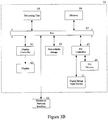
- Figure 3B shows one example of a conventional computer system that can be used as a client computer system or a server computer system or as a web server system. It will also be appreciated that such a computer system can be used to perform many of the functions of an Internet service provider, such as ISP 5.
- the computer system 51 interfaces to external systems through the modem or network interface 53. It will be appreciated that the modem or network interface 53 can be considered to be part of the computer system 51.
- This interface 53 can be an analog modem, ISDN modem, cable modem, token ring interface, satellite transmission interface (e.g. "Direct PC"), or other interfaces for coupling a computer system to other computer systems.
- the computer system 51 includes a processing unit 55, which can be a conventional microprocessor such as an Intel Pentium microprocessor or Motorola Power PC microprocessor.
- Memory 59 is coupled to the processor 55 by a bus 57.
- Memory 59 can be dynamic random access memory (DRAM) and can also include static RAM (SRAM).
- the bus 57 couples the processor 55 to the memory 59 and also to non-volatile storage 65 and to display controller 61 and to the input/output (I/O) controller 67.
- the display controller 61 controls in the conventional manner a display on a display device 63 which can be a cathode ray tube (CRT) or liquid crystal display.
- CTR cathode ray tube
- the input/output devices 69 can include a keyboard, disk drives, printers, a scanner, and other input and output devices, including a mouse or other pointing device.
- the display controller 61 and the I/O controller 67 can be implemented with conventional well known technology.
- a digital image input device 71 can be a digital camera which is coupled to an I/O controller 67 in order to allow images from the digital camera to be input into the computer system 51.
- the non-volatile storage 65 is often a magnetic hard disk, an optical disk, or another form of storage for large amounts of data. Some of this data is often written, by a direct memory access process, into memory 59 during execution of software in the computer system 51.
- computer-readable medium and “machine-readable medium” include any type of storage device that is accessible by the processor 55 and also encompasses a carrier wave that encodes a data signal.
- the computer system 51 is one example of many possible computer systems which have different architectures.
- personal computers based on an Intel microprocessor often have multiple buses, one of which can be an input/output (I/O) bus for the peripherals and one that directly connects the processor 55 and the memory 59 (often referred to as a memory bus).
- the buses are connected together through bridge components that perform any necessary translation due to differing bus protocols.
- Network computers are another type of computer system that can be used as data clients in accordance with the present invention.
- Network computers do not usually include a hard disk or other mass storage, and the executable programs are loaded from a network connection into the memory 59 for execution by the processor 55.
- a Web TV system which is known in the art, is also considered to be a computer system according to the present invention, but it may lack some of the features shown in Figure 3B , such as certain input or output devices.
- a typical computer system will usually include at least a processor, memory, and a bus coupling the memory to the processor.
- the computer system 51 is controlled by operating system software which includes a file management system, such as a disk operating system, which is part of the operating system software.
- a file management system such as a disk operating system
- One example of an operating system software with its associated file management system software is the family of operating systems known as Windows® from Microsoft Corporation of Redmond, Washington, and their associated file management systems.
- the file management system is typically stored in the non-volatile storage 65 and causes the processor 55 to execute the various acts required by the operating system to input and output data and to store data in memory, including storing files on the non-volatile storage 65.
- a teleconferencing system has been described in which a voice conference session can be controlled by a user though a parallel data conference session.
Landscapes
- Engineering & Computer Science (AREA)
- Signal Processing (AREA)
- Multimedia (AREA)
- General Engineering & Computer Science (AREA)
- Computer Vision & Pattern Recognition (AREA)
- Telephonic Communication Services (AREA)
- Data Exchanges In Wide-Area Networks (AREA)
Claims (31)
- Computergestütztes Verfahren zur Endbenutzersteuerung durch einen Endbenutzer, der an einer Telekonferenz teilnimmt, die von mindestens einem Telekonferenz-Netzserver (101) in einem Telekonferenznetz gehostet wird, wobei der Telekonferenz-Netzserver mit einem Datennetzserver (109) verbunden ist, der über ein Datennetz mit einem Datennetzclient (111) Nachrichten austauscht, dadurch gekennzeichnet, dass das Verfahren Folgendes an dem Datennetzserver (109) umfasst:Empfangen, von dem Datennetzclient her, bei Auswahl eines anderen Teilnehmers der Telekonferenz, einer Nachricht, die eine Kennung des anderen Teilnehmers umfasst;als Reaktion auf das Empfangen der Nachricht, Formatieren einer Web-Seite, die die Aktionen enthält, die dem Endbenutzer gemäß gespeicherten, mit dem Endnutzer assoziierten Erlaubnisstufeninformationen erlaubt sind, und Senden der Web-Seite an den Datennetzclient, um dem Endbenutzer eine Auswahl von in der Web-Seite enthaltenen Aktionen darzubieten;Empfangen, von dem Datennetzclient, einer Aktion, die aus der Auswahl von Aktionen ausgewählt wurde; undSenden der ausgewählten Aktion und der Kennung des anderen Teilnehmers an den Telekonferenz-Netzserver, um eine Charakteristik des anderen Teilnehmers gemäß der ausgewählten Aktion zu ändern.
- Computergestütztes Verfahren nach Anspruch 1, das weiter Folgendes umfasst:
Senden, an den Datennetzclient, über das Datennetz, einer Fehleranzeige, falls von den Erlaubnisstufeninformationen (225) keine Aktionen erlaubt sind. - Computergestütztes Verfahren nach Anspruch 1, wobei die Charakteristik aus der Gruppe ausgewählt wird, die aus Sprechfähigkeit, Teilnahme und Name besteht.
- Computergestütztes Verfahren nach Anspruch 1, wobei die Kennung für einen aktuellen Sprecher ist.
- Computergestütztes Verfahren nach Anspruch 1, das weiter Folgendes umfasst:
Senden, an den Datennetzclient, über das Datennetz, eines Status für die Telekonferenz. - Computergestütztes Verfahren nach Anspruch 5, wobei der Status aus der Gruppe ausgewählt wird, die aus einem aktuellen Sprecher, Teilnehmern, Eingeladenen, Teilnehmerstatus, einem Breakout-Raumstatus und einem Konferenzsperrenstatus besteht.
- Computergestütztes Verfahren nach Anspruch 6, wobei der Teilnehmerstatus aus der Gruppe ausgewählt wird, die aus sprechend, stummgeschaltet, permanent stummgeschaltet, nur Sprache, nur Daten und Sprache und Daten besteht.
- Computergestütztes Verfahren nach Anspruch 6, das weiter Folgendes umfasst:
Überwachen des Telekonferenznetzes, um den aktuellen Sprecher zu bestimmen. - Computergestütztes Verfahren nach Anspruch 1, das weiter Folgendes umfasst:
Senden einer Nachricht an denjenigen Teilnehmer, der von der gewählten Aktion betroffen ist. - Computergestütztes Verfahren nach Anspruch 9, wobei die Nachricht über das Datennetz gesendet wird.
- Computergestütztes Verfahren nach Anspruch 9, wobei die Nachricht über das Telekommunikationsnetz gesendet wird.
- Computergestütztes Verfahren nach Anspruch 1, das weiter Folgendes umfasst:Empfangen, von dem Datennetzclient her, über das Datennetz, einer Anforderung, eine Charakteristik des Endbenutzers zu ändern; undÄndern, an dem Telekonferenznetz, der Charakteristik des Endbenutzers gemäß der Anforderung.
- Computergestütztes Verfahren nach Anspruch 1, wobei die Erlaubnisstufeninformationen auf einem mit dem Endbenutzer assoziierten Typ basieren.
- Computergestütztes Verfahren nach Anspruch 13, wobei der Typ aus der Gruppe ausgewählt wird, die aus Gast, Benutzer mit Profil und Konferenzplaner besteht.
- Computergestütztes Verfahren nach Anspruch 1, wobei das Datennetz dem Endbenutzer eine grafische Benutzerschnittstelle zum Steuern des Telekonferenznetzes darbietet.
- Computergestütztes Verfahren nach Anspruch 15, wobei die grafische Benutzerschnittstelle browserbasiert ist.
- Computergestütztes Verfahren nach Anspruch 1, wobei es sich bei dem Datennetz um ein öffentliches Weitverkehrsnetz handelt.
- Computergestütztes Verfahren nach Anspruch 1, wobei es sich bei dem Datennetz um ein virtuelles privates Netz handelt.
- Computergestütztes Verfahren nach Anspruch 1, wobei es sich bei dem Datennetz um ein lokales Netz handelt.
- Computergestütztes Verfahren nach Anspruch 1, das weiter Folgendes umfasst:Empfangen, von dem Datennetzclient, über das Datennetz, einer Initiierungsanforderung für die Telekonferenz, wobei die Anforderung eine Vielzahl von zu der Telekonferenz Eingeladenen umfasst; undVerbinden, durch das Telekonferenznetz, der Vielzahl von zu der Telekonferenz Eingeladenen, falls von den Erlaubnisstufeninformationen des Endbenutzers erlaubt.
- Computergestütztes Verfahren nach Anspruch 20, wobei mindestens einer der Eingeladenen über ein anderes Telekonferenznetz verbunden werden kann und das weiter Folgendes umfasst:
Verbinden, durch das Telekonferenz-Netz, des anderen Telekonferenznetzes mit der Telekonferenz. - Computergestütztes Verfahren nach Anspruch 1, das weiter Folgendes umfasst:Empfangen, von dem Datennetzclient her, über das Datennetz, einer Kennung für einen Eingeladenen, der nicht an der Telekonferenz teilnimmt; undVerbinden, durch das Telekonferenznetz, des zu der Telekonferenz Eingeladenen mit der Telekonferenz, falls der Eingeladene entscheidet, in die Telekonferenz einzutreten.
- Maschinenlesbares Medium oder Computerprogrammprodukt mit ausführbaren Anweisungen, um eine Maschine zu veranlassen, ein Verfahren nach einem der Ansprüche 1 bis 22 auszuführen.
- Datennetz-Serversystem (109), das dazu angeordnet ist, die Endbenutzersteuerung durch einen Endbenutzer, der an einer von einem Telekonferenz-Netzserver gehosteten Telekonferenz teilnimmt, zu ermöglichen, wobei der Telekonferenz-Netzserver mit dem Datennetz-Serversystem verbunden ist, wobei das Datennetz-Serversystem Folgendes umfasst:einen Prozessor, der über einen Bus mit einem Speicher verbunden ist;eine Netzschnittstelle, die über den Bus mit dem Prozessor verbunden ist, um über ein Datennetz Nachrichten zu und von einem Datennetzclient (111) zu senden und zu empfangen, und Nachrichten zu und von dem Telekonferenz-Netzserver (101) zu senden und zu empfangen;und dadurch gekennzeichnet, dass es Folgendes umfasst:
einen von dem Prozessor, von dem Speicher her ausgeführten Prozess, um den Prozessor zu veranlassen:von dem Datennetzclient her, bei Auswahl eines anderen Teilnehmers der Telekonferenz eine Nachricht zu empfangen, die eine Kennung des anderen Teilnehmers umfasst;als Reaktion auf das Empfangen der Nachricht, eine Web-Seite zu formatieren, die die Aktionen enthält, die dem Endbenutzer gemäß gespeicherten, mit dem Endnutzer assoziierten Erlaubnisstufeninformationen erlaubt sind, und die Web-Seite an den Datennetzclient zu senden, um dem Endbenutzer eine Auswahl von in der Web-Seite enthaltenen Aktionen darzubieten;von dem Datennetzclient her eine Aktion zu empfangen, die aus der Auswahl von Aktionen ausgewählt wurde; unddie ausgewählte Aktion und die Kennung des anderen Teilnehmers an den Telekonferenz-Netzserver zu senden, um eine Charakteristik des anderen Teilnehmers gemäß der ausgewählten Aktion zu ändern. - Datennetz-Serversystem nach Anspruch 24 wobei der Prozess weiter den Prozessor veranlasst, eine Fehleranzeige an den Datennetzclient zu senden, falls von den Erlaubnisstufeninformationen keine Aktionen erlaubt sind.
- Datennetz-Serversystem nach Anspruch 24, wobei der Prozess weiter den Prozessor veranlasst, einen Status für die Telekonferenz an den Datennetzclient zu senden.
- Datennetz-Serversystem nach Anspruch 24, wobei der Prozess weiter den Prozessor veranlasst, eine Nachricht an den von der gewählten Aktion betroffenen Teilnehmer zu senden.
- Datennetz-Serversystem nach Anspruch 24, wobei der Prozess weiter den Prozessor veranlasst, von dem Datennetzclient her eine Anforderung zum Ändern einer Charakteristik des Endbenutzers zu empfangen und die Anforderung an den Telekonferenz-Netzserver zu senden.
- Datennetz-Serversystem nach Anspruch 24, wobei der Prozess weiter den Prozessor veranlasst, dem Endbenutzer eine grafische Benutzerschnittstelle zum Steuern des Telekonferenz-Netzservers darzubieten.
- Datennetz-Serversystem nach Anspruch 24, wobei der Prozess weiter den Prozessor veranlasst, eine Initiierungsanforderung für die Telekonferenz von dem Datennetzclient her zu empfangen, wobei die Anforderung eine Vielzahl von zu der Telekonferenz Eingeladenen umfasst, und die Anforderung an den Telekonferenz-Netzserver zu senden, falls von den Erlaubnisstufeninformationen des Endbenutzers erlaubt.
- Datennetz-Serversystem nach Anspruch 24, wobei der Prozess weiter den Prozessor veranlasst, von dem Datennetzclient her eine Kennung für einen Eingeladenen, der nicht an der Telekonferenz teilnimmt, zu empfangen und die Kennung an den Telekonferenz-Netzserver zu senden.
Applications Claiming Priority (3)
| Application Number | Priority Date | Filing Date | Title |
|---|---|---|---|
| US150312 | 2002-05-16 | ||
| US10/150,312 US6915331B2 (en) | 2002-05-16 | 2002-05-16 | End user control of a teleconferencing network through a data network |
| PCT/US2003/015285 WO2003098849A2 (en) | 2002-05-16 | 2003-05-16 | End user control of a teleconferencing network through a data network |
Publications (3)
| Publication Number | Publication Date |
|---|---|
| EP1504550A2 EP1504550A2 (de) | 2005-02-09 |
| EP1504550A4 EP1504550A4 (de) | 2006-11-02 |
| EP1504550B1 true EP1504550B1 (de) | 2018-08-22 |
Family
ID=29548329
Family Applications (1)
| Application Number | Title | Priority Date | Filing Date |
|---|---|---|---|
| EP03736618.4A Expired - Lifetime EP1504550B1 (de) | 2002-05-16 | 2003-05-16 | Endbenutzersteuerung eines telekonferenznetzwerks durch ein datennetzwerk |
Country Status (6)
| Country | Link |
|---|---|
| US (1) | US6915331B2 (de) |
| EP (1) | EP1504550B1 (de) |
| CN (1) | CN100409208C (de) |
| AU (1) | AU2003237858B2 (de) |
| CA (1) | CA2486357C (de) |
| WO (1) | WO2003098849A2 (de) |
Families Citing this family (36)
| Publication number | Priority date | Publication date | Assignee | Title |
|---|---|---|---|---|
| US7640300B2 (en) * | 2002-06-10 | 2009-12-29 | Microsoft Corporation | Presence and notification system for maintaining and communicating information |
| US20050190706A1 (en) * | 2004-02-26 | 2005-09-01 | Henderson Eric A. | Automatic conferencing service |
| US7113200B2 (en) * | 2004-05-21 | 2006-09-26 | Polycom, Inc. | Method and system for preparing video communication image for wide screen display |
| US7899170B2 (en) | 2005-04-28 | 2011-03-01 | Apple Inc. | Multi-participant conference setup |
| US7949117B2 (en) * | 2005-04-28 | 2011-05-24 | Apple Inc. | Heterogeneous video conferencing |
| US7692682B2 (en) | 2005-04-28 | 2010-04-06 | Apple Inc. | Video encoding in a video conference |
| US7817180B2 (en) * | 2005-04-28 | 2010-10-19 | Apple Inc. | Video processing in a multi-participant video conference |
| US7864209B2 (en) * | 2005-04-28 | 2011-01-04 | Apple Inc. | Audio processing in a multi-participant conference |
| US8861701B2 (en) * | 2005-04-28 | 2014-10-14 | Apple Inc. | Multi-participant conference adjustments |
| US8305939B2 (en) | 2005-10-13 | 2012-11-06 | International Business Machines Corporation | Selective teleconference interruption |
| DK1781054T3 (da) * | 2005-10-28 | 2010-06-21 | Ericsson Telefon Ab L M | Fremgangsmåder og apparat til push-to-talk-tjeneste |
| US7746374B2 (en) * | 2006-01-25 | 2010-06-29 | Seiko Epson Corporation | Videoconference data relay server |
| US7716284B2 (en) * | 2006-02-28 | 2010-05-11 | Microsoft Corporation | Subsystem-scoping architecture for breakout rooms in a virtual space |
| US7929679B2 (en) * | 2006-03-21 | 2011-04-19 | Alcatel-Lucent Usa Inc. | Muting conference call hold music |
| JP2007274176A (ja) * | 2006-03-30 | 2007-10-18 | Pioneer Electronic Corp | 音声会議装置、音声会議システムにおける音声確認方法及びそのプログラム |
| GB2437785A (en) * | 2006-05-02 | 2007-11-07 | Skype Ltd | Voice over internet protocol (VOIP) group conference communication |
| EP2020813B1 (de) | 2006-05-24 | 2013-04-17 | Huawei Technologies Co., Ltd. | Verfahren, einrichtung und system zum implementieren des sitzungsdienstes |
| US8819129B1 (en) | 2006-06-09 | 2014-08-26 | Avaya Inc. | Auto join conference |
| CN101127615B (zh) * | 2006-07-06 | 2012-08-08 | 北京艾易信息通信有限责任公司 | 一种基于IBM Lotus Notes的多方会议装置和多方会议系统及方法 |
| CN101127617B (zh) * | 2006-07-06 | 2012-08-08 | 北京艾易信息通信有限责任公司 | 一种基于Microsoft Share Point Server的多方会议装置和多方会议系统及方法 |
| CN101127616B (zh) * | 2006-07-06 | 2011-02-09 | 北京艾易信息通信有限责任公司 | 一种基于Microsoft Office Communicator的多方会议装置和多方会议系统及方法 |
| US8266535B2 (en) | 2006-09-11 | 2012-09-11 | Broadnet Teleservices, Llc | Teleforum apparatus and method |
| US20080151876A1 (en) * | 2006-12-20 | 2008-06-26 | Wilson Ian A | Serverless peer to peer voice and data over internet protocol communications system |
| CN101325487B (zh) * | 2007-06-15 | 2011-11-30 | 中兴通讯股份有限公司 | 一种在会议业务通知消息中限制用户号码显示的方法 |
| US8167724B2 (en) * | 2007-12-10 | 2012-05-01 | Gary Stephen Shuster | Guest management in an online multi-player virtual reality game |
| US8275108B2 (en) | 2008-02-26 | 2012-09-25 | International Business Machines Corporation | Hierarchal control of teleconferences |
| JP2009239714A (ja) * | 2008-03-27 | 2009-10-15 | Fujitsu Ltd | 会議システム、会議プログラム、会議リソース割り当て方法 |
| US8369506B2 (en) * | 2009-03-06 | 2013-02-05 | International Business Machines Corporation | Informing a teleconference participant that a person-of-interest has become active within the teleconference |
| JP5282610B2 (ja) * | 2009-03-09 | 2013-09-04 | ブラザー工業株式会社 | テレビ会議装置、テレビ会議システム、テレビ会議制御方法、及びテレビ会議装置のプログラム |
| US8433813B2 (en) | 2010-04-07 | 2013-04-30 | Apple Inc. | Audio processing optimization in a multi-participant conference |
| US8553067B2 (en) | 2010-07-01 | 2013-10-08 | Cisco Technology, Inc. | Capturing and controlling access to muted content from a conference session |
| US8711736B2 (en) | 2010-09-16 | 2014-04-29 | Apple Inc. | Audio processing in a multi-participant conference |
| KR101569863B1 (ko) | 2011-05-31 | 2015-11-27 | 구글 인코포레이티드 | 통신 세션에서의 참가자들의 묵음화 |
| US8743743B1 (en) | 2012-12-18 | 2014-06-03 | Cisco Technology, Inc. | Management of mute and unmute requests during an electronic-conference session |
| US9525848B2 (en) | 2014-05-30 | 2016-12-20 | Highfive Technologies, Inc. | Domain trusted video network |
| CN104618614B (zh) * | 2015-01-16 | 2017-12-12 | 四川联友电讯技术有限公司 | 同步语音会议系统结束会议的方法 |
Family Cites Families (5)
| Publication number | Priority date | Publication date | Assignee | Title |
|---|---|---|---|---|
| US4796293A (en) * | 1987-12-18 | 1989-01-03 | Communications Network Enhancement Inc. | Enhanced dedicated teleconferencing system |
| US5973724A (en) | 1995-02-24 | 1999-10-26 | Apple Computer, Inc. | Merging multiple teleconferences |
| CA2266921A1 (en) * | 1996-09-25 | 1998-04-02 | Andrew David Mercer | Network-based conference system |
| US6148068A (en) * | 1997-10-20 | 2000-11-14 | Nortel Networks Limited | System for managing an audio conference |
| TW527833B (en) * | 2000-05-19 | 2003-04-11 | Sony Corp | Network conferencing system, participation authorization method and presenting method |
-
2002
- 2002-05-16 US US10/150,312 patent/US6915331B2/en not_active Expired - Lifetime
-
2003
- 2003-05-16 EP EP03736618.4A patent/EP1504550B1/de not_active Expired - Lifetime
- 2003-05-16 CA CA2486357A patent/CA2486357C/en not_active Expired - Fee Related
- 2003-05-16 WO PCT/US2003/015285 patent/WO2003098849A2/en not_active Ceased
- 2003-05-16 CN CNB03811190XA patent/CN100409208C/zh not_active Expired - Fee Related
- 2003-05-16 AU AU2003237858A patent/AU2003237858B2/en not_active Ceased
Non-Patent Citations (1)
| Title |
|---|
| None * |
Also Published As
| Publication number | Publication date |
|---|---|
| WO2003098849A2 (en) | 2003-11-27 |
| AU2003237858A1 (en) | 2003-12-02 |
| CN100409208C (zh) | 2008-08-06 |
| CN1653433A (zh) | 2005-08-10 |
| CA2486357A1 (en) | 2003-11-27 |
| US20030235277A1 (en) | 2003-12-25 |
| EP1504550A4 (de) | 2006-11-02 |
| AU2003237858B2 (en) | 2009-07-23 |
| US6915331B2 (en) | 2005-07-05 |
| CA2486357C (en) | 2014-05-13 |
| WO2003098849A3 (en) | 2004-05-06 |
| EP1504550A2 (de) | 2005-02-09 |
Similar Documents
| Publication | Publication Date | Title |
|---|---|---|
| US6915331B2 (en) | End user control of a teleconferencing network through a data network | |
| US6418214B1 (en) | Network-based conference system | |
| US6501740B1 (en) | System and method for teleconferencing on an internetwork comprising connection-oriented and connectionless networks | |
| US7062025B2 (en) | Internet-enabled conferencing system and method accommodating PSTN and IP traffic | |
| US20040006595A1 (en) | Extended features to conferencing system using a web-based management interface | |
| US6148067A (en) | Anonymous voice communication | |
| US8326927B2 (en) | Method and apparatus for inviting non-rich media endpoints to join a conference sidebar session | |
| US7685235B2 (en) | Method and system for integration of instant messaging and teleconferencing via a telephone network | |
| CA2251154C (en) | System for managing an audio conference | |
| US6961416B1 (en) | Internet-enabled conferencing system and method accommodating PSTN and IP traffic | |
| US20010053213A1 (en) | Teleconferencing system and method | |
| US7653013B1 (en) | Conferencing systems with enhanced capabilities | |
| WO2005101858A1 (en) | Anonymous voice communication | |
| US20130271561A1 (en) | Advanced Video Conference | |
| WO2002078308A1 (en) | System and method for providing simplified conferencing | |
| EP2982095B1 (de) | Echtzeit-anwendungsprogrammierschnittstelle in einem telekommunikationsnetzwerk | |
| KR20190031671A (ko) | 이종 네트워크간 오디오 컨퍼런스 시스템 및 방법 | |
| US8358763B2 (en) | Camping on a conference or telephony port | |
| US20080181383A1 (en) | Communication system, server equipment and terminal equipment | |
| JP4903477B2 (ja) | グループ通話用サーバ | |
| US20080123633A1 (en) | Server apparatus | |
| KR100586530B1 (ko) | 컴퓨터 전화 통합을 이용한 다자간 화상회의 개설 방법 | |
| HK1220555B (en) | Real time application programming interface in a telecommunications network |
Legal Events
| Date | Code | Title | Description |
|---|---|---|---|
| PUAI | Public reference made under article 153(3) epc to a published international application that has entered the european phase |
Free format text: ORIGINAL CODE: 0009012 |
|
| 17P | Request for examination filed |
Effective date: 20041110 |
|
| AK | Designated contracting states |
Kind code of ref document: A2 Designated state(s): AT BE BG CH CY CZ DE DK EE ES FI FR GB GR HU IE IT LI LU MC NL PT RO SE SI SK TR |
|
| AX | Request for extension of the european patent |
Extension state: AL LT LV MK |
|
| RIC1 | Information provided on ipc code assigned before grant |
Ipc: 7G 06F 13/00 A |
|
| DAX | Request for extension of the european patent (deleted) | ||
| RAP1 | Party data changed (applicant data changed or rights of an application transferred) |
Owner name: CISCO MANAGED SOLUTIONS, INC. |
|
| A4 | Supplementary search report drawn up and despatched |
Effective date: 20061004 |
|
| RIC1 | Information provided on ipc code assigned before grant |
Ipc: H04M 3/56 20060101AFI20060927BHEP |
|
| 17Q | First examination report despatched |
Effective date: 20090511 |
|
| RAP1 | Party data changed (applicant data changed or rights of an application transferred) |
Owner name: CISCO TECHNOLOGY, INC. |
|
| GRAP | Despatch of communication of intention to grant a patent |
Free format text: ORIGINAL CODE: EPIDOSNIGR1 |
|
| STAA | Information on the status of an ep patent application or granted ep patent |
Free format text: STATUS: GRANT OF PATENT IS INTENDED |
|
| INTG | Intention to grant announced |
Effective date: 20180321 |
|
| GRAS | Grant fee paid |
Free format text: ORIGINAL CODE: EPIDOSNIGR3 |
|
| GRAA | (expected) grant |
Free format text: ORIGINAL CODE: 0009210 |
|
| STAA | Information on the status of an ep patent application or granted ep patent |
Free format text: STATUS: THE PATENT HAS BEEN GRANTED |
|
| AK | Designated contracting states |
Kind code of ref document: B1 Designated state(s): AT BE BG CH CY CZ DE DK EE ES FI FR GB GR HU IE IT LI LU MC NL PT RO SE SI SK TR |
|
| REG | Reference to a national code |
Ref country code: GB Ref legal event code: FG4D |
|
| REG | Reference to a national code |
Ref country code: CH Ref legal event code: EP |
|
| REG | Reference to a national code |
Ref country code: AT Ref legal event code: REF Ref document number: 1033832 Country of ref document: AT Kind code of ref document: T Effective date: 20180915 |
|
| REG | Reference to a national code |
Ref country code: IE Ref legal event code: FG4D |
|
| REG | Reference to a national code |
Ref country code: DE Ref legal event code: R096 Ref document number: 60351417 Country of ref document: DE |
|
| REG | Reference to a national code |
Ref country code: NL Ref legal event code: MP Effective date: 20180822 |
|
| PG25 | Lapsed in a contracting state [announced via postgrant information from national office to epo] |
Ref country code: FI Free format text: LAPSE BECAUSE OF FAILURE TO SUBMIT A TRANSLATION OF THE DESCRIPTION OR TO PAY THE FEE WITHIN THE PRESCRIBED TIME-LIMIT Effective date: 20180822 Ref country code: GR Free format text: LAPSE BECAUSE OF FAILURE TO SUBMIT A TRANSLATION OF THE DESCRIPTION OR TO PAY THE FEE WITHIN THE PRESCRIBED TIME-LIMIT Effective date: 20181123 Ref country code: SE Free format text: LAPSE BECAUSE OF FAILURE TO SUBMIT A TRANSLATION OF THE DESCRIPTION OR TO PAY THE FEE WITHIN THE PRESCRIBED TIME-LIMIT Effective date: 20180822 Ref country code: BG Free format text: LAPSE BECAUSE OF FAILURE TO SUBMIT A TRANSLATION OF THE DESCRIPTION OR TO PAY THE FEE WITHIN THE PRESCRIBED TIME-LIMIT Effective date: 20181122 Ref country code: NL Free format text: LAPSE BECAUSE OF FAILURE TO SUBMIT A TRANSLATION OF THE DESCRIPTION OR TO PAY THE FEE WITHIN THE PRESCRIBED TIME-LIMIT Effective date: 20180822 |
|
| REG | Reference to a national code |
Ref country code: CH Ref legal event code: PK Free format text: BERICHTIGUNGEN |
|
| RIC2 | Information provided on ipc code assigned after grant |
Ipc: H04M 3/56 20060101AFI20060927BHEP |
|
| REG | Reference to a national code |
Ref country code: AT Ref legal event code: MK05 Ref document number: 1033832 Country of ref document: AT Kind code of ref document: T Effective date: 20180822 |
|
| PG25 | Lapsed in a contracting state [announced via postgrant information from national office to epo] |
Ref country code: ES Free format text: LAPSE BECAUSE OF FAILURE TO SUBMIT A TRANSLATION OF THE DESCRIPTION OR TO PAY THE FEE WITHIN THE PRESCRIBED TIME-LIMIT Effective date: 20180822 |
|
| PG25 | Lapsed in a contracting state [announced via postgrant information from national office to epo] |
Ref country code: RO Free format text: LAPSE BECAUSE OF FAILURE TO SUBMIT A TRANSLATION OF THE DESCRIPTION OR TO PAY THE FEE WITHIN THE PRESCRIBED TIME-LIMIT Effective date: 20180822 Ref country code: IT Free format text: LAPSE BECAUSE OF FAILURE TO SUBMIT A TRANSLATION OF THE DESCRIPTION OR TO PAY THE FEE WITHIN THE PRESCRIBED TIME-LIMIT Effective date: 20180822 Ref country code: CZ Free format text: LAPSE BECAUSE OF FAILURE TO SUBMIT A TRANSLATION OF THE DESCRIPTION OR TO PAY THE FEE WITHIN THE PRESCRIBED TIME-LIMIT Effective date: 20180822 Ref country code: AT Free format text: LAPSE BECAUSE OF FAILURE TO SUBMIT A TRANSLATION OF THE DESCRIPTION OR TO PAY THE FEE WITHIN THE PRESCRIBED TIME-LIMIT Effective date: 20180822 Ref country code: EE Free format text: LAPSE BECAUSE OF FAILURE TO SUBMIT A TRANSLATION OF THE DESCRIPTION OR TO PAY THE FEE WITHIN THE PRESCRIBED TIME-LIMIT Effective date: 20180822 |
|
| REG | Reference to a national code |
Ref country code: DE Ref legal event code: R097 Ref document number: 60351417 Country of ref document: DE |
|
| PG25 | Lapsed in a contracting state [announced via postgrant information from national office to epo] |
Ref country code: SK Free format text: LAPSE BECAUSE OF FAILURE TO SUBMIT A TRANSLATION OF THE DESCRIPTION OR TO PAY THE FEE WITHIN THE PRESCRIBED TIME-LIMIT Effective date: 20180822 Ref country code: DK Free format text: LAPSE BECAUSE OF FAILURE TO SUBMIT A TRANSLATION OF THE DESCRIPTION OR TO PAY THE FEE WITHIN THE PRESCRIBED TIME-LIMIT Effective date: 20180822 |
|
| PLBE | No opposition filed within time limit |
Free format text: ORIGINAL CODE: 0009261 |
|
| STAA | Information on the status of an ep patent application or granted ep patent |
Free format text: STATUS: NO OPPOSITION FILED WITHIN TIME LIMIT |
|
| 26N | No opposition filed |
Effective date: 20190523 |
|
| PG25 | Lapsed in a contracting state [announced via postgrant information from national office to epo] |
Ref country code: SI Free format text: LAPSE BECAUSE OF FAILURE TO SUBMIT A TRANSLATION OF THE DESCRIPTION OR TO PAY THE FEE WITHIN THE PRESCRIBED TIME-LIMIT Effective date: 20180822 |
|
| REG | Reference to a national code |
Ref country code: CH Ref legal event code: PL |
|
| PG25 | Lapsed in a contracting state [announced via postgrant information from national office to epo] |
Ref country code: CH Free format text: LAPSE BECAUSE OF NON-PAYMENT OF DUE FEES Effective date: 20190531 Ref country code: MC Free format text: LAPSE BECAUSE OF FAILURE TO SUBMIT A TRANSLATION OF THE DESCRIPTION OR TO PAY THE FEE WITHIN THE PRESCRIBED TIME-LIMIT Effective date: 20180822 Ref country code: LI Free format text: LAPSE BECAUSE OF NON-PAYMENT OF DUE FEES Effective date: 20190531 |
|
| REG | Reference to a national code |
Ref country code: BE Ref legal event code: MM Effective date: 20190531 |
|
| PG25 | Lapsed in a contracting state [announced via postgrant information from national office to epo] |
Ref country code: LU Free format text: LAPSE BECAUSE OF NON-PAYMENT OF DUE FEES Effective date: 20190516 |
|
| PG25 | Lapsed in a contracting state [announced via postgrant information from national office to epo] |
Ref country code: TR Free format text: LAPSE BECAUSE OF FAILURE TO SUBMIT A TRANSLATION OF THE DESCRIPTION OR TO PAY THE FEE WITHIN THE PRESCRIBED TIME-LIMIT Effective date: 20180822 |
|
| PG25 | Lapsed in a contracting state [announced via postgrant information from national office to epo] |
Ref country code: IE Free format text: LAPSE BECAUSE OF NON-PAYMENT OF DUE FEES Effective date: 20190516 |
|
| PG25 | Lapsed in a contracting state [announced via postgrant information from national office to epo] |
Ref country code: BE Free format text: LAPSE BECAUSE OF NON-PAYMENT OF DUE FEES Effective date: 20190531 |
|
| PG25 | Lapsed in a contracting state [announced via postgrant information from national office to epo] |
Ref country code: PT Free format text: LAPSE BECAUSE OF FAILURE TO SUBMIT A TRANSLATION OF THE DESCRIPTION OR TO PAY THE FEE WITHIN THE PRESCRIBED TIME-LIMIT Effective date: 20181222 |
|
| PGFP | Annual fee paid to national office [announced via postgrant information from national office to epo] |
Ref country code: DE Payment date: 20200528 Year of fee payment: 18 |
|
| PGFP | Annual fee paid to national office [announced via postgrant information from national office to epo] |
Ref country code: GB Payment date: 20200527 Year of fee payment: 18 |
|
| PG25 | Lapsed in a contracting state [announced via postgrant information from national office to epo] |
Ref country code: CY Free format text: LAPSE BECAUSE OF FAILURE TO SUBMIT A TRANSLATION OF THE DESCRIPTION OR TO PAY THE FEE WITHIN THE PRESCRIBED TIME-LIMIT Effective date: 20180822 |
|
| PG25 | Lapsed in a contracting state [announced via postgrant information from national office to epo] |
Ref country code: HU Free format text: LAPSE BECAUSE OF FAILURE TO SUBMIT A TRANSLATION OF THE DESCRIPTION OR TO PAY THE FEE WITHIN THE PRESCRIBED TIME-LIMIT; INVALID AB INITIO Effective date: 20030516 |
|
| PGFP | Annual fee paid to national office [announced via postgrant information from national office to epo] |
Ref country code: FR Payment date: 20210510 Year of fee payment: 19 |
|
| REG | Reference to a national code |
Ref country code: DE Ref legal event code: R119 Ref document number: 60351417 Country of ref document: DE |
|
| GBPC | Gb: european patent ceased through non-payment of renewal fee |
Effective date: 20210516 |
|
| PG25 | Lapsed in a contracting state [announced via postgrant information from national office to epo] |
Ref country code: GB Free format text: LAPSE BECAUSE OF NON-PAYMENT OF DUE FEES Effective date: 20210516 Ref country code: DE Free format text: LAPSE BECAUSE OF NON-PAYMENT OF DUE FEES Effective date: 20211201 |
|
| PG25 | Lapsed in a contracting state [announced via postgrant information from national office to epo] |
Ref country code: FR Free format text: LAPSE BECAUSE OF NON-PAYMENT OF DUE FEES Effective date: 20220531 |
|
| P01 | Opt-out of the competence of the unified patent court (upc) registered |
Effective date: 20230525 |