EP1502951A1 - Devices and methods for isolating RNA - Google Patents
Devices and methods for isolating RNA Download PDFInfo
- Publication number
- EP1502951A1 EP1502951A1 EP04015364A EP04015364A EP1502951A1 EP 1502951 A1 EP1502951 A1 EP 1502951A1 EP 04015364 A EP04015364 A EP 04015364A EP 04015364 A EP04015364 A EP 04015364A EP 1502951 A1 EP1502951 A1 EP 1502951A1
- Authority
- EP
- European Patent Office
- Prior art keywords
- column
- rna
- silicon carbide
- nucleic acid
- sample
- Prior art date
- Legal status (The legal status is an assumption and is not a legal conclusion. Google has not performed a legal analysis and makes no representation as to the accuracy of the status listed.)
- Withdrawn
Links
- 238000000034 method Methods 0.000 title claims abstract description 106
- 108020004707 nucleic acids Proteins 0.000 claims abstract description 56
- 102000039446 nucleic acids Human genes 0.000 claims abstract description 56
- 150000007523 nucleic acids Chemical class 0.000 claims abstract description 56
- 239000000523 sample Substances 0.000 claims abstract description 45
- 239000012472 biological sample Substances 0.000 claims abstract description 7
- HBMJWWWQQXIZIP-UHFFFAOYSA-N silicon carbide Chemical compound [Si+]#[C-] HBMJWWWQQXIZIP-UHFFFAOYSA-N 0.000 claims description 86
- 102000016911 Deoxyribonucleases Human genes 0.000 claims description 51
- 108010053770 Deoxyribonucleases Proteins 0.000 claims description 51
- LFQSCWFLJHTTHZ-UHFFFAOYSA-N Ethanol Chemical compound CCO LFQSCWFLJHTTHZ-UHFFFAOYSA-N 0.000 claims description 44
- 238000011045 prefiltration Methods 0.000 claims description 43
- 210000001519 tissue Anatomy 0.000 claims description 40
- 239000000463 material Substances 0.000 claims description 35
- 230000029087 digestion Effects 0.000 claims description 32
- 239000000835 fiber Substances 0.000 claims description 23
- 229910010271 silicon carbide Inorganic materials 0.000 claims description 20
- OKKJLVBELUTLKV-UHFFFAOYSA-N Methanol Chemical compound OC OKKJLVBELUTLKV-UHFFFAOYSA-N 0.000 claims description 18
- 238000002360 preparation method Methods 0.000 claims description 15
- 239000011159 matrix material Substances 0.000 claims description 13
- KFZMGEQAYNKOFK-UHFFFAOYSA-N Isopropanol Chemical compound CC(C)O KFZMGEQAYNKOFK-UHFFFAOYSA-N 0.000 claims description 12
- 230000003196 chaotropic effect Effects 0.000 claims description 12
- 238000010828 elution Methods 0.000 claims description 12
- 239000012139 lysis buffer Substances 0.000 claims description 11
- 239000003960 organic solvent Substances 0.000 claims description 7
- 239000002245 particle Substances 0.000 claims description 7
- 239000003795 chemical substances by application Substances 0.000 claims description 6
- 239000011521 glass Substances 0.000 claims description 6
- 241001465754 Metazoa Species 0.000 claims description 5
- 101710163270 Nuclease Proteins 0.000 claims description 5
- XLYOFNOQVPJJNP-UHFFFAOYSA-N water Chemical compound O XLYOFNOQVPJJNP-UHFFFAOYSA-N 0.000 claims description 5
- KCXVZYZYPLLWCC-UHFFFAOYSA-N EDTA Chemical compound OC(=O)CN(CC(O)=O)CCN(CC(O)=O)CC(O)=O KCXVZYZYPLLWCC-UHFFFAOYSA-N 0.000 claims description 4
- 239000013592 cell lysate Substances 0.000 claims description 4
- 239000012149 elution buffer Substances 0.000 claims description 3
- 239000003623 enhancer Substances 0.000 claims description 3
- 229960000789 guanidine hydrochloride Drugs 0.000 claims description 3
- PJJJBBJSCAKJQF-UHFFFAOYSA-N guanidinium chloride Chemical compound [Cl-].NC(N)=[NH2+] PJJJBBJSCAKJQF-UHFFFAOYSA-N 0.000 claims description 3
- 230000014759 maintenance of location Effects 0.000 claims description 3
- 210000000056 organ Anatomy 0.000 claims description 3
- 239000001509 sodium citrate Substances 0.000 claims description 3
- NLJMYIDDQXHKNR-UHFFFAOYSA-K sodium citrate Chemical compound O.O.[Na+].[Na+].[Na+].[O-]C(=O)CC(O)(CC([O-])=O)C([O-])=O NLJMYIDDQXHKNR-UHFFFAOYSA-K 0.000 claims description 3
- DGVVWUTYPXICAM-UHFFFAOYSA-N β‐Mercaptoethanol Chemical compound OCCS DGVVWUTYPXICAM-UHFFFAOYSA-N 0.000 claims description 3
- SOIFLUNRINLCBN-UHFFFAOYSA-N ammonium thiocyanate Chemical compound [NH4+].[S-]C#N SOIFLUNRINLCBN-UHFFFAOYSA-N 0.000 claims description 2
- 210000001124 body fluid Anatomy 0.000 claims description 2
- YQOKLYTXVFAUCW-UHFFFAOYSA-N guanidine;isothiocyanic acid Chemical compound N=C=S.NC(N)=N YQOKLYTXVFAUCW-UHFFFAOYSA-N 0.000 claims description 2
- 210000003205 muscle Anatomy 0.000 claims description 2
- 210000003491 skin Anatomy 0.000 claims description 2
- 239000006166 lysate Substances 0.000 claims 3
- 125000003158 alcohol group Chemical group 0.000 claims 1
- 210000004369 blood Anatomy 0.000 claims 1
- 239000008280 blood Substances 0.000 claims 1
- 210000000988 bone and bone Anatomy 0.000 claims 1
- 239000000284 extract Substances 0.000 claims 1
- 210000004209 hair Anatomy 0.000 claims 1
- 210000002700 urine Anatomy 0.000 claims 1
- 238000002955 isolation Methods 0.000 abstract description 27
- 239000000356 contaminant Substances 0.000 abstract description 17
- 108091092328 cellular RNA Proteins 0.000 abstract description 4
- 108091032973 (ribonucleotides)n+m Proteins 0.000 description 88
- VYPSYNLAJGMNEJ-UHFFFAOYSA-N Silicium dioxide Chemical compound O=[Si]=O VYPSYNLAJGMNEJ-UHFFFAOYSA-N 0.000 description 38
- 238000003556 assay Methods 0.000 description 28
- 210000000952 spleen Anatomy 0.000 description 28
- 239000011534 wash buffer Substances 0.000 description 26
- 238000002123 RNA extraction Methods 0.000 description 19
- 239000000377 silicon dioxide Substances 0.000 description 17
- 238000011109 contamination Methods 0.000 description 16
- 238000011282 treatment Methods 0.000 description 16
- 239000000243 solution Substances 0.000 description 15
- 102000007260 Deoxyribonuclease I Human genes 0.000 description 13
- 108010008532 Deoxyribonuclease I Proteins 0.000 description 13
- 108020004414 DNA Proteins 0.000 description 12
- 210000004027 cell Anatomy 0.000 description 12
- 238000005516 engineering process Methods 0.000 description 12
- 239000003365 glass fiber Substances 0.000 description 12
- 230000009089 cytolysis Effects 0.000 description 11
- -1 gDNA Substances 0.000 description 9
- 239000012620 biological material Substances 0.000 description 8
- 239000000203 mixture Substances 0.000 description 8
- 150000003839 salts Chemical class 0.000 description 8
- 241000196324 Embryophyta Species 0.000 description 7
- 239000000872 buffer Substances 0.000 description 7
- 239000000126 substance Substances 0.000 description 7
- 241000219194 Arabidopsis Species 0.000 description 6
- IJGRMHOSHXDMSA-UHFFFAOYSA-N Atomic nitrogen Chemical compound N#N IJGRMHOSHXDMSA-UHFFFAOYSA-N 0.000 description 6
- 108010067770 Endopeptidase K Proteins 0.000 description 6
- 238000005119 centrifugation Methods 0.000 description 6
- 239000003153 chemical reaction reagent Substances 0.000 description 6
- 238000000265 homogenisation Methods 0.000 description 6
- 102000004169 proteins and genes Human genes 0.000 description 6
- 238000000746 purification Methods 0.000 description 6
- 238000005406 washing Methods 0.000 description 6
- 239000011230 binding agent Substances 0.000 description 5
- 238000004113 cell culture Methods 0.000 description 5
- 238000002474 experimental method Methods 0.000 description 5
- 210000004185 liver Anatomy 0.000 description 5
- 108090000623 proteins and genes Proteins 0.000 description 5
- HEDRZPFGACZZDS-UHFFFAOYSA-N Chloroform Chemical compound ClC(Cl)Cl HEDRZPFGACZZDS-UHFFFAOYSA-N 0.000 description 4
- 239000007983 Tris buffer Substances 0.000 description 4
- 238000006243 chemical reaction Methods 0.000 description 4
- 238000001514 detection method Methods 0.000 description 4
- 238000001962 electrophoresis Methods 0.000 description 4
- 238000000605 extraction Methods 0.000 description 4
- 238000001914 filtration Methods 0.000 description 4
- 238000003306 harvesting Methods 0.000 description 4
- 210000000496 pancreas Anatomy 0.000 description 4
- 238000012545 processing Methods 0.000 description 4
- 239000011541 reaction mixture Substances 0.000 description 4
- 239000002002 slurry Substances 0.000 description 4
- LENZDBCJOHFCAS-UHFFFAOYSA-N tris Chemical compound OCC(N)(CO)CO LENZDBCJOHFCAS-UHFFFAOYSA-N 0.000 description 4
- 102000040650 (ribonucleotides)n+m Human genes 0.000 description 3
- 101001107784 Caenorhabditis elegans Deoxyribonuclease-2 Proteins 0.000 description 3
- UXVMQQNJUSDDNG-UHFFFAOYSA-L Calcium chloride Chemical compound [Cl-].[Cl-].[Ca+2] UXVMQQNJUSDDNG-UHFFFAOYSA-L 0.000 description 3
- 102000004190 Enzymes Human genes 0.000 description 3
- 108090000790 Enzymes Proteins 0.000 description 3
- 239000004698 Polyethylene Substances 0.000 description 3
- 239000001110 calcium chloride Substances 0.000 description 3
- 229910001628 calcium chloride Inorganic materials 0.000 description 3
- 230000015556 catabolic process Effects 0.000 description 3
- 238000006731 degradation reaction Methods 0.000 description 3
- 102000006602 glyceraldehyde-3-phosphate dehydrogenase Human genes 0.000 description 3
- 108020004445 glyceraldehyde-3-phosphate dehydrogenase Proteins 0.000 description 3
- 238000009396 hybridization Methods 0.000 description 3
- 150000002632 lipids Chemical class 0.000 description 3
- 229910052757 nitrogen Inorganic materials 0.000 description 3
- 229920000573 polyethylene Polymers 0.000 description 3
- 238000003757 reverse transcription PCR Methods 0.000 description 3
- 239000000758 substrate Substances 0.000 description 3
- BZTDTCNHAFUJOG-UHFFFAOYSA-N 6-carboxyfluorescein Chemical compound C12=CC=C(O)C=C2OC2=CC(O)=CC=C2C11OC(=O)C2=CC=C(C(=O)O)C=C21 BZTDTCNHAFUJOG-UHFFFAOYSA-N 0.000 description 2
- 102000053602 DNA Human genes 0.000 description 2
- ZRALSGWEFCBTJO-UHFFFAOYSA-N Guanidine Chemical compound NC(N)=N ZRALSGWEFCBTJO-UHFFFAOYSA-N 0.000 description 2
- 239000005909 Kieselgur Substances 0.000 description 2
- TWRXJAOTZQYOKJ-UHFFFAOYSA-L Magnesium chloride Chemical compound [Mg+2].[Cl-].[Cl-] TWRXJAOTZQYOKJ-UHFFFAOYSA-L 0.000 description 2
- CSNNHWWHGAXBCP-UHFFFAOYSA-L Magnesium sulfate Chemical compound [Mg+2].[O-][S+2]([O-])([O-])[O-] CSNNHWWHGAXBCP-UHFFFAOYSA-L 0.000 description 2
- 241000124008 Mammalia Species 0.000 description 2
- BPQQTUXANYXVAA-UHFFFAOYSA-N Orthosilicate Chemical compound [O-][Si]([O-])([O-])[O-] BPQQTUXANYXVAA-UHFFFAOYSA-N 0.000 description 2
- 238000002944 PCR assay Methods 0.000 description 2
- ISWSIDIOOBJBQZ-UHFFFAOYSA-N Phenol Chemical compound OC1=CC=CC=C1 ISWSIDIOOBJBQZ-UHFFFAOYSA-N 0.000 description 2
- 238000010802 RNA extraction kit Methods 0.000 description 2
- 238000011530 RNeasy Mini Kit Methods 0.000 description 2
- 102000006382 Ribonucleases Human genes 0.000 description 2
- 108010083644 Ribonucleases Proteins 0.000 description 2
- FAPWRFPIFSIZLT-UHFFFAOYSA-M Sodium chloride Chemical compound [Na+].[Cl-] FAPWRFPIFSIZLT-UHFFFAOYSA-M 0.000 description 2
- 238000002835 absorbance Methods 0.000 description 2
- 238000004458 analytical method Methods 0.000 description 2
- 238000005349 anion exchange Methods 0.000 description 2
- 239000007864 aqueous solution Substances 0.000 description 2
- 229960000074 biopharmaceutical Drugs 0.000 description 2
- 210000004556 brain Anatomy 0.000 description 2
- 235000011148 calcium chloride Nutrition 0.000 description 2
- 230000001413 cellular effect Effects 0.000 description 2
- 239000002131 composite material Substances 0.000 description 2
- 238000007796 conventional method Methods 0.000 description 2
- 230000001351 cycling effect Effects 0.000 description 2
- 238000011143 downstream manufacturing Methods 0.000 description 2
- 230000002255 enzymatic effect Effects 0.000 description 2
- 239000007850 fluorescent dye Substances 0.000 description 2
- 239000012634 fragment Substances 0.000 description 2
- ZJYYHGLJYGJLLN-UHFFFAOYSA-N guanidinium thiocyanate Chemical compound SC#N.NC(N)=N ZJYYHGLJYGJLLN-UHFFFAOYSA-N 0.000 description 2
- 210000003734 kidney Anatomy 0.000 description 2
- 239000007788 liquid Substances 0.000 description 2
- 238000002414 normal-phase solid-phase extraction Methods 0.000 description 2
- 239000011148 porous material Substances 0.000 description 2
- 238000003753 real-time PCR Methods 0.000 description 2
- 238000011084 recovery Methods 0.000 description 2
- 238000004007 reversed phase HPLC Methods 0.000 description 2
- 238000013207 serial dilution Methods 0.000 description 2
- 230000008961 swelling Effects 0.000 description 2
- 108020004463 18S ribosomal RNA Proteins 0.000 description 1
- QKNYBSVHEMOAJP-UHFFFAOYSA-N 2-amino-2-(hydroxymethyl)propane-1,3-diol;hydron;chloride Chemical compound Cl.OCC(N)(CO)CO QKNYBSVHEMOAJP-UHFFFAOYSA-N 0.000 description 1
- 238000012232 AGPC extraction Methods 0.000 description 1
- 229920000936 Agarose Polymers 0.000 description 1
- QGZKDVFQNNGYKY-UHFFFAOYSA-O Ammonium Chemical compound [NH4+] QGZKDVFQNNGYKY-UHFFFAOYSA-O 0.000 description 1
- 241000894006 Bacteria Species 0.000 description 1
- 108091003079 Bovine Serum Albumin Proteins 0.000 description 1
- 241000233866 Fungi Species 0.000 description 1
- 229910021380 Manganese Chloride Inorganic materials 0.000 description 1
- GLFNIEUTAYBVOC-UHFFFAOYSA-L Manganese chloride Chemical compound Cl[Mn]Cl GLFNIEUTAYBVOC-UHFFFAOYSA-L 0.000 description 1
- 229920001410 Microfiber Polymers 0.000 description 1
- 101000819572 Mus musculus Glyceraldehyde-3-phosphate dehydrogenase Proteins 0.000 description 1
- CHJJGSNFBQVOTG-UHFFFAOYSA-N N-methyl-guanidine Natural products CNC(N)=N CHJJGSNFBQVOTG-UHFFFAOYSA-N 0.000 description 1
- 108091005461 Nucleic proteins Proteins 0.000 description 1
- 108091034117 Oligonucleotide Proteins 0.000 description 1
- 108091005804 Peptidases Proteins 0.000 description 1
- 102000035195 Peptidases Human genes 0.000 description 1
- 238000013381 RNA quantification Methods 0.000 description 1
- 240000004808 Saccharomyces cerevisiae Species 0.000 description 1
- XUIMIQQOPSSXEZ-UHFFFAOYSA-N Silicon Chemical compound [Si] XUIMIQQOPSSXEZ-UHFFFAOYSA-N 0.000 description 1
- 108020004682 Single-Stranded DNA Proteins 0.000 description 1
- QAOWNCQODCNURD-UHFFFAOYSA-L Sulfate Chemical compound [O-]S([O-])(=O)=O QAOWNCQODCNURD-UHFFFAOYSA-L 0.000 description 1
- 241000700605 Viruses Species 0.000 description 1
- JLCPHMBAVCMARE-UHFFFAOYSA-N [3-[[3-[[3-[[3-[[3-[[3-[[3-[[3-[[3-[[3-[[3-[[5-(2-amino-6-oxo-1H-purin-9-yl)-3-[[3-[[3-[[3-[[3-[[3-[[5-(2-amino-6-oxo-1H-purin-9-yl)-3-[[5-(2-amino-6-oxo-1H-purin-9-yl)-3-hydroxyoxolan-2-yl]methoxy-hydroxyphosphoryl]oxyoxolan-2-yl]methoxy-hydroxyphosphoryl]oxy-5-(5-methyl-2,4-dioxopyrimidin-1-yl)oxolan-2-yl]methoxy-hydroxyphosphoryl]oxy-5-(6-aminopurin-9-yl)oxolan-2-yl]methoxy-hydroxyphosphoryl]oxy-5-(6-aminopurin-9-yl)oxolan-2-yl]methoxy-hydroxyphosphoryl]oxy-5-(6-aminopurin-9-yl)oxolan-2-yl]methoxy-hydroxyphosphoryl]oxy-5-(6-aminopurin-9-yl)oxolan-2-yl]methoxy-hydroxyphosphoryl]oxyoxolan-2-yl]methoxy-hydroxyphosphoryl]oxy-5-(5-methyl-2,4-dioxopyrimidin-1-yl)oxolan-2-yl]methoxy-hydroxyphosphoryl]oxy-5-(4-amino-2-oxopyrimidin-1-yl)oxolan-2-yl]methoxy-hydroxyphosphoryl]oxy-5-(5-methyl-2,4-dioxopyrimidin-1-yl)oxolan-2-yl]methoxy-hydroxyphosphoryl]oxy-5-(5-methyl-2,4-dioxopyrimidin-1-yl)oxolan-2-yl]methoxy-hydroxyphosphoryl]oxy-5-(6-aminopurin-9-yl)oxolan-2-yl]methoxy-hydroxyphosphoryl]oxy-5-(6-aminopurin-9-yl)oxolan-2-yl]methoxy-hydroxyphosphoryl]oxy-5-(4-amino-2-oxopyrimidin-1-yl)oxolan-2-yl]methoxy-hydroxyphosphoryl]oxy-5-(4-amino-2-oxopyrimidin-1-yl)oxolan-2-yl]methoxy-hydroxyphosphoryl]oxy-5-(4-amino-2-oxopyrimidin-1-yl)oxolan-2-yl]methoxy-hydroxyphosphoryl]oxy-5-(6-aminopurin-9-yl)oxolan-2-yl]methoxy-hydroxyphosphoryl]oxy-5-(4-amino-2-oxopyrimidin-1-yl)oxolan-2-yl]methyl [5-(6-aminopurin-9-yl)-2-(hydroxymethyl)oxolan-3-yl] hydrogen phosphate Polymers Cc1cn(C2CC(OP(O)(=O)OCC3OC(CC3OP(O)(=O)OCC3OC(CC3O)n3cnc4c3nc(N)[nH]c4=O)n3cnc4c3nc(N)[nH]c4=O)C(COP(O)(=O)OC3CC(OC3COP(O)(=O)OC3CC(OC3COP(O)(=O)OC3CC(OC3COP(O)(=O)OC3CC(OC3COP(O)(=O)OC3CC(OC3COP(O)(=O)OC3CC(OC3COP(O)(=O)OC3CC(OC3COP(O)(=O)OC3CC(OC3COP(O)(=O)OC3CC(OC3COP(O)(=O)OC3CC(OC3COP(O)(=O)OC3CC(OC3COP(O)(=O)OC3CC(OC3COP(O)(=O)OC3CC(OC3COP(O)(=O)OC3CC(OC3COP(O)(=O)OC3CC(OC3COP(O)(=O)OC3CC(OC3COP(O)(=O)OC3CC(OC3CO)n3cnc4c(N)ncnc34)n3ccc(N)nc3=O)n3cnc4c(N)ncnc34)n3ccc(N)nc3=O)n3ccc(N)nc3=O)n3ccc(N)nc3=O)n3cnc4c(N)ncnc34)n3cnc4c(N)ncnc34)n3cc(C)c(=O)[nH]c3=O)n3cc(C)c(=O)[nH]c3=O)n3ccc(N)nc3=O)n3cc(C)c(=O)[nH]c3=O)n3cnc4c3nc(N)[nH]c4=O)n3cnc4c(N)ncnc34)n3cnc4c(N)ncnc34)n3cnc4c(N)ncnc34)n3cnc4c(N)ncnc34)O2)c(=O)[nH]c1=O JLCPHMBAVCMARE-UHFFFAOYSA-N 0.000 description 1
- 238000010521 absorption reaction Methods 0.000 description 1
- NIXOWILDQLNWCW-UHFFFAOYSA-N acrylic acid group Chemical group C(C=C)(=O)O NIXOWILDQLNWCW-UHFFFAOYSA-N 0.000 description 1
- 239000000654 additive Substances 0.000 description 1
- 239000011543 agarose gel Substances 0.000 description 1
- 150000001298 alcohols Chemical class 0.000 description 1
- 230000003321 amplification Effects 0.000 description 1
- 238000003491 array Methods 0.000 description 1
- 230000003190 augmentative effect Effects 0.000 description 1
- 230000015572 biosynthetic process Effects 0.000 description 1
- 239000010839 body fluid Substances 0.000 description 1
- 229940098773 bovine serum albumin Drugs 0.000 description 1
- 239000008366 buffered solution Substances 0.000 description 1
- 230000000711 cancerogenic effect Effects 0.000 description 1
- 150000001720 carbohydrates Chemical class 0.000 description 1
- 235000014633 carbohydrates Nutrition 0.000 description 1
- 231100000357 carcinogen Toxicity 0.000 description 1
- 239000003183 carcinogenic agent Substances 0.000 description 1
- 238000006555 catalytic reaction Methods 0.000 description 1
- 231100000481 chemical toxicant Toxicity 0.000 description 1
- 238000010367 cloning Methods 0.000 description 1
- 150000001875 compounds Chemical class 0.000 description 1
- 210000002808 connective tissue Anatomy 0.000 description 1
- 210000004748 cultured cell Anatomy 0.000 description 1
- 230000001419 dependent effect Effects 0.000 description 1
- SWSQBOPZIKWTGO-UHFFFAOYSA-N dimethylaminoamidine Natural products CN(C)C(N)=N SWSQBOPZIKWTGO-UHFFFAOYSA-N 0.000 description 1
- 239000000975 dye Substances 0.000 description 1
- 230000008030 elimination Effects 0.000 description 1
- 238000003379 elimination reaction Methods 0.000 description 1
- 238000006872 enzymatic polymerization reaction Methods 0.000 description 1
- 239000002532 enzyme inhibitor Substances 0.000 description 1
- 239000002657 fibrous material Substances 0.000 description 1
- 238000002825 functional assay Methods 0.000 description 1
- 239000000499 gel Substances 0.000 description 1
- 230000014509 gene expression Effects 0.000 description 1
- 150000004676 glycans Chemical class 0.000 description 1
- 229960004198 guanidine Drugs 0.000 description 1
- 231100001261 hazardous Toxicity 0.000 description 1
- 210000002216 heart Anatomy 0.000 description 1
- 238000011534 incubation Methods 0.000 description 1
- 230000009878 intermolecular interaction Effects 0.000 description 1
- 150000002540 isothiocyanates Chemical class 0.000 description 1
- 210000004072 lung Anatomy 0.000 description 1
- 230000002934 lysing effect Effects 0.000 description 1
- 229910001629 magnesium chloride Inorganic materials 0.000 description 1
- 229910052943 magnesium sulfate Inorganic materials 0.000 description 1
- 235000019341 magnesium sulphate Nutrition 0.000 description 1
- 239000011565 manganese chloride Substances 0.000 description 1
- 235000002867 manganese chloride Nutrition 0.000 description 1
- 229940099607 manganese chloride Drugs 0.000 description 1
- 229910052751 metal Inorganic materials 0.000 description 1
- 239000002184 metal Substances 0.000 description 1
- 229910021645 metal ion Inorganic materials 0.000 description 1
- 150000002739 metals Chemical class 0.000 description 1
- 239000003658 microfiber Substances 0.000 description 1
- 238000010369 molecular cloning Methods 0.000 description 1
- 238000012544 monitoring process Methods 0.000 description 1
- 238000003199 nucleic acid amplification method Methods 0.000 description 1
- 239000010815 organic waste Substances 0.000 description 1
- 239000008188 pellet Substances 0.000 description 1
- 239000004033 plastic Substances 0.000 description 1
- 229920003023 plastic Polymers 0.000 description 1
- 229920002401 polyacrylamide Polymers 0.000 description 1
- 238000003752 polymerase chain reaction Methods 0.000 description 1
- 238000006116 polymerization reaction Methods 0.000 description 1
- 108091033319 polynucleotide Proteins 0.000 description 1
- 102000040430 polynucleotide Human genes 0.000 description 1
- 239000002157 polynucleotide Substances 0.000 description 1
- 229920001282 polysaccharide Polymers 0.000 description 1
- 239000005017 polysaccharide Substances 0.000 description 1
- 239000000843 powder Substances 0.000 description 1
- 235000019833 protease Nutrition 0.000 description 1
- 238000011002 quantification Methods 0.000 description 1
- 230000001105 regulatory effect Effects 0.000 description 1
- 238000010839 reverse transcription Methods 0.000 description 1
- 238000012552 review Methods 0.000 description 1
- 238000012163 sequencing technique Methods 0.000 description 1
- 229910052710 silicon Inorganic materials 0.000 description 1
- 239000010703 silicon Substances 0.000 description 1
- 239000011780 sodium chloride Substances 0.000 description 1
- 239000007790 solid phase Substances 0.000 description 1
- 238000000638 solvent extraction Methods 0.000 description 1
- 238000002798 spectrophotometry method Methods 0.000 description 1
- 239000000725 suspension Substances 0.000 description 1
- 239000013077 target material Substances 0.000 description 1
- 231100000331 toxic Toxicity 0.000 description 1
- 230000002588 toxic effect Effects 0.000 description 1
- 239000003440 toxic substance Substances 0.000 description 1
- 239000002699 waste material Substances 0.000 description 1
- 239000012224 working solution Substances 0.000 description 1
Images



Classifications
-
- C—CHEMISTRY; METALLURGY
- C12—BIOCHEMISTRY; BEER; SPIRITS; WINE; VINEGAR; MICROBIOLOGY; ENZYMOLOGY; MUTATION OR GENETIC ENGINEERING
- C12N—MICROORGANISMS OR ENZYMES; COMPOSITIONS THEREOF; PROPAGATING, PRESERVING, OR MAINTAINING MICROORGANISMS; MUTATION OR GENETIC ENGINEERING; CULTURE MEDIA
- C12N15/00—Mutation or genetic engineering; DNA or RNA concerning genetic engineering, vectors, e.g. plasmids, or their isolation, preparation or purification; Use of hosts therefor
- C12N15/09—Recombinant DNA-technology
- C12N15/10—Processes for the isolation, preparation or purification of DNA or RNA
- C12N15/1003—Extracting or separating nucleic acids from biological samples, e.g. pure separation or isolation methods; Conditions, buffers or apparatuses therefor
- C12N15/1006—Extracting or separating nucleic acids from biological samples, e.g. pure separation or isolation methods; Conditions, buffers or apparatuses therefor by means of a solid support carrier, e.g. particles, polymers
Definitions
- This invention relates generally to devices and methods for isolating biological materials, such as nucleic acids. More particularly the invention pertains to the isolation of total cellular RNA from biological material.
- RNA should be substantially free of contaminants that can interfere with the procedures.
- contaminants include substances that block or inhibit chemical reactions such as nucleic acid or protein hybridizations, enzymatically catalyzed reactions and other reactions used in molecular biology, substances that catalyze the degradation or de-polymerization of a nucleic acid or other biological material of interest, or substances that provide "background” indicative of the presence in a sample of a quantity of a biological target material (such as nucleic acid) when the nucleic acid is not actually present in the sample in question.
- a biological target material such as nucleic acid
- contaminant contaminants can include enzymes, other types of proteins, polysaccharides, or polynucleotides, as well as lower molecular weight substances such as lipids, low molecular weight enzyme inhibitors, or oligonucleotides.
- Contamination can also be introduced from chemicals or other materials used to isolate the material in question. Contaminants of this type can include trace metals, dyes and organic solvents.
- isolation of nucleic acids is complicated by the complex systems in which the nucleic acids are typically found - including tissues, body fluids, cells in culture, agarose or polyacrylamide gels or solutions in which target nucleic acid amplification has been carried out.
- Some commercially available isolation systems developed as an alternative to, or in addition to, the conventional isolation techniques mentioned above often involve the use of a silicate or glass-fiber filter as a nucleic acid binding substrate. It is well known that nucleic acids will bind to silicon-containing materials such as glass slurries and diatomaceous earth. The difficulties with some of these materials is that the required silicate material is often not readily commercially available in the appropriate form, and often must be prepared on-site which adds additional time and effort to the nucleic acid isolation procedure.
- Silica-based systems and methods have also been developed in recent years for use in isolating total RNA from at least some types of biological materials.
- the known silica-based RNA isolation techniques employ the same basic sequence of steps to isolate target RNA from any given biological material. However, the concentrations and amounts of the various solutions used in each procedure vary depending on the composition of the silica-based material used.
- the basic sequence of steps used in all known silica-based RNA isolation processes consists of: disruption of the biological material in the presence of a lysis buffer; formation of a complex of nucleic acid(s) and a "silica-based matrix"; removal of the lysis buffer mixture from the resulting complex and washing of the complex; and elution of the target nucleic acid from the complex.
- the term "silica-based” is used to describe SiO 2 compounds and related hydrated oxides.
- silicon carbide is not "silica-based” as defined above and would not be included in any composition of matter that is defined as being “silica-based”.
- Genomic DNA is a common contaminant of RNA isolations.
- Some commercially available RNA isolation kits provide a protocol for selective enzymatic removal of contaminating gDNA with Deoxyribonuclease I (DNase I). Treatment with DNase I occasionally results in a reduction of RNA yield and degradation of RNA by ribonucleases (RNases) that can contaminate commercially produced DNase I. DNase I treatment adds hands-on time, extends the length of time required for the process, and requires the addition of metal ions which can interfere with downstream processes.
- DNase I Deoxyribonuclease I
- the present invention pertains to devices and methods for isolating nucleic acids.
- the invention is directed toward the isolation of total cellular RNA ("tcRNA").
- tcRNA total cellular RNA
- the invention relates to devices and methods for reducing gDNA in a biological sample without introducing harmful contaminants, and without significantly increasing the time required for the overall procedure being performed on a sample.
- the removal of a substantial amount of gDNA while maintaining RNA integrity in a sample is disclosed.
- This embodiment includes the use of a pre-filtration column that is packed with at least one layer of glass fibers or borosilicate fibers.
- This embodiment involves preparing a tissue/cell lysate preparation. The preparation is then introduced into the pre-filtration column. During passage of homogenate through the pre-filtration column, cellular contaminants, including gDNA, remains within the column while the effluent contains partially tcRNA.
- the use of the pre-filtration column can be used prior to subjecting the sample to further purification or downstream processes.
- a method for isolating nucleic acids from a complex sample matrix is disclosed.
- the nucleic acid is RNA.
- This method involves disrupting the sample matrix using a chaotropic agent. Organic solvents can now be added to the samples in order to optimize subsequent processes, including tcRNA isolation.
- This preparation can then be introduced into a column of the present invention, for example, a silicon carbide column.
- the column is a silicon carbide whisker column ("SiCw"). Effluent will pass through the column and subsequent washes can assist in the elimination of contaminants from the column. Finally, the desired isolated nucleic acid product can be eluted from the column.
- nucleic acid is isolated using a pre-filtration column in conjunction with an isolation column like a SiCw or a "silica-based" column.
- a tissue/cell lysate is prepared and subjected to pre-filitration.
- This pre-filtration step includes the use of a pre-filtration spin column. Examples of a pre-filtration spin column include, but are not limited to, a glass fiber column or a borosilicate column.
- gDNA remains within the pre-filtration column substrate while RNA flows through.
- RNA in the effluent can be further treated with a DNase to degrade any DNA that might have not been completely removed during the pre-filtration step.
- the RNA-containing effluent can be subjected to an isolation column. The isolation column is employed to purify RNA from the effluent. The RNA can then be subsequently eluted in a small volume.
- the present invention pertains to a device that comprises silicon carbide.
- a SiCw column is employed as a nucleic acid binding column used to isolate nucleic acids from a sample matrix.
- the SiCw binds RNA.
- the present invention pertains to devices and methods used for isolating nucleic acids.
- the invention is directed toward the isolation oftcRNA.
- the instant invention relates to devices and methods for reducing gDNA in a biological sample without introducing harmful contaminants, and without significantly increasing the time required for the overall procedure being performed on a sample.
- the present invention pertains to methods for nucleic acid isolation from a complex sample matrix.
- the nucleic acid is RNA.
- the RNA is tcRNA.
- the biological sample of the present invention includes, but is not limited to, cells and tissue obtained from eukaryotic and prokaryotic sources, such as animals, plants and bacteria.
- the animal can be a mammal, and in a further aspect, the mammal can be a human. Additional samples are envisaged, for example, plants, yeast, fungi, and virus.
- the sample can originate from experimental protocols, for example, from a polymerase chain reaction or the product from enzymatic polymerization, nucleic acids present in a medium such as an agarose gel or alike.
- the sample matrix may be comprised of single-stranded or double-stranded nucleic acids, like single or double-stranded RNA and single or double stranded DNA. Modified nucleic acids are also encompassed and are within the scope of the present invention.
- Pre-filtration methods and devices of the present invention not only remove gDNA contamination, but also simultaneously homogenize the sample.
- This simultaneous gDNA removal and homogenization is especially advantageous with those samples with which lysis and homogenization are not normally completed in a single step, such as with power homogenization.
- cell cultures typically are lysed in a cell culture vessel or tube employing lysis solutions well known to those skilled in the art. Failure to subsequently homogenize the lysed cell culture sample can result in increased sample viscosity and reduced or variable RNA yields. Therefore, the simultaneous lysis and homogenization provided by the present invention can eliminate the need for a separate homogenization step and the attendant problems if that homogenization step is not performed.
- tcRNA total cellular RNA
- Purified tcRNA can be defined as that from which contaminants from the sample matrix and contaminants from the process are essentially completely removed. These contaminants include chaotropic and non-chaotropic salts, alcohols, gDNA, proteins, lipids, carbohydrates as well as other cellular debris.
- Assays to detect contaminants include, but are not limited to, electrophoretic and spectrophotometric methods and functional assays such as PCR or reverse transcription.
- the first step in the isolation of nucleic acid is the disruption of the sample and lysing the cells contained therein using methods well known to those skilled in the art.
- the nucleic acid to be isolated is tcRNA.
- An example of high purity, intact RNA include methods described in Chomczynski, P., Sacci, N., Single-step Method of RNA Isolation by Acid Guanidinium Thiocyanate-Phenol-Chloroform Extraction. Anal.Biochem. 1987 Apr; 162(1):156-9; and US Patent No. 4,843,155 to Chomczynski, the entire teaching of which is incorporated herein by reference. Additional methods include Chapter 2 (DNA) and Chapter 4 (RNA) of F. Ausubel et al., eds., Current Protocols in Molecular Biology, Wiley-Interscience, New York (1993), the entire teaching of which is incorporated herein by reference.
- the present method includes use of one or more chaotropic salts.
- the chaotrope used can be, for example, guanidine, isothiocyanate, ammonium isothiocyante, or guanidine hydrochloride.
- concentration of the chaotrope ranges from about 0.5 M to about 5.0 M. Again, these concentrations can vary depending upon the sample matrix as well as other factors known to those skilled in the art.
- Chaotropic agents are used, for example, to denature proteins and to inhibit inter-molecular interactions, and importantly to inhibit the action of nucleases that can be present and may degrade the nucleic acid of interest. Monitoring nucleic acid integrity throughout the process can be performed by several methods, most commonly by electrophoretic methods and by RT-PCR assays.
- a homogenate is formed upon disruption of the sample matrix and lysis of the cells contained therein by methods well known to those skilled in the art. This homogenate can be processed further.
- Examples of further processing include US Patent No.'s 6,177,278 and 6,291,248 to Haj-Ahmad that describe the use of silicon carbide particles for nucleic acid isolation, all of which are incorporated herein in their entirety by reference.
- the nucleic acid isolation articulated by Haj-Ahmad involves the use of silicon carbide grit, a non-porous, irregularly shaped particles of a relatively low specific surface area (m 2 /g).
- silica materials such as glass particles, glass powder, silica particles, glass microfibers, diatomaceous earth, and mixtures of these compounds are employed in combination with aqueous solutions of chaotropic salts to isolate nucleic acids.
- the methods of the present invention involve subjecting the lysis preparation to a pre-filtration spin column resulting in a clarified homogenate.
- the lysis solution preferably contains a chaotropic salt and/or additives to protect the target nucleic acid from degradation or reduced yield.
- the pre-filtration column is a glass fiber or borosilicate fiber column.
- the fiber of the present invention is binder-free.
- An example of a binder-free fiber is "pure borosilicate.”
- the fiber employed can comprise a binder. Binders can improve handling the solid-phase filtration material. Binders may also be present resulting from a process employed to modify the characteristics of a composite material.
- Such process elements should be selected by compatibility with optimum yield and purity of the target nucleic acid.
- binders include, but are not limited to, acrylic, acrylic-like, or plastic-like substances. Although it can vary, typically binders represent 5% by weight of the fiber filter.
- Another aspect of the present invention involves the addition of an organic solvent.
- a low molecular weight alcohol such as ethanol, methanol or isopropanol in the range of about 50-80% by volume.
- the organic solvent improves the purity, and/or permits the high recovery of the target nucleic acid.
- gDNA along with other contaminants remain within the spin column and the effluent will contain the desired RNA.
- this effluent can be treated with a DNase to degrade any DNA that escaped the column ending up in the effluent.
- the filter fiber material of the present invention demonstrates particle retention in the range of about 0.1 ⁇ m to about 10 ⁇ m diameter equivalent.
- the fiber of the present invention can have a thickness ranging from about 50 ⁇ m to about 2,000 ⁇ m.
- a typical fiber filter has a thickness of about 500 ⁇ m total thickness.
- the specific weight of a fiber filter typically ranges from about 75 g/m 2 up to about 300 g/m 2 . Multiple fiber layers are envisaged to be within the scope of this invention.
- FIG. 1 An example of a typical SiCw column of the present invention is shown in Figure 1. Shown in this figure is a spin column 20, having a frit 22 placed therein. Atop of this frit 22, silicon carbide whiskers 24 are introduced. A retainer ring 26 is placed adjacent to the bed of silicon carbide whiskers 24 in order to secure the material and prevent the silicon carbide whiskers from swelling excessively.
- This silicon carbide whisker has a comparatively high specific surface area material for nucleic acid isolation.
- the SiCw used here are 3.9 m 2 /g and the Haj-Ahmad material is 0.4 m 2 /g as measured by surface Nitrogen absorption.
- the whisker technology performs effectively for nucleic acid, particularly RNA, isolation from complex samples.
- the SiCw spin column can then be placed in a collection tube to be centrifuged, or placed on a vacuum manifold.
- the spin column is then centrifuged in a micro-centrifuge, or a vacuum is applied to the manifold, and the sample preparation passes through the SiCw filter in the spin column and into a collection chamber.
- subsequent steps following the addition of the sample preparation to the spin column can include washing and optional enzymatic treatments to remove contaminants.
- treatment can include the use of DNase, (DNase I or II).
- DNase treatment subsequent to sample binding will remove residual gDNA contamination, however, such treatment may not be necessary.
- DNase I is the most commonly used DNase
- DNase II could also be used.
- DNase II is isolated from spleen and has slightly different properties such as in its apparent molecular weight, optimal pH, and perhaps recognizes and cuts at different bases than DNase I which is isolated from pancreas.
- both enzymes are commercially available RNase-free, which is critical to ensure intact RNA following DNase digestion.
- wash Buffer # 1 comprising a chaotropic salt, such as guanidine isothiocyanate, ammonium isothiocyanate and guanidine hydrochloride, at a concentration of at least 0.5 M and about 5% and up to about 10% of a low molecular weight alcohol such as methanol, ethanol, isopropanol, or alike and is buffered to a pH in the range of about pH 6 to about pH 9.
- a chaotropic salt such as guanidine isothiocyanate, ammonium isothiocyanate and guanidine hydrochloride
- the RNase-free DNase in a buffered solution (pH between 6 and 9) containing calcium chloride and magnesium chloride (or sulfate or manganese chloride) is applied to the sample-bound substrate and allowed to incubate for at least 5 minutes in temperatures ranging from about 25°C to about 37°C.
- wash Buffer # 1 is applied to the homogenate in the column.
- the column is then centrifuged and/or a vacuum is applied to the column.
- Wash Buffer #2 which comprises 25 mM Tris-HCl, pH 7 (Ambion, Austin, TX) and 70% ethanol (Sigma, St. Louis, MO).
- Wash Buffer #2 contains about 50% to about 80% of a low molecular weight alcohol, e.g. , ethanol, methanol, isopropanol or alike, by volume.
- the washing solutions are removed either by centrifugation and/or vacuum removal.
- the centrifugation and/or vacuum procedures remove the majority of the alcohol from the column material.
- the column is washed at least once with Wash Buffer #1 before washing with Wash Buffer #2. Following the washes, the column is eluted.
- the final step is the elution of the isolated, purified nucleic acid, e . g ., tcRNA, from the SiCw column.
- Solutions used to elute the SiCw column have generally low ionic strength, less than 100 mM, with a pH ranging from about 6.0 to about 8.5. Two examples of such solutions are 10 mM EDTA and 10 mM sodium citrate.
- a second round of isolation can occur.
- DNase digestion can be performed on the total elution from the SiCw (or other binding) column. Purification, including the washing steps, can then be done using a different column.
- the DNase digestion can be performed after elution, it can be done in the same collection tube, using the entire sample, or an aliquot can be removed.
- the DNase reaction performed after elution uses fewer units of the DNase enzyme under similar buffer conditions.
- the post-elution DNase digestion can be done at 37°C for a shorter period of time than the 15 minutes used in the DNase digestion prior to elution.
- the reaction can then be terminated with EDTA, and the enzyme heat inactivated at, for example, 65°C, and/or subjected to additional cleanup procedures potentially including phenol/chloroform extractions or alike.
- Figure 2 depicts a typical embodiment of a pre-filtration spin column 10 of the present invention.
- the pre-filtration column comprises at least one layer (in this figure, multiple layers) of fiber filter material 12 along with a retainer ring 14 that is disposed adjacent to a first surface of the fiber filter material which securely retain the layers of fiber filter material 12 so that they do not excessively swell when sample is added.
- a frit 16 that is disposed adjacent to a second surface of the fiber filter material 12.
- the frit 16 is composed of polyethylene of about 90 ⁇ m pore size and 1.5 mm thick. The frit 16 assists in providing support so that the materials of the filter fibers 12 do not deform.
- the effluent preparation is subjected to further purification using a filtration column such as a silicon carbide column, for example, the silicon carbide whisker column of the present invention (FIG. 1).
- a filtration column such as a silicon carbide column, for example, the silicon carbide whisker column of the present invention (FIG. 1).
- the SiCw column with the homogenate disposed therein can then be placed in a collection tube in a centrifuge unit to be centrifuged and/or placed on a vacuum manifold.
- the silicon carbide whisker column can then be centrifuged in a micro-centrifuge ( ⁇ 2 min.
- the nucleic acid of interest is RNA.
- the RNA is tcRNA.
- kits for RNA isolation using the methods and devices of the present invention.
- a typical kit can include: packed fiber pre-filters with collection tubes; packed SiCw spin columns with collection tubes or a slurry of SiCw with plastic-ware for a practitioner to pack the spin column(s), or dry SiCw for the practitioner to slurry and pack; reagents including Wash Buffers #1 and #2, an alcohol such as ethanol and ⁇ -metcaptoethanol; and collection tubes for elution. Kits can also be prepared and assembled with DNase and/or Proteinase K, and the components comprising the kit can be obtained separately as well.
- Silicon Carbide whiskers were obtained from Surmet (Buffalo,NY) and slurried in an aqueous solution.
- a spin-column device (Orochem, Westmont, IL) was placed on a vacuum manifold and a polyethylene frit of about 7 ⁇ m in pore size (Porex Corp., Fairburn, GA) was placed in the spin column device.
- a slurry of SiCw was placed in the spin column and vacuum was applied. The column was allowed to dry slightly with vacuum.
- a plastic retainer ring was placed on the bed of silicon carbide whiskers to secure the spin column.
- Whatman GF/F Glass Fiber Filters (cat no. 1825-915) were purchased from Fisher Scientific (Atlanta, GA). Multiple layers (of the large sheets or disks supplied) were punched with a 9/32" hand punch (McMaster-Carr, Chicago, IL) to form the pre-filters of the present invention, and placed into a spin column (Orochem, Westmont, IL) fitted with a 90 ⁇ m polyethylene frit (Porex Corp., Fairburn, GA) on which the fibers rest. The filter materials were secured in the column with a firmly-placed retainer ring on top of the filter materials to prevent excessive swelling of the fibers (Orochem, Westmont, IL). For example, see Figure 2.
- elution solutions 10 mM EDTA and 10 mM sodium citrate, pH ranging from 6 to 9, as well as free-nuclease water.
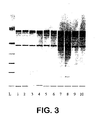
- Figure 3 and Table 1 show composite results from multiple assays - i . e ., for Figure 3, not all the assays shown were run on the same chip. The legend for interpreting FIG.
- RNA 3 is L: Ladder, Ambion RNA 6000 Ladder (Part Number 7152), lanes 1-2: Brain RNA isolated with SiCw column, lanes 3-4: Liver RNA isolated with SiCw column, lanes 5-6: Kidney RNA isolated with SiCw column, lanes 7-8: Pancreas RNA isolated with SiCw column, and lanes 9-10: Spleen RNA isolated with SiCw column Table 1 is a summary of the resulting RNA yields.
- Mouse organs that were quick frozen in liquid nitrogen immediately after harvest were obtained from Pel-Freez Biologicals (Rogers, AR). Alternatively, mouse organs can be used immediately after harvest, or preserved in a solution of RNALater (Ambion, Austin, TX).
- Cell lines were obtained from American Type Tissue Collection (ATCC, Manassas, VA 20108) and grown according to instructions provided. (See Table 1.) Cells were trypsinized to detach from the culture vessel, resuspended and counted with a hemocytometer. The suspension was then centrifuged at 1,000 x g for 10 minutes. The resulting pellet was resuspended in Lysis solution for a final concentration of 8.3 x 10 6 cells/mL and vigorously vortex mixed for 1 min. Alternatively cells may be lysed in the cell culture vessel.
- Tissue or cell homogenate typically 300-600 ⁇ L was added to a glass-fiber pre-filter in a spin column and centrifuged for 3 min. at 16,000 x g in an Eppendorf 5415D microcentrifuge (Brinkman, Westbury, NY).
- the spin columns were then washed with 500 ⁇ L Wash Buffer # 1 and centrifuged for at least 10 sec. at 16,000 x g. Following an extended centrifugation, the spin column could be subjected to DNase digestion. When DNase digestion was not performed, each spin column was then centrifuged twice for at least 10 sec. at 16,000 x g with the addition of 500 and 250 ⁇ L of Wash Buffer #2. The spin columns were then centrifuged for 2 min. at 16,000 x g to remove the final traces of Wash Buffer #2. The spin columns were removed from the 2 mL collection tubes and placed intol.5 mL nuclease-free microfuge tubes.
- RNA was eluted twice with 50 ⁇ L nuclease-free water, centrifuging 15 sec. and 2 min. respectively. RNA can then be stored at 70° C.
- RNA obtained in the experiments was assayed with the RNA 6000 Nano Assay (Agilent Technologies, Palo Alto, CA) per manufacturer's instructions, as show in the software generated images in figure 3.
- RNA purified using the methods and devices of the present invention is of high yield, purity and integrity. Yields of RNA using SiCw column (see Examples 2 and 3) Isolation of tcRNA from Cultured Cells and Mouse Tissues ⁇ g tcRNA/ 10 5 cells or mg tissue A 260nm / A 280nm HEK 293 24 2.0 HeLa S3 7.3 1.9 NIH 3T3 14.8 2.3 Brain 0.6 1.8 Liver 3.0 2.0 Kidney 2.2 2.1 Pancreas 12.3 2.0 Spleen 4.7 2.1
- RNAs were assayed with the Agilent Technologies' RNA 6000 Nano assay (part no. 5065-4476) on the Bioanalyzer 2100 (part no. G2938B, Agilent Technologies, Palo Alto, CA) as per manufacturer's instructions.
- Figure 3 is the software-generated results of the electrophoresis assay.
- Spleen tissue was selected for the examples shown herein because spleen tissue is one of the most difficult tissues from which to isolate RNA due to the large amounts of gDNA present in the spleen.
- Spleen RNA was isolated, following pre-filtration, using silicon carbide whiskers (SiCw) and/or silica-based (QIAGEN) isolation methods.
- Tissue homogenate (typically about 300-600 ⁇ L) was pre-treated for use in a QIAGEN column by centrifuging for 3 min. at 16,000 x g, or pre-treated for use in a SiCw column by adding it to a glass fiber pre-filter of the present invention and then centrifuged for 3 min. at 16,000 x g in an Eppendorf 5415D microcentrifuge (Brinkman, Westbury, NY).
- the spin columns were then centrifuged for at least 10 sec. at 16,000 x g.
- the effluent from each was collected in and decanted from 2 mL collection tubes and the spin columns were placed back in the collection tubes.
- the spin columns were then washed with 700 ⁇ L RW1 (QIAGEN RNeasy column) or 700 ⁇ L Wash Buffer #1 and centrifuged for at least 10 sec. at 16,000 x g.
- the SiCw spin column contents were then either subjected to DNase digestion as described below or washed with Wash Buffer #2 as described below.
- samples can be optionally subjected to DNase treatment.
- DNase I was diluted to a concentration of 0.5 ⁇ g/ ⁇ L in 100 ⁇ L final volume in 1X DNase buffer and applied to the SiCw column.
- the methods of the present invention described herein use low salt concentrations in the DNase buffer, for example, as low as 10 mM, whereas most conventional methods require a high salt concentration - for example, up to as much as 1M NaCl is used in some commercial DNase buffers for on-column digestion.
- the methods of the instant invention do not use salt to increase ionic strength or retain binding because DNase is very sensitive to high ionic concentrations (note the reagents listed in Example 1, supra), for example, only 100 mM CaCl 2 was used in the present example.
- the column was then incubated for 15 min. at 25°C. The digestion was terminated by the addition of 500 ⁇ L of Wash Buffer #1 and centrifuging for at least 10 sec. at 16,000 x g. Washing with Wash Buffer #2 was performed and then the elution was performed as described above after the final traces of Wash buffer #2 were removed. Samples on which the QIAGEN method was used were not subjected to DNase digestion.
- Genomic DNA contamination was quantified using a 5' nuclease assay, or "real-time" PCR assay, run on the Applied Biosystems Prism 7000 Sequence Detection System (Applied Biosystems, Foster City, CA). This type of assay monitors the amount of PCR product that accumulates with every PCR cycle. This is a highly sensitive and reproducible assay for the detection of PCR product.
- Isolated tcRNA ( ⁇ 20 ng) from mouse mouse spleen was added to a reaction mixture containing primers and probe specific for mouse (Genbank Accession NM_008084) glyceraldehyde-3-phosphate dehydrogenase (GAPDH). All samples were run in a reaction mixture consisting of both primers at 500 nM, fluorescent probe at 200 nM, and 1X Taqman Universal Master Mix (part #43044437) in conditions well known to those skilled in the art. Serial dilutions of mouse genomic DNA (Promega, Madison WI) were used for the generation of a standard curve. All samples, standards and no-template controls were run in duplicate.
- primers and probe specific for mouse Genebank Accession NM_008084
- GPDH glyceraldehyde-3-phosphate dehydrogenase
- the mouse GAPDH assay amplified a 78 base-pair fragment within an exon.
- the GAPDH assay primers and probe were designed using the Primer Express software package (Applied Biosystems, Foster City, CA,part no. 4329442). The primers were desalted and the probe (5' labeled with 6-FAM and 3' labeled with BHQ-1) was purified by anion exchange followed by reverse phase HPLC (Biosearch Technologies, Novato, CA).
- the assay cycling parameters for both assays were the default conditions set by the manufacturer, i.e. , 50°C for 2 min., 95°C for 10 min., then 40 cycles of 95°C for 15 sec. to 60°C for 1 min. Quantification of gDNA in the isolated tcRNA was calculated from the mouse gDNA standard curve.
- Table 2 shows the results of the quantitative PCR assay demonstrating the reduction of gDNA via pre-filtration and/or on-column DNase digestion, in various combinations of centrifugation only, pre-filtration, DNase digestion, QIAGEN methods, and the SiCw methods of the present invention.
- Table 3 lists the RNA yields and gDNA contamination of the spleen tcRNA experiments shown in FIG. 3. Yields are not shown for samples with high gDNA contamination. Levels of gDNA were determined by the real time PCR assay described in above example.
- Figure 4 illustrates the high levels of gDNA contamination detected in the Agilent RNA 6000 Nano assay, as seen in lanes 1-3, 10-12, 16-18, and 19-21 vs. the low levels for example in lanes 4-6.
- the legend for FIG 4 is L: Ladder, Ambion RNA 6000 Ladder (part no.
- lanes 1-3 Spleen RNA isolated with SiCw column from cleared (centrifuged) homogenate
- 4-6 Spleen RNA isolated with SiCw column from GF/F pre-filtered homogenate
- 7-9 Spleen RNA isolated with SiCw column from GF/F pre-filtered homogenate and subjected to on-column DNase digestion
- 10-12 Spleen RNA isolated with SiCw column from GF/D pre-filtered homogenate
- 13-15 Spleen RNA isolated with SiCw column from A/B pre-filtered homogenate
- 16-18 Spleen RNA isolated with SiCw column from A/D pre-filtered homogenate
- 19-21 Spleen RNA isolated with RNeasy mini column from cleared (centrifuged) homogenate
- 22-24 Spleen RNA isolated with RNeasy column from GF/F pre-filtered.
- lanes 10- 12 and 16-18 have considerably more gDNA contamination.
- Lanes 10-12 used a filter material having a particle-retention of about 3 ⁇ m
- lanes 16-18 used a filter material having a particle-retention of about 1 ⁇ m
- the filter material used for lanes 4, 5, and 6 and the filter material used for lanes 22, 23, and 24 had a particle retention of about 0.7 ⁇ m. Therefore, filter type, composition and performance must be optimized.
- RNA yields and gDNA amounts of lanes 4-6 which use the pre-filtration methods and devices of the current invention Compare the RNA yields and gDNA amounts of lanes 4-6 which use the pre-filtration methods and devices of the current invention to those of lanes 7-9 which use the pre-filtration methods in combination with traditional DNase treatment. While somewhat more gDNA is removed using the combination of pre-filtration and DNase digestion, the methods and devices of the present invention alone removes substantially all of the gDNA and may allow a practitioner to avoid DNase treatment if desired for a particular application.
- DNase digestion used with those procedures are described by Promega and the protocols can be found in the QIAGEN kits.
- use of DNase digestion is always dependent on the end use application. For example, even with the QIAGEN kits, DNase digestion is probably unnecessary for Northern hybridizations. Therefore, whether or not DNase digestion is used or needed depends on the end application for which the RNA is being isolated.
- the methods and devices of the present invention effectively remove gDNA from a sample from which RNA is being isolated, can avoid the necessity of DNase digestion (yet are compatible with DNase digestion if necessary), and function with commercial RNA isolation kits (for example QIAGEN's RNeasy kit), especially silica-based kits, to enhance their effectiveness.
- RNA isolation kits for example QIAGEN's RNeasy kit
- silica-based kits to enhance their effectiveness.
- Mouse liver homogenates were prepared as described herein and used for RNA isolations. The addition of 70% ethanol to the filtered homogenate, as described in Example 2, was substituted with equal volumes of RNase-free water, 70% isopropanol or methanol. The mixture was added to a SiCw spin-column, and RNA isolation continued as described herein.
- Example 5 RNA isolation from plant tissues
- Arabidopsis leaves were weighed and power-homogenized in excess Lysis Buffer at 15,000 rpm for 30 seconds using an OMNI TH tissue homogenizer (Omni, Inc, Warrenton, VA). Leaf tissue can also be frozen after harvest and homogenized as above.
- Tissue homogenate typically about 300-600 ⁇ L was pre-treated by centrifuging for 2 min. at 16,000 x g, or by adding it to a glass fiber pre-filter of the present invention and then centrifuging for 2 min. at 16,000 x g in an Eppendorf 5415D microcentrifuge (Brinkman, Westbury, NY).
- the spin columns were then washed using 500 ⁇ L of Wash Buffer # 1 and centrifuged for at least 10 sec. at 16,000 x g. Each one of the columns was then centrifuged twice as described above for at least 10 sec. at 16,000 x g with the addition of 500 ⁇ L (1 st time) and 250 ⁇ L (2 nd time) of Wash Buffer #2. The second centrifugation was extended to 2 min at 16,000 x g to remove the final traces of Wash Buffer #2. Each of the columns was then removed from its 2 mL collection tube and placed into a 1.5 mL microfuge tube. RNA was eluted twice using 50 ⁇ l nuclease-free H 2 O. RNA was then stored at -20°C or -70°C.
- FIG. 5 The results of the plant tissue RNA isolation are shown in FIG. 5. Resulting RNAs were assayed with the Agilent Technologies' RNA 6000 Nano assay (part no. 5065-4476) on the Bioanalyzer 2100 (part no. G2938B, Agilent Technologies, Palo Alto, CA) as per manufacturer's instructions and FIG. 5 is the computer-generated printout of the electrophoresis assay results. The legend for FIG.
- L Ladder, Ambion RNA 6000 Ladder (Part Number 7152), lanes 1-3: Arabidposis RNA isolated with SiCw column from GF/F pre-filtered homogenate, and 4-6: Arabidopsis RNA isolated with SiCw column from cleared (centrifuged) homogenate.
- Genomic DNA contamination was quantified with a 5' nuclease assay, or "real-time" PCR assay, run on the Applied Biosystems Prism 7000 Sequence Detection System (Applied Biosystems, Foster City, CA). This type of assay monitors the amount of PCR product that accumulates with every PCR cycle. This is a highly sensitive and reproducible assay for the detection of PCR product.
- Isolated tcRNA (200 ng) from arabidposis leaf was added to a reaction mixture containing primers and probe specific for the 18S ribosomal RNA. As per manufacturer's guidelines, all samples were run in a reaction mixture consisting of both primers at 500nM, fluorescent probe at 200 nM, and 1X Taqman Universal Master Mix (part no. 43044437). Serial dilutions of arabidposis genomic DNA purified from leaves were used for the generation of a standard curve. All samples, standards and no-template controls were run in duplicate.
- the assay amplifies a 187 base-pair fragment within an exon.
- the primers and probe were designed using the Primer Express software package (Applied Biosystems, Foster City, CA, part no. 4329442). The primers were desalted and the probe (5' labeled with 6-FAM and 3' labeled with BHQ-1) was purified by anion exchange followed by reverse phase HPLC (Biosearch Technologies, Novato, CA).
- the assay cycling parameters for both assays are the default conditions set by the manufacturer, i . e ., 50° C for 2 min., 95° C for 10 min., then 40 cycles of 95° C for 15 sec. to 60° C for 1 min.
- RNA isolation from tissues high in connective tissue and contractive proteins such as skin, heart and muscle can be facilitated with Proteinase K treatment.
- tissue are homogenized, as described above, and an equal volume of water can be added to the sample.
- Proteinase K can then be added to a final concentration of 1 unit/100 ⁇ L, mixed and incubated at 55° C for 10 minutes.
- the homogenate can then be centrifuged through the pre-filter column of the present invention (with/without further processing), with or without DNase treatment as described above.
- RNA from larger numbers of samples can be facilitated using a vacuum manifold designed for use with solid phase extraction (SPE) columns and vacuum pumps.
- Samples are homogenized, clarified and mixed with a low molecular weight alcohol such as ethanol, as above.
- a low molecular weight alcohol such as ethanol
- the SiCw spin column is then placed on a vacuum manifold with the stopcock in the shut position.
- the ethanol-containing homogenate can then be added to the column and the stopcock opened to let the homogenate through.
- the stopcock is then shut, 500 ⁇ L of Wash Buffer #1 is added and the stopcock opened again. This process is repeated for the subsequent 500 ⁇ L and 250 ⁇ L Wash Buffer #2 washes as described above.
- the stopcock is then left open for 2 minutes to dry the spin column and the spin column is then placed into a 1.5 mL microfuge tube for the final elution as described above.
Landscapes
- Chemical & Material Sciences (AREA)
- Engineering & Computer Science (AREA)
- Health & Medical Sciences (AREA)
- Biomedical Technology (AREA)
- Life Sciences & Earth Sciences (AREA)
- Genetics & Genomics (AREA)
- Bioinformatics & Cheminformatics (AREA)
- Organic Chemistry (AREA)
- Zoology (AREA)
- Wood Science & Technology (AREA)
- Biotechnology (AREA)
- General Engineering & Computer Science (AREA)
- Crystallography & Structural Chemistry (AREA)
- Plant Pathology (AREA)
- Molecular Biology (AREA)
- Microbiology (AREA)
- Biophysics (AREA)
- Physics & Mathematics (AREA)
- Biochemistry (AREA)
- General Health & Medical Sciences (AREA)
- Analytical Chemistry (AREA)
- Measuring Or Testing Involving Enzymes Or Micro-Organisms (AREA)
- Filtering Materials (AREA)
Applications Claiming Priority (2)
| Application Number | Priority Date | Filing Date | Title |
|---|---|---|---|
| US631189 | 2003-07-31 | ||
| US10/631,189 US20050026153A1 (en) | 2003-07-31 | 2003-07-31 | Devices and methods for isolating RNA |
Publications (1)
| Publication Number | Publication Date |
|---|---|
| EP1502951A1 true EP1502951A1 (en) | 2005-02-02 |
Family
ID=33541514
Family Applications (1)
| Application Number | Title | Priority Date | Filing Date |
|---|---|---|---|
| EP04015364A Withdrawn EP1502951A1 (en) | 2003-07-31 | 2004-06-30 | Devices and methods for isolating RNA |
Country Status (3)
| Country | Link |
|---|---|
| US (2) | US20050026153A1 (enExample) |
| EP (1) | EP1502951A1 (enExample) |
| JP (1) | JP2005052142A (enExample) |
Cited By (5)
| Publication number | Priority date | Publication date | Assignee | Title |
|---|---|---|---|---|
| EP1790414A1 (de) * | 2005-11-23 | 2007-05-30 | Tecan Trading AG | Proben-Röhrchen und System zum Aufbewahren und Bereitstellen von Nukleinsäure-Proben |
| US20080299564A1 (en) * | 2005-10-04 | 2008-12-04 | Nederlandse Organisatievoor Toegepast Natuurwetenschappelijk Onderzoek Tno | Control of Preservation By Biomarkers |
| EP2725102A1 (en) * | 2012-10-26 | 2014-04-30 | Seiko Epson Corporation | Nucleic acid extraction device, and nucleic acid extraction method, nucleic acid extraction kit, and nucleic acid extraction apparatus, each using the same |
| EP3715456A1 (de) | 2019-03-28 | 2020-09-30 | AXAGARIUS GmbH & Co. KG | Verfahren zur isolierung von nukleinsäuren aus probematerialien |
| US11713456B2 (en) | 2020-04-08 | 2023-08-01 | Axagarius Gmbh & Co. Kg | Isolation of nucleic acids from environmental samples using magnetic particles |
Families Citing this family (14)
| Publication number | Priority date | Publication date | Assignee | Title |
|---|---|---|---|---|
| US7569342B2 (en) * | 1997-12-10 | 2009-08-04 | Sierra Molecular Corp. | Removal of molecular assay interferences |
| US20080064108A1 (en) * | 1997-12-10 | 2008-03-13 | Tony Baker | Urine Preservation System |
| US20050059024A1 (en) * | 2003-07-25 | 2005-03-17 | Ambion, Inc. | Methods and compositions for isolating small RNA molecules |
| US20050042660A1 (en) * | 2003-07-31 | 2005-02-24 | Hall Gerald Edward | Devices and methods for isolating RNA |
| WO2005093052A1 (en) * | 2004-03-26 | 2005-10-06 | Fuji Photo Film Co., Ltd. | Method for selectively separating and purifying rna and method for separating and purifying nucleic acid |
| US20060099605A1 (en) * | 2004-11-11 | 2006-05-11 | Hall Gerald E Jr | Devices and methods for isolating RNA |
| US20060270843A1 (en) * | 2005-05-26 | 2006-11-30 | Hall Gerald E Jr | Methods for isolation of nucleic acids |
| WO2007143206A2 (en) * | 2006-06-02 | 2007-12-13 | Epicentre Technologies | Compositions and methods for removal of dna from a sample |
| US20080113357A1 (en) * | 2006-06-29 | 2008-05-15 | Millipore Corporation | Filter device for the isolation of a nucleic acid |
| US8686129B2 (en) * | 2007-03-20 | 2014-04-01 | Agilent Technologies, Inc. | Methods for the separation of biological molecules using sulfolane |
| GB2505223B (en) * | 2012-08-23 | 2014-11-19 | Thermo Fisher Scientific Baltics Uab | Spin column |
| CA2880136C (en) * | 2012-09-03 | 2023-08-15 | Qiagen Gmbh | Method for isolating rna including small rna with high yield |
| GB2581489B (en) * | 2019-02-15 | 2021-02-24 | Revolugen Ltd | Purification method |
| US20220290212A1 (en) * | 2019-08-28 | 2022-09-15 | Contamination Source Identification Llc | Rapid isolation and collection of microbial rna from a biological specimen |
Citations (3)
| Publication number | Priority date | Publication date | Assignee | Title |
|---|---|---|---|---|
| US6043354A (en) * | 1996-01-31 | 2000-03-28 | Invitek Gmbh | Method for the simultaneous isolation of genomic DNA and high-purity RNA |
| WO2000065041A1 (en) * | 1999-04-23 | 2000-11-02 | Haj Ahmad Yousef | Process for nucleic acid purification using silicon carbide |
| WO2002038758A1 (en) * | 2000-11-13 | 2002-05-16 | Promega Corporation | Lysate clearance and nucleic acid isolation using silanized silica matrices |
Family Cites Families (22)
| Publication number | Priority date | Publication date | Assignee | Title |
|---|---|---|---|---|
| US3414394A (en) * | 1965-06-21 | 1968-12-03 | Owens Illinois Inc | Sintered glass article and method of making |
| SE377108B (enExample) * | 1970-03-27 | 1975-06-23 | Kanegafuchi Spinning Co Ltd | |
| US4996144A (en) * | 1985-01-25 | 1991-02-26 | Calgene, Inc. | Microassay for detection of DNA and RNA |
| US5869620A (en) * | 1986-09-02 | 1999-02-09 | Enzon, Inc. | Multivalent antigen-binding proteins |
| US5006472A (en) * | 1988-06-03 | 1991-04-09 | Miles Inc. | Enzymatic purification process |
| US5234809A (en) * | 1989-03-23 | 1993-08-10 | Akzo N.V. | Process for isolating nucleic acid |
| US5437976A (en) * | 1991-08-08 | 1995-08-01 | Arizona Board Of Regents, The University Of Arizona | Multi-domain DNA ligands bound to a solid matrix for protein and nucleic acid affinity chromatography and processing of solid-phase DNA |
| US5480972A (en) * | 1992-10-30 | 1996-01-02 | The University Of Melbourne | Allergenic proteins from Johnson grass pollen |
| DE4321904B4 (de) * | 1993-07-01 | 2013-05-16 | Qiagen Gmbh | Verfahren zur chromatographischen Reinigung und Trennung von Nucleinsäuregemischen |
| US5637687A (en) * | 1993-08-31 | 1997-06-10 | Wiggins; James C. | Methods and compositions for isolating nucleic acids |
| US5945515A (en) * | 1995-07-31 | 1999-08-31 | Chomczynski; Piotr | Product and process for isolating DNA, RNA and proteins |
| US5922536A (en) * | 1996-10-18 | 1999-07-13 | Nivens; David E. | Method for nucleic acid isolation using supercritical fluids |
| EP0973944A1 (en) * | 1997-03-31 | 2000-01-26 | Abbott Laboratories | Reagents and methods useful for detecting diseases of the gastrointestinal tract |
| US6103192A (en) * | 1997-04-14 | 2000-08-15 | Genetec Corporation | Immobilizing and processing specimens on matrix materials for the identification of nucleic acid sequences |
| US6218531B1 (en) * | 1997-06-25 | 2001-04-17 | Promega Corporation | Method of isolating RNA |
| US6897066B1 (en) * | 1997-09-26 | 2005-05-24 | Athersys, Inc. | Compositions and methods for non-targeted activation of endogenous genes |
| DE19746874A1 (de) * | 1997-10-23 | 1999-04-29 | Qiagen Gmbh | Verfahren zur Isolierung und Reinigung von Nukleinsäuren an hydrophoben Oberflächen - insbesondere unter Verwendung hydrophober Membranen |
| ZA99493B (en) * | 1998-01-30 | 1999-07-22 | Akzo Nobel Nv | Method for the isolation of nucleic acid. |
| US6268492B1 (en) * | 1998-08-10 | 2001-07-31 | Chiron Corporation | Methods for purifying non-chromosomal nucleic acid molecules from cells |
| US6270970B1 (en) * | 1999-05-14 | 2001-08-07 | Promega Corporation | Mixed-bed solid phase and its use in the isolation of nucleic acids |
| US6310199B1 (en) * | 1999-05-14 | 2001-10-30 | Promega Corporation | pH dependent ion exchange matrix and method of use in the isolation of nucleic acids |
| US6548256B2 (en) * | 2000-07-14 | 2003-04-15 | Eppendorf 5 Prime, Inc. | DNA isolation method and kit |
-
2003
- 2003-07-31 US US10/631,189 patent/US20050026153A1/en not_active Abandoned
- 2003-10-24 US US10/693,428 patent/US20050026159A1/en not_active Abandoned
-
2004
- 2004-06-30 EP EP04015364A patent/EP1502951A1/en not_active Withdrawn
- 2004-07-29 JP JP2004221269A patent/JP2005052142A/ja active Pending
Patent Citations (3)
| Publication number | Priority date | Publication date | Assignee | Title |
|---|---|---|---|---|
| US6043354A (en) * | 1996-01-31 | 2000-03-28 | Invitek Gmbh | Method for the simultaneous isolation of genomic DNA and high-purity RNA |
| WO2000065041A1 (en) * | 1999-04-23 | 2000-11-02 | Haj Ahmad Yousef | Process for nucleic acid purification using silicon carbide |
| WO2002038758A1 (en) * | 2000-11-13 | 2002-05-16 | Promega Corporation | Lysate clearance and nucleic acid isolation using silanized silica matrices |
Non-Patent Citations (2)
| Title |
|---|
| BAVYKIN SERGEI G ET AL: "Portable system for microbial sample preparation and oligonucleotide microarray analysis", APPLIED AND ENVIRONMENTAL MICROBIOLOGY, WASHINGTON,DC, US, vol. 67, no. 2, February 2001 (2001-02-01), pages 922 - 928, XP002289341, ISSN: 0099-2240 * |
| BUSH C ET AL: "RAPID ISOLATION OF GENOMIC DNA FROM WHOLE BLOOD BY BINDING TO BOROSILICATE PARTICLES", CLINICAL CHEMISTRY, vol. 37, no. 6, 1991, & 43RD NATIONAL MEETING OF THE AMERICAN ASSOCIATION FOR CLINICAL CHEMISTRY, INC., WASHINGTON, D.C., US, pages 1060, XP009039493, ISSN: 0009-9147 * |
Cited By (7)
| Publication number | Priority date | Publication date | Assignee | Title |
|---|---|---|---|---|
| US20080299564A1 (en) * | 2005-10-04 | 2008-12-04 | Nederlandse Organisatievoor Toegepast Natuurwetenschappelijk Onderzoek Tno | Control of Preservation By Biomarkers |
| EP1790414A1 (de) * | 2005-11-23 | 2007-05-30 | Tecan Trading AG | Proben-Röhrchen und System zum Aufbewahren und Bereitstellen von Nukleinsäure-Proben |
| EP2725102A1 (en) * | 2012-10-26 | 2014-04-30 | Seiko Epson Corporation | Nucleic acid extraction device, and nucleic acid extraction method, nucleic acid extraction kit, and nucleic acid extraction apparatus, each using the same |
| US9347056B2 (en) | 2012-10-26 | 2016-05-24 | Seiko Epson Corporation | Nucleic acid extraction device, and nucleic acid extraction method, nucleic acid extraction kit, and nucleic acid extraction apparatus, each using the same |
| EP3715456A1 (de) | 2019-03-28 | 2020-09-30 | AXAGARIUS GmbH & Co. KG | Verfahren zur isolierung von nukleinsäuren aus probematerialien |
| US11959070B2 (en) | 2019-03-28 | 2024-04-16 | Axagarius Gmbh & Co. Kg | Process for isolating nucleic acids from sample materials |
| US11713456B2 (en) | 2020-04-08 | 2023-08-01 | Axagarius Gmbh & Co. Kg | Isolation of nucleic acids from environmental samples using magnetic particles |
Also Published As
| Publication number | Publication date |
|---|---|
| US20050026153A1 (en) | 2005-02-03 |
| JP2005052142A (ja) | 2005-03-03 |
| US20050026159A1 (en) | 2005-02-03 |
Similar Documents
| Publication | Publication Date | Title |
|---|---|---|
| EP1502951A1 (en) | Devices and methods for isolating RNA | |
| AU745185B2 (en) | Method of isolating RNA | |
| US6383393B1 (en) | Chromatographic purification and separation process for mixtures of nucleic acids | |
| EP1618194B1 (en) | Compositions and methods for using a solid support to purify rna | |
| US6037465A (en) | Universal process for isolating and purifying nucleic acids from extremely small amounts of highly contaminated various starting materials | |
| CN101124321B (zh) | 用于从稳定剂中纯化核酸的组合物和方法 | |
| US5808041A (en) | Nucleic acid purification using silica gel and glass particles | |
| CN102812118B (zh) | 分离和纯化核酸的方法 | |
| EP1529841B1 (en) | RNA extraction method, RNA extraction reagent, and method for analyzing biological materials | |
| JP2005052142A5 (enExample) | ||
| WO2007008722A2 (en) | Method for the isolation of rna from biological sources | |
| EP1694692B1 (en) | Formulations and methods for denaturing proteins | |
| US20050026175A1 (en) | Devices and methods for isolating RNA | |
| CN102822340A (zh) | 分离和纯化核酸的色谱设备和方法 | |
| US20060099605A1 (en) | Devices and methods for isolating RNA | |
| JP3979996B2 (ja) | 固体支持体を使用してrnaを精製するための組成物および方法 | |
| EP1526176A2 (en) | Devices and methods for isolating RNA | |
| JP3082908B2 (ja) | リボ核酸の単離方法 | |
| US20050164260A1 (en) | Rapid preparation of nucleic acids by enzymatic digestion | |
| US20050042660A1 (en) | Devices and methods for isolating RNA | |
| EP1626085A1 (en) | Devices and methods for isolating RNA | |
| WO2005093065A1 (en) | Improved method of isolating nucleic acids | |
| US20060223072A1 (en) | Methods of using a DNase I-like enzyme | |
| AU2004233035B2 (en) | Compositions and methods for using a solid support to purify RNA |
Legal Events
| Date | Code | Title | Description |
|---|---|---|---|
| PUAI | Public reference made under article 153(3) epc to a published international application that has entered the european phase |
Free format text: ORIGINAL CODE: 0009012 |
|
| AK | Designated contracting states |
Kind code of ref document: A1 Designated state(s): AT BE BG CH CY CZ DE DK EE ES FI FR GB GR HU IE IT LI LU MC NL PL PT RO SE SI SK TR |
|
| AX | Request for extension of the european patent |
Extension state: AL HR LT LV MK |
|
| 17P | Request for examination filed |
Effective date: 20050214 |
|
| AKX | Designation fees paid |
Designated state(s): DE FR GB |
|
| RAP1 | Party data changed (applicant data changed or rights of an application transferred) |
Owner name: AGILENT TECHNOLOGIES, INC. |
|
| STAA | Information on the status of an ep patent application or granted ep patent |
Free format text: STATUS: THE APPLICATION IS DEEMED TO BE WITHDRAWN |
|
| 18D | Application deemed to be withdrawn |
Effective date: 20080624 |