EP1500625A1 - Procédé de réglage d'une serrure de porte paliere d'ascenseur - Google Patents
Procédé de réglage d'une serrure de porte paliere d'ascenseur Download PDFInfo
- Publication number
- EP1500625A1 EP1500625A1 EP04290192A EP04290192A EP1500625A1 EP 1500625 A1 EP1500625 A1 EP 1500625A1 EP 04290192 A EP04290192 A EP 04290192A EP 04290192 A EP04290192 A EP 04290192A EP 1500625 A1 EP1500625 A1 EP 1500625A1
- Authority
- EP
- European Patent Office
- Prior art keywords
- bolt
- saber
- lock
- drive roller
- rollers
- Prior art date
- Legal status (The legal status is an assumption and is not a legal conclusion. Google has not performed a legal analysis and makes no representation as to the accuracy of the status listed.)
- Granted
Links
- 238000000034 method Methods 0.000 title claims abstract description 19
- 230000001105 regulatory effect Effects 0.000 abstract 2
- 230000001276 controlling effect Effects 0.000 abstract 1
- 238000006073 displacement reaction Methods 0.000 description 3
- 230000000903 blocking effect Effects 0.000 description 1
- 239000000470 constituent Substances 0.000 description 1
- 230000000694 effects Effects 0.000 description 1
- 238000012423 maintenance Methods 0.000 description 1
Images




Classifications
-
- B—PERFORMING OPERATIONS; TRANSPORTING
- B66—HOISTING; LIFTING; HAULING
- B66B—ELEVATORS; ESCALATORS OR MOVING WALKWAYS
- B66B13/00—Doors, gates, or other apparatus controlling access to, or exit from, cages or lift well landings
- B66B13/02—Door or gate operation
- B66B13/14—Control systems or devices
- B66B13/16—Door or gate locking devices controlled or primarily controlled by condition of cage, e.g. movement or position
- B66B13/18—Door or gate locking devices controlled or primarily controlled by condition of cage, e.g. movement or position without manually-operable devices for completing locking or unlocking of doors
- B66B13/20—Lock mechanisms actuated mechanically by abutments or projections on the cages
Definitions
- the present invention relates to a method of adjusting a door lock elevator landing.
- An elevator usually includes an elevator car provided for carry passengers between the floors of a building inside a cage of elevator comprising on each floor an opening allowing passengers to access a landing.
- an elevator car For each opening of the elevator shaft, is provided on the bearing a door, said landing door, which ensures the closure and locking by through a lock.
- the lock of each landing door has a bolt pivoting device provided with at least one drive abutment provided to facilitate the pivoting the bolt out of a striker.
- the cabin that moves in the cage has his own door, called the cabin door.
- This cabin door comprises a device formed of two blades called saber intended to remain in a closed position in which the blades are brought closer together during the passage of the bearings and to open by blades relative to each other upon arrival of the cabin at the chosen landing.
- the sword opens and exerts a push on a stops for driving the pivoting bolt so as to rotate it towards a position in which he unlocks the landing door and authorizes the opening of this last by the movement of the cabin
- the training abutment or stops are accompanied by abutments of blocking which limits the spacing of the blades of the sword.
- the object of the invention is to propose a solution intended to facilitate this adjustment. avoiding the disadvantages mentioned above.
- the present invention relates to a method of adjusting a lock of an elevator landing door, said lock comprising a striker provided to receive a pivoting bolt provided with at least one drive roller, said or each roller drive being slidably mounted on said bolt and being provided to allow pivoting said bolt by a sword.
- the process according to the invention is characterized in what it consists in controlling the opening of said saber so that it exercises a force on said or each drive roller sliding it to a position set from which said bolt, under a subsequent action of said saber, begins to free itself from said striker.
- the method before starting to exercise a force on said or each drive wheel, the method consists in placing said or each drive roller in a position away from the set position.
- the drive roller is locked in this position.
- control of the opening of said saber is driven by a program intended to open said saber from a distance predetermined.
- said sword opens between two pebble said bolt, but acts only on a single roller training.
- the sword opens between two rollers of said bolt and acts on said two rollers.
- the invention also relates to a door opening system elevator, comprising, on the one hand, a lock comprising a fixed striker and a pivot bolt, said bolt comprising at least one drive roller provided for allow the drive of said latch bolt out of said latch and, secondly, a saber provided to act on said or each drive roller.
- the present system opening is characterized in that it comprises at least one control means intended to make the saber take a setting position so that it exerts a force on said or each drive roller sliding it up to a set position from which said bolt under a subsequent action of said saber, begins to free itself from said striker.
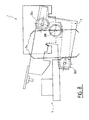
- FIG. 1 the main constituent parts of a lock 1 according to the invention, namely a bolt 2 which can be inserted in a striker 3, the bolt 2 being mounted on a bolt support 4.
- the bolt support 4 makes it possible to fix the bolt 2 on one of the leaves representing the sliding part of the landing door (no shown).
- the bolt 2 has two parts, a first part 2a which presents itself in the form of a pivoted crooked piece forming a mechanical bolt and a second part 2b mounted on the first part 2a and which is in the form of a part elongated forming electric bolt.
- the strike 3 also has two parts corresponding respectively to parts 2a and 2b of the bolt 2, namely a first part 3a forming a mechanical strike and a second part 3b forming an electric strike.
- the part 2a of the bolt 2 is preferably in the form of a U comprising a soul 2a1 and two wings 2a2 and 2a3.
- One of the wings 2a2, 2a3, for example the wing 2a3, is bent inwardly of the U so as to engage with part 3a of the striker 3.
- the bolt 2 is provided to pivot about an axis of rotation 200 which is placed in an area remote from the barycentre of the bolt so that it takes by default a rest position in which it locks the landing door.
- this axis 200 is near the center of the soul 2a1 approximately on the same line as the end of the hooked part of the wing 2a3.
- a drive roller 20a provided to serve as a fulcrum for the pivoting drive of the bolt 2 by a saber 24 mounted on the opening mechanism of the cabin door.
- a thrust roller 20b At the free end of the wing 2a2, is mounted a thrust roller 20b provided to block the spacing of the sword 24 and therefore the rotational movement of the bolt 2.
- Each roller 20a, 20b comprises a 21a axis, 21b slidably mounted in a slide 22a, 22b made in the bolt 2.
- the axes 21a and 21b of the rollers 20a and 20b are preferably connected together by a plate 23 that allows them to be moved simultaneously and identically in the corresponding slides 22a, 22b.
- the part 2b of the bolt 2 ensures in the part 3b of the striker 3 a contact which guarantees the effective closing of the door.
- the sword 24, intended to unlock the lock 1 previously described, comprises two vertical blades 24a and 24b centered on a centering point P.
- Ce saber 24 is provided to take three positions: a rest position in which the blades 24a and 24b are brought together around the centering point P, a position of setting in which the blades 24a and 24b are remote from the centering point P, but in which the sword 24 is not completely open and a position of operation in which the saber 24 is fully open.
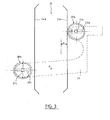
- Figs. 2 and 3 only the elements of the lock 1 involved in this process, to namely the rollers 20a and 20b, the slides 22a and 22b, the plate 23 and the saber 24. these elements, the slides 22 and the centering point P of the saber 24 are elements fixed, while the rollers 20 and the plate 23 are movable elements. So, we note in fig. 2, that to set the lock 1, one preferably starts with move the axes 21a, 21b of the rollers 20a, 20b on one side of the slides 22a, 22b. These axes are then free of movement in the slides.
- the plate 23 which is solidary axes 2 1 a, 2 1 b facilitates this manipulation by acting on only one of the axes 21.
- the method provides for opening the sword 24 to the adjustment position predefined.
- one of the blades 24a, 24b is supported against a roller 20.
- This roller is either the drive roller 20a if it has been moved to the saber 24 during the first step, the thrust roller 20b.
- the opening of the sword 24 generates the displacement of the axis 21a in the slideway 22a and the axis 21b in the slide 22b to a position called set position.
- the opening distance of the sword is by example ordered by a program provided for this purpose.
- This program led by person in charge of the adjustment controls the opening of the sword 24 as predefined generating the displacement of the axes corresponding to the desired setting.
- the moving each of the blades 24a, 24b between the rest position and the position of setting corresponds to a distance x preferably of about 7 mm.
- the axes of the rollers are held in place by any means, for example by nuts, so as to lock the position obtained.
- the lock 1 of the landing door being adjusted and locked, the process can be repeated at each level on each lock to adjust.
- the drive roller 20a can not slide further in the slide 22a. That is why, when stopping the elevator car at a bearing, when the sword 24 opens, the drive roller 20a pivots. So, when the sword 24 reaches its operating position which corresponds to a distance between the blades 24a and 24b, the roller 20a reaches a position where it allows the bolt 2 to fall back and forth from the striker 3. In this position represented in FIG. 4, the sword 24 is preferably blocked in its movement by the thrust roller 20b. Nevertheless, this embodiment could also operate only with a single roller, the drive roller 20a. advantageously, this position corresponds to a position of equilibrium in which the bolt 2 is neither in taken with the keeper 3 and not far from it. The lock 3 is then unlocked and the landing door can be driven in the opening movement of the cabin door.
- FIG. 5 A second embodiment of the method of the invention has been shown to Figs. 5 to 8.
- a first roller 20a at the intersection between the wing 2a3 and the core 2a1, is mounted a first roller 20a and at the free end of the wing 2a2, is mounted a second roller 20b.
- These rollers 20a and 20b are intended to serve as points of support for the drive in rotation of the bolt 2 by a saber 24 mounted on the cabin door.
- Each roller 20a, 20b has an axis 21a, 21b slidably mounted in a slide 22a, 22b made in the bolt 2.
- the axes 21a and 21b of the rollers 20a and 20b are preferably bonded together by a plate 23 which allows them to be moved from simultaneously and identically in the corresponding slides 22a, 22b.
- the part 2b of the bolt 2 ensures in part 3b of the striker 3 an electrical contact which guarantees the effective closure Door.
- the sword 24, intended to unlock the lock 1 previously described, has two blades 24a and 24b vertical centered on a centering point P located on a line approximately midway between the slides 22a and 22b.
- This saber 24 can take three positions, a rest position in which the blades 24a and 24b are brought together around the centering point P, a setting position in which the distance between the blades 24a and 24b of the saber 24 is equal to the distance between the slides 22a and 22b and an operating position in which the blades 24a and 24b of the saber 24 respectively touch the rollers 20a and 20b and rotate the bolt 2.
- FIGS. 6 and 7 the elements of the lock 1 involved in the process of the invention, namely the rollers 20a and 20b, the slides 22a and 22b, the plate 23 and the sword 24.
- the slides 22 and the centering point P saber 24 are fixed elements, while the rollers 20 and the plate 23 are moving parts.
- the starting position of the axes 21a and 21b of the rollers 20a and 20b in the slides 22a and 22b can be any. Indeed, to set the lock 1, no displacement prior to the rollers 20 is necessary. The simple fact of making the axes 21 a, 2 1 b of rollers 20a, 20b free movement in the slides 22a, 22b is sufficient.
- the setting of the position of the rollers 20a, 20b in the slides 22a, 22b is then realized in a single step which consists of moving the blades 24a, 24b from the centering point P.
- the blade 24a or 24b closest to a roller 20a or 20b will exercise a thrust on this roller 20a or 20b which will slide in the slide 22a or 22b corresponding.
- the rollers 20a, 20b being secured to one another by virtue of the plate 23, the roller 20a or 20b having not undergone thrust slides so identical.
- the first roller 20a is thrust on the of the blade 24a of the sword 24 and slides in the slideway 22a.
- the second roller 20b slides simultaneously and identically in the slideway 22b.
- the sliding rollers 20a, 20b are stopped when the blades 24a, 24b of the sword 24 come into abutment against the two rollers 20a and 20b because the plate 23 prevents the spacing of rollers 20a, 20b, as shown in FIG. 7. In this position, the pebbles are approximately equidistant from the centering point P of the sword 24. If the blades 24a and 24b of the saber 24 continue to move apart, the rollers being unable to to move aside, it is then the bolt that pivots.
- the opening distance of the sword 24 can be controlled by a program meant for that purpose.
- This program is controlled by the person in charge of the adjustment controls the opening of the sword 24 so as to cause the axes to be displaced pebbles without going to the opening of the corresponding leaf. Moving from each of the blades 24a, 24b between the rest position and the adjustment position corresponds to a distance x advantageously of about 7 mm. Nevertheless, this mode embodiment makes it possible to adjust the lock 1 without necessarily determining in advance an opening distance of the sword. Indeed, the opening of the sword 24 beyond the desired distance for setting, does not change the setting position, but causes only the pivoting of the bolt 2 thus adjusted.
- the axes of the rollers can be maintained in place by any means, for example by nuts, so as to lock the position obtained.
- this lock is not mandatory given that the action of the sword 24 on the rollers 20a, 20b beyond the set position, does not cause any real inconvenience as to the opening of the landing door by the door cabin. Nevertheless, the locking is done in order to preserve this set position when the sword 24 no longer acts on the rollers 20a, 20b.
- the lock 1 of the landing door being set the process can be repeated at each step on each lock to be adjusted.
- the rollers 20a and 20b can no longer slide in the respective slides 22a and 22b. That is why, at the end of the one-level elevator car, when the sword 24 opens, the rollers 20a and 20b pivot and rotate the bolt 2 coming out of the striker 3.
- the sword 24 is preferably blocked in its movement by a thrust roller (not shown).
- this position corresponds to a equilibrium position in which the bolt 2 is not in contact with the striker 3 and away from it. The lock 3 is then unlocked and the landing door can be trained in the opening movement of the cabin door.
Landscapes
- Engineering & Computer Science (AREA)
- Mechanical Engineering (AREA)
- Automation & Control Theory (AREA)
- Elevator Door Apparatuses (AREA)
Abstract
Description
Claims (7)
- Procédé de réglage d'une serrure (1) de porte palière d'ascenseur, ladite serrure (1) comportant une gâche (3) prévue pour recevoir un pêne pivotant (2) pourvu d'au moins un galet d'entraínement (20a), ledit ou chaque galet d'entraínement (20a) étant monté à coulissement sur ledit pêne (2) et étant prévu pour permettre le pivotement dudit pêne (2) par un sabre (24), caractérisé en ce qu'il consiste à commander l'ouverture dudit sabre (24) de manière à ce qu'il exerce une force sur ledit ou chaque galet d'entraínement (20a) le faisant coulisser jusqu'à une position réglée à partir de laquelle ledit pêne (2), sous une action subséquente dudit sabre (24), commence à se libérer de ladite gâche (3).
- Procédé de réglage selon la revendication 1, caractérisé en ce qu'il consiste avant de commencer à exercer une force sur ledit ou chaque galet d'entraínement (20a), à placer ledit ou chaque galet d'entraínement (20a) dans une position éloignée de la position réglée.
- Procédé de réglage selon la revendication 1 ou 2, caractérisé en ce qu'une fois la position réglée obtenue, le galet d'entraínement (20a) est verrouillé dans cette position.
- Procédé de réglage selon l'une des revendications précédentes, caractérisé en ce que la commande de l'ouverture dudit sabre (24) est pilotée par un programme prévu pour ouvrir ledit sabre (24) d'une distance prédéterminée.
- Procédé de réglage selon l'une des revendications précédentes, caractérisé en ce que ledit sabre s'ouvre entre deux galets (20a, 20b) dudit pêne (2), mais n'agit que sur un unique galet d'entraínement (20a).
- Procédé de réglage selon la revendication 1, caractérisé en ce que le sabre (24) s'ouvre entre deux galets (20a, 20b) dudit pêne (2) et agit sur lesdits deux galets (20a, 20b).
- Système d'ouverture de porte palière d'ascenseur, comportant, d'une part, une serrure comprenant une gâche (3) fixe et un pêne (2) pivotant, ledit pêne (2) comportant au moins un galet d'entraínement (20a) prévu pour permettre l'entraínement dudit pêne (2) en rotation hors de ladite gâche (3) et, d'autre part, un sabre (24) prévu pour agir sur ledit ou chaque galet d'entraínement (20a), caractérisé en ce qu'il comporte au moins un moyen de commande prévu pour faire prendre audit sabre une position de réglage de manière à ce qu'il exerce une force sur ledit ou chaque galet d'entraínement (20a) le faisant coulisser jusqu'à une position réglée à partir de laquelle ledit pêne (2), sous une action subséquente dudit sabre (24), commence à se libérer de ladite gâche (3).
Applications Claiming Priority (2)
| Application Number | Priority Date | Filing Date | Title |
|---|---|---|---|
| FR0308937A FR2858002B1 (fr) | 2003-07-22 | 2003-07-22 | Procede de reglage d'une serrure de porte paliere d'ascenseur |
| FR0308937 | 2003-07-22 |
Publications (2)
| Publication Number | Publication Date |
|---|---|
| EP1500625A1 true EP1500625A1 (fr) | 2005-01-26 |
| EP1500625B1 EP1500625B1 (fr) | 2007-08-15 |
Family
ID=33484681
Family Applications (1)
| Application Number | Title | Priority Date | Filing Date |
|---|---|---|---|
| EP04290192A Expired - Lifetime EP1500625B1 (fr) | 2003-07-22 | 2004-01-23 | Procédé de réglage d'une serrure de porte paliere d'ascenseur |
Country Status (5)
| Country | Link |
|---|---|
| EP (1) | EP1500625B1 (fr) |
| AT (1) | ATE370092T1 (fr) |
| DE (1) | DE602004008165T2 (fr) |
| ES (1) | ES2291830T3 (fr) |
| FR (1) | FR2858002B1 (fr) |
Cited By (7)
| Publication number | Priority date | Publication date | Assignee | Title |
|---|---|---|---|---|
| EP1841682A4 (fr) * | 2005-01-28 | 2012-05-02 | Mitsubishi Electric Corp | Appareil de verrouillage de prote de cabine d'ascenseur |
| EP2650249A1 (fr) * | 2012-04-13 | 2013-10-16 | ThyssenKrupp Elevator AG | Procédé de positionnement de moyens d'accrochage d'une porte palière d'une installation d'élévation |
| CN105800437A (zh) * | 2016-05-26 | 2016-07-27 | 永大电梯设备(中国)有限公司 | 电梯轿厢门防扒装置 |
| WO2018079032A1 (fr) * | 2016-10-27 | 2018-05-03 | 三菱電機株式会社 | Dispositif de détection d'ouverture de porte palière d'ascenseur et ascenseur |
| CN110422741A (zh) * | 2018-05-01 | 2019-11-08 | 奥的斯电梯公司 | 电梯门联锁组件 |
| US11046557B2 (en) * | 2018-05-01 | 2021-06-29 | Otis Elevator Company | Elevator door interlock assembly |
| US11332346B2 (en) * | 2018-10-12 | 2022-05-17 | Otis Elevator Company | Elevator landing door unlocking system |
Families Citing this family (1)
| Publication number | Priority date | Publication date | Assignee | Title |
|---|---|---|---|---|
| CN104743429B (zh) * | 2014-11-27 | 2016-09-21 | 西子奥的斯电梯有限公司 | 一种层门门锁装置 |
Citations (3)
| Publication number | Priority date | Publication date | Assignee | Title |
|---|---|---|---|---|
| US5636715A (en) * | 1994-03-10 | 1997-06-10 | Mitsubishi Denki Kabushiki Kaisha | Elevator door structure and method of adjusting the same |
| EP1176114A1 (fr) * | 2000-07-27 | 2002-01-30 | Selcom Aragon, S.A. | Verrou pour portes d'ascenseur |
| US6474448B1 (en) * | 2000-01-26 | 2002-11-05 | Sematic Italia S.P.A. | Modular lock for elevator doors |
-
2003
- 2003-07-22 FR FR0308937A patent/FR2858002B1/fr not_active Expired - Fee Related
-
2004
- 2004-01-23 ES ES04290192T patent/ES2291830T3/es not_active Expired - Lifetime
- 2004-01-23 AT AT04290192T patent/ATE370092T1/de active
- 2004-01-23 DE DE602004008165T patent/DE602004008165T2/de not_active Expired - Lifetime
- 2004-01-23 EP EP04290192A patent/EP1500625B1/fr not_active Expired - Lifetime
Patent Citations (3)
| Publication number | Priority date | Publication date | Assignee | Title |
|---|---|---|---|---|
| US5636715A (en) * | 1994-03-10 | 1997-06-10 | Mitsubishi Denki Kabushiki Kaisha | Elevator door structure and method of adjusting the same |
| US6474448B1 (en) * | 2000-01-26 | 2002-11-05 | Sematic Italia S.P.A. | Modular lock for elevator doors |
| EP1176114A1 (fr) * | 2000-07-27 | 2002-01-30 | Selcom Aragon, S.A. | Verrou pour portes d'ascenseur |
Cited By (13)
| Publication number | Priority date | Publication date | Assignee | Title |
|---|---|---|---|---|
| EP1841682A4 (fr) * | 2005-01-28 | 2012-05-02 | Mitsubishi Electric Corp | Appareil de verrouillage de prote de cabine d'ascenseur |
| US9643821B2 (en) | 2012-04-13 | 2017-05-09 | Thyssenkrupp Elevator Ag | Method for positioning counter entraining means of a shaft door of a lift installation |
| WO2013153228A1 (fr) | 2012-04-13 | 2013-10-17 | Thyssenkrupp Elevator Ag | Procédé pour le positionnement de moyens de contre-entraînement d'une porte palière d'une installation d'ascenseur |
| CN104661946A (zh) * | 2012-04-13 | 2015-05-27 | 蒂森克虏伯电梯股份公司 | 用于定位电梯设施的层门的反向牵拉装置的方法 |
| CN104661946B (zh) * | 2012-04-13 | 2016-09-14 | 蒂森克虏伯电梯股份公司 | 用于定位电梯设施的层门的反向牵拉装置的方法 |
| EP2650249A1 (fr) * | 2012-04-13 | 2013-10-16 | ThyssenKrupp Elevator AG | Procédé de positionnement de moyens d'accrochage d'une porte palière d'une installation d'élévation |
| CN105800437A (zh) * | 2016-05-26 | 2016-07-27 | 永大电梯设备(中国)有限公司 | 电梯轿厢门防扒装置 |
| CN105800437B (zh) * | 2016-05-26 | 2017-10-03 | 永大电梯设备(中国)有限公司 | 电梯轿厢门防扒装置 |
| WO2018079032A1 (fr) * | 2016-10-27 | 2018-05-03 | 三菱電機株式会社 | Dispositif de détection d'ouverture de porte palière d'ascenseur et ascenseur |
| JPWO2018079032A1 (ja) * | 2016-10-27 | 2018-10-25 | 三菱電機株式会社 | エレベータの乗場戸開検出装置およびエレベータ |
| CN110422741A (zh) * | 2018-05-01 | 2019-11-08 | 奥的斯电梯公司 | 电梯门联锁组件 |
| US11046557B2 (en) * | 2018-05-01 | 2021-06-29 | Otis Elevator Company | Elevator door interlock assembly |
| US11332346B2 (en) * | 2018-10-12 | 2022-05-17 | Otis Elevator Company | Elevator landing door unlocking system |
Also Published As
| Publication number | Publication date |
|---|---|
| DE602004008165T2 (de) | 2008-05-15 |
| ES2291830T3 (es) | 2008-03-01 |
| FR2858002A1 (fr) | 2005-01-28 |
| DE602004008165D1 (de) | 2007-09-27 |
| FR2858002B1 (fr) | 2005-09-02 |
| EP1500625B1 (fr) | 2007-08-15 |
| ATE370092T1 (de) | 2007-09-15 |
Similar Documents
| Publication | Publication Date | Title |
|---|---|---|
| FR2799420A1 (fr) | Siege de vehicule | |
| EP0265316A1 (fr) | Système de verrouillage d'un dispositif linéaire de réglage rapide et de blocage d'une pièce mobile par rapport à une pièce fixe | |
| EP3812262A1 (fr) | Mécanisme de porte d'aéronef, aéronef et procédé de déplacement associés | |
| EP1500625B1 (fr) | Procédé de réglage d'une serrure de porte paliere d'ascenseur | |
| FR3116771A1 (fr) | Siège de véhicule à assise et dossiers inclinables pour faciliter l’accès aux places arrière | |
| EP0015857B1 (fr) | Dispositif de motorisation de l'ouverture et du verrouillage d'un portail | |
| EP0597770A1 (fr) | Machine à affranchir modulaire comportant un dispositif d'assemblage de modules à centrage et verrouillage automatique | |
| EP0292361B1 (fr) | Serrure comportant un mécanisme de déverrouillage à fonctionnement électrique | |
| FR2825746A1 (fr) | Procede et dispositif d'actionnement d'une installation de securite d'une porte d'avion | |
| EP2325427A2 (fr) | Dispositif de paumelle motorisée pour porte battante très lourde et porte battante très lourde équipée d'un tel dispositif | |
| EP1404605B1 (fr) | Dispositif de verrouillage d'une porte paliere a deverrouillage de secours independant | |
| WO2011089339A1 (fr) | Caisse de véhicule, et dispositif de verrouillage de la porte en position de fermeture. | |
| EP0683752B1 (fr) | Serrure universelle pour porte a securite positive, notamment pour porte paliere d'appareils elevateurs | |
| FR2583813A1 (fr) | Verrou a rotor cylindrique commandant un doigt d'entrainement | |
| FR2695426A1 (fr) | Serrure à commande électrique à distance, destinée à équiper une porte. | |
| FR3051821A1 (fr) | Porte sectionnelle comportant un portillon et un dispositif mecanique de securite passif visant a empecher et/ou limiter l'ouverture du portillon en position ouverte du vantail d'une telle porte. | |
| FR2567949A1 (fr) | Dispositif de commande de l'ouverture d'une serrure de portiere de vehicule automobile | |
| FR2732062A1 (fr) | Serrure de porte assurant une fonction d'etancheite et une fonction de securite | |
| EP0800608B1 (fr) | Dispositif de controle d'une piece mobile telle qu'une piece de tourniquet ou porte pivotante | |
| EP4282700B1 (fr) | Siège pour véhicule | |
| EP3180486B1 (fr) | Ouvrant portefeuille à volets pivotants articulés horizontalement | |
| EP2246505A1 (fr) | Serrure a pêne coulant verrouillable par genouillère | |
| EP0424288B1 (fr) | Dispositif de verrouillage d'un ouvrant et huisserie incorporant un tel dispositif | |
| EP2253788A1 (fr) | Dispositif de blocage en rotation d'une porte et porte équipée dudit dispositif | |
| EP3530851A1 (fr) | Système de verrouillage pour une porte sectionnelle à déplacement latéral |
Legal Events
| Date | Code | Title | Description |
|---|---|---|---|
| PUAI | Public reference made under article 153(3) epc to a published international application that has entered the european phase |
Free format text: ORIGINAL CODE: 0009012 |
|
| AK | Designated contracting states |
Kind code of ref document: A1 Designated state(s): AT BE BG CH CY CZ DE DK EE ES FI FR GB GR HU IE IT LI LU MC NL PT RO SE SI SK TR |
|
| AX | Request for extension of the european patent |
Extension state: AL LT LV MK |
|
| 17P | Request for examination filed |
Effective date: 20050318 |
|
| AKX | Designation fees paid |
Designated state(s): AT BE BG CH CY CZ DE DK EE ES FI FR GB GR HU IE IT LI LU MC NL PT RO SE SI SK TR |
|
| GRAP | Despatch of communication of intention to grant a patent |
Free format text: ORIGINAL CODE: EPIDOSNIGR1 |
|
| GRAS | Grant fee paid |
Free format text: ORIGINAL CODE: EPIDOSNIGR3 |
|
| GRAA | (expected) grant |
Free format text: ORIGINAL CODE: 0009210 |
|
| AK | Designated contracting states |
Kind code of ref document: B1 Designated state(s): AT BE BG CH CY CZ DE DK EE ES FI FR GB GR HU IE IT LI LU MC NL PT RO SE SI SK TR |
|
| REG | Reference to a national code |
Ref country code: GB Ref legal event code: FG4D Free format text: NOT ENGLISH |
|
| REG | Reference to a national code |
Ref country code: CH Ref legal event code: EP |
|
| GBT | Gb: translation of ep patent filed (gb section 77(6)(a)/1977) |
Effective date: 20070815 |
|
| REG | Reference to a national code |
Ref country code: IE Ref legal event code: FG4D Free format text: LANGUAGE OF EP DOCUMENT: FRENCH |
|
| REF | Corresponds to: |
Ref document number: 602004008165 Country of ref document: DE Date of ref document: 20070927 Kind code of ref document: P |
|
| PG25 | Lapsed in a contracting state [announced via postgrant information from national office to epo] |
Ref country code: FI Free format text: LAPSE BECAUSE OF FAILURE TO SUBMIT A TRANSLATION OF THE DESCRIPTION OR TO PAY THE FEE WITHIN THE PRESCRIBED TIME-LIMIT Effective date: 20070815 Ref country code: BG Free format text: LAPSE BECAUSE OF FAILURE TO SUBMIT A TRANSLATION OF THE DESCRIPTION OR TO PAY THE FEE WITHIN THE PRESCRIBED TIME-LIMIT Effective date: 20071115 |
|
| REG | Reference to a national code |
Ref country code: ES Ref legal event code: FG2A Ref document number: 2291830 Country of ref document: ES Kind code of ref document: T3 |
|
| REG | Reference to a national code |
Ref country code: IE Ref legal event code: FD4D |
|
| PG25 | Lapsed in a contracting state [announced via postgrant information from national office to epo] |
Ref country code: DK Free format text: LAPSE BECAUSE OF FAILURE TO SUBMIT A TRANSLATION OF THE DESCRIPTION OR TO PAY THE FEE WITHIN THE PRESCRIBED TIME-LIMIT Effective date: 20070815 Ref country code: GR Free format text: LAPSE BECAUSE OF FAILURE TO SUBMIT A TRANSLATION OF THE DESCRIPTION OR TO PAY THE FEE WITHIN THE PRESCRIBED TIME-LIMIT Effective date: 20071116 |
|
| PG25 | Lapsed in a contracting state [announced via postgrant information from national office to epo] |
Ref country code: CZ Free format text: LAPSE BECAUSE OF FAILURE TO SUBMIT A TRANSLATION OF THE DESCRIPTION OR TO PAY THE FEE WITHIN THE PRESCRIBED TIME-LIMIT Effective date: 20070815 Ref country code: IE Free format text: LAPSE BECAUSE OF FAILURE TO SUBMIT A TRANSLATION OF THE DESCRIPTION OR TO PAY THE FEE WITHIN THE PRESCRIBED TIME-LIMIT Effective date: 20070815 Ref country code: PT Free format text: LAPSE BECAUSE OF FAILURE TO SUBMIT A TRANSLATION OF THE DESCRIPTION OR TO PAY THE FEE WITHIN THE PRESCRIBED TIME-LIMIT Effective date: 20080115 Ref country code: SK Free format text: LAPSE BECAUSE OF FAILURE TO SUBMIT A TRANSLATION OF THE DESCRIPTION OR TO PAY THE FEE WITHIN THE PRESCRIBED TIME-LIMIT Effective date: 20070815 |
|
| PLBE | No opposition filed within time limit |
Free format text: ORIGINAL CODE: 0009261 |
|
| STAA | Information on the status of an ep patent application or granted ep patent |
Free format text: STATUS: NO OPPOSITION FILED WITHIN TIME LIMIT |
|
| PG25 | Lapsed in a contracting state [announced via postgrant information from national office to epo] |
Ref country code: RO Free format text: LAPSE BECAUSE OF FAILURE TO SUBMIT A TRANSLATION OF THE DESCRIPTION OR TO PAY THE FEE WITHIN THE PRESCRIBED TIME-LIMIT Effective date: 20070815 Ref country code: SE Free format text: LAPSE BECAUSE OF FAILURE TO SUBMIT A TRANSLATION OF THE DESCRIPTION OR TO PAY THE FEE WITHIN THE PRESCRIBED TIME-LIMIT Effective date: 20071115 |
|
| 26N | No opposition filed |
Effective date: 20080516 |
|
| PG25 | Lapsed in a contracting state [announced via postgrant information from national office to epo] |
Ref country code: MC Free format text: LAPSE BECAUSE OF NON-PAYMENT OF DUE FEES Effective date: 20080131 |
|
| REG | Reference to a national code |
Ref country code: CH Ref legal event code: PL |
|
| PG25 | Lapsed in a contracting state [announced via postgrant information from national office to epo] |
Ref country code: CH Free format text: LAPSE BECAUSE OF NON-PAYMENT OF DUE FEES Effective date: 20080131 Ref country code: LI Free format text: LAPSE BECAUSE OF NON-PAYMENT OF DUE FEES Effective date: 20080131 |
|
| PG25 | Lapsed in a contracting state [announced via postgrant information from national office to epo] |
Ref country code: EE Free format text: LAPSE BECAUSE OF FAILURE TO SUBMIT A TRANSLATION OF THE DESCRIPTION OR TO PAY THE FEE WITHIN THE PRESCRIBED TIME-LIMIT Effective date: 20070815 |
|
| PG25 | Lapsed in a contracting state [announced via postgrant information from national office to epo] |
Ref country code: SI Free format text: LAPSE BECAUSE OF FAILURE TO SUBMIT A TRANSLATION OF THE DESCRIPTION OR TO PAY THE FEE WITHIN THE PRESCRIBED TIME-LIMIT Effective date: 20070815 |
|
| PG25 | Lapsed in a contracting state [announced via postgrant information from national office to epo] |
Ref country code: CY Free format text: LAPSE BECAUSE OF FAILURE TO SUBMIT A TRANSLATION OF THE DESCRIPTION OR TO PAY THE FEE WITHIN THE PRESCRIBED TIME-LIMIT Effective date: 20070815 |
|
| PG25 | Lapsed in a contracting state [announced via postgrant information from national office to epo] |
Ref country code: LU Free format text: LAPSE BECAUSE OF NON-PAYMENT OF DUE FEES Effective date: 20080123 Ref country code: HU Free format text: LAPSE BECAUSE OF FAILURE TO SUBMIT A TRANSLATION OF THE DESCRIPTION OR TO PAY THE FEE WITHIN THE PRESCRIBED TIME-LIMIT Effective date: 20080216 |
|
| PG25 | Lapsed in a contracting state [announced via postgrant information from national office to epo] |
Ref country code: TR Free format text: LAPSE BECAUSE OF FAILURE TO SUBMIT A TRANSLATION OF THE DESCRIPTION OR TO PAY THE FEE WITHIN THE PRESCRIBED TIME-LIMIT Effective date: 20070815 |
|
| PGFP | Annual fee paid to national office [announced via postgrant information from national office to epo] |
Ref country code: NL Payment date: 20150129 Year of fee payment: 12 |
|
| REG | Reference to a national code |
Ref country code: DE Ref legal event code: R082 Ref document number: 602004008165 Country of ref document: DE Representative=s name: PATENTANWAELTE WEICKMANN & WEICKMANN, DE Ref country code: DE Ref legal event code: R082 Ref document number: 602004008165 Country of ref document: DE Representative=s name: WEICKMANN & WEICKMANN PATENTANWAELTE - RECHTSA, DE Ref country code: DE Ref legal event code: R082 Ref document number: 602004008165 Country of ref document: DE Representative=s name: WEICKMANN & WEICKMANN PATENT- UND RECHTSANWAEL, DE |
|
| PGFP | Annual fee paid to national office [announced via postgrant information from national office to epo] |
Ref country code: GB Payment date: 20150121 Year of fee payment: 12 Ref country code: AT Payment date: 20150122 Year of fee payment: 12 |
|
| PGFP | Annual fee paid to national office [announced via postgrant information from national office to epo] |
Ref country code: BE Payment date: 20150121 Year of fee payment: 12 |
|
| REG | Reference to a national code |
Ref country code: FR Ref legal event code: PLFP Year of fee payment: 13 |
|
| PG25 | Lapsed in a contracting state [announced via postgrant information from national office to epo] |
Ref country code: BE Free format text: LAPSE BECAUSE OF NON-PAYMENT OF DUE FEES Effective date: 20160131 |
|
| REG | Reference to a national code |
Ref country code: AT Ref legal event code: MM01 Ref document number: 370092 Country of ref document: AT Kind code of ref document: T Effective date: 20160123 |
|
| GBPC | Gb: european patent ceased through non-payment of renewal fee |
Effective date: 20160123 |
|
| REG | Reference to a national code |
Ref country code: NL Ref legal event code: MM Effective date: 20160201 |
|
| PG25 | Lapsed in a contracting state [announced via postgrant information from national office to epo] |
Ref country code: GB Free format text: LAPSE BECAUSE OF NON-PAYMENT OF DUE FEES Effective date: 20160123 |
|
| PG25 | Lapsed in a contracting state [announced via postgrant information from national office to epo] |
Ref country code: NL Free format text: LAPSE BECAUSE OF NON-PAYMENT OF DUE FEES Effective date: 20160201 Ref country code: AT Free format text: LAPSE BECAUSE OF NON-PAYMENT OF DUE FEES Effective date: 20160123 |
|
| REG | Reference to a national code |
Ref country code: FR Ref legal event code: PLFP Year of fee payment: 14 |
|
| PGFP | Annual fee paid to national office [announced via postgrant information from national office to epo] |
Ref country code: DE Payment date: 20170120 Year of fee payment: 14 Ref country code: FR Payment date: 20170120 Year of fee payment: 14 |
|
| PGFP | Annual fee paid to national office [announced via postgrant information from national office to epo] |
Ref country code: ES Payment date: 20170113 Year of fee payment: 14 Ref country code: IT Payment date: 20170124 Year of fee payment: 14 |
|
| REG | Reference to a national code |
Ref country code: DE Ref legal event code: R119 Ref document number: 602004008165 Country of ref document: DE |
|
| PG25 | Lapsed in a contracting state [announced via postgrant information from national office to epo] |
Ref country code: DE Free format text: LAPSE BECAUSE OF NON-PAYMENT OF DUE FEES Effective date: 20180801 Ref country code: FR Free format text: LAPSE BECAUSE OF NON-PAYMENT OF DUE FEES Effective date: 20180131 |
|
| REG | Reference to a national code |
Ref country code: FR Ref legal event code: ST Effective date: 20180928 |
|
| PG25 | Lapsed in a contracting state [announced via postgrant information from national office to epo] |
Ref country code: IT Free format text: LAPSE BECAUSE OF NON-PAYMENT OF DUE FEES Effective date: 20180123 |
|
| REG | Reference to a national code |
Ref country code: ES Ref legal event code: FD2A Effective date: 20190731 |
|
| PG25 | Lapsed in a contracting state [announced via postgrant information from national office to epo] |
Ref country code: ES Free format text: LAPSE BECAUSE OF NON-PAYMENT OF DUE FEES Effective date: 20180124 |