EP1500400A1 - Drug containing antibody composition - Google Patents
Drug containing antibody composition Download PDFInfo
- Publication number
- EP1500400A1 EP1500400A1 EP03723097A EP03723097A EP1500400A1 EP 1500400 A1 EP1500400 A1 EP 1500400A1 EP 03723097 A EP03723097 A EP 03723097A EP 03723097 A EP03723097 A EP 03723097A EP 1500400 A1 EP1500400 A1 EP 1500400A1
- Authority
- EP
- European Patent Office
- Prior art keywords
- cell
- antibody
- fucose
- sugar chain
- lectin
- Prior art date
- Legal status (The legal status is an assumption and is not a legal conclusion. Google has not performed a legal analysis and makes no representation as to the accuracy of the status listed.)
- Withdrawn
Links
Images




Classifications
-
- C—CHEMISTRY; METALLURGY
- C07—ORGANIC CHEMISTRY
- C07K—PEPTIDES
- C07K16/00—Immunoglobulins [IG], e.g. monoclonal or polyclonal antibodies
- C07K16/18—Immunoglobulins [IG], e.g. monoclonal or polyclonal antibodies against material from animals or humans
- C07K16/28—Immunoglobulins [IG], e.g. monoclonal or polyclonal antibodies against material from animals or humans against receptors, cell surface antigens or cell surface determinants
- C07K16/2896—Immunoglobulins [IG], e.g. monoclonal or polyclonal antibodies against material from animals or humans against receptors, cell surface antigens or cell surface determinants against molecules with a "CD"-designation, not provided for elsewhere
-
- A—HUMAN NECESSITIES
- A61—MEDICAL OR VETERINARY SCIENCE; HYGIENE
- A61P—SPECIFIC THERAPEUTIC ACTIVITY OF CHEMICAL COMPOUNDS OR MEDICINAL PREPARATIONS
- A61P29/00—Non-central analgesic, antipyretic or antiinflammatory agents, e.g. antirheumatic agents; Non-steroidal antiinflammatory drugs [NSAID]
-
- A—HUMAN NECESSITIES
- A61—MEDICAL OR VETERINARY SCIENCE; HYGIENE
- A61P—SPECIFIC THERAPEUTIC ACTIVITY OF CHEMICAL COMPOUNDS OR MEDICINAL PREPARATIONS
- A61P31/00—Antiinfectives, i.e. antibiotics, antiseptics, chemotherapeutics
- A61P31/04—Antibacterial agents
-
- A—HUMAN NECESSITIES
- A61—MEDICAL OR VETERINARY SCIENCE; HYGIENE
- A61P—SPECIFIC THERAPEUTIC ACTIVITY OF CHEMICAL COMPOUNDS OR MEDICINAL PREPARATIONS
- A61P31/00—Antiinfectives, i.e. antibiotics, antiseptics, chemotherapeutics
- A61P31/12—Antivirals
-
- A—HUMAN NECESSITIES
- A61—MEDICAL OR VETERINARY SCIENCE; HYGIENE
- A61P—SPECIFIC THERAPEUTIC ACTIVITY OF CHEMICAL COMPOUNDS OR MEDICINAL PREPARATIONS
- A61P31/00—Antiinfectives, i.e. antibiotics, antiseptics, chemotherapeutics
- A61P31/12—Antivirals
- A61P31/14—Antivirals for RNA viruses
-
- A—HUMAN NECESSITIES
- A61—MEDICAL OR VETERINARY SCIENCE; HYGIENE
- A61P—SPECIFIC THERAPEUTIC ACTIVITY OF CHEMICAL COMPOUNDS OR MEDICINAL PREPARATIONS
- A61P35/00—Antineoplastic agents
-
- A—HUMAN NECESSITIES
- A61—MEDICAL OR VETERINARY SCIENCE; HYGIENE
- A61P—SPECIFIC THERAPEUTIC ACTIVITY OF CHEMICAL COMPOUNDS OR MEDICINAL PREPARATIONS
- A61P37/00—Drugs for immunological or allergic disorders
- A61P37/02—Immunomodulators
-
- A—HUMAN NECESSITIES
- A61—MEDICAL OR VETERINARY SCIENCE; HYGIENE
- A61P—SPECIFIC THERAPEUTIC ACTIVITY OF CHEMICAL COMPOUNDS OR MEDICINAL PREPARATIONS
- A61P37/00—Drugs for immunological or allergic disorders
- A61P37/02—Immunomodulators
- A61P37/04—Immunostimulants
-
- A—HUMAN NECESSITIES
- A61—MEDICAL OR VETERINARY SCIENCE; HYGIENE
- A61P—SPECIFIC THERAPEUTIC ACTIVITY OF CHEMICAL COMPOUNDS OR MEDICINAL PREPARATIONS
- A61P37/00—Drugs for immunological or allergic disorders
- A61P37/08—Antiallergic agents
-
- A—HUMAN NECESSITIES
- A61—MEDICAL OR VETERINARY SCIENCE; HYGIENE
- A61P—SPECIFIC THERAPEUTIC ACTIVITY OF CHEMICAL COMPOUNDS OR MEDICINAL PREPARATIONS
- A61P43/00—Drugs for specific purposes, not provided for in groups A61P1/00-A61P41/00
-
- A—HUMAN NECESSITIES
- A61—MEDICAL OR VETERINARY SCIENCE; HYGIENE
- A61P—SPECIFIC THERAPEUTIC ACTIVITY OF CHEMICAL COMPOUNDS OR MEDICINAL PREPARATIONS
- A61P9/00—Drugs for disorders of the cardiovascular system
-
- C—CHEMISTRY; METALLURGY
- C07—ORGANIC CHEMISTRY
- C07K—PEPTIDES
- C07K16/00—Immunoglobulins [IG], e.g. monoclonal or polyclonal antibodies
- C07K16/18—Immunoglobulins [IG], e.g. monoclonal or polyclonal antibodies against material from animals or humans
-
- C—CHEMISTRY; METALLURGY
- C07—ORGANIC CHEMISTRY
- C07K—PEPTIDES
- C07K16/00—Immunoglobulins [IG], e.g. monoclonal or polyclonal antibodies
- C07K16/18—Immunoglobulins [IG], e.g. monoclonal or polyclonal antibodies against material from animals or humans
- C07K16/28—Immunoglobulins [IG], e.g. monoclonal or polyclonal antibodies against material from animals or humans against receptors, cell surface antigens or cell surface determinants
- C07K16/2866—Immunoglobulins [IG], e.g. monoclonal or polyclonal antibodies against material from animals or humans against receptors, cell surface antigens or cell surface determinants against receptors for cytokines, lymphokines, interferons
-
- C—CHEMISTRY; METALLURGY
- C07—ORGANIC CHEMISTRY
- C07K—PEPTIDES
- C07K16/00—Immunoglobulins [IG], e.g. monoclonal or polyclonal antibodies
- C07K16/44—Immunoglobulins [IG], e.g. monoclonal or polyclonal antibodies against material not provided for elsewhere, e.g. haptens, metals, DNA, RNA, amino acids
-
- C—CHEMISTRY; METALLURGY
- C07—ORGANIC CHEMISTRY
- C07K—PEPTIDES
- C07K2317/00—Immunoglobulins specific features
- C07K2317/40—Immunoglobulins specific features characterized by post-translational modification
- C07K2317/41—Glycosylation, sialylation, or fucosylation
-
- C—CHEMISTRY; METALLURGY
- C07—ORGANIC CHEMISTRY
- C07K—PEPTIDES
- C07K2317/00—Immunoglobulins specific features
- C07K2317/70—Immunoglobulins specific features characterized by effect upon binding to a cell or to an antigen
- C07K2317/73—Inducing cell death, e.g. apoptosis, necrosis or inhibition of cell proliferation
- C07K2317/732—Antibody-dependent cellular cytotoxicity [ADCC]
Definitions
- the present invention relates to a medicament for treating a patient who cannot be cured with a medicament comprising as an active ingredient an antibody composition produced by a cell unresistant to a lectin which recognizes a sugar chain in which 1-position of fucose is bound to 6-position of N -acetylglucosamine in the reducing end through ⁇ -bond in a complex N -glycoside-linked sugar chain, and a method for screening the patient by using the medicament.
- the human chimeric antibody is an antibody in which its antibody variable region (hereinafter referred to as "V region”) is derived from a non-human animal antibody and its constant region (hereinafter referred to as "C region”) is derived from a human antibody.
- V region antibody variable region
- C region constant region
- the human CDR-grafted antibody is an antibody in which the CDR of a human antibody is replaced by CDR derived from a non-human animal antibody.
- ADCC activity antibody-dependent cell-mediated cytotoxic activity
- CDC activity complement-dependent cytotoxic activity
- anti-tumor humanized antibodies including commercially available an anti-CD20 antibody Rituxan (manufactured by IDEC/Genentech) and an anti-HER2 antibody Herceptin (manufactured by Roche/Genentech), which require high effector functions for the expression of their effects, are antibodies of the human IgG1 subclass.
- Herceptin shows high ADCC activity upon a human breast cancer cell line SK-BR-3 expressing 9.0 ⁇ 10 5 of HER2 molecules, but Herceptin did not exert ADCC activity upon a human breast cancer cell line MCF7 expressing 2.2 ⁇ 10 4 of HER2 molecules [ Cancer lmmunol. Immunother ., 37, 255 (1993), HerceptinTM injection 150 pamphlet, HER.PA.1.2 (June, 2001)].
- Herceptin is significantly high for patients recognized to have high expression of tumor tissue HER2 by an immunohistochemistry method or a fluorescence in situ hybridization method, rather than for patients having low HER2 expression [ Proc. Am. Soci. Clin. Oncol ., 20 , 22a (2001)].
- Herceptin since its therapeutic effect is hardly shown for patients having low HER2 expression, application of Herceptin is limited to patients having HER2 over-expression.
- an anti-CD20 antibody Rituxan, an anti-CD52 antibody Campath and the like are known as therapeutic antibodies. All of these antibodies aim at obtaining their therapeutic effects by destroying target cells, and the ADCC activity is considered to be the major mechanism in each case.
- the number of antigen molecules on the treatable target cell of these antibodies is 1 to 3 ⁇ 10 5 in CD20 [ J. Clin. Pathol ., 51 , 364 (1998)] and is also 1 to 5 ⁇ 10 5 in CD52 [ Seminars in Oncology , 26 (5 Suppl 14), 52 (1999)], each requiring 10 5 or more.
- the therapeutic antibodies so far known require that an antigen is expressed at 10 5 or more on the target cell for the expression of ADCC activity, and no therapeutic agent which uses, as an active ingredient, an antibody for a target cell which expresses an antigen at an amount of less than 10 5 is known.
- the present invention relates to the following (1) to (21):
- the present invention relates to a medicament for treating a patient who cannot be cured with a medicament (hereinafter referred to as "conventional antibody medicament of the present invention”) comprising as an active ingredient an antibody composition produced by a cell unresistant to a lectin which recognizes a sugar chain in which 1-position of fucose is bound to 6-position of N -acetylglucosamine in the reducing end through ⁇ -bond in a complex N -glycoside-linked sugar chain (hereinafter referred to as " ⁇ 1,6-fucose/lection-unresistant cell”), which comprises as an active ingredient an antibody composition produced by a cell resistant to a lectin which recognizes a sugar chain in which 1-position of fucose is bound to 6-position of N -acetylglucosamine in the reducing end through ⁇ -bond in a complex N -glycoside-linked sugar chain (hereinafter referred to as " ⁇ 1,6-fucose/lection-resistant cell”).
- any cell may be used, so long as it is a cell such as yeast, an animal cell, an insect cell or a plant cell which can be used for producing an antibody composition and is a cell resistant to a lectin which recognizes a sugar chain in which 1-position of fucose is bound to 6-position of N -acetylglucosamine in the reducing end through ⁇ -bond in a complex N -glycoside-linked sugar chain.
- Examples include a hybridoma cell, a host cell for producing a human antibody or a humanized antibody, an embryonic stem cell and fertilized egg cell for producing a transgenic non-human animal which produces a human antibody, a myeloma cell, a cell derived from a transgenic non-human animal and the like which are resistant to lectin which recognizes a sugar chain in which 1-position of fucose is bound to 6-position of N -acetylglucosamine in the reducing end through ⁇ -bond in a complex N -glycoside-linked sugar chain.
- the myeloma cell can be used as a fusion cell for producing a hybridoma cell.
- a hybridoma cell can be produced by immunizing a transgenic non-human animal with an antigen and using spleen cells of the animal.
- the lectin- resistant cell is a cell of which growth is not inhibited even when a lectin is applied at an effective concentration.
- the effective concentration of a lectin which does not inhibit the growth can be decided depending on the cell line, and which is generally 10 ⁇ g/ml to 10.0 mg/ml, preferably 0.5 to 2.0 mg/ml.
- the effective concentration in the case where mutation is introduced into a parent cell is a concentration in which the parent cell cannot normally grow or higher than the concentration, and is a concentration which is preferably similar to, more preferably 2 to 5 times, still more preferably at least 10 times, and most preferably at least 20 times, higher than the concentration in which the parent cell cannot normally grow.
- the parent cell means a cell before a certain treatment is applied, namely a cell before the step for selecting the ⁇ 1,6-fucose-resistant cell used in the present invention is carried out or a cell before genetic engineering techniques for decreasing or deleting the above enzyme activity are carried out.
- parent cell is not particularly limited, the following cells are exemplified.
- the parent cell of NS0 cell includes NS0 cells described in literatures such as BIO / TECHNOLOGY , 10 , 169 (1992) and Biotechnol. Bioeng ., 73 , 261 (2001). Furthermore, it includes NS0 cell line (RCB 0213) registered at RIKEN Cell Bank, The Institute of Physical and Chemical Research, sub-cell lines obtained by acclimating these cell lines to media in which they can grow, and the like.
- the parent cell of SP2/0-Ag14 cell includes SP2/0-Ag14 cells described in literatures such as J . Immunol ., 126 , 317 (1981), Nature , 276 , 269 (1978) and Human Antibodies and Hybridomas , 3 , 129 (1992). Furthermore, it includes SP2/0-Ag14 cell (ATCC CRL-1581) registered at ATCC, sub-cell lines obtained by acclimating these cell lines to media in which they can grow (ATCC CRL-1581.1), and the like .
- the parent cell of CHO cell derived from Chinese hamster ovary tissue includes CHO cells described in literatures such as Journal of Experimental Medicine , 108 , 945 (1958), Proc. Natl. Acad. Sci. USA , 60, 1275 (1968), Genetics, 55, 513 (1968), Chromosoma , 41 , 129 (1973), Methods in Cell Science, 18 , 115 (1996), Radiation Research , 148 , 260 (1997), Proc. Natl. Acad Sci. USA, 77 , 4216 (1980), Proc. Natl . Acad. Sci. USA , 60 , 1275 (1968), Cell , 6 , 121 (1975) and Molecular Cell Genetics , Appendix I, II (p.
- cell line CHO-K1 ATCC CCL-61
- cell line DUXB11 ATCC CRL-9060
- cell line Pro-5 ATCC CRL-1781 registered at ATCC
- commercially available cell line CHO-S Cat # 11619 of Life Technologies
- sub-cell lines obtained by acclimating these cell lines to media in which they can grow, and the like.
- the parent cell of a rat myeloma cell line YB2/3HL.P2.G11.16Ag.20 cell includes cell lines established from Y3/Ag1.2.3 cell (ATCC CRL-1631) such as YB2/3HL.P2.G11.16Ag.20 cell described in literatures such as J . Cell. Biol ., 93 , 576 (1982) and Methods Enzymol ., 73B , 1 (1981). Furthermore, it include YB2/3HL.P2.G11.16Ag.20 cell (ATCC CRL-1662) registered at ATCC, sub-lines obtained by acclimating these cell lines to media in which they can grow, and the like.
- any lectin can be used, so long as it can recognize the sugar chain structure.
- Examples include a Lens culinaris lectin LCA (lentil agglutinin derived from Lens culinaris ), a pea lectin PSA (pea lectin derived from Pisum sativum ), a broad bean lectin VFA (agglutinin derived from Vicia faba ), an Aleuria aurantia lectin AAL (lectin derived from Aleuria aurantia ) and the like.
- LCA lentil agglutinin derived from Lens culinaris
- pea lectin PSA pea lectin derived from Pisum sativum
- a broad bean lectin VFA agglutinin derived from Vicia faba
- an Aleuria aurantia lectin AAL lectin derived from Aleuria aurantia
- the ⁇ 1,6-fucose/lectin-resistant cell may be any cell, so long as growth of the cell is not inhibited in the presence of a lectin at a definite effective concentration.
- examples include cells in which the activity of at least one protein shown below is decreased or deleted, and the like.
- the GDP-fucose synthase may be any enzyme, so long as it is an enzyme relating to the synthesis of the intracellular sugar nucleotide, GDP-fucose, as a supply source of fucose to a sugar chain, and includes an enzyme which has influence on the synthesis of the intracellular sugar nucleotide, GDP-fucose, and the like.
- the intracellular sugar nucleotide, GDP-fucose is supplied by a de novo synthesis pathway or a salvage synthesis pathway.
- all enzymes relating to the synthesis pathways are included in the GDP-fucose synthase.
- the GDP-fucose synthase relating to the de novo synthesis pathway includes GDP-mannose 4-dehydratase (hereinafter referred to as "GMD”), GDP-keto-6-deoxymannose 3,5-epimerase, 4-reductase (hereinafter referred to as "Fx”) and the like.
- GMD GDP-mannose 4-dehydratase
- Fx 4-reductase
- the GDP-fucose synthase relating to the salvage synthesis pathway includes GDP-beta-L-fucose pyrophosphorylase (hereinafter referred to as "GFPP”), fucokinase and the like.
- GFPP GDP-beta-L-fucose pyrophosphorylase
- the enzyme which has influence on the synthesis of an intracellular sugar nucleotide, GDP-fucose also includes an enzyme which has influence on the activity of the enzyme relating to the synthesis of the intracellular sugar nucleotide, GDP-fucose, and an enzyme which has influence on the structure of substances as the substrate of the enzyme.
- the ⁇ 1,6-fucose modifying enzyme includes any enzyme, so long as it is an enzyme relating to the reaction of binding of 1-position of fucose to 6-position of N -acetylglucosamine in the reducing end through ⁇ -bond in the complex N-glycoside-linked sugar chain.
- the enzyme relating to the reaction of binding of 1-position of fucose to 6-position of N -acetylglucosamine in the reducing end through ⁇ -bond in the complex N -glycoside-linked sugar chain includes an enzyme which has influence on the reaction of binding of 1-position of fucose to 6-position of N -acetylglucosamine in the reducing end through ⁇ -bond in the complex N -glycoside-linked sugar chain. Examples include ⁇ 1,6-fucosyltransferase, ⁇ -L-fucosidase and the like.
- the enzyme relating to the reaction of binding of 1-position of fucose to 6-position of N -acetylglucosamine in the reducing end through ⁇ -bond in the complex N -glycoside-linked sugar chain includes an enzyme which has influence on the activity the enzyme relating to the reaction of binding of 1-position of fucose to 6-position of N -acetylglucosamine in the reducing end through ⁇ -bond in the complex N -glycoside-linked sugar chain and an enzyme which has influence on the structure of substances as the substrate of the enzyme.
- the GDP-fucose transport protein may be any protein, so long as it is a protein relating to the transportation of the intracellular sugar nucleotide, GDP-fucose, to the Golgi body, and includes a GDP-fucose transporter and the like.
- the GDP-fucose transport protein includes a protein which has an influence on the reaction to transport the intracellular sugar nucleotide, GDP-fucose, to the Golgi body, and specifically includes a protein which has an influence on the above protein relating to the transportation of the intracellular sugar nucleotide, GDP-fucose, to the Golgi body or has an influence on the expression thereof.
- any technique can be used, so long as it is a technique by which can select the ⁇ 1,6-fucose/lectin-resistance cell.
- the method includes a technique for decreasing or deleting the activity of the above protein.
- the technique for decreasing or deleting the above protein includes:
- the patient who cannot be cured with the conventional medicament includes a patient in which an antigen which is recognized by the antibody composition in the target cell of the patient is expressed in such an amount that the antibody composition cannot exert sufficient therapeutic effect.
- any antigen which reacts with the antibody composition expressed in the target cell is included.
- any cell which expresses the antigen which reacts with the antibody composition relating to the disease of the patient is included.
- any diseases can be included, so long as the target cell directly or indirectly relates to the pathology.
- diseases include malignant tumors relating to tumor cells, neovascular cells, interstitial cells and the like; allergies, inflammation and autoimmune diseases relating to immune cells; cardiovascular diseases relating to vascular cells, platelets, smooth muscle cells and the like; diseases accompanied with viral infection; and diseases accompanied with bacterial infection.
- the upper limit of the expression amount of the antigen in the target cell in which the expression of the antigen is few and for which the medicament of the present invention is effective is preferably 10 5 , more preferably 5 ⁇ 10 4 , still more preferably 2 ⁇ 10 4 , particularly preferably 10 4 and most preferably 5 ⁇ 10 3 , per target cell.
- CCR4 human chemokine receptors
- the upper limit is preferably 10 5 , more preferably 5 ⁇ 10 4 , still more preferably 2 ⁇ 10 4 , particularly preferably 10 4 and most preferably 5 ⁇ 10 3 , per target cell.
- the upper limit is preferably 10 5 , more preferably 5 ⁇ 10 4 , still more preferably 3 ⁇ 10 4 , particularly preferably 2 ⁇ 10 4 and most preferably 10 4 , per target cell.
- the upper limit is preferably 5 ⁇ 10 5 , more preferably 10 5 , still more preferably 5 ⁇ 10 4 , particularly preferably 3 ⁇ 10 4 and most preferably 2 ⁇ 10 4 , per target cell.
- the lower limit of the expression amount of the antigen in the target cell in which the expression of the antigen is few and for which the medicament of the present invention is effective is preferably 1, more preferably 10 2 , still more preferably 3 ⁇ 10 2 , particularly preferably 10 3 and most preferably 3 ⁇ 10 3 , per target cell.
- the lower limit is preferably 1, more preferably 10 2 , still more preferably 5 ⁇ 10 2 , particularly preferably 10 3 and most preferably 3 ⁇ 10 3 , per target cell.
- the lower limit is preferably 1, more preferably 10 2 , still more preferably 10 3 , particularly preferably 2 ⁇ 10 3 and most preferably 5 ⁇ 10 3 , per target cell.
- the lower limit is preferably 1, more preferably 10 2 , still more preferably 10 3 , particularly preferably 5 ⁇ 10 3 and most preferably 1 ⁇ 10 4 , per target cell.
- the expression amount of the antigen in the target cell in the patient or disease which is the subject for treatment of the medicament of the present invention can be measured by any immunological method using the binding reaction between the antibody and the antigen such as flow cytometory, Scatchard plot, tissue immunostaining and immunoassay.
- the binding activity of the ligand to the target cell can be measured by detection using a method such as flow cytometory, Scatchard plot, tissue immunostaining or immunoassay.
- the amount that the antibody composition cannot exert sufficient therapeutic effect is such an amount that the antibody composition cannot exert sufficient ADCC activity.
- the antibody composition cannot injure the target cell in the patient.
- the antibody composition may be any composition, so long as it comprises an antibody molecule having a complex N -glycoside-linked sugar chain in the Fc region.
- the antibody molecule is a tetramer in which two molecules of each of two polypeptide chains, a heavy chain and a light chain (hereinafter referred to as "H chain” and "L chain", respectively), are respectively associated.
- H chain heavy chain and a light chain
- V region which is rich in diversity and directly relates to the binding with an antigen.
- C region The greater part of the moiety other than the V region. Based on homology with the C region, antibody molecules are classified into classes IgG, IgM, IgA, IgD and IgE.
- the IgG class is further classified into subclasses IgG1 to IgG4 based on homology with the C region.
- a schematic illustration of the antibody molecule belonging to IgG1 subclass is shown in Fig. 1.
- the H chain is divided into four immunoglobulin domains VH, CH1, CH2 and CH3 from its N-terminal side, and a highly flexible peptide region called hinge region is present between CH1 and CH2 to divide CH1 and CH2.
- a structural unit comprising CH2 and CH3 after the hinge region is called Fc region to which a complex N -glycoside-linked sugar chain is bound and is also a region to which an Fc receptor, a complement and the like are bound ( Immunology Illustrated , the Original, 5th edition, published on February 10, 2000, by Nankodo; Handbook of Antibody Technology (Kotai Kogaku Nyumon) , 1st edition on January 25, 1994, by Chijin Shokan).
- N-glycoside-linked sugar chain a sugar chain which binds to asparagine
- O -glycoside-linked sugar chain a sugar chain which binds to other amino acid such as serine, threonine
- the N -glycoside-linked sugar chains have a basic common core structure shown by the following structural formula (I):
- the sugar chain terminus which binds to asparagine is called a reducing end, and the opposite side is called a non-reducing end.
- the N -glycoside-linked sugar chain may be any N -glycoside-linked sugar chain, so long as it comprises the core structure of formula (I).
- Examples include a high mannose type in which mannose alone binds to the non-reducing end of the core structure; a complex type in which the non-reducing end side of the core structure has at least one parallel branches of galactose- N -acetylglucosamine (hereinafter referred to as "Gal-GlcNAc”) and the non-reducing end side of Gal-GlcNAc has a structure of sialic acid, bisecting N -acetylglucosamine or the like; a hybrid type in which the non-reducing end side of the core structure has branches of both of the high mannose type and complex type; and the like.
- Gal-GlcNAc galactose- N -acetylglucosamine
- the Fc region in the antibody molecule has positions to which N -glycoside-linked sugar chains are separately bound, two sugar chains are bound per one antibody molecule. Since the N -glycoside-linked sugar chain which binds to an antibody molecule includes any sugar chain having the core structure represented by formula (I), a number of combinations of sugar chains may possible for the two N-glycoside-linked sugar chains which bind to the antibody.
- the antibody molecule may be any antibody molecule, so long as it is a molecule comprising the Fc region of an antibody. Examples include an antibody, an antibody fragment, a fusion protein comprising an Fc region, and the like.
- the antibody includes an antibody secreted by a hybridoma cell prepared from a spleen cell of an animal immunized with an antigen; an antibody prepared by genetic engineering technique, i.e., an antibody obtained by introducing an antibody expression vector to which DNA encoding an antibody is inserted, into a host cell; and the like.
- Examples include an antibody produced by a hybridoma, a humanized antibody, a human antibody and the like.
- a hybridoma is a cell which is obtained by cell fusion between a B cell obtained by immunizing a non-human mammal with an antigen and a myeloma cell derived from mouse or the like, and can produce a monoclonal antibody having the desired antigen specificity.
- the humanized antibody includes a human chimeric antibody, a human CDR-grafted antibody and the like.
- a human chimeric antibody is an antibody which comprises an antibody H chain V region (hereinafter referred to as "HV” or “VH”) and an antibody L chain V region (hereinafter referred to as “LV” or “VL”), both of a non-human animal, a human antibody H chain C region (hereinafter also referred to as "CH”) and a human antibody L chain C region (hereinafter also referred to as "CL”).
- the non-human animal may be any animal such as mouse, rat, hamster or rabbit, so long as a hybridoma can be prepared therefrom.
- the human chimeric antibody can be produced by obtaining cDNAs encoding VH and VL from a monoclonal antibody-producing hybridoma, inserting them into an expression vector for host cell having genes encoding human antibody CH and human antibody CL to thereby construct a human chimeric antibody expression vector, and then introducing the vector into a host cell to express the antibody.
- the CH of human chimeric antibody may be any CH, so long as it belongs to human immunoglobulin (hereinafter referred to as "hIg") can be used. Those belonging to the hIgG class are preferred and any one of the subclasses belonging to the hIgG class, such as hIgG1, hIgG2, hIgG3 and hIgG4, can be used. Also, as the CL of human chimeric antibody, any CL can be used, so long as it belongs to the hIg class, and those belonging to the ⁇ class or ⁇ class can also be used.
- hIg human immunoglobulin
- a human CDR-grafted antibody is an antibody in which amino acid sequences of CDRs of VH and VL of a non-human animal antibody are grafted into appropriate positions of VH and VL of a human antibody.
- the human CDR-grafted antibody can be produced by constructing cDNAs encoding V regions in which CDRs of VH and VL of a non-human animal antibody are grafted into CDRs of VH and VL of a human antibody, inserting them into an expression vector for host cell having genes encoding human antibody CH and human antibody CL to thereby construct a human CDR-grafted antibody expression vector, and then introducing the expression vector into a host cell to express the human CDR-grafted antibody.
- the CH of human CDR-grafted antibody may be any CH, so long as it belongs to the hIg. Those of the hIgG class are preferred and any one of the subclasses belonging to the hIgG class, such as hIgG1, hIgG2, hIgG3 and hIgG4, can be used. Also, as the CL of human CDR-grafted antibody, any CL can be used, so long as it belongs to the hIg class, and those belonging to the ⁇ class or ⁇ class can also be used.
- a human antibody is originally an antibody naturally existing in the human body, but it also includes antibodies obtained from a human antibody phage library, a human antibody-producing transgenic animal and a human antibody-producing transgenic plant, which are prepared based on the recent advance in genetic engineering, cell engineering and developmental engineering techniques.
- a lymphocyte capable of producing the antibody can be cultured by isolating a human peripheral blood lymphocyte, immortalizing it by its infection with EB virus or the like and then cloning it, and the antibody can be purified from the culture.
- the human antibody phage library is a library in which antibody fragments such as Fab and single chain antibody are expressed on the phage surface by inserting a gene encoding an antibody prepared from a human B cell into a phage gene.
- a phage expressing an antibody fragment having binding activity for the desired antigen can be collected from the library based on the activity to bind to an antigen-immobilized substrate.
- the antibody fragment can be converted further into a human antibody molecule comprising two full H chains and two full L chains by genetic engineering techniques.
- a human antibody-producing transgenic non-human animal is an animal in which a gene encoding a human antibody is introduced into cells.
- a human antibody-producing transgenic non-human animal can be prepared by introducing a gene encoding a human antibody into ES cell derived from a mouse, transplanting the ES cell into an early stage embryo derived from other mouse and then developing it. By introducing a gene encoding a human antibody gene into a fertilized egg and developing it, the transgenic non-human animal can be also prepared.
- the human antibody can be produced and accumulated in a culture by obtaining a human antibody-producing hybridoma by a hybridoma preparation method usually carried out in non-human mammals and then culturing it.
- the transgenic non-human animal includes cattle, sheep, goat, pig, horse, mouse, rat, fowl, monkey, rabbit and the like.
- An antibody fragment is a fragment which comprises at least a part of the Fc region consisting of an antibody.
- the Fc region is a region at the C-terminal of H chain consisting of an antibody, consists CH2 region and CH3 region, and includes a natural type and a mutant type.
- the at least part of the Fc region is preferably a fragment comprising CH2 region, more preferably a region comprising aspartic acid at position 1 present in the CH2 region.
- the Fc region of the IgG class is from Cys at position 226 to the C-terminal or from Pro at position 230 to the C-terminal according to the numbering of EU Index of Kabat et al. [ Sequences of Proteins of Immunological Interest, 5 th Ed., Public Health Service, National Institutes of Health, Bethesda, MD. (1991)].
- the antibody fragment includes an H chain monomer, an H chain dimer and the like.
- a fusion protein comprising an Fc region is a composition in which an antibody comprising the Fc region of an antibody or the antibody fragment is fused with a protein such as an enzyme or a cytokine (hereinafter referred to as "Fc fusion protein").
- the present invention relates to a medicament which comprises an antibody composition produced by the ⁇ 1,6-fucose/lectin-resistant cell which has a higher ADCC than the antibody composition produced by the ⁇ 1,6-fucose/lectin-unresistant cell.
- the antibody composition having a higher ADCC than the antibody composition produced by the ⁇ 1,6-fucose/lectin-unresistant cell can be produced by the above ⁇ 1,6-fucose/lectin-resistant cell.
- the ADCC activity is a cytotoxic activity in which an antibody bound to a cell surface antigen on a cell such as a tumor cell in the living body activates an effector cell through an Fc receptor existing on the antibody Fc region and effector cell surface and thereby injure the tumor cell and the like [ Monoclonal Antibodies: Principles and Applications , Wiley-Liss, Inc., Chapter 2.1 (1995)].
- the effector cell includes immune cells such as natural killer cells, macrophages, monocytes, dendritic cells and granulocytes.
- the Fc receptor is classified into Fc ⁇ receptor I, Fc ⁇ receptor I, Fc ⁇ receptor II, Fc ⁇ receptor I, Fc ⁇ receptor IIa, Fc ⁇ receptor IIb, Fc ⁇ receptor IIc, Fc ⁇ receptor IIIa, Fc ⁇ receptor IIIb, Fc receptor n and the like.
- the Fc ⁇ receptor IIIa is mainly expressed on the natural killer cell, and is one of the important Fc receptors for the ADCC activity [ Monoclonal Antibodies: principles and practise, Third Edition, Acad. Press, 1996 (hereinafter referred to as " Monoclonal Antibodies ”).
- the cyototoxic activity owned by the antibody composition includes CDC activity ( Monoclonal Antibody ), growth inhibition activity of antigen-expressing cells due to binding to the antigen, and the like.
- the growth inhibition activity also includes activity of promoting apoptosis induction or differentiation induction of the target cell [ Cancer Research , 60 , 7170 (2000); Nature Medicine , 1 , 644 (1995); Cell Growth Differ ., 3 , 401 (1992)].
- the ratio of sugar chains in which fucose is not bound to N -acetylglucosamine in the reducing end among the total complex N -glycoside-linked sugar chains binding to the Fc region contained in the antibody molecule is higher than that of the antibody composition produced by the ⁇ 1,6-fucose/lectin-unresistant cell, the antibody composition produced by the ⁇ 1,6-fucose/lectin-resistant cell has higher ADCC activity than the antibody composition produced by the ⁇ 1,6-fucose/lectin-unresistant cell.
- the antibody composition having high ADCC activity includes an antibody composition in which the ratio of sugar chains in which fucose is not bound to N -acetylglucosamine in the reducing end among the total complex N -glycoside-linked sugar chains binding to the Fc region contained in the antibody composition is preferably 20% or more, more preferably 30% or more, still more preferably 40% or more, particularly preferably 50% or more and most preferably 100%.
- the antibody composition having high ADCC activity produced by CHO cell includes an antibody composition in which the ratio of sugar chains in which fucose is not bound to N -acetylglucosamine in the reducing end among the total complex N -glycoside-linked sugar chains binding to the Fc region contained in the antibody composition is preferably 20% or more, more preferably 30% or more, still more preferably 40% or more, particularly preferably 50% or more and most preferably 100%.
- the ratio of sugar chains in which fucose is not bound to N -acetylglucosamine in the reducing end among the total complex N -glycoside-linked sugar chains bound to the Fc region contained in the antibody composition is a ratio of the number of a sugar chain in which fucose is not bound to N -acetylglucosamine in the reducing end in the sugar chain to the total number of the complex N -glycoside-linked sugar chains bound to the Fc region contained in the composition.
- the ratio of sugar chains is preferably a ratio of sugar chains in which 1-position of fucose is not bound to 6-position of N -acetylglucosamine in the reducing end through ⁇ -bond.
- the sugar chain in which fucose is not bound to N -acetylglucosamine in the reducing end in the complex N -glycoside-linked sugar chain is a complex N-glycoside-linked sugar chain in which fucose is not bound to N -acetylglucosamine in the reducing end through ⁇ -bond.
- it is a complex N -glycoside-linked sugar chain in which 1-position of fucose is not bound to 6-position of N-acetylglucosamine through ⁇ -bond.
- the ratio of a sugar chain in which fucose is not bound to N -acetylglucosamine in the reducing end in the sugar chains contained in the composition which comprises an antibody molecule having complex N -glycoside-linked sugar chains in the Fc region can be determined by separating the sugar chain from the antibody molecule using a known method such as hydrazinolysis, enzyme digestion or the like [ Biochemical Experimentation Methods 23 - Method for Studying Glycoprotein Sugar Chain (Japan Scientific Societies Press), edited by Reiko Takahashi (1989)], carrying out fluorescence labeling or radioisotope labeling of the released sugar chain, and then separating the labeled sugar chain by chromatography. Also, the separating sugar chain can be determined by analyzing it with the HPAED-PAD method [ J . Liq. Chromatogr ., 6 , 1577 (1983)].
- the antibody is preferably an antibody which recognizes a tumor-related antigen, an antibody which recognizes an allergy- or inflammation-related antigen, an antibody which recognizes cardiovascular disease-related antigen or an antibody which recognizes a viral or bacterial infection-related antigen.
- the class of the antibody is preferably IgG.
- the antibody which recognizes a tumor-related antigen includes anti-GD2 antibody [Anticancer Res., 13 , 331-336 (1993)], anti-GD3 antibody [ Cancer Immunol. Immunother ., 36 , 260-266 (1993)], anti-GM2 antibody [ Cancer Res ., 54 , 1511-1516 (1994)], anti-HER2 antibody [Proc. Natl. Acad . Sci. USA , 89 , 4285-4289 (1992)], anti-CD52 antibody [ Proc. Natl . Acad. Sci. USA , 89 , 4285-4289 (1992)], anti-MAGE antibody [ British J.
- the antibody which recognizes an allergy- or inflammation-related antigen includes anti-interleukin 6 antibody [ Immunol . Rev ., 127 , 5-24 (1992)], anti-interleukin 6 receptor antibody [ Molecular Immunol ., 31 , 371-381 (1994)], anti-interleukin 5 antibody [ Immunol .
- the antibody which recognizes a cardiovascular disease-related antigen includes anti-GpIIb/IIIa antibody [ J . Immunol ., 152 , 2968-2976 (1994)], anti-platelet-derived growth factor antibody [ Science , 253 , 1129-1132 (1991)], anti-platelet-derived growth factor receptor antibody [ J . Biol. Chem ., 272 , 17400-17404 (1997)] and anti-blood coagulation factor antibody [ Circulation , 101 , 1158-1164 (2000)] and the like.
- the antibody which recognizes a viral or bacterial infection-related antigen includes anti-gp120 antibody [ Structure , 8 , 385-395 (2000)], anti-CD4 antibody [ J . Rheumatology , 25 , 2065-2076 (1998)], anti-CCR4 antibody and anti-Vero toxin antibody [ J . Clin. Microbiol ., 37 , 396-399 (1999)] and the like.
- the present invention relates to a method for treating a patient using the medicament of the present invention.
- the treatment of the patient using the medicament means that the patient is treated by administration of the medicament.
- the present invention relates to a distinction method for expecting effects before the administration of the medicament to a patient.
- the method includes a method comprising the following steps: (i) contacting a medicament of conventional antibody or a medicament of the present invention with target cells collected from a patient, (ii) measuring the activity of each medicament reacted with the target cells, (iii) comparing the activity of the medicament of conventional antibody with the activity of the medicament of the present invention.
- the host cell for the production of an antibody composition used in the present invention can be prepared by the following techniques.
- the host cell can be prepared by using a gene disruption technique by targeting a gene encoding a GDP-fucose synthase, ⁇ 1,6-fucose modifying enzyme or a GDP-fucose transport protein.
- the GDP-fucose synthase includes GMD, Fx, GFPP, fucokinase and the like.
- the ⁇ 1,6-fucose modifying enzyme includes ⁇ -1,6-fucosyltransferase, ⁇ -L-fucosidase and the like.
- the GDP-fucose transport protein includes GDP-fucose transporter.
- the gene as used herein includes DNA and RNA.
- the gene disruption method may be any method, so long as it can disrupt the gene encoding the target enzyme. Examples include an antisense method, a ribozyme method, a homologous recombination method, an RNA-DNA oligonucleotide (RDO) method, an RNA interference (RNAi) method, a method using retrovirus, a method using transposon and the like. The methods are specifically described below.
- the host cell can be prepared by targeting the GDP-fucose synthase, ⁇ 1,6-fucose modifying enzyme or the GDP-fucose transport protein according to the antisense or ribozyme method described in Cell Technology , 12 , 239 (1993); BIO / TECHNOLOGY , 17 , 1097 (1999); Hum . Mol. Genet ., 5 , 1083 (1995); Cell Technology , 13 , 255 (1994); Proc. Natl. Acad. Sci. USA , 96 , 1886 (1999); or the like, e . g ., in the following manner.
- a cDNA or a genomic DNA encoding the GDP-fucose synthase, ⁇ 1,6-fucose modifying enzyme or the GDP-fucose transport protein is prepared.
- the nucleotide sequence of the prepared cDNA or genomic DNA is determined.
- an antisense gene or ribozyme construct of an appropriate length comprising a part of a DNA which encodes the GDP-fucose synthase, ⁇ 1,6-fucose modifying enzyme or the GDP-fucose transport protein, its untranslated region or an intron is designed.
- a recombinant vector is prepared by inserting a fragment or total length of the prepared DNA into downstream of the promoter of an appropriate expression vector.
- a transformant is obtained by introducing the recombinant vector into a host cell suitable for the expression vector.
- the host cell can be obtained by selecting a transformant based on the activity of the GDP-fucose synthase, the ⁇ 1,6-fucose modifying enzyme or the GDP-fucose transport protein.
- the host cell of the present invention can also be obtained by selecting a transformant based on the sugar chain structure of a glycoprotein on the cell membrane or the sugar chain structure of the produced antibody molecule.
- any cell such as yeast, an animal cell, an insect cell or a plant cell can be used, so long as it has a gene encoding the target GDP-fucose synthase, ⁇ 1,6-fucose modifying enzyme or GDP-fucose transport protein.
- Examples include host cells described in the following item 3.
- a vector which is autonomously replicable in the host cell or can be integrated into the chromosome and comprises a promoter at such a position that the designed antisense gene or ribozyme can be transferred can be used.
- Examples include expression vectors described in the following item 3.
- the methods for introducing a gene into various host cells can be used.
- the method for selecting a transformant based on the activity of the GDP-fucose synthase, the ⁇ 1,6-fucose modifying enzyme or the GDP-fucose transport protein includes biochemical methods or genetic engineering techniques described in New Biochemical Experimentation Series (Shin-Jikken Kagaku Koza) 3 - Saccharides (Toshitsu) I , Glycoprotein (Totanpakushitu) (Tokyo Kagaku Dojin), edited by Japanese Biochemical Society (1988); Cell Engineering (Saibo Kogaku) , Supplement, Experimental Protocol Series, Glycobiology Experimental Protocol, Glycoprotein, Glycolipid and Proteoglycan (Shujun-sha), edited by Naoyuki Taniguchi, Akemi Suzuki, Kiyoshi Furukawa and Kazuyuki Sugawara (1996); Molecular Cloning, A Laboratory Manual, Second Edition, Cold Spring Harbor Laboratory Press, 1989 (hereinafter referred to as Molecular
- the method for selecting a transformant based on the sugar chain structure of a glycoprotein on the cell membrane includes the methods described later in the following item 1(5).
- the method for selecting a transformant based on the sugar chain structure of a produced antibody molecule includes the methods described in the following items 5 and 6.
- a total RNA or mRNA is prepared from human or non-human animal tissues or cells.
- a cDNA library is prepared from the prepared total RNA or mRNA.
- Degenerative primers are produced based on the amino acid sequence of the GDP-fucose synthase, the ⁇ 1,6-fucose modifying enzyme or the GDP-fucose transport protein, and a gene fragment encoding the GDP-fucose synthase, ⁇ 1,6-fucose modifying enzyme or the GDP-fucose transport protein is obtained by PCR using the prepared cDNA library as the template.
- a DNA encoding the GDP-fucose synthase, ⁇ 1,6-fucose modifying enzyme or the GDP-fucose transport protein can be obtained by screening the cDNA library using the obtained gene fragment as a probe.
- the mRNA of human or non-human tissues or cells a commercially available product (e.g., manufactured by Clontech) may be used.
- the mRNA can be prepared as poly(A) + RNA from a total RNA by the oligo(dT)-immobilized cellulose column method ( Molecular Cloning , Second Edition) and the like, the total RNA being prepared from human or non-human animal tissues or cells by the guanidine thiocyanate-cesium trifluoroacetate method [ Methods in Enzymology , 154 , 3 (1987)], the acidic guanidine thiocyanate phenol chloroform (AGPC) method [ Analytical Biochemistry , 162 , 156 (1987); Experimental Medicine , 9 , 1937 (1991)] and the like.
- AGPC acidic guanidine thiocyanate phenol chloroform
- mRNA can be prepared using a kit such as Fast Track mRNA Isolation Kit (manufactured by Invitrogen) or Quick Prep mRNA Purification Kit (manufactured by Pharmacia).
- kit such as Fast Track mRNA Isolation Kit (manufactured by Invitrogen) or Quick Prep mRNA Purification Kit (manufactured by Pharmacia).
- a method for preparing a cDNA library from the prepared mRNA of human or non-human animal tissues or cells includes the methods described in Molecular Cloning , Second Edition; Current Protocols in Molecular Biology ; and the like, or methods using a commercially available kit such as SuperScript Plasmid System for cDNA Synthesis and Plasmid Cloning (manufactured by Life Technologies) or ZAP-cDNA Synthesis Kit (manufactured by STRATAGENE) or the like.
- any vector such as a phage vector or a plasmid vector or the like can be used, so long as it is autonomously replicable in Escherichia coli K12.
- Examples include ZAP Express [manufactured by STRATAGENE, Strategies , 5 , 58 (1992)], pBluescript II SK(+) [ Nucleic Acids Research , 17 , 9494 (1989)], Lambda ZAP II (manufactured by STRATAGENE), ⁇ gt10 and ⁇ gt11 [DNA Cloning, A Practical Approach, 1 , 49 (1985)], ⁇ TriplEx (manufactured by Clontech), ⁇ ExCell (manufactured by Pharmacia), pcD2 [ Mol . Cell. Biol ., 3 , 280 (1983)], pUC18 [ Gene , 33 , 103 (1985)] and the like.
- Escherichia coli is preferably used.
- Escherichia coli XLI-Blue MRF' manufactured by STRATAGENE, Strategies , 5 , 81 (1992)]
- Escherichia coli C600 Genetics , 39 , 440 (1954)
- Escherichia coli Y1088 Excherichia coli Y1088 [Science , 222 , 778 (1983)]
- Escherichia coli Y1090 Science , 222 , 778 (1983)]
- Escherichia coli NM522 [ J . Mol .
- the cDNA library can be used as such in the subsequent analysis, and in order to obtain a full length cDNA as efficient as possible by decreasing the ratio of an infull length cDNA, a cDNA library prepared by using the oligo cap method developed by Sugano et al .
- a cDNA library prepared by using the oligo cap method developed by Sugano et al .
- Gene , 138 , 171 (1994); Gene , 200 , 149 (1997); Protein, Nucleic Acid and Protein, 41 , 603 (1996); Experimental Medicine , 11 , 2491 (1993); cDNA Cloning (Yodo-sha) (1996); Methods for Preparing Gene Libraries (Yodo-sha) (1994) can be used in the following analysis.
- degenerative primers specific for the 5'-terminal and 3'-terminal nucleotide sequences of a nucleotide sequence presumed to encode the amino acid sequence are prepared , and DNA is amplified by PCR [PCR Protocols, Academic Press (1990)] using the prepared cDNA library as the template to obtain a gene fragment encoding the GDP-fucose synthase, the ⁇ 1,6-fucose modifying enzyme or the GDP-fucose transport protein.
- the obtained gene fragment is a DNA encoding the GDP-fucose synthase, the ⁇ 1,6-fucose modifying enzyme or the GDP-fucose transport protein, by a method generally used for analyzing a nucleotide such as the dideoxy method of Sanger et al. [ Proc. Natl. Acad. Sci. USA , 74 , 5463 (1977)] or by using a nucleotide sequence analyzer such as ABIPRISM 377 DNA Sequencer (manufactured by PE Biosystems) or the like.
- a DNA encoding the GDP-fucose synthase, the ⁇ 1,6-fucose modifying enzyme or the GDP-fucose transport protein can be obtained by carrying out colony hybridization or plaque hybridization ( Molecular Cloning , Second Edition) for the cDNA or cDNA library synthesized from the mRNA contained in the human or non-human animal tissue or cell, using the gene fragment as a DNA probe.
- a DNA encoding the GDP-fucose synthase, the ⁇ 1,6-fucose modifying enzyme or the GDP-fucose transport protein can also be obtained by carrying out screening by PCR using the cDNA or cDNA library synthesized from the mRNA contained in human or non-human animal tissues or cells as the template.
- the nucleotide sequence of the obtained DNA encoding the GDP-fucose synthase, the ⁇ 1,6-fucose modifying enzyme or the GDP-fucose transport protein is analyzed from its terminus and determined by a method generally used for analyzing a nucleotide such as the dideoxy method of Sanger et al. [ Proc. Natl. Acad . Sci. USA , 74 , 5463 (1977)] or by using a nucleotide sequence analyzer such as ABIPRISM 377 DNA Sequencer (manufactured by PE Biosystems).
- a gene encoding the GDP-fucose synthase, the ⁇ 1,6-fucose modifying enzyme or the GDP-fucose transport protein can also be determined from genes in data bases by searching nucleotide sequence data bases such as GenBank, EMBL and DDBJ using a homology searching program such as BLAST based on the determined cDNA nucleotide sequence.
- the cDNA encoding the GDP-fucose synthase, the ⁇ 1,6-fucose modifying enzyme or the GDP-fucose transport protein can also be obtained by chemically synthesizing it with a DNA synthesizer such as DNA Synthesizer model 392 manufactured by Perkin Elmer using the phosphoamidite method, based on the determined DNA nucleotide sequence.
- a DNA synthesizer such as DNA Synthesizer model 392 manufactured by Perkin Elmer using the phosphoamidite method, based on the determined DNA nucleotide sequence.
- the method for preparing a genomic DNA of the GDP-fucose synthase, the ⁇ 1,6-fucose modifying enzyme or the GDP-fucose transport protein includes known methods described in Molecular Cloning , Second Edition; Current Protocols in Molecular Biology ; and the like. Furthermore, the genomic DNA can be prepared by using a kit such as Genome DNA Library Screening System (manufactured by Genome Systems) or Universal GenomeWalkerTM Kits (manufactured by CLONTECH).
- the host cell can also be obtained without using an expression vector, by directly introducing an antisense oligonucleotide or ribozyme into a host cell, which is designed based on the nucleotide sequence encoding the GDP-fucose synthase, the ⁇ 1,6-fucose modifying enzyme or the GDP-fucose transport protein.
- the antisense oligonucleotide or ribozyme can be prepared in the usual method or by using a DNA synthesizer. Specifically, it can be prepared based on the sequence information of an oligonucleotide having a corresponding sequence of continued 5 to 150 bases, preferably 5 to 60 bases, and more preferably 10 to 40 bases, among nucleotide sequences of a cDNA and a genomic DNA of the GDP-fucose synthase, the ⁇ 1,6-fucose modifying enzyme or the GDP-fucose transport protein by synthesizing an oligonucleotide which corresponds to a sequence complementary to the oligonucleotide (antisense oligonucleotide) or a ribozyme comprising the oligonucleotide sequence.
- the oligonucleotide includes oligo RNA and derivatives of the oligonucleotide (hereinafter referred to as "oligonucleotide derivatives").
- the oligonucleotide derivatives includes oligonucleotide derivatives in which a phosphodiester bond in the oligonucleotide is converted into a phosphorothioate bond, an oligonucleotide derivative in which a phosphodiester bond in the oligonucleotide is converted into an N3'-P5' phosphoamidate bond, an oligonucleotide derivative in which ribose and a phosphodiester bond in the oligonucleotide are converted into a peptide-nucleic acid bond, an oligonucleotide derivative in which uracil in the oligonucleotide is substituted with C-5 propynyluracil, an oligonucleotide derivative in
- the host cell can be prepared by targeting a gene encoding the GDP-fucose synthase, the ⁇ 1,6-fucose modifying enzyme or the GDP-fucose transport protein and modifying the target gene on chromosome through a homologous recombination technique.
- the target gene on the chromosome can be modified by using a method described in Manipulating the Mouse Embryo , A Laboratory Manual , Second Edition, Cold Spring Harbor Laboratory Press (1994) (hereinafter referred to as " Manipulating the Mouse Embryo, A Laboratory Manual "); Gene Targeting, A Practical Approach , IRL Press at Oxford University Press (1993); Biomanual Series 8, Gene Targeting , Preparation of Mutant Mice using ES , Yodo-sha (1995) (hereinafter referred to as "Preparation of Mutant Mice using ES Cells "); or the like, for example, as follows.
- a genomic DNA encoding the GDP-fucose synthase, the ⁇ 1,6-fucose modifying enzyme or the GDP-fucose transport protein is prepared.
- a target vector is prepared for homologous recombination of a target gene to be modified (e.g., structural gene of the GDP-fucose synthase, the ⁇ 1,6-fucose modifying enzyme or the GDP-fucose transport protein or a promoter gene).
- a target gene to be modified e.g., structural gene of the GDP-fucose synthase, the ⁇ 1,6-fucose modifying enzyme or the GDP-fucose transport protein or a promoter gene.
- the host cell can be produced by introducing the prepared target vector into a host cell and selecting a cell in which homologous recombination occurred between the target gene and target vector.
- any cell such as yeast, an animal cell, an insect cell or a plant cell can be used, so long as it has a gene encoding the GDP-fucose synthase, the ⁇ 1,6-fucose modifying enzyme or the GDP-fucose transport protein.
- Examples include the host cells described in the following item 3.
- the method for preparing a genomic DNA encoding the GDP-fucose synthase, the ⁇ 1,6-fucose modifying enzyme or the GDP-fucose transport protein includes the methods described in "Preparation method of genomic DNA" in the item 1(1)(a) and the like.
- the target vector for the homologous recombination of the target gene can be prepared in accordance with a method described in Gene Targeting, A Practical Approach , IRL Press at Oxford University Press (1993); Preparation of Mutant Mice using ES Cells ; or the like.
- the target vector can be used as either a replacement type or an insertion type.
- the methods for introducing recombinant vectors suitable for various host cells described in the following item 3, can be used.
- the method for efficiently selecting a homologous recombinant includes a method such as the positive selection, promoter selection, negative selection or polyA selection described in Gene Targeting, A Practical Approach, IRL Press at Oxford University Press (1993); Preparation of Mutant Mice using ES Cells ; or the like.
- the method for selecting the homologous recombinant of interest from the selected cell lines includes the Southern hybridization method for genomic DNA ( Molecular Cloning , Second Edition), PCR [ PCR Protocols , Academic Press (1990)], and the like.
- the host cell of the present invention can be prepared by targeting a gene encoding the GDP-fucose synthase, the ⁇ 1,6-fucose modifying enzyme or the GDP-fucose transport protein according to an RDO method, for example, as follows.
- a cDNA or a genomic DNA of the GDP-fucose synthase, the ⁇ 1,6-fucose modifying enzyme or the GDP-fucose transport protein is prepared.
- the nucleotide sequence of the prepared cDNA or genomic DNA is determined.
- an RDO construct of an appropriate length comprising a part encoding the GDP-fucose synthase, the ⁇ 1,6-fucose modifying enzyme or the GDP-fucose transport protein, a part of its untranslated region or a part of an intron, is designed and synthesized.
- the host cell of the present invention can be obtained by introducing the synthesized RDO into a host cell and then selecting a transformant in which a mutation occurred in the target enzyme, i.e., the GDP-fucose synthase, the ⁇ 1,6-fucose modifying enzyme or the GDP-fucose transport protein.
- a transformant in which a mutation occurred in the target enzyme i.e., the GDP-fucose synthase, the ⁇ 1,6-fucose modifying enzyme or the GDP-fucose transport protein.
- any cell such as yeast, an animal cell, an insect cell or a plant cell can be used, so long as it has a gene encoding the target GDP-fucose synthase, ⁇ 1,6-fucose modifying enzyme or GDP-fucose transport protein.
- Examples include the host cells which will be described in the following item 3.
- the method for introducing RDO into various host cells includes the methods for introducing recombinant vectors suitable for various host cells described in the following item 3.
- the method for preparing cDNA of the GDP-fucose transport protein includes the methods described in "Preparation method of cDNA" in the item 1(1)(a) and the like.
- the method for preparing a genomic DNA of the GDP-fucose synthase, ⁇ 1,6-fucose modifying enzyme or the GDP-fucose transport protein includes the methods in "Preparation method of genomic DNA" described in the item 1(1)(a) and the like.
- the nucleotide sequence of the DNA can be determined by digesting it with appropriate restriction enzymes, cloning the fragments into a plasmid such as pBluescript SK(-) (manufactured by Stratagene), subjecting the clones to the reaction generally used as a method for analyzing a nucleotide sequence such as the dideoxy method of Sanger et al. [ Proc. Natl. Acad Sci. USA , 74 , 5463 (1977)] or the like, and then analyzing the clones using an automatic nucleotide sequence analyzer such as A.L.F. DNA Sequencer (manufactured by Pharmacia) or the like.
- the RDO can be prepared in the usual method or by using a DNA synthesizer.
- the method for selecting a cell in which a mutation occurred, by introducing the RDO into the host cell, in the gene encoding the targeting enzyme, the GDP-fucose synthase, the ⁇ 1,6-fucose modifying enzyme or the GDP-fucose transport protein includes the methods for directly detecting mutations in chromosomal genes described in Molecular Cloning , Second Edition, Current Protocols in Molecular Biology and the like.
- the method described in the item 1(1)(a) for selecting a transformant based on the activity of the GDP-fucose synthase, the ⁇ 1,6-fucose modifying enzyme or the GDP-fucose transport protein and the method for selecting a transformant based on the sugar chain structure of a glycoprotein on the cell membrane described in the following item 1(5) can also be used.
- the construct of the RDO can be designed in accordance with the methods described in Science , 273 , 1386 (1996); Nature Medicine , 4 , 285 (1998); Hepatology , 25, 1462 (1997); Gene Therapy , 5 , 1960 (1999); J. Mol. Med ., 75 , 829 (1997); Proc. Natl. Acad. Sci. USA , 96 , 8774 (1999); Proc . Natl. Acad. Sci. USA , 96 , 8768 (1999); Nuc. Acids. Res ., 27 , 1323 (1999); Invest . Dematol ., 111 , 1172 (1998); Nature Biotech ., 16 , 1343 (1998); Nature Biotech., 18 , 43 (2000); Nature Biotech., 18 , 555 (2000); and the like.
- the host cell of the present invention can be prepared by targeting a gene encoding the GDP-fucose synthase, the ⁇ 1,6-fucose modifying enzyme or the GDP-fucose transport protein according to the RNAi (RNA interference) method, for example, as follows.
- RNAi RNA interference
- a cDNA encoding the GDP-fucose synthase, the ⁇ 1,6-fucose modifying enzyme or the GDP-fucose transport protein is prepared.
- the nucleotide sequence of the prepared cDNA is determined.
- RNAi gene construct of an appropriate length comprising a part of DNA encoding the GDP-fucose synthase, the ⁇ 1,6-fucose modifying enzyme or the GDP-fucose transport protein or a part of its untranslated region, is designed.
- a recombinant vector is prepared by inserting a fragment or full length of the prepared DNA into downstream of the promoter of an appropriate expression vector.
- a transformant is obtained by introducing the recombinant vector into a host cell suitable for the expression vector.
- the host cell can be obtained by selecting a transformant based on the activity of the GDP-fucose synthase, the ⁇ 1,6-fucose modifying enzyme or the GDP-fucose transport protein, or the sugar chain structure of the produced antibody molecule or of a glycoprotein on the cell membrane.
- any cell such as yeast, an animal cell, an insect cell or a plant cell can be used, so long as it has a gene encoding the target GDP-fucose synthase, ⁇ 1,6-fucose modifying enzyme or GDP-fucose transport protein.
- Examples include host cells described in the following item 3.
- RNAi gene a vector which is autonomously replicable in the host cell or can be integrated into the chromosome and comprises a promoter at such a position that the designed RNAi gene can be transferred is used.
- Examples include the expression vectors transcribed by polymerase III described in the following item 3.
- the methods for introducing a gene into various host cells can be used.
- the method for selecting a transformant based on the activity having the GDP-fucose synthase, the ⁇ 1,6-fucose modifying enzyme or the GDP-fucose transport protein includes the methods described in the item 1(1)(a).
- the method for selecting a transformant based on the sugar chain structure of a glycoprotein on the cell membrane includes the methods which will be described in the following item 1(5).
- the method for selecting a transformant based on the sugar chain structure of a produced antibody molecule includes the methods which will be described in the following item 5 or 6.
- the method for preparing cDNA of the GDP-fucose synthase, the ⁇ 1,6-fucose modifying enzyme or the GDP-fucose transport protein includes the methods described in "Preparation method of cDNA" in the item 1(1)(a) and the like.
- the host cell of the present invention can also be obtained without using an expression vector, by directly introducing an RNAi gene designed based on the nucleotide sequence encoding the GDP-fucose synthase, the ⁇ 1,6-fucose modifying enzyme or the GDP-fucose transport protein.
- the RNAi gene can be prepared in the usual method or by using a DNA synthesizer.
- RNAi gene construct can be designed in accordance with the methods described in Nature , 391 , 806 (1998); Proc. Natl. Acad Sci. USA , 95 , 15502 (1998); Nature , 395 , 854 (1998); Proc. Natl. Acad . Sci. USA , 96 , 5049 (1999); Cell , 95 , 1017 (1998); Proc. Natl. Acad. Sci. USA , 96 , 1451 (1999); Proc. Natl. Acad. Sci. USA , 95 , 13959 (1998); Nature Cell Biol ., 2 , 70 (2000); and the like.
- the host cell can be prepared by selecting a mutant based on the activity of the GDP-fucose synthase, the ⁇ 1,6-fucose modifying enzyme or the GDP-fucose transport protein or the sugar chain structure of a produced antibody molecule or of a glycoprotein on the cell membrane by using a transposon system described in Nature Genet., 25 , 35 (2000) or the like.
- the transposon system is a system in which a mutation is induced by randomly inserting an exogenous gene into chromosome, wherein an exogenous gene interposed between transposons is generally used as a vector for inducing a mutation, and a transposase expression vector for randomly inserting the gene into chromosome is introduced into the cell at the same time.
- transposase Any transposase can be used, so long as it is suitable for the sequence of the transposon to be used.
- any gene can be used, so long as it can induce a mutation in the DNA of a host cell.
- any cell such as yeast, an animal cell, an insect cell or a plant cell can be used, so long as it has a gene encoding the targeting GDP-fucose synthase, ⁇ 1,6-fucose modifying enzyme or GDP-fucose transport protein.
- Examples include the host cells described in the following item 3.
- the method for introducing recombinant vectors suitable for various host cells which will be described in the following item 3, can be used.
- the method for selecting a mutant based on the activity of the GDP-fucose synthase, the ⁇ 1,6-fucose modifying enzyme or the GDP-fucose transport protein includes the methods described above in the item 1(1)(a).
- the method for selecting a mutant based on the sugar chain structure of a produced antibody molecule includes the methods be described in the following item 1(5).
- the method for selecting a transformant based on the sugar chain structure of a produced antibody molecule includes the methods described in the following item 5 or 6.
- the host cell can be prepared by targeting a gene encoding the GDP-fucose synthase, the ⁇ 1,6-fucose modifying enzyme or the GDP-fucose transport protein according to a technique for introducing a dominant negative mutant of the protein.
- the GDP-fucose synthase includes GMD, Fx, GFPP, fucokinase and the like.
- the ⁇ 1,6-fucose modifying enzyme includes ⁇ 1,6-fucosyltransferase, ⁇ -L-focosidase and the like.
- the GDP-fucose transport protein includes GDP-fucose transporter and the like.
- the enzymes catalyze specific reactions having substrate specificity, and dominant negative mutants of a gene encoding the enzymes can be prepared by disrupting the active center of the enzymes which catalyze the catalytic activity having substrate specificity.
- the method for preparing a dominant negative mutant is specifically described as follows with reference to GMD among the target enzymes.
- a dominant negative mutant can be prepared by substituting the 4 amino acids which control the enzyme activity of GMD.
- a dominant negative mutant can be prepared by comparing the homology and predicting the three-dimensional structure using the amino acid sequence information based on the results of the E. coli -derived GMD.
- Such a gene into which amino acid substitution is introduced can be prepared by the site-directed mutagenesis described in Molecular Cloning , Second Edition, Current Protocols in Molecular Biology or the like.
- the host cell can be prepared by using the prepared dominant negative mutant gene of the target enzyme according to the method described in Molecular Cloning , Second Edition, Current Protocols in Molecular Biology, Manipulating the Mouse Embryo , Second Edition or the like, for example, as follows.
- a gene encoding the dominant negative mutant (hereinafter referred to as "dominant negative mutant gene") of the GDP-fucose synthase, the ⁇ 1,6-fucose modifying enzyme or the GDP-fucose transport protein is prepared.
- a DNA fragment of an appropriate length containing a part encoding the protein is prepared, if necessary.
- a recombinant vector is prepared by inserting the DNA fragment or full length DNA into downstream of the promoter of an appropriate expression vector.
- a transformant is obtained by introducing the recombinant vector into a host cell suitable for the expression vector.
- the host cell can be prepared by selecting a transformant based on the activity of the GDP-fucose synthase, the ⁇ 1,6-fucose transport protein or the GDP-fucose transport protein, or the sugar chain structure of a produced antibody molecule or of a glycoprotein on the cell membrane.
- any cell such as yeast, an animal cell, an insect cell or a plant cell can be used, so long as it has a gene encoding the GDP-fucose synthase, the ⁇ 1,6-fucose transport protein or the GDP-fucose transport protein.
- Examples include the host cells described in the following item 3.
- a vector which is autonomously replicable in the host cell or can be integrated into the chromosome and comprises a promoter at a position where transcription of the DNA encoding the dominant negative mutant of interest can be effected is used.
- Examples include the expression vectors which will be described in the following item 3.
- the method for selecting a mutant based on the activity of the GDP-fucose synthase, the ⁇ 1,6-fucose transport protein or the GDP-fucose transport protein or the method for selecting a mutant based on the sugar chain structure of a glycoprotein on the cell membrane includes the methods be described in item 1(1)(a).
- the method for selecting a mutant based on the sugar chain structure of a produced antibody molecule includes the methods described in the following item 1(5).
- the method for selecting a transformant based on the sugar chain structure of a produced antibody molecule includes the methods described in the following item 5 or 6.
- the host cell of the present invention can be prepared by introducing a mutation into a gene encoding the GDP-fucose synthase, the ⁇ 1,6-fucose transport protein or the GDP-fucose transport protein, and then by selecting a clone of interest in which the mutation occurred in the enzyme.
- the GDP-fucose synthase includes GMD, Fx, GFPP, fucokinase and the like.
- the ⁇ 1,6-fucose modifying enzyme includes ⁇ 1,6-fucosyltransferase, ⁇ -L-focosidase and the like.
- the GDP-fucose transport protein includes GDP-fucose transporter and the like.
- the method for introducing mutation into an enzyme includes 1) a method in which a desired clone is selected from mutants obtained by a mutation-inducing treatment of a parent cell line with a mutagen or spontaneously generated mutants, based on the activity of the GDP-fucose synthase, the ⁇ 1,6-fucose transport protein or the GDP-fucose transport protein, 2) a method in which a desired clone is selected from mutants obtained by a mutation-inducing treatment of a parent cell line with a mutagen or spontaneously generated mutants, based on the sugar chain structure of a produced antibody molecule, 3) a method in which a desired clone is selected from mutants obtained by a mutation-inducing treatment of a parent cell line with a mutagen or spontaneously generated mutants, based on the sugar chain structure of a glycoprotein on the cell membrane, and the like.
- any treatment can be used, so long as it can induce a point mutation or a deletion or frame shift mutation in the DNA of cells of the parent cell line.
- Examples include treatment with ethyl nitrosourea, nitrosoguanidine, benzopyrene or an acridine pigment and treatment with radiation. Also, various alkylating agents and carcinogens can be used as mutagens.
- the method for allowing a mutagen to act upon cells includes the methods described in Tissue Culture Techniques , 3rd edition (Asakura Shoten), edited by Japanese Tissue Culture Association (1996), Nature Genet ., 24 , 314 (2000) and the like.
- the spontaneously generated mutant includes mutants which are spontaneously formed by continuing subculture under general cell culture conditions without applying special mutation-inducing treatment.
- the method for measuring the activity of the GDP-fucose synthase, the ⁇ 1,6-fucose transport protein or the GDP-fucose transport protein includes the methods described above in the item 1(1)(a).
- the method for discriminating the sugar chain structure of a glycoprotein on the cell membrane includes the methods described in the following item 1(5).
- the host cell of the present invention can be prepared by targeting a gene encoding the GDP-fucose synthase or the ⁇ 1,6-fucose modifying enzyme or the GDP-fucose transport protein and inhibiting transcription and/or translation of the target gene according to the antisense RNA/DNA technique [ Bioscience and Industry , 50 , 322 (1992); Chemistry , 46 , 681 (1991); Biotechnology , 9 , 358 (1992); Trends in Biotechnology , 10 , 87 (1992); Trends in Biotechnology , 10 , 152 (1992); Cell Engineering , 16 , 1463 (1997)], the triple helix technique [ Trends in Biotechnology , 10 , 132 (1992)] or the like
- the GDP-fucose synthase includes GMD, Fx, GFPP, fucokinase and the like.
- the ⁇ 1,6-fucose modifying enzyme includes ⁇ 1,6-fucosyltransferase, ⁇ -L-focosidase and the like.
- the GDP-fucose transport protein includes GDP-fucose transporter and the like.
- the host cell can be prepared by using a method for selecting a clone resistant to a lectin which recognizes a sugar chain structure in which 1-position of fucose is bound to 6-position of N -acetylglucosamine in the reducing end through ⁇ -bond in the N -glycoside-linked sugar chain.
- the method for selecting a clone resistant to a lectin which recognizes a sugar chain structure in which 1-position of fucose is bound to 6-position of N -acetylglucosamine in the reducing end through ⁇ -bond in the N -glycoside-linked sugar chain includes the methods using lectin described in Somatic Cell Mol . Genet ., 12 , 51 (1986) and the like.
- any lectin can be used, so long as it is a lectin which recognizes a sugar chain structure in which 1-position of fucose is bound to 6-position of N -acetylglucosamine in the reducing end through ⁇ -bond in the N -glycoside-linked sugar chain.
- Examples include a Lens culinaris lectin LCA (lentil agglutinin derived from Lens culinaris ), a pea lectin PSA (pea lectin derived from Pisum sativum ), a broad bean lectin VFA (agglutinin derived from Vicia faba ), an Aleuria aurantia lectin AAL (lectin derived from Aleuria aurantia ) and the like.
- LCA lentil agglutinin derived from Lens culinaris
- pea lectin PSA pea lectin derived from Pisum sativum
- a broad bean lectin VFA agglutinin derived from Vicia faba
- an Aleuria aurantia lectin AAL lectin derived from Aleuria aurantia
- the clone of the present invention resistant to a lectin which recognizes a sugar chain structure in which 1-position of fucose is bound to 6-position of N -acetylglucosamine in the reducing end through ⁇ -bond in the N -glycoside-linked sugar chain can be selected by culturing cells for 1 day to 2 weeks, preferably from I day to 1 week, using a medium comprising the lectin at a concentration of 1 ⁇ g/ml to 1 mg/ml, subculturing surviving cells or picking up a colony and transferring it into a culture vessel, and subsequently continuing the culturing using the lectin-containing medium.
- the method for confirming that the cell is a lectin-resistant cell includes a method for confirming expression of the GDP-fucose synthase, ⁇ 1,6-fucose modifying enzyme or the GDP-fucose transport protein, a method for culturing the cell in a medium to which lectin is directly added and the like. Specifically, when the expression amount of the mRNA of ⁇ 1,6-fucosyltransferase which is one of ⁇ 1,6-fucose modifying enzymes in the cell is measured, the decrease of the expression of mRNA demonstrates that the cell is a lectin-resistant cell.
- the antibody composition of the present invention can be prepared by using a transgenic non-human animal or plant or the progenies thereof in which a genomic gene is modified in such a manner that the activity of the GDP-fucose synthase, the ⁇ 1,6-fucose modifying enzyme or the GDP-fucose transport protein is decreased or deleted.
- the transgenic non-human animal or plant or the progenies thereof can be prepared by targeting a gene encoding the above protein according to the method similar to that in the item 1.
- the embryonic stem cell in which the activity of the GDP-fucose synthase, the ⁇ 1,6-fucose modifying enzyme or the GDP-fucose transport protein is decreased or deleted can be prepared by applying the method similar to that in the item 1 to an embryonic stem cell of the intended non-human animal such as cattle, sheep, goat, pig, horse, mouse, rat, fowl, monkey or rabbit.
- a mutant clone is prepared in which a gene encoding the GDP-fucose synthase, the ⁇ 1,6-fucose modifying enzyme or the GDP-fucose transport protein is inactivated or substituted with any sequence, by a known homologous recombination technique [ e . g ., Nature , 326 , 6110, 295 (1987); Cell , 51 , 3, 503 (1987); etc .].
- a chimeric individual comprising an embryonic stem cell clone and a normal cell can be prepared by an injection chimera method into blastocyst of fertilized egg of an animal or by an aggregation chimera method.
- the chimeric individual is crossed with a normal individual, so that a transgenic non-human animal in which the activity of the GDP-fucose synthase, the ⁇ 1,6-fucose modifying enzyme or the GDP-fucose transport protein is decreased or deleted in the whole body cells can be obtained.
- the target vector for the homologous recombination of the target gene can be prepared in accordance with a method described in Gene Targeting , A Practical Approach , IRL Press at Oxford University Press (1993); Biomanual Series 8, Gene Targeting , Preparation of Mutant Mice using ES Cells , Yodo-sha (1995) or the like.
- the target vector can be used as any of a replacement type, an insertion type, a gene trap type and the like.
- any method can be used, so long as it can introduce DNA into an animal cell. Examples include electroporation [ Cytotechnology , 3 , 133 (1990)], the calcium phosphate method (Japanese Published Examined Patent Application No. 227075/90), the lipofection method [ Proc. Natl. Acad. Sci. USA , 84 , 7413 (1987)], the injection method [ Manipulating the Mouse Embryo, A Laboratory Manual ], a method using particle gun (gene gun) (Japanese Patent No. 2606856, Japanese Patent No.
- the method for efficiently selecting a homologous recombinant includes a method such as the positive selection, promoter selection, negative selection or polyA selection described in Gene Targeting, A Practical Approach, IRL Press at Oxford University Press (1993); Biomanual Series 8, Gene Targeting, Preparation of Mutant Mice using ES Cells , Yodo-sha (1995); or the like.
- the target vector containing hprt gene it is introduced into the hprt gene-defected embryonic stem cell, the embryonic stem cell is cultured in a medium containing aminopterin, hypoxanthine and thymidine, and positive selection which selects the homologous recombinant of the hprt gene can be carried out by selecting a homogenous recombinant containing an aminopterin-resistant clone.
- the vector-introduced embryonic stem cell is cultured in a medium containing G418, and positive selection can be carried out by selecting a homogenous recombinant containing a neomycin-resistant gene.
- the vector-introduced embryonic stem cell is cultured, and negative selection being capable of selecting a DT gene-free homogenous recombinant can be carried out by selecting the grown clone (in the recombinants introduced into a chromosome at random rather than the homogenous recombination, since the DT gene is expressed while integrated in the chromosome, they cannot grow due to the toxicity of DT).
- the method for selecting the homogenous recombinant of interest among the selected clones include the Southern hybridization for genomic DNA ( Molecular Cloning , Second Edition), PCR [PCR Protocols, Academic Press (1990)] and the like.
- a fertilized egg at the development stage before 8-cell stage is preferably used.
- a fertilized egg at the development stage from 8-cell stage to blastocyst stage is used.
- a fertilized egg obtained from a pseudopregnant female mouse in which fertility is induced by mating with a male non-human mammal which is subjected to vasoligation is artificially transplanted or implanted.
- the pseudopregnant female mouse in which fertility is induced can be obtained by mating with a male mouse after administration of a luteinizing hormone-releasing hormone (hereinafter referred to as "LHRH”) or its analogue thereof.
- LHRH luteinizing hormone-releasing hormone
- the analogue of LHRH includes [3,5-Di1-Tyr5]-LHRH, [Gln8]-LHRH, [D-Ala6]-LHRH, des-Gly10-[D-His(Bzl)6]-LHRH ethylamide and the like.
- a fertilized egg cell in which the activity of the GDP-fucose synthase, the ⁇ 1,6-fucose modifying enzyme or the GDP-fucose transport protein is decreased or deleted can be prepared by applying the method similar to that in the item 1 to fertilized egg of a non-human animal of interest such as cattle, sheep, goat, pig, horse, mouse, rat, fowl, monkey, rabbit or the like.
- a transgenic non-human animal in which the activity of the GDP-fucose synthase, the ⁇ 1,6-fucose modifying enzyme or the GDP-fucose transport protein is decreased or deleted can be prepared by transplanting the prepared fertilized egg cell into the oviduct or uterus of a pseudopregnant female using the embryo transplantation method described in Manipulating Mouse Embryo , Second Edition or the like, followed by childbirth by the animal.
- the callus in which the activity of the GDP-fucose synthase, the ⁇ 1,6-fucose modifying enzyme or the GDP-fucose transport protein is decreased or deleted can be prepared by applying the method similar to that in the item 1 to a callus or cell of the plant of interest.
- a transgenic plant in which the activity of the GDP-fucose synthase, the ⁇ 1,6-fucose modifying enzyme or the GDP-fucose transport protein is decreased or deleted can be prepared by culturing the prepared callus in a medium comprising auxin and cytokinin to redifferentiate it in accordance with a known method [ Tissue Culture (Soshiki Baiyo) , 20 (1994); Tissue Culture (Soshiki Baiyo)e , 21 (1995); Trends in Biotechnology , 15 , 45 (1997)].
- the antibody composition can be obtained by expressing it in a host cell using the methods described in Molecular Cloning , Second Edition; Current Protocols in Molecular Biology ; Antibodies, A Laboratory Manual , Cold Spring Harbor Laboratory, 1988 (hereinafter sometimes referred to as “ Antibodies "); Monoclonal Antibodies: Principles and Practice , Third Edition, Acad. Press, 1993 (hereinafter sometimes referred to as “ Monoclonal Antibodies “); and Antibody Engineering, A Practical Approach, IRL Press at Oxford University Press (hereinafter sometimes referred to as " Antibody Engineering "), for exampl e, as follows.
- a full length cDNA encoding an antibody molecule is prepared, and a DNA fragment of an appropriate length comprising a DNA encoding the antibody molecule is prepared.
- a recombinant vector is prepared by inserting the DNA fragment or the full length cDNA into downstream of the promoter of an appropriate expression vector.
- a transformant which produces the antibody molecule can be obtained by introducing the recombinant vector into a host cell suitable for the expression vector.
- the host cell As the host cell, the host cell of yeast, an animal cell, an insect cell, a plant cell or the like which can express the gene of interest described in the above I is used.
- a vector which is autonomously replicable in the host cell or can be integrated into the chromosome and comprises a promoter at such a position that the DNA encoding the antibody molecule of interest can be transferred is used.
- the cDNA can be prepared from a human or non-human tissue or cell using, e.g., a probe primer specific for the antibody molecule of interest according to the methods described in "Preparation method of cDNA" in the item 1(1)(a).
- the expression vector When yeast is used as the host cell, the expression vector includes YEP13 (ATCC 37115), YEp24 (ATCC 37051), YCp50 (ATCC 37419) and the like.
- Any promoter can be used, so long as it can function in yeast.
- Examples include a promoter of a gene of the glycolytic pathway such as a hexose kinase gene, PHO5 promoter, PGK promoter, GAP promoter, ADH promoter, gal 1 promoter, gal 10 promoter, heat shock protein promoter, MF ⁇ 1 promoter, CUP 1 promoter and the like.
- the host cell includes microorganisms belonging to the genus Saccharomyces , the genus Schizosaccharomyces , the genus Kluyveromyces , the genus Trichosporon , the genus Schwanniomyces and the like, such as Saccharomyces cerevisiae, Schizosaccharomyces pombe, Kluyveromyces lactis, Trichosporon pullulans and Schwanniomyces alluvius .
- any method can be used, so long as it can introduce DNA into yeast.
- Examples include electroporation [Methods in Enzymology , 194 , 182 (1990)], spheroplast method [ Proc . Natl. Acad. Sci. USA , 84 , 1929 (1978)], lithium acetate method [ J . Bacteriol ., 153, 163 (1983)], a method described in Proc . Natl. Acad Sci. USA, 75 , 1929 (1978) and the like.
- the expression vector includes pcDNAI, pcDM8 (available from Funakoshi), pAGE107 [Japanese Published Examined Patent Application No. 22979/91; Cytotechnology , 3 , 133 (1990)], pAS3-3 (Japanese Published Examined Patent Application No. 227075/90), pCDM8 [ Nature , 329 , 840 (1987)], pcDNAI/Amp (manufactured by Invitrogen), pREP4 (manufactured by Invitrogen), pAGE103 [ J . Biochemistry , 101 , 1307 (1987)], pAGE210 and the like.
- Any promoter can be used, so long as it can function in an animal cell.
- Examples include a promoter of IE (immediate early) gene derived from cytomegalovirus (CMV), an early promoter derived from SV40, a promoter derived from retrovirus, a promoter derived from metallothionein, a heat shock promoter, an SR ⁇ promoter and the like.
- CMV cytomegalovirus
- an enhancer of the IE gene derived from human CMV may be used together with the promoter.
- the host cell includes a human cell such as Namalwa cell, a monkey cell such as COS cell, a Chinese hamster cell such as CHO cell or HBT5637 (Japanese Published Examined Patent Application No. 299/88), a rat myeloma cell, a mouse myeloma cell, a cell derived from syrian hamster kidney, an embryonic stem cell, a fertilized egg cell and the like.
- any method can be used, so long as it can introduce DNA into an animal cell. Examples include electroporation [ Cylotechnology , 3 , 133 (1990)], the calcium phosphate method (Japanese Published Examined Patent Application No. 227075/90), the lipofection method [ Proc. Natl. Acad. Sci. USA , 84 , 7413 (1987)], the injection method [ Manipulating the Mouse Embryo, A Laboratory Manual ], a method by using particle gun (gene gun) (Japanese Patent No. 2606856, Japanese Patent No.
- the protein When an insect cell is used as the host, the protein can be expressed by the method described in Current Protocols in Molecular Biology, Baculovirus Expression Vectors, A Laboratory Manual, W.H. Freeman and Company, New York (1992), Bio / Technology , 6 , 47 (1988) or the like.
- the protein can be expressed by co-introducing a recombinant gene-introducing vector and a baculovirus into an insect cell to obtain a recombinant virus in an insect cell culture supernatant and then infecting the insect cell with the recombinant virus.
- the gene introducing vector used in the method includes pVL1392, pVL1393, pBlueBacIII (all manufactured by Invitrogen) and the like.
- the baculovirus includes Autographa californica nuclear polyhedrosis virus which is infected by an insect of the family Barathra.
- the insect cell includes Spodoptera frugiperda oocytes Sf9 and Sf21 [ Current Protocols in Molecular Biology, Baculovirus Expression Vectors, A Laboratory Manual , W.H. Freeman and Company, New York (1992)], a Trichoplusia ni oocyte High 5 (manufactured by Invitrogen) and the like.
- the method for the co-introducing the recombinant gene-introducing vector and the baculovirus for preparing the recombinant virus includes the calcium phosphate method (Japanese Published Examined Patent Application No. 227075/90), the lipofection method [ Proc . Natl . Acad . Sci. USA , 84 , 7413 (1987)] and the like.
- the expression vector includes Ti plasmid, tobacco mosaic virus and the like.
- any promoter can be used, so long as it can function in a plant cell.
- Examples include cauliflower mosaic virus (CaMV) 35S promoter, rice actin 1 promoter and the like.
- the host cell includes plant cells of tobacco, potato, tomato, carrot, soybean, rape, alfalfa, rice, wheat, barley and the like.
- any method can be used, so long as it can introduce DNA into a plant cell.
- Examples include a method using Agrobacterium (Japanese Published Examined Patent Application No. 140885/84, Japanese Published Examined Patent Application No. 70080/85, WO94/00977), electroporation (Japanese Published Examined Patent Application No. 251887/85), a method in which a particle gun (gene gun) is used (Japanese Patent No. 2606856, Japanese Patent No. 2517813) and the like.
- An antibody composition can be obtained by culturing the obtained transformant in a medium to produce and accumulate the antibody molecule in the culture and then recovering it from the resulting culture.
- the method for culturing the transformant in a medium can be carried out in accordance with a general method which is used for the culturing of host cells.
- the medium for culturing a transformant obtained by using a yeast cell may be either a natural medium or a synthetic medium, so long as it comprises materials such as a carbon source, a nitrogen source and an inorganic salt which can be assimilated by the organism and culturing of the transformant can be efficiently carried out.
- carbon source those which can be assimilated by the organism can be used.
- examples include carbohydrates such as glucose, fructose, sucrose, molasses containing them, starch and starch hydrolysate; organic acids such as acetic acid and propionic acid; alcohols such as ethanol and propanol; and the like.
- the nitrogen source includes ammonia; ammonium salts of inorganic acid or organic acid such as ammonium chloride, ammonium sulfate, ammonium acetate and ammonium phosphate; other nitrogen-containing compounds; peptone; meat extract; yeast extract; corn steep liquor; casein hydrolysate; soybean meal; soybean meal hydrolysate; various fermented cells and hydrolysates thereof; and the like.
- the inorganic salt includes potassium dihydrogen phosphate, dipotassium hydrogen phosphate, magnesium phosphate, magnesium sulfate, sodium chloride, ferrous sulfate, manganese sulfate, copper sulfate, calcium carbonate, and the like.
- the culturing is carried out generally under aerobic conditions such as a shaking culture or submerged-aeration stirring culture.
- the culturing temperature is preferably 15 to 40°C, and the culturing time is generally 16 hours to 7 days.
- the pH is maintained at 3.0 to 9.0.
- the pH is adjusted using an inorganic or organic acid, an alkali solution, urea, calcium carbonate, ammonia or the like.
- an antibiotic such as ampicillin or tetracycline can be added to the medium during the culturing.
- an inducer can be added to the medium, if necessary.
- an inducer can be added to the medium, if necessary.
- a microorganism transformed with a recombinant vector obtained by using lac promoter is cultured, isopropyl- ⁇ -D-thiogalactopyranoside can be added to the medium, and when a microorganism transformed with a recombinant vector obtained by using trp promoter is cultured, indoleacrylic acid can be added to the medium.
- the medium When a transformant obtained by using an animal cell as the host is cultured, the medium includes generally used RPMI 1640 medium [ The Journal of the American Medical Association , 199 , 519 (1967)], Eagle's MEM medium [ Science, 122 , 501 (1952)], Dulbecco's modified MEM medium [ Virology, 8 , 396 (1959)], 199 medium [ Proceeding of the Society for the Biological Medicine , 73 , 1 (1950)] and Whitten's medium [ Developmental Engineering Experimentation Manual-Preparation of Transgenic Mice (Kodan-sha), edited by M. Katsuki (1987)], the media to which fetal calf serum, etc . are added, and the like.
- RPMI 1640 medium The Journal of the American Medical Association , 199 , 519 (1967)]
- Eagle's MEM medium Science, 122 , 501 (1952)]
- Dulbecco's modified MEM medium [ Virology, 8 ,
- the culturing is carried out generally at a pH of 6 to 8 and 30 to 40°C for 1 to 7 days in the presence of 5% CO 2 for 1 to 7 days.
- an antibiotic such as kanamycin or penicillin can be added to the medium during the culturing.
- the medium for culturing a transformant obtained by using an insect cell as the host includes generally used TNM-FH medium (manufactured by Pharmingen), Sf-900 II SFM medium (manufactured by Life Technologies), ExCell 400 and ExCell 405 (both manufactured by JRH Biosciences), Grace's Insect Medium [ Nature , 195 , 788 (1962)] and the like.
- the culturing is carried out generally at a medium pH of 6 to 7 and 25 to 30°C for 1 to 5 days.
- an antibiotic such as gentamicin can be added to the medium during the culturing.
- a transformant obtained by using a plant cell as the host can be cultured as a cell or by differentiating it into a plant cell or organ.
- the medium for culturing the transformant includes generally used Murashige and Skoog (MS) medium and White medium, wherein the media are added to a plant hormone such as auxin, cytokinin, and the like.
- the culturing is carried out generally at a pH of 5 to 9 and 20 to 40°C for 3 to 60 days.
- an antibiotic such as kanamycin or hygromycin can be added to the medium during the culturing.
- an antibody composition can be produced by culturing a transformant derived from a yeast cell, an animal cell or a plant cell, which comprises a recombinant vector into which a DNA encoding an antibody molecule is inserted, in accordance with a general culturing method, to thereby produce and accumulate the antibody composition, and then recovering the antibody composition from the culture.
- the method for producing an antibody composition includes a method of intracellular expression in a host cell, a method of extracellular secretion from a host cell, and a method of production on a host cell membrane outer envelope.
- the method can be selected by changing the host cell used or the structure of the antibody composition produced.
- the antibody composition When the antibody composition is produced in a host cell or on a host cell membrane outer envelope, it can be positively secreted extracellularly in accordance with the method of Paulson et al. [ J . Biol . Chem ., 264 , 17619 (1989)], the method of Lowe et al. [ Proc . Natl. Acad . Sci. USA, 86 , 8227 (1989), Genes Develop ., 4, 1288 (1990)], the methods described in Japanese Published Examined Patent Application No. 336963/93 and Japanese Published Examined Patent Application No. 823021/94 and the like.
- an antibody molecule of interest can be positively secreted extracellularly from a host cell by inserting a DNA encoding the antibody molecule and a DNA encoding a signal peptide suitable for the expression of the antibody molecule into an expression vector according to a gene recombination technique, introducing the expression vector into the host cell and then expressing the antibody molecule.
- the antibody composition can also be produced by using a gene-introduced animal individual (transgenic non-human animal) or a plant individual (transgenic plant) which is constructed by the redifferentiation of an animal or plant cell into which the gene is introduced.
- an antibody composition can be produced in accordance with a general method by rearing or cultivating it to thereby produce and accumulate the antibody composition and then recovering the antibody composition from the animal or plant individual.
- the method for producing an antibody composition using an animal individual includes a method in which the antibody composition of interest is produced in an animal constructed by introducing a gene in accordance with a known method [ American Journal of Clinical Nutrition , 63 , 639S (1996); American Journal of Clinical Nutrition , 63 , 627S (1996); Bio / Technology , 9 , 830 (1991)].
- an antibody composition in the case of an animal individual, can be produced by rearing a transgenic non-human animal into which a DNA encoding an antibody molecule is introduced to thereby produce and accumulate the antibody composition in the animal, and then recovering the antibody composition from the animal.
- the place of the animal where the composition is produced and accumulated includes milk (Japanese Published Examined Patent Application No. 309192/88) and eggs of the animal.
- the promoter used in this case any promoter can be used, so long as it can function in an animal.
- Preferred examples include mammary gland cell-specific promoters such as ⁇ casein promoter, ⁇ casein promoter, ⁇ lactoglobulin promoter, whey acidic protein promoter and the like.
- the method for producing an antibody composition using a plant individual includes a method in which an antibody composition is produced by cultivating a transgenic plant into which a DNA encoding an antibody molecule is introduced by a known method [ Tissue Culture (Soshiki Baiyo) , 20 (1994); Tissue Culture (Soshiki Baiyo), 21 (1995); Trends in Biotechnology, 15 , 45 (1997)] to produce and accumulate the antibody composition in the plant, and then recovering the antibody composition from the plant.
- an antibody composition produced by a transformant into which a gene encoding an antibody molecule is introduced for example, when the antibody composition is intracellularly expressed in a dissolved state, the cells after culturing are recovered by centrifugation, suspended in an aqueous buffer and then disrupted by using ultrasonic oscillator, French press, Manton Gaulin homogenizer, dynomill or the like to obtain a cell-free extract.
- a purified product of the antibody composition can be obtained from a supernatant obtained by centrifuging the cell-free extract according to a general enzyme isolation purification techniques such as solvent extraction; salting out or desalting with ammonium sulfate; precipitation with an organic solvent; anion exchange chromatography using a resin such as diethylaminoethyl (DEAE)-Sepharose or DIAION HPA-75 (manufactured by Mitsubishi Chemical); cation exchange chromatography using a resin such as S-Sepharose FF (manufactured by Pharmacia); hydrophobic chromatography using a resin such as butyl-Sepharose or phenyl-Sepharose, gel filtration using a molecular sieve; affinity chromatography; chromatofocusing; electrophoresis such as isoelectric focusing; and the like which may be used alone or in combination.
- a general enzyme isolation purification techniques such as solvent extraction; salting out or desalting with ammonium s
- the antibody composition when expressed intracellularly by forming an insoluble body, the cells are recovered, disrupted and centrifuged in the same manner, and the insoluble body of the antibody composition is recovered as a precipitation fraction.
- the recovered insoluble body of the antibody composition is solubilized by using a protein denaturing agent.
- the antibody composition is made into a normal three-dimensional structure by diluting or dialyzing the solubilized solution, and then a purified product of the antibody composition is obtained by the same isolation purification method.
- the antibody composition or derivatives thereof can be recovered from the culture supernatant. That is, the culture is treated according to a technique such as centrifugation to obtain a soluble fraction, and a purified preparation of the antibody composition can be obtained from the soluble fraction by the same isolation purification method.
- the thus obtained antibody composition includes an antibody, the fragment of the antibody, a fusion protein comprising the Fc region of the antibody, and the like.
- antibody compositions methods for producing a humanized antibody composition and Fc fusion protein are described below in detail, but other antibody compositions can also be obtained in a manner similar to the method.
- a vector for expression of humanized antibody is an expression vector for animal cell into which genes encoding CH and CL of a human antibody are inserted, and which can be constructed by cloning each of genes encoding CH and CL of a human antibody into an expression vector for animal cell.
- the C regions of a human antibody may be CH and CL of any human antibody.
- Examples include the C region belonging to IgG1 subclass in the H chain of a human antibody (hereinafter referred to as "hC ⁇ 1”), the C region belonging to ⁇ class in the L chain of a human antibody (hereinafter referred to as "hC ⁇ ”), and the like.
- a chromosomal DNA comprising an exon and an intron
- a cDNA can also be used.
- any vector can be used, so long as a gene encoding the C region of a human antibody can be inserted thereinto and expressed therein.
- Examples include pAGE107 [ Cytotechnology , 3 , 133 (1990)], pAGE103 [ J . Biochem ., 101 , 1307 (1987)], pHSG274 [ Gene , 27 , 223 (1984)], pKCR [ Proc . Natl. Acad. Sci. USA , 78 , 1527 (1981), pSG1 ⁇ d2-4 [ Cytotechnology , 4 , 173 (1990)] and the like.
- the promoter and enhancer in the expression vector for animal cell includes SV40 early promoter and enhancer [ J .
- the vector for expression of humanized antibody may be either of a type in which genes encoding the H chain and L chain of an antibody exist on separate vectors or of a type in which both genes exist on the same vector (hereinafter referred to "tandem type").
- tandem type In respect of easiness of construction of a vector for expression of humanized antibody, easiness of introduction into animal cells, and balance between the expression amounts of the H and L chains consisting of an antibody in animal cells, a tandem type of the vector for expression of humanized antibody is more preferred [ J . Immunol. Methods , 167 , 271 (1994)].
- the constructed vector for expression of humanized antibody can be used for expression of a human chimeric antibody and a human CDR-grafted antibody in animal cells.
- cDNAs encoding VH and VL of a non-human animal antibody such as a mouse antibody can be obtained in the following manner.
- a cDNA is synthesized from mRNA extracted from a hybridoma cell which produces the mouse antibody of interest.
- the synthesized cDNA is cloned into a vector such as a phage or a plasmid to obtain a cDNA library.
- a recombinant phage or recombinant plasmid comprising a cDNA encoding VH and a recombinant phage or recombinant plasmid comprising a cDNA encoding VL is isolated from the library by using a C region part or a V region part of an existing mouse antibody as the probe.
- VH and VL of the mouse antibody of interest on the recombinant phage or recombinant plasmid are determined, and full length amino acid sequences of VH and VL are deduced from the nucleotide sequences.
- any animal such as mouse, rat, hamster or rabbit can be used, so long as a hybridoma cell can be produced therefrom.
- the method for preparing a total RNA from a hybridoma cell includes the guanidine thiocyanate-cesium trifluoroacetate method [ Methods in Enzymology , 154 , 3 (1987)] and the like, and the method for preparing mRNA from total RNA includes an oligo(dT)-immobilized cellulose column method ( Molecular Cloning , Second Edition) and the like.
- a kit for preparing mRNA from a hybridoma cell includes Fast Track mRNA Isolation Kit (manufactured by Invitrogen), Quick Prep mRNA Purification Kit (manufactured by Pharmacia) and the like.
- the method for synthesizing a cDNA and preparing a cDNA library includes the usual methods ( Molecular Cloning , Second Edition, Current Protocols in Molecular Biology , Supplement 1-34), methods using a commercially available kit such as SuperScriptTM, Plasmid System for cDNA Synthesis and Plasmid Cloning (manufactured by GIBCO BRL) or ZAP-cDNA Synthesis Kit (manufactured by Stratagene), and the like.
- the vector into which a cDNA synthesized by using mRNA extracted from a hybridoma cell as the template is inserted may be any vector, so long as the cDNA can be inserted.
- Examples include ZAP Express [ Strategies , 5 , 58 (1992)], pBluescript II SK(+) [ Nucleic Acids Research, 17 , 9494 (1989)], ⁇ zapII (manufactured by Stratagene), ⁇ gt10 and ⁇ gt11 [ DNA Cloning, A Practical Approach , I , 49 (1985)], Lambda BlueMid (manufactured by Clontech), ⁇ ExCell, pT7T3 18U (manufactured by Pharmacia), pcD2 [ Mol . Cell. Biol ., 3 , 280 (1983)], pUC18 [ Gene , 33 , 103 (1985)] and the like.
- any Escherichia coli can be used, so long as the cDNA library can be introduced, expressed and maintained.
- Examples include XL1-Blue MRF' [ Strategies , 5 , 81 (1992)], C600 [ Genetics , 39 , 440 (1954)], Y1088 and Y1090 [ Science , 222, 778 (1983)], NM522 [ J . Mol. Biol ., 166 , 1 (1983)], K802 [ J . Mol. Biol., 16, 118 (1966)], JM105 [ Gene , 38 , 275 (1985)] and the like.
- a colony hybridization or a plaque hybridization using an isotope- or fluorescence-labeled probe can be used ( Molecular Cloning , Second Edition).
- the cDNA encoding VH and VL can also be prepared by preparing primers and carrying out polymerase chain reaction (hereinafter referred to as "PCR"; Molecular Cloning , Second Edition; Current Protocols in Molecular Biology , Supplement 1-34) using a cDNA synthesized from mRNA or a cDNA library as the template.
- the nucleotide sequences of the cDNAs can be determined by digesting the selected cDNAs with appropriate restriction enzymes, cloning the fragments into a plasmid such as pBluescript SK(-) (manufactured by Stratagene), carrying out the reaction of a generally used nucleotide sequence analyzing method such as the dideoxy method of Sanger et al . [ Proc . Natl. Acad. Sci ., USA , 74 , 5463 (1977)], and then analyzing the clones using an automatic nucleotide sequence analyzer such as A.L.F. DNA Sequencer (manufactured by Pharmacia).
- the obtained cDNAs encode the full length amino acid sequences of VH and VL of the antibody comprising a secretory signal sequence can be confirmed by deducing the full length amino acid sequences of VH and VL from the determined nucleotide sequence and comparing them with the full length amino acid sequences of VH and VL of known antibodies [ Sequences of Proteins of Immunological Interest, US Dep. Health and Human Services (1991), hereinafter referred to as " Sequences of Proteins of Immunological Interest "].
- the length of the secretory signal sequence and the N-terminal amino acid sequences can be deduced and subgroups to which they belong can also be found, by comparing them with the full length amino acid sequences of VH and VL of known antibodies ( Sequences of Proteins of Immunological Interest ).
- the amino acid sequences of each CDR of VH and VL can also be found by comparing them with the amino acid sequences of VH and VL of known antibodies ( Sequences of Proteins of Immunological Interest ).
- a human chimeric antibody expression vector can be constructed by cloning cDNAs encoding VH and VL of a non-human animal antibody into upstream of genes encoding CH and CL of a human antibody in the vector for expression of humanized antibody described in the item 3(1).
- a human chimeric antibody expression vector can be constructed by linking each of cDNAs encoding VH and VL of a non-human animal antibody to a synthetic DNA comprising nucleotide sequences at the 3'-terminals of VH and VL of a non-human animal antibody and nucleotide sequences at the 5'-terminals of CH and CL of a human antibody and also having a recognition sequence of an appropriate restriction enzyme at both terminals, and by cloning them into upstream of genes encoding CH and CL of a human antibody contained in the vector for expression of humanized antibody constructed described in the item 3(1) in such a manner that they can be expressed in a suitable form.
- cDNAs encoding VH and VL of a human CDR-grafted antibody can be obtained as follows. First, amino acid sequences of the frameworks (hereinafter referred to as "FR") of VH and VL of a human antibody for grafting CDR of VH and VL of a non-human animal antibody is selected. As the amino acid sequences of FRs of VH and VL of a human antibody, any amino acid sequences can be used so long as they are derived from a human antibody.
- Examples include amino acid sequences of FRs of VH and VL of human antibodies registered at databases such as Protein Data Bank, amino acid sequences common in each subgroup of FRs of VH and VL of human antibodies ( Sequences of Proteins of Immunological Interest ) and the like.
- amino acid sequences of FRs of VH and VL of human antibodies registered at databases such as Protein Data Bank, amino acid sequences common in each subgroup of FRs of VH and VL of human antibodies ( Sequences of Proteins of Immunological Interest ) and the like.
- the amino acid sequences of CDRs of VH and VL of the non-human animal antibody of interest are grafted to the selected amino acid sequences of FRs of VH and VL of a human antibody to design amino acid sequences of VH and VL of the human CDR-grafted antibody.
- the designed amino acid sequences are converted into DNA sequences by considering the frequency of codon usage found in nucleotide sequences of antibody genes ( Sequences of Proteins of Immunological Interest ), and the DNA sequences encoding the amino acid sequences of VH and VL of the human CDR-grafted antibody are designed. Based on the designed DNA sequences, several synthetic DNAs having a length of about 100 bases are synthesized, and PCR is carried out by using them. In this case, it is preferred in each of the H chain and the L chain that 6 synthetic DNAs are designed in view of the reaction efficiency of PCR and the lengths of DNAs which can be synthesized.
- the amplified product is cloned into a plasmid such as pBluescript SK(-) (manufactured by Stratagene) and the nucleotide sequences are determined by the method in the item 3(2) to thereby obtain a plasmid having DNA sequences encoding the amino acid sequences of VH and VL of the desired human CDR-grafted antibody.
- a plasmid such as pBluescript SK(-) (manufactured by Stratagene) and the nucleotide sequences are determined by the method in the item 3(2) to thereby obtain a plasmid having DNA sequences encoding the amino acid sequences of VH and VL of the desired human CDR-grafted antibody.
- a human CDR-grafted antibody expression vector can be constructed by cloning the cDNAs encoding VH and VL of the human CDR-grafted antibody constructed in the item 3(5) into upstream of the gene encoding CH and CL of a human antibody in the vector for expression of humanized antibody described in the item 3(1).
- recognizing sequences of an appropriate restriction enzyme are introduced into the 5'-terminals of both terminals of a synthetic DNA fragment, among the synthetic DNA fragments which are used in the item 3(5) for constructing the VH and VL of the human CDR-grafted antibody, so that they are cloned into upstream of the genes encoding CH and CL of a human antibody in the vector for expression of humanized antibody described in the item 3(1) in such a manner that they can be expressed in a suitable form, to thereby construct the human CDR-grafted antibody expression vector.
- a transformant capable of stably producing a human chimeric antibody and a human CDR-grafted antibody can be obtained by introducing the humanized antibody expression vector described in the items 3(4) and (6) into an appropriate animal cell.
- the method for introducing a humanized antibody expression vector into an animal cell includes electroporation [Japanese Published Unexamined Patent Application No. 257891/90, Cytotechnology , 3 , 133 (1990)] and the like.
- any cell can be used so long as it is an animal cell which can produce the humanized antibody.
- mice myeloma cells such as NS0 cell and SP2/0 cell
- Chinese hamster ovary cells such as CHO/dhfr - cell and CHO/DG44 cell
- rat myeloma such as YB2/0 cell and IR983F cell
- BHK cell derived from a syrian hamster kidney a human myeloma cell such as Namalwa cell, and the like
- a Chinese hamster ovary cell CHO/DG44 cell, a rat myeloma YB2/0 cell and the host cells of the present invention described in the item 5 are preferred.
- a transformant capable of stably producing the humanized antibody can be selected by using a medium for animal cell culture comprising an agent such as G418 sulfate (hereinafter referred to as "G418"; manufactured by SIGMA) and the like in accordance with the method described in Japanese Published Unexamined Patent Application No. 257891/90.
- G418 G418 sulfate
- the medium to culture animal cells includes RPMI 1640 medium (manufactured by Nissui Pharmaceutical), GIT medium (manufactured by Nihon Pharmaceutical), EX-CELL 302 medium (manufactured by JRH), IMDM medium (manufactured by GIBCO BRL), Hybridoma-SFM medium (manufactured by GIBCO BRL), media obtained by adding various additives such as fetal bovine serum (hereinafter referred to as "FBS”) to these media, and the like.
- FBS fetal bovine serum
- the amount of production and antigen binding activity of the humanized antibody in the culture supernatant can be measured by a method such as enzyme-linked immunosorbent assay (hereinafter referred to as "ELISA"; Antibodies , Monoclonal Antibodies ) or the like. Also, the amount of the humanized antibody produced by the transformant can be increased by using a DHFR gene amplification system in accordance with the method described in Japanese Published Unexamined Patent Application No. 257891/90.
- ELISA enzyme-linked immunosorbent assay
- the humanized antibody can be purified from a medium culturing the transformant by using a protein A column ( Antibodies , Chapter 8; Monoclonal Antibodies ).
- purification methods generally used for the purification of proteins can also be used.
- the purification can be carried out through the combination of gel filtration, ion exchange chromatography and ultrafiltration.
- the molecular weight of the H chain, L chain or antibody molecule as a whole of the purified humanized antibody can be measured, e.g., by polyacrylamide gel electrophoresis [hereinafter referred to as "SDS-PAGE"; Nature , 227 , 680 (1970)], Western blotting ( Antibodies , Chapter 12; Monoclonal Antibodies ) or the like.
- SDS-PAGE polyacrylamide gel electrophoresis
- An Fc fusion protein expression vector is an expression vector for animal cell into which genes encoding the Fc region of a human antibody and a protein to be fused are inserted, which can be constructed by cloning each of genes encoding the Fc region of a human antibody and the protein to be fused into an expression vector for animal cell.
- the Fc region of a human antibody includes those containing a part of a hinge region and/or CH1 in addition to regions containing CH2 and CH3 regions. Also, it can be any Fc region so long as at least one amino acid of CH2 or CH3 may be deleted, substituted, added or inserted, and substantially has the binding activity to the Fc ⁇ receptor.
- a chromosomal DNA comprising an exon and an intron
- a cDNA can also be used.
- the method for linking the genes and the Fc region includes PCR using each of the gene sequences as the template ( Molecular Cloning , Second Edition; Current Protocols in Molecular Biology , Supplement 1-34).
- any vector can be used, so long as a gene encoding the C region of a human antibody can be inserted thereinto and expressed therein.
- Examples include pAGE107 [ Cytotechnology , 3 , 133 (1990)], pAGE103 [ J . Biochem ., 101 , 1307 (1987)], pHSG274 [ Gene , 27 , 223 (1984)], pKCR [ Proc. Natl. Acad Sci. USA , 78 , 1527 (1981), pSG1 ⁇ d2-4 [ Cytotechnology , 4 , 173 (1990)] and the like.
- the promoter and enhancer in the expression vector for animal cell include SV40 early promoter and enhancer [ J .
- a DNA encoding the Fc region of a human antibody and the protein to be fused can be obtained in the following manner.
- a cDNA is synthesized from mRNA extracted from a cell or tissue which expresses the protein of interest to be fused with Fc.
- the synthesized cDNA is cloned into a vector such as a phage or a plasmid to obtain a cDNA library.
- a recombinant phage or recombinant plasmid comprising cDNA encoding the protein of interest is isolated from the library by using the gene sequence part of the protein of interest as the probe.
- a full nucleotide sequence of the antibody of interest on the recombinant phage or recombinant plasmid is determined, and a full length amino acid sequence is deduced from the nucleotide sequence.
- any animal such as mouse, rat, hamster or rabbit can be used, so long as a cell or tissue can be removed therefrom.
- the method for preparing a total RNA from a cell or tissue includes the guanidine thiocyanate-cesium trifluoroacetate method [ Methods in Enzymology , 154 , 3 (1987)] and the like, and the method for preparing mRNA from total RNA includes an oligo (dT)-immobilized cellulose column method ( Molecular Cloning , Second Edition) and the like.
- a kit for preparing mRNA from a cell or tissue includes Fast Track mRNA Isolation Kit (manufactured by Invitrogen), Quick Prep mRNA Purification Kit (manufactured by Pharmacia) and the like.
- the method for synthesizing a cDNA and preparing a cDNA library includes the usual methods ( Molecular Cloning , Second Edition; Current Protocols in Molecular Biology , Supplement 1-34); methods using a commercially available kit such as SuperScriptTM, Plasmid System for cDNA Synthesis and Plasmid Cloning (manufactured by GIBCO BRL) or ZAP-cDNA Synthesis Kit (manufactured by Stratagene); and the like.
- the vector into which a cDNA synthesized by using mRNA extracted from a cell or tissue as the template is inserted may be any vector so long as the cDNA can be inserted.
- Examples include ZAP Express [ Strategies , 5 , 58 (1992)], pBluescript II SK(+) [ Nucleic Acids Research , 17 , 9494 (1989)], ⁇ zapII (manufactured by Stratagene), ⁇ gt10 and ⁇ gt11 [ DNA Cloning , A Practical Approach , I , 49 (1985)], Lambda BlueMid (manufactured by Clontech), ⁇ ExCell, pT7T3 18U (manufactured by Pharmacia), pcD2 [ Mol . Cell. Biol ., 3 , 280 (1983)], pUC18 [ Gene , 33 , 103 (1985)] and the like.
- any Escherichia coli can be used, so long as the cDNA library can be introduced, expressed and maintained.
- Examples include XL1-Blue MRF' [ Strategies , 5 , 81 (1992)], C600 [ Genetics , 39 , 440 (1954)], Y1088 and Y1090 [ Science , 222, 778 (1983)], NM522 [ J . Mol. Biol ., 166 , 1 (1983)], K802 [ J . Mol . Biol., 16, 118 (1966)], JM105 [ Gene , 38, 275 (1985)] and the like.
- a colony hybridization or a plaque hybridization using an isotope- or fluorescence-labeled probe can be used ( Molecular Cloning , Second Edition).
- the cDNA encoding the protein of interest can also be prepared by preparing primers and using a cDNA synthesized from mRNA or a cDNA library as the template according to PCR.
- the method for fusing the protein of interest with the Fc region of a human antibody includes PCR.
- synthesized oligo DNAs are designed at the 5'-terminal and 3'-terminal of the gene sequence encoding the protein of interest, and PCR is carried out to prepare a PCR product.
- primers are designed for the gene sequence encoding the Fc region of a human antibody to be fused.
- the primers are designed in such a manner that the same restriction enzyme site or the same gene sequence is present between the 3'-terminal of the PCR product of the protein to be fused and the 5'-terminal of the PCR product of the Fc region.
- mutation is introduced by using the primer into which the mutation is introduced.
- PCR is further carried out by using the two kinds of the obtained PCR fragments to link the genes. Also, they can be linked by carrying out ligation after treatment with the same restriction enzyme.
- the nucleotide sequence of the DNA can be determined by digesting the gene sequence linked by the above method with appropriate restriction enzymes, cloning the fragments into a plasmid such as pBluescript SK(-) (manufactured by Stratagene), carrying out analysis by using a generally used nucleotide sequence analyzing method such as the dideoxy method of Sanger et al. [ Proc . Natl. Acad Sci. USA , 74 , 5463 (1977)] or an automatic nucleotide sequence analyzer such as A.L.F. DNA Sequencer (manufactured by Pharmacia).
- the obtained cDNA encodes the full length amino acid sequences of the Fc fusion protein containing a secretory signal sequence can be confirmed by deducing the full length amino acid sequence of the Fc fusion protein from the determined nucleotide sequence and comparing it with the amino acid sequence of interest.
- a transformant capable of stably producing an Fc fusion protein can be obtained by introducing the Fc fusion protein expression vector described in the item (1) into an appropriate animal cell.
- the method for introducing the Fc fusion protein expression vector into an animal cell include electroporation [Japanese Published Unexamined Patent Application No. 257891/90, Cytotechnology , 3 , 133 (1990)] and the like.
- any cell can be used, so long as it is an animal cell which can produce the Fc fusion protein.
- mice myeloma cells such as NS0 cell and SP2/0 cell
- Chinese hamster ovary cells such as CHO/dhfr - cell and CHO/DG44 cell
- rat myeloma such as YB2/0 cell and IR983F cell
- BHK cell derived from a syrian hamster kidney a human myeloma cell such as Namalwa cell, and the like
- preferred are a Chinese hamster ovary cell CHO/DG44 cell, a rat myeloma YB2/0 cell and the host cells used in the method of the present invention described in the item 1.
- a transformant capable of stably producing the Fc fusion protein expression vector can be selected by using a medium for animal cell culture comprising an agent such as G418 and the like in accordance with the method described in Japanese Published Unexamined Patent Application No. 257891/90.
- the medium to culture animal cells includes RPMI 1640 medium (manufactured by Nissui Pharmaceutical), GIT medium (manufactured by Nihon Pharmaceutical), EX-CELL 302 medium (manufactured by JRH), IMDM medium (manufactured by GIBCO BRL), Hybridoma-SFM medium (manufactured by GIBCO BRL), media obtained by adding various additives such as fetal bovine serum to these media, and the like.
- the Fc fusion protein can be produced and accumulated in the culture supernatant by culturing the obtained transformant in a medium.
- the amount of production and antigen binding activity of the Fc fusion protein in the culture supernatant can be measured by a method such as ELISA. Also, the amount of the Fc fusion protein produced by the transformant can be increased by using a dhfr gene amplification system in accordance with the method described in Japanese Published Unexamined Patent Application No. 257891/90.
- the Fc fusion protein can be purified from a culture supernatant culturing the transformant by using a protein A column or a protein G column ( Antibodies, Chapter 8; Monoclonal Antibodies ).
- purification methods generally used for purifying proteins can also be used.
- the purification can be carried out through the combination of a gel filtration, an ion exchange chromatography and an ultrafiltration.
- the molecular weight as a whole of the purified Fc fusion protein molecule can be measured by SDS-PAGE [ Nature , 227 , 680 (1970)], Western blotting ( Antibodies, Chapter 12; Monoclonal Antibodies ) or the like.
- an antibody composition using an animal cell as the host cell has been described, but, as described above, it can also be produced by yeast, an insect cell, a plant cell, an animal individual or a plant individual by the same methods on the animal cell.
- the antibody composition of the present invention can be prepared by culturing the cell capable of expressing an antibody molecule according to the method described in the above item 1, culturing the cell, and recovering the antibody composition of interest.
- the method for measuring the amount of the purified antibody composition the binding activity to an antibody and the effector function of the purified antibody composition
- the known method described in Monoclonal Antibodies , Antibody Engineering or the like can be used.
- the binding activity with an antigen and the binding activity with an antigen-positive cultured clone can be measured by methods such as ELISA, an immunofluorescent method [ Cancer Immunol . Immunother ., 36 , 373 (1993)] and the like.
- the cytotoxic activity against an antigen-positive cultured clone can be evaluated by measuring CDC activity, ADCC activity [ Cancer Immnnol. Immunother ., 36 , 373 (1993)] and the like.
- the amount of antigen expressed on a cell relating to diseases can be determined by the Scatchard analysis [ Immunological Methods , Vol. 2, published by New York Academic Press (1981)] or by the quantitative flow cytometry [ Cytometry (Communications in Clinical Cytometry) , 26 , 22 (1996)].
- Therapeutic effects of different agents can be compared by an in vivo test using a disease model which uses an experimental animal such as mouse, rat, hamster, guinea pig, rabbit, dog, pig or monkey.
- the effects can also be compared by an in vitro cytotoxic activity measurement using a cell relating to diseases or an established cell thereof as the target.
- the in vivo test can be carried out by transplanting a target cell such as a cell relating to diseases or an established cell thereof, into the body of an experimental animal, administering each agent, for example, intraperitoneally, intravenously or subcutaneously, and observing the morbid state of the experimental animal.
- a target cell such as a cell relating to diseases or an established cell thereof
- each agent for example, intraperitoneally, intravenously or subcutaneously, and observing the morbid state of the experimental animal.
- therapeutic effect of an agent can be examined by measuring growth of a tumor, survived days of an experimental animal, a blood component concentration of the agent, weight of an organ and the like.
- the in vitro cytotoxic activity can be obtained by measuring ADCC activity, CDC activity and the like.
- the sugar chain structure binding to an antibody molecule expressed in various cells can be analyzed in accordance with the general analysis of the sugar chain structure of a glycoprotein.
- the sugar chain which is bound to IgG molecule comprises a neutral sugar such as galactose, mannose, fucose, an amino sugar such as N -acetylglucosamine and an acidic sugar such as sialic acid, and can be analyzed by a method such as a sugar chain structure analysis by using sugar composition analysis, two dimensional sugar chain mapping or the like.
- the sugar chain composition binding to an antibody molecule can be analyzed by carrying out acid hydrolysis of sugar chains with trifluoroacetic acid or the like to release a neutral sugar or an amino sugar and measuring the composition ratio.
- BioLC sugar composition analyzer
- HPAEC-PAD high performance anion-exchange chromatography-pulsed amperometric detection
- the composition ratio can also be analyzed by a fluorescence labeling method by using 2-aminopyridine. Specifically, the composition ratio can be calculated in accordance with a known method [ Agric. Biol . Chem ., 55(1) , 283-284 (1991)] by labeling an acid-hydrolyzed sample with a fluorescence by 2-aminopyridylation and then analyzing the composition by HPLC.
- the sugar chain structure binding to an antibody molecule can be analyzed by the two dimensional sugar chain mapping method [ Anal. Biochem ., 171, 73 (1988), Biochemical Experimentation Methods 23 -Methods for Studying Glycoprotein Sugar Chains (Japan Scientific Societies Press) edited by Reiko Takahashi (1989)].
- the two dimensional sugar chain mapping method is a method for deducing a sugar chain structure by, e.g., plotting the retention time or elution position of a sugar chain by reverse phase chromatography as the X axis and the retention time or elution position of the sugar chain by normal phase chromatography as the Y axis, respectively, and comparing them with those of known sugar chains.
- sugar chains are released from an antibody by subjecting the antibody to hydrazinolysis, and the released sugar chain is subjected to fluorescence labeling with 2-aminopyridine (hereinafter referred to as "PA") [ J . Biochem ., 95 , 197 (1984)], and then the sugar chains are separated from an excess PA-treating reagent by gel filtration, and subjected to reverse phase chromatography. Thereafter, each peak of the separated sugar chains are subjected to normal phase chromatography.
- the sugar chain structure can be deduced by plotting the results on a two dimensional sugar chain map and comparing them with the spots of a sugar chain standard (manufactured by Takara Shuzo) or a literature [ Anal. Biochem ., 171 , 73 (1988)].
- the structure deduced by the two dimensional sugar chain mapping method can be confirmed by further carrying out mass spectrometry such as MALDI-TOF-MS of each sugar chain.
- An antibody composition comprises an antibody molecule in which sugar chains bound to the Fc region of the antibody are different in structure.
- the antibody composition included as an active ingredient in the therapeutic agent of the present invention which has complex N -glycoside-linked sugar chains, bound to he Fc region in the antibody, and in which the ratio of sugar chains in which 1-position of fucose is not bound to 6-position of N -acetylglucosamine in the reducing end through ⁇ bond to the total complex N -glycoside-linked sugar chains is 20% or more, has high ADCC activity.
- the antibody composition can be identified by using the method for analyzing the sugar chain structure binding to an antibody molecule described in the item 5. Also, it can also be identified by an immunological determination method using a lectin.
- the sugar chain structure binding to an antibody molecule can be identified by the immunological determination method using a lectin in accordance with the known immunological determination method such as Western staining, IRA (radioimmunoassay), VIA (viroimmunoassay), EIA (enzymoimmunoassay), FIA (fluoroimmunoassay) or MIA (metalloimmunoassay) described in Monoclonal Antibodies: Principles and Applications , Wiley-Liss, Inc.
- IRA radioimmunoassay
- VIA viraloimmunoassay
- EIA enzymoimmunoassay
- FIA fluoroimmunoassay
- MIA metaloimmunoassay
- a lectin which recognizes the sugar chain structure binding to an antibody molecule comprised in an antibody composition is labeled, and the labeled lectin is allowed to react with a sample antibody composition. Then, the amount of the complex of the labeled lectin with the antibody molecule is measured.
- the lectin used for identifying the sugar chain structure binding to an antibody molecule includes WGA (wheat-germ agglutinin derived from T . vulgaris ), ConA (cocanavalin A derived from C. ensiformis ), RIC (toxin derived from R. communis ), L-PHA (leucoagglutinin derived from P. vulgaris ), LCA (lentil agglutinin derived from L. culinaris ), PSA (pea lectin derived from P.
- WGA wheat-germ agglutinin derived from T . vulgaris
- ConA cocanavalin A derived from C. ensiformis
- RIC toxin derived from R. communis
- L-PHA leucoagglutinin derived from P. vulgaris
- LCA lentil agglutinin derived from L. culinaris
- PSA pea lectin derived
- AAL Aleuria aurantia lectin
- ACL Amaranthus caudatus lectin
- BPL Bauhinia purpurea lectin
- DSL Datura stramonium lectin
- DBA Dolichos biflorus agglutinin
- EBL elderberry balk lectin
- ECL Erythrina cristagalli lectin
- EEL Euonymus eoropaeus lectin
- GNL Galanthus nivalis lectin
- GSL Griffonia simplicifolia lectin
- HPA Helix pomatia agglutinin
- HHL Hippeastrum hybrid lectin
- Jacalin LTL ( Lotus tetragonolobus lectin), LEL (Lycopersicon esculentum lectin), MAL ( Maackia amurensis lectin), MPL ( Maclura pomifera lectin), N
- the sugar chain structure can be analyzed in detail by using a lectin which specifically recognizes a sugar chain structure wherein fucose is bound to the N -acetylglucosamine in the reducing end in the complex N -glycoside-linked sugar chain.
- a lectin which specifically recognizes a sugar chain structure wherein fucose is bound to the N -acetylglucosamine in the reducing end in the complex N -glycoside-linked sugar chain.
- Examples include Lens culinaris lectin LCA (lentil agglutinin derived from Lens culinaris ), pea lectin PSA (pea lectin derived from Pisum sativum ), broad bean lectin VFA (agglutinin derived from Vicia faba ) and Aleuria aurantia lectin AAL (lectin derived from Aleuria aurantia ).
- a method for screening a patient to whom the medicament of the present invention is effective is a method which comprises collecting the target cell related to the disease from the patient's body, contacting the cell with the medicament of the present invention or a conventional antibody, respectively, measuring activities of the medicament of the present invention and of the conventional antibody medicament, and comparing the activity shown by the conventional antibody medicament with that of the medicament of the present invention, to screen a patient to whom the medicament of the invention is effective.
- the method includes a method for screening a patient to whom the medicament of the present invention is effective, which comprises: (i) contacting a medicament comprising as an active ingredient an antibody composition produced by a cell unresistant to a lectin which recognizes a sugar chain structure in which fucose is bound to N -acetylglucosamine in the reducing end through ⁇ -bond in a complex N -glycoside-linked sugar chain or the medicament of the present invention, with a target cell for the medicaments obtained from a patient; (ii) measuring the activity of each of the medicaments reacted with the target cell; (iii) comparing the activity of the medicament comprising as an active ingredient an antibody composition produced by a cell unresistant to a lectin which recognizes a sugar chain in which 1-position of fucose is bound to 6-position of N -acetylglucosamine in the reducing end through ⁇ -bond in a complex N -glycoside-linked sugar chain with the activity of the medicament of the
- the method for measuring the activity of the medicament of the present invention or the conventional antibody medicament includes a method for measuring ADCC activity, Fc ⁇ -receptor IIIa binding activity, CDC activity or growth inhibiting activity, and the like.
- the method for measuring ADCC activity comprises contacting the intact target cells or target cells labeled with a radioisotope, fluorescence or pigment with an antibody and an effector cell simultaneously, and measuring the physiological activity of enzyme released by the injured target cell or the activity of labeled substance.
- the method for measuring an Fc ⁇ -receptor IIIa binding activity comprises measuring the amount of the antibody reacting with the target cells which are bound to a recombinant Fc ⁇ -receptor IIIa protein or Fc ⁇ -receptor IIIa expressed by virus or bacteria or on the surface of cells.
- the measurement can be achieved by immunoassay such as immunological tissue staining, enzyme immunoassay and radioimmunoassay, immunofluorescence technique using flow cytometer, immunoblotting, aggregation reaction, complement fixing reaction, hemolytic reaction, precipitation reaction, gold colloid method, chromatography, and the like.
- the detection can be carried out more easily by adding a label such as enzyme, fluorescent substance, pigment, tag peptide or radioisotope to Fc ⁇ -receptor IIIa.
- a label such as enzyme, fluorescent substance, pigment, tag peptide or radioisotope
- the method for measuring CDC activity comprises contacting the target cells labeled or unlabeled with a radioisotope, fluorescent substance or pigment with an antibody and a serum containing a complement component simultaneously, and determining the physiological activity of the enzyme released by the injured target cell or the activity of labeled substance.
- the method for measuring a growth inhibiting activity includes measurement of the physiological activity of intracellular enzyme, staining with propidium iodide, assay utilizing the change of cell membrane permeability, TUNEL method, detection of annexin V, detection of fragment DNA, detection of the change of membrane potential of mitochondria, detection of the intracellular ATP and ADP levels, and the like.
- the method for treating a patient using the medicament of the present invention includes a method in which a patient to whom the medicament of the present invention is effective is selected according to the method shown in the item 7 and then the following therapeutic agent is administered to the selected patient.
- the medicament can be administered as a therapeutic agent alone, but generally, it is preferred to provide it as a pharmaceutical formulation produced by an appropriate method well known in the technical field of manufacturing pharmacy, by mixing it with at least one pharmaceutically acceptable carrier.
- a route of administration which is most effective in treatment.
- routes of administration include oral administration and parenteral administration, such as buccal, tracheal, rectal, subcutaneous, intramuscular and intravenous adminstrations.
- parenteral administration such as buccal, tracheal, rectal, subcutaneous, intramuscular and intravenous adminstrations.
- intravenous administration is preferred.
- the dosage form includes sprays, capsules, tablets, granules, syrups, emulsions, suppositories, injections, ointments, tapes and the like.
- the pharmaceutical preparation suitable for oral administration include emulsions, syrups, capsules, tablets, powders, granules and the like.
- Liquid preparations such as emulsions and syrups can be produced using, as additives, water; sugars such as sucrose, sorbitol and fructose; glycols such as polyethylene glycol and propylene glycol; oils such as sesame oil, olive oil and soybean oil; antiseptics such as p-hydroxybenzoic acid esters; flavors such as strawberry flavor and peppermint; and the like.
- Capsules, tablets, powders, granules and the like can be produced by using, as additives, excipients such as lactose, glucose, sucrose and mannitol; disintegrating agents such as starch and sodium alginate; lubricants such as magnesium stearate and talc; binders such as polyvinyl alcohol, hydroxypropylcellulose and gelatin; surfactants such as fatty acid ester; plasticizers such as glycerine; and the like.
- excipients such as lactose, glucose, sucrose and mannitol
- disintegrating agents such as starch and sodium alginate
- lubricants such as magnesium stearate and talc
- binders such as polyvinyl alcohol, hydroxypropylcellulose and gelatin
- surfactants such as fatty acid ester
- plasticizers such as glycerine
- the pharmaceutical preparation suitable for parenteral administration includes injections, suppositories, sprays and the like.
- Injections may be prepared by using a carrier such as a salt solution, a glucose solution or a mixture of both thereof Also, powdered injections can be prepared by freeze-drying the antibody composition in the usual way and adding sodium chloride thereto.
- a carrier such as a salt solution, a glucose solution or a mixture of both thereof
- powdered injections can be prepared by freeze-drying the antibody composition in the usual way and adding sodium chloride thereto.
- Suppositories may be prepared by using a carrier such as cacao butter, hydrogenated fat or carboxylic acid.
- sprays may be prepared by using the antibody composition as such or using a carrier which does not stimulate the buccal or airway mucous membrane of the patient and can facilitate absorption of the antibody composition by dispersing it as fine particles.
- the carrier includes lactose, glycerine and the like. Depending on the properties of the antibody composition and the carrier, it is possible to produce pharmaceutical preparations such as aerosols and dry powders. In addition, the components exemplified as additives for oral preparations can also be added to the parenteral preparations.
- the clinical dose or the frequency of administration varies depending on the objective therapeutic effect, administration method, treating period, age, body weight and the like, it is usually 10 ⁇ g/kg to 20 mg/kg per day and per adult.
- a stable CCR4 gene expression vector for animal cell CAG-CCR4/pcDNA3 (WO01/64754) was introduced into a mouse thymoma cell line EL-4 cell (ATCC TIB-39) by electroporation.
- the EL-4 cell was suspended in PBS(-) (manufactured by GIBCO BRL) to give a density of 1 ⁇ 10 7 cells/500 ⁇ l, allowed to stand for 10 minutes on ice by adding 10 ⁇ g of CAG-CCR4/pcDNA3 and then put into a special purpose cuvette (manufactured by Bio-Rad) to carry out gene transfer at 260 V and 500 ⁇ FD.
- RPMI1640 medium manufactured by Life Technlogie
- 10% fetal bovine serum manufactured by Life Technlogie
- FCS-RPMI medium 10% FCS-RPMI medium containing I mg/ml G418 was dispensed at 100 ⁇ l/well to adjust the final concentration to 0.5 mg/ml.
- KM2760-1 labeled with biotin by a conventional method Enzyme Antibody Method (Koso Kotai Ho) , published by Gakusai Kikaku (1985)] was diluted with FACS buffer (1% BSA-PBS, 0.02% EDTA, 0.05% NaN 3 , pH 7.4) to 3 ⁇ g/ml, and a normal mouse serum (manufactured by CEDERLANCE) to 5% in order to prevent non-specific staining, and each solution was added thereto at 100 ⁇ l/well and allowed to react for 60 minutes on ice. As a negative control, a well to which the biotinylated KM2760-1 was not added was also arranged.
- Streptavidin-RED670 (manufactured by GIBCO BRL) diluted 200-fold with the FACS buffer was added at 100 ⁇ l/well. After the reaction on ice under shade for 60 minutes, the cells were washed three times at 200 ⁇ l/well and finally suspended in 500 ⁇ l of PBS(-), and then the fluorescence intensity was measured using a flow cytometer EPICS ELITE (manufactured by COULTER). A total of 8 lines showing various fluorescence intensities were selected and named KC1058, KC1057, KC1068, KC1068, KC1065, KC1063, KC1055 and KC1062 in order from the lowest expression amount. A histogram of fluorescence intensities of each clone and EL-4 cell of the parent clone is shown in Fig. 2.
- the number of CCR4 molecules expressed in each of the clones obtained in the item (1) was determined with a flow cytometer.
- Each of the clones was suspended at 1 ⁇ 10 6 cells in 100 ⁇ l of the FACS buffer containing 60 ⁇ g/ml of the anti-CCR4 mouse monoclonal antibody KM2160 described in WO01/64754, or 3.75 mg/ml human IgG (manufactured by Welfide) for preventing non-specific staining, dispensed into a 96 well U-shape plate and then allowed to react for 60 minutes on ice.
- an anti-human VEGF receptor Flt-1 monoclonal antibody KM1732 (WO98/22616; a monoclonal antibody produced by a hybridoma PERM BP-5698) was added instead of KM2160. After washing twice with the buffer at 200 ⁇ l/well, an FITC-labeled anti-mouse IgG (manufactured by DAKO) diluted 4-fold with the FACS buffer was added at 100 ⁇ l/well.
- the cells were washed three times at 200 ⁇ l/well and finally suspended in 500 ⁇ l of PBS(-), and then the fluorescence intensity was measured with a flow cytometer EPICS ELITE (manufactured by COULTER). Also, using standard beads coated with known numbers of mouse IgG (DAKO QIFIKIT, manufactured by DAKO), they were allowed to react with the FITC-labeled anti-mouse IgG under the same conditions as described in the above and washed as a standard sample for the determination of the number of CCR4 molecules, and then the fluorescence intensity was measured with the flow cytometer.
- DAKO QIFIKIT mouse IgG
- Each of the clones which express CCR4 at various amounts was cultured in the RPMI1640-FBS(10) medium supplemented with 500 ⁇ g/ml G418 sulfate (manufactured by Nacalai Tesque) to prepare 1 ⁇ 10 6 cells, and the cells were radioisotope-labeled by reacting them with 3.7 MBq equivalents of a radioactive substance Na 2 51 CrO 4 at 37°C for 60 minutes. After the reaction, the cells were washed three times through their suspension in the RPMI1640-FBS(10) medium and centrifugation, re-suspended in the medium and then incubated at 4°C for 30 minutes on ice to allow spontaneous releasing of the radioactive substance. After centrifugation, the precipitate was adjusted to 2 ⁇ 10 5 cells/ml by adding 5 ml of the RPMI1640-FBS(10) medium and used as the target cell solution.
- each well of a 96 well round-bottom plate 50 ⁇ l of the target cell solution prepared in the above (1) (1 ⁇ 10 4 cells/well) was dispensed. Next, 100 ⁇ l of the effector cell solution prepared in the above (2) was added thereto (2 ⁇ 10 5 cells/well, the ratio of effector cells to target cells becomes 25:1). Subsequently, each of the anti-CCR4 chimeric antibodies, KM2760-1 and KM3060 obtained in the item 3 of Example 1, was added to give a final concentration 3 ⁇ g/ml, followed by reaction at 37°C for 4 hours. After the reaction, the plate was centrifuged, and the amount of 51 Cr in the supernatant was measured with a ⁇ -counter.
- the amount of spontaneously released 51 Cr was calculated by the same operation using only the medium instead of the effector cell solution and the antibody solution, and measuring the amount of 51 Cr in the supernatant.
- the amount of total released 51 Cr was calculated by the same operation using only the medium instead of the antibody solution and adding 1 N hydrochloric acid instead of the effector cell solution, and measuring the amount of 51 Cr in the supernatant.
- the KM3060 showed a cytotoxic activity of 7.4% for KC1062 having the largest CCR4 expressing numbers (the number of CCR4: 54,200 molecules/cell).
- the number of CCR4 necessary for KM2760-1 to show equivalent cytotoxic activity is calculated by substituting this value for formula (2), it is 3,360 molecules/cell. That is, it was found that KM2760-1 shows equivalent ADCC activity at about 1/16 of the number of CCR4 of KM3060. Further, it was found that KM3060 does not match KM2760-1 for cytotoxic activity even on such conditions that the number of CCR4 per cell against KM3060 is higher than that of KM2760-1, and that cytotoxic activity of KM3060 is saturated at lower levels.
- the sample sugar chain solution was dried with a centrifugal evaporator and then subjected to fluorescence labeling with 2-aminopyridine [ J . Biochem ., 95 , 197 (1984)].
- the 2-aminopyridine solution was prepared by adding 760 ⁇ l of HCl per 1 g of 2-aminopyridine (1 ⁇ PA solution) and diluting the solution 10-fold with reverse osmosis purified water (10-folds diluted PA solution).
- the sodium cyanoborohydride solution was prepared by adding 20 ⁇ l of 1 ⁇ PA solution and 430 ⁇ l of reverse osmosis purified water per 10 mg of sodium cyanoborohydride.
- This step was carried out by using 10 mM ammonium bicarbonate as the eluent at a flow rate of 0.5 ml/min and at a column temperature of room temperature, and using a fluorescence detector of 320 nm excitation wavelength and 400 nm fluorescence wavelength.
- the eluate was recovered 20 to 30 minutes after addition of the sample and dried with a centrifugal evaporator to be used as purified PA-treated sugar chains.
- reverse phase HPLC analysis of the purified PA-treated sugar chains was carried out by using CLC-ODS column (manufactured by Shimadzu, ⁇ 6.0 nm ⁇ 159 nm).
- the step was carried out at a column temperature of 55°C and at a flow rate of 1 ml/min and at 320 nm excitation wavelength and 400 nm fluorescence wavelength in a fluorescence detector.
- the column was equilibrated with a 10 mM sodium phosphate buffer (pH 3.8) and elution was carried out for 80 minutes by a 0.5% 1-butanol linear density gradient.
- Each of the PA-treated sugar chain was identified by post source decay analysis of each peak of the separated PA-treated sugar chains by using matrix-assisted laser ionization time of flight mass spectrometry (MALDI-TOF-MS analysis), comparison of elution positions with standards of PA-treated sugar chain manufactured by Takara Shuzo, and reverse phase HPLC analysis after digestion of each PA-treated sugar chain using various enzymes.
- MALDI-TOF-MS analysis matrix-assisted laser ionization time of flight mass spectrometry
- Each of the sugar chain content was calculated from each of the peak area of PA-treated sugar chain by reverse HPLC analysis.
- a PA-treated sugar chain whose reducing end is not N -acetylglucosamine was excluded from the peak area calculation, because it is an impurity or a by-product during preparation of PA-treated sugar chain.
- ratios of sugar chains in which 1-position of fucose is not bound to 6-position of N -acetylglucosamine in the reducing end of KM2760-1 and KM3060 through ⁇ -bond were 87% and 8%, respectively.
- Figs. 4A and 4B show elution patterns obtained by carrying out reverse phase HPLC analysis of each of PA-treated sugar chains prepared from KM2760-1 and KM3060, respectively.
- a sodium phosphate buffer (pH 3.8) as buffer A and a sodium phosphate buffer (pH 3.8) + 0.5% 1-butanol as buffer B the analysis was carried out by the following gradient shown in Table 2.
- Time (minute) 0 80 90 90.1 120 Buffer B (%) 0 60 60 0 0 0
- Peaks (1) to (8) shown in Fig. 4 show the following respective structures (1) to (8), respectively.
- GlcNAc, Gal, Man, Fuc and PA indicate N -acetylglucosamine, galactose, mannose, fucose and a pyridylamino group, respectively.
- the ratio of the sugar chain group in which 1-position of fucose is not bound to 6-position of N-acetylglucosamine in the reducing end through ⁇ -bond was calculated from the area occupied by the peaks (1) to (4) among (1) to (8), and the ratio of the sugar chain group in which 1-position of fucose is not bound to 6-position of N -acetylglucosamine in the reducing end through ⁇ -bond was calculated from the area occupied by the peaks (5) to (8) among (1) to (8).
- the ratios of sugar chains in which 1-position of fucose is not bound to 6-position of N -acetylglucosamine in the reducing end of KM2760-1 and KM 3060 through ⁇ -bond were 87% and 8%, respectively.
- the antibody composition wherein the ratio of sugar chains in which 1-position of fucose is not bound to 6-position of N -acetylglucosamine in its reducing end through ⁇ -bond is higher has higher ADCC activity against target cells expressing antigens at various amounts as applied in the present experiments than the antibody composition wherein the ratio of sugar chains in which 1-position of fucose is not bound to 6-position of N -acetylglucosamine in its reducing end through ⁇ -bond is lower, and in particular, exerts ADCC activity against target cells which express an antigen in such a low amount that the antibody composition wherein the ratio of sugar chains in which 1-fucose is not bound to 6-position of N -acetlyglucosamine in its reducing end through ⁇ bond is lower cannot exert ADCC activity.
- the results show that the antibody composition produced by an ⁇ 1,6-fucose/lectin-resistant cell can exert ADCC activity against target cells which express an antigen in such a low amount that the antibody composition produced by an ⁇ 1,6-fucose/lectin-unresistant cell cannot exert ADCC activity.
- the ratios of sugar chains in which 1-position of fucose is not bound to 6-position of N -acetylglucosamine in the reducing end of the anti-CCR4 chimeric antibody KM2760-1 derived from YB2/0 cell and the anti-CCR4 chimeric antibody KM2760-1 derived from CHO/DG44 through ⁇ -bond were 87% and 8%, respectively.
- these samples are called anti-CCR4 chimeric antibody (87%) and anti-CCR4 chimeric antibody (8%), respectively.
- Sugar chains of these samples were analyzed according to the method in the item 7 of Example 1. Ratios of sugar chains in which 1-position of fucose is not bound to 6-position of N -acetylglucosamine in the reducing end through ⁇ -bond were 27%, 39% and 46%, respectively.
- these samples are called anti-CCR4 chimeric antibody (27%), anti-CCR4 chimeric antibody (39%) and anti-CCR4 chimeric antibody (46%), respectively.
- Binding activities of the anti-CCR4 chimeric antibody (27%), anti-CCR4 chimeric antibody (39%) and anti-CCR4 chimeric antibody (46%) prepared in the item 1 of this Example and the anti-CCR4 chimeric antibody (8%) to a CCR4 partial peptide were measured according to the method described in the item 2 of Example 1.
- ADCC activities of the anti-CCR4 chimeric antibody (27%), the anti-CCR4 chimeric antibody (39%) and the anti-CCR4 chimeric antibody (46%) prepared in the item 1 of this Example and the anti-CCR4 chimeric antibody (8%) were measured by using clones expressing various amounts of CCR4 as the target cells, and the relationship between the antigen number and the ratio of a sugar chain in which 1-position of fucose is not bound to 6-position of N -acetylglucosamine in the reducing end through ⁇ -bond was examined.
- KC1067 expression amount of CCR4: 4,650 molecules/cell
- KC1063 expression amount of CCR4: 15,300 molecules/cell
- KC1062 expression amount of CCR4: 54,200 molecules/cell
- the ADCC activity of 4 anti-CCR4 chimeric antibodies having a different ratio of a sugar chain in which 1-position of fucose is not bound to 6-position of N -acetylglucosamine in the reducing end through ⁇ -bond was measured according to the method described in the item 5 of Example 1.
- the effector cells were collected from peripheral blood samples of three healthy donors A, B and C, and the antibody concentration at the time of the ADCC activity measurement was adjusted to give a final concentration of 1 ⁇ g/ml.
- Fig. 7 shows results of the measurement of ADCC activities of the anti-CCR4 chimeric antibodies having a different ratio of sugar chains in which 1-position of fucose is not bound to 6-position of N -acetylglucosamine in the reducing end through ⁇ -bond at an antibody concentration of 1 ⁇ g/ml and using the effector cells of three healthy donors (A, B and C).
- the ADCC activity of the anti-CCR4 chimeric antibodies showed a tendency to increase in correlation with the antigen number and the ratio of sugar chains in which fucose is not bound to N -acetylglucosamine in the reducing end.
- X is the antigen number
- Y is an ADCC activity corresponding to X
- a and B are coefficients. Values of A and B in respective plots were calculated by using a table calculation software Excel (manufactured by Microsoft). Table 3 shows the values of A and B in respective plots, the value of X obtained by substituting ADCC activity of the anti-CCR4 chimeric antibody (8%) upon KC1062 (CCR4 is 54,200 molecules/cell) for Y of the approximate expression, and the value of X ⁇ 54,200.
- the value of X represents the antigen number necessary for obtaining ADCC activity equivalent to the ADCC activity of the anti-CCR4 chimeric antibody (8%) upon target cells having a number of antigen molecules of 54,200 molecules/cell by using the anti-CCR4 chimeric antibody (27%), the anti-CCR4 chimeric antibody (39%) and the anti-CCR4 chimeric antibody (46%).
- the value of X ⁇ 54,200 represents a ratio of the antigen number by which the anti-CCR4 chimeric antibody (27%), anti-CCR4 chimeric antibody (39%) and anti-CCR4 chimeric antibody (46%) can respectively show the same ADCC activity upon the anti-CCR4 chimeric antibody (8%).
- Donor A A B X X ⁇ 54,200 Ratio of ⁇ -1,6-fucose-free sugar chain 27% 34.3 283 5610 1/9.66 39% 36.0 294 5190 1/10.4 46% 34.2 272 4290 1/12.6
- Donor B A B X X ⁇ 54,200 Ratio of ⁇ -1,6-fucose-free sugar chain 27% 40.7 335 5280 1/10.3 39% 43.9 357 4650 1/11.6 46% 40.1 321 4190 1/12.9
- Donor C A B X X ⁇ 54,200 Ratio of ⁇ -1,6-fucose-free sugar chain 27% 30.2 225 6300 1/8.61 39% 34.0 251 4980 1/10.9 46% 27.3 193 4760 1/11.4
- the results show that the antibody composition wherein the ratio of sugar chains in which 1-position of fucose is not bound to 6-position of N -acetylglucosamine in the reducing end through ⁇ -bond is 20% or more exerts ADCC activity to the target cell which expresses the antigen at such a low amount that the antibody composition wherein the ratio of sugar chains in which 1-position of fucose is not bound to 6-position of N -acetylglucosamine in the reducing end through ⁇ -bond is less than 20% cannot exerts ADCC activity.
- results show that a patient having a target cell which expresses the antigen at a low amount for which the antibody medicament of the present invention is particularly effective can be selected by using the target cell of the patient.
- CHO/DG44 cells were grown until they reached a stage of just before confluent, by culturing in a 75 cm 2 flask for adhesion culture (manufactured by Greiner) in IMDM-FBS(10) medium [IMDM medium comprising 10% of FBS and 1 ⁇ concentration of HT supplement (manufactured by GIBCO BRL)]. After washing the cells with 5 ml of PBS (manufactured by Invitrogen), 1.5 ml of 0.05% trypsin (manufactured by Invitrogen) diluted with PBS was added thereto and incubated at 37°C for 5 minutes to peel the cells from the flask bottom.
- PBS manufactured by Invitrogen
- trypsin manufactured by Invitrogen
- the peeled cells were recovered by centrifugation generally used in cell culture and suspended in IMDM-FBS(10)-HT(1) medium to give a density of 1 ⁇ 10 5 cells/ml, and then 0.1 ⁇ g/ml of an alkylating agent N -methyl-N'-nitro- N -nitrosoguanidine (hereinafter referred to as "MNNG", manufactured by Sigma) was added or not added thereto.
- MNNG an alkylating agent N -methyl-N'-nitro- N -nitrosoguanidine
- L-PHA Phaseolus vulgaris leucoagglutinin
- an LCA-resistant clone was named clone CHO-LCA
- an AAL-resistant clone was named clone CHO-AAL
- an L-PHA-resistant clone was named clone CHO-PHA.
- the clone CHO-LCA and the clone CHO-AAL also showed a resistance to a lectin which recognizes a sugar chain structure identical to the sugar chain structure recognized by LCA and AAL, namely a lectin which recognizes a sugar chain structure in which 1-position of fucose is bound to 6-position of N -acetylglucosamine residue in the reducing end through ⁇ -bond in the N -glycoside-linked sugar chain.
- the clone CHO-LCA and the clone CHO-AAL can exert resistance and survive even in a medium supplemented with 1 mg/ml at a final concentration of a pea agglutinin ( Pisum sativum agglutinin; hereinafter referred to as "PSA", manufactured by Vector).
- PSA pea agglutinin
- MNNG pea agglutinin
- An anti-CCR4 human chimeric antibody expression plasmid pKANTEX2160 was introduced into the three lectin-resistant clones obtained in the item 1 of this Example by the method described in Reference Example 1, and gene amplification by a drug MTX was carried out to prepare an anti-CCR4 human chimeric antibody-producing clone.
- the expression amount of the antibody was measured by the ELISA described in the item 2 of Reference Example 1, and antibody-expressing transformants were obtained from each of the clone CHO-LCA, the clone CHO-AAL and the clone CHO-PHA.
- a transformant derived from the clone CHO-LCA was named clone CHO/CCR4-LCA
- a transformant derived from the clone CHO-AAL was named clone CHO/CCR4-AAL
- a transformant derived from the clone CHO-PHA was named clone CHO/CCR4-PHA.
- clone CHO/CCR4-LCA as a name of clone Nega-13, has been deposited on September 26, 2001, as FERM BP-7756 in International Patent Organism Depositary, National Institute of Advanced Industrial Science and Technology (Tsukuba Central 6, 1, Higashi 1-Chome Tsukuba-shi, Ibaraki-ken, Japan).
- purified antibodies were obtained by the method described in the item 3 of Reference Example 1.
- the antigen binding activity of each of the purified anti-CCR4 human chimeric antibodies was evaluated by the ELISA described in the item 2 of Reference Example 1.
- the antibodies produced by all transformants exerted an antigen binding activity similar to that of the antibody produced by clone 5-03 prepared in Reference Example 1 using general CHO/DG44 cell as the host.
- ADCC activity of each of the purified anti-CCR4 human chimeric antibodies was evaluated in accordance with the method described in the item 2 of Example 1. The results are shown in Fig. 8.
- Table 4 shows the ratios of the sugar chain group in which 1-position of fucose is not bound to 6-position of N -acetylglucosamine in the complex N -glycoside-linked reducing end through ⁇ -bond (%), obtained by analyzing the sugar chains of the anti-CCR4 chimeric antibodies produced by the various lectin-resistant clones.
- Antibody producing cell Ratio of ⁇ -1,6-fucose-free sugar chain (%) Clone 5-03 9 Clone CHO/CCR4-LCA 48 Clone CHO/CCR4-AAL 27 Clone CHO/CCR4-PHA 8
- the ratio of the ⁇ 1,6-fucose-free sugar chains was increased from 9% to 48% in the antibody produced by the clone CHO/CCR4-LCA when calculated from the analyzed peak area.
- the ratio of ⁇ 1,6-fucose-free sugar chains was increased from 9% to 27% in the antibody produced by the clone CHO/CCR4-AAL.
- changes in the sugar chain pattern and ratio of the ⁇ 1,6-fucose-free sugar chains were hardly found when compared with the clone 5-03.
- Table 2 shows that the antibody composition wherein the ratio of sugar chains in which 1-position of fucose is not bound to 6-position of N-acetylglucosamine in the reducing end is 20% or more exerts higher cytotoxic activity to all target cells having a different expression amount of antigen used in the experiment than the antibody composition wherein the ratio of sugar chains in which 1-position of fucose is not bound to 6-position of N -acetylglucosamine in the reducing end is lower.
- the results show that the antibody composition exerts ADCC activity to the target cell which express an antigen in such a low amount that the antibody composition wherein the ratio of sugar chains in which 1-position of fucose is not bound to 6-position of N -acetylglucosamine in the reducing end is less than 20% cannot exert ADCC activity.
- the antibody composition produced by the lectin-resistant CHO cell in this Example, the clone CHO/CCR4-LCA or the clone CHO/CCR-AAL can exert ADCC activity to the target cell having such a low expression amount of antigen that the antibody composition produced by the clone 5-03 which is its parent cell, CHO/DG44 cell cannot exert ADCC activity.
- CD20 human CD20
- a specific forward primer (as represented by SEQ ID NO:2) containing a translation initiating codon and a specific reverse primer (as represented by SEQ ID NO:3) containing a translation terminating codon were designed based on the information of the nucleotide sequence of CD20 [ J . Exp. Med ., 167 , 1975 (1988)].
- a reaction mixture (20 ⁇ L) containing as a template 4 ⁇ L of human leukocyte 5'-STRETCH PLUS cDNA Library (manufactured by Clontech) was prepared [1 ⁇ L of KOD DNA polymerase, 1 ⁇ concentration KOD buffer (manufactured by TOYOBO), 0.2 mmol/L dNTPs, 1 ⁇ mol/L of the above-mentioned gene-specific primer (SEQ ID NOs:2 and 3; synthesized by Genset under contract)], and subjected to PCR.
- KOD DNA polymerase KOD DNA polymerase
- the PCR was carried out by 45 cycles of a reaction at 94°C for 40 seconds, 55°C for 40 seconds and 74°C for 75 seconds as one cycle. After completion of the PCR, the reaction mixture was subjected to 0.8% agarose gel electrophoresis to recover about 950 bp of a specific amplified fragment with about 70 ⁇ L of sterilized water. The recovered specific amplified fragment was used as a template in PCR to further amplify the DNA fragment.
- the reaction mixture was purified with a QIA quick PCR Purification Kit (manufactured by QIAGEN), and the product was dissolved in 20 ⁇ L of sterilized water, digested with restriction enzymes Pst I (manufactured by Takara Shuzo) and Bam HI (manufactured by Takara Shuzo), and subjected to 0.8% agarose gel electrophoresis to recover about 950 bp of a specific amplified fragment.
- QIA quick PCR Purification Kit manufactured by QIAGEN
- a plasmid pBluescript II SK(-) (2.5 ⁇ g) was digested with a restriction enzyme Pst I (manufactured by Takara Shuzo) and Bam HI (manufactured by Takara Shuzo), and subjected to 0.8% agarose gel electrophoresis to recover about 2.9 kbp of a fragment.
- the resulting amplified fragment derived from cDNA of CD20 and the fragment derived from plasmid pBluescript II SK(-) were ligated using a DNA Ligation Kit Ver.2.0 (manufactured by Takara Shuzo).
- E. coli DH5 ⁇ strain manufactured by TOYOBO was transformed, and each plasmid DNA was isolated from the resulting ampicillin resistant colonies according to a know method.
- the nucleotide sequences of the respective inserted cDNAs were determined by using DNA sequencer 377 (manufactured by Perkin Elmer) and BigDye Terminator Cycle Sequencing FS Ready Reaction Kit (manufactured by Perkin Elmer) according to the attached manufacture's instruction. All of the inserted cDNAs of which the sequences were determined by this method were confirmed to encode the full length of ORF sequence of hFc ⁇ RIIIa cDNA. From these sequences, a plasmid DNA which has absolutely no miscoding of nucleotides in the sequence caused by PCR was selected. The plasmid was named pBSCD20.
- the nucleotide sequence of the amino acid coding region in the resulting CD20 cDNA is shown by SEQ ID NO:4, and the corresponding amino acid sequence by SEQ ID NO:5.
- a CD20 expression vector was constructed as follows.
- a plasmid pKANTEX93 for stable expression of humanized antibody in animal cell as described in WO97/10354 was digested with restriction enzymes Bsi WI (manufactured by TOYOBO) and Bam HI (manufactured by Takara Shuzo) and subjected to 0.8% agarose gel electrophoresis to recover about 9.2 kbp of a fragment.
- the resulting DNA fragment containing shFc ⁇ RIIIa cDNA and a fragment derived from plasmid pKANTEX93 were ligated by using a DNA Ligation Kit Ver.2.0 (Takara Shuzo). Using this reaction mixture, E. coli DH5 ⁇ strain (manufactured by TOYOBO) was transformed, and each plasmid DNA was isolated from the resulting ampicillin resistant colonies according to a know method.
- the nucleotide sequences of the respective inserted cDNAs were determined by using DNA sequencer 377 (manufactured by Perkin Elmer) and BigDye Terminator Cycle Sequencing FS Ready Reaction Kit (manufactured by Perkin Elmer) according to the attached manufacture's instructions. All of the plasmids in which the sequences were determined by this method were confirmed to contain the CD20 cDNA of interest.
- the expression plasmid was named as pKANTEXCD20.
- Fig. 10 shows a method for constructing pKANTEXCD20 described in this item.
- EL-4 cells were first suspended in PBS(-) (manufactured by GIBCO BRL) at 1 ⁇ 10 7 cells/500 ⁇ L, 10 ⁇ g of pKANTEXCD20 was added thereto, and the mixture was allowed to stand on ice for 10 minutes, then placed in a cuvette (manufactured by BioRad), and subjected to gene transduction at 260 V and 500 ⁇ FD.
- the mixture after kept on ice for additional 10 minutes, were suspended into 200 mL of RPMI1640-FBS(10) medium, and dispensed at 100 ⁇ L/well into a 96-well plate. Twenty-four hours thereafter, the supernatant (100 ⁇ L/well) was removed, and 10% FCS-RPMI medium comprising 1 mg/mL of G418 was dispensed at 100 ⁇ L/well to give a final concentration of 0.5 mg/mL. Two weeks thereafter, several ten clones of single clones were selected and cultured for expansion.
- a part of the clones were suspended in an RPMI1640-FBS(10) medium comprising 0.5 mg/mL of G418 and 50 nmol/mL of DHFR inhibitor MTX (manufactured by SIGMA) to give a density of 1 to 2 ⁇ 10 5 cells/mL, and was dispensed at 2 mL into each well of a 24-well plate (manufactured by Greiner). The plate was incubated in a 5% CO 2 incubator at 37°C for 1 to 2 weeks to induce into a transformant resistant to MTX at 50 nmol/L.
- SIGMA DHFR inhibitor
- the concentration of MTX was sequentially raised to 200 nmol/L and 1000 nmol/L, and finally plural transformants which were able to grow on an RPMI1640-FBS(10) medium containing 0.5 mg/mL of G418 and 200 nmol/L or 1000 nmol/L of MTX were obtained.
- the resulting transformants were subjected to cloning twice by a limiting dilution method.
- the number of CD20 molecule expressed on each clone obtained in the item (3) was determined by using a flow cytometer.
- Each clone of 1 ⁇ 10 6 cells was suspended in 100 ⁇ L of FACS buffer supplemented with 40 ⁇ g/mL of a mouse anti-human CD20 monoclonal antibody (manufactured by Coulter) and 5% normal mouse serum (manufactured by CEDERLANE) preventing non-specific staining, dispensed into a 96-well U-bottom plate, and allowed to react on ice for 60 minutes.
- mouse IgG2a manufactured by DAKO
- FITC-labeled anti-mouse IgG (manufactured by DAKO) diluted 20-fold with FACS buffer was added thereto at 100 ⁇ L/well. After the reaction on ice under shading for 60 minutes, the product was washed 3 times at 200 ⁇ L/well, finally suspended in 500 ⁇ L of PBS(-), and the fluorescence intensity was measured by using a flow cytometer EPICS XL-MCL (manufactured by COULTER). Seven clones having various fluorescence intensities were selected and named KC1156, KC1157, KC1158, KC1160, KC1162, KC1163 and KC1164 in order from the lowest expression amount.
- KC1160 and KC1163 are clones derived from the MTX 200 nM-resistant clone, and KC1164 is a clone derived from the MTX 1000 nM-resistant clone.
- Fig. 11 shows a histogram of fluorescence intensity of the respective clones and the parent EL-4 cell.
- the number of CD20 molecule expressed on the respective clones selected in the item (4) was determined by using a flow cytometer.
- a standard specimen for determining the molecular number of CD20 standard beads on which the known number of mouse IgG had been coated (DAKO QIFIKIT, manufactured by DAKO) were used to react with an FITC-labeled anti-mouse IgG in conditions as described in the item (4), and after washing, the fluorescence intensity was measured by means of a flow cytometer.
- anti-CD20 chimeric antibody KM3065 anti-CD20 chimeric antibody (44%) and RituxanTM (wherein the ratios of a sugar chain in which 1-position of fucose is not bound to 6-position of N-acetylglucosamine in the reducing end bound to the Fc region were 96%, 44% and 6%, respectively) prepared in Reference Example 2, the relationship between the ADCC activity and the number of antigen was determined as follows using the clone different in expression amount of CD20 prepared in item 1 as the target cell.
- Clones different in expression amount of CD20 were cultured in RPMI1640-FBS(10) medium supplemented with 500 ⁇ g/ml G418 sulfate (manufactured by Nacalai Tesque), and 1 ⁇ 10 6 cells thereof were prepared and allowed to react with 3.7 MBq equivalent of a radioactive substance Na 2 51 CrO 4 at 37°C for 60 minutes to label the cells. After the reaction, the cells were suspended in RPMI1640-FBS(10) medium and centrifuged. This operation was repeated 3 times for washing. The cells were again suspended in the culture medium and allowed to stand on ice at 4°C for 30 minutes to release spontaneously the radioactive substance. After centrifugation, 5 ml of RPMI1640-FBS(10) medium was added thereto to give a density of 2 ⁇ 10 5 cells/ml, and the mixture was used as a target cell solution.
- the plate was centrifuged, and 51 Cr contained in the supernatant was counted with a ⁇ -counter.
- the amount of spontaneously released 51 Cr was determined in the same manner as above on the supernatant in which the medium only was used in place of the effector cell solution and the antibody solution.
- the total amount of the released 51 Cr was determined in the same manner as above on the supernatant in which the medium only was used in place of the antibody solution and 1 N-hydrochloric acid was added in place of the effector cell solution.
- the ADCC activity was determined from the above equation (1).
- Fig. 12 shows the relationship between the resulting ADCC activity and the number of CD20 molecule expressed on the respective target cells prepared in item 1.
- All the three kinds of anti-CD20 chimeric antibodies had the variable ADCC activity depending on the number of antigen.
- the ADCC activity of KM3065 was approximately the same as that of the anti-CD20 chimeric antibody (44%), and both were far higher than that of RituxanTM.
- the plots of KM3065 were approximated by the following equation (4) as a result of use of a data analyzing software KaleidaGraphTM (manufactured by SYNERGY SOFTWARE).
- y (-67.81 / 1 + (x/28942) 1.58 )) + 68.19
- x and y represent the number of CD20 and a cytotoxic activity, respectively.
- RituxanTM showed 41.8% of cytotoxic activity for KC1163 (the number of CD20: 205,000/cell). The value was adapted to equations (4) and (5) to calculate the number of CD20 required for exhibiting the cytotoxic activity equivalent to that of RituxanTM for KC1163, and it was found that the number was 38,500/cell and 46,100/cell, respectively. That is, it was found that that KM3065 or anti-CD20 chimeric antibody(44%) has the same degree of ADCC activity in the approximately 1/5 CD20 number as that of RituxanTM. It was also found that RituxanTM could never reach the cytotoxic activity of KM3065 or anti-CD20 chimeric antibody (44%) even in much higher CD20 number because it was saturated in a lower activity level.
- the results show that an antibody composition in which the ratio of sugar chains in which 1-position of fucose is not bound 6-position of N -acetylglucosamine in the reducing end through ⁇ -bond is higher is able to exert ADCC activity even to the target cells which express an antigen in such a low amount that the antibody composition wherein the ratio of sugar chains in which 1-fucose is not bound to 6-position of N -acetylglucosamine in the reducing end through ⁇ bond is lower is not able to exert ADCC activity.
- the results show that the antibody composition produced by ⁇ 1,6-fucose/lectin-resistant cells can exert ADCC activity to the target cell which expresses an antigen in such a low amount that an antibody composition produced by ⁇ 1,6-fucose/lectin intolerant cells cannot exhibit the ADCC activity.
- Cells capable of stably producing an anti-CCR4 chimeric antibody were prepared as follows by using a tandem type expression vector pKANTEX2160 for an anti-CCR4 chimeric antibody described in WO01/64754.
- Hybridoma-SFM-FBS Hybridoma-SFM medium (manufactured by Invitrogen) comprising 5% FBS (manufactured by PAA Laboratories)] and dispensed at 200 ⁇ l/well into a 96 well culture plate (manufactured by Sumitomo Bakelite).
- the MTX concentration was increased by the same method, and a transformant capable of growing in the Hybridoma-SFM-FBS(5) medium comprising 200 nM MTX and of producing the anti-CCR4 chimeric antibody in a large amount was finally obtained.
- the obtained transformant was made into a single cell (cloning) by limiting dilution twice, and the obtained clone was named KM2760-1#58-35-16.
- a clone producing a relatively small amount of the transcription product was selected and used as a suitable clone.
- the selected clone was a lectin-resistant clone.
- IMDM-dFBS(10)-HT(1) IMDM medium (manufactured by Invitrogen) comprising 10% dFBS (manufactured by Invitrogen) and 1 ⁇ concentration ofHT supplement (manufactured by Invitrogen)] and dispensed at 100 ⁇ l/well into a 96 well culture plate (manufactured by Iwaki Glass).
- IMDM-dFBS(10) IMDM medium comprising 10% of dialyzed FBS
- Culture supernatants were recovered from wells in which the growth was observed due to formation of a transformant showing HT-independent growth, and an amount of production of the anti-CCR4 chimeric antibody in the supernatant was measured by the ELISA described in the item 2 of this Example.
- each of them was suspended in the IMDM-dFBS(10) medium comprising 50 nM MTX to give a density of 1 to 2 ⁇ 10 5 cells/ml, and the suspension was dispensed at 0.5 ml into each well of a 24 well plate (manufactured by Iwaki Glass). After culturing at 37°C for 1 to 2 weeks in a 5% CO 2 incubator, transformants showing 50 nM MTX resistance were induced.
- the MTX concentration was increased to 200 nM by the same method, and a transformant capable of growing in the IMDM-dFBS(10) medium comprising 200 nM MTX and of producing the anti-CCR4 chimeric antibody in a large amount was finally obtained.
- the obtained transformant was named clone 5-03.
- Compound 1 (SEQ ID NO:1) was selected as a human CCR4 extracellular region peptide capable of reacting with the anti-CCR4 chimeric antibody.
- a conjugate with BSA bovine serum albumin
- Nacalai Tesque was prepared by the following method and used as the antigen.
- a DMSO solution comprising 25 mg/ml SMCC [4-( N -maleimidomethyl)-cyclohexane-1-carboxylic acid N -hydroxysuccinimide ester] (manufactured by Sigma) was added dropwise to 900 ml of a 10 mg BSA-containing PBS solution under stirring with a vortex, followed by gently stirring for 30 minutes.
- SMCC 4-( N -maleimidomethyl)-cyclohexane-1-carboxylic acid N -hydroxysuccinimide ester
- BSA-SMCC solution BSA concentration was calculated based on A 280 measurement.
- 250 ml of PBS was added to 0.5 mg of Compound 1 and then completely dissolved by adding 250 ml of DMF, and the BSA-SMCC solution was added thereto under vortex, followed by gently stirring for 3 hours.
- the reaction solution was dialyzed against PBS at 4°C overnight, sodium azide was added thereto to give a final concentration of 0.05%, and the mixture was filtered through a 0.22 mm filter to be used as a BSA-compound 1 solution.
- the prepared conjugate was dispensed at 0.05 ⁇ g/ml and 50 ⁇ l/well into a 96 well EIA plate (manufactured by Greiner) and allowed to stand for adhesion at 4°C overnight. After washing each well with PBS, 1% BSA-PBS was added thereto at 100 ⁇ l/well and allowed to react at room temperature to block the remaining active groups. After washing each well with PBS containing 0.05% Tween 20 (hereinafter referred to as "Tween-PBS”), a culture supernatant of a transformant was added at 50 ⁇ l/well and allowed to react at room temperature for I hour.
- Tween-PBS 0.05% Tween 20
- each well was washed with Tween-PBS, and then a peroxidase-labeled goat anti-human IgG( ⁇ ) antibody solution (manufactured by American Qualex) diluted 6000 times with 1% BSA-PBS as the secondary antibody was added at 50 ⁇ l/well and allowed to react at room temperature for 1 hour.
- the ABTS substrate solution was added at 50 ⁇ l/well for color development, and 20 minutes thereafter, the reaction was stopped by adding a 5% SDS solution at 50 ⁇ l/well. Thereafter, the absorbance at OD 415 was measured.
- the anti-CCR4 chimeric antibody obtained in the item 1 of this Reference Example showed the binding activity to CCR4.
- the anti-CCR4 chimeric antibody-expressing transformant cell clone KM2760-1#58-35-16 obtained in the item 1 of this Reference Example was suspended in Hybridoma-SFM (manufactured by Invitrogen) medium comprising 200 nM MTX and 5% of Daigo's GF21 (manufactured by Wako Pure Chemical Industries) to give a density of 2 ⁇ 10 5 cells/ml and subjected to fed-batch shaking culturing with a spinner bottle (manufactured by Iwaki Glass) in a constant temperature chamber of 37°C.
- Hybridoma-SFM manufactured by Invitrogen
- Daigo's GF21 manufactured by Wako Pure Chemical Industries
- the anti-CCR4 chimeric antibody was purified from the culture supernatant recovered by using Prosep-A (manufactured by Millipore) column and gel filtration.
- the purified anti-CCR4 chimeric antibody was named KM2760-1.
- the anti-CCR4 chimeric antibody-producing transformant clone 5-03 obtained in the item 1 of this Reference Example was cultured in IMDM-dFBS(10) medium at 37°C in a 5% CO 2 incubator in a 182 cm 2 flask (manufactured by Greiner). When the cell density reached confluent after several days, the culture supernatant was discarded, and the cells were washed with 25 ml of PBS buffer and then mixed with 35 ml of EXCELL 301 medium (manufactured by JRH). After culturing at 37°C for 7 days in a 5% CO 2 incubator, the culture supernatant was recovered.
- the anti-CCR4 chimeric antibody was purified from the culture supernatant by using Prosep-A (manufactured by Millipore) column in accordance with the manufacture's instructions.
- the purified anti-CCR4 chimeric antibody was named KM3060.
- a cDNA (represented by SEQ ID NO:6) encoding the amino acid sequence of VL of an anti-CD20 mouse monoclonal antibody 2B8 described in W094/11026 was constructed by PCR as follows.
- binding nucleotide sequences of primers for amplification at the time of the PCR and restriction enzyme recognizing sequences for cloning into a vector for humanized antibody expression were added to the 5'-terminal and 3'-terminal of the nucleotide sequence of the VL described in WO94/11026.
- a designed nucleotide sequence was divided from the 5'-terminal side into a total of 6 nucleotide sequences each having about 100 bases (adjacent nucleotide sequences are designed in such a manner that their termini have an overlapping sequence of about 20 nucleotides), and 6 synthetic DNA fragments, actually those represented by SEQ ID NOs:7, 8, 9, 10, 11 and 12, were prepared from them in alternate order of a sense chain and an antisense chain (consigned to GENSET).
- Each oligonucleotide was added to 50 ⁇ l of a reaction mixture [KOD DNA polymerase-attached PCR Buffer #1 (manufactured by TOYOBO), 0.2 mM dNTPs, 1 mM magnesium chloride, 0.5 ⁇ M M13 primer M4 (manufactured by Takara Shuzo) and 0.5 ⁇ M M13 primer RV (manufactured by Takara Shuzo)] to give a final concentration of 0.1 ⁇ M, and using a DNA thermal cycler GeneAmp PCR System 9600 (manufactured by Perkin Elmer), the reaction was carried out by heating at 94°C for 3 minutes, adding 2.5 units of KOD DNA Polymerase (manufactured by TOYOBO) thereto, subsequent 25 cycles of heating at 94°C for 30 seconds, 55°C for 30 seconds and 74°C for 1 minute as one cycle and then further heating at 72°C for 10 minutes. After 25 ⁇ l of the reaction mixture was subjected to
- 0.1 ⁇ g of a DNA fragment obtained by digesting a plasmid pBluescript II SK(-) (manufactured by Stratagene) with a restriction enzyme Sma I (manufactured by Takara Shuzo) and about 0.1 ⁇ g of the PCR product obtained in the above were added to sterile water to adjust the total volume to 7.5 ⁇ l, and then 7.5 ⁇ l of solution I of TAKARA ligation kit ver. 2 (manufactured by Takara Shuzo) and 0.3 ⁇ l of the restriction enzyme Sma I (manufactured by Takara Shuzo) were added thereto for the reaction at 22°C for 2 hours.
- E. coli DH5 ⁇ strain (manufactured by TOYOBO) was transformed.
- Each plasmid DNA was prepared from the transformant clones and allowed to react using BigDye Terminator Cycle Sequencing Ready Reaction Kit v2.0 (manufactured by Applied Biosystems) in accordance with the instructions attached thereto, and then the nucleotide sequence was analyzed by a DNA sequencer ABI PRISM 377 manufactured by the same company. In this manner, plasmid pBS-2B8L shown in Fig. 13 having the nucleotide sequence of interest was obtained.
- VH V region of H chain
- binding nucleotide sequences of primers for amplification at the time of PCR and a restriction enzyme recognizing sequence for cloning into a vector for humanized antibody expression were added to the 5'-terminal and 3'-terminal of the nucleotide sequence of the VH described in W094/11026.
- a designed nucleotide sequence was divided from the 5'-terminal side into a total of 6 nucleotide sequences each having about 100 bases (adjacent nucleotide sequences are designed in such a manner that their termini have an overlapping sequence of about 20 bases), and 6 synthetic DNA fragments, actually those represented by SEQ ID NOs:14, 15, 16, 17, 18 and 19, were prepared from them in alternate order of a sense chain and an antisense chain (consigned to GENSET).
- Each oligonucleotide was added to 50 ⁇ l of a reaction mixture [KOD DNA polymerase-PCR Buffer #1 (manufactured by TOYOBO), 0.2 mM dNTPs, 1 mM magnesium chloride, 0.5 ⁇ M M13 primer M4 (manufactured by Takara Shuzo) and 0.5 ⁇ M M13 primer RV (manufactured by Takara Shuzo)] to give a final concentration of 0.1 ⁇ M, and using a DNA thermal cycler GeneAmp PCR System 9600 (manufactured by Perkin Elmer), the reaction was carried out by heating at 94°C for 3 minutes, adding 2.5 units of KOD DNA Polymerase (manufactured by TOYOBO), subsequent 25 cycles of heating at 94°C for 30 seconds, 55°C for 30 seconds and 74°C for 1 minute as one cycle and then heating at 72°C for 10 minutes. After 25 ⁇ l of the reaction mixture was subjected to agarose gel electrophores
- 0.1 ⁇ g of a DNA fragment obtained by digesting the plasmid pBluescript II SK(-) (manufactured by Stratagene) with the restriction enzyme Sma I (manufactured by Takara Shuzo) and about 0.1 ⁇ g of the PCR product obtained in the above were added to sterile water to adjust the total volume to 7.5 ⁇ l, and then 7.5 ⁇ l of solution I of TAKARA ligation kit ver. 2 (manufactured by Takara Shuzo) and 0.3 ⁇ l of the restriction enzyme Sma I (manufactured by Takara Shuzo) were added thereto to carry out the reaction at 22°C overnight.
- E. coli DH5 ⁇ strain (manufactured by TOYOBO) was transformed.
- Each plasmid DNA was prepared from the transformant clones and allowed to react using BigDye Terminator Cycle Sequencing Ready Reaction Kit v2.0 (manufactured by Applied Biosystems) in accordance with the manufacture's instructions attached thereto, and then the nucleotide sequence was analyzed by the DNA sequencer ABI PRISM 377 manufactured by the same company.
- the plasmid pBS-2B8H shown in Fig. 14 comprising the nucleotide sequence of interest was obtained.
- the synthetic DNA represented by SEQ ID NO:20 was designed, and base substitution was carried out by PCR using LA PCR in vitro Mutagenesis Primer Set for pBluescript II (manufactured by Takara Shuzo) as follows.
- PCR was carried out by using 50 ⁇ l of a reaction mixture [LA PCR Buffer II (manufactured by Takara Shuzo), 2.5 units of TaKaRa LA Taq, 0.4 mM dNTPs, 2.5 mM magnesium chloride, 50 nM T7 BcaBEST Sequencing primer (manufactured by Takara Shuzo) and 50 nM MUT BI primer (manufactured by Takara Shuzo)] containing I ng of the plasmid pBS-2B8H.
- LA PCR Buffer II manufactured by Takara Shuzo
- 5 units of TaKaRa LA Taq 2.5 units
- 0.4 mM dNTPs 2.5 mM magnesium chloride
- 50 nM T7 BcaBEST Sequencing primer manufactured by Takara Shuzo
- 50 nM MUT BI primer manufactured by Takara Shuzo
- reaction mixture After 25 ⁇ l of the reaction mixture was purified using QIA quick PCR purification kit (manufactured by QIAGEN), a half volume thereof was allowed to react at 37°C for I hour using 10 units of a restriction enzyme Kpn I (manufactured by Takara Shuzo) and 10 units of a restriction enzyme Sac I (manufactured by Takara Shuzo).
- the reaction mixture was fractionated by using agarose gel electrophoresis to recover a Kpn I- Sac I fragment of about 0.59 kb.
- the PCR product-derived Kpn I- Sac I fragment and plasmid pBluescript II SK(-)-derived Kpn I- Sac I fragment thus obtained were ligated by using Solution I of DNA Ligation Kit Ver. 2 (manufactured by Takara Shuzo) in accordance with the manufacture's instructions attached thereto.
- E. coli DH5 ⁇ strain manufactured by TOYOBO was transformed.
- Each plasmid DNA was prepared from the transformant clones, and allowed to react by using BigDye Terminator Cycle Sequencing Ready Reaction Kit v2.0 (manufactured by Applied Biosystems) in accordance with the manufacture's instructions attached thereto, and then the nucleotide sequence was analyzed by the DNA sequencer ABI PRISM 377 manufactured by the same company.
- plasmid pBS-2B8Hm shown in Fig. 14 comprising the nucleotide sequence of interest was obtained.
- anti-CD20 human chimeric antibody (hereinafter referred to as "anti-CD20 chimeric antibody”) expression vector pKANTEX2B8P was constructed as follows by using pKANTEX93, a vector for expression of humanized antibody, ( Mol . Immunol ., 37, 1035, 2000) and the plasmids pBS-2B8L and pBS-2B8Hm obtained in items 1(1) and (2) of this Reference Example.
- the plasmid pBS-2B8L-derived Bsi WI- Eco RI fragment and plasmid pKANTEX93-derived Bsi WI- Eco RI fragment thus obtained were ligated by using Solution I of DNA Ligation Kit Ver. 2 (manufactured by Takara Shuzo) in accordance with the manufacture's instructions attached thereto.
- E. coli DH5 ⁇ strain manufactured by TOYOBO was transformed to obtain plasmid pKANTEX2B8-L shown in Fig. 15.
- the plasmid pBS-2B8Hm-derived Apa I- Not I fragment and plasmid pKANTEX2B8-L-derived Apa I- Not I fragment thus obtained were ligated by using Solution I of DNA Ligation Kit Ver. 2 (manufactured by Takara Shuzo) in accordance with the manufacture's instructions attached thereto.
- E . coli DH5 ⁇ strain manufactured by TOYOBO was transformed by using the recombinant plasmid DNA solution obtained in this manner, and each plasmid DNA was prepared from the transformant clones.
- the nucleotide sequence of the thus obtained plasmid was analyzed by using BigDye Terminator Cycle Sequencing Ready Reaction Kit v 2.0 (manufactured by Applied Biosystems) and the DNA sequencer 377 of the same company, and it was confirmed that the plasmid pKANTEX2B8P shown in Fig. 15 into which the objective DNA had been cloned was obtained.
- the anti-CD20 chimeric antibody was expressed in animal cells by using the anti-CD20 chimeric antibody expression vector, pKANTEX2B8P, obtained in item 1(3) of Reference Example as follows.
- plasmid pKANTEX2B8P was introduced into 4 ⁇ 10 6 cells of a rat myeloma cell line YB2/0 cell (ATCC CRL 1662) by electroporation [ Cytotechnology , 3 , 133 (1990)]
- the cells were suspended in 40 ml of H-SFM medium (manufactured by GIBCO-BRL supplemented with 5% fetal calf serum (FCS)) and dispensed at 200 ⁇ l/well into a 96 well microtiter plate (manufactured by Sumitomo Bakelite).
- H-SFM medium containing 1 mg/ml G418 and 50 nM methotrexate (hereinafter referred to as "MTX", manufactured by SIGMA) as an inhibitor of the dhfr gene product dihydrofolate reductase (hereinafter referred to as "DHFR”) to give a density of 1 to 2 ⁇ 10 5 cells/ml, and the suspension was dispensed at 1 ml into each well of a 24 well plate (manufactured by Greiner).
- MTX methotrexate
- DHFR dihydrofolate reductase
- Culturing was carried out at 37°C for 1 to 2 weeks in a 5% CO 2 incubator to induce transformants showing 50 nM MTX resistance.
- the produced amount of the human IgG antibody in the culture supernatant was measured by ELISA described in item 2(2) of this Reference Example.
- the MTX concentration was increased to 100 nM and then to 200 nM by the same method to finally obtain a transformant which can grow in H-SFM containing 1 mg/ml G418 and 200 nM MTX and also can perform high expression of the anti-CD20 chimeric antibody.
- the obtained transformant was cloned by limiting dilution to obtain a clone KM3065 which expresses an anti-CD20 chimeric antibody. Also, using the determination method of transcription product of ⁇ 1,6-fucosyltransferase gene described in Example 8 of WO00/61739, a clone producing a relatively low level of the transcription product was selected and used as a suitable clone.
- the obtained transformant clone KM3065 which produces the anti-CD20 chimeric antibody has been deposited on December 21, 2001, as FERM 7834 in International Patent Organism Depositary, National Institute of Advanced Industrial Science and Technology (Tsukuba Central 6, 1, Higashi 1-Chome Tsukuba-shi, Ibarakiken, Japan).
- a goat anti-human IgG (H & L) antibody (manufactured by American Qualex) was diluted with a phosphate buffered saline (hereinafter referred to as "PBS") to give a concentration of I ⁇ g/ml, dispensed at 50 ⁇ l/well into a 96 well plate for ELISA (manufactured by Greiner) and then allowed to stand at 4°C overnight for adhesion.
- PBS phosphate buffered saline
- 1% bovine serum albumin (hereinafter referred to as "BSA”; manufactured by AMPC)-containing PBS (hereinafter referred to as “1% BSA-PBS”) was added thereto at 100 ⁇ l/well and allowed to react at room temperature for 1 hour to block the remaining active groups.
- BSA-PBS 1% bovine serum albumin-containing PBS
- culture supernatant of a transformant and variously diluted solutions of a purified human chimeric antibody were added thereto at 50 ⁇ l/well and allowed to react at room temperature for 2 hours.
- Tween-PBS Tween 20-containing PBS
- H & L peroxidase-labeled goat anti-human IgG antibody solution
- an ABTS substrate solution (a solution prepared by dissolving 0.55 g of 2,2'-azino-bis(3-ethylbenzothiazoline-6-sulfonic acid)ammonium in 1 liter of 0.1 M citrate buffer (pH 4.2), and adding 1 ⁇ l/ml hydrogen peroxide just before use) was dispensed at 50 ⁇ l/well for coloration, and the absorbance at 415 nm (hereinafter referred to as "OD 415 ”) was measured.
- H-SFM manufactured by GIBCO-BRL
- Daigo's GF21 manufactured by Wako Pure Chemical Industries
- the anti-CD20 chimeric antibody KM3065 was purified from the culture supernatant using a Prosep-A (manufactured by Millipore) column in accordance with the manufacture's instructions attached thereto. About 3 ⁇ g of the obtained anti-CD20 chimeric antibody KM3065 was subjected to electrophoresis in accordance with the known method [ Nature , 227 , 680 (1970)] to examine its molecular weight and purity. As a result, the purified anti-CD20 chimeric antibody KM3065 was about 150 kilodaltons (hereinafter referred to as "Kd") under non-reducing condition, and two bands of about 50 Kd and about 25 Kd were observed under reducing conditions.
- Kd 150 kilodaltons
- the specimen was named anti-CD20 chimeric antibody (44%).
- Binding activities of the three purified anti-CD20 chimeric antibodies obtained in item 3 of this Reference Example, the anti-CD20 chimeric antibody (44%) and RituxanTM were evaluated by an immunofluorescent method using a flow cytometry.
- a human lymphoma cell line, Raji cell (JCRB 9012), as a CD20-positive cell was dispensed at 2 ⁇ 10 5 cells into each well of a 96 well U-shape plate (manufactured by Falcon).
- An antibody solution (a concentration of 0.039 to 40 ⁇ g/ml) prepared by diluting the anti-CD20 chimeric antibody with an FACS buffer (1% BSA-PBS, 0.02% EDTA, 0.05% NaN 3 ) was added thereto at 50 ⁇ l/well and allowed to react on ice for 30 minutes. After washing twice with 200 ⁇ l/well of the FACS buffer, a solution prepared by diluting a PE-labeled anti-human IgG antibody (manufactured by Coulter) 100-fold with FACS buffer was added thereto at 50 ⁇ l/well.
- an FACS buffer 1% BSA-PBS, 0.02% EDTA, 0.05% NaN 3
- the three kinds of the anti-CD20 chimeric antibody were similar binding activity to CCR4, and it was found that the ratio of sugar chains in which 1-position of fucose is not bound to 6-position of N -acetylglucosamine in the reducing end has no influence on the antigen binding activity of the antibody.
- the present invention provides a medicament for treating a patient who cannot be cured with a medicament comprising as an active ingredient an antibody composition produced by a cell unresistant to a lectin which recognizes a sugar chain in which 1-position of fucose is bound to 6-position of N -acetylglucosamine in the reducing end through ⁇ -bond in a complex N -glycoside-linked sugar chain, and a method for screening the patient by using the medicament.
Landscapes
- Health & Medical Sciences (AREA)
- Chemical & Material Sciences (AREA)
- Organic Chemistry (AREA)
- Life Sciences & Earth Sciences (AREA)
- General Health & Medical Sciences (AREA)
- Immunology (AREA)
- Medicinal Chemistry (AREA)
- General Chemical & Material Sciences (AREA)
- Public Health (AREA)
- Nuclear Medicine, Radiotherapy & Molecular Imaging (AREA)
- Chemical Kinetics & Catalysis (AREA)
- Pharmacology & Pharmacy (AREA)
- Veterinary Medicine (AREA)
- Animal Behavior & Ethology (AREA)
- Molecular Biology (AREA)
- Proteomics, Peptides & Aminoacids (AREA)
- Genetics & Genomics (AREA)
- Biophysics (AREA)
- Biochemistry (AREA)
- Engineering & Computer Science (AREA)
- Bioinformatics & Cheminformatics (AREA)
- Oncology (AREA)
- Virology (AREA)
- Communicable Diseases (AREA)
- Heart & Thoracic Surgery (AREA)
- Pain & Pain Management (AREA)
- Rheumatology (AREA)
- Cardiology (AREA)
- Pulmonology (AREA)
- Medicines Containing Antibodies Or Antigens For Use As Internal Diagnostic Agents (AREA)
- Peptides Or Proteins (AREA)
Abstract
Description

| Cell name | The number of CCR4 |
| EL-4 cell | 6.57×10² |
| KC1058 | 1.28×10³ |
| KC1057 | 1.63×10³ |
| KC1068 | 2.61×10³ |
| KC1067 | 4.65×10³ |
| KC1065 | 5.80×10³ |
| KC1063 | 1.53×10⁴ |
| KC1055 | 1.71×10⁴ |
| KC1062 | 5.42×10⁴ |
| Unit: numbers/cell |
| Time (minute) | 0 | 80 | 90 | 90.1 | 120 |
| Buffer B (%) | 0 | 60 | 60 | 0 | 0 |

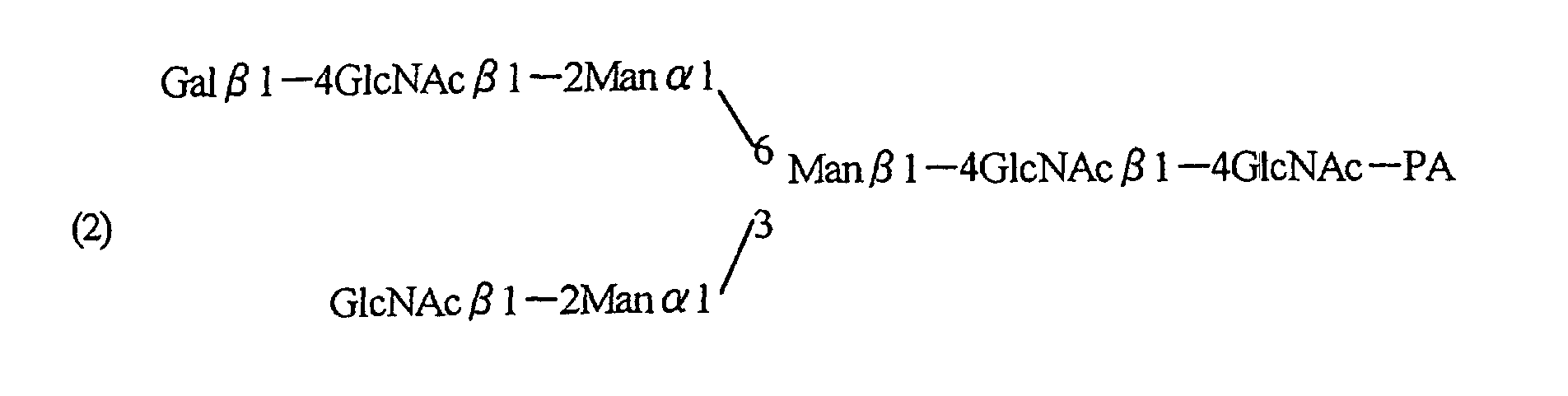
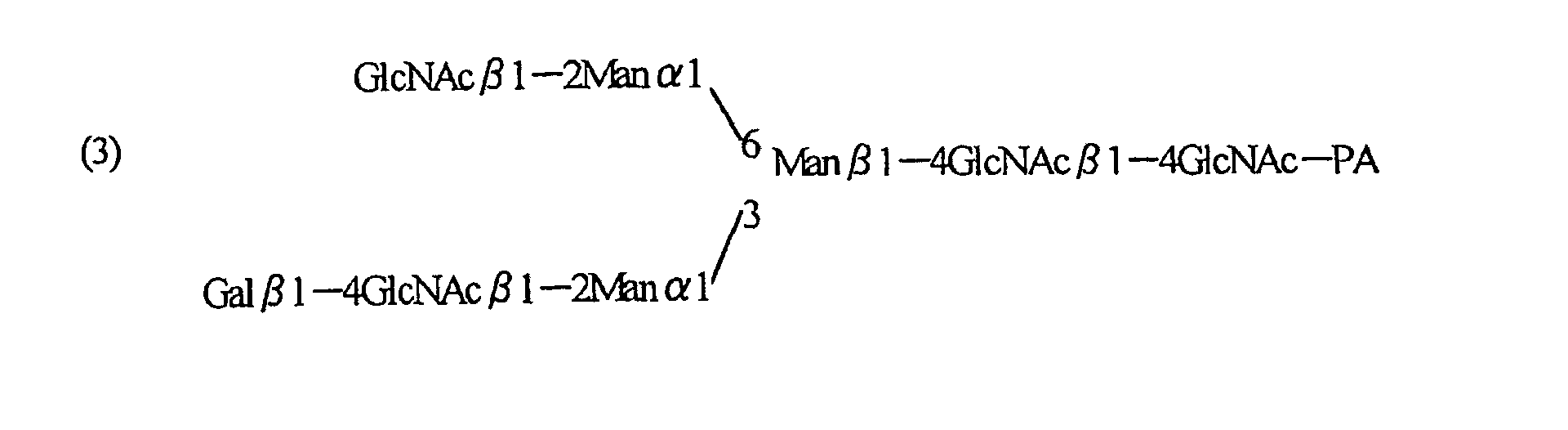
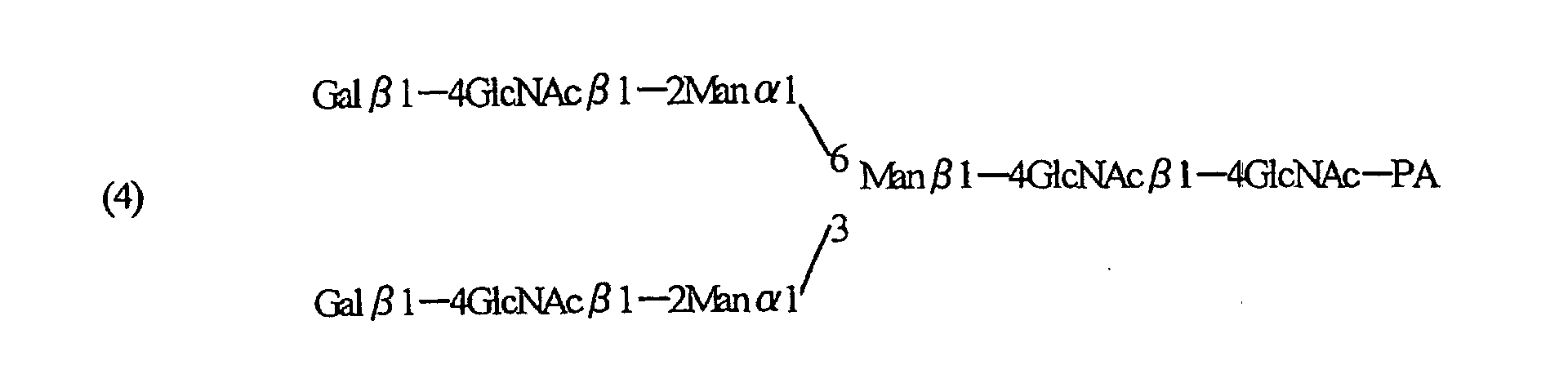

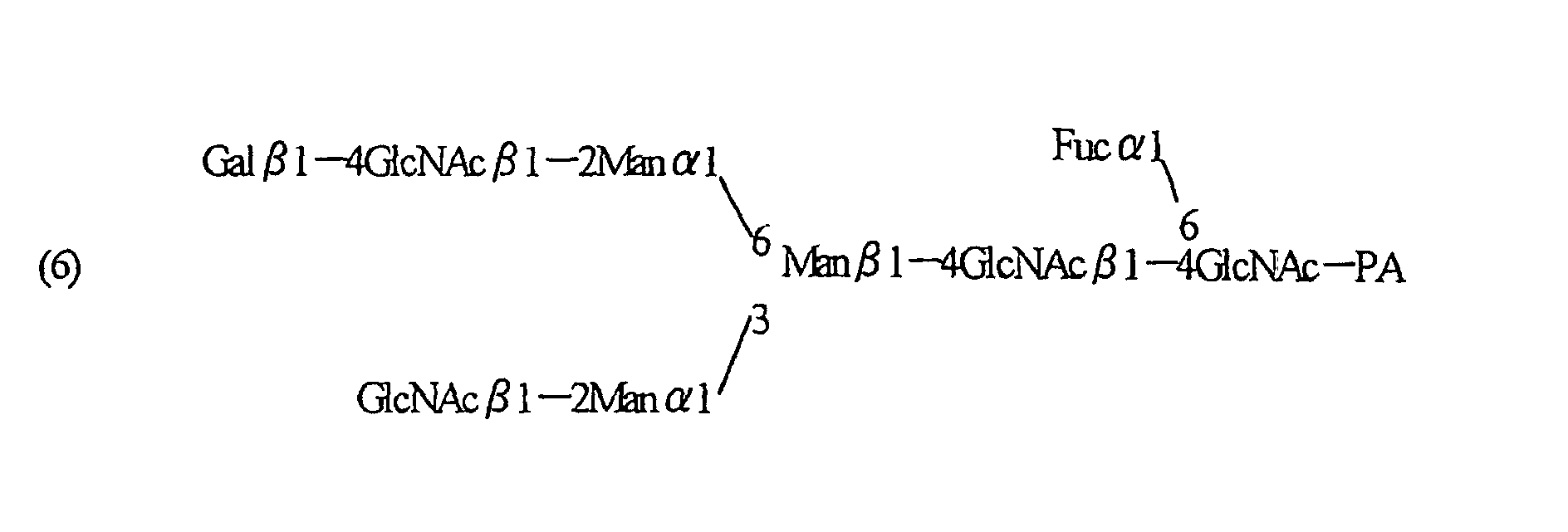
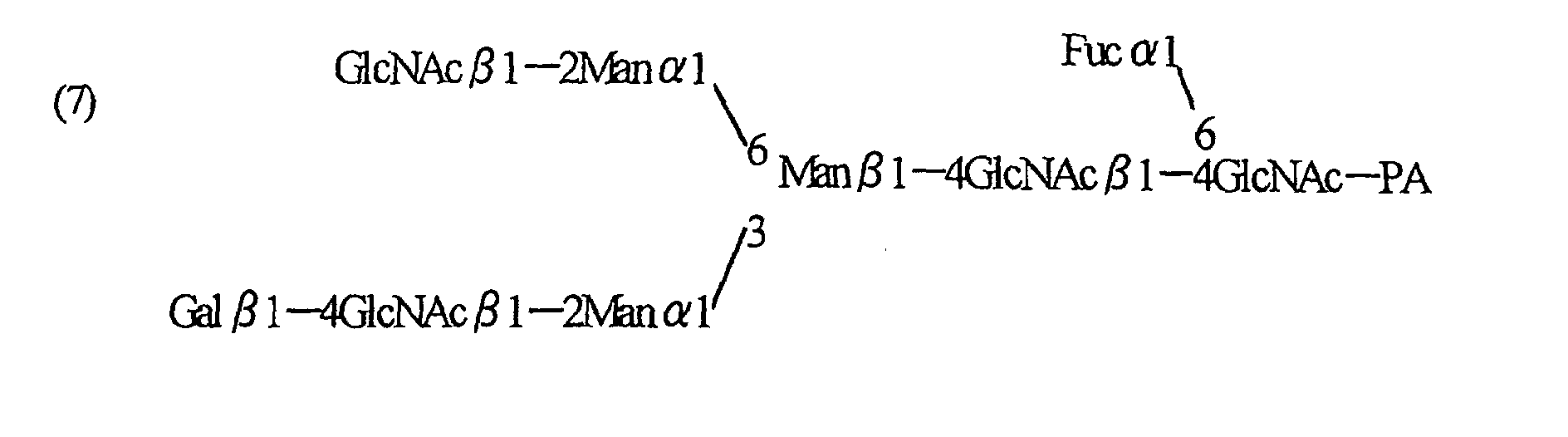
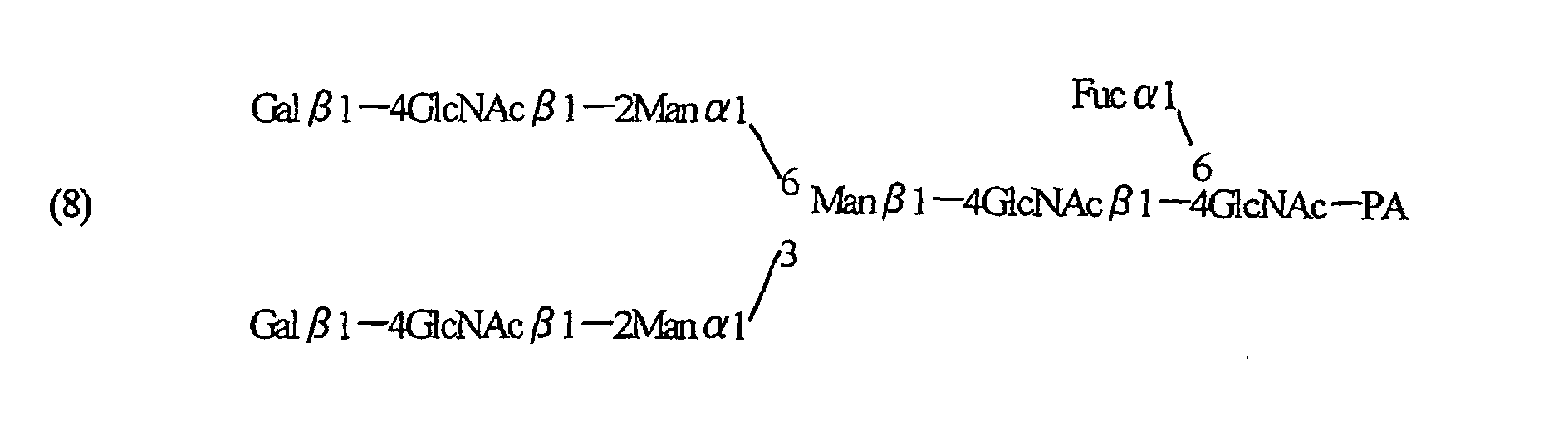
| Donor A: | A | B | X | X÷54,200 |
| Ratio of α-1,6-fucose- | ||||
| 27% | 34.3 | 283 | 5610 | 1/9.66 |
| 39% | 36.0 | 294 | 5190 | 1/10.4 |
| 46% | 34.2 | 272 | 4290 | 1/12.6 |
| Donor B: | A | B | X | X÷54,200 |
| Ratio of α-1,6-fucose- | ||||
| 27% | 40.7 | 335 | 5280 | 1/10.3 |
| 39% | 43.9 | 357 | 4650 | 1/11.6 |
| 46% | 40.1 | 321 | 4190 | 1/12.9 |
| Donor C: | A | B | X | X÷54,200 |
| Ratio of α-1,6-fucose- | ||||
| 27% | 30.2 | 225 | 6300 | 1/8.61 |
| 39% | 34.0 | 251 | 4980 | 1/10.9 |
| 46% | 27.3 | 193 | 4760 | 1/11.4 |
| Antibody producing cell | Ratio of α-1,6-fucose-free sugar chain (%) |
| Clone 5-03 | 9 |
| Clone CHO/CCR4-LCA | 48 |
| Clone CHO/CCR4- | 27 |
| Clone CHO/CCR4- | 8 |
| Cell name | Number of CD20 |
| EL-4 cell | 6.11×10² |
| KC1156 | 1.18×10⁴ |
| KC1157 | 1.45×10⁴ |
| KC1158 | 2.50×10⁴ |
| KC1160 | 4.12×10⁴ |
| KC1162 | 6.69×10⁴ |
| KC1163 | 2.05×10⁵ |
| KC1164 | 5.75×10⁵ |
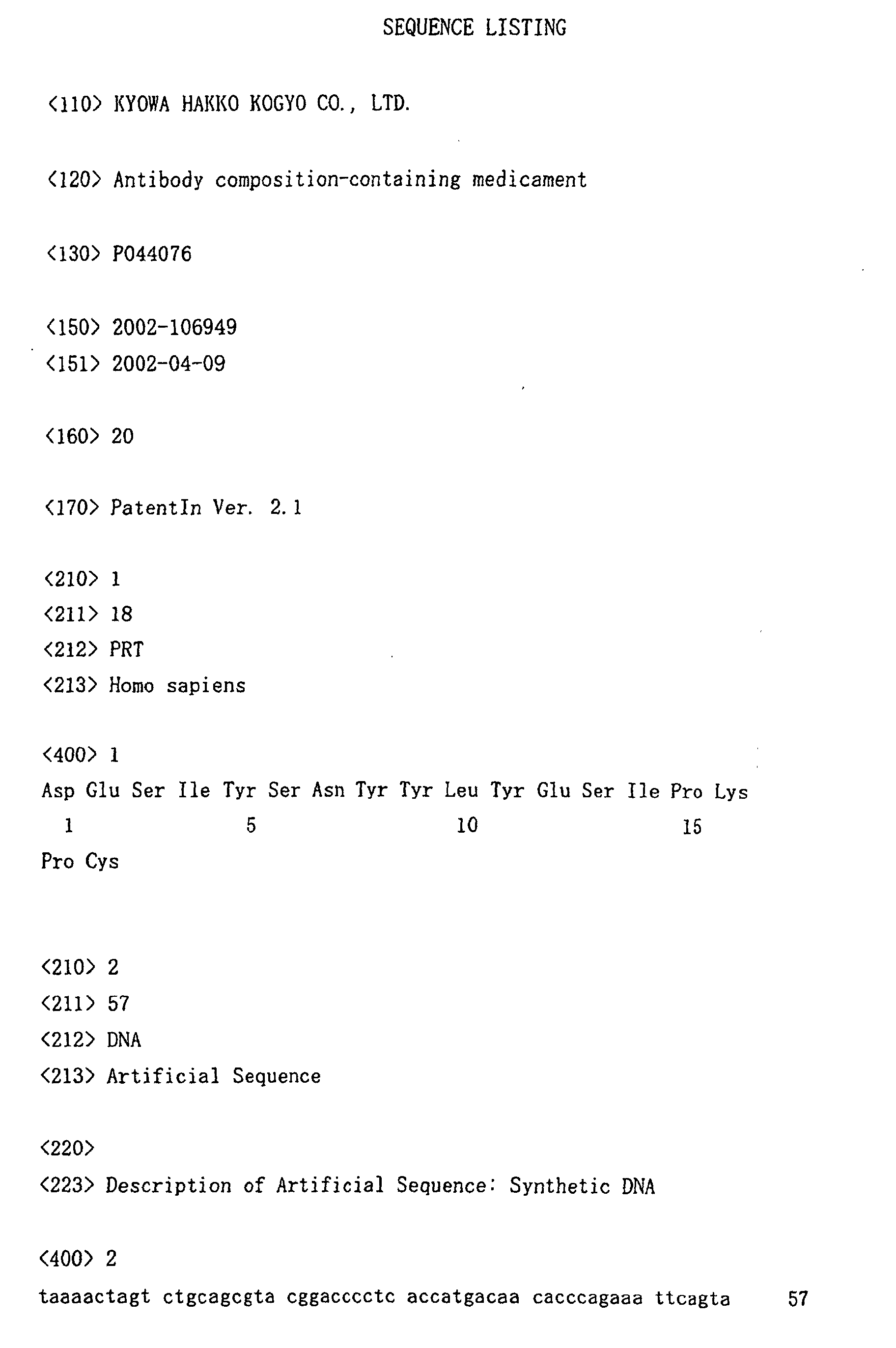
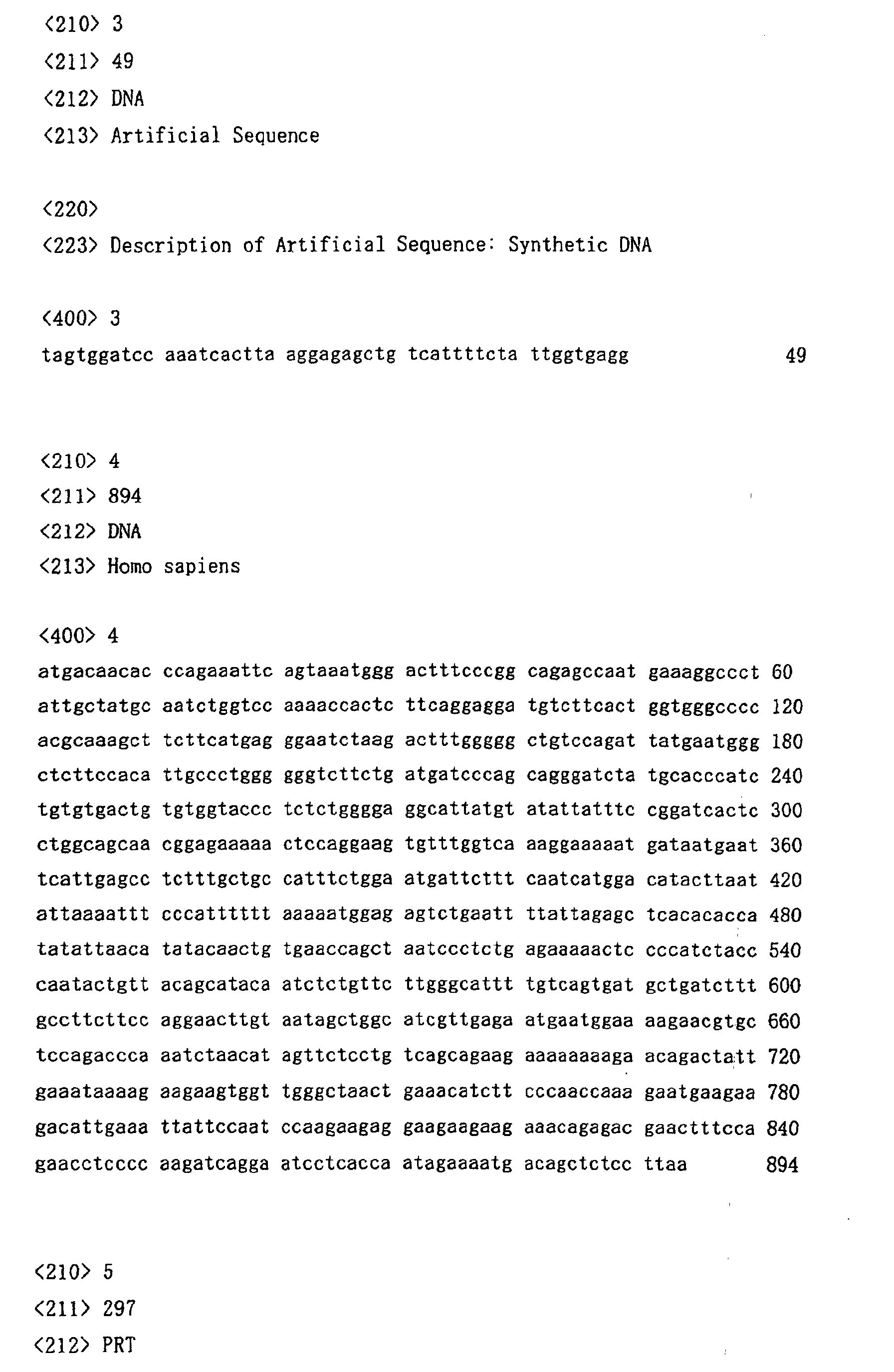
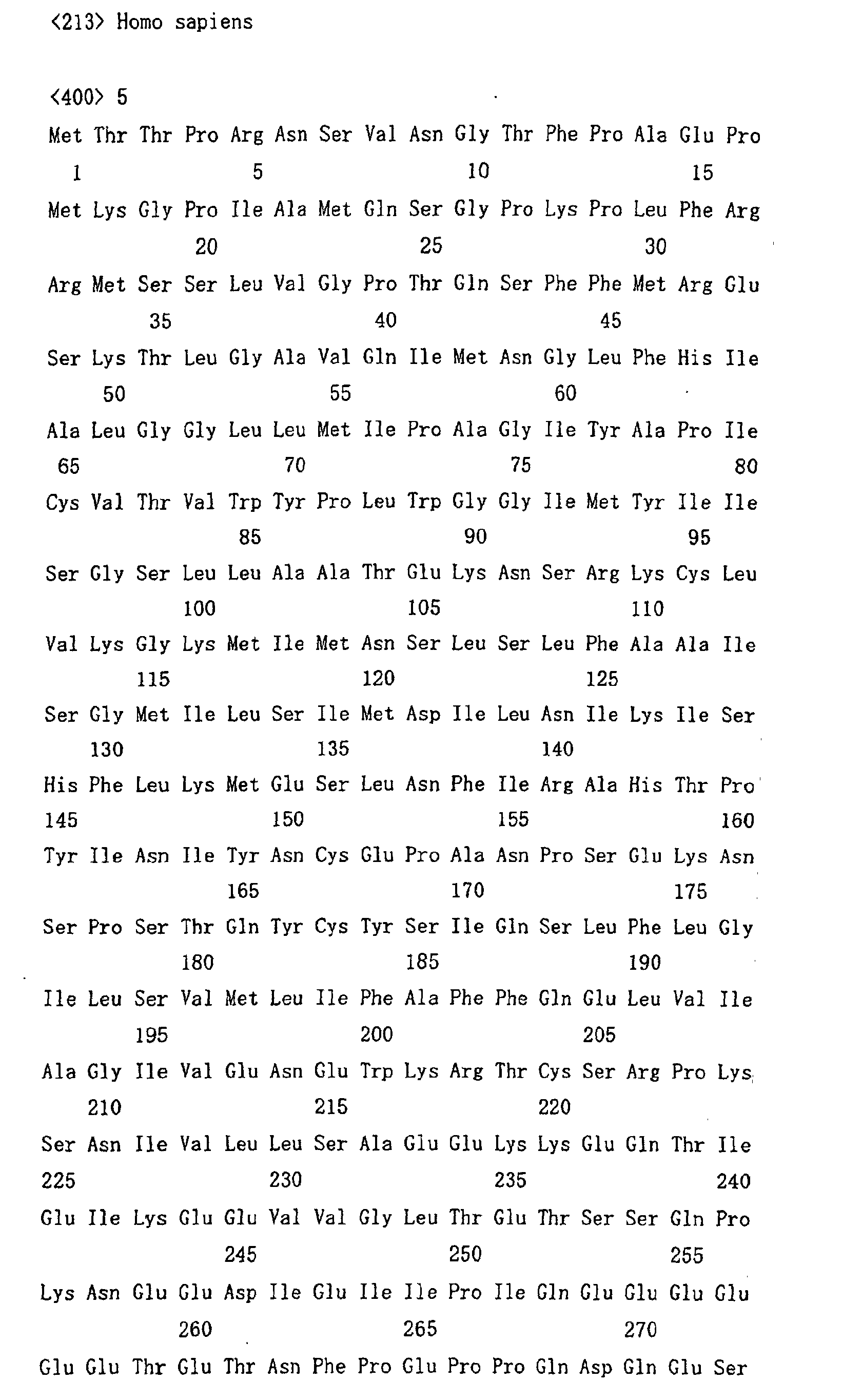
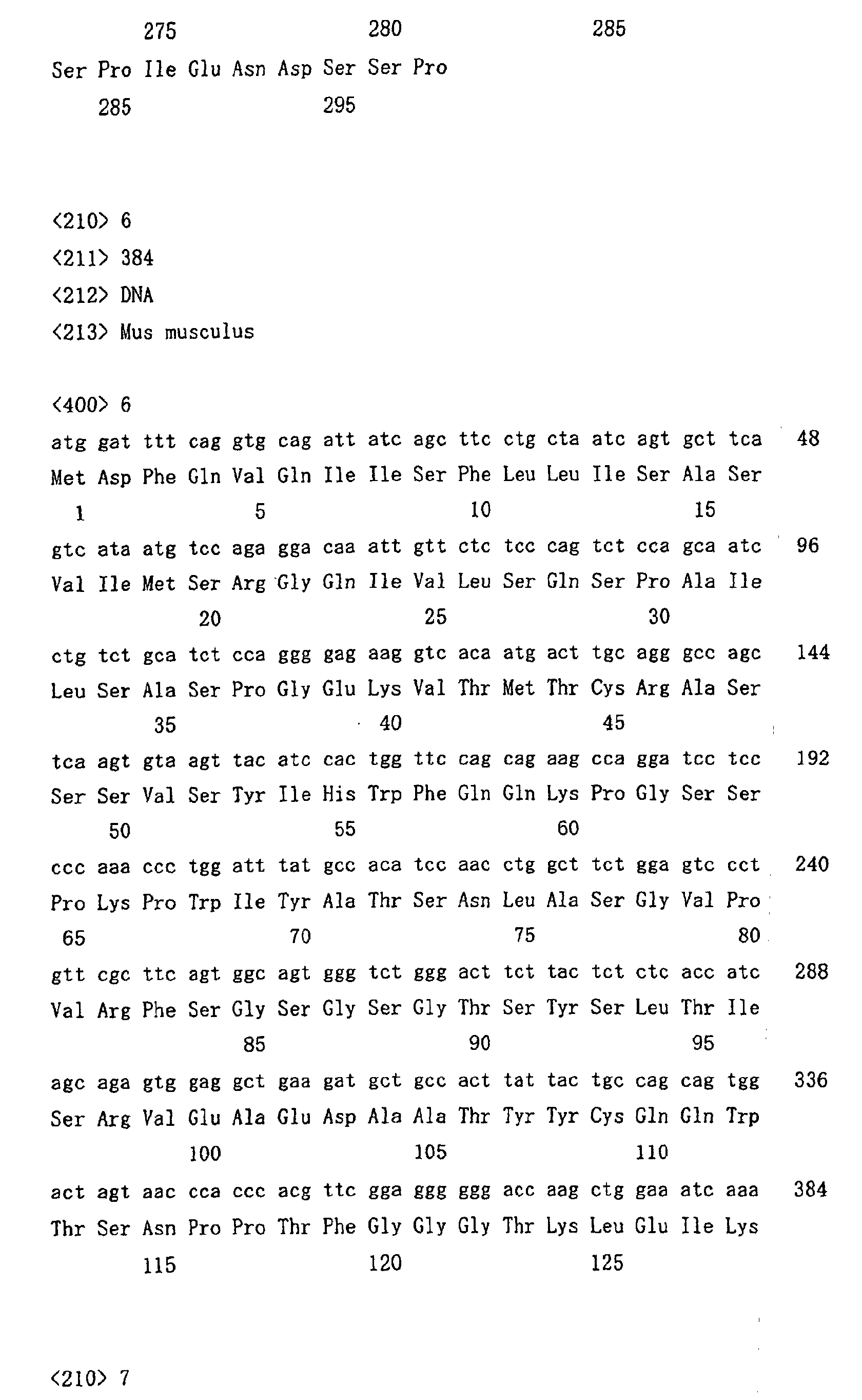
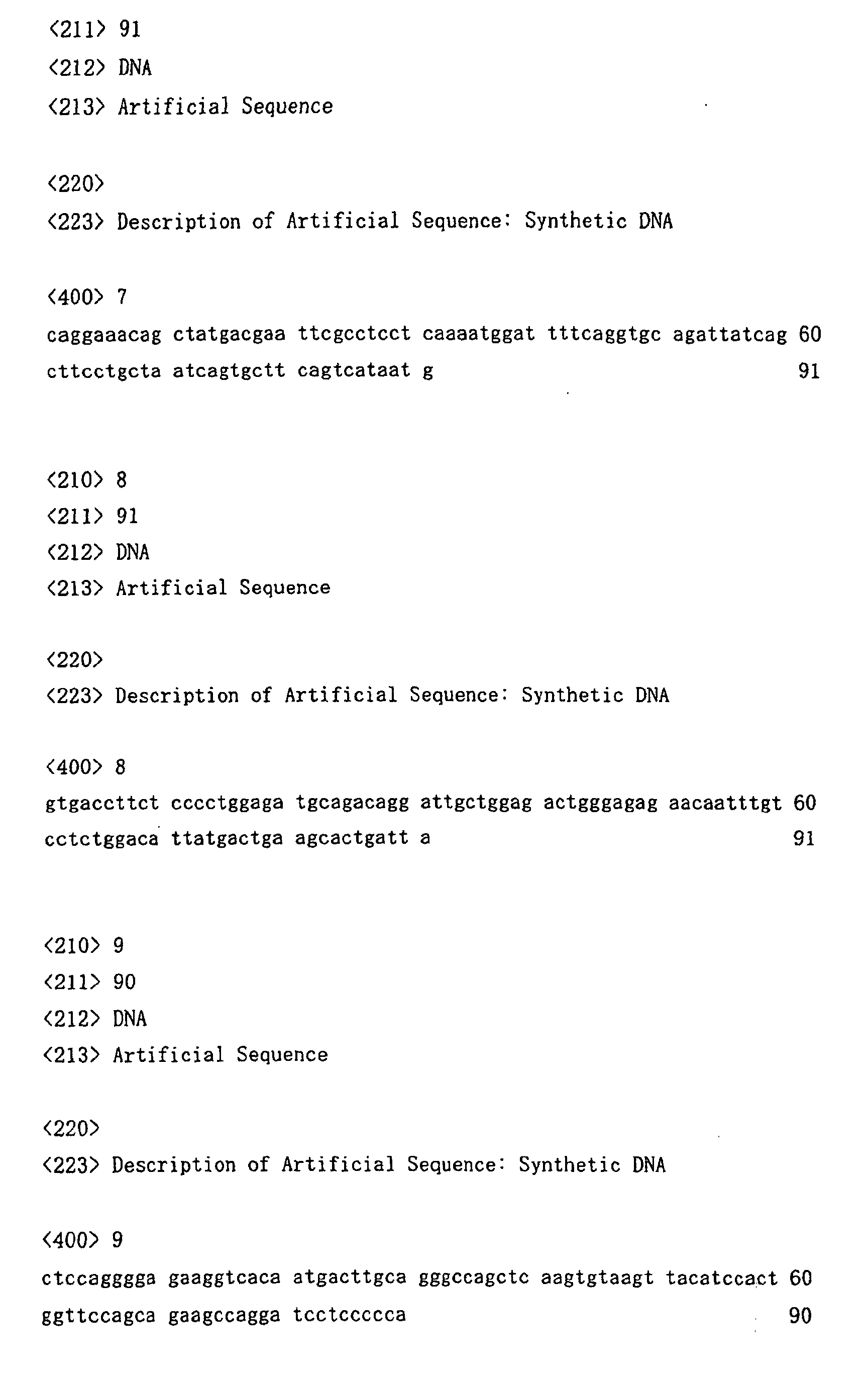


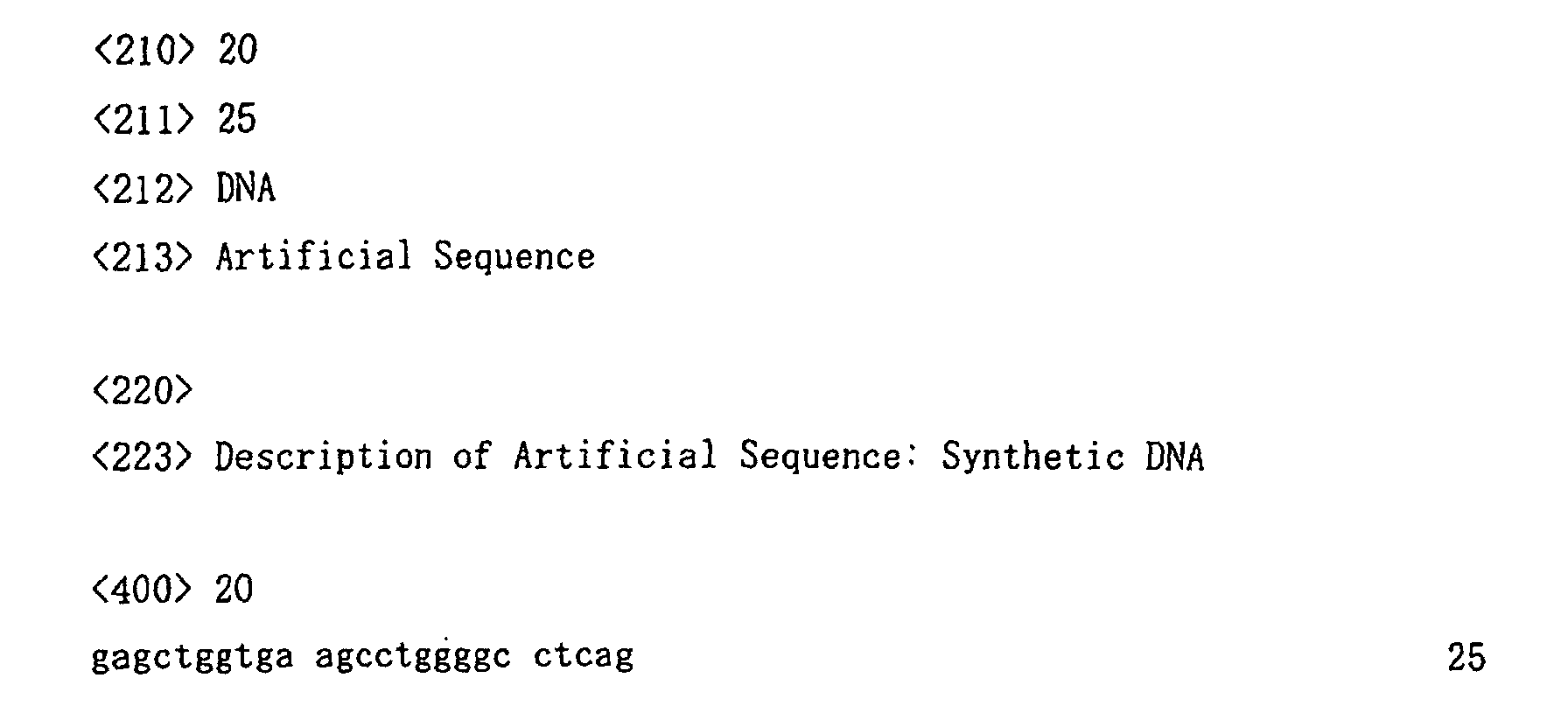
Claims (21)
- A medicament for treating a patient who cannot be cured with a medicament comprising as an active ingredient an antibody composition produced by a cell unresistant to a lectin which recognizes a sugar chain in which 1-position of fucose is bound to 6-position of N-acetylglucosamine in the reducing end through α-bond in a complex N-glycoside-linked sugar chain, which comprises as an active ingredient an antibody composition produced by a cell resistant to a lectin which recognizes a sugar chain in which 1-position of fucose is bound to 6-position of N-acetylglucosamine in the reducing end through α-bond in a complex N-glycoside-linked sugar chain.
- The medicament according to claim 1, wherein the patient who cannot be cured with a medicament comprising as an active ingredient an antibody composition produced by a cell unresistant to a lectin which recognizes a sugar chain in which 1-position of fucose is bound to 6-position of N-acetylglucosamine in the reducing end through α-bond in a complex N-glycoside-linked sugar chain is a patient in which an antigen which is recognized by the antibody composition is expressed in such an amount that the antibody composition cannot exert sufficient therapeutic effect.
- The medicament according to claim 2, wherein the amount that the antibody composition cannot exert sufficient therapeutic effect is such an amount that the antibody composition cannot exert sufficient antibody-dependent cell-mediated cytotoxic activity.
- A medicament for treating a disease which cannot be cured with a medicament comprising as an active ingredient an antibody composition produced by a cell unresistant to a lectin which recognizes a sugar chain in which 1-position of fucose is bound to 6-position of N-acetylglucosamine in the reducing end through α-bond in a complex N-glycoside-linked sugar chain, which comprises as an active ingredient an antibody composition produced by a cell resistant to a lectin which recognizes a sugar chain in which 1-position of fucose is bound to 6-position of N-acetylglucosamine in the reducing end through α-bond in a complex N-glycoside-linked sugar chain.
- The medicament according to claim 4, wherein the disease which cannot be cured with a medicament comprising as an active ingredient an antibody composition produced by a cell unresistant to a lectin which recognizes a sugar chain in which 1-position of fucose is bound to 6-position of N-acetylglucosamine in the reducing end through α-bond in a complex N-glycoside-linked sugar chain is a disease in which an antigen which is recognized by the antibody composition in a target cell relating to the disease is expressed in such an amount that the antibody composition cannot exert sufficient therapeutic effect.
- The medicament according to claim 5, wherein the amount that the antibody composition cannot exert sufficient therapeutic effect is such an amount that the antibody composition cannot exert a sufficient antibody-dependent cell-mediated cytotoxic activity.
- The medicament according to any one of claims 1 to 6, wherein the cell resistant to a lectin is a cell having a protein selected from the group consisting of the following (a), (b) and (c):wherein the activity of the protein is decreased or deleted.(a) an enzyme protein relating to synthesis of an intracellular sugar nucleotide, GDP-fucose;(b) an enzyme protein relating to modification of a sugar chain in which 1-position of fucose is bound to 6-position of N-acetylglucosamine in the reducing end through α-bond in a complex N-glycoside-linked sugar chain; and(c) a protein relating to transport of an intracellular sugar nucleotide, GDP-fucose to the Golgi body,
- The medicament according to any one of claims 1 to 7, wherein the lectin is at least one lectin selected from the group consisting of the following (a) to (d):(a) a Lens culinaris lectin;(b) a Pisum sativum lectin;(c) a Vicia faba lectin; and(d) an Aleuria auranlia lectin.
- The medicament according to any one of claims 1 to 8, wherein the cell is selected from the group consisting of a yeast, an animal cell, an insect cell and a plant cell.
- The medicament according to any one of claims 1 to 9, wherein the cell is selected from the group consisting of the following (a) to (j):(a) a CHO cell derived from a Chinese hamster ovary tissue;(b) a rat myeloma cell line YB2/3HL.P2.G11.16Ag.20 line;(c) a mouse myeloma cell line NS0 cell;(d) a mouse myeloma cell line SP2/0-Ag14 cell;(e) a BHK cell derived from a Syrian hamster kidney tissue;(f) a hybridoma cell;(g) a human leukemic cell line Namalwa cell;(h) an embryonic stem cell;(i) a fertilized egg cell; and(j) a plant cell.
- The medicament according to any one of claims 1 to 10, wherein the antibody molecule is selected from the group consisting of the following (a) to (d):(a) a human antibody;(b) a humanized antibody;(c) an antibody fragment comprising the Fc region of (a) or (b); and(d) a fusion protein comprising the Fc region of (a) or (b).
- The medicament according to claim 11, wherein the antibody molecule belongs to an IgG class.
- The medicament according to any one of claims 1 to 12, wherein the antibody composition produced by a cell resistant to a lectin which recognizes a sugar chain in which 1-position of fucose is bound to 6-position of N-acetylglucosamine in the reducing end through α-bond in a complex N-glycoside-linked sugar chain is an antibody composition having a higher antibody-dependent cell-mediated cytotoxic activity than the antibody composition produced by a cell unresistant to a lectin which recognizes a sugar chain in which 1-position of fucose is bound to 6-position of N-acetylglucosamine in the reducing end through α-bond in a complex N-glycoside-linked sugar chain.
- The medicament according to claim 13, wherein the higher antibody-dependent cell-mediated cytotoxic activity-having antibody composition has complex N-glycoside-linked sugar chains bound to Fc regions included in the antibody compositions, and the ratio of sugar chains in which fucose is not bound to N-acetylglucosamine in its reducing end to the total complex N-glycoside-linked sugar chains is higher than that of the antibody composition produced by a cell unresistant to a lectin which recognized a sugar chain in which 1-position of fucose is bound to 6-position of N-acetylglucosamine in the reducing end through α-bond in a complex N-glycoside-linked sugar chain.
- The medicament according to claim 14, wherein the sugar chain in which fucose is not bound is a complex N-glycoside-linked sugar chain in which 1-position of the fucose is not bound to 6-position of N-acetylglucosamine in the reducing end through α-bond.
- The medicament according to any one of claims 13 to 15, wherein the antibody composition having a higher antibody-dependent cell-mediated cytotoxic activity is an antibody composition wherein the ratio of sugar chains in which fucose is not bound to N-acetylglucosamine in the reducing end to the total complex N-glycoside-linked sugar chains bound to the Fc region in the antibody composition is 20% or more.
- The medicament according to claim 16, wherein the antibody composition in which the ratio of sugar chains in which fucose is not bound to N-acetylglucosamine in the reducing end is 20% or more is an antibody composition produced by a CHO cell.
- The medicament according to any one of claims 1 to 17, which is a diagnostic agent, an preventing agent or a treating agent for tumor-accompanied diseases, allergy-accompanied diseases, inflammatory-accompanied diseases, autoimmune diseases, cardiovascular diseases, viral infection-accompanied diseases or bacterial infection-accompanied diseases.
- Use of an antibody composition produced by a cell resistant to a lectin which recognizes a sugar chain in which 1-position of fucose is bound to 6-position of N-acetylglucosamine in the reducing end through α-bond in a complex N-glycoside-linked sugar chain for the manufacture of the medicament according to any one of claims 1 to 17.
- A method for screening a patient to whom the medicament according to any one of claims 1 to 17 is effective, which comprises(i) contacting a medicament comprising as an active ingredient an antibody composition produced by a cell unresistant to a lectin which recognizes a sugar chain in which 1-position of fucose is bound to 6-position of N-acetylglucosamine in the reducing end through α-bond in a complex N-glycoside-linked sugar chain or the medicament according to any one of claims 1 to 17, with a target cell for the medicaments obtained from a patient;(ii) measuring the activity of each of the medicaments reacted with the target cell;(iii) comparing the activity of the medicament comprising as an active ingredient an antibody composition produced by a cell unresistant to a lectin which recognizes a sugar chain in which 1-position of fucose is bound to 6-position of N-acetylglucosamine in the reducing end through α-bond in a complex N-glycoside-linked sugar chain with the activity of the medicament according to any one of claims 1 to 17; and(iv) selecting a patient in which the activity of the medicament comprising as an active ingredient an antibody composition produced by a cell unresistant to a lectin which recognizes a sugar chain in which 1-position of fucose is bound to 6-position of N-acetylglucosamine in the reducing end through α-bond in a complex N-glycoside-linked sugar chain is lower.
- The method according to claim 20, wherein the method for measuring the activity of the medicament reacted with the target cell is a method selected from the group consisting of (a) to (d):(a) an antibody-dependent cell-mediated cytotoxic activity;(b) an Fcγ receptor IIIa binding activity;(c) a complement-dependent cytotoxic activity; and(d) a growth inhibition activity.
Applications Claiming Priority (3)
| Application Number | Priority Date | Filing Date | Title |
|---|---|---|---|
| JP2002106949 | 2002-04-09 | ||
| JP2002106949 | 2002-04-09 | ||
| PCT/JP2003/004503 WO2003084569A1 (en) | 2002-04-09 | 2003-04-09 | Drug containing antibody composition |
Publications (2)
| Publication Number | Publication Date |
|---|---|
| EP1500400A1 true EP1500400A1 (en) | 2005-01-26 |
| EP1500400A4 EP1500400A4 (en) | 2006-10-11 |
Family
ID=28786447
Family Applications (1)
| Application Number | Title | Priority Date | Filing Date |
|---|---|---|---|
| EP03723097A Withdrawn EP1500400A4 (en) | 2002-04-09 | 2003-04-09 | MEDICAMENT CONTAINING ANTIBODY COMPOSITION |
Country Status (6)
| Country | Link |
|---|---|
| US (1) | US7691568B2 (en) |
| EP (1) | EP1500400A4 (en) |
| JP (1) | JPWO2003084569A1 (en) |
| AU (1) | AU2003236017B2 (en) |
| CA (1) | CA2481920A1 (en) |
| WO (1) | WO2003084569A1 (en) |
Cited By (2)
| Publication number | Priority date | Publication date | Assignee | Title |
|---|---|---|---|---|
| WO2014013019A1 (en) | 2012-07-18 | 2014-01-23 | Glycotope Gmbh | Novel therapeutic treatments with anti-her2 antibodies having a low fucosylation |
| WO2014173886A1 (en) | 2013-04-22 | 2014-10-30 | Glycotope Gmbh | Anti-cancer treatments with anti-egfr antibodies having a low fucosylation |
Families Citing this family (682)
| Publication number | Priority date | Publication date | Assignee | Title |
|---|---|---|---|---|
| EP2275540B1 (en) | 1999-04-09 | 2016-03-23 | Kyowa Hakko Kirin Co., Ltd. | Method for controlling the activity of immunologically functional molecule |
| FR2807767B1 (en) | 2000-04-12 | 2005-01-14 | Lab Francais Du Fractionnement | MONOCLONAL ANTIBODIES ANTI-D |
| US6946292B2 (en) * | 2000-10-06 | 2005-09-20 | Kyowa Hakko Kogyo Co., Ltd. | Cells producing antibody compositions with increased antibody dependent cytotoxic activity |
| HUE038955T2 (en) * | 2003-11-05 | 2018-12-28 | Roche Glycart Ag | Antigen binding molecules with increased Fc receptor binding affinity and effector function |
| SG183012A1 (en) | 2004-06-04 | 2012-08-30 | Genentech Inc | Method for treating multiple sclerosis |
| CN101087807A (en) | 2004-10-05 | 2007-12-12 | 健泰科生物技术公司 | Method for treating vasculitis |
| ES2348161T3 (en) * | 2005-03-11 | 2010-11-30 | Oncotherapy Science, Inc. | METHODS TO DAMAGE CELLS USING ANTI-GFRA ANTIBODY EFECTOR FUNCTIONS1. |
| WO2006121207A1 (en) * | 2005-05-12 | 2006-11-16 | Oncotherapy Science, Inc. | Methods for damaging cells using effector function of anti-dsc2 antibody |
| KR20080032065A (en) * | 2005-06-03 | 2008-04-14 | 제넨테크, 인크. | Methods for Producing Antibodies with Modulated Fucosylation Levels |
| MY149159A (en) | 2005-11-15 | 2013-07-31 | Hoffmann La Roche | Method for treating joint damage |
| JP2009518314A (en) | 2005-12-02 | 2009-05-07 | ジェネンテック・インコーポレーテッド | Compositions and methods for the treatment of diseases and disorders associated with cytokine signaling comprising antibodies that bind IL-22 and antibodies that bind IL-22R |
| US8101365B2 (en) | 2006-01-05 | 2012-01-24 | Genentech, Inc. | Anti-EphB4 antibodies and methods using same |
| AR059851A1 (en) | 2006-03-16 | 2008-04-30 | Genentech Inc | ANTIBODIES OF EGFL7 AND METHODS OF USE |
| PT2032606E (en) | 2006-05-30 | 2014-02-05 | Genentech Inc | Antibodies and immunoconjugates and uses therefor |
| JP2009539870A (en) * | 2006-06-06 | 2009-11-19 | ジェネンテック・インコーポレーテッド | Compositions and methods for modulating angiogenesis |
| AU2007319672B2 (en) * | 2006-06-06 | 2011-06-30 | Genentech, Inc. | Anti-DLL4 antibodies and methods using same |
| DK2046809T3 (en) | 2006-07-19 | 2017-03-13 | Univ Pennsylvania | WSX-1 / IL-27 AS A TARGET OBJECTIVE FOR ANTI-INFLAMMATORY REACTIONS |
| NZ576032A (en) | 2006-10-12 | 2012-03-30 | Genentech Inc | Antibodies to lymphotoxin-alpha |
| PT2845866T (en) | 2006-10-27 | 2017-08-09 | Genentech Inc | ANTIBODIES AND IMMUNOCONUELS AND UTILIZATIONS THEREOF |
| EP2125013A4 (en) * | 2007-01-26 | 2010-04-07 | Bioinvent Int Ab | DLL4 SIGNALING INHIBITORS AND USES THEREOF |
| US7834154B2 (en) | 2007-02-09 | 2010-11-16 | Genentech, Inc. | Anti-ROBO4 antibodies and uses therefor |
| ES2687808T3 (en) | 2007-09-26 | 2018-10-29 | Chugai Seiyaku Kabushiki Kaisha | Constant region of modified antibody |
| US20090202475A1 (en) | 2007-11-07 | 2009-08-13 | Genentech, Inc. | Compositions and methods for treatment of microbial disorders |
| TWI468417B (en) | 2007-11-30 | 2015-01-11 | Genentech Inc | Anti-vegf antibodies |
| NZ601815A (en) * | 2008-03-31 | 2014-10-31 | Genentech Inc | Compositions and methods for treating and diagnosing asthma |
| JP4514163B2 (en) | 2008-07-22 | 2010-07-28 | 株式会社J−オイルミルズ | Fucose α1 → 6 specific lectin |
| AR073295A1 (en) | 2008-09-16 | 2010-10-28 | Genentech Inc | METHODS TO TREAT PROGRESSIVE MULTIPLE SCLEROSIS. MANUFACTURING ARTICLE. |
| AU2009303526B2 (en) | 2008-10-14 | 2015-01-15 | Genentech, Inc. | Immunoglobulin variants and uses thereof |
| WO2010075249A2 (en) | 2008-12-22 | 2010-07-01 | Genentech, Inc. | A method for treating rheumatoid arthritis with b-cell antagonists |
| MX2011006870A (en) | 2008-12-23 | 2011-07-19 | Genentech Inc | Immunoglobulin variants with altered binding to protein a. |
| TWI544077B (en) | 2009-03-19 | 2016-08-01 | 中外製藥股份有限公司 | Antibody constant region change body |
| KR20150036824A (en) | 2009-03-20 | 2015-04-07 | 제넨테크, 인크. | Bispecific anti-her antibodies |
| CN103755808B (en) | 2009-03-25 | 2016-02-10 | 霍夫曼-拉罗奇有限公司 | Anti-alpha 5 beta 1 antibodies and application thereof |
| ES2549769T3 (en) | 2009-03-25 | 2015-11-02 | Genentech, Inc. | Anti-FGFR3 antibodies and methods that employ them |
| PT2417156E (en) | 2009-04-07 | 2015-04-29 | Roche Glycart Ag | Trivalent, bispecific antibodies |
| US8815242B2 (en) * | 2009-05-27 | 2014-08-26 | Synageva Biopharma Corp. | Avian derived antibodies |
| WO2010146059A2 (en) | 2009-06-16 | 2010-12-23 | F. Hoffmann-La Roche Ag | Biomarkers for igf-1r inhibitor therapy |
| US9676845B2 (en) | 2009-06-16 | 2017-06-13 | Hoffmann-La Roche, Inc. | Bispecific antigen binding proteins |
| TW201106972A (en) | 2009-07-27 | 2011-03-01 | Genentech Inc | Combination treatments |
| ES2513292T3 (en) | 2009-07-31 | 2014-10-24 | Genentech, Inc. | Inhibition of tumor metastases using anti-G-CSF antibodies |
| JP5887270B2 (en) | 2009-09-02 | 2016-03-16 | ジェネンテック, インコーポレイテッド | Mutant SMOOTHENED AND METHOD OF USING THE SAME |
| EP2491059B1 (en) | 2009-10-22 | 2015-02-25 | F.Hoffmann-La Roche Ag | Anti-hepsin antibodies and methods using same |
| WO2011056494A1 (en) | 2009-10-26 | 2011-05-12 | Genentech, Inc. | Activin receptor-like kinase-1 antagonist and vegfr3 antagonist combinations |
| WO2011056497A1 (en) | 2009-10-26 | 2011-05-12 | Genentech, Inc. | Activin receptor type iib compositions and methods of use |
| WO2011056502A1 (en) | 2009-10-26 | 2011-05-12 | Genentech, Inc. | Bone morphogenetic protein receptor type ii compositions and methods of use |
| CA2780221A1 (en) | 2009-11-04 | 2011-05-12 | Fabrus Llc | Methods for affinity maturation-based antibody optimization |
| KR101968766B1 (en) | 2009-11-05 | 2019-04-12 | 제넨테크, 인크. | Methods and composition for secretion of heterologous polypeptides |
| US8486397B2 (en) | 2009-12-11 | 2013-07-16 | Genentech, Inc. | Anti-VEGF-C antibodies and methods using same |
| MX2012007379A (en) | 2009-12-23 | 2012-08-31 | Genentech Inc | Anti-bv8 antibodies and uses thereof. |
| AR080154A1 (en) | 2010-02-10 | 2012-03-14 | Immunogen Inc | CD20 ANTIBODIES AND ITS USE |
| ES2519348T3 (en) | 2010-02-18 | 2014-11-06 | Genentech, Inc. | Neurregulin antagonists and their use in cancer treatment |
| KR101899835B1 (en) | 2010-03-24 | 2018-09-19 | 제넨테크, 인크. | Anti-lrp6 antibodies |
| WO2011147834A1 (en) | 2010-05-26 | 2011-12-01 | Roche Glycart Ag | Antibodies against cd19 and uses thereof |
| NZ701208A (en) | 2010-06-03 | 2016-05-27 | Genentech Inc | Immuno-pet imaging of antibodies and immunoconjugates and uses thereof |
| CN103080136B (en) | 2010-06-18 | 2015-08-12 | 霍夫曼-拉罗奇有限公司 | Anti-Axl antibody and using method |
| WO2011161119A1 (en) | 2010-06-22 | 2011-12-29 | F. Hoffmann-La Roche Ag | Antibodies against insulin-like growth factor i receptor and uses thereof |
| WO2011161189A1 (en) | 2010-06-24 | 2011-12-29 | F. Hoffmann-La Roche Ag | Anti-hepsin antibodies and methods of use |
| NZ605449A (en) | 2010-07-09 | 2015-03-27 | Genentech Inc | Anti-neuropilin antibodies and methods of use |
| WO2012010582A1 (en) | 2010-07-21 | 2012-01-26 | Roche Glycart Ag | Anti-cxcr5 antibodies and methods of use |
| KR20130045914A (en) | 2010-08-03 | 2013-05-06 | 에프. 호프만-라 로슈 아게 | Chronic lymphocytic leukemia (cll) biomarkers |
| BR112013002532A2 (en) | 2010-08-05 | 2016-05-31 | Hoffmann La Roche | anti-mhc antibody anti-viral cytokine fusion protein |
| PE20171512A1 (en) | 2010-08-13 | 2017-10-20 | Roche Glycart Ag | ANTI-FAP ANTIBODIES |
| BR112013002444A2 (en) | 2010-08-13 | 2016-05-24 | Roche Glycart Ag | isolated antibody, polynucleotide and polypeptide, composition, vector, host cell, antibody conjugate, pharmaceutical formulation, use of the antibody, methods of producing an antibody, treating an individual, inducing cell lysis of a tumor cell and diagnosing a disease in an individual |
| KR101603001B1 (en) | 2010-08-25 | 2016-03-11 | 에프. 호프만-라 로슈 아게 | Antibodies against il-18r1 and uses thereof |
| SG10201408229WA (en) | 2010-08-31 | 2015-02-27 | Genentech Inc | Biomarkers and methods of treatment |
| US8481680B2 (en) | 2010-10-05 | 2013-07-09 | Genentech, Inc. | Mutant smoothened and methods of using the same |
| AU2011326564A1 (en) | 2010-11-10 | 2013-05-09 | Genentech, Inc. | Methods and compositions for neural disease immunotherapy |
| KR101615420B1 (en) | 2010-12-16 | 2016-04-26 | 제넨테크, 인크. | Diagnosis and treatments relating to th2 inhibition |
| AU2011349443B2 (en) | 2010-12-20 | 2015-12-24 | Genentech, Inc. | Anti-mesothelin antibodies and immunoconjugates |
| CN103261230A (en) | 2010-12-22 | 2013-08-21 | 霍夫曼-拉罗奇有限公司 | Anti-PCSK9 antibodies and methods of use |
| WO2012092539A2 (en) | 2010-12-31 | 2012-07-05 | Takeda Pharmaceutical Company Limited | Antibodies to dll4 and uses thereof |
| WO2012116926A1 (en) | 2011-02-28 | 2012-09-07 | F. Hoffmann-La Roche Ag | Antigen binding proteins |
| JP5768147B2 (en) | 2011-02-28 | 2015-08-26 | エフ.ホフマン−ラ ロシュ アーゲーF. Hoffmann−La Roche Aktiengesellschaft | Monovalent antigen binding protein |
| CA2828890A1 (en) | 2011-04-07 | 2012-10-11 | Genentech, Inc. | Anti-fgfr4 antibodies and methods of use |
| WO2012146630A1 (en) | 2011-04-29 | 2012-11-01 | F. Hoffmann-La Roche Ag | N-terminal acylated polypeptides, methods for their production and uses thereof |
| EP2707723B1 (en) | 2011-05-12 | 2016-02-10 | Genentech, Inc. | Multiple reaction monitoring lc-ms/ms method to detect therapeutic antibodies in animal samples using framework signature pepides |
| WO2012158704A1 (en) | 2011-05-16 | 2012-11-22 | Genentech, Inc. | Fgfr1 agonists and methods of use |
| WO2012171996A1 (en) | 2011-06-15 | 2012-12-20 | F. Hoffmann-La Roche Ag | Anti-human epo receptor antibodies and methods of use |
| PL2723773T3 (en) | 2011-06-22 | 2018-07-31 | F.Hoffmann-La Roche Ag | Removal of target cells by circulating virus-specific cytotoxic t-cells using mhc class i comprising complexes |
| RU2013155695A (en) | 2011-06-30 | 2015-08-10 | Дженентек, Инк. | ANTIBODIES AGAINST C-MET |
| BR112014003431A2 (en) | 2011-08-17 | 2017-06-13 | Genentech Inc | antibody, nucleic acid, host cell, method of producing an antibody, immunoconjugate, pharmaceutical formulation, pharmaceutical agent, use of the antibody, method of treating an individual who has cancer, and time-lapse method for tumor recurrence |
| JP2014525412A (en) | 2011-08-17 | 2014-09-29 | ジェネンテック, インコーポレイテッド | Inhibition of angiogenesis in refractory tumors |
| JP2014534806A (en) | 2011-08-23 | 2014-12-25 | ロシュ グリクアート アーゲー | Anti-MCSP antibody |
| CN103930781A (en) | 2011-09-15 | 2014-07-16 | 霍夫曼-拉罗奇有限公司 | Methods of promoting differentiation |
| AU2012312515A1 (en) | 2011-09-19 | 2014-03-13 | Genentech, Inc. | Combination treatments comprising c-met antagonists and B-raf antagonists |
| US20130089562A1 (en) | 2011-10-05 | 2013-04-11 | Genenthech, Inc. | Methods of treating liver conditions using notch2 antagonists |
| PE20141562A1 (en) | 2011-10-14 | 2014-11-12 | Genentech Inc | ANTI-HTRA1 ANTIBODIES AND METHODS OF USE |
| US9358250B2 (en) | 2011-10-15 | 2016-06-07 | Genentech, Inc. | Methods of using SCD1 antagonists |
| WO2013059531A1 (en) | 2011-10-20 | 2013-04-25 | Genentech, Inc. | Anti-gcgr antibodies and uses thereof |
| WO2013059740A1 (en) | 2011-10-21 | 2013-04-25 | Foundation Medicine, Inc. | Novel alk and ntrk1 fusion molecules and uses thereof |
| KR20140097205A (en) | 2011-10-28 | 2014-08-06 | 제넨테크, 인크. | Therapeutic combinations and methods of treating melanoma |
| SG11201402485UA (en) | 2011-11-21 | 2014-06-27 | Genentech Inc | Purification of anti-c-met antibodies |
| EP2788024A1 (en) | 2011-12-06 | 2014-10-15 | F.Hoffmann-La Roche Ag | Antibody formulation |
| EP2794662A1 (en) | 2011-12-22 | 2014-10-29 | F.Hoffmann-La Roche Ag | Full length antibody display system for eukaryotic cells and its use |
| SG10201700169PA (en) | 2011-12-22 | 2017-02-27 | Hoffmann La Roche | Expression vector element combinations, novel production cell generation methods and their use for the recombinant production of polypeptides |
| CN107881196A (en) | 2011-12-22 | 2018-04-06 | 弗·哈夫曼-拉罗切有限公司 | Expression vector tissue, new Cells for production production method and its purposes in restructuring produces polypeptide |
| AR089434A1 (en) | 2011-12-23 | 2014-08-20 | Genentech Inc | PROCEDURE TO PREPARE FORMULATIONS WITH HIGH CONCENTRATION OF PROTEINS |
| WO2013101771A2 (en) | 2011-12-30 | 2013-07-04 | Genentech, Inc. | Compositions and method for treating autoimmune diseases |
| EP2802601B1 (en) | 2012-01-09 | 2019-11-13 | The Scripps Research Institute | Humanized antibodies with ultralong cdr3s |
| US20140050720A1 (en) | 2012-01-09 | 2014-02-20 | The Scripps Research Institute | Ultralong complementarity determining regions and uses thereof |
| RU2014133547A (en) | 2012-01-18 | 2016-03-10 | Дженентек, Инк. | WAYS OF APPLICATION OF FGF19 MODULATORS |
| SG10201601747XA (en) | 2012-01-18 | 2016-04-28 | Genentech Inc | Anti-LRP5 Antibodies And Methods Of Use |
| WO2013116287A1 (en) | 2012-01-31 | 2013-08-08 | Genentech, Inc. | Anti-ig-e m1' antibodies and methods using same |
| BR112014019741A2 (en) | 2012-02-11 | 2020-12-22 | Genentech, Inc | USES OF AN ANTAGONIST OF THE WNT VIA, USE OF ANTI-CANCER THERAPY, METHOD OF IDENTIFICATION OF AN INDIVIDUAL WITH CANCER, METHODS FOR PREVENTING, METHOD OF INHIBITION OF A CANCER CELL PROLIFERATION, USE OF AN ANGONIST ANTAGONIST TRANSLOCATION OF ISOLATED R-SPONDINA |
| KR102069397B1 (en) | 2012-02-15 | 2020-01-22 | 에프. 호프만-라 로슈 아게 | Fc-receptor based affinity chromatography |
| WO2013148315A1 (en) | 2012-03-27 | 2013-10-03 | Genentech, Inc. | Diagnosis and treatments relating to her3 inhibitors |
| AR090549A1 (en) | 2012-03-30 | 2014-11-19 | Genentech Inc | ANTI-LGR5 AND IMMUNOCATE PLAYERS |
| KR20150006000A (en) | 2012-05-01 | 2015-01-15 | 제넨테크, 인크. | Anti-pmel17 antibodies and immunoconjugates |
| WO2013170191A1 (en) | 2012-05-11 | 2013-11-14 | Genentech, Inc. | Methods of using antagonists of nad biosynthesis from nicotinamide |
| EP2852840B1 (en) | 2012-05-23 | 2019-10-09 | F.Hoffmann-La Roche Ag | Selection method for therapeutic agents |
| AR091462A1 (en) | 2012-06-15 | 2015-02-04 | Genentech Inc | ANTI-PCSK9 ANTIBODIES, FORMULATIONS, DOSAGE AND METHODS OF USE |
| SG11201407420RA (en) | 2012-07-04 | 2015-02-27 | Hoffmann La Roche | Covalently linked antigen-antibody conjugates |
| MX354303B (en) | 2012-07-04 | 2018-02-23 | Hoffmann La Roche | Anti-biotin antibodies and methods of use. |
| EP2869837B1 (en) | 2012-07-04 | 2016-09-14 | F. Hoffmann-La Roche AG | Anti-theophylline antibodies and methods of use |
| PL2870247T3 (en) | 2012-07-05 | 2019-10-31 | Hoffmann La Roche | Expression and secretion system |
| BR112015000437A2 (en) | 2012-07-09 | 2017-06-27 | Genentech Inc | immunoconjugates, pharmaceutical formulation, methods of treating and inhibiting cell proliferation |
| KR20150027829A (en) | 2012-07-09 | 2015-03-12 | 제넨테크, 인크. | Immunoconjucates comprising anti-CD22 antibodies |
| CA2874904A1 (en) | 2012-07-09 | 2014-01-16 | Genentech, Inc. | Immunoconjugates comprising anti-cd22 antibodies |
| AU2013288932A1 (en) | 2012-07-09 | 2014-12-11 | Genentech, Inc. | Immunoconjugates comprising anti - CD79b antibodies |
| US10260089B2 (en) | 2012-10-29 | 2019-04-16 | The Research Foundation Of The State University Of New York | Compositions and methods for recognition of RNA using triple helical peptide nucleic acids |
| EP4223770A3 (en) | 2012-11-05 | 2023-10-18 | Foundation Medicine, Inc. | Novel fusion molecules and uses thereof |
| EP2914621B1 (en) | 2012-11-05 | 2023-06-07 | Foundation Medicine, Inc. | Novel ntrk1 fusion molecules and uses thereof |
| CN104755500B (en) | 2012-11-08 | 2020-10-02 | 霍夫曼-拉罗奇有限公司 | HER3 antigen binding proteins that bind to the HER3 beta-hairpin |
| BR112015010817A8 (en) | 2012-11-13 | 2018-01-23 | Genentech Inc | isolated anti-hemagglutinin antibodies, method of treating, inhibiting or preventing infections, composition, pharmaceutical composition, isolated nucleic acid, host cell, antibody production method and use of anti-hemagglutinin antibody |
| JP6475167B2 (en) | 2012-12-21 | 2019-02-27 | エフ.ホフマン−ラ ロシュ アーゲーF. Hoffmann−La Roche Aktiengesellschaft | Multifunctional proteins containing disulfide-linked multivalent MHC class I |
| CA2898326C (en) | 2013-01-18 | 2022-05-17 | Foundation Medicine, Inc. | Methods of treating cholangiocarcinoma |
| WO2014116749A1 (en) | 2013-01-23 | 2014-07-31 | Genentech, Inc. | Anti-hcv antibodies and methods of using thereof |
| WO2014128235A1 (en) | 2013-02-22 | 2014-08-28 | F. Hoffmann-La Roche Ag | Methods of treating cancer and preventing drug resistance |
| MX2015010789A (en) | 2013-02-26 | 2015-11-26 | Roche Glycart Ag | Anti-mcsp antibodies. |
| JP2016510751A (en) | 2013-03-06 | 2016-04-11 | ジェネンテック, インコーポレイテッド | Methods of treating and preventing anticancer drug resistance |
| EP2968565A2 (en) | 2013-03-14 | 2016-01-20 | Genentech, Inc. | Methods of treating cancer and preventing cancer drug resistance |
| US9562099B2 (en) | 2013-03-14 | 2017-02-07 | Genentech, Inc. | Anti-B7-H4 antibodies and immunoconjugates |
| WO2014152358A2 (en) | 2013-03-14 | 2014-09-25 | Genentech, Inc. | Combinations of a mek inhibitor compound with an her3/egfr inhibitor compound and methods of use |
| MX2015010777A (en) | 2013-03-14 | 2016-04-25 | Genentech Inc | Anti-b7-h4 antibodies and immunoconjugates. |
| KR20150131269A (en) | 2013-03-15 | 2015-11-24 | 제넨테크, 인크. | Biomarkers and methods of treating pd-1 and pd-l1 related conditions |
| HK1214533A1 (en) | 2013-03-15 | 2016-07-29 | 基因泰克公司 | Methods of treating cancer and preventing cancer drug resistance |
| BR112015021521A2 (en) | 2013-03-15 | 2017-10-10 | Genentech Inc | anti-crth2 antibodies and methods for their use |
| MX374811B (en) | 2013-03-15 | 2025-03-06 | Ac Immune Sa | ANTI-TAU ANTIBODIES AND METHODS OF USE. |
| PL2970422T3 (en) | 2013-03-15 | 2018-09-28 | F.Hoffmann-La Roche Ag | Il-22 polypeptides and il-22 fc fusion proteins and methods of use |
| MX2015011444A (en) | 2013-03-15 | 2015-12-16 | Genentech Inc | Compositions and methods for diagnosis and treatment of hepatic cancers. |
| UA118028C2 (en) | 2013-04-03 | 2018-11-12 | Рош Глікарт Аг | Bispecific antibodies specific for fap and dr5, antibodies specific for dr5 and methods of use |
| TW201920285A (en) | 2013-04-29 | 2019-06-01 | 瑞士商赫孚孟拉羅股份公司 | FcRn-binding abolished anti-IGF-1R antibodies and their use in the treatment of vascular eye diseases |
| CA2904805A1 (en) | 2013-04-29 | 2014-11-06 | F. Hoffmann-La Roche Ag | Fc-receptor binding modified asymmetric antibodies and methods of use |
| CA2904806C (en) | 2013-04-29 | 2021-11-23 | F. Hoffmann-La Roche Ag | Human fcrn-binding modified antibodies and methods of use |
| SG11201509566RA (en) | 2013-05-20 | 2015-12-30 | Genentech Inc | Anti-transferrin receptor antibodies and methods of use |
| PE20160715A1 (en) | 2013-05-31 | 2016-08-01 | Genentech Inc | ANTIBODIES AGAINST WALL AND CONJUGATED TEICOIC ACIDS |
| MX369758B (en) | 2013-05-31 | 2019-11-20 | Genentech Inc | Anti-wall teichoic antibodies and conjugates. |
| JP6687520B2 (en) | 2013-07-18 | 2020-04-22 | トーラス バイオサイエンシズ リミテッド ライアビリティ カンパニー | Humanized antibody with extremely long complementarity determining regions |
| WO2015017146A2 (en) | 2013-07-18 | 2015-02-05 | Fabrus, Inc. | Antibodies with ultralong complementarity determining regions |
| MX374785B (en) | 2013-08-01 | 2025-03-06 | Five Prime Therapeutics Inc | AFUCOSYLATED ANTI-FGFR2IIIB ANTIBODIES. |
| MX2016001854A (en) | 2013-08-12 | 2016-09-06 | Genentech Inc | Compositions and method for treating complement-associated conditions. |
| BR112016004450A2 (en) | 2013-09-17 | 2017-10-17 | Genentech Inc | methods for treating a disease, for increasing the effectiveness of a treatment, for postponing and / or preventing the development of recurrence and / or resistance of a disease, for increasing sensitivity to an inhibitor, for extending the sensitivity period for an inhibitor and for extend response time to an inhibitor |
| WO2015054670A1 (en) | 2013-10-11 | 2015-04-16 | Genentech, Inc. | Nsp4 inhibitors and methods of use |
| EP3054987B1 (en) | 2013-10-11 | 2019-10-09 | The United States of America, represented by the Secretary, Department of Health and Human Services | Tem8 antibodies and their use |
| BR112016006929A2 (en) | 2013-10-11 | 2017-09-19 | Hoffmann La Roche | ANTIBODY, NUCLEIC ACID, EXPRESSION VECTOR, HOST CELL, METHODS OF PREPARING ANTIBODY, TREATMENT OF PATIENTS AND GENERATION OF AN ANTIBODY, PHARMACEUTICAL COMPOSITION AND USE OF THE ANTIBODY |
| US20150147333A1 (en) | 2013-10-18 | 2015-05-28 | Genentech, Inc. | Anti-rspo antibodies and methods of use |
| JP6715767B2 (en) | 2013-10-23 | 2020-07-01 | ジェネンテック, インコーポレイテッド | Method for diagnosing and treating eosinophilic disease |
| LT3071597T (en) | 2013-11-21 | 2020-10-12 | F. Hoffmann-La Roche Ag | ANTIBODIES TO ALPHA-SUNUCLEIN AND THEIR USES |
| KR20210125114A (en) | 2013-12-09 | 2021-10-15 | 알라코스 인크. | Anti-siglec-8 antibodies and methods of use thereof |
| AR098743A1 (en) | 2013-12-13 | 2016-06-08 | Genentech Inc | ANTI-CD33 ANTIBODIES AND IMMUNOCATION |
| US20150210772A1 (en) | 2013-12-17 | 2015-07-30 | Genentech, Inc. | Methods of treating cancer using pd-1 axis binding antagonists and an anti-cd20 antibody |
| HUE050159T2 (en) | 2013-12-17 | 2020-11-30 | Genentech Inc | Anti-CD3 antibodies and methods of administration |
| ES2763429T5 (en) | 2013-12-17 | 2023-06-21 | Hoffmann La Roche | Methods of treating cancers using PD-1 axis binding antagonists and taxanes |
| MX2016007965A (en) | 2013-12-17 | 2016-10-28 | Genentech Inc | Combination therapy comprising ox40 binding agonists and pd-1 axis binding antagonists. |
| TWI728373B (en) | 2013-12-23 | 2021-05-21 | 美商建南德克公司 | Antibodies and methods of use |
| WO2015103549A1 (en) | 2014-01-03 | 2015-07-09 | The United States Of America, As Represented By The Secretary Department Of Health And Human Services | Neutralizing antibodies to hiv-1 env and their use |
| EP3089758B1 (en) | 2014-01-03 | 2021-01-27 | F.Hoffmann-La Roche Ag | Covalently linked helicar-anti-helicar antibody conjugates and uses thereof |
| WO2015101586A1 (en) | 2014-01-03 | 2015-07-09 | F. Hoffmann-La Roche Ag | Bispecific anti-hapten/anti-blood brain barrier receptor antibodies, complexes thereof and their use as blood brain barrier shuttles |
| BR112016014945A2 (en) | 2014-01-03 | 2018-01-23 | F. Hoffmann-La Roche Ag | conjugate, pharmaceutical formulation and use |
| PL3092251T3 (en) | 2014-01-06 | 2021-08-02 | F. Hoffmann-La Roche Ag | Monovalent blood brain barrier shuttle modules |
| CN110903398B (en) | 2014-01-15 | 2023-08-15 | 豪夫迈·罗氏有限公司 | Fc region variants with modified FCRN and retained protein A binding properties |
| WO2015112909A1 (en) | 2014-01-24 | 2015-07-30 | Genentech, Inc. | Methods of using anti-steap1 antibodies and immunoconjugates |
| US20170044232A1 (en) | 2014-02-04 | 2017-02-16 | Genentech, Inc. | Mutant smoothened and methods of using the same |
| TW202239429A (en) | 2014-02-08 | 2022-10-16 | 美商建南德克公司 | Methods of treating alzheimer’s disease |
| NZ723884A (en) | 2014-02-08 | 2023-02-24 | Genentech Inc | Methods of treating alzheimer’s disease |
| SI3105253T1 (en) | 2014-02-12 | 2018-10-30 | F. Hoffmann-La Roche Ag | Anti-jagged1 antibodies and methods of use |
| JP2017507939A (en) | 2014-02-21 | 2017-03-23 | ジェネンテック, インコーポレイテッド | Anti-IL-13 / IL-17 bispecific antibody and use thereof |
| JP6825909B2 (en) | 2014-02-28 | 2021-02-03 | アラコス インコーポレイテッド | Methods and Compositions for Treating SIGLEC-8 Related Diseases |
| SG11201607519VA (en) | 2014-03-14 | 2016-10-28 | Genentech Inc | Methods and compositions for secretion of heterologous polypeptides |
| US20170107294A1 (en) | 2014-03-21 | 2017-04-20 | Nordlandssykehuset Hf | Anti-cd14 antibodies and uses thereof |
| RU2688349C2 (en) | 2014-03-21 | 2019-05-21 | Ф. Хоффманн-Ля Рош Аг | In vitro prediction of antibody half-life in vivo |
| EP3122900A1 (en) | 2014-03-24 | 2017-02-01 | F. Hoffmann-La Roche AG | Cancer treatment with c-met antagonists and correlation of the latter with hgf expression |
| SG11201607969XA (en) | 2014-03-31 | 2016-10-28 | Genentech Inc | Anti-ox40 antibodies and methods of use |
| KR20160146747A (en) | 2014-03-31 | 2016-12-21 | 제넨테크, 인크. | Combination therapy comprising anti-angiogenesis agents and ox40 binding agonists |
| WO2015164615A1 (en) | 2014-04-24 | 2015-10-29 | University Of Oslo | Anti-gluten antibodies and uses thereof |
| JP2017522861A (en) | 2014-05-22 | 2017-08-17 | ジェネンテック, インコーポレイテッド | Anti-GPC3 antibody and immunoconjugate |
| KR20170005016A (en) | 2014-05-23 | 2017-01-11 | 제넨테크, 인크. | Mit biomarkers and methods using the same |
| MX2016016233A (en) | 2014-06-11 | 2017-03-31 | Genentech Inc | ANTI-LGR5 ANTIBODIES AND ITS USES. |
| WO2015191986A1 (en) | 2014-06-13 | 2015-12-17 | Genentech, Inc. | Methods of treating and preventing cancer drug resistance |
| CN106687476B (en) | 2014-06-26 | 2020-11-13 | 豪夫迈·罗氏有限公司 | Anti-BRDU antibody and method of use |
| EP3166627A1 (en) | 2014-07-11 | 2017-05-17 | Genentech, Inc. | Notch pathway inhibition |
| CN106604933B (en) | 2014-07-11 | 2021-08-10 | 文塔纳医疗系统公司 | Anti-PD-L1 antibody and its diagnostic use |
| TWI751102B (en) | 2014-08-28 | 2022-01-01 | 美商奇諾治療有限公司 | Antibodies and chimeric antigen receptors specific for cd19 |
| DK3186284T3 (en) | 2014-08-28 | 2022-05-09 | Bioatla Inc | CONDITIONALLY ACTIVE CHIMERIC ANTIGEN RECEPTORS FOR MODIFIED T-CELLS |
| MA40579A (en) | 2014-09-12 | 2016-03-17 | Genentech Inc | ANTI-CLL-1 ANTIBODIES AND IMMUNOCONJUGATES |
| TW201625689A (en) | 2014-09-12 | 2016-07-16 | 建南德克公司 | anti-B7-H4 antibody and immunoconjugate |
| SI3191135T1 (en) | 2014-09-12 | 2021-01-29 | Genentech, Inc. | Anti-her2 antibodies and immunoconjugates |
| CA2957148A1 (en) | 2014-09-17 | 2016-03-24 | Genentech, Inc. | Immunoconjugates comprising anti-her2 antibodies and pyrrolobenzodiazepines |
| CA2979671C (en) | 2014-09-23 | 2020-03-10 | Genentech, Inc. | Methods of using anti-cd79b immunoconjugates |
| JP2017536102A (en) | 2014-10-16 | 2017-12-07 | ジェネンテック, インコーポレイテッド | Anti-alpha-synuclein antibodies and methods of use |
| US10626176B2 (en) | 2014-10-31 | 2020-04-21 | Jounce Therapeutics, Inc. | Methods of treating conditions with antibodies that bind B7-H4 |
| CA2966507A1 (en) | 2014-11-03 | 2016-05-12 | Genentech, Inc. | Methods and biomarkers for predicting efficacy and evaluation of an ox40 agonist treatment |
| KR20170086540A (en) | 2014-11-03 | 2017-07-26 | 제넨테크, 인크. | Assays for detecting t cell immune subsets and methods of use thereof |
| CA2961439A1 (en) | 2014-11-05 | 2016-05-12 | Genentech, Inc. | Anti-fgfr2/3 antibodies and methods using same |
| PT3215528T (en) | 2014-11-06 | 2019-10-11 | Hoffmann La Roche | Fc-region variants with modified fcrn-binding and methods of use |
| CA2963974A1 (en) | 2014-11-06 | 2016-05-12 | Genentech, Inc. | Combination therapy comprising ox40 binding agonists and tigit inhibitors |
| RU2713131C1 (en) | 2014-11-06 | 2020-02-03 | Ф. Хоффманн-Ля Рош Аг | EMBODIMENTS OF Fc-REGION WITH MODIFIED BINDING PROPERTIES OF FcRn AND PROTEIN A |
| JP2018500882A (en) | 2014-11-10 | 2018-01-18 | ジェネンテック, インコーポレイテッド | Animal model of nephropathy and drug for treating it |
| JP6929771B2 (en) | 2014-11-10 | 2021-09-01 | ジェネンテック, インコーポレイテッド | Anti-interleukin-33 antibody and its use |
| US10160795B2 (en) | 2014-11-14 | 2018-12-25 | The United States Of America, As Represented By The Secretary, Department Of Health And Human Services | Neutralizing antibodies to Ebola virus glycoprotein and their use |
| CN106999583A (en) | 2014-11-17 | 2017-08-01 | 豪夫迈·罗氏有限公司 | Combination treatment comprising OX40 combinations activator and the axle binding antagonists of PD 1 |
| JP6779876B2 (en) | 2014-11-19 | 2020-11-04 | ジェネンテック, インコーポレイテッド | Anti-transferrin receptor antibody and how to use it |
| EP3221361B1 (en) | 2014-11-19 | 2021-04-21 | Genentech, Inc. | Anti-transferrin receptor / anti-bace1 multispecific antibodies and methods of use |
| EP3221364B1 (en) | 2014-11-19 | 2020-12-16 | Genentech, Inc. | Antibodies against bace1 and use thereof for neural disease immunotherapy |
| SG11201704056XA (en) | 2014-11-20 | 2017-06-29 | Hoffmann La Roche | Combination therapy of t cell activating bispecific antigen binding molecules cd3 abd folate receptor 1 (folr1) and pd-1 axis binding antagonists |
| KR20170086536A (en) | 2014-12-03 | 2017-07-26 | 제넨테크, 인크. | Anti-staphylococcus aureus antibody rifamycin conjugates and uses thereof |
| MX2017007231A (en) | 2014-12-03 | 2017-11-08 | Genentech Inc | Anti-staphylococcus aureus antibody rifamycin conjugates and uses thereof. |
| WO2016087416A1 (en) | 2014-12-03 | 2016-06-09 | F. Hoffmann-La Roche Ag | Multispecific antibodies |
| MX386587B (en) | 2014-12-05 | 2025-03-19 | Genentech Inc | ANTI-CD79b ANTIBODIES AND METHODS OF USE. |
| SG11201703750XA (en) | 2014-12-10 | 2017-06-29 | Genentech Inc | Blood brain barrier receptor antibodies and methods of use |
| MX2017005774A (en) | 2014-12-19 | 2017-07-28 | Chugai Pharmaceutical Co Ltd | Anti-myostatin antibodies, polypeptides containing variant fc regions, and methods of use. |
| EA201791366A1 (en) | 2014-12-19 | 2018-02-28 | Чугаи Сейяку Кабусики Кайся | ANTIBODIES TO C5 AND METHODS OF THEIR APPLICATION |
| US20160200815A1 (en) | 2015-01-05 | 2016-07-14 | Jounce Therapeutics, Inc. | Antibodies that inhibit tim-3:lilrb2 interactions and uses thereof |
| US20160208018A1 (en) | 2015-01-16 | 2016-07-21 | Juno Therapeutics, Inc. | Antibodies and chimeric antigen receptors specific for ror1 |
| US20180016327A1 (en) | 2015-01-22 | 2018-01-18 | Chugai Seiyaku Kabushiki Kaisha | A Combination of Two or More Anti-C5 Antibodies and Methods of Use |
| CN107636170A (en) | 2015-02-04 | 2018-01-26 | 健泰科生物技术公司 | Saltant type Smoothened and its application method |
| CN114773469B (en) | 2015-02-05 | 2025-12-19 | 中外制药株式会社 | Antibodies comprising ion concentration-dependent antigen binding domains, variants of the FC region, IL-8-binding antibodies and uses thereof |
| US10301377B2 (en) | 2015-02-24 | 2019-05-28 | The United States Of America, As Represented By The Secretary, Department Of Health And Human Services | Middle east respiratory syndrome coronavirus immunogens, antibodies, and their use |
| EP3271723A1 (en) | 2015-03-16 | 2018-01-24 | F. Hoffmann-La Roche AG | Methods of detecting and quantifying il-13 and uses in diagnosing and treating th2-associated diseases |
| WO2016146833A1 (en) | 2015-03-19 | 2016-09-22 | F. Hoffmann-La Roche Ag | Biomarkers for nad(+)-diphthamide adp ribosyltransferase resistance |
| HRP20200583T1 (en) | 2015-03-20 | 2020-07-10 | The United States Of America, As Represented By The Secretary, Department Of Health And Human Services | Neutralizing antibodies to gp120 and their use |
| MA53297A (en) | 2015-03-23 | 2022-05-04 | Jounce Therapeutics Inc | ANTI-ICOS ANTIBODIES |
| US10472412B2 (en) | 2015-03-25 | 2019-11-12 | The United States Of America, As Represented By The Secretary, Department Of Health And Human Services | Bispecific multivalent fusion proteins |
| CN114456272A (en) | 2015-04-03 | 2022-05-10 | 优瑞科生物技术公司 | Constructs targeting AFP peptide/MHC complexes and their uses |
| EP3991748A3 (en) | 2015-04-07 | 2022-08-24 | Alector LLC | Anti-sortilin antibodies and methods of use thereof |
| EP3286315B1 (en) | 2015-04-24 | 2021-05-26 | F. Hoffmann-La Roche AG | Methods of identifying bacteria comprising binding polypeptides |
| EP3778640A1 (en) | 2015-05-01 | 2021-02-17 | Genentech, Inc. | Masked anti-cd3 antibodies and methods of use |
| WO2016179194A1 (en) | 2015-05-04 | 2016-11-10 | Jounce Therapeutics, Inc. | Lilra3 and method of using the same |
| CN116196414A (en) | 2015-05-11 | 2023-06-02 | 豪夫迈·罗氏有限公司 | Compositions and methods for treating lupus nephritis |
| DK3294770T4 (en) | 2015-05-12 | 2024-05-21 | Hoffmann La Roche | Therapeutic and diagnostic approaches to cancer |
| MX388405B (en) | 2015-05-29 | 2025-03-19 | Genentech Inc | AN ANTI-PD-L1 ANTIBODY FOR USE IN THE TREATMENT OF CANCER IN SUBJECTS WHO HAVE MEDIUM OR LOW LEVELS OF METHYLATION IN THE PD-L1 PROMOTER REGION. |
| EP3303632B2 (en) | 2015-05-29 | 2023-05-10 | F. Hoffmann-La Roche AG | Therapeutic and diagnostic methods for cancer |
| EP3302563A1 (en) | 2015-05-29 | 2018-04-11 | H. Hoffnabb-La Roche Ag | Humanized anti-ebola virus glycoprotein antibodies and methods of use |
| HK1249016A1 (en) | 2015-06-02 | 2018-10-26 | 豪夫迈‧罗氏有限公司 | Compositions and methods for using anti-il-34 antibodies to treat neurological diseases |
| WO2016196975A1 (en) | 2015-06-03 | 2016-12-08 | The United States Of America, As Represented By The Secretary Department Of Health & Human Services | Neutralizing antibodies to hiv-1 env and their use |
| NZ775762A (en) | 2015-06-05 | 2025-02-28 | Genentech Inc | Anti-tau antibodies and methods of use |
| AU2016274585A1 (en) | 2015-06-08 | 2017-12-14 | Genentech, Inc. | Methods of treating cancer using anti-OX40 antibodies |
| EP3303397A1 (en) | 2015-06-08 | 2018-04-11 | H. Hoffnabb-La Roche Ag | Methods of treating cancer using anti-ox40 antibodies and pd-1 axis binding antagonists |
| US10017577B2 (en) | 2015-06-15 | 2018-07-10 | Genentech, Inc. | Antibodies and immunoconjugates |
| EP3310811B1 (en) | 2015-06-16 | 2021-06-16 | Genentech, Inc. | Anti-cd3 antibodies and methods of use |
| TW201718647A (en) | 2015-06-16 | 2017-06-01 | 建南德克公司 | Anti-CLL-1 antibodies and methods of use |
| US10323094B2 (en) | 2015-06-16 | 2019-06-18 | Genentech, Inc. | Humanized and affinity matured antibodies to FcRH5 and methods of use |
| ES3043088T3 (en) | 2015-06-17 | 2025-11-24 | Hoffmann La Roche | Anti-her2 antibodies and methods of use |
| HK1254432A1 (en) | 2015-06-17 | 2019-07-19 | Allakos Inc. | Methods and compositions for treating fibrotic diseases |
| HRP20260689T1 (en) | 2015-06-17 | 2026-07-17 | F. Hoffmann-La Roche Ag | Methods of treating locally advanced or metastatic breast cancers using pd-1 axis binding antagonists and taxanes |
| AU2016282334B2 (en) | 2015-06-24 | 2022-07-21 | F. Hoffmann-La Roche Ag | Anti-transferrin receptor antibodies with tailored affinity |
| JP7021955B2 (en) | 2015-06-24 | 2022-03-03 | エフ・ホフマン-ラ・ロシュ・アクチェンゲゼルシャフト | Trispecific antibodies specific for HER2 and blood-brain barrier receptors and how to use them |
| WO2017004091A1 (en) | 2015-06-29 | 2017-01-05 | Genentech, Inc. | Type ii anti-cd20 antibody for use in organ transplantation |
| ES2878316T3 (en) | 2015-06-29 | 2021-11-18 | Ventana Med Syst Inc | Materials and Procedures for Histochemical Assays for Human Pro-epiregulin and Ampheregulin |
| CN105384825B (en) | 2015-08-11 | 2018-06-01 | 南京传奇生物科技有限公司 | A kind of bispecific chimeric antigen receptor and its application based on single domain antibody |
| EP3341415B1 (en) | 2015-08-28 | 2021-03-24 | H. Hoffnabb-La Roche Ag | Anti-hypusine antibodies and uses thereof |
| JP6904947B2 (en) | 2015-09-22 | 2021-07-21 | スプリング バイオサイエンス コーポレーション | Anti-OX40 antibody and its diagnostic applications |
| JP6959912B2 (en) | 2015-09-23 | 2021-11-05 | ジェネンテック, インコーポレイテッド | Optimized variant of anti-VEGF antibody |
| ES2768957T3 (en) | 2015-09-24 | 2020-06-24 | Abvitro Llc | HIV Antibody Compositions and Methods of Use |
| SG10202007764TA (en) | 2015-09-25 | 2020-09-29 | Genentech Inc | Anti-tigit antibodies and methods of use |
| MX2018003822A (en) | 2015-10-02 | 2018-06-22 | Hoffmann La Roche | Bispecific anti-human cd20/human transferrin receptor antibodies and methods of use. |
| CR20180243A (en) | 2015-10-02 | 2018-07-31 | Genentech Inc | PIRROLOBENZODIAZEPIN ANTIBODY-DRUG CONJUGATES AND METHODS OF USE |
| AR106189A1 (en) | 2015-10-02 | 2017-12-20 | Hoffmann La Roche | BIESPECTIFIC ANTIBODIES AGAINST HUMAN A-b AND THE HUMAN TRANSFERRINE RECEIVER AND METHODS OF USE |
| EP3150636A1 (en) | 2015-10-02 | 2017-04-05 | F. Hoffmann-La Roche AG | Tetravalent multispecific antibodies |
| JP2018529747A (en) | 2015-10-06 | 2018-10-11 | ジェネンテック, インコーポレイテッド | Methods for treating multiple sclerosis |
| AU2016335750B2 (en) | 2015-10-07 | 2023-05-25 | The United States Of America, As Represented By The Secretary, Department Of Health And Human Services | IL-7R-alpha specific antibodies for treating acute lymphoblastic leukemia |
| US10604577B2 (en) | 2015-10-22 | 2020-03-31 | Allakos Inc. | Methods and compositions for treating systemic mastocytosis |
| US10968277B2 (en) | 2015-10-22 | 2021-04-06 | Jounce Therapeutics, Inc. | Gene signatures for determining ICOS expression |
| EP3184547A1 (en) | 2015-10-29 | 2017-06-28 | F. Hoffmann-La Roche AG | Anti-tpbg antibodies and methods of use |
| EP4015533A1 (en) | 2015-10-29 | 2022-06-22 | F. Hoffmann-La Roche AG | Anti-variant fc-region antibodies and methods of use |
| TW201730211A (en) | 2015-10-30 | 2017-09-01 | 建南德克公司 | Anti-Factor D antibodies and conjugates |
| BR112018007703A2 (en) | 2015-10-30 | 2018-11-06 | Genentech Inc | antibodies, isolated nucleic acid, methods of producing an antibody and treating a disorder, pharmaceutical composition, combination therapy and use of the antibody |
| EP4011911A1 (en) | 2015-11-03 | 2022-06-15 | The United States of America as represented by The Secretary Department of Health and Human Services | Neutralizing antibodies to hiv-1 gp41 and their use |
| WO2017079768A1 (en) | 2015-11-08 | 2017-05-11 | Genentech, Inc. | Methods of screening for multispecific antibodies |
| SG10201913538VA (en) | 2015-11-23 | 2020-02-27 | Five Prime Therapeutics Inc | Fgfr2 inhibitors alone or in combination with immune stimulating agents in cancer treatment |
| EA201891420A1 (en) | 2015-12-18 | 2019-02-28 | Чугаи Сейяку Кабусики Кайся | ANTIBODIES TO MYOSTATIN, POLYPEPTIDES, CONTAINING OPTIONS OF FC-REGIONS, AND METHODS OF THEIR APPLICATION |
| CN108401431B (en) | 2015-12-18 | 2022-01-25 | 中外制药株式会社 | anti-C5 antibodies and methods of use |
| BR112018011029A2 (en) | 2016-01-08 | 2018-11-21 | Hoffmann La Roche | methods for treating or delaying cancer progression and improving immune function in a cancer individual, uses of a binding antagonist and a bispecific antibody, compositions and kits |
| EP3405489A1 (en) | 2016-01-20 | 2018-11-28 | Genentech, Inc. | High dose treatments for alzheimer's disease |
| AU2017213826A1 (en) | 2016-02-04 | 2018-08-23 | Curis, Inc. | Mutant smoothened and methods of using the same |
| WO2017151502A1 (en) | 2016-02-29 | 2017-09-08 | Genentech, Inc. | Therapeutic and diagnostic methods for cancer |
| CN109153719B (en) | 2016-03-15 | 2022-12-30 | 中外制药株式会社 | Methods of treating cancer using PD-1 axis binding antagonists and anti-GPC 3 antibodies |
| CN108700598A (en) | 2016-03-25 | 2018-10-23 | 豪夫迈·罗氏有限公司 | The drug of the total antibody of multichannel and antibody conjugate quantifies measuring method |
| EP3443004A1 (en) | 2016-04-14 | 2019-02-20 | H. Hoffnabb-La Roche Ag | Anti-rspo3 antibodies and methods of use |
| PL3443350T3 (en) | 2016-04-15 | 2021-05-31 | F. Hoffmann-La Roche Ag | Methods of monitoring and treating cancer |
| EP4656204A3 (en) | 2016-04-15 | 2026-06-03 | BioAtla, Inc. | Anti-axl antibodies, antibody fragments and their immunoconjugates and uses thereof |
| WO2017181079A2 (en) | 2016-04-15 | 2017-10-19 | Genentech, Inc. | Methods for monitoring and treating cancer |
| WO2017192589A1 (en) | 2016-05-02 | 2017-11-09 | The United States Of America, As Represented By The Secretary, Department Of Health And Human Services | Neutralizing antibodies to influenza ha and their use and identification |
| JP6675017B2 (en) | 2016-05-02 | 2020-04-01 | エフ.ホフマン−ラ ロシュ アーゲーF. Hoffmann−La Roche Aktiengesellschaft | Contrast body-single chain target binding substance |
| JP7089483B2 (en) | 2016-05-11 | 2022-06-22 | エフ・ホフマン-ラ・ロシュ・アクチェンゲゼルシャフト | Modified anti-tenascin antibody and usage |
| EP4122958A1 (en) | 2016-05-13 | 2023-01-25 | BioAtla, Inc. | Anti-ror2 antibodies, antibody fragments, their immunoconjugates and uses thereof |
| CN109152843A (en) | 2016-05-20 | 2019-01-04 | 豪夫迈·罗氏有限公司 | PROTAC antibody conjugates and methods of using the same |
| CN109313200B (en) | 2016-05-27 | 2022-10-04 | 豪夫迈·罗氏有限公司 | Bioanalytical methods for characterizing site-specific antibody-drug conjugates |
| TWI760396B (en) | 2016-06-17 | 2022-04-11 | 日商中外製藥股份有限公司 | Anti-myostatin antibodies and methods of use |
| JP7133477B2 (en) | 2016-06-24 | 2022-09-08 | ジェネンテック, インコーポレイテッド | Anti-polyubiquitin multispecific antibody |
| WO2018014260A1 (en) | 2016-07-20 | 2018-01-25 | Nanjing Legend Biotech Co., Ltd. | Multispecific antigen binding proteins and methods of use thereof |
| CA3027018A1 (en) | 2016-07-29 | 2018-02-01 | Chugai Seiyaku Kabushiki Kaisha | Bispecific antibody exhibiting increased alternative fviii-cofactor-function activity |
| MA45784A (en) | 2016-07-29 | 2019-06-05 | Juno Therapeutics Inc | ANTI-BODY ANTI-IDIOTYPES DIRECTED AGAINST ANTI-CD19 ANTIBODY |
| CN116271014A (en) | 2016-08-05 | 2023-06-23 | 中外制药株式会社 | Composition for preventing or treating IL-8 related diseases |
| WO2018029124A1 (en) | 2016-08-08 | 2018-02-15 | F. Hoffmann-La Roche Ag | Therapeutic and diagnostic methods for cancer |
| PL3896091T3 (en) | 2016-08-10 | 2024-04-29 | Legend Biotech Ireland Limited | Chimeric antigen receptors targeting bcma and methods of use thereof |
| CA3035081A1 (en) | 2016-09-02 | 2018-03-08 | Dana-Farber Cancer Institute, Inc. | Composition and methods of treating b cell disorders |
| US11168148B2 (en) | 2016-09-07 | 2021-11-09 | The Regents Of The University Of California | Antibodies to oxidation-specific epitopes |
| SG10201607778XA (en) | 2016-09-16 | 2018-04-27 | Chugai Pharmaceutical Co Ltd | Anti-Dengue Virus Antibodies, Polypeptides Containing Variant Fc Regions, And Methods Of Use |
| CN116731197A (en) | 2016-09-19 | 2023-09-12 | 豪夫迈·罗氏有限公司 | Complement factor based affinity chromatography |
| TWI787203B (en) | 2016-09-23 | 2022-12-21 | 美商建南德克公司 | Uses of il-13 antagonists for treating atopic dermatitis |
| KR20190062505A (en) | 2016-10-03 | 2019-06-05 | 주노 쎄러퓨티크스 인코퍼레이티드 | HPV-specific binding molecules |
| JP7050770B2 (en) | 2016-10-05 | 2022-04-08 | エフ・ホフマン-ラ・ロシュ・アクチェンゲゼルシャフト | Method for preparing antibody drug conjugate |
| KR102804118B1 (en) | 2016-10-06 | 2025-05-09 | 제넨테크, 인크. | Treatment and Diagnosis of Cancer |
| WO2018068201A1 (en) | 2016-10-11 | 2018-04-19 | Nanjing Legend Biotech Co., Ltd. | Single-domain antibodies and variants thereof against ctla-4 |
| EP3532091A2 (en) | 2016-10-29 | 2019-09-04 | H. Hoffnabb-La Roche Ag | Anti-mic antibidies and methods of use |
| LT3535298T (en) | 2016-11-02 | 2021-12-27 | Jounce Therapeutics, Inc. | Antibodies to pd-1 and uses thereof |
| EP3541843A1 (en) | 2016-11-15 | 2019-09-25 | Genentech, Inc. | Dosing for treatment with anti-cd20/anti-cd3 bispecific antibodies |
| JOP20190100A1 (en) | 2016-11-19 | 2019-05-01 | Potenza Therapeutics Inc | Anti-gitr antigen-binding proteins and methods of use thereof |
| CA3036983A1 (en) | 2016-11-21 | 2018-05-24 | Cureab Gmbh | Anti-gp73 antibodies and immunoconjugates |
| EP3551220B1 (en) | 2016-12-07 | 2025-01-29 | Genentech, Inc. | Anti-tau antibodies and methods of use |
| EP3551655A2 (en) | 2016-12-07 | 2019-10-16 | Genentech, Inc. | Anti-tau antibodies and methods of their use |
| WO2018111890A1 (en) | 2016-12-12 | 2018-06-21 | Genentech, Inc. | Methods of treating cancer using anti-pd-l1 antibodies and antiandrogens |
| JOP20190134A1 (en) | 2016-12-23 | 2019-06-02 | Potenza Therapeutics Inc | Anti-neuropilin antigen-binding proteins and methods of use thereof |
| TW201825515A (en) | 2017-01-04 | 2018-07-16 | 美商伊繆諾金公司 | MET antibody and immunoconjugate and use thereof |
| TW201831517A (en) | 2017-01-12 | 2018-09-01 | 美商優瑞科生物技術公司 | Construct for targeting tissue protein H3 peptide/MHC complex and use thereof |
| EP3580235B1 (en) | 2017-02-10 | 2024-05-01 | The United States of America, as represented by the Secretary, Department of Health and Human Services | Neutralizing antibodies to plasmodium falciparum circumsporozoite protein and their use |
| CN116715775A (en) | 2017-02-10 | 2023-09-08 | 豪夫迈·罗氏有限公司 | Anti-tryptase antibodies, compositions thereof and uses thereof |
| MX2019010295A (en) | 2017-03-01 | 2019-11-21 | Genentech Inc | DIAGNOSTIC AND THERAPEUTIC METHODS FOR CANCER. |
| EP3600442A1 (en) | 2017-03-22 | 2020-02-05 | Genentech, Inc. | Optimized antibody compositions for treatment of ocular disorders |
| CN117205311A (en) | 2017-03-28 | 2023-12-12 | 基因泰克公司 | Approaches to Treating Neurodegenerative Diseases |
| JOP20190203A1 (en) | 2017-03-30 | 2019-09-03 | Potenza Therapeutics Inc | Anti-tigit antigen-binding proteins and methods of use thereof |
| CN110621787A (en) | 2017-04-14 | 2019-12-27 | 豪夫迈·罗氏有限公司 | Methods for diagnosis and treatment of cancer |
| TW201841656A (en) | 2017-04-21 | 2018-12-01 | 美商建南德克公司 | Use of klk5 antagonists for treatment of a disease |
| EP3615574B1 (en) | 2017-04-26 | 2026-06-24 | Eureka Therapeutics, Inc. | Constructs specifically recognizing glypican 3 and uses thereof |
| TWI791519B (en) | 2017-04-27 | 2023-02-11 | 美商提薩羅有限公司 | Antibody agents directed against lymphocyte activation gene-3 (lag-3) and uses thereof |
| BR112019022912A2 (en) | 2017-05-05 | 2020-05-26 | Allakos Inc. | METHODS AND COMPOSITIONS TO TREAT ALLERGIC EYE DISEASES |
| WO2018209125A1 (en) | 2017-05-10 | 2018-11-15 | Fred Hutchinson Cancer Research Center | Epstein barr virus antibodies, vaccines, and uses of the same |
| DK3624837T3 (en) | 2017-05-16 | 2025-09-29 | Five Prime Therapeutics Inc | ANTI-FGFR2 ANTIBODIES IN COMBINATION WITH CHEMOTHERAPEUTIC AGENTS FOR CANCER TREATMENT |
| WO2018226750A1 (en) | 2017-06-06 | 2018-12-13 | Relinia, Inc. | Single-chain tnf receptor 2 agonist fusion proteins |
| AU2018304458B2 (en) | 2017-07-21 | 2021-12-09 | Foundation Medicine, Inc. | Therapeutic and diagnostic methods for cancer |
| EP3658589B1 (en) | 2017-07-26 | 2023-09-27 | Forty Seven, Inc. | Anti-sirp-alpha antibodies and related methods |
| JP7382922B2 (en) | 2017-09-20 | 2023-11-17 | 中外製薬株式会社 | Dosing regimen for combination therapy using PD-1 system binding antagonists and GPC3 targeting agents |
| US11952408B2 (en) | 2017-10-03 | 2024-04-09 | Juno Therapeutics, Inc. | HPV-specific binding molecules |
| CN119264274A (en) | 2017-10-12 | 2025-01-07 | 免疫苏醒公司 | VEGFR-antibody light chain fusion protein |
| MA49911A (en) | 2017-11-01 | 2020-06-24 | Juno Therapeutics Inc | ANTIBODIES AND CHEMERICAL ANTIGENIC RECEPTORS SPECIFIC TO THE B-LYMPHOCYTE MATURATION ANTIGEN |
| WO2019090263A1 (en) | 2017-11-06 | 2019-05-09 | Genentech, Inc. | Diagnostic and therapeutic methods for cancer |
| EP4640703A3 (en) | 2017-11-14 | 2026-04-08 | Chugai Seiyaku Kabushiki Kaisha | Anti-c1s antibodies and methods of use |
| CN111615520A (en) | 2017-12-01 | 2020-09-01 | 辉瑞大药厂 | Anti-CXCR5 antibodies and compositions and uses thereof |
| EP3724225A1 (en) | 2017-12-15 | 2020-10-21 | Juno Therapeutics, Inc. | Anti-cct5 binding molecules and methods of use thereof |
| US20190211098A1 (en) | 2017-12-22 | 2019-07-11 | Genentech, Inc. | Use of pilra binding agents for treatment of a disease |
| EP4219559A3 (en) | 2017-12-22 | 2023-10-18 | Jounce Therapeutics, Inc. | Antibodies for lilrb2 |
| SG11202004158QA (en) | 2017-12-28 | 2020-06-29 | Nanjing Legend Biotech Co Ltd | Single-domain antibodies and variants thereof against tigit |
| KR102845020B1 (en) | 2017-12-28 | 2025-08-12 | 난징 레전드 바이오테크 씨오., 엘티디. | Antibodies and variants against PD-L1 |
| CN111886246B (en) | 2017-12-29 | 2024-12-17 | 艾莱克特有限责任公司 | Anti-TMEM 106B antibodies and methods of use thereof |
| US11976109B2 (en) | 2018-01-02 | 2024-05-07 | The United States Of America, As Represented By The Secretary, Department Of Health And Human Services | Neutralizing antibodies to ebola virus glycoprotein and their use |
| KR20240134250A (en) | 2018-01-04 | 2024-09-06 | 아이코닉 테라퓨틱스, 인코포레이티드 | Anti-tissue factor antibodies, antibody-drug conjugates, and related methods |
| US11466077B2 (en) | 2018-01-05 | 2022-10-11 | Ac Immune Sa | Misfolded TDP-43 binding molecules |
| US12247060B2 (en) | 2018-01-09 | 2025-03-11 | Marengo Therapeutics, Inc. | Calreticulin binding constructs and engineered T cells for the treatment of diseases |
| CA3084518A1 (en) | 2018-01-15 | 2019-07-18 | Nanjing Legend Biotech Co., Ltd. | Single-domain antibodies and variants thereof against pd-1 |
| EP3740505A1 (en) | 2018-01-16 | 2020-11-25 | Lakepharma Inc. | Bispecific antibody that binds cd3 and another target |
| PL3743088T3 (en) | 2018-01-26 | 2023-03-20 | F. Hoffmann-La Roche Ag | Il-22 fc compositions and methods of use |
| CN111655717A (en) | 2018-01-26 | 2020-09-11 | 豪夫迈·罗氏有限公司 | IL-22 Fc fusion protein and method of use |
| EP3746476A1 (en) | 2018-01-31 | 2020-12-09 | Alector LLC | Anti-ms4a4a antibodies and methods of use thereof |
| EP3746484A4 (en) | 2018-01-31 | 2021-11-17 | Alector LLC | ANTI-MS4A6A ANTIBODIES AND PROCESSES FOR USE |
| AU2019214183B2 (en) | 2018-02-01 | 2022-04-07 | Innovent Biologics (Suzhou) Co., Ltd. | Fully human anti-B cell maturation antigen (BCMA) single chain variable fragment, and application thereof |
| CR20200391A (en) | 2018-02-08 | 2020-10-19 | Genentech Inc | Bispecific antigen-binding molecules and methods of use |
| KR20220098056A (en) | 2018-02-09 | 2022-07-08 | 제넨테크, 인크. | Therapeutic and diagnostic methods for mast cell-mediated inflammatory diseases |
| CA3091646A1 (en) | 2018-02-14 | 2019-08-22 | Abba Therapeutics Ag | Anti-human pd-l2 antibodies |
| CA3091139A1 (en) | 2018-02-21 | 2019-08-29 | Genentech, Inc. | Dosing for treatment with il-22 fc fusion proteins |
| CN111971299A (en) | 2018-02-21 | 2020-11-20 | 美国政府(由卫生和人类服务部的部长所代表) | Neutralizing antibodies to HIV-1Env and uses thereof |
| US20200399376A1 (en) | 2018-02-26 | 2020-12-24 | Genentech, Inc. | Dosing for treatment with anti-tigit and anti-pd-l1 antagonist antibodies |
| CA3087423A1 (en) | 2018-03-14 | 2019-09-19 | Beijing Xuanyi Pharmasciences Co., Ltd. | Anti-claudin 18.2 antibodies |
| US20200040103A1 (en) | 2018-03-14 | 2020-02-06 | Genentech, Inc. | Anti-klk5 antibodies and methods of use |
| EP3765517A1 (en) | 2018-03-14 | 2021-01-20 | Elstar Therapeutics, Inc. | Multifunctional molecules that bind to calreticulin and uses thereof |
| TWI827585B (en) | 2018-03-15 | 2024-01-01 | 日商中外製藥股份有限公司 | Anti-dengue virus antibodies having cross-reactivity to zika virus and methods of use |
| AU2019241350B2 (en) | 2018-03-30 | 2025-10-02 | Nanjing Legend Biotech Co., Ltd. | Single-domain antibodies against LAG-3 and uses thereof |
| TW202011029A (en) | 2018-04-04 | 2020-03-16 | 美商建南德克公司 | Methods for detecting and quantifying FGF21 |
| CN112566698A (en) | 2018-04-05 | 2021-03-26 | 朱诺治疗学股份有限公司 | T cell receptor and engineered cells expressing the same |
| MX2020012251A (en) | 2018-05-14 | 2021-04-28 | Werewolf Therapeutics Inc | Activatable interleukin-2 polypeptides and methods of use thereof. |
| US20210130430A1 (en) | 2018-05-14 | 2021-05-06 | Werewolf Therapeutics, Inc. | Activatable cytokine polypeptides and methods of use thereof |
| WO2019222296A1 (en) | 2018-05-14 | 2019-11-21 | Werewolf Therapeutics, Inc. | Activatable interleukin 12 polypeptides and methods of use thereof |
| CR20200566A (en) | 2018-05-25 | 2021-02-19 | Alector Llc | Anti-sirpa antibodies and methods of use thereof |
| JP2021525806A (en) | 2018-06-01 | 2021-09-27 | タユー ファシャ バイオテック メディカル グループ カンパニー, リミテッド | Compositions for treating diseases or conditions and their use |
| WO2019227490A1 (en) | 2018-06-01 | 2019-12-05 | Tayu Huaxia Biotech Medical Group Co., Ltd. | Compositions and methods for imaging |
| EP3805400A4 (en) | 2018-06-04 | 2022-06-29 | Chugai Seiyaku Kabushiki Kaisha | Antigen-binding molecule showing changed half-life in cytoplasm |
| TWI920652B (en) | 2018-06-07 | 2026-04-01 | 美商思進公司 | Camptothecin conjugates |
| CN112469440B (en) | 2018-06-18 | 2024-09-06 | 优瑞科生物技术公司 | Constructs targeting prostate-specific membrane antigen (PSMA) and uses thereof |
| TWI890148B (en) | 2018-06-23 | 2025-07-11 | 美商建南德克公司 | Methods of treating lung cancer with a pd-1 axis binding antagonist, a platinum agent, and a topoisomerase ii inhibitor |
| AU2019293589A1 (en) | 2018-06-29 | 2021-01-21 | Alector Llc | Anti-SIRP-beta1 antibodies and methods of use thereof |
| WO2020010250A2 (en) | 2018-07-03 | 2020-01-09 | Elstar Therapeutics, Inc. | Anti-tcr antibody molecules and uses thereof |
| WO2020014306A1 (en) | 2018-07-10 | 2020-01-16 | Immunogen, Inc. | Met antibodies and immunoconjugates and uses thereof |
| SMT202300110T1 (en) | 2018-07-13 | 2023-05-12 | Alector Llc | Anti-sortilin antibodies and methods of use thereof |
| EP3823611A1 (en) | 2018-07-18 | 2021-05-26 | Genentech, Inc. | Methods of treating lung cancer with a pd-1 axis binding antagonist, an antimetabolite, and a platinum agent |
| JP7072715B2 (en) | 2018-07-20 | 2022-05-20 | サーフィス オンコロジー インコーポレイテッド | Anti-CD112R Compositions and Methods |
| US12435137B2 (en) | 2018-08-03 | 2025-10-07 | Chugai Seiyaku Kabushiki Kaisha | Antigen-binding molecule containing two antigen-binding domains that are linked to each other |
| US12172106B2 (en) | 2018-08-09 | 2024-12-24 | Regeneron Pharmaceuticals, Inc. | Methods for assessing binding affinity of an antibody variant to the neonatal Fc receptor |
| MX2021001431A (en) | 2018-08-10 | 2021-05-12 | Chugai Pharmaceutical Co Ltd | MOLECULE FOR BINDING ANTI-DIFFERENTIATION GROUP ANTIGEN 137 (CD137) AND ITS USE. |
| US12259395B2 (en) | 2018-08-17 | 2025-03-25 | Ab Studio Inc. | Catabodies and methods of use thereof |
| TW202021618A (en) | 2018-08-17 | 2020-06-16 | 美商23與我有限公司 | Anti-il1rap antibodies and methods of use thereof |
| GB201814281D0 (en) | 2018-09-03 | 2018-10-17 | Femtogenix Ltd | Cytotoxic agents |
| WO2020052543A1 (en) | 2018-09-10 | 2020-03-19 | Nanjing Legend Biotech Co., Ltd. | Single-domain antibodies against cd33 and constructs thereof |
| EP3849565A4 (en) | 2018-09-12 | 2022-12-28 | Fred Hutchinson Cancer Research Center | REDUCING CD33 EXPRESSION FOR SELECTIVE PROTECTION OF THERAPEUTIC CELLS |
| CA3111401A1 (en) | 2018-09-19 | 2020-03-26 | Genentech, Inc. | Therapeutic and diagnostic methods for bladder cancer |
| AU2019342133B8 (en) | 2018-09-21 | 2025-08-07 | Genentech, Inc. | Diagnostic methods for triple-negative breast cancer |
| CN113286812B (en) | 2018-09-27 | 2025-05-30 | 西里欧发展公司 | Masked cytokine peptides |
| PE20211213A1 (en) | 2018-10-05 | 2021-07-05 | Five Prime Therapeutics Inc | ANTI-FGFR2 ANTIBODY FORMULATIONS |
| WO2020081493A1 (en) | 2018-10-16 | 2020-04-23 | Molecular Templates, Inc. | Pd-l1 binding proteins |
| EP3867646A1 (en) | 2018-10-18 | 2021-08-25 | F. Hoffmann-La Roche AG | Diagnostic and therapeutic methods for sarcomatoid kidney cancer |
| JP7627216B2 (en) | 2018-11-16 | 2025-02-05 | メモリアル スローン ケタリング キャンサー センター | Antibodies to mucin-16 and methods of using same - Patents.com |
| CN116003597A (en) | 2018-11-27 | 2023-04-25 | 舒泰神(北京)生物制药股份有限公司 | Antibody specifically recognizing granulocyte-macrophage colony-stimulating factor receptor alpha and use thereof |
| MX2021006578A (en) | 2018-12-05 | 2021-07-07 | Genentech Inc | Diagnostic methods and compositions for cancer immunotherapy. |
| BR112021010908A2 (en) | 2018-12-06 | 2021-08-31 | Genentech, Inc. | METHOD FOR TREATMENT OF DIFFUSED LARGE B-CELL LYMPHOMA, KIT AND IMMUNOCONJUGATE |
| EP3894427A1 (en) | 2018-12-10 | 2021-10-20 | Genentech, Inc. | Photocrosslinking peptides for site specific conjugation to fc-containing proteins |
| CN113227131B (en) | 2018-12-20 | 2025-03-04 | 豪夫迈·罗氏有限公司 | Modified antibody Fc and methods of using the same |
| AR117327A1 (en) | 2018-12-20 | 2021-07-28 | 23Andme Inc | ANTI-CD96 ANTIBODIES AND METHODS OF USE OF THEM |
| EP3883609A2 (en) | 2018-12-20 | 2021-09-29 | The United States of America, as represented by the Secretary, Department of Health and Human Services | Ebola virus glycoprotein-specific monoclonal antibodies and uses thereof |
| MX2021007589A (en) | 2018-12-21 | 2021-12-10 | 23Andme Inc | Anti-il-36 antibodies and methods of use thereof. |
| BR112021012631A2 (en) | 2018-12-26 | 2021-12-14 | Xilio Dev Inc | Anti-ctla4 antibodies and methods of using them |
| WO2020141145A1 (en) | 2018-12-30 | 2020-07-09 | F. Hoffmann-La Roche Ag | Anti-rabbit cd19 antibodies and methods of use |
| CN115120716A (en) | 2019-01-14 | 2022-09-30 | 健泰科生物技术公司 | Methods of treating cancer with PD-1 axis binding antagonists and RNA vaccines |
| CN113795511B (en) | 2019-01-23 | 2024-07-23 | 大有华夏生物医药集团有限公司 | Anti-PD-L1 double antibody and its use |
| WO2020153467A1 (en) | 2019-01-24 | 2020-07-30 | 中外製薬株式会社 | Novel cancer antigens and antibodies of said antigens |
| EA202192103A1 (en) | 2019-01-29 | 2021-12-15 | Джуно Терапьютикс, Инк. | ANTIBODIES AND CHIMERIC ANTIGEN RECEPTORS SPECIFIC TO ORPHAN RECEPTOR TYPE OF RECEPTOR TYROSINE KINASE 1 (ROR1) |
| GB201901197D0 (en) | 2019-01-29 | 2019-03-20 | Femtogenix Ltd | G-A Crosslinking cytotoxic agents |
| AU2020226893B2 (en) | 2019-02-21 | 2025-02-27 | Marengo Therapeutics, Inc. | Multifunctional molecules that bind to T cell related cancer cells and uses thereof |
| JP7579795B2 (en) | 2019-02-21 | 2024-11-08 | マレンゴ・セラピューティクス,インコーポレーテッド | Antibody molecules that bind to NKp30 and uses thereof |
| CN113710706A (en) | 2019-02-27 | 2021-11-26 | 豪夫迈·罗氏有限公司 | Administration for anti-TIGIT antibody and anti-CD 20 antibody or anti-CD 38 antibody treatment |
| BR112021017144A2 (en) | 2019-03-08 | 2021-11-09 | Genentech Inc | Assay to detect a membrane-associated protein, methods to quantify the concentration of circulating protein, to determine whether a patient with b-cell lymphoma is likely to exhibit a response to an anti-cd20 therapy, to determine the affinity of an anti-cd20 antibody cd20, to determine the activation of t cells and method of treating a tumor |
| MA55296A (en) | 2019-03-14 | 2022-03-23 | Hoffmann La Roche | CANCER TREATMENT WITH BISPECIFIC ANTIBODIES TO HER2XCD3 IN COMBINATION WITH AN ANTI-HER2 MAB |
| JPWO2020213724A1 (en) | 2019-04-19 | 2020-10-22 | ||
| KR20220002967A (en) | 2019-04-19 | 2022-01-07 | 제넨테크, 인크. | Anti-MERTK antibodies and methods of use thereof |
| WO2020227228A2 (en) | 2019-05-03 | 2020-11-12 | The United States Of America, As Represented By The Secretary, Department Of Health And Human Services | Neutralizing antibodies to plasmodium falciparum circumsporozoite protein and their use |
| MX2021013222A (en) | 2019-05-03 | 2022-01-06 | Genentech Inc | Methods of treating cancer with an anti-pd-l1 antibody. |
| BR112021022815A2 (en) | 2019-05-14 | 2021-12-28 | Genentech Inc | Methods to treat follicular lymphoma, kits, immunoconjugates and polatuzumab vedotin |
| BR112021022666A2 (en) | 2019-05-14 | 2022-03-29 | Werewolf Therapeutics Inc | Separation fractions and their methods and use |
| CA3137649A1 (en) | 2019-05-15 | 2020-11-19 | Chugai Seiyaku Kabushiki Kaisha | An antigen-binding molecule, a pharmaceutical composition, and a method |
| CN118359709A (en) | 2019-05-21 | 2024-07-19 | 佐治亚大学研究基金会有限公司 | Antibodies binding to human metapneumovirus fusion protein and uses thereof |
| CN114008073B (en) | 2019-05-23 | 2025-08-12 | Ac免疫有限公司 | Anti-TDP-43 binding molecules and uses thereof |
| WO2020243021A2 (en) | 2019-05-24 | 2020-12-03 | Foundation Medicine, Inc. | Ntrk fusion molecules and uses thereof |
| TWI877170B (en) | 2019-06-11 | 2025-03-21 | 美商阿列克特有限責任公司 | Methods of use of anti-sortilin antibodies |
| MX2022000174A (en) | 2019-07-02 | 2022-05-20 | Us Health | MONOCLONAL ANTIBODIES THAT BIND TO EGFRVIII AND THEIR USES. |
| EP3997121A4 (en) | 2019-07-09 | 2024-03-27 | Beijing SoloBio Genetechnology Company Ltd. | ANTIBODIES SPECIFICALLY RECOGNIZING PSEUDOMONAS PCRV AND THEIR USES |
| WO2021010326A1 (en) | 2019-07-12 | 2021-01-21 | 中外製薬株式会社 | Anti-mutation type fgfr3 antibody and use therefor |
| PH12022550239A1 (en) | 2019-07-31 | 2022-12-19 | Alector Llc | Anti-ms4a4a antibodies and methods of use thereof |
| TWI832183B (en) | 2019-08-06 | 2024-02-11 | 香港商新旭生技股份有限公司 | Antibodies that bind to pathological tau species and uses thereof |
| ES3064633T3 (en) | 2019-09-12 | 2026-04-28 | Hoffmann La Roche | Compositions and methods of treating lupus nephritis |
| MX2022003266A (en) | 2019-09-20 | 2022-04-11 | Genentech Inc | Dosing for anti-tryptase antibodies. |
| AU2020351734A1 (en) | 2019-09-27 | 2022-04-14 | Genentech, Inc. | Dosing for treatment with anti-TIGIT and anti-PD-L1 antagonist antibodies |
| CR20220166A (en) | 2019-10-18 | 2022-06-15 | Genentech Inc | METHODS FOR USING ANTI-CD79B IMMUNOCONJUGATES TO TREAT DIFFUSE LARGE B-CELL LYMPHOMA |
| IL292458A (en) | 2019-11-06 | 2022-06-01 | Genentech Inc | Diagnostic and therapeutic methods for treatment of hematologic cancers |
| US20220396839A1 (en) | 2019-11-12 | 2022-12-15 | Foundation Medicine, Inc. | Methods of detecting a fusion gene encoding a neoantigen |
| BR112022009110A2 (en) | 2019-11-14 | 2022-07-26 | Werewolf Therapeutics Inc | ACTIVABLE CYTOKINE POLYPEPTIDES AND METHODS OF USE THEREOF |
| WO2021113776A1 (en) | 2019-12-06 | 2021-06-10 | Juno Therapeutics, Inc. | Anti-idiotypic antibodies to bcma-targeted binding domains and related compositions and methods |
| WO2021113780A1 (en) | 2019-12-06 | 2021-06-10 | Juno Therapeutics, Inc. | Anti-idiotypic antibodies to gprc5d-targeted binding domains and related compositions and methods |
| PE20221326A1 (en) | 2019-12-13 | 2022-09-09 | Alector Llc | ANTI-MERTK ANTIBODIES AND METHODS OF USE THEREOF |
| CR20220330A (en) | 2019-12-13 | 2022-08-04 | Genentech Inc | ANTI-LY6G6D ANTIBODIES AND METHODS OF USE. |
| MY202559A (en) | 2019-12-27 | 2024-05-08 | Chugai Pharmaceutical Co Ltd | Anti-ctla-4 antibody and use thereof |
| JP7702954B2 (en) | 2019-12-27 | 2025-07-04 | ハイファイバイオ, インコーポレイテッド | Anti-OX40 Antibodies and Uses Thereof |
| WO2021138474A2 (en) | 2020-01-03 | 2021-07-08 | Marengo Therapeutics, Inc. | Anti-tcr antibody molecules and uses thereof |
| CN110818795B (en) | 2020-01-10 | 2020-04-24 | 上海复宏汉霖生物技术股份有限公司 | anti-TIGIT antibodies and methods of use |
| WO2022050954A1 (en) | 2020-09-04 | 2022-03-10 | Genentech, Inc. | Dosing for treatment with anti-tigit and anti-pd-l1 antagonist antibodies |
| WO2021194481A1 (en) | 2020-03-24 | 2021-09-30 | Genentech, Inc. | Dosing for treatment with anti-tigit and anti-pd-l1 antagonist antibodies |
| BR112022015077A2 (en) | 2020-01-31 | 2022-10-04 | Genentech Inc | METHODS TO INDUCE NEOEPITOPE-SPECIFIC CD8+ T CELLS IN AN INDIVIDUAL WITH A TUMOR AND TO INDUCE CD8+ T CELL TRAFFICKING, RNA VACCINES, RNA VACCINE FOR USE AND BINDING ANTAGONISTS |
| US12617858B2 (en) | 2020-01-31 | 2026-05-05 | The Cleveland Clinic Foundation | Anti-Müllerian hormone receptor 2 antibodies and methods of use |
| IL295382B1 (en) | 2020-02-12 | 2026-08-01 | Chugai Seiyaku Kk | Anti-cd137 antigen-binding molecule for use in cancer treatment |
| TWI890283B (en) | 2020-02-14 | 2025-07-11 | 美商基利科學股份有限公司 | Antibodies and fusion proteins that bind to ccr8 and uses thereof |
| WO2021168292A1 (en) | 2020-02-20 | 2021-08-26 | The United States Of America, As Represented By The Secretary, Department Of Health And Human Services | Epstein-barr virus monoclonal antibodies and uses thereof |
| KR20220145859A (en) | 2020-02-28 | 2022-10-31 | 상하이 헨리우스 바이오테크, 인크. | Anti-CD137 constructs, multispecific antibodies and uses thereof |
| JP7715722B2 (en) | 2020-02-28 | 2025-07-30 | 上海復宏漢霖生物技術股▲フン▼有限公司 | Anti-CD137 constructs and uses thereof |
| EP4118114A1 (en) | 2020-03-13 | 2023-01-18 | Genentech, Inc. | Anti-interleukin-33 antibodies and uses thereof |
| CA3169626A1 (en) | 2020-03-19 | 2021-09-23 | Genentech, Inc. | Isoform-selective anti-tgf-beta antibodies and methods of use |
| CA3169967A1 (en) | 2020-03-24 | 2021-09-30 | Genentech, Inc. | Tie2-binding agents and methods of use |
| CA3173213A1 (en) | 2020-03-31 | 2021-10-07 | Roland B. WALTER | Anti-cd33 antibodies and uses thereof |
| WO2021202590A1 (en) | 2020-03-31 | 2021-10-07 | Alector Llc | Anti-mertk antibodies and methods of use thereof |
| CN115698717A (en) | 2020-04-03 | 2023-02-03 | 基因泰克公司 | Cancer treatment and diagnosis methods |
| WO2021207662A1 (en) | 2020-04-10 | 2021-10-14 | Genentech, Inc. | Use of il-22fc for the treatment or prevention of pneumonia, acute respiratory distress syndrome, or cytokine release syndrome |
| MX2022013198A (en) | 2020-04-24 | 2022-11-14 | Genentech Inc | Methods of using anti-cd79b immunoconjugates. |
| JP2023523145A (en) | 2020-04-27 | 2023-06-02 | ザ リージェンツ オブ ザ ユニバーシティ オブ カリフォルニア | Isotype-independent antibody against lipoprotein (a) |
| EP4143345A1 (en) | 2020-04-28 | 2023-03-08 | Genentech, Inc. | Methods and compositions for non-small cell lung cancer immunotherapy |
| JP2023527962A (en) | 2020-05-03 | 2023-07-03 | レヴィーナ (スジョウ) バイオファーマ カンパニー, リミテッド | Antibody Drug Conjugates (ADCs) Comprising Anti-TROP2 Antibodies, Compositions Comprising Such ADCs, and Methods of Making and Using Them |
| WO2021238886A1 (en) | 2020-05-27 | 2021-12-02 | Staidson (Beijing) Biopharmaceuticals Co., Ltd. | Antibodies specifically recognizing nerve growth factor and uses thereof |
| PE20230460A1 (en) | 2020-05-29 | 2023-03-10 | 23Andme Inc | ANTI-CD200R1 ANTIBODIES AND METHODS OF USE OF THESE |
| WO2021247769A1 (en) | 2020-06-02 | 2021-12-09 | Dynamicure Biotechnology Llc | Anti-cd93 constructs and uses thereof |
| CN116529260A (en) | 2020-06-02 | 2023-08-01 | 当康生物技术有限责任公司 | anti-CD 93 constructs and uses thereof |
| JP2023529206A (en) | 2020-06-12 | 2023-07-07 | ジェネンテック, インコーポレイテッド | Methods and compositions for cancer immunotherapy |
| WO2021257503A1 (en) | 2020-06-16 | 2021-12-23 | Genentech, Inc. | Methods and compositions for treating triple-negative breast cancer |
| WO2021257124A1 (en) | 2020-06-18 | 2021-12-23 | Genentech, Inc. | Treatment with anti-tigit antibodies and pd-1 axis binding antagonists |
| US20230235040A1 (en) | 2020-06-22 | 2023-07-27 | Almirall, S.A. | Anti-il-36 antibodies and methods of use thereof |
| CA3186065A1 (en) | 2020-07-16 | 2022-01-20 | Xiaohu FAN | Cd19 binding molecules and uses thereof |
| JP7846667B2 (en) | 2020-07-16 | 2026-04-15 | レジェンド バイオテック アイルランド リミテッド | CD20-binding molecules and their use |
| GB2597532A (en) | 2020-07-28 | 2022-02-02 | Femtogenix Ltd | Cytotoxic compounds |
| IL300121A (en) | 2020-07-29 | 2023-03-01 | Dynamicure Biotechnology Llc | Anti-cd93 constructs and uses thereof |
| JP7904195B2 (en) | 2020-08-03 | 2026-08-12 | ジェネンテック, インコーポレイテッド | Diagnostic and treatment methods for lymphoma |
| KR20230095918A (en) | 2020-08-05 | 2023-06-29 | 주노 쎄러퓨티크스 인코퍼레이티드 | Anti-idiotype antibodies to the ROR1-target binding domain and related compositions and methods |
| TW202221016A (en) | 2020-08-07 | 2022-06-01 | 美商建南德克公司 | Flt3 ligand fusion proteins and methods of use |
| CN116615452A (en) | 2020-08-14 | 2023-08-18 | Ac免疫有限公司 | Humanized anti-TDP-43 binding molecules and uses thereof |
| EP4204448A2 (en) | 2020-08-27 | 2023-07-05 | cureab GmbH | Anti-golph2 antibodies for macrophage and dendritic cell differentiation |
| PE20231575A1 (en) | 2020-09-14 | 2023-10-04 | Ichnos Sciences SA | ANTIBODIES THAT BIND IL1RAP AND USES OF THESE |
| MX2023002191A (en) | 2020-09-18 | 2023-03-03 | Chugai Pharmaceutical Co Ltd | Anti-hla-dq2.5 antibody and its use for the treatment of celiac disease. |
| PH12023550779A1 (en) | 2020-09-28 | 2023-11-20 | Angitia Biomedicines Ltd | Anti-sclerostin constructs and uses thereof |
| EP4221752A4 (en) | 2020-09-30 | 2024-12-04 | Dren Bio, Inc. | ANTI-CD94 ANTIBODIES AND METHODS OF USE THEREOF |
| TW202446417A (en) | 2020-10-05 | 2024-12-01 | 美商建南德克公司 | Dosing for treatment with anti-fcrh5/anti-cd3 bispecific antibodies |
| EP4225373A4 (en) | 2020-10-07 | 2025-01-08 | Dren Bio, Inc. | ANTI-DECTIN-1 ANTIBODIES AND METHODS OF USE THEREOF |
| AU2021363536A1 (en) | 2020-10-20 | 2023-02-23 | F. Hoffmann-La Roche Ag | Combination therapy of PD-1 axis binding antagonists and LRRK2 inhitibors |
| EP4232475A1 (en) | 2020-10-20 | 2023-08-30 | Kantonsspital St. Gallen | Antibodies or antigen-binding fragments specifically binding to gremlin-1 and uses thereof |
| WO2022093981A1 (en) | 2020-10-28 | 2022-05-05 | Genentech, Inc. | Combination therapy comprising ptpn22 inhibitors and pd-l1 binding antagonists |
| WO2022098638A2 (en) | 2020-11-04 | 2022-05-12 | Genentech, Inc. | Dosing for treatment with anti-cd20/anti-cd3 bispecific antibodies |
| JP7716473B2 (en) | 2020-11-04 | 2025-07-31 | ジェネンテック, インコーポレイテッド | Subcutaneous administration of anti-CD20/anti-CD3 bispecific antibodies |
| EP4240493A2 (en) | 2020-11-04 | 2023-09-13 | Genentech, Inc. | Dosing for treatment with anti-cd20/anti-cd3 bispecific antibodies and anti-cd79b antibody drug conjugates |
| EP4251187A4 (en) | 2020-11-25 | 2025-09-10 | Xilio Dev Inc | Tumor-specific cleavable linkers |
| JP2023553399A (en) | 2020-12-02 | 2023-12-21 | アレクトル エルエルシー | How to use anti-Sortilin antibodies |
| CN116723861A (en) | 2020-12-02 | 2023-09-08 | 上海复宏汉霖生物技术股份有限公司 | Anti-GARP/TGFβ antibodies and how to use them |
| TW202237638A (en) | 2020-12-09 | 2022-10-01 | 日商武田藥品工業股份有限公司 | Compositions of guanylyl cyclase c (gcc) antigen binding agents and methods of use thereof |
| TW202237639A (en) | 2020-12-09 | 2022-10-01 | 日商武田藥品工業股份有限公司 | Compositions of guanylyl cyclase c (gcc) antigen binding agents and methods of use thereof |
| WO2022132904A1 (en) | 2020-12-17 | 2022-06-23 | The United States Of America, As Represented By The Secretary, Department Of Health And Human Services | Human monoclonal antibodies targeting sars-cov-2 |
| EP4740951A3 (en) | 2020-12-22 | 2026-08-05 | Foundation Medicine, Inc. | Igh rearrangements and uses thereof |
| WO2022140797A1 (en) | 2020-12-23 | 2022-06-30 | Immunowake Inc. | Immunocytokines and uses thereof |
| KR20230147098A (en) | 2021-01-28 | 2023-10-20 | 백신벤트 게엠베하 | METHOD AND MEANS FOR MODULATING B-CELL MEDIATED IMMUNE RESPONSES |
| CN117120084A (en) | 2021-01-28 | 2023-11-24 | 维肯芬特有限责任公司 | Methods and means for modulating B cell-mediated immune responses |
| KR20230147099A (en) | 2021-01-28 | 2023-10-20 | 백신벤트 게엠베하 | METHOD AND MEANS FOR MODULATING B-CELL MEDIATED IMMUNE RESPONSES |
| CN117396502A (en) | 2021-02-09 | 2024-01-12 | 佐治亚大学研究基金会有限公司 | Human monoclonal antibodies against pneumococcal antigens |
| AU2022221297A1 (en) | 2021-02-09 | 2023-08-03 | The United States Of America, As Represented By The Secretary, Department Of Health And Human Services | Antibodies targeting the spike protein of coronaviruses |
| WO2022172085A2 (en) | 2021-02-15 | 2022-08-18 | Takeda Pharmaceutical Company Limited | Cell therapy compositions and methods for modulating tgf-b signaling |
| WO2022187272A1 (en) | 2021-03-01 | 2022-09-09 | Xilio Development, Inc. | Combination of masked ctla4 and pd1/pdl1 antibodies for treating cancer |
| TW202317612A (en) | 2021-03-01 | 2023-05-01 | 美商艾希利歐發展股份有限公司 | Combination of ctla4 and pd1/pdl1 antibodies for treating cancer |
| WO2022184082A1 (en) | 2021-03-03 | 2022-09-09 | Sorrento Therapeutics, Inc. | Antibody-drug conjugates comprising an anti-bcma antibody |
| CN117715933A (en) | 2021-03-05 | 2024-03-15 | 当康生物技术有限责任公司 | Anti-VISTA constructs and their uses |
| EP4294927A2 (en) | 2021-03-10 | 2023-12-27 | Immunowake Inc. | Immunomodulatory molecules and uses thereof |
| EP4454652A3 (en) | 2021-03-15 | 2025-05-21 | F. Hoffmann-La Roche AG | Compositions and methods for treating lupus nephritis |
| US20240174746A1 (en) | 2021-03-18 | 2024-05-30 | Alector Llc | Anti-tmem106b antibodies and methods of use thereof |
| WO2022197877A1 (en) | 2021-03-19 | 2022-09-22 | Genentech, Inc. | Methods and compositions for time delayed bio-orthogonal release of cytotoxic agents |
| EP4314063A1 (en) | 2021-03-23 | 2024-02-07 | Alector LLC | Anti-tmem106b antibodies for treating and preventing coronavirus infections |
| WO2022204724A1 (en) | 2021-03-25 | 2022-09-29 | Dynamicure Biotechnology Llc | Anti-igfbp7 constructs and uses thereof |
| AR125344A1 (en) | 2021-04-15 | 2023-07-05 | Chugai Pharmaceutical Co Ltd | ANTI-C1S ANTIBODY |
| CA3213632A1 (en) | 2021-04-30 | 2022-11-03 | F. Hoffmann-La Roche Ag | Dosing for combination treatment with anti-cd20/anti-cd3 bispecific antibody and anti-cd79b antibody drug conjugate |
| EP4337266A1 (en) | 2021-05-12 | 2024-03-20 | Genentech, Inc. | Methods of using anti-cd79b immunoconjugates to treat diffuse large b-cell lymphoma |
| KR20240007171A (en) | 2021-05-14 | 2024-01-16 | 제넨테크, 인크. | Methods for treating CD20 positive proliferative disorders using mosunetuzumab and polatuzumab vedotin |
| WO2022241082A1 (en) | 2021-05-14 | 2022-11-17 | Genentech, Inc. | Agonists of trem2 |
| JP2024520261A (en) | 2021-06-04 | 2024-05-24 | 中外製薬株式会社 | Anti-DDR2 Antibodies and Uses Thereof |
| IL308015A (en) | 2021-06-09 | 2023-12-01 | Hoffmann La Roche | A combination of a specific BRAF inhibitor (paradox breaker) and a PD-1 spindle-binding antagonist for use in cancer treatment |
| CN117642426A (en) | 2021-06-16 | 2024-03-01 | 艾莱克特有限责任公司 | Bispecific anti-MerTK and anti-PDL1 antibodies and methods of use |
| WO2022266221A1 (en) | 2021-06-16 | 2022-12-22 | Alector Llc | Monovalent anti-mertk antibodies and methods of use thereof |
| EP4355785A1 (en) | 2021-06-17 | 2024-04-24 | Amberstone Biosciences, Inc. | Anti-cd3 constructs and uses thereof |
| CA3222880A1 (en) | 2021-06-18 | 2022-12-22 | Jeffrey Stavenhagen | Antibodies which bind human fibrin or fibrinogen ?c domain and methods of use |
| IL308633B2 (en) | 2021-06-25 | 2025-12-01 | Chugai Pharmaceutical Co Ltd | Use of anti-ctla-4 antibodies |
| CN117616123B (en) | 2021-06-25 | 2024-11-08 | 中外制药株式会社 | Anti-CTLA-4 antibodies |
| CN118103397A (en) | 2021-07-08 | 2024-05-28 | 舒泰神(加州)生物科技有限公司 | Antibodies that specifically recognize TNFR2 and uses thereof |
| JP7833531B2 (en) | 2021-07-14 | 2026-03-19 | 舒泰神(北京)生物製薬股フン有限公司 | Antibodies that specifically recognize CD40 and their use |
| JP2024526880A (en) | 2021-07-22 | 2024-07-19 | ジェネンテック, インコーポレイテッド | Brain targeting compositions and methods of use thereof |
| US20240336697A1 (en) | 2021-08-07 | 2024-10-10 | Genentech, Inc. | Methods of using anti-cd79b immunoconjugates to treat diffuse large b-cell lymphoma |
| CN117897409A (en) | 2021-08-13 | 2024-04-16 | 基因泰克公司 | Administration of anti-tryptase antibodies |
| WO2023021055A1 (en) | 2021-08-19 | 2023-02-23 | F. Hoffmann-La Roche Ag | Multivalent anti-variant fc-region antibodies and methods of use |
| WO2023028591A1 (en) | 2021-08-27 | 2023-03-02 | Genentech, Inc. | Methods of treating tau pathologies |
| TW202325727A (en) | 2021-08-30 | 2023-07-01 | 美商建南德克公司 | Anti-polyubiquitin multispecific antibodies |
| AU2022345251A1 (en) | 2021-09-17 | 2024-03-28 | The United States Of America, As Represented By The Secretary, Department Of Health And Human Services | Synthetic humanized llama nanobody library and use thereof to identify sars-cov-2 neutralizing antibodies |
| WO2023056403A1 (en) | 2021-09-30 | 2023-04-06 | Genentech, Inc. | Methods for treatment of hematologic cancers using anti-tigit antibodies, anti-cd38 antibodies, and pd-1 axis binding antagonists |
| EP4413998A4 (en) | 2021-10-08 | 2026-02-25 | Chugai Pharmaceutical Co Ltd | METHOD FOR PRODUCING A PRE-FILLED SYRINGE FORMULATION |
| EP4419558A1 (en) | 2021-10-19 | 2024-08-28 | Alector LLC | Anti-cd300lb antibodies and methods of use thereof |
| JP2024540374A (en) | 2021-11-05 | 2024-10-31 | アメリカン ダイアグノスティックス アンド セラピー, エルエルシー (エーディーエックスアールエックス) | Monoclonal antibodies against carcinoembryonic antigens and their uses |
| WO2023086807A1 (en) | 2021-11-10 | 2023-05-19 | Genentech, Inc. | Anti-interleukin-33 antibodies and uses thereof |
| WO2023091887A1 (en) | 2021-11-16 | 2023-05-25 | Genentech, Inc. | Methods and compositions for treating systemic lupus erythematosus (sle) with mosunetuzumab |
| EP4433167A1 (en) | 2021-11-16 | 2024-09-25 | AC Immune SA | Novel molecules for therapy and diagnosis |
| EP4445911A4 (en) | 2021-12-06 | 2025-10-22 | Beijing Solobio Genetechnology Co Ltd | BISPECIFIC ANTIBODY WITH SPECIFIC BINDING TO KLEBSIELLA PNEUMONIAE O2 AND O1 ANTIGENS AND COMPOSITION |
| CN118488965A (en) | 2021-12-17 | 2024-08-13 | 上海复宏汉霖生物技术股份有限公司 | Anti-OX 40 antibodies, multispecific antibodies, and methods of use thereof |
| AU2022411573A1 (en) | 2021-12-17 | 2024-06-27 | Shanghai Henlius Biologics Co., Ltd. | Anti-ox40 antibodies and methods of use |
| UY40097A (en) | 2022-01-07 | 2023-07-14 | Johnson & Johnson Entpr Innovation Inc | MATERIALS AND METHODS FOR IL-1B BINDING PROTEINS |
| CA3251161A1 (en) | 2022-02-10 | 2023-08-17 | The United States Of America, As Represented By The Secretary, Department Of Health And Human Services | Human monoclonal antibodies broadly targeting coronaviruses |
| AU2023221539A1 (en) | 2022-02-16 | 2024-08-22 | Ac Immune Sa | Humanized anti-tdp-43 binding molecules and uses thereof |
| CA3252736A1 (en) | 2022-02-18 | 2023-08-24 | Rakuten Medical, Inc. | Anti-programmed death-ligand 1 (pd-l1) antibody molecules, encoding polynucleotides, and methods of use |
| JP2025509286A (en) | 2022-03-10 | 2025-04-11 | ビバソル, インコーポレイテッド | Antibody-drug conjugates and uses thereof |
| US20230414750A1 (en) | 2022-03-23 | 2023-12-28 | Hoffmann-La Roche Inc. | Combination treatment of an anti-cd20/anti-cd3 bispecific antibody and chemotherapy |
| KR20240163119A (en) | 2022-03-25 | 2024-11-18 | 상하이 헨리우스 바이오테크, 인크. | Anti-MSLN antibodies and methods of use |
| WO2023192827A1 (en) | 2022-03-26 | 2023-10-05 | The United States Of America, As Represented By The Secretary, Department Of Health And Human Services | Bispecific antibodies to hiv-1 env and their use |
| WO2023192881A1 (en) | 2022-03-28 | 2023-10-05 | The United States Of America, As Represented By The Secretary, Department Of Health And Human Services | Neutralizing antibodies to hiv-1 env and their use |
| WO2023191816A1 (en) | 2022-04-01 | 2023-10-05 | Genentech, Inc. | Dosing for treatment with anti-fcrh5/anti-cd3 bispecific antibodies |
| KR20240170833A (en) | 2022-04-04 | 2024-12-04 | 드렌 바이오, 인크. | Multispecific binding protein binding to dectin-1 and CD20 and methods of using the same |
| IL316153A (en) | 2022-04-08 | 2024-12-01 | Ac Immune Sa | Molecules that bind TDP-43 |
| WO2023198727A1 (en) | 2022-04-13 | 2023-10-19 | F. Hoffmann-La Roche Ag | Pharmaceutical compositions of anti-cd20/anti-cd3 bispecific antibodies and methods of use |
| TW202545564A (en) | 2022-04-13 | 2025-12-01 | 美商建南德克公司 | Pharmaceutical compositions of therapeutic proteins and methods of use |
| AU2023258146A1 (en) | 2022-04-20 | 2024-09-05 | Kantonsspital St. Gallen | Antibodies or antigen-binding fragments pan-specifically binding to gremlin-1 and gremlin-2 and uses thereof |
| PE20242350A1 (en) | 2022-05-03 | 2024-12-16 | Genentech Inc | ANTI-LY6E ANTIBODIES, IMMUNOCONJUGATES AND THEIR USES |
| EP4524158A4 (en) | 2022-05-09 | 2025-12-17 | Staidson Beijing Biopharmaceuticals Co Ltd | ANTIBODIES SPECIFICALLY RECOGNIZING GDF15 AND ITS USE |
| JP2025517650A (en) | 2022-05-11 | 2025-06-10 | ジェネンテック, インコーポレイテッド | Administration for Treatment with Anti-FcRH5/Anti-CD3 Bispecific Antibody |
| WO2023235699A1 (en) | 2022-05-31 | 2023-12-07 | Jounce Therapeutics, Inc. | Antibodies to lilrb4 and uses thereof |
| JP2025523387A (en) | 2022-06-07 | 2025-07-23 | ジェネンテック, インコーポレイテッド | Methods for determining efficacy of lung cancer treatments including anti-PD-L1 antagonist and anti-TIGIT antagonist antibodies |
| US20250382354A1 (en) | 2022-06-08 | 2025-12-18 | Institute For Research In Biomedicine (Irb) | Cross-specific antibodies, uses and methods for discovery thereof |
| US12600801B2 (en) | 2022-07-11 | 2026-04-14 | Fred Hutchinson Cancer Center | Single-domain antibodies that bind ROR1 |
| CN119585308A (en) | 2022-07-13 | 2025-03-07 | 基因泰克公司 | Administration of anti-FCRH5/anti-CD3 bispecific antibodies for treatment |
| KR20250040020A (en) | 2022-07-19 | 2025-03-21 | 제넨테크, 인크. | Dosage regimen for treatment with anti-FCRH5/anti-CD3 bispecific antibodies |
| EP4558226A1 (en) | 2022-07-19 | 2025-05-28 | Staidson Biopharma Inc. | Antibodies specifically recognizing b- and t-lymphocyte attenuator (btla) and uses thereof |
| CN119654349A (en) | 2022-07-22 | 2025-03-18 | 基因泰克公司 | Anti-STEAP1 antigen binding molecules and uses thereof |
| AU2023314795A1 (en) | 2022-07-29 | 2025-03-06 | Alector Llc | Anti-gpnmb antibodies and methods of use thereof |
| EP4565329A1 (en) | 2022-08-01 | 2025-06-11 | The United States of America, as represented by the Secretary, Department of Health and Human Services | Monoclonal antibodies that bind to the underside of influenza viral neuraminidase |
| EP4565331A1 (en) | 2022-08-05 | 2025-06-11 | Janssen Biotech, Inc. | Cd98 binding constructs for treating brain tumors |
| CN120077064A (en) | 2022-08-05 | 2025-05-30 | 詹森生物科技公司 | Transferrin receptor binding proteins for the treatment of brain tumors |
| KR20250049554A (en) | 2022-08-19 | 2025-04-11 | 이바이브 바이오테크놀로지 (상하이) 엘티디 | Formulations containing G-CSF and uses thereof |
| CN121293357A (en) | 2022-08-22 | 2026-01-09 | 雅博得乐医疗公司 | DLL3-binding molecules and their applications |
| US20260061051A1 (en) | 2022-08-26 | 2026-03-05 | Juno Therapeutics, Inc. | Antibodies and chimeric antigen receptors specific for delta-like ligand 3 (dll3) |
| EP4581366A1 (en) | 2022-09-01 | 2025-07-09 | Genentech, Inc. | Therapeutic and diagnostic methods for bladder cancer |
| US20260078185A1 (en) | 2022-09-07 | 2026-03-19 | Dynamicure Biotechnology Llc | Anti-vista constructs and uses thereof |
| WO2024054822A1 (en) | 2022-09-07 | 2024-03-14 | The United States Of America, As Represented By The Secretary, Department Of Health And Human Services | Engineered sars-cov-2 antibodies with increased neutralization breadth |
| WO2024064826A1 (en) | 2022-09-22 | 2024-03-28 | The United States Of America, As Represented By The Secretary, Department Of Health And Human Services | Neutralizing antibodies to plasmodium falciparum circumsporozoite protein and their use |
| WO2024067344A1 (en) | 2022-09-27 | 2024-04-04 | 舒泰神(北京)生物制药股份有限公司 | Antibody for specifically recognizing light and use thereof |
| CN120693395A (en) | 2022-10-20 | 2025-09-23 | 北京三诺佳邑生物技术有限责任公司 | Antibody combinations and bispecific antibodies that specifically bind to TRAIL or FasL |
| WO2024086796A1 (en) | 2022-10-20 | 2024-04-25 | Alector Llc | Anti-ms4a4a antibodies with amyloid-beta therapies |
| JP2026500084A (en) | 2022-10-25 | 2026-01-06 | ジェネンテック, インコーポレイテッド | Methods for treating and diagnosing multiple myeloma |
| US20240165227A1 (en) | 2022-11-04 | 2024-05-23 | Gilead Sciences, Inc. | Anticancer therapies using anti-ccr8 antibody, chemo and immunotherapy combinations |
| IL320029A (en) | 2022-11-08 | 2025-06-01 | Genentech Inc | Compositions and methods of treating childhood onset idiopathic nephrotic syndrome |
| WO2024100200A1 (en) | 2022-11-09 | 2024-05-16 | Cis Pharma Ag | Anti-l1-cam antibodies and their uses for diagnostic and therapeutic applications |
| WO2024108053A1 (en) | 2022-11-17 | 2024-05-23 | Sanofi | Ceacam5 antibody-drug conjugates and methods of use thereof |
| WO2024111657A1 (en) | 2022-11-25 | 2024-05-30 | 中外製薬株式会社 | Method for producing protein |
| WO2024137381A1 (en) | 2022-12-19 | 2024-06-27 | The United States Of America, As Represented By The Secretary, Department Of Health And Human Services | Monoclonal antibodies for treating sars-cov-2 infection |
| JP2026503002A (en) | 2023-01-06 | 2026-01-27 | アレクトル エルエルシー | Anti-IL18 binding protein antibodies and methods of use thereof |
| PE20260929A1 (en) | 2023-02-17 | 2026-05-06 | Apogee Therapeutics Inc | ANTIBODIES THAT BIND TO THE INTERLEUKIN-4 ALPHA RECEPTOR AND METHODS OF USE |
| WO2024184494A1 (en) | 2023-03-08 | 2024-09-12 | Ac Immune Sa | Anti-tdp-43 binding molecules and uses thereof |
| WO2024211236A2 (en) | 2023-04-05 | 2024-10-10 | Sorrento Therapeutics, Inc. | Antibody-drug conjugates and uses thereof |
| WO2024211234A1 (en) | 2023-04-05 | 2024-10-10 | Sorrento Therapeutics, Inc. | Antibody-drug conjugates and uses thereof |
| CN121985963A (en) | 2023-04-05 | 2026-05-05 | 维硕公司 | Antibody-drug conjugates and their uses |
| EP4695282A1 (en) | 2023-04-12 | 2026-02-18 | Shanghai Kangabio Co., Limited | Multifunctional molecules comprising masked interleukin 12 and methods of use |
| KR20260012304A (en) | 2023-04-17 | 2026-01-26 | 피크 바이오, 인크. | Antibodies and antibody-drug conjugates and methods of use and synthetic processes and intermediates |
| JP2026514143A (en) | 2023-04-28 | 2026-05-01 | アポジー セラピューティクス, インコーポレイテッド | Antibody that binds to OX40L and method of use thereof |
| WO2024233341A1 (en) | 2023-05-05 | 2024-11-14 | Genentech, Inc. | Dosing for treatment with anti-fcrh5/anti-cd3 bispecific antibodies |
| AU2024268933A1 (en) | 2023-05-10 | 2025-11-20 | Chugai Seiyaku Kabushiki Kaisha | Methods and compositions for treating cancer |
| WO2024243355A1 (en) | 2023-05-24 | 2024-11-28 | The United States Of America, As Represented By The Secretary, Department Of Health And Human Services | Human monoclonal antibodies that target the rh5 complex of blood-stage plasmodium falciparum |
| WO2024254455A1 (en) | 2023-06-08 | 2024-12-12 | Genentech, Inc. | Macrophage signatures for diagnostic and therapeutic methods for lymphoma |
| EP4725501A1 (en) | 2023-06-09 | 2026-04-15 | Staidson (Beijing) Biopharmaceuticals Co., Ltd. | Antibody specifically binding to masp3, and multi-specific antibody specifically binding to masp3 and masp2 |
| EP4729546A1 (en) | 2023-06-16 | 2026-04-22 | Jiangsu BioJeTay Biotechnology Co., Ltd. | Antibody specifically recognizing factor xiia and use thereof |
| TW202504929A (en) | 2023-06-22 | 2025-02-01 | 美商建南德克公司 | Methods and compositions for cancer treatment |
| EP4735020A1 (en) | 2023-06-30 | 2026-05-06 | Evive Biotechnology (Shanghai) Ltd | G-csf dimer for use in the treatment or prevention of chemotherapy or radiotherapy induced neutropenia |
| WO2025014896A1 (en) | 2023-07-07 | 2025-01-16 | The United States Of America, As Represented By The Secretary, Department Of Health And Human Services | Humanized 40h3 antibody |
| EP4747276A1 (en) | 2023-07-21 | 2026-05-27 | The United States of America, as represented by The Secretary, Department of Health and Human Services | Bispecific antibodies that broadly target coronaviruses |
| WO2025034806A1 (en) | 2023-08-08 | 2025-02-13 | Wisconsin Alumni Research Foundation | Single-domain antibodies and variants thereof against fibroblast activation protein |
| AU2024320793A1 (en) | 2023-08-09 | 2026-03-12 | F. Hoffmann-La Roche Ag | Mono and multispecific anti-trem2 antibodies, methods and uses thereof |
| AU2024323186A1 (en) | 2023-08-09 | 2026-01-15 | F. Hoffmann-La Roche Ag | Mono and multispecific anti-trem2 antibodies, methods and uses thereof |
| CR20260043A (en) | 2023-08-09 | 2026-03-26 | Hoffmann La Roche | Anti-a-beta protein antibodies, methods and uses thereof |
| AU2024324215A1 (en) | 2023-08-11 | 2026-02-26 | Abalytics Oncology, Inc. | Anti-ctla-4 antibodies and related binding molecules and methods and uses thereof |
| CN122003435A (en) | 2023-09-03 | 2026-05-08 | 科越医药(美国)有限责任公司 | Multispecific constructs comprising anti-factor D moieties |
| WO2025064539A1 (en) | 2023-09-19 | 2025-03-27 | The United States Of America, As Represented By The Secretary, Dept. Of Health And Human Services | Herv-e antibodies and methods of their use |
| CN122295357A (en) | 2023-09-29 | 2026-06-26 | 崔克斯生物公司 | TNF-α variant fusion molecule |
| WO2025106427A1 (en) | 2023-11-14 | 2025-05-22 | The United States Of America, As Represented By The Secretary, Department Of Health And Human Services | Neutralizing and protective monoclonal antibodies against respiratory syncytial virus (rsv) |
| WO2025106474A1 (en) | 2023-11-14 | 2025-05-22 | Genentech, Inc. | Therapeutic and diagnostic methods for treating cancer with anti-fcrh5/anti-cd3 bispecific antibodies |
| WO2025111402A1 (en) | 2023-11-21 | 2025-05-30 | Board Of Regents Of The University Of Nebraska | Anti-amyloid beta antibodies and related compositions and methods thereof |
| WO2025117384A1 (en) | 2023-12-01 | 2025-06-05 | The United States Of America, As Represented By The Secretary, Department Of Health And Human Services | Broadly neutralizing influenza hemagglutinin stem-directed antibodies |
| CN122396699A (en) | 2023-12-20 | 2026-07-14 | 顶峰疗法股份有限公司 | Pharmaceutical compositions of anti-IL-13 antibodies with and without C-terminal lysine |
| IL328386A (en) | 2023-12-20 | 2026-07-01 | Apogee Therapeutics Inc | Pharmaceutical formulations of antibodies that bind interleukin 13 |
| AU2024406222A1 (en) | 2023-12-20 | 2026-06-04 | Bristol-Myers Squibb Company | Antibodies targeting il-18 receptor beta (il-18rβ) and related methods |
| IL328694A (en) | 2023-12-21 | 2026-07-01 | Us Health | Broadly neutralizing antibodies against sars-cov-2 and sars-cov variants |
| WO2025151752A1 (en) | 2024-01-10 | 2025-07-17 | Xilio Development, Inc. | Masked il-2 cytokines and methods of use thereof |
| WO2025167631A1 (en) | 2024-02-05 | 2025-08-14 | 北京三诺佳邑生物技术有限责任公司 | Multi-specific antibody specifically binding to hbv pre-s1 antigen, pd-l1 antigen and cd3 antigen and use thereof |
| AU2025225534A1 (en) | 2024-02-23 | 2026-08-13 | The United States Of America, As Represented By The Secretary, Department Of Health And Human Services | Treatment of cardiovascular disease with antxr1 antibodies |
| WO2025184416A1 (en) | 2024-02-27 | 2025-09-04 | The United States Of America, As Represented By The Secretary, Department Of Health And Human Services | Single-domain antibodies and bispecific antibodies against hiv-1 and their use |
| WO2025184421A1 (en) | 2024-02-28 | 2025-09-04 | Juno Therapeutics, Inc. | Chimeric antigen receptors and antibodies specific for delta-like ligand 3 (dll3) and related methods |
| WO2025199352A2 (en) | 2024-03-20 | 2025-09-25 | Juno Therapeutics, Inc. | Antibodies specific for solute carrier family 34 member 2 (slc34a2) |
| US20250295801A1 (en) | 2024-03-21 | 2025-09-25 | Seagen Inc. | Cd25 antibodies, antibody drug conjugates, and uses thereof |
| TW202604943A (en) | 2024-04-24 | 2026-02-01 | 美商建南德克公司 | Compositions and methods of treating lupus nephritis |
| WO2025240670A2 (en) | 2024-05-15 | 2025-11-20 | Abalytics Oncology, Inc. | Anti-pd-1 antibodies and related binding molecules and methods and uses thereof |
| WO2025238187A1 (en) | 2024-05-15 | 2025-11-20 | Cis Biopharma Ag | Immunoconjugates targeting l1-cam |
| WO2025242909A1 (en) | 2024-05-24 | 2025-11-27 | Paul Scherrer Institut | CD30-targeting antibody-radioligand conjugates and their therapeutic use |
| TW202606758A (en) | 2024-05-31 | 2026-02-16 | 美商維泰克斯製藥公司 | Anti-cd74 antibody compositions and methods |
| WO2025255353A1 (en) | 2024-06-06 | 2025-12-11 | Apogee Therapeutics, Inc. | Dosage and administration of an anti-ox40l antibody |
| WO2025262564A1 (en) | 2024-06-17 | 2025-12-26 | Pfizer Inc. | Use of anti-cxcr5 antibodies |
| TW202617771A (en) | 2024-06-21 | 2026-05-01 | 美商艾普吉醫療股份有限公司 | Antibodies that bind il-13 and antibodies that bind ox40l |
| WO2025264972A1 (en) | 2024-06-21 | 2025-12-26 | Apogee Therapeutics, Inc. | Antibodies that bind il-4r alpha and antibodies that bind |
| WO2026013218A1 (en) | 2024-07-10 | 2026-01-15 | Ac Immune Sa | Anti-tdp-43 vectors, binding molecules and uses thereof |
| EP4684803A1 (en) | 2024-07-25 | 2026-01-28 | CeMM - Forschungszentrum für Molekulare Medizin GmbH | Antibody conjugated chemical inducers of degradation of rbm39 and therapeutic uses thereof |
| WO2026030464A1 (en) | 2024-07-30 | 2026-02-05 | Genentech, Inc. | Dosage regimen for reducing cytokine release syndrome (crs) with anti-fcrh5/anti-cd3 bispecific antibodies in multiple myeloma therapy |
| WO2026030473A1 (en) | 2024-07-31 | 2026-02-05 | The United States Of America, As Represented By The Secretary, Department Of Health And Human Services | West nile virus neutralizing monoclonal antibodies |
| WO2026050244A1 (en) | 2024-08-26 | 2026-03-05 | Angitia Incorporated Limited | Methods of treating or preventing osteoporosis and low bone mass |
| WO2026072685A1 (en) | 2024-09-25 | 2026-04-02 | Genentech, Inc. | Compositions and methods of treating lupus nephritis |
| WO2026080829A1 (en) | 2024-10-10 | 2026-04-16 | Apogee Therapeutics, Inc. | Methods of administering antibodies that bind interleukin 13 |
| WO2026085414A1 (en) | 2024-10-18 | 2026-04-23 | Apogee Therapeutics, Inc. | Antibodies that bind tslp and antibodies that bind interleukin 4 receptor alpha in combination with hyaluronidase or a variant thereof |
| WO2026085419A2 (en) | 2024-10-18 | 2026-04-23 | Apogee Therapeutics, Inc. | Antibodies that bind il-13 in combination with hyaluronidase or a variant thereof |
| WO2026085417A2 (en) | 2024-10-18 | 2026-04-23 | Apogee Therapeutics, Inc. | Antibodies that bind interleukin 4 receptor alpha in combination with hyaluronidase or a variant thereof |
| WO2026085415A1 (en) | 2024-10-18 | 2026-04-23 | Apogee Therapeutics, Inc. | Antibodies that bind il-13 and antibodies that bind tslp in combination with hyaluronidase or a variant thereof |
| WO2026102349A1 (en) | 2024-11-08 | 2026-05-15 | Genentech, Inc. | Anti-interleukin-23 receptor vhh antibodies and uses thereof |
| WO2026112418A2 (en) | 2024-11-22 | 2026-05-28 | Apogee Therapeutics, Inc. | Ox40l antibody formulation |
| WO2026112477A1 (en) | 2024-11-22 | 2026-05-28 | Apogee Therapeutics, Inc. | Co-formulation of ox40l antibodies and il-13 antibodies |
| WO2026128512A1 (en) | 2024-12-09 | 2026-06-18 | The United States Of America, As Represented By The Secretary, Department Of Health And Human Services | Monoclonal antibodies to nipah virus and their use |
| WO2026148120A2 (en) | 2024-12-31 | 2026-07-09 | The United States Of America, As Represented By The Secretary, Department Of Health And Human Services | Car with dual-variable domain and enhanced tcr-signaling targeting ct-rcc-1 peptide and methods of use |
| WO2026151705A1 (en) | 2025-01-07 | 2026-07-16 | Apogee Therapeutics, Inc. | Dosage and administration of interleukin-13 antibody to treat asthma |
| WO2026165109A1 (en) | 2025-01-28 | 2026-08-06 | The United States Of America, As Represented By The Secretary, Department Of Health And Human Services | Tem8 monoclonal antibodies and their use |
Family Cites Families (73)
| Publication number | Priority date | Publication date | Assignee | Title |
|---|---|---|---|---|
| CU22545A1 (en) | 1994-11-18 | 1999-03-31 | Centro Inmunologia Molecular | OBTAINING A CHEMICAL AND HUMANIZED ANTIBODY AGAINST THE RECEPTOR OF THE EPIDERMAL GROWTH FACTOR FOR DIAGNOSTIC AND THERAPEUTIC USE |
| CA1142466A (en) | 1979-01-09 | 1983-03-08 | National Research Development Corporation | Cell lines |
| US4816567A (en) | 1983-04-08 | 1989-03-28 | Genentech, Inc. | Recombinant immunoglobin preparations |
| JPH0669961B2 (en) | 1984-09-25 | 1994-09-07 | 株式会社ミドリ十字 | Immunoglobulin heat treatment method |
| US4757018A (en) | 1985-02-11 | 1988-07-12 | Hazleton Biotechnologies, Inc. | Myeloma cell lines and uses thereof |
| US5672502A (en) | 1985-06-28 | 1997-09-30 | Celltech Therapeutics Limited | Animal cell culture |
| US5453363A (en) | 1985-10-23 | 1995-09-26 | Boehringer Mannheim Gmbh | Process for the activation of t-PA or Ing after genetic expression in prokaryotes |
| US4849509A (en) | 1987-02-20 | 1989-07-18 | The Wistar Institute | Monoclonal antibodies against melanoma-associated antigens and hybrid cell lines producing these antibodies |
| US5001065A (en) | 1987-05-27 | 1991-03-19 | Cetus Corporation | Human cell line and triomas, antibodies, and transformants derived therefrom |
| US5464764A (en) | 1989-08-22 | 1995-11-07 | University Of Utah Research Foundation | Positive-negative selection methods and vectors |
| GB9022545D0 (en) | 1990-10-17 | 1990-11-28 | Wellcome Found | Culture medium |
| AU656934B2 (en) | 1990-11-23 | 1995-02-23 | General Hospital Corporation, The | Inhibition of cell adhesion protein-carbohydrate interactions |
| US5272070A (en) | 1991-03-08 | 1993-12-21 | Board Of Regents, The University Of Texas System | Method for the preparation of cell lines producing Man3 GlcNac 2 asparagine-linked gylcans and cell lines produced thereby |
| US5558865A (en) | 1991-08-22 | 1996-09-24 | Nissin Shokuhin Kabushiki Kaisha | HIV immunotherapeutics |
| CA2078539C (en) | 1991-09-18 | 2005-08-02 | Kenya Shitara | Process for producing humanized chimera antibody |
| US5811517A (en) | 1992-01-27 | 1998-09-22 | Icos Corporation | ICAM-related protein variants |
| US5830470A (en) | 1992-09-07 | 1998-11-03 | Kyowa Hakko Kogyo Co., Ltd. | Humanized antibodies to ganglioside GM2 |
| US5422264A (en) | 1993-11-12 | 1995-06-06 | Desmos, Inc. | Soluble factor stimulation of attachment and hemidesmosome assembly in epithelial cells |
| DE4314556A1 (en) | 1993-05-04 | 1994-11-10 | Behringwerke Ag | Modified antibody-enzyme conjugates and fusion proteins and their use in tumor-selective therapy |
| EP0625574A1 (en) | 1993-05-19 | 1994-11-23 | Takeda Chemical Industries, Ltd. | Production for biologically active polypeptide |
| FR2708467B1 (en) | 1993-07-30 | 1995-10-20 | Pasteur Merieux Serums Vacc | Stabilized immunoglobulin preparations and process for their preparation. |
| US5585237A (en) | 1993-10-25 | 1996-12-17 | Creative Biomolecules, Inc. | Methods and compositions for high protein production from recombinant DNA |
| JP2001523083A (en) | 1994-12-23 | 2001-11-20 | スミスクライン・ビーチャム・コーポレイション | Recombinant IL-5 antagonist useful for treating diseases mediated by IL-5 |
| US5977316A (en) | 1995-01-17 | 1999-11-02 | The Board Of Trustees Of The University Of Kentucky | Monoclonal antibody 1A7 and related polypeptides |
| US5935821A (en) | 1995-01-17 | 1999-08-10 | Board Of Trustees Of The University Of Kentucky | Polynucleotides related to monoclonal antibody 1A7 and use for the treatment of melanoma and small cell carcinoma |
| GB9501683D0 (en) | 1995-01-27 | 1995-03-15 | Glaxo Group Ltd | Substances and their uses |
| EP0815224B1 (en) | 1995-03-10 | 2004-07-21 | Genentech, Inc. | Receptor activation by gas6 |
| AU708743B2 (en) | 1995-06-07 | 1999-08-12 | Icos Corporation | Macrophage derived chemokine and chemokine analogs |
| US6498015B1 (en) | 1995-06-07 | 2002-12-24 | Icos Corporation | Methods of identifying agents that modulate the binding between MDC and an MDC receptor |
| ES2233974T3 (en) | 1995-09-11 | 2005-06-16 | Kyowa Hakko Kogyo Co., Ltd. | ANTIBODY AGAINST THE ALFA CHAIN OF THE 5 HUMAN INTERLEUCINE RECEIVER. |
| US6054304A (en) * | 1996-01-24 | 2000-04-25 | Toyo Boseki Kabushiki Kaisha | α1-6 fucosyltransferase |
| US5922845A (en) | 1996-07-11 | 1999-07-13 | Medarex, Inc. | Therapeutic multispecific compounds comprised of anti-Fcα receptor antibodies |
| US6986890B1 (en) | 1996-11-21 | 2006-01-17 | Kyowa Hakko Kogyo Co., Ltd. | Anti-human VEGF receptor Flt-1 monoclonal antibody |
| US5728568A (en) * | 1996-11-22 | 1998-03-17 | Genetics Institute, Inc. | Human GDP-mannose 4,6 dehydratase |
| US7033589B1 (en) | 1997-02-20 | 2006-04-25 | Biogen Idec Ma Inc. | γ-1 anti-human CD23 monoclonal antibodies and use thereof as therapeutics |
| JP4550947B2 (en) | 1997-03-19 | 2010-09-22 | 協和発酵キリン株式会社 | Human complementarity determining region (CDR) grafted antibody against ganglioside GM2 |
| US6306393B1 (en) | 1997-03-24 | 2001-10-23 | Immunomedics, Inc. | Immunotherapy of B-cell malignancies using anti-CD22 antibodies |
| US6762174B1 (en) * | 1998-02-24 | 2004-07-13 | Dovetail Technologies, Inc. | Low molecular weight compounds administered together with anti-cancer agents to prevent or treat cancer and pharmaceutical compositions thereof |
| US6528624B1 (en) | 1998-04-02 | 2003-03-04 | Genentech, Inc. | Polypeptide variants |
| JP4334141B2 (en) | 1998-04-20 | 2009-09-30 | グリカート バイオテクノロジー アクチェンゲゼルシャフト | Engineering glycosylation of antibodies to improve antibody-dependent cytotoxicity |
| DE69929198T2 (en) | 1998-05-29 | 2006-08-10 | Genentech, Inc., South San Francisco | CELL CULTURE PROCESS FOR THE PRODUCTION OF GLYCOPROTEINS |
| PT1974747E (en) | 1998-08-11 | 2012-09-05 | Biogen Idec Inc | Combination therapies for b-cell lymphomas comprising administration of anti-cd20 antibody |
| JP2002523071A (en) | 1998-08-31 | 2002-07-30 | バイオジェン インコーポレイテッド | Methods and compositions for modulating memory effector T cells |
| US6238894B1 (en) | 1998-11-04 | 2001-05-29 | Diane Taylor | α1,2 fucosyltransferase |
| US6245332B1 (en) | 1999-01-15 | 2001-06-12 | The Board Of Trustees Of The Leland Stanford Junior University | Modulation of systemic memory T cell trafficking |
| US6488930B1 (en) | 1999-01-15 | 2002-12-03 | Millennium Pharmaceuticals, Inc. | Anti-CCR4 antibodies and methods of use therefor |
| US6737056B1 (en) | 1999-01-15 | 2004-05-18 | Genentech, Inc. | Polypeptide variants with altered effector function |
| EP2275540B1 (en) | 1999-04-09 | 2016-03-23 | Kyowa Hakko Kirin Co., Ltd. | Method for controlling the activity of immunologically functional molecule |
| AU4471700A (en) | 1999-04-26 | 2000-11-10 | University Of North Carolina At Chapel Hill, The | Antisense human fucosyltransferase sequences and methods of use thereof |
| CA2371427A1 (en) | 1999-04-28 | 2000-11-09 | Yamanouchi Pharmaceutical Co., Ltd. | Parenteral pharmaceutical composition containing humanized monoclonal antibody fragment and stabilizing method thereof |
| JP4516711B2 (en) | 1999-12-28 | 2010-08-04 | 中外製薬株式会社 | Stable antibody composition and injection preparation |
| WO2001060405A1 (en) | 2000-02-15 | 2001-08-23 | Kyowa Hakko Kogyo Co., Ltd. | Eosinophil-specific apoptosis inducer |
| SI1270595T1 (en) | 2000-03-03 | 2008-12-31 | Kyowa Hakko Kogyo Kk | Anti ccr4 antibody and its fragment |
| EP1298217A4 (en) | 2000-07-05 | 2004-09-08 | Mitsubishi Pharma Corp | GLYCOPROTEIN PRODUCTION PROCESS |
| US8632778B2 (en) | 2000-08-11 | 2014-01-21 | Chugai Seiyaku Kabushiki Kaisha | Stabilized anti-interleukin-6 antibody-containing preparations |
| US6946292B2 (en) * | 2000-10-06 | 2005-09-20 | Kyowa Hakko Kogyo Co., Ltd. | Cells producing antibody compositions with increased antibody dependent cytotoxic activity |
| CN103333860B (en) | 2000-10-06 | 2015-07-08 | 协和发酵麒麟株式会社 | Cells producing antibody compositions |
| CN100430420C (en) | 2001-08-31 | 2008-11-05 | 协和发酵工业株式会社 | Human CDR-grafted antibody and antibody fragment thereof |
| PL213948B1 (en) * | 2001-10-25 | 2013-05-31 | Genentech Inc | Glycoprotein compositions |
| AU2002343792A1 (en) | 2001-11-28 | 2003-06-10 | Center For Advanced Science And Technology Incubation, Ltd. | siRNA EXPRESSION SYSTEM AND PROCESS FOR PRODUCING FUNCTIONAL GENE-KNOCKDOWN CELLS AND THE LIKE USING THE SAME |
| US20040093621A1 (en) | 2001-12-25 | 2004-05-13 | Kyowa Hakko Kogyo Co., Ltd | Antibody composition which specifically binds to CD20 |
| EP1498490A4 (en) | 2002-04-09 | 2006-11-29 | Kyowa Hakko Kogyo Kk | PROCESS FOR PRODUCING ANTIBODY COMPOSITION |
| WO2003085102A1 (en) * | 2002-04-09 | 2003-10-16 | Kyowa Hakko Kogyo Co., Ltd. | Cell with depression or deletion of the activity of protein participating in gdp-fucose transport |
| EP1498491A4 (en) | 2002-04-09 | 2006-12-13 | Kyowa Hakko Kogyo Kk | METHOD FOR ENHANCING ACTIVITY OF BINDING ANTIBODY COMPOSITION WITH FC GAMMA IIIA RECEPTOR |
| KR20050000380A (en) | 2002-04-09 | 2005-01-03 | 교와 핫꼬 고교 가부시끼가이샤 | Cells with modified genome |
| US20050160485A1 (en) | 2003-03-18 | 2005-07-21 | Kyowa Hakko Kogyo Co., Ltd. | Mouse in which genome is modified |
| JP2005058111A (en) | 2003-08-14 | 2005-03-10 | Univ Osaka | Glycosylation control method |
| US20050226867A1 (en) | 2003-10-08 | 2005-10-13 | Kyowa Hakko Kogyo Co., Ltd. | IL-5R-specific antibody composition |
| US20050287138A1 (en) * | 2003-10-08 | 2005-12-29 | Kyowa Hakko Kogyo Co., Ltd. | CCR4-specific antibody composition |
| JPWO2005035741A1 (en) | 2003-10-09 | 2006-12-21 | 協和醗酵工業株式会社 | Genome-modified cells |
| CA2542125A1 (en) | 2003-10-09 | 2005-04-21 | Kyowa Hakko Kogyo Co., Ltd. | Process for producing antibody composition by using rna inhibiting the function of .alpha.1,6-fucosyltransferase |
| US20060223147A1 (en) | 2004-08-05 | 2006-10-05 | Kyowa Hakko Kogyo Co., Ltd., | Process for producing glycoprotein composition |
| EP1888649A2 (en) | 2005-05-09 | 2008-02-20 | GlycArt Biotechnology AG | Antigen binding molecules having modified fc regions and altered binding to fc receptors |
-
2003
- 2003-04-09 CA CA002481920A patent/CA2481920A1/en not_active Abandoned
- 2003-04-09 AU AU2003236017A patent/AU2003236017B2/en not_active Expired
- 2003-04-09 US US10/409,598 patent/US7691568B2/en not_active Expired - Lifetime
- 2003-04-09 WO PCT/JP2003/004503 patent/WO2003084569A1/en not_active Ceased
- 2003-04-09 JP JP2003581808A patent/JPWO2003084569A1/en active Pending
- 2003-04-09 EP EP03723097A patent/EP1500400A4/en not_active Withdrawn
Cited By (2)
| Publication number | Priority date | Publication date | Assignee | Title |
|---|---|---|---|---|
| WO2014013019A1 (en) | 2012-07-18 | 2014-01-23 | Glycotope Gmbh | Novel therapeutic treatments with anti-her2 antibodies having a low fucosylation |
| WO2014173886A1 (en) | 2013-04-22 | 2014-10-30 | Glycotope Gmbh | Anti-cancer treatments with anti-egfr antibodies having a low fucosylation |
Also Published As
| Publication number | Publication date |
|---|---|
| AU2003236017B2 (en) | 2009-03-26 |
| CA2481920A1 (en) | 2003-10-16 |
| US20040109865A1 (en) | 2004-06-10 |
| JPWO2003084569A1 (en) | 2005-08-11 |
| EP1500400A4 (en) | 2006-10-11 |
| US7691568B2 (en) | 2010-04-06 |
| WO2003084569A1 (en) | 2003-10-16 |
| AU2003236017A1 (en) | 2003-10-20 |
Similar Documents
| Publication | Publication Date | Title |
|---|---|---|
| US7691568B2 (en) | Antibody composition-containing medicament | |
| US8313913B2 (en) | Method of enhancing of binding activity of antibody composition to Fcγ receptor IIIa | |
| EP1502603A1 (en) | DRUG CONTAINING ANTIBODY COMPOSITION APPROPRIATE FOR PATIENT SUFFERING FROM Fc gamma RIIIa POLYMORPHISM | |
| US8361751B2 (en) | Cells in which activity of the protein involved in transportation of GDP-fucose is reduced or lost | |
| US8158760B2 (en) | Glycoengineered, recombinant antibody | |
| EP1498490A1 (en) | Process for producing antibody composition | |
| US7923538B2 (en) | Recombinant antibody composition | |
| EP1469065A1 (en) | Composition of antibody specifically binding to cd20 | |
| EP2314686A1 (en) | Cells producing antibody compositions | |
| HK1072072A (en) | Composition of antibody specifically binding to cn20 |
Legal Events
| Date | Code | Title | Description |
|---|---|---|---|
| PUAI | Public reference made under article 153(3) epc to a published international application that has entered the european phase |
Free format text: ORIGINAL CODE: 0009012 |
|
| 17P | Request for examination filed |
Effective date: 20041109 |
|
| AK | Designated contracting states |
Kind code of ref document: A1 Designated state(s): AT BE BG CH CY CZ DE DK EE ES FI FR GB GR HU IE IT LI LU MC NL PT RO SE SI SK TR |
|
| AX | Request for extension of the european patent |
Extension state: AL LT LV MK |
|
| A4 | Supplementary search report drawn up and despatched |
Effective date: 20060911 |
|
| RIC1 | Information provided on ipc code assigned before grant |
Ipc: C07K 16/18 20060101ALI20060906BHEP Ipc: C12N 5/10 20060101ALI20060906BHEP Ipc: C12N 15/09 20060101ALI20060906BHEP Ipc: C12P 21/08 20060101ALI20060906BHEP Ipc: A61P 43/00 20060101ALI20060906BHEP Ipc: A61P 37/08 20060101ALI20060906BHEP Ipc: A61P 37/04 20060101ALI20060906BHEP Ipc: A61P 37/02 20060101ALI20060906BHEP Ipc: A61P 35/00 20060101ALI20060906BHEP Ipc: A61P 31/14 20060101ALI20060906BHEP Ipc: A61P 31/12 20060101ALI20060906BHEP Ipc: A61P 31/04 20060101ALI20060906BHEP Ipc: A61P 29/00 20060101ALI20060906BHEP Ipc: A61P 9/00 20060101ALI20060906BHEP Ipc: A61K 39/395 20060101AFI20031018BHEP |
|
| 17Q | First examination report despatched |
Effective date: 20070829 |
|
| STAA | Information on the status of an ep patent application or granted ep patent |
Free format text: STATUS: THE APPLICATION IS DEEMED TO BE WITHDRAWN |
|
| 18D | Application deemed to be withdrawn |
Effective date: 20080311 |