EP1489340A1 - Procédé de fabrication d'un joint radial d'étanchéité, joint d'étanchité, éléments d'un tel joint ainsi que machine tournante incorporant ce joint - Google Patents
Procédé de fabrication d'un joint radial d'étanchéité, joint d'étanchité, éléments d'un tel joint ainsi que machine tournante incorporant ce joint Download PDFInfo
- Publication number
- EP1489340A1 EP1489340A1 EP04014369A EP04014369A EP1489340A1 EP 1489340 A1 EP1489340 A1 EP 1489340A1 EP 04014369 A EP04014369 A EP 04014369A EP 04014369 A EP04014369 A EP 04014369A EP 1489340 A1 EP1489340 A1 EP 1489340A1
- Authority
- EP
- European Patent Office
- Prior art keywords
- metal material
- plates
- axis
- axis seal
- etching
- Prior art date
- Legal status (The legal status is an assumption and is not a legal conclusion. Google has not performed a legal analysis and makes no representation as to the accuracy of the status listed.)
- Granted
Links
- 238000004519 manufacturing process Methods 0.000 title claims abstract description 78
- 239000002184 metal Substances 0.000 claims abstract description 159
- 239000007769 metal material Substances 0.000 claims abstract description 102
- 238000000034 method Methods 0.000 claims abstract description 92
- 238000010438 heat treatment Methods 0.000 claims abstract description 71
- 230000008569 process Effects 0.000 claims abstract description 71
- 238000005530 etching Methods 0.000 claims description 54
- 230000035882 stress Effects 0.000 claims description 47
- 230000003647 oxidation Effects 0.000 claims description 22
- 238000007254 oxidation reaction Methods 0.000 claims description 22
- 238000003466 welding Methods 0.000 claims description 22
- 238000005520 cutting process Methods 0.000 claims description 18
- 230000032683 aging Effects 0.000 claims description 9
- 230000000573 anti-seizure effect Effects 0.000 claims description 7
- 239000000314 lubricant Substances 0.000 claims description 7
- 238000010030 laminating Methods 0.000 claims description 6
- 238000000227 grinding Methods 0.000 claims description 5
- 230000000977 initiatory effect Effects 0.000 claims description 5
- 238000000137 annealing Methods 0.000 claims 1
- 239000007789 gas Substances 0.000 description 19
- 238000007789 sealing Methods 0.000 description 8
- 239000000567 combustion gas Substances 0.000 description 7
- 239000002253 acid Substances 0.000 description 6
- 239000003513 alkali Substances 0.000 description 6
- 238000001816 cooling Methods 0.000 description 6
- 239000012530 fluid Substances 0.000 description 6
- 239000007788 liquid Substances 0.000 description 6
- 238000005097 cold rolling Methods 0.000 description 4
- 230000003247 decreasing effect Effects 0.000 description 4
- 239000000463 material Substances 0.000 description 4
- 230000007246 mechanism Effects 0.000 description 4
- 238000005406 washing Methods 0.000 description 4
- 238000009826 distribution Methods 0.000 description 3
- 230000000694 effects Effects 0.000 description 3
- 230000001052 transient effect Effects 0.000 description 3
- 230000009471 action Effects 0.000 description 2
- 230000001154 acute effect Effects 0.000 description 2
- 238000005452 bending Methods 0.000 description 2
- 230000008901 benefit Effects 0.000 description 2
- 229910001026 inconel Inorganic materials 0.000 description 2
- 230000036316 preload Effects 0.000 description 2
- 238000005096 rolling process Methods 0.000 description 2
- 238000002791 soaking Methods 0.000 description 2
- 229910000831 Steel Inorganic materials 0.000 description 1
- 230000002411 adverse Effects 0.000 description 1
- 229910045601 alloy Inorganic materials 0.000 description 1
- 239000000956 alloy Substances 0.000 description 1
- 238000007664 blowing Methods 0.000 description 1
- 239000000446 fuel Substances 0.000 description 1
- 229910000856 hastalloy Inorganic materials 0.000 description 1
- 238000003475 lamination Methods 0.000 description 1
- 239000011159 matrix material Substances 0.000 description 1
- 238000003825 pressing Methods 0.000 description 1
- 230000009467 reduction Effects 0.000 description 1
- 238000004904 shortening Methods 0.000 description 1
- 239000010935 stainless steel Substances 0.000 description 1
- 229910001220 stainless steel Inorganic materials 0.000 description 1
- 239000010959 steel Substances 0.000 description 1
- 239000010409 thin film Substances 0.000 description 1
- 230000007704 transition Effects 0.000 description 1
Images




Classifications
-
- F—MECHANICAL ENGINEERING; LIGHTING; HEATING; WEAPONS; BLASTING
- F16—ENGINEERING ELEMENTS AND UNITS; GENERAL MEASURES FOR PRODUCING AND MAINTAINING EFFECTIVE FUNCTIONING OF MACHINES OR INSTALLATIONS; THERMAL INSULATION IN GENERAL
- F16J—PISTONS; CYLINDERS; SEALINGS
- F16J15/00—Sealings
- F16J15/16—Sealings between relatively-moving surfaces
- F16J15/32—Sealings between relatively-moving surfaces with elastic sealings, e.g. O-rings
- F16J15/3284—Sealings between relatively-moving surfaces with elastic sealings, e.g. O-rings characterised by their structure; Selection of materials
- F16J15/3292—Lamellar structures
-
- Y—GENERAL TAGGING OF NEW TECHNOLOGICAL DEVELOPMENTS; GENERAL TAGGING OF CROSS-SECTIONAL TECHNOLOGIES SPANNING OVER SEVERAL SECTIONS OF THE IPC; TECHNICAL SUBJECTS COVERED BY FORMER USPC CROSS-REFERENCE ART COLLECTIONS [XRACs] AND DIGESTS
- Y10—TECHNICAL SUBJECTS COVERED BY FORMER USPC
- Y10T—TECHNICAL SUBJECTS COVERED BY FORMER US CLASSIFICATION
- Y10T29/00—Metal working
- Y10T29/49—Method of mechanical manufacture
- Y10T29/49229—Prime mover or fluid pump making
- Y10T29/49297—Seal or packing making
-
- Y—GENERAL TAGGING OF NEW TECHNOLOGICAL DEVELOPMENTS; GENERAL TAGGING OF CROSS-SECTIONAL TECHNOLOGIES SPANNING OVER SEVERAL SECTIONS OF THE IPC; TECHNICAL SUBJECTS COVERED BY FORMER USPC CROSS-REFERENCE ART COLLECTIONS [XRACs] AND DIGESTS
- Y10—TECHNICAL SUBJECTS COVERED BY FORMER USPC
- Y10T—TECHNICAL SUBJECTS COVERED BY FORMER US CLASSIFICATION
- Y10T29/00—Metal working
- Y10T29/49—Method of mechanical manufacture
- Y10T29/49826—Assembling or joining
-
- Y—GENERAL TAGGING OF NEW TECHNOLOGICAL DEVELOPMENTS; GENERAL TAGGING OF CROSS-SECTIONAL TECHNOLOGIES SPANNING OVER SEVERAL SECTIONS OF THE IPC; TECHNICAL SUBJECTS COVERED BY FORMER USPC CROSS-REFERENCE ART COLLECTIONS [XRACs] AND DIGESTS
- Y10—TECHNICAL SUBJECTS COVERED BY FORMER USPC
- Y10T—TECHNICAL SUBJECTS COVERED BY FORMER US CLASSIFICATION
- Y10T29/00—Metal working
- Y10T29/49—Method of mechanical manufacture
- Y10T29/49826—Assembling or joining
- Y10T29/49885—Assembling or joining with coating before or during assembling
Definitions
- the present invention relates to a method of manufacturing axis seals which restrain a flow of fluid in a direction of the rotation axis of a rotary machine such as a gas turbine and the like, axis seals, axis seal members and rotary machines using the axis seals.
- a gas turbine which leads high temperature and high pressure gas to a turbine and expands it so as to generate motive power by converting the thermal energy of gas to kinetic rotational energy has a sealing mechanism (an axis seal) mounted thereto between the stationary vanes and the rotation axis in order to reduce an amount of high temperature and high pressure gas leaking from the high pressure side to the low pressure side.
- a sealing mechanism an axis seal mounted thereto between the stationary vanes and the rotation axis in order to reduce an amount of high temperature and high pressure gas leaking from the high pressure side to the low pressure side.
- non-contact types of labyrinth seals are widely used as the sealing mechanism.
- the amount of leaking gas is large because the clearance space at the tip of a fin must be made large to some extent in order that the tip of the fin will not come into contact during shaft vibration in the transient period of rotation or during transient time of thermal deformation.
- Leaf seals are developed to take the place of labyrinth seals as mentioned above, aiming at reduction in the leaking amount.
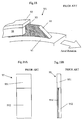
- FIG. 18 is a perspective view of an axis seal (referred as a "leaf seal” hereafter).
- the leaf seal 9A shown in FIG. 18 consists of a housing 92 which is arranged outside of a rotating axis 91 so as to surround the rotating axis 91; a low pressure side plate 93 which is mounted on the lower side of gas pressure of the housing 92; a high pressure side plate 94 which is mounted opposite to the low pressure side plate 93 and on the higher side of gas pressure; and thin metal plates 95.
- the thin metal plates 95 are fitted and engaged into the housing 92 and laminated to the housing 92 in a ring shape. Additionally, the thin metal plates 95 separate the clearance space surrounding the rotation axis 91 into a high-pressure region and a low-pressure region by sealing the periphery of the rotation axis 91. Moreover, on both sides of the thin metal plates 95 are the high-pressure side plate 94 mounted in the high-pressure region and the low-pressure side plate 93 mounted in the low-pressure region, each of which is mounted as a guide plate in a pressure-acting direction.
- the thin metal plates 95 are designed so as to have a predetermined rigidity, which is determined by the thickness of the plate, in a circumferential direction of the rotation axis 91. Additionally, the thin metal plates 95 are mounted to the housing 92 in a manner that an angle made with the circumferential surface of the rotation axis 91 is to be an acute angle against the rotation direction of the rotation axis 91. When the rotation axis 91 stops, the tips of the thin metal plates 95 are in contact with the rotation axis 91 by a predetermined preload. However, when the rotation axis 91 rotates, the thin metal plates 95 and the rotation axis 91 are not in contact with each other because the tips of the thin metal plates 95 are raised by an effect of dynamic pressure caused by rotation of the rotation axis 91.
- FIG. 19A and FIG. 19B show the front view and the side view of the thin metal plate 95 respectively.
- the portion 95d indicated with halftone dot meshing in FIG. 19B is a portion, which is to be eliminated by etching when the thin metal plate 95 is manufactured.
- the portions 95d to be eliminated by etching become a clearance space between the thin metal plates 95.
- the end portions 951 on the periphery of the thin metal plates 95 are arranged to be in contact with each other, while the end portions 952 on the opposite side of the end portion 951 are arranged so as not to be in contact.
- the thin metal plates 95 having a width in the axial direction of the rotation axis 91 are laminated in a multiple number of layers in the circumferential direction of the rotation axis 91, these thin metal plates 95 have soft flexibility for the rotation axis 91 in the circumferential direction, and an axis sealing mechanism having high rigidity is constructed in the axial direction.
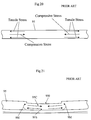
- the thin metal plate 95 is formed so as to obtain the predetermined shape by etching a steel plate, which is formed by rolling. At this time, only one side of the thin metal plate 95 is partially etched to be eliminated. However, in case of a thin plate of metal material (e.g. stainless, Inconel, Hastelloy and the like) of approximately 0.1 mm thickness manufactured by rolling, as shown in FIG. 19B, large residual stress (strain) occurs inside the metal material at the time of cold rolling.
- metal material e.g. stainless, Inconel, Hastelloy and the like
- a multiple number of thin metal plates 95 are used for a leaf seal 9A.
- the leaf seal 9A has portions containing non-uniform space generated here and there, and in these portions, a flow of gas occurs, whereby airtightness of seal is sometimes lost.
- the thin metal plates 95 warp in a direction opposite to the rotating direction of the rotation axis and the like facing to the seal 9A, there arises a possibility of the thin metal plates' 95 contacting with a rotation axis and the like due to shaft vibration during initiation of rotation or during a transition period of rotation such as stopping and the like, or due to a transient thermal deformation.
- the present invention seeks to provide a rotary machine using an axis seal which has a stable characteristic of seal, thereby showing a stable performance thereof, and at the same time does not reduce mechanical efficiency thereof significantly without changing the axis seal for a long time.
- a method of manufacturing an axis seal formed by laminating axis seal members of thin films having flexibility so as to be in a shape of a ring wherein, it is characterized by including a cutting process in which a roll of rolled metal material is cut into a predetermined size of a metal material plate; an etching process in which a multiple number of axis seal members of thin metal plates are produced by etching the only one side of the metal material plates that are cut off in the aforementioned cutting process, so as to thin them and provide them with a difference in level; a welding process in which the thin metal plates formed by etching in the aforesaid manner are arranged so as to be in a ring shape and to be oriented in the same direction, and are welded to the casing to be fixed; and the heat treatment process in which residual stresses are eliminated by heating the metal materials or the axis seal members.
- an axis seal member constructing an axis seal which is manufactured by a method of manufacturing an axis seal including heat treatment processes inserted at an appropriate step between a plurality of processes and which seals a flow in an axial direction of the rotation axis; wherein, an axis seal member is characterized by being a flat plate having no strain or almost having no strain.
- an axis seal which is manufactured by a method of manufacturing an axis seal including heat treatment processes inserted at an appropriate step between a plurality number of processes and which seals a flow in an axial direction of the rotation axis; an axis seal which is characterized by: wherein, the axis seal members are formed so as to have no strain or to almost have no strain and are laminated in a ring shape; wherein the axis seal members are arranged so as to contact the rotation axis when the rotation axis stops; and wherein, the tips of the axis seal members slightly rise from the rotation axis due to dynamic pressure caused by rotation when the rotation axis rotates.
- a rotary machine having an axis seal which separates the space surrounding the rotation axis into the high pressure region and the low pressure region; a rotary machine using an axis seal which is characterized by: wherein, the axis seal is configured in a manner that a multiple number of axis seal members are laminated in a ring shape; wherein, axis seal members are manufactured by a method of an axis seal including heat treatment processes at an appropriate step between a plurality number of manufacturing processes of an axis seal; and wherein, the axis seal members are flat plates having no strain or almost having no strain.
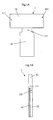
- FIG. 1A is a front view and FIG. 1B is a side view of a thin metal plate of an axis seal member in accordance with the embodiment of the present invention.
- FIG. 2A is a side view of an axis seal (referred as a "leaf seal" hereinafter) in accordance with the embodiment of the present invention, wherein a portion is partially cut off.
- FIG. 2B is a cross-sectional drawing of a leaf seal in accordance with the embodiment of the present invention.
- FIG. 2C is a side view of a leaf seal shown in FIG. 2B when the housings and the side plates thereof are removed.
- FIG. 2D is a side view of a leaf seal in accordance with the embodiment of the present invention when it is in a state of working.
- a thin metal plate 1 has an edge portion 11 on the upper side in the figure (on the side of the periphery thereof when it is formed as a leaf seal) formed so as to be laterally long. Also, as shown in FIG. 1B, a tip 12 of the thin metal plate 1 on the lower side in the figure is formed to be thinner than the remaining portions by having one side eliminated.
- the thin metal plate 1 has a connecting portion 121 of the tip 12 to the edge portion 11 on the periphery formed to be of more slender than the remaining portions. After a plurality number of thin metal plates 1 are laminated and fixed by welding, a tip 211 of a side plate 21 which will be described hereinafter is fit to the slender portion 121.
- a portion 1d indicated with halftone dot meshing is a portion to be eliminated by etching while manufacturing of the above-mentioned thin metal plate 1.
- the portion 1d to be eliminated by etching becomes a clearance space between the thin metal plates 1.
- the edge portions 11 on the periphery of the thin metal plates 1 are arranged so as to contact with each other, whereas the tips 12 on the opposite side are arranged so as not to be in contact.
- the leaf seal A shown in FIG. 2A through FIG. 2D is equipped with a thin metal plate 1 in a letter "T" viewed from the top; housings 2 catching the edge portion 11 on the periphery of a multiple number of laminated thin metal plates 1 from both sides; side plates 21 arranged along the tip 12 in the lower part of the housings 2; and a connection member 22 connecting the housings 2 on the right and on the left.
- the thin metal plates 1 are fixed to each other by welding Wd of both sides 111 and 111 of the edge portions 11 on the upper side of the thin metal plates 1 (on the periphery side when the thin metal plates 1 are formed as a leaf seal). Then, the tips 211 of side plates 21 are arranged in a manner that the slender portions 121 of the tips 12 of the thin metal plates 1 fixed by welding are fit to the tips 211 of side plates 21. (See FIG. 2B.)
- the housings 2 are installed so as to catch in the both sides 111 and 111 of the edge portions 11, when the lower edges 2d of the housings 2 are pressing the tips 211 of the side plates 21 from the outside. Additionally, the housings 2 support the thin metal plates 1 by arranging the connection member 22 between the upper edge portions 2u on both right and left sides and fixing them with a fixing method which does not give an adverse effect to an action of the leaf seal. Welding, bolting and the like, although not limited to, are among methods of fixing the housings 2, the side plates 21 and the connection member 22.
- the thin metal plates 1 laminated in a multiple number of layers are arranged so as to have the edge portions 11 on the upper side thereof get contact with each other and are fixed. However, in the tips 12, a portion thereof, which is thinner than the remaining portion, acts as a clearance gap.
- a clearance gap 1G has a uniform size at any location. (See FIG. 2A and FIG. 2C.)
- a thin metal plate 1 is designed so as to have a predetermined rigidity, which is determined by plate thickness t, in a circumferential direction of a rotation axis Sp. Also, thin metal plates 1 are installed to the housings 2 in a manner that the angle ⁇ made with a phase of the rotation axis Sp in the rotation direction of the rotation axis Sp is an acute angle.
- the tips 12 of the thin metal plates 1 are in contact with the rotation axis Sp due to a predetermined preload; whereas, when the rotation axis Sp rotates, the tips 12 of the thin metal plates 1 rise upward due to dynamic effect caused by rotation of the rotation axis Sp, thereby causing the thin metal plates 1 not to be in contact with the rotation axis Sp.
- the seal leaf A divides a space surrounding the rotation axis Ap into a high-pressure region and a low-pressure region by sealing the periphery of the rotation axis Sp.
- This leaf seal A makes the periphery side thereof to be fixed to the housings 2 be rigid in an axial direction of the rotation axis Sp by laminating the thin metal plates 1 of sealing members in an axial direction of the rotation axis Sp, thereby making it possible to maintain sealing performance under condition of higher differential pressure. Additionally, existence of the clearance gap 1G provides advantages that seal is not broken during rotation and that durability is high.
- FIG. 3 shows a layout of a gas turbine which is a rotary machine using a leaf seal shown in FIG. 2A through FIG. 2D.
- a gas turbine Gt shown in FIG. 3 comprises a compressor 3 which takes in a multiple amount of air inside thereof and compresses it; a combustor 4 which mixes the air compressed by the compressor 3 with fuel and burns it; a turbine 5 which is rotated by combustion gas by introducing the combustion gas generated in the combustor 4 into the inside thereof and expanding it threin; and a rotation axis 6 which is fixed relatively to the turbine 5.
- the gas turbine Gt generally utilizes a part of power, which is obtained by the rotation axis, as a power of the compressor 3.
- the turbine 5 converts the thermal energy of combustion gas into the kinetic rotational energy by blowing combustion gas to rotating blades 51 installed to the rotation axis 6 and generates the power.
- the turbine 5 is equipped with a plurality number of stationary vanes 52 that are mounted mounted to a casing 50 of the turbine 5 as well as with a plurality number of rotating blades 51 mounted to the rotation axis 6, and these rotating blades 51 and stationary vanes 52 are arranged alternately in an axial direction of the rotation axis 6.
- the rotating blades 51 rotate the rotation axis 6 by receiving pressure of the combustion gas flowing in an axial direction of the rotation axis 6, and the rotational energy supplied to the rotation axis 6 is taken out from the end of the axis and used.
- a leaf seal A as an axis seal for a purpose of reducing the amount of combustion gas leaking from the high pressure side to the low pressure side.
- the compressor 3 is connected coaxially to the turbine 5 by the rotation axis 6 and compresses fresh air by utilizing rotation of the turbine 5 so as to supply compressed air to the combustor 4.
- the compressor 3 has a plurality number of rotating blades 31 mounted to the rotation axis 6 and a plurality number of stationary vanes 32 mounted to a casing 30 of the compressor 3 in the same manner as the turbine 5 and has the rotating blades 31 and the stationary vanes 32 arranged alternately in an axial direction of the rotation axis 6.
- a leaf seal A Between the stationary vanes 32 and the rotation axis 6 is installed a leaf seal A for a purpose of reducing the amount of compressed air leaking from the high pressure side to the low pressure side.
- a bearing portion 33 in which the casing 30 of the compressor 3 supports the rotation axis 6 and a bearing portion 53 in which the casing 50 of the turbine 5 supports the rotation axis 6 have a leaf seal A installed thereon as an axis seal to prevent compressed air or combustion gas from leaking from the high pressure side to the low pressure side.
- the axis seal and the gas turbine constructed as mentioned above have thin metal plates 1 having a width thereof in an axial direction of the rotation axis Sp are laminated in a multiple number of layers in a circumferential direction of the rotation axis Sp, wherein the thin metal plates 1 have soft flexibility in a circumferential direction of the rotation axis Sp, whereas constituting an axis seal having high rigidity in an axial direction.
- a leaf seal is not limited to this adoption but can be adopted widely to what can convert an energy into a duty due to a relation between the rotation of an axis and the flow of a fluid, for example, to a steam turbine, a compressor and the like.
- a leaf seal can be used to restrain the flow of a fluid in an axial direction of a rotation axis as well.
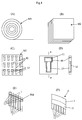
- FIG. 4 shows processes of manufacturing a thin metal plate from a metal material plate.
- a plurality number of thin metal plates 1 are manufactured from metal material plates by etching.
- a roll of rolled metal material M1 is cut out into an optimum size to be subject to the following processing step so as to form a predetermined size of metal material plates M2.
- Outline portions 10 of thin metal plates 1 and tips 12 of the thin metal plates 1, which are to be a clearance gap 1d when the leaf seal A is assembled, are eliminated by etching from a first surface of the metal material plates M2.
- the thin metal plates 1 shown in FIG. 4 (E) are laminated in a ring shape with the portions 1d eliminated by etching, heading for the same direction, and have both sides of the upper edge portions 11 extending to right and left welded, thereby fixing the thin metal plates 1 to each other.
- the thin metal plates 1 which are laminated so as to orient to the same direction and welded have the upper edge portions 11 thereof fit and engaged into the housings 2 on both sides, and by fixing the both sides of the housings 2 mutually, the laminated thin metal plates 1 are fixed. (See (F).)
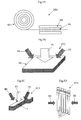
- FIG. 5 shows a process of heat treatment in accordance with the embodiment of the present invention.
- a roll of rolled metal M1 is expanded by being transmitted at a predetermined speed and is heated with a heating equipment HS, thereby removing residual stress (strain). Since heating H1 with the heating equipment HS is included as a part of a process, wherein a roll of rolled metal M1 is expanded and cut out into metal material plates M2 and since a volume of the metal M1 is small whereby holding time is reduced to be short, it is possible to shorten the production process.
- a heat treatment method HT2 shown in FIG. 5B residual stress (strain) is eliminated by laminating the metal material plates M2 so as to be subject to weighting with P1 (dead weight + weight) and heating H2.
- This method can use an existing ordinary electric furnace, achieving a low cost.
- laminated thin plates provide relatively uniform temperature distribution during heat treatment and during post-heat-treatment cooling, deformation of the thin plates after heat treatment, especially deformation at the edge portions due to non-uniform cooling, is small, thereby obtaining a material of good quality, having good flatness.
- a heat treatment method HT3 shown in FIG. 5C by etching the metal material plates M2 after a plurality number of thin metal plates 1 are manufactured and by laminating the thin metal plates 1 and heating H3 them while weighting with P2 (dead weight + weight), residual stress (strain) is eliminated. Since the thin metal plates 1 are small, there is an advantage that a heating equipment becomes smaller.
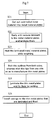
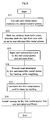
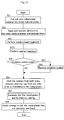
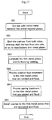
- FIG. 6 shows a flow chart of a manufacturing process of an axis seal in accordance with an embodiment of the present invention.
- a leaf seal A manufactured by a manufacturing process shown in FIG. 6 is an axis seal which seals low temperature fluid, and although not limited to this leaf seal, a leaf seal A is formed of stainless steel.
- a metal formed by cold rolling so as to obtain a predetermined thickness has residual stress (strain) accumulated inside thereof. Therefore, in order to eliminate the residual stress (strain), heat treatment (heating at 740°C for 30 minutes and then cooling) is performed by transmitting a roll of rolled metal material M1 little by little. (See FIG. 5A.) (Step S11)
- Step S12 From the cut-out metal material plate M2, thin metal plates 1 are manufactured by etching the outline portions 10 from both sides and by etching the tips 12 from one side.
- Step S13 A plurality number of the thin metal plates 1 manufactured in Step S13 are laminated so as to orient to the same direction and to be in a ring shape and are fixed to each other by welding both right and left sides 111 and 111 of the upper edge portions 11.
- Step S14 After fixing a plurality number of the thin metal plates 1 in laminated state, the upper edge portions are fixed with the housings 2, the side plates 21 and the connection member 22 (Step S15), thus manufacturing a leaf seal.
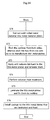
- FIG. 7 shows a flow chart of a manufacturing process of an axis seal in accordance with an embodiment of the present invention.
- a roll of rolled metal material M1 is cut out into predetermined size of metal material plates M2 to be suitable for processing.
- Step S21 A plurality number of the metal material plates M2 that are cut out into a predetermined size in Step S21 are arranged so as to be piled up, when anti-seizure lubricant is applied to spaces between the metal material plates M2.
- Step S22 Thereafter, the metal material plates M2 laminated in Step S22 are heated (at 680°C for four hours), weighting, whereby residual stress (strain) is eliminated from the metal material plates M2. (See FIG. 5B.)
- Step S23 A plurality number of the metal material plates M2 that are cut out into a predetermined size in Step S21 are arranged so as to be piled up, when anti-seizure lubricant is applied to spaces between the metal material plates M2.
- Step S22 There
- the thin metal plates 1 are manufactured by having the portions of the metal material plates M2 which correspond to the outline portions 10 of the thin metal plates 1 etched from both sides and by having portions corresponding to the tips 12 etched from one side.
- Step S24 A plurality number of the thin metal plates 1 manufactured in Step S24 are laminated so as to orient to the same direction and to be in a ring shape and are fixed to each other by welding both right and left sides 111 and 111 of the upper edge portions 11.
- Step S25 After fixing a plurality number of the thin metal plates 1 in laminated state, the upper edge portions thereof are fixed with the housings 2, the side plates 21 and the connection member 22 (Step S26), thus manufacturing a leaf seal.
- Manufacturing in the above-mentioned manner makes it possible to use an existing ordinary electric furnace, achieving low cost.
- the laminated thin plates provide a relatively uniform temperature distribution during heat treatment and during post-heat-treatment cooling, deformation of the thin plates after heat treatment, especially deformation at the edge portions due to non-uniform cooling, is small, thereby obtaining a metal material plates M2 of good quality having good flatness. Since this method is subject to batch processing, it is effective in case of a relatively small number of treatment.
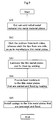
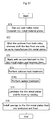
- FIG. 8 shows a flow chart of a manufacturing process of an axis seal in accordance with an embodiment of the present invention.
- a roll of rolled metal material M1 is cut out into a predetermined size of metal material plates M2 to be suitable for processing.
- Thin metal plates 1 are manufactured by having the portions of the metal material plates M2 cut out in Step S31 that correspond to the outline portions 10 of the thin metal plates 1 etched from both sides and by having the portions corresponding to the tips 12 etched from one side.
- the thin metal plates 1 formed in Step S32 are laminated so as to orient to a predetermined direction.
- the thin metal plates 1 piled up in Step S33 are heated (at 680°C for four hours), weighting, thereby eliminating residual stress (strain) from the thin metal plates. (See FIG. 5C.)
- Step S34 Step S34
- Step S35 After fixing a plurality number of the thin metal plates 1 in laminated state, the upper edge portions thereof are fixed with the housings 2, the side plates 21 and the connection member 22 (Step S36), thus manufacturing a leaf seal A.
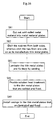
- FIG. 9 shows a flow chart of a manufacturing process of an axis seal in accordance with an embodiment of the present invention.
- a roll of rolled metal material M1 is cut out into predetermined size of metal material plates M2 to be suitable for processing.
- Thin metal plates 1 are manufactured by having the portions of the metal material plates M2 cut out in Step S41 which correspond to the outline portions 10 of the thin metal plates 1 etched from both sides and by having the portions corresponding to the tips 12 etched from one side as mentioned above.
- Step 42 is
- Step S43 After being fixed in Step S43, the thin metal plates 1 in lamination layers are heated (at 680°C for four hours) so as to eliminate residual stress (strain) which is accumulated inside of the thin metal plates 1. (See FIG. 5D.)
- Step S44 Thereafter, the upper edge portions are fixed with the housings 2, the side plates 21 and the connection member 22 (Step S45), thus manufacturing a leaf seal.
- the above embodiments are methods of manufacturing axis seals to be used where fluid of relatively low temperature (up to approximately 400°C) is handled.
- the above-mentioned four methods are examples of manufacturing methods of a leaf seal, but not limited to.
- Temperature and time of heat treatment are not limited to the above, but it is possible to adopt manufacturing methods widely that can release residual stress (strain) accumulated on a metal plate.
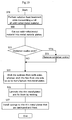
- FIG. 10 shows a flow chart of a manufacturing process of an axis seal in accordance with an embodiment of the present invention.
- An axis seal A manufactured in a manufacturing process shown in FIG. 10 is an axis seal which seals fluid of relatively high temperature (for example, more than 400°C), and although not limited to, an axis seal is to consist of Inconel material herein.
- Rolls of rolled metal materials that are formed by cold rolling so as to have a predetermined thickness have residual stress (strain) accumulated inside thereof. In order to eliminate the residual stress (strain), solution heat treatment is performed by transmitting rolls of rolled metal materials M1 little by little. (See FIG.
- Step S51 Solution heat treatment is a treatment, wherein a metal is held at a predetermined temperature for a predetermined time and subsequently, by cooling the metal rapidly, alloy elements and deposits are solved into matrix. Temperature and time conditions at this time are 980°C and 30 minutes herein, but not limited to. Subsequently, a roll of cold-rolled metal material M1 is cut out into a predetermined size so as to be easy for processing. (Step S52)
- Step S53 In case of presence of oxidation scales (in case of YES in Step S53), oxidation scales are removed by soaking the metal material plates into an acid or alkali liquid. (Step S54)
- Step S55 A plurality number of the thin metal plates 1 manufactured in Step S55 are laminated so as to orient to the same direction and to be in a ring shape and are fixed to each other by welding both right and left sides 111 and 111 of the upper edge portions thereof.
- Step S56 After a plurality number of thin metal plates 1 are fixed in laminated state by welding, the upper edge portions thereof are fixed with the housings 2, the side plates 21 and the connection member 22 (Step S57), thus manufacturing a leaf seal.
- a treatment as an ageing treatment (Step S511), may be included; wherein, after solution heat treatment (Step S51), the roll of rolled metal material M1 are held at 732°C for eight hours; wherein the temperature is decreased down to 621°C, at which the thin metal plates are held for ten hours; and wherein, the thin metal plates are cooled.
- solution heat treatment it is possible or it is almost possible to eliminate residual stress (strain).
- ageing treatment makes it possible to eliminate residual stress (strain) and to obtain strength at high temperature as well.
- a method is exemplified that acid or alkali liquid is used for washing in order to get rid of oxidation scales, but not limited to, and mechanical grinding with a grinder, for example, can be used. Also, it is not limited to the above-mentioned means, but it is possible to adopt means widely that can eliminate oxidation scales so as not to let them remain on the surfaces which are subject to etching.
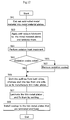
- FIG. 12 shows a flow chart of a manufacturing process of an axis seal in accordance with an embodiment of the present invention.
- a roll of rolled metal material M1 is cut out into predetermined size of metal material plates M2.
- Step S61 A plurality number of metal material plates M2 cut out into a predetermined size in Step S61 are arranged so as to be piled up each other, when anti-seizure lubricant is applied to the space between the metal material plates M2.
- Step S62 Thereafter, by heating the metal material plates M2 laminated in Step S62 (at 982°C for 30 minutes), solution heat treatment is supplied so as to eliminate residual stress (strain) from the metal material plates. (See FIG. 5B.)
- Step S63 Step S63
- Step S64 In case of occurrence of oxidation scales (in case of YES in Step S64), oxidation scales are got rid of by soaking the metal material plates M2 in acid or alkali liquid. (Step S65)
- Step S66 A plurality number of thin metal plates 1 manufactured in Step S66 are laminated so as to orient to the same direction and to be in a ring shape and are fixed to each other by welding both right and left sides 111 and 111 of the upper edge portions 11 thereof.
- Step S67 After fixing a plurality number of thin metal plates 1 in laminated state, the upper edge portions thereof are fixed with the housings 2, the side plates 21 and the connection member 22 (Step S68), thereby manufacturing a leaf seal.
- a treatment as an ageing treatment (Step S631), may be included; wherein, after solution heat treatment (Step S63), thin metal plates are held at 732°C for eight hours; wherein, subsequently, the temperature is decreased down to be 621°C, at which the thin metal plates are held for ten hours; and wherein, the thin metal plates are cooled.
- solution heat treatment it is possible or it is almost possible to eliminate residual stress (strain).
- ageing treatment makes it possible to eliminate residual stress (strain) and to obtain strength at high temperature as well.
- a method is exemplified that acid or alkali liquid is used for washing in order to get rid of oxidation scales, but not limited to, and mechanical grinding with a grinder, for example, may be used. Also, it is not limited to the above-mentioned means, but it is possible to adopt means widely that can eliminate oxidation scales so as not to let them remain on the surfaces which are subject to etching.
- FIG. 14 shows a flow chart of a manufacturing process of an axis seal in accordance with an embodiment of the present invention.
- a roll of rolled metal material M1 is cut out into a predetermined size of metal material plates M2 to be suitable for processing.
- the portions corresponding to the outline portions of the thin metal plates 1 are etched from both sides and the portions corresponding to the tips 12 thereof are etched from one side, as mentioned above, thereby manufacturing thin metal plates 1.
- Step S72 A plurality number of thin metal plates 1 manufactured in Step S72 are arranged so as to be piled up, when anti-seizure lubricant is applied to the space between the metal plates.
- Step S73 the thin metal plates 1 laminated in Step S73 are heated (at 982°C for 30 minutes) so as to be provided with solution heat treatment, thereby getting rid of residual stress (strain) from the metal plates . (See FIG. 5C.) (Step S74)
- Step S72 a plurality number of thin metal plates 1 which are manufactured in Step S72 and have residual stress (strain) eliminated in Step S74 are laminated so as to orient to the same direction and to be in a ring shape, and the thin metal plates 1 are fixed to each other by welding both right and left sides 111 and 111 of the upper edge portions 11 thereof.
- Step S75 After fixing a plurality number of thin metal plates 1 in laminated state, the upper edge portions thereof are fixed with the casings 2, the side plates 21 and the connection member 22 (Step S76), thus manufacturing a leaf seal.
- a treatment as an ageing treatment (Step S741), may be included; wherein, after solution heat treatment (Step S74), thin metal plates are held at 732°C for eight hours; wherein, subsequently, the temperature is decreased down to be 621°C, at which the thin metal plates are held for ten hours; and wherein, the thin metal plates are cooled.
- solution heat treatment it is possible or it is almost possible to eliminate residual stress (strain).
- ageing treatment makes it possible to eliminate residual stress (strain) and to obtain strength at high temperature as well.
- a method is exemplified that acid or alkali liquid is used for washing in order to get rid of oxidation scales, but not limited to, and mechanical grinding with a grinder, for example, can be used. Also, it is not limited to the above-mentioned means, but it is possible to adopt means widely that can eliminate oxidation scales so as not to let them remain on the surfaces which are subject to etching.
- FIG. 16 shows a flow chart of a manufacturing process of an axis seal in accordance with an embodiment of the present invention.
- a roll of rolled metal material M1 is cut out into predetermined size of metal material plates M2 to be suitable for processing.
- the cut-out metal material plates M2 have the portions corresponding to the outline portions 10 of the thin metal plates 1 etched from both sides and have the portions corresponding to the tips 12 etched from one side, mentioned above, thereby manufacturing the thin metal plates 1.
- Step S82 A plurality number of thin metal plates 1 manufactured in Step S82 are laminated so as to orient to the same direction and to be in a ring shape, and the thin metal plates 1 are fixed to each other by welding both right and left sides 111 and 111 of the upper edge portions 11 thereof.
- Step S83 The thin metal plates 1 welded and fixed in Step S83 are heated (at 982°C for 30 minutes) so as to be provided with solution heat treatment, thereby getting rid of residual stress (strain) from the metal plates . (See FIG. 5D.) (Step S84)
- Step S83 the thin metal plates 1, which are welded and fixed in a ring shape in Step S83 and have residual stress eliminated in Step S84, have the upper edge portions 11 thereof fixed with the housings 2, the side plates 21 and the connection member 22 (Step S85), thereby manufacturing a leaf seal.
- a treatment may be included; wherein, after solution heat treatment (Step S84), thin metal plates 1 are held at 732°C for eight hours as an ageing treatment (Step S841); wherein, subsequently, the temperature is decreased down to be 621°C, at which the thin metal plates are held for ten hours; and wherein, the thin metal plates are cooled.
- solution heat treatment it is possible or it is almost possible to eliminate residual stress (strain).
- ageing treatment makes it possible to eliminate residual stress (strain) and to obtain strength at high temperature as well. Additionally, since heat treatment is performed after welding, it is also possible to get rid of residual stress caused by welding.
- a method is exemplified that acid or alkali liquid is used for washing in order to get rid of oxidation scales, but not limited to, and it is possible to adopt means widely that can eliminate oxidation scales so as not to have them remain on the surfaces which are subject to etching.
- metal material plates are formed by cold rolling method, but not limited to, and it is possible to widely adopt a method that can stretch and roll a metal material plate to be thin.
Landscapes
- Engineering & Computer Science (AREA)
- General Engineering & Computer Science (AREA)
- Mechanical Engineering (AREA)
- Gasket Seals (AREA)
- Sealing Devices (AREA)
- Turbine Rotor Nozzle Sealing (AREA)
- Structures Of Non-Positive Displacement Pumps (AREA)
Applications Claiming Priority (2)
| Application Number | Priority Date | Filing Date | Title |
|---|---|---|---|
| JP2003176052A JP3993536B2 (ja) | 2003-06-20 | 2003-06-20 | 軸シールの製造方法、軸シール、軸シール部材及び軸シールを用いた回転機械 |
| JP2003176052 | 2003-06-20 |
Publications (2)
| Publication Number | Publication Date |
|---|---|
| EP1489340A1 true EP1489340A1 (fr) | 2004-12-22 |
| EP1489340B1 EP1489340B1 (fr) | 2007-04-11 |
Family
ID=33411002
Family Applications (1)
| Application Number | Title | Priority Date | Filing Date |
|---|---|---|---|
| EP04014369A Expired - Lifetime EP1489340B1 (fr) | 2003-06-20 | 2004-06-18 | Procédé de fabrication d'un joint radial d'étanchéité, joint d'étanchité, éléments d'un tel joint ainsi que machine tournante incorporant ce joint |
Country Status (5)
| Country | Link |
|---|---|
| US (1) | US7334328B2 (fr) |
| EP (1) | EP1489340B1 (fr) |
| JP (1) | JP3993536B2 (fr) |
| CN (1) | CN100343556C (fr) |
| DE (1) | DE602004005779T2 (fr) |
Cited By (6)
| Publication number | Priority date | Publication date | Assignee | Title |
|---|---|---|---|---|
| WO2005103535A1 (fr) * | 2004-04-23 | 2005-11-03 | Alstom Technology Ltd | Procede de fabrication de garnitures d'etancheite a lamelles |
| WO2005103534A1 (fr) * | 2004-04-23 | 2005-11-03 | Alstom Technology Ltd | Garniture d'etancheite lamellaire, notamment pour turbine a gaz et procede permettant de la produire |
| US7487588B2 (en) | 2004-04-26 | 2009-02-10 | Alstom Technology Ltd. | Process for producing leaves for leaf seal |
| EP2206938A3 (fr) * | 2009-01-12 | 2012-02-29 | General Electric Company | Procédé de fabrication d'un ensemble de joint de plaque flexible |
| US8517673B2 (en) | 2009-03-31 | 2013-08-27 | Alstom Technology Ltd. | Lamellar seal for a turbomachine |
| US8794632B2 (en) | 2009-12-18 | 2014-08-05 | Rolls-Royce Plc | Leaf seal assembly |
Families Citing this family (11)
| Publication number | Priority date | Publication date | Assignee | Title |
|---|---|---|---|---|
| DE102004059858A1 (de) * | 2004-12-11 | 2006-06-29 | Alstom Technology Ltd | Lamellendichtung, insbesondere für eine Gasturbine |
| US7759158B2 (en) * | 2005-03-22 | 2010-07-20 | Applied Materials, Inc. | Scalable photovoltaic cell and solar panel manufacturing with improved wiring |
| DE102005045839A1 (de) * | 2005-09-24 | 2007-04-12 | Mtu Aero Engines Gmbh | Verfahren zum Reinigen von Hohlräumen an Gasturbinenbauteilen |
| JP3970298B2 (ja) * | 2005-11-10 | 2007-09-05 | 三菱重工業株式会社 | 軸シール機構 |
| GB2464366B (en) * | 2008-10-17 | 2013-01-02 | Ip Consortium Ltd | Seal assembly and method |
| US8250756B2 (en) * | 2009-02-20 | 2012-08-28 | General Electric Company | Method of manufacture of compliant plate seals |
| WO2010146805A1 (fr) * | 2009-06-16 | 2010-12-23 | 三菱重工業株式会社 | Joint d'arbre et machine rotative pourvue de ce dernier |
| JP5422481B2 (ja) | 2010-05-10 | 2014-02-19 | 三菱重工業株式会社 | 軸シール装置の製造方法及び軸シール装置の生産治具、並びに、軸シール装置を備える回転機械 |
| GB201113590D0 (en) * | 2011-08-08 | 2011-09-21 | Rolls Royce Plc | Leaf seal |
| GB201113691D0 (en) * | 2011-08-09 | 2011-09-21 | Rolls Royce Plc | Leaf seal |
| US11459899B2 (en) * | 2018-03-23 | 2022-10-04 | Raytheon Technologies Corporation | Turbine component with a thin interior partition |
Citations (2)
| Publication number | Priority date | Publication date | Assignee | Title |
|---|---|---|---|---|
| EP0933567A2 (fr) * | 1998-01-30 | 1999-08-04 | Rolls-Royce Plc | Dispositif d'étanchéité |
| EP1302708A2 (fr) * | 2001-10-09 | 2003-04-16 | Mitsubishi Heavy Industries, Ltd. | Dispositif d'étanchéité pour axe et turbine |
Family Cites Families (8)
| Publication number | Priority date | Publication date | Assignee | Title |
|---|---|---|---|---|
| GB8907695D0 (en) | 1989-04-05 | 1989-05-17 | Cross Mfg Co | Seals |
| JP2734356B2 (ja) | 1993-12-17 | 1998-03-30 | 住友金属工業株式会社 | 電子機器用金属薄板の内部応力低減方法 |
| WO2000003164A1 (fr) | 1998-07-13 | 2000-01-20 | Mitsubishi Heavy Industries, Ltd. | Joint d'arbre et turbine utilisant ce joint |
| US6643917B1 (en) * | 2000-01-19 | 2003-11-11 | Delaware Capital Formation | Redundant system for assembly of electronic components to substrates |
| DE10006298A1 (de) * | 2000-02-12 | 2001-08-16 | Abb Patent Gmbh | Dichtung für umlaufende Teile |
| JP3616016B2 (ja) * | 2000-04-28 | 2005-02-02 | 三菱重工業株式会社 | 軸シール機構及びガスタービン |
| CA2359933C (fr) * | 2001-02-08 | 2006-03-14 | Mitsubishi Heavy Industries, Ltd. | Joint pour arbre tournant, et turbine a gaz |
| JP4824225B2 (ja) * | 2001-08-29 | 2011-11-30 | イーグル工業株式会社 | 板ブラシシール装置 |
-
2003
- 2003-06-20 JP JP2003176052A patent/JP3993536B2/ja not_active Expired - Lifetime
-
2004
- 2004-06-17 US US10/868,870 patent/US7334328B2/en not_active Expired - Lifetime
- 2004-06-18 CN CNB2004100593249A patent/CN100343556C/zh not_active Expired - Lifetime
- 2004-06-18 DE DE602004005779T patent/DE602004005779T2/de not_active Expired - Lifetime
- 2004-06-18 EP EP04014369A patent/EP1489340B1/fr not_active Expired - Lifetime
Patent Citations (2)
| Publication number | Priority date | Publication date | Assignee | Title |
|---|---|---|---|---|
| EP0933567A2 (fr) * | 1998-01-30 | 1999-08-04 | Rolls-Royce Plc | Dispositif d'étanchéité |
| EP1302708A2 (fr) * | 2001-10-09 | 2003-04-16 | Mitsubishi Heavy Industries, Ltd. | Dispositif d'étanchéité pour axe et turbine |
Cited By (11)
| Publication number | Priority date | Publication date | Assignee | Title |
|---|---|---|---|---|
| WO2005103535A1 (fr) * | 2004-04-23 | 2005-11-03 | Alstom Technology Ltd | Procede de fabrication de garnitures d'etancheite a lamelles |
| WO2005103534A1 (fr) * | 2004-04-23 | 2005-11-03 | Alstom Technology Ltd | Garniture d'etancheite lamellaire, notamment pour turbine a gaz et procede permettant de la produire |
| DE102004020377A1 (de) * | 2004-04-23 | 2005-11-10 | Alstom Technology Ltd | Verfahren zur Bearbeitung von Dichtungen nach Art der Lamellendichtungen |
| CN100582532C (zh) * | 2004-04-23 | 2010-01-20 | 阿尔斯托姆科技有限公司 | 尤其用于燃气轮机的片式密封件及其制造方法 |
| US7743498B2 (en) | 2004-04-23 | 2010-06-29 | Alstom Technology Ltd. | Method of processing seals like leaf seals |
| US8585058B2 (en) | 2004-04-23 | 2013-11-19 | Alstom Technology Ltd. | Leaf seal and method of producing a leaf seal |
| US7487588B2 (en) | 2004-04-26 | 2009-02-10 | Alstom Technology Ltd. | Process for producing leaves for leaf seal |
| EP1740857B1 (fr) * | 2004-04-26 | 2015-09-30 | Alstom Technology Ltd | Procede de fabrication de lamelles pour un joint a lamelles |
| EP2206938A3 (fr) * | 2009-01-12 | 2012-02-29 | General Electric Company | Procédé de fabrication d'un ensemble de joint de plaque flexible |
| US8517673B2 (en) | 2009-03-31 | 2013-08-27 | Alstom Technology Ltd. | Lamellar seal for a turbomachine |
| US8794632B2 (en) | 2009-12-18 | 2014-08-05 | Rolls-Royce Plc | Leaf seal assembly |
Also Published As
| Publication number | Publication date |
|---|---|
| JP2005009618A (ja) | 2005-01-13 |
| DE602004005779T2 (de) | 2008-01-10 |
| US20050125983A1 (en) | 2005-06-16 |
| US7334328B2 (en) | 2008-02-26 |
| EP1489340B1 (fr) | 2007-04-11 |
| CN1573180A (zh) | 2005-02-02 |
| DE602004005779D1 (de) | 2007-05-24 |
| CN100343556C (zh) | 2007-10-17 |
| JP3993536B2 (ja) | 2007-10-17 |
Similar Documents
| Publication | Publication Date | Title |
|---|---|---|
| EP1489340B1 (fr) | Procédé de fabrication d'un joint radial d'étanchéité, joint d'étanchité, éléments d'un tel joint ainsi que machine tournante incorporant ce joint | |
| US8025296B2 (en) | Shaft sealing mechanism | |
| US6343792B1 (en) | Shaft seal and turbine using the same | |
| EP1479952B1 (fr) | Dispositif d'étanchéité pour axe | |
| US20090191053A1 (en) | Diaphragm and blades for turbomachinery | |
| CN102362107B (zh) | 轴封及具有其的旋转机械 | |
| EP2896791A1 (fr) | Ensembles d'aubes avec une fréquence propre différente | |
| KR101832641B1 (ko) | 축 시일 장치 및 회전 기계 | |
| EP0921277A1 (fr) | Structure d'etancheite montee entre les disques d'une turbine a gaz | |
| JP2023506429A (ja) | 機械用の複合シール構造及び複合シール構造を製造する方法 | |
| US20130134678A1 (en) | Shim seal assemblies and assembly methods for stationary components of rotary machines | |
| KR101812402B1 (ko) | 터빈의 복합 실링 구조 | |
| EP2689515B1 (fr) | Cône élastique pour stator fermé hermétiquement, moteur correspondant et procédé de fabrication | |
| JP2008144687A (ja) | タービン静翼構造 | |
| US20120009058A1 (en) | Compressible supports for turbine engines | |
| JP2017227240A (ja) | フォイル軸受 | |
| KR20090034112A (ko) | 가스터빈용 커플링 볼트의 제조방법 | |
| US20110100961A1 (en) | Welding process for producing rotating turbomachinery | |
| JP2020159453A (ja) | フォイル軸受、フォイル軸受ユニットおよびターボ機械 | |
| JPH0777004A (ja) | 蒸気タービンの組立ロータ | |
| JP4264384B2 (ja) | 軸シール機構 | |
| JP2010014161A (ja) | シール装置及びシール装置を備えたガスタービン | |
| US12055069B2 (en) | System and method for reducing blade hook stress in a turbine blade | |
| JP2007263376A (ja) | 軸シール機構 | |
| EP2770166B1 (fr) | Amortisseur pour pieds d'aubes de compresseur |
Legal Events
| Date | Code | Title | Description |
|---|---|---|---|
| PUAI | Public reference made under article 153(3) epc to a published international application that has entered the european phase |
Free format text: ORIGINAL CODE: 0009012 |
|
| 17P | Request for examination filed |
Effective date: 20040618 |
|
| AK | Designated contracting states |
Kind code of ref document: A1 Designated state(s): AT BE BG CH CY CZ DE DK EE ES FI FR GB GR HU IE IT LI LU MC NL PL PT RO SE SI SK TR |
|
| AX | Request for extension of the european patent |
Extension state: AL HR LT LV MK |
|
| AKX | Designation fees paid |
Designated state(s): CH DE GB LI |
|
| GRAP | Despatch of communication of intention to grant a patent |
Free format text: ORIGINAL CODE: EPIDOSNIGR1 |
|
| GRAS | Grant fee paid |
Free format text: ORIGINAL CODE: EPIDOSNIGR3 |
|
| GRAA | (expected) grant |
Free format text: ORIGINAL CODE: 0009210 |
|
| AK | Designated contracting states |
Kind code of ref document: B1 Designated state(s): CH DE GB LI |
|
| REG | Reference to a national code |
Ref country code: GB Ref legal event code: FG4D |
|
| REG | Reference to a national code |
Ref country code: CH Ref legal event code: EP |
|
| REF | Corresponds to: |
Ref document number: 602004005779 Country of ref document: DE Date of ref document: 20070524 Kind code of ref document: P |
|
| REG | Reference to a national code |
Ref country code: CH Ref legal event code: NV Representative=s name: E. BLUM & CO. AG PATENT- UND MARKENANWAELTE VSP |
|
| PLBE | No opposition filed within time limit |
Free format text: ORIGINAL CODE: 0009261 |
|
| STAA | Information on the status of an ep patent application or granted ep patent |
Free format text: STATUS: NO OPPOSITION FILED WITHIN TIME LIMIT |
|
| 26N | No opposition filed |
Effective date: 20080114 |
|
| PGFP | Annual fee paid to national office [announced via postgrant information from national office to epo] |
Ref country code: DE Payment date: 20230502 Year of fee payment: 20 |
|
| PGFP | Annual fee paid to national office [announced via postgrant information from national office to epo] |
Ref country code: GB Payment date: 20230427 Year of fee payment: 20 Ref country code: CH Payment date: 20230702 Year of fee payment: 20 |
|
| REG | Reference to a national code |
Ref country code: DE Ref legal event code: R071 Ref document number: 602004005779 Country of ref document: DE |
|
| REG | Reference to a national code |
Ref country code: CH Ref legal event code: PL |
|
| PG25 | Lapsed in a contracting state [announced via postgrant information from national office to epo] |
Ref country code: GB Free format text: LAPSE BECAUSE OF EXPIRATION OF PROTECTION Effective date: 20240617 |
|
| PG25 | Lapsed in a contracting state [announced via postgrant information from national office to epo] |
Ref country code: GB Free format text: LAPSE BECAUSE OF EXPIRATION OF PROTECTION Effective date: 20240617 |