EP1484394A1 - Primers for nucleic acid amplification in detecting housekeeping gene mrna and test method using these primers - Google Patents
Primers for nucleic acid amplification in detecting housekeeping gene mrna and test method using these primers Download PDFInfo
- Publication number
- EP1484394A1 EP1484394A1 EP03705099A EP03705099A EP1484394A1 EP 1484394 A1 EP1484394 A1 EP 1484394A1 EP 03705099 A EP03705099 A EP 03705099A EP 03705099 A EP03705099 A EP 03705099A EP 1484394 A1 EP1484394 A1 EP 1484394A1
- Authority
- EP
- European Patent Office
- Prior art keywords
- seq
- primers
- nos
- primer
- set forth
- Prior art date
- Legal status (The legal status is an assumption and is not a legal conclusion. Google has not performed a legal analysis and makes no representation as to the accuracy of the status listed.)
- Withdrawn
Links
Images


Classifications
-
- C—CHEMISTRY; METALLURGY
- C12—BIOCHEMISTRY; BEER; SPIRITS; WINE; VINEGAR; MICROBIOLOGY; ENZYMOLOGY; MUTATION OR GENETIC ENGINEERING
- C12Q—MEASURING OR TESTING PROCESSES INVOLVING ENZYMES, NUCLEIC ACIDS OR MICROORGANISMS; COMPOSITIONS OR TEST PAPERS THEREFOR; PROCESSES OF PREPARING SUCH COMPOSITIONS; CONDITION-RESPONSIVE CONTROL IN MICROBIOLOGICAL OR ENZYMOLOGICAL PROCESSES
- C12Q1/00—Measuring or testing processes involving enzymes, nucleic acids or microorganisms; Compositions therefor; Processes of preparing such compositions
- C12Q1/68—Measuring or testing processes involving enzymes, nucleic acids or microorganisms; Compositions therefor; Processes of preparing such compositions involving nucleic acids
- C12Q1/6876—Nucleic acid products used in the analysis of nucleic acids, e.g. primers or probes
-
- C—CHEMISTRY; METALLURGY
- C12—BIOCHEMISTRY; BEER; SPIRITS; WINE; VINEGAR; MICROBIOLOGY; ENZYMOLOGY; MUTATION OR GENETIC ENGINEERING
- C12Q—MEASURING OR TESTING PROCESSES INVOLVING ENZYMES, NUCLEIC ACIDS OR MICROORGANISMS; COMPOSITIONS OR TEST PAPERS THEREFOR; PROCESSES OF PREPARING SUCH COMPOSITIONS; CONDITION-RESPONSIVE CONTROL IN MICROBIOLOGICAL OR ENZYMOLOGICAL PROCESSES
- C12Q1/00—Measuring or testing processes involving enzymes, nucleic acids or microorganisms; Compositions therefor; Processes of preparing such compositions
- C12Q1/68—Measuring or testing processes involving enzymes, nucleic acids or microorganisms; Compositions therefor; Processes of preparing such compositions involving nucleic acids
- C12Q1/6844—Nucleic acid amplification reactions
- C12Q1/6851—Quantitative amplification
-
- C—CHEMISTRY; METALLURGY
- C12—BIOCHEMISTRY; BEER; SPIRITS; WINE; VINEGAR; MICROBIOLOGY; ENZYMOLOGY; MUTATION OR GENETIC ENGINEERING
- C12Q—MEASURING OR TESTING PROCESSES INVOLVING ENZYMES, NUCLEIC ACIDS OR MICROORGANISMS; COMPOSITIONS OR TEST PAPERS THEREFOR; PROCESSES OF PREPARING SUCH COMPOSITIONS; CONDITION-RESPONSIVE CONTROL IN MICROBIOLOGICAL OR ENZYMOLOGICAL PROCESSES
- C12Q2545/00—Reactions characterised by their quantitative nature
- C12Q2545/10—Reactions characterised by their quantitative nature the purpose being quantitative analysis
- C12Q2545/101—Reactions characterised by their quantitative nature the purpose being quantitative analysis with an internal standard/control
-
- C—CHEMISTRY; METALLURGY
- C12—BIOCHEMISTRY; BEER; SPIRITS; WINE; VINEGAR; MICROBIOLOGY; ENZYMOLOGY; MUTATION OR GENETIC ENGINEERING
- C12Q—MEASURING OR TESTING PROCESSES INVOLVING ENZYMES, NUCLEIC ACIDS OR MICROORGANISMS; COMPOSITIONS OR TEST PAPERS THEREFOR; PROCESSES OF PREPARING SUCH COMPOSITIONS; CONDITION-RESPONSIVE CONTROL IN MICROBIOLOGICAL OR ENZYMOLOGICAL PROCESSES
- C12Q2600/00—Oligonucleotides characterized by their use
- C12Q2600/158—Expression markers
-
- C—CHEMISTRY; METALLURGY
- C12—BIOCHEMISTRY; BEER; SPIRITS; WINE; VINEGAR; MICROBIOLOGY; ENZYMOLOGY; MUTATION OR GENETIC ENGINEERING
- C12Q—MEASURING OR TESTING PROCESSES INVOLVING ENZYMES, NUCLEIC ACIDS OR MICROORGANISMS; COMPOSITIONS OR TEST PAPERS THEREFOR; PROCESSES OF PREPARING SUCH COMPOSITIONS; CONDITION-RESPONSIVE CONTROL IN MICROBIOLOGICAL OR ENZYMOLOGICAL PROCESSES
- C12Q2600/00—Oligonucleotides characterized by their use
- C12Q2600/16—Primer sets for multiplex assays
-
- C—CHEMISTRY; METALLURGY
- C12—BIOCHEMISTRY; BEER; SPIRITS; WINE; VINEGAR; MICROBIOLOGY; ENZYMOLOGY; MUTATION OR GENETIC ENGINEERING
- C12Q—MEASURING OR TESTING PROCESSES INVOLVING ENZYMES, NUCLEIC ACIDS OR MICROORGANISMS; COMPOSITIONS OR TEST PAPERS THEREFOR; PROCESSES OF PREPARING SUCH COMPOSITIONS; CONDITION-RESPONSIVE CONTROL IN MICROBIOLOGICAL OR ENZYMOLOGICAL PROCESSES
- C12Q2600/00—Oligonucleotides characterized by their use
- C12Q2600/166—Oligonucleotides used as internal standards, controls or normalisation probes
Definitions
- the present invention relates to primers for nucleic acid amplification to detect a housekeeping gene.
- nucleic acid amplification methods including polymerase chain reaction method (PCR method: Science, 230:1350-1354, 1985) and NASBA method (Nucleic Acid Sequence Based Amplification method: Nature, 350, 91-92, 1991; Japanese Patent No. 2648802, and Japanese Patent No. 2650159), detection of an infinitesimal amount of nucleic acid present in a biological sample, which has been difficult so far, has become possible, thereby dramatically facilitating genetic analyses.
- tumor marker protein such as cytokeratin (CK). Due to the recent development of genetic analysis technology, detection of mRNA expression of tumor marker protein has allowed effective diagnosis of tumor (The Hokkaido journal of medical science, vol. 66(2), pp. 135-141, 1991). RT-PCR has allowed detection of CK mRNA expression in excised tissue, and underdiagnosis of tumor metastasis can be prevented to some extent. These nucleic acid amplification methods have been put to practical use in the field of diagnosis of tumor and cancer (Manual of Clinical Laboratory Medicine, 31 st ed., Kanehara & Co., Ltd, published on September 20, 1998).
- the LAMP method is a gene amplification method using multiple primers including those forming a hairpin structure at the ends of the amplified product as the strand displacement reaction proceeds.
- a dumbbell-like structure with loops at both ends is synthesized from template DNA by using a pair of inner primers (FIP and RIP), a pair of outer primers (F3 and R3 primers) and strand-displacement DNA polymerase.
- F3 and R3 primers a pair of outer primers
- strand-displacement DNA polymerase strand-displacement DNA polymerase.
- the amplified product is composed of a number of repeat structures, each unit of which comprises, within the strand, the complementary regions linked in the inverted direction which are derived from the nucleotide sequences of double-stranded nucleic acids corresponding to the amplified region between the primers.
- the LAMP method has features that heat denature of double-strands to single-strands is not required and that all the amplification reactions can proceed consecutively at a fixed temperature (Non-patent Documents 1 and 2).
- the starting structure can be synthesized by adding reverse transcriptase to the composition of the reaction solution for DNA template, and the amplification can be conducted (RT-LAMP method).
- the LAMP method gives a sufficient amount of amplification product to be detected in about 30 minutes.
- this method may be applied to the diagnosis of tumor metastasis to lymph nodes for the purpose of prompt determination of the therapeutic strategy, because the time required for detection of nucleic acids is reduced.
- This method is also promising for application to intraoperative diagnosis, since it can give prompt results.
- mRNA of a housekeeping gene may be used as an internal control in the sample.
- Use of the housekeeping gene mRNA as an internal control has the advantage of being able to detect mRNA of the target gene in a relative manner without regard to the extraction efficiency of the target gene mRNA or the cDNA synthesis efficiency.
- housekeeping gene examples include the gene for ⁇ -actin, a component of the cytoskeleton, and gene for glyceraldehyde-3-phosphate dehydrogenase (hereinafter, referred to as "GAPDH”), a major enzyme in the glycolysis system.
- GPDH glyceraldehyde-3-phosphate dehydrogenase
- Action is a protein abundantly found in all the eukaryotic cells. This protein provides a number of structural and regulatory functions, including the role in mitosis, motility and the integrity of the structure of higher eukaryotic cells.
- Six isoforms of actin have been identified in the vertebrates; four of them are of muscle actin (skeletal muscle, cardiac muscle, aortic smooth muscle and stomach smooth muscle actins) and two of them are of nonmuscle actin (cytoplasmic ⁇ - and ⁇ -actin). Muscle actins are tissue-specifically expressed and involved in muscular contraction. In contrast, cytoplasmic actins are found in all the cells in principle and involved in a number of cellular functions. In spite of its diversity, amino acid sequences of the intracellular actin are highly conserved among different actin types and among eukaryotic species.
- the sequence of the human cytoplasmic ⁇ -actin gene has already been determined and compared with the sequences of ⁇ -actin genes derived from other species (Nakajima-Iijima et al, PNAS 82, pp. 6133-6137 (1985); EP Patent Application No. 0174608; Ponte et al., 1984, Nucleic Acids Res. 12, pp. 1687-1696 (1984)).
- Primers for amplification of the entire human ⁇ -actin gene are commercially available from Clontech Laboratories, Inc. (Palo Alto, CA) under the name MAPPING Amplimershito for ⁇ -actin.
- Human glyceraldehyde-3-phosphate is one of the important intermediates involved in the glucose metabolism, such as glycolysis and pentose phosphate cycle, and lipogenesis in the living organisms and this substance is widely distributed in the living body.
- Human glyceraldehyde-3-phosphate dehydrogenase (GAPDH) is also necessary for synthesis of lipids from this substance and this enzyme is also widely distributed in vivo in human.
- An object of the present invention is to provide primers for nucleic acid amplification to detect mRNA for housekeeping genes, particularly novel primers for amplification of mRNA for the ⁇ -actin and GAPDH genes.
- the present inventors conducted extensive research review and succeeded in constructing primers for nucleic acid amplification of housekeeping genes.
- the present invention comprises the following:
- the present invention provides a method for nucleic acid amplification of housekeeping genes. More specifically, the present invention provides primers for nucleic acid amplification that are applicable to methods for nucleic acid amplification relating to mRNA for the ⁇ -actin and GAPDH genes.
- the regions, F3c, F2c and F1c are provided in this sequence from the 3' end and the regions, R3, R2 and R1, are provided in this sequence from the 5' end of a target DNA to be amplified, and oligonucleotide chains containing the nucleotide sequences substantially identical or substantially complementary to at least these six regions are selected for designing at least four primers.
- nucleotide sequences substantially identical to the nucleotide sequence of F2 include, in addition to the nucleotide sequence precisely the same as that of F2, nucleotide sequences that can function as templates to give nucleotide sequences that hybridize to F2 and serve as starting points for synthesis of complementary sequences.
- sequences identical to a certain sequence include a complementary sequence to a nucleotide sequence capable of hybridizing to the certain sequence.
- complementary refers to a sequence that can hybridize under stringent conditions and provide a 3' end that can serve as a starting point for the synthesis of complementary strands.
- the primers of the present invention have a length sufficient for base pairing with their complementary strands while maintaining the required specificity under the environment given in the different nucleic acid synthesis reactions described below.
- the primers have 5 to 200 nucleotide length, more preferably, 10 to 50 nucleotide length. Considering that a primer length of at least about five nucleotides is required for recognition by any known polymerase that catalyzes sequence-dependent synthesis of nucleic acids, the length of the portion subjected to hybridization should be more than that.
- the primers are desired to retain a length of 10 or more nucleotides. On the other hand, it is difficult to prepare excessively long nucleotide sequences by chemical synthesis. Thus, the nucleotide lengths described above are given as a desirable range.
- template refers to a nucleic acid that serves as a template for synthesis of the complementary strand.
- complementary strand having a nucleotide sequence complementary to the template has significance as a strand capable of hybridizing to the template, this relationship is ever relative.
- a strand synthesized as a complementary strand may function as a template in turn. That is, complementary strands may serve as templates.
- each primer selected from the nucleotide sequence of a target DNA constitutes categorized into FIP (forward inner primer), F3 primer (forward outer primer), RIP (reverse inner primer) or R3 primer (reverse outer primer).
- An FIP is designed to have the nucleotide sequence of the F2 region, which is substantially complementary to the F2c region of the target DNA, at the 3' end as well as to have a nucleotide sequence substantially identical to the F1c region of the target DNA at the 5' end.
- This design allows an intervening sequence independent from the target DNA to lie between F2 and F1c.
- This target DNA-independent sequence is acceptable if the length is 0-50 nucleotides, preferably 0-40 nucleotide.
- An F3 primer is designed to have a nucleotide sequence substantially identical to the F3 region, which is substantially complementary to the F3c region of the target DNA.
- An RIP is designed to have the nucleotide sequence of the R2 region, which is substantially complementary to the R2c region of the target DNA, at the 3' end as well as to have a nucleotide sequence substantially identical to the R1c region of the target DNA at the 5' end.
- RIP allows an intervening sequence independent from the target DNA to lie between R2 and R1c.
- An R3 primer is designed to have a nucleotide sequence substantially identical to the R3 region, which is substantially complementary to the R3c region of the target DNA.
- loop-primer refers to the single-stranded portion of the loop at the 5' end of the dumbbell structure, in particular, it means a primer having a complementary sequence between, for example, the R1 and R2 region or the F1 and F2 region.
- Use of the loop primer allows the proliferation of the starting point material for DNA synthesis.
- Such a loop primer is designed to hybridize to the loop region to which FIP or RIP generated during the process of DNA synthesis.
- sequences at least 5 nucleotides in length, preferably 10-30 nucleotides in length, and more preferably 17-25 nucleotides in length that recognize the DNA region may be selected, with paying attention to the factors including nucleotide composition, GC content, secondary structure and Tm value.
- Tm values may be obtained using the Nearest Neighbor method.
- DNA regions with a Tm value of 55-65°C, preferably 58-64°C, and with a GC content of 40-70%, preferably 50-65% may be selected.
- the primers of the present invention are selected and designed according to the principle described above.
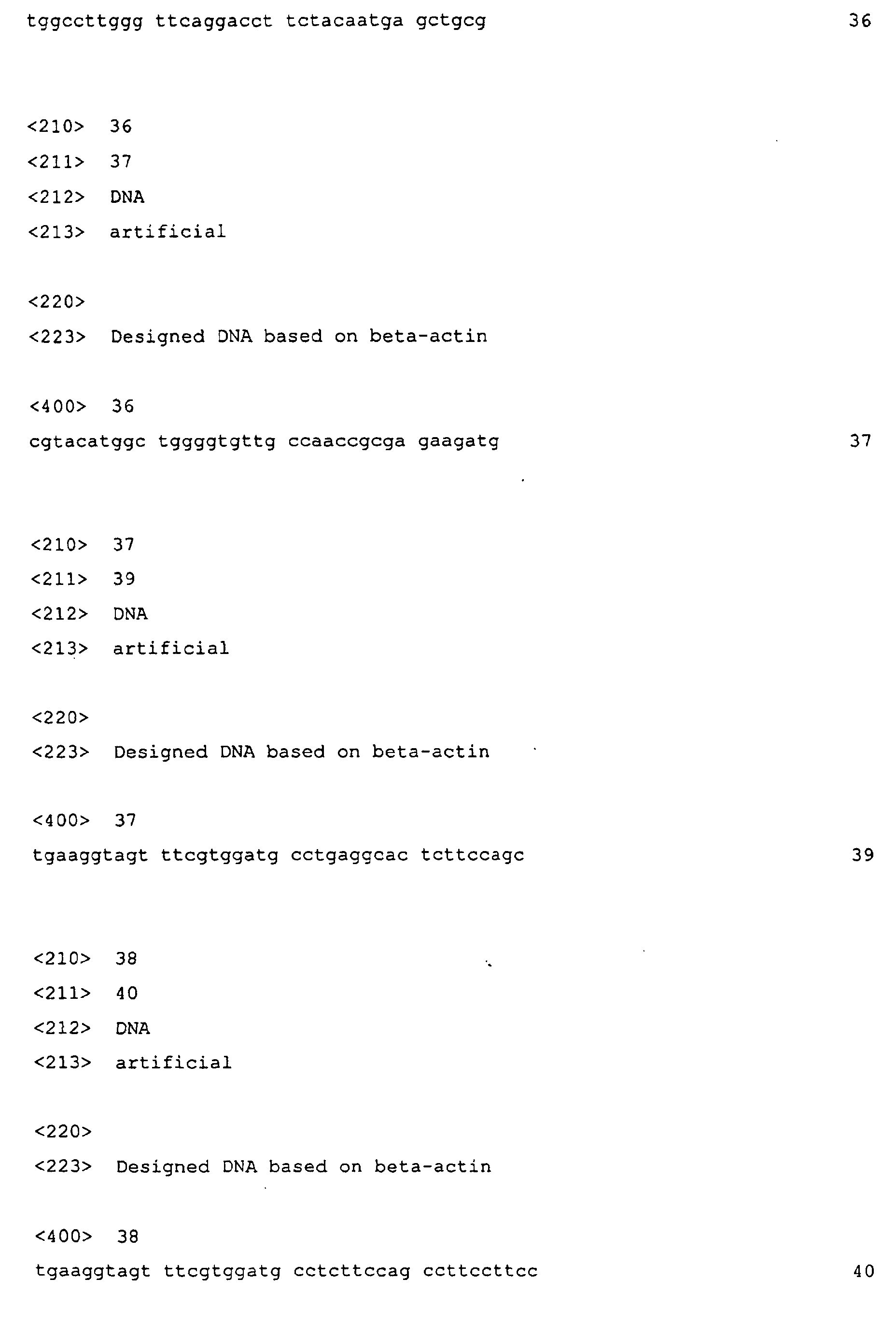
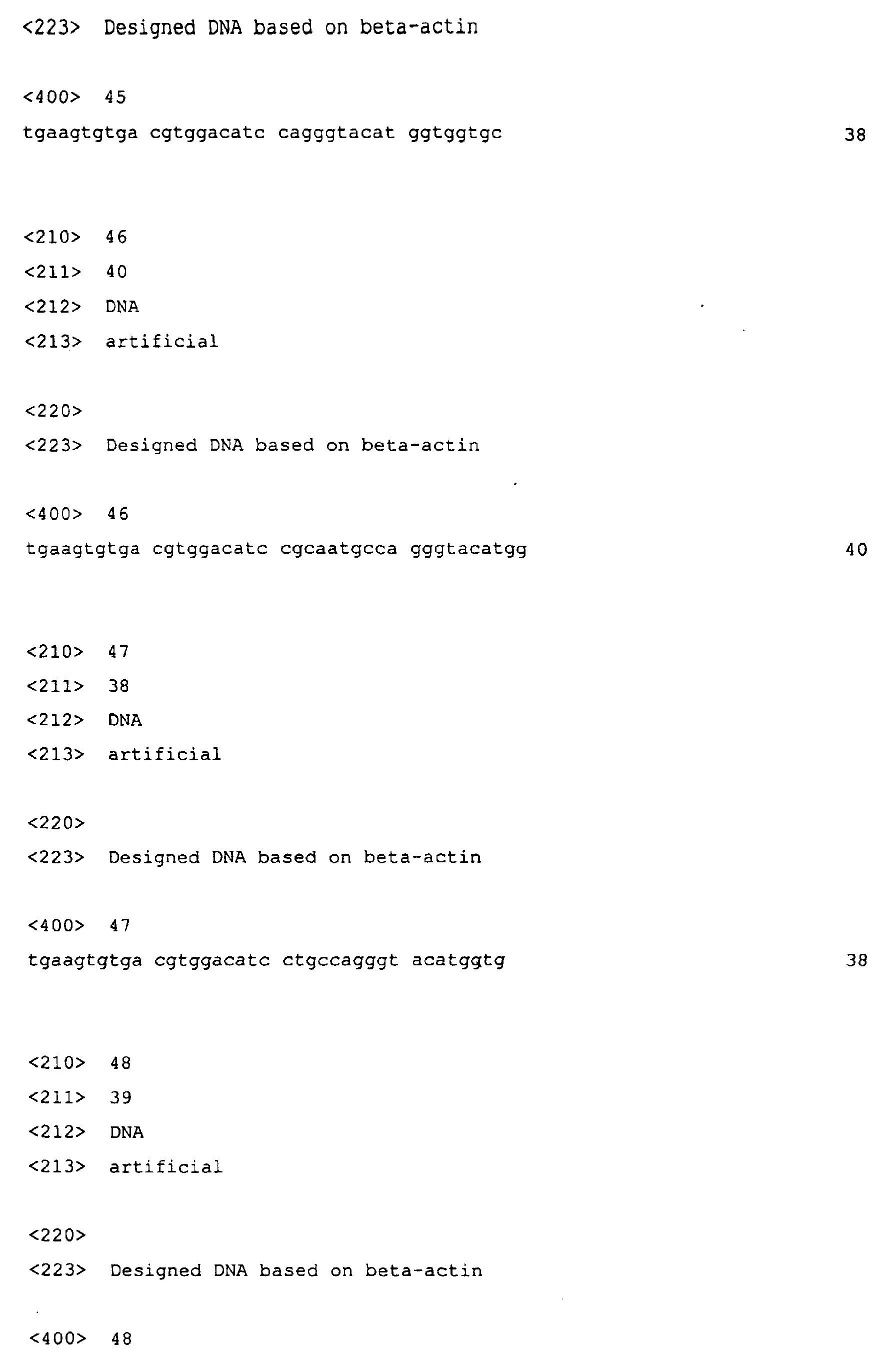
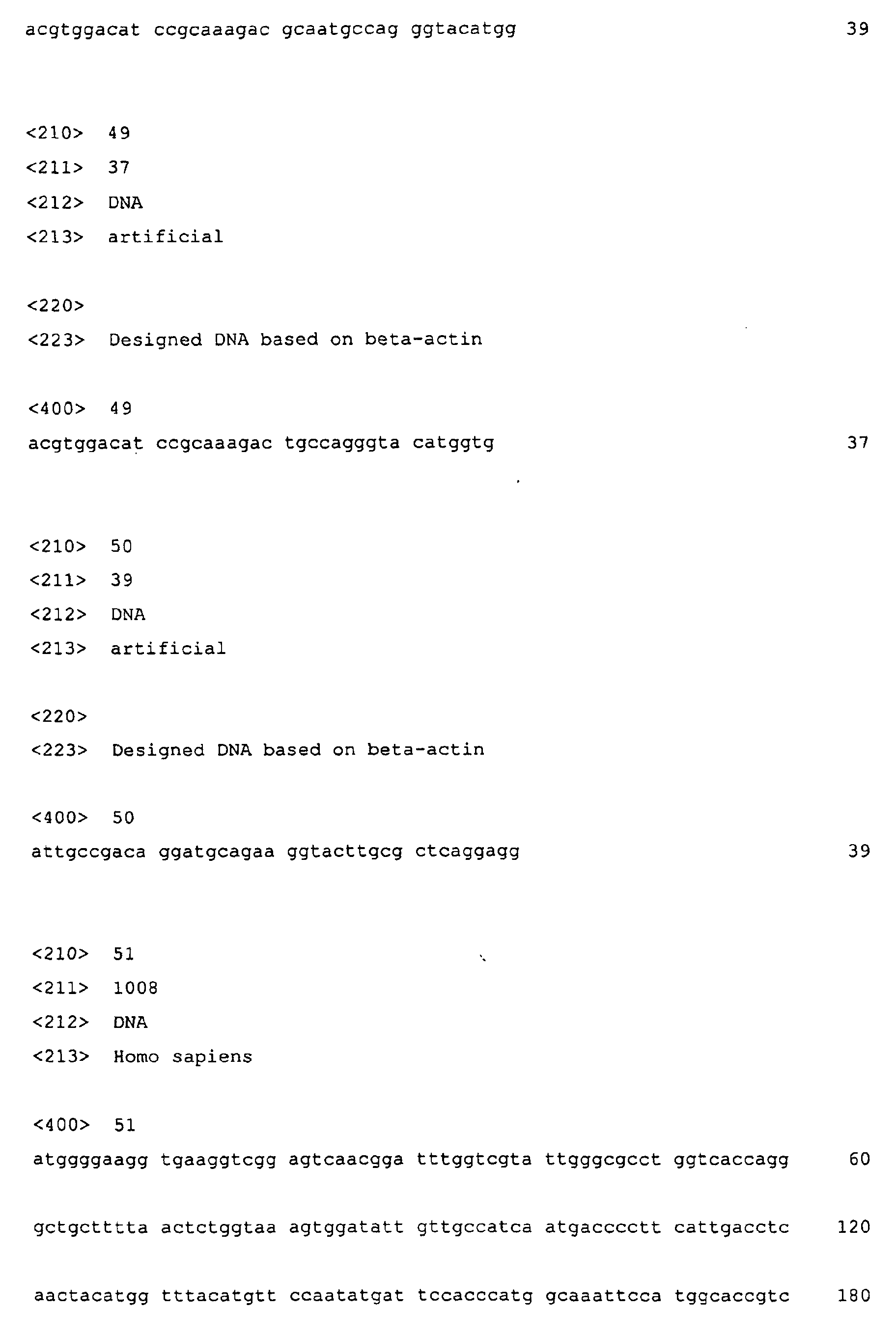
- the regions of the ⁇ -actin gene selected for the present invention are included in the region of nucleotides 240-1060 of the nucleotide sequence set forth as SEQ ID NO: 1 and/or the complementary region thereof, preferably nucleotides 240-380 or nucleotides 401-1060 and more preferably nucleotides 740-990 of the nucleotide sequence set forth as SEQ ID NO: 1 and/or the complementary region thereof.
- a primer for detection of ⁇ -actin is an oligonucleotide available as a primer and is selected and designed from the following: 1) an oligonucleotide of at least 5 nucleotides which is included in the region of nucleotides 240-1060, preferably nucleotides 240-380 or nucleotides 401-1060, and more preferably nucleotides 740-990 of the nucleotide sequence set forth as SEQ ID NO: 1 and/or the complementary sequence thereof; 2) an oligonucleotide comprising the nucleotide sequence set forth as any one of SEQ ID NOs: 2-50; 3) an oligonucleotide complementary to any one of the oligonucleotides defined in above 1) or 2); 4) an oligonucleotide capable of hybridizing to the oligonucleotide defined in any one of 1) to 3) under stringent conditions; and 5) an oligonucleotide having the following: 1) an
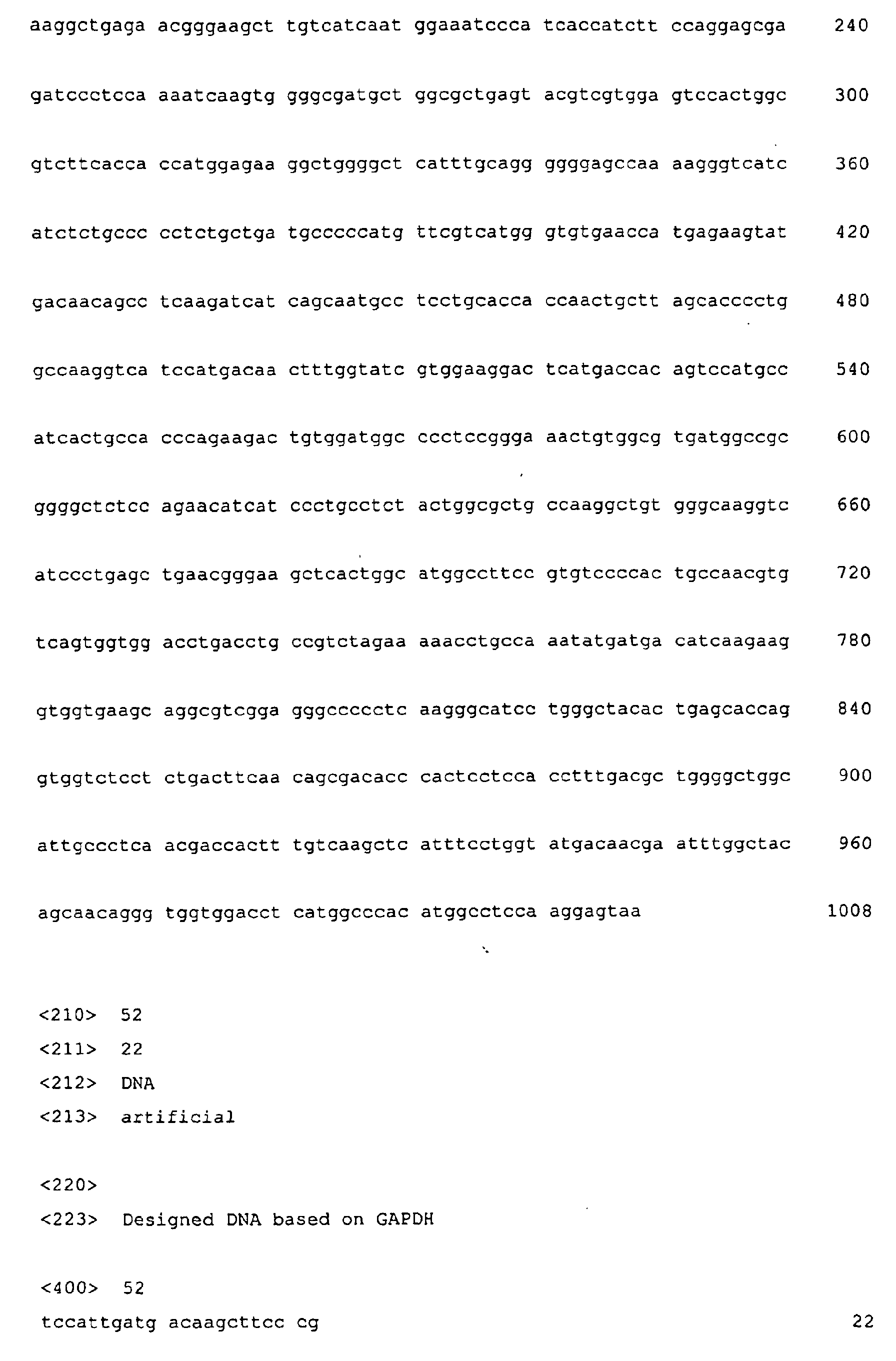
- the regions of the GAPDH gene selected for the present invention are included in the region of nucleotides 110-450 of the nucleotide sequence set forth as SEQ ID NO: 51 and/or the complementary region thereof.
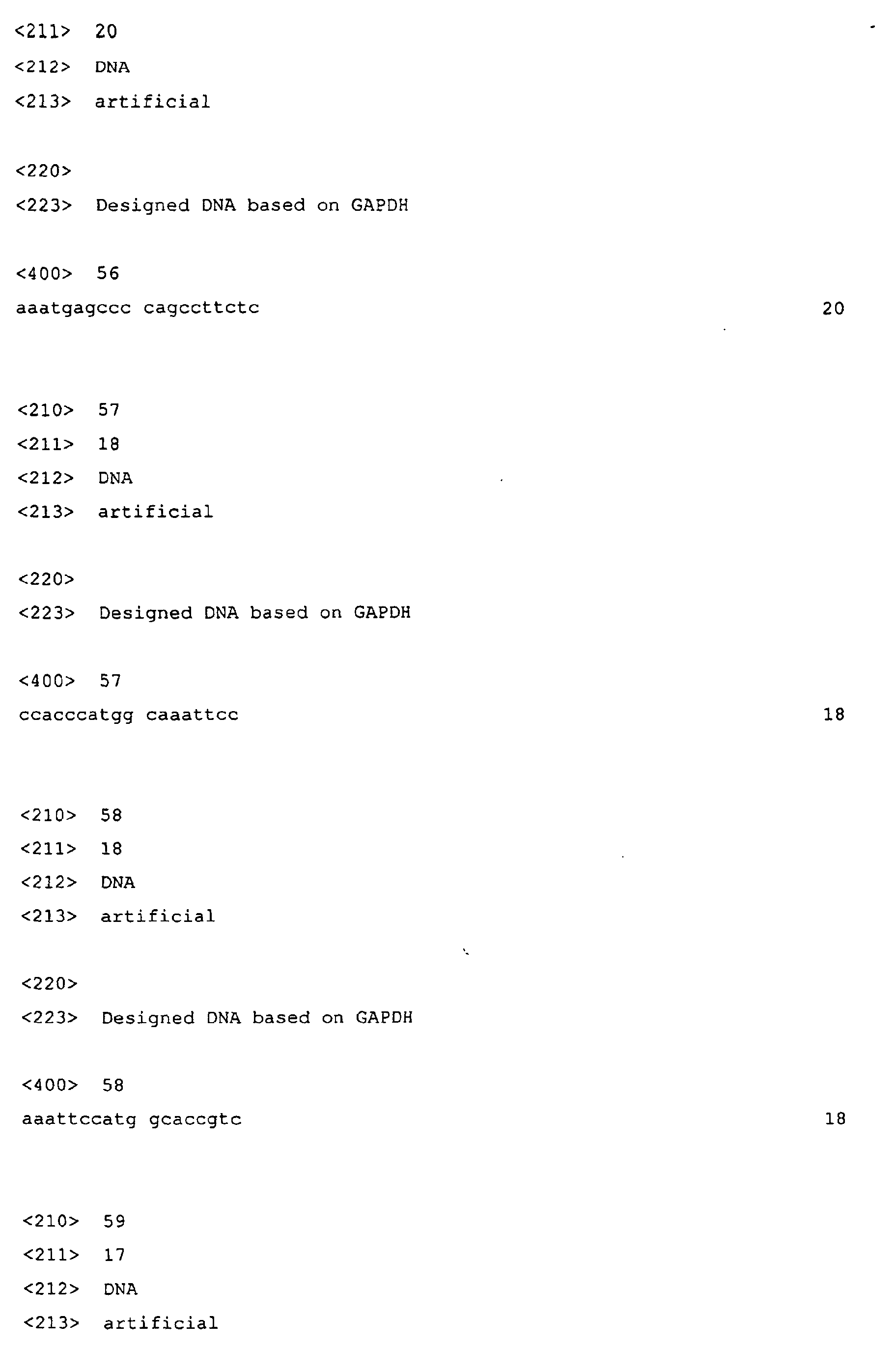
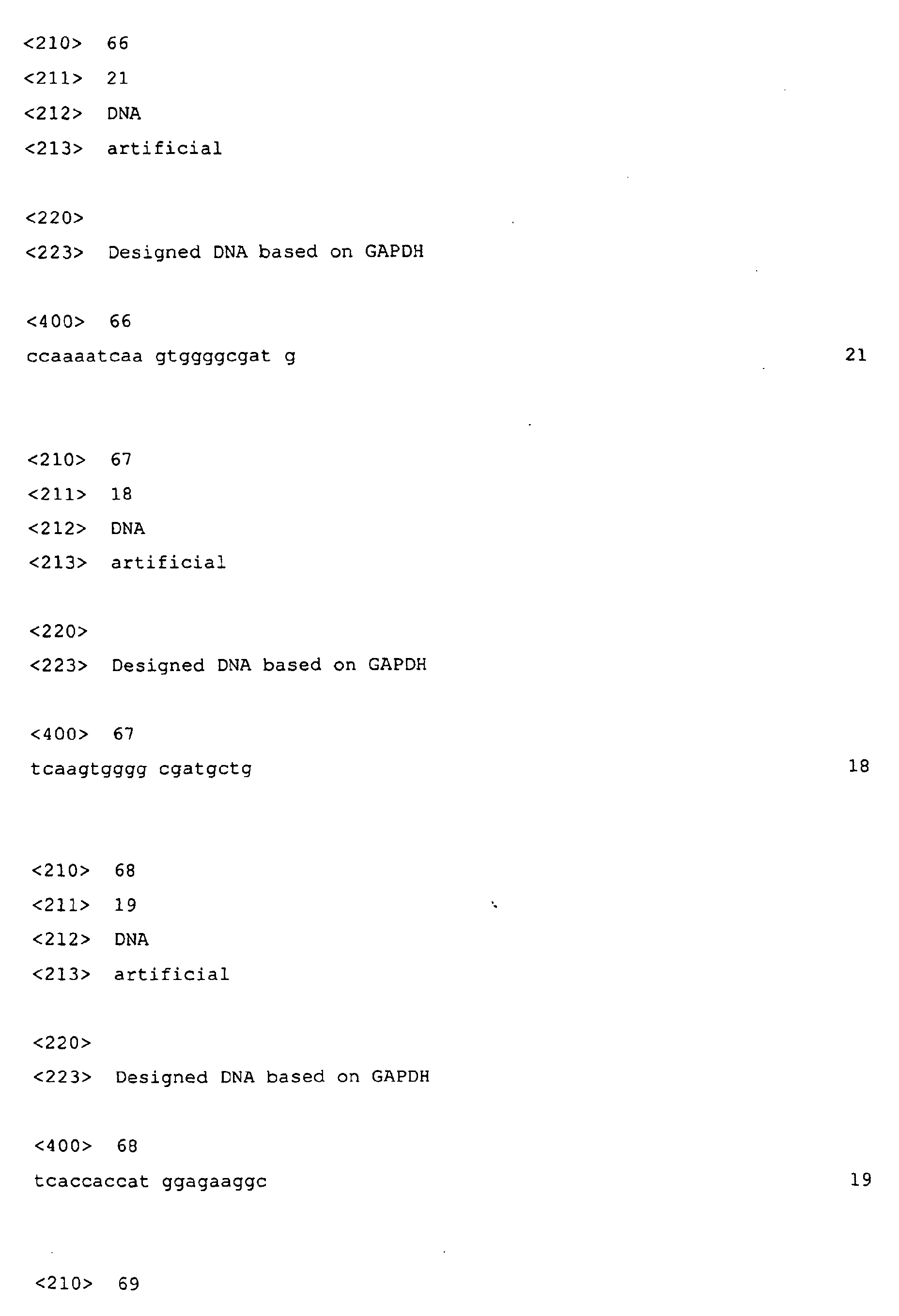
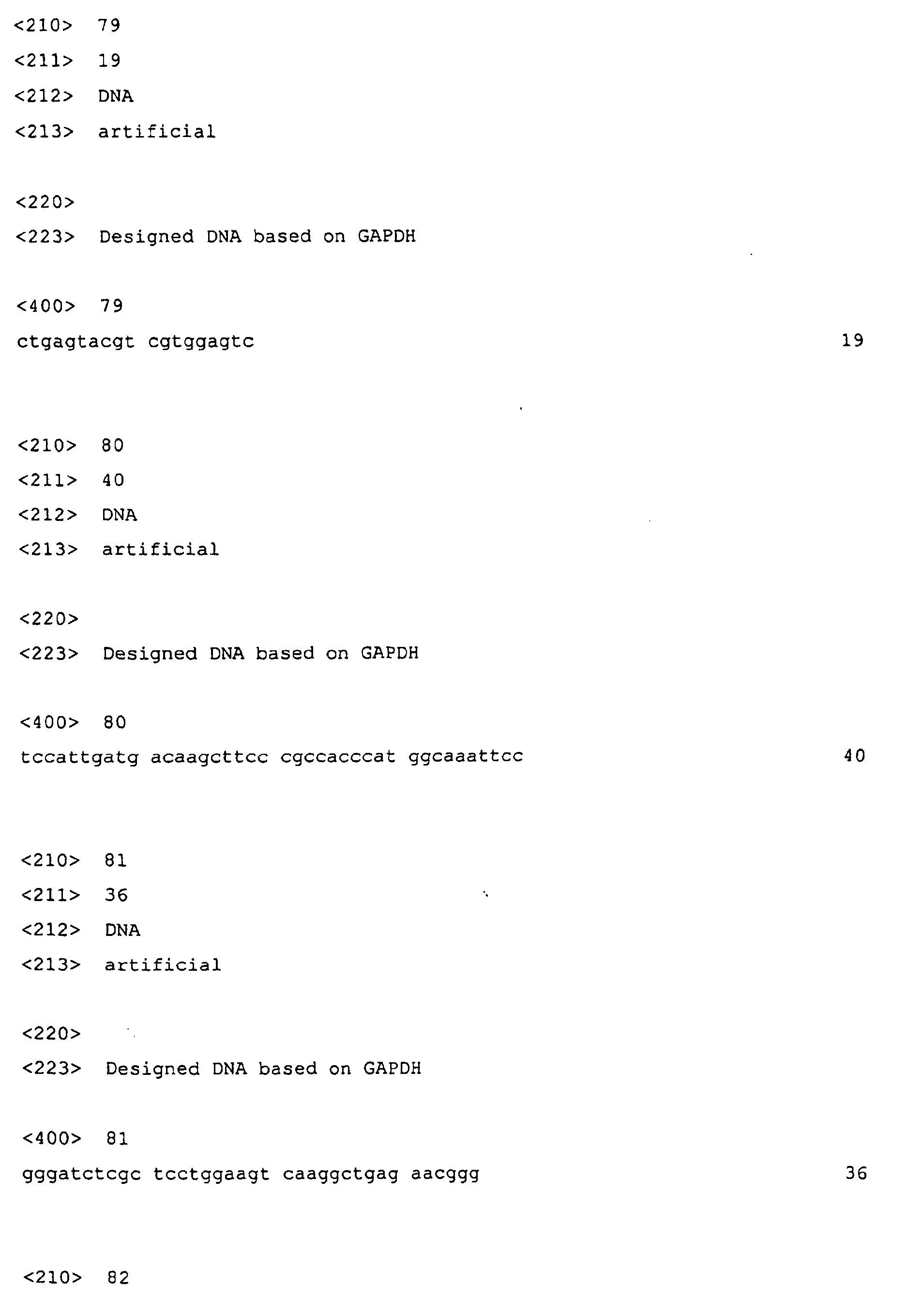
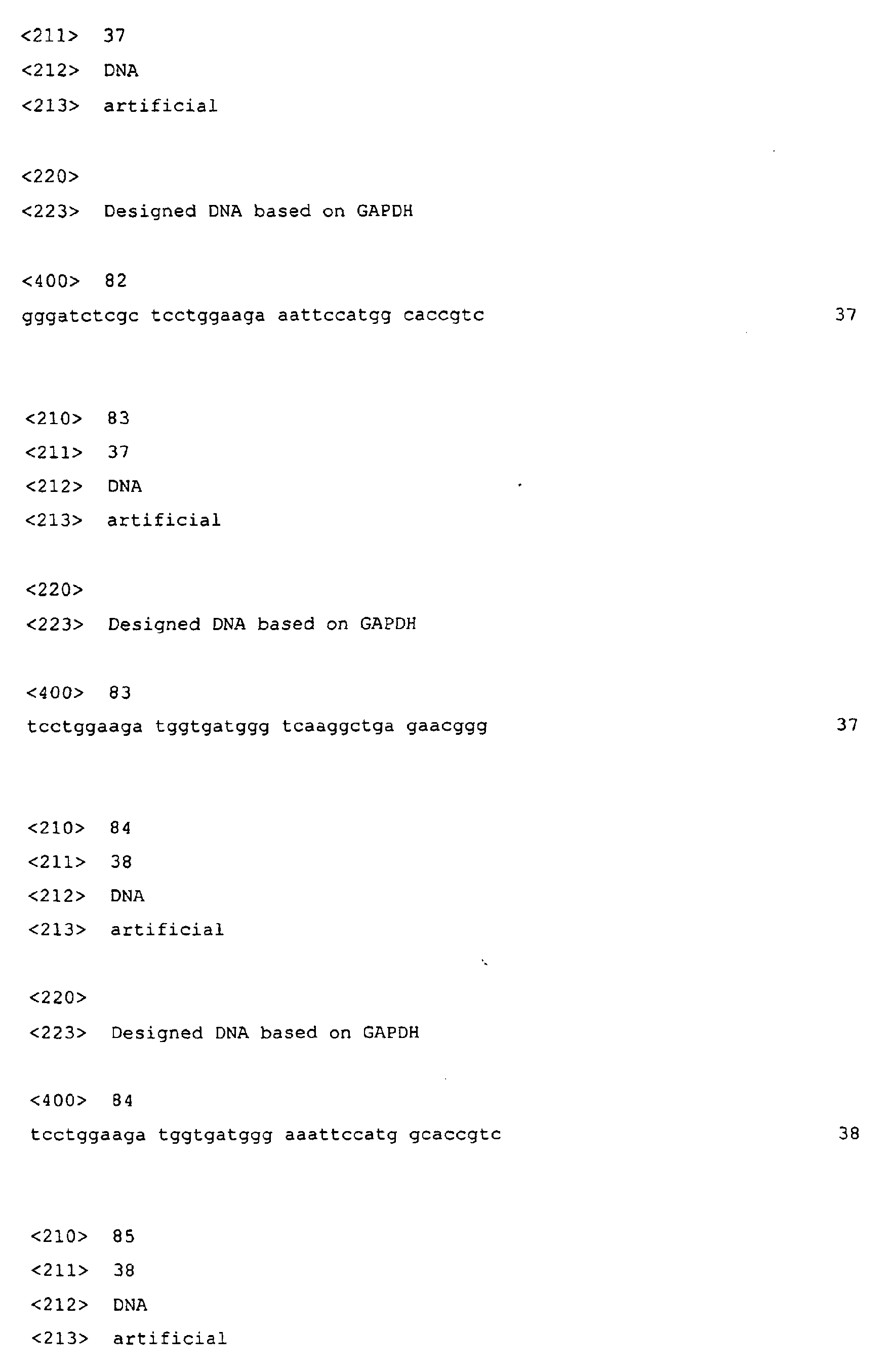
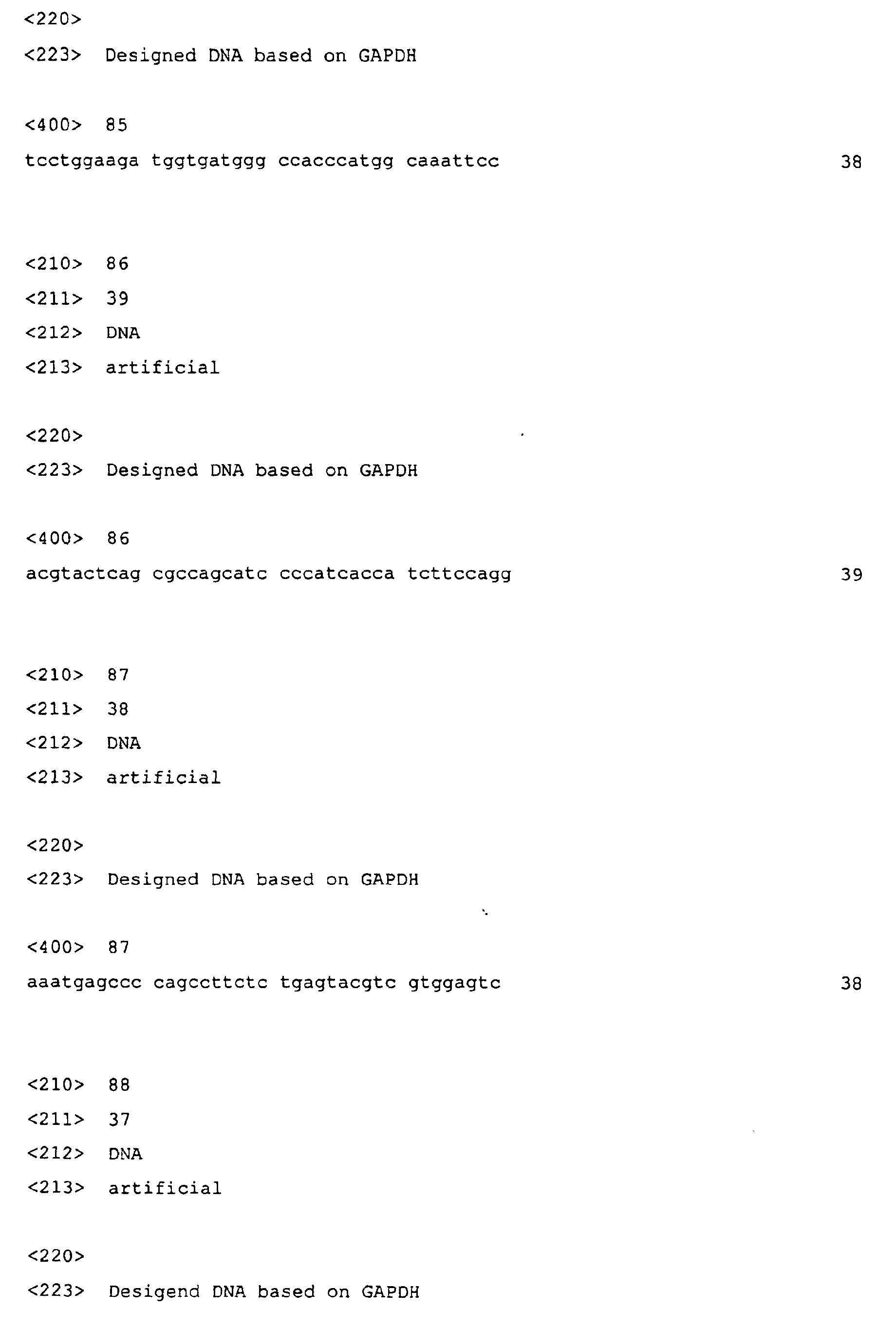
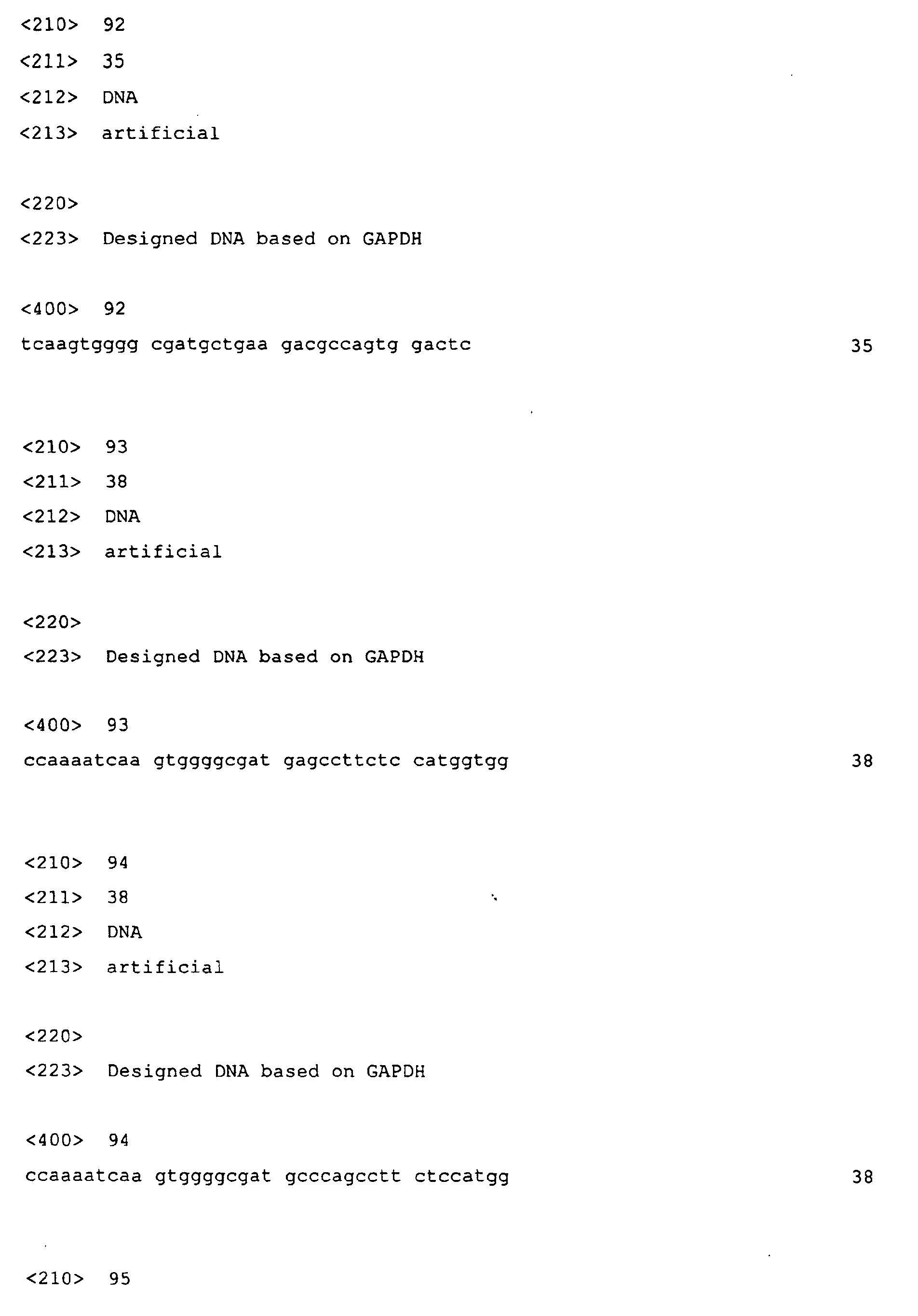
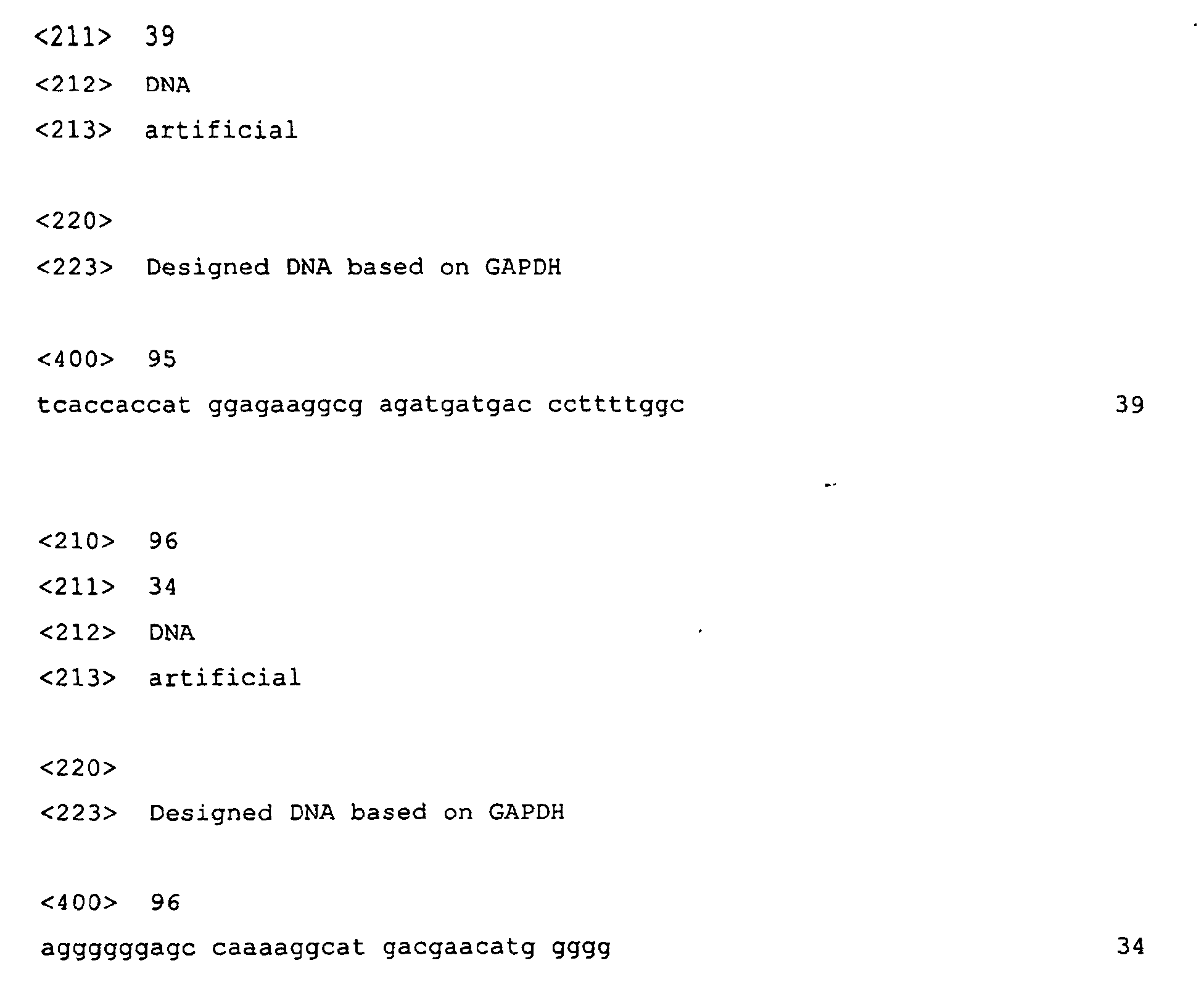
- a primer for GAPDH is an oligonucleotide available as a primer and is selected and designed from the following: 1) an oligonucleotide of at least 5 nucleotides which is included in the region of nucleotides 110-450 of the nucleotide sequence set forth as SEQ ID NO: 51 and/or the complementary sequence thereof; 2) an oligonucleotide comprising the nucleotide sequence set forth as any one of SEQ ID NOs: 52-96; 3) an oligonucleotide complementary to any one of the oligonucleotides defined in above 1) or 2); 4) an oligonucleotide capable of hybridizing to the oligonucleotide defined in any one of 1) to 3) under stringent conditions; and 5) an oligonucleotide having the primer function, comprising the nucleotide sequence of the oligonuceotide defined in any one of above 1) to 4) in which one or more nucleo
- Oligonucleotides can be produced by any known method, for example, by chemical synthesis. Alternatively, a naturally occurring nucleic acid is cleaved with an agent such as a restriction enzyme to modify or connect the sequence to be constituted with nucleotide sequences as described above. Specifically, oligonucleotides can be synthesized using an oligonucleotide synthesizer (Applied BioSystems; Expedite Model 8909 DNA Synthesizer). Synthesis of mutated oligonucleotides in which one or more nucleotide is substituted, deleted, inserted or added may be performed using any know process.
- an agent such as a restriction enzyme to modify or connect the sequence to be constituted with nucleotide sequences as described above.
- oligonucleotides can be synthesized using an oligonucleotide synthesizer (Applied BioSystems; Expedite Model 8909 DNA Synthesizer). Synthesis of mutated oligonu
- site-directed mutagenesis, homologous recombination, primer elongation, or PCR method may be performed according to the methods described in the literature, including Sambrook et al. (ed.), Molecular Cloning; A Laboratory Manual, Second Edition, Cold Spring Harbor Laboratory Press, Cold Spring Harbor, New York, 1989; Masami Muramatsu (ed.), Labo-Manual: Genetic Engineering, MARUZEN Inc., 1988; and Ehrlich, HE. (ed.), PCR Technology; Principle and Applications for DNA amplification, or using any modification of the methods.
- Ulmer's method (Science (1983) 219: 666) may be used.
- any conditions commonly known as stringent conditions for hybridization may be selected. Exemplary conditions are as follows: hybridization overnight at 42°C in a solution containing 50% formamide, 5 x SSC (150mM NaCl and 15mM trisodium citrate), 50mM sodium phosphate, pH 7.6, 5 x Denhardt's solution, 10% dextran sulfate and 20 ⁇ g/ml DNA, primary washing in 2 x SSC with 0.1% SDS at room temperature, followed by secondary washing in 0.1 x SSC with 0.1% SDS at about 65°C.
- the template for the nucleic acid to be amplified in the present invention is mRNA for a housekeeping gene, it is necessary for the primers used to be designed so as not to amplify genomic DNA contained in the specimen.
- at least one of the primers included in the primer set of the present invention desirably contains a region extending a plurality of exons in, for example, the ⁇ -actin or GAPDH gene.
- Such design may prevent amplification of the sequences from genomic DNA and allow selective amplification of the sequence from ⁇ -actin or GAPDH mRNA.
- primers of the present invention to amplify a nucleic acid, at least two primers are combined as a primer set.
- at least four primers (FIP, F3 primer, RIP and R3 primer) are combined as a primer set.
- one or more loop primers may be combined and used as a primer set.
- the RT-LAMP method is a LAMP method in which RNA is used as template.
- the fundamental idea underlying the LAMP is as described in Patent Document 1.
- the starting structure for LAMP is synthesized as cDNA is synthesized from template RNA in a solution. Specifically, amplification of target DNA is performed by repeating the following steps 2) to 5) of DNA elongation after the following step 1):
- this reaction can be carried out using one enzyme.
- synthesized DNA strands have complementary sequences within their own sequence, and most of the complementary sequences form base pairs. Utilizing this feature enables detection of the amplified products.
- a fluorescent duplex intercalator such as ethidium bromide, SYBER GREEN I, or Pico Green
- increase in the fluorescence intensity is observed in association with the increase of the product.
- Simultaneous tracing of DNA amplification and increase in fluorescence in a closed system may be possible by monitoring such changes (see Manual of Clinical Laboratory Medicine, 31 st ed., p. 1318; JP, 2001-242169-A, hereinafter, refer merely to as "Real-time Method").
- kit includes various oligonucleotides required as the primers for complementary-strand synthesis or for displacing, an enzyme with reverse transcriptase activity, dNTP substrates for complementary-strand synthesis, DNA polymerase for strand-displacement synthesis of complementary strands, buffer solution to provide suitable conditions for enzymatic reaction, and, if necessary, other reagents for detection of reaction products.
- the present invention includes primers and primer sets for nucleic acid amplification, and a method for detection of nucleic acid using the primers, reagents used for the nucleic acid detection, and kits for nucleic acid detection and the whole system for nucleic acid detection.
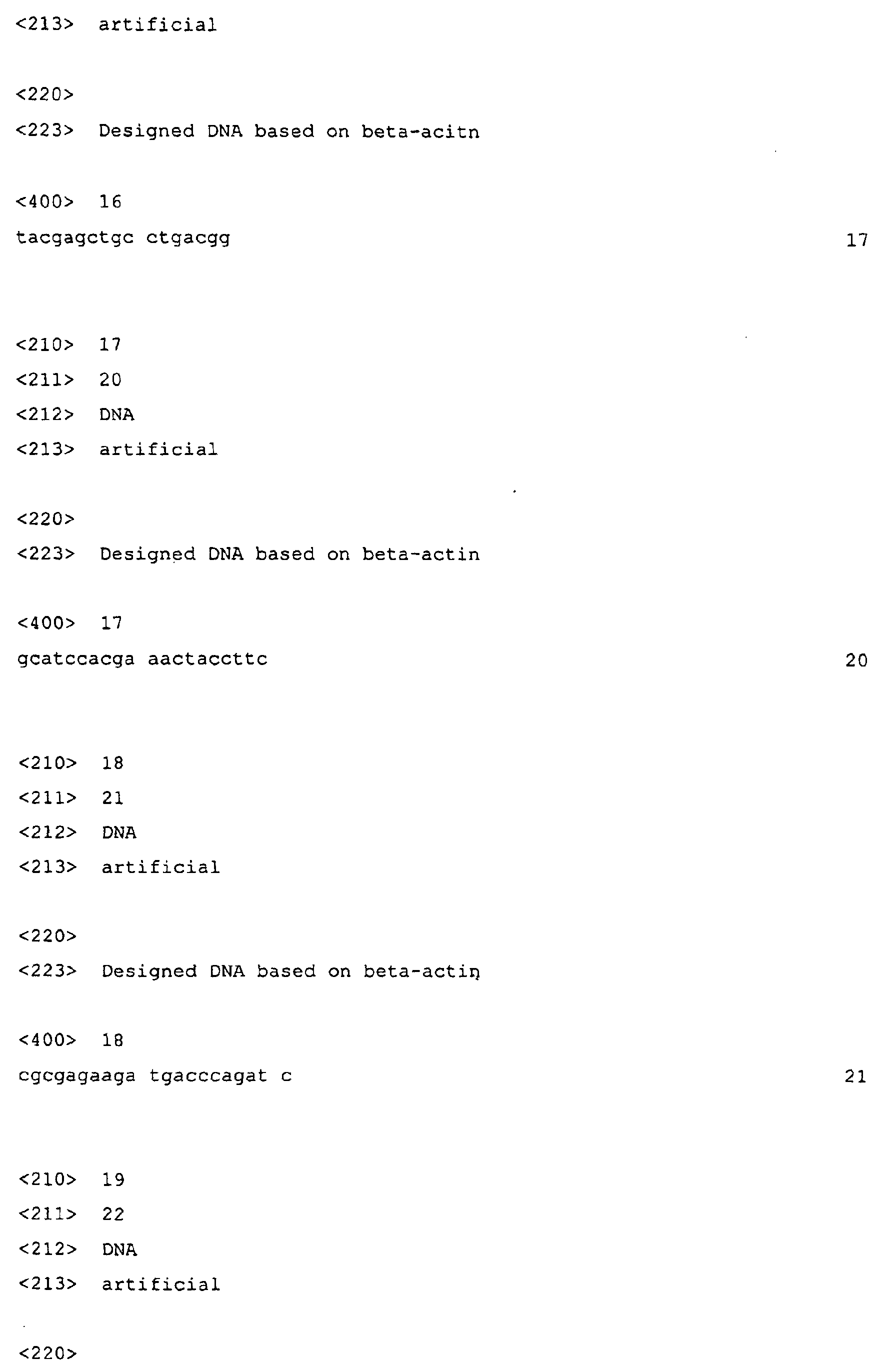
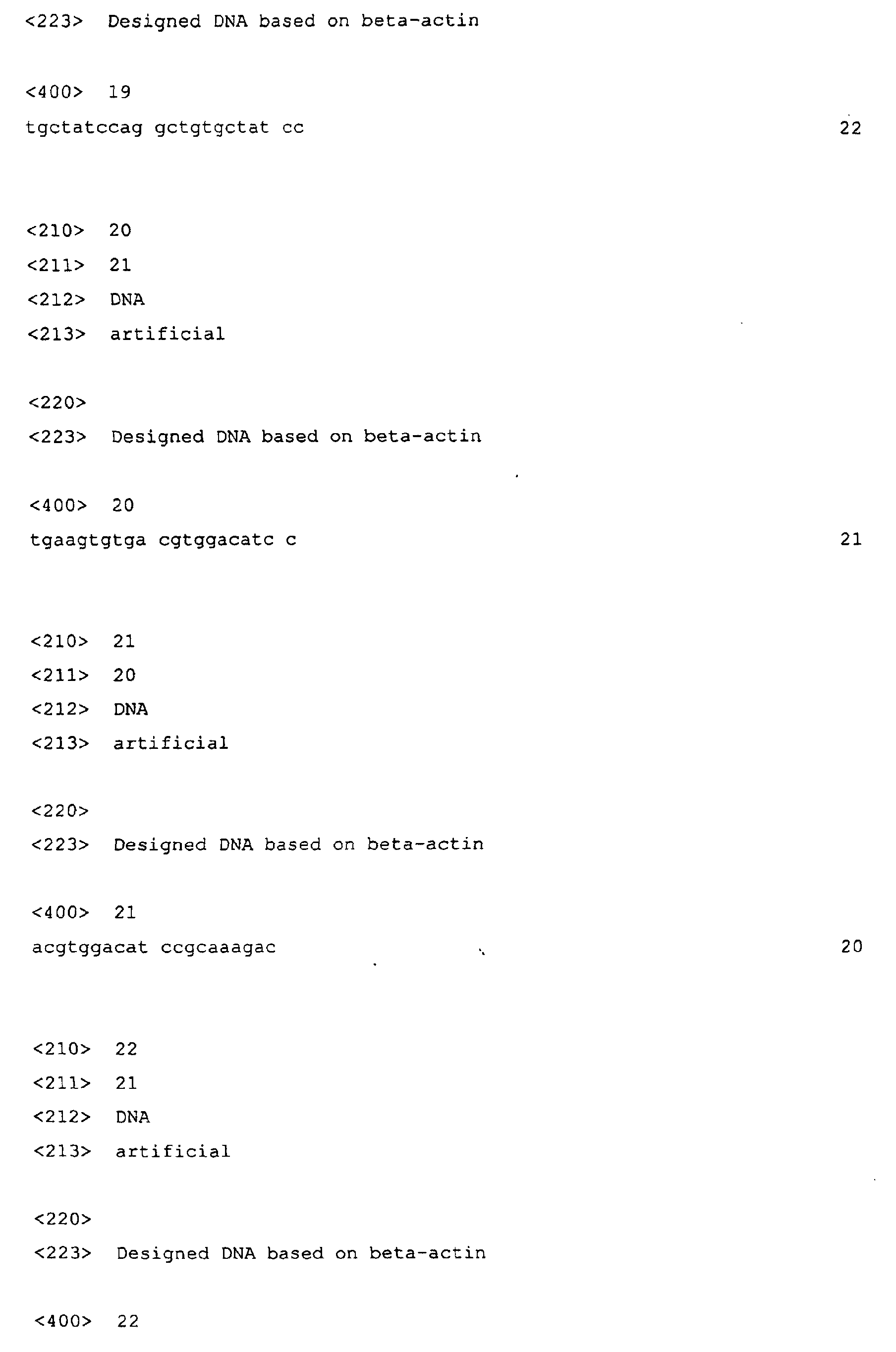
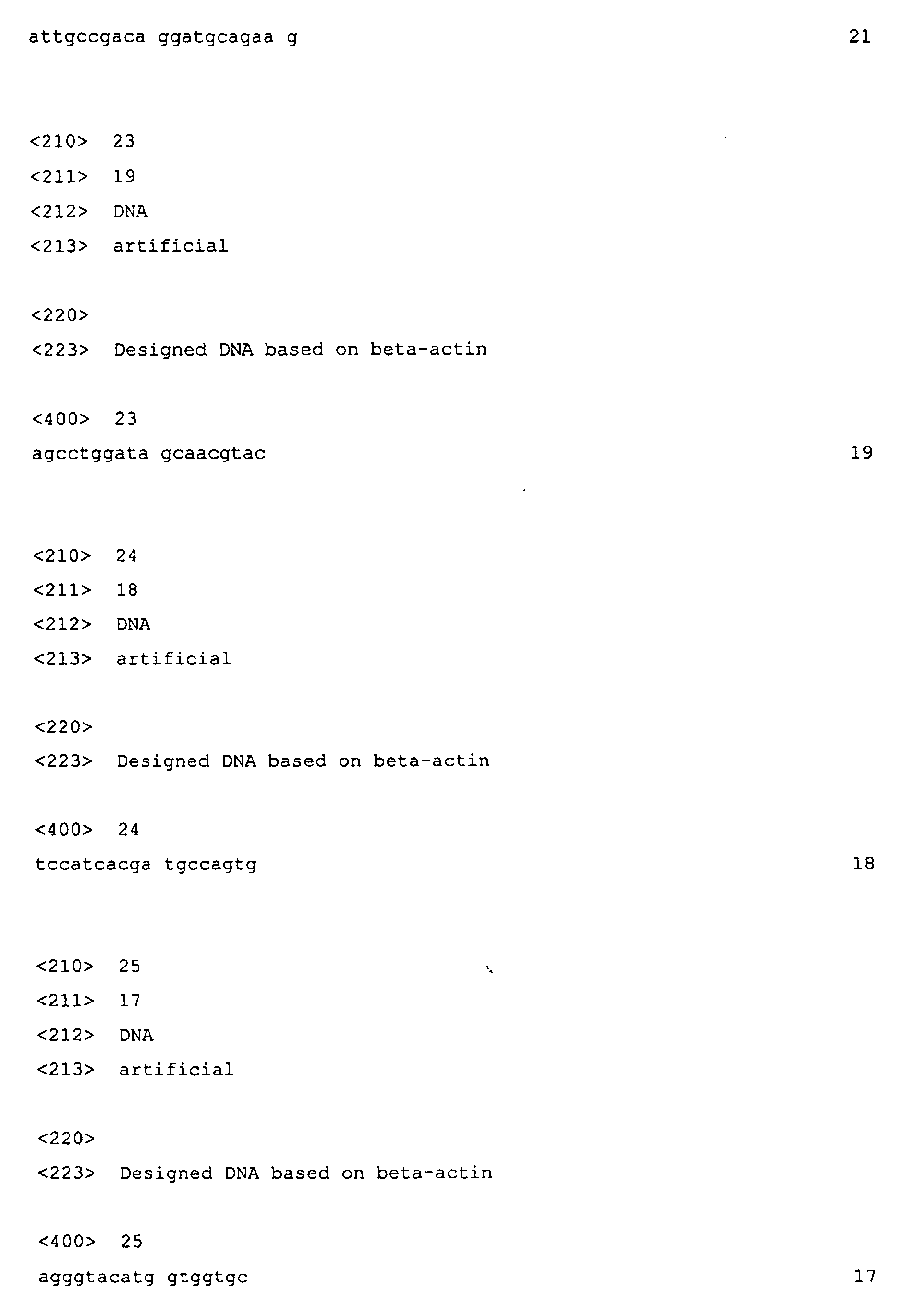
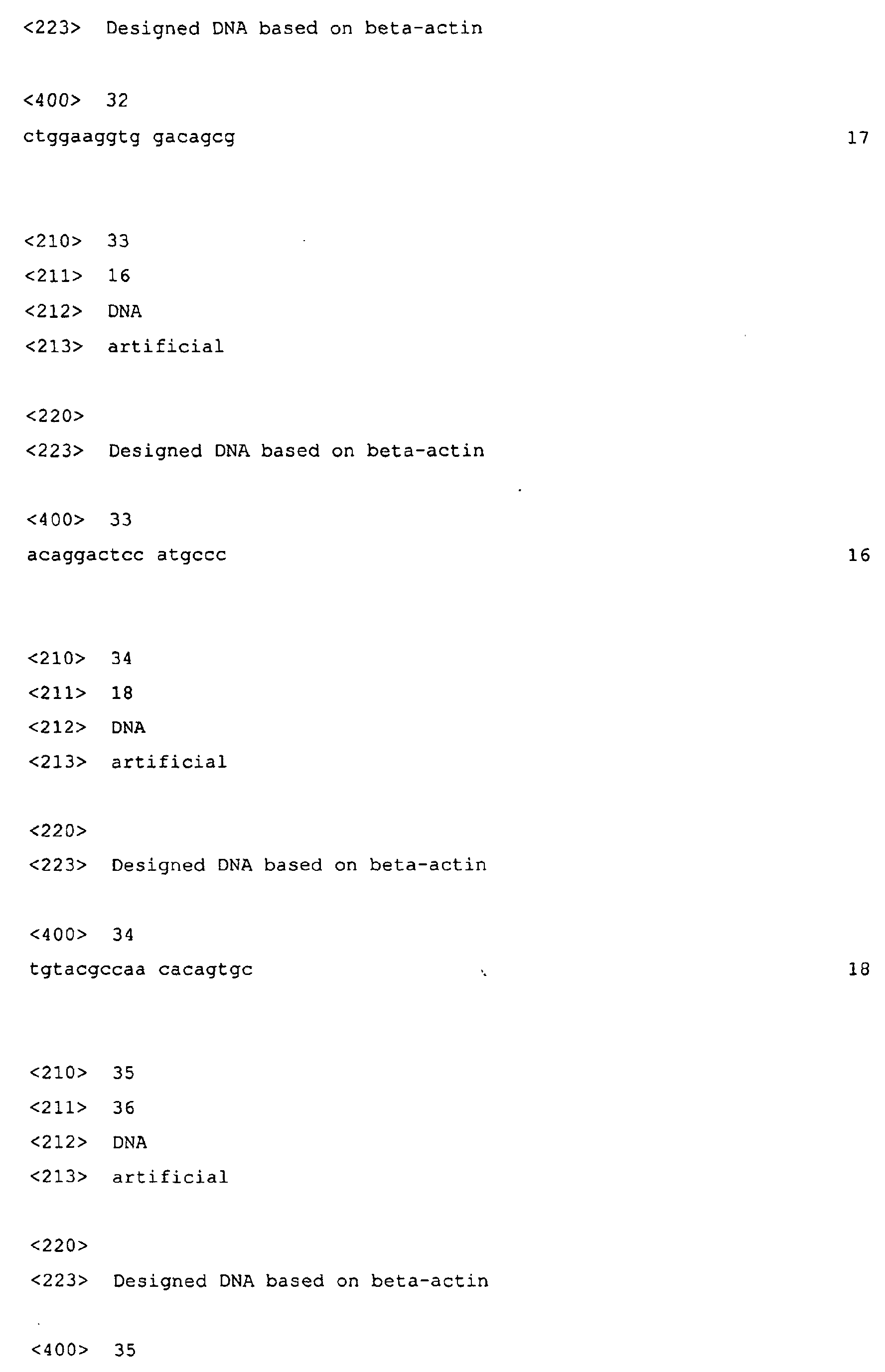
- genic regions in the ⁇ -actin gene which is suitable for the LAMP method was investigated from the nucleotide sequence set forth in SEQ ID NO: 1 by using probe design software. Selection of the genic regions was performed at the Tm value ranging between 58.5 and 63.5°C for F1c and R1c, between 61.5 and 62.5°C f or F2 and R2, and between 58.5 and 62.5°C for F3 and R3, and as a result the regions indicated below that are contained in the region spanning from nucleotide 240 to 1060 of the nucleotide sequence set forth in SEQ ID NO: 1 and the corresponding regions of the complementary strand thereof were selected.
- the primers indicated below which are applied to the LAMP method for nucleic acid amplification of GAPDH, have been obtained from the sequences of the selected r egions
- Amplification reaction by RT-LAMP was initiated using the primers for ⁇ -actin listed in Example 2 in the combinations indicated in Table 1. The time required for confirming the amplification was examined.
- AFA-1 ARA-1 AF3-1 AR3-1 35 AFA-2 ARA-2 AF3-2 AR3-2 34 AFA-4 ARA-4 AF3-4 AR3-4 25 AFA-6 ARA-6 AF3-6 AR3-6 45 AFA-4a ARA-4 AF3-4 AR3-4 37 AFA-4c ARA-4 AF3-9 AR3-4 33 AFA-4d ARA-4 AF3-9 AR3-4 28 AFA-4e ARA-4 AF3-9 AR3-4 28 AFA-4 ARA-4a AF3-4 AR3-4 40 AFA-4 ARA-4b AF3-4 AR3-4 26 AFA-4 ARA-4d AF3-4 AR3-4 40 AFA-4 ARA-4e AF3-4 AR3-4 31
- RNA sample containing 20 ng of human total RNA
- reaction solution containing the above four primers
- Table 1 shows the time required for confirmation of the amplification of the ⁇ -actin gene for each primer set used in the reaction. The results reveal that for each primer set, it takes 45 minutes at a maximum, within 30 minutes in most cases, to confirm the amplification.
- a primer set with which the amplification was confirmed in the shortest time was selected from the primer sets for ⁇ -actin used in Experiment 1. This primer set was further combined with loop primers and used for determination of the sensitivity of the RT-LAMP method.
- F3 and R3 loop primers were further added at a concentration of 5 pmol each to the same components as described in Experiment 1.
- RNA sample containing 20 ng of human total RNA
- reaction solution containing the above six primers
- Fig. 1 show that the larger amount of the mRNA template for ⁇ -actin allowed earlier confirmation of the amplification.
- the amplification was confirmed within 30 minutes with 0.02 ng of the template, and in approximately 15 minutes with 20 ng of the template.
- LS 180 cells colonic tumor cell line
- Raji cells Burkitt's lymphoma cell line
- a cytokeratin-positive LS180 cell solution was diluted with a cytokeratin-negative Raji cell solution, and amplification of ⁇ -actin was examined for different concentrations of LS 180 cell solution, thereby examining whether ⁇ -actin is available as a control for data correction in determination of cytokeratin tumor markers.
- Samples were prepared to adjust the total cell number of LS180 and Raje cells to 8000.
- the number of LS180 cells was adjusted to 8000, 800, 80, 8 or 0.
- Fig. 2 The results are shown in Fig. 2. They demonstrated that ⁇ -actin was amplified in approximately 15 minutes, irrespective of the ratio between LS180 and Raji cells. This confirmed that ⁇ -actin is constitutively expressed in the human cells regardless of the presence or absence of the tumor markers, suggesting that ⁇ -actin is available as a control for data correction in the LAMP method.
- Amplification reaction by RT-LAMP was initiated using the primers for GAPDH listed in Example 4 in the combinations indicated in Table 3. The time required for confirming the amplification was examined.
- RT-LAMP was performed as described in Experiment 1. Specifically, two microliters of the RNA sample (containing 20 ng of human total RNA) was added to 23 ⁇ l of the reaction solution containing the above four primers, and heated at 65°C for one hour.
- Table 3 shows the time required for confirmation of the amplification of the GAPDH gene for each primer set used in the reaction. The results reveal that for each primer set, it takes 45 minutes at a maximum, within 30 minutes in most cases, to confirm the amplification.
- a primer set with which the amplification was confirmed in the shortest time was selected from the primer sets for GAPDH used in Experiment 4. This primer set was further combined with loop primers and used for determination of the sensitivity of the RT-LAMP method.
- Fig. 3 show that the larger amount of the GAPDH mRNA template for ⁇ -actin allowed earlier confirmation of the amplification.
- the amplification was confirmed within 30 minutes even with 0.02 ng of the template, and in approximately 10 minutes with 20 ng of the template.
- LS180 cells colonic tumor cell line
- Raji cells Bokitt's lymphoma cell line
- a cytokeratin-positive LS180 cell solution was diluted with a cytokeratin-negative Raji cell solution, and amplification of GAPDH was examined for different concentrations of LS 180 cell solution, thereby examining whether GAPDH is available as a control for data correction in determination of cytokeratin tumor markers.
- Samples were prepared to adjust the total cell number of LS180 and Raje cells to 8000.
- the number of LS180 cells was adjusted to 8000, 800, 80, 8 or 0.
- the RT-LAMP method was performed as described in Experiment 2. Two microliters of the cell suspension was added to 23 ⁇ l of the reaction solution containing the same six primers as described in Experiment 5, and heated at 65°C for one hour.
- primers or primer sets of the present invention in the LAMP method allows for confirmation of amplification of ⁇ -actin or GAPDH within 15 minutes at the earliest.
- the use of the primers or primer sets of the present invention will reduce the time required for making a diagnosis during the process for diagnosis of metastasis using nucleic acid amplification, thereby enabling reliable diagnosis.
Landscapes
- Chemical & Material Sciences (AREA)
- Life Sciences & Earth Sciences (AREA)
- Organic Chemistry (AREA)
- Proteomics, Peptides & Aminoacids (AREA)
- Zoology (AREA)
- Wood Science & Technology (AREA)
- Health & Medical Sciences (AREA)
- Engineering & Computer Science (AREA)
- Analytical Chemistry (AREA)
- Microbiology (AREA)
- Immunology (AREA)
- Molecular Biology (AREA)
- Biotechnology (AREA)
- Biophysics (AREA)
- Physics & Mathematics (AREA)
- Biochemistry (AREA)
- Bioinformatics & Cheminformatics (AREA)
- General Engineering & Computer Science (AREA)
- General Health & Medical Sciences (AREA)
- Genetics & Genomics (AREA)
- Chemical Kinetics & Catalysis (AREA)
- Measuring Or Testing Involving Enzymes Or Micro-Organisms (AREA)
Abstract
It is intended to provide novel primers for nucleic acid amplification to be used in detecting mRNA of a housekeeping gene, more particularly, confirming the amplification of beta -actin or GAPDH. More specifically speaking, primers containing oligonucleotides having nucleotide sequences represented by any of SEQ ID NOS: 2 and 4 to 49 (in the case of beta -actin) or oligonucleotides having nucleotide sequences represented by any of SEQ ID NOS: 52 to 96 (in the case of GAPDH) can be selected, combined and used.
Description
The present invention relates to primers for nucleic acid amplification to detect a
housekeeping gene.
Due to the recent progress in the fields of genetic engineering and molecular biology,
infectious or genetic diseases can be diagnosed at the DNA or RNA level. In particular, by virtue
of the development of nucleic acid amplification methods, including polymerase chain reaction
method (PCR method: Science, 230:1350-1354, 1985) and NASBA method (Nucleic Acid
Sequence Based Amplification method: Nature, 350, 91-92, 1991; Japanese Patent No. 2648802,
and Japanese Patent No. 2650159), detection of an infinitesimal amount of nucleic acid present
in a biological sample, which has been difficult so far, has become possible, thereby dramatically
facilitating genetic analyses.
For example, in the field of oncology, diagnosis of tumor metastasis to lymph nodes has
tremendous significance. As an approach to diagnosis of tumor metastasis to lymph nodes,
there is a method for detection of tumor marker protein such as cytokeratin (CK). Due to the
recent development of genetic analysis technology, detection of mRNA expression of tumor
marker protein has allowed effective diagnosis of tumor (The Hokkaido journal of medical
science, vol. 66(2), pp. 135-141, 1991). RT-PCR has allowed detection of CK mRNA
expression in excised tissue, and underdiagnosis of tumor metastasis can be prevented to some
extent. These nucleic acid amplification methods have been put to practical use in the field of
diagnosis of tumor and cancer (Manual of Clinical Laboratory Medicine, 31 st ed., Kanehara &
Co., Ltd, published on September 20, 1998).
As another DNA amplification method, the LAMP method has been reported (Patent
Document 1). The LAMP method is a gene amplification method using multiple primers
including those forming a hairpin structure at the ends of the amplified product as the strand
displacement reaction proceeds. First, in the primary reaction, a dumbbell-like structure with
loops at both ends is synthesized from template DNA by using a pair of inner primers (FIP and
RIP), a pair of outer primers (F3 and R3 primers) and strand-displacement DNA polymerase.
This structure serves as the starting structure for the amplification cycle, and the elongation and
synthesis reactions progress from the 3' end of the structure using itself as a template. The
amplified product is composed of a number of repeat structures, each unit of which comprises,
within the strand, the complementary regions linked in the inverted direction which are derived
from the nucleotide sequences of double-stranded nucleic acids corresponding to the amplified
region between the primers. The LAMP method has features that heat denature of
double-strands to single-strands is not required and that all the amplification reactions can
proceed consecutively at a fixed temperature (Non-patent Documents 1 and 2). Likewise, when
the template is RNA, the starting structure can be synthesized by adding reverse transcriptase to
the composition of the reaction solution for DNA template, and the amplification can be
conducted (RT-LAMP method). The LAMP method gives a sufficient amount of amplification
product to be detected in about 30 minutes. Thus, this method may be applied to the diagnosis
of tumor metastasis to lymph nodes for the purpose of prompt determination of the therapeutic
strategy, because the time required for detection of nucleic acids is reduced. This method is
also promising for application to intraoperative diagnosis, since it can give prompt results.
To quantify mRNA, mRNA of a housekeeping gene, whose expression level does not
differ among tissues, may be used as an internal control in the sample. Use of the housekeeping
gene mRNA as an internal control has the advantage of being able to detect mRNA of the target
gene in a relative manner without regard to the extraction efficiency of the target gene mRNA or
the cDNA synthesis efficiency.
Examples of housekeeping gene include the gene for β-actin, a component of the
cytoskeleton, and gene for glyceraldehyde-3-phosphate dehydrogenase (hereinafter, referred to
as "GAPDH"), a major enzyme in the glycolysis system.
Development of more effective primers for nucleic acid amplification is desired with
respect to the housekeeping genes used for the purpose of internal control.
Action is a protein abundantly found in all the eukaryotic cells. This protein provides
a number of structural and regulatory functions, including the role in mitosis, motility and the
integrity of the structure of higher eukaryotic cells. Six isoforms of actin have been identified
in the vertebrates; four of them are of muscle actin (skeletal muscle, cardiac muscle, aortic
smooth muscle and stomach smooth muscle actins) and two of them are of nonmuscle actin
(cytoplasmic β- and γ-actin). Muscle actins are tissue-specifically expressed and involved in
muscular contraction. In contrast, cytoplasmic actins are found in all the cells in principle and
involved in a number of cellular functions. In spite of its diversity, amino acid sequences of the
intracellular actin are highly conserved among different actin types and among eukaryotic
species.
The sequence of the human cytoplasmic β-actin gene has already been determined and
compared with the sequences of β-actin genes derived from other species (Nakajima-Iijima et al,
PNAS 82, pp. 6133-6137 (1985); EP Patent Application No. 0174608; Ponte et al., 1984, Nucleic
Acids Res. 12, pp. 1687-1696 (1984)). Primers for amplification of the entire human β-actin
gene are commercially available from Clontech Laboratories, Inc. (Palo Alto, CA) under the
name MAPPING Amplimershito for β-actin. Also, with respect to the oligonucleotides that
hybridize with the nucleotide sequence of human β-actin in a species-specific manner, it is
reported that those oligonucleotides are used as internal controls in the reaction for nucleic acid
amplification and tools for determining the integrity of the samples used for nucleic acid
amplification (JP, H7-99981-A).
Human glyceraldehyde-3-phosphate is one of the important intermediates involved in
the glucose metabolism, such as glycolysis and pentose phosphate cycle, and lipogenesis in the
living organisms and this substance is widely distributed in the living body. Human
glyceraldehyde-3-phosphate dehydrogenase (GAPDH) is also necessary for synthesis of lipids
from this substance and this enzyme is also widely distributed in vivo in human.
Development of more effective primers for nucleic acid amplification is desired with
respect to β-actin and GAPDH, used for the purpose of internal control.
An object of the present invention is to provide primers for nucleic acid amplification to
detect mRNA for housekeeping genes, particularly novel primers for amplification of mRNA for
the β-actin and GAPDH genes.
To solve the problem mentioned above, the present inventors conducted extensive
research review and succeeded in constructing primers for nucleic acid amplification of
housekeeping genes.
Thus, the present invention comprises the following:
The present invention provides a method for nucleic acid amplification of housekeeping
genes. More specifically, the present invention provides primers for nucleic acid amplification
that are applicable to methods for nucleic acid amplification relating to mRNA for the β-actin
and GAPDH genes.
The fundamental idea for primers used in the LAMP method is as described in Patent
Document 1.
Specifically, the regions, F3c, F2c and F1c, are provided in this sequence from the 3'
end and the regions, R3, R2 and R1, are provided in this sequence from the 5' end of a target
DNA to be amplified, and oligonucleotide chains containing the nucleotide sequences
substantially identical or substantially complementary to at least these six regions are selected for
designing at least four primers.
The term "substantially identical" is defined as follows: Provided that a complementary
sequence synthesized using a nucleotide sequence as a template hybridizes to a nucleotide
sequence of interest and gives a starting point for synthesis of its complementary sequence, the
former nucleotide sequence is substantially identical to the nucleotide sequence of interest. For
example, nucleotide sequences substantially identical to the nucleotide sequence of F2 include,
in addition to the nucleotide sequence precisely the same as that of F2, nucleotide sequences that
can function as templates to give nucleotide sequences that hybridize to F2 and serve as starting
points for synthesis of complementary sequences.
The terms "identical" or "complementary" used for characterizing the nucleotide
sequences constituting the oligonucleotides of the present invention do not refer to "precisely
identical" or "precisely complementary". In other words, sequences identical to a certain
sequence include a complementary sequence to a nucleotide sequence capable of hybridizing to
the certain sequence. On the other hand, the term "complementary" refers to a sequence that
can hybridize under stringent conditions and provide a 3' end that can serve as a starting point
for the synthesis of complementary strands.
The primers of the present invention have a length sufficient for base pairing with their
complementary strands while maintaining the required specificity under the environment given
in the different nucleic acid synthesis reactions described below. Specifically, the primers have
5 to 200 nucleotide length, more preferably, 10 to 50 nucleotide length. Considering that a
primer length of at least about five nucleotides is required for recognition by any known
polymerase that catalyzes sequence-dependent synthesis of nucleic acids, the length of the
portion subjected to hybridization should be more than that. In addition, to maintain the
specificity as the nucleotide sequence, the primers are desired to retain a length of 10 or more
nucleotides. On the other hand, it is difficult to prepare excessively long nucleotide sequences
by chemical synthesis. Thus, the nucleotide lengths described above are given as a desirable
range.
As used herein, the term "template" refers to a nucleic acid that serves as a template for
synthesis of the complementary strand. Although the complementary strand having a
nucleotide sequence complementary to the template has significance as a strand capable of
hybridizing to the template, this relationship is ever relative. In other words, a strand
synthesized as a complementary strand may function as a template in turn. That is,
complementary strands may serve as templates.
In the present invention, each primer selected from the nucleotide sequence of a target
DNA constitutes categorized into FIP (forward inner primer), F3 primer (forward outer primer),
RIP (reverse inner primer) or R3 primer (reverse outer primer).
An FIP is designed to have the nucleotide sequence of the F2 region, which is
substantially complementary to the F2c region of the target DNA, at the 3' end as well as to have
a nucleotide sequence substantially identical to the F1c region of the target DNA at the 5' end.
This design allows an intervening sequence independent from the target DNA to lie between F2
and F1c. This target DNA-independent sequence is acceptable if the length is 0-50 nucleotides,
preferably 0-40 nucleotide.
An F3 primer is designed to have a nucleotide sequence substantially identical to the F3
region, which is substantially complementary to the F3c region of the target DNA.
An RIP is designed to have the nucleotide sequence of the R2 region, which is
substantially complementary to the R2c region of the target DNA, at the 3' end as well as to have
a nucleotide sequence substantially identical to the R1c region of the target DNA at the 5' end.
Like FIP, RIP allows an intervening sequence independent from the target DNA to lie between
R2 and R1c.
An R3 primer is designed to have a nucleotide sequence substantially identical to the R3
region, which is substantially complementary to the R3c region of the target DNA.
In the LAMP method, combination of at least one loop-primer can reduce the
amplification time (WO 02/24902). The term "loop-primer" refers to the single-stranded
portion of the loop at the 5' end of the dumbbell structure, in particular, it means a primer having
a complementary sequence between, for example, the R1 and R2 region or the F1 and F2 region.
Use of the loop primer allows the proliferation of the starting point material for DNA synthesis.
Such a loop primer is designed to hybridize to the loop region to which FIP or RIP generated
during the process of DNA synthesis.
As the gene regions selected for construction of the above-mentioned primers,
sequences at least 5 nucleotides in length, preferably 10-30 nucleotides in length, and more
preferably 17-25 nucleotides in length that recognize the DNA region may be selected, with
paying attention to the factors including nucleotide composition, GC content, secondary structure
and Tm value. In general, Tm values may be obtained using the Nearest Neighbor method.
DNA regions with a Tm value of 55-65°C, preferably 58-64°C, and with a GC content of 40-70%,
preferably 50-65% may be selected.
The primers of the present invention are selected and designed according to the
principle described above.
The regions of the β-actin gene selected for the present invention are included in the
region of nucleotides 240-1060 of the nucleotide sequence set forth as SEQ ID NO: 1 and/or the
complementary region thereof, preferably nucleotides 240-380 or nucleotides 401-1060 and
more preferably nucleotides 740-990 of the nucleotide sequence set forth as SEQ ID NO: 1
and/or the complementary region thereof.
In the present invention, a primer for detection of β-actin is an oligonucleotide available
as a primer and is selected and designed from the following: 1) an oligonucleotide of at least 5
nucleotides which is included in the region of nucleotides 240-1060, preferably nucleotides
240-380 or nucleotides 401-1060, and more preferably nucleotides 740-990 of the nucleotide
sequence set forth as SEQ ID NO: 1 and/or the complementary sequence thereof; 2) an
oligonucleotide comprising the nucleotide sequence set forth as any one of SEQ ID NOs: 2-50;
3) an oligonucleotide complementary to any one of the oligonucleotides defined in above 1) or
2); 4) an oligonucleotide capable of hybridizing to the oligonucleotide defined in any one of 1) to
3) under stringent conditions; and 5) an oligonucleotide having the primer function, comprising
the nucleotide sequence of the oligonuceotide defined in any one of above 1) to 4) in which one
or more nucleotides are mutated by substitution, deletion, insertion or addition.
The regions of the GAPDH gene selected for the present invention are included in the
region of nucleotides 110-450 of the nucleotide sequence set forth as SEQ ID NO: 51 and/or the
complementary region thereof.
In the present invention, a primer for GAPDH is an oligonucleotide available as a
primer and is selected and designed from the following: 1) an oligonucleotide of at least 5
nucleotides which is included in the region of nucleotides 110-450 of the nucleotide sequence set
forth as SEQ ID NO: 51 and/or the complementary sequence thereof; 2) an oligonucleotide
comprising the nucleotide sequence set forth as any one of SEQ ID NOs: 52-96; 3) an
oligonucleotide complementary to any one of the oligonucleotides defined in above 1) or 2); 4)
an oligonucleotide capable of hybridizing to the oligonucleotide defined in any one of 1) to 3)
under stringent conditions; and 5) an oligonucleotide having the primer function, comprising the
nucleotide sequence of the oligonuceotide defined in any one of above 1) to 4) in which one or
more nucleotides are mutated by substitution, deletion, insertion or addition.
Oligonucleotides can be produced by any known method, for example, by chemical
synthesis. Alternatively, a naturally occurring nucleic acid is cleaved with an agent such as a
restriction enzyme to modify or connect the sequence to be constituted with nucleotide
sequences as described above. Specifically, oligonucleotides can be synthesized using an
oligonucleotide synthesizer (Applied BioSystems; Expedite Model 8909 DNA Synthesizer).
Synthesis of mutated oligonucleotides in which one or more nucleotide is substituted, deleted,
inserted or added may be performed using any know process. For example, site-directed
mutagenesis, homologous recombination, primer elongation, or PCR method, alone or in
combination, may be performed according to the methods described in the literature, including
Sambrook et al. (ed.), Molecular Cloning; A Laboratory Manual, Second Edition, Cold Spring
Harbor Laboratory Press, Cold Spring Harbor, New York, 1989; Masami Muramatsu (ed.),
Labo-Manual: Genetic Engineering, MARUZEN Inc., 1988; and Ehrlich, HE. (ed.), PCR
Technology; Principle and Applications for DNA amplification, or using any modification of the
methods. For example, Ulmer's method (Science (1983) 219: 666) may be used.
Any conditions commonly known as stringent conditions for hybridization may be
selected. Exemplary conditions are as follows: hybridization overnight at 42°C in a solution
containing 50% formamide, 5 x SSC (150mM NaCl and 15mM trisodium citrate), 50mM sodium
phosphate, pH 7.6, 5 x Denhardt's solution, 10% dextran sulfate and 20 µg/ml DNA, primary
washing in 2 x SSC with 0.1% SDS at room temperature, followed by secondary washing in 0.1
x SSC with 0.1% SDS at about 65°C.
Since the template for the nucleic acid to be amplified in the present invention is mRNA
for a housekeeping gene, it is necessary for the primers used to be designed so as not to amplify
genomic DNA contained in the specimen. Specifically, at least one of the primers included in
the primer set of the present invention desirably contains a region extending a plurality of exons
in, for example, the β-actin or GAPDH gene. Such design may prevent amplification of the
sequences from genomic DNA and allow selective amplification of the sequence from β-actin or
GAPDH mRNA.
To use the primers of the present invention to amplify a nucleic acid, at least two
primers are combined as a primer set. For the LAMP method, at least four primers (FIP, F3
primer, RIP and R3 primer) are combined as a primer set. Additionally, one or more loop
primers may be combined and used as a primer set.
The RT-LAMP method is a LAMP method in which RNA is used as template. The
fundamental idea underlying the LAMP is as described in Patent Document 1. In the
RT-LAMP method, the starting structure for LAMP is synthesized as cDNA is synthesized from
template RNA in a solution. Specifically, amplification of target DNA is performed by
repeating the following steps 2) to 5) of DNA elongation after the following step 1):
In this regard, if there exists an enzyme like Bca DNA polymerase, which has both
reverse transcriptase and DNA polymerase activities and such an enzyme is used, this reaction
can be carried out using one enzyme.
In the LAMP method, synthesized DNA strands have complementary sequences within
their own sequence, and most of the complementary sequences form base pairs. Utilizing this
feature enables detection of the amplified products. When nucleic acid amplification is
performed using the primers of the present invention in the presence of a fluorescent duplex
intercalator, such as ethidium bromide, SYBER GREEN I, or Pico Green, increase in the
fluorescence intensity is observed in association with the increase of the product. Simultaneous
tracing of DNA amplification and increase in fluorescence in a closed system may be possible by
monitoring such changes (see Manual of Clinical Laboratory Medicine, 31 st ed., p. 1318; JP,
2001-242169-A, hereinafter, refer merely to as "Real-time Method").
Various reagents necessary for using the primers of the present invention to detect a
nucleic acid may be packaged as a kit. Specifically, such kit includes various oligonucleotides
required as the primers for complementary-strand synthesis or for displacing, an enzyme with
reverse transcriptase activity, dNTP substrates for complementary-strand synthesis, DNA
polymerase for strand-displacement synthesis of complementary strands, buffer solution to
provide suitable conditions for enzymatic reaction, and, if necessary, other reagents for detection
of reaction products.
The present invention includes primers and primer sets for nucleic acid amplification,
and a method for detection of nucleic acid using the primers, reagents used for the nucleic acid
detection, and kits for nucleic acid detection and the whole system for nucleic acid detection.
The present invention will be more specifically illustrated below in Examples, but it is
not limited thereto.
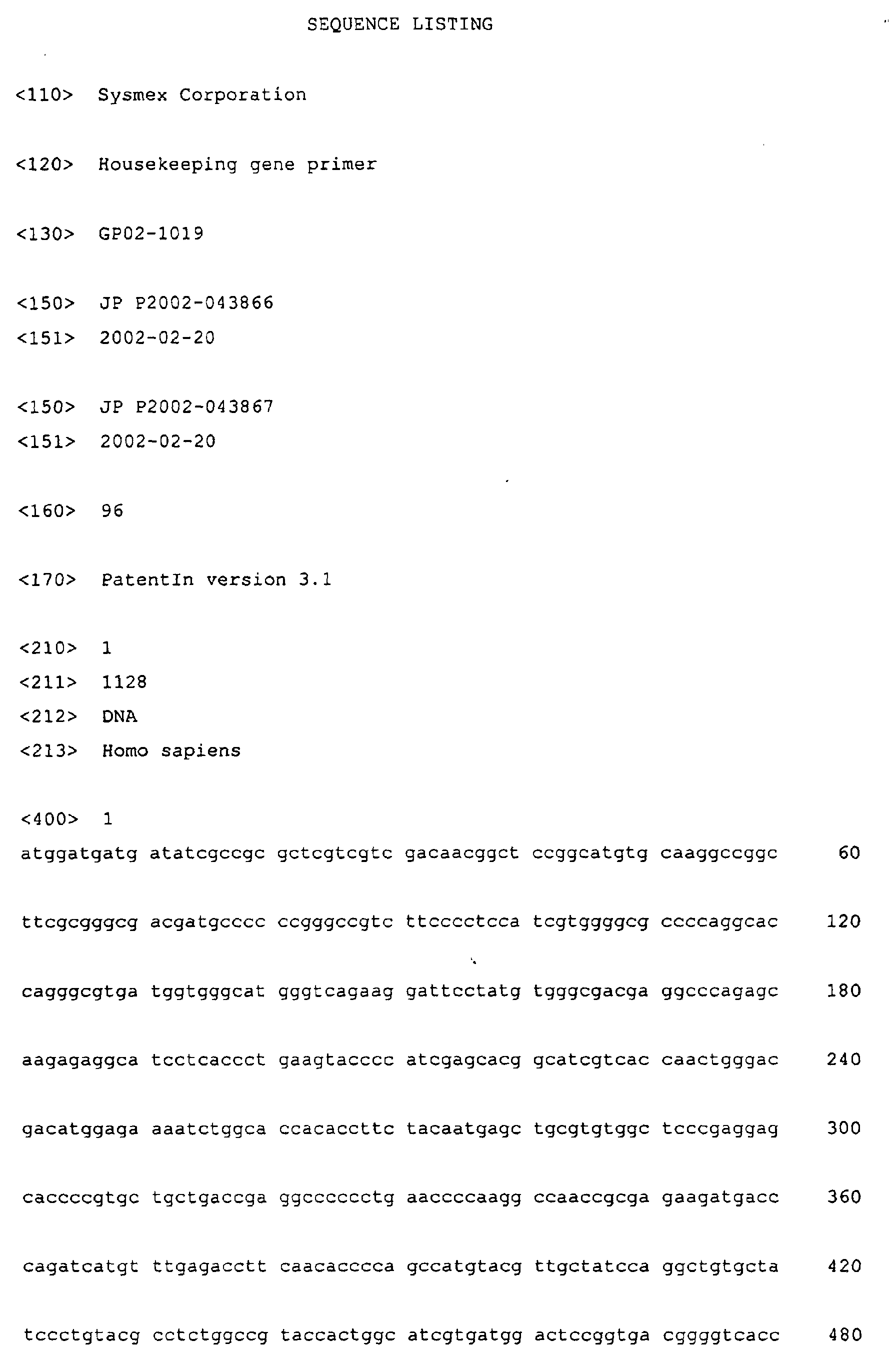
Locations of the genic regions in the β-actin gene which is suitable for the
LAMP method was investigated from the nucleotide sequence set forth in SEQ ID NO:
1 by using probe design software. Selection of the genic regions was performed at the
Tm value ranging between 58.5 and 63.5°C for F1c and R1c, between 61.5 and 62.5°C f
or F2 and R2, and between 58.5 and 62.5°C for F3 and R3, and as a result the regions
indicated below that are contained in the region spanning from nucleotide 240 to 1060
of the nucleotide sequence set forth in SEQ ID NO: 1 and the corresponding regions of
the complementary strand thereof were selected.

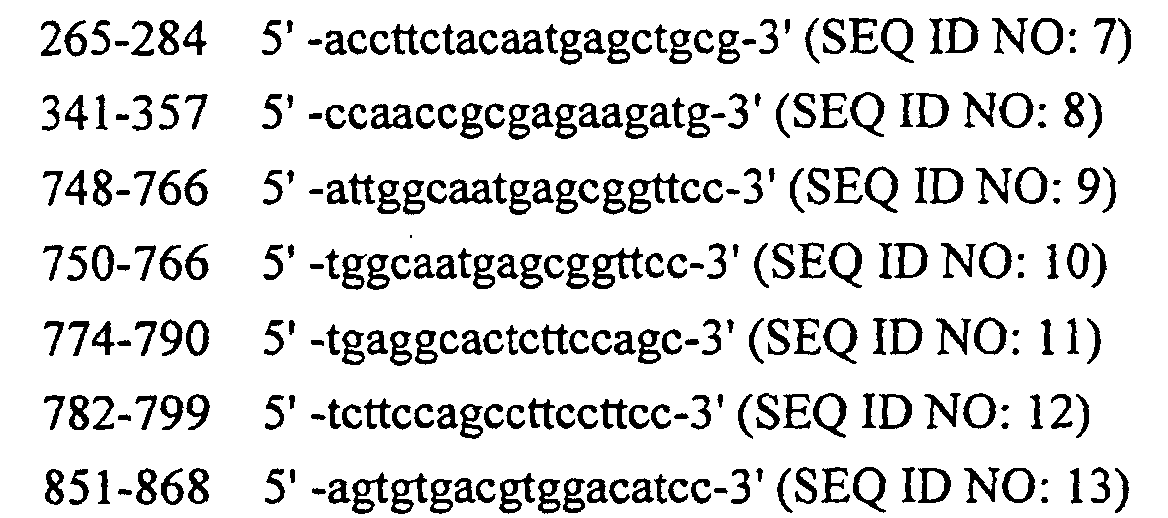
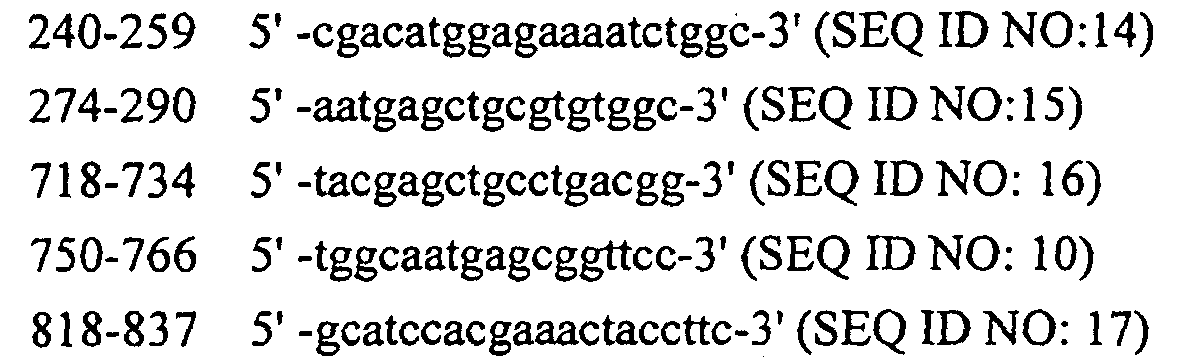
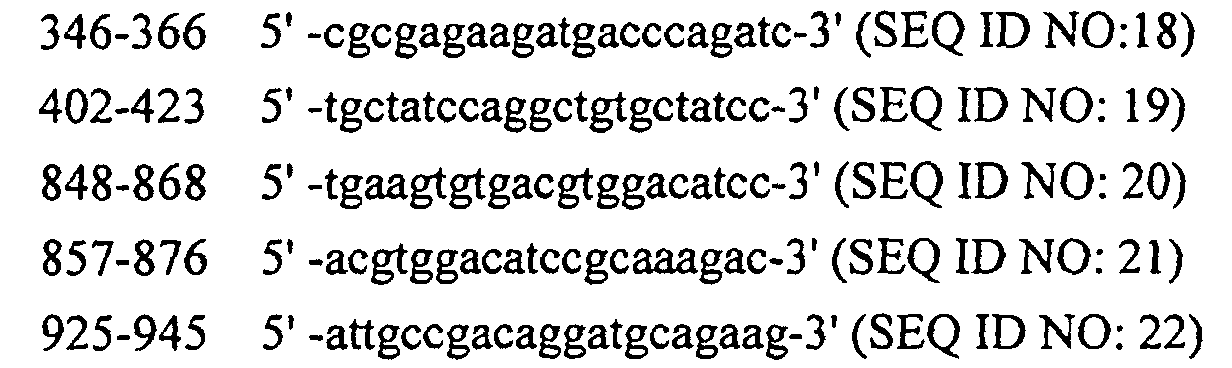


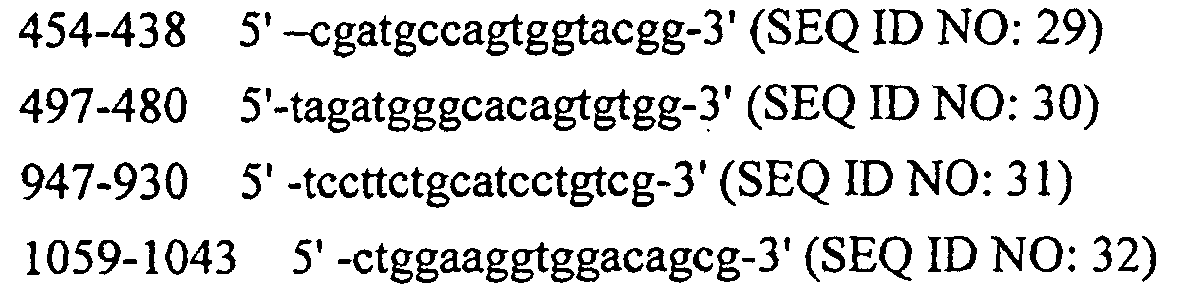


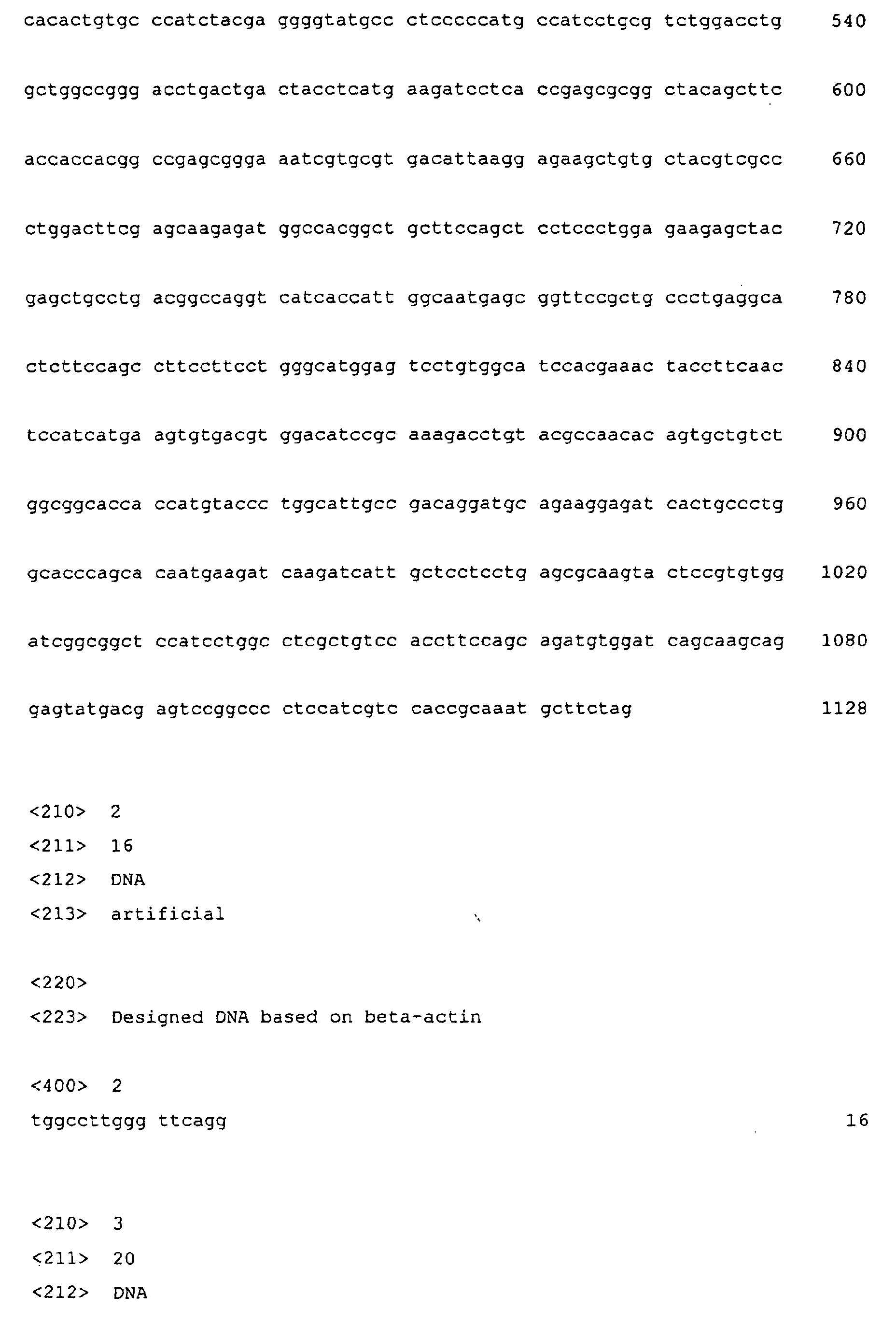
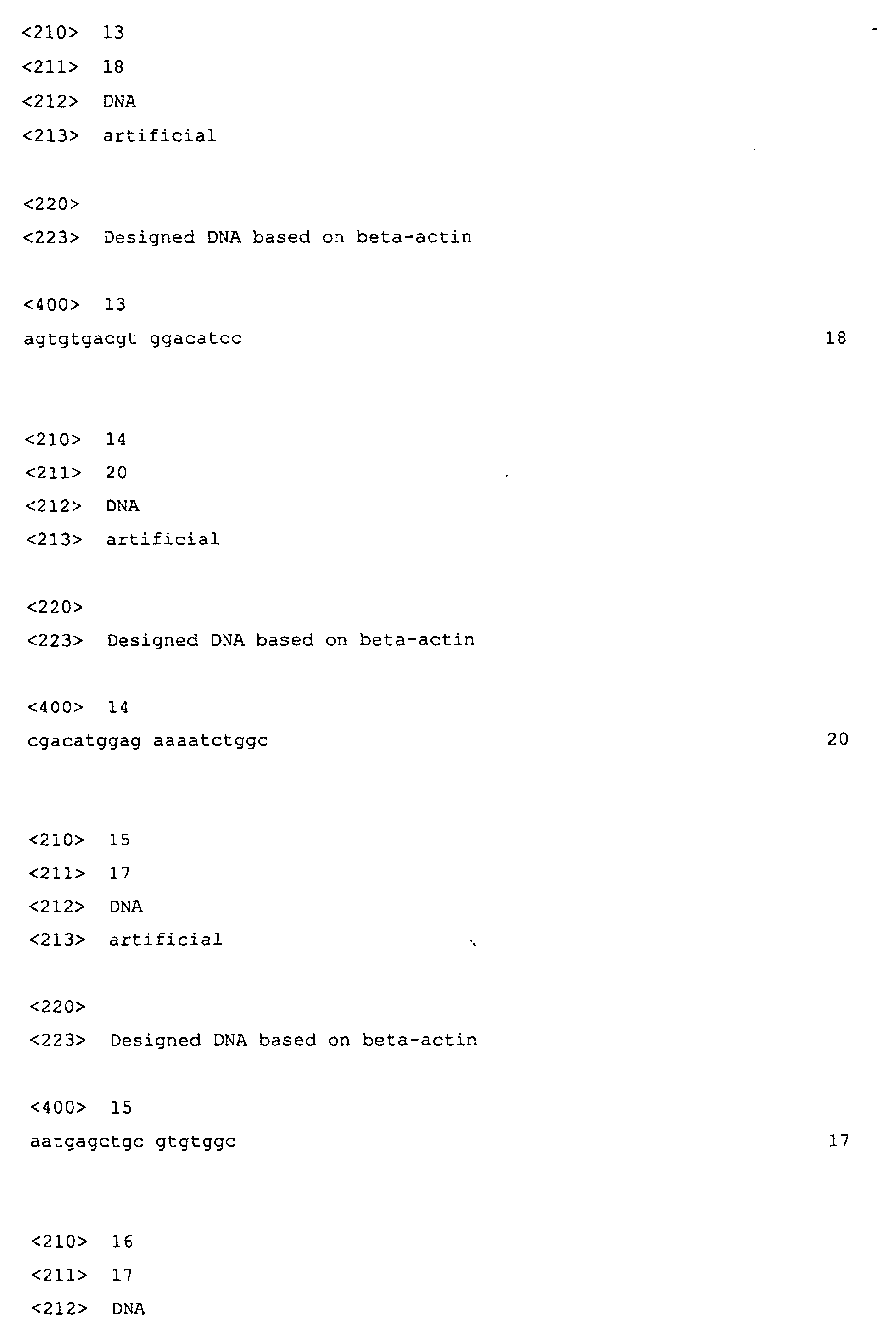
The primers indicated below, which are applied to the LAMP method for nucleic
acid amplification of β-actin, have been obtained from the sequences of the selected reg
ions
Locations of the genic regions in the β-actin gene which is suitable for the LA
MP method was investigated from the nucleotide sequence set forth in SEQ ID NO: 51
by using probe design software. Selection of the genic regions was performed at the T
m value ranging between 58.5 and 63.5°C for F1c and R1c, between 61.5 and 62.5°C fo
r F2 and R2, and between 58.5 and 62.5°C for F3 and R3, and as a result the regions i
ndicated below that are contained in the region spanning from nucleotide 110 to 450 of
the nucleotide sequence set forth in SEQ ID NO: 51 and the corresponding regions of t
he complementary strand thereof were selected.


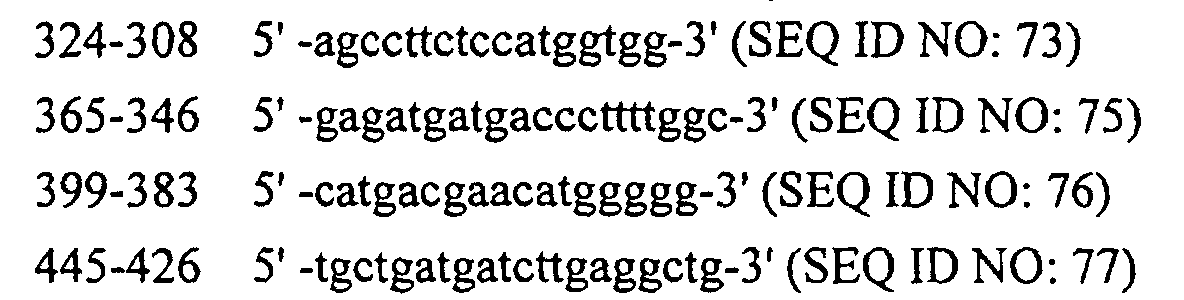


The primers indicated below, which are applied to the LAMP method for nucleic
acid amplification of GAPDH, have been obtained from the sequences of the selected r
egions
Amplification reaction by RT-LAMP was initiated using the primers for β-actin listed in
Example 2 in the combinations indicated in Table 1. The time required for confirming the
amplification was examined.
Commercially available human total RNA (derived from Raji cells; ABI) was used as
the template for human β-actin.
Each primer was used in the combinations indicated in Table 1.
| Primer Sets and Time Required for Confirmation of Amplification | ||||
| FIP | RIP | F3 Primer | R3 Primer | Time Required for Confirmation of Amplification (min.) |
| AFA-1 | ARA-1 | AF3-1 | AR3-1 | 35 |
| AFA-2 | ARA-2 | AF3-2 | AR3-2 | 34 |
| AFA-4 | ARA-4 | AF3-4 | AR3-4 | 25 |
| AFA-6 | ARA-6 | AF3-6 | AR3-6 | 45 |
| AFA-4a | ARA-4 | AF3-4 | AR3-4 | 37 |
| AFA-4c | ARA-4 | AF3-9 | AR3-4 | 33 |
| AFA-4d | ARA-4 | AF3-9 | AR3-4 | 28 |
| AFA-4e | ARA-4 | AF3-9 | AR3-4 | 28 |
| AFA-4 | ARA-4a | AF3-4 | AR3-4 | 40 |
| AFA-4 | ARA-4b | AF3-4 | AR3-4 | 26 |
| AFA-4 | ARA-4d | AF3-4 | AR3-4 | 40 |
| AFA-4 | ARA-4e | AF3-4 | AR3-4 | 31 |
Two microliters of RNA sample (containing 20 ng of human total RNA) was added to
23 µl of the reaction solution containing the above four primers, and heated at 65°C for one
hour.
Since the amplified products take the double helix structure, ethidium bromide
intercalates into this structure to generate fluorescence. Increase of the fluorescence intensity
was determined using ABI PRISM 7700.
Table 1 shows the time required for confirmation of the amplification of the β-actin
gene for each primer set used in the reaction. The results reveal that for each primer set, it takes
45 minutes at a maximum, within 30 minutes in most cases, to confirm the amplification.
A primer set with which the amplification was confirmed in the shortest time was
selected from the primer sets for β-actin used in Experiment 1. This primer set was further
combined with loop primers and used for determination of the sensitivity of the RT-LAMP
method.
The samples were prepared as described in Experiment 1.
| Primer Sets | |||||
| FIP | RIP | F3 Primer | R3 Primer | Loop Primer F | Loop Primer R |
| AFA-4 | ARA-4 | AF3-4 | AR3-4 | AD-LPF1 | AD-LPR1 |
F3 and R3 loop primers were further added at a concentration of 5 pmol each to the
same components as described in Experiment 1.
The RT-LAMP method was performed as described in Experiment 1. Two microliters
of RNA sample (containing 20 ng of human total RNA) was added to 23 µl of the reaction
solution containing the above six primers, and heated at 65°C for one hour.
Amplification was confirmed as described in Experiment 1.
The results are shown in Fig. 1. They show that the larger amount of the mRNA
template for β-actin allowed earlier confirmation of the amplification. The amplification was
confirmed within 30 minutes with 0.02 ng of the template, and in approximately 15 minutes with
20 ng of the template.
Amplification of β-actin was investigated in cell cultures, LS 180 cells (colonic tumor
cell line) and Raji cells (Burkitt's lymphoma cell line).
A cytokeratin-positive LS180 cell solution was diluted with a cytokeratin-negative Raji
cell solution, and amplification of β-actin was examined for different concentrations of LS 180
cell solution, thereby examining whether β-actin is available as a control for data correction in
determination of cytokeratin tumor markers.
Samples were prepared to adjust the total cell number of LS180 and Raje cells to 8000.
Among the total cell number of 8000, the number of LS180 cells was adjusted to 8000, 800, 80,
8 or 0.
The same primers as described in Experiment 2 were selected.
The reaction solution containing the same reaction components as described in
Experiment 2 was used.
The RT-LAMP method was performed as described in Experiment 2.
Two microliters of the cell suspension was added to 23 µl of the reaction solution
containing the same six primers as described in Experiment 2, and heated at 65°C for one hour.
The results are shown in Fig. 2. They demonstrated that β-actin was amplified in
approximately 15 minutes, irrespective of the ratio between LS180 and Raji cells. This
confirmed that β-actin is constitutively expressed in the human cells regardless of the presence or
absence of the tumor markers, suggesting that β-actin is available as a control for data correction
in the LAMP method.
Amplification reaction by RT-LAMP was initiated using the primers for GAPDH listed
in Example 4 in the combinations indicated in Table 3. The time required for confirming the
amplification was examined.
Commercially available human total RNA (derived from Raji cells; ABI) was used as
the template for GAPDH.
Each primer was used in the combinations indicated in (Table 3).
| Primer Sets and Time Required for Confirmation of Amplification | ||||
| FIP | RIP | F3 Primer | R3 Primer | Time Required for Confirmation of Amplification (min.) |
| FA-2 | RA-2 | F3-8 | R3-2 | 40 |
| FA-3 | RA-3 | F3-3 | R3-3 | 20 |
| FA-5 | RA-5 | F3-4 | R3-5 | 50 |
| FA-7 | RA-7 | F3-6 | R3-7 | 45 |
| FA-3 | RA-3 | F3-8 | R3-3 | 18 |
| FA-3b | RA-3 | F3-8 | R3-3 | 21 |
| FA-3d | RA-3 | F3-3 | R3-3 | 10 |
| FA-3d | RA-3 | F3-8 | R3-3 | 10 |
| FA-3e | RA-3 | F3-8 | R3-3 | 42 |
| FA-3g | RA-3 | F3-8 | R3-3 | 32 |
| FA-3 | RA-3a | F3-3 | R3-3 | 27 |
| FA-3 | RA-3b | F3-3 | R3-3 | 21 |
| FA-3 | RA-3c | F3-3 | R3-3 | 28 |
| FA-3 | RA-3d | F3-3 | R3-3 | 22 |
| FA-3 | RA-3e | F3-3 | R3-3 | 33 |
The reaction solution containing the same reaction components as described in
Experiment 1 was used.
RT-LAMP was performed as described in Experiment 1. Specifically, two microliters
of the RNA sample (containing 20 ng of human total RNA) was added to 23 µl of the reaction
solution containing the above four primers, and heated at 65°C for one hour.
Amplification was confirmed as described in Experiment 1.
Table 3 shows the time required for confirmation of the amplification of the GAPDH
gene for each primer set used in the reaction. The results reveal that for each primer set, it takes
45 minutes at a maximum, within 30 minutes in most cases, to confirm the amplification.
A primer set with which the amplification was confirmed in the shortest time was
selected from the primer sets for GAPDH used in Experiment 4. This primer set was further
combined with loop primers and used for determination of the sensitivity of the RT-LAMP
method.
Commercially available human total RNA (derived from Raji cells; ABI) was used as
the template for GAPDH.
| Primer Sets | |||||
| FIP | RIP | F3 Primer | R3 Primer | Loop Primer F | Loop Primer R |
| FA-3d | RA-3 | F3-3 | R3-3 | GC-LPF1 | GC-LPR1 |
The reaction solution containing the same reaction components as described in
Experiment 2 was used.
The RT-LAMP method was performed as described in Experiment 2.
Detection of nucleic acids was performed as described in Experiment 2.
The results are shown in Fig. 3. They show that the larger amount of the GAPDH
mRNA template for β-actin allowed earlier confirmation of the amplification. The
amplification was confirmed within 30 minutes even with 0.02 ng of the template, and in
approximately 10 minutes with 20 ng of the template.
Amplification of GAPDH was investigated in cell cultures, LS180 cells (colonic tumor
cell line) and Raji cells (Burkitt's lymphoma cell line).
A cytokeratin-positive LS180 cell solution was diluted with a cytokeratin-negative Raji
cell solution, and amplification of GAPDH was examined for different concentrations of LS 180
cell solution, thereby examining whether GAPDH is available as a control for data correction in
determination of cytokeratin tumor markers.
Samples were prepared to adjust the total cell number of LS180 and Raje cells to 8000.
Among the total cell number of 8000, the number of LS180 cells was adjusted to 8000, 800, 80,
8 or 0.
The same primer sets as described in Experiment 5 were selected.
The reaction solution containing the same reaction components as described in
Experiment 2 was used.
The RT-LAMP method was performed as described in Experiment 2. Two
microliters of the cell suspension was added to 23 µl of the reaction solution containing the same
six primers as described in Experiment 5, and heated at 65°C for one hour.
Detection of nucleic acids was performed as described in Experiment 2.
The results are shown in Fig. 4. They demonstrated that GAPDH was amplified in
approximately 10 minutes, irrespective of the ratio between LS180 and Raji cells. This
confirmed that GAPDH is constitutively expressed in the human cells regardless of the presence
or absence of the tumor markers, suggesting that GAPDH is available as a control for data
correction in the LAMP method.
As described above, use of the primers or primer sets of the present invention in the
LAMP method allows for confirmation of amplification of β-actin or GAPDH within 15 minutes
at the earliest.
The presence of β-actin and GAPDH was observed in the human cells, regardless of the
presence or absence of a tumor marker such as cytokeratin. These results show that these genes
are available as a control for data correction in the LAMP method.
Taken together, the use of the primers or primer sets of the present invention will reduce
the time required for making a diagnosis during the process for diagnosis of metastasis using
nucleic acid amplification, thereby enabling reliable diagnosis.












Claims (27)
- A primer for nucleic acid amplification to detect a housekeeping gene and/or housekeeping gene-related mRNA by the LAMP method.
- The primer of claim 1, wherein the housekeeping gene is a β-actin gene and/or a GAPDH gene.
- A primer for nucleic acid amplification to detect β-actin, which comprises an oligonucleotide having a nucleic acid sequence selected from the group consisting of:1) an oligonucleotide comprising at least 5 consecutive nucleotides of the nucleotide sequence set forth as SEQ ID NO: 1 or the complementary sequence thereof which are selected from the regions of nucleotides 240-380 and 401-1060 and/or the regions complementary to these regions;2) an oligonucleotide comprising the nucleotide sequence set forth as any one of SEQ ID NO: 2 and SEQ ID NOs: 4-34;3) an oligonucleotide complementary to any one of the oligonucleotides defined in above 1) or 2);4) an oligonucleotide capable of hybridizing to the oligonucleotide defined in any one of 1)-3) under stringent conditions; and5) an oligonucleotide having the primer function, comprising the nucleotide sequence of the oligonuceotide defined in any one of above 1) to 4) in which one or more nucleotides are mutated by substitution, deletion, insertion or addition.
- A primer for nucleic acid amplification to detect β-actin, which comprises an oligonucleotide selected from the group consisting of the sequences set forth as SEQ ID NOs: 10, 14-17 and 29-50.
- A primer for nucleic acid amplification to detect GAPDH, which comprises an oligonucleotide having a nucleic acid sequence selected from the group consisting of:1) an oligonucleotide comprising at least 5 consecutive nucleotides of the nucleotide sequence set forth as SEQ ID NO: 51 or the complementary sequence thereof which are selected from the region of nucleotides 110-450 and/or the region complementary to this region;2) an oligonucleotide comprising the nucleotide sequence set forth as any one of SEQ ID NOs: 52-79;3) an oligonucleotide complementary to any one of the oligonucleotides defined in above 1) or 2);4) an oligonucleotide capable of hybridizing to the oligonucleotide defined in any one of 1)-3) under stringent conditions; and5) an oligonucleotide having the primer function, comprising the nucleotide sequence of the oligonuceotide defined in any one of above 1) to 4) in which one or more nucleotides are mutated by substitution, deletion, insertion or addition.
- A primer for nucleic acid amplification to detect GAPDH, which comprises an oligonucleotide selected from the group consisting of the sequences set forth as SEQ ID NOs: 58, 62-64 and 73-96.
- The primer for nucleic acid amplification of any one of claims 3 to 6, wherein the method for nucleic acid amplification is the LAMP method.
- A primer set for nucleic acid amplification to detect β-actin, which is featured by selecting at least two primers from the primers for nucleic acid amplification that comprise oligonucleotides having nucleic acid sequences selected from the group consisting of:1) an oligonucleotide comprising at least 5 consecutive nucleotides of the nucleotide sequence set forth as SEQ ID NO: 1 or the complementary sequence thereof which are selected from the region of nucleotides 240-1060 and/or the region complementary to this region;2) an oligonucleotide comprising the nucleotide sequence set forth as any one of SEQ ID NOs: 2-34;3) an oligonucleotide complementary to any one of the oligonucleotides defined in above 1) or 2);4) an oligonucleotide capable of hybridizing to the oligonucleotide defined in any one of 1)-3) under stringent conditions; and5) an oligonucleotide having the primer function, comprising the nucleotide sequence of the oligonuceotide defined in any one of above 1) to 4) in which one or more nucleotides are mutated by substitution, deletion, insertion or addition.
- A primer set for nucleic acid amplification to detect β-actin, which is featured by selecting at least four primers from the primers for nucleic acid amplification that comprise the oligonucleotides of claim 8.
- The primer set for nucleic acid amplification claimed in any one of claims 8 and9, which features that at least two primers contained in the primer set recognize each two gene regions in the nucleotide sequence set forth as SEQ ID NO: 1 and/or the complementary sequence thereof.
- The primer set for nucleic acid amplification claimed in any one of claims 9 and 10, which features that the primers contained in the primer set recognize at least six gene regions in the nucleotide sequence set forth as SEQ ID NO: 1 and/or the complementary sequence thereof.
- A primer set comprising a combination of each one primer selected from each of (a) FIP: SEQ ID NOs: 35-42; (b) RIP: SEQ ID NOs: 43-50; (c) F3: SEQ ID NOs: 10 and 14-17 and (d) R3: SEQ ID NOs: 29-32, which categories consist of the primers for nucleic acid amplification to detect β-actin that comprise the oligonucleotides having the nucleotide sequences set forth as SEQ ID NOs: 10, 14-17, 29-32, 35-42 and 43-50.
- The primer set of claim 12, which further comprises the oligonucleotides having the nucleotide sequences set forth as SEQ ID NOs: 33 and 34.
- A primer set for nucleic acid amplification to detect GAPDH, which is featured by selecting at least two primers from the primers for nucleic acid amplification that comprise the oligonucleotides of claim 5.
- A primer set for nucleic acid amplification to detect GAPDH, which is featured by selecting at least four primers from the primers for nucleic acid amplification that comprise the oligonucleotides of claim 5.
- The primer set for nucleic acid amplification claimed in claim 14 or 15, which features that at least two primers contained in the primer set recognize each two gene regions in the nucleotide sequence set forth as SEQ ID NO: 51 and/or the complementary sequence thereof.
- The primer set for nucleic acid amplification claimed in any one of claims 14 to 16, which features that the primers contained in the primer set recognize at least six gene regions in the nucleotide sequence set forth as SEQ ID NO: 51 and/or the complementary sequence thereof.
- A primer set comprising a combination of each one primer selected from each of (a) FIP: SEQ ID NOs: 80-87 and (b) RIP: SEQ ID NOs: 88-96 , which categories consist of the primers for nucleic acid amplification to detect GAPDH that comprise the oligonucleotides having the nucleotide sequences set forth as SEQ ID NOs: 80-96.
- The primer set of claim 18, which further comprises an oligonucleotide having either one of the nucleotide sequences set forth as SEQ ID NO: 58 or SEQ ID NOs: 62-64 and an oligonucleotide having any one of the nucleotide sequences set forth as SEQ ID NOs: 73-77.
- The primer set of claim 18 or 19, further comprising, as primers, oligonucleotides having the nucleotide sequences forth as SEQ ID NOs: 78 and 79.
- The primer set of any one of claim 8 to 20, wherein the method for nucleic acid amplification is the LAMP method.
- A primer set for nucleic acid amplification to detect β-actin, which comprises any one of the following primer sets:1) a primer set comprising oligonucleotides having the nucleotide sequences set forth as SEQ ID NOs: 35, 43, 14 and 29 as primers;2) a primer set comprising oligonucleotides having the nucleotide sequences set forth as SEQ ID NOs: 36, 44, 15 and 30 as primers;3) a primer set comprising oligonucleotides having the nucleotide sequences set forth as SEQ ID NOs: 37, 45, 10 and 31 as primers;4) a primer set comprising oligonucleotides having the nucleotide sequences set forth as SEQ ID NOs: 41, 50, 17 and 32 as primers;5) a primer set comprising oligonucleotides having the nucleotide sequences set forth as SEQ ID NOs: 38, 45, 10 and 31 as primers;6) a primer set comprising oligonucleotides having the nucleotide sequences set forth as SEQ ID NOs: 39, 45, 10 and 31 as primers;7) a primer set comprising oligonucleotides having the nucleotide sequences set forth as SEQ ID NOs: 40, 45, 16 and 31 as primers;8) a primer set comprising oligonucleotides having the nucleotide sequences set forth as SEQ ID NOs: 41, 45, 16 and 31 as primers;9) a primer set comprising oligonucleotides having the nucleotide sequences set forth as SEQ ID NOs: 37, 46, 16 and 31 as primers;10) a primer set comprising oligonucleotides having the nucleotide sequences set forth as SEQ ID NOs: 37, 47, 16 and 31 as primers;11) a primer set comprising oligonucleotides having the nucleotide sequences set forth as SEQ ID NOs: 37, 48, 16 and 31 as primers; and12) a primer set comprising oligonucleotides having the nucleotide sequences set forth as SEQ ID NOs: 37, 49, 16 and 31 as primers;
- A primer set for nucleic acid amplification to detect GAPDH, which comprises any one of the following primer sets:1) a primer set comprising oligonucleotides having the nucleotide sequences set forth as SEQ ID NOs: 80, 88, 62 and 73 as primers;2) a primer set comprising oligonucleotides having the nucleotide sequences set forth as SEQ ID NOs: 81, 89, 63 and 75 as primers;3) a primer set comprising oligonucleotides having the nucleotide sequences set forth as SEQ ID NOs: 86, 95, 58 and 76 as primers;4) a primer set comprising oligonucleotides having the nucleotide sequences set forth as SEQ ID NOs: 87, 96, 64 and 77 as primers;5) a primer set comprising oligonucleotides having the nucleotide sequences set forth as SEQ ID NOs: 81, 89, 62 and 75 as primers;6) a primer set comprising oligonucleotides having the nucleotide sequences set forth as SEQ ID NOs: 82, 89, 62 and 75 as primers;7) a primer set comprising oligonucleotides having the nucleotide sequences set forth as SEQ ID NOs: 83, 89, 63 and 75 as primers;8) a primer set comprising oligonucleotides having the nucleotide sequences set forth as SEQ ID NOs: 83, 89, 62 and 75 as primers;9) a primer set comprising oligonucleotides having the nucleotide sequences set forth as SEQ ID NOs: 84, 89, 62 and 75 as primers;10) a primer set comprising oligonucleotides having the nucleotide sequences set forth as SEQ ID NOs: 85, 89, 62 and 75 as primers;12) a primer set comprising oligonucleotides having the nucleotide sequences set forth as SEQ ID NOs: 81, 90, 63 and 75 as primers;13) a primer set comprising oligonucleotides having the nucleotide sequences set forth as SEQ ID NOs: 81, 91, 63 and 75 as primers;14) a primer set comprising oligonucleotides having the nucleotide sequences set forth as SEQ ID NOs: 81, 92, 63 and 75 as primers;15) a primer set comprising oligonucleotides having the nucleotide sequences set forth as SEQ ID NOs: 81, 93, 63 and 75 as primers;16) a primer set comprising oligonucleotides having the nucleotide sequences set forth as SEQ ID NOs: 81,94,63 and 75 as primers.
- A method for detecting nucleic acid, wherein at least one of the primers of claims 1 to 7 is used.
- A method for detecting nucleic acid, wherein at least one of the primers claimed in any one of claims 8 to 23 is used.
- A reagent and/or reagent kit used in the method for detecting nucleic acid defined in claim 24 or 25.
- A system for detecting nucleic acid, which uses the nucleic acid detection method of claim 24 or 25.
Priority Applications (1)
| Application Number | Priority Date | Filing Date | Title |
|---|---|---|---|
| EP09007530A EP2107113B1 (en) | 2002-02-20 | 2003-02-13 | Primers for nucleic acid amplification in detecting housekeeping gene mRNA and test method using these primers |
Applications Claiming Priority (5)
| Application Number | Priority Date | Filing Date | Title |
|---|---|---|---|
| JP2002043866 | 2002-02-20 | ||
| JP2002043866 | 2002-02-20 | ||
| JP2002043867 | 2002-02-20 | ||
| JP2002043867 | 2002-02-20 | ||
| PCT/JP2003/001474 WO2003070935A1 (en) | 2002-02-20 | 2003-02-13 | PRIMERS FOR NUCLEIC ACID AMPLIFICATION IN DETECTING HOUSEKEEPING GENE mRNA AND TEST METHOD USING THESE PRIMERS |
Related Child Applications (1)
| Application Number | Title | Priority Date | Filing Date |
|---|---|---|---|
| EP09007530A Division EP2107113B1 (en) | 2002-02-20 | 2003-02-13 | Primers for nucleic acid amplification in detecting housekeeping gene mRNA and test method using these primers |
Publications (2)
| Publication Number | Publication Date |
|---|---|
| EP1484394A1 true EP1484394A1 (en) | 2004-12-08 |
| EP1484394A4 EP1484394A4 (en) | 2005-11-09 |
Family
ID=27759655
Family Applications (2)
| Application Number | Title | Priority Date | Filing Date |
|---|---|---|---|
| EP03705099A Withdrawn EP1484394A4 (en) | 2002-02-20 | 2003-02-13 | Primers for nucleic acid amplification in detecting housekeeping gene mrna and test method using these primers |
| EP09007530A Expired - Lifetime EP2107113B1 (en) | 2002-02-20 | 2003-02-13 | Primers for nucleic acid amplification in detecting housekeeping gene mRNA and test method using these primers |
Family Applications After (1)
| Application Number | Title | Priority Date | Filing Date |
|---|---|---|---|
| EP09007530A Expired - Lifetime EP2107113B1 (en) | 2002-02-20 | 2003-02-13 | Primers for nucleic acid amplification in detecting housekeeping gene mRNA and test method using these primers |
Country Status (8)
| Country | Link |
|---|---|
| US (2) | US20050164190A1 (en) |
| EP (2) | EP1484394A4 (en) |
| JP (2) | JP4426309B2 (en) |
| CN (1) | CN100516211C (en) |
| AT (1) | ATE554164T1 (en) |
| AU (1) | AU2003211947A1 (en) |
| ES (1) | ES2382868T3 (en) |
| WO (1) | WO2003070935A1 (en) |
Cited By (2)
| Publication number | Priority date | Publication date | Assignee | Title |
|---|---|---|---|---|
| WO2006132982A3 (en) * | 2005-06-03 | 2007-08-02 | Aviaradx Inc | Normalization genes |
| WO2010139767A1 (en) * | 2009-06-04 | 2010-12-09 | Qiagen Gmbh | Amplification of complex nucleic acids |
Families Citing this family (10)
| Publication number | Priority date | Publication date | Assignee | Title |
|---|---|---|---|---|
| JP4977325B2 (en) * | 2004-10-15 | 2012-07-18 | シスメックス株式会社 | Pseudo organization for quality control and quality control method using the same |
| JP2008136389A (en) * | 2006-11-30 | 2008-06-19 | Sapporo Breweries Ltd | Method for detecting apple mosaic virus, primer set for detection and kit for detection thereof |
| CN101903520B (en) * | 2007-10-19 | 2013-11-13 | 荣研化学株式会社 | Nucleic acid amplification method and reagents and reagent kits used in the method |
| WO2009119331A1 (en) * | 2008-03-28 | 2009-10-01 | シスメックス株式会社 | REAGENT COMPRISING PRIMER FOR DETECTION OF mRNA FOR CYTOKERATIN-7 |
| JP5710190B2 (en) * | 2010-09-16 | 2015-04-30 | 株式会社東芝 | Primer set, probe, assay kit and detection method for β-actin gene |
| JP5782704B2 (en) * | 2010-11-11 | 2015-09-24 | 東ソー株式会社 | Method for measuring GAPDH mRNA |
| CN106636348A (en) * | 2016-11-08 | 2017-05-10 | 河南师范大学 | Zymomonas mobilis loop-mediated isothermal amplification of DNA rapid detection kit, and detection method |
| CN107287320A (en) * | 2017-07-12 | 2017-10-24 | 曹国君 | The LAMP detections of GAPDH genes are combined and kit with primer |
| US11788129B2 (en) * | 2021-02-23 | 2023-10-17 | Industrial Technology Research Institute | Nucleic acid detection kit and nucleic acid detection method |
| WO2022201181A1 (en) * | 2021-03-24 | 2022-09-29 | Indian Council Of Medical Research | RT-LAMP ASSAY FOR DETECTION OF HUMAN β-ACTIN HOUSEKEEPING GENE |
Family Cites Families (32)
| Publication number | Priority date | Publication date | Assignee | Title |
|---|---|---|---|---|
| EP0174608A1 (en) | 1984-09-13 | 1986-03-19 | The Board Of Trustees Of The Leland Stanford Junior University | Beta-actin gene and regulatory elements, preparation and use |
| JP2650159B2 (en) | 1988-02-24 | 1997-09-03 | アクゾ・ノベル・エヌ・ベー | Nucleic acid amplification method |
| US5130238A (en) | 1988-06-24 | 1992-07-14 | Cangene Corporation | Enhanced nucleic acid amplification process |
| WO1994017086A1 (en) * | 1993-01-25 | 1994-08-04 | Apollon, Inc. | Gene regulation by targeting putative intramolecular triple helix |
| US5643765A (en) * | 1993-04-06 | 1997-07-01 | University Of Rochester | Method for quantitative measurement of gene expression using multiplex competitive reverse transcriptase-polymerase chain reaction |
| US5639606A (en) * | 1993-04-06 | 1997-06-17 | The University Of Rochester | Method for quantitative measurement of gene expression using multiplex competitive reverse transcriptase-polymerase chain reaction |
| US5876978A (en) * | 1993-04-06 | 1999-03-02 | Medical College Of Ohio | Method for quantitative measurement of gene expression using multiplex competitive reverse transcriptase-polymerase chain reaction |
| DE4416446A1 (en) | 1993-05-12 | 1994-11-17 | Becton Dickinson Co | Sequences specific for human DNA |
| JPH07123984A (en) * | 1993-11-05 | 1995-05-16 | Hitachi Chem Co Ltd | Primer for detecting and measuring specific messenger rna |
| WO1997034014A1 (en) | 1996-03-15 | 1997-09-18 | Yale University | Methods and means of detecting nitric oxide synthase |
| GB9607441D0 (en) * | 1996-04-10 | 1996-06-12 | Univ Manitoba | Human hyaluronan receptor |
| US5955268A (en) * | 1996-04-26 | 1999-09-21 | Abbott Laboratories | Method and reagent for detecting multiple nucleic acid sequences in a test sample |
| US6258543B1 (en) * | 1996-05-02 | 2001-07-10 | Xtrana, Inc. | Quantitation of RNA transcripts using genomic DNA as the internal amplification competitor |
| US5817912A (en) * | 1997-01-16 | 1998-10-06 | B.M.R.A. Corporation B.V. | Transgenic mice with disrupted NPY Y1 receptor genes |
| US20030096232A1 (en) * | 1997-12-19 | 2003-05-22 | Kris Richard M. | High throughput assay system |
| DE19804372A1 (en) * | 1998-02-04 | 1999-08-05 | Michael W Dr Dr Dahm | Method for the quantitative determination of tumor cells in a body fluid and suitable test kits |
| KR20010034814A (en) * | 1998-04-23 | 2001-04-25 | 제넨테크, 인크. | Quantitative Analysis of Gene Expression |
| US6576420B1 (en) * | 1998-06-23 | 2003-06-10 | Regents Of The University Of California | Method for early diagnosis of, and determination of prognosis in, cancer |
| US6743602B1 (en) * | 1999-07-26 | 2004-06-01 | Chiron Corporation | Polynucleotides differentially expressed in adenocarcinomas, polypeptides encoded thereby, and methods of use thereof |
| US6410278B1 (en) * | 1998-11-09 | 2002-06-25 | Eiken Kagaku Kabushiki Kaisha | Process for synthesizing nucleic acid |
| US7135284B1 (en) * | 1999-02-05 | 2006-11-14 | Integrated Dna Technologies, Inc. | Primer extension methods for production of high specific activity nucleic acid probes |
| DE19909503A1 (en) * | 1999-03-04 | 2000-09-07 | Boehringer Ingelheim Int | Tumor Associated Antigen |
| US7607022B1 (en) * | 1999-06-11 | 2009-10-20 | General Instrument Corporation | Configurable encryption/decryption for multiple services support |
| US20060009393A1 (en) * | 1999-10-02 | 2006-01-12 | The Government of the U.S.A as represented by the Secretary of the Dept. of Health & Human Services | Immunogenic epitopes for fibroblast growth factors 5 (FGF-5) |
| JP2003523207A (en) | 2000-01-25 | 2003-08-05 | ジェネンテック・インコーポレーテッド | LIV-1-related proteins, polynucleotides encoding them, and their use in treating cancer |
| WO2001055454A1 (en) * | 2000-01-28 | 2001-08-02 | Althea Technologies, Inc. | Methods for analysis of gene expression |
| JP4437856B2 (en) | 2000-02-29 | 2010-03-24 | 栄研化学株式会社 | Method for detecting a nucleic acid having a complementary region in the same strand |
| IL137865A0 (en) | 2000-08-15 | 2001-10-31 | Yeda Res & Dev | Method for the diagnosis and follow-up of schizophrenia |
| ES2327712T3 (en) | 2000-09-19 | 2009-11-03 | Eiken Kagaku Kabushiki Kaisha | PROCEDURE FOR SYNTHESIZING POLINUCLEOTIDES. |
| KR100762261B1 (en) * | 2001-04-27 | 2007-10-04 | (주)바이오니아 | Full length complementary deoxyribonucleic acid production method and anchors and primers used therein |
| US20050118591A1 (en) * | 2001-11-22 | 2005-06-02 | Adnagen Ag | Diagnosis kit, dna chip, and methods for diagnosing or supervising the treatment of testicular cancer |
| JP2005511055A (en) * | 2001-11-30 | 2005-04-28 | ユニバーシティー オブ ロチェスター | Multiplex real-time quantitative PCR |
-
2003
- 2003-02-13 AU AU2003211947A patent/AU2003211947A1/en not_active Abandoned
- 2003-02-13 US US10/504,930 patent/US20050164190A1/en not_active Abandoned
- 2003-02-13 EP EP03705099A patent/EP1484394A4/en not_active Withdrawn
- 2003-02-13 ES ES09007530T patent/ES2382868T3/en not_active Expired - Lifetime
- 2003-02-13 CN CNB038040697A patent/CN100516211C/en not_active Expired - Fee Related
- 2003-02-13 AT AT09007530T patent/ATE554164T1/en active
- 2003-02-13 JP JP2003569828A patent/JP4426309B2/en not_active Expired - Lifetime
- 2003-02-13 WO PCT/JP2003/001474 patent/WO2003070935A1/en not_active Ceased
- 2003-02-13 EP EP09007530A patent/EP2107113B1/en not_active Expired - Lifetime
-
2009
- 2009-10-19 JP JP2009240455A patent/JP4426640B1/en not_active Expired - Fee Related
-
2011
- 2011-07-25 US US13/190,317 patent/US8198052B2/en not_active Expired - Fee Related
Cited By (4)
| Publication number | Priority date | Publication date | Assignee | Title |
|---|---|---|---|---|
| WO2006132982A3 (en) * | 2005-06-03 | 2007-08-02 | Aviaradx Inc | Normalization genes |
| WO2010139767A1 (en) * | 2009-06-04 | 2010-12-09 | Qiagen Gmbh | Amplification of complex nucleic acids |
| CN102459632A (en) * | 2009-06-04 | 2012-05-16 | 恰根有限公司 | Amplification of complex nucleic acids |
| US9777316B2 (en) | 2009-06-04 | 2017-10-03 | Qiagen Strasse 1 | Amplification of complex nucleic acids |
Also Published As
| Publication number | Publication date |
|---|---|
| US8198052B2 (en) | 2012-06-12 |
| EP2107113A1 (en) | 2009-10-07 |
| JP4426640B1 (en) | 2010-03-03 |
| EP2107113B1 (en) | 2012-04-18 |
| CN1633500A (en) | 2005-06-29 |
| JP2010046078A (en) | 2010-03-04 |
| CN100516211C (en) | 2009-07-22 |
| AU2003211947A1 (en) | 2003-09-09 |
| JP4426309B2 (en) | 2010-03-03 |
| WO2003070935A1 (en) | 2003-08-28 |
| EP1484394A4 (en) | 2005-11-09 |
| US20050164190A1 (en) | 2005-07-28 |
| ES2382868T3 (en) | 2012-06-14 |
| ATE554164T1 (en) | 2012-05-15 |
| US20110281275A1 (en) | 2011-11-17 |
| JPWO2003070935A1 (en) | 2005-06-09 |
Similar Documents
| Publication | Publication Date | Title |
|---|---|---|
| US8198052B2 (en) | Primers for nucleic acid amplification in detecting β-actin and test method using these primers | |
| CN105392901B (en) | Ligase-assisted nucleic acid circularization and amplification | |
| CN111849965B (en) | Polynucleotide adapter design to reduce bias | |
| CN110719957B (en) | Methods and kits for targeted enrichment of nucleic acids | |
| KR20220041875A (en) | single cell analysis | |
| AU2016268089A1 (en) | Methods for next generation genome walking and related compositions and kits | |
| ES2558007T3 (en) | Nucleic acid amplification inhibition procedure using light and very sensitive nucleic acid selective amplification procedure | |
| JP2014507950A (en) | Kits and methods for sequencing target DNA in mixed populations | |
| US20180094309A1 (en) | Nucleic acid retro-activated primers | |
| EP1876246A1 (en) | Self-complementary primers used in LAMP gene amplification method | |
| EP2193208B1 (en) | A method of dna amplification | |
| KR20010034814A (en) | Quantitative Analysis of Gene Expression | |
| KR20230006852A (en) | Quantitative blocker displacement amplification (QBDA) sequencing for quantification of uncorrected and multiple variant allele frequencies | |
| JP2004154088A (en) | Primer for amplifying nucleic acid for detecting cea, and inspection method by using the primer | |
| KR20160106041A (en) | Compositions and methods for multiplex analysis of nras and braf nucleic acids | |
| EP2284281A1 (en) | REAGENT COMPRISING PRIMER FOR DETECTION OF mRNA FOR CYTOKERATIN-7 | |
| WO2017183648A1 (en) | Multi-item amplification method | |
| CN107190091B (en) | Real-time quantitative PCR method suitable for gene expression quantification of FFPE sample | |
| JP4386671B2 (en) | Nucleic acid amplification primer for detection of cytokeratins and test method using the primer | |
| EP1004676B1 (en) | Methods for dna amplification and kits therefor | |
| JP2005318884A (en) | Nucleic acid amplification method | |
| EP1174521B1 (en) | Method for detecting transcribed genomic DNA sequences | |
| EP2298885A1 (en) | PRIMER FOR DETECTION OF TYROSINASE mRNA | |
| JP2913035B1 (en) | Individual identification method of eukaryote by PCR fingerprint using restriction primer of sequence between SINEs and primer used therefor | |
| WO2006051990A1 (en) | Diagnostic method using nucleic acid amplification |
Legal Events
| Date | Code | Title | Description |
|---|---|---|---|
| PUAI | Public reference made under article 153(3) epc to a published international application that has entered the european phase |
Free format text: ORIGINAL CODE: 0009012 |
|
| 17P | Request for examination filed |
Effective date: 20040907 |
|
| AK | Designated contracting states |
Kind code of ref document: A1 Designated state(s): AT BE BG CH CY CZ DE DK EE ES FI FR GB GR HU IE IT LI LU MC NL PT SE SI SK TR |
|
| AX | Request for extension of the european patent |
Extension state: AL LT LV MK RO |
|
| A4 | Supplementary search report drawn up and despatched |
Effective date: 20050922 |
|
| 17Q | First examination report despatched |
Effective date: 20081127 |
|
| STAA | Information on the status of an ep patent application or granted ep patent |
Free format text: STATUS: THE APPLICATION IS DEEMED TO BE WITHDRAWN |
|
| 18D | Application deemed to be withdrawn |
Effective date: 20090609 |