EP1483583B1 - Acylfluorid-aktivierung von mit carboxysilyl beschichteten glassubstraten - Google Patents
Acylfluorid-aktivierung von mit carboxysilyl beschichteten glassubstraten Download PDFInfo
- Publication number
- EP1483583B1 EP1483583B1 EP03717930A EP03717930A EP1483583B1 EP 1483583 B1 EP1483583 B1 EP 1483583B1 EP 03717930 A EP03717930 A EP 03717930A EP 03717930 A EP03717930 A EP 03717930A EP 1483583 B1 EP1483583 B1 EP 1483583B1
- Authority
- EP
- European Patent Office
- Prior art keywords
- glass
- carboxysilyl
- group
- neutralizing
- activated
- Prior art date
- Legal status (The legal status is an assumption and is not a legal conclusion. Google has not performed a legal analysis and makes no representation as to the accuracy of the status listed.)
- Expired - Lifetime
Links
- 239000011521 glass Substances 0.000 title claims description 122
- 239000000758 substrate Substances 0.000 title claims description 85
- 150000001265 acyl fluorides Chemical class 0.000 title claims description 61
- -1 carboxysilyl Chemical group 0.000 title claims description 34
- 230000004913 activation Effects 0.000 title claims description 25
- 238000000034 method Methods 0.000 claims description 57
- 239000003153 chemical reaction reagent Substances 0.000 claims description 32
- 239000012038 nucleophile Substances 0.000 claims description 31
- 125000003178 carboxy group Chemical group [H]OC(*)=O 0.000 claims description 28
- WEVYAHXRMPXWCK-UHFFFAOYSA-N Acetonitrile Chemical compound CC#N WEVYAHXRMPXWCK-UHFFFAOYSA-N 0.000 claims description 27
- KRHYYFGTRYWZRS-UHFFFAOYSA-N Fluorane Chemical compound F KRHYYFGTRYWZRS-UHFFFAOYSA-N 0.000 claims description 26
- 229910000040 hydrogen fluoride Inorganic materials 0.000 claims description 26
- JGFZNNIVVJXRND-UHFFFAOYSA-N N,N-Diisopropylethylamine (DIPEA) Chemical compound CCN(C(C)C)C(C)C JGFZNNIVVJXRND-UHFFFAOYSA-N 0.000 claims description 22
- 238000005530 etching Methods 0.000 claims description 20
- 230000003472 neutralizing effect Effects 0.000 claims description 19
- 230000003213 activating effect Effects 0.000 claims description 18
- CSJLBAMHHLJAAS-UHFFFAOYSA-N diethylaminosulfur trifluoride Chemical compound CCN(CC)S(F)(F)F CSJLBAMHHLJAAS-UHFFFAOYSA-N 0.000 claims description 18
- 150000003512 tertiary amines Chemical group 0.000 claims description 17
- 239000002904 solvent Substances 0.000 claims description 16
- 239000003795 chemical substances by application Substances 0.000 claims description 13
- 239000006227 byproduct Substances 0.000 claims description 11
- 108091033319 polynucleotide Proteins 0.000 claims description 10
- 102000040430 polynucleotide Human genes 0.000 claims description 10
- 239000002157 polynucleotide Substances 0.000 claims description 10
- QTBSBXVTEAMEQO-UHFFFAOYSA-N Acetic acid Chemical compound CC(O)=O QTBSBXVTEAMEQO-UHFFFAOYSA-N 0.000 claims description 9
- 102000004169 proteins and genes Human genes 0.000 claims description 8
- 239000007864 aqueous solution Substances 0.000 claims description 7
- 108090000623 proteins and genes Proteins 0.000 claims description 7
- FRGBDYDAIWEXJX-UHFFFAOYSA-K trisodium;2-[2-[bis(carboxylatomethyl)amino]ethyl-(3-trimethoxysilylpropyl)amino]acetate Chemical group [Na+].[Na+].[Na+].CO[Si](OC)(OC)CCCN(CC([O-])=O)CCN(CC([O-])=O)CC([O-])=O FRGBDYDAIWEXJX-UHFFFAOYSA-K 0.000 claims description 7
- 102000039446 nucleic acids Human genes 0.000 claims description 6
- 108020004707 nucleic acids Proteins 0.000 claims description 6
- 150000007523 nucleic acids Chemical class 0.000 claims description 6
- 150000003839 salts Chemical class 0.000 claims description 5
- 125000002887 hydroxy group Chemical group [H]O* 0.000 claims description 4
- 229920001184 polypeptide Polymers 0.000 claims description 4
- 125000002924 primary amino group Chemical group [H]N([H])* 0.000 claims description 4
- 108090000765 processed proteins & peptides Proteins 0.000 claims description 4
- 102000004196 processed proteins & peptides Human genes 0.000 claims description 4
- 235000014633 carbohydrates Nutrition 0.000 claims description 3
- 150000001720 carbohydrates Chemical class 0.000 claims description 3
- 125000000467 secondary amino group Chemical group [H]N([*:1])[*:2] 0.000 claims description 3
- 150000001412 amines Chemical class 0.000 claims description 2
- VMKJWLXVLHBJNK-UHFFFAOYSA-N cyanuric fluoride Chemical compound FC1=NC(F)=NC(F)=N1 VMKJWLXVLHBJNK-UHFFFAOYSA-N 0.000 claims description 2
- 230000003100 immobilizing effect Effects 0.000 claims description 2
- 150000002632 lipids Chemical class 0.000 claims description 2
- 229910000077 silane Inorganic materials 0.000 claims description 2
- 239000011230 binding agent Substances 0.000 claims 4
- ZMANZCXQSJIPKH-UHFFFAOYSA-N Triethylamine Chemical compound CCN(CC)CC ZMANZCXQSJIPKH-UHFFFAOYSA-N 0.000 claims 3
- ROSDSFDQCJNGOL-UHFFFAOYSA-N Dimethylamine Chemical compound CNC ROSDSFDQCJNGOL-UHFFFAOYSA-N 0.000 claims 2
- GETQZCLCWQTVFV-UHFFFAOYSA-N trimethylamine Chemical compound CN(C)C GETQZCLCWQTVFV-UHFFFAOYSA-N 0.000 claims 2
- DJEQZVQFEPKLOY-UHFFFAOYSA-N N,N-dimethylbutylamine Chemical compound CCCCN(C)C DJEQZVQFEPKLOY-UHFFFAOYSA-N 0.000 claims 1
- BLRPTPMANUNPDV-UHFFFAOYSA-N Silane Chemical group [SiH4] BLRPTPMANUNPDV-UHFFFAOYSA-N 0.000 claims 1
- XWNXEWLCHSLQOI-UHFFFAOYSA-K trisodium;triacetate Chemical compound [Na+].[Na+].[Na+].CC([O-])=O.CC([O-])=O.CC([O-])=O XWNXEWLCHSLQOI-UHFFFAOYSA-K 0.000 claims 1
- 238000001994 activation Methods 0.000 description 23
- 238000006243 chemical reaction Methods 0.000 description 13
- IJGRMHOSHXDMSA-UHFFFAOYSA-N Atomic nitrogen Chemical compound N#N IJGRMHOSHXDMSA-UHFFFAOYSA-N 0.000 description 12
- 239000007787 solid Substances 0.000 description 12
- LFQSCWFLJHTTHZ-UHFFFAOYSA-N Ethanol Chemical compound CCO LFQSCWFLJHTTHZ-UHFFFAOYSA-N 0.000 description 10
- XLYOFNOQVPJJNP-UHFFFAOYSA-N water Substances O XLYOFNOQVPJJNP-UHFFFAOYSA-N 0.000 description 9
- 239000000872 buffer Substances 0.000 description 8
- 229910052731 fluorine Inorganic materials 0.000 description 8
- 239000000243 solution Substances 0.000 description 8
- 108091034117 Oligonucleotide Proteins 0.000 description 7
- 235000018102 proteins Nutrition 0.000 description 7
- XKRFYHLGVUSROY-UHFFFAOYSA-N Argon Chemical compound [Ar] XKRFYHLGVUSROY-UHFFFAOYSA-N 0.000 description 6
- BVKZGUZCCUSVTD-UHFFFAOYSA-L Carbonate Chemical compound [O-]C([O-])=O BVKZGUZCCUSVTD-UHFFFAOYSA-L 0.000 description 6
- YCKRFDGAMUMZLT-UHFFFAOYSA-N Fluorine atom Chemical compound [F] YCKRFDGAMUMZLT-UHFFFAOYSA-N 0.000 description 6
- QGZKDVFQNNGYKY-UHFFFAOYSA-N ammonia Natural products N QGZKDVFQNNGYKY-UHFFFAOYSA-N 0.000 description 6
- 238000003491 array Methods 0.000 description 6
- QVGXLLKOCUKJST-UHFFFAOYSA-N atomic oxygen Chemical compound [O] QVGXLLKOCUKJST-UHFFFAOYSA-N 0.000 description 6
- 230000015572 biosynthetic process Effects 0.000 description 6
- 239000011737 fluorine Substances 0.000 description 6
- 229910052757 nitrogen Inorganic materials 0.000 description 6
- 239000001301 oxygen Substances 0.000 description 6
- 229910052760 oxygen Inorganic materials 0.000 description 6
- CCSGGWGTGOLEHK-OBJOEFQTSA-N 5-[(3as,4s,6ar)-2-oxo-1,3,3a,4,6,6a-hexahydrothieno[3,4-d]imidazol-4-yl]-n-(5-aminopentyl)pentanamide Chemical compound N1C(=O)N[C@@H]2[C@H](CCCCC(=O)NCCCCCN)SC[C@@H]21 CCSGGWGTGOLEHK-OBJOEFQTSA-N 0.000 description 5
- 102000004160 Phosphoric Monoester Hydrolases Human genes 0.000 description 5
- 108090000608 Phosphoric Monoester Hydrolases Proteins 0.000 description 5
- JLCPHMBAVCMARE-UHFFFAOYSA-N [3-[[3-[[3-[[3-[[3-[[3-[[3-[[3-[[3-[[3-[[3-[[5-(2-amino-6-oxo-1H-purin-9-yl)-3-[[3-[[3-[[3-[[3-[[3-[[5-(2-amino-6-oxo-1H-purin-9-yl)-3-[[5-(2-amino-6-oxo-1H-purin-9-yl)-3-hydroxyoxolan-2-yl]methoxy-hydroxyphosphoryl]oxyoxolan-2-yl]methoxy-hydroxyphosphoryl]oxy-5-(5-methyl-2,4-dioxopyrimidin-1-yl)oxolan-2-yl]methoxy-hydroxyphosphoryl]oxy-5-(6-aminopurin-9-yl)oxolan-2-yl]methoxy-hydroxyphosphoryl]oxy-5-(6-aminopurin-9-yl)oxolan-2-yl]methoxy-hydroxyphosphoryl]oxy-5-(6-aminopurin-9-yl)oxolan-2-yl]methoxy-hydroxyphosphoryl]oxy-5-(6-aminopurin-9-yl)oxolan-2-yl]methoxy-hydroxyphosphoryl]oxyoxolan-2-yl]methoxy-hydroxyphosphoryl]oxy-5-(5-methyl-2,4-dioxopyrimidin-1-yl)oxolan-2-yl]methoxy-hydroxyphosphoryl]oxy-5-(4-amino-2-oxopyrimidin-1-yl)oxolan-2-yl]methoxy-hydroxyphosphoryl]oxy-5-(5-methyl-2,4-dioxopyrimidin-1-yl)oxolan-2-yl]methoxy-hydroxyphosphoryl]oxy-5-(5-methyl-2,4-dioxopyrimidin-1-yl)oxolan-2-yl]methoxy-hydroxyphosphoryl]oxy-5-(6-aminopurin-9-yl)oxolan-2-yl]methoxy-hydroxyphosphoryl]oxy-5-(6-aminopurin-9-yl)oxolan-2-yl]methoxy-hydroxyphosphoryl]oxy-5-(4-amino-2-oxopyrimidin-1-yl)oxolan-2-yl]methoxy-hydroxyphosphoryl]oxy-5-(4-amino-2-oxopyrimidin-1-yl)oxolan-2-yl]methoxy-hydroxyphosphoryl]oxy-5-(4-amino-2-oxopyrimidin-1-yl)oxolan-2-yl]methoxy-hydroxyphosphoryl]oxy-5-(6-aminopurin-9-yl)oxolan-2-yl]methoxy-hydroxyphosphoryl]oxy-5-(4-amino-2-oxopyrimidin-1-yl)oxolan-2-yl]methyl [5-(6-aminopurin-9-yl)-2-(hydroxymethyl)oxolan-3-yl] hydrogen phosphate Polymers Cc1cn(C2CC(OP(O)(=O)OCC3OC(CC3OP(O)(=O)OCC3OC(CC3O)n3cnc4c3nc(N)[nH]c4=O)n3cnc4c3nc(N)[nH]c4=O)C(COP(O)(=O)OC3CC(OC3COP(O)(=O)OC3CC(OC3COP(O)(=O)OC3CC(OC3COP(O)(=O)OC3CC(OC3COP(O)(=O)OC3CC(OC3COP(O)(=O)OC3CC(OC3COP(O)(=O)OC3CC(OC3COP(O)(=O)OC3CC(OC3COP(O)(=O)OC3CC(OC3COP(O)(=O)OC3CC(OC3COP(O)(=O)OC3CC(OC3COP(O)(=O)OC3CC(OC3COP(O)(=O)OC3CC(OC3COP(O)(=O)OC3CC(OC3COP(O)(=O)OC3CC(OC3COP(O)(=O)OC3CC(OC3COP(O)(=O)OC3CC(OC3CO)n3cnc4c(N)ncnc34)n3ccc(N)nc3=O)n3cnc4c(N)ncnc34)n3ccc(N)nc3=O)n3ccc(N)nc3=O)n3ccc(N)nc3=O)n3cnc4c(N)ncnc34)n3cnc4c(N)ncnc34)n3cc(C)c(=O)[nH]c3=O)n3cc(C)c(=O)[nH]c3=O)n3ccc(N)nc3=O)n3cc(C)c(=O)[nH]c3=O)n3cnc4c3nc(N)[nH]c4=O)n3cnc4c(N)ncnc34)n3cnc4c(N)ncnc34)n3cnc4c(N)ncnc34)n3cnc4c(N)ncnc34)O2)c(=O)[nH]c1=O JLCPHMBAVCMARE-UHFFFAOYSA-N 0.000 description 5
- 238000007654 immersion Methods 0.000 description 5
- 230000007935 neutral effect Effects 0.000 description 5
- VHUUQVKOLVNVRT-UHFFFAOYSA-N Ammonium hydroxide Chemical compound [NH4+].[OH-] VHUUQVKOLVNVRT-UHFFFAOYSA-N 0.000 description 4
- 235000011114 ammonium hydroxide Nutrition 0.000 description 4
- 229920001222 biopolymer Polymers 0.000 description 4
- 239000002299 complementary DNA Substances 0.000 description 4
- 238000010276 construction Methods 0.000 description 4
- 238000011161 development Methods 0.000 description 4
- 238000002493 microarray Methods 0.000 description 4
- 239000003068 molecular probe Substances 0.000 description 4
- 238000007639 printing Methods 0.000 description 4
- 230000009257 reactivity Effects 0.000 description 4
- 239000000126 substance Substances 0.000 description 4
- 150000001413 amino acids Chemical class 0.000 description 3
- 229910052786 argon Inorganic materials 0.000 description 3
- 238000001035 drying Methods 0.000 description 3
- 229910052736 halogen Inorganic materials 0.000 description 3
- 238000004519 manufacturing process Methods 0.000 description 3
- 230000003287 optical effect Effects 0.000 description 3
- 229920000642 polymer Polymers 0.000 description 3
- 238000002360 preparation method Methods 0.000 description 3
- 238000003860 storage Methods 0.000 description 3
- 108091032973 (ribonucleotides)n+m Proteins 0.000 description 2
- NLXLAEXVIDQMFP-UHFFFAOYSA-N Ammonium chloride Substances [NH4+].[Cl-] NLXLAEXVIDQMFP-UHFFFAOYSA-N 0.000 description 2
- 239000008000 CHES buffer Substances 0.000 description 2
- 102000004190 Enzymes Human genes 0.000 description 2
- 108090000790 Enzymes Proteins 0.000 description 2
- OAKJQQAXSVQMHS-UHFFFAOYSA-N Hydrazine Chemical compound NN OAKJQQAXSVQMHS-UHFFFAOYSA-N 0.000 description 2
- MKWKNSIESPFAQN-UHFFFAOYSA-N N-cyclohexyl-2-aminoethanesulfonic acid Chemical compound OS(=O)(=O)CCNC1CCCCC1 MKWKNSIESPFAQN-UHFFFAOYSA-N 0.000 description 2
- 108091093037 Peptide nucleic acid Proteins 0.000 description 2
- 150000001266 acyl halides Chemical class 0.000 description 2
- 125000003172 aldehyde group Chemical group 0.000 description 2
- 229910021529 ammonia Inorganic materials 0.000 description 2
- 239000012062 aqueous buffer Substances 0.000 description 2
- 239000012620 biological material Substances 0.000 description 2
- 239000005388 borosilicate glass Substances 0.000 description 2
- YENOLDYITNSPMQ-UHFFFAOYSA-N carboxysilicon Chemical compound OC([Si])=O YENOLDYITNSPMQ-UHFFFAOYSA-N 0.000 description 2
- 238000004132 cross linking Methods 0.000 description 2
- 238000010586 diagram Methods 0.000 description 2
- 238000010790 dilution Methods 0.000 description 2
- 239000012895 dilution Substances 0.000 description 2
- 235000012489 doughnuts Nutrition 0.000 description 2
- 150000002148 esters Chemical class 0.000 description 2
- 125000001153 fluoro group Chemical group F* 0.000 description 2
- 239000007789 gas Substances 0.000 description 2
- 150000002367 halogens Chemical class 0.000 description 2
- 239000001257 hydrogen Substances 0.000 description 2
- 229910052739 hydrogen Inorganic materials 0.000 description 2
- 150000002431 hydrogen Chemical class 0.000 description 2
- 238000007641 inkjet printing Methods 0.000 description 2
- 230000003993 interaction Effects 0.000 description 2
- 238000000464 low-speed centrifugation Methods 0.000 description 2
- 238000006386 neutralization reaction Methods 0.000 description 2
- 239000011541 reaction mixture Substances 0.000 description 2
- 239000011734 sodium Substances 0.000 description 2
- 159000000000 sodium salts Chemical class 0.000 description 2
- 238000001179 sorption measurement Methods 0.000 description 2
- 238000010561 standard procedure Methods 0.000 description 2
- ZPZDIFSPRVHGIF-UHFFFAOYSA-N 3-aminopropylsilicon Chemical compound NCCC[Si] ZPZDIFSPRVHGIF-UHFFFAOYSA-N 0.000 description 1
- 102000002260 Alkaline Phosphatase Human genes 0.000 description 1
- 108020004774 Alkaline Phosphatase Proteins 0.000 description 1
- OKTJSMMVPCPJKN-UHFFFAOYSA-N Carbon Chemical compound [C] OKTJSMMVPCPJKN-UHFFFAOYSA-N 0.000 description 1
- ZAMOUSCENKQFHK-UHFFFAOYSA-N Chlorine atom Chemical compound [Cl] ZAMOUSCENKQFHK-UHFFFAOYSA-N 0.000 description 1
- 239000004971 Cross linker Substances 0.000 description 1
- PEEHTFAAVSWFBL-UHFFFAOYSA-N Maleimide Chemical compound O=C1NC(=O)C=C1 PEEHTFAAVSWFBL-UHFFFAOYSA-N 0.000 description 1
- 108091005461 Nucleic proteins Proteins 0.000 description 1
- 239000004743 Polypropylene Substances 0.000 description 1
- 108091028664 Ribonucleotide Proteins 0.000 description 1
- XUIMIQQOPSSXEZ-UHFFFAOYSA-N Silicon Chemical group [Si] XUIMIQQOPSSXEZ-UHFFFAOYSA-N 0.000 description 1
- 239000002253 acid Substances 0.000 description 1
- 125000002252 acyl group Chemical group 0.000 description 1
- 230000010933 acylation Effects 0.000 description 1
- 238000005917 acylation reaction Methods 0.000 description 1
- 238000013019 agitation Methods 0.000 description 1
- 150000001298 alcohols Chemical class 0.000 description 1
- 125000003545 alkoxy group Chemical group 0.000 description 1
- 125000000217 alkyl group Chemical group 0.000 description 1
- 125000003277 amino group Chemical group 0.000 description 1
- 239000000908 ammonium hydroxide Substances 0.000 description 1
- 239000012491 analyte Substances 0.000 description 1
- 239000000427 antigen Substances 0.000 description 1
- 102000036639 antigens Human genes 0.000 description 1
- 108091007433 antigens Proteins 0.000 description 1
- 239000011324 bead Substances 0.000 description 1
- 230000001588 bifunctional effect Effects 0.000 description 1
- 238000004166 bioassay Methods 0.000 description 1
- 230000004071 biological effect Effects 0.000 description 1
- 230000000903 blocking effect Effects 0.000 description 1
- 239000007853 buffer solution Substances 0.000 description 1
- 229910052799 carbon Inorganic materials 0.000 description 1
- 150000003857 carboxamides Chemical class 0.000 description 1
- 239000005018 casein Substances 0.000 description 1
- BECPQYXYKAMYBN-UHFFFAOYSA-N casein, tech. Chemical compound NCCCCC(C(O)=O)N=C(O)C(CC(O)=O)N=C(O)C(CCC(O)=N)N=C(O)C(CC(C)C)N=C(O)C(CCC(O)=O)N=C(O)C(CC(O)=O)N=C(O)C(CCC(O)=O)N=C(O)C(C(C)O)N=C(O)C(CCC(O)=N)N=C(O)C(CCC(O)=N)N=C(O)C(CCC(O)=N)N=C(O)C(CCC(O)=O)N=C(O)C(CCC(O)=O)N=C(O)C(COP(O)(O)=O)N=C(O)C(CCC(O)=N)N=C(O)C(N)CC1=CC=CC=C1 BECPQYXYKAMYBN-UHFFFAOYSA-N 0.000 description 1
- 235000021240 caseins Nutrition 0.000 description 1
- 238000007385 chemical modification Methods 0.000 description 1
- 239000003638 chemical reducing agent Substances 0.000 description 1
- 239000000460 chlorine Substances 0.000 description 1
- 229910052801 chlorine Inorganic materials 0.000 description 1
- 239000011248 coating agent Substances 0.000 description 1
- 238000000576 coating method Methods 0.000 description 1
- 238000002508 contact lithography Methods 0.000 description 1
- 239000005547 deoxyribonucleotide Substances 0.000 description 1
- 125000002637 deoxyribonucleotide group Chemical group 0.000 description 1
- 238000001212 derivatisation Methods 0.000 description 1
- 238000009826 distribution Methods 0.000 description 1
- 230000000694 effects Effects 0.000 description 1
- 238000005516 engineering process Methods 0.000 description 1
- 150000002118 epoxides Chemical class 0.000 description 1
- 229920006242 ethylene acrylic acid copolymer Polymers 0.000 description 1
- 229920005648 ethylene methacrylic acid copolymer Polymers 0.000 description 1
- 238000011156 evaluation Methods 0.000 description 1
- 239000012634 fragment Substances 0.000 description 1
- 238000013467 fragmentation Methods 0.000 description 1
- 238000006062 fragmentation reaction Methods 0.000 description 1
- 125000000524 functional group Chemical group 0.000 description 1
- 125000005843 halogen group Chemical group 0.000 description 1
- 230000007062 hydrolysis Effects 0.000 description 1
- 238000006460 hydrolysis reaction Methods 0.000 description 1
- 230000002209 hydrophobic effect Effects 0.000 description 1
- 230000008105 immune reaction Effects 0.000 description 1
- 238000010348 incorporation Methods 0.000 description 1
- 238000011534 incubation Methods 0.000 description 1
- 125000005647 linker group Chemical group 0.000 description 1
- 230000007774 longterm Effects 0.000 description 1
- 239000000463 material Substances 0.000 description 1
- 230000007246 mechanism Effects 0.000 description 1
- 108020004999 messenger RNA Proteins 0.000 description 1
- GRVDJDISBSALJP-UHFFFAOYSA-N methyloxidanyl Chemical compound [O]C GRVDJDISBSALJP-UHFFFAOYSA-N 0.000 description 1
- 239000000203 mixture Substances 0.000 description 1
- 230000004048 modification Effects 0.000 description 1
- 238000012986 modification Methods 0.000 description 1
- 230000000269 nucleophilic effect Effects 0.000 description 1
- 239000002773 nucleotide Substances 0.000 description 1
- 125000003729 nucleotide group Chemical group 0.000 description 1
- 125000001181 organosilyl group Chemical group [SiH3]* 0.000 description 1
- 238000010647 peptide synthesis reaction Methods 0.000 description 1
- 230000000737 periodic effect Effects 0.000 description 1
- 230000000704 physical effect Effects 0.000 description 1
- 229920000729 poly(L-lysine) polymer Polymers 0.000 description 1
- 229920001155 polypropylene Polymers 0.000 description 1
- 150000003141 primary amines Chemical class 0.000 description 1
- 230000008569 process Effects 0.000 description 1
- 239000000047 product Substances 0.000 description 1
- 238000010791 quenching Methods 0.000 description 1
- 102000005962 receptors Human genes 0.000 description 1
- 108020003175 receptors Proteins 0.000 description 1
- 238000011160 research Methods 0.000 description 1
- 239000002336 ribonucleotide Substances 0.000 description 1
- 125000002652 ribonucleotide group Chemical group 0.000 description 1
- 150000004756 silanes Chemical class 0.000 description 1
- 229910052710 silicon Inorganic materials 0.000 description 1
- 238000006467 substitution reaction Methods 0.000 description 1
- 150000003573 thiols Chemical class 0.000 description 1
- 229910021654 trace metal Inorganic materials 0.000 description 1
- 238000009281 ultraviolet germicidal irradiation Methods 0.000 description 1
Images


Classifications
-
- G—PHYSICS
- G01—MEASURING; TESTING
- G01N—INVESTIGATING OR ANALYSING MATERIALS BY DETERMINING THEIR CHEMICAL OR PHYSICAL PROPERTIES
- G01N33/00—Investigating or analysing materials by specific methods not covered by groups G01N1/00 - G01N31/00
- G01N33/48—Biological material, e.g. blood, urine; Haemocytometers
- G01N33/50—Chemical analysis of biological material, e.g. blood, urine; Testing involving biospecific ligand binding methods; Immunological testing
- G01N33/53—Immunoassay; Biospecific binding assay; Materials therefor
- G01N33/543—Immunoassay; Biospecific binding assay; Materials therefor with an insoluble carrier for immobilising immunochemicals
- G01N33/551—Immunoassay; Biospecific binding assay; Materials therefor with an insoluble carrier for immobilising immunochemicals the carrier being inorganic
- G01N33/552—Glass or silica
-
- G—PHYSICS
- G01—MEASURING; TESTING
- G01N—INVESTIGATING OR ANALYSING MATERIALS BY DETERMINING THEIR CHEMICAL OR PHYSICAL PROPERTIES
- G01N33/00—Investigating or analysing materials by specific methods not covered by groups G01N1/00 - G01N31/00
- G01N33/48—Biological material, e.g. blood, urine; Haemocytometers
- G01N33/50—Chemical analysis of biological material, e.g. blood, urine; Testing involving biospecific ligand binding methods; Immunological testing
- G01N33/53—Immunoassay; Biospecific binding assay; Materials therefor
- G01N33/543—Immunoassay; Biospecific binding assay; Materials therefor with an insoluble carrier for immobilising immunochemicals
- G01N33/54353—Immunoassay; Biospecific binding assay; Materials therefor with an insoluble carrier for immobilising immunochemicals with ligand attached to the carrier via a chemical coupling agent
Definitions
- the present invention generally relates to methods of preparing glass substrates for the immobilization of molecules, and specifically to carboxysilyl-coated glass substrates activated with acyl fluoride without etching the glass.
- the invention is also related to bioarrays prepared utilizing such activated glass substrates.
- Bioassays often require the attachment of biomolecules to solid supports. There are various methods, including adsorption, ultraviolet cross-linking, and covalent attachment, available for such immobilization. Adsorption of biomolecules on surfaces is a relatively simple method driven by ionic, hydrophobic, or Van der Waals attraction forces. However, this method does not provide sufficiently stable immobilization of biomolecules and cells on the substrates. The method also does not afford the precision of biomolecule and cell attachment, which is desired in bioarray construction.
- Ultraviolet cross-linking involves the derivatization of a substrate with a photochemical species which, when activated by UV irradiation, can bind target biomolecules. This method, however, is a random process, which does not permit precise array construction. Additionally, the substrates derivatized with photochemical species are sensitive to UV light which leads to difficulties in their storage and use.
- U.S. Patent No. 5,215,882 discloses modifying a nucleic acid with a primary amine, followed by the reaction of the modified nucleic acid with the solid substrate having free aldehyde groups in the presence of a reducing agent.
- Glass is a commonly used solid substrate, because it is inexpensive and because it provides high optical quality.
- Glass microscope slides for example, have become the industry standard for microarray work.
- Various types of pre-derivatized glass substrates are commercially available, including microscope slides coated with poly-L-lysine or amino propyl silane, or glass slides with exposed aldehyde functionalities.
- commercially available glass substrates utilize inferior attachment chemistries, have limited biomolecule binding-selectivity, and have a limited shelf life.
- acyl fluoride activation chemistry combined with a hydrogen fluoride-neutralizing procedure.
- the hydrogen fluoride-neutralizing procedure of the present invention advantageously prevents etching of the glass surface during acyl fluoride activation.
- one aspect of the present invention provides a method for acyl fluoride activation of a carboxysilyl-coated glass and concomitant neutralization of the hydrogen fluoride side product according to claim 1.
- the method includes the steps of:
- steps (b) and (c) of the method may be carried out simultaneously or consequently as long as hydrogen fluoride is timely neutralized to prevent etching of the glass substrate.
- the surface of the glass is activated without etching by contacting the surface with a fluoridating agent in a presence of a tertiary amine reagent and solvent that is capable of neutralizing hydrogen fluoride.
- carboxysilyl glass substrates may be prepared by reacting a glass surface with a carboxysilane reagent under conditions sufficient to form a pendant carboxysilyl linker on the surface.
- carboxysilane reagent is N-[(3-trimethoxysilyl)propyl]ethylene-diamine triacetic acid trisodium salt.
- the present invention provides a method of the covalent-immobilization of nucleophile-containing species on a glass substrate according to claim 11.
- the method includes the steps of:
- the nucleophile-containing species is a nitrogen and/or oxygen nucleophile-containing species.
- the glass substrates of the present invention are activated without etching, they are optically clear and they are well suited for use in the production of macro- and microarrays. Further disclosed are bioarrays prepared by a method comprising the steps of:
- the activated glass substrates of the present invention may be used for the covalent attachment of any nucleophile-containing material in addition to biomolecules.
- the activated glass substrates of the present invention may be used for the covalent attachment of histological or other biological materials having amino-, primary or secondary amine-, or hydroxyl-containing functional groups.
- Bioarrays prepared on the activated glass substrates of the present invention are compatible with both commercial and homemade microarray printers, as well as confocal laser scanners.
- the activated glass substrates may be sold to the end-user for bioarray construction.
- the activated glass substrates of the present invention may be utilized in-house for the production of targeted arrays.
- Such arrays can be included in kits for use with confocal laser scanners by consumers.
- acyl fluoride groups are relatively resistant to reaction with water, but are highly reactive with nitrogen and/or oxygen nucleophiles (" Peptide Synthesis via Amino Acid Fluorides," Carpino, L., Beyerman, M., Wenschuh, H. & Bienert, M.: Acc. Chem. Res.: 29, 268-74, 1996 ). Because of such low reactivity of acyl fluoride groups toward water, the substrates of the present invention have an extended shelf life, even in humid conditions. Additionally, the tri-substitution of the pendant silyl moieties with acyl fluoride groups further enhances overall reactivity of the activated carboxysilylated glass toward nitrogen and/or oxygen nucleophiles.
- the acyl fluoride chemistry is particularly attractive for use in array production because it prevents the problem of "doughnuts."
- the "doughnut” problem occurs when the printed spots dry on the conventional substrates from the circumference inwards. As a result, the concentration and, hence, the acylation rate at the periphery of the spot increases and a doughnut-shaped binding zone having an uneven distribution of the analyte-binding partner forms.
- acyl fluoride attachment chemistry is utilized, amino-containing analytes bind to acyl fluoride sites rapidly, before the formation of doughnut-shaped binding zones.
- the glass substrate activation of the present invention combines acyl fluoride chemistry with a simultaneous hydrogen fluoride neutralization, the method unexpectedly prevents etching of the surface of the glass during the activation. Such activation without etching produces reactive, yet optically clear, substrates, which are compatible with the standard techniques and equipment used in genomic and proteomic array studies. Finally, the simple two-step activation process of the present invention fully meets the objective of providing a convenient, fast, inexpensive, and reliable glass substrate activation method.
- acyl fluoride chemistry to substrate activation for biomolecule attachment can be attributed to unique physical and chemical properties of fluorine.
- Fluorine has properties distinctively different from other halogens and out of line with the trend in the halogen group of the Periodic Table. For example, while being the most electronegative element, fluorine has electron affinity lower than that of chlorine.
- acyl fluorides unlike other acyl halides, are selective towards nitrogen nucleophiles over competing species.
- the acyl fluorides are less reactive toward neutral oxygen nucleophiles, such as alcohols and almost unreactive with water (Carpino et al., supra at 271), and, therefore, are relatively resistant to hydrolysis.
- the low reactivity of acyl fluoride with water leads to a great storage stability of acyl-fluoride-activated substrates, even under humid conditions.
- other acyl halides readily react with trace amounts of water in the air, which hinders the long-term storage of halide-acyl-activated polymeric substrates.
- acyl fluorides for their targets, combined with their stability under aqueous conditions, makes the acyl fluoride activation chemistry highly desirable in applications requiring the covalent attachment of biomolecules to activated supports.
- Optically clear glass substrates such as microscope slides, are often chosen for the preparation of macro- and microbioarrays.
- the currently used attachment chemistries with glass substrates are inferior to the acyl fluoride chemistry.
- acyl fluoride activation has not been applied to glass substrates.
- one aspect of the present invention provides a method for the acyl fluoride activation of a carboxysilyl-coated glass.
- the method includes the steps of:
- the carboxysilyl linker of the present invention is a silane compound containing at least one carboxyl group and having the following general formula: wherein Si is a silicon atom, R 1 is a single or branched chain appended by one or more carboxyl groups,and R 2 , R 3 , and R 4 are independently selected alkoxy or alkyl groups.
- the carboxysilyl linker is N-[(3-trimethoxysilyl)propyl] ethylene-diamine triacetic acid trisodium salt [(CH 3 O) 3 -Si-(CH 2 ) 3 N(CH 2 COOH.Na)-(CH 2 ) 2 N(CH 2 COOH.Na) 2 ]
- Acyl fluoride activation involves treating carboxyl groups with a fluoridating agent to convert them into acyl fluoride groups. This reaction, however, leads to the formation of hydrogen fluoride as a side product. Hydrogen fluoride formation is undesirable in the activation of glass substrates because hydrogen fluoride etches glass surfaces, which greatly diminishes their optical properties and makes them unsuitable for use with optical readers.
- the present invention solves this problem by providing a method of acyl fluoride activation of a carboxysilyl-coated glass surface without the undesirable etching of the glass.
- the activating and the neutralizing steps of the above method may be carried out simultaneously or consequently as long as hydrogen fluoride is neutralized before it etches the glass substrate.
- the surface of the glass is activated by contacting the surface with a fluoridating agent in the presence of a tertiary amine reagent and a solvent that is capable of binding/neutralizing hydrogen fluoride.
- a fluoridating agent in the presence of a tertiary amine reagent and a solvent that is capable of binding/neutralizing hydrogen fluoride.
- Suitable reagents for converting carboxyl groups into acyl fluoride groups broadly include carboxyl reactive fluoridating reagents.
- the most preferred reagent is (diethylaminosulphur) trifluoride (DAST).
- DAST diethylaminosulphur
- Other suitable reagents include cyanuric fluoride, tetramethylfluoroformadinium hexafluorophosphate, and tertiary amine trishydrofluorides.
- a tertiary amine reagent is added to the reaction mix to prevent etching of the glass surface by the hydrogen fluoride side product.
- the tertiary amine reagent binds hydrogen fluoride and forms a tertiary amine trishydrofluoride.
- Tertiary amine trishydrofluoride is known not to corrode borosilicate glass (see the Summary of Ueber Trishydrofluoride Tertiaerer Amine Und Missionn Als Fluorians Fluortechnik, Franz, R.: Journal of Fluorine Chemistry: 15, 423-34, 1980 ).
- the produced tertiary amine trishydrofluoride is a fluoridating agent in its own right.
- the tertiary amine reagent is diisopropylethylamine (DIEA), a sterically hindered tertiary amine.
- a solvent is added to the reaction mixture to further neutralize hydrogen fluoride so that it cannot etch the glass surface.
- the solvent may be any solvent capable of neutralizing hydrogen fluoride.
- the solvent is acetonitrile because it has a higher affinity to hydrogen fluoride as compared to other halogen acids (paragraph one, page 430: Ueber Trishydrofluoride Tertiaerer Amine Und Missionn Als Fluortechnischsstoff, Franz, R.: Journal of Fluorine Chemistry: 15, 423-34,1980 ).
- the acyl fluoride activation of carboxysilyl glass substrates can be carried out under any conditions that allow the conversion of carboxyl groups into acyl fluoride groups without etching the glass surface.
- the carboxysilyl-coated glass substrates are activated by immersion in a solution of an excess of DAST and DIEA in dry acetonitrile (stored over 3 ⁇ sieve) for 25 minutes (5% v/v for DAST and 2.5% v/v DIEA). Then, the slides are washed by immersion three times in dry acetonitrile (stored over 3 ⁇ sieve) and were dried.
- Carboxysilyl glass slides can be purchased from CEL Associates, Inc. (Houston, TX). Alternatively, the carboxysilyl-coated glass may be prepared by:
- the present method is suitable for coating any type of glass.
- glass chemistry major, minor, and trace metal composition
- its physical properties are not crucial for the application of the present invention.
- carboxysilyl agent Any carboxysilyl agent may be used as long as it is capable of covalent attachment to the glass surface.
- the carboxysilylreagent is N-[(3-trimethoxysilyl)propyl] ethylene-diamine triacetic acid trisodium salt.
- a glass substrate is immersed in an aqueous solution of N-[(3-trimethoxysilyl)propyl]ethylene-diamine triacetic acid trisodium salt at room temperature and centrifuged to dry prior to curing.
- the carboxysilyl reagent is in a salt conjugate form.
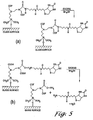
- pendant acyl fluoride linkers formed on the surface of the glass may also be in a salt conjugate form and have to be neutralized to expose carboxyl groups for their further conversion into acyl fluoride groups ( Figure 1 ).
- the carboxysilyl reagent in a salt conjugate form is N-[(3-trimethoxysilyl)propyl]ethylenediamine triacetic acid trisodium salt. The sodium salt may be neutralized with excess acetic acid in an aqueous solution (10% v/v for 10 minutes) as explained in detail in Example 1 of the present disclosure.
- Substrate-linked acyl fluorides are reactive with nucleophiles.
- substrate-linked acyl fluorides are relatively unreactive with water, they readily and selectively react with amino-, primary or secondary amine-, and hydroxyl-containing nucleophiles species with a formation of a covalent bond.
- Substrate-linked acyl fluorides may also react with some ester-containing species to link them to the substrate. Therefore, acyl fluoride-activated glass slides may be used for the covalent immobilization of a broad range of organic molecules and biomolecules containing nucleophile groups, in particular nitrogen and/or oxygen nucleophiles.
- the present invention discloses a substrate for the covalent immobilization of nucleophile-containing species.
- the substrate comprises a glass surface with a pendant carboxysilyl linker activated by a reaction with a fluoridating agent without etching the surface of the glass.
- nitrogen and/or oxygen nucleophile-containing species are immobilized on the glass substrates of the present invention.
- the substrate of the present invention may be in any form as long as it provides a surface or surfaces available for the attachment of molecular species.
- suitable forms of the substrate include, but are not limited to, slides, sheets, and beads.
- the substrate of the present invention is particularly useful in the preparation of biomolecular arrays for the evaluation or identification of biological activity.
- the solid support is in the form of a device having at least one flat planar surface.
- the size of the solid support can vary and depends upon the final use of the immobilized biomolecules. Those skilled in the art will appreciate that, for example, arrays of biopolymers immobilized on miniaturized solid supports have been under development for many years. These solid supports have a size area on the order of mm 2 and can have numerous different immobilized biopolymers attached to different site-specific locations on the miniaturized solid support.
- biomolecule refers to nucleic acids, polynucleotides, polypeptides, proteins, carbohydrates, lipids, other biologically significant species, and analogues thereof.
- polynucleotide refers to a polymer of deoxyribonucleotides or ribonucleotides in the form of a separate fragment or as a component of a larger construction.
- Polynucleotide may be DNA, RNA, a DNA analog such as PNA (peptide nucleic acid), or a synthesized oligonucleotide.
- the DNA may be a single- or double-strand DNA, or a DNA amplified by PCR technique.
- the RNA may be an mRNA.
- the length of the polynucleotides may be 3 bp to 10 kb. In accordance with one embodiment of the present invention, the length of a polynucleotide is in the range of about 50 bp to 10 kb, preferably, 100 bp to 1.5 kb. In accordance with another embodiment of the present invention, the length of a synthesized oligonucleotide is in the range of about 3 to 100 nucleotides.
- polypeptide refers to a polymer of amino acids, wherein the ⁇ -carboxyl group of one amino acid is joined to the ⁇ -amino group of another amino acid by a peptide bond.
- a protein may comprise one or multiple polypeptides linked together by disulfide bonds or other noncovalent interactions. Examples of the protein include, but are not limited to, antibodies, antigens, enzymes, and receptors.
- the substrate of the present invention is well suited for the covalent attachment of a nucleophile-containing species. Accordingly, in a further aspect, the present invention provides a method for the covalent attachment of a nucleophile-containing species to a glass substrate. The method comprises the steps of:
- the nucleophile-containing species are covalently attached to the activated glass substrate of the present invention by contacting them under a condition sufficient for allowing the attachment of these species to the glass substrate.
- a condition is sufficient if it allows the molecules to react with the pendant acyl fluoride groups of the linker to form a covalent bond.
- the step of contacting the polynucleotides with the coated substrate is accomplished in the presence of an aqueous buffer, preferably with a neutral or basic pH.
- a basic pH condition is a condition that has a pH greater than 8.
- a basic pH condition is sufficient if it allows the attachment of the polynucleotides to the solid support.
- the basic pH condition of the present invention has a pH of about 9 to 12. It should be understood that the basic pH condition may vary, depending on the method used. One skilled in the art can readily ascertain the basic pH condition of a particular attachment reaction in view of the disclosure of the present invention.
- an activated glass slide is hand-spotted with an aqueous solution of biotinylated oligonucleotide ( ⁇ 20 nM at neutral pH) and dried at room temperature.
- a 0.02 mg/ml solution of rabbit- ⁇ -mouse IgG in three different buffers is printed on three activated slides with a BioDot ink jet printer and dried at room temperature.
- the buffers are 50 mM CHES pH 9.0, 50 mM CAPS pH 10.5, and 0.1M carbonate pH 10.0.
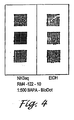
- a 1:500 dilution of biotinamidepentylamine (BAPA) in 50 mM carbonate buffer pH 10 is printed on two activated slides with a Biodot ink jet printer.
- an activated glass substrate of the present invention may be contacted with the nucleophile-containing species by methods that are known in the art.
- the contacting step may be carried out by ink jet printing, solid or open capillary device contact printing, microfluidic channel printing, and a technique using printing devices based upon electrochemical or electromagnetic forces.
- thermal inkjet printing techniques utilizing commercially available ink jet printers and piezoelectric microjet printing techniques, as described in U.S. Patent No. 4,877,745 , can be utilized to spot unmodified polynucleotides to solid supports.
- the contacting step may be carried out by manually spotting the biomolecules or cells on the activated glass substrate with a pipettor or with a Biomek pin tool.
- coated substrates of the present invention may be contacted with the nucleophile-containing species, including biomolecules, by any methods as long as the molecules are put in contact with the glass substrate. It should also be understood that other aqueous buffer systems, which are not explicitly described here, may also be used in the present invention as long as the buffer system provides a sufficient condition that allows the attachment of molecules to the glass substrate.
- the concentration of molecules contained in aqueous solutions may vary, depending on the types of the molecules, their size, structure, and other factors that may influence the solubility of the molecules. Generally, a molar excess of nucleophilic species being printed over the acyl fluoride groups on the surface of the substrate is required. For example, when the attached polymers are polynucleotides, preferably, their concentration in the solution being printed is in the range from about 5 nM to about 40 ⁇ M.
- the unreacted pendant acyl fluoride groups are "blocked" from further unwanted reactions.
- the pendant acyl fluoride groups may be blocked by any chemicals that can inactivate them.
- unreacted acyl fluoride functionalities may be reacted with ammonium hydroxide to form carboxamide or with ethanol to form esters.
- Those skilled in the art will recognize, however, that a host of other blocking reactions are possible.
- biomolecules are immobilized at site-specific locations on a solid support surface.
- a preselected site on the surface of the coated substrate is exposed to a solution of the desired biomolecules or cells. This can be accomplished manually or by utilizing various printing techniques discussed above.
- bioarray prepared by a method comprising the steps of:
- Carboxysilyl glass slides were prepared by immersing borosilicate glass microscope slides in a 2% aqueous solution of the N-[(3-trimethoxysilyl)propyl]-ethylenediamine triacetic acid trisodium salt reagent (United Chemical Technologies, Inc., Bristol, PA) with agitation at room temperature for two to three minutes prior to drying and curing at room temperature for 24 hours.
- pre-made carboxysilyl glass slides may be purchased from CEL Associates, Inc. (Houston, TX) or another supplier. Residualsodium salt was neutralized with excess acetic acid in aqueous solution (10% v/v for 10 minutes) to free the carboxyl groups and washed by immersion three times in water.
- the slides were dried under a strong stream of argon gas ( ⁇ 90psi), although low speed centrifugation may be used more effectively.
- the dried, neutralized slides were subsequently activated by immersion in a solution of an excess of DAST and DIEA in dry acetonitrile (stored over 3 ⁇ sieve) for 25 minutes (5% v/v for DAST and 2.5% v/v DIEA).
- the slides were washed by immersion three times in dry acetonitrile (stored over 3 ⁇ sieve) and were dried under a strong stream of argon gas ( ⁇ 90psi), although low speed centrifugation may have been used more effectively.
- the activated slides were stored under argon at 4°C or lower.
- An activated glass slide prepared in accordance with Example 1 was hand-spotted with solutions of biotinamidopentylamine (BAPA) in a basic carbonate buffer (pH 9), two biotinylated oligonucleotides in water (neutral pH), and a cDNA preparation also in water (neutral pH). After drying at room temperature for less than five minutes, the remaining activated sites on the slide were quenched with ethanol for an hour. The ethanol used probably was not completely dry as was judged by the "comet tailing" of the spots. The slide was developed with streptavidin-alkaline phosphatase for one hour at ambient temperature.
- BAPA biotinamidopentylamine
- the slide was then placed in enzyme-linked fluorescence (ELF) reagent (fluorescent substrate for alkaline phosphatase, Molecular Probes, Inc., Eugene, OR) for signal development for 30 minutes.
- ELF enzyme-linked fluorescence
- the array signal was read using a CCD camera system.
- a 0.02 mg/ml solution of rabbit- ⁇ -mouse IgG in three different buffers was printed on three activated slides with a BioDot ink jet printer.
- the buffers were 50 mM CHES (pH 9.0), 50 mM CAPS (pH 10.5), and 0.1 M carbonate (pH 10.0). After drying, the remaining activated sites on the slide were quenched in a solution of 1 mg/ml casein in 50 mM carbonate (pH 9).
- a target biotinylated mouse- ⁇ -human IgG was then bound to the immobilized ⁇ -mouse IgG.
- the slide was developed with streptavidin-alkaline phosphatase for one hour at ambient temperature.
- the slide was then placed into the ELF reagent (Molecular Probes, Inc.) for signal development for 30 minutes.
- the array signal was read using a CCD camera system.
- Biotinamidopentylamine is a small molecular species with a single amino group and, hence, it is easily displaced from a substrate by a competing base unless it is covalently linked to the substrate.
- a 1:500 dilution of BAPA in 50 mM carbonate buffer pH 10.0 was printed on two activated slides with a Biodot ink jet printer. One slide was incubated in a strongly basic 30% aqueous ammonia solution for 90 minutes, while the other was incubated in ethanol for 90 minutes. Both incubations were carried out at ambient temperature. The slides were developed with streptavidin-alkaline phosphatase for one hour at ambient temperature. The slides were then placed into an ELF reagent for signal development for 30 minutes. The array signal was read using a CCD camera system.
Landscapes
- Health & Medical Sciences (AREA)
- Immunology (AREA)
- Life Sciences & Earth Sciences (AREA)
- Engineering & Computer Science (AREA)
- Chemical & Material Sciences (AREA)
- Molecular Biology (AREA)
- Biomedical Technology (AREA)
- Hematology (AREA)
- Urology & Nephrology (AREA)
- Biotechnology (AREA)
- Biochemistry (AREA)
- Cell Biology (AREA)
- Food Science & Technology (AREA)
- Medicinal Chemistry (AREA)
- Physics & Mathematics (AREA)
- Analytical Chemistry (AREA)
- Microbiology (AREA)
- General Health & Medical Sciences (AREA)
- General Physics & Mathematics (AREA)
- Pathology (AREA)
- Inorganic Chemistry (AREA)
- Apparatus Associated With Microorganisms And Enzymes (AREA)
- Surface Treatment Of Glass (AREA)
Claims (18)
- Verfahren zur Acylfluoridaktivierung eines Carboxysilyl-beschichteten Glases, umfassend die Schritte:(a) das Bereitstellen eines Glassubstrats mit einer Oberfläche mit mindestens einem seitenständigen Carboxysilyllinker, umfassend eine Carboxylgruppe,(b) das Aktivieren der Oberfläche des Glassubstrats durch Umwandeln der Carboxylgruppe in eine Acylfluoridgruppe, und(c) gleichzeitig mit dem Aktivierungsschritt (b) das Neutralisieren eines Fluorwasserstoff-Nebenprodukts des Aktivierungsschritts (b) mit einer Kombination von Acetonitril als ein neutralisierendes Lösungsmittel und einem Bindungsmittel, um das Ätzen der Glasoberfläche zu verhindern, wobei das Bindungsmittel ein tertiäres Aminreagens ist.
- Verfahren gemäß Anspruch 1, wobei der Schritt (a) weiter die Schritte umfaßt:(d) das Bereitstellen eines Glassubstrats mit einer Oberfläche mit mindestens einem seitenständigen Carboxysilyllinker, umfassend eine seitenständige Carboxylgruppe in einer Salzkonjugatform, und(e) das Neutralisieren des Konjugats, um die Carboxylgruppe auszusetzen.
- Verfahren gemäß Anspruch 2, weiter umfassend die Schritte:(f) das Bereitstellen eines Glassubstrats mit einer Oberfläche, und(g) das Umsetzen der Oberfläche des Glassubstrats mit einem Carboxysilylreageris unter Bedingungen, die ausreichend sind, den seitenständigen Carboxysilyllinker an der Oberfläche zu bilden, wobei die Schritte (f) und (g) vor dem Schritt (d) durchgeführt werden.
- Verfahren gemäß Anspruch 3, wobei das Carboxysilylreagens ein Silan, ergänzt bzw. begleitet von einer oder mehreren Carboxylgruppen, ist.
- Verfahren gemäß Anspruch 4, wobei das Carboxysilylreagens N-[(3-trimethoxysilyl)propyl]ethylendiamin-Triessigsäuretrinatriumsalz ist, und wobei das gebildete Triessigsäuretrinatriumsalzkonjugat mit einem Überschuß Essigsäure in wäßriger Lösung neutralisiert wird.
- Verfahren gemäß Anspruch 1, wobei die Oberfläche des Glases durch Inkontaktbringen der Oberfläche mit einem Fluorierungsmittel aktiviert wird, und das neutralisierende Lösungsmittel befähigt ist, Fluorwasserstoff zu binden.
- Verfahren gemäß Anspruch 6, wobei das Fluorierungsmittel aus der Gruppe, bestehend aus (Diethylamino)schwefeltrifluorid (DAST), Cyanurfluorid, Tetramethylfluorformadiniumhexafluorphosphat und tertiären Amintrishydrofluoriden, ausgewählt ist.
- Verfahren gemäß Anspruch 6, wobei das Aminreagens ein organisches tertiäres Aminreagens, ausgewählt aus der Gruppe, bestehend aus Triethylamin, Trimethylamin, Dimethylamin, Dimethylbutylamin und Diisopropylethylamin (DIEA), ist.
- Verfahren gemäß Anspruch 6, wobei das Lösungsmittel aus der Gruppe, bestehend aus Lösungsmitteln, die befähigt sind, Fluorwasserstoff zu neutralisieren, ausgewählt ist.
- Verfahren gemäß Anspruch 6, wobei das Fluorierungsmittel DAST ist, das tertiäre Aminreagens DIEA ist, und das Lösungsmittel Acetonitril ist.
- Verfahren zum kovalenten Immobilisieren von Nucleophil-haltigen Spezies auf Glas, umfassend:(a) das Bereitstellen einer Nucleophil-haltigen Spezies,(b) das Bereitstellen eines Glassubstrats mit einer Oberfläche mit mindestens einem seitenständigen Carboxysilyllinker, umfassend eine Carboxylgruppe,(c) das Aktivieren der Oberfläche des Glases durch Umwandeln der Carboxylgruppe in eine Acylfluoridgruppe,(d) gleichzeitig mit Aktivierungsschritt (c) das Neutralisieren eines Fluorwasserstoff-Nebenprodukts des Aktivierungsschritts (c) mit einer Kombination von Acetonitril als ein neutralisierendes Lösungsmittel und einem Bindungsmittel, um das Ätzen der Glasoberfläche zu verhindern, wobei das Bindungsmittel ein tertiäres Aminreagens ist, und(e) das Inkontaktbringen der Nucleophil-haltigen Spezies mit der aktivierten Glasoberfläche unter einer Bedingung, die ein kovalentes Binden der Nucleophil-haltigen Spezies mit der Acylfluoridgruppe zuläßt.
- Verfahren gemäß Anspruch 11, wobei die Oberfläche des Glases durch Inkontaktbringen der Oberfläche mit einem Fluorierungsmittel aktiviert wird, und das neutralisierende Lösungsmittel befähigt ist, Fluorwasserstoff zu binden.
- Verfahren gemäß Anspruch 12, wobei das tertiäre Aminreagens DIEA ist.
- Verfahren gemäß Anspruch 12, wobei das Lösungsmittel aus der Gruppe, bestehend aus Lösungsmitteln, die befähigt sind, Fluorwasserstoff zu neutralisieren, ausgewählt ist.
- Verfahren gemäß Anspruch 12, wobei das Fluorierungsmittel DAST ist, das tertiäre Aminreagens DIEA ist, und das Lösungsmittel Acetonitril ist.
- Verfahren gemäß Anspruch 15, wobei die Nucleophil-haltige Spezies aus einer Gruppe, bestehend aus Amino-, primären oder sekundären Amin- und Hydroxyl-haltigen Spezies, ausgewählt sind.
- Verfahren gemäß Anspruch 15, wobei die Nucleophil-haltigen Spezies Biomoleküle, ausgewählt aus einer Gruppe, bestehend aus Nucleinsäuren, Polynucleotiden, Polypeptiden, Proteinen, Kohlenhydraten, Lipiden und Analogen davon, sind.
- Verfahren gemäß Anspruch 17, worin eine Vielzahl von Biomolekülen angeordnet wird, und wobei der Kontaktschritt das Inkontaktbringen der Biomoleküle mit der aktivierten Glasoberfläche an diskreten Stellen umfaßt, wodurch ein Bioarray gebildet wird.
Applications Claiming Priority (3)
| Application Number | Priority Date | Filing Date | Title |
|---|---|---|---|
| US10/094,584 US6989175B2 (en) | 2002-03-08 | 2002-03-08 | Acyl fluoride activation of carboxysilyl-coated glass substrates |
| US94584 | 2002-03-08 | ||
| PCT/US2003/006608 WO2003076940A2 (en) | 2002-03-08 | 2003-03-06 | Acyl fluoride activation of carboxysilyl-coated glass substrates |
Publications (2)
| Publication Number | Publication Date |
|---|---|
| EP1483583A2 EP1483583A2 (de) | 2004-12-08 |
| EP1483583B1 true EP1483583B1 (de) | 2009-12-02 |
Family
ID=27788146
Family Applications (1)
| Application Number | Title | Priority Date | Filing Date |
|---|---|---|---|
| EP03717930A Expired - Lifetime EP1483583B1 (de) | 2002-03-08 | 2003-03-06 | Acylfluorid-aktivierung von mit carboxysilyl beschichteten glassubstraten |
Country Status (5)
| Country | Link |
|---|---|
| US (1) | US6989175B2 (de) |
| EP (1) | EP1483583B1 (de) |
| JP (1) | JP4322123B2 (de) |
| DE (1) | DE60330315D1 (de) |
| WO (1) | WO2003076940A2 (de) |
Families Citing this family (5)
| Publication number | Priority date | Publication date | Assignee | Title |
|---|---|---|---|---|
| AU2004288132A1 (en) * | 2003-08-12 | 2005-05-19 | Massachusetts Institute Of Technology | Sample preparation methods and devices |
| JP5345347B2 (ja) * | 2008-07-15 | 2013-11-20 | 日立アロカメディカル株式会社 | 検体処理装置及び方法 |
| JP4932054B1 (ja) * | 2011-04-28 | 2012-05-16 | 学校法人慈恵大学 | 放射性物質類除染システム、及び放射性物質類の除染方法、及び除染用磁性複合粒子 |
| TWI625424B (zh) * | 2013-03-13 | 2018-06-01 | 應用材料股份有限公司 | 蝕刻包含過渡金屬的膜之方法 |
| CN112781958B (zh) * | 2021-02-02 | 2022-07-08 | 江南大学 | 一种表征乳液分子特定成分流动性的方法 |
Family Cites Families (9)
| Publication number | Priority date | Publication date | Assignee | Title |
|---|---|---|---|---|
| DE69227806T2 (de) * | 1991-07-26 | 1999-04-29 | Matsushita Electric Industrial Co., Ltd., Kadoma, Osaka | Öl- und wasserabweisendes Bekleidungsmaterial |
| US5474796A (en) * | 1991-09-04 | 1995-12-12 | Protogene Laboratories, Inc. | Method and apparatus for conducting an array of chemical reactions on a support surface |
| JPH05192640A (ja) * | 1992-01-20 | 1993-08-03 | Toagosei Chem Ind Co Ltd | 物品の塗装方法 |
| US5843789A (en) * | 1995-05-16 | 1998-12-01 | Neomecs Incorporated | Method of analysis of genomic biopolymer and porous materials for genomic analyses |
| US6110669A (en) * | 1996-06-05 | 2000-08-29 | Milton; Raymond C. | Polymeric reagents for immobilizing biopolymers |
| US6037124A (en) * | 1996-09-27 | 2000-03-14 | Beckman Coulter, Inc. | Carboxylated polyvinylidene fluoride solid supports for the immobilization of biomolecules and methods of use thereof |
| US6146833A (en) * | 1997-02-11 | 2000-11-14 | Beckman Coulter, Inc. | Polymeric reagents for immobilizing biopolymers |
| US6013789A (en) * | 1998-02-20 | 2000-01-11 | Beckman Coulter, Inc. | Covalent attachment of biomolecules to derivatized polypropylene supports |
| US6268141B1 (en) * | 1999-05-12 | 2001-07-31 | Beckman Coulter, Inc. | Immobilization of unmodified biopolymers to acyl fluoride activated substrates |
-
2002
- 2002-03-08 US US10/094,584 patent/US6989175B2/en not_active Expired - Lifetime
-
2003
- 2003-03-06 DE DE60330315T patent/DE60330315D1/de not_active Expired - Lifetime
- 2003-03-06 JP JP2003575113A patent/JP4322123B2/ja not_active Expired - Fee Related
- 2003-03-06 EP EP03717930A patent/EP1483583B1/de not_active Expired - Lifetime
- 2003-03-06 WO PCT/US2003/006608 patent/WO2003076940A2/en not_active Ceased
Also Published As
| Publication number | Publication date |
|---|---|
| WO2003076940A2 (en) | 2003-09-18 |
| US6989175B2 (en) | 2006-01-24 |
| WO2003076940A3 (en) | 2003-12-11 |
| JP2005520134A (ja) | 2005-07-07 |
| US20030170640A1 (en) | 2003-09-11 |
| EP1483583A2 (de) | 2004-12-08 |
| JP4322123B2 (ja) | 2009-08-26 |
| DE60330315D1 (de) | 2010-01-14 |
Similar Documents
| Publication | Publication Date | Title |
|---|---|---|
| US6858713B1 (en) | Chemically modified biological molecules and methods for coupling biological molecules to solid support | |
| EP1208226B1 (de) | Immobilisierung unmodifizierter Nukleinsäuren an mit Acylfluorid aktivierten Substraten | |
| EP1337665B1 (de) | Immobilisierung von biopolymeren auf aminierten substraten durch direkte adsorption | |
| CN101371139B (zh) | 用于检测分析物的支持物以及制造和利用该支持物的方法 | |
| JP5005869B2 (ja) | エポキシドポリマーの表面 | |
| JP2004526420A6 (ja) | 直接的な吸着によるアミノ化基質への生体高分子の不動化 | |
| EP1483583B1 (de) | Acylfluorid-aktivierung von mit carboxysilyl beschichteten glassubstraten | |
| EP1288664B1 (de) | Verfahren zur Herstellung von Liganden-Arrays | |
| KR100450822B1 (ko) | 에폭시기를 갖는 방사형 폴리에틸렌글리콜 유도체를이용한 하이드로 젤 바이오칩의 제조방법 | |
| EP1375678A2 (de) | Methoden und Zusammensetzungen für Array-basierende Tests | |
| US6500921B1 (en) | Schiff base reductant co-dispense process | |
| KR101035957B1 (ko) | 번짐 현상이 억제된 단일스텝 바이오칩 제작방법 |
Legal Events
| Date | Code | Title | Description |
|---|---|---|---|
| PUAI | Public reference made under article 153(3) epc to a published international application that has entered the european phase |
Free format text: ORIGINAL CODE: 0009012 |
|
| 17P | Request for examination filed |
Effective date: 20040729 |
|
| AK | Designated contracting states |
Kind code of ref document: A2 Designated state(s): AT BE BG CH CY CZ DE DK EE ES FI FR GB GR HU IE IT LI LU MC NL PT RO SE SI SK TR |
|
| 17Q | First examination report despatched |
Effective date: 20051219 |
|
| GRAP | Despatch of communication of intention to grant a patent |
Free format text: ORIGINAL CODE: EPIDOSNIGR1 |
|
| GRAS | Grant fee paid |
Free format text: ORIGINAL CODE: EPIDOSNIGR3 |
|
| GRAA | (expected) grant |
Free format text: ORIGINAL CODE: 0009210 |
|
| AK | Designated contracting states |
Kind code of ref document: B1 Designated state(s): CH DE FR GB IT LI |
|
| REG | Reference to a national code |
Ref country code: GB Ref legal event code: FG4D |
|
| REG | Reference to a national code |
Ref country code: CH Ref legal event code: EP |
|
| REF | Corresponds to: |
Ref document number: 60330315 Country of ref document: DE Date of ref document: 20100114 Kind code of ref document: P |
|
| REG | Reference to a national code |
Ref country code: CH Ref legal event code: NV Representative=s name: PATENTANWAELTE SCHAAD, BALASS, MENZL & PARTNER AG |
|
| RAP2 | Party data changed (patent owner data changed or rights of a patent transferred) |
Owner name: BECKMAN COULTER, INC. |
|
| PLBE | No opposition filed within time limit |
Free format text: ORIGINAL CODE: 0009261 |
|
| STAA | Information on the status of an ep patent application or granted ep patent |
Free format text: STATUS: NO OPPOSITION FILED WITHIN TIME LIMIT |
|
| 26N | No opposition filed |
Effective date: 20100903 |
|
| REG | Reference to a national code |
Ref country code: FR Ref legal event code: PLFP Year of fee payment: 14 |
|
| REG | Reference to a national code |
Ref country code: FR Ref legal event code: PLFP Year of fee payment: 15 |
|
| REG | Reference to a national code |
Ref country code: FR Ref legal event code: PLFP Year of fee payment: 16 |
|
| PGFP | Annual fee paid to national office [announced via postgrant information from national office to epo] |
Ref country code: GB Payment date: 20220113 Year of fee payment: 20 Ref country code: DE Payment date: 20220112 Year of fee payment: 20 Ref country code: CH Payment date: 20220114 Year of fee payment: 20 |
|
| PGFP | Annual fee paid to national office [announced via postgrant information from national office to epo] |
Ref country code: IT Payment date: 20220210 Year of fee payment: 20 Ref country code: FR Payment date: 20220118 Year of fee payment: 20 |
|
| REG | Reference to a national code |
Ref country code: DE Ref legal event code: R071 Ref document number: 60330315 Country of ref document: DE |
|
| REG | Reference to a national code |
Ref country code: CH Ref legal event code: PL |
|
| REG | Reference to a national code |
Ref country code: GB Ref legal event code: PE20 Expiry date: 20230305 |
|
| PG25 | Lapsed in a contracting state [announced via postgrant information from national office to epo] |
Ref country code: GB Free format text: LAPSE BECAUSE OF EXPIRATION OF PROTECTION Effective date: 20230305 |