EP1475441A2 - Acides nucléiques et polypeptides spécifiques des souches pathogènes du genre Neisseria - Google Patents
Acides nucléiques et polypeptides spécifiques des souches pathogènes du genre Neisseria Download PDFInfo
- Publication number
- EP1475441A2 EP1475441A2 EP04016071A EP04016071A EP1475441A2 EP 1475441 A2 EP1475441 A2 EP 1475441A2 EP 04016071 A EP04016071 A EP 04016071A EP 04016071 A EP04016071 A EP 04016071A EP 1475441 A2 EP1475441 A2 EP 1475441A2
- Authority
- EP
- European Patent Office
- Prior art keywords
- seq
- sequence
- polypeptide
- neisseria
- sequences
- Prior art date
- Legal status (The legal status is an assumption and is not a legal conclusion. Google has not performed a legal analysis and makes no representation as to the accuracy of the status listed.)
- Granted
Links
Images

Classifications
-
- A—HUMAN NECESSITIES
- A61—MEDICAL OR VETERINARY SCIENCE; HYGIENE
- A61K—PREPARATIONS FOR MEDICAL, DENTAL OR TOILETRY PURPOSES
- A61K39/00—Medicinal preparations containing antigens or antibodies
- A61K39/02—Bacterial antigens
- A61K39/095—Neisseria
-
- C—CHEMISTRY; METALLURGY
- C07—ORGANIC CHEMISTRY
- C07K—PEPTIDES
- C07K14/00—Peptides having more than 20 amino acids; Gastrins; Somatostatins; Melanotropins; Derivatives thereof
- C07K14/195—Peptides having more than 20 amino acids; Gastrins; Somatostatins; Melanotropins; Derivatives thereof from bacteria
- C07K14/22—Peptides having more than 20 amino acids; Gastrins; Somatostatins; Melanotropins; Derivatives thereof from bacteria from Neisseriaceae (F)
-
- C—CHEMISTRY; METALLURGY
- C07—ORGANIC CHEMISTRY
- C07K—PEPTIDES
- C07K16/00—Immunoglobulins [IG], e.g. monoclonal or polyclonal antibodies
- C07K16/12—Immunoglobulins [IG], e.g. monoclonal or polyclonal antibodies against material from bacteria
- C07K16/1203—Gram-negative bacteria
- C07K16/1217—Neisseriaceae (F)
-
- A—HUMAN NECESSITIES
- A61—MEDICAL OR VETERINARY SCIENCE; HYGIENE
- A61K—PREPARATIONS FOR MEDICAL, DENTAL OR TOILETRY PURPOSES
- A61K39/00—Medicinal preparations containing antigens or antibodies
- A61K2039/51—Medicinal preparations containing antigens or antibodies comprising whole cells, viruses or DNA/RNA
-
- A—HUMAN NECESSITIES
- A61—MEDICAL OR VETERINARY SCIENCE; HYGIENE
- A61K—PREPARATIONS FOR MEDICAL, DENTAL OR TOILETRY PURPOSES
- A61K39/00—Medicinal preparations containing antigens or antibodies
Definitions
- the present invention relates to nucleic acids encoding polypeptides specific for pathogenic strains of the genus Neisseria , in particular useful for preventing or treating infection by Neisseria meningitidis .
- meningitis is either of viral origin or of bacterial origin.
- the bacteria mainly responsible are: Haemophilus influenzae type b, Neisseria meningitidis and Streptococcus pneumoniae .
- the Neisseria meningitidis species is subdivided into serogroups, depending on the nature of the capsular polysaccharides. Although there are a dozen serogroups, 90% of meningitis cases are due to three serogroups: A, B and C.
- Neisseria meningitidis serogroup B is not or only slightly immunogenic in humans, whether or not in conjugated form. Thus it appears highly desirable to seek a vaccine against meningitis caused by Neisseria meningitidis , in particular serogroup B, other than a polysaccharide-based vaccine.
- Neisseria meningitidis is genetically very close to Neisseria gonorrhoeae and Neisseria lactamica.
- N. gonorrhoeae is mainly responsible for localized infections in the urogenital tract. It colonizes the genital mucosa, then crosses the epithelium, then invades the subepithelium where it multiplies and is responsible for a strong inflammatory reaction.
- N. lactamica is considered a non-pathogenic species.
- the ORFs selected by this double analysis were subjected to a search for homologies on all the banks available using the BLASTX® program since access to the Pathoseq® bank of Incyte Pharmaceuticals. This search for homologies made it possible to exclude ORFs coding a priori for cytoplasmic or periplasmic proteins, in particular proteins of metabolism.
- the ORFs were also subjected to a. analysis of possible protein patterns, using the DNA Star Protean® program (Lasergene software).
- the authors of the present invention then sought to know whether the ORFs identified from the genome of the N. meningitidis strain of serogroup B ATCC 13090 were also present in the genomes of N. meningitidis Z2491 (Sanger Center) of serogroup A and of N. gonorrhoeae FA1090 (Advanced Center of Genome Technology, Oklahoma University). Then they compared the sequences derived from these different genomes, by multiple alignment (Clustal, Infobiogen). This made it possible to redefine for some of the ORFs the most probable position of the initiation and end of translation codons.
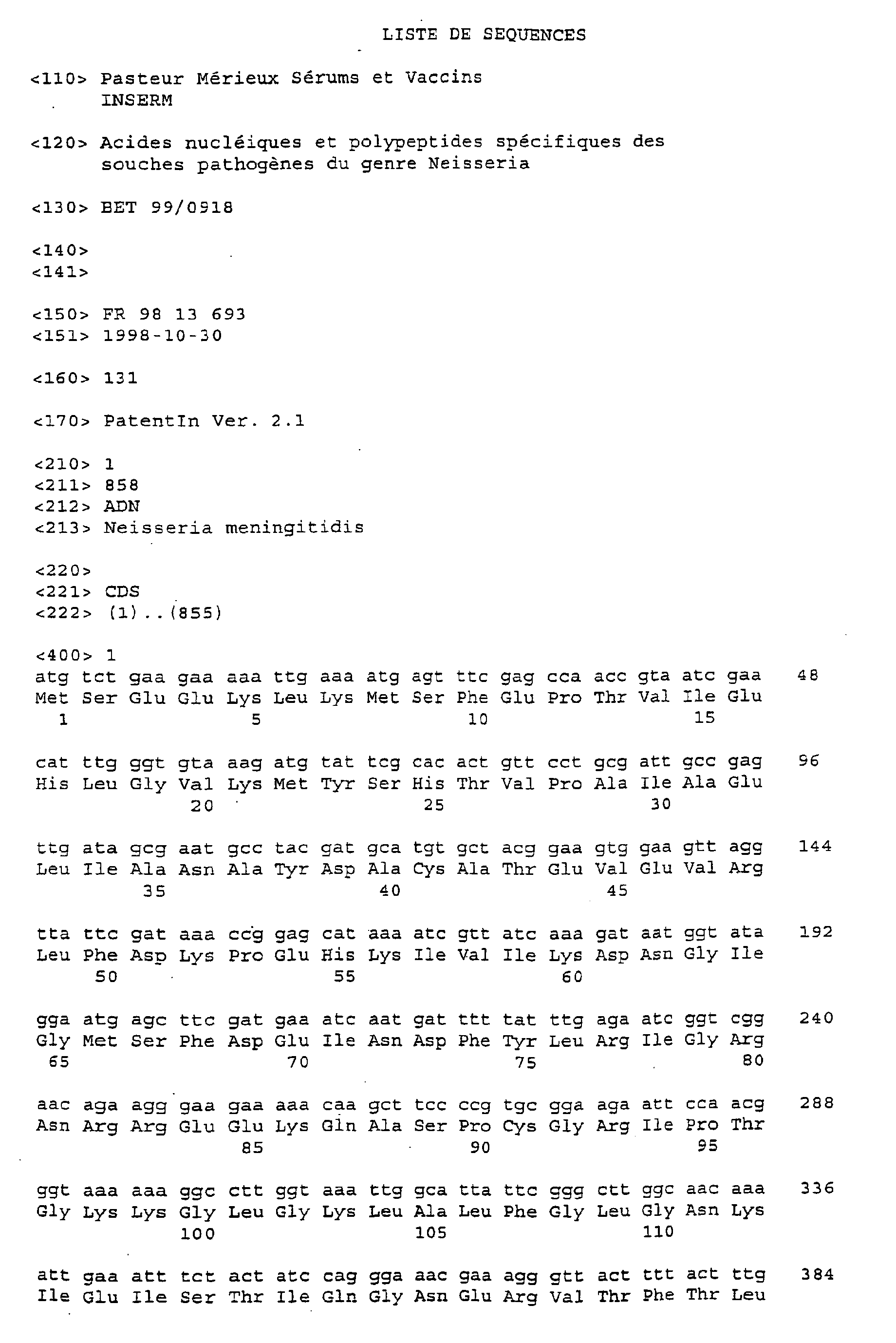
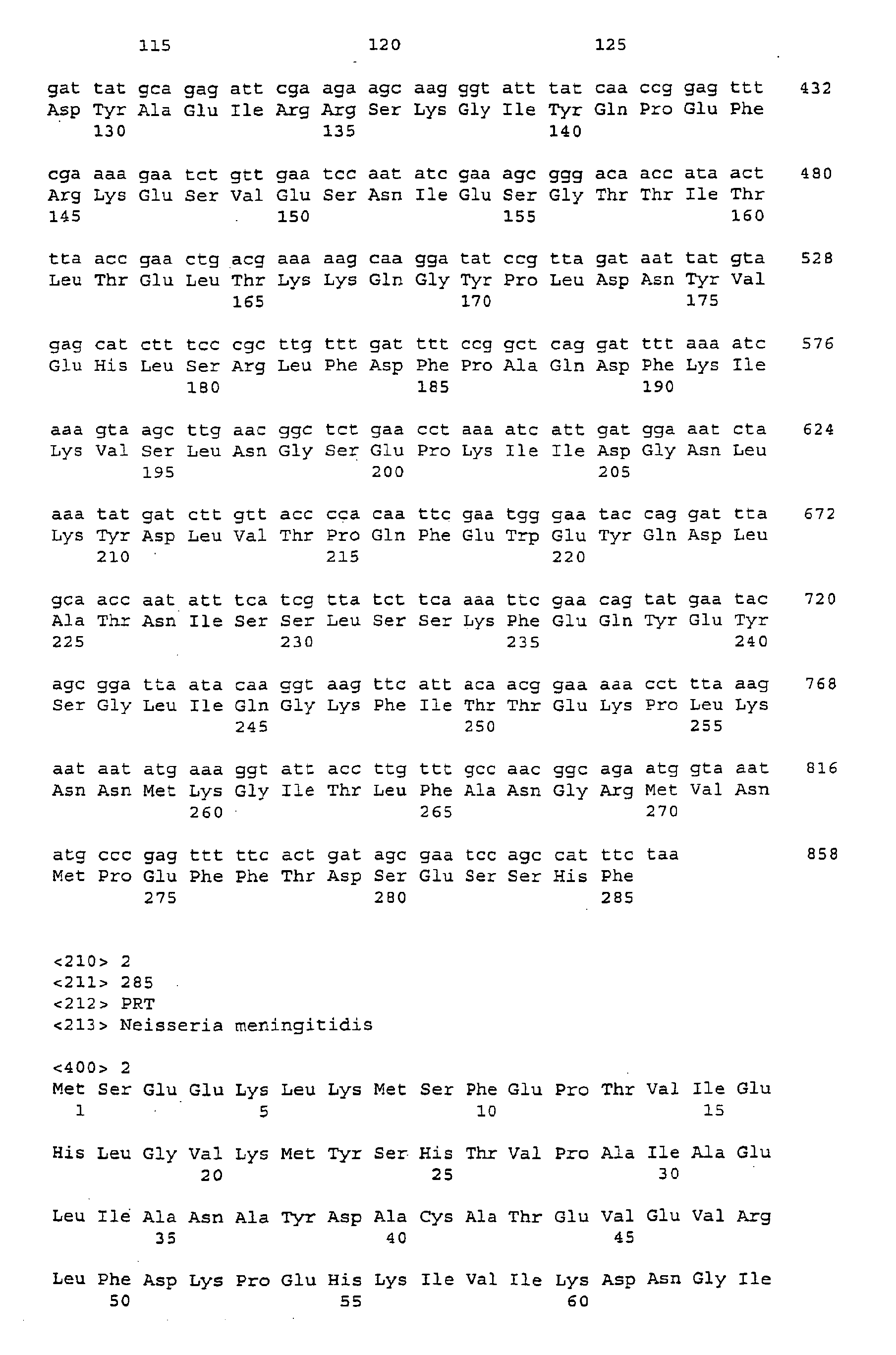
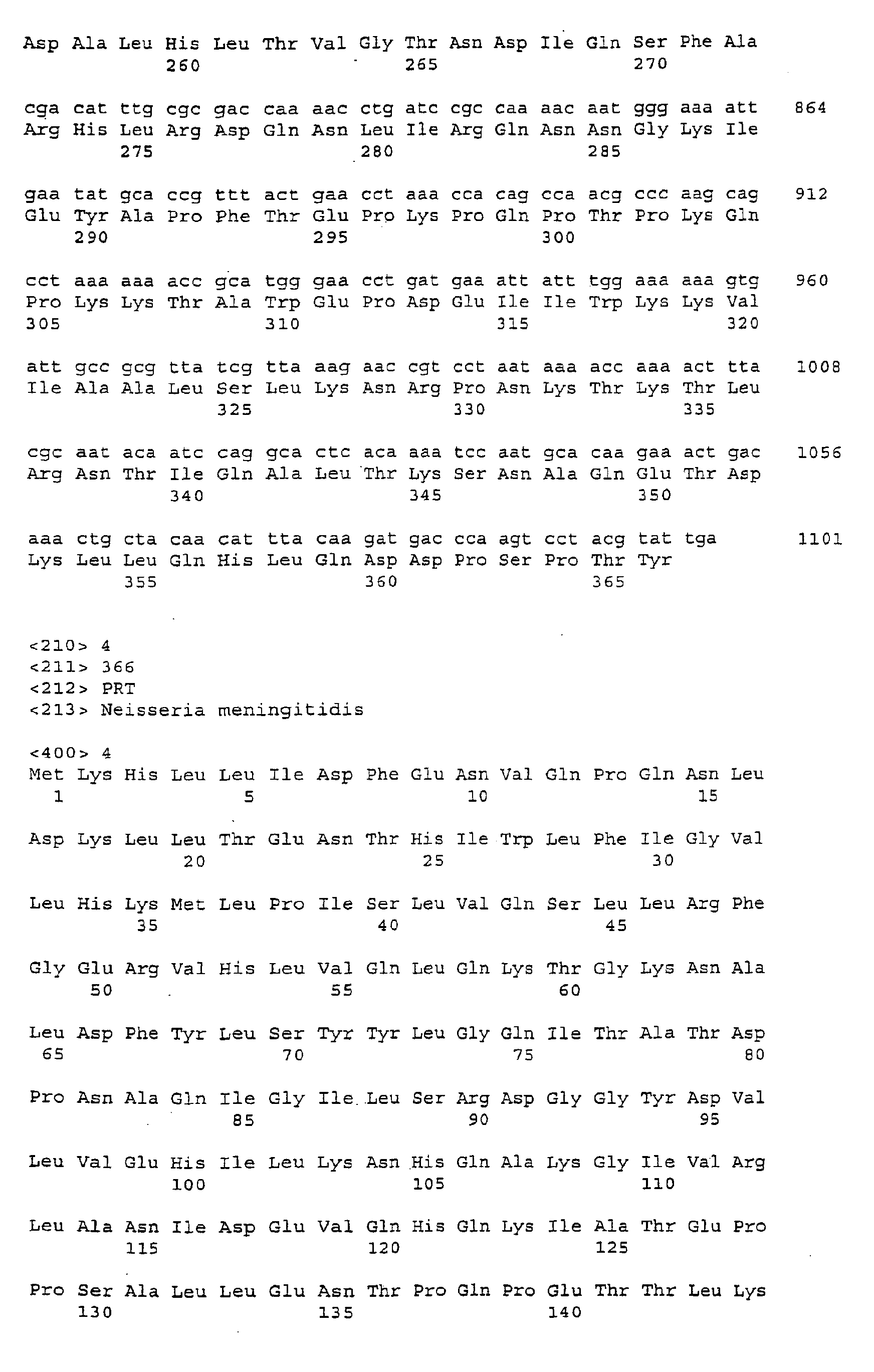
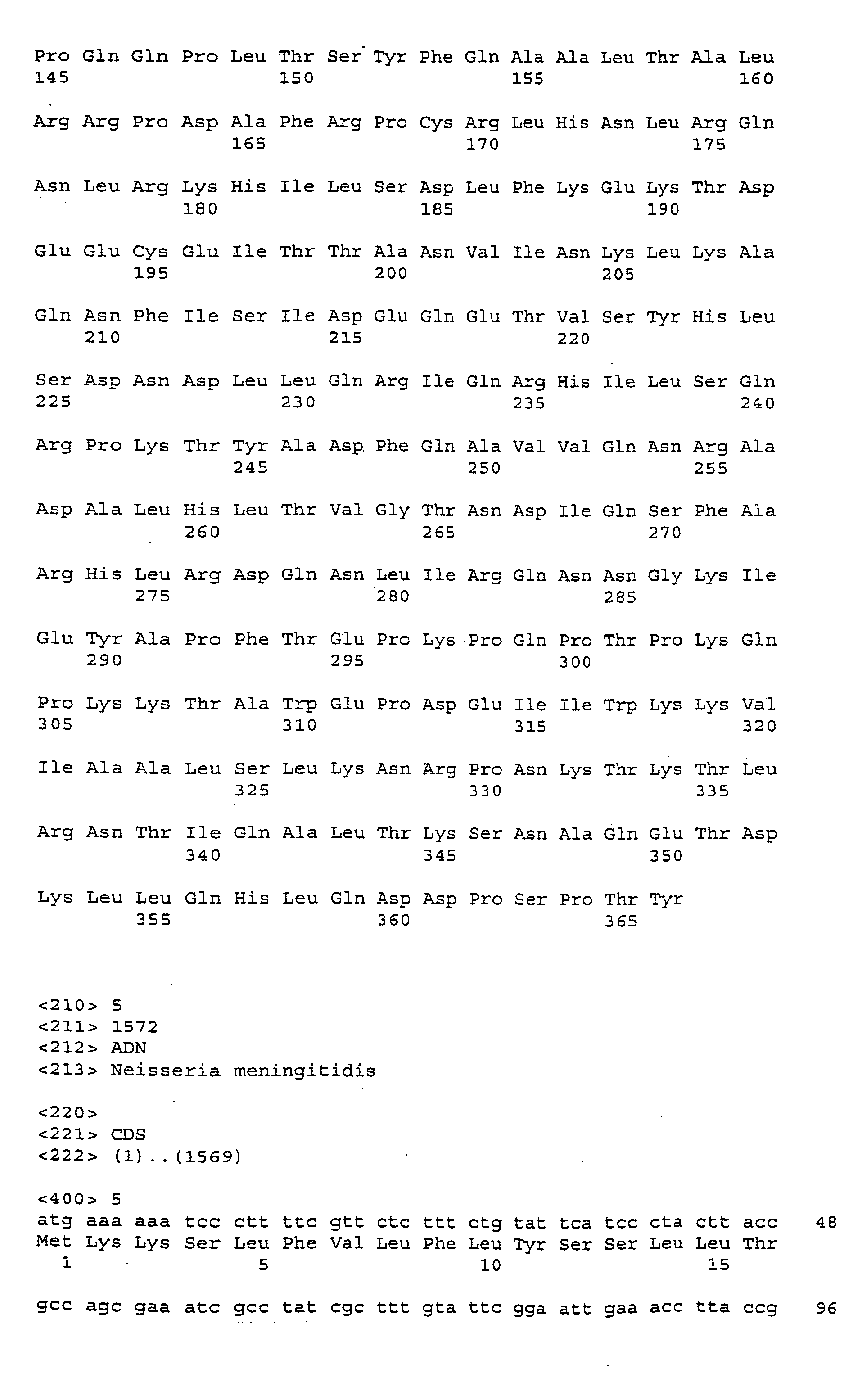
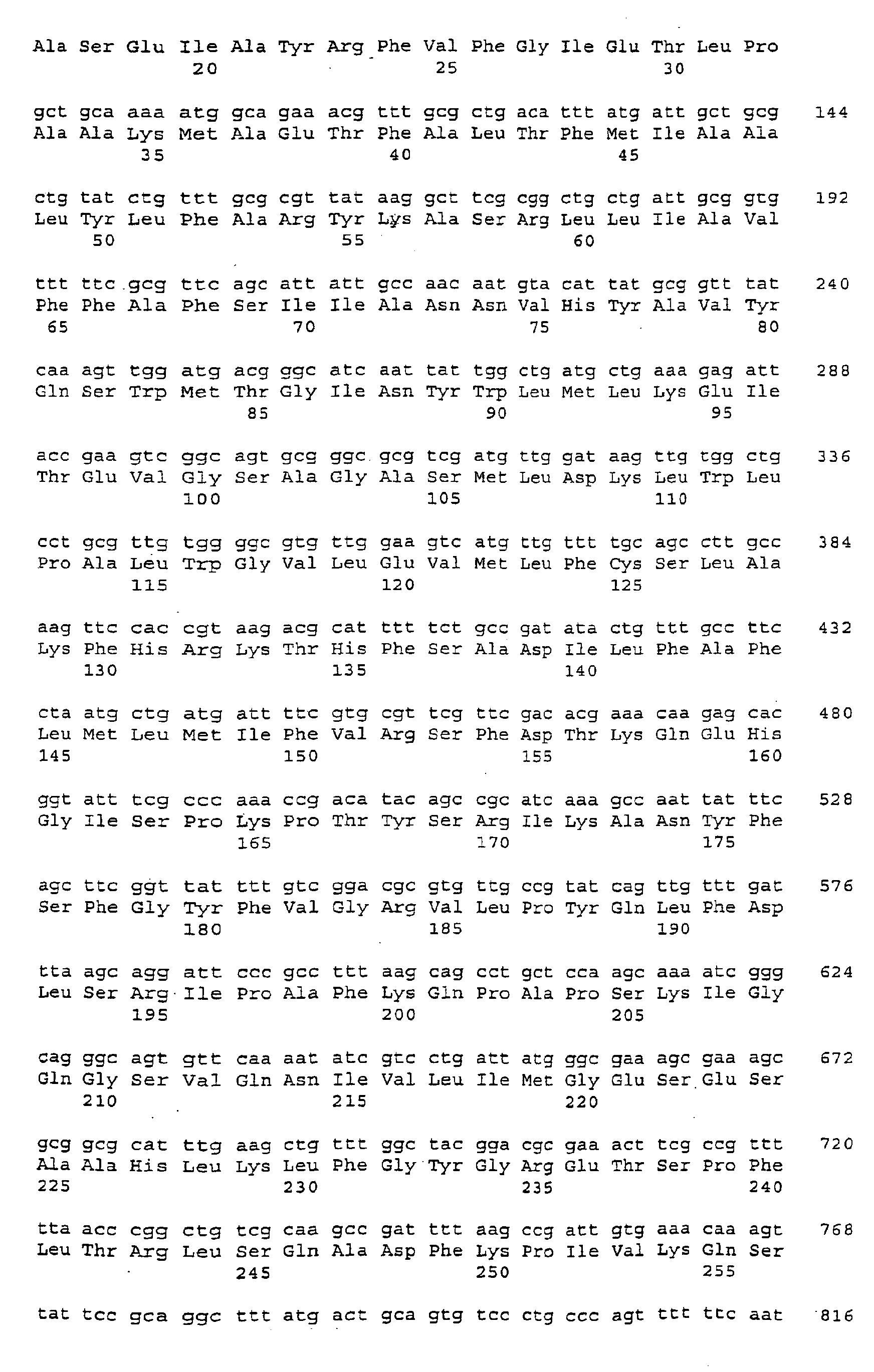
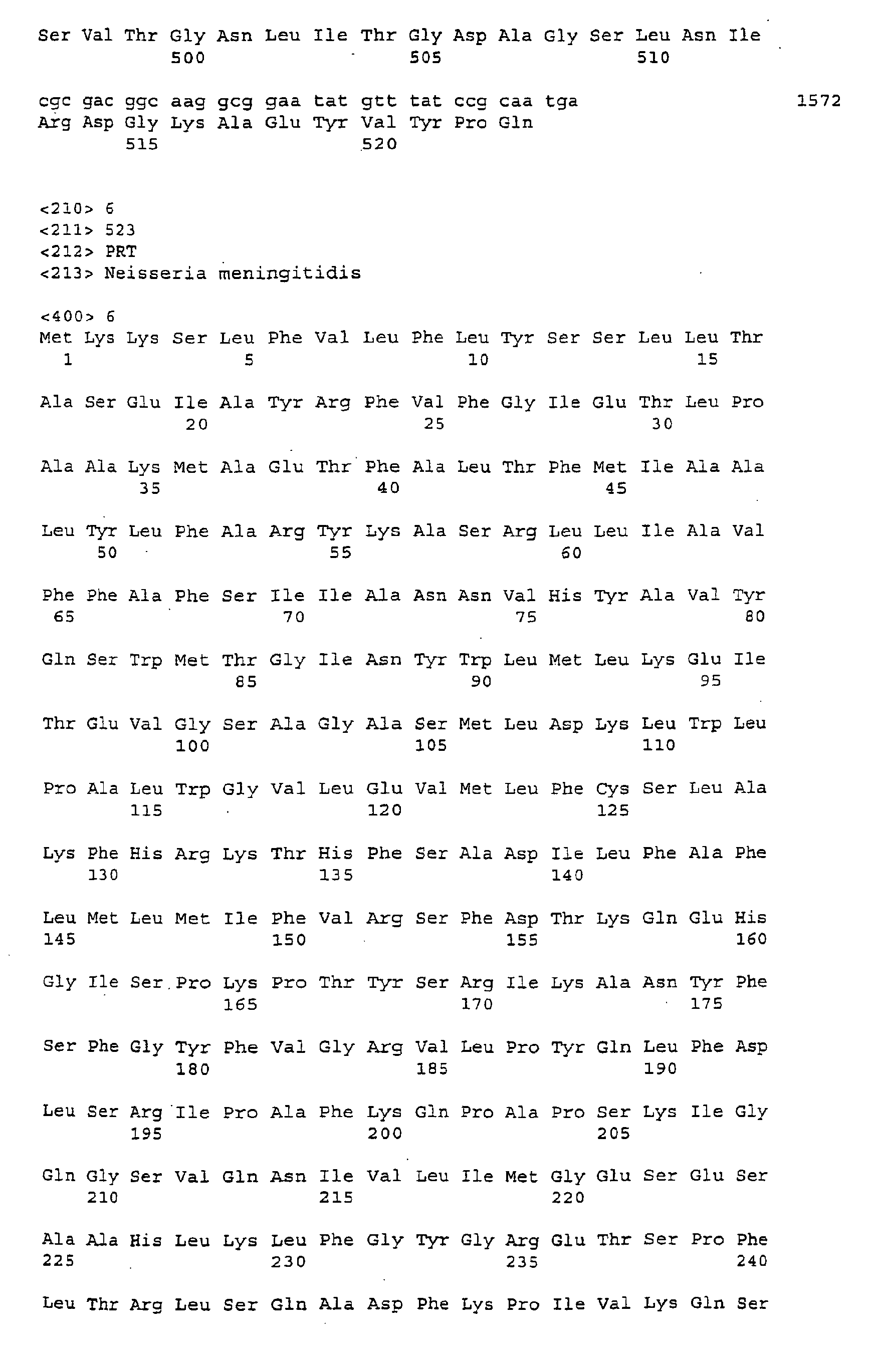
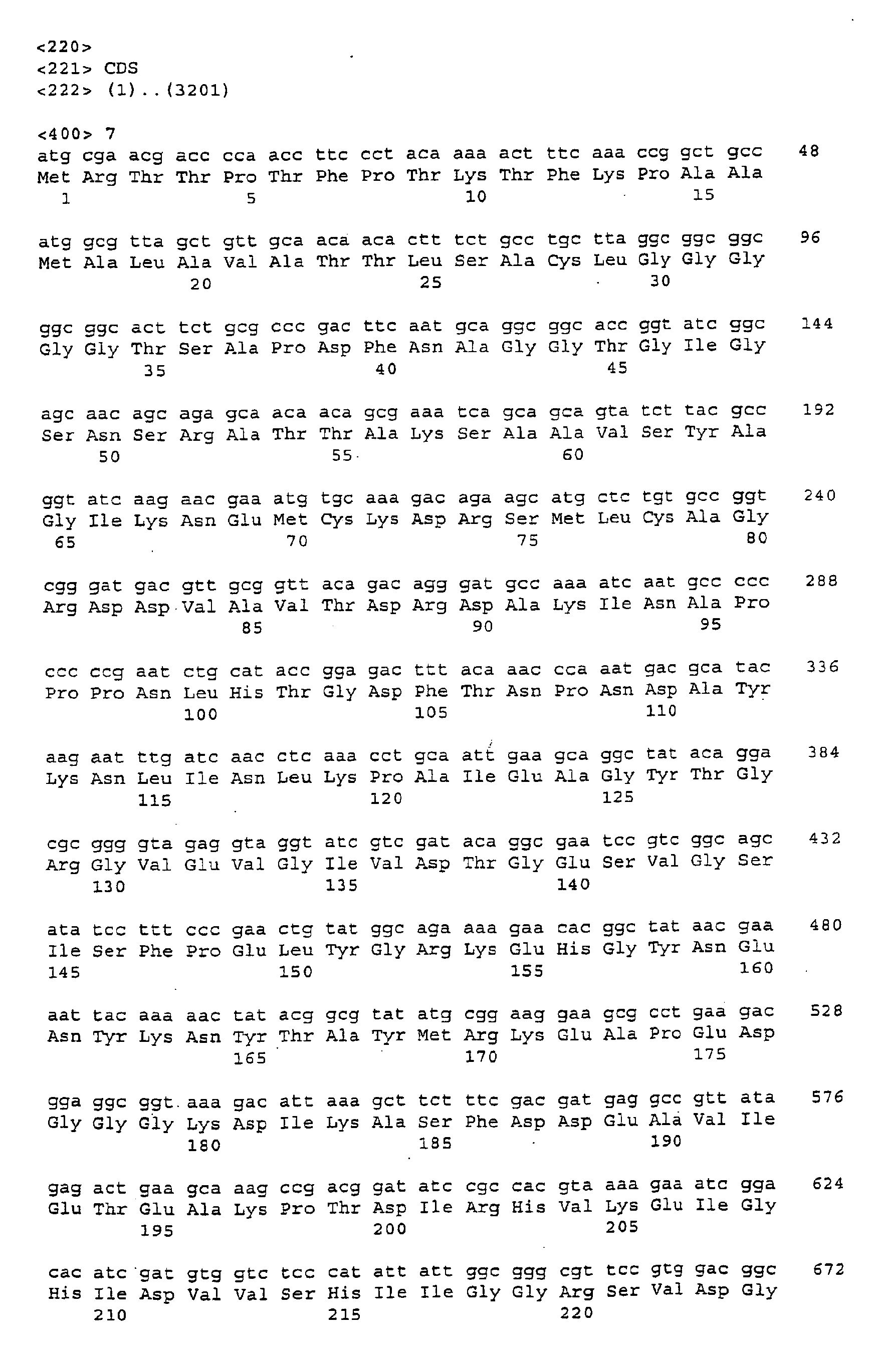
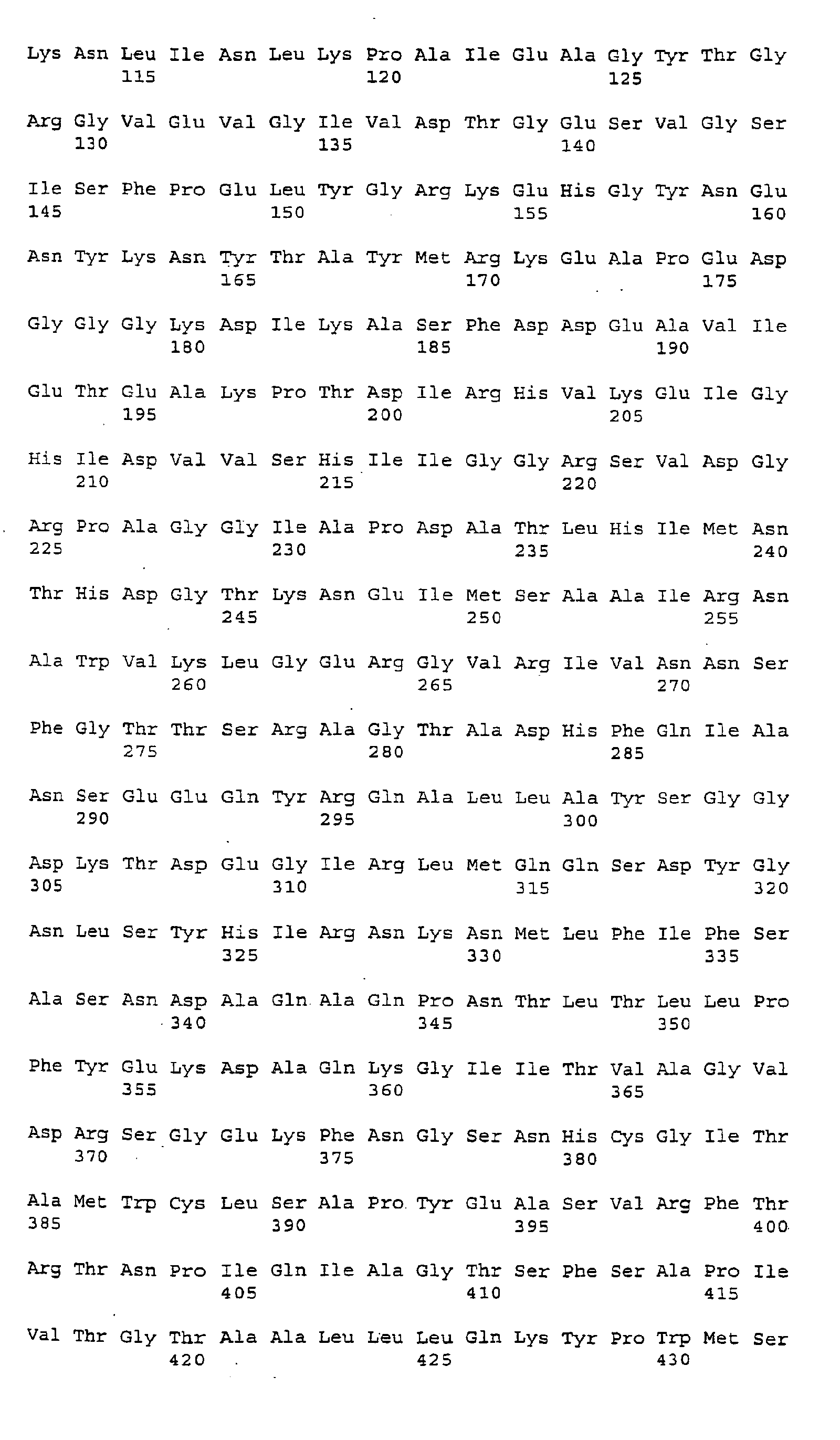
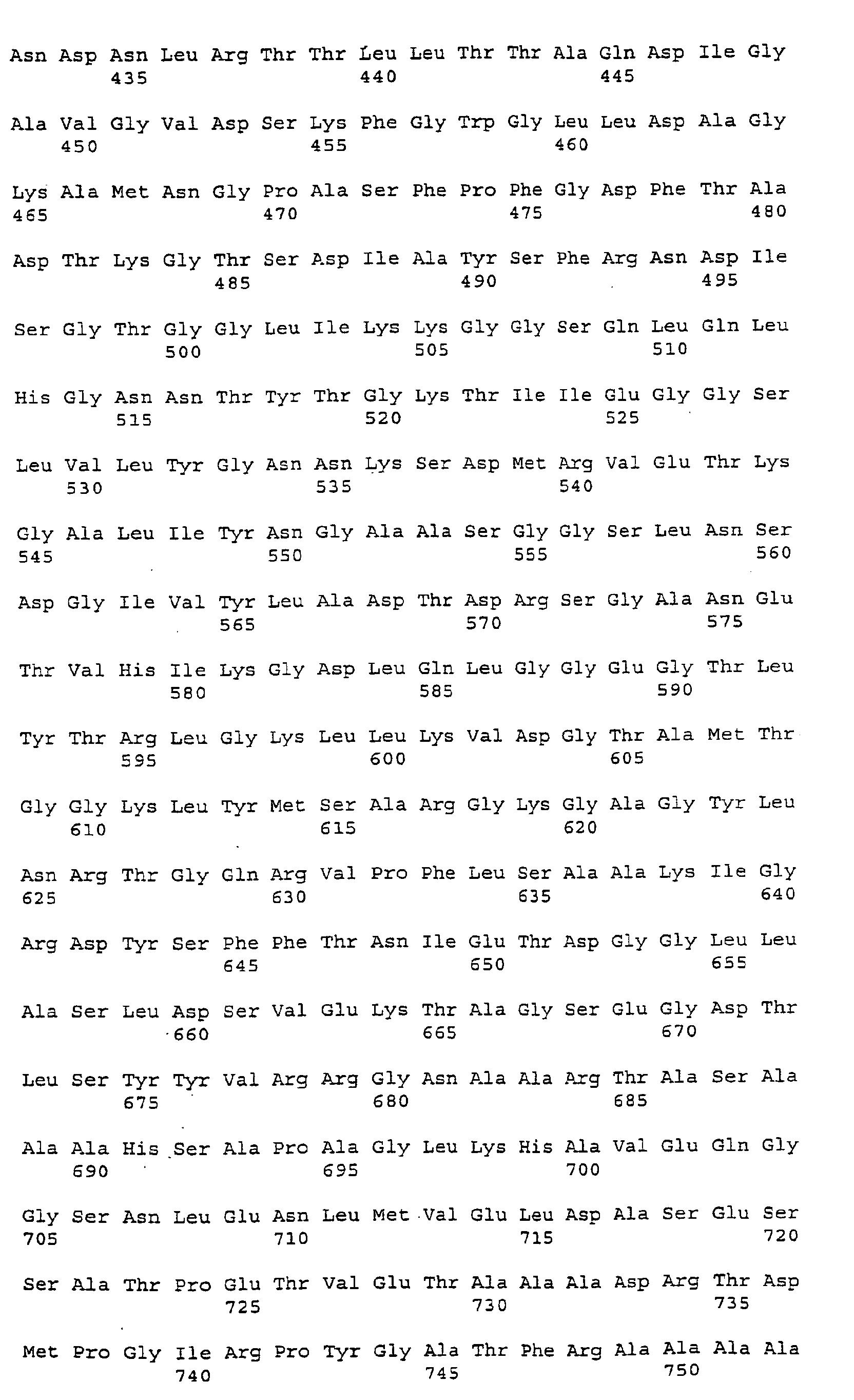
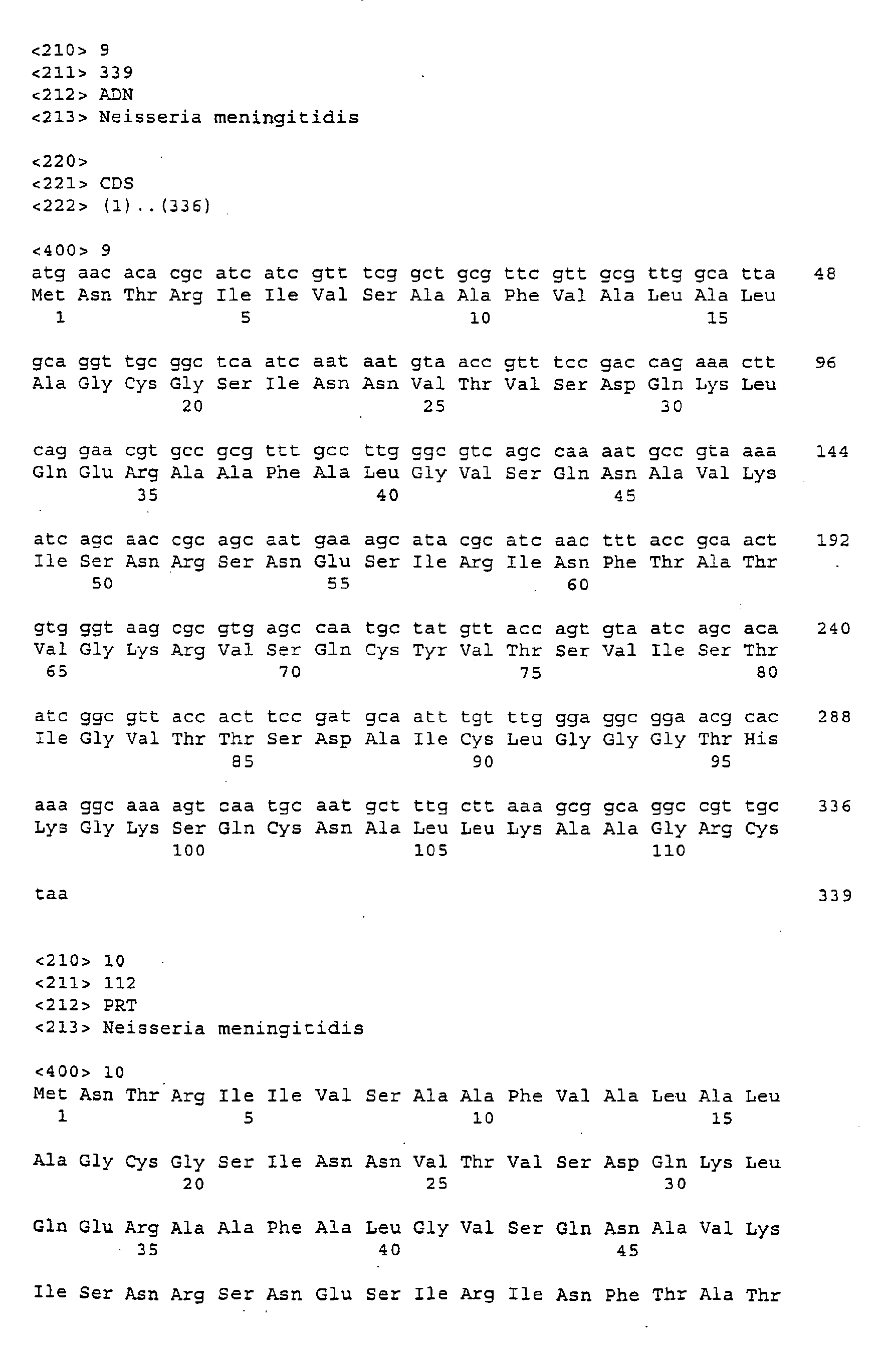
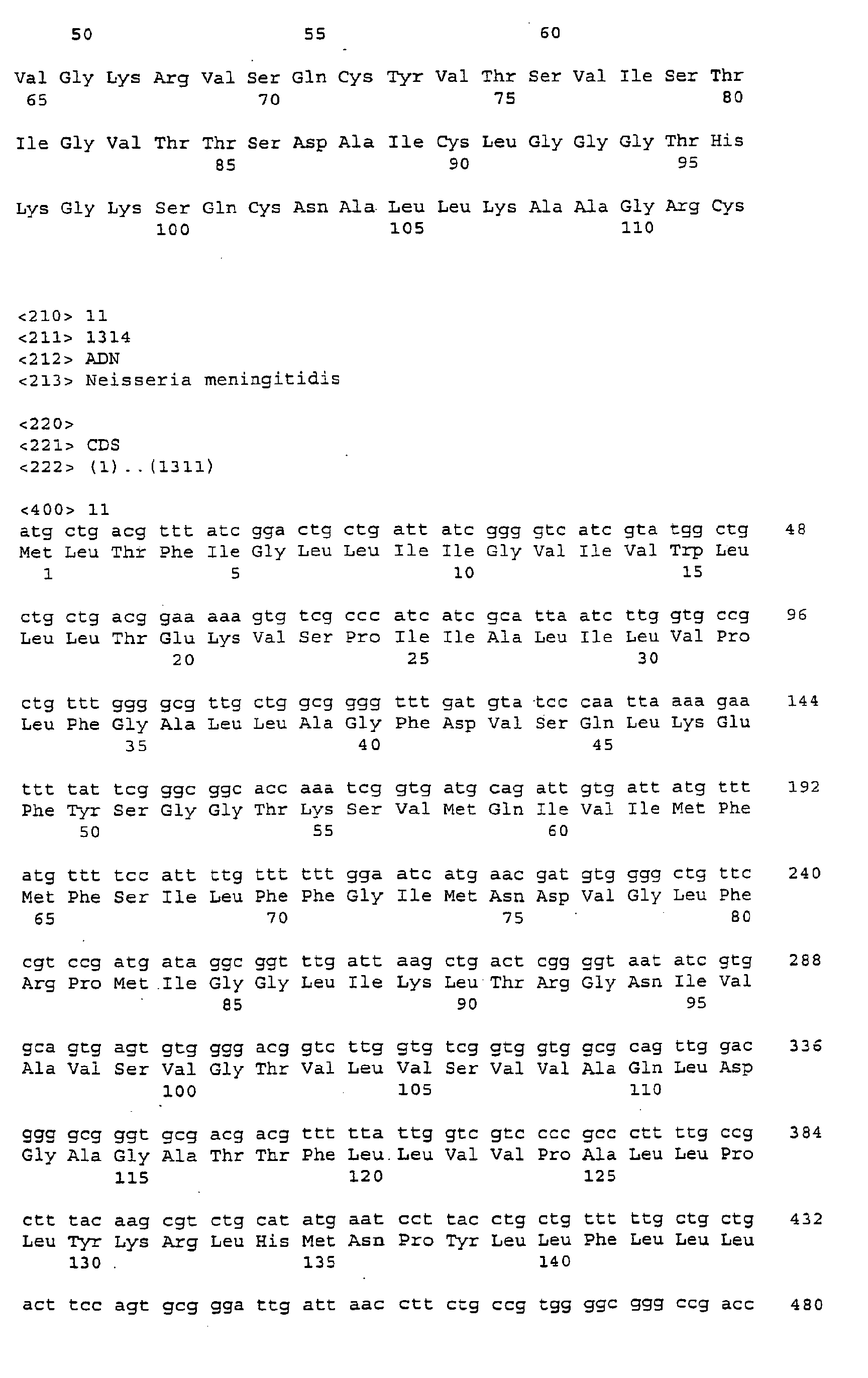
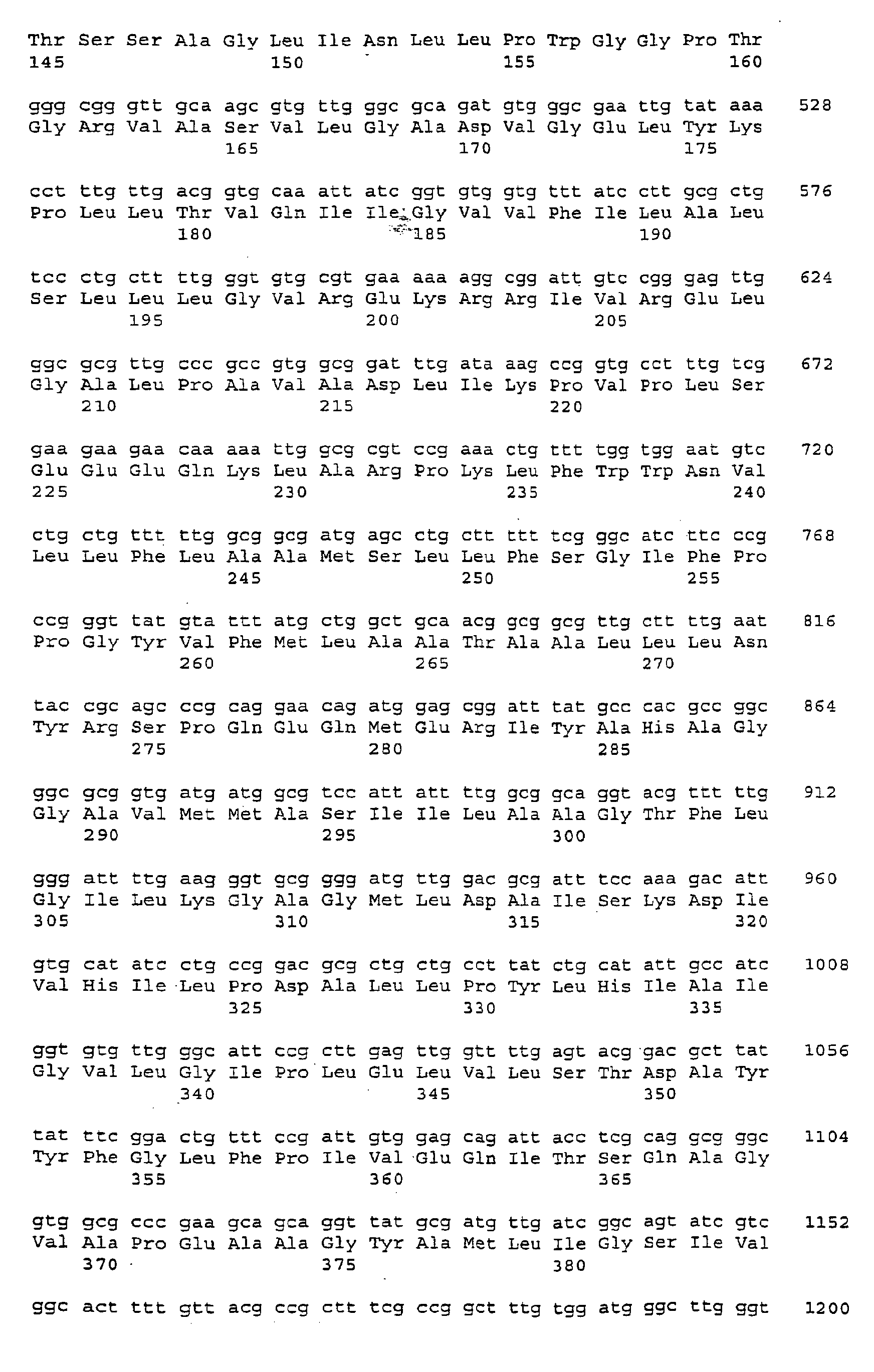
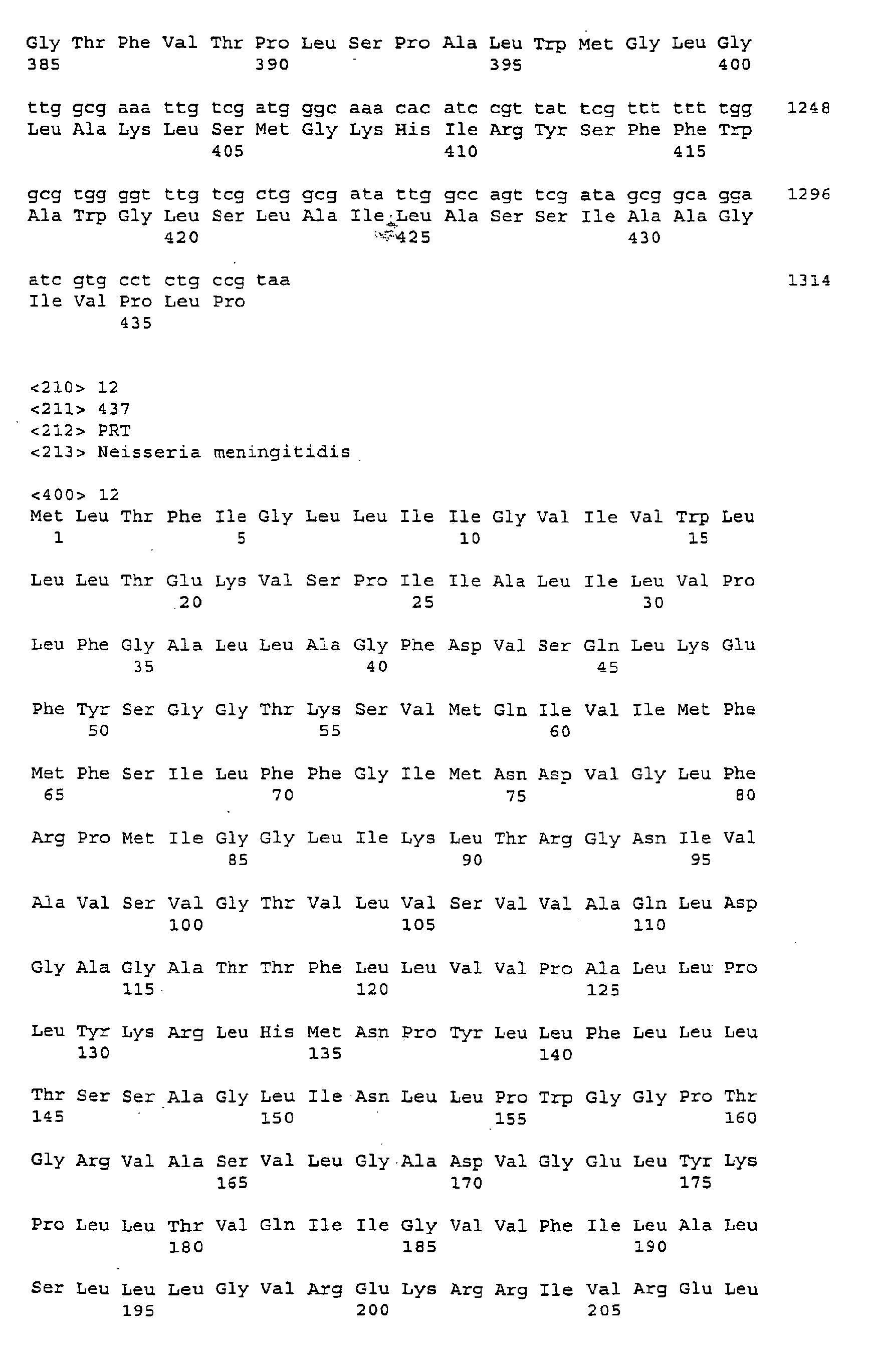
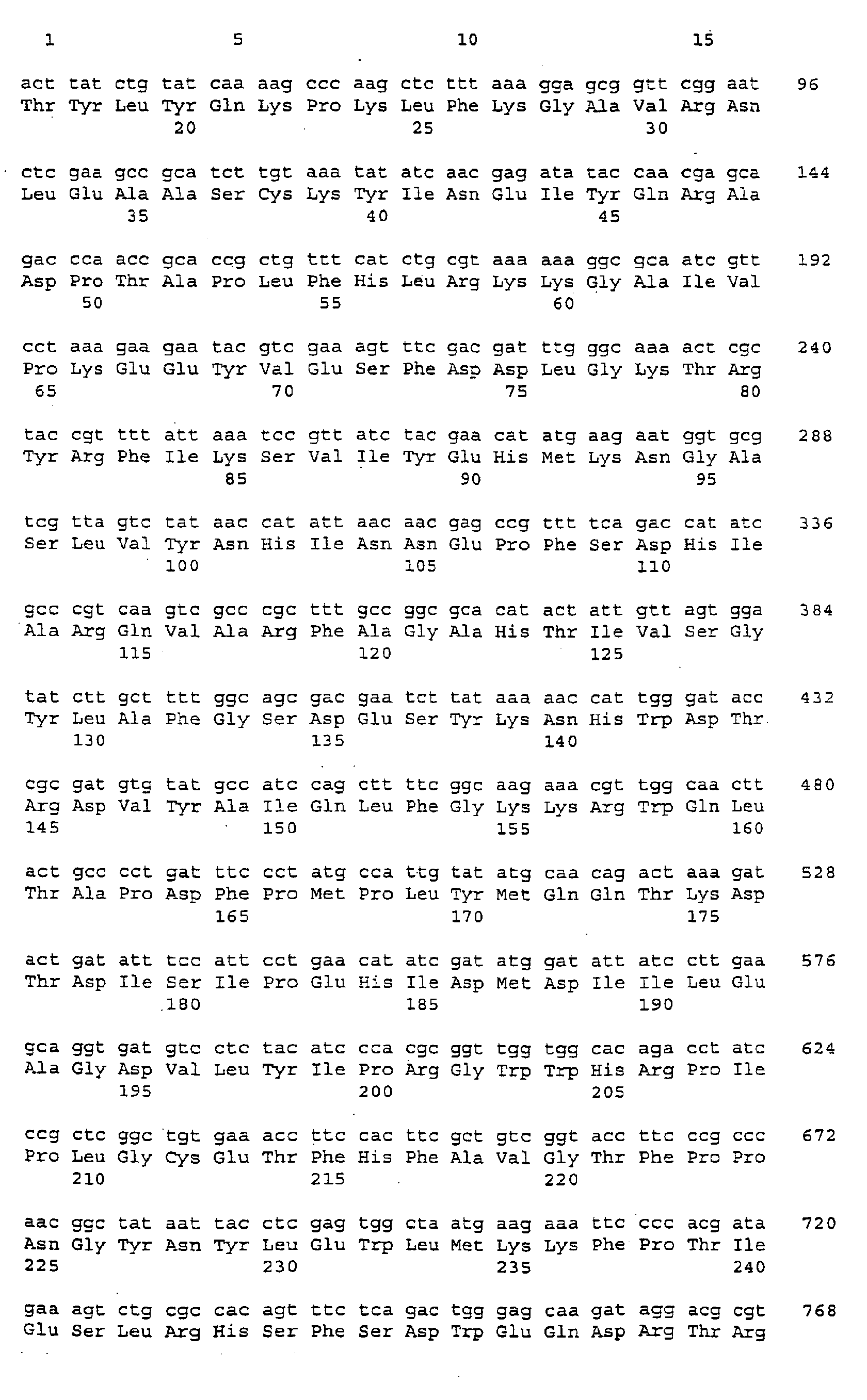
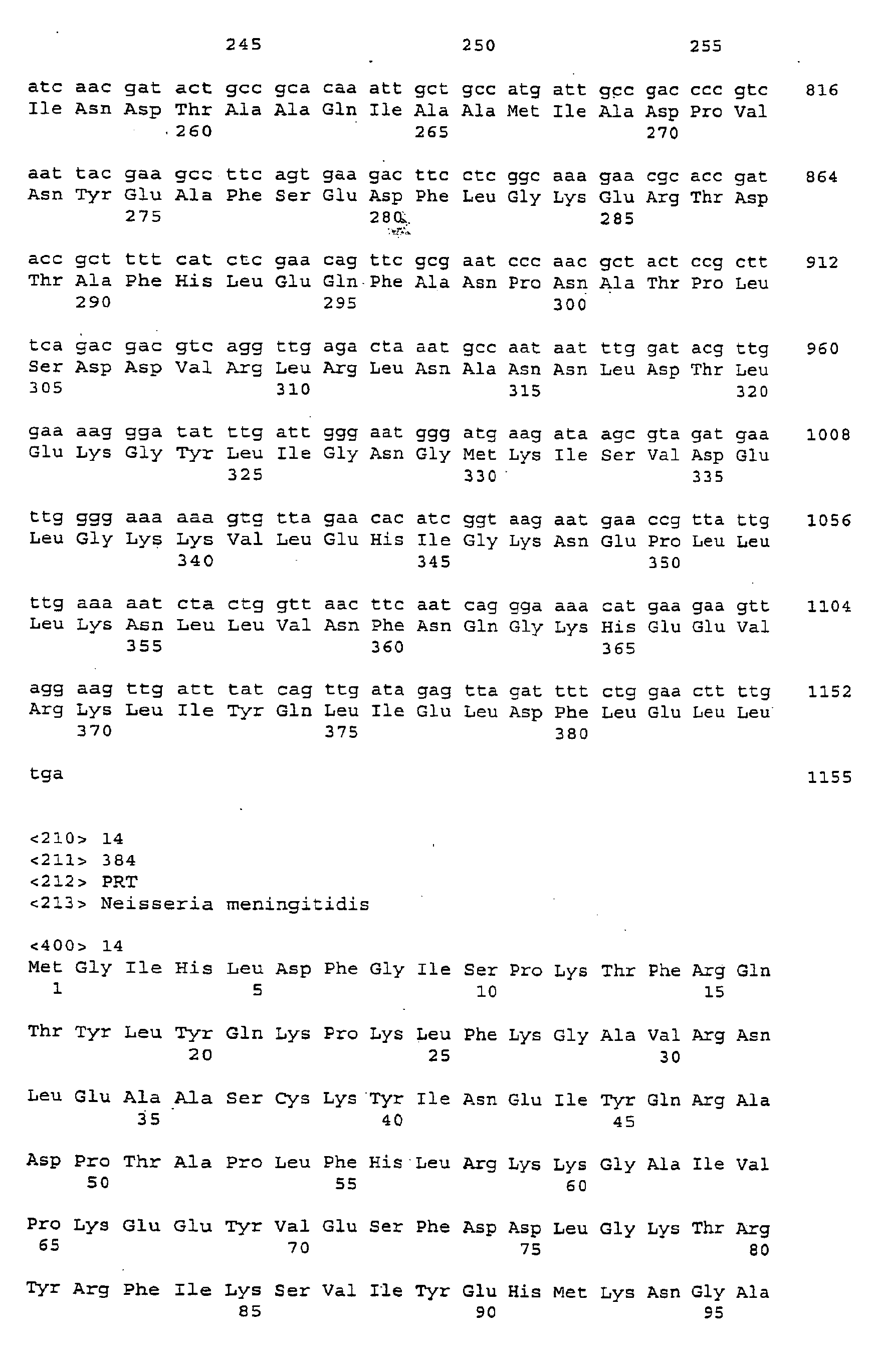
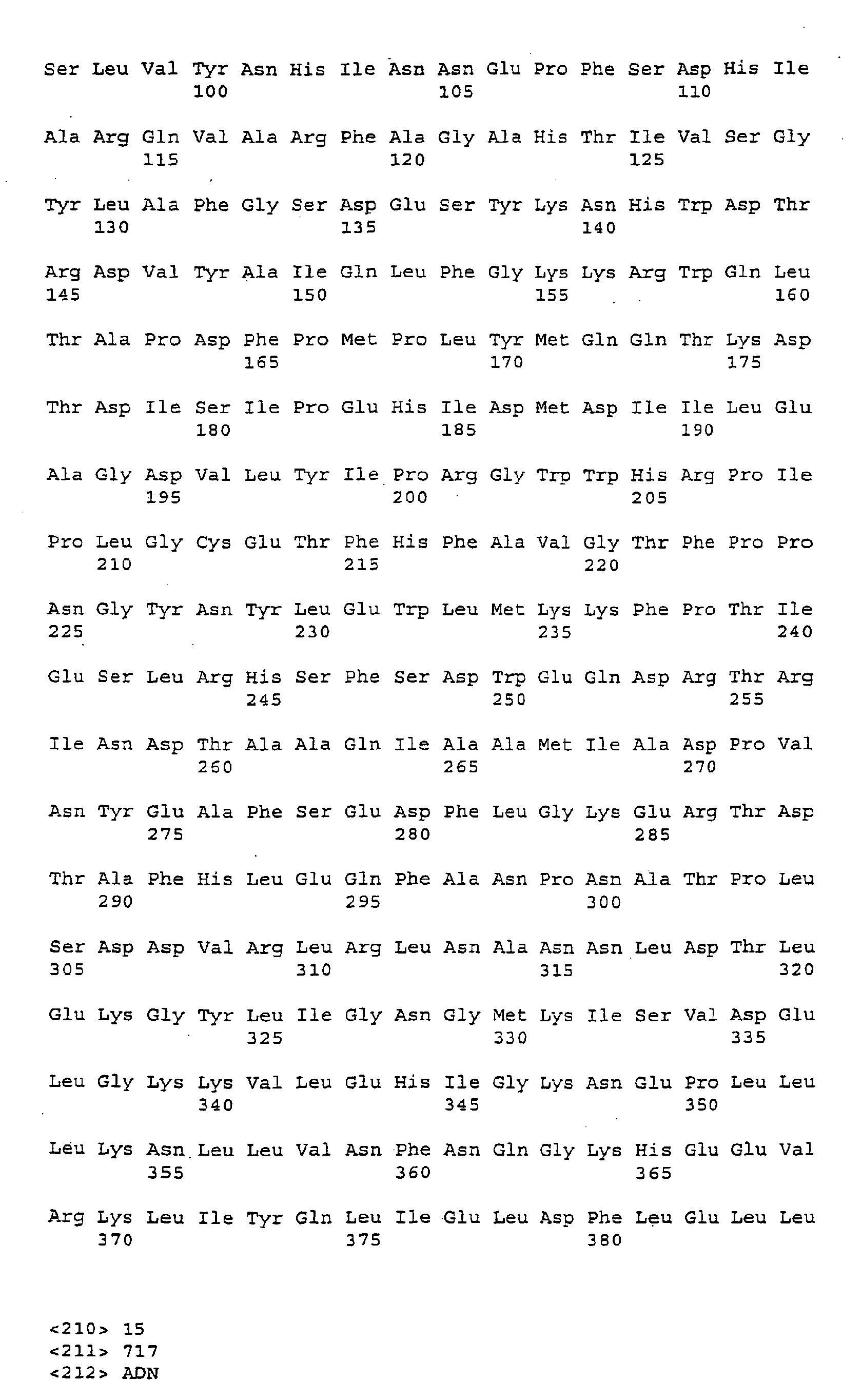
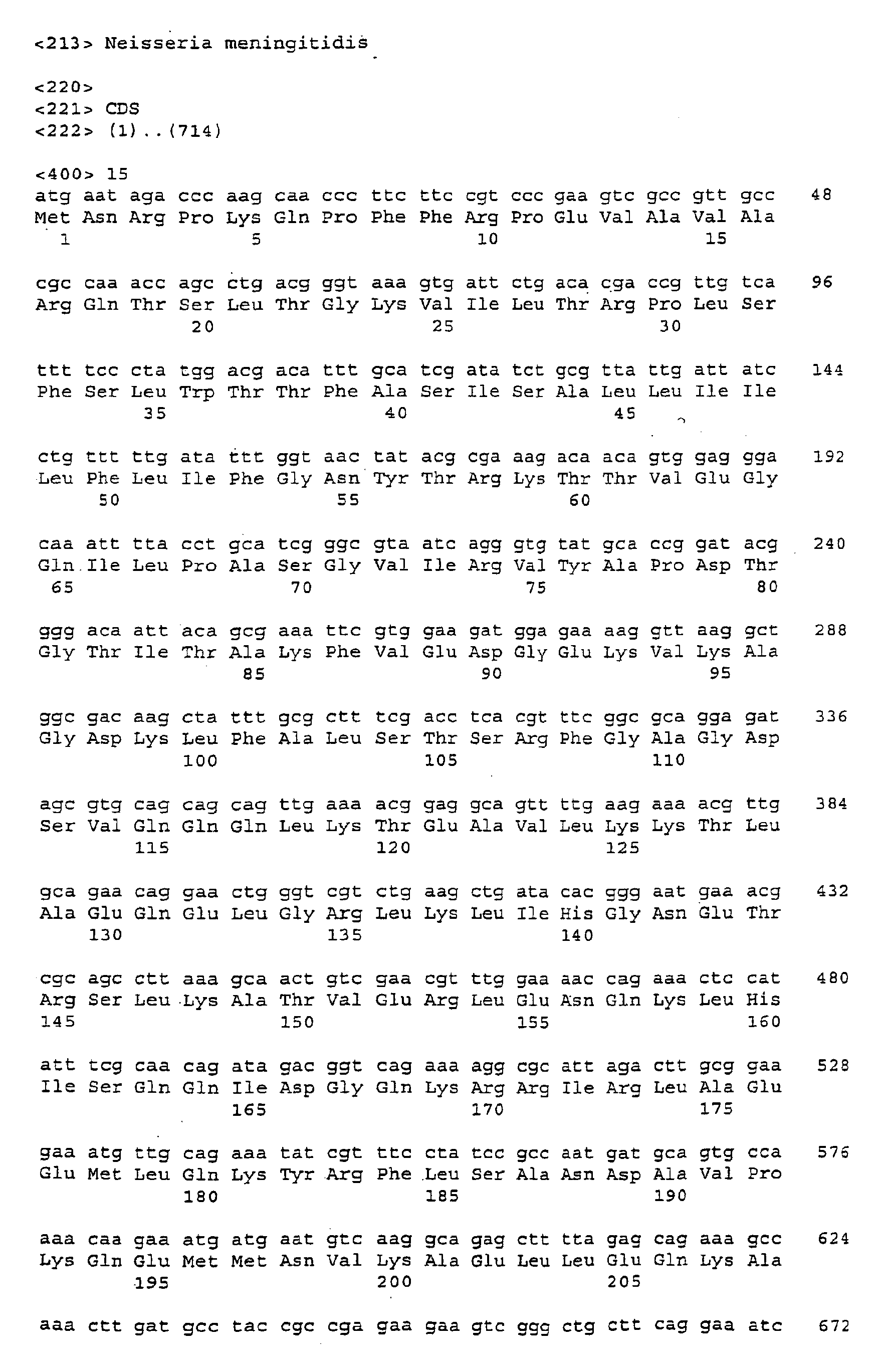
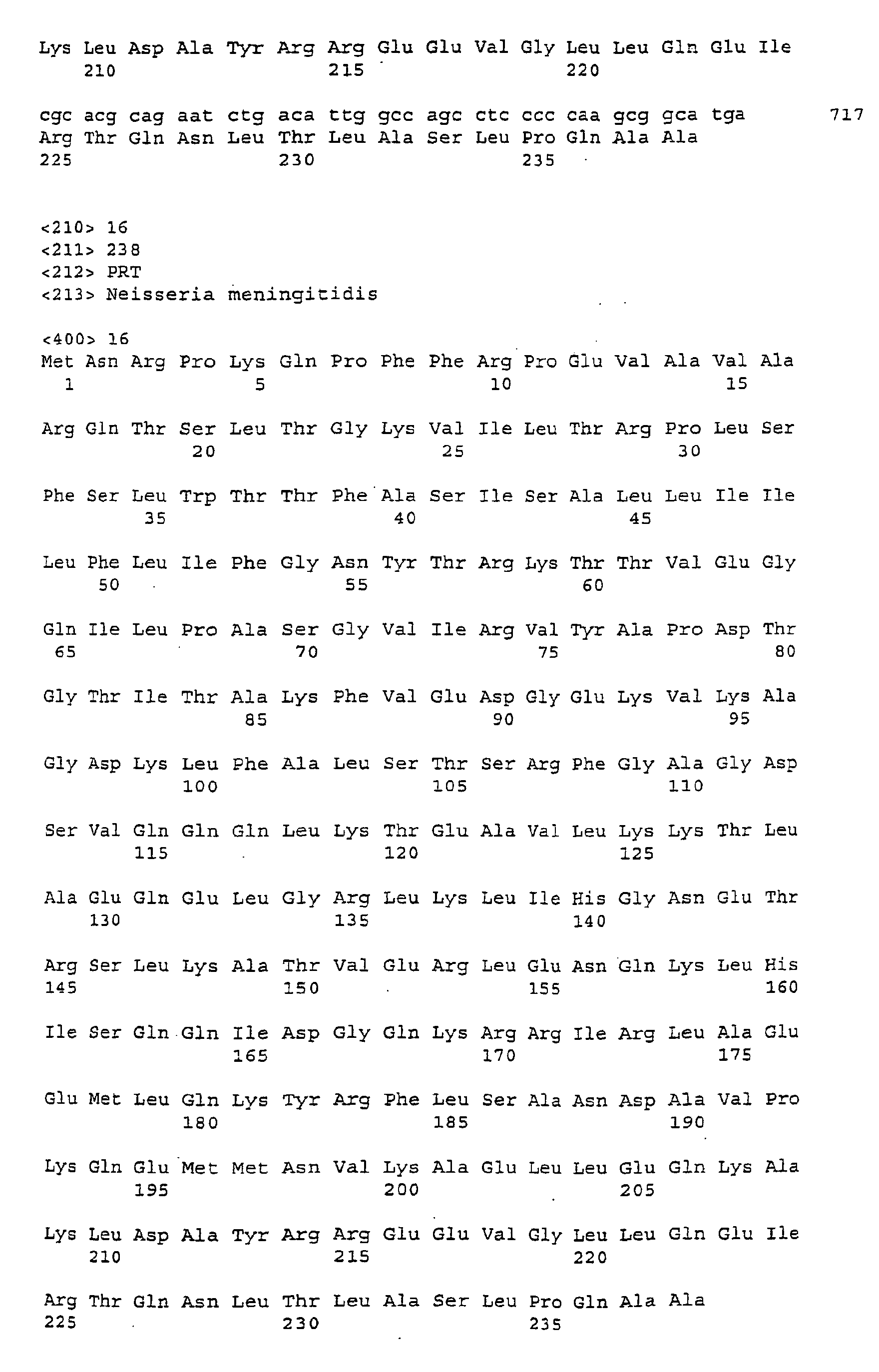
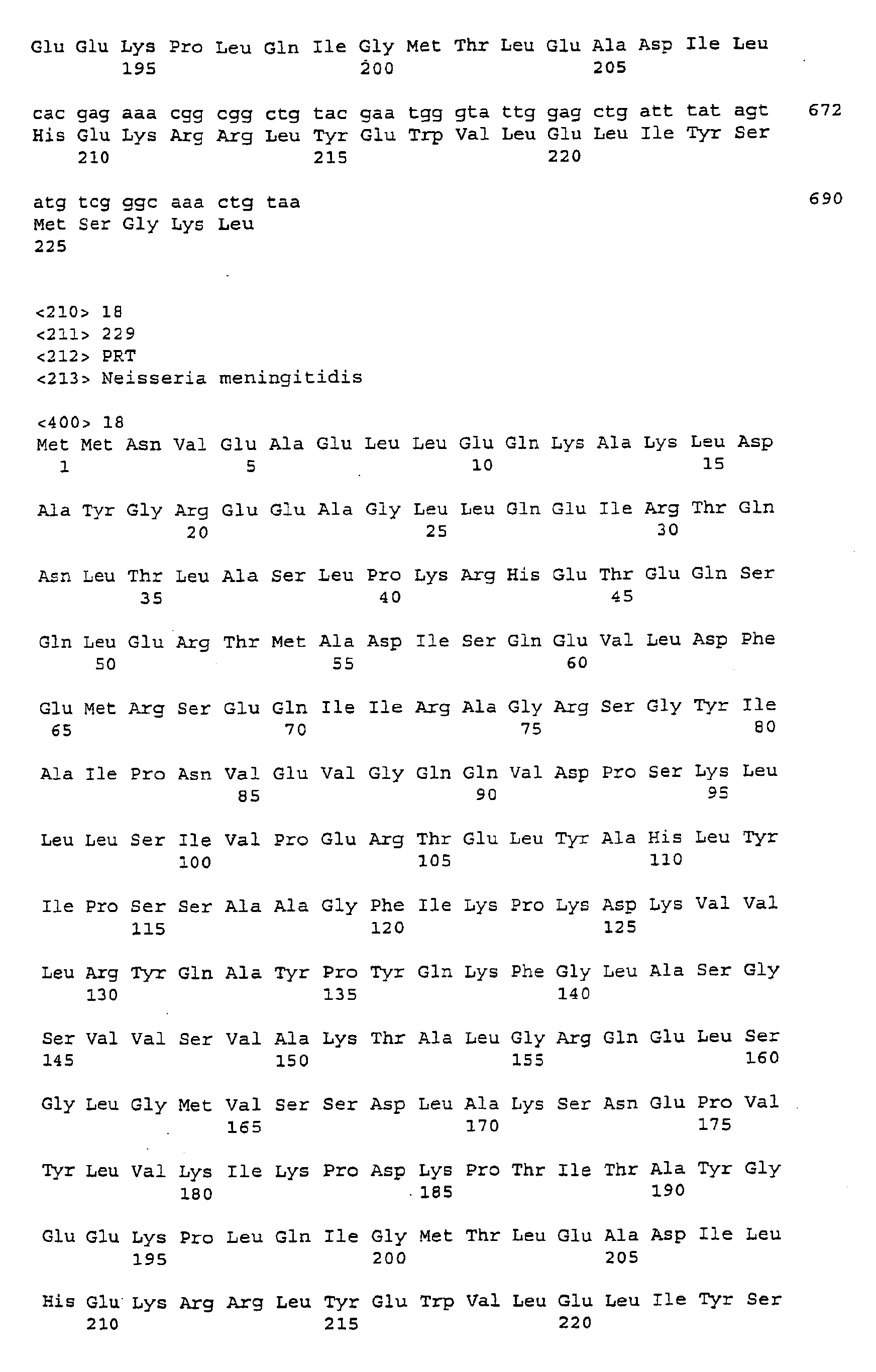
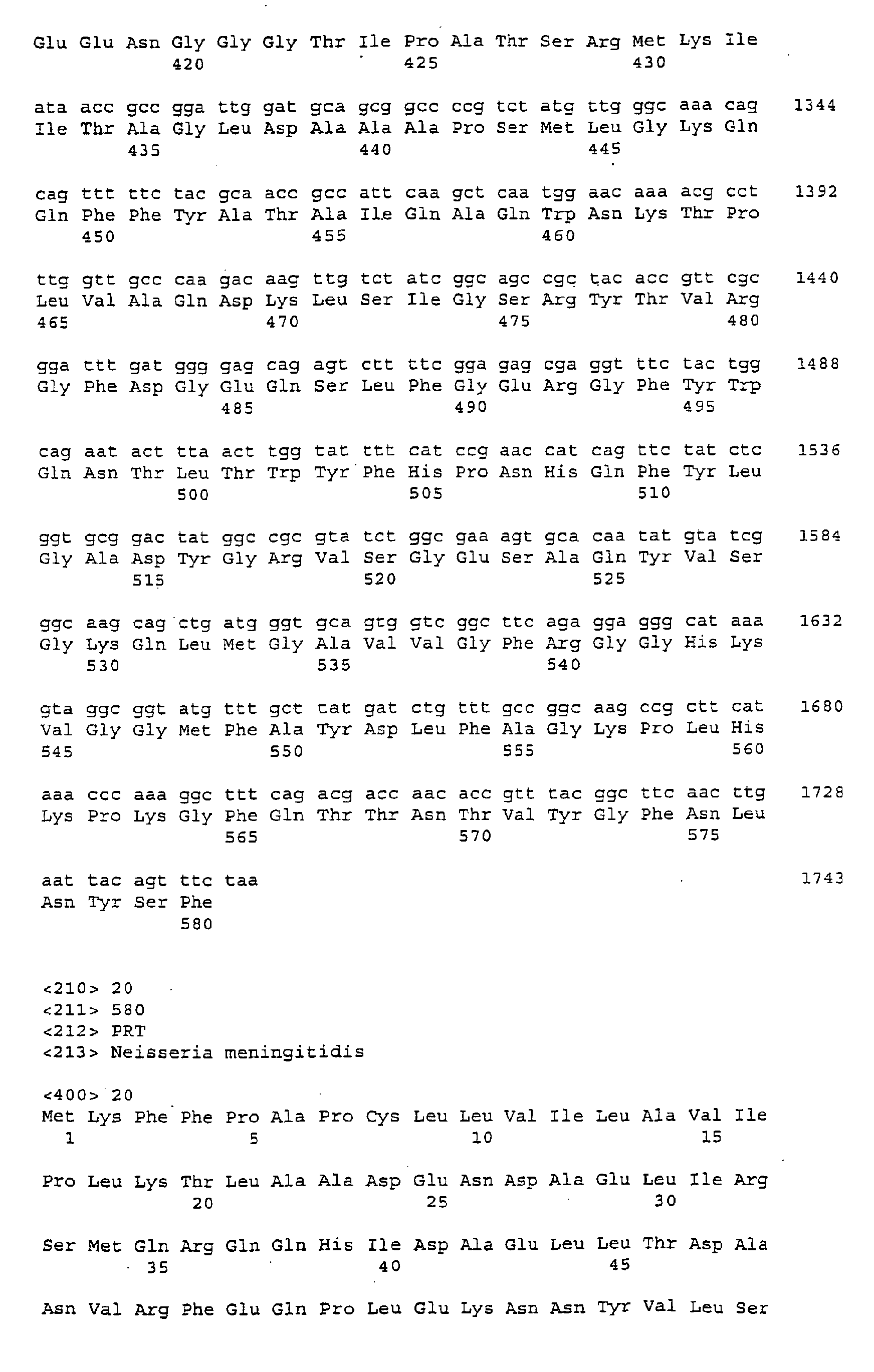
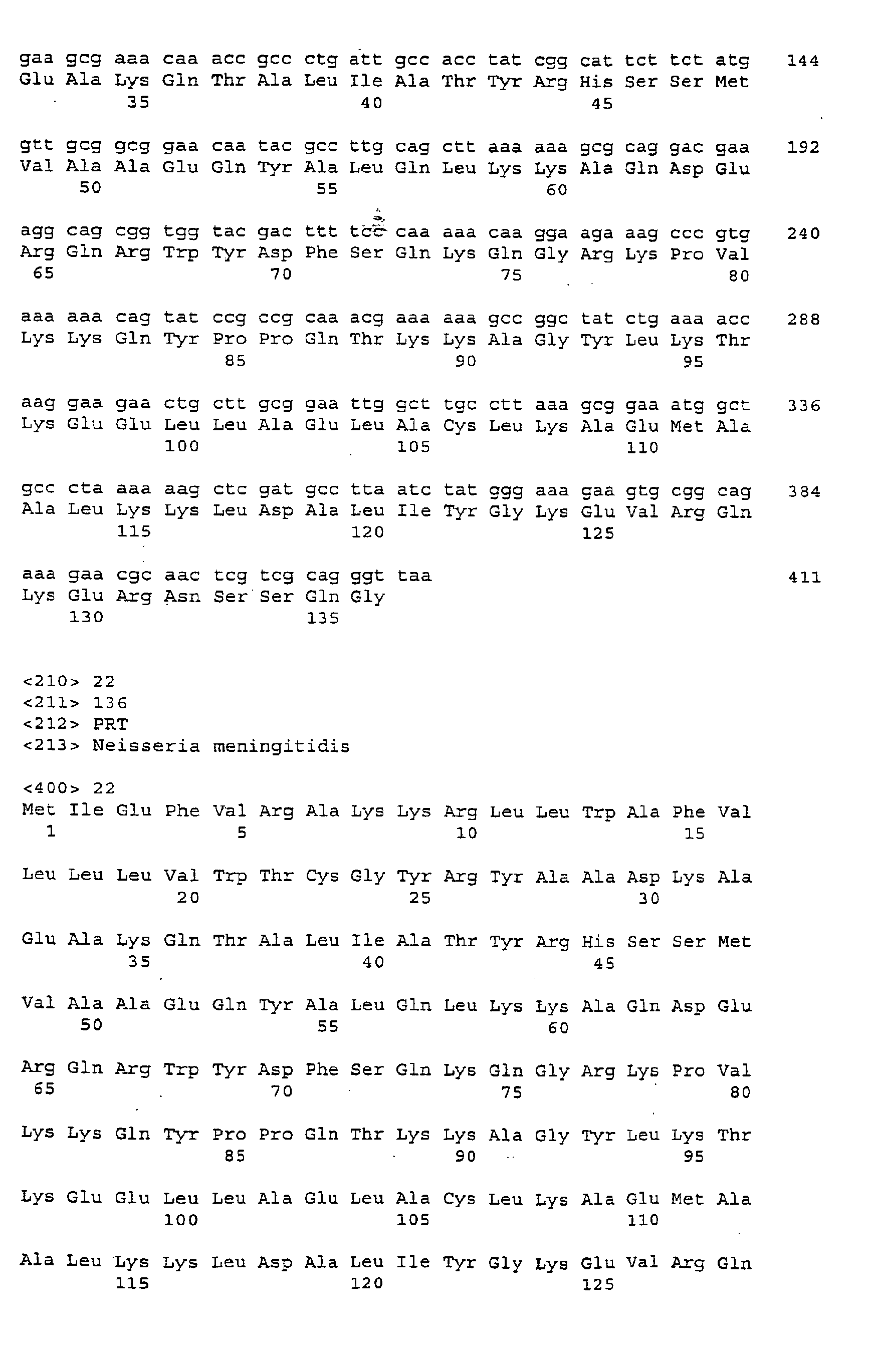
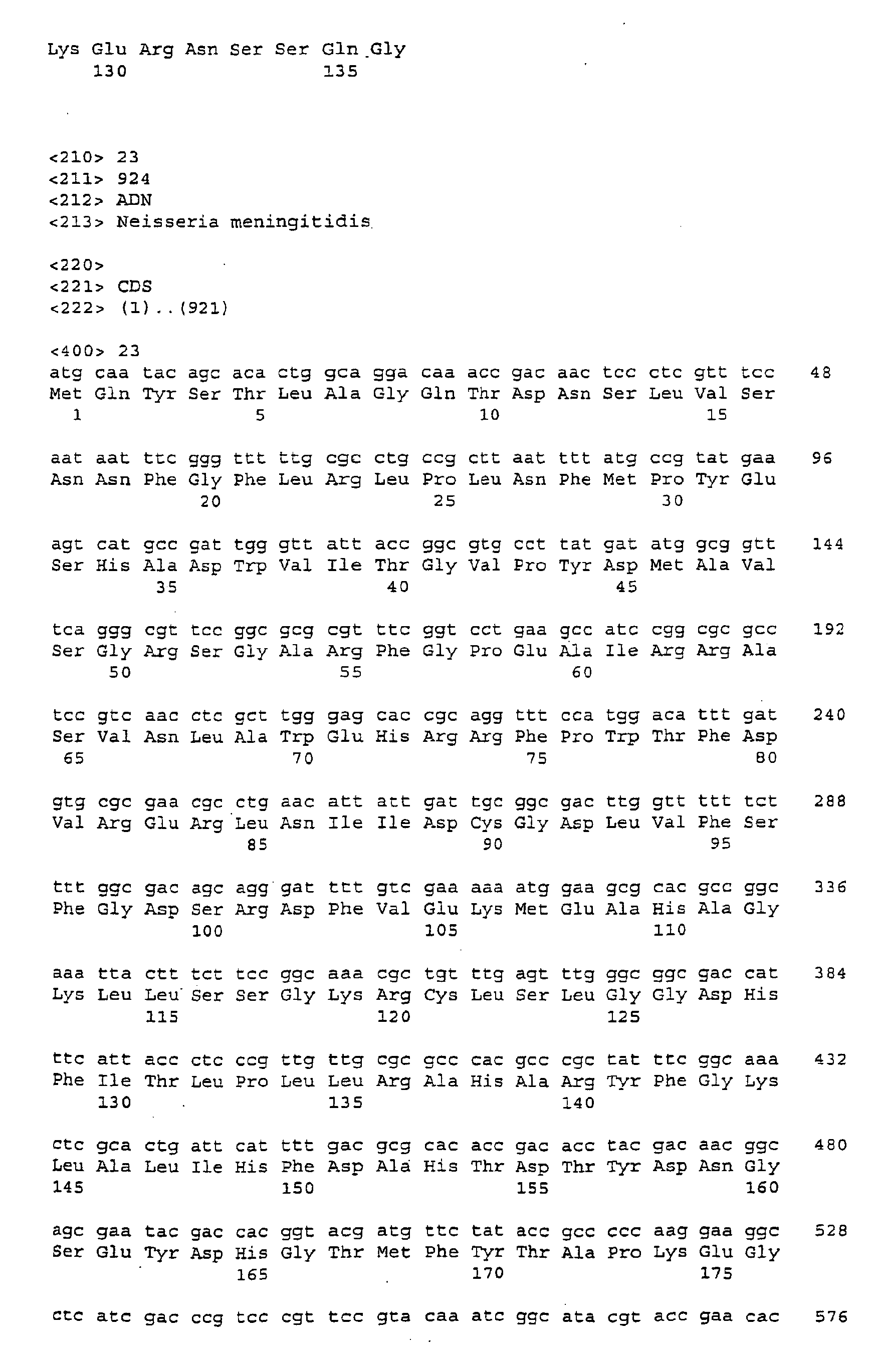
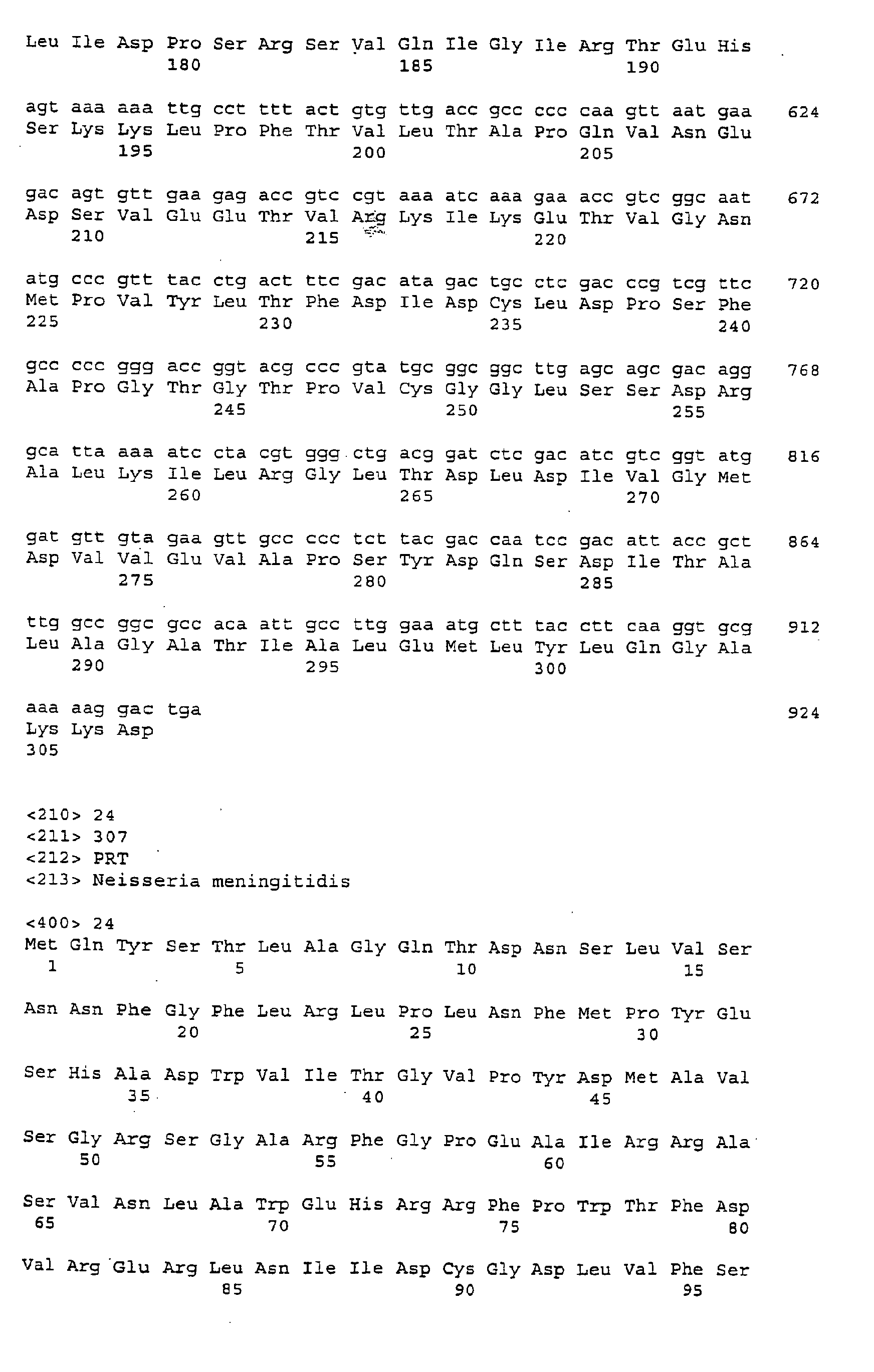
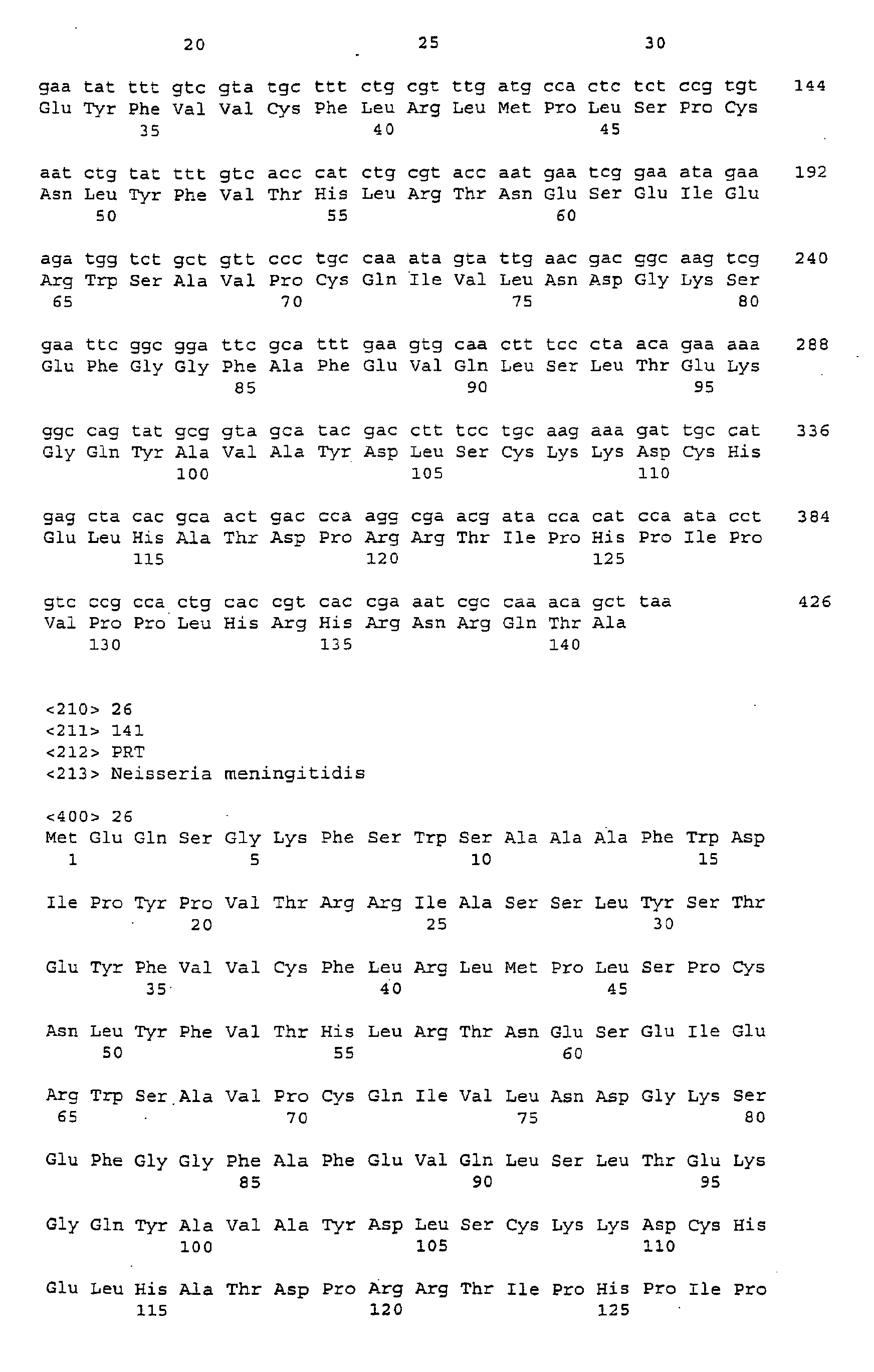
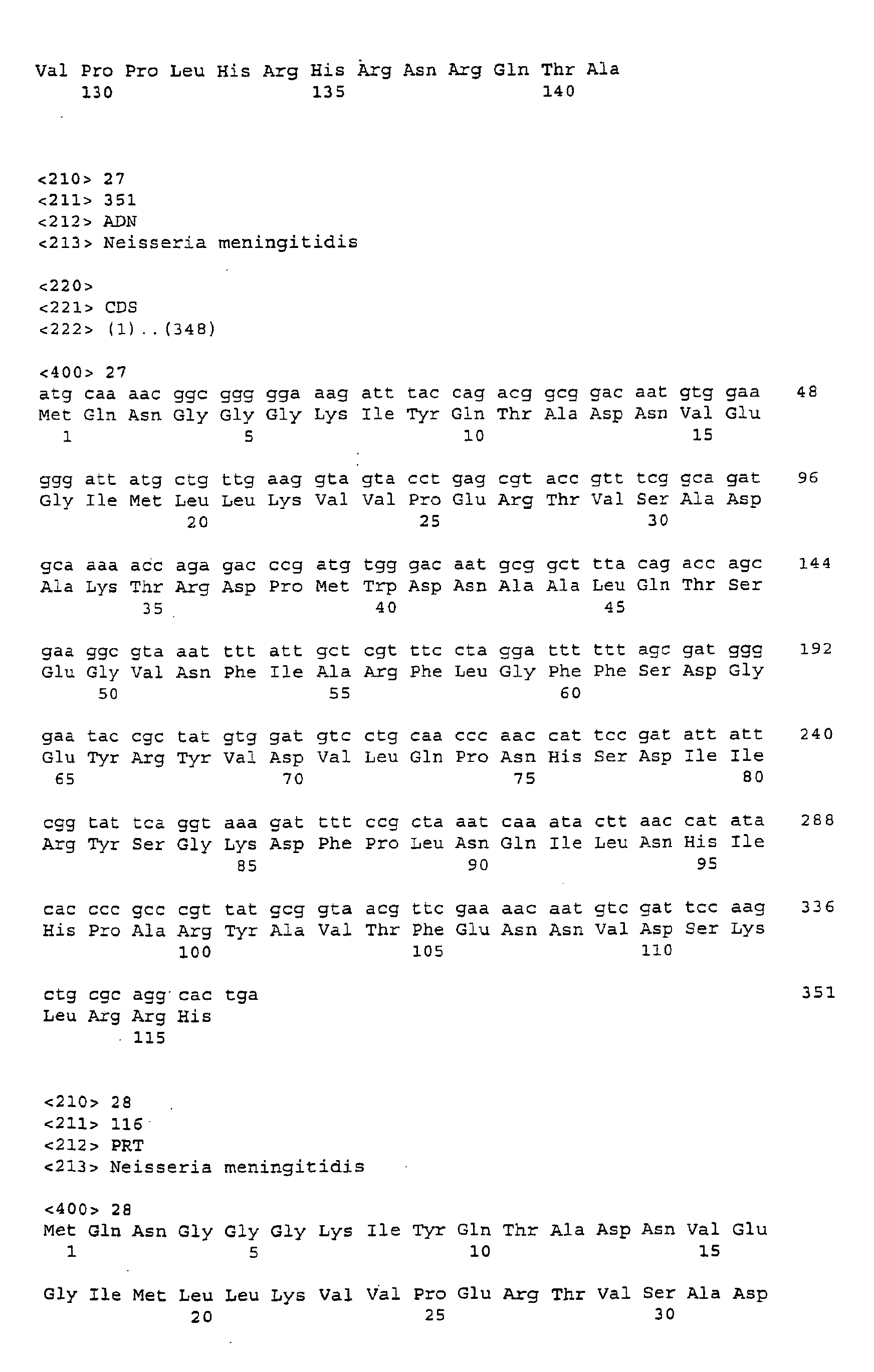
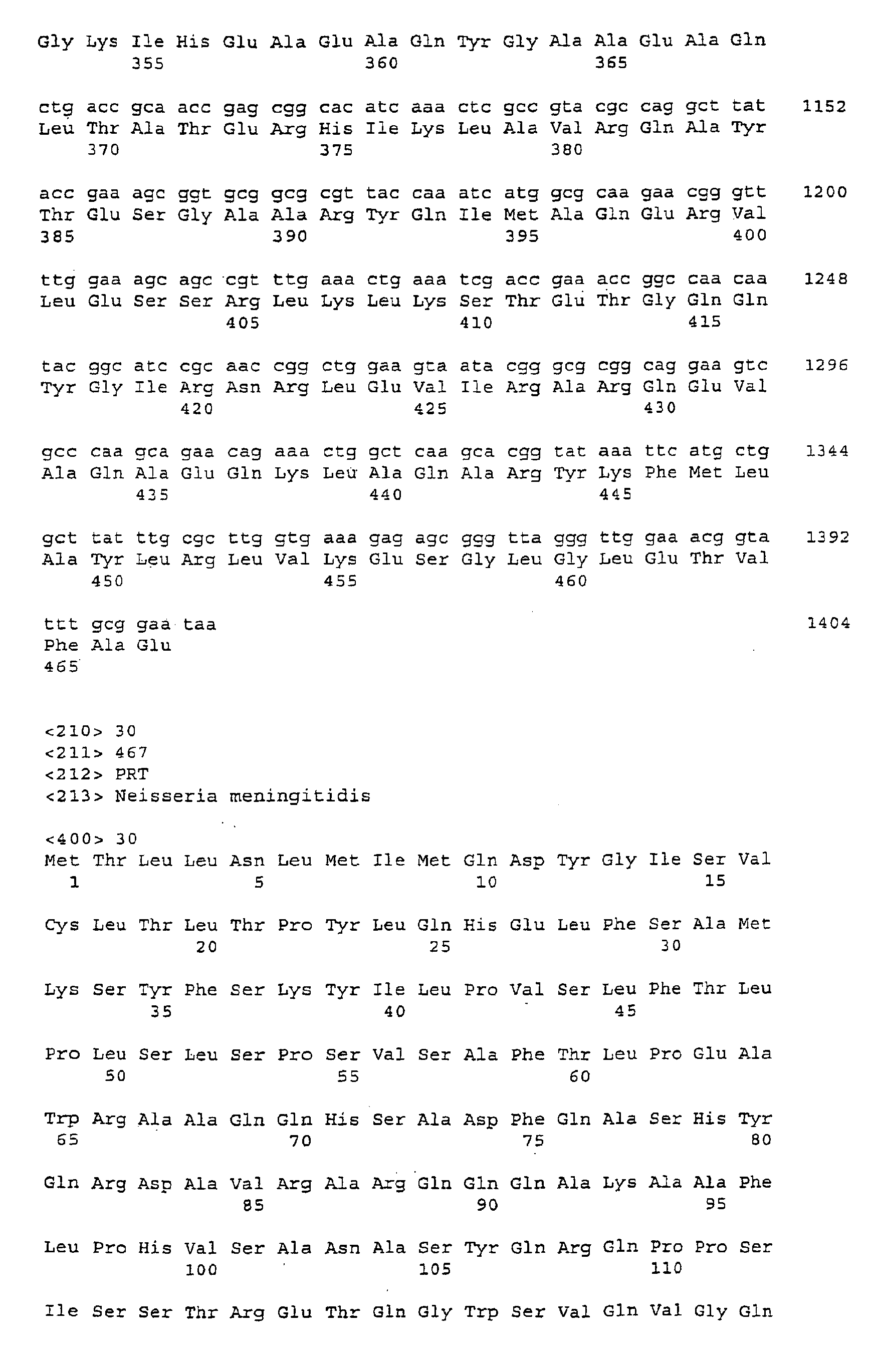
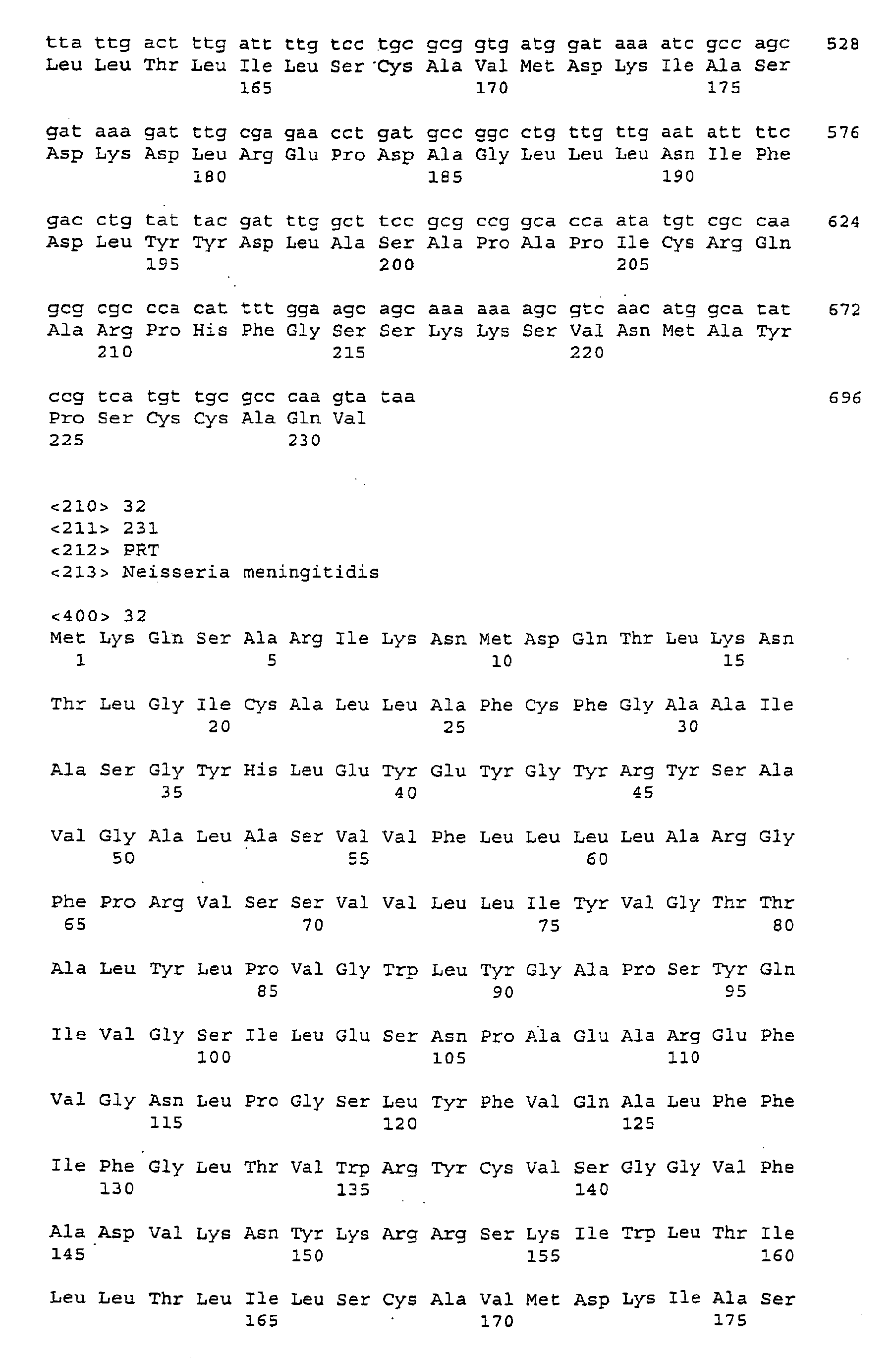
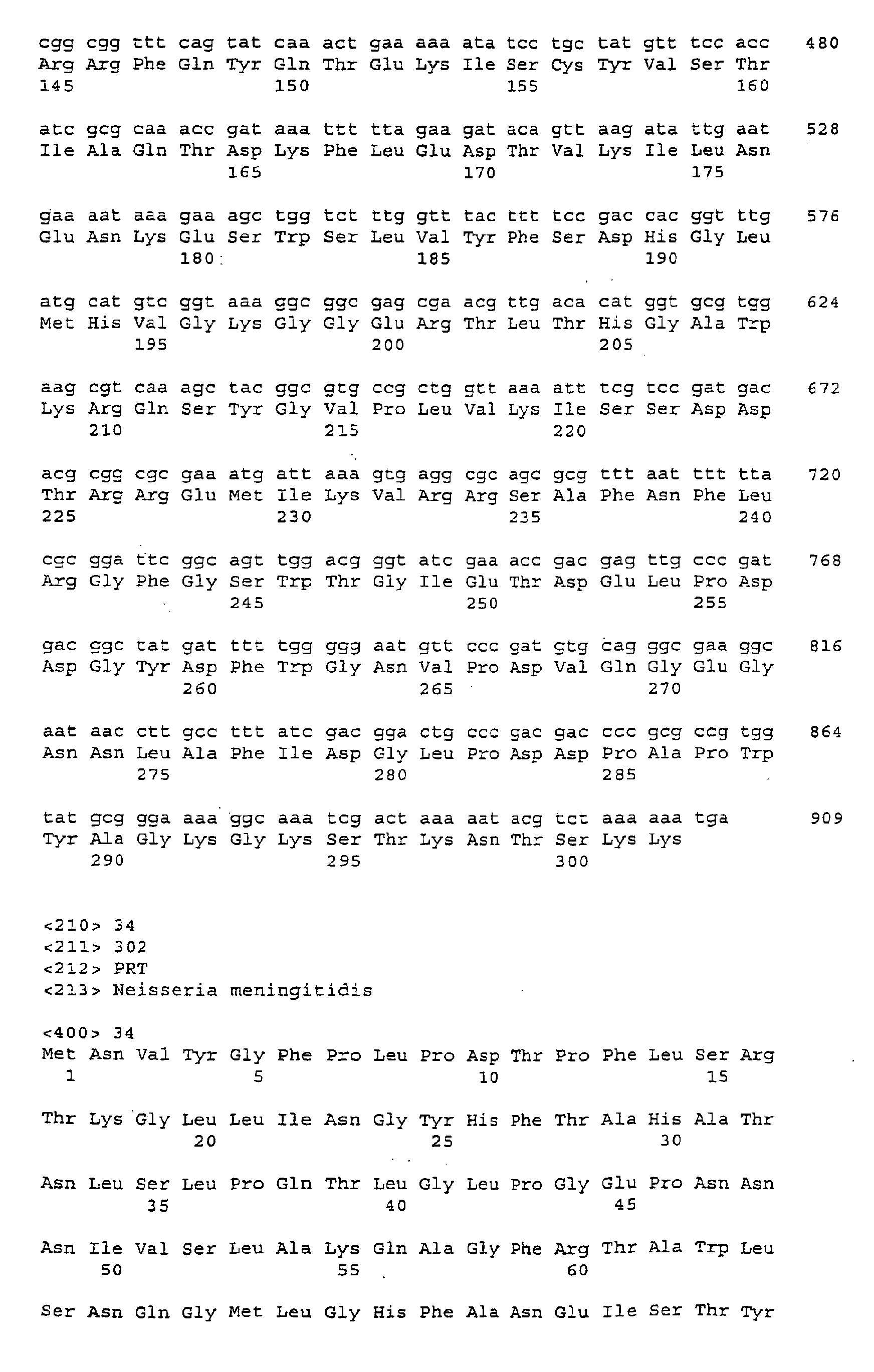
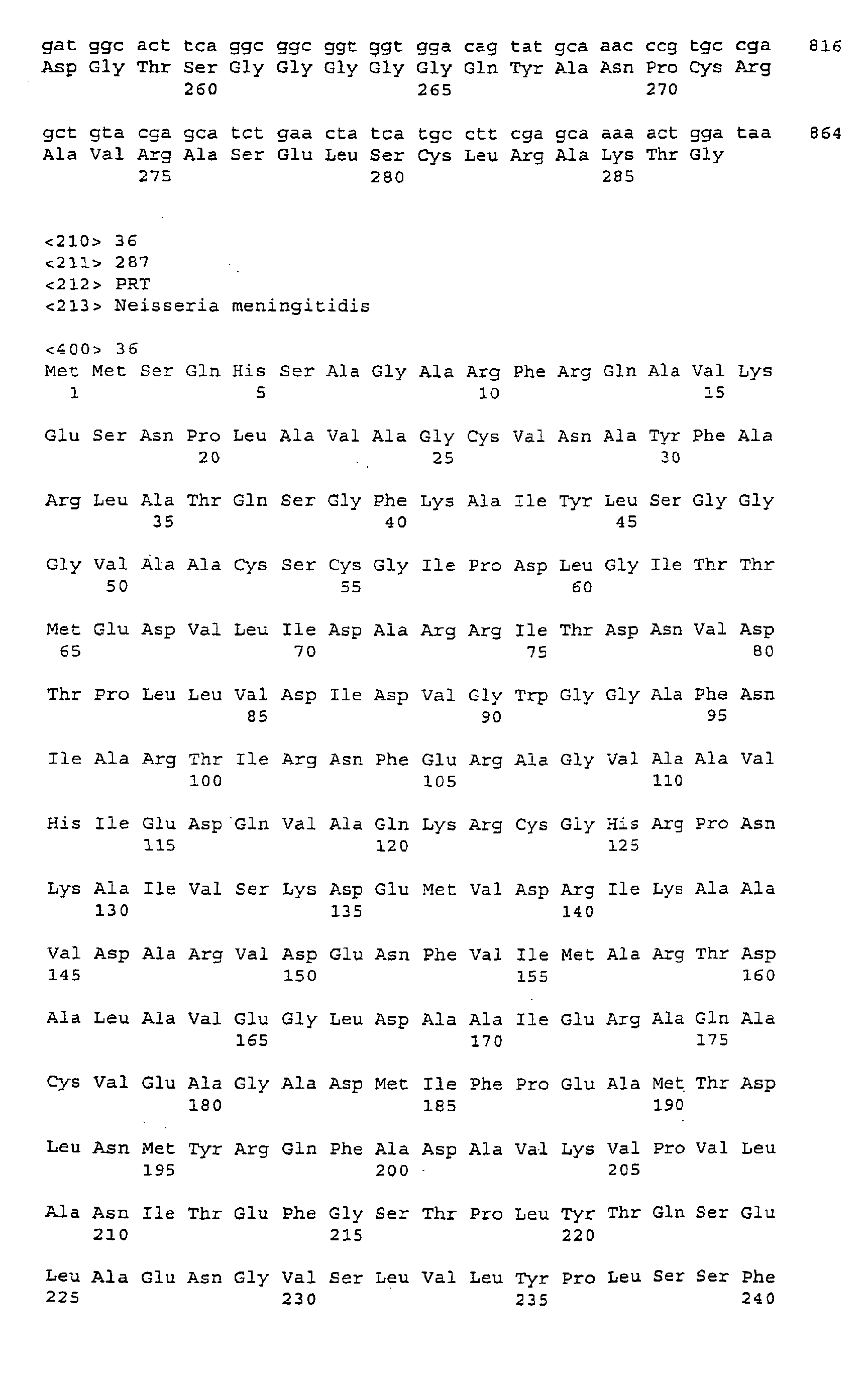
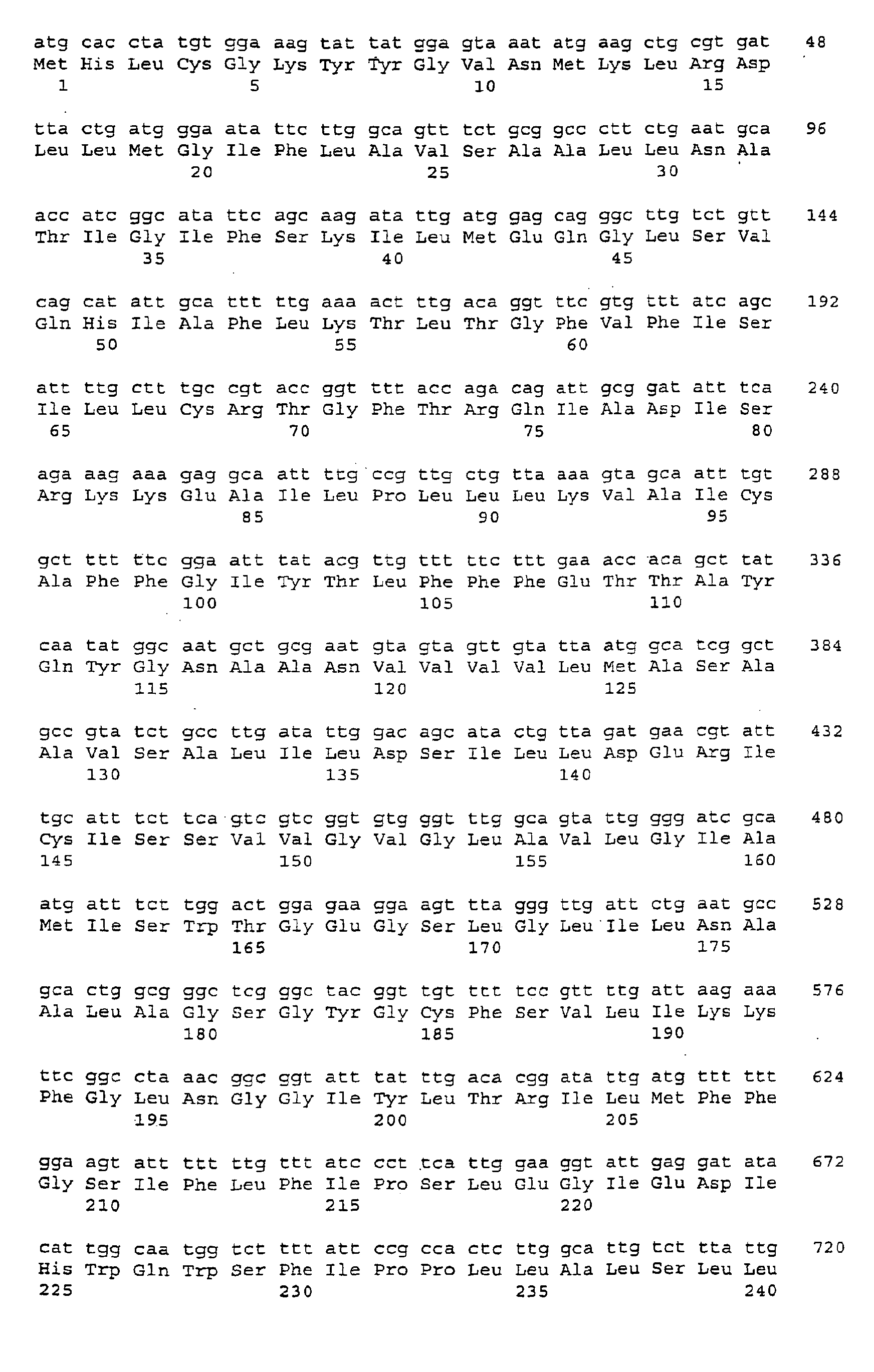
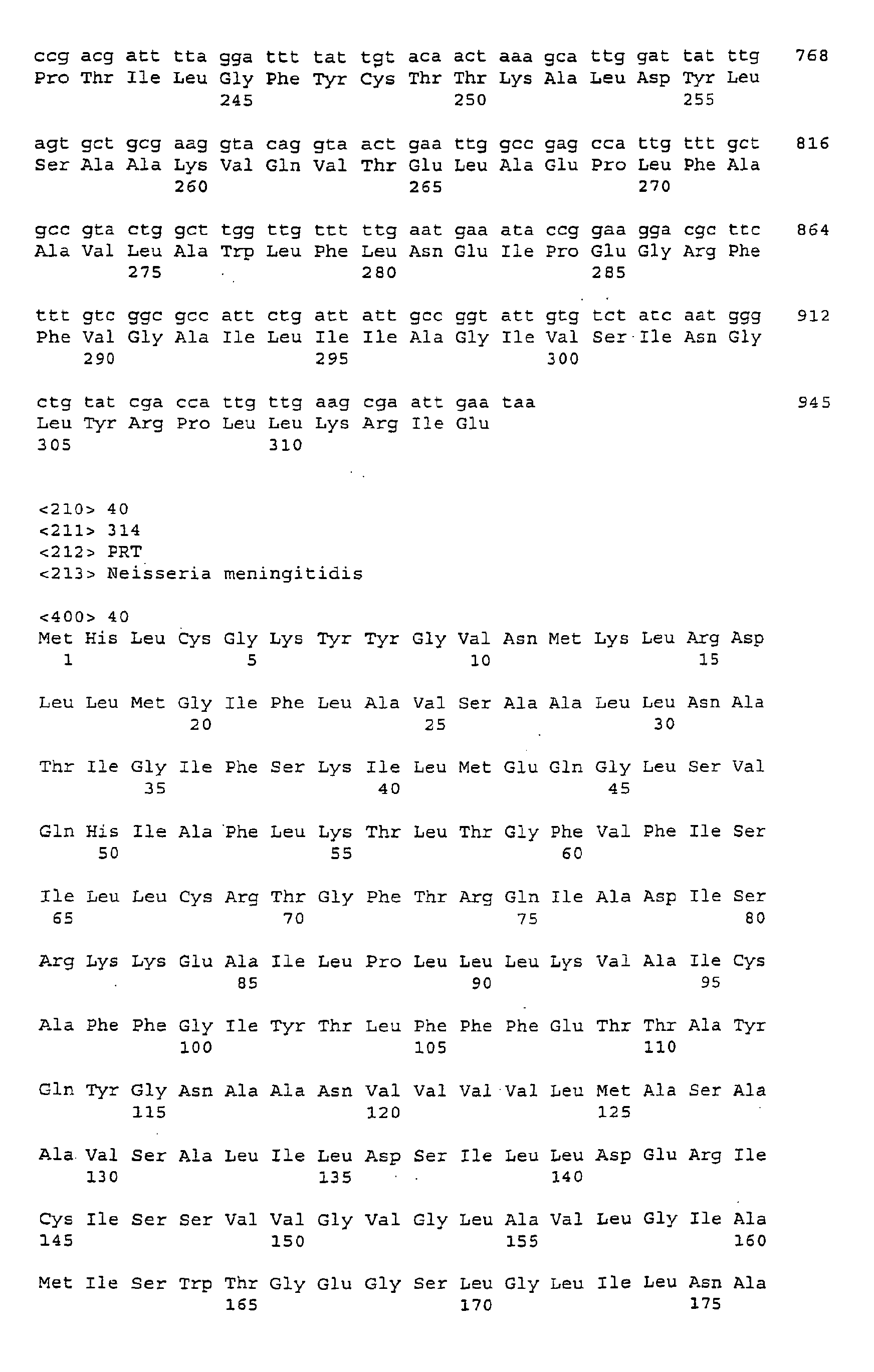
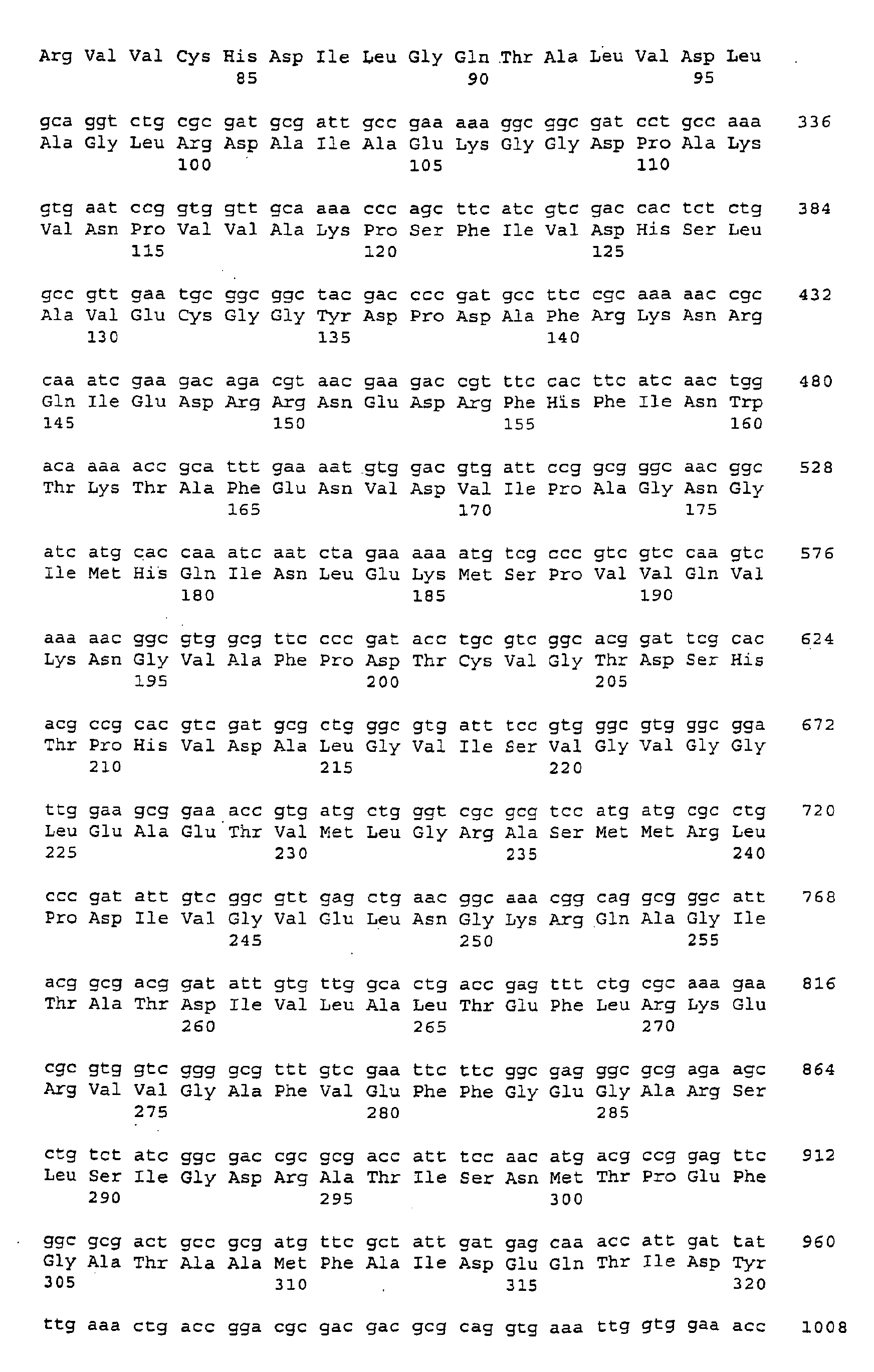
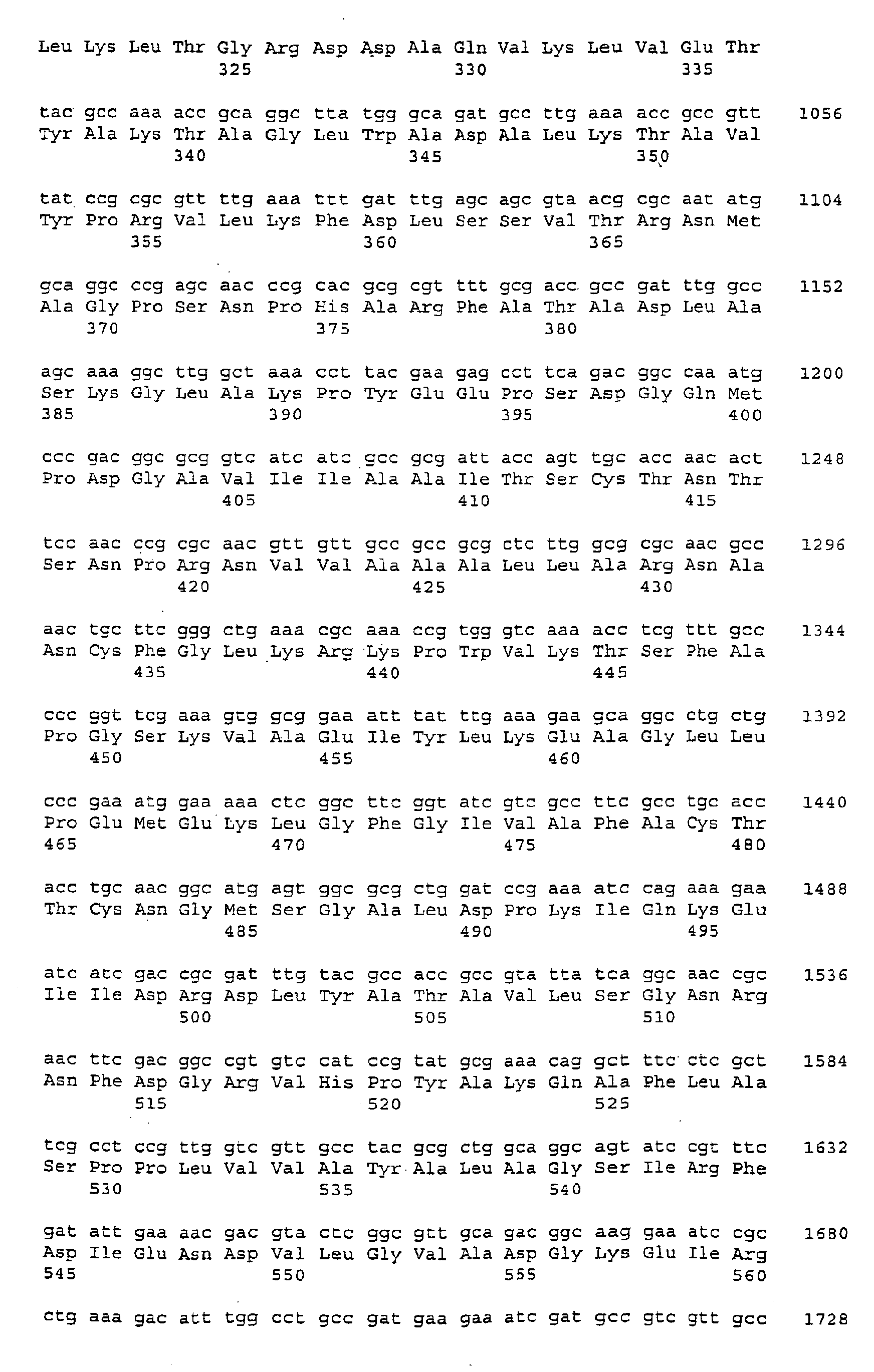
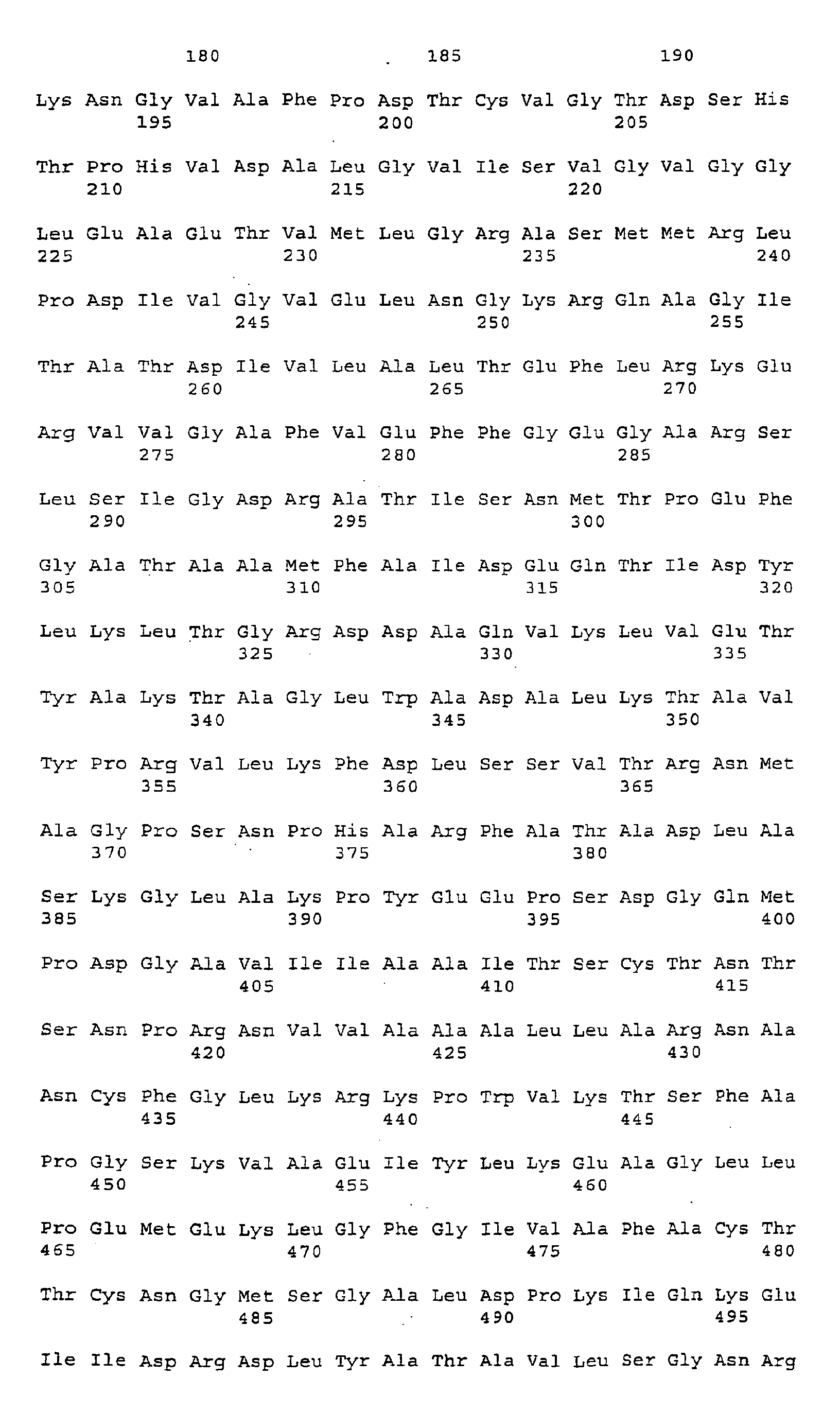
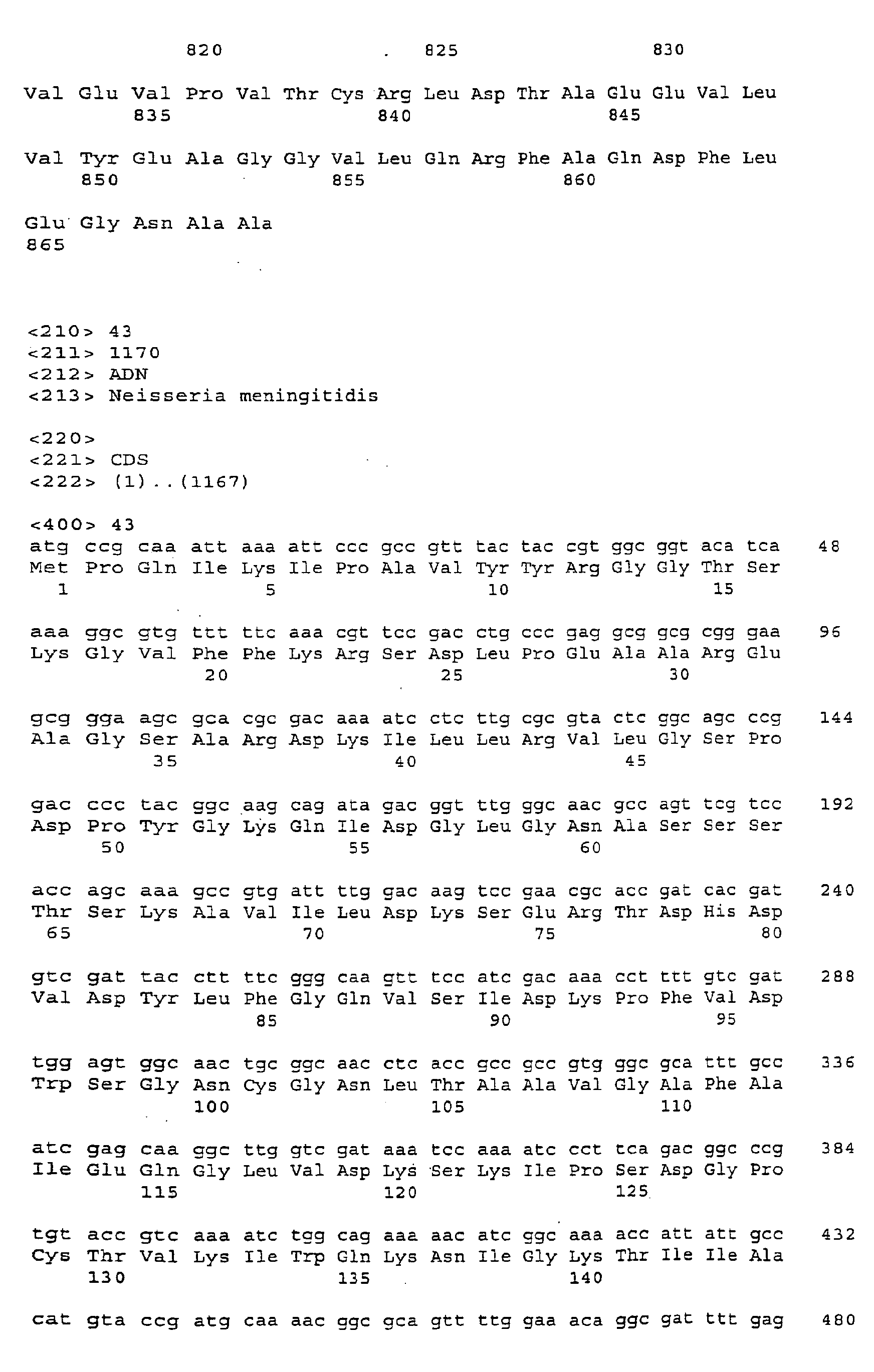
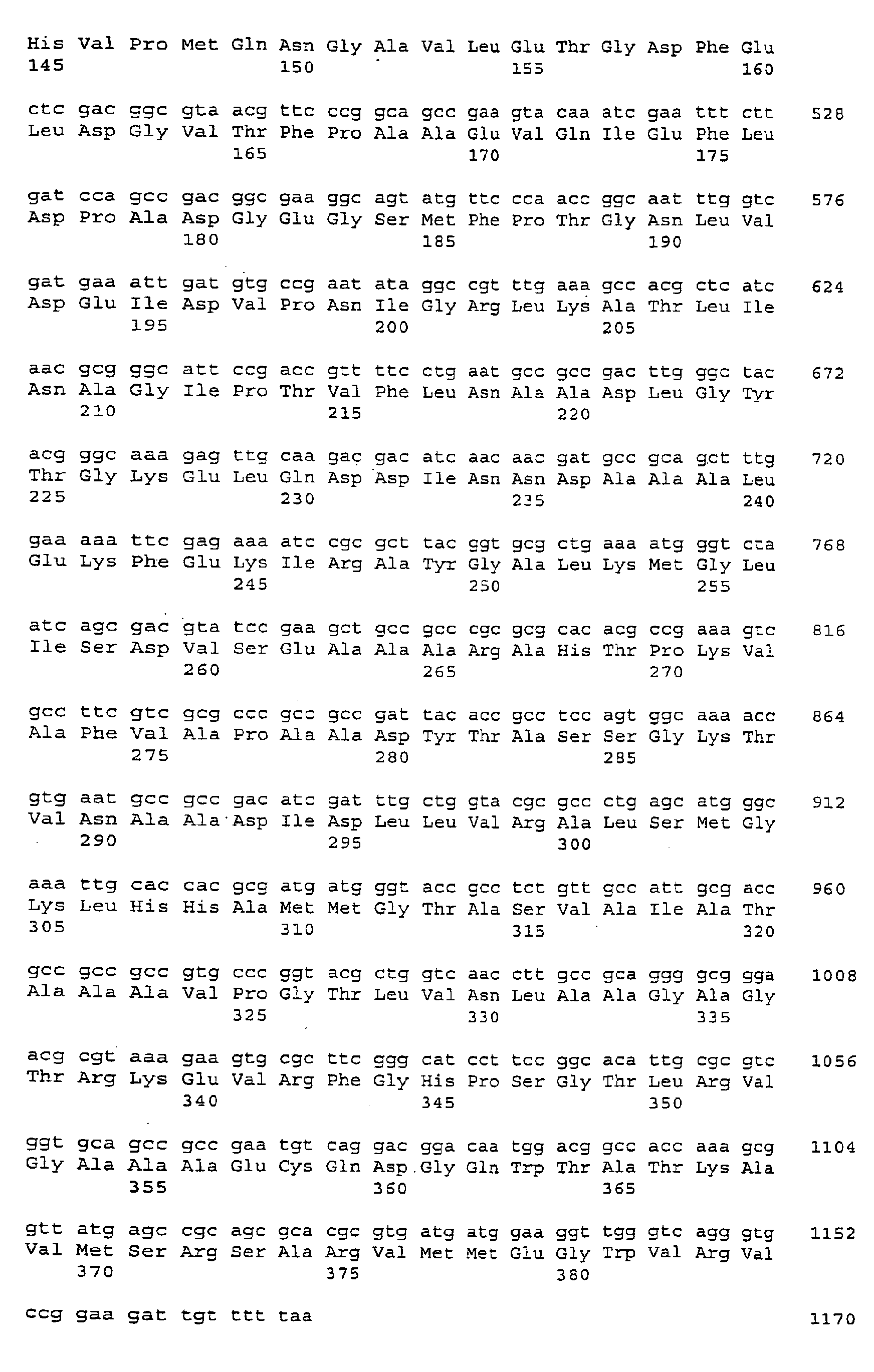
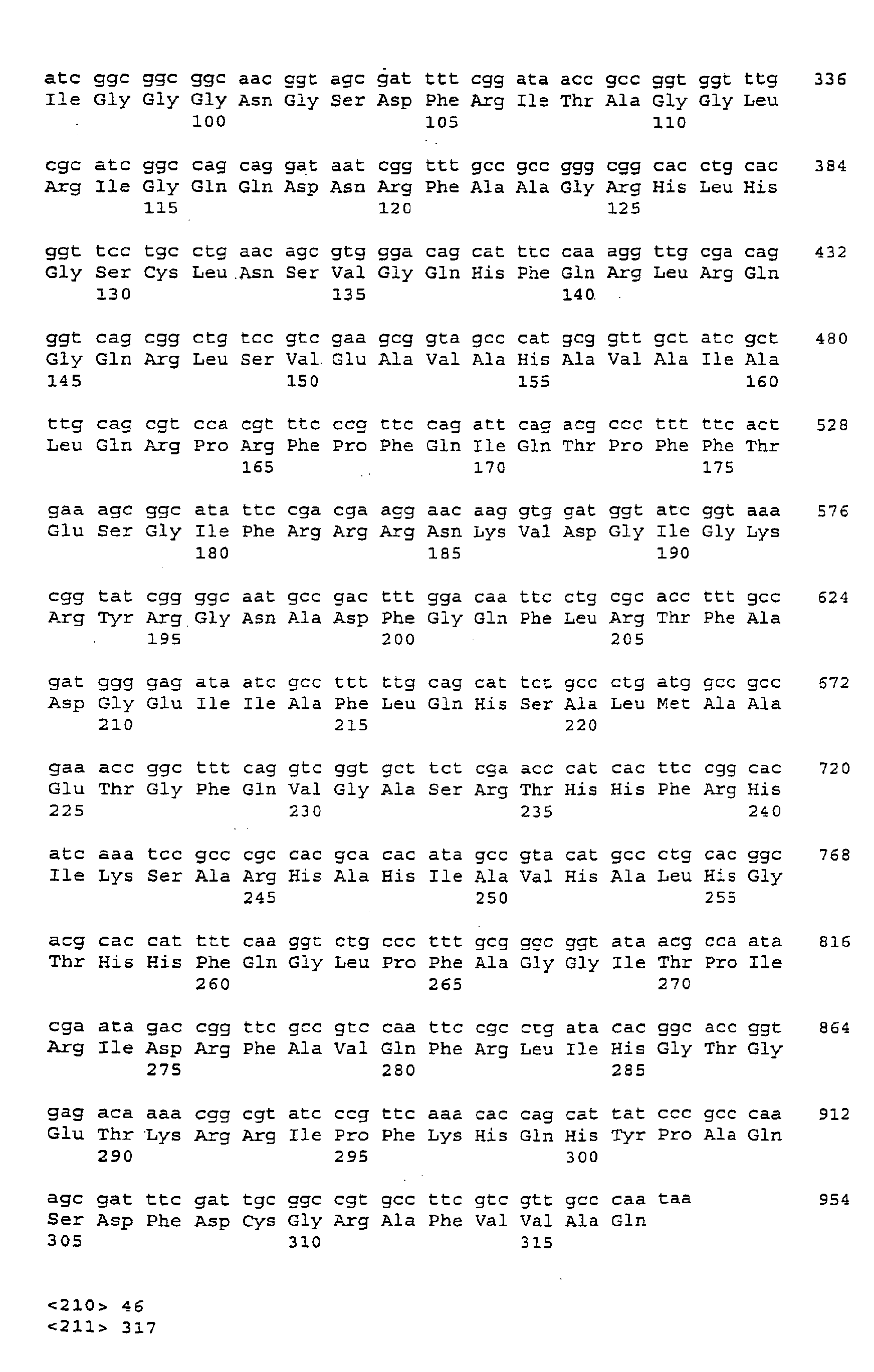
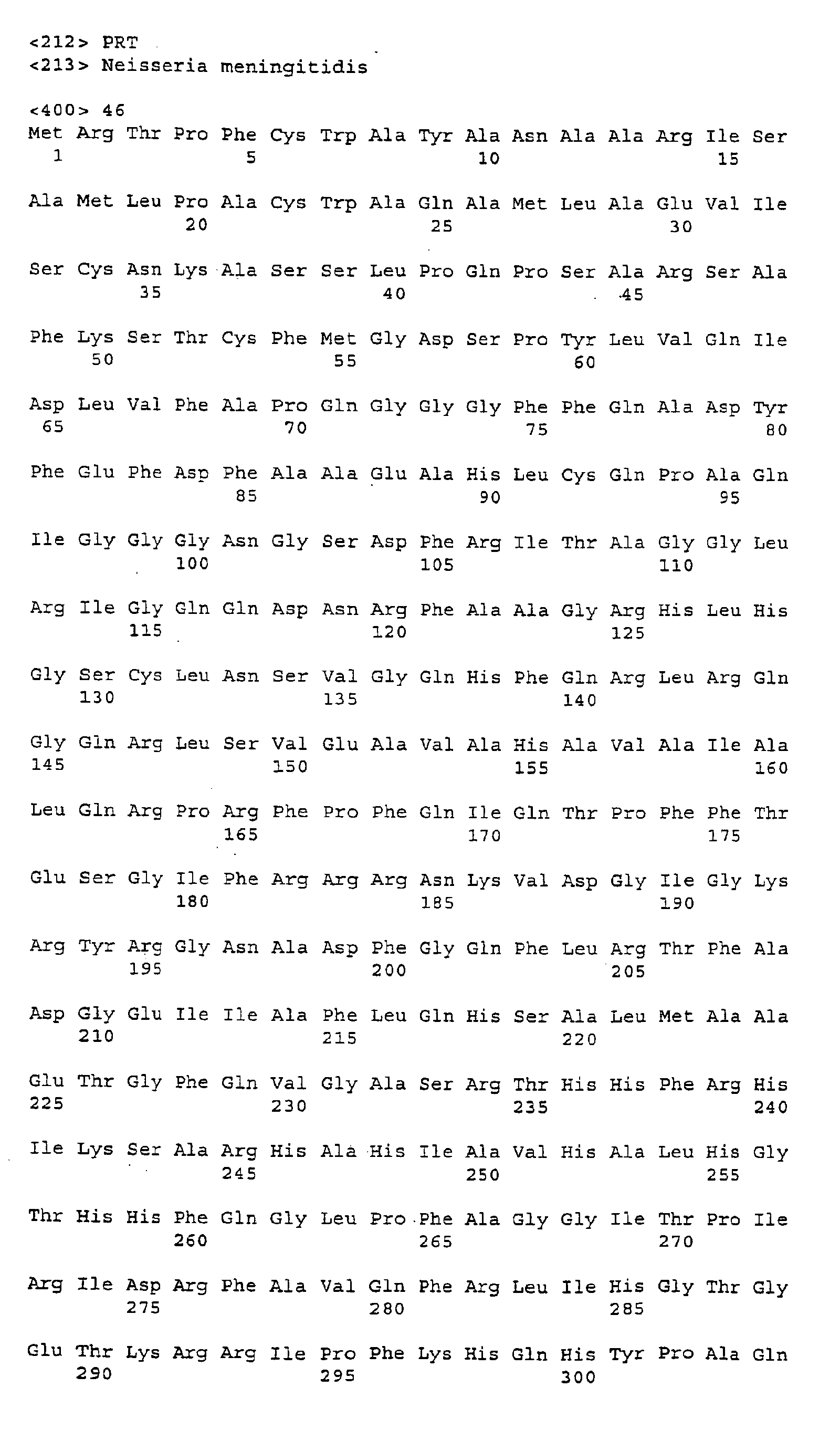
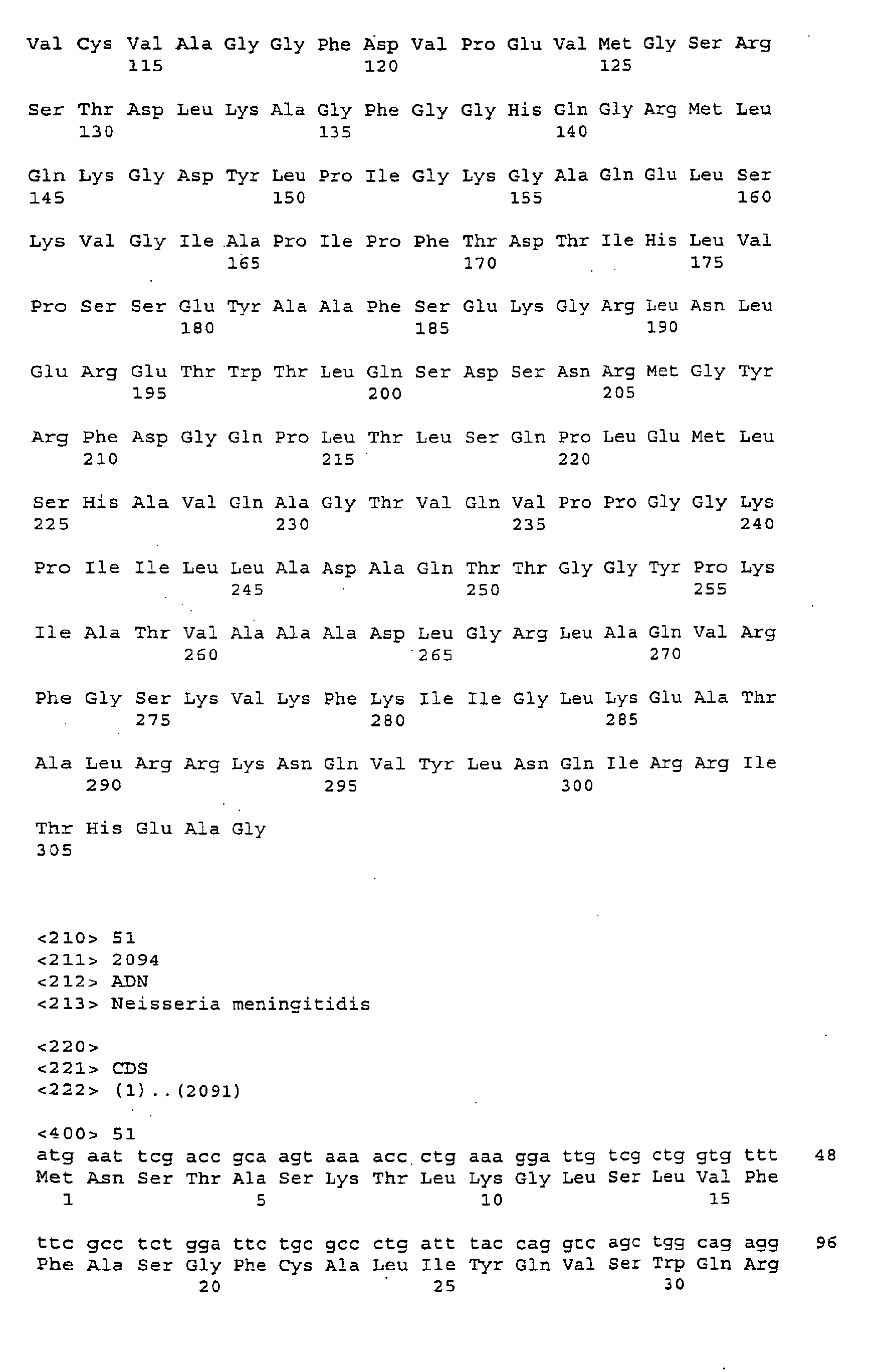
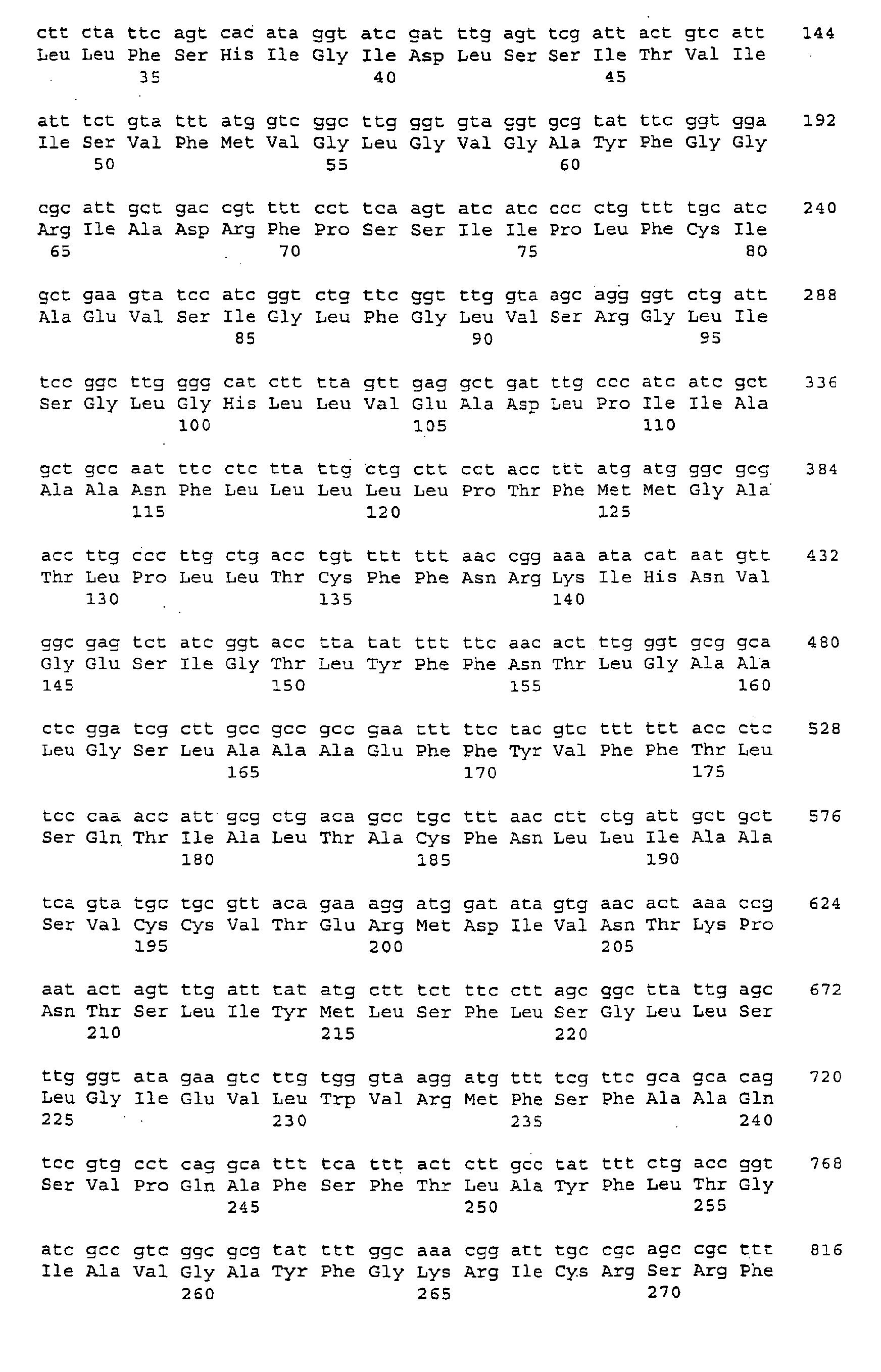
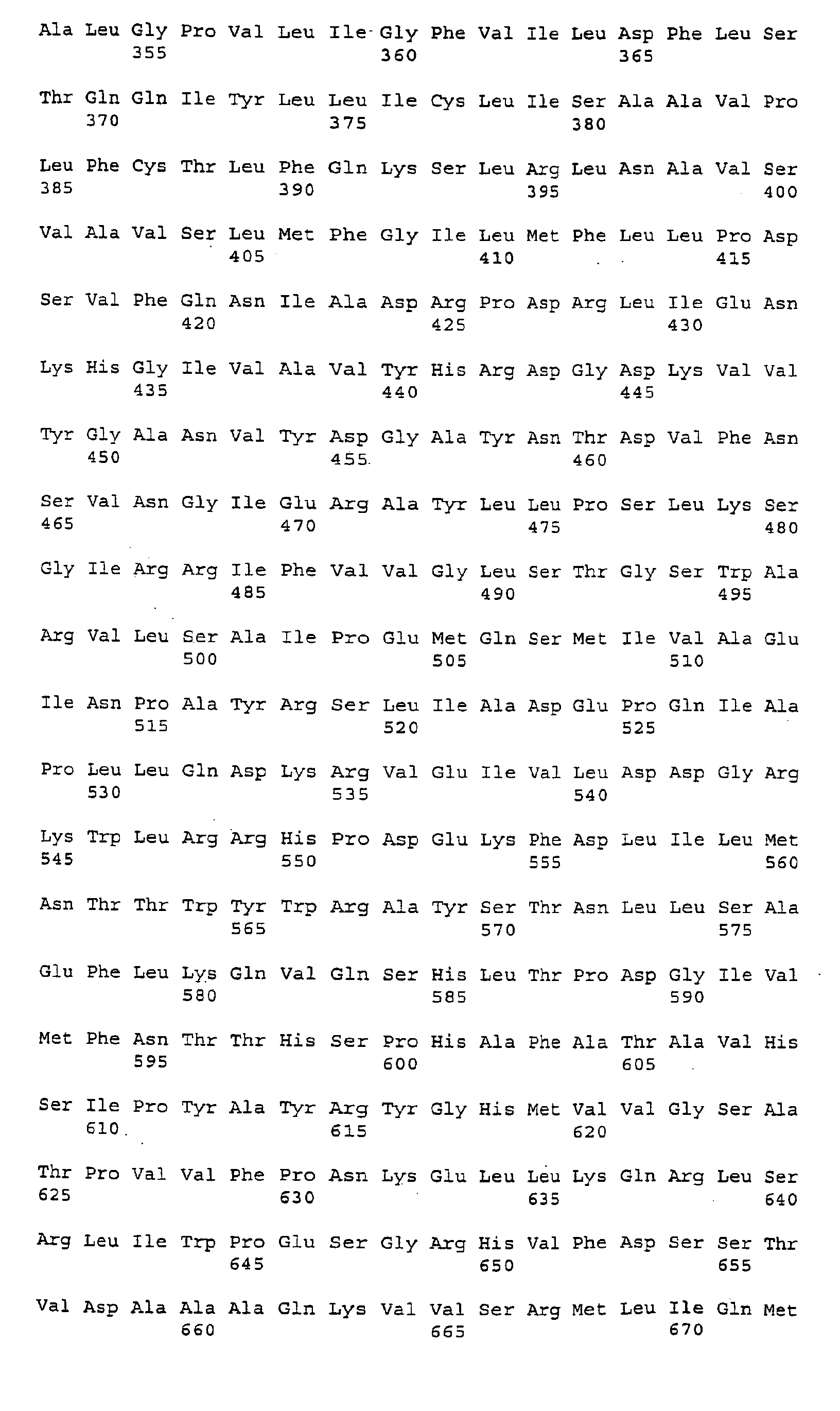
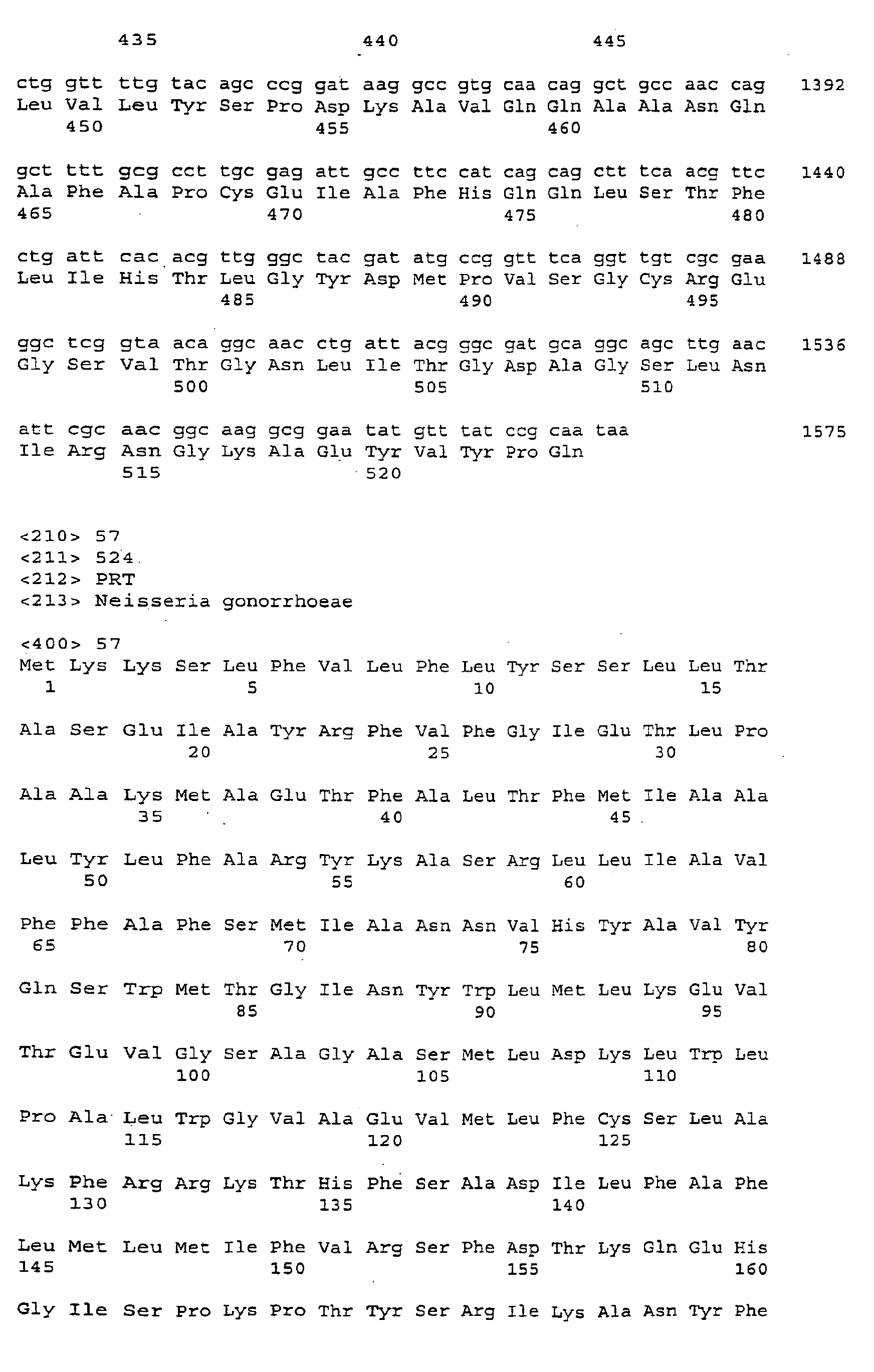
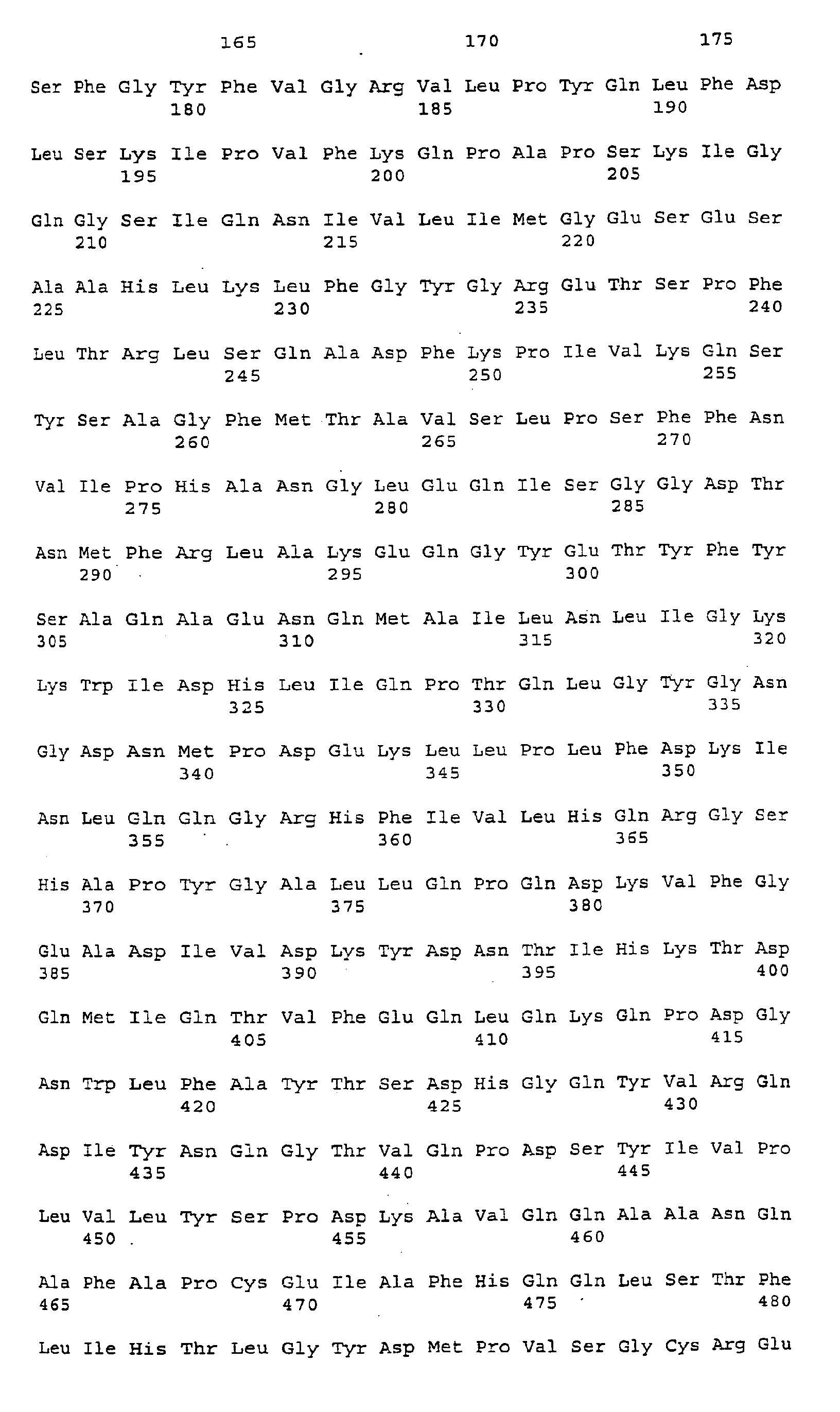
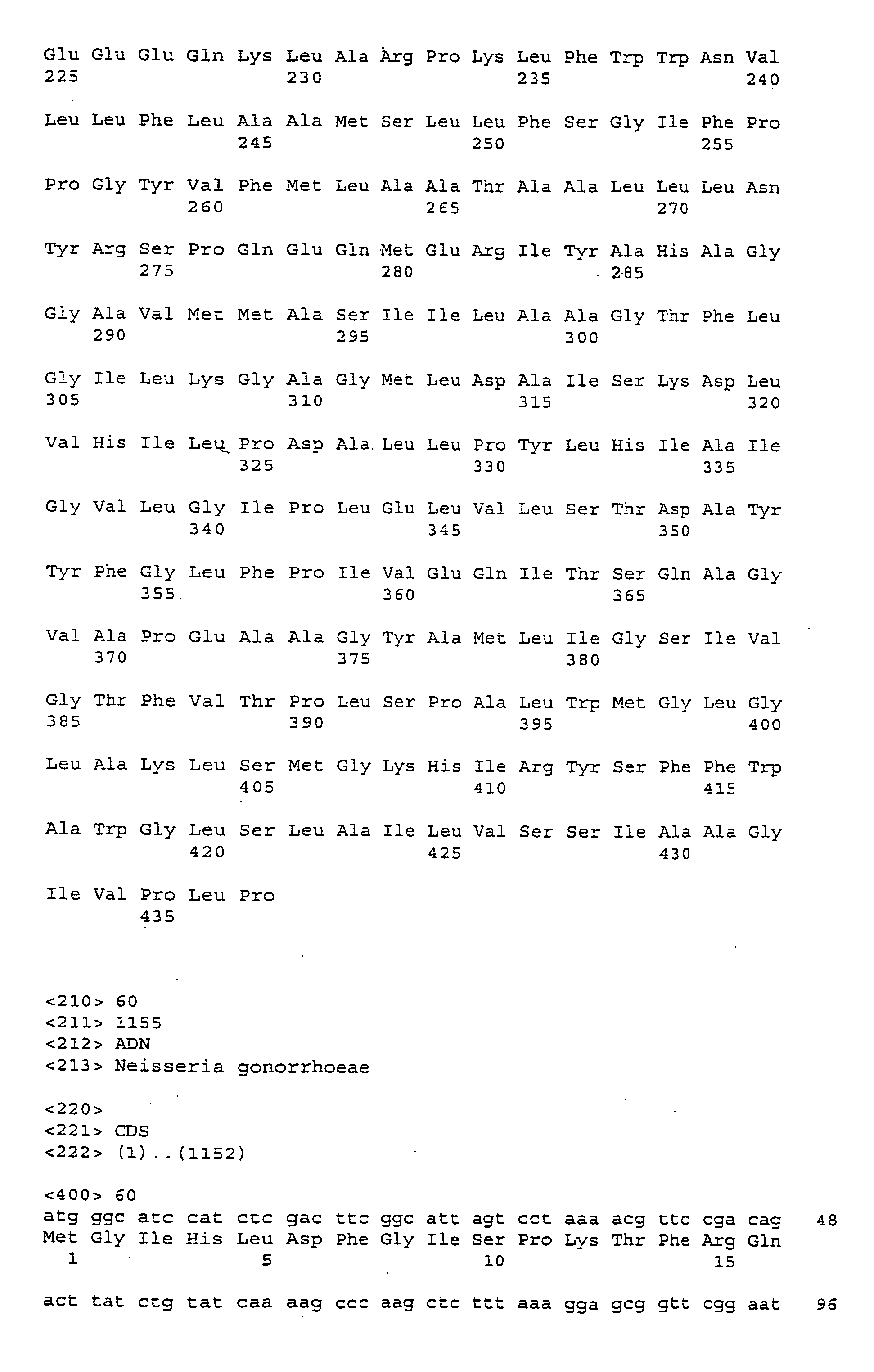
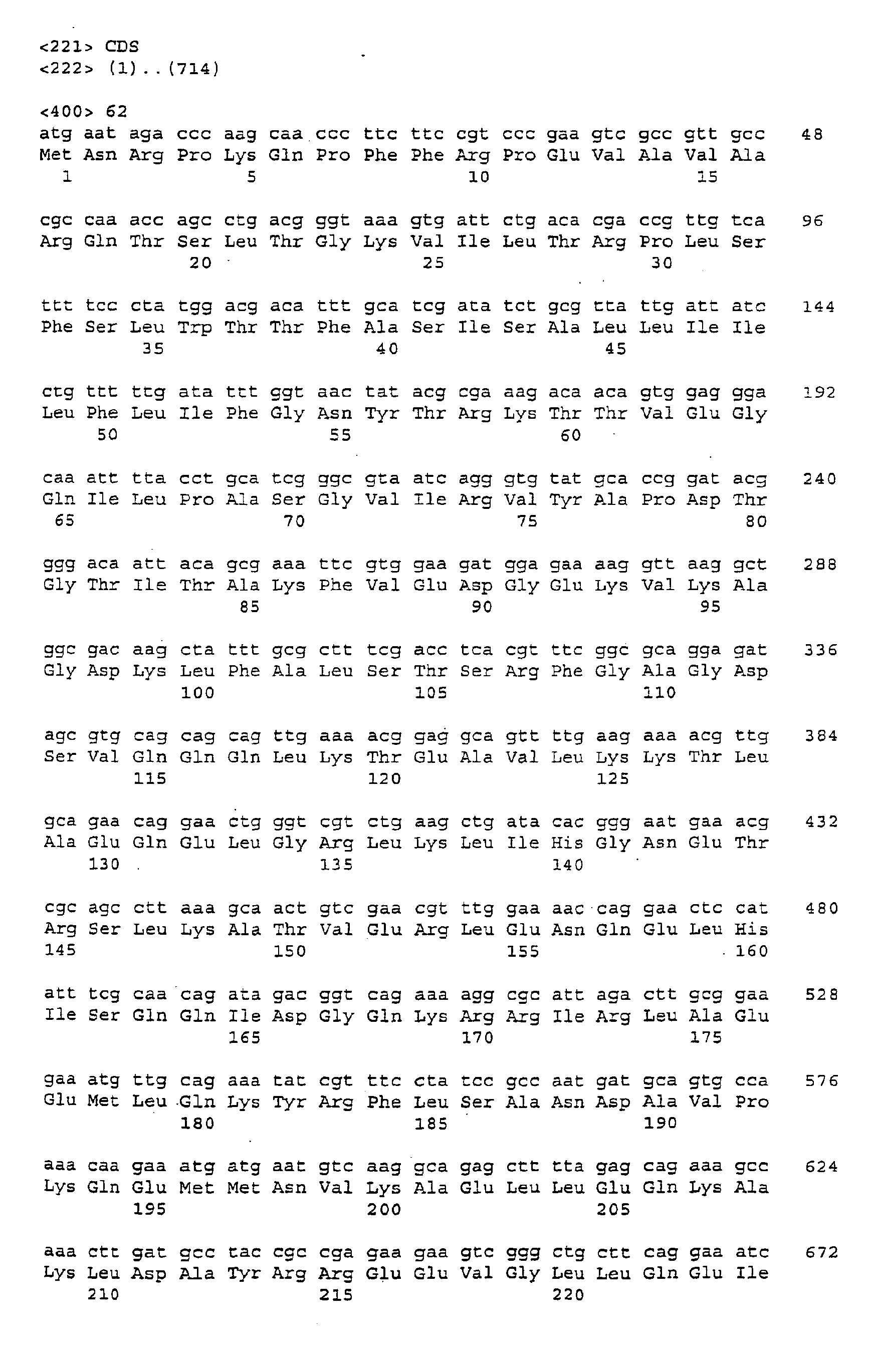
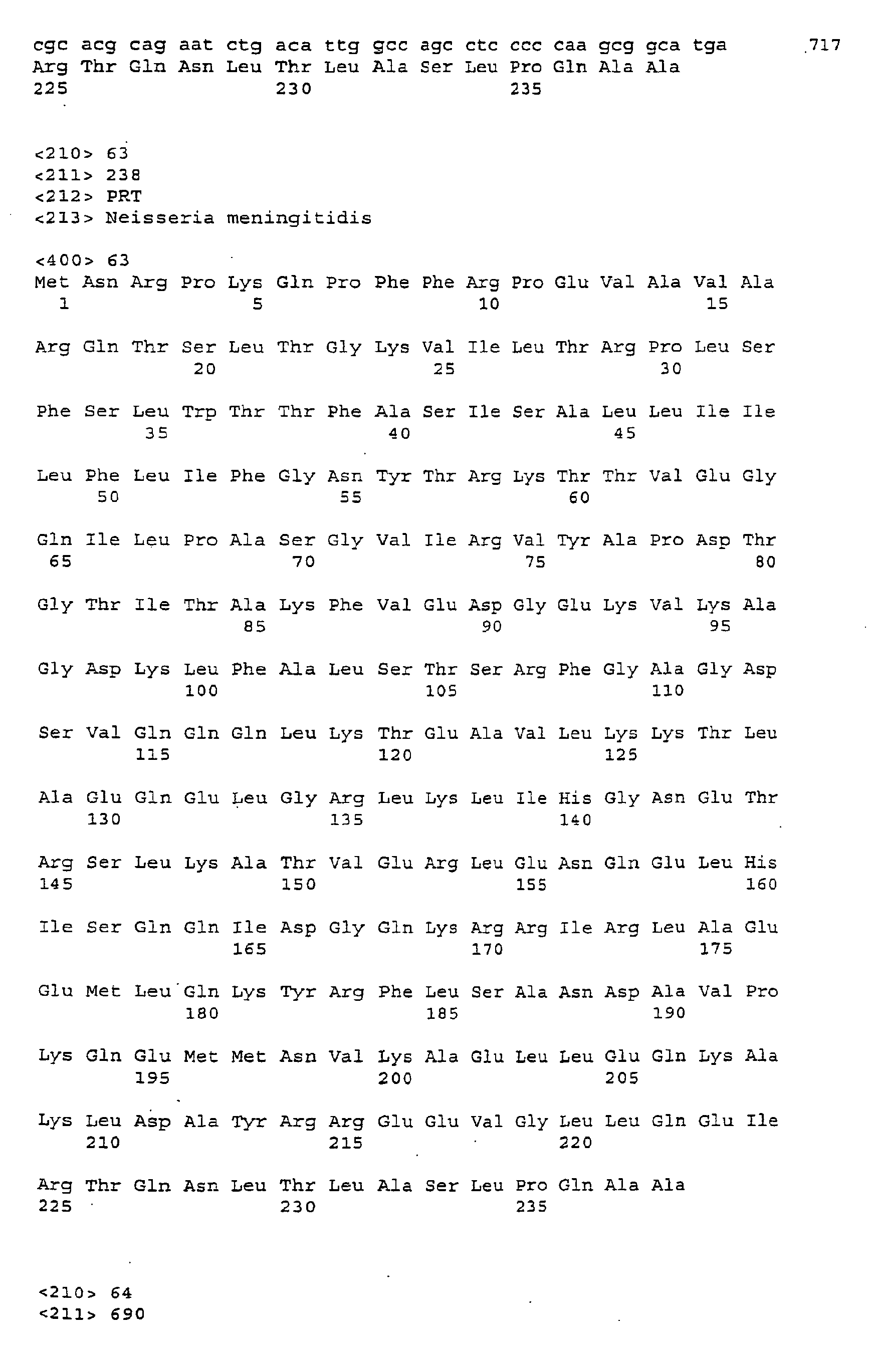
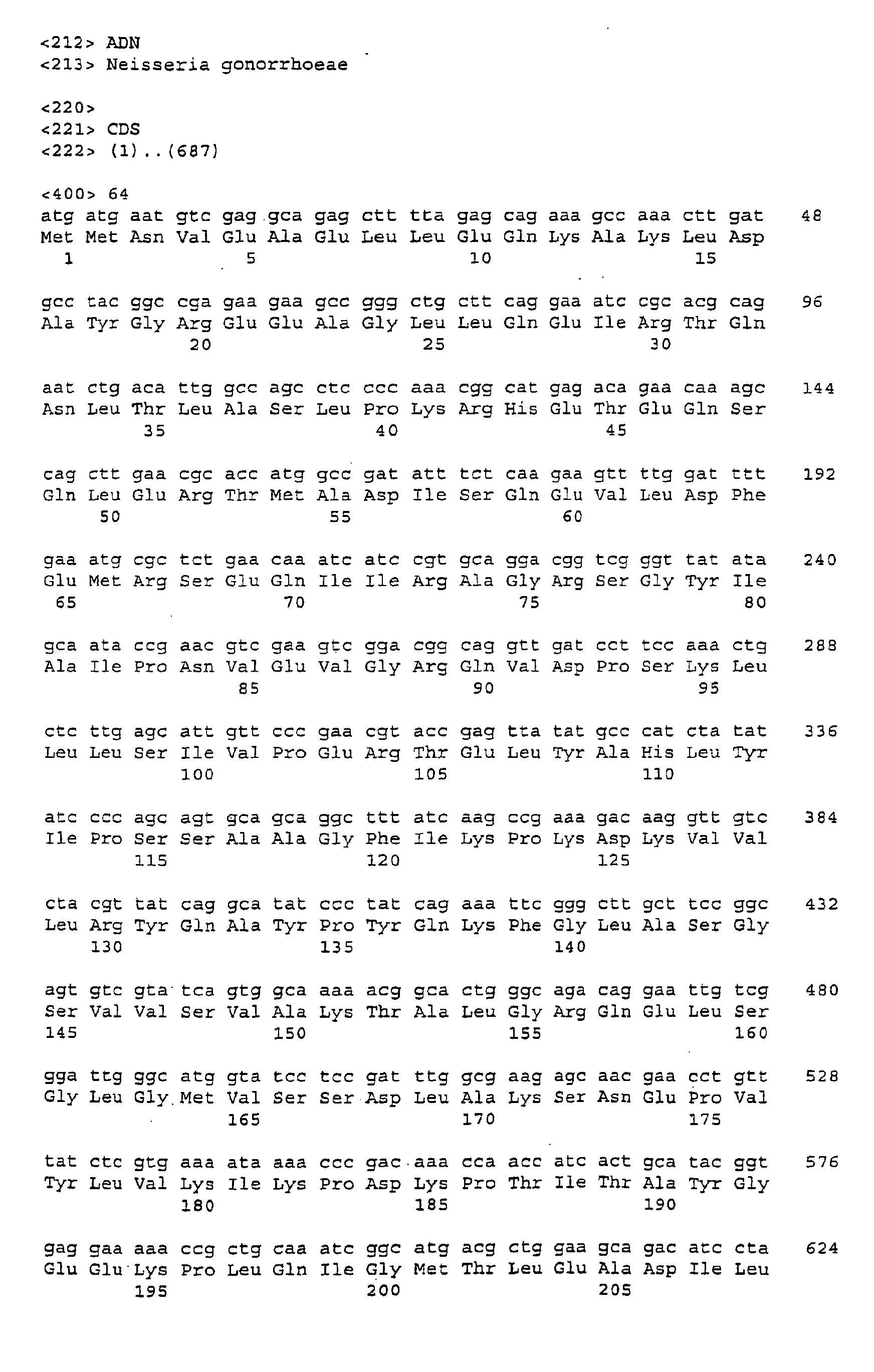
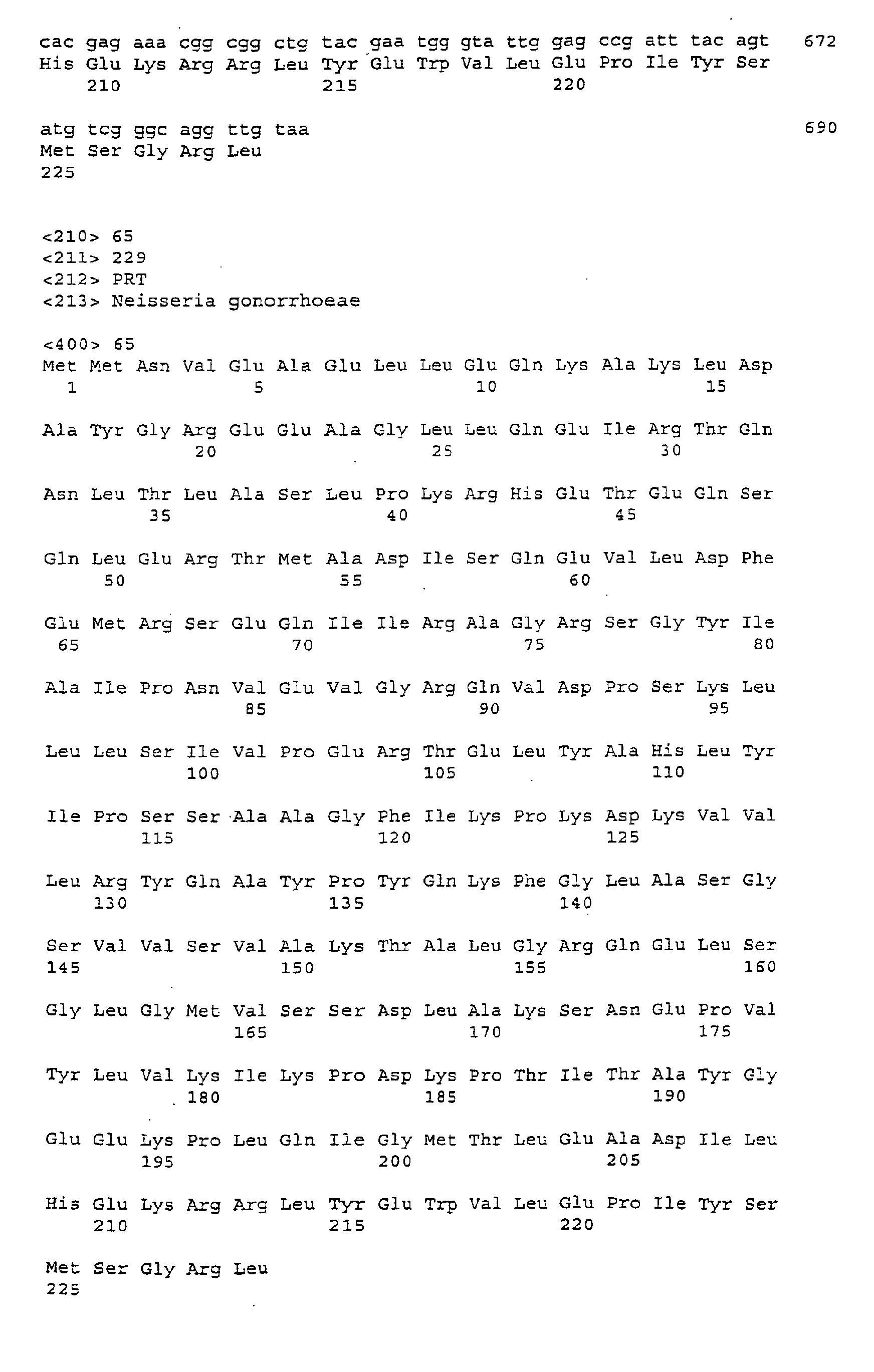
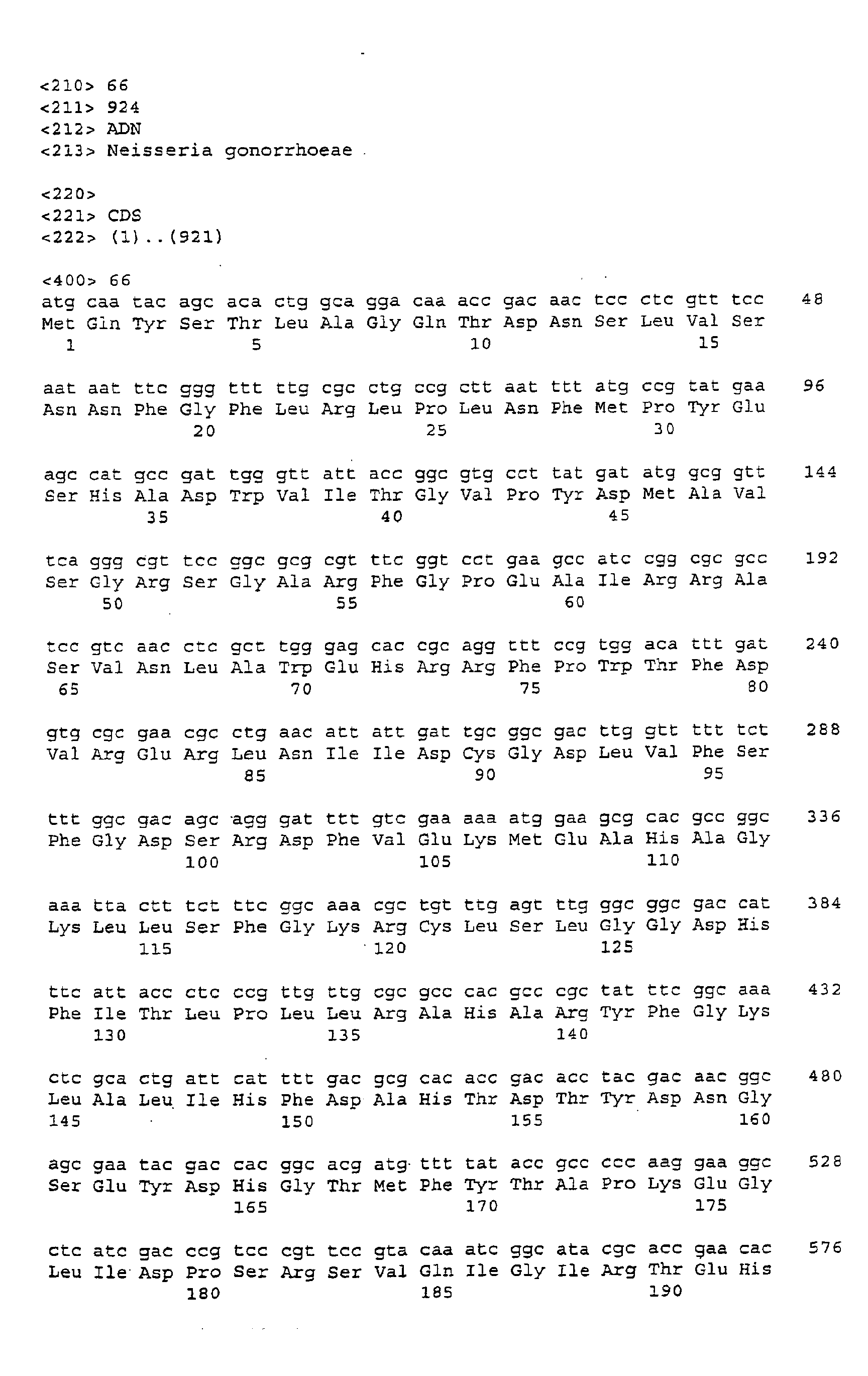
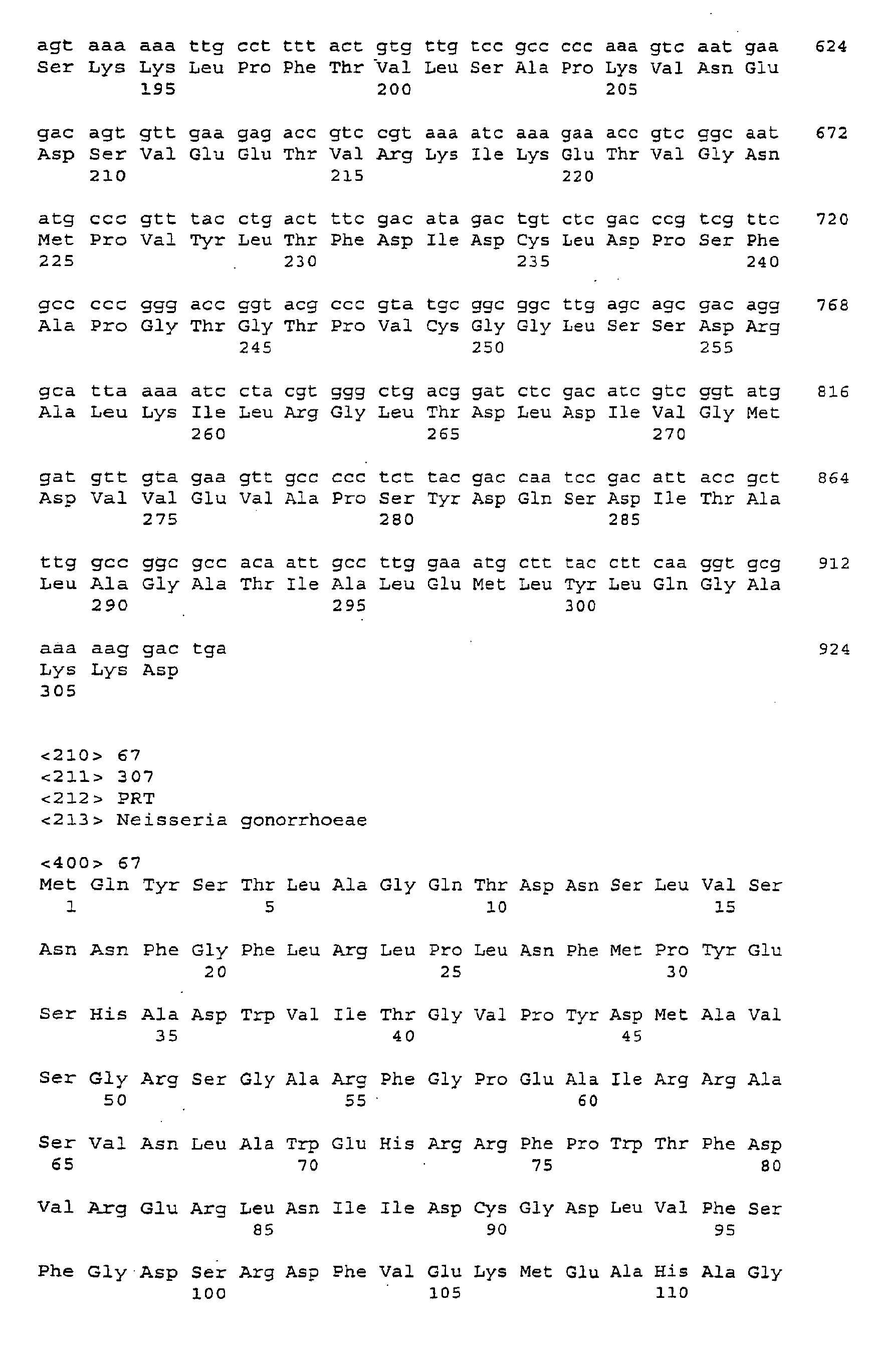
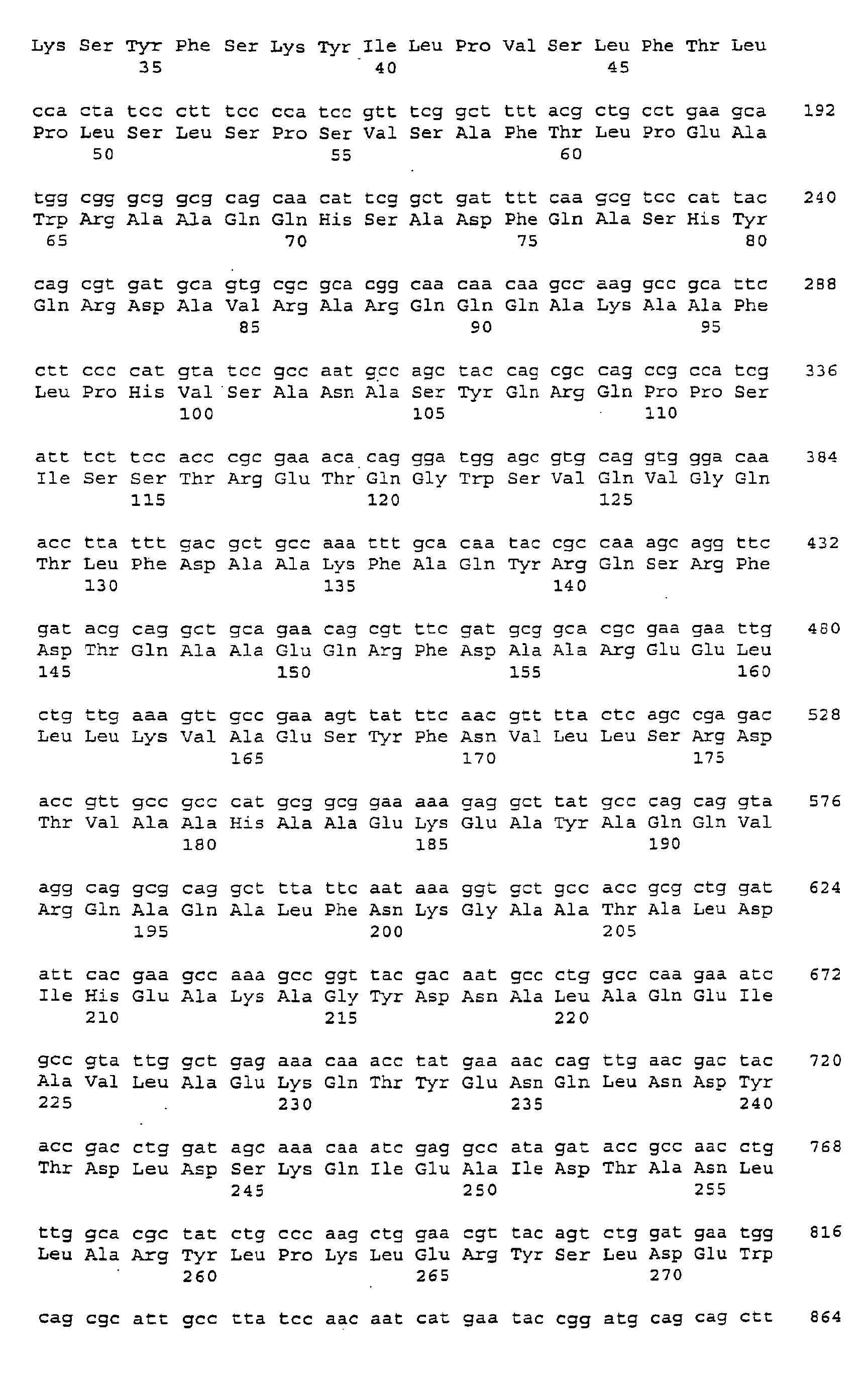
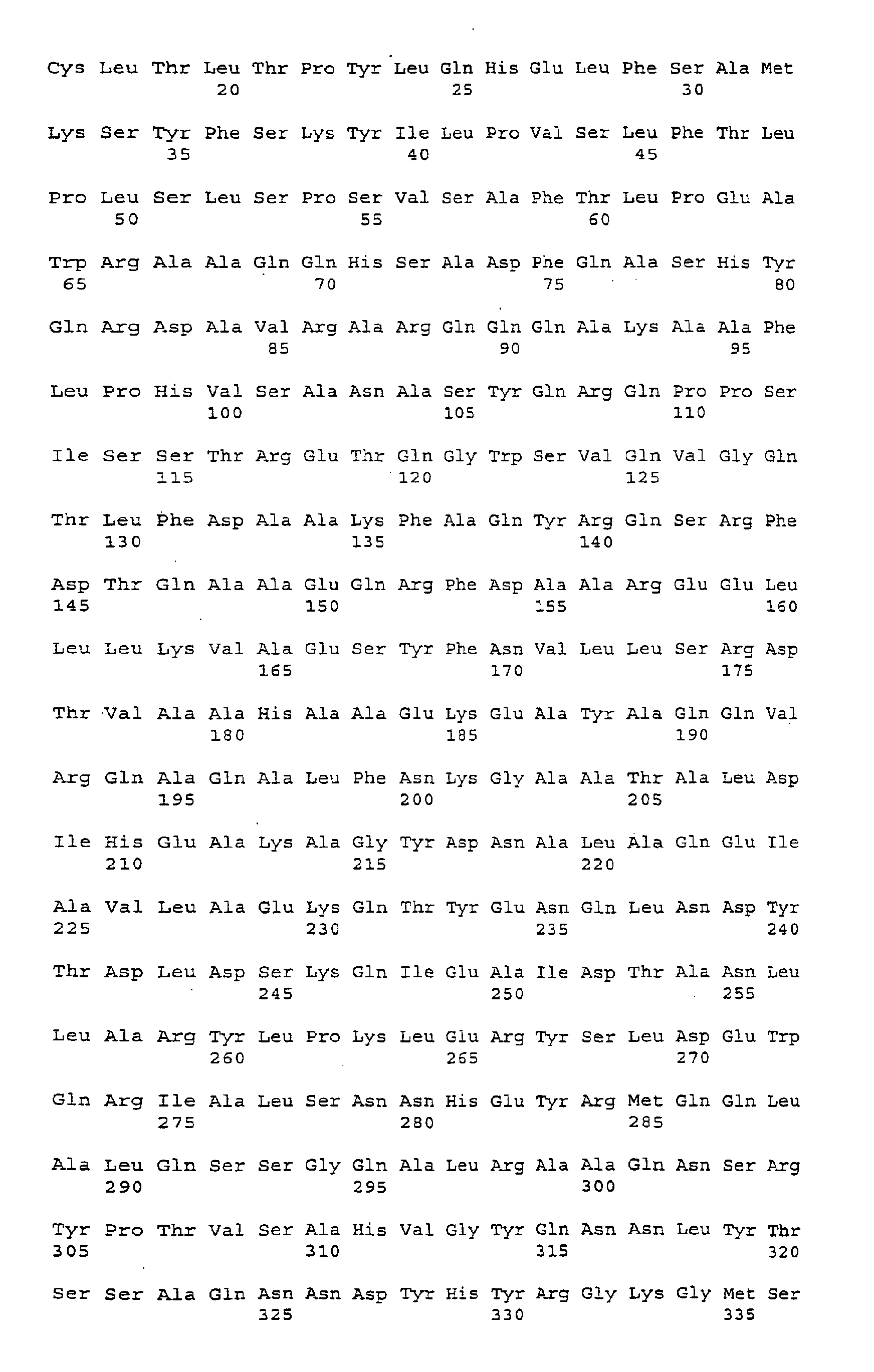
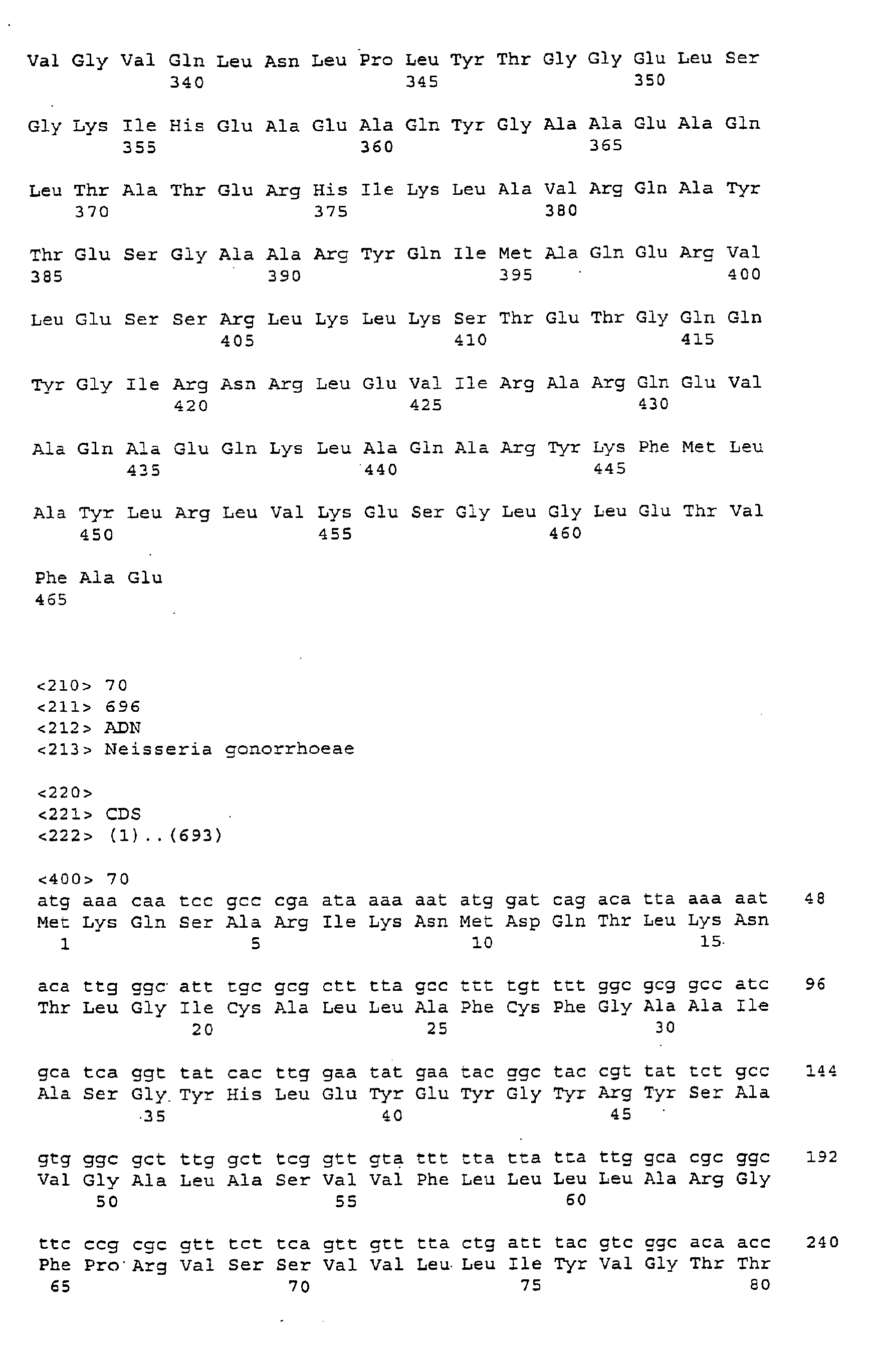
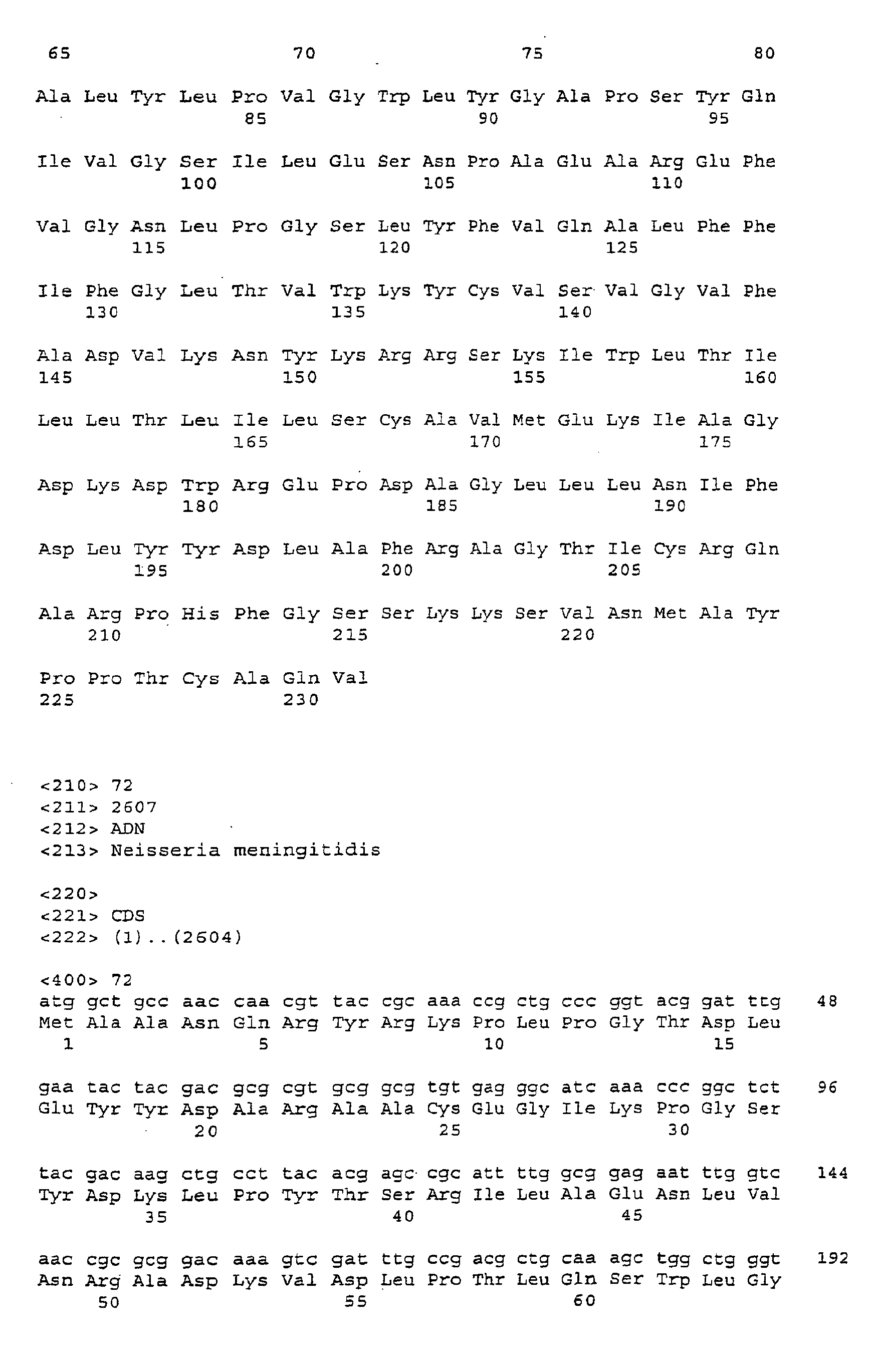
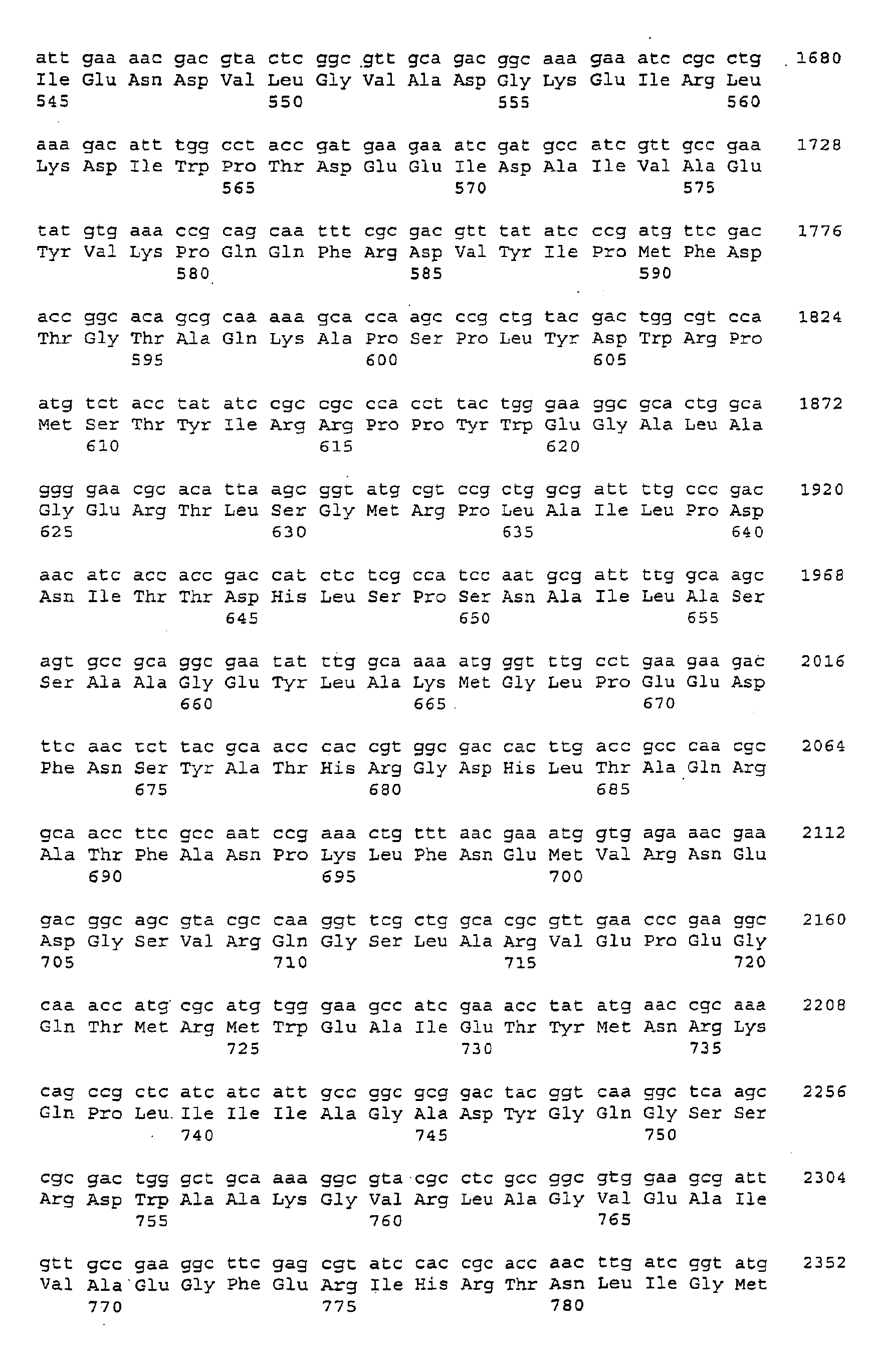
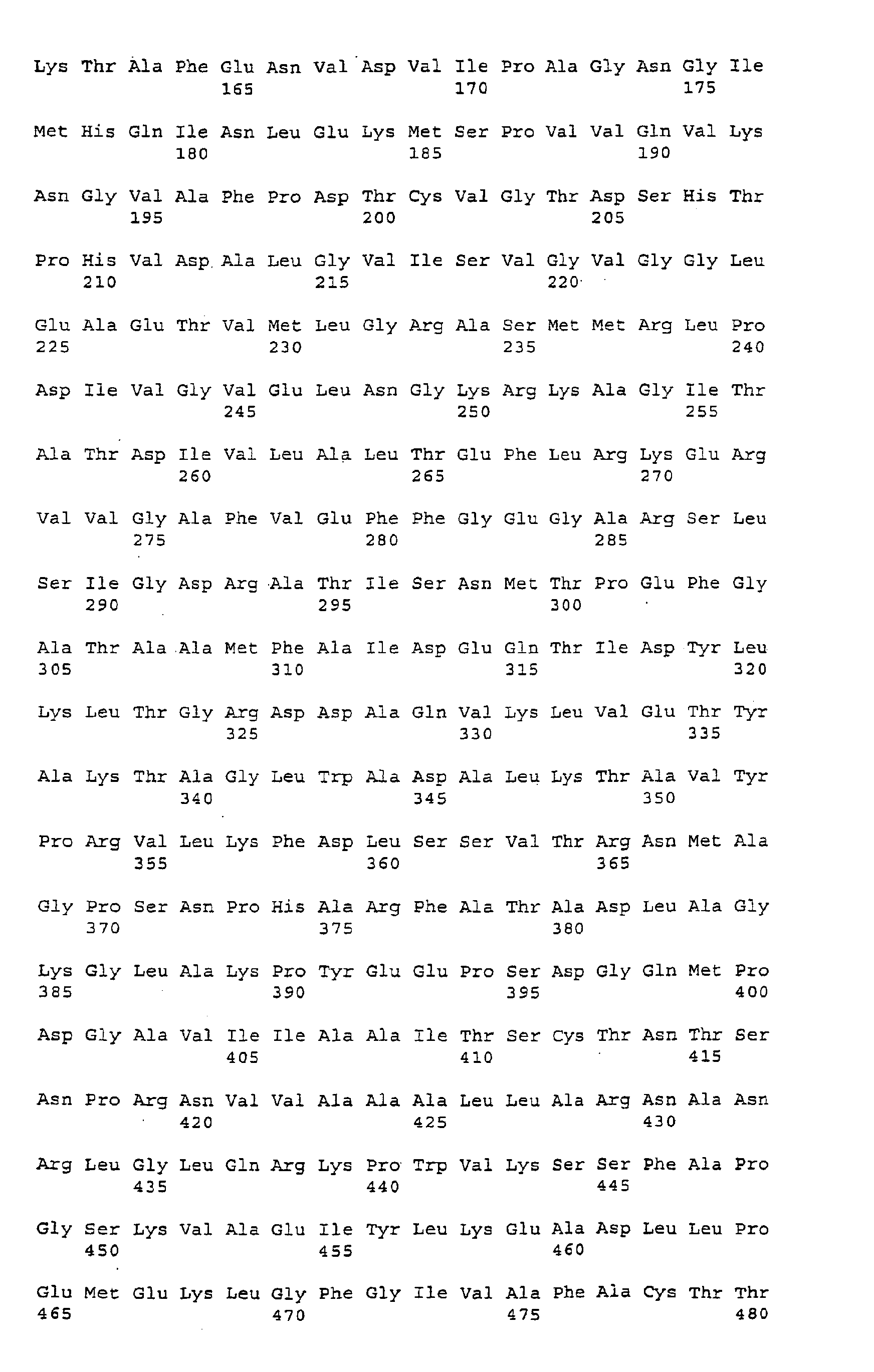
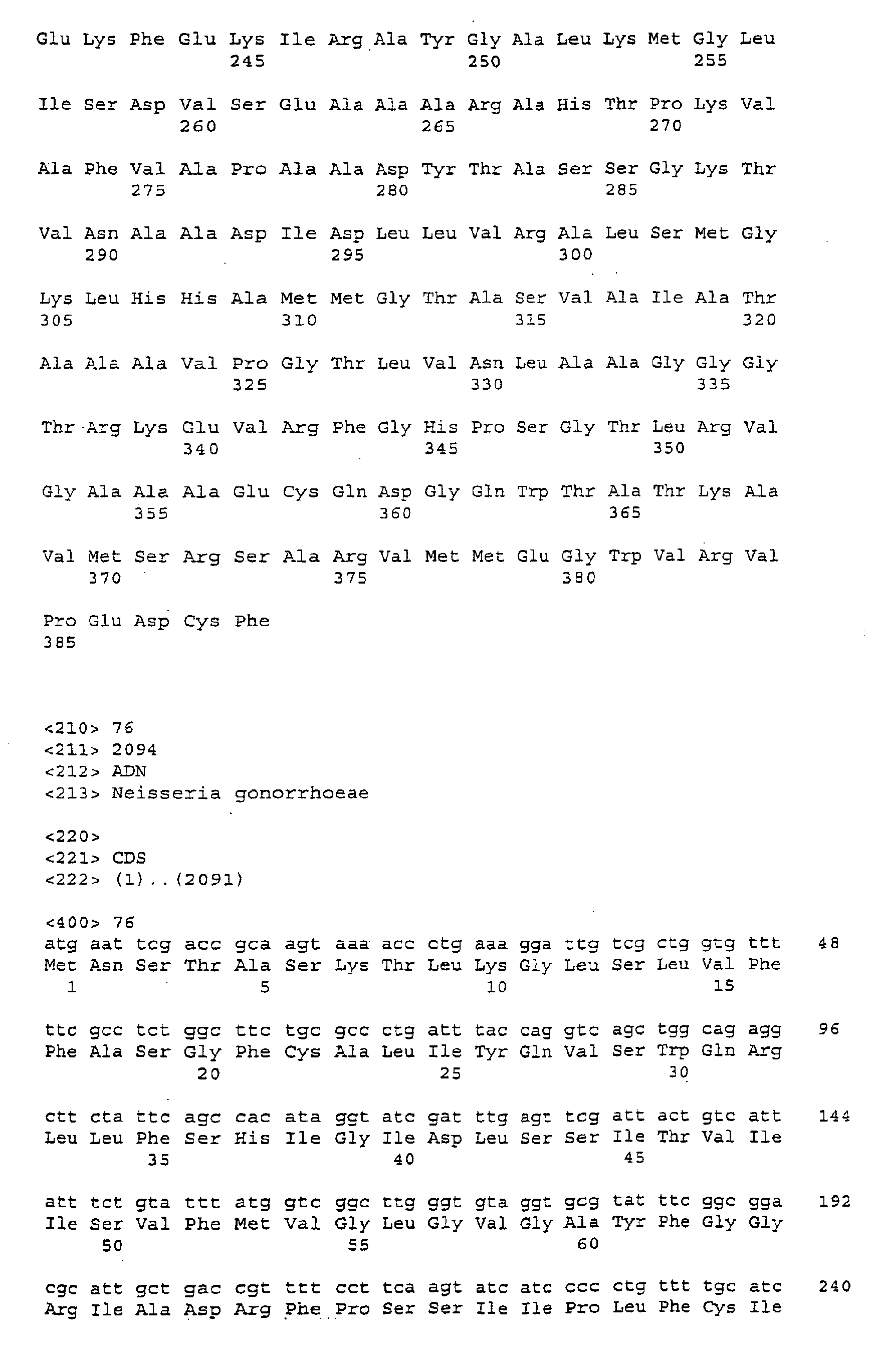
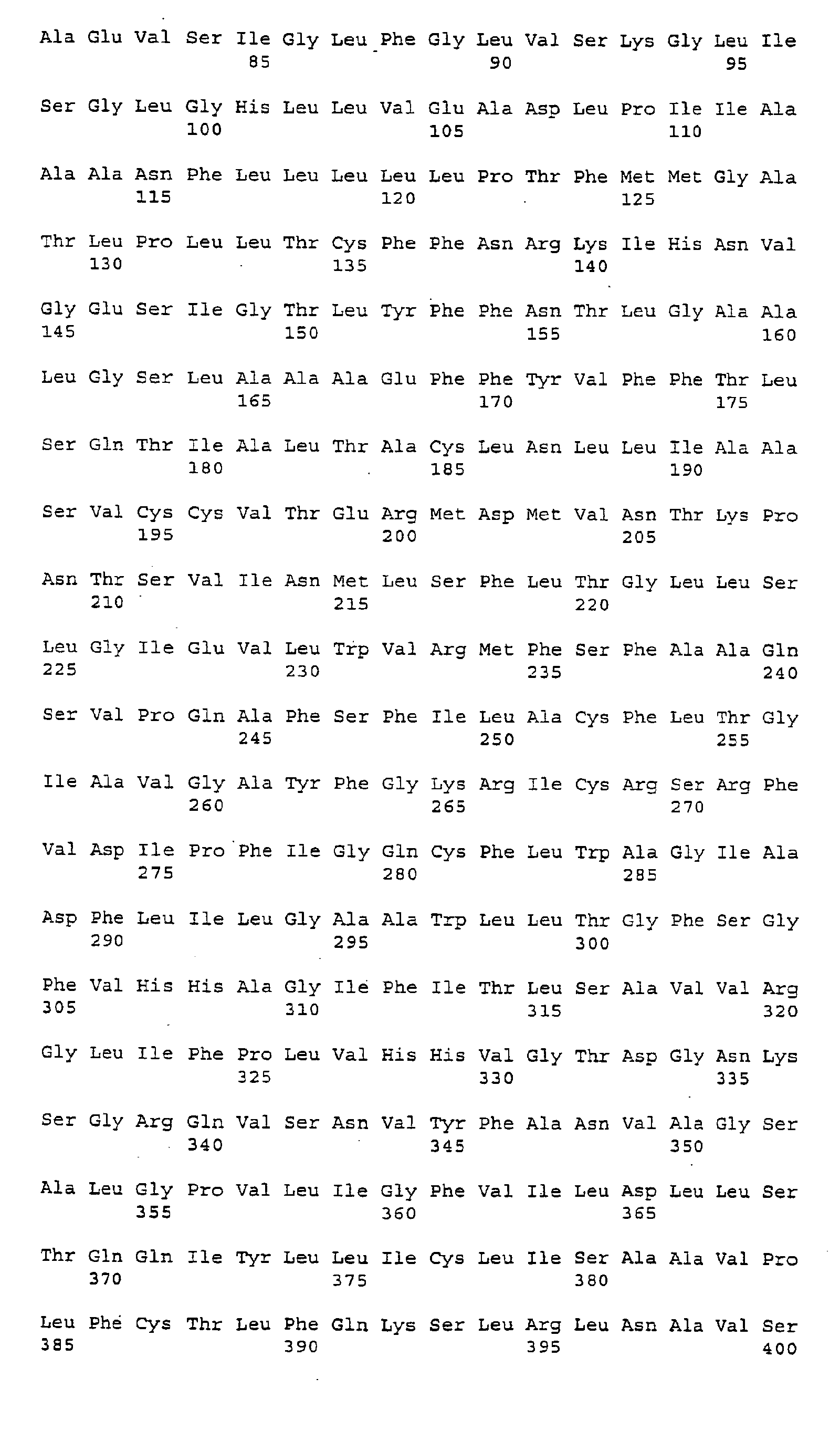
- sequences of the open reading frames originating from the ATCC13090 strain are given in SEQ ID N ° 1 - 51 (odd numbers) and the amino acid sequences which are deduced therefrom, in SEQ ID N ° 2 - 52 (numbers peers).
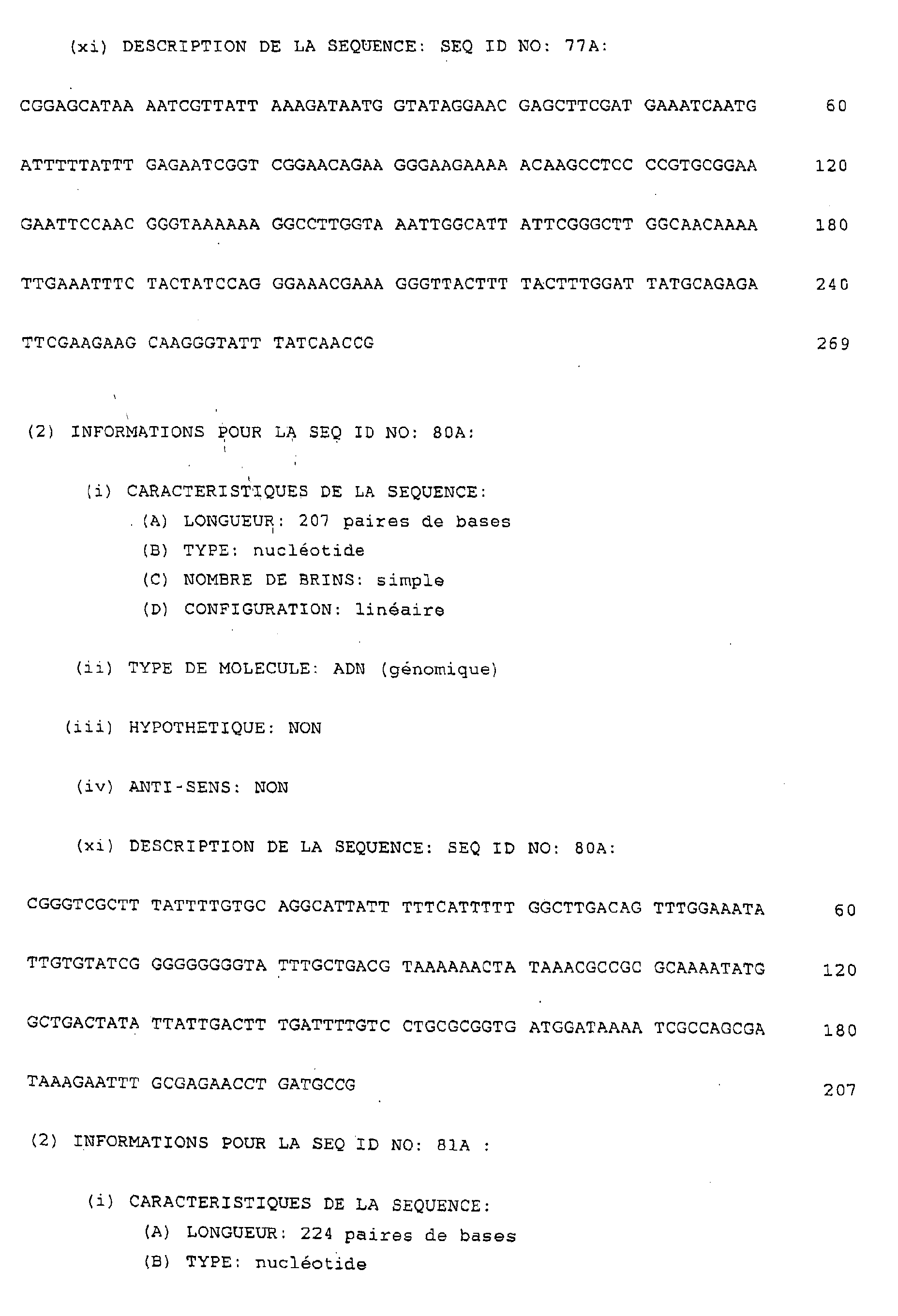
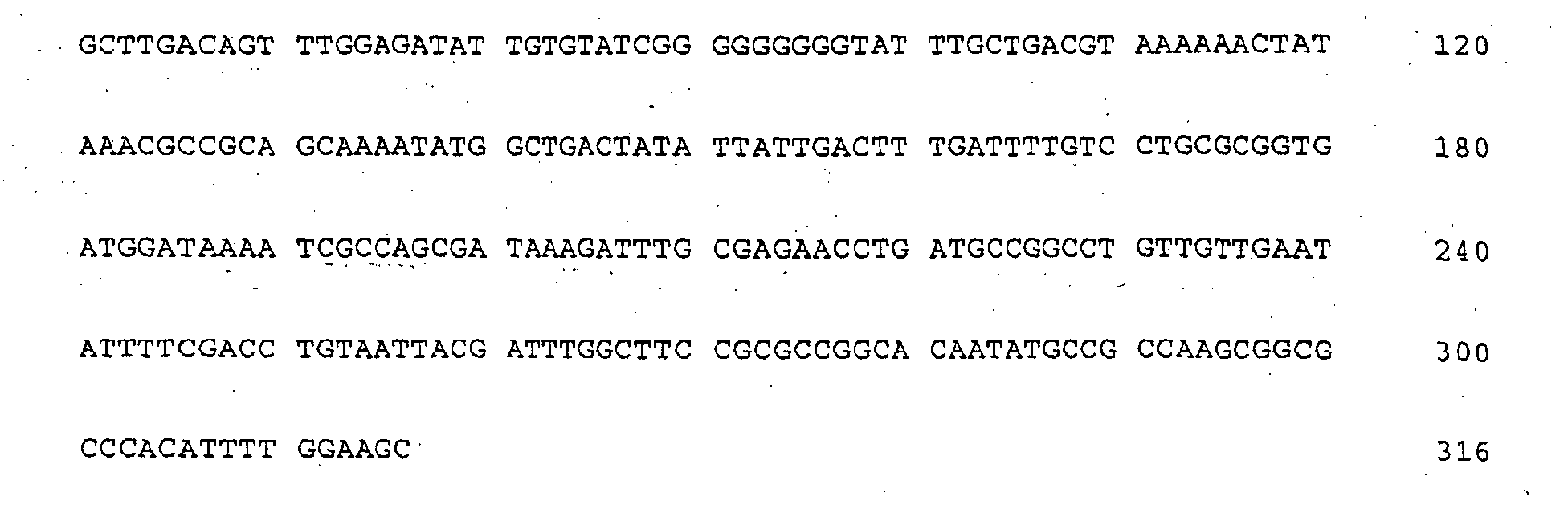
- the present invention therefore relates to a nucleic acid under isolated form encoding a polypeptide, or an antigenic fragment thereof excluding the nucleic acids disclosed in SEQ ID Nos. 70, 73, 74, 77, 80, 81, 87, 88, 89, 94, 95 and 98 of application WO 98/02547 (sequences annexed to this description and numbered SEQ ID No.
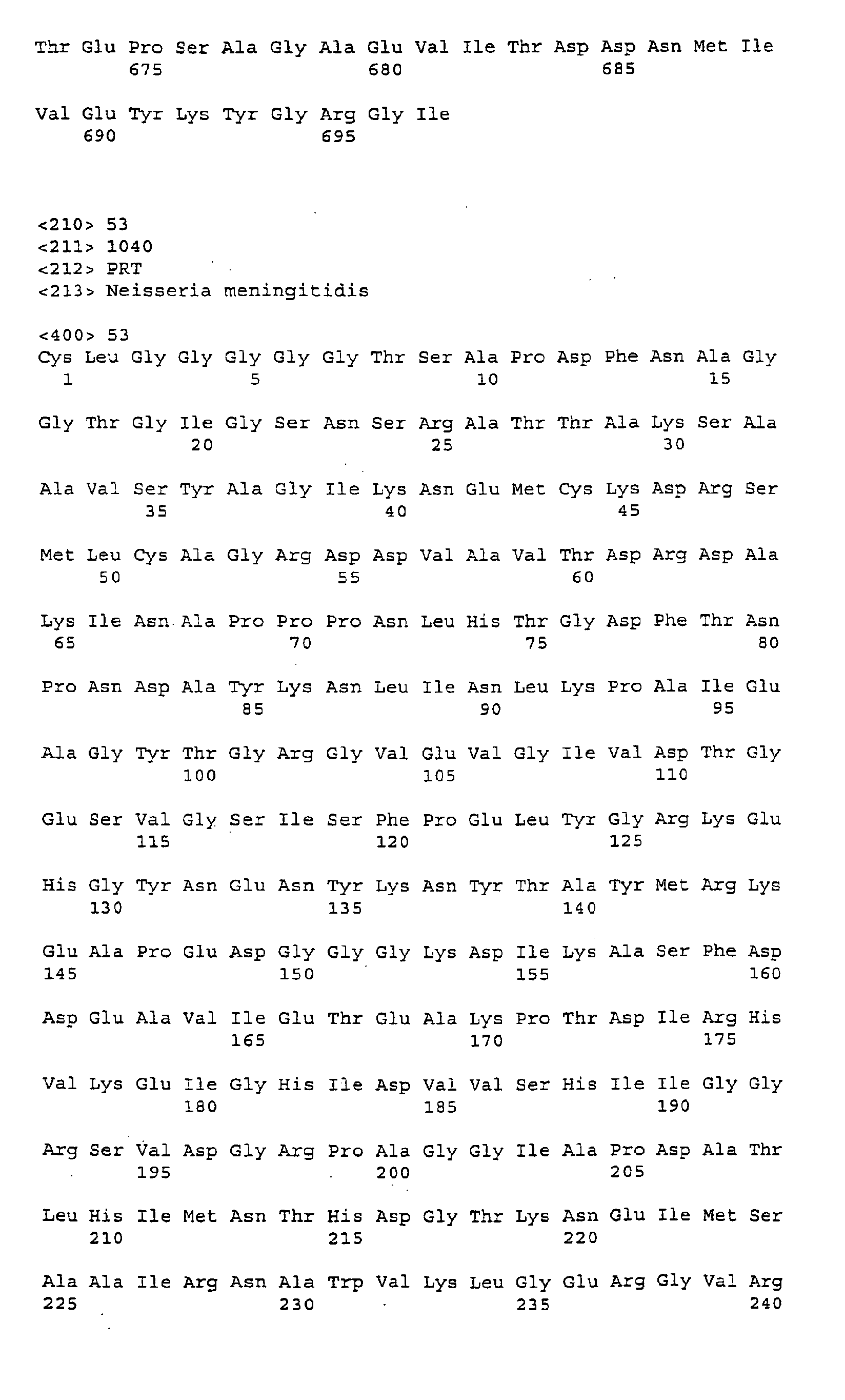
- polypeptide having an acid sequence amines which is identical or homologous to a sequence chosen from those of group II; group II consisting of the sequences shown in the SEQ ID No. 2 - 52 (even numbers) and the sequence SEQ ID No. 53.
- said nucleic acid may have a nucleotide sequence chosen from those of group I, group I being consisting of the sequences shown in SEQ ID n ° 1-51 (numbers odd).
- nucleic acid includes and also means ORF, gene, polynucleotide, DNA and RNA.
- nucleic acid in the form isolated means a nucleic acid separated from the biological environment in which it is found in natural conditions. For example, a molecule of DNA exists under natural conditions when it is integrated into a genome or when it is part of a gene bank. In that case there, it cannot be in isolated form. However, the same separate molecule of the genome by cloning (for example following an amplification by PCR) must be considered to be in isolated form. Typically, a DNA molecule in isolated form, does not contain the coding regions which are contiguous in 5 'and 3' in the genome from which it comes. Acids nucleic acids in isolated form can be integrated into vectors (by example plasmids or viral or bacterial vectors) without departing of their characteristic of being separated from their natural environment.
- the authors of the present invention have more particularly found that the ORFs which, when they came from the ATCC 13090 strain, were characterized by the sequences as shown in SEQ ID Nos. 19, 27, 39, 45, 47 and 49 , were specific for Neisseria meningitidis insofar as it was not possible to identify identical or homologous sequences in the genome of N. gonorrhoeae . They also found that the ORF characterized by the strain sequence as shown in SEQ ID No. 39 was specific for serogroup B Neisseria meningitidis .
- the subject of the invention is also a polypeptide in the form isolated or a fragment thereof; said polypeptide having a sequence amino acids identical or homologous to a sequence chosen from those of group II.
- amino acids framed in the sequence SEQ ID No. 8 correspond to the signal sequence, the amino acid in bold represents the first amino acid of the mature form.
- amino acid sequence of the mature protein form is represented in SEQ ID No. 53.
- polypeptide and protein are equivalent and interchangeable with each other. They denote any chain of amino acids, whatever its length and its post-translational modifications (for example, phosphorylation or glycosylation).
- antigenic fragments of the polypeptides specific for pathogenic strains of the genus Neisseria is meant the polypeptides derived from the polypeptides of the invention as defined above, by deletions of parts of said polypeptides without destruction of the antigenicity (for example, without loss significant of the antigenic activity) of said polypeptides.
- the specific antigenicity can be determined using various methods known to those skilled in the art, as explained below.
- These fragments preferably have at least 12 amino acids of long, more preferably at least 20 amino acids long, preferably 50 amino acids long, more preferably 75 acids long amino acids, preferably 100 long amino acids.
- fragments can be used to reveal epitopes which can be masked in parent polypeptides. They are also advantageous for inducing a protective immune response dependent on T lymphocytes Deletions can indeed eliminate regions immunodominant with high variability between different strains.
- Such fragments can be obtained using standard techniques known to those skilled in the art (e.g. Ausubel and al, Current Protocols in Molecular Biology, John Wiley & sons Inc, 1994), by example by PCR, RT-PCR, treatment with restriction enzymes cloned DNA molecules, or by the method of Kunkel et al (Proc. Natl. Acad. Sci. USA (1985) 82: 448).
- homologous amino acid sequence is meant a sequence which differs from one of the group II sequences by substitution, deletion, and / or insertion of one or more amino acids, at positions such that these modifications do not destroy the specific antigenicity of the polypeptide in question.
- substitutions are preferably substitutions conservative, that is to say substitutions of amino acids of the same class, such as amino acid substitutions for uncharged side chains (such as asparagine, glutamine, serine, threonine, and tyrosine), amino acids with basic side chains (such as lysine, arginine, and histidine), amino acids to the acid side chains (such as acid aspartic and glutamic acid); amino acids to the side chains apolar (such as glycine, alanine, valine, leucine, isoleucine, proline, phenylalanine, methionine, tryptophan, and cysteine).
- amino acid substitutions for uncharged side chains such as asparagine, glutamine, serine, threonine, and tyrosine
- amino acids with basic side chains such as lysine, arginine, and histidine
- amino acids to the acid side chains such as acid aspartic and glutamic acid
- a homologous amino acid sequence has a degree of homology ( ie , identity) of at least 75% with one of the sequences of group II; preferably this degree of homology is at least 80%, very preferably, at least 90%.
- the homologous amino acid sequences include in particular the sequences which are substantially identical to one of the group II sequences.
- substantially identical sequence is meant a sequence whose degree of homology ( ie ., Of identity) with one of the sequences of group II is at least 90%, advantageously at least 95%, preferably d '' at least 97%, most preferably at least 99%. In addition, it may differ from the reference sequence only by a majority of conservative substitutions.
- the degree of homology is usually determined using sequence analysis software (for example, Sequence Analysis Software Package of the Genetics Computer Group, University of Wisconsin Biotechnology Center, 1710 University Avenue, Madison , WI 53705). Similar amino acid sequences are aligned to obtain the maximum degree of homology (ie identity). To this end, it may be necessary to artificially introduce spaces ("gaps") in the sequence. Once the optimal alignment has been achieved, the degree of homology ( ie . Identity) is established by recording all the positions for which the amino acids of the two sequences compared are identical, relative to the total number of positions.
- homologous nucleotide sequences sequences which differ from group I sequences by substitution of a nucleotide or several nucleotides, or by deletion and / or insertion of one or several codons, at positions such that these sequences code (i) always for polypeptides having the sequences of group II, by effect of degeneration of the genetic code; or (ii) for polypeptides having homologous sequences as defined above.
- a nucleotide sequence counterpart has a degree of homology of at least 60% with one of the group I sequences; preferably this degree of homology is at least 80 %, most preferably at least 90%.
- a homologous nucleotide sequence specifically hybridizes to sequences complementary to the sequences of group I under stringent conditions.
- the temperature at which the test hybridization is implemented is an important factor influencing the stringency.
- this temperature called temperature hybridization (Th)
- Th is chosen from 5 to 40 ° C, preferably from 20 to 25 ° C at below the temperature at which 50% of the paired strands separate (Tm).
- Tm temperature hybridization
- a moderate stringency is established when Th is less than Tm from 30 to 40 ° C.
- Tm 81.5 + 0.41 (% G + C) + 16.6 Log (cation concentration) - 0.63 (% formamide) - (600 / number of bases).
- hybridization experiments are conducted at a temperature of 60 to 68 ° C, for example at 65 ° C.
- stringent hybridization conditions can be for example implemented in 6xSSC, advantageously in 2xSSC or 1xSSC, of preferably in 0.5xSSC, 0.3xSSC or 0.1xSSC (in the absence of formamide).
- a 1xSSC solution contains 0.15 M NaCl and 0.015 sodium citrate.
- the subject of the invention is a polynucleotide in isolated form, which is capable of hybridizing in stringent conditions with a DNA molecule having one of the sequences nucleotides as shown in SEQ ID N ° 1 - 51 (numbers odd) or their complement.
- a particular class of homologous sequences is made up of those found in nature by virtue of the extremely common phenomenon of allelic variation.
- a bacterial species for example, N. meningitidis or N. gonorrhoeae , consists of a wide variety of strains which differ from each other by minor variations, called allelic variations.
- allelic variations a polypeptide which is present in different strains and which obviously fulfills in each of them, the same biological function, may have an amino acid sequence which is not identical from one strain to another.
- the sequences resulting from the allelic variation are purely equivalent or alternative sequences to those of group II.
- the class of allelic variant sequences of one of the sequences of group II consists of the sequences of the polypeptide as it is found in a pathogenic species of the genus Neisseria (for example N. meningitidis or of N. gonorrhoeae) other than the strain of N. meningitidis ATCC 13090.
- the biological function which is associated with the allelic variant sequences is the same as that which is associated with the reference sequence. The differences (substitution, deletion or addition of one or more amino acids) that they present between themselves (including the reference sequence) do not alter the biological function of the polypeptide.
- biological function is meant the function exerted by the polypeptide in the cells which produce it naturally.
- allelic variation is also expressed at the level of the coding sequences.
- a polynucleotide encoding a polypeptide having a sequence which is an allelic variant of one of the sequences of group I can be easily cloned by amplification of the genomic DNA of the strains of pathogenic species of the genus Neisseria , for example by PCR (reaction in the polymerase chain), using synthetic oligonucleotide primers capable of hybridizing at the 5 ′ and 3 ′ ends of the coding region.
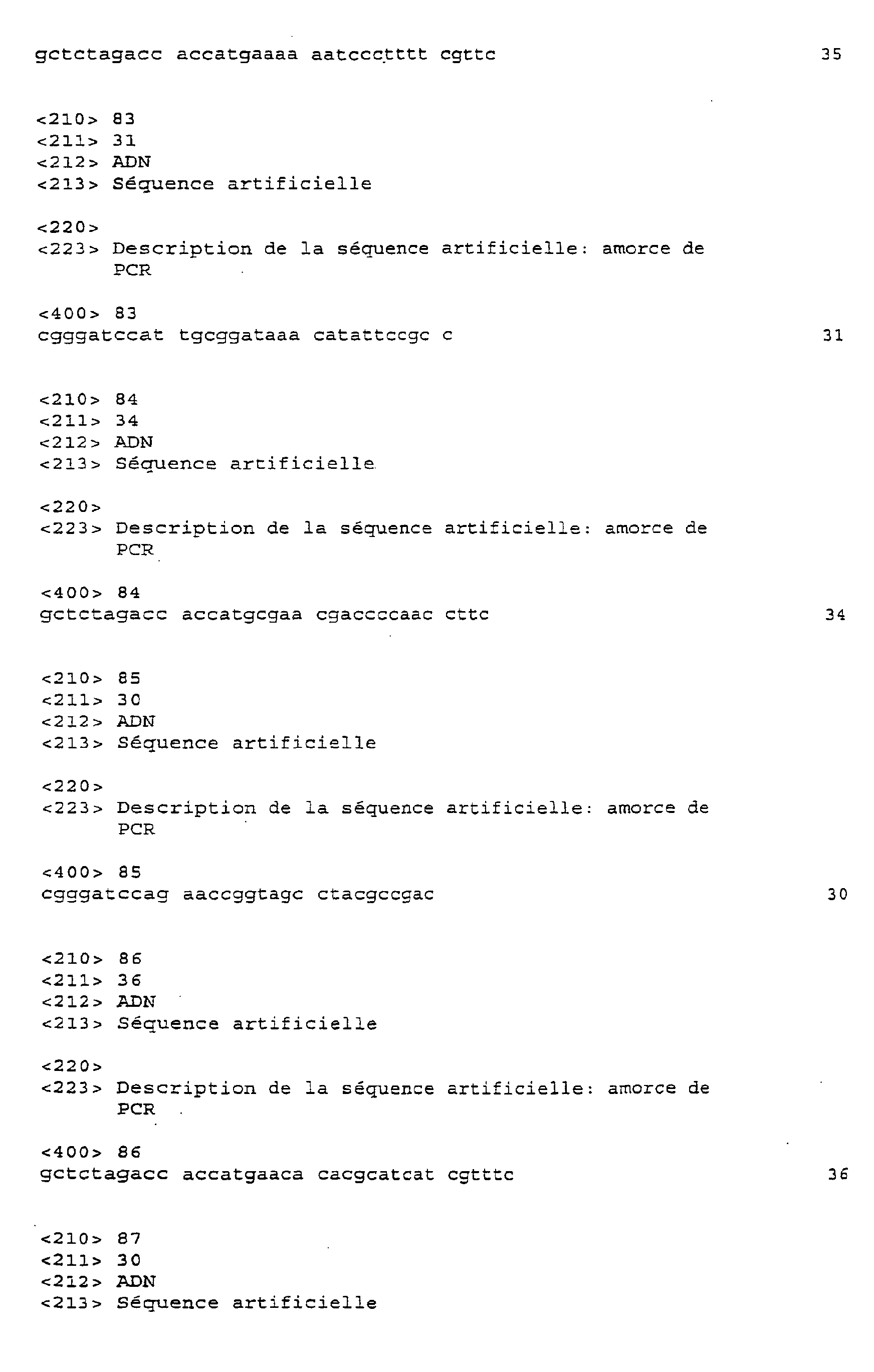
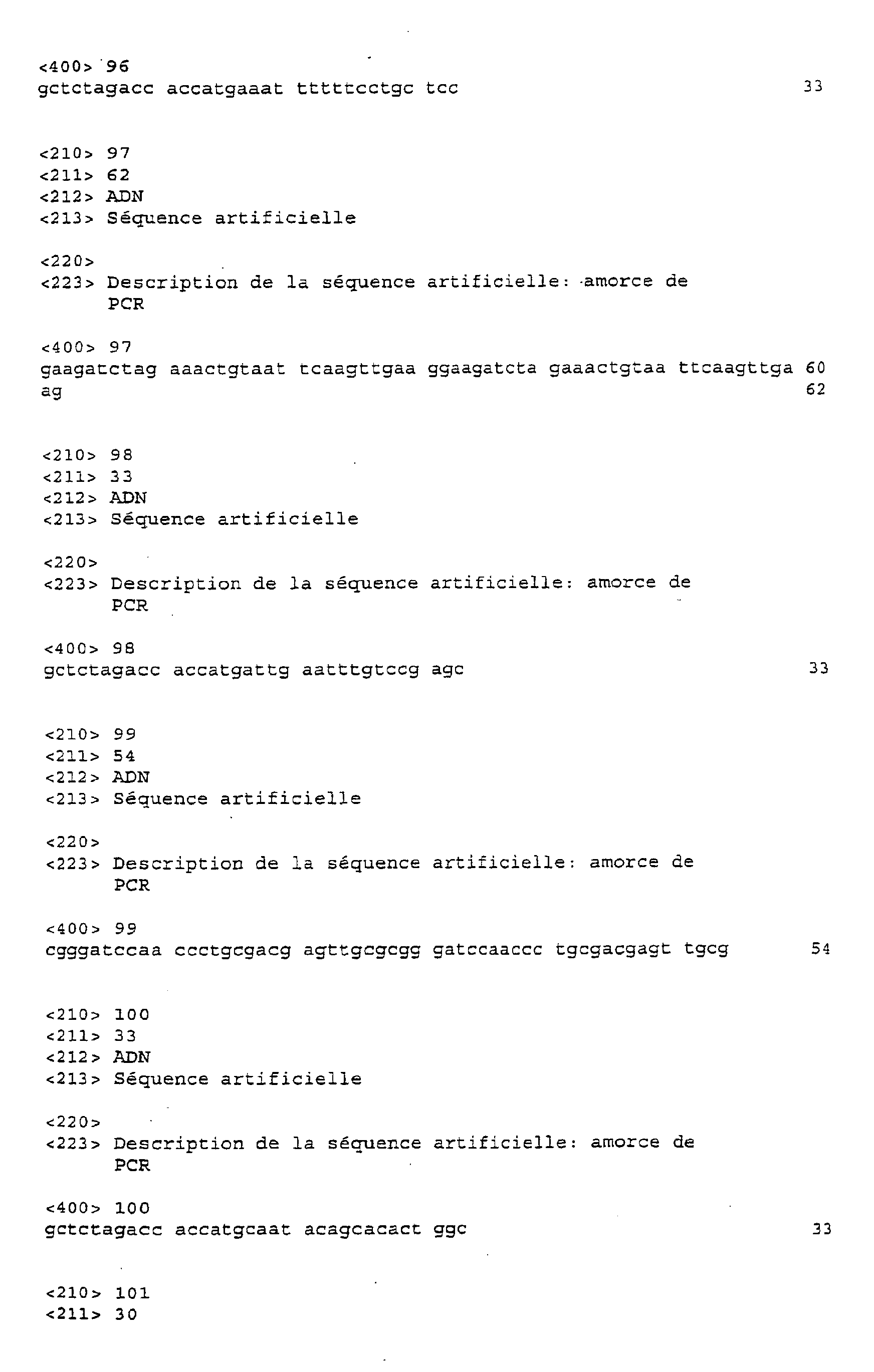
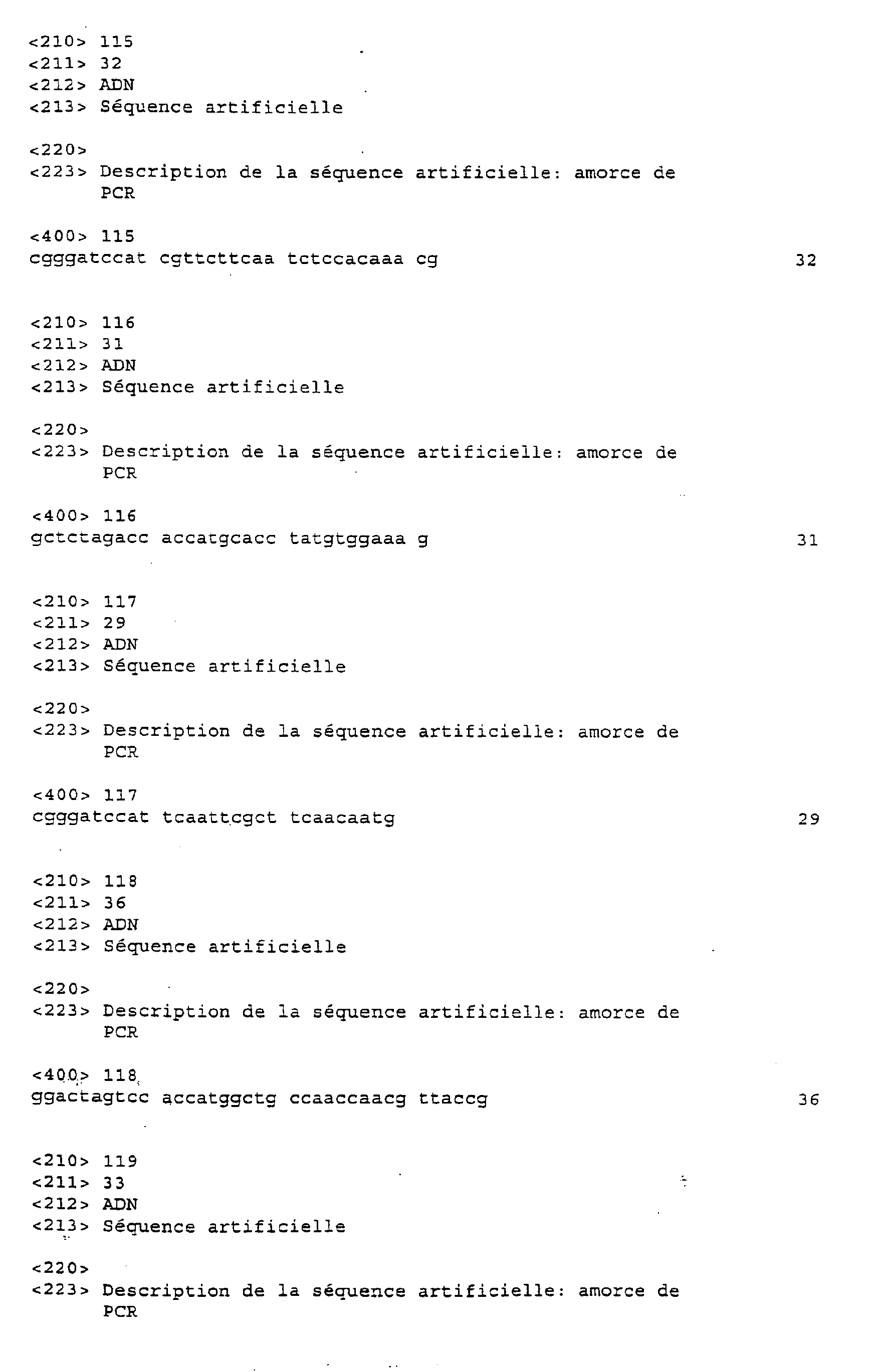
- the sequences of such primers can easily be established by a person skilled in the art from the nucleotide sequences given in SEQ ID Nos. 1 - 51 (odd numbers).
- the primers generally have 10 to 40 nucleotides, preferably 15 to 25 nucleotides.
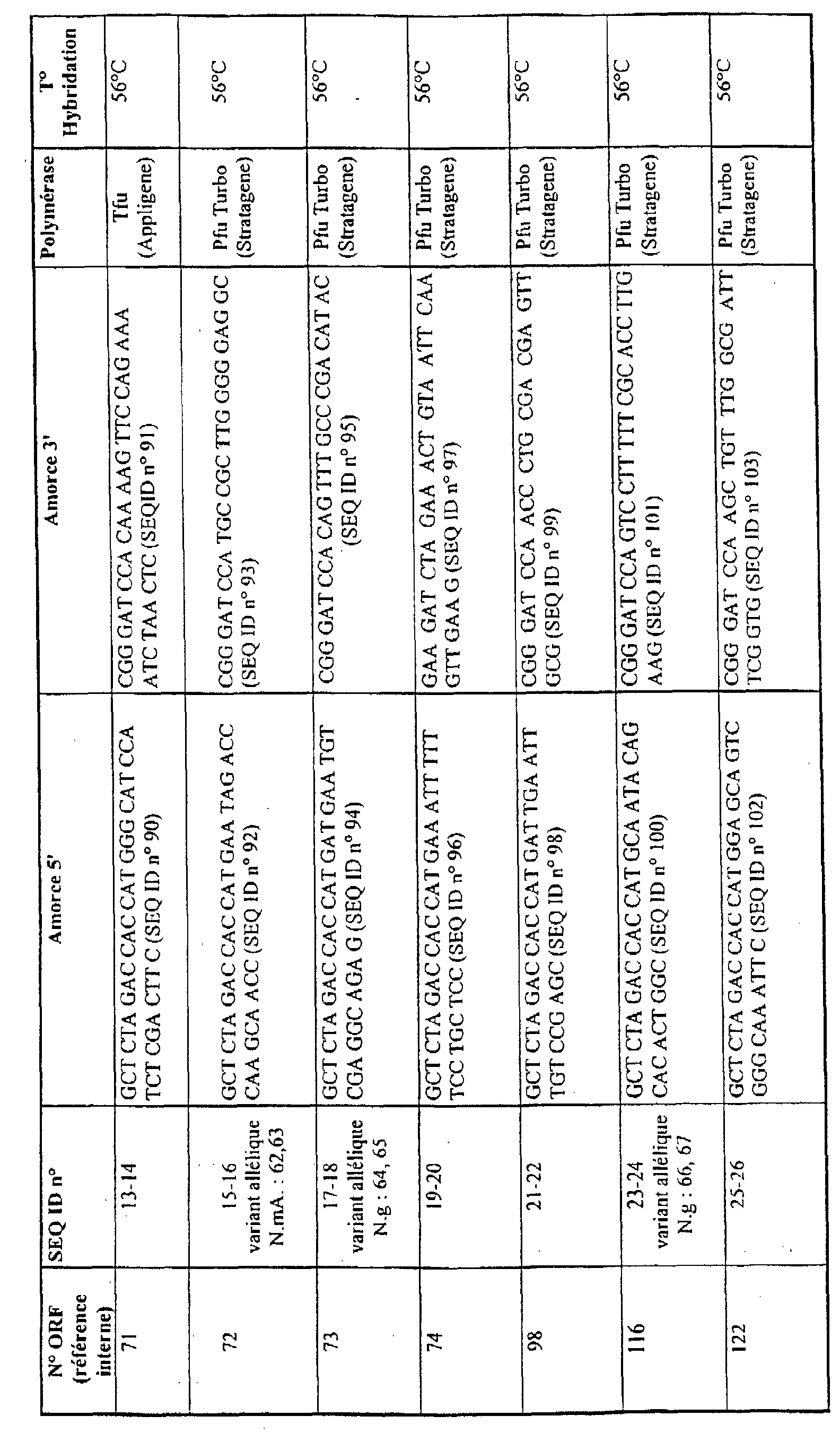
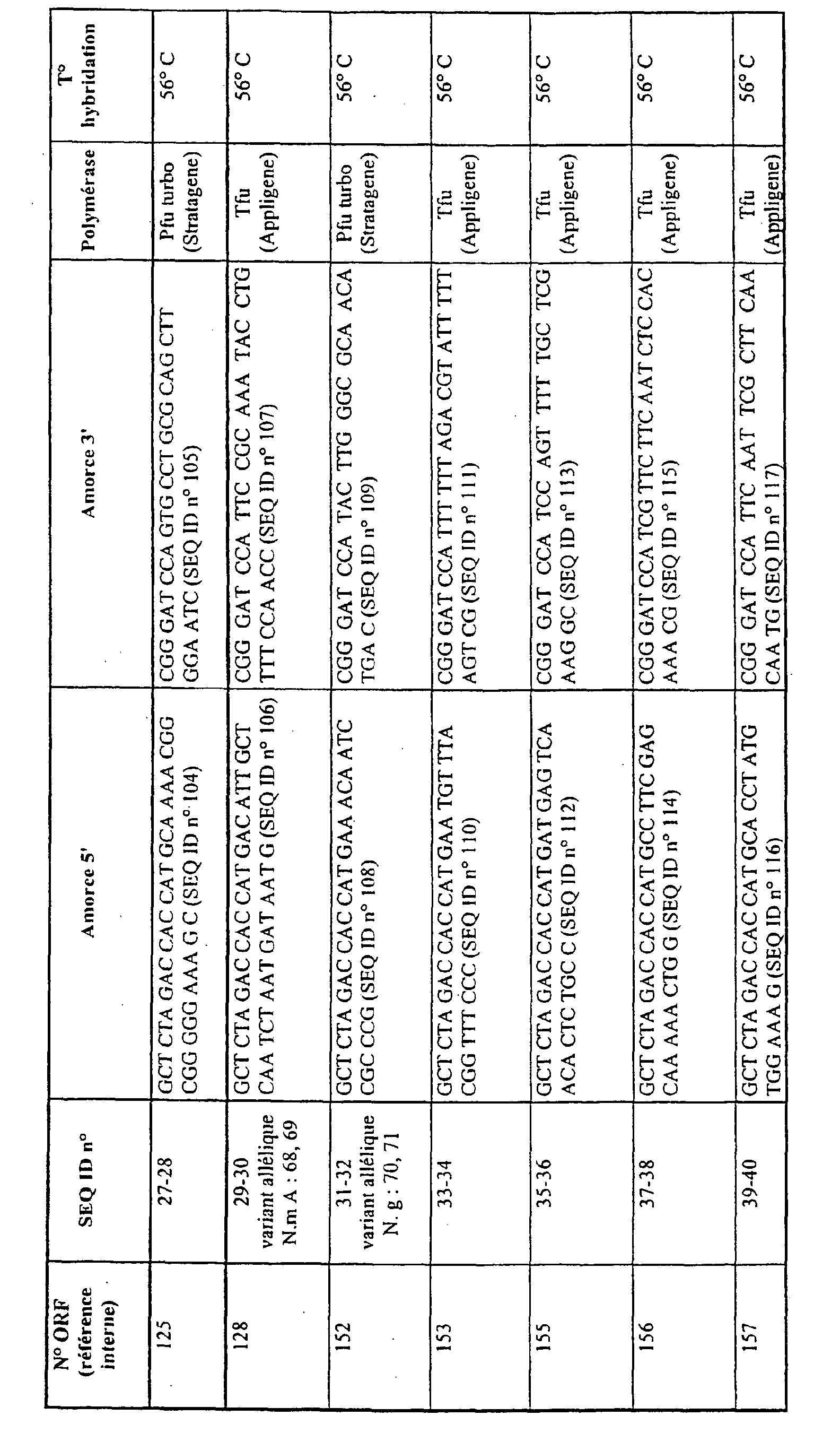
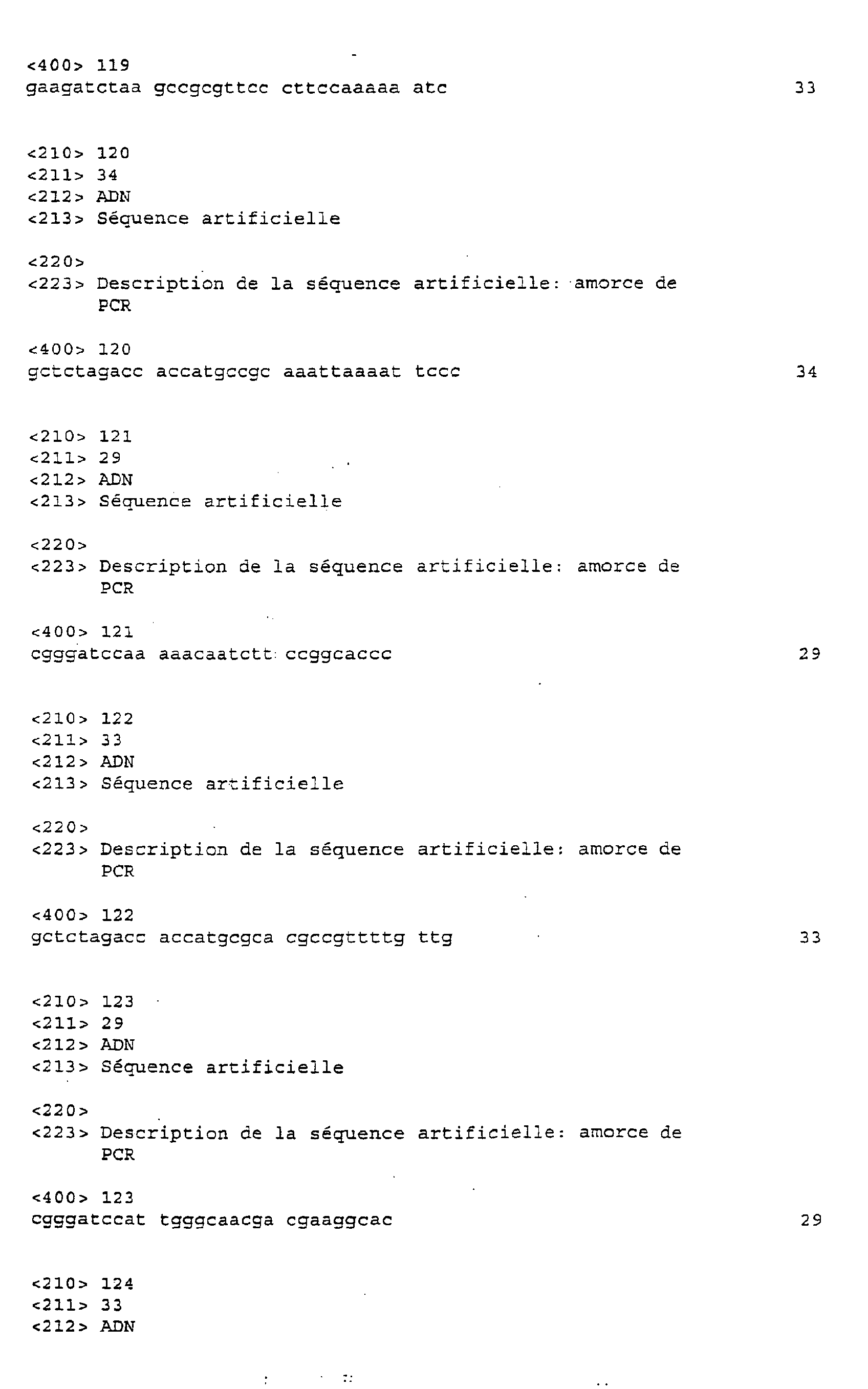
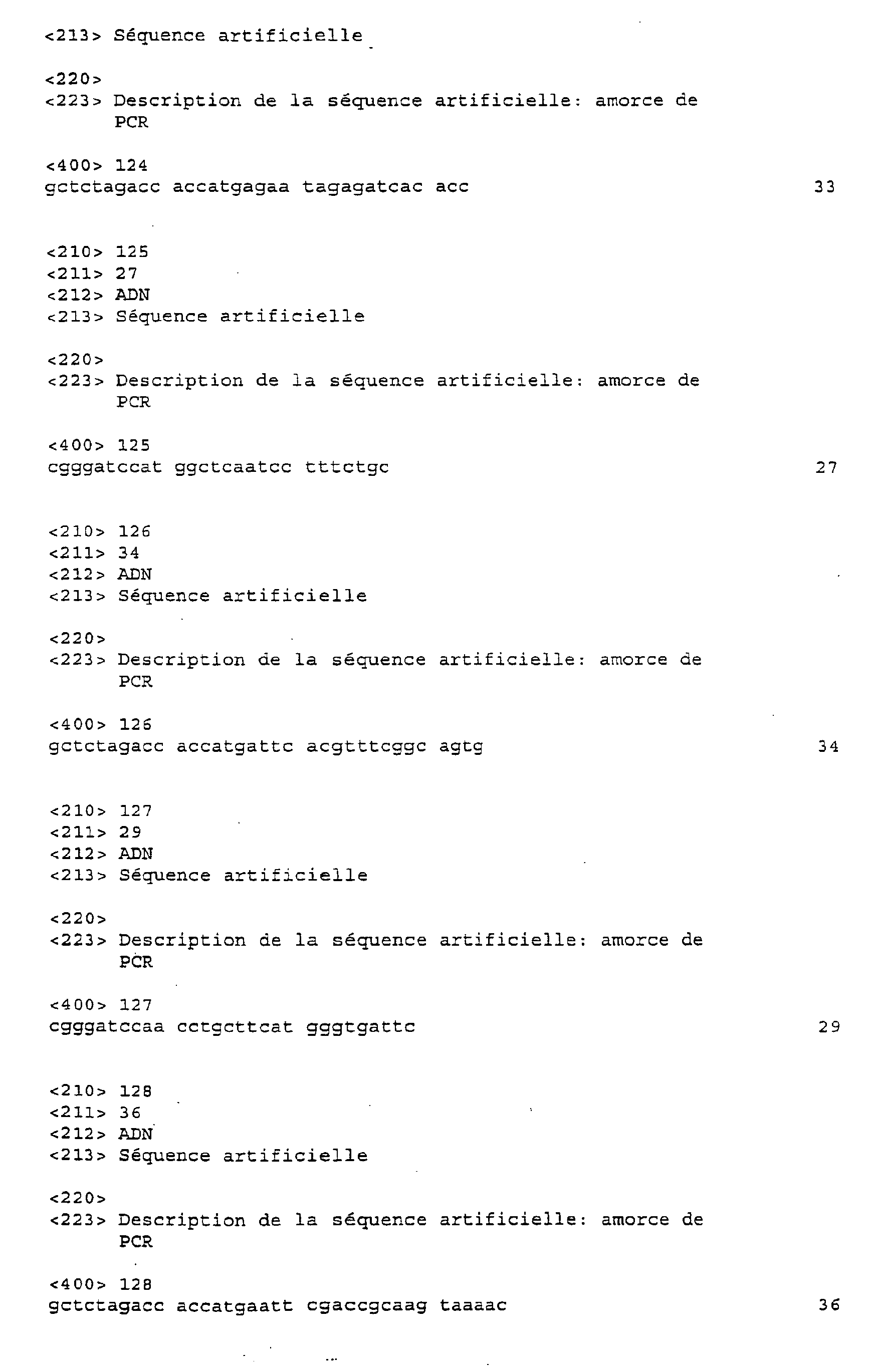
- the subject of the invention is a DNA molecule in isolated form which can be amplified and / or cloned by PCR from the genome of a strain of pathogenic Neisseria using a pair 5 'and 3' PCR primers; the sequences of these primers being established from one of the nucleotide sequences as shown in SEQ ID N ° 1 - 51 (odd numbers). An example is given for each pair of primers in Example 1.1 below.
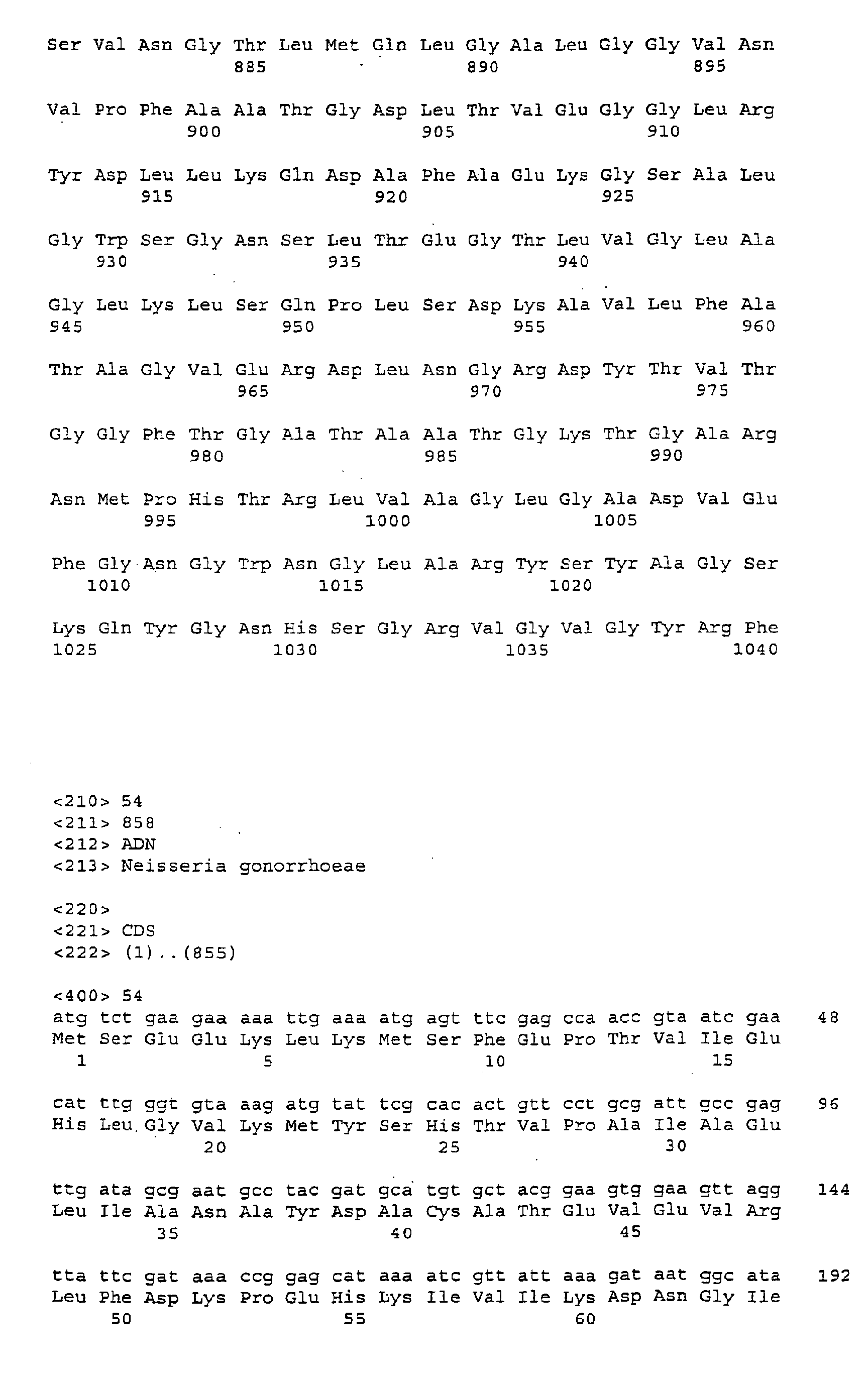
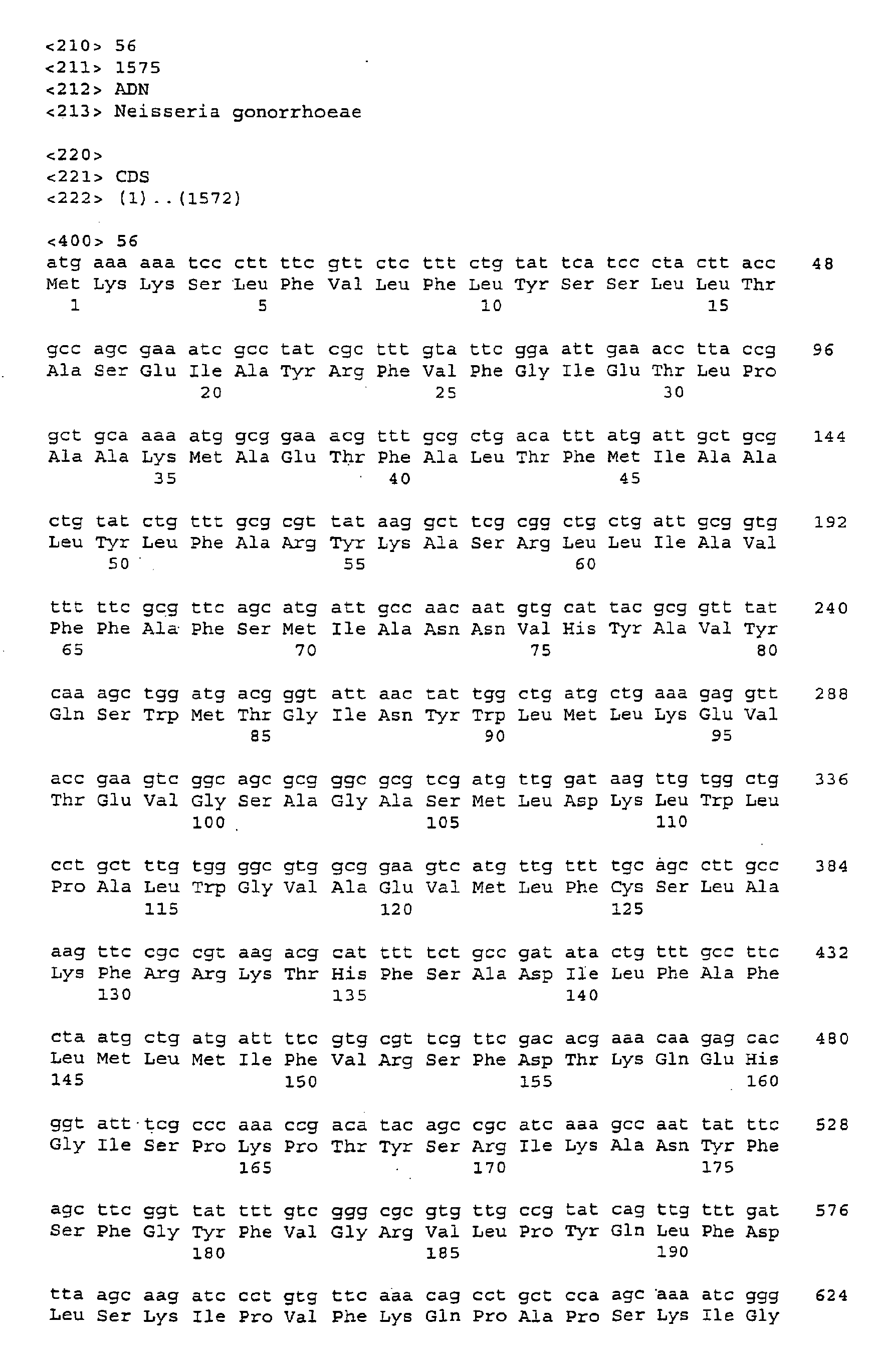
- the present invention more particularly relates to allelic variants having the nucleotide sequences SEQ ID No. 54 to 76 (even numbers) and the products encoded by these nucleotide sequences, having amino acid sequences SEQ ID Nos. 55 to 77 (odd numbers).
- polypeptides of the invention can be fused to other polypeptides, for example by translation of a hybrid gene.
- Vectors for the expression of fusion polypeptides are commercially available, such as the vectors pMal-c2 or pMal-p2 from New England Biolabs, in which the protein to which the polypeptides of the invention can be fused is a protein of binding to maltose, or the glutathione-S-transferase system from Pharmacia, or the His-Tag system from Novagen.
- Such systems are in particular useful for purification of the polypeptides of the invention.
- the polypeptides of the invention can be fused to polypeptides exhibiting adjuvant activity, such as for example the B subunit of cholera toxin or of heat-sensitive toxin from E. coli .
- the nucleic acids of the present invention can be used (i) in a process for producing the polypeptides encoded by said nucleic acids in a recombinant host system, (ii) for the construction of vaccine vectors such as poxviruses, intended for use in methods and compositions for preventing and / or treating infection with pathogenic strains of Neisseria , in particular by Neisseria meningitidis, (iii) as a vaccine agent in naked form or in combination with a vehicle promoting transfer to cells target and, (iv) in the construction of attenuated Neisseria strains which can overexpress a nucleic acid of the invention or express it in a non-toxic, mutated form.
- vaccine vectors such as poxviruses
- the present invention also provides (i) a cassette of expression containing a polynucleotide of the invention placed under the control elements allowing its expression, in particular under the control of a suitable promoter; (ii) an expression vector containing said cassette expression; (iii) a host cell (prokaryotic or eukaryotic) transformed with an expression cassette and / or an expression vector as defined above, as well as (iv) a method for obtaining a polypeptide encoded by said polynucleotide of the invention, comprising the culture of said cell transformed, under conditions allowing the expression of the polynucleotide of the invention, and recovery of the cell culture polypeptide.
- yeast cells for example, Saccharomyces cerevisiae or Pichia Pastoris
- mammalian cells for example, COS1, NIH3T3, or JEG3
- arthropod cells for example, Spodoptera frugiperda (SF9)
- plant cells for example, E. coli .
- the expression cassettes include a promoter which is functional in the selected host system and which may be constitutive or inducible; a ribosome binding site; an initiation codon (ATG); if necessary a region coding for a signal peptide; a nucleotide sequence of the invention; a stop codon; optionally a 3 ′ terminal region (translation and / or transcription terminator).
- the open reading frame (“open reading frame ORF") constituted by the nucleotide sequence of the invention, alone or associated with the region coding for the signal peptide, is placed under the control of the promoter so that the translation and the transcription takes place in the host system.
- the promoters and the regions coding for the signal peptides are known to a person skilled in the art.
- Salmonella typhimurium inducible promoter may be cited by arabinose (promoter araB) and is functional in Gram - bacteria such as E. coli (US 5,028,530 and Cagnon et al, Protein Engineering (1991. ) 4 (7): 843), the promoter of the bacteriophage T7 gene coding for RNA polymerase, (US 4,952,496); the signal peptide OspA and RIpB (Takase et al, J. Bact. (1987) 169: 5692).
- the expressed polypeptide can be collected in a form practically purified from cell extract or supernatant after centrifugation of the culture of recombinant cells.
- the polypeptide recombinant can in particular be purified by methods of purification by affinity using antibodies or any other method known to those skilled in the art profession, such as by genetic fusion with a small binding domain.
- the nucleic acids of the invention may also be useful in the field of vaccination, either using a viral or bacterial host as a DNA delivery vehicle, either by administering the nucleic acid of interest in free form.
- Another subject of the present invention is (i) a vaccine vector containing a nucleic acid of the invention, placed under the control of elements allowing its expression; (ii) a pharmaceutical composition containing a therapeutically or prophylactically effective amount of said vaccine vector; (iii) a method for inducing an immune response against Neisseria in a vertebrate, in particular a mammal, preferably a human, said method comprising the administration to said vertebrate of an immunologically effective amount of said vaccine vector to elicit an immune response, in particular a protective or therapeutic response to Neisseria meningitidis ; (iv) a method for preventing and / or treating an infection by pathogenic strains of Neisseria , in particular by Neisseria meningitidis , which comprises the administration of a prophylactic or therapeutic amount of said vaccine vector of the invention to an individual requiring a such treatment.
- the vector vaccine as defined above may also include sequences nucleotides whose expression allows the stimulation of the immune response, such as sequences encoding cytokines.
- Said vaccine vector of the invention can be administered by any conventional route in the field of vaccination, in particular particularly by the parenteral route (for example, subcutaneous, intra-dermal, intramuscular, intravenous or intraperitoneal).
- the dosage depends on many parameters known to those skilled in the art, such as the vector itself, the route of administration, the weight, age or sex of the animal or the man to be vaccinated.
- a subject of the present invention is also (i) a pharmaceutical composition containing a therapeutically or prophylactically effective amount of a polynucleotide of the invention; (ii) a method for inducing an immune response against pathogenic strains of Neisseria , in particular by Neisseria meningitidis in a vertebrate by administration to said vertebrate of an immunologically effective amount of said polynucleotide to provoke an immune response, in particular a protective immune response to pathogenic strains of Neisseria, in particular by Neisseria meningitidis ; and (iii) a method of preventing and treating infection by pathogenic strains of Neisseria, in particular by Neisseria meningitidis , by administration of a therapeutic or prophylactic amount of said polynucleotide to an individual in need of such treatment.
- the polynucleotides of the invention can be administered as such to a vertebrate.
- a DNA molecule from the invention can be in the form of a plasmid incapable of replicate in a vertebrate cell and unable to integrate the genome of said vertebrate.
- Said DNA molecule is typically placed under control a promoter suitable for expression in a vertebrate cell.
- said polynucleotide used as a vaccine can be formulated using a variety of methods known to those skilled in the art.
- Said polynucleotide can in particular be used in naked form, free from any vehicle favoring transfer to the target cell, such as anionic liposomes, cationic lipids, microparticles, for example gold microparticles, precipitation, for example calcium phosphate, or any other agent facilitating transfection.
- the polynucleotide can be simply diluted in a physiologically acceptable solution, such as a solution sterile or sterile buffer solution, in the presence or absence of a vehicle.
- this vehicle may preferably be isotonic, hypotonic, or weakly hypertonic, and has a relatively ionic strength low. It can for example be a sucrose solution (for example a solution containing 20% sucrose).
- a polynucleotide of the invention can be associated with agents which facilitate transfection. It can be, among others, (i) associated with a chemical agent that changes cell permeability such as bupivacaine (WO 94/16737); (ii) encapsulated in liposomes, possibly in the presence of additional substances facilitating the transfection (WO 93/18759, WO 93/19768, WO 94/25608 and WO 95/2397, WO 93/18759 and WO 93/19768); or (iii) associated with cationic lipids or microparticles of silica, gold or tungsten.
- a chemical agent that changes cell permeability such as bupivacaine (WO 94/16737)
- encapsulated in liposomes possibly in the presence of additional substances facilitating the transfection (WO 93/18759, WO 93/19768, WO 94/25608 and WO 95/2397, WO 93/18759 and WO
- polynucleotides of the invention cover microparticles, these can be injected intradermally or intraepidermal by the gene gun technique, "gene gun” (US 4,945,050, U.S. No. 5,015,580 and WO 94/24263).
- the amount of DNA to be used as a vaccine depends in particular on the strength of the promoter used in the construction of DNA, immunogenicity of the product expressed, of the individual to whom this DNA is administered, of the mode administration and formulation type.
- a quantity therapeutically or prophylactically effective varying from approximately 1 ⁇ g to about 1 mg, preferably from about 10 ⁇ g to about 800 ⁇ g and, so preferred from about 25 ⁇ g to about 250 ⁇ g, can be administered to human adults.
- the polynucleotide of the invention can be administered by any route conventional administration such as in particular parenterally.
- the choice of route of administration depends in particular on the formulation chosen.
- a polynucleotide formulated in combination with bupivacaine is advantageously administered to the muscle.
- the formulation can advantageously be injected intravenously, intramuscularly, intradermal or subcutaneous.
- a polynucleotide in naked form can advantageously be administered intramuscularly, intradermally or subcutaneous.
- nucleotide sequences of the invention allow the construction of specific nucleotide probes and primers useful in diagnostic.
- Said probes or primers are nucleic acids having identical or homologous sequences to portions of the group's sequences I or their complementary sequences.
- said probes contain from approximately 5 to approximately 100, preferably from approximately 10 to approximately 80 nucleotides. They can contain modified bases, the sugar and phosphate residues can also be modified or substituted.
- the probes of the invention can be used in diagnostic tests, to capture or detect polynucleotides specific for the pathogenic strains of Neisseria . Such capture probes can be conventionally immobilized on a solid support directly or indirectly, by covalent bond or by passive adsorption.
- a detection probe can be labeled in particular with a radioactive isotope, an enzyme such as peroxidase or alkaline phosphatase, or enzymes capable of hydrolyzing a chromogenic, fluorogenic or luminescent substrate, or even by compounds which are themselves homogeneous, fluorogenic. or luminescent, nucleotide analogs; or biotin.
- a radioactive isotope an enzyme such as peroxidase or alkaline phosphatase, or enzymes capable of hydrolyzing a chromogenic, fluorogenic or luminescent substrate, or even by compounds which are themselves homogeneous, fluorogenic. or luminescent, nucleotide analogs; or biotin.
- a primer generally contains from about 10 to about 40 nucleotides, and can be used to initiate enzymatic polymerization of DNA in an amplification process (e.g. PCR), in a elongation process or in a reverse transcription method.
- a primer of the invention may in particular be a primer as described in Example II.1 below.
- polypeptides produced by expression of identified ORF sequences are useful as agents vaccine.
- the specific antigenicity of polypeptides homologous to Group II sequence polypeptides can be assessed by testing the cross-reactivity with an antiserum directed against the polypeptides of Group II sequences.
- a monospecific hyperimmune antiserum may be produced against a purified group II sequence polypeptide or a fusion polypeptide, for example an expression product of MBP systems, GST, or His-tag.
- the specific antigenicity can be determined using various methods known to those skilled in the art, in particular the techniques of Western-Blot, Dot-Blot, and ELISA, described below.
- the protein preparation to to test is subjected to an electrophoresis on SDS-PAGE gel.
- the material is incubated with an antiserum monospecific hyperimmune obtained after immunizing an animal with the reference material; that is to say in the present case, with a polypeptide having a group II amino acid sequence.
- This antiserum is first diluted in a dilution range from about 1:50 to 1: 5000, preferably from about 1: 100 to 1: 500.
- the specific antigenicity is revealed when a band corresponding to the product has reactivity to one of the above dilutions.
- a preparation is preferably used purified protein, although a whole cell extract may also be used.
- Approximately 100 ⁇ l of a preparation at approximately 10 ⁇ g / ml is dispensed into the wells of a plate.
- the plate is incubated for two hours at 37 ° C then overnight at 4 ° C.
- the plate is then washed with a saline solution of phosphate buffer (PBS) comprising 0.05% Tween 20.
- PBS phosphate buffer
- the wells are saturated with 250 ⁇ l PBS containing 1% bovine serum albumin (BSA) to prevent non-specific binding of antibodies. After an hour incubation at 37 ° C, the plate is washed with PBS / Tween buffer.
- PBS phosphate buffer
- the antiserum is diluted in series in PBS / Tween buffer containing 0.5% BSA. 100 ⁇ l of this dilution are added per well. The plate is incubated for 90 minutes at 37 ° C, washed and evaluated according to standard procedures. For example, when specific antibodies are produced in rabbits, an anti-rabbit goat peroxidase conjugate is added to the well. incubation is carried out for 90 minutes at 37 ° C. and the plate is then washed. The reaction is measured by colorimetry (a reaction is positive when the optical density value is 1 if the dilution is at least 1:50, preferably at least 1: 500).
- a protein is preferably used purified, it being understood that it is also possible to use a cell extract whole.
- a protein solution at approximately 100 ⁇ g / ml is diluted twice in series in 50 mM Tris-HCl buffer, pH: 7.5. 100 ⁇ l of each dilution is applied to a nitrocellulose membrane (BioRad device). The buffer is removed by applying vacuum to the system. The wells are washed by adding 50 mM Tris-HCl buffer (pH: 7.5) and the membrane is air dried.
- the the membrane is then saturated in a blocking buffer (50 mM Tris-HCl (pH: 7.5) 0.15M NaCl, 10 g / l skimmed milk) and incubated with a dilution of antiserum ranging from about 1:50 to 1: 5000, preferably about 1: 500.
- a blocking buffer 50 mM Tris-HCl (pH: 7.5) 0.15M NaCl, 10 g / l skimmed milk
- a dilution of antiserum ranging from about 1:50 to 1: 5000, preferably about 1: 500.
- the reaction is revealed in accordance with standard procedures. For example, when specific antibodies are produced in rabbits, a peroxidase conjugate anti-rabbit goat is added to the wells. Incubation is carried out for 90 minutes at 37 ° C.
- the reaction is developed with the appropriate substrate and measured, for example by colorimetry, by the appearance of a colored spot (a reaction is positive when a colored
- a subject of the present invention is also (i) a pharmaceutical composition containing a therapeutically or prophylactically effective amount of a polypeptide of the invention; (ii) a method for inducing an immune response against the pathogenic strains of Neisseria in a vertebrate, by administration to said vertebrate of an immunogenically effective amount of a polypeptide of the invention to provoke an immune response, in particular a protective immune response against pathogenic strains of Neisseria ; and (iii) a method of preventing and / or treating an infection with pathogenic strains of Neisseria, by administration of a therapeutic or prophylactic amount of a polypeptide of the invention to an individual in need of such treatment.
- the immunogenic compositions of the invention can be administered by any conventional route in the field of vaccination, especially parenterally (e.g. subcutaneously, intra-dermal, intramuscular, intravenous or intraperitoneal).
- parenterally e.g. subcutaneously, intra-dermal, intramuscular, intravenous or intraperitoneal.
- the choice of the route of administration depends on a certain number of parameters such as the adjuvant associated with the polypeptide.
- a composition of the invention contains at least one polypeptide as defined above. It may also contain at least one additional Neisseria meningitidis and / or Neisseria gonorrhoeae antigen.
- polypeptides of the invention can be formulated with liposomes, preferably neutral or anionic liposomes, microspheres, ISCOMS, "virus-like" particles to facilitate transfer of the polypeptide and / or increase the immune response.
- liposomes preferably neutral or anionic liposomes, microspheres, ISCOMS, "virus-like" particles to facilitate transfer of the polypeptide and / or increase the immune response.
- Administration can be achieved by a single dose or by repeated doses if necessary at intervals which can be determined by the skilled person.
- an initial dose may be followed by three doses of recall at intervals of one or more weeks or one or more months.
- the appropriate dose depends on many parameters including the individual being treated (adult or child), the specific vaccine antigen, the route of administration and the frequency of administration, presence or absence or type adjuvant, and the desired effect (e.g. protection and / or treatment) and may be determined by those skilled in the art. If the route of administration is parenteral, the dose is preferably less than 1 mg, preferably about 100 ⁇ g.
- the polypeptides and polynucleotides of the invention used in as vaccine agents can be used sequentially, in a multi-step immunization process. For example, a vertebrate can be initially sensitized with a vaccine vector of the invention, such as a poxvirus, for example parenterally, then be stimulated twice with the polypeptide encoded by the vaccine vector.
- a polypeptide of the invention may also be useful as a diagnostic agent for detecting the presence of anti- Neisseria meningitidis and / or anti- Neisseria gonorrhoeae antibodies in a biological sample such as a blood sample.
- the present invention also relates to antibodies monospecifics directed against the polypeptides of the invention.
- “monospecific antibody” is meant an antibody capable of reacting in a specific manner with a Neisseria polypeptide of the invention.
- Such antibodies can be polyclonal or monoclonal, and can be recombinant antibodies, for example chimeric (for example, constituted by a variable region of murine origin associated with a constant region of human origin), humanized and / or with a single chain.
- Said antibodies can also be in the form of immunoglobulin fragments, for example fragments F (ab) '2 or Fab.
- the antibodies of the invention can be of any isotype, for example IgA or IgG, the polyclonal antibodies can be of a single isotype or can contain a mixture of several isotypes.
- the antibodies of the invention directed against the polypeptides of the invention can be produced and identified using standard immunological methods, for example Western-Blot analysis, a Dot-Blot assay, an ELISA test (Coligan et al , Current Protocols in Immunology (1994) John Wiley & Sons, Inc., New York, NY). Said antibodies can be used in diagnostic methods for detecting the presence of a Neisseria meningitidis antigen in a sample such as in particular a biological sample (for example blood).
- the antibodies of the invention can also be used in affinity chromatography methods for purifying a polypeptide from the invention. Finally, such antibodies can also be used in methods of passive prophylactic or therapeutic immunization.
- the present invention also relates to a diagnostic method for detecting the presence of pathogenic strains of Neisseria in a biological sample comprising bringing said biological sample into contact with an antibody, or a polypeptide of the invention, so that an immune complex is formed, and the detection of said indicator complex of pathogenic strains of Neisseria in the organism from which the sample originates.
- a diagnostic method for detecting the presence of pathogenic strains of Neisseria in a biological sample comprising bringing said biological sample into contact with an antibody, or a polypeptide of the invention, so that an immune complex is formed, and the detection of said indicator complex of pathogenic strains of Neisseria in the organism from which the sample originates.
- the immune complex is formed between a component of the sample and the antibody or polypeptide of the invention, any unbound substance being able to be eliminated before detection of the complex.
- a polypeptide-type reagent can be used for detecting the presence of anti- Neisseria meningitidis and / or Neisseria gonorrhoeae antibodies in a sample, while an antibody of the invention can be used as a reagent to test for the presence Neisseria meningitidis and / or Neisseria gonorrhoeae polypeptide in a sample.
- the reagent for example the antibody or the polypeptide of the invention
- the reagent can be in the free state or immobilized on a solid support, by direct or indirect means.
- Direct means include passive adsorption or binding covalent between the support and the reagent.
- indirect means is meant that a substance which interacts with said reagent is attached to the solid support.
- a substance which interacts with said reagent is attached to the solid support.
- an antibody that binds to it can serve as a substance anti-reagent, it being understood that it binds to an antibody which is not involved in antibody recognition in samples organic.
- a molecule such as a vitamin can be grafted onto the polypeptide type reagent and the receptor corresponding can be immobilized on the solid phase. This is illustrated by the biotin-streptavidin system. You can also add to the reagent peptide tail by chemical engineering or genetic engineering, and immobilize the grafted or fused product by passive adsorption or covalent bond with the peptide tail.
- the subject of the present invention is also a process for the purification, from a biological sample, of a Neisseria polypeptide of the invention, by affinity chromatography with a monospecific antibody of the invention.
- Said antibody is preferably of the IgG isotype.
- a biological sample preferably in a buffer solution
- chromatographic material preferably equilibrated with the buffer used to dilute the biological sample, so that the polypeptide of the invention (c (i.e. the antigen) can adsorb on the material.
- the unbound components are washed and the antigen is then eluted with an appropriate elution buffer, such as a glycine buffer or a buffer containing a chaotropic agent, for example guanidine HCl, or a high salt concentration (for example , 3M MgCl 2 ).
- an appropriate elution buffer such as a glycine buffer or a buffer containing a chaotropic agent, for example guanidine HCl, or a high salt concentration (for example , 3M MgCl 2 ).
- the eluted fractions are collected and the presence of antigen is detected for example by measuring the absorbance at 280 nm.
- a subject of the present invention is also (i) a pharmaceutical composition containing a therapeutically or prophylactically effective amount of a monospecific antibody of the invention; and (ii) a method of preventing and / or treating an infection with pathogenic strains of Neisseria, by administration of a therapeutic or prophylactic amount of a monospecific antibody of the invention to an individual in need of such treatment.
- the monospecific antibody of the invention is preferably of the IgG isotype, and preferably fixes the complement.
- Said monospecific antibody according to the invention can be administered alone or in admixture with at least one other monospecific antibody, specific for a different Neisseria meningitidis and / or Neisseria gonorrhoeae polypeptide, according to the invention.
- the amount of antibody can be readily determined by those skilled in the art. For example, daily administration of approximately 100 to 1000 mg of antibody over a week or three daily doses of approximately 100 to 1000 mg of antibody over two or three days may be an effective dosage.
- Therapeutic or prophylactic efficacy can be evaluated using standard methods known to those skilled in the art, for example by measuring the induction of an immune response or the induction of protective and / or therapeutic immunity (in newborn mice or rats); by evaluation of the bacterial load in the cerebrospinal fluid). Protection can be determined by comparing the degree of Neisseria infection to a control group. Protection is highlighted when the infection is reduced compared to the control group. Such an evaluation can be made with the polynucleotides, the vaccine vectors, the polypeptides as well as the antibodies according to the invention.
- a product according to the invention can also be evaluated in a bactericidal test as described by Danve et al ., Vaccine (1993) 11 (12): 1214, at against the original meningococcal strain of the polynucleotide or polypeptide used.
- the bactericidal test is indeed recognized as being the reference test from which one can validly predict the vaccine interest of a product.
- a product according to the invention is administered to animals such as the rabbit in order to obtain an antiserum against this product. Then this antiserum is tested for its lysis capacity.
- the bactericidal titer of an antiserum represents the reverse of the dilution of this antiserum for which 50% of the meningococcal load is lysed. It is considered that the antiserum is bactericidal when the titer is greater than 4 with respect to the meningococcal strain of origin of the polynucleotide or polypeptide used. In this case, it is shown that the product against which the antiserum was generated, is potentially interesting from a pharmaceutical point of view.
- the attached figure represents the vector pCAMyc-His used as a cloning vector.
- Genomic DNA extraction A.1. Genomic DNA extraction :
- the genomic DNAs of all the Neisseria strains used in this study were prepared according to an identical protocol.
- the strains of N. meningitidis, N. lactamica, N. flava, N. subflava and N. mucosa were cultivated on a box of MHA medium (Muller Hinton Agar, Difco), N. gonorrhoeae were cultivated on a box of MHA medium supplemented with 10% cooked horse blood (Biomérieux) and 1% Isovitalex (Biomérieux).
- the culture is carried out at 37 ° C for 18 h under an atmosphere containing 10% CO2 overnight at 37 ° C.
- the cells are then harvested, washed in PBS phosphate buffer (pH 7.2) and the DNA is extracted according to protocol D of the "Rapid Prep genomic DNA isolation kit for cells and tissue" kit (Pharmacia Biotech).
- genomic DNAs were then checked on agarose gel for their integrity and by PCR reaction for their purity.
- the PCR reaction was carried out on a volume of 50 ⁇ l with 10 ng of genomic DNA, 250 ⁇ M of each of the dNTPs, 300 nM of each of the primers, 1X Taq DNA polymerase buffer, and 2 u of Taq DNA Polymerase (Appligene).
- the amplification cycles are: 97 ° C 45 seconds 25 cycles 56 ° C 1 minute 25 cycles 72 ° C 2.30 minutes 25 cycles
- an additional verification is implemented by dot blot on genomic DNA using as a probe the genomic amplification products on the strain of N. meningitidis corresponding to each of the identified reading phases.
- the dot blot filters contain genomic DNA from the following strains: 2 strains of N. lactamica 8064, 2314, a strain of N. flava ATCC 30008, a strain of N. mucosa ATCC 9297, 3 strains of N. meningitidis from serogroup B ATCC13090, M982, B16B6, a strain of N. meningitidis of serogroup A Z2491, a strain of N. meningitidis of serogroup C (strain Z4182), 2 strains of N.
- the dot blot technique used is as follows. About 50 ng of denatured genomic DNA 5 min at 100 ° C of the different Neisseria strains are deposited under vacuum on a Hybond N + nitrocellulose membrane (Amersham) placed between the jaws of a dot blot device (Bio-Rad). Then the DNA is fixed on the membranes for 5 min at 315nm UV radiation.
- the membranes are incubated in a prehybridization buffer (containing denatured salmon sperm DNA). They are then hybridized with a probe corresponding to the amplification product of the ORF of interest, marked according to a cold marking protocol, like the 'DIG DNA labeling and detection kit' system (Boehringer Mannheim).
- a prehybridization buffer containing denatured salmon sperm DNA. They are then hybridized with a probe corresponding to the amplification product of the ORF of interest, marked according to a cold marking protocol, like the 'DIG DNA labeling and detection kit' system (Boehringer Mannheim).
- the ORF which does not hybridize to the genomic DNA of N. lactamica 2314 and 8064 is definitively selected as a potential vaccine candidate.
- Each of the ORFs was amplified by PCR from the genomic DNA of N. meningitidis serogroup B (strain ATCC 13090), according to a standard protocol.
- the N-Terminal primer includes an enzyme restriction site for cloning, a Kozak CCACC sequence for translation initiation (M. Kozak, J. Mol. Biol. 196 : 947-950), ATG of the potential ORF and approximately 17 specific bases of the 5 'part of the ORF.
- the primer on the C-Terminal side has been defined so that the cloned ORF is in fusion in its 3 ′ part with a repetition of 8 histidines and a stop codon present in the vector behind the multiple cloning site, hence the insertion of a base "A” to keep the correct reading phase after the cloning and disappearance of the ORF stop codon.
- the primer on the C-Terminal side thus includes an enzyme restriction site for cloning, a base "A”, then approximately 20 specific bases of the 3 'part of the gene from the codon preceding the stop codon.
- the PCR mixture comprises for a final volume of 100 ⁇ l, 10-50 ng genomic DNA, N-Terminal and C-Terminal primers at 200 nM each, the 250 ⁇ M dNTPs each, the 1X PCR buffer (Composition of 10X PCR buffer: 200 mM Tris-HCl (pH8.8), 20 mM MgSO4, 100 mM KCI, 100 mM (NH4) 2SO4, 1% TritonX-100, 1mg / ml of free beef serum albumin nuclease) and 2.5 U of Polymerase.
- 1X PCR buffer Composition of 10X PCR buffer: 200 mM Tris-HCl (pH8.8), 20 mM MgSO4, 100 mM KCI, 100 mM (NH4) 2SO4, 1% TritonX-100, 1mg / ml of free beef serum albumin nuclease
- the amplification is done as follows: Step Temperature (° C) Time (min.) Number of cycles Denaturation 97 0.45 25 Hybridization see table 1 25 Elongation 72 1 / kb DNA 25
- allelic variant N means that an allelic variant is present in Neisseria gonorrhoeae and "allelic variant N.
- m A means that a variant allélique is present in Neisseria meningitidis of serogroup A.
- the cloning vector used is the vector pCA / Myc-His or pM1070 of 6.357 kb (see figure), derived from the plasmid pCDNA 3.1 (Invitrogen).
- PCA / Myc-His comprises in particular the CMV ie1 promoter (bases 249-902), the intron A of the CMV ie1 gene (Chapman et al., 1991 Nucleic Acids Research, 19, 3979-3986), a multiple site cloning (bases 1792-1852) with the Pmll, EcoRV, NotI, Xbal, BamHI, Kpnl and HindIII sites, a sequence coding for a polyhistidine and a stop codon (bases 1908-1928), a 3'bgh termination sequence ( bases 1853-2197) and the ampicillin resistance gene for the selection of recombinant clones in E. coli .
- the PCR amplification products are digested for 2 hours at 37 ° C. with the appropriate enzymes (XbaI-BamHI, XbaI-BglII, or SpeI-BglII) in a final reaction volume of 20 ⁇ l.
- the digestion products are then ligated with the vector pCA / Myc-His previously digested with Xbal and BamHI according to the protocol of "Rapid DNA Ligation Kit" (Boehringer Mannheim). 15 ⁇ l of the ligation is used to transform 100 ⁇ l of competent E. coli XLI-blue cells (Novagen).
- the cells are incubated for 30 minutes in ice, 30 seconds at 42 ° C and 2 minutes in ice. Then add 500 ⁇ l of LB medium without antibiotic and incubate for 1 hour at 37 ° C. Then 50 and 550 ⁇ l of the culture are spread on dishes of LB medium plus ampicillin (50 ⁇ g / ml final concentration) and incubated overnight at 37 ° C.
- the plasmid DNA is extracted according to the protocol Qiagen mini-prep (Qiagen) and the recombinants are identified by restriction enzymatic followed by electrophoresis on agarose gel. The junctions of cloning are then verified by sequencing.
- a colony isolated from a recombinant clone is used for inoculate a preculture in LB + ampicillin medium and 5 ml of this preculture represents the inoculation of a 2.5 liter culture in LB + ampicillin medium.
- the purification protocol for preparing the plasmid DNA is that described in the EndoFree Giga Kit (Qiagen).
- the purified DNA is eluted from the column of purification with 10 mM Tris-HCl buffer 1 mM EDTA pH 8 and stored at -20 ° C. Before injection, the purified recombinant plasmid is diluted at a rate of 100 ⁇ g / ml with water (quality for injection) and NaCl concentration is brought to 150 mM.
- the animal model used is the mouse or the rabbit.
- the way administration of the injected DNA is the intramuscular route or the route intradermally.
- the recombinant plasmids to be injected are optionally applied to beads if injected into animals with a gene device gun (BioRad).
- BioRad gene device gun
- the immunization protocol follows a scheme with two injections 3 weeks apart.
- bactericidal test Ten days after the last injection, the animals are bled and will be analyzed with the bactericidal test according to the protocol of Danve et al ., Vaccine (1993) 11 (12): 1214. Briefly, sera will be incubated at different dilutions (reason 2) in the presence of rabbit complement and meningocococci cultivated in the presence or absence of an iron chelating agent. The bactericidal titer of a serum represents the reverse of the dilution of this antiserum for which 50% of the bacteria are lysed.
- the antiserum is considered not to be bactericidal when its titer is less than 4 against the homologous strain.
- the bactericidal activity of the antiserum is analyzed with respect to other Neisseria strains to measure the extent of the cross-reactivity of the antiserum of interest.
- the PCR product obtained is then digested at 37 ° C for two hours with restriction enzymes in 20 ⁇ l of volume reaction.
- the digestion product is ligated into a plasmid pET28a (Novagen), similarly cleaved, which is dephosphorylated before ligation by treatment with calf intestinal alkaline phosphatase.
- the gene for fusion built in this way affinity purification in one step of the resulting fusion protein due to the presence of histidine residues at the N-terminus of the fusion protein which are encoded by this vector.
- the ligation reaction (20 ⁇ l) is carried out at 14 ° C. overnight, before transformation of 100 ⁇ l of fresh competent cells E. coli XL1-blue (Novagen).
- the cells are incubated on ice for two hours and then subjected to a thermal shock at 42 ° C. for 30 seconds before being put back into ice for 90 seconds.
- the samples are then added to 1 ml of LB broth in the absence of selection and cultured at 37 ° C for two hours.
- the cells are then spread on LB agar medium supplemented with kanamycin (50 ⁇ g / ml of final concentration) at a 10 ⁇ dilution, and are incubated overnight at 37 ° C.
- 50 colonies are subcultured on secondary dishes and are incubated at 37 ° C overnight.
- Cultures are grown for four hours and samples are taken every hour. The culture is centrifuged at 600 xg for 20 minutes at 4 ° C. The supernatant is discarded and the pellets are resuspended in 50 mM Tris-HCl (pH: 8.0), 2 mM EDTA, and recentrifuged. The supernatant is discarded and the cells are stored at -70 ° C.
- the pellets obtained from a liter of culture prepared according to the previous example I.4 are dried and resuspended in 20 ml of 20 mM Tris-HCl (pH 8.0), 0.5 M NaCl, 5 mM Imidazole, cooled in ice . Lysozyme is added at a concentration of 0.1 mg / ml and the suspension is homogenized using a high speed homogenizer (Turrax) then treated with a sonicator (Branson, Sonofier 450). Benzonase (Merck) is used at a final concentration of 1 U / ml to remove the DNA.
- the suspension is centrifuged at 40,000 xg for 20 minutes and the supernatant is filtered through a 0.45 ⁇ m membrane.
- the supernatant is loaded onto an IMAC column (12 ml of resin) which has been prepared by immobilizing Ni ++ cations according to the recommendations of the manufacturer (Pharmacia).
- the column is washed with 10 column volumes of 20 mM Tris-HCl (pH 8.0), 0.5 M NaCl, 60 mM Imidazole.
- the recombinant protein is eluted with six volumes of 20 mM Tris-HCl (pH: 7.9), 0.5 M NaCl, 500 mM Imidazole, 0.1% Zwittergent 3-14.
- the elution profile is checked by measuring the absorbance of fractions at an optical density of 280 nm.
- An aliquot fraction is analyzed on an SDS-PAGE gel and stained with Coomassie blue (Phast System - Pharmacia), and the fractions corresponding to the protein peak are then grouped and concentrated.
- the fraction is passed through a G24 Sephadex column (Pharmacia), balanced in PBS buffer (pH 7.4).
- the protein solution is sterilized by filtration through a 0.45 ⁇ m membrane, and the protein concentration is determined by the BCA micrometer (Pierce).
- the protein solution is stored at -70 ° C.
- New Zealand rabbits are injected both cutaneous and intravenously 100 ⁇ g (total) of the purified polypeptide Example III, in the presence of complete Freund's adjuvant in a total volume approximately 2 ml. 21 and 42 days after the initial injection, the doses of booster that are identical to the initial doses, are administered the same way, except for the fact that incomplete Freund's adjuvant is used. 15 days after the last injection, the animal's serum is collected, decomplemented, and filtered through a 0.45 ⁇ m membrane.
- mice are injected subcutaneously 10-50 ⁇ g of the purified fusion polypeptide obtained in Example II, in the presence of complete Freund's adjuvant, in a volume of approximately 200 ⁇ l. 7 and 14 days after the initial injection, booster doses, which are identical to the initial doses, are administered in the same manner, except that incomplete Freund's adjuvant is used. 21 and 28 days after the initial injection, the mice receive 50 ⁇ g of the antigen alone intraperitoneally. At the 21st day, is also injected into mice intraperitoneally, cells 180 / TG sarcoma CM26684 (Lennette & Schmidt, Diagnostic procedures for viral, rickettsial, and chlamydial infections (1979) 5th Ed. Washington DC, American Public Health Association). The ascites fluids are collected 10 to 13 days after the first injection.
- Example V Purification of the polypeptides of the invention by immunoaffinity
- Example IV An immune serum as prepared in Example IV is applied to a column of protein A Sepharose 4 Fast Flow (Pharmacia) balanced with 100 mM Tris-HCl (pH: 8.0). The resin is washed by applying 10 volumes of 100 mM Tris-HCl columns and 10 volumes of 10 mM Tris-HCl (pH: 8.0) at column. IgG is eluted with 0.1 M glycine buffer (pH: 3.0) and are collected in 5 ml fractions to which 0.25 ml of Tris-HCl 1 is added M (pH: 8.0). The optical density of the eluate is measured at 280 nm and the fractions containing the IgGs are combined and if necessary stored at -70 ° C.
- Sepharose 4B gel activated by CNBr (1 g of dried gel providing approximately 3.5 ml of hydrated gel, and the gel capacity ranging from 5 to 10 mg of IgG coupled per ml of gel) manufactured by Pharmacia (17-0430-01) and suspended in 1 mM HCl buffer and washed with a buchner by adding small amounts of 1 mM HCl buffer.
- the total buffer volume is 200 ml per gram of gel.
- Purified IgGs are dialyzed for four hours at 20 ⁇ 5 ° C against 5 volumes of 500 mM PBS buffer (pH: 7.5). Then they are diluted in 500 mM PBS (pH: 7.5) for a final concentration of 3 mg / ml.
- the IgGs are incubated with the gel overnight at 5 ⁇ 3 ° C, under agitation.
- the gel is packed in a chromatography column and washed with 2 phosphate buffer column volumes, 500 mM (pH: 7.5) then one volume 50 mM NaCl sodium buffer (pH 7.5).
- the gel is then transferred to a tube then incubated with 100 mM ethanolamine, (pH: 7.5) for 4 hours at room temperature with stirring, then washed twice with two volumes of PBS columns.
- the gel is then stored in PBS merthiolate at 1/10 000.
- the amount of IgG coupled to the gel is determined by measuring the density optical at 280 nm from the IgG solution and the direct eluate.
- the gel is washed with 2 to 6 volumes of 10 mM PBS buffer (pH: 6.8).
- the antigen is eluted with a 100 mM glycine buffer (pH: 2.5).
- the eluate is collected in 3 ml fractions to which 150 ⁇ l of 1 mM PBS buffer (pH: 8.0) are added.
- the optical density is measured at 280 nm for each fraction; those containing the antigen are collected and stored at -20 ° C.
Landscapes
- Health & Medical Sciences (AREA)
- Chemical & Material Sciences (AREA)
- Life Sciences & Earth Sciences (AREA)
- Organic Chemistry (AREA)
- General Health & Medical Sciences (AREA)
- Medicinal Chemistry (AREA)
- Immunology (AREA)
- Biochemistry (AREA)
- Biophysics (AREA)
- Genetics & Genomics (AREA)
- Molecular Biology (AREA)
- Proteomics, Peptides & Aminoacids (AREA)
- Microbiology (AREA)
- Mycology (AREA)
- Pharmacology & Pharmacy (AREA)
- Epidemiology (AREA)
- Animal Behavior & Ethology (AREA)
- Public Health (AREA)
- Veterinary Medicine (AREA)
- Gastroenterology & Hepatology (AREA)
- Medicines Containing Antibodies Or Antigens For Use As Internal Diagnostic Agents (AREA)
- Peptides Or Proteins (AREA)
- Measuring Or Testing Involving Enzymes Or Micro-Organisms (AREA)
- Micro-Organisms Or Cultivation Processes Thereof (AREA)
- Medicines That Contain Protein Lipid Enzymes And Other Medicines (AREA)
Abstract
Description
| 97°C | 45 secondes | 25 cycles |
| 56°C | 1 minute | 25 cycles |
| 72°C | 2.30 minutes | 25 cycles |
| Etape | Température (°C) | Temps (min.) | Nombre de cycles |
| Dénaturation | 97 | 0.45 | 25 |
| Hybridation | cf tableau | 1 | 25 |
| Elongation | 72 | 1/kb ADN | 25 |































































Claims (8)
- Acide nucléique sous forme isolée, sélectionné dans le groupe constitué d'une séquence codant pour un polypeptide spécifique des souches pathogènes du genre Neisseria, ou fragment antigénique de celui-ci, la séquence d'acides aminés dudit polypeptide spécifique étant identique à la séquence SEQ ID n°8 ou SEQ ID n°59, et d'une séquence s'hybridant spécifiquement dans des conditions de forte stringence à une séquence codant pour le polypeptide de séquence SEQ ID N°8 ou SEQ ID N°59, à l'exclusion des séquences SEQ ID n° 74A et 95A.
- Acide nucléique selon la revendication 1 dont la séquence nucléotidique est identique à la séquence SEQ ID n°7 ou SEQ ID n°58 ou s'hybride spécifiquement à SEQ ID N°7 ou SEQ ID n°58 dans des conditions de forte stringence.
- Polypeptide spécifique des souches pathogènes du genre Neisseria, et fragments antigéniques de celui-ci, la séquence d'acides aminés dudit polypeptide étant identique à la séquence SEQ ID n°8 ou SEQ ID n°59 ou présentant au moins 75 % d'identité de séquence avec SEQ ID n°8 ou SEQ ID n°59.
- Vecteur d'expression comprenant une cassette d'expression dans laquelle une séquence nucléotidique telle que définie dans l'une des revendications 1 et 2 est placée dans des conditions permettant son expression dans une cellule hôte.
- Cellule hôte transformée par le vecteur d'expression selon la revendication 4.
- Composition pharmaceutique comprenant :a) un acide nucléique selon l'une des revendications 1 et 2, sous forme nue ou en association avec au moins un agent facilitant la transfection ;b) ou un vecteur vaccinal comprenant une séquence nucléotidique telle que définie dans l'une des revendications 1 et 2, tel que notamment un virus ou une bactérie ;c) ou un polypeptide selon la revendication 3; éventuellement en association avec un véhicule pharmaceutiquement acceptable.
- Anticorps monospécifique dirigé contre un polypeptide selon la revendication 3.
- Utilisation d'un acide nucléique selon la revendication 1 ou 2 ou d'un polypeptide spécifique des souches pathogènes de Neisseria ou de fragments antigéniques de celui-ci selon la revendication 3 pour la fabrication d'une composition pharmaceutique destinée à la vaccination contre Neisseria.
Priority Applications (2)
| Application Number | Priority Date | Filing Date | Title |
|---|---|---|---|
| EP06004814A EP1724352A3 (fr) | 1998-10-30 | 1999-10-28 | Acides nucléiques et polypeptides spécifiques des souches pathogènes du genre neisseria |
| EP09164686A EP2100960A3 (fr) | 1998-10-30 | 1999-10-28 | Acides nucléiques et polypeptides spécifiques des souches pathogènes du genre Neisseria |
Applications Claiming Priority (3)
| Application Number | Priority Date | Filing Date | Title |
|---|---|---|---|
| FR9813693A FR2785293B1 (fr) | 1998-10-30 | 1998-10-30 | Acides nucleiques et polypeptides specifiques des souches pathogenes du genre neisseria |
| FR9813693 | 1998-10-30 | ||
| EP99950875A EP1129195A2 (fr) | 1998-10-30 | 1999-10-28 | Acides nucleiques et polypeptides specifiques des souches pathogenes du genre neisseria |
Related Parent Applications (2)
| Application Number | Title | Priority Date | Filing Date |
|---|---|---|---|
| EP99950875.7 Division | 1999-10-28 | ||
| EP99950875A Division EP1129195A2 (fr) | 1998-10-30 | 1999-10-28 | Acides nucleiques et polypeptides specifiques des souches pathogenes du genre neisseria |
Related Child Applications (2)
| Application Number | Title | Priority Date | Filing Date |
|---|---|---|---|
| EP09164686A Division EP2100960A3 (fr) | 1998-10-30 | 1999-10-28 | Acides nucléiques et polypeptides spécifiques des souches pathogènes du genre Neisseria |
| EP06004814A Division EP1724352A3 (fr) | 1998-10-30 | 1999-10-28 | Acides nucléiques et polypeptides spécifiques des souches pathogènes du genre neisseria |
Publications (3)
| Publication Number | Publication Date |
|---|---|
| EP1475441A2 true EP1475441A2 (fr) | 2004-11-10 |
| EP1475441A3 EP1475441A3 (fr) | 2005-05-04 |
| EP1475441B1 EP1475441B1 (fr) | 2009-07-08 |
Family
ID=9532223
Family Applications (4)
| Application Number | Title | Priority Date | Filing Date |
|---|---|---|---|
| EP06004814A Withdrawn EP1724352A3 (fr) | 1998-10-30 | 1999-10-28 | Acides nucléiques et polypeptides spécifiques des souches pathogènes du genre neisseria |
| EP99950875A Withdrawn EP1129195A2 (fr) | 1998-10-30 | 1999-10-28 | Acides nucleiques et polypeptides specifiques des souches pathogenes du genre neisseria |
| EP09164686A Withdrawn EP2100960A3 (fr) | 1998-10-30 | 1999-10-28 | Acides nucléiques et polypeptides spécifiques des souches pathogènes du genre Neisseria |
| EP04016071A Expired - Lifetime EP1475441B1 (fr) | 1998-10-30 | 1999-10-28 | Acides nucléiques et polypeptides spécifiques des souches pathogènes du genre Neisseria |
Family Applications Before (3)
| Application Number | Title | Priority Date | Filing Date |
|---|---|---|---|
| EP06004814A Withdrawn EP1724352A3 (fr) | 1998-10-30 | 1999-10-28 | Acides nucléiques et polypeptides spécifiques des souches pathogènes du genre neisseria |
| EP99950875A Withdrawn EP1129195A2 (fr) | 1998-10-30 | 1999-10-28 | Acides nucleiques et polypeptides specifiques des souches pathogenes du genre neisseria |
| EP09164686A Withdrawn EP2100960A3 (fr) | 1998-10-30 | 1999-10-28 | Acides nucléiques et polypeptides spécifiques des souches pathogènes du genre Neisseria |
Country Status (8)
| Country | Link |
|---|---|
| US (4) | US6835384B1 (fr) |
| EP (4) | EP1724352A3 (fr) |
| AT (1) | ATE435915T1 (fr) |
| AU (1) | AU775986B2 (fr) |
| CA (1) | CA2349495A1 (fr) |
| DE (1) | DE69941099D1 (fr) |
| FR (1) | FR2785293B1 (fr) |
| WO (1) | WO2000026375A2 (fr) |
Cited By (1)
| Publication number | Priority date | Publication date | Assignee | Title |
|---|---|---|---|---|
| US7521549B2 (en) | 1998-12-08 | 2009-04-21 | Glaxosmithkline Biologicals S.A. | Compounds |
Families Citing this family (6)
| Publication number | Priority date | Publication date | Assignee | Title |
|---|---|---|---|---|
| FR2751000B1 (fr) * | 1996-07-12 | 1998-10-30 | Inst Nat Sante Rech Med | Adn specifiques des bacteries de l'espece neisseria meningitidis, leurs procedes d'obtention et leurs applications biologiques |
| GB9902070D0 (en) * | 1999-01-29 | 1999-03-24 | Smithkline Beecham Biolog | Novel compounds |
| GB0103424D0 (en) | 2001-02-12 | 2001-03-28 | Chiron Spa | Gonococcus proteins |
| WO2012059592A1 (fr) * | 2010-11-05 | 2012-05-10 | Institut National De La Sante Et De La Recherche Medicale (Inserm) | Composés pour l'administration au cerveau d'un agent thérapeutique ou d'imagerie |
| CN104736563A (zh) | 2012-07-27 | 2015-06-24 | 国家健康与医学研究院 | Cd147作为受体用于脑膜炎球菌至血管内皮的菌毛介导的粘附 |
| WO2017137085A1 (fr) | 2016-02-11 | 2017-08-17 | Sanofi Pasteur | Vaccins contre la méningite comprenant des subtilinases |
Citations (1)
| Publication number | Priority date | Publication date | Assignee | Title |
|---|---|---|---|---|
| WO1998002547A2 (fr) | 1996-07-12 | 1998-01-22 | Institut National De La Sante Et De La Recherche Medicale (Inserm) | Adn et proteines ou peptides specifiques des bacteries de l'espece neisseria meningitidis, leurs procedes d'obtention et leurs applications biologiques |
Family Cites Families (19)
| Publication number | Priority date | Publication date | Assignee | Title |
|---|---|---|---|---|
| US4952496A (en) | 1984-03-30 | 1990-08-28 | Associated Universities, Inc. | Cloning and expression of the gene for bacteriophage T7 RNA polymerase |
| US4945050A (en) | 1984-11-13 | 1990-07-31 | Cornell Research Foundation, Inc. | Method for transporting substances into living cells and tissues and apparatus therefor |
| US5028530A (en) | 1985-01-28 | 1991-07-02 | Xoma Corporation | AraB promoters and method of producing polypeptides, including cecropins, by microbiological techniques |
| US5015580A (en) | 1987-07-29 | 1991-05-14 | Agracetus | Particle-mediated transformation of soybean plants and lines |
| US5292869A (en) * | 1989-04-27 | 1994-03-08 | The Board Of Governors Of The University | Method for isolating and purifying transferrin and lactoferrin receptor proteins from bacteria and the preparation of vaccines containing the same |
| US5147800A (en) * | 1990-06-08 | 1992-09-15 | Life Technologies, Inc. | Host expressing ngoaiii restriction endonuclease and modification methylase from neisseria |
| FI903414A7 (fi) * | 1990-07-06 | 1992-01-07 | Kansanterveyslaitos | Produktion av proteiner i grampositiva bakterier. |
| FR2682041B1 (fr) * | 1991-10-03 | 1994-01-14 | Pasteur Merieux Serums Vaccins | Vaccin contre les infections a neisseria meningitidis. |
| FR2682114B1 (fr) * | 1991-10-03 | 1996-02-23 | Pasteur Merieux Serums Vacc | Vaccin de sous-unite contre les infections a neisseria meningitidis et sous-unites correspondantes a l'etat purifie. |
| JPH07505283A (ja) | 1992-03-20 | 1995-06-15 | ベイラー・カレッジ・オブ・メディシン | Dnaトランスポーター系および使用方法 |
| AU682308C (en) | 1992-04-03 | 2006-08-17 | Regents Of The University Of California, The | Self-assembling polynucleotide delivery system |
| ES2249760T3 (es) | 1993-01-26 | 2006-04-01 | The Trustees Of The University Of Pennsylvania (A Corporation Of Pennsylvania) | Composiciones y procedimientos de administracion de materias geneticas. |
| TW404844B (en) | 1993-04-08 | 2000-09-11 | Oxford Biosciences Ltd | Needleless syringe |
| SG54115A1 (en) | 1993-04-27 | 1998-11-16 | Gerber Scient Products Inc | Thermal printing apparatus with improved power supply |
| CA2163364C (fr) | 1993-07-14 | 2009-10-27 | Francis C. Szoka, Jr. | Systeme d'administration auto-elabore de polynucleotides, renfermant des polycations dendrimeres |
| FR2720408B1 (fr) * | 1994-05-31 | 1996-08-14 | Pasteur Merieux Serums Vacc | Fragments Tbp2 de Neisseria meningitidis. |
| US6121037A (en) * | 1994-10-18 | 2000-09-19 | Stojiljkovic; Igor | Bacterial hemoglobin receptor genes |
| EP0839909A1 (fr) * | 1996-10-29 | 1998-05-06 | Rijksuniversiteit te Groningen | Séquences d'acides nucléiques codant pour des protéines transporteuses de citrate |
| US5912143A (en) * | 1996-12-27 | 1999-06-15 | Incyte Pharmaceuticals, Inc. | Polynucleotides encoding a human mage protein homolog |
-
1998
- 1998-10-30 FR FR9813693A patent/FR2785293B1/fr not_active Expired - Fee Related
-
1999
- 1999-10-28 AU AU63479/99A patent/AU775986B2/en not_active Ceased
- 1999-10-28 EP EP06004814A patent/EP1724352A3/fr not_active Withdrawn
- 1999-10-28 AT AT04016071T patent/ATE435915T1/de not_active IP Right Cessation
- 1999-10-28 CA CA002349495A patent/CA2349495A1/fr not_active Abandoned
- 1999-10-28 EP EP99950875A patent/EP1129195A2/fr not_active Withdrawn
- 1999-10-28 DE DE69941099T patent/DE69941099D1/de not_active Expired - Lifetime
- 1999-10-28 EP EP09164686A patent/EP2100960A3/fr not_active Withdrawn
- 1999-10-28 WO PCT/FR1999/002643 patent/WO2000026375A2/fr not_active Ceased
- 1999-10-28 EP EP04016071A patent/EP1475441B1/fr not_active Expired - Lifetime
- 1999-10-28 US US09/830,433 patent/US6835384B1/en not_active Expired - Fee Related
-
2004
- 2004-08-03 US US10/909,436 patent/US7384768B2/en not_active Expired - Fee Related
-
2008
- 2008-03-27 US US12/056,911 patent/US7704513B2/en not_active Expired - Fee Related
-
2010
- 2010-02-04 US US12/700,432 patent/US8309100B2/en not_active Expired - Fee Related
Patent Citations (1)
| Publication number | Priority date | Publication date | Assignee | Title |
|---|---|---|---|---|
| WO1998002547A2 (fr) | 1996-07-12 | 1998-01-22 | Institut National De La Sante Et De La Recherche Medicale (Inserm) | Adn et proteines ou peptides specifiques des bacteries de l'espece neisseria meningitidis, leurs procedes d'obtention et leurs applications biologiques |
Cited By (1)
| Publication number | Priority date | Publication date | Assignee | Title |
|---|---|---|---|---|
| US7521549B2 (en) | 1998-12-08 | 2009-04-21 | Glaxosmithkline Biologicals S.A. | Compounds |
Also Published As
| Publication number | Publication date |
|---|---|
| EP2100960A2 (fr) | 2009-09-16 |
| US20090155886A1 (en) | 2009-06-18 |
| EP1475441B1 (fr) | 2009-07-08 |
| FR2785293B1 (fr) | 2002-07-05 |
| WO2000026375A2 (fr) | 2000-05-11 |
| US8309100B2 (en) | 2012-11-13 |
| EP1475441A3 (fr) | 2005-05-04 |
| EP1724352A2 (fr) | 2006-11-22 |
| US7384768B2 (en) | 2008-06-10 |
| US7704513B2 (en) | 2010-04-27 |
| EP1129195A2 (fr) | 2001-09-05 |
| AU775986B2 (en) | 2004-08-19 |
| US6835384B1 (en) | 2004-12-28 |
| DE69941099D1 (de) | 2009-08-20 |
| US20100184639A1 (en) | 2010-07-22 |
| ATE435915T1 (de) | 2009-07-15 |
| CA2349495A1 (fr) | 2000-05-11 |
| WO2000026375A3 (fr) | 2000-08-17 |
| AU6347999A (en) | 2000-05-22 |
| US20050032103A1 (en) | 2005-02-10 |
| EP1724352A3 (fr) | 2007-07-11 |
| FR2785293A1 (fr) | 2000-05-05 |
| EP2100960A3 (fr) | 2009-12-02 |
Similar Documents
| Publication | Publication Date | Title |
|---|---|---|
| West et al. | Recombinant Neisseria meningitidis transferrin binding protein A protects against experimental meningococcal infection | |
| JP4864264B2 (ja) | クラミジア抗原および対応するdna断片ならびにその使用 | |
| JP4695763B2 (ja) | クラミジア抗原および対応するdna断片ならびにその使用 | |
| JP4667694B2 (ja) | クラミジア抗原および対応するdna断片ならびにその使用 | |
| SK287456B6 (sk) | Povrchový proteín Neisseria meningitidis rezistentný voči proteináze K | |
| EA002743B1 (ru) | Полипептид белка-106 наружной мембраны moraxella catarrhalis, днк, его кодирующие, и их применение | |
| JPH09503210A (ja) | ブランハメラ・カタラリスに対するワクチン | |
| CA2347849A1 (fr) | Proteines omp85 de neisseria gonorrhoeae et de neisseria meningitidis, compositions renfermant lesdites proteines et methodes d'utilisation correspondantes | |
| JPH10504444A (ja) | モラクセラ・カタルハリス(Moraxella catarrhalis)に対するワクチン | |
| US8309100B2 (en) | Nucleic acids and polypeptides specific of the Neisseria genus pathogenic strains | |
| JP2011231114A (ja) | ヘモフィルス・インフルエンゼ抗原及び対応dna断片 | |
| US6693186B2 (en) | Neisseria meningitidis polypeptide, nucleic acid sequence and uses thereof | |
| JP4368944B2 (ja) | 防御用ヘリコバクター抗原 | |
| JP2004502446A (ja) | ストレプトコッカス・パイオジェンス抗原 | |
| JP4832646B2 (ja) | クラミジア抗原および対応するdna断片ならびにその使用 | |
| AU771974B2 (en) | Chlamydia antigens and corresponding DNA fragments and uses thereof | |
| MXPA01004356A (es) | Antigenos de chlamydia y los correspondientes fragmentos de adn y usos de los mismos. | |
| MXPA01004354A (es) | Antigenos de chlamydia y los correspondientes fragmentos de adn y usos de los mismos. | |
| EP1535928B1 (fr) | Vaccin comprenant Omp85 protéines de Neisseria gonorhoeae et Neisseria meningitidis | |
| RU2336900C2 (ru) | Белок nmb1125 и его применение в фармацевтических композициях | |
| JP2009279003A (ja) | モラクセラ(ブランハメラ)カタラーリスポリペプチド及び対応するdna断片 | |
| MXPA01001091A (es) | Antigenos de chlamydia y los correspondientes fragmentos de adn y usos de los mismos. | |
| CZ2000530A3 (cs) | Protein Neisserie vázající laktoferin |
Legal Events
| Date | Code | Title | Description |
|---|---|---|---|
| PUAI | Public reference made under article 153(3) epc to a published international application that has entered the european phase |
Free format text: ORIGINAL CODE: 0009012 |
|
| 17P | Request for examination filed |
Effective date: 20040708 |
|
| AC | Divisional application: reference to earlier application |
Ref document number: 1129195 Country of ref document: EP Kind code of ref document: P |
|
| AK | Designated contracting states |
Kind code of ref document: A2 Designated state(s): AT BE CH CY DE DK ES FI FR GB GR IE IT LI LU MC NL PT SE |
|
| RIN1 | Information on inventor provided before grant (corrected) |
Inventor name: RENAULD-MONGENIE, GENEVIEVE Inventor name: NASSIF, XAVIER Inventor name: TINSLEY, COLIN Inventor name: AUJAME, LUC Inventor name: PERRIN, AGNES Inventor name: ROKBI, BACHRA Inventor name: BOUCHARDON, ANNABELLE |
|
| PUAL | Search report despatched |
Free format text: ORIGINAL CODE: 0009013 |
|
| AK | Designated contracting states |
Kind code of ref document: A3 Designated state(s): AT BE CH CY DE DK ES FI FR GB GR IE IT LI LU MC NL PT SE |
|
| AKX | Designation fees paid |
Designated state(s): AT BE CH CY DE DK ES FI FR GB GR IE IT LI LU MC NL PT SE |
|
| RAP1 | Party data changed (applicant data changed or rights of an application transferred) |
Owner name: SANOFI PASTEUR Owner name: INSTITUT NATIONAL DE LA SANTE ET DE LA RECHERCHE M |
|
| GRAP | Despatch of communication of intention to grant a patent |
Free format text: ORIGINAL CODE: EPIDOSNIGR1 |
|
| RTI1 | Title (correction) |
Free format text: SPECIFIC NUCLEIC ACIDS AND POLYPEPTIDES FROM PATHOGENIC STRAINS OF NEISSERIA |
|
| GRAS | Grant fee paid |
Free format text: ORIGINAL CODE: EPIDOSNIGR3 |
|
| GRAA | (expected) grant |
Free format text: ORIGINAL CODE: 0009210 |
|
| AC | Divisional application: reference to earlier application |
Ref document number: 1129195 Country of ref document: EP Kind code of ref document: P |
|
| AK | Designated contracting states |
Kind code of ref document: B1 Designated state(s): AT BE CH CY DE DK ES FI FR GB GR IE IT LI LU MC NL PT SE |
|
| REG | Reference to a national code |
Ref country code: GB Ref legal event code: FG4D Free format text: NOT ENGLISH |
|
| REG | Reference to a national code |
Ref country code: CH Ref legal event code: EP |
|
| REG | Reference to a national code |
Ref country code: IE Ref legal event code: FG4D |
|
| REF | Corresponds to: |
Ref document number: 69941099 Country of ref document: DE Date of ref document: 20090820 Kind code of ref document: P |
|
| REG | Reference to a national code |
Ref country code: CH Ref legal event code: NV Representative=s name: KIRKER & CIE S.A. |
|
| PG25 | Lapsed in a contracting state [announced via postgrant information from national office to epo] |
Ref country code: ES Free format text: LAPSE BECAUSE OF FAILURE TO SUBMIT A TRANSLATION OF THE DESCRIPTION OR TO PAY THE FEE WITHIN THE PRESCRIBED TIME-LIMIT Effective date: 20091019 Ref country code: FI Free format text: LAPSE BECAUSE OF FAILURE TO SUBMIT A TRANSLATION OF THE DESCRIPTION OR TO PAY THE FEE WITHIN THE PRESCRIBED TIME-LIMIT Effective date: 20090708 Ref country code: AT Free format text: LAPSE BECAUSE OF FAILURE TO SUBMIT A TRANSLATION OF THE DESCRIPTION OR TO PAY THE FEE WITHIN THE PRESCRIBED TIME-LIMIT Effective date: 20090708 |
|
| PG25 | Lapsed in a contracting state [announced via postgrant information from national office to epo] |
Ref country code: PT Free format text: LAPSE BECAUSE OF FAILURE TO SUBMIT A TRANSLATION OF THE DESCRIPTION OR TO PAY THE FEE WITHIN THE PRESCRIBED TIME-LIMIT Effective date: 20091109 |
|
| PG25 | Lapsed in a contracting state [announced via postgrant information from national office to epo] |
Ref country code: DK Free format text: LAPSE BECAUSE OF FAILURE TO SUBMIT A TRANSLATION OF THE DESCRIPTION OR TO PAY THE FEE WITHIN THE PRESCRIBED TIME-LIMIT Effective date: 20090708 |
|
| PLBE | No opposition filed within time limit |
Free format text: ORIGINAL CODE: 0009261 |
|
| STAA | Information on the status of an ep patent application or granted ep patent |
Free format text: STATUS: NO OPPOSITION FILED WITHIN TIME LIMIT |
|
| 26N | No opposition filed |
Effective date: 20100409 |
|
| PG25 | Lapsed in a contracting state [announced via postgrant information from national office to epo] |
Ref country code: GR Free format text: LAPSE BECAUSE OF FAILURE TO SUBMIT A TRANSLATION OF THE DESCRIPTION OR TO PAY THE FEE WITHIN THE PRESCRIBED TIME-LIMIT Effective date: 20091009 |
|
| PG25 | Lapsed in a contracting state [announced via postgrant information from national office to epo] |
Ref country code: IT Free format text: LAPSE BECAUSE OF FAILURE TO SUBMIT A TRANSLATION OF THE DESCRIPTION OR TO PAY THE FEE WITHIN THE PRESCRIBED TIME-LIMIT Effective date: 20090708 |
|
| PG25 | Lapsed in a contracting state [announced via postgrant information from national office to epo] |
Ref country code: CY Free format text: LAPSE BECAUSE OF FAILURE TO SUBMIT A TRANSLATION OF THE DESCRIPTION OR TO PAY THE FEE WITHIN THE PRESCRIBED TIME-LIMIT Effective date: 20090708 |
|
| PG25 | Lapsed in a contracting state [announced via postgrant information from national office to epo] |
Ref country code: SE Free format text: LAPSE BECAUSE OF FAILURE TO SUBMIT A TRANSLATION OF THE DESCRIPTION OR TO PAY THE FEE WITHIN THE PRESCRIBED TIME-LIMIT Effective date: 20090708 |
|
| PGFP | Annual fee paid to national office [announced via postgrant information from national office to epo] |
Ref country code: MC Payment date: 20120921 Year of fee payment: 14 Ref country code: IE Payment date: 20120924 Year of fee payment: 14 Ref country code: LU Payment date: 20120921 Year of fee payment: 14 |
|
| PGFP | Annual fee paid to national office [announced via postgrant information from national office to epo] |
Ref country code: CH Payment date: 20121019 Year of fee payment: 14 Ref country code: BE Payment date: 20121025 Year of fee payment: 14 Ref country code: FR Payment date: 20121029 Year of fee payment: 14 Ref country code: DE Payment date: 20121011 Year of fee payment: 14 Ref country code: NL Payment date: 20120920 Year of fee payment: 14 |
|
| PGFP | Annual fee paid to national office [announced via postgrant information from national office to epo] |
Ref country code: GB Payment date: 20121023 Year of fee payment: 14 |
|
| BERE | Be: lapsed |
Owner name: SANOFI PASTEUR Effective date: 20131031 Owner name: INSTITUT NATIONAL DE LA SANTE ET DE LA RECHERCHE Effective date: 20131031 |
|
| REG | Reference to a national code |
Ref country code: NL Ref legal event code: V1 Effective date: 20140501 |
|
| PG25 | Lapsed in a contracting state [announced via postgrant information from national office to epo] |
Ref country code: MC Free format text: LAPSE BECAUSE OF NON-PAYMENT OF DUE FEES Effective date: 20131031 |
|
| REG | Reference to a national code |
Ref country code: CH Ref legal event code: PL |
|
| GBPC | Gb: european patent ceased through non-payment of renewal fee |
Effective date: 20131028 |
|
| REG | Reference to a national code |
Ref country code: IE Ref legal event code: MM4A |
|
| PG25 | Lapsed in a contracting state [announced via postgrant information from national office to epo] |
Ref country code: GB Free format text: LAPSE BECAUSE OF NON-PAYMENT OF DUE FEES Effective date: 20131028 Ref country code: LI Free format text: LAPSE BECAUSE OF NON-PAYMENT OF DUE FEES Effective date: 20131031 Ref country code: CH Free format text: LAPSE BECAUSE OF NON-PAYMENT OF DUE FEES Effective date: 20131031 |
|
| REG | Reference to a national code |
Ref country code: FR Ref legal event code: ST Effective date: 20140630 |
|
| REG | Reference to a national code |
Ref country code: DE Ref legal event code: R119 Ref document number: 69941099 Country of ref document: DE Effective date: 20140501 |
|
| PG25 | Lapsed in a contracting state [announced via postgrant information from national office to epo] |
Ref country code: DE Free format text: LAPSE BECAUSE OF NON-PAYMENT OF DUE FEES Effective date: 20140501 Ref country code: NL Free format text: LAPSE BECAUSE OF NON-PAYMENT OF DUE FEES Effective date: 20140501 Ref country code: FR Free format text: LAPSE BECAUSE OF NON-PAYMENT OF DUE FEES Effective date: 20131031 |
|
| PG25 | Lapsed in a contracting state [announced via postgrant information from national office to epo] |
Ref country code: BE Free format text: LAPSE BECAUSE OF NON-PAYMENT OF DUE FEES Effective date: 20131031 |
|
| PG25 | Lapsed in a contracting state [announced via postgrant information from national office to epo] |
Ref country code: IE Free format text: LAPSE BECAUSE OF NON-PAYMENT OF DUE FEES Effective date: 20131028 |
|
| PG25 | Lapsed in a contracting state [announced via postgrant information from national office to epo] |
Ref country code: LU Free format text: LAPSE BECAUSE OF NON-PAYMENT OF DUE FEES Effective date: 20131028 |