EP1470127B1 - N,n-dimethylierte n-invertierte porphyrine - Google Patents
N,n-dimethylierte n-invertierte porphyrine Download PDFInfo
- Publication number
- EP1470127B1 EP1470127B1 EP03700767A EP03700767A EP1470127B1 EP 1470127 B1 EP1470127 B1 EP 1470127B1 EP 03700767 A EP03700767 A EP 03700767A EP 03700767 A EP03700767 A EP 03700767A EP 1470127 B1 EP1470127 B1 EP 1470127B1
- Authority
- EP
- European Patent Office
- Prior art keywords
- group
- porphyrin
- alkyl
- ester
- carboxylic acid
- Prior art date
- Legal status (The legal status is an assumption and is not a legal conclusion. Google has not performed a legal analysis and makes no representation as to the accuracy of the status listed.)
- Expired - Lifetime
Links
Images



Classifications
-
- A—HUMAN NECESSITIES
- A61—MEDICAL OR VETERINARY SCIENCE; HYGIENE
- A61K—PREPARATIONS FOR MEDICAL, DENTAL OR TOILETRY PURPOSES
- A61K49/00—Preparations for testing in vivo
- A61K49/001—Preparation for luminescence or biological staining
- A61K49/0013—Luminescence
- A61K49/0017—Fluorescence in vivo
- A61K49/0019—Fluorescence in vivo characterised by the fluorescent group, e.g. oligomeric, polymeric or dendritic molecules
- A61K49/0021—Fluorescence in vivo characterised by the fluorescent group, e.g. oligomeric, polymeric or dendritic molecules the fluorescent group being a small organic molecule
- A61K49/0036—Porphyrins
-
- A—HUMAN NECESSITIES
- A61—MEDICAL OR VETERINARY SCIENCE; HYGIENE
- A61K—PREPARATIONS FOR MEDICAL, DENTAL OR TOILETRY PURPOSES
- A61K41/00—Medicinal preparations obtained by treating materials with wave energy or particle radiation ; Therapies using these preparations
- A61K41/0057—Photodynamic therapy with a photosensitizer, i.e. agent able to produce reactive oxygen species upon exposure to light or radiation, e.g. UV or visible light; photocleavage of nucleic acids with an agent
- A61K41/0071—PDT with porphyrins having exactly 20 ring atoms, i.e. based on the non-expanded tetrapyrrolic ring system, e.g. bacteriochlorin, chlorin-e6, or phthalocyanines
-
- A—HUMAN NECESSITIES
- A61—MEDICAL OR VETERINARY SCIENCE; HYGIENE
- A61K—PREPARATIONS FOR MEDICAL, DENTAL OR TOILETRY PURPOSES
- A61K49/00—Preparations for testing in vivo
- A61K49/001—Preparation for luminescence or biological staining
- A61K49/0013—Luminescence
- A61K49/0017—Fluorescence in vivo
- A61K49/0019—Fluorescence in vivo characterised by the fluorescent group, e.g. oligomeric, polymeric or dendritic molecules
- A61K49/0021—Fluorescence in vivo characterised by the fluorescent group, e.g. oligomeric, polymeric or dendritic molecules the fluorescent group being a small organic molecule
-
- A—HUMAN NECESSITIES
- A61—MEDICAL OR VETERINARY SCIENCE; HYGIENE
- A61P—SPECIFIC THERAPEUTIC ACTIVITY OF CHEMICAL COMPOUNDS OR MEDICINAL PREPARATIONS
- A61P35/00—Antineoplastic agents
-
- A—HUMAN NECESSITIES
- A61—MEDICAL OR VETERINARY SCIENCE; HYGIENE
- A61P—SPECIFIC THERAPEUTIC ACTIVITY OF CHEMICAL COMPOUNDS OR MEDICINAL PREPARATIONS
- A61P43/00—Drugs for specific purposes, not provided for in groups A61P1/00-A61P41/00
-
- C—CHEMISTRY; METALLURGY
- C07—ORGANIC CHEMISTRY
- C07D—HETEROCYCLIC COMPOUNDS
- C07D487/00—Heterocyclic compounds containing nitrogen atoms as the only ring hetero atoms in the condensed system, not provided for by groups C07D451/00 - C07D477/00
- C07D487/22—Heterocyclic compounds containing nitrogen atoms as the only ring hetero atoms in the condensed system, not provided for by groups C07D451/00 - C07D477/00 in which the condensed system contains four or more hetero rings
Definitions
- the present invention provides a novel class of therapeutic macrocycle compounds useful in photodynamic therapy that are based on the N-confused porphyrin ring system.
- the macrocycle compounds contain both outer and inner ring methyl groups and have absorption spectra suitable for therapeutic use in tissues.
- the invention also provides a demonstration of their capability of generating singlet oxygen and thus their use in therapeutic contexts such as photodynamic therapy (PDT).
- PDT photodynamic therapy
- the porphyrin isomer was of interest given its structure as a tetradentate ligand to bind metal ions and form a carbon-metal bond. 2 This interest led to studies on nickel(II) and copper(II) metal complexes of N-confused porphyrin and its methylated derivatives 4,5 as well as further derivatives to form ⁇ -phenyl or ⁇ -alkyl coordinated groups on the metal group in the metal-carbon bond. 6
- Geier et al. describe a one flask method of preparing N-confused tetraphenylporphyrin by use of methanesulfonic acid (MSA). 7 They further show the affects of time, MSA concentration, reactant concentration, and order of contact with reactants on the yield of N-confused tetraphenylporphyrin and tetraphenylporphyrin.
- MSA methanesulfonic acid
- the present invention is directed to N,N'-dimethylated N-confused porphyrins which comprise both a outer ring methyl group and an inner methyl group on one of the three available positions: 22-N, 23-N, and 24-N and their use.
- the present invention provides for novel therapeutic macrocycle compounds useful in photodynamic therapy that are based on the N-canfused porphyrin ring system.
- the macrocycle compounds contain at least two N-bonded methyl groups (hence they are at least "N,N'-dimethylated) and are optionally substituted at the meso positions.
- Compounds of the invention have an absorption spectra that makes them suitable for use in therapeutic or industrial applications, including treatment of human beings and animals or application in agricultural or commercial processes.
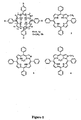
- Exemplary compounds of the invention are salts of molecules having the formulas shown in Figure 2. As shown therein, the compounds have a single outer ring N-metbyl group as well as an inner N-methyl group to form a N,N'-dimethylated N-confused porphyrin. While the strictures shown in Figure 2 represent different isomeric forms of the macrocycles of the invention, other possible isomeric forms are of course also encompassed by the invention.
- outer ring positions of the disclosed compounds may also be modified with one or more substituents. Possible positions for modification include, but are not limited to, outer ring atoms at positions 3, 7, 8,12,13,17, or 18.
- Suitable methods of preparing the compounds of the invention are also provided.
- the methods may be considered as being composed of sequential reactions, beginning with the preparation of N-confused porphyrins by reactions known in the art.
- the inversion of one of the pyrrole rings in the resulting macrocycle gives rise to the outer ring N group.
- the remainder of the synthetic method may be considered a methylation reaction of the outer ring N group along with an inner ring N group with any suitable methylating agent.
- the invention also use of the compounds of the invention in preparation of a medicament for photodynamic therapy for the treatment of various conditions, tissues and cells of a subject in need thereof.
- Such uses are based upon the ability of the disclosed compounds to generate singlet oxygen upon activation with irradiation containing at least one wavelength absorbed by a compound of the invention.
- Figure 1 shows the structures of various N-confused porphyrins and their singly and doubly methylated forms: N-confused tetraphenylporphyrin (CTPPH 2 , 1a ); N-confused tetra (( ⁇ -tolyl)porphyrin 1b ); 2-aza-2-methyl-5,10,15,20-tetraphenyl-21-carbaporphyrin (2-NCH 3 CTPPH 2 , 2 ); 2-aza-21-methyl-5,10,15,20-tetraphenyl-21-carbaporphyrin ( 3 ); and 2-aza-2,21-dimethyl-5,10,15,20-tetraphenyl-21-carbaporphyrin ( 4 ).
- Figure 2 shows exemplary structures of the compounds of the invention.
- Each formula pair (I and I', II and II', and III and III') are directed to different N,N'-dimethylated N-confused porphyrins.
- I, II and III are isomers of porphyrin salts while I', II' and III' are isomers of free base porphyrins.
- the numbering of the positions around the N-confused porphyrin macrocycle are as set forth above for structures 1a and 1b.
- the meso positions are those with respect to the carbon atoms at positions 5, 10, 15, and 20.
- Figure 3 shows an exemplary methylation reaction for the preparation of a series of N,N'-dimethylated N-confused porphyrins of the invention: N,N'-dimethylated 2-aza-5,10,15,20-tetraphenyl-21-carba-porphyrin-HI ( 8 ), N,N'-dimethylated 2-aza-5,10,15,20-tetra( p -tolyl)-21-carba-porphyrin ⁇ HI ( 9 ), N,N'-dimethylated 2-aza-5,10,15,20-tetra( p -methoxycarbonylphenyl)-21-carba-porphyrin ⁇ HI ( 10 ), N,N'-dimethylated 2-aza-5,10,15,20-tetra( p -methoxyphenyl)-21-carba-porphyrin ⁇ HI ( 11 ) and N,N'-dimethylated 2-aza-5,10,15,20-tetra
- Figure 4 shows two representations of the 8-III isomer (2-aza-2,24-dimethyl-5,10,15,20-tetraphenyl-21-carba-porphyrin) from Figure 3 as a salt with CF 3 SO 3 - ⁇ H 2 O.
- the first representation is an ORTEP (Oak Ridge Thermal Ellipsoid Plot) drawing of compound 8-III showing atomic labeling and thermal ellipsoids at the 30% probability level.
- Compound 8-III was prepared by exchange of CF 3 SO 3 - ⁇ H 2 O for the I - salt form of compound 8-III from the reaction scheme of Figure 3.
- the structure of 8-III has been determined by X-ray crystallography, which confirmed that the porphyrin is N,N'-dimethylated.
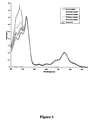
- Figure 5 shows a UV-vis spectra of a solution of DPBF and compound 9 before and after irradiation.
- Figure 6 shows the formula and 1 H NMR spectra of compound 11-III in CD 2 Cl 2 : (a) no irradiation; (b) upon irradiation at 3.81 ppm; (c) upon irradiation at 8.40 ppm; (d) upon irradiation at 7.56 ppm.
- Macrocycle compounds useful in photodynamic therapy and based on the N-confused porphyrin ring system are disclosed herein.
- the invention provides a group of macrocycle compounds containing two N-bonded methyl groups represented by the following formulas:
- S 1 through S 4 are identical or different and are individually selected from H or a group comprising any one of a large number of substituted or unsubstituted alkyl groups, substituted or unsubstituted cycloalkyl groups, substituted or unsubstituted aryl rings, substituted or unsubstituted aromatic rings, substituted or unsubstituted heterocyclic rings, wherein the substitution is selected from a halogen atom; thiol; a carbonyl group; a primary, secondary, tertiary or quaternary amino group; nitrile; a phosphate group and a sulfonate group.
- S 1 through S 4 When one or more of S 1 through S 4 is an alkyl group, it preferably has from 1 to 18 carbon atoms, more preferably 1 to 12 carbon atoms and, even more preferably, 1-6 carbon atoms.
- typical alkyl groups are methyl, ethyl, isopropyl, sec-butyl, tert-butyl, n-pentyl and n-octyl.
- S 1 through S 4 When one or more of S 1 through S 4 is an alkyl group, it may be unsubstituted or , substituted with a halogen atom, such as fluorine, chlorine or bromine; thiol; a carbonyl group, such as when the alkyl group is an aldehyde, ketone, carboxylic acid (e.g., a fatty acid) or ester or amide; a primary, secondary, tertiary, or quaternary amino group; nitrile; a phosphate group; a sulfonate group; or other similar groups.
- a halogen atom such as fluorine, chlorine or bromine
- thiol a carbonyl group
- carboxylic acid e.g., a fatty acid
- ester or amide e.g., a primary, secondary, tertiary, or quaternary amino group
- nitrile a phosphate group; a
- S 1 through S 4 When one or more of S 1 through S 4 is a cycloalkyl group, it preferably contains from 3 to 7 carbon atoms.
- typical cycloalkyl groups include cyclopropyl, cyclohexyl, and cycloheteroalkyl, such as glucopyranose or fructofuranose sugars.
- S 1 through S 4 When one or more of S 1 through S 4 is a cycloalkyl group, it may be unsubstituted or substituted with any of the same substituents described above for the case when one or more of S 1 through S 4 is an alkyl group.
- S 1 through S 4 When one or more of S 1 through S 4 is an aryl group, it preferably contains from 5 to 12 carbon atoms, optionally containing one or more rings that are fused to the existing conjugated porphyrin ring structure.
- suitable aromatic rings include phenyl, naphthyl, and anthracenyl.
- Non-limiting examples of heterocyclic rings for use in the present invention include furan, thiophene, pyrrole, isopyrrole, 3-isopyrrole, pyrazole, 2-isoimidazole, 1,2,3-triazole, 1,2,4-triazole, 1,2-dithiole, 1,3-dithiole, 1,2,3-oxathiole, isoxazole, oxazole, thiazole, isothiazole, 1,2,3-oxadiazole,1,2,4-oxadiazole,1,2,5-oxadiazole, 1,3,4-oxadiazole, 1,2,3,4-oxatriazole, 1,2,3,5-oxatriazole, 1,2,3-dioxazole, 1,2,4-dioxazole, 1,3,2-dioxazole, 1,3,4-dioxazole, 1,2,5-oxathiazole, 1,3-oxathiole, benzen
- N,N'-dimethylated N-confused porphyrin represented by any one of formulas IV", IV"', V", V"', VI" or VI"' as shown below wherein said compound is labeled or in a salt form;
- the invention also includes N,N' dimethylated N-confused compounds having substantially or exactly identical aryl or heterocyclic meso-substituents. Further, any aryl or heterocyclic meso-substituent chosen should also have no adverse effect on the ability of the compound to undergo the reactions used to prepare the compounds of the invention.
- X, X', Y, Y' and Z are independently (1) hydrogen; (2) halogen, such as fluoro, chloro, iodo and bromo; (3) C 1-5 alkyl, such as methyl, ethyl, n-propyl, isopropyl, t-butyl, n-pentyl and the like groups; (4) C 1-5 alkoxy, such as methoxy, ethoxy, isopropoxy, n-butoxy, t-pentoxy and the like; (5) hydroxy; (6) carboxylic acid or acid salt, such as -CH 2 COOH, -CH 2 COO-Na + , -CH 2 CH(Br)COOH, -CH 2 CH(CH 3 )COOH, -CH(Cl)- CH 2 CH(CH 3 )-COOH,- CH 2 CH 2 -C(CH 3 ) 2 -COOH, -CH 2 CH 2 -C(CH 3 ) 2 -CO
- sulfonic acid or acid salt for example, group I and group II salts, ammonium salts, and organic cation salts such as alkyl and quaternary ammonium salts
- sulfonic acid ester such as methyl sulfonate, ethyl sulfonate, cyclohexyl sulfonate, p-tosylate, o-tosylate and the like
- phosphoric acid, phosphato or phosphate ester such as O-ethyl phosphate, O-O-diethyl phosphate, or O-ethyl phosphonic acid
- amino such as unsubstit
- X, X', Y, Y' and Z are independently hydrogen, halogen, C 1-5 alkyl, C 1-5 alkoxy, hydroxy, carboxylic acid or acid salt, carboxylic acid ester, sulfonic acid or acid salt, sulfonic acid ester, substituted or unsubstituted amino, cyano, nitro, and Z' is hydrogen or C 1-5 alkyl.
- X, Y, X' and Y' are each hydrogen, and Z is selected from the group consisting of hydrogen, halogen, C 1-5 alkyl, C 1-5 alkoxy, hydroxy, carboxylic acid, carboxylic acid ester, sulfonic acid ester (especially aromatic sulfonic acid ester), nitro, amino (especially lower alkyl amino), cyano,
- X, Y, Z, X' and Y' are independently selected from the group consisting of hydrogen, methyl, ethyl, t-butyl, methoxy, hydroxy, OR where R is an alkyl group or a fatty acid group having from 6 to 18 carbon atoms, fluoro, chloro, iodo, bromo, -C(O)-OCH 3 , cyano, nitro.
- X, X', Y and Y' and Z are independently selected from the group consisting of hydrogen, halogen, C 1-5 alkyl, C 1-5 alkoxy, hydroxy, carboxylic acid or acid salt, carboxylic acid ester, sulfonic acid ester, sulfonic acid or acid salt, nitro, amino, cyano.
- S 1 through S 4 are independently selected from the group consisting of phenyl, ⁇ -tolyl, ⁇ -methoxycarbonylphenyl, ⁇ -methoxphenyl, m -methoxyphenyl, naphthyl, pyridinyl, lower N-alkyl pyridinium salts, indolyl, pyrazinyl, pyrimidinyl, imidazolyl, triazolyl, pyrrolyl, pyrazolyl, pyridazinyl, indolizinyl, furanyl, and thiophenyl Even more preferably, S 1 through S 4 are identical.
- the present invention includes the recognition that the 2-N-methyl group in the disclosed compounds may affect the nature of the meso position moieties at carbon atoms 5 and 20, and thus affect the structure of the overall compound. This is evident in the case of compounds 12 , wherein the 2-N-methyl group hinders rotation of the adjacent m -methoxyphenyl group. This results in compounds 12 being a mixture of atropisomers in addition to structural isomers, making it a more complex mixture. Methods for the separation of atropisomers are known in the art.
- the present invention includes structures that do not give rise to atropisomers due to inhibition of rotation of a moiety at at least one of carbon atoms 5 or 20 .
- This may be accomplished by the presence of a linker moiety between at least one of carbon atoms 5 or 20 and the corresponding S 1 or S 4 group which distances the S 1 or S 4 group sufficiently far from the 2-N-methyl group so that rotation of the group may occur freely.
- Preferred linker groups are short alkyl chains of 1-3 carbon atoms, although chains of up to 4, 5, or 6 carbon atoms (optionally including at least one heteroatom selected from O, N, P or S) may also be used.
- the invention provides macrocycle compounds represented by the following formulas:
- Positions S 1 through S 4 are as defined above, while groups R 3 , R 7 , R 8 , R 12 , R 13 , R 17 , and R 18 (where the numbering of each R group is based on the numbering and position of atoms in the outer ring of the macrocycle) are identical or different and are individually selected from H or a group comprising any one of a large number of substituted or unsubstituted alkyl groups, alkene containing groups, or alkyne containing groups. These positions are preferably substituted by a alkyl, alkene, or alkyne containing group with from 1 to 18 carbon atoms, more preferably 1 to 12 carbon atoms and, even more preferably, 1-6 carbon atoms.
- Non-limiting examples of typical alkyl groups are methyl, ethyl, isopropyl, sec-butyl, tert-butyl, n-pentyl and n-octyl.
- the alkyl, alkene, or alkyne containing groups may be optionally, and individually, substituted by a halogen atom, such as fluorine, chlorine or bromine; thiol; a carbonyl group, such as when the alkyl group is an aldehyde, ketone, carboxylic acid (e.g., a fatty acid) or ester or amide; a primary, secondary, tertiary, or quaternary amino group; nitrile; a phosphate group; a sulfonate group; or other similar groups.
- a halogen atom such as fluorine, chlorine or bromine
- thiol such as a halogen atom, such as fluorine, chlorine or bromine
- a carbonyl group such as when the alkyl group is an aldehyde, ketone, carboxylic acid (e.g., a fatty acid) or ester or amide
- carboxylic acid e.g
- Exemplary compounds of the invention are salts of the structures represented by the formulas herein.
- non-limiting salts include F - , Cl - , Br - , NO 3 - , BF 4 - , CH 3 SO 3 - , CH 3 COO - and CF 3 COO - .
- Such salts may also optionally be in a hydrate form comprising one or more molecules of H 2 O.
- Preferred for the practice of the invention are pharmaceutically acceptable salts of the disclosed compounds.
- the present invention also provides methods for the formation of N,N'-dimethylated N-confused porphyrins.
- the methylation of CTPPH 2 (compound 1a in Fig. 1) with CH 3 I in CH 2 Cl 2 yields 2-NCH 3 CTPPH 2 (compound 2 in Fig. 1).
- a base such as, but not limited to, Na 2 CO 3
- neutralizes the intermediate 2-NCH 3 CTPPH 2 ⁇ HI making the inner nitrogens more nucleophilic towards methylation and resulting in N,N'-dimethylation.
- the present invention thus provides quantitative dimethylation of N-confused porphyrins, as shown by TLC, was carried out in CH 2 Cl 2 solution using CH 3 I and Na 2 CO 3 .
- the resulting N,N'-dimethylated N-confused porphyrin salts have an intense absorption at approximately 790 nm, and therefore, are of interest for use as photosensitizers in photodynamic therapy (PDT).
- PDT photodynamic therapy
- Each of the N,N'-dimethylated N-confused porphyrin salts shown as compounds 8-12 in Figure 3 may have three structural isomers in theory, since there are three possible positions, 22-N, 23-N, 24-N, for inner N-methylation.
- the major isomers of compounds 8-11 were isolated by recrystallization and determined by X-ray diffraction analyses or NMR spectroscopy to contain an inner methyl group at the N-24 position.
- N,N'-dimethylated N-confused porphyrin While synthesis of N,N'-dimethylated N-confused porphyrin has been discussed above with respect to the use of CH 2 Cl 2 solution to react a N-confused porphyrin with CH 3 I and Na 2 CO 3 , other solvents, methylating agents, and bases known in the art may be used in the practice of the invention. Non-limiting examples of these include the following.
- Solvent aromatic solvents, such as pyridine, toluene and benzene; chlorinated solvents, such as CHCl 3 , dichloromethane and 1,1-dichloroethane; water, ethers, such as diethyl ether, tetrahydrofuran, diethylene glycol and glycol dimethyl ether (ethylene glycol dimethyl ether); ketones such as acetone and pinacolone; acetonitrile; DME, DMF and DMSO; and mixtures thereof.
- Methylating agent methylfluorosulfonate, methyltrifluoromethanesulfonate, and dimethylsulfate.
- Base triethylamine, pyridine, NaOH, and KOH.
- Other solvents, methylating agents, and bases known in the art, or readily determined, to be equivalent to the above may also be used in the practice of the present invention.
- the reaction occurs for about 1, about 2, or about 1-2 days in the absence of light, although low levels of light may also be used. Most preferred is reaction for about 2 days.
- the temperature of the reaction may vary greatly but is preferably room temperature (or about 25°C). Most preferred is the use of a reaction temperature range of about 5-6 degrees above or below 25 °C.
- salts of the compounds of the invention may be exchanged by methods known in the art. Therefore, compounds prepared as one salt (e.g. I - ) may be converted to another salt form (e.g. CF 3 SO 3 - ).
- Routine procedures can be used to isolate the compounds and isomers resulting from the above methods.
- Non-limiting examples include extraction with any immiscible liquid, eluting on a silica gel column or other type of chromatography, drowning out in a non-solvent, precipitating out or otherwise crystallizing, evaporation of solvent, or some combination of these or other conventional methods.
- a preferred method of isolating the compounds of the invention is crystallization.
- the product compound(s) may be subjected to additional purification procedures, such as recrystallization, eluting on a silica gel chromatography column, and combinations of these methods.
- additional purification procedures such as recrystallization, eluting on a silica gel chromatography column, and combinations of these methods.
- some of the reagents may be permitted to remain with the product compound(s) without affecting the activity (such as, but not limited to photosensitivity) of the compound(s), it is preferable to isolate and/or purify the compound(s) to increase the range of uses for the compound(s).
- the compounds of the invention are useful as photosensitizers used in photodynamic therapy (PDT), as well as being synthetic intermediates for making related photosensitizers.
- the compounds of the invention are useful in sensitizing neoplastic cells or other abnormal tissues to destruction by irradiation with visible light.
- the energy of photoactivation is believed to be transferred to endogenous oxygen, thus converting it to singlet oxygen.
- This singlet oxygen is thought by some to be responsible for the observed cytotoxic effect.
- the method of van Lier, Photobiological Techniques, 216, 85-98 can be used to confirm the ability of any given compound to generate singlet oxygen effectively, thus making it a good candidate for use in PDT.
- DPBF (1,3-diphenylisobenzofuran) 8 is used to determine the ability of N,N'-dimethylated N-confused porphyrin salts to generate singlet oxygen.
- DPBF reacts quickly with singlet oxygen and its absorption decay around 418 nm can be easily monitored.
- the reaction products of DPBF have no absorption in the visible region and do not quench singlet oxygen.
- a solution containing DPBF and N,N'-dimethylated N-confused porphyrin salts e.g. compound 9 in Fig.
- the photoactivated forms of porphyrin are able to fluoresce, and this fluorescence may be used in the diagnostic imaging of tissues, such as, but not limited to, the imaging of tumor or other tissue types.
- the compounds of the invention may be used in a manner analogous to the use of any photosensitizer in photodynamic therapy (PDT). These include, but are not limited to, the diagnosis or treatment of cancer, the reduction of activated leukocytes, the treatment of ocular disorders, the treatment and prevention of neovasculature and angiogenesis, the destruction of viruses and cells infected thereby, the treatment of atherosclerotic plaques, the treatment of restenosis, and others.
- the compounds may be photoactivated by appropriate excitation wavelengths to fluoresce visibly. This fluorescence can then be used to localize a tumor or other target tissue.
- the compounds of the invention may be used singly or in combination with each other or other photosensitizers known in the art.
- the compounds are administered in an effective amount such that a photodynamic effect sufficient to treat or prevent any of the diseases and conditions as disclosed herein may occur.
- the compounds of the invention can be used in the treatment of materials in vitro to destroy harmful viruses or other infectious agents.
- blood plasma or blood that is to be used for transfusion or banked for future transfusion can be treated with the compounds of the invention and irradiated to effect sterilization.
- biological products such as Factor VIII, which are prepared from biological fluids, can be irradiated in the presence of the compounds of the invention to destroy contaminants.
- the photosensitizers made from the compounds of the invention can be formulated into pharmaceutical compositions for administration to the subject or applied to an in vitro target using techniques generally known in the art.
- a summary of such pharmaceutical compositions may be found, for example, in Remington's Pharmaceutical Sciences, Mack Publishing Co., Easton, PA.
- the compounds of the invention can be used singly or as components of mixtures.
- a preferred form of the compounds is as a liposomal formulation.
- the compounds of the invention may be administered parenterally or by injection. Injection may be intravenous, subcutaneous, intramuscular, intrathecal, or even intraperitoneal. However, the compounds may also be administered by aerosol intranasally or intrapulmonarally, or topically. Formulations designed for timed release are also with the scope of the invention.
- the compounds of the invention may be labeled isotopically (e.g. with a radioisotope) or by another other means, including, but not limited to, the use of chromophores or fluorescent moieties.
- Injectables can be prepared in conventional forms, either as liquid solutions or suspensions, solid forms suitable for solution or suspension in a liquid prior to injection, or as emulsions.
- Suitable excipients are, for example, water, saline, dextrose, glycerol and the like.
- these compositions may also contain minor amounts of nontoxic, auxiliary substances, such as wetting or emulsifying agents, pH buffering agents, and so forth.
- Systemic administration can be implemented through implantation of a slow release or sustained release system, by suppository, or, if properly formulated, orally.
- Formulations for these modes of administration are well known in the art, and a summary of such methods may be found, for example, in Remington's Pharmaceutical Sciences (supra).
- the compound can be administered topically using standard topical compositions, such as lotions, suspensions, or pastes.
- the quantity of the photosensitizer compound to be administered depends upon the choice of active ingredient, the condition to be treated, the mode of administration, the individual subject, and the judgment of the practitioner. Depending on the specificity of the preparation, smaller or larger doses may be needed. For compositions that are highly specific to target tissues, such as those with a highly specific monoclonal immunoglobulin preparation or a specific receptor ligand, dosages in the range of 0.05-1 mg/kg are suggested. For compositions that are less specific to the target tissue, larger doses, up to 1-10 mg/kg may be needed. The foregoing ranges are merely suggestive, as the number of variables in regard to an individual treatment regime is large, and considerable excursions from these recommended values are not uncommon.
- any suitable absorption wavelength is used.
- This can be supplied using the various methods known to the art for mediating cytotoxicity or fluorescence emission, such as visible radiation, including incandescent or fluorescent light sources or photodiodes such as light emitting diodes.
- Laser light can also be used for in situ delivery of light to a localized photosensitizer.
- a compound of the invention is administered prior to irradiation.
- electromagnetic radiation containing one or more wavelength absorbed by the photosensitizing compound of the invention is delivered after administration of the compound, compositions and formulations of the invention.
- low-dose PDT it is meant a total photodynamic therapy experience at substantially lower levels of intensity than that ordinarily employed.
- concentration of the photosensitizing agent the intensity of the radiation employed and the time of exposure to light, which determines the total amount of energy ultimately delivered to the target tissue.
- an increase in one of these factors permits a decrease in the others.
- low-dose PDT employs combinations of the drug concentration, radiation intensity, and total energy values which are several fold lower than those conventionally used for destroying target tissues such as tumors and unwanted neovascularization.
- One measure might be the product of photosensitizing compound concentration (e.g., in ng/ml) x intensity (e.g., in mW/cm 2 ) x time (e.g., in seconds).
- photosensitizing compound concentration e.g., in ng/ml
- intensity e.g., in mW/cm 2
- time e.g., in seconds
- the compound will not be photoactivated consistently; if the intensity is too high, hyperthermic and other damaging effects may occur. Additionally, in some instances, ambient or environmental light available at the target cell or tissue undergoing PDT may be sufficient in the absence of additional deliberate irradiation.
- concentrations of the compound(s) of the invention cannot vary over any arbitrary range.
- concentrations of the compound(s) of the invention may also be constraints on the time during which radiation can be administered. Accordingly, the product of the foregoing equation is only a rough measure.
- this approach may provide a convenient index that can be adjusted according to the relative potency of the compound employed, and in general, an increase in intensity would permit a decrease in time of irradiation, and so forth.
- N-confused porphyrins were synthesized using Lindsey's procedure. 7
- pyrrole 0.52 mL, 7.5 mmol
- arylaldehyde 7.5 mmol
- CH 2 Cl 2 750 mL
- MSA methanesulfonic acid
- the mixture was stirred for 30 min after which DDQ, or 2,3-dichloro-5,6-dicyanobenzoquinone, (1.50 g, 6.6 mmol) was added. After 1 min, triethylamine (1.5 mL) was added.
- the crude reaction mixture was chromatographed with silica gel (14 ⁇ 4.4 cm) under vacuum and eluted with CH 2 Cl 2 .
- CH 2 Cl 2 / 1.2% methanol eluted the product with impurities.
- the fractions were collected and concentrated under vacuum and then absorbed onto 7.5 g of activity III basic alumina.
- the absorbed sample was added to the top of a column with 150 g activity III basic alumina in 2:1 hexanes/CH 2 Cl 2 .
- N-confused porphyrin 100 mg was dissolved in a minimal amount of CH 2 Cl 2 (about 10 mL). To this solution, CH 3 I (8 mL) and Na 2 CO 3 (250 mg) were added. The mixture was stirred for 2 days in the absence of light, then filtered through Celite. The filtrate was evaporated to dryness under vacuum and the residue was triturated with CH 2 Cl 2 /hexanes to yield the products.
- the solution was then irradiated with a halogen lamp using a cutoff filter ( ⁇ 700 nm) for four 20 seconds intervals and UV-vis spectra were taken after each interval. Substantial decay of UV-vis signal around 418 nm was observed in each case.
- 8-III Crystal Structure of 2-aza-2,24-dimethyl-5,10,15,20-tetraphenyl-21-carbaporphyrin ⁇ HCF 3 SO 3 (compound 8-III in Fig 4).
- 8-III ( Figure 4) is the major isomer of N,N'-dimethylated 2-aza-5,10,15,20-tetraphenyl-21-carba-porphyrin-HI (see compound 8 in Figure 3).
- the I- was exchanged for CF 3 SO 3 - in 8-III.
- the structure of 8-III has been determined by X-ray crystallography, which confirms that the porphyrin is N,N'-dimethylated.
- the -1.47 ppm peak was assigned to the inner methyl group, as suggested by the chemical shift, and integration.
- the observed cross peaks of C 150.75 ppm with the H-17 (7.16 ppm), the H-18 (7.56 ppm) and the H-26 (-1.47 ppm) in an HMBC experiment clearly showed that the inner methyl group is connected to the pyrrole unite with the H-17 and the H-18.
- Exemplary embodiments of the invention include, but are not limited to, any one or more N,N'-dimethylated N-confused porphyrin compound represented by formulas IV, IV', IV'', IV''', V, V', V', V''', VI, VI', VI'' or VI'' as disclosed above.
- the labeled and salt forms of said compounds are also exemplary embodiments of the invention, which preferably have groups S 1 through S 4 as well as groups R 3 , R 7 , R 8 , R 12 , R 13 , R 17 and R 18 defined as disclosed above.
- exemplary embodiments include a pharmaceutical composition comprising the porphyrin compounds as disclosed above as well as a method of conducting photodynamic therapy in a subject in need thereof comprising administering a porphyrin compound as disclosed herein to said subject and irradiating said subject with at least one wavelength of light suitable to activate said porphyrin.
- Preferred subjects to be treated by the methods of the invention are human, although animal subjects, whether for agricultural use or human companionship, may also be treated.
Landscapes
- Health & Medical Sciences (AREA)
- Chemical & Material Sciences (AREA)
- Life Sciences & Earth Sciences (AREA)
- Veterinary Medicine (AREA)
- Organic Chemistry (AREA)
- Animal Behavior & Ethology (AREA)
- General Health & Medical Sciences (AREA)
- Public Health (AREA)
- Medicinal Chemistry (AREA)
- Epidemiology (AREA)
- Engineering & Computer Science (AREA)
- Pharmacology & Pharmacy (AREA)
- Biomedical Technology (AREA)
- Molecular Biology (AREA)
- Chemical Kinetics & Catalysis (AREA)
- General Chemical & Material Sciences (AREA)
- Nuclear Medicine, Radiotherapy & Molecular Imaging (AREA)
- Biochemistry (AREA)
- Bioinformatics & Cheminformatics (AREA)
- Pharmaceuticals Containing Other Organic And Inorganic Compounds (AREA)
- Nitrogen Condensed Heterocyclic Rings (AREA)
- Cosmetics (AREA)
- Medicines Containing Antibodies Or Antigens For Use As Internal Diagnostic Agents (AREA)
- Medicines That Contain Protein Lipid Enzymes And Other Medicines (AREA)
- Organic Low-Molecular-Weight Compounds And Preparation Thereof (AREA)
Claims (15)
- N,N'-Dimethyliertes, N-invertiertes Porphyrin, dargestellt durch eine der Formeln IV, IV', V, V', VI oder VI', wie nachfolgend gezeigt:
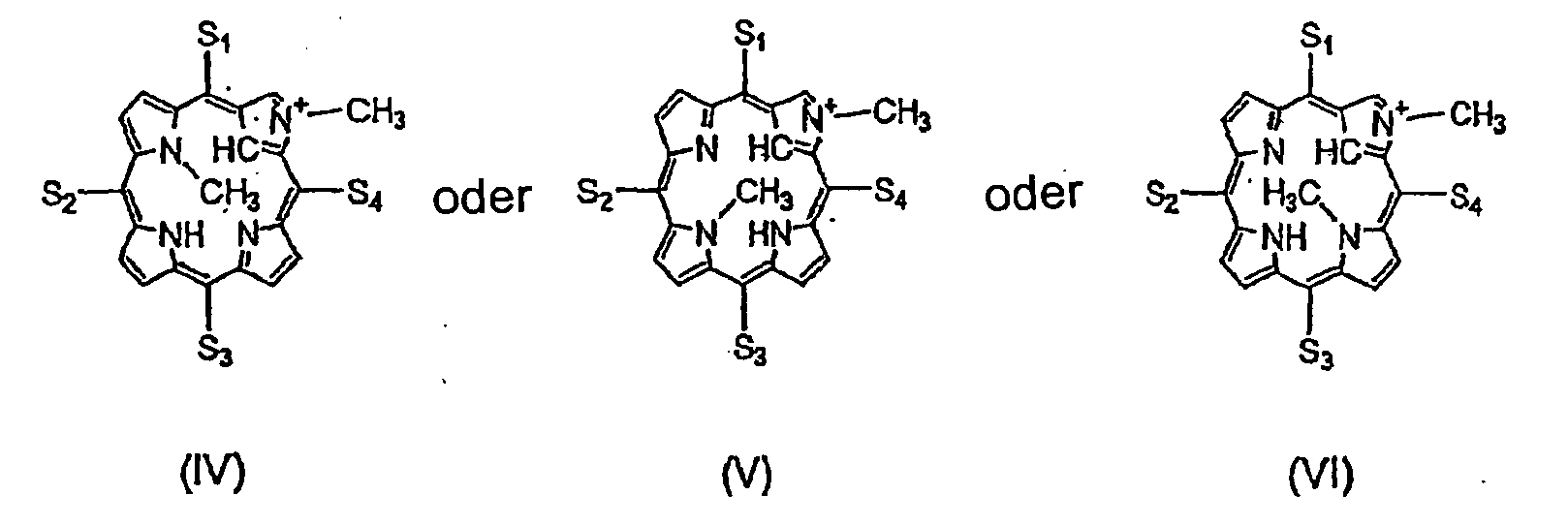

wobei S1 bis S4 einzeln aus H oder einer Gruppe, umfassend eine(n) substituierte(n) oder unsubstituierte(n) Alkylgruppe, Cycloalkylgruppe, Arylring, aromatischen Ring oder heterocyclischen Ring, ausgewählt sind, wobei, wenn eines oder mehrere von S1 bis S4 eine substituierte Gruppe ist, die Substitution aus einem Halogenatom, Thiol, einer Carbonylgruppe, einer primären, sekundären, tertiären oder quartären Aminogruppe, Nitril, einer Phosphatgruppe und einer Sulfonatgruppe ausgewählt ist. - N,N'-Dimethyliertes, N-invertiertes Porphyrin, dargestellt durch eine der Formeln IV'', IV''', V", V"', VI'' oder VI''', wie nachfolgend gezeigt:

 S1 bis S4 einzeln aus H oder einer Gruppe, umfassend eine(n) substituierte(n) oder unsubstituierte(n) Alkylgruppe, Cycloalkylgruppe, Arylring, aromatischen Ring oder heterocyclischen Ring, dargestellt durch die Struktur:
- Porphyrin nach Anspruch 2, wobei S1 bis S4 einzeln aus H,einem C1-18-Alkyl, gegebenenfalls substituiert mit einem Halogenatom, Thiol, einer Carbonylgruppe, Carbonsäure, -ester oder -amid, einer primären, sekundären, tertiären oder quartären Aminogruppe, Nitril, einer Phosphatgruppe oder einer Sulfonatgruppe,einem C3-7-Cycloalkyl, gegebenenfalls substituiert mit einem Halogenatom, Thiol, einer Carbonylgruppe, Carbonsäure, -ester oder -amid, einer primären, sekundären, tertiären oder quartären Aminogruppe, Nitril, einer Phosphatgruppe oder einer Sulfonatgruppe,einem aromatischen Ring oder einem heterocyclischen Ring ausgewählt sind.
- Porphyrin nach Anspruch 2, wobei S1 bis S4 durch die Struktur:

- Porphyrin nach einem der Ansprüche 2 bis 4, wobei R3, R7, R8, R12, R13, R17 und R18 einzeln aus H oder einer Alkyl-, Alken- oder Alkin-haltigen Gruppe mit von 1 bis 18 Kohlenstoffatomen, gegebenenfalls substituiert mit einem Halogenatom, Thiol, einer Carbonylgruppe, einer bzw. einem Carbonsäure oder -ester oder -amid, einer primären, sekundären, tertiären oder quartären Aminogruppe, Nitril, einer Phosphatgruppe oder einer Sulfonatgruppe, ausgewählt sind.
- Porphyrin nach Anspruch 5, wobei die Alkyl-, Alken- oder Alkin-haltige Gruppe von 1 bis 12 Kohlenstoffatome aufweist, gegebenenfalls substituiert mit einem Halogenatom, Thiol, einer Carbonylgruppe, einer bzw. einem Carbonsäure oder -ester oder -amid, einer primären, sekundären, tertiären oder quartären Aminogruppe, Nitril, einer Phosphatgruppe oder einer Sulfonatgruppe.
- Porphyrin nach Anspruch 6, wobei die Alkyl-, Alken- oder Alkin-haltige Gruppe von 1 bis 6 Kohlenstoffatome aufweist, gegebenenfalls substituiert mit einem Halogenatom, Thiol, einer Carbonylgruppe, einer bzw. einem Carbonsäure oder -ester oder -amid, einer primären, sekundären, tertiären oder quartären Aminogruppe, Nitril, einer Phosphatgruppe oder einer Sulfonatgruppe.
- Porphyrin nach einem der Ansprüche 1 bis 7 als eine Salzform mit CF3SO3 -, I-, F-, Cl-, Br-, NO3 -, BF4 -, CH3SO3 -, CH3COO- oder CF3COO-.
- Pharmazeutische Zusammensetzung, umfassend das Porphyrin nach einem der Ansprüche 1 bis 7 und ein pharmazeutisch verträglicher Arzneimittelträger.
- Verwendung eines Porphyrins nach einem der Ansprüche 1 bis 7 in der Herstellung eines Medikaments zur photodynamischen Therapie eines dessen bedürftigen Patienten.
- Verwendung nach Anspruch 10, wobei die photodynamische Therapie unerwünschte Neovaskulatur in dem Patienten verringert.
- Verwendung nach Anspruch 11, wobei die unerwünschte Neovaskulatur in den Okulargeweben des Patienten vorliegt.
- Verwendung eines Porphyrins nach einem der Ansprüche 1 bis 7 in der Herstellung eines Medikaments zur photodynamischen Therapie-Abbildung von Geweben und Zellen eines Patienten.
- Verwendung nach Anspruch 12, wobei die unerwünschte Neovaskulatur in den Okulargeweben des Patienten vorliegt.
- Verwendung eines Porphyrins nach einem der Ansprüche 1 bis 8 in der Herstellung eines Medikaments zur photodynamischen Therapie-Abbildung von Geweben und Zellen eines Patienten.
Priority Applications (1)
| Application Number | Priority Date | Filing Date | Title |
|---|---|---|---|
| SI200330878T SI1470127T1 (sl) | 2002-01-29 | 2003-01-29 | N,n-dimetilirani n-zamenjani porfirini |
Applications Claiming Priority (3)
| Application Number | Priority Date | Filing Date | Title |
|---|---|---|---|
| US35295602P | 2002-01-29 | 2002-01-29 | |
| US352956P | 2002-01-29 | ||
| PCT/CA2003/000120 WO2003064426A1 (en) | 2002-01-29 | 2003-01-29 | N, n'-dimethylated n-confused porphyrins |
Publications (2)
| Publication Number | Publication Date |
|---|---|
| EP1470127A1 EP1470127A1 (de) | 2004-10-27 |
| EP1470127B1 true EP1470127B1 (de) | 2007-05-02 |
Family
ID=27663158
Family Applications (1)
| Application Number | Title | Priority Date | Filing Date |
|---|---|---|---|
| EP03700767A Expired - Lifetime EP1470127B1 (de) | 2002-01-29 | 2003-01-29 | N,n-dimethylierte n-invertierte porphyrine |
Country Status (11)
| Country | Link |
|---|---|
| US (1) | US20040019095A1 (de) |
| EP (1) | EP1470127B1 (de) |
| JP (1) | JP2005526716A (de) |
| AT (1) | ATE361303T1 (de) |
| AU (1) | AU2003202369B2 (de) |
| CA (1) | CA2474593A1 (de) |
| DE (1) | DE60313577T2 (de) |
| DK (1) | DK1470127T3 (de) |
| ES (1) | ES2285086T3 (de) |
| PT (1) | PT1470127E (de) |
| WO (1) | WO2003064426A1 (de) |
Families Citing this family (5)
| Publication number | Priority date | Publication date | Assignee | Title |
|---|---|---|---|---|
| US20070093463A1 (en) * | 2004-05-20 | 2007-04-26 | Brookhaven Science Associates, Llc | Radiation enhancement agent for X-ray radiation therapy and boron neutron-capture therapy |
| US8287839B2 (en) * | 2006-12-04 | 2012-10-16 | Brookhaven Science Associates, Llc | Carboranylporphyrins and uses thereof |
| US8444953B2 (en) * | 2007-03-22 | 2013-05-21 | Brookhaven Science Associates, Llc | Symmetric and asymmetric halogen-containing metallocarboranylporphyrins and uses thereof |
| US20080279781A1 (en) * | 2007-05-10 | 2008-11-13 | Brookhaven Science Associates, Llc | Glycosylated Carboranylporphyrins and Uses Thereof |
| CN113307814A (zh) * | 2021-06-18 | 2021-08-27 | 宜春学院 | 一种水溶性羧基n-错位卟啉及其制备方法和应用 |
Family Cites Families (1)
| Publication number | Priority date | Publication date | Assignee | Title |
|---|---|---|---|---|
| GB0001455D0 (en) * | 2000-01-21 | 2000-03-15 | Scotia Holdings Plc | Porphyrins and related compounds |
-
2003
- 2003-01-28 US US10/353,787 patent/US20040019095A1/en not_active Abandoned
- 2003-01-29 PT PT03700767T patent/PT1470127E/pt unknown
- 2003-01-29 CA CA002474593A patent/CA2474593A1/en not_active Abandoned
- 2003-01-29 AU AU2003202369A patent/AU2003202369B2/en not_active Expired - Fee Related
- 2003-01-29 DK DK03700767T patent/DK1470127T3/da active
- 2003-01-29 ES ES03700767T patent/ES2285086T3/es not_active Expired - Lifetime
- 2003-01-29 WO PCT/CA2003/000120 patent/WO2003064426A1/en not_active Ceased
- 2003-01-29 AT AT03700767T patent/ATE361303T1/de not_active IP Right Cessation
- 2003-01-29 DE DE60313577T patent/DE60313577T2/de not_active Expired - Fee Related
- 2003-01-29 EP EP03700767A patent/EP1470127B1/de not_active Expired - Lifetime
- 2003-01-29 JP JP2003564049A patent/JP2005526716A/ja active Pending
Also Published As
| Publication number | Publication date |
|---|---|
| DE60313577D1 (de) | 2007-06-14 |
| ATE361303T1 (de) | 2007-05-15 |
| US20040019095A1 (en) | 2004-01-29 |
| AU2003202369B2 (en) | 2009-01-29 |
| EP1470127A1 (de) | 2004-10-27 |
| ES2285086T3 (es) | 2007-11-16 |
| WO2003064426A1 (en) | 2003-08-07 |
| PT1470127E (pt) | 2007-06-15 |
| JP2005526716A (ja) | 2005-09-08 |
| DK1470127T3 (da) | 2007-09-17 |
| DE60313577T2 (de) | 2007-12-27 |
| CA2474593A1 (en) | 2003-08-07 |
Similar Documents
| Publication | Publication Date | Title |
|---|---|---|
| US5648485A (en) | β, β-dihydroxy meso-substituted chlorins, isobacteriochlorins, and bacteriochlorins | |
| US6825343B2 (en) | 1,3-dipolar cycloadditions to polypyrrolic macrocycles | |
| US5330741A (en) | Long-wavelength water soluble chlorin photosensitizers useful for photodynamic therapy and diagnosis of tumors | |
| US5703230A (en) | Meso-monoiodo-substituted tetramacrocyclic compounds and methods for making and using the same | |
| JPS61129163A (ja) | 新規なテトラピロ−ル化合物 | |
| EP1450790A2 (de) | Photosensibilisierende carbamat-derivate | |
| ES2285086T3 (es) | Porfirinas n-cocondensadas n,n'-dimetiladas. | |
| US6894161B2 (en) | Methods and compositions for photo-cross linking photoactive compounds to target tissue | |
| AU2003202369A1 (en) | N, N' -dimethylated N-confused porphyrins | |
| JP4866854B2 (ja) | ホウ素化された金属フタロシアニン、その調製方法、これを有する医薬組成物及びその使用 | |
| US5656756A (en) | 5,15-diarylbenzochlorin-7-one compounds | |
| CA2399217A1 (en) | Porphyrins and related compounds | |
| JP4855937B2 (ja) | 医療における光線力学適用のための両親媒性トリスルホン化ポルフィラジン | |
| KR100484206B1 (ko) | 포르피린 화합물 | |
| KR100707655B1 (ko) | 포르피린 금속 착화합물 유도체 | |
| KR20050027197A (ko) | 신규한 포르피린 화합물 | |
| MXPA97003013A (en) | Beta chlorines, beta'-dihydroxy meso substitute, isobacterioclorines and methods to manufacture themselves from macrocicles tetrapirrolicosbeta, beta'-without substitute | |
| MXPA97003932A (en) | Meso-monoyodo-substitute tetramacrocyclic compounds and methods for manufacturing and using losmis |
Legal Events
| Date | Code | Title | Description |
|---|---|---|---|
| PUAI | Public reference made under article 153(3) epc to a published international application that has entered the european phase |
Free format text: ORIGINAL CODE: 0009012 |
|
| 17P | Request for examination filed |
Effective date: 20040823 |
|
| AK | Designated contracting states |
Kind code of ref document: A1 Designated state(s): AT BE BG CH CY CZ DE DK EE ES FI FR GB GR HU IE IT LI LU MC NL PT SE SI SK TR |
|
| AX | Request for extension of the european patent |
Extension state: AL LT LV MK RO |
|
| 17Q | First examination report despatched |
Effective date: 20041112 |
|
| GRAP | Despatch of communication of intention to grant a patent |
Free format text: ORIGINAL CODE: EPIDOSNIGR1 |
|
| GRAS | Grant fee paid |
Free format text: ORIGINAL CODE: EPIDOSNIGR3 |
|
| GRAA | (expected) grant |
Free format text: ORIGINAL CODE: 0009210 |
|
| AK | Designated contracting states |
Kind code of ref document: B1 Designated state(s): AT BE BG CH CY CZ DE DK EE ES FI FR GB GR HU IE IT LI LU MC NL PT SE SI SK TR |
|
| REG | Reference to a national code |
Ref country code: GB Ref legal event code: FG4D |
|
| REG | Reference to a national code |
Ref country code: CH Ref legal event code: EP |
|
| REG | Reference to a national code |
Ref country code: IE Ref legal event code: FG4D |
|
| REF | Corresponds to: |
Ref document number: 60313577 Country of ref document: DE Date of ref document: 20070614 Kind code of ref document: P |
|
| REG | Reference to a national code |
Ref country code: PT Ref legal event code: SC4A Free format text: AVAILABILITY OF NATIONAL TRANSLATION Effective date: 20070604 |
|
| REG | Reference to a national code |
Ref country code: GR Ref legal event code: EP Ref document number: 20070401518 Country of ref document: GR |
|
| RAP2 | Party data changed (patent owner data changed or rights of a patent transferred) |
Owner name: THE UNIVERSITY OF BRITISH COLUMBIA |
|
| REG | Reference to a national code |
Ref country code: PT Ref legal event code: TE4A Owner name: THE UNIVERSITY OF BRITISH COLUMBIA, CA Effective date: 20070622 |
|
| REG | Reference to a national code |
Ref country code: SE Ref legal event code: TRGR |
|
| REG | Reference to a national code |
Ref country code: CH Ref legal event code: NV Representative=s name: PATENTANWAELTE SCHAAD, BALASS, MENZL & PARTNER AG |
|
| NLT2 | Nl: modifications (of names), taken from the european patent patent bulletin |
Owner name: THE UNIVERSITY OF BRITISH COLUMBIA Effective date: 20070704 |
|
| REG | Reference to a national code |
Ref country code: DK Ref legal event code: T3 |
|
| REG | Reference to a national code |
Ref country code: FR Ref legal event code: CA |
|
| REG | Reference to a national code |
Ref country code: HU Ref legal event code: AG4A Ref document number: E002007 Country of ref document: HU |
|
| ET | Fr: translation filed | ||
| REG | Reference to a national code |
Ref country code: ES Ref legal event code: FG2A Ref document number: 2285086 Country of ref document: ES Kind code of ref document: T3 |
|
| BECA | Be: change of holder's address |
Owner name: THE *UNIVERSITY OF BRITISH COLUMBIA6190 AGRONOMY R Effective date: 20070502 |
|
| PLBE | No opposition filed within time limit |
Free format text: ORIGINAL CODE: 0009261 |
|
| STAA | Information on the status of an ep patent application or granted ep patent |
Free format text: STATUS: NO OPPOSITION FILED WITHIN TIME LIMIT |
|
| 26N | No opposition filed |
Effective date: 20080205 |
|
| PG25 | Lapsed in a contracting state [announced via postgrant information from national office to epo] |
Ref country code: CY Free format text: LAPSE BECAUSE OF NON-PAYMENT OF DUE FEES Effective date: 20080129 |
|
| PGFP | Annual fee paid to national office [announced via postgrant information from national office to epo] |
Ref country code: AT Payment date: 20090123 Year of fee payment: 7 Ref country code: DK Payment date: 20090123 Year of fee payment: 7 Ref country code: EE Payment date: 20090127 Year of fee payment: 7 Ref country code: ES Payment date: 20090129 Year of fee payment: 7 Ref country code: HU Payment date: 20090204 Year of fee payment: 7 Ref country code: IE Payment date: 20090130 Year of fee payment: 7 Ref country code: LU Payment date: 20090127 Year of fee payment: 7 |
|
| PGFP | Annual fee paid to national office [announced via postgrant information from national office to epo] |
Ref country code: BG Payment date: 20090122 Year of fee payment: 7 Ref country code: CZ Payment date: 20090129 Year of fee payment: 7 Ref country code: DE Payment date: 20090130 Year of fee payment: 7 Ref country code: FI Payment date: 20090128 Year of fee payment: 7 Ref country code: NL Payment date: 20090127 Year of fee payment: 7 Ref country code: PT Payment date: 20090123 Year of fee payment: 7 Ref country code: SI Payment date: 20090127 Year of fee payment: 7 Ref country code: SK Payment date: 20090128 Year of fee payment: 7 |
|
| PGFP | Annual fee paid to national office [announced via postgrant information from national office to epo] |
Ref country code: CH Payment date: 20090129 Year of fee payment: 7 Ref country code: GB Payment date: 20090122 Year of fee payment: 7 Ref country code: GR Payment date: 20090129 Year of fee payment: 7 |
|
| PGFP | Annual fee paid to national office [announced via postgrant information from national office to epo] |
Ref country code: BE Payment date: 20090225 Year of fee payment: 7 |
|
| PGFP | Annual fee paid to national office [announced via postgrant information from national office to epo] |
Ref country code: IT Payment date: 20090129 Year of fee payment: 7 Ref country code: SE Payment date: 20090123 Year of fee payment: 7 |
|
| PGFP | Annual fee paid to national office [announced via postgrant information from national office to epo] |
Ref country code: MC Payment date: 20090209 Year of fee payment: 7 |
|
| PGFP | Annual fee paid to national office [announced via postgrant information from national office to epo] |
Ref country code: FR Payment date: 20090122 Year of fee payment: 7 |
|
| BERE | Be: lapsed |
Owner name: THE *UNIVERSITY OF BRITISH COLUMBIA Effective date: 20100131 |
|
| REG | Reference to a national code |
Ref country code: PT Ref legal event code: MM4A Free format text: LAPSE DUE TO NON-PAYMENT OF FEES Effective date: 20100729 |
|
| REG | Reference to a national code |
Ref country code: NL Ref legal event code: V1 Effective date: 20100801 |
|
| PG25 | Lapsed in a contracting state [announced via postgrant information from national office to epo] |
Ref country code: MC Free format text: LAPSE BECAUSE OF NON-PAYMENT OF DUE FEES Effective date: 20100131 |
|
| REG | Reference to a national code |
Ref country code: CH Ref legal event code: PL |
|
| REG | Reference to a national code |
Ref country code: DK Ref legal event code: EBP |
|
| GBPC | Gb: european patent ceased through non-payment of renewal fee |
Effective date: 20100129 |
|
| EUG | Se: european patent has lapsed | ||
| REG | Reference to a national code |
Ref country code: SK Ref legal event code: MM4A Ref document number: E 2225 Country of ref document: SK Effective date: 20100129 |
|
| REG | Reference to a national code |
Ref country code: EE Ref legal event code: MM4A Ref document number: E001380 Country of ref document: EE Effective date: 20100131 |
|
| REG | Reference to a national code |
Ref country code: FR Ref legal event code: ST Effective date: 20100930 |
|
| PG25 | Lapsed in a contracting state [announced via postgrant information from national office to epo] |
Ref country code: LI Free format text: LAPSE BECAUSE OF NON-PAYMENT OF DUE FEES Effective date: 20100131 Ref country code: HU Free format text: LAPSE BECAUSE OF NON-PAYMENT OF DUE FEES Effective date: 20100130 Ref country code: FR Free format text: LAPSE BECAUSE OF NON-PAYMENT OF DUE FEES Effective date: 20100201 Ref country code: EE Free format text: LAPSE BECAUSE OF NON-PAYMENT OF DUE FEES Effective date: 20100131 Ref country code: CH Free format text: LAPSE BECAUSE OF NON-PAYMENT OF DUE FEES Effective date: 20100131 Ref country code: NL Free format text: LAPSE BECAUSE OF NON-PAYMENT OF DUE FEES Effective date: 20100801 |
|
| REG | Reference to a national code |
Ref country code: SI Ref legal event code: KO00 Effective date: 20100903 |
|
| PG25 | Lapsed in a contracting state [announced via postgrant information from national office to epo] |
Ref country code: CZ Free format text: LAPSE BECAUSE OF NON-PAYMENT OF DUE FEES Effective date: 20100129 Ref country code: BG Free format text: LAPSE BECAUSE OF NON-PAYMENT OF DUE FEES Effective date: 20100731 Ref country code: AT Free format text: LAPSE BECAUSE OF NON-PAYMENT OF DUE FEES Effective date: 20100129 Ref country code: DE Free format text: LAPSE BECAUSE OF NON-PAYMENT OF DUE FEES Effective date: 20100803 Ref country code: SK Free format text: LAPSE BECAUSE OF NON-PAYMENT OF DUE FEES Effective date: 20100129 Ref country code: SI Free format text: LAPSE BECAUSE OF NON-PAYMENT OF DUE FEES Effective date: 20100130 Ref country code: FI Free format text: LAPSE BECAUSE OF NON-PAYMENT OF DUE FEES Effective date: 20100129 |
|
| PG25 | Lapsed in a contracting state [announced via postgrant information from national office to epo] |
Ref country code: GB Free format text: LAPSE BECAUSE OF NON-PAYMENT OF DUE FEES Effective date: 20100129 |
|
| PG25 | Lapsed in a contracting state [announced via postgrant information from national office to epo] |
Ref country code: PT Free format text: LAPSE BECAUSE OF NON-PAYMENT OF DUE FEES Effective date: 20100729 Ref country code: IE Free format text: LAPSE BECAUSE OF NON-PAYMENT OF DUE FEES Effective date: 20100129 Ref country code: DK Free format text: LAPSE BECAUSE OF NON-PAYMENT OF DUE FEES Effective date: 20100131 |
|
| PG25 | Lapsed in a contracting state [announced via postgrant information from national office to epo] |
Ref country code: BE Free format text: LAPSE BECAUSE OF NON-PAYMENT OF DUE FEES Effective date: 20100131 |
|
| REG | Reference to a national code |
Ref country code: ES Ref legal event code: FD2A Effective date: 20110329 |
|
| PG25 | Lapsed in a contracting state [announced via postgrant information from national office to epo] |
Ref country code: IT Free format text: LAPSE BECAUSE OF NON-PAYMENT OF DUE FEES Effective date: 20100129 |
|
| PG25 | Lapsed in a contracting state [announced via postgrant information from national office to epo] |
Ref country code: ES Free format text: LAPSE BECAUSE OF NON-PAYMENT OF DUE FEES Effective date: 20110316 |
|
| PG25 | Lapsed in a contracting state [announced via postgrant information from national office to epo] |
Ref country code: ES Free format text: LAPSE BECAUSE OF NON-PAYMENT OF DUE FEES Effective date: 20100130 |
|
| PGFP | Annual fee paid to national office [announced via postgrant information from national office to epo] |
Ref country code: TR Payment date: 20090217 Year of fee payment: 7 |
|
| PG25 | Lapsed in a contracting state [announced via postgrant information from national office to epo] |
Ref country code: LU Free format text: LAPSE BECAUSE OF NON-PAYMENT OF DUE FEES Effective date: 20100129 Ref country code: SE Free format text: LAPSE BECAUSE OF NON-PAYMENT OF DUE FEES Effective date: 20100130 |
|
| PG25 | Lapsed in a contracting state [announced via postgrant information from national office to epo] |
Ref country code: TR Free format text: LAPSE BECAUSE OF NON-PAYMENT OF DUE FEES Effective date: 20100129 |