EP1465869B1 - Modulators of lxr - Google Patents
Modulators of lxr Download PDFInfo
- Publication number
- EP1465869B1 EP1465869B1 EP02787071.6A EP02787071A EP1465869B1 EP 1465869 B1 EP1465869 B1 EP 1465869B1 EP 02787071 A EP02787071 A EP 02787071A EP 1465869 B1 EP1465869 B1 EP 1465869B1
- Authority
- EP
- European Patent Office
- Prior art keywords
- unsubstituted
- substituted
- phenyl
- compound
- methyl
- Prior art date
- Legal status (The legal status is an assumption and is not a legal conclusion. Google has not performed a legal analysis and makes no representation as to the accuracy of the status listed.)
- Expired - Lifetime
Links
- -1 halohydroxyalkyl Chemical group 0.000 claims description 558
- 150000001875 compounds Chemical class 0.000 claims description 254
- 125000000217 alkyl group Chemical group 0.000 claims description 119
- 125000003118 aryl group Chemical group 0.000 claims description 101
- 108020005497 Nuclear hormone receptor Proteins 0.000 claims description 99
- 108020004017 nuclear receptors Proteins 0.000 claims description 97
- 208000037265 diseases, disorders, signs and symptoms Diseases 0.000 claims description 93
- 230000000694 effects Effects 0.000 claims description 71
- 125000001072 heteroaryl group Chemical group 0.000 claims description 65
- 238000000034 method Methods 0.000 claims description 64
- HVYWMOMLDIMFJA-DPAQBDIFSA-N cholesterol Chemical compound C1C=C2C[C@@H](O)CC[C@]2(C)[C@@H]2[C@@H]1[C@@H]1CC[C@H]([C@H](C)CCCC(C)C)[C@@]1(C)CC2 HVYWMOMLDIMFJA-DPAQBDIFSA-N 0.000 claims description 59
- 125000000623 heterocyclic group Chemical group 0.000 claims description 54
- 125000003710 aryl alkyl group Chemical group 0.000 claims description 49
- 208000035475 disorder Diseases 0.000 claims description 49
- 239000001257 hydrogen Substances 0.000 claims description 48
- 229910052739 hydrogen Inorganic materials 0.000 claims description 48
- 125000004435 hydrogen atom Chemical group [H]* 0.000 claims description 48
- 206010012601 diabetes mellitus Diseases 0.000 claims description 45
- 125000001424 substituent group Chemical group 0.000 claims description 39
- 125000003342 alkenyl group Chemical group 0.000 claims description 38
- 125000000304 alkynyl group Chemical group 0.000 claims description 38
- 125000000753 cycloalkyl group Chemical group 0.000 claims description 36
- 125000005302 thiazolylmethyl group Chemical group [H]C1=C([H])N=C(S1)C([H])([H])* 0.000 claims description 35
- 125000003545 alkoxy group Chemical group 0.000 claims description 32
- 125000004453 alkoxycarbonyl group Chemical group 0.000 claims description 32
- 125000004475 heteroaralkyl group Chemical group 0.000 claims description 32
- 125000001997 phenyl group Chemical group [H]C1=C([H])C([H])=C(*)C([H])=C1[H] 0.000 claims description 32
- 125000001188 haloalkyl group Chemical group 0.000 claims description 29
- 229910052760 oxygen Inorganic materials 0.000 claims description 28
- 229910052717 sulfur Inorganic materials 0.000 claims description 27
- 125000005843 halogen group Chemical group 0.000 claims description 26
- 125000004415 heterocyclylalkyl group Chemical group 0.000 claims description 26
- 125000004104 aryloxy group Chemical group 0.000 claims description 23
- ZMZDMBWJUHKJPS-UHFFFAOYSA-M Thiocyanate anion Chemical compound [S-]C#N ZMZDMBWJUHKJPS-UHFFFAOYSA-M 0.000 claims description 22
- XLJMAIOERFSOGZ-UHFFFAOYSA-M cyanate Chemical compound [O-]C#N XLJMAIOERFSOGZ-UHFFFAOYSA-M 0.000 claims description 22
- ZMZDMBWJUHKJPS-UHFFFAOYSA-N hydrogen thiocyanate Natural products SC#N ZMZDMBWJUHKJPS-UHFFFAOYSA-N 0.000 claims description 22
- CRDYSYOERSZTHZ-UHFFFAOYSA-M selenocyanate Chemical compound [Se-]C#N CRDYSYOERSZTHZ-UHFFFAOYSA-M 0.000 claims description 21
- XFXPMWWXUTWYJX-UHFFFAOYSA-N Cyanide Chemical compound N#[C-] XFXPMWWXUTWYJX-UHFFFAOYSA-N 0.000 claims description 20
- 125000004448 alkyl carbonyl group Chemical group 0.000 claims description 20
- 125000002887 hydroxy group Chemical group [H]O* 0.000 claims description 20
- 125000004414 alkyl thio group Chemical group 0.000 claims description 19
- 125000005129 aryl carbonyl group Chemical group 0.000 claims description 19
- 125000001797 benzyl group Chemical group [H]C1=C([H])C([H])=C(C([H])=C1[H])C([H])([H])* 0.000 claims description 19
- 208000008589 Obesity Diseases 0.000 claims description 18
- 235000020824 obesity Nutrition 0.000 claims description 18
- 125000001544 thienyl group Chemical group 0.000 claims description 18
- 125000004419 alkynylene group Chemical group 0.000 claims description 17
- BPXYEYJNCXITEY-UHFFFAOYSA-N diazonio(trifluoromethoxy)azanide Chemical compound FC(F)(F)ON=[N+]=[N-] BPXYEYJNCXITEY-UHFFFAOYSA-N 0.000 claims description 17
- 125000004450 alkenylene group Chemical group 0.000 claims description 16
- 125000002947 alkylene group Chemical group 0.000 claims description 16
- 125000001316 cycloalkyl alkyl group Chemical group 0.000 claims description 16
- 125000004663 dialkyl amino group Chemical group 0.000 claims description 16
- 239000003937 drug carrier Substances 0.000 claims description 16
- 125000002768 hydroxyalkyl group Chemical group 0.000 claims description 16
- 125000002496 methyl group Chemical group [H]C([H])([H])* 0.000 claims description 16
- 201000001320 Atherosclerosis Diseases 0.000 claims description 14
- 125000003282 alkyl amino group Chemical group 0.000 claims description 14
- 125000004103 aminoalkyl group Chemical group 0.000 claims description 14
- 125000004986 diarylamino group Chemical group 0.000 claims description 14
- 239000008194 pharmaceutical composition Substances 0.000 claims description 14
- 125000001691 aryl alkyl amino group Chemical group 0.000 claims description 13
- 125000001769 aryl amino group Chemical group 0.000 claims description 13
- 125000005161 aryl oxy carbonyl group Chemical group 0.000 claims description 13
- 125000004438 haloalkoxy group Chemical group 0.000 claims description 13
- 125000004457 alkyl amino carbonyl group Chemical group 0.000 claims description 12
- 125000004429 atom Chemical group 0.000 claims description 12
- 239000003814 drug Substances 0.000 claims description 12
- 238000006467 substitution reaction Methods 0.000 claims description 12
- 208000024172 Cardiovascular disease Diseases 0.000 claims description 11
- 208000035150 Hypercholesterolemia Diseases 0.000 claims description 11
- 125000004183 alkoxy alkyl group Chemical group 0.000 claims description 11
- 125000005081 alkoxyalkoxyalkyl group Chemical group 0.000 claims description 11
- 125000005110 aryl thio group Chemical group 0.000 claims description 11
- ORTFAQDWJHRMNX-UHFFFAOYSA-N hydroxidooxidocarbon(.) Chemical group O[C]=O ORTFAQDWJHRMNX-UHFFFAOYSA-N 0.000 claims description 11
- 125000005027 hydroxyaryl group Chemical group 0.000 claims description 11
- 201000001421 hyperglycemia Diseases 0.000 claims description 11
- 125000002023 trifluoromethyl group Chemical group FC(F)(F)* 0.000 claims description 11
- 125000004947 alkyl aryl amino group Chemical group 0.000 claims description 10
- 125000000392 cycloalkenyl group Chemical group 0.000 claims description 10
- 150000002632 lipids Chemical class 0.000 claims description 10
- 208000032928 Dyslipidaemia Diseases 0.000 claims description 9
- DGYIJVNZSDYBOE-UHFFFAOYSA-N [CH2]C1=CC=NC=C1 Chemical group [CH2]C1=CC=NC=C1 DGYIJVNZSDYBOE-UHFFFAOYSA-N 0.000 claims description 9
- 125000004618 benzofuryl group Chemical group O1C(=CC2=C1C=CC=C2)* 0.000 claims description 9
- 125000005844 heterocyclyloxy group Chemical group 0.000 claims description 9
- 208000006575 hypertriglyceridemia Diseases 0.000 claims description 9
- 150000002825 nitriles Chemical class 0.000 claims description 9
- 125000000168 pyrrolyl group Chemical group 0.000 claims description 9
- 208000017170 Lipid metabolism disease Diseases 0.000 claims description 8
- 206010028980 Neoplasm Diseases 0.000 claims description 8
- 125000005530 alkylenedioxy group Chemical group 0.000 claims description 8
- 125000003917 carbamoyl group Chemical group [H]N([H])C(*)=O 0.000 claims description 8
- 210000004400 mucous membrane Anatomy 0.000 claims description 8
- 125000001624 naphthyl group Chemical group 0.000 claims description 8
- 210000003491 skin Anatomy 0.000 claims description 8
- 208000002874 Acne Vulgaris Diseases 0.000 claims description 7
- 208000024827 Alzheimer disease Diseases 0.000 claims description 7
- 206010049287 Lipodystrophy acquired Diseases 0.000 claims description 7
- 208000018737 Parkinson disease Diseases 0.000 claims description 7
- 241000534944 Thia Species 0.000 claims description 7
- 206010000496 acne Diseases 0.000 claims description 7
- 125000004466 alkoxycarbonylamino group Chemical group 0.000 claims description 7
- 125000003806 alkyl carbonyl amino group Chemical group 0.000 claims description 7
- 125000001118 alkylidene group Chemical group 0.000 claims description 7
- 125000004658 aryl carbonyl amino group Chemical group 0.000 claims description 7
- 201000011510 cancer Diseases 0.000 claims description 7
- 201000001883 cholelithiasis Diseases 0.000 claims description 7
- 125000001495 ethyl group Chemical group [H]C([H])([H])C([H])([H])* 0.000 claims description 7
- 150000004820 halides Chemical class 0.000 claims description 7
- 125000004992 haloalkylamino group Chemical group 0.000 claims description 7
- 238000000338 in vitro Methods 0.000 claims description 7
- 125000001041 indolyl group Chemical group 0.000 claims description 7
- 208000006132 lipodystrophy Diseases 0.000 claims description 7
- 125000004043 oxo group Chemical group O=* 0.000 claims description 7
- 125000006684 polyhaloalkyl group Polymers 0.000 claims description 7
- 125000002924 primary amino group Chemical group [H]N([H])* 0.000 claims description 7
- 125000003226 pyrazolyl group Chemical group 0.000 claims description 7
- 125000006201 3-phenylpropyl group Chemical group [H]C1=C([H])C([H])=C(C([H])=C1[H])C([H])([H])C([H])([H])C([H])([H])* 0.000 claims description 6
- 206010061218 Inflammation Diseases 0.000 claims description 6
- 125000005248 alkyl aryloxy group Chemical group 0.000 claims description 6
- 230000037365 barrier function of the epidermis Effects 0.000 claims description 6
- 125000000000 cycloalkoxy group Chemical group 0.000 claims description 6
- 230000004069 differentiation Effects 0.000 claims description 6
- 210000002615 epidermis Anatomy 0.000 claims description 6
- 125000002541 furyl group Chemical group 0.000 claims description 6
- 125000004996 haloaryloxy group Chemical group 0.000 claims description 6
- 125000005553 heteroaryloxy group Chemical group 0.000 claims description 6
- 208000026278 immune system disease Diseases 0.000 claims description 6
- 230000004054 inflammatory process Effects 0.000 claims description 6
- 125000001449 isopropyl group Chemical group [H]C([H])([H])C([H])(*)C([H])([H])[H] 0.000 claims description 6
- 230000035755 proliferation Effects 0.000 claims description 6
- 125000000335 thiazolyl group Chemical group 0.000 claims description 6
- 125000006180 3-methyl benzyl group Chemical group [H]C1=C([H])C(=C([H])C(=C1[H])C([H])([H])[H])C([H])([H])* 0.000 claims description 5
- 125000006181 4-methyl benzyl group Chemical group [H]C1=C([H])C(=C([H])C([H])=C1C([H])([H])[H])C([H])([H])* 0.000 claims description 5
- 208000034493 Mucous membrane disease Diseases 0.000 claims description 5
- 125000005125 aryl alkyl amino carbonyl group Chemical group 0.000 claims description 5
- 125000005100 aryl amino carbonyl group Chemical group 0.000 claims description 5
- 125000001951 carbamoylamino group Chemical group C(N)(=O)N* 0.000 claims description 5
- 125000004985 dialkyl amino alkyl group Chemical group 0.000 claims description 5
- 125000004473 dialkylaminocarbonyl group Chemical group 0.000 claims description 5
- 125000005221 halo alkyl carbonyl amino group Chemical group 0.000 claims description 5
- 125000006517 heterocyclyl carbonyl group Chemical group 0.000 claims description 5
- 125000003854 p-chlorophenyl group Chemical group [H]C1=C([H])C(*)=C([H])C([H])=C1Cl 0.000 claims description 5
- 125000004482 piperidin-4-yl group Chemical group N1CCC(CC1)* 0.000 claims description 5
- 125000004076 pyridyl group Chemical group 0.000 claims description 5
- 125000005346 substituted cycloalkyl group Chemical group 0.000 claims description 5
- 125000000175 2-thienyl group Chemical group S1C([*])=C([H])C([H])=C1[H] 0.000 claims description 4
- 125000004207 3-methoxyphenyl group Chemical group [H]C1=C([H])C(*)=C([H])C(OC([H])([H])[H])=C1[H] 0.000 claims description 4
- 229920001774 Perfluoroether Polymers 0.000 claims description 4
- 125000003302 alkenyloxy group Chemical group 0.000 claims description 4
- 125000005078 alkoxycarbonylalkyl group Chemical group 0.000 claims description 4
- 125000005194 alkoxycarbonyloxy group Chemical group 0.000 claims description 4
- 125000000278 alkyl amino alkyl group Chemical group 0.000 claims description 4
- 125000004471 alkyl aminosulfonyl group Chemical group 0.000 claims description 4
- 125000005196 alkyl carbonyloxy group Chemical group 0.000 claims description 4
- 125000005107 alkyl diaryl silyl group Chemical group 0.000 claims description 4
- 125000004644 alkyl sulfinyl group Chemical group 0.000 claims description 4
- 125000004390 alkyl sulfonyl group Chemical group 0.000 claims description 4
- 125000004656 alkyl sulfonylamino group Chemical group 0.000 claims description 4
- 125000005281 alkyl ureido group Chemical group 0.000 claims description 4
- 125000005133 alkynyloxy group Chemical group 0.000 claims description 4
- 125000004397 aminosulfonyl group Chemical group NS(=O)(=O)* 0.000 claims description 4
- 125000005128 aryl amino alkyl group Chemical group 0.000 claims description 4
- 125000005141 aryl amino sulfonyl group Chemical group 0.000 claims description 4
- 125000005199 aryl carbonyloxy group Chemical group 0.000 claims description 4
- 125000005162 aryl oxy carbonyl amino group Chemical group 0.000 claims description 4
- 125000005135 aryl sulfinyl group Chemical group 0.000 claims description 4
- 125000004657 aryl sulfonyl amino group Chemical group 0.000 claims description 4
- 125000004391 aryl sulfonyl group Chemical group 0.000 claims description 4
- 125000005200 aryloxy carbonyloxy group Chemical group 0.000 claims description 4
- 125000000852 azido group Chemical group *N=[N+]=[N-] 0.000 claims description 4
- 125000004093 cyano group Chemical group *C#N 0.000 claims description 4
- 125000004472 dialkylaminosulfonyl group Chemical group 0.000 claims description 4
- 125000005105 dialkylarylsilyl group Chemical group 0.000 claims description 4
- 125000003754 ethoxycarbonyl group Chemical group C(=O)(OCC)* 0.000 claims description 4
- 125000004446 heteroarylalkyl group Chemical group 0.000 claims description 4
- 125000005223 heteroarylcarbonyl group Chemical group 0.000 claims description 4
- 125000000286 phenylethyl group Chemical group [H]C1=C([H])C([H])=C(C([H])=C1[H])C([H])([H])C([H])([H])* 0.000 claims description 4
- 125000003386 piperidinyl group Chemical group 0.000 claims description 4
- 125000003373 pyrazinyl group Chemical group 0.000 claims description 4
- 125000005031 thiocyano group Chemical group S(C#N)* 0.000 claims description 4
- 125000004665 trialkylsilyl group Chemical group 0.000 claims description 4
- 125000005106 triarylsilyl group Chemical group 0.000 claims description 4
- 125000001637 1-naphthyl group Chemical group [H]C1=C([H])C([H])=C2C(*)=C([H])C([H])=C([H])C2=C1[H] 0.000 claims description 3
- 125000004343 1-phenylethyl group Chemical group [H]C1=C([H])C([H])=C(C([H])=C1[H])C([H])(*)C([H])([H])[H] 0.000 claims description 3
- 125000006507 2,4-difluorobenzyl group Chemical group [H]C1=C(F)C([H])=C(F)C(=C1[H])C([H])([H])* 0.000 claims description 3
- 125000006183 2,4-dimethyl benzyl group Chemical group [H]C1=C(C([H])=C(C(=C1[H])C([H])([H])*)C([H])([H])[H])C([H])([H])[H] 0.000 claims description 3
- 125000006282 2-chlorobenzyl group Chemical group [H]C1=C([H])C(Cl)=C(C([H])=C1[H])C([H])([H])* 0.000 claims description 3
- 125000004182 2-chlorophenyl group Chemical group [H]C1=C([H])C(Cl)=C(*)C([H])=C1[H] 0.000 claims description 3
- 125000004847 2-fluorobenzyl group Chemical group [H]C1=C([H])C(F)=C(C([H])=C1[H])C([H])([H])* 0.000 claims description 3
- 125000002941 2-furyl group Chemical group O1C([*])=C([H])C([H])=C1[H] 0.000 claims description 3
- 125000002927 2-methoxybenzyl group Chemical group [H]C1=C([H])C([H])=C(C(OC([H])([H])[H])=C1[H])C([H])([H])* 0.000 claims description 3
- 125000004204 2-methoxyphenyl group Chemical group [H]C1=C([H])C(*)=C(OC([H])([H])[H])C([H])=C1[H] 0.000 claims description 3
- 125000006179 2-methyl benzyl group Chemical group [H]C1=C([H])C(=C(C([H])=C1[H])C([H])([H])*)C([H])([H])[H] 0.000 claims description 3
- 125000001622 2-naphthyl group Chemical group [H]C1=C([H])C([H])=C2C([H])=C(*)C([H])=C([H])C2=C1[H] 0.000 claims description 3
- 125000000094 2-phenylethyl group Chemical group [H]C1=C([H])C([H])=C(C([H])=C1[H])C([H])([H])C([H])([H])* 0.000 claims description 3
- 125000006494 2-trifluoromethyl benzyl group Chemical group [H]C1=C([H])C([H])=C(C(=C1[H])C([H])([H])*)C(F)(F)F 0.000 claims description 3
- 125000004179 3-chlorophenyl group Chemical group [H]C1=C([H])C(*)=C([H])C(Cl)=C1[H] 0.000 claims description 3
- 125000004208 3-hydroxyphenyl group Chemical group [H]OC1=C([H])C([H])=C([H])C(*)=C1[H] 0.000 claims description 3
- 125000006497 3-methoxybenzyl group Chemical group [H]C1=C([H])C(=C([H])C(OC([H])([H])[H])=C1[H])C([H])([H])* 0.000 claims description 3
- 125000006495 3-trifluoromethyl benzyl group Chemical group [H]C1=C([H])C(=C([H])C(=C1[H])C([H])([H])*)C(F)(F)F 0.000 claims description 3
- BGNGWHSBYQYVRX-UHFFFAOYSA-N 4-(dimethylamino)benzaldehyde Chemical compound CN(C)C1=CC=C(C=O)C=C1 BGNGWHSBYQYVRX-UHFFFAOYSA-N 0.000 claims description 3
- 125000006281 4-bromobenzyl group Chemical group [H]C1=C([H])C(=C([H])C([H])=C1Br)C([H])([H])* 0.000 claims description 3
- 125000004176 4-fluorobenzyl group Chemical group [H]C1=C([H])C(=C([H])C([H])=C1F)C([H])([H])* 0.000 claims description 3
- 125000004217 4-methoxybenzyl group Chemical group [H]C1=C([H])C(=C([H])C([H])=C1OC([H])([H])[H])C([H])([H])* 0.000 claims description 3
- 125000004172 4-methoxyphenyl group Chemical group [H]C1=C([H])C(OC([H])([H])[H])=C([H])C([H])=C1* 0.000 claims description 3
- 125000006189 4-phenyl benzyl group Chemical group [H]C1=C([H])C([H])=C(C([H])=C1[H])C1=C([H])C([H])=C(C([H])=C1[H])C([H])([H])* 0.000 claims description 3
- 125000000173 4-trifluoromethoxy benzyl group Chemical group [H]C1=C([H])C(=C([H])C([H])=C1OC(F)(F)F)C([H])([H])* 0.000 claims description 3
- UFHFLCQGNIYNRP-UHFFFAOYSA-N Hydrogen Chemical group [H][H] UFHFLCQGNIYNRP-UHFFFAOYSA-N 0.000 claims description 3
- KPCZJLGGXRGYIE-UHFFFAOYSA-N [C]1=CC=CN=C1 Chemical group [C]1=CC=CN=C1 KPCZJLGGXRGYIE-UHFFFAOYSA-N 0.000 claims description 3
- 125000002877 alkyl aryl group Chemical group 0.000 claims description 3
- 125000005126 aryl alkyl carbonyl amino group Chemical group 0.000 claims description 3
- 125000000113 cyclohexyl group Chemical group [H]C1([H])C([H])([H])C([H])([H])C([H])(*)C([H])([H])C1([H])[H] 0.000 claims description 3
- 125000004029 hydroxymethyl group Chemical group [H]OC([H])([H])* 0.000 claims description 3
- 125000003392 indanyl group Chemical group C1(CCC2=CC=CC=C12)* 0.000 claims description 3
- 125000000040 m-tolyl group Chemical group [H]C1=C([H])C(*)=C([H])C(=C1[H])C([H])([H])[H] 0.000 claims description 3
- YCWSUKQGVSGXJO-NTUHNPAUSA-N nifuroxazide Chemical group C1=CC(O)=CC=C1C(=O)N\N=C\C1=CC=C([N+]([O-])=O)O1 YCWSUKQGVSGXJO-NTUHNPAUSA-N 0.000 claims description 3
- 102000006255 nuclear receptors Human genes 0.000 claims description 3
- 125000003261 o-tolyl group Chemical group [H]C1=C([H])C(*)=C(C([H])=C1[H])C([H])([H])[H] 0.000 claims description 3
- 125000001037 p-tolyl group Chemical group [H]C1=C([H])C(=C([H])C([H])=C1*)C([H])([H])[H] 0.000 claims description 3
- 125000006340 pentafluoro ethyl group Chemical group FC(F)(F)C(F)(F)* 0.000 claims description 3
- 125000004307 pyrazin-2-yl group Chemical group [H]C1=C([H])N=C(*)C([H])=N1 0.000 claims description 3
- 230000001225 therapeutic effect Effects 0.000 claims description 3
- 125000004801 4-cyanophenyl group Chemical group [H]C1=C([H])C(C#N)=C([H])C([H])=C1* 0.000 claims description 2
- 125000004203 4-hydroxyphenyl group Chemical group [H]OC1=C([H])C([H])=C(*)C([H])=C1[H] 0.000 claims description 2
- 125000002528 4-isopropyl benzyl group Chemical group [H]C1=C([H])C(=C([H])C([H])=C1C([H])([H])*)C([H])(C([H])([H])[H])C([H])([H])[H] 0.000 claims description 2
- 125000003352 4-tert-butyl benzyl group Chemical group [H]C1=C([H])C(=C([H])C([H])=C1C([H])([H])*)C(C([H])([H])[H])(C([H])([H])[H])C([H])([H])[H] 0.000 claims description 2
- 125000002777 acetyl group Chemical group [H]C([H])([H])C(*)=O 0.000 claims description 2
- 125000004202 aminomethyl group Chemical group [H]N([H])C([H])([H])* 0.000 claims description 2
- 125000004775 chlorodifluoromethyl group Chemical group FC(F)(Cl)* 0.000 claims description 2
- 125000002433 cyclopentenyl group Chemical group C1(=CCCC1)* 0.000 claims description 2
- 125000006222 dimethylaminomethyl group Chemical group [H]C([H])([H])N(C([H])([H])[H])C([H])([H])* 0.000 claims description 2
- 125000006343 heptafluoro propyl group Chemical group 0.000 claims description 2
- 125000001160 methoxycarbonyl group Chemical group [H]C([H])([H])OC(*)=O 0.000 claims description 2
- 125000004458 methylaminocarbonyl group Chemical group [H]N(C(*)=O)C([H])([H])[H] 0.000 claims description 2
- 125000000636 p-nitrophenyl group Chemical group [H]C1=C([H])C(=C([H])C([H])=C1*)[N+]([O-])=O 0.000 claims description 2
- 125000003944 tolyl group Chemical group 0.000 claims description 2
- 125000004196 benzothienyl group Chemical group S1C(=CC2=C1C=CC=C2)* 0.000 claims 2
- 125000006283 4-chlorobenzyl group Chemical group [H]C1=C([H])C(=C([H])C([H])=C1Cl)C([H])([H])* 0.000 claims 1
- 125000005098 aryl alkoxy carbonyl group Chemical group 0.000 claims 1
- 238000000524 positive electrospray ionisation mass spectrometry Methods 0.000 description 186
- 238000004949 mass spectrometry Methods 0.000 description 168
- 238000005160 1H NMR spectroscopy Methods 0.000 description 167
- 239000000203 mixture Substances 0.000 description 143
- 102000004311 liver X receptors Human genes 0.000 description 103
- 108090000865 liver X receptors Proteins 0.000 description 103
- 102000007399 Nuclear hormone receptor Human genes 0.000 description 97
- NOESYZHRGYRDHS-UHFFFAOYSA-N insulin Chemical compound N1C(=O)C(NC(=O)C(CCC(N)=O)NC(=O)C(CCC(O)=O)NC(=O)C(C(C)C)NC(=O)C(NC(=O)CN)C(C)CC)CSSCC(C(NC(CO)C(=O)NC(CC(C)C)C(=O)NC(CC=2C=CC(O)=CC=2)C(=O)NC(CCC(N)=O)C(=O)NC(CC(C)C)C(=O)NC(CCC(O)=O)C(=O)NC(CC(N)=O)C(=O)NC(CC=2C=CC(O)=CC=2)C(=O)NC(CSSCC(NC(=O)C(C(C)C)NC(=O)C(CC(C)C)NC(=O)C(CC=2C=CC(O)=CC=2)NC(=O)C(CC(C)C)NC(=O)C(C)NC(=O)C(CCC(O)=O)NC(=O)C(C(C)C)NC(=O)C(CC(C)C)NC(=O)C(CC=2NC=NC=2)NC(=O)C(CO)NC(=O)CNC2=O)C(=O)NCC(=O)NC(CCC(O)=O)C(=O)NC(CCCNC(N)=N)C(=O)NCC(=O)NC(CC=3C=CC=CC=3)C(=O)NC(CC=3C=CC=CC=3)C(=O)NC(CC=3C=CC(O)=CC=3)C(=O)NC(C(C)O)C(=O)N3C(CCC3)C(=O)NC(CCCCN)C(=O)NC(C)C(O)=O)C(=O)NC(CC(N)=O)C(O)=O)=O)NC(=O)C(C(C)CC)NC(=O)C(CO)NC(=O)C(C(C)O)NC(=O)C1CSSCC2NC(=O)C(CC(C)C)NC(=O)C(NC(=O)C(CCC(N)=O)NC(=O)C(CC(N)=O)NC(=O)C(NC(=O)C(N)CC=1C=CC=CC=1)C(C)C)CC1=CN=CN1 NOESYZHRGYRDHS-UHFFFAOYSA-N 0.000 description 46
- 201000010099 disease Diseases 0.000 description 44
- 239000000243 solution Substances 0.000 description 43
- XEKOWRVHYACXOJ-UHFFFAOYSA-N Ethyl acetate Chemical compound CCOC(C)=O XEKOWRVHYACXOJ-UHFFFAOYSA-N 0.000 description 36
- 102000004164 orphan nuclear receptors Human genes 0.000 description 36
- 108090000629 orphan nuclear receptors Proteins 0.000 description 36
- YMWUJEATGCHHMB-UHFFFAOYSA-N Dichloromethane Chemical compound ClCCl YMWUJEATGCHHMB-UHFFFAOYSA-N 0.000 description 34
- 238000003556 assay Methods 0.000 description 34
- 235000002639 sodium chloride Nutrition 0.000 description 33
- 238000009472 formulation Methods 0.000 description 29
- 229940107161 cholesterol Drugs 0.000 description 28
- 208000024891 symptom Diseases 0.000 description 28
- VLKZOEOYAKHREP-UHFFFAOYSA-N n-Hexane Chemical compound CCCCCC VLKZOEOYAKHREP-UHFFFAOYSA-N 0.000 description 27
- 238000011282 treatment Methods 0.000 description 25
- 238000002360 preparation method Methods 0.000 description 24
- 108090000623 proteins and genes Proteins 0.000 description 24
- LFQSCWFLJHTTHZ-UHFFFAOYSA-N Ethanol Chemical compound CCO LFQSCWFLJHTTHZ-UHFFFAOYSA-N 0.000 description 23
- 208000031226 Hyperlipidaemia Diseases 0.000 description 23
- 102000004877 Insulin Human genes 0.000 description 23
- 108090001061 Insulin Proteins 0.000 description 23
- 229940125396 insulin Drugs 0.000 description 23
- 208000001072 type 2 diabetes mellitus Diseases 0.000 description 23
- XLYOFNOQVPJJNP-UHFFFAOYSA-N water Substances O XLYOFNOQVPJJNP-UHFFFAOYSA-N 0.000 description 23
- 102000005962 receptors Human genes 0.000 description 22
- 108020003175 receptors Proteins 0.000 description 22
- 150000003839 salts Chemical class 0.000 description 22
- 125000004432 carbon atom Chemical group C* 0.000 description 20
- 239000003795 chemical substances by application Substances 0.000 description 20
- 239000007788 liquid Substances 0.000 description 20
- 239000000725 suspension Substances 0.000 description 20
- PEDCQBHIVMGVHV-UHFFFAOYSA-N Glycerine Chemical compound OCC(O)CO PEDCQBHIVMGVHV-UHFFFAOYSA-N 0.000 description 19
- IJGRMHOSHXDMSA-UHFFFAOYSA-N Atomic nitrogen Chemical compound N#N IJGRMHOSHXDMSA-UHFFFAOYSA-N 0.000 description 18
- WQZGKKKJIJFFOK-GASJEMHNSA-N Glucose Natural products OC[C@H]1OC(O)[C@H](O)[C@@H](O)[C@@H]1O WQZGKKKJIJFFOK-GASJEMHNSA-N 0.000 description 18
- WQZGKKKJIJFFOK-VFUOTHLCSA-N beta-D-glucose Chemical compound OC[C@H]1O[C@@H](O)[C@H](O)[C@@H](O)[C@@H]1O WQZGKKKJIJFFOK-VFUOTHLCSA-N 0.000 description 18
- 210000004027 cell Anatomy 0.000 description 18
- 229910001868 water Inorganic materials 0.000 description 18
- 235000012000 cholesterol Nutrition 0.000 description 17
- 229940121710 HMGCoA reductase inhibitor Drugs 0.000 description 16
- 238000012761 co-transfection Methods 0.000 description 16
- 235000019439 ethyl acetate Nutrition 0.000 description 16
- 239000002471 hydroxymethylglutaryl coenzyme A reductase inhibitor Substances 0.000 description 16
- 239000003446 ligand Substances 0.000 description 16
- 239000011734 sodium Substances 0.000 description 16
- 239000007787 solid Substances 0.000 description 16
- RTZKZFJDLAIYFH-UHFFFAOYSA-N Diethyl ether Chemical compound CCOCC RTZKZFJDLAIYFH-UHFFFAOYSA-N 0.000 description 15
- VYPSYNLAJGMNEJ-UHFFFAOYSA-N Silicium dioxide Chemical compound O=[Si]=O VYPSYNLAJGMNEJ-UHFFFAOYSA-N 0.000 description 15
- 239000002775 capsule Substances 0.000 description 15
- 239000000047 product Substances 0.000 description 15
- 239000000126 substance Substances 0.000 description 15
- 239000003826 tablet Substances 0.000 description 15
- ZMXDDKWLCZADIW-UHFFFAOYSA-N N,N-Dimethylformamide Chemical compound CN(C)C=O ZMXDDKWLCZADIW-UHFFFAOYSA-N 0.000 description 14
- 108010038912 Retinoid X Receptors Proteins 0.000 description 14
- UIIMBOGNXHQVGW-UHFFFAOYSA-M Sodium bicarbonate Chemical compound [Na+].OC([O-])=O UIIMBOGNXHQVGW-UHFFFAOYSA-M 0.000 description 14
- 125000004122 cyclic group Chemical group 0.000 description 14
- 102000034527 Retinoid X Receptors Human genes 0.000 description 13
- DTQVDTLACAAQTR-UHFFFAOYSA-N Trifluoroacetic acid Chemical compound OC(=O)C(F)(F)F DTQVDTLACAAQTR-UHFFFAOYSA-N 0.000 description 13
- 239000004480 active ingredient Substances 0.000 description 13
- 239000000556 agonist Substances 0.000 description 13
- 239000000839 emulsion Substances 0.000 description 13
- 230000014509 gene expression Effects 0.000 description 13
- 108020001756 ligand binding domains Proteins 0.000 description 13
- 230000002265 prevention Effects 0.000 description 13
- 239000002904 solvent Substances 0.000 description 13
- VHYFNPMBLIVWCW-UHFFFAOYSA-N 4-Dimethylaminopyridine Chemical compound CN(C)C1=CC=NC=C1 VHYFNPMBLIVWCW-UHFFFAOYSA-N 0.000 description 12
- UHOVQNZJYSORNB-UHFFFAOYSA-N Benzene Chemical compound C1=CC=CC=C1 UHOVQNZJYSORNB-UHFFFAOYSA-N 0.000 description 12
- 230000004568 DNA-binding Effects 0.000 description 12
- 108700008625 Reporter Genes Proteins 0.000 description 12
- 238000006243 chemical reaction Methods 0.000 description 12
- 150000002148 esters Chemical class 0.000 description 12
- 239000000796 flavoring agent Substances 0.000 description 12
- 239000008103 glucose Substances 0.000 description 12
- 206010022489 Insulin Resistance Diseases 0.000 description 11
- 239000002253 acid Substances 0.000 description 11
- 239000005557 antagonist Substances 0.000 description 11
- 230000015572 biosynthetic process Effects 0.000 description 11
- 239000002552 dosage form Substances 0.000 description 11
- 235000019441 ethanol Nutrition 0.000 description 11
- 230000006870 function Effects 0.000 description 11
- 210000002381 plasma Anatomy 0.000 description 11
- 239000000651 prodrug Substances 0.000 description 11
- 229940002612 prodrug Drugs 0.000 description 11
- 241000282414 Homo sapiens Species 0.000 description 10
- DNIAPMSPPWPWGF-UHFFFAOYSA-N Propylene glycol Chemical compound CC(O)CO DNIAPMSPPWPWGF-UHFFFAOYSA-N 0.000 description 10
- CZMRCDWAGMRECN-UGDNZRGBSA-N Sucrose Chemical compound O[C@H]1[C@H](O)[C@@H](CO)O[C@@]1(CO)O[C@@H]1[C@H](O)[C@@H](O)[C@H](O)[C@@H](CO)O1 CZMRCDWAGMRECN-UGDNZRGBSA-N 0.000 description 10
- 229930006000 Sucrose Natural products 0.000 description 10
- 239000002585 base Substances 0.000 description 10
- 238000001727 in vivo Methods 0.000 description 10
- 239000000843 powder Substances 0.000 description 10
- 239000005720 sucrose Substances 0.000 description 10
- 102100038495 Bile acid receptor Human genes 0.000 description 9
- 101000603876 Homo sapiens Bile acid receptor Proteins 0.000 description 9
- 108010007622 LDL Lipoproteins Proteins 0.000 description 9
- 102000007330 LDL Lipoproteins Human genes 0.000 description 9
- FAPWRFPIFSIZLT-UHFFFAOYSA-M Sodium chloride Chemical compound [Na+].[Cl-] FAPWRFPIFSIZLT-UHFFFAOYSA-M 0.000 description 9
- WYURNTSHIVDZCO-UHFFFAOYSA-N Tetrahydrofuran Chemical compound C1CCOC1 WYURNTSHIVDZCO-UHFFFAOYSA-N 0.000 description 9
- 150000007513 acids Chemical class 0.000 description 9
- 235000001014 amino acid Nutrition 0.000 description 9
- 150000001413 amino acids Chemical class 0.000 description 9
- 238000002648 combination therapy Methods 0.000 description 9
- 239000012043 crude product Substances 0.000 description 9
- 230000004060 metabolic process Effects 0.000 description 9
- 229910052757 nitrogen Inorganic materials 0.000 description 9
- 239000013612 plasmid Substances 0.000 description 9
- 102000004169 proteins and genes Human genes 0.000 description 9
- 238000003756 stirring Methods 0.000 description 9
- 238000012360 testing method Methods 0.000 description 9
- NINIDFKCEFEMDL-UHFFFAOYSA-N Sulfur Chemical compound [S] NINIDFKCEFEMDL-UHFFFAOYSA-N 0.000 description 8
- 230000004913 activation Effects 0.000 description 8
- 125000000732 arylene group Chemical group 0.000 description 8
- QVGXLLKOCUKJST-UHFFFAOYSA-N atomic oxygen Chemical compound [O] QVGXLLKOCUKJST-UHFFFAOYSA-N 0.000 description 8
- 210000004204 blood vessel Anatomy 0.000 description 8
- 235000011187 glycerol Nutrition 0.000 description 8
- 239000001301 oxygen Substances 0.000 description 8
- 235000018102 proteins Nutrition 0.000 description 8
- 230000000699 topical effect Effects 0.000 description 8
- 229910052693 Europium Inorganic materials 0.000 description 7
- 102100039556 Galectin-4 Human genes 0.000 description 7
- 108010001831 LDL receptors Proteins 0.000 description 7
- PVNIIMVLHYAWGP-UHFFFAOYSA-N Niacin Chemical compound OC(=O)C1=CC=CN=C1 PVNIIMVLHYAWGP-UHFFFAOYSA-N 0.000 description 7
- 238000013459 approach Methods 0.000 description 7
- 238000004587 chromatography analysis Methods 0.000 description 7
- 229920001577 copolymer Polymers 0.000 description 7
- MLIREBYILWEBDM-UHFFFAOYSA-N cyanoacetic acid Chemical compound OC(=O)CC#N MLIREBYILWEBDM-UHFFFAOYSA-N 0.000 description 7
- 239000003085 diluting agent Substances 0.000 description 7
- 229940079593 drug Drugs 0.000 description 7
- OGPBJKLSAFTDLK-UHFFFAOYSA-N europium atom Chemical compound [Eu] OGPBJKLSAFTDLK-UHFFFAOYSA-N 0.000 description 7
- 238000002866 fluorescence resonance energy transfer Methods 0.000 description 7
- 235000013355 food flavoring agent Nutrition 0.000 description 7
- 235000003599 food sweetener Nutrition 0.000 description 7
- 239000008187 granular material Substances 0.000 description 7
- 239000003112 inhibitor Substances 0.000 description 7
- 239000008176 lyophilized powder Substances 0.000 description 7
- 230000001404 mediated effect Effects 0.000 description 7
- 239000005022 packaging material Substances 0.000 description 7
- 239000000377 silicon dioxide Substances 0.000 description 7
- 229910000030 sodium bicarbonate Inorganic materials 0.000 description 7
- 239000003765 sweetening agent Substances 0.000 description 7
- 239000006188 syrup Substances 0.000 description 7
- 235000020357 syrup Nutrition 0.000 description 7
- 210000001519 tissue Anatomy 0.000 description 7
- WEVYAHXRMPXWCK-UHFFFAOYSA-N Acetonitrile Chemical compound CC#N WEVYAHXRMPXWCK-UHFFFAOYSA-N 0.000 description 6
- GUBGYTABKSRVRQ-XLOQQCSPSA-N Alpha-Lactose Chemical compound O[C@@H]1[C@@H](O)[C@@H](O)[C@@H](CO)O[C@H]1O[C@@H]1[C@@H](CO)O[C@H](O)[C@H](O)[C@H]1O GUBGYTABKSRVRQ-XLOQQCSPSA-N 0.000 description 6
- CIWBSHSKHKDKBQ-JLAZNSOCSA-N Ascorbic acid Chemical compound OC[C@H](O)[C@H]1OC(=O)C(O)=C1O CIWBSHSKHKDKBQ-JLAZNSOCSA-N 0.000 description 6
- IAZDPXIOMUYVGZ-UHFFFAOYSA-N Dimethylsulphoxide Chemical compound CS(C)=O IAZDPXIOMUYVGZ-UHFFFAOYSA-N 0.000 description 6
- VGGSQFUCUMXWEO-UHFFFAOYSA-N Ethene Chemical compound C=C VGGSQFUCUMXWEO-UHFFFAOYSA-N 0.000 description 6
- 239000005977 Ethylene Substances 0.000 description 6
- 208000002705 Glucose Intolerance Diseases 0.000 description 6
- 101000608765 Homo sapiens Galectin-4 Proteins 0.000 description 6
- VEXZGXHMUGYJMC-UHFFFAOYSA-N Hydrochloric acid Chemical compound Cl VEXZGXHMUGYJMC-UHFFFAOYSA-N 0.000 description 6
- DGAQECJNVWCQMB-PUAWFVPOSA-M Ilexoside XXIX Chemical compound C[C@@H]1CC[C@@]2(CC[C@@]3(C(=CC[C@H]4[C@]3(CC[C@@H]5[C@@]4(CC[C@@H](C5(C)C)OS(=O)(=O)[O-])C)C)[C@@H]2[C@]1(C)O)C)C(=O)O[C@H]6[C@@H]([C@H]([C@@H]([C@H](O6)CO)O)O)O.[Na+] DGAQECJNVWCQMB-PUAWFVPOSA-M 0.000 description 6
- 102000000853 LDL receptors Human genes 0.000 description 6
- GUBGYTABKSRVRQ-QKKXKWKRSA-N Lactose Natural products OC[C@H]1O[C@@H](O[C@H]2[C@H](O)[C@@H](O)C(O)O[C@@H]2CO)[C@H](O)[C@@H](O)[C@H]1O GUBGYTABKSRVRQ-QKKXKWKRSA-N 0.000 description 6
- OKKJLVBELUTLKV-UHFFFAOYSA-N Methanol Chemical compound OC OKKJLVBELUTLKV-UHFFFAOYSA-N 0.000 description 6
- PCZOHLXUXFIOCF-UHFFFAOYSA-N Monacolin X Natural products C12C(OC(=O)C(C)CC)CC(C)C=C2C=CC(C)C1CCC1CC(O)CC(=O)O1 PCZOHLXUXFIOCF-UHFFFAOYSA-N 0.000 description 6
- HEMHJVSKTPXQMS-UHFFFAOYSA-M Sodium hydroxide Chemical compound [OH-].[Na+] HEMHJVSKTPXQMS-UHFFFAOYSA-M 0.000 description 6
- 239000003613 bile acid Substances 0.000 description 6
- 230000027455 binding Effects 0.000 description 6
- 239000007891 compressed tablet Substances 0.000 description 6
- 125000005724 cycloalkenylene group Chemical group 0.000 description 6
- 230000007812 deficiency Effects 0.000 description 6
- 235000014113 dietary fatty acids Nutrition 0.000 description 6
- 239000003995 emulsifying agent Substances 0.000 description 6
- 229930195729 fatty acid Natural products 0.000 description 6
- 239000000194 fatty acid Substances 0.000 description 6
- 150000004665 fatty acids Chemical class 0.000 description 6
- 125000005842 heteroatom Chemical group 0.000 description 6
- 239000007924 injection Substances 0.000 description 6
- 238000002347 injection Methods 0.000 description 6
- 239000008101 lactose Substances 0.000 description 6
- PCZOHLXUXFIOCF-BXMDZJJMSA-N lovastatin Chemical compound C([C@H]1[C@@H](C)C=CC2=C[C@H](C)C[C@@H]([C@H]12)OC(=O)[C@@H](C)CC)C[C@@H]1C[C@@H](O)CC(=O)O1 PCZOHLXUXFIOCF-BXMDZJJMSA-N 0.000 description 6
- 238000004519 manufacturing process Methods 0.000 description 6
- 125000002950 monocyclic group Chemical group 0.000 description 6
- 238000007911 parenteral administration Methods 0.000 description 6
- 239000000546 pharmaceutical excipient Substances 0.000 description 6
- 229940096701 plain lipid modifying drug hmg coa reductase inhibitors Drugs 0.000 description 6
- 229920001223 polyethylene glycol Polymers 0.000 description 6
- 108090000765 processed proteins & peptides Proteins 0.000 description 6
- 238000000746 purification Methods 0.000 description 6
- RYMZZMVNJRMUDD-HGQWONQESA-N simvastatin Chemical compound C([C@H]1[C@@H](C)C=CC2=C[C@H](C)C[C@@H]([C@H]12)OC(=O)C(C)(C)CC)C[C@@H]1C[C@@H](O)CC(=O)O1 RYMZZMVNJRMUDD-HGQWONQESA-N 0.000 description 6
- 238000013518 transcription Methods 0.000 description 6
- 230000035897 transcription Effects 0.000 description 6
- 239000003981 vehicle Substances 0.000 description 6
- 239000000080 wetting agent Substances 0.000 description 6
- ZGGHKIMDNBDHJB-NRFPMOEYSA-M (3R,5S)-fluvastatin sodium Chemical compound [Na+].C12=CC=CC=C2N(C(C)C)C(\C=C\[C@@H](O)C[C@@H](O)CC([O-])=O)=C1C1=CC=C(F)C=C1 ZGGHKIMDNBDHJB-NRFPMOEYSA-M 0.000 description 5
- JADBQNNRRQRIFM-UHFFFAOYSA-N 1-aminopyridin-2-one Chemical class NN1C=CC=CC1=O JADBQNNRRQRIFM-UHFFFAOYSA-N 0.000 description 5
- YUZNCVWXTBHNOP-UHFFFAOYSA-N 6-(3-aminophenyl)-1-benzyl-2-oxo-4-(trifluoromethyl)pyridine-3-carbonitrile Chemical compound NC1=CC=CC(C=2N(C(=O)C(C#N)=C(C=2)C(F)(F)F)CC=2C=CC=CC=2)=C1 YUZNCVWXTBHNOP-UHFFFAOYSA-N 0.000 description 5
- CSCPPACGZOOCGX-UHFFFAOYSA-N Acetone Chemical class CC(C)=O CSCPPACGZOOCGX-UHFFFAOYSA-N 0.000 description 5
- OKTJSMMVPCPJKN-UHFFFAOYSA-N Carbon Chemical group [C] OKTJSMMVPCPJKN-UHFFFAOYSA-N 0.000 description 5
- 108010010234 HDL Lipoproteins Proteins 0.000 description 5
- 102000015779 HDL Lipoproteins Human genes 0.000 description 5
- 206010020772 Hypertension Diseases 0.000 description 5
- 102000004895 Lipoproteins Human genes 0.000 description 5
- 108090001030 Lipoproteins Proteins 0.000 description 5
- 239000007832 Na2SO4 Substances 0.000 description 5
- 102000003728 Peroxisome Proliferator-Activated Receptors Human genes 0.000 description 5
- 108090000029 Peroxisome Proliferator-Activated Receptors Proteins 0.000 description 5
- 239000004698 Polyethylene Substances 0.000 description 5
- 239000002202 Polyethylene glycol Substances 0.000 description 5
- 108091027981 Response element Proteins 0.000 description 5
- RYMZZMVNJRMUDD-UHFFFAOYSA-N SJ000286063 Natural products C12C(OC(=O)C(C)(C)CC)CC(C)C=C2C=CC(C)C1CCC1CC(O)CC(=O)O1 RYMZZMVNJRMUDD-UHFFFAOYSA-N 0.000 description 5
- PMZURENOXWZQFD-UHFFFAOYSA-L Sodium Sulfate Chemical compound [Na+].[Na+].[O-]S([O-])(=O)=O PMZURENOXWZQFD-UHFFFAOYSA-L 0.000 description 5
- 229920002472 Starch Polymers 0.000 description 5
- 239000013543 active substance Substances 0.000 description 5
- 108010004469 allophycocyanin Proteins 0.000 description 5
- 239000003963 antioxidant agent Substances 0.000 description 5
- 235000006708 antioxidants Nutrition 0.000 description 5
- 239000011230 binding agent Substances 0.000 description 5
- 210000004369 blood Anatomy 0.000 description 5
- 239000008280 blood Substances 0.000 description 5
- 239000000872 buffer Substances 0.000 description 5
- 229910052799 carbon Inorganic materials 0.000 description 5
- 239000013522 chelant Substances 0.000 description 5
- KRKNYBCHXYNGOX-UHFFFAOYSA-N citric acid Natural products OC(=O)CC(O)(C(O)=O)CC(O)=O KRKNYBCHXYNGOX-UHFFFAOYSA-N 0.000 description 5
- 238000000576 coating method Methods 0.000 description 5
- 239000003086 colorant Substances 0.000 description 5
- DGJMPUGMZIKDRO-UHFFFAOYSA-N cyanoacetamide Chemical class NC(=O)CC#N DGJMPUGMZIKDRO-UHFFFAOYSA-N 0.000 description 5
- 230000006378 damage Effects 0.000 description 5
- 230000007547 defect Effects 0.000 description 5
- 239000008121 dextrose Substances 0.000 description 5
- LOKCTEFSRHRXRJ-UHFFFAOYSA-I dipotassium trisodium dihydrogen phosphate hydrogen phosphate dichloride Chemical compound P(=O)(O)(O)[O-].[K+].P(=O)(O)([O-])[O-].[Na+].[Na+].[Cl-].[K+].[Cl-].[Na+] LOKCTEFSRHRXRJ-UHFFFAOYSA-I 0.000 description 5
- 150000002084 enol ethers Chemical class 0.000 description 5
- 235000019634 flavors Nutrition 0.000 description 5
- 108020001507 fusion proteins Proteins 0.000 description 5
- 102000037865 fusion proteins Human genes 0.000 description 5
- 150000004677 hydrates Chemical class 0.000 description 5
- 208000020346 hyperlipoproteinemia Diseases 0.000 description 5
- 239000010410 layer Substances 0.000 description 5
- 229960004844 lovastatin Drugs 0.000 description 5
- QLJODMDSTUBWDW-UHFFFAOYSA-N lovastatin hydroxy acid Natural products C1=CC(C)C(CCC(O)CC(O)CC(O)=O)C2C(OC(=O)C(C)CC)CC(C)C=C21 QLJODMDSTUBWDW-UHFFFAOYSA-N 0.000 description 5
- HQKMJHAJHXVSDF-UHFFFAOYSA-L magnesium stearate Chemical compound [Mg+2].CCCCCCCCCCCCCCCCCC([O-])=O.CCCCCCCCCCCCCCCCCC([O-])=O HQKMJHAJHXVSDF-UHFFFAOYSA-L 0.000 description 5
- 239000002953 phosphate buffered saline Substances 0.000 description 5
- 229920000573 polyethylene Polymers 0.000 description 5
- TUZYXOIXSAXUGO-PZAWKZKUSA-N pravastatin Chemical compound C1=C[C@H](C)[C@H](CC[C@@H](O)C[C@@H](O)CC(O)=O)[C@H]2[C@@H](OC(=O)[C@@H](C)CC)C[C@H](O)C=C21 TUZYXOIXSAXUGO-PZAWKZKUSA-N 0.000 description 5
- 239000003755 preservative agent Substances 0.000 description 5
- 239000006215 rectal suppository Substances 0.000 description 5
- 230000004044 response Effects 0.000 description 5
- 238000012216 screening Methods 0.000 description 5
- 229960002855 simvastatin Drugs 0.000 description 5
- 229910052708 sodium Inorganic materials 0.000 description 5
- 239000011780 sodium chloride Substances 0.000 description 5
- 229910052938 sodium sulfate Inorganic materials 0.000 description 5
- 239000012453 solvate Substances 0.000 description 5
- 239000008107 starch Substances 0.000 description 5
- 235000019698 starch Nutrition 0.000 description 5
- 229940032147 starch Drugs 0.000 description 5
- 150000003431 steroids Chemical class 0.000 description 5
- GVJHHUAWPYXKBD-UHFFFAOYSA-N (±)-α-Tocopherol Chemical compound OC1=C(C)C(C)=C2OC(CCCC(C)CCCC(C)CCCC(C)C)(C)CCC2=C1C GVJHHUAWPYXKBD-UHFFFAOYSA-N 0.000 description 4
- DNMBVSZWVVOTGA-UHFFFAOYSA-N 1-benzyl-6-(3-hydroxyphenyl)-2-oxo-4-(trifluoromethyl)pyridine-3-carbonitrile Chemical compound OC1=CC=CC(C=2N(C(=O)C(C#N)=C(C=2)C(F)(F)F)CC=2C=CC=CC=2)=C1 DNMBVSZWVVOTGA-UHFFFAOYSA-N 0.000 description 4
- QGZKDVFQNNGYKY-UHFFFAOYSA-N Ammonia Chemical compound N QGZKDVFQNNGYKY-UHFFFAOYSA-N 0.000 description 4
- CURLTUGMZLYLDI-UHFFFAOYSA-N Carbon dioxide Chemical compound O=C=O CURLTUGMZLYLDI-UHFFFAOYSA-N 0.000 description 4
- 101001093899 Homo sapiens Retinoic acid receptor RXR-alpha Proteins 0.000 description 4
- CSNNHWWHGAXBCP-UHFFFAOYSA-L Magnesium sulfate Chemical compound [Mg+2].[O-][S+2]([O-])([O-])[O-] CSNNHWWHGAXBCP-UHFFFAOYSA-L 0.000 description 4
- 241001465754 Metazoa Species 0.000 description 4
- 241000699670 Mus sp. Species 0.000 description 4
- GLUUGHFHXGJENI-UHFFFAOYSA-N Piperazine Chemical compound C1CNCCN1 GLUUGHFHXGJENI-UHFFFAOYSA-N 0.000 description 4
- 102100035178 Retinoic acid receptor RXR-alpha Human genes 0.000 description 4
- 239000005864 Sulphur Substances 0.000 description 4
- 206010067584 Type 1 diabetes mellitus Diseases 0.000 description 4
- 230000002159 abnormal effect Effects 0.000 description 4
- 150000001241 acetals Chemical class 0.000 description 4
- 239000012190 activator Substances 0.000 description 4
- 210000000577 adipose tissue Anatomy 0.000 description 4
- 239000000443 aerosol Substances 0.000 description 4
- 125000001931 aliphatic group Chemical group 0.000 description 4
- 239000007864 aqueous solution Substances 0.000 description 4
- 235000010323 ascorbic acid Nutrition 0.000 description 4
- WGQKYBSKWIADBV-UHFFFAOYSA-N benzylamine Chemical compound NCC1=CC=CC=C1 WGQKYBSKWIADBV-UHFFFAOYSA-N 0.000 description 4
- 239000001768 carboxy methyl cellulose Substances 0.000 description 4
- 239000000969 carrier Substances 0.000 description 4
- 238000000423 cell based assay Methods 0.000 description 4
- 230000003081 coactivator Effects 0.000 description 4
- 125000002993 cycloalkylene group Chemical group 0.000 description 4
- 230000001419 dependent effect Effects 0.000 description 4
- BNIILDVGGAEEIG-UHFFFAOYSA-L disodium hydrogen phosphate Chemical compound [Na+].[Na+].OP([O-])([O-])=O BNIILDVGGAEEIG-UHFFFAOYSA-L 0.000 description 4
- 229910000397 disodium phosphate Inorganic materials 0.000 description 4
- 235000019800 disodium phosphate Nutrition 0.000 description 4
- 239000000975 dye Substances 0.000 description 4
- 239000013613 expression plasmid Substances 0.000 description 4
- 239000003925 fat Substances 0.000 description 4
- 235000019197 fats Nutrition 0.000 description 4
- 238000002875 fluorescence polarization Methods 0.000 description 4
- BTCSSZJGUNDROE-UHFFFAOYSA-N gamma-aminobutyric acid Chemical compound NCCCC(O)=O BTCSSZJGUNDROE-UHFFFAOYSA-N 0.000 description 4
- 239000000499 gel Substances 0.000 description 4
- 229920000159 gelatin Polymers 0.000 description 4
- 239000008273 gelatin Substances 0.000 description 4
- 229940088597 hormone Drugs 0.000 description 4
- 239000005556 hormone Substances 0.000 description 4
- 239000004615 ingredient Substances 0.000 description 4
- 230000003993 interaction Effects 0.000 description 4
- 239000002502 liposome Substances 0.000 description 4
- 210000004185 liver Anatomy 0.000 description 4
- 239000000314 lubricant Substances 0.000 description 4
- 239000000463 material Substances 0.000 description 4
- 210000003205 muscle Anatomy 0.000 description 4
- 239000011570 nicotinamide Substances 0.000 description 4
- 235000005152 nicotinamide Nutrition 0.000 description 4
- 125000004433 nitrogen atom Chemical group N* 0.000 description 4
- QJGQUHMNIGDVPM-UHFFFAOYSA-N nitrogen group Chemical group [N] QJGQUHMNIGDVPM-UHFFFAOYSA-N 0.000 description 4
- 231100000252 nontoxic Toxicity 0.000 description 4
- 230000003000 nontoxic effect Effects 0.000 description 4
- 239000012044 organic layer Substances 0.000 description 4
- 230000000144 pharmacologic effect Effects 0.000 description 4
- 239000006187 pill Substances 0.000 description 4
- BWHMMNNQKKPAPP-UHFFFAOYSA-L potassium carbonate Chemical compound [K+].[K+].[O-]C([O-])=O BWHMMNNQKKPAPP-UHFFFAOYSA-L 0.000 description 4
- 201000009104 prediabetes syndrome Diseases 0.000 description 4
- 125000002577 pseudohalo group Chemical group 0.000 description 4
- 239000011541 reaction mixture Substances 0.000 description 4
- 230000001105 regulatory effect Effects 0.000 description 4
- 238000002821 scintillation proximity assay Methods 0.000 description 4
- 239000011593 sulfur Substances 0.000 description 4
- 239000000375 suspending agent Substances 0.000 description 4
- 238000003786 synthesis reaction Methods 0.000 description 4
- 239000005495 thyroid hormone Substances 0.000 description 4
- 229940036555 thyroid hormone Drugs 0.000 description 4
- 238000012384 transportation and delivery Methods 0.000 description 4
- 150000003626 triacylglycerols Chemical class 0.000 description 4
- 125000000876 trifluoromethoxy group Chemical group FC(F)(F)O* 0.000 description 4
- UFTFJSFQGQCHQW-UHFFFAOYSA-N triformin Chemical compound O=COCC(OC=O)COC=O UFTFJSFQGQCHQW-UHFFFAOYSA-N 0.000 description 4
- HSINOMROUCMIEA-FGVHQWLLSA-N (2s,4r)-4-[(3r,5s,6r,7r,8s,9s,10s,13r,14s,17r)-6-ethyl-3,7-dihydroxy-10,13-dimethyl-2,3,4,5,6,7,8,9,11,12,14,15,16,17-tetradecahydro-1h-cyclopenta[a]phenanthren-17-yl]-2-methylpentanoic acid Chemical compound C([C@@]12C)C[C@@H](O)C[C@H]1[C@@H](CC)[C@@H](O)[C@@H]1[C@@H]2CC[C@]2(C)[C@@H]([C@H](C)C[C@H](C)C(O)=O)CC[C@H]21 HSINOMROUCMIEA-FGVHQWLLSA-N 0.000 description 3
- MYZVUSAIFXIGNC-UHFFFAOYSA-N 1-benzylpyridin-2-one Chemical class O=C1C=CC=CN1CC1=CC=CC=C1 MYZVUSAIFXIGNC-UHFFFAOYSA-N 0.000 description 3
- NGNBDVOYPDDBFK-UHFFFAOYSA-N 2-[2,4-di(pentan-2-yl)phenoxy]acetyl chloride Chemical compound CCCC(C)C1=CC=C(OCC(Cl)=O)C(C(C)CCC)=C1 NGNBDVOYPDDBFK-UHFFFAOYSA-N 0.000 description 3
- 229960000549 4-dimethylaminophenol Drugs 0.000 description 3
- 241000416162 Astragalus gummifer Species 0.000 description 3
- WVDDGKGOMKODPV-UHFFFAOYSA-N Benzyl alcohol Chemical compound OCC1=CC=CC=C1 WVDDGKGOMKODPV-UHFFFAOYSA-N 0.000 description 3
- 229920000623 Cellulose acetate phthalate Polymers 0.000 description 3
- FBPFZTCFMRRESA-KVTDHHQDSA-N D-Mannitol Chemical class OC[C@@H](O)[C@@H](O)[C@H](O)[C@H](O)CO FBPFZTCFMRRESA-KVTDHHQDSA-N 0.000 description 3
- 108020004414 DNA Proteins 0.000 description 3
- KCXVZYZYPLLWCC-UHFFFAOYSA-N EDTA Chemical compound OC(=O)CN(CC(O)=O)CCN(CC(O)=O)CC(O)=O KCXVZYZYPLLWCC-UHFFFAOYSA-N 0.000 description 3
- 241000282412 Homo Species 0.000 description 3
- 235000010643 Leucaena leucocephala Nutrition 0.000 description 3
- 240000007472 Leucaena leucocephala Species 0.000 description 3
- FYYHWMGAXLPEAU-UHFFFAOYSA-N Magnesium Chemical compound [Mg] FYYHWMGAXLPEAU-UHFFFAOYSA-N 0.000 description 3
- 229930195725 Mannitol Natural products 0.000 description 3
- DFPAKSUCGFBDDF-UHFFFAOYSA-N Nicotinamide Chemical compound NC(=O)C1=CC=CN=C1 DFPAKSUCGFBDDF-UHFFFAOYSA-N 0.000 description 3
- 208000018262 Peripheral vascular disease Diseases 0.000 description 3
- KWYUFKZDYYNOTN-UHFFFAOYSA-M Potassium hydroxide Chemical compound [OH-].[K+] KWYUFKZDYYNOTN-UHFFFAOYSA-M 0.000 description 3
- 229920001615 Tragacanth Polymers 0.000 description 3
- 229930003316 Vitamin D Natural products 0.000 description 3
- QYSXJUFSXHHAJI-XFEUOLMDSA-N Vitamin D3 Natural products C1(/[C@@H]2CC[C@@H]([C@]2(CCC1)C)[C@H](C)CCCC(C)C)=C/C=C1\C[C@@H](O)CCC1=C QYSXJUFSXHHAJI-XFEUOLMDSA-N 0.000 description 3
- DHKHKXVYLBGOIT-UHFFFAOYSA-N acetaldehyde Diethyl Acetal Natural products CCOC(C)OCC DHKHKXVYLBGOIT-UHFFFAOYSA-N 0.000 description 3
- 150000001242 acetic acid derivatives Chemical class 0.000 description 3
- 230000009471 action Effects 0.000 description 3
- 239000011149 active material Substances 0.000 description 3
- 150000001412 amines Chemical class 0.000 description 3
- 239000004599 antimicrobial Substances 0.000 description 3
- 239000002876 beta blocker Substances 0.000 description 3
- 229940097320 beta blocking agent Drugs 0.000 description 3
- 230000004071 biological effect Effects 0.000 description 3
- 239000012267 brine Substances 0.000 description 3
- 230000015556 catabolic process Effects 0.000 description 3
- 239000002738 chelating agent Substances 0.000 description 3
- 150000001860 citric acid derivatives Chemical class 0.000 description 3
- 208000029078 coronary artery disease Diseases 0.000 description 3
- 230000007423 decrease Effects 0.000 description 3
- 235000005911 diet Nutrition 0.000 description 3
- 230000003292 diminished effect Effects 0.000 description 3
- 229940011871 estrogen Drugs 0.000 description 3
- 239000000262 estrogen Substances 0.000 description 3
- LYCAIKOWRPUZTN-UHFFFAOYSA-N ethylene glycol Natural products OCCO LYCAIKOWRPUZTN-UHFFFAOYSA-N 0.000 description 3
- 230000005284 excitation Effects 0.000 description 3
- 238000002474 experimental method Methods 0.000 description 3
- 239000002319 fibrinogen receptor antagonist Substances 0.000 description 3
- 239000007789 gas Substances 0.000 description 3
- 239000007903 gelatin capsule Substances 0.000 description 3
- 102000034356 gene-regulatory proteins Human genes 0.000 description 3
- 108091006104 gene-regulatory proteins Proteins 0.000 description 3
- 239000011521 glass Substances 0.000 description 3
- 230000014101 glucose homeostasis Effects 0.000 description 3
- 229940093915 gynecological organic acid Drugs 0.000 description 3
- 229910052736 halogen Inorganic materials 0.000 description 3
- 150000002367 halogens Chemical class 0.000 description 3
- 125000005549 heteroarylene group Chemical group 0.000 description 3
- 238000004128 high performance liquid chromatography Methods 0.000 description 3
- 150000003840 hydrochlorides Chemical class 0.000 description 3
- 230000002401 inhibitory effect Effects 0.000 description 3
- 210000000936 intestine Anatomy 0.000 description 3
- 238000001990 intravenous administration Methods 0.000 description 3
- 208000017169 kidney disease Diseases 0.000 description 3
- 230000037356 lipid metabolism Effects 0.000 description 3
- 229910052749 magnesium Inorganic materials 0.000 description 3
- 235000019359 magnesium stearate Nutrition 0.000 description 3
- 239000000594 mannitol Substances 0.000 description 3
- 235000010355 mannitol Nutrition 0.000 description 3
- 230000002503 metabolic effect Effects 0.000 description 3
- ANGDWNBGPBMQHW-UHFFFAOYSA-N methyl cyanoacetate Chemical compound COC(=O)CC#N ANGDWNBGPBMQHW-UHFFFAOYSA-N 0.000 description 3
- 125000000325 methylidene group Chemical group [H]C([H])=* 0.000 description 3
- 125000004108 n-butyl group Chemical group [H]C([H])([H])C([H])([H])C([H])([H])C([H])([H])* 0.000 description 3
- 230000007935 neutral effect Effects 0.000 description 3
- 229960003966 nicotinamide Drugs 0.000 description 3
- 229960003512 nicotinic acid Drugs 0.000 description 3
- 239000002773 nucleotide Substances 0.000 description 3
- 125000003729 nucleotide group Chemical group 0.000 description 3
- 239000006186 oral dosage form Substances 0.000 description 3
- 150000007524 organic acids Chemical class 0.000 description 3
- 235000005985 organic acids Nutrition 0.000 description 3
- 230000003647 oxidation Effects 0.000 description 3
- 238000007254 oxidation reaction Methods 0.000 description 3
- 239000002245 particle Substances 0.000 description 3
- 230000008569 process Effects 0.000 description 3
- 238000000425 proton nuclear magnetic resonance spectrum Methods 0.000 description 3
- 238000010992 reflux Methods 0.000 description 3
- 238000001403 relative X-ray reflectometry Methods 0.000 description 3
- 238000012552 review Methods 0.000 description 3
- 238000007363 ring formation reaction Methods 0.000 description 3
- CVHZOJJKTDOEJC-UHFFFAOYSA-N saccharin Chemical compound C1=CC=C2C(=O)NS(=O)(=O)C2=C1 CVHZOJJKTDOEJC-UHFFFAOYSA-N 0.000 description 3
- 210000002966 serum Anatomy 0.000 description 3
- 235000017557 sodium bicarbonate Nutrition 0.000 description 3
- 239000001488 sodium phosphate Substances 0.000 description 3
- HPALAKNZSZLMCH-UHFFFAOYSA-M sodium;chloride;hydrate Chemical compound O.[Na+].[Cl-] HPALAKNZSZLMCH-UHFFFAOYSA-M 0.000 description 3
- 239000007909 solid dosage form Substances 0.000 description 3
- 239000007858 starting material Substances 0.000 description 3
- 210000002784 stomach Anatomy 0.000 description 3
- 238000013268 sustained release Methods 0.000 description 3
- 239000012730 sustained-release form Substances 0.000 description 3
- 239000000454 talc Substances 0.000 description 3
- 235000012222 talc Nutrition 0.000 description 3
- 229910052623 talc Inorganic materials 0.000 description 3
- 125000000999 tert-butyl group Chemical group [H]C([H])([H])C(*)(C([H])([H])[H])C([H])([H])[H] 0.000 description 3
- YLQBMQCUIZJEEH-UHFFFAOYSA-N tetrahydrofuran Natural products C=1C=COC=1 YLQBMQCUIZJEEH-UHFFFAOYSA-N 0.000 description 3
- 238000011200 topical administration Methods 0.000 description 3
- 230000002103 transcriptional effect Effects 0.000 description 3
- 238000012546 transfer Methods 0.000 description 3
- 229940117958 vinyl acetate Drugs 0.000 description 3
- 235000019166 vitamin D Nutrition 0.000 description 3
- 239000011710 vitamin D Substances 0.000 description 3
- 150000003710 vitamin D derivatives Chemical class 0.000 description 3
- 229940046008 vitamin d Drugs 0.000 description 3
- 239000001993 wax Substances 0.000 description 3
- YBJHBAHKTGYVGT-ZKWXMUAHSA-N (+)-Biotin Chemical compound N1C(=O)N[C@@H]2[C@H](CCCCC(=O)O)SC[C@@H]21 YBJHBAHKTGYVGT-ZKWXMUAHSA-N 0.000 description 2
- OGNSCSPNOLGXSM-UHFFFAOYSA-N (+/-)-DABA Natural products NCCC(N)C(O)=O OGNSCSPNOLGXSM-UHFFFAOYSA-N 0.000 description 2
- OJRHUICOVVSGSY-RXMQYKEDSA-N (2s)-2-chloro-3-methylbutan-1-ol Chemical compound CC(C)[C@H](Cl)CO OJRHUICOVVSGSY-RXMQYKEDSA-N 0.000 description 2
- ICLYJLBTOGPLMC-KVVVOXFISA-N (z)-octadec-9-enoate;tris(2-hydroxyethyl)azanium Chemical compound OCCN(CCO)CCO.CCCCCCCC\C=C/CCCCCCCC(O)=O ICLYJLBTOGPLMC-KVVVOXFISA-N 0.000 description 2
- ZORQXIQZAOLNGE-UHFFFAOYSA-N 1,1-difluorocyclohexane Chemical compound FC1(F)CCCCC1 ZORQXIQZAOLNGE-UHFFFAOYSA-N 0.000 description 2
- CXWGKAYMVASWDQ-UHFFFAOYSA-N 1,2-dithiane Chemical compound C1CCSSC1 CXWGKAYMVASWDQ-UHFFFAOYSA-N 0.000 description 2
- SQGCPJPDDVDXCR-UHFFFAOYSA-N 1-benzyl-6-(3-methoxyphenyl)-2-oxo-4-(trifluoromethyl)pyridine-3-carbonitrile Chemical compound COC1=CC=CC(C=2N(C(=O)C(C#N)=C(C=2)C(F)(F)F)CC=2C=CC=CC=2)=C1 SQGCPJPDDVDXCR-UHFFFAOYSA-N 0.000 description 2
- RGGTYKRENQVUHI-UHFFFAOYSA-N 1-benzyl-6-(3-nitrophenyl)-2-oxo-4-(trifluoromethyl)pyridine-3-carbonitrile Chemical compound [O-][N+](=O)C1=CC=CC(C=2N(C(=O)C(C#N)=C(C=2)C(F)(F)F)CC=2C=CC=CC=2)=C1 RGGTYKRENQVUHI-UHFFFAOYSA-N 0.000 description 2
- GQHTUMJGOHRCHB-UHFFFAOYSA-N 2,3,4,6,7,8,9,10-octahydropyrimido[1,2-a]azepine Chemical compound C1CCCCN2CCCN=C21 GQHTUMJGOHRCHB-UHFFFAOYSA-N 0.000 description 2
- WGIMXKDCVCTHGW-UHFFFAOYSA-N 2-(2-hydroxyethoxy)ethyl dodecanoate Chemical compound CCCCCCCCCCCC(=O)OCCOCCO WGIMXKDCVCTHGW-UHFFFAOYSA-N 0.000 description 2
- HZAXFHJVJLSVMW-UHFFFAOYSA-N 2-Aminoethan-1-ol Chemical compound NCCO HZAXFHJVJLSVMW-UHFFFAOYSA-N 0.000 description 2
- FKOKUHFZNIUSLW-UHFFFAOYSA-N 2-Hydroxypropyl stearate Chemical compound CCCCCCCCCCCCCCCCCC(=O)OCC(C)O FKOKUHFZNIUSLW-UHFFFAOYSA-N 0.000 description 2
- HPHBOJANXDKUQD-UHFFFAOYSA-N 2-cyanoacetohydrazide Chemical compound NNC(=O)CC#N HPHBOJANXDKUQD-UHFFFAOYSA-N 0.000 description 2
- 125000004105 2-pyridyl group Chemical group N1=C([*])C([H])=C([H])C([H])=C1[H] 0.000 description 2
- VVXLFFIFNVKFBD-UHFFFAOYSA-N 4,4,4-trifluoro-1-phenylbutane-1,3-dione Chemical compound FC(F)(F)C(=O)CC(=O)C1=CC=CC=C1 VVXLFFIFNVKFBD-UHFFFAOYSA-N 0.000 description 2
- 125000000339 4-pyridyl group Chemical group N1=C([H])C([H])=C([*])C([H])=C1[H] 0.000 description 2
- 125000001318 4-trifluoromethylbenzyl group Chemical group [H]C1=C([H])C(=C([H])C([H])=C1C([H])([H])*)C(F)(F)F 0.000 description 2
- XZIIFPSPUDAGJM-UHFFFAOYSA-N 6-chloro-2-n,2-n-diethylpyrimidine-2,4-diamine Chemical compound CCN(CC)C1=NC(N)=CC(Cl)=N1 XZIIFPSPUDAGJM-UHFFFAOYSA-N 0.000 description 2
- 239000005541 ACE inhibitor Substances 0.000 description 2
- 101150037123 APOE gene Proteins 0.000 description 2
- KWOLFJPFCHCOCG-UHFFFAOYSA-N Acetophenone Chemical compound CC(=O)C1=CC=CC=C1 KWOLFJPFCHCOCG-UHFFFAOYSA-N 0.000 description 2
- 101710159293 Acyl-CoA desaturase 1 Proteins 0.000 description 2
- 229940123413 Angiotensin II antagonist Drugs 0.000 description 2
- 102100029470 Apolipoprotein E Human genes 0.000 description 2
- 101710095339 Apolipoprotein E Proteins 0.000 description 2
- BSYNRYMUTXBXSQ-UHFFFAOYSA-N Aspirin Chemical compound CC(=O)OC1=CC=CC=C1C(O)=O BSYNRYMUTXBXSQ-UHFFFAOYSA-N 0.000 description 2
- XUKUURHRXDUEBC-KAYWLYCHSA-N Atorvastatin Chemical compound C=1C=CC=CC=1C1=C(C=2C=CC(F)=CC=2)N(CC[C@@H](O)C[C@@H](O)CC(O)=O)C(C(C)C)=C1C(=O)NC1=CC=CC=C1 XUKUURHRXDUEBC-KAYWLYCHSA-N 0.000 description 2
- XUKUURHRXDUEBC-UHFFFAOYSA-N Atorvastatin Natural products C=1C=CC=CC=1C1=C(C=2C=CC(F)=CC=2)N(CCC(O)CC(O)CC(O)=O)C(C(C)C)=C1C(=O)NC1=CC=CC=C1 XUKUURHRXDUEBC-UHFFFAOYSA-N 0.000 description 2
- 239000004322 Butylated hydroxytoluene Substances 0.000 description 2
- NLZUEZXRPGMBCV-UHFFFAOYSA-N Butylhydroxytoluene Chemical compound CC1=CC(C(C)(C)C)=C(O)C(C(C)(C)C)=C1 NLZUEZXRPGMBCV-UHFFFAOYSA-N 0.000 description 2
- OYPRJOBELJOOCE-UHFFFAOYSA-N Calcium Chemical compound [Ca] OYPRJOBELJOOCE-UHFFFAOYSA-N 0.000 description 2
- 229920002134 Carboxymethyl cellulose Polymers 0.000 description 2
- 229920001268 Cholestyramine Polymers 0.000 description 2
- 108091062157 Cis-regulatory element Proteins 0.000 description 2
- KRKNYBCHXYNGOX-UHFFFAOYSA-K Citrate Chemical compound [O-]C(=O)CC(O)(CC([O-])=O)C([O-])=O KRKNYBCHXYNGOX-UHFFFAOYSA-K 0.000 description 2
- 229920002911 Colestipol Polymers 0.000 description 2
- 102000008186 Collagen Human genes 0.000 description 2
- 108010035532 Collagen Proteins 0.000 description 2
- FBPFZTCFMRRESA-FSIIMWSLSA-N D-Glucitol Natural products OC[C@H](O)[C@H](O)[C@@H](O)[C@H](O)CO FBPFZTCFMRRESA-FSIIMWSLSA-N 0.000 description 2
- FBPFZTCFMRRESA-JGWLITMVSA-N D-glucitol Chemical compound OC[C@H](O)[C@@H](O)[C@H](O)[C@H](O)CO FBPFZTCFMRRESA-JGWLITMVSA-N 0.000 description 2
- 235000019739 Dicalciumphosphate Nutrition 0.000 description 2
- IAZDPXIOMUYVGZ-WFGJKAKNSA-N Dimethyl sulfoxide Chemical compound [2H]C([2H])([2H])S(=O)C([2H])([2H])[2H] IAZDPXIOMUYVGZ-WFGJKAKNSA-N 0.000 description 2
- UPEZCKBFRMILAV-JNEQICEOSA-N Ecdysone Natural products O=C1[C@H]2[C@@](C)([C@@H]3C([C@@]4(O)[C@@](C)([C@H]([C@H]([C@@H](O)CCC(O)(C)C)C)CC4)CC3)=C1)C[C@H](O)[C@H](O)C2 UPEZCKBFRMILAV-JNEQICEOSA-N 0.000 description 2
- 206010014476 Elevated cholesterol Diseases 0.000 description 2
- 206010014486 Elevated triglycerides Diseases 0.000 description 2
- 241000196324 Embryophyta Species 0.000 description 2
- PIICEJLVQHRZGT-UHFFFAOYSA-N Ethylenediamine Chemical compound NCCN PIICEJLVQHRZGT-UHFFFAOYSA-N 0.000 description 2
- 201000001376 Familial Combined Hyperlipidemia Diseases 0.000 description 2
- 108010010803 Gelatin Proteins 0.000 description 2
- 102000003676 Glucocorticoid Receptors Human genes 0.000 description 2
- 108090000079 Glucocorticoid Receptors Proteins 0.000 description 2
- 206010018429 Glucose tolerance impaired Diseases 0.000 description 2
- 108010070675 Glutathione transferase Proteins 0.000 description 2
- 102000005720 Glutathione transferase Human genes 0.000 description 2
- 108010068250 Herpes Simplex Virus Protein Vmw65 Proteins 0.000 description 2
- NTYJJOPFIAHURM-UHFFFAOYSA-N Histamine Chemical compound NCCC1=CN=CN1 NTYJJOPFIAHURM-UHFFFAOYSA-N 0.000 description 2
- QIGBRXMKCJKVMJ-UHFFFAOYSA-N Hydroquinone Chemical compound OC1=CC=C(O)C=C1 QIGBRXMKCJKVMJ-UHFFFAOYSA-N 0.000 description 2
- 102000004286 Hydroxymethylglutaryl CoA Reductases Human genes 0.000 description 2
- 108090000895 Hydroxymethylglutaryl CoA Reductases Proteins 0.000 description 2
- 208000000563 Hyperlipoproteinemia Type II Diseases 0.000 description 2
- 208000026350 Inborn Genetic disease Diseases 0.000 description 2
- 102000036770 Islet Amyloid Polypeptide Human genes 0.000 description 2
- 108010041872 Islet Amyloid Polypeptide Proteins 0.000 description 2
- 150000000994 L-ascorbates Chemical class 0.000 description 2
- 239000004367 Lipase Substances 0.000 description 2
- 108090001060 Lipase Proteins 0.000 description 2
- 102000004882 Lipase Human genes 0.000 description 2
- WHXSMMKQMYFTQS-UHFFFAOYSA-N Lithium Chemical compound [Li] WHXSMMKQMYFTQS-UHFFFAOYSA-N 0.000 description 2
- 241000124008 Mammalia Species 0.000 description 2
- 102000003979 Mineralocorticoid Receptors Human genes 0.000 description 2
- 108090000375 Mineralocorticoid Receptors Proteins 0.000 description 2
- JGFZNNIVVJXRND-UHFFFAOYSA-N N,N-Diisopropylethylamine (DIPEA) Chemical compound CCN(C(C)C)C(C)C JGFZNNIVVJXRND-UHFFFAOYSA-N 0.000 description 2
- MBBZMMPHUWSWHV-BDVNFPICSA-N N-methylglucamine Chemical compound CNC[C@H](O)[C@@H](O)[C@H](O)[C@H](O)CO MBBZMMPHUWSWHV-BDVNFPICSA-N 0.000 description 2
- 238000005481 NMR spectroscopy Methods 0.000 description 2
- 102000004966 Nuclear Receptor Coactivator 1 Human genes 0.000 description 2
- 108090001146 Nuclear Receptor Coactivator 1 Proteins 0.000 description 2
- 229910019142 PO4 Inorganic materials 0.000 description 2
- NBIIXXVUZAFLBC-UHFFFAOYSA-N Phosphoric acid Chemical compound OP(O)(O)=O NBIIXXVUZAFLBC-UHFFFAOYSA-N 0.000 description 2
- 229920003171 Poly (ethylene oxide) Polymers 0.000 description 2
- ZLMJMSJWJFRBEC-UHFFFAOYSA-N Potassium Chemical compound [K] ZLMJMSJWJFRBEC-UHFFFAOYSA-N 0.000 description 2
- TUZYXOIXSAXUGO-UHFFFAOYSA-N Pravastatin Natural products C1=CC(C)C(CCC(O)CC(O)CC(O)=O)C2C(OC(=O)C(C)CC)CC(O)C=C21 TUZYXOIXSAXUGO-UHFFFAOYSA-N 0.000 description 2
- RJKFOVLPORLFTN-LEKSSAKUSA-N Progesterone Chemical class C1CC2=CC(=O)CC[C@]2(C)[C@@H]2[C@@H]1[C@@H]1CC[C@H](C(=O)C)[C@@]1(C)CC2 RJKFOVLPORLFTN-LEKSSAKUSA-N 0.000 description 2
- ZTHYODDOHIVTJV-UHFFFAOYSA-N Propyl gallate Chemical compound CCCOC(=O)C1=CC(O)=C(O)C(O)=C1 ZTHYODDOHIVTJV-UHFFFAOYSA-N 0.000 description 2
- 208000017442 Retinal disease Diseases 0.000 description 2
- 206010038923 Retinopathy Diseases 0.000 description 2
- 239000008156 Ringer's lactate solution Substances 0.000 description 2
- YASAKCUCGLMORW-UHFFFAOYSA-N Rosiglitazone Chemical compound C=1C=CC=NC=1N(C)CCOC(C=C1)=CC=C1CC1SC(=O)NC1=O YASAKCUCGLMORW-UHFFFAOYSA-N 0.000 description 2
- 240000004808 Saccharomyces cerevisiae Species 0.000 description 2
- 229920001800 Shellac Polymers 0.000 description 2
- QAOWNCQODCNURD-UHFFFAOYSA-N Sulfuric acid Chemical compound OS(O)(=O)=O QAOWNCQODCNURD-UHFFFAOYSA-N 0.000 description 2
- 102000006601 Thymidine Kinase Human genes 0.000 description 2
- 108020004440 Thymidine kinase Proteins 0.000 description 2
- AUYYCJSJGJYCDS-LBPRGKRZSA-N Thyrolar Chemical class IC1=CC(C[C@H](N)C(O)=O)=CC(I)=C1OC1=CC=C(O)C(I)=C1 AUYYCJSJGJYCDS-LBPRGKRZSA-N 0.000 description 2
- XTXRWKRVRITETP-UHFFFAOYSA-N Vinyl acetate Chemical compound CC(=O)OC=C XTXRWKRVRITETP-UHFFFAOYSA-N 0.000 description 2
- 229930003427 Vitamin E Natural products 0.000 description 2
- HCHKCACWOHOZIP-UHFFFAOYSA-N Zinc Chemical class [Zn] HCHKCACWOHOZIP-UHFFFAOYSA-N 0.000 description 2
- 230000005856 abnormality Effects 0.000 description 2
- 230000009102 absorption Effects 0.000 description 2
- 238000010521 absorption reaction Methods 0.000 description 2
- DPXJVFZANSGRMM-UHFFFAOYSA-N acetic acid;2,3,4,5,6-pentahydroxyhexanal;sodium Chemical compound [Na].CC(O)=O.OCC(O)C(O)C(O)C(O)C=O DPXJVFZANSGRMM-UHFFFAOYSA-N 0.000 description 2
- 229960001138 acetylsalicylic acid Drugs 0.000 description 2
- 230000002378 acidificating effect Effects 0.000 description 2
- 230000010933 acylation Effects 0.000 description 2
- 238000005917 acylation reaction Methods 0.000 description 2
- 230000008484 agonism Effects 0.000 description 2
- 229910052783 alkali metal Inorganic materials 0.000 description 2
- 229910052784 alkaline earth metal Inorganic materials 0.000 description 2
- 150000003973 alkyl amines Chemical class 0.000 description 2
- SHGAZHPCJJPHSC-YCNIQYBTSA-N all-trans-retinoic acid Chemical compound OC(=O)\C=C(/C)\C=C\C=C(/C)\C=C\C1=C(C)CCCC1(C)C SHGAZHPCJJPHSC-YCNIQYBTSA-N 0.000 description 2
- UPEZCKBFRMILAV-UHFFFAOYSA-N alpha-Ecdysone Natural products C1C(O)C(O)CC2(C)C(CCC3(C(C(C(O)CCC(C)(C)O)C)CCC33O)C)C3=CC(=O)C21 UPEZCKBFRMILAV-UHFFFAOYSA-N 0.000 description 2
- 230000001668 ameliorated effect Effects 0.000 description 2
- 125000000539 amino acid group Chemical group 0.000 description 2
- 229910021529 ammonia Inorganic materials 0.000 description 2
- 229960000510 ammonia Drugs 0.000 description 2
- 239000003708 ampul Substances 0.000 description 2
- 238000004458 analytical method Methods 0.000 description 2
- 239000003098 androgen Substances 0.000 description 2
- 102000001307 androgen receptors Human genes 0.000 description 2
- 108010080146 androgen receptors Proteins 0.000 description 2
- 239000002333 angiotensin II receptor antagonist Substances 0.000 description 2
- 229940044094 angiotensin-converting-enzyme inhibitor Drugs 0.000 description 2
- 238000010171 animal model Methods 0.000 description 2
- 239000003957 anion exchange resin Substances 0.000 description 2
- 229940069428 antacid Drugs 0.000 description 2
- 239000003159 antacid agent Substances 0.000 description 2
- 239000003529 anticholesteremic agent Substances 0.000 description 2
- 239000003524 antilipemic agent Substances 0.000 description 2
- 230000003078 antioxidant effect Effects 0.000 description 2
- 229940127218 antiplatelet drug Drugs 0.000 description 2
- 239000008135 aqueous vehicle Substances 0.000 description 2
- 239000008122 artificial sweetener Substances 0.000 description 2
- 239000011668 ascorbic acid Substances 0.000 description 2
- 229960005070 ascorbic acid Drugs 0.000 description 2
- 229960005370 atorvastatin Drugs 0.000 description 2
- 229960001770 atorvastatin calcium Drugs 0.000 description 2
- 150000001540 azides Chemical group 0.000 description 2
- 229910052788 barium Inorganic materials 0.000 description 2
- DSAJWYNOEDNPEQ-UHFFFAOYSA-N barium atom Chemical compound [Ba] DSAJWYNOEDNPEQ-UHFFFAOYSA-N 0.000 description 2
- UPABQMWFWCMOFV-UHFFFAOYSA-N benethamine Chemical compound C=1C=CC=CC=1CNCCC1=CC=CC=C1 UPABQMWFWCMOFV-UHFFFAOYSA-N 0.000 description 2
- 239000000440 bentonite Substances 0.000 description 2
- 235000012216 bentonite Nutrition 0.000 description 2
- 229910000278 bentonite Inorganic materials 0.000 description 2
- SVPXDRXYRYOSEX-UHFFFAOYSA-N bentoquatam Chemical compound O.O=[Si]=O.O=[Al]O[Al]=O SVPXDRXYRYOSEX-UHFFFAOYSA-N 0.000 description 2
- JUHORIMYRDESRB-UHFFFAOYSA-N benzathine Chemical compound C=1C=CC=CC=1CNCCNCC1=CC=CC=C1 JUHORIMYRDESRB-UHFFFAOYSA-N 0.000 description 2
- 229960000516 bezafibrate Drugs 0.000 description 2
- IIBYAHWJQTYFKB-UHFFFAOYSA-N bezafibrate Chemical compound C1=CC(OC(C)(C)C(O)=O)=CC=C1CCNC(=O)C1=CC=C(Cl)C=C1 IIBYAHWJQTYFKB-UHFFFAOYSA-N 0.000 description 2
- 229920000080 bile acid sequestrant Polymers 0.000 description 2
- 238000010256 biochemical assay Methods 0.000 description 2
- 230000031018 biological processes and functions Effects 0.000 description 2
- 229960002685 biotin Drugs 0.000 description 2
- 239000011616 biotin Substances 0.000 description 2
- ILAHWRKJUDSMFH-UHFFFAOYSA-N boron tribromide Chemical compound BrB(Br)Br ILAHWRKJUDSMFH-UHFFFAOYSA-N 0.000 description 2
- 150000004648 butanoic acid derivatives Chemical class 0.000 description 2
- 235000010354 butylated hydroxytoluene Nutrition 0.000 description 2
- 229940095259 butylated hydroxytoluene Drugs 0.000 description 2
- 229910052791 calcium Inorganic materials 0.000 description 2
- 239000011575 calcium Substances 0.000 description 2
- 239000001506 calcium phosphate Substances 0.000 description 2
- CJZGTCYPCWQAJB-UHFFFAOYSA-L calcium stearate Chemical compound [Ca+2].CCCCCCCCCCCCCCCCCC([O-])=O.CCCCCCCCCCCCCCCCCC([O-])=O CJZGTCYPCWQAJB-UHFFFAOYSA-L 0.000 description 2
- 235000013539 calcium stearate Nutrition 0.000 description 2
- 239000008116 calcium stearate Substances 0.000 description 2
- 239000001569 carbon dioxide Substances 0.000 description 2
- 229910002092 carbon dioxide Inorganic materials 0.000 description 2
- 125000003178 carboxy group Chemical group [H]OC(*)=O 0.000 description 2
- 235000010948 carboxy methyl cellulose Nutrition 0.000 description 2
- 239000008112 carboxymethyl-cellulose Substances 0.000 description 2
- 235000010980 cellulose Nutrition 0.000 description 2
- 229920002678 cellulose Polymers 0.000 description 2
- 229940081734 cellulose acetate phthalate Drugs 0.000 description 2
- GPUADMRJQVPIAS-QCVDVZFFSA-M cerivastatin sodium Chemical compound [Na+].COCC1=C(C(C)C)N=C(C(C)C)C(\C=C\[C@@H](O)C[C@@H](O)CC([O-])=O)=C1C1=CC=C(F)C=C1 GPUADMRJQVPIAS-QCVDVZFFSA-M 0.000 description 2
- 239000003153 chemical reaction reagent Substances 0.000 description 2
- 239000007910 chewable tablet Substances 0.000 description 2
- OSASVXMJTNOKOY-UHFFFAOYSA-N chlorobutanol Chemical compound CC(C)(O)C(Cl)(Cl)Cl OSASVXMJTNOKOY-UHFFFAOYSA-N 0.000 description 2
- VDANGULDQQJODZ-UHFFFAOYSA-N chloroprocaine Chemical compound CCN(CC)CCOC(=O)C1=CC=C(N)C=C1Cl VDANGULDQQJODZ-UHFFFAOYSA-N 0.000 description 2
- 229960002023 chloroprocaine Drugs 0.000 description 2
- OEYIOHPDSNJKLS-UHFFFAOYSA-N choline Chemical compound C[N+](C)(C)CCO OEYIOHPDSNJKLS-UHFFFAOYSA-N 0.000 description 2
- 229960001231 choline Drugs 0.000 description 2
- 229960001214 clofibrate Drugs 0.000 description 2
- KNHUKKLJHYUCFP-UHFFFAOYSA-N clofibrate Chemical compound CCOC(=O)C(C)(C)OC1=CC=C(Cl)C=C1 KNHUKKLJHYUCFP-UHFFFAOYSA-N 0.000 description 2
- 239000011248 coating agent Substances 0.000 description 2
- AGVAZMGAQJOSFJ-WZHZPDAFSA-M cobalt(2+);[(2r,3s,4r,5s)-5-(5,6-dimethylbenzimidazol-1-yl)-4-hydroxy-2-(hydroxymethyl)oxolan-3-yl] [(2r)-1-[3-[(1r,2r,3r,4z,7s,9z,12s,13s,14z,17s,18s,19r)-2,13,18-tris(2-amino-2-oxoethyl)-7,12,17-tris(3-amino-3-oxopropyl)-3,5,8,8,13,15,18,19-octamethyl-2 Chemical compound [Co+2].N#[C-].[N-]([C@@H]1[C@H](CC(N)=O)[C@@]2(C)CCC(=O)NC[C@@H](C)OP(O)(=O)O[C@H]3[C@H]([C@H](O[C@@H]3CO)N3C4=CC(C)=C(C)C=C4N=C3)O)\C2=C(C)/C([C@H](C\2(C)C)CCC(N)=O)=N/C/2=C\C([C@H]([C@@]/2(CC(N)=O)C)CCC(N)=O)=N\C\2=C(C)/C2=N[C@]1(C)[C@@](C)(CC(N)=O)[C@@H]2CCC(N)=O AGVAZMGAQJOSFJ-WZHZPDAFSA-M 0.000 description 2
- GMRWGQCZJGVHKL-UHFFFAOYSA-N colestipol Chemical compound ClCC1CO1.NCCNCCNCCNCCN GMRWGQCZJGVHKL-UHFFFAOYSA-N 0.000 description 2
- 229960002604 colestipol Drugs 0.000 description 2
- 229920001436 collagen Polymers 0.000 description 2
- 238000004040 coloring Methods 0.000 description 2
- 238000004440 column chromatography Methods 0.000 description 2
- 239000002299 complementary DNA Substances 0.000 description 2
- 235000012343 cottonseed oil Nutrition 0.000 description 2
- 239000002385 cottonseed oil Substances 0.000 description 2
- 230000008878 coupling Effects 0.000 description 2
- 238000010168 coupling process Methods 0.000 description 2
- 238000005859 coupling reaction Methods 0.000 description 2
- 239000006071 cream Substances 0.000 description 2
- RMRCNWBMXRMIRW-BYFNXCQMSA-M cyanocobalamin Chemical compound N#C[Co+]N([C@]1([H])[C@H](CC(N)=O)[C@]\2(CCC(=O)NC[C@H](C)OP(O)(=O)OC3[C@H]([C@H](O[C@@H]3CO)N3C4=CC(C)=C(C)C=C4N=C3)O)C)C/2=C(C)\C([C@H](C/2(C)C)CCC(N)=O)=N\C\2=C\C([C@H]([C@@]/2(CC(N)=O)C)CCC(N)=O)=N\C\2=C(C)/C2=N[C@]1(C)[C@@](C)(CC(N)=O)[C@@H]2CCC(N)=O RMRCNWBMXRMIRW-BYFNXCQMSA-M 0.000 description 2
- JHIVVAPYMSGYDF-UHFFFAOYSA-N cyclohexanone Chemical compound O=C1CCCCC1 JHIVVAPYMSGYDF-UHFFFAOYSA-N 0.000 description 2
- 230000034994 death Effects 0.000 description 2
- 231100000517 death Toxicity 0.000 description 2
- 230000003247 decreasing effect Effects 0.000 description 2
- 230000002950 deficient Effects 0.000 description 2
- FMGSKLZLMKYGDP-USOAJAOKSA-N dehydroepiandrosterone Chemical compound C1[C@@H](O)CC[C@]2(C)[C@H]3CC[C@](C)(C(CC4)=O)[C@@H]4[C@@H]3CC=C21 FMGSKLZLMKYGDP-USOAJAOKSA-N 0.000 description 2
- 230000000994 depressogenic effect Effects 0.000 description 2
- 238000011161 development Methods 0.000 description 2
- 239000008355 dextrose injection Substances 0.000 description 2
- NEFBYIFKOOEVPA-UHFFFAOYSA-K dicalcium phosphate Chemical compound [Ca+2].[Ca+2].[O-]P([O-])([O-])=O NEFBYIFKOOEVPA-UHFFFAOYSA-K 0.000 description 2
- 229940038472 dicalcium phosphate Drugs 0.000 description 2
- 229910000390 dicalcium phosphate Inorganic materials 0.000 description 2
- 230000000378 dietary effect Effects 0.000 description 2
- ZBCBWPMODOFKDW-UHFFFAOYSA-N diethanolamine Chemical compound OCCNCCO ZBCBWPMODOFKDW-UHFFFAOYSA-N 0.000 description 2
- 229940043237 diethanolamine Drugs 0.000 description 2
- HPNMFZURTQLUMO-UHFFFAOYSA-N diethylamine Chemical compound CCNCC HPNMFZURTQLUMO-UHFFFAOYSA-N 0.000 description 2
- IJKVHSBPTUYDLN-UHFFFAOYSA-N dihydroxy(oxo)silane Chemical compound O[Si](O)=O IJKVHSBPTUYDLN-UHFFFAOYSA-N 0.000 description 2
- BEPAFCGSDWSTEL-UHFFFAOYSA-N dimethyl malonate Chemical group COC(=O)CC(=O)OC BEPAFCGSDWSTEL-UHFFFAOYSA-N 0.000 description 2
- 235000013870 dimethyl polysiloxane Nutrition 0.000 description 2
- 239000002270 dispersing agent Substances 0.000 description 2
- 238000004090 dissolution Methods 0.000 description 2
- 239000002934 diuretic Substances 0.000 description 2
- 229940030606 diuretics Drugs 0.000 description 2
- 238000001035 drying Methods 0.000 description 2
- UPEZCKBFRMILAV-JMZLNJERSA-N ecdysone Chemical compound C1[C@@H](O)[C@@H](O)C[C@]2(C)[C@@H](CC[C@@]3([C@@H]([C@@H]([C@H](O)CCC(C)(C)O)C)CC[C@]33O)C)C3=CC(=O)[C@@H]21 UPEZCKBFRMILAV-JMZLNJERSA-N 0.000 description 2
- 235000013399 edible fruits Nutrition 0.000 description 2
- 238000009505 enteric coating Methods 0.000 description 2
- 239000002702 enteric coating Substances 0.000 description 2
- 238000006345 epimerization reaction Methods 0.000 description 2
- 102000015694 estrogen receptors Human genes 0.000 description 2
- 108010038795 estrogen receptors Proteins 0.000 description 2
- 125000001301 ethoxy group Chemical group [H]C([H])([H])C([H])([H])O* 0.000 description 2
- 125000000219 ethylidene group Chemical group [H]C(=[*])C([H])([H])[H] 0.000 description 2
- 230000029142 excretion Effects 0.000 description 2
- 238000013213 extrapolation Methods 0.000 description 2
- 229960002297 fenofibrate Drugs 0.000 description 2
- YMTINGFKWWXKFG-UHFFFAOYSA-N fenofibrate Chemical compound C1=CC(OC(C)(C)C(=O)OC(C)C)=CC=C1C(=O)C1=CC=C(Cl)C=C1 YMTINGFKWWXKFG-UHFFFAOYSA-N 0.000 description 2
- 229940125753 fibrate Drugs 0.000 description 2
- 238000003818 flash chromatography Methods 0.000 description 2
- 125000003983 fluorenyl group Chemical group C1(=CC=CC=2C3=CC=CC=C3CC12)* 0.000 description 2
- 229960003765 fluvastatin Drugs 0.000 description 2
- 229960000868 fluvastatin sodium Drugs 0.000 description 2
- 238000004108 freeze drying Methods 0.000 description 2
- VZCYOOQTPOCHFL-OWOJBTEDSA-L fumarate(2-) Chemical class [O-]C(=O)\C=C\C([O-])=O VZCYOOQTPOCHFL-OWOJBTEDSA-L 0.000 description 2
- 229960003692 gamma aminobutyric acid Drugs 0.000 description 2
- WIGCFUFOHFEKBI-UHFFFAOYSA-N gamma-tocopherol Natural products CC(C)CCCC(C)CCCC(C)CCCC1CCC2C(C)C(O)C(C)C(C)C2O1 WIGCFUFOHFEKBI-UHFFFAOYSA-N 0.000 description 2
- 235000019322 gelatine Nutrition 0.000 description 2
- 235000011852 gelatine desserts Nutrition 0.000 description 2
- 208000016361 genetic disease Diseases 0.000 description 2
- 230000002068 genetic effect Effects 0.000 description 2
- 208000004104 gestational diabetes Diseases 0.000 description 2
- 239000003862 glucocorticoid Substances 0.000 description 2
- 230000009229 glucose formation Effects 0.000 description 2
- 230000004190 glucose uptake Effects 0.000 description 2
- ZNNLBTZKUZBEKO-UHFFFAOYSA-N glyburide Chemical compound COC1=CC=C(Cl)C=C1C(=O)NCCC1=CC=C(S(=O)(=O)NC(=O)NC2CCCCC2)C=C1 ZNNLBTZKUZBEKO-UHFFFAOYSA-N 0.000 description 2
- 150000002334 glycols Chemical class 0.000 description 2
- 230000036541 health Effects 0.000 description 2
- 238000013537 high throughput screening Methods 0.000 description 2
- WGCNASOHLSPBMP-UHFFFAOYSA-N hydroxyacetaldehyde Natural products OCC=O WGCNASOHLSPBMP-UHFFFAOYSA-N 0.000 description 2
- 230000002779 inactivation Effects 0.000 description 2
- 239000000411 inducer Substances 0.000 description 2
- 230000005764 inhibitory process Effects 0.000 description 2
- 229910052500 inorganic mineral Inorganic materials 0.000 description 2
- 230000003914 insulin secretion Effects 0.000 description 2
- 239000000543 intermediate Substances 0.000 description 2
- 239000007951 isotonicity adjuster Substances 0.000 description 2
- 210000003734 kidney Anatomy 0.000 description 2
- 150000003893 lactate salts Chemical class 0.000 description 2
- JVTAAEKCZFNVCJ-UHFFFAOYSA-N lactic acid Chemical compound CC(O)C(O)=O JVTAAEKCZFNVCJ-UHFFFAOYSA-N 0.000 description 2
- 150000002596 lactones Chemical group 0.000 description 2
- 235000019421 lipase Nutrition 0.000 description 2
- 230000004130 lipolysis Effects 0.000 description 2
- 229910052744 lithium Inorganic materials 0.000 description 2
- 239000003589 local anesthetic agent Substances 0.000 description 2
- 229960005015 local anesthetics Drugs 0.000 description 2
- 239000006210 lotion Substances 0.000 description 2
- 239000007937 lozenge Substances 0.000 description 2
- 239000011777 magnesium Substances 0.000 description 2
- 229910052943 magnesium sulfate Inorganic materials 0.000 description 2
- 230000014759 maintenance of location Effects 0.000 description 2
- 150000004701 malic acid derivatives Chemical class 0.000 description 2
- 210000004962 mammalian cell Anatomy 0.000 description 2
- 238000003159 mammalian two-hybrid assay Methods 0.000 description 2
- 238000001819 mass spectrum Methods 0.000 description 2
- 238000002844 melting Methods 0.000 description 2
- 230000008018 melting Effects 0.000 description 2
- 210000004379 membrane Anatomy 0.000 description 2
- 239000012528 membrane Substances 0.000 description 2
- 229910052751 metal Chemical class 0.000 description 2
- 239000002184 metal Chemical class 0.000 description 2
- 235000010270 methyl p-hydroxybenzoate Nutrition 0.000 description 2
- OSWPMRLSEDHDFF-UHFFFAOYSA-N methyl salicylate Chemical compound COC(=O)C1=CC=CC=C1O OSWPMRLSEDHDFF-UHFFFAOYSA-N 0.000 description 2
- 125000004674 methylcarbonyl group Chemical group CC(=O)* 0.000 description 2
- 235000010755 mineral Nutrition 0.000 description 2
- 239000011707 mineral Substances 0.000 description 2
- 238000002156 mixing Methods 0.000 description 2
- 230000035772 mutation Effects 0.000 description 2
- 201000001119 neuropathy Diseases 0.000 description 2
- 230000007823 neuropathy Effects 0.000 description 2
- 235000001968 nicotinic acid Nutrition 0.000 description 2
- 239000011664 nicotinic acid Substances 0.000 description 2
- 125000006574 non-aromatic ring group Chemical group 0.000 description 2
- 239000000346 nonvolatile oil Substances 0.000 description 2
- 239000003921 oil Substances 0.000 description 2
- 239000006179 pH buffering agent Substances 0.000 description 2
- 238000004806 packaging method and process Methods 0.000 description 2
- 239000006072 paste Substances 0.000 description 2
- 208000033808 peripheral neuropathy Diseases 0.000 description 2
- 239000003614 peroxisome proliferator Substances 0.000 description 2
- 239000000825 pharmaceutical preparation Substances 0.000 description 2
- DHHVAGZRUROJKS-UHFFFAOYSA-N phentermine Chemical compound CC(C)(N)CC1=CC=CC=C1 DHHVAGZRUROJKS-UHFFFAOYSA-N 0.000 description 2
- ZQBAKBUEJOMQEX-UHFFFAOYSA-N phenyl salicylate Chemical compound OC1=CC=CC=C1C(=O)OC1=CC=CC=C1 ZQBAKBUEJOMQEX-UHFFFAOYSA-N 0.000 description 2
- 235000021317 phosphate Nutrition 0.000 description 2
- 235000011007 phosphoric acid Nutrition 0.000 description 2
- 230000035790 physiological processes and functions Effects 0.000 description 2
- HYAFETHFCAUJAY-UHFFFAOYSA-N pioglitazone Chemical compound N1=CC(CC)=CC=C1CCOC(C=C1)=CC=C1CC1C(=O)NC(=O)S1 HYAFETHFCAUJAY-UHFFFAOYSA-N 0.000 description 2
- 239000000106 platelet aggregation inhibitor Substances 0.000 description 2
- 229920000435 poly(dimethylsiloxane) Polymers 0.000 description 2
- 229920001200 poly(ethylene-vinyl acetate) Polymers 0.000 description 2
- 229920000139 polyethylene terephthalate Polymers 0.000 description 2
- 239000005020 polyethylene terephthalate Substances 0.000 description 2
- 235000010482 polyoxyethylene sorbitan monooleate Nutrition 0.000 description 2
- 239000000244 polyoxyethylene sorbitan monooleate Substances 0.000 description 2
- 229920000136 polysorbate Polymers 0.000 description 2
- 229920000053 polysorbate 80 Polymers 0.000 description 2
- 229920000036 polyvinylpyrrolidone Polymers 0.000 description 2
- 235000013855 polyvinylpyrrolidone Nutrition 0.000 description 2
- 229910052700 potassium Inorganic materials 0.000 description 2
- 239000011591 potassium Substances 0.000 description 2
- 229910000027 potassium carbonate Inorganic materials 0.000 description 2
- 229960002965 pravastatin Drugs 0.000 description 2
- 229960001495 pravastatin sodium Drugs 0.000 description 2
- 230000002028 premature Effects 0.000 description 2
- FYPMFJGVHOHGLL-UHFFFAOYSA-N probucol Chemical compound C=1C(C(C)(C)C)=C(O)C(C(C)(C)C)=CC=1SC(C)(C)SC1=CC(C(C)(C)C)=C(O)C(C(C)(C)C)=C1 FYPMFJGVHOHGLL-UHFFFAOYSA-N 0.000 description 2
- 229960003912 probucol Drugs 0.000 description 2
- MFDFERRIHVXMIY-UHFFFAOYSA-N procaine Chemical compound CCN(CC)CCOC(=O)C1=CC=C(N)C=C1 MFDFERRIHVXMIY-UHFFFAOYSA-N 0.000 description 2
- 229960004919 procaine Drugs 0.000 description 2
- 239000000583 progesterone congener Substances 0.000 description 2
- 102000003998 progesterone receptors Human genes 0.000 description 2
- 108090000468 progesterone receptors Proteins 0.000 description 2
- QQONPFPTGQHPMA-UHFFFAOYSA-N propylene Natural products CC=C QQONPFPTGQHPMA-UHFFFAOYSA-N 0.000 description 2
- RUOJZAUFBMNUDX-UHFFFAOYSA-N propylene carbonate Chemical compound CC1COC(=O)O1 RUOJZAUFBMNUDX-UHFFFAOYSA-N 0.000 description 2
- 229940093625 propylene glycol monostearate Drugs 0.000 description 2
- 125000004805 propylene group Chemical group [H]C([H])([H])C([H])([*:1])C([H])([H])[*:2] 0.000 description 2
- QELSKZZBTMNZEB-UHFFFAOYSA-N propylparaben Chemical compound CCCOC(=O)C1=CC=C(O)C=C1 QELSKZZBTMNZEB-UHFFFAOYSA-N 0.000 description 2
- 238000010926 purge Methods 0.000 description 2
- UBQKCCHYAOITMY-UHFFFAOYSA-N pyridin-2-ol Chemical class OC1=CC=CC=N1 UBQKCCHYAOITMY-UHFFFAOYSA-N 0.000 description 2
- LXNHXLLTXMVWPM-UHFFFAOYSA-N pyridoxine Chemical compound CC1=NC=C(CO)C(CO)=C1O LXNHXLLTXMVWPM-UHFFFAOYSA-N 0.000 description 2
- ZUFQODAHGAHPFQ-UHFFFAOYSA-N pyridoxine hydrochloride Chemical compound Cl.CC1=NC=C(CO)C(CO)=C1O ZUFQODAHGAHPFQ-UHFFFAOYSA-N 0.000 description 2
- 230000007115 recruitment Effects 0.000 description 2
- 229930002330 retinoic acid Natural products 0.000 description 2
- 229940081974 saccharin Drugs 0.000 description 2
- 235000019204 saccharin Nutrition 0.000 description 2
- 239000000901 saccharin and its Na,K and Ca salt Substances 0.000 description 2
- 229920006395 saturated elastomer Polymers 0.000 description 2
- 230000028327 secretion Effects 0.000 description 2
- 239000003352 sequestering agent Substances 0.000 description 2
- 239000004208 shellac Substances 0.000 description 2
- 229940113147 shellac Drugs 0.000 description 2
- ZLGIYFNHBLSMPS-ATJNOEHPSA-N shellac Chemical compound OCCCCCC(O)C(O)CCCCCCCC(O)=O.C1C23[C@H](C(O)=O)CCC2[C@](C)(CO)[C@@H]1C(C(O)=O)=C[C@@H]3O ZLGIYFNHBLSMPS-ATJNOEHPSA-N 0.000 description 2
- 235000013874 shellac Nutrition 0.000 description 2
- 229920002379 silicone rubber Polymers 0.000 description 2
- CDBYLPFSWZWCQE-UHFFFAOYSA-L sodium carbonate Substances [Na+].[Na+].[O-]C([O-])=O CDBYLPFSWZWCQE-UHFFFAOYSA-L 0.000 description 2
- 235000019812 sodium carboxymethyl cellulose Nutrition 0.000 description 2
- 229920001027 sodium carboxymethylcellulose Polymers 0.000 description 2
- 230000003381 solubilizing effect Effects 0.000 description 2
- 229940035044 sorbitan monolaurate Drugs 0.000 description 2
- 235000011069 sorbitan monooleate Nutrition 0.000 description 2
- 239000001593 sorbitan monooleate Substances 0.000 description 2
- 229940035049 sorbitan monooleate Drugs 0.000 description 2
- 239000000600 sorbitol Substances 0.000 description 2
- 235000010356 sorbitol Nutrition 0.000 description 2
- 239000007921 spray Substances 0.000 description 2
- 239000004059 squalene synthase inhibitor Substances 0.000 description 2
- 238000010561 standard procedure Methods 0.000 description 2
- 239000008174 sterile solution Substances 0.000 description 2
- 239000008223 sterile water Substances 0.000 description 2
- 239000003270 steroid hormone Substances 0.000 description 2
- 238000003860 storage Methods 0.000 description 2
- 238000007920 subcutaneous administration Methods 0.000 description 2
- 150000003890 succinate salts Chemical class 0.000 description 2
- 125000000475 sulfinyl group Chemical group [*:2]S([*:1])=O 0.000 description 2
- 125000000472 sulfonyl group Chemical group *S(*)(=O)=O 0.000 description 2
- 150000003467 sulfuric acid derivatives Chemical class 0.000 description 2
- 239000000829 suppository Substances 0.000 description 2
- 239000004094 surface-active agent Substances 0.000 description 2
- 238000007910 systemic administration Methods 0.000 description 2
- 230000009885 systemic effect Effects 0.000 description 2
- 150000003892 tartrate salts Chemical class 0.000 description 2
- CZDYPVPMEAXLPK-UHFFFAOYSA-N tetramethylsilane Chemical compound C[Si](C)(C)C CZDYPVPMEAXLPK-UHFFFAOYSA-N 0.000 description 2
- 238000002560 therapeutic procedure Methods 0.000 description 2
- 238000004809 thin layer chromatography Methods 0.000 description 2
- 235000010487 tragacanth Nutrition 0.000 description 2
- 239000000196 tragacanth Substances 0.000 description 2
- 229940116362 tragacanth Drugs 0.000 description 2
- 108091008023 transcriptional regulators Proteins 0.000 description 2
- 229910052723 transition metal Inorganic materials 0.000 description 2
- 229960001727 tretinoin Drugs 0.000 description 2
- 229940117013 triethanolamine oleate Drugs 0.000 description 2
- LWIHDJKSTIGBAC-UHFFFAOYSA-K tripotassium phosphate Chemical compound [K+].[K+].[K+].[O-]P([O-])([O-])=O LWIHDJKSTIGBAC-UHFFFAOYSA-K 0.000 description 2
- LENZDBCJOHFCAS-UHFFFAOYSA-N tris Chemical compound OCC(N)(CO)CO LENZDBCJOHFCAS-UHFFFAOYSA-N 0.000 description 2
- 238000011144 upstream manufacturing Methods 0.000 description 2
- NQPDZGIKBAWPEJ-UHFFFAOYSA-M valerate Chemical class CCCCC([O-])=O NQPDZGIKBAWPEJ-UHFFFAOYSA-M 0.000 description 2
- 235000015112 vegetable and seed oil Nutrition 0.000 description 2
- 239000008158 vegetable oil Substances 0.000 description 2
- 229940088594 vitamin Drugs 0.000 description 2
- 229930003231 vitamin Natural products 0.000 description 2
- 235000013343 vitamin Nutrition 0.000 description 2
- 239000011782 vitamin Substances 0.000 description 2
- 239000011715 vitamin B12 Substances 0.000 description 2
- 239000011726 vitamin B6 Substances 0.000 description 2
- 239000011647 vitamin D3 Substances 0.000 description 2
- QYSXJUFSXHHAJI-YRZJJWOYSA-N vitamin D3 Chemical compound C1(/[C@@H]2CC[C@@H]([C@]2(CCC1)C)[C@H](C)CCCC(C)C)=C\C=C1\C[C@@H](O)CCC1=C QYSXJUFSXHHAJI-YRZJJWOYSA-N 0.000 description 2
- 235000019165 vitamin E Nutrition 0.000 description 2
- 239000011709 vitamin E Substances 0.000 description 2
- 239000008215 water for injection Substances 0.000 description 2
- 229910052725 zinc Inorganic materials 0.000 description 2
- 239000011701 zinc Substances 0.000 description 2
- DBGIVFWFUFKIQN-VIFPVBQESA-N (+)-Fenfluramine Chemical compound CCN[C@@H](C)CC1=CC=CC(C(F)(F)F)=C1 DBGIVFWFUFKIQN-VIFPVBQESA-N 0.000 description 1
- DBGIVFWFUFKIQN-UHFFFAOYSA-N (+-)-Fenfluramine Chemical compound CCNC(C)CC1=CC=CC(C(F)(F)F)=C1 DBGIVFWFUFKIQN-UHFFFAOYSA-N 0.000 description 1
- XUFXOAAUWZOOIT-SXARVLRPSA-N (2R,3R,4R,5S,6R)-5-[[(2R,3R,4R,5S,6R)-5-[[(2R,3R,4S,5S,6R)-3,4-dihydroxy-6-methyl-5-[[(1S,4R,5S,6S)-4,5,6-trihydroxy-3-(hydroxymethyl)-1-cyclohex-2-enyl]amino]-2-oxanyl]oxy]-3,4-dihydroxy-6-(hydroxymethyl)-2-oxanyl]oxy]-6-(hydroxymethyl)oxane-2,3,4-triol Chemical compound O([C@H]1O[C@H](CO)[C@H]([C@@H]([C@H]1O)O)O[C@H]1O[C@@H]([C@H]([C@H](O)[C@H]1O)N[C@@H]1[C@@H]([C@@H](O)[C@H](O)C(CO)=C1)O)C)[C@@H]1[C@@H](CO)O[C@@H](O)[C@H](O)[C@H]1O XUFXOAAUWZOOIT-SXARVLRPSA-N 0.000 description 1
- FMCAFXHLMUOIGG-JTJHWIPRSA-N (2s)-2-[[(2r)-2-[[(2s)-2-[[(2r)-2-formamido-3-sulfanylpropanoyl]amino]-3-methylbutanoyl]amino]-3-(4-hydroxy-2,5-dimethylphenyl)propanoyl]amino]-4-methylsulfanylbutanoic acid Chemical compound O=CN[C@@H](CS)C(=O)N[C@@H](C(C)C)C(=O)N[C@@H](C(=O)N[C@@H](CCSC)C(O)=O)CC1=CC(C)=C(O)C=C1C FMCAFXHLMUOIGG-JTJHWIPRSA-N 0.000 description 1
- BLSRGJPGRJBHQK-BUSXIPJBSA-N (2s)-2-amino-1-(2-diphenoxyphosphorylpyrrolidin-1-yl)propan-1-one Chemical compound C[C@H](N)C(=O)N1CCCC1P(=O)(OC=1C=CC=CC=1)OC1=CC=CC=C1 BLSRGJPGRJBHQK-BUSXIPJBSA-N 0.000 description 1
- OSENKJZWYQXHBN-UHFFFAOYSA-N (3beta,24S)-24,25-Epoxycholest-5-en-3-ol Natural products C1CC2C3CC=C4CC(O)CCC4(C)C3CCC2(C)C1C(C)CCC1OC1(C)C OSENKJZWYQXHBN-UHFFFAOYSA-N 0.000 description 1
- BVYUYDBWQMSOKM-UHFFFAOYSA-N (4-bromophenyl)methanamine;hydron;chloride Chemical compound Cl.NCC1=CC=C(Br)C=C1 BVYUYDBWQMSOKM-UHFFFAOYSA-N 0.000 description 1
- RWIUTHWKQHRQNP-ZDVGBALWSA-N (9e,12e)-n-(1-phenylethyl)octadeca-9,12-dienamide Chemical compound CCCCC\C=C\C\C=C\CCCCCCCC(=O)NC(C)C1=CC=CC=C1 RWIUTHWKQHRQNP-ZDVGBALWSA-N 0.000 description 1
- KJTLQQUUPVSXIM-ZCFIWIBFSA-M (R)-mevalonate Chemical compound OCC[C@](O)(C)CC([O-])=O KJTLQQUUPVSXIM-ZCFIWIBFSA-M 0.000 description 1
- BJEPYKJPYRNKOW-REOHCLBHSA-N (S)-malic acid Chemical compound OC(=O)[C@@H](O)CC(O)=O BJEPYKJPYRNKOW-REOHCLBHSA-N 0.000 description 1
- 108091032973 (ribonucleotides)n+m Proteins 0.000 description 1
- TZCPCKNHXULUIY-RGULYWFUSA-N 1,2-distearoyl-sn-glycero-3-phosphoserine Chemical compound CCCCCCCCCCCCCCCCCC(=O)OC[C@H](COP(O)(=O)OC[C@H](N)C(O)=O)OC(=O)CCCCCCCCCCCCCCCCC TZCPCKNHXULUIY-RGULYWFUSA-N 0.000 description 1
- 125000001140 1,4-phenylene group Chemical group [H]C1=C([H])C([*:2])=C([H])C([H])=C1[*:1] 0.000 description 1
- BVEZEPOQWORYJM-UHFFFAOYSA-N 1-(cyclohexylideneamino)-2-oxo-6-thiophen-2-yl-4-(trifluoromethyl)pyridine-3-carbonitrile Chemical compound C1CCCCC1=NN1C(=O)C(C#N)=C(C(F)(F)F)C=C1C1=CC=CS1 BVEZEPOQWORYJM-UHFFFAOYSA-N 0.000 description 1
- DXDUMVJFMTXLIK-UHFFFAOYSA-N 1-[(2,3-difluorophenyl)methyl]-2-oxo-6-phenyl-4-(trifluoromethyl)pyridine-3-carbonitrile Chemical compound FC1=CC=CC(CN2C(C(C#N)=C(C=C2C=2C=CC=CC=2)C(F)(F)F)=O)=C1F DXDUMVJFMTXLIK-UHFFFAOYSA-N 0.000 description 1
- LCYSIPROUKZPLB-UHFFFAOYSA-N 1-[(2,3-dimethylphenyl)methyl]-2-oxo-6-phenyl-4-(trifluoromethyl)pyridine-3-carbonitrile Chemical compound CC1=CC=CC(CN2C(C(C#N)=C(C=C2C=2C=CC=CC=2)C(F)(F)F)=O)=C1C LCYSIPROUKZPLB-UHFFFAOYSA-N 0.000 description 1
- FWDXCTPUKVWDAR-UHFFFAOYSA-N 1-[(2,3-dimethylphenyl)methyl]-6-(3-methylphenyl)-2-oxo-4-(trifluoromethyl)pyridine-3-carbonitrile Chemical compound CC1=CC=CC(C=2N(C(=O)C(C#N)=C(C=2)C(F)(F)F)CC=2C(=C(C)C=CC=2)C)=C1 FWDXCTPUKVWDAR-UHFFFAOYSA-N 0.000 description 1
- QHNDMWONGFLOSP-UHFFFAOYSA-N 1-[(2,4-dichlorophenyl)methyl]-2-oxo-6-phenyl-4-(trifluoromethyl)pyridine-3-carbonitrile Chemical compound C=1C=C(Cl)C=C(Cl)C=1CN1C(=O)C(C#N)=C(C(F)(F)F)C=C1C1=CC=CC=C1 QHNDMWONGFLOSP-UHFFFAOYSA-N 0.000 description 1
- IDZLNLZVOKVZEE-UHFFFAOYSA-N 1-[(2,4-dichlorophenyl)methyl]-6-(3-methylphenyl)-2-oxo-4-(trifluoromethyl)pyridine-3-carbonitrile Chemical compound CC1=CC=CC(C=2N(C(=O)C(C#N)=C(C=2)C(F)(F)F)CC=2C(=CC(Cl)=CC=2)Cl)=C1 IDZLNLZVOKVZEE-UHFFFAOYSA-N 0.000 description 1
- HARBWSXVLOZGIV-UHFFFAOYSA-N 1-[(2,4-difluorophenyl)methyl]-2-oxo-6-phenyl-4-(trifluoromethyl)pyridine-3-carbonitrile Chemical compound FC1=CC(F)=CC=C1CN1C(=O)C(C#N)=C(C(F)(F)F)C=C1C1=CC=CC=C1 HARBWSXVLOZGIV-UHFFFAOYSA-N 0.000 description 1
- RIWMRKIXWAVUTG-UHFFFAOYSA-N 1-[(2,4-difluorophenyl)methyl]-6-(3-methylphenyl)-2-oxo-4-(trifluoromethyl)pyridine-3-carbonitrile Chemical compound CC1=CC=CC(C=2N(C(=O)C(C#N)=C(C=2)C(F)(F)F)CC=2C(=CC(F)=CC=2)F)=C1 RIWMRKIXWAVUTG-UHFFFAOYSA-N 0.000 description 1
- VHBUVIWUNIBESE-UHFFFAOYSA-N 1-[(2,4-dimethylphenyl)methyl]-2-oxo-4-(1,1,2,2,2-pentafluoroethyl)-6-phenylpyridine-3-carbonitrile Chemical compound CC1=CC(C)=CC=C1CN1C(=O)C(C#N)=C(C(F)(F)C(F)(F)F)C=C1C1=CC=CC=C1 VHBUVIWUNIBESE-UHFFFAOYSA-N 0.000 description 1
- CWBYIBWSINIVQV-UHFFFAOYSA-N 1-[(2,4-dimethylphenyl)methyl]-2-oxo-6-(5,5,8,8-tetramethyl-6,7-dihydronaphthalen-2-yl)-4-(trifluoromethyl)pyridine-3-carbonitrile Chemical compound CC1=CC(C)=CC=C1CN1C(=O)C(C#N)=C(C(F)(F)F)C=C1C1=CC=C2C(C)(C)CCC(C)(C)C2=C1 CWBYIBWSINIVQV-UHFFFAOYSA-N 0.000 description 1
- TZPSCHUPGMKUER-UHFFFAOYSA-N 1-[(2,4-dimethylphenyl)methyl]-2-oxo-6-phenyl-4-(trifluoromethyl)pyridine-3-carbonitrile Chemical compound CC1=CC(C)=CC=C1CN1C(=O)C(C#N)=C(C(F)(F)F)C=C1C1=CC=CC=C1 TZPSCHUPGMKUER-UHFFFAOYSA-N 0.000 description 1
- CKKSQHQQPGYFLC-UHFFFAOYSA-N 1-[(2,4-dimethylphenyl)methyl]-6-(3-ethylphenyl)-2-oxo-4-(trifluoromethyl)pyridine-3-carbonitrile Chemical compound CCC1=CC=CC(C=2N(C(=O)C(C#N)=C(C=2)C(F)(F)F)CC=2C(=CC(C)=CC=2)C)=C1 CKKSQHQQPGYFLC-UHFFFAOYSA-N 0.000 description 1
- RHKKTXYCXBIQAX-UHFFFAOYSA-N 1-[(2,4-dimethylphenyl)methyl]-6-(3-methylphenyl)-2-oxo-4-(trifluoromethyl)pyridine-3-carbonitrile Chemical compound CC1=CC=CC(C=2N(C(=O)C(C#N)=C(C=2)C(F)(F)F)CC=2C(=CC(C)=CC=2)C)=C1 RHKKTXYCXBIQAX-UHFFFAOYSA-N 0.000 description 1
- MJPKODLOJPGTQZ-UHFFFAOYSA-N 1-[(2,4-dimethylphenyl)methyl]-6-(4-methoxyphenyl)-2-oxo-4-(trifluoromethyl)pyridine-3-carbonitrile Chemical compound C1=CC(OC)=CC=C1C1=CC(C(F)(F)F)=C(C#N)C(=O)N1CC1=CC=C(C)C=C1C MJPKODLOJPGTQZ-UHFFFAOYSA-N 0.000 description 1
- VGKWMKXPUGAYIG-UHFFFAOYSA-N 1-[(2,4-dimethylphenyl)methyl]-6-(4-methylphenyl)-2-oxo-4-(trifluoromethyl)pyridine-3-carbonitrile Chemical compound C1=CC(C)=CC=C1C1=CC(C(F)(F)F)=C(C#N)C(=O)N1CC1=CC=C(C)C=C1C VGKWMKXPUGAYIG-UHFFFAOYSA-N 0.000 description 1
- VQHWKMYDTYSKEE-UHFFFAOYSA-N 1-[(2,5-difluorophenyl)methyl]-2-oxo-6-phenyl-4-(trifluoromethyl)pyridine-3-carbonitrile Chemical compound FC1=CC=C(F)C(CN2C(C(C#N)=C(C=C2C=2C=CC=CC=2)C(F)(F)F)=O)=C1 VQHWKMYDTYSKEE-UHFFFAOYSA-N 0.000 description 1
- JKNPQQKDQMRPDV-UHFFFAOYSA-N 1-[(2,5-difluorophenyl)methyl]-6-(3-methylphenyl)-2-oxo-4-(trifluoromethyl)pyridine-3-carbonitrile Chemical compound CC1=CC=CC(C=2N(C(=O)C(C#N)=C(C=2)C(F)(F)F)CC=2C(=CC=C(F)C=2)F)=C1 JKNPQQKDQMRPDV-UHFFFAOYSA-N 0.000 description 1
- NOOVSAFOSUSHCK-UHFFFAOYSA-N 1-[(2,5-dimethylphenyl)methyl]-2-oxo-6-phenyl-4-(trifluoromethyl)pyridine-3-carbonitrile Chemical compound CC1=CC=C(C)C(CN2C(C(C#N)=C(C=C2C=2C=CC=CC=2)C(F)(F)F)=O)=C1 NOOVSAFOSUSHCK-UHFFFAOYSA-N 0.000 description 1
- NARZUNYBUMHQSJ-UHFFFAOYSA-N 1-[(2,5-dimethylphenyl)methyl]-6-(3-methylphenyl)-2-oxo-4-(trifluoromethyl)pyridine-3-carbonitrile Chemical compound CC1=CC=CC(C=2N(C(=O)C(C#N)=C(C=2)C(F)(F)F)CC=2C(=CC=C(C)C=2)C)=C1 NARZUNYBUMHQSJ-UHFFFAOYSA-N 0.000 description 1
- VJOHBPKOUCSCCG-UHFFFAOYSA-N 1-[(2-bromophenyl)methyl]-2-oxo-6-phenyl-4-(trifluoromethyl)pyridine-3-carbonitrile Chemical compound C=1C=CC=C(Br)C=1CN1C(=O)C(C#N)=C(C(F)(F)F)C=C1C1=CC=CC=C1 VJOHBPKOUCSCCG-UHFFFAOYSA-N 0.000 description 1
- JJADZPVFKMCMQP-UHFFFAOYSA-N 1-[(2-bromophenyl)methyl]-6-(3-methylphenyl)-2-oxo-4-(trifluoromethyl)pyridine-3-carbonitrile Chemical compound CC1=CC=CC(C=2N(C(=O)C(C#N)=C(C=2)C(F)(F)F)CC=2C(=CC=CC=2)Br)=C1 JJADZPVFKMCMQP-UHFFFAOYSA-N 0.000 description 1
- LIPCRSVAVWKTMZ-UHFFFAOYSA-N 1-[(2-chlorophenyl)methyl]-2-oxo-6-phenyl-4-(trifluoromethyl)pyridine-3-carbonitrile Chemical compound C=1C=CC=C(Cl)C=1CN1C(=O)C(C#N)=C(C(F)(F)F)C=C1C1=CC=CC=C1 LIPCRSVAVWKTMZ-UHFFFAOYSA-N 0.000 description 1
- WLQZEVRUORKJFM-UHFFFAOYSA-N 1-[(2-chlorophenyl)methyl]-6-(3-methylphenyl)-2-oxo-4-(trifluoromethyl)pyridine-3-carbonitrile Chemical compound CC1=CC=CC(C=2N(C(=O)C(C#N)=C(C=2)C(F)(F)F)CC=2C(=CC=CC=2)Cl)=C1 WLQZEVRUORKJFM-UHFFFAOYSA-N 0.000 description 1
- BMIJEMLPVLHZAW-UHFFFAOYSA-N 1-[(2-fluorophenyl)methyl]-2-oxo-6-phenyl-4-(trifluoromethyl)pyridine-3-carbonitrile Chemical compound FC1=CC=CC=C1CN1C(=O)C(C#N)=C(C(F)(F)F)C=C1C1=CC=CC=C1 BMIJEMLPVLHZAW-UHFFFAOYSA-N 0.000 description 1
- AGVDPRLVAVCKDJ-UHFFFAOYSA-N 1-[(2-fluorophenyl)methyl]-6-(3-methylphenyl)-2-oxo-4-(trifluoromethyl)pyridine-3-carbonitrile Chemical compound CC1=CC=CC(C=2N(C(=O)C(C#N)=C(C=2)C(F)(F)F)CC=2C(=CC=CC=2)F)=C1 AGVDPRLVAVCKDJ-UHFFFAOYSA-N 0.000 description 1
- OQWWCSCURLQHND-UHFFFAOYSA-N 1-[(2-methoxyphenyl)methyl]-2-oxo-6-phenyl-4-(trifluoromethyl)pyridine-3-carbonitrile Chemical compound COC1=CC=CC=C1CN1C(=O)C(C#N)=C(C(F)(F)F)C=C1C1=CC=CC=C1 OQWWCSCURLQHND-UHFFFAOYSA-N 0.000 description 1
- BZWPMBXNGBKFJE-UHFFFAOYSA-N 1-[(2-methoxyphenyl)methyl]-6-(3-methylphenyl)-2-oxo-4-(trifluoromethyl)pyridine-3-carbonitrile Chemical compound COC1=CC=CC=C1CN1C(=O)C(C#N)=C(C(F)(F)F)C=C1C1=CC=CC(C)=C1 BZWPMBXNGBKFJE-UHFFFAOYSA-N 0.000 description 1
- TWGHVOVMJWVKCV-UHFFFAOYSA-N 1-[(2-methylphenyl)methyl]-2-oxo-6-phenyl-4-(trifluoromethyl)pyridine-3-carbonitrile Chemical compound CC1=CC=CC=C1CN1C(=O)C(C#N)=C(C(F)(F)F)C=C1C1=CC=CC=C1 TWGHVOVMJWVKCV-UHFFFAOYSA-N 0.000 description 1
- JJXWMPUITPJVTJ-UHFFFAOYSA-N 1-[(3,4-dichlorophenyl)methyl]-2-oxo-6-phenyl-4-(trifluoromethyl)pyridine-3-carbonitrile Chemical compound C=1C=C(Cl)C(Cl)=CC=1CN1C(=O)C(C#N)=C(C(F)(F)F)C=C1C1=CC=CC=C1 JJXWMPUITPJVTJ-UHFFFAOYSA-N 0.000 description 1
- OFIZFHCTDANXCR-UHFFFAOYSA-N 1-[(3,4-dichlorophenyl)methyl]-6-(3-methylphenyl)-2-oxo-4-(trifluoromethyl)pyridine-3-carbonitrile Chemical compound CC1=CC=CC(C=2N(C(=O)C(C#N)=C(C=2)C(F)(F)F)CC=2C=C(Cl)C(Cl)=CC=2)=C1 OFIZFHCTDANXCR-UHFFFAOYSA-N 0.000 description 1
- HIKFEZBQEHCOAR-UHFFFAOYSA-N 1-[(3,4-difluorophenyl)methyl]-2-oxo-6-phenyl-4-(trifluoromethyl)pyridine-3-carbonitrile Chemical compound C1=C(F)C(F)=CC=C1CN1C(=O)C(C#N)=C(C(F)(F)F)C=C1C1=CC=CC=C1 HIKFEZBQEHCOAR-UHFFFAOYSA-N 0.000 description 1
- LJGBVMDSHQVSQG-UHFFFAOYSA-N 1-[(3,4-difluorophenyl)methyl]-6-(3-methylphenyl)-2-oxo-4-(trifluoromethyl)pyridine-3-carbonitrile Chemical compound CC1=CC=CC(C=2N(C(=O)C(C#N)=C(C=2)C(F)(F)F)CC=2C=C(F)C(F)=CC=2)=C1 LJGBVMDSHQVSQG-UHFFFAOYSA-N 0.000 description 1
- JSXUAUNHLMJISH-UHFFFAOYSA-N 1-[(3,4-dimethylphenyl)methyl]-2-oxo-6-phenyl-4-(trifluoromethyl)pyridine-3-carbonitrile Chemical compound C1=C(C)C(C)=CC=C1CN1C(=O)C(C#N)=C(C(F)(F)F)C=C1C1=CC=CC=C1 JSXUAUNHLMJISH-UHFFFAOYSA-N 0.000 description 1
- HPSDHAMGIKHDFK-UHFFFAOYSA-N 1-[(3,4-dimethylphenyl)methyl]-6-(3-methylphenyl)-2-oxo-4-(trifluoromethyl)pyridine-3-carbonitrile Chemical compound CC1=CC=CC(C=2N(C(=O)C(C#N)=C(C=2)C(F)(F)F)CC=2C=C(C)C(C)=CC=2)=C1 HPSDHAMGIKHDFK-UHFFFAOYSA-N 0.000 description 1
- UZRDRPRVHAXBGU-UHFFFAOYSA-N 1-[(3-bromophenyl)methyl]-2-oxo-6-phenyl-4-(trifluoromethyl)pyridine-3-carbonitrile Chemical compound C=1C=CC(Br)=CC=1CN1C(=O)C(C#N)=C(C(F)(F)F)C=C1C1=CC=CC=C1 UZRDRPRVHAXBGU-UHFFFAOYSA-N 0.000 description 1
- HFYREHCKWRCCLG-UHFFFAOYSA-N 1-[(3-bromophenyl)methyl]-6-(3-methylphenyl)-2-oxo-4-(trifluoromethyl)pyridine-3-carbonitrile Chemical compound CC1=CC=CC(C=2N(C(=O)C(C#N)=C(C=2)C(F)(F)F)CC=2C=C(Br)C=CC=2)=C1 HFYREHCKWRCCLG-UHFFFAOYSA-N 0.000 description 1
- BZVZVZQPEVCNMW-UHFFFAOYSA-N 1-[(3-fluorophenyl)methyl]-2-oxo-6-phenyl-4-(trifluoromethyl)pyridine-3-carbonitrile Chemical compound FC1=CC=CC(CN2C(C(C#N)=C(C=C2C=2C=CC=CC=2)C(F)(F)F)=O)=C1 BZVZVZQPEVCNMW-UHFFFAOYSA-N 0.000 description 1
- JJJXBGCEKNJCBC-UHFFFAOYSA-N 1-[(3-methoxyphenyl)methyl]-2-oxo-6-phenyl-4-(trifluoromethyl)pyridine-3-carbonitrile Chemical compound COC1=CC=CC(CN2C(C(C#N)=C(C=C2C=2C=CC=CC=2)C(F)(F)F)=O)=C1 JJJXBGCEKNJCBC-UHFFFAOYSA-N 0.000 description 1
- OHUKVPCRXNZTPO-UHFFFAOYSA-N 1-[(3-methoxyphenyl)methyl]-6-(3-methylphenyl)-2-oxo-4-(trifluoromethyl)pyridine-3-carbonitrile Chemical compound COC1=CC=CC(CN2C(C(C#N)=C(C=C2C=2C=C(C)C=CC=2)C(F)(F)F)=O)=C1 OHUKVPCRXNZTPO-UHFFFAOYSA-N 0.000 description 1
- PAIOXSFKKDHRPB-UHFFFAOYSA-N 1-[(3-methylphenyl)methyl]-2-oxo-6-phenyl-4-(trifluoromethyl)pyridine-3-carbonitrile Chemical compound CC1=CC=CC(CN2C(C(C#N)=C(C=C2C=2C=CC=CC=2)C(F)(F)F)=O)=C1 PAIOXSFKKDHRPB-UHFFFAOYSA-N 0.000 description 1
- BOVGTQGAOIONJV-BETUJISGSA-N 1-[(3ar,6as)-3,3a,4,5,6,6a-hexahydro-1h-cyclopenta[c]pyrrol-2-yl]-3-(4-methylphenyl)sulfonylurea Chemical compound C1=CC(C)=CC=C1S(=O)(=O)NC(=O)NN1C[C@H]2CCC[C@H]2C1 BOVGTQGAOIONJV-BETUJISGSA-N 0.000 description 1
- ZUGNUFGDLWBFAL-UHFFFAOYSA-N 1-[(4-bromophenyl)methyl]-2-oxo-6-phenyl-4-(trifluoromethyl)pyridine-3-carbonitrile Chemical compound C=1C=C(Br)C=CC=1CN1C(=O)C(C#N)=C(C(F)(F)F)C=C1C1=CC=CC=C1 ZUGNUFGDLWBFAL-UHFFFAOYSA-N 0.000 description 1
- SUKGVVOAAGUZRS-UHFFFAOYSA-N 1-[(4-chloro-2-methylphenyl)methyl]-2-oxo-6-phenyl-4-(trifluoromethyl)pyridine-3-carbonitrile Chemical compound CC1=CC(Cl)=CC=C1CN1C(=O)C(C#N)=C(C(F)(F)F)C=C1C1=CC=CC=C1 SUKGVVOAAGUZRS-UHFFFAOYSA-N 0.000 description 1
- FDVILSSVVVVAJJ-UHFFFAOYSA-N 1-[(4-chloro-2-methylphenyl)methyl]-6-(3-methylphenyl)-2-oxo-4-(trifluoromethyl)pyridine-3-carbonitrile Chemical compound CC1=CC=CC(C=2N(C(=O)C(C#N)=C(C=2)C(F)(F)F)CC=2C(=CC(Cl)=CC=2)C)=C1 FDVILSSVVVVAJJ-UHFFFAOYSA-N 0.000 description 1
- ILAWKNNLRDKCBC-UHFFFAOYSA-N 1-[(4-chlorophenyl)methyl]-2-oxo-6-phenyl-4-(trifluoromethyl)pyridine-3-carbonitrile Chemical compound C=1C=C(Cl)C=CC=1CN1C(=O)C(C#N)=C(C(F)(F)F)C=C1C1=CC=CC=C1 ILAWKNNLRDKCBC-UHFFFAOYSA-N 0.000 description 1
- YFRFOFCHAZEDSO-UHFFFAOYSA-N 1-[(4-chlorophenyl)methyl]-6-(3-methylphenyl)-2-oxo-4-(trifluoromethyl)pyridine-3-carbonitrile Chemical compound CC1=CC=CC(C=2N(C(=O)C(C#N)=C(C=2)C(F)(F)F)CC=2C=CC(Cl)=CC=2)=C1 YFRFOFCHAZEDSO-UHFFFAOYSA-N 0.000 description 1
- NLKUHQGURLEVDY-UHFFFAOYSA-N 1-[(4-fluorophenyl)methyl]-2-oxo-6-phenyl-4-(trifluoromethyl)pyridine-3-carbonitrile Chemical compound C1=CC(F)=CC=C1CN1C(=O)C(C#N)=C(C(F)(F)F)C=C1C1=CC=CC=C1 NLKUHQGURLEVDY-UHFFFAOYSA-N 0.000 description 1
- DWQOEEWYXZETRW-UHFFFAOYSA-N 1-[(4-fluorophenyl)methyl]-6-(3-methylphenyl)-2-oxo-4-(trifluoromethyl)pyridine-3-carbonitrile Chemical compound CC1=CC=CC(C=2N(C(=O)C(C#N)=C(C=2)C(F)(F)F)CC=2C=CC(F)=CC=2)=C1 DWQOEEWYXZETRW-UHFFFAOYSA-N 0.000 description 1
- IANFMADKMLQZEO-UHFFFAOYSA-N 1-[(4-methoxyphenyl)methyl]-2-oxo-6-phenyl-4-(trifluoromethyl)pyridine-3-carbonitrile Chemical compound C1=CC(OC)=CC=C1CN1C(=O)C(C#N)=C(C(F)(F)F)C=C1C1=CC=CC=C1 IANFMADKMLQZEO-UHFFFAOYSA-N 0.000 description 1
- FIOQQBVPRFSOMM-UHFFFAOYSA-N 1-[(4-methoxyphenyl)methyl]-6-(3-methylphenyl)-2-oxo-4-(trifluoromethyl)pyridine-3-carbonitrile Chemical compound C1=CC(OC)=CC=C1CN1C(=O)C(C#N)=C(C(F)(F)F)C=C1C1=CC=CC(C)=C1 FIOQQBVPRFSOMM-UHFFFAOYSA-N 0.000 description 1
- LHEKOYMDSTUVIP-UHFFFAOYSA-N 1-[(4-methylphenyl)methyl]-2-oxo-4-(1,1,2,2,2-pentafluoroethyl)-6-phenylpyridine-3-carbonitrile Chemical compound C1=CC(C)=CC=C1CN1C(=O)C(C#N)=C(C(F)(F)C(F)(F)F)C=C1C1=CC=CC=C1 LHEKOYMDSTUVIP-UHFFFAOYSA-N 0.000 description 1
- WRIKATLQAHAQMU-UHFFFAOYSA-N 1-[(4-methylphenyl)methyl]-2-oxo-6-phenyl-4-(trifluoromethyl)pyridine-3-carbonitrile Chemical compound C1=CC(C)=CC=C1CN1C(=O)C(C#N)=C(C(F)(F)F)C=C1C1=CC=CC=C1 WRIKATLQAHAQMU-UHFFFAOYSA-N 0.000 description 1
- JYRQGBFXVRARIU-UHFFFAOYSA-N 1-[(4-methylphenyl)methyl]-6-phenylpyridin-2-one Chemical compound C1=CC(C)=CC=C1CN1C(=O)C=CC=C1C1=CC=CC=C1 JYRQGBFXVRARIU-UHFFFAOYSA-N 0.000 description 1
- LUNHUSVCABUKOU-UHFFFAOYSA-N 1-[(4-methylsulfanylphenyl)methyl]-2-oxo-6-phenyl-4-(trifluoromethyl)pyridine-3-carbonitrile Chemical compound C1=CC(SC)=CC=C1CN1C(=O)C(C#N)=C(C(F)(F)F)C=C1C1=CC=CC=C1 LUNHUSVCABUKOU-UHFFFAOYSA-N 0.000 description 1
- LOVSLZHXZCBLBK-UHFFFAOYSA-N 1-[(4-morpholin-4-ylphenyl)methyl]-2-oxo-6-phenyl-4-(trifluoromethyl)pyridine-3-carbonitrile Chemical compound C=1C=C(N2CCOCC2)C=CC=1CN1C(=O)C(C#N)=C(C(F)(F)F)C=C1C1=CC=CC=C1 LOVSLZHXZCBLBK-UHFFFAOYSA-N 0.000 description 1
- HSCRMYFKCWIQTB-UHFFFAOYSA-N 1-[(4-nitrophenyl)methyl]-2-oxo-6-phenyl-4-(trifluoromethyl)pyridine-3-carbonitrile Chemical compound C1=CC([N+](=O)[O-])=CC=C1CN1C(=O)C(C#N)=C(C(F)(F)F)C=C1C1=CC=CC=C1 HSCRMYFKCWIQTB-UHFFFAOYSA-N 0.000 description 1
- BBCXYVKXGFIOLU-UHFFFAOYSA-N 1-[(5-methylfuran-2-yl)methyl]-2-oxo-6-phenyl-4-(trifluoromethyl)pyridine-3-carbonitrile Chemical compound O1C(C)=CC=C1CN1C(=O)C(C#N)=C(C(F)(F)F)C=C1C1=CC=CC=C1 BBCXYVKXGFIOLU-UHFFFAOYSA-N 0.000 description 1
- YNFFNPUGJZXMAL-UHFFFAOYSA-N 1-[3-[1-benzyl-5-cyano-6-oxo-4-(trifluoromethyl)pyridin-2-yl]phenyl]-3-ethylurea Chemical compound CCNC(=O)NC1=CC=CC(C=2N(C(=O)C(C#N)=C(C=2)C(F)(F)F)CC=2C=CC=CC=2)=C1 YNFFNPUGJZXMAL-UHFFFAOYSA-N 0.000 description 1
- YBQRDEPZUQJRNB-UHFFFAOYSA-N 1-benzyl-2-oxo-4-(1,1,2,2,2-pentafluoroethyl)-6-phenylpyridine-3-carbonitrile Chemical compound C=1C=CC=CC=1CN1C(=O)C(C#N)=C(C(F)(F)C(F)(F)F)C=C1C1=CC=CC=C1 YBQRDEPZUQJRNB-UHFFFAOYSA-N 0.000 description 1
- NVICYPKFJCBZNO-UHFFFAOYSA-N 1-benzyl-2-oxo-4-(trifluoromethyl)-6-[3-(trifluoromethyl)phenyl]pyridine-3-carbonitrile Chemical compound FC(F)(F)C1=CC=CC(C=2N(C(=O)C(C#N)=C(C=2)C(F)(F)F)CC=2C=CC=CC=2)=C1 NVICYPKFJCBZNO-UHFFFAOYSA-N 0.000 description 1
- RTVRIJSLPOPGIU-UHFFFAOYSA-N 1-benzyl-2-oxo-6-(3-phenylmethoxyphenyl)-4-(trifluoromethyl)pyridine-3-carbonitrile Chemical compound C=1C=CC=CC=1CN1C(=O)C(C#N)=C(C(F)(F)F)C=C1C(C=1)=CC=CC=1OCC1=CC=CC=C1 RTVRIJSLPOPGIU-UHFFFAOYSA-N 0.000 description 1
- GCEWSAGVHXCZPW-UHFFFAOYSA-N 1-benzyl-2-oxo-6-[3-(2,2,2-trifluoroethoxy)phenyl]-4-(trifluoromethyl)pyridine-3-carbonitrile Chemical compound FC(F)(F)COC1=CC=CC(C=2N(C(=O)C(C#N)=C(C=2)C(F)(F)F)CC=2C=CC=CC=2)=C1 GCEWSAGVHXCZPW-UHFFFAOYSA-N 0.000 description 1
- HPCUIHLRTBYQEC-UHFFFAOYSA-N 1-benzyl-2-oxo-6-[3-(2-phenylethoxy)phenyl]-4-(trifluoromethyl)pyridine-3-carbonitrile Chemical compound C=1C=CC=CC=1CN1C(=O)C(C#N)=C(C(F)(F)F)C=C1C(C=1)=CC=CC=1OCCC1=CC=CC=C1 HPCUIHLRTBYQEC-UHFFFAOYSA-N 0.000 description 1
- HZTHPBPJHOSLDN-UHFFFAOYSA-N 1-benzyl-2-oxo-6-[3-(2-piperidin-1-ylethoxy)phenyl]-4-(trifluoromethyl)pyridine-3-carbonitrile Chemical compound C=1C=CC=CC=1CN1C(=O)C(C#N)=C(C(F)(F)F)C=C1C(C=1)=CC=CC=1OCCN1CCCCC1 HZTHPBPJHOSLDN-UHFFFAOYSA-N 0.000 description 1
- RUIQDSYTYFTAMS-UHFFFAOYSA-N 1-benzyl-2-oxo-6-[3-(phenoxymethyl)phenyl]-4-(trifluoromethyl)pyridine-3-carbonitrile Chemical compound C=1C=CC=CC=1CN1C(=O)C(C#N)=C(C(F)(F)F)C=C1C(C=1)=CC=CC=1COC1=CC=CC=C1 RUIQDSYTYFTAMS-UHFFFAOYSA-N 0.000 description 1
- FXQLOUDBOHKHPY-UHFFFAOYSA-N 1-benzyl-2-oxo-6-phenyl-4-(trifluoromethyl)pyridine-3-carbonitrile Chemical compound C=1C=CC=CC=1CN1C(=O)C(C#N)=C(C(F)(F)F)C=C1C1=CC=CC=C1 FXQLOUDBOHKHPY-UHFFFAOYSA-N 0.000 description 1
- VPUXAAQXWHMLJD-UHFFFAOYSA-N 1-benzyl-2-oxo-6-thiophen-2-yl-4-(trifluoromethyl)pyridine-3-carbonitrile Chemical compound C=1C=CC=CC=1CN1C(=O)C(C#N)=C(C(F)(F)F)C=C1C1=CC=CS1 VPUXAAQXWHMLJD-UHFFFAOYSA-N 0.000 description 1
- NJVZFMCAEAESQZ-UHFFFAOYSA-N 1-benzyl-4-methyl-2-oxo-6-phenylpyridine-3-carbonitrile Chemical compound C=1C=CC=CC=1CN1C(=O)C(C#N)=C(C)C=C1C1=CC=CC=C1 NJVZFMCAEAESQZ-UHFFFAOYSA-N 0.000 description 1
- FOKJEHBOTLQKKT-UHFFFAOYSA-N 1-benzyl-6-(2-chlorophenyl)-2-oxo-4-(trifluoromethyl)pyridine-3-carbonitrile Chemical compound C=1C=CC=CC=1CN1C(=O)C(C#N)=C(C(F)(F)F)C=C1C1=CC=CC=C1Cl FOKJEHBOTLQKKT-UHFFFAOYSA-N 0.000 description 1
- MXWLVFBOXWCMNX-UHFFFAOYSA-N 1-benzyl-6-(3-butoxyphenyl)-2-oxo-4-(trifluoromethyl)pyridine-3-carbonitrile Chemical compound CCCCOC1=CC=CC(C=2N(C(=O)C(C#N)=C(C=2)C(F)(F)F)CC=2C=CC=CC=2)=C1 MXWLVFBOXWCMNX-UHFFFAOYSA-N 0.000 description 1
- RFFOKUVXUWDHGY-UHFFFAOYSA-N 1-benzyl-6-(3-ethylphenyl)-2-oxo-4-(trifluoromethyl)pyridine-3-carbonitrile Chemical compound CCC1=CC=CC(C=2N(C(=O)C(C#N)=C(C=2)C(F)(F)F)CC=2C=CC=CC=2)=C1 RFFOKUVXUWDHGY-UHFFFAOYSA-N 0.000 description 1
- SXXIGBAVPSDTTG-UHFFFAOYSA-N 1-benzyl-6-(3-methylphenyl)-2-oxo-4-(trifluoromethyl)pyridine-3-carbonitrile Chemical compound CC1=CC=CC(C=2N(C(=O)C(C#N)=C(C=2)C(F)(F)F)CC=2C=CC=CC=2)=C1 SXXIGBAVPSDTTG-UHFFFAOYSA-N 0.000 description 1
- DXWFKOLMNCIYBZ-UHFFFAOYSA-N 1-benzyl-6-[3-(3-hydroxypropoxy)phenyl]-2-oxo-4-(trifluoromethyl)pyridine-3-carbonitrile Chemical compound OCCCOC1=CC=CC(C=2N(C(=O)C(C#N)=C(C=2)C(F)(F)F)CC=2C=CC=CC=2)=C1 DXWFKOLMNCIYBZ-UHFFFAOYSA-N 0.000 description 1
- DDFLTECMSINGOQ-UHFFFAOYSA-N 1-benzyl-6-[3-(3-methylbutoxy)phenyl]-2-oxo-4-(trifluoromethyl)pyridine-3-carbonitrile Chemical compound CC(C)CCOC1=CC=CC(C=2N(C(=O)C(C#N)=C(C=2)C(F)(F)F)CC=2C=CC=CC=2)=C1 DDFLTECMSINGOQ-UHFFFAOYSA-N 0.000 description 1
- IXDLXCBKNCPJHJ-UHFFFAOYSA-N 1-benzyl-6-[3-(bromomethyl)phenyl]-2-oxo-4-(trifluoromethyl)pyridine-3-carbonitrile Chemical compound C=1C=CC=CC=1CN1C(=O)C(C#N)=C(C(F)(F)F)C=C1C1=CC=CC(CBr)=C1 IXDLXCBKNCPJHJ-UHFFFAOYSA-N 0.000 description 1
- HAYOVAAXRFBQHX-UHFFFAOYSA-N 1-benzyl-6-[3-(diethylaminomethyl)phenyl]-2-oxo-4-(trifluoromethyl)pyridine-3-carbonitrile Chemical compound CCN(CC)CC1=CC=CC(C=2N(C(=O)C(C#N)=C(C=2)C(F)(F)F)CC=2C=CC=CC=2)=C1 HAYOVAAXRFBQHX-UHFFFAOYSA-N 0.000 description 1
- REIOKDKNMVDFRM-UHFFFAOYSA-N 1-benzyl-6-[3-[(2-methylphenyl)methoxy]phenyl]-2-oxo-4-(trifluoromethyl)pyridine-3-carbonitrile Chemical compound CC1=CC=CC=C1COC1=CC=CC(C=2N(C(=O)C(C#N)=C(C=2)C(F)(F)F)CC=2C=CC=CC=2)=C1 REIOKDKNMVDFRM-UHFFFAOYSA-N 0.000 description 1
- OWVVOGGHAMKRMS-UHFFFAOYSA-N 1-benzyl-6-[3-[(4-methylphenyl)methoxy]phenyl]-2-oxo-4-(trifluoromethyl)pyridine-3-carbonitrile Chemical compound C1=CC(C)=CC=C1COC1=CC=CC(C=2N(C(=O)C(C#N)=C(C=2)C(F)(F)F)CC=2C=CC=CC=2)=C1 OWVVOGGHAMKRMS-UHFFFAOYSA-N 0.000 description 1
- RVRMKUMTCNMDQW-UHFFFAOYSA-N 1-benzyl-6-naphthalen-2-yl-2-oxo-4-(trifluoromethyl)pyridine-3-carbonitrile Chemical compound O=C1C(C#N)=C(C(F)(F)F)C=C(C=2C=C3C=CC=CC3=CC=2)N1CC1=CC=CC=C1 RVRMKUMTCNMDQW-UHFFFAOYSA-N 0.000 description 1
- MCPSGSDWCLMSPL-UHFFFAOYSA-N 1-benzyl-6-phenylpyridin-2-one Chemical compound C=1C=CC=CC=1CN1C(=O)C=CC=C1C1=CC=CC=C1 MCPSGSDWCLMSPL-UHFFFAOYSA-N 0.000 description 1
- LLJFMFZYVVLQKT-UHFFFAOYSA-N 1-cyclohexyl-3-[4-[2-(7-methoxy-4,4-dimethyl-1,3-dioxo-2-isoquinolinyl)ethyl]phenyl]sulfonylurea Chemical compound C=1C(OC)=CC=C(C(C2=O)(C)C)C=1C(=O)N2CCC(C=C1)=CC=C1S(=O)(=O)NC(=O)NC1CCCCC1 LLJFMFZYVVLQKT-UHFFFAOYSA-N 0.000 description 1
- IIZPXYDJLKNOIY-JXPKJXOSSA-N 1-palmitoyl-2-arachidonoyl-sn-glycero-3-phosphocholine Chemical compound CCCCCCCCCCCCCCCC(=O)OC[C@H](COP([O-])(=O)OCC[N+](C)(C)C)OC(=O)CCC\C=C/C\C=C/C\C=C/C\C=C/CCCCC IIZPXYDJLKNOIY-JXPKJXOSSA-N 0.000 description 1
- SMZOUWXMTYCWNB-UHFFFAOYSA-N 2-(2-methoxy-5-methylphenyl)ethanamine Chemical compound COC1=CC=C(C)C=C1CCN SMZOUWXMTYCWNB-UHFFFAOYSA-N 0.000 description 1
- OEPOKWHJYJXUGD-UHFFFAOYSA-N 2-(3-phenylmethoxyphenyl)-1,3-thiazole-4-carbaldehyde Chemical compound O=CC1=CSC(C=2C=C(OCC=3C=CC=CC=3)C=CC=2)=N1 OEPOKWHJYJXUGD-UHFFFAOYSA-N 0.000 description 1
- DRPVEVDLDYYGHZ-UHFFFAOYSA-N 2-[3-[1-benzyl-5-cyano-6-oxo-4-(trifluoromethyl)pyridin-2-yl]phenoxy]acetic acid Chemical compound OC(=O)COC1=CC=CC(C=2N(C(=O)C(C#N)=C(C=2)C(F)(F)F)CC=2C=CC=CC=2)=C1 DRPVEVDLDYYGHZ-UHFFFAOYSA-N 0.000 description 1
- CFWRDBDJAOHXSH-SECBINFHSA-N 2-azaniumylethyl [(2r)-2,3-diacetyloxypropyl] phosphate Chemical compound CC(=O)OC[C@@H](OC(C)=O)COP(O)(=O)OCCN CFWRDBDJAOHXSH-SECBINFHSA-N 0.000 description 1
- DINKWHBGUFDVIL-UHFFFAOYSA-N 2-cyano-3-phenylpropanamide Chemical compound NC(=O)C(C#N)CC1=CC=CC=C1 DINKWHBGUFDVIL-UHFFFAOYSA-N 0.000 description 1
- ILPUOPPYSQEBNJ-UHFFFAOYSA-N 2-methyl-2-phenoxypropanoic acid Chemical class OC(=O)C(C)(C)OC1=CC=CC=C1 ILPUOPPYSQEBNJ-UHFFFAOYSA-N 0.000 description 1
- PXWDUKOMPCDHDY-UHFFFAOYSA-N 2-oxo-1-[(4-phenoxyphenyl)methyl]-6-phenyl-4-(trifluoromethyl)pyridine-3-carbonitrile Chemical compound C=1C=C(OC=2C=CC=CC=2)C=CC=1CN1C(=O)C(C#N)=C(C(F)(F)F)C=C1C1=CC=CC=C1 PXWDUKOMPCDHDY-UHFFFAOYSA-N 0.000 description 1
- AKYYQXDZCWILGZ-UHFFFAOYSA-N 2-oxo-6-phenyl-1-(3-phenylpropyl)-4-(trifluoromethyl)pyridine-3-carbonitrile Chemical compound C=1C=CC=CC=1CCCN1C(=O)C(C#N)=C(C(F)(F)F)C=C1C1=CC=CC=C1 AKYYQXDZCWILGZ-UHFFFAOYSA-N 0.000 description 1
- TZRCNSOTTMRYCE-UHFFFAOYSA-N 2-oxo-6-phenyl-1-(pyridin-3-ylmethyl)-4-(trifluoromethyl)pyridine-3-carbonitrile Chemical compound C=1C=CN=CC=1CN1C(=O)C(C#N)=C(C(F)(F)F)C=C1C1=CC=CC=C1 TZRCNSOTTMRYCE-UHFFFAOYSA-N 0.000 description 1
- BGVOSIMKRQAQHU-UHFFFAOYSA-N 2-oxo-6-phenyl-1-(pyridin-4-ylmethyl)-4-(trifluoromethyl)pyridine-3-carbonitrile Chemical compound C=1C=NC=CC=1CN1C(=O)C(C#N)=C(C(F)(F)F)C=C1C1=CC=CC=C1 BGVOSIMKRQAQHU-UHFFFAOYSA-N 0.000 description 1
- KEXCMHZYSVUSGW-UHFFFAOYSA-N 2-oxo-6-phenyl-1-(thiophen-2-ylmethyl)-4-(trifluoromethyl)pyridine-3-carbonitrile Chemical compound C=1C=CSC=1CN1C(=O)C(C#N)=C(C(F)(F)F)C=C1C1=CC=CC=C1 KEXCMHZYSVUSGW-UHFFFAOYSA-N 0.000 description 1
- MUXWYRPWJTXBDC-CQSZACIVSA-N 2-oxo-6-phenyl-1-[(1r)-1-phenylethyl]-4-(trifluoromethyl)pyridine-3-carbonitrile Chemical compound C1([C@@H](C)N2C(C(C#N)=C(C=C2C=2C=CC=CC=2)C(F)(F)F)=O)=CC=CC=C1 MUXWYRPWJTXBDC-CQSZACIVSA-N 0.000 description 1
- MUXWYRPWJTXBDC-AWEZNQCLSA-N 2-oxo-6-phenyl-1-[(1s)-1-phenylethyl]-4-(trifluoromethyl)pyridine-3-carbonitrile Chemical compound C1([C@H](C)N2C(C(C#N)=C(C=C2C=2C=CC=CC=2)C(F)(F)F)=O)=CC=CC=C1 MUXWYRPWJTXBDC-AWEZNQCLSA-N 0.000 description 1
- CBIMTFWQINDALM-UHFFFAOYSA-N 2-oxo-6-phenyl-1-[(4-phenylphenyl)methyl]-4-(trifluoromethyl)pyridine-3-carbonitrile Chemical compound C=1C=C(C=2C=CC=CC=2)C=CC=1CN1C(=O)C(C#N)=C(C(F)(F)F)C=C1C1=CC=CC=C1 CBIMTFWQINDALM-UHFFFAOYSA-N 0.000 description 1
- MZFZMUYIFTXXLP-UHFFFAOYSA-N 2-oxo-6-phenyl-1-[[4-(trifluoromethoxy)phenyl]methyl]-4-(trifluoromethyl)pyridine-3-carbonitrile Chemical compound C1=CC(OC(F)(F)F)=CC=C1CN1C(=O)C(C#N)=C(C(F)(F)F)C=C1C1=CC=CC=C1 MZFZMUYIFTXXLP-UHFFFAOYSA-N 0.000 description 1
- IWMIFPRBKZVOFY-UHFFFAOYSA-N 2-oxo-6-phenyl-4-(trifluoromethyl)-1-[(2,3,4-trifluorophenyl)methyl]pyridine-3-carbonitrile Chemical compound FC1=C(F)C(F)=CC=C1CN1C(=O)C(C#N)=C(C(F)(F)F)C=C1C1=CC=CC=C1 IWMIFPRBKZVOFY-UHFFFAOYSA-N 0.000 description 1
- UILKSKZPHAIGDV-UHFFFAOYSA-N 2-oxo-6-phenyl-4-(trifluoromethyl)-1-[(2,3,5-trifluorophenyl)methyl]pyridine-3-carbonitrile Chemical compound FC1=CC(F)=C(F)C(CN2C(C(C#N)=C(C=C2C=2C=CC=CC=2)C(F)(F)F)=O)=C1 UILKSKZPHAIGDV-UHFFFAOYSA-N 0.000 description 1
- HFOAHLMUJMSXOP-UHFFFAOYSA-N 2-oxo-6-phenyl-4-(trifluoromethyl)-1-[[2-(trifluoromethyl)phenyl]methyl]pyridine-3-carbonitrile Chemical compound FC(F)(F)C1=CC=CC=C1CN1C(=O)C(C#N)=C(C(F)(F)F)C=C1C1=CC=CC=C1 HFOAHLMUJMSXOP-UHFFFAOYSA-N 0.000 description 1
- FOXJHICCVQNTBX-UHFFFAOYSA-N 2-oxo-6-phenyl-4-(trifluoromethyl)-1-[[3-(trifluoromethyl)phenyl]methyl]pyridine-3-carbonitrile Chemical compound FC(F)(F)C1=CC=CC(CN2C(C(C#N)=C(C=C2C=2C=CC=CC=2)C(F)(F)F)=O)=C1 FOXJHICCVQNTBX-UHFFFAOYSA-N 0.000 description 1
- NYXQKHZBWWEXAY-UHFFFAOYSA-N 2-oxo-6-phenyl-4-(trifluoromethyl)-1-[[4-(trifluoromethyl)phenyl]methyl]pyridine-3-carbonitrile Chemical compound C1=CC(C(F)(F)F)=CC=C1CN1C(=O)C(C#N)=C(C(F)(F)F)C=C1C1=CC=CC=C1 NYXQKHZBWWEXAY-UHFFFAOYSA-N 0.000 description 1
- CZMRCDWAGMRECN-UHFFFAOYSA-N 2-{[3,4-dihydroxy-2,5-bis(hydroxymethyl)oxolan-2-yl]oxy}-6-(hydroxymethyl)oxane-3,4,5-triol Chemical compound OCC1OC(CO)(OC2OC(CO)C(O)C(O)C2O)C(O)C1O CZMRCDWAGMRECN-UHFFFAOYSA-N 0.000 description 1
- OSENKJZWYQXHBN-XVYZBDJZSA-N 24(S),25-epoxycholesterol Chemical compound C([C@@H](C)[C@@H]1[C@]2(CC[C@@H]3[C@@]4(C)CC[C@H](O)CC4=CC[C@H]3[C@@H]2CC1)C)C[C@@H]1OC1(C)C OSENKJZWYQXHBN-XVYZBDJZSA-N 0.000 description 1
- ZPSJGADGUYYRKE-UHFFFAOYSA-N 2H-pyran-2-one Chemical class O=C1C=CC=CO1 ZPSJGADGUYYRKE-UHFFFAOYSA-N 0.000 description 1
- ODJQKYXPKWQWNK-UHFFFAOYSA-N 3,3'-Thiobispropanoic acid Chemical compound OC(=O)CCSCCC(O)=O ODJQKYXPKWQWNK-UHFFFAOYSA-N 0.000 description 1
- FQYYWARVBWGGQF-UHFFFAOYSA-N 3-[1-benzyl-5-cyano-6-oxo-4-(trifluoromethyl)pyridin-2-yl]-n,n-diethylbenzamide Chemical compound CCN(CC)C(=O)C1=CC=CC(C=2N(C(=O)C(C#N)=C(C=2)C(F)(F)F)CC=2C=CC=CC=2)=C1 FQYYWARVBWGGQF-UHFFFAOYSA-N 0.000 description 1
- AIXRSORWDBRLEE-UHFFFAOYSA-N 3-[1-benzyl-5-cyano-6-oxo-4-(trifluoromethyl)pyridin-2-yl]benzoic acid Chemical compound OC(=O)C1=CC=CC(C=2N(C(=O)C(C#N)=C(C=2)C(F)(F)F)CC=2C=CC=CC=2)=C1 AIXRSORWDBRLEE-UHFFFAOYSA-N 0.000 description 1
- MJKVTPMWOKAVMS-UHFFFAOYSA-N 3-hydroxy-1-benzopyran-2-one Chemical class C1=CC=C2OC(=O)C(O)=CC2=C1 MJKVTPMWOKAVMS-UHFFFAOYSA-N 0.000 description 1
- QXZBMSIDSOZZHK-DOPDSADYSA-N 31362-50-2 Chemical compound C([C@@H](C(=O)N[C@@H](CC(C)C)C(=O)N[C@@H](CCSC)C(N)=O)NC(=O)CNC(=O)[C@@H](NC(=O)[C@H](C)NC(=O)[C@H](CC=1C2=CC=CC=C2NC=1)NC(=O)[C@H](CCC(N)=O)NC(=O)[C@H](CC(N)=O)NC(=O)CNC(=O)[C@H](CC(C)C)NC(=O)[C@H](CCCNC(N)=N)NC(=O)[C@H](CCC(N)=O)NC(=O)[C@H]1NC(=O)CC1)C(C)C)C1=CNC=N1 QXZBMSIDSOZZHK-DOPDSADYSA-N 0.000 description 1
- ASNHGEVAWNWCRQ-UHFFFAOYSA-N 4-(hydroxymethyl)oxolane-2,3,4-triol Chemical compound OCC1(O)COC(O)C1O ASNHGEVAWNWCRQ-UHFFFAOYSA-N 0.000 description 1
- SCFZAIFGGXFBAB-UHFFFAOYSA-N 4-[3-[1-benzyl-5-cyano-6-oxo-4-(trifluoromethyl)pyridin-2-yl]phenoxy]butanoic acid Chemical compound OC(=O)CCCOC1=CC=CC(C=2N(C(=O)C(C#N)=C(C=2)C(F)(F)F)CC=2C=CC=CC=2)=C1 SCFZAIFGGXFBAB-UHFFFAOYSA-N 0.000 description 1
- NVINDHISOJOHMW-UHFFFAOYSA-N 4-[[3-cyano-2-oxo-6-phenyl-4-(trifluoromethyl)pyridin-1-yl]methyl]benzoic acid Chemical compound C1=CC(C(=O)O)=CC=C1CN1C(=O)C(C#N)=C(C(F)(F)F)C=C1C1=CC=CC=C1 NVINDHISOJOHMW-UHFFFAOYSA-N 0.000 description 1
- ALEVUYMOJKJJSA-UHFFFAOYSA-N 4-hydroxy-2-propylbenzoic acid Chemical class CCCC1=CC(O)=CC=C1C(O)=O ALEVUYMOJKJJSA-UHFFFAOYSA-N 0.000 description 1
- ASJHSHFJLDLLDI-UHFFFAOYSA-N 4-methyl-1-(2-oxo-1-phenylethyl)-6-phenyl-2H-pyridine-3-carbonitrile Chemical compound CC1=C(CN(C(=C1)C1=CC=CC=C1)C(C=O)C1=CC=CC=C1)C#N ASJHSHFJLDLLDI-UHFFFAOYSA-N 0.000 description 1
- GNKYVZFTHHNEAN-UHFFFAOYSA-N 4-methyl-1-[(2-methylphenyl)methyl]-2-oxo-6-phenylpyridine-3-carbonitrile Chemical compound CC1=CC=CC=C1CN1C(=O)C(C#N)=C(C)C=C1C1=CC=CC=C1 GNKYVZFTHHNEAN-UHFFFAOYSA-N 0.000 description 1
- ISOLRWOLBXVMFG-UHFFFAOYSA-N 4-methyl-1-[(3-methylphenyl)methyl]-2-oxo-6-phenylpyridine-3-carbonitrile Chemical compound CC1=CC=CC(CN2C(C(C#N)=C(C)C=C2C=2C=CC=CC=2)=O)=C1 ISOLRWOLBXVMFG-UHFFFAOYSA-N 0.000 description 1
- NOUOPYMNXRBKDR-UHFFFAOYSA-N 4-methyl-1-[(4-methylphenyl)methyl]-2-oxo-6-phenylpyridine-3-carbonitrile Chemical compound C1=CC(C)=CC=C1CN1C(=O)C(C#N)=C(C)C=C1C1=CC=CC=C1 NOUOPYMNXRBKDR-UHFFFAOYSA-N 0.000 description 1
- FIGVJXMTQDHJMQ-UHFFFAOYSA-N 4-methylsulfanyl-2-oxo-6-phenylpyran-3-carbonitrile Chemical compound O1C(=O)C(C#N)=C(SC)C=C1C1=CC=CC=C1 FIGVJXMTQDHJMQ-UHFFFAOYSA-N 0.000 description 1
- PXRKCOCTEMYUEG-UHFFFAOYSA-N 5-aminoisoindole-1,3-dione Chemical compound NC1=CC=C2C(=O)NC(=O)C2=C1 PXRKCOCTEMYUEG-UHFFFAOYSA-N 0.000 description 1
- RGIXXRMIICBDSQ-UHFFFAOYSA-N 6-(2-chlorophenyl)-1-[(2,4-dimethylphenyl)methyl]-2-oxo-4-(trifluoromethyl)pyridine-3-carbonitrile Chemical compound CC1=CC(C)=CC=C1CN1C(=O)C(C#N)=C(C(F)(F)F)C=C1C1=CC=CC=C1Cl RGIXXRMIICBDSQ-UHFFFAOYSA-N 0.000 description 1
- HIBPAUCAUZATDR-UHFFFAOYSA-N 6-(2-chlorophenyl)-1-[(4-methylphenyl)methyl]-2-oxo-4-(trifluoromethyl)pyridine-3-carbonitrile Chemical compound C1=CC(C)=CC=C1CN1C(=O)C(C#N)=C(C(F)(F)F)C=C1C1=CC=CC=C1Cl HIBPAUCAUZATDR-UHFFFAOYSA-N 0.000 description 1
- XRRZDJPNGFEQIA-UHFFFAOYSA-N 6-(3,5-dimethylphenyl)-1-[(2,4-dimethylphenyl)methyl]-2-oxo-4-(trifluoromethyl)pyridine-3-carbonitrile Chemical compound CC1=CC(C)=CC=C1CN1C(=O)C(C#N)=C(C(F)(F)F)C=C1C1=CC(C)=CC(C)=C1 XRRZDJPNGFEQIA-UHFFFAOYSA-N 0.000 description 1
- OKAFJFUPGZBFMK-UHFFFAOYSA-N 6-(3-chlorophenyl)-1-[(4-methylphenyl)methyl]-2-oxo-4-(trifluoromethyl)pyridine-3-carbonitrile Chemical compound C1=CC(C)=CC=C1CN1C(=O)C(C#N)=C(C(F)(F)F)C=C1C1=CC=CC(Cl)=C1 OKAFJFUPGZBFMK-UHFFFAOYSA-N 0.000 description 1
- DUSJYMVCGKJJGQ-UHFFFAOYSA-N 6-(3-ethylphenyl)-1-[(4-methylphenyl)methyl]-2-oxo-4-(trifluoromethyl)pyridine-3-carbonitrile Chemical compound CCC1=CC=CC(C=2N(C(=O)C(C#N)=C(C=2)C(F)(F)F)CC=2C=CC(C)=CC=2)=C1 DUSJYMVCGKJJGQ-UHFFFAOYSA-N 0.000 description 1
- JOEHRIRQBANRHM-UHFFFAOYSA-N 6-(3-methylphenyl)-1-[(2-methylphenyl)methyl]-2-oxo-4-(trifluoromethyl)pyridine-3-carbonitrile Chemical compound CC1=CC=CC(C=2N(C(=O)C(C#N)=C(C=2)C(F)(F)F)CC=2C(=CC=CC=2)C)=C1 JOEHRIRQBANRHM-UHFFFAOYSA-N 0.000 description 1
- LERDLFRPELKPMB-UHFFFAOYSA-N 6-(3-methylphenyl)-1-[(3-methylphenyl)methyl]-2-oxo-4-(trifluoromethyl)pyridine-3-carbonitrile Chemical compound CC1=CC=CC(CN2C(C(C#N)=C(C=C2C=2C=C(C)C=CC=2)C(F)(F)F)=O)=C1 LERDLFRPELKPMB-UHFFFAOYSA-N 0.000 description 1
- FYRVDMNSWBZTOT-UHFFFAOYSA-N 6-(3-methylphenyl)-1-[(4-methylphenyl)methyl]-2-oxo-4-(trifluoromethyl)pyridine-3-carbonitrile Chemical compound C1=CC(C)=CC=C1CN1C(=O)C(C#N)=C(C(F)(F)F)C=C1C1=CC=CC(C)=C1 FYRVDMNSWBZTOT-UHFFFAOYSA-N 0.000 description 1
- DSXRBDNCIIGSFI-UHFFFAOYSA-N 6-(3-methylphenyl)-1-[(4-methylphenyl)methyl]pyridin-2-one Chemical compound C1=CC(C)=CC=C1CN1C(=O)C=CC=C1C1=CC=CC(C)=C1 DSXRBDNCIIGSFI-UHFFFAOYSA-N 0.000 description 1
- GOPGDLCENHVUHL-UHFFFAOYSA-N 6-(3-methylphenyl)-1-[(4-methylsulfanylphenyl)methyl]-2-oxo-4-(trifluoromethyl)pyridine-3-carbonitrile Chemical compound C1=CC(SC)=CC=C1CN1C(=O)C(C#N)=C(C(F)(F)F)C=C1C1=CC=CC(C)=C1 GOPGDLCENHVUHL-UHFFFAOYSA-N 0.000 description 1
- OXUAMTVKIWUHJV-UHFFFAOYSA-N 6-(3-methylphenyl)-1-[(4-nitrophenyl)methyl]-2-oxo-4-(trifluoromethyl)pyridine-3-carbonitrile Chemical compound CC1=CC=CC(C=2N(C(=O)C(C#N)=C(C=2)C(F)(F)F)CC=2C=CC(=CC=2)[N+]([O-])=O)=C1 OXUAMTVKIWUHJV-UHFFFAOYSA-N 0.000 description 1
- XPLFZUSRSMNOST-UHFFFAOYSA-N 6-(3-methylphenyl)-2-oxo-1-(3-phenylpropyl)-4-(trifluoromethyl)pyridine-3-carbonitrile Chemical compound CC1=CC=CC(C=2N(C(=O)C(C#N)=C(C=2)C(F)(F)F)CCCC=2C=CC=CC=2)=C1 XPLFZUSRSMNOST-UHFFFAOYSA-N 0.000 description 1
- SONNSIKRXHSGJA-UHFFFAOYSA-N 6-(3-methylphenyl)-2-oxo-1-(pyridin-3-ylmethyl)-4-(trifluoromethyl)pyridine-3-carbonitrile Chemical compound CC1=CC=CC(C=2N(C(=O)C(C#N)=C(C=2)C(F)(F)F)CC=2C=NC=CC=2)=C1 SONNSIKRXHSGJA-UHFFFAOYSA-N 0.000 description 1
- YGUCFUTXHPHOST-UHFFFAOYSA-N 6-(3-methylphenyl)-2-oxo-1-(pyridin-4-ylmethyl)-4-(trifluoromethyl)pyridine-3-carbonitrile Chemical compound CC1=CC=CC(C=2N(C(=O)C(C#N)=C(C=2)C(F)(F)F)CC=2C=CN=CC=2)=C1 YGUCFUTXHPHOST-UHFFFAOYSA-N 0.000 description 1
- VUAVFXBKODJWLX-UHFFFAOYSA-N 6-(3-methylphenyl)-2-oxo-1-(thiophen-2-ylmethyl)-4-(trifluoromethyl)pyridine-3-carbonitrile Chemical compound CC1=CC=CC(C=2N(C(=O)C(C#N)=C(C=2)C(F)(F)F)CC=2SC=CC=2)=C1 VUAVFXBKODJWLX-UHFFFAOYSA-N 0.000 description 1
- POLWVANIDMZZNE-UHFFFAOYSA-N 6-(3-methylphenyl)-2-oxo-1-[(4-phenoxyphenyl)methyl]-4-(trifluoromethyl)pyridine-3-carbonitrile Chemical compound CC1=CC=CC(C=2N(C(=O)C(C#N)=C(C=2)C(F)(F)F)CC=2C=CC(OC=3C=CC=CC=3)=CC=2)=C1 POLWVANIDMZZNE-UHFFFAOYSA-N 0.000 description 1
- XGMGIWWIBBIVIR-UHFFFAOYSA-N 6-(3-methylphenyl)-2-oxo-1-[(4-phenylphenyl)methyl]-4-(trifluoromethyl)pyridine-3-carbonitrile Chemical compound CC1=CC=CC(C=2N(C(=O)C(C#N)=C(C=2)C(F)(F)F)CC=2C=CC(=CC=2)C=2C=CC=CC=2)=C1 XGMGIWWIBBIVIR-UHFFFAOYSA-N 0.000 description 1
- UUFVBEGQPOOZIU-UHFFFAOYSA-N 6-(3-methylphenyl)-2-oxo-1-[[4-(trifluoromethoxy)phenyl]methyl]-4-(trifluoromethyl)pyridine-3-carbonitrile Chemical compound CC1=CC=CC(C=2N(C(=O)C(C#N)=C(C=2)C(F)(F)F)CC=2C=CC(OC(F)(F)F)=CC=2)=C1 UUFVBEGQPOOZIU-UHFFFAOYSA-N 0.000 description 1
- FRFRENUAOBOSFU-UHFFFAOYSA-N 6-(3-methylphenyl)-2-oxo-4-(trifluoromethyl)-1-[(2,3,5-trifluorophenyl)methyl]pyridine-3-carbonitrile Chemical compound CC1=CC=CC(C=2N(C(=O)C(C#N)=C(C=2)C(F)(F)F)CC=2C(=C(F)C=C(F)C=2)F)=C1 FRFRENUAOBOSFU-UHFFFAOYSA-N 0.000 description 1
- RBQMRKCOGKKRHV-UHFFFAOYSA-N 6-(3-methylphenyl)-2-oxo-4-(trifluoromethyl)-1-[[2-(trifluoromethyl)phenyl]methyl]pyridine-3-carbonitrile Chemical compound CC1=CC=CC(C=2N(C(=O)C(C#N)=C(C=2)C(F)(F)F)CC=2C(=CC=CC=2)C(F)(F)F)=C1 RBQMRKCOGKKRHV-UHFFFAOYSA-N 0.000 description 1
- BNXPCVGBSLTWQU-UHFFFAOYSA-N 6-(3-methylphenyl)-2-oxo-4-(trifluoromethyl)-1-[[3-(trifluoromethyl)phenyl]methyl]pyridine-3-carbonitrile Chemical compound CC1=CC=CC(C=2N(C(=O)C(C#N)=C(C=2)C(F)(F)F)CC=2C=C(C=CC=2)C(F)(F)F)=C1 BNXPCVGBSLTWQU-UHFFFAOYSA-N 0.000 description 1
- DIRKRRGXUQFGLX-UHFFFAOYSA-N 6-(3-methylphenyl)-2-oxo-4-(trifluoromethyl)-1-[[4-(trifluoromethyl)phenyl]methyl]pyridine-3-carbonitrile Chemical compound CC1=CC=CC(C=2N(C(=O)C(C#N)=C(C=2)C(F)(F)F)CC=2C=CC(=CC=2)C(F)(F)F)=C1 DIRKRRGXUQFGLX-UHFFFAOYSA-N 0.000 description 1
- CRTGMAXMRMMCSJ-UHFFFAOYSA-N 6-(4-chlorophenyl)-1-[(2,4-dimethylphenyl)methyl]-2-oxo-4-(trifluoromethyl)pyridine-3-carbonitrile Chemical compound CC1=CC(C)=CC=C1CN1C(=O)C(C#N)=C(C(F)(F)F)C=C1C1=CC=C(Cl)C=C1 CRTGMAXMRMMCSJ-UHFFFAOYSA-N 0.000 description 1
- VOSLZXBDMZXULS-UHFFFAOYSA-N 6-(4-chlorophenyl)-1-[(4-methylphenyl)methyl]-2-oxo-4-(trifluoromethyl)pyridine-3-carbonitrile Chemical compound C1=CC(C)=CC=C1CN1C(=O)C(C#N)=C(C(F)(F)F)C=C1C1=CC=C(Cl)C=C1 VOSLZXBDMZXULS-UHFFFAOYSA-N 0.000 description 1
- CWQQFKMHUHECIP-UHFFFAOYSA-N 6-(4-methylphenyl)-1-[(4-methylphenyl)methyl]-2-oxo-4-(trifluoromethyl)pyridine-3-carbonitrile Chemical compound C1=CC(C)=CC=C1CN1C(=O)C(C#N)=C(C(F)(F)F)C=C1C1=CC=C(C)C=C1 CWQQFKMHUHECIP-UHFFFAOYSA-N 0.000 description 1
- ITZMJCSORYKOSI-AJNGGQMLSA-N APGPR Enterostatin Chemical compound C[C@H](N)C(=O)N1CCC[C@H]1C(=O)NCC(=O)N1[C@H](C(=O)N[C@@H](CCCN=C(N)N)C(O)=O)CCC1 ITZMJCSORYKOSI-AJNGGQMLSA-N 0.000 description 1
- 108700005241 ATP Binding Cassette Transporter 1 Proteins 0.000 description 1
- 102000005416 ATP-Binding Cassette Transporters Human genes 0.000 description 1
- 108010006533 ATP-Binding Cassette Transporters Proteins 0.000 description 1
- 102100022594 ATP-binding cassette sub-family G member 1 Human genes 0.000 description 1
- 102100033106 ATP-binding cassette sub-family G member 5 Human genes 0.000 description 1
- QTBSBXVTEAMEQO-UHFFFAOYSA-M Acetate Chemical compound CC([O-])=O QTBSBXVTEAMEQO-UHFFFAOYSA-M 0.000 description 1
- 239000000275 Adrenocorticotropic Hormone Substances 0.000 description 1
- 229920001817 Agar Polymers 0.000 description 1
- 102000002260 Alkaline Phosphatase Human genes 0.000 description 1
- 108020004774 Alkaline Phosphatase Proteins 0.000 description 1
- 229940077274 Alpha glucosidase inhibitor Drugs 0.000 description 1
- 239000005995 Aluminium silicate Substances 0.000 description 1
- 206010002383 Angina Pectoris Diseases 0.000 description 1
- 101710129690 Angiotensin-converting enzyme inhibitor Proteins 0.000 description 1
- 108010071619 Apolipoproteins Proteins 0.000 description 1
- 102000007592 Apolipoproteins Human genes 0.000 description 1
- 239000004475 Arginine Substances 0.000 description 1
- 206010003210 Arteriosclerosis Diseases 0.000 description 1
- 208000000412 Avitaminosis Diseases 0.000 description 1
- 241000894006 Bacteria Species 0.000 description 1
- 102100026189 Beta-galactosidase Human genes 0.000 description 1
- 229940123208 Biguanide Drugs 0.000 description 1
- 201000004569 Blindness Diseases 0.000 description 1
- 108010051479 Bombesin Proteins 0.000 description 1
- 102000013585 Bombesin Human genes 0.000 description 1
- 101710086378 Bradykinin-potentiating and C-type natriuretic peptides Proteins 0.000 description 1
- GAWIXWVDTYZWAW-UHFFFAOYSA-N C[CH]O Chemical group C[CH]O GAWIXWVDTYZWAW-UHFFFAOYSA-N 0.000 description 1
- VTYYLEPIZMXCLO-UHFFFAOYSA-L Calcium carbonate Chemical class [Ca+2].[O-]C([O-])=O VTYYLEPIZMXCLO-UHFFFAOYSA-L 0.000 description 1
- 208000014882 Carotid artery disease Diseases 0.000 description 1
- 241001155433 Centrarchus macropterus Species 0.000 description 1
- 206010065559 Cerebral arteriosclerosis Diseases 0.000 description 1
- 108010035563 Chloramphenicol O-acetyltransferase Proteins 0.000 description 1
- 239000004709 Chlorinated polyethylene Substances 0.000 description 1
- RKWGIWYCVPQPMF-UHFFFAOYSA-N Chloropropamide Chemical compound CCCNC(=O)NS(=O)(=O)C1=CC=C(Cl)C=C1 RKWGIWYCVPQPMF-UHFFFAOYSA-N 0.000 description 1
- 108090000943 Cholesterol 7-alpha-monooxygenases Proteins 0.000 description 1
- 229940122502 Cholesterol absorption inhibitor Drugs 0.000 description 1
- ACTIUHUUMQJHFO-UHFFFAOYSA-N Coenzym Q10 Natural products COC1=C(OC)C(=O)C(CC=C(C)CCC=C(C)CCC=C(C)CCC=C(C)CCC=C(C)CCC=C(C)CCC=C(C)CCC=C(C)CCC=C(C)CCC=C(C)C)=C(C)C1=O ACTIUHUUMQJHFO-UHFFFAOYSA-N 0.000 description 1
- 208000031288 Combined hyperlipidaemia Diseases 0.000 description 1
- 229920002261 Corn starch Polymers 0.000 description 1
- 101800000414 Corticotropin Proteins 0.000 description 1
- 208000014311 Cushing syndrome Diseases 0.000 description 1
- 229920000858 Cyclodextrin Polymers 0.000 description 1
- 102100038637 Cytochrome P450 7A1 Human genes 0.000 description 1
- ZZZCUOFIHGPKAK-UHFFFAOYSA-N D-erythro-ascorbic acid Natural products OCC1OC(=O)C(O)=C1O ZZZCUOFIHGPKAK-UHFFFAOYSA-N 0.000 description 1
- KJTLQQUUPVSXIM-UHFFFAOYSA-N DL-mevalonic acid Natural products OCCC(O)(C)CC(O)=O KJTLQQUUPVSXIM-UHFFFAOYSA-N 0.000 description 1
- FMGSKLZLMKYGDP-UHFFFAOYSA-N Dehydroepiandrosterone Natural products C1C(O)CCC2(C)C3CCC(C)(C(CC4)=O)C4C3CC=C21 FMGSKLZLMKYGDP-UHFFFAOYSA-N 0.000 description 1
- 101000783577 Dendroaspis angusticeps Thrombostatin Proteins 0.000 description 1
- 101000783578 Dendroaspis jamesoni kaimosae Dendroaspin Proteins 0.000 description 1
- 229920002307 Dextran Polymers 0.000 description 1
- FEWJPZIEWOKRBE-JCYAYHJZSA-N Dextrotartaric acid Chemical compound OC(=O)[C@H](O)[C@@H](O)C(O)=O FEWJPZIEWOKRBE-JCYAYHJZSA-N 0.000 description 1
- 108090000204 Dipeptidase 1 Proteins 0.000 description 1
- 102000015554 Dopamine receptor Human genes 0.000 description 1
- 108050004812 Dopamine receptor Proteins 0.000 description 1
- 239000004131 EU approved raising agent Substances 0.000 description 1
- 102000004190 Enzymes Human genes 0.000 description 1
- 108090000790 Enzymes Proteins 0.000 description 1
- IMROMDMJAWUWLK-UHFFFAOYSA-N Ethenol Chemical compound OC=C IMROMDMJAWUWLK-UHFFFAOYSA-N 0.000 description 1
- 241000206602 Eukaryota Species 0.000 description 1
- 206010059183 Familial hypertriglyceridaemia Diseases 0.000 description 1
- 108090000331 Firefly luciferases Proteins 0.000 description 1
- 229930091371 Fructose Natural products 0.000 description 1
- 239000005715 Fructose Substances 0.000 description 1
- RFSUNEUAIZKAJO-ARQDHWQXSA-N Fructose Chemical compound OC[C@H]1O[C@](O)(CO)[C@@H](O)[C@@H]1O RFSUNEUAIZKAJO-ARQDHWQXSA-N 0.000 description 1
- 101800002068 Galanin Proteins 0.000 description 1
- 102000019432 Galanin Human genes 0.000 description 1
- 108010001515 Galectin 4 Proteins 0.000 description 1
- 108700039691 Genetic Promoter Regions Proteins 0.000 description 1
- FAEKWTJYAYMJKF-QHCPKHFHSA-N GlucoNorm Chemical compound C1=C(C(O)=O)C(OCC)=CC(CC(=O)N[C@@H](CC(C)C)C=2C(=CC=CC=2)N2CCCCC2)=C1 FAEKWTJYAYMJKF-QHCPKHFHSA-N 0.000 description 1
- 102000053187 Glucuronidase Human genes 0.000 description 1
- 108010060309 Glucuronidase Proteins 0.000 description 1
- ZWZWYGMENQVNFU-UHFFFAOYSA-N Glycerophosphorylserin Natural products OC(=O)C(N)COP(O)(=O)OCC(O)CO ZWZWYGMENQVNFU-UHFFFAOYSA-N 0.000 description 1
- 102000003886 Glycoproteins Human genes 0.000 description 1
- 108090000288 Glycoproteins Proteins 0.000 description 1
- 108010023302 HDL Cholesterol Proteins 0.000 description 1
- 244000043261 Hevea brasiliensis Species 0.000 description 1
- 229940122957 Histamine H2 receptor antagonist Drugs 0.000 description 1
- 101000957672 Homo sapiens Cytochrome P450 7A1 Proteins 0.000 description 1
- 101000741788 Homo sapiens Peroxisome proliferator-activated receptor alpha Proteins 0.000 description 1
- 101000741797 Homo sapiens Peroxisome proliferator-activated receptor delta Proteins 0.000 description 1
- 101000640882 Homo sapiens Retinoic acid receptor RXR-gamma Proteins 0.000 description 1
- 239000004354 Hydroxyethyl cellulose Substances 0.000 description 1
- 229920000663 Hydroxyethyl cellulose Polymers 0.000 description 1
- 108010000775 Hydroxymethylglutaryl-CoA synthase Proteins 0.000 description 1
- 102100028888 Hydroxymethylglutaryl-CoA synthase, cytoplasmic Human genes 0.000 description 1
- 208000001021 Hyperlipoproteinemia Type I Diseases 0.000 description 1
- 201000010252 Hyperlipoproteinemia Type III Diseases 0.000 description 1
- 201000001431 Hyperuricemia Diseases 0.000 description 1
- 206010020961 Hypocholesterolaemia Diseases 0.000 description 1
- 206010021135 Hypovitaminosis Diseases 0.000 description 1
- 229940122199 Insulin secretagogue Drugs 0.000 description 1
- 229940122355 Insulin sensitizer Drugs 0.000 description 1
- 241000218194 Laurales Species 0.000 description 1
- 229940127470 Lipase Inhibitors Drugs 0.000 description 1
- 102100030817 Liver carboxylesterase 1 Human genes 0.000 description 1
- 101710181187 Liver carboxylesterase 1 Proteins 0.000 description 1
- 102100024640 Low-density lipoprotein receptor Human genes 0.000 description 1
- 108060001084 Luciferase Proteins 0.000 description 1
- 239000005089 Luciferase Substances 0.000 description 1
- 241000195947 Lycopodium Species 0.000 description 1
- 206010054805 Macroangiopathy Diseases 0.000 description 1
- OFOBLEOULBTSOW-UHFFFAOYSA-L Malonate Chemical group [O-]C(=O)CC([O-])=O OFOBLEOULBTSOW-UHFFFAOYSA-L 0.000 description 1
- ZPXSCAKFGYXMGA-UHFFFAOYSA-N Mazindol Chemical compound N12CCN=C2C2=CC=CC=C2C1(O)C1=CC=C(Cl)C=C1 ZPXSCAKFGYXMGA-UHFFFAOYSA-N 0.000 description 1
- 239000000637 Melanocyte-Stimulating Hormone Substances 0.000 description 1
- 108010007013 Melanocyte-Stimulating Hormones Proteins 0.000 description 1
- 101710151321 Melanostatin Proteins 0.000 description 1
- 108010090314 Member 1 Subfamily G ATP Binding Cassette Transporter Proteins 0.000 description 1
- 108010090837 Member 5 Subfamily G ATP Binding Cassette Transporter Proteins 0.000 description 1
- 108010090822 Member 8 Subfamily G ATP Binding Cassette Transporter Proteins 0.000 description 1
- 102000013445 Member 8 Subfamily G ATP Binding Cassette Transporter Human genes 0.000 description 1
- 244000246386 Mentha pulegium Species 0.000 description 1
- 235000016257 Mentha pulegium Nutrition 0.000 description 1
- 235000004357 Mentha x piperita Nutrition 0.000 description 1
- CERQOIWHTDAKMF-UHFFFAOYSA-N Methacrylic acid Chemical compound CC(=C)C(O)=O CERQOIWHTDAKMF-UHFFFAOYSA-N 0.000 description 1
- 229920000168 Microcrystalline cellulose Polymers 0.000 description 1
- IBAQFPQHRJAVAV-ULAWRXDQSA-N Miglitol Chemical compound OCCN1C[C@H](O)[C@@H](O)[C@H](O)[C@H]1CO IBAQFPQHRJAVAV-ULAWRXDQSA-N 0.000 description 1
- 229920000715 Mucilage Polymers 0.000 description 1
- HSHXDCVZWHOWCS-UHFFFAOYSA-N N'-hexadecylthiophene-2-carbohydrazide Chemical compound CCCCCCCCCCCCCCCCNNC(=O)c1cccs1 HSHXDCVZWHOWCS-UHFFFAOYSA-N 0.000 description 1
- WHNWPMSKXPGLAX-UHFFFAOYSA-N N-Vinyl-2-pyrrolidone Chemical compound C=CN1CCCC1=O WHNWPMSKXPGLAX-UHFFFAOYSA-N 0.000 description 1
- 208000028389 Nerve injury Diseases 0.000 description 1
- 102400000064 Neuropeptide Y Human genes 0.000 description 1
- 238000000636 Northern blotting Methods 0.000 description 1
- 108091028043 Nucleic acid sequence Proteins 0.000 description 1
- 239000004677 Nylon Substances 0.000 description 1
- BJOARBUSLLIRRU-UHFFFAOYSA-N O=CC(C1=CC=CC=C1)N1CC(=C(C=C1C1=CC=CC=C1)C(F)(F)F)C#N Chemical compound O=CC(C1=CC=CC=C1)N1CC(=C(C=C1C1=CC=CC=C1)C(F)(F)F)C#N BJOARBUSLLIRRU-UHFFFAOYSA-N 0.000 description 1
- ATQQFFFARBDTEI-UHFFFAOYSA-N O=CC(C1=CC=CC=C1)N1CC(=C(C=C1C=1C=C(C=CC=1)C)C(F)(F)F)C#N Chemical compound O=CC(C1=CC=CC=C1)N1CC(=C(C=C1C=1C=C(C=CC=1)C)C(F)(F)F)C#N ATQQFFFARBDTEI-UHFFFAOYSA-N 0.000 description 1
- 108091034117 Oligonucleotide Proteins 0.000 description 1
- 102000016978 Orphan receptors Human genes 0.000 description 1
- 108070000031 Orphan receptors Proteins 0.000 description 1
- 208000001132 Osteoporosis Diseases 0.000 description 1
- 102000023984 PPAR alpha Human genes 0.000 description 1
- 108010016731 PPAR gamma Proteins 0.000 description 1
- 108010044210 PPAR-beta Proteins 0.000 description 1
- 235000019483 Peanut oil Nutrition 0.000 description 1
- 102000003992 Peroxidases Human genes 0.000 description 1
- 102100038825 Peroxisome proliferator-activated receptor gamma Human genes 0.000 description 1
- 108010022233 Plasminogen Activator Inhibitor 1 Proteins 0.000 description 1
- 102100039418 Plasminogen activator inhibitor 1 Human genes 0.000 description 1
- 229920012485 Plasticized Polyvinyl chloride Polymers 0.000 description 1
- 229920002732 Polyanhydride Polymers 0.000 description 1
- 239000005062 Polybutadiene Substances 0.000 description 1
- 206010036049 Polycystic ovaries Diseases 0.000 description 1
- 229920000954 Polyglycolide Polymers 0.000 description 1
- 229920002367 Polyisobutene Polymers 0.000 description 1
- 229920001710 Polyorthoester Polymers 0.000 description 1
- 239000004372 Polyvinyl alcohol Substances 0.000 description 1
- HCBIBCJNVBAKAB-UHFFFAOYSA-N Procaine hydrochloride Chemical compound Cl.CCN(CC)CCOC(=O)C1=CC=C(N)C=C1 HCBIBCJNVBAKAB-UHFFFAOYSA-N 0.000 description 1
- 241000700159 Rattus Species 0.000 description 1
- 101100187476 Rattus norvegicus Nr1h4 gene Proteins 0.000 description 1
- 229940123934 Reductase inhibitor Drugs 0.000 description 1
- 208000001647 Renal Insufficiency Diseases 0.000 description 1
- 102100034262 Retinoic acid receptor RXR-gamma Human genes 0.000 description 1
- VMHLLURERBWHNL-UHFFFAOYSA-M Sodium acetate Chemical compound [Na+].CC([O-])=O VMHLLURERBWHNL-UHFFFAOYSA-M 0.000 description 1
- DWAQJAXMDSEUJJ-UHFFFAOYSA-M Sodium bisulfite Chemical compound [Na+].OS([O-])=O DWAQJAXMDSEUJJ-UHFFFAOYSA-M 0.000 description 1
- 229940123185 Squalene epoxidase inhibitor Drugs 0.000 description 1
- 229940123495 Squalene synthetase inhibitor Drugs 0.000 description 1
- 235000021355 Stearic acid Nutrition 0.000 description 1
- 102000001494 Sterol O-Acyltransferase Human genes 0.000 description 1
- 108010054082 Sterol O-acyltransferase Proteins 0.000 description 1
- 108010090804 Streptavidin Proteins 0.000 description 1
- 208000006011 Stroke Diseases 0.000 description 1
- 229940100389 Sulfonylurea Drugs 0.000 description 1
- STSCVKRWJPWALQ-UHFFFAOYSA-N TRIFLUOROACETIC ACID ETHYL ESTER Chemical compound CCOC(=O)C(F)(F)F STSCVKRWJPWALQ-UHFFFAOYSA-N 0.000 description 1
- FEWJPZIEWOKRBE-UHFFFAOYSA-N Tartaric acid Natural products [H+].[H+].[O-]C(=O)C(O)C(O)C([O-])=O FEWJPZIEWOKRBE-UHFFFAOYSA-N 0.000 description 1
- 240000006474 Theobroma bicolor Species 0.000 description 1
- 229940123464 Thiazolidinedione Drugs 0.000 description 1
- 239000003490 Thiodipropionic acid Substances 0.000 description 1
- JLRGJRBPOGGCBT-UHFFFAOYSA-N Tolbutamide Chemical compound CCCCNC(=O)NS(=O)(=O)C1=CC=C(C)C=C1 JLRGJRBPOGGCBT-UHFFFAOYSA-N 0.000 description 1
- 206010060751 Type III hyperlipidaemia Diseases 0.000 description 1
- 206010045261 Type IIa hyperlipidaemia Diseases 0.000 description 1
- 229930003268 Vitamin C Natural products 0.000 description 1
- FZNCGRZWXLXZSZ-CIQUZCHMSA-N Voglibose Chemical compound OCC(CO)N[C@H]1C[C@](O)(CO)[C@@H](O)[C@H](O)[C@H]1O FZNCGRZWXLXZSZ-CIQUZCHMSA-N 0.000 description 1
- 235000021068 Western diet Nutrition 0.000 description 1
- 206010048214 Xanthoma Diseases 0.000 description 1
- 206010048215 Xanthomatosis Diseases 0.000 description 1
- TVXBFESIOXBWNM-UHFFFAOYSA-N Xylitol Natural products OCCC(O)C(O)C(O)CCO TVXBFESIOXBWNM-UHFFFAOYSA-N 0.000 description 1
- 240000008042 Zea mays Species 0.000 description 1
- 235000005824 Zea mays ssp. parviglumis Nutrition 0.000 description 1
- 235000002017 Zea mays subsp mays Nutrition 0.000 description 1
- BYZLBCKPVUTXSK-UHFFFAOYSA-N [3-[1-benzyl-5-cyano-6-oxo-4-(trifluoromethyl)pyridin-2-yl]phenyl] n-butylcarbamate Chemical compound CCCCNC(=O)OC1=CC=CC(C=2N(C(=O)C(C#N)=C(C=2)C(F)(F)F)CC=2C=CC=CC=2)=C1 BYZLBCKPVUTXSK-UHFFFAOYSA-N 0.000 description 1
- YVLQFQHHAHNNNR-UHFFFAOYSA-N [3-[1-benzyl-5-cyano-6-oxo-4-(trifluoromethyl)pyridin-2-yl]phenyl] n-ethylcarbamate Chemical compound CCNC(=O)OC1=CC=CC(C=2N(C(=O)C(C#N)=C(C=2)C(F)(F)F)CC=2C=CC=CC=2)=C1 YVLQFQHHAHNNNR-UHFFFAOYSA-N 0.000 description 1
- 229960002632 acarbose Drugs 0.000 description 1
- XUFXOAAUWZOOIT-UHFFFAOYSA-N acarviostatin I01 Natural products OC1C(O)C(NC2C(C(O)C(O)C(CO)=C2)O)C(C)OC1OC(C(C1O)O)C(CO)OC1OC1C(CO)OC(O)C(O)C1O XUFXOAAUWZOOIT-UHFFFAOYSA-N 0.000 description 1
- 238000009825 accumulation Methods 0.000 description 1
- SPEUIVXLLWOEMJ-UHFFFAOYSA-N acetaldehyde dimethyl acetal Natural products COC(C)OC SPEUIVXLLWOEMJ-UHFFFAOYSA-N 0.000 description 1
- 229960001466 acetohexamide Drugs 0.000 description 1
- VGZSUPCWNCWDAN-UHFFFAOYSA-N acetohexamide Chemical compound C1=CC(C(=O)C)=CC=C1S(=O)(=O)NC(=O)NC1CCCCC1 VGZSUPCWNCWDAN-UHFFFAOYSA-N 0.000 description 1
- 230000003213 activating effect Effects 0.000 description 1
- 239000000853 adhesive Substances 0.000 description 1
- 230000001919 adrenal effect Effects 0.000 description 1
- 239000000048 adrenergic agonist Substances 0.000 description 1
- 239000008272 agar Substances 0.000 description 1
- 235000010419 agar Nutrition 0.000 description 1
- 230000001476 alcoholic effect Effects 0.000 description 1
- 150000001298 alcohols Chemical class 0.000 description 1
- 150000001299 aldehydes Chemical class 0.000 description 1
- 235000010443 alginic acid Nutrition 0.000 description 1
- 239000000783 alginic acid Substances 0.000 description 1
- 229920000615 alginic acid Polymers 0.000 description 1
- 229960001126 alginic acid Drugs 0.000 description 1
- 150000004781 alginic acids Chemical class 0.000 description 1
- 125000004949 alkyl amino carbonyl amino group Chemical group 0.000 description 1
- OENHQHLEOONYIE-UKMVMLAPSA-N all-trans beta-carotene Natural products CC=1CCCC(C)(C)C=1/C=C/C(/C)=C/C=C/C(/C)=C/C=C/C=C(C)C=CC=C(C)C=CC1=C(C)CCCC1(C)C OENHQHLEOONYIE-UKMVMLAPSA-N 0.000 description 1
- 239000003888 alpha glucosidase inhibitor Substances 0.000 description 1
- 150000001371 alpha-amino acids Chemical class 0.000 description 1
- 235000008206 alpha-amino acids Nutrition 0.000 description 1
- BJEPYKJPYRNKOW-UHFFFAOYSA-N alpha-hydroxysuccinic acid Natural products OC(=O)C(O)CC(O)=O BJEPYKJPYRNKOW-UHFFFAOYSA-N 0.000 description 1
- 229910052782 aluminium Inorganic materials 0.000 description 1
- XAGFODPZIPBFFR-UHFFFAOYSA-N aluminium Chemical class [Al] XAGFODPZIPBFFR-UHFFFAOYSA-N 0.000 description 1
- PNEYBMLMFCGWSK-UHFFFAOYSA-N aluminium oxide Inorganic materials [O-2].[O-2].[O-2].[Al+3].[Al+3] PNEYBMLMFCGWSK-UHFFFAOYSA-N 0.000 description 1
- 229910000147 aluminium phosphate Inorganic materials 0.000 description 1
- 235000012211 aluminium silicate Nutrition 0.000 description 1
- 125000003368 amide group Chemical group 0.000 description 1
- 125000002490 anilino group Chemical group [H]N(*)C1=C([H])C([H])=C([H])C([H])=C1[H] 0.000 description 1
- 230000001458 anti-acid effect Effects 0.000 description 1
- 230000000326 anti-hypercholesterolaemic effect Effects 0.000 description 1
- ODKSFYDXXFIFQN-UHFFFAOYSA-N arginine Natural products OC(=O)C(N)CCCNC(N)=N ODKSFYDXXFIFQN-UHFFFAOYSA-N 0.000 description 1
- 208000011775 arteriosclerosis disease Diseases 0.000 description 1
- 125000005099 aryl alkyl carbonyl group Chemical group 0.000 description 1
- 238000002820 assay format Methods 0.000 description 1
- 208000006673 asthma Diseases 0.000 description 1
- 239000012298 atmosphere Substances 0.000 description 1
- SHZPNDRIDUBNMH-NIJVSVLQSA-L atorvastatin calcium trihydrate Chemical compound O.O.O.[Ca+2].C=1C=CC=CC=1C1=C(C=2C=CC(F)=CC=2)N(CC[C@@H](O)C[C@@H](O)CC([O-])=O)C(C(C)C)=C1C(=O)NC1=CC=CC=C1.C=1C=CC=CC=1C1=C(C=2C=CC(F)=CC=2)N(CC[C@@H](O)C[C@@H](O)CC([O-])=O)C(C(C)C)=C1C(=O)NC1=CC=CC=C1 SHZPNDRIDUBNMH-NIJVSVLQSA-L 0.000 description 1
- 208000035707 autosomal dominant type B hypercholesterolemia Diseases 0.000 description 1
- 230000003385 bacteriostatic effect Effects 0.000 description 1
- 239000011324 bead Substances 0.000 description 1
- 230000006399 behavior Effects 0.000 description 1
- 230000008901 benefit Effects 0.000 description 1
- 229960000686 benzalkonium chloride Drugs 0.000 description 1
- UREZNYTWGJKWBI-UHFFFAOYSA-M benzethonium chloride Chemical compound [Cl-].C1=CC(C(C)(C)CC(C)(C)C)=CC=C1OCCOCC[N+](C)(C)CC1=CC=CC=C1 UREZNYTWGJKWBI-UHFFFAOYSA-M 0.000 description 1
- 229960001950 benzethonium chloride Drugs 0.000 description 1
- WPYMKLBDIGXBTP-UHFFFAOYSA-N benzoic acid group Chemical group C(C1=CC=CC=C1)(=O)O WPYMKLBDIGXBTP-UHFFFAOYSA-N 0.000 description 1
- 125000003236 benzoyl group Chemical group [H]C1=C([H])C([H])=C(C([H])=C1[H])C(*)=O 0.000 description 1
- 235000019445 benzyl alcohol Nutrition 0.000 description 1
- 229960004217 benzyl alcohol Drugs 0.000 description 1
- CADWTSSKOVRVJC-UHFFFAOYSA-N benzyl(dimethyl)azanium;chloride Chemical compound [Cl-].C[NH+](C)CC1=CC=CC=C1 CADWTSSKOVRVJC-UHFFFAOYSA-N 0.000 description 1
- 150000003939 benzylamines Chemical class 0.000 description 1
- 229940076810 beta sitosterol Drugs 0.000 description 1
- 108010005774 beta-Galactosidase Proteins 0.000 description 1
- LGJMUZUPVCAVPU-UHFFFAOYSA-N beta-Sitostanol Natural products C1CC2CC(O)CCC2(C)C2C1C1CCC(C(C)CCC(CC)C(C)C)C1(C)CC2 LGJMUZUPVCAVPU-UHFFFAOYSA-N 0.000 description 1
- 239000011648 beta-carotene Substances 0.000 description 1
- 235000013734 beta-carotene Nutrition 0.000 description 1
- TUPZEYHYWIEDIH-WAIFQNFQSA-N beta-carotene Natural products CC(=C/C=C/C=C(C)/C=C/C=C(C)/C=C/C1=C(C)CCCC1(C)C)C=CC=C(/C)C=CC2=CCCCC2(C)C TUPZEYHYWIEDIH-WAIFQNFQSA-N 0.000 description 1
- 102000006635 beta-lactamase Human genes 0.000 description 1
- NJKOMDUNNDKEAI-UHFFFAOYSA-N beta-sitosterol Natural products CCC(CCC(C)C1CCC2(C)C3CC=C4CC(O)CCC4C3CCC12C)C(C)C NJKOMDUNNDKEAI-UHFFFAOYSA-N 0.000 description 1
- 229960002747 betacarotene Drugs 0.000 description 1
- 150000004283 biguanides Chemical class 0.000 description 1
- 229940096699 bile acid sequestrants Drugs 0.000 description 1
- 238000002306 biochemical method Methods 0.000 description 1
- 229920000249 biocompatible polymer Polymers 0.000 description 1
- 230000033228 biological regulation Effects 0.000 description 1
- 230000008512 biological response Effects 0.000 description 1
- 230000006696 biosynthetic metabolic pathway Effects 0.000 description 1
- 235000020958 biotin Nutrition 0.000 description 1
- 210000001124 body fluid Anatomy 0.000 description 1
- 239000010839 body fluid Substances 0.000 description 1
- 230000036760 body temperature Effects 0.000 description 1
- 230000037396 body weight Effects 0.000 description 1
- 229910052796 boron Inorganic materials 0.000 description 1
- 125000005620 boronic acid group Chemical class 0.000 description 1
- 210000004556 brain Anatomy 0.000 description 1
- 229910052794 bromium Inorganic materials 0.000 description 1
- 244000309464 bull Species 0.000 description 1
- DQXBYHZEEUGOBF-UHFFFAOYSA-N but-3-enoic acid;ethene Chemical compound C=C.OC(=O)CC=C DQXBYHZEEUGOBF-UHFFFAOYSA-N 0.000 description 1
- KMGBZBJJOKUPIA-UHFFFAOYSA-N butyl iodide Chemical compound CCCCI KMGBZBJJOKUPIA-UHFFFAOYSA-N 0.000 description 1
- 229920005549 butyl rubber Polymers 0.000 description 1
- 235000019282 butylated hydroxyanisole Nutrition 0.000 description 1
- 239000004202 carbamide Substances 0.000 description 1
- 125000002837 carbocyclic group Chemical group 0.000 description 1
- 125000002915 carbonyl group Chemical group [*:2]C([*:1])=O 0.000 description 1
- 150000003857 carboxamides Chemical class 0.000 description 1
- 150000001735 carboxylic acids Chemical class 0.000 description 1
- 235000021466 carotenoid Nutrition 0.000 description 1
- 150000001747 carotenoids Chemical class 0.000 description 1
- 239000003054 catalyst Substances 0.000 description 1
- 230000003197 catalytic effect Effects 0.000 description 1
- 150000001768 cations Chemical class 0.000 description 1
- 210000000170 cell membrane Anatomy 0.000 description 1
- 239000001913 cellulose Chemical class 0.000 description 1
- 238000005119 centrifugation Methods 0.000 description 1
- 208000026106 cerebrovascular disease Diseases 0.000 description 1
- 229960005110 cerivastatin Drugs 0.000 description 1
- SEERZIQQUAZTOL-ANMDKAQQSA-N cerivastatin Chemical compound COCC1=C(C(C)C)N=C(C(C)C)C(\C=C\[C@@H](O)C[C@@H](O)CC(O)=O)=C1C1=CC=C(F)C=C1 SEERZIQQUAZTOL-ANMDKAQQSA-N 0.000 description 1
- 229940112822 chewing gum Drugs 0.000 description 1
- 235000015218 chewing gum Nutrition 0.000 description 1
- 239000012069 chiral reagent Substances 0.000 description 1
- 229910052801 chlorine Inorganic materials 0.000 description 1
- 229960004926 chlorobutanol Drugs 0.000 description 1
- 125000004218 chloromethyl group Chemical group [H]C([H])(Cl)* 0.000 description 1
- 229960001761 chlorpropamide Drugs 0.000 description 1
- 230000001906 cholesterol absorption Effects 0.000 description 1
- 235000020974 cholesterol intake Nutrition 0.000 description 1
- 150000001841 cholesterols Chemical class 0.000 description 1
- YZFWTZACSRHJQD-UHFFFAOYSA-N ciglitazone Chemical compound C=1C=C(CC2C(NC(=O)S2)=O)C=CC=1OCC1(C)CCCCC1 YZFWTZACSRHJQD-UHFFFAOYSA-N 0.000 description 1
- 229950009226 ciglitazone Drugs 0.000 description 1
- 229940110456 cocoa butter Drugs 0.000 description 1
- 235000019868 cocoa butter Nutrition 0.000 description 1
- 239000005516 coenzyme A Substances 0.000 description 1
- ACTIUHUUMQJHFO-UPTCCGCDSA-N coenzyme Q10 Chemical compound COC1=C(OC)C(=O)C(C\C=C(/C)CC\C=C(/C)CC\C=C(/C)CC\C=C(/C)CC\C=C(/C)CC\C=C(/C)CC\C=C(/C)CC\C=C(/C)CC\C=C(/C)CCC=C(C)C)=C(C)C1=O ACTIUHUUMQJHFO-UPTCCGCDSA-N 0.000 description 1
- 235000017471 coenzyme Q10 Nutrition 0.000 description 1
- 229940093530 coenzyme a Drugs 0.000 description 1
- 229940075614 colloidal silicon dioxide Drugs 0.000 description 1
- 229940125782 compound 2 Drugs 0.000 description 1
- 229940126214 compound 3 Drugs 0.000 description 1
- 238000007906 compression Methods 0.000 description 1
- 230000006835 compression Effects 0.000 description 1
- 238000009833 condensation Methods 0.000 description 1
- 230000005494 condensation Effects 0.000 description 1
- 238000010276 construction Methods 0.000 description 1
- 230000001276 controlling effect Effects 0.000 description 1
- 238000007796 conventional method Methods 0.000 description 1
- 229910052802 copper Inorganic materials 0.000 description 1
- 239000010949 copper Substances 0.000 description 1
- 235000005822 corn Nutrition 0.000 description 1
- 235000005687 corn oil Nutrition 0.000 description 1
- 239000002285 corn oil Substances 0.000 description 1
- 239000008120 corn starch Substances 0.000 description 1
- 229940099112 cornstarch Drugs 0.000 description 1
- 239000003246 corticosteroid Substances 0.000 description 1
- 229960001334 corticosteroids Drugs 0.000 description 1
- IDLFZVILOHSSID-OVLDLUHVSA-N corticotropin Chemical compound C([C@@H](C(=O)N[C@@H](CO)C(=O)N[C@@H](CCSC)C(=O)N[C@@H](CCC(O)=O)C(=O)N[C@@H](CC=1NC=NC=1)C(=O)N[C@@H](CC=1C=CC=CC=1)C(=O)N[C@@H](CCCNC(N)=N)C(=O)N[C@@H](CC=1C2=CC=CC=C2NC=1)C(=O)NCC(=O)N[C@@H](CCCCN)C(=O)N1[C@@H](CCC1)C(=O)N[C@@H](C(C)C)C(=O)NCC(=O)N[C@@H](CCCCN)C(=O)N[C@@H](CCCCN)C(=O)N[C@@H](CCCNC(N)=N)C(=O)N[C@@H](CCCNC(N)=N)C(=O)N1[C@@H](CCC1)C(=O)N[C@@H](C(C)C)C(=O)N[C@@H](CCCCN)C(=O)N[C@@H](C(C)C)C(=O)N[C@@H](CC=1C=CC(O)=CC=1)C(=O)N1[C@@H](CCC1)C(=O)N[C@@H](CC(N)=O)C(=O)NCC(=O)N[C@@H](C)C(=O)N[C@@H](CCC(O)=O)C(=O)N[C@@H](CC(O)=O)C(=O)N[C@@H](CCC(O)=O)C(=O)N[C@@H](CO)C(=O)N[C@@H](C)C(=O)N[C@@H](CCC(O)=O)C(=O)N[C@@H](C)C(=O)N[C@@H](CC=1C=CC=CC=1)C(=O)N1[C@@H](CCC1)C(=O)N[C@@H](CC(C)C)C(=O)N[C@@H](CCC(O)=O)C(=O)N[C@@H](CC=1C=CC=CC=1)C(O)=O)NC(=O)[C@@H](N)CO)C1=CC=C(O)C=C1 IDLFZVILOHSSID-OVLDLUHVSA-N 0.000 description 1
- 229960000258 corticotropin Drugs 0.000 description 1
- 239000006184 cosolvent Substances 0.000 description 1
- 150000001896 cresols Chemical class 0.000 description 1
- 239000013058 crude material Substances 0.000 description 1
- 239000013078 crystal Substances 0.000 description 1
- 238000011461 current therapy Methods 0.000 description 1
- 239000011666 cyanocobalamin Substances 0.000 description 1
- 229960002104 cyanocobalamin Drugs 0.000 description 1
- 235000000639 cyanocobalamin Nutrition 0.000 description 1
- 229940097362 cyclodextrins Drugs 0.000 description 1
- 238000006114 decarboxylation reaction Methods 0.000 description 1
- 238000007257 deesterification reaction Methods 0.000 description 1
- 230000006735 deficit Effects 0.000 description 1
- 238000001212 derivatisation Methods 0.000 description 1
- 239000007933 dermal patch Substances 0.000 description 1
- 238000013461 design Methods 0.000 description 1
- 229960004597 dexfenfluramine Drugs 0.000 description 1
- GRTGGSXWHGKRSB-UHFFFAOYSA-N dichloromethyl methyl ether Chemical compound COC(Cl)Cl GRTGGSXWHGKRSB-UHFFFAOYSA-N 0.000 description 1
- 230000037213 diet Effects 0.000 description 1
- 235000013367 dietary fats Nutrition 0.000 description 1
- 229960004890 diethylpropion Drugs 0.000 description 1
- XXEPPPIWZFICOJ-UHFFFAOYSA-N diethylpropion Chemical compound CCN(CC)C(C)C(=O)C1=CC=CC=C1 XXEPPPIWZFICOJ-UHFFFAOYSA-N 0.000 description 1
- SBZXBUIDTXKZTM-UHFFFAOYSA-N diglyme Chemical compound COCCOCCOC SBZXBUIDTXKZTM-UHFFFAOYSA-N 0.000 description 1
- NSNHWTBQMQIDCF-UHFFFAOYSA-N dihydrate;hydrochloride Chemical compound O.O.Cl NSNHWTBQMQIDCF-UHFFFAOYSA-N 0.000 description 1
- DLRKXYSJPVLCCK-UHFFFAOYSA-N dimethyl 2-(3-cyano-2-oxo-6-phenylpyran-4-yl)propanedioate Chemical compound O1C(=O)C(C#N)=C(C(C(=O)OC)C(=O)OC)C=C1C1=CC=CC=C1 DLRKXYSJPVLCCK-UHFFFAOYSA-N 0.000 description 1
- 208000037765 diseases and disorders Diseases 0.000 description 1
- 239000007919 dispersible tablet Substances 0.000 description 1
- 238000006073 displacement reaction Methods 0.000 description 1
- LOZWAPSEEHRYPG-UHFFFAOYSA-N dithiane Natural products C1CSCCS1 LOZWAPSEEHRYPG-UHFFFAOYSA-N 0.000 description 1
- 239000012990 dithiocarbamate Substances 0.000 description 1
- 150000004659 dithiocarbamates Chemical class 0.000 description 1
- DLNKOYKMWOXYQA-UHFFFAOYSA-N dl-pseudophenylpropanolamine Natural products CC(N)C(O)C1=CC=CC=C1 DLNKOYKMWOXYQA-UHFFFAOYSA-N 0.000 description 1
- 150000002031 dolichols Chemical class 0.000 description 1
- 231100000673 dose–response relationship Toxicity 0.000 description 1
- 239000008298 dragée Substances 0.000 description 1
- 230000036267 drug metabolism Effects 0.000 description 1
- 230000002526 effect on cardiovascular system Effects 0.000 description 1
- 230000008030 elimination Effects 0.000 description 1
- 238000003379 elimination reaction Methods 0.000 description 1
- 238000005538 encapsulation Methods 0.000 description 1
- 238000005516 engineering process Methods 0.000 description 1
- 239000002662 enteric coated tablet Substances 0.000 description 1
- 230000002255 enzymatic effect Effects 0.000 description 1
- 229920005558 epichlorohydrin rubber Polymers 0.000 description 1
- 238000011067 equilibration Methods 0.000 description 1
- 125000005745 ethoxymethyl group Chemical group [H]C([H])([H])C([H])([H])OC([H])([H])* 0.000 description 1
- POABRARINOCORV-UHFFFAOYSA-N ethyl 2-cyano-3,3-bis(methylsulfanyl)prop-2-enoate Chemical compound CCOC(=O)C(C#N)=C(SC)SC POABRARINOCORV-UHFFFAOYSA-N 0.000 description 1
- RORLRZXQQFYZJO-UHFFFAOYSA-N ethyl n-[3-[1-benzyl-5-cyano-6-oxo-4-(trifluoromethyl)pyridin-2-yl]phenyl]carbamate Chemical compound CCOC(=O)NC1=CC=CC(C=2N(C(=O)C(C#N)=C(C=2)C(F)(F)F)CC=2C=CC=CC=2)=C1 RORLRZXQQFYZJO-UHFFFAOYSA-N 0.000 description 1
- 239000005038 ethylene vinyl acetate Substances 0.000 description 1
- 238000011156 evaluation Methods 0.000 description 1
- 230000001747 exhibiting effect Effects 0.000 description 1
- 201000001386 familial hypercholesterolemia Diseases 0.000 description 1
- 108091005640 farnesylated proteins Proteins 0.000 description 1
- 239000010685 fatty oil Substances 0.000 description 1
- 229960001582 fenfluramine Drugs 0.000 description 1
- 239000007941 film coated tablet Substances 0.000 description 1
- 239000007888 film coating Substances 0.000 description 1
- 238000009501 film coating Methods 0.000 description 1
- 239000012065 filter cake Substances 0.000 description 1
- 238000001914 filtration Methods 0.000 description 1
- 108091006047 fluorescent proteins Proteins 0.000 description 1
- 102000034287 fluorescent proteins Human genes 0.000 description 1
- 229910052731 fluorine Inorganic materials 0.000 description 1
- 125000001153 fluoro group Chemical group F* 0.000 description 1
- 238000011010 flushing procedure Methods 0.000 description 1
- 229940050507 fluvastatin 20 mg Drugs 0.000 description 1
- 229940050513 fluvastatin 40 mg Drugs 0.000 description 1
- 229940004151 fluvastatin 80 mg Drugs 0.000 description 1
- 239000006260 foam Substances 0.000 description 1
- 238000004508 fractional distillation Methods 0.000 description 1
- 235000021588 free fatty acids Nutrition 0.000 description 1
- 230000001408 fungistatic effect Effects 0.000 description 1
- 208000001130 gallstones Diseases 0.000 description 1
- 230000002496 gastric effect Effects 0.000 description 1
- 238000001502 gel electrophoresis Methods 0.000 description 1
- 230000023266 generation of precursor metabolites and energy Effects 0.000 description 1
- 230000009395 genetic defect Effects 0.000 description 1
- 229960004580 glibenclamide Drugs 0.000 description 1
- 229960000346 gliclazide Drugs 0.000 description 1
- 229960004346 glimepiride Drugs 0.000 description 1
- WIGIZIANZCJQQY-RUCARUNLSA-N glimepiride Chemical compound O=C1C(CC)=C(C)CN1C(=O)NCCC1=CC=C(S(=O)(=O)NC(=O)N[C@@H]2CC[C@@H](C)CC2)C=C1 WIGIZIANZCJQQY-RUCARUNLSA-N 0.000 description 1
- 229960001381 glipizide Drugs 0.000 description 1
- ZJJXGWJIGJFDTL-UHFFFAOYSA-N glipizide Chemical compound C1=NC(C)=CN=C1C(=O)NCCC1=CC=C(S(=O)(=O)NC(=O)NC2CCCCC2)C=C1 ZJJXGWJIGJFDTL-UHFFFAOYSA-N 0.000 description 1
- 229960003468 gliquidone Drugs 0.000 description 1
- 235000001727 glucose Nutrition 0.000 description 1
- 230000004153 glucose metabolism Effects 0.000 description 1
- 208000018914 glucose metabolism disease Diseases 0.000 description 1
- ZDXPYRJPNDTMRX-UHFFFAOYSA-N glutamine Natural products OC(=O)C(N)CCC(N)=O ZDXPYRJPNDTMRX-UHFFFAOYSA-N 0.000 description 1
- 150000002308 glutamine derivatives Chemical class 0.000 description 1
- 229960005150 glycerol Drugs 0.000 description 1
- 229940120105 glynase Drugs 0.000 description 1
- 230000002650 habitual effect Effects 0.000 description 1
- 208000019622 heart disease Diseases 0.000 description 1
- 238000010438 heat treatment Methods 0.000 description 1
- 150000002373 hemiacetals Chemical class 0.000 description 1
- 239000000833 heterodimer Substances 0.000 description 1
- 238000005734 heterodimerization reaction Methods 0.000 description 1
- 239000008241 heterogeneous mixture Substances 0.000 description 1
- 229960001340 histamine Drugs 0.000 description 1
- 239000000710 homodimer Substances 0.000 description 1
- 235000001050 hortel pimenta Nutrition 0.000 description 1
- 102000054223 human PPARA Human genes 0.000 description 1
- 125000000717 hydrazino group Chemical group [H]N([*])N([H])[H] 0.000 description 1
- 150000007857 hydrazones Chemical class 0.000 description 1
- 239000000017 hydrogel Substances 0.000 description 1
- 229920001477 hydrophilic polymer Polymers 0.000 description 1
- 229960004337 hydroquinone Drugs 0.000 description 1
- 235000019447 hydroxyethyl cellulose Nutrition 0.000 description 1
- 235000010979 hydroxypropyl methyl cellulose Nutrition 0.000 description 1
- 239000001866 hydroxypropyl methyl cellulose Substances 0.000 description 1
- 229920003088 hydroxypropyl methyl cellulose Polymers 0.000 description 1
- 230000000055 hyoplipidemic effect Effects 0.000 description 1
- 208000020887 hyperlipoproteinemia type 3 Diseases 0.000 description 1
- 208000000522 hyperlipoproteinemia type IV Diseases 0.000 description 1
- 239000007946 hypodermic tablet Substances 0.000 description 1
- 208000003532 hypothyroidism Diseases 0.000 description 1
- 230000002989 hypothyroidism Effects 0.000 description 1
- 239000005457 ice water Substances 0.000 description 1
- 125000002883 imidazolyl group Chemical group 0.000 description 1
- 239000007943 implant Substances 0.000 description 1
- 238000002513 implantation Methods 0.000 description 1
- 239000012535 impurity Substances 0.000 description 1
- 238000011065 in-situ storage Methods 0.000 description 1
- 238000010348 incorporation Methods 0.000 description 1
- 238000011534 incubation Methods 0.000 description 1
- 230000006698 induction Effects 0.000 description 1
- 208000027866 inflammatory disease Diseases 0.000 description 1
- 238000001802 infusion Methods 0.000 description 1
- 238000002664 inhalation therapy Methods 0.000 description 1
- 238000003780 insertion Methods 0.000 description 1
- 230000037431 insertion Effects 0.000 description 1
- 238000001361 intraarterial administration Methods 0.000 description 1
- 201000005851 intracranial arteriosclerosis Diseases 0.000 description 1
- 238000007918 intramuscular administration Methods 0.000 description 1
- 229910052740 iodine Inorganic materials 0.000 description 1
- 229920000554 ionomer Polymers 0.000 description 1
- 230000002262 irrigation Effects 0.000 description 1
- 238000003973 irrigation Methods 0.000 description 1
- 125000000959 isobutyl group Chemical group [H]C([H])([H])C([H])(C([H])([H])[H])C([H])([H])* 0.000 description 1
- 125000004491 isohexyl group Chemical group C(CCC(C)C)* 0.000 description 1
- 238000002955 isolation Methods 0.000 description 1
- 125000001972 isopentyl group Chemical group [H]C([H])([H])C([H])(C([H])([H])[H])C([H])([H])C([H])([H])* 0.000 description 1
- 125000002183 isoquinolinyl group Chemical group C1(=NC=CC2=CC=CC=C12)* 0.000 description 1
- 239000000644 isotonic solution Substances 0.000 description 1
- NLYAJNPCOHFWQQ-UHFFFAOYSA-N kaolin Chemical compound O.O.O=[Al]O[Si](=O)O[Si](=O)O[Al]=O NLYAJNPCOHFWQQ-UHFFFAOYSA-N 0.000 description 1
- 150000002576 ketones Chemical class 0.000 description 1
- 201000006370 kidney failure Diseases 0.000 description 1
- 238000011813 knockout mouse model Methods 0.000 description 1
- 235000014655 lactic acid Nutrition 0.000 description 1
- 239000004310 lactic acid Substances 0.000 description 1
- 230000002045 lasting effect Effects 0.000 description 1
- 235000010445 lecithin Nutrition 0.000 description 1
- 239000000787 lecithin Substances 0.000 description 1
- 229940067606 lecithin Drugs 0.000 description 1
- 229940095570 lescol Drugs 0.000 description 1
- 229940002661 lipitor Drugs 0.000 description 1
- 239000008297 liquid dosage form Substances 0.000 description 1
- 239000006193 liquid solution Substances 0.000 description 1
- 239000006194 liquid suspension Substances 0.000 description 1
- 230000003908 liver function Effects 0.000 description 1
- 210000005228 liver tissue Anatomy 0.000 description 1
- 208000018769 loss of vision Diseases 0.000 description 1
- 231100000864 loss of vision Toxicity 0.000 description 1
- FSPSELPMWGWDRY-UHFFFAOYSA-N m-Methylacetophenone Chemical compound CC(=O)C1=CC=CC(C)=C1 FSPSELPMWGWDRY-UHFFFAOYSA-N 0.000 description 1
- ZLNQQNXFFQJAID-UHFFFAOYSA-L magnesium carbonate Chemical compound [Mg+2].[O-]C([O-])=O ZLNQQNXFFQJAID-UHFFFAOYSA-L 0.000 description 1
- 239000001095 magnesium carbonate Substances 0.000 description 1
- 229910000021 magnesium carbonate Inorganic materials 0.000 description 1
- 235000011090 malic acid Nutrition 0.000 description 1
- 239000001630 malic acid Substances 0.000 description 1
- 239000011159 matrix material Substances 0.000 description 1
- 229960000299 mazindol Drugs 0.000 description 1
- 229950008446 melinamide Drugs 0.000 description 1
- HEBKCHPVOIAQTA-UHFFFAOYSA-N meso ribitol Natural products OCC(O)C(O)C(O)CO HEBKCHPVOIAQTA-UHFFFAOYSA-N 0.000 description 1
- 229910021645 metal ion Inorganic materials 0.000 description 1
- LVWZTYCIRDMTEY-UHFFFAOYSA-N metamizole Chemical compound O=C1C(N(CS(O)(=O)=O)C)=C(C)N(C)N1C1=CC=CC=C1 LVWZTYCIRDMTEY-UHFFFAOYSA-N 0.000 description 1
- XZWYZXLIPXDOLR-UHFFFAOYSA-N metformin Chemical compound CN(C)C(=N)NC(N)=N XZWYZXLIPXDOLR-UHFFFAOYSA-N 0.000 description 1
- 229960003105 metformin Drugs 0.000 description 1
- 125000000956 methoxy group Chemical group [H]C([H])([H])O* 0.000 description 1
- 125000004184 methoxymethyl group Chemical group [H]C([H])([H])OC([H])([H])* 0.000 description 1
- HVXYJICZCHXMAV-UHFFFAOYSA-N methyl 2-[3-cyano-1-[(2,4-dimethylphenyl)methyl]-2-oxo-6-phenylpyridin-4-yl]acetate Chemical compound C=1C=C(C)C=C(C)C=1CN1C(=O)C(C#N)=C(CC(=O)OC)C=C1C1=CC=CC=C1 HVXYJICZCHXMAV-UHFFFAOYSA-N 0.000 description 1
- CREDBOQIDMPKFG-UHFFFAOYSA-N methyl 3-[[3-[1-benzyl-5-cyano-6-oxo-4-(trifluoromethyl)pyridin-2-yl]phenoxy]methyl]benzoate Chemical compound COC(=O)C1=CC=CC(COC=2C=C(C=CC=2)C=2N(C(=O)C(C#N)=C(C=2)C(F)(F)F)CC=2C=CC=CC=2)=C1 CREDBOQIDMPKFG-UHFFFAOYSA-N 0.000 description 1
- WEVHKXLJRAWCMU-UHFFFAOYSA-N methyl 4-[[3-[1-benzyl-5-cyano-6-oxo-4-(trifluoromethyl)pyridin-2-yl]phenoxy]methyl]benzoate Chemical compound C1=CC(C(=O)OC)=CC=C1COC1=CC=CC(C=2N(C(=O)C(C#N)=C(C=2)C(F)(F)F)CC=2C=CC=CC=2)=C1 WEVHKXLJRAWCMU-UHFFFAOYSA-N 0.000 description 1
- JONWFBILYCBWCZ-UHFFFAOYSA-N methyl 4-[[3-cyano-2-oxo-6-phenyl-4-(trifluoromethyl)pyridin-1-yl]methyl]benzoate Chemical compound C1=CC(C(=O)OC)=CC=C1CN1C(=O)C(C#N)=C(C(F)(F)F)C=C1C1=CC=CC=C1 JONWFBILYCBWCZ-UHFFFAOYSA-N 0.000 description 1
- RVCZIKRESBPICP-UHFFFAOYSA-N methyl 4-[[3-cyano-6-(3-methylphenyl)-2-oxo-4-(trifluoromethyl)pyridin-1-yl]methyl]benzoate Chemical compound C1=CC(C(=O)OC)=CC=C1CN1C(=O)C(C#N)=C(C(F)(F)F)C=C1C1=CC=CC(C)=C1 RVCZIKRESBPICP-UHFFFAOYSA-N 0.000 description 1
- 229920000609 methyl cellulose Polymers 0.000 description 1
- 150000004702 methyl esters Chemical class 0.000 description 1
- BPWSLIATRJEMNH-UHFFFAOYSA-N methyl n-[3-[1-benzyl-5-cyano-6-oxo-4-(trifluoromethyl)pyridin-2-yl]phenyl]carbamate Chemical compound COC(=O)NC1=CC=CC(C=2N(C(=O)C(C#N)=C(C=2)C(F)(F)F)CC=2C=CC=CC=2)=C1 BPWSLIATRJEMNH-UHFFFAOYSA-N 0.000 description 1
- 239000004292 methyl p-hydroxybenzoate Substances 0.000 description 1
- 229960001047 methyl salicylate Drugs 0.000 description 1
- 125000000250 methylamino group Chemical group [H]N(*)C([H])([H])[H] 0.000 description 1
- 235000010981 methylcellulose Nutrition 0.000 description 1
- 239000001923 methylcellulose Substances 0.000 description 1
- 229960002216 methylparaben Drugs 0.000 description 1
- 229940099246 mevacor Drugs 0.000 description 1
- 238000010208 microarray analysis Methods 0.000 description 1
- 229940016286 microcrystalline cellulose Drugs 0.000 description 1
- 235000019813 microcrystalline cellulose Nutrition 0.000 description 1
- 239000008108 microcrystalline cellulose Substances 0.000 description 1
- 229960001110 miglitol Drugs 0.000 description 1
- 239000002480 mineral oil Substances 0.000 description 1
- 235000010446 mineral oil Nutrition 0.000 description 1
- 235000013379 molasses Nutrition 0.000 description 1
- SLZIZIJTGAYEKK-CIJSCKBQSA-N molport-023-220-247 Chemical compound C([C@@H](C(=O)N[C@@H](C)C(=O)N[C@@H]([C@@H](C)CC)C(=O)N[C@@H](CC(O)=O)C(=O)N[C@@H](CC(N)=O)C(=O)N[C@@H](CC=1N=CNC=1)C(=O)N[C@@H](CCCNC(N)=N)C(=O)N[C@@H](CO)C(=O)N[C@@H](CC=1C=CC=CC=1)C(=O)N[C@@H](CC=1N=CNC=1)C(=O)N[C@@H](CC(O)=O)C(=O)N[C@@H](CCCCN)C(=O)N[C@@H](CC=1C=CC(O)=CC=1)C(=O)NCC(=O)N[C@@H](CC(C)C)C(=O)N[C@@H](C)C(N)=O)NC(=O)[C@H]1N(CCC1)C(=O)CNC(=O)[C@H](CC(C)C)NC(=O)[C@H](CC(C)C)NC(=O)[C@H](CC=1C=CC(O)=CC=1)NC(=O)CNC(=O)[C@H](C)NC(=O)[C@H](CO)NC(=O)[C@H](CC(N)=O)NC(=O)[C@H](CC(C)C)NC(=O)[C@@H](NC(=O)[C@H](CC=1C2=CC=CC=C2NC=1)NC(=O)CN)[C@@H](C)O)C1=CNC=N1 SLZIZIJTGAYEKK-CIJSCKBQSA-N 0.000 description 1
- 238000012544 monitoring process Methods 0.000 description 1
- 238000000465 moulding Methods 0.000 description 1
- 210000004877 mucosa Anatomy 0.000 description 1
- 210000000663 muscle cell Anatomy 0.000 description 1
- 210000003007 myelin sheath Anatomy 0.000 description 1
- 208000010125 myocardial infarction Diseases 0.000 description 1
- PIMMYDNTYVLIHV-UHFFFAOYSA-N n-[3-(4-fluoro-n-naphthalen-2-ylsulfonylanilino)propyl]-2,2-dimethylpropanamide Chemical compound C=1C=C2C=CC=CC2=CC=1S(=O)(=O)N(CCCNC(=O)C(C)(C)C)C1=CC=C(F)C=C1 PIMMYDNTYVLIHV-UHFFFAOYSA-N 0.000 description 1
- XQGPUSCYBVQPDZ-UHFFFAOYSA-N n-[3-[1-benzyl-5-cyano-6-oxo-4-(trifluoromethyl)pyridin-2-yl]phenyl]acetamide Chemical compound CC(=O)NC1=CC=CC(C=2N(C(=O)C(C#N)=C(C=2)C(F)(F)F)CC=2C=CC=CC=2)=C1 XQGPUSCYBVQPDZ-UHFFFAOYSA-N 0.000 description 1
- YWNRISWTDNEYBU-UHFFFAOYSA-N n-[3-[1-benzyl-5-cyano-6-oxo-4-(trifluoromethyl)pyridin-2-yl]phenyl]benzamide Chemical compound C=1C=CC=CC=1CN1C(=O)C(C#N)=C(C(F)(F)F)C=C1C(C=1)=CC=CC=1NC(=O)C1=CC=CC=C1 YWNRISWTDNEYBU-UHFFFAOYSA-N 0.000 description 1
- JFDGZIXPRUJZHD-UHFFFAOYSA-N n-[3-[1-benzyl-5-cyano-6-oxo-4-(trifluoromethyl)pyridin-2-yl]phenyl]butanamide Chemical compound CCCC(=O)NC1=CC=CC(C=2N(C(=O)C(C#N)=C(C=2)C(F)(F)F)CC=2C=CC=CC=2)=C1 JFDGZIXPRUJZHD-UHFFFAOYSA-N 0.000 description 1
- TUONVMRZCPDFFJ-UHFFFAOYSA-N n-[3-[1-benzyl-5-cyano-6-oxo-4-(trifluoromethyl)pyridin-2-yl]phenyl]cyclohexanecarboxamide Chemical compound C=1C=CC=CC=1CN1C(=O)C(C#N)=C(C(F)(F)F)C=C1C(C=1)=CC=CC=1NC(=O)C1CCCCC1 TUONVMRZCPDFFJ-UHFFFAOYSA-N 0.000 description 1
- VRWYNZRNTBZMPC-UHFFFAOYSA-N n-[3-[1-benzyl-5-cyano-6-oxo-4-(trifluoromethyl)pyridin-2-yl]phenyl]methanesulfonamide Chemical compound CS(=O)(=O)NC1=CC=CC(C=2N(C(=O)C(C#N)=C(C=2)C(F)(F)F)CC=2C=CC=CC=2)=C1 VRWYNZRNTBZMPC-UHFFFAOYSA-N 0.000 description 1
- OWIUPIRUAQMTTK-UHFFFAOYSA-M n-aminocarbamate Chemical compound NNC([O-])=O OWIUPIRUAQMTTK-UHFFFAOYSA-M 0.000 description 1
- 125000004123 n-propyl group Chemical group [H]C([H])([H])C([H])([H])C([H])([H])* 0.000 description 1
- OELFLUMRDSZNSF-BRWVUGGUSA-N nateglinide Chemical compound C1C[C@@H](C(C)C)CC[C@@H]1C(=O)N[C@@H](C(O)=O)CC1=CC=CC=C1 OELFLUMRDSZNSF-BRWVUGGUSA-N 0.000 description 1
- 229960000698 nateglinide Drugs 0.000 description 1
- 229920003052 natural elastomer Polymers 0.000 description 1
- 229920001206 natural gum Polymers 0.000 description 1
- 229920001194 natural rubber Polymers 0.000 description 1
- 239000006199 nebulizer Substances 0.000 description 1
- 125000001971 neopentyl group Chemical group [H]C([*])([H])C(C([H])([H])[H])(C([H])([H])[H])C([H])([H])[H] 0.000 description 1
- 230000008764 nerve damage Effects 0.000 description 1
- 210000000653 nervous system Anatomy 0.000 description 1
- 239000002687 nonaqueous vehicle Substances 0.000 description 1
- 238000010606 normalization Methods 0.000 description 1
- 102000027419 nuclear receptor subfamilies Human genes 0.000 description 1
- 108091008607 nuclear receptor subfamilies Proteins 0.000 description 1
- URPYMXQQVHTUDU-OFGSCBOVSA-N nucleopeptide y Chemical compound C([C@@H](C(=O)N[C@@H]([C@@H](C)CC)C(=O)N[C@@H](CC(N)=O)C(=O)N[C@@H](CC(C)C)C(=O)N[C@@H]([C@@H](C)CC)C(=O)N[C@@H]([C@@H](C)O)C(=O)N[C@@H](CCCNC(N)=N)C(=O)N[C@@H](CCC(N)=O)C(=O)N[C@@H](CCCNC(N)=N)C(=O)N[C@@H](CC=1C=CC(O)=CC=1)C(N)=O)NC(=O)[C@H](CC=1NC=NC=1)NC(=O)[C@H](CCCNC(N)=N)NC(=O)[C@H](CC(C)C)NC(=O)[C@H](C)NC(=O)[C@H](CO)NC(=O)[C@H](CC=1C=CC(O)=CC=1)NC(=O)[C@H](CC=1C=CC(O)=CC=1)NC(=O)[C@H](CCCNC(N)=N)NC(=O)[C@H](C)NC(=O)[C@H](CC(C)C)NC(=O)[C@H](CC(O)=O)NC(=O)[C@H](CCC(O)=O)NC(=O)[C@H](C)NC(=O)[C@H]1N(CCC1)C(=O)[C@H](C)NC(=O)[C@H](CC(O)=O)NC(=O)[C@H](CCC(O)=O)NC(=O)CNC(=O)[C@H]1N(CCC1)C(=O)[C@H](CC(N)=O)NC(=O)[C@H](CC(O)=O)NC(=O)[C@H]1N(CCC1)C(=O)[C@H](CCCCN)NC(=O)[C@H](CO)NC(=O)[C@H]1N(CCC1)C(=O)[C@@H](N)CC=1C=CC(O)=CC=1)C1=CC=C(O)C=C1 URPYMXQQVHTUDU-OFGSCBOVSA-N 0.000 description 1
- 229920001778 nylon Polymers 0.000 description 1
- QIQXTHQIDYTFRH-UHFFFAOYSA-N octadecanoic acid Chemical compound CCCCCCCCCCCCCCCCCC(O)=O QIQXTHQIDYTFRH-UHFFFAOYSA-N 0.000 description 1
- OQCDKBAXFALNLD-UHFFFAOYSA-N octadecanoic acid Natural products CCCCCCCC(C)CCCCCCCCC(O)=O OQCDKBAXFALNLD-UHFFFAOYSA-N 0.000 description 1
- 235000019198 oils Nutrition 0.000 description 1
- 239000002674 ointment Substances 0.000 description 1
- 230000003287 optical effect Effects 0.000 description 1
- 239000007935 oral tablet Substances 0.000 description 1
- 230000008520 organization Effects 0.000 description 1
- AHLBNYSZXLDEJQ-FWEHEUNISA-N orlistat Chemical compound CCCCCCCCCCC[C@H](OC(=O)[C@H](CC(C)C)NC=O)C[C@@H]1OC(=O)[C@H]1CCCCCC AHLBNYSZXLDEJQ-FWEHEUNISA-N 0.000 description 1
- 229960001243 orlistat Drugs 0.000 description 1
- AICOOMRHRUFYCM-ZRRPKQBOSA-N oxazine, 1 Chemical compound C([C@@H]1[C@H](C(C[C@]2(C)[C@@H]([C@H](C)N(C)C)[C@H](O)C[C@]21C)=O)CC1=CC2)C[C@H]1[C@@]1(C)[C@H]2N=C(C(C)C)OC1 AICOOMRHRUFYCM-ZRRPKQBOSA-N 0.000 description 1
- LXCFILQKKLGQFO-UHFFFAOYSA-N p-hydroxybenzoic acid methyl ester Natural products COC(=O)C1=CC=C(O)C=C1 LXCFILQKKLGQFO-UHFFFAOYSA-N 0.000 description 1
- 238000010979 pH adjustment Methods 0.000 description 1
- 239000003182 parenteral nutrition solution Substances 0.000 description 1
- 239000004031 partial agonist Substances 0.000 description 1
- 230000037361 pathway Effects 0.000 description 1
- 239000000312 peanut oil Substances 0.000 description 1
- 239000001814 pectin Substances 0.000 description 1
- 235000010987 pectin Nutrition 0.000 description 1
- 229920001277 pectin Polymers 0.000 description 1
- 125000005010 perfluoroalkyl group Chemical group 0.000 description 1
- 230000002093 peripheral effect Effects 0.000 description 1
- 229940021222 peritoneal dialysis isotonic solution Drugs 0.000 description 1
- 108040007629 peroxidase activity proteins Proteins 0.000 description 1
- 108091008725 peroxisome proliferator-activated receptors alpha Proteins 0.000 description 1
- 239000008024 pharmaceutical diluent Substances 0.000 description 1
- 239000011129 pharmaceutical packaging material Substances 0.000 description 1
- 229940127557 pharmaceutical product Drugs 0.000 description 1
- 230000003285 pharmacodynamic effect Effects 0.000 description 1
- 239000002831 pharmacologic agent Substances 0.000 description 1
- 150000002989 phenols Chemical class 0.000 description 1
- 229960003562 phentermine Drugs 0.000 description 1
- NDYDVYLGYHIPPM-UHFFFAOYSA-N phenyl n-[3-[1-benzyl-5-cyano-6-oxo-4-(trifluoromethyl)pyridin-2-yl]phenyl]carbamate Chemical compound C=1C=CC=CC=1CN1C(=O)C(C#N)=C(C(F)(F)F)C=C1C(C=1)=CC=CC=1NC(=O)OC1=CC=CC=C1 NDYDVYLGYHIPPM-UHFFFAOYSA-N 0.000 description 1
- 229960000969 phenyl salicylate Drugs 0.000 description 1
- WVDDGKGOMKODPV-ZQBYOMGUSA-N phenyl(114C)methanol Chemical compound O[14CH2]C1=CC=CC=C1 WVDDGKGOMKODPV-ZQBYOMGUSA-N 0.000 description 1
- DLNKOYKMWOXYQA-APPZFPTMSA-N phenylpropanolamine Chemical compound C[C@@H](N)[C@H](O)C1=CC=CC=C1 DLNKOYKMWOXYQA-APPZFPTMSA-N 0.000 description 1
- 229960000395 phenylpropanolamine Drugs 0.000 description 1
- 239000010452 phosphate Substances 0.000 description 1
- NBIIXXVUZAFLBC-UHFFFAOYSA-K phosphate Chemical compound [O-]P([O-])([O-])=O NBIIXXVUZAFLBC-UHFFFAOYSA-K 0.000 description 1
- WTJKGGKOPKCXLL-RRHRGVEJSA-N phosphatidylcholine Chemical compound CCCCCCCCCCCCCCCC(=O)OC[C@H](COP([O-])(=O)OCC[N+](C)(C)C)OC(=O)CCCCCCCC=CCCCCCCCC WTJKGGKOPKCXLL-RRHRGVEJSA-N 0.000 description 1
- 150000003013 phosphoric acid derivatives Chemical class 0.000 description 1
- 150000003016 phosphoric acids Chemical class 0.000 description 1
- 239000002504 physiological saline solution Substances 0.000 description 1
- 229960005095 pioglitazone Drugs 0.000 description 1
- 125000000587 piperidin-1-yl group Chemical group [H]C1([H])N(*)C([H])([H])C([H])([H])C([H])([H])C1([H])[H] 0.000 description 1
- 229920003023 plastic Polymers 0.000 description 1
- 239000004033 plastic Substances 0.000 description 1
- 229920001490 poly(butyl methacrylate) polymer Polymers 0.000 description 1
- 229920001084 poly(chloroprene) Polymers 0.000 description 1
- 229920000747 poly(lactic acid) Polymers 0.000 description 1
- 229920003229 poly(methyl methacrylate) Polymers 0.000 description 1
- 229920002857 polybutadiene Polymers 0.000 description 1
- 125000003367 polycyclic group Chemical group 0.000 description 1
- 201000010065 polycystic ovary syndrome Diseases 0.000 description 1
- 229940057838 polyethylene glycol 4000 Drugs 0.000 description 1
- 239000004633 polyglycolic acid Substances 0.000 description 1
- 229920001195 polyisoprene Polymers 0.000 description 1
- 239000004626 polylactic acid Substances 0.000 description 1
- 229920000642 polymer Polymers 0.000 description 1
- 239000004926 polymethyl methacrylate Substances 0.000 description 1
- 229920000259 polyoxyethylene lauryl ether Polymers 0.000 description 1
- 229920001451 polypropylene glycol Polymers 0.000 description 1
- 229920001296 polysiloxane Polymers 0.000 description 1
- 229940068968 polysorbate 80 Drugs 0.000 description 1
- 239000011118 polyvinyl acetate Substances 0.000 description 1
- 229920002689 polyvinyl acetate Polymers 0.000 description 1
- 229920002451 polyvinyl alcohol Polymers 0.000 description 1
- 235000019422 polyvinyl alcohol Nutrition 0.000 description 1
- 229920000915 polyvinyl chloride Polymers 0.000 description 1
- 239000004800 polyvinyl chloride Substances 0.000 description 1
- 229920000523 polyvinylpolypyrrolidone Polymers 0.000 description 1
- 235000013809 polyvinylpolypyrrolidone Nutrition 0.000 description 1
- 239000001267 polyvinylpyrrolidone Substances 0.000 description 1
- 150000004032 porphyrins Chemical class 0.000 description 1
- 239000013641 positive control Substances 0.000 description 1
- 230000029279 positive regulation of transcription, DNA-dependent Effects 0.000 description 1
- 229910000160 potassium phosphate Inorganic materials 0.000 description 1
- 235000011009 potassium phosphates Nutrition 0.000 description 1
- LPNYRYFBWFDTMA-UHFFFAOYSA-N potassium tert-butoxide Chemical compound [K+].CC(C)(C)[O-] LPNYRYFBWFDTMA-UHFFFAOYSA-N 0.000 description 1
- ZRHANBBTXQZFSP-UHFFFAOYSA-M potassium;4-amino-3,5,6-trichloropyridine-2-carboxylate Chemical compound [K+].NC1=C(Cl)C(Cl)=NC(C([O-])=O)=C1Cl ZRHANBBTXQZFSP-UHFFFAOYSA-M 0.000 description 1
- 229920001592 potato starch Polymers 0.000 description 1
- 229940069328 povidone Drugs 0.000 description 1
- 229960003611 pramlintide Drugs 0.000 description 1
- 108010029667 pramlintide Proteins 0.000 description 1
- NRKVKVQDUCJPIZ-MKAGXXMWSA-N pramlintide acetate Chemical compound C([C@@H](C(=O)NCC(=O)N1CCC[C@H]1C(=O)N[C@@H]([C@@H](C)CC)C(=O)N[C@@H](CC(C)C)C(=O)N1[C@@H](CCC1)C(=O)N1[C@@H](CCC1)C(=O)N[C@@H]([C@@H](C)O)C(=O)N[C@@H](CC(N)=O)C(=O)N[C@@H](C(C)C)C(=O)NCC(=O)N[C@@H](CO)C(=O)N[C@@H](CC(N)=O)C(=O)N[C@@H]([C@@H](C)O)C(=O)N[C@@H](CC=1C=CC(O)=CC=1)C(N)=O)NC(=O)[C@H](CC(N)=O)NC(=O)[C@H](CC(N)=O)NC(=O)[C@H](CO)NC(=O)[C@H](CO)NC(=O)[C@H](CC=1NC=NC=1)NC(=O)[C@@H](NC(=O)[C@H](CC(C)C)NC(=O)[C@H](CC=1C=CC=CC=1)NC(=O)[C@H](CC(N)=O)NC(=O)[C@H](C)NC(=O)[C@H](CC(C)C)NC(=O)[C@H](CCCNC(N)=N)NC(=O)[C@H](CCC(N)=O)NC(=O)[C@@H](NC(=O)[C@H](C)NC(=O)[C@H](CS)NC(=O)[C@@H](NC(=O)[C@H](C)NC(=O)[C@@H](NC(=O)[C@H](CC(N)=O)NC(=O)[C@H](CS)NC(=O)[C@@H](N)CCCCN)[C@@H](C)O)[C@@H](C)O)[C@@H](C)O)C(C)C)C1=CC=CC=C1 NRKVKVQDUCJPIZ-MKAGXXMWSA-N 0.000 description 1
- 229960002847 prasterone Drugs 0.000 description 1
- 229940089484 pravachol Drugs 0.000 description 1
- 230000001376 precipitating effect Effects 0.000 description 1
- 239000002243 precursor Substances 0.000 description 1
- 230000035935 pregnancy Effects 0.000 description 1
- 230000002335 preservative effect Effects 0.000 description 1
- 201000009395 primary hyperaldosteronism Diseases 0.000 description 1
- 229960001309 procaine hydrochloride Drugs 0.000 description 1
- 108010070701 procolipase Proteins 0.000 description 1
- 230000000069 prophylactic effect Effects 0.000 description 1
- 239000000473 propyl gallate Substances 0.000 description 1
- 235000010388 propyl gallate Nutrition 0.000 description 1
- 229940075579 propyl gallate Drugs 0.000 description 1
- 125000001436 propyl group Chemical group [H]C([*])([H])C([H])([H])C([H])([H])[H] 0.000 description 1
- 239000004405 propyl p-hydroxybenzoate Substances 0.000 description 1
- 235000010232 propyl p-hydroxybenzoate Nutrition 0.000 description 1
- 229960003415 propylparaben Drugs 0.000 description 1
- 125000006239 protecting group Chemical group 0.000 description 1
- 238000000159 protein binding assay Methods 0.000 description 1
- 238000002005 protein protein interaction detection Methods 0.000 description 1
- 230000012743 protein tagging Effects 0.000 description 1
- 238000002762 protein-protein interaction assay Methods 0.000 description 1
- 230000004850 protein–protein interaction Effects 0.000 description 1
- 239000011677 pyridoxine Substances 0.000 description 1
- 235000008160 pyridoxine Nutrition 0.000 description 1
- 125000000714 pyrimidinyl group Chemical group 0.000 description 1
- 125000000719 pyrrolidinyl group Chemical group 0.000 description 1
- 125000002943 quinolinyl group Chemical group N1=C(C=CC2=CC=CC=C12)* 0.000 description 1
- 150000003254 radicals Chemical class 0.000 description 1
- GZUITABIAKMVPG-UHFFFAOYSA-N raloxifene Chemical compound C1=CC(O)=CC=C1C1=C(C(=O)C=2C=CC(OCCN3CCCCC3)=CC=2)C2=CC=C(O)C=C2S1 GZUITABIAKMVPG-UHFFFAOYSA-N 0.000 description 1
- 229960004622 raloxifene Drugs 0.000 description 1
- 239000002464 receptor antagonist Substances 0.000 description 1
- 229940044551 receptor antagonist Drugs 0.000 description 1
- 238000001953 recrystallisation Methods 0.000 description 1
- 229940100618 rectal suppository Drugs 0.000 description 1
- 210000000664 rectum Anatomy 0.000 description 1
- NPCOQXAVBJJZBQ-UHFFFAOYSA-N reduced coenzyme Q9 Natural products COC1=C(O)C(C)=C(CC=C(C)CCC=C(C)CCC=C(C)CCC=C(C)CCC=C(C)CCC=C(C)CCC=C(C)CCC=C(C)CCC=C(C)C)C(O)=C1OC NPCOQXAVBJJZBQ-UHFFFAOYSA-N 0.000 description 1
- 230000009467 reduction Effects 0.000 description 1
- 230000002829 reductive effect Effects 0.000 description 1
- 239000003488 releasing hormone Substances 0.000 description 1
- 229960002354 repaglinide Drugs 0.000 description 1
- 210000002345 respiratory system Anatomy 0.000 description 1
- 230000004043 responsiveness Effects 0.000 description 1
- 238000004007 reversed phase HPLC Methods 0.000 description 1
- 208000004124 rheumatic heart disease Diseases 0.000 description 1
- 229960004586 rosiglitazone Drugs 0.000 description 1
- 235000021003 saturated fats Nutrition 0.000 description 1
- HFHDHCJBZVLPGP-UHFFFAOYSA-N schardinger α-dextrin Chemical class O1C(C(C2O)O)C(CO)OC2OC(C(C2O)O)C(CO)OC2OC(C(C2O)O)C(CO)OC2OC(C(O)C2O)C(CO)OC2OC(C(C2O)O)C(CO)OC2OC2C(O)C(O)C1OC2CO HFHDHCJBZVLPGP-UHFFFAOYSA-N 0.000 description 1
- 238000007423 screening assay Methods 0.000 description 1
- 125000002914 sec-butyl group Chemical group [H]C([H])([H])C([H])([H])C([H])(*)C([H])([H])[H] 0.000 description 1
- DUIOPKIIICUYRZ-UHFFFAOYSA-N semicarbazide Chemical compound NNC(N)=O DUIOPKIIICUYRZ-UHFFFAOYSA-N 0.000 description 1
- 230000035807 sensation Effects 0.000 description 1
- 235000019615 sensations Nutrition 0.000 description 1
- 230000035945 sensitivity Effects 0.000 description 1
- 235000019613 sensory perceptions of taste Nutrition 0.000 description 1
- 238000000926 separation method Methods 0.000 description 1
- 239000008159 sesame oil Substances 0.000 description 1
- 235000011803 sesame oil Nutrition 0.000 description 1
- 229960004425 sibutramine Drugs 0.000 description 1
- UNAANXDKBXWMLN-UHFFFAOYSA-N sibutramine Chemical compound C=1C=C(Cl)C=CC=1C1(C(N(C)C)CC(C)C)CCC1 UNAANXDKBXWMLN-UHFFFAOYSA-N 0.000 description 1
- 230000019491 signal transduction Effects 0.000 description 1
- KZJWDPNRJALLNS-VJSFXXLFSA-N sitosterol Chemical compound C1C=C2C[C@@H](O)CC[C@]2(C)[C@@H]2[C@@H]1[C@@H]1CC[C@H]([C@H](C)CC[C@@H](CC)C(C)C)[C@@]1(C)CC2 KZJWDPNRJALLNS-VJSFXXLFSA-N 0.000 description 1
- 229950005143 sitosterol Drugs 0.000 description 1
- 239000001632 sodium acetate Substances 0.000 description 1
- 235000017281 sodium acetate Nutrition 0.000 description 1
- 229960004249 sodium acetate Drugs 0.000 description 1
- WXMKPNITSTVMEF-UHFFFAOYSA-M sodium benzoate Chemical compound [Na+].[O-]C(=O)C1=CC=CC=C1 WXMKPNITSTVMEF-UHFFFAOYSA-M 0.000 description 1
- 239000004299 sodium benzoate Substances 0.000 description 1
- 235000010234 sodium benzoate Nutrition 0.000 description 1
- WBHQBSYUUJJSRZ-UHFFFAOYSA-M sodium bisulfate Chemical compound [Na+].OS([O-])(=O)=O WBHQBSYUUJJSRZ-UHFFFAOYSA-M 0.000 description 1
- 229910000342 sodium bisulfate Inorganic materials 0.000 description 1
- 229910000029 sodium carbonate Inorganic materials 0.000 description 1
- 239000008354 sodium chloride injection Substances 0.000 description 1
- 239000001509 sodium citrate Substances 0.000 description 1
- NLJMYIDDQXHKNR-UHFFFAOYSA-K sodium citrate Chemical compound O.O.[Na+].[Na+].[Na+].[O-]C(=O)CC(O)(CC([O-])=O)C([O-])=O NLJMYIDDQXHKNR-UHFFFAOYSA-K 0.000 description 1
- 235000010267 sodium hydrogen sulphite Nutrition 0.000 description 1
- 229910000162 sodium phosphate Inorganic materials 0.000 description 1
- 239000008109 sodium starch glycolate Substances 0.000 description 1
- 229940079832 sodium starch glycolate Drugs 0.000 description 1
- 229920003109 sodium starch glycolate Polymers 0.000 description 1
- DCQXTYAFFMSNNH-UHFFFAOYSA-M sodium;2-[bis(2-hydroxyethyl)amino]ethanol;acetate Chemical compound [Na+].CC([O-])=O.OCCN(CCO)CCO DCQXTYAFFMSNNH-UHFFFAOYSA-M 0.000 description 1
- 239000008137 solubility enhancer Substances 0.000 description 1
- 230000009870 specific binding Effects 0.000 description 1
- 229940084106 spermaceti Drugs 0.000 description 1
- 239000012177 spermaceti Substances 0.000 description 1
- 210000000952 spleen Anatomy 0.000 description 1
- 230000002269 spontaneous effect Effects 0.000 description 1
- 239000003381 stabilizer Substances 0.000 description 1
- 239000008117 stearic acid Substances 0.000 description 1
- 238000011146 sterile filtration Methods 0.000 description 1
- 102000028561 sterol response element binding proteins Human genes 0.000 description 1
- 108091009326 sterol response element binding proteins Proteins 0.000 description 1
- 230000004936 stimulating effect Effects 0.000 description 1
- 239000012258 stirred mixture Substances 0.000 description 1
- 208000023516 stroke disease Diseases 0.000 description 1
- 125000005017 substituted alkenyl group Chemical group 0.000 description 1
- 125000000547 substituted alkyl group Chemical group 0.000 description 1
- 125000004426 substituted alkynyl group Chemical group 0.000 description 1
- 125000003107 substituted aryl group Chemical group 0.000 description 1
- 125000005717 substituted cycloalkylene group Chemical group 0.000 description 1
- 239000007940 sugar coated tablet Substances 0.000 description 1
- 150000003455 sulfinic acids Chemical class 0.000 description 1
- 125000000020 sulfo group Chemical group O=S(=O)([*])O[H] 0.000 description 1
- 150000003460 sulfonic acids Chemical class 0.000 description 1
- 229910021653 sulphate ion Inorganic materials 0.000 description 1
- 239000013589 supplement Substances 0.000 description 1
- 230000001629 suppression Effects 0.000 description 1
- 208000011580 syndromic disease Diseases 0.000 description 1
- 238000012385 systemic delivery Methods 0.000 description 1
- 238000002626 targeted therapy Methods 0.000 description 1
- 239000011975 tartaric acid Substances 0.000 description 1
- 235000002906 tartaric acid Nutrition 0.000 description 1
- 230000035923 taste sensation Effects 0.000 description 1
- 229920001897 terpolymer Polymers 0.000 description 1
- GQHKIPKPOFAPJQ-UHFFFAOYSA-N tert-butyl 3-[1-benzyl-5-cyano-6-oxo-4-(trifluoromethyl)pyridin-2-yl]benzoate Chemical compound CC(C)(C)OC(=O)C1=CC=CC(C=2N(C(=O)C(C#N)=C(C=2)C(F)(F)F)CC=2C=CC=CC=2)=C1 GQHKIPKPOFAPJQ-UHFFFAOYSA-N 0.000 description 1
- ZUHZGEOKBKGPSW-UHFFFAOYSA-N tetraglyme Chemical compound COCCOCCOCCOCCOC ZUHZGEOKBKGPSW-UHFFFAOYSA-N 0.000 description 1
- 125000003831 tetrazolyl group Chemical group 0.000 description 1
- 238000011285 therapeutic regimen Methods 0.000 description 1
- 150000001467 thiazolidinediones Chemical class 0.000 description 1
- 230000008719 thickening Effects 0.000 description 1
- 239000002562 thickening agent Substances 0.000 description 1
- RTKIYNMVFMVABJ-UHFFFAOYSA-L thimerosal Chemical compound [Na+].CC[Hg]SC1=CC=CC=C1C([O-])=O RTKIYNMVFMVABJ-UHFFFAOYSA-L 0.000 description 1
- 229940033663 thimerosal Drugs 0.000 description 1
- 235000019303 thiodipropionic acid Nutrition 0.000 description 1
- 229960002277 tolazamide Drugs 0.000 description 1
- OUDSBRTVNLOZBN-UHFFFAOYSA-N tolazamide Chemical compound C1=CC(C)=CC=C1S(=O)(=O)NC(=O)NN1CCCCCC1 OUDSBRTVNLOZBN-UHFFFAOYSA-N 0.000 description 1
- 229960005371 tolbutamide Drugs 0.000 description 1
- 231100000331 toxic Toxicity 0.000 description 1
- 230000002588 toxic effect Effects 0.000 description 1
- 231100000419 toxicity Toxicity 0.000 description 1
- 230000001988 toxicity Effects 0.000 description 1
- 230000005758 transcription activity Effects 0.000 description 1
- 108091006106 transcriptional activators Proteins 0.000 description 1
- 230000037317 transdermal delivery Effects 0.000 description 1
- 230000001052 transient effect Effects 0.000 description 1
- 230000005945 translocation Effects 0.000 description 1
- 230000032258 transport Effects 0.000 description 1
- YFNKIDBQEZZDLK-UHFFFAOYSA-N triglyme Chemical compound COCCOCCOCCOC YFNKIDBQEZZDLK-UHFFFAOYSA-N 0.000 description 1
- GXPHKUHSUJUWKP-UHFFFAOYSA-N troglitazone Chemical compound C1CC=2C(C)=C(O)C(C)=C(C)C=2OC1(C)COC(C=C1)=CC=C1CC1SC(=O)NC1=O GXPHKUHSUJUWKP-UHFFFAOYSA-N 0.000 description 1
- 229960001641 troglitazone Drugs 0.000 description 1
- GXPHKUHSUJUWKP-NTKDMRAZSA-N troglitazone Natural products C([C@@]1(OC=2C(C)=C(C(=C(C)C=2CC1)O)C)C)OC(C=C1)=CC=C1C[C@H]1SC(=O)NC1=O GXPHKUHSUJUWKP-NTKDMRAZSA-N 0.000 description 1
- 229940046728 tumor necrosis factor alpha inhibitor Drugs 0.000 description 1
- 239000002452 tumor necrosis factor alpha inhibitor Substances 0.000 description 1
- 229940035936 ubiquinone Drugs 0.000 description 1
- 241001529453 unidentified herpesvirus Species 0.000 description 1
- 229920011532 unplasticized polyvinyl chloride Polymers 0.000 description 1
- 235000013311 vegetables Nutrition 0.000 description 1
- 238000013022 venting Methods 0.000 description 1
- 230000004393 visual impairment Effects 0.000 description 1
- 239000011708 vitamin B3 Substances 0.000 description 1
- 235000019154 vitamin C Nutrition 0.000 description 1
- 239000011718 vitamin C Substances 0.000 description 1
- 229940046009 vitamin E Drugs 0.000 description 1
- 229940011671 vitamin b6 Drugs 0.000 description 1
- 208000030401 vitamin deficiency disease Diseases 0.000 description 1
- 229960001729 voglibose Drugs 0.000 description 1
- 238000005406 washing Methods 0.000 description 1
- 239000008136 water-miscible vehicle Substances 0.000 description 1
- 238000001262 western blot Methods 0.000 description 1
- 238000009736 wetting Methods 0.000 description 1
- 235000010447 xylitol Nutrition 0.000 description 1
- 239000000811 xylitol Substances 0.000 description 1
- HEBKCHPVOIAQTA-SCDXWVJYSA-N xylitol Chemical compound OC[C@H](O)[C@@H](O)[C@H](O)CO HEBKCHPVOIAQTA-SCDXWVJYSA-N 0.000 description 1
- 229960002675 xylitol Drugs 0.000 description 1
- 229940072168 zocor Drugs 0.000 description 1
- OENHQHLEOONYIE-JLTXGRSLSA-N β-Carotene Chemical compound CC=1CCCC(C)(C)C=1\C=C\C(\C)=C\C=C\C(\C)=C\C=C\C=C(/C)\C=C\C=C(/C)\C=C\C1=C(C)CCCC1(C)C OENHQHLEOONYIE-JLTXGRSLSA-N 0.000 description 1
Images

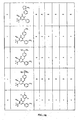
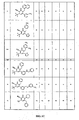
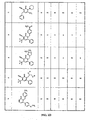

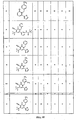


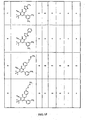


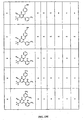


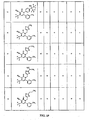


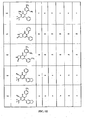
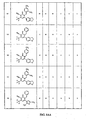
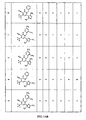


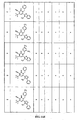
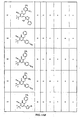
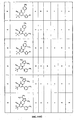
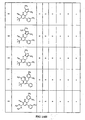

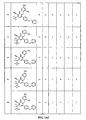


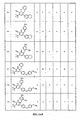


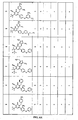


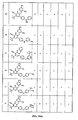

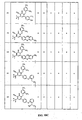
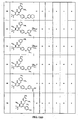
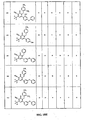

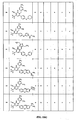


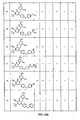

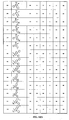


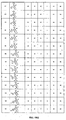


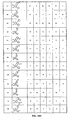
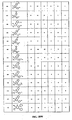
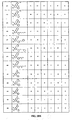
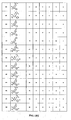
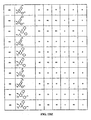
Classifications
-
- C—CHEMISTRY; METALLURGY
- C07—ORGANIC CHEMISTRY
- C07D—HETEROCYCLIC COMPOUNDS
- C07D401/00—Heterocyclic compounds containing two or more hetero rings, having nitrogen atoms as the only ring hetero atoms, at least one ring being a six-membered ring with only one nitrogen atom
- C07D401/02—Heterocyclic compounds containing two or more hetero rings, having nitrogen atoms as the only ring hetero atoms, at least one ring being a six-membered ring with only one nitrogen atom containing two hetero rings
- C07D401/04—Heterocyclic compounds containing two or more hetero rings, having nitrogen atoms as the only ring hetero atoms, at least one ring being a six-membered ring with only one nitrogen atom containing two hetero rings directly linked by a ring-member-to-ring-member bond
-
- A—HUMAN NECESSITIES
- A61—MEDICAL OR VETERINARY SCIENCE; HYGIENE
- A61P—SPECIFIC THERAPEUTIC ACTIVITY OF CHEMICAL COMPOUNDS OR MEDICINAL PREPARATIONS
- A61P1/00—Drugs for disorders of the alimentary tract or the digestive system
- A61P1/16—Drugs for disorders of the alimentary tract or the digestive system for liver or gallbladder disorders, e.g. hepatoprotective agents, cholagogues, litholytics
-
- A—HUMAN NECESSITIES
- A61—MEDICAL OR VETERINARY SCIENCE; HYGIENE
- A61P—SPECIFIC THERAPEUTIC ACTIVITY OF CHEMICAL COMPOUNDS OR MEDICINAL PREPARATIONS
- A61P17/00—Drugs for dermatological disorders
-
- A—HUMAN NECESSITIES
- A61—MEDICAL OR VETERINARY SCIENCE; HYGIENE
- A61P—SPECIFIC THERAPEUTIC ACTIVITY OF CHEMICAL COMPOUNDS OR MEDICINAL PREPARATIONS
- A61P17/00—Drugs for dermatological disorders
- A61P17/02—Drugs for dermatological disorders for treating wounds, ulcers, burns, scars, keloids, or the like
-
- A—HUMAN NECESSITIES
- A61—MEDICAL OR VETERINARY SCIENCE; HYGIENE
- A61P—SPECIFIC THERAPEUTIC ACTIVITY OF CHEMICAL COMPOUNDS OR MEDICINAL PREPARATIONS
- A61P25/00—Drugs for disorders of the nervous system
- A61P25/14—Drugs for disorders of the nervous system for treating abnormal movements, e.g. chorea, dyskinesia
- A61P25/16—Anti-Parkinson drugs
-
- A—HUMAN NECESSITIES
- A61—MEDICAL OR VETERINARY SCIENCE; HYGIENE
- A61P—SPECIFIC THERAPEUTIC ACTIVITY OF CHEMICAL COMPOUNDS OR MEDICINAL PREPARATIONS
- A61P25/00—Drugs for disorders of the nervous system
- A61P25/28—Drugs for disorders of the nervous system for treating neurodegenerative disorders of the central nervous system, e.g. nootropic agents, cognition enhancers, drugs for treating Alzheimer's disease or other forms of dementia
-
- A—HUMAN NECESSITIES
- A61—MEDICAL OR VETERINARY SCIENCE; HYGIENE
- A61P—SPECIFIC THERAPEUTIC ACTIVITY OF CHEMICAL COMPOUNDS OR MEDICINAL PREPARATIONS
- A61P29/00—Non-central analgesic, antipyretic or antiinflammatory agents, e.g. antirheumatic agents; Non-steroidal antiinflammatory drugs [NSAID]
-
- A—HUMAN NECESSITIES
- A61—MEDICAL OR VETERINARY SCIENCE; HYGIENE
- A61P—SPECIFIC THERAPEUTIC ACTIVITY OF CHEMICAL COMPOUNDS OR MEDICINAL PREPARATIONS
- A61P3/00—Drugs for disorders of the metabolism
- A61P3/04—Anorexiants; Antiobesity agents
-
- A—HUMAN NECESSITIES
- A61—MEDICAL OR VETERINARY SCIENCE; HYGIENE
- A61P—SPECIFIC THERAPEUTIC ACTIVITY OF CHEMICAL COMPOUNDS OR MEDICINAL PREPARATIONS
- A61P3/00—Drugs for disorders of the metabolism
- A61P3/06—Antihyperlipidemics
-
- A—HUMAN NECESSITIES
- A61—MEDICAL OR VETERINARY SCIENCE; HYGIENE
- A61P—SPECIFIC THERAPEUTIC ACTIVITY OF CHEMICAL COMPOUNDS OR MEDICINAL PREPARATIONS
- A61P3/00—Drugs for disorders of the metabolism
- A61P3/08—Drugs for disorders of the metabolism for glucose homeostasis
- A61P3/10—Drugs for disorders of the metabolism for glucose homeostasis for hyperglycaemia, e.g. antidiabetics
-
- A—HUMAN NECESSITIES
- A61—MEDICAL OR VETERINARY SCIENCE; HYGIENE
- A61P—SPECIFIC THERAPEUTIC ACTIVITY OF CHEMICAL COMPOUNDS OR MEDICINAL PREPARATIONS
- A61P35/00—Antineoplastic agents
-
- A—HUMAN NECESSITIES
- A61—MEDICAL OR VETERINARY SCIENCE; HYGIENE
- A61P—SPECIFIC THERAPEUTIC ACTIVITY OF CHEMICAL COMPOUNDS OR MEDICINAL PREPARATIONS
- A61P37/00—Drugs for immunological or allergic disorders
- A61P37/02—Immunomodulators
-
- A—HUMAN NECESSITIES
- A61—MEDICAL OR VETERINARY SCIENCE; HYGIENE
- A61P—SPECIFIC THERAPEUTIC ACTIVITY OF CHEMICAL COMPOUNDS OR MEDICINAL PREPARATIONS
- A61P43/00—Drugs for specific purposes, not provided for in groups A61P1/00-A61P41/00
-
- A—HUMAN NECESSITIES
- A61—MEDICAL OR VETERINARY SCIENCE; HYGIENE
- A61P—SPECIFIC THERAPEUTIC ACTIVITY OF CHEMICAL COMPOUNDS OR MEDICINAL PREPARATIONS
- A61P7/00—Drugs for disorders of the blood or the extracellular fluid
-
- A—HUMAN NECESSITIES
- A61—MEDICAL OR VETERINARY SCIENCE; HYGIENE
- A61P—SPECIFIC THERAPEUTIC ACTIVITY OF CHEMICAL COMPOUNDS OR MEDICINAL PREPARATIONS
- A61P9/00—Drugs for disorders of the cardiovascular system
-
- A—HUMAN NECESSITIES
- A61—MEDICAL OR VETERINARY SCIENCE; HYGIENE
- A61P—SPECIFIC THERAPEUTIC ACTIVITY OF CHEMICAL COMPOUNDS OR MEDICINAL PREPARATIONS
- A61P9/00—Drugs for disorders of the cardiovascular system
- A61P9/10—Drugs for disorders of the cardiovascular system for treating ischaemic or atherosclerotic diseases, e.g. antianginal drugs, coronary vasodilators, drugs for myocardial infarction, retinopathy, cerebrovascula insufficiency, renal arteriosclerosis
-
- C—CHEMISTRY; METALLURGY
- C07—ORGANIC CHEMISTRY
- C07D—HETEROCYCLIC COMPOUNDS
- C07D213/00—Heterocyclic compounds containing six-membered rings, not condensed with other rings, with one nitrogen atom as the only ring hetero atom and three or more double bonds between ring members or between ring members and non-ring members
- C07D213/02—Heterocyclic compounds containing six-membered rings, not condensed with other rings, with one nitrogen atom as the only ring hetero atom and three or more double bonds between ring members or between ring members and non-ring members having three double bonds between ring members or between ring members and non-ring members
- C07D213/04—Heterocyclic compounds containing six-membered rings, not condensed with other rings, with one nitrogen atom as the only ring hetero atom and three or more double bonds between ring members or between ring members and non-ring members having three double bonds between ring members or between ring members and non-ring members having no bond between the ring nitrogen atom and a non-ring member or having only hydrogen or carbon atoms directly attached to the ring nitrogen atom
- C07D213/60—Heterocyclic compounds containing six-membered rings, not condensed with other rings, with one nitrogen atom as the only ring hetero atom and three or more double bonds between ring members or between ring members and non-ring members having three double bonds between ring members or between ring members and non-ring members having no bond between the ring nitrogen atom and a non-ring member or having only hydrogen or carbon atoms directly attached to the ring nitrogen atom with hetero atoms or with carbon atoms having three bonds to hetero atoms with at the most one bond to halogen, e.g. ester or nitrile radicals, directly attached to ring carbon atoms
- C07D213/78—Carbon atoms having three bonds to hetero atoms, with at the most one bond to halogen, e.g. ester or nitrile radicals
- C07D213/84—Nitriles
- C07D213/85—Nitriles in position 3
-
- C—CHEMISTRY; METALLURGY
- C07—ORGANIC CHEMISTRY
- C07D—HETEROCYCLIC COMPOUNDS
- C07D401/00—Heterocyclic compounds containing two or more hetero rings, having nitrogen atoms as the only ring hetero atoms, at least one ring being a six-membered ring with only one nitrogen atom
- C07D401/02—Heterocyclic compounds containing two or more hetero rings, having nitrogen atoms as the only ring hetero atoms, at least one ring being a six-membered ring with only one nitrogen atom containing two hetero rings
- C07D401/06—Heterocyclic compounds containing two or more hetero rings, having nitrogen atoms as the only ring hetero atoms, at least one ring being a six-membered ring with only one nitrogen atom containing two hetero rings linked by a carbon chain containing only aliphatic carbon atoms
-
- C—CHEMISTRY; METALLURGY
- C07—ORGANIC CHEMISTRY
- C07D—HETEROCYCLIC COMPOUNDS
- C07D401/00—Heterocyclic compounds containing two or more hetero rings, having nitrogen atoms as the only ring hetero atoms, at least one ring being a six-membered ring with only one nitrogen atom
- C07D401/02—Heterocyclic compounds containing two or more hetero rings, having nitrogen atoms as the only ring hetero atoms, at least one ring being a six-membered ring with only one nitrogen atom containing two hetero rings
- C07D401/12—Heterocyclic compounds containing two or more hetero rings, having nitrogen atoms as the only ring hetero atoms, at least one ring being a six-membered ring with only one nitrogen atom containing two hetero rings linked by a chain containing hetero atoms as chain links
-
- C—CHEMISTRY; METALLURGY
- C07—ORGANIC CHEMISTRY
- C07D—HETEROCYCLIC COMPOUNDS
- C07D405/00—Heterocyclic compounds containing both one or more hetero rings having oxygen atoms as the only ring hetero atoms, and one or more rings having nitrogen as the only ring hetero atom
- C07D405/02—Heterocyclic compounds containing both one or more hetero rings having oxygen atoms as the only ring hetero atoms, and one or more rings having nitrogen as the only ring hetero atom containing two hetero rings
- C07D405/04—Heterocyclic compounds containing both one or more hetero rings having oxygen atoms as the only ring hetero atoms, and one or more rings having nitrogen as the only ring hetero atom containing two hetero rings directly linked by a ring-member-to-ring-member bond
-
- C—CHEMISTRY; METALLURGY
- C07—ORGANIC CHEMISTRY
- C07D—HETEROCYCLIC COMPOUNDS
- C07D405/00—Heterocyclic compounds containing both one or more hetero rings having oxygen atoms as the only ring hetero atoms, and one or more rings having nitrogen as the only ring hetero atom
- C07D405/02—Heterocyclic compounds containing both one or more hetero rings having oxygen atoms as the only ring hetero atoms, and one or more rings having nitrogen as the only ring hetero atom containing two hetero rings
- C07D405/06—Heterocyclic compounds containing both one or more hetero rings having oxygen atoms as the only ring hetero atoms, and one or more rings having nitrogen as the only ring hetero atom containing two hetero rings linked by a carbon chain containing only aliphatic carbon atoms
-
- C—CHEMISTRY; METALLURGY
- C07—ORGANIC CHEMISTRY
- C07D—HETEROCYCLIC COMPOUNDS
- C07D405/00—Heterocyclic compounds containing both one or more hetero rings having oxygen atoms as the only ring hetero atoms, and one or more rings having nitrogen as the only ring hetero atom
- C07D405/02—Heterocyclic compounds containing both one or more hetero rings having oxygen atoms as the only ring hetero atoms, and one or more rings having nitrogen as the only ring hetero atom containing two hetero rings
- C07D405/12—Heterocyclic compounds containing both one or more hetero rings having oxygen atoms as the only ring hetero atoms, and one or more rings having nitrogen as the only ring hetero atom containing two hetero rings linked by a chain containing hetero atoms as chain links
-
- C—CHEMISTRY; METALLURGY
- C07—ORGANIC CHEMISTRY
- C07D—HETEROCYCLIC COMPOUNDS
- C07D409/00—Heterocyclic compounds containing two or more hetero rings, at least one ring having sulfur atoms as the only ring hetero atoms
- C07D409/02—Heterocyclic compounds containing two or more hetero rings, at least one ring having sulfur atoms as the only ring hetero atoms containing two hetero rings
- C07D409/04—Heterocyclic compounds containing two or more hetero rings, at least one ring having sulfur atoms as the only ring hetero atoms containing two hetero rings directly linked by a ring-member-to-ring-member bond
-
- C—CHEMISTRY; METALLURGY
- C07—ORGANIC CHEMISTRY
- C07D—HETEROCYCLIC COMPOUNDS
- C07D413/00—Heterocyclic compounds containing two or more hetero rings, at least one ring having nitrogen and oxygen atoms as the only ring hetero atoms
- C07D413/02—Heterocyclic compounds containing two or more hetero rings, at least one ring having nitrogen and oxygen atoms as the only ring hetero atoms containing two hetero rings
- C07D413/06—Heterocyclic compounds containing two or more hetero rings, at least one ring having nitrogen and oxygen atoms as the only ring hetero atoms containing two hetero rings linked by a carbon chain containing only aliphatic carbon atoms
-
- C—CHEMISTRY; METALLURGY
- C07—ORGANIC CHEMISTRY
- C07D—HETEROCYCLIC COMPOUNDS
- C07D417/00—Heterocyclic compounds containing two or more hetero rings, at least one ring having nitrogen and sulfur atoms as the only ring hetero atoms, not provided for by group C07D415/00
- C07D417/02—Heterocyclic compounds containing two or more hetero rings, at least one ring having nitrogen and sulfur atoms as the only ring hetero atoms, not provided for by group C07D415/00 containing two hetero rings
- C07D417/04—Heterocyclic compounds containing two or more hetero rings, at least one ring having nitrogen and sulfur atoms as the only ring hetero atoms, not provided for by group C07D415/00 containing two hetero rings directly linked by a ring-member-to-ring-member bond
-
- C—CHEMISTRY; METALLURGY
- C07—ORGANIC CHEMISTRY
- C07D—HETEROCYCLIC COMPOUNDS
- C07D417/00—Heterocyclic compounds containing two or more hetero rings, at least one ring having nitrogen and sulfur atoms as the only ring hetero atoms, not provided for by group C07D415/00
- C07D417/02—Heterocyclic compounds containing two or more hetero rings, at least one ring having nitrogen and sulfur atoms as the only ring hetero atoms, not provided for by group C07D415/00 containing two hetero rings
- C07D417/06—Heterocyclic compounds containing two or more hetero rings, at least one ring having nitrogen and sulfur atoms as the only ring hetero atoms, not provided for by group C07D415/00 containing two hetero rings linked by a carbon chain containing only aliphatic carbon atoms
-
- C—CHEMISTRY; METALLURGY
- C07—ORGANIC CHEMISTRY
- C07D—HETEROCYCLIC COMPOUNDS
- C07D417/00—Heterocyclic compounds containing two or more hetero rings, at least one ring having nitrogen and sulfur atoms as the only ring hetero atoms, not provided for by group C07D415/00
- C07D417/02—Heterocyclic compounds containing two or more hetero rings, at least one ring having nitrogen and sulfur atoms as the only ring hetero atoms, not provided for by group C07D415/00 containing two hetero rings
- C07D417/12—Heterocyclic compounds containing two or more hetero rings, at least one ring having nitrogen and sulfur atoms as the only ring hetero atoms, not provided for by group C07D415/00 containing two hetero rings linked by a chain containing hetero atoms as chain links
Definitions
- LXRs liver X receptors
- pyridone derivatives are provided for modulating the activity of LXRs.
- Nuclear receptors are a superfamily of regulatory proteins that are structurally and functionally related and are receptors for, e.g ., steroids, retinoids, vitamin D and thyroid hormones (see, e.g ., Evans (1988) Science 240:889-895 ). These proteins bind to cis-acting elements in the promoters of their target genes and modulate gene expression in response to ligands for the receptors.
- Nuclear receptors can be classified based on their DNA binding properties (see, e.g ., Evans, supra and Glass (1994) Endocr. Rev. 15:391-407 ).
- one class of nuclear receptors includes the glucocorticoid, estrogen, androgen, progestin and mineralocorticoid receptors which bind as homodimers to hormone response elements (HREs) organized as inverted repeats (see, e.g ., Glass, supra ).
- HREs hormone response elements
- a second class of receptors including those activated by retinoic acid, thyroid hormone, vitamin D 3 , fatty acids/peroxisome proliferators (i.e., peroxisome proliferator activated receptors or PPARs) and ecdysone, bind to HREs as heterodimers with a common partner, the retinoid X receptors (i.e ., RXRs, also known as the 9- cis retinoic acid receptors; see, e.g., Levin et al. (1992) Nature 355:359-361 and Heyman et al. (1992) Cell 68:397-406 ).
- RXRs are unique among the nuclear receptors in that they bind DNA as a homodimer and are required as a heterodimeric partner for a number of additional nuclear receptors to bind DNA (see, e . g ., Mangelsdorf et al. (1995) Cell 83:841-850 ).
- the latter receptors termed the class II nuclear receptor subfamily, include many which are established or implicated as important regulators of gene expression.
- There are three RXR genes see, e.g., Mangelsdorf et al. (1992) Genes Dev.
- RXR ⁇ is the most abundant of the three RXRs (see, e.g., Mangelsdorf et al. (1992) Genes Dev. 6:329-344 ), suggesting that it might have a prominent role in hepatic functions that involve regulation by class II nuclear receptors. See also, Wan et al. (2000) Mol. Cell. Biol. 20:4436-4444 .
- nuclear receptors for whom the ligand is known and those which lack known ligands. Nuclear receptors falling in the latter category are referred to as orphan nuclear receptors.
- the search for activators for orphan receptors has led to the discovery of previously unknown signaling pathways (see, e.g., Levin et al., (1992), supra and Heyman et al ., (1992), supra). For example, it has been reported that bile acids, which are involved in physiological processes such as cholesterol catabolism, are ligands for farnesoid X receptor (FXR).
- FXR farnesoid X receptor
- one biosynthetic pathway in higher eukaryotes is the mevalonate pathway, which leads to the synthesis of cholesterol, bile acids, porphyrin, dolichol, ubiquinone, carotenoids, retinoids, vitamin D, steroid hormones and farnesylated proteins.
- LXR ⁇ is found predominantly in the liver, with lower levels found in kidney, intestine, spleen and adrenal tissue (see, e.g., Willy, et al. (1995) Gene Dev. 9(9):1033-1045 ). LXR ⁇ is ubiquitous in mammals and was found in nearly all tissues examined. LXRs are activated by certain naturally occurring, oxidized derivatives of cholesterol (see, e.g ., Lehmann, et al. (1997) J. Biol. Chem. 272(6):3137-3140 ). LXR ⁇ is activated by oxycholesterol and promotes cholesterol metabolism ( Peet et al. (1998) Cell 93:693-704 ). Thus, LXRs appear to play a role in, e.g., cholesterol metabolism (see, e.g., Janowski, et al. (1996) Nature 383:728-731 ).
- Nuclear receptor activity has been implicated in a variety of diseases and disorders, including, but not limited to, hypercholesterolemia (see, e.g ., International Patent Application Publication No. WO 00/57915 ), osteoporosis and vitamin deficiency (see, e.g., U.S. Patent No. 6,316,5103 ), hyperlipoproteinemia (see, e.g., International Patent Application Publication No. WO 01/60818 ), hypertriglyceridemia, lipodystrophy, hyperglycemia and diabetes mellitus (see, e.g ., International Patent Application Publication No. WO 01/82917 ), atherosclerosis and gallstones (see, e.g ., International Patent Application Publication No.
- WO 00/37077 disorders of the skin and mucous membranes (see, e.g ., U.S. Patent Nos. 6,184,215 and 6,187,814 , and International Patent Application Publication No. WO 98/32444 ), acne (see, e.g ., International Patent Application Publication No. WO 00/49992 ), and cancer, Parkinson's disease and Alzheimer's disease (see, e.g ., International Patent Application Publication No. WO 00/17334 ).
- nuclear receptors including LXRs, FXR, PPAR and orphan nuclear receptors.
- Such compounds are useful in the treatment, prevention, or amelioration of one or more symptoms of diseases or disorders in which nuclear receptor activity is implicated.
- compositions and methods for modulating the activity of nuclear receptors are provided.
- compounds for use in compositions and methods for modulating liver X receptors (LXR ⁇ and LXR ⁇ ), FXR, PPAR and/or orphan nuclear receptors are provided.
- the compounds are N-substituted pyridone compounds.
- the compounds provided herein are agonists of LXR.
- the compounds provided herein are antagonists of LXR.
- Agonists that exhibit low efficacy are, in certain embodiments, antagonists.
- One aspect of the invention provides a compound having formula I: wherein
- the compounds for use in the compositions and methods provided herein have formula I:
- R 3 is substituted or unsubstituted alkyl, substituted or unsubstituted alkenyl, or substituted or unsubstituted alkynyl. In another embodiment, R 3 is substituted or unsubstituted alkyl. In another embodiment, R 3 is haloalkyl. In other embodiments, R 3 is lower haloalkyl. In another embodiment, R 3 is lower perfluoroalkyl. In another embodiment, R 3 is trifluoromethyl or pentafluoroethyl. In another embodiment, R 3 is trifluoromethyl.
- R 4 is cyanide, cyanate, thiocyanate, selenocyanate, trifluoromethoxy or azide. In another embodiment, R 4 is cyano.
- the groups R 1 , R 2 , R 3 , R 4 , R 5 , Q 1 and Q 2 are selected such that the resulting compound has nuclear receptor modulation activity, such as in at least one assay described herein, including LXR or orphan nuclear receptor modulation activity, such as LXR antagonist or agonist activity.
- the compounds provided herein have an IC 50 and/or EC 50 of less than about 100 ⁇ M in a LXR ⁇ or LXR ⁇ binding or co-transfection assay.
- the LXR ⁇ or LXR ⁇ IC 50 and/or EC 50 values for the compounds provided herein are, in certain embodiments, less than about 50 ⁇ M, 25 ⁇ M, 10 ⁇ M, 1 ⁇ M, 100 nM, 10 nM or 1 nM in binding or co-transfection assays.
- the compounds provided herein are LXR agonists.
- the compounds provided herein are LXR antagonists.
- the compounds provided herein exhibit a % efficacy relative to standard (N-(3-((4-fluorophenyl)-(naphthalene-2-sulfonyl)amino)propyl)-2,2-dimethylpropionamide) of greater than about 50%, 60%, 70%, 80%, 90%, 100%, 110%, 120%, 130%, 140% or more in a co-transfection assay.
- any pharmaceutically-acceptable derivatives including salts, esters, enol ethers, enol esters, solvates, hydrates and prodrugs of the compounds described herein.
- Pharmaceutically-acceptable salts include, but are not limited to, amine salts, such as but not limited to N,N'-dibenzylethylenediamine, chloroprocaine, choline, ammonia, diethanolamine and other hydroxyalkylamines, ethylenediamine, N-methylglucamine, procaine, N-benzylphenethylamine, 1-para-chlorobenzyl-2-pyrrolidin-1'-ylmethylbenzimidazole, diethylamine and other alkylamines, piperazine and tris(hydroxymethyl)aminomethane; alkali metal salts, such as but not limited to lithium, potassium and sodium; alkali earth metal salts, such as but not limited to barium, calcium and magnesium; transition metal salts, such as but
- compositions formulated for administration by an appropriate route and means containing effective concentrations of one or more of the compounds provided herein, or pharmaceutically acceptable derivatives thereof, that deliver amounts effective for the treatment, prevention, or amelioration of one or more symptoms of diseases or disorders that are modulated or otherwise affected by nuclear receptor activity, including LXR and/or orphan nuclear receptor activity, or in which nuclear receptor activity, including LXR and/or orphan nuclear receptor activity, is implicated, are also provided.
- the effective amounts and concentrations are effective for ameliorating any of the symptoms of any of the diseases or disorders.
- Uses in the treatment, prevention, or amelioration of one or more symptoms of diseases or disorders mediated by or in which nuclear receptor activity, including LXR and/or orphan nuclear receptor activity, is implicated, are provided.
- Such uses include uses in the treatment, prevention and amelioration of one or more symptoms of hypercholesterolemia, hyperlipoproteinemia, hypertriglyceridemia, lipodystrophy, hyperglycemia, diabetes mellitus, dyslipidemia, atherosclerosis, gallstone disease, acne vulgaris, acneiform skin conditions, diabetes, Parkinson's disease, cancer, Alzheimer's disease, inflammation, immunological disorders, lipid disorders, obesity, conditions characterized by a perturbed epidermal barrier function, conditions of disturbed differentiation or excess proliferation of the epidermis or mucous membrane, or cardiovascular disorders, using one or more of the compounds provided herein, or pharmaceutically acceptable derivatives thereof.
- Methods of modulating the activity of nuclear receptors in vitro, including LXR and/or orphan nuclear receptors, using the compounds and compositions provided herein are also provided.
- the compounds and compositions provided herein are active in assays, such as the assays provided herein, that measure the activity of nuclear receptors, including LXR and/or orphan nuclear receptors. These methods include inhibiting and up-regulating the activity of nuclear receptors, including LXR and/or orphan nuclear receptors.
- effective amounts of the compounds or compositions containing therapeutically effective concentrations of the compounds are formulated for systemic delivery, including parenteral, oral, or intravenous delivery, or for local or topical application, for the treatment of nuclear receptor, including LXR and/or orphan nuclear receptor, mediated diseases or disorders, or diseases or disorders in which nuclear receptor activity, including LXR and/or orphan nuclear receptor activity, is implicated, including, but not limited to, hypercholesterolemia, hyperlipoproteinemia, hypertriglyceridemia, lipodystrophy, hyperglycemia, diabetes mellitus, dyslipidemia, atherosclerosis, gallstone disease, acne vulgaris, acneiform skin conditions, diabetes, Parkinson's disease, cancer, Alzheimer's disease, inflammation, immunological disorders, lipid disorders, obesity, conditions characterized by a perturbed epidermal barrier function, conditions of disturbed differentiation or excess proliferation of the epidermis or mucous membrane, or cardiovascular disorders, are administered to an individual exhibiting the symptoms of these diseases or disorders.
- a nuclear receptor is a member of a superfamily of regulatory proteins that are receptors for, e.g ., steroids, retinoids, vitamin D and thyroid hormones. These proteins bind to cis-acting elements in the promoters of their target genes and modulate gene expression in repsonse to a ligand therefor. Nuclear receptors may be classified based on their DNA binding properties. For example, the glucocorticoid, estrogen, androgen, progestin and mineralocorticoid receptors bind as homodimers to hormone response elements (HREs) organized as inverted repeats.
- HREs hormone response elements
- receptors including those activated by retinoic acid, thyroid hormone, vitamin D 3 , fatty acids/peroxisome proliferators and ecdysone, that bind to HREs as heterodimers with a common partner, the retinoid X receptor (RXR).
- RXR retinoid X receptor
- LXR LXR.
- an orphan nuclear receptor is a nuclear receptor for which the natural ligand is unknown.
- liver X receptor or LXR refers to a nuclear receptor implicated in cholesterol biosynthesis.
- LXR refers to both LXR ⁇ and LXR ⁇ , two forms of the protein found in mammals.
- Liver X receptor- ⁇ or LXR ⁇ refers to the receptor described in U.S. Patent Nos. 5,571,696 , 5,696,233 and 5,710,004 , and Willy et al. (1995) Gene Dev. 9(9):1033-1045 .
- Liver X receptor- ⁇ or LXR ⁇ refers to the receptor described in Peet et al. (1998) Curr. Opin. Genet. Dev. 8(5):571-575 ; Song et al. (1995) Ann.
- Diabetes mellitus commonly called diabetes, refers to a disease process derived from multiple causative factors and characterized by elevated levels of plasma glucose, referred to as hyperglycemia. See, e.g., LeRoith, D. et al., (eds.), DIABETES MELLITUS (Lippincott-Raven Publishers, Philadelphia, Pa. U.S.A. 1996 ). According to the American Diabetes Association, diabetes mellitus is estimated to affect approximately 6% of the world population. Uncontrolled hyperglycemia is associated with increased and premature mortality due to an increased risk for macrovascular and macrovascular diseases, including nephropathy, neuropathy, retinopathy, hypertension, cerebrovascular disease and coronary heart disease. Therefore, control of glucose homeostasis is a critically important approach for the treatment of diabetes.
- type 1 diabetes (formerly referred to as insulin-dependent diabetes or IDEM); and type 2 diabetes (formerly referred to as noninsulin dependent diabetes or NIDDM).
- IDEM insulin-dependent diabetes
- NIDDM noninsulin dependent diabetes
- Type 2 diabetes is a disease characterized by insulin resistance accompanied by relative, rather than absolute, insulin deficiency. Type 2 diabetes can range from predominant insulin resistance with relative insulin deficiency to predominant insulin deficiency with some insulin resistance. Insulin resistance is the diminished ability of insulin to exert its biological action across a broad range of concentrations. In insulin resistant individuals, the body secretes abnormally high amounts of insulin to compensate for this defect. When inadequate amounts of insulin are present to compensate for insulin resistance and adequate control of glucose, a state of impaired glucose tolerance develops. In a significant number of individuals, insulin secretion declines further and the plasma glucose level rises, resulting in the clinical state of diabetes.
- Type 2 diabetes can be due to a profound resistance to insulin stimulating regulatory effects on glucose and lipid metabolism in the main insutin-sensitive tissues: muscle, liver and adipose tissue. This resistance to insulin responsiveness results in insufficient insulin activation of glucose uptake, oxidation and storage in muscle and inadequate insulin repression of lipolysis in adipose tissue and of glucose production and secretion in liver.
- free fatty acid levels are often elevated in obese and some non-obese patients and lipid oxidation is increased.
- Hyperlipidemia is an important precipitating factor for these diseases.
- Hyperlipidemia is a condition generally characterized by an abnormal increase in serum lipids in the bloodstream and is an important risk factor in developing atherosclerosis and heart disease.
- disorders of lipid metabolism see, e.g., Wilson, J. et al., (ed.), Disorders of Lipid Metabolism, Chapter 23, Textbook of Endocrinology, 9th Edition, (W. B. Sanders Company, Philadelphia, Pa. U.S.A. 1998 ).
- Hyperlipidemia is usually classified as primary or secondary hyperlipidemia.
- Primary hyperlipidemia is generally caused by genetic defects, while secondary hyperlipidemia is generally caused by other factors, such as various disease states, drugs, and dietary factors. Alternatively, hyperlipidemia can result from both a combination of primary and secondary causes of hyperlipidemia. Elevated cholesterol levels are associated with a number of disease states, including coronary artery disease, angina pectoris, carotid artery disease, strokes, cerebral arteriosclerosis, and xanthoma.
- insulin resistance can be defined generally as a disorder of glucose metabolism. More specifically, insulin resistance can be defined as the diminished ability of insulin to exert its biological action across a broad range of concentrations producing less than the expected biologic effect. (see, e.g., Reaven, G. M., J. Basic & Clin. Phys. & Pharm. (1998) 9: 387-406 and Flier, J. Ann Rev. Med. (1983) 34:145-60 ). Insulin resistant persons have a diminished ability to properly metabolize glucose and respond poorly, if at all, to insulin therapy.
- Insulin resistance can cause or contribute to polycystic ovarian syndrome, Impaired Glucose Tolerance (IGT), gestational diabetes, hypertension, obesity, atherosclerosis and a variety of other disorders. Eventually, the insulin resistant individuals can progress to a point where a diabetic state is reached.
- ITT Impaired Glucose Tolerance
- diabetes mellitus or "diabetes” means a disease or condition that is generally characterized by metabolic defects in production and utilization of glucose which result in the failure to maintain appropriate blood sugar levels in the body. The result of these defects is elevated blood glucose, referred to as "hyperglycemia.”
- Type 2 diabetes often occurs in the face of normal, or even elevated, levels of insulin and can result from the inability of tissues to respond appropriately to insulin. Most type 2 diabetic patients are insulin resistant and have a relative deficiency of insulin, in that insulin secretion can not compensate for the resistance of peripheral tissues to respond to insulin. In addition, many type 2 diabetics are obese.
- Impaired Glucose Tolerance which is a metabolic stage intermediate between normal glucose homeostasis and diabetes
- Gestational Diabetes Mellitus which is glucose intolerance in pregnancy in women with no previous history of type 1 or type 2 diabetes.
- microvascular complications are those complications which generally result in small blood vessel damage. These complications include, e.g., retinopathy (the impairment or loss of vision due to blood vessel damage in the eyes); neuropathy (nerve damage and foot problems due to blood vessel damage to the nervous system); and nephropathy (kidney disease due to blood vessel damage in the kidneys).
- macrovascular complications are those complications which generally result from large blood vessel damage. These complications include, e.g., cardiovascular disease and peripheral vascular disease. Cardiovascular disease refers to diseases of blood vessels of the heart. See. e.g., Kaplan, R.
- Cardiovascular disease is generally one of several forms, including, e.g., hypertension (also referred to as high blood pressure), coronary heart disease, stroke, and rheumatic heart disease.
- hypertension also referred to as high blood pressure
- coronary heart disease stroke
- rheumatic heart disease Peripheral vascular disease refers to diseases of any of the blood vessels outside of the heart. It is often a narrowing of the blood vessels that carry blood to leg and arm muscles.
- hyperlipidemia refers to the presence of an abnormally elevated level of lipids in the blood. Hyperlipidemia can appear in at least three forms: (1) hypercholesterolemia, i.e., an elevated cholesterol level; (2) hypertriglyceridemia, i.e., an elevated triglyceride level; and (3) combined hyperlipidemia, i.e., a combination of hypercholesterolemia and hypertriglyceridemia.
- dislipidemia refers to abnormal levels of lipoproteins in blood plasma including both depressed and/or elevated levels of lipoproteins (e.g., elevated levels of LDL, VLDL and depressed levels of HDL).
- Exemplary Primary Hyperlipidemia include, but are not limited to, the following:
- Risk factors in exemplary Secondary Hyperlipidemia include, but are not limited to, the following: (1) disease risk factors, such as a history of type 1 diabetes, type 2 diabetes, Cushing's syndrome, hypothyroidism and certain types of renal failure; (2) drug risk factors, which include, birth control pills; hormones, such as estrogen, and corticosteroids; certain diuretics; and various ⁇ -blockers; (3) dietary risk factors include dietary fat intake per total calories greater than 40%; saturated fat intake per total calories greater than 10%; cholesterol intake greater than 300 mg per day; habitual and excessive alcohol use; and obesity; and (4) non-genetic dyslipidemias.
- disease risk factors such as a history of type 1 diabetes, type 2 diabetes, Cushing's syndrome, hypothyroidism and certain types of renal failure
- drug risk factors which include, birth control pills; hormones, such as estrogen, and corticosteroids; certain diuretics; and various ⁇ -blockers
- dietary risk factors include dietary fat intake per total calories greater than 40%; saturated fat intake per total calories greater than
- Obesity refers to, according to the World Health Organization, a Body Mass Index (BMI) greater than 27.8 kg/m 2 for men and 27.3 kg/m 2 for women (BMI equals weight (kg)/height (m 2 ).
- BMI Body Mass Index
- Obesity is linked to a variety of medical conditions including diabetes and hyperlipidemia. Obesity is also a known risk factor for the development of type 2 diabetes (See, e.g., Barrett-Conner, E., Epidemol. Rev. (1989) 11: 172-181 ; and Knowler, et al., Am. J Clin. Nutr. (1991) 53:1543-1551 ).
- pharmaceutically acceptable derivatives of a compound include salts, esters, enol ethers, enol esters, acetals, ketals, hemiacetals, hemiketals, acids, bases, solvates, hydrates or prodrugs thereof.
- Such derivatives may be readily prepared by those of skill in this art using known methods for such derivatization.
- the compounds produced may be administered to animals or humans without substantial toxic effects and either are pharmaceutically active or are prodrugs.
- salts include, but are not limited to, amine salts, such as but not limited to N,N'-dibenzylethylenediamine, chloroprocaine, choline, ammonia, diethanolamine and other hydroxyalkylamines, ethylenediamine, N-methylglucamine, procaine, N-benzylphenethylamine, 1-para-chlorobenzyl-2-pyrrolidin-1'-ylmethyl-benzimidazole, diethylamine and other alkylamines, piperazine and tris(hydroxymethyl)aminomethane; alkali metal salts, such as but not limited to lithium, potassium and sodium; alkali earth metal salts, such as but not limited to barium, calcium and magnesium; transition metal salts, such as but not limited to zinc; and other metal salts, such as but not limited to sodium hydrogen phosphate and disodium phosphate; and also including, but not limited to, salts of mineral acids, such as but not limited to hydrochlorides, such
- esters include, but are not limited to, alkyl, alkenyl, alkynyl, aryl, heteroaryl, aralkyl, heteroaralkyl, cycloalkyl and heterocyclyl esters of acidic groups, including, but not limited to, carboxylic acids, phosphoric acids, phosphinic acids, sulfonic acids, sulfinic acids and boronic acids.
- Pharmaceutically acceptable solvates and hydrates are complexes of a compound with one or more solvent or water molecules, or 1 to about 100, or 1 to about 10, or one to about 2, 3 or 4, solvent or water molecules.
- treatment means any manner in which one or more of the symptoms of a disease or disorder are ameliorated or otherwise beneficially altered.
- Treatment also encompasses any pharmaceutical use of the compositions herein, such as use for treating a nuclear receptor, including LXR and/or orphan nuclear receptor, mediated diseases or disorders, or diseases or disorders in which nuclear receptor activity, including LXR and/or orphan nuclear receptor activity, is implicated.
- amelioration of the symptoms of a particular disorder by administration of a particular compound or pharmaceutical composition refers to any lessening, whether permanent or temporary, lasting or transient that can be attributed to or associated with administration of the composition.
- modulate refers to the treating, prevention, suppression, enhancement or induction of a function or condition.
- the compounds claimed herein can modulate hyperlipidemia by lowering cholesterol in a human, thereby suppressing hyperlipidemia.
- the IC 50 refers to an amount, concentration or dosage of a particular test compound that achieves a 50% inhibition of a maximal response, such as modulation of LXR activity, in an assay that measures such response.
- EC 50 refers to a dosage, concentration or amount of a particular test compound that elicits a dose-dependent response at 50% of maximal expression of a particular response that is induced, provoked or potentiated by the particular test compound.
- cholesterol refers to a steroid alcohol that is an essential component of cell membranes and myelin sheaths and, as used herein, incorporates its common usage. Cholesterol also serves as a precursor for steroid hormones and bile acids.
- TGs triglyceride(s)
- TGs consist of three fatty acid molecules esterified to a glycerol molecule and serve to store fatty acids which are used by muscle cells for energy production or are taken up and stored in adipose tissue.
- a prodrug is a compound that, upon in vivo administration, is metabolized by one more steps or processes or otherwise converted to the biologically, pharmaceutically or therapeutically active form of the compound.
- the pharmaceutically active compound is modified such that the active compound will be regenerated by metabolic processes.
- the prodrug may be designed to alter the metabolic stability or the transport characteristics of a drug, to mask side effects or toxicity, to improve the flavor of a drug or to alter other characteristics or properties of a drug.
- the compounds provided herein may contain chiral centers. Such chiral centers may be of either the (R) or (S) configuration, or may be a mixture thereof. Thus, the compounds provided herein may be enantiomerically pure, or be stereoisomeric or diastereomeric mixtures.
- the compounds provided herein include all possible isomers, as well as, their racemic and optically pure forms.
- Optically active (+) and (-), (r)- and (S)-, or (D)- and (L)-isomers may be prepared using chiral synthons or chiral reagents, or resolved using conventional techniques, such as reverse phase HPLC.
- amino acid residues such residues may be of either the L- or D-form.
- the configuration for naturally occurring amino acid residues is generally L.
- residue is the L form.
- amino acid refers to ⁇ -amino acids which are racemic, or of either the D- or L-configuration.
- the designation "d” preceding an amino acid designation refers to the D-isomer of the amino acid.
- the designation "dl” preceding an amino acid designation e.g ., dlPip) refers to a mixture of the L- and D-isomers of the amino acid. It is to be understood that the chiral centers of the compounds provided herein may undergo epimerization in vivo. As such, one of skill in the art will recognize that administration of a compound in its (R) form is equivalent, for compounds that undergo epimerization in vivo, to administration of the compound in its (S) form.
- substantially pure means sufficiently homogeneous to appear free of readily detectable impurities as determined by standard methods of analysis, such as thin layer chromatography (TLC), gel electrophoresis, high performance liquid chromatography (HPLC) and mass spectrometry (MS), used by those of skill in the art to assess such purity, or sufficiently pure such that further purification would not detectably alter the physical and chemical properties, such as enzymatic and biological activities, of the substance.
- TLC thin layer chromatography
- HPLC high performance liquid chromatography
- MS mass spectrometry
- alkyl As used herein, the nomenclature alkyl, alkoxy, carbonyl, etc . is used as is generally understood by those of skill in this art.
- alkyl, alkenyl and alkynyl carbon chains contain from 1 to 20 carbons, or 1 to 16 carbons, and are straight or branched.
- Alkenyl carbon chains of from 2 to 20 carbons in certain embodiments, contain 1 to 8 double bonds, and the alkenyl carbon chains of 2 to 16 carbons, in certain embodiments, contain 1 to 5 double bonds.
- Alkynyl carbon chains of from 2 to 20 carbons in certain embodiments, contain 1 to 8 triple bonds, and the alkynyl carbon chains of 2 to 16 carbons, in certain embodiments, contain 1 to 5 triple bonds.
- alkyl, alkenyl and alkynyl groups herein include, but are not limited to, methyl, ethyl, propyl, isopropyl, isobutyl, n-butyl, sec-butyl, tert-butyl, isopentyl, neopentyl, tert-penytyl and isohexyl.
- lower alkyl, lower alkenyl, and lower alkynyl refer to carbon chains having less than about 6 carbons.
- alk(en)(yn)yl refers to an alkyl group containing at least one double bond and at least one triple bond.
- cycloalkyl refers to a saturated mono- or multicyclic ring system, in certain embodiments of 3 to 10 carbon atoms, in other embodiments of 3 to 6 carbon atoms; cycloalkenyl and cycloalkynyl refer to mono- or multicyclic ring systems that respectively include at least one double bond and at least one triple bond. Cycloalkenyl and cycloalkynyl groups may, in certain embodiments, contain 3 to 10 carbon atoms, with cycloalkenyl groups, in further embodiments, containing 4 to 7 carbon atoms and cycloalkynyl groups, in further embodiments, containing 8 to 10 carbon atoms.
- ring systems of the cycloalkyl, cycloalkenyl and cycloalkynyl groups may be composed of one ring or two or more rings which may be joined together in a fused, bridged or spiro-connected fashion.
- Cycloalk(en)(yn)yl refers to a cycloalkyl group containing at least one double bond and at least one triple bond.
- substituted alkyl refers to alkyl, alkenyl, alkynyl, cycloalkyl, cycloalkenyl and cycloalkynyl groups, respectively, that are substituted with one or more substituents, in certain embodiments one to three substituents.
- aryl refers to aromatic monocyclic or multicyclic groups containing from 6 to 19 carbon atoms.
- Aryl groups include, but are not limited to groups such as fluorenyl, substituted fluorenyl, phenyl, substituted phenyl, naphthyl and substituted naphthyl.
- heteroaryl refers to a monocyclic or multicyclic aromatic ring system, in certain embodiments, of about 5 to about 15 members where one or more, in one embodiment 1 to 3, of the atoms in the ring system is a heteroatom, that is, an element other than carbon, including but not limited to, nitrogen, oxygen or sulfur.
- the heteroaryl group may be optionally fused to a benzene ring.
- Heteroaryl groups include, but are not limited to, furyl, imidazolyl, pyrrolidinyl, pyrimidinyl, tetrazolyl, thienyl, pyridyl, pyrrolyl, N-methylpyrrolyl, quinolinyl and isoquinolinyl.
- heteroarylium is a heteroaryl group that is positively charged on one or more of the heteroatoms.
- heterocyclyl refers to a monocyclic or multicyclic non-aromatic ring system, in one embodiment of 3 to 10 members, in another embodiment of 4 to 7 members, in a further embodiment of 5 to 6 members, where one or more, in certain embodiments, 1 to 3, of the atoms in the ring system is a heteroatom, that is, an element other than carbon, including but not limited to, nitrogen, oxygen or sulfur.
- substituted aryl refers to aryl, heteroaryl and heterocyclyl groups, respectively, that are substituted with one or more substituents, in certain embodiments one to three substituents.
- aralkyl refers to an alkyl group in which one of the hydrogen atoms of the alkyl is replaced by an aryl group.
- heteroarylkyl refers to an alkyl group in which one of the hydrogen atoms of the alkyl is replaced by a heteroaryl group.
- halo refers to F, Cl, Br or I.
- pseudohalides or pseudohalo groups are groups that behave substantially similar to halides. Such compounds can be used in the same manner and treated in the same manner as halides. Pseudohalides include, but are not limited to, cyanide, cyanate, thiocyanate, selenocyanate, trifluoromethoxy, and azide.
- haloalkyl refers to an alkyl group in which one or more of the hydrogen atoms are replaced by halogen.
- groups include, but are not limited to, chloromethyl, trifluoromethyl and 1-chloro-2-fluoroethyl.
- haloalkoxy refers to RO- in which R is a haloalkyl group.
- sulfinyl or “thionyl” refers to -S(O)-.
- sulfonyl or “sulfuryl” refers to -S(O) 2 -.
- sulfo refers to -S(O) 2 O-.
- Carboxy refers to a divalent radical, -C(O)O-.
- aminocarbonyl refers to -C(O)NH 2 .
- alkylaminocarbonyl refers to -C(O)NHR in which R is alkyl, including lower alkyl.
- dialkylaminocarbonyl refers to -C(O)NR'R in which R' and R are independently alkyl, including lower alkyl;
- carboxamide refers to groups of formula -NR'COR in which R' and R are independently alkyl, including lower alkyl.
- diarylaminocarbonyl refers to -C(O)NRR' in which R and R' are independently selected from aryl, including lower aryl, such as phenyl.
- arylalkylaminocarbonyl refers to -C(O)NRR' in which one of R and R' is aryl, including lower aryl, such as phenyl, and the other of R and R' is alkyl, including lower alkyl.
- arylaminocarbonyl refers to -C(O)NHR in which R is aryl, including lower aryl, such as phenyl.
- hydroxycarbonyl refers to -COOH.
- alkoxycarbonyl refers to -C(O)OR in which R is alkyl, including lower alkyl.
- aryloxycarbonyl refers to -C(O)OR in which R is aryl, including lower aryl, such as phenyl.
- alkoxy and RS- refer to RO- and RS-, in which R is alkyl, including lower alkyl.
- aryloxy and arylthio refer to RO- and RS-, in which R is aryl, including lower aryl, such as phenyl.
- alkylene refers to a straight, branched or cyclic, in certain embodiments straight or branched, divalent aliphatic hydrocarbon group, in one embodiment having from 1 to about 20 carbon atoms, in another embodiment having from 1 to 12 carbons. In a further embodiment alkylene includes lower alkylene. There may be optionally inserted along the alkylene group one or more oxygen, sulphur or substituted or unsubstituted nitrogen atoms, where the nitrogen substituent is alkyl.
- Alkylene groups include, but are not limited to, methylene (-CH 2 -), ethylene (-CH 2 CH 2 -), propylene (-(CH 2 ) 3 -), methylenedioxy (-O-CH 2 -O-) and ethylenedioxy (-O-(CH 2 ) 2 -O-).
- the term "lower alkylene” refers to alkylene groups having 1 to 6 carbons. In certain embodiments, alkylene groups are lower alkylene, including alkylene of 1 to 3 carbon atoms.
- azaalkylene refers to -(CRR) n -NR-(CRR) m -, where n and m are each independently an integer from 0 to 4.
- oxaalkylene refers to -(CRR) n -O-(CRR) m -, where n and m are each independently an integer from O to 4.
- thiaalkylene refers to -(CRR) n -S-(CRR) m -, where n and m are each independently an integer from 0 to 4.
- alkenylene refers to a straight, branched or cyclic, in one embodiment straight or branched, divalent aliphatic hydrocarbon group, in certain embodiments having from 2 to about 20 carbon atoms and at least one double bond, in other embodiments 1 to 12 carbons.
- alkenylene groups include lower alkenylene. There may be optionally inserted along the alkenylene group one or more oxygen, sulphur or substituted or unsubstituted nitrogen atoms, where the nitrogen substituent is alkyl.
- lower alkenylene refers to alkenylene groups having 2 to 6 carbons. In certain embodiments, alkenylene groups are lower alkenylene, including alkenylene of 3 to 4 carbon atoms.
- alkynylene refers to a straight, branched or cyclic, in certain embodiments straight or branched, divalent aliphatic hydrocarbon group, in one embodiment having from 2 to about 20 carbon atoms and at least one triple bond, in another embodiment 1 to 12 carbons.
- alkynylene includes lower alkynylene. There may be optionally inserted along the alkynylene group one or more oxygen, sulphur or substituted or unsubstituted nitrogen atoms, where the nitrogen substituent is alkyl.
- Alkynylene groups include, but are not limited to, -C ⁇ C-C ⁇ C-, -C ⁇ C- and -C ⁇ C-CH 2 -.
- the term "lower alkynylene” refers to alkynylene groups having 2 to 6 carbons. In certain embodiments, alkynylene groups are lower alkynylene, including alkynylene of 3 to 4 carbon atoms.
- alk(en)(yn)ylene refers to a straight, branched or cyclic, in certain embodiments straight or branched, divalent aliphatic hydrocarbon group, in one embodiment having from 2 to about 20 carbon atoms and at least one triple bond, and at least one double bond; in another embodiment 1 to 12 carbons.
- alk(en)(yn)ylene includes lower alk(en)(yn)ylene. There may be optionally inserted along the alkynylene group one or more oxygen, sulphur or substituted or unsubstituted nitrogen atoms, where the nitrogen substituent is alkyl.
- the term "lower alk(en)(yn)ylene” refers to alk(en)(yn)ylene groups having up to 6 carbons. In certain embodiments, alk(en)(yn)ylene groups have about 4 carbon atoms.
- cycloalkylene refers to a divalent saturated mono- or multicyclic ring system, in certain embodiments of 3 to 10 carbon atoms, in other embodiments 3 to 6 carbon atoms; cycloalkenylene and cycloalkynylene refer to divalent mono- or multicyclic ring systems that respectively include at least one double bond and at least one triple bond. Cycloalkenylene and cycloalkynylene groups may, in certain embodiments, contain 3 to 10 carbon atoms, with cycloalkenylene groups in certain embodiments containing 4 to 7 carbon atoms and cycloalkynylene groups in certain embodiments containing 8 to 10 carbon atoms.
- ring systems of the cycloalkylene, cycloalkenylene and cycloalkynylene groups may be composed of one ring or two or more rings which may be joined together in a fused, bridged or spiro-connected fashion.
- Cycloalk(en)(yn)ylene refers to a cycloalkylene group containing at least one double bond and at least one triple bond.
- substituted alkylene refers to alkylene, alkenylene, alkynylene, cycloalkylene, cycloalkenylene and cycloalkynylene groups, respectively, that are substituted with one or more substituents, in certain embodiments one to three substituents.
- arylene refers to a monocyclic or polycyclic, in certain embodiments monocyclic, divalent aromatic group, in one embodiment having from 5 to about 20 carbon atoms and at least one aromatic ring, in another embodiment 5 to 12 carbons. In further embodiments, arylene includes lower arylene. Arylene groups include, but are not limited to, 1,2-, 1,3- and 1,4-phenylene. The term “lower arylene” refers to arylene groups having 5 or 6 carbons.
- heteroarylene refers to a divalent monocyclic or multicyclic aromatic ring system, in one embodiment of about 5 to about 15 members where one or more, in certain embodiments 1 to 3, of the atoms in the ring system is a heteroatom, that is, an element other than carbon, including but not limited to, nitrogen, oxygen or sulfur.
- heterocyclylene refers to a divalent monocyclic or multicyclic non-aromatic ring system, in certain embodiments of 3 to 10 members, in one embodiment 4 to 7 members, in another embodiment 5 to 6 members, where one or more, including 1 to 3, of the atoms in the ring system is a heteroatom, that is, an element other than carbon, including but not limited to, nitrogen, oxygen or sulfur.
- substituted arylene refers to arylene, heteroarylene and heterocyclylene groups, respectively, that are substituted with one or more substituents, in certain embodiments one to three substituents.
- arylalkylidene refers to an alkylidene group in which either R' or R" is an aryl group.
- Cycloalkylidene are those where R' and R" are linked to form a carbocyclic ring.
- Heterocyclylidene are those where at least one of R' and R" contain a heteroatom in the chain, and R' and R" are linked to form a heterocyclic ring.
- amido refers to the divalent group -C(O)NH-.
- Thioamido refers to the divalent group -C(S)NH-.
- Oxyamido refers to the divalent group -OC(O)NH-.
- Thiaamido refers to the divalent group -SC(O)NH-.
- Dithiaamido refers to the divalent group -SC(S)NH-.
- Ureido refers to the divalent group -HNC(O)NH-.
- Thioureido refers to the divalent group -HNC(S)NH-.
- “semicarbazide” refers to -NHC(O)NHNH-.
- “Carbazate” refers to the divalent group -OC(O)NHNH-.
- “Isothiocarbazate” refers to the divalent group -SC(O)NHNH-.
- Thiocarbazate refers to the divalent group -OC(S)NHNH-.
- “Sulfonylhydrazide” refers to the group -SO 2 NHNH-.
- “Hydrazide” refers to the divalent group -C(O)NHNH-.
- “Hydrazinyl” refers to the divalent group -NH-NH-.
- haloalkyl may include one or more of the same or different halogens.
- C 1-3 alkoxyphenyl may include one or more of the same or different alkoxy groups containing one, two or three carbons.
- compositions and methods for modulating the activity of nuclear receptors are provided.
- compounds for use in compositions and methods for modulating liver X receptors either selectively or in combination, and/or orphan nuclear receptors are provided.
- R 1 is selected rom substituted or unsubstituted aryl, substituted or unsubstituted heteroaryl, substituted or unsubstituted aralkyl, substituted or unsubstituted heteroaralkyl, substituted or unsubstituted cycloalkyl, substituted or unsubstituted cycloalkenyl and substituted or unsubstituted heterocyclyl, where the substituents are selected from one or more Q 1 .
- R 1 is substituted or unsubstituted aryl, where the substituents are selected from one or more Q 1 .
- R 1 is substituted or unsubstituted heteroaryl, where the substituents are selected from one or more Q 1 .
- R 1 is substituted or unsubstituted heterocyclyl, where the substituents are selected from one or more Q 1 .
- R 1 is substituted cyclohexyl, substituted or unsubstituted cyclopentenyl, substituted or unsubstituted phenyl, substituted or unsubstituted benzyl, substituted or unsubstituted naphthyl, substituted or unsubstituted furyl, substituted or unsubstituted thienyl, substituted or unsubstituted pyrrolyl, substituted or unsubstituted pyrazolyl, substituted or unsubstituted thiazolyl, substituted or unsubstituted piperidinyl, substituted or unsubstituted pyridinyl, substituted or unsubstituted pyrazinyl, substituted or unsubstituted indanyl, substituted or unsubstituted benzofuryl, substituted or unsubstituted thianaphthyl or substituted or unsubstituted indo
- R 1 is substituted or unsubstituted phenyl, substituted or unsubstituted naphthyl, substituted or unsubstituted furyl, substituted or unsubstituted thienyl, or substituted or unsubstituted pyrrolyl, where the substituents are selected from one or more Q 1 .
- R 1 is substituted or unsubstituted phenyl, substituted or unsubstituted naphthyl, or substituted or unsubstituted thienyl, where the substituents are selected from one or more Q 1 .
- R 1 is substituted or unsubstituted furyl, substituted or unsubstituted thienyl, substituted or unsubstituted pyrrolyl, substituted or unsubstituted pyrazolyl, substituted or unsubstituted thiazolyl, substituted or unsubstituted piperidinyl, substituted or unsubstituted pyridinyl, substituted or unsubstituted pyrazinyl, substituted or unsubstituted benzofuryl, substituted or unsubstituted thianaphthyl or substituted or unsubstituted indolyl, where the substituents are selected from one or more Q 1 .
- R 1 is substituted or unsubstituted phenyl.
- R 1 is substituted or unsubstituted thienyl.
- substitution is with one or more Q 1 , in one embodiment, one to three or five substituents, in another embodiment, one or two substituents, each independently selected from Q 1 , where Q 1 is halo cyanide, cyanate, thiocyanate, selenocynate, trifluoromethoxy, azide, nitro, hydroxy, amino, hydroxyalkyl, hydroxyalkylaryloxy, hydroxyaryl, hydroxyalkylaryl, hydroxycarbonyl, haloalkyl, alkyl, heterocyclyl, heterocyclylalkyl, aryl, heteroaryl, aralkyl, heteroaralkyl, alkylaralkyl, alkylarylcarbonyl, heterocyclylcarbonyl, alkoxycarbonyl, alkoxycarbonylaryloxy, aryloxycarbonyl, heterocyclylcarbonylalkylaryl, aralkoxycarbonyl, alkoxy, aryloxycarbonyl, aralkoxycarbonyl,
- R 1 is substituted with Q 1 , which is selected from alkoxycarbonylaryloxy, aryloxy, alkylaryloxy, alkylaryloxyalkyl, alkyldiaryloxy, aryloxyalkoxy, aralkoxyaryloxy, alkylarylcycloalkyloxy, alkylheteroaryloxy, cycloalkyloxy, heterocyclyloxy, heteroaryloxy, haloaryloxy, alkoxycarbonylheterocycloxy, alkylcarbonylaryloxy, dialkylaminoaryloxy, alkoxyaryloxy, cyanoaryloxy, aryloxyaryloxy, dialkylaryloxy, haloalkylaryloxy, alkylthioaryloxy, alkylarylamino, hydroxyaryloxy, arylamino, alkylamino, aralkylamino and arylthio.
- Q 1 is selected from alkoxycarbonylaryloxy, aryloxy, al
- R 1 is substituted with Q 1 , which is selected from alkyl, alkoxy, halo cyanide, cyanate, thiocyanate, selenocyanate, trifluoromethoxy, azide haloalkyl, nitro, hydroxy, alkoxy, aralkoxy, heterocyclylalkoxy, alkylcarbonylamino and alkylamino-carbonylamino.
- Q 1 is selected from alkyl, alkoxy, halo cyanide, cyanate, thiocyanate, selenocyanate, trifluoromethoxy, azide haloalkyl, nitro, hydroxy, alkoxy, aralkoxy, heterocyclylalkoxy, alkylcarbonylamino and alkylamino-carbonylamino.
- R 1 is substituted with Q 1 , which is selected from methyl, ethyl, trifluoromethyl, nitro, hydroxy, n-butyloxy, 3-(2-piperidinyl)ethoxy, methylcarbonylamino, ethylaminocarbonylamino, chloro, bromo, benzylamino, methylphenoxymethyl, trifluoromethylcarbonylamino, methoxycarbonyl, phenoxy, cyano, n-butoxy, benzoxy, 1-piperidinyl, methoxy, hydroxycarbonyl, tert-butoxycarbonylpiperazinylcarbonyl, hydroxymethyl, 1-piperidinylcarbonyl, phenyl, methylphenyl, dimethylamino, methylcarbonylamino, methoxyphenoxy, methylphenoxy, piperidinylmethyl, biphenoxy, benzoxycarbonyl, piperazinylcarbonyl, benzyl, benzyl
- R 1 is substituted with Q 1 , which is selected from methyl, methoxy, chloro, ethyl, trifluoromethyl, nitro, hydroxy, n-butoxy, 3-(2-piperidinyl)ethoxy, methylcarbonylamino or ethylaminocarbonylamino.
- R 1 has formula IA: where, n is an integer from 0 to 4, in one embodiment, from 0 to 2, in another embodiment, 0 or 1; q and r are each independently selected from 0 to 5, in one embodiment 0 to 3, in another embodiment 0 or 1; X is O, S or NR', where R' is alkyl, aryl or hydrogen; Y is substituted or unsubstituted alkyl, substituted or unsubstituted aryl, substituted or unsubstituted heteroaryl, substituted or unsubstituted heterocyclyl or substituted or unsubstituted cycloalkyl, where the substituents, when present are selected from one or more Q 1 as above.
- Q 1 is selected from halo, hydroxy, alkyl, alkoxy, alkoxycarbonyl, haloalkyl, alkylcarbonyl, hydroxycarbonyl, hydroxyhaloalkyl, aryl, aralkoxy and heteroaryl.
- X is O.
- X is S.
- X is NR'.
- R' is lower alkyl or hydrogen.
- R' is hydrogen.
- Y is substituted or unsubstituted aryl.
- Y is substituted or unsubstituted heteroaryl.
- Y is substituted or unsubstituted phenyl.
- R 1 is 5-indanyl, phenyl, 1-naphthyl, 2-naphthyl, 3-methylphenyl, 2-chlorophenyl, 4-chlorophenyl, 3-ethylphenyl, 3-trifluoromethylphenyl, 3-nitrophenyl, 3-hydroxyphenyl, 3-n-butoxyphenyl, 3-benzyloxyphenyl, 3-(2-piperidinyl)ethoxyphenyl, 3-methylcarbonylaminophenyl, 3-ethylaminocarbonylaminophenyl, 2-methylphenyl, 2-methoxyphenyl, 4-methylphenyl, 3-methoxyphenyl, 4-methoxyphenyl, 3-chlorophenyl, 4-chlorophenyl, 3-benzylaminophenyl, 3-(3-methyl)phenoxymethylphenyl, benzyl, 3-trifluoromethylcarbonylaminophenyl, 3,5-dimethylphenyl, 2-
- R 1 is phenyl, 1-naphthyl, 2-naphthyl, 3-methylphenyl, 3-methoxyphenyl, 2-chlorophenyl, 3-ethylphenyl, 3-trifluoromethylphenyl, 3-nitrophenyl, 3-hydroxyphenyl, 3-n-butoxyphenyl, 3-benzyloxyphenyl, 3-(2-piperidinyl)ethoxyphenyl, 3-methylcarbonylaminophenyl, 3-ethylaminocarbonylaminophenyl, 2-methylphenyl, 2-methoxyphenyl, 4-methylphenyl, 3-methoxyphenyl, 4-methoxyphenyl, 3-chlorophenyl or 4-chlorophenyl.
- R 1 is 3-(3-methyl)phenoxymethylphenyl, 4-phenoxyphenyl, 4-benzoxyphenyl, 4-(4-methoxyphenoxy)phenyl, 4-(2-methylphenoxy)phenyl, 4-(3-methylphenoxy)phenyl, 4-(4-methylphenoxy)phenyl, 4-(3-methoxyphenoxy)phenyl, 4-(4-biphenoxy)phenyl, 4-(4-chlorophenoxy)-2-chlorophenyl, 4-(3-biphenoxy)phenyl, 4-(3-methyl-4-hydroxyphenoxy)phenyl, 4-(2-methyl-4-hydroxyphenoxy)phenyl, 4-(4-ethoxycarbonylphenoxy)phenyl, 4-(2-methyl-4-tertbutylphenoxy)phenyl, 4-(2-phenyl-4-tertbutylphenoxy)phenyl, 4-(3-ethylphenoxy)phenyl, 4-(3-isopropylphenoxy)phenyl, 4-
- R 1 is 4-N-methyl-N-phenylaminophenyl, 4-(4-(1,3-hexafluoro-2-hydroxypropyl)phenyl-1-amino)phenyl or 4-phenylthiophenyl.
- R 1 is 2-thienyl, 2-(5-chloro)thienyl, 2-(5-bromo)thienyl, 2-(5-phenyl)thienyl, 3-thianaphthyl, 3-methyl-2-thianaphthyl or 2-(5-(3-methylphenyl))-thienyl.
- R 1 is thienyl.
- R 1 is 2-thienyl.
- R 1 is 3-pyridinyl, 2-pyrazinyl, 4-(1-phenyl-5-methyl)pyrazolyl, 2-(1-methyl)pyrrolyl, 3-(1-methyl)indolyl, 3-(1-benzyloxycarbonyl)-piperidinyl, 4-(1-benzyloxycarbonyl)-piperidinyl, 4-piperidinyl or 4-(1-(3-methylbenzyl)-piperidinyl.
- R 1 is 2-furyl, 2-(5-methyl)-furyl, 3-(2,5-dimethyl)-furyl, benzofuryl or 3-(2,4-dimethyl)-furyl.
- R 1 is 2-thiazolyl or 5-(2,4-dimethyl)thiazolyl.
- R 3 is substituted or unsubstituted alkyl, substituted or unsubstituted alkoxycarbonyl or substituted or unsubstituted alkylaminocarbonyl, where the substituents are selected from one or more Q 1 .
- R 3 is substituted or unsubstituted alkyl.
- R 3 is substituted or unsubstituted alkoxycarbonyl.
- R 3 is substituted or unsubstituted alkyl.
- R 3 is haloalkyl.
- R 3 is substituted with Q 1 , which is halo, pseudohalo, alkyl, alkoxy, alkoxycarbonyl or aryloxycarbonyl. In another embodiments, R 3 is substituted with Q 1 , which is halo. In further embodiments, R 3 is substituted with Q 1 , which is fluoro, chloro, phenyl, methyl, methoxy or methylamino.
- R 3 is substituted or unsubstituted methyl.
- R 3 is methyl, trifluoromethyl, pentafluoroethyl, heptafluoropropyl, chlorodifluoromethyl, 1-(1-methoxy-1-fluoro)ethyl, methoxycarbonyl, ethoxycarbonyl, methylaminocarbonyl, dimethoxymethyl, or methoxycarbonylmethyl.
- R 3 is trifluoromethyl, methyl, or methoxycarbonylmethyl.
- R 4 is hydrogen, unsubstituted alkyl, unsubstituted alkynyl, cyanide, cyanate, thiocyanate, selenocyanate, trifluoromethoxy, trifluoromethoxy, azide, CH 2 NR 31 R 32 or NO 2 .
- R 4 is cyanide, cyanate, thiocyanate, selenocyanate, trifluoromethoxy, trifluoromethoxy, azide.
- R 4 is unsubstituted methyl, unsubstituted acetyl.
- R 4 is hydrogen, cyano, nitro, acetyl, dimethylaminomethyl or aminomethyl. In another embodiment, R 4 is cyano.
- R 5 is substituted or unsubstituted aralkyl, or substituted or unsubstituted heteroaralkyl. In another embodiment, R 5 is substituted or unsubstituted aralkyl. In another embodiment, R 5 is substituted or unsubstituted heteroaralkyl.
- R 5 is substituted or unsubstituted benzyl, substituted or unsubstituted 2-phenethyl, substituted or unsubstituted 1-phenethyl, substituted or unsubstituted 3-phenylpropyl, substituted or unsubstituted 3-pyridylmethyl, substituted or unsubstituted 4-pyridylmethyl, substituted or unsubstituted thiazolylmethyl, substituted or unsubstituted oxazolylmethyl.
- R 5 is substituted or unsubstituted benzyl, substituted or unsubstituted 2-phenethyl, substituted or unsubstituted 1-phenethyl, substituted or unsubstituted 3-phenylpropyl, substituted or unsubstituted 3-pyridylmethyl, or substituted or unsubstituted 4-pyridylmethyl,
- R 5 is substituted or unsubstituted 3-pyridylmethyl, substituted or unsubstituted 4-pyridylmethyl, substituted or unsubstituted thiazolylmethyl, or substituted or unsubstituted oxazolylmethyl.
- R 5 is substituted or unsubstituted benzyl.
- said substitution is with one or more groups selected from Q 3 is alkyl, haloalkyl, halohydroxyalkyl, alkoxy, alkoxyalkoxyalkyl, alkoxyalkyl, aryl, halo, alkoxycarbonyl, alkylthio, aryloxy, haloalkoxy, aralkyl, heteroaryl, hydroxy, hydroxyalkyl, heterocyclyl, heterocyclylalkyl, alkylcarbonyl, arylcarbonyl, alkylalkelenedioxy or dialkylalkelenedioxy.
- substitution is with one or more groups, selected from is alkyl, haloalkyl, alkoxy, aryl, halo, alkoxycarbonyl, alkylthio, aryloxy, haloalkoxy, aralkyl, heteroaryl, hydroxy, alkylcarbonyl or arylcarbonyl.
- substitution is with one or more, in one embodiment one, two or three, groups, selected from methyl, isopropyl, trifluoromethyl, methoxy, fluoro, bromo, methoxycarbonyl, chloro, methylthio, phenoxy, trifluoromethoxy, 3-pyridyl, 4-pyridyl, 2-pyridyl, ethyl, n-propyl, cyclohexyl, n-propyloxymethyl, n-pentyloxymethyl, n-octyloxymethyl, ethoxymethyl, n-butoxymethyl, n-hexyloxymethyl, n-octyloxymethyl, tert-butyl, ethoxycarbonyl, methylcarbonyl, hydroxy, phenyl, benzyl, n-butyl, ethoxy, phenylcarbonyl, 2-(2-methyl)-methylened
- said substitution on R 5 is methyl, trifluoromethyl, methoxy, fluoro, bromo, methoxycarbonyl, chloro, methylthio, phenoxy, trifluoromethoxy, 3-pyridyl, 4-pyridyl, 2-pyridyl, ethyl, tert-butyl, ethoxycarbonyl, methylcarbonyl, hydroxy, phenyl, benzyl, n-butyl, ethoxy or phenylcarbonyl.
- R 5 is 2,4-dimethylbenzyl, 4-isopropylbenzyl, 4-tert-butylbenzyl, 2,4,5-trifluorobenzyl, 1-naphthylmethyl, 4-(2-(2-methyl)-1,3-dioxymethylene)benzyl, 4-methylbenzyl, 4-ethylbenzyl, 4-methylcarbonylbenzyl, 5-(2,2-dimethyl)-1,3-dioxymethelenemethyl, 1,2-dihydroxypropanyl, benzyl, 4-(2-methyl)-thiazolylmethyl, 4-(2-phenyl)thiazolylmethyl, 3-methoxymethoxymethylbenzyl, 3-hydroxymethylbenzyl, 4-hydroxymethylbenzyl, 4-hydroxyethylbenzyl, 4-methoxymethylbenzyl, 4-(1-piperidinylmethyl)benzyl, 4-(2-ethyl)thiazolylmethyl, 4-(2-isopropyl)thiazolylmethyl, 4-(2-(2-(
- R 5 is 4-(2-(2-methyl)-1,3-dioxymethylene)benzyl, 5-(2,2-dimethyl)-1,3-dioxymethelenemethyl, 4-(2-methyl)-thiazolylmethyl, 4-(2-phenyl)thiazolylmethyl, 4-(1-piperidinylmethyl)benzyl, 4-(2-ethyl)thiazolylmethyl, 4-(2-isopropyl)thiazolylmethyl, 4-(2-propyl)thiazolylmethyl, 4-(2-benzyl)thiazolylmethyl, 4-(2-methyl)oxazolylmethyl, 4-(2-ethyl)oxazolylmethyl, 4-(2-propyl)oxazolylmethyl, 4-(2-phenyl)oxazolylmethyl, 4-(2-benzyl)oxazolylmethyl, 4-(2-cyclohexyl)oxazolylmethyl, 2-(5-methyl)pyrazinylmethyl, 4-(2,5-dimethyl)thiazolyl
- R 5 is 2-phenylethyl, 3-phenylpropyl, benzyl, 2-methylbenzyl, 3-methylbenzyl, 4-methylbenzyl, 2-trifluoromethylbenzyl, 3-trifluoromethylbenzyl, 4-trifluoromethylbenzyl, 2-methoxybenzyl, 3-methoxybenzyl, 4-methoxybenzyl, 4-phenylbenzyl, 1-phenylethyl, 2,4-dimethylbenzyl, 2-fluorobenzyl, 4-fluorobenzyl, 2,4-difluorobenzyl, 4-bromobenzyl, 4-methoxycarbonylbenzyl, 2-chlorobenzyl, 4-chorobenzyl, 4-methylthiobenzyl, 4-phenoxybenzyl, 4-trifluoromethoxybenzyl, 3-pyridylmethyl, or 4-pyridylmethyl.
- the compounds for use in the compositions and methods provided herein have formula I, where R 1 is substituted or unsubstituted aryl, substituted or unsubstituted aralkyl, substituted or unsubstituted heteroaryl, or substituted or unsubstituted heteroaralkyl; R 2 is hydrogen; R 3 is haloalkyl; R 4 is cyano; and R 5 is substituted or unsubstituted aralkyl; wherein, when the alkyl, heterocyclyl, aryl, heteroaryl, aralkyl and heteroaralkyl moieties of R 1 and R 3 are substituted, said substitution is with one or more substituents, in one embodiment one to three or four substituents, each independently selected from Q 1 , as defined above.
- the compounds for use in the compositions and methods provided herein have formula V: where R 2 , Q 1 and Q 3 are selected as above, n is an integer from 0 to 6, and g and r are each an integer from 0 to 5.
- the compounds for use in the compositions and methods provided herein have formula VII: where Ar, R 2 , Q 1 and Q 3 are selected as above, n is an interger from 0 to 6, and g and r are each an integer from 0 to 5.
- the compounds for use in the compositions and methods provided herein have formula XIII: wherein the variables are as defined above.
- the compounds for use in the compositions and methods provided herein have formula XVII: wherein n is an integer from 0 to 5; n 1 is an integer from 0 to 2; Y is selected from O, S and NR', where R' is H, alkyl or aryl. wherein n is an integer from 0-5; n, is an integer from 0 to 2; is selected from O,S' an NR', where R' is H, alkyl or aryl; R x and R y are each independently selected from H, alkyl, alkylcarbonyl, aryl, arylcarbonyl, alkoxycarbonyl, and aralkoxycarbonyl.
- the compounds for use in the compositions and methods provided herein have formula XIX: wherein n is an integer from 0 to 5; n, is an integer from 0 to 2; Y is selected from O, S and NR', where R' is H,alkyl or aryl.
- the compounds for use in the compositions and methods provided herein have formula XX: wherein n is an integer from 0 to 5, n, is an integer from 0 to 2; Y is selected from O, S, NR' where R' is H, alkyl or aryl; and R x are each independently selected from H, alkyl, alkylcarbonyl, aryl, arylcarbonyl, alkoxycarbonyl and aralalkoxycarbonyl.
- the compounds for use in the compositions and methods provided herein are selected from Figure 1 .
- the compounds for use in the compositions and methods provided herein are selected from:
- the N-amino-2-pyridone itself is produced by a cyclocondensation reaction between 1,3-diketones i and cyanoacetohydrazide ii in the presence of various bases (see, e . g ., Elgemeie et al. (1994) Org. Prep. Proc. Int. 26:465-468 ).
- the requisite 1,3-dicarbonyl compounds i can be obtained from the corresponding esters and methyl ketones using strong bases.
- N-benzyl-2-pyridone ix compounds are formed from an analogous cyclocondensation reaction to that used to form the N-aminopyridones.
- Reaction of cyanoacetamides viii with 1,2-diketones i using various bases produces N-benzyl-2-pyridones.
- the requisite cyanoacetamides viii are formed from either cyanoacetic acid vi or methyl cyanoactate vii.
- Cyanoacetic acid is first activated to its acid chloride using the reagent ⁇ , ⁇ -dichloromethyl methyl ether.
- the resultant acid chloride is reacted in situ with various amines to affect acylation.
- Direct conversion of methyl cyanoacetate vii to the corresponding cyanoacetamides viii is carried out with amines and in the presence of the acylation catalyst 4-(dimethylamino)pyridine (DMAP).
- DMAP 4-(dimethylamino)pyridine
- the malonate substituted pyrone xii derives from the 4-methylsulfide variant xi via base-induced substitution with dimethylmalonate (see, e.g. , Tominaga et al. (1984) Chem. Pharm. Bull. 32:3384-3395 ).
- Compound xi is readily obtained via the cyclocondensation reaction between the commercially available dithiane x and methyl ketones.
- Mass spectra were recorded on a Perkin-Elmer SCIEX HPLC/MS instrument using reverse-phase conditions (acetonitrile/water, 0.05% trifluoroacetic acid) and electrospray (ES) ionization.
- Abbreviations used in the examples below have their accepted meanings in the chemical literature. For example, CH 2 Cl 2 (dichloromethane), C 6 H 6 (benzene), TFA (trifluoroacetic acid), EtOAc (Ethyl Acetate), Et 2 O (diethyl ether), DMAP (4-dimethylaminopyridine), DMF (N,N-dimethylformamide) and THF (tetrahydrofuran). Flash chromatography was performed using Merck Silica Gel 60 (230-400 mesh).
- compositions provided herein contain therapeutically effective amounts of one or more of the nuclear receptor activity modulators provided herein that are useful in the prevention, treatment, or amelioration of one or more of the symptoms of diseases or disorders associated with nuclear receptor activity, including LXR and/or orphan nuclear receptor activity.
- Such diseases or disorders include, but are not limited to, hypercholesterolemia, hyperlipoproteinemia, hypertriglyceridemia, lipodystrophy, hyperglycemia, diabetes mellitus, dyslipidemia, atherosclerosis, gallstone disease, acne vulgaris, acneiform skin conditions, diabetes, Parkinson's disease, cancer, Alzheimer's disease, inflammation, immunological disorders, lipid disorders, obesity, conditions characterized by a perturbed epidermal barrier function, conditions of disturbed differentiation or excess proliferation of the epidermis or mucous membrane, and cardiovascular disorders.
- compositions contain one or more compounds provided herein.
- the compounds are preferably formulated into suitable pharmaceutical preparations such as solutions, suspensions, tablets, dispersible tablets, pills, capsules, powders, sustained release formulations or elixirs, for oral administration or in sterile solutions or suspensions for parenteral administration, as well as transdermal patch preparation and dry powder inhalers.
- suitable pharmaceutical preparations such as solutions, suspensions, tablets, dispersible tablets, pills, capsules, powders, sustained release formulations or elixirs, for oral administration or in sterile solutions or suspensions for parenteral administration, as well as transdermal patch preparation and dry powder inhalers.
- suitable pharmaceutical preparations such as solutions, suspensions, tablets, dispersible tablets, pills, capsules, powders, sustained release formulations or elixirs, for oral administration or in sterile solutions or suspensions for parenteral administration, as well as transdermal patch preparation and dry powder inhalers.
- the compounds described above are formulated into pharmaceutical compositions using techniques and
- compositions effective concentrations of one or more compounds or pharmaceutically acceptable derivatives is (are) mixed with a suitable pharmaceutical carrier or vehicle.
- the compounds may be derivatized as the corresponding salts, esters, enol ethers or esters, acids, bases, solvates, hydrates or prodrugs prior to formulation, as described above.
- concentrations of the compounds in the compositions are effective for delivery of an amount, upon administration, that treats, prevents, or ameliorates one or more of the symptoms of diseases or disorders associated with nuclear receptor activity or in which nuclear receptor activity is implicated.
- Such diseases or disorders include, but are not limited to, hypercholesterolemia, hyperlipopriteinemia, hypertriglyceridemia, lipodystrophy, hyperglycemia, diabetes mellitus, dyslipidemia, atherosclerosis, gallstone disease, acne vulgaris, acneiform skin conditions, diabetes, Parkinson's disease, cancer, Alzheimer's disease, inflammation, immunological disorders, lipid disorders, obesity, conditions characterized by a perturbed epidermal barrier function, conditions of disturbed differentiation or excess proliferation of the epidermis or mucous membrane, and cardiovascular disorders.
- compositions are formulated for single dosage administration.
- the weight fraction of compound is dissolved, suspended, dispersed or otherwise mixed in a selected vehicle at an effective concentration such that the treated condition is relieved or ameliorated.
- Pharmaceutical carriers or vehicles suitable for administration of the compounds provided herein include any such carriers known to those skilled in the art to be suitable for the particular mode of administration.
- the compounds may be formulated as the sole pharmaceutically active ingredient in the composition or may be combined with other active ingredients.
- Liposomal suspensions including tissue-targeted liposomes, such as tumor-targeted liposomes, may also be suitable as pharmaceutically acceptable carriers. These may be prepared according to methods known to those skilled in the art. For example, liposome formulations may be prepared as described in U.S. Patent No. 4,522,811 . Briefly, liposomes such as multilamellar vesicles (MLV's) may be formed by drying down egg phosphatidyl choline and brain phosphatidyl serine (7:3 molar ratio) on the inside of a flask.
- MLV's multilamellar vesicles
- a solution of a compound provided herein in phosphate buffered saline lacking divalent cations (PBS) is added and the flask shaken until the lipid film is dispersed.
- PBS phosphate buffered saline lacking divalent cations
- the active compound is included in the pharmaceutically acceptable carrier in an amount sufficient to exert a therapeutically useful effect in the absence of undesirable side effects on the patient treated.
- the therapeutically effective concentration may be determined empirically by testing the compounds in in vitro and in vivo systems described herein and in International Patent Application Publication Nos. 99/27365 and 00/25134 (see, e . g ., EXAMPLES 13 and 14) and then extrapolated therefrom for dosages for humans.
- the concentration of active compound in the pharmaceutical composition will depend on absorption, inactivation and excretion rates of the active compound, the physicochemical characteristics of the compound, the dosage schedule, and amount administered as well as other factors known to those of skill in the art.
- the amount that is delivered is sufficient to ameliorate one or more of the symptoms of diseases or disorders associated with nuclear receptor activity or in which nuclear receptor activity is implicated, as described herein.
- a therapeutically effective dosage should produce a serum concentration of active ingredient of from about 0.1 ng/ml to about 50-100 ⁇ g/ml.
- the pharmaceutical compositions typically should provide a dosage of from about 0.001 mg to about 2000 mg of compound per kilogram of body weight per day.
- Pharmaceutical dosage unit forms are prepared to provide from about 1 mg to about 1000 mg and preferably from about 10 to about 500 mg of the essential active ingredient or a combination of essential ingredients per dosage unit form.
- the active ingredient may be administered at once, or may be divided into a number of smaller doses to be administered at intervals of time. It is understood that the precise dosage and duration of treatment is a function of the disease being treated and may be determined empirically using known testing protocols or by extrapolation from in vivo or in vitro test data. It is to be noted that concentrations and dosage values may also vary with the severity of the condition to be alleviated. It is to be further understood that for any particular subject, specific dosage regimens should be adjusted over time according to the individual need and the professional judgment of the person administering or supervising the administration of the compositions, and that the concentration ranges set forth herein are exemplary only and are not intended to limit the scope or practice of the claimed compositions.
- compositions include acids, bases, enol ethers and esters, salts, esters, hydrates, solvates and prodrug forms.
- the derivative is selected such that its pharmacokinetic properties are superior to the corresponding neutral compound.
- compositions are mixed with a suitable pharmaceutical carrier or vehicle for systemic, topical or local administration to form pharmaceutical compositions.
- Compounds are included in an amount effective for ameliorating one or more symptoms of, or for treating or preventing diseases or disorders associated with nuclear receptor activity or in which nuclear receptor activity is implicated, as described herein.
- concentration of active compound in the composition will depend on absorption, inactivation, excretion rates of the active compound, the dosage schedule, amount administered, particular formulation as well as other factors known to those of skill in the art.
- compositions are intended to be administered by a suitable route, including orally, parenterally, rectally, topically and locally.
- a suitable route including orally, parenterally, rectally, topically and locally.
- capsules and tablets are presently preferred.
- the compositions are in liquid, semi-liquid or solid form and are formulated in a manner suitable for each route of administration. Preferred modes of administration include parenteral and oral modes of administration. Oral administration is presently most preferred.
- Solutions or suspensions used for parenteral, intradermal, subcutaneous, or topical application can include any of the following components: a sterile diluent, such as water for injection, saline solution, fixed oil, polyethylene glycol, glycerine, propylene glycol or other synthetic solvent; antimicrobial agents, such as benzyl alcohol and methyl parabens; antioxidants, such as ascorbic acid and sodium bisulfite; chelating agents, such as ethylenediaminetetraacetic acid (EDTA); buffers, such as acetates, citrates and phosphates; and agents for the adjustment of tonicity such as sodium chloride or dextrose.
- a sterile diluent such as water for injection, saline solution, fixed oil, polyethylene glycol, glycerine, propylene glycol or other synthetic solvent
- antimicrobial agents such as benzyl alcohol and methyl parabens
- antioxidants such as ascorbic acid and sodium bisul
- solubilizing compounds may be used. Such methods are known to those of skill in this art, and include, but are not limited to, using cosolvents, such as dimethylsulfoxide (DMSO), using surfactants, such as TWEEN ® , or dissolution in aqueous sodium bicarbonate. Derivatives of the compounds, such as prodrugs of the compounds may also be used in formulating effective pharmaceutical compositions.
- cosolvents such as dimethylsulfoxide (DMSO)
- surfactants such as TWEEN ®
- dissolution in aqueous sodium bicarbonate such as sodium bicarbonate
- the resulting mixture may be a solution, suspension, emulsion or the like.
- the form of the resulting mixture depends upon a number of factors, including the intended mode of administration and the solubility of the compound in the selected carrier or vehicle.
- the effective concentration is sufficient for ameliorating the symptoms of the disease, disorder or condition treated and may be empirically determined.
- the pharmaceutical compositions are provided for administration to humans and animals in unit dosage forms, such as tablets, capsules, pills, powders, granules, sterile parenteral solutions or suspensions, and oral solutions or suspensions, and oil-water emulsions containing suitable quantities of the compounds or pharmaceutically acceptable derivatives thereof.
- the pharmaceutically therapeutically active compounds and derivatives thereof are typically formulated and administered in unit-dosage forms or multiple-dosage forms.
- Unit-dose forms as used herein refers to physically discrete units suitable for human and animal subjects and packaged individually as is known in the art. Each unit-dose contains a predetermined quantity of the therapeutically active compound sufficient to produce the desired therapeutic effect, in association with the required pharmaceutical carrier, vehicle or diluent.
- unit-dose forms include ampoules and syringes and individually packaged tablets or capsules. Unit-dose forms may be administered in fractions or multiples thereof.
- a multiple-dose form is a plurality of identical unit-dosage forms packaged in a single container to be administered in segregated unit-dose form. Examples of multiple-dose forms include vials, bottles of tablets or capsules or bottles of pints or gallons. Hence, multiple dose form is a multiple of unit-doses which are not segregated in packaging.
- the composition can contain along with the active ingredient: a diluent such as lactose, sucrose, dicalcium phosphate, or carboxymethylcellulose; a lubricant, such as magnesium stearate, calcium stearate and talc; and a binder such as starch, natural gums, such as gum acacia-gelatin, glucose, molasses, polvinylpyrrolidine, celluloses and derivatives thereof, povidone, crospovidones and other such binders known to those of skill in the art.
- a diluent such as lactose, sucrose, dicalcium phosphate, or carboxymethylcellulose
- a lubricant such as magnesium stearate, calcium stearate and talc
- a binder such as starch, natural gums, such as gum acacia-gelatin, glucose, molasses, polvinylpyrrolidine, celluloses and derivatives thereof, povidone, crospovidone
- Liquid pharmaceutically administrable compositions can, for example, be prepared by dissolving, dispersing, or otherwise mixing an active compound as defined above and optional pharmaceutical adjuvants in a carrier, such as, for example, water, saline, aqueous dextrose, glycerol, glycols, or ethanol, to thereby form a solution or suspension.
- a carrier such as, for example, water, saline, aqueous dextrose, glycerol, glycols, or ethanol
- the pharmaceutical composition to be administered may also contain minor amounts of nontoxic auxiliary substances such as wetting agents, emulsifying agents, or solubilizing agants, or pH buffering agents, for example, acetate, sodium citrate, cyclodextrine derivatives, sorbitan monolaurate, triethanolamine sodium acetate, triethanolamine oleate, and other such agents.
- composition or formulation to be administered will, in any event, contain a quantity of the active compound in an amount sufficient to alleviate the symptoms of the treated subject.
- compositions containing active ingredient in the range of 0.005% to 100% with the balance made up from non-toxic carrier may be prepared.
- a pharmaceutically acceptable non-toxic composition is formed by the incorporation of any of the normally employed excipients, such as, for example pharmaceutical grades of mannitol, lactose, starch, magnesium stearate, talcum, cellulose derivatives, sodium crosscarmellose, glucose, sucrose, magnesium carbonate or sodium saccharin.
- compositions include solutions, suspensions, tablets, capsules, powders and sustained release formulations, such as, but not limited to, implants and microencapsulated delivery systems, and biodegradable, biocompatible polymers, such as collagen, ethylene vinyl acetate, polyanhydrides, polyglycolic acid, polyorthoesters, polylactic acid and others. Methods for preparation of these compositions are known to those skilled in the art.
- the contemplated compositions may contain 0.001 %-100% active ingredient, preferably 0.1-85%, typically 75-95%.
- the active compounds or pharmaceutically acceptable derivatives may be prepared with carriers that protect the compound against rapid elimination from the body, such as time release formulations or coatings.
- compositions may include other active compounds to obtain desired combinations of properties.
- the compounds provided herein, or pharmaceutically acceptable derivatives thereof as described herein may also be advantageously administered for therapeutic or prophylactic purposes together with another pharmacological agent known in the general art to be of value in treating one or more of the diseases or medical conditions referred to hereinabove, such as diseases or disorders associated with nuclear receptor activity or in which nuclear receptor activity is implicated. It is to be understood that such combination therapy constitutes a further aspect of the compositions and methods of treatment provided herein.
- compositions for oral administration are provided.
- Oral pharmaceutical dosage forms are either solid, gel or liquid.
- the solid dosage forms are tablets, capsules, granules, and bulk powders.
- Types of oral tablets include compressed, chewable lozenges and tablets which may be enteric-coated, sugar-coated or film-coated.
- Capsules may be hard or soft gelatin capsules, while granules and powders may be provided in non-effervescent or effervescent form with the combination of other ingredients known to those skilled in the art.
- the formulations are solid dosage forms, preferably capsules or tablets.
- the tablets, pills, capsules, or troches can contain any of the following ingredients, or compounds of a similar nature: a binder; a diluent; a disintegrating agent; a lubricant; a glidant; a sweetening agent; and a flavoring agent.
- binders include microcrystalline cellulose, gum tragacanth, glucose solution, acacia mucilage, gelatin solution, sucrose and starch paste.
- Lubricants include talc, starch, magnesium or calcium stearate, lycopodium and stearic acid.
- Diluents include, for example, lactose, sucrose, starch, kaolin, salt, mannitol and dicalcium phosphate.
- Glidants include, but are not limited to, colloidal silicon dioxide.
- Disintegrating agents include crosscarmellose sodium, sodium starch glycolate, alginic acid, corn starch, potato starch, bentonite, methylcellulose, agar and carboxymethylcellulose.
- Coloring agents include, for example, any of the approved certified water soluble FD and C dyes, mixtures thereof; and water insoluble FD and C dyes suspended on alumina hydrate.
- Sweetening agents include sucrose, lactose, mannitol and artificial sweetening agents such as saccharin, and any number of spray dried flavors.
- Flavoring agents include natural flavors extracted from plants such as fruits and synthetic blends of compounds which produce a pleasant sensation, such as, but not limited to peppermint and methyl salicylate.
- Wetting agents include propylene glycol monostearate, sorbitan monooleate, diethylene glycol monolaurate and polyoxyethylene laural ether.
- Emetic-coatings include fatty acids, fats, waxes, shellac, ammoniated shellac and cellulose acetate phthalates.
- Film coatings include hydroxyethylcellulose, sodium carboxymethylcellulose, polyethylene glycol 4000 and cellulose acetate phthalate.
- the compound could be provided in a composition that protects it from the acidic environment of the stomach.
- the composition can be formulated in an enteric coating that maintains its integrity in the stomach and releases the active compound in the intestine.
- the composition may also be formulated in combination with an antacid or other such ingredient.
- the dosage unit form When the dosage unit form is a capsule, it can contain, in addition to material of the above type, a liquid carrier such as a fatty oil.
- dosage unit forms can contain various other materials which modify the physical form of the dosage unit, for example, coatings of sugar and other enteric agents.
- the compounds can also be administered as a component of an elixir, suspension, syrup, wafer, sprinkle, chewing gum or the like.
- a syrup may contain, in addition to the active compounds, sucrose as a sweetening agent and certain preservatives, dyes and colorings and flavors.
- the active materials can also be mixed with other active materials which do not impair the desired action, or with materials that supplement the desired action, such as antacids, H2 blockers, and diuretics.
- the active ingredient is a compound or pharmaceutically acceptable derivative thereof as described herein. Higher concentrations, up to about 98% by weight of the active ingredient may be included.
- Pharmaceutically acceptable carriers included in tablets are binders, lubricants, diluents, disintegrating agents, coloring agents, flavoring agents, and wetting agents.
- Enteric-coated tablets because of the enteric-coating, resist the action of stomach acid and dissolve or disintegrate in the neutral or alkaline intestines.
- Sugar-coated tablets are compressed tablets to which different layers of pharmaceutically acceptable substances are applied.
- Film-coated tablets are compressed tablets which have been coated with a polymer or other suitable coating. Multiple compressed tablets are compressed tablets made by more than one compression cycle utilizing the pharmaceutically acceptable substances previously mentioned.
- Coloring agents may also be used in the above dosage forms.
- Flavoring and sweetening agents are used in compressed tablets, sugar-coated, multiple compressed and chewable tablets. Flavoring and sweetening agents are especially useful in the formation of chewable tablets and lozenges.
- Liquid oral dosage forms include aqueous solutions, emulsions, suspensions, solutions and/or suspensions reconstituted from non-effervescent granules and effervescent preparations reconstituted from effervescent granules.
- Aqueous solutions include, for example, elixirs and syrups.
- Emulsions are either oil-in-water or water-in-oil.
- Elixirs are clear, sweetened, hydroalcoholic preparations.
- Pharmaceutically acceptable carriers used in elixirs include solvents. Syrups are concentrated aqueous solutions of a sugar, for example, sucrose, and may contain a preservative.
- An emulsion is a two-phase system in which one liquid is dispersed in the form of small globules throughout another liquid.
- Pharmaceutically acceptable carriers used in emulsions are non-aqueous liquids, emulsifying agents and preservatives. Suspensions use pharmaceutically acceptable suspending agents and preservatives.
- Pharmaceutically acceptable substances used in non-effervescent granules, to be reconstituted into a liquid oral dosage form include diluents, sweeteners and wetting agents.
- Pharmaceutically acceptable substances used in effervescent granules, to be reconstituted into a liquid oral dosage form include organic acids and a source of carbon dioxide. Coloring and flavoring agents are used in all of the above dosage forms.
- Solvents include glycerin, sorbitol, ethyl alcohol and syrup.
- preservatives include glycerin, methyl and propylparaben, benzoic add, sodium benzoate and alcohol.
- non-aqueous liquids utilized in emulsions include mineral oil and cottonseed oil.
- emulsifying agents include gelatin, acacia, tragacanth, bentonite, and surfactants such as polyoxyethylene sorbitan monooleate.
- Suspending agents include sodium carboxymethylcellulose, pectin, tragacanth, Veegum and acacia.
- Diluents include lactose and sucrose.
- Sweetening agents include sucrose, syrups, glycerin and artificial sweetening agents such as saccharin.
- Wetting agents include propylene glycol monostearate, sorbitan monooleate, diethylene glycol monolaurate and polyoxyethylene lauryl ether.
- Organic adds include citric and tartaric acid.
- Sources of carbon dioxide include sodium bicarbonate and sodium carbonate.
- Coloring agents include any of the approved certified water soluble FD and C dyes, and mixtures thereof.
- Flavoring agents include natural flavors extracted from plants such fruits, and synthetic blends of compounds which produce a pleasant taste sensation.
- the solution or suspension in for example propylene carbonate, vegetable oils or triglycerides, is preferably encapsulated in a gelatin capsule.
- a gelatin capsule Such solutions, and the preparation and encapsulation thereof, are disclosed in U.S. Patent Nos 4,328,245 ; 4,409,239 ; and 4,410,545 .
- the solution e.g. , for example, in a polyethylene glycol, may be diluted with a sufficient quantity of a pharmaceutically acceptable liquid carrier, e.g ., water, to be easily measured for administration.
- liquid or semi-solid oral formulations may be prepared by dissolving or dispersing the active compound or salt in vegetable oils, glycols, triglycerides, propylene glycol esters ( e.g ., propylene carbonate) and other such carriers, and encapsulating these solutions or suspensions in hard or soft gelatin capsule shells.
- Other useful formulations include those set forth in U.S. Patent Nos. Re 28,819 and 4,358,603 .
- such formulations include, but are not limited to, those containing a compound provided herein, a dialkylated mono- or poly-alkylene glycol, including, but not limited to, 1,2-dimethoxymethane, diglyme, triglyme, tetraglyme, polyethylene glycol-350-dimethyl ether, polyethylene glycol-550-dimethyl ether, polyethylene glycol-750-dimethyl ether wherein 350, 550 and 750 refer to the approximate average molecular weight of the polyethylene glycol, and one or more anitoxidants, such as butylated hydroxytoluene (BHT), butylated hydroxyanisole (BHA), propyl gallate, vitamin E, hydroquinone, hydroxycoumarins, ethanolamine, lecithin, cephalin, ascorbic acid, malic acid, sorbitol, phosphoric acid, thiodipropionic acid and its esters, and dithiocarbamates.
- BHT buty
- formulations include, but are not limited to, aqueous alcoholic solutions including a pharmaceutically acceptable acetal.
- Alcohols used in these formulations are any pharmaceutically acceptable water-miscible solvents having one or more hydroxyl groups, including, but not limited to, propylene glycol and ethanol.
- Acetals include, but are not limited to, di(lower alkyl) acetals of lower alkyl aldehydes such as acetaldehyde diethyl acetal.
- tablets and capsules formulations may be coated as known by those of skill in the art in order to modify or sustain dissolution of the active ingredient.
- they may be coated with a conventional enterically digestible coating, such as phenylsalicylate, waxes and cellulose acetate phthalate.
- Parenteral administration generally characterized by injection, either subcutaneously, intramuscularly or intravenously is also contemplated herein.
- Injectables can be prepared in conventional forms, either as liquid solutions or suspensions, solid forms suitable for solution or suspension in liquid prior to injection, or as emulsions.
- Suitable excipients are, for example, water, saline, dextrose, glycerol or ethanol.
- compositions to be administered may also contain minor amounts of non-toxic auxiliary substances such as wetting or emulsifying agents, pH buffering agents, stabilizers, solubility enhancers, and other such agents, such as for example, sodium acetate, sorbitan monolaurate, triethanolamine oleate and cyclodextrins.
- auxiliary substances such as wetting or emulsifying agents, pH buffering agents, stabilizers, solubility enhancers, and other such agents, such as for example, sodium acetate, sorbitan monolaurate, triethanolamine oleate and cyclodextrins.
- implantation of a slow-release or sustained-release system such that a constant level of dosage is maintained (see, e.g ., U.S. Patent No. 3,710,795 ) is also contemplated herein.
- a compound provided herein is dispersed in a solid inner matrix, e .
- the compound diffuses throught the outer polymeric membrane in a release rate controlling step.
- the percentage of active compound contained in such parenteral compositions is highly dependent on the specific nature thereof, as well as the activity of the compound and the needs of the subject.
- Parenteral administration of the compositions includes intravenous, subcutaneous and intramuscular administrations.
- Preparations for parenteral administration include sterile solutions ready for injection, sterile dry soluble products, such as lyophilized powders, ready to be combined with a solvent just prior to use, including hypodermic tablets, sterile suspensions ready for injection, sterile dry insoluble products ready to be combined with a vehicle just prior to use and sterile emulsions.
- the solutions may be either aqueous or nonaqueous.
- suitable carriers include physiological saline or phosphate buffered saline (PBS), and solutions containing thickening and solubilizing agents, such as glucose, polyethylene glycol, and polypropylene glycol and mixtures thereof.
- PBS physiological saline or phosphate buffered saline
- thickening and solubilizing agents such as glucose, polyethylene glycol, and polypropylene glycol and mixtures thereof.
- Pharmaceutically acceptable carriers used in parenteral preparations include aqueous vehicles, nonaqueous vehicles, antimicrobial agents, isotonic agents, buffers, antioxidants, local anesthetics, suspending and dispersing agents, emulsifying agents, sequestering or chelating agents and other pharmaceutically acceptable substances.
- aqueous vehicles examples include Sodium Chloride Injection, Ringers Injection, Isotonic Dextrose Injection, Sterile Water Injection, Dextrose and Lactated Ringers Injection.
- Nonaqueous parenteral vehicles include fixed oils of vegetable origin, cottonseed oil, corn oil, sesame oil and peanut oil.
- Antimicrobial agents in bacteriostatic or fungistatic concentrations must be added to parenteral preparations packaged in multiple-dose containers which include phenols or cresols, mercurials, benzyl alcohol, chlorobutanol, methyl and propyl p-hydroxybenzoic acid esters, thimerosal, benzalkonium chloride and benzethonium chloride.
- Isotonic agents include sodium chloride and dextrose. Buffers include phosphate and citrate. Antioxidants include sodium bisulfate. Local anesthetics include procaine hydrochloride. Suspending and dispersing agents include sodium carboxymethylcelluose, hydroxypropyl methylcellulose and polyvinylpyrrolidone. Emulsifying agents include Polysorbate 80 (TWEEN ® 80). A sequestering or chelating agent of metal ions include EDTA. Pharmaceutical carriers also include ethyl alcohol, polyethylene glycol and propylene glycol for water miscible vehicles and sodium hydroxide, hydrochloric acid, citric acid or lactic acid for pH adjustment.
- the concentration of the pharmaceutically active compound is adjusted so that an injection provides an effective amount to produce the desired pharmacological effect.
- the exact dose depends on the age, weight and condition of the patient or animal as is known in the art.
- the unit-dose parenteral preparations are packaged in an ampoule, a vial or a syringe with a needle. All preparations for parenteral administration must be sterile, as is known and practiced in the art.
- intravenous or intraarterial infusion of a sterile aqueous solution containing an active compound is an effective mode of administration.
- Another embodiment is a sterile aqueous or oily solution or suspension containing an active material injected as necessary to produce the desired pharmacological effect.
- Injectables are designed for local and systemic administration.
- a therapeutically effective dosage is formulated to contain a concentration of at least about 0.1% w/w up to about 90% w/w or more, preferably more than 1 % w/w of the active compound to the treated tissue(s).
- the active ingredient may be administered at once, or may be divided into a number of smaller doses to be administered at intervals of time. It is understood that the precise dosage and duration of treatment is a function of the tissue being treated and may be determined empirically using known testing protocols or by extrapolation from in vivo or in vitro test data. It is to be noted that concentrations and dosage values may also vary with the age of the individual treated.
- the compound may be suspended in micronized or other suitable form or may be derivatized to produce a more soluble active product or to produce a prodrug.
- the form of the resulting mixture depends upon a number of factors, including the intended mode of administration and the solubility of the compound in the selected carrier or vehicle.
- the effective concentration is sufficient for ameliorating the symptoms of the condition and may be empirically determined.
- lyophilized powders which can be reconstituted for administration as solutions, emulsions and other mixtures. They may also be reconstituted and formulated as solids or gels.
- the sterile, lyophilized powder is prepared by dissolving a compound provided herein, or a pharmaceutically acceptable derivative thereof, in a suitable solvent.
- the solvent may contain an excipient which improves the stability or other pharmacological component of the powder or reconstituted solution, prepared from the powder. Excipients that may be used include, but are not limited to, dextrose, sorbital, fructose, corn syrup, xylitol, glycerin, glucose, sucrose or other suitable agent.
- the solvent may also contain a buffer, such as citrate, sodium or potassium phosphate or other such buffer known to those of skill in the art at, typically, about neutral pH.
- sterile filtration of the solution followed by lyophilization under standard conditions known to those of skill in the art provides the desired formulation.
- the resulting solution will be apportioned into vials for lyophilization.
- Each vial will contain a single dosage (10-1000 mg, preferably 100-500 mg) or multiple dosages of the compound.
- the lyophilized powder can be stored under appropriate conditions, such as at about 4 °C to room temperature.
- Reconstitution of this lyophilized powder with water for injection provides a formulation for use in parenteral administration.
- about 1-50 mg, preferably 5-35 mg, more preferably about 9-30 mg of lyophilized powder is added per mL of sterile water or other suitable carrier.
- the precise amount depends upon the selected compound. Such amount can be empirically determined.
- Topical mixtures are prepared as described for the local and systemic administration.
- the resulting mixture may be a solution, suspension, emulsions or the like and are formulated as creams, gels, ointments, emulsions, solutions, elixirs, lotions, suspensions, tinctures, pastes, foams, aerosols, irrigations, sprays, suppositories, bandages, dermal patches or any other formulations suitable for topical administration.
- the compounds or pharmaceutically acceptable derivatives thereof may be formulated as aerosols for topical application, such as by inhalation (see, e . g ., U.S. Patent Nos. 4,044,126 , 4,414,209 , and 4,364,923 , which describe aerosols for delivery of a steroid useful for treatment of inflammatory diseases, particularly asthma).
- These formulations for administration to the respiratory tract can be in the form of an aerosol or solution for a nebulizer, or as a microfine powder for insufflation, alone or in combination with an inert carrier such as lactose.
- the particles of the formulation will typically have diameters of less than 50 microns, preferably less than 10 microns.
- the compounds may be formulated for local or topical application, such as for topical application to the skin and mucous membranes, such as in the eye, in the form of gels, creams, and lotions and for application to the eye or for intracisternal or intraspinal application.
- Topical administration is contemplated for transdermal delivery and also for administration to the eyes or mucosa, or for inhalation therapies. Nasal solutions of the active compound alone or in combination with other pharmaceutically acceptable excipients can also be administered.
- solutions particularly those intended for ophthalmic use, may be formulated as 0.01% - 10% isotonic solutions, pH about 5-7, with appropriate salts.
- compositions for other routes of administration are provided.
- rectal suppositories are used herein mean solid bodies for insertion into the rectum which melt or soften at body temperature releasing one or more pharmacologically or therapeutically active ingredients.
- Pharmaceutically acceptable substances utilized in rectal suppositories are bases or vehicles and agents to raise the melting point. Examples of bases include cocoa butter (theobroma oil), glycerin-gelatin, carbowax (polyoxyethylene glycol) and appropriate mixtures of mono-, di- and triglycerides of fatty acids. Combinations of the various bases may be used.
- spermaceti and wax agents to raise the melting point of suppositories include spermaceti and wax.
- Rectal suppositories may be prepared either by the compressed method or by molding.
- the typical weight of a rectal suppository is about 2 to 3 gm.
- Tablets and capsules for rectal administration are manufactured using the same pharmaceutically acceptable substance and by the same methods as for formulations for oral administration.
- the compounds or pharmaceutically acceptable derivatives may be packaged as articles of manufacture containing
- packaging materials for use in packaging pharmaceutical products are well known to those of skill in the art. See, e.g ., U.S. Patent Nos. 5,323,907 , 5,052,558 and 5,033,252 .
- Examples of pharmaceutical packaging materials include, but are not limited to, blister packs, bottles, tubes, inhalers, pumps, bags, vials, containers, syringes, bottles, and any packaging material suitable for a selected formulation and intended mode of administration and treatment.
- a wide array of formulations of the compounds and compositions provided herein are contemplated as are a variety of treatments for any disease or disorder in which nuclear receptor activity, including LXR and/or orphan nuclear receptor activity, is implicated as a mediator or contributor to the symptoms or cause.
- Standard physiological, pharmacological and biochemical procedures are available for testing the compounds to identify those that possess biological activities that modulate the activity or nuclear receptors, including the LXRs (LXR ⁇ and LXR ⁇ ).
- assays include, for example, biochemical assays such as binding assays, fluorescence polarization assays, FRET based coactivator recruitment assays (see generally Glickman et al., J. Biomolecular Screening, 7 No. 1 3-10 (2002 ), as well as cell based assays including the co-transfection assay, the use of LBD-Gal 4 chimeras and protein-protein interaction assays, (see, Lehmann. et al., J. Biol Chem., 272(6) 3137-3140 (1997 ).
- High throughput screening systems are commercially available (see, e.g., Zymark Corp., Hopkinton, MA; Air Technical Industries, Mentor, OH; Beckman Instruments Inc., Fullerton, CA; Precision Systems, Inc., Natick, MA) that enable these assays to be run in a high throughput mode. These systems typically automate entire procedures, including all sample and reagent pipetting, liquid dispensing timed incubations, and final readings of the microplate in detector(s) appropriate for the assay. These configurable systems provide high throughput and rapid start up as well as a high degree of flexibility and customization. The manufacturers of such systems provide detailed protocols for various high throughput systems. Thus, for example, Zymark Corp. provides technical bulletins describing screening systems for detecting the modulation of gene transcription, and ligand binding.
- Assays that do not require washing or liquid separation steps are preferred for such high throughput screening systems and include biochemical assays such as fluorescence polarization assays (see for example, Owicki, J., Biomol Screen 2000 Oct; 5(5):297 ) scintillation proximity assays (SPA) (see for example, Carpenter et al., Methods Mol Biol 2002; 190:31-49 ) and fluorescence resonance energy transfer (FRET) or time resolved FRET based coactivator recruitment assays ( Mukherjee et al., J Steroid Biochem Mol Biol 2002 Jul;81(3):217-25 ; ( Zhou et al., Mol Endocrinol. 1998 Oct; 12(10):1594-604 ).
- biochemical assays such as fluorescence polarization assays (see for example, Owicki, J., Biomol Screen 2000 Oct; 5(5):297 ) scintillation proximity assays (SPA) (see for example, Carpenter et al.
- LBD isolated ligand binding domain
- fluorescence polarization assays provide a way of detecting binding of compounds to the nuclear receptor of interest by measuring changes in fluorescence polarization that occur as a result of the displacement of a trace amount of the label ligand by the compound. Additionally this approach can also be used to monitor the ligand dependent association of a fluorescently labeled coactivator peptide to the nuclear receptor of interest to detect ligand binding to the nuclear receptor of interest.
- the ability of a compound to bind to a receptor, or heterodimer complex with RXR can also be measured in a homogeneous assay format by assessing the degree to which the compound can compete off a radiolabelled ligand with known affinity for the receptor using a scintillation proximity assay (SPA).
- SPA scintillation proximity assay
- the radioactivity emitted by a radiolabelled compound for example, [ 3 H] 24,25 Epoxycholesterol
- a scintillant such as a Ysi-copper containing bead
- the radiolabelled compound is displaced from the nuclear receptor the amount of light emitted from the nuclear receptor bound scintillant decreases, and this can be readily detected using standard microplate liquid scintillation plate readers such as, for example, a Wallac MicroBeta reader.
- the heterodimerization of LXR with RXR ⁇ can also be measured by fluorescence resonance energy transfer (FRET), or time resolved FRET, to monitor the ability of the compounds provided herein to bind to LXR or other nuclear receptors. Both approaches rely upon the fact that energy transfer from a donor molecule to an acceptor molecule only occurs when donor and acceptor are in close proximity.
- FRET fluorescence resonance energy transfer
- the purified LBD of the nuclear receptor of interest is labeled with biotin then mixed with stoichiometric amounts of europium labeled streptavidin (Wallac Inc.), and the purified LBD of RXR ⁇ is labeled with a suitable fluorophore such as CY5TM.
- Equimolar amounts of each modified LBD are mixed together and allowed to equilibrate for at least 1 hour prior to addition to either variable or constant concentrations of the sample for which the affinity is to be determined. After equilibration, the time-resolved fluorescent signal is quantitated using a fluorescent plate reader. The affinity of the compound can then be estimated from a plot of fluorescence versus concentration of compound added.
- the assay in this case involves the use a recombinant Glutathione-S-transferase (GST)-nuclear receptor ligand binding domain (LBD) fusion protein and a synthetic biotinylated peptide sequence derived from the receptor interacting domain of a co-activator peptide such as the steroid receptor coactivator 1 (SRC-1).
- GST Glutathione-S-transferase
- LBD nuclear receptor ligand binding domain
- GST-LBD is labeled with a europium chelate (donor) via a europium-tagged anti-GST antibody, and the coactivator peptide is labeled with allophycocyanin via a streptavidin-biotin linkage.
- the peptide In the presence of an agonist for the nuclear receptor, the peptide is recruited to the GST-LBD bringing europium and allophycocyanin into close proximity to enable energy transfer from the europium chelate to the allophycocyanin.
- excitation energy absorbed by the europium chelate Upon excitation of the complex with light at 340 nm excitation energy absorbed by the europium chelate is transmitted to the allophycocyanin moiety resulting in emission at 665 nm. If the europium chelate is not brought into close proximity to the allophycocyanin moiety there is little or no energy transfer and excitation of the europium chelate results in emission at 615 nm. Thus the intensity of light emitted at 665 nm gives an indication of the strength of the protein-protein interaction.
- the activity of a nuclear receptor antagonist can be measured by determining the ability of a compound to competitively inhibit (i.e., IC 50 ) the activity of an agonist for the
- cell based assay methodologies may be successfully used in screening assays to identify and profile the specificity of compounds claimed herein. These approaches include the co-transfection assay, translocation assays, complementation assays and the use of gene activation technologies to over express endogenous nuclear receptors.
- co-transfection assays using full-length nuclear receptor co-transfection assays using chimeric nuclear receptors comprising the ligand binding domain of the nuclear receptor of interest fused to a heterologous DNA binding domain, and assays based around the use of the mammalian two hybrid assay system.
- the basic co-transfection assay is based on the co-transfection into the cell of an expression plasmid to express the nuclear receptor of interest in the cell with a reporter plasmid comprising a reporter gene whose expression is under the control of DNA sequence that is capable of interacting with that nuclear receptor.
- a reporter plasmid comprising a reporter gene whose expression is under the control of DNA sequence that is capable of interacting with that nuclear receptor.
- the co-transfection assay typically includes the use of expression plasmids for both the nuclear receptor of interest and RXR.
- Typical co-transfection assays require access to the full length nuclear receptor and suitable response elements that provide sufficient screening sensitivity and specificity to the nuclear receptor of interest.
- Genes encoding the following full-length previously described proteins, which are suitable for use in the co-transfection studies and profiling the compounds described herein, include human LXR ⁇ (SEQ ID 1), human LXR ⁇ (SEQ ID 3), rat FXR (SEQ ID 5), human FXR (SEQ ID 7), human RXR ⁇ (SEQ ID 9), human RXR ⁇ (SEQ ID 17), human RXR ⁇ (SEQ ID 15), human PPAR ⁇ (SEQ ID 11) and human PPAR ⁇ (SEQ ID 13). All accession numbers in this application refer to GenBank accession numbers.
- Reporter plasmids may be constructed using standard molecular biological techniques by placing cDNA encoding for the reporter gene downstream from a suitable minimal promoter.
- luciferase reporter plasmids may be constructed by placing cDNA encoding firefly luciferase immediately down stream from the herpes virus thymidine kinase promoter (located at nucleotides residues-105 to + 51 of the thymidine kinase nucleotide sequence) which is linked in turn to the various response elements.
- reporter gene systems include, for example, alkaline phosphatase Berger, J., et al. (1988) Gene 66 1-10 ; Kain, S.R. (1997) Methods. Mol. Biol. 63 49-60 ), ⁇ -galactosidase (See, U.S. Patent No. 5,070,012, issued Dec, 3, 1991 to Nolan et al ., and Bronstein, I., et al., (1989) J. Chemilum. Biolum. 4 99-111 ), chloramphenicol acetyltransferase (See Gorman et al., Mol Cell Biol.
- chimeras comprising the ligand binding domain (LBD) of the nuclear receptor of interest fused to a heterologous DNA binding domain (DBD) expands the versatility of cell based assays by directing activation of the nuclear receptor in question to defined DNA binding elements recognized by defined DNA binding domain (see WO95/18380 ). This assay expands the utility of cell based co-transfection assays in cases where the biological response or screening window using the native DNA binding domain is not satisfactory.
- the methodology is similar to that used with the basic co-transfection assay, except that a chimeric construct is used in place of the full length nuclear receptor.
- a chimeric construct is used in place of the full length nuclear receptor.
- treatment of the transfected cells with an agonist for the nuclear receptor LBD increases the transcriptional activity of the heterologous DNA binding domain which is reflected by an increase in expression of the reporter gene as described above.
- the DNA binding domains from defined nuclear receptors, or from yeast or bacterially derived transcriptional regulators such as members of the GAL 4 and Lex A/Umud super families are used.
- a third cell based assay of utility for screening compounds claimed herein is a mammalian two-hybrid assay that measures the ability of the nuclear hormone receptor to interact with a cofactor in the presence of a ligand.
- the basic approach is to create three plasmid constructs that enable the interaction of the nuclear receptor with the interacting protein to be coupled to a transcriptional readout within a living cell.
- the first construct is an expression plasmid for expressing a fusion protein comprising the interacting protein, or a portion of that protein containing the interacting domain, fused to a GAL4 DNA binding domain.
- the second expression plasmid comprises DNA encoding the nuclear receptor of interest fused to a strong transcription activation domain such as VP16, and the third construct comprises the reporter plasmid comprising a reporter gene with a minimal promoter and GAL4 upstream activating sequences.
- the GAL4 DNA binding domain encoded in the first construct allows for specific binding of the fusion protein to GAL4 sites upstream of a minimal promoter.
- the GAL4 DNA binding domain typically has no strong transcriptional activation properties in isolation, expression of the reporter gene occurs only at a low level.
- the nuclear receptor-VP16 fusion protein can bind to the GAL4-interacting protein fusion protein bringing the strong transcriptional activator VP16 in close proximity to the GAL4 binding sites and minimal promoter region of the reporter gene. This interaction significantly enhances the transcription of the reporter gene, which can be measured for various reporter genes as described above. Transcription of the reporter gene is thus driven by the interaction of the interacting protein and nuclear receptor of interest in a ligand dependent fashion.
- Any compound which is a candidate for activation of LXR ⁇ or LXR ⁇ may be tested by these methods.
- compounds are tested at several different concentrations to optimize the chances that activation of the receptor will be detected and recognized if present.
- assays are performed in triplicate and vary within experimental error by less than 15%. Each experiment is typically repeated three or more times with similar results.
- Activity of the reporter gene can be conveniently normalized to the internal control and the data plotted as fold activation relative to untreated cells.
- a positive control compound (agonist) may be included along with DMSO as high and low controls for normalization of the assay data.
- antagonist activity can be measured by determining the ability of a compound to competitively inhibit the activity of an agonist.
- the compounds and compositions can be evaluated for their ability to increase or decrease the expression of genes known to be modulated by LXR ⁇ or ⁇ and other nuclear receptors in vivo, using Northern-blot, RT PCR or oligonucleotide microarray analysis to analyze RNA levels.
- Western-blot analysis can be used to measure expression of proteins encoded by LXR target genes.
- Genes that are known to be regulated by the LXRs include the ATP binding cassette transporters ABCA1, ABCG1, ABCG5, ABCG8, the sterol response element binding protein 1 c (SREBP1c) gene, stearoyl CoA desaturase 1 (SCD-1) and the apolipoprotein apoE gene (ApoE).
- Model systems exist for a number of diseases of direct relevance to the claimed compounds and these can be used to further profile and characterize the claimed compounds.
- These model systems include diabetic dislipidemia using Zucker (fa/fa) rats or (db/db) mice, spontaneous hyperlipidemia using apolipoprotein E deficient mice (ApoE -/- ), diet-induced hyperlipidemia, using low density lipoprotein receptor deficient mice (LDR -/- ) and atherosclerosis using both the Apo E( -/- ) and LDL( -/- ) mice fed a western diet. (21 % fat, 0.05% cholesterol).
- LXR or FXR animal models e.g., knockout mice
- LXR or FXR animal models can be used to further evaluate the present compounds and compositions in vivo (see, for example, Peet, et al., Cell, 93:693-704 (1998 ), Sinal, et al., Cell, 102: 731-744 (2000 )).
- Methods and compounds for selectively regulating LXR ⁇ or LXR ⁇ are also provided.
- such compounds exhibit at least a 10 fold difference in IC 50 , or EC 50 for LXR ⁇ compared to LXR ⁇ .
- Methods of use of the compounds and compositions provided herein are also provided.
- the methods involve in vitro uses of the compounds and compositions for altering nuclear receptor activity, including LXR and/or orphan nuclear receptor activity, and for treatment, prevention, or amelioration of one or more symptoms of diseases or disorder that are modulated by nuclear receptor activity, including LXR and/or orphan nuclear receptor activity, or in which nuclear receptor activity, including LXR and/or orphan nuclear receptor activity, is implicated.
- LXR is implicated in modulated cholesteral metabolism and catabolism. See, e . g ., International Patent Application Publication No. 00/40965 .
- LXR liver X receptor
- Method of altering nuclear receptor activity including liver X receptor (LXR) and/or orphan nuclear receptor activity, by contacting the receptor with one or more compounds or compositions provided herein, are provided.
- Uses for obtaining a medecine intended for the treatment, prevention, or amelioration of one or more symptoms of a disease or disorder which is affected by cholesterol, triglyceride, or bile acid levels are provided.
- hypercholesterolemia see, e.g ., International Patent Application Publication No. WO 00/57915 ); hyperlipoproteinemia (see, e.g ., International Patent Application Publication No. WO 01/60818 ); hypertriglyceridemia, lipodystrophy, hyperglycemia or diabetes mellitus (see, e.g ., International Patent Application Publication No. WO 01/82917 ); dyslipidemia, obesity, atherosclerosis, lipid disorders, cardiovascular disorders, or gallstone disease (see, e.g ., International Patent Applciation Publication No.
- WO 00/37077 acne vulgaris or acneiform skin conditions (see, e . g ., International Patent Application Publication No. WO 00/49992 ); atherosclerosis, diabetes, Parkinson's disease, inflammation, immunological disorders, obesity, cancer or Alzheimer's disease (see, e . g ., International Patent Application Publication No. WO 00/17334 ); conditions characterized by a perturbed epidermal barrier function or conditions of disturbed differentiation or excess proliferation of the epidermis or mucous membrane (see, e.g ., U.S. Patent Nos. 6,184,215 and 6,187,814 , and International Patent Application Publication No. Wo 98/32444 ) are provided.
- Methods and compounds for use in selectively regulating LXR ⁇ or LXR ⁇ are also provided.
- such compounds exhibit at least a 10 fold difference in IC 50 , or EC 50 for LXR ⁇ compared to LXR ⁇ .
- Also contemplated herein is a use in combination therapy using a compound provided herein, or a pharmaceutically acceptable derivative thereof, in combination with one or more of the following:
- Combination therapy includes administration of a single pharmaceutical dosage formulation which contains a LXR selective compound and one or more additional active agents, as well as administration of the LXR selective compound and each active agent in its own separate pharmaceutical dosage formulation.
- a LXR agonist or antagonist claimed herein and an HMG-CoA reductase inhibitor can be administered to the patient together in a single oral dosage composition such as a tablet or capsule, or each agent administered in separate oral dosage formulations.
- the compounds described herein and one or more additional active agents can be administered at essentially the same time, i.e. , concurrently, or at separately staggered times, i.e. , sequentially; combination therapy is understood to include all these regimens.
- the compound is, in one embodiment, administered with a cholesterol biosynthesis inhibitor, particularly an HMG-CoA reductase inhibitor.
- HMG-CoA reductase inhibitor is intended to include all pharmaceutically acceptable salts, esters, free acids and lactone forms of compounds which have HMG-CoA reductase inhibitory activity and, therefore, the use of such salts, esters, free acids and lactone forms is included within the scope the compounds claimed herein.
- Compounds which have inhibitory activity for HMG-CoA reductase can be readily identified using assays well-known in the art. For instance, suitable assays are described or disclosed in U.S. Patent No. 4,231,938 and WO 84/02131 .
- HMG-CoA reductase inhibitors include, but are not limited to, lovastatin (MEVACOR ® ; see , U.S. Patent No. 4,231,938 ); simvastatin (ZOCOR ® ; see, U.S. Patent No. 4,444,784 ); pravastatin sodium (PRAVACHOL ® ; see, U.S. Patent No. 4,346,227 ); fluvastatin sodium (LESCOL ® ; see, U.S. Patent No. 5,354,772 ); atorvastatin calcium (LIPITOR ® ; see, U.S. Patent No.
- HMG-CoA reductase inhibitor is selected from lovastatin and simvastatin.
- HMG-CoA reductase inhibitors Dosage information for HMG-CoA reductase inhibitors is well known in the art, since several HMG-CoA reductase inhibitors are marketed in the U.S.
- the daily dosage amounts of the HMG-CoA reductase inhibitor may be the same or similar to those amounts which are employed for anti-hypercholesterolemic treatment and which are described in the Physicians' Desk Reference (PDR).
- PDR Physicians' Desk Reference
- the oral dosage amount of HMG-CoA reductase inhibitor is from about 1 to 200 mg/day and, in another embodiment, from about 5 to 160 mg/day.
- dosage amounts will vary depending on the potency of the specific HMG-CoA reductase inhibitor used as well as other factors as noted above.
- An HMG-CoA reductase inhibitor which has sufficiently greater potency may be given in sub-milligram daily dosages.
- the daily dosage amount for simvastatin may be selected from 5 mg, 10 mg, 20 mg, 40 mg, 80 mg and 160 mg; for lovastatin, 10 mg, 20 mg, 40 mg and 80 mg; for fluvastatin sodium, 20 mg, 40 mg and 80 mg; and for pravastatin sodium, 10 mg, 20 mg, and 40 mg.
- the daily dosage amount for atorvastatin calcium may be in the range of, in one embodiment, from 1 mg to 160 mg and, in another embodiment, from 5 mg to 80 mg.
- Oral administration may be in a single or divided doses of two, three, or four times daily, although a single daily dose of the HMG-CoA reductase inhibitor is preferred.
- the compounds claimed herein can be utilized in methods for decreasing hyperglycemia and insulin resistance or for methods of treating type II diabetes.
- the compounds can be identified, formulated, and administered as described above.
- the methods and uses claimed herein can be used effectively in combination with one or more additional active diabetes agents depending on the desired target therapy (see, e.g., Turner, N. et al. Prog. Drug Res. (1998) 51: 33-94 ; Haffner, S. Diabetes Care (1998) 21: 160-178 ; and DeFronzo, R. et al. (eds.), Diabetes Reviews (1997) Vol. 5 No. 4 ).
- a number of studies have investigated the benefits of combination therapies with oral agents (see, e.g., Mahler, R., J. Clin. Endocrinol. Metab.
- an antihyperlipidemic agent such as a plasma HDL-raising agent; an antihypercholesterolemic agent, such as a cholesterol biosynthesis inhibitor, e.g., an hydroxymethylglutaryl (HMG) CoA reductase inhibitor (also referred to as statins, such as lovastatin, simvastatin, pravastatin, fluvastatin, and atorvastatin), an HMG-CoA synthase inhibitor, a squalene epoxidase inhibitor, or a squalene synthetase inhibitor (also known as squalene synthase inhibitor); an acyl-coenzyme A cholesterol acyltransferase (ACAT) inhibitor, such as melinamide; probucol; nicotinic acid and the salts thereof and niaci
- ACAT acyl-coenzyme A cholesterol acyltransferase
- Still another example of combination therapy can be seen in modulating diabetes (or treating diabetes and its related symptoms, complications, and disorders) with, for example, sulfonylureas (such as chlorpropamide, tolbutamide, acetohexamide, tolazamide, glyburide, gliclazide, glynase, glimepiride, and glipizide), biguanides (such as metformin), thiazolidinediones (such as ciglitazone, pioglitazone, troglitazone, and rosiglitazone); and related insulin sensitizers, such as selective and non-selective activators of PPAR ⁇ , PPAR ⁇ and PPAR ⁇ ; dehydroepiandrosterone (also referred to as DHEA or its conjugated sulphate ester, DHEA-SO 4 ); antiglucocorticoids; TNF ⁇ inhibitors; ⁇ -glucosidase inhibitors (such as
- a LXR selective antagonist includes a partial agonist/antagonist or antagonist that exhibits about a two to about a ten-fold preference for LXR ⁇ or ⁇ compared to another nuclear receptor such as, for example FXR with respect to potency (IC 50 , the concentration of compound that achieves 50% of the maximum reduction in the transcription activity achieved by the compound of interest observed in the presence of a sub-maximal concentration of LXR agonist) and/or efficacy (the maximum percent inhibition of transcription observed with the compound in question).
- IC 50 the concentration of compound that achieves 50% of the maximum reduction in the transcription activity achieved by the compound of interest observed in the presence of a sub-maximal concentration of LXR agonist
- efficacy the maximum percent inhibition of transcription observed with the compound in question.
- combination therapy can be seen in treating obesity or obesity-related disorders, wherein the methods can be effectively used in combination with, for example, phenylpropanolamine, phentermine, diethylpropion, mazindol; fenfluramine, dexfenfluramine, phentiramine, ⁇ 3 adrenoceptor agonist agents; sibutramine, gastrointestinal lipase inhibitors (such as orlistat), and leptins.
- agents used in treating obesity or obesity-related disorders include neuropeptide Y, enterostatin, cholecytokinin, bombesin, amylin, histamine H 3 receptors, dopamine D 2 receptors, melanocyte stimulating hormone, corticotrophin releasing factor, galanin and gamma amino butyric acid (GABA).
- GABA gamma amino butyric acid
- Electron Ionization (EI) mass spectra were recorded on a Perkin-Elmer SCIEX HPLC/MS instrument using reverse-phase conditions (acetonitrile/water, 0.05% trifluoroacetic acid).
- Abbreviations used in the examples below have their accepted meanings in the chemical literature. For example, CH 2 Cl 2 (dichloromethane), C 6 H 6 (benzene), TFA (trifloroacetic acid), EtOAc (Ethyl Acetate), Et 2 O (diethyl ether), DMAP (4-dimethylaminopyridine), DMF (N,N-dimethylformamide) and THF (tetrahydrofuran). Flash chromatography was performed using Merck Silica Gel 60 (230-400 mesh) according to Still et. a / . 1
- N-Aminopyridone 2 (70 mg, 0.25 mmoles) was dissolved into 3.0 mL of benzene within a screw capped vial. To this solution was added cyclohexanone 0.4 mL, 3.9 mmoles) and 2 ⁇ L of trifluoroacetic acid. The sealed reaction was then shaken at 85 °C for 2 hours. After this period the reaction mixture was evaporated in vacuo and the resulting residue was combined with DCM. The DCM solution was washed with sat'd NaHCO 3 (2 x 10 mL), dried over anhydrous Na 2 SO 4 , and was evaporated to yield the crude product.
- Methyl cyanoacetate (0.8 mL, 9.1 mmoles) and 4-Bromobenzylammonium chloride (0.97 g, 4.4 mmoles) were mixed with 10 mL of anhydrous ethanol within a round-bottom flask.
- sodium bicarbonate (0.55 g, 6.5 mmoles)
- 4-(dimethylamino)pyridine (0.25 g, 2.0 mmoles). The mixture was then stirred at 80 °C for 5 hours.
- Benzyl cyanoacetamide (0.2 g, 1.2 mmoles) was combined with 4,4,4-trifluoro-1-phenyl-1,3-butanedione (0.24 g, 1.2 mmoles) and 1,8-diazabicyclo[5.4.0]undec-7-ene (90 ⁇ L, 0.6 mmoles) in 2.5 mL of benzene. The mixture was stirred at 90°C for 12 hours. After this period the reaction mixture was evaporated in vacuo and the residue was purified directly using flask silica chromatography (20% EtOAc/Hexane) to yield 289 mg (68% yield) of product 6 as a white solid.
- Methyl cyanoacetate (6.7 mL, 75.9 mmoles) was combined with 2,2-dimethyl-1,3-dioxolane-4-methanamine (4.6 g, 50.5 mmoles), 4-(N,N-dimethylamino)pyridine (20 mg, 0.16 mmoles) and 20 mL of Ethanol within a round-bottom flask. The mixture was then stirred at 80 °C for 16 hours. After this period reaction mixture was evaporated in vacuo and was purified using flash silica chromatography (0-60% EtOAc/hexane) to yield 7.33 g (96% yield) of 17 as a yellowish liquid.
- This example illustrates the preparation of reference compound 21.
- Toluene-4-sulfonic acid 3-(3-cyano-2-oxo-6-phenyl-4-trifluoromethyl-2H-pyridin-1-yl)-2-hydroxy-propyl ester 20 (46 mg, 0.093 mmoles) was dissolved into actone. To this solution at room temperature was added 2.67 M Jones Reagent (0.15 mL, 0.40 mmoles) and the resulting mixture was stirred at this temperature for 3 hours. After this period the reaction mixture was gravity filtered through paper, evaporated in vacuo and was purified directly using flash silica chromatography (0-30% EtOAc/Hexane) to yield 31 mg (68% yield) of 21 as a yellow residue.
- This example illustrates the preparation of compound 22.
- Toluene-4-sulfonic acid 3-(3-cyano-2-oxo-6-m-tolyl-4-trifluoromethyl-2H-pyridin-1-yl)-2-oxo-propyl ester 21.2 (11 mg, 0.022 mmoles) was combined with thiobenzamide (6 mg, 0.044 mmoles) and 1.0 mL of EtOH within a 7 mL reaction vial. This mixture was stirred at 80 °C for 16 hours. After this period 2-bromoacetophenone (7 mg, 0.035 mmoles) was added and the mixture was stirred at 80 °C for an additional 3 hours.
- This example illustrates the preparation of reference compound 23 .
- This example illustrates the preparation of reference compound 24.
- Acetic acid 3-[3-cyano-6-(3,5-dimethyl-phenyl)-2-oxo-4-trifluoromethyl-2H-pyridin-1-yl]-2-hydroxy-propyl ester 23 (29 mg, 0.071 mmoles) was dissolved into 3 mL of acetone within a 7 ml reaction vial. To this solution was added 2.67M Jones Reagent (53 mL, 0.142 mmoles) and the mixture was stirred at room temperature for 2 hours.
- This example illustrates the preparation of compound 25.
- Acetic acid 3-[3-cyano-6-(3,5-dimethyl-phenyl)-2-oxo-4-trifluoromethyl-2H-pyridin-1-yl]-2-oxo-propyl ester 24 (21 mg, 0.052 mmoles) was combined with ammonium acetate (50 mg, 0.64 mmoles) and 1.0 mL of glacial acetic acid within a 7 mL reaction vial, and the mixture was stirred at 110 °C for 16 hours. After this period the reaction mixture was evaporated in vacuo and was purified using flash silica chromatography (0-40% EtOAc/Hexane) to yield 5mg (25% yield) of 25 as a white solid.
- This example illustrates the preparation of compound 26.
- Pent-1-en-3-ol (5.0 mL, 48.7 mmoles), N,N-diisopropylethylamine (10.2 mL, 58.6 mmoles) and MOMCI (4.4 mL, 57.9 mmoles) were dissolved in 10 mL of anhydrous DCM within a sealed-tube, and this mixture was stirred at 50 °C for 20 hours. After this period the reaction mixture was combined with Et 2 O and the resulting precipitate was removed by gravity filtration. The filtrate was carefully evaporated (-Et 2 O and DCM) and the resulting amber liquid was fractionally distilled to yield 5.4g (85% yield) of 26 as a clear liquid. B.P.
- This example illustrates the preparation of compound 28.
- 2-(1-Methoxymethoxy-ethyl)-oxirane 27 (1.89 g, 14.3 mmoles) was combined with NH 4 OH (28% NH 3 in water, 5 mL) and 1 mL of MeOH within a sealed-tube and this mixture was vigorously stirred at room temperature for 48 hours. After this period the reaction mixture was evaporate in vacuo (-NH 3 and H 2 O) to yield crude product as an amber liquid. This product was combined with methyl cyanoactate (3.0 mL, 34.0 mmoles), DMAP (10 mg) and 50 mL of anhydrous EtOH. This mixture was stirred at 60 °C for 48 hours.
- This example illustrates the preparation of reference compound 29.
- This example illustrates the preparation of reference compound 30 .
- This example illustrates the preparation of compound 31.
- Toluene-4-sulfonic acid 1-(3-cyano-2-oxo-6-m-tolyl-4-trifluoromethyl-2H-pyridin-1-ylmethyl)-2-methoxymethoxy-propyl ester 30 (0.28 g, 0.50 mmoles) was dissolved into 7 mL of anhydrous MeOH and to this solution was added HCl (2.0 M solution in diethyl ether, 1.0 mL) and this mixture was stirred at room temperature for 2 hours. After this period the reaction mixture was evaporated in vacuo and was purified using flash silica chromatography (0-40% EtOAc/Hexane) to yield 0.24 g (93% yield) of 31 as a yellow residue.
- This example illustrates the preparation of reference compound 32.
- TPAP tetrapropylammonium perruthenate
- This example illustrates the preparation of compound 33.
- This example illustrates the preparation of compound 35.
- This example illustrates the preparation of compound 36.
- This example illustrates the preparation of compound 37 .
- This example illustrates the preparation of compound 38 .
- the pressured and stirring reaction mixture was then heated to 90 °C for 48 hours. After this period the reaction mixture was cooled to ambient tempurature, depressurized, and was combined with 100 mL of water. The aqueous mixture was extracted with EtOAc (4x25 mL) and the combined EtOAc layer was washed with water (4x25 mL) and brine. After drying over anhydrous Na 2 SO 4 the crude product was purified using flash silica chromatography (0-30% EtOAc/Hexane) to yield 0.43 g (87% yield) of 38 as a yellow solid.
- This example illustrates the preparation of compound 39 .
- This example illustrates the preparation of compound 40 .
- DIPEA diisopropylethylamine
- piperidine 28 ⁇ L, 0.28 mmoles
- This example illustrates the preparation of compound 41 .
- This example illustrates the preparation of compound 42.
- This example illustrates the preparation of compound 43 .
- 6-(4-Bromo-phenyl)-1-(2,4-dimethyl-benzyl)-2-oxo-4-trifluoromethyl-1,2-dihydro-pyridine-3-carbonitrile 5a 38 mg, 0.082 mmoles was combined with N-methylaniline (11 ⁇ L, 0.10 mmoles) and 0.5 mL of anhydrous toluene within a 7 mL reaction vial.
- This example illustrates the preparation of compound 44 .
- 6-(4-Bromo-phenyl)-1-(2,4-dimethyl-benzyl)-2-oxo-4-trrfluoromethyl-1,2-dihydro-pyridine-3-carbonitrile 5a (100 mg, 0.22 mmoles) was combined with 4-ethylphenol (32 mg, 0.26 mmoles), palladium acetate (5 mg, 0.022 mmoles), 2-(di-t-butylphosphino)biphenyl (12 mg, 0.040 mmoles), potassium phosphate (100 mg, 0.47 mmoles) and 1.0 mL of anhydrous toluene within an oven-dried 7 mL reaction vial.
- This example illustrates the preparation of compound 45 .
- This example illustrates the preparation of compound 46 .
- This example illustrates the preparation of compound 47 .
- This example illustrates the preparation of compound 48 .
- This example illustrates the preparation of compound 49 .
- This example illustrates the preparation of compound 50 .
- This example illustrates the preparation of compound 51 .
- This example illustrates the preparation of compound 52 .
- This example illustrates the preparation of compound 53 .
- This example illustrates the preparation of compound 54 .
- This example illustrates the preparation of compound 55 .
- This example illustrates the preparation of compound 56 .
- This example illustrates the preparation of compound 57 .
- This example illustrates the preparation of compound 58 .
- This example illustrates the preparation of compound 59 .
- This example illustrates the preparation of compound 60 .
- This example illustrates the preparation of compound 61 .
- the resulting product 61 d (21 mg, 0.04 mmol) was dissolved in a mixture of formic acid (2 mL, 96%) and formaldehyde (6 mL, 37% in water). The reaction mixture was heated at 100 °C for 16 h and then cooled off. The reaction mixture was neutralized by 10% aq NaOH with ice to weekly basic and then extracted with ether (3 x 20 mL). The combined ether was concentrated in vacuo. This crude product was purified by HPLC with 30% CH 3 CN in water to yield 61 (12 mg, 80% yield) as trifluoroacetic acid salt.
- This example illustrates the preparation of compound 62 .
- the diaryl ether 62c (530 mg, 2.34 mmol) was dissolved in anhydrous THF (3 mL) and cooled to -78°C under nitrogen atmosphere. A solution of lithium bis(trimethylsilyl)amide (2.4 mL, 1.0 M) in THF was added slowly. The reaction mixture was stirred at -20°C under nitrogen atmosphere for 1 h. The reaction mixture was then cooled to -78°C, and to it was added ethyl trifluoroacetate (417 ⁇ L, 3.5 mmol). The vigorously stirred solution was allowed to warm to ambient temperature overnight. The reaction mixture was poured into a mixture of 10% aq HCl and ice and extracted with chloroform three times. The chloroform extract was washed with water. The organic layer was separated and dried with anhydrous MgSO 4 and concentrated in vacuo to give crude product 62d (1.05 g, 98% yield).
- the aryl benzyl ether 63c (14.13 g, 59.3 mmol) was dissolved in anhydrous THF (150 mL) and cooled to -78°C under nitrogen atmosphere. A solution of lithium bis(trimethylsilyl)amide (59.3 mL, 1.0 M) in THF was added slowly. The reaction mixture was stirred at -20°C under nitrogen atmosphere for 2 h. The reaction mixture was then cooled to -78°C, and to it was added ethyl trifluoroacetate (10.58 mL, 89 mmol). The vigorously stirred solution was allowed to warm to ambient temperature overnight.
- This example illustrates the preparation of compound 64 .
- This example illustrates the preparation of compound 65 .
- This example illustrates the preparation of compound 66 .
- ketone L (237 mg, 0.9 mmol) in 3.0 mL THF at -78 °C was added a solution of lithium diisopropylamide (0.45 mL, 0.9 mmol, 2.0M in THF). After stirring for 5 minutes ethyl trifluoromethylacetate (155 mg, 1.1 mmols) was added. Stirring for 2 hours at -78 °C was followed by warming to room temperature and the addition of EtOAc (50 mL). The resulting solution was washed with 10% aqueous H 2 SO 4 and H 2 O before being dried with Na 2 SO 4 and concentrated under reduced pressure.
- This example illustrates the preparation of compound 67 .
- This example illustrates the preparation of compound 68 .
- This example illustrates the preparation of compound 69 .
- the aryl benzyl ether 31 (11.14 g, 49.2 mmol) was dissolved in anhydrous THF (70 mL) and cooled to -78 °C under nitrogen atmosphere. A solution of lithium bis(trimethylsilyl)amide (49.2 mL, 1.0 M) in THF was added slowly. The reaction mixture was stirred at -20 °C under nitrogen atmosphere for 2 h. The reaction mixture was then cooled to -78 °C, and to it was added ethyl trifluoroacetate (8.78 mL, 73.8 mmol). The vigorously stirred solution was allowed to warm to ambient temperature overnight.
- This example illustrates the preparation of compound 70.
- the FRET coactivator assay measures the ability of LXR ligands to promote protein-protein interactions between the ligand binding domain (LBD) of LXR and transcriptional coactivator proteins.
- the assay involves the use a recombinant Glutathione-S-transferase (GST)-nuclear receptor ligand binding domain (LBD) fusion protein and a synthetic biotinylated peptide sequence derived from the receptor interacting domain of a co-activator peptide such as the steroid receptor coactivator 1 (SRC-1).
- GST Glutathione-S-transferase
- LBD steroid receptor coactivator 1
- GST-LBD is labeled with a europium chelate (donor) via a europium-tagged anti-GST antibody, and the coactivator peptide is labeled with allophycocyanin via a streptavidin-biotin linkage.
- the peptide In the presence of an agonist for the nuclear receptor, the peptide is recruited to the GST-LBD bringing europium and allophycocyanin into close proximity to enable energy transfer from the europium chelate to the allophycocyanin.
- excitation energy absorbed by the europium chelate Upon excitation of the complex with light at 340 nm excitation energy absorbed by the europium chelate is transmitted to the allophycocyanin moiety resulting in emission at 665 nm. If the europium chelate is not brought in to close proximity to the allophycocyanin moiety there is little or no energy transfer and excitation of the europium chelate results in emission at 615 nm. Thus the intensity of light emitted at 665 nm gives an indication of the strength of the protein-protein interaction.
- reaction mixture for the appropriate number of wells by combining the following reagents 5nM / well GST-hLXR ⁇ LBD, 5nM / well GST-hLXR ⁇ LBD, 5nM / well Anti-GST antibody (Eu), 12nM / well biotin-SRC-1 peptide, 12nM / well APC-SA adjust the volume to 10 ⁇ L/well with 1x-FRET buffer.
- the SPA assay measures the radioactive signal generated by the binding of 3 H-24, 25-epoxycholesterol to LXR ⁇ or LXR ⁇ .
- the basis of the assay is the use of SPA beads containing a scintillant, such that when binding to the receptor brings the labeled ligand into proximity with the bead, the energy from the label stimulates the scintillant to emit light.
- the light is measured using a standard microplate scintillation reader.
- the ability of a ligand to bind to a receptor can be measured by assessing the degree to which the compound can compete off a radiolabelled ligand with known affinity for the receptor.
- the cotransfection assay may be used. It has been shown that LXR functions as a heterodimer with RXR.
- expression plasmids for LXR and RXR are introduced via transient transfection into mammalian cells along with a luciferase reporter plasmid that contains one copy of a DNA sequence that is bound by LXR-RXR heterodimers (LXRE; Willy, P. et al. 1995).
- LXRE luciferase reporter plasmid
- Treatment of transfected cells with an LXR agonist increases the transcriptional activity of LXR, which is measured by an increase in luciferase activity.
- LXR antagonist activity can be measured by determining the ability of a compound to competitively inhibit the activity of a LXR agonist.
- the LXR/LXRE co-transfection assay can be used to establish the EC 50 /IC 50 values for potency and percent activity or inhibition for efficacy.
- Efficacy defines the activity of a compound relative to a high control ((N-(3-((4-fluorophenyl)-(naphthalene-2-sulfonyl)-amino)propyl)-2,2-dimethylpropionamide)) or a low control (DMSO/vehicle).
- the dose response curves are generated from an 8 point curve with concentrations differing by 1 ⁇ 2 LOG units. Each point represents the average of 4 wells of data from a 384 well plate.
- the EC 50 /IC 50 is therefore defined as the concentration at which an agonist or antagonist elicits a response that is half way between the Top (maximum) and Bottom (baseline) values.
- the EC 50 /IC 50 values represented are the averages of at least 3 independent experiments.
- the determination of the relative efficacy or %control for an agonist is by comparison to the maximum response achieved by ((N-(3-((4-fluoro-phen-yl)-(naphthalene-2-sulfonyl)-amino)propyl)-2,2-dimethylpropionamide) that is measured individually in each dose response experiment.
- a LXR agonist can be added to each well of a 384 well plate to elicit a response.
- the %inhibition for each antagonist is therefore a measurement of the inhibition of the activity of the agonist. In this example 100% inhibition would indicate that the activity of a specific concentration of LXR agonist has been reduced to baseline levels, defined as the activity of the assay in the presence of DMSO only.
- mice are administered a single oral dose of the test compound and tissues collected at six or fifteen hours after dose.
- animals are bled via the retro orbital sinus for plasma collection.
- Animals are then euthanized and tissues, such as liver and intestinal mucosa are collected and snap frozen for further analysis.
- Plasma is analyzed for lipid parameters, such as total cholesterol, HDL cholesterol and triglyceride levels.
- RNA is extracted for frozen tissues and can be analyzed by quantitative real time PCR for regulation of key target genes.
- LXR deficient mice LXR ⁇ -/- or LXR ⁇ -/-
- C57BU6 wild-type controls are used in this same protocol.
- mice are dosed with compound for one week and plasma lipid levels are monitored throughout the study.
- Plasma samples are taken on day -1 (in order to group animals), day 1, 3, and 7. Samples are collected three hours after the daily dose.
- animals are euthanized and tissues, such as liver and intestinal mucosa are collected and snap frozen for further analysis.
- Plasma is analyzed for lipid parameters, such as total cholesterol, HDL cholesterol and triglyceride levels.
- RNA is extracted for frozen tissues and can be analyzed by quantitative real time PCR for regulation of key target genes.
- LXR deficient mice LXR ⁇ -/- or LXR ⁇ -/-
- C57BL/6 wild-type controls are used in this same protocol.
Landscapes
- Organic Chemistry (AREA)
- Chemical & Material Sciences (AREA)
- Health & Medical Sciences (AREA)
- Bioinformatics & Cheminformatics (AREA)
- Engineering & Computer Science (AREA)
- Public Health (AREA)
- Pharmacology & Pharmacy (AREA)
- Veterinary Medicine (AREA)
- General Health & Medical Sciences (AREA)
- Chemical Kinetics & Catalysis (AREA)
- General Chemical & Material Sciences (AREA)
- Medicinal Chemistry (AREA)
- Nuclear Medicine, Radiotherapy & Molecular Imaging (AREA)
- Animal Behavior & Ethology (AREA)
- Life Sciences & Earth Sciences (AREA)
- Diabetes (AREA)
- Hematology (AREA)
- Neurosurgery (AREA)
- Biomedical Technology (AREA)
- Neurology (AREA)
- Obesity (AREA)
- Dermatology (AREA)
- Cardiology (AREA)
- Heart & Thoracic Surgery (AREA)
- Immunology (AREA)
- Urology & Nephrology (AREA)
- Pain & Pain Management (AREA)
- Endocrinology (AREA)
- Psychology (AREA)
- Hospice & Palliative Care (AREA)
- Psychiatry (AREA)
- Child & Adolescent Psychology (AREA)
- Vascular Medicine (AREA)
- Rheumatology (AREA)
- Emergency Medicine (AREA)
- Gastroenterology & Hepatology (AREA)
- Pharmaceuticals Containing Other Organic And Inorganic Compounds (AREA)
- Plural Heterocyclic Compounds (AREA)
- Pyridine Compounds (AREA)
- Nitrogen Condensed Heterocyclic Rings (AREA)
Description
- Compounds, compositions and methods for modulating the activity of liver X receptors (LXRs) are provided. In particular, pyridone derivatives are provided for modulating the activity of LXRs.
- Nuclear receptors are a superfamily of regulatory proteins that are structurally and functionally related and are receptors for, e.g., steroids, retinoids, vitamin D and thyroid hormones (see, e.g., Evans (1988) Science 240:889-895). These proteins bind to cis-acting elements in the promoters of their target genes and modulate gene expression in response to ligands for the receptors.
- Nuclear receptors can be classified based on their DNA binding properties (see, e.g., Evans, supra and Glass (1994) Endocr. Rev. 15:391-407). For example, one class of nuclear receptors includes the glucocorticoid, estrogen, androgen, progestin and mineralocorticoid receptors which bind as homodimers to hormone response elements (HREs) organized as inverted repeats (see, e.g., Glass, supra). A second class of receptors, including those activated by retinoic acid, thyroid hormone, vitamin D3, fatty acids/peroxisome proliferators (i.e., peroxisome proliferator activated receptors or PPARs) and ecdysone, bind to HREs as heterodimers with a common partner, the retinoid X receptors (i.e., RXRs, also known as the 9-cis retinoic acid receptors; see, e.g., Levin et al. (1992) Nature 355:359-361 and Heyman et al. (1992) Cell 68:397-406).
- RXRs are unique among the nuclear receptors in that they bind DNA as a homodimer and are required as a heterodimeric partner for a number of additional nuclear receptors to bind DNA (see, e.g., Mangelsdorf et al. (1995) Cell 83:841-850). The latter receptors, termed the class II nuclear receptor subfamily, include many which are established or implicated as important regulators of gene expression. There are three RXR genes (see, e.g., Mangelsdorf et al. (1992) Genes Dev. 6:329-344), coding for RXRα, -β, and -y, all of which are able to heterodimerize with any of the class II receptors, although there appear to be preferences for distinct RXR subtypes by partner receptors in vivo (see, e.g., Chiba et al. (1997) Mol. Cell. Biol. 17:3013-3020). In the adult liver, RXRα is the most abundant of the three RXRs (see, e.g., Mangelsdorf et al. (1992) Genes Dev. 6:329-344), suggesting that it might have a prominent role in hepatic functions that involve regulation by class II nuclear receptors. See also, Wan et al. (2000) Mol. Cell. Biol. 20:4436-4444.
- Included in the nuclear receptor superfamily of regulatory proteins are nuclear receptors for whom the ligand is known and those which lack known ligands. Nuclear receptors falling in the latter category are referred to as orphan nuclear receptors. The search for activators for orphan receptors has led to the discovery of previously unknown signaling pathways (see, e.g., Levin et al., (1992), supra and Heyman et al., (1992), supra). For example, it has been reported that bile acids, which are involved in physiological processes such as cholesterol catabolism, are ligands for farnesoid X receptor (FXR).
- Since it is known that products of intermediary metabolism act as transcriptional regulators in bacteria and yeast, such molecules may serve similar functions in higher organisms (see, e.g., Tomkins (1975) Science 189:760-763 and O'Malley (1989) Endocrinology 125:1119-1120). For example, one biosynthetic pathway in higher eukaryotes is the mevalonate pathway, which leads to the synthesis of cholesterol, bile acids, porphyrin, dolichol, ubiquinone, carotenoids, retinoids, vitamin D, steroid hormones and farnesylated proteins.
- LXRα is found predominantly in the liver, with lower levels found in kidney, intestine, spleen and adrenal tissue (see, e.g., Willy, et al. (1995) Gene Dev. 9(9):1033-1045). LXRβ is ubiquitous in mammals and was found in nearly all tissues examined. LXRs are activated by certain naturally occurring, oxidized derivatives of cholesterol (see, e.g., Lehmann, et al. (1997) J. Biol. Chem. 272(6):3137-3140). LXRα is activated by oxycholesterol and promotes cholesterol metabolism (Peet et al. (1998) Cell 93:693-704). Thus, LXRs appear to play a role in, e.g., cholesterol metabolism (see, e.g., Janowski, et al. (1996) Nature 383:728-731).
- Nuclear receptor activity has been implicated in a variety of diseases and disorders, including, but not limited to, hypercholesterolemia (see, e.g., International Patent Application Publication No.
WO 00/57915U.S. Patent No. 6,316,5103 WO 01/60818WO 01/82917WO 00/37077U.S. Patent Nos. 6,184,215 and6,187,814 , and International Patent Application Publication No.WO 98/32444WO 00/49992WO 00/17334WO 01/03705WO 00/78972 - Thus, there is a need for compounds, compositions and methods of modulating the activity of nuclear receptors, including LXRs, FXR, PPAR and orphan nuclear receptors. Such compounds are useful in the treatment, prevention, or amelioration of one or more symptoms of diseases or disorders in which nuclear receptor activity is implicated.
- Compounds for use in compositions and methods for modulating the activity of nuclear receptors are provided. In particular, compounds for use in compositions and methods for modulating liver X receptors (LXRα and LXRβ), FXR, PPAR and/or orphan nuclear receptors are provided. In certain embodiments, the compounds are N-substituted pyridone compounds. In one embodiment, the compounds provided herein are agonists of LXR. In another embodiment, the compounds provided herein are antagonists of LXR. Agonists that exhibit low efficacy are, in certain embodiments, antagonists.
- One aspect of the invention provides a compound having formula I:

- R1 is selected from substituted or unsubstituted aryl, substituted or unsubstituted heteroaryl, substituted or unsubstituted aralkyl, substituted or unsubstituted heteroaralkyl, substituted cycloalkyl, substituted or unsubstituted cycloalkenyl, substituted or unsubstituted cycloalkynyl, substituted or unsubstituted heterocyclyl, substituted cycloalkylalkyl and substituted or unsubstituted heterocyclylalkyl;
- R2 is hydrogen;
- R3 is substituted or unsubstituted alkyl, substituted or unsubstituted alkenyl, substituted or unsubstituted alkynyl, substituted or unsubstituted alkylaminocarbonyl or C(J)OR30;
- R4 is hydrogen, unsubstituted alkyl, unsubstituted alkenyl, unsubstituted alkynyl, halide, cyanide, cyanate, thiocyanate, selenocyanate, trifluoromethoxy, azide, C(J)R30, C(J)NR31R32, CH2NR31R32, CH2OR31, CR30=CR31R32, NO2 or NR31R32;
- R5 is substituted or unsubstituted aralkyl or substituted or unsubstituted heteroaralkyl, wherein R5 is optionally substituted with one or more groups selected from Q3, wherein Q3 is the group consisting of alkyl, haloalkyl, halohydroxyalkyl, alkoxy, alkoxyalkoxyalkyl, alkoxyalkyl, aryl, halo, alkoxycarbonyl, alkylthio, aryloxy, haloalkoxy, aralkyl, heteroaryl, hydroxy, hydroxyalkyl, heterocyclyl, heterocyclylalkyl, alkylcarbonyl, arylcarbonyl, alkylalkelenedioxy and dialkylalkelenedioxy;
- R30 is hydrogen, unsubstituted alkyl, unsubstituted alkenyl, unsubstituted alkynyl, unsubstituted cycloalkyl, unsubstituted heterocyclyl, unsubstituted cycloalkylalkyl, unsubstituted heterocyclylalkyl, unsubstituted aryl, unsubstituted heteroaryl, unsubstituted aralkyl, or unsubstituted heteroaralkyl;
- R31 and R32 are each independently hydrogen, unsubstituted alkyl, unsubstituted alkenyl, unsubstituted alkynyl, unsubstituted cycloalkyl, unsubstituted heterocyclyl, unsubstituted cycloalkylalkyl, unsubstituted heterocyclylalkyl, unsubstituted aryl, unsubstituted heteroaryl, unsubstituted aralkyl, unsubstituted heteroaralkyl, or C(J)R35; or R31 and R32, together with the atoms to which they are attached, form unsubstituted cycloalkyl ring, an unsubstituted heterocyclic ring or an unsubstituted heteroaryl ring;
- J is O, S or NR40;
- R35 is hydrogen, unsubstituted alkyl, unsubstituted alkenyl, unsubstituted alkynyl, unsubstituted cycloalkyl, unsubstituted heterocyclyl, unsubstituted aryl, unsubstituted heteroaryl, unsubstituted alkoxy, unsubstituted aralkoxy, unsubstituted alkylamino, unsubstituted dialkylamino, unsubstituted arylalkylamino, or unsubstituted diarylamino;
- R40 is hydrogen, unsubstituted alkyl, unsubstituted aryl, or unsubstituted heteroaryl;
- wherein, where the alkyl, alkenyl, alkynyl, cycloalkyl, heterocyclyl, alkylene, alkenylene, alkynylene, aryl, heteroaryl, aralkyl, aralkenyl, aralkynyl, heteroaralkyl, heteroaralkenyl and heteroaralkynyl moieties of R1 and R3 are substituted, said substitution is with one or more substituents, each independently selected from Q1, where Q1 is halo, cyanide, cyanate, thiocyanate, selenocyanate, trifluoromethoxy, azide, hydroxy, oxo, thia, nitrile, nitro, formyl, mercapto, amino, hydroxyalkyl, hydroxyalkylaryloxy, hydroxyaryl, hydroxyalkylaryl, hydroxycarbonyl, hydroxycarbonylalkyl, alkyl, haloalkyl, polyhaloalkyl, aminoalkyl, diaminoalkyl, alkenyl containing 1 to 2 double bonds, alkynyl containing 1 to 2 triple bonds, cycloalkyl, cycloalkylalkyl, heterocyclyl, heterocyclylalkyl, aryl, diaryl, hydroxyaryl, alkylaryl, heteroaryl, aralkyl, aralkenyl, aralkynyl, alkylaralkyl, heteroarylalkyl, trialkylsilyl, dialkylarylsilyl, alkyldiarylsilyl, triarylsilyl, alkylidene, arylalkylidene, alkylcarbonyl, alkylarylcarbonyl, arylcarbonyl, heterocyclylcarbonyl, heteroarylcarbonyl, alkoxycarbonyl, alkoxycarbonylalkyl, alkoxycarbonylaryloxy, aryloxycarbonyl, aryloxycarbonylalkyl, heterocyclylcarbonylalkylaryl, aralkoxycarbonyl, aralkoxycarbonylalkyl, arylcarbonylalkyl, aminocarbonyl, alkylaminocarbonyl, dialkylaminocarbonyl, arylaminocarbonyl, diarylaminocarbonyl, arylalkylaminocarbonyl, alkoxy, aryloxy, haloalkoxy, alkoxyaryloxy, alkylaryloxy, diaryloxy, alkylaryloxyalkyl, alkyldiaryloxy, perfluoroalkoxy, alkenyloxy, alkynyloxy, aryloxyalkoxy, aralkoxyaryloxy, alkylarylcycloalkyloxy, heterocyclyloxy, alkoxyalkyl, alkoxyalkoxyalkyl, alkylheteroaryloxy, alkylcycloalkoxy, cycloalkyloxy, heterocyclyloxy, aralkoxy, haloaryloxy, heteroaryloxy, alkylheteroaryloxy, alkoxycarbonylheterocyclyloxy, alkylcarbonylaryloxy, alkylcarbonyloxy, arylcarbonyloxy, aralkylcarbonyloxy, alkoxycarbonyloxy, aryloxycarbonyloxy, alkoxyaryloxy, aralkoxycarbonyloxy, ureido, alkylureido, arylureido, amino, aminoalkyl, alkylaminoalkyl, dialkylaminoalkyl, arylaminoalkyl, diarylaminoalkyl, alkylarylaminoalkyl, alkylamino, dialkylamino, haloalkylamino, haloalkylarylamino, arylamino, diarylamino, alkylarylamino, aralkylamino, alkylcarbonylamino, aralkylcarbonylamino, haloalkylcarbonylamino, alkoxycarbonylamino, aralkoxycarbonylamino, arylcarbonylamino, arylcarbonylaminoalkyl, aryloxycarbonylaminoalkyl, aryloxyarylcarbonylamino, aryloxycarbonylamino, alkylenedioxyalkyl, dialkylalkylenedioxyalkyl, alkylsulfonylamino, arylsulfonylamino, azido, dialkylphosphonyl, alkylarylphosphonyl, diarylphosphonyl, alkylthio, arylthio, perfluoroalkylthio, hydroxycarbonylalkylthio, thiocyano, isothiocyano, alkylsulfinyl, alkylsulfonyl, arylsulfinyl, arylsulfonyl, aminosulfonyl, alkylaminosulfonyl, dialkylaminosulfonyl, arylaminosulfonyl, diarylaminosulfonyl or alkylarylaminosulfonyl; or two Q1 groups, which substitute atoms in a 1,2 or 1,3 arrangement, together form alkylenedioxy (i.e., -O-(CH2)z-O-), thioalkylenoxy (i.e., -S-(CH2))z-O-) or alkylenedithioxy (i.e., -S-(CH2))z-S-) where z is 1 or 2; and
- each Q1 is independently unsubstituted or substituted with one or more substituents, each independently selected from Q2, where Q2 is halo, cyanide, cyanate, thiocyanate, selenocyanate, trifluoromethoxy, azide, hydroxy, oxo, thia, nitrile, nitro, formyl, mercapto, amino, hydroxyalkyl, hydroxyaryl, hydroxycarbonyl, alkyl, haloalkyl, polyhaloalkyl, aminoalkyl, diaminoalkyl, alkenyl containing 1 to 2 double bonds, alkynyl containing 1 to 2 triple bonds, cycloalkyl, heterocyclyl, aryl, heteroaryl, aralkyl, aralkenyl, aralkynyl, alkoxycarbonyl, aryloxycarbonyl, aralkoxycarbonyl, arylcarbonylalkyl, aminocarbonyl, alkoxy, aryloxy, aralkoxy, alkylenedioxy, amino, aminoalkyl, dialkylamino, arylamino, diarylamino, alkylamino, dialkylamino, haloalkylamino, arylamino, diarylamino, alkylarylamino, aralkylamino, alkoxycarbonylamino, arylcarbonylamino, alkylthio or arylthio.
- In one embodiment, the compounds for use in the compositions and methods provided herein have formula I:

- where R1 is substituted or unsubstituted aryl, substituted or unsubstituted heteroaryl, substituted or unsubstituted aralkyl, substituted or unsubstituted heteroaralkyl, substituted cycloalkyl, substituted or unsubstituted heterocyclyl, substituted cycloalkylalkyl, or substituted or unsubstituted heterocyclylalkyl; R2 is hydrogen;
- R3 is substituted or unsubstituted alkyl, substituted or unsubstituted alkenyl, or substituted or unsubstituted alkynyl;
- R4 is halide cyanide, cyanate, thiocyanate, selenocyanate, trifluoro-methoxy, azide C(J)R30, C(J)NR31R32, CH2NR31R32, CH2OR31, CR30=CR31R32, NO2 or NR31R32; and R5 is substituted or unsubstituted aralkyl, or substituted or unsubstituted heteroaralkyl;
- R30 is hydrogen, unsubstituted alkyl, unsubstituted alkenyl, unsubstituted alkynyl, unsubstituted cycloalkyl, unsubstituted heterocyclyl, unsubstituted cycloalkylalkyl, unsubstituted heterocyclylalkyl, unsubstituted aryl, unsubstituted heteroaryl, unsubstituted aralkyl, or unsubstituted heteroaralkyl;
- R31 and R32 are each independently hydrogen, unsubstituted alkyl, unsubstituted alkenyl, unsubstituted alkynyl, unsubstituted cycloalkyl, unsubstituted heterocyclyl, unsubstituted cycloalkylalkyl, unsubstituted heterocyclylalkyl, unsubstituted aryl, unsubstituted heteroaryl, unsubstituted aralkyl, or unsubstituted heteroaralkyl, or C(J)R35 ;
- J is O, S or NR40;
- R36 is hydrogen, unsubstituted alkyl, unsubstituted alkenyl, unsubstituted alkynyl, unsubstituted cycloalkyl, unsubstituted heterocyclyl, unsubstituted aryl, unsubstituted heteroaryl, unsubstituted alkoxy, unsubstituted aralkoxy, unsubstituted alkylamino, unsubstituted dialkylamino, unsubstituted arylalkylamino, or unsubstituted diarylamino;
- R40 is hydrogen, unsubstituted alkyl, unsubstituted aryl, or unsubstituted heteroaryl;
- wherein, where the alkyl, alkenyl, alkynyl, cycloalkyl, heterocyclyl, alkylene, alkenylene, alkynylene, aryl, heteroaryl, aralkyl, aralkenyl, aralkynyl, heteroaralkyl, heteroaralkenyl and heteroaralkynyl moieties of R1, and R3, are substituted, said substitution is with one or more substituents, each independently selected from Q1, where Q1 is halo, cyanide, cyanate, thiocyanate, selenocyanate, trifluoromethoxy, azide, hydroxy, oxo, thia, nitrile, nitro, formyl, mercapto, hydroxycarbonyl, hydroxycarbonylalkyl, alkyl, haloalkyl, polyhaloalkyl, aminoalkyl, diaminoalkyl, alkenyl containing 1 to 2 double bonds, alkynyl containing 1 to 2 triple bonds, cycloalkyl, cycloalkylalkyl, heterocyclyl, heterocyclylalkyl, aryl, heteroaryl, aralkyl, aralkenyl, aralkynyl, heteroarylalkyl, trialkylsilyl, dialkylarylsilyl, alkyldiarylsilyl, triarylsilyl, alkylidene, arylalkylidene, alkylcarbonyl, arylcarbonyl, heteroarylcarbonyl, alkoxycarbonyl, alkoxycarbonylalkyl, aryloxycarbonyl, aryloxycarbonylalkyl, aralkoxycarbonyl, aralkoxycarbonylalkyl, arylcarbonylalkyl, aminocarbonyl, alkylaminocarbonyl, dialkylaminocarbonyl, arylaminocarbonyl, diarylaminocarbonyl, arylalkylaminocarbonyl, alkoxy, aryloxy, perfluoroalkoxy, alkenyloxy, alkynyloxy, aralkoxy, alkylcarbonyloxy, arylcarbonyloxy, aralkylcarbonyloxy, alkoxycarbonyloxy, aryloxycarbonyloxy, aralkoxycarbonyloxy, ureido, alkylureido, arylureido, amino, aminoalkyl, alkylaminoalkyl, dialkylaminoalkyl, arylaminoalkyl, diarylaminoalkyl, alkylarylaminoalkyl, alkylamino, dialkylamino, haloalkylamino, arylamino, diarylamino, alkylarylamino, alkylcarbonylamino, alkoxycarbonylamino, aralkoxycarbonylamino, arylcarbonylamino, arylcarbonylaminoalkyl, aryloxycarbonylaminoalkyl, aryloxyarylcarbonylamino, aryloxycarbonylamino, alkylsulfonylamino, arylsulfonylamino, azido, dialkylphosphonyl, alkylarylphosphonyl, diarylphosphonyl, alkylthio, arylthio, perfluoroalkylthio, hydroxycarbonylalkylthio, thiocyano, isothiocyano, alkylsulfinyl, alkylsulfonyl, arylsulfinyl, arylsulfonyl, aminosulfonyl, alkylaminosulfonyl, dialkylaminosulfonyl, arylaminosulfonyl, diarylaminosulfonyl or alkylarylaminosulfonyl; or two Q1 groups, which substitute atoms in a 1,2 or 1,3 arrangement, together form alkylenedioxy (i.e., -O-(CH2)z-O-), thioalkylenoxy (i.e., -S-(CH2)z-O-)or alkylenedithioxy (i.e., -S-(CH2)z-S-) where z is 1 or 2; and
- the aryl and heteroaryl groups of Q1 are unsubstituted or substituted with one or more substituents independently selected from Q2, where Q2 is alkyl, halo, cyanide, cyanate, thiocyanate, selenocyanate, trifluoromethoxy, azide alkoxy, aryloxy or alkylenedioxy.
- In another embodiment, R3 is substituted or unsubstituted alkyl, substituted or unsubstituted alkenyl, or substituted or unsubstituted alkynyl. In another embodiment, R3 is substituted or unsubstituted alkyl. In another embodiment, R3 is haloalkyl. In other embodiments, R3 is lower haloalkyl. In another embodiment, R3 is lower perfluoroalkyl. In another embodiment, R3 is trifluoromethyl or pentafluoroethyl. In another embodiment, R3 is trifluoromethyl.
- In other embodiments, R4 is cyanide, cyanate, thiocyanate, selenocyanate, trifluoromethoxy or azide. In another embodiment, R4 is cyano.
- The groups R1, R2, R3, R4, R5, Q1 and Q2 are selected such that the resulting compound has nuclear receptor modulation activity, such as in at least one assay described herein, including LXR or orphan nuclear receptor modulation activity, such as LXR antagonist or agonist activity. In certain embodiments, the compounds provided herein have an IC50 and/or EC50 of less than about 100 µM in a LXRα or LXRβ binding or co-transfection assay. The LXRα or LXRβ IC50 and/or EC50 values for the compounds provided herein are, in certain embodiments, less than about 50 µM, 25 µM, 10 µM, 1 µM, 100 nM, 10 nM or 1 nM in binding or co-transfection assays. In certain of these embodiments, the compounds provided herein are LXR agonists. In other of these embodiments, the compounds provided herein are LXR antagonists. In other embodiments, the compounds provided herein exhibit a % efficacy relative to standard (N-(3-((4-fluorophenyl)-(naphthalene-2-sulfonyl)amino)propyl)-2,2-dimethylpropionamide) of greater than about 50%, 60%, 70%, 80%, 90%, 100%, 110%, 120%, 130%, 140% or more in a co-transfection assay.
- Also of interest are any pharmaceutically-acceptable derivatives, including salts, esters, enol ethers, enol esters, solvates, hydrates and prodrugs of the compounds described herein. Pharmaceutically-acceptable salts, include, but are not limited to, amine salts, such as but not limited to N,N'-dibenzylethylenediamine, chloroprocaine, choline, ammonia, diethanolamine and other hydroxyalkylamines, ethylenediamine, N-methylglucamine, procaine, N-benzylphenethylamine, 1-para-chlorobenzyl-2-pyrrolidin-1'-ylmethylbenzimidazole, diethylamine and other alkylamines, piperazine and tris(hydroxymethyl)aminomethane; alkali metal salts, such as but not limited to lithium, potassium and sodium; alkali earth metal salts, such as but not limited to barium, calcium and magnesium; transition metal salts, such as but not limited to zinc, aluminum, and other metal salts, such as but not limited to sodium hydrogen phosphate and disodium phosphate; and also including, but not limited to, salts of mineral acids, such as but not limited to hydrochlorides and sulfates; and salts of organic acids, such as but not limited to acetates, lactates, malates, tartrates, citrates, ascorbates, succinates, butyrates, valerates and fumarates.
- Pharmaceutical compositions formulated for administration by an appropriate route and means containing effective concentrations of one or more of the compounds provided herein, or pharmaceutically acceptable derivatives thereof, that deliver amounts effective for the treatment, prevention, or amelioration of one or more symptoms of diseases or disorders that are modulated or otherwise affected by nuclear receptor activity, including LXR and/or orphan nuclear receptor activity, or in which nuclear receptor activity, including LXR and/or orphan nuclear receptor activity, is implicated, are also provided. The effective amounts and concentrations are effective for ameliorating any of the symptoms of any of the diseases or disorders.
- Uses in the treatment, prevention, or amelioration of one or more symptoms of diseases or disorders mediated by or in which nuclear receptor activity, including LXR and/or orphan nuclear receptor activity, is implicated, are provided. Such uses include uses in the treatment, prevention and amelioration of one or more symptoms of hypercholesterolemia, hyperlipoproteinemia, hypertriglyceridemia, lipodystrophy, hyperglycemia, diabetes mellitus, dyslipidemia, atherosclerosis, gallstone disease, acne vulgaris, acneiform skin conditions, diabetes, Parkinson's disease, cancer, Alzheimer's disease, inflammation, immunological disorders, lipid disorders, obesity, conditions characterized by a perturbed epidermal barrier function, conditions of disturbed differentiation or excess proliferation of the epidermis or mucous membrane, or cardiovascular disorders, using one or more of the compounds provided herein, or pharmaceutically acceptable derivatives thereof.
- Methods of modulating the activity of nuclear receptors in vitro, including LXR and/or orphan nuclear receptors, using the compounds and compositions provided herein are also provided. The compounds and compositions provided herein are active in assays, such as the assays provided herein, that measure the activity of nuclear receptors, including LXR and/or orphan nuclear receptors. These methods include inhibiting and up-regulating the activity of nuclear receptors, including LXR and/or orphan nuclear receptors.
- Uses in reducing cholesterol levels in a subject in need thereof by administration of one or more compounds or compositions provided herein are also provided.
- Uses in modulating cholesterol metabolism using the compounds and compositions provided herein are provided.
- Uses in treating, preventing, or ameliorating one or more symptoms of diseases or disorders which are affected by cholesterol, triglyceride, or bile acid levels by administration of one or more of the compounds and compositions provided herein are also provided.
- In practicing the uses, effective amounts of the compounds or compositions containing therapeutically effective concentrations of the compounds, which are formulated for systemic delivery, including parenteral, oral, or intravenous delivery, or for local or topical application, for the treatment of nuclear receptor, including LXR and/or orphan nuclear receptor, mediated diseases or disorders, or diseases or disorders in which nuclear receptor activity, including LXR and/or orphan nuclear receptor activity, is implicated, including, but not limited to, hypercholesterolemia, hyperlipoproteinemia, hypertriglyceridemia, lipodystrophy, hyperglycemia, diabetes mellitus, dyslipidemia, atherosclerosis, gallstone disease, acne vulgaris, acneiform skin conditions, diabetes, Parkinson's disease, cancer, Alzheimer's disease, inflammation, immunological disorders, lipid disorders, obesity, conditions characterized by a perturbed epidermal barrier function, conditions of disturbed differentiation or excess proliferation of the epidermis or mucous membrane, or cardiovascular disorders, are administered to an individual exhibiting the symptoms of these diseases or disorders. The amounts are effective to ameliorate or eliminate one or more symptoms of the diseases or disorders.
- Articles of manufacture containing packaging material, a compound or composition, or pharmaceutically acceptable derivative thereof, provided herein, which is effective for modulating the activity of nuclear receptors, including LXR and/or orphan nuclear receptors, or for treatment, prevention or amelioration of one or more symptoms of nuclear receptor, including LXR and/or orphan nuclear receptor, mediated diseases or disorders, or diseases or disorders in which nuclear receptor activity, including LXR and/or orphan nuclear receptor activity, is implicated, within the packaging material, and a label that indicates that the compound or composition, or pharmaceutically acceptable derivative thereof, is used for modulating the activity of nuclear receptors, including LXR and/or orphan nuclear receptors, or for treatment, prevention or amelioration of one or more symptoms of nuclear receptor, including LXR and/or orphan nuclear receptor, mediated diseases or disorders, or diseases or disorders in which nuclear receptor activity, including LXR and/or orphan nuclear receptor activity, is implicated, are provided.
-
-
Figure 1 provides in vitro data for the compounds whose synthesis is described in the Examples. Data is provided for LXRα and LXRβ receptors. Average EC50 ("EC50_AVG") for LXR agonism is provided as follows: I = 0.0001-0.01 µM, II = 0.01-0.1 µM, III = 0.1-1.0 µM, IV = 1.0-10.0 µM and NC = Not Calculated. Average percent efficacy ("EFF_AVG") for LXR agonism relative to control (N-(3-((4-fluoro-phen-yl)-(naphthalene-2-sulfonyl)-amino)propyl)-2,2-dimethylpropionamide) is provided as follows: A = 0-50%, B = 50-100%, C = 100-150%, D > 150% and NC = Not Calculated. Average Ki is provided as follows: A1 = 0.0001-0.1 µM, B1 = 0.1-1 µM, C1 = 1-2 µM, D1 = >2 µM. - Unless defined otherwise, all technical and scientific terms used herein have the same meaning as is commonly understood by one of ordinary skill in the art to which this invention belongs. In the event that there are a plurality of definitions for a term herein, those in this section prevail unless stated otherwise.
- As used herein, a nuclear receptor is a member of a superfamily of regulatory proteins that are receptors for, e.g., steroids, retinoids, vitamin D and thyroid hormones. These proteins bind to cis-acting elements in the promoters of their target genes and modulate gene expression in repsonse to a ligand therefor. Nuclear receptors may be classified based on their DNA binding properties. For example, the glucocorticoid, estrogen, androgen, progestin and mineralocorticoid receptors bind as homodimers to hormone response elements (HREs) organized as inverted repeats. Another example are receptors, including those activated by retinoic acid, thyroid hormone, vitamin D3, fatty acids/peroxisome proliferators and ecdysone, that bind to HREs as heterodimers with a common partner, the retinoid X receptor (RXR). Among the latter receptors is LXR.
- As used herein, an orphan nuclear receptor is a nuclear receptor for which the natural ligand is unknown.
- As used herein, liver X receptor or LXR refers to a nuclear receptor implicated in cholesterol biosynthesis. As used herein, the term LXR refers to both LXRα and LXRβ, two forms of the protein found in mammals. Liver X receptor-α or LXRα refers to the receptor described in
U.S. Patent Nos. 5,571,696 ,5,696,233 and5,710,004 , and Willy et al. (1995) Gene Dev. 9(9):1033-1045. Liver X receptor-β or LXRβ refers to the receptor described in Peet et al. (1998) Curr. Opin. Genet. Dev. 8(5):571-575; Song et al. (1995) Ann. N. Y. Acad. Sci. 761:38-49; Alberti et al. (2000) Gene 243(1-2):93-103; and references cited therein; and inU.S. Patent Nos. 5,571,696 ,5,696,233 and5,710,004 . - Diabetes mellitus, commonly called diabetes, refers to a disease process derived from multiple causative factors and characterized by elevated levels of plasma glucose, referred to as hyperglycemia. See, e.g., LeRoith, D. et al., (eds.), DIABETES MELLITUS (Lippincott-Raven Publishers, Philadelphia, Pa. U.S.A. 1996). According to the American Diabetes Association, diabetes mellitus is estimated to affect approximately 6% of the world population. Uncontrolled hyperglycemia is associated with increased and premature mortality due to an increased risk for macrovascular and macrovascular diseases, including nephropathy, neuropathy, retinopathy, hypertension, cerebrovascular disease and coronary heart disease. Therefore, control of glucose homeostasis is a critically important approach for the treatment of diabetes.
- There are two major forms of diabetes:
type 1 diabetes (formerly referred to as insulin-dependent diabetes or IDEM); andtype 2 diabetes (formerly referred to as noninsulin dependent diabetes or NIDDM). -
Type 2 diabetes is a disease characterized by insulin resistance accompanied by relative, rather than absolute, insulin deficiency.Type 2 diabetes can range from predominant insulin resistance with relative insulin deficiency to predominant insulin deficiency with some insulin resistance. Insulin resistance is the diminished ability of insulin to exert its biological action across a broad range of concentrations. In insulin resistant individuals, the body secretes abnormally high amounts of insulin to compensate for this defect. When inadequate amounts of insulin are present to compensate for insulin resistance and adequate control of glucose, a state of impaired glucose tolerance develops. In a significant number of individuals, insulin secretion declines further and the plasma glucose level rises, resulting in the clinical state of diabetes.Type 2 diabetes can be due to a profound resistance to insulin stimulating regulatory effects on glucose and lipid metabolism in the main insutin-sensitive tissues: muscle, liver and adipose tissue. This resistance to insulin responsiveness results in insufficient insulin activation of glucose uptake, oxidation and storage in muscle and inadequate insulin repression of lipolysis in adipose tissue and of glucose production and secretion in liver. InType 2 diabetes, free fatty acid levels are often elevated in obese and some non-obese patients and lipid oxidation is increased. - Premature development of atherosclerosis and increased rate of cardiovascular and peripheral vascular diseases are characteristic features of patients with diabetes. Hyperlipidemia is an important precipitating factor for these diseases. Hyperlipidemia is a condition generally characterized by an abnormal increase in serum lipids in the bloodstream and is an important risk factor in developing atherosclerosis and heart disease. For a review of disorders of lipid metabolism, see, e.g., Wilson, J. et al., (ed.), Disorders of Lipid Metabolism, ). Hyperlipidemia is usually classified as primary or secondary hyperlipidemia. Primary hyperlipidemia is generally caused by genetic defects, while secondary hyperlipidemia is generally caused by other factors, such as various disease states, drugs, and dietary factors. Alternatively, hyperlipidemia can result from both a combination of primary and secondary causes of hyperlipidemia. Elevated cholesterol levels are associated with a number of disease states, including coronary artery disease, angina pectoris, carotid artery disease, strokes, cerebral arteriosclerosis, and xanthoma.
- Dyslipidemia, or abnormal levels of lipoproteins in blood plasma, is a frequent occurrence among diabetics, and has been shown to be one of the main contributors to the increased incidence of coronary events and deaths among diabetic subjects (see, e.g., Joslin, E. Ann. Chim. Med. (1927) 5: 1061-1079). Epidemiological studies since then have confirmed the association and have shown a several-fold increase in coronary deaths among diabetic subjects when compared with nondiabetic subjects (see, e.g., Garcia, M. J. et al., Diabetes (1974) 23: 105-11 (1974); and Laakso, M. and Lehto, S., Diabetes Reviews (1997) 5(4): 294-315). Several lipoprotein abnormalities have been described among diabetic subjects (Howard B., et al., Arteriosclerosis (1978) 30: 153-162).
- The term "insulin resistance" can be defined generally as a disorder of glucose metabolism. More specifically, insulin resistance can be defined as the diminished ability of insulin to exert its biological action across a broad range of concentrations producing less than the expected biologic effect. (see, e.g., Reaven, G. M., J. Basic & Clin. Phys. & Pharm. (1998) 9: 387-406 and Flier, J. Ann Rev. Med. (1983) 34:145-60). Insulin resistant persons have a diminished ability to properly metabolize glucose and respond poorly, if at all, to insulin therapy. Manifestations of insulin resistance include insufficient insulin activation of glucose uptake, oxidation and storage in muscle and inadequate insulin repression of lipolysis in adipose tissue and of glucose production and secretion in liver. Insulin resistance can cause or contribute to polycystic ovarian syndrome, Impaired Glucose Tolerance (IGT), gestational diabetes, hypertension, obesity, atherosclerosis and a variety of other disorders. Eventually, the insulin resistant individuals can progress to a point where a diabetic state is reached. The association of insulin resistance with glucose intolerance, an increase in plasma triglyceride and a decrease in high-density lipoprotein cholesterol concentrations, high blood pressure, hyperuricemia, smaller denser low-density lipoprotein particles, and higher circulating levels of plasminogen activator inhibitor-1), has been referred to as "Syndrome X" (see, e.g., Reaven, G. M., Physiol. Rev. (1995) 75: 473-486).
- The term "diabetes mellitus" or "diabetes" means a disease or condition that is generally characterized by metabolic defects in production and utilization of glucose which result in the failure to maintain appropriate blood sugar levels in the body. The result of these defects is elevated blood glucose, referred to as "hyperglycemia."
Type 2 diabetes often occurs in the face of normal, or even elevated, levels of insulin and can result from the inability of tissues to respond appropriately to insulin.Most type 2 diabetic patients are insulin resistant and have a relative deficiency of insulin, in that insulin secretion can not compensate for the resistance of peripheral tissues to respond to insulin. In addition,many type 2 diabetics are obese. Other types of disorders of glucose homeostasis include Impaired Glucose Tolerance, which is a metabolic stage intermediate between normal glucose homeostasis and diabetes, and Gestational Diabetes Mellitus, which is glucose intolerance in pregnancy in women with no previous history oftype 1 ortype 2 diabetes. - The term "complication" of diabetes includes, but is not limited to, microvascular complications and macrovascular complications. Microvascular complications are those complications which generally result in small blood vessel damage. These complications include, e.g., retinopathy (the impairment or loss of vision due to blood vessel damage in the eyes); neuropathy (nerve damage and foot problems due to blood vessel damage to the nervous system); and nephropathy (kidney disease due to blood vessel damage in the kidneys). macrovascular complications are those complications which generally result from large blood vessel damage. These complications include, e.g., cardiovascular disease and peripheral vascular disease. Cardiovascular disease refers to diseases of blood vessels of the heart. See. e.g., Kaplan, R. M., et al., "Cardiovascular diseases" in HEALTH AND HUMAN BEHAVIOR, pp. 206-242 (McGraw-Hill, New York 1993). Cardiovascular disease is generally one of several forms, including, e.g., hypertension (also referred to as high blood pressure), coronary heart disease, stroke, and rheumatic heart disease. Peripheral vascular disease refers to diseases of any of the blood vessels outside of the heart. It is often a narrowing of the blood vessels that carry blood to leg and arm muscles.
- The term "hyperlipidemia" refers to the presence of an abnormally elevated level of lipids in the blood. Hyperlipidemia can appear in at least three forms: (1) hypercholesterolemia, i.e., an elevated cholesterol level; (2) hypertriglyceridemia, i.e., an elevated triglyceride level; and (3) combined hyperlipidemia, i.e., a combination of hypercholesterolemia and hypertriglyceridemia.
- The term "dyslipidemia" refers to abnormal levels of lipoproteins in blood plasma including both depressed and/or elevated levels of lipoproteins (e.g., elevated levels of LDL, VLDL and depressed levels of HDL).
- Exemplary Primary Hyperlipidemia include, but are not limited to, the following:
- (1) Familial Hyperchylomicronemia, a rare genetic disorder which causes a deficiency in an enzyme, LP lipase, that breaks down fat molecules. The LP lipase deficiency can cause the accumulation of large quantities of fat or lipoproteins in the blood;
- (2) Familial Hypercholesterolemia, a relatively common genetic disorder caused where the underlying defect is a series of mutations in the LDL receptor gene that result in malfunctioning LDL receptors and/or absence of the LDL receptors. This brings about ineffective clearance of LDL by the LDL receptors resulting in elevated LDL and total cholesterol levels in the plasma;
- (3) Familial Combined Hyperlipidemia, also known as multiple lipoprotein-type hyperlipidemia; an inherited disorder where patients and their affected first-degree relatives can at various times manifest high cholesterol and high triglycerides. Levels of HDL cholesterol are often moderately decreased;
- (4) Familial Defective Apolipoprotein B-100 is a relatively common autosomal dominant genetic abnormality. The defect is caused by a single nucleotide mutation that produces a substitution of glutamine for arginine which can cause reduced affinity of LDL particles for the LDL receptor. Consequently, this can cause high plasma LDL and total cholesterol levels;
- (5) Familial Dysbetaliproteinemia, also referred to as Type III Hyperlipoproteinemia, is an uncommon inherited disorder resulting in moderate to severe elevations of serum TG and cholesterol levels with abnormal apolipoprotein E function. HDL levels are usually normal; and
- (6) Familial Hypertriglyceridemia, is a common inherited disorder in which the concentration of plasma VLDL is elevated. This can cause mild to moderately elevated triglyceride levels (and usually not cholesterol levels) and can often be associated with low plasma HDL levels.
- Risk factors in exemplary Secondary Hyperlipidemia include, but are not limited to, the following: (1) disease risk factors, such as a history of
type 1 diabetes,type 2 diabetes, Cushing's syndrome, hypothyroidism and certain types of renal failure; (2) drug risk factors, which include, birth control pills; hormones, such as estrogen, and corticosteroids; certain diuretics; and various β-blockers; (3) dietary risk factors include dietary fat intake per total calories greater than 40%; saturated fat intake per total calories greater than 10%; cholesterol intake greater than 300 mg per day; habitual and excessive alcohol use; and obesity; and (4) non-genetic dyslipidemias. - The terms "obese" and "obesity" refers to, according to the World Health Organization, a Body Mass Index (BMI) greater than 27.8 kg/m2 for men and 27.3 kg/m2 for women (BMI equals weight (kg)/height (m2). Obesity is linked to a variety of medical conditions including diabetes and hyperlipidemia. Obesity is also a known risk factor for the development of
type 2 diabetes (See, e.g., Barrett-Conner, E., Epidemol. Rev. (1989) 11: 172-181; and Knowler, et al., Am. J Clin. Nutr. (1991) 53:1543-1551). - As used herein, pharmaceutically acceptable derivatives of a compound include salts, esters, enol ethers, enol esters, acetals, ketals, hemiacetals, hemiketals, acids, bases, solvates, hydrates or prodrugs thereof. Such derivatives may be readily prepared by those of skill in this art using known methods for such derivatization. The compounds produced may be administered to animals or humans without substantial toxic effects and either are pharmaceutically active or are prodrugs. Pharmaceutically acceptable salts include, but are not limited to, amine salts, such as but not limited to N,N'-dibenzylethylenediamine, chloroprocaine, choline, ammonia, diethanolamine and other hydroxyalkylamines, ethylenediamine, N-methylglucamine, procaine, N-benzylphenethylamine, 1-para-chlorobenzyl-2-pyrrolidin-1'-ylmethyl-benzimidazole, diethylamine and other alkylamines, piperazine and tris(hydroxymethyl)aminomethane; alkali metal salts, such as but not limited to lithium, potassium and sodium; alkali earth metal salts, such as but not limited to barium, calcium and magnesium; transition metal salts, such as but not limited to zinc; and other metal salts, such as but not limited to sodium hydrogen phosphate and disodium phosphate; and also including, but not limited to, salts of mineral acids, such as but not limited to hydrochlorides and sulfates; and salts of organic acids, such as but not limited to acetates, lactates, malates, tartrates, citrates, ascorbates, succinates, butyrates, valerates and fumarates. Pharmaceutically acceptable esters include, but are not limited to, alkyl, alkenyl, alkynyl, aryl, heteroaryl, aralkyl, heteroaralkyl, cycloalkyl and heterocyclyl esters of acidic groups, including, but not limited to, carboxylic acids, phosphoric acids, phosphinic acids, sulfonic acids, sulfinic acids and boronic acids. Pharmaceutically acceptable enol ethers include, but are not limited to, derivatives of formula C = C(OR) where R is hydrogen, alkyl, alkenyl, alkynyl, aryl, heteroaryl, aralkyl, heteroaralkyl, cycloalkyl or heterocyclyl. Pharmaceutically acceptable enol esters include, but are not limited to, derivatives of formula C = C(OC(O)R) where R is hydrogen, alkyl, alkenyl, alkynyl, aryl, heteroaryl, aralkyl, heteroaralkyl, cycloalkyl or heterocyclyl. Pharmaceutically acceptable solvates and hydrates are complexes of a compound with one or more solvent or water molecules, or 1 to about 100, or 1 to about 10, or one to about 2, 3 or 4, solvent or water molecules.
- As used herein, treatment means any manner in which one or more of the symptoms of a disease or disorder are ameliorated or otherwise beneficially altered. Treatment also encompasses any pharmaceutical use of the compositions herein, such as use for treating a nuclear receptor, including LXR and/or orphan nuclear receptor, mediated diseases or disorders, or diseases or disorders in which nuclear receptor activity, including LXR and/or orphan nuclear receptor activity, is implicated.
- As used herein, amelioration of the symptoms of a particular disorder by administration of a particular compound or pharmaceutical composition refers to any lessening, whether permanent or temporary, lasting or transient that can be attributed to or associated with administration of the composition.
- The term "modulate" refers to the treating, prevention, suppression, enhancement or induction of a function or condition. For example, the compounds claimed herein, can modulate hyperlipidemia by lowering cholesterol in a human, thereby suppressing hyperlipidemia.
- As used herein, the IC50 refers to an amount, concentration or dosage of a particular test compound that achieves a 50% inhibition of a maximal response, such as modulation of LXR activity, in an assay that measures such response.
- As used herein, EC50 refers to a dosage, concentration or amount of a particular test compound that elicits a dose-dependent response at 50% of maximal expression of a particular response that is induced, provoked or potentiated by the particular test compound.
- The term "cholesterol" refers to a steroid alcohol that is an essential component of cell membranes and myelin sheaths and, as used herein, incorporates its common usage. Cholesterol also serves as a precursor for steroid hormones and bile acids.
- The term "triglyceride(s)" ("TGs"), as used herein, incorporates its common usage. TGs consist of three fatty acid molecules esterified to a glycerol molecule and serve to store fatty acids which are used by muscle cells for energy production or are taken up and stored in adipose tissue.
- As used herein, a prodrug is a compound that, upon in vivo administration, is metabolized by one more steps or processes or otherwise converted to the biologically, pharmaceutically or therapeutically active form of the compound. To produce a prodrug, the pharmaceutically active compound is modified such that the active compound will be regenerated by metabolic processes. The prodrug may be designed to alter the metabolic stability or the transport characteristics of a drug, to mask side effects or toxicity, to improve the flavor of a drug or to alter other characteristics or properties of a drug. By virtue of knowledge of pharmacodynamic processes and drug metabolism in vivo, those of skill in this art, once a pharmaceutically active compound is known, can design prodrugs of the compound (see, e.g., Nogrady (1985) Medicinal Chemistry A Biochemical Approach, Oxford University Press, New York, pages 388-392).
- It is to be understood that the compounds provided herein may contain chiral centers. Such chiral centers may be of either the (R) or (S) configuration, or may be a mixture thereof. Thus, the compounds provided herein may be enantiomerically pure, or be stereoisomeric or diastereomeric mixtures. The compounds provided herein include all possible isomers, as well as, their racemic and optically pure forms. Optically active (+) and (-), (r)- and (S)-, or (D)- and (L)-isomers may be prepared using chiral synthons or chiral reagents, or resolved using conventional techniques, such as reverse phase HPLC. When the compounds described herein contain olefinic double bonds or other centers of geometric asymmetry, and unless specified otherwise, it is intended that the compounds include both E and Z geometric isomers. Likewise, all tautomeric forms are also intended to be included. In the case of amino acid residues, such residues may be of either the L- or D-form. The configuration for naturally occurring amino acid residues is generally L. When not specified the residue is the L form. As used herein, the term "amino acid" refers to α-amino acids which are racemic, or of either the D- or L-configuration. The designation "d" preceding an amino acid designation (e.g., dAla, dSer, dVal, etc.) refers to the D-isomer of the amino acid. The designation "dl" preceding an amino acid designation (e.g., dlPip) refers to a mixture of the L- and D-isomers of the amino acid. It is to be understood that the chiral centers of the compounds provided herein may undergo epimerization in vivo. As such, one of skill in the art will recognize that administration of a compound in its (R) form is equivalent, for compounds that undergo epimerization in vivo, to administration of the compound in its (S) form.
- As used herein, substantially pure means sufficiently homogeneous to appear free of readily detectable impurities as determined by standard methods of analysis, such as thin layer chromatography (TLC), gel electrophoresis, high performance liquid chromatography (HPLC) and mass spectrometry (MS), used by those of skill in the art to assess such purity, or sufficiently pure such that further purification would not detectably alter the physical and chemical properties, such as enzymatic and biological activities, of the substance. Methods for purification of the compounds to produce substantially chemically pure compounds are known to those of skill in the art. A substantially chemically pure compound may, however, be a mixture of stereoisomers. In such instances, further purification might increase the specific activity of the compound.
- As used herein, the nomenclature alkyl, alkoxy, carbonyl, etc. is used as is generally understood by those of skill in this art.
- As used herein, alkyl, alkenyl and alkynyl carbon chains, if not specified, contain from 1 to 20 carbons, or 1 to 16 carbons, and are straight or branched. Alkenyl carbon chains of from 2 to 20 carbons, in certain embodiments, contain 1 to 8 double bonds, and the alkenyl carbon chains of 2 to 16 carbons, in certain embodiments, contain 1 to 5 double bonds. Alkynyl carbon chains of from 2 to 20 carbons, in certain embodiments, contain 1 to 8 triple bonds, and the alkynyl carbon chains of 2 to 16 carbons, in certain embodiments, contain 1 to 5 triple bonds. Exemplary alkyl, alkenyl and alkynyl groups herein include, but are not limited to, methyl, ethyl, propyl, isopropyl, isobutyl, n-butyl, sec-butyl, tert-butyl, isopentyl, neopentyl, tert-penytyl and isohexyl. As used herein, lower alkyl, lower alkenyl, and lower alkynyl refer to carbon chains having less than about 6 carbons. As used herein, "alk(en)(yn)yl" refers to an alkyl group containing at least one double bond and at least one triple bond.
- As used herein, "cycloalkyl" refers to a saturated mono- or multicyclic ring system, in certain embodiments of 3 to 10 carbon atoms, in other embodiments of 3 to 6 carbon atoms; cycloalkenyl and cycloalkynyl refer to mono- or multicyclic ring systems that respectively include at least one double bond and at least one triple bond. Cycloalkenyl and cycloalkynyl groups may, in certain embodiments, contain 3 to 10 carbon atoms, with cycloalkenyl groups, in further embodiments, containing 4 to 7 carbon atoms and cycloalkynyl groups, in further embodiments, containing 8 to 10 carbon atoms. The ring systems of the cycloalkyl, cycloalkenyl and cycloalkynyl groups may be composed of one ring or two or more rings which may be joined together in a fused, bridged or spiro-connected fashion. "Cycloalk(en)(yn)yl" refers to a cycloalkyl group containing at least one double bond and at least one triple bond.
- As used herein, "substituted alkyl," "substituted alkenyl," "substituted alkynyl," "substituted cycloalkyl," "substituted cycloalkenyl," and "substitued cycloalkynyl" refer to alkyl, alkenyl, alkynyl, cycloalkyl, cycloalkenyl and cycloalkynyl groups, respectively, that are substituted with one or more substituents, in certain embodiments one to three substituents.
- As used herein, "aryl" refers to aromatic monocyclic or multicyclic groups containing from 6 to 19 carbon atoms. Aryl groups include, but are not limited to groups such as fluorenyl, substituted fluorenyl, phenyl, substituted phenyl, naphthyl and substituted naphthyl.
- As used herein, "heteroaryl" refers to a monocyclic or multicyclic aromatic ring system, in certain embodiments, of about 5 to about 15 members where one or more, in one
embodiment 1 to 3, of the atoms in the ring system is a heteroatom, that is, an element other than carbon, including but not limited to, nitrogen, oxygen or sulfur. The heteroaryl group may be optionally fused to a benzene ring. Heteroaryl groups include, but are not limited to, furyl, imidazolyl, pyrrolidinyl, pyrimidinyl, tetrazolyl, thienyl, pyridyl, pyrrolyl, N-methylpyrrolyl, quinolinyl and isoquinolinyl. - As used herein, a "heteroarylium" group is a heteroaryl group that is positively charged on one or more of the heteroatoms.
- As used herein, "heterocyclyl" refers to a monocyclic or multicyclic non-aromatic ring system, in one embodiment of 3 to 10 members, in another embodiment of 4 to 7 members, in a further embodiment of 5 to 6 members, where one or more, in certain embodiments, 1 to 3, of the atoms in the ring system is a heteroatom, that is, an element other than carbon, including but not limited to, nitrogen, oxygen or sulfur.
- As used herein, "substituted aryl," "substituted heteroaryl" and "substituted heterocyclyl" refer to aryl, heteroaryl and heterocyclyl groups, respectively, that are substituted with one or more substituents, in certain embodiments one to three substituents.
- As used herein, "aralkyl" refers to an alkyl group in which one of the hydrogen atoms of the alkyl is replaced by an aryl group.
- As used herein, "heteroaralkyl" refers to an alkyl group in which one of the hydrogen atoms of the alkyl is replaced by a heteroaryl group.
- As used herein, "halo", "halogen" or "halide" refers to F, Cl, Br or I.
- As used herein, pseudohalides or pseudohalo groups are groups that behave substantially similar to halides. Such compounds can be used in the same manner and treated in the same manner as halides. Pseudohalides include, but are not limited to, cyanide, cyanate, thiocyanate, selenocyanate, trifluoromethoxy, and azide.
- As used herein, "haloalkyl" refers to an alkyl group in which one or more of the hydrogen atoms are replaced by halogen. Such groups include, but are not limited to, chloromethyl, trifluoromethyl and 1-chloro-2-fluoroethyl.
- As used herein, "haloalkoxy" refers to RO- in which R is a haloalkyl group.
- As used herein, "sulfinyl" or "thionyl" refers to -S(O)-. As used herein, "sulfonyl" or "sulfuryl" refers to -S(O)2-. As used herein, "sulfo" refers to -S(O)2O-.
- As used herein, "carboxy" refers to a divalent radical, -C(O)O-.
- As used herein, "aminocarbonyl" refers to -C(O)NH2.
- As used herein, "alkylaminocarbonyl" refers to -C(O)NHR in which R is alkyl, including lower alkyl. As used herein, "dialkylaminocarbonyl" refers to -C(O)NR'R in which R' and R are independently alkyl, including lower alkyl; "carboxamide" refers to groups of formula -NR'COR in which R' and R are independently alkyl, including lower alkyl.
- As used herein, "diarylaminocarbonyl" refers to -C(O)NRR' in which R and R' are independently selected from aryl, including lower aryl, such as phenyl.
- As used herein, "arylalkylaminocarbonyl" refers to -C(O)NRR' in which one of R and R' is aryl, including lower aryl, such as phenyl, and the other of R and R' is alkyl, including lower alkyl.
- As used herein, "arylaminocarbonyl" refers to -C(O)NHR in which R is aryl, including lower aryl, such as phenyl.
- As used herein, "hydroxycarbonyl" refers to -COOH.
- As used herein, "alkoxycarbonyl" refers to -C(O)OR in which R is alkyl, including lower alkyl.
- As used herein, "aryloxycarbonyl" refers to -C(O)OR in which R is aryl, including lower aryl, such as phenyl.
- As used herein, "alkoxy" and "alkylthio" refer to RO- and RS-, in which R is alkyl, including lower alkyl.
- As used herein, "aryloxy" and "arylthio" refer to RO- and RS-, in which R is aryl, including lower aryl, such as phenyl.
- As used herein, "alkylene" refers to a straight, branched or cyclic, in certain embodiments straight or branched, divalent aliphatic hydrocarbon group, in one embodiment having from 1 to about 20 carbon atoms, in another embodiment having from 1 to 12 carbons. In a further embodiment alkylene includes lower alkylene. There may be optionally inserted along the alkylene group one or more oxygen, sulphur or substituted or unsubstituted nitrogen atoms, where the nitrogen substituent is alkyl. Alkylene groups include, but are not limited to, methylene (-CH2-), ethylene (-CH2CH2-), propylene (-(CH2)3-), methylenedioxy (-O-CH2-O-) and ethylenedioxy (-O-(CH2)2-O-). The term "lower alkylene" refers to alkylene groups having 1 to 6 carbons. In certain embodiments, alkylene groups are lower alkylene, including alkylene of 1 to 3 carbon atoms.
- As used herein, "azaalkylene" refers to -(CRR)n-NR-(CRR)m-, where n and m are each independently an integer from 0 to 4. As used herein, "oxaalkylene" refers to -(CRR)n-O-(CRR)m-, where n and m are each independently an integer from O to 4. As used herein, "thiaalkylene" refers to -(CRR)n-S-(CRR)m-, where n and m are each independently an integer from 0 to 4.
- As used herein, "alkenylene" refers to a straight, branched or cyclic, in one embodiment straight or branched, divalent aliphatic hydrocarbon group, in certain embodiments having from 2 to about 20 carbon atoms and at least one double bond, in
other embodiments 1 to 12 carbons. In further embodiments, alkenylene groups include lower alkenylene. There may be optionally inserted along the alkenylene group one or more oxygen, sulphur or substituted or unsubstituted nitrogen atoms, where the nitrogen substituent is alkyl. Alkenylene groups include, but are not limited to, -CH=CH-CH=CH- and -CH=CH-CH2-. The term "lower alkenylene" refers to alkenylene groups having 2 to 6 carbons. In certain embodiments, alkenylene groups are lower alkenylene, including alkenylene of 3 to 4 carbon atoms. As used herein, "1,3-diaza-1,3-butadienylene" refers to -N=CH-N=CH-. As used herein, "1,2-diaza-1,3-butadienylene" refers to -N = N-CH = CH-. As used herein, "2,3-diaza-1,3-butadienylene" refers to -CH = N-N = CH-. - As used herein, "azaalkenylene" refers to -NR-(CR = CR)n-, where n is 1 or 2; and also refers to -CR = CR-NR-CR = CR-. As used herein, "oxaalkenylene" refers to -O-(CR=CR)n-, where n is 1 or 2; and also refers to -CR=CR-O-CR=CR-. As used herein, "thiaalkenylene" refers to -S-(CR=CR)n-, where n is 1 or 2; and also refers to -CR=CR-S-CR=CR-.
- As used herein, "alkynylene" refers to a straight, branched or cyclic, in certain embodiments straight or branched, divalent aliphatic hydrocarbon group, in one embodiment having from 2 to about 20 carbon atoms and at least one triple bond, in another
embodiment 1 to 12 carbons. In a further embodiment, alkynylene includes lower alkynylene. There may be optionally inserted along the alkynylene group one or more oxygen, sulphur or substituted or unsubstituted nitrogen atoms, where the nitrogen substituent is alkyl. Alkynylene groups include, but are not limited to, -C≡C-C≡C-, -C≡C- and -C≡C-CH2-. The term "lower alkynylene" refers to alkynylene groups having 2 to 6 carbons. In certain embodiments, alkynylene groups are lower alkynylene, including alkynylene of 3 to 4 carbon atoms. - As used herein, "alk(en)(yn)ylene" refers to a straight, branched or cyclic, in certain embodiments straight or branched, divalent aliphatic hydrocarbon group, in one embodiment having from 2 to about 20 carbon atoms and at least one triple bond, and at least one double bond; in another
embodiment 1 to 12 carbons. In further embodiments, alk(en)(yn)ylene includes lower alk(en)(yn)ylene. There may be optionally inserted along the alkynylene group one or more oxygen, sulphur or substituted or unsubstituted nitrogen atoms, where the nitrogen substituent is alkyl. Alk(en)(yn)ylene groups include, but are not limited to, -C=C-(CH2)n-C ≡C-, where n is 1 or 2. The term "lower alk(en)(yn)ylene" refers to alk(en)(yn)ylene groups having up to 6 carbons. In certain embodiments, alk(en)(yn)ylene groups have about 4 carbon atoms. - As used herein, "cycloalkylene" refers to a divalent saturated mono- or multicyclic ring system, in certain embodiments of 3 to 10 carbon atoms, in
other embodiments 3 to 6 carbon atoms; cycloalkenylene and cycloalkynylene refer to divalent mono- or multicyclic ring systems that respectively include at least one double bond and at least one triple bond. Cycloalkenylene and cycloalkynylene groups may, in certain embodiments, contain 3 to 10 carbon atoms, with cycloalkenylene groups in certain embodiments containing 4 to 7 carbon atoms and cycloalkynylene groups in certain embodiments containing 8 to 10 carbon atoms. The ring systems of the cycloalkylene, cycloalkenylene and cycloalkynylene groups may be composed of one ring or two or more rings which may be joined together in a fused, bridged or spiro-connected fashion. "Cycloalk(en)(yn)ylene" refers to a cycloalkylene group containing at least one double bond and at least one triple bond. - As used herein, "substituted alkylene," "substituted alkenylene," "substituted alkynylene," "substituted cycloalkylene," "substituted cycloalkenylene," and "substitued cycloalkynylene" refer to alkylene, alkenylene, alkynylene, cycloalkylene, cycloalkenylene and cycloalkynylene groups, respectively, that are substituted with one or more substituents, in certain embodiments one to three substituents.
- As used herein, "arylene" refers to a monocyclic or polycyclic, in certain embodiments monocyclic, divalent aromatic group, in one embodiment having from 5 to about 20 carbon atoms and at least one aromatic ring, in another
embodiment 5 to 12 carbons. In further embodiments, arylene includes lower arylene. Arylene groups include, but are not limited to, 1,2-, 1,3- and 1,4-phenylene. The term "lower arylene" refers to arylene groups having 5 or 6 carbons. - As used herein, "heteroarylene" refers to a divalent monocyclic or multicyclic aromatic ring system, in one embodiment of about 5 to about 15 members where one or more, in
certain embodiments 1 to 3, of the atoms in the ring system is a heteroatom, that is, an element other than carbon, including but not limited to, nitrogen, oxygen or sulfur. - As used herein, "heterocyclylene" refers to a divalent monocyclic or multicyclic non-aromatic ring system, in certain embodiments of 3 to 10 members, in one embodiment 4 to 7 members, in another
embodiment 5 to 6 members, where one or more, including 1 to 3, of the atoms in the ring system is a heteroatom, that is, an element other than carbon, including but not limited to, nitrogen, oxygen or sulfur. - As used herein, "substituted arylene," "substituted heteroarylene" and "substituted heterocyclylene" refer to arylene, heteroarylene and heterocyclylene groups, respectively, that are substituted with one or more substituents, in certain embodiments one to three substituents.
- As used herein, "alkylidene" refers to a divalent group, such as =CR'R", which is attached to one atom of another group, forming a double bond. Alkylidene groups include, but are not limited to, methylidene (= CH2) and ethylidene (=CHCH3). As used herein, "arylalkylidene" refers to an alkylidene group in which either R' or R" is an aryl group. "Cycloalkylidene" groups are those where R' and R" are linked to form a carbocyclic ring. "Heterocyclylidene" groups are those where at least one of R' and R" contain a heteroatom in the chain, and R' and R" are linked to form a heterocyclic ring.
- As used herein, "amido" refers to the divalent group -C(O)NH-. "Thioamido" refers to the divalent group -C(S)NH-. "Oxyamido" refers to the divalent group -OC(O)NH-. "Thiaamido" refers to the divalent group -SC(O)NH-. "Dithiaamido" refers to the divalent group -SC(S)NH-. "Ureido" refers to the divalent group -HNC(O)NH-. "Thioureido" refers to the divalent group -HNC(S)NH-.
- As used herein, "semicarbazide" refers to -NHC(O)NHNH-. "Carbazate" refers to the divalent group -OC(O)NHNH-. "Isothiocarbazate" refers to the divalent group -SC(O)NHNH-. "Thiocarbazate" refers to the divalent group -OC(S)NHNH-. "Sulfonylhydrazide" refers to the group -SO2NHNH-. "Hydrazide" refers to the divalent group -C(O)NHNH-. "Azo" refers to the divalent group -N=N-. "Hydrazinyl" refers to the divalent group -NH-NH-.
- Where the number of any given substituent is not specified (e.g., "haloalkyl"), there may be one or more substituents present. For example, "haloalkyl" may include one or more of the same or different halogens. As another example, "C1-3alkoxyphenyl" may include one or more of the same or different alkoxy groups containing one, two or three carbons.
- As used herein, the abbreviations for any protective groups, amino acids and other compounds, are, unless indicated otherwise, in accord with their common usage, recognized abbreviations, or the IUPAC-IUB Commission on Biochemical Nomenclature (see, (1972) Biochem. 11:942-944).
- Compounds for use in compositions and methods for modulating the activity of nuclear receptors are provided. In particular, compounds for use in compositions and methods for modulating liver X receptors (LXRα and LXRβ), either selectively or in combination, and/or orphan nuclear receptors are provided.
- The compounds have formula I:

- R1 is selected from substituted or unsubstituted aryl, substituted or unsubstituted heteroaryl, substituted or unsubstituted aralkyl, substituted or unsubstituted heteroaralkyl, substituted cycloalkyl, substituted or unsubstituted cycloalkenyl, substituted or unsubstituted cycloalkynyl, substituted or unsubstituted heterocyclyl, substituted cycloalkylalkyl and substituted or unsubstituted heterocyclylalkyl;
- R2 is hydrogen;
- R3 is substituted or unsubstituted alkyl, substituted or unsubstituted alkenyl, substituted or unsubstituted alkynyl, substituted or unsubstituted alkylaminocarbonyl or C(J)OR30;
- R4 is hydrogen, unsubstituted alkyl, unsubstituted alkenyl, unsubstituted alkynyl, halide, cyanide, cyanate, thiocyanate, selenocyanate, trifluoromethoxy, azide, C(J)R30, C(J)NR31R32, CH2NR31R32, CH2OR31, CR30=CR31R32, NO2 or NR13R32;
- R5 is substituted or unsubstituted aralkyl or substituted or unsubstituted heteroaralkyl, wherein R5 is optionally substituted with one or more groups selected from Q3, wherein Q3 is the groups consisting of alkyl, haloalkyl, halohydroxyalkyl, alkoxy, alkoxyalkoxyalkyl, alkoxyalkyl, aryl, halo, alkoxycarbonyl, alkylthio, aryloxy, haloalkoxy, aralkyl, heteroaryl, hydroxy, hydroxyalkyl, heterocyclyl, heterocyclylalkyl, alkylcarbonyl, arylcarbonyl, alkylalkelenedioxy and dialkylalkelenedioxy;
- R30 is hydrogen, unsubstituted alkyl, unsubstituted alkenyl, unsubstituted alkynyl, unsubstituted cycloalkyl, unsubstituted heterocyclyl, unsubstituted cycloalkylalkyl, unsubstituted heterocyclylalkyl, unsubstituted aryl, unsubstituted heteroaryl, unsubstituted aralkyl, or unsubstituted heteroaralkyl;
- R31 and R32 are each independently hydrogen, unsubstituted alkyl, unsubstituted alkenyl, unsubstituted alkynyl, unsubstituted cycloalkyl, unsubstituted heterocyclyl, unsubstituted cycloalkylalkyl, unsubstituted heterocyclylalkyl, unsubstituted aryl, unsubstituted heteroaryl, unsubstituted aralkyl, unsubstituted heteroaralkyl, or C(J)R35; or R31 and R32, together with the atoms to which they are attached, form unsubstituted cycloalkyl ring, an unsubstituted heterocyclic ring or an unsubstituted heteroaryl ring;
- J is O, S or NR40;
- R35 is hydrogen, unsubstituted alkyl, unsubstituted alkenyl, unsubstituted alkynyl, unsubstituted cycloalkyl, unsubstituted heterocyclyl, unsubstituted aryl, unsubstituted heteroaryl, unsubstituted alkoxy, unsubstituted aralkoxy, unsubstituted alkylamino, unsubstituted dialkylamino, unsubstituted arylalkylamino, or unsubstituted diarylamino;
- R40 is hydrogen, unsubstituted alkyl, unsubstituted aryl, or unsubstituted heteroaryl;
- wherein, where the alkyl, alkenyl, alkynyl, cycloalkyl, heterocyclyl, alkylene, alkenylene, alkynylene, aryl, heteroaryl, aralkyl, aralkenyl, aralkynyl, heteroaralkyl, heteroaralkenyl and heteroaralkynyl moieties of R1 and R3 are substituted, said substitution is with one or more substituents, each independently selected from Q1, where Q1 is halo, cyanide, cyanate, thiocyanate, selenocyanate, trifluoromethoxy, azide, hydroxy, oxo, thia, nitrile, nitro, formyl, mercapto, amino, hydroxyalkyl, hydroxyalkylaryloxy, hydroxyaryl, hydroxyalkylaryl, hydroxycarbonyl, hydroxycarbonylalkyl, alkyl, haloalkyl, polyhaloalkyl, aminoalkyl, diaminoalkyl, alkenyl containing 1 to 2 double bonds, alkynyl containing 1 to 2 triple bonds, cycloalkyl, cycloalkylalkyl, heterocyclyl, heterocyclylalkyl, aryl, diaryl, hydroxyaryl, alkylaryl, heteroaryl, aralkyl, aralkenyl, aralkynyl, alkylaralkyl, heteroarylalkyl, trialkylsilyl, dialkylarylsilyl, alkyldiarylsilyl, triarylsilyl, alkylidene, arylalkylidene, alkylcarbonyl, alkylarylcarbonyl, arylcarbonyl, heterocyclylcarbonyl, heteroarylcarbonyl, alkoxycarbonyl, alkoxycarbonylalkyl, alkoxycarbonylaryloxy, aryloxycarbonyl, aryloxycarbonylalkyl, heterocyclylcarbonylalkylaryl, aralkoxycarbonyl, aralkoxycarbonylalkyl, arylcarbonylalkyl, aminocarbonyl, alkylaminocarbonyl, dialkylaminocarbonyl, arylaminocarbonyl, diarylaminocarbonyl, arylalkylaminocarbonyl, alkoxy, aryloxy, haloalkoxy, alkoxyaryloxy, alkylaryloxy, diaryloxy, alkylaryloxyalkyl, alkyldiaryloxy, perfluoroalkoxy, alkenyloxy, alkynyloxy, aryloxyalkoxy, aralkoxyaryloxy, alkylarylcycloalkyloxy, heterocyclyloxy, alkoxyalkyl, alkoxyalkoxyalkyl, alkylheteroaryloxy, alkylcycloalkoxy, cycloalkyloxy, heterocyclyloxy, aralkoxy, haloaryloxy, heteroaryloxy, alkylheteroaryloxy, alkoxycarbonylheterocyclyloxy, akylcarbonylaryloxy, alkylcarbonyloxy, arylcarbonyloxy, aralkylcarbonyloxy, alkoxycarbonyloxy, aryloxycarbonyloxy, alkoxyaryloxy, aralkoxycarbonyloxy, ureido, alkylureido, arylureido, amino, aminoalkyl, alkylaminoalkyl, dialkylaminoalkyl, arylaminoalkyl, diarylaminoalkyl, alkylarylaminoalkyl, alkylamino, dialkylamino, haloalkylamino, haloalkylarylamino, arylamino, diarylamino, alkylarylamino, aralkylamino, alkylcarbonylamino, aralkylcarbonylamino, haloalkylcarbonylamino, alkoxycarbonylamino, aralkoxycarbonylamino, arylcarbonylamino, arylcarbonylaminoalkyl, aryloxycarbonylaminoalkyl, aryloxyarylcarbonylamino, aryloxycarbonylamino, alkylenedioxyalkyl, dialkylalkylenedioxyalkyl, alkylsulfonylamino, arylsulfonylamino, azido, dialkylphosphonyl, alkylarylphosphonyl, diarylphosphonyl, alkylthio, arylthio, perfluoroalkylthio, hydroxycarbonylalkylthio, thiocyano, isothiocyano, alkylsulfinyl, alkylsulfonyl, arylsulfinyl, arylsulfonyl, aminosulfonyl, alkylaminosulfonyl, dialkylaminosulfonyl, arylaminosulfonyl, diarylaminosulfonyl or alkylarylaminosulfonyl; or two Q1 groups, which substitute atoms in a 1,2 or 1,3 arrangement, together form alkylenedioxy (i.e., -O-(CH2)2-O-), thioalkylenoxy (i.e., -S-(CH2))2-O-) or alkylenedithioxy (i.e., -S-(CH2))2-S-) where z is 1 or 2; and
- each Q1 is independently unsubstituted or substituted with one or more substituents, each independently selected from Q2, where Q2 is halo, cyanide, cyanate, thiocyanate, selenocyanate, trifluoromethoxy, azide, hydroxy, oxo, thia, nitrile, nitro, formyl, mercapto, amino, hydroxyalkyl, hydroxyaryl, hydroxycarbonyl, alkyl, haloalkyl, polyhaloalkyl, aminoalkyl, diaminoalkyl, alkenyl containing 1 to 2 double bonds, alkynyl containing 1 to 2 triple bonds, cycloalkyl, heterocyclyl, aryl, heteroaryl, aralkyl, aralkenyl, aralkynyl, alkoxycarbonyl, aryloxycarbonyl, aralkoxycarbonyl, arylcarbonylalkyl, aminocarbonyl, alkoxy, aryloxy, aralkoxy, alkylenedioxy, amino, aminoalkyl, dialkylamino, arylamino, diarylamino, alkylamino, dialkylamino, haloalkylamino, arylamino, diarylamino, alkylarylamino, aralkylamino, alkoxycarbonylamino, arylcarbonylamino, alkylthio or arylthio.
- In another embodiment, R1 is selected rom substituted or unsubstituted aryl, substituted or unsubstituted heteroaryl, substituted or unsubstituted aralkyl, substituted or unsubstituted heteroaralkyl, substituted or unsubstituted cycloalkyl, substituted or unsubstituted cycloalkenyl and substituted or unsubstituted heterocyclyl, where the substituents are selected from one or more Q1.
- In another embodiment, R1 is substituted or unsubstituted aryl, where the substituents are selected from one or more Q1.
- In another embodiment, R1 is substituted or unsubstituted heteroaryl, where the substituents are selected from one or more Q1.
- In another embodiment, R1 is substituted or unsubstituted heterocyclyl, where the substituents are selected from one or more Q1.
- In other embodiments, R1 is substituted cyclohexyl, substituted or unsubstituted cyclopentenyl, substituted or unsubstituted phenyl, substituted or unsubstituted benzyl, substituted or unsubstituted naphthyl, substituted or unsubstituted furyl, substituted or unsubstituted thienyl, substituted or unsubstituted pyrrolyl, substituted or unsubstituted pyrazolyl, substituted or unsubstituted thiazolyl, substituted or unsubstituted piperidinyl, substituted or unsubstituted pyridinyl, substituted or unsubstituted pyrazinyl, substituted or unsubstituted indanyl, substituted or unsubstituted benzofuryl, substituted or unsubstituted thianaphthyl or substituted or unsubstituted indolyl, where the substituents are selected from one or more Q1.
- In other embodiments, R1 is substituted or unsubstituted phenyl, substituted or unsubstituted naphthyl, substituted or unsubstituted furyl, substituted or unsubstituted thienyl, or substituted or unsubstituted pyrrolyl, where the substituents are selected from one or more Q1.
- In another embodiment, R1 is substituted or unsubstituted phenyl, substituted or unsubstituted naphthyl, or substituted or unsubstituted thienyl, where the substituents are selected from one or more Q1.
- In other embodiments, R1 is substituted or unsubstituted furyl, substituted or unsubstituted thienyl, substituted or unsubstituted pyrrolyl, substituted or unsubstituted pyrazolyl, substituted or unsubstituted thiazolyl, substituted or unsubstituted piperidinyl, substituted or unsubstituted pyridinyl, substituted or unsubstituted pyrazinyl, substituted or unsubstituted benzofuryl, substituted or unsubstituted thianaphthyl or substituted or unsubstituted indolyl, where the substituents are selected from one or more Q1.
- In another embodiment, R1 is substituted or unsubstituted phenyl.
- In another embodiment, R1 is substituted or unsubstituted thienyl.
- In certain embodiments, in which R1 is substituted, said substitution is with one or more Q1, in one embodiment, one to three or five substituents, in another embodiment, one or two substituents, each independently selected from Q1, where Q1 is halo cyanide, cyanate, thiocyanate, selenocynate, trifluoromethoxy, azide, nitro, hydroxy, amino, hydroxyalkyl, hydroxyalkylaryloxy, hydroxyaryl, hydroxyalkylaryl, hydroxycarbonyl, haloalkyl, alkyl, heterocyclyl, heterocyclylalkyl, aryl, heteroaryl, aralkyl, heteroaralkyl, alkylaralkyl, alkylarylcarbonyl, heterocyclylcarbonyl, alkoxycarbonyl, alkoxycarbonylaryloxy, aryloxycarbonyl, heterocyclylcarbonylalkylaryl, aralkoxycarbonyl, alkoxy, aryloxy, heteroaryloxy, aralkoxy, alkylaryloxy, alkylaryloxyalkyl, alkyldiaryloxy, aryloxyalkoxy, aralkoxyaryloxy, alkylarylcycloalkyloxy, alkylheteroaryloxy, cycloalkyloxy, heterocyclyloxy, haloaryloxy, alkylcarbonylaryloxy, arylamino, alkylarylamino, aralkylamino, alkylcarbonylamino, alkylaminocarbonyl, haloalkylcarbonylamino and arylthio; and each Q1 is unsubstituted or further substituted with Q2, which is alkyl, aryl, alkoxy, hydroxycarbonyl, alkoxycarbonyl, cyanide, cyanate, thiocyanate, selenocyanate, trifluoromethoxy, azide halo, aryloxy, aralkoxy, haloalkyl, alkylthio, alkylamino, dialkylamino or hydroxy.
- In another embodiment, R1 is substituted with Q1, which is selected from alkoxycarbonylaryloxy, aryloxy, alkylaryloxy, alkylaryloxyalkyl, alkyldiaryloxy, aryloxyalkoxy, aralkoxyaryloxy, alkylarylcycloalkyloxy, alkylheteroaryloxy, cycloalkyloxy, heterocyclyloxy, heteroaryloxy, haloaryloxy, alkoxycarbonylheterocycloxy, alkylcarbonylaryloxy, dialkylaminoaryloxy, alkoxyaryloxy, cyanoaryloxy, aryloxyaryloxy, dialkylaryloxy, haloalkylaryloxy, alkylthioaryloxy, alkylarylamino, hydroxyaryloxy, arylamino, alkylamino, aralkylamino and arylthio.
- In another embodiment, R1 is substituted with Q1, which is selected from alkyl, alkoxy, halo cyanide, cyanate, thiocyanate, selenocyanate, trifluoromethoxy, azide haloalkyl, nitro, hydroxy, alkoxy, aralkoxy, heterocyclylalkoxy, alkylcarbonylamino and alkylamino-carbonylamino.
- In another embodiment, R1 is substituted with Q1, which is selected from methyl, ethyl, trifluoromethyl, nitro, hydroxy, n-butyloxy, 3-(2-piperidinyl)ethoxy, methylcarbonylamino, ethylaminocarbonylamino, chloro, bromo, benzylamino, methylphenoxymethyl, trifluoromethylcarbonylamino, methoxycarbonyl, phenoxy, cyano, n-butoxy, benzoxy, 1-piperidinyl, methoxy, hydroxycarbonyl, tert-butoxycarbonylpiperazinylcarbonyl, hydroxymethyl, 1-piperidinylcarbonyl, phenyl, methylphenyl, dimethylamino, methylcarbonylamino, methoxyphenoxy, methylphenoxy, piperidinylmethyl, biphenoxy, benzoxycarbonyl, piperazinylcarbonyl, benzyl, phenylthio, chlorophenoxy, methylbenzyl, hydroxymethylphenoxy, ethoxycarbonylphenoxy, tertbutylmethylphenoxy, tertbutylbiphenoxy, ethylphenoxy, isopropylphenoxy, tertbutylphenoxy, N,N-dimethylphenoxy, N,N-phenylmethylamino, 3-methylphenyl-1-amino, trifluoromethylphenoxy, ethylphenoxy, methylcarbonylphenoxy, tetrahydropyranyloxy, tetrahydronaphthoxy, hydroxycarbonylphenoxy, 1,3-hexafluoro-2-hydroxypropylphenylamino, benzoxyphenoxy, cyclohexyloxy, alkylindanyloxy, methoxycarbonylphenoxy, isopropylphenoxy, tert-butylphenoxy, N,N-dimethylaminophenoxy, methoxyphenoxy, methoxycarbonylphenoxy, cyanophenoxy, fluorophenoxy, benzoxyphenoxy, trifluoromethylphenoxy, bromophenoxy, 3,5-ditrifluoromethylphenoxy, methylthiophenoxy, indolyl, tert-butoxycarbonyl-piperidinyloxy, hydroxyphenoxy, pyrimidinoxy and pyrazinoxy.
- In another embodiment, R1 is substituted with Q1, which is selected from methyl, methoxy, chloro, ethyl, trifluoromethyl, nitro, hydroxy, n-butoxy, 3-(2-piperidinyl)ethoxy, methylcarbonylamino or ethylaminocarbonylamino.
- In another embodiment, R1 has formula IA:

embodiment 0 to 3, in anotherembodiment - In another embodiment, R1 is 5-indanyl, phenyl, 1-naphthyl, 2-naphthyl, 3-methylphenyl, 2-chlorophenyl, 4-chlorophenyl, 3-ethylphenyl, 3-trifluoromethylphenyl, 3-nitrophenyl, 3-hydroxyphenyl, 3-n-butoxyphenyl, 3-benzyloxyphenyl, 3-(2-piperidinyl)ethoxyphenyl, 3-methylcarbonylaminophenyl, 3-ethylaminocarbonylaminophenyl, 2-methylphenyl, 2-methoxyphenyl, 4-methylphenyl, 3-methoxyphenyl, 4-methoxyphenyl, 3-chlorophenyl, 4-chlorophenyl, 3-benzylaminophenyl, 3-(3-methyl)phenoxymethylphenyl, benzyl, 3-trifluoromethylcarbonylaminophenyl, 3,5-dimethylphenyl, 2-chloro-3-methylphenyl, phenylethyl, 4-butoxyphenyl, 4-methoxycarbonylphenyl, 4-phenoxyphenyl, 4-cyanophenyl, 4-benzoxyphenyl, 4-(1-piperidinyl)phenyl, 4-hydroxycarbonylphenyl, 4-(4-tert-butoxycarbonylpiperazin-1-ylcarbonyl)phenyl, 4-hydroxymethylphenyl, 4-(1-piperidinylcarbonyl)phenyl, 4-dimethylaminophenyl, 4-methylcarbonylaminophenyl, 4-nitrophenyl, 6-(1,2,3,4-tetrahydro)naphthyl, 4-(4-methoxyphenoxy)phenyl, 4-(2-methylphenoxy)phenyl, 4-(3-methylphenoxy)phenyl, 4-(4-methylphenoxy)phenyl, 4-(3-methoxyphenoxy)phenyl, 4-(1-piperidinylmethyl)phenyl, 4-(4-biphenoxy)phenyl, 3-(1-benzoxycarbonyl)-piperidinyl, 4-(1-piperazinylcarbonyl)phenyl, 5-(2-methyl-2,3-dihydro)benzofuryl, 4-benzylphenyl, 4-phenylthiophenyl, 4-(4-chlorophenoxy)-2-chlorophenyl, 4-(3-biphenoxy)phenyl, 4-(1-benzoxycarbonyl)-piperidinyl, 4-piperidinyl, 4-(1-(3-methylbenzyl))-piperidinyl, 4-(3-methyl-4-hydroxyphen-1-oxy)phenyl, 4-(2-methyl-4-hydroxyphenoxy)phenyl, 4-(4-ethoxycarbonylphenoxy)phenyl, 4-(2-methyl-4-tertbutylphenoxy)phenyl, 4-(2-phenyl-4-tertbutylphenoxy)phenyl, 4-(3-ethylphenoxy)phenyl, 4-(3-isopropylphenoxy)phenyl, 4-(3-tertbutylphenoxy)phenyl, 4-(3,5-dimethylphenoxy)phenyl, 4-phenoxy-2-methylphenyl, 4-(2-methylphenoxy)-2-methylphenyl, 4-(2-methylphenoxy)-3-methylphenyl, 4-N-methyl-N-phenylaminophenyl, 4-(3-trifluoromethylphenoxy)phenyl, 4-(4-ethylphenoxy)phenyl, 4-(4-isopropylphenoxy)phenyl, 4-(4-tertbutylphenoxy)phenyl, 4-(3-methylcarbonylphenoxy)phenyl, 4-(3,4-dimethylphenoxy)phenyl, 4-(2-tetrahydropyranyloxy)phenyl, 4-(2-tetrahydropyranyloxy)-3-methylphenyl, 4-hydroxyphenyl, 3-methyl-4-hydroxyphenyl, 4-(4-methylphenoxy)-3-methylphenyl, 4-(2-ethylphenoxy)phenyl, 4-(2-isopropylphenoxy)phenyl, 4-(5,6,7,8-tetrahydronaphthyloxy)phenyl, 4-(3-hydroxycarbonylphenoxy)phenyl, 2-methyl-4-hydroxyphenyl, 4-phenoxy-2-hydroxyphenyl, 3-phenoxyphenyl, 4-(4-(1,3-hexafluoro-2-hydroxypropyl)phenylamino)phenyl, 4-(2,3,4-trimethylphenoxy)phenyl, 4-(4-benzyloxyphenoxy)phenyl, 4-(3-(methyl-3-indanyloxy)phenyl, 4-(2-methyl-5-benzothiazoloxy)phenyl, 4-cyclohexyloxyphenyl, 4-(3-methoxycarbonylphenoxy)phenyl, 4-(3-isopropylphenoxy)-3-methylphenyl, 4-tert-butyl-phenoxy-3-methylphenyl, 4-N,N-dimethylaminophenoxy-3-methylphenyl, 4-methoxy-phenoxy-3-methylphenyl, 3-methoxy-phenoxy-3-methylphenyl, 4-(3-methoxycarbonyl-phenoxy)-3-methylphenyl, 4-(3-cyanophenoxy)-3-methylphenyl, 4-(4-fluorophenoxy)-3-methylphenyl, 4-(4-benzoxyphenoxy)-3-methylphenyl, 4-(3-benzoxy-phenoxy)-3-methylphenyl, 4-(2,5-dimethylphenoxy)-3-methylphenyl, 4-(2-chlorophenoxy)-3-methylphenyl, 4-(3-chlorophenoxy)-3-methylphenyl, 4-(2-trifluoromethylphenoxy)-3-methylphenyl, 4-(3-trifluoromethylphenoxy)-2-methylphenyl, 4-(3-bromophenoxy)-phenyl, 4-(4-bromophenoxy)-phenyl, 4-(3-benzyloxy-phenoxy)-phenyl, 4-(3-cyanophenoxy)-phenyl, 4-(4-cyanophenoxylphenyl, 4-(2,4-dimethylphenoxy)-phenyl, 4-(3,5-trifluoromethylphenoxy)phenyl, 4-(4-methylthio-phenoxy)-phenyl, 4-(4-N,N-dimethylamino-phenoxy)-phenyl, 5-indolyloxyphenyl, 4-(1-tert-butoxycarbonyl-piperidin-4-oxy)-phenyl, 4-(4-hydroxyphenoxy)-phenyl, 4-(2-pyrimidinoxy)-phenyl, 4-(2-pyrazinoxy)-phenyl, 2-thienyl, 2-(5-chloro)thienyl, 2-(5-bromo)thienyl, 2-(5-phenyl)thienyl, 3-thianaphthyl, 3-methyl-2-thianaphthyl, 2-(5-(3-methylphenyl))-thienyl, 3-pyridinyl, 2-pyrazinyl, 4-(1-phenyl-5-methyl)pyrazolyl, 2-(1-methyl)pyrrolyl, 3-(1-methyl)indolyl, 3-(1-benzyloxycarbonyl)-piperidinyl, 4-(1-benzyloxyarbonyl)-piperidinyl, 4-piperidinyl, 4-(1-(3-methylbenzyl)-piperidinyl, 2-furyl, 2-(5-methyl)-furyl, 3-(2,5-dimethyl)-furyl, benzofuryl, 3-(2,4-dimethyl)-furyl, 2-thiazolyl or 5-(2,4-dimethyl)thiazolyl.
- In another embodiment, R1 is phenyl, 1-naphthyl, 2-naphthyl, 3-methylphenyl, 3-methoxyphenyl, 2-chlorophenyl, 3-ethylphenyl, 3-trifluoromethylphenyl, 3-nitrophenyl, 3-hydroxyphenyl, 3-n-butoxyphenyl, 3-benzyloxyphenyl, 3-(2-piperidinyl)ethoxyphenyl, 3-methylcarbonylaminophenyl, 3-ethylaminocarbonylaminophenyl, 2-methylphenyl, 2-methoxyphenyl, 4-methylphenyl, 3-methoxyphenyl, 4-methoxyphenyl, 3-chlorophenyl or 4-chlorophenyl.
- In another embodiment, R1 is 3-(3-methyl)phenoxymethylphenyl, 4-phenoxyphenyl, 4-benzoxyphenyl, 4-(4-methoxyphenoxy)phenyl, 4-(2-methylphenoxy)phenyl, 4-(3-methylphenoxy)phenyl, 4-(4-methylphenoxy)phenyl, 4-(3-methoxyphenoxy)phenyl, 4-(4-biphenoxy)phenyl, 4-(4-chlorophenoxy)-2-chlorophenyl, 4-(3-biphenoxy)phenyl, 4-(3-methyl-4-hydroxyphenoxy)phenyl, 4-(2-methyl-4-hydroxyphenoxy)phenyl, 4-(4-ethoxycarbonylphenoxy)phenyl, 4-(2-methyl-4-tertbutylphenoxy)phenyl, 4-(2-phenyl-4-tertbutylphenoxy)phenyl, 4-(3-ethylphenoxy)phenyl, 4-(3-isopropylphenoxy)phenyl, 4-(3-tertbutylphenoxy)phenyl, 4-(3,5-dimethylphenoxy)phenyl, 4-phenoxy-2-methylphenyl, 4-(2-methylphenoxy)-2-methylphenyl, 4-(2-methylphenoxy)-3-methylphenyl, 4-(3-trifluoromethylphenoxy)phenyl, 4-(4-ethylphenoxy)phenyl, 4-(4-isopropylphenoxy)phenyl, 4-(4-tertbutylphenoxy)phenyl, 4-(3-methylcarbonylphenoxy)phenyl, 4-(3,4-dimethylphenoxy)phenyl, 4-(4-methylphenoxy)-3-methylphenyl, 4-(2-ethylphenoxy)phenyl, 4-(2-isopropylphenoxy)phenyl, 4-(5,6,7,8-tetrahydronaphthyloxy)phenyl, 4-(3-hydroxycarbonylphenoxylphenyl, 2-methyl-4-hydroxyphenyl, 4-phenoxy-2-hydroxyphenyl, 3-phenoxyphenyl, 4-(2,3,4-trimethylphenoxy)phenyl, 4-(4-benzyloxyphenoxy)phenyl, 4-(3-methoxycarbonylphenoxy)phenyl, 4-(3-isopropylphenoxy)-3-methylphenyl, 4-tert-butyl-phenoxy-3-methylphenyl, 4-N,N-dimethylaminophenoxy-3-methylphenyl, 4-methoxyphenoxy-3-methylphenyl, 3-methoxy-phenoxy-3-methylphenyl, 4-(3-methoxycarbonyl-phenoxy)-3-methylphenyl, 4-(3-cyanophenoxy)-3-methylphenyl, 4-(4-fluorophenoxy)-3-methylphenyl, 4-(4-benzoxyphenoxy)-3-methylphenyl, 4-(3-benzoxy-phenoxy)-3-methylphenyl, 4-(2,5-dimethylphenoxy)-3-methylphenyl, 4-(2-chlorophenoxy)-3-methylphenyl, 4-(3-chlorophenoxy)-3-methylphenyl, 4-(2-trifluoromethylphenoxy)-3-methylphenyl, 4-(3-trifluoromethylphenoxy)-2-methylphenyl, 4-(3-bromophenoxy)-phenyl, 4-(4-bromophenoxy)-phenyl, 4-(3-benzyloxy-phenoxy)-phenyl, 4-(3-cyanophenoxy)-phenyl, 4-(4-cyanophenoxy)phenyl, 4-(2,4-dimethylphenoxy)-phenyl, 4-(3,5-trifluoromethylphenoxy)phenyl, 4-(4-methylthio-phenoxy)-phenyl or 4-(4-N,N-dimethylamino-phenoxy)-phenyl.
- In another embodiment, R1 is 4-N-methyl-N-phenylaminophenyl, 4-(4-(1,3-hexafluoro-2-hydroxypropyl)phenyl-1-amino)phenyl or 4-phenylthiophenyl.
- In another embodiment, R1 is 2-thienyl, 2-(5-chloro)thienyl, 2-(5-bromo)thienyl, 2-(5-phenyl)thienyl, 3-thianaphthyl, 3-methyl-2-thianaphthyl or 2-(5-(3-methylphenyl))-thienyl. In another embodiment, R1 is thienyl. In another embodiment, R1 is 2-thienyl.
- In another embodiment, R1 is 3-pyridinyl, 2-pyrazinyl, 4-(1-phenyl-5-methyl)pyrazolyl, 2-(1-methyl)pyrrolyl, 3-(1-methyl)indolyl, 3-(1-benzyloxycarbonyl)-piperidinyl, 4-(1-benzyloxycarbonyl)-piperidinyl, 4-piperidinyl or 4-(1-(3-methylbenzyl)-piperidinyl.
- In another embodiment, R1 is 2-furyl, 2-(5-methyl)-furyl, 3-(2,5-dimethyl)-furyl, benzofuryl or 3-(2,4-dimethyl)-furyl.
- In another embodiment, R1 is 2-thiazolyl or 5-(2,4-dimethyl)thiazolyl.
- In another embodiment, R3 is substituted or unsubstituted alkyl, substituted or unsubstituted alkoxycarbonyl or substituted or unsubstituted alkylaminocarbonyl, where the substituents are selected from one or more Q1. In another embodiment, R3 is substituted or unsubstituted alkyl. In another embodiment, R3 is substituted or unsubstituted alkoxycarbonyl. In another embodiment, R3 is substituted or unsubstituted alkyl. In another embodiment, R3 is haloalkyl. In certain embodiments, R3 is substituted with Q1, which is halo, pseudohalo, alkyl, alkoxy, alkoxycarbonyl or aryloxycarbonyl. In another embodiments, R3 is substituted with Q1, which is halo. In further embodiments, R3 is substituted with Q1, which is fluoro, chloro, phenyl, methyl, methoxy or methylamino.
- In further embodiments, R3 is substituted or unsubstituted methyl. In another embodiments, R3 is methyl, trifluoromethyl, pentafluoroethyl, heptafluoropropyl, chlorodifluoromethyl, 1-(1-methoxy-1-fluoro)ethyl, methoxycarbonyl, ethoxycarbonyl, methylaminocarbonyl, dimethoxymethyl, or methoxycarbonylmethyl. In another embodiment, R3 is trifluoromethyl, methyl, or methoxycarbonylmethyl.
- In another embodiment, R4 is hydrogen, unsubstituted alkyl, unsubstituted alkynyl, cyanide, cyanate, thiocyanate, selenocyanate, trifluoromethoxy, trifluoromethoxy, azide, CH2NR31R32 or NO2. In another embodiment, R4 is cyanide, cyanate, thiocyanate, selenocyanate, trifluoromethoxy, trifluoromethoxy, azide. In another embodiment, R4 is unsubstituted methyl, unsubstituted acetyl.
- In another embodiment, R4 is hydrogen, cyano, nitro, acetyl, dimethylaminomethyl or aminomethyl. In another embodiment, R4 is cyano.
- In another embodiment, R5 is substituted or unsubstituted aralkyl, or substituted or unsubstituted heteroaralkyl. In another embodiment, R5 is substituted or unsubstituted aralkyl. In another embodiment, R5 is substituted or unsubstituted heteroaralkyl.
- In another embodiment, R5 is substituted or unsubstituted benzyl, substituted or unsubstituted 2-phenethyl, substituted or unsubstituted 1-phenethyl, substituted or unsubstituted 3-phenylpropyl, substituted or unsubstituted 3-pyridylmethyl, substituted or unsubstituted 4-pyridylmethyl, substituted or unsubstituted thiazolylmethyl, substituted or unsubstituted oxazolylmethyl.
- In another embodiment, R5 is substituted or unsubstituted benzyl, substituted or unsubstituted 2-phenethyl, substituted or unsubstituted 1-phenethyl, substituted or unsubstituted 3-phenylpropyl, substituted or unsubstituted 3-pyridylmethyl, or substituted or unsubstituted 4-pyridylmethyl,
- In another embodiment, R5 is substituted or unsubstituted 3-pyridylmethyl, substituted or unsubstituted 4-pyridylmethyl, substituted or unsubstituted thiazolylmethyl, or substituted or unsubstituted oxazolylmethyl.
- In another embodiment, R5 is substituted or unsubstituted benzyl. When R5 is substituted, said substitution is with one or more groups selected from Q3 is alkyl, haloalkyl, halohydroxyalkyl, alkoxy, alkoxyalkoxyalkyl, alkoxyalkyl, aryl, halo, alkoxycarbonyl, alkylthio, aryloxy, haloalkoxy, aralkyl, heteroaryl, hydroxy, hydroxyalkyl, heterocyclyl, heterocyclylalkyl, alkylcarbonyl, arylcarbonyl, alkylalkelenedioxy or dialkylalkelenedioxy. In preferred embodiments in which R5 is substituted, said substitution is with one or more groups, selected from is alkyl, haloalkyl, alkoxy, aryl, halo, alkoxycarbonyl, alkylthio, aryloxy, haloalkoxy, aralkyl, heteroaryl, hydroxy, alkylcarbonyl or arylcarbonyl.
- In other embodiments in which R5 is substituted, said substitution is with one or more, in one embodiment one, two or three, groups, selected from methyl, isopropyl, trifluoromethyl, methoxy, fluoro, bromo, methoxycarbonyl, chloro, methylthio, phenoxy, trifluoromethoxy, 3-pyridyl, 4-pyridyl, 2-pyridyl, ethyl, n-propyl, cyclohexyl, n-propyloxymethyl, n-pentyloxymethyl, n-octyloxymethyl, ethoxymethyl, n-butoxymethyl, n-hexyloxymethyl, n-octyloxymethyl, tert-butyl, ethoxycarbonyl, methylcarbonyl, hydroxy, phenyl, benzyl, n-butyl, ethoxy, phenylcarbonyl, 2-(2-methyl)-methylenedioxy, 1-piperidinyl, 5-(2,2-dimethyl)-methylenedioxy, methoxymethoxymethyl, hydroxymethyl, hydroxyethyl, methoxymethyl, 1-piperidinylmethyl or 1,3-trifluoro-2-hydroxypropyl.
- In another embodiment, said substitution on R5 is methyl, trifluoromethyl, methoxy, fluoro, bromo, methoxycarbonyl, chloro, methylthio, phenoxy, trifluoromethoxy, 3-pyridyl, 4-pyridyl, 2-pyridyl, ethyl, tert-butyl, ethoxycarbonyl, methylcarbonyl, hydroxy, phenyl, benzyl, n-butyl, ethoxy or phenylcarbonyl.
- In another embodiment, R5 is 2,4-dimethylbenzyl, 4-isopropylbenzyl, 4-tert-butylbenzyl, 2,4,5-trifluorobenzyl, 1-naphthylmethyl, 4-(2-(2-methyl)-1,3-dioxymethylene)benzyl, 4-methylbenzyl, 4-ethylbenzyl, 4-methylcarbonylbenzyl, 5-(2,2-dimethyl)-1,3-dioxymethelenemethyl, 1,2-dihydroxypropanyl, benzyl, 4-(2-methyl)-thiazolylmethyl, 4-(2-phenyl)thiazolylmethyl, 3-methoxymethoxymethylbenzyl, 3-hydroxymethylbenzyl, 4-hydroxymethylbenzyl, 4-hydroxyethylbenzyl, 4-methoxymethylbenzyl, 4-(1-piperidinylmethyl)benzyl, 4-(2-ethyl)thiazolylmethyl, 4-(2-isopropyl)thiazolylmethyl, 4-(2-propyl)thiazolylmethyl, 4-(2-benzyl)thiazolylmethyl, 4-(2-methyl)oxazolylmethyl, 4-(2-ethyl)oxazolylmethyl, 4-(2-propyl)oxazolylmethyl, 4-(2-phenyl)oxazolylmethyl, 4-(2-benzyl)oxazolylmethyl, 4-(2-cyclohexyl)oxazolylmethyl, 4-n-propyloxymethylbenzyl, 2-(5-methyl)pyrazinylmethyl, 4-n-pentyloxymethylbenzyl, 4-n-octyloxymethylbenzyl, 3-ethoxymethylbenzyl, 3-n-butoxymethylbenzyl, 3-n-hexyloxymethylbenzyl, 3-n-octyloxymethylbenzyl, 2-methylbenzyl, 4-methylbenzyl, 3-methylbenzyl, phenylethyl, 4-(2,5-dimethyl)thiazolylmethyl, 4-(2-isopropyl-5-methyl)thiazolylmethyl, 4-(2-ethyl-5-methyl)thiazolylmethyl, 4-(2-methyl-5-ethyl)thiazolylmethyl, 4-(2,5-diethyl)thiazolylmethyl, 2-phenylethyl, 3-phenylpropyl, benzyl, 3-methylbenzyl, 2-trifluoromethylbenzyl, 3-trifluoromethylbenzyl, 4-trifluoromethylbenzyl, 2-methoxybenzyl, 3-methoxybenzyl, 4-methoxybenzyl, 4-phenylbenzyl, 1-phenylethyl, 2-fluorobenzyl, 4-fluorobenzyl, 2,4-difluorobenzyl, 4-bromobenzyl, 4-methoxycarbonylbenzyl, 2-chlorobenzyl, 4-chorobenzyl, 4-methylthiobenzyl, 4-phenoxybenzyl, 4-trifluoromethoxybenzyl, 3-pyridylmethyl or 4-pyridylmethyl.
- In another embodiment, R5 is 4-(2-(2-methyl)-1,3-dioxymethylene)benzyl, 5-(2,2-dimethyl)-1,3-dioxymethelenemethyl, 4-(2-methyl)-thiazolylmethyl, 4-(2-phenyl)thiazolylmethyl, 4-(1-piperidinylmethyl)benzyl, 4-(2-ethyl)thiazolylmethyl, 4-(2-isopropyl)thiazolylmethyl, 4-(2-propyl)thiazolylmethyl, 4-(2-benzyl)thiazolylmethyl, 4-(2-methyl)oxazolylmethyl, 4-(2-ethyl)oxazolylmethyl, 4-(2-propyl)oxazolylmethyl, 4-(2-phenyl)oxazolylmethyl, 4-(2-benzyl)oxazolylmethyl, 4-(2-cyclohexyl)oxazolylmethyl, 2-(5-methyl)pyrazinylmethyl, 4-(2,5-dimethyl)thiazolylmethyl, 4-(2-isopropyl-5-methyl)thiazolylmethyl, 4-(2-ethyl-5-methyl)thiazolylmethyl, 4-(2-methyl-5-ethyl)thiazolylmethyl, 4-(2,5-diethyl)thiazolylmethyl, 3-pyridylmethyl or 4-pyridylmethyl.
- In another embodiment, R5 is 2-phenylethyl, 3-phenylpropyl, benzyl, 2-methylbenzyl, 3-methylbenzyl, 4-methylbenzyl, 2-trifluoromethylbenzyl, 3-trifluoromethylbenzyl, 4-trifluoromethylbenzyl, 2-methoxybenzyl, 3-methoxybenzyl, 4-methoxybenzyl, 4-phenylbenzyl, 1-phenylethyl, 2,4-dimethylbenzyl, 2-fluorobenzyl, 4-fluorobenzyl, 2,4-difluorobenzyl, 4-bromobenzyl, 4-methoxycarbonylbenzyl, 2-chlorobenzyl, 4-chorobenzyl, 4-methylthiobenzyl, 4-phenoxybenzyl, 4-trifluoromethoxybenzyl, 3-pyridylmethyl, or 4-pyridylmethyl.
- In another embodiment, the compounds for use in the compositions and methods provided herein have formula I, where R1 is substituted or unsubstituted aryl, substituted or unsubstituted aralkyl, substituted or unsubstituted heteroaryl, or substituted or unsubstituted heteroaralkyl; R2 is hydrogen; R3 is haloalkyl; R4 is cyano; and R5 is substituted or unsubstituted aralkyl;
wherein, when the alkyl, heterocyclyl, aryl, heteroaryl, aralkyl and heteroaralkyl moieties of R1 and R3 are substituted, said substitution is with one or more substituents, in one embodiment one to three or four substituents, each independently selected from Q1, as defined above. - In another embodiment, the compounds for use in the compositions and methods provided herein have formula V:

- In another embodiment, the compounds for use in the compositions and methods provided herein have formula VII:

- In another embodiment, the compounds for use in the compositions and methods provided herein have formula XI:

- In another embodiment, the compounds for use in the compositions and methods provided herein have formula XII:

- In another embodiment, the compounds for use in the compositions and methods provided herein have formula XIII:

- In another embodiment, the compounds for use in the compositions and methods provided herein have formula XIV:

- In another embodiment, the compounds for use in the compositions and methods provided herein have formula XVI:

- In another embodiment, the compounds for use in the compositions and methods provided herein have formula XVII:

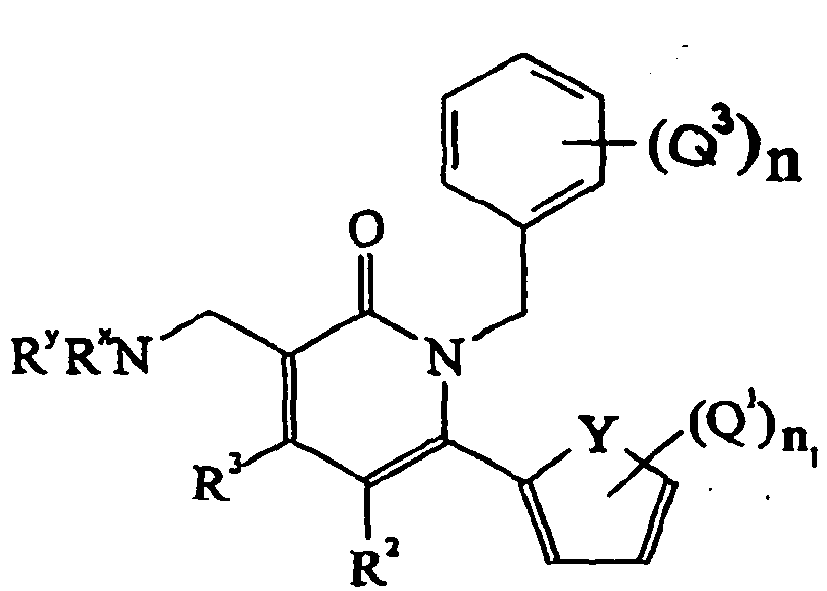
- In another embodiment, the compounds for use in the compositions and methods provided herein have formula XIX:

- In another embodiment, the compounds for use in the compositions and methods provided herein have formula XX:

- In another embodiment, the compounds for use in the compositions and methods provided herein are selected from
Figure 1 . - In another embodiment, the compounds for use in the compositions and methods provided herein are selected from:
- 1-Benzyl-2-oxo-6-phenyl-4-trifluoromethyl-1,2-dihydro-pyridine-3-carbonitrile;
- 1-Benzyl-6-naphthalen-2-yl-2-oxo-4-trifluoromethyl-1,2-dihydro-pyridine-3-carbonitrile;
- 1-(2-Methyl-benzyl)-2-oxo-6-phenyl-4-trifluoromethyl-1,2-dihydropyridine-3-carbonitrile;
- 1-(3-Methyl-benzyl)-2-oxo-6-phenyl-4-trifluoromethyl-1,2-dihydropyridine-3-carbonitrile;
- 1-(4-Methyl-benzyl)-2-oxo-6-phenyl-4-trifluoromethyl-1,2-dihydropyridine-3-carbonitrile;
- 2-Oxo-1-phenethyl-6-phenyl-4-trifluoromethyl-1,2-dihydro-pyridine-3-carbonitrile;
- 1-Benzyl-2-oxo-6-m-tolyl-4-trifluoromethyl-1,2-dihydro-pyridine-3-carbonitrile;
- 1-(2-Methyl-benzyl)-2-oxo-6-m-tolyl-4-trifluoromethyl-1,2-dihydropyridine-3-carbonitrile:
- 1-(3-Methyl-benzyl)-2-oxo-6-m-tolyl-4-trifluoromethyl-1,2-dihydropyridine-3-carbonitrile;
- 1-(4-Methyl-benzyl)-2-oxo-6-m-tolyl-4-trifluoromethyl-1,2-dihydropyridine-3-carbonitrile;
- 2-Oxo-1-phenethyl-6-m-tolyl-4-trifluoromethyl-1,2-dihydro-pyridine-3-carbonitrile;
- 1-Benzyl-4-methyl-2-oxo-6-phenyl-1,2-dihydro-pyridine-3-carbonitrile;
- 1-(2-Methyl-benzyl)-4-methyl-2-oxo-6-phenyl-1,2-dihydro-pyridine-3-carbonitrile;
- 1-(3-Methyl-benzyl)-4-methyl-2-oxo-6-phenyl-1,2-dihydro-pyridine-3-carbonitrile;
- 1-(4-Methyl-benzyl)-4-methyl-2-oxo-6-phenyl-1,2-dihydro-pyridine-3-carbonitrile;
- 4-Methyl-2-oxo-1-phenethyl-6-phenyl-1,2-dihydro-pyridine-3-carbonitrile;
- 2-Oxo-6-phenyl-1-(3-phenyl-propyl)-4-trifluoromethyl-1,2-dihydropyridine-3-carbonitrile;
- 2-Oxo-6-phenyl-4-trifluoromethyl-1-(2-trifluoromethyl-benzyl)-1,2-dihydropyridine-3-carbonitrile;
- 2-Oxo-6-phenyl-4-trifluoromethyl-1-(3-trifluoromethyl-benzyl)-1,2-dihydropyridine-3-carbonitrile;
- 2-Oxo-6-phenyl-4-trifluoromethyl-1-(4-trifluoromethyl-benzyl)-1,2-dihydropyridine-3-carbonitrile;
- 1-(2-Methoxy-benzyl)-2-oxo-6-phenyl-4-trifluoromethyl-1,2-dihydropyridine-3-carbonitrile;
- 1-(3-Methoxy-benzyl)-2-oxo-6-phenyl-4-trifluoromethyl-1,2-dihydropyridine-3-carbonitrile;
- 1-(4-Methoxy-benzyl)-2-oxo-6-phenyl-4-trifluoromethyl-1,2-dihydropyridine-3-carbonitrile;
- 1-Biphenyl-4-ylmethyl-2-oxo-6-phenyl-4-trifluoromethyl-1, 2-dihydropyridine-3-carbonitrile;
- 2-Oxo-6-m-tolyl-4-trifluoromethyl-1-(2-trifluoromethyl-benzyl)-1,2-dihydro-pyridine-3-carbonitrile;
- 2-Oxo-1-(3-phenyl-propyl)-6-m-tolyl-4-trifluoromethyl-1,2-dihydropyridine-3-carbonitrile;
- 2-Oxo-6-m-tolyl-4-trifluoromethyl-1-(3-trifluoromethyl-benzyl)-1,2-dihydro-pyridine-3-carbonitrile;
- 2-Oxo-6-m-tolyl-4-trifluoromethyl-1-(4-trifluoromethyl-benzyl)-1,2-dihydro-pyridine-3-carbonitrile;
- 1-(2-Methoxy-benzyl)-2-oxo-6-m-tolyl-4-trifluoromethyl-1,2-dihydropyridine-3-carbonitrile;
- 1-(3-Methoxy-benzyl)-2-oxo-6-m-tolyl-4-trifluoromethyl-1,2-dihydropyridine-3-carbonitrile;
- 1-(4-Methoxy-benzyl)-2-oxo-6-m-tolyl-4-trifluoromethyl-1, 2-dihydropyridine-3-carbonitrile;
- 1-Biphenyl-4-ylmethyl-2-oxo-6-m-tolyl-4-trifluoromethyl-1,2-dihydropyridine-3-carbonitrile;
- 1-Benzyl-6-(3-methoxy-phenyl)-2-oxo-4-trifluoromethyl-1,2-dihydropyridine-3-carbonitrile;
- 1-Benzyl-6-(2-chloro-phenyl)-2-oxo-4-trifluoromethyl-1,2-dihydro-pyridine-3-carbonitrile;
- 1-Benzyl-6-(3-ethyl-phenyl)-2-oxo-4-trifluoromethyl-1,2-dihydro-pyridine-3-carbonitrile;
- 1-Benzyl-6-(3-trifluoromethyl-phenyl)-2-oxo-4-trifluoromethyl-1,2-dihydropyridine-3-carbonitrile;
- 1-Benzyl-6-(3-nitro-phenyl)-2-oxo-4-trifluoromethyl-1,2-dihydro-pyridine-3-carbonitrile;
- 1-Benzyl-6-(3-hydroxy-phenyl)-2-oxo-4-trifluoromethyl-1,2-dihydropyrid ine-3-carbonitrile;
- (1R)-2-Oxo-6-phenyl-1-(1-phenyl-ethyl)-4-trifluoromethyl-1,2-dihydropyridine-3-carbonitrile;
- (1S)-2-Oxo-6-phenyl-1-(1-phenyl-ethyl)-4-trifluoromethyl-1,2-dihydropyridine-3-carbonitrile;
- 1-Benzyl-6-(3-butoxy-phenyl)-2-oxo-4-trifluoromethyl-1,2-dihydropyridine-3-carbonitrile;
- 1-Benzyl-6-(3-benzyloxy-phenyl)-2-oxo-4-trifluoromethyl-1,2-dihydropyridine-3-carbonitrile;
- 1-Benzyl-2-oxo-6-[3-(2-piperidin-1-yl-ethoxy)-phenyl]-4-trifluoromethyl-1,2-dihydro-pyridine-3-carbonitrile;
- N-[3-(1-Benzyl-5-cyano-6-oxo-4-trifluoromethyl-1,6-dihydro-pyridin-2-yl)-phenyl]-acetamide;
- 1-[3-(1-Benzyl-5-cyano-6-oxo-4-trifluoromethyl-1,6-dihydro-pyridin-2-yl)-phenyl]-3-ethyl-urea;
- 1-(2,4-Dimethyl-benzyl)-2-oxo-6-phenyl-4-trifluoromethyl-1, 2-dihydropyridine-3-carbonitrile;
- 1-(2-Fluoro-benzyl)-2-oxo-6-phenyl-4-trifluoromethyl-1,2-dihydro-pyridine-3-carbonitrile;
- 1-(4-Fluoro-benzyl)-2-oxo-6-phenyl-4-trifluoromethyl-1,2-dihydro-pyridine-3-carbonitrile;
- 1-(2,4-Difluoro-benzyl)-2-oxo-6-phenyl-4-trifluoromethyl-1,2-dihydropyridine-3-carbonitrile;
- 1-(4-Bromo-benzyl)-2-oxo-6-phenyl-4-trifluoromethyl-1,2-dihydro-pyridine-3-carbonitrile;
- 4-(3-Cyano-2-oxo-6-phenyl-4-trifluoromethyl-2H-pyridin-1-ylmethyl)-benzoic acid methyl ester;
- 1-(2-Chloro-benzyl)-2-oxo-6-phenyl-4-trifluoromethyl-1,2-dihydro-pyridine-3-carbonitrile;
- 1-(4-Chloro-benzyl)-2-oxo-6-phenyl-4-trifluoromethyl-1,2-dihydro-pyridine-3-carbonitrile;
- 1-(4-Methylthio-benzyl)-2-oxo-6-phenyl-4-trifluoromethyl-1,2-dihydropyridine-3-carbonitrile;
- 2-Oxo-1-(4-phenoxy-benzyl)-6-phenyl-4-trifluoromethyl-1,2-dihydropyridine-3-carbonitrile;
- 1-(2,4-Dimethyl-benzyl)-2-oxo-6-m-tolyl-4-trifluoromethyl-1,2-dihydropyridine-3-carbonitrile;
- 1-(2-Fluoro-benzyl)-2-oxo-6-m-tolyl-4-trifluoromethyl-1,2-dihydro-pyridine-3-carbonitrile;
- 1-(4-Fluoro-benzyl)-2-oxo-6-m-tolyl-4-trifluoromethyl-1,2-dihydro-pyridine-3-carbonitrile;
- 1-(2,4-Difluoro-benzyl)-2-oxo-6-m-tolyl-4-trifluoromethyl-1,2-dihydropyridine-3-carbonitrile;
- 1-(4-Bromo-benzyl)-2-oxo-6-m-tolyl-4-trifluorornethyl-1,2-dihydropyridine-3-carbonitrile;
- 4-(3-Cyano-2-oxo-6-m-tolyl-4-trifluoromethyl-2H-pyridin-1-ylmethyl)-benzoic acid methyl ester;
- 1-(2-Chloro-benzyl)-2-oxo-6-m-tolyl-4-trifluoromethyl-1,2-dihydropyridine-3-carbonitrile;
- 1-(4-Chloro-benzyl)-2-oxo-6-m-tolyl-4-trifluoromethyl-1,2-dihydropyridine-3-carbonitrile;
- 1-(4-Methylthio-benzyl)-2-oxo-6-m-tolyl-4-trifluoromethyl-1,2-dihydropyridine-3-carbonitrile;
- 2-Oxo-1-(4-phenoxy-benzyl)-6-m-tolyl-4-trifluoromethyl-1,2-dihydropyridine-3-carbonitrile;
- 2-Oxo-6-phenyl-1-(4-trifluoromethoxy-benzyl)-4-trifluoromethyl-1,2-dihydro-pyridine-3-carbonitrile;
- 2-Oxo-6-phenyl-1-pyridin-3-ylmethyl-4-trifluoromethyl-1,2-dihydropyridine-3-carbonitrile;
- 2-Oxo-6-phenyl-1-pyridin-4-ylmethyl-4-trifluoromethyl-1,2-dihydropyridine-3-carbonitrile;
- 1-(4-Nitro-benzyl)-2-oxo-6-phenyl-4-trifluoromethyl-1,2-dihydro-pyridine-3-carbonitrile;
- 2-Oxo-6-m-tolyl-1-(4-trifluoromethoxy-benzyl)-4-trifluoromethyl-1, 2-dihydro-pyridine-3-carbonitrile;
- 2-Oxo-1-pyridin-3-ylmethyl-6-m-tolyl-4-trifluoromethyl-1,2-dihydropyridine-3-carbonitrile;
- 2-Oxo-1-pyridin-4-ylmethyl-6-m-tolyl-4-trifluoromethyl-1,2-dihydropyridine-3-carbonitrile;
- 1-(4-Nitro-benzyl)-2-oxo-6-m-tolyl-4-trifluoromethyl-1,2-dihydro-pyridine-3-carbonitrile;
- 1-(4-Morpholin-4-yl-benzyl)-2-oxo-6-phenyl-4-trifluoromethyl-1,2-dihydropyridine-3-carbonitrile;
- [3-(1-Benzyl-5-cyano-8-oxo-4-trifluoromethyl-1,6-dihydro-pyridin-2-yl)-phenyl]-urea;
- 1-Benzyl-2-oxo-6-(3-phenethyloxy-phenyl)-4-trifluoromethyl-1,2-dihydropyridine-3-carbonitrile;
- 1-Benzyl-2-oxo-6-[3-(2,2,2-trifluoro-ethoxy)-phenyl]-4-trifluoromethyl-1,2-dihydro-pyridine-3-carbonitrile;
- 1-Benzyl-6-[3-(3-methyl-butoxy)-phenyl]-2-oxo-4-trifluoromethyl-1,2-dihydro-pyridine-3-carbonitrile;
- [3-(1-Benzyl-5-cyano-6-oxo-4-trifluoromethyl-1,6-dihydro-pyridin-2-yl)-phenoxyl-acatic acid methyl ester;
- 4-[3-(1-Benzyl-5-cyano-6-oxo-4-trifluoromethyl-1,6-dihydro-pyridin-2-yl)-phenoxyl-butyric acid methyl ester;
- 1-Benzyl-6-[3-(3-hydroxy-propoxy)-phenyl]-2-oxo-4-trifluoromethyl-1,2-dihydro-pyridine-3-carbonitrile;
- 4-(3-Cyano-2-oxo-6-phenyl-4-trifluoromethyl-2H-pyridin-1-ylmethyl)-benzoic acid;
- Ethyl-carbamic acid 3-(1-benzyl-5-cyano-6-oxo-4-trifluoromethyl-1,6-dihydro-pyridin-2-yl)-phenyl ester;
- Butyl-carbamic acid 3-(1-benzyl-5-cyano-6-oxo-4-trifluoromethyl-1,6-dihydro-pyridin-2-yl)-phenyl ester;
- 1-Benzyl-6-[3-(2-methyl-benzyloxy)-phenyl]-2-oxo-4-trifluoromethyl-1,2-dihydro-pyridine-3-carbonitrile;
- 1-Benzyl-6-[3-(3-methyl-benzyloxy)-phenyt]-2-oxo-4-trifluoromethyl-1,2-dihydro-pyridine-3-carbonitrile;
- 1-Benzyl-6-[3-(4-methyl-benzyloxy)-phenyl]-2-oxo-4-trifluoromethyl-1,2-dihydro-pyridine-3-carbonitrile;
- 4-[3-(1-Benzyl-5-cyano-6-oxo-4-trifluoromethyl-1,6-dihydro-pyridin-2-yl)-phenoxymethyl]-benzoic acid methyl ester;
- 3-[3-(1-Benzyl-5-cyano-6-oxo-4-trifluoromethyl-1 ,6-dihydro-pyridin-2-yl)-phenoxymethyl]-benzoic acid methyl ester;
- [3-(1-Benzyl-5-cyano-6-oxo-4-trifluoromethyl-1,6-dihydro-pyridin-2-yl)-phenoxy]-acetic acid;
- 4-[3-(1-Benzyl-5-cyano-6-oxo-4-trifluoromethyl-1,6-dihydro-pyridin-2-yl)-phenoxy]-butyric acid;
- N-[3-(1-Benzyl-5-cyano-6-oxo-4-trifluoromethyl-1,6-dihydro-pyridin-2-yl)-phenyl]-butyramide;
- Cyclohexanecarboxylic acid [3-(1-benzyl-5-cyano-6-oxo-4-trifluoromethyl-1,6-dihydro-pyridin-2-yl)-phenyl]-amide;
- N-[3-(1-Benzyl-5-cyano-6-oxo-4-trifluoromethyl-1,6-dihydro-pyridin-2-yl)-phenyl]-benzamide;
- [3-(1-Benzyl-5-cyano-6-oxo-4-trifluoromethyl-1,6-dihydro-pyridin-2-yl)-phenyl]-carbamic acid methyl ester;
- [3-(1-Benzyl-5-cyano-6-oxo-4-trifluoromethyl-1,6-dihydro-pyridin-2-yl)-phenyl]-carbamic acid ethyl ester;
- [3-(1-Ben zyl-5-cyano-6-oxo-4-trifluoromethyl-1,6-dihydro-pyridin-2-yl)-phenyl]-carbamic acid phenyl ester;
- 6-(3-Amino-phenyl)-1-benzyl-2-oxo-4-trifluoromethyl-1,2-dihydro-pyridine-3-carbonitrile;
- 2-Oxo-6-phenyl-1-thiophen-2-ylmethyl-4-trifluoromethyl-1,2-dihydropyridine-3-carbonitrile;
- 1-(5-Methyl-furan-2-ylmethyl)-2-oxo-6-phenyl-4-trifluoromethyl-1,2-dihydro-pyridine-3-carbonitrile;
- 2-Oxo-6-phenyl-1-(2,3,5-trifluoro-benzyl)-4-trifluoromethyl-1,2-dihydropyridine-3-carbonitrile;
- 1-(4-Chloro-2-methyl-benzyl)-2-oxo-6-phenyl-4-trifluoromethyl-1,2-dihydro-pyridine-3-carbonitrile;
- 1-(3,4-Dichloro-benzyl)-2-oxo-6-phenyl-4-trifluoromethyl-1,2-dihydropyridine-3-carbonitrile;
- 1-(3-Fluoro-benzyl)-2-oxo-6-phenyl-4-trifluoromethyl-1,2-dihydro-pyridine-3-carbonitrile;
- 1-(4-Methyl-benzyl)-6-m-tolyl-1H-pyridin-2-one;
- 1-(4-Methyl-benzyl)-6-phenyl-1H-pyridin-2-one;
- 1-Benzyl-6-m-totyl-1H-pyridin-2-one;
- 1-Benzyl-6-phenyl-1H-pyridin-2-one;
- 2-Oxo-6-phenyl-1-(2,3,4-trifluoro-benzyl)-4-trifluoromethyl-1,2-dihydropyridine-3-carbonitrile;
- 2-Oxo-1-thiophen-2-ylmethyl-6-m-tolyl-4-trifluoromethyl-1,2-dihydropyridine-3-carbonitrile;
- 2-Oxo-6-m-tolyl-1-(2,3,5-trifluoro-benzyl)-4-trifluoromethyl-1,2-dihydropyridine-3-carbonitrile;
- 1-(4-Chloro-2-methyl-benzyl)-2-oxo-6-m-tolyl-4-trifluoromethyl-1,2-dihydro-pyridine-3-carbonitrile;
- 1-(3,4-Dichloro-benzyl)-2-oxo-6-m-tolyl-4-trifluoromethyl-1,2-dihydropyridine-3-carbonitrile;
- 1-(3-Fluoro-benzyl)-2-oxo-6-m-tolyl-4-trifluoromethyl-1, 2-dihyd ro-pyrid ine-3-carbonitrile;
- 1-(3,4-Difluoro-benzyl)-2-oxo-6-phenyl-4-trifluoromethyl-1,2-dihydropyridine-3-carbonitrile;
- 1-(2, 5-Difluoro-benzyl)-2-oxo-6-phenyl-4-trifluoromethyl-1, 2-dihydropyridine-3-carbonitrile;
- 1-(2,4-Dichloro-benzyl)-2-oxo-6-phenyl-4-trifluoromethyl-1,2-dihydropyridine-3-carbonitrile;
- 1-(2,3-Dimethyl-benzyl)-2-oxo-6-phenyl-4-trifluoromethyl-1,2-dihydropyridine-3-carbonitrile;
- 1-(2,5-Dimethyl-benzyl)-2-oxo-6-phenyl-4-trifluoromethyl-1,2-dihydropyridine-3-carbonitrile;
- 1-(3,4-Dimethyl-benzyl)-2-oxo-6-phenyl-4-trifluoromethyl-1,2-dihydropyridine-3-carbonitrile;
- 1-(2,3-Difluoro-benzyl)-2-oxo-6-phenyl-4-trifluoromethyl-1,2-dihydropyridine-3-carbonitrile;
- 1-(2-Bromo-benzyl)-2-oxo-6-phenyl-4-trifluoromethyl-1,2-dihydro-pyridine-3-carbonitrile;
- 1-(3-Bromo-benzyl)-2-oxo-6-phenyl-4-trifluoromethyl-1,2-dihydro-pyridine-3-carbonitrile;
- 1-(3,4-Difluoro-benzyl)-2-oxo-6-m-tolyl-4-trifluoromethyl-1, 2-dihydropyridine-3-carbonitrile;
- 1-(2,5-Difluoro-benzyl)-2-oxo-6-m-tolyl-4-trifluoromethyl-1,2-dihydropyridine-3-carbonitrile;
- 1-(2,4-Dichloro-benzyl)-2-oxo-6-m-tolyl-4-trifluoromethyl-1,2-dihydropyridine-3-carbonitrile;
- 1-(2,3-Dimethyl-benzyl)-2-oxo-6-m-tolyl-4-trifluoromethyl-1,2-dihydropyridine-3-carbonitrile;
- 1-(2, 5-Dimethyl-benzyl)-2-oxo-6-m-tolyl-4-trifluoromethyl-1, 2-dihydropyridine-3-carbonitrile;
- 1-(3,4-Dimethyl-benzyl)-2-oxo-6-m-tolyl-4-trifluoromethyl-1,2-dihydropyridine-3-carbonitrile;
- 1-(2,3-Difluorol-benzyl)-2-oxo-6-m-tolyl-4-trifluoromethyl-1,2-dihydropyridine-3-carbonitrile;
- 1-(2-Bromo-benzyl)-2-oxo-6-m-tolyl-4-trifluoromethyl-1,2-dihydropyridine-3-carbonitrile;
- 1-(3-Bromo-benzyl)-2-oxo-6-m-tolyl-4-trifluoromethyl-1,2-dihydropyridine-3-carbonitrile;
- N-[3-(1-Benzyl-5-cyano-6-oxo-4-trifluoromethyl-1,6-dihydro-pyridin-2-yl)-phenyl]-methanesulfonamide;
- 6-(3-Ethyl-phenyl)-1-(4-methyl-benzyl)-2-oxo-4-trifluoromethyl-1,2-dihydro-pyridine-3-carbonitrile;
- 1-(4-Methyl-benzyl)-2-oxo-6-p-tolyl-4-trifluoromethyl-1,2-dihydro-pyridine-3-carbonitrile;
- 6-(2-Chloro-phenyl)-1-(4-methyl-benzyl)-2-oxo-4-trifluoromethyl-1,2-dihydro-pyridine-3-carbonitrile;
- 6-(3-Chloro-phenyl)-1-(4-methyl-benzyl)-2-oxo-4-trifluoromethyl-1, 2-dihydro-pyridine-3-carbonitrile;
- 6-(4-Chloro-phenyl)-1-(4-methyl-benzyl)-2-oxo-4-trifluoromethyl-1,2-dihydro-pyridine-3-carbonitrile;
- 3-[5-Cyano-1-benzyl-6-oxo-4-trifluoromethyl-1,6-dihydro-pyridin-2-yl]-benzoic acid;
- 3-[5-Cyano-1-benzyl-6-oxo-4-trifluoromethyl-1,6-dihydro-pyridin-2-yl]-benzoic acid tert-butyl ester;
- 1-Benzyl-6-(3-bromomethyl-phenyl)-2-oxo-4-trifluoromethyl-1,2-dihydropyridine-3-carbonitrile;
- 3-(1-Benzyl-5-cyano-6-oxo-4-trifluoromethyl-1,6-dihydro-pyridin-2-yl)-N,N-diethyl-benzamide;
- 1-Benzyl-2-oxo-6-(3-phenoxymethyl-phenyl)-4-trifluoromethyl-1, 2-dihydro-pyridine-3-carbonitrile;
- 1-Benzyl-6-(3-diethylaminomethyl-phenyl)-2-oxo-4-trifluoromethyl-1,2-dihydro-pyridine-3-carbonitrile;
- 1-Benzyl-2-oxo-4-pentafluoroethyl-6-phenyl-1,2-dihydro-pyridine-3-carbonitrile;
- 1-(4-Methyl-benzyl)-2-oxo-4-pentafluoroethyl-6-phenyl-1,2-dihydropyridine-3-carbonitrile;
- 1-(2,4-Dimethyl-benzyl)-2-oxo-4-pentafluoroethyl-6-phenyl-1,2-dihydropyridine-3-carbonitrile;
- 1-(2,4-Dimethyl-benzyl)-6-(3,5-dimethyl-phenyl)-2-oxo-4-trifluoromethyl-1,2-dihydro-pyridine-3-carbonitrile;
- 1-(2,4-Dimethyl-benzyl)-2-oxo-6-(5,5,8,8-tetramethyl-5,6,7,8-tetrahydro-naphthalen-2-yl)-4-trifluoromethyl-1,2-dihydro-pyridine-3-carbonitrile;
- 1-(2,4-Dimethyl-benzyl)-6-(3-ethyl-phenyl)-2-oxo-4-trifluoromethyl-1,2-dihydro-pyridine-3-carbonitrile;
- 1-(2,4-Dimethyl-benzyl)-2-oxo-6-p-tolyl-4-trifluoromethyl-1,2-dihydropyridine-3-carbonitrile;
- 1-(2,4-Dirnethyl-benzyl)-6-(3-methoxy-phenyl)-2-oxo-4-trifluoromethyl-1,2-dihydro-pyridine-3-carbonitrile;
- 1-(2,4-Dimethyl-benzyl)-6-(4-methoxy-phenyl)-2-oxo-4-trifluoromethyl-1,2-dihydro-pyridine-3-carbonitrile;
- 1-(2,4-Dimethyl-benzyl)-6-(2-chloro-phenyl)-2-oxo-4-trifluoromethyl-1,2-dihydro-pyridine-3-carbonitrile;
- 1-(2,4-Dimethyl-benzyl)-6-(3-chioro-phenyl)-2-oxo-4-trifluoromethyl-1,2-dihydro-pyridine-3-carbonitrile;
- 1-(2,4-Dimethyl-benzyl)-6-(4-chloro-phenyl)-2-oxo-4-trifluoromethyl-1,2-dihydro-pyridine-3-carbonitrile; and
- 1-Benzyl-2-oxo-6-thiophen-2-yl-4-trifluoromethyl-1,2-dihydro-pyridine-3-carbonitrile.
- The compounds provided herein can be prepared using readily available starting materials or known intermediates.
Schemes -
Scheme 1, below, details the synthetic strategy utilized for the construction of N-amino-2-pyridone derivatives v. Such hydrazones can be readily obtained via the condensation of N-aminopyridones iii with aldehydes (Rc = H) and ketones (as iv) in the presence of acids in various solvents.. The N-amino-2-pyridone itself is produced by a cyclocondensation reaction between 1,3-diketones i and cyanoacetohydrazide ii in the presence of various bases (see, e.g., Elgemeie et al. (1994) Org. Prep. Proc. Int. 26:465-468). The requisite 1,3-dicarbonyl compounds i can be obtained from the corresponding esters and methyl ketones using strong bases.
-
Scheme 2, below, details the synthetic strategy utilized in constructing the N-benzyl-2-pyridone ix compounds. These compounds are formed from an analogous cyclocondensation reaction to that used to form the N-aminopyridones. Reaction of cyanoacetamides viii with 1,2-diketones i using various bases produces N-benzyl-2-pyridones. The requisite cyanoacetamides viii are formed from either cyanoacetic acid vi or methyl cyanoactate vii. Cyanoacetic acid is first activated to its acid chloride using the reagent α,α-dichloromethyl methyl ether. The resultant acid chloride is reacted in situ with various amines to affect acylation. Direct conversion of methyl cyanoacetate vii to the corresponding cyanoacetamides viii is carried out with amines and in the presence of the acylation catalyst 4-(dimethylamino)pyridine (DMAP).
-
Scheme 3, below, details the synthetic strategy utilized to construct N-benzyl-2-pyridones containing a methoxycarbonylmethyl moiety at the C4-position of the pyridone ring. Compound xiii is obtained directly from the diester compound xii by reaction with benzylamines (for the conversion of pyrones to N-benzyl 2-pyridones, see, e.g., Katrizky et a/. (1980) J. Chem. Soc., Perkin Trans. I:2851-2855). Both pyridone formation and the ester cleavage (via decarboxylation) occur in this single step. The malonate substituted pyrone xii derives from the 4-methylsulfide variant xi via base-induced substitution with dimethylmalonate (see, e.g., Tominaga et al. (1984) Chem. Pharm. Bull. 32:3384-3395). Compound xi is readily obtained via the cyclocondensation reaction between the commercially available dithiane x and methyl ketones.
- Other methods for the preparation of the compounds provided herein are shown in the Schemes below. Scheme 4:


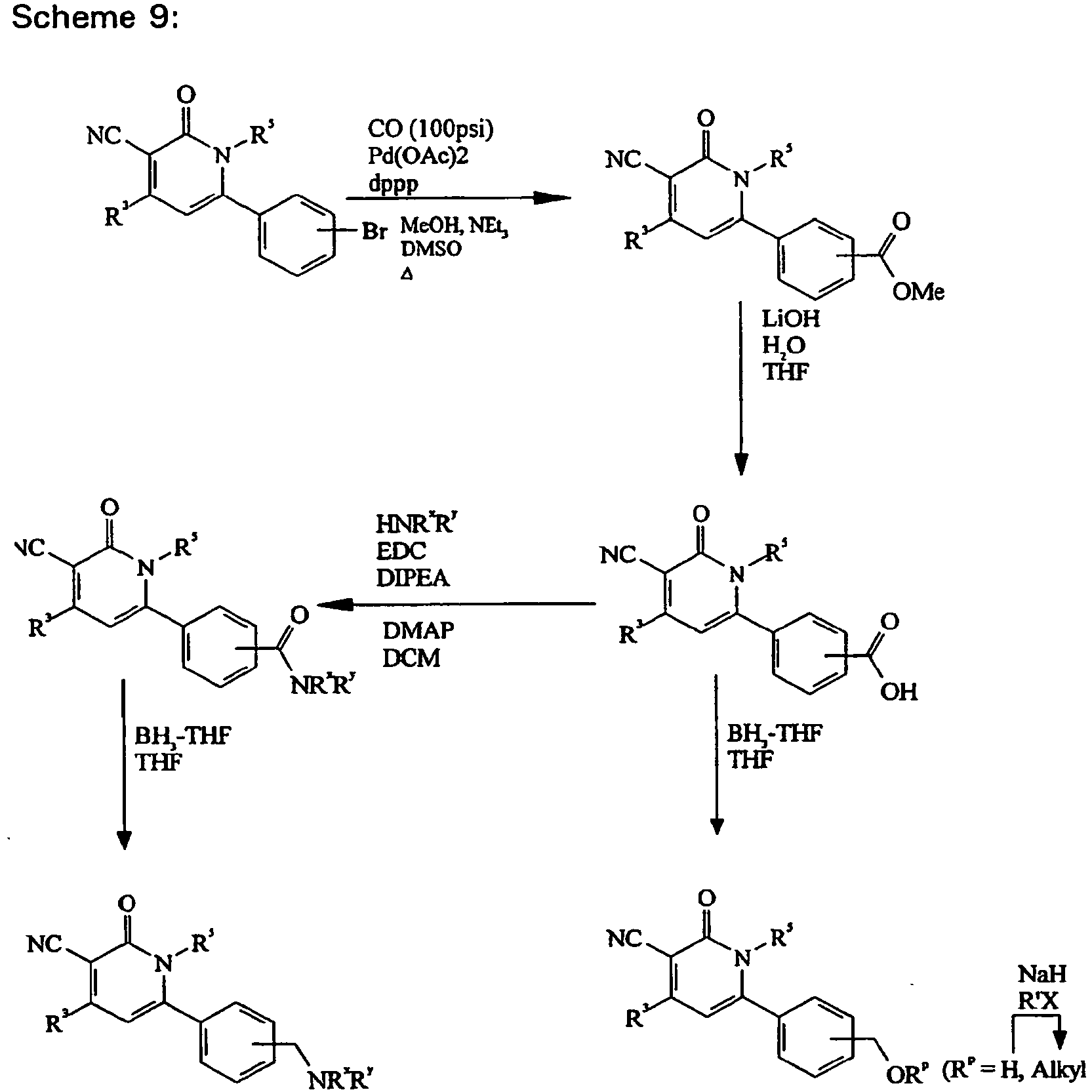


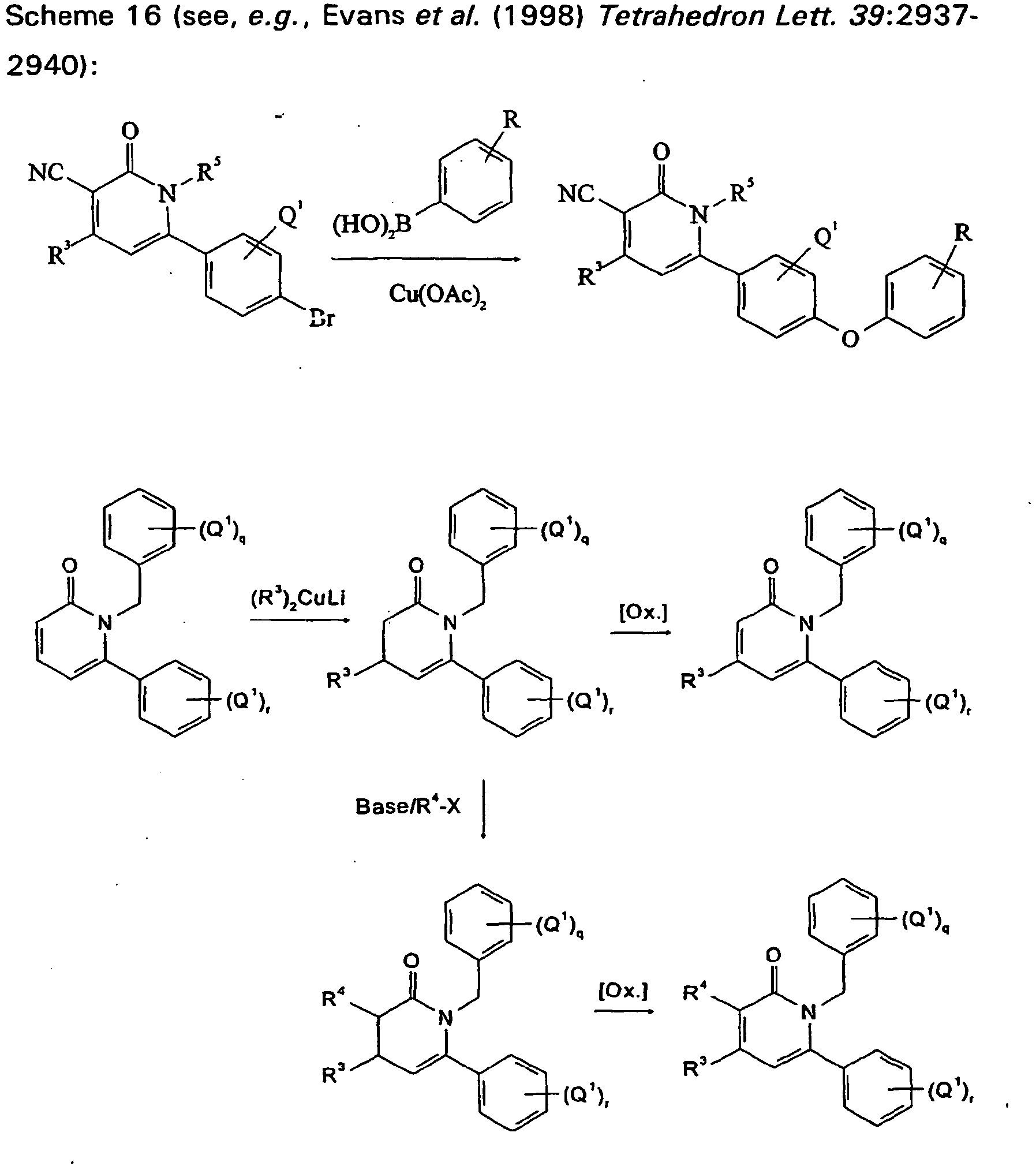


- Starting materials in the synthesis examples provided herein are either available from commercial sources or via literature procedures. All commercially available compounds were used without further purification unless otherwise indicated. CDCl3 (99.8% D, Cambridge Isotope Laboratories) was used in all experiments as indicated. 1H NMR spectra were recorded on a
Bruker Avance 400 MHz NMR spectrometer. Significant peaks are tabulated and typically include: number of protons, multiplicity (s, singlet; d, double; t, triplet; q, quartet; m, multiplet; br s, broad singlet) and coupling constant(s) in Hertz. Chemical shifts are reported as parts per million (δ) relative to tetramethylsilane. Mass spectra were recorded on a Perkin-Elmer SCIEX HPLC/MS instrument using reverse-phase conditions (acetonitrile/water, 0.05% trifluoroacetic acid) and electrospray (ES) ionization. Abbreviations used in the examples below have their accepted meanings in the chemical literature. For example, CH2Cl2 (dichloromethane), C6H6 (benzene), TFA (trifluoroacetic acid), EtOAc (Ethyl Acetate), Et2O (diethyl ether), DMAP (4-dimethylaminopyridine), DMF (N,N-dimethylformamide) and THF (tetrahydrofuran). Flash chromatography was performed using Merck Silica Gel 60 (230-400 mesh). - The pharmaceutical compositions provided herein contain therapeutically effective amounts of one or more of the nuclear receptor activity modulators provided herein that are useful in the prevention, treatment, or amelioration of one or more of the symptoms of diseases or disorders associated with nuclear receptor activity, including LXR and/or orphan nuclear receptor activity. Such diseases or disorders include, but are not limited to, hypercholesterolemia, hyperlipoproteinemia, hypertriglyceridemia, lipodystrophy, hyperglycemia, diabetes mellitus, dyslipidemia, atherosclerosis, gallstone disease, acne vulgaris, acneiform skin conditions, diabetes, Parkinson's disease, cancer, Alzheimer's disease, inflammation, immunological disorders, lipid disorders, obesity, conditions characterized by a perturbed epidermal barrier function, conditions of disturbed differentiation or excess proliferation of the epidermis or mucous membrane, and cardiovascular disorders.
- The compositions contain one or more compounds provided herein. The compounds are preferably formulated into suitable pharmaceutical preparations such as solutions, suspensions, tablets, dispersible tablets, pills, capsules, powders, sustained release formulations or elixirs, for oral administration or in sterile solutions or suspensions for parenteral administration, as well as transdermal patch preparation and dry powder inhalers. Typically the compounds described above are formulated into pharmaceutical compositions using techniques and procedures well known in the art (see, e.g., Ansel Introduction to Pharmaceutical Dosage Forms, Fourth Edition 1985, 126).
- In the compositions, effective concentrations of one or more compounds or pharmaceutically acceptable derivatives is (are) mixed with a suitable pharmaceutical carrier or vehicle. The compounds may be derivatized as the corresponding salts, esters, enol ethers or esters, acids, bases, solvates, hydrates or prodrugs prior to formulation, as described above. The concentrations of the compounds in the compositions are effective for delivery of an amount, upon administration, that treats, prevents, or ameliorates one or more of the symptoms of diseases or disorders associated with nuclear receptor activity or in which nuclear receptor activity is implicated. Such diseases or disorders include, but are not limited to, hypercholesterolemia, hyperlipopriteinemia, hypertriglyceridemia, lipodystrophy, hyperglycemia, diabetes mellitus, dyslipidemia, atherosclerosis, gallstone disease, acne vulgaris, acneiform skin conditions, diabetes, Parkinson's disease, cancer, Alzheimer's disease, inflammation, immunological disorders, lipid disorders, obesity, conditions characterized by a perturbed epidermal barrier function, conditions of disturbed differentiation or excess proliferation of the epidermis or mucous membrane, and cardiovascular disorders.
- Typically, the compositions are formulated for single dosage administration. To formulate a composition, the weight fraction of compound is dissolved, suspended, dispersed or otherwise mixed in a selected vehicle at an effective concentration such that the treated condition is relieved or ameliorated. Pharmaceutical carriers or vehicles suitable for administration of the compounds provided herein include any such carriers known to those skilled in the art to be suitable for the particular mode of administration.
- In addition, the compounds may be formulated as the sole pharmaceutically active ingredient in the composition or may be combined with other active ingredients. Liposomal suspensions, including tissue-targeted liposomes, such as tumor-targeted liposomes, may also be suitable as pharmaceutically acceptable carriers. These may be prepared according to methods known to those skilled in the art. For example, liposome formulations may be prepared as described in
U.S. Patent No. 4,522,811 . Briefly, liposomes such as multilamellar vesicles (MLV's) may be formed by drying down egg phosphatidyl choline and brain phosphatidyl serine (7:3 molar ratio) on the inside of a flask. A solution of a compound provided herein in phosphate buffered saline lacking divalent cations (PBS) is added and the flask shaken until the lipid film is dispersed. The resulting vesicles are washed to remove unencapsulted compound, pelleted by centrifugation, and then resuspended in PBS. - The active compound is included in the pharmaceutically acceptable carrier in an amount sufficient to exert a therapeutically useful effect in the absence of undesirable side effects on the patient treated. The therapeutically effective concentration may be determined empirically by testing the compounds in in vitro and in vivo systems described herein and in International Patent Application Publication Nos.
99/27365 00/25134 - The concentration of active compound in the pharmaceutical composition will depend on absorption, inactivation and excretion rates of the active compound, the physicochemical characteristics of the compound, the dosage schedule, and amount administered as well as other factors known to those of skill in the art. For example, the amount that is delivered is sufficient to ameliorate one or more of the symptoms of diseases or disorders associated with nuclear receptor activity or in which nuclear receptor activity is implicated, as described herein.
- Typically a therapeutically effective dosage should produce a serum concentration of active ingredient of from about 0.1 ng/ml to about 50-100 µg/ml. The pharmaceutical compositions typically should provide a dosage of from about 0.001 mg to about 2000 mg of compound per kilogram of body weight per day. Pharmaceutical dosage unit forms are prepared to provide from about 1 mg to about 1000 mg and preferably from about 10 to about 500 mg of the essential active ingredient or a combination of essential ingredients per dosage unit form.
- The active ingredient may be administered at once, or may be divided into a number of smaller doses to be administered at intervals of time. It is understood that the precise dosage and duration of treatment is a function of the disease being treated and may be determined empirically using known testing protocols or by extrapolation from in vivo or in vitro test data. It is to be noted that concentrations and dosage values may also vary with the severity of the condition to be alleviated. It is to be further understood that for any particular subject, specific dosage regimens should be adjusted over time according to the individual need and the professional judgment of the person administering or supervising the administration of the compositions, and that the concentration ranges set forth herein are exemplary only and are not intended to limit the scope or practice of the claimed compositions.
- Pharmaceutically acceptable derivatives include acids, bases, enol ethers and esters, salts, esters, hydrates, solvates and prodrug forms. The derivative is selected such that its pharmacokinetic properties are superior to the corresponding neutral compound.
- Thus, effective concentrations or amounts of one or more of the compounds described herein or pharmaceutically acceptable derivatives thereof are mixed with a suitable pharmaceutical carrier or vehicle for systemic, topical or local administration to form pharmaceutical compositions. Compounds are included in an amount effective for ameliorating one or more symptoms of, or for treating or preventing diseases or disorders associated with nuclear receptor activity or in which nuclear receptor activity is implicated, as described herein. The concentration of active compound in the composition will depend on absorption, inactivation, excretion rates of the active compound, the dosage schedule, amount administered, particular formulation as well as other factors known to those of skill in the art.
- The compositions are intended to be administered by a suitable route, including orally, parenterally, rectally, topically and locally. For oral administration, capsules and tablets are presently preferred. The compositions are in liquid, semi-liquid or solid form and are formulated in a manner suitable for each route of administration. Preferred modes of administration include parenteral and oral modes of administration. Oral administration is presently most preferred.
- Solutions or suspensions used for parenteral, intradermal, subcutaneous, or topical application can include any of the following components: a sterile diluent, such as water for injection, saline solution, fixed oil, polyethylene glycol, glycerine, propylene glycol or other synthetic solvent; antimicrobial agents, such as benzyl alcohol and methyl parabens; antioxidants, such as ascorbic acid and sodium bisulfite; chelating agents, such as ethylenediaminetetraacetic acid (EDTA); buffers, such as acetates, citrates and phosphates; and agents for the adjustment of tonicity such as sodium chloride or dextrose. Parenteral preparations can be enclosed in ampules, disposable syringes or single or multiple dose vials made of glass, plastic or other suitable material.
- In instances in which the compounds exhibit insufficient solubility, methods for solubilizing compounds may be used. Such methods are known to those of skill in this art, and include, but are not limited to, using cosolvents, such as dimethylsulfoxide (DMSO), using surfactants, such as TWEEN®, or dissolution in aqueous sodium bicarbonate. Derivatives of the compounds, such as prodrugs of the compounds may also be used in formulating effective pharmaceutical compositions.
- Upon mixing or addition of the compound(s), the resulting mixture may be a solution, suspension, emulsion or the like. The form of the resulting mixture depends upon a number of factors, including the intended mode of administration and the solubility of the compound in the selected carrier or vehicle. The effective concentration is sufficient for ameliorating the symptoms of the disease, disorder or condition treated and may be empirically determined.
- The pharmaceutical compositions are provided for administration to humans and animals in unit dosage forms, such as tablets, capsules, pills, powders, granules, sterile parenteral solutions or suspensions, and oral solutions or suspensions, and oil-water emulsions containing suitable quantities of the compounds or pharmaceutically acceptable derivatives thereof. The pharmaceutically therapeutically active compounds and derivatives thereof are typically formulated and administered in unit-dosage forms or multiple-dosage forms. Unit-dose forms as used herein refers to physically discrete units suitable for human and animal subjects and packaged individually as is known in the art. Each unit-dose contains a predetermined quantity of the therapeutically active compound sufficient to produce the desired therapeutic effect, in association with the required pharmaceutical carrier, vehicle or diluent. Examples of unit-dose forms include ampoules and syringes and individually packaged tablets or capsules. Unit-dose forms may be administered in fractions or multiples thereof. A multiple-dose form is a plurality of identical unit-dosage forms packaged in a single container to be administered in segregated unit-dose form. Examples of multiple-dose forms include vials, bottles of tablets or capsules or bottles of pints or gallons. Hence, multiple dose form is a multiple of unit-doses which are not segregated in packaging.
- The composition can contain along with the active ingredient: a diluent such as lactose, sucrose, dicalcium phosphate, or carboxymethylcellulose; a lubricant, such as magnesium stearate, calcium stearate and talc; and a binder such as starch, natural gums, such as gum acacia-gelatin, glucose, molasses, polvinylpyrrolidine, celluloses and derivatives thereof, povidone, crospovidones and other such binders known to those of skill in the art. Liquid pharmaceutically administrable compositions can, for example, be prepared by dissolving, dispersing, or otherwise mixing an active compound as defined above and optional pharmaceutical adjuvants in a carrier, such as, for example, water, saline, aqueous dextrose, glycerol, glycols, or ethanol, to thereby form a solution or suspension. If desired, the pharmaceutical composition to be administered may also contain minor amounts of nontoxic auxiliary substances such as wetting agents, emulsifying agents, or solubilizing agants, or pH buffering agents, for example, acetate, sodium citrate, cyclodextrine derivatives, sorbitan monolaurate, triethanolamine sodium acetate, triethanolamine oleate, and other such agents. Actual methods of preparing such dosage forms are known, or will be apparent, to those skilled in this art; for example, see Remington's Pharmaceutical Sciences, Mack Publishing Company, Easton, Pa., 15th Edition, 1975. The composition or formulation to be administered will, in any event, contain a quantity of the active compound in an amount sufficient to alleviate the symptoms of the treated subject.
- Dosage forms or compositions containing active ingredient in the range of 0.005% to 100% with the balance made up from non-toxic carrier may be prepared. For oral administration, a pharmaceutically acceptable non-toxic composition is formed by the incorporation of any of the normally employed excipients, such as, for example pharmaceutical grades of mannitol, lactose, starch, magnesium stearate, talcum, cellulose derivatives, sodium crosscarmellose, glucose, sucrose, magnesium carbonate or sodium saccharin. Such compositions include solutions, suspensions, tablets, capsules, powders and sustained release formulations, such as, but not limited to, implants and microencapsulated delivery systems, and biodegradable, biocompatible polymers, such as collagen, ethylene vinyl acetate, polyanhydrides, polyglycolic acid, polyorthoesters, polylactic acid and others. Methods for preparation of these compositions are known to those skilled in the art. The contemplated compositions may contain 0.001 %-100% active ingredient, preferably 0.1-85%, typically 75-95%.
- The active compounds or pharmaceutically acceptable derivatives may be prepared with carriers that protect the compound against rapid elimination from the body, such as time release formulations or coatings.
- The compositions may include other active compounds to obtain desired combinations of properties. The compounds provided herein, or pharmaceutically acceptable derivatives thereof as described herein, may also be advantageously administered for therapeutic or prophylactic purposes together with another pharmacological agent known in the general art to be of value in treating one or more of the diseases or medical conditions referred to hereinabove, such as diseases or disorders associated with nuclear receptor activity or in which nuclear receptor activity is implicated. It is to be understood that such combination therapy constitutes a further aspect of the compositions and methods of treatment provided herein.
- Oral pharmaceutical dosage forms are either solid, gel or liquid. The solid dosage forms are tablets, capsules, granules, and bulk powders. Types of oral tablets include compressed, chewable lozenges and tablets which may be enteric-coated, sugar-coated or film-coated. Capsules may be hard or soft gelatin capsules, while granules and powders may be provided in non-effervescent or effervescent form with the combination of other ingredients known to those skilled in the art.
- In certain embodiments, the formulations are solid dosage forms, preferably capsules or tablets. The tablets, pills, capsules, or troches can contain any of the following ingredients, or compounds of a similar nature: a binder; a diluent; a disintegrating agent; a lubricant; a glidant; a sweetening agent; and a flavoring agent.
- Examples of binders include microcrystalline cellulose, gum tragacanth, glucose solution, acacia mucilage, gelatin solution, sucrose and starch paste. Lubricants include talc, starch, magnesium or calcium stearate, lycopodium and stearic acid. Diluents include, for example, lactose, sucrose, starch, kaolin, salt, mannitol and dicalcium phosphate. Glidants include, but are not limited to, colloidal silicon dioxide. Disintegrating agents include crosscarmellose sodium, sodium starch glycolate, alginic acid, corn starch, potato starch, bentonite, methylcellulose, agar and carboxymethylcellulose. Coloring agents include, for example, any of the approved certified water soluble FD and C dyes, mixtures thereof; and water insoluble FD and C dyes suspended on alumina hydrate. Sweetening agents include sucrose, lactose, mannitol and artificial sweetening agents such as saccharin, and any number of spray dried flavors. Flavoring agents include natural flavors extracted from plants such as fruits and synthetic blends of compounds which produce a pleasant sensation, such as, but not limited to peppermint and methyl salicylate. Wetting agents include propylene glycol monostearate, sorbitan monooleate, diethylene glycol monolaurate and polyoxyethylene laural ether. Emetic-coatings include fatty acids, fats, waxes, shellac, ammoniated shellac and cellulose acetate phthalates. Film coatings include hydroxyethylcellulose, sodium carboxymethylcellulose, polyethylene glycol 4000 and cellulose acetate phthalate.
- If oral administration is desired, the compound could be provided in a composition that protects it from the acidic environment of the stomach. For example, the composition can be formulated in an enteric coating that maintains its integrity in the stomach and releases the active compound in the intestine. The composition may also be formulated in combination with an antacid or other such ingredient.
- When the dosage unit form is a capsule, it can contain, in addition to material of the above type, a liquid carrier such as a fatty oil. In addition, dosage unit forms can contain various other materials which modify the physical form of the dosage unit, for example, coatings of sugar and other enteric agents. The compounds can also be administered as a component of an elixir, suspension, syrup, wafer, sprinkle, chewing gum or the like. A syrup may contain, in addition to the active compounds, sucrose as a sweetening agent and certain preservatives, dyes and colorings and flavors.
- The active materials can also be mixed with other active materials which do not impair the desired action, or with materials that supplement the desired action, such as antacids, H2 blockers, and diuretics. The active ingredient is a compound or pharmaceutically acceptable derivative thereof as described herein. Higher concentrations, up to about 98% by weight of the active ingredient may be included.
- Pharmaceutically acceptable carriers included in tablets are binders, lubricants, diluents, disintegrating agents, coloring agents, flavoring agents, and wetting agents. Enteric-coated tablets, because of the enteric-coating, resist the action of stomach acid and dissolve or disintegrate in the neutral or alkaline intestines. Sugar-coated tablets are compressed tablets to which different layers of pharmaceutically acceptable substances are applied. Film-coated tablets are compressed tablets which have been coated with a polymer or other suitable coating. Multiple compressed tablets are compressed tablets made by more than one compression cycle utilizing the pharmaceutically acceptable substances previously mentioned. Coloring agents may also be used in the above dosage forms. Flavoring and sweetening agents are used in compressed tablets, sugar-coated, multiple compressed and chewable tablets. Flavoring and sweetening agents are especially useful in the formation of chewable tablets and lozenges.
- Liquid oral dosage forms include aqueous solutions, emulsions, suspensions, solutions and/or suspensions reconstituted from non-effervescent granules and effervescent preparations reconstituted from effervescent granules. Aqueous solutions include, for example, elixirs and syrups. Emulsions are either oil-in-water or water-in-oil.
- Elixirs are clear, sweetened, hydroalcoholic preparations. Pharmaceutically acceptable carriers used in elixirs include solvents. Syrups are concentrated aqueous solutions of a sugar, for example, sucrose, and may contain a preservative. An emulsion is a two-phase system in which one liquid is dispersed in the form of small globules throughout another liquid. Pharmaceutically acceptable carriers used in emulsions are non-aqueous liquids, emulsifying agents and preservatives. Suspensions use pharmaceutically acceptable suspending agents and preservatives. Pharmaceutically acceptable substances used in non-effervescent granules, to be reconstituted into a liquid oral dosage form, include diluents, sweeteners and wetting agents. Pharmaceutically acceptable substances used in effervescent granules, to be reconstituted into a liquid oral dosage form, include organic acids and a source of carbon dioxide. Coloring and flavoring agents are used in all of the above dosage forms.
- Solvents include glycerin, sorbitol, ethyl alcohol and syrup. Examples of preservatives include glycerin, methyl and propylparaben, benzoic add, sodium benzoate and alcohol. Examples of non-aqueous liquids utilized in emulsions include mineral oil and cottonseed oil. Examples of emulsifying agents include gelatin, acacia, tragacanth, bentonite, and surfactants such as polyoxyethylene sorbitan monooleate. Suspending agents include sodium carboxymethylcellulose, pectin, tragacanth, Veegum and acacia. Diluents include lactose and sucrose. Sweetening agents include sucrose, syrups, glycerin and artificial sweetening agents such as saccharin. Wetting agents include propylene glycol monostearate, sorbitan monooleate, diethylene glycol monolaurate and polyoxyethylene lauryl ether. Organic adds include citric and tartaric acid. Sources of carbon dioxide include sodium bicarbonate and sodium carbonate. Coloring agents include any of the approved certified water soluble FD and C dyes, and mixtures thereof. Flavoring agents include natural flavors extracted from plants such fruits, and synthetic blends of compounds which produce a pleasant taste sensation.
- For a solid dosage form, the solution or suspension, in for example propylene carbonate, vegetable oils or triglycerides, is preferably encapsulated in a gelatin capsule. Such solutions, and the preparation and encapsulation thereof, are disclosed in
U.S. Patent Nos 4,328,245 ;4,409,239 ; and4,410,545 . For a liquid dosage form, the solution, e.g., for example, in a polyethylene glycol, may be diluted with a sufficient quantity of a pharmaceutically acceptable liquid carrier, e.g., water, to be easily measured for administration. - Alternatively, liquid or semi-solid oral formulations may be prepared by dissolving or dispersing the active compound or salt in vegetable oils, glycols, triglycerides, propylene glycol esters (e.g., propylene carbonate) and other such carriers, and encapsulating these solutions or suspensions in hard or soft gelatin capsule shells. Other useful formulations include those set forth in
U.S. Patent Nos. Re 28,819 and4,358,603 . Briefly, such formulations include, but are not limited to, those containing a compound provided herein, a dialkylated mono- or poly-alkylene glycol, including, but not limited to, 1,2-dimethoxymethane, diglyme, triglyme, tetraglyme, polyethylene glycol-350-dimethyl ether, polyethylene glycol-550-dimethyl ether, polyethylene glycol-750-dimethyl ether wherein 350, 550 and 750 refer to the approximate average molecular weight of the polyethylene glycol, and one or more anitoxidants, such as butylated hydroxytoluene (BHT), butylated hydroxyanisole (BHA), propyl gallate, vitamin E, hydroquinone, hydroxycoumarins, ethanolamine, lecithin, cephalin, ascorbic acid, malic acid, sorbitol, phosphoric acid, thiodipropionic acid and its esters, and dithiocarbamates. - Other formulations include, but are not limited to, aqueous alcoholic solutions including a pharmaceutically acceptable acetal. Alcohols used in these formulations are any pharmaceutically acceptable water-miscible solvents having one or more hydroxyl groups, including, but not limited to, propylene glycol and ethanol. Acetals include, but are not limited to, di(lower alkyl) acetals of lower alkyl aldehydes such as acetaldehyde diethyl acetal.
- In all embodiments, tablets and capsules formulations may be coated as known by those of skill in the art in order to modify or sustain dissolution of the active ingredient. Thus, for example, they may be coated with a conventional enterically digestible coating, such as phenylsalicylate, waxes and cellulose acetate phthalate.
- Parenteral administration, generally characterized by injection, either subcutaneously, intramuscularly or intravenously is also contemplated herein. Injectables can be prepared in conventional forms, either as liquid solutions or suspensions, solid forms suitable for solution or suspension in liquid prior to injection, or as emulsions. Suitable excipients are, for example, water, saline, dextrose, glycerol or ethanol. In addition, if desired, the pharmaceutical compositions to be administered may also contain minor amounts of non-toxic auxiliary substances such as wetting or emulsifying agents, pH buffering agents, stabilizers, solubility enhancers, and other such agents, such as for example, sodium acetate, sorbitan monolaurate, triethanolamine oleate and cyclodextrins. Implantation of a slow-release or sustained-release system, such that a constant level of dosage is maintained (see, e.g.,
U.S. Patent No. 3,710,795 ) is also contemplated herein. Briefly, a compound provided herein is dispersed in a solid inner matrix, e.g., polymethylmethacrylate, polybutylmethacrylate, plasticized or unplasticized polyvinylchloride, plasticized nylon, plasticized polyethyleneterephthalate, natural rubber, polyisoprene, polyisobutylene, polybutadiene, polyethylene, ethylene-vinylacetate copolymers, silicone rubbers, polydimethylsiloxanes, silicone carbonate copolymers, hydrophilic polymers such as hydrogels of esters of acrylic and methacrylic acid, collagen, cross-linked polyvinylalcohol and cross-linked partially hydrolyzed polyvinyl acetate, that is surrounded by an outer polymeric membrane, e.g., polyethylene, polyporpoylene, ethylene/propylene copolymers, ethylene/ethyl acrylate copolymers, ethylene/vinylacetate copolymers, silicone rubbers, polydimethyl siloxanes, neoprene rubber, chlorinated polyethylene, polyvinylchloride, vinylchloride copolymers with vinyl acetate, vinylidene chloride, ethylene and propylene, ionomer polyethylene terephthalate, butyl rubber epichlorohydrin rubbers, ethylene/vinyl alcohol copolymer, ethylene/vinyl acetate/vinyl alcohol terpolymer, and ethylene/vinyloxyethanol copolymer, that is insoluble in body fluids. The compound diffuses throught the outer polymeric membrane in a release rate controlling step. The percentage of active compound contained in such parenteral compositions is highly dependent on the specific nature thereof, as well as the activity of the compound and the needs of the subject. - Parenteral administration of the compositions includes intravenous, subcutaneous and intramuscular administrations. Preparations for parenteral administration include sterile solutions ready for injection, sterile dry soluble products, such as lyophilized powders, ready to be combined with a solvent just prior to use, including hypodermic tablets, sterile suspensions ready for injection, sterile dry insoluble products ready to be combined with a vehicle just prior to use and sterile emulsions. The solutions may be either aqueous or nonaqueous.
- If administered intravenously, suitable carriers include physiological saline or phosphate buffered saline (PBS), and solutions containing thickening and solubilizing agents, such as glucose, polyethylene glycol, and polypropylene glycol and mixtures thereof.
- Pharmaceutically acceptable carriers used in parenteral preparations include aqueous vehicles, nonaqueous vehicles, antimicrobial agents, isotonic agents, buffers, antioxidants, local anesthetics, suspending and dispersing agents, emulsifying agents, sequestering or chelating agents and other pharmaceutically acceptable substances.
- Examples of aqueous vehicles include Sodium Chloride Injection, Ringers Injection, Isotonic Dextrose Injection, Sterile Water Injection, Dextrose and Lactated Ringers Injection. Nonaqueous parenteral vehicles include fixed oils of vegetable origin, cottonseed oil, corn oil, sesame oil and peanut oil. Antimicrobial agents in bacteriostatic or fungistatic concentrations must be added to parenteral preparations packaged in multiple-dose containers which include phenols or cresols, mercurials, benzyl alcohol, chlorobutanol, methyl and propyl p-hydroxybenzoic acid esters, thimerosal, benzalkonium chloride and benzethonium chloride. Isotonic agents include sodium chloride and dextrose. Buffers include phosphate and citrate. Antioxidants include sodium bisulfate. Local anesthetics include procaine hydrochloride. Suspending and dispersing agents include sodium carboxymethylcelluose, hydroxypropyl methylcellulose and polyvinylpyrrolidone. Emulsifying agents include Polysorbate 80 (TWEEN® 80). A sequestering or chelating agent of metal ions include EDTA. Pharmaceutical carriers also include ethyl alcohol, polyethylene glycol and propylene glycol for water miscible vehicles and sodium hydroxide, hydrochloric acid, citric acid or lactic acid for pH adjustment.
- The concentration of the pharmaceutically active compound is adjusted so that an injection provides an effective amount to produce the desired pharmacological effect. The exact dose depends on the age, weight and condition of the patient or animal as is known in the art.
- The unit-dose parenteral preparations are packaged in an ampoule, a vial or a syringe with a needle. All preparations for parenteral administration must be sterile, as is known and practiced in the art.
- Illustratively, intravenous or intraarterial infusion of a sterile aqueous solution containing an active compound is an effective mode of administration. Another embodiment is a sterile aqueous or oily solution or suspension containing an active material injected as necessary to produce the desired pharmacological effect.
- Injectables are designed for local and systemic administration. Typically a therapeutically effective dosage is formulated to contain a concentration of at least about 0.1% w/w up to about 90% w/w or more, preferably more than 1 % w/w of the active compound to the treated tissue(s). The active ingredient may be administered at once, or may be divided into a number of smaller doses to be administered at intervals of time. It is understood that the precise dosage and duration of treatment is a function of the tissue being treated and may be determined empirically using known testing protocols or by extrapolation from in vivo or in vitro test data. It is to be noted that concentrations and dosage values may also vary with the age of the individual treated. It is to be further understood that for any particular subject, specific dosage regimens should be adjusted over time according to the individual need and the professional judgment of the person administering or supervising the administration of the formulations, and that the concentration ranges set forth herein are exemplary only and are not intended to limit the scope or practice of the claimed formulations.
- The compound may be suspended in micronized or other suitable form or may be derivatized to produce a more soluble active product or to produce a prodrug. The form of the resulting mixture depends upon a number of factors, including the intended mode of administration and the solubility of the compound in the selected carrier or vehicle. The effective concentration is sufficient for ameliorating the symptoms of the condition and may be empirically determined.
- Of interest herein are also lyophilized powders, which can be reconstituted for administration as solutions, emulsions and other mixtures. They may also be reconstituted and formulated as solids or gels.
- The sterile, lyophilized powder is prepared by dissolving a compound provided herein, or a pharmaceutically acceptable derivative thereof, in a suitable solvent. The solvent may contain an excipient which improves the stability or other pharmacological component of the powder or reconstituted solution, prepared from the powder. Excipients that may be used include, but are not limited to, dextrose, sorbital, fructose, corn syrup, xylitol, glycerin, glucose, sucrose or other suitable agent. The solvent may also contain a buffer, such as citrate, sodium or potassium phosphate or other such buffer known to those of skill in the art at, typically, about neutral pH. Subsequent sterile filtration of the solution followed by lyophilization under standard conditions known to those of skill in the art provides the desired formulation. Generally, the resulting solution will be apportioned into vials for lyophilization. Each vial will contain a single dosage (10-1000 mg, preferably 100-500 mg) or multiple dosages of the compound. The lyophilized powder can be stored under appropriate conditions, such as at about 4 °C to room temperature.
- Reconstitution of this lyophilized powder with water for injection provides a formulation for use in parenteral administration. For reconstitution, about 1-50 mg, preferably 5-35 mg, more preferably about 9-30 mg of lyophilized powder, is added per mL of sterile water or other suitable carrier. The precise amount depends upon the selected compound. Such amount can be empirically determined.
- Topical mixtures are prepared as described for the local and systemic administration. The resulting mixture may be a solution, suspension, emulsions or the like and are formulated as creams, gels, ointments, emulsions, solutions, elixirs, lotions, suspensions, tinctures, pastes, foams, aerosols, irrigations, sprays, suppositories, bandages, dermal patches or any other formulations suitable for topical administration.
- The compounds or pharmaceutically acceptable derivatives thereof may be formulated as aerosols for topical application, such as by inhalation (see, e.g.,
U.S. Patent Nos. 4,044,126 ,4,414,209 , and4,364,923 , which describe aerosols for delivery of a steroid useful for treatment of inflammatory diseases, particularly asthma). These formulations for administration to the respiratory tract can be in the form of an aerosol or solution for a nebulizer, or as a microfine powder for insufflation, alone or in combination with an inert carrier such as lactose. In such a case, the particles of the formulation will typically have diameters of less than 50 microns, preferably less than 10 microns. - The compounds may be formulated for local or topical application, such as for topical application to the skin and mucous membranes, such as in the eye, in the form of gels, creams, and lotions and for application to the eye or for intracisternal or intraspinal application. Topical administration is contemplated for transdermal delivery and also for administration to the eyes or mucosa, or for inhalation therapies. Nasal solutions of the active compound alone or in combination with other pharmaceutically acceptable excipients can also be administered.
- These solutions, particularly those intended for ophthalmic use, may be formulated as 0.01% - 10% isotonic solutions, pH about 5-7, with appropriate salts.
- Other routes of administration, such as topical application, transdermal patches, and rectal administration are also contemplated herein.
- For example, pharmaceutical dosage forms for rectal administration are rectal suppositories, capsules and tablets for systemic effect. Rectal suppositories are used herein mean solid bodies for insertion into the rectum which melt or soften at body temperature releasing one or more pharmacologically or therapeutically active ingredients. Pharmaceutically acceptable substances utilized in rectal suppositories are bases or vehicles and agents to raise the melting point. Examples of bases include cocoa butter (theobroma oil), glycerin-gelatin, carbowax (polyoxyethylene glycol) and appropriate mixtures of mono-, di- and triglycerides of fatty acids. Combinations of the various bases may be used. Agents to raise the melting point of suppositories include spermaceti and wax. Rectal suppositories may be prepared either by the compressed method or by molding. The typical weight of a rectal suppository is about 2 to 3 gm.
- Tablets and capsules for rectal administration are manufactured using the same pharmaceutically acceptable substance and by the same methods as for formulations for oral administration.
- The compounds or pharmaceutically acceptable derivatives may be packaged as articles of manufacture containing
- i) packaging material,
- ii) a compound or pharmaceutically acceptable derivative thereof provided herein, which is effective for modulating the activity of nuclear receptors, including LXR and/or orphan nuclear receptors, or for treatment, prevention or amelioration of one or more symptoms of nuclear receptor, including LXR and/or orphan nuclear receptor, mediated diseases or disorders, or diseases or disorders in which nuclear receptor activity, including LXR and/or orphan nuclear receptor activity is implicated, within the packaging material, and
- iii) a label that indicates that the compound or composition, or pharmaceutically acceptable derivative thereof, is used for modulating the activity of nuclear receptors, including LXR and/or orphan nuclear receptors, or for treatment, prevention or amelioration of one or more symptoms of nuclear receptor, including LXR and/or orphan nuclear receptor, mediated diseases or disorders, or diseases or disorders in which nuclear receptor activity, including LXR and/or orphan nuclear receptor activity is implicated.
- The articles of manufacture provided herein contain packaging materials. Packaging materials for use in packaging pharmaceutical products are well known to those of skill in the art. See, e.g.,
U.S. Patent Nos. 5,323,907 ,5,052,558 and5,033,252 . Examples of pharmaceutical packaging materials include, but are not limited to, blister packs, bottles, tubes, inhalers, pumps, bags, vials, containers, syringes, bottles, and any packaging material suitable for a selected formulation and intended mode of administration and treatment. A wide array of formulations of the compounds and compositions provided herein are contemplated as are a variety of treatments for any disease or disorder in which nuclear receptor activity, including LXR and/or orphan nuclear receptor activity, is implicated as a mediator or contributor to the symptoms or cause. - Standard physiological, pharmacological and biochemical procedures are available for testing the compounds to identify those that possess biological activities that modulate the activity or nuclear receptors, including the LXRs (LXRα and LXR β). Such assays include, for example, biochemical assays such as binding assays, fluorescence polarization assays, FRET based coactivator recruitment assays (see generally Glickman et al., J. Biomolecular Screening, 7 No. 1 3-10 (2002), as well as cell based assays including the co-transfection assay, the use of LBD-Gal 4 chimeras and protein-protein interaction assays, (see, Lehmann. et al., J. Biol Chem., 272(6) 3137-3140 (1997).
- High throughput screening systems are commercially available (see, e.g., Zymark Corp., Hopkinton, MA; Air Technical Industries, Mentor, OH; Beckman Instruments Inc., Fullerton, CA; Precision Systems, Inc., Natick, MA) that enable these assays to be run in a high throughput mode. These systems typically automate entire procedures, including all sample and reagent pipetting, liquid dispensing timed incubations, and final readings of the microplate in detector(s) appropriate for the assay. These configurable systems provide high throughput and rapid start up as well as a high degree of flexibility and customization. The manufacturers of such systems provide detailed protocols for various high throughput systems. Thus, for example, Zymark Corp. provides technical bulletins describing screening systems for detecting the modulation of gene transcription, and ligand binding.
- Assays that do not require washing or liquid separation steps are preferred for such high throughput screening systems and include biochemical assays such as fluorescence polarization assays (see for example, Owicki, J., Biomol Screen 2000 Oct; 5(5):297) scintillation proximity assays (SPA) (see for example, Carpenter et al., Methods Mol Biol 2002; 190:31-49) and fluorescence resonance energy transfer (FRET) or time resolved FRET based coactivator recruitment assays (Mukherjee et al., J Steroid Biochem Mol Biol 2002 Jul;81(3):217-25; (Zhou et al., Mol Endocrinol. 1998 Oct; 12(10):1594-604). Generally such assays can be preformed using either the full length receptor, or isolated ligand binding domain (LBD). In the case of LXRα the LBD comprises amino acids 188-447, for LXR β the LDB comprises amino acids 198-461, and for FXR, the LBD comprises
amino acids 244 to 472 of the full length sequence. - If a fluorescently labeled ligand is available, fluorescence polarization assays provide a way of detecting binding of compounds to the nuclear receptor of interest by measuring changes in fluorescence polarization that occur as a result of the displacement of a trace amount of the label ligand by the compound. Additionally this approach can also be used to monitor the ligand dependent association of a fluorescently labeled coactivator peptide to the nuclear receptor of interest to detect ligand binding to the nuclear receptor of interest.
- The ability of a compound to bind to a receptor, or heterodimer complex with RXR, can also be measured in a homogeneous assay format by assessing the degree to which the compound can compete off a radiolabelled ligand with known affinity for the receptor using a scintillation proximity assay (SPA). In this approach, the radioactivity emitted by a radiolabelled compound (for example, [3H] 24,25 Epoxycholesterol) generates an optical signal when it is brought into close proximity to a scintillant such as a Ysi-copper containing bead, to which the nuclear receptor is bound. If the radiolabelled compound is displaced from the nuclear receptor the amount of light emitted from the nuclear receptor bound scintillant decreases, and this can be readily detected using standard microplate liquid scintillation plate readers such as, for example, a Wallac MicroBeta reader.
- The heterodimerization of LXR with RXRα can also be measured by fluorescence resonance energy transfer (FRET), or time resolved FRET, to monitor the ability of the compounds provided herein to bind to LXR or other nuclear receptors. Both approaches rely upon the fact that energy transfer from a donor molecule to an acceptor molecule only occurs when donor and acceptor are in close proximity. Typically the purified LBD of the nuclear receptor of interest is labeled with biotin then mixed with stoichiometric amounts of europium labeled streptavidin (Wallac Inc.), and the purified LBD of RXRα is labeled with a suitable fluorophore such as CY5™. Equimolar amounts of each modified LBD are mixed together and allowed to equilibrate for at least 1 hour prior to addition to either variable or constant concentrations of the sample for which the affinity is to be determined. After equilibration, the time-resolved fluorescent signal is quantitated using a fluorescent plate reader. The affinity of the compound can then be estimated from a plot of fluorescence versus concentration of compound added.
- This approach can also be exploited to measure the ligand dependent interaction of a co-activator peptide with a nuclear receptor in order to characterize the agonist or antagonist activity of the compounds disclosed herein. Typically the assay in this case involves the use a recombinant Glutathione-S-transferase (GST)-nuclear receptor ligand binding domain (LBD) fusion protein and a synthetic biotinylated peptide sequence derived from the receptor interacting domain of a co-activator peptide such as the steroid receptor coactivator 1 (SRC-1). Typically GST-LBD is labeled with a europium chelate (donor) via a europium-tagged anti-GST antibody, and the coactivator peptide is labeled with allophycocyanin via a streptavidin-biotin linkage.
- In the presence of an agonist for the nuclear receptor, the peptide is recruited to the GST-LBD bringing europium and allophycocyanin into close proximity to enable energy transfer from the europium chelate to the allophycocyanin. Upon excitation of the complex with light at 340 nm excitation energy absorbed by the europium chelate is transmitted to the allophycocyanin moiety resulting in emission at 665 nm. If the europium chelate is not brought into close proximity to the allophycocyanin moiety there is little or no energy transfer and excitation of the europium chelate results in emission at 615 nm. Thus the intensity of light emitted at 665 nm gives an indication of the strength of the protein-protein interaction. The activity of a nuclear receptor antagonist can be measured by determining the ability of a compound to competitively inhibit (i.e., IC50) the activity of an agonist for the nuclear receptor.
- In addition a variety of cell based assay methodologies may be successfully used in screening assays to identify and profile the specificity of compounds claimed herein. These approaches include the co-transfection assay, translocation assays, complementation assays and the use of gene activation technologies to over express endogenous nuclear receptors.
- Three basic variants of the co-transfection assay strategy exist, co-transfection assays using full-length nuclear receptor, co transfection assays using chimeric nuclear receptors comprising the ligand binding domain of the nuclear receptor of interest fused to a heterologous DNA binding domain, and assays based around the use of the mammalian two hybrid assay system.
- The basic co-transfection assay is based on the co-transfection into the cell of an expression plasmid to express the nuclear receptor of interest in the cell with a reporter plasmid comprising a reporter gene whose expression is under the control of DNA sequence that is capable of interacting with that nuclear receptor. (See for example
US Patents Nos. 5,071,773 ;5,298,429 and6,416,957 ). Treatment of the transfected cells with an agonist for the nuclear receptor increases the transcriptional activity of that receptor which is reflected by an increase in expression of the reporter gene, which may be measured by a variety of standard procedures. - For those receptors that function as heterodimers with RXR, such as the LXRs, the co-transfection assay typically includes the use of expression plasmids for both the nuclear receptor of interest and RXR. Typical co-transfection assays require access to the full length nuclear receptor and suitable response elements that provide sufficient screening sensitivity and specificity to the nuclear receptor of interest.
- Genes encoding the following full-length previously described proteins, which are suitable for use in the co-transfection studies and profiling the compounds described herein, include human LXR α (SEQ ID 1), human LXRβ (SEQ ID 3), rat FXR (SEQ ID 5), human FXR (SEQ ID 7), human RXR α (SEQ ID 9), human RXR β (SEQ ID 17), human RXRγ (SEQ ID 15), human PPARα (SEQ ID 11) and human PPAR δ (SEQ ID 13). All accession numbers in this application refer to GenBank accession numbers.
- Reporter plasmids may be constructed using standard molecular biological techniques by placing cDNA encoding for the reporter gene downstream from a suitable minimal promoter. For example luciferase reporter plasmids may be constructed by placing cDNA encoding firefly luciferase immediately down stream from the herpes virus thymidine kinase promoter (located at nucleotides residues-105 to + 51 of the thymidine kinase nucleotide sequence) which is linked in turn to the various response elements.
- Numerous methods of co-transfecting the expression and reporter plasmids are known to those of skill in the art and may be used for the co-transfection assay to introduce the plasmids into a suitable cell type. Typically such a cell will not endogenously express nuclear receptors that interact with the response elements used in the reporter plasmid.
- Numerous reporter gene systems are known in the art and include, for example, alkaline phosphatase Berger, J., et al. (1988) ; Kain, S.R. (1997) Methods. Mol. Biol. 63 49-60), β-galactosidase (See,
U.S. Patent No. 5,070,012, issued Dec, 3, 1991 to Nolan et al ., and Bronstein, I., et al., (1989) J. Chemilum. Biolum. 4 99-111), chloramphenicol acetyltransferase (See Gorman et al., Mol Cell Biol. (1982) 2 1044-51), β-glucuronidase, peroxidase, β-lactamase (U.S. Patent Nos. 5,741,657 and5,955,604 ), catalytic antibodies, lucifetases (U.S. Patents 5,221,623 ;5,683,888 ;5,674,713 ;5,650,289 ;5,843,746 ) and naturally fluorescent proteins (Tsien, R.Y. (1998) Annu. Rev. Biochem. 67 509-44). - The use of chimeras comprising the ligand binding domain (LBD) of the nuclear receptor of interest fused to a heterologous DNA binding domain (DBD) expands the versatility of cell based assays by directing activation of the nuclear receptor in question to defined DNA binding elements recognized by defined DNA binding domain (see
WO95/18380 - In general the methodology is similar to that used with the basic co-transfection assay, except that a chimeric construct is used in place of the full length nuclear receptor. As with the full length nuclear receptor, treatment of the transfected cells with an agonist for the nuclear receptor LBD increases the transcriptional activity of the heterologous DNA binding domain which is reflected by an increase in expression of the reporter gene as described above. Typically for such chimeric constructs, the DNA binding domains from defined nuclear receptors, or from yeast or bacterially derived transcriptional regulators such as members of the GAL 4 and Lex A/Umud super families are used.
- A third cell based assay of utility for screening compounds claimed herein is a mammalian two-hybrid assay that measures the ability of the nuclear hormone receptor to interact with a cofactor in the presence of a ligand. (See for example, US Patent Nos.
US 5,667,973 ,5,283,173 and5,468,614 ). The basic approach is to create three plasmid constructs that enable the interaction of the nuclear receptor with the interacting protein to be coupled to a transcriptional readout within a living cell. The first construct is an expression plasmid for expressing a fusion protein comprising the interacting protein, or a portion of that protein containing the interacting domain, fused to a GAL4 DNA binding domain. The second expression plasmid comprises DNA encoding the nuclear receptor of interest fused to a strong transcription activation domain such as VP16, and the third construct comprises the reporter plasmid comprising a reporter gene with a minimal promoter and GAL4 upstream activating sequences. - Once all three plasmids are introduced into a cell, the GAL4 DNA binding domain encoded in the first construct allows for specific binding of the fusion protein to GAL4 sites upstream of a minimal promoter. However because the GAL4 DNA binding domain typically has no strong transcriptional activation properties in isolation, expression of the reporter gene occurs only at a low level. In the presence of a ligand, the nuclear receptor-VP16 fusion protein can bind to the GAL4-interacting protein fusion protein bringing the strong transcriptional activator VP16 in close proximity to the GAL4 binding sites and minimal promoter region of the reporter gene. This interaction significantly enhances the transcription of the reporter gene, which can be measured for various reporter genes as described above. Transcription of the reporter gene is thus driven by the interaction of the interacting protein and nuclear receptor of interest in a ligand dependent fashion.
- Any compound which is a candidate for activation of LXR α or LXR β may be tested by these methods. Generally, compounds are tested at several different concentrations to optimize the chances that activation of the receptor will be detected and recognized if present. Typically assays are performed in triplicate and vary within experimental error by less than 15%. Each experiment is typically repeated three or more times with similar results.
- Activity of the reporter gene can be conveniently normalized to the internal control and the data plotted as fold activation relative to untreated cells. A positive control compound (agonist) may be included along with DMSO as high and low controls for normalization of the assay data. Similarly, antagonist activity can be measured by determining the ability of a compound to competitively inhibit the activity of an agonist.
- Additionally the compounds and compositions can be evaluated for their ability to increase or decrease the expression of genes known to be modulated by LXR α or β and other nuclear receptors in vivo, using Northern-blot, RT PCR or oligonucleotide microarray analysis to analyze RNA levels. Western-blot analysis can be used to measure expression of proteins encoded by LXR target genes. Genes that are known to be regulated by the LXRs include the ATP binding cassette transporters ABCA1, ABCG1, ABCG5, ABCG8, the sterol response element binding protein 1 c (SREBP1c) gene, stearoyl CoA desaturase 1 (SCD-1) and the apolipoprotein apoE gene (ApoE).
- Established animal models exist for a number of diseases of direct relevance to the claimed compounds and these can be used to further profile and characterize the claimed compounds. These model systems include diabetic dislipidemia using Zucker (fa/fa) rats or (db/db) mice, spontaneous hyperlipidemia using apolipoprotein E deficient mice (ApoE-/-), diet-induced hyperlipidemia, using low density lipoprotein receptor deficient mice (LDR-/-) and atherosclerosis using both the Apo E(-/-) and LDL(-/-) mice fed a western diet. (21 % fat, 0.05% cholesterol). Additionally LXR or FXR animal models (e.g., knockout mice) can be used to further evaluate the present compounds and compositions in vivo (see, for example, Peet, et al., Cell, 93:693-704 (1998), Sinal, et al., Cell, 102: 731-744 (2000)).
- Methods and compounds for selectively regulating LXR α or LXR β are also provided. In one embodiment, such compounds exhibit at least a 10 fold difference in IC50, or EC50 for LXR α compared to LXR β.
- Methods of use of the compounds and compositions provided herein are also provided. The methods involve in vitro uses of the compounds and compositions for altering nuclear receptor activity, including LXR and/or orphan nuclear receptor activity, and for treatment, prevention, or amelioration of one or more symptoms of diseases or disorder that are modulated by nuclear receptor activity, including LXR and/or orphan nuclear receptor activity, or in which nuclear receptor activity, including LXR and/or orphan nuclear receptor activity, is implicated.
- Methods of reducing cholesterol levels and of modulating cholesterol metabolism are provided. As described above, LXR is implicated in modulated cholesteral metabolism and catabolism. See, e.g., International Patent Application Publication No.
00/40965 - Method of altering nuclear receptor activity, including liver X receptor (LXR) and/or orphan nuclear receptor activity, by contacting the receptor with one or more compounds or compositions provided herein, are provided.
- Uses for obtaining a medecine intended for the treatment, prevention, or amelioration of one or more symptoms of a disease or disorder which is affected by cholesterol, triglyceride, or bile acid levels are provided.
- Uses for obtaining a medicine intended for the treatment, prevention, or amelioration of one or more symptoms of hypercholesterolemia (see, e.g., International Patent Application Publication No.
WO 00/57915 WO 01/60818 WO 01/82917 WO 00/37077 WO 00/49992 WO 00/17334 U.S. Patent Nos. 6,184,215 and6,187,814 , and International Patent Application Publication No.Wo 98/32444 - Uses for increasing cholesterol efflux from mammalian cells using the compounds and compositions provided herein are provided (see, e.g., International Patent Application Publication No.
WO 00/78972 - Uses for increasing the expression of ATP-Binding Cassette (ABC1) in mammalian cells using the compounds and compositions provided herein are provided (see, e.g., International Patent Application Publication No.
WO 00/78972 - Uses for obtaining a medicine intended for treating, preventing, or ameliorating one or more symptoms of hypocholesterolemia using the compounds and compositions provided herein are also provided.
- Uses in the therapy of post-myocardial infarction using the compounds and compositions provided herein are also provided (see, e.g., International Patent Application Publication No.
WO 01/03705 - Methods and compounds for use in selectively regulating LXR α or LXR β are also provided. In one embodiment, such compounds exhibit at least a 10 fold difference in IC50, or EC50 for LXR α compared to LXR β.
- Also contemplated herein is a use in combination therapy using a compound provided herein, or a pharmaceutically acceptable derivative thereof, in combination with one or more of the following:
- antihyperlipidemic agents, plasma HDL-raising agents, antihypercholesterolemic agents, cholesterol biosynthesis inhibitors (such as HMG CoA reductase inhibitors, such as lovastatin, simvastatin, pravastatin, fluvastatin, atorvastatin and rivastatin), acyl-coenzyme A:cholesterol acyltransferase (ACAT) inhibitors, probucol, raloxifene, nicotinic acid, niacinamide, cholesterol absorption inhibitors, bile acid sequestrants (such as anion exchange resins, or quaternary amines (e.g., cholestyramine or colestipol)), low density lipoprotein receptor inducers, clofibrate, fenofibrate, benzofibrate, cipofibrate, gemfibrizol, vitamin B6, vitamin B12, anti-oxidant vitamins, β-blockers, anti-diabetes agents, angiotensin II antagonists, angiotensin converting enzyme inhibitors, platelet aggregation inhibitors, fibrinogen receptor antagonists, aspirin or fibric acid derivatives. The compound provided herein, or pharmaceutically acceptable derivative thereof, is administered simultaneously with, prior to, or after administration of one or more of the above agents. Pharmaceutical compositions containing a compound provided herein and one or more of the above agents are also provided.
- Combination therapy includes administration of a single pharmaceutical dosage formulation which contains a LXR selective compound and one or more additional active agents, as well as administration of the LXR selective compound and each active agent in its own separate pharmaceutical dosage formulation. For example, a LXR agonist or antagonist claimed herein and an HMG-CoA reductase inhibitor can be administered to the patient together in a single oral dosage composition such as a tablet or capsule, or each agent administered in separate oral dosage formulations. Where separate dosage formulations are used, the compounds described herein and one or more additional active agents can be administered at essentially the same time, i.e., concurrently, or at separately staggered times, i.e., sequentially; combination therapy is understood to include all these regimens.
- The compound is, in one embodiment, administered with a cholesterol biosynthesis inhibitor, particularly an HMG-CoA reductase inhibitor. The term HMG-CoA reductase inhibitor is intended to include all pharmaceutically acceptable salts, esters, free acids and lactone forms of compounds which have HMG-CoA reductase inhibitory activity and, therefore, the use of such salts, esters, free acids and lactone forms is included within the scope the compounds claimed herein. Compounds which have inhibitory activity for HMG-CoA reductase can be readily identified using assays well-known in the art. For instance, suitable assays are described or disclosed in
U.S. Patent No. 4,231,938 andWO 84/02131 U.S. Patent No. 4,231,938 ); simvastatin (ZOCOR®; see,U.S. Patent No. 4,444,784 ); pravastatin sodium (PRAVACHOL®; see,U.S. Patent No. 4,346,227 ); fluvastatin sodium (LESCOL®; see,U.S. Patent No. 5,354,772 ); atorvastatin calcium (LIPITOR®; see,U.S. Patent No. 5,273,995 ) and rivastatin (also known as cerivastatin; see,U.S. Patent No. 5,177,080 ). The structural formulas of these and additional HMG-CoA reductase inhibitors that can be used in the methods claimed herein are described atpage 87 of M. Yalpani, "Cholesterol Lowering Drugs," Chemistry & Industry, pp. 85-89 (5 February 1996). In one embodiments, the HMG-CoA reductase inhibitor is selected from lovastatin and simvastatin. - Dosage information for HMG-CoA reductase inhibitors is well known in the art, since several HMG-CoA reductase inhibitors are marketed in the U.S. In particular, the daily dosage amounts of the HMG-CoA reductase inhibitor may be the same or similar to those amounts which are employed for anti-hypercholesterolemic treatment and which are described in the Physicians' Desk Reference (PDR). For example, see the 50th Ed. of the PDR, 1996 (Medical Economics Co); in particular, see at
page 216 the heading "Hypolipidemics - As examples, the daily dosage amount for simvastatin may be selected from 5 mg, 10 mg, 20 mg, 40 mg, 80 mg and 160 mg; for lovastatin, 10 mg, 20 mg, 40 mg and 80 mg; for fluvastatin sodium, 20 mg, 40 mg and 80 mg; and for pravastatin sodium, 10 mg, 20 mg, and 40 mg. The daily dosage amount for atorvastatin calcium may be in the range of, in one embodiment, from 1 mg to 160 mg and, in another embodiment, from 5 mg to 80 mg. Oral administration may be in a single or divided doses of two, three, or four times daily, although a single daily dose of the HMG-CoA reductase inhibitor is preferred.
- The compounds claimed herein can be utilized in methods for decreasing hyperglycemia and insulin resistance or for methods of treating type II diabetes. The compounds can be identified, formulated, and administered as described above.
- The methods and uses claimed herein can be used effectively in combination with one or more additional active diabetes agents depending on the desired target therapy (see, e.g., Turner, N. et al. Prog. Drug Res. (1998) 51: 33-94; Haffner, S. Diabetes Care (1998) 21: 160-178; and DeFronzo, R. et al. (eds.), Diabetes Reviews (1997) Vol. 5 No. 4). A number of studies have investigated the benefits of combination therapies with oral agents (see, e.g., Mahler, R., J. Clin. Endocrinol. Metab. (1999) 84: 1165-71; United Kingdom Prospective Diabetes Study Group: ; Bardin, C. W.,(ed.), CURRENT THERAPY IN ENDOCRINOLOGY AND METABOLISM, 6th Edition (Mosby-Year Book, Inc., St. Louis, Mo. 1997); Chiasson, J. et al., Ann. Intern. Med. (1994) 121: 928-935; Coniff, R. et al., Clin. Ther. (1997) 19: 16-26; Coniff, R. et al., Am. J. Med. (1995) 98: 443-451; and Iwamoto, Y. et al, Diabet. Med. (1996) 13 365-370; Kwiterovich, P. Am. J. Cardiol (1998) 82(12A): 3U-17U). These studies indicate that diabetes and hyperlipidemia modulation can be further improved by the addition of a second agent to the therapeutic regimen.
- An example of combination therapy that modulates (prevents the onset of the symptoms or complications associated) atherosclerosis, is administered with one or more of the following active agents: an antihyperlipidemic agent; a plasma HDL-raising agent; an antihypercholesterolemic agent, such as a cholesterol biosynthesis inhibitor, e.g., an hydroxymethylglutaryl (HMG) CoA reductase inhibitor (also referred to as statins, such as lovastatin, simvastatin, pravastatin, fluvastatin, and atorvastatin), an HMG-CoA synthase inhibitor, a squalene epoxidase inhibitor, or a squalene synthetase inhibitor (also known as squalene synthase inhibitor); an acyl-coenzyme A cholesterol acyltransferase (ACAT) inhibitor, such as melinamide; probucol; nicotinic acid and the salts thereof and niacinamide; a cholesterol absorption inhibitor, such as β-sitosterol; a bile acid sequestrant anion exchange resin, such as cholestyramine, colestipol or dialkylaminoalkyl derivatives of a cross-linked dextran; an LDL (low density lipoprotein) receptor inducer; fibrates, such as clofibrate, bezafibrate, fenofibrate, and gemfibrizol; vitamin B6 (also known as pyridoxine) and the pharmaceutically acceptable salts thereof, such as the HCl salt; vitamin B12 (also known as cyanocobalamin); vitamin B3 (also known as nicotinic acid and niacinamide, supra); anti-oxidant vitamins, such as vitamin C and E and beta carotene; a beta-blocker; an angiotensin II antagonist; an angiotensin converting enzyme inhibitor; and a platelet aggregation inhibitor, such as fibrinogen receptor antagonists (i.e., glycoprotein IIb/IIIa fibrinogen receptor antagonists) and aspirin.
- Still another example of combination therapy can be seen in modulating diabetes (or treating diabetes and its related symptoms, complications, and disorders) with, for example, sulfonylureas (such as chlorpropamide, tolbutamide, acetohexamide, tolazamide, glyburide, gliclazide, glynase, glimepiride, and glipizide), biguanides (such as metformin), thiazolidinediones (such as ciglitazone, pioglitazone, troglitazone, and rosiglitazone); and related insulin sensitizers, such as selective and non-selective activators of PPARα, PPARβ and PPARγ; dehydroepiandrosterone (also referred to as DHEA or its conjugated sulphate ester, DHEA-SO4); antiglucocorticoids; TNFαinhibitors; α-glucosidase inhibitors (such as acarbose, miglitol, and voglibose), pramlintide (a synthetic analog of the human hormone amylin), other insulin secretagogues (such as repaglinide, gliquidone, and nateglinide), insulin, as well as the active agents discussed above for treating atherosclerosis.
- Further provided herein are uses for obtaining a medicine intended for treating obesity, as well as treating the complications of obesity, by administering a compound claimed herein. The antagonists can be identified, formulated, and administered similarly to the information described above. A LXR selective antagonist includes a partial agonist/antagonist or antagonist that exhibits about a two to about a ten-fold preference for LXR α or β compared to another nuclear receptor such as, for example FXR with respect to potency (IC50, the concentration of compound that achieves 50% of the maximum reduction in the transcription activity achieved by the compound of interest observed in the presence of a sub-maximal concentration of LXR agonist) and/or efficacy (the maximum percent inhibition of transcription observed with the compound in question).
- Another example of combination therapy can be seen in treating obesity or obesity-related disorders, wherein the methods can be effectively used in combination with, for example, phenylpropanolamine, phentermine, diethylpropion, mazindol; fenfluramine, dexfenfluramine, phentiramine, β3 adrenoceptor agonist agents; sibutramine, gastrointestinal lipase inhibitors (such as orlistat), and leptins. Other agents used in treating obesity or obesity-related disorders include neuropeptide Y, enterostatin, cholecytokinin, bombesin, amylin, histamine H3 receptors, dopamine D2 receptors, melanocyte stimulating hormone, corticotrophin releasing factor, galanin and gamma amino butyric acid (GABA).
- The following examples are offered by way of illustration and not by way of limitation.
- Starting materials in the synthesis examples below are either available from commercial sources or via literature procedures. All commercially available compounds were used without further purification unless otherwise indicated. CDCl3 (99.8% D, Cambridge Isotope Laboratories) was used in all experiments as indicated. 1H NMR spectra were recorded on a
Bruker Avance 400 MHz NMR spectrometer. Significant peaks are tabulated and typically include: number of protons, multiplicity (s, singlet; d, double; t, triplet; q, quartet; m, multiplet; br s, broad singlet) and coupling constant(s) in Hertz. Chemical shifts are reported as parts per million (δ) relative to tetramethylsilane. Electron Ionization (EI) mass spectra were recorded on a Perkin-Elmer SCIEX HPLC/MS instrument using reverse-phase conditions (acetonitrile/water, 0.05% trifluoroacetic acid). Abbreviations used in the examples below have their accepted meanings in the chemical literature. For example, CH2Cl2 (dichloromethane), C6H6 (benzene), TFA (trifloroacetic acid), EtOAc (Ethyl Acetate), Et2O (diethyl ether), DMAP (4-dimethylaminopyridine), DMF (N,N-dimethylformamide) and THF (tetrahydrofuran). Flash chromatography was performed using Merck Silica Gel 60 (230-400 mesh) according to Still et. a/. 1 - This example illustrates the preparation of
compound 1.
- Potassium tert-butoxide (3.3 g, 28 mmoles, 95% powder) was slowly added to a solution of 3-methylacetophenone (3.2 mL, 23.5 mmoles) in anhydrous THF at 0 °C under nitrogen. The vigorously stirred mixture was allowed to warm to ambient temperature and was stirred at this temperature for 15 min. After this period the mix was chilled to 0 °C and to it was added ethyl trifluoroacetate (3.4 mL, 28.6 mmoles). The stirring mixture was next allowed the warm to ambient temp and was stirred for 12 hours. After this period the reaction was evaporated in vacuo (-THF) and the resulting residue was combined with 30 mL of water. 10% sulfuric acid was carefully added to the stirring mixture to adjust the to pH 6-7 (as indicated using EM Science colorpHast indicator strips, pH 0-14). The mixture was then extracted with Et2O (3 x 15mL). The combined ether layer was next washed with water (2 x 15 mL) and brine (15 mL). After drying the ether layer over anhydrous Na2SO4 the solution was evaporated in vacuo to yield the crude product as a yellow liquid. The product was purified via vacuum fractional distillation to yield 3.7 g (70% yield) of product as a clear liquid. B.P. 64 °C @ 0.05 mmHg

- The following compounds were prepared in a manner similar to that described above.


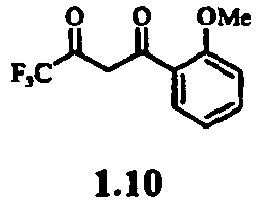


- This example illustrates the preparation of
compound 2.
- 4,4,4-Trifluoro-1-phenyl-1,3-butanedione (2.0 g, 9.25 mmoles) and cyanoacetohydrazide (0.92 g, 9.28 mmoles) were combined within a round-bottom flask.
- The mixture was dissolved into 30 mL of ethanol and the flask was equipped with a reflux condensor. To the stirring solution was added diisopropylethylamine (0.81 mL, 4.7 mmoles) and the mixture was stirred at 80 °C for 3 hours. After this period the mixture was evaporated and the resulting crude mixture was purified directly by flash silica chromatography using 30% EtOAc/Hexane to yield product 2.01 g (78% yield) as a yellow solid.

- The following compounds were prepared in a manner similar to that described above.


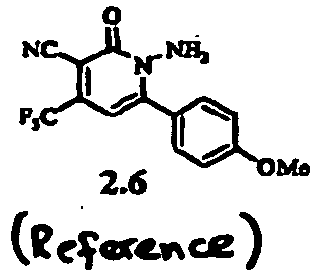
- This example illustrates the preparation of
compound 3.
- N-Aminopyridone 2 (70 mg, 0.25 mmoles) was dissolved into 3.0 mL of benzene within a screw capped vial. To this solution was added cyclohexanone 0.4 mL, 3.9 mmoles) and 2□L of trifluoroacetic acid. The sealed reaction was then shaken at 85 °C for 2 hours. After this period the reaction mixture was evaporated in vacuo and the resulting residue was combined with DCM. The DCM solution was washed with sat'd NaHCO3 (2 x 10 mL), dried over anhydrous Na2SO4, and was evaporated to yield the crude product. The crude product was purified using flash silica chromatography (30% EtOAc/Hexane) to yield 82 mg (90% yield) of product as a yellow residue.
(* - DCM may be used as an alternative with heating at 50 °C)
- The following compounds were prepared in a manner similar to that described above.


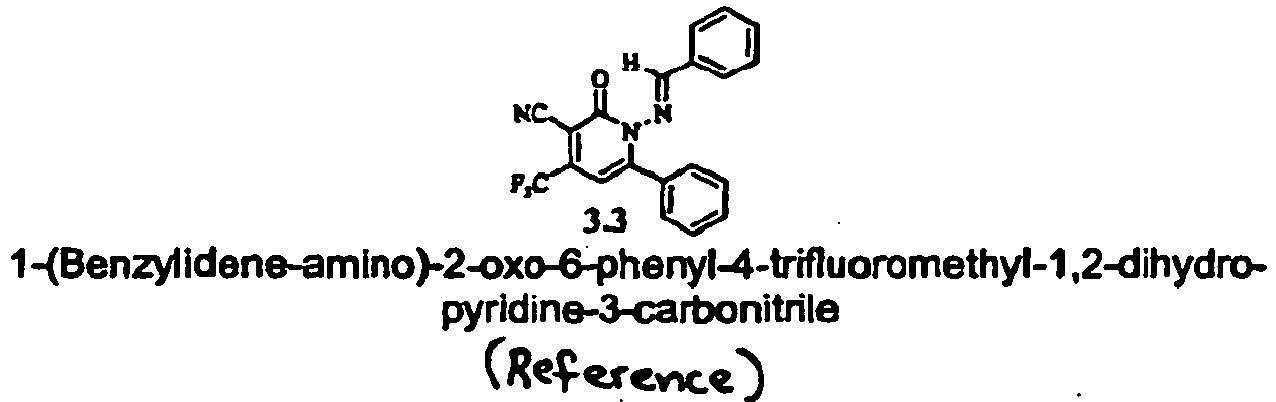


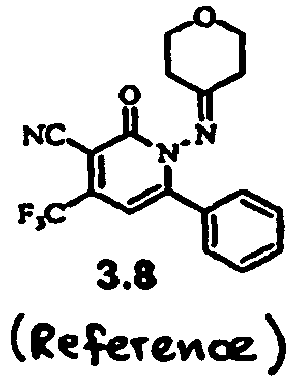


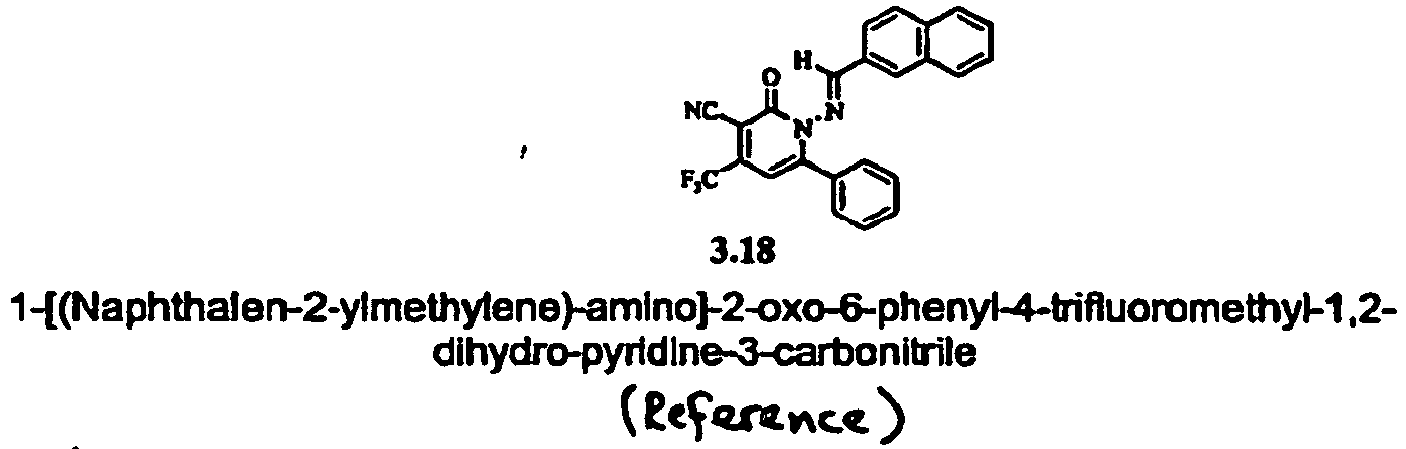


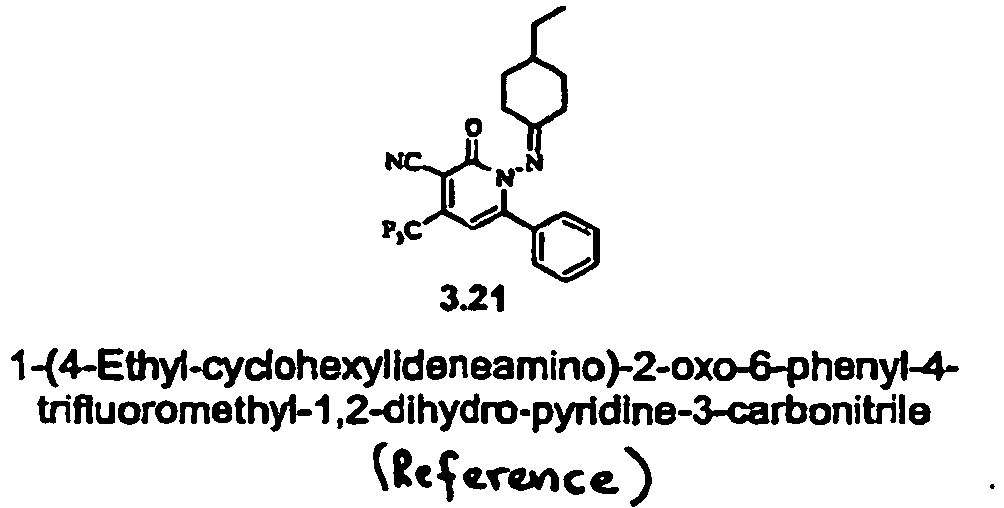


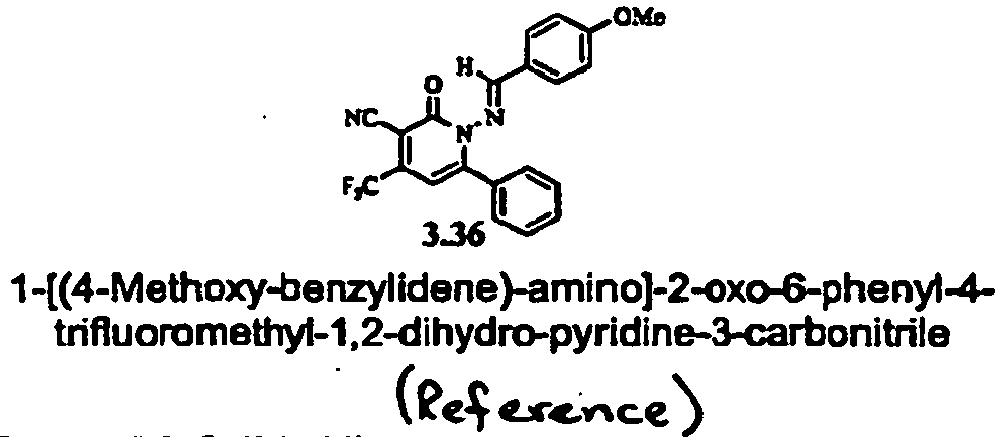


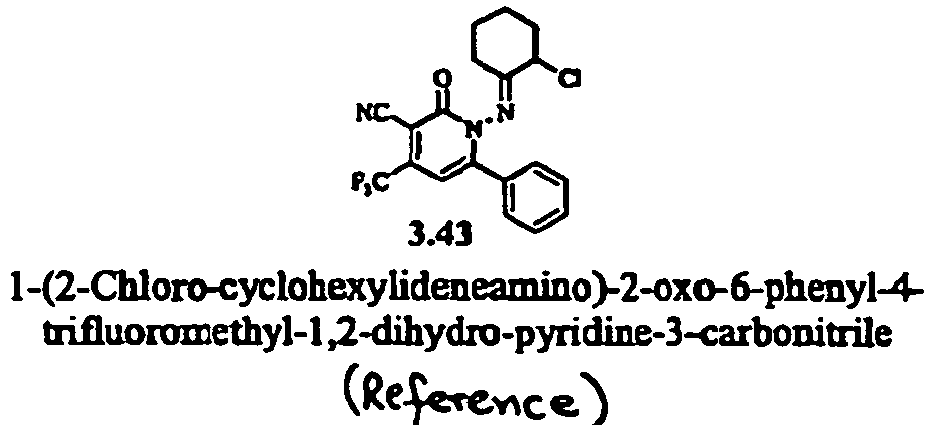


MS (ES+):366.2 (M+H)
1H-NMR (CDCl3): δ 7.77 (m, 2H), 7.74 (m, 1H), 7.21 (m, 1H), 6.89 (s, 1H), 2.72 (m, 2H), 2.23 (m, 1H), 2.10 (m, 1H), 2.03 (m, 1H), 1.87 (m, 2H), 1.68 (m, 2H), 1.44 (m, 1 H).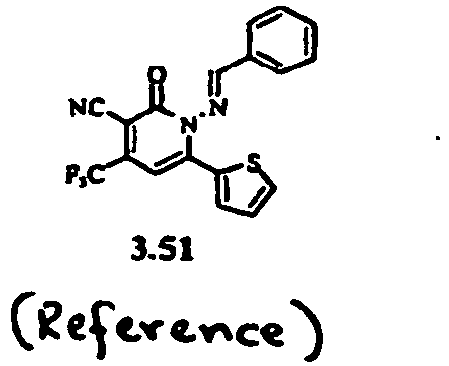


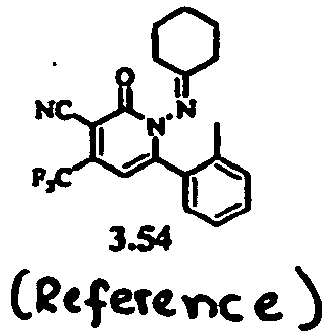


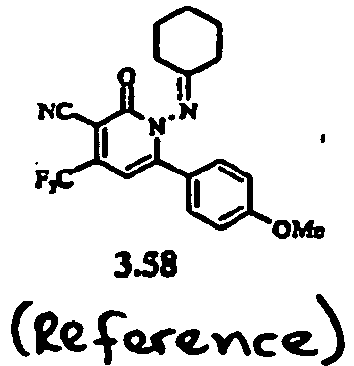


- This example illustrates the preparation of compound 4.

- Cyanoacetic acid (8.0 g, 94.1 mmoles) and □□-dichloromethyl methyl ether were measured out into a 30 mL round-bottom flask equipped with a magnetic stirbar. The flask was sealed with a septum, and the vessel was continuously flushed with dry N2 gas. The temperature was carefully raised to 40 °C at which temperature the mixture began to liquify and bubble. Nitrogen flushing was maintained throughout this period with adequate venting to atmosphere to permit the release of gases formed during the reaction. The temperature was maintained at 40 °C for 45 minutes while adequate stirring was maintained by vigilant monitoring. After this period the nitrogen line was submerged into the stirring reaction mixture to facilitate the purging of gases (HCl) from the solution. The nitrogen purge was carried out dissolved into 100 mL of anhydrous DCM. To the stirring acid chloride solution at 0 °C was slowly added benzylamine (21 mL, 192.2 mmoles) and the resulting mixture was stirred at ambient temperature for 30 min. After this period the reaction mixture was washed with 1 N HCl (2 x 20 mL), sat'd NaHCO3 (2 x 20 mL) and brine. The DCM solution was dried over anhydrous Na2SO4 and was evaporated in vacuo to yield the crude product as a yellowish solid. The crude material was purified by recrystallization in DCM/Hexane to yield 8.5 g (52% yield) of product as yellow, needlelike crystals. (Alternatively, the product can be purified using flash silica chromatography in 60% EtOAc/Hexane).

- The following compounds were prepared in a manner similar to that described above.


- An alternative procedure utilizing commercially available methyl cyanoacetate illustrates the preparation of compound 4.
-

- Methyl cyanoacetate (0.8 mL, 9.1 mmoles) and 4-Bromobenzylammonium chloride (0.97 g, 4.4 mmoles) were mixed with 10 mL of anhydrous ethanol within a round-bottom flask. To the stirring mixture at room temp was added sodium bicarbonate (0.55 g, 6.5 mmoles) and 4-(dimethylamino)pyridine (0.25 g, 2.0 mmoles). The mixture was then stirred at 80 °C for 5 hours. After this period the reaction was evaporated in vacuo, combined with DCM, and was washed with 1N HCl (2 x 15 mL), sat'd NaHCO3 (2 x 15 mL) and brine. The DCM solution was dried over anhydrous Na2SO4 and was evaporated in vacuo to yield the crude product residue. The crude residue was purified using flash silica chromatography (60% EtOAc/Hexane) to yield 0.49 g (45% yield) of product as a yellow solid.

- The following compounds were prepared in a manner similar to that described above.


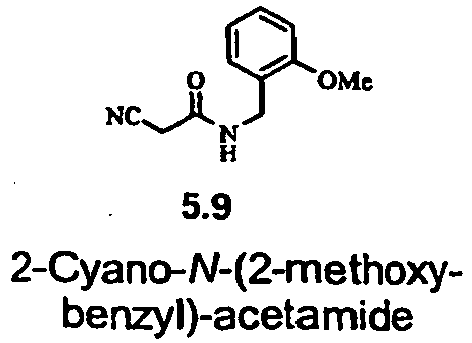


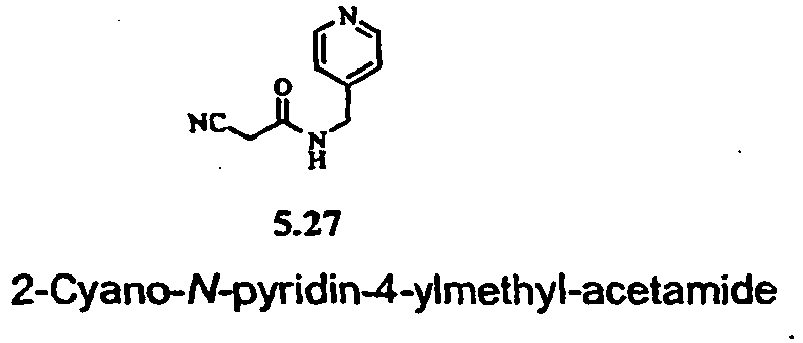

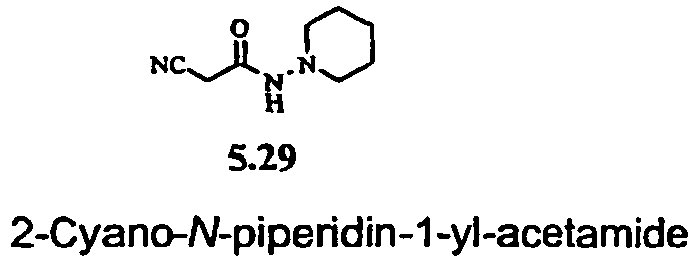


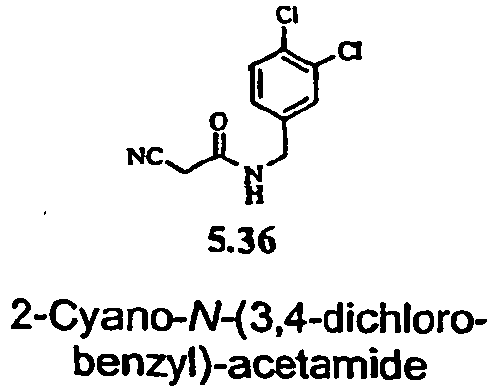


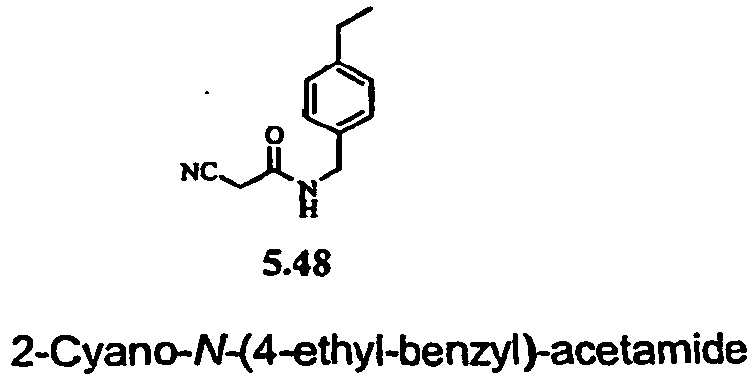


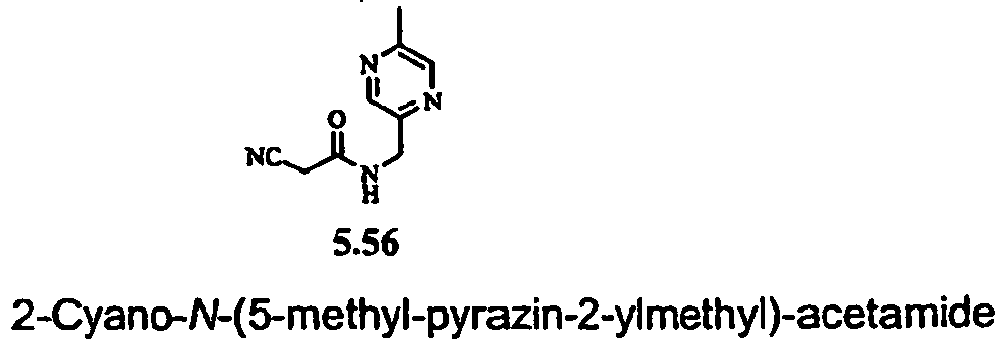


- This example illustrates the preparation of
compound 6.
- Benzyl cyanoacetamide (0.2 g, 1.2 mmoles) was combined with 4,4,4-trifluoro-1-phenyl-1,3-butanedione (0.24 g, 1.2 mmoles) and 1,8-diazabicyclo[5.4.0]undec-7-ene (90 µL, 0.6 mmoles) in 2.5 mL of benzene. The mixture was stirred at 90°C for 12 hours. After this period the reaction mixture was evaporated in vacuo and the residue was purified directly using flask silica chromatography (20% EtOAc/Hexane) to yield 289 mg (68% yield) of
product 6 as a white solid.
- The following compounds were prepared in a manner similar to that described above.


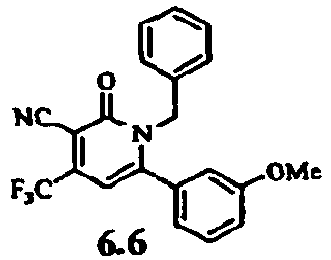


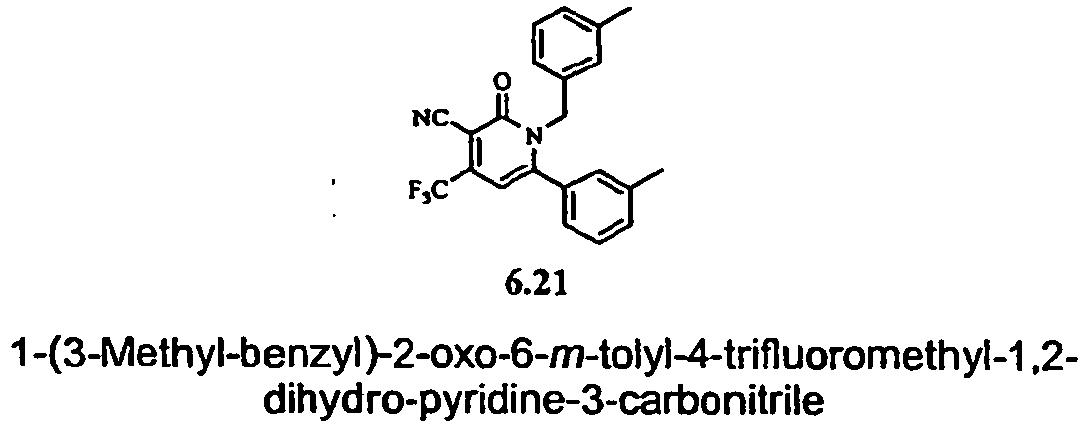


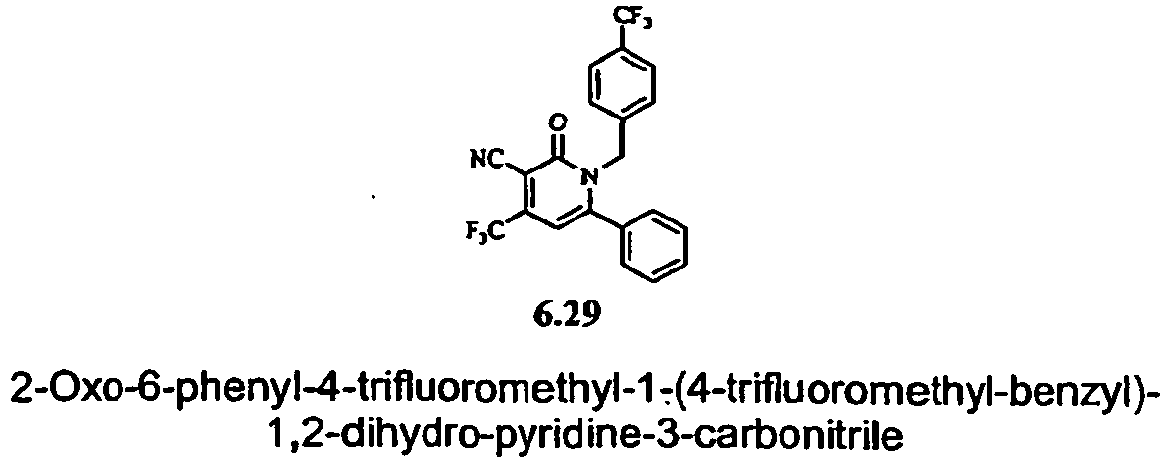


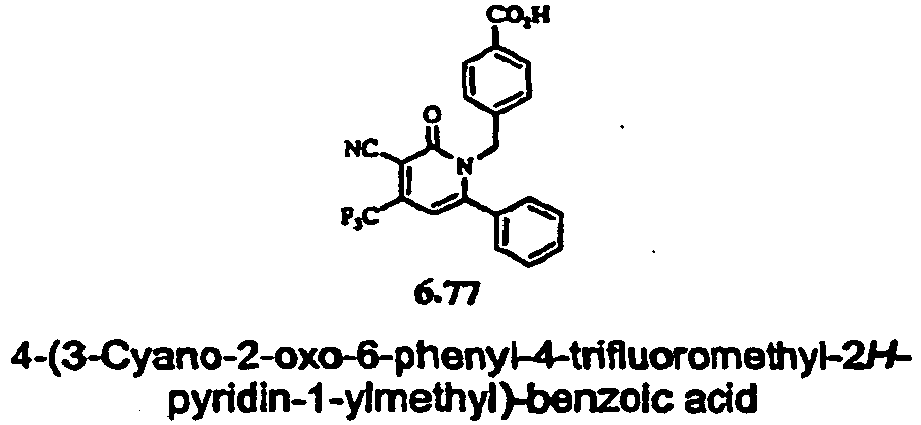


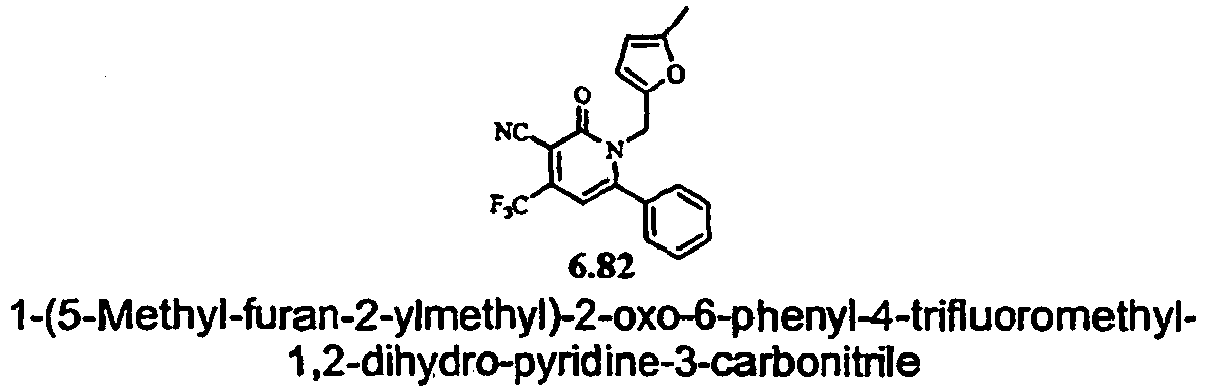


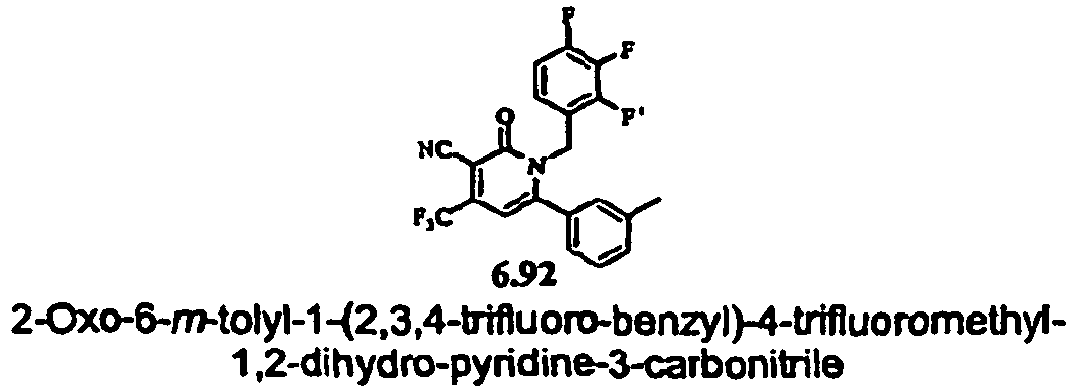


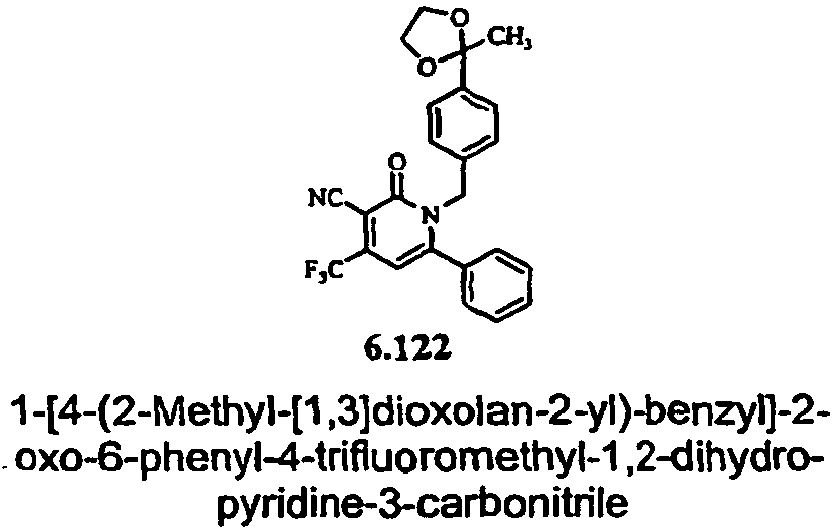


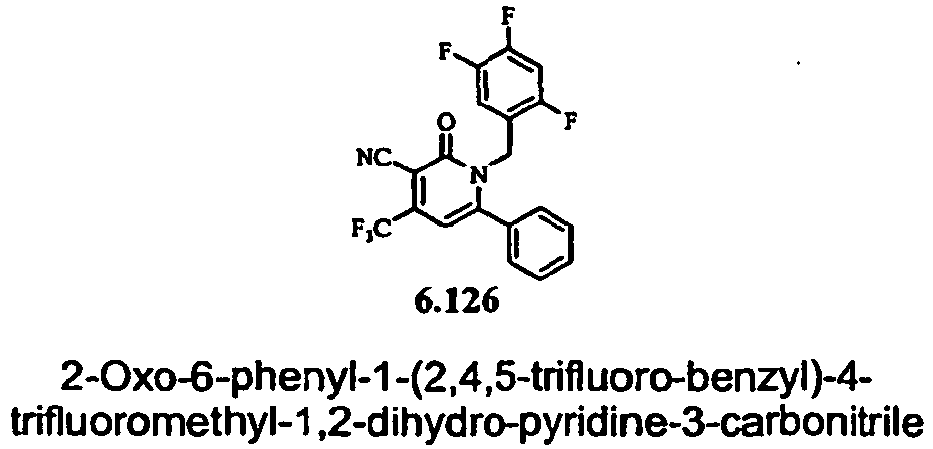


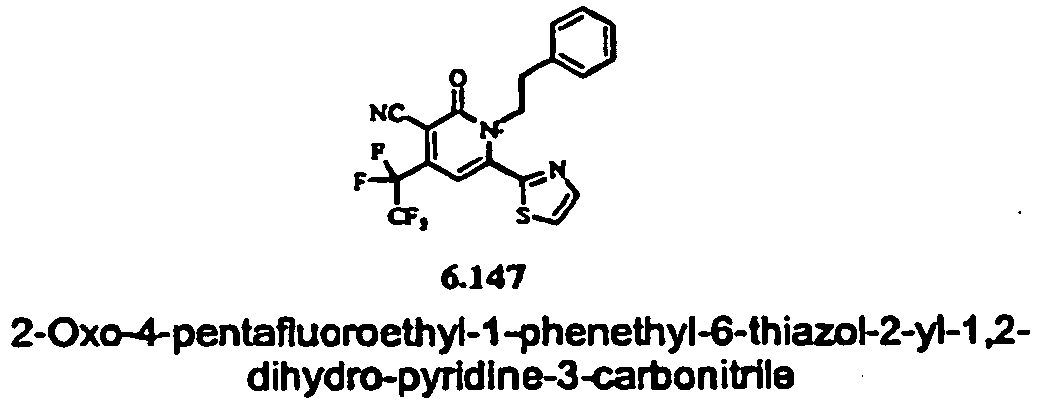


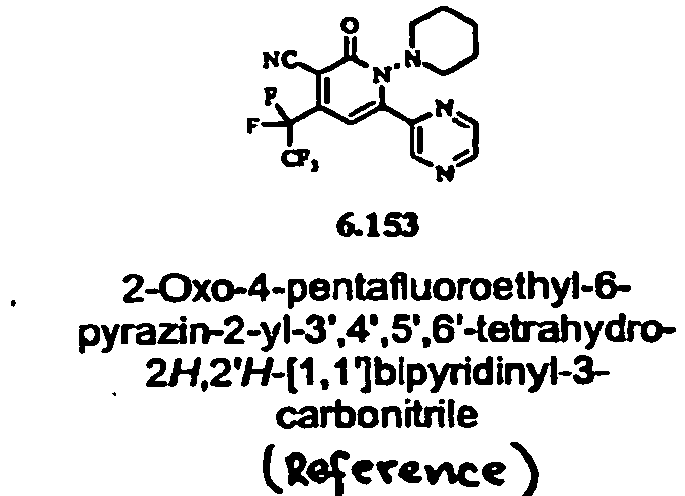
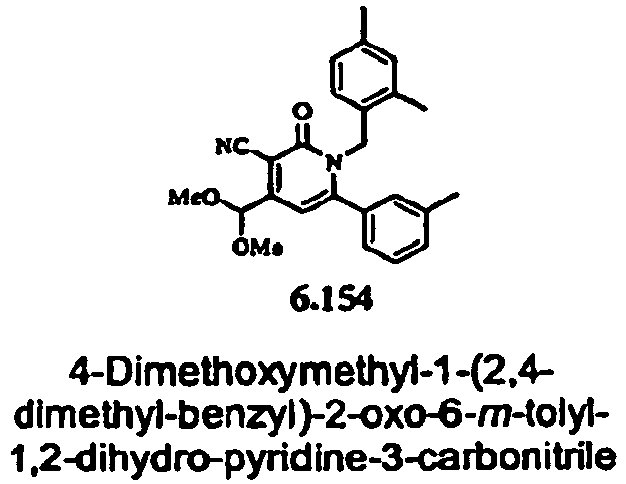


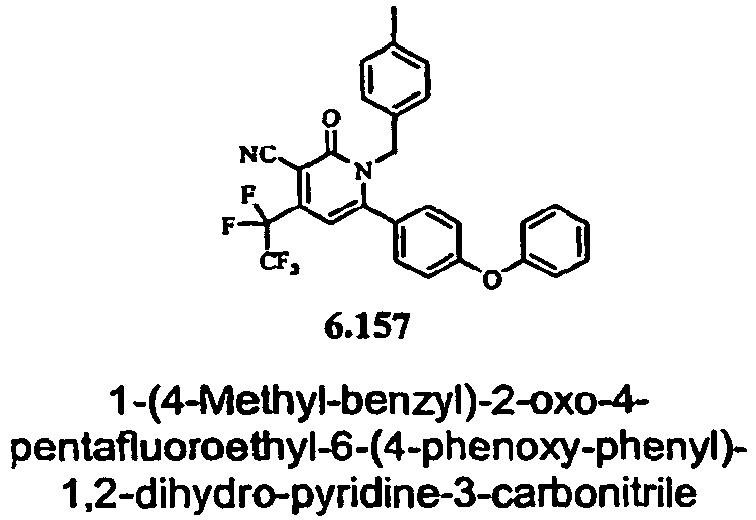


- This example illustrates the preparation of
compound 7.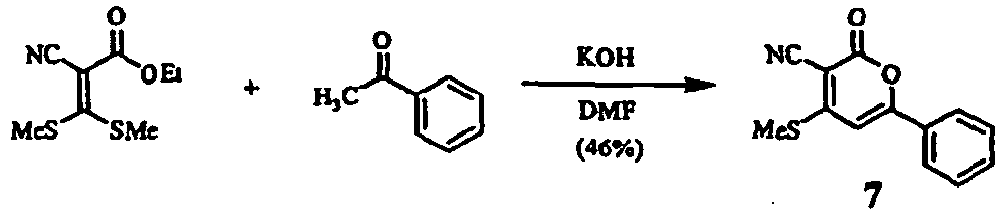
- 3,3-Bis(methylthio)-2-cyanoacrylic acid ethyl ester (2.0 g, 9.2 mmoles - TCI America) was combined with acetophenone (1.1 mL, 9.4 mmoles) in 100 mL of DMF within a round-bottom flask. To this stirring mixture at room temp was then added potassium hydroxide (1.0 g, 17.8 mmoles), and the reaction was stirring at this temp for 12 hours. After this period the reaction was combined with 150 mL of ice-water and the mixture was stirred for 2 hours. The resulting heterogeneous mixture was vacuum filtered, and the yellow filter cake was washed with water and dried to yield product 1.04 g (46% yield) as a yellow solid.

- This example illustrates the preparation of
compound 8.
- 4-Methylsulfanyl-2-oxo-6-phenyl-2H-pyran-3-carbonitrile, 7 (0.11 g, 0.46 mmoles) was combined with dimethyl malonate (0.11 mL, 0.96 mmoles) and potassium carbonate (0.16 g, 1.2 mmoles) in 2.3 mL of anhydrous DMF. The reaction was stirred at room temp for 12 hours. After this period the mixture was combined with water and 1N HCl (to adjust pH < 6) and was extracted with EtOAc (2 x 30 mL). The resulting organic layer was then washed with sat'd NaCl and was dried over anhydrous Na2SO4. The EtOAc layer was evaporated in vacuo to yield the crude product, which was purified using flash silica chromatography to yield product 0.103 g (68% yield) as a yellow solid.

- This example illustrates the preparation of
compound 9.
- 2-(3-Cyano-2-oxo-6-phenyl-2H-pyran-4-yl)-malonic acid dimethyl ester, 8 (26 mg, 0.079 mmoles) was combined with benzylamine (10 µL, 0.092 mmoles) and 1.0 mL of ethanol within a screw cap vial. The mixture was heated to 80 °C and was stirred at this temp for 2 hours. After this period the mixture was evaporated in vacuo and was purified directly by flash silica chromatography (0-50% EtOAc/Hexane) to yield
product 27 mg (95% yield) as a beige solid.
- The following compounds were prepared in a manner similar to that described above.

- This example illustrates the preparation of compound 10.1.


- A solution of boron tribromide (4.5 mL, 47.9 mmol) in 10 mL anhydrous THF was slowly added to a solution of 1-benzyl-3-cyano-6-(3-methoxyphenyl)-4-trifluoromethyl-1H-pyridin-2-one (6.6) (8.37 g, 21.8 mmol) in 62 mL of anhydrous THF at -78 °C under nitrogen. The mixture was vigorously stirred and allowed to warm to ambient temperature overnight. The mixture was then cooled to 0 °C with an ice/water bath and to it was added 100 mL of MeOH in portion. The mixture was stirred at room temperature for 1 h and concentrated in vacuo. The residue was dissolved in dichloromethane and neutralized to
pH 7 by adding 1 N NaOH. The organic layer was washed with water, separated and dried with anhydrous MgSO4. The dichloromethane was concentrated in vacuo. The resulting crude product was purified by column chromatography (50% EtOAc/hexane), providing a bright yellow solid (10) (4.8 g, 60% yield). 1H-NMR (DMSO-d6): δ 10.01 (s, 1H), 7.37 (m, 4H), 7.11 (m, 2H), 7.03 (m, 1H), 6.91 (m, 2H), 6.82 (s, 1H), 5.28 (s, 2H). - To a solution of 1-benzyl-3-cyano-6-(3-hydroxyphenyl)-4-trifluoromethyl-1H-pyridin-2-one (10) (98 mg, 0.27 mmol) in 4 mL of acetone was added 1-iodobutane (59 mg, 0.32 mmol) and K2CO3 (41 mg, 0.32 mmol). The mixture was stirred and heated to reflux overnight. The salt was removed by filtration and the solvent was concentrated in vacuo. The resulting crude product was purified by column chromatography (25% EtOAc/hexane), providing a yellow solid (10.1) (107 mg, 95% yield). 1H-NMR (CDCl3): δ 7.34 (m, 1H), 7.25 (m, 3H), 7.03 (m, 1H), 6.93 (m, 2H), 6.77 (m, 1H), 6.59 (m, 1H), 6.41 (s, 1H), 5.25 (s, 2H), 3.73 (m, 2H), 1.71 (m, 2H), 1.45 (m, 2H), 0.96 (t, J = 7.3 Hz, 3H).
- The following compounds were prepared in a manner similar to that described above.


- This example illustrates the preparation of compound 11.1.


- To a solution of 1-benzyl-3-cyano-6-(3-nitrophenyl)-4-trifluoromethyl-1H-pyridin-2-one (6.7) (200 mg, 0.50 mmol) in 5 mL of MeOH was added stannous (II) chloride dihydrate (565 mg, 2.5 mmol). The mixture was stirred and heated to reflux for 3 h. The mixture was then concentrated in vacuo. The residue was taken in a mixture of ethyl acetate and 5% aqueous NaHCO3. The mixture was stirred for 1 h, and the organic layer was separated and the aqueous layer was extracted with ethyl acetate twice. The combined organic layer was dried with anhydrous MgSO4 and concentrated in vacuo. The crude product (11) was relatively pure by analysis of its 1H NMR spectrum and was used for the next reaction without further purification.
- To a solution of 6-(3-aminophenyl)-1-benzyl-3-cyano-4-trifluoromethyl-1H-pyridin-2-one (11) (74 mg, 0.20 mmol) in 2 mL of dichloromethane was added acetyl chloride (48 mg, 0.6 mmol) and triethylamine (81 mg, 0.64 mmol). The mixture was refluxed overnight. The salt was removed by filtration and the solvent was concentrated in vacuo. The resulting crude product was purified by column chromatography (60% EtOAc/hexane), providing 11.1 as a yellow oil (69 mg, 84% yield). 1H-NMR (CDCl3): δ 7.57 (m, 2H), 7.43 (s, 1H), 7.35 (m, 1H), 7.23 (m, 3H), 6.90 (m, 2H), 6.85 (m, 1H), 6.41 (s, 1H), 5.27 (s, 2H), 2.19 (s, 3H).
- This example illustrates the preparation of
compound 12.
- To a solution of 6-(3-aminophenyl)-1-benzyl-3-cyano-4-trifluoromethyl-1H-pyridin-2-one (11) (94 mg, 0.26 mmol) in 2 mL of anhydrous THF was added ethyl isocyanate (90 mg, 1.3 mmol) and DMAP (6 mg, 0.05 mmol). The mixture was refluxed overnight. The reaction mixture was cooled to room temperature, concentrated in vacuo, and the residue purified by column chromatography (50% EtOAc/hexane) providing 12 as a yellow solid (77 mg, 77% yield). 1H-NMR (CDCl3): δ 7.44 (m, 2H), 7.25 (m, 1H), 7.21 (m, 4H), 6.89 (m, 3H), 6.69 (m, 1H), 6.43 (s, 1H), 5.27 (s, 2H), 3.28 (q, J = 7.3 Hz, 2H), 1.16 (t, J = 7.3 Hz, 3H).

- This example illustrates the preparation of
compound 13.
- Within a 100 mL flask was placed, Raney®-type Alloy (Aluminum-nickel catalyst, Aldrich, 2.0 g), a magnetic stir bar and 2N NaOH solution (20 mL). The flask was submerged into a water bath at ambient temperature and the mixture was vigorously stirred for 45 min (bubbling occurs). In a separate pear-shaped flask was placed 1-(2,4-Dimethyl-benzyl)-2-oxo-6-phenyl-4-trifluoromethyl-1,2-dihydro-pyridine-3-carbonitrile 6.43 (100 mg, 0.26 mmoles) and this was dissolved within formic acid (5 mL) and ethylene glycol dimethyl ether (DME, 1.0 mL). After Ra-Ni activation was complete the hydroxide mixture (heterogeneous) was carefully decanted, washed with water, and sequentially decanted to remove the residual sodium hydroxide. Excess water was removed from the activated Ra-Ni using a pipette. The nitrile solution was carefully added to the stirring Ra-Ni at room temperature, and mixture was heated to 55 °C for 3 hours. After this period the reaction mixture was filtered through Celite (with MeOH washings) and concentrated in vacuo. The residue was taken up in ethyl acetate and was washed with 50% v/v aqueous NH4OH (3x20 mL) and brine. The resulting EtOAc solution was dried over anhydrous Na2SO4 and was concentrated in vacuo to yield crude product as a yellow residue. The crude product was purified using flash silica chromatography (0-10% MeOH/DCM) to yield the free base as a yellow residue. The free base was combined with 2N HCl/MeOH and evaporated to yield the hydrochloride salt. The salt was dissolved in deionized water and freeze-dried to yield 79mg (71 % yield) of
product 13 as a yellowish powder.
- The following compound was prepared in a manner similar to that described above.

- This example illustrates the preparation of
compound 14.
- 3-Aminomethyl-1-(2,4-dimethyl-benzyl)-6-phenyl-4-trifluoromethyl-1H-pyridin-2-one hydrochloride 13.1 (15 mg, 0.039 mmoles) was combined with acetyl chloride (5 µL, 0.070 mmoles) and triethylamine (12 µL, 0.086 mmoles) in 5 mL of anhydrous DCM within a round-bottom flask. The mixture was stirred at room temperature for 10 hours and was evaporated in vacuo to yield crude product as a yellow residue. The crude product was purified using flash silica chromatography (0-30% EtOAc /Hexane) to yield 15mg (87% yield) of 14 as a white solid.

- The following compounds were prepared in a manner similar to that described above.


- This example illustrates the preparation of
compound 15.
- 3-Aminomethyl-1-(2,4-dimethyl-benzyl)-6-phenyl-4-trifluoromethyl-1H-pyridin-2-one hydrochloride 13 (39 mg, 0.092 mmoles) was combined with formic acid (96%, 1.0 mL) in 3.0 mL of aqueous formaldehyde (37 wt. % solution in water), and the mixture was stirred at 100 °C for 16 hours. After this period the mixture was poured into a saturated NaHCo3 solution (20 mL) which was extracted with copious Et2O. The combined ether layer was washed with brine, dried over anhydrous Na2SO4, and was evaporated in vacuo to yield crude product as a yellowish residue. The crude product was purified using flash silica chromatography (0-10% MeOH/DCM w/0.1% diethylamine) to yield 35 mg (92% yield) of 15 as a yellowish residue.


- This example illustrates the preparation of
reference compound 16.
- Within a 100 mL flask was placed Raney®-type Alloy (Aluminum-nickel catalyst, Aldrich, 4.0 g), a magnetic stir bar and 2N NaOH solution (50 mL). The flask was submerged into a water bath at ambient temperature and the mixture was vigorously stirred for 45 min (bubbling occurs). In a separate pear-shaped flask was placed [3-Cyano-1 -(2,4-dimethyl-benzyl)-2-oxo-6-phenyl-1,2-dihydro-pyridin-4-yl]-acetic acid methyl ester 9 (183 mg, 0.46 mmoles) and this was dissolved within formic acid (8 mL). After Ra-Ni activation was complete the hydroxide mixture (heterogeneous) was carefully decanted, washed with water, and sequentially decanted to remove the residual sodium hydroxide. Excess water was removed from the activated Ra-Ni using a pipette. The nitrile solution was carefully added to the stirring Ra-Ni at room temperature, and mixture was heated to 55 °C for 90 min. After this period the reaction mixture was filtered through Celite (with MeOH washings) and concentrated in vacuo. The residue was taken up in EA and was washed with 50% v/v aqueous NH4OH (3x20 mL) and brine. The resulting EA solution was dried over anhydrous Na2SO4 and was concentrated in vacuo to yield 0.151 g (89% yield) of 16 as a yellow residue.

- The following compound was prepared in a manner similar to that described above.

- This example illustrates the preparation of
compound 17.
- Methyl cyanoacetate (6.7 mL, 75.9 mmoles) was combined with 2,2-dimethyl-1,3-dioxolane-4-methanamine (4.6 g, 50.5 mmoles), 4-(N,N-dimethylamino)pyridine (20 mg, 0.16 mmoles) and 20 mL of Ethanol within a round-bottom flask. The mixture was then stirred at 80 °C for 16 hours. After this period reaction mixture was evaporated in vacuo and was purified using flash silica chromatography (0-60% EtOAc/hexane) to yield 7.33 g (96% yield) of 17 as a yellowish liquid.

- This example illustrates the preparation of
reference compound 18.
- 2-Cyano-N-(2,2-dimethyl-[1,3]dioxolan-4-ylmethyl)-acetamide 17 (2.05 g, 10.3 mmoles), 4,4,4-Trifluoro-1-phenyl-butane-1,3-dione (2.2 g, 10.3 mmoles) and DBU (0.77 mL, 5.1 mmoles) were combined with 20 mL of benzene within a round-bottom flask. The mixture was stirred at 90 °C for 16 hours. After this period the reaction mix was purified directly using flash silica chromatography (0-40% EtOAc/Hexane) to yield 2.14g (55% yield) of 18 as a yellow residue.


- This example illustrates the preparation of
reference compound 19.
- 1-(2,2-Dimethyl-[1,3]dioxolan-4-ylmethyl)-6-(3,5-dimethylphenyl)-2-oxo-4-trifluoro-methyl-1,2-dihydro-pyridine-3-carbonitrile 18.2 (0.72 g, 1.78 moles) was combined with p-toluenesulfonic acid monohydrate (0.34 g, 1.78 mmoles), water (2 mL) and 30 mL of actone within a round-bottom flask equipped with a reflux condensor. The mixture was stirred at 55 °C for 3 hours. After this period the reaction mixture was evaporated in vacuo and was purified directly using flash silica chromatography (0-80% EtOAc/Hexane) to yield 0.45 g (69% yield) of 19 as a white solid.

- The following compounds were prepared in a manner similar to that described above.


- This example illustrates the preparation of
reference compound 20
- 1-(2,3-Dihydroxy-propyl)-2-oxo-6-phenyl-4-trifluoromethyl-1,2-dihydro-pyridine-3-carbonitrile 19.1 (0.33 g, 0.98 mmoles) was combined with p-toluenesulfonyl chloride (0.2 g, 1.05 mmoles), pyridine (0.1 mL, 1.24 mmoles) and 3 mL of anhydrous DCM within a 7 mL reaction vial. The mixture as then stirred at room temp for 24 hours. After this period the reaction mixture was evaporated in vacuo and was purified directly using flash silica chromatography (0-30% EtOAc/Hexane) to yield 186 mg (39% yield) of 20 was a yellow residue.

- The following compounds were prepared in a manner similar to that described above.


- This example illustrates the preparation of
reference compound 21.
- Toluene-4-sulfonic acid 3-(3-cyano-2-oxo-6-phenyl-4-trifluoromethyl-2H-pyridin-1-yl)-2-hydroxy-propyl ester 20 (46 mg, 0.093 mmoles) was dissolved into actone. To this solution at room temperature was added 2.67 M Jones Reagent (0.15 mL, 0.40 mmoles) and the resulting mixture was stirred at this temperature for 3 hours. After this period the reaction mixture was gravity filtered through paper, evaporated in vacuo and was purified directly using flash silica chromatography (0-30% EtOAc/Hexane) to yield 31 mg (68% yield) of 21 as a yellow residue.

- The following compounds were prepared in a manner similar to that described above.


- This example illustrates the preparation of
compound 22.
- Toluene-4-sulfonic acid 3-(3-cyano-2-oxo-6-m-tolyl-4-trifluoromethyl-2H-pyridin-1-yl)-2-oxo-propyl ester 21.2 (11 mg, 0.022 mmoles) was combined with thiobenzamide (6 mg, 0.044 mmoles) and 1.0 mL of EtOH within a 7 mL reaction vial. This mixture was stirred at 80 °C for 16 hours. After this period 2-bromoacetophenone (7 mg, 0.035 mmoles) was added and the mixture was stirred at 80 °C for an additional 3 hours. After this period the reaction mixture was evaporated in vacuo and was purified using flash silica chromatography (0-20% EtOAc/Hexane) to yield 8mg (81% yield) of 22 as a yellowish residue.

- The following compounds were prepared in a manner similar to that described above.

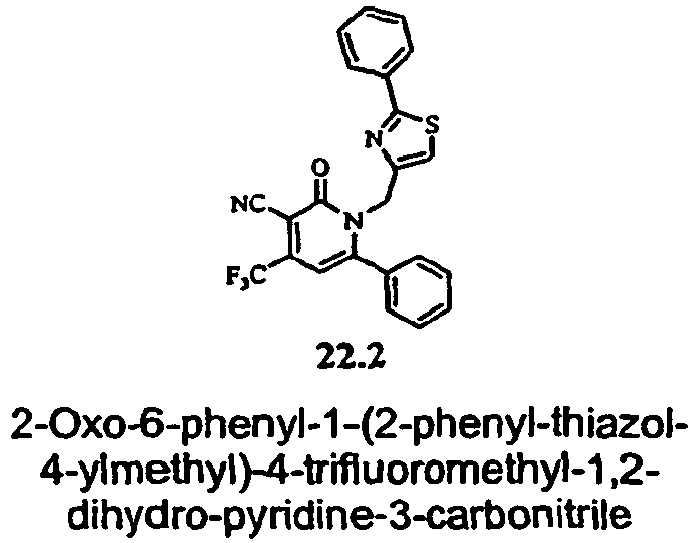


- This example illustrates the preparation of
reference compound 23.
- 1-(2,3.Dihydroxy-propyl)-6-(3,5-dimethyl-phenyl)-2-oxo-4-trifluoromethyl-1,2-dihydro-pyridine-3-carbonitrile 19 (33 mg, 0.09 mmoles) was combined with acetic acid anhydride (9 µL, 0.095 mmoles), triethylamine (1□□L, 0.11 mmoles) and 2.0 mL of DCM within a 7 mL reaction vial. This mixture was stirred at room temperature for 24 hours. After this period the reaction mixture was purified directly by flash silica chromatography (0-40% EtOAc/Hexane) to yield 29 mg (79% yield) of 23 as a white solid.

- The following compounds were prepared in a manner similar to that described above.

- This example illustrates the preparation of
reference compound 24.
- Acetic acid 3-[3-cyano-6-(3,5-dimethyl-phenyl)-2-oxo-4-trifluoromethyl-2H-pyridin-1-yl]-2-hydroxy-propyl ester 23 (29 mg, 0.071 mmoles) was dissolved into 3 mL of acetone within a 7 ml reaction vial. To this solution was added 2.67M Jones Reagent (53 mL, 0.142 mmoles) and the mixture was stirred at room temperature for 2 hours. After this period the reaction mixture was gravity filtered through paper and the resulting filtrate was evaporated in vacuo, and purified using flash silica chromatography (0-40% EtOAc/Hexane) to yield 21 mg (73% yield) of 24 as a white solid.

- This example illustrates the preparation of
compound 25.
- Acetic acid 3-[3-cyano-6-(3,5-dimethyl-phenyl)-2-oxo-4-trifluoromethyl-2H-pyridin-1-yl]-2-oxo-propyl ester 24 (21 mg, 0.052 mmoles) was combined with ammonium acetate (50 mg, 0.64 mmoles) and 1.0 mL of glacial acetic acid within a 7 mL reaction vial, and the mixture was stirred at 110 °C for 16 hours. After this period the reaction mixture was evaporated in vacuo and was purified using flash silica chromatography (0-40% EtOAc/Hexane) to yield 5mg (25% yield) of 25 as a white solid.

- The following compounds were prepared in a manner similar to that described above.

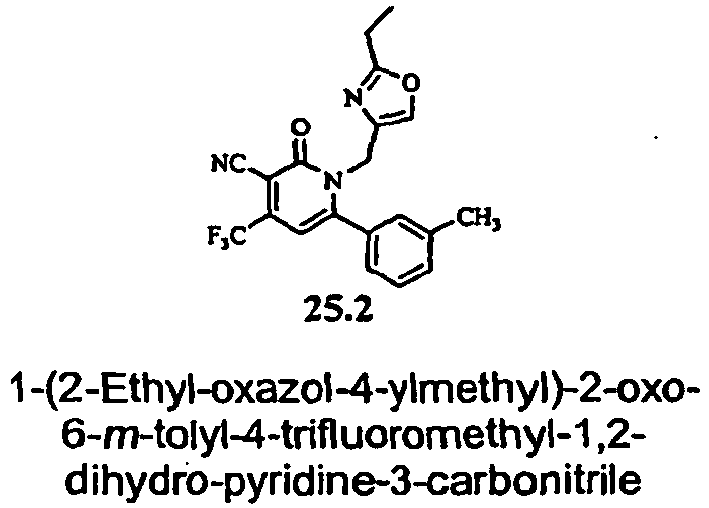


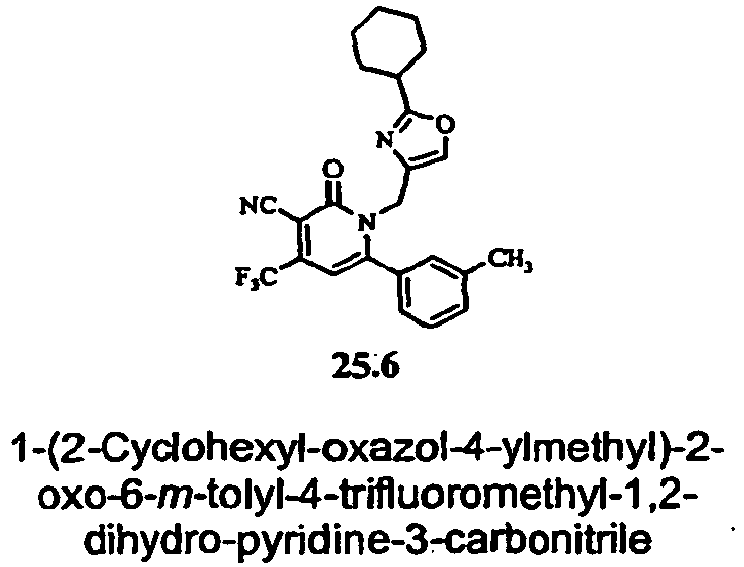
- This example illustrates the preparation of
compound 26.
- Pent-1-en-3-ol (5.0 mL, 48.7 mmoles), N,N-diisopropylethylamine (10.2 mL, 58.6 mmoles) and MOMCI (4.4 mL, 57.9 mmoles) were dissolved in 10 mL of anhydrous DCM within a sealed-tube, and this mixture was stirred at 50 °C for 20 hours. After this period the reaction mixture was combined with Et2O and the resulting precipitate was removed by gravity filtration. The filtrate was carefully evaporated (-Et2O and DCM) and the resulting amber liquid was fractionally distilled to yield 5.4g (85% yield) of 26 as a clear liquid. B.P. 126 °C @ 760mmHg

- The following compounds were prepared in a manner similar to that described above.

- This example illustrates the preparation of
compound 27.
- 3-Methoxymethoxy-but-1-ene 26.1 (1.73 g, 14.9 mmoles) was dissolved into 100 mL of DCM and to this stirring mixture at 0 °C was added 3-chloroperoxybenzoic acid (77% max, 7.4 g, -30 mmoles). This mixture was allowed to stir at room temperature for 20 hours. After this period the reaction mixture was combined with DCM and was washed with saturated Na2S2O3 (2x20 mL) and 15 mL of saturated NaHCO3. After drying the resulting DCM solution over anhydrous Na2SO4 the mixture was carefully evaporated in vacuo to yield crude product. The crude product was purified using flash silica chromatography (0-15% EtOAc/Hexane) to yield 1.34 g (68% yield) of 27 as yellowish liquid. Both 1H-NMR and TLC analysis show 27 to be a 1:1 mixture of diastereomers.

- This example illustrates the preparation of
compound 28.
- 2-(1-Methoxymethoxy-ethyl)-oxirane 27 (1.89 g, 14.3 mmoles) was combined with NH4OH (28% NH3 in water, 5 mL) and 1 mL of MeOH within a sealed-tube and this mixture was vigorously stirred at room temperature for 48 hours. After this period the reaction mixture was evaporate in vacuo (-NH3 and H2O) to yield crude product as an amber liquid. This product was combined with methyl cyanoactate (3.0 mL, 34.0 mmoles), DMAP (10 mg) and 50 mL of anhydrous EtOH. This mixture was stirred at 60 °C for 48 hours. After this period the reaction mixture was evaporated in vacuo and was purified using flash silica chromatography (0-100% EtOAc/Hexane) to yield 2.02 g (65% yield) of 28 as an amber residue. Both 1H-NMR and TLC analysis show 28 to be a 1:1 mixture of diastereomers.

- This example illustrates the preparation of
reference compound 29.
- 2-Cyano-N-(2-hydroxy-3-methoxymethoxy-butyl)-acetamide 28 (0.78 g, 3.6 mmoles) and 4,4,4-Trifluoro-1-m-tolyl-butane-1,3-dione 1a (0.83 g, 3.6 mmoles) were dissolved in 10 mL of C6H6 and this mixture was stirred at 90 °C for 16 hours. After this period the reaction mixture was purified directly using flash silica chromatography (0-40% EtOAc/Hexane) to yield 1.06 g (71% yield) of 29 as a yellow liquid. 1H-NMR analysis shows 29 to be a 1:1 mixture of diastereomers.

- The following compounds were prepared in a manner similar to that described above.

- This example illustrates the preparation of reference compound 30.

- 1-(2-Hydroxy-3-methoxymethoxy-butyl)-2-oxo-6-m-tolyl-4-trifluoromethyl-1,2-dihydro-pyridine-3-carbonitrile 29 (0.36 g, 0.87 mmoles) was combined with p-toluenesulfonyl chloride (0.33 g, 1.73 mmoles) in 2 mL of pyridine and this mixture was stirred at room temperature for 16 hours. After this period the mixture was evaporated and purified using flash silica chromatography (0-20% EtOAc/Hexane) to yield 0.33 g (67% yield) of 30 as a yellow residue. 1H-NMR analysis shows 30 to be a 1:1 mixture of diastereomers.

- This example illustrates the preparation of
compound 31.
- Toluene-4-sulfonic acid 1-(3-cyano-2-oxo-6-m-tolyl-4-trifluoromethyl-2H-pyridin-1-ylmethyl)-2-methoxymethoxy-propyl ester 30 (0.28 g, 0.50 mmoles) was dissolved into 7 mL of anhydrous MeOH and to this solution was added HCl (2.0 M solution in diethyl ether, 1.0 mL) and this mixture was stirred at room temperature for 2 hours. After this period the reaction mixture was evaporated in vacuo and was purified using flash silica chromatography (0-40% EtOAc/Hexane) to yield 0.24 g (93% yield) of 31 as a yellow residue. 1H-NMR analysis shows 31 to be a 1:1 mixture of diastereomers.

- The following compounds were prepared in a manner similar to that described above.


- This example illustrates the preparation of reference compound 32.

- 1-(2-Hydroxy-3-methoxymethoxy-butyl)-2-oxo-6-m-tolyl-4-trifluoromethyl-1,2-dihydro-pyridine-3-carbonitrile 29 (0.21 g, 0.52 mmoles) was combined with N-methylmorpholine N-oxide (NMO, 92 mg, 0.79 mmoles) and 4Å molecular sieves (powder, 170 mg) in 5 mL of anhydrous DCM within a 7 mL reaction vial. The mixture was stirred at room temperature for 10 min. After this period tetrapropylammonium perruthenate (TPAP, 10mg, 0.028 mmoles) was added and the mixture was stirred at room temperature for an additional 3 hours. After this period the reaction mixture was purified directly using flash silica chromatography (0-40% EtOAc/Hexane) to yield 0.191 g (90% yield) of 1-(3-Methoxymethoxy-2-oxo-butyl)-2-oxo-6-m-tolyl-4-trifluoromethyl-1,2-dihydro-pyridine-3-carbonitrile as a yellow residue.
1H-NMR (CDCl3): δ 7.42-7.35 (m, 2H), 7.14-7.07 (m, 2H), 6.45 (s, 1H), 5.04-4.91 (m, 2H), 4.63-4.55 (m, 2H), 4.20 (q, J=6.8Hz, 1H), 3.22 (s, 3H), 2.40 (s, 3H), 1.31 (d, J=7.1Hz, 3H). - 1-(3-Methoxymethoxy-2-oxo-butyl)-2-oxo-6-m-tolyl-4-trifluoromethyl-1,2-dihydro-pyridine-3-carbonitrile (0.191 g, 0.47 mmoles) was dissolved into 25 mL of anhydrous MeOH and to this solution was added HCl (2.0 M solution in diethyl ether, 5.0 mL). The mixture was then stirred at room temperature for 2 hours. After this period the reaction mixture was evaporated in vacuo and was purified using flash silica chromatography (0-60% EtOAc/Hexane) to yield 0.16 g (93% yield) of 1-(3-Hydroxy-2-oxo-butyl)-2-oxo-6-m-tolyl-4-trifluoromethyl-1,2-dihydro-pyridine-3-carbonitrile as a yellow residue. 1H-NMR (CDCl3): δ 7.42-7.35 (m, 2H), 7.14-7.08 (m, 2H), 6.50 (m, 1H), 5.06 (d, J=17.2Hz, 1H), 4.92 (d, J=17.2Hz, 1H), 4.39-4.31 (m, 1H), 3.48 (bs, 1H), 2.40 (s, 3H), 1.28 (d, J=6.8Hz, 3H).
- 1-(3-Hydroxy-2-oxo-butyl)-2-oxo-6-m-tolyl-4-trifluoromethyl-1,2-dihydro-pyridine-3-carbonitrile (98 mg, 0.27 mmoles) was combined with p-toluenesulfonyl chloride (0.1 g, 0.52 mmoles) in 2.0 mL of pyridine. The mixture was stirred at room temperature for 16 hours. After this period the reaction mixture was evaporated in vacuo and was purified using flash silica chromatography (0-20% EtOAc/Hexane) to yield 62 mg (60% yield) of 32 as a yellow residue.

- This example illustrates the preparation of
compound 33.
- 1-(3-Chloro-2-oxo-butyl)-2-oxo-6-m-tolyl4-trifluoromethyl-1,2-dihydro-pyridine-3-carbonitrile 32 (41 mg, 0.11 mmoles) was combined with thioisobutyramide (22 mg, 0.22 mmoles) in 1.0 mL of anhydrous EtOH within a 7 mL reaction vial. This mixture was stirred at 80 °C for 16 hours. After this period 2-bromoacetophenone (33 mg, 0.17 mmoles) was added and the reaction was stirred at 80 °C for an additional 3 hours. After this period the reaction mixture was evaporated in vacuo and was purified using flash silica chromatography (0-40% EtOAc/Hexane) and normal-phase HPLC (YMC-Pack SIL, 250x50 mm I.D., S-5□M: 4-20% EaOAc/Hexane over 30 minutes) to yield 22 mg (48% yield) of 33 as a yellow residue.

- The following compounds were prepared in a manner similar to that described above.


- This example illustrates the preparation of
compound 34.
- 4-Hydroxymethyl-benzonitrile (3.1 g, 23.3 mmoles) was combined with N,N-diisopropylethylamine (4.9 mL, 28 mmoles) in 100 mL of anhydrous THF. To this solution was added MOMCI (3.5 mL, 46.1 mmoles) and the mixture was stirred at room temperature for 16 hours. After this period a solution of NH4OH/H2O (1:1, 20 mL) was added (-MOMCI) and the solution was stirred for 15 minutes. After this period the reaction mixture was evaporated in vacuo (-THF) and the resulting mixture was extracted with DCM (3x30 mL). The combined DCM layer was dried over anhydrous Na2SO4, evaporated in vacuo, and the resulting crude product was purified using flash silica chromatography (0-20% EtOAc/Hexane) to yield 1.6 g (39% yield) of 4-Methoxymethoxymethylbenzonitrile as a colorless liquid.
- 4-Methoxymethoxymethylbenzonitrile (3.7 g, 20.9 mmoles) was dissolved into 100 mL of anhydrous THF and was placed under dry N2 atmosphere. To this solution at 0 °C was added lithium aluminum hydride (LAH, 1.6 g, 42.2 mmoles, bubbling occurs) and this mixture (sealed under N2) was gentle stirred at 75 °C for 12 hours. After this period the mixture was cooled down and placed into an ice bath under a dry N2 atmosphere. To the vigorously stirring mixture at 0 °C was slowly and carefully sequentially added water (2 mL), 15% NaOH (2 mL) and water (4 mL). The resulting heterogenous mixture was vacuum filtered and the filtrate was evaporated in vacuo to yield 3.2 g (17.7 mmoles, 84% yield) of crude amine as a yellowish residue. The crude amine was combined with methyl cyanoacetate (3.1 mL, 35.1 mmoles) and DMAP (10 mg) in 50 mL of anhydrous EtOH. The mixture was then stirred at 60 °C for 16 hours. After this period the reaction mixture was evaporated in vacuo and was purified using flash silica chromatography (0-60% EtOAc/Hexane) to 3.6 g (82% yield) of 34 as a white powder.

- This example illustrates the preparation of
compound 35.
- 2-Cyano-N-(4-methoxymethoxymethyl-benzyl)-acetamide (0.84 g, 3.4 mmoles) was combined with 1a (0.78g, 3.4 mmoles), DBU (0.25 mL, 1.7 mmoles) and 5 mL of C6H6 within a 7 mL reaction vial. The mixture was stirred at 90 °C for 16 hours. After this period the reaction mixture was purified directly using flash silica chromatography (0-20% EtOAc/Hexane) to yield 1.23 g (82% yield) of 35 as a yellow residue. 1H-NMR (CDCl3): δ 7.37-7.31 (m, 2H), 7.26-7.19 (m, 2H), 7.03-6.97 (m, 1H), 6.93 (bs, 1H), 6.89 (bs, 1H), 6.86-6.81 (m, 1H), 6.39 (s, 1H), 5.24 (bs, 2H), 4.67 (s, 2H), 4.50 (s, 2H), 3.39 (s, 3H), 2.33 (s, 3H). MS(ES+): 443.2 (M+H)
- 1-(3-Methoxymethoxymethyl-benzyl)-2-oxo-6-m-tolyl-4-trifluoromethyl-1,2-dihydro-pyridine-3-carbonitrile (0.65 g, 1.47 mmoles) was dissolved into 10 mL of MeOH and to this was added 12N HCl (100□L). This mixture was then stirred at room temperature for 3 hours. After this period the reaction mixture was evaporated in vacuo and was purified using flash silica chromatography (0-40% EtOAc/Hexane) to yield 0.40 g (68% yield) of 31 as a yellow residue.

- The following compounds were prepared in a manner similar to that described above.


- This example illustrates the preparation of
compound 36.
- 1-(4-Hydroxymethyl-benzyl)-2-oxo-6-m-tolyl-4-trifluoromethyl-1,2-dihydro-pyridine-3-carbonitrile 35.2 (41 mg, 0.10 mmoles) was dissolved into 1.0 mL of anhydrous N,N-dimethyl-formamide. To this solution was then added sodium hydride (60% dispersion in mineral oil, 5 mg, 0.125 mmoles) and the mixture was stirred (bubbling occurs) for 5 min. After this period iodomethane (15 µL, 0.24 mmoles) was added and the mixture was stirred at room temperature for 16 hours. After this period the reaction mixture was combined with 20 mL of water and was extracted with EtOAc (4x15 mL). The combined organic layer was washed with water (4x15 mL), 15 mL of brine, and was dried over Na2SO4. The EtOAc solution was evaporated in vacuo and purified using flash silica chromatography (0-20% EtOAc/Hexane) to yield 10 mg (24%) of 36 as a yellow residue.

- The following compounds were prepared in a manner similar to that described above.


- This example illustrates the preparation of
compound 37.
- 1-(3-Hydroxymethyl-benzyl)-2-oxo-6-m-tolyl-4-trifluoromethyl-1,2-dihydro-pyridine-3-carbonitrile 35.2 (29 mg, 0.073 mmoles) was combined with p-toluenesulfonyl chloride (25 mg, 0.13 mmoles) in 1.0 mL of pyridine and this mixture was stirred at room temperature for 16 hours. After this period the reaction mixture was evaporated in vacuo and was purified using flash silica chromatography (0-20% EtOAc/Hexane) to yield 16mg (54% yield) of 37a as a yellow residue. 1H-NMR (CDCl3): δ 7.33 (d, J=5.3Hz, 2H), 7.20 (br d, J=7.6Hz, 2H), 7.03-6.99 (m, 1H), 6.91 (s, 1H), 6.85 (d, J=7.8Hz, 2H), 6.38 (br s, 1 H), 5.22 (s, 2H), 3.45 (br s, 2H), 2.36 (br s, 4H), 2.32 (s, 3H), 1.57 (br s, 4H), 1.43 (br s, 2H).
- 1-(4-Chloromethyl-benzyl)-2-oxo-6-m-tolyl-4-trifluoromethyl-1,2-dihydro-pyridine-3-carbonitrile 37a (8 mg, 0.019 mmoles) was combined with 1.0 mL of DCM and piperidine (0.1 mL, 1.0 mmoles) within a 7 mL reaction vial. The mixture was stirred at room temperature for 2 hours. After this period the reaction mixture was purified directly using flash silica chromatography (0-10% MeOH/DCM) to yield 9 mg (quantitative yield) of 37 as a yellow residue.

- This example illustrates the preparation of
compound 38.
- Within a Parr high-pressure apparatus were combined 6-(4-Bromo-phenyl)-1-(2,4-dimethyl-benzyl)-2-oxo-4-trifluoromethyl-1,2-dihydropyridine-3-carbonitrile 5a (0.51 g, 1.11 mmoles), Pd(OAc)2 (15 mg, 0.067 mmoles), and 1,3-bis(diphenylphosphino)propane (30 mg, 0.073 mmoles). This mixture was dissolved into 15 mL of anhydrous MeOH, 5 mL of anhydrous DMSO and NEt3 (0.6 mL, 4.3 mmoles), and was pressured to 100 psi with CO. The pressured and stirring reaction mixture was then heated to 90 °C for 48 hours. After this period the reaction mixture was cooled to ambient tempurature, depressurized, and was combined with 100 mL of water. The aqueous mixture was extracted with EtOAc (4x25 mL) and the combined EtOAc layer was washed with water (4x25 mL) and brine. After drying over anhydrous Na2SO4 the crude product was purified using flash silica chromatography (0-30% EtOAc/Hexane) to yield 0.43 g (87% yield) of 38 as a yellow solid.

- This example illustrates the preparation of
compound 39.
- 4-[5-Cyano-1-(2,4-dimethyl-benzyl)-6-oxo-4-trifluoromethyl-1,6-dihydro-pyridin-2-yl]-benzoic acid methyl ester 38 (0.105 g, 0.24 mmoles) was combined with LiOH (monohydrate, 22 mg, 0.52 mmoles) in 5 mL of THF and 1 mL of water. The mixture was stirred at room temperature for 90 minutes. After this period the reaction mixture was concentrated in vacuo (-THF) and the resulting aqueous mixture was combined with 10 mL of 1 N HCl and salt (enough to affect saturation after mixing). The acidic aqueous layer was extracted with Et2O (3x20 mL) and the combined organic layer was washed with brine. The Et2O layer was dried over anhydrous Na2SO4 and evaporated in vacuo to yield 0.102 g (quantitative yield) as a yellowish solid.

- This example illustrates the preparation of
compound 40.
- 4-[5-Cyano-1-(2,4-dimethyl-benzyl)-6-oxo-4-trifluoromethyl-1,6-dihydro-pyridin-2-yl]-benzoic acid 39 (48 mg, 0.11 mmoles) was combined with 1-[3-(dimethylamino)propyl]-3-ethylcarbodiimide hydrochloride (EDC, 54 mg, 0.28 mmoles), 4-dimethylaminopyridine (DMAP, 2 mg, 0.016 mmoles) in 5 mL of anhydrous DCM. To this mixture was added diisopropylethylamine (DIPEA, 50 µL, 0.29 mmoles) and piperidine (28 µL, 0.28 mmoles). This mixture was then stirred at room temperature for 16 hours. After this period the reaction mixture was purified directly using flash silica chromatography (0-60% EtOAc/Hexane) to yield 41 mg (76% yield) of 40 as a yellow residue.

- The following compounds were prepared in a manner similar to that described above.


- MS(ES+): 495.2 (M+H)
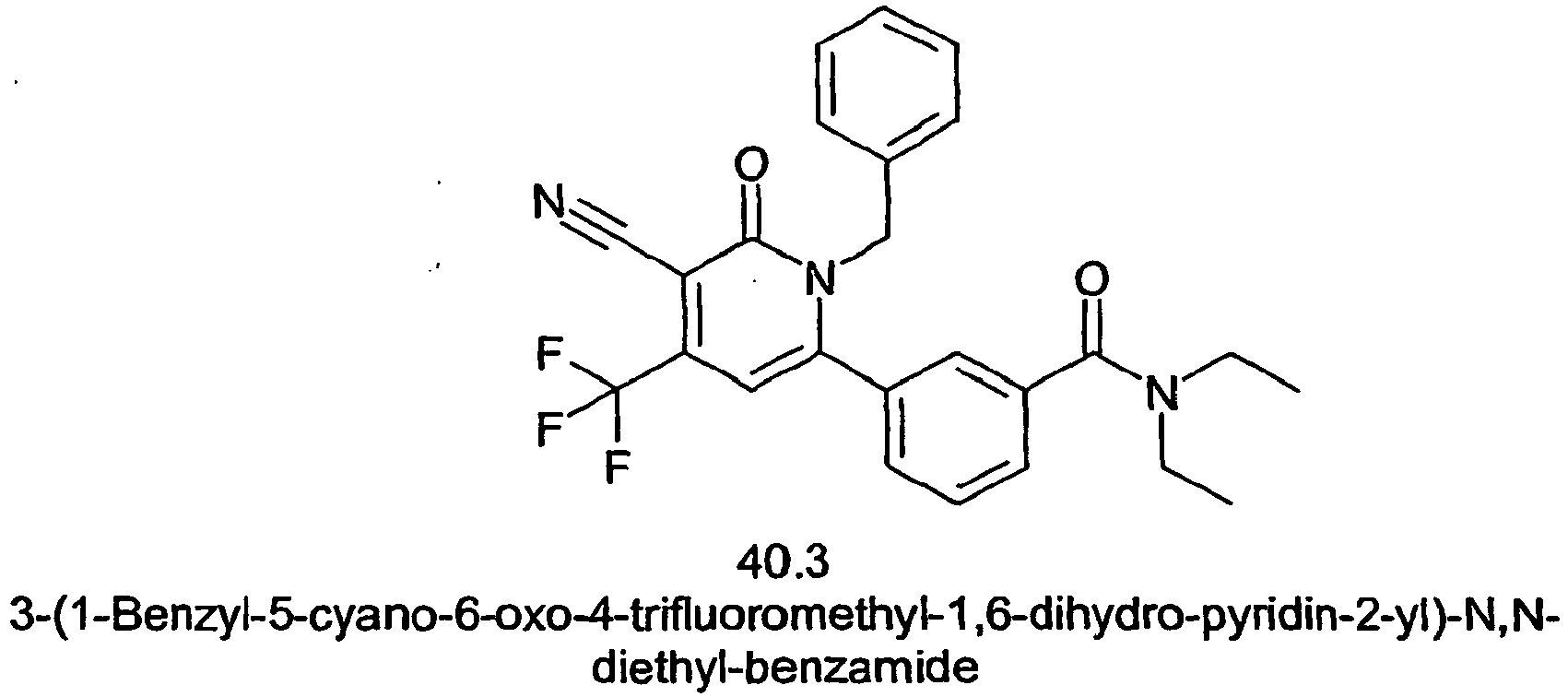
- This example illustrates the preparation of
compound 41.
- 1-(2,4-Dimethyl-benzyl)-2-oxo-6-[4-(piperidine-1-carbonyl)-phenyl]-4-trifluoromethyl-1,2-dihydro-pyridine-3-carbonitrile 40 (20 mg, 0.041 mmoles) was dissolved into 2.0 mL of anhydrous THF within a 7 mL reaction vial. To this stirring mixture at room temperature was added diborane-THF (160 µL, 0.16 mmoles) and the mixture was stirred at room temperature for 16 hours. After this period the reaction was quenched by adding 3 mL of 25% NH4Cl. This aqueous mixture was stirred for 30 min. After this period the resulting mixture was extracted with Et2O (3x10 mL) and the resulting organic layer was washed with brine and dried over Na2SO4. The ether layer was evaporated in vacuo and the resulting crude product was purified using flash silica chromatography (0-5% MeOH/DCM w/0.1 % NEt3) to yield the free base. The free base was combined with 2N HCl/MeOH, evaporated, dissolved into deionized water and lyopholyzed to yield 12 mg (61 % yield) of 41 as a white powder.

- This example illustrates the preparation of
compound 42.
- 4-[5-Cyano-1-(2,4-dimethyl-benzyl)-6-oxo-4-trifluoromethyl-1,6-dihydro-pyridin-2-yl]-benzoic acid 39 (27 mg, 0.063 mmoles) was dissolved into 2.0 mL of anhydrous THF within a 7 mL reaction vial. To this stirring solution at 0 °C was added diborane-THF (0.11 mL, 0.11 mmoles). The reaction was then allowed to warm to room temperature and was stirred for 16 hours. After this period the reaction was quenched by adding 3 mL of 25% NH4Cl, and this mixture was stirred for 30 min. The resulting aqueous mixture was evaporated in vacuo (-THF) and extracted with Et2O (3x10 mL). The combined ether layer was washed with saturated NaHCO3, dried over Na2SO4 and was evaporated in vacuo to yield the crude residue. The crude residue was purified using flash silica chromatography (0-60% EtOAc/Hexane) to yield 19 mg (73% yield) of 42 as a white solid.

- This example illustrates the preparation of
compound 43.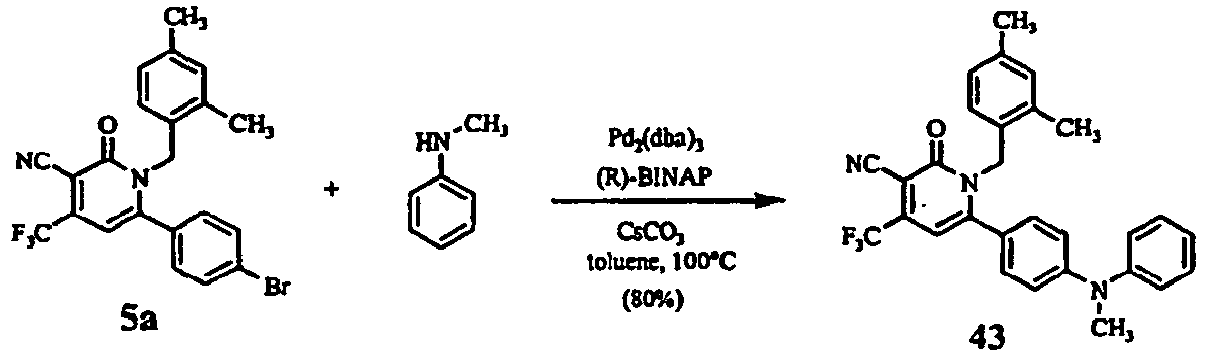
- 6-(4-Bromo-phenyl)-1-(2,4-dimethyl-benzyl)-2-oxo-4-trifluoromethyl-1,2-dihydro-pyridine-3-carbonitrile 5a (38 mg, 0.082 mmoles) was combined with N-methylaniline (11 µL, 0.10 mmoles) and 0.5 mL of anhydrous toluene within a 7 mL reaction vial. In a separate vial was added tris(dibenzylideneacetone) dipalladium (8 mg, 0.009 mmoles), (R)-BINAP (8 mg, 0.013 mmoles), cesium carbonate (38 mg, 0.12 mmoles) and 0.3 mL of anhydrous toluene. This "catalytic" mixture was stirred at room temperature for 5 min under dry-nitrogen. To the stirring "catalytic" solution under nitrogen was then added the "bromide" solution, and the resulting mixture was sealed under dry-nitrogen and was stirred at 100°C for 16 hours. After this period the reaction mixture was purified directly using flash silica chromatography (0-20% EtOAc/Hexane) to provide 32 mg (80% yield) of 43 as an orange-red residue.

- The following compounds were prepared in a manner similar to that described above.


- This example illustrates the preparation of
compound 44.
- 6-(4-Bromo-phenyl)-1-(2,4-dimethyl-benzyl)-2-oxo-4-trrfluoromethyl-1,2-dihydro-pyridine-3-carbonitrile 5a (100 mg, 0.22 mmoles) was combined with 4-ethylphenol (32 mg, 0.26 mmoles), palladium acetate (5 mg, 0.022 mmoles), 2-(di-t-butylphosphino)biphenyl (12 mg, 0.040 mmoles), potassium phosphate (100 mg, 0.47 mmoles) and 1.0 mL of anhydrous toluene within an oven-dried 7 mL reaction vial. The mixture was sealed and stirred at 100°C for 16 hours. After this period the mixture was purified directly using flash silica chromatography (0-20% EtOAc/Hexane) to yield 42 mg (38%) of 44 as a yellow residue.

- The following compounds were prepared in a manner similar to that described above.


- This example illustrates the preparation of
compound 45.
- 6-(4-Benzyloxy-phenyl)-1-(2,4-dimethyl-benzyl)-2-oxo-4-trifluoromethyl-1,2-dihydro-pyridine-3-carbonitrile 5b (0.55 g, 1.13 mmoles) was combined with cyclohexadiene (1.6 mL, 16.9 mmoles), 10% Pd/C (0.6 g) and 10 mL of anhydrous EtOH. This mixture was then stirred at room temperature for 24 hours. After this period the reaction mixture was vacuum filtered through Celite and the resulting filtrate was evaporated in vacuo to yield 0.35 g (77%) of 45 as a yellowish/orange solid.

- Following compounds were prepared in manner similar to that described above.


- This example illustrates the preparation of
compound 46.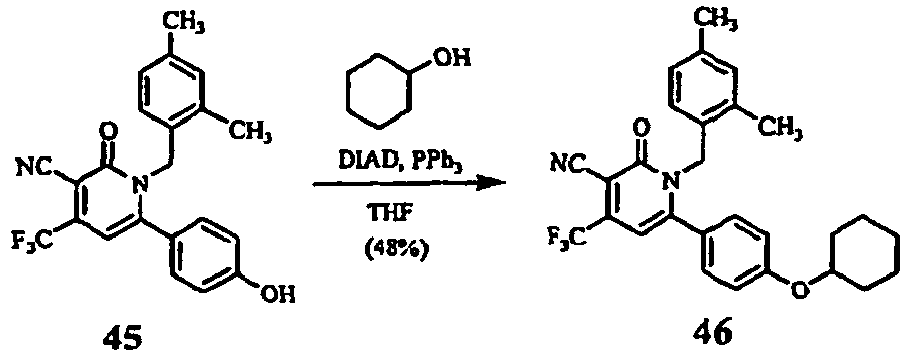
- 1-(2,4-Dimethyl-benzyl)-6-(4-hydroxy-phenyl)-2-oxo-4-trifluoromethyl-1,2-dihydro-pyridine-3-carbonitrile 45 (31 mg, 0.078 mmoles) was combined with triphenylphosphine (29 mg, 0.11 mmoles) in 1.0 mL of anhydrous THF. To this stirring mixture at room temperature was slowly added (over 1 hour using a syringe pump) a solution of cyclohexanol (12 µL, 0.11 mmoles) and diisopropyl azodicarboxylate (22 µL, 0.11 mmoles) in 1.0 mL of anhydrous THF. The mixture was then stirred at room temperature for 24 hours. After this period the reaction mixture was purified directly using flash silica chromatography (0-20% EtOAc/Hexane) to yield 18 mg (48%) of 46 as a yellow residue.

- The following compounds were prepared in a manner similar to that described above.

- This example illustrates the preparation of
compound 47.
- 1-(2,4-Dimethyl-benzyl)-6-(4-hydroxy-phenyl)-2-oxo-4-trifluoromethyl-1,2-dihydro-pyridine-3-carbonitrile 45 (43 mg, 0.11 mmoles) was combined with (3-methoxycarbonylphenyl) boronic acid (62 mg, 0.34 mmoles), copper acetate (22 mg, 0.12 mmoles), 4Å molecular sieves (0.18 g) and 1.0 mL of anhydrous DCM within an oven-dried reaction vial. The mixture was stirred at room temperature for 15 min. After this period triethylamine (75 µL, 0.54 mmoles) was added and the mixture was stirred at room temperature for 16 hours. After this period the reaction mixture was purified directly using flash silica chromatography (0-20% EtOAc/Hexane) to yield 38 mg (63%) of 47 as a yellow residue.

- The following compounds were prepared in a manner similar to that described above.


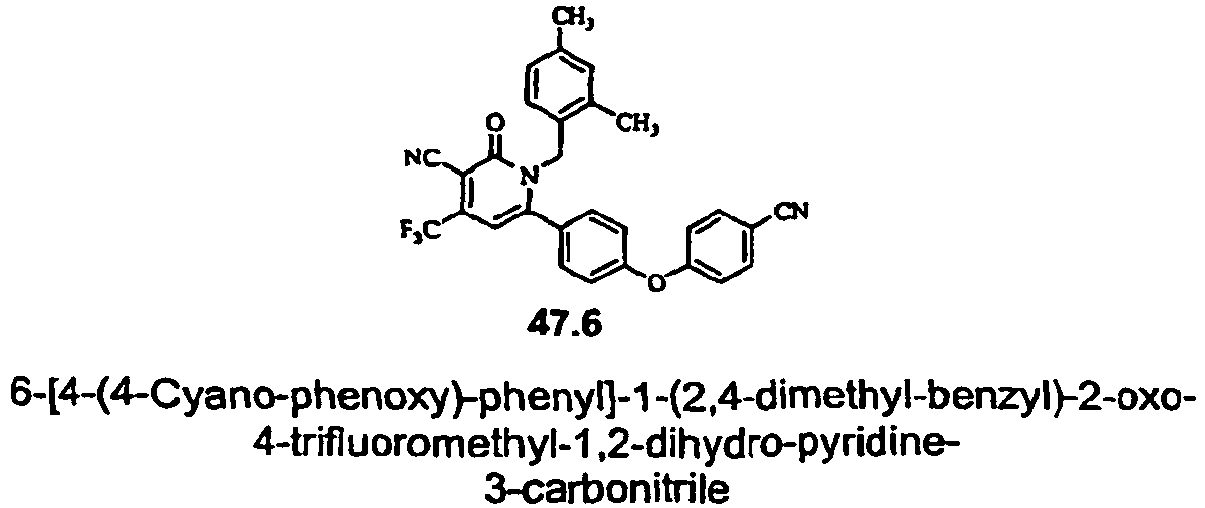


- This example illustrates the preparation of
compound 48.
- 3-{4-[5-Cyano-1-(2,4-dimethyl-benzyl)-6-oxo-4-trifluoromethyl-1,6-dihydro-pyridin-2-yl]-phenoxy}-benzoic acid methyl ester 47 (0.55 g, 1.01 mmoles) was combined with lithium hydroxide (monohydrate, 93 mg, 2.22 mmoles) in 10 mL of THF/H2O (4:1). This mixture was then heated at 55 °C for 12 hours. After this period the mixture was evaporated in vacuo (-THF) and was combined with 1 N HCl (10 mL). The aqueous acidic mixture was combined with enough NaCl to affect saturation and was extracted with Et2O (4x20 mL). The combined ether layer was washed with brine ,dried over Na2SO4, and was evaporated in vacuo to yield crude product. The crude product was purified using flash silica chromatography (0-60% EtOAc/Hexane) to yield 0.37g (71%) of product as a yellow residue.
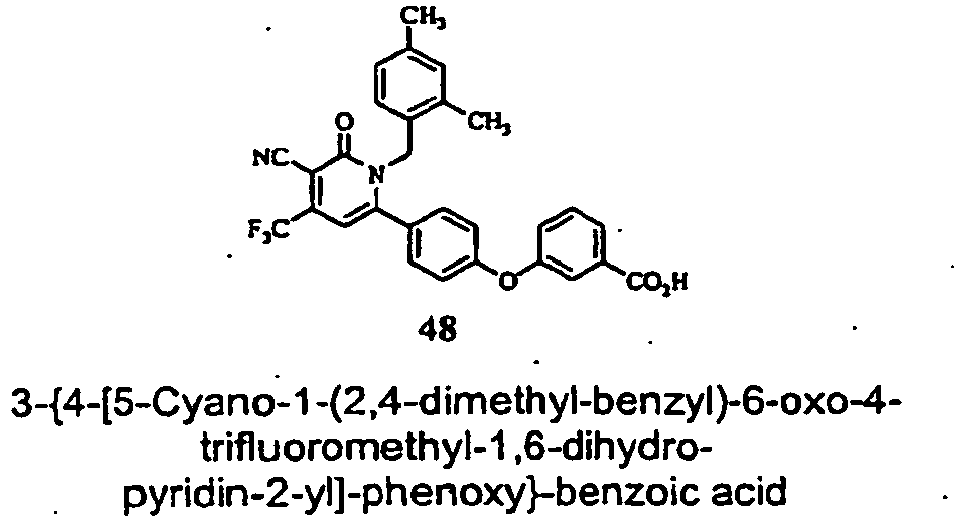
- This example illustrates the preparation of
compound 49.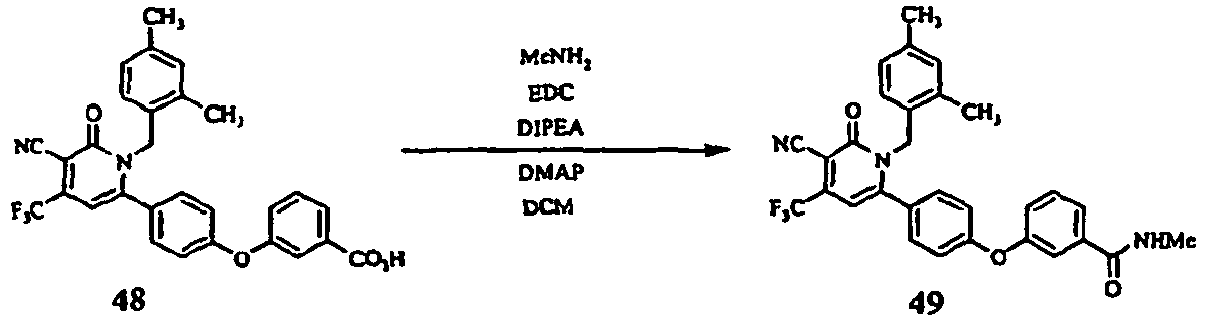
- 3-{4-[5-Cyano-1-(2,4-dimethyl-benzyl)-6-oxo-4-trifluoromethyl-1,6-dihydro-pyridin-2-yl]-phenoxy}-benzoic acid 48 (15 mg, 0.029 mmoles) was combined with 1-[3-(dimethylamino)propyl]-3-ethylcarbodiimide hydrochloride (EDC, 14 mg, 0.073 mmoles), 4-dimethylaminopyridine (DMAP, 2 mg, 0.016 mmoles) in 5 mL of anhydrous DCM. To this mixture was added diisopropylethylamine (DIPEA, 13 µL, 0.075 mmoles) and methylamine ([2.0 M] solution in THF, 36 µL, 0.72 mmoles). This mixture was then stirred at room temperature for 16 hours. After this period the reaction mixture was purified directly using flash silica chromatography (0-60% EtOAc/Hexane) to yield 13 mg (84% yield) of 49 as a yellow solid.
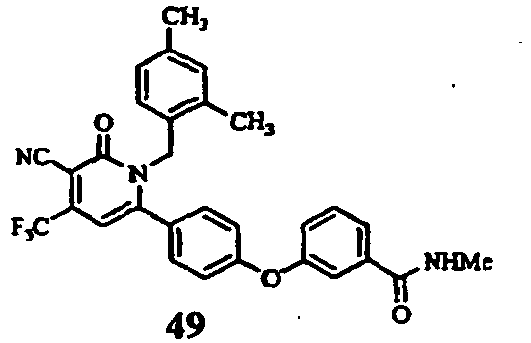
- This example illustrates the preparation of
compound 50.
- 1-(2,4-Dimethyl-benzyl)-6-(4-hydroxy-phenyl)-2-oxo-4-trifluoromethyl-1,2-dihydro-pyridine-3-carbonitrile 45 (104 mg, 0.26 mmoles) was combined with (3-bromophenyl) boronic acid (157mg, 0.78 mmoles), copper acetate (57 mg, 0.31 mmoles), 4Å molecular sieves (0.20g) and 1.0 mL of anhydrous DCM within an oven-dried reaction vial. The mixture was stirred at room temperature for 15 min. After this period triethylamine (182 µL, 1.31 mmoles) was added and the mixture was stirred at room temperature for 16 hours. After this period the reaction mixture was purified directly using flash silica chromatography (0-20% EtOAc/Hexane) to yield 41 mg (29%) of 50 as a yellow residue.

- The following compounds were prepared in a manner similar to that described above.

- This example illustrates the preparation of
compound 51.
- 6-[4-(4-Bromo-phenoxy)-phenyl]-1-(2,4-dimethyl-benzyl)-2-oxo-4-trifluoromethyl-1,2-dihydro-pyridine-3-carbonitrile 50.1 (108 mg, 0.195 mmoles) was combined with dichlorobis(benzonitrile)palladium (II) (11 mg, 0.029 mmoles), tri-t-butylphosphine (33 mg, 0.065 mmoles), copper iodide (4 mg, 0.021 mmoles), diisopropylethylamine (33 µL, 0.24 mmoles) and trimethylsilylacetylene (□□□□, 0.23 mmoles) in 2.0 mL of anhydrous and thoroughly degassed dioxane. This mixture was then stirred at 50°C for 24 hours. After this period the reaction mixture was evaporated and purified directly for flash silica chromatography (0-20% EtOAc/Hexane) to yield 53 mg (48% yield) of 51 as a yellow residue.

- This example illustrates the preparation of
compound 52.
- 6-[4-(4-Benzyloxy-phenoxy)-phenyl]-1-(2,4-dimethyl-benzyl)-2-oxo-4-trifluoromethyl-1,2-dihydro-pyridine-3-carbonitrile 47.1 (29 mg, 0.05 mmoles) was combined with cyclohexadiene (0.1 mL, 1.05 mmoles), 10% Pd/C (50 mg) and 10 mL of anhydrous EtOH. This mixture was then stirred at room temperature for 24 hours. After this period the reaction mixture was vacuum filtered through Celite and the resulting filtrate was evaporated in vacuo to yield 13 mg (53%) of 52 as a yellow residue.

- The following compounds were prepared in a manner similar to that described above.

- This example illustrates the preparation of
compound 53.
- 1-(2,4-Dimethyl-benzyl)-6-[4-(4-hydroxy-phenoxy)-phenyl]-2-oxo-4-trifluoromethyl-1,2-dihydro-pyridine-3-carbonitrile 52 (16 mg, 0.033 mmoles) was combined with potassium carbonate (23 mg, 0.166 mmoles) and hexyl bromide (20 µL, 0.142 mmoles) in 2.0 mL of anhydrous DMF. This mixture was stirred at room temperature for 24 hours. After this period the reaction mixture was combined with 50 mL of water and was extracted with EtOAc (4x15 mL). The combined EtOAc layer was washed with water (4x15 mL) and 15 mL of brine. The resulting EtOAc later was dried over anhydrous Na2SO4 and was evaporated in vacuo to yield the crude product. The crude product was purified using flash silica chromatography (0-20% EtOAc/Hexane) to yield 14 mg (84%) of 53 as a yellow residue.


- This example illustrates the preparation of
compound 54.
- Sodium hydride (18 mg, 0.43 mmol) was added to a solution of 54a (80 mg, 0.22 mmol) and methyl 2-iodoacetate (82 µL, 0.86 mmol) in anhydrous DMF (2 mL). The reaction mixture was stirred under nitrogen atmosphere at 80°C overnight. After the reaction mixture was cooled off, it was poured into 20 mL of water and extract with ethyl acetate (3 x 30 mL). The combined organic layer was washed with brine and water and concentrated in vacuo. The crude product was purified by column chromatography (40% ethyl acetate in hexane), providing product 54 (67 mg, 70% yield). 1H-NMR (CDCl3): δ7.37 (m, 1H), 7.26 (m, 4 H), 7.06 (m, 1 H), 6.91 (m, 1 H), 6.82 (m, 1 H), 6.62 (m, 1 H), 6.40 (s, 1 H), 5.24 (s, 2 H), 4.46 (s, 2 H), 3.80 (s, 2 H).
- This example illustrates the preparation of
compound 55.
- To a solution of 54a (80 mg, 0.22 mmol) and triethylamine (60 µL, 0.43 mmol) in anhydrous THF (2 mL) was added ethyl isocyanate (43 µL, 0.54 mmol). The reaction mixture was stirred at 65°C under nitrogen atmosphere for overnight. The reaction mixture was then cooled off and concentrated in vacuo. The crude product was purified by column chromatography (40% ethyl acetate in hexane) to yield product 55 (91 mg, 95% yield). 1H-NMR (CDCl3): δ7.39 (m, 1 H), 7.29 (m, 1 H), 7.24-7.20 (m, 3 H), 7.04 (m, 1 H), 6.91 (m, 3 H), 6.41 (s, 1 H), 5.29 (s, 2 H), 5.05 (s, 1 H), 3.33 (m, 2 H), 1.24 (t, 7.1 Hz, 3H).
- This example illustrates the preparation of
compound 56.
- To a solution of 56a (117 mg, 0.32 mmol) in anhydrous THF (4 mL) was added trimethylsilyl isocyanate (0.24 mL, 1.6 mmol) and 4-dimethylaminopyridine (4 mg, 0.03 mmol). The reaction mixture was stirred at 65°C under nitrogen atmosphere overnight. The mixture was concentrated in vacuo. The resulting residue was dissolved in anhydrous THF (4 mL), and to it was added tetrabutylammonium floride (0.7 mL, 1.0 M) in THF. The reaction mixture was stirred at room temperature overnight. The crude product was purified by column chromatography (60% ethyl acetate in hexane) to yield product 56 (95 mg, 72% over two steps). 1H-NMR (DMSO-d6): δ10.20 (s, 1 H), 9.04 (s, 1 H), 7.65 (m, 1 H), 7.58 (m, 1 H), 7.43 (m, 1 H), 7.29 (m, 3 H), 7.07 (m, 1 H), 7.02 (m, 2 H), 6.80 (s, 1 H), 5.23 (s, 2 H).
- This example illustrates the preparation of
compound 57.
- To a solution of 56a (80 mg, 0.22 mmol) and triethyl amine (76 µL, 0.54 mmol) in anhydrous methylene chloride (2 mL) was added ethyl chloroformate (41 µL, 0.54 mmol). The reaction mixture was sealed in a vial and stirred at 50 °C overnight. The mixture was cooled off and concentrated in vacuo. The product was purified by column chromatography (40% ethyl acetate in hexane) to yield 57 (40 mg, 42% yield). 1H-NMR (CDCl3): δ7.41 (m, 2 H), 7.34 (m, 1 H), 7.25-7.21 (m, 3 H), 6.91 (m, 2 H), 6.81 (m, 1 H), 6.64 (s, 1 H), 6.40 (s, 1 H), 5.27 (s, 2 H), 4.24 (q, 7.1 Hz, 2 H), 1.32 (t, 7.1 Hz, 3 H).
- This example illustrates the preparation of
compound 58.
- To a solution of 56a (100 mg, 0.27 mmol) in methanol (15 mL) was added benzaldehyde (41 µL, 0.41 mmol) and anhydrous magnesium sulfate (500 mg). The reaction mixture was heated to reflux overnight. Sodium cyanoborohydride (85 mg, 1.36 mmol) was added to the mixture, which was heated to reflux overnight. The reaction mixture was concentrated in vacuo and the crude mixture was partitioned between ethyl acetate and saturated sodium bicarbonate solution. The combined ethyl acetate was concentrated in vacuo. The crude product was purified by column chromatography (30% ethyl acetate in hexane) to yield compound 58 (24 mg, 19% yield).
1H-NMR (CDCl3): δ7.38-7.19 (br, 10 H), 6.93 (m, 2 H), 6.75 (m, 1 H), 6.50 (m, 1 H), 6.38 (s, 1 H), 6.27 (s, 1 H), 5.19 (s, 2 H), 4.17 (s, 2 H). - This example illustrates the preparation of
compound 59.

- A solution of 59a (0.96 g, 2.61 mmol) in carbon tetrachloride (50 mL) was treated with N-bromosuccinimide (557 mg, 3.13 mmol) and catalytic amount of benzoyl peroxide. The reaction mixture was heated to reflux and irradiated with a 500 W floodlamp for 24 h. It was then cooled off and the white precipitate was filtered off. The solvent was evaporated to dryness, and the residue was purified by column chromatograpy (40% ethyl acetate in hexane) to yield 59b (0.79 g, 65% yield). 1H-NMR (CDCl3): δ7.56 (m, 1 H), 7.43 (m, 1 H), 7.25 (m, 3 H), 7.13 (m, 2 H), 6.88 (m, 2 H), 6.39 (s, 1 H), 5.24 (s, 2 H), 4.38 (s, 2 H).
- To a solution of 59b (151 mg, 0.34 mmol) and phenol (127 mg, 1.35 mmol) in anhydrous DMF was added sodium hydride (54 mg, 60%, 1.35 mmol). The reaction mixture was stirred and heated to 80°C for overnight. It was cooled off and poured into water and extracted with ether. The ether layer was dried with anhydrous sodium sulfate and concentrated in vacuo. The crude product was purified by column chromatography (15-30% ethyl acetate in hexane) to yield product 59 (66 mg, 42% yield). 1H-NMR (CDCl3): δ7.60 (m, 1H), 7.46 (m, 1 H), 7.30 (m, 2 H), 7.24-7.20 (br, 4 H), 7.12 (m, 1 H), 7.00 (m, 1 H), 6.92 (m, 2 H), 6.86 (m, 2 H), 6.40 (s, 1 H), 5.22 (s, 1 H), 5.03 (s, 2 H).
- This example illustrates the preparation of
compound 60.
- To a solution of 60a (152 mg, 0.34 mmol) and diisopropylethyl amine (89 µL, 0.51 mmol) in THF (2 mL) was added diethyl amine (53 µL, 0.51 mmol). The reaction mixture was heated to 70°C for overnight. The solvent was evaporated in vacuo and the crude product was purified by column chromatography (50% ethyl acetate in hexane) to yield product 60 (82 mg, 55%). 1H-NMR (CDCl3): δ 7.51 (m, 1 H), 7.38 (m, 1 H), 7.24-7.17 (m, 4 H), 7.07 (m, 1 H), 6.88 (m, 2 H), 6.41 (s, 1H), 5.27 (s, 2 H), 3.52 (m, 2 H), 2.48 (m, 4H), 1.01 (m, 6 H).
- This example illustrates the preparation of
compound 61.
- 2,4-dimethylbenzyl cyanoacetamide 61 a (103 mg, 0.59 mmol) and diketone 61 b (175 mg, 0.59 mmol) were suspended in 2 mL of benzene. To the above reaction mixture was added DBU (45 µL, 0.3 mmol). The mixture was sealed in a vial and stirred at 90°C for overnight. The reaction mixture was concentrated in vacuo and the resulting residue was purified by column chromatography (35% ethyl acetate in hexane) to yield 61 b (50 mg, 18%). 1H-NMR (CDCl3): δ7.54-7.45 (m, 3 H), 7.34 (m, 3 H), 6.95 (m, 2 H), 6.61 (m, 1 H), 6.44 (s, 1 H), 5.28 (m, 2 H), 2.28 (s, 3 H), 2.08 (s, 3 H), 2.03 (s, 3 H).
- 1.0 g of aluminum-nickel catalyst was placed in 10 mL of 2 N aq NaOH and stirred in a flask cooled with ice water. The mixture was stirred for 45 min. The solution was decanted, while the solid Ni catalyst was kept washing with
water 8 times until it became clear solution. The water was removed as much as possible, using a pipet. To a solution of 61 b (48 mg, 0.10 mmol) in 5 mL of DME was added 5 mL of formic acid. The reaction mixture was stirred at 55 °C for 4 h under a slow stream of nitrogen. The reaction mixture was filtered through a short pad of celite, and the celite was washed with MeOH. The filtrate was concentrated in vacuo. The residue was purified by column chromatography (10% MeOH in DCM containing 0.1% triethyl amine) to provide product 61d (26 mg, 50%yield). - The resulting product 61 d (21 mg, 0.04 mmol) was dissolved in a mixture of formic acid (2 mL, 96%) and formaldehyde (6 mL, 37% in water). The reaction mixture was heated at 100 °C for 16 h and then cooled off. The reaction mixture was neutralized by 10% aq NaOH with ice to weekly basic and then extracted with ether (3 x 20 mL). The combined ether was concentrated in vacuo. This crude product was purified by HPLC with 30% CH3CN in water to yield 61 (12 mg, 80% yield) as trifluoroacetic acid salt. 1H-NMR (CDCl3): δ7.50 (m, 2 H), 7.45 (m, 1 H), 7.36 (m, 3 H), 6.97 (s, 1H), 6.91 (m, 1 H), 6.56 (m, 1 H), 6.49 (s, 1 H), 5.23 (s, 2 H), 4.34 (s, 2 H), 3.00 (s, 6H), 2.27 (s, 3 H), 2.11 (s, 6 H). MS (ES+): 495.2 (M+H).
- This example illustrates the preparation of
compound 62.
- To a solution of 2-methyl-4-hydroxyacetophenone 62a (0.5 g, 3.33 mmol) in anhydrous methylene chloride (30 mL) was added Cu(OAc)2 (605 mg, 3.33 mmol), phenylboronic acid (812 mg, 6.66 mmol) and powdered 4 Å molecular sieves and triethylamine (2.32 mL, 16.65 ,mmol). The heterogenerous reaction mixture was stirred at ambient temperature for overnight. The resulting slurry was filtered through celite and the diaryl ether was isolated from the organic filtrate by column chromatography (30% ethyl acetate in hexane) to yield 62c (590 mg, 78% yield). 1H-NMR (CDCl3): δ 7.73 (m, 1 H), 7.38 (m, 2 H), 7.19 (m, 1 H), 7.06 (m, 2 H), 6.82 (m, 2 H), 2.56 (s, 3 H), 2.53 (s, 3 H).
- The diaryl ether 62c (530 mg, 2.34 mmol) was dissolved in anhydrous THF (3 mL) and cooled to -78°C under nitrogen atmosphere. A solution of lithium bis(trimethylsilyl)amide (2.4 mL, 1.0 M) in THF was added slowly. The reaction mixture was stirred at -20°C under nitrogen atmosphere for 1 h. The reaction mixture was then cooled to -78°C, and to it was added ethyl trifluoroacetate (417 µL, 3.5 mmol). The vigorously stirred solution was allowed to warm to ambient temperature overnight. The reaction mixture was poured into a mixture of 10% aq HCl and ice and extracted with chloroform three times. The chloroform extract was washed with water. The organic layer was separated and dried with anhydrous MgSO4 and concentrated in vacuo to give crude product 62d (1.05 g, 98% yield).
- 2,4-dimethylbenzyl cyanoacetamide 61b (101 mg, 0.50 mmol) and diketone 62d (161 mg, 0.50 mmol) were suspended in 2 mL of benzene. To the above reaction mixture was added DBU (40 µL, 0.25 mmol). The mixture was sealed in a vial and stirred at 90 °C for overnight. The reaction mixture was concentrated in vacuo and the resulting residue was purified by column chromatography (35% ethyl acetate in hexane) to yield product 62 (127 mg, 52% yield).). 1H-NMR (CDCl3): δ 7.40 (m, 2 H), 7.20 (m,1H), 7.03 (m, 2 H), 6.84 (m, 4 H), 6.73 (m, 1 H), 6.60 (m, 1 H). 6.37 (s, 1 H), 5.31 (m, 1 H), 4.89 (m, 1H), 2.73 (s, 3 H), 2.25 (s, 3 H, 1.92 (s, 3 H). MS (ES+): 489.2 (M+H).
- This example illustrates the preparation of
compound 63.
- The aryl benzyl ether 63c (14.13 g, 59.3 mmol) was dissolved in anhydrous THF (150 mL) and cooled to -78°C under nitrogen atmosphere. A solution of lithium bis(trimethylsilyl)amide (59.3 mL, 1.0 M) in THF was added slowly. The reaction mixture was stirred at -20°C under nitrogen atmosphere for 2 h. The reaction mixture was then cooled to -78°C, and to it was added ethyl trifluoroacetate (10.58 mL, 89 mmol). The vigorously stirred solution was allowed to warm to ambient temperature overnight. The reaction mixture was poured into a mixture of 10% aq HCl and ice and extracted with chloroform three times. The chloroform extract was washed with water. The organic layer was separated and dried with anhydrous MgSO4 and concentrated in vacuo to give crude product 63d (19.5 g, 98% yield). The product was used for the next reaction without purification.
- 2,4-dimethylbenzyl cyanoacetamide 61 b (3.01 g, 14.88 mmol) and diketone 63d (5.0 g, 14.87 mmol) were suspended in 50 mL of benzene. To the above reaction mixture was added DBU (1.11 mL, 7.43 mmol). The mixture was heated to reflux under nitrogen atmosphere for overnight. The reaction mixture was concentrated in vacuo and the resulting residue was purified by column chromatography (20% ethyl acetate in hexane) to yield product 63e (3.90 g, 45% yield).
- To a solution of 63e (3.71 g, 7.38 mmol) in anhydrous ethanol (74 mL) was added 2.85 g of 10% Pd/C and 1,4-cyclohexadiene (6.98 mL, 73.8 mmol). The mixture was stirred under nitrogen atmosphere for overnight. The solution was filtered through a pad of celite and the solvent was concentrated in vacuo to yield product 63f (2.96 g, 97%).
- To a solution of 63f (103 mg, 0.25 mmol) in anhydrous methylene chloride (3 mL) was added Cu(OAc)2 (91 mg, 0.5 mmol), 3-isopropylphenylboronic acid (82 mg, 0.5 mmol) and powdered 4 Å molecular sieves and triethylamine (174 µL, 1.25 mmol). The heterogenerous reaction mixture was stirred at ambient temperature for overnight. The resulting slurry was filtered through celite and the diaryl ether was isolated from the organic filtrate by column chromatography (20% ethyl acetate in hexane) to yield 63 (63 mg, 47% yield). ). 1H-NMR (CDCl3): δ7.27 (m, 1 H), 7.03 (m, 1 H), 6.98-6.85 (m, 5 H), 6.74 (m, 2 H), 6.64 (m, 1 H). 6.46 (s, 1 H), 5.15 (s, 2 H), 2.90 (hep, J = 7.0 Hz, 1 H), 2.27 (s, 3 H), 2.21 (s, 3 H), 1.99 (s, 3 H), 1.25 (d, J = 7.0 Hz, 6 H). MS (ES+): 531.3 (M+H).
- This example illustrates the preparation of
compound 64.
- Method A (R = Me): To a solution of bromopyridone 64a (2.12 g, 12.2 mmols) in 60 mL of DMF at room temperature was added LiH (145.0 mg, 18.3 mmols). After stirring for 1 hour at 65°C, 4-methylbenzyl bromide (2.7 g, 14.6 mmols) was added and heating continued for 12 h. The solution was cooled to room temperature and concentrated under reduced pressure. Pyridone 64b (R = Me) was isolated from the residue by column chromatography on silica gel (0 to 20% EtOAC / hexanes) as a colorless oil (1.6 g, 47%). 1H NMR (CDCl3) δ: 7.34 (t, J = 7.8 Hz, 1H), 7.28 (d, J = 8.0 Hz, 2H), 7.12 (d, J = 8.0 Hz, 2H), 6.98 (d, J = 7.6 Hz, 1H), 6.64 (d, J = 8.0 Hz, 1H), 5.24 (s, 2H), 2.29 (s, 3H).
- Method B (R = H): To a solution of bromopyridone (405.0 mg, 2.3 mmols) in 6.0 mL of DME:DMF (10:1, v/v) at 0 °C was added NaH (92.0 mg, 2.3 mmols, 60% dispersion in mineral oil). After 10 minutes LiBr (800.0 mg, 9.2 mmols) was added and the mixture warmed to room temperature over 15 minutes and then benzyl bromide (786.6 mg, 4.6 mmols) was added. The resulting solution was heated to 65°C for 12h, cooled to room temperature, diluted with saturated aqueous sodium chloride solution, and extracted with EtOAc. The combined organic layers were dried over MgSO4 and concentrated under reduced pressure. Pyridone (R = H) was isolated from the residue by column chromatography on silica gel (0 to 20% EtOAC /hexanes) as a colorless oil (533 mg, 88%). 1H NMR (CDCl3) δ: 7.40-4.24 (m, 6H), 7.00 (d, J = 7.2 Hz, 1H), 6.66 (d, J = 7.6 Hz, 1H), 5.28 (s, 2H).

- A degassed solution of bromopyridone 64b (100 mg, 0.4 mmol) and phenylboronic acid (44 mg, 0.4 mmol) in 0.9 mL THF was added Pd(OAc)2 (4 mg, 0.02 mmol). A degassed solution of Na2CO3 (95 mg, 0.9 mmol) in 0.9 mL H2O was added and the resulting mixture heated to reflux for 12 h. The mixture was cooled to room temperature, diluted with H2O, and extracted with EtOAc. The combined organic layers were dried over NaS04 before being concentrated under reduced pressure. The product 64c (91 mg, 97%) was isolated as a colorless solid from the residual oil by column chromatography on silica (0 to 20% EtOAc / hexanes). 1H NMR (CDCl3) δ: 7.52 (dd, J = 8.6, 1.6 Hz, 1 H), 7.39-7.26 (7H), 7.11 (d, J = 8.0 Hz, 2H), 6.98 (d, J = 7.2 Hz, 1 H), 6.64 (d, J = 8.1 Hz, 1 H), 5.24 (s, 2H), 2.29 (s, 3H).

- To a solution of pyridone 64c (70 mg, 0.3 mmol) in 0.54 mL CCl4 at 0 °C in the dark (foil wrapped flask) was added Br2 (62 mg, 0.4 mmol) and DBU (61 mg, 0.4 mmol). The resulting solution was allowed to warm to slowly room temperature and stir for 12 h. The solution was diluted with CH2Cl2 (25 mL) and washed with 1N aqueous HCl, saturated aqueous NaHCO3, and dried over Na2SO4 before being concentrated under reduced pressure. The product 64d (71 mg, 75%) was isolated from the residual oil as a colorless solid by column chromatography on silica (0 to 5% EtOAc / hexanes). 1H NMR (CDCl3) δ: 7.92 (m, 2H), 7.78 (d, J = 8.0 Hz, 1H), 7.37 (m, 5H), 7.17 (d, J = 8.0 Hz, 1H), 7.12 (d, J = 8.0 Hz, 2H), 5.48 (s, 2H), 2.28 (s, 3H).

- To a solution of bromide 64d (12 mg, 0.03 mmol) in 0.3 mL Et3N was added CuI (2 mg, 0.01 mmol), dichloro(bis-triphenylphosphine)palladium (II) (4 mg, 0.005 mmol), and 1,3-(bis-diphenylphosphino)propane (2 mg, 0.005). The system was purged with N2, trimethylsilylacetylene (59 mg, 0.6 mmol) added and the resulting mixture heated to 100 °C for 17 h. Upon cooling to room temperature the mixture was concentrated under reduced pressure and product 64e (8 mg, 73%) was isolated from the residual oil as a yellow oil by column chromatography on silica (0 to 5% EtOAc / hexanes). 1H NMR (CDCl3) δ: 8.09 (d, J = 7.2 Hz, 1H), 7.82 (d, J = 7.6 Hz, 1H), 7.70-7.37 (m, 5H), 7.39 (d, J = 7.6 Hz, 2H), 7.34 (d, J = 8.0 Hz, 2H), 5.62 (s, 2H), 2.42 (s, 3H), 0.34 (s, 9H).

- Alkyne 64e (2 mg, 0.005 mmol) was combined with K2CO3 (3 mg, 0.025 mmol) in 0.1 mL of MeOH and stirred overnight at room temperature. The mixture was concentrated under reduced pressure and product 64 (1 mg) was isolated from the residual oil as a yellow oil by column chromatography on silica (0 to 5% EtOAc / hexanes). 1H NMR (CDCl3) δ: 7.95 (d, J = 8.4 Hz, 1H), 7.72 (d, J = 8.0 Hz, 1H), 7.39 (m, 5H), 7.26 (d, J = 8.0 Hz, 2H), 7.10 (d, J = 8.0 Hz, 2H), 5.51 (s, 2H), 3.30 (s, 1H), 2.28 (s, 3H).
- This example illustrates the preparation of
compound 65.
- To a degassed solution of thienylbromide 65a (50 mg, 0.11 mmol) and phenylboronic acid (13 mg, 0.11 mmol) in 0.6 mL THF was added Pd(OAc)2 (1 mg, 0.006 mmol). A degassed solution of Na2CO3 (30 mg, 0.3 mmol) in 0.6 mL H2O was added and the resulting mixture heated to reflux for 12 h. The mixture was cooled to room temperature, diluted with H2O and extracted with EtOAc. The combined organic layers were dried over NaS04 before being concentrated under reduced pressure. The product 65 (28 mg, 55%) was isolated as a colorless solid from the residual oil by column chromatography on silica (10 to 20% EtOAc / hexanes). 1H NMR (CDCl3) δ: 7.51 (d, J = 8.0 Hz, 2H), 7.35 (m, 5H), 7.35 (d, J = 7.3 Hz, 1H), 7.01 (d, J = 3.8 Hz, 1H), 6.88 (d, J = 8.1 Hz, 2H), 6.56 (s, 1H), 5.38 (s, 2H), 2.25 (s, 3H).
- This example illustrates the preparation of
compound 66.
- To a solution of acid I (2.0 g, 15.5 mmols) in 8.0 mL of dioxane was added benzyl chloroformate (3.1 g, 18.6 mmols) at room temperature followed by the addition of 8 mL of saturated aqueous NaHCO3. The resulting mixture was vigorously stirred for 4 hours, the dioxane removed under reduced pressure, and the resulting solution diluted with H2O. Extraction with CH2Cl2 was followed by drying the combined fractions over Na2SO4 and concentration under reduced pressure. The product J (3.3 g, 81%) was isolated as a colorless oil from the residual oil by column chromatography on silica (5-10% MeOH / CH2Cl2). 1H NMR (CDCl3) δ: 7.36 (m, 5H), 5.13 (m, 2H), 4.19 (bm, 1H), 3.97 (m, 1H), 3.13 (bm, 1H), 2.94 (ddd, J = 3.0, 10.6, 13.6 Hz, 1H), 2.53 (bm, 1H), 2.09 (m, 1H), 1.72 (m, 2H), 1.51 (bm, 1H).

- To a solution of acid J (3.3 g, 12.6 mmols) in 120 mL CH2Cl2:DMF (4:1, v/v) was added 1-(3-dimethylaminopropyl)-3-ethylcarbodiimide hydrochloride (EDCI) (4.8 g, 25.2 mmols) and 4-N,N-dimethylaminopyridine (77 mg, 0.6 mmol). After stirring for 30 minutes N,O-dimethylhydroxylamine hydrochloride (1.2 g, 12.6 mmols) followed by triethylamine (1.3 g, 12.6 mmols). After stirring for 12 hours the solution was concentrated under reduced pressure and the residue dissolved in CH2Cl2 (200 mL). The solution was then washed with H2O and 1N aqueous HCl before being dried over Na2SO4 and concentrated under reduced pressure. The product K (3.2 g, 81%) was isolated as a pale yellow oil from the residual oil by column chromatography on silica (5-10% MeOH / CH2Cl2). 1H NMR (CDCl3) δ: 7.35 (m, 5H), 5.13 (M, 2H), 4.20 (bm, 1H), 4.11 (m, 1H), 3.72 (s, 3H), 3.59, (s, 3H), 2.92 (m, 1H), 2.81 (m, 1H), 2.19 (m, 1H), 1.94 (m, 1H), 1.70 (m, 2H), 1.51 (m, 1H).

- To a solution of amide K (600 mg, 2.0 mmols) in THF (20 mL) at 0 °C was added MeMgBr (1.2 mL, 2.2 mmols, 1.4 M in THF). After stirring for 1 hour, the reaction was quenched at 0 °C by the addition of 1 N HCl in EtOH. The solution was diluted with CH2Cl2:Et2O (100 ml, v/v) and washed with saturated aqueous NaCl before being dried (Na2SO4) and concentrated under reduced pressure. The product L (257 mg, 50%) was isolated as a colorless oil from the residual oil by column chromatography on silica (10-50% EtOAc /hexanes). 1H NMR (CDCl3) δ: 7.37 (m, 5H), 5.15 (m, 2H), 4.22 (bm, 1H), 4.04 (bm, 1H), 3.02 (m, 1H), 2.88 (bm, 1H), 2.54 (bm, 1H), 2.19 (s, 3H), 2.04 (bm, 1 H), 1.76 (m, 1H), 1.55 (m, 2H).

- To a solution of ketone L (237 mg, 0.9 mmol) in 3.0 mL THF at -78 °C was added a solution of lithium diisopropylamide (0.45 mL, 0.9 mmol, 2.0M in THF). After stirring for 5 minutes ethyl trifluoromethylacetate (155 mg, 1.1 mmols) was added. Stirring for 2 hours at -78 °C was followed by warming to room temperature and the addition of EtOAc (50 mL). The resulting solution was washed with 10% aqueous H2SO4 and H2O before being dried with Na2SO4 and concentrated under reduced pressure. The product 66 (50 mg, 16%) was isolated from the residual oil by column chromatography on silica (10-50% EtOAc / hexanes). 1H NMR (CDCl3) δ: 7.34 (m, 5H), 5.96 (s, 1H), 5.14 (m, 2H), 4.18 (bm, 1H), 4.07 (m, 1H), 3.01 (m, 1H), 2.89 (m, 1H), 2.68 (m, 1H), 2.52 (bm, 1H), 2.28 (m, 1H), 1.73 (m, 2H).
- This example illustrates the preparation of
compound 67.
- A solution of amide N (81 mg, 0.4 mmol), diketone O (150 mg, 0.4 mmol), and DBU (30.4 mg, 0.2 mmol) in 2.0 mL benzene was heated to reflux for 12 hours. The solution was cooled to room temperature and concentrated under reduced pressure. The product P (118 mg, 58%) was isolated as a pale yellow solid from the residue by column chromatography on silica (10-50% EtOAc / hexanes). 1H NMR (CDCl3) δ: 7.34 (m, 5H), 7.10 (d, J = 8.1 Hz, 1H), 7.01 (t, J = 13.4 Hz), 6.93 (d, J =8.0 Hz), 6.35 (s, 1H), 5.35 (s, 2H), 5.10 (s, 2H), 4.27 (bm, 2H), 2.68 (m, 1H), 2.60 (bm, 2H), 2.30 (s, 3H), 2.28 (s, 3H), 1.63 (m, 2H), 1.57 (m, 2H).

- To a solution of pyridone P (50 mg, 0.1 mmol) in 0.5 mL MeOH was added 10% Pd-C (5 mg, 10 wt%). The mixture was then stirred under H2 (1 atm) at room temperature for 30 minutes. The flask was purged with N2 and the mixture filtered through a pad of Celite using an EtOAc wash. The filtrate was concentrated under reduced pressure and the product 67 (20 mg, 51%) was isolated from the residual oil by column chromatography on silica (5-20% MeOH / CH2Cl2). 1H NMR (CDCl3) δ: 7.10 (d, J = 7.6 Hz, 1H), 7.01 (t, J = 14.6 Hz, 1H), 6.93 (d, J = 7.3 Hz, 1H), 6.35 (s, 1H), 5.34 (m, 2H), 4.26 (bm, 2H), 2.65 (m, 1H), 2.51 (m, 2H), 2.30 (s, 3H), 2.28 (s, 3H), 1.66 (m, 2H).
- This example illustrates the preparation of
compound 68.
- To a solution of indole V (0.5 g, 3.1 mmols) in 10 mL DMF was added MeI (483 mg, 3.4 mmols) and K2CO3 (1.3 g, 9.3 mmols). The resulting mixture was heated to 70 °C for 15 hours, cooled to room temperature, and concentrated under reduced pressure. The product 68 (569 mg, 99%) was isolated as an off-white solid from the residual oil by column chromatography on silica (5-10% MeOH / CH2Cl2). 1H NMR (CDCl3) □: 8.12 (m, 1H), 7.27 (s, 1H), 7.05-6.92 (m, 3H), 3.38 (s, 3H), 2.16 (s, 3H).
- This example illustrates the preparation of
compound 69.
- To a solution of 4-hydroxyacetophenone 30 (6.81 g, 50 mmol) and benzyl bromide 23 (5.95 mL, 50 mmol) in acetone (100 mL) was added potassium carbonate (7.6 g, 55 mmol). The reaction mixture was stirred at ambient temperature under nitrogen atmosphere for overnight. The white solid was filtered off and the solvent was concentrated in vacuo to yield product 31 (11.8 g, 98% yield). The product was used for the next reaction without further purification.
- The aryl benzyl ether 31(11.14 g, 49.2 mmol) was dissolved in anhydrous THF (70 mL) and cooled to -78 °C under nitrogen atmosphere. A solution of lithium bis(trimethylsilyl)amide (49.2 mL, 1.0 M) in THF was added slowly. The reaction mixture was stirred at -20 °C under nitrogen atmosphere for 2 h. The reaction mixture was then cooled to -78 °C, and to it was added ethyl trifluoroacetate (8.78 mL, 73.8 mmol). The vigorously stirred solution was allowed to warm to ambient temperature overnight. The reaction mixture was poured into a mixture of 10% aq HCl and ice and extracted with chloroform three times. The chloroform extract was washed with water. The organic layer was separated and dried with anhydrous MgSO4 and concentrated in vacuo to give crude product 32 (15.5 g, 98% yield). The product was used for the next reaction without purification.
- 2,4-dimethylbenzyl cyanoacetamide 13 (2.02 g, 10 mmol) and diketone 32 (3.22 g, 10 mmol) were suspended in 25 mL of benzene. To the above reaction mixture was added DBU (0.75 mL, 5.0 mmol). The mixture was heated to reflux under nitrogen atmosphere for overnight. The reaction mixture was concentrated in vacuo and the resulting residue was purified by column chromatography (20% ethyl acetate in hexane) to yield product 33 (3.2 g, 66% yield).
- To a solution of 33 (2.84 g, 5.81 mmol) in anhydrous ethanol (90 mL) was added 2.85 g of 10% Pd/C and 1,4-cyclohexadiene (5.5 mL, 58.1 mmol). The mixture was stirred under nitrogen atmosphere for overnight. The solution was filtered through a pad of celite and the solvent was concentrated in vacuo to yield product 34 (2.20 g, 95%).
- To a solution of 34 (100 mg, 0.25 mmol) and 2-chloropyrimidine 35 (29 mg, 0.25 mmol) in DMSO (2 mL) was added potassium carbonate (52 mg, 0.38 mmol). The reaction mixture in a sealed vial was stirred and heated to 100 °C overnight. After cooling off, the mixture was poured into water and extracted with chloroform. The chloroform extract was dried with anhydrous MgSO4 and concentrated in vacuo. The crude product was purified by column chromatography (30 -60% EtOAc in hexane) to yield the product 36 (65 mg, 55% yield). 1H-NMR (CDCl3): δ8.58 (d, J = 4.8 Hz, 2H), 7.21 (m, 3 H), 7.12 (m, 1 H), 6.95 (m, 1 H), 6.91 (s, 1 H), 6.63 (m, 1 H), 6.50 (s, 1 H), 5.15 (s, 2 H), 2.27 (s, 3 H), 1.97 (s, 3 H). MS (ES+): 477.1 (M+H).
- This example illustrates the preparation of
compound 70.
- To a solution of a (71 mg, 0.18 mmol) and 2-chloropyrazine b (20 mg, 0.18 mmol) in DMSO (2 mL) was added potassium carbonate (37 mg, 0.27 mmol). The reaction mixture in a sealed vial was stirred and heated to 100 °C overnight. After cooling off, the mixture was poured into water and extracted with chloroform. The chloroform extract was dried with anhydrous MgSO4 and concentrated in vacuo. The crude product was purified by column chromatography (25 -50% EtOAc in hexane) to yield the product 70 (48 mg, 57% yield). 1H-NMR (CDCl3): δ8.49 (m, 1 H), 8.34 (m, 1 H), 8.11(m, 1 H), 7.19 (m, 4 H), 6.95 (m, 1 H), 6.92 (m, 1 H), 6.63 (m, 1 H), 6.49 (s, 1 H), 5.15 (s, 2 H), 2.28 (s, 3 H), 1.98 (s, 3 H). MS (ES+): 477.2 (M+H).
- The FRET coactivator assay measures the ability of LXR ligands to promote protein-protein interactions between the ligand binding domain (LBD) of LXR and transcriptional coactivator proteins. The assay involves the use a recombinant Glutathione-S-transferase (GST)-nuclear receptor ligand binding domain (LBD) fusion protein and a synthetic biotinylated peptide sequence derived from the receptor interacting domain of a co-activator peptide such as the steroid receptor coactivator 1 (SRC-1). Typically GST-LBD is labeled with a europium chelate (donor) via a europium-tagged anti-GST antibody, and the coactivator peptide is labeled with allophycocyanin via a streptavidin-biotin linkage.
- In the presence of an agonist for the nuclear receptor, the peptide is recruited to the GST-LBD bringing europium and allophycocyanin into close proximity to enable energy transfer from the europium chelate to the allophycocyanin. Upon excitation of the complex with light at 340 nm excitation energy absorbed by the europium chelate is transmitted to the allophycocyanin moiety resulting in emission at 665 nm. If the europium chelate is not brought in to close proximity to the allophycocyanin moiety there is little or no energy transfer and excitation of the europium chelate results in emission at 615 nm. Thus the intensity of light emitted at 665 nm gives an indication of the strength of the protein-protein interaction.
-
- 1. Partially purified recombinant protein comprising glutathione-S-transferase fused in frame to the LXR-ligand binding domain (comprising amino acids 188-447 of human LXR α, or amino acids 198-461 of human LXR β).
- 2. Biotinylated peptide containing a SRC-1 LXXLL receptor interaction motif (B-SRC-1)
- 3. Anti-GST antibody conjugated to an Europium chelate (αGST-K) (From Wallac/PE Life Sciences Cat# AD0064)
- 4. Streptavidin linked allophycocyanin (SA-APC) (From Wallac/PE Life Sciences CAT# AD0059A)
- 5. 1x FRET Buffer: (20mM KH2PO4/K2HPO4 pH 7.3, 150mM NaCl, 2.5mM CHAPS, 2mM EDTA, 1 mM DTT (add fresh))
- 6. 96 well or 384 well black multiwell plates (from LJL)
-
- 0.5M KH2PO4/K2HPO4: pH 7.3
- 5M NaCl
- 80mM (5%) CHAPS
- 0.5M EDTA pH 8.0
- 1M DTT (keep at -20°C)
- Prepare reaction mixture for the appropriate number of wells by combining the following reagents 5nM / well GST-hLXRαLBD, 5nM / well GST-hLXR βLBD, 5nM / well Anti-GST antibody (Eu), 12nM / well biotin-SRC-1 peptide, 12nM / well APC-SA adjust the volume to 10µL/well with 1x-FRET buffer.
- Add 0.5µl of a 1 mM stock compound (for approx. 10µM final concentration) or solvent to each well in a 96 well or 384 well black plate (LJL).
- 1. Add 10µl reaction mixture (prepared above) to each well of the multiwell plate.
- 2. Incubate covered or in the dark (the APC is light sensitive) at room temperature for 1-4hr. After this time if reactions are not read they can be stored at 4 degrees for several more hours without too much loss of signal.
- 3. Read the plate using an LJL Analyst, or similar instrument, using the following conditions:
- Channel 1: Excitation is 330nm and emission is 615. This is for Eu chelate
- Channel 2: Excitation is 330nm and emission is 665. This is for APC
- For channel 1: Flashes per well = 100; Integration time = 1000µs; interval between flashes = 1 x1 0ms; Delay after flash = 200µs
- For channel 2: Flashes per well = 100; Integration time = 100µs; interval between flashes = 1x10ms; Delay after flashes = 65µs
- The SPA assay measures the radioactive signal generated by the binding of 3H-24, 25-epoxycholesterol to LXRα or LXRβ. The basis of the assay is the use of SPA beads containing a scintillant, such that when binding to the receptor brings the labeled ligand into proximity with the bead, the energy from the label stimulates the scintillant to emit light. The light is measured using a standard microplate scintillation reader. The ability of a ligand to bind to a receptor can be measured by assessing the degree to which the compound can compete off a radiolabelled ligand with known affinity for the receptor.
-
- 1. Label: 3H-24, 25-epoxy-cholesterol (Amersham)
- 2. LXRα lysate: Baculovirus expressed LXRα/RXR heterodimer with RXR having a 6-HIS tag produced as a crude lysate
- 3. LXRβ lysate: Baculovirus expressed LXRβ/RXR heterodimer with RXR having a 6-HIS tag produced as a crude lysate
- 4. SPA beads: Ysi copper His-tag SPA beads (Amersham)
- 5. Plates: Non-binding surface 96-well plate (Corning)
- 6. Protein lysate dilution buffer: (20mM Tris-HCl pH 7.9, 500mM NaCl, 5mM Imidazole).
- 7. 2x SPA Buffer: (40mM K2HPO4/KH2PO4 pH7.3, 100mM NaCl, 0.05
% Tween - 8. 2x SPA Buffer w/o EDTA: (40mM K2HPO4/KH2PO4 pH7.3, 100mM NaCl, 0.05
% Tween -
- 0.5M K2HPO4/KH2PO4 pH 7.3
- 0.5M EDTA pH 8.0
- 5M NaCl
- 10% Tween-20
- Glycerol
-
- 1. [3H] 24,25 Epoxycholesterol (EC) solution. For a single 384-well plate (or 400 wells), add 21µl [3H] EC (specific activity 76.5Ci/mmol, concentration 3.2mCi/ml) in 4.4ml of 2x SPA buffer to a final concentration of 200nM. For each additional 384-well plate, add 19.1µ additional [3H] EC and 4.0ml additional 2x SPA buffer. The final concentration of [3H] EC in the well will be 50nM.
- 2. Dilute LXRα lysate with protein lysate dilution buffer. Make 1400µl of diluted LXRα lysate for a 384-well plate, (or 200 wells) and 1120µl of diluted LXRα lysate for each additional 384-well plate.
- 3. Diluted LXRβ lysate with protein lysate dilution buffer. Make 1400µl of diluted LXRβ lysate for 1 a 384-well plate, (or 200 wells) and 1120µl of diluted LXRβ lysate for each additional 384-well plate.
- 4. SPA bead solution. For 1 a 384-well plate (or 400 wells), mix 3.75ml of 2x SPA buffer w/o EDTA, 2.25ml of H2O, and 1.5ml of Ysi His-tag SPA beads (Vortex well before taking). For each addition 384-well plate, mix additional 3.5ml of 2x SPA buffer w/o EDTA, 2.1 ml of H2O, and 1.4ml of Ysi His-tag SPA beads to the SPA bead solution.
-
- 1. Prepare appropriate dilutions of each compound and pipette into the appropriate wells of a multiwell plate.
- 2. Add 9.1µl of [3H] EC to each well of column 2-23 of the multiwell plate.
- 3. Add 5µl of diluted LXRα lysate to each well of column 2-23 on odd rows of the multiwell plate.
Add 5ul of diluted LXRβ lysate to each well of column 2-23 on even rows of the multiwell plate. - 4. Add 17.5µl of SPA bead solution to each well of column 2-23 of the multiwell plate.
- 5. Cover the plates with clear sealer. Place the plates in the MicroBeta. Incubate at room temperature for 1 hr.
- 6. Count using program n ABASE 3H_384DPM. The setting for n ABASE 3H_384DPM is:
- Counting Mode: DPM
- Sample Type: SPA
- ParaLux Mode: low background
- Count time: 30sec.
- To measure the ability of compounds to activate or inhibit the transcriptional activity of LXR, in a cell based assay, the cotransfection assay may be used. It has been shown that LXR functions as a heterodimer with RXR. For the co-transfection assay, expression plasmids for LXR and RXR are introduced via transient transfection into mammalian cells along with a luciferase reporter plasmid that contains one copy of a DNA sequence that is bound by LXR-RXR heterodimers (LXRE; Willy, P. et al. 1995). Treatment of transfected cells with an LXR agonist increases the transcriptional activity of LXR, which is measured by an increase in luciferase activity. Similarly, LXR antagonist activity can be measured by determining the ability of a compound to competitively inhibit the activity of a LXR agonist.
-
- 1. CV-1 African Green Monkey Kidney Cells
- 2. Co-transfection Expression plasmids, CMX-hLXR, or CMX-hLXR, CMX-RXR, reporter (LXREx1-Tk-Luciferase), and control (CMX-Galactosidase expression vector).
- 3. Transfection reagent such as FuGENE6 (Roche).
- 4. 1x Cell lysis buffer (1 % Triton X 100 (JT Baker X200-07), 10% Glycerol (JT Baker M778-07), 5mM Ditriotreitol (Quantum Bioprobe DTT03: add fresh before lysing), 1 mM EGTA (Ethylene Glycol-bis (B-Amino ethyl-ether)-N,N,N',N'-Tetracetic Acid) (Sigma E-4378), 25mM Tricine (ICN 807420) pH 7.8
- 5. 1x Luciferase assay buffer (pH at 7.8) (0.73mM ATP, 22.3mM Tricine, 0.11 mM EDTA 33.3mM DTT)
- 6. 1x Luciferrin/CoA (11 mM Luciferin, 3.05mM Coenzyme A, 10 mM HEPES
-
- 1. CV-1 cells are prepared 24 hours prior to the experiment by plating them into T-175 flasks or 500cm2 dishes in order to achieve 70-80% confluency on the day of the transfection. The number of cells to be transfected is determined by the number of plates to be screened. Each 384 well plate requires 1.92x10⁶ cells or 5000 cells per well.
- 2. DNA Transfection Reagent is prepared by mixing the required plasmid DNAs with a cationic lipid transfection reagent such as DOTAP or FuGENE6 by following the instructions provided with the reagents. Optimal DNA amounts need to be determined empirically per cell line and size of vessel to be transfected.
- 3. Add 10-12mls media to the DNA Transfection Reagent and add this mixture to the cells after aspirating media from a T175 cm2 flask.
- 4. Incubate at least 5 hours at 37 degrees to prepare screening cells.
- 5. Luciferase assay reagent is prepared by combining before use (per 10 ml):
- 10 ml 1x Luciferase assay buffer
- 0.54 mls of 1x Luciferrin/CoA
- 0.54 mls of 0.2 M Magnesium sulfate
-
- 1. Prepare assay plates by dispensing 0.5µl of 1mM compound per well of a 384 well plate to achieve final compound concentration of 10µM and 1% DMSO.
- 2. Remove media from the screening cells, trypsinize, harvest cells by centrifugation, count the cells, and plate at 5000 cells per well in the 384 well assay plate prepared above in a volume of about 45µl.
- 3. Incubate assay plates containing both compounds and screening cells for 20 hours at 37 C degrees.
- 4. Carefully aspirate media from cells and ensure that cells are not lifted off.
- 5. Add lysis buffer (30µl/well) and incubate at least 30 minutes room temp.
- 6. Add luciferase assay buffer (30µl/well) and read assay plates on luminometer (PE Biosystems Northstar reader with on-board injectors, or equivalent).
- 7. Read plates immediately after addition of luciferase assay reagent.
- The LXR/LXRE co-transfection assay can be used to establish the EC50/IC50 values for potency and percent activity or inhibition for efficacy. Efficacy defines the activity of a compound relative to a high control ((N-(3-((4-fluorophenyl)-(naphthalene-2-sulfonyl)-amino)propyl)-2,2-dimethylpropionamide)) or a low control (DMSO/vehicle). The dose response curves are generated from an 8 point curve with concentrations differing by ½ LOG units. Each point represents the average of 4 wells of data from a 384 well plate. The curve for the data is generated by using the equation:

- The EC50/IC50 is therefore defined as the concentration at which an agonist or antagonist elicits a response that is half way between the Top (maximum) and Bottom (baseline) values. The EC50/IC50 values represented are the averages of at least 3 independent experiments. The determination of the relative efficacy or %control for an agonist is by comparison to the maximum response achieved by ((N-(3-((4-fluoro-phen-yl)-(naphthalene-2-sulfonyl)-amino)propyl)-2,2-dimethylpropionamide) that is measured individually in each dose response experiment.
- For the antagonist assay, a LXR agonist can be added to each well of a 384 well plate to elicit a response. The %inhibition for each antagonist is therefore a measurement of the inhibition of the activity of the agonist. In this example 100% inhibition would indicate that the activity of a specific concentration of LXR agonist has been reduced to baseline levels, defined as the activity of the assay in the presence of DMSO only.
- In order to evaluate direct regulation of key target genes by the compounds of the invention, animals are administered a single oral dose of the test compound and tissues collected at six or fifteen hours after dose. Male C57BU6 mice (n=8) are dosed by oral gavage with vehicle or compound. At six and fifteen hours after the dose, animals are bled via the retro orbital sinus for plasma collection. Animals are then euthanized and tissues, such as liver and intestinal mucosa are collected and snap frozen for further analysis. Plasma is analyzed for lipid parameters, such as total cholesterol, HDL cholesterol and triglyceride levels. RNA is extracted for frozen tissues and can be analyzed by quantitative real time PCR for regulation of key target genes. To identify specificity of target gene regulation by LXR subtypes, LXR deficient mice (LXRα-/- or LXRβ -/-) and C57BU6 wild-type controls are used in this same protocol.
- To compare the effects of compounds on plasma cholesterol and triglycerides, animals are dosed with compound for one week and plasma lipid levels are monitored throughout the study. Male C57BU6 mice (n=8) are dosed daily by oral gavage with vehicle or compound. Plasma samples are taken on day -1 (in order to group animals),
day day 7 of the study, following plasma collection, animals are euthanized and tissues, such as liver and intestinal mucosa are collected and snap frozen for further analysis. Plasma is analyzed for lipid parameters, such as total cholesterol, HDL cholesterol and triglyceride levels. RNA is extracted for frozen tissues and can be analyzed by quantitative real time PCR for regulation of key target genes. To identify specificity of target gene regulation by LXR subtypes, LXR deficient mice (LXRα-/- or LXRβ -/-) and C57BL/6 wild-type controls are used in this same protocol. - Evaluation of compounds to inhibit cholesterol absorption is done via measurement of labeled cholesterol in feces. Male A129 mice (n=7) are dosed daily by oral gavage with vehicle or compound for 7 days. On
day 7 of the study, animals are administered [14C]-cholesterol and [3H]-sitostanol by oral gavage. Animals are individually housed on wire racks for the next 24 hours in order to collect feces. Feces are then dried and ground to a fine powder. Labeled cholesterol and sitostanol are extracted from the feces and ratios of the two are counted on a liquid scintillation counter in order to evaluate the amount of cholesterol absorbed by the individual animal. - Most of the compounds disclosed herein and tested exhibited activity in at least one of the above assays (EC50 or IC50 less than 10 µm). Most showed activity at below 1 µM. Some showed activity below 100 nM. Representative data is shown in the Tables below. Ki's are determined in a scintillation proximity binding assay (Example 70). EC50 and % efficacy are determined in a co-transfection assay (Example 71).


- Since modifications will be apparent to those of skill in this art, it is intended that this invention be limited only by the scope of the appended claims.
-
- <110> X-Ceptor Therapeutics, Inc.
Bayne Christopher D.
Johnson Alan T.
Lu Shao-Po
Mohan Raju
Griffith Ronald C. - <120> Modulators Of LXR
- <130> 38205-3005PC
- <140> Unassigned
<141> Herewith - <150>
60/342,707
<151> 2001-12-21 - <160> 18
- <170> FastSEQ for Windows Version 4.0
- <210> 1
<211> 1528
<212> DNA
<213> Homo Sapien - <220>
<221> CDS
<222> (36)...(1379) - <300>
<308> GeneBank Nm_005693
<309> 2002-05-14 - <400> 1


- <210> 2
<211> 447
<212> PRT
<213> Homo Sapien - <400> 2


- <210> 3
<211> 1815
<212> DNA
<213> Homo Sapien - <220>
<221> CDS
<222> (56)...(1438) - <300>
<308> GeneBank XM_046419
<309> 2002-08-01 - <400> 3


- <210> 4
<211> 460
<212> PRT
<213> Homo Sapien - <400> 4


- <210> 5
<211> 2070
<212> DNA
<213> Rattus norvegicus - <220>
<221> CDS
<222> (172)...(1581) - <300>
<308> GeneBank U18374
<309> 1995-06-21 - <400> 5


- <210> 6
<211> 469
<212> PRT
<213> Rattus norvegicus - <400> 6


- <210> 7
<211> 2218
<212> DNA
<213> Homo Sapien - <220>
<221> CDS
<222> (354)...(1772) - <300>
<308> GeneBank NM_005123
<309> 2002-11-05 - <400> 7


- <210> 8
<211> 472
<212> PRT
<213> Homo Sapien - <400> 8

- <210> 9
<211> 5449
<212> DNA
<213> Homo Sapien - <220>
<221> CDS
<222> (69)...(1457) - <300>
<308> GeneBank NM_002957
<309> 2002-06-21 - <400> 9


- <210> 10
<211> 462
<212> PRT
<213> Homo Sapien - <400> 10

- <210> 11
<211> 2081
<212> DNA
<213> Mus musculus - <220>
<221> CDS
<222> (167)...(1573) - <300>
<308> GeneBank X57638
<309> 1991-03-19 - <400> 11

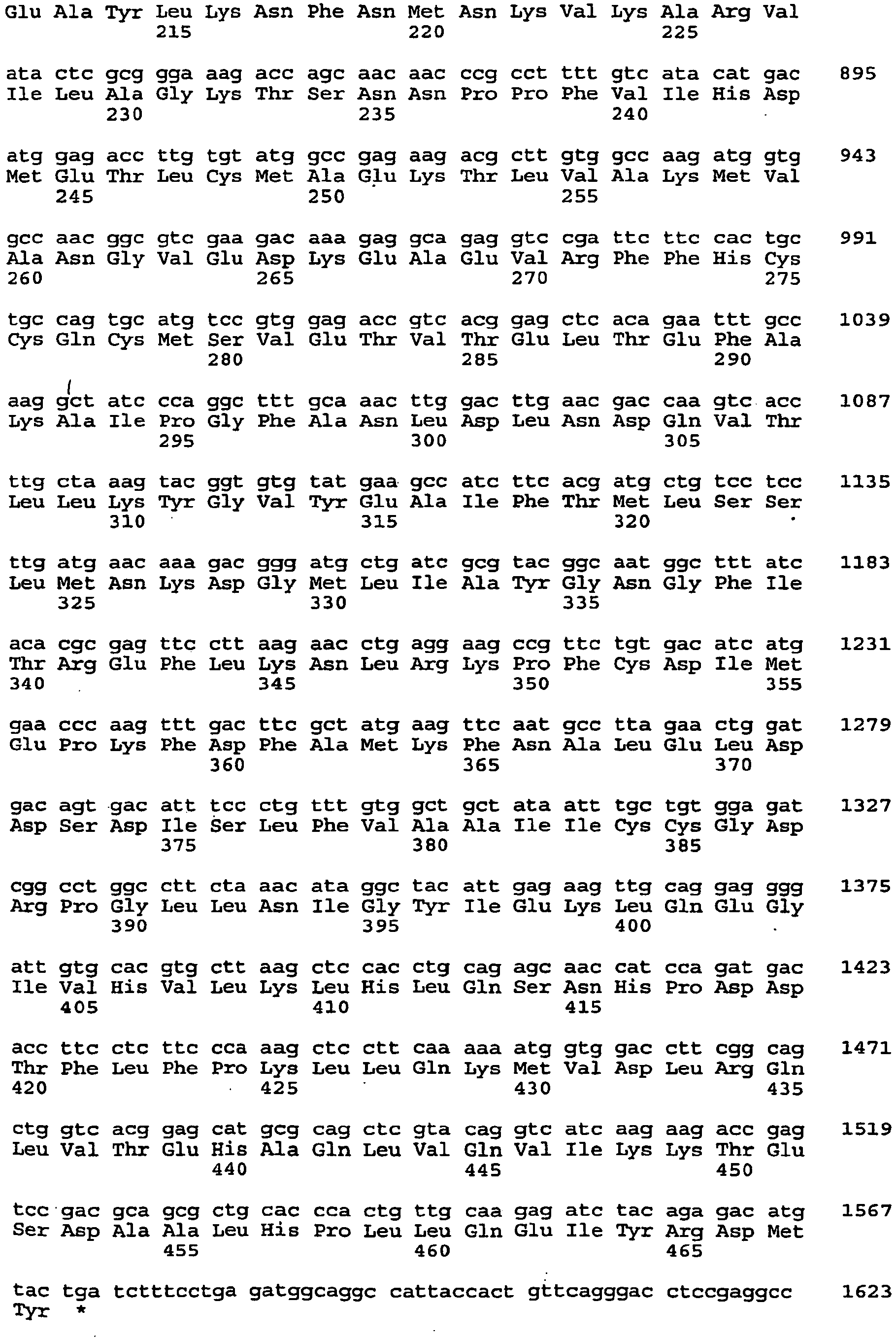

- <210> 12
<211> 468
<212> PRT
<213> Mus musculus - <400> 12


- <210> 13
<211> 1323
<212> DNA
<213> Mus musculus - <220>
<221> CDS
<222> (1)...(1323) - <300>
<308> GeneBank U10375
<309> 1994-07-22 - <400> 13

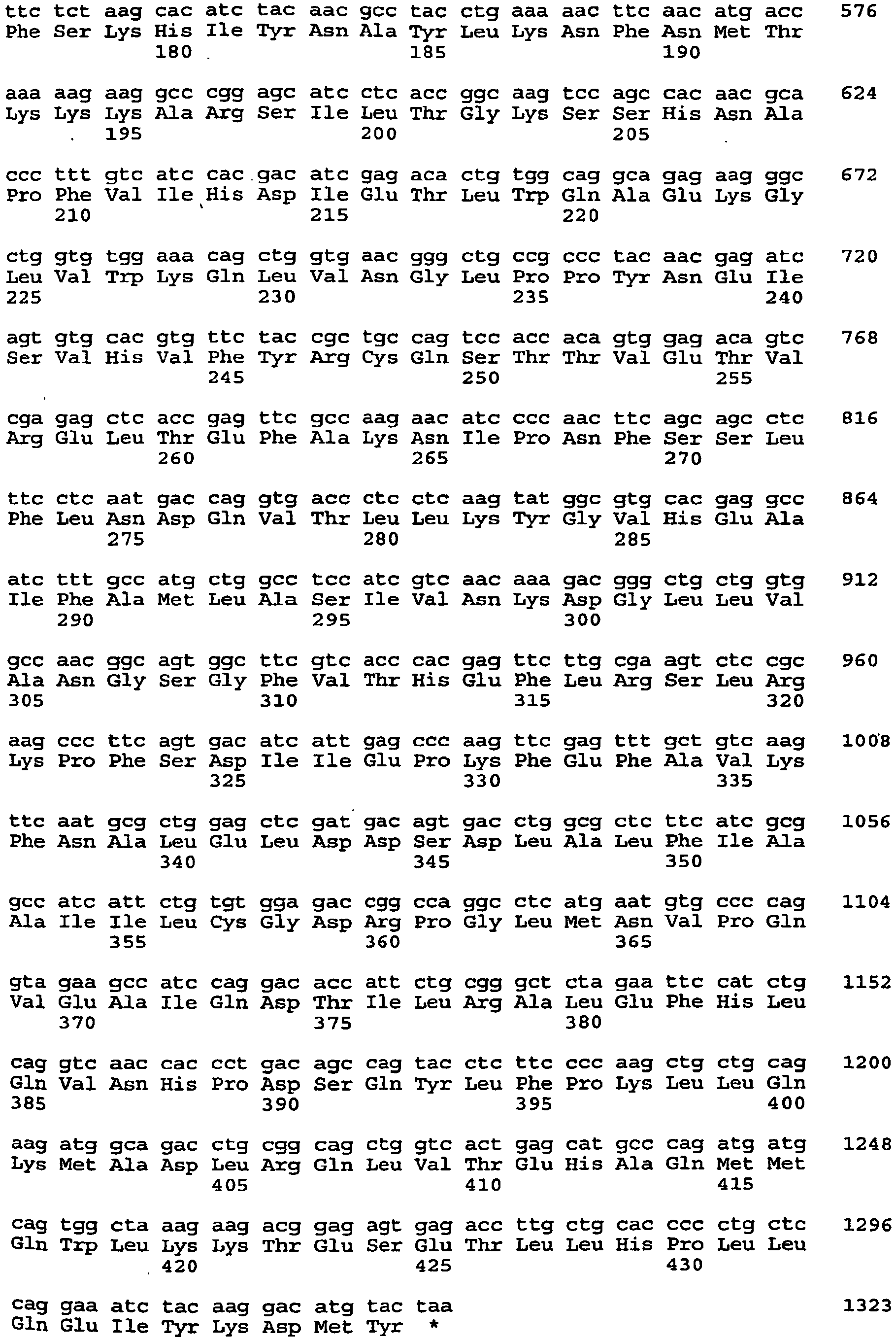

- <210> 14
<211> 440
<212> PRT
<213> Mus musculus - <400> 14
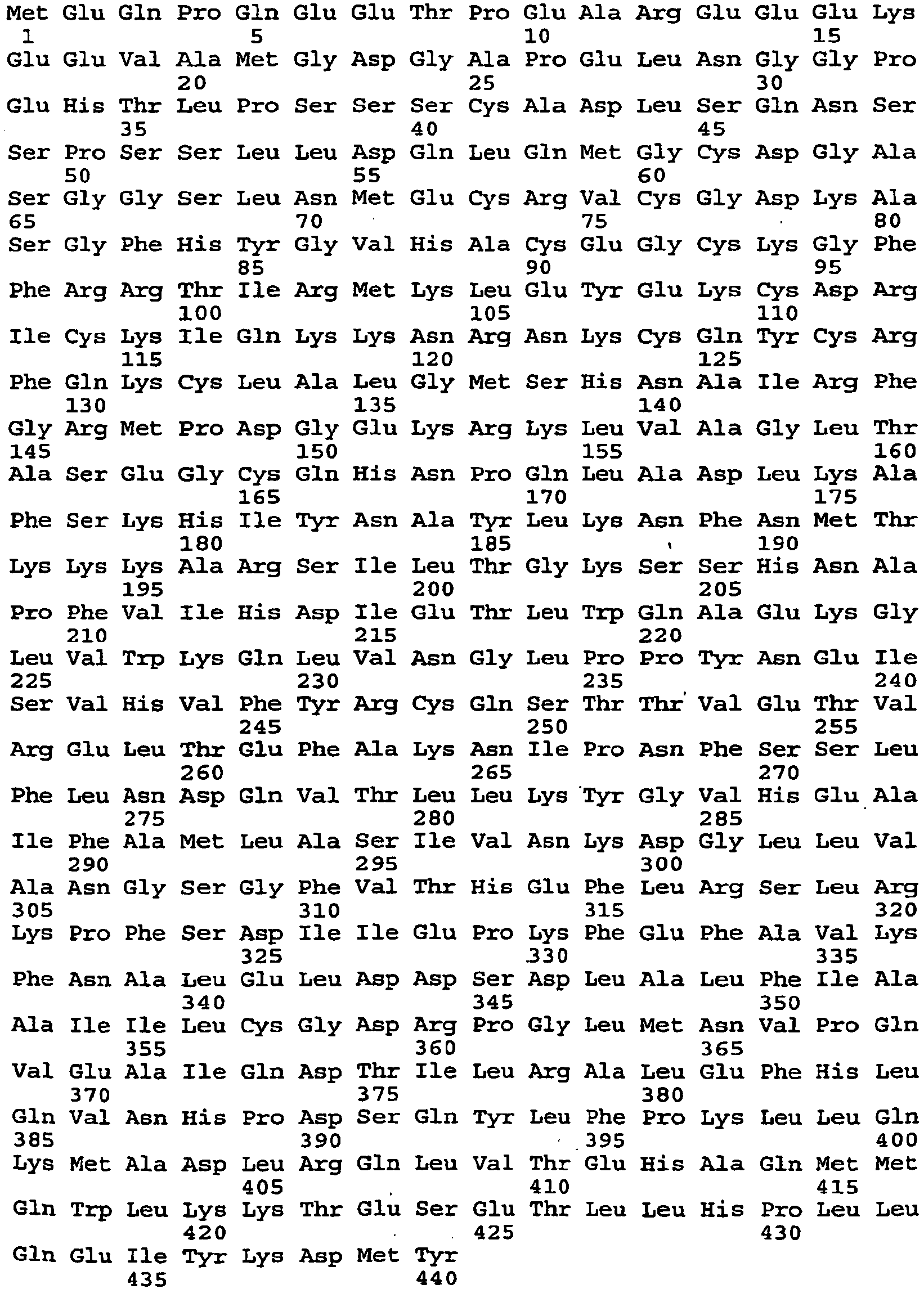
- <210> 15
<211> 1827
<212> DNA
<213> Homo Sapien - <220>
<221> CDS
<222> (292)...(1683) - <300>
<308> GeneBank XM_053680
<309> 2002-05-08 - <400> 15


- <210> 16
<211> 463
<212> PRT
<213> Homo Sapien - <400> 16


- <210> 17
<211> 1330
<212> DNA
<213> Homo Sapien - <220>
<221> CDS
<222> (97)...(837) - <300>
<308> GeneBank XM_042579
<309> 2002-02-06 - <400> 17


- <210> 18
<211> 246
<212> PRT
<213> Homo Sapien - <400> 18


The Ki is than calculated using the Cheng and Prusoff equation where:

Ligand = 50nM EC and Kd = 200nM as determined by saturation binding
Claims (38)
- A compound having formula I:
 R1 is selected from substituted or unsubstituted aryl, substituted or unsubstituted heteroaryl, substituted or unsubstituted aralkyl, substituted or unsubstituted heteroaralkyl, substituted cycloalkyl, substituted or unsubstituted cycloalkenyl, substituted or unsubstituted cycloalkynyl, substituted or unsubstituted heterocyclyl, substituted cycloalkylalkyl and substituted or unsubstituted heterocyclylalkyl;R2 is hydrogen;R3 is substituted or unsubstituted alkyl, substituted or unsubstituted alkenyl, substituted or unsubstituted alkynyl, substituted or unsubstituted alkylaminocarbonyl or C(J)OR30;R4 is hydrogen, unsubstituted alkyl, unsubstituted alkenyl, unsubstituted alkynyl, halide, cyanide, cyanate, thiocyanate, selenocyanate, trifluoromethoxy, azide, C(J)R30, C(J)NR31R32, CH2NR31R32, CH2OR31, CR30=CR31R32, NO2 or NR31R32;R5 is substituted or unsubstituted aralkyl or substituted or unsubstituted heteroaralkyl, wherein R5 is optionally substituted with one or more groups selected from Q3, wherein Q3 is the group consisting of alkyl, haloalkyl, halohydroxyalkyl, alkoxy, alkoxyalkoxyalkyl, alkoxyalkyl, aryl, halo, alkoxycarbonyl, alkylthio, aryloxy, haloalkoxy, aralkyl, heteroaryl, hydroxy, hydroxyalkyl, heterocyclyl, heterocyclylalkyl, alkylcarbonyl, arylcarbonyl, alkylalkelenedioxy and dialkylalkelenedioxy;R30 is hydrogen, unsubstituted alkyl, unsubstituted alkenyl, unsubstituted alkynyl, unsubstituted cycloalkyl, unsubstituted heterocyclyl, unsubstituted cycloalkylalkyl, unsubstituted heterocyclylalkyl, unsubstituted aryl, unsubstituted heteroaryl, unsubstituted aralkyl, or unsubstituted heteroaralkyl;R31 and R32 are each independently hydrogen, unsubstituted alkyl, unsubstituted alkenyl, unsubstituted alkynyl, unsubstituted cycloalkyl, unsubstituted heterocyclyl, unsubstituted cycloalkylalkyl, unsubstituted heterocyclylalkyl, unsubstituted aryl, unsubstituted heteroaryl, unsubstituted aralkyl, unsubstituted heteroaralkyl, or C(J)R35; or R31 and R32, together with the atoms to which they are attached, form unsubstituted cycloalkyl ring, an unsubstituted heterocyclic ring or an unsubstituted heteroaryl ring;J is O, S or NR40;R35 is hydrogen, unsubstituted alkyl, unsubstituted alkenyl, unsubstituted alkynyl, unsubstituted cycloalkyl, unsubstituted heterocyclyl, unsubstituted aryl, unsubstituted heteroaryl, unsubstituted alkoxy, unsubstituted aralkoxy, unsubstituted alkylamino, unsubstituted dialkylamino, unsubstituted arylalkylamino, or unsubstituted diarylamino;R40 is hydrogen, unsubstituted alkyl, unsubstituted aryl, or unsubstituted heteroaryl;wherein, where the alkyl, alkenyl, alkynyl, cycloalkyl, heterocyclyl, alkylene, alkenylene, alkynylene, aryl, heteroaryl, aralkyl, aralkenyl, aralkynyl, heteroaralkyl, heteroaralkenyl and heteroaralkynyl moieties of R1 and R3 are substituted, said substitution is with one or more substituents, each independently selected from Q1, where Q1 is halo, cyanide, cyanate, thiocyanate, selenocyanate, trifluoromethoxy, azide, hydroxy, oxo, thia, nitrile, nitro, formyl, mercapto, amino, hydroxyalkyl, hydroxyalkylaryloxy, hydroxyaryl, hydroxyalkylaryl, hydroxycarbonyl, hydroxycarbonylalkyl, alkyl, haloalkyl, polyhaloalkyl, aminoalkyl, diaminoalkyl, alkenyl containing 1 to 2 double bonds, alkynyl containing 1 to 2 triple bonds, cycloalkyl, cycloalkylalkyl, heterocyclyl, heterocyclylalkyl, aryl, diaryl, hydroxyaryl, alkylaryl, heteroaryl, aralkyl, aralkenyl, aralkynyl, alkylaralkyl, heteroarylalkyl, trialkylsilyl, dialkylarylsilyl, alkyldiarylsilyl, triarylsilyl, alkylidene, arylalkylidene, alkylcarbonyl, alkylarylcarbonyl, arylcarbonyl, heterocyclylcarbonyl, heteroarylcarbonyl, alkoxycarbonyl, alkoxycarbonylalkyl, alkoxycarbonylaryloxy, aryloxycarbonyl, aryloxycarbonylalkyl, heterocyclylcarbonylalkylaryl, aralkoxycarbonyl, aralkoxycarbonylalkyl, arylcarbonylalkyl, aminocarbonyl, alkylaminocarbonyl, dialkylaminocarbonyl, arylaminocarbonyl, diarylaminocarbonyl, arylalkylaminocarbonyl, alkoxy, aryloxy, haloalkoxy, alkoxyaryloxy, alkylaryloxy, diaryloxy, alkylaryloxyalkyl, alkyldiaryloxy, perfluoroalkoxy, alkenyloxy, alkynyloxy, aryloxyalkoxy, aralkoxyaryloxy, alkylarylcycloalkyloxy, heterocyclyloxy, alkoxyalkyl, alkoxyalkoxyalkyl, alkylheteroaryloxy, alkylcycloalkoxy, cycloalkyloxy, heterocyclyloxy, aralkoxy, haloaryloxy, heteroaryloxy, alkylheteroaryloxy, alkoxycarbonylheterocyclyloxy, alkylcarbonylaryloxy, alkylcarbonyloxy, arylcarbonyloxy, aralkylcarbonyloxy, alkoxycarbonyloxy, aryloxycarbonyloxy, alkoxyaryloxy, aralkoxycarbonyloxy, ureido, alkylureido, arylureido, amino, aminoalkyl, alkylaminoalkyl, dialkylaminoalkyl, arylaminoalkyl, diarylaminoalkyl, alkylarylaminoalkyl, alkylamino, dialkylamino, haloalkylamino, haloalkylarylamino, arylamino, diarylamino, alkylarylamino, aralkylamino, alkylcarbonylamino, aralkylcarbonylamino, haloalkylcarbonylamino, alkoxycarbonylamino, aralkoxycarbonylamino, arylcarbonylamino, arylcarbonylaminoalkyl, aryloxycarbonylaminoalkyl, aryloxyarylcarbonylamino, aryloxycarbonylamino, alkylenedioxyalkyl, dialkylalkylenedioxyalkyl, alkylsulfonylamino, arylsulfonylamino, azido, dialkylphosphonyl, alkylarylphosphonyl, diarylphosphonyl, alkylthio, arylthio, perfluoroalkylthio, hydroxycarbonylalkylthio, thiocyano, isothiocyano, alkylsulfinyl, alkylsulfonyl, arylsulfinyl, arylsulfonyl, aminosulfonyl, alkylaminosulfonyl, dialkylaminosulfonyl, arylaminosulfonyl, diarylaminosulfonyl or alkylarylaminosulfonyl; or two Q1 groups, which substitute atoms in a 1,2 or 1,3 arrangement, together form alkylenedioxy (i.e., -O-(CH2)2-O-), thioalkylenoxy (i.e., -S-(CH2))z-O-) or alkylenedithioxy (i.e., -S-(CH2)z-S-) where z is 1 or 2; andeach Q1 is independently unsubstituted or substituted with one or more substituents, each independently selected from Q2, where Q2 is halo, cyanide, cyanate, thiocyanate, selenocyanate, trifluoromethoxy, azide, hydroxy, oxo, thia, nitrile, nitro, formyl, mercapto, amino, hydroxyalkyl, hydroxyaryl, hydroxycarbonyl, alkyl, haloalkyl, polyhaloalkyl, aminoalkyl, diaminoalkyl, alkenyl containing 1 to 2 double bonds, alkynyl containing 1 to 2 triple bonds, cycloalkyl, heterocyclyl, aryl, heteroaryl, aralkyl, aralkenyl, aralkynyl, alkoxycarbonyl, aryloxycarbonyl, aralkoxycarbonyl, arylcarbonylalkyl, aminocarbonyl, alkoxy, aryloxy, aralkoxy, alkylenedioxy, amino, aminoalkyl, dialkylamino, arylamino, diarylamino, alkylamino, dialkylamino, haloalkylamino, arylamino, diarylamino, alkylarylamino, aralkylamino, alkoxycarbonylamino, arylcarbonylamino, alkylthio or arylthio.
 - The compound of claim 1, wherein R1 is substituted or unsubstituted aryl.
- The compound of claim 1, wherein R1 is substituted or unsubstituted heteroaryl.
- The compound of claim 1, wherein R1 is substituted or unsubstituted heterocyclyl.
- The compound of claim 1, wherein R1 is substituted cyclohexyl, substituted or unsubstituted cyclopentenyl, substituted or unsubstituted phenyl, substituted or unsubstituted benzyl, substituted or unsubstituted naphthyl, substituted or unsubstituted furyl, substituted or unsubstituted thienyl, substituted or unsubstituted pyrrolyl, substituted or unsubstituted pyrazolyl, substituted or unsubstituted thiazolyl, substituted or unsubstituted piperidinyl, substituted or unsubstituted pyridinyl, substituted or unsubstituted pyrazinyl, substituted or unsubstituted indanyl, substituted or unsubstituted benzofuryl, substituted or unsubstituted benzothiophenyl or substituted or unsubstituted indolyl, where the substituents are each independently selected from one or more Q1.
- The compound of claim 1, wherein R1 is substituted or unsubstituted furyl, substituted or unsubstituted thienyl, substituted or unsubstituted pyrrolyl, substituted or unsubstituted pyrazolyl, substituted or unsubstituted thiazolyl, substituted or unsubstituted piperidinyl, substituted or unsubstituted pyridinyl, substituted or unsubstituted pyrazinyl, substituted or unsubstituted benzofuryl, substituted or unsubstituted benzothiophenyl or substituted or unsubstituted indolyl, where the substituents are each independently selected from one or more Q1.
- The compound of any of claims 1-6, wherein R1 is substituted with one to five substituents each independently selected from Q1, where Q1 is halo, cyanide, cyanate, thiocyanate, selenocyanate, trifluoromethoxy, azide, nitro, hydroxy, amino, hydroxyalkyl, hydroxyalkylaryloxy, hydroxyaryl, hydroxyalkylaryl, hydroxycarbonyl, haloalkyl, alkyl, heterocyclyl, heterocyclylalkyl, aryl, heteroaryl, aralkyl, heteroaralkyl, alkylaralkyl, alkylarylcarbonyl, heterocyclylcarbonyl, alkoxycarbonyl, alkoxycarbonylaryloxy, aryloxycarbonyl, heterocyclylcarbonylalkylaryl, aralkoxycarbonyl, alkoxy, aryloxy, heteroaryloxy, aralkoxy, alkylaryloxy, alkylaryloxyalkyl, alkyldiaryloxy, aryloxyalkoxy, aralkoxyaryloxy, alkylarylcycloalkyloxy, alkylheteroaryloxy, cycloalkyloxy, heterocyclyloxy, haloaryloxy, alkylcarbonylaryloxy, arylamino, alkylarylamino, aralkylamino, alkylcarbonylamino, alkylaminocarbonyl, haloalkylcarbonylamino, or arylthio; and each Q1 is unsubstituted or further substituted with Q2, which is alkyl, aryl, alkoxy, cyanide, cyanate, thiocyanate, selenocyanate, trifluoromethoxy, azide, halo, aryloxy, aralkoxy, haloalkyl, alkylthio, alkylamino, dialkylamino or hydroxy.
- The compound of any of claims 1-6, wherein R1 is substituted with Q1, which is selected from methyl, ethyl, trifluoromethyl, nitro, hydroxy, n-butyloxy, 3-(2-piperidinyl)ethoxy, methylcarbonylamino, ethylaminocarbonylamino, chloro, bromo, benzylamino, methylphenoxymethyl, trifluoromethylcarbonylamino, methoxycarbonyl, phenoxy, cyano, n-butoxy, benzoxy, 1-piperidinyl, methoxy, hydroxycarbonyl, tert-butoxycarbonylpiperazinylcarbonyl, hydroxymethyl, 1-piperidinylcarbonyl, phenyl, methylphenyl, dimethylamino, methylcarbonylamino, methoxyphenoxy, methylphenoxy, piperidinylmethyl, biphenoxy, benzoxycarbonyl, piperazinylcarbonyl, benzyl, phenylthio, chlorophenoxy, methylbenzyl, hydroxymethylphenoxy, ethoxycarbonylphenoxy, tertbutylmethylphenoxy, tertbutylbiphenoxy, ethylphenoxy, isopropylphenoxy, tertbutylphenoxy, N,N-phenylmethylamino, 3-methylphenyl-1-amino, trifluoromethylphenoxy, ethylphenoxy, methylcarbonylphenoxy, tetrahydropyranyloxy, tetrahydronaphthoxy, hydroxycarbonylphenoxy, benzoxyphenoxy, cyclohexyloxy, indanyloxy, methoxycarbonylphenoxy, isopropylphenoxy, tert-butylphenoxy, N,N-dimethylaminophenoxy, methoxyphenoxy, cyanophenoxy, fluorophenoxy, benzoxyphenoxy; trifluoromethylphenoxy, bromophenoxy, 3,5-ditrifluoromethylphenoxy, methylthiophenoxy, indolyl, tert-butoxycarbonyl-piperidinyloxy, hydroxyphenoxy, pyrimidinoxy and pyrazinoxy.
- The compound of claim 1, wherein R1 has formula II:

- The compound of claim 9, wherein X is O.
- The compound of claim 1, wherein R1 is 1-cyclopentcnyl, indanyl, phenyl, 1-naphthyl, 2-naphthyl, 3-methylphenyl, 2-chlorophenyl, 4-chlorophenyl, 3-ethylphenyl, 3-trifluoromethylphenyl, 3-nitrophenyl, 3-hydroxyphenyl, 3-n-butoxyphenyl, 3-benzyloxyphenyl, 3-(2-piperidinyl)ethoxyphenyl, 3-methylcarbonylaminophenyl, 3-ethylaminocarbonylaminophenyl, 2-methylphenyl, 2-methoxyphenyl, 4-methylphenyl, 3-methoxyphenyl, 4-methoxyphenyl, 3-chlorophenyl, 4-chlorophenyl, 3-benzylaminophenyl, 3-(3-methyl)phenoxymethylphenyl, benzyl, 3-trifluoromethylcarbonylaminophenyl, 3,5-dimethylphenyl, 2-chloro-3-methylphenyl, phenylethyl, 4-butoxyphenyl, 4-methoxycarbonylphenyl, 4-phenoxyphenyl, 4-cyanophenyl, 4-benzoxyphenyl, 4-(1-piperidinyl)phenyl, 4-hydroxycarbonylphenyl, 4-(4-tert-butoxycarbonylpiperazin-1-ylcarbonyl)phenyl, 4-hydroxymethylphenyl, 4-(1-piperidinylcarbonyl)phenyl, 4-dimethylaminophenyl, 4-methylcarbonylaminophenyl, 4-nitrophenyl, 6-(1,2,3,4-tetrahydro)naphthyl, 4-(4-methoxyphenoxy)phenyl, 4-(2-methylphenoxy)phenyl, 4-(3-methylphenoxy)phenyl, 4-(4-methylphenoxy)phenyl, 4-(3-methoxyphenoxy)phenyl, 4-(1-piperidinylmethyl)phenyl, 4-(4-biphenoxy)phenyl, 3-(1-benzoxycarbonyl)-piperidinyl, 4-(1-piperazinylcarbonyl)phenyl, 5-(2-methyl-2,3-dihydro)benzofuryl, 4-benzylphenyl, 4-phenylthiophenyl, 4-(4-chlorophenoxy)-2-chlorophenyl, 4-(3-biphenoxy)phenyl, 4-(1-benzoxycarbonyl)-piperidinyl, 4-piperidinyl, 4-(1-(3-methylbenzyl))-piperidinyl, 4-(3-methyl-4-hydroxyphen-1-oxy)phenyl, 4-(2-methyl-4-hydroxyphenoxy)phenyl, 4-(4-ethoxycarbonylphenoxy)phenyl, 4-(2-methyl-4-tertbutylphenoxy)phenyl, 4-(2-phenyl-4-tertbutylphenoxy)phenyl, 4-(3-ethylphenoxy)phenyl, 4-(3-isopropylphenoxy)phenyl, 4-(3-tertbutylphenoxy)phenyl, 4-(3,5-dimethylphenoxy)phenyl, 4-phenoxy-2-methylphenyl, 4-(2-methylphenoxy)-2-methylphenyl, 4-(2-methylphenoxy)-3-methylphenyl, 4-N-methyl-N-phenylaminophenyl, 4-(3-trifluoromethylphenoxy)phenyl, 4-(4-ethylphenoxy)phenyl, 4-(4-isopropylphenoxy)phenyl, 4-(4-tertbutylphenoxy)phenyl, 4-(3-methylcarbonylphenoxy)phenyl, 4-(3,4-dimethylphenoxy)phenyl, 4-(2-tetrahydropyranyloxy)phenyl, 4-(2-tetrahydropyranyloxy)-3-methylphenyl, 4-hydroxyphenyl, 3-methyl-4-hydroxyphenyl, 4-(4-methylphenoxy)-3-methylphenyl, 4-(2-ethylphenoxy)phenyl, 4-(2-isopropylphenoxy)phenyl, 4-(5,6,7,8-tetrahydronaphthyloxy)phenyl, 4-(3-hydroxycarbonylphenoxy)phenyl, 2-methyl-4-hydroxyphenyl, 4-phenoxy-2-hydroxyphenyl, 3-phenoxyphenyl, 4-(2,3,4-trimethylphenoxy)phenyl, 4-(4-benzyloxyphenoxy)phenyl, 4-(3-(methyl-3-indanyloxy)phenyl, 4-(2-methyl-5-benzothiazoloxy)phenyl, 4-cyclohexyloxyphenyl, 4-(3-methoxycarbonylphenoxy)phenyl, 4-(3-isopropylphenoxy)-3-methylphenyl, 4-tert-butylphenoxy-3-methylphenyl, 4-N,N-dimethylaminophenoxy-3-methylphenyl, 4-methoxy-phenoxy-3-methylphenyl, 3-methoxy-phenoxy-3-methylphenyl, 4-(3-methoxycarbonyl-phenoxy)-3-methylphenyl, 4-(3-cyanophenoxy)-3-methylphenyl, 4-(4-fluorophenoxy)-3-methylphenyl, 4-(4-benzoxy-phenoxy)-3-methylphenyl, 4-(3-benzoxy-phenoxy)-3-methylphenyl, 4-(2,5-dimethylphenoxy)-3-methylphenyl, 4-(2-chlorophenoxy)-3-methylphenyl, 4-(3-chlorophenoxy)-3-methylphenyl, 4-(2-trifluoromethylphenoxy)-3-methylphenyl, 4-(3-trifluoromethylphenoxy)-2-methylphenyl, 4-(3-bromophenoxy)-phenyl, 4-(4-bromophenoxy)-phenyl, 4-(3-benzyloxyphenoxy)-phenyl, 4-(3-cyanophenoxy)-phenyl, 4-(4-cyanophenoxy)phenyl, 4-(2,4-dimethylphenoxy)-phenyl, 4-(3,5-trifluoromethylphenoxy)phenyl, 4-(4-methylthio-phenoxy)-phenyl, 4-(4-N,N-dimethylamino-phenoxy)-phenyl, 5-indolyloxyphenyl, 4-(1-tert-butoxycarbonyl-piperidin-4-oxy)-phenyl, 4-(4-hydroxyphenoxy)-phenyl, 4-(2-pyrimidinoxy)-phenyl, 4-(2-pyrazinoxy)-phenyl, 2-thienyl, 2-(5-chloro)thienyl, 2-(5-bromo)thienyl, 2-(5-phenyl)thienyl, 3-benzothiophenyl, 3-methyl-2-benzothiophenyl, 2-(5-(3-methylphenyl))-thienyl, 3-pyridinyl, 2-pyrazinyl, 4-(1-phenyl-5-methyl)pyrazolyl, 2-(1-methyl)pyrrolyl, 3-(1-methyl)indolyl, 3-(1-benzyloxycarbonyl)-piperidinyl, 4-(1-benzyloxycarbonyl)-piperidinyl, 4-piperidinyl, 4-(1-(3-methylbenzyl)-piperidinyl, 2-furyl, 2-(5-methyl)-furyl, 3-(2,5-dimethyl)-furyl, benzofuryl, 3-(2,4-dimethyl)-furyl, 2-(1,3-thiazolyl) or 5-(2,4-dimethyl)-1,3-thiazolyl.
- The compound of any of claims 1-11, wherein R3 is substituted or unsubstituted alkyl, substituted or unsubstituted alkoxycarbonyl or substituted or unsubstituted alkylaminocarbonyl, where the substituents are each independently selected from one or more Q1.
- The compound of any of claims 1-12, wherein R3 is substituted with Q1, which is selected from halo, cyanide, cyanate, thiocyanate, selenocyanate, trifluoromethoxy, azide, alkyl, alkoxy, alkoxycarbonyl and aryloxycarbonyl.
- The compound of any of claims 1-12, wherein R3 is methyl, trifluoromethyl, pentafluoroethyl, heptafluoropropyl, chlorodifluoromethyl, 1-(1-methoxy-1-fluoro)ethyl, methoxycarbonyl, ethoxycarbonyl, methylaminocarbonyl, dimethoxymethyl or methoxycarbonylmethyl.
- The compound of any of claims 1-14, wherein R4 is unsubstituted methyl, unsubstituted acetyl or cyano.
- The compound of any of claims 1-14, wherein R4 is hydrogen, cyano, nitro, acetyl, methylcarbonylaminomethyl, ethylcarbonylaminomethyl, n-propylcarbonylaminomethyl, isopropylcarbonylaminomethyl, n-octylcarbonylaminomethyl, phenylcarbonylaminomethyl, ethoxycarbonylaminomethyl, dimethylaminomethyl or aminomethyl.
- The compound of any of claims 1-16, wherein R5 is substituted or unsubstituted aralkyl, where the substituents are each independently selected from one or more of Q3, wherein Q3 is the group consisting of alkyl, haloalkyl, halohydroxyalkyl, alkoxy, alkoxyalkoxyalkyl, alkoxyalkyl, aryl, halo, alkoxycarbonyl, alkylthio, aryloxy, haloalkoxy, aralkyl, heteroaryl, hydroxy, hydroxyalkyl, heterocyclyl, heterocyclylalkyl, alkylcarbonyl, arylcarbonyl, alkylalkelenedioxy and dialkylalkelenedioxy.
- The compound of any of claims 1-16, wherein R5 is substituted or unsubstituted heteroaralkyl, where the substituents are each independently selected from one or more of Q3, wherein Q3 is the group consisting of alkyl, haloalkyl, halohydroxyalkyl, alkoxy, alkoxyalkoxyalkyl, alkoxyalkyl, aryl, halo, alkoxycarbonyl, alkylthio, aryloxy, haloalkoxy, aralkyl, heteroaryl, hydroxy, hydroxyalkyl, heterocyclyl, heterocyclylalkyl, alkylcarbonyl, arylcarbonyl, alkylalkelenedioxy and dialkylalkelenedioxy.
- The compound of any of claims 1-16, wherein R5 is substituted or unsubstituted benzyl, substituted or unsubstituted 2-phenethyl, substituted or unsubstituted 1-phenethyl, substituted or unsubstituted 3-phenylpropyl, substituted or unsubstituted 3-pyridylmethyl, substituted or unsubstituted 4-pyridylmethyl, substituted or unsubstituted thiazolylmethyl, substituted or unsubstituted oxazolylmethyl, where the substituents are each independently selected from one or more of alkyl, haloalkyl, halohydroxyalkyl, alkoxy, alkoxyalkoxyalkyl, alkoxyalkyl, aryl, halo, alkoxycarbonyl, alkylthio, aryloxy, haloalkoxy, aralkyl, heteroaryl, hydroxy, hydroxyalkyl, heterocyclyl, heterocyclylalkyl, alkylcarbonyl, arylcarbonyl, alkylalkelenedioxy and dialkylalkelenedioxy.
- The compound of any of claims 1-19, R5 is substituted with a group selected from alkyl, haloalkyl, halohydroxyalkyl, alkoxy, alkoxyalkoxyalkyl, alkoxyalkyl, aryl, halo, alkoxycarbonyl, alkylthio, aryloxy, haloalkoxy, aralkyl, heteroaryl, hydroxy, hydroxyalkyl, heterocyclyl, heterocyclylalkyl, alkylcarbonyl, and arylcarbonyl.
- The compound of any of claims 1-16, wherein R5 is 2,4-dimethylbenzyl, 4-isopropylbenzyl, 4-tert-butylbenzyl, 2,4,5-trifluorobenzyl, 1-naphthylmethyl, 4-methylbenzyl, 4-ethylbenzyl, 4-methylcarbonylbenzyl, benzyl, 4-(2-methyl)-thiazolylmethyl, 4-(2-phenyl)thiazolylmethyl, 3-methoxymethoxymethylbenzyl, 3-hydroxymethylbenzyl, 4-hydroxymethylbenzyl, 4-hydroxyethylbenzyl, 4-methoxymethylbenzyl, 4-(1-piperidinylmethyl)benzyl, 4-(2-ethyl)thiazolylmethyl, 4-(2-isopropyl)thiazolylmethyl, 4-(2-propyl)thiazolylmethyl, 4-(2-benzyl)thiazolylmethyl, 4-(2-methyl)oxazolylmethyl, 4-(2-ethyl)oxazolylmethyl, 4-(2-propyl)oxazolylmethyl, 4-(2-phenyl)oxazolylmethyl, 4-(2-benzyl)oxazolylmethyl, 4-n-propyloxymethylbenzyl, 2-(5-methyl)pyrazinylmethyl, 4-n-pentyloxymethylbenzyl, 4-n-octyloxymethylbenzyl, 3-ethoxymethylbenzyl, 3-n-butoxymethylbenzyl, 3-n-hexyloxymethylbenzyl, 3-n-octyloxymethylbenzyl, 2-methylbenzyl, 4-methylbenzyl, 3-methylbenzyl, phenylethyl, 4-(2,5-dimethyl)thiazolylmethyl, 4-(2-isopropyl-5-methyl)thiazolylmethyl, 4-(2-ethyl-5-methyl)thiazolylmethyl, 4-(2-methyl-5-ethyl)thiazolylmethyl, 4-(2,5-diethyl)thiazolylmethyl, 2-phenylethyl, 3-phenylpropyl, benzyl, 3-methylbenzyl, 2-trifluoromethylbenzyl, 3-trifluoromethylbenzyl, 4-trifluoromethnylbenzyl, 2-methoxybenzyl, 3-methoxybenzyl, 4-methoxybenzyl, 4-phenylbenzyl, 1-phenylethyl, 2-fluorobenzyl, 4-fluorobenzyl, 2,4-difluorobenzyl, 4-bromobenzyl, 4-methoxycarbonylbenzyl, 2-chlorobenzyl, 4-chlorobenzyl, 4-methylthiobenzyl, 4-phenoxybenzyl, 4-trifluoromethoxybenzyl, 3-pyridylmethyl or 4-pyridylmethyl.
- The compound of any of claims 1-16, wherein R5 is 4-(2-methyl)-thiazolylmethyl, 4-(2-phenyl)thiazolylmethyl, 4-(1-piperidinylmethyl)benzyl, 4-(2-ethyl)thiazolylmethyl, 4-(2-isopropyl)thiazolylmethyl, 4-(2-propyl)thiazolylmethyl, 4-(2-benzyl)thiazolylmethyl, 4-(2-methyl)oxazolylmethyl, 4-(2-ethyl)oxazolylmethyl, 4-(2-propyl)oxazolylmethyl, 4-(2-phenyl)oxazolylmethyl, 4-(2-benzyl)oxazolylmethyl, 4-(2-cyclohexyl)oxazolylmethyl, 2-(5-methyl)pyrazinylmethyl, 4-(2,5-dimethyl)thiazolylmethyl, 4-(2-isopropyl-5-methyl)thiazolylmethyl, 4-(2-ethyl-5-methyl)thiazolylmethyl, 4-(2-methyl-5-ethyl)thiazolylmethyl, 4-(2,5-diethyl)thiazolylmethyl, 3-pyridylmethyl or 4-pyridylmethyl.
- The compound of claim 1 that has formula V:

- The compound of claim 1 that has formula VII:

- The compound of claim 1 that has formula XI:

- The compound of claim 1 that has formula XII:

- The compound of claim 1 that has formula XIII:

- The compound of claim 1 that has formula XIV:

- The compound of claim 1 that has formula XVI:

- The compound of claim 1 that has formula XVII:

- The compound of claim 1 that has formula XVIII:

- The compound of claim 1 that has formula XIX:

- The compound of claim 1 that has formula XX:

- A compound of claim 1 selected from the following:


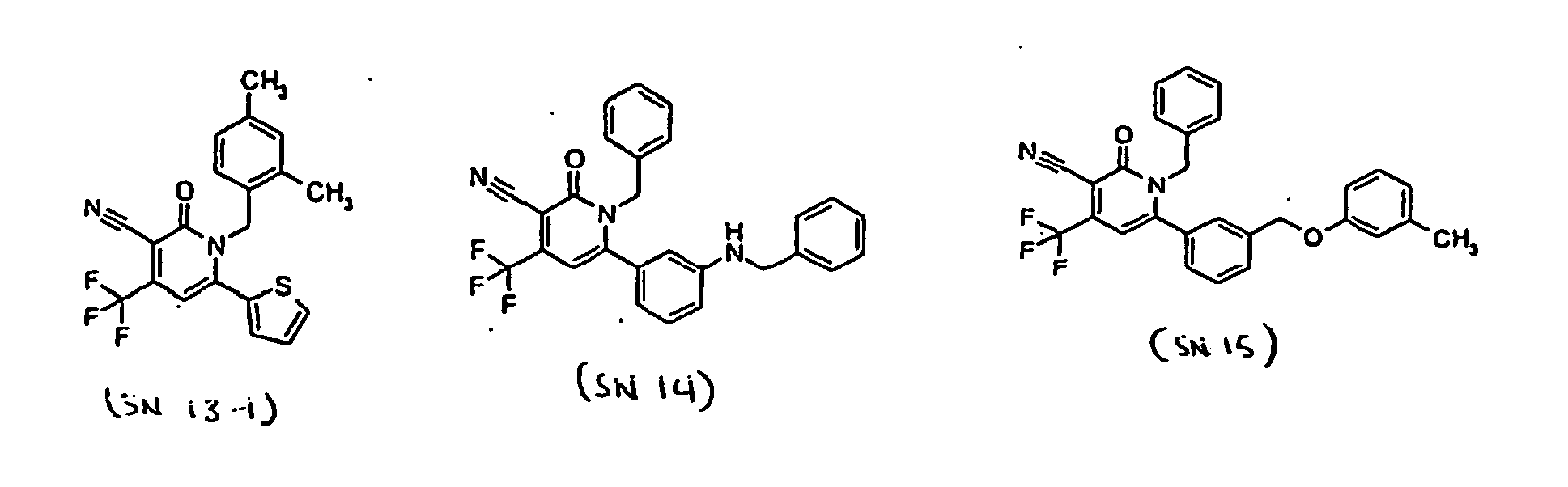
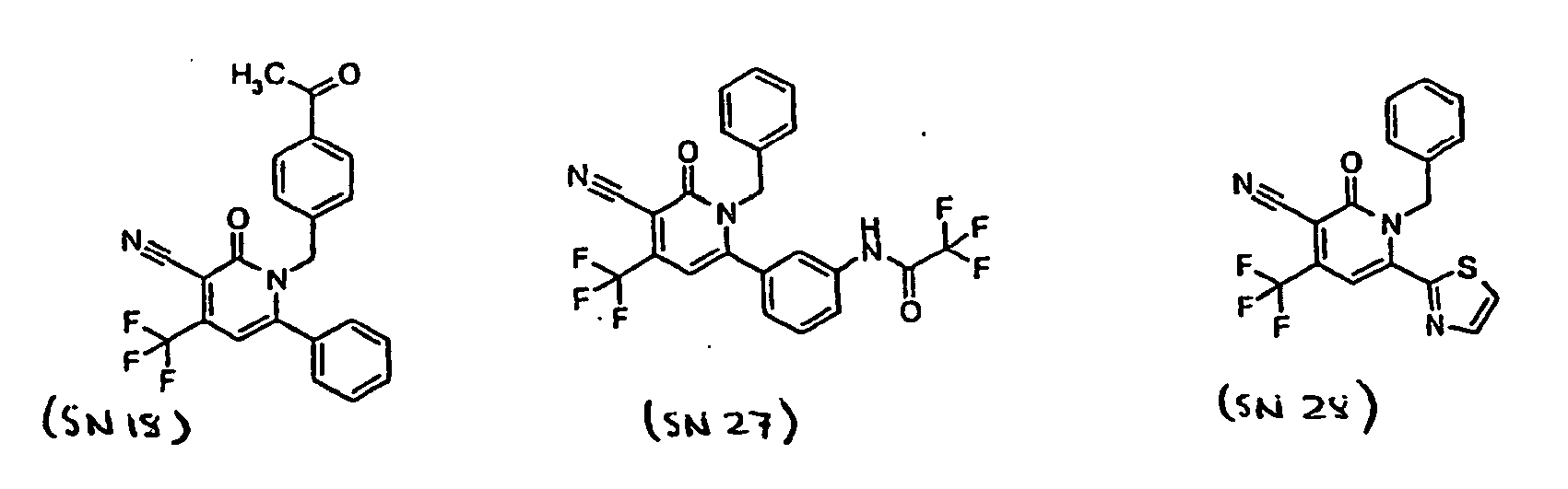


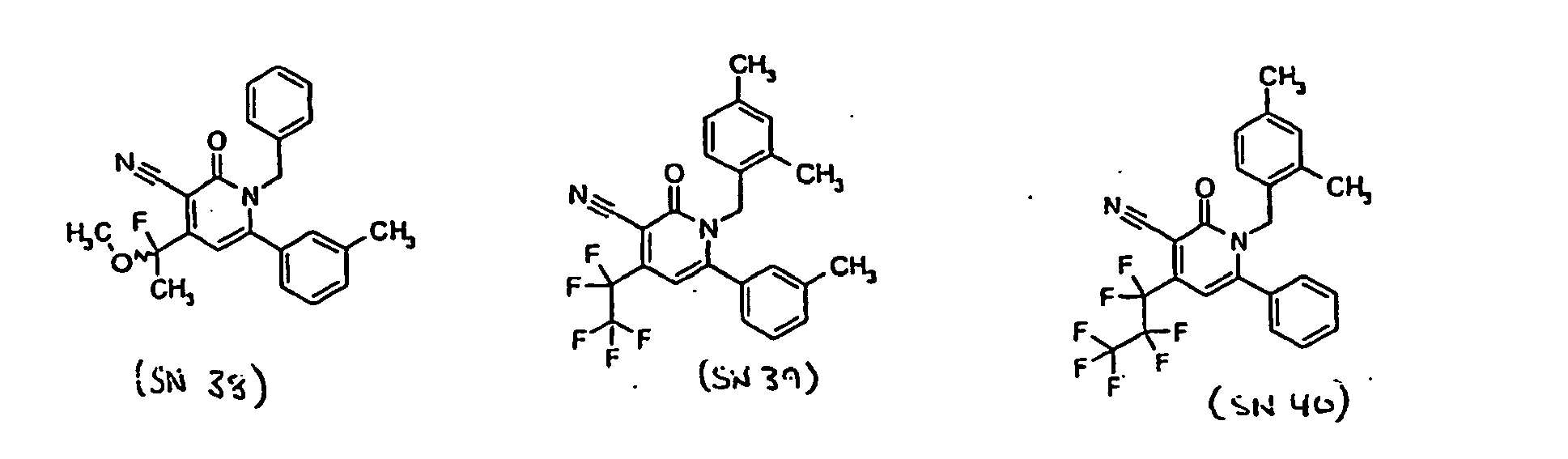


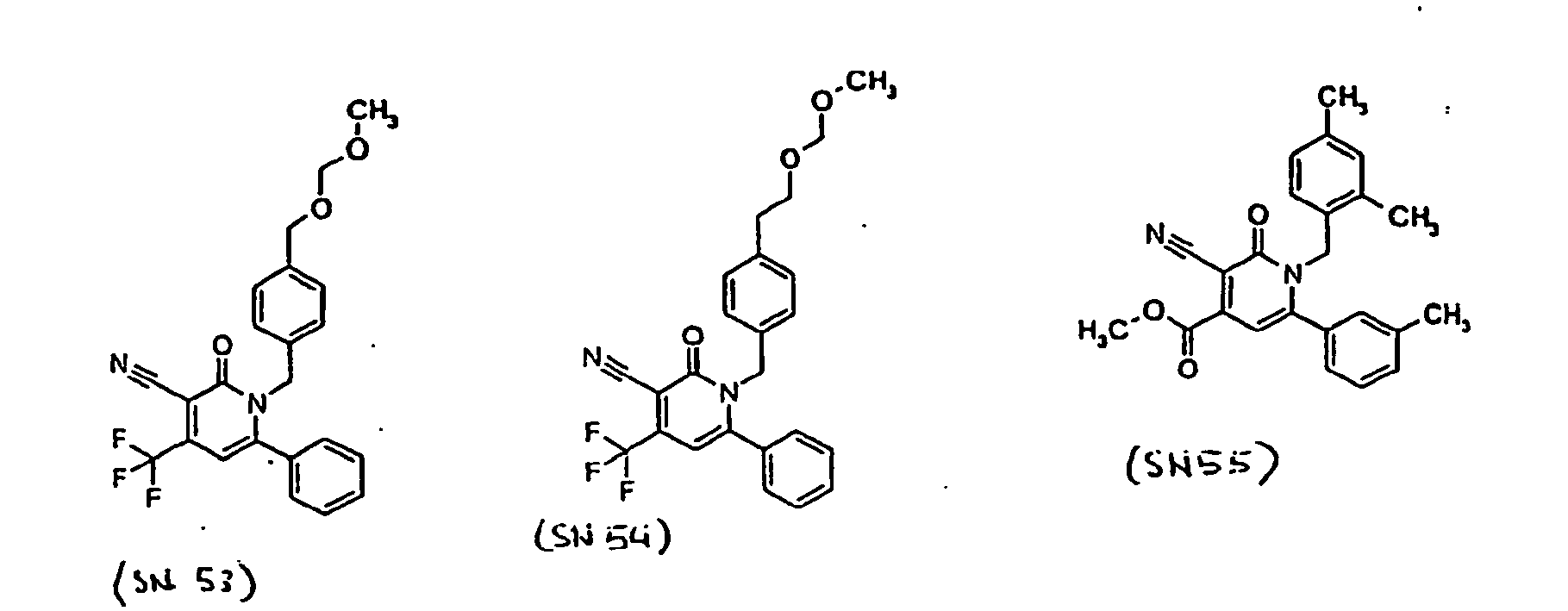


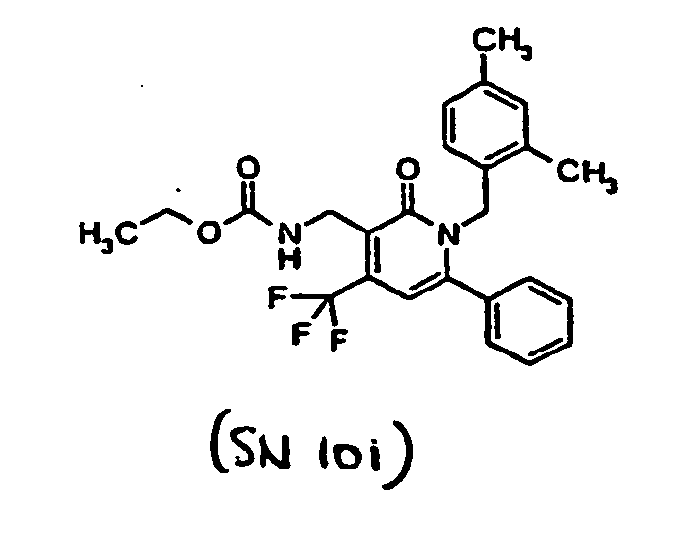


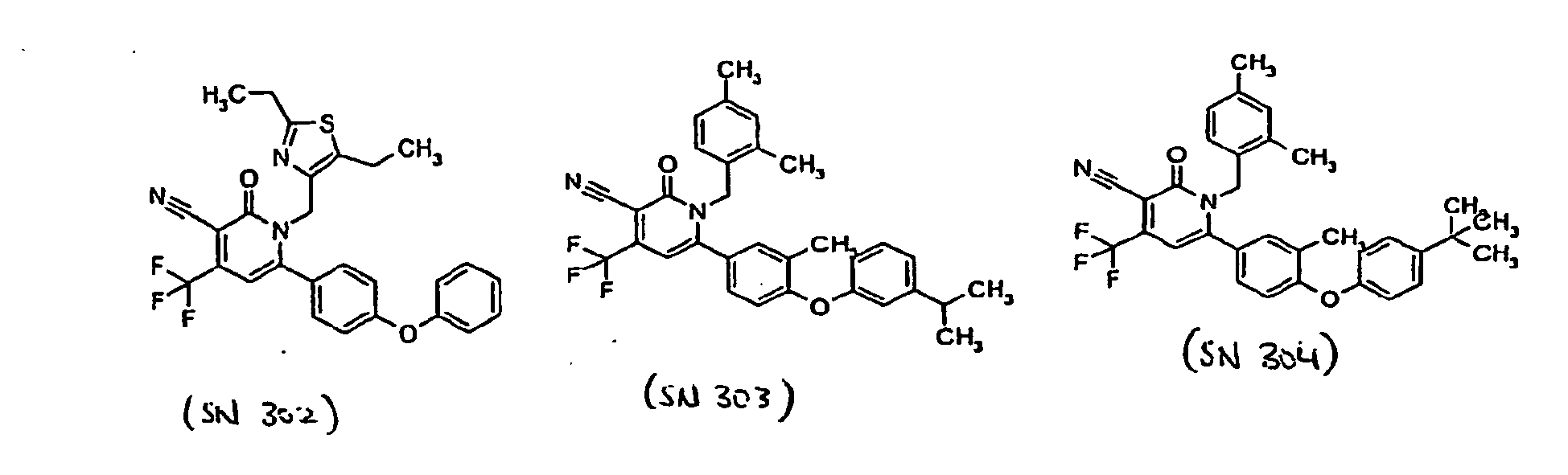


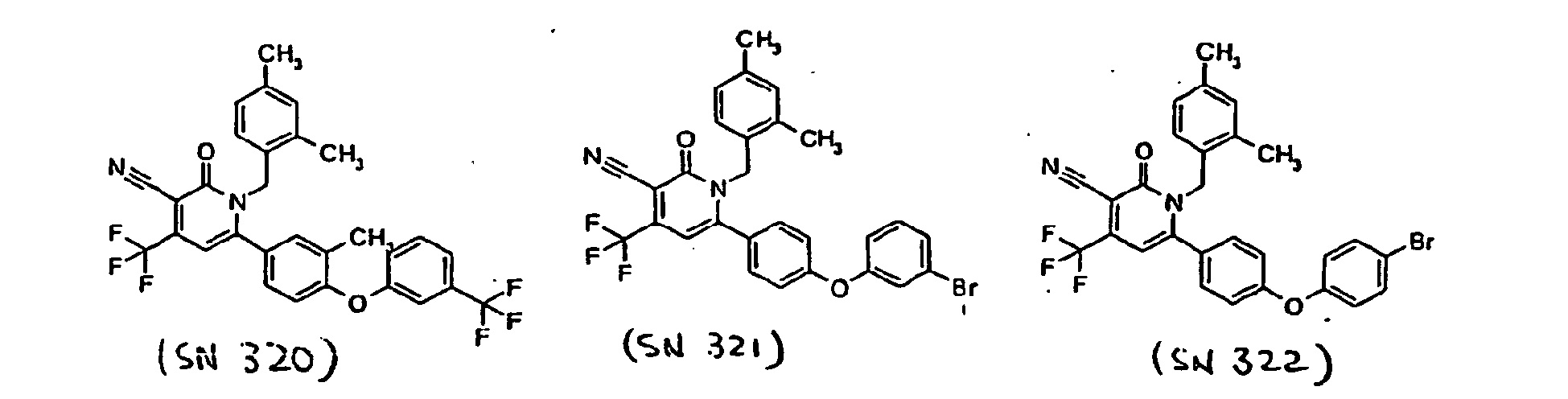


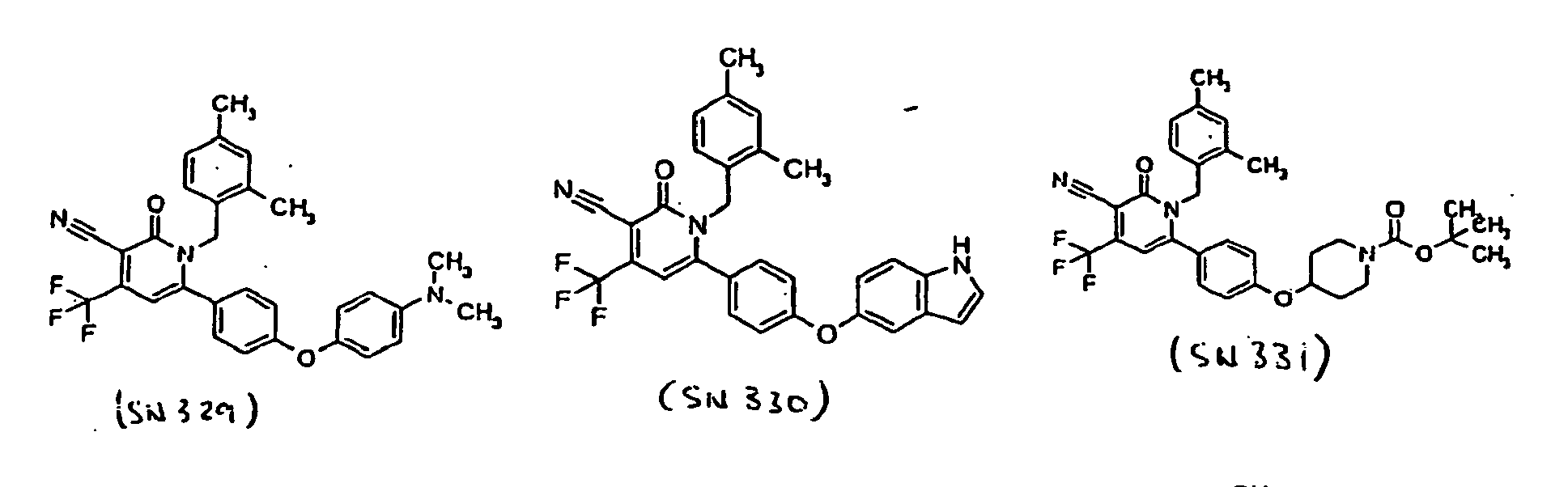


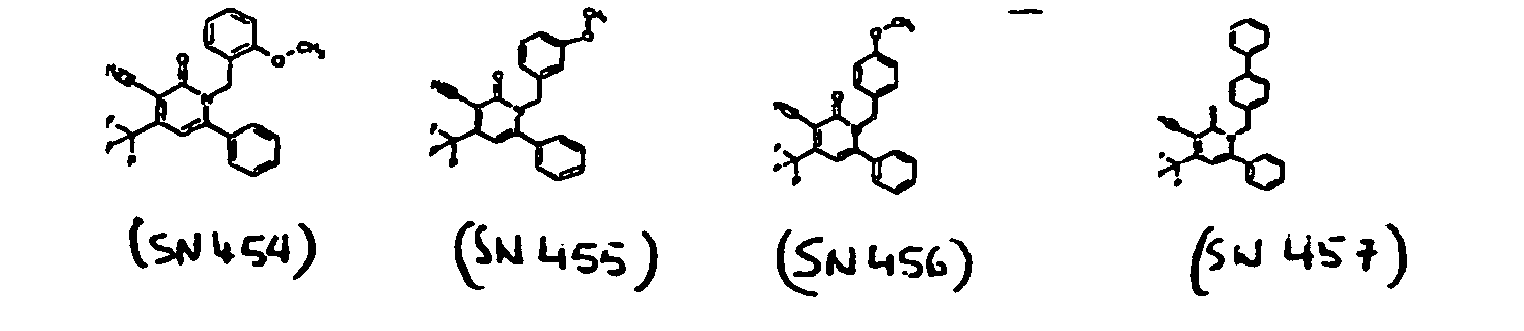


- A pharmaceutical composition, comprising the compound of any of claims 1-34 in a pharmaceutically acceptable carrier.
- Use of a compound of any of claims 1-34 for obtaining a medicine intended for a therapeutic use selected from hypercholesterolemia, hypertipoproteinemia, hypertriglyceridemia, lipodystrophy, hyperglycemia, diabetes mellitus, dyslipidemia, atherosclerosis, gallstone disease, acne vulgaris, acneiform skin conditions, diabetes, Parkinson's disease, cancer, Alzheimer's disease, inflammation, immunological disorders, lipid disorders, obesity, conditions characterized by a perturbed epidermal barrier function, conditions of disturbed differentiation or excess proliferation of the epidermis or mucous membrane, and cardiovascular disorders.
- Use of a compound of any of claims 1-34 for obtaining a medicine intended for reducing cholesterol levels in a subject in need thereof.
- A method of modulating nuclear receptor activity in vitro, comprising contacting the nuclear receptor with a compound of any of claims 1-34.
Applications Claiming Priority (3)
| Application Number | Priority Date | Filing Date | Title |
|---|---|---|---|
| US34270701P | 2001-12-21 | 2001-12-21 | |
| US342707P | 2001-12-21 | ||
| PCT/US2002/041306 WO2003059884A1 (en) | 2001-12-21 | 2002-12-20 | Modulators of lxr |
Publications (3)
| Publication Number | Publication Date |
|---|---|
| EP1465869A1 EP1465869A1 (en) | 2004-10-13 |
| EP1465869A4 EP1465869A4 (en) | 2005-12-28 |
| EP1465869B1 true EP1465869B1 (en) | 2013-05-15 |
Family
ID=23342938
Family Applications (1)
| Application Number | Title | Priority Date | Filing Date |
|---|---|---|---|
| EP02787071.6A Expired - Lifetime EP1465869B1 (en) | 2001-12-21 | 2002-12-20 | Modulators of lxr |
Country Status (7)
| Country | Link |
|---|---|
| US (1) | US7998986B2 (en) |
| EP (1) | EP1465869B1 (en) |
| JP (2) | JP5082033B2 (en) |
| AU (1) | AU2002351412B2 (en) |
| CA (1) | CA2469435A1 (en) |
| ES (1) | ES2421511T3 (en) |
| WO (1) | WO2003059884A1 (en) |
Families Citing this family (104)
| Publication number | Priority date | Publication date | Assignee | Title |
|---|---|---|---|---|
| AU2002351412B2 (en) | 2001-12-21 | 2010-05-20 | Exelixis Patent Company Llc | Modulators of LXR |
| US7482366B2 (en) * | 2001-12-21 | 2009-01-27 | X-Ceptor Therapeutics, Inc. | Modulators of LXR |
| US6696473B2 (en) | 2001-12-21 | 2004-02-24 | X-Ceptor Therapeutics, Inc. | Heterocyclic modulators of nuclear receptors |
| AU2003220521A1 (en) * | 2002-03-27 | 2003-10-13 | Smithkline Beecham Corporation | Methods of treatment with lxr modulators |
| ATE440825T1 (en) | 2003-06-06 | 2009-09-15 | Vertex Pharma | PYRIMIDINE DERIVATIVES FOR USE AS MODULATORS OF ATP-BINDING CASSETTE TRANSPORTERS |
| CN1894409A (en) | 2003-08-18 | 2007-01-10 | 惠氏公司 | Human LXR alpha variants |
| NZ547696A (en) | 2003-12-23 | 2009-12-24 | Astex Therapeutics Ltd | Pyrazole derivatives as protein kinase modulators |
| WO2005100396A1 (en) * | 2004-04-16 | 2005-10-27 | Bayer Healthcare Ag | Diagnostics and therapeutics for diseases associated with retinoid x receptor alpha (rxra) |
| GB0420722D0 (en) * | 2004-09-17 | 2004-10-20 | Addex Pharmaceuticals Sa | Novel allosteric modulators |
| KR101021828B1 (en) | 2004-10-27 | 2011-03-17 | 다이이찌 산쿄 가부시키가이샤 | Benzene Compounds Having Two or More Substituents |
| EP1831225A2 (en) | 2004-11-19 | 2007-09-12 | The Regents of the University of California | Anti-inflammatory pyrazolopyrimidines |
| JPWO2006059778A1 (en) * | 2004-12-01 | 2008-06-05 | 萬有製薬株式会社 | Substituted pyridone derivatives |
| WO2006077012A2 (en) * | 2005-01-18 | 2006-07-27 | Genfit S.A. | USE OF LXR LIGANDS FOR THE MODULATION OF DENDRITIC CELLS (DCs) |
| EP1902032A1 (en) | 2005-06-22 | 2008-03-26 | Astex Therapeutics Limited | Pharmaceutical compounds |
| EP1933832A2 (en) | 2005-06-23 | 2008-06-25 | Astex Therapeutics Limited | Pharmaceutical combinations comprising pyrazole derivatives as protein kinase modulators |
| US7790745B2 (en) * | 2005-10-21 | 2010-09-07 | Bristol-Myers Squibb Company | Tetrahydroisoquinoline LXR Modulators |
| US7741317B2 (en) * | 2005-10-21 | 2010-06-22 | Bristol-Myers Squibb Company | LXR modulators |
| TWI417095B (en) | 2006-03-15 | 2013-12-01 | Janssen Pharmaceuticals Inc | 1,4-disubstituted 3-cyano-pyridone derivatives and their use as positive allosteric modulators of mglur2-receptors |
| EA200870409A1 (en) | 2006-04-04 | 2009-04-28 | Дзе Риджентс Оф Дзе Юниверсити Оф Калифорния | ANTAGONISTS OF KINASE PI3 |
| FR2903105A1 (en) | 2006-07-03 | 2008-01-04 | Sanofi Aventis Sa | 2-BENZOYL-IMIDAZOPYRIDINE DERIVATIVES, THEIR PREPARATION AND THEIR THERAPEUTIC USE |
| FR2903107B1 (en) | 2006-07-03 | 2008-08-22 | Sanofi Aventis Sa | IMIDAZOPYRIDINE-2-CARBOXAMIDE DERIVATIVES, THEIR PREPARATION AND THEIR THERAPEUTIC USE |
| CN101547688A (en) * | 2006-09-19 | 2009-09-30 | 惠氏公司 | Use of LXR agonists for the treatment of osteoarthritis |
| WO2008036238A2 (en) * | 2006-09-19 | 2008-03-27 | Wyeth | Use of lxr modulators for the prevention and treatment of skin aging |
| TW200845978A (en) | 2007-03-07 | 2008-12-01 | Janssen Pharmaceutica Nv | 3-cyano-4-(4-tetrahydropyran-phenyl)-pyridin-2-one derivatives |
| TW200900065A (en) | 2007-03-07 | 2009-01-01 | Janssen Pharmaceutica Nv | 3-cyano-4-(4-pyridinyloxy-phenyl)-pyridin-2-one derivatives |
| GB0704932D0 (en) | 2007-03-14 | 2007-04-25 | Astex Therapeutics Ltd | Pharmaceutical compounds |
| ES2388967T3 (en) * | 2007-05-04 | 2012-10-22 | Bristol-Myers Squibb Company | Agonists [6,6] - and [6,7] -cyclics of the GPR119 receptor coupled to the G protein |
| CN101668759A (en) | 2007-05-04 | 2010-03-10 | 百时美施贵宝公司 | [6,5]-bicyclic gpr 119 g protein-coupled receptor agonists |
| EP2154130A4 (en) | 2007-06-07 | 2011-09-07 | Astellas Pharma Inc | Pyridone compound |
| TW200904440A (en) * | 2007-07-17 | 2009-02-01 | Bristol Myers Squibb Co | Method for modulating GPR119 G protein-coupled receptor and selected compounds |
| AR068813A1 (en) * | 2007-08-30 | 2009-12-09 | Takeda Pharmaceutical | DERIVATIVES OF PIRAZOL REPLACED AS ANTAGONISTS OF THE ANDROGEN RECEIVER (AR), A PHARMACEUTICAL AGENT THAT UNDERSTANDS AND USES THEMSELVES IN THE TREATMENT OF PROSTATE CANCER |
| KR20100065191A (en) | 2007-09-14 | 2010-06-15 | 오르토-맥닐-얀센 파마슈티칼스 인코포레이티드 | 1,3-disubstituted 4-(aryl-x-phenyl)-1h-pyridin-2-ones |
| CA2696948C (en) | 2007-09-14 | 2013-04-30 | Jose Maria Cid-Nunez | 1',3'-disubstituted-4-phenyl-3,4,5,6-tetrahydro-2h,1'h-[1,4']bipyridinyl-2'-ones |
| GB2467670B (en) | 2007-10-04 | 2012-08-01 | Intellikine Inc | Chemical entities and therapeutic uses thereof |
| CA2711558C (en) | 2008-01-04 | 2016-12-13 | Intellikine, Inc. | Phosphatidyl inositol-3 kinase inhibiting compounds |
| US8193182B2 (en) | 2008-01-04 | 2012-06-05 | Intellikine, Inc. | Substituted isoquinolin-1(2H)-ones, and methods of use thereof |
| US20090209601A1 (en) * | 2008-02-15 | 2009-08-20 | Wyeth | Use of rxr agonists for the treatment of osteoarthritis |
| AR070479A1 (en) | 2008-02-26 | 2010-04-07 | Takeda Pharmaceutical | FUSIONED HETEROCICLIC DERIVATIVE AND ITS USE |
| US8993580B2 (en) | 2008-03-14 | 2015-03-31 | Intellikine Llc | Benzothiazole kinase inhibitors and methods of use |
| JP5547099B2 (en) | 2008-03-14 | 2014-07-09 | インテリカイン, エルエルシー | Kinase inhibitors and methods of use |
| CN102066326A (en) | 2008-06-17 | 2011-05-18 | 安斯泰来制药株式会社 | Pyridone compound |
| AU2009268611B2 (en) | 2008-07-08 | 2015-04-09 | Intellikine, Llc | Kinase inhibitors and methods of use |
| WO2010006072A2 (en) | 2008-07-08 | 2010-01-14 | The Regents Of The University Of California | Mtor modulators and uses thereof |
| TW201006821A (en) | 2008-07-16 | 2010-02-16 | Bristol Myers Squibb Co | Pyridone and pyridazone analogues as GPR119 modulators |
| CA2735764C (en) | 2008-09-02 | 2016-06-14 | Ortho-Mcneil-Janssen Pharmaceuticals, Inc. | 3-azabicyclo[3.1.0]hexyl derivatives as modulators of metabotropic glutamate receptors |
| JP5731978B2 (en) | 2008-09-26 | 2015-06-10 | インテリカイン, エルエルシー | Heterocyclic kinase inhibitor |
| SMT202000257T1 (en) * | 2008-10-10 | 2020-07-08 | Vm Discovery Inc | Compositions and methods for treating alcohol use disorders, pain and other diseases |
| CA2740885C (en) | 2008-10-16 | 2018-04-03 | The Regents Of The University Of California | Fused ring heteroaryl kinase inhibitors |
| US8476282B2 (en) | 2008-11-03 | 2013-07-02 | Intellikine Llc | Benzoxazole kinase inhibitors and methods of use |
| BRPI0921333A2 (en) | 2008-11-28 | 2015-12-29 | Addex Pharmaceuticals Sa | indole and benzoxazine derivatives as metabotropic glutamate receptor modulators |
| EP2427195B1 (en) | 2009-05-07 | 2019-05-01 | Intellikine, LLC | Heterocyclic compounds and uses thereof |
| MY153913A (en) | 2009-05-12 | 2015-04-15 | Janssen Pharmaceuticals Inc | 7-aryl-1,2,4-triazolo[4,3-a]pyridine derivatives and their use as positive allosteric modulators of mglur2 receptors |
| NZ596078A (en) | 2009-05-12 | 2013-06-28 | Janssen Pharmaceuticals Inc | 1,2,4-TRIAZOLO [4,3-a] PYRIDINE DERIVATIVES AND THEIR USE FOR THE TREATMENT OR PREVENTION OF NEUROLOGICAL AND PSYCHIATRIC DISORDERS |
| EA020671B1 (en) | 2009-05-12 | 2014-12-30 | Янссен Фармасьютикалз, Инк. | 1,2,4-TRIAZOLO[4,3-a]PYRIDINE DERIVATIVES AND THEIR USE AS POSITIVE ALLOSTERIC MODULATORS OF mGluR2 RECEPTORS |
| US8927718B2 (en) | 2009-08-26 | 2015-01-06 | Takeda Pharmaceutical Company Limited | Fused heterocyclic ring derivative and use thereof |
| BR112012004134A2 (en) | 2009-08-26 | 2017-06-20 | Takeda Pharmaceuticals Co | "fused heterocyclic ring-derived compound, prodrug, medicament, and use of the compound or salt or a prodrug thereof" |
| WO2011024871A1 (en) | 2009-08-26 | 2011-03-03 | 武田薬品工業株式会社 | Fused heterocyclic ring derivative and use thereof |
| JP5739334B2 (en) | 2009-08-26 | 2015-06-24 | 武田薬品工業株式会社 | Fused heterocyclic derivatives and uses thereof |
| WO2011047384A2 (en) | 2009-10-16 | 2011-04-21 | The Regents Of The University Of California | Methods of inhibiting ire1 |
| EA201270755A1 (en) | 2010-04-08 | 2013-03-29 | Бристол-Майерс Сквибб Компани | ANALOGUES OF PIRIMIDINYLPIPERIDINYLOXYPYRIDINONE AS MODELING GPR119 RECEPTOR MODULATORS |
| WO2011140161A1 (en) | 2010-05-06 | 2011-11-10 | Bristol-Myers Squibb Company | Benzofuranyl analogues as gpr119 modulators |
| AU2011255218B2 (en) | 2010-05-21 | 2015-03-12 | Infinity Pharmaceuticals, Inc. | Chemical compounds, compositions and methods for kinase modulation |
| CA2811145A1 (en) | 2010-09-07 | 2012-03-15 | Snu R&Db Foundation | Sesterterpene compound and use thereof |
| CA2815002C (en) | 2010-11-08 | 2019-10-22 | Janssen Pharmaceuticals, Inc. | 1,2,4-triazolo[4,3-a]pyridine derivatives and their use as positive allosteric modulators of mglur2 receptors |
| CN103298810B (en) | 2010-11-08 | 2016-03-16 | 杨森制药公司 | The purposes of 1,2,4-triazolo [4,3-a] pyridine derivate and the positive allosteric modulators as MGLUR2 acceptor thereof |
| EP2643320B1 (en) | 2010-11-08 | 2015-03-04 | Janssen Pharmaceuticals, Inc. | 1,2,4-TRIAZOLO[4,3-a]PYRIDINE DERIVATIVES AND THEIR USE AS POSITIVE ALLOSTERIC MODULATORS OF MGLUR2 RECEPTORS |
| JP2013545749A (en) | 2010-11-10 | 2013-12-26 | インフィニティー ファーマシューティカルズ, インコーポレイテッド | Heterocyclic compounds and uses thereof |
| AU2012205669B2 (en) | 2011-01-10 | 2015-08-20 | Infinity Pharmaceuticals Inc. | Processes for preparing isoquinolinones and solid forms of isoquinolinones |
| JP6130305B2 (en) | 2011-02-23 | 2017-05-17 | インテリカイン, エルエルシー | Combinations of kinase inhibitors and their use |
| JO3363B1 (en) | 2011-04-13 | 2019-03-13 | Epizyme Inc | Heterocyclic benzene compounds with aryl or aryl |
| WO2012158784A2 (en) * | 2011-05-16 | 2012-11-22 | Theodore Mark Kamenecka | Modulators of the nuclear hormone receptor ror |
| JP6027610B2 (en) | 2011-07-19 | 2016-11-16 | インフィニティー ファーマシューティカルズ, インコーポレイテッド | Heterocyclic compounds and uses thereof |
| US9056877B2 (en) | 2011-07-19 | 2015-06-16 | Infinity Pharmaceuticals, Inc. | Heterocyclic compounds and uses thereof |
| EP2751093A1 (en) | 2011-08-29 | 2014-07-09 | Infinity Pharmaceuticals, Inc. | Heterocyclic compounds and uses thereof |
| MX370814B (en) | 2011-09-02 | 2020-01-08 | Univ California | Substituted pyrazolo[3,4-d]pyrimidines and uses thereof. |
| US8940742B2 (en) | 2012-04-10 | 2015-01-27 | Infinity Pharmaceuticals, Inc. | Heterocyclic compounds and uses thereof |
| US8828998B2 (en) | 2012-06-25 | 2014-09-09 | Infinity Pharmaceuticals, Inc. | Treatment of lupus, fibrotic conditions, and inflammatory myopathies and other disorders using PI3 kinase inhibitors |
| MX2015003874A (en) | 2012-09-26 | 2015-12-16 | Univ California | Modulation of ire1. |
| CN105102432B (en) | 2012-10-15 | 2019-01-04 | Epizyme股份有限公司 | Substituted Benzene Compounds |
| KR102229478B1 (en) | 2012-11-01 | 2021-03-18 | 인피니티 파마슈티칼스, 인코포레이티드 | Treatment of cancers using pi3 kinase isoform modulators |
| EP2968275B1 (en) | 2013-03-15 | 2017-11-29 | Bristol-Myers Squibb Company | Lxr modulators |
| US9751869B2 (en) | 2013-03-15 | 2017-09-05 | Bristol-Myers Squibb Company | LXR modulators |
| US9481667B2 (en) | 2013-03-15 | 2016-11-01 | Infinity Pharmaceuticals, Inc. | Salts and solid forms of isoquinolinones and composition comprising and methods of using the same |
| JO3368B1 (en) | 2013-06-04 | 2019-03-13 | Janssen Pharmaceutica Nv | 6, 7- dihydropyrazolu [5,1-a] pyrazine-4 (5 hands) -on compounds and their use as negative excretory regulators of Miglore 2 receptors. |
| CN105324376B (en) | 2013-06-27 | 2017-06-23 | 辉瑞大药厂 | Heteroaromatics and its purposes as dopamine D 1 part |
| JO3367B1 (en) | 2013-09-06 | 2019-03-13 | Janssen Pharmaceutica Nv | 1,2,4-TRIAZOLO[4,3-a]PYRIDINE COMPOUNDS AND THEIR USE AS POSITIVE ALLOSTERIC MODULATORS OF MGLUR2 RECEPTORS |
| US9751888B2 (en) | 2013-10-04 | 2017-09-05 | Infinity Pharmaceuticals, Inc. | Heterocyclic compounds and uses thereof |
| PE20160685A1 (en) | 2013-10-04 | 2016-07-23 | Infinity Pharmaceuticals Inc | HETEROCYCLIC COMPOUNDS AND USES OF THEM |
| EP3091970B1 (en) | 2014-01-10 | 2020-10-28 | Rgenix, Inc. | Lxr agonists and uses thereof |
| KR102414246B1 (en) | 2014-01-21 | 2022-06-27 | 얀센 파마슈티카 엔.브이. | Combinations comprising positive allosteric modulators or orthosteric agonists of metabotropic glutamatergic receptor subtype 2 and their use |
| LT3431106T (en) | 2014-01-21 | 2021-02-10 | Janssen Pharmaceutica Nv | Combinations comprising positive allosteric modulators of metabotropic glutamatergic receptor subtype 2 and their use |
| SG10201808053XA (en) | 2014-03-19 | 2018-10-30 | Infinity Pharmaceuticals Inc | Heterocyclic compounds for use in the treatment of pi3k-gamma mediated disorders |
| US20150320755A1 (en) | 2014-04-16 | 2015-11-12 | Infinity Pharmaceuticals, Inc. | Combination therapies |
| US9708348B2 (en) | 2014-10-03 | 2017-07-18 | Infinity Pharmaceuticals, Inc. | Trisubstituted bicyclic heterocyclic compounds with kinase activities and uses thereof |
| US10583102B2 (en) | 2014-10-06 | 2020-03-10 | The Johns Hopkins University | Targeting liver nuclear receptors as a treatment for wilson disease |
| US10160761B2 (en) | 2015-09-14 | 2018-12-25 | Infinity Pharmaceuticals, Inc. | Solid forms of isoquinolinones, and process of making, composition comprising, and methods of using the same |
| US11648220B2 (en) | 2016-01-11 | 2023-05-16 | The Rockefeller University | Methods for the treatment of myeloid derived suppressor cells related disorders |
| WO2017161116A1 (en) | 2016-03-17 | 2017-09-21 | Infinity Pharmaceuticals, Inc. | Isotopologues of isoquinolinone and quinazolinone compounds and uses thereof as pi3k kinase inhibitors |
| US10919914B2 (en) | 2016-06-08 | 2021-02-16 | Infinity Pharmaceuticals, Inc. | Heterocyclic compounds and uses thereof |
| MX391135B (en) | 2016-06-24 | 2025-03-21 | Infinity Pharmaceuticals Inc | COMBINATION THERAPIES. |
| MA45714A (en) | 2016-07-22 | 2019-05-29 | Bristol Myers Squibb Co | GLUCOKINASE ACTIVATORS AND THEIR METHODS OF USE |
| AU2018373028A1 (en) | 2017-11-21 | 2020-04-30 | Inspirna, Inc. | Polymorphs and uses thereof |
| EP3887401A2 (en) | 2018-11-26 | 2021-10-06 | Denali Therapeutics Inc. | Methods for treating dysregulated lipid metabolism |
| EP4073025B1 (en) | 2019-12-13 | 2024-03-27 | Inspirna, Inc. | Metal salts and uses thereof |
Citations (5)
| Publication number | Priority date | Publication date | Assignee | Title |
|---|---|---|---|---|
| US4028084A (en) * | 1974-10-11 | 1977-06-07 | Rohm And Haas Company | Derivatives of 3-carboxy pyrid-2-ones |
| DE2637477A1 (en) * | 1976-08-20 | 1978-02-23 | Hoechst Ag | DIHYDRO-OXO-NICOTINIC ACIDS AND METHOD FOR THE PRODUCTION THEREOF |
| US5407948A (en) * | 1993-05-13 | 1995-04-18 | Bayer Aktiengesellschaft | Substituted mono- and bipyridylmethylpyridones |
| US5596006A (en) * | 1992-10-23 | 1997-01-21 | Bayer Aktiengesellschaft | Trisubstituted biphenyls |
| US6316503B1 (en) * | 1999-03-15 | 2001-11-13 | Tularik Inc. | LXR modulators |
Family Cites Families (238)
| Publication number | Priority date | Publication date | Assignee | Title |
|---|---|---|---|---|
| US339105A (en) * | 1886-03-30 | John l | ||
| US2556A (en) * | 1842-04-16 | Stove | ||
| US176064A (en) * | 1876-04-11 | Improvement in screw-cutting machines | ||
| US17334A (en) * | 1857-05-19 | Machinery for dressing sewing-thread | ||
| US624583A (en) * | 1899-05-09 | Paper box | ||
| US236581A (en) * | 1881-01-11 | haworth | ||
| US137805A (en) * | 1873-04-15 | Improvement in broom-corn dusters | ||
| US103705A (en) * | 1870-05-31 | Improvement in scissors-sharpener | ||
| US73277A (en) * | 1868-01-14 | Improvement in gates | ||
| US160818A (en) * | 1875-03-16 | Improvement in bucket-ears | ||
| US226727A (en) * | 1880-04-20 | Car-coupling | ||
| US147493A (en) * | 1874-02-17 | Improvement in curtain-cord holders | ||
| US557843A (en) * | 1896-04-07 | Octave-coupler for organs | ||
| US51813A (en) * | 1866-01-02 | Improvement in the manufacture of paper-pulp | ||
| US294995A (en) * | 1884-03-11 | Ments | ||
| US72073A (en) | 1867-12-10 | Improved boot and shoe-heels | ||
| US54759A (en) * | 1866-05-15 | Improvement in pantographic machines | ||
| US122964A (en) * | 1872-01-23 | 1872-01-23 | Improvement in watches | |
| US755934A (en) * | 1904-02-17 | 1904-03-29 | George M Potter | Detonator. |
| US1226832A (en) * | 1916-08-09 | 1917-05-22 | Fred M Webber | Pneumatic pitman-balance for swing-jaw rock and ore crushers. |
| US1261371A (en) * | 1917-05-02 | 1918-04-02 | John Ellingsen | Window construction. |
| US5625041A (en) * | 1990-09-12 | 1997-04-29 | Delta Biotechnology Limited | Purification of proteins |
| US2077412A (en) * | 1930-06-04 | 1937-04-20 | Eugene J Lorand | Process for the preparation of a molded cellulose foam from viscose and product thereof |
| US2345058A (en) * | 1939-11-25 | 1944-03-28 | Aetna Standard Eng Co | Method of galvanizing |
| US2824341A (en) * | 1953-11-25 | 1958-02-25 | Harold B Neal | Awning |
| DE1189994B (en) * | 1957-11-20 | 1965-04-01 | Hoechst Ag | Process for the preparation of 1-aminopyridone- (6) derivatives |
| CH477475A (en) * | 1966-07-25 | 1969-08-31 | Geigy Ag J R | Process for the preparation of new derivatives of 6-amino-penicillanic acid |
| US3576814A (en) * | 1970-01-30 | 1971-04-27 | Rohm & Haas | N-aryl pyrid-2-ones |
| US3710795A (en) * | 1970-09-29 | 1973-01-16 | Alza Corp | Drug-delivery device with stretched, rate-controlling membrane |
| US4044126A (en) | 1972-04-20 | 1977-08-23 | Allen & Hanburys Limited | Steroidal aerosol compositions and process for the preparation thereof |
| GB1429184A (en) | 1972-04-20 | 1976-03-24 | Allen & Hanburys Ltd | Physically anti-inflammatory steroids for use in aerosols |
| USRE28819E (en) | 1972-12-08 | 1976-05-18 | Syntex (U.S.A.) Inc. | Dialkylated glycol compositions and medicament preparations containing same |
| US4159202A (en) | 1973-12-20 | 1979-06-26 | Hoechst Aktiengesellschaft | Photopolymer having 2-pyridone side group |
| US3954734A (en) | 1974-01-21 | 1976-05-04 | Parke, Davis & Company | Novel antibacterial amide compounds and process means for producing the same |
| US4038065A (en) | 1974-10-11 | 1977-07-26 | Rohm And Haas Company | 1-alkylpyrid-2-one |
| US3951982A (en) * | 1974-11-21 | 1976-04-20 | Parke, Davis & Company | Trialkylsilyl esters of 6(substituted amino)phenyl-1,-dihydro-2-oxonicotinic acid, methods for their production and conversion to the corresponding acid chlorides |
| US4053470A (en) | 1974-12-23 | 1977-10-11 | Parke, Davis & Company | Substituted-1,2-dihydro-2-oxonicotinyl-cephalosporins |
| IT1039699B (en) | 1975-07-03 | 1979-12-10 | Prephar | SPERMICIDE COMPOSITION BASED ON BENZISOTHIAZOLIC DERIVATIVES |
| JPS5350179A (en) * | 1976-10-15 | 1978-05-08 | Rikagaku Kenkyusho | Novel 2-pyridone compounds and their preparation |
| US4101661A (en) * | 1977-06-03 | 1978-07-18 | Warner-Lambert | Novel antibacterial amide compounds and process means for producing the same |
| CA1115278A (en) | 1979-01-10 | 1981-12-29 | Uniroyal Ltd. | Anti-inflammatory 4-pyridones and their preparation |
| GB2045236A (en) | 1979-03-26 | 1980-10-29 | Hoechst Uk Ltd | Oxapenem derivatives |
| FR2456713A1 (en) * | 1979-05-17 | 1980-12-12 | Emballage Ste Gle Pour | VITRIFIABLE MIXTURES |
| US4231938A (en) | 1979-06-15 | 1980-11-04 | Merck & Co., Inc. | Hypocholesteremic fermentation products and process of preparation |
| US4444784A (en) * | 1980-08-05 | 1984-04-24 | Merck & Co., Inc. | Antihypercholesterolemic compounds |
| JPS5726653A (en) | 1980-05-09 | 1982-02-12 | Ciba Geigy Ag | Substituted phenyl ether |
| MX7065E (en) | 1980-06-06 | 1987-04-10 | Sankyo Co | A MICROBIOLOGICAL PROCEDURE FOR PREPARING DERIVATIVES OF ML-236B |
| US4309552A (en) * | 1980-08-07 | 1982-01-05 | A. H. Robins Company, Inc. | Synthesis of 4-nitro-1,2-hydrocarbyl pyrazolidines and process for preparation thereof |
| EP0051813B1 (en) | 1980-11-06 | 1986-07-30 | Hoechst Uk Limited | 7-oxo-4-thia-1-aza(3,2,0)heptane and 7-oxo-4-thia-1-aza(3,2,0)hept-2-ene derivatives |
| US4410545A (en) | 1981-02-13 | 1983-10-18 | Syntex (U.S.A.) Inc. | Carbonate diester solutions of PGE-type compounds |
| US4328245A (en) | 1981-02-13 | 1982-05-04 | Syntex (U.S.A.) Inc. | Carbonate diester solutions of PGE-type compounds |
| US4358603A (en) | 1981-04-16 | 1982-11-09 | Syntex (U.S.A.) Inc. | Acetal stabilized prostaglandin compositions |
| US4409239A (en) | 1982-01-21 | 1983-10-11 | Syntex (U.S.A.) Inc. | Propylene glycol diester solutions of PGE-type compounds |
| US5354772A (en) | 1982-11-22 | 1994-10-11 | Sandoz Pharm. Corp. | Indole analogs of mevalonolactone and derivatives thereof |
| US4585894A (en) * | 1983-10-19 | 1986-04-29 | Eli Lilly And Company | Process for producing 9-carbamoyl fluorene derivatives |
| GR80674B (en) | 1983-10-19 | 1985-02-18 | Lilly Co Eli | Process for producing 9-carbamoyl fluorene derivatives |
| US5583024A (en) | 1985-12-02 | 1996-12-10 | The Regents Of The University Of California | Recombinant expression of Coleoptera luciferase |
| DD244341A1 (en) | 1985-12-18 | 1987-04-01 | Akad Wissenschaften Ddr | PROCESS FOR PREPARING NEW 1H-PYRID-2-ONE |
| US4681893A (en) | 1986-05-30 | 1987-07-21 | Warner-Lambert Company | Trans-6-[2-(3- or 4-carboxamido-substituted pyrrol-1-yl)alkyl]-4-hydroxypyran-2-one inhibitors of cholesterol synthesis |
| US5221623A (en) | 1986-07-22 | 1993-06-22 | Boyce Thompson Institute For Plant Research, Inc. | Use of bacterial luciferase structural genes for cloning and monitoring gene expression in microorganisms and for tagging and identification of genetically engineered organisms |
| US5071773A (en) * | 1986-10-24 | 1991-12-10 | The Salk Institute For Biological Studies | Hormone receptor-related bioassays |
| JPS63112566A (en) | 1986-10-28 | 1988-05-17 | Nissan Chem Ind Ltd | Pyrimidinone derivative, production thereof, insecticide, acaricide and fungicide |
| WO1988009661A1 (en) | 1987-06-10 | 1988-12-15 | Pfizer Inc. | Oxazolidin-2-one derivatives as hypoglycemic agents |
| US5033252A (en) | 1987-12-23 | 1991-07-23 | Entravision, Inc. | Method of packaging and sterilizing a pharmaceutical product |
| US5052558A (en) | 1987-12-23 | 1991-10-01 | Entravision, Inc. | Packaged pharmaceutical product |
| US5070012A (en) | 1988-03-30 | 1991-12-03 | The Board Of Trustees Of The Leland Stanford Junior University | Monitoring of cells and trans-activating transcription elements |
| US5194438A (en) * | 1988-07-15 | 1993-03-16 | Basf Aktiengesellschaft | α-arylacrylates substituted by a trifluoromethylpyrimidinyloxy radical, fungicidal compositions and methods |
| DE3823991A1 (en) | 1988-07-15 | 1990-02-15 | Basf Ag | HETEROCYCLICALLY SUBSTITUTED (ALPHA) -ARYL-ACRYLIC ACID ESTERS AND FUNGICIDES THAT CONTAIN THESE COMPOUNDS |
| DE3922392A1 (en) | 1989-07-07 | 1991-01-17 | Merck Patent Gmbh | CHROME DERIVATIVES |
| FI94339C (en) | 1989-07-21 | 1995-08-25 | Warner Lambert Co | Process for the preparation of pharmaceutically acceptable [R- (R *, R *)] - 2- (4-fluorophenyl) -, - dihydroxy-5- (1-methylethyl) -3-phenyl-4 - [(phenylamino) carbonyl] -1H- for the preparation of pyrrole-1-heptanoic acid and its pharmaceutically acceptable salts |
| US5683888A (en) | 1989-07-22 | 1997-11-04 | University Of Wales College Of Medicine | Modified bioluminescent proteins and their use |
| DE3934176A1 (en) * | 1989-10-13 | 1991-04-18 | Basf Ag | CYCLIC AMIDES |
| US5283173A (en) | 1990-01-24 | 1994-02-01 | The Research Foundation Of State University Of New York | System to detect protein-protein interactions |
| AU653734B2 (en) | 1990-06-19 | 1994-10-13 | Meiji Seika Kabushiki Kaisha | Substituted 4-biphenylmethoxypyridine derivatives |
| US5283179A (en) | 1990-09-10 | 1994-02-01 | Promega Corporation | Luciferase assay method |
| US5380721A (en) * | 1990-09-10 | 1995-01-10 | Sterling Winthrop Inc. | Aryl-fused and hetaryl-fused-2,4-diazepine and 2,4-diazocine antiarrhythmic agents |
| US5883255A (en) * | 1990-10-31 | 1999-03-16 | Smithkline Beecham Corporation | Substituted indolizino 1,2-b!quinolinones |
| WO1993020818A1 (en) | 1990-10-31 | 1993-10-28 | Smithkline Beecham Corporation | SUBSTITUTED INDOLIZINO[1,2-b]QUINOLINONES |
| IE913790A1 (en) | 1990-10-31 | 1992-05-22 | Smithkline Beecham Corp | SUBSTITUTED INDOLIZINO [1,2-b]QUINOLINONES |
| US5177080A (en) * | 1990-12-14 | 1993-01-05 | Bayer Aktiengesellschaft | Substituted pyridyl-dihydroxy-heptenoic acid and its salts |
| IL100917A0 (en) * | 1991-02-16 | 1992-11-15 | Fisons Plc | Pyridinone and pyrimidinone derivatives,their preparation and pharmaceutical compositions containing them |
| DE4129340A1 (en) | 1991-09-04 | 1993-03-11 | Merck Patent Gmbh | 1,2-dihydro-2-OXOPYRIDINE |
| US5332750A (en) | 1991-09-04 | 1994-07-26 | Merck Patent Gesellschaft Mit Beschrankter Haftung | 1,2-dihydro-2-oxopyridines |
| ATE215601T1 (en) | 1991-09-17 | 2002-04-15 | Salk Inst For Biological Studi | RECEPTORS OF THE STEROID/THYROID SUPERFAMILY OF RECEPTORS |
| DE4221583A1 (en) * | 1991-11-12 | 1993-05-13 | Bayer Ag | SUBSTITUTED BIPHENYLPYRIDONE |
| US5278289A (en) | 1991-11-12 | 1994-01-11 | Johnson Alan J | Antihemophilic factor stabilization |
| US5504070A (en) | 1991-12-05 | 1996-04-02 | Berlex Laboratories, Inc. | Inhibitors of the conversion of big endothelin to endothelin |
| EP0551572B1 (en) | 1991-12-10 | 1998-12-30 | Bristol-Myers Squibb Company | Tibial resector guide |
| DE4141187A1 (en) | 1991-12-13 | 1993-06-17 | Bayer Ag | METHOD FOR PRODUCING SUBSTITUTED PYRAZOLINES |
| US5378720A (en) | 1991-12-19 | 1995-01-03 | Sterling Winthrop Inc. | Saccharin derivative proteolytic enzyme inhibitors |
| AU668694B2 (en) | 1991-12-19 | 1996-05-16 | Sanofi-Synthelabo | Saccharin derivative proteolytic enzyme inhibitors |
| ATE163410T1 (en) | 1991-12-26 | 1998-03-15 | Mitsubishi Chem Corp | BETA-OXO-BETA-BENZENEPROPANTHIOAMIDE DERIVATIVES |
| WO1993016698A1 (en) | 1992-02-21 | 1993-09-02 | Smithkline Beecham Corporation | SUBSTITUTED FURO[3',4':6,7]INDOLIZINO[1,2-b]QUINOLINONES |
| DE4206045A1 (en) | 1992-02-27 | 1993-09-02 | Bayer Ag | SULFONYLBENZYL SUBSTITUTED PYRIDONE |
| AU668180B2 (en) | 1992-05-20 | 1996-04-26 | Merck & Co., Inc. | 17-ethers and thioethers of 4-aza-steroids |
| CA2135173A1 (en) | 1992-05-20 | 1993-11-25 | Bruce E. Witzel | Ester derivatives of 4-aza-steroids |
| US5323907A (en) | 1992-06-23 | 1994-06-28 | Multi-Comp, Inc. | Child resistant package assembly for dispensing pharmaceutical medications |
| GB9213694D0 (en) | 1992-06-27 | 1992-08-12 | Keynes Roger J | Improvements in or relating to neuroregeneration |
| US5728553A (en) * | 1992-09-23 | 1998-03-17 | Delta Biotechnology Limited | High purity albumin and method of producing |
| GB9221329D0 (en) * | 1992-10-10 | 1992-11-25 | Delta Biotechnology Ltd | Preparation of further diagnostic agents |
| DE4319040A1 (en) | 1992-10-23 | 1994-04-28 | Bayer Ag | Alkoxymethyl-substituted pyridone biphenyls |
| US5814645A (en) | 1993-03-24 | 1998-09-29 | Bayer Aktiengesellschaft | Arylor hetaryl substituted nitrogen heterocycles and their use as pesticides |
| DE4309552A1 (en) | 1993-03-24 | 1994-09-29 | Bayer Ag | Substituted nitrogen heterocycles |
| DE4313747A1 (en) | 1993-04-27 | 1994-11-03 | Bayer Ag | Process for the preparation of substituted biphenyltetrazoles |
| AP9400651A0 (en) | 1993-07-15 | 1995-12-30 | Pfizer | Azacyclic-heterocyclic compounds as angiotensin II receptor antagonists. |
| WO1995003803A1 (en) | 1993-08-03 | 1995-02-09 | Smithkline Beecham Corporation | SUBSTITUTED FURO[3',4':6,7]INDOLIZINO[1,2-b]QUINOLINONES |
| US5514716A (en) * | 1994-02-25 | 1996-05-07 | Sterling Winthrop, Inc. | Hydroxamic acid and carboxylic acid derivatives, process for their preparation and use thereof |
| DE4407488A1 (en) | 1994-03-07 | 1995-09-14 | Bayer Ag | Use of bi:phenylyl-methyl- or phenyl-pyridyl-methyl- pyridone cpds. |
| EP0754683B1 (en) | 1994-04-08 | 2002-08-14 | Sumitomo Chemical Company Limited | Ether compound, use thereof, and intermediate for producing the compound |
| US5466233A (en) | 1994-04-25 | 1995-11-14 | Escalon Ophthalmics, Inc. | Tack for intraocular drug delivery and method for inserting and removing same |
| DE4414648A1 (en) | 1994-04-27 | 1995-11-02 | Merck Patent Gmbh | N-Aralkylation of 2-pyridone derivs. with aralkyl halide |
| US5598269A (en) * | 1994-05-12 | 1997-01-28 | Children's Hospital Medical Center | Laser guided alignment apparatus for medical procedures |
| AU3085895A (en) | 1994-07-26 | 1996-02-22 | Sankyo Company Limited | N-phenylated amide and urea derivatives |
| JP3466765B2 (en) | 1994-07-27 | 2003-11-17 | キッコーマン株式会社 | Biotinylated firefly luciferase, biotinylated firefly luciferase gene, novel recombinant DNA, method for producing biotinylated firefly luciferase and bioluminescence analysis method |
| US5698571A (en) | 1994-10-05 | 1997-12-16 | Eli Lilly And Company | 5-HT1F mediated inhibition of neurogenic meningeal extravasation: a method for the treatment of migraine |
| US5744482A (en) | 1994-10-05 | 1998-04-28 | Eli Lilly And Company | Serotonin agonist in combination with a tachykinin receptor antagonist in the treatment or prevention of migraine |
| AU3972195A (en) | 1994-10-12 | 1996-05-06 | Research & Diagnostics Systems, Inc. | Reticulocyte assay control |
| US5659042A (en) | 1994-10-25 | 1997-08-19 | Allergan | Method for preparing esters of halonicotinic acids |
| US5607967A (en) * | 1994-10-27 | 1997-03-04 | Merck & Co., Inc. | Treatment of alzheimer's disease with 5-(tetradecyloxy)-2-furan carboxylic acid |
| US5955108A (en) | 1994-12-16 | 1999-09-21 | Quadrant Healthcare (Uk) Limited | Cross-linked microparticles and their use as therapeutic vehicles |
| EP0800517A1 (en) | 1994-12-29 | 1997-10-15 | Allergan | Acetylenes disubstituted with a 5 or 8 substituted tetrahydronaphthyl or dihydronaphthyl group and with an aryl or heteroaryl groups having retinoid-like biological activity |
| US5599967A (en) * | 1994-12-29 | 1997-02-04 | Allergan | Acetylenes disubstituted with a 5 substituted tetrahydronaphthyl group and with an aryl of heteroaryl group having retinoid-like biological activity |
| US5618931A (en) * | 1994-12-29 | 1997-04-08 | Allergan | Acetylenes disubstituted with a 5 substituted dihydronaphthyl group and with an aryl or heteroaryl group having retinoid-like biological activity |
| US5618943A (en) * | 1994-12-29 | 1997-04-08 | Allergan | Acetylenes disubstituted with a 5 OXO substituted tetrahydronaphthyl group and with an aryl or heteroaryl group having retinoid-like biological activity |
| US5543534A (en) * | 1994-12-29 | 1996-08-06 | Allergan | Acetylenes disubstituted with a 5 substituted tetrahydronaphthyl group and with an aryl or heteroaryl groups having retinoid-like biological activity |
| US5514825A (en) | 1994-12-29 | 1996-05-07 | Allergan, Inc. | Acetylenes disubstituted with a 5 substituted tetrahydronaphthyl group and with an aryl or heteroaryl group having retinoid-like biological activity |
| US5648514A (en) | 1994-12-29 | 1997-07-15 | Allergan | Substituted acetylenes having retinoid-like biological activity |
| US6005086A (en) | 1995-01-13 | 1999-12-21 | The Salk Institute For Biological Studies | Farnesoid activated receptor polypeptides, and nucleic acid encoding the same |
| US5789426A (en) | 1995-01-20 | 1998-08-04 | Cornell Research Foundation, Inc. | Method for the treatment of fibroproliferative disorders by application of inhibitors of protein hydroxylation |
| US5869428A (en) | 1995-03-13 | 1999-02-09 | Ishihara Sangyo Kaisha Ltd. | Pyridonesulfonylurea compounds, process for their production and herbicides containing them |
| US5741657A (en) * | 1995-03-20 | 1998-04-21 | The Regents Of The University Of California | Fluorogenic substrates for β-lactamase and methods of use |
| DE19518739A1 (en) | 1995-05-22 | 1996-11-28 | Basf Ag | N-aminopyridone derivatives |
| JPH08325248A (en) | 1995-05-26 | 1996-12-10 | Chugoku Kayaku Kk | New reagent for synthesizing tetrazole compound and production of tetrazole compound using the same |
| US5612363A (en) * | 1995-06-02 | 1997-03-18 | Berlex Laboratories, Inc. | N,N-di(aryl) cyclic urea derivatives as anti-coagulants |
| CN1192696A (en) | 1995-06-07 | 1998-09-09 | G·D·瑟尔公司 | Combination therapy of spironolactone and angiotensin Ⅱ antagonists for the treatment of congestive heart failure |
| WO1996040256A1 (en) | 1995-06-07 | 1996-12-19 | G.D. Searle & Co. | Method to treat cardiofibrosis with a combination of an angiotensin ii antagonist and spironolactone |
| ES2167571T3 (en) | 1995-06-07 | 2002-05-16 | Searle & Co | ANTIGONIST COMBINATION THERAPY OF ALDOSTERONE EPOXY-STEROID AND ANGIOTENSIN II ANTAGONIST FOR THE TREATMENT OF CONGESTIVE CARDIAC FAILURE. |
| WO1996041633A1 (en) | 1995-06-08 | 1996-12-27 | Eli Lilly And Company | Methods of treating cold and allergic rhinitis |
| US5849587A (en) | 1995-06-09 | 1998-12-15 | Cornell Research Foundation, Inc. | Method of inhibiting viral replication in eukaryotic cells and of inducing apoptosis of virally-infected cells |
| AU5966096A (en) | 1995-06-09 | 1997-01-09 | Eli Lilly And Company | Methods of treating cold and allergic rhinitis |
| DE19527568A1 (en) | 1995-07-28 | 1997-01-30 | Merck Patent Gmbh | Endothelin receptor antagonists |
| US5776699A (en) | 1995-09-01 | 1998-07-07 | Allergan, Inc. | Method of identifying negative hormone and/or antagonist activities |
| US5958954A (en) | 1995-09-01 | 1999-09-28 | Allergan Sales, Inc. | Synthesis and use of retinoid compounds having negative hormone and/or antagonist activities |
| US5952345A (en) | 1995-09-01 | 1999-09-14 | Allergan Sales, Inc. | Synthesis and use of retinoid compounds having negative hormone and/or antagonist activities |
| US6008204A (en) | 1995-09-01 | 1999-12-28 | Allergan Sales, Inc. | Synthesis and use of retinoid compounds having negative hormone and/or antagonist activities |
| HUP9900017A3 (en) * | 1995-09-21 | 2001-08-28 | Andaris Ltd Ruddington | Transcytosis vehicles and enhancers for drug delivery |
| KR19990063660A (en) | 1995-09-22 | 1999-07-26 | 벌렉스 래보라토리즈, 인크. | Apparatus and Method for Multiple Chemical Reactions |
| US5888830A (en) | 1995-09-22 | 1999-03-30 | Berlex Laboratories, Inc. | Apparatus and process for multiple chemical reactions |
| ATE284690T1 (en) | 1995-10-31 | 2005-01-15 | Lilly Co Eli | ANTITHRBOTIC DIAMINE |
| US5994375A (en) | 1996-02-12 | 1999-11-30 | Berlex Laboratories, Inc. | Benzamidine derivatives substituted by amino acid and hydroxy acid derivatives and their use as anti-coagulants |
| WO1997031947A1 (en) | 1996-02-29 | 1997-09-04 | Delta Biotechnology Limited | High purity albumin production process |
| US5877207A (en) * | 1996-03-11 | 1999-03-02 | Allergan Sales, Inc. | Synthesis and use of retinoid compounds having negative hormone and/or antagonist activities |
| JP2000507269A (en) | 1996-03-15 | 2000-06-13 | イーライ・リリー・アンド・カンパニー | How to treat common cold or allergic rhinitis |
| US5869497A (en) * | 1996-03-15 | 1999-02-09 | Eli Lilly And Company | Method of treating or ameliorating the symptoms of common cold or allergic rhinitis |
| EP0802192A1 (en) | 1996-04-17 | 1997-10-22 | Bayer Ag | Heterocyclic-substituted phenylglycinolamides with antiatheroschlerotic activity and process for their production |
| DE19619950A1 (en) | 1996-04-17 | 1997-10-23 | Bayer Ag | Heterocyclic substituted phenylglycinolamides |
| WO1997048672A2 (en) | 1996-06-21 | 1997-12-24 | Allergan Sales, Inc. | Substituted tetrahydronaphthalene and dihydronaphthalene derivatives having retinoid and/or retinoid antagonist-like biological activity |
| US5763635A (en) | 1996-06-21 | 1998-06-09 | Allergan | Tetrahydronaphthalene derivatives substituted in the 8 position with alkyhidene groups having retinoid and/or retinoid antagonist-like biological activity |
| US6555690B2 (en) * | 1996-06-21 | 2003-04-29 | Allergan, Inc. | Alkyl or aryl substituted dihydronaphthalene derivatives having retinoid and/or retinoid antagonist-like biological activity |
| US5741896A (en) * | 1996-06-21 | 1998-04-21 | Allergan | O- or S- substituted tetrahydronaphthalene derivatives having retinoid and/or retinoid antagonist-like biological activity |
| US5773594A (en) | 1996-06-21 | 1998-06-30 | Allergan | Alkyl or aryl substituted dihydronaphthalene derivatives having retinoid and/or retinoid antagonist-like biological activity |
| US5747542A (en) | 1996-06-21 | 1998-05-05 | Allergan | Oxo-substituted tetrahydronaphthalene derivatives having retinold and/or retinoid antagonist-like biological activity |
| US5808124A (en) | 1996-06-21 | 1998-09-15 | Allergan | O- or S-substituted dihydronaphthalene derivatives having retinoid and/or retinoid antagonist-like biological activity |
| US5723666A (en) * | 1996-06-21 | 1998-03-03 | Allergan | Oxime substituted tetrahydronaphthalene derivatives having retinoid and/or retinoid antagonist-like biological activity |
| US5618503A (en) * | 1996-06-28 | 1997-04-08 | Chemical Research & Licensing Company | Antimony pentafluoride |
| DE19627421A1 (en) | 1996-07-08 | 1998-01-15 | Bayer Ag | Use of (carboxy- or tetrazolyl-bi:phenyl)methyl)pyridone compounds |
| US5693641A (en) | 1996-08-16 | 1997-12-02 | Berlex Laboratories Inc. | Bicyclic pyrimidine derivatives and their use as anti-coagulants |
| US5753635A (en) | 1996-08-16 | 1998-05-19 | Berlex Laboratories, Inc. | Purine derivatives and their use as anti-coagulants |
| US5962473A (en) | 1996-08-16 | 1999-10-05 | Eli Lilly And Company | Methods of treating or ameliorating the symptoms of common cold or allergic rhinitis with serotonin 5-HT1F |
| AU4074897A (en) | 1996-09-18 | 1998-04-14 | Eli Lilly And Company | A method for the prevention of migraine |
| US5955604A (en) | 1996-10-15 | 1999-09-21 | The Regents Of The University Of California | Substrates for β-lactamase and uses thereof |
| CN1237088A (en) | 1996-10-17 | 1999-12-01 | 巴斯福股份公司 | Control methods of harmful fungi in crops |
| EP1082958A3 (en) | 1996-11-15 | 2002-12-11 | Eli Lilly And Company | 5-HT1F agonists in chronic pain |
| ZA979961B (en) | 1996-11-15 | 1999-05-05 | Lilly Co Eli | 5-HT1F agonists |
| US5728846A (en) * | 1996-12-12 | 1998-03-17 | Allergan | Benzo 1,2-g!-chrom-3-ene and benzo 1,2-g!-thiochrom-3-ene derivatives |
| AU5928898A (en) * | 1997-01-24 | 1998-08-18 | Regents Of The University Of California, The | Use of fxr, pparalpha and lxralpha activators to restore barrier function, promote epidermal differentiation and inhibit proliferation |
| US5855654A (en) * | 1997-01-30 | 1999-01-05 | Rohm And Haas Company | Pyridazinones as marine antifouling agents |
| US5760276A (en) | 1997-03-06 | 1998-06-02 | Allergan | Aryl-and heteroarylcyclohexenyl substituted alkenes having retinoid agonist, antagonist or inverse agonist type biological activity |
| CA2287993A1 (en) * | 1997-04-30 | 1998-11-05 | Mary George Johnson | Antithrombotic agents |
| ATE286395T1 (en) | 1997-04-30 | 2005-01-15 | Lilly Co Eli | ANTITHRBOTIC AGENTS |
| JP3771672B2 (en) | 1997-05-27 | 2006-04-26 | 曙ブレーキ工業株式会社 | Brake pedal operation detection device |
| DE19729061A1 (en) | 1997-07-08 | 1999-01-14 | Agfa Gevaert Ag | Colour photographic material sensitised without increased fogging |
| US6380201B1 (en) * | 1997-08-05 | 2002-04-30 | Eli Lilly And Company | Methods of treating or ameliorating the symptoms of common cold or allergic rhinitis with serotonin 5-HT1F agonists |
| GB9718913D0 (en) | 1997-09-05 | 1997-11-12 | Glaxo Group Ltd | Substituted oxindole derivatives |
| GB9723078D0 (en) | 1997-10-31 | 1998-01-07 | Cerebrus Ltd | Chemical compounds |
| US6156784A (en) | 1997-12-18 | 2000-12-05 | Boehringer Ingelheim Pharmaceuticals, Inc. | Compounds useful as phosphotyrosine mimics |
| ES2302363T3 (en) | 1997-12-18 | 2008-07-01 | Boehringer Ingelheim Pharmaceuticals Inc. | PIRIDONAS AS INHIBITORS OF THE DOMINIA SH2 OF THE SRC GROUP. |
| WO1999040062A1 (en) | 1998-02-05 | 1999-08-12 | Novo Nordisk A/S | Hydrazone derivatives |
| ID27165A (en) | 1998-04-08 | 2001-03-08 | Novaris Ag | N-PYRIDONIL HERBISIDES |
| CA2330304A1 (en) | 1998-04-27 | 1999-11-04 | Centre National De La Recherche Scientifique | 3-(amino- or aminoalkyl)pyridinone derivatives and their use for the treatment of hiv related diseases |
| DE19826671A1 (en) | 1998-06-16 | 1999-12-23 | Hoechst Schering Agrevo Gmbh | 1,3-oxazoline and 1,3-thiazoline derivatives, processes for their preparation and their use as pesticides |
| EP1115853A2 (en) | 1998-09-23 | 2001-07-18 | Ludmila Solomin | Analysis of ligand activated nuclear receptors in vivo |
| WO2000025134A1 (en) | 1998-10-23 | 2000-05-04 | Glaxo Group Limited | Assays for ligands for nuclear receptors |
| GB2345058A (en) | 1998-12-01 | 2000-06-28 | Cerebrus Pharm Ltd | Hydroxypyridone compounds useful in the treatment of oxidative damage to the central nervous system |
| EP1006112A1 (en) | 1998-12-01 | 2000-06-07 | Cerebrus Pharmaceuticals Limited | 3-Hydroxy-2(1H)-pyridinone or 3-hydroxy-4(1H)-pyridinone derivatives useful as reactive oxygen species (ROS) scavengers |
| EP1006108A1 (en) | 1998-12-01 | 2000-06-07 | Cerebrus Pharmaceuticals Limited | 3-Hydroxy-2(1H)-pyridinone or 3-hydroxy-4(1H)-pyridinone derivatives useful as reactive oxygen species (ROS) scavengers |
| US6294503B1 (en) | 1998-12-03 | 2001-09-25 | Ishihara Sangyo Kaisha, Ltd. | Fused heterocycle compounds, process for their preparation, and herbicidal compositions containing them |
| ES2326850T3 (en) | 1998-12-23 | 2009-10-20 | Glaxo Group Limited | TESTS FOR NUCLEAR RECEPTORS LIGANDOS. |
| AU2409600A (en) | 1999-01-07 | 2000-07-24 | Tularik Inc. | Fxr receptor-mediated modulation of cholesterol metabolism |
| US6071955A (en) | 1999-02-25 | 2000-06-06 | The Regents Of The University Of California | FXR, PPARA and LXRA activators to treat acne/acneiform conditions |
| WO2000057915A1 (en) | 1999-03-26 | 2000-10-05 | City Of Hope | Method of affecting cholesterol catabolism using nuclear bile acid receptor |
| AU4641400A (en) | 1999-06-02 | 2000-12-18 | Ishihara Sangyo Kaisha Ltd. | Fused tricyclic compounds, process for their preparation, and herbicidal compositions containing them |
| ATE422545T1 (en) | 1999-06-18 | 2009-02-15 | Cv Therapeutics Inc | REGULATION USING ATP BINDING CASSETTE TRANSPORTER PROTEINS ABC1 |
| EP1212065A4 (en) | 1999-07-08 | 2004-02-11 | Tularik Inc | Compositions and methods for raising hdl cholesterol levels |
| WO2001015676A2 (en) | 1999-09-01 | 2001-03-08 | University Of British Columbia | Compositions and methods for modulating hdl cholesterol and triglyceride levels |
| CA2317999C (en) | 1999-09-11 | 2004-11-09 | Glaxo Group Limited | Pharmaceutical formulation of fluticasone propionate |
| CA2389049A1 (en) | 1999-09-27 | 2001-04-05 | Georgetown University | Dopamine transporter inhibitors and their use |
| US6444471B1 (en) | 1999-10-18 | 2002-09-03 | Research & Diagnostic Systems, Inc. | Reticulocyte containing complete blood control |
| EP1523976A3 (en) | 1999-11-23 | 2005-06-22 | Glaxo Group Limited | Pharmaceutical formulations of salmeterol |
| AU779063B2 (en) | 1999-12-06 | 2005-01-06 | F. Hoffmann-La Roche Ag | 4-pyridinyl-N-acyl-L-phenylalanines |
| US20020160067A1 (en) | 2001-04-25 | 2002-10-31 | Oncology Science Corporation | Therapeutic preparation and method for producing a therapeutic preparation using coffee beans as a substrate |
| EP1248597B1 (en) | 1999-12-24 | 2005-03-30 | Glaxo Group Limited | Pharmaceutical aerosol formulation of salmeterol and fluticasone propionate |
| WO2001060818A1 (en) | 2000-02-14 | 2001-08-23 | Tularik Inc. | Lxr modulators |
| US6378919B1 (en) | 2000-04-04 | 2002-04-30 | International Truck Intellectual Property Company, L.L.C. | Cylindrical lock with slam latch and auxiliary cable release |
| JP2001302637A (en) | 2000-04-20 | 2001-10-31 | Nippon Kayaku Co Ltd | Heat sensitive transfer recording pigment and heat sensitive transfer printing sheet |
| WO2001082917A2 (en) | 2000-05-03 | 2001-11-08 | Tularik Inc. | Treatment of hypertriglyceridemia and other conditions using lxr modulators |
| PT1300396E (en) | 2000-06-12 | 2009-04-20 | Eisai R&D Man Co Ltd | 1,2-dihydropyridine compounds, process for preparation of the same and use thereof |
| US6380256B1 (en) | 2000-08-29 | 2002-04-30 | Allergan Sales, Inc. | Compounds having activity as inhibitors of cytochrome P450RAI |
| US6369225B1 (en) * | 2000-08-29 | 2002-04-09 | Allergan Sales, Inc. | Compounds having activity as inhibitors of cytochrome P450RAI |
| US6252090B1 (en) | 2000-08-29 | 2001-06-26 | Allergan Sales, Inc. | Compounds having activity as inhibitors of cytochrome P450RAI |
| EP1366036B1 (en) | 2000-08-29 | 2006-01-11 | Allergan, Inc. | Compounds having activity as inhibitors of cytochrome p450rai |
| US6291677B1 (en) | 2000-08-29 | 2001-09-18 | Allergan Sales, Inc. | Compounds having activity as inhibitors of cytochrome P450RAI |
| US6387951B1 (en) | 2000-08-29 | 2002-05-14 | Allergan Sales, Inc. | Compounds having activity as inhibitors of cytochrome P450RAI |
| US6303785B1 (en) | 2000-08-29 | 2001-10-16 | Allergan Sales, Inc. | Compounds having activity as inhibitors of cytochrome P450RAI |
| US6313107B1 (en) | 2000-08-29 | 2001-11-06 | Allergan Sales, Inc. | Methods of providing and using compounds having activity as inhibitors of cytochrome P450RAI |
| US6369261B1 (en) * | 2000-08-29 | 2002-04-09 | Allergan Sales, Inc. | Compounds having activity as inhibitors of cytochrome P450RAI |
| UY27003A1 (en) | 2000-11-06 | 2002-07-31 | Schering Ag | RADIOPHARMACEUTICAL PRODUCTS FOR THE DIAGNOSIS OF ALZHEIMER'S DISEASE |
| NZ526622A (en) | 2000-12-11 | 2006-07-28 | Amgen Sf Llc | CXCR3 antagonists |
| US8176425B2 (en) | 2001-02-02 | 2012-05-08 | Ensequence, Inc. | Animated screen object for annotation and selection of video sequences |
| CZ20032990A3 (en) | 2001-05-05 | 2004-04-14 | Smithkline Beecham P. L. C. | N-aroyl cyclic amines |
| WO2002089800A2 (en) | 2001-05-05 | 2002-11-14 | Smithkline Beecham P.L.C. | N-aroyl cyclic amine derivatives as orexin receptor antagonists |
| US6861424B2 (en) | 2001-06-06 | 2005-03-01 | Schering Aktiengesellschaft | Platelet adenosine diphosphate receptor antagonists |
| WO2003002561A1 (en) | 2001-06-28 | 2003-01-09 | Smithkline Beecham P.L.C. | N-aroyl cyclic amine derivatives as orexin receptor antagonists |
| GB0115862D0 (en) | 2001-06-28 | 2001-08-22 | Smithkline Beecham Plc | Compounds |
| US7482366B2 (en) * | 2001-12-21 | 2009-01-27 | X-Ceptor Therapeutics, Inc. | Modulators of LXR |
| AU2002351412B2 (en) | 2001-12-21 | 2010-05-20 | Exelixis Patent Company Llc | Modulators of LXR |
| WO2004103974A1 (en) | 2003-05-23 | 2004-12-02 | Japan Tobacco Inc. | Substituted 2-oxoquinoline compound and medicinal use thereof |
| CN1289803C (en) | 2004-05-16 | 2006-12-13 | 王永钦 | Automobile cooling-fan driving mechanism assembly |
-
2002
- 2002-12-20 AU AU2002351412A patent/AU2002351412B2/en not_active Ceased
- 2002-12-20 US US10/327,813 patent/US7998986B2/en not_active Expired - Lifetime
- 2002-12-20 ES ES02787071T patent/ES2421511T3/en not_active Expired - Lifetime
- 2002-12-20 CA CA002469435A patent/CA2469435A1/en not_active Abandoned
- 2002-12-20 JP JP2003559988A patent/JP5082033B2/en not_active Expired - Lifetime
- 2002-12-20 WO PCT/US2002/041306 patent/WO2003059884A1/en not_active Ceased
- 2002-12-20 EP EP02787071.6A patent/EP1465869B1/en not_active Expired - Lifetime
-
2010
- 2010-09-22 JP JP2010212875A patent/JP2010280732A/en not_active Withdrawn
Patent Citations (5)
| Publication number | Priority date | Publication date | Assignee | Title |
|---|---|---|---|---|
| US4028084A (en) * | 1974-10-11 | 1977-06-07 | Rohm And Haas Company | Derivatives of 3-carboxy pyrid-2-ones |
| DE2637477A1 (en) * | 1976-08-20 | 1978-02-23 | Hoechst Ag | DIHYDRO-OXO-NICOTINIC ACIDS AND METHOD FOR THE PRODUCTION THEREOF |
| US5596006A (en) * | 1992-10-23 | 1997-01-21 | Bayer Aktiengesellschaft | Trisubstituted biphenyls |
| US5407948A (en) * | 1993-05-13 | 1995-04-18 | Bayer Aktiengesellschaft | Substituted mono- and bipyridylmethylpyridones |
| US6316503B1 (en) * | 1999-03-15 | 2001-11-13 | Tularik Inc. | LXR modulators |
Non-Patent Citations (4)
| Title |
|---|
| BORCH R.F. ET AL: "New synthesis of substituted 2(1H)-pyridones. Synthesis of a potential camptothecin intermediate", J. ORG. CHEM., vol. 37, no. 8, 1972, pages 1141 - 1145 * |
| BUYSENS K.J. ET AL: "Intramolecular Diels-Alder Reactions of 2(1H)-Pyrazinones: Synthesis of New Furo/Pyrano-pyridinones and -pyridines", TETRAHEDRON, vol. 51, no. 45, 1995, pages 12463 - 12478, XP004104713 * |
| T. P. KOSULINA ET AL: "Synthesis and study of antihelminthic activity of new 2-pyridone derivatives", PHARMACEUTICAL CHEMISTRY JOURNAL, vol. 31, no. 4, 1 April 1997 (1997-04-01), pages 191 - 193, XP055010089, ISSN: 0091-150X, DOI: 10.1007/BF02464154 * |
| V. P. KISLYI ET AL, RUSSIAN CHEMICAL BULLETIN, vol. 50, no. 3, 1 January 2001 (2001-01-01), pages 460 - 463, XP055010083, ISSN: 1066-5285, DOI: 10.1023/A:1011361207658 * |
Also Published As
| Publication number | Publication date |
|---|---|
| CA2469435A1 (en) | 2003-07-24 |
| JP5082033B2 (en) | 2012-11-28 |
| JP2010280732A (en) | 2010-12-16 |
| EP1465869A1 (en) | 2004-10-13 |
| AU2002351412A1 (en) | 2003-07-30 |
| ES2421511T3 (en) | 2013-09-03 |
| US7998986B2 (en) | 2011-08-16 |
| JP2005536450A (en) | 2005-12-02 |
| EP1465869A4 (en) | 2005-12-28 |
| AU2002351412B2 (en) | 2010-05-20 |
| US20030181420A1 (en) | 2003-09-25 |
| WO2003059884A1 (en) | 2003-07-24 |
Similar Documents
| Publication | Publication Date | Title |
|---|---|---|
| US7998986B2 (en) | Modulators of LXR | |
| EP1572660B1 (en) | Isoquinolinone derivatives and their use as therapeutic agents | |
| EP0733033B1 (en) | Pharmaceutically active substituted aromatic compounds | |
| EP1910308B1 (en) | Imidazole based lxr modulators | |
| US8013001B2 (en) | Modulators of LXR | |
| US8748440B2 (en) | Quinazolinone modulators of nuclear receptors | |
| CN101432277B (en) | Inhibitors of 11-beta-hydroxysteroid dehydrogenase 1 | |
| EA014718B1 (en) | Biphenyl amidelactam derivatives as inhibitors of 11-beta-hydroxysteroid dehydrogenase 1 | |
| TW202115013A (en) | Glycolate oxidase inhibitors for the treatment of disease | |
| KR20050025189A (en) | Chemical compounds | |
| EA015516B1 (en) | Inhibitors of 11-beta-hydroxysteroid dehydrogenase 1 | |
| TW202340155A (en) | Glycolate oxidase inhibitors for the treatment of disease | |
| CZ403192A3 (en) | Substituted bicyclic bis-aryl derivatives, process of their preparation and their use in pharmaceutical compositions | |
| US8030324B2 (en) | Pyridine derivatives for the treatment of metabolic disorders related to insulin resistance or hyperglycemia | |
| US7902237B2 (en) | Heterocyclic compounds as pharmaceutical agents | |
| JPH06234736A (en) | Alicyclic amine derivative |
Legal Events
| Date | Code | Title | Description |
|---|---|---|---|
| PUAI | Public reference made under article 153(3) epc to a published international application that has entered the european phase |
Free format text: ORIGINAL CODE: 0009012 |
|
| 17P | Request for examination filed |
Effective date: 20040721 |
|
| AK | Designated contracting states |
Kind code of ref document: A1 Designated state(s): AT BE BG CH CY CZ DE DK EE ES FI FR GB GR IE IT LI LU MC NL PT SE SI SK TR |
|
| AX | Request for extension of the european patent |
Extension state: AL LT LV MK RO |
|
| REG | Reference to a national code |
Ref country code: HK Ref legal event code: DE Ref document number: 1070643 Country of ref document: HK |
|
| A4 | Supplementary search report drawn up and despatched |
Effective date: 20051116 |
|
| RIC1 | Information provided on ipc code assigned before grant |
Ipc: 7A 61K 31/4418 B Ipc: 7A 61P 7/00 B Ipc: 7A 61K 31/4412 B Ipc: 7C 07D 213/64 A |
|
| 17Q | First examination report despatched |
Effective date: 20071022 |
|
| RAP1 | Party data changed (applicant data changed or rights of an application transferred) |
Owner name: EXELIXIS PATENT COMPANY LLC |
|
| GRAP | Despatch of communication of intention to grant a patent |
Free format text: ORIGINAL CODE: EPIDOSNIGR1 |
|
| GRAJ | Information related to disapproval of communication of intention to grant by the applicant or resumption of examination proceedings by the epo deleted |
Free format text: ORIGINAL CODE: EPIDOSDIGR1 |
|
| GRAP | Despatch of communication of intention to grant a patent |
Free format text: ORIGINAL CODE: EPIDOSNIGR1 |
|
| GRAP | Despatch of communication of intention to grant a patent |
Free format text: ORIGINAL CODE: EPIDOSNIGR1 |
|
| GRAS | Grant fee paid |
Free format text: ORIGINAL CODE: EPIDOSNIGR3 |
|
| GRAA | (expected) grant |
Free format text: ORIGINAL CODE: 0009210 |
|
| AK | Designated contracting states |
Kind code of ref document: B1 Designated state(s): AT BE BG CH CY CZ DE DK EE ES FI FR GB GR IE IT LI LU MC NL PT SE SI SK TR |
|
| REG | Reference to a national code |
Ref country code: GB Ref legal event code: FG4D Ref country code: CH Ref legal event code: EP |
|
| REG | Reference to a national code |
Ref country code: AT Ref legal event code: REF Ref document number: 612087 Country of ref document: AT Kind code of ref document: T Effective date: 20130615 |
|
| REG | Reference to a national code |
Ref country code: IE Ref legal event code: FG4D |
|
| REG | Reference to a national code |
Ref country code: DE Ref legal event code: R096 Ref document number: 60244970 Country of ref document: DE Effective date: 20130711 |
|
| REG | Reference to a national code |
Ref country code: ES Ref legal event code: FG2A Ref document number: 2421511 Country of ref document: ES Kind code of ref document: T3 Effective date: 20130903 |
|
| REG | Reference to a national code |
Ref country code: AT Ref legal event code: MK05 Ref document number: 612087 Country of ref document: AT Kind code of ref document: T Effective date: 20130515 |
|
| REG | Reference to a national code |
Ref country code: NL Ref legal event code: VDEP Effective date: 20130515 |
|
| PG25 | Lapsed in a contracting state [announced via postgrant information from national office to epo] |
Ref country code: AT Free format text: LAPSE BECAUSE OF FAILURE TO SUBMIT A TRANSLATION OF THE DESCRIPTION OR TO PAY THE FEE WITHIN THE PRESCRIBED TIME-LIMIT Effective date: 20130515 Ref country code: SE Free format text: LAPSE BECAUSE OF FAILURE TO SUBMIT A TRANSLATION OF THE DESCRIPTION OR TO PAY THE FEE WITHIN THE PRESCRIBED TIME-LIMIT Effective date: 20130515 Ref country code: SI Free format text: LAPSE BECAUSE OF FAILURE TO SUBMIT A TRANSLATION OF THE DESCRIPTION OR TO PAY THE FEE WITHIN THE PRESCRIBED TIME-LIMIT Effective date: 20130515 Ref country code: PT Free format text: LAPSE BECAUSE OF FAILURE TO SUBMIT A TRANSLATION OF THE DESCRIPTION OR TO PAY THE FEE WITHIN THE PRESCRIBED TIME-LIMIT Effective date: 20130916 Ref country code: GR Free format text: LAPSE BECAUSE OF FAILURE TO SUBMIT A TRANSLATION OF THE DESCRIPTION OR TO PAY THE FEE WITHIN THE PRESCRIBED TIME-LIMIT Effective date: 20130816 Ref country code: FI Free format text: LAPSE BECAUSE OF FAILURE TO SUBMIT A TRANSLATION OF THE DESCRIPTION OR TO PAY THE FEE WITHIN THE PRESCRIBED TIME-LIMIT Effective date: 20130515 |
|
| PG25 | Lapsed in a contracting state [announced via postgrant information from national office to epo] |
Ref country code: BG Free format text: LAPSE BECAUSE OF FAILURE TO SUBMIT A TRANSLATION OF THE DESCRIPTION OR TO PAY THE FEE WITHIN THE PRESCRIBED TIME-LIMIT Effective date: 20130815 |
|
| PG25 | Lapsed in a contracting state [announced via postgrant information from national office to epo] |
Ref country code: BE Free format text: LAPSE BECAUSE OF FAILURE TO SUBMIT A TRANSLATION OF THE DESCRIPTION OR TO PAY THE FEE WITHIN THE PRESCRIBED TIME-LIMIT Effective date: 20130515 Ref country code: SK Free format text: LAPSE BECAUSE OF FAILURE TO SUBMIT A TRANSLATION OF THE DESCRIPTION OR TO PAY THE FEE WITHIN THE PRESCRIBED TIME-LIMIT Effective date: 20130515 Ref country code: CZ Free format text: LAPSE BECAUSE OF FAILURE TO SUBMIT A TRANSLATION OF THE DESCRIPTION OR TO PAY THE FEE WITHIN THE PRESCRIBED TIME-LIMIT Effective date: 20130515 Ref country code: DK Free format text: LAPSE BECAUSE OF FAILURE TO SUBMIT A TRANSLATION OF THE DESCRIPTION OR TO PAY THE FEE WITHIN THE PRESCRIBED TIME-LIMIT Effective date: 20130515 Ref country code: EE Free format text: LAPSE BECAUSE OF FAILURE TO SUBMIT A TRANSLATION OF THE DESCRIPTION OR TO PAY THE FEE WITHIN THE PRESCRIBED TIME-LIMIT Effective date: 20130515 |
|
| PG25 | Lapsed in a contracting state [announced via postgrant information from national office to epo] |
Ref country code: NL Free format text: LAPSE BECAUSE OF FAILURE TO SUBMIT A TRANSLATION OF THE DESCRIPTION OR TO PAY THE FEE WITHIN THE PRESCRIBED TIME-LIMIT Effective date: 20130515 |
|
| PLBE | No opposition filed within time limit |
Free format text: ORIGINAL CODE: 0009261 |
|
| STAA | Information on the status of an ep patent application or granted ep patent |
Free format text: STATUS: NO OPPOSITION FILED WITHIN TIME LIMIT |
|
| 26N | No opposition filed |
Effective date: 20140218 |
|
| REG | Reference to a national code |
Ref country code: DE Ref legal event code: R097 Ref document number: 60244970 Country of ref document: DE Effective date: 20140218 |
|
| REG | Reference to a national code |
Ref country code: HK Ref legal event code: WD Ref document number: 1070643 Country of ref document: HK |
|
| REG | Reference to a national code |
Ref country code: CH Ref legal event code: PL |
|
| PG25 | Lapsed in a contracting state [announced via postgrant information from national office to epo] |
Ref country code: MC Free format text: LAPSE BECAUSE OF FAILURE TO SUBMIT A TRANSLATION OF THE DESCRIPTION OR TO PAY THE FEE WITHIN THE PRESCRIBED TIME-LIMIT Effective date: 20130515 Ref country code: LU Free format text: LAPSE BECAUSE OF FAILURE TO SUBMIT A TRANSLATION OF THE DESCRIPTION OR TO PAY THE FEE WITHIN THE PRESCRIBED TIME-LIMIT Effective date: 20131220 |
|
| REG | Reference to a national code |
Ref country code: IE Ref legal event code: MM4A |
|
| PG25 | Lapsed in a contracting state [announced via postgrant information from national office to epo] |
Ref country code: CH Free format text: LAPSE BECAUSE OF NON-PAYMENT OF DUE FEES Effective date: 20131231 Ref country code: LI Free format text: LAPSE BECAUSE OF NON-PAYMENT OF DUE FEES Effective date: 20131231 Ref country code: IE Free format text: LAPSE BECAUSE OF NON-PAYMENT OF DUE FEES Effective date: 20131220 |
|
| PG25 | Lapsed in a contracting state [announced via postgrant information from national office to epo] |
Ref country code: CY Free format text: LAPSE BECAUSE OF FAILURE TO SUBMIT A TRANSLATION OF THE DESCRIPTION OR TO PAY THE FEE WITHIN THE PRESCRIBED TIME-LIMIT Effective date: 20130515 Ref country code: TR Free format text: LAPSE BECAUSE OF FAILURE TO SUBMIT A TRANSLATION OF THE DESCRIPTION OR TO PAY THE FEE WITHIN THE PRESCRIBED TIME-LIMIT Effective date: 20130515 |
|
| REG | Reference to a national code |
Ref country code: FR Ref legal event code: PLFP Year of fee payment: 14 |
|
| REG | Reference to a national code |
Ref country code: FR Ref legal event code: PLFP Year of fee payment: 15 |
|
| REG | Reference to a national code |
Ref country code: FR Ref legal event code: PLFP Year of fee payment: 16 |
|
| REG | Reference to a national code |
Ref country code: DE Ref legal event code: R082 Ref document number: 60244970 Country of ref document: DE Representative=s name: MARKS & CLERK (LUXEMBOURG) LLP, LU Ref country code: DE Ref legal event code: R081 Ref document number: 60244970 Country of ref document: DE Owner name: EXELIXIS, INC., ALAMEDA, US Free format text: FORMER OWNER: EXELIXIS PATENT COMPANY LLC, SOUTH SAN FRANCISCO, CALIF., US |
|
| REG | Reference to a national code |
Ref country code: GB Ref legal event code: 732E Free format text: REGISTERED BETWEEN 20210812 AND 20210818 |
|
| REG | Reference to a national code |
Ref country code: ES Ref legal event code: PC2A Owner name: EXELIXIS, INC. Effective date: 20211201 |
|
| PGFP | Annual fee paid to national office [announced via postgrant information from national office to epo] |
Ref country code: FR Payment date: 20211125 Year of fee payment: 20 Ref country code: GB Payment date: 20211118 Year of fee payment: 20 Ref country code: DE Payment date: 20211116 Year of fee payment: 20 |
|
| PGFP | Annual fee paid to national office [announced via postgrant information from national office to epo] |
Ref country code: IT Payment date: 20211129 Year of fee payment: 20 |
|
| PGFP | Annual fee paid to national office [announced via postgrant information from national office to epo] |
Ref country code: ES Payment date: 20220104 Year of fee payment: 20 |
|
| REG | Reference to a national code |
Ref country code: DE Ref legal event code: R071 Ref document number: 60244970 Country of ref document: DE |
|
| REG | Reference to a national code |
Ref country code: GB Ref legal event code: PE20 Expiry date: 20221219 |
|
| PG25 | Lapsed in a contracting state [announced via postgrant information from national office to epo] |
Ref country code: GB Free format text: LAPSE BECAUSE OF EXPIRATION OF PROTECTION Effective date: 20221219 |
|
| REG | Reference to a national code |
Ref country code: ES Ref legal event code: FD2A Effective date: 20230428 |
|
| PG25 | Lapsed in a contracting state [announced via postgrant information from national office to epo] |
Ref country code: ES Free format text: LAPSE BECAUSE OF EXPIRATION OF PROTECTION Effective date: 20221221 |