EP1465433A2 - Informationsterminal und darauf basierendes Kommunikationsverfahren - Google Patents
Informationsterminal und darauf basierendes Kommunikationsverfahren Download PDFInfo
- Publication number
- EP1465433A2 EP1465433A2 EP04005557A EP04005557A EP1465433A2 EP 1465433 A2 EP1465433 A2 EP 1465433A2 EP 04005557 A EP04005557 A EP 04005557A EP 04005557 A EP04005557 A EP 04005557A EP 1465433 A2 EP1465433 A2 EP 1465433A2
- Authority
- EP
- European Patent Office
- Prior art keywords
- information terminal
- image
- terminal unit
- unit
- information
- Prior art date
- Legal status (The legal status is an assumption and is not a legal conclusion. Google has not performed a legal analysis and makes no representation as to the accuracy of the status listed.)
- Withdrawn
Links
Images

Classifications
-
- H—ELECTRICITY
- H04—ELECTRIC COMMUNICATION TECHNIQUE
- H04N—PICTORIAL COMMUNICATION, e.g. TELEVISION
- H04N19/00—Methods or arrangements for coding, decoding, compressing or decompressing digital video signals
- H04N19/50—Methods or arrangements for coding, decoding, compressing or decompressing digital video signals using predictive coding
- H04N19/587—Methods or arrangements for coding, decoding, compressing or decompressing digital video signals using predictive coding involving temporal sub-sampling or interpolation, e.g. decimation or subsequent interpolation of pictures in a video sequence
-
- H—ELECTRICITY
- H04—ELECTRIC COMMUNICATION TECHNIQUE
- H04N—PICTORIAL COMMUNICATION, e.g. TELEVISION
- H04N19/00—Methods or arrangements for coding, decoding, compressing or decompressing digital video signals
- H04N19/10—Methods or arrangements for coding, decoding, compressing or decompressing digital video signals using adaptive coding
- H04N19/102—Methods or arrangements for coding, decoding, compressing or decompressing digital video signals using adaptive coding characterised by the element, parameter or selection affected or controlled by the adaptive coding
- H04N19/124—Quantisation
-
- H—ELECTRICITY
- H04—ELECTRIC COMMUNICATION TECHNIQUE
- H04N—PICTORIAL COMMUNICATION, e.g. TELEVISION
- H04N19/00—Methods or arrangements for coding, decoding, compressing or decompressing digital video signals
- H04N19/10—Methods or arrangements for coding, decoding, compressing or decompressing digital video signals using adaptive coding
- H04N19/102—Methods or arrangements for coding, decoding, compressing or decompressing digital video signals using adaptive coding characterised by the element, parameter or selection affected or controlled by the adaptive coding
- H04N19/132—Sampling, masking or truncation of coding units, e.g. adaptive resampling, frame skipping, frame interpolation or high-frequency transform coefficient masking
-
- H—ELECTRICITY
- H04—ELECTRIC COMMUNICATION TECHNIQUE
- H04N—PICTORIAL COMMUNICATION, e.g. TELEVISION
- H04N19/00—Methods or arrangements for coding, decoding, compressing or decompressing digital video signals
- H04N19/10—Methods or arrangements for coding, decoding, compressing or decompressing digital video signals using adaptive coding
- H04N19/134—Methods or arrangements for coding, decoding, compressing or decompressing digital video signals using adaptive coding characterised by the element, parameter or criterion affecting or controlling the adaptive coding
- H04N19/136—Incoming video signal characteristics or properties
-
- H—ELECTRICITY
- H04—ELECTRIC COMMUNICATION TECHNIQUE
- H04N—PICTORIAL COMMUNICATION, e.g. TELEVISION
- H04N19/00—Methods or arrangements for coding, decoding, compressing or decompressing digital video signals
- H04N19/10—Methods or arrangements for coding, decoding, compressing or decompressing digital video signals using adaptive coding
- H04N19/134—Methods or arrangements for coding, decoding, compressing or decompressing digital video signals using adaptive coding characterised by the element, parameter or criterion affecting or controlling the adaptive coding
- H04N19/156—Availability of hardware or computational resources, e.g. encoding based on power-saving criteria
-
- H—ELECTRICITY
- H04—ELECTRIC COMMUNICATION TECHNIQUE
- H04N—PICTORIAL COMMUNICATION, e.g. TELEVISION
- H04N19/00—Methods or arrangements for coding, decoding, compressing or decompressing digital video signals
- H04N19/10—Methods or arrangements for coding, decoding, compressing or decompressing digital video signals using adaptive coding
- H04N19/134—Methods or arrangements for coding, decoding, compressing or decompressing digital video signals using adaptive coding characterised by the element, parameter or criterion affecting or controlling the adaptive coding
- H04N19/162—User input
-
- H—ELECTRICITY
- H04—ELECTRIC COMMUNICATION TECHNIQUE
- H04N—PICTORIAL COMMUNICATION, e.g. TELEVISION
- H04N19/00—Methods or arrangements for coding, decoding, compressing or decompressing digital video signals
- H04N19/10—Methods or arrangements for coding, decoding, compressing or decompressing digital video signals using adaptive coding
- H04N19/169—Methods or arrangements for coding, decoding, compressing or decompressing digital video signals using adaptive coding characterised by the coding unit, i.e. the structural portion or semantic portion of the video signal being the object or the subject of the adaptive coding
- H04N19/17—Methods or arrangements for coding, decoding, compressing or decompressing digital video signals using adaptive coding characterised by the coding unit, i.e. the structural portion or semantic portion of the video signal being the object or the subject of the adaptive coding the unit being an image region, e.g. an object
-
- H—ELECTRICITY
- H04—ELECTRIC COMMUNICATION TECHNIQUE
- H04N—PICTORIAL COMMUNICATION, e.g. TELEVISION
- H04N19/00—Methods or arrangements for coding, decoding, compressing or decompressing digital video signals
- H04N19/10—Methods or arrangements for coding, decoding, compressing or decompressing digital video signals using adaptive coding
- H04N19/169—Methods or arrangements for coding, decoding, compressing or decompressing digital video signals using adaptive coding characterised by the coding unit, i.e. the structural portion or semantic portion of the video signal being the object or the subject of the adaptive coding
- H04N19/17—Methods or arrangements for coding, decoding, compressing or decompressing digital video signals using adaptive coding characterised by the coding unit, i.e. the structural portion or semantic portion of the video signal being the object or the subject of the adaptive coding the unit being an image region, e.g. an object
- H04N19/172—Methods or arrangements for coding, decoding, compressing or decompressing digital video signals using adaptive coding characterised by the coding unit, i.e. the structural portion or semantic portion of the video signal being the object or the subject of the adaptive coding the unit being an image region, e.g. an object the region being a picture, frame or field
-
- H—ELECTRICITY
- H04—ELECTRIC COMMUNICATION TECHNIQUE
- H04N—PICTORIAL COMMUNICATION, e.g. TELEVISION
- H04N19/00—Methods or arrangements for coding, decoding, compressing or decompressing digital video signals
- H04N19/50—Methods or arrangements for coding, decoding, compressing or decompressing digital video signals using predictive coding
- H04N19/503—Methods or arrangements for coding, decoding, compressing or decompressing digital video signals using predictive coding involving temporal prediction
- H04N19/51—Motion estimation or motion compensation
- H04N19/57—Motion estimation characterised by a search window with variable size or shape
-
- H—ELECTRICITY
- H04—ELECTRIC COMMUNICATION TECHNIQUE
- H04N—PICTORIAL COMMUNICATION, e.g. TELEVISION
- H04N19/00—Methods or arrangements for coding, decoding, compressing or decompressing digital video signals
- H04N19/60—Methods or arrangements for coding, decoding, compressing or decompressing digital video signals using transform coding
- H04N19/61—Methods or arrangements for coding, decoding, compressing or decompressing digital video signals using transform coding in combination with predictive coding
-
- H—ELECTRICITY
- H04—ELECTRIC COMMUNICATION TECHNIQUE
- H04N—PICTORIAL COMMUNICATION, e.g. TELEVISION
- H04N7/00—Television systems
- H04N7/14—Systems for two-way working
- H04N7/141—Systems for two-way working between two video terminals, e.g. videophone
- H04N7/142—Constructional details of the terminal equipment, e.g. arrangements of the camera and the display
- H04N2007/145—Handheld terminals
Definitions
- the present invention relates to information terminal unit and a communication method based thereon.
- it relates to an improved art operable to provide thrifty power consumption in an information terminal unit designed to display and communicate image information.
- a mobile multimedia communication terminal (hereinafter called a mobile terminal) is now being widespread, and applications such as videophones and communication games have been utilized.
- the mobile terminal usually uses a rechargeable battery as a power source, but the rechargeable battery can supply only limited electric power. Therefore, there has been a key issue to suppress power consumption in the mobile terminal.
- an image encoding-decoding algorithm to communicate images between a pair of the mobile terminals is characterized by a considerable amount of calculation, and attempts have been made to reduce electric power to be consumed during image encoding-decoding steps.
- Hei Japanese Patent Application No.
- an object of the present invention is to provide an information terminal unit operable to communicate image information between first and second users, thereby displaying first or second information terminal unit-captured image on the information terminal unit, and operable to consume less electric power.
- a first aspect of the present invention provides an information terminal unit operable to capture and transmit the first information terminal unit-captured image to a second information terminal unit, comprising: an image input unit operable to capture the first information terminal unit-captured image; a characteristic-detecting unit operable to detect characteristics from the first information terminal unit-captured image that has been captured by the image input unit, thereby generating characteristic information; an image-encoding unit operable to encode the first information terminal unit-captured image that has been captured by the image input unit; and an encoded information-transmitting unit operable to transmit encoded image information to the second information terminal unit, the encoded image information being produced by the image-encoding unit, wherein the characteristic-detecting unit controls, using the characteristic information, the image-encoding unit in encoding the first information terminal unit-captured image.
- the above system realizes a power-saving information terminal unit operable to control steps taken by the image-encoding unit, using the characteristic information from the first information terminal unit-captured image. For example, when an entered image is judged as a meaningless or valueless image by way of communication information for the user of the information terminal unit, then the steps taken by the image-encoding unit are stopped to permit the information terminal unit to consume less electric power.
- a second aspect of the present invention provides an information terminal unit as defined in the first aspect of the present invention, wherein the characteristic-detecting unit is operable to change, in accordance with the characteristic information, a number of steps in encoding the first information terminal unit-captured image in the image-encoding unit.
- the above system provides a power-saving information terminal unit operable to change the number of image-encoding steps in accordance with the characteristic information from the first information terminal unit-captured image. More specifically, when the analysis of the obtained characteristic information judges that an entered image is a meaningless or valueless image by way of communication information for the user of the information terminal unit, then fewer image-encoding steps are taken to permit the information terminal unit to consume less electric power to encode the image.
- a third aspect of the present invention provides an information terminal unit as defined in the first aspect of the present invention, wherein the characteristic-detecting unit is operable to change, in accordance with the characteristic information, a condition of a motion vector search performed by the image-encoding unit.
- the above system allows the information terminal unit to change, using the characteristic information from the first information terminal unit-captured image, both a search range and searching times to search a motion vector in the image-encoding unit.
- a smaller search range or less searching times to search the motion vector may be provided although a target image to be encoded is somewhat degraded in image quality.
- the information terminal unit consumes less electric power to search the motion vector.
- a fourth aspect of the present invention provides an information terminal unit as defined in the first aspect of the present invention, wherein the characteristic-detecting unit is operable to change, in accordance with the characteristic information, an amount of codes to be generated for the first information terminal unit-captured image in the image-encoding unit.
- the above system allows the information terminal unit to change, using the characteristic information from the first information terminal unit-captured image, an amount of generated codes produced by the image-encoding unit.
- DCT discrete cosine transformation
- the analysis of the obtained characteristic information determines that an entered image is an extremely insignificant image by way of communication information for the user of the information terminal unit, then the obtained DCT coefficients are changed to include many zeros, thereby reducing amounts of subsequent steps after the DCT calculation step.
- This feature provides a power-saving information terminal unit operable to consume less electric power to take the subsequent steps after the DCT calculation step.
- a fifth aspect of the present invention provides an information terminal unit as defined in the first aspect of the present invention, wherein the characteristic-detecting unit is operable to change, in accordance with the characteristic information, a frame rate in encoding the first information unit-captured image in the image-encoding unit.
- the above system allows the information terminal unit to change, using the characteristic information from the first information terminal unit-captured image, the number of frames per second of target images to be encoded, which are processed by the image-encoding unit. For example, when significant characteristics for the user of the information terminal unit are absent in an entered image, then some of the target frames may be skipped in encoding. As a result, the information terminal unit consumes less electric power to encode the images.
- a sixth aspect of the present invention provides an information terminal unit operable to capture and transmit a first information terminal unit-captured image to a second information terminal unit, comprising: an image input unit operable to capture the first information terminal unit-captured image; an image-displaying unit operable to display thereon the first information terminal unit-captured image that has been captured by the image input unit; a characteristic-detecting unit operable to detect characteristics from the first information terminal unit-captured image that has been captured by the image input unit, thereby generating characteristic information; an image-encoding unit operable to encode the first information terminal unit-captured image that has been captured by the image input unit; and an encoded information-transmitting unit operable to transmit encoded image information to the second information terminal unit, the encoded image information being produced by the image-encoding unit, wherein the characteristic-detecting unit is operable to change an image-displaying pattern in the image-displaying unit in accordance with the characteristic information, the image-displaying pattern including a number of displayed images and luminance of image displaying.
- the above system allows the information terminal unit to change image-displaying patterns in the image-displaying unit using the characteristic information from the first information terminal unit-captured image.
- the image-displaying patterns include the number of displayed images and the luminance of image displaying. For example, when the characteristic information from the characteristic-detecting unit determines that an entered image is a meaningless or valueless image by way of communication information for the user of the information terminal unit, then the image-displaying unit is possible to display fewer first information terminal unit-captured images per unit time, or to provide a dimmer image plane on which the images are displayed. This feature provides a power-saving information terminal unit in which the image-displaying unit consumes less electric power.
- a seventh aspect of the present invention provides an information terminal unit operable to receive an encoded, second information terminal unit-captured image from a second information terminal unit, comprising: an encoded information-receiving unit operable to receive the encoded, second information terminal unit-captured image; an image-decoding unit operable to decode the encoded, second information terminal unit-captured image received by the encoded information-receiving unit, thereby producing a second information terminal unit-captured image; a characteristic-detecting unit operable to detect characteristics from the second information terminal unit-captured image that has been produced by the image-decoding unit, thereby generating characteristic information; and an image-displaying unit operable to display thereon the second information terminal unit-captured image that has been produced by the image-decoding unit, wherein the characteristic-detecting unit is operable to control, using the characteristic information, a number of images to be transmitted from the image-decoding unit to the image-displaying unit, each of the images being composed of the second information terminal unit-captured image.
- the above system allows the information terminal unit to control the number of the decoded, second information terminal unit-captured images using the characteristic information from the second information terminal unit-captured image when transferring the decoded, second information terminal unit-captured images from the image-decoding unit to the image-displaying unit. For example, when the received, second information terminal unit-captured image is determined as an insignificant image by way of received information for the user of the information terminal unit, then fewer second information terminal unit-captured images can be transferred to the image-displaying unit from the image-decoding unit. As a result, the information terminal unit consumes less electric power to transfer the images between the image-decoding unit and the image-displaying unit.
- An eighth aspect of the present invention provides an information terminal unit as defined in the seventh aspect of the present invention, wherein the characteristic-detecting unit is operable to change an image-displaying pattern in the image-displaying unit using the characteristic information, the image-displaying pattern including a number of displayed images and luminance of image displaying.
- the above system allows the information terminal unit to change a variety of image-displaying patterns in the image-displaying unit using the obtained characteristic information from the second information terminal unit-captured image. For example, assume that characteristics desired by the user of the information terminal unit are undetected from the second information terminal unit-captured image that has been decoded after receiving from the second information terminal unit. In the assumption, the image-displaying unit is possible to display thereon fewer second information terminal unit-captured images, or to provide a dimmer image plane on which the images are displayed. As a result, the image-displaying unit consumes less electric power.
- a ninth aspect of the present invention provides an information terminal unit operable to capture and transmit a first information terminal unit-captured image to a second information terminal unit, and operable to receive and display a second information terminal unit-captured image from the second information terminal unit, comprising: an image input unit operable to capture the first information terminal unit-captured image; an image-encoding unit operable to encode the first information terminal unit-captured image that has been captured by the image input unit; an encoded information-transmitting unit operable to transmit encoded image information to the second information terminal unit, the encoded image information being produced by the image-encoding unit; an encoded information-receiving unit operable to receive an encoded, second information terminal unit-captured image from the second information terminal unit; an image-decoding unit operable to decode the encoded, second information terminal unit-captured image received by the encoded information-receiving unit, thereby producing a second information terminal unit-captured image; an image-displaying unit operable to display thereon the first and second
- the above system allows the information terminal unit to control, using the obtained characteristic information from the first and second information terminal unit-captured images, at least one of the image-encoding step in the image-encoding unit, the step of transferring the image information to the image-displaying unit in the image-decoding unit, and the image-displaying step in the image-displaying unit.
- the above system provides beneficial effects similar to those according to the first to eighth aspects of the present invention as discussed above.
- a tenth aspect of the present invention provides an information terminal unit as defined in the ninth aspect of the present invention, wherein the characteristic-detecting unit further comprises: a plurality of characteristic detection-processing units; and a control signal-generating unit operable to select any one of several pieces of characteristic information, thereby producing a control signal in accordance with selected characteristic information, the several pieces of characteristic information being detected by the plurality of characteristic detection-processing units, wherein the control signal-generating unit is operable to control, using a produced control signal, the image-encoding unit, the image-displaying unit, the image-decoding unit, and the image input unit.
- the above system allows the characteristic-detecting unit to select any one of several pieces of the characteristic information, and to selectively employ an applicable power-saving method for each characteristic-detecting step in accordance with the selected characteristic information.
- the user can select any desired power-saving method.
- An eleventh aspect of the present invention provides an information terminal unit operable to capture and transmit a first information terminal unit-captured image to a second information terminal unit, comprising: an image input unit operable to capture the first information terminal unit-captured image; a characteristic-detecting unit operable to detect characteristics from the first information terminal unit-captured image that has been captured by the image input unit, thereby generating characteristic information; an image-encoding unit operable to encode the first information terminal unit-captured image that has been captured by the image input unit; an external input unit operable to enter external information; a characteristic detecting step-changing unit operable to control the characteristic-detecting unit using the external information that has been entered by the external input unit into the characteristic detecting step-changing unit; and an encoded information-transmitting unit operable to transmit encoded image information to the second information terminal unit, the encoded image information being produced by the image-encoding unit.
- the above system can selectively take characteristic-detecting steps using the external information such as, e.g., pen input or key input.
- the user of the information terminal unit can switch over among applicable power-saving methods to select any desired power-saving method.
- the characteristic-detecting unit judges that the first and second information terminal unit-captured images are of less importance. Accordingly, the characteristic-detecting unit controls the information terminal unit in such a manner that the image-displaying unit practices a reduced amount of processing. As a result, the information terminal unit consumes less electric power.
- a twelfth aspect of the present invention provides an information terminal unit operable to capture and transmit a first information terminal unit-captured image to a second information terminal unit, and operable to receive and display a second information terminal unit-captured image from the second information terminal unit, comprising: an image input unit operable to capture the first information terminal unit-captured image; an image-encoding unit operable to encode the first information terminal unit-captured image that has been captured by the image input unit; an encoded information-transmitting unit operable to transmit encoded image information to the second information terminal unit, the encoded image information being produced by the image-encoding unit; an encoded information-receiving unit operable to receive an encoded, second information terminal unit-captured image from the second information terminal unit; an image-decoding unit operable to decode the encoded, second information terminal unit-captured image received by the encoded information-receiving unit, thereby producing a second information terminal unit-captured image; an image-displaying unit operable to display thereon
- the above system allows the information terminal unit to switch over among the plurality of characteristic-detecting units in accordance with either manual control driven by the external input unit or automatic control based on the characteristic information from the characteristic-detecting unit, and consequently to execute power-saving control in different manners.
- the above system realizes a power-saving information terminal unit that provides beneficial effects similar to those according to the seventh to ninth aspects of the present invention as discussed above.
- a thirteenth aspect of the present invention provides an information terminal unit as defined in the first aspect of the present invention, wherein the characteristic-detecting unit controls starting and stopping characteristic detection from the first information terminal unit-captured image.
- the above system allows the user of the information terminal unit to either start or stop detecting the characteristics at will. This feature provides improved convenience of the user because the user can temporarily stop a power-saving control function.
- a fourteenth aspect of the present invention provides an information terminal unit as defined in the first aspect of the present invention, wherein the characteristic-detecting unit detects the characteristics by comparing the first information terminal unit-captured image captured by the image input unit with a previously prepared template.
- the characteristic-detecting unit judges that the image is of no importance. As a result, the information terminal unit takes power-saving steps.
- a fifteenth aspect of the present invention provides an information terminal unit as defined in the first aspect of the present invention, wherein the characteristic-detecting unit detects the characteristics by comparing a motion vector obtained by the image-encoding unit with a previously prepared template.
- the characteristic-detecting unit judges that the image is of no importance. As a result, the information terminal unit takes power-saving steps.
- a sixteenth aspect of the present invention provides an information terminal unit as defined in the first aspect of the present invention, wherein the characteristic information generated by the characteristic-detecting unit is information on a face of a user of the information terminal unit.
- the characteristic-detecting unit judges that the image is important. The judgment makes it feasible to switch over the information terminal unit from taking power-saving steps to taking usual steps.
- each solid line spanning between units denotes a path designed primarily to convey image information
- each dotted line between units denotes a path constructed chiefly to deliver control information
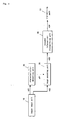
- Fig. 1 is a block diagram schematically showing an information terminal unit according to a first embodiment of the present invention.
- the information terminal unit according to the present embodiment as illustrated in Fig. 1 includes an image input unit 10, a characteristic-detecting unit 20, an image-encoding unit 30, and an encoded information-transmitting unit 40.
- the image input unit 10 formed by a CCD camera for example, is operable to capture an image, as input images "n01" and "n02", into the characteristic-detecting unit 20 and the image-encoding unit 30, respectively.
- the characteristic-detecting unit 20 is operable to detect the presence of a target image in the input image "n01, and then to advise the image-encoding unit 30 of results from the detection as parameter-changing information "s01".
- the image-encoding unit 30 is operable to encode the input image "n02" with reference to the parameter-changing information "s01".
- the encoded input image is conveyed as encoded information "n03" to the encoded information-transmitting unit 40.
- the encoded information-transmitting unit 40 is operable to feed the encoded information "n03" into a transmitting path 50.
- the present embodiment detects the presence of characteristic information in the input image. This feature makes it feasible to deal with the input image in different ways, and to encode the image information in a power-saving mode.
- the image-encoding unit 30 encodes the input image "n02" in accordance with the commonly employed MPEG (Moving Picture Experts Group) standard.
- MPEG Motion Picture Experts Group
- the MPEG system practices intra-frame encoding and inter-frame encoding based on motion compensation, thereby providing encoding data having a high-compression ratio. Either a quantization step during those encoding processes or a search for a motion vector to compensate motion is controlled to save electric power. The following discusses in detail how the thrifty power consumption is realized in these steps.
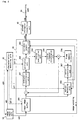
- Fig. 2 is a block diagram showing the information terminal unit in which the image-encoding unit 30 according to the present embodiment is illustrated in detail.
- the image-encoding unit 30 of Fig. 2 includes an input image buffer 309, an orthogonal transformation unit 301, a quantization unit 302, a variable length-coding unit 303, an inverse quantization unit 304, an inverse orthogonal transformation unit 305, a motion-detecting unit 306, a motion-compensating unit 307, and a frame memory 308.
- the input image buffer 309 formed by a memory, contains the input image "n02" from the image input unit 10.
- the orthogonal transformation unit 301 performs the orthogonal transformation (e.g., DCT) of a difference between a target block to be encoded, which is taken off from the input image buffer 309, and a predictive reference block.
- the quantization unit 302 quantizes transformation coefficients from the orthogonal transformation unit 301 in accordance with a separately determined quantization width.
- the variable length-coding unit 303 practices the variable length coding of the quantized transformation coefficients and a motion vector as discussed later, and then sends results therefrom as the encoded information "n03" to the encoded information-transmitting unit 40.
- the inverse quantization unit 304 inversely quantizes a quantized signal to prepare a reference image for inter-frame prediction.
- the inverse orthogonal transformation unit 305 inversely orthogonally transforms the inversely quantized coefficients, thereby determining a differential block.
- the motion-detecting unit 306 determines a motion vector by calculating to minimize a differential absolute value sum between the target block to be detected, which comes from the input image buffer 309, and a reference image obtained from the frame memory 308 as discussed later.
- the motion-compensating unit 307 determines the predictive reference block based on the reference image from the frame memory 308, using the motion vector.
- the frame memory 308 contains a reference image block obtained by the addition of the predictive reference block to the differential block.
- the characteristic-detecting unit 20 feeds the quantization parameter-changing information "s01-3" into the quantization unit 302.
- the quantization unit 302 in receipt of the quantization parameter-changing information "s01-3” changes a quantization parameter for use in quantizing the obtained transformation coefficient from the orthogonal transformation unit 301.
- the quantization parameter has a value ranging from “1" to "31 ".
- the characteristic-detecting unit 20 increases the value of the quantization parameter.
- quantized values of the orthogonal transformation coefficients from the quantization unit 302 have fewer non-zero coefficients. More specifically, the value of the quantization parameter is increased to quantize the orthogonal transformation coefficients with a greater quantization width, thereby providing more zero coefficients.
- the variable length-coding unit 303 takes fewer steps, and for example, a LSI circuit that forms part of the variable length-coding unit 303 consumes less electric power.
- the characteristic-detecting unit 20 feeds the search range parameter-changing information "s01-1" into the motion-detecting unit 306.
- the motion-detecting unit 306 changes a search range upon receipt of the search range parameter-changing information "s01-1".
- a search range parameter is specified by a parameter called "fcode” according to the MPEG system.
- a change in "fcode”-parameter permits the number of pixels in search range to be changed within the range of " ⁇ 16" to " ⁇ 1024".
- the motion-detecting unit 306 searches the pixels falling within the above range, thereby detecting an optimum motion vector.
- the characteristic-detecting unit 20 feeds the search range parameter-changing information "s01-1" to the motion-detecting unit 306 to provide a smaller search range.
- the motion-detecting unit 306 executes a reduced amount of processing, and a LSI circuit that forms part of the motion-detecting unit 306 consumes less electric power.
- the search range parameter-changing information may change a parameter that specifies pixel skipping, instead of changing the fcode-parameter.
- the alternative provides a reduced number of searching times.
- the search conditions to search the motion vector are changed in accordance with the characteristic information, thereby realizing the information terminal unit characterized by thrifty power consumption.
- the characteristic-detecting unit 20 feeds an input image capture parameter-changing information "s04" into the image input unit 10.
- the image input unit 10 in receipt of the input image capture parameter-changing information "s04" changes the number of input images to be captured per second.
- an input image-capturing parameter refers to the number of frames per second, which is specified by both a profile and a level according to the MPEG system.
- the input image-capturing parameter is possible to have values of, e.g., "15", “7.5", and "0" (frame per second).
- the characteristic-detecting unit 20 When the object to be detected is absent in the input image, then the characteristic-detecting unit 20 reduces the values of the input image-capturing parameter, thereby providing fewer input image frames per second to be encoded. As a result, both of the characteristic-detecting unit 20 and the image-encoding unit 30 take fewer steps. Consequently, an LSI circuit that forms part of the characteristic-detecting unit 20 as well as part of the image-encoding unit 30 consumes less electric power.
- the characteristic-detecting unit 20 advises the input image buffer 309 of the input image capture parameter-changing information "s01-2", thereby changing the number of frames per second to be taken off from the input image buffer 309. As a result, fewer frames are taken off from the input image buffer 309. Consequently, the orthogonal transformation unit 301 and the motion-detecting unit 306, which are both preceded by the input image buffer 309, as well as subsequent circuits undertake a reduced amount of processing. This feature provides thrifty power consumption.
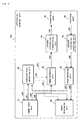
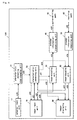
- Fig. 3 is a block diagram schematically illustrating an information terminal unit according to a second embodiment.
- components similar to those of Fig. 1 are identified by the same reference characters, and descriptions related thereto are omitted.
- the information terminal unit according to the present embodiment as illustrated in Fig. 3 is operable to capture and transmit and receive image information, and includes an encoded information-receiving unit 70, an image-decoding unit 80, and an image-displaying unit 90, other than the components of Fig. 1.
- a transmitting path 50 and a receiving path 60 are physical transmission pathways operable to communicate encoded image information between first and second information terminal units.
- the encoded information-receiving unit 70 receives encoded image information "n05" from the second information terminal unit.
- the image-decoding unit 80 decodes the received, encoded image information "n06", thereby producing image information "n08" that is displayable on the image-displaying unit 90.
- the image-displaying unit 90 displays thereon first and second information terminal unit-captured image information "n09", "n08".
- the first information terminal unit-captured image information "n09” has been captured by the image input unit 10 into the image-displaying unit 90.
- the second information terminal unit-captured image information "n08" has been decoded by the image-decoding unit 80.
- the characteristic-detecting unit 20 detects characteristic information from first and second information terminal unit-captured image information "n01", "n07".
- the first information terminal unit-captured image information "n01” has been captured by the image input unit 10 into the characteristic-detecting unit 20.
- the second information terminal unit-captured image information "n07” has been decoded by the image-decoding unit 80.
- the characteristic-detecting unit 20 is operable to control an image-encoding unit 30, the image-displaying unit 90, and the image-decoding unit 80 in accordance with the characteristic information from the first and second information terminal unit-captured images, thereby saving electric power.
- the way of realizing the thrifty power consumption is now described in detail.
- the characteristic-detecting unit 20 controls the image-encoding unit 30 and the image input unit 10 using parameter-changing information "s01" and "s04", thereby allowing the information terminal unit 100 to consume less electric power.
- This method is similar to that according to the previous embodiment, and therefore, descriptions related thereto are omitted. The following discusses other methods.
- the characteristic-detecting unit 20 detects the characteristic information from the first or second information terminal unit-captured image, and then feeds parameter-changing information "s02" into the image-displaying unit 90 in accordance with results from the detection. As a result, the image-displaying unit 90 consumes less electric power.
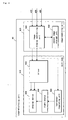
- Fig. 4 is a block diagram illustrating the image-displaying unit 90 according to the present embodiment.
- the image-displaying unit 90 includes a main body 910 and an image-combining unit 920.
- the main body 910 includes a driver 903, a luminance-regulating unit 904, a display device 905, and a light source 906.
- the image-combining unit 920 includes an image display-controlling unit 901 and a second image storage unit 902.
- the image display-controlling unit 901 combines the second information terminal unit-captured image "n08" from the image-decoding unit 80 with the first information terminal unit-captured image "n09” from the image input unit 10, thereby displaying the combined image on the display device 905.
- the combined image information is fed from the image display-controlling unit 901 to the display device 905 through the driver 903 before being displayed on the display device 905.
- the image display-controlling unit 901 feeds control signals to the driver 903 and the luminance-regulating unit 904 to control both image display timing and image display luminance in the display device 905.
- the second image storage unit 902 is operable to store the combined image from the image display-controlling unit 901, the second information terminal unit-captured image "n08", or the first information terminal unit-captured image "n09".
- the characteristic-detecting unit 20 of Fig. 3 detects either characteristic information from the first information terminal unit-captured image that comes from the image input unit 10 or characteristic information from the second information terminal unit-captured image that travels from the image-decoding unit 80. For example, when the first information terminal unit-captured image is free of a facial image of the first user, then the characteristic-detecting unit 20 judges that the first user is prevented from watching the image-displaying unit 90. The characteristic-determining unit 20 then controls the image-displaying unit 90 using the parameter-changing information "s02" to stop transferring the images from the image display-controlling unit 901 to the driver 903, thereby stopping displaying the first or second information terminal unit-captured image.
- the information terminal unit is operable to stop displaying the images when the characteristic information required by the first user is undetected from the first or second information terminal unit-captured image.
- the image-displaying unit 90 uses less electric power.
- An alternative advantage of the information terminal unit according to the present embodiment is that the characteristic-detecting unit 20 may control the image display-controlling unit 901 in accordance with the parameter-changing information "s02", thereby transferring fewer images from the image display-controlling unit 901 to the driver 903. This feature saves power consumption without stopping the image transfer.
- the characteristic-detecting unit 20 may allow the image display-controlling unit 901 to control the luminance-regulating unit 904 in accordance with the parameter-changing information "s02", as illustrated in Fig. 4, thereby reducing the luminance of the light source 906. This feature also saves power consumption.
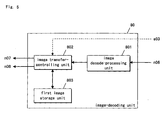
- Fig. 5 is a block diagram illustrating the image-decoding unit 80 according to the present embodiment. As illustrated in Fig. 5, the image-decoding unit 80 includes an image decode-processing unit 801, an image transfer-controlling unit 802, and a first image storage unit 803.
- the image decode-processing unit 801 decodes after receiving the second information terminal unit-captured image information "n06" that has been received by the encoded information-receiving unit 70.
- the decoded, second information terminal unit-captured image is transferred, as second information terminal unit-captured images "n07” and "n08", to the characteristic-detecting unit 20 and the image-displaying unit 90, respectively, through the image transfer-controlling unit 802.
- the first image storage unit 803 stores the decoded, second information terminal unit-captured image from the image decode-processing unit 801.
- the image information stored in the first image storage unit 803 may be transferred to either the image-display unit 90 or the characteristic-detecting unit 20 through the image transfer-controlling unit 802.
- the transferred image information is usable as alternative image information.
- the characteristic-detecting unit 20 of Fig. 3 detects the characteristic information from the decoded, second information terminal unit-captured image that comes from the image-decoding unit 80. For example, when a facial image of the second user is absent in the second information terminal unit-captured image, then the characteristic-detecting unit 20 judges that the second user is out of a position to look straight at the second information terminal unit. The characteristic-detecting unit 20 then controls the image transfer-controlling unit 802 of Fig. 5 using parameter-changing information "s03" to either stop transferring the images from the image-decoding unit 80 to the image-displaying unit 90 or transfer fewer images therebetween in the same transfer direction.
- the information terminal unit according to the present embodiment is operable to detect the characteristic information from the decoded, second information terminal unit-captured image information that comes from the image-decoding unit 80.
- the first user judges, in accordance with the characteristic information, whether or not the second information terminal unit-captured image must be displayed.
- the information terminal unit according to the present embodiment is operable to either stop transferring the second information terminal unit-captured images from the image-decoding unit 80 to the image-displaying unit 90 or transfer fewer images therebetween in the same transfer direction. This feature allows the image-decoding unit 80 to feed the images with less electric power or permits the image-displaying unit 90 to receive the images with less electric power.
- Fig. 6 is a block diagram schematically illustrating an information terminal unit according to a third embodiment.
- components similar to those of Figs. 1 and 3 are identified by the same reference characters, and descriptions related thereto are omitted.
- the information terminal unit according to the present embodiment as illustrated in Fig. 6 is operable to send and receive image information, and includes an external input unit 11 and a characteristic detecting step-changing unit 21, other than the components of Fig. 3.
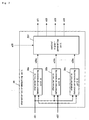
- Fig. 7 is a block diagram illustrating a characteristic-detecting unit 20 according to the present embodiment.
- the characteristic-detecting unit 20 includes a plurality of characteristic detection-processing units 20a, 20b, 20c and a control signal-generating unit 201.
- a first information terminal unit-captured image "n01" from an image input unit 10 and a second information terminal unit-captured image "n07” from an image-decoding unit 80 enter the characteristic detection-processing units 20a, 20b, 20c.
- the characteristic detection-processing units 20a, 20b, and 20c detect characteristic information "s20a”, “s20b”, and “s20c", respectively, from the first or second information terminal unit-captured image.
- the control signal-generating unit 201 generates parameter-changing information "s01”, “s02”, “s03”, and “s04" based on the characteristic information "s20a”, "s20b", and "s20c".
- the parameter-changing information "s01”, “s02”, “s03”, and “s04" are sent to an image-encoding unit 30, an image-displaying unit 90, the image-decoding unit 80, and the image input unit 10, respectively.
- control signal-generating unit 201 may select any one of the characteristic information "s20a”, “s20b”, and “s20c” in accordance with a characteristic detection-changing signal "s05" (as discussed later) from the characteristic detecting step-changing unit 21, thereby producing any one of or several ones of the parameter-changing information "s01", “s02", “s03", and "s04".
- the characteristic-detecting unit 20 includes the characteristic detection-processing unit "20a” operable to detect a full face of the human face, the characteristic detection-processing unit “20b” operable to detect a profile of the human face, and the characteristic detection-processing unit “20c” operable to detect the sight line of the human face. Therefore, the characteristic-detecting unit 20 is operable to detect, as characteristic information, that the human face is a front view or a side view, or otherwise a view in which the person looks away. The use of the characteristic information permits the information terminal unit 100 to assume a power-saving mode when the characteristic information is found to be other than the front view.
- the external input unit 11 formed by either pen input or key input, captures external input information "n10" into the characteristic detecting step-changing unit 21.
- the characteristic detecting step-changing unit 21 produces the characteristic detection-changing signal "s05” based on the external input information "n10".
- the characteristic detection-changing signal "s05" serves to control the characteristic control unit 20.
- the characteristic detection-changing signal "s05” is operable to selectively activate the characteristic detection-processing units 20a, 20b, and 20c of Fig. 7.
- the use of the external input-driven control according to the present embodiment makes it feasible to manually regulate power-saving control with finer limits.
- a videophone employing the information terminal unit is now described as an illustrative example of the present embodiment.
- the external input unit 11 detects the key pressing, and then transmits the detection to the characteristic detecting step-changing unit 21. Since it has been detected that the first user touches the keys during the videophone communication, the characteristic detecting step-changing unit 21 judges that the first user pays attention to the key operation, not the image-displaying unit 90.
- the characteristic-detecting unit 20 changes the characteristic-detecting steps to thrifty power consumption-aimed steps. More specifically, the thrifty power consumption-aimed steps permit the videophone to either assume a darker display screen or show fewer displayed frames per second.
- Fig. 8 is an illustration showing a user who is looking at the information terminal unit 100 (or the videophone according to the present embodiment).
- Fig. 9 is an illustration showing the user who averts his or her eyes from the information terminal unit 100 (or the videophone according to the present embodiment) and looks at a flower beside.
- the parameter-changing information becomes control information that permits components of the information terminal unit 100 to provide usual behaviors.
- the parameter-changing information becomes control information that forces unnecessary components of the information terminal unit 100 to provide power-saving behaviors.
- the use of the characteristic-detecting unit 20 according to the present embodiment makes it feasible to select the several pieces of characteristic information detected by the characteristic-detecting steps, and to perform different styles of power-saving control. Furthermore, the use of the external input information from the external input unit 11 detects that the first user pays less attention to the image-displaying step or the image-encoding step, and the characteristic-detecting steps are replaced by the control that achieves lesser power consumption. As a result, the information terminal unit 100 can consume less electric power.
- the characteristic-detecting unit 20 is designed to control the image-encoding unit 30, the image-decoding unit 80, the image-displaying unit 90, or the image input unit 10 using the parameter-changing information "s01", "s02", “s03", or "s04".
- a previously prepared registers for setting may be built into the image-encoding unit 30, the image-decoding unit 80, the image-displaying unit 90, or the image input unit 10 in order to control those units.
- the characteristic detection-processing units according to the present embodiment are not limited to three units, but may be varied in quantity.
- the external input unit 11 is the pen input or key input, the external input unit 11 is not limited thereto.
- the external input unit 11 may be, e.g., voice input.
- a voice-recognizing unit may be used to recognize particular words, thereby utilizing the recognized words as characteristic information. This feature realizes power-saving behaviors.
- the use of a unit operable to detect surrounding brightness makes it feasible to detect characteristic information from the circumstances, thereby providing the power-saving behaviors.
- the present invention primarily seeks to provide the information terminal unit operable to save electric power sensitively during operations of the information terminal unit in consideration of the convenience of the user. At this time, the information terminal unit attains the purpose using either the information processed by the information terminal unit or the characteristic information from the environment in which the information terminal unit is present. Accordingly, various modifications and variations of the present invention may be made without departing from the spirit and scope of the present invention.
- the information terminal unit is operable to detect the characteristics from the first or second information terminal unit-captured image processed by the information terminal unit, and to control the image-encoding unit, the image-displaying unit, the image-decoding unit, or the image input unit in accordance with the information related to the detected characteristics.
- This system provides a reduced amount of processing required for image encoding, either stops displaying the images or displays fewer images, either stops transferring the images from the image-decoding unit to the image-displaying unit or transfers fewer images therebetween in the same transfer direction, and provides fewer frames in capturing image.
- the information terminal unit characterized by thriftier power consumption is available.
Landscapes
- Engineering & Computer Science (AREA)
- Multimedia (AREA)
- Signal Processing (AREA)
- Computing Systems (AREA)
- Theoretical Computer Science (AREA)
- Compression Or Coding Systems Of Tv Signals (AREA)
Applications Claiming Priority (2)
| Application Number | Priority Date | Filing Date | Title |
|---|---|---|---|
| JP2003073585 | 2003-03-18 | ||
| JP2003073585A JP2004282576A (ja) | 2003-03-18 | 2003-03-18 | 情報端末装置及びそれを用いた通信方法 |
Publications (2)
| Publication Number | Publication Date |
|---|---|
| EP1465433A2 true EP1465433A2 (de) | 2004-10-06 |
| EP1465433A3 EP1465433A3 (de) | 2006-01-25 |
Family
ID=32844568
Family Applications (1)
| Application Number | Title | Priority Date | Filing Date |
|---|---|---|---|
| EP20040005557 Withdrawn EP1465433A3 (de) | 2003-03-18 | 2004-03-09 | Informationsterminal und darauf basierendes Kommunikationsverfahren |
Country Status (4)
| Country | Link |
|---|---|
| US (1) | US20040207610A1 (de) |
| EP (1) | EP1465433A3 (de) |
| JP (1) | JP2004282576A (de) |
| CN (1) | CN1531341A (de) |
Cited By (1)
| Publication number | Priority date | Publication date | Assignee | Title |
|---|---|---|---|---|
| EP1827009A1 (de) * | 2006-02-28 | 2007-08-29 | Matsushita Electric Industrial Co., Ltd. | Videokodierer und Dekodierer mit verbesserter Kanalumschaltung für mobilen Videoempfang |
Families Citing this family (1)
| Publication number | Priority date | Publication date | Assignee | Title |
|---|---|---|---|---|
| CN101340575B (zh) * | 2007-07-03 | 2012-04-18 | 英华达(上海)电子有限公司 | 动态调整视频编码的方法及终端 |
Family Cites Families (8)
| Publication number | Priority date | Publication date | Assignee | Title |
|---|---|---|---|---|
| US5323402A (en) * | 1991-02-14 | 1994-06-21 | The Mitre Corporation | Programmable systolic BCH decoder |
| KR940020832A (ko) * | 1993-02-25 | 1994-09-16 | 김주용 | 고선명 텔레비젼의 적응 양자화 방법 및 이를 이용한 시스템 부호기 |
| US6690835B1 (en) * | 1998-03-03 | 2004-02-10 | Interuniversitair Micro-Elektronica Centrum (Imec Vzw) | System and method of encoding video frames |
| US6154489A (en) * | 1998-03-30 | 2000-11-28 | Motorola, Inc. | Adaptive-rate coded digital image transmission |
| KR100739281B1 (ko) * | 2000-02-21 | 2007-07-12 | 주식회사 팬택앤큐리텔 | 움직임 추정 방법 및 장치 |
| US6999432B2 (en) * | 2000-07-13 | 2006-02-14 | Microsoft Corporation | Channel and quality of service adaptation for multimedia over wireless networks |
| JP2002221954A (ja) * | 2001-01-29 | 2002-08-09 | Hitachi Ltd | 液晶表示装置 |
| US7096034B2 (en) * | 2001-10-01 | 2006-08-22 | Microsoft Corporation | System and method for reducing power consumption for wireless communications by mobile devices |
-
2003
- 2003-03-18 JP JP2003073585A patent/JP2004282576A/ja active Pending
-
2004
- 2004-03-09 EP EP20040005557 patent/EP1465433A3/de not_active Withdrawn
- 2004-03-11 CN CNA2004100283859A patent/CN1531341A/zh active Pending
- 2004-03-12 US US10/798,397 patent/US20040207610A1/en not_active Abandoned
Cited By (2)
| Publication number | Priority date | Publication date | Assignee | Title |
|---|---|---|---|---|
| EP1827009A1 (de) * | 2006-02-28 | 2007-08-29 | Matsushita Electric Industrial Co., Ltd. | Videokodierer und Dekodierer mit verbesserter Kanalumschaltung für mobilen Videoempfang |
| WO2007099978A1 (en) * | 2006-02-28 | 2007-09-07 | Matsushita Electric Industrial Co., Ltd. | Video encoder and decoder for an improved zapping service for mobile video reception |
Also Published As
| Publication number | Publication date |
|---|---|
| JP2004282576A (ja) | 2004-10-07 |
| US20040207610A1 (en) | 2004-10-21 |
| EP1465433A3 (de) | 2006-01-25 |
| CN1531341A (zh) | 2004-09-22 |
Similar Documents
| Publication | Publication Date | Title |
|---|---|---|
| US5737537A (en) | Two-measure block classification scheme for encoding video images | |
| US20020006163A1 (en) | Image processing apparatus with automatic image pickup feature | |
| US7953283B2 (en) | Portable terminal | |
| JPH09502595A (ja) | 改良されたカメラ・インタフェースを有する動きを推定するための装置および方法 | |
| EP0878967A2 (de) | Verfahren und Vorrichtung zur Signalkodierung | |
| US6798915B2 (en) | Apparatus having lower data transmission rate and less degradation of image quality and method therefor | |
| EP1465433A2 (de) | Informationsterminal und darauf basierendes Kommunikationsverfahren | |
| KR100719841B1 (ko) | 썸네일 생성 및 표시 방법 | |
| CN117061752B (zh) | 一种有效降低视频通话时延的网络传输一体化方法 | |
| CN112887293A (zh) | 流媒体的处理方法、装置及电子设备 | |
| JPH04354488A (ja) | 動画像符号化装置 | |
| JP2647929B2 (ja) | 2地点間画像符号化方式 | |
| KR20050066183A (ko) | 파노라마 영상 구현 시스템 및 방법 | |
| KR20080107652A (ko) | 휴대용 단말기의 카메라 기능 수행 방법 | |
| EP1739965A1 (de) | Verfahren und System zur Behandlung von Videodaten | |
| JPH0638191A (ja) | 動画像信号符号化装置 | |
| JPH06233292A (ja) | 画像信号伝送装置 | |
| KR100508119B1 (ko) | 영상데이터를 처리하는 장치 및 그 방법 | |
| KR100683998B1 (ko) | 디지털 이미지 캡쳐 장치 및 방법 | |
| US11233999B2 (en) | Transmission of a reverse video feed | |
| KR100474761B1 (ko) | 절전형 화상통신 단말기 및 그 운용방법 | |
| HK40022040A (en) | Method and device for processing media data and medium | |
| CN110784716A (zh) | 媒体数据处理方法、装置及介质 | |
| JPH1093942A (ja) | 多地点制御装置 | |
| KR20000039399A (ko) | 동영상 부호화 장치에서 눈동자 영상 처리 방법 |
Legal Events
| Date | Code | Title | Description |
|---|---|---|---|
| PUAI | Public reference made under article 153(3) epc to a published international application that has entered the european phase |
Free format text: ORIGINAL CODE: 0009012 |
|
| AK | Designated contracting states |
Kind code of ref document: A2 Designated state(s): AT BE BG CH CY CZ DE DK EE ES FI FR GB GR HU IE IT LI LU MC NL PL PT RO SE SI SK TR |
|
| AX | Request for extension of the european patent |
Extension state: AL LT LV MK |
|
| PUAL | Search report despatched |
Free format text: ORIGINAL CODE: 0009013 |
|
| AK | Designated contracting states |
Kind code of ref document: A3 Designated state(s): AT BE BG CH CY CZ DE DK EE ES FI FR GB GR HU IE IT LI LU MC NL PL PT RO SE SI SK TR |
|
| AX | Request for extension of the european patent |
Extension state: AL LT LV MK |
|
| AKX | Designation fees paid |
Designated state(s): DE FR GB |
|
| STAA | Information on the status of an ep patent application or granted ep patent |
Free format text: STATUS: THE APPLICATION IS DEEMED TO BE WITHDRAWN |
|
| 18D | Application deemed to be withdrawn |
Effective date: 20060726 |