EP1458867B1 - Genpromotoren - Google Patents
Genpromotoren Download PDFInfo
- Publication number
- EP1458867B1 EP1458867B1 EP02804540A EP02804540A EP1458867B1 EP 1458867 B1 EP1458867 B1 EP 1458867B1 EP 02804540 A EP02804540 A EP 02804540A EP 02804540 A EP02804540 A EP 02804540A EP 1458867 B1 EP1458867 B1 EP 1458867B1
- Authority
- EP
- European Patent Office
- Prior art keywords
- gene
- sequence
- hex1
- promoter
- dna
- Prior art date
- Legal status (The legal status is an assumption and is not a legal conclusion. Google has not performed a legal analysis and makes no representation as to the accuracy of the status listed.)
- Expired - Lifetime
Links
- 108090000623 proteins and genes Proteins 0.000 title claims description 101
- 230000002538 fungal effect Effects 0.000 claims abstract description 14
- 101150026303 HEX1 gene Proteins 0.000 claims description 56
- 102000004169 proteins and genes Human genes 0.000 claims description 42
- 108020004414 DNA Proteins 0.000 claims description 35
- 230000014509 gene expression Effects 0.000 claims description 35
- 241000499912 Trichoderma reesei Species 0.000 claims description 25
- 239000002773 nucleotide Substances 0.000 claims description 25
- 125000003729 nucleotide group Chemical group 0.000 claims description 25
- 108020004511 Recombinant DNA Proteins 0.000 claims description 5
- 102000004190 Enzymes Human genes 0.000 claims description 4
- 108090000790 Enzymes Proteins 0.000 claims description 4
- 229940088598 enzyme Drugs 0.000 claims description 4
- 241000894007 species Species 0.000 claims description 4
- 102000004882 Lipase Human genes 0.000 claims description 3
- 108090001060 Lipase Proteins 0.000 claims description 3
- 239000004367 Lipase Substances 0.000 claims description 3
- 108091005804 Peptidases Proteins 0.000 claims description 3
- 239000004365 Protease Substances 0.000 claims description 3
- 239000012190 activator Substances 0.000 claims description 3
- 230000003301 hydrolyzing effect Effects 0.000 claims description 3
- 235000019421 lipase Nutrition 0.000 claims description 3
- 230000001225 therapeutic effect Effects 0.000 claims description 3
- 108010011619 6-Phytase Proteins 0.000 claims description 2
- 102000013142 Amylases Human genes 0.000 claims description 2
- 108010065511 Amylases Proteins 0.000 claims description 2
- 108700038091 Beta-glucanases Proteins 0.000 claims description 2
- 108010084185 Cellulases Proteins 0.000 claims description 2
- 102000005575 Cellulases Human genes 0.000 claims description 2
- 101710121765 Endo-1,4-beta-xylanase Proteins 0.000 claims description 2
- 108010070716 Intercellular Signaling Peptides and Proteins Proteins 0.000 claims description 2
- 102000005755 Intercellular Signaling Peptides and Proteins Human genes 0.000 claims description 2
- 102000035195 Peptidases Human genes 0.000 claims description 2
- 235000019418 amylase Nutrition 0.000 claims description 2
- 229940025131 amylases Drugs 0.000 claims description 2
- 239000003102 growth factor Substances 0.000 claims description 2
- 239000003966 growth inhibitor Substances 0.000 claims description 2
- 238000000034 method Methods 0.000 abstract description 15
- 235000018102 proteins Nutrition 0.000 description 35
- 150000007523 nucleic acids Chemical group 0.000 description 28
- 108090000765 processed proteins & peptides Proteins 0.000 description 23
- 108020004707 nucleic acids Proteins 0.000 description 22
- 102000039446 nucleic acids Human genes 0.000 description 22
- 238000003752 polymerase chain reaction Methods 0.000 description 22
- 150000001413 amino acids Chemical group 0.000 description 21
- 210000004027 cell Anatomy 0.000 description 21
- 239000013615 primer Substances 0.000 description 21
- 102000004196 processed proteins & peptides Human genes 0.000 description 20
- 229920001184 polypeptide Polymers 0.000 description 18
- 239000012634 fragment Substances 0.000 description 16
- 108091028043 Nucleic acid sequence Proteins 0.000 description 13
- 235000001014 amino acid Nutrition 0.000 description 13
- 229940024606 amino acid Drugs 0.000 description 13
- 239000000523 sample Substances 0.000 description 12
- 238000002955 isolation Methods 0.000 description 10
- WQZGKKKJIJFFOK-GASJEMHNSA-N Glucose Natural products OC[C@H]1OC(O)[C@H](O)[C@@H](O)[C@@H]1O WQZGKKKJIJFFOK-GASJEMHNSA-N 0.000 description 9
- 238000009396 hybridization Methods 0.000 description 9
- 241000233866 Fungi Species 0.000 description 8
- 238000006243 chemical reaction Methods 0.000 description 8
- 239000008103 glucose Substances 0.000 description 8
- 108091032973 (ribonucleotides)n+m Proteins 0.000 description 7
- 108700026244 Open Reading Frames Proteins 0.000 description 7
- 239000013604 expression vector Substances 0.000 description 7
- 239000000047 product Substances 0.000 description 7
- TWRXJAOTZQYOKJ-UHFFFAOYSA-L Magnesium chloride Chemical compound [Mg+2].[Cl-].[Cl-] TWRXJAOTZQYOKJ-UHFFFAOYSA-L 0.000 description 6
- 101150052795 cbh-1 gene Proteins 0.000 description 6
- 239000003550 marker Substances 0.000 description 6
- 239000002609 medium Substances 0.000 description 6
- 239000013612 plasmid Substances 0.000 description 6
- 230000001105 regulatory effect Effects 0.000 description 6
- 230000028327 secretion Effects 0.000 description 6
- 210000001519 tissue Anatomy 0.000 description 6
- 230000009466 transformation Effects 0.000 description 6
- 238000011144 upstream manufacturing Methods 0.000 description 6
- 239000013598 vector Substances 0.000 description 6
- OKTJSMMVPCPJKN-UHFFFAOYSA-N Carbon Chemical compound [C] OKTJSMMVPCPJKN-UHFFFAOYSA-N 0.000 description 5
- 241001492559 Ophiostoma floccosum Species 0.000 description 5
- 108010076504 Protein Sorting Signals Proteins 0.000 description 5
- 241000223259 Trichoderma Species 0.000 description 5
- 238000004458 analytical method Methods 0.000 description 5
- 229910052799 carbon Inorganic materials 0.000 description 5
- 238000002372 labelling Methods 0.000 description 5
- 239000002987 primer (paints) Substances 0.000 description 5
- 230000009261 transgenic effect Effects 0.000 description 5
- 238000013519 translation Methods 0.000 description 5
- 238000000636 Northern blotting Methods 0.000 description 4
- 108700008625 Reporter Genes Proteins 0.000 description 4
- IQFYYKKMVGJFEH-XLPZGREQSA-N Thymidine Chemical compound O=C1NC(=O)C(C)=CN1[C@@H]1O[C@H](CO)[C@@H](O)C1 IQFYYKKMVGJFEH-XLPZGREQSA-N 0.000 description 4
- ISAKRJDGNUQOIC-UHFFFAOYSA-N Uracil Chemical compound O=C1C=CNC(=O)N1 ISAKRJDGNUQOIC-UHFFFAOYSA-N 0.000 description 4
- 210000000349 chromosome Anatomy 0.000 description 4
- 239000002299 complementary DNA Substances 0.000 description 4
- 238000001514 detection method Methods 0.000 description 4
- 239000000284 extract Substances 0.000 description 4
- 230000001939 inductive effect Effects 0.000 description 4
- 108020004999 messenger RNA Proteins 0.000 description 4
- 238000006467 substitution reaction Methods 0.000 description 4
- 238000012360 testing method Methods 0.000 description 4
- 238000013518 transcription Methods 0.000 description 4
- 230000035897 transcription Effects 0.000 description 4
- 241000894006 Bacteria Species 0.000 description 3
- 239000003298 DNA probe Substances 0.000 description 3
- 241000196324 Embryophyta Species 0.000 description 3
- 241000588724 Escherichia coli Species 0.000 description 3
- 101150108358 GLAA gene Proteins 0.000 description 3
- 108700039691 Genetic Promoter Regions Proteins 0.000 description 3
- GUBGYTABKSRVRQ-QKKXKWKRSA-N Lactose Natural products OC[C@H]1O[C@@H](O[C@H]2[C@H](O)[C@@H](O)C(O)O[C@@H]2CO)[C@H](O)[C@@H](O)[C@H]1O GUBGYTABKSRVRQ-QKKXKWKRSA-N 0.000 description 3
- 108700019146 Transgenes Proteins 0.000 description 3
- 230000009015 carbon catabolite repression of transcription Effects 0.000 description 3
- 210000002421 cell wall Anatomy 0.000 description 3
- 238000003776 cleavage reaction Methods 0.000 description 3
- 238000005516 engineering process Methods 0.000 description 3
- 238000001502 gel electrophoresis Methods 0.000 description 3
- PCHJSUWPFVWCPO-UHFFFAOYSA-N gold Chemical compound [Au] PCHJSUWPFVWCPO-UHFFFAOYSA-N 0.000 description 3
- 239000010931 gold Substances 0.000 description 3
- 229910052737 gold Inorganic materials 0.000 description 3
- 239000004615 ingredient Substances 0.000 description 3
- 239000008101 lactose Substances 0.000 description 3
- 229910001629 magnesium chloride Inorganic materials 0.000 description 3
- 239000012528 membrane Substances 0.000 description 3
- 244000005700 microbiome Species 0.000 description 3
- 239000000203 mixture Substances 0.000 description 3
- 108091008146 restriction endonucleases Proteins 0.000 description 3
- 230000007017 scission Effects 0.000 description 3
- GUBGYTABKSRVRQ-XLOQQCSPSA-N Alpha-Lactose Chemical compound O[C@@H]1[C@@H](O)[C@@H](O)[C@@H](CO)O[C@H]1O[C@@H]1[C@@H](CO)O[C@H](O)[C@H](O)[C@H]1O GUBGYTABKSRVRQ-XLOQQCSPSA-N 0.000 description 2
- 241001513093 Aspergillus awamori Species 0.000 description 2
- DWRXFEITVBNRMK-UHFFFAOYSA-N Beta-D-1-Arabinofuranosylthymine Natural products O=C1NC(=O)C(C)=CN1C1C(O)C(O)C(CO)O1 DWRXFEITVBNRMK-UHFFFAOYSA-N 0.000 description 2
- 108010008885 Cellulose 1,4-beta-Cellobiosidase Proteins 0.000 description 2
- 108010035563 Chloramphenicol O-acetyltransferase Proteins 0.000 description 2
- 241000195493 Cryptophyta Species 0.000 description 2
- GUBGYTABKSRVRQ-CUHNMECISA-N D-Cellobiose Chemical compound O[C@@H]1[C@@H](O)[C@H](O)[C@@H](CO)O[C@H]1O[C@@H]1[C@@H](CO)OC(O)[C@H](O)[C@H]1O GUBGYTABKSRVRQ-CUHNMECISA-N 0.000 description 2
- 102000053602 DNA Human genes 0.000 description 2
- 108020003215 DNA Probes Proteins 0.000 description 2
- IAZDPXIOMUYVGZ-UHFFFAOYSA-N Dimethylsulphoxide Chemical compound CS(C)=O IAZDPXIOMUYVGZ-UHFFFAOYSA-N 0.000 description 2
- 108700007698 Genetic Terminator Regions Proteins 0.000 description 2
- 108010073178 Glucan 1,4-alpha-Glucosidase Proteins 0.000 description 2
- 102100022624 Glucoamylase Human genes 0.000 description 2
- DHMQDGOQFOQNFH-UHFFFAOYSA-N Glycine Chemical compound NCC(O)=O DHMQDGOQFOQNFH-UHFFFAOYSA-N 0.000 description 2
- 235000010469 Glycine max Nutrition 0.000 description 2
- 238000012408 PCR amplification Methods 0.000 description 2
- 240000004808 Saccharomyces cerevisiae Species 0.000 description 2
- 239000002253 acid Substances 0.000 description 2
- 150000007513 acids Chemical class 0.000 description 2
- IQFYYKKMVGJFEH-UHFFFAOYSA-N beta-L-thymidine Natural products O=C1NC(=O)C(C)=CN1C1OC(CO)C(O)C1 IQFYYKKMVGJFEH-UHFFFAOYSA-N 0.000 description 2
- 230000003115 biocidal effect Effects 0.000 description 2
- 239000001913 cellulose Substances 0.000 description 2
- 229920002678 cellulose Polymers 0.000 description 2
- 238000012512 characterization method Methods 0.000 description 2
- 230000002759 chromosomal effect Effects 0.000 description 2
- 230000000694 effects Effects 0.000 description 2
- 238000001962 electrophoresis Methods 0.000 description 2
- 230000001747 exhibiting effect Effects 0.000 description 2
- 239000000499 gel Substances 0.000 description 2
- LEQAOMBKQFMDFZ-UHFFFAOYSA-N glyoxal Chemical compound O=CC=O LEQAOMBKQFMDFZ-UHFFFAOYSA-N 0.000 description 2
- 239000000413 hydrolysate Substances 0.000 description 2
- 238000004519 manufacturing process Methods 0.000 description 2
- 238000002887 multiple sequence alignment Methods 0.000 description 2
- 238000002360 preparation method Methods 0.000 description 2
- 230000000750 progressive effect Effects 0.000 description 2
- 230000002797 proteolythic effect Effects 0.000 description 2
- 238000000163 radioactive labelling Methods 0.000 description 2
- 230000010076 replication Effects 0.000 description 2
- 238000000926 separation method Methods 0.000 description 2
- 238000012163 sequencing technique Methods 0.000 description 2
- 238000010561 standard procedure Methods 0.000 description 2
- 229940104230 thymidine Drugs 0.000 description 2
- 229940035893 uracil Drugs 0.000 description 2
- MTCFGRXMJLQNBG-REOHCLBHSA-N (2S)-2-Amino-3-hydroxypropansäure Chemical compound OC[C@H](N)C(O)=O MTCFGRXMJLQNBG-REOHCLBHSA-N 0.000 description 1
- 108020005065 3' Flanking Region Proteins 0.000 description 1
- 108020005029 5' Flanking Region Proteins 0.000 description 1
- 241000242759 Actiniaria Species 0.000 description 1
- 239000004475 Arginine Substances 0.000 description 1
- DCXYFEDJOCDNAF-UHFFFAOYSA-N Asparagine Natural products OC(=O)C(N)CC(N)=O DCXYFEDJOCDNAF-UHFFFAOYSA-N 0.000 description 1
- 241000351920 Aspergillus nidulans Species 0.000 description 1
- 101100268670 Caenorhabditis elegans acc-3 gene Proteins 0.000 description 1
- 108020004705 Codon Proteins 0.000 description 1
- 241000192700 Cyanobacteria Species 0.000 description 1
- 239000003155 DNA primer Substances 0.000 description 1
- 102000004163 DNA-directed RNA polymerases Human genes 0.000 description 1
- 108090000626 DNA-directed RNA polymerases Proteins 0.000 description 1
- 241000206602 Eukaryota Species 0.000 description 1
- 108700005088 Fungal Genes Proteins 0.000 description 1
- 108010058643 Fungal Proteins Proteins 0.000 description 1
- 102000053187 Glucuronidase Human genes 0.000 description 1
- 108010060309 Glucuronidase Proteins 0.000 description 1
- WHUUTDBJXJRKMK-UHFFFAOYSA-N Glutamic acid Natural products OC(=O)C(N)CCC(O)=O WHUUTDBJXJRKMK-UHFFFAOYSA-N 0.000 description 1
- 239000004471 Glycine Substances 0.000 description 1
- 244000068988 Glycine max Species 0.000 description 1
- 206010020649 Hyperkeratosis Diseases 0.000 description 1
- QNAYBMKLOCPYGJ-REOHCLBHSA-N L-alanine Chemical compound C[C@H](N)C(O)=O QNAYBMKLOCPYGJ-REOHCLBHSA-N 0.000 description 1
- DCXYFEDJOCDNAF-REOHCLBHSA-N L-asparagine Chemical compound OC(=O)[C@@H](N)CC(N)=O DCXYFEDJOCDNAF-REOHCLBHSA-N 0.000 description 1
- CKLJMWTZIZZHCS-REOHCLBHSA-N L-aspartic acid Chemical compound OC(=O)[C@@H](N)CC(O)=O CKLJMWTZIZZHCS-REOHCLBHSA-N 0.000 description 1
- WHUUTDBJXJRKMK-VKHMYHEASA-N L-glutamic acid Chemical compound OC(=O)[C@@H](N)CCC(O)=O WHUUTDBJXJRKMK-VKHMYHEASA-N 0.000 description 1
- ZDXPYRJPNDTMRX-VKHMYHEASA-N L-glutamine Chemical compound OC(=O)[C@@H](N)CCC(N)=O ZDXPYRJPNDTMRX-VKHMYHEASA-N 0.000 description 1
- AGPKZVBTJJNPAG-WHFBIAKZSA-N L-isoleucine Chemical compound CC[C@H](C)[C@H](N)C(O)=O AGPKZVBTJJNPAG-WHFBIAKZSA-N 0.000 description 1
- ROHFNLRQFUQHCH-YFKPBYRVSA-N L-leucine Chemical compound CC(C)C[C@H](N)C(O)=O ROHFNLRQFUQHCH-YFKPBYRVSA-N 0.000 description 1
- FFEARJCKVFRZRR-BYPYZUCNSA-N L-methionine Chemical compound CSCC[C@H](N)C(O)=O FFEARJCKVFRZRR-BYPYZUCNSA-N 0.000 description 1
- COLNVLDHVKWLRT-QMMMGPOBSA-N L-phenylalanine Chemical compound OC(=O)[C@@H](N)CC1=CC=CC=C1 COLNVLDHVKWLRT-QMMMGPOBSA-N 0.000 description 1
- AYFVYJQAPQTCCC-GBXIJSLDSA-N L-threonine Chemical compound C[C@@H](O)[C@H](N)C(O)=O AYFVYJQAPQTCCC-GBXIJSLDSA-N 0.000 description 1
- OUYCCCASQSFEME-QMMMGPOBSA-N L-tyrosine Chemical compound OC(=O)[C@@H](N)CC1=CC=C(O)C=C1 OUYCCCASQSFEME-QMMMGPOBSA-N 0.000 description 1
- KZSNJWFQEVHDMF-BYPYZUCNSA-N L-valine Chemical compound CC(C)[C@H](N)C(O)=O KZSNJWFQEVHDMF-BYPYZUCNSA-N 0.000 description 1
- ROHFNLRQFUQHCH-UHFFFAOYSA-N Leucine Natural products CC(C)CC(N)C(O)=O ROHFNLRQFUQHCH-UHFFFAOYSA-N 0.000 description 1
- 108060001084 Luciferase Proteins 0.000 description 1
- 239000005089 Luciferase Substances 0.000 description 1
- KDXKERNSBIXSRK-UHFFFAOYSA-N Lysine Natural products NCCCCC(N)C(O)=O KDXKERNSBIXSRK-UHFFFAOYSA-N 0.000 description 1
- 239000004472 Lysine Substances 0.000 description 1
- 241001465754 Metazoa Species 0.000 description 1
- 241000221961 Neurospora crassa Species 0.000 description 1
- 108020005187 Oligonucleotide Probes Proteins 0.000 description 1
- 241000221871 Ophiostoma Species 0.000 description 1
- 108010026552 Proteome Proteins 0.000 description 1
- 102000009572 RNA Polymerase II Human genes 0.000 description 1
- 108010009460 RNA Polymerase II Proteins 0.000 description 1
- 238000002123 RNA extraction Methods 0.000 description 1
- 102000007056 Recombinant Fusion Proteins Human genes 0.000 description 1
- 108010008281 Recombinant Fusion Proteins Proteins 0.000 description 1
- 102100037486 Reverse transcriptase/ribonuclease H Human genes 0.000 description 1
- MTCFGRXMJLQNBG-UHFFFAOYSA-N Serine Natural products OCC(N)C(O)=O MTCFGRXMJLQNBG-UHFFFAOYSA-N 0.000 description 1
- 229920002472 Starch Polymers 0.000 description 1
- 108010006785 Taq Polymerase Proteins 0.000 description 1
- AYFVYJQAPQTCCC-UHFFFAOYSA-N Threonine Natural products CC(O)C(N)C(O)=O AYFVYJQAPQTCCC-UHFFFAOYSA-N 0.000 description 1
- 239000004473 Threonine Substances 0.000 description 1
- 108091023040 Transcription factor Proteins 0.000 description 1
- 102000040945 Transcription factor Human genes 0.000 description 1
- 101710195626 Transcriptional activator protein Proteins 0.000 description 1
- KZSNJWFQEVHDMF-UHFFFAOYSA-N Valine Natural products CC(C)C(N)C(O)=O KZSNJWFQEVHDMF-UHFFFAOYSA-N 0.000 description 1
- 241000700605 Viruses Species 0.000 description 1
- 238000001042 affinity chromatography Methods 0.000 description 1
- 235000004279 alanine Nutrition 0.000 description 1
- 125000000539 amino acid group Chemical group 0.000 description 1
- 230000003321 amplification Effects 0.000 description 1
- 239000000427 antigen Substances 0.000 description 1
- 108091007433 antigens Proteins 0.000 description 1
- 102000036639 antigens Human genes 0.000 description 1
- ODKSFYDXXFIFQN-UHFFFAOYSA-N arginine Natural products OC(=O)C(N)CCCNC(N)=N ODKSFYDXXFIFQN-UHFFFAOYSA-N 0.000 description 1
- 235000009582 asparagine Nutrition 0.000 description 1
- 229960001230 asparagine Drugs 0.000 description 1
- 235000003704 aspartic acid Nutrition 0.000 description 1
- 230000009286 beneficial effect Effects 0.000 description 1
- WQZGKKKJIJFFOK-VFUOTHLCSA-N beta-D-glucose Chemical compound OC[C@H]1O[C@@H](O)[C@H](O)[C@@H](O)[C@@H]1O WQZGKKKJIJFFOK-VFUOTHLCSA-N 0.000 description 1
- 102000005936 beta-Galactosidase Human genes 0.000 description 1
- 108010005774 beta-Galactosidase Proteins 0.000 description 1
- OQFSQFPPLPISGP-UHFFFAOYSA-N beta-carboxyaspartic acid Natural products OC(=O)C(N)C(C(O)=O)C(O)=O OQFSQFPPLPISGP-UHFFFAOYSA-N 0.000 description 1
- 239000012472 biological sample Substances 0.000 description 1
- 230000001413 cellular effect Effects 0.000 description 1
- 239000003795 chemical substances by application Substances 0.000 description 1
- 210000003763 chloroplast Anatomy 0.000 description 1
- 238000010367 cloning Methods 0.000 description 1
- 238000004440 column chromatography Methods 0.000 description 1
- 238000010276 construction Methods 0.000 description 1
- 239000000356 contaminant Substances 0.000 description 1
- 230000001276 controlling effect Effects 0.000 description 1
- 238000007796 conventional method Methods 0.000 description 1
- 239000012228 culture supernatant Substances 0.000 description 1
- 210000004748 cultured cell Anatomy 0.000 description 1
- 238000012217 deletion Methods 0.000 description 1
- 230000037430 deletion Effects 0.000 description 1
- 230000001419 dependent effect Effects 0.000 description 1
- 238000013461 design Methods 0.000 description 1
- 230000029087 digestion Effects 0.000 description 1
- 239000003814 drug Substances 0.000 description 1
- 210000002257 embryonic structure Anatomy 0.000 description 1
- 239000003623 enhancer Substances 0.000 description 1
- 210000002615 epidermis Anatomy 0.000 description 1
- 230000007717 exclusion Effects 0.000 description 1
- 238000000605 extraction Methods 0.000 description 1
- GNBHRKFJIUUOQI-UHFFFAOYSA-N fluorescein Chemical compound O1C(=O)C2=CC=CC=C2C21C1=CC=C(O)C=C1OC1=CC(O)=CC=C21 GNBHRKFJIUUOQI-UHFFFAOYSA-N 0.000 description 1
- 230000005714 functional activity Effects 0.000 description 1
- 108020001507 fusion proteins Proteins 0.000 description 1
- 102000037865 fusion proteins Human genes 0.000 description 1
- 230000030279 gene silencing Effects 0.000 description 1
- 238000007429 general method Methods 0.000 description 1
- 230000002068 genetic effect Effects 0.000 description 1
- 239000006481 glucose medium Substances 0.000 description 1
- 235000013922 glutamic acid Nutrition 0.000 description 1
- 239000004220 glutamic acid Substances 0.000 description 1
- ZDXPYRJPNDTMRX-UHFFFAOYSA-N glutamine Natural products OC(=O)C(N)CCC(N)=O ZDXPYRJPNDTMRX-UHFFFAOYSA-N 0.000 description 1
- 235000004554 glutamine Nutrition 0.000 description 1
- 102000006602 glyceraldehyde-3-phosphate dehydrogenase Human genes 0.000 description 1
- 108020004445 glyceraldehyde-3-phosphate dehydrogenase Proteins 0.000 description 1
- 230000013595 glycosylation Effects 0.000 description 1
- 238000006206 glycosylation reaction Methods 0.000 description 1
- 229940015043 glyoxal Drugs 0.000 description 1
- 101150073906 gpdA gene Proteins 0.000 description 1
- 101150095733 gpsA gene Proteins 0.000 description 1
- 239000001963 growth medium Substances 0.000 description 1
- 239000003721 gunpowder Substances 0.000 description 1
- 229910052734 helium Inorganic materials 0.000 description 1
- 239000001307 helium Substances 0.000 description 1
- SWQJXJOGLNCZEY-UHFFFAOYSA-N helium atom Chemical compound [He] SWQJXJOGLNCZEY-UHFFFAOYSA-N 0.000 description 1
- 238000004128 high performance liquid chromatography Methods 0.000 description 1
- 238000000338 in vitro Methods 0.000 description 1
- 238000001727 in vivo Methods 0.000 description 1
- 230000006698 induction Effects 0.000 description 1
- 230000000977 initiatory effect Effects 0.000 description 1
- 230000010354 integration Effects 0.000 description 1
- 210000005061 intracellular organelle Anatomy 0.000 description 1
- 229960000310 isoleucine Drugs 0.000 description 1
- AGPKZVBTJJNPAG-UHFFFAOYSA-N isoleucine Natural products CCC(C)C(N)C(O)=O AGPKZVBTJJNPAG-UHFFFAOYSA-N 0.000 description 1
- 210000001161 mammalian embryo Anatomy 0.000 description 1
- 238000004949 mass spectrometry Methods 0.000 description 1
- 239000000463 material Substances 0.000 description 1
- 239000011159 matrix material Substances 0.000 description 1
- 230000000442 meristematic effect Effects 0.000 description 1
- 230000002503 metabolic effect Effects 0.000 description 1
- 229930182817 methionine Natural products 0.000 description 1
- 210000003470 mitochondria Anatomy 0.000 description 1
- 238000012986 modification Methods 0.000 description 1
- 230000004048 modification Effects 0.000 description 1
- 238000010369 molecular cloning Methods 0.000 description 1
- 238000003199 nucleic acid amplification method Methods 0.000 description 1
- 239000002751 oligonucleotide probe Substances 0.000 description 1
- 239000002245 particle Substances 0.000 description 1
- COLNVLDHVKWLRT-UHFFFAOYSA-N phenylalanine Natural products OC(=O)C(N)CC1=CC=CC=C1 COLNVLDHVKWLRT-UHFFFAOYSA-N 0.000 description 1
- 230000026731 phosphorylation Effects 0.000 description 1
- 238000006366 phosphorylation reaction Methods 0.000 description 1
- 210000002706 plastid Anatomy 0.000 description 1
- 238000002264 polyacrylamide gel electrophoresis Methods 0.000 description 1
- 230000004481 post-translational protein modification Effects 0.000 description 1
- 125000002924 primary amino group Chemical group [H]N([H])* 0.000 description 1
- 238000012545 processing Methods 0.000 description 1
- 230000001737 promoting effect Effects 0.000 description 1
- 235000019419 proteases Nutrition 0.000 description 1
- 238000000575 proteomic method Methods 0.000 description 1
- 230000002285 radioactive effect Effects 0.000 description 1
- 238000003259 recombinant expression Methods 0.000 description 1
- 108010054624 red fluorescent protein Proteins 0.000 description 1
- 230000003362 replicative effect Effects 0.000 description 1
- 210000003705 ribosome Anatomy 0.000 description 1
- 238000012216 screening Methods 0.000 description 1
- 230000035945 sensitivity Effects 0.000 description 1
- 238000002864 sequence alignment Methods 0.000 description 1
- 238000002415 sodium dodecyl sulfate polyacrylamide gel electrophoresis Methods 0.000 description 1
- 230000010473 stable expression Effects 0.000 description 1
- 239000008107 starch Substances 0.000 description 1
- 235000019698 starch Nutrition 0.000 description 1
- 238000004114 suspension culture Methods 0.000 description 1
- 230000002194 synthesizing effect Effects 0.000 description 1
- 229940124597 therapeutic agent Drugs 0.000 description 1
- 238000001890 transfection Methods 0.000 description 1
- 230000010474 transient expression Effects 0.000 description 1
- WFKWXMTUELFFGS-UHFFFAOYSA-N tungsten Chemical compound [W] WFKWXMTUELFFGS-UHFFFAOYSA-N 0.000 description 1
- 229910052721 tungsten Inorganic materials 0.000 description 1
- 239000010937 tungsten Substances 0.000 description 1
- 108010087967 type I signal peptidase Proteins 0.000 description 1
- OUYCCCASQSFEME-UHFFFAOYSA-N tyrosine Natural products OC(=O)C(N)CC1=CC=C(O)C=C1 OUYCCCASQSFEME-UHFFFAOYSA-N 0.000 description 1
- 239000004474 valine Substances 0.000 description 1
- 238000005303 weighing Methods 0.000 description 1
Images




Classifications
-
- C—CHEMISTRY; METALLURGY
- C07—ORGANIC CHEMISTRY
- C07K—PEPTIDES
- C07K14/00—Peptides having more than 20 amino acids; Gastrins; Somatostatins; Melanotropins; Derivatives thereof
- C07K14/37—Peptides having more than 20 amino acids; Gastrins; Somatostatins; Melanotropins; Derivatives thereof from fungi
-
- C—CHEMISTRY; METALLURGY
- C12—BIOCHEMISTRY; BEER; SPIRITS; WINE; VINEGAR; MICROBIOLOGY; ENZYMOLOGY; MUTATION OR GENETIC ENGINEERING
- C12N—MICROORGANISMS OR ENZYMES; COMPOSITIONS THEREOF; PROPAGATING, PRESERVING, OR MAINTAINING MICROORGANISMS; MUTATION OR GENETIC ENGINEERING; CULTURE MEDIA
- C12N15/00—Mutation or genetic engineering; DNA or RNA concerning genetic engineering, vectors, e.g. plasmids, or their isolation, preparation or purification; Use of hosts therefor
- C12N15/09—Recombinant DNA-technology
- C12N15/10—Processes for the isolation, preparation or purification of DNA or RNA
-
- C—CHEMISTRY; METALLURGY
- C12—BIOCHEMISTRY; BEER; SPIRITS; WINE; VINEGAR; MICROBIOLOGY; ENZYMOLOGY; MUTATION OR GENETIC ENGINEERING
- C12N—MICROORGANISMS OR ENZYMES; COMPOSITIONS THEREOF; PROPAGATING, PRESERVING, OR MAINTAINING MICROORGANISMS; MUTATION OR GENETIC ENGINEERING; CULTURE MEDIA
- C12N15/00—Mutation or genetic engineering; DNA or RNA concerning genetic engineering, vectors, e.g. plasmids, or their isolation, preparation or purification; Use of hosts therefor
- C12N15/09—Recombinant DNA-technology
- C12N15/10—Processes for the isolation, preparation or purification of DNA or RNA
- C12N15/1034—Isolating an individual clone by screening libraries
-
- C—CHEMISTRY; METALLURGY
- C12—BIOCHEMISTRY; BEER; SPIRITS; WINE; VINEGAR; MICROBIOLOGY; ENZYMOLOGY; MUTATION OR GENETIC ENGINEERING
- C12N—MICROORGANISMS OR ENZYMES; COMPOSITIONS THEREOF; PROPAGATING, PRESERVING, OR MAINTAINING MICROORGANISMS; MUTATION OR GENETIC ENGINEERING; CULTURE MEDIA
- C12N15/00—Mutation or genetic engineering; DNA or RNA concerning genetic engineering, vectors, e.g. plasmids, or their isolation, preparation or purification; Use of hosts therefor
- C12N15/09—Recombinant DNA-technology
- C12N15/63—Introduction of foreign genetic material using vectors; Vectors; Use of hosts therefor; Regulation of expression
- C12N15/79—Vectors or expression systems specially adapted for eukaryotic hosts
- C12N15/80—Vectors or expression systems specially adapted for eukaryotic hosts for fungi
-
- C—CHEMISTRY; METALLURGY
- C12—BIOCHEMISTRY; BEER; SPIRITS; WINE; VINEGAR; MICROBIOLOGY; ENZYMOLOGY; MUTATION OR GENETIC ENGINEERING
- C12Q—MEASURING OR TESTING PROCESSES INVOLVING ENZYMES, NUCLEIC ACIDS OR MICROORGANISMS; COMPOSITIONS OR TEST PAPERS THEREFOR; PROCESSES OF PREPARING SUCH COMPOSITIONS; CONDITION-RESPONSIVE CONTROL IN MICROBIOLOGICAL OR ENZYMOLOGICAL PROCESSES
- C12Q1/00—Measuring or testing processes involving enzymes, nucleic acids or microorganisms; Compositions therefor; Processes of preparing such compositions
- C12Q1/68—Measuring or testing processes involving enzymes, nucleic acids or microorganisms; Compositions therefor; Processes of preparing such compositions involving nucleic acids
- C12Q1/6876—Nucleic acid products used in the analysis of nucleic acids, e.g. primers or probes
- C12Q1/6888—Nucleic acid products used in the analysis of nucleic acids, e.g. primers or probes for detection or identification of organisms
- C12Q1/6895—Nucleic acid products used in the analysis of nucleic acids, e.g. primers or probes for detection or identification of organisms for plants, fungi or algae
-
- C—CHEMISTRY; METALLURGY
- C12—BIOCHEMISTRY; BEER; SPIRITS; WINE; VINEGAR; MICROBIOLOGY; ENZYMOLOGY; MUTATION OR GENETIC ENGINEERING
- C12Q—MEASURING OR TESTING PROCESSES INVOLVING ENZYMES, NUCLEIC ACIDS OR MICROORGANISMS; COMPOSITIONS OR TEST PAPERS THEREFOR; PROCESSES OF PREPARING SUCH COMPOSITIONS; CONDITION-RESPONSIVE CONTROL IN MICROBIOLOGICAL OR ENZYMOLOGICAL PROCESSES
- C12Q1/00—Measuring or testing processes involving enzymes, nucleic acids or microorganisms; Compositions therefor; Processes of preparing such compositions
- C12Q1/68—Measuring or testing processes involving enzymes, nucleic acids or microorganisms; Compositions therefor; Processes of preparing such compositions involving nucleic acids
-
- C—CHEMISTRY; METALLURGY
- C12—BIOCHEMISTRY; BEER; SPIRITS; WINE; VINEGAR; MICROBIOLOGY; ENZYMOLOGY; MUTATION OR GENETIC ENGINEERING
- C12Q—MEASURING OR TESTING PROCESSES INVOLVING ENZYMES, NUCLEIC ACIDS OR MICROORGANISMS; COMPOSITIONS OR TEST PAPERS THEREFOR; PROCESSES OF PREPARING SUCH COMPOSITIONS; CONDITION-RESPONSIVE CONTROL IN MICROBIOLOGICAL OR ENZYMOLOGICAL PROCESSES
- C12Q2600/00—Oligonucleotides characterized by their use
- C12Q2600/158—Expression markers
Definitions
- the present invention relates to methods for obtaining promoters for gene expression and new gene promoters, particularly promoters from fungal species.
- Promoter regions are essential for driving and regulating gene expression. These stretches of DNA sequences are usually found upstream of the gene open reading frame.
- the key genetic elements in a promoter include enhancer sites, silencing sites, upstream activator sequences, transcription factor binding sites and RNA polymerase binding sites (e.g. Lewin, B., Genes V, Oxford University Press, 1994 ). These elements respond to the external environment of a given organism therefore regulating gene expression according to the growth conditions.
- promoters are required for efficient gene expression.
- filamentous fungi so far include the Trichoderma reesei cellobiohydrolase 1 (cbh1) promoter ( Ilmén, M. et al., 1996. Mol. Gen. Genet. 251, 451-460 ) and Aspergillus niger var. awamori glucoamylase A promoter ( Ward, M. et al., 1990. Bio/Technology 8:435-440 ).
- both these promoters are inducible by an appropriate carbon source (eg. cellulose and starch respectively) and repressed by glucose (ie. regulated by catabolite repression). So far, natural constitutive or carbon catabolite repression insensitive promoters comparable in strength to the cbh1 and glaA have not been described.
- promoter isolation includes (i) the use of promoter probe vectors, where genomic DNA fragments are randomly cloned in front of a reporter gene which is expressed only when the cloned fragment contains promoter activity (e.g. Neve et al., 1979. Nature 277:324-325 ); (ii) isolation of genes and their promoters from gene libraries using hybridisation based on gene specific probes (e.g. Vanhanen, S., et al., 1989. Curr. Genet. 15:181-186 ) or nucleic acid sequences deduced from amino acid sequences; (iii) differential hybridisation of a gene bank with an induced and non-induced cDNA probe (e.g. Teeri et al., 1983. Bio/technology 1:696-699 ).
- promoter probe vectors where genomic DNA fragments are randomly cloned in front of a reporter gene which is expressed only when the cloned fragment contains promoter activity (e.g. Neve e
- proteome display for gene promoter isolation. This is different to the nucleic acid based strategies such as those listed above.
- Proteomic analysis typically involves separation of proteins in a sample by their isoelectric point and molecular mass (2-dimensional gel electrophoresis, 2-DE). The gels are then stained to visualise the protein spots and may be blotted onto a suitable membrane for further processing.
- 2-DE technology enables separation of several hundreds of proteins in complex mixtures ( O'Farrell, P.H., et al., 1975. J. Biol. Chem. 250:4007-4021 ) and detection of proteins that are highly expressed in an organism grown under given cultivation conditions (e.g. according to the carbon source).
- Protein spots in a proteomic display differ in their intensity reflecting the level they are expressed. Therefore, detection of a strongly expressed protein indicates a presence of a strong promoter driving the gene encoding that particular protein. Strongly expressed protein spots can be cut out and analysed by mass spectrometry ( Verrils. N.M.. et al., 2000. Electrophoresis 21:3810-3822 ). The obtained amino acid sequence can be used to design oligonucleotide primers for Chromosome Walking PCR ( Morris, D., et a/., 1995. Appl. Environ. Microbiol. 61:2262-2269 ) in order to isolate the promoter from a particularly strongly expressed gene (protein). Protein identification involves comparison of the obtained peptides and/or amino acid sequences to databases available e.g. on the WWW. However, identification of a strongly expressed protein is not necessary for the isolation of the promoter driving its expression.
- the hex1 gene encodes a hexagonal (HEX1) protein of the fungal Woronin body and is unique to filamentous fungi ( Tenney, K., et al., 2000. Fungal. Genet. Biol. 31:205-217 ).
- the HEX1 protein was identified as a dominant protein in cell wall extracts prepared from Trichoderma reesei cultures grown on cellobiose-lactose-soybean extract medium or glucose as a carbon source, by 2-dimensional gel electrophoresis ( Lim et a/., 2001. Proteomics 1:899-910 ).
- Trichoderma reesei may also be known as a clonal derivative of Hypocrea jecorina ( Kuhls, K., et al. Proc. Nat. Acad. Sci. 93(15): 7755-7760 ).
- the hex1 gene promoter has been identified and isolated based on a proteomic display.
- Tenney et al. discloses the hex1 gene of Neurospora crassa. That gene differs strongly in sequence from the hex1 gene of Trichoderma reesei.
- Trichoderma reesei genes has been described in Nakari et al. (Gene (1993) 136:313-318 ) and in the international application WO94/04673 .
- application WO94/04673 discloses a method of identification of promoters in Trichoderma.
- Trichoderma reesei EST has been published in the database Genseq (Accession no. AAF15274). That sequence shares some homology with the sequence described herein (SEQ ID NO:1).
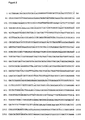
- the present invention provides an isolated hex1 promoter derived from Trichoderma reesai, having a nucleic acid sequence substantiate as shown in Figure 2 (SEQ ID NO:1), a nucleotide sequence which in at least 70% identical to the sequence of SEQ ID NO:1, or a functional part of the sequence of Figure 2 (SEQ ID NO:1), which is capable of controlling expression of a gene when in a fungal species.
- the invention also features an isolated nucleic acid having a sequence that at least 70% (at least 80, 90, 95, or 99%) identical to the sequence of Figure 2 (SEQ ID NO:1).
- the promoter sequence shown in Figure 2 (SEQ I D NO:1) is capable of promoting transcription in a fungal cell when operably linked to an open reading frame.
- Promoter sequence of Figure 2 (SEQ 10 NO:1) is the portion of the promoter upstream of the hex1 gene open reading frame as shown in Figure 3 (SEQ ID NO:2; SEQ ID NO:3).
- the present invention provides a recombinant DNA construct comprising an isolated next promoter according to the present invention operably linked to a gene of interest.
- the gene of interest is selected from an appropriate source for a particular characteristic.
- the appropriate source can be a microorganism of interest which has some metabolic or functional activity which can be utilized for a commercial or useful activity.
- the DNA construct of the invention can be introduced into a variety of expression vectors for expressing exogenous proteins in fungal cells.
- exogenous proteins include hydrolytic enzymes such as phytases, cellulases, xylanases, beta-glucanases, amylases, lipases and proteases and molecules of therapeutic/pharmaceutical importance such as antibodies, growth factors, growth inhibitors, and tissue activators or any other polypeptide of commercial value.
- the new promoter sequence and an open reading frame to which it is operably linked can be integrated into a genome to produce transgenic cells that express enzymes and therapeutic agents examples of which are listed above.
- the present invention provides an expression system comprising a DNA construct according to the previous aspects of the present invention.
- Expression systems include cells such as microorganisms containing the construct which are able to express a gene under the control of the promoter.
- nucleic acid molecules and polypeptides which can be used in the practice of the invention, the nucleic acid molecules and polypeptides advantageously have at least about 84 to 85% or greater homology or identity, such as at least about 85% or about 86% or about 87% or about 88% or about 89% homology or identity, for instance at least about 90% or homology or identity or greater, such as at least about 91 %, or about 92%, or about 93%, or about 94% identity or homology, more advantageously at least about 95% to 99% homology or identity or greater, such as at least about 95% homology or identity or greater, at least about 96%, or about 97%, or about 98%, or about 99%, or even about 100% identity or homology, or from about 84 to about 100% or from about 90 to about 99 or about 100% or from about 95 to about 99 or about 100% identity or homology, with respect to sequences disclosed or described herein and fragments thereof herein disclosed or described (including subsequences discussed below).
- Nucleotide sequence homology can be determined using the "Align” program of Myers and Miller, ("Optimal Alignments in Linear Space", CABIOS 4, 11-17, 1988 , incorporated herein by reference).
- the term "homology” or "identity”, for instance, with respect to a nucleotide or amino acid sequence can indicate a quantitative measure of homology between two sequences.
- the percent sequence homology can be calculated as (N.sub.ref -N.sub.dif)* 100/N.sub.ref, wherein N.sub.dif is the total number of non-identical residues in the two sequences when aligned and wherein N.sub.ref is the number of residues in one of the sequences.
- homology or “identity” with respect to sequences can refer to the number of positions with identical nucleotides or amino acids divided by the number of nucleotides or amino acids in the shorter of the two sequences wherein alignment of the two sequences can be determined in accordance with the Wilbur and Lipman algorithm ( Wilbur and Lipman, 1983 PNAS USA 80:726 , incorporated herein by reference). For instance, using a window size of 20 nucleotides, a word length of 4 nucleotides, and a gap penalty of 4, and computer-assisted analysis and interpretation of the sequence data including alignment can be conveniently performed using commercially available programs (Intelligenetics TM Suite, Intelligenetics Inc. California).
- RNA sequences are said to be similar, or have a degree of sequence identity or homology with DNA sequences, thymidine (T) in the DNA sequence is considered equal to uracil (U) in the RNA sequence.
- RNA sequences within the scope of the invention can be derived from DNA sequences, by thymidine (T) in the DNA sequence being considered equal to uracil (U) in RNA sequences.
- amino acid sequence similarity or identity or homology can be determined using the BlastP program ( Altschul et al., Nucl. Acids Res. 25, 3389-3402 , incorporated herein by reference).
- the following references (each incorporated herein by reference) also provide algorithms for comparing the relative identity or homology of amino acid residues of two proteins, and additionally or alternatively the teachings in these references can be used for determining percent homology or identity: Needleman S B and Wunsch C D, "A general method applicable to the search for similarities in the amino acid sequences of two proteins," J. Mol. Biol.
- nucleic acid sequences or portions or fragments thereof, subsequences comprising at least about 12 nucleotides in length, for instance, at least about 15, about 18, about 21, about 24 or about 27 nucleotides in length, such as at least about 30, about 33, about 36, about 39 or about 42 nucleotides in length, for example, a nucleic acid molecule of at least about 12 nucleotides in length such as about 12 to about 30, about 12 to about 50 or about 12 to about 60, or about 12 to about 75 or about 12 to about 100 or more nucleotides in length may be useful in hybridization as probes or primers.
- the invention further comprehends microorganisms, vectors or plasmids containing and/or expressing such a nucleic acid molecule.
- a nucleic acid molecule can encode an epitope or an epitopic region or a polypeptide which is functionally equivalent to polypeptides expressed by the sequences, well as uses of such nucleic acid molecules, for expression thereof either in vitro or in vivo, or for amplifying or detecting a defined gene or a homolog thereof, and the use of such vectors in new compositions.
- the nucleic acids used for hybridization can, of course, be conveniently labelled by incorporating or attaching a radioactive or other detectable marker. Such markers are well known in the art.
- the labelling of said nucleic acid molecules can be effected by conventional methods.
- the presence or expression of the promoter or genes under control of the promoter can be monitored by using a primer pair that specifically hybridizes to either of the corresponding nucleic acid sequences and by carrying out a polymerase chain reaction (PCR) reaction according to standard procedures.
- PCR polymerase chain reaction
- Specific hybridization of the probes or primers preferably occurs at stringent hybridization conditions.
- a probe or primer can be any stretch of at least 8, preferably at least 10, more preferably at least 12, 13, 14, or 15, such as at least 20, at least 23 or 25, for instance at least 27 or 30 nucleotides in a defined nucleic acid molecule which are unique thereto.
- PCR or hybridization primers or probes and optimal lengths thereof reference is also made to Kajimura et al., GATA 7(4):71-79 (1990) , incorporated herein by reference.
- nucleic acid molecules under the control of a promoter according to the present invention are useful in generating antibodies which can be used to detect the presence or absence of the protein (or antigens thereof) in a sample or specimen; or, the expressed polypeptides can be used to detect the presence or absence of antibodies to proteins in a sample or specimen.
- nucleic acid molecules and expression products thereof have diagnostic utilities.
- polypeptide any chain of amino acids, regardless of length or post-translational modification (glycosylation or phosphorylation).
- substantially identical is meant a polypeptide or nucleic acid exhibiting at least 50%, preferably 85%, more preferably 90%, and most preferably 95% homology to a reference amino acid or nucleic acid sequence.
- the length of comparison sequences will generally be at least 16 amino acids, preferably at least 20 amino acids, more preferably at least 25 amino acids, and most preferably 35 amino acids.
- the length of comparison sequences will generally be at least 50 nucleotides, preferably at least 60 nucleotides, more preferably at least 75 nucleotides, and most preferably 110 nucleotides.
- Sequence identity is typically measured using sequence analysis software (Sequence Analysis Software Package of the Genetics Computer Group, University of Wisconsin Biotechnology Center, 1710 University Avenue, Madison, Wis. 53705). Such software matches similar sequences by assigning degrees of homology to various substitutions, deletions, substitutions, and other modifications. Conservative substitutions typically include substitutions within the following groups: glycine, alanine; valine, isoleucine, leucine; aspartic acid, glutamic acid, asparagine, glutamine; serine, threonine; lysine, arginine; and phenylalanine, tyrosine.
- substantially pure polypeptide any polypeptide which has been separated from naturally accompanying components.
- the polypeptide is substantially pure when it is at least 60%, by weight, free from the proteins and naturally-occurring organic molecules with which it is naturally associated.
- the preparation is at least 75%, more preferably at least 90%, and most preferably at least 99%, by weight.
- a substantially pure polypeptide may be obtained, for example, by extraction from a natural source (such as a cell); by expression of a recombinant nucleic acid encoding an the polypeptide; or by chemically synthesizing the protein. Purity can be measured by any appropriate method such as those described in column chromatography, polyacrylamide gel electrophoresis, or by HPLC analysis.
- a protein is substantially free of naturally associated components when it is separated from those contaminants which accompany it in its natural state.
- a protein which is chemically synthesized or produced in a cellular system different from the cell from which it naturally originates will be substantially free from its naturally associated components.
- substantially pure polypeptides include those derived from eukaryotic organisms but synthesized in E . coli or other prokaryotes.
- substantially pure DNA DNA that is free of the genes which, in the naturally-occurring genome of the organism from which the DNA of the invention is derived, flank the gene.
- the term therefore includes, for example, a recombinant DNA which is incorporated into a vector; into an autonomously replicating plasmid or virus; or into the genomic DNA of a prokaryote or eukaryote; or which exists as a separate molecule (a cDNA or a genomic or cDNA fragment produced by PCR or restriction endonuclease digestion) independent of other sequences. It also includes a recombinant DNA which is part of a hybrid gene encoding additional polypeptide sequence.
- transformed cell is meant a cell into which (or into an ancestor of which) has been introduced, by means of recombinant DNA techniques, a DNA molecule under the control of a promoter according to the present invention encoding a given polypeptide.
- positioned for expression is meant that the DNA molecule is positioned adjacent to a DNA sequence defining a promoter which directs transcription and translation of the sequence (i.e., facilitates the production of a polypeptide, a recombinant protein or a RNA molecule).
- reporter gene is meant a gene whose expression may be assayed; such genes include, without limitation, beta-glucuronidase (GUS), luciferase, chloramphenicol transacetylase (CAT), and beta-galactosidase.
- GUS beta-glucuronidase
- CAT chloramphenicol transacetylase
- beta-galactosidase beta-galactosidase
- promoter minimal sequence sufficient to direct transcription. Also included in the invention are those promoter elements which are sufficient to render promoter-dependent gene expression controllable for cell-type specific, tissue-specific or inducible by external signals or agents; such elements may be located in the 5' or 3' regions of the native gene,
- operably linked is meant that a gene and a regulatory sequence(s) are connected in such a way as to permit gene expression when the appropriate molecules (transcriptional activator proteins) are bound to the regulatory sequence(s).
- Plant cell is meant any self-propagating cell bounded by a semi-permeable membrane and containing a plastid. Such a cell also requires a cell wall if further propagation is desired.
- Plant cell includes, without limitation, algae, cyanobacteria, seeds suspension cultures, embryos, meristematic regions, callus tissue, leaves, roots, shoots, gametophytes, sporophytes, pollen, and microspores.
- transgene any piece of DNA which is inserted by artifice into a cell, and becomes part of the genome of the organism which develops from that cell.
- a transgene may include a gene which is partly or entirely heterologous (i.e., foreign) to the transgenic organism, or may represent a gene homologous to an endogenous gene of the organism.
- transgenic any cell which includes a DNA sequence which is inserted by artifice into a cell and becomes part of the genome of the organism which develops from that cell.
- the transgenic organisms are generally transgenic fungi and the DNA (transgene) is inserted by artifice into the nuclear or plastidic genome.
- conserved region is meant any stretch of six or more contiguous amino acids exhibiting at least 30%, preferably 50%, and most preferably 70% amino acid sequence identity between two or more of the hex1 family members.
- detectably-labelled any means for marking and identifying the presence of a molecule, an oligonucleotide probe or primer, a gene or fragment thereof, or a cDNA molecule.
- Methods for detectably-labelling a molecule are well known in the art and include, without limitation, radioactive labelling (with an isotope such as 32 P or 3s S) and non-radioactive labelling (such as chemiluminescent labelling, or fluorescein labelling).
- biolistic transformation is meant any method for introducing foreign molecules into a cell using velocity driven microprojectiles such as tungsten or gold particles. Such velocity-driven methods originate from pressure bursts which include, but are not limited to, helium-driven, air-driven, and gunpowder-driven techniques. Biolistic transformation may be applied to the transformation or transfection of a wide variety of cell types and intact tissues including, without limitation, intracellular organelles (chloroplasts and mitochondria), bacteria, yeast, fungi, algae, pollen, animal tissue, plant tissue (leaf, seedling, embryo, epidermis, flower, meristem, and root), pollen, and cultured cells.
- organelles chloroplasts and mitochondria
- bacteria yeast, fungi, algae
- pollen animal tissue
- plant tissue leaf, seedling, embryo, epidermis, flower, meristem, and root
- pollen and cultured cells.
- purified antibody is meant antibody which is at least 60%, by weight, free from proteins and naturally-occurring organic molecules with which it is naturally associated. Preferably, the preparation is at least 75%, more preferably 90%, and most preferably at least 99%, by weight, antibody.
- a purified antibody may be obtained, for example, by affinity chromatography using recombinantly-produced proteins or conserved motif peptides and standard techniques.
- telomere binding By “specifically binds” is meant an antibody which recognizes and binds an a protein but which does not substantially recognize and bind other molecules in a sample, a biological sample, which naturally includes rps protein..
- the HEX1 protein was identified as a strongly expressed protein in cell wall extracts prepared from Trichoderma reesei cultures grown on cellobiose-lactose-soybean extract medium or glucose as a carbon source, by 2-dimensional gel electrophoresis ( Lim et al., 2001. Proteomics 1:899-910 ).
- the fungal hex1 gene promoter was isolated from T.reesei genomic DNA using the Chromosome Walking PCR procedure ( Morris et al., 1985. Appl. Environ. Microbiol. 61:2262-2269 ).
- PCR amplification was carried out using the following conditions: [1x] 94 °C, 10 mins [5x] 94 °C, 30 s; 40 °C, 30 s; 72 °C, 30 s [35x] 94 °C, 30 s; 50 °C, 30 s; 72 °C, 30 s.
- One unit of heat activated Amplitaq Gold Polymerase (Perkin and Elmer, USA) was used in a 50 ⁇ l PCR reaction containing the following ingredients: 100 ng of each of the two primers, 3 mM MgCl 2 , 12.5 mM dNTP's and about 10 ng of target fungal genomic DNA.
- a PCR product of about 600 bp was obtained from using the two consensus primers described above, and sequenced using the ABI 377 sequencing facility at Macquarie University, Australia.
- New 5'- and 3'-chromosomal walking primers were designed on the 600 bp hex1 sequence and were used in PCR reactions to obtain overlapping hex1 gene fragments. Further primers were designed and used to obtain upstream and downstream DNA fragments until all of the hex1 gene coding region, as well as sufficient promoter and terminator region DNA fragments were amplified and sequenced.
- a T. reesei genomic DNA-linker library was prepared first as described in Morris et al., 1985. Appl. Environ. Microbiol.
- Genomic Walking PCR reactions were carried out using the combination of either the forward or reverse chromosomal walking primer with the appropriate linker primer.
- PCR conditions used were as follows: [1 x] 94 °C, 10 min [40 x] 94°C, 30 s; 60-65 °C, 30 s; 72 °C, 4-5 min.
- PCR ingredients described above were also used in the chromosomal walking PCR reactions.
- the HEX1 protein sequence is highly conserved in filamentous fungi which enables isolation of the hex1 gene promoter from other filamentous fungi (such as those listed herein) using a procedure analogous to that described for Trichoderma.
- promoters for other genes can be detected using the method according to the present invention.
- the present inventors Using the primers devised for obtaining the hex1 gene of T. reesei, the present inventors have determined that the hex1 gene from Ophiostoma floccosum has a consensus DNA region of about 747 bp. Having obtained the genomic DNA for O. floccosum, it is possible to isolate the Hex1 promoter from this organism.
- Plasmids can be constructed for expression of any chosen gene or nucleic acid under the hex1 promoter. For the purpose of cloning a particular gene of interest under the isolated hex1 promoter, a multicloning site will be added.
- the vector will also comprise a suitable selection marker functional in the expression host. Sufficient flanking DNA fragments for hex1 are included to promote integration at the homologous genomic locus if applicable. Unique restriction sites can be incorporated so that removal of the pUC19 vector portion will be carried out first before the linear expression DNA fragments are isolated and transformed into the fungal host.
- a suitable signal for protein secretion will be included. The secretion signal may be homologous or heterologous to the gene product of interest.
- Such signals are available, for example, from the genes encoding Ophiostoma protease and lipase and the T. reesei cbh1 or from any highly secreted or produced fungal protein).
- Expression cassettes can have sequences for the correct cleavage of the signal peptide by the signal peptidase resulting in secretion of the protein of interest outside of the cultivation medium. Following transformation, resulting transformants will be screened to isolate the transformants producing highest yields of the gene product of interest and analysed in detail. It will be appreciated that such screening is routine testing known to the art.
- the cloned hex1 promoter is linked to the gene encoding DsRed1-E5 (Clontech). This provides an example of a heterologous protein expressed under the hex1 promoter and can be applied, for example, to further test the functionality of the hex1 promoter in different growth media (eg. glucose, lactose, cellulose).
- DsRed1-E5 is a mutant of the red fluorescent protein DsRed1 ( Terskikh et al., 2000. Science 290:1585-1588 ) which increases its fluorescence intensity and causes the protein to change its fluorescence from green to red, as it matures.
- DsRed1-E5 levels or intensity of fluorescence exhibited by the transformants should give a good indication of the amount of the secreted DsRed1-E5 protein.
- Culture supernatants will be further analysed on SDS-PAGE gels.
- DsRed1-E5 as a reporter will also allow comparison between different promoters.
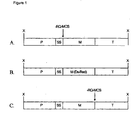
- the gene of interest intended to be expressed in the host can be expressed as a fusion protein to the DsRed1-E5 as indicated in Figure 1 .
- Figure 1 shows the gene expression cassettes using the hex1 promoter.
- DNA fragments in a cassette are constructed using the plasmid pUC19 as the carrier for replication in E . coli.
- A Basic expression vector with gene of interest linked or fused to the signal sequence.
- B Expression vector to test hex1 gene promoter strength using the fluorescent dsRed1-E5 as a reporter gene.
- C Expression vector with the gene of interest linked or fused to the transformation marker. Highlighted features include the hex1 gene promoter represented by P, secretion signal sequence, SS, proteolytic Kex2-like cleavage site, RQ, selectable marker gene, M (eg. fluorescent or antibiotic), and the hex1 gene terminator by T. Positions for restriction enzyme sites are shown by X.
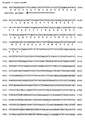
- Amino acid translation of the 4376 bp nucleotide sequence in all six possible open reading frames revealed an open reading frame of 784 bp corresponding to the HEX1 starting methionine (ATG) at position 2479 and ending at the stop codon (TAA) position 3262 ( Figure 3 ).
- a short intron sequence exists between positions 2503 and 2612 corresponding well to the predicted consensus splicing sequences (e.g. Ballance, D.J., 1986. Yeast 2:229-236 ).
- Figure 3 shows the 'PUBLISH' (GCG, Wisconsin Package Version 8.1) format of the Trichoderma reesei hex1 gene sequence. Highlighted in bold and underlined is the potential Kozak sequence important for ribosome binding site directing mRNA translation ( Kozak, M. 1987. Nucleic Acids Res. 15: 8125-8148 ). The short intron sequence is shown in lower case. Location of the two consensus (code hop) primers (hex1fwd and hex1rev) are highlighted with arrows.
- hex1 gene terminator region (position 3263 to 4376) showed several perfect inverted repeat (palindrome) sequences which promotes termination of transcription by forming loops, stopping the RNA Polymerase II from transcribing further (e.g. Lewin, B., Genes V, Oxford University Press, 1994 ).
- sequence -CCCCATG- (position 3368 to 3374) with it's a perfect palindrome sequence of - GGGGTAC- found at position 3726 to 3720 ( Figure 3 ).
- HEX1 from T. reesei Detailed peptide analysis showed the HEX1 from T. reesei to have 225 amino acids in length with an expected molecular weight of 25207 and an isoelectric point of 7.09. A high degree of amino acid homology was found between HEX1 from T . reesei and others submitted in the genbank database.
- Figure 2 shows the nucleotide sequence of the promoter of HEX1 protein from Trichoderma reesei.
- a DNA fragment of 747 bp long was amplified from Ophiostoma floccosum (strain J3301) using the two consensus (code hop) primers (hex1fwd.pr: 5'- ACA TCT TCC AAA ATG GGN TAY TAY GA -3' and hex1rev.pr: 5'- ACG GGG CCG CAC ATN GTY TGN AC -3') in a PCR amplification reaction using Hot Star Taq DNA Polymerase (QIAGEN, Germany).
- the PCR conditions used were [1x] 95 °C, 15 mins [5x] 95 °C, 30 s; 40 °C, 30 s; 72 °C, 30 s [35x] 95 °C, 30 s; 50 °C, 30 s; 72 °C; 30 s.
- a 50 ⁇ L PCR reaction contained 0.25 units of Polymerase and 100 ng of each of the two primers, 1.5 mM MgCl 2 , 12.5 mM dNTPs and about 10 ng of target O. floccosum genomic DNA.
- the 747 bp DNA fragment was gel-purified (QIAGEN, Germany) and sequenced using the ABI 377 sequencing facility at Macquarie University, Australia.
- DNA hybridisation probes were generated by PCR using the PCR DIG labelling mix (Roche, Germany).
- the primers for amplification of a 240 bp DsRed1-E5 DNA probe were dsredprobe.fwdpr: 5'- CCA CCG AGC GCC TGT ACC -3' and dsredprobe.revpr: 5'- CTA CAG GAA CAG GTG GTG -3'.
- the 615 bp hex1 DNA probe was PCR generated with primers hexprobe2.fwdpr: 5'- CCT CAA GCA CGG CGT CGC C -3' and hexprobe2.revpr: 5'- CCT TCA TCT CAA CAG CGA GC -3'.
- the PCR conditions were as follows, [1x] 94 °C, 10 mins [35x] 94°C, 30 s; 50 °C 30 s; 72 °C 30 s [1x] 72 °C, 5 mins.
- One unit of heat activated Amplitaq Gold Polymerase (Perkin and Elmer, USA) was used in a 50 ⁇ l PCR reaction containing the following ingredients: -10 ng of target DNA, 100 ng of each of the two primers, 3 mM MgCl 2 , 1 x DIG labelled dNTP's.
- the DIG Luminescent Detection Kit for Nucleic Acids (Roche, Germany) was used to detect gene specific mRNAs following the protocol supplied by the manufacturer. Overnight hybridization with the two gene DNA probes were carried out at temperatures of 55 °C for the detection of DsRed1-E5 message and at 60 °C for hex1.
- Gene promoters used for recombinant expression can be roughly divided in two categories, inducible and constitutive. Among the strongest inducible promoters, regulated by carbon catabolite repression, are the glucoamylase A promoter (glaA) of A . niger var. awamori ( Ward, M. et al., 1990. BiolTechnology 8:435-440 ) and the T. reesei cellobiohydrolase 1 (cbh1) promoter ( limén, M. et al., 1996. Mol. Gen. Genet.
- glaA glucoamylase A promoter
- cbh1 T. reesei cellobiohydrolase 1
- a constitutive promoter used across fungal species is the A. nidulans glyceraldehyde-3-phosphate dehydrogenase gpdA ( Punt et al. 1991. J Biotechnol 17:19-34 ). So far, natural constitutive or carbon catabolite repression insensitive promoters comparable in strength to the cbh1 and glaA have not been described.
- the present inventors have shown that the 2-D proteomic display can be used to identify promoters such as the T. reesei hex1 promoter that are highly functional under specified circumstances such as on glucose medium that mediates catabolite repression..
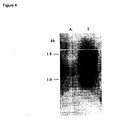
- the hex1 gene promoter is also functional under conditions that promote induction of cbh1 (see Figure 4 and Figure 5 showing hex1 expression on glucose and CLS).
- the present inventors have shown expression of the DsRed-51 gene from sea anemone under the hex1 promoter (see Figure 5 ).
- hex1 promoter provides a versatile option for gene expression and contributes to the suitability of a fungal expression system.
- the 2-D strategy for promoter isolation according to this invention can be applied to any fungus (or any other organism) and any cultivation condition that is beneficial for the production of a particular gene product of interest.
Landscapes
- Chemical & Material Sciences (AREA)
- Life Sciences & Earth Sciences (AREA)
- Health & Medical Sciences (AREA)
- Genetics & Genomics (AREA)
- Engineering & Computer Science (AREA)
- Organic Chemistry (AREA)
- Zoology (AREA)
- Biotechnology (AREA)
- Wood Science & Technology (AREA)
- General Engineering & Computer Science (AREA)
- Bioinformatics & Cheminformatics (AREA)
- Biomedical Technology (AREA)
- Molecular Biology (AREA)
- Biophysics (AREA)
- Biochemistry (AREA)
- General Health & Medical Sciences (AREA)
- Proteomics, Peptides & Aminoacids (AREA)
- Microbiology (AREA)
- Physics & Mathematics (AREA)
- Analytical Chemistry (AREA)
- Mycology (AREA)
- Plant Pathology (AREA)
- Crystallography & Structural Chemistry (AREA)
- Gastroenterology & Hepatology (AREA)
- Medicinal Chemistry (AREA)
- Botany (AREA)
- Immunology (AREA)
- Micro-Organisms Or Cultivation Processes Thereof (AREA)
- Measuring Or Testing Involving Enzymes Or Micro-Organisms (AREA)
- Preparation Of Compounds By Using Micro-Organisms (AREA)
- Enzymes And Modification Thereof (AREA)
- Saccharide Compounds (AREA)
Claims (9)
- Isolierter, von Trichoderma reesei stammender hex1-Promotor, welcher die in SEQ ID NO:1 dargestellte Nukleotidsequenz, eine Nukleotidsequenz, die zu mindestens 70 % identisch mit der Sequenz von SEQ ID NO:1 ist, oder einen funktionellen Teil der in SEQ ID NO:1 dargestellten Sequenz, welcher in einer Pilzart die Expression eines Gens regulieren kann, aufweist.
- Hex1-Promotor gemäß Anspruch 1, welcher eine Nukleotidsequenz aufweist, die zu mindestens 80 % identisch mit der Sequenz von SEQ ID NO:1 ist.
- Hex1-Promotor gemäß Anspruch 1, welcher die in SEQ ID NO:1 dargestellte Nukleotidsequenz aufweist.
- Rekombinantes DNA-Konstrukt umfassend einen isolierten hex1-Promotor gemäß irgendeinem der Ansprüche 1 bis 3, welcher operabel mit einem Gen verknüpft ist.
- DNA-Konstrukt gemäß Anspruch 4, wobei das Gen ein Protein kodiert.
- DNA-Konstrukt gemäß Anspruch 5, wobei das Protein ausgewählt ist aus der Gruppe hydrolytischer Enzyme und Molekülen zur therapeutischen/pharmazeutischen Verwendung.
- DNA-Konstrukt gemäß Anspruch 6, wobei das hydrolytische Enzym ausgewählt ist aus der Gruppe der Phytasen, Zellulasen, Xylanasen, Beta-Glucanasen, Amylasen, Lipasen und Proteasen.
- DNA-Konstrukt gemäß Anspruch 6, wobei das Molekül, welches zur therapeutischen/pharmazeutischen Verwendung geeignet ist, ausgewählt ist aus der Gruppe der Proteine, Antikörper, Wachstumsfaktoren, Wachstumsinhibitoren und Gewebeaktivatoren.
- Expressionssystem enthaltend das DNA-Konstrukt gemäß irgendeinem der Ansprüche 1 bis 8.
Applications Claiming Priority (3)
| Application Number | Priority Date | Filing Date | Title |
|---|---|---|---|
| AUPR9459A AUPR945901A0 (en) | 2001-12-13 | 2001-12-13 | Gene promoters |
| AUPR945901 | 2001-12-13 | ||
| PCT/AU2002/001692 WO2003050233A2 (en) | 2001-12-13 | 2002-12-13 | Gene promoters |
Publications (3)
| Publication Number | Publication Date |
|---|---|
| EP1458867A2 EP1458867A2 (de) | 2004-09-22 |
| EP1458867A4 EP1458867A4 (de) | 2005-08-10 |
| EP1458867B1 true EP1458867B1 (de) | 2008-02-20 |
Family
ID=3833075
Family Applications (1)
| Application Number | Title | Priority Date | Filing Date |
|---|---|---|---|
| EP02804540A Expired - Lifetime EP1458867B1 (de) | 2001-12-13 | 2002-12-13 | Genpromotoren |
Country Status (10)
| Country | Link |
|---|---|
| US (1) | US7517685B2 (de) |
| EP (1) | EP1458867B1 (de) |
| JP (1) | JP2005511082A (de) |
| CN (2) | CN100360673C (de) |
| AT (1) | ATE386807T1 (de) |
| AU (2) | AUPR945901A0 (de) |
| DE (1) | DE60225182T2 (de) |
| DK (1) | DK1458867T3 (de) |
| NZ (1) | NZ533495A (de) |
| WO (1) | WO2003050233A2 (de) |
Families Citing this family (3)
| Publication number | Priority date | Publication date | Assignee | Title |
|---|---|---|---|---|
| EP2397491A1 (de) | 2010-06-21 | 2011-12-21 | Technische Universität Wien | LeaA von Trichoderma reesei |
| EP2708553A1 (de) | 2012-09-18 | 2014-03-19 | Technische Universität Wien | Modifizierte Pilzzelle |
| US10227523B2 (en) | 2013-11-26 | 2019-03-12 | Advanced Enzyme Systems, Llc | Glycosyl hydrolase enzymes in high temperature industrial processes |
Family Cites Families (3)
| Publication number | Priority date | Publication date | Assignee | Title |
|---|---|---|---|---|
| EP0656943A1 (de) | 1992-08-19 | 1995-06-14 | Alko Group Ltd. | In der gegenwart von glukose aktiver promotor aus pilzzellen |
| ATE346942T1 (de) * | 1996-09-13 | 2006-12-15 | Meiji Seika Kaisha | Regulatorische sequenzen des cellulasegens cbh1 aus trichoderma viridae und darauf basierendes system zur massenproduktion von proteinen und peptiden |
| EP1194572A2 (de) * | 1999-03-22 | 2002-04-10 | Novozymes Biotech, Inc. | Promotorsequenzen von fusarium venenatum und deren verwendungen |
-
2001
- 2001-12-13 AU AUPR9459A patent/AUPR945901A0/en not_active Abandoned
-
2002
- 2002-12-13 EP EP02804540A patent/EP1458867B1/de not_active Expired - Lifetime
- 2002-12-13 AT AT02804540T patent/ATE386807T1/de not_active IP Right Cessation
- 2002-12-13 CN CNB028270800A patent/CN100360673C/zh not_active Expired - Fee Related
- 2002-12-13 WO PCT/AU2002/001692 patent/WO2003050233A2/en not_active Ceased
- 2002-12-13 JP JP2003551255A patent/JP2005511082A/ja active Pending
- 2002-12-13 DK DK02804540T patent/DK1458867T3/da active
- 2002-12-13 DE DE60225182T patent/DE60225182T2/de not_active Expired - Lifetime
- 2002-12-13 CN CNA2006100825211A patent/CN1873008A/zh active Pending
- 2002-12-13 AU AU2002366655A patent/AU2002366655B2/en not_active Ceased
- 2002-12-13 US US10/498,549 patent/US7517685B2/en not_active Expired - Fee Related
- 2002-12-13 NZ NZ533495A patent/NZ533495A/en not_active IP Right Cessation
Non-Patent Citations (1)
| Title |
|---|
| NAKARI T ET AL.: "Isolation of Trichoderma reesei genes highly expressed on glucose-containing media: characterization of the tef1 gene encoding translation elongation factor 1alpha", GENE, vol. 136, 1993, pages 313 - 318 * |
Also Published As
| Publication number | Publication date |
|---|---|
| EP1458867A4 (de) | 2005-08-10 |
| AUPR945901A0 (en) | 2002-01-24 |
| AU2002366655A1 (en) | 2003-06-23 |
| US7517685B2 (en) | 2009-04-14 |
| DK1458867T3 (da) | 2008-06-09 |
| DE60225182D1 (de) | 2008-04-03 |
| ATE386807T1 (de) | 2008-03-15 |
| US20050221474A1 (en) | 2005-10-06 |
| CN100360673C (zh) | 2008-01-09 |
| JP2005511082A (ja) | 2005-04-28 |
| CN1873008A (zh) | 2006-12-06 |
| CN1615362A (zh) | 2005-05-11 |
| WO2003050233A3 (en) | 2003-10-30 |
| AU2002366655B2 (en) | 2006-11-02 |
| DE60225182T2 (de) | 2009-02-12 |
| EP1458867A2 (de) | 2004-09-22 |
| WO2003050233A2 (en) | 2003-06-19 |
| NZ533495A (en) | 2008-09-26 |
Similar Documents
| Publication | Publication Date | Title |
|---|---|---|
| Baker et al. | Ubiquitin-specific proteases of Saccharomyces cerevisiae. Cloning of UBP2 and UBP3, and functional analysis of the UBP gene family | |
| US7790958B2 (en) | Genomic plant sequences and uses thereof | |
| US9487797B2 (en) | Genomic plant sequences and uses thereof | |
| CN101589146A (zh) | 在毕赤酵母属中由甲醇诱导型启动子进行不依赖甲醇的诱导的方法 | |
| Vettore et al. | The molecular and functional characterization of an Opaque2 homologue gene from Coix and a new classification of plant bZIP proteins | |
| CN106957355B (zh) | 一种与植物耐低光和耐低温相关的ppr蛋白及其编码基因和应用 | |
| CN111235180A (zh) | 缩短玉米花期的方法 | |
| CN116507728A (zh) | 大豆中的豆血红蛋白 | |
| WO1996039020A1 (en) | Genes conferring salt tolerance and their uses | |
| US5804694A (en) | Commercial production of β-glucuronidase in plants | |
| CN113061171A (zh) | 抗稻瘟病蛋白和基因、分离的核酸及其应用 | |
| CN116606821A (zh) | 一种植物抗盐碱蛋白GsSIE3及其编码基因与应用 | |
| EP1458867B1 (de) | Genpromotoren | |
| CN112646820B (zh) | 改变玉米开花期的基因及方法 | |
| US6518484B2 (en) | Promoter system of plant translationally controlled tumor protein gene | |
| CN115074361B (zh) | 真菌来源的强启动子及其应用 | |
| JP4413557B2 (ja) | 糸状菌を用いたタンパク質の効率的製造法 | |
| CN114891800B (zh) | 玉米穗长基因及其应用 | |
| EP0955380B1 (de) | Ein Verfahren zur Abschätzung der Fähigkeit einer Verbindung, die Aktivität von Protoporphyrinogenoxidase zu inhibieren | |
| EP1801221A1 (de) | Promotor sequenzen | |
| WO2002036830A2 (en) | Method of determining gene copy number | |
| AU2007304884A1 (en) | Nucleic acid promoter sequences that control gene expression in plants | |
| USRE46033E1 (en) | Genomic plant sequences and uses thereof | |
| USRE46192E1 (en) | Rice metallothionein promoters | |
| CA2529129A1 (en) | Limit dextrinase inhibitor promoter |
Legal Events
| Date | Code | Title | Description |
|---|---|---|---|
| PUAI | Public reference made under article 153(3) epc to a published international application that has entered the european phase |
Free format text: ORIGINAL CODE: 0009012 |
|
| 17P | Request for examination filed |
Effective date: 20040624 |
|
| AK | Designated contracting states |
Kind code of ref document: A2 Designated state(s): AT BE BG CH CY CZ DE DK EE ES FI FR GB GR IE IT LI LU MC NL PT SE SI SK TR |
|
| AX | Request for extension of the european patent |
Extension state: AL LT LV MK RO |
|
| RIC1 | Information provided on ipc code assigned before grant |
Ipc: 7C 12N 15/80 B Ipc: 7C 12N 15/31 A Ipc: 7C 12Q 1/68 B Ipc: 7C 12N 15/63 B |
|
| A4 | Supplementary search report drawn up and despatched |
Effective date: 20050629 |
|
| 17Q | First examination report despatched |
Effective date: 20060301 |
|
| GRAP | Despatch of communication of intention to grant a patent |
Free format text: ORIGINAL CODE: EPIDOSNIGR1 |
|
| GRAS | Grant fee paid |
Free format text: ORIGINAL CODE: EPIDOSNIGR3 |
|
| GRAA | (expected) grant |
Free format text: ORIGINAL CODE: 0009210 |
|
| AK | Designated contracting states |
Kind code of ref document: B1 Designated state(s): AT BE BG CH CY CZ DE DK EE ES FI FR GB GR IE IT LI LU MC NL PT SE SI SK TR |
|
| REG | Reference to a national code |
Ref country code: GB Ref legal event code: FG4D |
|
| REG | Reference to a national code |
Ref country code: CH Ref legal event code: EP |
|
| REG | Reference to a national code |
Ref country code: IE Ref legal event code: FG4D |
|
| REF | Corresponds to: |
Ref document number: 60225182 Country of ref document: DE Date of ref document: 20080403 Kind code of ref document: P |
|
| REG | Reference to a national code |
Ref country code: DK Ref legal event code: T3 |
|
| PG25 | Lapsed in a contracting state [announced via postgrant information from national office to epo] |
Ref country code: ES Free format text: LAPSE BECAUSE OF FAILURE TO SUBMIT A TRANSLATION OF THE DESCRIPTION OR TO PAY THE FEE WITHIN THE PRESCRIBED TIME-LIMIT Effective date: 20080531 |
|
| PG25 | Lapsed in a contracting state [announced via postgrant information from national office to epo] |
Ref country code: AT Free format text: LAPSE BECAUSE OF FAILURE TO SUBMIT A TRANSLATION OF THE DESCRIPTION OR TO PAY THE FEE WITHIN THE PRESCRIBED TIME-LIMIT Effective date: 20080220 |
|
| PG25 | Lapsed in a contracting state [announced via postgrant information from national office to epo] |
Ref country code: SI Free format text: LAPSE BECAUSE OF FAILURE TO SUBMIT A TRANSLATION OF THE DESCRIPTION OR TO PAY THE FEE WITHIN THE PRESCRIBED TIME-LIMIT Effective date: 20080220 Ref country code: BE Free format text: LAPSE BECAUSE OF FAILURE TO SUBMIT A TRANSLATION OF THE DESCRIPTION OR TO PAY THE FEE WITHIN THE PRESCRIBED TIME-LIMIT Effective date: 20080220 |
|
| PG25 | Lapsed in a contracting state [announced via postgrant information from national office to epo] |
Ref country code: SE Free format text: LAPSE BECAUSE OF FAILURE TO SUBMIT A TRANSLATION OF THE DESCRIPTION OR TO PAY THE FEE WITHIN THE PRESCRIBED TIME-LIMIT Effective date: 20080520 Ref country code: CZ Free format text: LAPSE BECAUSE OF FAILURE TO SUBMIT A TRANSLATION OF THE DESCRIPTION OR TO PAY THE FEE WITHIN THE PRESCRIBED TIME-LIMIT Effective date: 20080220 Ref country code: PT Free format text: LAPSE BECAUSE OF FAILURE TO SUBMIT A TRANSLATION OF THE DESCRIPTION OR TO PAY THE FEE WITHIN THE PRESCRIBED TIME-LIMIT Effective date: 20080721 Ref country code: SK Free format text: LAPSE BECAUSE OF FAILURE TO SUBMIT A TRANSLATION OF THE DESCRIPTION OR TO PAY THE FEE WITHIN THE PRESCRIBED TIME-LIMIT Effective date: 20080220 |
|
| ET | Fr: translation filed | ||
| PLBE | No opposition filed within time limit |
Free format text: ORIGINAL CODE: 0009261 |
|
| STAA | Information on the status of an ep patent application or granted ep patent |
Free format text: STATUS: NO OPPOSITION FILED WITHIN TIME LIMIT |
|
| 26N | No opposition filed |
Effective date: 20081121 |
|
| PG25 | Lapsed in a contracting state [announced via postgrant information from national office to epo] |
Ref country code: BG Free format text: LAPSE BECAUSE OF FAILURE TO SUBMIT A TRANSLATION OF THE DESCRIPTION OR TO PAY THE FEE WITHIN THE PRESCRIBED TIME-LIMIT Effective date: 20080520 Ref country code: EE Free format text: LAPSE BECAUSE OF FAILURE TO SUBMIT A TRANSLATION OF THE DESCRIPTION OR TO PAY THE FEE WITHIN THE PRESCRIBED TIME-LIMIT Effective date: 20080220 |
|
| PG25 | Lapsed in a contracting state [announced via postgrant information from national office to epo] |
Ref country code: MC Free format text: LAPSE BECAUSE OF NON-PAYMENT OF DUE FEES Effective date: 20081231 Ref country code: CY Free format text: LAPSE BECAUSE OF FAILURE TO SUBMIT A TRANSLATION OF THE DESCRIPTION OR TO PAY THE FEE WITHIN THE PRESCRIBED TIME-LIMIT Effective date: 20080220 |
|
| REG | Reference to a national code |
Ref country code: CH Ref legal event code: PL |
|
| PG25 | Lapsed in a contracting state [announced via postgrant information from national office to epo] |
Ref country code: IT Free format text: LAPSE BECAUSE OF FAILURE TO SUBMIT A TRANSLATION OF THE DESCRIPTION OR TO PAY THE FEE WITHIN THE PRESCRIBED TIME-LIMIT Effective date: 20080220 |
|
| PG25 | Lapsed in a contracting state [announced via postgrant information from national office to epo] |
Ref country code: CH Free format text: LAPSE BECAUSE OF NON-PAYMENT OF DUE FEES Effective date: 20081231 Ref country code: LI Free format text: LAPSE BECAUSE OF NON-PAYMENT OF DUE FEES Effective date: 20081231 Ref country code: IE Free format text: LAPSE BECAUSE OF NON-PAYMENT OF DUE FEES Effective date: 20081215 |
|
| PGFP | Annual fee paid to national office [announced via postgrant information from national office to epo] |
Ref country code: DK Payment date: 20091222 Year of fee payment: 8 Ref country code: FI Payment date: 20091221 Year of fee payment: 8 |
|
| PGFP | Annual fee paid to national office [announced via postgrant information from national office to epo] |
Ref country code: NL Payment date: 20091221 Year of fee payment: 8 |
|
| PGFP | Annual fee paid to national office [announced via postgrant information from national office to epo] |
Ref country code: FR Payment date: 20100105 Year of fee payment: 8 Ref country code: GB Payment date: 20091221 Year of fee payment: 8 |
|
| PGFP | Annual fee paid to national office [announced via postgrant information from national office to epo] |
Ref country code: DE Payment date: 20091116 Year of fee payment: 8 |
|
| PG25 | Lapsed in a contracting state [announced via postgrant information from national office to epo] |
Ref country code: LU Free format text: LAPSE BECAUSE OF NON-PAYMENT OF DUE FEES Effective date: 20081213 |
|
| PG25 | Lapsed in a contracting state [announced via postgrant information from national office to epo] |
Ref country code: TR Free format text: LAPSE BECAUSE OF FAILURE TO SUBMIT A TRANSLATION OF THE DESCRIPTION OR TO PAY THE FEE WITHIN THE PRESCRIBED TIME-LIMIT Effective date: 20080220 |
|
| PG25 | Lapsed in a contracting state [announced via postgrant information from national office to epo] |
Ref country code: GR Free format text: LAPSE BECAUSE OF FAILURE TO SUBMIT A TRANSLATION OF THE DESCRIPTION OR TO PAY THE FEE WITHIN THE PRESCRIBED TIME-LIMIT Effective date: 20080521 |
|
| REG | Reference to a national code |
Ref country code: NL Ref legal event code: V1 Effective date: 20110701 |
|
| REG | Reference to a national code |
Ref country code: DK Ref legal event code: EBP |
|
| GBPC | Gb: european patent ceased through non-payment of renewal fee |
Effective date: 20101213 |
|
| PG25 | Lapsed in a contracting state [announced via postgrant information from national office to epo] |
Ref country code: FI Free format text: LAPSE BECAUSE OF NON-PAYMENT OF DUE FEES Effective date: 20101213 |
|
| REG | Reference to a national code |
Ref country code: FR Ref legal event code: ST Effective date: 20110831 |
|
| PG25 | Lapsed in a contracting state [announced via postgrant information from national office to epo] |
Ref country code: FR Free format text: LAPSE BECAUSE OF NON-PAYMENT OF DUE FEES Effective date: 20110103 |
|
| PG25 | Lapsed in a contracting state [announced via postgrant information from national office to epo] |
Ref country code: DE Free format text: LAPSE BECAUSE OF NON-PAYMENT OF DUE FEES Effective date: 20110701 Ref country code: GB Free format text: LAPSE BECAUSE OF NON-PAYMENT OF DUE FEES Effective date: 20101213 |
|
| REG | Reference to a national code |
Ref country code: DE Ref legal event code: R119 Ref document number: 60225182 Country of ref document: DE Effective date: 20110701 |
|
| PG25 | Lapsed in a contracting state [announced via postgrant information from national office to epo] |
Ref country code: NL Free format text: LAPSE BECAUSE OF NON-PAYMENT OF DUE FEES Effective date: 20110701 |