EP1457461B1 - Verfahren zum entionisieren und klären des in einer funkenerosionsmaschine verwendeten wässrigen mediums und bei dem verfahren verwendetes produkt - Google Patents
Verfahren zum entionisieren und klären des in einer funkenerosionsmaschine verwendeten wässrigen mediums und bei dem verfahren verwendetes produkt Download PDFInfo
- Publication number
- EP1457461B1 EP1457461B1 EP01275062A EP01275062A EP1457461B1 EP 1457461 B1 EP1457461 B1 EP 1457461B1 EP 01275062 A EP01275062 A EP 01275062A EP 01275062 A EP01275062 A EP 01275062A EP 1457461 B1 EP1457461 B1 EP 1457461B1
- Authority
- EP
- European Patent Office
- Prior art keywords
- aqueous medium
- solution
- deionisation
- electroerosion machine
- conductivity
- Prior art date
- Legal status (The legal status is an assumption and is not a legal conclusion. Google has not performed a legal analysis and makes no representation as to the accuracy of the status listed.)
- Expired - Lifetime
Links
Images

Classifications
-
- C—CHEMISTRY; METALLURGY
- C02—TREATMENT OF WATER, WASTE WATER, SEWAGE, OR SLUDGE
- C02F—TREATMENT OF WATER, WASTE WATER, SEWAGE, OR SLUDGE
- C02F1/00—Treatment of water, waste water, or sewage
- C02F1/52—Treatment of water, waste water, or sewage by flocculation or precipitation of suspended impurities
- C02F1/54—Treatment of water, waste water, or sewage by flocculation or precipitation of suspended impurities using organic material
-
- B—PERFORMING OPERATIONS; TRANSPORTING
- B23—MACHINE TOOLS; METAL-WORKING NOT OTHERWISE PROVIDED FOR
- B23H—WORKING OF METAL BY THE ACTION OF A HIGH CONCENTRATION OF ELECTRIC CURRENT ON A WORKPIECE USING AN ELECTRODE WHICH TAKES THE PLACE OF A TOOL; SUCH WORKING COMBINED WITH OTHER FORMS OF WORKING OF METAL
- B23H1/00—Electrical discharge machining, i.e. removing metal with a series of rapidly recurring electrical discharges between an electrode and a workpiece in the presence of a fluid dielectric
- B23H1/10—Supply or regeneration of working media
-
- C—CHEMISTRY; METALLURGY
- C02—TREATMENT OF WATER, WASTE WATER, SEWAGE, OR SLUDGE
- C02F—TREATMENT OF WATER, WASTE WATER, SEWAGE, OR SLUDGE
- C02F1/00—Treatment of water, waste water, or sewage
- C02F1/42—Treatment of water, waste water, or sewage by ion-exchange
-
- C—CHEMISTRY; METALLURGY
- C02—TREATMENT OF WATER, WASTE WATER, SEWAGE, OR SLUDGE
- C02F—TREATMENT OF WATER, WASTE WATER, SEWAGE, OR SLUDGE
- C02F1/00—Treatment of water, waste water, or sewage
- C02F1/52—Treatment of water, waste water, or sewage by flocculation or precipitation of suspended impurities
-
- C—CHEMISTRY; METALLURGY
- C02—TREATMENT OF WATER, WASTE WATER, SEWAGE, OR SLUDGE
- C02F—TREATMENT OF WATER, WASTE WATER, SEWAGE, OR SLUDGE
- C02F1/00—Treatment of water, waste water, or sewage
- C02F1/68—Treatment of water, waste water, or sewage by addition of specified substances, e.g. trace elements, for ameliorating potable water
- C02F1/683—Treatment of water, waste water, or sewage by addition of specified substances, e.g. trace elements, for ameliorating potable water by addition of complex-forming compounds
-
- C—CHEMISTRY; METALLURGY
- C02—TREATMENT OF WATER, WASTE WATER, SEWAGE, OR SLUDGE
- C02F—TREATMENT OF WATER, WASTE WATER, SEWAGE, OR SLUDGE
- C02F1/00—Treatment of water, waste water, or sewage
- C02F1/42—Treatment of water, waste water, or sewage by ion-exchange
- C02F2001/422—Treatment of water, waste water, or sewage by ion-exchange using anionic exchangers
-
- C—CHEMISTRY; METALLURGY
- C02—TREATMENT OF WATER, WASTE WATER, SEWAGE, OR SLUDGE
- C02F—TREATMENT OF WATER, WASTE WATER, SEWAGE, OR SLUDGE
- C02F1/00—Treatment of water, waste water, or sewage
- C02F1/42—Treatment of water, waste water, or sewage by ion-exchange
- C02F2001/425—Treatment of water, waste water, or sewage by ion-exchange using cation exchangers
-
- C—CHEMISTRY; METALLURGY
- C02—TREATMENT OF WATER, WASTE WATER, SEWAGE, OR SLUDGE
- C02F—TREATMENT OF WATER, WASTE WATER, SEWAGE, OR SLUDGE
- C02F2101/00—Nature of the contaminant
- C02F2101/10—Inorganic compounds
- C02F2101/20—Heavy metals or heavy metal compounds
- C02F2101/203—Iron or iron compound
Definitions
- the EDM process involves the use of a wire in brass, steel, copper, etc. the workpiece which is generally conductive, by example, steel, aluminum, copper, titanium, etc. and an aqueous working medium to low conductivity and without suspended particles for example a medium dielectric formed of filtered, refrigerated and partially deionized water. From a point of chemical view, there may be multiple reactions between different substances or compounds during a wire electroerosion process in a medium aqueous.
- the electro-erosion process involves the oxidation of metallic iron (Fe 0 ) as a consequence of a redox reaction with water during the discharge.
- the iron passes from Fe 0 to Fe 2+ and to Fe 3+ , the latter species in contact with water reaches the equilibrium acid-base precipitant in the form of hydroxide at a pH greater than 2.
- the hydroxide Fe (OH 3 is a dark gelatinous precipitate with colloidal behavior that does not settle at the bottom but tends to remain in suspension, resulting in darkening of the water in the cleaning tank of the filtering system which can not hold him back.
- the electroerosion process leads to a continuous basification of the medium (in principle of neutral partially deionized water).
- This increase in pH is due to the redox process of the water during the exchange of electrons.
- the water is reduced (reduction of oxygen and hydrogen), which in neutral or alkaline medium implies an increase in the concentration of OH - in the medium. Part of the latter reacts to form the hydroxides of the corresponding metals but there remains an excess that maintains the basic medium.
- spark erosion wire must pass for its guidance by means of very precise orifices, of a few microns ( ⁇ m). These orifices are closed by the deposit complex compounds of metals eroded during the process and the elements that make up the wire guides deteriorate as well as the accuracy of EDM on the piece to work.
- This medium-solution will simultaneously control the concentration of ions in the medium and thus the conductivity allowing a more seated increase of the latter and a lower consumption of resins. All this is surely possible with a medium that does not affect the electroerosion process per se (tearing capacity, spark energy, etc.) and in addition to combustion of resins, facilitates the filtration, extraction and dehydration of sludge, because of the absence of particles with colloidal behavior as it is the case of Fe (OH) 3 hydroxide.
- this medium-solution is a mixture Synergistic action based on the union of an organic acid, used for its ability complexing agent (oxalic acid) and an inorganic acid used for its quality precipitant (phosphoric acid) which acts on the main cations present in the system. With this mixture, it acts on the precipitation of the metal hydroxide, the conductivity of the medium and on the pH of the system.
- oxalic acid has a strong tendency to form stable complexes, especially with iron.
- the addition of oxalic acid acts on Fe ++ precipitating a part of the latter, which can also precipitate in reaction with zinc and copper (Cu ++ ) which are dissolved in the dielectric medium. This action reduces the conductivity of the dielectric medium as well as the concentration of the trivalent iron formed.
- Fe +++ Since the presence of Fe +++ is inevitable, the mixture is supplemented with phosphoric acid capable of precipitating rapidly as FePO 4 avoiding the formation of colloidal particles very difficult to filter and separate. Fe +++ additionally forms stable complexes with oxalate ion and acid phosphate.
- the mixture influences the conductivity that is caused by the rate at which charged particles move in the dielectric medium.
- These charged particles are anions and cations of small size (H +, OH - , Fe 3+ , Fe 2+ , Cu + , etc.) which can be solvated by the medium.
- the solution on the one hand, the generation of interactions between charged particles (which reduces the conductivity) and the reduction of ion mobility, creating by example of particles that tend to drive the solution that surrounds them.
- close ions must move against the current and no longer in a stationary medium, losing the ease of movement compared to the situation when they move separately and at low concentration. So, it is better to choose large charged particles of polar nature such as oxalic acid leading to a bigger cloud of solvation.
- the acid mixture has a very acid pH value, the constant basification that causes the electro-erosion process to compensate acidity by keeping the middle close to neutrality.
- the oxalic-phosphoric mixture dissolves the deposits and crusts formed in the threading holes electroerosion, hence the accuracy of wire guidance increases.
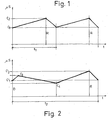
- Figure 1 is a coordinate representation of a process conventional deionization method known with cationic anionic resins.
- FIG. 2 is the representation of FIG. 1 according to one embodiment practice of the process object of the invention.
- FIG. 3 is a representation in coordinates of the sedimentation of water solutes from electroerosion in a process usual known.
- FIG. 4 is a representation in coordinates such as those of Figure 3 of the sedimentation of solutes from water from electroerosion according to the process and the object of the invention.
- FIGS. 3 and 4 correspond to sedimentation tests carried out in two test specimens 100 mm high and 100 milliliters in capacity, which have been filled with water from electroerosion whose conductivity is 10 ⁇ S / cm and which contain 10 mm 3 of steel in suspension each (the appearance of the water inside the two containers is entirely black).
- the liquid of Figure 4 has been treated with the dissolving object of the invention and its contents in the mixture is less than 0.07 milliliters.
- Figure 3 shows a liquid that remains black and does not sediment with time.
- Figure 4 shows the rate of sedimentation of the contents after 2 hours has completely sedimented and the water has a clean appearance and can be recycled for use.
- a depuration circuit For depuration of the aqueous medium used in a machine electroerosion, there is usually a depuration circuit: starting from the working tank where is worked the piece (normally metallic) corresponding and which contains the aqueous medium (in principle low water conductivity) the already contaminated aqueous medium is transported to a reservoir of reception to send it to the filter and the ion exchanger by means of resins cationic-anionic so that the water reaches the degree of deionization required for process, hence the fact that this water can come back directly or indirectly to work tank and start the cycle.
- This process and this product are used with conductivity less than 40 ⁇ S / cm and preferably with waters having a conductivity less than 20 ⁇ S / cm.
- the aqueous medium where electroerosion is used is generally low conductivity. As ions occur in the process, cationic-anionic resins are used to remove ions or as it actually happens, to maintain the aqueous medium with conductivity (for each use), in Figure 1, for example, the conductivity remains less than 14 ⁇ S / cm.
- the aqueous medium begins with an initial conductivity (C 1 ), for example 11 ⁇ S / cm and is charged with ions to reach a limiting conductivity (C 2 ), for example 14 ⁇ S / cm, which is the predetermined quantity for the cationic resins to Anions that lower the conductivity from 14 ⁇ S / cm to 11 ⁇ S / cm (R) begin to work and the process begins again.
- C 1 initial conductivity
- C 2 limiting conductivity
- Normal working conditions, under wear may be the work of a piece of steel, aluminum, copper or titanium with a material detachment of 1500 and 3000 mm 3 / hour.
- the time (t 1 ) of the process cycle that the aqueous medium undergoes from the initial conductivity (C 1 ) of 11 ⁇ S / cm to a limiting conductivity (C 2 ) at 14 ⁇ S / cm and returning to the initial conductivity (C 1 ) can be 15 minutes.
- phosphoric acid PO 4 H 3 that is, 1'8 mol and the remainder up to 1 l. of deionized water whose conductivity was 7 ⁇ S / cm.
- a steel workpiece was used using a work rate with material detachment of 2160 mm 3 / hour (identical to that of Fig.1 for proper comparison).
- the dissolution can be added at any time of the circuit of depuration of the aqueous medium, but it will preferably be added to the reservoir of receiving the already used dielectric aqueous medium which comes from the reservoir of job.
- the coordinates are the height of sedimentation (h) in mm, time (t) in hours and level (n) of the interphase between clean liquid (c) and dirty (d).
Landscapes
- Chemical & Material Sciences (AREA)
- Engineering & Computer Science (AREA)
- Organic Chemistry (AREA)
- Life Sciences & Earth Sciences (AREA)
- Hydrology & Water Resources (AREA)
- Environmental & Geological Engineering (AREA)
- Water Supply & Treatment (AREA)
- Medicinal Chemistry (AREA)
- Health & Medical Sciences (AREA)
- Mechanical Engineering (AREA)
- Electrical Discharge Machining, Electrochemical Machining, And Combined Machining (AREA)
- Treatment Of Water By Ion Exchange (AREA)
- Water Treatment By Electricity Or Magnetism (AREA)
- Removal Of Specific Substances (AREA)
- Separation Using Semi-Permeable Membranes (AREA)
- Organic Low-Molecular-Weight Compounds And Preparation Thereof (AREA)
- Investigating Or Analyzing Non-Biological Materials By The Use Of Chemical Means (AREA)
- Dental Preparations (AREA)
Claims (7)
- Vorgehensweise zur Entionisierung und Klärung des wässrigen Mediums, das bei einer Elektroerosionsmaschine verwendet wird und die aus einem Klärungskreislauf dieses wässrigen Mediums besteht, zu der eine Ionenaustauschphase zwischen kationischen und anionischen Harzen mit dem dielektrischen wässrigen Medium gehört, und die sich dadurch kennzeichnet, dass dem wässrigen Medium, dessen Leitfähigkeit unter 40µS/cm liegt, eine Lösung aus Oxalsäure und Phosphorsäure in destilliertem / entionisiertem Wasser mit einem ungefähren Verhältnis der Oxalsäure zwischen 0,18 und 0,035 mol und der Phosphorsäure zwischen 1,28 und 2,5 mol pro Liter Lösung zugesetzt wird.
- Vorgehensweise zur Entionisierung und Klärung des wässrigen dielektrischen Mediums, das bei einer Elektroerosionsmaschine verwendet wird, wie im obigen Anspruch, die sich dadurch kennzeichnet, dass die Lösung dem wässrigen Medium nach der Ionenaustauschphase zwischen den kationischen und anionischen Harzen mit dem wässrigen Medium zugegeben wird.
- Vorgehensweise zur Entionisierung und Klärung des wässrigen Mediums, das bei einer Elektroerosionsmaschine verwendet wird, wie im zweiten Anspruch, die sich dadurch kennzeichnet, dass, wenn die Elektroerosionsmaschine mit Fe oder Al Teilen arbeitet, auf ca. 100 ml des wässrigen Mediums 7 ml Lösung gegeben werden.
- Vorgehensweise zur Entionisierung und Klärung des wässrigen dielektrischen Mediums, das bei einer Elektroerosionsmaschine verwendet wird, wie im ersten Anspruch, die sich dadurch kennzeichnet, dass, wenn die Elektroerosionsmaschine mit Cu Teilen arbeitet, auf ca. 100 ml des wässrigen Mediums 1,5 ml Lösung gegeben werden.
- Vorgehensweise zur Entionisierung und Klärung des wässrigen dielektrischen Mediums, das bei einer Elektroerosionsmaschine verwendet wird, wie in den obigen Ansprüchen, die sich dadurch kennzeichnet, dass die Lösung dem Reinigungskreislauf in den Eingangsbehälter des gebrauchten wässrigen Mediums zugegeben wird.
- Vorgehensweise zur Entionisierung und Klärung des wässrigen Mediums, das bei einer Elektroerosionsmaschine verwendet wird, wie im ersten Anspruch, die sich dadurch kennzeichnet, dass die Lösung in entionisiertem Wasser aus 0,025 mol Oxalsäure und 1,8 mol Phosphorsäure pro Liter Lösung besteht.
- Produkt, das bei der Vorgehensweise zur Entionisierung und Klärung des wässrigen dielektrischen Mediums, das bei einer Elektroerosionsmaschine verwendet wird, wie in den obigen Ansprüchen verwendet wird und sich dadurch kennzeichnet, dass es aus einer Lösung aus Oxalsäure und Phosphorsäure in destilliertem / entionisiertem Wasser mit einem ungefähren Verhältnis der Oxalsäure zwischen 0,18 und 0,035 mol und der Phosphorsäure zwischen 1,28 und 2,5 mol pro Liter Lösung besteht.
Applications Claiming Priority (1)
| Application Number | Priority Date | Filing Date | Title |
|---|---|---|---|
| PCT/ES2001/000496 WO2003053861A1 (es) | 2001-12-20 | 2001-12-20 | Proceso de desionizacion y clarificacion del medio acuoso utilizado en una maquina de electroerosion y producto para dicho proceso |
Publications (2)
| Publication Number | Publication Date |
|---|---|
| EP1457461A1 EP1457461A1 (de) | 2004-09-15 |
| EP1457461B1 true EP1457461B1 (de) | 2005-09-14 |
Family
ID=8244414
Family Applications (1)
| Application Number | Title | Priority Date | Filing Date |
|---|---|---|---|
| EP01275062A Expired - Lifetime EP1457461B1 (de) | 2001-12-20 | 2001-12-20 | Verfahren zum entionisieren und klären des in einer funkenerosionsmaschine verwendeten wässrigen mediums und bei dem verfahren verwendetes produkt |
Country Status (10)
| Country | Link |
|---|---|
| US (1) | US7291274B2 (de) |
| EP (1) | EP1457461B1 (de) |
| JP (1) | JP2005537137A (de) |
| KR (1) | KR20040068109A (de) |
| CN (1) | CN1270981C (de) |
| AT (1) | ATE304514T1 (de) |
| BR (1) | BR0117133A (de) |
| DE (1) | DE60113464T2 (de) |
| PL (1) | PL367901A1 (de) |
| WO (1) | WO2003053861A1 (de) |
Families Citing this family (6)
| Publication number | Priority date | Publication date | Assignee | Title |
|---|---|---|---|---|
| JP4926710B2 (ja) * | 2006-04-05 | 2012-05-09 | 三菱電機株式会社 | 液質制御方法、液質制御装置、およびこれを用いた放電加工装置 |
| WO2024047874A1 (ja) * | 2022-09-02 | 2024-03-07 | ファナック株式会社 | 放電加工機 |
| WO2024224471A1 (ja) * | 2023-04-25 | 2024-10-31 | ファナック株式会社 | 放電加工機 |
| WO2024224563A1 (ja) * | 2023-04-27 | 2024-10-31 | ファナック株式会社 | 制御装置、放電加工機及び制御方法 |
| WO2024224562A1 (ja) * | 2023-04-27 | 2024-10-31 | ファナック株式会社 | 制御装置、放電加工機及び制御方法 |
| WO2024257155A1 (ja) * | 2023-06-12 | 2024-12-19 | ファナック株式会社 | 制御装置、放電加工機及び制御方法 |
Family Cites Families (9)
| Publication number | Priority date | Publication date | Assignee | Title |
|---|---|---|---|---|
| US2645635A (en) * | 1949-06-27 | 1953-07-14 | Shwayder Bros Inc | Method of regenerating electrolytic polishing solutions |
| GB2009242B (en) * | 1977-11-28 | 1982-05-06 | Inoue Japax Res | Electroerosion machining |
| DE3215346A1 (de) * | 1982-04-24 | 1983-10-27 | MTU Motoren- und Turbinen-Union München GmbH, 8000 München | Elektrolyt zum elektrochemischen bohren wolframhaltiger legierungen |
| US4737541A (en) * | 1983-06-23 | 1988-04-12 | The Dow Chemical Company | Thickening agents for industrial formulations |
| US4683074A (en) * | 1985-04-26 | 1987-07-28 | A. E. Staley Manufacturing Company | Stability and compatibility of glycosides in acid systems |
| AT1373U1 (de) * | 1996-05-14 | 1997-04-25 | Charmilles Zubehoer Ersatzteil | Gerät zum entsalzen und aufbereiten von wasser |
| ES2151400B1 (es) * | 1998-06-15 | 2001-05-16 | Ona Electro Erosion | Sistema de filtrado de liquidos en maquinas herramientas. |
| US6503875B1 (en) * | 2000-08-18 | 2003-01-07 | Ecolab Inc. | Stabilized oxalic acid sour |
| US7104869B2 (en) * | 2001-07-13 | 2006-09-12 | Applied Materials, Inc. | Barrier removal at low polish pressure |
-
2001
- 2001-12-20 AT AT01275062T patent/ATE304514T1/de not_active IP Right Cessation
- 2001-12-20 BR BR0117133-0A patent/BR0117133A/pt active Search and Examination
- 2001-12-20 WO PCT/ES2001/000496 patent/WO2003053861A1/es not_active Ceased
- 2001-12-20 US US10/488,090 patent/US7291274B2/en not_active Expired - Fee Related
- 2001-12-20 JP JP2003554582A patent/JP2005537137A/ja active Pending
- 2001-12-20 CN CNB018235603A patent/CN1270981C/zh not_active Expired - Fee Related
- 2001-12-20 EP EP01275062A patent/EP1457461B1/de not_active Expired - Lifetime
- 2001-12-20 KR KR10-2004-7002370A patent/KR20040068109A/ko not_active Ceased
- 2001-12-20 DE DE60113464T patent/DE60113464T2/de not_active Expired - Fee Related
- 2001-12-20 PL PL01367901A patent/PL367901A1/xx unknown
Also Published As
| Publication number | Publication date |
|---|---|
| DE60113464D1 (de) | 2005-10-20 |
| KR20040068109A (ko) | 2004-07-30 |
| DE60113464T2 (de) | 2006-06-22 |
| WO2003053861A1 (es) | 2003-07-03 |
| US20040238457A1 (en) | 2004-12-02 |
| EP1457461A1 (de) | 2004-09-15 |
| BR0117133A (pt) | 2004-10-13 |
| JP2005537137A (ja) | 2005-12-08 |
| CN1270981C (zh) | 2006-08-23 |
| ATE304514T1 (de) | 2005-09-15 |
| US7291274B2 (en) | 2007-11-06 |
| PL367901A1 (en) | 2005-03-07 |
| CN1545488A (zh) | 2004-11-10 |
Similar Documents
| Publication | Publication Date | Title |
|---|---|---|
| Ensano et al. | Applicability of the electrocoagulation process in treating real municipal wastewater containing pharmaceutical active compounds | |
| NL2009584C2 (en) | Desalination of aqueous media using ionic liquids. | |
| Zuo et al. | Characteristics and application of multiple membrane process in plating wastewater reutilization | |
| JP4755159B2 (ja) | 重金属類を含有する汚染水の処理剤および処理方法 | |
| Reed et al. | Effect of pH, empty bed contact time and hydraulic loading rate on lead removal by granular activated carbon columns | |
| Hong et al. | Ultrafiltration of divalent metal cations from aqueous solution using polycarboxylic acid type biosurfactant | |
| JP2010059521A (ja) | 銅含有酸性廃液からの銅の除去回収方法及び装置 | |
| Ma et al. | Simultaneous recovery of fresh water and ammonia from produced water by membrane contactor coupled with membrane distillation | |
| CA2192889C (en) | Method and apparatus for separating oil from water in wastewater containing an emulsified oil | |
| KR20140007437A (ko) | 루테늄 또는 루테늄 화합물의 회수 방법 | |
| WO2006126248A1 (ja) | 加工液液質制御装置とその方法、および放電加工装置 | |
| EP1457461A1 (de) | Verfahren zum entionisieren und klären des in einer funkenerosionsmaschine verwendeten wässrigen mediums und bei dem verfahren verwendetes produkt | |
| Bashir et al. | Effects of ion exchange resins in different mobile ion forms on semi-aerobic landfill leachate treatment | |
| JP4825858B2 (ja) | ホウ素分離システム | |
| Alnumani et al. | Osmotic-induced cleaning is effective in long-term fouling mitigation of reverse osmosis elements at pilot plant level | |
| Xu et al. | Enhanced flocculation air-flotation process with moderate pre-oxidation of sodium hypochlorite and ozone for the treatment of high algal water: Performance, process optimization and mechanism | |
| Arslan-Alaton et al. | Effect of operating parameters on the electrocoagulation of simulated acid dyebath effluent | |
| Drondina et al. | Electrochemical technology of fluorine removal from underground and waste waters | |
| EP0341138A1 (de) | Verfahren und Apparatur zur Abwasserbehandlung durch Elektrolyse mit löslicher Anode | |
| US20100314252A1 (en) | Electrically enhanced aqueous filter and method therefor | |
| JPH07308671A (ja) | 逆浸透膜モジュ−ルによる海水淡水化での海水の前処理方法 | |
| JPH09323029A (ja) | 水の脱塩方法及びそのための装置 | |
| FR2657600A1 (fr) | Procede de regeneration d'une electrode pour echange electrochimique d'ions. | |
| JP2012196657A (ja) | フェノール類を含む排水の処理方法 | |
| RU2307797C2 (ru) | Способ электрохимической очистки промышленных сточных вод от взвешенных частиц и нефтепродуктов |
Legal Events
| Date | Code | Title | Description |
|---|---|---|---|
| PUAI | Public reference made under article 153(3) epc to a published international application that has entered the european phase |
Free format text: ORIGINAL CODE: 0009012 |
|
| 17P | Request for examination filed |
Effective date: 20040210 |
|
| AK | Designated contracting states |
Kind code of ref document: A1 Designated state(s): AT BE CH CY DE DK ES FI FR GB GR IE IT LI LU MC NL PT SE TR |
|
| GRAP | Despatch of communication of intention to grant a patent |
Free format text: ORIGINAL CODE: EPIDOSNIGR1 |
|
| GRAS | Grant fee paid |
Free format text: ORIGINAL CODE: EPIDOSNIGR3 |
|
| GRAA | (expected) grant |
Free format text: ORIGINAL CODE: 0009210 |
|
| AK | Designated contracting states |
Kind code of ref document: B1 Designated state(s): AT BE CH CY DE DK ES FI FR GB GR IE IT LI LU MC NL PT SE TR |
|
| PG25 | Lapsed in a contracting state [announced via postgrant information from national office to epo] |
Ref country code: IE Free format text: LAPSE BECAUSE OF FAILURE TO SUBMIT A TRANSLATION OF THE DESCRIPTION OR TO PAY THE FEE WITHIN THE PRESCRIBED TIME-LIMIT Effective date: 20050914 Ref country code: TR Free format text: LAPSE BECAUSE OF FAILURE TO SUBMIT A TRANSLATION OF THE DESCRIPTION OR TO PAY THE FEE WITHIN THE PRESCRIBED TIME-LIMIT Effective date: 20050914 Ref country code: NL Free format text: LAPSE BECAUSE OF FAILURE TO SUBMIT A TRANSLATION OF THE DESCRIPTION OR TO PAY THE FEE WITHIN THE PRESCRIBED TIME-LIMIT Effective date: 20050914 Ref country code: AT Free format text: LAPSE BECAUSE OF FAILURE TO SUBMIT A TRANSLATION OF THE DESCRIPTION OR TO PAY THE FEE WITHIN THE PRESCRIBED TIME-LIMIT Effective date: 20050914 Ref country code: FI Free format text: LAPSE BECAUSE OF FAILURE TO SUBMIT A TRANSLATION OF THE DESCRIPTION OR TO PAY THE FEE WITHIN THE PRESCRIBED TIME-LIMIT Effective date: 20050914 |
|
| REG | Reference to a national code |
Ref country code: GB Ref legal event code: FG4D |
|
| RIN1 | Information on inventor provided before grant (corrected) |
Inventor name: MARTINEZ MUGICA, FERNANDO Inventor name: ARANZABE GARCIA, ANA Inventor name: FERRET POZA, RAQUEL Inventor name: CASTRILLO GOMEZ, KOLDOBIKA |
|
| REG | Reference to a national code |
Ref country code: CH Ref legal event code: EP |
|
| REG | Reference to a national code |
Ref country code: GB Ref legal event code: ERR Free format text: NOTIFICATION HAS BEEN RECEIVED FROM THE EUROPEAN PATENT OFFICE THAT IT WAS PUBLISHED IN FRENCH |
|
| REG | Reference to a national code |
Ref country code: IE Ref legal event code: FG4D Free format text: LANGUAGE OF EP DOCUMENT: FRENCH |
|
| REF | Corresponds to: |
Ref document number: 60113464 Country of ref document: DE Date of ref document: 20051020 Kind code of ref document: P |
|
| PG25 | Lapsed in a contracting state [announced via postgrant information from national office to epo] |
Ref country code: DK Free format text: LAPSE BECAUSE OF FAILURE TO SUBMIT A TRANSLATION OF THE DESCRIPTION OR TO PAY THE FEE WITHIN THE PRESCRIBED TIME-LIMIT Effective date: 20051214 Ref country code: GR Free format text: LAPSE BECAUSE OF FAILURE TO SUBMIT A TRANSLATION OF THE DESCRIPTION OR TO PAY THE FEE WITHIN THE PRESCRIBED TIME-LIMIT Effective date: 20051214 Ref country code: SE Free format text: LAPSE BECAUSE OF FAILURE TO SUBMIT A TRANSLATION OF THE DESCRIPTION OR TO PAY THE FEE WITHIN THE PRESCRIBED TIME-LIMIT Effective date: 20051214 |
|
| REG | Reference to a national code |
Ref country code: CH Ref legal event code: NV Representative=s name: BOVARD AG PATENTANWAELTE |
|
| PG25 | Lapsed in a contracting state [announced via postgrant information from national office to epo] |
Ref country code: CY Free format text: LAPSE BECAUSE OF FAILURE TO SUBMIT A TRANSLATION OF THE DESCRIPTION OR TO PAY THE FEE WITHIN THE PRESCRIBED TIME-LIMIT Effective date: 20051220 |
|
| PG25 | Lapsed in a contracting state [announced via postgrant information from national office to epo] |
Ref country code: ES Free format text: LAPSE BECAUSE OF FAILURE TO SUBMIT A TRANSLATION OF THE DESCRIPTION OR TO PAY THE FEE WITHIN THE PRESCRIBED TIME-LIMIT Effective date: 20051225 |
|
| PG25 | Lapsed in a contracting state [announced via postgrant information from national office to epo] |
Ref country code: LU Free format text: LAPSE BECAUSE OF NON-PAYMENT OF DUE FEES Effective date: 20051231 Ref country code: MC Free format text: LAPSE BECAUSE OF NON-PAYMENT OF DUE FEES Effective date: 20051231 Ref country code: BE Free format text: LAPSE BECAUSE OF NON-PAYMENT OF DUE FEES Effective date: 20051231 |
|
| NLV1 | Nl: lapsed or annulled due to failure to fulfill the requirements of art. 29p and 29m of the patents act | ||
| GBT | Gb: translation of ep patent filed (gb section 77(6)(a)/1977) |
Effective date: 20060215 |
|
| REG | Reference to a national code |
Ref country code: IE Ref legal event code: FD4D |
|
| PLBE | No opposition filed within time limit |
Free format text: ORIGINAL CODE: 0009261 |
|
| STAA | Information on the status of an ep patent application or granted ep patent |
Free format text: STATUS: NO OPPOSITION FILED WITHIN TIME LIMIT |
|
| 26N | No opposition filed |
Effective date: 20060615 |
|
| PGFP | Annual fee paid to national office [announced via postgrant information from national office to epo] |
Ref country code: GB Payment date: 20061211 Year of fee payment: 6 |
|
| PGFP | Annual fee paid to national office [announced via postgrant information from national office to epo] |
Ref country code: CH Payment date: 20061213 Year of fee payment: 6 Ref country code: PT Payment date: 20061213 Year of fee payment: 6 |
|
| PGFP | Annual fee paid to national office [announced via postgrant information from national office to epo] |
Ref country code: DE Payment date: 20061214 Year of fee payment: 6 |
|
| PGFP | Annual fee paid to national office [announced via postgrant information from national office to epo] |
Ref country code: FR Payment date: 20061216 Year of fee payment: 6 |
|
| PGFP | Annual fee paid to national office [announced via postgrant information from national office to epo] |
Ref country code: IT Payment date: 20061231 Year of fee payment: 6 |
|
| BERE | Be: lapsed |
Owner name: ONA ELECTRO-EROSION, S.A. Effective date: 20051231 |
|
| REG | Reference to a national code |
Ref country code: PT Ref legal event code: MM4A Free format text: LAPSE DUE TO NON-PAYMENT OF FEES Effective date: 20080620 |
|
| REG | Reference to a national code |
Ref country code: CH Ref legal event code: PL |
|
| GBPC | Gb: european patent ceased through non-payment of renewal fee |
Effective date: 20071220 |
|
| PG25 | Lapsed in a contracting state [announced via postgrant information from national office to epo] |
Ref country code: PT Free format text: LAPSE BECAUSE OF NON-PAYMENT OF DUE FEES Effective date: 20080620 |
|
| PG25 | Lapsed in a contracting state [announced via postgrant information from national office to epo] |
Ref country code: CH Free format text: LAPSE BECAUSE OF NON-PAYMENT OF DUE FEES Effective date: 20071231 Ref country code: DE Free format text: LAPSE BECAUSE OF NON-PAYMENT OF DUE FEES Effective date: 20080701 Ref country code: LI Free format text: LAPSE BECAUSE OF NON-PAYMENT OF DUE FEES Effective date: 20071231 |
|
| REG | Reference to a national code |
Ref country code: FR Ref legal event code: ST Effective date: 20081020 |
|
| PG25 | Lapsed in a contracting state [announced via postgrant information from national office to epo] |
Ref country code: GB Free format text: LAPSE BECAUSE OF NON-PAYMENT OF DUE FEES Effective date: 20071220 |
|
| PG25 | Lapsed in a contracting state [announced via postgrant information from national office to epo] |
Ref country code: FR Free format text: LAPSE BECAUSE OF NON-PAYMENT OF DUE FEES Effective date: 20071231 |
|
| PG25 | Lapsed in a contracting state [announced via postgrant information from national office to epo] |
Ref country code: IT Free format text: LAPSE BECAUSE OF NON-PAYMENT OF DUE FEES Effective date: 20071220 |