EP1455285A2 - Dokument- und Mustergruppierungsverfahren und -Anordnung - Google Patents
Dokument- und Mustergruppierungsverfahren und -Anordnung Download PDFInfo
- Publication number
- EP1455285A2 EP1455285A2 EP04251279A EP04251279A EP1455285A2 EP 1455285 A2 EP1455285 A2 EP 1455285A2 EP 04251279 A EP04251279 A EP 04251279A EP 04251279 A EP04251279 A EP 04251279A EP 1455285 A2 EP1455285 A2 EP 1455285A2
- Authority
- EP
- European Patent Office
- Prior art keywords
- document
- pattern
- cluster
- documents
- term
- Prior art date
- Legal status (The legal status is an assumption and is not a legal conclusion. Google has not performed a legal analysis and makes no representation as to the accuracy of the status listed.)
- Withdrawn
Links
Images
Classifications
-
- G—PHYSICS
- G06—COMPUTING OR CALCULATING; COUNTING
- G06F—ELECTRIC DIGITAL DATA PROCESSING
- G06F16/00—Information retrieval; Database structures therefor; File system structures therefor
- G06F16/30—Information retrieval; Database structures therefor; File system structures therefor of unstructured textual data
- G06F16/35—Clustering; Classification
- G06F16/355—Creation or modification of classes or clusters
-
- G—PHYSICS
- G06—COMPUTING OR CALCULATING; COUNTING
- G06F—ELECTRIC DIGITAL DATA PROCESSING
- G06F18/00—Pattern recognition
- G06F18/20—Analysing
- G06F18/23—Clustering techniques
-
- Y—GENERAL TAGGING OF NEW TECHNOLOGICAL DEVELOPMENTS; GENERAL TAGGING OF CROSS-SECTIONAL TECHNOLOGIES SPANNING OVER SEVERAL SECTIONS OF THE IPC; TECHNICAL SUBJECTS COVERED BY FORMER USPC CROSS-REFERENCE ART COLLECTIONS [XRACs] AND DIGESTS
- Y10—TECHNICAL SUBJECTS COVERED BY FORMER USPC
- Y10S—TECHNICAL SUBJECTS COVERED BY FORMER USPC CROSS-REFERENCE ART COLLECTIONS [XRACs] AND DIGESTS
- Y10S707/00—Data processing: database and file management or data structures
- Y10S707/99931—Database or file accessing
- Y10S707/99937—Sorting
Definitions
- the present invention relates to processing including document and pattern clustering.
- Document and pattern clustering are techniques for dividing an inputted document or pattern set into some groups according to the content or topics of documents or patterns.
- the clustering technique has been studied for a long time, and methods hitherto devised are systematically introduced in "Foundations of Statistical Natural Language Processing" (The MIT Press, 1999) written by C.D. Manning and H. Schutze.
- One, termed soft clustering obtains the probability that each document or pattern belongs to each cluster.
- the other termed hard clustering, determines whether or not each document or pattern belongs to each cluster.
- Hard clustering is further divided into hierarchical and non-hierarchical approaches.
- the hierarchical approach is further divided into bottom-up and top-down approaches.
- each document or pattern becomes a seed of a cluster, and processing by merging the closest clusters is repeated.
- a document or pattern set is expressed in a tree structure.
- Known methods of measuring the degree of closeness (i.e., similarity) between clusters are the single link method, the complete link method, and the group average method. In each of these measurement methods, a calculation is performed based on the similarity between two documents or patterns.
- processing is repeated. For example, if the lowest similarity in all document or pattern pairs in one cluster is less than a threshold value, the cluster is divided.
- Typical processing steps in the non-hierarchical method are: step 1: randomly select a specified number of clustered documents or patterns and make them the centers of the respective clusters,
- step 2 determine the distance between each document or pattern and the center of each cluster and make each document or pattern belong to the cluster closest to it,
- step 3 determining the center of each cluster by averaging document or pattern vectors belonging to each cluster
- step 4 perform the processing of step 2; if the cluster to which each document or pattern belongs has not changed, end the procedure; and if there has been a change, perform, step 3.
- the conventional document and pattern clustering techniques have three serious problems.
- One problem is about the number of clusters to be obtained.
- the number of clusters to be obtained must be the same as the number of topics stated in the documents or patterns of an inputted document or pattern set.
- each cluster starts from a state including one document or pattern, merging the closest clusters is repeated until all documents or patterns are finally in one cluster. Accordingly, in order to obtain clusters whose number is same as the number of topics, it is necessary to stop cluster merging. This can be realized by not merging cluster pairs having a similarity lower than a threshold value. However, it is difficult to determine the threshold value.
- the threshold value is inadequate, the correct number of clusters can not be obtained.
- top-down clustering processing if a cluster is not divided in the case where the lowest similarity in all document or pattern pairs in one cluster is higher than a threshold value, the same number of clusters as the number of topics should, in principle, be obtained.
- the second problem is clustering accuracy. This is a problem as to whether documents or patterns belonging to the same cluster describe the same topic or object.
- clustering processing in general, a document is expressed by a vector. Each vector component depends on the presence of each term in the document or the term occurrence frequency.
- the similarity between two clusters is determined on the basis of (1) the cosine similarity between two vectors of documents. belonging to different clusters, and (2) the distance between a certain document and a cluster.
- the distance the document or pattern and cluster is determined by the distance (for example, Euclidean distance) between the vector of the document or pattern and the average vector of documents or patterns in the cluster.
- the third problem is how to extract the hierarchy of a topic or object.
- a hierarch in a topic or object For example, consider the topic "Iraq war”.
- a subtopic in related news articles may be any one of; “Iraq war”, “Saddam Hussein”, “Inspection of weapons of mass destruction by United Nations”, “Opinion of President Bush” or “Opposition of France, Germany and Russia.”
- clustering results of such news articles A user who wants to know about "Iraq war” would want to be shown document groups corresponding to each subtopic obtained by sub-clustering; the user would usually not want to be shown the original clustering results. Since it is difficult to exactly determine clusters corresponding to individual topics and to assign each document to a correct cluster as mentioned above, sub-clustering remains a difficult problem.
- An aspect of this invention employs a method including several steps, as follows.
- Step 1 Candidates of a cluster seed are detected in a first iteration from all documents (or patterns).
- the cluster seed candidates are detected from documents (or patterns) having document (or pattern) commonalities to any current clusters that are less than a threshold.
- Step 2 The similarities to all documents (or patterns), with respect to each candidate, are detected. Documents (or patterns) having similarities higher than a threshold are extracted as neighbor documents (or patterns). The candidate document (or pattern) having the greatest number of neighbor documents (or patterns) is selected as the seed of the cluster. The cluster is constructed from the set of the documents (or patterns) that are neighbors of the seed.
- Step 3 The document (or pattern) commonality of each document (or pattern) to current clusters is detected. Documents (or patterns) having document (or pattern) commonalities higher than a threshold are made to temporarily belong to'the cluster, so that the cluster grows. If the number of documents (or pattern) temporarily belonging to the cluster becomes constant, the procedure proceeds to step 4. If not, document (or pattern) commonality of each document (or pattern) to current clusters is again detected. If a termination condition is satisfied, the process proceeds to the next step. If not, the process returns to step 1 and continues.
- Step 5 In the next step, document (or pattern) commonality (with respect to each document (or pattern)) to each cluster is detected, and each document (or pattern) is judged to belong to a cluster having a document (or pattern) commonality higher than a threshold.
- a given cluster is composed of R documents
- a sentence group composed of R sentences is constructed by extracting one sentence from the respective documents.
- the sentence groups are constructed for all possible combinations of sentences. The total number of such sentence groups becomes equal to the product of the numbers of the sentences of the respective documents.
- a term occurring in more than A sentences among the R sentences is defined as a common term, and a sentence constructed from the common terms is called a common sentence. Terms appearing in more than A documents become the common terms in some sentence groups.
- common sentences are constructed for all the sentence groups, and that a set of the common sentences is constructed.
- the set of the common sentences as stated above can be considered to represent the content of the common topic of the given cluster. Accordingly, if similarity between each document and the common sentence set can be obtained as the document commonality, it will represent the closeness of each document to the common topic of the given cluster.
- the similarity between a document (or pattern) and a set of the common sentences (or groups of objects) has a non-zero value only when the document (or pattern) includes terms (or objects) appearing in more than A documents (or patterns).
- a 1 and A 2 A 1 > A 2
- a 2 A 1 > A 2
- U 0 mm /U mm is called a document (or pattern) frequency ratio of term (or object feature) m.
- a specific number of terms (or object features) having the highest frequencies in a document (or pattern) set of a given cluster (1) a specific number of terms (or object features) having small document (or pattern) frequency ratios are assumed to be distinctive to topic (or object) i, and (2) the average c' of the document (or pattern) frequency ratios of these terms (or object features) is regarded as the predicted value of c 0 /c.
- ⁇ the average c' of the document (or pattern) frequency ratios of these terms (or object features) is regarded as the predicted value of c 0 /c.
- document commonality to reduce the influence of the terms (or object feature) and the term (or object features) pairs not essential to a given cluster, the term (or object feature) and the term pair (or object feature) judged not to be distinctive to topic (or object) i are not used for the calculation of the document (or pattern) commonality between each document (or pattern) and the document (or pattern) set of the given cluster.
- c' / (U 0 mm / U mm ) c' / (U 0 mn / U mn ) can be used as weights for term (or object feature) m and term (or object feature) pair m, n respectively in calculating document (or pattern) commonality.
- processing is repeatedly carried out so that initially, one document (or pattern) is extracted as a seed of a cluster, and then the seed grows by detecting and merging the documents (or patterns) describing the same topic (or object) as the seed. Accordingly, if the number of seed documents (or patterns) is the same as the number of topics (or objects) in the input document, the correct number of clusters can be obtained. Even if two seed documents (or patterns) are detected for the same topic (or object) as a result of step 1, since the redundant cluster is detected and removed at step 6, the correct number of clusters can be obtained. If a seed document (or pattern) is not detected for some topic (or object) as a result of step 1, the number of clusters becomes short.
- Hierarchical clustering can be conducted by recursively applying the clustering procedure mentioned above as the value of A is varied or as terms (or object features) or term-pairs (or object feature pairs) are selectively used. Assume that: (1) the input document (or pattern) set is on the zero-th layer, (2) clusters obtained by applying clustering to the input document (or pattern) are on the first layer, (3) subclusters obtained by applying subclustering to each cluster on the first layer are on the second layer and (4) so on for subclustering for each cluster on subsequent layers.
- Hierarchical clustering can be performed as follows. First, the clusters on the first layer are obtained by applying the clustering processing mentioned above by setting A at a proper value. The documents (or patterns) in each cluster has each topic (or object). When the subclusters on the second layer are obtained, A is set at a larger value than the value when the clusters on the first layer are obtained. The cluster on the first layer is partitioned into subclusters with subtopics (or sub-objects) having narrow spreads.
- An alternative hierarchical clustering method is as follows. Distinctive terms (or object features) or term-pairs (object feature pairs) in the subclusters on the second layer must be terms (or object features) or term-pairs (or object feature pairs) with low document frequencies in a parent cluster on the first layer.
- the effective subclusters therefore, are obtained by applying the clustering processing after terms (or object features) or term-pairs (or object feature pairs) with document (or pattern) frequencies higher than a threshold are eliminated. Similarly, subclusters on the third or the higher layer will be obtained.
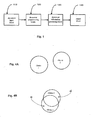
- Fig. 1 is a block diagram of general computer operations associated with the invention
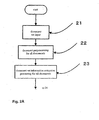
- Figs. 2A and 2B is a flow diagram of operations associated with a document input and preprocessing blocks of Fig. 1, for determining a procedure from the stage where a document set is inputted to the stage of determination clusters to which each document belongs;
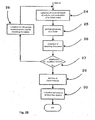
- Fig. 3 is a flow diagram of how operatives associated with the document information processing block of Fig. 1 causes a cluster to grow, a procedure of growth from the initial cluster..
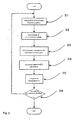
- Figs. 4A and 4B are diagrams helpful in explaining the method of deleting a redundant cluster.
- Fig. 1 is a block diagram of a computer system for a method of performing natural language processing clustered documents. It is to be understood that the described principles are also applicable to pattern processing, but that the specific embodiment is described only in connection with document processing.
- the system includes document input block 110, document preprocessing block 120, document information processing block 130, and output block 140.
- a document set to be processed is inputted to the document input block 110.
- Document preprocessing block 120 performs, on an inputted document, term detection, morphological analysis, and document segment division.
- the basic unit of a document segment of a document is a sentence.
- the beginning and end of a sentence of most European languages is easily detected because each sentence ends with a period, and when printed followed by a double space.
- the sentence is segmented (i.e., divided) into a principle clause and a subordinate clause.
- plural sentences are collected into a document segment so that the number of terms in each segment is about the same.
- a further method divides a document into segments having the same number of terms, from the beginning of the document, irrespective of the sentences in the document.
- Block 130 performs information processing of the inputted document and processing directly related to clustering in the inputted document.
- Block 130 performs operations such as (1) detecting a seed document, (2) calculating document set commonalities between all inputted documents and a given cluster, and (3) detecting terms and term pairs not distinctive to a particular cluster. Block 130 is described in detail later.
- Output block 140 outputs, to an output device such as display, the result obtained by document information processing block 130.
- Figs. 2A and 2B constitute a flow diagram of clustering and other operations that blocks 110, 120 and 130 perform on a given document set.
- the operations of Figs. 2A-2B and 3 can be carried out by running a program on a general-purpose computer.
- a document set is supplied to the computer by input block 110.
- the supplied documents are all pre-processed in pre-processing block 120 during step 22.
- block 130 extracts information from all the documents in the document set.
- block 130 extracts a seed document of a cluster and constructs an initial cluster.
- Block 130 processes a document to grow a cluster.
- block 130 extracts the remaining documents in the set.
- Block 130 terminates condition checking.
- block 130 processes the document set to extract information from the remaining documents.
- Block 130 during steps 29 and 30, decides what is in a cluster member, and then extracts and removes redundant clusters, respectively. An embodiment is described in which an English language document is processed.
- a document set is inputted to the computer as an object during step 21.
- the input document set is composed of documents in a (sub)cluster on the (n-1)th layer.
- document preprocessing such as term detection, morphological analysis, document segment dividing, and document segment vector construction
- Term detection involves detecting words, numerical expressions, symbol series, and the like for each input document.
- a word, numerical expression a symbol series and the like are generically called a term. Since the English language writing notation method has spaced apart terms, term detection is easily performed.
- morphological analysis (such as part of speech tagging to terms) is performed for each input document.
- Document segmentation is performed for each input document.
- document segment vector construction the dimensions of a vector to be constructed and the correspondence between each component and each term are initially determined from terms occurring in the whole document. It is not necessary to make components of the vector correspond to all terms occurring in the document.
- the vector can be constructed by using, for example, only terms judged to be nouns and verbs.
- the document segment vector is constructed so only components corresponding to terms occurring in each document segment are 1, and the others are 0.
- data used in the clustering processing stage are obtained from each document and the whole input document set.
- the data to be obtained are a co-occurrence matrix of each document, a co-occurrence matrix (common co-occurrence matrix) of the document set, and a document frequency matrix of the whole input document set.
- the co-occurrence matrix of each document is a matrix reflecting the occurrence frequencies of terms, and the co-occurrence frequencies of term pairs.
- S r mm represents the number of sentences in which term m occur and S r mn represents the co-occurrence counts of sentences in which terms m and n co-occur. If each term does not occur twice or more in each sentence, S r mm represents the occurrence frequency of term m in document D r .
- T whose mn component is defined as
- a document frequency matrix U 0 that stores the document frequencies of each term and each term in the input document set is obtained.
- Matrices U 0 mm and U 0 mn respectively denote the number of documents in which the term m occurs, and the number of documents in which the terms m and n co-occur.
- T A mn T mn U 0 mn ⁇ A
- T A mn 0 "A" denotes a threshold that is experimentally determined.
- a matrix Q A having an mn component as given below, is defined, and used as the common co-occurrence matrix.
- U 0 mn is set at zero when the value of U 0 mn exceeds a threshold.
- processor 130 extracts a seed document of a cluster and constructs an initial cluster by performing previously described steps 1 and 2.
- a document whose document commonality to any current clusters is less than a threshold is assumed to be the remaining document set.
- the remaining document set is a set of documents having a high possibility of not belonging to any current clusters.
- the common co-occurrence matrix T A , Q A , and the document frequency matrix U are calculated on the basis of (1) the input document set at the first iteration, and (2) the remaining document set at the second and subsequent iterations.
- step 24 (1) determines the document commonality between each document in the remaining document set and the remaining document set, and (2) selects the documents having high document commonalities as candidates of the seed of the cluster.
- S P be a common co-occurrence matrix for an arbitrary document P.
- matrix T A can also be used instead of the matrix Q A .
- diagonal components of the co-occurrence matrix and the common co-occurrence matrix can not be used in equation (2) because individual terms tend to be shared in plural topics more easily than term pairs.
- the candidates of the seed document of the cluster are obtained by calculating the document commonalities to all documents in the remaining document set by using equation (2), and selecting a specific number of documents having high document commonalities.
- step 24 dealing with cluster seed document extraction is described.
- the similarities of all documents in the remaining document set D are initially obtained.
- the well known cosine similarity can be adopted as the similarity measure.
- documents having greater similarities than a preset threshold are obtained as neighbor documents of each candidate document.
- the document having the largest number of neighbor documents is selected from the candidate documents as the cluster seed document.
- the initial cluster is given by the neighbor documents of the seed document.
- a cluster grows by merging documents having high commonalities to the cluster.
- Fig. 3 is a detailed flow diagram of the cluster growth step 25. Initially block 130 constructs document frequency matrix during step 31. Then block 130 constructs common co-occurrence matrix during step 32, that is followed by step 33 during which a distinctiveness calculation for each term and term pair is performed. Then, during step 34 block 130 calculates document commonality, followed by step 35 during which a cluster member decision is performed. Then block 130 advances to termination condition checking step 36.
- step 31 involving the construction of the document frequency matrix
- step 32 involving construction of the common co-occurrence matrix
- block 130 performs processes during steps 31 and 32 on the currently processed set of documents. These processes of steps 31 and 32 are equivalent to the document frequency matrix construction process and the common co-occurrence matrix construction process during step 23 of Fig. 2.
- U be the document frequency matrix obtained during step 31.
- T A and Q A respectively be the common co-occurrence matrix and its modified matrix, as obtained during step 32.
- block 130 determines the distinctiveness and the weight for each term. The weight is set at zero for the term and term pair with zero document frequency.
- U 0 mm /U mm is obtained as the document frequency ratio for the term m.
- a specific number of terms having high document frequencies and a specific number of terms having small document frequency ratios are selected. The selected terms are assumed to be distinctive terms of the given cluster.
- the document frequency ratios of these terms are averaged. Let c' be the average document frequency ratio.
- Distinctiveness v mm of the term m, and distinctiveness v mn of the term pair m, n are determined by the following.
- ⁇ mm c' / (U 0 mm / U mm )
- ⁇ mn c' / (U 0 mn / U mn )
- the average document frequency ratio can be obtained by using both the distinctive term pair and the distinctive term.
- U 0 mn /U mn is obtained as the document frequency ratio of the term pair m,n when m does not equal n, and is obtained as the document frequency ratio of the term m, when m equals n.
- a specific number of terms and term pairs having the highest document frequencies a specific number of terms or term pairs having small document frequency ratios are selected. The selected terms or term pairs are regarded as the distinctive terms or term pairs of the given cluster.
- the document frequency ratios of these terms and term pairs are averaged. Let c' be the average.
- z mm and z mn be the weights of the term m and the term pair m,n, respectively. These weights are determined by using a weight deciding function f(x) as follows.
- z mm f( ⁇ mm )
- z mn f( ⁇ mn )
- block 130 calculates the document commonalities to the given cluster for all input documents.
- S P be the co-occurrence matrix of document P.
- the document commonality of the document P to document set D can be obtained by or where D represents a document set of the given cluster.
- matrix T A can be used instead of matrix Q A .
- step 35 block 130 determines the temporal members of the given cluster by selecting the documents having higher document commonalities than a specific value.
- step 36 block 130 determines whether or not the growing processing of the given cluster is complete. At the first iteration of step 36, processing unconditionally returns to step 31 and the processing of step 31 is repeated. At the second or subsequent iteration of step 36, the number of documents in the given cluster obtained during step 35 is counted. If the number of documents is not equal to that in the former iteration, the procedure returns to step 31 and the processing of step 31 is repeated. If the number of documents is determined during step 36 to be equal to that in the former iteration, the document commonalities of the given cluster are kept for all input documents, and the growing processing of the given cluster is terminated.
- block 13 extracts the remaining documents on the basis of the document commonality of each document to all current clusters. Documents whose document commonalities to any clusters are less than a threshold are extracted as remaining documents.
- block 140 determines whether or not a series of processings from the seed extraction to the growing has been completed on the basis of the number of remaining documents. If the number of remaining documents is less than a threshold and is equal to the number of remaining documents in the former iteration, the procedure proceeds to step 29. If such a condition is not satisfied, the process proceeds to step 28 and processing equivalent to step 23 is performed on the remaining document set.
- step 29 of the decision of the cluster member the cluster that each document belongs to is determined. This can be carried out by using the information about the document commonality to each cluster obtained for each document in Fig. 3 and by making each document belong to the cluster to which the document commonality is higher than a threshold determined by experiments.
- step 30 involving detection and removal of redundant clusters, block 130 determines whether or not a redundant cluster exists. If a redundant cluster exists, it is removed. A redundant cluster occurs when two or more clusters are obtained for one topic. In such a case, the document describing the topic has large document commonalities to two or more clusters, and the two or more clusters overlap with each other. To detect the redundant clusters, the document commonalities to all obtained clusters are first obtained for all documents.
- the number of documents whose document commonalities to a given cluster are larger than a threshold and whose document commonalities to any other cluster are less than the threshold is obtained. If the given cluster does not overlap with any other clusters, the number of such documents becomes equal to the number of documents having a higher number of document commonalities than the threshold to the given cluster. On the other hand, if the given cluster overlaps with another cluster, the number of documents in the cluster becomes the number of documents that does not overlap with the cluster, that is, the number of documents in only the given cluster.
- the number of documents as stated above can be defined as the importance of each cluster.
- the importance of cluster 1 is the number of documents in cluster 1. This is the case for cluster 2. If the given cluster partially overlaps with the other cluster, the importance becomes the number of documents not overlapping with the other cluster. That is, with respect to cluster 1, the importance is represented by the number of documents contained in a portion indicated by "c" in Fig. 4B. With respect to cluster 2, the importance is represented by the number of documents contained in a portion shown by "d” in Fig. 4B.
- the cluster with the smaller importance is regarded as the redundant cluster and is removed. If a plurality of such smaller importance clusters exist, the cluster having the lowest cluster importance is first removed. Calculation of cluster importance is then performed again on the remaining clusters, and the cluster having the lowest cluster importance is removed. Processing in this manner is repeated until no redundant clusters exist. If redundant cluster removal is performed, the determination of each cluster member is performed again. In this case, assignment of each document to the cluster to which the document commonality is the highest is an alternative method of cluster member decision.
- TDT2 is used as the corpus.
- Corpus TDT2 is a set of news stories relating to 100 events between January and June of 1998 and is gathered from six news sources.
- a comparison is made with the results of non-hierarchical clustering performed using TDT2 by Liu et al. (X. Liu, Y. Gong, W. Xu and S. Zhu, Document Clustering with Cluster Refinement and Model Selection Capabilities. In Proceedings of the 25 th Annual International ACM-SIGIR Conference on Research and Development in Information Retrieval, pp. 191 - 198. Tampere, Finland, August, 2002).
- the composition is based on experimental results using the same data as the Liu et al. experiments.
- the data are a set of news stories relating to 15 events gathered by ABC, CNN and VOA.
- Table 1 includes the details of those data.
- Table 2 includes 15 data sets used in the experiment, and the clustering accuracies of the methods disclosed herein and by Liu et al.
- the results of the method of Liu et al. are based on the Liu et al. paper.
- the result of the clustering is regarded as correct.
- a document whose document commonality to all clusters is 0 is regarded as erroneous.
- the accuracy is obtained from the ratio of the number of correctly clustered documents to the number of all documents.
- the correct number of clusters can be extracted from an input document set, and each document can be assigned to a cluster with high accuracy. Therefore, the efficiency of information acquisition by the user can be significantly improved.
Landscapes
- Engineering & Computer Science (AREA)
- Data Mining & Analysis (AREA)
- Theoretical Computer Science (AREA)
- Physics & Mathematics (AREA)
- General Physics & Mathematics (AREA)
- General Engineering & Computer Science (AREA)
- Bioinformatics & Cheminformatics (AREA)
- Evolutionary Biology (AREA)
- Evolutionary Computation (AREA)
- Computer Vision & Pattern Recognition (AREA)
- Bioinformatics & Computational Biology (AREA)
- Artificial Intelligence (AREA)
- Life Sciences & Earth Sciences (AREA)
- Databases & Information Systems (AREA)
- Information Retrieval, Db Structures And Fs Structures Therefor (AREA)
- Document Processing Apparatus (AREA)
Applications Claiming Priority (4)
| Application Number | Priority Date | Filing Date | Title |
|---|---|---|---|
| JP2003105867 | 2003-03-05 | ||
| JP2003105867 | 2003-03-05 | ||
| JP2004030629A JP4828091B2 (ja) | 2003-03-05 | 2004-02-06 | クラスタリング方法プログラム及び装置 |
| JP2004030629 | 2004-02-06 |
Publications (2)
| Publication Number | Publication Date |
|---|---|
| EP1455285A2 true EP1455285A2 (de) | 2004-09-08 |
| EP1455285A3 EP1455285A3 (de) | 2006-12-20 |
Family
ID=32829076
Family Applications (1)
| Application Number | Title | Priority Date | Filing Date |
|---|---|---|---|
| EP04251279A Withdrawn EP1455285A3 (de) | 2003-03-05 | 2004-03-05 | Dokument- und Mustergruppierungsverfahren und -Anordnung |
Country Status (5)
| Country | Link |
|---|---|
| US (1) | US7499923B2 (de) |
| EP (1) | EP1455285A3 (de) |
| JP (1) | JP4828091B2 (de) |
| KR (1) | KR101086510B1 (de) |
| CN (1) | CN1530857B (de) |
Cited By (1)
| Publication number | Priority date | Publication date | Assignee | Title |
|---|---|---|---|---|
| WO2011044662A1 (en) * | 2009-10-15 | 2011-04-21 | 2167959 Ontario Inc. | System and method for grouping multiple streams of data |
Families Citing this family (251)
| Publication number | Priority date | Publication date | Assignee | Title |
|---|---|---|---|---|
| US8275661B1 (en) | 1999-03-31 | 2012-09-25 | Verizon Corporate Services Group Inc. | Targeted banner advertisements |
| US8572069B2 (en) * | 1999-03-31 | 2013-10-29 | Apple Inc. | Semi-automatic index term augmentation in document retrieval |
| AU4328000A (en) | 1999-03-31 | 2000-10-16 | Verizon Laboratories Inc. | Techniques for performing a data query in a computer system |
| US6718363B1 (en) | 1999-07-30 | 2004-04-06 | Verizon Laboratories, Inc. | Page aggregation for web sites |
| US8645137B2 (en) | 2000-03-16 | 2014-02-04 | Apple Inc. | Fast, language-independent method for user authentication by voice |
| US6912525B1 (en) | 2000-05-08 | 2005-06-28 | Verizon Laboratories, Inc. | Techniques for web site integration |
| US6778995B1 (en) * | 2001-08-31 | 2004-08-17 | Attenex Corporation | System and method for efficiently generating cluster groupings in a multi-dimensional concept space |
| US7243092B2 (en) * | 2001-12-28 | 2007-07-10 | Sap Ag | Taxonomy generation for electronic documents |
| US7191175B2 (en) | 2004-02-13 | 2007-03-13 | Attenex Corporation | System and method for arranging concept clusters in thematic neighborhood relationships in a two-dimensional visual display space |
| US7634406B2 (en) * | 2004-12-10 | 2009-12-15 | Microsoft Corporation | System and method for identifying semantic intent from acoustic information |
| US7711719B1 (en) | 2005-03-24 | 2010-05-04 | Palamida, Inc. | Massive multi-pattern searching |
| US7565348B1 (en) * | 2005-03-24 | 2009-07-21 | Palamida, Inc. | Determining a document similarity metric |
| JP2006301959A (ja) * | 2005-04-20 | 2006-11-02 | Just Syst Corp | 文書処理装置、文書処理方法、文書処理プログラムおよびコンピュータに読み取り可能な記録媒体 |
| US8677377B2 (en) | 2005-09-08 | 2014-03-18 | Apple Inc. | Method and apparatus for building an intelligent automated assistant |
| KR100822376B1 (ko) | 2006-02-23 | 2008-04-17 | 삼성전자주식회사 | 곡명을 이용한 음악 주제 분류 방법 및 시스템 |
| US20070233679A1 (en) * | 2006-04-03 | 2007-10-04 | Microsoft Corporation | Learning a document ranking function using query-level error measurements |
| EP1876540A1 (de) * | 2006-07-06 | 2008-01-09 | British Telecommunications Public Limited Company | Ordnen und Speichern von Dokumenten |
| US7593934B2 (en) * | 2006-07-28 | 2009-09-22 | Microsoft Corporation | Learning a document ranking using a loss function with a rank pair or a query parameter |
| US8340957B2 (en) * | 2006-08-31 | 2012-12-25 | Waggener Edstrom Worldwide, Inc. | Media content assessment and control systems |
| US9318108B2 (en) | 2010-01-18 | 2016-04-19 | Apple Inc. | Intelligent automated assistant |
| JP5011947B2 (ja) * | 2006-10-19 | 2012-08-29 | オムロン株式会社 | Fmeaシートの作成方法およびfmeaシート自動作成装置 |
| US7512605B2 (en) | 2006-11-01 | 2009-03-31 | International Business Machines Corporation | Document clustering based on cohesive terms |
| FR2913274A1 (fr) * | 2007-03-02 | 2008-09-05 | Canon Kk | Procede et dispositif de codage de document et procede et dispositif de decodage de document. |
| EP1973045A1 (de) * | 2007-03-20 | 2008-09-24 | British Telecommunications Public Limited Company | Ordnen und Speichern von Dokumenten |
| US8977255B2 (en) | 2007-04-03 | 2015-03-10 | Apple Inc. | Method and system for operating a multi-function portable electronic device using voice-activation |
| US20090063470A1 (en) * | 2007-08-28 | 2009-03-05 | Nogacom Ltd. | Document management using business objects |
| US9317593B2 (en) * | 2007-10-05 | 2016-04-19 | Fujitsu Limited | Modeling topics using statistical distributions |
| US10002189B2 (en) | 2007-12-20 | 2018-06-19 | Apple Inc. | Method and apparatus for searching using an active ontology |
| US9330720B2 (en) | 2008-01-03 | 2016-05-03 | Apple Inc. | Methods and apparatus for altering audio output signals |
| US8996376B2 (en) | 2008-04-05 | 2015-03-31 | Apple Inc. | Intelligent text-to-speech conversion |
| US10496753B2 (en) | 2010-01-18 | 2019-12-03 | Apple Inc. | Automatically adapting user interfaces for hands-free interaction |
| US20100030549A1 (en) | 2008-07-31 | 2010-02-04 | Lee Michael M | Mobile device having human language translation capability with positional feedback |
| US8676904B2 (en) | 2008-10-02 | 2014-03-18 | Apple Inc. | Electronic devices with voice command and contextual data processing capabilities |
| KR101086530B1 (ko) | 2008-10-02 | 2011-11-23 | 엔에이치엔(주) | 웹 문서 원본 판별 방법 및 시스템, 이를 위한 웹 문서 이력 정보 제공 방법 및 시스템 |
| US9959870B2 (en) | 2008-12-11 | 2018-05-01 | Apple Inc. | Speech recognition involving a mobile device |
| KR100992364B1 (ko) | 2008-12-22 | 2010-11-04 | 포항공과대학교 산학협력단 | 비음수 행렬의 직교 분해를 이용한 문서 집단화 방법, 이를수행하기 위한 컴퓨팅 장치 및 이를 수행하기 위한 프로그램 기록매체 |
| US10241644B2 (en) | 2011-06-03 | 2019-03-26 | Apple Inc. | Actionable reminder entries |
| US9858925B2 (en) | 2009-06-05 | 2018-01-02 | Apple Inc. | Using context information to facilitate processing of commands in a virtual assistant |
| US10241752B2 (en) | 2011-09-30 | 2019-03-26 | Apple Inc. | Interface for a virtual digital assistant |
| US10255566B2 (en) | 2011-06-03 | 2019-04-09 | Apple Inc. | Generating and processing task items that represent tasks to perform |
| US9431006B2 (en) | 2009-07-02 | 2016-08-30 | Apple Inc. | Methods and apparatuses for automatic speech recognition |
| US9298722B2 (en) * | 2009-07-16 | 2016-03-29 | Novell, Inc. | Optimal sequential (de)compression of digital data |
| US8635223B2 (en) | 2009-07-28 | 2014-01-21 | Fti Consulting, Inc. | System and method for providing a classification suggestion for electronically stored information |
| EP2471009A1 (de) | 2009-08-24 | 2012-07-04 | FTI Technology LLC | Herstellung einer referenzeinheit für dokumentüberprüfungen |
| US8954434B2 (en) * | 2010-01-08 | 2015-02-10 | Microsoft Corporation | Enhancing a document with supplemental information from another document |
| US10276170B2 (en) | 2010-01-18 | 2019-04-30 | Apple Inc. | Intelligent automated assistant |
| US10705794B2 (en) | 2010-01-18 | 2020-07-07 | Apple Inc. | Automatically adapting user interfaces for hands-free interaction |
| US10553209B2 (en) | 2010-01-18 | 2020-02-04 | Apple Inc. | Systems and methods for hands-free notification summaries |
| US10679605B2 (en) | 2010-01-18 | 2020-06-09 | Apple Inc. | Hands-free list-reading by intelligent automated assistant |
| JP2011150450A (ja) * | 2010-01-20 | 2011-08-04 | Sony Corp | 情報処理装置、情報処理方法、およびプログラム |
| DE202011111062U1 (de) | 2010-01-25 | 2019-02-19 | Newvaluexchange Ltd. | Vorrichtung und System für eine Digitalkonversationsmanagementplattform |
| CN102163189B (zh) * | 2010-02-24 | 2014-07-23 | 富士通株式会社 | 从评论性文本中提取评价性信息的方法和装置 |
| US8682667B2 (en) | 2010-02-25 | 2014-03-25 | Apple Inc. | User profiling for selecting user specific voice input processing information |
| US8918399B2 (en) * | 2010-03-03 | 2014-12-23 | Ca, Inc. | Emerging topic discovery |
| US8782734B2 (en) * | 2010-03-10 | 2014-07-15 | Novell, Inc. | Semantic controls on data storage and access |
| US8832103B2 (en) * | 2010-04-13 | 2014-09-09 | Novell, Inc. | Relevancy filter for new data based on underlying files |
| US9135603B2 (en) * | 2010-06-07 | 2015-09-15 | Quora, Inc. | Methods and systems for merging topics assigned to content items in an online application |
| US8713021B2 (en) * | 2010-07-07 | 2014-04-29 | Apple Inc. | Unsupervised document clustering using latent semantic density analysis |
| AU2010202901B2 (en) * | 2010-07-08 | 2016-04-14 | Patent Analytics Holding Pty Ltd | A system, method and computer program for preparing data for analysis |
| KR101035037B1 (ko) * | 2010-09-01 | 2011-05-19 | 한국과학기술정보연구원 | 동적 임계값이 적용된 유사문서 분류화 장치 및 방법 |
| US10762293B2 (en) | 2010-12-22 | 2020-09-01 | Apple Inc. | Using parts-of-speech tagging and named entity recognition for spelling correction |
| US8452774B2 (en) * | 2011-03-10 | 2013-05-28 | GM Global Technology Operations LLC | Methodology to establish term co-relationship using sentence boundary detection |
| US9262612B2 (en) | 2011-03-21 | 2016-02-16 | Apple Inc. | Device access using voice authentication |
| JP2012212422A (ja) * | 2011-03-24 | 2012-11-01 | Sony Corp | 情報処理装置、および情報処理方法、並びにプログラム |
| US10057736B2 (en) | 2011-06-03 | 2018-08-21 | Apple Inc. | Active transport based notifications |
| US8994660B2 (en) | 2011-08-29 | 2015-03-31 | Apple Inc. | Text correction processing |
| US8706758B2 (en) * | 2011-10-04 | 2014-04-22 | Galisteo Consulting Group, Inc. | Flexible account reconciliation |
| US8886651B1 (en) * | 2011-12-22 | 2014-11-11 | Reputation.Com, Inc. | Thematic clustering |
| US10134385B2 (en) | 2012-03-02 | 2018-11-20 | Apple Inc. | Systems and methods for name pronunciation |
| US9483461B2 (en) | 2012-03-06 | 2016-11-01 | Apple Inc. | Handling speech synthesis of content for multiple languages |
| US9280610B2 (en) | 2012-05-14 | 2016-03-08 | Apple Inc. | Crowd sourcing information to fulfill user requests |
| US10417037B2 (en) | 2012-05-15 | 2019-09-17 | Apple Inc. | Systems and methods for integrating third party services with a digital assistant |
| US9064491B2 (en) * | 2012-05-29 | 2015-06-23 | Nuance Communications, Inc. | Methods and apparatus for performing transformation techniques for data clustering and/or classification |
| US9721563B2 (en) | 2012-06-08 | 2017-08-01 | Apple Inc. | Name recognition system |
| US9495129B2 (en) | 2012-06-29 | 2016-11-15 | Apple Inc. | Device, method, and user interface for voice-activated navigation and browsing of a document |
| US9576574B2 (en) | 2012-09-10 | 2017-02-21 | Apple Inc. | Context-sensitive handling of interruptions by intelligent digital assistant |
| KR101402808B1 (ko) * | 2012-09-18 | 2014-07-08 | 한국과학기술원 | 익명화를 위한 시드 선택 방법, 익명화 방법 및 이를 이용하는 정보 보호 장치 |
| US9547647B2 (en) | 2012-09-19 | 2017-01-17 | Apple Inc. | Voice-based media searching |
| DE112014000709B4 (de) | 2013-02-07 | 2021-12-30 | Apple Inc. | Verfahren und vorrichtung zum betrieb eines sprachtriggers für einen digitalen assistenten |
| US9368114B2 (en) | 2013-03-14 | 2016-06-14 | Apple Inc. | Context-sensitive handling of interruptions |
| WO2014144579A1 (en) | 2013-03-15 | 2014-09-18 | Apple Inc. | System and method for updating an adaptive speech recognition model |
| WO2014144949A2 (en) | 2013-03-15 | 2014-09-18 | Apple Inc. | Training an at least partial voice command system |
| WO2014197336A1 (en) | 2013-06-07 | 2014-12-11 | Apple Inc. | System and method for detecting errors in interactions with a voice-based digital assistant |
| US9582608B2 (en) | 2013-06-07 | 2017-02-28 | Apple Inc. | Unified ranking with entropy-weighted information for phrase-based semantic auto-completion |
| WO2014197334A2 (en) | 2013-06-07 | 2014-12-11 | Apple Inc. | System and method for user-specified pronunciation of words for speech synthesis and recognition |
| WO2014197335A1 (en) | 2013-06-08 | 2014-12-11 | Apple Inc. | Interpreting and acting upon commands that involve sharing information with remote devices |
| KR101959188B1 (ko) | 2013-06-09 | 2019-07-02 | 애플 인크. | 디지털 어시스턴트의 둘 이상의 인스턴스들에 걸친 대화 지속성을 가능하게 하기 위한 디바이스, 방법 및 그래픽 사용자 인터페이스 |
| US10176167B2 (en) | 2013-06-09 | 2019-01-08 | Apple Inc. | System and method for inferring user intent from speech inputs |
| JP5900419B2 (ja) * | 2013-06-11 | 2016-04-06 | コニカミノルタ株式会社 | 関心事判別装置、関心事判別方法、およびコンピュータプログラム |
| KR101809808B1 (ko) | 2013-06-13 | 2017-12-15 | 애플 인크. | 음성 명령에 의해 개시되는 긴급 전화를 걸기 위한 시스템 및 방법 |
| KR101749009B1 (ko) | 2013-08-06 | 2017-06-19 | 애플 인크. | 원격 디바이스로부터의 활동에 기초한 스마트 응답의 자동 활성화 |
| US10552459B2 (en) * | 2013-10-31 | 2020-02-04 | Micro Focus Llc | Classifying a document using patterns |
| US10114823B2 (en) * | 2013-11-04 | 2018-10-30 | Ayasdi, Inc. | Systems and methods for metric data smoothing |
| US10540404B1 (en) * | 2014-02-07 | 2020-01-21 | Amazon Technologies, Inc. | Forming a document collection in a document management and collaboration system |
| US10599753B1 (en) | 2013-11-11 | 2020-03-24 | Amazon Technologies, Inc. | Document version control in collaborative environment |
| US9542391B1 (en) | 2013-11-11 | 2017-01-10 | Amazon Technologies, Inc. | Processing service requests for non-transactional databases |
| US11336648B2 (en) | 2013-11-11 | 2022-05-17 | Amazon Technologies, Inc. | Document management and collaboration system |
| US10296160B2 (en) | 2013-12-06 | 2019-05-21 | Apple Inc. | Method for extracting salient dialog usage from live data |
| US10356032B2 (en) | 2013-12-26 | 2019-07-16 | Palantir Technologies Inc. | System and method for detecting confidential information emails |
| US10691877B1 (en) | 2014-02-07 | 2020-06-23 | Amazon Technologies, Inc. | Homogenous insertion of interactions into documents |
| KR101536520B1 (ko) * | 2014-04-28 | 2015-07-14 | 숭실대학교산학협력단 | 토픽을 추출하고, 추출된 토픽의 적합성을 평가하는 방법 및 서버 |
| US9620105B2 (en) | 2014-05-15 | 2017-04-11 | Apple Inc. | Analyzing audio input for efficient speech and music recognition |
| US10592095B2 (en) | 2014-05-23 | 2020-03-17 | Apple Inc. | Instantaneous speaking of content on touch devices |
| US9502031B2 (en) | 2014-05-27 | 2016-11-22 | Apple Inc. | Method for supporting dynamic grammars in WFST-based ASR |
| US10289433B2 (en) | 2014-05-30 | 2019-05-14 | Apple Inc. | Domain specific language for encoding assistant dialog |
| US9430463B2 (en) | 2014-05-30 | 2016-08-30 | Apple Inc. | Exemplar-based natural language processing |
| US9734193B2 (en) | 2014-05-30 | 2017-08-15 | Apple Inc. | Determining domain salience ranking from ambiguous words in natural speech |
| US9633004B2 (en) | 2014-05-30 | 2017-04-25 | Apple Inc. | Better resolution when referencing to concepts |
| US9715875B2 (en) | 2014-05-30 | 2017-07-25 | Apple Inc. | Reducing the need for manual start/end-pointing and trigger phrases |
| WO2015184186A1 (en) | 2014-05-30 | 2015-12-03 | Apple Inc. | Multi-command single utterance input method |
| US9785630B2 (en) | 2014-05-30 | 2017-10-10 | Apple Inc. | Text prediction using combined word N-gram and unigram language models |
| US10078631B2 (en) | 2014-05-30 | 2018-09-18 | Apple Inc. | Entropy-guided text prediction using combined word and character n-gram language models |
| US10170123B2 (en) | 2014-05-30 | 2019-01-01 | Apple Inc. | Intelligent assistant for home automation |
| US9760559B2 (en) | 2014-05-30 | 2017-09-12 | Apple Inc. | Predictive text input |
| US9842101B2 (en) | 2014-05-30 | 2017-12-12 | Apple Inc. | Predictive conversion of language input |
| US10659851B2 (en) | 2014-06-30 | 2020-05-19 | Apple Inc. | Real-time digital assistant knowledge updates |
| US9338493B2 (en) | 2014-06-30 | 2016-05-10 | Apple Inc. | Intelligent automated assistant for TV user interactions |
| US9535974B1 (en) | 2014-06-30 | 2017-01-03 | Palantir Technologies Inc. | Systems and methods for identifying key phrase clusters within documents |
| US9619557B2 (en) | 2014-06-30 | 2017-04-11 | Palantir Technologies, Inc. | Systems and methods for key phrase characterization of documents |
| US9256664B2 (en) * | 2014-07-03 | 2016-02-09 | Palantir Technologies Inc. | System and method for news events detection and visualization |
| US10446141B2 (en) | 2014-08-28 | 2019-10-15 | Apple Inc. | Automatic speech recognition based on user feedback |
| US9818400B2 (en) | 2014-09-11 | 2017-11-14 | Apple Inc. | Method and apparatus for discovering trending terms in speech requests |
| US10789041B2 (en) | 2014-09-12 | 2020-09-29 | Apple Inc. | Dynamic thresholds for always listening speech trigger |
| US9807073B1 (en) | 2014-09-29 | 2017-10-31 | Amazon Technologies, Inc. | Access to documents in a document management and collaboration system |
| US9606986B2 (en) | 2014-09-29 | 2017-03-28 | Apple Inc. | Integrated word N-gram and class M-gram language models |
| US10127911B2 (en) | 2014-09-30 | 2018-11-13 | Apple Inc. | Speaker identification and unsupervised speaker adaptation techniques |
| US9668121B2 (en) | 2014-09-30 | 2017-05-30 | Apple Inc. | Social reminders |
| US9646609B2 (en) | 2014-09-30 | 2017-05-09 | Apple Inc. | Caching apparatus for serving phonetic pronunciations |
| US9886432B2 (en) | 2014-09-30 | 2018-02-06 | Apple Inc. | Parsimonious handling of word inflection via categorical stem + suffix N-gram language models |
| US10074360B2 (en) | 2014-09-30 | 2018-09-11 | Apple Inc. | Providing an indication of the suitability of speech recognition |
| US9424298B2 (en) * | 2014-10-07 | 2016-08-23 | International Business Machines Corporation | Preserving conceptual distance within unstructured documents |
| US10552013B2 (en) | 2014-12-02 | 2020-02-04 | Apple Inc. | Data detection |
| US9711141B2 (en) | 2014-12-09 | 2017-07-18 | Apple Inc. | Disambiguating heteronyms in speech synthesis |
| US9865280B2 (en) | 2015-03-06 | 2018-01-09 | Apple Inc. | Structured dictation using intelligent automated assistants |
| US10152299B2 (en) | 2015-03-06 | 2018-12-11 | Apple Inc. | Reducing response latency of intelligent automated assistants |
| US10567477B2 (en) | 2015-03-08 | 2020-02-18 | Apple Inc. | Virtual assistant continuity |
| US9886953B2 (en) | 2015-03-08 | 2018-02-06 | Apple Inc. | Virtual assistant activation |
| US9721566B2 (en) | 2015-03-08 | 2017-08-01 | Apple Inc. | Competing devices responding to voice triggers |
| US9899019B2 (en) | 2015-03-18 | 2018-02-20 | Apple Inc. | Systems and methods for structured stem and suffix language models |
| US9842105B2 (en) | 2015-04-16 | 2017-12-12 | Apple Inc. | Parsimonious continuous-space phrase representations for natural language processing |
| US10460227B2 (en) | 2015-05-15 | 2019-10-29 | Apple Inc. | Virtual assistant in a communication session |
| US10083688B2 (en) | 2015-05-27 | 2018-09-25 | Apple Inc. | Device voice control for selecting a displayed affordance |
| US10127220B2 (en) | 2015-06-04 | 2018-11-13 | Apple Inc. | Language identification from short strings |
| US10101822B2 (en) | 2015-06-05 | 2018-10-16 | Apple Inc. | Language input correction |
| US9578173B2 (en) | 2015-06-05 | 2017-02-21 | Apple Inc. | Virtual assistant aided communication with 3rd party service in a communication session |
| US10255907B2 (en) | 2015-06-07 | 2019-04-09 | Apple Inc. | Automatic accent detection using acoustic models |
| US10186254B2 (en) | 2015-06-07 | 2019-01-22 | Apple Inc. | Context-based endpoint detection |
| US11025565B2 (en) | 2015-06-07 | 2021-06-01 | Apple Inc. | Personalized prediction of responses for instant messaging |
| US20160378747A1 (en) | 2015-06-29 | 2016-12-29 | Apple Inc. | Virtual assistant for media playback |
| CN105095430A (zh) * | 2015-07-22 | 2015-11-25 | 深圳证券信息有限公司 | 构建词语网络及抽取关键词的方法和装置 |
| KR101688829B1 (ko) * | 2015-07-24 | 2016-12-22 | 삼성에스디에스 주식회사 | 사용자 패턴을 반영한 문서 제공 방법 및 그 장치 |
| US10671428B2 (en) | 2015-09-08 | 2020-06-02 | Apple Inc. | Distributed personal assistant |
| US10747498B2 (en) | 2015-09-08 | 2020-08-18 | Apple Inc. | Zero latency digital assistant |
| US9697820B2 (en) | 2015-09-24 | 2017-07-04 | Apple Inc. | Unit-selection text-to-speech synthesis using concatenation-sensitive neural networks |
| US10366158B2 (en) | 2015-09-29 | 2019-07-30 | Apple Inc. | Efficient word encoding for recurrent neural network language models |
| US11010550B2 (en) | 2015-09-29 | 2021-05-18 | Apple Inc. | Unified language modeling framework for word prediction, auto-completion and auto-correction |
| US11587559B2 (en) | 2015-09-30 | 2023-02-21 | Apple Inc. | Intelligent device identification |
| US11392582B2 (en) | 2015-10-15 | 2022-07-19 | Sumo Logic, Inc. | Automatic partitioning |
| US10146874B2 (en) * | 2015-10-28 | 2018-12-04 | Fujitsu Limited | Refining topic representations |
| US10691473B2 (en) | 2015-11-06 | 2020-06-23 | Apple Inc. | Intelligent automated assistant in a messaging environment |
| US10049668B2 (en) | 2015-12-02 | 2018-08-14 | Apple Inc. | Applying neural network language models to weighted finite state transducers for automatic speech recognition |
| US10223066B2 (en) | 2015-12-23 | 2019-03-05 | Apple Inc. | Proactive assistance based on dialog communication between devices |
| US10803358B2 (en) | 2016-02-12 | 2020-10-13 | Nec Corporation | Information processing device, information processing method, and recording medium |
| US10446143B2 (en) | 2016-03-14 | 2019-10-15 | Apple Inc. | Identification of voice inputs providing credentials |
| US9934775B2 (en) | 2016-05-26 | 2018-04-03 | Apple Inc. | Unit-selection text-to-speech synthesis based on predicted concatenation parameters |
| US11068546B2 (en) | 2016-06-02 | 2021-07-20 | Nuix North America Inc. | Computer-implemented system and method for analyzing clusters of coded documents |
| US9972304B2 (en) | 2016-06-03 | 2018-05-15 | Apple Inc. | Privacy preserving distributed evaluation framework for embedded personalized systems |
| US11227589B2 (en) | 2016-06-06 | 2022-01-18 | Apple Inc. | Intelligent list reading |
| US10249300B2 (en) | 2016-06-06 | 2019-04-02 | Apple Inc. | Intelligent list reading |
| US10318568B2 (en) | 2016-06-07 | 2019-06-11 | International Business Machines Corporation | Generation of classification data used for classifying documents |
| US10049663B2 (en) | 2016-06-08 | 2018-08-14 | Apple, Inc. | Intelligent automated assistant for media exploration |
| DK179588B1 (en) | 2016-06-09 | 2019-02-22 | Apple Inc. | INTELLIGENT AUTOMATED ASSISTANT IN A HOME ENVIRONMENT |
| US10490187B2 (en) | 2016-06-10 | 2019-11-26 | Apple Inc. | Digital assistant providing automated status report |
| US10067938B2 (en) | 2016-06-10 | 2018-09-04 | Apple Inc. | Multilingual word prediction |
| US10509862B2 (en) | 2016-06-10 | 2019-12-17 | Apple Inc. | Dynamic phrase expansion of language input |
| US10192552B2 (en) | 2016-06-10 | 2019-01-29 | Apple Inc. | Digital assistant providing whispered speech |
| US10586535B2 (en) | 2016-06-10 | 2020-03-10 | Apple Inc. | Intelligent digital assistant in a multi-tasking environment |
| DK201670540A1 (en) | 2016-06-11 | 2018-01-08 | Apple Inc | Application integration with a digital assistant |
| DK179049B1 (en) | 2016-06-11 | 2017-09-18 | Apple Inc | Data driven natural language event detection and classification |
| DK179343B1 (en) | 2016-06-11 | 2018-05-14 | Apple Inc | Intelligent task discovery |
| DK179415B1 (en) | 2016-06-11 | 2018-06-14 | Apple Inc | Intelligent device arbitration and control |
| US10474753B2 (en) | 2016-09-07 | 2019-11-12 | Apple Inc. | Language identification using recurrent neural networks |
| US10043516B2 (en) | 2016-09-23 | 2018-08-07 | Apple Inc. | Intelligent automated assistant |
| KR101931859B1 (ko) * | 2016-09-29 | 2018-12-21 | (주)시지온 | 전자문서의 대표 단어 선정 방법, 전자 문서 제공 방법, 및 이를 수행하는 컴퓨팅 시스템 |
| US11281993B2 (en) | 2016-12-05 | 2022-03-22 | Apple Inc. | Model and ensemble compression for metric learning |
| US10593346B2 (en) | 2016-12-22 | 2020-03-17 | Apple Inc. | Rank-reduced token representation for automatic speech recognition |
| KR102703923B1 (ko) * | 2016-12-29 | 2024-09-06 | 주식회사 엔씨소프트 | 문서의 내러티브 학습 장치 및 방법, 문서의 내러티브 생성 장치 및 방법 |
| US11204787B2 (en) | 2017-01-09 | 2021-12-21 | Apple Inc. | Application integration with a digital assistant |
| US10678669B2 (en) * | 2017-04-21 | 2020-06-09 | Nec Corporation | Field content based pattern generation for heterogeneous logs |
| US10417266B2 (en) | 2017-05-09 | 2019-09-17 | Apple Inc. | Context-aware ranking of intelligent response suggestions |
| DK201770383A1 (en) | 2017-05-09 | 2018-12-14 | Apple Inc. | USER INTERFACE FOR CORRECTING RECOGNITION ERRORS |
| US10395654B2 (en) | 2017-05-11 | 2019-08-27 | Apple Inc. | Text normalization based on a data-driven learning network |
| US10726832B2 (en) | 2017-05-11 | 2020-07-28 | Apple Inc. | Maintaining privacy of personal information |
| DK201770439A1 (en) | 2017-05-11 | 2018-12-13 | Apple Inc. | Offline personal assistant |
| DK179496B1 (en) | 2017-05-12 | 2019-01-15 | Apple Inc. | USER-SPECIFIC Acoustic Models |
| DK179745B1 (en) | 2017-05-12 | 2019-05-01 | Apple Inc. | SYNCHRONIZATION AND TASK DELEGATION OF A DIGITAL ASSISTANT |
| DK201770428A1 (en) | 2017-05-12 | 2019-02-18 | Apple Inc. | LOW-LATENCY INTELLIGENT AUTOMATED ASSISTANT |
| US11301477B2 (en) | 2017-05-12 | 2022-04-12 | Apple Inc. | Feedback analysis of a digital assistant |
| DK201770431A1 (en) | 2017-05-15 | 2018-12-20 | Apple Inc. | Optimizing dialogue policy decisions for digital assistants using implicit feedback |
| DK201770432A1 (en) | 2017-05-15 | 2018-12-21 | Apple Inc. | Hierarchical belief states for digital assistants |
| US10311144B2 (en) | 2017-05-16 | 2019-06-04 | Apple Inc. | Emoji word sense disambiguation |
| US10403278B2 (en) | 2017-05-16 | 2019-09-03 | Apple Inc. | Methods and systems for phonetic matching in digital assistant services |
| DK179560B1 (en) | 2017-05-16 | 2019-02-18 | Apple Inc. | FAR-FIELD EXTENSION FOR DIGITAL ASSISTANT SERVICES |
| US10303715B2 (en) | 2017-05-16 | 2019-05-28 | Apple Inc. | Intelligent automated assistant for media exploration |
| US10657328B2 (en) | 2017-06-02 | 2020-05-19 | Apple Inc. | Multi-task recurrent neural network architecture for efficient morphology handling in neural language modeling |
| US10445429B2 (en) | 2017-09-21 | 2019-10-15 | Apple Inc. | Natural language understanding using vocabularies with compressed serialized tries |
| US10755051B2 (en) | 2017-09-29 | 2020-08-25 | Apple Inc. | Rule-based natural language processing |
| US10636424B2 (en) | 2017-11-30 | 2020-04-28 | Apple Inc. | Multi-turn canned dialog |
| US10733982B2 (en) | 2018-01-08 | 2020-08-04 | Apple Inc. | Multi-directional dialog |
| US10733375B2 (en) | 2018-01-31 | 2020-08-04 | Apple Inc. | Knowledge-based framework for improving natural language understanding |
| US10789959B2 (en) | 2018-03-02 | 2020-09-29 | Apple Inc. | Training speaker recognition models for digital assistants |
| US10592604B2 (en) | 2018-03-12 | 2020-03-17 | Apple Inc. | Inverse text normalization for automatic speech recognition |
| US10818288B2 (en) | 2018-03-26 | 2020-10-27 | Apple Inc. | Natural assistant interaction |
| US10909331B2 (en) | 2018-03-30 | 2021-02-02 | Apple Inc. | Implicit identification of translation payload with neural machine translation |
| US10928918B2 (en) | 2018-05-07 | 2021-02-23 | Apple Inc. | Raise to speak |
| US11145294B2 (en) | 2018-05-07 | 2021-10-12 | Apple Inc. | Intelligent automated assistant for delivering content from user experiences |
| US10984780B2 (en) | 2018-05-21 | 2021-04-20 | Apple Inc. | Global semantic word embeddings using bi-directional recurrent neural networks |
| US10892996B2 (en) | 2018-06-01 | 2021-01-12 | Apple Inc. | Variable latency device coordination |
| DK201870355A1 (en) | 2018-06-01 | 2019-12-16 | Apple Inc. | VIRTUAL ASSISTANT OPERATION IN MULTI-DEVICE ENVIRONMENTS |
| US11386266B2 (en) | 2018-06-01 | 2022-07-12 | Apple Inc. | Text correction |
| DK180639B1 (en) | 2018-06-01 | 2021-11-04 | Apple Inc | DISABILITY OF ATTENTION-ATTENTIVE VIRTUAL ASSISTANT |
| DK179822B1 (da) | 2018-06-01 | 2019-07-12 | Apple Inc. | Voice interaction at a primary device to access call functionality of a companion device |
| US10504518B1 (en) | 2018-06-03 | 2019-12-10 | Apple Inc. | Accelerated task performance |
| CN110580335B (zh) | 2018-06-07 | 2023-05-26 | 阿里巴巴集团控股有限公司 | 用户意图的确定方法及装置 |
| US11010561B2 (en) | 2018-09-27 | 2021-05-18 | Apple Inc. | Sentiment prediction from textual data |
| US11170166B2 (en) | 2018-09-28 | 2021-11-09 | Apple Inc. | Neural typographical error modeling via generative adversarial networks |
| US11462215B2 (en) | 2018-09-28 | 2022-10-04 | Apple Inc. | Multi-modal inputs for voice commands |
| US10839159B2 (en) | 2018-09-28 | 2020-11-17 | Apple Inc. | Named entity normalization in a spoken dialog system |
| US11475898B2 (en) | 2018-10-26 | 2022-10-18 | Apple Inc. | Low-latency multi-speaker speech recognition |
| US11232132B2 (en) | 2018-11-30 | 2022-01-25 | Wipro Limited | Method, device, and system for clustering document objects based on information content |
| US11638059B2 (en) | 2019-01-04 | 2023-04-25 | Apple Inc. | Content playback on multiple devices |
| RU2757592C1 (ru) | 2019-02-08 | 2021-10-19 | Общество С Ограниченной Ответственностью "Яндекс" | Способ и система для кластеризации документов |
| US11348573B2 (en) | 2019-03-18 | 2022-05-31 | Apple Inc. | Multimodality in digital assistant systems |
| JP7221527B2 (ja) * | 2019-04-25 | 2023-02-14 | 株式会社アナリティクスデザインラボ | 分析方法、分析装置及び分析プログラム |
| CN110110326B (zh) * | 2019-04-25 | 2020-10-27 | 西安交通大学 | 一种基于主题信息的文本切割方法 |
| US11307752B2 (en) | 2019-05-06 | 2022-04-19 | Apple Inc. | User configurable task triggers |
| DK201970509A1 (en) | 2019-05-06 | 2021-01-15 | Apple Inc | Spoken notifications |
| US11475884B2 (en) | 2019-05-06 | 2022-10-18 | Apple Inc. | Reducing digital assistant latency when a language is incorrectly determined |
| US11423908B2 (en) | 2019-05-06 | 2022-08-23 | Apple Inc. | Interpreting spoken requests |
| US11140099B2 (en) | 2019-05-21 | 2021-10-05 | Apple Inc. | Providing message response suggestions |
| DK180129B1 (en) | 2019-05-31 | 2020-06-02 | Apple Inc. | User activity shortcut suggestions |
| US11496600B2 (en) | 2019-05-31 | 2022-11-08 | Apple Inc. | Remote execution of machine-learned models |
| US11289073B2 (en) | 2019-05-31 | 2022-03-29 | Apple Inc. | Device text to speech |
| US11360641B2 (en) | 2019-06-01 | 2022-06-14 | Apple Inc. | Increasing the relevance of new available information |
| US11636161B1 (en) * | 2019-07-16 | 2023-04-25 | Proofpoint, Inc. | Intelligent clustering systems and methods useful for domain protection |
| US11488406B2 (en) | 2019-09-25 | 2022-11-01 | Apple Inc. | Text detection using global geometry estimators |
| US11520782B2 (en) | 2020-10-13 | 2022-12-06 | Oracle International Corporation | Techniques for utilizing patterns and logical entities |
| CN112732904B (zh) * | 2020-10-15 | 2024-07-16 | 中科曙光南京研究院有限公司 | 一种基于文本处理的异常突发事件检测方法及系统 |
| CN112883154B (zh) * | 2021-01-28 | 2022-02-01 | 平安科技(深圳)有限公司 | 文本主题挖掘方法、装置、计算机设备及存储介质 |
| US20230245146A1 (en) * | 2022-01-28 | 2023-08-03 | Walmart Apollo, Llc | Methods and apparatus for automatic item demand and substitution prediction using machine learning processes |
| KR102901286B1 (ko) * | 2022-10-14 | 2025-12-18 | 부산대학교 산학협력단 | 텍스트 데이터 기반의 사회적 충격도 도출 방법 및 시스템 |
Family Cites Families (17)
| Publication number | Priority date | Publication date | Assignee | Title |
|---|---|---|---|---|
| US5675819A (en) * | 1994-06-16 | 1997-10-07 | Xerox Corporation | Document information retrieval using global word co-occurrence patterns |
| US5787422A (en) * | 1996-01-11 | 1998-07-28 | Xerox Corporation | Method and apparatus for information accesss employing overlapping clusters |
| US6356864B1 (en) * | 1997-07-25 | 2002-03-12 | University Technology Corporation | Methods for analysis and evaluation of the semantic content of a writing based on vector length |
| US6360227B1 (en) * | 1999-01-29 | 2002-03-19 | International Business Machines Corporation | System and method for generating taxonomies with applications to content-based recommendations |
| JP3471253B2 (ja) | 1999-05-25 | 2003-12-02 | 日本電信電話株式会社 | 文書分類方法、文書分類装置、および文書分類プログラムを記録した記録媒体 |
| CN1335966A (zh) * | 1999-06-15 | 2002-02-13 | 皇家菲利浦电子有限公司 | 在基于字符的文档和文件中的属性数据的隐形编码 |
| JP2001229177A (ja) * | 2000-02-16 | 2001-08-24 | Mitsubishi Electric Corp | 事例ベース構築方法、事例ベース構築装置及び事例ベース構築プログラムを記録した記録媒体 |
| US6674900B1 (en) * | 2000-03-29 | 2004-01-06 | Matsushita Electric Industrial Co., Ltd. | Method for extracting titles from digital images |
| US7130848B2 (en) * | 2000-08-09 | 2006-10-31 | Gary Martin Oosta | Methods for document indexing and analysis |
| JP2002108894A (ja) * | 2000-09-27 | 2002-04-12 | Ricoh Co Ltd | 文書分類装置、文書分類方法及び該方法を実行するための記録媒体 |
| JP2002183171A (ja) | 2000-12-12 | 2002-06-28 | Matsushita Electric Ind Co Ltd | 文書データ・クラスタリングシステム |
| JP4349480B2 (ja) | 2001-05-30 | 2009-10-21 | ヒューレット・パッカード・カンパニー | 重要句・文抽出方法及び装置 |
| US7225120B2 (en) * | 2001-05-30 | 2007-05-29 | Hewlett-Packard Development Company, L.P. | Method of extracting important terms, phrases, and sentences |
| US6886010B2 (en) * | 2002-09-30 | 2005-04-26 | The United States Of America As Represented By The Secretary Of The Navy | Method for data and text mining and literature-based discovery |
| JP2004164036A (ja) * | 2002-11-08 | 2004-06-10 | Hewlett Packard Co <Hp> | 文書の共通性評価方法 |
| US7225184B2 (en) * | 2003-07-18 | 2007-05-29 | Overture Services, Inc. | Disambiguation of search phrases using interpretation clusters |
| US7610313B2 (en) * | 2003-07-25 | 2009-10-27 | Attenex Corporation | System and method for performing efficient document scoring and clustering |
-
2004
- 2004-02-06 JP JP2004030629A patent/JP4828091B2/ja not_active Expired - Fee Related
- 2004-03-04 US US10/791,897 patent/US7499923B2/en not_active Expired - Fee Related
- 2004-03-05 EP EP04251279A patent/EP1455285A3/de not_active Withdrawn
- 2004-03-05 KR KR1020040014809A patent/KR101086510B1/ko not_active Expired - Fee Related
- 2004-03-05 CN CN2004100352030A patent/CN1530857B/zh not_active Expired - Fee Related
Cited By (2)
| Publication number | Priority date | Publication date | Assignee | Title |
|---|---|---|---|---|
| WO2011044662A1 (en) * | 2009-10-15 | 2011-04-21 | 2167959 Ontario Inc. | System and method for grouping multiple streams of data |
| US8965893B2 (en) | 2009-10-15 | 2015-02-24 | Rogers Communications Inc. | System and method for grouping multiple streams of data |
Also Published As
| Publication number | Publication date |
|---|---|
| US7499923B2 (en) | 2009-03-03 |
| JP4828091B2 (ja) | 2011-11-30 |
| KR20040078896A (ko) | 2004-09-13 |
| CN1530857B (zh) | 2011-11-16 |
| EP1455285A3 (de) | 2006-12-20 |
| JP2004288168A (ja) | 2004-10-14 |
| CN1530857A (zh) | 2004-09-22 |
| US20040230577A1 (en) | 2004-11-18 |
| KR101086510B1 (ko) | 2011-11-23 |
Similar Documents
| Publication | Publication Date | Title |
|---|---|---|
| EP1455285A2 (de) | Dokument- und Mustergruppierungsverfahren und -Anordnung | |
| Mitra et al. | An automatic approach to identify word sense changes in text media across timescales | |
| US7392175B2 (en) | Evaluating commonality of documents using segment vector, co-occurrence matrix, and common co-occurrence matrix | |
| US20060089924A1 (en) | Document categorisation system | |
| US20120296637A1 (en) | Method and apparatus for calculating topical categorization of electronic documents in a collection | |
| KR102373146B1 (ko) | 군집 기반 중복문서 제거 장치 및 제거 방법 | |
| EP1528486A2 (de) | System, Verfahren und Programm zur Klassifikationsbeurteilung | |
| CN111259117B (zh) | 短文本批量匹配方法及装置 | |
| CN106815209B (zh) | 一种维吾尔文农业技术术语识别方法 | |
| JP2003167894A (ja) | 関連語自動抽出方法、関連語自動抽出装置、複数重要語抽出プログラムおよび重要語上下階層関係抽出プログラム | |
| Makagonov et al. | A toolkit for development of the domain-oriented dictionaries for structuring document flows | |
| Pal et al. | Word sense disambiguation in Bengali: An unsupervised approach | |
| Al-Khulaidi et al. | Comparative analysis and evaluation of stemming and preprocessing techniques for Arabic text | |
| Petrović et al. | Textual features for corpus visualization using correspondence analysis | |
| Ahmed | Exploring The Impact of Stemming on Text Topic-Based Classification Accuracy | |
| Mekkamol et al. | The Development of a New Hybrid K-Means and Elbow Method (C-Algorithm) for Multiple Domain Clustering | |
| CN114329119A (zh) | 一种基于深度学习的针对流量解析的重要信息排序方法、装置和存储介质 | |
| JP2002259445A (ja) | 対応カテゴリ検索システムおよび方法 | |
| KR100328963B1 (ko) | 띄어쓰기오류허용한국어형태소분석방법및그장치 | |
| Aizawa et al. | A graph-based approach to the automatic generation of multilingual keyword clusters | |
| Choi | Segmentation | |
| VELUPILLAI et al. | CHAPTER FIFTEEN FINDING THE PARALLEL: AUTOMATIC DICTIONARY CONSTRUCTION | |
| Nyandag et al. | Keyword extraction based on statistical information for Cyrillic Mongolian script | |
| Broda et al. | Experiments in clustering documents for automatic acquisition of lexical semantic networks for Polish | |
| Djukova et al. | Methods of combinatorial analysis in synthesis of efficient recognition algorithms |
Legal Events
| Date | Code | Title | Description |
|---|---|---|---|
| PUAI | Public reference made under article 153(3) epc to a published international application that has entered the european phase |
Free format text: ORIGINAL CODE: 0009012 |
|
| AK | Designated contracting states |
Kind code of ref document: A2 Designated state(s): AT BE BG CH CY CZ DE DK EE ES FI FR GB GR HU IE IT LI LU MC NL PL PT RO SE SI SK TR |
|
| AX | Request for extension of the european patent |
Extension state: AL HR LT LV MK |
|
| PUAL | Search report despatched |
Free format text: ORIGINAL CODE: 0009013 |
|
| AK | Designated contracting states |
Kind code of ref document: A3 Designated state(s): AT BE BG CH CY CZ DE DK EE ES FI FR GB GR HU IE IT LI LU MC NL PL PT RO SE SI SK TR |
|
| AX | Request for extension of the european patent |
Extension state: AL LT LV MK |
|
| RIC1 | Information provided on ipc code assigned before grant |
Ipc: G06K 9/62 20060101ALI20061110BHEP Ipc: G06F 17/30 20060101AFI20040705BHEP |
|
| 17P | Request for examination filed |
Effective date: 20070402 |
|
| AKX | Designation fees paid |
Designated state(s): DE FR GB |
|
| STAA | Information on the status of an ep patent application or granted ep patent |
Free format text: STATUS: THE APPLICATION IS DEEMED TO BE WITHDRAWN |
|
| 18D | Application deemed to be withdrawn |
Effective date: 20111001 |