EP1444267B1 - Affinity enhancement agents - Google Patents
Affinity enhancement agents Download PDFInfo
- Publication number
- EP1444267B1 EP1444267B1 EP02770573.0A EP02770573A EP1444267B1 EP 1444267 B1 EP1444267 B1 EP 1444267B1 EP 02770573 A EP02770573 A EP 02770573A EP 1444267 B1 EP1444267 B1 EP 1444267B1
- Authority
- EP
- European Patent Office
- Prior art keywords
- binding protein
- diabody
- amino acid
- polypeptide
- binding
- Prior art date
- Legal status (The legal status is an assumption and is not a legal conclusion. Google has not performed a legal analysis and makes no representation as to the accuracy of the status listed.)
- Expired - Lifetime
Links
Images














Classifications
-
- A—HUMAN NECESSITIES
- A61—MEDICAL OR VETERINARY SCIENCE; HYGIENE
- A61K—PREPARATIONS FOR MEDICAL, DENTAL OR TOILETRY PURPOSES
- A61K38/00—Medicinal preparations containing peptides
- A61K38/16—Peptides having more than 20 amino acids; Gastrins; Somatostatins; Melanotropins; Derivatives thereof
- A61K38/17—Peptides having more than 20 amino acids; Gastrins; Somatostatins; Melanotropins; Derivatives thereof from animals; from humans
- A61K38/18—Growth factors; Growth regulators
-
- A—HUMAN NECESSITIES
- A61—MEDICAL OR VETERINARY SCIENCE; HYGIENE
- A61K—PREPARATIONS FOR MEDICAL, DENTAL OR TOILETRY PURPOSES
- A61K45/00—Medicinal preparations containing active ingredients not provided for in groups A61K31/00 - A61K41/00
- A61K45/06—Mixtures of active ingredients without chemical characterisation, e.g. antiphlogistics and cardiaca
-
- A—HUMAN NECESSITIES
- A61—MEDICAL OR VETERINARY SCIENCE; HYGIENE
- A61K—PREPARATIONS FOR MEDICAL, DENTAL OR TOILETRY PURPOSES
- A61K38/00—Medicinal preparations containing peptides
- A61K38/16—Peptides having more than 20 amino acids; Gastrins; Somatostatins; Melanotropins; Derivatives thereof
- A61K38/17—Peptides having more than 20 amino acids; Gastrins; Somatostatins; Melanotropins; Derivatives thereof from animals; from humans
- A61K38/19—Cytokines; Lymphokines; Interferons
-
- A—HUMAN NECESSITIES
- A61—MEDICAL OR VETERINARY SCIENCE; HYGIENE
- A61K—PREPARATIONS FOR MEDICAL, DENTAL OR TOILETRY PURPOSES
- A61K39/00—Medicinal preparations containing antigens or antibodies
- A61K39/395—Antibodies; Immunoglobulins; Immune serum, e.g. antilymphocytic serum
-
- A—HUMAN NECESSITIES
- A61—MEDICAL OR VETERINARY SCIENCE; HYGIENE
- A61P—SPECIFIC THERAPEUTIC ACTIVITY OF CHEMICAL COMPOUNDS OR MEDICINAL PREPARATIONS
- A61P29/00—Non-central analgesic, antipyretic or antiinflammatory agents, e.g. antirheumatic agents; Non-steroidal antiinflammatory drugs [NSAID]
-
- A—HUMAN NECESSITIES
- A61—MEDICAL OR VETERINARY SCIENCE; HYGIENE
- A61P—SPECIFIC THERAPEUTIC ACTIVITY OF CHEMICAL COMPOUNDS OR MEDICINAL PREPARATIONS
- A61P31/00—Antiinfectives, i.e. antibiotics, antiseptics, chemotherapeutics
-
- A—HUMAN NECESSITIES
- A61—MEDICAL OR VETERINARY SCIENCE; HYGIENE
- A61P—SPECIFIC THERAPEUTIC ACTIVITY OF CHEMICAL COMPOUNDS OR MEDICINAL PREPARATIONS
- A61P35/00—Antineoplastic agents
-
- A—HUMAN NECESSITIES
- A61—MEDICAL OR VETERINARY SCIENCE; HYGIENE
- A61P—SPECIFIC THERAPEUTIC ACTIVITY OF CHEMICAL COMPOUNDS OR MEDICINAL PREPARATIONS
- A61P37/00—Drugs for immunological or allergic disorders
- A61P37/02—Immunomodulators
- A61P37/06—Immunosuppressants, e.g. drugs for graft rejection
-
- A—HUMAN NECESSITIES
- A61—MEDICAL OR VETERINARY SCIENCE; HYGIENE
- A61P—SPECIFIC THERAPEUTIC ACTIVITY OF CHEMICAL COMPOUNDS OR MEDICINAL PREPARATIONS
- A61P9/00—Drugs for disorders of the cardiovascular system
-
- C—CHEMISTRY; METALLURGY
- C07—ORGANIC CHEMISTRY
- C07K—PEPTIDES
- C07K16/00—Immunoglobulins [IG], e.g. monoclonal or polyclonal antibodies
-
- C—CHEMISTRY; METALLURGY
- C07—ORGANIC CHEMISTRY
- C07K—PEPTIDES
- C07K16/00—Immunoglobulins [IG], e.g. monoclonal or polyclonal antibodies
- C07K16/18—Immunoglobulins [IG], e.g. monoclonal or polyclonal antibodies against material from animals or humans
- C07K16/28—Immunoglobulins [IG], e.g. monoclonal or polyclonal antibodies against material from animals or humans against receptors, cell surface antigens or cell surface determinants
- C07K16/30—Immunoglobulins [IG], e.g. monoclonal or polyclonal antibodies against material from animals or humans against receptors, cell surface antigens or cell surface determinants from tumour cells
- C07K16/3007—Carcino-embryonic Antigens
-
- C—CHEMISTRY; METALLURGY
- C07—ORGANIC CHEMISTRY
- C07K—PEPTIDES
- C07K16/00—Immunoglobulins [IG], e.g. monoclonal or polyclonal antibodies
- C07K16/44—Immunoglobulins [IG], e.g. monoclonal or polyclonal antibodies against material not provided for elsewhere, e.g. haptens, metals, DNA, RNA, amino acids
-
- A—HUMAN NECESSITIES
- A61—MEDICAL OR VETERINARY SCIENCE; HYGIENE
- A61K—PREPARATIONS FOR MEDICAL, DENTAL OR TOILETRY PURPOSES
- A61K39/00—Medicinal preparations containing antigens or antibodies
- A61K2039/505—Medicinal preparations containing antigens or antibodies comprising antibodies
-
- C—CHEMISTRY; METALLURGY
- C07—ORGANIC CHEMISTRY
- C07K—PEPTIDES
- C07K2317/00—Immunoglobulins specific features
- C07K2317/20—Immunoglobulins specific features characterized by taxonomic origin
- C07K2317/24—Immunoglobulins specific features characterized by taxonomic origin containing regions, domains or residues from different species, e.g. chimeric, humanized or veneered
-
- C—CHEMISTRY; METALLURGY
- C07—ORGANIC CHEMISTRY
- C07K—PEPTIDES
- C07K2317/00—Immunoglobulins specific features
- C07K2317/60—Immunoglobulins specific features characterized by non-natural combinations of immunoglobulin fragments
- C07K2317/62—Immunoglobulins specific features characterized by non-natural combinations of immunoglobulin fragments comprising only variable region components
- C07K2317/622—Single chain antibody (scFv)
-
- C—CHEMISTRY; METALLURGY
- C07—ORGANIC CHEMISTRY
- C07K—PEPTIDES
- C07K2317/00—Immunoglobulins specific features
- C07K2317/60—Immunoglobulins specific features characterized by non-natural combinations of immunoglobulin fragments
- C07K2317/62—Immunoglobulins specific features characterized by non-natural combinations of immunoglobulin fragments comprising only variable region components
- C07K2317/626—Diabody or triabody
-
- C—CHEMISTRY; METALLURGY
- C07—ORGANIC CHEMISTRY
- C07K—PEPTIDES
- C07K2319/00—Fusion polypeptide
Definitions
- the present invention is related to a multivalent, multi-specific binding protein comprising a histamine-succinyl-glycyl (HSG) binding site having an affinity towards molecules containing a HSG moiety and a carcinoembryonic antigen (CEA) binding site having an affinity towards CEA, wherein said HSG antigen binding site comprises a first and second polypeptide segments that must associate with each other to form said HSG antigen binding site; a host cell comprising a plasmid encoding the multivalent, multi-specific binding protein; a method of producing a binding protein, wherein the method comprises culturing the host cell; the multivalent, multi-specific binding protein for use in the treatment of a disease; the multivalent, multi-specific binding protein for use in diagnosis of a disease; and the use of the multivalent, multi-specific binding protein in the preparation of a medicament for detecting or treating a human disorder.
- HSG histamine-succinyl-glycyl
- CEA carcinoe
- Man-made binding proteins in particular monoclonal antibodies and engineered antibodies or antibody fragments, have been tested widely and shown to be of value in detection and treatment of various human disorders, including cancers, autoimmune diseases, infectious diseases, inflammatory diseases, and cardiovascular diseases [ Filpula and McGuire, Exp. Opin. Ther. Patents (1999) 9: 231-245 ].
- antibodies labeled with radioactive isotopes have been tested to visualize tumors after injection to a patient using detectors available in the art.
- the clinical utility of an antibody or an antibody-derived agent is primarily dependent on its ability to bind to a specific targeted antigen.
- Selectivity is essential for delivering a diagnostic or therapeutic agent, such as isotopes, drugs, enzymes, toxins, cytokines, hormones, growth factors, or conjugated derivatives thereof, to a target location during the detection and treatment phases of a human disorder, particularly if the diagnostic or therapeutic agent is toxic to normal tissue in the body.
- a diagnostic or therapeutic agent such as isotopes, drugs, enzymes, toxins, cytokines, hormones, growth factors, or conjugated derivatives thereof
- the essential parameters in the detection and treatment techniques are the amount of the injected dose specifically localized at the site(s) where target cells are present and the uptake ratio, i.e., the ratio of the concentration of specifically bound antibody to that of the radioactivity present in surrounding normal tissues.
- the uptake ratio i.e., the ratio of the concentration of specifically bound antibody to that of the radioactivity present in surrounding normal tissues.
- an antibody When an antibody is injected into the blood stream, it passes through a number of compartments as it is metabolized and excreted. The antibody must be able to locate and bind to the target cell antigen while passing through the rest of the body.
- Factors that control antigen targeting include antigen location, antigen density, antigen accessibility, cellular composition of pathologic tissue, and the pharmokinetics of the targeting antibodies.
- Other factors that specifically affect tumor targeting by antibodies include expression of the target antigens, both in tumor and other tissues, and bone marrow toxicity resulting from the slow blood-clearance of the radiolabeled antibodies.
- the amount of targeting antibodies accreted by the targeted tumor cells is influenced by the vascularization and barriers to antibody penetration of tumors, as well as intratumoral pressure.
- Non-specific uptake by non-target organs such as the liver, kidneys or bone-marrow is another major limitation of the technique, especially for radioimmunotherapy, where irradiation of the bone marrow often causes the dose-limiting toxicity.
- AES Affinity Enhancement System
- the AES requires a radiolabeled bivalent hapten and an anti-tumor/anti-hapten bispecific antibody that recognizes both the target tumor and the radioactive hapten.
- the technique involves injecting the bispecific antibody into the patient and allowing the bispecific antibody to localize at the target tumor. After a sufficient amount of time for the unbound antibody to clear from the blood stream, the radiolabeled hapten is administered.
- the hapten binds to the antibody-antigen complex located at the site of the target cell to obtain diagnostic or therapeutic benefits.
- the unbound hapten clears the body.
- Barbet mentions the possibility that a bivalent hapten may crosslink with a bispecific antibody, when the latter is bound to the tumor surface. As a result, the radiolabeled complex is more stable and stays at the tumor for a longer period of time.
- Bispecific antibodies prepared by chemically crosslinking two different Fab' fragments have been employed successfully, along with applicable bivalent haptens, to validate the utility of the AES for improved tumor targeting both in animal models and in human patients.
- bispecific antibodies by recombinant DNA technology to assess whether such engineered antibodies have merits for the AES.
- an antibody-based agent that exhibits enhanced uptake at targeted antigens, fast clearance from the blood, and optimal protection of normal tissues and cells from toxic pharmaceuticals.
- a multivalent, multi-specific binding protein comprising a histamine-succinyl-glycyl (HSG) binding site having an affinity towards molecules containing a HSG moiety and a carcinoembryonic antigen (CEA) binding site having an affinity towards CEA, wherein said HSG antigen binding site comprises a first and second polypeptide segments that must associate with each other to form said HSG antigen binding site, wherein said first polypeptide segment comprises a heavy chain variable region comprising an amino acid sequence selected from the group consisting of and said second polypeptide segment comprises a light chain variable region comprising an amino acid sequence selected from the group consisting of
- said first polypeptide segment comprises a heavy chain variable region comprising an amino acid sequence of and said second polypeptide segment comprises a light chain variable region comprising an amino acid sequence of
- said first polypeptide segment comprises a heavy chain variable region comprising an amino acid sequence of and said second polypeptide segment comprises a light chain variable region comprising an amino acid sequence of
- said CEA antigen binding site comprises a third and fourth polypeptide segments that must associate with each other to form said CEA antigen binding site.
- said third polypeptide segment comprises a VH polypeptide of hMN14 MAb of Fig. 29
- said fourth polypeptide segment comprises a VK polypeptide of hMN14 MAb of Fig. 29 .
- first and third polypeptide segments are connected by a first linker and said second and fourth polypeptide segments are connected by a second linker.
- said first linker and said second linker each comprise five or less amino acid residues.
- said binding protein is a diabody.
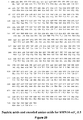
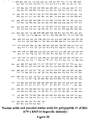
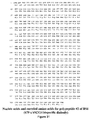
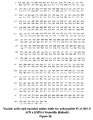
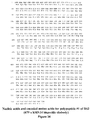
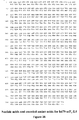
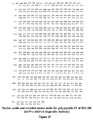
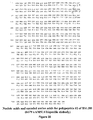
- said diabody is selected from the group consisting of a diabody comprising amino acid sequences shown in Fig. 30 and Fig. 31 , a diabody comprising amino acid sequences shown in Fig. 32 and Fig. 33 , a diabody comprising amino acid sequences shown in Fig. 34 and Fig. 35 , and a diabody comprising amino acid sequences shown in Fig. 37 and 38 .
- said first, second, third and fourth polypeptide segments are each encoded by a first, second, third and fourth cDNA, respectively.
- said first cDNA comprises nucleotide sequences shown in Fig. 30 and Fig. 31
- said second cDNA comprises nucleotide sequences shown in Fig. 32 and Fig. 33
- said third cDNA comprises nucleotide sequences shown in Fig. 34 and 35
- said fourth cDNA comprises nucleotide sequences shown in Fig. 37 and 38 .
- said first and third cDNAs are contained on a single nucleic acid molecule, or wherein said second and fourth cDNAs are contained on a single nucleic acid molecule, or wherein said first, second, third and fourth cDNAs are on a single expression cassette, wherein preferably said expression cassette is contained in a plasmid.
- the problem underlying the present invention is solved in a second aspect by a host cell comprising a plasmid as defined in the above embodiment of the first aspect.
- the problem underlying the present invention is solved in a third aspect by a method of producing a binding protein, comprising culturing the host cell of the second aspect in a suitable medium, and separating said binding protein from said media.
- a binding protein of the first aspect for use in treatment of a disease wherein the treatment comprises delivering a therapeutic agent, or a combination of the therapeutic agent and a diagnostic agent to a target, comprising:
- a binding protein of the first aspect for use in diagnosis of disease comprising:
- said carrier molecule binds to more than one binding site of the binding protein.
- said therapeutic agent is selected from the group comprising, drugs, toxins, cytokines, hormones, growth factors, conjugates, and radionuclides.
- the problem underlying the present invention is solved in a sixth aspect by the use of a binding protein of the first aspect in the preparation of a medicament for detecting or treating a human disorder, wherein the binding protein of the first aspect is administered to a subject; a sufficient amount of time is waited for an amount of the non-bound binding protein to clear the subject's blood stream; and a carrier molecule comprising a diagnostic agent, a therapeutic agent, or a combination thereof, that binds to a binding site of the binding protein is administered to the subject.
- said human disorder is selected from the group comprising cancer, autoimmune diseases, infectious diseases, cardiovascular diseases, and inflammatory diseases.
- This invention also relates to a multivalent, multi-specific binding protein comprising at least one binding site for a hapten moiety and at least one binding site for a target antigen as defined in the claims.
- the hapten is connected to a small molecule that carries a diagnostic agent and/or a therapeutic agent.
- the present disclosure further relates to bispecific diabodies that bind with hapten moieties and target antigens and to recombinant vectors useful for the expression of these functional diabodies in a microbial host.
- whole antibodies are composed of one or more copies of an Y-shaped unit that contains four polypeptides chains.
- Two chains are identical copies of a polypeptide, referred to as the heavy chain, and two chains are identical copies of a polypeptide, referred to as the light chain.
- the two heavy chains are linked together by one or more disulfide bonds and each light chain is linked to one of the heavy chains by one disulfide bond.
- Each chain has a N-terminal variable domains, referred to as V H and V L for the heavy and the light chains, respectively, and the non-covalent association of a pair of V H and V L , referred to as the Fv fragment, forms one antigen-binding site.
- ScFvs with linkers greater than 12 amino acid residues in length allow interaction between the V H and V L domains on the same chain and generally form a mixture of monomers, dimers (termed diabodies) and small amounts of higher mass multimers, [ Kortt et al., Eur. J. Biochem. (1994) 221: 151-157 ].
- ScFvs with linkers of 5 or less amino acid residues prohibit intramolecular pairing of the V H and V L domains on the same chain, forcing pairing with V H and V L domains on a different chain.
- Linkers between 3- and 12-residues form predominantly dimers [ Atwell et al., Protein Engineering (1999) 12: 597-604 ]. With linkers between 0 and 2 residues, trimeric (termed triabodies), tetrameric (termed tetrabodies) or higher oligomeric structures of scFvs are in favor; however, the exact patterns of oligomerization appear to depend on the composition as well as the orientation of the V-domains, in addition to the linker length.
- scFvs of the anti-neuraminidase antibody NC10 formed predominantly trimers (V H to V L orientation) or tetramers (V L to V H orientation) with 0-residue linkers [ Dolezal et al., Protein Engineering (2000) 13: 565-574 ].
- V H to V L orientation formed predominantly diabodies [ Atwell et al., Protein Engineering (1999) 12: 597-604 ]; in contrast, the V L to V H orientation formed a mixture of tetramers, trimers, dimers, and higher mass multimers [ Dolezal et al., Protein Engineering (2000) 13: 565-574 ].
- the 0-residue linker formed exclusively trimers and the 1-residue linker formed exclusively tetramers [ Le Gall et al., FEBS Letters (1999) 453: 164-168 ].
- bispecific diabodies are heterodimers of two different scFvs, each scFv consisting of the V H domain from one antibody connected by a short linker to the V L domain of another antibody.
- the bispecific tandab is a homodimer of two polypeptides, each containing four variable domains of two different antibodies (V H1 , V L1 , V H2 , V L2 ) linked in an orientation to facilitate the formation of two potential binding sites for each of the two different specificities upon self-association.
- Methods of constructing scFvs are disclosed in U.S. 4,946,778 (1990 ) and U.S. 5,132,405 (1992 ).
- Methods of producing scFv-based agents of multivalency and multispecificity as described above are disclosed in U.S. 5,837,242 (1998 ), U.S. 5,844,094 (1998 ) and WO 98/44001 (1998 ) for bispecific diabodies, and in PCT/DE99/01350 for tandem diabodies.
- multispecific and multivalent antigen-binding proteins from V H and V L domains are disclosed in U.S. 5,989,830 and U.S. 6,239,259 .
- Such multivalent and multispecific antigen-binding proteins are obtained by expressing a discistronic vector which encodes two polypeptide chains, with one polypeptide chain consisting of two or more V H domains (from the same or different antibodies) connected in series by a peptide linker and the other polypeptide chain consisting of complementary V L domains connected in series by a peptide linker.
- the present disclosure utilizes two monoclonal antibodies, 679 and hMN14, and two point mutations of 679, (679-V H (I3Q) and 679-V K (C101S)), to produce antigen specific diabodies.
- a bispecific diabody is produced from hMN14 and h679, which is obtained by grafting the CDRs of 679 onto a framework of amino acid residues found in human antibodies.
- the murine monoclonal antibody designated 679 (an IgG1, K) binds with high affinity to molecules containing the moiety histamine-succinyl-glycyl (HSG) ( Morel et al., Molecular Immunology, 27, 995-1000, 1990 ).
- V H and V K The nucleotide sequence pertaining to the variable domains (V H and V K ) of 679 has been determined (Qu et al., unpublished results).
- V K is one of two isotypes of the antibody light chains, V L .
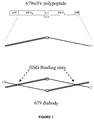
- the design of the gene construct (679-scFv-L5) for expressing a 679 diabody possesses the following features: 1) The carboxyl terminal end of V H is linked to the amino terminal end of V K by the peptide linker Gly-Gly-Gly-Gly-Ser (G 4 S). The use of the G 4 S peptide linker enables the secreted polypeptide to dimerize into a diabody, forming two binding sites for HSG.
- Six histidine (His) residues are added to the carboxyl terminus to allow purification by IMAC.
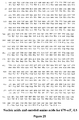
- the DNA coding sequence and the corresponding encoded amino acids for 679-scFv-L5 are contained in Figure 25 (Seq IDs).
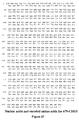
- the DNA coding sequence and the corresponding encoded amino acids for 679-I3Q are contained in Figure 26 (Seq IDs).
- the DNA coding sequence and the corresponding encoded amino acids for 679-C101S are contained in Figure 27 (Seq IDs).
- Figure 1 also includes a stick figure drawing of the mature polypeptide after proteolytic removal of the pelB leader peptide and a stick figure drawing of a 679 diabody, including the HSG binding sites.
- 679 Two site-directed point mutations were made to increase the amount of 679 diabodies in soluble extracts. Specifically, converting residue 3 in the 679V H sequence from Ile to Gln (I3Q), or residue 101 in the 679V K sequence from Cys to Ser (C101S), or both (I3Q/C101S), resulted in at least a ten-fold increase in soluble expression levels. Moreover, 679 can be humanized or fully human to help avoid an adverse response to the murine antibody.
- hMN14 is a humanized monoclonal antibody (Mab) that binds specifically to CEA ( Shevitz et al, J. Nucl. Med., Supp., 34, 217P, 1993 ; U.S. 6,254,868 (2001 )). While the original Mabs were murine, humanized antibody reagents are now utilized to reduce the human anti-mouse antibody response. The variable regions of this antibody were engineered into an expression construct (hMN14-scFv-L5) in a similar fashion to 679-scFv-L5 as described in Example 1.
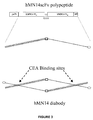
- the design of the gene construct (hMN14-scFv-L5) for expressing an hMN14 diabody possesses the following features: 1) The carboxyl terminal end of V H is linked to the amino terminal end of V K by the peptide linker Gly-Gly-Gly-Gly-Ser (G 4 S). The use of the G 4 S peptide linker enables the secreted polypeptide to dimerize into a diabody, forming two binding sites for CEA. 2) A pelB leader sequence precedes the V H gene to facilitate the transport of the polypeptide to the periplasmic space of E. coli.
- Figure 29 shows a stick figure drawing of the mature polypeptide following proteolytic removal of the pelB leader peptide, and a stick figure drawing of a hMN14 diabody, including CEA binding sites.
- Di-cistronic expression vectors were constructed through a series of sub-cloning procedures outlined in Figures 8 and 9 and described in Example 6.
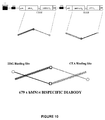
- the di-cistronic expression cassette for bispecific hMN14x679 diabody is shown schematically in Figure 10 .
- the expression cassette may be contained in a plasmid, which is a small, doublestranded DNA forming an extra-chromosomal self-replicating genetic element in many bacteria and some eukaryotes and is widely used in genetic engineering as a cloning vector.
- a cloning vector is a DNA molecule that can replicate on its own in a microbial host cell.
- This invention describes a vector that expresses bispecific diabodies.
- a host cell accepts a vector for reproduction and the vector replicates each time the host cell divides.
- a commonly used host cell is Escherichia Coli (E. Coli), however, other host cells are available.
- the di-cistronic cassette as shown in Figure 10 When the di-cistronic cassette as shown in Figure 10 is expressed in E. coli, some of the polypeptides fold and spontaneously form soluble bispecific diabodies.
- the bispecific diabody shown in Figure 10 forms one binding site having high affinity for HSG and one binding site having high affinity for CEA.
- the carboxyl terminal end of the V H segment of the 679 MAb is connected to the amino terminal end of the V K segment of the hMN14 MAb by a five amino acid residue linker
- the carboxyl terminal end of the V H segment of the hMN14 MAb is connected to the amino terminal end of the V K segment of the 679 MAb by the same five amino acid residue linker.
- Three variants of 679 x hMN14 bispecific diabodies have been produced and tested.
- BS1 is composed of the wild-type sequences for both 679 and hMN14 variable regions.
- BS1.5 incorporates the 679V H I3Q mutation.
- BS2 incorporates both the 679V H I3Q and the 679V K C101S mutations.
- bispecific diabodies are for pre-targeting CEA positive tumors for subsequent specific delivery of therapeutic radioisotopes carried by HSG containing peptides.
- These diabodies bind selectively to targeted antigens and when combined with a bivalent di-HSG hapten allow for increased affinity and a longer residence time at the desired location. Moreover, non-antigen bound diabodies are cleared from the body quickly and exposure of normal tissues is minimized.
- Delivering a diagnostic or a therapeutic agent to a target for diagnosis or treatment by means as defined in the claims includes administering a patient with the binding protein, waiting a sufficient amount of time for an amount of the non-binding protein to clear the patient's blood stream, and administering a diagnostic or therapeutic agent that binds to a binding site of the binding protein. Diagnosis further requires the step of detecting the bound proteins with known techniques.
- the diagnostic or therapeutic carrier molecule comprises a diagnostically or therapeutically efficient agent, a linking moiety, and one or more hapten moieties. The hapten moieties are positioned to permit simultaneous binding of the hapten moieties with the binding protein.
- Administration of the binding protein and diagnostic or therapeutic agents of the present invention to a mammal may be intravenous, intraarterial, intraperitoneal, intramuscular, subcutaneous, intrapleural, intrathecal, by perfusion through a regional catheter, or by direct intralesional injection.
- the administration may be by continuous infusion or by single or multiple boluses.
- the unmixed diagnostic or therapeutic agent and bispecific antibody may be provided as a kit for human therapeutic and diagnostic use in a pharmaceutically acceptable injection vehicle, preferably phosphate-buffered saline (PBS) at physiological pH and concentration.
- a pharmaceutically acceptable injection vehicle preferably phosphate-buffered saline (PBS) at physiological pH and concentration.
- PBS phosphate-buffered saline
- the preparation preferably will be sterile, especially if it is intended for use in humans.
- Optional components of such kits would normally be containers of stabilizers, buffers, labeling reagents, radioisotopes, paramagnetic compounds, second antibody for enhanced clearance, and conventional syringes, columns, vials and the like.
- Standard recombinant DNA methods were used to obtain 679-scFv-L5 as follows.
- a plasmid containing the V H sequence of 679 was used as the template for polymerase chain reaction (PCR) using Pfu polymerase and the two oligonucleotide primers specified below:
- the left PCR primer contains a 5' NcoI restriction site.
- the right PCR primer contains the sequence for a 5 amino acid residue linker (G 4 S) and a BamHI restriction site.
- the PCR product was digested with NcoI and BamHI and ligated in frame with the pelB leader sequence into NcoI/BamHI digested pET-26b vector (Novagen) to generate 679V H L5-pET26.
- a plasmid containing the V K sequence of 679 was used as the template for PCR using Pfu polymerase and the two oligonucleotide primers specified below:
- the left and right PCR primers contain BamHI and XhoI restriction sites, respectively.
- the PCR product was digested with XhoI and BamHI and ligated (in frame with the 679V H , G 4 S linker, and 6His sequences) into the XhoI/BamHI digested 679V H L5-pET26 to generate the expression construct 679-scFv-L5.
- the DNA sequence of the inserted gene confirmed that the V H and V K sequences were identical to those of the original cDNA clones and the sequences of the ligation sites and linker regions were as designed.
- the gene construct, 679-scFv-L5, is illustrated in Figure 1 .
- Competent E. coli BL21(P-Lys-S) cells were transformed with 679-scFv-L5 by standard methods. Cultures were shaken in 2xYT media supplemented with 100 ⁇ g/ml kanamycin sulphate and 34 ⁇ g/ml chloramphenicol and grown at 37°C to OD 600 of 1.6 - 1.8. An equal volume of room temperature 2xYT media supplemented with antibiotics and 0.8M sucrose was added to the cultures, which were then transferred to 20°C. After 30 minutes at 20°C, expression was induced by the addition of 40 ⁇ M IPTG and continued at 20°C for 15-18 hours.
- 679 diabody was examined in (1) cell culture conditioned media, (2) soluble proteins extracted under non-denaturing conditions from the cell pellet following centrifugation, and (3) insoluble material remained in the pellet following several cycles of extraction and centrifugation.
- Soluble proteins were extracted from bacterial cell pellets as follows. Pellets were frozen and thawed then re-suspended in lysis buffer (2% Triton-X 100; 300mM NaCl; 10mM imidazole; 5mM MgSO 4 ; 25 units/ml benzonase; 50mM NaH 2 PO 4 , pH 8.0) using an amount equal to 1 % of the culture volume. The suspension was homogenized by sonication , clarified by centrifugation, and loaded onto Ni-NTA IMAC columns.
- the columns After being washed with buffer containing 20mM imidazole, the columns were eluted with 100mM imidazole buffer (100mM imidazole; 50mM NaCl; 25mM Tris, pH 7.5) and the eluate obtained was further purified on a Q-Sepharose column.
- the insoluble material was solubilized in denaturing Ni-NTA binding buffer (8M urea; 10mM imidazole; 0.1M NaH 2 PO 4 ; 10mM Tris, pH 8.0) and mixed with 1ml of Ni-NTA agarose (Qiagen, inc.). The mixture was rocked at room temperature for 1 hour then the resin was washed once with 50ml of the same buffer and loaded onto a column. The column was washed with 20ml of the same buffer followed by 20ml of wash buffer (8M urea; 20mM imidazole; 0.1M NaH 2 PO 4 ; 10mM Tris, pH 8.0). Bound proteins were eluted with 5ml of denaturing elution buffer (8M urea; 250mM imidazole; 0.1M NaH 2 PO 4 ; 10mM Tris, pH 8.0).
- Two site-directed point mutations were made to increase the amount of 679 diabodies in soluble extracts. Specifically, converting residue 3 in the 679V H sequence from Ile to Gln (I3Q), or residue 101 in the 679V K sequence from Cys to Ser (C101S), or both (I3Q/C101S), resulted in at least a ten-fold increase in soluble expression levels.
- the mutations were introduced in synthetic oligonucleotides used for PCR.
- the V H -I3Q mutation was incorporated in the oligonucleotide primer depicted below:
- This primer was paired with 679V H -Right (Example 1) to generate the V H -I3Q mutant by PCR from 679-scFv-L5 template using Pfu polymerase.
- the 679V K -C101S mutation was incorporated in the oligonucleotide primer specified below:
- This primer was paired with 679-V K Left (Example 1) to generate 679V K -C101S mutant by PCR from 679-scFv-L5 template using Pfu polymerase.
- the PCR products were cloned into pET26b following the same procedure as described above in Example 1.
- Expression levels in the soluble fractions were estimated by BIAcore analysis using a HSG coupled sensor chip.
- the expression levels of I3Q, C101S, or I3Q/C101S mutant 679 diabody were about 10 ug/L as compared to about 1 ug/L for the wild type.
- hMN14-scFv-L5 Standard recombinant DNA methods were used to obtain hMN14-scFv-L5 as follows.
- the hMN14 V H and V K sequences were amplified from a vector constructed for expressing hMN14 Fab' ( Leung et al., Cancer Research, Supp., 55, 5968s-5972s, 1995 ) by PCR with Pfu polymerase.
- the hMN14V H sequence was amplified using the oligonucleotide primers specified below:
- the left PCR primer contains a 5' NcoI restriction site.
- the right PCR primer contains a sequence for a 5 amino acid residue linker (G 4 S) and a BamHI restriction site.
- the PCR product was digested with NcoI and BamHI and ligated, in frame with the pelB leader sequence, into NcoI/BamHI digested pET-26b vector to generate hMN14V H L5-pET26.
- the hMN14V K sequence was amplified using the oligonucleotide primers specified below:
- the left and right PCR primers contain BamHI and XhoI restriction sites, respectively.
- the PCR product was digested with XhoI and BamHI and ligated, in frame with the hMN14V H , G 4 S linker and 6His sequences, into the XhoI/BamHI digested hMNI4V H L5-pET26 construct to generate the expression construct hMN14-scFv-L5.
- the DNA sequence of this construct was verified by automated DNA sequencing.
- the gene construct, hMN14-scFv-L5, is illustrated in Figure 3 .
- the hMN14-scFv-L5 construct was used to transform BL21(P-LysS) E. coli. Culture conditions, induction, and purification were carried out similar to those described for the 679 diabody in Example 1, except that the hMN14 diabody was purified by affinity chromatography, instead of Q-Sepharose anion exchange chromatography, via binding to an anti-id antibody immobilized on Affi-gel. Soluble proteins that bound and eluted from Ni-NTA resin were loaded on a WI2 anti-idiotype affinity column. The column was washed with PBS and the product was eluted with 0.1M Glycine; 0.1M NaCl, pH 2.5 and neutralized immediately.
- hMN14scFv The very similar retention time of hMN14scFv indicates that it exists in solution as a dimer or diabody since the calculated molecular weight of the monomeric hMN14scFv is 26kDa.
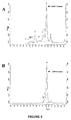
- SDS-PAGE gel analysis in Figure 5A shows a single band of the predicted Mr at 26kDa
- the isoelectric focusing (IEF) gel analysis in Figure 5B yields a band with pI of 8.2, close to the calculated pI of 7.9.
- a competitive ELISA showed that the hMN14 diabody is functionally active and displays excellent binding properties.
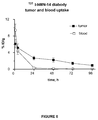
- FIG. 7 shows the percentage of the injected dose that is associated with the tumor and with normal tissues, such as liver, spleen, kidney, lungs, blood, stomach, small intestine, and large intestine, at 48 hours after the injection. The amount of the injected dose in each normal tissue is very low when compared to the amount in the tumor.
- Table 1 summarizes the relative amounts of activity found in normal tissues compared to that in the tumor at 24, 48 and 72 hours.
- Table 1 Tumor to non-tumor ratios 24hrs 48hrs 72hrs Tumor 1.00 1.00 1.00 Liver 22.47 31.85 28.32 Spleen 25.41 39.51 41.03 Kidney 9.12 12.12 10.54 Lung 15.49 25.70 31.75 Blood 9.84 17.32 21.80 Stmach 9.98 17.50 23.13 sm. Int. 37.23 65.60 50.58 Lg. Int. 35.87 66.54 45.66
- Example 6 - 679 x hMN14 bispecific diabody (BS1, BS1.5 and BS2)
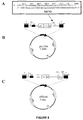
- pET-ER a new vector (pET-ER) was generated by the addition of a multiple cloning site, MCS2, shown in Figure 8A , into the pET-26b vector, shown in Figure 8B .
- MCS2 multiple cloning site
- the duplex structure, MCS2, was ligated into the BlpI restriction site of pET-26b to generate the pET-ER vector as illustrated in Figure 8C .
- This vector facilitates the construction of di-cistronic expression cassettes and allows for stoichiometric expression of two heterologous polypeptides in a single E. coli cell.
- the di-cistronic expression vectors were constructed through a series of sub-cloning procedures that are outlined in Figure 9 .
- the V K sequences of 679-scFv-L5 and hMN14-scFv-L5 were exchanged by excision with BamHI and XhoI to generate two intermediate constructs in pET26b.
- a DNA fragment containing the sequence 679V H -L5-hMN14V K excised from a pET26b construct with NcoI and XhoI, was ligated into the same restriction sites in pET-ER vector to generate an intermediate clone (679V H -L5-hMN14V K - pET-ER).
- a 900bp DNA fragment which includes a ribosomal binding site in addition to the coding sequence for polypeptide 2 (below), was excised from hMN14V H -L5-679V K - pET26b with XbaI and BlpI. This fragment was ligated into the SpeI and BlpI restriction sites of 679V H -L5-hMN14V K - pET-ER to create the final bispecific expression constructs.
- the di-cistronic expression cassette for bispecific hMN14x679 diabody is shown schematically in Figure 10 .
- the DNA coding sequence of nucleic acids and the corresponding encoded amino acids for the first and second polypeptide sequences of BS1, BS1.5, and BS2 are contained in Figures, 30 & 31 , 32 & 33 , and 34 & 35 (Seq IDs), respectively.
- the di-cistronic expression cassette codes for two polypeptides that are arranged as follows:
- BS1.5-transformed E. coli (BL21-pLysS) cultures expressed 0.5 mg of soluble bispecific diabody per liter of culture. From 5L induction, 2.4 mg of highly purified BS1.5 diabody was isolated following the procedures similar to those described in Example 1. Soluble cell extracts were loaded onto a 4ml of Ni-NTA agarose column (Qiagen), which was washed with 20 bed volumes of 10mM imidazole buffer and 5 bed volumes of 20mM imidazole buffer. The diabody was eluted from the IMAC column in 15 ml of 100mM imidazole elution buffer.
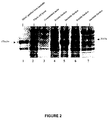
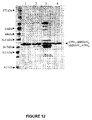
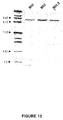
- the two polypeptides essentially co-migrate, since their calculated MWs are 26.5 kDa and 27.2 kDa.
- BS1, BS1.5 and BS2 each shows the presence of a single band with a pI of approximately 8.3, which is close to the predicted pI of 7.9 for the three bispecific diabodies.
- the binding kinetics of BS1.5 was evaluated by BIAcore using a low density HSG-coupled sensor chip. Binding sensograms were obtained for BS1.5 concentrations from 0 to 54 nM and the resulting data were analyzed with the BIAcore BiaEvaluation software using 1:1 Langmuir binding model, yielding an association constant of the interaction, K d , of 2.4 nM for the binding of BS1.5 to immobilized HSG.
- Figure 14 shows the BIAcore binding curves at various concentrations of BS1.5.
- a chemically prepared 679 x hMN14 F(ab') 2 conjugate yields a K d of 1.55 nM.
- BS1.5 The binding of BS1.5 to CEA was demonstrated by competitive ELISA. Microtiter plates were coated with 0.5 ⁇ g/well with soluble CEA (Scripps Laboratories). BS1.5 at concentrations ranging from 4 - 500 nM were allowed to compete for CEA binding with HRP-conjugated hMN14 IgG (1nM). BS1.5 shows a competitive binding curve similar to that of the 679 x hMN14 F(ab') 2 chemical conjugate. These data indicate that the BS1.5 has a CEA binding affinity similar to the parental hMN14 antibody. The bispecific binding properties of BS1.5 was also analyzed by BIAcore with a high-density HSG-coupled biosensor chip.
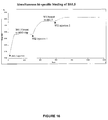
- BS1.5 was pre-bound to the sensor chip before injection of an anti-idiotype MAb designated WI2 that is highly specific for hMN14. Soluble CEA was also used in place of WI2 and gave similar results. As shown in Figure 16 , injection of 60 ng of BS1.5 gave a relative response of 620 RU. Subsequent injection of 400ng of WI2 increased the signal by 400 RU. Binding approached saturation with a second WI2 injection (400ng), as a total of 520 RU were added to the 620RU signal of BS1.5. Injection of WI2 following pre-binding with 679 F(ab') 2 or without pre-binding yielded a negligible response. These data demonstrate that BS1.5 has the capability of binding HSG and CEA simultaneously.
- BS1 and BS2 each differ from BS1.5 by single point mutations in the 679 component of the diabody. Some of the properties of these molecules are summarized in Table 2. ELISA experiments demonstrate that each of these proteins exhibits similar CEA binding properties, which is not surprising given that the hMN14 component of the diabody is consistent among the three diabodies. Further, BS1 and BS2 are demonstrated by BIAcore analysis to be bispecific and capable of binding to CEA and HSG simultaneously.
- BS1.5 includes the 679V H I3Q mutation that is not included in BS1, which is composed entirely of the wildtype sequences. This mutation doubles the yield of soluble diabody that is expressed without compromising the binding affinity for HSG.
- BS2 includes the additional 679V K C101S mutation as well as the 679V H I3Q. With this second change, soluble BS2 is expressed at twice the level of BS1.5, however, the binding affinity for HSG decreased measurably.
- the tumors were enriched appreciably with 131 I-BS1.5 as compared to normal tissues, such as liver, spleen, kidney, lungs, blood, stomach, small intestine, and large intestine, as illustrated in Figure 18 .
- Pre-targeting experiments were performed with 12 or 24 hour clearance times following injection of BS1.5 (unlabeled).
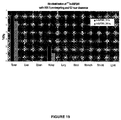
- IMP241 a peptide containing two HSG groups and a DOTA moiety, was loaded with 111 Indium and injected in BS1.5 pre-targeted mice. The bio-distribution of the 111 In-IMP241 was examined at 3 and 24 hours after injection.
- Figure 19 shows the activity in the tumor and normal tissues in pre-targeted mice with 12 hour clearance.
- a humanized version of 679-based diabody has been generated that exhibits HSG binding affinity comparable to the murine forms.
- the strategy employed was to retain all CDR residues and those residues known to interact with the CDR residues while substituting only those residues of the mouse frameworks that are not found in the database of human frameworks at corresponding positions. In such cases if more than one amino acid residue of the human frameworks is known for the same position, the most common one is selected for humanization.
- amino acid sequence for each of the framework regions of m679V H or m679V K were used to query the NCBI database and aligned with human antibody (h-Ab) sequences.
- Most amino acid residues of the murine 679 frameworks are identical with some or all of the human frameworks in the database at corresponding positions and therefore they are conserved for h679.
- amino acid residues of the murine 679 frameworks that are not found in any of the human frameworks they are substituted with the most common residue found in the homologous h-Abs at the corresponding positions.
- a residue in a particular position is likely to interact with the CDRs or to be involved in the V H and V K association ( E.A. Padlan, Molecular Immunology, 31, 169-217, 1994 )
- the residue in m679 is retained in h679.
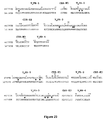
- Figure 20 shows an alignment of m679 and humanized h679.
- the Kabat numbering system is used and framework regions (FR) as well as CDRs are indicated. Arrows signify amino acid substitutions.
- human sequences with high levels of sequence identity were compared to m679.
- V H framework region 1 V H FR-1
- V H framework region 2 V H FR-2
- V H framework region 3 V H FR-3
- V H framework regions 4 V H FR-4
- V K framework region 1 V K FR-1
- This region has considerable variability amongst the h-Abs.
- the m679 amino acids at 20 of the 23 positions in V K FR-1 are acceptable for h-Abs.
- the following substitutions were made at three positions with the most common h-Ab amino acid for the respective positions: threonine (T) for serine (S) at V K -5; arginine (R) for lysine (K) at V K -18; and leucine (L) for methionine (M) at V K -21. These positions are not known to be involved in V H -V K or CDR contacts.
- V K framework region 2 V K FR-2
- This short region resembles the human sequences and is acceptable as is.
- V K framework region 3 V K ER-3
- V K framework regions 4 V K FR-4
- This short region resembles the human sequences and is acceptable as is.
- the new frameworks contain all residues found in h-Abs, except two, namely, leucine at position V H -37, which is retained due to its involvement in the V H and V K contact, and threonine at position V H -110, which is retained because of technical reasons.
- oligonucleotide PCR primers which together contain 12 of the 13 mutations described above to convert m679scFv into h679 diabody, were synthesized and used to generate 4 PCR products.
- the mutant sequences were amplified from the 679scFv-L5 plasmid construct using Taq polymerase. Restriction sites were engineered into the primers to allow ligation of the PCR products while conserving the encoded amino acid sequence.
- the sequences, coding regions, restriction sites and specific mutations contained on each of the primers are summarized in Table 4. The relative location of the primers and the PCR products are shown schematically in Figure 21 .
- the PCR products were each cloned into the PCR cloning vector pGemT (Promega). Through several rounds of sub-cloning using standard methods, the four PCR sequences were assembled and added to the first 120 nucleotides of 679V H I3Q to generate the h679scFv-L5-pGemT construct. From this construct the V H and V K domains were transferred together into the pET26b expression vector for h679 diabody or individually to make fully humanized bi-specific diabodies. The sub-cloning process is described in detail below. Table 4.
- a plasmid clone containing the 679V H -I3Q mutation (679V H I3Q-pGemT) was digested with the restriction enzymes BspEI (base pair 121) and PstI (in pGemT vector 3' of the insert), leaving the first 121 base pairs of 679V H I3Q with the vector.
- This vector fragment was ligated with PCR product A that was digested with XmaI (5' end) and Pst I (3' end) to generate construct A. It is important to note that the BspEI-XmaI ligation destroys both sites as each of these restriction enzymes was used in subsequent steps.
- PCR product B was cloned into pGem T and screened for clones in the T7 orientation.
- the B fragment was excised from the pGemT clone with PstI and ligated into the PstI site of construct A. Clones were screened for proper insert orientation for construct B.
- PCR product C was cloned into pGem T and screened for clones in the T7 orientation.
- the C fragment was excised from the pGemT clone with XmaI and NdeI (vector site) and then ligated into construct B that was digested with the same enzymes.
- PCR product D was cloned into pGem T and screened for clones in the T7 orientation.
- the D fragment was excised from the pGemT clone with BspEI and NdeI and then ligated into construct C that was digested with the same enzymes.
- the h679scFv-L5 sequence was excised from the pGemT construct with NcoI and XhoI and ligated into similarly digested pET26b vector. This construct was used to transform BL21(P-LysS) E. coli. Culture conditions, induction, and purification were carried out similar to those described for the m679 diabody in Example 2. Expression levels in the soluble fractions were estimated by BIAcore analysis using a HSG coupled sensor chip. The expression level of h679 diabody was 50 ⁇ g/L as compared to 1 ug/L for the wild type m679 diabody or 10 ug/L for m679I3Q diabody. The h679 diabody displayed comparable binding properties to the m679I3Q diabody with BIAcore analysis.
- the h679V H and h679V K domains were incorporated into the pET-ER vector with the V H and V K of hMN14 to make the fully humanized BS1.5H bispecific diabody construct.
- the di-cistronic expression vector was constructed through a series of sub-cloning procedures that are outlined in Figure 9 . Initially, the V K sequences of h679-scFv-L5 and hMN14-scFv-L5 were exchanged by excision with BamHI and XhoI to generate two intermediate constructs in pET26b.
- the di-cistronic expression cassette codes for two polypeptides that are arranged as follows:
- the BS1.5H construct was used to transform E. coli (BL21-pLysS) cells.
- the recombinant BS1.5H protein was expressed and purified as described in Example 6.
- the level of soluble protein expression was 0.55 mg/L, about 10% higher than BS1.5.
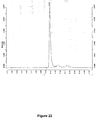
- Size exclusion HPLC analysis of the purified BS1.5H yielded a single protein peak at 10.16 minutes ( Fig 22 ).
- BS2 had a retention time of 10.04 minutes under identical conditions, indicating that BS1.5H polypeptides exclusively form diabodies.
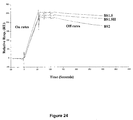
- the bispecific (CEA/HSG) binding properties of BS1.5H were confirmed by BIAcore analysis ( Fig 23 ).
- BS1.5H was pre-bound to a HSG-coupled sensor chip before injection of WI2 (hMN14-specific anti-idiotype MAb). As shown in Figure 23 , injection of 60 ng of BS1.5H gave a relative response of 660 RU. Subsequent injection of 1 ⁇ g of WI2 increased the signal by 760 RU. Injection of WI2 following pre-binding with 679 F(ab') 2 or without pre-binding yielded a negligible response. These data demonstrate that BS1.5H has the capability of binding HSG and CEA simultaneously. BS1.5H differs from BS1.5 by the humanization of the 679 moiety, which was accomplished by substitutions of 13 amino acid residues.
- the therapeutic agents may take the following form:
- the therapeutic agent comprises at least two haptens which are covalently linked via a peptidic, proteinaceous or non-proteinaceous moiety.
- haptens are fluorescein isothiocyanate, vitamin B-12, DTPA (diethylenetriaminepentaacetic acid) and DOTA (1,4,7,10-tetraazacyclododecanetetraacetic acid) residues.
- This example relates to the preparation of carboxylesterase-DTPA conjugate.
- Two vials of rabbit liver carboxylesterase (about 8.5 mg protein content/vial) were reconstituted with 2.3 mL of 50 mM potassium phosphate buffer pH 7.5, and the solution was made 4.2 mM in DTPA using 0.1 mL of a 0.1 M stock solution of DTPA pH 6.7.
- the pH of the resultant solution was adjusted to be in the 7.7-7.8 range, and then reacted with 10 mg of cyclic DTPA dianhydride.
- the reaction mixture was passed through two successive SEC columns equilibrated in 0.1 M sodium phosphate pH 7.3.
- the eluate was further purified by preparative HPLC on a TSK G3000SW column using 0.2 M sodium phosphate pH 6.8, at 4 mL/min flow, as the eluent.
- the purified conjugate was made 0.1 M in sodium phosphate pH 6.8, and concentrated.
- the DTPA-to-carboxylesterase molar substitution ratio determined by a metal-binding assay, was in the range of 2.95-to-1 to 4.43-to-1.
Landscapes
- Health & Medical Sciences (AREA)
- Chemical & Material Sciences (AREA)
- Life Sciences & Earth Sciences (AREA)
- Medicinal Chemistry (AREA)
- Organic Chemistry (AREA)
- Immunology (AREA)
- General Health & Medical Sciences (AREA)
- Animal Behavior & Ethology (AREA)
- Pharmacology & Pharmacy (AREA)
- Public Health (AREA)
- Veterinary Medicine (AREA)
- Proteomics, Peptides & Aminoacids (AREA)
- Bioinformatics & Cheminformatics (AREA)
- Engineering & Computer Science (AREA)
- Nuclear Medicine, Radiotherapy & Molecular Imaging (AREA)
- Chemical Kinetics & Catalysis (AREA)
- Epidemiology (AREA)
- Biochemistry (AREA)
- Biophysics (AREA)
- Genetics & Genomics (AREA)
- Molecular Biology (AREA)
- General Chemical & Material Sciences (AREA)
- Oncology (AREA)
- Cell Biology (AREA)
- Gastroenterology & Hepatology (AREA)
- Zoology (AREA)
- Heart & Thoracic Surgery (AREA)
- Pain & Pain Management (AREA)
- Rheumatology (AREA)
- Communicable Diseases (AREA)
- Microbiology (AREA)
- Mycology (AREA)
- Cardiology (AREA)
- Transplantation (AREA)
- Peptides Or Proteins (AREA)
- Preparation Of Compounds By Using Micro-Organisms (AREA)
- Medicines That Contain Protein Lipid Enzymes And Other Medicines (AREA)
- Micro-Organisms Or Cultivation Processes Thereof (AREA)
- Medicinal Preparation (AREA)
Applications Claiming Priority (5)
| Application Number | Priority Date | Filing Date | Title |
|---|---|---|---|
| US32883501P | 2001-10-15 | 2001-10-15 | |
| US328835P | 2001-10-15 | ||
| US34188101P | 2001-12-21 | 2001-12-21 | |
| US341881P | 2001-12-21 | ||
| PCT/US2002/032717 WO2003033653A2 (en) | 2001-10-15 | 2002-10-15 | Affinity enhancement agents |
Publications (3)
| Publication Number | Publication Date |
|---|---|
| EP1444267A2 EP1444267A2 (en) | 2004-08-11 |
| EP1444267A4 EP1444267A4 (en) | 2009-12-02 |
| EP1444267B1 true EP1444267B1 (en) | 2016-08-10 |
Family
ID=26986533
Family Applications (1)
| Application Number | Title | Priority Date | Filing Date |
|---|---|---|---|
| EP02770573.0A Expired - Lifetime EP1444267B1 (en) | 2001-10-15 | 2002-10-15 | Affinity enhancement agents |
Country Status (13)
| Country | Link |
|---|---|
| US (1) | US20030113333A1 (enExample) |
| EP (1) | EP1444267B1 (enExample) |
| JP (1) | JP4443923B2 (enExample) |
| KR (1) | KR101027889B1 (enExample) |
| CN (1) | CN1604910A (enExample) |
| AU (1) | AU2002335808B2 (enExample) |
| BR (1) | BR0213284A (enExample) |
| CA (1) | CA2463616C (enExample) |
| IL (1) | IL161417A0 (enExample) |
| MX (1) | MXPA04003533A (enExample) |
| PL (1) | PL374426A1 (enExample) |
| RU (1) | RU2004114878A (enExample) |
| WO (1) | WO2003033653A2 (enExample) |
Families Citing this family (10)
| Publication number | Priority date | Publication date | Assignee | Title |
|---|---|---|---|---|
| US6962702B2 (en) * | 1998-06-22 | 2005-11-08 | Immunomedics Inc. | Production and use of novel peptide-based agents for use with bi-specific antibodies |
| US6346454B1 (en) * | 1999-01-12 | 2002-02-12 | Agere Systems Guardian Corp. | Method of making dual damascene interconnect structure and metal electrode capacitor |
| US20040018557A1 (en) * | 2002-03-01 | 2004-01-29 | Immunomedics, Inc. | Bispecific antibody point mutations for enhancing rate of clearance |
| US20050003403A1 (en) * | 2003-04-22 | 2005-01-06 | Rossi Edmund A. | Polyvalent protein complex |
| CA2531118C (en) * | 2003-07-01 | 2013-01-08 | Immunomedics, Inc. | Multivalent carriers of bi-specific antibodies |
| CN101171034B (zh) | 2005-03-03 | 2014-06-18 | 免疫医疗公司 | 人源化l243抗体 |
| AU2009239491B2 (en) | 2008-04-21 | 2014-07-17 | Lawrence Livermore National Security, Llc | Selective high-affinity polydentate ligands and methods of making such |
| US9050375B2 (en) * | 2009-07-06 | 2015-06-09 | Hoffmann-La Roche, Inc. | Bi-specific digoxigenin binding antibodies |
| US9264453B2 (en) | 2013-11-08 | 2016-02-16 | At&T Mobility Ii Llc | Front end processor for short message service centers |
| AU2024233139A1 (en) * | 2023-03-03 | 2025-08-28 | Oncoone Research & Development Gmbh | Improved bispecific anti-tumor antigen/anti-hsg antibodies for pre-targeting of hyperproliferative disorders |
Family Cites Families (19)
| Publication number | Priority date | Publication date | Assignee | Title |
|---|---|---|---|---|
| US4816567A (en) * | 1983-04-08 | 1989-03-28 | Genentech, Inc. | Recombinant immunoglobin preparations |
| US5618920A (en) * | 1985-11-01 | 1997-04-08 | Xoma Corporation | Modular assembly of antibody genes, antibodies prepared thereby and use |
| US4946778A (en) * | 1987-09-21 | 1990-08-07 | Genex Corporation | Single polypeptide chain binding molecules |
| FR2604092B1 (fr) * | 1986-09-19 | 1990-04-13 | Immunotech Sa | Immunoreactifs destines a cibler les cellules animales pour leur visualisation ou leur destruction in vivo |
| US5258498A (en) * | 1987-05-21 | 1993-11-02 | Creative Biomolecules, Inc. | Polypeptide linkers for production of biosynthetic proteins |
| US5132405A (en) * | 1987-05-21 | 1992-07-21 | Creative Biomolecules, Inc. | Biosynthetic antibody binding sites |
| US5530101A (en) * | 1988-12-28 | 1996-06-25 | Protein Design Labs, Inc. | Humanized immunoglobulins |
| GB8928874D0 (en) * | 1989-12-21 | 1990-02-28 | Celltech Ltd | Humanised antibodies |
| US6027725A (en) * | 1991-11-25 | 2000-02-22 | Enzon, Inc. | Multivalent antigen-binding proteins |
| US6096289A (en) * | 1992-05-06 | 2000-08-01 | Immunomedics, Inc. | Intraoperative, intravascular, and endoscopic tumor and lesion detection, biopsy and therapy |
| CA2145278C (en) * | 1992-09-25 | 2009-03-10 | Commonwealth Scientific And Industrial Research Organisation | Target binding polypeptide |
| ATE199392T1 (de) * | 1992-12-04 | 2001-03-15 | Medical Res Council | Multivalente und multispezifische bindungsproteine, deren herstellung und verwendung |
| US5874540A (en) * | 1994-10-05 | 1999-02-23 | Immunomedics, Inc. | CDR-grafted type III anti-CEA humanized mouse monoclonal antibodies |
| US5989830A (en) * | 1995-10-16 | 1999-11-23 | Unilever Patent Holdings Bv | Bifunctional or bivalent antibody fragment analogue |
| US6254868B1 (en) * | 1996-03-20 | 2001-07-03 | Immunomedics, Inc. | Glycosylated humanized B-cell specific antibodies |
| WO1997038102A1 (en) * | 1996-04-04 | 1997-10-16 | Unilever Plc | Multivalent and multispecific antigen-binding protein |
| US6962702B2 (en) * | 1998-06-22 | 2005-11-08 | Immunomedics Inc. | Production and use of novel peptide-based agents for use with bi-specific antibodies |
| US7074405B1 (en) * | 1998-06-22 | 2006-07-11 | Immunomedics, Inc. | Use of bi-specific antibodies for pre-targeting diagnosis and therapy |
| PL372144A1 (en) * | 2001-12-26 | 2005-07-11 | Immunomedics, Inc. | Methods of generating multispecific, multivalent agents from v sb h /sb and v sb l /sb domains |
-
2002
- 2002-10-15 IL IL16141702A patent/IL161417A0/xx unknown
- 2002-10-15 BR BRPI0213284-2A patent/BR0213284A/pt not_active IP Right Cessation
- 2002-10-15 KR KR1020047005675A patent/KR101027889B1/ko not_active Expired - Fee Related
- 2002-10-15 PL PL02374426A patent/PL374426A1/xx unknown
- 2002-10-15 EP EP02770573.0A patent/EP1444267B1/en not_active Expired - Lifetime
- 2002-10-15 JP JP2003536383A patent/JP4443923B2/ja not_active Expired - Fee Related
- 2002-10-15 US US10/270,071 patent/US20030113333A1/en not_active Abandoned
- 2002-10-15 RU RU2004114878/13A patent/RU2004114878A/ru not_active Application Discontinuation
- 2002-10-15 CA CA2463616A patent/CA2463616C/en not_active Expired - Fee Related
- 2002-10-15 CN CNA028250710A patent/CN1604910A/zh active Pending
- 2002-10-15 AU AU2002335808A patent/AU2002335808B2/en not_active Ceased
- 2002-10-15 WO PCT/US2002/032717 patent/WO2003033653A2/en not_active Ceased
- 2002-10-15 MX MXPA04003533A patent/MXPA04003533A/es not_active Application Discontinuation
Non-Patent Citations (2)
| Title |
|---|
| JANEVIK-IVANOVSKA E ET AL: "BIVALENT HAPTEN-BEARING PEPTIDES DESIGNED FOR IODINE-131 PRETARGETED RADIOIMMUNOTHERAPY", BIOCONJUGATE CHEMISTRY, ACS, WASHINGTON, DC, US, vol. 8, no. 4, 1 January 1997 (1997-01-01), pages 526 - 533, XP000929131, ISSN: 1043-1802, DOI: 10.1021/BC970083H * |
| MOREL A ET AL: "Recognition of imidazole and histamine derivatives by monoclonal antibodies", MOLECULAR IMMUNOLOGY, PERGAMON, GB, vol. 27, no. 10, 1 October 1990 (1990-10-01), pages 995 - 1000, XP024781220, ISSN: 0161-5890, [retrieved on 19901001], DOI: 10.1016/0161-5890(90)90122-G * |
Also Published As
| Publication number | Publication date |
|---|---|
| MXPA04003533A (es) | 2005-06-20 |
| CA2463616C (en) | 2011-07-12 |
| EP1444267A4 (en) | 2009-12-02 |
| RU2004114878A (ru) | 2005-04-20 |
| WO2003033653A3 (en) | 2003-11-13 |
| IL161417A0 (en) | 2004-09-27 |
| JP2005518344A (ja) | 2005-06-23 |
| CN1604910A (zh) | 2005-04-06 |
| KR101027889B1 (ko) | 2011-04-07 |
| JP4443923B2 (ja) | 2010-03-31 |
| KR20050036873A (ko) | 2005-04-20 |
| EP1444267A2 (en) | 2004-08-11 |
| BR0213284A (pt) | 2006-05-23 |
| WO2003033653B1 (en) | 2004-02-12 |
| CA2463616A1 (en) | 2003-04-24 |
| PL374426A1 (en) | 2005-10-17 |
| AU2002335808B2 (en) | 2009-08-27 |
| US20030113333A1 (en) | 2003-06-19 |
| WO2003033653A2 (en) | 2003-04-24 |
Similar Documents
| Publication | Publication Date | Title |
|---|---|---|
| US20030162709A1 (en) | Methods of generating multispecific, multivalent agents from VH and VL domains | |
| AU2017293450B2 (en) | Humanized antibodies transmigrating the blood-brain barrier and uses thereof | |
| CA2463672A1 (en) | Direct targeting binding proteins | |
| US9701754B1 (en) | Covalent disulfide-linked diabodies and uses thereof | |
| RS61493B1 (sr) | Konstrukti multispecifičnih antitela | |
| EP3795591B1 (en) | Cys80 conjugated immunoglobulins | |
| WO2002008293A2 (en) | Multivalent target binding protein | |
| US20230167200A1 (en) | Platform for constructing multispecific antibody | |
| JP7458567B2 (ja) | C-met結合剤 | |
| CN117279950B (zh) | 一种靶向il-18bp的抗体及其应用 | |
| WO2023031644A1 (en) | Anti-fibroblast activation protein (fap) single domain antibodies and uses thereof | |
| AU2002335808B2 (en) | Affinity enhancement agents | |
| AU2002335808A1 (en) | Affinity enhancement agents | |
| JP7695925B2 (ja) | 多特異性トランスサイレチン免疫グロブリン融合物 | |
| CN117177999B (zh) | 一种靶向IL-18Rβ的抗体及其应用 | |
| CN118754989A (zh) | 一种抗her2纳米抗体及其制备方法和应用 | |
| CN119661710A (zh) | 一种抗cd38纳米抗体及其制备方法和应用 | |
| TW202521590A (zh) | 旋鈕(knob)結構域蛋白 | |
| TW202540163A (zh) | 利用環境應答性胜肽的蛋白質之製造方法 | |
| CN121949555A (zh) | 抗Trop2纳米抗体及其产品和应用 | |
| HK40083794A (en) | Platform for constructing multispecific antibody | |
| TW202608918A (zh) | 雙鏈構建體的配對 | |
| CN117186226A (zh) | 抗cd38纳米抗体及其应用 | |
| HK1252625B (en) | Cys80 conjugated immunoglobulins | |
| HK1236039A1 (en) | Multispecific antibodies |
Legal Events
| Date | Code | Title | Description |
|---|---|---|---|
| PUAI | Public reference made under article 153(3) epc to a published international application that has entered the european phase |
Free format text: ORIGINAL CODE: 0009012 |
|
| 17P | Request for examination filed |
Effective date: 20040517 |
|
| AK | Designated contracting states |
Kind code of ref document: A2 Designated state(s): AT BE BG CH CY CZ DE DK EE ES FI FR GB GR IE IT LI LU MC NL PT SE SK TR |
|
| AX | Request for extension of the european patent |
Extension state: AL LT LV MK RO SI |
|
| A4 | Supplementary search report drawn up and despatched |
Effective date: 20091104 |
|
| RIC1 | Information provided on ipc code assigned before grant |
Ipc: C12N 15/63 20060101ALI20091029BHEP Ipc: C12N 15/85 20060101AFI20091029BHEP Ipc: C12N 5/12 20060101ALI20091029BHEP Ipc: A61K 39/395 20060101ALI20091029BHEP Ipc: C07K 16/00 20060101ALI20091029BHEP Ipc: C07K 16/30 20060101ALI20091029BHEP Ipc: A61K 45/06 20060101ALI20091029BHEP |
|
| 17Q | First examination report despatched |
Effective date: 20101108 |
|
| REG | Reference to a national code |
Ref country code: DE Ref legal event code: R079 Ref document number: 60248249 Country of ref document: DE Free format text: PREVIOUS MAIN CLASS: C07K0016000000 Ipc: C07K0016440000 |
|
| RIC1 | Information provided on ipc code assigned before grant |
Ipc: C07K 16/30 20060101ALI20160315BHEP Ipc: A61K 45/06 20060101ALI20160315BHEP Ipc: C07K 16/44 20060101AFI20160315BHEP Ipc: A61K 39/00 20060101ALI20160315BHEP |
|
| GRAP | Despatch of communication of intention to grant a patent |
Free format text: ORIGINAL CODE: EPIDOSNIGR1 |
|
| INTG | Intention to grant announced |
Effective date: 20160428 |
|
| RIN1 | Information on inventor provided before grant (corrected) |
Inventor name: ROSSI, EDMUND Inventor name: CHANG, CHIEN-HSING KEN |
|
| GRAS | Grant fee paid |
Free format text: ORIGINAL CODE: EPIDOSNIGR3 |
|
| GRAA | (expected) grant |
Free format text: ORIGINAL CODE: 0009210 |
|
| AK | Designated contracting states |
Kind code of ref document: B1 Designated state(s): AT BE BG CH CY CZ DE DK EE ES FI FR GB GR IE IT LI LU MC NL PT SE SK TR |
|
| REG | Reference to a national code |
Ref country code: GB Ref legal event code: FG4D |
|
| REG | Reference to a national code |
Ref country code: CH Ref legal event code: EP Ref country code: AT Ref legal event code: REF Ref document number: 818958 Country of ref document: AT Kind code of ref document: T Effective date: 20160815 |
|
| REG | Reference to a national code |
Ref country code: IE Ref legal event code: FG4D |
|
| REG | Reference to a national code |
Ref country code: DE Ref legal event code: R096 Ref document number: 60248249 Country of ref document: DE |
|
| REG | Reference to a national code |
Ref country code: FR Ref legal event code: PLFP Year of fee payment: 15 |
|
| REG | Reference to a national code |
Ref country code: NL Ref legal event code: MP Effective date: 20160810 |
|
| REG | Reference to a national code |
Ref country code: AT Ref legal event code: MK05 Ref document number: 818958 Country of ref document: AT Kind code of ref document: T Effective date: 20160810 |
|
| PG25 | Lapsed in a contracting state [announced via postgrant information from national office to epo] |
Ref country code: FI Free format text: LAPSE BECAUSE OF FAILURE TO SUBMIT A TRANSLATION OF THE DESCRIPTION OR TO PAY THE FEE WITHIN THE PRESCRIBED TIME-LIMIT Effective date: 20160810 Ref country code: IT Free format text: LAPSE BECAUSE OF FAILURE TO SUBMIT A TRANSLATION OF THE DESCRIPTION OR TO PAY THE FEE WITHIN THE PRESCRIBED TIME-LIMIT Effective date: 20160810 Ref country code: NL Free format text: LAPSE BECAUSE OF FAILURE TO SUBMIT A TRANSLATION OF THE DESCRIPTION OR TO PAY THE FEE WITHIN THE PRESCRIBED TIME-LIMIT Effective date: 20160810 |
|
| PG25 | Lapsed in a contracting state [announced via postgrant information from national office to epo] |
Ref country code: PT Free format text: LAPSE BECAUSE OF FAILURE TO SUBMIT A TRANSLATION OF THE DESCRIPTION OR TO PAY THE FEE WITHIN THE PRESCRIBED TIME-LIMIT Effective date: 20161212 Ref country code: ES Free format text: LAPSE BECAUSE OF FAILURE TO SUBMIT A TRANSLATION OF THE DESCRIPTION OR TO PAY THE FEE WITHIN THE PRESCRIBED TIME-LIMIT Effective date: 20160810 Ref country code: AT Free format text: LAPSE BECAUSE OF FAILURE TO SUBMIT A TRANSLATION OF THE DESCRIPTION OR TO PAY THE FEE WITHIN THE PRESCRIBED TIME-LIMIT Effective date: 20160810 Ref country code: BE Free format text: LAPSE BECAUSE OF NON-PAYMENT OF DUE FEES Effective date: 20161031 Ref country code: GR Free format text: LAPSE BECAUSE OF FAILURE TO SUBMIT A TRANSLATION OF THE DESCRIPTION OR TO PAY THE FEE WITHIN THE PRESCRIBED TIME-LIMIT Effective date: 20161111 Ref country code: SE Free format text: LAPSE BECAUSE OF FAILURE TO SUBMIT A TRANSLATION OF THE DESCRIPTION OR TO PAY THE FEE WITHIN THE PRESCRIBED TIME-LIMIT Effective date: 20160810 |
|
| PG25 | Lapsed in a contracting state [announced via postgrant information from national office to epo] |
Ref country code: EE Free format text: LAPSE BECAUSE OF FAILURE TO SUBMIT A TRANSLATION OF THE DESCRIPTION OR TO PAY THE FEE WITHIN THE PRESCRIBED TIME-LIMIT Effective date: 20160810 |
|
| REG | Reference to a national code |
Ref country code: DE Ref legal event code: R097 Ref document number: 60248249 Country of ref document: DE |
|
| PG25 | Lapsed in a contracting state [announced via postgrant information from national office to epo] |
Ref country code: DK Free format text: LAPSE BECAUSE OF FAILURE TO SUBMIT A TRANSLATION OF THE DESCRIPTION OR TO PAY THE FEE WITHIN THE PRESCRIBED TIME-LIMIT Effective date: 20160810 Ref country code: BE Free format text: LAPSE BECAUSE OF FAILURE TO SUBMIT A TRANSLATION OF THE DESCRIPTION OR TO PAY THE FEE WITHIN THE PRESCRIBED TIME-LIMIT Effective date: 20160810 Ref country code: CZ Free format text: LAPSE BECAUSE OF FAILURE TO SUBMIT A TRANSLATION OF THE DESCRIPTION OR TO PAY THE FEE WITHIN THE PRESCRIBED TIME-LIMIT Effective date: 20160810 Ref country code: BG Free format text: LAPSE BECAUSE OF FAILURE TO SUBMIT A TRANSLATION OF THE DESCRIPTION OR TO PAY THE FEE WITHIN THE PRESCRIBED TIME-LIMIT Effective date: 20161110 Ref country code: SK Free format text: LAPSE BECAUSE OF FAILURE TO SUBMIT A TRANSLATION OF THE DESCRIPTION OR TO PAY THE FEE WITHIN THE PRESCRIBED TIME-LIMIT Effective date: 20160810 |
|
| REG | Reference to a national code |
Ref country code: CH Ref legal event code: PL |
|
| PLBE | No opposition filed within time limit |
Free format text: ORIGINAL CODE: 0009261 |
|
| STAA | Information on the status of an ep patent application or granted ep patent |
Free format text: STATUS: NO OPPOSITION FILED WITHIN TIME LIMIT |
|
| 26N | No opposition filed |
Effective date: 20170511 |
|
| REG | Reference to a national code |
Ref country code: IE Ref legal event code: MM4A |
|
| PG25 | Lapsed in a contracting state [announced via postgrant information from national office to epo] |
Ref country code: LI Free format text: LAPSE BECAUSE OF NON-PAYMENT OF DUE FEES Effective date: 20161031 Ref country code: CH Free format text: LAPSE BECAUSE OF NON-PAYMENT OF DUE FEES Effective date: 20161031 |
|
| PG25 | Lapsed in a contracting state [announced via postgrant information from national office to epo] |
Ref country code: LU Free format text: LAPSE BECAUSE OF NON-PAYMENT OF DUE FEES Effective date: 20161015 |
|
| REG | Reference to a national code |
Ref country code: FR Ref legal event code: PLFP Year of fee payment: 16 |
|
| PG25 | Lapsed in a contracting state [announced via postgrant information from national office to epo] |
Ref country code: IE Free format text: LAPSE BECAUSE OF NON-PAYMENT OF DUE FEES Effective date: 20161015 |
|
| PGFP | Annual fee paid to national office [announced via postgrant information from national office to epo] |
Ref country code: FR Payment date: 20171024 Year of fee payment: 16 Ref country code: DE Payment date: 20171019 Year of fee payment: 16 |
|
| PGFP | Annual fee paid to national office [announced via postgrant information from national office to epo] |
Ref country code: GB Payment date: 20171019 Year of fee payment: 16 |
|
| PG25 | Lapsed in a contracting state [announced via postgrant information from national office to epo] |
Ref country code: CY Free format text: LAPSE BECAUSE OF FAILURE TO SUBMIT A TRANSLATION OF THE DESCRIPTION OR TO PAY THE FEE WITHIN THE PRESCRIBED TIME-LIMIT Effective date: 20160810 |
|
| PG25 | Lapsed in a contracting state [announced via postgrant information from national office to epo] |
Ref country code: TR Free format text: LAPSE BECAUSE OF FAILURE TO SUBMIT A TRANSLATION OF THE DESCRIPTION OR TO PAY THE FEE WITHIN THE PRESCRIBED TIME-LIMIT Effective date: 20160810 Ref country code: MC Free format text: LAPSE BECAUSE OF FAILURE TO SUBMIT A TRANSLATION OF THE DESCRIPTION OR TO PAY THE FEE WITHIN THE PRESCRIBED TIME-LIMIT Effective date: 20160810 |
|
| REG | Reference to a national code |
Ref country code: DE Ref legal event code: R119 Ref document number: 60248249 Country of ref document: DE |
|
| GBPC | Gb: european patent ceased through non-payment of renewal fee |
Effective date: 20181015 |
|
| PG25 | Lapsed in a contracting state [announced via postgrant information from national office to epo] |
Ref country code: DE Free format text: LAPSE BECAUSE OF NON-PAYMENT OF DUE FEES Effective date: 20190501 |
|
| PG25 | Lapsed in a contracting state [announced via postgrant information from national office to epo] |
Ref country code: FR Free format text: LAPSE BECAUSE OF NON-PAYMENT OF DUE FEES Effective date: 20181031 |
|
| PG25 | Lapsed in a contracting state [announced via postgrant information from national office to epo] |
Ref country code: GB Free format text: LAPSE BECAUSE OF NON-PAYMENT OF DUE FEES Effective date: 20181015 |