EP1440592B1 - Verfahren zur erzeugung einer dynamischen talk-gruppe - Google Patents
Verfahren zur erzeugung einer dynamischen talk-gruppe Download PDFInfo
- Publication number
- EP1440592B1 EP1440592B1 EP02772439A EP02772439A EP1440592B1 EP 1440592 B1 EP1440592 B1 EP 1440592B1 EP 02772439 A EP02772439 A EP 02772439A EP 02772439 A EP02772439 A EP 02772439A EP 1440592 B1 EP1440592 B1 EP 1440592B1
- Authority
- EP
- European Patent Office
- Prior art keywords
- group
- talk
- user
- dynamic
- talk group
- Prior art date
- Legal status (The legal status is an assumption and is not a legal conclusion. Google has not performed a legal analysis and makes no representation as to the accuracy of the status listed.)
- Expired - Lifetime
Links
- 238000000034 method Methods 0.000 title claims description 22
- 238000004891 communication Methods 0.000 claims abstract description 144
- 230000004913 activation Effects 0.000 claims description 52
- 230000001413 cellular effect Effects 0.000 claims description 17
- 230000004044 response Effects 0.000 claims description 5
- 238000013475 authorization Methods 0.000 claims 2
- 238000001994 activation Methods 0.000 description 27
- 238000007726 management method Methods 0.000 description 10
- 230000007246 mechanism Effects 0.000 description 8
- 230000015654 memory Effects 0.000 description 8
- 238000010295 mobile communication Methods 0.000 description 8
- 230000011664 signaling Effects 0.000 description 8
- 230000009849 deactivation Effects 0.000 description 6
- 230000006870 function Effects 0.000 description 6
- 238000013459 approach Methods 0.000 description 5
- 238000005516 engineering process Methods 0.000 description 3
- 230000003068 static effect Effects 0.000 description 3
- 230000003213 activating effect Effects 0.000 description 2
- 238000004140 cleaning Methods 0.000 description 2
- 238000010586 diagram Methods 0.000 description 2
- 230000008520 organization Effects 0.000 description 2
- 238000003339 best practice Methods 0.000 description 1
- 230000005540 biological transmission Effects 0.000 description 1
- 230000008094 contradictory effect Effects 0.000 description 1
- 238000012217 deletion Methods 0.000 description 1
- 230000037430 deletion Effects 0.000 description 1
- 230000001419 dependent effect Effects 0.000 description 1
- 230000004069 differentiation Effects 0.000 description 1
- 238000010348 incorporation Methods 0.000 description 1
- 230000000977 initiatory effect Effects 0.000 description 1
- 238000012544 monitoring process Methods 0.000 description 1
- 238000012546 transfer Methods 0.000 description 1
Images


Classifications
-
- H—ELECTRICITY
- H04—ELECTRIC COMMUNICATION TECHNIQUE
- H04W—WIRELESS COMMUNICATION NETWORKS
- H04W4/00—Services specially adapted for wireless communication networks; Facilities therefor
- H04W4/06—Selective distribution of broadcast services, e.g. multimedia broadcast multicast service [MBMS]; Services to user groups; One-way selective calling services
- H04W4/08—User group management
-
- H—ELECTRICITY
- H04—ELECTRIC COMMUNICATION TECHNIQUE
- H04W—WIRELESS COMMUNICATION NETWORKS
- H04W8/00—Network data management
- H04W8/18—Processing of user or subscriber data, e.g. subscribed services, user preferences or user profiles; Transfer of user or subscriber data
- H04W8/186—Processing of subscriber group data
-
- H—ELECTRICITY
- H04—ELECTRIC COMMUNICATION TECHNIQUE
- H04L—TRANSMISSION OF DIGITAL INFORMATION, e.g. TELEGRAPHIC COMMUNICATION
- H04L63/00—Network architectures or network communication protocols for network security
- H04L63/08—Network architectures or network communication protocols for network security for authentication of entities
- H04L63/083—Network architectures or network communication protocols for network security for authentication of entities using passwords
-
- H—ELECTRICITY
- H04—ELECTRIC COMMUNICATION TECHNIQUE
- H04W—WIRELESS COMMUNICATION NETWORKS
- H04W12/00—Security arrangements; Authentication; Protecting privacy or anonymity
- H04W12/06—Authentication
-
- H—ELECTRICITY
- H04—ELECTRIC COMMUNICATION TECHNIQUE
- H04W—WIRELESS COMMUNICATION NETWORKS
- H04W12/00—Security arrangements; Authentication; Protecting privacy or anonymity
- H04W12/08—Access security
-
- H—ELECTRICITY
- H04—ELECTRIC COMMUNICATION TECHNIQUE
- H04W—WIRELESS COMMUNICATION NETWORKS
- H04W12/00—Security arrangements; Authentication; Protecting privacy or anonymity
- H04W12/60—Context-dependent security
- H04W12/69—Identity-dependent
- H04W12/76—Group identity
Definitions
- the invention relates to communications systems, and especially to group communication in communications systems.
- a mobile communications system refers generally to any telecommunications system which enables wireless communication when users are moving within the service area of the system.
- a typical mobile communications system is a Public Land Mobile Network (PLMN).
- PLMN Public Land Mobile Network
- the mobile communications network is an access network providing a user with wireless access to external networks, hosts, or services offered by specific service providers.
- group communication One special feature offered in mobile communications systems by PMR systems is group communication.
- group communication has been available only in trunked communications systems, such as Professional Radio or Private Mobile Radio (PMR) systems which are special radio systems primarily intended for professional and governmental users, such as the police, military forces, oil plants.
- PMR Professional Radio or Private Mobile Radio
- the term "group”, as used herein, refers to any logical group of three or more users for participating in the same group communication, e.g. a speech call.
- the same user may be a member of more than one group communication group.
- the members of the group communication group belong to the same organization, such as the police, the fire brigade, a private company, etc.
- the same organization has several separate groups, i.e. a set of groups.
- Group communication has conventionally been based on predefined, rather static groups.
- communication was based on access to physical radio channels. Radio channels were physically installed into mobile radio stations, the use of each radio channel was based on an agreement between the users. As it was not possible to dynamically introduce new radio channels into mobile radio stations, it was in principle possible to dynamically modify the agreement concerning which kind of traffic to be conducted on which radio channel. In practice this was difficult to achieve, and furthermore it was not possible to exclude users from having access to channels if they once were installed. To allow differentiation between groups on same physical channels, various selective call methods were introduced. Even these were based on the selective call information that was physically programmed into a mobile station.
- the group membership was known only to the mobile stations. In more recent systems the group membership is known to both the system and the mobiles. The latter case provides many functional advantages (such as allowing the system to allocate resources only when being actually required by a group member) but makes the dynamic regrouping technically more demanding and complex.
- the information in the system and the mobiles must match with one another. This is usually achieved by arranging the radio system to hold a master copy of the group information. This works well as far as it is enough to perform group management from a fixed terminal connected to the network infrastructure.
- a communication device provides a request for the establishment of a group communication to a communication infrastructure.
- the communication infrastructure then creates the communication group.
- a dispatcher can establish communication groups in a flexible manner by selecting a subset of communication units on a map display that indicates locations of the communication units in a system.>
- group communication is also attractive to users of modern public cellular networks. For example, private persons might want to participate in talk groups, such as hobby groups, sport groups, etc. Small business users may also use the group communication feature for a more frequent job-related communication during a working day within the same work group, either within the company or a business community,
- An object of the invention is to provide a technically simple method for creating a dynamic group.
- An aspect of the invention is a method for dynamically creating talk groups in a communications system, comprising defining a dynamic talk group by a user of a first subscriber station, said group having at least two group members including said user, sending a group definition message from said first subscriber station to subscriber stations of other members in said group, said group definition message containing group definition information which includes at least a group identifier, storing said group definition information in said subscriber stations for subsequent use.
- a further aspect of the invention is establishing said dynamic talk group in the communications system by sending a group activation message from one of said members in said group to the communications system, said group activation message containing at least said group identifier and optionally additional information from said stored group definition information.
- a still further aspect of the invention is de-establishing said dynamic talk group established on the network side of said communications system when none of said subscribers is no longer registered as an active member of said dynamic talk group on the network side, while still storing said group definition information in said subscriber stations for enabling possible re-establishment of said dynamic talk group.
- a further aspect of the invention is a communications system, comprising a communication network having a talk group communication service, a plurality of subscriber stations, at least some of said subscriber stations comprising
- a still further aspect of the invention is a subscriber station for a communications system, comprising user-operated means for defining a dynamic talk group including a user of the subscriber station, means for sending a group definition message to subscriber stations of intended other members of said defined dynamic talk group over a communication network, said group definition message containing group definition information which includes at least a group identifier, means for storing said group definition information and possible other group definition information on one or more other talk groups received from any other subscriber station, for subsequent use.
- a further aspect of the invention is a talk group communication service system for a communications system, comprising means for receiving a group activation message from a subscriber station, said group activation message containing at least a group identifier and optionally additional group definition information, means for checking whether a dynamic talk group corresponding to said group identifier is already established, means responsive to said dynamic talk group not yet established for establishing said dynamic talk group on the basis of said received group definition information and registering a user of said subscriber station as an active member of said dynamic talk group, means responsive to said dynamic talk group already established for registering a user of said subscriber station as an active member of said dynamic talk group.
- the present invention does not approach the dynamic group creation from the system point of view but rather from the perspective of the user.
- a new dynamic group is created by a user, who defines a group definition message into his subscriber station.
- This group definition message uniquely identifies the new group in the system, and can be distributed to the intended group members using the common messaging facilities available in the specific communications system (such as SMS in a GSM network).
- the recipients of the group definition message can store the message in their subscriber stations for subsequent use.
- group creation and membership management are handled at user level without interacting with the system.
- the role of the system is restricted to establishing a means for communicating with the group whenever there are users who have activated the communication group.
- the invention offers many advantages.
- the solution is simple from the network's point of view.
- Group creation and membership definition are managed between users using standard user-to-user communication facilities. No facilities are required in the system for centralized management of dynamic group definitions, and there is no need to provide remote access for mobile users to access this centralized function whenever they need to create new groups or add members.
- the present invention allows creating the group at the user level, which is where the need usually arises. Furthermore, there is no need to provide a mechanism for cleaning out obsolete groups from the system database.
- the solution is also simple from the user's point of view. Groups can be created and managed by sending standard messages, i.e. in a way similar to distributing electronic business cards (and ringing tones and logos). Thus, the present invention makes use of practices that are familiar to users of modern cellular networks, for example.
- the invention can be used in any modern communications system offering talk group communications.
- the invention is especially applicable in modern mobile radio systems supporting talk group communications.
- a particularly interesting communications system where the invention can be applied is a PMR over cellular (PMRoC) system or push-to-talk over cellular (PoC) system.
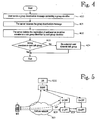
- PMRoC/PoC system will be briefly illustrated with reference to Figure 5 below, For a more detailed description of PMRoC/PoC system, reference is made to a co-pending U.S. patent application 09/835,867 .
- the generic architecture of a communications system is illustrated in Figure 1 .
- the communications system comprises a plurality of mobile stations capable of communicating in a mobile communications network 16. Although only three mobile stations are shown in Figure 1 for the sake of clarity, the number of mobile stations in the communications system is not limited.
- the mobile stations MS1, MS2 and MS3 are also able to communicate in talk groups of at least one talk group service system located within or on top of the mobile communications network, such as a talk group server system 14.
- the talk group server system 14 can be any network element or a system comprising several functional and/or physical network entities implementing talk group communications, capable of maintaining voice traffic in talk groups between group members who have joined a talk group.
- said system also includes a memory or database 15, which represents any means for holding information needed by the talk group server system for talk group communications.
- group creation and membership definition are managed between users using standard user-to-user communication facilities, such as a short message service or short data service.
- standard user-to-user communication facilities such as a short message service or short data service.
- the user of the mobile station MS1 decides to create a group.
- the user of MS1 creates a group definition record 11 (step 201 in Figure 2 ), which is then stored in a memory 10 of the MS1 (step 202).
- group definition 11 There are various ways to implement the creation of the group definition 11. The most obvious way is that the user inputs some kind of group identifier, typically a group name, and optionally some other information, such as security parameters.
- the user also defines the intended members of the talk group.
- the MS1 prepares the final group definition record 11 on the basis of the data inputted by the user.
- the group definition record 11 may contain, in addition to the group identifier or group name, e.g.
- the mobile station MS1 prepares a group definition message containing the group definition information from the group definition record 11.
- the user of MS1 distributes, using the MS1, the group definition record in the group definition message to the intended group members (step 203).
- the MS1 can utilize any user-to-user communication facility offered by the mobile communications network 16 for sending the group definition message to the recipients.
- group definition messages 2a and 3a are sent to the mobile stations MS2 and MS3, respectively.
- the mobile stations MS2 and MS3 each store the content of the group definition message in the form of a group definition record in a memory 12 and 13, respectively, attached to or contained in the mobile stations (step 204).
- the group definition record is first displayed to the users of MS2 and MS3 who can then decide whether the group definition record is stored or not. It may also be possible that the users of MS2 and MS3 are able to further distribute the group definition message to new group members.
- the dynamic talk groups can be created and managed by sending messages between the users.
- the group creation and membership management are handled at a user level without interacting with the group communication facilities of the communications system on the network side.
- any number of dynamic talk groups can be created in the mobile stations.
- the group activation on the network side and group communication between the group members are procedures separate from the group creation and membership management described above.
- the role of the infrastructure in the system is restricted to establishing means for communicating in a dynamic talk group, and to store and maintain information on such a dynamic talk group and its members only when such users who have activated the group for communication are concerned.
- the MS2 prepares and sends an activation message 4 to the network facility (facilities) implementing the talk group communications on the network side, such as the talk group server system 14 (step 300 in Figure 3 ).
- the activation message 4 contains the group identifier of the dynamic talk group and optionally additional information from the group definition record stored in the memory 12 of the MS2. This additional information preferably contains security-related information, as will be described in more detail below.
- the talk group server system 14 receives the group activation message (step 301) and, in the preferred embodiment of the invention, checks the rights of the specific user to access and activate the dynamic talk group identified by the group identifier (step 302). The checking of the access rights is preferably based on additional security information contained in the activation message 4, as will be described in more detail below. If the user sending the activation message 4 has no rights for accessing and activating the specific talk group, the attempt to access is rejected (step 303).
- the talk group server system 14 checks whether the talk group identified by the group identifier has already been established in the communications system in response to the reception of an activation message from any other member(s) of the talk group (step 304). If no talk groups have been established, the talk group server 14 establishes a talk group for the group identifier (step 305) and registers the user as an active member of the established talk group (step 306). However, if the talk group server 14 observes in step 304 that a group has already been established for the group identifier, the talk group server 14 only registers the user as an active member of the already established talk group (step 306), which may also include configuration in the server system 14.
- the establishment and activation of a dynamic talk group generally refer to all arrangements necessary to support the communication in the group between the group members, who have activated the group. It is not essential to the present invention which specific measures and means are required. This depends on the requirements of the specific communications system in which the present invention is applied. However, typically the establishment of the talk group requires that at least some information on a dynamic talk group and its active members is stored and maintained on the network side. In Figure 1 , the storage of such information is implemented using the memory or the database 15.
- Each user must activate the group by a separate activation message in order to join the group communication.
- a user who is currently an active member of the group can at any time send a deactivation message in order to deactivate his membership in the group (step 400 in Figure 4 ).
- the deactivation message contains at least a group identifier and optionally similar security information as the activation message.
- the server receives the group deactivation message (step 401) and deletes the registration of the user as an active member in the talk group identified by the group identifier (step 402).
- the talk group server system 14 when a user is deactivated in a talk group, the talk group server system 14 further checks whether there are still active members in the specific talk group (step 403). If there are no active members left in the talk group, the talk group is de-established (step 404).
- the de-establishment of the group in the communications system includes releasing resources and erasing all information relating to the specific talk group on the network side of the communications system. In the example illustrated in Figure 1 , the information on the dynamic talk group and its members stored in the memory 15 are deleted.
- the talk group definition records 11 relating to the de-established talk group is still maintained and stored in the memories of the mobile stations. Therefore, the talk group can be easily re-established in the communications system at any time.
- the deletion of the talk group definition record 11 stored in the mobile station is made only by the user of the mobile station. If a user of one mobile station deletes a talk group permanently, information on that may be delivered to other members of the group.
- the system responsible for the group communication consists of more than one identical elements, each capable of handling e.g. a certain number of groups, a need is created to allocate a network element for each new talk group.
- the talk group cannot be defined in the system database but it has to be determined from the information contained in the group definition included in the activation message. It is possible in a distributed system that group activations arrive, from different members, at different parts of the system, and each of these group activations must then result in the group established in the same network element. If all network elements are identical and equal (e.g. all are located in the same location), then the network element could be derived from the group identifier using e.g.
- a method enabling the system operator to control the allocation of new groups into the network elements is employed. If the group definition in the activation message includes a base group identifier, then the dynamic group will be established in the same network element as the base group. If the group definition in the activation message does not include a base group identifier, then the identity of the user who originally created the group will be incorporated into the group definition message and the group activation message, and will be used by the communications system to allocate the specific network element for the new group.
- the user who creates the talk group chooses a name or other group identifier for the users.
- the users and the communications system have contradictory requirements for the group names and the group identifiers.
- the group name or group identifier has to be meaningful for the users.
- the communications system points out that the talk group needs an identifier, which is unique in the communications system.
- a meaningful group name, chosen by a user is often not likely to be unique. Therefore, in an embodiment of the invention, the mobile station creates a unique identifier from the group name supplied by the (group-creating) user. There are several ways to implement such a functionality. Sometimes, additional information is provided that is associated with the group name to create a unique identifier.
- such additional information may include a password, a base group identifier, a closed user group identifier, a user identity of the user who created the talk group, etc. If there is no such information associated with the group name, then the mobile station can append a random part to the group name for this purpose. Such a random part may be a random number generated by the mobile station.
- the access control of the groups (and thereby security) is intrinsically weaker than in a centralized network-oriented solution. Also, even if the solution makes it easy to admit new members to a talk group by distributing the group definition message, the removal of a member from the group is not easy to implement reliably.
- the security problem is alleviated in cases where a dynamic group is needed for a limited period of time or when the security requirements are restricted. These are also the primary application fields of the present invention. As the invention is typically implemented in the communications systems supporting also the conventional permanently created system-controlled talk groups having higher security, this other type of talk groups is generally used when the security requirements are high.
- the security i.e. the access control to the group
- the security is dependent on what is known about the contents of the group definition message.
- the additional mechanisms to improve the security are based on the associated additional information to the group definition. As noted above, such additional information may also implicitly serve to create a unique group identifier without a need for an explicit random part.
- the first mechanism to improve security is the use of passwords.
- the group-creating user gives a password (such as a PIN code) for the group.
- the password is stored within the group definition message in an encrypted form. Access to the talk group is only allowed by the communications system if the user activating the talk group gives the right password. The security of this approach is limited because it is possible to find the password with brute force attack. If the talk group is used for a limited period of time only, and/or for communications of non-critical nature, this method is suitable because of its simplicity.
- a second mechanism to improve security is the use of a base group.
- This approach assumes that the communications system also supports conventional talk groups that are provisioned into the communications system itself with an access right control based on the information in the system database. If a group definition message includes a base group identifier, this can be used by the communications system to perform an additional access rights checking.
- a user attempting to activate a dynamic talk group using a group definition containing a base group identifier will only be allowed to access the talk group if the specific user is allowed to have access to the base group.
- the base group identifier effectively forms part of the dynamic group identity. Therefore, it is not possible to circumvent the access control checking by tampering with the group definition data by removing the base group identifier, because such tampering would only allow access to the group with the modified identity not to the restricted group.
- a third mechanism to improve security is the use of a closed user group. If the communications system supports closed user groups, it is possible to restrict access to the dynamic groups according to the present invention either by including a closed user group identifier in the group definition message, or by imposing a check that all group members will have to belong to the same closed user group.
- One application of the present invention is a PMRoC or PoC system in which a group communication functionality is provided on top of a cellular network.
- the basic principles of the PMRoC/PoC system is described in the co-pending US patent application 09/835,867 which is incorporated herein by reference.
- An example of the PMRoC/PoC architecture is illustrated in Figure 5 .
- the PoC system consisting of several functional entities is provided on top of the cellular network 501.
- the PoC can also be seen as a core network using the cellular network 501 as a radio access network.
- the PoC system implements the talk group server system 14 and the memory 15.
- the user functionality runs over the cellular network 501, which provides the data transfer services for the PoC system.
- the PoC may be interfaces to cellular network database and billing systems from the PoC core network, but otherwise the PoC is just an IP-based application from the point of view of the underlying cellular network 501.
- the PoC is preferably a voice over IP (VoIP) application.
- the PoC is preferably designed to follow the IETF Internet reference models, protocols and best practices. Compatibility to the IETF standards or draft standards is preferably maintained.
- the PoC network functional entities are preferably composed in a similar manner as main stream IP (Internet Protocol) -based architectures. The control, user and management planes are logically and physically separated from each other.
- IP Session Initiation Protocol
- RTP transport protocol for real-time applications
- the PoC core network contains the following functional entities: user control-plane-function (U-CPF), group control-plane-function (G-CPF), user user-plane-function (U-UPF), group user-plane-function (G-UPF), subscriber and group management function (SGMF) and PoC database 502.
- the U-CPF and G-CPF are the control plane functional entities.
- the U-CPF handles user-related control plane functions. Each user has one pre-assigned U-CPF which is used regardless of the user's physical location. All user signaling first moves from the mobile station MS to the user's U-CPF.
- the G-CPF handles group-related control plane functions and keeps track of the group members. One G-CPF is assigned for each group when the group is created.
- the U-UPF and G-UPF are user plane functional entities.
- U-UPF is involved in real-time traffic distribution for users. Each user has a U-UPF (assigned at log-on) and all real-time traffic goes through this U-UPF.
- the G-UPF handles group-related user plane functions, i.e. it handles real-time traffic in groups and takes care of speech item distribution. Each group belongs to one G-UPF.
- the SGMF handles the management plane function, i.e. it deals with user and group management.
- the static information of the system is saved into the PoC database 502.
- the control plane e.g. the U-CPF and G-CPF, ask and save data from/to the PoC database 502 via the SGMF.
- the static group sessions are established partly when a group is provisioned and partly when subscribers are attached to the groups. After that, group members can talk to each other just by pushing the push-to-talk button (PTT). No control plane signaling is needed anymore in said phase.
- PTT push-to-talk button
- the necessary service-related information is embedded inside the same user plane packets, where speech is transferred.
- the underlying cellular network can be, for example, a general packet radio system (GPRS) or a third generation (3G) radio access network. No relation between the GPRS (or 3G) call control and the PoC call control is required. Both have specific call control mechanisms.
- the mobility of the users is totally handled by the underlying cellular network.
- the PoC system does not handle the mobility issues at all.
- the GPRS is used as a transmission network, the GPRS context is always on.
- radio resources are reserved by the GPRS, but no signaling is needed anymore to open the GPRS PDP context.
- any suitable message service/protocol such as TETRA SDS (short data service), GSM SMS (short message service), and SIP
- TETRA SDS short data service
- GSM SMS short message service
- SIP Session Initiation Protocol
- group activation and deactivation messages can be used for carrying group activation and deactivation messages.
- the group communications themselves can be based on the technology used in the PoC system for group communication, such as RTP. Different possibilities exist for the format and coding of the group definition messages and for incorporation of the group definition into the group activation message. If SlPurl is used for the group identifier format, then it is possible to append additional information to the url, thus creating a unique url for the dynamic talk group.
- the following example illustrates how the group activation phase can be implemented in the PoC system.
- the group activation message may contain an indication that it is a request to join a dynamic talk group, information about who was the creating-user for this dynamic talk group (an URL) and a unique name (URL) for the group (for example, SAILCLUB-UdtP9zZy3VM@poc.fi, where the random part UdtP9zZy3VM is created using a PIN code and an algorithm.
- the U-CPF contacts the SGMF for checking, whether this user has the right to attend the dynamic talk groups. At this end, the U-CPF sends the URLs of this user and the group-creating user to the SGMF.
- the SGMF also checks which is the G-CPF for the group-creating user in the case of dynamic talk groups. The SGMF returns the result of the right checking and the G-CPF name to the U-CPF. If the access rights are not appropriate, the access attempt is rejected.
- the user is registered as an active member of the group into the PoC system, and if the user is the first user in the PoC system, the associated U-UPF, G-CPF, and G-UPF are arranged to support this dynamic talk group.
- the group may be established in the G-CPF and G-UPF of the user who initially created the group.
- the U-UPF may be configured to support traffic to and from the G-UPF and to find the dynamic group.
- the G-CPF monitors the number of active members in the dynamic group, and if there are no active members in the group left after deactivating the user, the G-CPF initiates a procedure which de-establishes the dynamic talk group in the PoC system.
Landscapes
- Engineering & Computer Science (AREA)
- Computer Networks & Wireless Communication (AREA)
- Signal Processing (AREA)
- Multimedia (AREA)
- Databases & Information Systems (AREA)
- Mobile Radio Communication Systems (AREA)
- Organic Insulating Materials (AREA)
- Cable Transmission Systems, Equalization Of Radio And Reduction Of Echo (AREA)
- Stereophonic System (AREA)
Claims (30)
- Verfahren zur dynamischen Erzeugung von Sprechgruppen in einem Kommunikationssystem, gekennzeichnet durch:Festlegen (201) einer dynamischen Sprechgruppe durch einen Benutzer einer ersten Teilnehmerstation (MS1), wobei die Gruppe wenigstens zwei Gruppenmitglieder (MS2, MS3) einschließlich des Benutzers aufweist,Senden (203) einer Gruppenfestlegungsnachricht (2a, 3a) von der ersten Teilnehmerstation (MS1) zu Teilnehmerstationen (MS2, MS3) von anderen Mitgliedern in der Gruppe, wobei die Gruppenfestlegungsnachricht Gruppenfestlegungsinformation enthält, welche wenigstens eine Gruppenkennung aufweist,Speichern (202, 204) der Gruppenfestlegungsinformation in den Teilnehmerstationen (MS1, MS2, MS3) zur nachfolgenden Verwendung.
- Verfahren nach Anspruch 1, umfassend:Aufbauen (305) der dynamischen Sprechgruppe an einer Netzseite (14, 15, 16) des Kommunikationssystems durch Senden (300) einer Gruppenaktivierungsnachricht (4) von einem der Mitglieder (MS1, MS2, MS3) in der Gruppe an die Netzseite (14, 15, 16) des Kommunikationssystems, wobei die Gruppenaktivierungsnachricht wenigstens die Gruppenkennung und wahlweise zusätzliche Information von der gespeicherten Gruppenfestlegungsinformation enthält.
- Verfahren nach Anspruch 2, umfassend:Erzeugen eines Gruppennamens für die dynamische Sprechgruppe durch den Benutzer,automatisches Erzeugen der Gruppenkennung, basierend auf dem Gruppennamen in der ersten Teilnehmerstation (MS1).
- Verfahren nach Anspruch 2 oder 3, umfassend:Erzeugen eines Passworts für die dynamische Sprechgruppe durch den Benutzer,Verschlüsseln des Passworts in der ersten Teilnehmerstation (MS1),Liefern des verschlüsselten Passworts an die anderen Mitglieder der dynamischen Sprechgruppe in der Gruppenfestlegungsnachricht (2a, 3a),Speichern des Passworts in den Teilnehmerstationen der anderen Mitglieder,Verwenden des Passworts als eine Autorisierung, auf die dynamische Sprechgruppe zuzugreifen, wenn irgendeines der Mitglieder sich in der dynamischen Sprechgruppe als ein aktives Mitglied der dynamischen Sprechgruppe an der Netzseite (14, 15, 16) des Kommunikationssystems registriert.
- Verfahren nach Anspruch 2 oder 3, umfassend:Einfügen in der Gruppenfestlegung Information über eine Basisgruppenkennung, die eine Basissprechgruppe festlegt, die an der Netzseite (14, 15, 16) von dem Kommunikationssystem selbst bereitgestellt wird,Senden der Basisgruppenkennung in der Gruppenaktivierungsnachricht (4) an die Netzseite (14, 15, 16) des Kommunikationssystems,wobei einem Benutzer, der versucht, die dynamische Sprechgruppe mit der Gruppenaktivierungsnachricht (4) zu aktivieren, nur dann erlaubt wird (302), auf die dynamische Sprechgruppe zuzugreifen, wenn der entsprechende Benutzer das Zugangsrecht zu der Basissprechgruppe hat.
- Verfahren nach Anspruch 2 oder 3, umfassend:Einfügen in der Gruppenfestlegungsinformation von einer geschlossenen Benutzergruppenkennung, die eine geschlossene Benutzergruppe festlegt, die an der Netzseite (14, 15, 16) von dem Kommunikationssystem selbst bereitgestellt wird,Senden der geschlossenen Benutzergruppenkennung in der Gruppenaktivierungsnachricht (4) an die Netzseite (14, 15, 16) des Kommunikationssystems,wobei einem Benutzer, der versucht, die dynamische Sprechgruppe mit der Gruppenaktivierungsnachricht (4) zu aktivieren, der Zugang zu der dynamischen Sprechgruppe nur dann erlaubt wird, wenn der entsprechende Benutzer zu derselben geschlossenen Benutzergruppe gehört.
- Verfahren nach Anspruch 2, umfassend:Einfügen in der Gruppenfestlegung Information über eine Basisgruppenkennung, die eine Basissprechgruppe festlegt, die an der Netzseite (14, 15, 16) von dem Kommunikationssystem selbst bereitgestellt wird,Senden der Basisgruppenkennung in der Gruppenaktivierungsnachricht (4) an die Netzseite (14, 15, 16) des Kommunikationssystems,Aufbauen der dynamischen Sprechgruppe in einem Netzelement, bei welchem die Basisgruppe aufgebaut wurde.
- Verfahren nach Anspruch 2, umfassend:Einfügen in der Gruppenfestlegung Information über eine Benutzerkennung des Benutzers in der ersten Teilnehmerstation (MS1),Senden der Benutzerkennung in der Gruppenaktivierungsnachricht (4) an die Netzseite (14, 15, 16) des Kommunikationssystems,Verwenden der Benutzerkennung zur Auswahl eines von zwei oder mehr Netzelementen an der Netzseite (14, 15, 16) des Kommunikationssystems, um die dynamische Sprechgruppe aufzubauen.
- Verfahren nach Anspruch 2, umfassend:Registrieren von jedem Mitglied der dynamischen Sprechgruppe einzeln als ein aktives Mitglied durch Senden einer Gruppenaktivierungsnachricht (4) an die Netzseite (14, 15, 16) des Kommunikationssystems,in Reaktion auf den Empfang einer Gruppenaktivierungsnachricht (4) wird die dynamische Sprechgruppe an der Netzseite (14, 15, 16) des Kommunikationssystems aufgebaut, wenn die Gruppe nicht bereits durch eine frühere Gruppenaktivierungsnachricht aufgebaut wurde, und das Mitglied, das die Gruppenaktivierungsnachricht gesendet hat, wird als ein aktives Mitglied in der dynamischen Sprechgruppe registriert.
- Verfahren nach Anspruch 2 oder 9, umfassend:Abbauen der dynamischen Sprechgruppe, die an der Netzseite (14, 15, 16) des Kommunikationssystems aufgebaut ist, in Reaktion darauf, dass keine aktiven Mitglieder in der dynamischen Sprechgruppe vorhanden sind.
- Verfahren nach Anspruch 1, umfassend:Abbauen (404) der dynamischen Sprechgruppe, die an der Netzseite des Kommunikationssystems aufgebaut ist, wenn keiner der Teilnehmer länger als ein aktives Mitglied der dynamischen Sprechgruppe an der Netzseite registriert ist, wobei die Gruppenfestlegungsinformation in den Teilnehmerstationen weiterhin gespeichert wird, um einen erneuten Aufbau der dynamischen Sprechgruppe zu ermöglichen.
- Kommunikationssystem, umfassend:ein Kommunikationsnetz (14, 15, 16)mehrere Teilnehmerstationen (MS1, MS2, MS3), dadurch gekennzeichnet, dass wenigstens einige der Teilnehmerstationen (MS1, MS2, MS3) umfassen:i) ein benutzerbetriebenes Mittel zum Festlegen einer dynamischen Sprechgruppe einschließlich eines Benutzers der entsprechenden Teilnehmerstation (MS1, MS2, MS3),ii) ein Mittel zum Senden einer Gruppenfestlegungsnachricht (2a, 3a) an Teilnehmerstationen (MS1, MS2, MS3) der vorgesehenen anderen Mitglieder in der festgelegten dynamischen Sprechgruppe über das Kommunikationsnetz (14), wobei die Gruppenfestlegungsnachricht (2a, 3a) Gruppenfestlegungsinformation enthält, die wenigstens eine Gruppenkennung aufweist,iii) ein Mittel (10, 12, 13) zum Speichern der Gruppenfestlegungsinformation und möglicher anderer Gruppenfestlegungsinformation über eine oder mehrere andere Sprechgruppen, die von irgendeiner anderen Teilnehmerstation empfangen wurde, zur nachfolgenden Verwendung.
- Kommunikationssystem nach Anspruch 12, umfassend:ein Sprechgruppenkommunikationsdienstsystem (14, 15), das Sprechgruppenkommunikation innerhalb der Sprechgruppen unterstützt, die in dem Sprechgruppenkommunikationsdienstsystem aufgebaut sind,wobei die Teilnehmerstationen (MS1, MS2, MS3) ein Mittel zum Senden einer Gruppenaktivierungsnachricht (4) an das Sprechgruppenkommunikationsdienstsystem (14, 15) umfassen, wobei die Gruppenaktivierungsnachricht wenigstens die Gruppenkennung und wahlweise zusätzliche Informationen von der gespeicherten Gruppenfestlegungsinformation über eine gewünschte Sprechgruppe enthält,
wobei das Sprechgruppenkommunikationsdienstsystem (14, 15) auf den Empfang der Gruppenaktivierungsnachricht zum Aufbau der gewünschten Sprechgruppe anspricht, basierend auf der empfangenen Gruppenfestlegungsinformation. - Kommunikationssystem nach Anspruch 12 oder 13, umfassend:das Sprechgruppenkommunikationsdienstsystem (14, 15) ist eingerichtet, die dynamische Sprechgruppe abzubauen, die in dem Kommunikationssystem aufgebaut ist, in Reaktion darauf, dass es keine aktiven Mitglieder in der dynamischen Sprechgruppe gibt.
- Kommunikationssystem nach Anspruch 12 oder 13, bei welchem die Gruppenfestlegungsinformation eine Basisgruppenkennung enthält, die eine Basissprechgruppe festlegt, die von dem Sprechgruppenkommunikationsdienstsystem (14, 15) selbst bereitgestellt wird,
die Gruppenaktivierungsnachricht (4) die Basisgruppenkennung enthält,
das Sprechgruppenkommunikationsdienstsystem (14, 15) einem Benutzer nur dann erlaubt, auf die dynamische Sprechgruppe zuzugreifen, wenn der entsprechende Benutzer das Zugangsrecht zur Basissprechgruppe hat. - Kommunikationssystem nach Anspruch 12 oder 13, bei welchem die Gruppenfestlegungsinformation eine geschlossene Benutzergruppenkennung enthält, die eine geschlossene Benutzergruppe festlegt, die von dem Sprechgruppenkommunikationsdienstsystem (14, 15) selbst bereitgestellt wird,
die Gruppenaktivierungsnachricht (4) die geschlossene Benutzergruppenkennung enthält,
das Sprechgruppenkommunikationsdienstsystem (14, 15) einem Benutzer den Zugriff auf die dynamische Sprechgruppe nur dann erlaubt, wenn der Benutzer zu derselben geschlossenen Benutzergruppe gehört. - Kommunikationssystem nach Anspruch 12 oder 13, bei welchem die Gruppenfestlegungsinformation eine Benutzerkennung eines Benutzers enthält, der die dynamische Sprechgruppe erzeugt hat,
die Gruppenaktivierungsnachricht (4) die Benutzerkennung enthält,
das Kommunikationssystem die Benutzerkennung zur Auswahl von einer der Systemeinheiten innerhalb des Sprechgruppenkommunikationsdienstsystems (14, 15) zum Aufbau der dynamischen Sprechgruppe verwendet. - Kommunikationssystem nach Anspruch 12 oder 13, bei welchem
die Gruppenfestlegungsinformation eine Basisgruppenkennung enthält, die eine Basissprechgruppe festlegt, die von einer der Systemeinheiten innerhalb des Sprechgruppenkommunikationsdienstsystems (14, 15) bereitgestellt wird,
die Gruppenaktivierungsnachricht (4) die Basisgruppenkennung enthält,
die eine der Systemeinheiten, bei welcher die Basisgruppe bereitgestellt wurde, die dynamische Sprechgruppe aufbaut. - Kommunikationssystem nach Anspruch 12 oder 13, bei welchem das Kommunikationssystem ein zellulares Mobilnetz (16) ist, und bei welchem das Sprechgruppenkommunikationsdienstsystem (14, 15) über dem zellularen Mobilnetz (16) ist.
- Teilnehmerstation (MS1, MS2) für ein Kommunikationssystem, dadurch gekennzeichnet, dass sie umfasst:ein benutzerbetriebenes Mittel zum Festlegen einer dynamischen Sprechgruppe, die einem Benutzer der Teilnehmerstation (MS1) aufweist,ein Mittel zum Senden einer Gruppenfestlegungsnachricht (4) an Teilnehmerstationen (MS2, MS3) von anderen vorgesehenen Mitgliedern der festgelegten dynamischen Sprechgruppe über ein Kommunikationsnetz (16), wobei die Gruppenfestlegungsnachricht (4) Gruppenfestlegungsinformationen enthält, welche wenigstens eine Gruppenkennung aufweist,ein Mittel (10, 12, 13) zum Speichern der Gruppenfestlegungsinformation und möglicher anderer Gruppenfestlegungsinformation über eine oder mehrere andere Sprechgruppen, die von irgendeiner anderen Teilnehmerstation empfangen wurde, zur nachfolgenden Verwendung.
- Teilnehmerstation nach Anspruch 20, umfassend:ein Mittel zum Senden einer Gruppenaktivierungsnachricht (4) an das Sprechgruppenkommunikationsdienstsystem (14, 15), das Sprechgruppenkommunikation an einer Netzseite unterstützt, wobei die Gruppenaktivierungsnachricht (4) wenigstens die Gruppenkennung und wahlweise zusätzliche Information von der gespeicherten Gruppenfestlegungsinformation über eine gewünschte Sprechgruppe enthält.
- Teilnehmerstation nach Anspruch 20, umfassend:ein Mittel zum Erzeugen eines Gruppennamens für die dynamische Sprechgruppe durch den Benutzer,ein Mittel zum automatischen Erzeugen der Gruppenkennung basierend auf dem Gruppennamen.
- Teilnehmerstation nach Anspruch 20, umfassend:ein Mittel zum Erzeugen eines Passworts für die dynamische Sprechgruppe durch den Benutzer,ein Mittel zum Verschlüsseln des Passworts,ein Mittel zum Übertragen des verschlüsselten Passworts an die anderen Mitglieder der dynamischen Sprechgruppe in der Gruppenfestlegungsnachricht (4),ein Mittel zum Verwenden des Passworts als einer Autorisierung zum Zugang zu der dynamischen Sprechgruppe.
- Sprechgruppenkommunikationsdienstsystem (14, 15) für ein Kommunikationssystem, dadurch gekennzeichnet, dass es umfasst:ein Mittel zum Empfangen (301) einer Gruppenaktivierungsnachricht von einer Teilnehmerstation, wobei die Gruppenaktivierungsnachricht wenigstens eine Gruppenkennung und wahlweise zusätzliche Gruppenfestlegungsinformation enthält,ein Mittel zum Überprüfen (304), ob eine dynamische Sprechgruppe, die zu der Gruppenkennung gehört, bereits aufgebaut ist,ein Mittel, ansprechend auf die dynamische Sprechgruppe, die noch nicht aufgebaut ist, zum Aufbauen (305) der dynamischen Sprechgruppe, basierend auf der empfangenen Gruppenfestlegungsinformation und zum Registrieren eines Benutzers der Teilnehmerstation (MS1, MS2, MS3) als ein aktives Mitglied der dynamischen Sprechgruppe,ein Mittel, ansprechend auf die dynamische Sprechgruppe, die bereits aufgebaut ist, zum Registrieren (306) eines Benutzers der Teilnehmerstation als ein aktives Mitglied der dynamischen Sprechgruppe.
- System nach Anspruch 24, umfassend:ein Mittel zum Abbauen (404) der aufgebauten dynamischen Sprechgruppe in Reaktion darauf, dass keine aktiven Mitglieder in der dynamischen Sprechgruppe vorhanden sind.
- System nach Anspruch 24 oder 25, welches ein Mittel zum Überprüfen (302) der Benutzerrechte umfasst, einen Gruppenaufbau zu aktivieren.
- System nach Anspruch 26, bei welchem
die Gruppenfestlegungsinformation in der Gruppenaktivierungsnachricht (4) eine Basisgruppenkennung enthält, die eine Basissprechgruppe festlegt, die er von dem Sprechgruppenkommunikationsdienstsystem (14, 15) selbst bereitgestellt wird,
das Sprechgruppenkommunikationsdienstsystem (14, 15) mit Hilfe von Gruppendaten, die in einer zugehörigen Datenbank bereitgehalten werden, überprüft, ob der Benutzer ein Zugangsrecht zu der Basissprechgruppe hat,
das Sprechgruppenkommunikationsdienstsystem (14, 15) einem Benutzer den Zugang zu der dynamischen Sprechgruppe nur dann erlaubt, wenn der entsprechende Benutzer ein Zugangsrecht zu der Basissprechgruppe hat. - System nach Anspruch 26, bei welchem
die Gruppenfestlegungsinformation in der Gruppenaktivierungsnachricht (4) eine geschlossene Benutzergruppenkennung enthält, die eine geschlossene Benutzergruppe festlegt, die von dem Sprechgruppenkommunikationsdienstsystem (14, 15) selbst bereitgestellt wird,
das Sprechgruppenkommunikationsdienstsystem (14, 15) mit Hilfe von Gruppendaten, die in einer zugehörigen Datenbank bereitgehalten werden, überprüft, ob der Benutzer zu der geschlossenen Benutzergruppe gehört,
das Sprechgruppenkommunikationsdienstsystem (14, 15) einem Benutzer den Zugang zu der dynamischen Sprechgruppe nur dann erlaubt, wenn der Benutzer zu derselben geschlossenen Benutzergruppe gehört. - System nach Anspruch 24 oder 25, bei welchem das Kommunikationsnetz ein zellulares Mobilnetz (16) ist, und bei welchem das Sprechgruppenkommunikationsdienstsystem (14, 15) über dem zellularen Mobilnetz (16) ist.
- System nach Anspruch 29, bei welchem das Sprechgruppenkommunikationsdienstsystem (14, 15) mit dem zellularen Mobilnetz (16) über ein paketvermitteltes Netz kommuniziert.
Applications Claiming Priority (3)
| Application Number | Priority Date | Filing Date | Title |
|---|---|---|---|
| US985169 | 1992-12-01 | ||
| US09/985,169 US6999783B2 (en) | 2001-11-01 | 2001-11-01 | Method for creating a dynamic talk group |
| PCT/FI2002/000846 WO2003039173A1 (en) | 2001-11-01 | 2002-10-31 | A method for creating a dynamic talk group |
Publications (2)
| Publication Number | Publication Date |
|---|---|
| EP1440592A1 EP1440592A1 (de) | 2004-07-28 |
| EP1440592B1 true EP1440592B1 (de) | 2009-04-29 |
Family
ID=25531255
Family Applications (1)
| Application Number | Title | Priority Date | Filing Date |
|---|---|---|---|
| EP02772439A Expired - Lifetime EP1440592B1 (de) | 2001-11-01 | 2002-10-31 | Verfahren zur erzeugung einer dynamischen talk-gruppe |
Country Status (6)
| Country | Link |
|---|---|
| US (1) | US6999783B2 (de) |
| EP (1) | EP1440592B1 (de) |
| AT (1) | ATE430448T1 (de) |
| DE (1) | DE60232167D1 (de) |
| WO (1) | WO2003039173A1 (de) |
| ZA (1) | ZA200403038B (de) |
Cited By (1)
| Publication number | Priority date | Publication date | Assignee | Title |
|---|---|---|---|---|
| US10194485B2 (en) | 2014-12-18 | 2019-01-29 | Motorola Solutions, Inc. | Method and apparatus for automated dispatch of mobile devices in a communication system |
Families Citing this family (116)
| Publication number | Priority date | Publication date | Assignee | Title |
|---|---|---|---|---|
| US20020002039A1 (en) | 1998-06-12 | 2002-01-03 | Safi Qureshey | Network-enabled audio device |
| GB0126129D0 (en) * | 2001-10-31 | 2002-01-02 | Nokia Corp | IP multimedia functionality identification |
| US7617529B1 (en) * | 2001-11-02 | 2009-11-10 | Cisco Technology, Inc. | Robust and flexible group structure |
| KR100467580B1 (ko) * | 2002-01-08 | 2005-01-24 | 삼성전자주식회사 | Star 형 네트워크 상에서의 그룹관리방법 및 장치 |
| US7184790B2 (en) * | 2002-04-02 | 2007-02-27 | Dorenbosch Jheroen P | Method and apparatus for establishing a talk group |
| US6980821B2 (en) * | 2002-06-12 | 2005-12-27 | Motorola, Inc. | Call center access in a push to talk based call system |
| US6965779B2 (en) * | 2002-06-14 | 2005-11-15 | Motorola, Inc. | Method and apparatus for providing dispatch calling through a wireless communication system infrastructure |
| US20040082352A1 (en) * | 2002-10-29 | 2004-04-29 | Motorola Inc. | Enhanced group call implementation |
| DE60314176T2 (de) * | 2002-11-22 | 2008-01-24 | Intellisist, Inc., Bellevue | Verfahren und vorrichtung zur bereitstellung von nachrichtenorientierten sprachkommunikationen zwischen mehreren partnern |
| EP1427141A1 (de) * | 2002-12-04 | 2004-06-09 | Deutsche Thomson-Brandt Gmbh | Verfahren zur Gestaltung eines Peer-to-Peer Netzwerks mithilfe eines gemeinsahmen Gruppen-Etiketts |
| US7035658B2 (en) * | 2003-02-28 | 2006-04-25 | Motorola, Inc. | Wireless communication device and network controller for affiliation with associated groups and method thereof |
| FI20030429A0 (fi) * | 2003-03-24 | 2003-03-24 | Nokia Corp | Ryhmäliikennöinti matkaviestinverkossa |
| JP3874415B2 (ja) * | 2003-04-16 | 2007-01-31 | 株式会社スクウェア・エニックス | メール交換システム及び方法、メール交換用端末装置、並びにプログラム |
| US7069016B2 (en) * | 2003-06-23 | 2006-06-27 | Motorola, Inc. | Dynamically determining a community of entities in a communication system |
| US7280647B2 (en) * | 2003-08-07 | 2007-10-09 | Microsoft Corporation | Dynamic photo caller identification |
| US8494945B2 (en) | 2003-08-18 | 2013-07-23 | Gilbert Leistner | Methods for creating a group practice |
| EP1656601A4 (de) * | 2003-08-18 | 2008-09-10 | Gilbert Leistner | System und verfahren zum identifizieren quasi-fungibler waren und dienstleistungen und darauf basierende finanzinstrumente |
| CN1314283C (zh) * | 2003-09-05 | 2007-05-02 | 华为技术有限公司 | 集群通信系统组呼区域设定的方法 |
| FI20031268A0 (fi) * | 2003-09-05 | 2003-09-05 | Nokia Corp | Ryhmäpalvelu, jossa mukana tietoa ryhmän jäsenistä |
| JPWO2005031611A1 (ja) * | 2003-09-26 | 2006-12-07 | ソニー株式会社 | 情報送信装置、端末装置及びその方法 |
| US7558736B2 (en) * | 2003-12-31 | 2009-07-07 | United States Cellular Corporation | System and method for providing talker arbitration in point-to-point/group communication |
| JP2005234666A (ja) * | 2004-02-17 | 2005-09-02 | Nec Corp | PoCシステムおよびPoCサーバならびにPoCクライアント |
| GB2411316B (en) * | 2004-02-19 | 2006-05-24 | Motorola Inc | Mobile communications systems,methods and terminals |
| US7840192B2 (en) * | 2004-02-27 | 2010-11-23 | Research In Motion Limited | Method, system, and device for provisioned talkgroup identifier discovery |
| US7711382B2 (en) * | 2004-02-27 | 2010-05-04 | Motorola, Inc. | Method for dynamic group call |
| EP1806950A3 (de) | 2004-02-27 | 2007-11-07 | Research In Motion Limited | Verfahren, System und Gerät zur Ermittlung der Identifikatoren von bereitgestellten Sprechgruppen |
| US7245898B2 (en) * | 2004-04-05 | 2007-07-17 | Motorola, Inc. | Programmable foot switch useable in a communications user interface in a vehicle |
| US20050221876A1 (en) * | 2004-04-05 | 2005-10-06 | Van Bosch James A | Methods for sending messages based on the location of mobile users in a communication network |
| US20050222756A1 (en) * | 2004-04-05 | 2005-10-06 | Davis Scott B | Methods for displaying a route traveled by mobile users in a communication network |
| US20050221821A1 (en) * | 2004-04-05 | 2005-10-06 | Sokola Raymond L | Selectively enabling communications at a user interface using a profile |
| US20050239486A1 (en) * | 2004-04-05 | 2005-10-27 | D Avello Robert F | Methods and systems for controlling communications in an ad hoc communication network |
| US7062286B2 (en) * | 2004-04-05 | 2006-06-13 | Motorola, Inc. | Conversion of calls from an ad hoc communication network |
| US7908663B2 (en) * | 2004-04-20 | 2011-03-15 | Microsoft Corporation | Abstractions and automation for enhanced sharing and collaboration |
| CN1965499B (zh) | 2004-04-21 | 2012-06-13 | 阿尔卡特无线技术公司 | 在电信网络中提供即按即说通信 |
| AU2005236965A1 (en) * | 2004-04-23 | 2005-11-03 | Nokia Corporation | Group invitation |
| FI20040577A0 (fi) * | 2004-04-23 | 2004-04-23 | Nokia Corp | Tiedon toimittaminen tietoliikennejärjestelmän resurssista |
| FI20045162A0 (fi) * | 2004-04-30 | 2004-04-30 | Nokia Corp | Ryhmäviestintä viestinjärjestelmässä |
| US8028323B2 (en) | 2004-05-05 | 2011-09-27 | Dryden Enterprises, Llc | Method and system for employing a first device to direct a networked audio device to obtain a media item |
| CN100466671C (zh) * | 2004-05-14 | 2009-03-04 | 华为技术有限公司 | 语音切换方法及其装置 |
| DE602004008974T2 (de) * | 2004-05-26 | 2008-06-19 | Telefonaktiebolaget Lm Ericsson (Publ) | Server und verfahren zur steuerung der verwaltung von gruppen |
| CN100355261C (zh) * | 2004-05-27 | 2007-12-12 | 华为技术有限公司 | 一种控制呼叫建立的方法 |
| KR20050115686A (ko) * | 2004-06-04 | 2005-12-08 | 엘지전자 주식회사 | PoC 서비스 시스템 및 방법 |
| WO2006047202A2 (en) * | 2004-10-21 | 2006-05-04 | Sachnoff Marc J | Group calling method and system |
| US20060111135A1 (en) * | 2004-11-19 | 2006-05-25 | Gray William M | Method to facilitate distribution of group identifications for push-to-talk groups |
| US20090157798A1 (en) * | 2005-02-17 | 2009-06-18 | Infineon Technologies Ag | Management of dynamic groups in a communication system |
| EP1850934A1 (de) * | 2005-02-25 | 2007-11-07 | Nokia Corporation | Steuerung der kommunikation zwischen spielern eines spiels mit mehreren spielern |
| DE102005040280A1 (de) * | 2005-03-17 | 2006-09-28 | T-Mobile International Ag & Co. Kg | Data Group Call Service |
| US7353034B2 (en) | 2005-04-04 | 2008-04-01 | X One, Inc. | Location sharing and tracking using mobile phones or other wireless devices |
| US8045998B2 (en) | 2005-06-08 | 2011-10-25 | Cisco Technology, Inc. | Method and system for communicating using position information |
| CN1794775B (zh) * | 2005-07-12 | 2010-05-05 | 华为技术有限公司 | 一种无线一键通业务中的计费方法 |
| DE102005037569B4 (de) * | 2005-08-09 | 2011-03-03 | Infineon Technologies Ag | Verfahren zum Vergeben eines Kommunikationsrechts, Kommunikationskonferenz-Sitzung-Server und Kommunikationskonferenz-Sitzung-Server-Anordnung |
| US7706339B2 (en) * | 2005-08-10 | 2010-04-27 | Cisco Technology, Inc. | Method and system for communicating media based on location of media source |
| US7636339B2 (en) * | 2005-08-10 | 2009-12-22 | Cisco Technology, Inc. | Method and system for automatic configuration of virtual talk groups based on location of media sources |
| US7633914B2 (en) * | 2005-08-10 | 2009-12-15 | Cisco Technology, Inc. | Method and system for providing interoperable communications with location information |
| US7869386B2 (en) * | 2005-08-29 | 2011-01-11 | Cisco Technology, Inc. | Method and system for conveying media source location information |
| JP2007067995A (ja) * | 2005-09-01 | 2007-03-15 | Fujitsu Ltd | プッシュ・ツー・トーク情報発信装置およびプッシュ・ツー・トーク情報発信方法 |
| US7698061B2 (en) | 2005-09-23 | 2010-04-13 | Scenera Technologies, Llc | System and method for selecting and presenting a route to a user |
| CN100370850C (zh) * | 2005-09-26 | 2008-02-20 | 华为技术有限公司 | 一种创建群组和添加群组成员的方法、装置及系统 |
| US20070115925A1 (en) * | 2005-10-21 | 2007-05-24 | Sachnoff Marc J | Group calling method and system |
| US8379821B1 (en) * | 2005-11-18 | 2013-02-19 | At&T Intellectual Property Ii, L.P. | Per-conference-leg recording control for multimedia conferencing |
| KR101002572B1 (ko) * | 2006-01-12 | 2010-12-17 | 엘지전자 주식회사 | PT Box를 이용한 PT 세션 설정 방법 및 단말 |
| US7673069B2 (en) * | 2006-02-24 | 2010-03-02 | Microsoft Corporation | Strong routing consistency protocol in structured peer-to-peer overlays |
| US8085671B2 (en) * | 2006-02-27 | 2011-12-27 | Cisco Technology, Inc. | Method and system for providing interoperable communications with congestion management |
| US8260338B2 (en) * | 2006-02-28 | 2012-09-04 | Cisco Technology, Inc. | Method and system for providing interoperable communications with dynamic event area allocation |
| US8095140B2 (en) * | 2006-03-27 | 2012-01-10 | Motorola Solutions, Inc. | Regrouping wireless devices |
| DE102006014409A1 (de) * | 2006-03-27 | 2007-10-04 | Vodafone Holding Gmbh | Kommunikationssystem und Verfahren für Gruppenkommunikationsanwendungen |
| US9112746B2 (en) * | 2006-04-05 | 2015-08-18 | Cisco Technology, Inc. | Method and system for managing virtual talk groups |
| CN101060662B (zh) * | 2006-04-18 | 2010-06-16 | 中兴通讯股份有限公司 | 数字集群系统中对集群呼叫进行重组和还原的方法 |
| US7886011B2 (en) * | 2006-05-01 | 2011-02-08 | Buchheit Brian K | Dynamic set operations when specifying email recipients |
| US7860070B2 (en) * | 2006-05-10 | 2010-12-28 | Cisco Technology, Inc. | Providing multiple virtual talk group communication sessions |
| US7831270B2 (en) * | 2006-05-18 | 2010-11-09 | Cisco Technology, Inc. | Providing virtual talk group communication sessions in accordance with endpoint resources |
| KR101011834B1 (ko) * | 2006-06-01 | 2011-01-31 | 엘지전자 주식회사 | Sip 기반의 메시지 서비스에서의 그룹 공지 방법 |
| US7639634B2 (en) * | 2006-06-02 | 2009-12-29 | Cisco Technology, Inc. | Method and System for Joining a virtual talk group |
| FI20065479A0 (fi) | 2006-07-05 | 2006-07-05 | Nokia Corp | Ryhmäkommunikaatio |
| KR100754433B1 (ko) * | 2006-08-18 | 2007-08-31 | 삼성전자주식회사 | 근거리 무선통신을 이용하여 휴대단말기의 정보를 공유하는방법 |
| US20080064430A1 (en) * | 2006-09-11 | 2008-03-13 | Christian Kraft | Mobile communications terminal and method therefor |
| GB0617861D0 (en) * | 2006-09-11 | 2006-10-18 | Sepura Ltd | Mobile communications systems |
| US8570909B1 (en) | 2006-10-17 | 2013-10-29 | Cisco Technology, Inc. | Method and system for providing an indication of a communication |
| US8189460B2 (en) * | 2006-12-28 | 2012-05-29 | Cisco Technology, Inc. | Method and system for providing congestion management within a virtual talk group |
| US20080242324A1 (en) * | 2007-03-28 | 2008-10-02 | Microsoft Corporation | Efficient message communication in mobile browsers with multiple endpoints |
| US8874159B2 (en) * | 2007-05-10 | 2014-10-28 | Cisco Technology, Inc. | Method and system for handling dynamic incidents |
| US9015147B2 (en) * | 2007-12-20 | 2015-04-21 | Porto Technology, Llc | System and method for generating dynamically filtered content results, including for audio and/or video channels |
| US8316015B2 (en) | 2007-12-21 | 2012-11-20 | Lemi Technology, Llc | Tunersphere |
| US8355738B1 (en) | 2008-08-05 | 2013-01-15 | Microsoft Corporation | Location-based and group-based operations on a data processing device |
| US8494899B2 (en) | 2008-12-02 | 2013-07-23 | Lemi Technology, Llc | Dynamic talk radio program scheduling |
| US8126494B2 (en) * | 2008-12-19 | 2012-02-28 | Cisco Technology, Inc. | System and method for providing a trunked radio and gateway |
| US20100161727A1 (en) * | 2008-12-19 | 2010-06-24 | Cisco Technology, Inc. | System and Method for Accelerating a Wide Area Notification |
| US8041378B2 (en) | 2008-12-19 | 2011-10-18 | Cisco Technology, Inc. | System and method for providing channel configurations in a communications environment |
| US8386318B2 (en) * | 2008-12-30 | 2013-02-26 | Satyam Computer Services Ltd. | System and method for supporting peer interactions |
| US20100177661A1 (en) * | 2009-01-09 | 2010-07-15 | Timothy Eugene Dailey | System and method for dynamic creation of role based talk groups |
| JP5219860B2 (ja) * | 2009-01-30 | 2013-06-26 | 三菱電機株式会社 | ドメイン管理方法、ノードおよびドメイン管理システム |
| US20100311459A1 (en) * | 2009-05-15 | 2010-12-09 | Tait Electronics Limited | Mobile radio systems having groups with dynamic labels |
| US8861447B2 (en) * | 2009-06-05 | 2014-10-14 | Broadcom Corporation | Group identification and definition employing look up table (LUT) within multiple user, multiple access, and/or MIMO wireless communications |
| US9197298B2 (en) * | 2009-06-05 | 2015-11-24 | Broadcom Corporation | Group identification and definition within multiple user, multiple access, and/or MIMO wireless communications |
| US20120066303A1 (en) | 2010-03-03 | 2012-03-15 | Waldeck Technology, Llc | Synchronized group location updates |
| US8495142B2 (en) * | 2010-03-11 | 2013-07-23 | Cisco Technology, Inc. | System and method for providing data channel management in a network environment |
| US8712391B2 (en) * | 2010-12-08 | 2014-04-29 | Qualcomm Incorporated | Client-managed group communication sessions within a wireless communications system |
| CN102647665B (zh) * | 2011-02-21 | 2015-02-04 | 华为技术有限公司 | 群组消息处理方法、设备及系统 |
| KR101471703B1 (ko) * | 2011-06-03 | 2014-12-11 | 라인 가부시키가이샤 | 멤버 추가 확대를 위한 메시징 서비스 시스템 및 그 방법 |
| US20140143328A1 (en) * | 2012-11-20 | 2014-05-22 | Motorola Solutions, Inc. | Systems and methods for context triggered updates between mobile devices |
| BG111353A (bg) * | 2012-11-27 | 2014-05-30 | "Дювамис" Еоод | Метод за регламентирани взаимоотношения между виртуални образи в ограничени виртуално групови комуникативни пластове |
| CN103873508B (zh) * | 2012-12-12 | 2016-04-13 | 腾讯科技(深圳)有限公司 | 一种隐藏活动组成员识别信息的方法、服务器及终端 |
| WO2015085556A1 (en) | 2013-12-12 | 2015-06-18 | Motorola Solutions, Inc. | Apparatus and method for incorporating multiple talk groups in a single call |
| GB2541603B (en) | 2014-06-12 | 2019-10-02 | Motorola Solutions Inc | Methods and systems for automatic creation of talkgroups based on received signal strength indicator (RSSI) |
| CN105992165A (zh) * | 2015-02-11 | 2016-10-05 | 普天信息技术有限公司 | 一种组呼中通话限时功能的实现方法 |
| CN106231444B (zh) * | 2016-06-29 | 2020-03-31 | 深圳市轱辘汽车维修技术有限公司 | 一种频道组建方法、装置及系统 |
| WO2018021922A1 (en) | 2016-07-29 | 2018-02-01 | Motorola Solutions, Inc. | Wireless ad-hoc network flooding mechanism to intelligently locate required responders |
| CN107888498A (zh) * | 2016-09-29 | 2018-04-06 | 中兴通讯股份有限公司 | 实现用户面功能管理的方法及装置和网元及装置 |
| WO2018070888A1 (en) | 2016-10-11 | 2018-04-19 | Motorola Solutions, Inc. | System and method for verifying tactical equipment |
| CN109428737B (zh) * | 2017-08-24 | 2021-05-04 | 钉钉控股(开曼)有限公司 | 变更群组类型的方法、群组创建方法及装置 |
| US20190149959A1 (en) * | 2017-11-16 | 2019-05-16 | Motorola Solutions, Inc | Method for controlling a virtual talk group memeber to perform an assignment |
| US10194283B1 (en) | 2018-04-19 | 2019-01-29 | Motorola Solutions, Inc. | Method for controlling a portable radio communication device to participate in a talk group call |
| US10951478B2 (en) | 2018-04-30 | 2021-03-16 | Cisco Technology, Inc. | User plane group |
| CN110769421B (zh) * | 2018-07-26 | 2021-08-13 | 华为技术有限公司 | 一种群组创建方法、装置及系统 |
| US10855517B2 (en) | 2018-11-07 | 2020-12-01 | Cisco Technology, Inc. | Redundancy support for control and user plane separation |
| US10595180B1 (en) * | 2019-08-21 | 2020-03-17 | Motorola Solutions, Inc. | Method and apparatus for updating software |
Family Cites Families (7)
| Publication number | Priority date | Publication date | Assignee | Title |
|---|---|---|---|---|
| US5513381A (en) | 1993-03-24 | 1996-04-30 | Sasuta; Michael D. | Method for placing a communication group call in a multiple site trunked system |
| US6253091B1 (en) | 1998-02-09 | 2001-06-26 | Motorola, Inc. | Method and apparatus for establishing dynamic group communications |
| US6275500B1 (en) * | 1999-08-09 | 2001-08-14 | Motorola, Inc. | Method and apparatus for dynamic control of talk groups in a wireless network |
| US6204844B1 (en) | 1999-10-08 | 2001-03-20 | Motorola, Inc. | Method and apparatus for dynamically grouping communication units in a communication system |
| US6647020B1 (en) * | 1999-12-17 | 2003-11-11 | Motorola, Inc. | Methods for implementing a talkgroup call in a multicast IP network |
| US6944137B1 (en) | 2000-03-24 | 2005-09-13 | Motorola, Inc. | Method and apparatus for a talkgroup call in a wireless communication system |
| US6600928B1 (en) * | 2000-11-06 | 2003-07-29 | Motorola, Inc. | Method for establishing a temporary simplex call group in a wireless communication system |
-
2001
- 2001-11-01 US US09/985,169 patent/US6999783B2/en not_active Expired - Fee Related
-
2002
- 2002-10-31 EP EP02772439A patent/EP1440592B1/de not_active Expired - Lifetime
- 2002-10-31 WO PCT/FI2002/000846 patent/WO2003039173A1/en not_active Ceased
- 2002-10-31 DE DE60232167T patent/DE60232167D1/de not_active Expired - Lifetime
- 2002-10-31 AT AT02772439T patent/ATE430448T1/de not_active IP Right Cessation
-
2004
- 2004-04-21 ZA ZA200403038A patent/ZA200403038B/en unknown
Cited By (1)
| Publication number | Priority date | Publication date | Assignee | Title |
|---|---|---|---|---|
| US10194485B2 (en) | 2014-12-18 | 2019-01-29 | Motorola Solutions, Inc. | Method and apparatus for automated dispatch of mobile devices in a communication system |
Also Published As
| Publication number | Publication date |
|---|---|
| ZA200403038B (en) | 2004-05-20 |
| US20030083086A1 (en) | 2003-05-01 |
| EP1440592A1 (de) | 2004-07-28 |
| DE60232167D1 (de) | 2009-06-10 |
| WO2003039173A1 (en) | 2003-05-08 |
| US6999783B2 (en) | 2006-02-14 |
| ATE430448T1 (de) | 2009-05-15 |
Similar Documents
| Publication | Publication Date | Title |
|---|---|---|
| US6999783B2 (en) | Method for creating a dynamic talk group | |
| US7408948B2 (en) | Packet mode speech communication | |
| CN100484274C (zh) | 分组模式语音通信 | |
| KR100793400B1 (ko) | 그룹 멤버들에 대한 정보를 갖는 그룹 서비스 | |
| ES2389944T3 (es) | Procedimiento y aparato para sincronizar la encriptación y la desencriptación de una trama de datos en una red de comunicación | |
| CN101088304B (zh) | 用于向客户端提供通信组信息的方法和设备 | |
| EP1608190B1 (de) | Bereitstellung von Gruppendiensten in einem Telekommunikationsnetzwerk | |
| US6600928B1 (en) | Method for establishing a temporary simplex call group in a wireless communication system | |
| AU2002246172A1 (en) | Packet mode speech communication | |
| CN101951681A (zh) | 用于无线通信系统中的广播应用的方法和设备 | |
| KR20030047874A (ko) | 현재의 통신 시스템에서 그룹 통신 서비스에 참가하기위한 방법 및 장치 | |
| CN101940009A (zh) | 呼叫群组设置,管理群组呼叫和群组呼叫的协调 | |
| US20170231014A1 (en) | System for inter-communication between land mobile radio and push-to-talk-over-cellular systems | |
| CN107770295A (zh) | 基于mcptt架构实现功能寻址业务的方法和系统 | |
| US8761822B2 (en) | Continuous interface maintenance for group communications to a wireless communications device group | |
| US20050267936A1 (en) | Group communication in a communication system | |
| CN101069395B (zh) | 用于共享多媒体能力分发的方法 | |
| CN1332576C (zh) | 实现集群业务动态创建用户组的方法及系统 | |
| US7142856B2 (en) | System and method for providing subscriber presence information in a dispatch network | |
| CN101141705B (zh) | 集群终端主动退出组呼的方法 | |
| EP1775907A2 (de) | Verwaltung von Identitätsinformationen | |
| CN101141706A (zh) | 集群终端主动退出组呼的集群通信系统 | |
| KR100700020B1 (ko) | 휴지 상태의 단말로 패킷 데이터 서비스를 제공하는 방법및 그 시스템 | |
| EP1813086B1 (de) | Graphische benutzeroberfläche für push-to-talk-kommunikation | |
| CN101568112B (zh) | 增强融合网络中的共享公共用户身份的方法和网络单元 |
Legal Events
| Date | Code | Title | Description |
|---|---|---|---|
| PUAI | Public reference made under article 153(3) epc to a published international application that has entered the european phase |
Free format text: ORIGINAL CODE: 0009012 |
|
| 17P | Request for examination filed |
Effective date: 20040428 |
|
| AK | Designated contracting states |
Kind code of ref document: A1 Designated state(s): AT BE BG CH CY CZ DE DK EE ES FI FR GB GR IE IT LI LU MC NL PT SE SK TR |
|
| AX | Request for extension of the european patent |
Extension state: AL LT LV MK RO SI |
|
| 17Q | First examination report despatched |
Effective date: 20061129 |
|
| GRAP | Despatch of communication of intention to grant a patent |
Free format text: ORIGINAL CODE: EPIDOSNIGR1 |
|
| GRAS | Grant fee paid |
Free format text: ORIGINAL CODE: EPIDOSNIGR3 |
|
| GRAA | (expected) grant |
Free format text: ORIGINAL CODE: 0009210 |
|
| RIC1 | Information provided on ipc code assigned before grant |
Ipc: H04W 4/08 20090101AFI20090319BHEP |
|
| AK | Designated contracting states |
Kind code of ref document: B1 Designated state(s): AT BE BG CH CY CZ DE DK EE ES FI FR GB GR IE IT LI LU MC NL PT SE SK TR |
|
| REG | Reference to a national code |
Ref country code: GB Ref legal event code: FG4D |
|
| REG | Reference to a national code |
Ref country code: CH Ref legal event code: EP |
|
| REF | Corresponds to: |
Ref document number: 60232167 Country of ref document: DE Date of ref document: 20090610 Kind code of ref document: P |
|
| REG | Reference to a national code |
Ref country code: IE Ref legal event code: FG4D |
|
| NLV1 | Nl: lapsed or annulled due to failure to fulfill the requirements of art. 29p and 29m of the patents act | ||
| PG25 | Lapsed in a contracting state [announced via postgrant information from national office to epo] |
Ref country code: PT Free format text: LAPSE BECAUSE OF FAILURE TO SUBMIT A TRANSLATION OF THE DESCRIPTION OR TO PAY THE FEE WITHIN THE PRESCRIBED TIME-LIMIT Effective date: 20090829 Ref country code: ES Free format text: LAPSE BECAUSE OF FAILURE TO SUBMIT A TRANSLATION OF THE DESCRIPTION OR TO PAY THE FEE WITHIN THE PRESCRIBED TIME-LIMIT Effective date: 20090809 Ref country code: AT Free format text: LAPSE BECAUSE OF FAILURE TO SUBMIT A TRANSLATION OF THE DESCRIPTION OR TO PAY THE FEE WITHIN THE PRESCRIBED TIME-LIMIT Effective date: 20090429 Ref country code: FI Free format text: LAPSE BECAUSE OF FAILURE TO SUBMIT A TRANSLATION OF THE DESCRIPTION OR TO PAY THE FEE WITHIN THE PRESCRIBED TIME-LIMIT Effective date: 20090429 |
|
| PG25 | Lapsed in a contracting state [announced via postgrant information from national office to epo] |
Ref country code: SE Free format text: LAPSE BECAUSE OF FAILURE TO SUBMIT A TRANSLATION OF THE DESCRIPTION OR TO PAY THE FEE WITHIN THE PRESCRIBED TIME-LIMIT Effective date: 20090729 Ref country code: NL Free format text: LAPSE BECAUSE OF FAILURE TO SUBMIT A TRANSLATION OF THE DESCRIPTION OR TO PAY THE FEE WITHIN THE PRESCRIBED TIME-LIMIT Effective date: 20090429 |
|
| PG25 | Lapsed in a contracting state [announced via postgrant information from national office to epo] |
Ref country code: EE Free format text: LAPSE BECAUSE OF FAILURE TO SUBMIT A TRANSLATION OF THE DESCRIPTION OR TO PAY THE FEE WITHIN THE PRESCRIBED TIME-LIMIT Effective date: 20090429 Ref country code: DK Free format text: LAPSE BECAUSE OF FAILURE TO SUBMIT A TRANSLATION OF THE DESCRIPTION OR TO PAY THE FEE WITHIN THE PRESCRIBED TIME-LIMIT Effective date: 20090429 Ref country code: CZ Free format text: LAPSE BECAUSE OF FAILURE TO SUBMIT A TRANSLATION OF THE DESCRIPTION OR TO PAY THE FEE WITHIN THE PRESCRIBED TIME-LIMIT Effective date: 20090429 |
|
| PG25 | Lapsed in a contracting state [announced via postgrant information from national office to epo] |
Ref country code: BE Free format text: LAPSE BECAUSE OF FAILURE TO SUBMIT A TRANSLATION OF THE DESCRIPTION OR TO PAY THE FEE WITHIN THE PRESCRIBED TIME-LIMIT Effective date: 20090429 Ref country code: SK Free format text: LAPSE BECAUSE OF FAILURE TO SUBMIT A TRANSLATION OF THE DESCRIPTION OR TO PAY THE FEE WITHIN THE PRESCRIBED TIME-LIMIT Effective date: 20090429 |
|
| PLBE | No opposition filed within time limit |
Free format text: ORIGINAL CODE: 0009261 |
|
| STAA | Information on the status of an ep patent application or granted ep patent |
Free format text: STATUS: NO OPPOSITION FILED WITHIN TIME LIMIT |
|
| PG25 | Lapsed in a contracting state [announced via postgrant information from national office to epo] |
Ref country code: BG Free format text: LAPSE BECAUSE OF FAILURE TO SUBMIT A TRANSLATION OF THE DESCRIPTION OR TO PAY THE FEE WITHIN THE PRESCRIBED TIME-LIMIT Effective date: 20090729 |
|
| 26N | No opposition filed |
Effective date: 20100201 |
|
| PGFP | Annual fee paid to national office [announced via postgrant information from national office to epo] |
Ref country code: GB Payment date: 20091028 Year of fee payment: 8 |
|
| PG25 | Lapsed in a contracting state [announced via postgrant information from national office to epo] |
Ref country code: MC Free format text: LAPSE BECAUSE OF NON-PAYMENT OF DUE FEES Effective date: 20091031 |
|
| REG | Reference to a national code |
Ref country code: CH Ref legal event code: PL |
|
| REG | Reference to a national code |
Ref country code: IE Ref legal event code: MM4A |
|
| REG | Reference to a national code |
Ref country code: FR Ref legal event code: ST Effective date: 20100630 |
|
| PG25 | Lapsed in a contracting state [announced via postgrant information from national office to epo] |
Ref country code: FR Free format text: LAPSE BECAUSE OF NON-PAYMENT OF DUE FEES Effective date: 20091102 |
|
| PG25 | Lapsed in a contracting state [announced via postgrant information from national office to epo] |
Ref country code: IE Free format text: LAPSE BECAUSE OF NON-PAYMENT OF DUE FEES Effective date: 20091031 Ref country code: CH Free format text: LAPSE BECAUSE OF NON-PAYMENT OF DUE FEES Effective date: 20091031 Ref country code: LI Free format text: LAPSE BECAUSE OF NON-PAYMENT OF DUE FEES Effective date: 20091031 Ref country code: GR Free format text: LAPSE BECAUSE OF FAILURE TO SUBMIT A TRANSLATION OF THE DESCRIPTION OR TO PAY THE FEE WITHIN THE PRESCRIBED TIME-LIMIT Effective date: 20090730 |
|
| PGFP | Annual fee paid to national office [announced via postgrant information from national office to epo] |
Ref country code: DE Payment date: 20101027 Year of fee payment: 9 |
|
| PG25 | Lapsed in a contracting state [announced via postgrant information from national office to epo] |
Ref country code: IT Free format text: LAPSE BECAUSE OF FAILURE TO SUBMIT A TRANSLATION OF THE DESCRIPTION OR TO PAY THE FEE WITHIN THE PRESCRIBED TIME-LIMIT Effective date: 20090429 |
|
| PG25 | Lapsed in a contracting state [announced via postgrant information from national office to epo] |
Ref country code: LU Free format text: LAPSE BECAUSE OF NON-PAYMENT OF DUE FEES Effective date: 20091031 |
|
| GBPC | Gb: european patent ceased through non-payment of renewal fee |
Effective date: 20101031 |
|
| PG25 | Lapsed in a contracting state [announced via postgrant information from national office to epo] |
Ref country code: GB Free format text: LAPSE BECAUSE OF NON-PAYMENT OF DUE FEES Effective date: 20101031 Ref country code: TR Free format text: LAPSE BECAUSE OF FAILURE TO SUBMIT A TRANSLATION OF THE DESCRIPTION OR TO PAY THE FEE WITHIN THE PRESCRIBED TIME-LIMIT Effective date: 20090429 |
|
| PG25 | Lapsed in a contracting state [announced via postgrant information from national office to epo] |
Ref country code: CY Free format text: LAPSE BECAUSE OF FAILURE TO SUBMIT A TRANSLATION OF THE DESCRIPTION OR TO PAY THE FEE WITHIN THE PRESCRIBED TIME-LIMIT Effective date: 20090429 |
|
| PG25 | Lapsed in a contracting state [announced via postgrant information from national office to epo] |
Ref country code: DE Free format text: LAPSE BECAUSE OF NON-PAYMENT OF DUE FEES Effective date: 20120501 |
|
| REG | Reference to a national code |
Ref country code: DE Ref legal event code: R119 Ref document number: 60232167 Country of ref document: DE Effective date: 20120501 |