EP1432059A1 - Separatorplatte mit mehreren parallellaufenden Fluidkanälen für eine Brennstoffzelle - Google Patents
Separatorplatte mit mehreren parallellaufenden Fluidkanälen für eine Brennstoffzelle Download PDFInfo
- Publication number
- EP1432059A1 EP1432059A1 EP03012521A EP03012521A EP1432059A1 EP 1432059 A1 EP1432059 A1 EP 1432059A1 EP 03012521 A EP03012521 A EP 03012521A EP 03012521 A EP03012521 A EP 03012521A EP 1432059 A1 EP1432059 A1 EP 1432059A1
- Authority
- EP
- European Patent Office
- Prior art keywords
- fuel cell
- fluid
- cell stack
- fluid channel
- channels
- Prior art date
- Legal status (The legal status is an assumption and is not a legal conclusion. Google has not performed a legal analysis and makes no representation as to the accuracy of the status listed.)
- Granted
Links
- 239000012530 fluid Substances 0.000 title claims abstract description 139
- 239000000446 fuel Substances 0.000 title claims abstract description 75
- 239000003792 electrolyte Substances 0.000 claims abstract description 14
- 238000009826 distribution Methods 0.000 claims description 18
- 239000002184 metal Substances 0.000 claims description 9
- 238000000926 separation method Methods 0.000 claims description 7
- 230000007423 decrease Effects 0.000 claims description 3
- 238000009413 insulation Methods 0.000 claims description 3
- 229910010293 ceramic material Inorganic materials 0.000 claims description 2
- 239000011248 coating agent Substances 0.000 claims description 2
- 238000000576 coating method Methods 0.000 claims description 2
- 239000004020 conductor Substances 0.000 claims description 2
- 239000007789 gas Substances 0.000 description 41
- 239000002826 coolant Substances 0.000 description 27
- XLYOFNOQVPJJNP-UHFFFAOYSA-N water Substances O XLYOFNOQVPJJNP-UHFFFAOYSA-N 0.000 description 11
- 238000006243 chemical reaction Methods 0.000 description 7
- 230000015572 biosynthetic process Effects 0.000 description 5
- 239000007788 liquid Substances 0.000 description 5
- 238000000034 method Methods 0.000 description 5
- 239000000376 reactant Substances 0.000 description 5
- QVGXLLKOCUKJST-UHFFFAOYSA-N atomic oxygen Chemical compound [O] QVGXLLKOCUKJST-UHFFFAOYSA-N 0.000 description 4
- 230000005611 electricity Effects 0.000 description 4
- 239000001257 hydrogen Substances 0.000 description 4
- 229910052739 hydrogen Inorganic materials 0.000 description 4
- 239000001301 oxygen Substances 0.000 description 4
- 229910052760 oxygen Inorganic materials 0.000 description 4
- UFHFLCQGNIYNRP-UHFFFAOYSA-N Hydrogen Chemical compound [H][H] UFHFLCQGNIYNRP-UHFFFAOYSA-N 0.000 description 3
- 239000007795 chemical reaction product Substances 0.000 description 3
- 239000011888 foil Substances 0.000 description 3
- 150000002500 ions Chemical class 0.000 description 3
- 230000000295 complement effect Effects 0.000 description 2
- 230000018044 dehydration Effects 0.000 description 2
- 238000006297 dehydration reaction Methods 0.000 description 2
- 238000003411 electrode reaction Methods 0.000 description 2
- 239000010408 film Substances 0.000 description 2
- -1 hydrogen ions is Chemical class 0.000 description 2
- 238000004519 manufacturing process Methods 0.000 description 2
- 239000000463 material Substances 0.000 description 2
- 230000000630 rising effect Effects 0.000 description 2
- 238000010521 absorption reaction Methods 0.000 description 1
- 238000009825 accumulation Methods 0.000 description 1
- 230000006978 adaptation Effects 0.000 description 1
- 230000002411 adverse Effects 0.000 description 1
- 239000003054 catalyst Substances 0.000 description 1
- 238000010276 construction Methods 0.000 description 1
- 238000001035 drying Methods 0.000 description 1
- 238000004049 embossing Methods 0.000 description 1
- 230000010354 integration Effects 0.000 description 1
- 230000037427 ion transport Effects 0.000 description 1
- 238000002955 isolation Methods 0.000 description 1
- 239000003973 paint Substances 0.000 description 1
- 230000008092 positive effect Effects 0.000 description 1
- 238000010079 rubber tapping Methods 0.000 description 1
- 238000007789 sealing Methods 0.000 description 1
- 239000000126 substance Substances 0.000 description 1
- 239000010409 thin film Substances 0.000 description 1
- 230000032258 transport Effects 0.000 description 1
- 239000002699 waste material Substances 0.000 description 1
Images
Classifications
-
- H—ELECTRICITY
- H01—ELECTRIC ELEMENTS
- H01M—PROCESSES OR MEANS, e.g. BATTERIES, FOR THE DIRECT CONVERSION OF CHEMICAL ENERGY INTO ELECTRICAL ENERGY
- H01M8/00—Fuel cells; Manufacture thereof
- H01M8/04—Auxiliary arrangements, e.g. for control of pressure or for circulation of fluids
- H01M8/04007—Auxiliary arrangements, e.g. for control of pressure or for circulation of fluids related to heat exchange
- H01M8/04067—Heat exchange or temperature measuring elements, thermal insulation, e.g. heat pipes, heat pumps, fins
- H01M8/04074—Heat exchange unit structures specially adapted for fuel cell
-
- H—ELECTRICITY
- H01—ELECTRIC ELEMENTS
- H01M—PROCESSES OR MEANS, e.g. BATTERIES, FOR THE DIRECT CONVERSION OF CHEMICAL ENERGY INTO ELECTRICAL ENERGY
- H01M8/00—Fuel cells; Manufacture thereof
- H01M8/02—Details
- H01M8/0202—Collectors; Separators, e.g. bipolar separators; Interconnectors
-
- H—ELECTRICITY
- H01—ELECTRIC ELEMENTS
- H01M—PROCESSES OR MEANS, e.g. BATTERIES, FOR THE DIRECT CONVERSION OF CHEMICAL ENERGY INTO ELECTRICAL ENERGY
- H01M8/00—Fuel cells; Manufacture thereof
- H01M8/04—Auxiliary arrangements, e.g. for control of pressure or for circulation of fluids
- H01M8/04007—Auxiliary arrangements, e.g. for control of pressure or for circulation of fluids related to heat exchange
- H01M8/04029—Heat exchange using liquids
-
- H—ELECTRICITY
- H01—ELECTRIC ELEMENTS
- H01M—PROCESSES OR MEANS, e.g. BATTERIES, FOR THE DIRECT CONVERSION OF CHEMICAL ENERGY INTO ELECTRICAL ENERGY
- H01M8/00—Fuel cells; Manufacture thereof
- H01M8/04—Auxiliary arrangements, e.g. for control of pressure or for circulation of fluids
- H01M8/04082—Arrangements for control of reactant parameters, e.g. pressure or concentration
- H01M8/04089—Arrangements for control of reactant parameters, e.g. pressure or concentration of gaseous reactants
- H01M8/04119—Arrangements for control of reactant parameters, e.g. pressure or concentration of gaseous reactants with simultaneous supply or evacuation of electrolyte; Humidifying or dehumidifying
-
- Y—GENERAL TAGGING OF NEW TECHNOLOGICAL DEVELOPMENTS; GENERAL TAGGING OF CROSS-SECTIONAL TECHNOLOGIES SPANNING OVER SEVERAL SECTIONS OF THE IPC; TECHNICAL SUBJECTS COVERED BY FORMER USPC CROSS-REFERENCE ART COLLECTIONS [XRACs] AND DIGESTS
- Y02—TECHNOLOGIES OR APPLICATIONS FOR MITIGATION OR ADAPTATION AGAINST CLIMATE CHANGE
- Y02E—REDUCTION OF GREENHOUSE GAS [GHG] EMISSIONS, RELATED TO ENERGY GENERATION, TRANSMISSION OR DISTRIBUTION
- Y02E60/00—Enabling technologies; Technologies with a potential or indirect contribution to GHG emissions mitigation
- Y02E60/30—Hydrogen technology
- Y02E60/50—Fuel cells
Definitions
- the invention relates to a fuel cell stack for the production of electrical Electricity consisting of at least one fuel cell.
- a fuel cell consists of an electrolyte unit which separates the reactants hydrogen and oxygen from one another and an ion conductivity, in particular an H + -Prononenleitposition, and two occupied with catalyst material electrodes, which among other things required for tapping the electric power generated by the fuel cell are.
- the reactants are hydrogen and oxygen and the reaction product Water and optionally a coolant for the removal of excess Reaction heat flows through fluid channels, with the reactants not necessarily must be in pure form.
- a coolant for the removal of excess Reaction heat flows through fluid channels, with the reactants not necessarily must be in pure form.
- that can Fluid on the cathode side to be air whose oxygen participates in the reaction.
- a coolant is by a thermal connection of the respective fluid channels for a sufficient Heat transfer between the respective fluids provided.
- Electrolyte unit For the transport process of the ions, in particular protons, within a Electrolyte unit is usually a certain amount of moisture in the Electrolyte unit required. For this reason is usually by a moistening of the reactants the dew point of the respective operating gases in the range of the operating temperature of the fuel cell (usually 60-80 ° C) raised; causing a drying out of the electrolyte unit and a associated power loss of the fuel cell is avoided.
- the object of the invention is a fuel cell stack with increased To provide power output.
- a fuel cell stack from at least one fuel cell for the production of electrical energy.
- the fuel cell stack consists of several electrically in series switched fuel cells, creating a desired electrical Voltage is achievable.
- the at least one fuel cell has at least an electrolyte permeable to ions such as hydrogen ions is, and two electrically conductive electrodes.
- each two fuel cells has the fuel cell stack separator units, each having at least one first fluid channel for a first fluid, such as a coolant, respectively. At least a second fluid channel serves to act on a Electrode with a fluid, in particular with a process gas.
- the at least one first and the at least one second fluid channel are thermally connected to each other so that a heat exchange between the at least two fluids is possible.
- the at least one first and the least a second fluid channel can be separated, for example, by a plate which is part of a separator unit.
- the first and / or the second fluid channels as depressions in the plate by means of imprinted an embossing process.
- the object of the invention is achieved in that the at least a second fluid channel substantially over its entire length substantially is arranged parallel to the at least one first fluid channel.
- a temperature profile along the at least one advantageous first fluid channel via a thermal connection to the at least one transferred to the second fluid channel, thereby extending along the second fluid channel forms a temperature profile corresponding to the temperature profile of the first Fluid channel corresponds or at least similar.
- Two fluid channels are parallel to each other in the sense of the present invention, if they mostly run side by side. That means two Fluid channels that run only in sections in different directions, For example, in areas of deflections, also as parallel to each other to be considered. Also fluid channels, which diverge in some areas, especially in the area of feeders to distribution or collection chambers, are substantially parallel to each other when the fluid channels in a substantial area, such as a region of an electrode a fuel cell, run mainly side by side.
- Due to the parallelism of the at least one second fluid channel to the at least a first fluid channel is a temperature profile of at least one Operating gas along the at least one second fluid channel so adjustable, that the dew point of the at least one operating gas in a wide range of fuel cell concerned, the temperature of the operating gas does not exceed. This means that part of the at the Electricity generated incidental water is not transported in liquid form must become.
- an inventive Fuel cell stack increases during operation of the at least one fuel cell the temperature of a fluid along the at least one second Fluid channel constantly on. This is particularly preferred and simple Way through a rectified flow through the first and second Fluid channels achieved. Particularly advantageous is a steadily increasing temperature profile, wherein the dew point of the at least one operating gas in the entire fluid channel of the operating gas is less than or equal to the temperature of the working gas, so that on the one hand little or no liquid Water in the fuel cell concerned and on the other hand the Electrolytes through the unsaturated gas flow little or no water is withdrawn. This has a positive effect on the performance of the concerned Fuel cell and thus the fuel cell unit.
- an inlet of a fluid for example an operating gas in the at least one second fluid channel with a relatively small Temperature allows.
- Will the fluid before entering the second Fluid channel moistens for example, a dehydration of an electrolyte unit to avoid so is due to the low inlet temperature of Fluids the energy expenditure for a humidification of the same over a Fuel cell with higher inlet temperature reduced.
- This energy saving is a further increase in the power output of the fuel cell stack connected.
- the temperature of a fluid along the at least one second fluid channel falls in the Operation of the at least one fuel cell, the temperature of a fluid along the at least one second fluid channel from steadily. This will be special advantageous by opposite flow directions of the fluids reached along the first and second fluid channels.
- a steady drop in temperature is to be preferred especially if that Fluid in the at least one second fluid channel during operation of the Fuel cell is enriched not with water, but a humidification an electrolyte and thus an improved ion transport within the electrolyte is used and optionally for this purpose before the Entry into the second fluid channel is pre-moistened.
- moistening of the electrolyte is consumed along the second fluid channel water, so the dew point of the fluid drops along the second fluid channel. falls the temperature along the second fluid channel also decreases, becoming a waste the relative humidity of the fluid in the second fluid channel avoided or at least reduced, so that the moistening of the electrolyte promoted becomes.
- the distribution and / or collection of the fluid takes place via distribution channels, between each one chamber and the respective fluid channels are arranged such that fluid channels associated with the different fluids are not communicating with each other.
- the distribution channels are preferred by communicating with each other at least in places Recesses of two adjacent plates formed. Especially preferred the distribution channels are parts of the fluid channels or made with the fluid channels together.
- At least one separator unit two plates, between which the at least one first fluid channel is arranged.
- the plates such as foils, thin, they are, for example, by a stamping process, very simple with depressions, the can serve the formation of fluid channels, foreseeable.
- the fluid channels come through depressions in a foil or plate, the opposite a flat surface of an adjacent sheet or plate are. Just as well can wells in two adjacent slides and / or plates are arranged opposite to each other so that at least one Fluid channel is formed by several wells together.
- Particularly advantageous has at least one film or plate on two sides Recesses for the formation of fluid channels. Especially at a very thin film or plate form recesses on one side elevations the opposite side, with between each two surveys on depressions are again formed on the opposite side. On this way can in one operation a foil or plate with a Recess profile can be provided on two sides, with a profile on one Side is complementary to a profile on the opposite side.
- At least one separator unit three plates on.
- First fluid channels are on at least one Side of a middle plate arranged.
- Particularly preferred are on both sides of a middle plate first fluid channels, so that on the Both sides of the at least one Separatoriser different temperature profiles are adjustable along second fluid channels.
- the at least one film or plate of an electrically conductive material such as a Metal.
- the electrodes can be contacted without additional effort become.
- an electrical series circuit is using a small number of stack layers in the fuel cell stack a flow of current from one fuel cell to an adjacent one Fuel cell allows.
- the energy yield of a fuel cell stack according to the invention is influenced particularly advantageous when the temperature profile of a fluid channel adapted to locally desired temperatures. This is special then the case when in a second fluid channel an operating gas flows, enriched with water during operation of the fuel cell in question becomes. In this case, the dew point of the operating gas in the fuel cell is only slightly different from the actual temperature of the fuel cell Operating gases differ, but preferably always less than or equal the actual temperature of the operating gas.
- the temperature profile of at least a first fluid channel at locally desired temperatures varies according to an advantageous Embodiment of the invention along the cross-sectional area of the fluid channel a flow direction of a fluid flowing in the fluid passage.
- the cross-sectional area of the fluid channel at least one Location and / or in at least a subarea smaller or larger than in other places and / or in other sub-areas.
- This will be a Variation of the flow velocity of the fluid along the fluid channel achieved, so that a heat transfer or absorption of the fluid in relation on a flow-through longitudinal section of the fluid channel along the Fluid channel varies.
- This will be a setting of a temperature profile along the fluid channel allows.
- a fuel cell stack is a thermal separation between a first and a a second fluid channel in at least a portion of the two fluid channels educated. This also causes a heat transfer from a fluid in the first fluid channel to a fluid in the second fluid channel or vice versa with respect to a flow-through length of the first fluid channel along the first fluid channel varies, reducing the temperature profile the fluid channel can be influenced.
- a first and a second fluid channel in one Partial area thermally separated from each other when a heat transfer from the first to the second fluid channel or vice versa in the subregion is inhibited relative to other portions of the two fluid channels.
- the regional thermal Separation of the two fluid channels formed by an insulating element, the a channel wall of at least one fluid channel is attached.
- the isolation element inhibits heat transfer from that in the at least one Fluid channel flowing fluid or to that in the channel flowing fluid, causing thermal separation of the two fluid channels is ensured according to the present invention.
- the insulating element consists of an organic and / or a ceramic material.
- the insulation element in general have a relatively low thermal conductivity, is a thermal Separation of the two fluid channels with a small thickness Insulation element is achieved, so that the flow properties of the fluid in the fluid channel are not or only slightly affected.
- the insulation element as a coating, for example as a paint finish, Can be applied to a sewer wall, which assembly costs and costs are low.
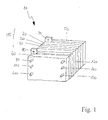
- Fig. 1 is a preferred embodiment of a fuel cell stack 10 shown schematically.
- the fuel cell stack 10 is composed of several Plates 20, 30 and 40 layered and end plates 50 and 60th bordered. To decrease current, two contact elements 70 and 80 are provided.
- the fuel cell stack has two operating gases and a coolant depending on a distribution chamber, not shown, each via a connecting piece 90 and 100 with operating gases and via a connecting piece 110 can be acted upon by a coolant. From the respective distribution chamber from flow through the operating gases and the coolant Fuel cell stack 115, to then in each one not shown Collection chamber to be caught. Finally, the operating gases leave the fuel cell stack through the connecting pieces 120 and 130 and the coolant through the connecting piece 140th
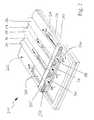
- Fig. 2 shows a perspective view of a detail of a Fuel cell stack 210. Shown are three plates 220, 230 and 240, wherein the plate 220 has depressions 250 on an invisible side, on the opposite side 260 as elevations 270, 280th and 290 can be seen, which in turn pits 300 and 310 on the Limit page 260 of the plate 220.
- the recesses 250 form together with a flat side of the adjacent plate 230 fluid channels for a Coolant, while the wells 300 and 310 of the formation of channels to serve for an operating gas.
- Distribution chambers 320 for the operating gas and a distribution chamber 330 for the coolant are through recesses in the plates 220, 230 and 240 formed, wherein the coolant chamber 330 against the operating gas chambers 320 is sealed by means of an elastomeric sealing strip 335.
- the Operating gas flows out of the distribution chambers 320 in the direction of the arrows 340 into the channels 300 and 310, while the coolant from the distribution chamber 330 flows in the direction of arrows 350 in the channels 360, 370 and 380.
- the operating gas or the coolant then flow directionally and parallel to each other through the fluid channels 300 and 310, respectively 360, 370 and 380, which are thermally connected with each other. Due to a heat transfer from the operating gas to the coolant A temperature profile is formed along the coolant channels, which in turn is transferred to the operating gas via the thermal connection.
- the coolant is flowing through the channels 360, 370 and 380 heated so that the temperature along of these channels increases.
- the temperature of the operating gas then rises along the channels 300 and 310 also on, so that at suitable flow parameters such as inlet temperature or flow velocity the fluids can be achieved that the dew point of the operating gas, because of the enrichment with the reaction product water also increases along the flow channels 300 and 310, throughout the Fuel cell unit slightly below or equal to the actual local Temperature is. In this way, an avoidance of / liquid accumulating Achieved in the operating gas without dehydration of a Not shown electrolyte unit must be taken into account. The power output the fuel cell unit is thereby increased.
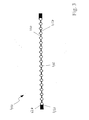
- a separator 410 is shown in a cross section.
- the separator unit 410 consists of two joined metal plates 420 or 430, each having recesses on one side, the serve the formation of operating gas channels 440 and 450, respectively.
- On the respective opposite sides of the metal plates 420 and 430 are also wells, each with a depression the plate 420 faces a recess of the plate 430, so that two opposing wells a coolant channel 460 form.
- the metal plates are for realizing a thermal connection between the operating gas channels 440 and 450 and the coolant channels 460 designed with a particularly small thickness, so that the Channels 440 and the channels 450 are arranged complementary to the channels 460 are, with which a directed flowability of the channels 440, 450th and 460 is guaranteed.
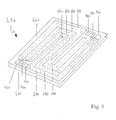
- the separator unit 610 like the separator unit 410 in FIG. 3, consists of two metal plates 620 and 630, each on both sides wells for education of fluid channels.
- the operating gas channels 640, 650, 660 shown as solid lines and 670 are formed by depressions in the visible top of the metal plate 620 formed and serve the admission of a not shown Electrode with a working gas. Depressions in the invisible bottom the metal plate 620 form alone or together with depressions in the upper surface of the metal plate 630 covered by the plate 620 has coolant channels, which are indicated by broken lines 680, 690 and 700. Especially in the beginning and end of the channels, where coolant channels be crossed by operating gas channels, the coolant channels in places formed only by depressions in a plate.
- the operating gas channels 640, 650, 660 and 670 communicate with one Distribution chamber 710 and a collection chamber 720, while the coolant channels 680, 690 and 700 with a distribution chamber 730 and a collection chamber 740 are connected.
- Distribution chambers 750 and 760 serve to supply fluid channels, not shown, with a second Operating gas.
- the coolant During operation of the fuel cell stack, the coolant, the flows through the coolant channels 680, 690 and 700, by the resulting heat of reaction heated, causing the temperature of the coolant along this Channels is rising steadily. Due to the substantially parallel course the operating gas channels 640, 650, 660 and 670 to the coolant channels 680, 690 and 700 becomes the rising temperature profile on the operating gas channels transfer. Similar to the embodiment shown in Fig. 2 In this way, a formation of liquid water in the operating gas channel avoided, so that the power output of the fuel cell unit is increased.
Landscapes
- Life Sciences & Earth Sciences (AREA)
- Engineering & Computer Science (AREA)
- Manufacturing & Machinery (AREA)
- Sustainable Development (AREA)
- Sustainable Energy (AREA)
- Chemical & Material Sciences (AREA)
- Chemical Kinetics & Catalysis (AREA)
- Electrochemistry (AREA)
- General Chemical & Material Sciences (AREA)
- Fuel Cell (AREA)
Abstract
Description
- Fig. 1:
- Eine schematische Schrägansicht eines Brennstoffzellenstapels;
- Fig. 2:
- eine perspektivische Ansicht eines Ausschnitts eines Brennstoffzellenstapels;
- Fig. 3:
- eine Querschnittsansicht einer Sepraratoreinheit;
- Fig. 4:
- eine perspektivische Ansicht einer Sepraratoreinheit.
Claims (14)
- Brennstoffzellenstapel, insbesondere für ein Kraftfahrzeug, mit zumindest einer Brennstoffzelle, die zumindest einen Elektrolyten und zwei Elektroden aufweist, und zumindest einer Separatoreinheit, die zumindest einen ersten Fluidkanal/aufweist, wobei zumindest eine Elektrode über zumindest einen zweiten Fluidkanal mit einem Fluid beaufschlagbar ist, dadurch gekennzeichnet, daß zumindest ein zweiter Fluidkanal im wesentlichen über seine gesamte Länge im wesentlichen parallel zu zumindest einem ersten Fluidkanal angeordnet ist.
- Brennstoffzellenstapel nach Anspruch 1, dadurch gekennzeichnet, daß im Betrieb der zumindest einen Brennstoffzelle die Temperatur eines Fluids entlang des zumindest einen zweiten Fluidkanals stetig ansteigt.
- Brennstoffzellenstapel nach Anspruch 1 oder 2, dadurch gekennzeichnet, daß der zumindest eine erste und der zumindest eine zweite Fluidkanal gleichgerichtet durchströmbar sind.
- Brennstoffzellenstapel nach Anspruch 1, dadurch gekennzeichnet, daß im Betrieb der zumindest einen Brennstoffzelle die Temperatur eines Fluids entlang des zumindest einen zweiten Fluidkanals stetig abfällt.
- Brennstoffzellenstapel nach Anspruch 1 oder 4, dadurch gekennzeichnet, daß der zumindest eine erste und der zumindest eine zweite Fluidkanal in entgegengesetzten Richtungen durchströmbar sind.
- Brennstoffzellenstapel nach einem der Ansprüche 1 bis 5, gekennzeichnet durch zumindest je eine Kammer zur Verteilung je eines Fluids auf mehrere erste beziehungsweise zweite Fluidkanäle und zumindest je eine Kammer zur Sammlung je eines Fluids aus den ersten beziehungsweise zweiten Fluidkanälen.
- Brennstoffzellenstapel nach Anspruch 6, dadurch gekennzeichnet, daß die Verteil- bzw. Sammelkammern über Verteilungskanäle mit den ersten oder zweiten Fluidkanälen kommunizieren, wobei die Verteilungskanäle durch zumindest stellenweise miteinander kommunizierende Vertiefungen zweier benachbarter Platten gebildet werden.
- Brennstoffzellenstapel nach einem der Ansprüche 1 bis 7, dadurch gekennzeichnet, daß zumindest eine Separatoreinheit aus zwei Platten besteht, zwischen denen der zumindest eine erste Fluidkanal angeordnet ist.
- Brennstoffzellenstapel nach einem der Ansprüche 1 bis 7, dadurch gekennzeichnet, daß zumindest eine Separatoreinheit aus drei Platten besteht, wobei auf zumindest einer Seite einer mittleren Platte erste Fluidkanäle angeordnet sind.
- Brennstoffzellenstapel nach einem der Ansprüche 1 bis 9, dadurch gekennzeichnet, daß zumindest eine Separatoreinheit im wesentlichen aus einem elektrisch leitfähigen Material, wie beispielsweise einem Metall, besteht.
- Brennstoffzellenstapel nach einem der Ansprüche 1 bis 10, dadurch gekennzeichnet, daß die Querschnittsfläche zumindest eines ersten Fluidkanals entlang einer Strömungsrichtung eines Fluids variiert.
- Brennstoffzellenstapel nach einem der Ansprüche 1 bis 11, dadurch gekennzeichnet, daß eine thermische Trennung zwischen einem ersten und einem zweiten Fluidkanal in zumindest einem Teilbereich der zwei Fluidkanäle ausgebildet ist.
- Brennstoffzellenstapel nach Anspruch 12, dadurch gekennzeichnet, daß eine bereichsweise thermische Trennung der zwei Fluidkanäle durch ein an eine Kanalwandung zumindest eines Fluidkanals angebrachtes, aus einem organischen und/oder einem keramischen Material bestehendes Isolationselement gebildet wird.
- Brennstoffzellenstapel nach Anspruch 13, dadurch gekennzeichnet, daß das Isolationselement als Beschichtung, beispielsweise als Lakkierung, auf eine Kanalwandung auftragbar ist.
Applications Claiming Priority (2)
| Application Number | Priority Date | Filing Date | Title |
|---|---|---|---|
| DE10224397A DE10224397A1 (de) | 2002-06-01 | 2002-06-01 | Brennstoffzellenstapel |
| DE10224397 | 2002-06-01 |
Publications (2)
| Publication Number | Publication Date |
|---|---|
| EP1432059A1 true EP1432059A1 (de) | 2004-06-23 |
| EP1432059B1 EP1432059B1 (de) | 2007-09-05 |
Family
ID=29432551
Family Applications (1)
| Application Number | Title | Priority Date | Filing Date |
|---|---|---|---|
| EP03012521A Expired - Lifetime EP1432059B1 (de) | 2002-06-01 | 2003-06-02 | Separatorplatte mit mehreren parallellaufenden Fluidkanälen für eine Brennstoffzelle |
Country Status (4)
| Country | Link |
|---|---|
| EP (1) | EP1432059B1 (de) |
| AT (1) | ATE372591T1 (de) |
| DE (2) | DE10224397A1 (de) |
| ES (1) | ES2292875T3 (de) |
Citations (6)
| Publication number | Priority date | Publication date | Assignee | Title |
|---|---|---|---|---|
| WO1996000453A1 (en) * | 1994-06-24 | 1996-01-04 | Ballard Power Systems Inc. | Electrochemical fuel cell stack with concurrently flowing coolant and oxidant streams |
| DE10054444A1 (de) * | 1999-11-03 | 2001-05-10 | Vaillant Joh Gmbh & Co | Brennstoffzelle mit mindestens einem mäanderförmig verlaufenden Kanal |
| DE19953404A1 (de) * | 1999-11-06 | 2001-05-23 | Dornier Gmbh | Elektrochemischer Brennstoffzellenstapel |
| DE10015360A1 (de) * | 2000-03-28 | 2001-10-11 | Dornier Gmbh | Separatoreinheit für Elektrolysezellen und Brennstoffzellen |
| WO2002071521A2 (de) * | 2001-03-06 | 2002-09-12 | Forschungszentrum Jülich GmbH | Verfahren zum betreiben einer brennstoffzeller mit einer bipolaren platte und bipolare platte |
| DE10127322A1 (de) * | 2001-06-06 | 2002-12-19 | Schunk Kohlenstofftechnik Gmbh | Platte bestimmt für eine Brennstoffzelle |
Family Cites Families (1)
| Publication number | Priority date | Publication date | Assignee | Title |
|---|---|---|---|---|
| DE3935722A1 (de) * | 1989-10-26 | 1991-05-02 | Siemens Ag | Festelektrolyt-hochtemperatur-brennstoffzellenmodul |
-
2002
- 2002-06-01 DE DE10224397A patent/DE10224397A1/de not_active Withdrawn
-
2003
- 2003-06-02 AT AT03012521T patent/ATE372591T1/de not_active IP Right Cessation
- 2003-06-02 ES ES03012521T patent/ES2292875T3/es not_active Expired - Lifetime
- 2003-06-02 EP EP03012521A patent/EP1432059B1/de not_active Expired - Lifetime
- 2003-06-02 DE DE50308107T patent/DE50308107D1/de not_active Expired - Lifetime
Patent Citations (6)
| Publication number | Priority date | Publication date | Assignee | Title |
|---|---|---|---|---|
| WO1996000453A1 (en) * | 1994-06-24 | 1996-01-04 | Ballard Power Systems Inc. | Electrochemical fuel cell stack with concurrently flowing coolant and oxidant streams |
| DE10054444A1 (de) * | 1999-11-03 | 2001-05-10 | Vaillant Joh Gmbh & Co | Brennstoffzelle mit mindestens einem mäanderförmig verlaufenden Kanal |
| DE19953404A1 (de) * | 1999-11-06 | 2001-05-23 | Dornier Gmbh | Elektrochemischer Brennstoffzellenstapel |
| DE10015360A1 (de) * | 2000-03-28 | 2001-10-11 | Dornier Gmbh | Separatoreinheit für Elektrolysezellen und Brennstoffzellen |
| WO2002071521A2 (de) * | 2001-03-06 | 2002-09-12 | Forschungszentrum Jülich GmbH | Verfahren zum betreiben einer brennstoffzeller mit einer bipolaren platte und bipolare platte |
| DE10127322A1 (de) * | 2001-06-06 | 2002-12-19 | Schunk Kohlenstofftechnik Gmbh | Platte bestimmt für eine Brennstoffzelle |
Also Published As
| Publication number | Publication date |
|---|---|
| ES2292875T3 (es) | 2008-03-16 |
| DE50308107D1 (de) | 2007-10-18 |
| ATE372591T1 (de) | 2007-09-15 |
| DE10224397A1 (de) | 2003-12-11 |
| EP1432059B1 (de) | 2007-09-05 |
Similar Documents
| Publication | Publication Date | Title |
|---|---|---|
| EP2297808B1 (de) | Bipolarplatte für eine brennstoffzellenanordnung, insbesondere zur anordnung, zwischen zwei benachbarten membran-elektroden-anordnungen | |
| DE2831799C2 (de) | Brennstoffzelle und Verfahren zu ihrer Herstellung | |
| EP2414185B1 (de) | Vorrichtung zur thermischen anbindung eines energiespeichers | |
| DE69905389T2 (de) | Bipolare platten für brennstoffzellen und diese platten enthaltende brennstoffzelle | |
| DE2927682C2 (de) | Elektrochemische Brennstoffzelle | |
| EP1830426B1 (de) | Bipolarplatte, insbesondere für einen Brennstoffzellenstapel eines Fahrzeugs | |
| DE69929756T2 (de) | Brennstoffzellenstapel | |
| DE112007002797B4 (de) | Brennstoffzelle mit kanalbildenden elementen | |
| DE10132841B4 (de) | Trennplatte für Festpolymerbrennstoffzellen und Verfahren zu ihrer Herstellung und Verwendung der Trennplatte in Festpolymerbrennstoffzellen | |
| EP2356714B1 (de) | Brennstoffzelle ohne bipolarplatten | |
| DE10041532A1 (de) | Brennstoffzellenstapel | |
| DE102005003007A1 (de) | Brennstoffzelle | |
| DE2502738A1 (de) | Brennstoffelement fuer einen brennstoff und atmosphaerische luft | |
| DE102008033210A1 (de) | Bipolarplatte für eine Brennstoffzellenanordnung, insbesondere zur Anordnung zwischen zwei benachbarten Membran-Elektroden-Anordnungen | |
| DE19539959C2 (de) | Brennstoffzellenanordnung | |
| DE102008056900A1 (de) | Bipolarplatte für eine Brennstoffzellenanordnung, insbesondere zur Anordnung zwischen zwei benachbarten Membran-Elektroden-Anordnungen in einem Brennstoffzellenstapel | |
| DE102009016635A1 (de) | Bipolarplatte für Brennstoff- oder Elektrolysezellen | |
| DE102008033209A1 (de) | Brennstoffzellenanordnung | |
| DE19743067A1 (de) | Strömungsmodul mit Strömungskammern für drei oder vier Fluide | |
| EP1770807A1 (de) | Kühlbare Bipolarplatte | |
| EP1435671B1 (de) | Fluidkanalkonfiguration für einen Brennstoffzellenstapel | |
| EP1511102A2 (de) | Bipolarplatte und Brennstoffzellenstapel | |
| EP1919017A1 (de) | Kühlbare Bipolarplatte aus zwei gefügten Platten | |
| WO2011141308A1 (de) | Brennstoffzellenstapel und verfahren zum herstellen eines brennstoffzellenstapels | |
| EP1432059B1 (de) | Separatorplatte mit mehreren parallellaufenden Fluidkanälen für eine Brennstoffzelle |
Legal Events
| Date | Code | Title | Description |
|---|---|---|---|
| PUAI | Public reference made under article 153(3) epc to a published international application that has entered the european phase |
Free format text: ORIGINAL CODE: 0009012 |
|
| AK | Designated contracting states |
Kind code of ref document: A1 Designated state(s): AT BE BG CH CY CZ DE DK EE ES FI FR GB GR HU IE IT LI LU MC NL PT RO SE SI SK TR |
|
| AX | Request for extension of the european patent |
Extension state: AL LT LV MK |
|
| 17P | Request for examination filed |
Effective date: 20041223 |
|
| AKX | Designation fees paid |
Designated state(s): AT BE BG CH CY CZ DE DK EE ES FI FR GB GR HU IE IT LI LU MC NL PT RO SE SI SK TR |
|
| 17Q | First examination report despatched |
Effective date: 20060928 |
|
| GRAP | Despatch of communication of intention to grant a patent |
Free format text: ORIGINAL CODE: EPIDOSNIGR1 |
|
| GRAS | Grant fee paid |
Free format text: ORIGINAL CODE: EPIDOSNIGR3 |
|
| GRAA | (expected) grant |
Free format text: ORIGINAL CODE: 0009210 |
|
| AK | Designated contracting states |
Kind code of ref document: B1 Designated state(s): AT BE BG CH CY CZ DE DK EE ES FI FR GB GR HU IE IT LI LU MC NL PT RO SE SI SK TR |
|
| REG | Reference to a national code |
Ref country code: GB Ref legal event code: FG4D Free format text: NOT ENGLISH |
|
| REG | Reference to a national code |
Ref country code: CH Ref legal event code: EP |
|
| REF | Corresponds to: |
Ref document number: 50308107 Country of ref document: DE Date of ref document: 20071018 Kind code of ref document: P |
|
| REG | Reference to a national code |
Ref country code: IE Ref legal event code: FG4D Free format text: LANGUAGE OF EP DOCUMENT: GERMAN |
|
| GBT | Gb: translation of ep patent filed (gb section 77(6)(a)/1977) |
Effective date: 20071206 |
|
| PG25 | Lapsed in a contracting state [announced via postgrant information from national office to epo] |
Ref country code: FI Free format text: LAPSE BECAUSE OF FAILURE TO SUBMIT A TRANSLATION OF THE DESCRIPTION OR TO PAY THE FEE WITHIN THE PRESCRIBED TIME-LIMIT Effective date: 20070905 |
|
| NLV1 | Nl: lapsed or annulled due to failure to fulfill the requirements of art. 29p and 29m of the patents act | ||
| REG | Reference to a national code |
Ref country code: ES Ref legal event code: FG2A Ref document number: 2292875 Country of ref document: ES Kind code of ref document: T3 |
|
| REG | Reference to a national code |
Ref country code: IE Ref legal event code: FD4D |
|
| PG25 | Lapsed in a contracting state [announced via postgrant information from national office to epo] |
Ref country code: GR Free format text: LAPSE BECAUSE OF FAILURE TO SUBMIT A TRANSLATION OF THE DESCRIPTION OR TO PAY THE FEE WITHIN THE PRESCRIBED TIME-LIMIT Effective date: 20071206 Ref country code: NL Free format text: LAPSE BECAUSE OF FAILURE TO SUBMIT A TRANSLATION OF THE DESCRIPTION OR TO PAY THE FEE WITHIN THE PRESCRIBED TIME-LIMIT Effective date: 20070905 |
|
| ET | Fr: translation filed | ||
| PG25 | Lapsed in a contracting state [announced via postgrant information from national office to epo] |
Ref country code: IE Free format text: LAPSE BECAUSE OF FAILURE TO SUBMIT A TRANSLATION OF THE DESCRIPTION OR TO PAY THE FEE WITHIN THE PRESCRIBED TIME-LIMIT Effective date: 20070905 Ref country code: PT Free format text: LAPSE BECAUSE OF FAILURE TO SUBMIT A TRANSLATION OF THE DESCRIPTION OR TO PAY THE FEE WITHIN THE PRESCRIBED TIME-LIMIT Effective date: 20080206 Ref country code: SK Free format text: LAPSE BECAUSE OF FAILURE TO SUBMIT A TRANSLATION OF THE DESCRIPTION OR TO PAY THE FEE WITHIN THE PRESCRIBED TIME-LIMIT Effective date: 20070905 |
|
| PG25 | Lapsed in a contracting state [announced via postgrant information from national office to epo] |
Ref country code: RO Free format text: LAPSE BECAUSE OF FAILURE TO SUBMIT A TRANSLATION OF THE DESCRIPTION OR TO PAY THE FEE WITHIN THE PRESCRIBED TIME-LIMIT Effective date: 20070905 Ref country code: SE Free format text: LAPSE BECAUSE OF FAILURE TO SUBMIT A TRANSLATION OF THE DESCRIPTION OR TO PAY THE FEE WITHIN THE PRESCRIBED TIME-LIMIT Effective date: 20071205 |
|
| PLBE | No opposition filed within time limit |
Free format text: ORIGINAL CODE: 0009261 |
|
| STAA | Information on the status of an ep patent application or granted ep patent |
Free format text: STATUS: NO OPPOSITION FILED WITHIN TIME LIMIT |
|
| PG25 | Lapsed in a contracting state [announced via postgrant information from national office to epo] |
Ref country code: DK Free format text: LAPSE BECAUSE OF FAILURE TO SUBMIT A TRANSLATION OF THE DESCRIPTION OR TO PAY THE FEE WITHIN THE PRESCRIBED TIME-LIMIT Effective date: 20070905 |
|
| 26N | No opposition filed |
Effective date: 20080606 |
|
| BERE | Be: lapsed |
Owner name: BEHR G.M.B.H. & CO. KG Effective date: 20080630 |
|
| PG25 | Lapsed in a contracting state [announced via postgrant information from national office to epo] |
Ref country code: MC Free format text: LAPSE BECAUSE OF NON-PAYMENT OF DUE FEES Effective date: 20080630 |
|
| REG | Reference to a national code |
Ref country code: CH Ref legal event code: PL |
|
| PG25 | Lapsed in a contracting state [announced via postgrant information from national office to epo] |
Ref country code: BE Free format text: LAPSE BECAUSE OF NON-PAYMENT OF DUE FEES Effective date: 20080630 |
|
| PG25 | Lapsed in a contracting state [announced via postgrant information from national office to epo] |
Ref country code: EE Free format text: LAPSE BECAUSE OF FAILURE TO SUBMIT A TRANSLATION OF THE DESCRIPTION OR TO PAY THE FEE WITHIN THE PRESCRIBED TIME-LIMIT Effective date: 20070905 |
|
| PG25 | Lapsed in a contracting state [announced via postgrant information from national office to epo] |
Ref country code: CH Free format text: LAPSE BECAUSE OF NON-PAYMENT OF DUE FEES Effective date: 20080630 Ref country code: SI Free format text: LAPSE BECAUSE OF FAILURE TO SUBMIT A TRANSLATION OF THE DESCRIPTION OR TO PAY THE FEE WITHIN THE PRESCRIBED TIME-LIMIT Effective date: 20070905 Ref country code: LI Free format text: LAPSE BECAUSE OF NON-PAYMENT OF DUE FEES Effective date: 20080630 |
|
| PG25 | Lapsed in a contracting state [announced via postgrant information from national office to epo] |
Ref country code: CY Free format text: LAPSE BECAUSE OF FAILURE TO SUBMIT A TRANSLATION OF THE DESCRIPTION OR TO PAY THE FEE WITHIN THE PRESCRIBED TIME-LIMIT Effective date: 20070905 |
|
| PGFP | Annual fee paid to national office [announced via postgrant information from national office to epo] |
Ref country code: ES Payment date: 20090629 Year of fee payment: 7 |
|
| PG25 | Lapsed in a contracting state [announced via postgrant information from national office to epo] |
Ref country code: BG Free format text: LAPSE BECAUSE OF FAILURE TO SUBMIT A TRANSLATION OF THE DESCRIPTION OR TO PAY THE FEE WITHIN THE PRESCRIBED TIME-LIMIT Effective date: 20071205 Ref country code: AT Free format text: LAPSE BECAUSE OF NON-PAYMENT OF DUE FEES Effective date: 20080602 |
|
| PGFP | Annual fee paid to national office [announced via postgrant information from national office to epo] |
Ref country code: CZ Payment date: 20090629 Year of fee payment: 7 Ref country code: GB Payment date: 20090701 Year of fee payment: 7 |
|
| PGFP | Annual fee paid to national office [announced via postgrant information from national office to epo] |
Ref country code: IT Payment date: 20090626 Year of fee payment: 7 |
|
| PG25 | Lapsed in a contracting state [announced via postgrant information from national office to epo] |
Ref country code: HU Free format text: LAPSE BECAUSE OF FAILURE TO SUBMIT A TRANSLATION OF THE DESCRIPTION OR TO PAY THE FEE WITHIN THE PRESCRIBED TIME-LIMIT Effective date: 20080306 Ref country code: LU Free format text: LAPSE BECAUSE OF NON-PAYMENT OF DUE FEES Effective date: 20080602 |
|
| PG25 | Lapsed in a contracting state [announced via postgrant information from national office to epo] |
Ref country code: TR Free format text: LAPSE BECAUSE OF FAILURE TO SUBMIT A TRANSLATION OF THE DESCRIPTION OR TO PAY THE FEE WITHIN THE PRESCRIBED TIME-LIMIT Effective date: 20070905 |
|
| PGFP | Annual fee paid to national office [announced via postgrant information from national office to epo] |
Ref country code: DE Payment date: 20100623 Year of fee payment: 8 Ref country code: FR Payment date: 20100722 Year of fee payment: 8 |
|
| GBPC | Gb: european patent ceased through non-payment of renewal fee |
Effective date: 20100602 |
|
| PG25 | Lapsed in a contracting state [announced via postgrant information from national office to epo] |
Ref country code: CZ Free format text: LAPSE BECAUSE OF NON-PAYMENT OF DUE FEES Effective date: 20100602 |
|
| PG25 | Lapsed in a contracting state [announced via postgrant information from national office to epo] |
Ref country code: IT Free format text: LAPSE BECAUSE OF NON-PAYMENT OF DUE FEES Effective date: 20100602 |
|
| REG | Reference to a national code |
Ref country code: ES Ref legal event code: FD2A Effective date: 20110715 |
|
| PG25 | Lapsed in a contracting state [announced via postgrant information from national office to epo] |
Ref country code: ES Free format text: LAPSE BECAUSE OF NON-PAYMENT OF DUE FEES Effective date: 20110705 Ref country code: GB Free format text: LAPSE BECAUSE OF NON-PAYMENT OF DUE FEES Effective date: 20100602 |
|
| PG25 | Lapsed in a contracting state [announced via postgrant information from national office to epo] |
Ref country code: ES Free format text: LAPSE BECAUSE OF NON-PAYMENT OF DUE FEES Effective date: 20100603 |
|
| REG | Reference to a national code |
Ref country code: FR Ref legal event code: ST Effective date: 20120229 |
|
| REG | Reference to a national code |
Ref country code: DE Ref legal event code: R119 Ref document number: 50308107 Country of ref document: DE Effective date: 20120103 |
|
| PG25 | Lapsed in a contracting state [announced via postgrant information from national office to epo] |
Ref country code: FR Free format text: LAPSE BECAUSE OF NON-PAYMENT OF DUE FEES Effective date: 20110630 Ref country code: DE Free format text: LAPSE BECAUSE OF NON-PAYMENT OF DUE FEES Effective date: 20120103 |