EP1424804A2 - Aktualisierung eines symmetrischen Schlüssels in einem Kryptokommunikationssystem - Google Patents
Aktualisierung eines symmetrischen Schlüssels in einem Kryptokommunikationssystem Download PDFInfo
- Publication number
- EP1424804A2 EP1424804A2 EP03027373A EP03027373A EP1424804A2 EP 1424804 A2 EP1424804 A2 EP 1424804A2 EP 03027373 A EP03027373 A EP 03027373A EP 03027373 A EP03027373 A EP 03027373A EP 1424804 A2 EP1424804 A2 EP 1424804A2
- Authority
- EP
- European Patent Office
- Prior art keywords
- key
- encryption
- unit
- generation
- receiving device
- Prior art date
- Legal status (The legal status is an assumption and is not a legal conclusion. Google has not performed a legal analysis and makes no representation as to the accuracy of the status listed.)
- Withdrawn
Links
Images







Classifications
-
- H—ELECTRICITY
- H04—ELECTRIC COMMUNICATION TECHNIQUE
- H04L—TRANSMISSION OF DIGITAL INFORMATION, e.g. TELEGRAPHIC COMMUNICATION
- H04L9/00—Cryptographic mechanisms or cryptographic arrangements for secret or secure communications; Network security protocols
- H04L9/08—Key distribution or management, e.g. generation, sharing or updating, of cryptographic keys or passwords
- H04L9/0891—Revocation or update of secret information, e.g. encryption key update or rekeying
-
- H—ELECTRICITY
- H04—ELECTRIC COMMUNICATION TECHNIQUE
- H04L—TRANSMISSION OF DIGITAL INFORMATION, e.g. TELEGRAPHIC COMMUNICATION
- H04L2209/00—Additional information or applications relating to cryptographic mechanisms or cryptographic arrangements for secret or secure communication H04L9/00
- H04L2209/60—Digital content management, e.g. content distribution
-
- H—ELECTRICITY
- H04—ELECTRIC COMMUNICATION TECHNIQUE
- H04L—TRANSMISSION OF DIGITAL INFORMATION, e.g. TELEGRAPHIC COMMUNICATION
- H04L2209/00—Additional information or applications relating to cryptographic mechanisms or cryptographic arrangements for secret or secure communication H04L9/00
- H04L2209/80—Wireless
Definitions
- the present invention relates to a sharing method of a common key in the case of using an encryption system using the common key.
- the traffic contains secret information, etc. that should not be known by others, and an encryption communication technology by IPsec, etc. is established as a means for secreting it.
- VPN Virtual Private Network
- IPsec IP security protocol
- IKE Internet Key Exchange
- the encryption key retained by each terminal is subjected to a next key exchange before an expiration of what is now in the process of communications, and it is changed over to a new key just when this key exchange is completed, thereby enabling the encryption communications to continue .
- the aforementioned mechanism has no problem in one-to-one communications, however, in a case where a multiplicity of clients perform the encryption communications with one server, it is considered that a problem is a load caused by the key exchange of the server.
- a method of distributing the key to the client from the server for solving this, there is considered, for instance, a method of distributing the key to the client from the server, however, in the case of periodically updating the key by this method, there is such a problem is that the communications are interrupted during the key distribution and in case a message for distributing the key is discarded. Namely, a recovery procedure in the event of a loss of the key when distributing the key, is not considered, which might be an anxious item on the occasion of using the VPN in combination with mobile communications.
- An obj ect of the present invention lies in providing a technology for continuing, in case one of two devices that perform common key encryption communications distributes an encryption key to the other, the communications in the midst of a distribution procedure and even in a case where the encryption key (a key distribution message) is discarded.
- the present invention is, for solving the above problems, a system for performing encryption communications using a common key updated at a predetermined timing between a key transmitting device and a key receiving device, the system comprising: a key transmitting device including first retaining for retaining a most-updated encryption key and a one-generation-anterior encryption key as the above common keys, and first setting unit setting a one-generation-anterior encryption key for transmission and a most-updated encryption key and a one-generation-anterior encryption key for receipt, respectively; and the above key receiving device including second retaining unit retaining a most-updated encryption key and a one-generation-anterior encryption key as the above common keys, and second setting unit setting a most-updated encryption key for transmission, and a most-updated encryption key and a one-generation-anterior key for receipt, respectively.
- each of the key transmitting device and the key receiving device retains two generations of encryption keys such as the most-updated encryption key and the one-generation-anterior encryption key as the common keys, and hence, in a case where the key transmitting device distributes the encryption keys, etc. to the key receiving device, the communications can continue in the midst of a distribution procedure and even in case the encryption key (a key distribution message) is discarded.
- the key transmitting device is not limited to an HA on Mobile IP.
- it may be an information processing terminal such as a server, etc. on the Internet.
- the key receiving device is not limited to an MN on Mobile IP. For instance, itmaybe an information processing terminal communicable with the server, etc. on the Internet.
- the above key transmitting device further includes acquisition unit acquiring the encryption key, the above first retaining unit updates and retains the above most-updated encryption key as the one-generation-anterior encryption key and the encryption key acquired by the above acquisition unit as the most-updated encryption key, respectively, and the above first setting unit re-sets the one-generation-anterior encryption key for transmission, and the most-updated encryption key and the one-generation-anterior encryption key for receipt respectively on the basis of the retained key after being updated by the above first retaining unit.
- the encryption key can be updated in the key transmitting device.
- the above key transmitting device includes generation unit generating the encryption key, and the above acquisition unit acquires the encryption key generated by the above generation unit.
- the key transmitting device can acquire a self-generated key. Further, the key transmitting device may request an external key generation unit to generate a key and may acquire this key, or, the key may be read from a self- or externally-possessed key database, etc..
- the above key transmitting device further includes first transmitting unit transmitting the encryption key acquired by the above acquisition unit to the key receiving device.
- first transmitting unit transmitting the encryption key acquired by the above acquisition unit to the key receiving device.
- timings can be considered as this transmission timing. For example, it may be transmitted in the case of receiving a predetermined message from the key receiving device, or it may be transmitted at a predetermined timing in a way that holds a self-timer.
- the above key receiving device further includes second receiving unit receiving he encryption key transmitted from the above key transmitting device, in case the above second receiving unit receives the encryption key, the above second retaining unit respectively updates and retains the above most-updated encryption key as the one-generation-anterior encryption key and the encryption key received by the above second receiving unit as the most-updated encryption key, and the above second setting unit respectively re-sets the most-updated encryption key for transmission, and the most-updated encryption key and the one-generation-anterior encryption key for receipt on the basis of the retained key after being updated by the above second retaining unit.
- the encryption key can be updated in the key receiving device.
- the above key receiving device includes second transmitting unit transmitting a predetermined message to the key transmitting device, and the above key receiving device includes first receiving unit receiving the predeterminedmessage transmitted from the above key receiving device.
- the key transmitting device as triggered by a receipt of the predetermined message, can generate the key, can distribute the key, and so on.
- the above first and second retaining unit respectively retain the initialization key.
- the encryption by the initialization key thereof becomes possible, and therefore the encryption communications can continue.
- the above key receiving device transmits a key initialization requestmessage as the above predetermined message at a predetermined timing
- the above key transmitting device receives the key initialization request message transmitted from the above key receiving device
- the above acquisition unit acquires the encryption key
- the above first retaining unit respectively updates and retains the common initialization key as the one-generation-anterior encryption key and the encryption key acquired by the above acquisition unit as the most-updated encryption key.
- the key transmitting device can initialize the self- encryption-key in accordance with the initialization request message from the key receiving device.
- the above key receiving device transmits a key update request message as the above predetermined message at a predetermined timing
- the above key transmitting device receives a key update request message transmitted from the above key receiving device
- the above acquisition unit acquires the encryption key
- the above first retaining unit respectively updates and retains the above common initialization key as the one-generation-anterior encryption key and the encryption key acquired by the above acquisition unit as the most-updated encryption key.
- the key transmitting device can update the self-encryption-key in accordance with the key update request message from the key receiving device.
- the above key receiving device includes unit determining a key update timing, and said second transmitting unit, in the case of reaching the key update timing, transmits the key update request message to the key transmitting device.
- the key receiving device can transmit the key update request message at the predetermined timing (e.g., periodically).
- the above key transmitting device includes unit determining a key update timing, and said first transmitting unit, in the case of reaching the key update timing, transmits the encryption key acquired by the above acquisition unit to the key receiving device.
- the key transmitting device can transmit the encryption key by a self-judgement irrespective of the request from the key receiving device.
- the above key receiving device transmits a key resending request message as the above predetermined message at a predetermined timing, and, in case the above key transmitting device receives a key resending request message transmitted from the above key receiving device, the first transmitting unit transmits the encryption key acquired by the above acquisition unit to the key receiving device.
- the key transmitting device can transmit the encryption key in accordance with the key resending request message from the key receiving device.
- the above first transmitting unit in a state where the above first and second retaining unit retain none of the keys, transmits the encryption key acquired by the above acquisition unit to the key receiving device. In this case, it follows that the communications are performed by use of the initialization key.
- a key transmitting device performing encryption communications using a common key updated at a predetermined timing with a key receiving device
- a key transmitting device comprises retaining unit retaining a most-updated encryption key and a one-generation-anterior encryption key as the above common keys, and setting unit respectively setting a one-generation-anterior encryption key for transmission, and a most-updated encryption key and a one-generation-anterior encryption key for receipt.
- the key transmitting device is not limited to the HA on Mobile IP.
- it may be the information processing terminal such as the server, etc. on the Internet.
- a key receiving device performing encryption communications using a common key updated at a predetermined timing with a key transmitting device
- a key receiving device comprises retaining unit retaining a most-updated encryption key and a one-generation- anterior encryption key as the above common keys, and setting unit respectively setting a most-updated encryption key for transmission, and a most-updated encryption key and a one-generation-anterior encryption key for receipt.
- the key receiving device is not limited to the MN on Mobile IP.
- it may be the information processing terminal communicable with the server, etc. on the Internet.
- a common key encryption communication method is characterized in that the key transmitting device retains a most-updated encryption key and a one-generation-anterior encryption key as the above common keys, sets respectively the one-generation-anterior encryption key for transmission and for receipt, and the above key receiving device retains the most-updated encryption key and the one-generation-anterior encryption key as the above common keys, and sets respectively the most-updated encryption key for transmission and the most-updated encryption key and the one-generation-anterior encryption key for receipt.
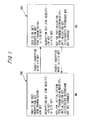
- FIG. 1 is a diagram for explaining an outline of architecture of the common key encryption communication system.
- the common key encryption communication system includes a key transmitting device and a key receiving device, wherein encryption communications by a common key updated at a predetermined timing are performed between the two devices.
- a key distribution is conducted by the key transmitting device. Therefore, in one (the key transmitting device)-to-many (the key receiving devices) common key encryption communications , a load required for key sharing is reduced.
- each of the key transmitting device and the key receiving device managed only one receipt key, and therefore, during a period till a key receiving side receives a key distribution message containing a generated key and sets it after the key transmitting side has generated the key and has set it for itself, the encryption communications become impossible due to a key discordance.
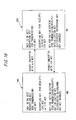
- the both sides hold and manage two generations of keys for receipt (an N-th key and an (N-1) th key) , the key (the (N-1) th key) one generation before is set (used) as an encryption key (for transmission) onthekeytransmittingside, andtheupdated key (the N-th key) is set (used) as an encryption key (for transmission) on the key receiving side. Further, the both sides set both of the updated key/one-generation-anterior key (the N-th key and the (N-1) th key) as decryption keys (for receipt) , whereby decryption can be effected on any side.
- the communications based on Mobile IPv6 shall be performed between the key transmitting device and the key receiving device.
- Mobile IPv6 provides amechanism for continuing the communications using the same IP address even when a MN (mobile node) as a mobile terminal moves to a network segment different from an initial network segment (which is called a home network). Therefore, a HA (home agent) such as a router, etc. is provided in the initial network segment.
- MN mobile node
- a HA home agent
- the MN upon detecting that the MN has moved to the network segment different from the initial network segment, generates an address (a temporary address which is also calledacare-ofaddress) on the mobile destination network, and registers it in the HA. Concretely, the MN transmits a registration request (BU (Binding Update) to the HA. The HA is thereby notified of a new care-of address (contained as a source address).
- BU Binding Update
- the HA upon receiving the registration request (BU) from the MN, registers the care-of address. Together with this, the HA transmits a registration reply (BA: binding acknowledgement) to theMN as a registration request sender.
- BA binding acknowledgement
- the HA in the case of receiving a packet addressed to the registered MN, encapsulates this packet (wherein the care-of address is a destination address) and forwards it to the mobile destination network segment through tunneling. This enables the communications to continue by the same IP address even when the MN moves to the network segment different from the initial network segment.
- FIG. 2 is a diagram for explaining an example of architecture of the key transmitting device (HA).
- FIG. 3 is a diagram for explaining an example of architecture of the key receiving device (MN).
- the key transmitting side device (HA) 100 includes a packet transmitting/receiving unit 101, a key generation/management unit 102, an encryption/decryption unit 103, and, a protocol control unit 104, etc.. Further, in the case of updating/initializing the key by use of an SPI value, the key generation/management unit retains an SPI-key mapping table (see FIG. 21).
- the packet transmitting/receiving unit 101 is connected to a network of Mobile IPv6, receives a self-addressed packet (for instance, a packet containing a predetermined message)from the key receiving device (MN)200, etc. and sends a packet addressed to the key receiving device (MN) 200 to the network.
- This packet transmitting/receiving unit 101 can receive the predetermined message (such as a key initialization request message, a key update request message, or, a key resending request message, etc.) from the key receiving device (MN) 200, and hence, a request being given from the key receiving device (MN) 200, the key can be forcibly updated. Moreover, the updated key can be transmitted to the key receiving device (MN) 200.
- the key generation/management unit 102 generates (or requests an external key generation unit to generate the encryption key and obtains this, or reads the encryption key from a key database, etc.) the encryption key.
- the key generation/management unit 102 retains and manages the encryption key thus generated, etc. (the most-updated encryption key), the encryption key generated, etc. at a timing just anterior thereto (the one-generation-anterior encryption key) , and, a preset key for initialization.
- the key generation/management unit 102 retains and manages the updated (generated, etc.) encryption key (the most-updated encryption key) , the encryption key updated (generated, etc.) at a timing just anterior thereto (the one-generation-anterior encryption key), and, a preset (or pre-distributed) key for initialization.
- This key generation/management unit 102 in case the request is given with a fixed period or from the key receiving device (MN) 200, enables the key to be dynamically generated and updated.
- this key generation/management unit 102 manages two generations of keys for receipt, whereby the packet, even when encrypted by the key receiving device (MN) 200 with any one of the one-generation-anterior key and the most-updated key, can be decrypted. Moreover, this key generation/management unit 102 manages and sets one key for transmission, whereby the key transmitting device (HA) 100 can encrypt a packet with the one-generation-anterior key and can transmit it.
- this key generation/management unit 102 manages and sets one key for initialization, whereby the encrypted dynamic key initialization request message can be decrypted with this key. Further, the key transmitting device (HA) 100 recognizes that it has been encrypted with this key, thereby enabling the initialization of the dynamic key.
- the key generated with the Nth key is hereinafter called the Nth key.
- the key transmitted to the key receiving device (MN) 200 from the key transmitting device (HA) 100 by the first key distribution is a first key.
- the key generation/management unit 102 retains and manages two generations of keys and the initialization key for every key receiving device (MN) 200 (in case there are a plurality of MNs).
- the key generation/management unit 102 normally sets the one-generation-anterior encryption key for transmission and the most-updated encryption key and the one-generation-anterior encryption key for receipt, respectively.
- the encryption/decryption unit 103 in case the received packet from the key receiving device (MN) 200 is encrypted, serves to decrypt this received packet with (any one of ) the encryption keys for receipt, and to encrypt a transmitted packet to the key receiving device (MN) 200 with the encryption key for transmission.
- the encryption/decryption unit 103 on the occasion of decryption or encryption, refers to the key generation/key management unit 102 and uses a proper encryption key.
- the protocol control unit 104 serves to judge a content of the received packet from the key receiving device (MN) 200 that has been decrypted by the encryption/decryption unit 103, and to create the key distributionmessage to be transmitted to the key receiving device (MN) 200.
- the key receiving device (MN) 200 includes a packet transmitting/receiving unit 201, a key management unit 202, an encryption/decryption unit 203, a protocol control unit 204, etc..
- the packet transmitting/receiving unit 201 is connected to a network of Mobile IPv6, receives a self-addressed packet from the key transmitting device (HA) 100, etc. and sends a packet addressed to the key transmitting device (HA) 100 to the network. This packet transmitting/receiving unit 201 receives the key distribution message, whereby the key distribution from the key transmitting device (HA) 100 becomes possible.
- the key management unit 202 retains and manages the encryption keys (the most-updated key and the one-generation-anterior encryption key) contained in the key distribution message distributed from the key transmitting device (HA) 100, and, the preset key for initialization (any key is common to the key transmitting device (HA) 100).
- the key management unit 202 normally sets the most-updated encryption key for transmission, and the most-updated encryption key and the one-generation-anterior encryption key for receipt, respectively. These keys are updated as will be described later on, however, in this case also, the key management unit 202 retains andmanages the updated (generated, etc.) encryption key (the most-updated encryption key), the encryption key updated (generated, etc.) at a timing just anterior thereto (the one-generation-anterior encryption key), and, a preset (or pre-distributed) key for initialization.
- this key management unit 202 manages two generations of keys for receipt, whereby the packet, even when encrypted by the key transmitting device (HA) 100 with either the most-updated key or the one-generation-anterior key, can be decrypted. Moreover, this key management unit 202 manages/sets one key for transmission, whereby the key receiving device (MN) 200 can encrypt a packet with the most-updated key and can transmit it.
- this key management unit 202 manages/sets one key for initialization, whereby the dynamic key initialization request message can be also encrypted, and the key transmitting side device recognizes that it has been encrypted with this key, thereby enabling the initialization.
- the encryption/decryption unit 203 in case the received packet from the key transmitting device (HA) 100 is encrypted, serves to decrypt this received packet with (any one of) the encryption keys for receipt, and to encrypt a transmitted packet to the key transmitting device (HA) 100 with the encryption key for transmission.
- the encryption/decryption unit 203 on the occasion of decryption or encryption, refers to the key management unit 202 and uses a proper encryption key.
- the protocol control unit 204 serves to create the predetermined message (the key initialization message, the key update message, the key resending request message, etc..) from the key transmitting device (HA) 100 that has been decrypted by the encryption/decryption unit 203.
- This protocol control unit 204 generates the key update request message or a message corresponding thereto, whereby the key receiving device (MN) 200 can, if an intention or a key distribution message of the key receiving side device (MN) 200 is discarded, make a request for the most-updated key. Further, the protocol control unit 204 generates the key initialization request message or a message corresponding thereto, whereby in case the initialization of both keys is needed due to a fault, etc. of the key receiving device (MN) 200, it is possible to request the key transmitting side device for this.
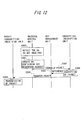
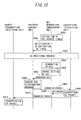
- the key transmitting device (HA) 100 updates the encryption key and distributes it to the key receiving device (MN) 200 by the predetermined message from the key receiving device (MN) 200.
- the predetermined message be transmitted together with the registration request (BU) form the key receiving device (MN) 200 and that the key distribution message be transmitted together with the registration reply (BA) from the key transmitting device (HA).
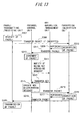
- the key receiving device (MN) 100 upon detecting that the BA (IP packet) for the BU (IP packet containing none of the key update request message and so on) transmitted to the key transmitting device (HA) 100 is not received either after the fixed period, as it is considered that there is the fault, etc. in the key transmitting device (HA) 100, resends the BU (IP packet that does not contain the key update request message).
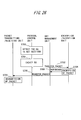
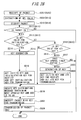
- the key receiving device (MN) 200 upon detecting that the BA for the resent BU (IP packet) is not received either after the fixed period, initializes the setting of the key to be dynamically updated, generates the BU as shown in FIG. 5 (S501 ⁇ S505), and transmits it to the key transmitting device (HA) 100 (S506).
- the key transmitting device (HA) 100 upon judging this to be such an implication that the BU from the key receiving device (MN) has been encrypted by use of the initialization key (S507 ⁇ S514), executes the processes of generating the key, etc. in the same way as the above (S515 ⁇ S518), adds the key distribution message containing the most-updated key to the BA (S519), and transmits it to the key receiving device (MN) (S520 ⁇ S524).
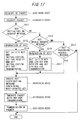
- the key receiving device upon receiving the BA to which the key distribution message has been added (5122), sets the key contained therein as the encryption key (for transmission) /decryption key (for receipt) (S123 ⁇ S129). This is the same as what has already been stated.
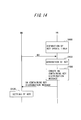
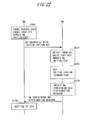
- the key receiving device (MN) 200 resends the key update requestmessage or the massage corresponding thereto, thereby enabling a return to the normal state (a state where the most-updated key is set for transmission and receipt of the key receiving device (MN) 200). Further, in case the key distribution message does not reach the key receiving device as a reply even by resending the key update request message, the key receiving device (MN) 200 performs initialization by transmitting the key initialization request message to the key transmitting device (HA) 100.
- the key receiving side device transmits the dynamic key initialization message or the message corresponding thereto, thereby enabling both of the dynamic keys to be initialized.
- the communications between the key transmitting device and the key are the communications as on Mobile IPv6, however, the present invention is not limited to this.
- a variety of communications can be applied as the communications between the key transmitting device and the key receiving device.
- the communications between the key transmitting device and the key receiving device may be communications on Mobile IPv4.
- Registration Request as a substitute for the BU of IPv6 is used as the registration request
- Registration Reply as a substitute for the BA of IPv6 is used as the registration reply, respectively. They are set (or placed) in, for instance, the payload field of the IP packet.
- the explanation was made such that the BU and the predetermined message (or only the BU) are transmitted from the key transmitting device (HA) from the key receiving device (MN) 200, and, corresponding thereto, the key transmitting device (HA) 100 distributes the key distribution message to the key receiving device (MN) 200, however, the present invention is not limited to this.
- the predetermined message for example, the key initialization request message
- the key transmitting device (HA) 100 may distribute the key distribution message to the key receiving device (MN) 200.
- an A-key of an (N-1) th generation may be set as the key for transmission in the key transmitting device (HA) 100
- a B-key of an Nth generation may be set as the key for transmission in the key receiving device (MN) 200.
- the B-keys of the Nth and (N-1) th generations may also be set as the keys for receipt in the key transmitting device (HA) 100
- the A-keys of the Nth and (N-1) th generations may be set as those for receipt in the key receiving device (MN) 200, respectively.
- the key transmitting device is the HA on Mobile IP
- the key receiving device is the MN on Mobile IP
- the present invention is not limited to this.
- the key transmitting device may be a server device an the Internet
- the key receiving device may be a client device performing communications with this server.
- the encryption communications can continue in the midst of the distribution procedure and even in the case where the encryption key (the key distribution message) is discarded, Further, in the case of performing the one-to-many (encryption communications (for example, the communications between the HA and the MNs on Mobile IP, between the server and the clients connected thereto on the Internet, and so forth) , a load of the HA or the server on the Internet can be reduced. Moreover, in the case of effecting the dynamic key updating for enhancing the security, a cut-off of the communications dues not occur followed by this.
Landscapes
- Engineering & Computer Science (AREA)
- Computer Security & Cryptography (AREA)
- Computer Networks & Wireless Communication (AREA)
- Signal Processing (AREA)
- Mobile Radio Communication Systems (AREA)
- Computer And Data Communications (AREA)
- Facsimile Transmission Control (AREA)
Applications Claiming Priority (2)
| Application Number | Priority Date | Filing Date | Title |
|---|---|---|---|
| JP2002348748A JP2004186814A (ja) | 2002-11-29 | 2002-11-29 | 共通鍵暗号化通信システム |
| JP2002348748 | 2002-11-29 |
Publications (2)
| Publication Number | Publication Date |
|---|---|
| EP1424804A2 true EP1424804A2 (de) | 2004-06-02 |
| EP1424804A3 EP1424804A3 (de) | 2005-02-16 |
Family
ID=32290508
Family Applications (1)
| Application Number | Title | Priority Date | Filing Date |
|---|---|---|---|
| EP03027373A Withdrawn EP1424804A3 (de) | 2002-11-29 | 2003-11-27 | Aktualisierung eines symmetrischen Schlüssels in einem Kryptokommunikationssystem |
Country Status (4)
| Country | Link |
|---|---|
| US (1) | US20040105542A1 (de) |
| EP (1) | EP1424804A3 (de) |
| JP (1) | JP2004186814A (de) |
| CN (1) | CN1292556C (de) |
Cited By (4)
| Publication number | Priority date | Publication date | Assignee | Title |
|---|---|---|---|---|
| WO2008055444A1 (en) * | 2006-11-08 | 2008-05-15 | Huawei Technologies Co., Ltd. | Method and system of key management between local agent and external agent |
| WO2008108819A3 (en) * | 2006-09-28 | 2008-12-04 | Hewlett Packard Development Co | System and method for changing a shared encryption key |
| CN101917715B (zh) * | 2006-07-12 | 2012-11-21 | 华为技术有限公司 | 移动ip密钥的产生及分发方法和系统 |
| EP3493464B1 (de) | 2015-07-02 | 2020-12-02 | GN Hearing A/S | Client-vorrichtung mit zertifikat und zugehöriges verfahren |
Families Citing this family (34)
| Publication number | Priority date | Publication date | Assignee | Title |
|---|---|---|---|---|
| JP2007507962A (ja) * | 2003-09-30 | 2007-03-29 | コーニンクレッカ フィリップス エレクトロニクス エヌ ヴィ | クライアントにより要求される外部アドレスマッピング |
| CN1658547B (zh) * | 2004-02-16 | 2010-08-18 | 华为技术有限公司 | 密钥分发方法 |
| CN1906885A (zh) * | 2004-04-28 | 2007-01-31 | 松下电器产业株式会社 | 通信系统、通用密钥控制装置及一般通信装置 |
| JP4818651B2 (ja) * | 2005-07-13 | 2011-11-16 | ルネサスエレクトロニクス株式会社 | 暗号化・復号化回路 |
| JP2007036641A (ja) * | 2005-07-27 | 2007-02-08 | Hitachi Communication Technologies Ltd | ホームエージェント装置、及び通信システム |
| KR100832530B1 (ko) * | 2005-12-07 | 2008-05-27 | 한국전자통신연구원 | Epon의 보안서비스를 위한 키 관리 방법 및 보안 채널제어 장치 |
| KR100753820B1 (ko) * | 2005-12-10 | 2007-08-31 | 한국전자통신연구원 | 사전공유키(PSK) 기반의 안전한 모바일 IPv6 이동노드 초기구동을 위한 네트워크 시스템 및 통신 방법 |
| JP4597060B2 (ja) * | 2006-02-07 | 2010-12-15 | 日立オートモティブシステムズ株式会社 | 車両制御装置間ネットワーク |
| US20080031459A1 (en) * | 2006-08-07 | 2008-02-07 | Seth Voltz | Systems and Methods for Identity-Based Secure Communications |
| JP2008071274A (ja) * | 2006-09-15 | 2008-03-27 | Fujitsu Ltd | 管理システム,端末装置,セキュリティ管理方法,セキュリティ用プログラムおよび当該プログラムを記録したコンピュータ読取可能な記録媒体 |
| JP4910629B2 (ja) * | 2006-10-26 | 2012-04-04 | 富士通株式会社 | 情報アクセス・システム、読取り書込み装置およびアクティブ型非接触情報記憶装置 |
| JP5175615B2 (ja) * | 2007-06-04 | 2013-04-03 | パナソニック株式会社 | 利用装置、サーバ装置、サービス利用システム、サービス利用方法、サービス利用プログラム及び集積回路 |
| US8325925B2 (en) * | 2007-07-10 | 2012-12-04 | Hewlett-Packard Development Company, L.P. | Delivery of messages to a receiver mobile device |
| JP4692600B2 (ja) * | 2008-09-25 | 2011-06-01 | 富士ゼロックス株式会社 | 情報処理装置、通信システム、及びプログラム |
| US20100275008A1 (en) * | 2009-04-27 | 2010-10-28 | Motorola, Inc. | Method and apparatus for secure packet transmission |
| CN103109493B (zh) * | 2010-03-17 | 2016-01-13 | 富士通株式会社 | 通信装置、程序以及方法 |
| WO2011151924A1 (ja) * | 2010-06-04 | 2011-12-08 | 富士通株式会社 | 処理装置,処理方法及び処理プログラム |
| WO2012018573A2 (en) * | 2010-08-05 | 2012-02-09 | Motorola Solutions, Inc. | Method for key identification using an internet security association and key management based protocol |
| US20120036567A1 (en) | 2010-08-05 | 2012-02-09 | Motorola Solutions, Inc. | Methods for establishing a security session in a communications system |
| JP5894367B2 (ja) * | 2011-02-02 | 2016-03-30 | 株式会社三共 | 遊技用装置及び暗号通信システム |
| JP5894368B2 (ja) * | 2011-02-02 | 2016-03-30 | 株式会社三共 | 遊技用装置 |
| US9166958B2 (en) * | 2012-07-17 | 2015-10-20 | Texas Instruments Incorporated | ID-based control unit-key fob pairing |
| US9882714B1 (en) * | 2013-03-15 | 2018-01-30 | Certes Networks, Inc. | Method and apparatus for enhanced distribution of security keys |
| JP2014197726A (ja) * | 2013-03-29 | 2014-10-16 | 株式会社東芝 | 計測装置、情報処理装置、鍵管理装置および使用量計算システム |
| JP2015014839A (ja) * | 2013-07-03 | 2015-01-22 | 株式会社メガチップス | 情報処理システム |
| EP3010173B1 (de) * | 2013-07-18 | 2019-01-16 | Nippon Telegraph And Telephone Corporation | Vorrichtung und verfahren zur schlüsselspeicherung sowie programm |
| JP6230322B2 (ja) * | 2013-08-01 | 2017-11-15 | 株式会社東芝 | 通信装置、鍵共有方法、プログラムおよび通信システム |
| CN104581715B (zh) * | 2014-11-22 | 2018-06-26 | 杭州木梢科技有限公司 | 物联网领域的传感系统密钥保护方法及无线接入设备 |
| US10387577B2 (en) | 2015-03-03 | 2019-08-20 | WonderHealth, LLC | Secure data translation using machine-readable identifiers |
| CN112287389B (zh) * | 2015-03-03 | 2024-08-02 | 旺德海尔斯有限责任公司 | 机器可读标识符中加密数据的访问控制 |
| CN106790255A (zh) * | 2017-01-24 | 2017-05-31 | 北京元心科技有限公司 | 端对端加密通信方法及系统 |
| EP4191948B1 (de) * | 2018-11-15 | 2026-04-15 | Huawei Digital Power Technologies Co., Ltd. | Neuverschlüsselung einer sicherheitsassoziation sa |
| JP7263098B2 (ja) * | 2018-12-27 | 2023-04-24 | パナソニック インテレクチュアル プロパティ コーポレーション オブ アメリカ | 端末、通信方法、および、プログラム |
| CN115550322B (zh) * | 2021-06-29 | 2024-06-21 | 平安证券股份有限公司 | 基于网络安全协议的用户注册方法、装置、电子设备及介质 |
Family Cites Families (22)
| Publication number | Priority date | Publication date | Assignee | Title |
|---|---|---|---|---|
| US4933971A (en) * | 1989-03-14 | 1990-06-12 | Tandem Computers Incorporated | Method for encrypting transmitted data using a unique key |
| BE1008699A3 (fr) * | 1994-09-09 | 1996-07-02 | Banksys | Procede et agencement pour donner selectivement un acces dans un systeme de securite. |
| US5602917A (en) * | 1994-12-30 | 1997-02-11 | Lucent Technologies Inc. | Method for secure session key generation |
| EP0768774A3 (de) * | 1995-10-16 | 1999-08-04 | Sony Corporation | Verfahren und Anordnung zur Datenverschlüsselung unter Verwendung einer Hierarchie von Schlüsselverteilung |
| JP3627384B2 (ja) * | 1996-01-17 | 2005-03-09 | 富士ゼロックス株式会社 | ソフトウェアの保護機能付き情報処理装置及びソフトウェアの保護機能付き情報処理方法 |
| DE69733986T2 (de) * | 1996-10-31 | 2006-01-26 | Matsushita Electric Industrial Co., Ltd., Kadoma | Vorrichtung zur verschlüsselten Kommunikation mit beschränkten Schaden bei Bekanntwerden eines Geheimschlüssels |
| JPH10301492A (ja) * | 1997-04-23 | 1998-11-13 | Sony Corp | 暗号化装置および方法、復号装置および方法、並びに情報処理装置および方法 |
| US6307940B1 (en) * | 1997-06-25 | 2001-10-23 | Canon Kabushiki Kaisha | Communication network for encrypting/deciphering communication text while updating encryption key, a communication terminal thereof, and a communication method thereof |
| US6134660A (en) * | 1997-06-30 | 2000-10-17 | Telcordia Technologies, Inc. | Method for revoking computer backup files using cryptographic techniques |
| US20020159598A1 (en) * | 1997-10-31 | 2002-10-31 | Keygen Corporation | System and method of dynamic key generation for digital communications |
| EP0994599A4 (de) * | 1998-04-01 | 2009-06-03 | Panasonic Corp | Verfahren zum senden/empfangen von daten, datensender, datenempfänger, einrichtung zum senden/empfangen von daten, verfahren zum senden eines audiovisuellen inhalts, verfahren zum empfangen eines audiovisuellen inhalts, sender und empfänger eines audiovisuellen inhalts, und programmaufzeichungsmedium |
| DE19856237C2 (de) * | 1998-12-07 | 2002-03-07 | Ibm | Dynamische Schlüsselgenerierung und vertrauliche Synchronisation von Verschlüsselungskomponenten |
| US6625734B1 (en) * | 1999-04-26 | 2003-09-23 | Disappearing, Inc. | Controlling and tracking access to disseminated information |
| JP3570311B2 (ja) * | 1999-10-07 | 2004-09-29 | 日本電気株式会社 | 無線lanの暗号鍵更新システム及びその更新方法 |
| JP2001211153A (ja) * | 2000-01-25 | 2001-08-03 | Murata Mach Ltd | 秘密鍵生成方法 |
| US6590981B2 (en) * | 2000-02-22 | 2003-07-08 | Zyfer, Inc. | System and method for secure cryptographic communications |
| US6950522B1 (en) * | 2000-06-15 | 2005-09-27 | Microsoft Corporation | Encryption key updating for multiple site automated login |
| US7003116B2 (en) * | 2001-10-31 | 2006-02-21 | Hewlett-Packard Development Company, L.P. | System for encrypted file storage optimization via differentiated key lengths |
| JP3917507B2 (ja) * | 2002-01-28 | 2007-05-23 | 株式会社東芝 | コンテンツ提供側システム、ユーザ側システム、追跡システム、コンテンツ提供方法、暗号化コンテンツ復号方法、不正ユーザ特定方法、暗号化装置、復号装置及びプログラム |
| JP3818504B2 (ja) * | 2002-04-15 | 2006-09-06 | ソニー株式会社 | 情報処理装置および方法、並びにプログラム |
| JP4326186B2 (ja) * | 2002-04-15 | 2009-09-02 | ソニー株式会社 | 情報処理装置および方法 |
| US7313238B2 (en) * | 2003-01-31 | 2007-12-25 | Hewlett-Packard Development Company, L.P. | Method and system for relating cryptographic keys |
-
2002
- 2002-11-29 JP JP2002348748A patent/JP2004186814A/ja active Pending
-
2003
- 2003-11-25 US US10/723,124 patent/US20040105542A1/en not_active Abandoned
- 2003-11-27 EP EP03027373A patent/EP1424804A3/de not_active Withdrawn
- 2003-11-28 CN CNB2003101207222A patent/CN1292556C/zh not_active Expired - Fee Related
Cited By (7)
| Publication number | Priority date | Publication date | Assignee | Title |
|---|---|---|---|---|
| CN101917715B (zh) * | 2006-07-12 | 2012-11-21 | 华为技术有限公司 | 移动ip密钥的产生及分发方法和系统 |
| WO2008108819A3 (en) * | 2006-09-28 | 2008-12-04 | Hewlett Packard Development Co | System and method for changing a shared encryption key |
| US8127135B2 (en) | 2006-09-28 | 2012-02-28 | Hewlett-Packard Development Company, L.P. | Changing of shared encryption key |
| WO2008055444A1 (en) * | 2006-11-08 | 2008-05-15 | Huawei Technologies Co., Ltd. | Method and system of key management between local agent and external agent |
| CN101179845B (zh) * | 2006-11-08 | 2011-02-02 | 华为技术有限公司 | 家乡代理与外地代理间的密钥管理方法及系统 |
| EP3493464B1 (de) | 2015-07-02 | 2020-12-02 | GN Hearing A/S | Client-vorrichtung mit zertifikat und zugehöriges verfahren |
| EP3800828B1 (de) | 2015-07-02 | 2024-12-25 | GN Hearing A/S | Client-vorrichtung mit zertifikat und zugehöriges verfahren |
Also Published As
| Publication number | Publication date |
|---|---|
| CN1505312A (zh) | 2004-06-16 |
| EP1424804A3 (de) | 2005-02-16 |
| US20040105542A1 (en) | 2004-06-03 |
| CN1292556C (zh) | 2006-12-27 |
| JP2004186814A (ja) | 2004-07-02 |
Similar Documents
| Publication | Publication Date | Title |
|---|---|---|
| JP2004186814A (ja) | 共通鍵暗号化通信システム | |
| Perkins et al. | Route optimization for mobile IP | |
| JP4407452B2 (ja) | サーバ、vpnクライアント、vpnシステム、及びソフトウェア | |
| EP1742411B1 (de) | Verfahren und Vorrichtung zur Authentifizierung in einem mobilen Kommunikationssystem | |
| EP1775877B1 (de) | Verfahren und Vorrichtung zur Speicherung und Verteilung von Verschlüsselungsschlüsseln | |
| AU2013260295B2 (en) | Method and system for connectionless transmission during uplink and downlink of data packets | |
| EP2779589B1 (de) | Änderung der Mitgliederreichbarkeitsinformationen eines dynamischen Gruppen-VPNs | |
| US7877787B2 (en) | Method and apparatus for optimal transfer of data in a wireless communications system | |
| US8179890B2 (en) | Mobile IP over VPN communication protocol | |
| US20180288013A1 (en) | End-to-end secured communication for mobile sensor in an iot network | |
| US20220407846A1 (en) | Devices and method for mtc group key management | |
| EP2061200B1 (de) | Verfahren und vorrichtung zur aktualisierung der bindung zwischen einem mobilen knoten und einem mit diesem korrespondierenden knoten | |
| TWI549553B (zh) | Communication methods and communication systems | |
| CN110858970B (zh) | 第一车辆侧的终端设备及其运行方法、第二车辆侧的终端设备及其运行方法 | |
| WO2009042104A2 (en) | Method and apparatus for authenticating nodes in a wireless network | |
| EP2469901A2 (de) | Effiziente NEMO-Sicherheit mit identitätsbasierter Verschlüsselung | |
| EP4152690A1 (de) | Kommunikationsvorrichtung, kommunikationsverfahren und kommunikationssystem | |
| KR20060117205A (ko) | 무선 분산 시스템의 단말 인증 방법 | |
| EP2449800B1 (de) | Verfahren und system zur optimierung einer mobilen ip-route | |
| JP2005244379A (ja) | Vpnシステム、vpn装置及びそれらに用いる暗号化鍵配布方法 | |
| US7756061B2 (en) | Mobile router device and home agent device | |
| JP2017135527A (ja) | 通信装置 | |
| WO2008029853A1 (en) | Encryption key delivery device and encryption key delivery method | |
| KR101594897B1 (ko) | 사물 인터넷에서 경량 사물간 보안 통신 세션 개설 방법 및 보안 통신 시스템 | |
| JP3927185B2 (ja) | ネットワークシステム、ゲートウェイ装置、プログラム及び通信制御方法 |
Legal Events
| Date | Code | Title | Description |
|---|---|---|---|
| PUAI | Public reference made under article 153(3) epc to a published international application that has entered the european phase |
Free format text: ORIGINAL CODE: 0009012 |
|
| AK | Designated contracting states |
Kind code of ref document: A2 Designated state(s): AT BE BG CH CY CZ DE DK EE ES FI FR GB GR HU IE IT LI LU MC NL PT RO SE SI SK TR |
|
| AX | Request for extension of the european patent |
Extension state: AL LT LV MK |
|
| RIN1 | Information on inventor provided before grant (corrected) |
Inventor name: WAKAMEDA, HIROSHI,FUJITSU NETWORK TECH. LTD. Inventor name: KOGANEMARU, HIRAKU,FUJITSU NETWORK TECH. LTD. Inventor name: IWAMOTO, KATSUNORI,FUJITSU NETWORK TECH. LTD. Inventor name: YAMAMURA, SHINYA,FUJITSU NETWORK TECHNOLOG. LTD. Inventor name: TANIGUCHI, HIROYUKI,FUJITSU LIMITED Inventor name: IGARASHI, YOICHIRO,FUJITSU LIMITED Inventor name: KAKEMIZU, MITSUAKI,FUJITSU LIMITED Inventor name: TAKASE, MASAAKI,FUJITSU LIMITED |
|
| PUAL | Search report despatched |
Free format text: ORIGINAL CODE: 0009013 |
|
| AK | Designated contracting states |
Kind code of ref document: A3 Designated state(s): AT BE BG CH CY CZ DE DK EE ES FI FR GB GR HU IE IT LI LU MC NL PT RO SE SI SK TR |
|
| AX | Request for extension of the european patent |
Extension state: AL LT LV MK |
|
| 17P | Request for examination filed |
Effective date: 20050509 |
|
| AKX | Designation fees paid |
Designated state(s): DE FR GB |
|
| GRAP | Despatch of communication of intention to grant a patent |
Free format text: ORIGINAL CODE: EPIDOSNIGR1 |
|
| STAA | Information on the status of an ep patent application or granted ep patent |
Free format text: STATUS: THE APPLICATION IS DEEMED TO BE WITHDRAWN |
|
| 18D | Application deemed to be withdrawn |
Effective date: 20100407 |