EP1404710B1 - Identifizierung von ses-3 (spr-5) aus c. elegans sowie dessen verwendungen - Google Patents
Identifizierung von ses-3 (spr-5) aus c. elegans sowie dessen verwendungen Download PDFInfo
- Publication number
- EP1404710B1 EP1404710B1 EP02751064A EP02751064A EP1404710B1 EP 1404710 B1 EP1404710 B1 EP 1404710B1 EP 02751064 A EP02751064 A EP 02751064A EP 02751064 A EP02751064 A EP 02751064A EP 1404710 B1 EP1404710 B1 EP 1404710B1
- Authority
- EP
- European Patent Office
- Prior art keywords
- ses
- seq
- elegans
- nucleic acid
- sel
- Prior art date
- Legal status (The legal status is an assumption and is not a legal conclusion. Google has not performed a legal analysis and makes no representation as to the accuracy of the status listed.)
- Expired - Lifetime
Links
- 101100455522 Caenorhabditis elegans spr-5 gene Proteins 0.000 title description 5
- 108090000623 proteins and genes Proteins 0.000 claims abstract description 75
- 150000007523 nucleic acids Chemical class 0.000 claims abstract description 51
- 102000039446 nucleic acids Human genes 0.000 claims abstract description 44
- 108020004707 nucleic acids Proteins 0.000 claims abstract description 44
- 102000004169 proteins and genes Human genes 0.000 claims abstract description 39
- 230000009261 transgenic effect Effects 0.000 claims abstract description 26
- 239000000126 substance Substances 0.000 claims abstract description 21
- 208000024827 Alzheimer disease Diseases 0.000 claims abstract description 13
- 101100465890 Caenorhabditis elegans sel-12 gene Proteins 0.000 claims description 57
- 230000035772 mutation Effects 0.000 claims description 36
- 230000000694 effects Effects 0.000 claims description 26
- 101100339496 Caenorhabditis elegans hop-1 gene Proteins 0.000 claims description 25
- 230000007547 defect Effects 0.000 claims description 17
- 238000000034 method Methods 0.000 claims description 12
- 239000002299 complementary DNA Substances 0.000 claims description 11
- 230000017448 oviposition Effects 0.000 claims description 11
- 108700028369 Alleles Proteins 0.000 claims description 10
- 108020004414 DNA Proteins 0.000 claims description 9
- 238000003780 insertion Methods 0.000 claims description 9
- 230000037431 insertion Effects 0.000 claims description 9
- 238000012217 deletion Methods 0.000 claims description 8
- 230000037430 deletion Effects 0.000 claims description 8
- 102000053602 DNA Human genes 0.000 claims description 4
- 230000000295 complement effect Effects 0.000 claims description 4
- 208000015122 neurodegenerative disease Diseases 0.000 claims description 4
- 230000000926 neurological effect Effects 0.000 claims description 4
- 238000007792 addition Methods 0.000 claims description 3
- 230000004770 neurodegeneration Effects 0.000 claims description 3
- 238000006467 substitution reaction Methods 0.000 claims description 3
- 239000002773 nucleotide Substances 0.000 claims description 2
- 125000003729 nucleotide group Chemical group 0.000 claims description 2
- 125000003275 alpha amino acid group Chemical group 0.000 claims 5
- 150000001875 compounds Chemical class 0.000 claims 1
- 108010050254 Presenilins Proteins 0.000 abstract description 23
- 102000015499 Presenilins Human genes 0.000 abstract description 19
- 239000013598 vector Substances 0.000 abstract description 5
- 239000003814 drug Substances 0.000 abstract description 4
- 239000008194 pharmaceutical composition Substances 0.000 abstract 1
- 150000001413 amino acids Chemical class 0.000 description 18
- 241001465754 Metazoa Species 0.000 description 14
- 101000617536 Homo sapiens Presenilin-1 Proteins 0.000 description 9
- 102100022033 Presenilin-1 Human genes 0.000 description 9
- 108020004999 messenger RNA Proteins 0.000 description 9
- 239000012634 fragment Substances 0.000 description 8
- 238000002703 mutagenesis Methods 0.000 description 7
- 231100000350 mutagenesis Toxicity 0.000 description 7
- 230000001629 suppression Effects 0.000 description 7
- 101710137189 Amyloid-beta A4 protein Proteins 0.000 description 6
- 102100022704 Amyloid-beta precursor protein Human genes 0.000 description 6
- 101710151993 Amyloid-beta precursor protein Proteins 0.000 description 6
- 238000000636 Northern blotting Methods 0.000 description 6
- 108091028043 Nucleic acid sequence Proteins 0.000 description 6
- DZHSAHHDTRWUTF-SIQRNXPUSA-N amyloid-beta polypeptide 42 Chemical compound C([C@@H](C(=O)N[C@@H](C)C(=O)N[C@@H](CCC(O)=O)C(=O)N[C@@H](CC(O)=O)C(=O)N[C@H](C(=O)NCC(=O)N[C@@H](CO)C(=O)N[C@@H](CC(N)=O)C(=O)N[C@@H](CCCCN)C(=O)NCC(=O)N[C@@H](C)C(=O)N[C@H](C(=O)N[C@@H]([C@@H](C)CC)C(=O)NCC(=O)N[C@@H](CC(C)C)C(=O)N[C@@H](CCSC)C(=O)N[C@@H](C(C)C)C(=O)NCC(=O)NCC(=O)N[C@@H](C(C)C)C(=O)N[C@@H](C(C)C)C(=O)N[C@@H]([C@@H](C)CC)C(=O)N[C@@H](C)C(O)=O)[C@@H](C)CC)C(C)C)NC(=O)[C@H](CC=1C=CC=CC=1)NC(=O)[C@@H](NC(=O)[C@H](CC(C)C)NC(=O)[C@H](CCCCN)NC(=O)[C@H](CCC(N)=O)NC(=O)[C@H](CC=1N=CNC=1)NC(=O)[C@H](CC=1N=CNC=1)NC(=O)[C@@H](NC(=O)[C@H](CCC(O)=O)NC(=O)[C@H](CC=1C=CC(O)=CC=1)NC(=O)CNC(=O)[C@H](CO)NC(=O)[C@H](CC(O)=O)NC(=O)[C@H](CC=1N=CNC=1)NC(=O)[C@H](CCCNC(N)=N)NC(=O)[C@H](CC=1C=CC=CC=1)NC(=O)[C@H](CCC(O)=O)NC(=O)[C@H](C)NC(=O)[C@@H](N)CC(O)=O)C(C)C)C(C)C)C1=CC=CC=C1 DZHSAHHDTRWUTF-SIQRNXPUSA-N 0.000 description 6
- 238000011161 development Methods 0.000 description 6
- 108090000765 processed proteins & peptides Proteins 0.000 description 6
- 102100022036 Presenilin-2 Human genes 0.000 description 5
- 201000010099 disease Diseases 0.000 description 5
- 208000037265 diseases, disorders, signs and symptoms Diseases 0.000 description 5
- 238000011835 investigation Methods 0.000 description 5
- 229920001184 polypeptide Polymers 0.000 description 5
- 102000004196 processed proteins & peptides Human genes 0.000 description 5
- FWMNVWWHGCHHJJ-SKKKGAJSSA-N 4-amino-1-[(2r)-6-amino-2-[[(2r)-2-[[(2r)-2-[[(2r)-2-amino-3-phenylpropanoyl]amino]-3-phenylpropanoyl]amino]-4-methylpentanoyl]amino]hexanoyl]piperidine-4-carboxylic acid Chemical compound C([C@H](C(=O)N[C@H](CC(C)C)C(=O)N[C@H](CCCCN)C(=O)N1CCC(N)(CC1)C(O)=O)NC(=O)[C@H](N)CC=1C=CC=CC=1)C1=CC=CC=C1 FWMNVWWHGCHHJJ-SKKKGAJSSA-N 0.000 description 4
- 101001050886 Homo sapiens Lysine-specific histone demethylase 1A Proteins 0.000 description 4
- 101000617546 Homo sapiens Presenilin-2 Proteins 0.000 description 4
- 108010070047 Notch Receptors Proteins 0.000 description 4
- 102000005650 Notch Receptors Human genes 0.000 description 4
- 108700019146 Transgenes Proteins 0.000 description 4
- 230000015572 biosynthetic process Effects 0.000 description 4
- 210000004027 cell Anatomy 0.000 description 4
- 238000012512 characterization method Methods 0.000 description 4
- 241000244203 Caenorhabditis elegans Species 0.000 description 3
- 101100478118 Caenorhabditis elegans spe-4 gene Proteins 0.000 description 3
- 102100038195 Exonuclease mut-7 homolog Human genes 0.000 description 3
- 101000958030 Homo sapiens Exonuclease mut-7 homolog Proteins 0.000 description 3
- 102000035195 Peptidases Human genes 0.000 description 3
- 108091005804 Peptidases Proteins 0.000 description 3
- 239000004365 Protease Substances 0.000 description 3
- 230000004913 activation Effects 0.000 description 3
- 230000002238 attenuated effect Effects 0.000 description 3
- 230000006399 behavior Effects 0.000 description 3
- 235000013601 eggs Nutrition 0.000 description 3
- 208000015756 familial Alzheimer disease Diseases 0.000 description 3
- 238000013537 high throughput screening Methods 0.000 description 3
- 238000009396 hybridization Methods 0.000 description 3
- 230000002265 prevention Effects 0.000 description 3
- 238000012545 processing Methods 0.000 description 3
- 108091032973 (ribonucleotides)n+m Proteins 0.000 description 2
- 102100036475 Alanine aminotransferase 1 Human genes 0.000 description 2
- 101710096214 Alanine aminotransferase 1 Proteins 0.000 description 2
- 101100074828 Caenorhabditis elegans lin-12 gene Proteins 0.000 description 2
- 241000255601 Drosophila melanogaster Species 0.000 description 2
- 108700024394 Exon Proteins 0.000 description 2
- 241000282412 Homo Species 0.000 description 2
- 102100024985 Lysine-specific histone demethylase 1A Human genes 0.000 description 2
- 241000244206 Nematoda Species 0.000 description 2
- 101000612288 Pinus strobus Putative oxygen-evolving enhancer protein 1 Proteins 0.000 description 2
- FAPWRFPIFSIZLT-UHFFFAOYSA-M Sodium chloride Chemical compound [Na+].[Cl-] FAPWRFPIFSIZLT-UHFFFAOYSA-M 0.000 description 2
- 239000004480 active ingredient Substances 0.000 description 2
- 108010064539 amyloid beta-protein (1-42) Proteins 0.000 description 2
- 230000008859 change Effects 0.000 description 2
- 210000000349 chromosome Anatomy 0.000 description 2
- 230000002950 deficient Effects 0.000 description 2
- 230000001419 dependent effect Effects 0.000 description 2
- 229940079593 drug Drugs 0.000 description 2
- 210000005260 human cell Anatomy 0.000 description 2
- 238000002955 isolation Methods 0.000 description 2
- 238000004519 manufacturing process Methods 0.000 description 2
- 239000003550 marker Substances 0.000 description 2
- 238000009401 outcrossing Methods 0.000 description 2
- 230000017854 proteolysis Effects 0.000 description 2
- 238000011160 research Methods 0.000 description 2
- 239000000523 sample Substances 0.000 description 2
- 230000019491 signal transduction Effects 0.000 description 2
- 238000012360 testing method Methods 0.000 description 2
- 229920001817 Agar Polymers 0.000 description 1
- 241001136792 Alle Species 0.000 description 1
- 208000037259 Amyloid Plaque Diseases 0.000 description 1
- 102000002659 Amyloid Precursor Protein Secretases Human genes 0.000 description 1
- 108010043324 Amyloid Precursor Protein Secretases Proteins 0.000 description 1
- 108010090849 Amyloid beta-Peptides Proteins 0.000 description 1
- 102000013455 Amyloid beta-Peptides Human genes 0.000 description 1
- 101100337060 Caenorhabditis elegans glp-1 gene Proteins 0.000 description 1
- 101100048436 Caenorhabditis elegans unc-1 gene Proteins 0.000 description 1
- 108091026890 Coding region Proteins 0.000 description 1
- 241000255581 Drosophila <fruit fly, genus> Species 0.000 description 1
- 108010035533 Drosophila Proteins Proteins 0.000 description 1
- 101000941893 Felis catus Leucine-rich repeat and calponin homology domain-containing protein 1 Proteins 0.000 description 1
- 101100192145 Homo sapiens PSEN1 gene Proteins 0.000 description 1
- 241000124008 Mammalia Species 0.000 description 1
- 108010052285 Membrane Proteins Proteins 0.000 description 1
- 208000024556 Mendelian disease Diseases 0.000 description 1
- 241000699670 Mus sp. Species 0.000 description 1
- 230000005913 Notch signaling pathway Effects 0.000 description 1
- 208000018737 Parkinson disease Diseases 0.000 description 1
- 108010036933 Presenilin-1 Proteins 0.000 description 1
- 108010036908 Presenilin-2 Proteins 0.000 description 1
- 241000700605 Viruses Species 0.000 description 1
- 241000269368 Xenopus laevis Species 0.000 description 1
- 239000008272 agar Substances 0.000 description 1
- 238000004458 analytical method Methods 0.000 description 1
- 230000001715 anti-suppressor Effects 0.000 description 1
- 230000008901 benefit Effects 0.000 description 1
- 239000000872 buffer Substances 0.000 description 1
- 238000004113 cell culture Methods 0.000 description 1
- 238000006243 chemical reaction Methods 0.000 description 1
- 239000003795 chemical substances by application Substances 0.000 description 1
- 238000010367 cloning Methods 0.000 description 1
- 230000001086 cytosolic effect Effects 0.000 description 1
- 238000001514 detection method Methods 0.000 description 1
- 208000025688 early-onset autosomal dominant Alzheimer disease Diseases 0.000 description 1
- 108020001507 fusion proteins Proteins 0.000 description 1
- 102000037865 fusion proteins Human genes 0.000 description 1
- 238000012252 genetic analysis Methods 0.000 description 1
- 230000002068 genetic effect Effects 0.000 description 1
- 230000036512 infertility Effects 0.000 description 1
- 230000003834 intracellular effect Effects 0.000 description 1
- 230000001418 larval effect Effects 0.000 description 1
- 231100000518 lethal Toxicity 0.000 description 1
- 230000001665 lethal effect Effects 0.000 description 1
- 239000003446 ligand Substances 0.000 description 1
- 230000007257 malfunction Effects 0.000 description 1
- 230000007246 mechanism Effects 0.000 description 1
- 230000001404 mediated effect Effects 0.000 description 1
- 230000004048 modification Effects 0.000 description 1
- 238000012986 modification Methods 0.000 description 1
- 230000004660 morphological change Effects 0.000 description 1
- 239000003471 mutagenic agent Substances 0.000 description 1
- 210000000653 nervous system Anatomy 0.000 description 1
- 230000000626 neurodegenerative effect Effects 0.000 description 1
- 239000013612 plasmid Substances 0.000 description 1
- 102000054765 polymorphisms of proteins Human genes 0.000 description 1
- 238000002360 preparation method Methods 0.000 description 1
- 230000008569 process Effects 0.000 description 1
- 230000004845 protein aggregation Effects 0.000 description 1
- 230000008707 rearrangement Effects 0.000 description 1
- 108020003175 receptors Proteins 0.000 description 1
- 102000005962 receptors Human genes 0.000 description 1
- 230000009467 reduction Effects 0.000 description 1
- 230000001105 regulatory effect Effects 0.000 description 1
- 150000003839 salts Chemical class 0.000 description 1
- 239000011780 sodium chloride Substances 0.000 description 1
- 239000001509 sodium citrate Substances 0.000 description 1
- 238000000638 solvent extraction Methods 0.000 description 1
- 230000021595 spermatogenesis Effects 0.000 description 1
- 230000009466 transformation Effects 0.000 description 1
- 238000012250 transgenic expression Methods 0.000 description 1
- HRXKRNGNAMMEHJ-UHFFFAOYSA-K trisodium citrate Chemical compound [Na+].[Na+].[Na+].[O-]C(=O)CC(O)(CC([O-])=O)C([O-])=O HRXKRNGNAMMEHJ-UHFFFAOYSA-K 0.000 description 1
- 229940038773 trisodium citrate Drugs 0.000 description 1
- 241001515965 unidentified phage Species 0.000 description 1
Images



Classifications
-
- C—CHEMISTRY; METALLURGY
- C07—ORGANIC CHEMISTRY
- C07K—PEPTIDES
- C07K14/00—Peptides having more than 20 amino acids; Gastrins; Somatostatins; Melanotropins; Derivatives thereof
- C07K14/435—Peptides having more than 20 amino acids; Gastrins; Somatostatins; Melanotropins; Derivatives thereof from animals; from humans
- C07K14/43504—Peptides having more than 20 amino acids; Gastrins; Somatostatins; Melanotropins; Derivatives thereof from animals; from humans from invertebrates
- C07K14/43536—Peptides having more than 20 amino acids; Gastrins; Somatostatins; Melanotropins; Derivatives thereof from animals; from humans from invertebrates from worms
- C07K14/4354—Peptides having more than 20 amino acids; Gastrins; Somatostatins; Melanotropins; Derivatives thereof from animals; from humans from invertebrates from worms from nematodes
- C07K14/43545—Peptides having more than 20 amino acids; Gastrins; Somatostatins; Melanotropins; Derivatives thereof from animals; from humans from invertebrates from worms from nematodes from Caenorhabditis
-
- A—HUMAN NECESSITIES
- A61—MEDICAL OR VETERINARY SCIENCE; HYGIENE
- A61P—SPECIFIC THERAPEUTIC ACTIVITY OF CHEMICAL COMPOUNDS OR MEDICINAL PREPARATIONS
- A61P25/00—Drugs for disorders of the nervous system
- A61P25/28—Drugs for disorders of the nervous system for treating neurodegenerative disorders of the central nervous system, e.g. nootropic agents, cognition enhancers, drugs for treating Alzheimer's disease or other forms of dementia
-
- A—HUMAN NECESSITIES
- A01—AGRICULTURE; FORESTRY; ANIMAL HUSBANDRY; HUNTING; TRAPPING; FISHING
- A01K—ANIMAL HUSBANDRY; AVICULTURE; APICULTURE; PISCICULTURE; FISHING; REARING OR BREEDING ANIMALS, NOT OTHERWISE PROVIDED FOR; NEW BREEDS OF ANIMALS
- A01K2217/00—Genetically modified animals
- A01K2217/05—Animals comprising random inserted nucleic acids (transgenic)
-
- A—HUMAN NECESSITIES
- A01—AGRICULTURE; FORESTRY; ANIMAL HUSBANDRY; HUNTING; TRAPPING; FISHING
- A01K—ANIMAL HUSBANDRY; AVICULTURE; APICULTURE; PISCICULTURE; FISHING; REARING OR BREEDING ANIMALS, NOT OTHERWISE PROVIDED FOR; NEW BREEDS OF ANIMALS
- A01K2217/00—Genetically modified animals
- A01K2217/07—Animals genetically altered by homologous recombination
- A01K2217/075—Animals genetically altered by homologous recombination inducing loss of function, i.e. knock out
-
- A—HUMAN NECESSITIES
- A61—MEDICAL OR VETERINARY SCIENCE; HYGIENE
- A61K—PREPARATIONS FOR MEDICAL, DENTAL OR TOILETRY PURPOSES
- A61K38/00—Medicinal preparations containing peptides
Definitions
- the present invention relates to transgenic organisms which contain isolated nucleic acid molecules coding for ses-3 or mutated ses-3, uses of such nucleic acid molecules for the production of model organisms and the use of transgenic organisms in methods for the identification of substances which inhibit ses-3.
- Alzheimer's disease is the most well-known neurodegenerative disease besides Parkinson's disease.
- the characteristic feature of Alzheimer's disease is the development of neuronal protein aggregation, so-called plaques, which consist essentially of an insoluble, 4 kDa peptide called amyloid beta peptides (Aß4).
- Aß4 amyloid beta peptides
- FAD Familial Alzheimer's Disease It has been found that one of the genes concerned codes for the amyloid precursor protein (APP), which can be processed by three proteases, whereby, inter alia, A ⁇ 4 is formed.
- APP amyloid precursor protein
- FAD mutations in APP increase the production amount of Aß42, a 42 amino acid variant of Aß4.
- Molecular genetic studies of families with Alzheimer's disease have led to the identification of the human genes presenilin 1 and presenilin 2 ( Rogaev et al. 1995, Nature 376, 775-778 ; Levy-Lahad, E. et al. 1995, Science 269: 973-977 ), which, due to certain mutations, are causally involved in the onset of Alzheimer's disease and which also play a key role in the Notch signal transduction pathway during development.
- Presenilin proteins are localized to ER Golgi and possess at least 6 transmembrane domains.
- PS1 and PS2 affect the formation of Aß4 and are involved in the causation of Alzheimer's disease, presumably via the formation of amyloid deposits.
- Members of the presenilin family have been identified in mice, Drosophila melanogaster, Xenopus laevis and the roundworm Caenorhabditis elegans , among others.
- mutant presenilines affect the processing of APP in humans, their natural function is not known in detail there; a function as APP protease (gamma-secretase) has been postulated. Further studies with human cell cultures have suggested that presenilins play a role in the intracellular proteolysis of Notch-like receptors after their activation by ligand binding.
- Suppressors may be mutations in other genes that eliminate the need for presenilin function, or they may be substances that modulate the activity of other genes or presenilins so that the presenilin mutant defect has no phenotypic effects.
- a nematode in particular Caenorhabditis elegans .
- the advantage of a nematode model, in particular the C. elegans model is in particular the suitability for a high-throughput-screening (HTS), the possibility of a faster genetic analysis by shorter generation time (2-3 days) and a more detailed Knowledge of molecular and functional properties of the nervous system in C. elegans. Because C. elegans can be kept in microtiter plates, this test system can test 10,000 and more substances in a short time by HTS on the living worm.
- HTS high-throughput-screening
- sel-12 mutants have an oviposition defect and show morphological changes in vulvar development ( Levitan, D. et al. 1995, Nature 377: 351-4 ).
- Sel-12 is 50% identical to human presenilins and the egg-laying defect of sel-12 mutants can be detected by transgenic expression of PS1 or compensate PS2 from the sel-12 promoter ( Baumeister et al., 1997, Genes and Function 1: 149-159 ). This shows that PS1 and PS2 have functional homology to sel-12 .
- Sel-12 mutations were first identified as suppressors of the multivulva phenotype of a gain-of-function in the lin-12 and glp-1 Notch receptor gene.
- Notch receptors control the determination of cell fates in many multicellular organisms.
- the phenotype of sel-12 mutants has been shown to be similar to that of weak functional loss mutants of lin-12 .
- presenilins play an important role in Notch signal transduction in many organisms, including mammals.
- the present inventors have now surprisingly found that certain mutations in another gene, the ses-3 gene of C. elegans, first identified by the inventors, can suppress a defect, in particular the ovariection defect, of a sel-12 mutant.
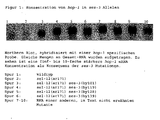
- These mutations are characterized by the fact that they alter the expression or activity of ses-3 , in particular reduce. That is, certain mutations in the ses-3 gene cause, for example, the egg-laying defect caused by certain sel-12 mutations to be resolved, and the double mutants (sel-12 - ; ses- 3 - ) become normal again Show wild-type phenotype. More detailed investigations have shown that these mutations in the ses-3 gene lead to the activation of hop-1 in the sel-12 mutants, ie the hop-1 presenilin protein takes over the function of the defective sel-12 presenilin protein ( FIG. 1 ).
- the present inventors have the new ses-3 gene on the C genome. elegans localized and sequenced.
- the present invention discloses an isolated nucleic acid molecule encoding SES-3 protein, as well as
- the invention discloses a vector comprising such isolated nucleic acid molecules or fragments thereof.
- the invention discloses the SES-3 proteins encoded by the nucleic acid molecules and mutated SES-3 proteins or fragments thereof as well as antibodies generated with the aid of these proteins.
- the invention relates to a transgenic C. elegans which comprises an isolated nucleic acid molecule encoding SES-3 protein or an isolated mutant nucleic acid molecule.
- the invention relates to transgenic C. elegans, which have a ses-3 allele, which reduces the activity of ses-3 resp. The activity of sel-12 or hop-1 increases.
- transgenic C. elegans is also understood to mean a C. elegans in which the genome has been altered by mutation, and which therefore has a mutated ses-3 gene or the ses-3 gene has been removed therefrom.
- the invention relates to uses of such nucleic acid molecules for generating model systems for further research into this disease.
- the invention relates to the use of transgenic C. elegans in a method for the identification and / or characterization of substances that reduce the activity of ses-3, respectively. Increase the activity of sel-12 or hop-1.
- the nucleic acid molecule is a DNA molecule, in particular a cDNA molecule or a genomic DNA molecule, or an RNA molecule.
- the SES-3 has the identical or substantially the same amino acid sequence as the amino acid sequence shown in SEQ ID NO: 1, wherein the substantially same amino acid sequence has a sequence similarity due to substitution, deletion, insertion or addition of at least 90 % to the amino acid sequence shown in SEQ ID NO: 1.
- the present invention is based on the discovery that a new gene, ses-3, could be identified in C. elegans , which interacts with the C. elegans presenilein genes sel-12 and hop-1 and thus plays an important role in the development of the Alzheimer's disease plays.
- ses-3 gene For example, several mutations in the ses-3 gene, including the complete deletion of the ses-3 gene, resulted in the suppression or suppression of certain altered phenotypes caused by sel-12 mutations.
- the suppression of such sel-12 defects in ses-3 mutants is achieved by significantly derepressing the expression of hop-1 and the HOP-1 protein is believed to be able to take over the function of the defective sel-12 protein.
- the identified ses-3 gene encodes a protein that contains a FAD binding site between amino acid 137 and amino acid 264, as well as an amino-oxidase motif between amino acid 264 and amino acid 677 ( FIG. 2 ).
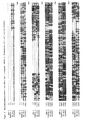
- the SES-3 protein shows phylogenetic relatedness to the human protein KIAA0601 and to the Drosophila melanogaster protein ALT1, as well as a gene for another, similar C. elegans protein T08D10.2 was identified by computer search (BLAST search program). The degree of homology is in the Figures 3 and 4 described.
- the present invention discloses an isolated nucleic acid molecule encoding SES-3 protein. Furthermore, the invention discloses isolated nucleic acid molecules encoding mutant SES-3 proteins.
- the invention discloses isolated nucleic acid molecules, in particular DNA, such as cDNA or genomic DNA molecules, but also, for example, RNA molecules encoding a C. elegans SES-3 protein having the amino acid sequence given in SEQ ID NO: 1, especially those having a nucleic acid sequence given in SEQ ID NO: 2.
- nucleic acid molecules whose nucleotide sequence has at least 75%, in particular at least 80%, especially at least 85%, preferably at least 90%, particularly preferably at least 95% and most preferably at least 98% sequence similarity to the nucleic acid molecules mentioned, in particular those which hybridize under stringent conditions with the mentioned nucleic acid molecules.
- Such a hybridization preferably takes place under low-stringency conditions, in a further embodiment also under conditions of high stringency.
- hybridization in 3 ⁇ SSC at room temperature to 65 ° C. is understood to mean under low stringency conditions and hybridization in 0.1 ⁇ SSC at 68 ° C. under high-stringency conditions.
- SSC is an abbreviation for a 0.15 M sodium chloride, 0.015 M trisodium citrate buffer.
- nucleic acid molecules with nucleic acid sequence similarity to the nucleic acid sequence given in SEQ ID NO: 2 also include, in particular, allelic variants of the indicated nucleic acid sequence, which in particular include the abovementioned mutations.
- the invention also discloses the nucleic acid molecules having in each case a nucleic acid sequence complementary to the above-described nucleic acid sequences.
- isolated nucleic acid molecule refers to nucleic acid molecules that are substantially purified from the majority of the different nucleic acid molecules from the parent cells. However, preparations of isolated nucleic acid molecules can readily contain other components, such as salts, substances from the medium, or even residual components of the producer cells, e.g. various proteins, included.
- the invention also describes vectors which contain a nucleic acid molecule according to the invention which codes for SES-3 protein or mutated SES-3 proteins. Described are also vectors which have a fragment of a nucleic acid molecule according to the invention.
- the nucleic acid molecule is linked to a promoter which ensures expression of the nucleic acid molecule in the organism used for expression.
- C. elegans For expression in C. elegans is used in particular one of the known C. elegans promoters (http://chinook.uoregon.edu/promoters.html).
- the vector may be, for example, a plasmid, a cosmid, a bacmid, a virus or a bacteriophage.
- the invention also describes the polypeptides or proteins which are encoded by the described nucleic acid molecules, in particular SES-3 protein from C. elegans having the amino acid sequence given in SEQ ID NO: 1 and the abovementioned mutated SES-3 proteins and by substitution thereof, Modification, deletion, insertion or addition of amino acid-derived polypeptides or proteins which at least 75%, in particular at least 80%, especially at least 85%, preferably at least 90%, particularly preferably at least 95% and am most prefer to have at least 98% sequence similarity to the mentioned amino acid sequences.
- Equally described are fusion proteins which contain polypeptides, proteins or protein fragments fused to a different protein or a different protein segment, eg a marker or indicator protein. Part of the invention are also fragments of the above-mentioned proteins or polypeptides.
- the invention extends to transgenic organisms which comprise a recombinant nucleic acid sequence - optionally integrated into a chromosome or else extrachromosomally - which contains a nucleic acid molecule according to the invention which codes for Ses-3 protein, mutated Ses-3 protein or fragments thereof as transgene ,
- the transgenic organism is C. elegans, which expresses Ses-3 protein from C. elegans or a polypeptide or protein derived therefrom.
- transgenic C. elegans have a ses-3 allele that reduces, enhances, or eliminates the activity of ses-3.
- Part of the invention are also those transgenic C. elegans, to which the ses-3 gene has been completely removed.
- the present invention relates to transgenic C. elegans having a ses-3 allele which compensates for the oviposited defect phenotype (Egl) in sel-12 mutants.
- the present invention relates to transgenic C. elegans having a ses-3 allele which enhances the activity of hop-1 or sel-12.
- the invention also encompasses the use of the nucleic acid molecule described above for generating a model organism for the further investigation and investigation of neurological, in particular neurodegenerative disorders.
- Medicaments for the treatment of neurological, in particular neurodegenerative, diseases are obtainable, for example, by constructing a model organism with the aid of such a nucleic acid molecule, wherein the substances found with the aid of this model organism are formulated into a drug PCT / EP01 / 03214 of the same applicant.
- the invention relates to the use of transgenic C. elegans having a nucleic acid molecule described above in a method for identifying and / or characterizing, in particular reducing or eliminating ses-3 activity. Furthermore, the invention relates to the use of transgenic C. elegans having a nucleic acid molecule described above in a method for the identification and / or characterization of substances that increase hop-1 or sel-12 activity.
- the invention relates to the use of such transgenic C. elegans in a method for the identification and / or characterization of substances which can be used as active ingredients for the treatment and / or prevention of Alzheimer's disease.
- a homologous gene is in particular the gene KIAA0601.
- the invention describes the use of substances which increase the expression of a human presenilin for the treatment of Alzheimer's disease, as well as these substances themselves.
- substances which activate the human presenilin gene 1 or 2 and the expression of the human presenilin protein Increase 1 or 2.
- These substances include those that cause a change in ses-3 activity in C. elegans and / or increase sel-12 or hop -1 presenilin activity.
- this invention may also be useful in the treatment of sporadic, age-dependent, and non-mutation-linked cases of Alzheimer's disease. It is expected that the reduction of expression by an increase in presenilin activity reduces the formation of Aß4, in particular Aß42, thereby delaying the onset of the disease.
- the invention also mentions the use of the human homologous gene (KIAA0601) as well as the use of the homologous Drosophila melanogaster gene FIG. 4 (ALT1) and functionally similar genes, in particular from C. elegans, for the discovery of substances that can be used as active ingredients for the treatment and / or prevention of Alzheimer's disease.
- the invention mentions the use of such genes for the discovery of substances which can increase the activity of human presenilins.
- the invention also mentions transgenic organisms containing these homologous or functionally similar genes and the use of such organisms, in particular C. elegans organisms, in a method for the identification and / or characterization of substances that increase hop-1 or sel-12 activity or reduce ses-3 activity.
- ses-3 suppress the oviposition defect of sel-12 mutants almost completely. 95% of sel-12 (ar171); ses-3 (by101) double mutant animals showed a wild-type egg-laying behavior, while 5% of the animals had defects in oviposition that correspond to the defects of the sel-12 single mutant. Mutations in ses-3 are able to suppress all known sel- 12 mutations. It can be concluded that ses-3 is not allele specific. Sel-12 (ar171); ses-3 (by101) Double mutant animals lay between 180 and 280 eggs, which lead to offspring; in contrast to the sel-12 (ar171) single mutant, which produces an average of 60 offspring.
- the sel-12 (ar171); ses-3 (by101) double mutants terminate their oviposition after about 2-3 days and do not die with a "bag of worms" phenotype, as is common for the sel-12 single mutation.
- Sel-12 (ar171); ses-3 (by101) Double mutant animals show a slower growth behavior per generation compared to wild-type animals by about one day.
- ses-3 was localized as a recessive mutation on the right arm of chromosome I. Since the ses-3 mutation was generated by transposon mutagenesis, it was likely that the mutation was caused by the insertion of a transposon into the coding region of the ses-3 gene. This results in a so-called polymorphism against the sel-12 single mutant strain. This can be obtained after removal of the remaining polymorphisms produced by the mut-7 background by means of outcrossing with the wild-type C. elegans strain N2. The transposons in the so-outcropped sel-12 (ar171); ses-3 (by101) strain can be visualized by transposon display.
- the transposons can be identified that are only present in sel-12 (ar171); ses-3 (by101) double mutant animals are present.
- a Tc3 insertion in the 7 exon of the gene Y40B1B.6 was identified, which could not be separated from the ses-3 mutation by further outcrossing.
- the.fosmids H14o4, H37o19 and H18N7 were isolated, which contain the ses-3 genomic region.
- the fosmids H14o4 and H37o19 contain the complete genomic sequence of Y40B1B. 6, while H18N7 only part of the Y40B1b. 6 genomic sequence containing exons 7 and 8 missing.
- Transgenes with single of these fosmids were inserted into the strain sel-12 (ar171); ses-3 (by101) and tested the anti-suppressor activity of the transgenic animals.
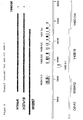
- ses-3 (Y40B1B.6) is organized in 8 exons and forms an operon with the gene Y40b1B. 5 (see FIG. 6 ).
- the for Y40B1B. 6 predicted cDNA is consistent with the ses-3 specific cDNA of 2313 base pairs (SEQ ID NO: 2).
- Ses-3 encodes a protein of 770 amino acids (SEQ ID NO: 1).
- a motif search with Ses-3 showed that Ses-3 has an amino-oxidase motif over most of its length and a FAD binding site at the N-terminus ( FIG. 2 ).
- Sequence comparisons with the database revealed homologies to another C. elegans gene T08D10.2, as well as to a human EST KIAA0601 and a predicted Drosophila gene alt1 ( FIG. 3 ).
- FIG. 4 shows the relationship of genes among each other.
- a stadium-specific Northern blot shows that ses-3 is expressed at all stages of development.
- ses-3 mutations are unable to control the sterility of a sel-12; to suppress hop-1 ses-3 .
- hop-1 is necessary for the suppression of sel-12 .
- a Northern blot of sel-12; ses-3 double mutants with the ses-3 alleles by101, by119, by128 and by139 show that hop-1 expression is up-regulated in the L1 stage relative to sel-12 and the wild-type strain N2. Since hop-1 is able to replace sel-12 , it replaces hop-1 sel-12 in the early larval stages.
Landscapes
- Health & Medical Sciences (AREA)
- Chemical & Material Sciences (AREA)
- Life Sciences & Earth Sciences (AREA)
- Organic Chemistry (AREA)
- Tropical Medicine & Parasitology (AREA)
- General Health & Medical Sciences (AREA)
- Medicinal Chemistry (AREA)
- Neurology (AREA)
- Molecular Biology (AREA)
- Neurosurgery (AREA)
- Genetics & Genomics (AREA)
- Proteomics, Peptides & Aminoacids (AREA)
- Biophysics (AREA)
- Biomedical Technology (AREA)
- Biochemistry (AREA)
- Bioinformatics & Cheminformatics (AREA)
- Gastroenterology & Hepatology (AREA)
- Engineering & Computer Science (AREA)
- Zoology (AREA)
- Toxicology (AREA)
- Chemical Kinetics & Catalysis (AREA)
- Psychiatry (AREA)
- Public Health (AREA)
- Animal Behavior & Ethology (AREA)
- Pharmacology & Pharmacy (AREA)
- Nuclear Medicine, Radiotherapy & Molecular Imaging (AREA)
- General Chemical & Material Sciences (AREA)
- Veterinary Medicine (AREA)
- Hospice & Palliative Care (AREA)
- Peptides Or Proteins (AREA)
- Medicines That Contain Protein Lipid Enzymes And Other Medicines (AREA)
- Pharmaceuticals Containing Other Organic And Inorganic Compounds (AREA)
- Micro-Organisms Or Cultivation Processes Thereof (AREA)
- Investigating Or Analysing Biological Materials (AREA)
- Medicines Containing Material From Animals Or Micro-Organisms (AREA)
- Preparation Of Compounds By Using Micro-Organisms (AREA)
Description
- Die vorliegende Erfindung betrifft transgene Organismen, welche isolierte Nukleinsäuremoleküle, die für ses-3 bzw. mutierte ses-3 codieren, enthalten, Verwendungen solcher Nukleinsäuremoleküle zur Erzeugung von Modellorganismen und die Verwendung von transgenen Organismen in Verfahren zur Identifizierung von Substanzen, welche die ses-3 Aktivität verändern, resp. die Presenilin Aktivität (z.B. die von sel-12 oder hop-1) steigern.
- Die Alzheimer' sche Krankheit ist neben der Parkinsonschen Krankheit die bekannteste neurodegenerative Erkrankung. Das charakteristische Merkmal der Alzheimer'schen Erkrankung ist die Entwicklung neuronaler Proteinaggregationen, sogenannter Plaques, die im wesentlichen aus einem unlöslichen, 4 kDa großen Peptid namens Amyloid Beta-Peptide (Aß4) bestehen. Untersuchungen der letzten Jahre deuten darauf hin, dass die Bildung von Aß4 ursächlich an der Entstehung der Krankheit beteiligt ist. Dominante Mutationen in drei Genen verursachen familiäre Formen der Erkrankung (FAD Familial Alzheimer's Disease). Es wurde gefunden, dass eines der betroffenen Gene für das Amyloid Precursor Protein (APP) kodiert, das durch drei Proteasen prozessiert werden kann, wobei unter anderem Aß4 entsteht. FAD Mutationen in APP erhöhen die Produktionsmenge von Aß42, einer 42 Aminosäure langen Variante von Aß4. Molekulargenetische Untersuchungen von Familien, in denen die Alzheimer'sche Krankheit auftrat, haben zu der Identifizierung der humanen Gene Presenilin 1 und Presenilin 2 geführt (Rogaev et al. 1995, Nature 376, 775-778; Levy-Lahad, E. et al. 1995, Science 269: 973-977), die, durch bestimmte Mutationen verändert, ursächlich am Ausbruch der Alzheimer'schen Krankheit beteiligt sind und welche außerdem während der Entwicklung eine Schlüsselrolle in dem Notch-Signaltransduktionsweg spielen. Presenilinproteine sind ER-Golgi lokalisiert und besitzen mindestens 6 Transmembrandomänen. Es wurde gefunden, dass Mutationen in PS1 und PS2 die Bildung von Aß4 beeinflussen und an der Verursachung der Alzheimer'schen Erkrankung beteiligt sind, vermutlich über die Entstehung von Amyloidablagerungen. Mitglieder der Presenilinfamilie wurden unter anderem in Maus, Drosophila melanogaster, Xenopus laevis und im Fadenwurm Caenorhabditis elegans identifiziert. Obwohl mutierte Preseniline die Prozessierung von APP im Menschen beeinflussen, ist ihre natürliche Funktion dort nicht detailliert bekannt; eine Funktion als APP-Protease (gamma-Sekretase) wurde postuliert. Aus weiteren Untersuchungen mit menschlichen Zellkulturen ergaben sich Hinweise darauf, dass Preseniline bei der intrazellulären Proteolyese von Notch-ähnlichen Rezeptoren nach deren Aktivierung durch Ligandenbindung eine Rolle spielen. Daher wird angenommen, dass die Preseniline bei der Prozessierung von mindestens zwei unterschiedlichen Membranproteinen (APP und Notch) beteiligt sind. Es wird gegenwärtig kontrovers diskutiert, ob die Preseniline selbst die Proteasen in dieser Prozessierung sind, oder ob sie Kofaktoren dieser Reaktionen sind oder die Proteolyse indirekt beeinflussen (Haass, C. et al. 1999, Science 286 (5441): 916-919).
- Ausgehend von den erwähnten Presenilin-Genen wird intensiv geforscht, um die molekularen Erkrankungsprozesse aufzuklären und um Arzneimittel für die Behandlung und Prävention der Alzheimer'schen Krankheit zu entwickeln. Insbesondere wird dabei nach Faktoren gesucht, die die Aktivität der Presenilin-Gene beeinflussen. Dabei kommt der Suche nach Suppressoren des Presenilin-Mutanten Phänotyps eine besondere Bedeutung zu. Suppressoren können Mutationen in anderen Genen sein, die die Notwendigkeit der Presenilinfunktion eliminieren, oder es können Substanzen sein, die die Aktivität anderer Gene oder der Preseniline modulieren, so dass der Presenilin-Mutanten-Defekt keine phänotypischen Auswirkungen hat.
- Als ein bevorzugter Modellorganismus wurde bei solchen Untersuchungen vielfach ein Nematode, insbesondere Caenorhabditis elegans eingesetzt. Der Vorteil eines Nematodenmodells, insbesondere des C. elegans-Modells, besteht vor allem in der Eignung für ein Hochdurchsatzverfahren (HTS; High-Throughput-Screening), der Möglichkeit einer schnelleren genetischen Analyse durch geringere Generationszeit (2-3 Tage) und einem detaillierterem Wissen über molekulare und funktionelle Eigenschaften des Nervensystems in C. elegans. Da C. elegans in Mikrotiterplatten gehalten werden kann, können mit diesem Testsystem 10.000 und mehr Substanzen in kurzer Zeit per HTS am lebenden Wurm ausgetestet werden.
- Im Fadenwurm C. elegans wurden bisher drei Presenilingene namens sel-12, hop-1 und spe-4 identifiziert. Spe-4 ist das divergenteste Mitglied der Familie. Mutationen in spe-4 führen zu einem Defekt der cytoplasmatischen Partitionierung während der Spermatogenese (L'Hernault, S. W. et al. 1992, J Cell Biol 119: 55-68). Mutationen in hop-1 haben keinen sichtbaren Phänotyp, führen aber in Kombination mit Mutationen in sel-12 zu einem synthetisch letalen Phänotyp (Li, X. et al. 1997, Proc Natl Acad Sci USA 94: 12204-12209). Sel-12 ähnelt den menschlichen PS1 und PS2 am stärksten und ist auch das am besten studierte Presenilingen in C. elegans. Es wurde gefunden, daß bestimmte sel-12 Mutanten einen Eiablagedefekt aufweisen und morphologische Veränderungen der Vulva-Entwicklung zeigen (Levitan, D. et al. 1995, Nature 377: 351-4). Sel-12 ist 50 % identisch zu humanen Presenilinen und der Eiablagedefekt von sel-12 Mutanten lässt sich durch transgene Expression von PS1 oder PS2 vom sel-12 Promoter aus kompensieren (Baumeister et al., 1997, Genes and Function 1: 149-159). Dies zeigt, dass PS1 und PS2 funktionelle Homologie zu sel-12 aufweisen. Sel-12 Mutationen wurden zuerst als Suppressoren des Multivulva Phänotyps einer Funktionsgewinnmutante (gain-of-function) im lin-12 und glp-1 Notch Rezeptor-Gen identifiziert. Notch Rezeptoren kontrollieren die Determinierung von Zellschicksalen in vielen mehrzelligen Organismen. Außerdem wurde gezeigt, dass der Phänotyp von sel-12 Mutanten dem von schwachen Funktionsverlust-Mutanten von lin-12 ähnelt. Zusammenfassend lässt sich feststellen, dass Preseniline bei der Notch Signaltransduktion in zahlreichen Organismen, einschließlich den Säugern, eine wichtige Rolle spielen.
- Die gegenwärtigen Erfinder haben nun überraschend festgestellt, dass bestimmte Mutationen in einem weiteren Gen, dem von den Erfindern erstmals identifizierten ses-3-Gen von C. elegans, einen Defekt, insbesondere den Eiablagedefekt einer sel-12-Mutante unterdrücken können. Diese Mutationen zeichnen sich dadurch aus, dass sie die Expression oder Aktivität von ses-3 verändern, insbesondere vermindern. Das heißt, bestimmte Mutationen in dem ses-3-Gen führen dazu, dass z.B. der Eiablagedefekt, der durch bestimmte sel-12-Mutationen verursacht wird, behoben wird und die Doppelmutanten (sel-12-; ses- 3- ) wieder einen normalen Wildtyp-Phänotyp zeigen. Genauere Untersuchungen ergaben, daß diese Mutationen in dem ses-3-Gen bei den sel-12-Mutanten zu einer Aktivierung von hop-1 führen, d.h. das hop-1 Presenilin-Protein übernimmt die Funktion des defekten sel-12 Presenilin-Proteins (
Figur 1 ). - Die gegenwärtigen Erfinder haben das neue ses-3-Gen auf dem Genom von C. elegans lokalisiert und sequenziert.
- Die vorliegende Erfindung offenbart ein isoliertes Nukleinsäuremolekül, das für SES-3 Protein codiert, sowie
- Weitere Nukleinsäuremoleküle, die für mutierte SES-3 Proteine codieren.
- Darüber hinaus offenbart die Erfindung einen Vektor, der solche isolierten Nukleinsäuremoleküle oder Fragmente davon umfasst.
- Weiterhin offenbart die Erfindung die von den Nukleinsäuremolekühlen codierten SES-3 Proteine und mutierte SES-3-Proteine oder Fragmente davon sowie Antikörper, die mit Hilfe dieser Proteine erzeugt wurden.
- Somit betrifft die Erfindung einen transgenen C. elegans, welcher ein isoliertes, für SES-3-Protein codierendes Nukleinsäuremolekül oder ein isoliertes, mutiertes Nukleinsäuremolekül umfasst. Insbesondere betrifft die Erfindung transgene C. elegans, die ein ses-3 Allel aufweisen, das die Aktivität von ses-3 vermindert resp. Die Aktivität von sel-12 oder hop-1 steigert. In diesem Zusammenhang wird unter transgenem C. elegans auch ein C. elegans verstanden, bei dem das Genom durch Mutation verändert wurde, und der dadurch ein mutiertes ses-3 Gen aufweist, oder dem das ses-3 Gen entfernt worden ist.
- Schließlich betrifft die Erfindung Verwendungen solcher Nukleinsäuremoleküle zur Erzeugung von Modellsystemen zur weiteren Erforschung dieser Erkrankung.
- Insbesondere betrifft die Erfindung die Verwendung von transgenen C. elegans in einem Verfahren zur Identifizierung und/oder Charakterisierung von Substanzen, die die Aktivität von ses-3 vermindern resp. Die Aktivität von sel-12 oder hop-1 steigern.
- Genau gesagt betrifft die Erfindung transgenen C. elegans, der ein Allel des ses-3 Gens aufweist, das den Eiablagedefekt-Phänotyp (Eg1) in sel-12C. elegans Mutanten kompensiert, wobei das Ses-3 Gen "
- a) die Sequenz gemäß SEQ ID NO 2 aufweist, oder
- b) für ein Protein mit der Aminosäurensequenz gemäß SEQ ID NO 1 codiert.
- Die Erfindung betrifft ferner die Verwendung eines isolierten Nukleinsäuremoleküls mit der Sequenz gemäß SEQ ID NO 2 oder 3 oder eines isolierten Nukleinsäuremoleküls, das für Ses-3 mit der Sequenz gemäß SEQ IS NO 1 kodiert, oder eines isolierten Nukleinsäuremoleküls mit Sequenz 2 oder 3, wobei das letztere Nukleinsäuremolekül eine oder beide der folgenden Mutationen aufweist:
- a) Deletion in Exon 8 von Position 2015-2169 in Bezug auf SEQ ID NO 2
- b) TC3 Insertion an Position 1817 in Bezug auf SEQ ID NO 2 zur Erzeugung eines Modellorganismus zur Untersuchung und Erforschung neurologischer, insbesondere neurodegenerativer Erkrankungen.
- Gemäß einer bevorzugten Ausführungsform der erfindungsgemäßen Verwendung ist das Nukleinsäuremolekül ein DNA-Molekül, insbesondere ein cDNA-Molekül oder ein genomisches DNA Molekül, oder ein RNA-Molekül.
- Gemäß einer weiteren bevorzugten Ausführungsform der erfindungsgemäßen Verwendung weist das SES-3 die identische oder im wesentlichen dieselbe Aminosäuresequenz wie die in SEQIDNO: 1 gezeigte Aminosäuresequenz auf, wobei die im wesentlichen selbe Aminosäuresequenz eine Sequenzähnlichkeit aufgrund von Substitution, Deletion, Insertion oder Addition von mindestens 90% zu der in SEQIDNO: 1 gezeigten Aminosäuresequenz aufweist.
- Die vorliegende Erfindung basiert darauf, dass ein neues Gen, ses-3, in C. elegans identifiziert werden konnte, welches mit den C. elegans-Presenilin-Genen sel-12 und hop-1 wechselwirkt und damit eine wichtige Rolle bei der Entwicklung der Alzheimer'schen Krankheit spielt.
- So führten verschiedene Mutationen in dem ses-3-Gen, darunter auch die vollständige Deletion des ses-3-Gens, dazu, dass bestimmte von sel-12-Mutationen hervorgerufene veränderte Phänotypen supprimiert bzw. unterdrückt wurden. Die Suppression solcher sel-12-Defekte in ses-3-Mutanten wird dadurch erreicht, dass sie die Expression von hop-1 deutlich dereprimieren und das HOP-1 Protein vermutlich die Funktion des defekten sel-12-Proteins übernehmen kann.
- Das identifizierte ses-3-Gen codiert für ein Protein, das eine FAD Bindestelle zwischen Aminosäure 137 und Aminosäure 264 enthält sowie ein Amino-Oxidase-Motiv zwischen Aminosäure 264 und Aminosäure 677 (
Figur 2 ). Das SES-3 Protein zeigt phylogenetische Verwandtschaft zu dem humanen Protein KIAA0601 und zu dem Drosophila melanogaster Protein ALT1, außerdem wurde durch Computerrecherche (BLAST Suchprogramm) ein Gen für ein weiteres, ähnliches C. elegans Protein T08D10.2 identifiziert. Der Grad der Homologie ist in denFiguren 3 und4 beschrieben. - Somit offenbart die vorliegende Erfindung ein isoliertes Nukleinsäuremolekül, das für SES-3-Protein codiert. Weiterhin offenbart die Erfindung isolierte Nukleinsäuremoleküle, die für mutierte SES-3 Proteine codieren.
- Genau gesagt offenbart die Erfindung isolierte Nukleinsäuremoleküle, insbesondere DNA-, wie cDNA- oder genomische DNA-Moleküle, aber auch z.B. RNA-Moleküle, die ein SES-3 Protein aus C. elegans mit der in SEQ ID NR:1 angegebenen Aminosäuresequenz codieren, insbesondere jene, die eine in SEQ ID NR:2 angegebene Nukleinsäuresequenz aufweisen.
- In der Erfindung ebenfalls beschrieben werden auch isolierte Nukleinsäuremoleküle, deren Nukleotidsequenz mindestens 75%, insbesondere mindestens 80%, speziell mindestens 85%, bevorzugt mindestens 90%, besonders bevorzugt mindestens 95% und am meisten bevorzugt mindestens 98% Sequenzähnlichkeit zu den erwähnten Nukleinsäuremolekülen aufweisen, insbesondere solche, die unter stringenten Bedingungen mit den erwähnten Nukleinsäuremolekülen hybridisieren. Vorzugsweise erfolgt eine solche Hybridisierung unter niedrig stringenten Bedingungen, in einer weiteren Ausführungsform auch bei hochstringenten Bedingungen. Im Rahmen dieser Beschreibung wird unter niedrig stringenten Bedingungen eine Hybridisierung in 3 x SSC bei Raumtemperatur bis 65°C und unter hochstringenten Bedingungen eine Hybridisierung in 0,1 x SSC bei 68°C verstanden. SSC steht als Abkürzung für einen 0,15 M Natriumchlorid, 0,015 M Trinatriumcitrat-Puffer.
- Die Nukleinsäuremoleküle mit Nukleinsäuresequenzähnlichkeit zu der in SEQ ID NR:2 angegebenen Nukleinsäuresequenz umfassen insbesondere auch allelische Varianten der angegebenen Nukleinsäuresequenz, die insbesondere die oben erwähnten Mutationen einschließen.
- Die Erfindung offenbart auch die Nukleinsäuremoleküle mit jeweils zu den oben erläuterten Nukleinsäuresequenzen komplementärer Nukleinsäuresequenz.
- Der Begriff "isoliertes Nukleinsäuremolekül" bezieht sich im vorliegenden Zusammenhang auf Nukleinsäuremoleküle, die im wesentlichen gereinigt von der Hauptmenge der andersartigen Nukleinsäuremoleküle aus den Ausgangs- bzw. Produzentenzellen vorliegen. Präparationen von isolierten Nukleinsäuremolekülen können jedoch ohne weiteres weitere Bestandteile, wie Salze, Substanzen aus dem Medium oder auch restliche Bestandteile der Produzentenzellen, wie z.B. diverse Proteine, enthalten.
- Die Erfindung beschreibt ebenso Vektoren, welche ein erfindungsgemäßes Nukleinsäuremolekül, das für SES-3 Protein oder mutierte SES-3 Proteine codiert, enthalten. Beschrieben sind auch Vektoren, die ein Fragment eines erfindungsgemäßen Nukleinsäuremoleküls aufweisen. Das Nukleinsäuremolekül ist dabei mit einem Promoter verknüpft, der für eine Expression des Nukleinsäuremoleküls in dem zur Expression verwendeten Organismus sorgt. Für eine Expression in C. elegans wird dabei insbesondere einer der bekannten C. elegans-Promotoren (http://chinook.uoregon.edu/promoters.html) verwendet.
- Der Vektor kann beispielsweise ein Plasmid, ein Cosmid, ein Bacmid, ein Virus oder ein Bakteriophage sein.
- Die Erfindung beschreibt auch die Polypeptide oder Proteine, die von den erläuterten Nukleinsäuremolekülen codiert werden, insbesondere SES-3 Protein aus C. elegans mit der in SEQ ID NR:1 angegebenen Aminosäuresequenz und die oben erwähnten mutierten SES-3 Proteine sowie davon durch Substitution, Modifizierung, Deletion, Insertion oder Hinzufügung von Aminosäuren abgeleitete Polypeptide oder Proteine, die mindestens 75%, insbesondere mindestens 80%, speziell mindestens 85%, bevorzugt mindestens 90%, besonders bevorzugt mindestens 95% und am meisten bevorzugen mindestens 98% Sequenzähnlichkeit zu den erwähnten Aminosäuresequenzen aufweisen. Gleichenfalls beschrieben sind Fusionsproteine, die Polypeptide, Proteine oder Proteinfragmente fusioniert an ein andersartiges Protein oder einen andersartigen Proteinabschnitt, z.B. ein Marker- oder Indikatorprotein, enthalten. Teil der Erfindung sind auch Fragmente der oben erwähnten Proteine oder Polypeptide.
- Die Erfindung erstreckt sich auf transgene Organismen, die eine rekombinante Nukleinsäuresequenz - ggf. in ein Chromosom integriert oder auch extrachromosomal - umfassen, die ein erfindungsgemäßes Nukleinsäuremolekül, das für Ses-3 Protein, mutiertes Ses-3 Protein oder Fragmente davon codiert, als Transgen enthält. Der transgene Organismus ist C. elegans, der Ses-3 Protein aus C. elegans oder ein davon abgeleitetes Polypeptid oder Protein exprimiert.
- Gemäß einem Aspekt der Erfindung weisen transgene C. elegans ein ses-3 Allel auf, das die Aktivität von ses-3 vermindert, verstärkt oder ausschaltet. Teil der Erfindung sind auch solche transgene C. elegans, denen das ses-3-Gen vollständig entfernt worden ist. Insbesondere betrifft die vorliegende Erfindung transgene C. elegans, die ein ses-3 Allel aufweisen, das den Eiablagedefekt Phänotyp (Egl) in sel-12-Mutanten kompensiert. Zudem betrifft die vorliegende Erfindung transgene C. elegans, die ein ses-3 Allel aufweisen, das die Aktivität von hop-1 oder sel-12 steigert.
- Die Erfindung erfasst auch die Verwendung des vorstehend beschriebenen Nukleinsäuremoleküls zur Erzeugung eines Modellorganismus zur weiteren Untersuchung und Erforschung neurologischer, insbesondere neurodegenerativer Erkrankungen.
- Arzneimittel zur Behandlung neurologischer, insbesondere neurodegenerativer Erkrankungen sind beispielsweise dadurch erhältlich, dass mit Hilfe eines solchen Nukleinsäuremoleküls (ein Modellorganismus aufgebaut wird, wobei die mit Hilfe dieses Modellorganismus aufgefundenen Substanzen zu einem Arzneimittel formuliert werden. Für nähere Einzelheiten hierzu wird z.B. auf die internationale Anmeldung
PCT/EP01/03214 desselben Anmelders verwiesen. - Insbesondere betrifft die Erfindung die Verwendung von transgenen C. elegans, die ein vorstehend beschriebenes Nukleinsäuremolekül aufweisen, in einem Verfahren zur Identifizierung und/oder Charakterisierung von Substanzen, die die ses-3 Aktivität verändern, insbesondere vermindern oder eliminieren. Des weiteren betrifft die Erfindung die Verwendung von transgenen C. elegans, die ein vorstehend beschriebenes Nukleinsäuremolekül aufweisen, in einem Verfahren zur Identifizierung und/oder Charakterisierung von Substanzen, die die hop-1 oder sel-12 Aktivität steigern.
- Zudem betrifft die Erfindung die Verwendung ebensolcher transgener C. elegans in einem Verfahren zur Identifizierung und/oder Charakterisierung von Substanzen, die als Wirkstoffe zur Behandlung und/oder Prävention der Alzheimerschen Krankheit verwendet werden können. Im Hinblick auf die Analogie zu humanen Zellen und im Hintergrund zur gezeigten funktionalen Ähnlichkeit des Notch Signalwegs und der Presenilinfunktion in C. elegans und Mensch wird davon ausgegangen, dass die Fehlfunktion der FAD Presenilinmutanten äquivalent durch Mutation eines homologen oder funktional äquivalenten Gens zu ses-3 im Mensch kompensiert werden kann. Ein solches homologes Gen ist insbesondere das Gen KIAA0601. Im Rahmen der Erfindung wird daher erwartet, dass ein Defekt in einem humanen ses-3 Homologen oder funktional äquivalenten Gen zu einer Steigerung der Expression des nicht von der FAD Mutation betroffenen Presenilin-Gens führt.
- Die Erfindung beschreibt die Verwendung von Substanzen, die die Expression eines humanen Presenilin steigern, zur Behandlung der Alzheimer'schen Krankheit, sowie diese Substanzen selbst. Insbesondere fallen unter die Substanzen solche, die das humane Presenilingen 1 oder 2 aktivieren und die Expression des humanen Presenilinproteins 1 oder 2 steigern. Zu diesen Substanzen gehören auch jene, die in C. elegans zu einer Veränderung der ses-3 Aktivität führen, und/oder die sel-12 oder hop-1 Presenilin Aktivität steigern.
- Analog kann diese Erfindung auch bei der Behandlung der sporadischen, altersabhängigen und nicht an Mutationen gekoppelten Fälle der Alzheimer'schen Erkankung von Nutzen sein. Dabei wird erwartet, dass die Minderung der Expression durch eine Steigerung der Presenilinaktivität die Bildung von Aß4, insbesondere von Aß42, vermindert und dadurch der Ausbruch der Erkrankung zeitlich verzögert wird.
- Die Erfindung erwähnt auch die Verwendung des humanen homologen Gens (KIAA0601) sowie die Verwendung des homologen Drosophila melanogaster Gens aus
Figur 4 (ALT1) sowie funktional ähnlicher Gene, insbesondere aus C. elegans, zur Auffindung von Substanzen, die als Wirkstoffe zur Behandlung und/oder Prävention der Alzheimer'schen Krankheit verwendet werden können. Insbesondere erwähnt die Erfindung die Verwendung solcher Gene zur Auffindung von Substanzen, die die Aktivität von humanen Presenilinen steigern können. Die Erfindung erwähnt auch transgene Organismen, die diese homologen oder funktional ähnlichen Gene enthalten und die Verwendung solcher Organismen, insbesondere C. elegans Organismen, in einem Verfahren zur Identifizierung und/oder Charakterisierung von Substanzen, die die hop-1 oder sel-12 Aktivität steigern oder die ses-3 Aktivität vermindern. - Kurze Beschreibung der Figuren und des Sequenzprotokolls
- Fig. 1:
- Konzentration von hop-1 in ses-3 Allelen. Northern Blot, hybridisiert mit einer hop-1 spezifischen Probe.
- Fig. 2:
- Domänenstruktur von SES-3 Protein.
- Fig. 3:
- Aminosäurevergleich von SES-3 mit homologen Proteinen.
- Fig. 4:
- Phylogenetische Verwandtschaft von SES-3 sowie Homolo- gie.
- Fig. 5:
- Nachweis der ses-3 mRNA in Abhängigkeit der verschiede- nen Mutationen. Northern Blot.
- Fig. 6:
- Genomische Struktur der ses-3 Region und Darstellung der Transgene mit genomischer DNA, die ses-3 Mutanten komplementieren.
- SEQ ID NR:1:
- SES-3 Aminosäuresequenz
- SEQ ID NR:2:
- ses-3 cDNA Sequenz
- SEQ ID NR:3:
- Genomische Sequenz eines Subfragments von Y40B1B. 6, das ses-3 Mutanten komplementieren kann. Dieses Fragment enthält folglich alle für die Ex- pression von ses-3 notwendigen Sequenzen und Pro- motorabschnitte.
- Die Erfindung wird im folgenden anhand von Beispielen näher erläutert.
- Zur Isolierung von Suppressoren des Eiablagedefektes von sel-12 Mutanten Tieren in C. elegans wurde die sel-12 (ar171). Mutation in einen Mutatorstamm mut-7(pk704) eingekreuzt. Der so erzeugte Stamm zeigt eine temperaturabhängig Aktivierung aller Transposons von C. elegans bei 20 °C. Zur Mutagenese wurden sel-12(ar171) unc-1(e538); mut-7(pk704) Tiere bei 20 °C auf 3,5 cm NGM Agar Platten mit OP50 kultiviert. Nach jeder Generation wurde nach dem Auftreten von Tieren gesucht, die in der Lage waren, Eier zu legen. Aus der Analyse von etwa 30'000 haploiden Genomen wurden zwei unabhängige Mutanten-Tiere isoliert, die in der Lage waren, reproduzierbar Eier zu legen. Das Eiablageverhalten dieser Tiere war mit dem von Wildtyptieren vergleichbar. Eine dieser Mutationen wurde ses-3(by101) genannt.
- Mutationen in ses-3 supprimieren den Eiablagedefekt von sel-12 Mutanten nahezu vollständig. 95% der sel-12(ar171); ses-3(by101) Doppelmutanten Tiere zeigten ein wildtypähnliches Eiablageverhalten, während 5% der Tiere Defekte in der Eiablage aufwiesen, die den Defekten der sel-12 Einzelmutante entsprechen. Mutationen in ses-3 sind in der Lage, alle bekannten sel-12 Mutationen zu supprimieren. Daraus kann gefolgert werden, dass ses-3 nicht allelspezifisch wirkt. Sel-12(ar171); ses-3(by101) Doppelmutanten Tiere legen zwischen 180 und 280 Eier, die zu Nachkommen führen; im Gegensatz zur sel-12(ar171) Einzelmutante, die im Durchschnitt 60 Nachkommen erzeugt. Die sel-12(ar171); ses-3(by101) Doppelmutanten Tiere beendenden ihre Eiablage nach etwa 2-3 Tagen und sterben nicht mit einem "bag of worms" Phänotyp, wie für die sel-12 Einzelmutation üblich. Sel-12(ar171); ses-3(by101) Doppelmutanten Tiere zeigen gegenüber Wildtyptieren ein um etwa einen Tag verlangsamtes Wachstumsverhalten pro Generation.
- Mittels klassischer Genetik wurde ses-3 als rezessive Mutation auf dem rechten Arm von Chromosom I lokalisiert. Da die ses-3 Mutation mittels einer Tranposonmutagenese erzeugt wurde, war es wahrscheinlich, dass die Mutation durch die Insertion eines Transposons in den kodierenden Bereich des ses-3 Genes hervorgerufen wurde. Hierdurch ergibt sich ein s.g. Polymorphismus gegenüber dem sel-12 Einzelmutanten Stamm. Dieser kann nach Entfernung der restlichen durch den mut-7 Hintergrund erzeugten Polymorphismen mittels Auskreuzung mit dem Wildtyp C. elegans Stamm N2. Die Transposons in dem so ausgekreuzten sel-12(ar171); ses-3(by101) Stamm können mittels Transposondisplay sichtbar gemacht werden. Durch einen Vergleich mit dem Wildtyp sel-12 Stamm können die Transposons identifiziert werden, die nur in den sel-12(ar171); ses-3(by101) Doppelmutanten Tieren vorhanden sind. Mittels dieses Verfahrens wurde ein Tc3 Insertion im 7 Exon des Gens Y40B1B.6 identifiziert, das durch weiteres Auskreuzen nicht von der ses-3 Mutation getrennt werden konnte.
- Zur Rettung des ses-3 Phänotyps wurden die.Fosmide H14o4, H37o19 und H18N7 isoliert, die die ses-3 genomische Region beinhalten. Hierbei beinhalten die Fosmide H14o4 und H37o19 die vollständige genomische Sequenz von Y40B1B. 6, während H18N7 nur einen Teil der Y40B1b. 6 genomischen Sequenz beinhaltet, der die Exons 7 und 8 fehlen. Es wurden Transgene mit einzelnen dieser Fosmide in den Stamm sel-12(ar171); ses-3(by101) injiziert und die Antisuppressor -Aktivität der transgenen Tiere getestet. Alle Klone wurden bei einer Konzentration von 50ng/µl des jeweiligen Fosmids zusammen mit 100ng/µl des dominanten Transformationsmarkers pRF4 (Mello et al., 1991) injiziert. Die Suppression des Eiablagedefektes von sel-12 mutanten Tieren durch ses-3 wurde durch die Anwesenheit der Fosmide H14o4 und H37o19 nahezu vollständig kompensiert (gerettet), während das Fosmid H18N7 nicht in der Lage war, die durch ses-3 vermittelte Suppression von sel-12 zu retten (siehe
Figur 6 ). - ses-3 (Y40B1B. 6) ist in 8 Exons organisiert und bildet ein Operon mit dem Gen Y40b1B. 5 (siehe
Figur 6 ). Die für Y40B1B. 6 vorhergesagte cDNA stimmt mit der für ses-3 bestimmten cDNA von 2313 Basenpaaren überein (SEQ ID NR:2). Ses-3 kodiert für ein Protein von 770 Aminosäuren (SEQ ID NR:1). Eine Motivsuche mit Ses-3 ergab, dass Ses-3 eine Amino-Oxidase Motiv über den Grossteil seiner Länge besitzt und am N-Terminus eine FAD Bindestelle (Figur 2 ). Sequenzvergleiche mit der Datenbank zeigten Homologien zu einem weiteren C. elegans Gen T08D10.2, sowie zu einem humanen EST KIAA0601 und einem vorhergesagten Drosophila Gen alt1 (Figur 3 ).Figur 4 zeigt die verwandtschaftliche Beziehung der Gene untereinander. - Ein Stadien spezifischer Northern Blot zeigt, dass ses-3 in allen Entwicklungsstadien exprimiert wird.
-
- by101:
- ist eine Tc3 Insertion im 7 Exon von Y40B1B. 6 an der Position 1817 der cDNA und beeinflusst die mRNA Expression (
Figur 5 ).
- ist eine Tc3 Insertion im 7 Exon von Y40B1B. 6 an der Position 1817 der cDNA und beeinflusst die mRNA Expression (
- by113:
- wurde aus einer EMS Mutagenese isoliert und zeigt keinen Einfluss auf die mRNA Expression (
Figur 5 ).
- wurde aus einer EMS Mutagenese isoliert und zeigt keinen Einfluss auf die mRNA Expression (
- by119:
- wurde aus einer EMS Mutagenese isoliert und zeigt eine Abschwächung der mRNA Expression (
Figur 5 ).
- wurde aus einer EMS Mutagenese isoliert und zeigt eine Abschwächung der mRNA Expression (
- by128:
- wurde aus einer UV/TMP Mutagenese isoliert und zeigt eine abgeschwächte Expression der mRNA und ein Rearrangement der mRNA und des genomischen Bereichs (
Figur 5 ).
- wurde aus einer UV/TMP Mutagenese isoliert und zeigt eine abgeschwächte Expression der mRNA und ein Rearrangement der mRNA und des genomischen Bereichs (
- by134:
- wurde aus einer UV/TMP Mutagenese isoliert und zeigt eine abgeschwächte Expression der mRNA (
Figur 5 ).
- wurde aus einer UV/TMP Mutagenese isoliert und zeigt eine abgeschwächte Expression der mRNA (
- by139:
- wurde aus einer UV/TMP Mutagenese isoliert und zeigt eine abgeschwächte Expression der mRNA eine verkleinerte Bande, das Auftreten einer zweiten grösseren Bande und eine Deletion in Exon8 von Position 2015 bis 2169 der cDNA (
Figur 5 ).
- wurde aus einer UV/TMP Mutagenese isoliert und zeigt eine abgeschwächte Expression der mRNA eine verkleinerte Bande, das Auftreten einer zweiten grösseren Bande und eine Deletion in Exon8 von Position 2015 bis 2169 der cDNA (
- ses-3 Mutationen sind nicht in der Lage, die Sterilität einer sel-12; hop-1 ses-3 zu supprimieren. Dies demonstriert, dass hop-1 notwendig ist für die Suppression von sel-12. Ein Northern Blot der sel-12; ses-3 Doppelmutanten mit den ses-3 Allelen by101, by119, by128 und by139 zeigt, dass hop-1 Expression in dem L1 Stadium relativ zu sel-12 und dem Wildtypstamm N2 hochreguliert wird. Da hop-1 in der Lage ist, sel-12 zu ersetzen, ersetzt somit hop-1 sel-12 in den frühen larvalen Stadien.
-
- <110> EleGene AG
- <120> Identifizierung von ses-3 sowie dessen Verwendungen
- <130> 88 840
- <160> 3
- <210> 1
<211> 770
<212> PRT, Einbuchstabencode
<213> Caenorhabditit elegans - <223> SES-3 Aminosäuresequenz (Y40B1B. 6)
- <400> 1

- <210> 2
<211> 2313
<212> cDNA
<213> Caenorhabditit elegans - <223> cDNA Sequenz von ses-3 (Y40B1B. 6)
- <400> 2


- <210> 3
<211> 11863
<212> DNA
<213> Caenorhabditit elegans - <223> Genomische Sequenz von ses-3 (Y40B1B.6)
- <400> 3


Claims (10)
- Transgener C. elegans, der ein Allel des SES-3 Gens aufweist, das den Eiablagedefekt-Phänotyp (Egl) in sel-12 C. elegans Mutanten kompensiert, wobei das SES-3 Gena) die Sequenz gemäß SEQIDNO 2 aufweist, oderb) für ein Protein mit der Aminosäuresequenz gemäß SEQIDNO 1 codiert.
- Transgener C. elegans nach Anspruch 1, der ein SES-3 Allel aufweist, das die Aktivität von hop-1 oder sel-12 steigert.
- Verwendung eines isolierten Nukleinsäuremoleküls mit der Sequenz gemäß SEQIDNO 2 oder 3 oder eines isolierten Nukleinsäuremoleküls, das für SES-3 mit der Sequenz gemäß SEQIDNO 1 kodiert, oder eines isolierten Nukleinsäuremoleküls mit Sequenz gemäß SEQIDNO 2 oder 3, wobei das letztere Nukleinsäuremolekül eine oder beide der folgenden Mutationen aufweist:a) Deletion in Exon 8 von Position 2015-2169 in Bezug auf SEQIDNO 2b) Tc3 Insertion an Position 1817 in Bezug auf SEQIDNO 2 zur Erzeugung eines Modellorganismus zur Untersuchung und Erforschung neurologischer, insbesondere neurodegenerativer Erkrankungen.
- Verwendung nach Anspruch 3, wobei das Nukleinsäuremolekül ein DNA-Molekül, insbesondere ein cDNA-Molekül oder ein genomisches DNA Molekül, oder ein RNA-Molekül ist.
- Verwendung nach einem der Ansprüche 3 oder 4, wobei das SES-3 die identische oder im wesentlichen dieselbe Aminosäuresequenz wie die in SEQIDNO: 1 gezeigte Aminosäuresequenz aufweist, wobei die im wesentlichen selbe Aminosäuresequenz eine Sequenzähnlichkeit aufgrund von Substitution, Deletion, Insertion oder Addition von mindestens 90% zu der in SEQIDNO: 1 gezeigten Aminosäuresequenz aufweist.
- Verwendung nach Anspruch 3, die die in SEQIDNO: 2 angegebene Nukleotidsequenz oder eine dazu komplementäre Sequenz umfasst.
- Verwendung von transgenem C. elegans nach Anspruch 1 oder 2 in einem Verfahren zur Identifizierung und/oder Charakterisierung von Substanzen, die die SES-3 Aktivität verändern.
- Verwendung von transgenem C. elegans nach Anspruch 7 in einem Verfahren zur Identifizierung und/oder Charakterisierung von Substanzen, die die SES-3 Aktivität vermindern oder eliminieren.
- Verwendung von transgenem C. elegans nach Anspruch 1 oder 2 in einem Verfahren zur Identifizierung und/oder Charakterisierung von Substanzen, die die hop-1 oder sel-12 Aktivität steigern.
- Verwendung von transgenem C. elegans nach Anspruch 1 oder 2 in einem Verfahren zur Identifizierung und/oder Charakterisierung von Substanzen, die als Wirkstoffe zur Behandlung und/oder Prävention der Alzheimer'schen Krankheit verwendet werden können.
Applications Claiming Priority (3)
| Application Number | Priority Date | Filing Date | Title |
|---|---|---|---|
| DE10130247 | 2001-06-22 | ||
| DE10130247A DE10130247A1 (de) | 2001-06-22 | 2001-06-22 | Identifizierung von ses-3 sowie dessen Verwendungen |
| PCT/EP2002/006964 WO2003000717A2 (de) | 2001-06-22 | 2002-06-24 | Identifizierung von ses-3 (spr-5) aus c. elegans sowie dessen verwendungen |
Publications (2)
| Publication Number | Publication Date |
|---|---|
| EP1404710A2 EP1404710A2 (de) | 2004-04-07 |
| EP1404710B1 true EP1404710B1 (de) | 2011-06-15 |
Family
ID=7689142
Family Applications (1)
| Application Number | Title | Priority Date | Filing Date |
|---|---|---|---|
| EP02751064A Expired - Lifetime EP1404710B1 (de) | 2001-06-22 | 2002-06-24 | Identifizierung von ses-3 (spr-5) aus c. elegans sowie dessen verwendungen |
Country Status (7)
| Country | Link |
|---|---|
| US (2) | US20050059586A1 (de) |
| EP (1) | EP1404710B1 (de) |
| JP (1) | JP2005508148A (de) |
| AT (1) | ATE512981T1 (de) |
| AU (1) | AU2002350406A1 (de) |
| DE (1) | DE10130247A1 (de) |
| WO (1) | WO2003000717A2 (de) |
Cited By (3)
| Publication number | Priority date | Publication date | Assignee | Title |
|---|---|---|---|---|
| US12227567B2 (en) | 2017-07-25 | 2025-02-18 | Truebinding, Inc. | Treating cancer by blocking the interaction of TIM-3 and its ligand |
| US12281166B2 (en) | 2020-05-26 | 2025-04-22 | Truebinding, Inc. | Methods of treating inflammatory diseases by blocking Galectin-3 |
| US12497458B2 (en) | 2019-01-30 | 2025-12-16 | Truebinding, Inc. | Anti-GAL3 antibodies and uses thereof |
Families Citing this family (1)
| Publication number | Priority date | Publication date | Assignee | Title |
|---|---|---|---|---|
| AU2003260446A1 (en) | 2003-08-21 | 2005-03-10 | Docomo Communications Laboratories Europe Gmbh | Resource reservation in a wireless network with distributed medium access control |
Family Cites Families (2)
| Publication number | Priority date | Publication date | Assignee | Title |
|---|---|---|---|---|
| AU728251B2 (en) * | 1995-09-27 | 2001-01-04 | Trustees Of Columbia University In The City Of New York, The | Identification of SEL-12 and uses thereof |
| US6909029B2 (en) * | 2000-10-02 | 2005-06-21 | Smithkline Beecham Corporation | Caenorhabditis elegans chemosensory bioassay for seven transmembrane receptor ligands |
-
2001
- 2001-06-22 DE DE10130247A patent/DE10130247A1/de not_active Ceased
-
2002
- 2002-06-24 AU AU2002350406A patent/AU2002350406A1/en not_active Abandoned
- 2002-06-24 US US10/481,581 patent/US20050059586A1/en not_active Abandoned
- 2002-06-24 WO PCT/EP2002/006964 patent/WO2003000717A2/de not_active Ceased
- 2002-06-24 EP EP02751064A patent/EP1404710B1/de not_active Expired - Lifetime
- 2002-06-24 JP JP2003507120A patent/JP2005508148A/ja active Pending
- 2002-06-24 AT AT02751064T patent/ATE512981T1/de active
-
2007
- 2007-07-24 US US11/782,116 patent/US20070293450A1/en not_active Abandoned
Cited By (3)
| Publication number | Priority date | Publication date | Assignee | Title |
|---|---|---|---|---|
| US12227567B2 (en) | 2017-07-25 | 2025-02-18 | Truebinding, Inc. | Treating cancer by blocking the interaction of TIM-3 and its ligand |
| US12497458B2 (en) | 2019-01-30 | 2025-12-16 | Truebinding, Inc. | Anti-GAL3 antibodies and uses thereof |
| US12281166B2 (en) | 2020-05-26 | 2025-04-22 | Truebinding, Inc. | Methods of treating inflammatory diseases by blocking Galectin-3 |
Also Published As
| Publication number | Publication date |
|---|---|
| DE10130247A1 (de) | 2003-01-16 |
| WO2003000717A2 (de) | 2003-01-03 |
| US20070293450A1 (en) | 2007-12-20 |
| AU2002350406A1 (en) | 2003-01-08 |
| WO2003000717A3 (de) | 2003-10-30 |
| ATE512981T1 (de) | 2011-07-15 |
| EP1404710A2 (de) | 2004-04-07 |
| JP2005508148A (ja) | 2005-03-31 |
| US20050059586A1 (en) | 2005-03-17 |
Similar Documents
| Publication | Publication Date | Title |
|---|---|---|
| Griffiths et al. | Current concepts of PLP and its role in the nervous system | |
| Wong et al. | Presenilin 1 is required for Notch 1 and Dll1 expression in the paraxial mesoderm | |
| Gaillard et al. | Olfactory receptors | |
| Kramer | Structures and functions of collagens in Caenorhabditis elegans | |
| Colbert et al. | OSM-9, A novel protein with structural similarity to channels, is required for olfaction, mechanosensation, and olfactory adaptation incaenorhabditis elegans | |
| Asahina et al. | The conserved nuclear receptor Ftz‐F1 is required for embryogenesis, moulting and reproduction in Caenorhabditis elegans | |
| EP0827537B1 (de) | Chromatin-regulatorgene | |
| WO2001070944A2 (de) | Nematoden als modellorganismen zur untersuchung neurodegenerativer erkrankungen und insbesonder der parkinsonschen erkrankung, verwendungen und verfahren zum auffinden von substanzen und genen, die bei der behandlung solcher erfrankungen eingesetz werden können, sowie identifizierung eines nematodengens. | |
| Lyman et al. | Further evidence for function of the Drosophila Notch protein as a transmembrane receptor. | |
| Thacker et al. | Caenorhabditis elegans dpy-5 is a cuticle procollagen processed by a proprotein convertase | |
| Eberl et al. | Genetic and developmental characterization of Dmca1D, a calcium channel α1 subunit gene in Drosophila melanogaster | |
| DE69332798T2 (de) | Ikaros: ein regulatorisches gen bei der t-zell differenzierung | |
| DE69929417T2 (de) | Dns oder gene, die an der parkinsonschen krankheit beteiligt sind | |
| JP2004517634A (ja) | 神経変性疾患の同定と治療のための方法及び組成物 | |
| WO2000024880A1 (de) | Transgener c. elegans als modellorganismus für untersuchungen zur alzheimer'schen krankheit | |
| DE60127982T2 (de) | Transgene drosophila melanogaster, die beta-amyloid exprimiert | |
| US20070293450A1 (en) | Identification of ses-3 and the uses of same | |
| JP3932358B2 (ja) | ブラディオン遺伝子導入ショウジョウバエ株 | |
| EP1402034B1 (de) | Identifizierung von ses-1 aus c. elegans sowie dessen verwendung | |
| US6468770B1 (en) | Nucleic acids and proteins of D. melanogaster insulin-like genes and uses thereof | |
| JPH11512611A (ja) | sel−12の同定およびその使用 | |
| WO1991019007A1 (en) | Dna sequences involved in neuronal degeneration, multicellular organisms containing same and uses thereof | |
| DE69832447T2 (de) | Gen kodierend für Afadin-1 | |
| JP2003102333A (ja) | ヒトアンドロゲン受容体発現ショウジョウバエ | |
| Boontrakulpoontawee et al. | Mutational analysis of the Caenorhabditis elegans ankyrin gene unc-44 demonstrates that the large spliceoform is critical for neural development |
Legal Events
| Date | Code | Title | Description |
|---|---|---|---|
| PUAI | Public reference made under article 153(3) epc to a published international application that has entered the european phase |
Free format text: ORIGINAL CODE: 0009012 |
|
| AK | Designated contracting states |
Kind code of ref document: A2 Designated state(s): AT BE CH CY DE DK ES FI FR GB GR IE IT LI LU MC NL PT SE TR |
|
| AX | Request for extension of the european patent |
Extension state: AL LT LV MK RO SI |
|
| 17P | Request for examination filed |
Effective date: 20040503 |
|
| RAP1 | Party data changed (applicant data changed or rights of an application transferred) |
Owner name: SANOFI-AVENTIS DEUTSCHLAND GMBH |
|
| 17Q | First examination report despatched |
Effective date: 20070207 |
|
| GRAP | Despatch of communication of intention to grant a patent |
Free format text: ORIGINAL CODE: EPIDOSNIGR1 |
|
| GRAS | Grant fee paid |
Free format text: ORIGINAL CODE: EPIDOSNIGR3 |
|
| GRAA | (expected) grant |
Free format text: ORIGINAL CODE: 0009210 |
|
| AK | Designated contracting states |
Kind code of ref document: B1 Designated state(s): AT BE CH CY DE DK ES FI FR GB GR IE IT LI LU MC NL PT SE TR |
|
| REG | Reference to a national code |
Ref country code: GB Ref legal event code: FG4D Free format text: NOT ENGLISH Ref country code: CH Ref legal event code: EP |
|
| REG | Reference to a national code |
Ref country code: IE Ref legal event code: FG4D Free format text: LANGUAGE OF EP DOCUMENT: GERMAN |
|
| REG | Reference to a national code |
Ref country code: DE Ref legal event code: R096 Ref document number: 50215092 Country of ref document: DE Effective date: 20110721 |
|
| PGFP | Annual fee paid to national office [announced via postgrant information from national office to epo] |
Ref country code: IE Payment date: 20110610 Year of fee payment: 10 Ref country code: LU Payment date: 20110621 Year of fee payment: 10 Ref country code: CH Payment date: 20110614 Year of fee payment: 10 |
|
| PGFP | Annual fee paid to national office [announced via postgrant information from national office to epo] |
Ref country code: FI Payment date: 20110610 Year of fee payment: 10 Ref country code: NL Payment date: 20110621 Year of fee payment: 10 Ref country code: DK Payment date: 20110610 Year of fee payment: 10 Ref country code: AT Payment date: 20110610 Year of fee payment: 10 |
|
| PGFP | Annual fee paid to national office [announced via postgrant information from national office to epo] |
Ref country code: BE Payment date: 20110614 Year of fee payment: 10 |
|
| REG | Reference to a national code |
Ref country code: NL Ref legal event code: VDEP Effective date: 20110615 |
|
| PG25 | Lapsed in a contracting state [announced via postgrant information from national office to epo] |
Ref country code: SE Free format text: LAPSE BECAUSE OF FAILURE TO SUBMIT A TRANSLATION OF THE DESCRIPTION OR TO PAY THE FEE WITHIN THE PRESCRIBED TIME-LIMIT Effective date: 20110615 |
|
| PG25 | Lapsed in a contracting state [announced via postgrant information from national office to epo] |
Ref country code: CY Free format text: LAPSE BECAUSE OF FAILURE TO SUBMIT A TRANSLATION OF THE DESCRIPTION OR TO PAY THE FEE WITHIN THE PRESCRIBED TIME-LIMIT Effective date: 20110615 Ref country code: FI Free format text: LAPSE BECAUSE OF FAILURE TO SUBMIT A TRANSLATION OF THE DESCRIPTION OR TO PAY THE FEE WITHIN THE PRESCRIBED TIME-LIMIT Effective date: 20110615 Ref country code: GR Free format text: LAPSE BECAUSE OF FAILURE TO SUBMIT A TRANSLATION OF THE DESCRIPTION OR TO PAY THE FEE WITHIN THE PRESCRIBED TIME-LIMIT Effective date: 20110916 |
|
| PGFP | Annual fee paid to national office [announced via postgrant information from national office to epo] |
Ref country code: ES Payment date: 20110715 Year of fee payment: 10 |
|
| PG25 | Lapsed in a contracting state [announced via postgrant information from national office to epo] |
Ref country code: NL Free format text: LAPSE BECAUSE OF FAILURE TO SUBMIT A TRANSLATION OF THE DESCRIPTION OR TO PAY THE FEE WITHIN THE PRESCRIBED TIME-LIMIT Effective date: 20110615 |
|
| REG | Reference to a national code |
Ref country code: IE Ref legal event code: FD4D |
|
| PG25 | Lapsed in a contracting state [announced via postgrant information from national office to epo] |
Ref country code: IE Free format text: LAPSE BECAUSE OF FAILURE TO SUBMIT A TRANSLATION OF THE DESCRIPTION OR TO PAY THE FEE WITHIN THE PRESCRIBED TIME-LIMIT Effective date: 20110615 Ref country code: PT Free format text: LAPSE BECAUSE OF FAILURE TO SUBMIT A TRANSLATION OF THE DESCRIPTION OR TO PAY THE FEE WITHIN THE PRESCRIBED TIME-LIMIT Effective date: 20111017 |
|
| PLBE | No opposition filed within time limit |
Free format text: ORIGINAL CODE: 0009261 |
|
| STAA | Information on the status of an ep patent application or granted ep patent |
Free format text: STATUS: NO OPPOSITION FILED WITHIN TIME LIMIT |
|
| 26N | No opposition filed |
Effective date: 20120316 |
|
| PG25 | Lapsed in a contracting state [announced via postgrant information from national office to epo] |
Ref country code: IT Free format text: LAPSE BECAUSE OF FAILURE TO SUBMIT A TRANSLATION OF THE DESCRIPTION OR TO PAY THE FEE WITHIN THE PRESCRIBED TIME-LIMIT Effective date: 20110615 |
|
| PG25 | Lapsed in a contracting state [announced via postgrant information from national office to epo] |
Ref country code: DK Free format text: LAPSE BECAUSE OF FAILURE TO SUBMIT A TRANSLATION OF THE DESCRIPTION OR TO PAY THE FEE WITHIN THE PRESCRIBED TIME-LIMIT Effective date: 20110615 |
|
| REG | Reference to a national code |
Ref country code: DE Ref legal event code: R097 Ref document number: 50215092 Country of ref document: DE Effective date: 20120316 |
|
| BERE | Be: lapsed |
Owner name: SANOFI-AVENTIS DEUTSCHLAND G.M.B.H. Effective date: 20120630 |
|
| REG | Reference to a national code |
Ref country code: CH Ref legal event code: PL |
|
| REG | Reference to a national code |
Ref country code: CH Ref legal event code: PL Ref country code: AT Ref legal event code: MM01 Ref document number: 512981 Country of ref document: AT Kind code of ref document: T Effective date: 20120624 |
|
| PG25 | Lapsed in a contracting state [announced via postgrant information from national office to epo] |
Ref country code: CH Free format text: LAPSE BECAUSE OF NON-PAYMENT OF DUE FEES Effective date: 20120630 Ref country code: MC Free format text: LAPSE BECAUSE OF NON-PAYMENT OF DUE FEES Effective date: 20110630 Ref country code: BE Free format text: LAPSE BECAUSE OF NON-PAYMENT OF DUE FEES Effective date: 20120630 Ref country code: LI Free format text: LAPSE BECAUSE OF NON-PAYMENT OF DUE FEES Effective date: 20120630 Ref country code: ES Free format text: LAPSE BECAUSE OF FAILURE TO SUBMIT A TRANSLATION OF THE DESCRIPTION OR TO PAY THE FEE WITHIN THE PRESCRIBED TIME-LIMIT Effective date: 20110926 |
|
| PG25 | Lapsed in a contracting state [announced via postgrant information from national office to epo] |
Ref country code: AT Free format text: LAPSE BECAUSE OF NON-PAYMENT OF DUE FEES Effective date: 20120624 |
|
| PGFP | Annual fee paid to national office [announced via postgrant information from national office to epo] |
Ref country code: DE Payment date: 20130619 Year of fee payment: 12 Ref country code: GB Payment date: 20130619 Year of fee payment: 12 |
|
| PGFP | Annual fee paid to national office [announced via postgrant information from national office to epo] |
Ref country code: FR Payment date: 20130624 Year of fee payment: 12 |
|
| PG25 | Lapsed in a contracting state [announced via postgrant information from national office to epo] |
Ref country code: TR Free format text: LAPSE BECAUSE OF FAILURE TO SUBMIT A TRANSLATION OF THE DESCRIPTION OR TO PAY THE FEE WITHIN THE PRESCRIBED TIME-LIMIT Effective date: 20110615 |
|
| PG25 | Lapsed in a contracting state [announced via postgrant information from national office to epo] |
Ref country code: LU Free format text: LAPSE BECAUSE OF NON-PAYMENT OF DUE FEES Effective date: 20120624 |
|
| REG | Reference to a national code |
Ref country code: DE Ref legal event code: R119 Ref document number: 50215092 Country of ref document: DE |
|
| GBPC | Gb: european patent ceased through non-payment of renewal fee |
Effective date: 20140624 |
|
| REG | Reference to a national code |
Ref country code: FR Ref legal event code: ST Effective date: 20150227 |
|
| REG | Reference to a national code |
Ref country code: DE Ref legal event code: R119 Ref document number: 50215092 Country of ref document: DE Effective date: 20150101 |
|
| PG25 | Lapsed in a contracting state [announced via postgrant information from national office to epo] |
Ref country code: DE Free format text: LAPSE BECAUSE OF NON-PAYMENT OF DUE FEES Effective date: 20150101 |
|
| PG25 | Lapsed in a contracting state [announced via postgrant information from national office to epo] |
Ref country code: FR Free format text: LAPSE BECAUSE OF NON-PAYMENT OF DUE FEES Effective date: 20140630 Ref country code: GB Free format text: LAPSE BECAUSE OF NON-PAYMENT OF DUE FEES Effective date: 20140624 |
|
| PG25 | Lapsed in a contracting state [announced via postgrant information from national office to epo] |
Ref country code: IE Free format text: LAPSE BECAUSE OF FAILURE TO SUBMIT A TRANSLATION OF THE DESCRIPTION OR TO PAY THE FEE WITHIN THE PRESCRIBED TIME-LIMIT Effective date: 20111230 |