EP1389236B1 - Varianten der immunglobulin superfamilie exprimiert in mesenchymalen zellen und deren therapeutische verwendungen - Google Patents
Varianten der immunglobulin superfamilie exprimiert in mesenchymalen zellen und deren therapeutische verwendungen Download PDFInfo
- Publication number
- EP1389236B1 EP1389236B1 EP02712231A EP02712231A EP1389236B1 EP 1389236 B1 EP1389236 B1 EP 1389236B1 EP 02712231 A EP02712231 A EP 02712231A EP 02712231 A EP02712231 A EP 02712231A EP 1389236 B1 EP1389236 B1 EP 1389236B1
- Authority
- EP
- European Patent Office
- Prior art keywords
- cells
- cell
- mesenchymal
- seq
- polynucleotide
- Prior art date
- Legal status (The legal status is an assumption and is not a legal conclusion. Google has not performed a legal analysis and makes no representation as to the accuracy of the status listed.)
- Expired - Lifetime
Links
Images
Classifications
-
- C—CHEMISTRY; METALLURGY
- C07—ORGANIC CHEMISTRY
- C07K—PEPTIDES
- C07K14/00—Peptides having more than 20 amino acids; Gastrins; Somatostatins; Melanotropins; Derivatives thereof
- C07K14/435—Peptides having more than 20 amino acids; Gastrins; Somatostatins; Melanotropins; Derivatives thereof from animals; from humans
- C07K14/705—Receptors; Cell surface antigens; Cell surface determinants
- C07K14/70503—Immunoglobulin superfamily
- C07K14/7051—T-cell receptor (TcR)-CD3 complex
-
- A—HUMAN NECESSITIES
- A61—MEDICAL OR VETERINARY SCIENCE; HYGIENE
- A61P—SPECIFIC THERAPEUTIC ACTIVITY OF CHEMICAL COMPOUNDS OR MEDICINAL PREPARATIONS
- A61P17/00—Drugs for dermatological disorders
- A61P17/02—Drugs for dermatological disorders for treating wounds, ulcers, burns, scars, keloids, or the like
-
- A—HUMAN NECESSITIES
- A61—MEDICAL OR VETERINARY SCIENCE; HYGIENE
- A61P—SPECIFIC THERAPEUTIC ACTIVITY OF CHEMICAL COMPOUNDS OR MEDICINAL PREPARATIONS
- A61P35/00—Antineoplastic agents
-
- A—HUMAN NECESSITIES
- A61—MEDICAL OR VETERINARY SCIENCE; HYGIENE
- A61P—SPECIFIC THERAPEUTIC ACTIVITY OF CHEMICAL COMPOUNDS OR MEDICINAL PREPARATIONS
- A61P7/00—Drugs for disorders of the blood or the extracellular fluid
- A61P7/06—Antianaemics
-
- C—CHEMISTRY; METALLURGY
- C07—ORGANIC CHEMISTRY
- C07K—PEPTIDES
- C07K14/00—Peptides having more than 20 amino acids; Gastrins; Somatostatins; Melanotropins; Derivatives thereof
- C07K14/435—Peptides having more than 20 amino acids; Gastrins; Somatostatins; Melanotropins; Derivatives thereof from animals; from humans
- C07K14/705—Receptors; Cell surface antigens; Cell surface determinants
- C07K14/70503—Immunoglobulin superfamily
-
- C—CHEMISTRY; METALLURGY
- C07—ORGANIC CHEMISTRY
- C07K—PEPTIDES
- C07K16/00—Immunoglobulins [IG], e.g. monoclonal or polyclonal antibodies
-
- A—HUMAN NECESSITIES
- A01—AGRICULTURE; FORESTRY; ANIMAL HUSBANDRY; HUNTING; TRAPPING; FISHING
- A01K—ANIMAL HUSBANDRY; AVICULTURE; APICULTURE; PISCICULTURE; FISHING; REARING OR BREEDING ANIMALS, NOT OTHERWISE PROVIDED FOR; NEW BREEDS OF ANIMALS
- A01K2217/00—Genetically modified animals
- A01K2217/05—Animals comprising random inserted nucleic acids (transgenic)
-
- A—HUMAN NECESSITIES
- A61—MEDICAL OR VETERINARY SCIENCE; HYGIENE
- A61K—PREPARATIONS FOR MEDICAL, DENTAL OR TOILETRY PURPOSES
- A61K38/00—Medicinal preparations containing peptides
-
- A—HUMAN NECESSITIES
- A61—MEDICAL OR VETERINARY SCIENCE; HYGIENE
- A61K—PREPARATIONS FOR MEDICAL, DENTAL OR TOILETRY PURPOSES
- A61K48/00—Medicinal preparations containing genetic material which is inserted into cells of the living body to treat genetic diseases; Gene therapy
Definitions
- the present invention relates to novel transcripts of immunoglobulin superfamily genes, particularly T cell receptor (TCR) and immunoglobulin heavy chain variants expressed on mesenchymal and endothelial cells, said variants useful in mediating intercellular interactions between the mesenchyme and/or endothelium and other cell types, thereby regulating stem cell growth and differentiation.
- TCR T cell receptor
- immunoglobulin heavy chain variants expressed on mesenchymal and endothelial cells
- MHC Major Histocompatibility Complex
- TCR heterodimeric surface protein receptors
- ⁇ TCR heterodimeric surface protein receptors
- This TCR complex specifically binds processed peptide antigens associated with MHC molecules.
- the interactions of TCR with MHC bound peptides on various target cells may have consequences both in terms of T cell proliferation and in activation of effector mechanisms leading to target cell killing, graft rejection, and other biological effects.
- TCR ⁇ and ⁇ chain genes which are capable of being expressed as polypeptides, are normally present only in cells of the T lymphocyte lineage. These functional TCR genes are formed by somatic rearrangement of germline gene segments. Each TCR locus consists of variable (V), joining (J), and constant (C) region genes, and the ⁇ chain locus contains diversity (D) gene segments. In mice there are 20 to 30 V ⁇ gene segments that are located 5' of the two clusters of C and J segments. There is a single C ⁇ gene associated with a large 5' cluster of up to 50 different J segments and about 75 V ⁇ segments. There is a large region of intervening DNA between V ⁇ and J ⁇ exons, which includes the entire TCR ⁇ chain locus. During maturation of T cells in the thymus, the TCR segments are rearranged in a defined order, resulting in the formation of functional TCR ⁇ and ⁇ genes in which V, D, J and C segments are in close proximity to each other.
- the ⁇ chain locus rearranges prior to the ⁇ locus.
- the primary transcripts contain noncoding intronic sequences between the VDJ and C genes, which are later spliced out.
- the functional T cell receptor is comprised of 2 polypeptides: the ⁇ chain is a 40 to 60 kD acidic glycoprotein, and the ⁇ chain is a 40 to 50 kD uncharged or basic glycoprotein.
- the V and C regions of ⁇ and ⁇ chains form intrachain disulfide bond loops, which might contribute to the formation of a tertiary structure and are presented on the cell membrane.
- the C region contains the transmembrane domain and a short cytoplasmic tail thought to be too small to have intrinsic signal transducing properties.
- T cells express a series of incomplete transcripts of TCR ⁇ and ⁇ , that vary in size and structure. These transcripts may be out of frame or their sequence may contain many stop codons. In some cases mRNAs encoding the constant region flanked by an upstream spliced J segment were identified. In one case such a transcript of human TCR ⁇ , which contains an in-frame codon for methionine, has been reported (Fagioli et al., 1991). However, no evidence for the existence of a protein encoded by these transcripts in T cells has been documented.
- TCR transcripts have also been reported in cell lineages other than T or B lymphocytes.
- TCR ⁇ mRNA was identified in murine kidney (Madrenas et al., 1991; Madrenas et al., 1992; Madrenas et al., 1994).
- a recent study identified in epithelial tumor cells a partial TCR ⁇ chain mRNA, lacking the V region. This mRNA encodes a 7 kDa protein, TARP, which is translated from an alternate reading frame and is therefore not homologous to the TCR ⁇ protein (Essand et al., 1999; Wolfgang et al., 2000). No evidence for TCR ⁇ or TCR ⁇ transcripts or proteins was found in that study. It is therefore generally accepted that TCR ⁇ transcripts are not found outside of the lymphocyte lineage and that TCR protein expressed at the cell surface is a specific T cell trait.
- TCR gene family serves functions other than those already ascribed to it.
- the laboratories of the present inventors and colleagues have now discovered that primary mesenchyme, as well as mesenchymal cell clones, express T cell receptor (TCR) ⁇ mRNAs, lacking the variable region. Immunological and genetic evidence support the expression of a corresponding TCR ⁇ protein. This truncated TCR protein is implicated in the regulation of mesenchymal cell growth (Barda-Saad et al. 2002).
- pre B cell receptor preBCR
- B cell development can be divided into different stages, based on the rearrangement status of the IgH and IgL chain loci (Ehlich et al 1994; ten Boekel et al 1997) and the expression of intracellular and surface-bound markers.
- the pre-B cell receptor consists of immunoglobulin ⁇ heavy chains and surrogate light chain, the VpreB and ⁇ 5 proteins (Hardy et al 1991).
- Immunoglobulins are synthesized exclusively by B lymphocytes (Abbas et al 1994).
- the immunoglobulin molecule can exist in two very different environments: at the cell membrane as a surface antigen receptor and in solution as a secreted antibody.
- the immunoglobulin molecule is composed of two identical light chains and two identical heavy chains.
- the light and heavy chains can each be divided into an N terminal variable (V) and a C terminal constant (C) region.
- the V regions are responsible for antigen binding, whereas the C regions embody the various effector functions of the molecule.
- immunoglobulins with different functions are distinguished by different heavy chains ( ⁇ , ⁇ , ⁇ , ⁇ , ⁇ ), with the difference residing in their C H regions (C ⁇ , C ⁇ , C ⁇ C ⁇ , C ⁇ ) (Rogers et al 1980).
- B lymphocytes mature from hemopoietic stem cells through a series of developmental stages that are characterized by sequential DNA rearrangements of Ig gene segments.
- the rearrangement of Ig genes allows B cells to respond to a wide spectrum of foreign antigens (Ags).
- the V, D and J segments encoding parts of the IgH and the V and J segments of IgL-chains are rearranged in a stepwise fashion (Melchers, & Rolink 1999).
- ProB cells begin to rearrange D H to J H segments of the H chain locus, so that in PreBI cells (B220 + , c-kit + ) both H-chain alleles are D H J H rearranged.
- preBCR has a functional consequence for precursor B cells.
- PreBII cells are stimulated to undergo between two and five rounds of divisions (Rolink et al 2000) and to expand the number of ⁇ H chain producing preBII cells in which, subsequently, L-chain rearrangements are initiated.
- the preBCR signals for the inhibition of rearrangements at the second D H J H - rearranged H chain allele (allelic exclusion) (Ehlich et al 1994; ten Boekel et al 1997).
- Subsequent processing of the RNA leads to splicing out of the intron between the VDJ complex and the most proximal C region gene, which is the C- giving rise to a functional mRNA for the ⁇ heavy chain.
- RAG-1 and RAG-2 are essential for V(D)J recombination (Shinkai et al 1992, Mombaerts et al 1992).
- RAG-1 and RAG-2 are expressed exclusively in early B progenitors of the bone marrow and expression ceases prior to the migration of B lineage cells from the bone marrow (Hardy et al 1991; Osmond 1990).
- mice that lack either RAG-1 or RAG-2 fail to develop mature lymphocytes due to their inability to initiate rearrangement of the antigen receptor genes (Shinkai et al 1992; Mombaerts et al 1992).
- ⁇ chains of membrane ( ⁇ m ) and secreted ( ⁇ s ) forms differ in structure.
- the ⁇ m chain is larger than the ⁇ s chain and has hydrophobic properties not exhibited by the ⁇ s (Rogers et al 1980).
- An essential role for components of the preBCR complex has been established. Targeted disruption of the membrane exons of the ⁇ H chain, or the ⁇ 5 locus, result in the failure of normal B cell development and the loss of allelic exclusion in pre-B cells (Kitamura et al 1991; Kitamura et al 1992a; Kitamura et al 1992b; Loffert et al 1996).
- PreB cells can express ⁇ s chains as well as, ⁇ m chains providing a potential source for a soluble form of preBCR.
- the ⁇ s chains can associate with SLC and assemble into a soluble preBCR complex in preB cells.
- ⁇ s chains can associate with SLC internally, but are efficiently retained and degraded. Mutation of a single cysteine (Cys575) in the ⁇ s tailpiece (tp) results in the release of soluble preBCR from the endoplasmic reticulum (ER) and its subsequent secretion.
- the soluble preBCR does not bind the hapten recognized by antibody (Ab) consisting of the same heavy chain V region paired with a conventional L chain, consistent with the preBCR having a unique specificity (Bornemann et al 1997).
- the preBCR like the mature BCR, has no known intrinsic enzymatic functions, it must rely upon associated proteins to provide a functional linkage with intracellular signaling pathways.
- the mature and preBCR- associated Ig ⁇ and Ig ⁇ chains contain immunoreceptor tyrosine-based activation motifs (ITAMs), which are targets for phosphorylation by tyrosine kinases (Reth 1984); these proteins are required for normal B cell development (Gong & Nussenzweig 1996; Torres et al 1996).
- A-MuLV Abelson murine leukemia virus
- the D H can be rearranged to the J H in three possible reading frames (RFs).
- RFs three possible reading frames
- a majority of the D H segments carry their own promoter and an ATG translational initiation codon.
- this D H J H complex can be translated into a truncated ⁇ chain protein.
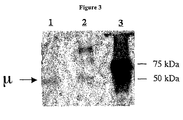
- the size of these small ⁇ chains was analyzed by Western blot using anti-IgM antisera and 125 I-labelled monoclonal IgM antibody.
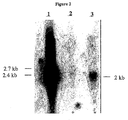
- Lysates from control transformant express normal-sized ⁇ -chains of 70Kd molecular weight while cell lines express an abnormally small ⁇ protein of approximately 57Kd. Furthermore, instead of normal 2.4 and 2.7 kb ⁇ mRNAs which encode, respectively, the secreted and membrane- bound forms of the ⁇ proteins, cell lines 300-19 and 298-13 (Reth and Alt 1984) contain truncated C ⁇ -specific RNAs of 2.0 and 2.3 kb; these species contain 3' ends specific to the membrane and secreted forms of the protein, respectively.
- D ⁇ preBCR can mediate a block in B cell development, probably by inhibiting V H to D H J H rearrangements, as well as inducing V L to J L rearrangements (Tornberg et al 1998, Home et al 1996).
- the present invention discloses novel transcripts of Immunoglobulin (Ig) superfamily genes, particularly T cell receptor (TCR) and Ig heavy chain variants, expressed on mesenchymal and endothelial cells which are mediators of intercellular interactions leading, either directly or indirectly, to modulation in the proliferation and differentiation of their neighboring cells.
- Ig Immunoglobulin
- TCR T cell receptor
- Ig heavy chain variants expressed on mesenchymal and endothelial cells which are mediators of intercellular interactions leading, either directly or indirectly, to modulation in the proliferation and differentiation of their neighboring cells.
- the mesenchymal TCR or Ig variants are either directly or indirectly involved in the regulation of stem cell growth and differentiation.
- the therapeutic uses of these molecules are also disclosed.
- the present invention also relates to truncated immunoglobulin (Ig) transcripts and encoded proteins found in mesenchymal and endothelial stromal cells as detailed herein below, and to the uses of these molecules.
- Ig immunoglobulin
- the present invention relates, in one aspect, to cDNA molecules encoded by immunoglobulin genes, said cDNA molecules lacking V region and comprising a constant (C) domain and a joining (J) region sequences, and a 5' intronic J sequence upstream said J region sequence including an in-frame methionine codon.
- the novel polynucleotides of the invention are exemplified herein by transcripts of Ig ⁇ chains, expressed in mesenchymal and endothelial cells.
- novel polynucleotide sequences disclosed herein and the corresponding proteins, polypeptides or peptides encoded by these polynucleotide sequences may be derived from any mammalian species including human genetic material.
- the cDNA molecule encodes a truncated ⁇ heavy chain transcript from the mouse cell line MBA-2.1 with the sequence: which codes for the peptide: MGFCTPTKGVYDSVTTLTTGAKAPLSQSPS [SEQ ID NO:2]
- the truncated ⁇ heavy chain 5'end begins from a joining region 4 (J4), and comprises a constant region and a transmembrane domain: atg gac tac tgg ggt caa gga acc tca gtc acc gtc tcc tca
- the truncated ⁇ heavy chain 5'end comprises a joining region 4 (J4), a constant region and a cytoplasmic domain: atg gac tac tgg ggt caa gga acc tca gtc acc gtc tcc tca
- the truncated ⁇ heavy chain 5'end extends from the constant region and comprises the transmembrane domain:
- the truncated ⁇ heavy chain 5'end begins from the constant region and comprises the cytoplasmic domain:
- the invention relates to antisense DNA molecules of the cDNA molecules of the invention described hereinabove.
- the invention further relates to expression vectors comprising the cDNA and antisense molecules of the invention, and to host cells, particularly mammalian cells, comprising said vectors.
- host cells particularly mammalian cells, comprising said vectors.
- the host cells are transfected mesenchymal or endothelial human cells.
- the cDNA of the invention can be used to transfect mesenchymal and endothelial human cells for mediating their intercellular functions.
- the invention relates to compositions comprising said transfected mesenchymal and endothelial human cells for use in disorders requiring modulation of their intercellular functions, such as wound healing
- the invention further relates to a method for modulating mesenchymal and endothelial intercellular functions comprising the step of administering to a subject in need thereof transfected mesenchymal and endothelial human cells comprising a cDNA molecule according to the invention, in an amount effective to augment their intercellular communication.
- these transfected mesenchymal or endothelial cells are autologous cells.
- these methods are applicable for inducing or enhancing wound healing.
- this method is applicable for augmenting hemopoiesis in autologous or allogeneic bone marrow transplantation. These methods can be carried out as in vitro, ex vivo or in vivo procedures, especially in the form of gene therapy.
- antisense molecules of the invention are useful in the treatment of malignant diseases in general where there is a tendency for the carcinoma cells to spread to the patient's bone marrow.
- the method can be carried out as an in vitro, ex vivo or in vivo procedure, especially in the form of gene therapy, or antisense therapy.
- the antisense DNA molecules of the invention can be used to transfect mesenchymal and endothelial human cells for inhibiting or suppressing their intercellular interactions.
- the invention relates to compositions comprising said transfected mesenchymal and endothelial human cells for use in disorders requiring inhibition or suppression of their intercellular interactions, such as in carcinomas.
- the invention further relates to a method for suppressing mesenchymal and endothelial cell growth comprising the step of administering to a subject in need thereof antisense DNA, a vector comprising this DNA or transfected mesenchymal and endothelial human cells comprising an antisense DNA molecule of the invention, in an amount effective to suppress their intercellular interactions, such as for suppression of carcinomas.
- a vector comprising this DNA or transfected mesenchymal and endothelial human cells comprising an antisense DNA molecule of the invention, in an amount effective to suppress their intercellular interactions, such as for suppression of carcinomas.
- these transfected mesenchymal or endothelial cells will be autologous.
- mesenchymal TCR or Ig transcripts may be either directly or indirectly involved in the regulation of stem cell growth and differentiation. It is anticipated that additional molecular variants of the Ig superfamily will be transcribed in and expressed by mesenchymal and/or endothelial cells and these too are within the scope of the present invention. It will be appreciated by the skilled artisan that additional molecules may be involved in molecular complexes that regulate intercellular interactions together with the novel truncated variants of the present invention. It is also understood that the regulatory effect of the molecules of the invention may be either direct or indirect, the latter term expressing the need for additional molecular mediators or signals to achieve the observed biological effect.
- novel polynucleotide sequences disclosed herein and the corresponding proteins, polypeptides or peptides encoded by these polynucleotide sequences may be derived from any mammalian species including human genetic material.
- the present invention discloses the transcription of novel variants of members of the genes referred to as the Immunoglobulin superfamily, in cells that do not belong to the hemopoietic or lymphoid lineages. Hitherto these molecules were considered to be specific to lymphoid lineages, with the exception of certain transformed cell lines or tumors that were known to express certain abnormal transcripts of these genes.
- the novel transcripts now discovered in mesenchymal cells are also translated and expressed as novel truncated variants of TCR and Ig molecules by these cells.
- novel truncated variants are capable of regulating cell growth and differentiation, as well as mediating cell-cell interactions.
- These attributes can be used to stimulate cell growth, for instance especially in order to enhance hemopoiesis. These methods should prove particularly useful in situations involving bone marrow transplantation, by way of example. In contradistinction, these attributes can be used to suppress cell growth, for instance in order to prevent cancer growth or metastasis.
- the growth stimulation might entail gene therapy, while the growth suppression might entail either antisense therapy or antibody targeting or other methods known in the art.
- the present invention resulted in part from studies on the interactions of stromal cell lines with thymic T cells, during which we used reverse transcription polymerase chain reaction (RT-PCR) to amplify TCR gene fragments.
- RT-PCR reverse transcription polymerase chain reaction
- the MBA-13 mesenchymal stromal cell line derived from mouse bone marrow, was found to consistently express TCR ⁇ constant (C ⁇ ) region, while cDNA from a negative control tissue, i.e. liver, and from several control cell lines such as pre-B cells, plasmacytoma and mastocytoma cells, did not produce PCR products using primers from the TCR gene.
- TCR gene derived mRNAs that encode short versions of the gene consisting of the constant (C) domain, which is identical to that of T cell receptor, a joining (J) region, which may be one of several alternatives, and a 5' sequence corresponding to an intronic J sequence (again one of several alternatives) including an in-frame codon for methionine (see Barda-Saad et al. 2002).
- This mRNA lacks V region sequences.
- One of such molecules, namely a new version of a TCR ⁇ 2.6 was shown to exist in mesenchymal cells and to encode a cell surface mesenchymal protein. Expression on the mRNA level has also been observed in the thymus (see Barda-Saad et al. 2002). Table 1 below provides examples of the peptides encoded by the intronic J sequences of these novel transcripts.
- the present invention discloses the novel uses of the truncated TCR variants as well as the uses of the novel truncated Ig variants.
- Table 1 Truncated TCR variant transcripts from mesenchymal cells comprise intronic J sequences encoding deduced peptides.
- TCR and Ig chain are now disclosed herein to be linked to the cell-cell interactions, cell growth and differentiation and thus can be used to control stromal functions.
- the TCR appears to be most abundant in mesenchymal stroma whereas the ⁇ chain seems to be abundant in endothelial stroma.
- hemopoietic stem cells The cellular and molecular mechanisms that allow for the maintenance of hemopoietic stem cells are inadequately understood. Morphological examination of various embryonic hemopoietic sites revealed that hemopoietic progenitor cells are in close physical contact with the endothelium in both yolk sac and aorta-gonadomesonephros region (AGM) (Lin et al 1995). The close association in the development of hemopoietic and endothelial cells during embryonic life (Garcia Porrero et al. 1995) has led to the hypothesis that the two lineages may derive from a common precursor called hemangioblast.
- AGM aorta-gonadomesonephros region
- endothelial cells both vascular endothelial cells and bone marrow endothelial cells
- hemopoiesis The mechanism by which the endothelial cells support hemopoiesis is thought to involve endothelial cell derived cytokines (Fleischman et al 1995), extracellular matrix proteins (Rafii et al 1994) and cell-cell interactions (Fina et al 1994).
- Stomal cells are thought to be an essential component of the lymphohematopoietic microenvironment.
- B lymphocytes develop in the liver during fetal life and in the bone marrow of adult animals (Kincade et al 1981). It has been suspected that yet unknown stromal cell molecules may be involved in B-lineage cell growth and development (Palacios and_Samaridis 1992).
- tissue remodeling such as that occurring in wound healing, is initiated by mesenchymal fibroblasts.
- the study of regulation of hemopoiesis demonstrated that blood cell formation is locally regulated by stromal mesenchyme (Zipori, 1989; Zipori et al., 1989; Zipori, 1990; Weintroub et al., 1996).
- stromal mesenchyme Zipori, 1989; Zipori et al., 1989; Zipori, 1990; Weintroub et al., 1996.
- bone marrow-derived primary stroma as well as a variety of mesenchymal cells lines derived from primary bone marrow cultures exhibit an in vitro capacity to support hemopoiesis and, upon transplantation, promote the formation of bone and hemopoietically active tissue in vivo at the site of transplantation.
- the molecules that mediate the instructive stromal activities have been shown to be a variety of cytokines and adhesion molecules. However, the molecules identified thus far cannot account for the wide spectrum of stromal cell functions and certainly do not explain stroma organization, stem cell renewal and other vital stromal functions.
- Mesenchymal cells from the bone marrow are well known to be obligatory for the maintenance and renewal of hemopoietic stem cells in vitro, and these cells are critical for the maintenance of hemopoiesis in vivo.
- This function of the mesenchyme is not restricted to blood cells.
- every tissue and organ is composed of a stromal mesenchyme support that interacts with the other, tissue specific cell types.
- Knock-out mice employed in the present invention demonstrate the important role played by immunoglobulin superfamily variants in hemopoiesis as exemplified herein below.
- the technology is well known in the art. It requires the use of mouse genes for the purpose of generating knockout of the specific gene in embryonic stem (ES) cells that are then incorporated into the mouse germ-line cells from which mice carrying the gene knockout are generated. From a human gene there are several ways to recover the homologous mouse gene. One way is to use the human gene to probe mouse genomic libraries of lambda phages, cosmids or BACs. Positive clones are examined and sequenced to verify the identity of the mouse gene.
- Another way is to mine the mouse EST database to find the matching mouse sequences. This can be the basis for generating primer-pairs or specific mouse probes that allow an efficient screen of the mouse genomic libraries mentioned above by PCR or by hybridization.
- the mouse homologue of the human gene retains the same biological function.
- the loss-of-function experiments in mice indicate the consequences of absence of expression of the gene on the phenotype of the mouse and the information obtained is applicable to the function of the gene in humans.
- a specific phenotype observed in knockout mice was similar to a specific human inherited disease and the gene then proved to be involved and mutated in the human disease.
- the expression or lack of expression of the mesenchymal TCR and immunoglobulin heavy chains seems to control interactions of the mesenchyme with other neighboring cells, especially in the process of hemopoiesis.
- the invention therefore further relates to the use of the cDNA and antisense molecules of the invention derived from mesenchymal TCR mRNAs for expression in cells and tissues for the purpose of modulating stromal/mesenchymal interactions and cell-cell communication with their neighbors in the microenvironment of the tissue involved.
- the cDNA or antisense molecule is inserted in appropriate vectors such as, but not limited to, the retroviral vectors DCA l and DCM m that have been used in clinical trials in gene therapy (Bordignon et al., 1995).
- the vector containing the cDNA or the antisense molecule under the control of a suitable promoter such as that cDNA's own promoter, will be used to infect or transfect suitable mammalian, preferably human, most preferably the patient's autologous mesenchymal cells.
- the genetically-modified mesenchymal cells are then administered to a patient in need thereof by an appropriate route and are expressed in the desired site or tissue.
- the complete or partial cDNA of an undesirable gene in accordance with the present invention is inserted into an expression vector comprising a promoter.
- the 3' end of the cDNA is thereby inserted adjacent to the 3' end of the promoter, with the 5' end of the cDNA being separated from the 3' end of the promoter by said cDNA.
- an antisense RNA is therefore produced which is incapable of coding for the protein.
- the presence of antisense RNA in the cell reduces the expression of the cellular (genomic) copy of the undesirable gene.
- the complete cDNA may be used.
- a fragment thereof may be used, which is preferably between about 9 and 2,000 nucleotides in length, more preferably between 15 and 500 nucleotides, and most preferably between 30 and 150 nucleotides.
- the fragment is preferably corresponding to a region within the 5' half of the cDNA, more preferably the 5' region comprising the 5' untranslated region and/or the first exon region, and most preferably comprising the ATG translation start site.
- the fragment may correspond to DNA sequence of the 5' untranslated region only.
- a synthetic oligonucleotide may be used as antisense oligonucleotide.
- the oligonucleotide is preferably a DNA oligonucleotide.
- the length of the antisense oligonucleotide is preferably between 9 and 150, more preferably between 12 and 60, and most preferably between 15 and 50 nucleotides.
- Suitable antisense oligonucleotides that inhibit the production of the protein of the present invention from its encoding mRNA can be readily determined with only routine experimentation through the use of a series of overlapping oligonucleotides similar to a "gene walking" technique that is well-known in the art.
- Such a “walking” technique as well-known in the art of antisense development can be done with synthetic oligonucleotides to walk along the entire length of the sequence complementary to the mRNA in segments on the order of 9 to 150 nucleotides in length.
- This "gene walking” technique will identify the oligonucleotides that are complementary to accessible regions on the target mRNA and exert inhibitory antisense activity.
- an oligonucleotide based on the coding sequence of a protein capable of binding to an undesirable gene or the protein encoded thereby can be designed using Oligo 4.0 (National Biosciences, Inc.).
- Antisense molecules may also be designed to inhibit translation of an mRNA into a polypeptide by preparing an antisense which will bind in the region spanning approximately -10 to +10 nucleotides at the 5' end of the coding sequence.
- Modifications of oligonucleotides that enhance desired properties are generally used when designing antisense oligonucleotides. For instance, phosphorothioate bonds are used instead of the phosphoester bonds that naturally occur in DNA, mainly because such phosphorothioate oligonucleotides are less prone to degradation by cellular enzymes. Preferably, a 2'-methoxyribonucleotide modification in 60% of the oligonucleotides is used. Such modified oligonucleotides are capable of eliciting an antisense effect comparable to the effect observed with phosphorothioate oligonucleotides.
- the preferred antisense oligonucleotide of the present invention has a mixed phosphodiester-phosphorothioate backbone.
- 2'-methoxyribonucleotide modifications in about 30% to 80%, more preferably about 60%, of the oligonucleotide are used.
- antisense oligonucleotides or antisense RNA may be used.
- the length of the antisense RNA is preferably from about 9 to about 3,000 nucleotides, more preferably from about 20 to about 1,000 nucleotides, most preferably from about 50 to about 500 nucleotides.
- the antisense oligonucleotides of the present invention must travel across cell membranes.
- antisense oligonucleotides have the ability to cross cell membranes, apparently by uptake via specific receptors.
- the antisense oligonucleotides are single-stranded molecules, they are to a degree hydrophobic, which enhances passive diffusion through membranes.
- Modifications may be introduced to an antisense oligonucleotide to improve its ability to cross membranes.
- the oligonucleotide molecule may be linked to a group, which includes a partially unsaturated aliphatic hydrocarbon chain, and one or more polar or charged groups such as carboxylic acid groups, ester groups, and alcohol groups.
- oligonucleotides may be linked to peptide structures, which are preferably membranotropic peptides. Such modified oligonucleotides penetrate membranes more easily, which is critical for their function and may, therefore, significantly enhance their activity.
- the present invention provides proteins encoded by the truncated immunoglobulin superfamily variant genes, peptides derived therefrom and antisense DNA molecules based on the variant gene transcripts.
- a therapeutic or research-associated use of these tools necessitates their introduction into cells of a living organism or into cultured cells.
- the same principle namely, derivatization with lipophilic structures, may also be used in creating peptides and proteins with enhanced membrane permeability.
- the sequence of a known membranotropic peptide may be added to the sequence of the peptide or protein.
- the peptide or protein may be derivatized by partly lipophilic structures such as the above-noted hydrocarbon chains, which are substituted with at least one polar or charged group.
- lauroyl derivatives of peptides have been described in the art.
- Further modifications of peptides and proteins include the oxidation of methionine residues to thereby create sulfoxide groups and derivatives wherein the relatively hydrophobic peptide bond is replaced by its ketomethylene isoester (COCH 2 ) have been described. It is known to those of skill in the art of protein and peptide chemistry these and other modifications enhance membrane permeability.
- Another way of enhancing membrane permeability is to make use of receptors, such as virus receptors, on cell surfaces in order to induce cellular uptake of the peptide or protein.
- This mechanism is used frequently by viruses, which bind specifically to certain cell surface molecules. Upon binding, the cell takes the virus up into its interior.
- the cell surface molecule is called a virus receptor.
- the integrin molecules CAR and AdV have been described as virus receptors for Adenovirus.
- the CD4, GPR1, GPR15, and STRL33 molecules have been identified as receptors/ coreceptors for HIV.
- peptides, proteins or oligonucleotides By conjugating peptides, proteins or oligonucleotides to molecules that are known to bind to cell surface receptors, the membrane permeability of said peptides, proteins or oligonucleotides will be enhanced.
- suitable groups for forming conjugates are sugars, vitamins, hormones, cytokines, transferrin, asialoglycoprotein, and the like molecules.
- Low et al U.S. Patent 5,108,921 describes the use of these molecules for the purpose of enhancing membrane permeability of peptides, proteins and oligonucleotides, and the preparation of said conjugates.
- Low and coworkers further teach that molecules such as folate or biotin may be used to target the conjugate to a multitude of cells in an organism, because of the abundant and nonspecific expression of the receptors for these molecules.
- cell surface proteins for enhancing membrane permeability of a peptide, protein or oligonucleotide of the invention may also be used in targeting the peptide, protein or oligonucleotide of the present invention to certain cell types or tissues. For instance, if it is desired to target neural cells, it is preferable to use a cell surface protein that is expressed more abundantly on the surface of those cells.
- the protein, peptide or oligonucleotide of the invention may therefore, using the above-described conjugation techniques, be targeted to mesenchymal cells.
- the immunoglobulin superfamily variant genes could be inserted into mesenchymal cells as a form of gene therapy.
- local application of the cells containing the cDNA molecule can be used to modulate mesenchymal cell-cell interactions with neighboring cells in the microenvironment thus enhancing the wound healing process
- mesenchymal cells of the tumor can be transfected with the antisense cDNA and then be used for treatment of localized solid tumors, to achieve regression of the tumor by blocking mesenchyme intercellular communication.
- the proteins encoded by the mRNAs of the invention are cell surface receptors of mesenchymal cells and may probably interact with ligands presented by neighboring hemopoietic or non-hemopoietic cells. Thus, in bound or soluble form, these proteins or the peptides derived therefrom, may have modulatory effects on cells that bear said ligands.
- the present invention also comprehends antibodies specific for the polypeptides or peptides encoded by the truncated immunoglobulin superfamily variant transcripts, which are part of the present invention as discussed above.
- the proteins and peptides of the invention may be used as immunogens for production of antibodies that may be used as markers of mesenchymal cells. Such an antibody may be used for diagnostic purposes to identify the presence of any such naturally-occurring proteins.
- Such antibody may be a polyclonal antibody or a monoclonal antibody or any other molecule that incorporates the antigen-binding portion of a monoclonal antibody specific for such a protein.
- Such other molecules may be a single-chain antibody, a humanized antibody, an F(ab) or F(ab') 2 fragment, a chimeric antibody, an antibody to which is attached a label, such as fluorescent or radioactive label, or an immunotoxin in which a toxic molecule is bound to the antigen binding portion of the antibody.
- a label such as fluorescent or radioactive label
- an immunotoxin in which a toxic molecule is bound to the antigen binding portion of the antibody.
- the examples are intended to be non-limiting. However, as long as such a molecule includes the antigen-binding portion of the antibody, it will be expected to bind to the protein and, thus, can be used for the same diagnostic purposes for which a monoclonal antibody can be used.
- compositions are for use by injection, topical administration, or oral uptake.
- Preferred uses of the pharmaceutical compositions of the invention topically (including intraocularly, vaginally, rectally, intranasally and by inhalation), orally, or parenterally, for example by intravenous drip or intraperitoneal, subcutaneous, or intramuscular injection.
- the pharmaceutical composition of the invention generally comprises a buffering agent, an agent which adjusts the osmolarity thereof, and optionally, one or more carriers, excipients and/or additives as known in the art, e.g., for the purposes of adding flavors, colors, lubrication, or the like to the pharmaceutical composition.
- Carriers are well known in the art and may include starch and derivatives thereof, cellulose and derivatives thereof, e.g., microcrystalline cellulose, xanthan gum, and the like.
- Lubricants may include hydrogenated castor oil and the like.
- a preferred buffering agent is phosphate-buffered saline solution (PBS), which solution is also adjusted for osmolarity.
- PBS phosphate-buffered saline solution
- a preferred pharmaceutical formulation is one lacking a carrier.
- Such formulations are preferably used for administration by injection, including intravenous injection.
- Additives may also be selected to enhance uptake of the antisense oligonucleotide across cell membranes.
- Such agents are generally agents that will enhance cellular uptake of double-stranded DNA molecules.
- certain lipid molecules have been developed for this purpose, including the transfection reagents DOTAP (Boehringer Mannheim), Lipofectin, Lipofectam, and Transfectam, which are available commercially.
- DOTAP Transfection reagents
- Lipofectin Lipofectam
- Transfectam Transfectam
- liposomes e.g., using the above-mentioned transfection reagents, is well known in the art.
- Other methods of obtaining liposomes include the use of Sendai virus or of other viruses.
- the above-mentioned cationic or nonionic lipid agents not only serve to enhance uptake of oligonucleotides into cells, but also improve the stability of oligonucleotides that have been taken up by the cell.
- Techniques for detecting a protein translation product of interest include, but are not limited to, immunoblotting or Western blotting, ELISA, sandwich assays, fluorescence, or biotin or enzymatic labeling with or without secondary antibodies.
- Western blot analysis can be done on the tissue biopsies or tissue aspirates. This would involve resolving the proteins on an electrophoretic gel, such as an SDS PAGE gel, and transferring the resolved proteins onto a nitrocellulose or other suitable membrane. The proteins are incubated with a target binding molecule, such as an antibody.
- an electrophoretic gel such as an SDS PAGE gel
- This binding reagent may be labeled or not. If it were unlabeled, then one would also employ a secondary, labeled molecule which binds to the binding reagent.
- a secondary, labeled molecule which binds to the binding reagent.
- One approach involves avidinating one molecule and biotinylating the other.
- immunoprecipitation can be conducted. This typically will involve addition of a monoclonal antibody against the protein of interest to samples, then allowing the Ig-protein complex to precipitate after the addition of an affinity bead (ie antihuman Ig Sepharose bead). The immunoprecipitates will undergo several washings prior to transfer onto a nitrocellulose membrane.
- affinity bead ie antihuman Ig Sepharose bead
- the Western blot analysis can be performed using another antibody against the primary antibody used.
- the cells collected were counted and seeded in semisolid methylcellulose medium supplemented with interleukin (IL)-3 (10 ng/ml), erythropoietin (3 units/ml), ckit ligand (50 ng/ml) and IL-6 (10 ng/ml).
- IL interleukin
- Ckit ligand was purchased from PeproTech Inc. Rocky Hill, NJ and the other cytokines from R&D Systems, Minneapolis, MN. Colonies were counted at day 8 in culture.
- the truncated ⁇ heavy chain (mouse)-MBA2.1 comprises the DNA sequence designated I+j2 [SEQ ID NO:1] which encodes peptide with the sequence [SEQ ID NO:2].
- one form of the truncated ⁇ heavy chain 5' begins from J4 and extends through the C region and contains either a transmembrane domain, [SEQ ID NO:3] or a cytoplasmic domain [SEQ ID NO:4].
- Another form of the truncated ⁇ heavy chain 5' begins from the constant region and contains either a transmembrane domain [SEQ ID NO:5] or a cytoplasmic domain [SEQ ID NO:6].
- the case of the truncated ⁇ heavy chain is very similar to the case of the truncated TCR ⁇ .
- Ig superfamily molecules that are truncated i.e. lacking the variable part and possessing a J region preceded by an intronic sequence including a codon for methionine.
- PCR analysis verified that MBA-2.1 cells do express such an mRNA.
- at least one type, and possibly more, of stromal and endothelial cells express the Ig ⁇ chain and may present this protein as a surface molecule.
- the expression of the ⁇ chain by the mesenchyme and endothelium is expected to regulate or be associated with intercellular growth/differentiation control their neighboring cells.
- Both TCR and ⁇ chain are known to be linked to the cell growth/differentiation machinery and thus can be used to modulate menenchymal and endothelial intercellular interactions.
- the TCR appears to be most abundant in mesenchymal stroma whereas the ⁇ chain seems to be abundant in endothelial stroma.
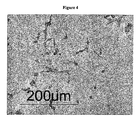
- FIG. 4 depicts immunostaining of MBA 2.1 cells with goat anti mouse- ⁇ chain and amplified with biotinylated donkey anti goat and ABC kit
- the cDNAs encoding these molecules can be used to control cell growth by either expressing the sense or the antisense sequences, depending on the intended purpose of the treatment.
- the stroma enhances tumor growth. It is therefore desirable to inhibit or ultimately to block this effect of stromal cells on the tumor cells and thus it is appropriate to apply the antisense to either of the genes in order to shut off their expression.
- diseases such as myelofibrosis when the bone marrow becomes loaded with mesenchymal cells that block normal hemopoiesis and should be eliminated.
- the complete or partial cDNA of an undesirable gene in accordance with the present invention is inserted into an expression vector comprising a promoter.
- the 3' end of the cDNA is thereby inserted adjacent to the 3' end of the promoter, with the 5' end of the cDNA being separated from the 3' end of the promoter by said cDNA.
- an antisense RNA is therefore produced which is incapable of coding for the protein.
- the presence of antisense RNA in the cell reduces the expression of the cellular (genomic) copy of the undesirable gene.
- the complete cDNA may be used.
- a fragment thereof may be used, which is preferably between about 9 and 2,000 nucleotides in length, more preferably between 15 and 500 nucleotides, and most preferably between 30 and 150 nucleotides.
- the fragment is preferably corresponding to a region within the 5' half of the cDNA, more preferably the 5' region comprising the 5' untranslated region and/or the first exon region, and most preferably comprising the ATG translation start site.
- the fragment may correspond to DNA sequence of the 5' untranslated region only.
- a synthetic oligonucleotide may be used as antisense oligonucleotide.
- the oligonucleotide is preferably a DNA oligonucleotide.
- the length of the antisense oligonucleotide is preferably between 9 and 150, more preferably between 12 and 60, and most preferably between 15 and 50 nucleotides.
- Suitable antisense oligonucleotides that inhibit the production of the protein of the present invention from its encoding mRNA can be readily determined with only routine experimentation through the use of a series of overlapping oligonucleotides similar to a "gene walking" technique that is well-known in the art.
- Such a “walking” technique as well known in the art of antisense development can be done with synthetic oligonucleotides to walk along the entire length of the sequence complementary to the mRNA in segments on the order of 9 to 150 nucleotides in length.
- This "gene walking” technique will identify the oligonucleotides that are complementary to accessible regions on the target mRNA and exert inhibitory antisense activity.
- an oligonucleotide based on the coding sequence of a protein capable of binding to an undesirable gene or the protein encoded thereby can be designed using Oligo 4.0 (National Biosciences, Inc.).
- Antisense molecules may also be designed to inhibit translation of an mRNA into a polypeptide by preparing an antisense which will bind in the region spanning approximately -10 to +10 nucleotides at the 5' end of the coding sequence.
- Modifications of oligonucleotides that enhance desired properties are generally used when designing antisense oligonucleotides. For instance, phosphorothioate bonds are used instead of the phosphoester bonds that naturally occur in DNA, mainly because such phosphorothioate oligonucleotides are less prone to degradation by cellular enzymes
- 2'-methoxyribonucleotide modifications in 60% of the oligonucleotide is used.
- Such modified oligonucleotides are capable of eliciting an antisense effect comparable to the effect observed with phosphorothioate oligonucleotides.
- the preferred antisense oligonucleotide of the present invention has a mixed phosphodiester-phosphorothioate backbone.
- 2'-methoxyribonucleotide modifications in about 30% to 80%, more preferably about 60%, of the oligonucleotide are used.
- antisense oligonucleotides or antisense RNA may be used.
- the length of the antisense RNA is preferably from about 9 to about 3,000 nucleotides, more preferably from about 20 to about 1,000 nucleotides, most preferably from about 50 to about 500 nucleotides.
- the antisense oligonucleotides of the present invention must travel across cell membranes.
- antisense oligonucleotides have the ability to cross cell membranes, apparently by uptake via specific receptors.
- the antisense oligonucleotides are single-stranded molecules, they are to a degree hydrophobic, which enhances passive diffusion through membranes.
- Modifications may be introduced to an antisense oligonucleotide to improve its ability to cross membranes.
- the oligonucleotide molecule may be linked to a group, which includes a partially unsaturated aliphatic hydrocarbon chain, and one or more polar or charged groups such as carboxylic acid groups, ester groups, and alcohol groups.
- oligonucleotides may be linked to peptide structures, which are preferably membranotropic peptides. Such modified oligonucleotides penetrate membranes more easily, which is critical for their function and may, therefore, significantly enhance their activity.
- the antisense oligonucleotides of the invention are generally provided in the form of pharmaceutical compositions. These compositions are for use by injection, topical administration, or oral uptake.
- Preferred uses of the pharmaceutical compositions of the invention by injection are subcutaneous injection, intravenous injection, and intramuscular injection. Less convenient routes of administration may include intraperitoneal, intradural, intra-thecal administration or intra-arterial administration when required.
- the pharmaceutical composition of the invention generally comprises a buffering agent, an agent which adjusts the osmolarity thereof, and optionally, one or more carriers, excipients and/or additives as known in the art, e.g., for the purposes of adding flavors, colors, lubrication, or the like to the pharmaceutical composition.
- Carriers may include starch and derivatives thereof, cellulose and derivatives thereof, e.g., microcrystalline cellulose, xanthan gum, and the like.
- Lubricants may include hydrogenated castor oil and the like.
- a preferred buffering agent is phosphate-buffered saline solution (PBS), which solution is also adjusted for osmolarity.
- PBS phosphate-buffered saline solution
- a preferred pharmaceutical formulation is one lacking a carrier. Such formulations are preferably used for administration by injection, including intravenous injection.
- the preparation of pharmaceutical compositions is well known in the art.
- Additives may also be selected to enhance uptake of the antisense oligonucleotide across cell membranes.
- Such agents are generally agents that will enhance cellular uptake of double-stranded DNA molecules.
- certain lipid molecules have been developed for this purpose, including the transfection reagents DOTAP (Boehringer Mannheim), Lipofectin, Lipofectam, and Transfectam, which are available commercially.
- the antisense oligonucleotide of the invention may also be enclosed within liposomes. The preparation and use of liposomes, e.g., using the above-mentioned transfection reagents, is well known in the art.
- the ⁇ chain may have overlapping or complementary functions to TCR and may be used in a similar manner, for other purposes relating to endothelium, i.e. to suppress neo-vascularization in tumors on the one hand and to enhance vascularization in diseases that involve defective blood vessel formation, on the other.
- Our present experiments show that the TCR affects hemopoiesis, and it is likely that the ⁇ chain has similar or complementary functions.
- HSCs lymphocytes and hematopoietic stem cells
- HSCs have been considered particularly important as target cells because of their pluripotency and ability to reconstitute hemopoiesis after myeloablation and transplantation.
- HSCs are believed to have the ability to live a long time, perhaps a lifetime, in the recipient following bone marrow transplantation. Genetic correction of HSCs can therefore potentially last a lifetime and permanently cure hematologic disorders in which genetic deficiencies cause the pathology.
- Oncoretroviral vectors have been the main vectors used for HSCs because of their ability to integrate into the chromosomes of their target cells.
- adenovirus (Adv)-mediated gene transfer has recently gained new attention as a means to deliver genes for hematopoietic stem cell (HSC) or progenitor cell gene therapy.
- HSCs have been regarded as poor Adv targets, mainly because they lack the specific Adv receptors required for efficient and productive Adv infection.
- the nonintegrating nature of Adv has prevented its application to HSC and bone marrow transduction protocols where long-term expression is required. There is even controversy as to whether Adv can infect hematopoietic cells at all.
Landscapes
- Health & Medical Sciences (AREA)
- Chemical & Material Sciences (AREA)
- Life Sciences & Earth Sciences (AREA)
- Organic Chemistry (AREA)
- Immunology (AREA)
- Medicinal Chemistry (AREA)
- General Health & Medical Sciences (AREA)
- Proteomics, Peptides & Aminoacids (AREA)
- Molecular Biology (AREA)
- Genetics & Genomics (AREA)
- Biophysics (AREA)
- Biochemistry (AREA)
- Cell Biology (AREA)
- Toxicology (AREA)
- Gastroenterology & Hepatology (AREA)
- Zoology (AREA)
- Pharmacology & Pharmacy (AREA)
- Public Health (AREA)
- Veterinary Medicine (AREA)
- Animal Behavior & Ethology (AREA)
- Nuclear Medicine, Radiotherapy & Molecular Imaging (AREA)
- General Chemical & Material Sciences (AREA)
- Chemical Kinetics & Catalysis (AREA)
- Bioinformatics & Cheminformatics (AREA)
- Engineering & Computer Science (AREA)
- Dermatology (AREA)
- Diabetes (AREA)
- Hematology (AREA)
- Micro-Organisms Or Cultivation Processes Thereof (AREA)
- Medicines That Contain Protein Lipid Enzymes And Other Medicines (AREA)
- Peptides Or Proteins (AREA)
- Pharmaceuticals Containing Other Organic And Inorganic Compounds (AREA)
Claims (14)
- Isoliertes Polynukleotid, welches ein Transkript eines Immunglobulin (Ig) Gens umfasst, wobei dem Polynukleotid die Sequenzen für die V-Region fehlen, und welches Sequenzen für eine konstante (C) Domäne und einen Verbindungs-(J) Bereich, und eine 5' intronische-J-Sequenz stromaufwärts der Sequenz des J-Bereichs einschließlich eines Methionin-Codons im Leseraster umfasst, wobei das Polynukleotid ausgewählt ist aus der Gruppe bestehend aus SEQ ID NO: 1 und SEQ ID NO: 3 bis 6.
- Polynukleotid nach Anspruch 1, worin das Polynukleotid mit der SEQ ID NO: 1 ein Peptid codiert, das aus der Sequenz der SEQ ID NO: 2 besteht.
- Antisense DNA-Molekül von einem der Polynukleotide 1 bis 2.
- Expressions-Vektor, welcher ein Polynukleotid oder ein antisense DNA-Molekül nach einem der Ansprüche 1 bis 3 umfasst.
- Wirts-Zelle, welche einen Vektor nach Anspruch 4 umfasst, wobei der Wirt eine Säugerzelle ist.
- Wirts-Zelle nach Anspruch 5, welche eine transfizierte, mesenchymale menschliche Zelle ist.
- Polypeptid, welches von einem Polynukleotid nach einem der Ansprüche 1 bis 2 codiert wird.
- Verwendung eines Vektors nach Anspruch 4 zur Transfektion von mesenchymalen Zellen.
- Verwendung von transfizierten, mesenchymalen menschlichen Zellen zur Herstellung eines Medikaments zur Induzierung von Wundheilung oder zur Induzierung von Hämopoiese nach Knochenmarkstransplantation oder Chemotherapie, wobei die transfizierten, mesenchymalen menschlichen Zellen ein Polynukleotid umfassen, welches ein Transkript eines TCR- oder Immunglobulin (Ig) Gens umfasst, worin dem Polynukleotid die Sequenzen der V-Region fehlen, und welches Sequenzen für eine konstante (C) Domäne und einen Verbindungs-(J) Bereich, und eine 5' intronische-J-Sequenz stromaufwärts der Sequenz des J-Bereichs einschließlich eines Methionin-Codons im Leseraster umfasst, worin das Polynukleotid eine 5' intronische-J-Sequenz enthält, welche ein Peptid codiert, ausgewählt aus einer der SEQ ID NOs: 7 bis 42.
- Verwendung nach Anspruch 9, wobei die Zellen autologen Ursprungs sind.
- Verwendung nach Anspruch 9, wobei die Zellen allogeneischen Ursprungs sind.
- Verwendung von transfizierten, mesenchymalen menschlichen Zellen zur Herstellung eines Medikaments, zur Supprimierung von Krebs, wobei die transfizierten, mesenchymalen menschlichen Zellen ein DNA-Molekül nach Anspruch 3 in einer Menge umfassen, welche zur Supprimierung von mesenchymalen interzellulären Interaktionen wirksam ist.
- Verwendung nach Anspruch 12, wobei die Zellen autologen Ursprungs sind.
- Verwendung nach Anspruch 12, wobei die Zellen allogeneischen Ursprungs sind.
Applications Claiming Priority (5)
| Application Number | Priority Date | Filing Date | Title |
|---|---|---|---|
| IL14153901 | 2001-02-20 | ||
| IL14153901A IL141539A0 (en) | 2001-02-20 | 2001-02-20 | Dna molecules and cells transfected therewith |
| IL14565801 | 2001-09-25 | ||
| IL14565801A IL145658A0 (en) | 2001-09-25 | 2001-09-25 | Dna molecules and cells transfected therewith |
| PCT/IL2002/000129 WO2002066648A2 (en) | 2001-02-20 | 2002-02-20 | Immunoglobulin superfamily variants expressed in mesenchymal cells and therapeutic uses thereof |
Publications (2)
| Publication Number | Publication Date |
|---|---|
| EP1389236A2 EP1389236A2 (de) | 2004-02-18 |
| EP1389236B1 true EP1389236B1 (de) | 2006-10-18 |
Family
ID=26324009
Family Applications (1)
| Application Number | Title | Priority Date | Filing Date |
|---|---|---|---|
| EP02712231A Expired - Lifetime EP1389236B1 (de) | 2001-02-20 | 2002-02-20 | Varianten der immunglobulin superfamilie exprimiert in mesenchymalen zellen und deren therapeutische verwendungen |
Country Status (8)
| Country | Link |
|---|---|
| US (1) | US20040101931A1 (de) |
| EP (1) | EP1389236B1 (de) |
| JP (1) | JP2004529625A (de) |
| AT (1) | ATE342982T1 (de) |
| AU (1) | AU2002232107B2 (de) |
| CA (1) | CA2438769A1 (de) |
| DE (1) | DE60215487D1 (de) |
| WO (1) | WO2002066648A2 (de) |
Families Citing this family (3)
| Publication number | Priority date | Publication date | Assignee | Title |
|---|---|---|---|---|
| US20080010386A1 (en) * | 2006-07-07 | 2008-01-10 | Bryce Allen Curtis | Method and apparatus for client wiring model |
| US8196039B2 (en) * | 2006-07-07 | 2012-06-05 | International Business Machines Corporation | Relevant term extraction and classification for Wiki content |
| WO2023008913A1 (ko) * | 2021-07-27 | 2023-02-02 | 주식회사 스킨메드 | 아세틸콜린 수용체 결합 최적화 단축 펩타이드 및 이의 용도 |
Family Cites Families (2)
| Publication number | Priority date | Publication date | Assignee | Title |
|---|---|---|---|---|
| US5175384A (en) * | 1988-12-05 | 1992-12-29 | Genpharm International | Transgenic mice depleted in mature t-cells and methods for making transgenic mice |
| AU2978899A (en) * | 1998-03-03 | 1999-09-20 | Abgenix, Inc. | Cd147 binding molecules as therapeutics |
-
2002
- 2002-02-20 EP EP02712231A patent/EP1389236B1/de not_active Expired - Lifetime
- 2002-02-20 WO PCT/IL2002/000129 patent/WO2002066648A2/en not_active Ceased
- 2002-02-20 DE DE60215487T patent/DE60215487D1/de not_active Expired - Lifetime
- 2002-02-20 CA CA002438769A patent/CA2438769A1/en not_active Abandoned
- 2002-02-20 JP JP2002566353A patent/JP2004529625A/ja active Pending
- 2002-02-20 AU AU2002232107A patent/AU2002232107B2/en not_active Expired - Fee Related
- 2002-02-20 AT AT02712231T patent/ATE342982T1/de not_active IP Right Cessation
-
2003
- 2003-08-20 US US10/643,982 patent/US20040101931A1/en not_active Abandoned
Also Published As
| Publication number | Publication date |
|---|---|
| DE60215487D1 (de) | 2006-11-30 |
| WO2002066648A2 (en) | 2002-08-29 |
| JP2004529625A (ja) | 2004-09-30 |
| ATE342982T1 (de) | 2006-11-15 |
| CA2438769A1 (en) | 2002-08-29 |
| AU2002232107B2 (en) | 2006-12-07 |
| WO2002066648A3 (en) | 2003-11-13 |
| US20040101931A1 (en) | 2004-05-27 |
| EP1389236A2 (de) | 2004-02-18 |
Similar Documents
| Publication | Publication Date | Title |
|---|---|---|
| Schilham et al. | Critical involvement of Tcf-1 in expansion of thymocytes | |
| JP7656401B2 (ja) | バイシストロン性キメラ抗原受容体及びそれらの使用 | |
| Rolink et al. | Changes in frequencies of clonable pre B cells during life in different lymphoid organs of mice | |
| Barndt et al. | A novel role for HEB downstream or parallel to the pre-TCR signaling pathway during αβ thymopoiesis | |
| Schönrich et al. | Distinct mechanisms of extrathymic T cell tolerance due to differential expression of self antigen | |
| Thorsteinsdottir et al. | Overexpression of HOXA10 in murine hematopoietic cells perturbs both myeloid and lymphoid differentiation and leads to acute myeloid leukemia | |
| Rolink et al. | Generation and regeneration of cells of the B-lymphocyte lineage | |
| Wasserman et al. | Down-regulation of terminal deoxynucleotidyl transferase by Ig heavy chain in B lineage cells | |
| Šinkora et al. | Antibody repertoire development in fetal and neonatal piglets. VI. B cell lymphogenesis occurs at multiple sites with differences in the frequency of in-frame rearrangements | |
| Purohit et al. | Determination of lymphoid cell fate is dependent on the expression status of the IL‐7 receptor | |
| Pike et al. | The cytoplasmic domain of Igα is necessary and sufficient to support efficient early B cell development | |
| Donohoe et al. | Transgenic human λ5 rescues the murine λ5 nullizygous phenotype | |
| Laky et al. | Distinct requirements for IL-7 in development of TCRγδ cells during fetal and adult life | |
| JP2004529624A (ja) | 間葉細胞中で発現されるt細胞受容体変種とその使用 | |
| Neuhaus et al. | Etl2, a novel putative type-I cytokine receptor expressed during mouse embryogenesis at high levels in skin and cells with skeletogenic potential | |
| AU2002232107B2 (en) | Immunoglobulin superfamily variants expressed in mesenchymal cells and therapeutic uses thereof | |
| CN108290940B (zh) | Tcr及其用途 | |
| AU2002232107A1 (en) | Immunoglobulin superfamily variants expressed in mesenchymal cells and therapeutic uses thereof | |
| Stevenaert et al. | Ly49E expression points toward overlapping, but distinct, natural killer (NK) cell differentiation kinetics and potential of fetal versus adult lymphoid progenitors | |
| Leider et al. | Differential c-Myc responsiveness to B cell receptor ligation in B cell-negative selection | |
| Martı́nez-M et al. | Long-lived polyclonal B-cell lines derived from midgestation mouse embryo lymphohematopoietic progenitors reconstitute adult immunodeficient mice | |
| Kondo et al. | Possible involvement of glial cell line‐derived neurotrophic factor and its receptor, GFRα1, in survival and maturation of thymocytes | |
| JPH11512284A (ja) | 単クローン性リンパ球及び利用方法 | |
| US20070196365A1 (en) | Immunoglobulin heavy chain variants expressed in mesenchymal cells and therapeutic uses thereof | |
| Pelkonen et al. | LD1: a CD4− CD8− TCRαβ/CD3+ peripheral T cell line with helper function for B lymphocytes |
Legal Events
| Date | Code | Title | Description |
|---|---|---|---|
| PUAI | Public reference made under article 153(3) epc to a published international application that has entered the european phase |
Free format text: ORIGINAL CODE: 0009012 |
|
| 17P | Request for examination filed |
Effective date: 20030828 |
|
| AK | Designated contracting states |
Kind code of ref document: A2 Designated state(s): AT BE CH CY DE DK ES FI FR GB GR IE IT LI LU MC NL PT SE TR |
|
| AX | Request for extension of the european patent |
Extension state: AL LT LV MK RO SI |
|
| 17Q | First examination report despatched |
Effective date: 20040706 |
|
| GRAP | Despatch of communication of intention to grant a patent |
Free format text: ORIGINAL CODE: EPIDOSNIGR1 |
|
| RIC1 | Information provided on ipc code assigned before grant |
Ipc: 7C 07K 16/00 B Ipc: 7A 61P 17/02 B Ipc: 7A 61K 31/7088 B Ipc: 7C 07K 16/28 B Ipc: 7C 12N 15/63 B Ipc: 7C 12N 15/13 A Ipc: 7A 61P 35/00 B Ipc: 7C 07K 14/705 B Ipc: 7C 12N 15/11 B Ipc: 7G 01N 33/68 B Ipc: 7A 61K 35/28 B Ipc: 7C 12N 5/10 B |
|
| GRAS | Grant fee paid |
Free format text: ORIGINAL CODE: EPIDOSNIGR3 |
|
| GRAA | (expected) grant |
Free format text: ORIGINAL CODE: 0009210 |
|
| AK | Designated contracting states |
Kind code of ref document: B1 Designated state(s): AT BE CH CY DE DK ES FI FR GB GR IE IT LI LU MC NL PT SE TR |
|
| PG25 | Lapsed in a contracting state [announced via postgrant information from national office to epo] |
Ref country code: AT Free format text: LAPSE BECAUSE OF FAILURE TO SUBMIT A TRANSLATION OF THE DESCRIPTION OR TO PAY THE FEE WITHIN THE PRESCRIBED TIME-LIMIT Effective date: 20061018 Ref country code: CH Free format text: LAPSE BECAUSE OF FAILURE TO SUBMIT A TRANSLATION OF THE DESCRIPTION OR TO PAY THE FEE WITHIN THE PRESCRIBED TIME-LIMIT Effective date: 20061018 Ref country code: FI Free format text: LAPSE BECAUSE OF FAILURE TO SUBMIT A TRANSLATION OF THE DESCRIPTION OR TO PAY THE FEE WITHIN THE PRESCRIBED TIME-LIMIT Effective date: 20061018 Ref country code: NL Free format text: LAPSE BECAUSE OF FAILURE TO SUBMIT A TRANSLATION OF THE DESCRIPTION OR TO PAY THE FEE WITHIN THE PRESCRIBED TIME-LIMIT Effective date: 20061018 Ref country code: LI Free format text: LAPSE BECAUSE OF FAILURE TO SUBMIT A TRANSLATION OF THE DESCRIPTION OR TO PAY THE FEE WITHIN THE PRESCRIBED TIME-LIMIT Effective date: 20061018 Ref country code: BE Free format text: LAPSE BECAUSE OF FAILURE TO SUBMIT A TRANSLATION OF THE DESCRIPTION OR TO PAY THE FEE WITHIN THE PRESCRIBED TIME-LIMIT Effective date: 20061018 Ref country code: IT Free format text: LAPSE BECAUSE OF FAILURE TO SUBMIT A TRANSLATION OF THE DESCRIPTION OR TO PAY THE FEE WITHIN THE PRESCRIBED TIME-LIMIT;WARNING: LAPSES OF ITALIAN PATENTS WITH EFFECTIVE DATE BEFORE 2007 MAY HAVE OCCURRED AT ANY TIME BEFORE 2007. THE CORRECT EFFECTIVE DATE MAY BE DIFFERENT FROM THE ONE RECORDED. Effective date: 20061018 |
|
| REG | Reference to a national code |
Ref country code: GB Ref legal event code: FG4D |
|
| REG | Reference to a national code |
Ref country code: IE Ref legal event code: FG4D Ref country code: CH Ref legal event code: EP |
|
| REF | Corresponds to: |
Ref document number: 60215487 Country of ref document: DE Date of ref document: 20061130 Kind code of ref document: P |
|
| PG25 | Lapsed in a contracting state [announced via postgrant information from national office to epo] |
Ref country code: DK Free format text: LAPSE BECAUSE OF FAILURE TO SUBMIT A TRANSLATION OF THE DESCRIPTION OR TO PAY THE FEE WITHIN THE PRESCRIBED TIME-LIMIT Effective date: 20070118 Ref country code: SE Free format text: LAPSE BECAUSE OF FAILURE TO SUBMIT A TRANSLATION OF THE DESCRIPTION OR TO PAY THE FEE WITHIN THE PRESCRIBED TIME-LIMIT Effective date: 20070118 |
|
| PG25 | Lapsed in a contracting state [announced via postgrant information from national office to epo] |
Ref country code: DE Free format text: LAPSE BECAUSE OF FAILURE TO SUBMIT A TRANSLATION OF THE DESCRIPTION OR TO PAY THE FEE WITHIN THE PRESCRIBED TIME-LIMIT Effective date: 20070119 |
|
| PG25 | Lapsed in a contracting state [announced via postgrant information from national office to epo] |
Ref country code: ES Free format text: LAPSE BECAUSE OF FAILURE TO SUBMIT A TRANSLATION OF THE DESCRIPTION OR TO PAY THE FEE WITHIN THE PRESCRIBED TIME-LIMIT Effective date: 20070129 |
|
| PGFP | Annual fee paid to national office [announced via postgrant information from national office to epo] |
Ref country code: GB Payment date: 20070214 Year of fee payment: 6 |
|
| PG25 | Lapsed in a contracting state [announced via postgrant information from national office to epo] |
Ref country code: MC Free format text: LAPSE BECAUSE OF NON-PAYMENT OF DUE FEES Effective date: 20070228 |
|
| PG25 | Lapsed in a contracting state [announced via postgrant information from national office to epo] |
Ref country code: PT Free format text: LAPSE BECAUSE OF FAILURE TO SUBMIT A TRANSLATION OF THE DESCRIPTION OR TO PAY THE FEE WITHIN THE PRESCRIBED TIME-LIMIT Effective date: 20070319 |
|
| NLV1 | Nl: lapsed or annulled due to failure to fulfill the requirements of art. 29p and 29m of the patents act | ||
| REG | Reference to a national code |
Ref country code: CH Ref legal event code: PL |
|
| EN | Fr: translation not filed | ||
| PLBE | No opposition filed within time limit |
Free format text: ORIGINAL CODE: 0009261 |
|
| STAA | Information on the status of an ep patent application or granted ep patent |
Free format text: STATUS: NO OPPOSITION FILED WITHIN TIME LIMIT |
|
| 26N | No opposition filed |
Effective date: 20070719 |
|
| PG25 | Lapsed in a contracting state [announced via postgrant information from national office to epo] |
Ref country code: IE Free format text: LAPSE BECAUSE OF NON-PAYMENT OF DUE FEES Effective date: 20070220 |
|
| PG25 | Lapsed in a contracting state [announced via postgrant information from national office to epo] |
Ref country code: FR Free format text: LAPSE BECAUSE OF FAILURE TO SUBMIT A TRANSLATION OF THE DESCRIPTION OR TO PAY THE FEE WITHIN THE PRESCRIBED TIME-LIMIT Effective date: 20070601 Ref country code: GR Free format text: LAPSE BECAUSE OF FAILURE TO SUBMIT A TRANSLATION OF THE DESCRIPTION OR TO PAY THE FEE WITHIN THE PRESCRIBED TIME-LIMIT Effective date: 20070119 |
|
| GBPC | Gb: european patent ceased through non-payment of renewal fee |
Effective date: 20080220 |
|
| PG25 | Lapsed in a contracting state [announced via postgrant information from national office to epo] |
Ref country code: FR Free format text: LAPSE BECAUSE OF FAILURE TO SUBMIT A TRANSLATION OF THE DESCRIPTION OR TO PAY THE FEE WITHIN THE PRESCRIBED TIME-LIMIT Effective date: 20061018 |
|
| PG25 | Lapsed in a contracting state [announced via postgrant information from national office to epo] |
Ref country code: GB Free format text: LAPSE BECAUSE OF NON-PAYMENT OF DUE FEES Effective date: 20080220 |
|
| PG25 | Lapsed in a contracting state [announced via postgrant information from national office to epo] |
Ref country code: CY Free format text: LAPSE BECAUSE OF FAILURE TO SUBMIT A TRANSLATION OF THE DESCRIPTION OR TO PAY THE FEE WITHIN THE PRESCRIBED TIME-LIMIT Effective date: 20061018 Ref country code: LU Free format text: LAPSE BECAUSE OF NON-PAYMENT OF DUE FEES Effective date: 20070220 |
|
| PG25 | Lapsed in a contracting state [announced via postgrant information from national office to epo] |
Ref country code: TR Free format text: LAPSE BECAUSE OF FAILURE TO SUBMIT A TRANSLATION OF THE DESCRIPTION OR TO PAY THE FEE WITHIN THE PRESCRIBED TIME-LIMIT Effective date: 20061018 |