EP1388995A2 - Zuordnung eines voreingestellten Minimumserviceprofils für Endgeräte einer IP-PBX - Google Patents
Zuordnung eines voreingestellten Minimumserviceprofils für Endgeräte einer IP-PBX Download PDFInfo
- Publication number
- EP1388995A2 EP1388995A2 EP03017853A EP03017853A EP1388995A2 EP 1388995 A2 EP1388995 A2 EP 1388995A2 EP 03017853 A EP03017853 A EP 03017853A EP 03017853 A EP03017853 A EP 03017853A EP 1388995 A2 EP1388995 A2 EP 1388995A2
- Authority
- EP
- European Patent Office
- Prior art keywords
- user
- profile
- terminal
- pbx
- memory
- Prior art date
- Legal status (The legal status is an assumption and is not a legal conclusion. Google has not performed a legal analysis and makes no representation as to the accuracy of the status listed.)
- Granted
Links
- 238000000034 method Methods 0.000 claims abstract description 15
- 238000012795 verification Methods 0.000 claims abstract description 8
- 230000011664 signaling Effects 0.000 claims description 18
- 238000011017 operating method Methods 0.000 claims description 7
- 230000005540 biological transmission Effects 0.000 claims description 5
- 230000004044 response Effects 0.000 claims 2
- 238000004891 communication Methods 0.000 description 7
- 238000013475 authorization Methods 0.000 description 6
- 230000006870 function Effects 0.000 description 4
- 238000010586 diagram Methods 0.000 description 3
- VCGRFBXVSFAGGA-UHFFFAOYSA-N (1,1-dioxo-1,4-thiazinan-4-yl)-[6-[[3-(4-fluorophenyl)-5-methyl-1,2-oxazol-4-yl]methoxy]pyridin-3-yl]methanone Chemical compound CC=1ON=C(C=2C=CC(F)=CC=2)C=1COC(N=C1)=CC=C1C(=O)N1CCS(=O)(=O)CC1 VCGRFBXVSFAGGA-UHFFFAOYSA-N 0.000 description 1
- 230000001413 cellular effect Effects 0.000 description 1
- 238000013461 design Methods 0.000 description 1
- 238000005516 engineering process Methods 0.000 description 1
- 230000003203 everyday effect Effects 0.000 description 1
- 230000000977 initiatory effect Effects 0.000 description 1
- 238000004519 manufacturing process Methods 0.000 description 1
- 230000008520 organization Effects 0.000 description 1
- 238000003825 pressing Methods 0.000 description 1
- 238000003860 storage Methods 0.000 description 1
Images
Classifications
-
- H—ELECTRICITY
- H04—ELECTRIC COMMUNICATION TECHNIQUE
- H04L—TRANSMISSION OF DIGITAL INFORMATION, e.g. TELEGRAPHIC COMMUNICATION
- H04L67/00—Network arrangements or protocols for supporting network services or applications
- H04L67/2866—Architectures; Arrangements
- H04L67/30—Profiles
- H04L67/306—User profiles
-
- H—ELECTRICITY
- H04—ELECTRIC COMMUNICATION TECHNIQUE
- H04L—TRANSMISSION OF DIGITAL INFORMATION, e.g. TELEGRAPHIC COMMUNICATION
- H04L63/00—Network architectures or network communication protocols for network security
- H04L63/08—Network architectures or network communication protocols for network security for authentication of entities
- H04L63/083—Network architectures or network communication protocols for network security for authentication of entities using passwords
-
- H—ELECTRICITY
- H04—ELECTRIC COMMUNICATION TECHNIQUE
- H04L—TRANSMISSION OF DIGITAL INFORMATION, e.g. TELEGRAPHIC COMMUNICATION
- H04L63/00—Network architectures or network communication protocols for network security
- H04L63/10—Network architectures or network communication protocols for network security for controlling access to devices or network resources
- H04L63/102—Entity profiles
-
- H—ELECTRICITY
- H04—ELECTRIC COMMUNICATION TECHNIQUE
- H04L—TRANSMISSION OF DIGITAL INFORMATION, e.g. TELEGRAPHIC COMMUNICATION
- H04L65/00—Network arrangements, protocols or services for supporting real-time applications in data packet communication
- H04L65/1066—Session management
- H04L65/1073—Registration or de-registration
-
- H—ELECTRICITY
- H04—ELECTRIC COMMUNICATION TECHNIQUE
- H04M—TELEPHONIC COMMUNICATION
- H04M3/00—Automatic or semi-automatic exchanges
- H04M3/38—Graded-service arrangements, i.e. some subscribers prevented from establishing certain connections
-
- H—ELECTRICITY
- H04—ELECTRIC COMMUNICATION TECHNIQUE
- H04M—TELEPHONIC COMMUNICATION
- H04M3/00—Automatic or semi-automatic exchanges
- H04M3/42—Systems providing special services or facilities to subscribers
- H04M3/42229—Personal communication services, i.e. services related to one subscriber independent of his terminal and/or location
- H04M3/42263—Personal communication services, i.e. services related to one subscriber independent of his terminal and/or location where the same subscriber uses different terminals, i.e. nomadism
- H04M3/42272—Personal communication services, i.e. services related to one subscriber independent of his terminal and/or location where the same subscriber uses different terminals, i.e. nomadism whereby the subscriber registers to the terminals for personalised service provision
-
- H—ELECTRICITY
- H04—ELECTRIC COMMUNICATION TECHNIQUE
- H04L—TRANSMISSION OF DIGITAL INFORMATION, e.g. TELEGRAPHIC COMMUNICATION
- H04L67/00—Network arrangements or protocols for supporting network services or applications
- H04L67/2866—Architectures; Arrangements
- H04L67/30—Profiles
- H04L67/303—Terminal profiles
-
- H—ELECTRICITY
- H04—ELECTRIC COMMUNICATION TECHNIQUE
- H04M—TELEPHONIC COMMUNICATION
- H04M3/00—Automatic or semi-automatic exchanges
- H04M3/42—Systems providing special services or facilities to subscribers
- H04M3/42314—Systems providing special services or facilities to subscribers in private branch exchanges
-
- H—ELECTRICITY
- H04—ELECTRIC COMMUNICATION TECHNIQUE
- H04M—TELEPHONIC COMMUNICATION
- H04M7/00—Arrangements for interconnection between switching centres
- H04M7/006—Networks other than PSTN/ISDN providing telephone service, e.g. Voice over Internet Protocol (VoIP), including next generation networks with a packet-switched transport layer
-
- H—ELECTRICITY
- H04—ELECTRIC COMMUNICATION TECHNIQUE
- H04Q—SELECTING
- H04Q2213/00—Indexing scheme relating to selecting arrangements in general and for multiplex systems
- H04Q2213/13109—Initializing, personal profile
Definitions
- the invention relates to an operating method for a telecommunications system according to the preamble of claim 1 and a telecommunications system for use of the procedure.
- Office organization is becoming more and more flexible in modern companies. Not every employee necessarily has a permanent job where he is does his job every day and accesses the company's PBX. Much more can assign a job to an employee on a project basis be in close proximity to each other's jobs colleagues involved in this project.
- IP networks In telecommunications systems, especially in networks that use the Internet protocol and referred to as IP networks, the employee or user usually has to on an IP terminal connected to this network using a Register the registration procedure.
- IP end devices must be managed.
- the IP phones Hardware
- IP address is assigned an IP address, but no telephone number.
- the telephone number is a human user in IP telephony networks or VoIP networks assigned. Therefore, with IP telephones according to the state of the art can only be called if a human user is logged on. This can be found within the IP network on any IP telephone under its telephone number Sign in. This is a major advantage of IP telephony networks.
- a user If a user now logs on to an IP telephone, the user gives his personal user ID on the terminal. For example a username, an email address or an extension number. The user ID to be used depends on what type of user Terminal the user logs on. Network and system security can be increased if an additional password is required.
- the entered data for example user ID and Password, checked for validity there. Then - with a valid Registration - the user his personal and specific user profile provided on the terminal.
- the switching node manages the user profiles, that are stored with him.
- the specific user profile opened the employee depending on the one assigned by a system administrator Permissions different functions of the end device. Now there are IP phones and users assigned via IP address and phone number and logged on to the network.
- the employee can log on to different devices, that are connected to the communication network and it suits him his "personal" user profile is available on each of these devices. So can send emails and / or phone calls to the end device, for example forwarded to which the user has logged on, independently of which workplace he is currently in. An outside one A telephone call to the employee's personal number is also received to the terminal to which the employee is logged on without the caller knows where the employee is at the moment.
- the IP terminal can be operated. For example, it is a person who does not have a user ID for this system or does not have the time for the Carrying out the registration procedure has not been possible in an emergency with the Call device for help.
- DE 199 46 444 describes a method for determining connection charges for a plurality of subscribers who have a common telephone connection use. Conventionally, however, it is not possible to human users.
- To solve the problem in the DE 199 46 444 proposed when initiating a connection to one First establish a connection to a voice system at the remote site that the participant must transmit a spoken user ID. To The connection becomes the assignment of the user ID to a reference ID released to establish a connection with the remote station. When entering phone numbers a predefinable number group becomes without a check a user ID connects to the dialed number.
- the telecommunication network on which the method described in DE 199 46 444 is based can be a landline or a cellular network, anyway but a classic network.
- a solution to that discussed in DE 199 46 444 Problems in the case of IP telephony with its special discussed above The problem is not revealed.
- the object of the present invention is therefore an improved operating method to be specified for a PABX which offers an extended usability, and a corresponding telecommunications system for using the invention Provide procedure.
- An essential idea of the invention is that even if no user is on one Terminal of the PABX system is "registered", use within the framework of a predefined, a minimum of functions to be provided on each IP terminal comprehensive "minimal profile" is possible. That means that also in packet-switched Range an IP terminal regardless of a particular user is registered as a device, as in the circuit-switched area, under Use of a default user profile.
- the minimal profile includes selected ones Connections and / or selected features and is in one additional memory area of a profile memory in which the user profiles are stored of authorized users are saved.
- the call is from a switching node not rejected, but admitted to the predetermined, minimal extent.
- An emergency call for example, is therefore forwarded. This allows the end device to the minimum extent can be used by any person either is not logged on with your own user ID or no own user ID for this PABX. By admitting only a minimal The scope of the authorizations does not become essential overall less secure or more vulnerable to unauthorized use.
- the minimal profile is provided automatically, if there is a connection between the terminal and the switching node. This is an input via an input device, such as the Keyboard of a computer or the keypad of a telephone, not required.
- the end device is therefore available to everyone for minimal, approved use to disposal.
- a message is sent to the terminal that the requested connection and / or the requested performance feature is not provided or provided if this is not included in the user profile or minimal profile is.
- the operating method according to the invention becomes the minimum profile or the authorizations of the minimum operating functionality using one or more administration programs in the Switching nodes set up. This enables a system administrator to from a single point, for example an operator terminal of the switching node, manage the permissions of the minimal profile.
- the switching node has a memory and a verification device.
- Memory is an assignment between the user IDs and the end devices where users are validly saved.
- the verification facility can then receive a received based on the assignment from the memory Assign signaling from a terminal to a user ID so that the corresponding user profile can be addressed in the profile memory. Does that happen Signaling from a terminal on which no user is validly logged on, no user ID of the registered user is assigned to the signaling. This signaling is then processed with reference to the minimum profile.
- the switching node of the telephone system according to the invention preferably has one Comparator on. This checks out on the basis of the addressed user profile the profile memory as to whether the received signaling has a target that is from this user profile is included.
- the telecommunications system according to the invention preferably supports transmission and Transport protocols of the H.323 standard, which are used in IP-based networks Voice transmission is used regularly. This makes it uncomplicated Operation with different applications guaranteed within the network.
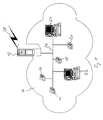
- Fig. 1 shows a generic PBX 10, for example, an internal company Network or a LAN (local area network) can be.
- the company network is shown in a very simplified example. It is obvious that significantly more end devices or switching nodes to such a company network can be connected.
- the PBX 10 shown has a switching node 12 and several Terminals 14, 16, 18, 20, 22, 24. These can be different, for example Workplaces arranged in a company building be, several terminals can also be arranged at one work station. For example, a work station can have a telecommunications terminal 20 and a computer system 24 may be assigned. Other devices, for example a fax machine (not shown) are also conceivable.
- the switching node 12 takes over the switching function (gatekeeper) of the PBX 10 for the VoIP area.
- the switching node 12 is connected to the terminals 14, 16, 18, 20, 22, 24 a line 26, for example via Ethernet or any other comparable Network protocol, connected.
- the connection between the terminals 14, 16, 18, 20, 22, 24 and the switching node 12 does not have to go through a line be realized, also a wireless connection, for example by means of radio or Infrared transmission is possible.
- the switching node 12 can continue with other networks or telecommunications systems (not shown). This possibility the long-distance connection is indicated by the jagged connecting line 28.
- RAS Registration, Admission and Status.
- the RAS protocol is part of H.323 and is used for communication between a switching node (gatekeeper) and a terminal, the protocol being the registration, control and query of status information takes over.
- the H.323 standard is a recommendation of the ITU (International Telecommunication Union) a sub-organization of the United Nations (UN), in which governments and the private telecommunications sector building and operating coordinate telecommunications networks and services.
- the H.323 standard is a technology for the transmission of real-time audio, video and data via packet-switching networks. It specifies components, protocols and Procedures for multimedia communication over packet-switching networks provide.
- various types of terminal devices are connected to the PBX 10.
- computer systems 22 and 24 are integrated in the PBX 10.
- the computer systems 22 and 24 also have the possibility for telecommunications using VoIP (Voice over IP).
- the computer systems 22 and 24 are therefore with speech capture and playback devices Mistake.
- the telephones 14, 16, 18, 20 can each have a display or display field have, so that text messages such as SMS (Short Message Service) or emails can be displayed.
- SMS Short Message Service
- emails can be displayed.
- the generation of corresponding Text messages are made via the keypad of telephones 14, 16, 18, 20
- a user can log on to a workplace assigned to him at the one installed there Terminal, for example the phone 20, register. For this he indicates the keypad of the telephone 20 after opening the registration procedure, for example, by pressing a certain function key, his personal Phone number. So that no other user can unauthorized themselves Can make calls to another terminal, is also an input an authentication code is required. On the phone 20 with a usual, numeric keypad, this is a PIN assigned by the system administrator awarded and managed.
- the entered numbers are from the phone 20 to the switching node 12 forwarded and checked for validity there. After reviewing the The authorized user can use the device or the validity of the registration Telephone 20 with its usage rights set in the user profile to disposal.
- the registration can also be known Way - by entering a personal email address and one Password.
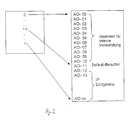
- FIG. 2 schematically shows the assignment of the user profiles in the switching node 12 (from Fig. 1) shown with connections of the terminals.
- n different user profiles the user authorized on the PBX.
- the first eleven assigned to ports AO-00 through AO-10 are reserved for use only within the switching node.
- From The thirteenth user profile can determine the user profiles of the employees Assigned to end devices or end device connections, AO-12 to AO-xx his.
- the switching node has a minimal profile - also known as the default user - no specific end device assigns. If a terminal to which no user is logged on, the switching node sends a signal, so the switching node takes the signal anyway and forward it accordingly. The switching node 12 responds on a device without a logged-in user, as if a "default user" would have registered on this device. One from a device with Default user initiated call within the minimal profile is from the switching node therefore not rejected.
- the default user AO-11 in Fig. 2
- the switching node is therefore also unable to connect to a specific device with a default user Build up signaling.
- the possibility of assigning the default user at each connection ensures that the signaling of a terminal device to which no user is validly logged on, is not rejected by the switching node because the call is not being made by a user authorized to the system User ID is done.
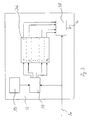
- FIG. 3 shows a schematic functional block diagram of those relevant to the invention Sections of a switching node 12 for an operating method according to the invention. 3 shows that the switching node 12 is signaling 30 from a terminal, for example from the telephone 14.
- the switching node 12 has a verification device 32, a memory 34 for user IDs, a profile memory 36 and a comparator 38 on.
- the profile memory 36 is in a plurality of memory areas 1 to n divided, each containing a user profile. Furthermore, an additional one Memory area Min is provided which contains the minimum profile.
- the signaling 30 coming from the terminal 14 is sent to the verification device 32 and passed to the comparator 38.
- the signaling contains both Information about sender and destination address.
- Sender is the address of the end device, from which the signaling is sent.
- the destination address is the call or Extension number with which the user connects to the sender terminal want to manufacture.
- the verification device 32 compares the sender address of the terminal 14 2, which is stored in the memory 34 for user IDs is saved. This assignment contains all valid registrations from Users on the respective terminals of the PBX 10. According to the Any logged-in user with a user ID can be assigned User profile is stored in the profile memory 36, assigned a terminal become. Due to this assignment, the corresponding user profile in the profile memory 36 are addressed.
- PBX 10 is then the minimum profile for this signaling addressed to the memory area Min of the profile memory 36. So the signaling not generally rejected.
- the addressed user profile is thereupon made available to the comparator 38.
- the comparator 38 checks the target of the signaling 30 on the basis of the addressed and provided user profile from the profile memory 36 then whether the user is authorized to call this destination. The The result of the check is further processed as message 40 in the switching node. If the result is positive, the switching node provides the requested one Connect. If the result is negative, the signaling with the Call request rejected. An acoustic message can then be sent to the telephone 14, for example, a certain tone sequence or a standardized text message with the content that is sent by the user Call number cannot be called.
- the signaling 30 is not rejected according to the invention on the basis of the Check whether an authorized user is validly logged on to the PBX but based on checking whether the desired goal is within of the frame, which is defined by the addressed user profile and is specified. This is also the limited use of the PABX ensured for users who have no user ID or no time have to carry out a registration procedure.
- the minimal profile is e.g. set up so that with the phone 14 a center can be called within the company. It is also conceivable that the public emergency number, for example 112 for Germany, can be reached by phone 14.
- the establishment and allocation of authorizations for the minimal profile, one or more administration programs are used at an operator terminal (not shown) that the switching node 12 is assigned.
- the system administrator assigns central to this Place the individual authorizations for the minimum in the PBX 10 Use of the devices distributed in the system.
- the authorizations can depend on the specific design of the end device his. For example, a phone will be given permission to use a specific one Select number of numbers. The switchboard can usefully do this or the reception of the company.
- a computer system can, however can, if it is equipped for telecommunications via VoIP, also receive the authorization to call this central number. additionally can the computer system be authorized to send a text message, for example company-internal email. Computer systems without equipment for telecommunications are via a text message Send a message to the head office.
Landscapes
- Engineering & Computer Science (AREA)
- Signal Processing (AREA)
- Computer Networks & Wireless Communication (AREA)
- General Engineering & Computer Science (AREA)
- Computer Hardware Design (AREA)
- Computer Security & Cryptography (AREA)
- Computing Systems (AREA)
- Multimedia (AREA)
- General Business, Economics & Management (AREA)
- Business, Economics & Management (AREA)
- Telephonic Communication Services (AREA)
- Data Exchanges In Wide-Area Networks (AREA)
- Small-Scale Networks (AREA)
Abstract
Description
- Fig. 1
- schematisch den Aufbau einer gattungsgemäßen TK-Anlage,
- Fig. 2
- ein schematisches Diagramm zur Zuordnung von Benutzerprofilen mit Endgerät-Adressen und
- Fig. 3
- ein schematisches Funktionsblockschaltbild für ein erfindungsgemäßes Betriebsverfahren.
Claims (8)
- Betriebsverfahren in einer TK-Anlage (10), an die über ein LAN unter Nutzung des Internet-Protokolls eine Mehrzahl von Endgeräten (14, 16, 18, 20, 22, 24) angeschlossen ist, wobei die Herstellung einer Verbindung von einem Endgerät oder die Bereitstellung eines Leistungsmerkmals an dem Endgerät im Ansprechen auf ein positives Ergebnis einer Überprüfung einer Benutzerkennung erfolgt, die vor einer Benutzung an dem Endgerät eingegeben wurde,
dadurch gekennzeichnet, dass
im Ansprechen auf eine von einem Endgerät, für das in der TK-Anlage (10) kein Benutzer gültig angemeldet ist, ausgehende Signalisierung ausgewählte Verbindungen hergestellt und/oder Leistungsmerkmale bereitgestellt werden können, die in einem vorgespeicherten Minimalprofil definiert sind. - Verfahren nach Anspruch 1,
dadurch gekennzeichnet, dass
das Minimalprofil automatisch für ein Endgerät (14, 16, 18, 20, 22, 24) bereitgestellt wird, sobald dieses an die TK-Anlage (10) angeschlossen wird. - Verfahren nach Anspruch 1 oder 2,
dadurch gekennzeichnet, dass
an das Endgerät (14, 16, 18, 20, 22, 24) eine Nachricht gesendet wird, dass die angeforderte Verbindung und/oder das angeforderte Leistungsmerkmal nicht her- bzw. bereitgestellt wird, wenn diese nicht von dem Benutzerprofil bzw. dem Minimalprofil umfasst ist. - Verfahren nach einem der vorstehenden Ansprüche,
dadurch gekennzeichnet, dass
das Minimalprofil mittels eines oder mehrerer Administrationsprogramme in einem Vermittlungsknoten (12) eingerichtet wird. - TK-Anlage (10) zur Anwendung des Verfahrens nach einem der Ansprüche 1 bis 4, an die über ein LAN unter Nutzung des Internet-Protokolls eine Mehrzahl von Endgeräten (14, 16, 18, 20, 22, 24) angeschlossen ist, mit einem Vermittlungsknoten (12), der einen Profilspeicher (36) für eine Mehrzahl von Benutzerprofilen aufweist, dessen Speicherbereiche (1 - n) jeweils über eine Benutzerkennung adressierbar sind,
dadurch gekennzeichnet, dass
der Profilspeicher (36) einen zusätzlichen Speicherbereich (Min) aufweist, in dem ein Minimalprofil gespeichert ist und der immer dann adressiert wird, wenn der Vermittlungsknoten (12) eine Signalisierung von einem Endgerät (14, 16, 18, 20, 22, 24) ohne gültige Benutzerkennung empfängt. - TK-Anlage (10) nach Anspruch 5,
gekennzeichnet durch
einen Speicher (34), in dem eine Zuordnung zwischen den Benutzerkennungen, einschließlich einer Benutzererkennung "Default-Benutzer", und den Endgeräten (14, 16,18, 20, 22, 24) abgespeichert ist, an denen Benutzer gültig angemeldet oder nicht angemeldet sind, und
eine Verifiziereinrichtung (32), die anhand der Zuordnung im Speicher (34) eine empfangene Signalisierung (30) einer Benutzerkennung zuordnet. - TK-Anlage (10) nach Anspruch 5 oder 6,
gekennzeichnet durch
einen Vergleicher (38), der anhand des adressierten Benutzerprofils aus dem Profilspeicher (36), einschließlich des Minimalprofils (Min), überprüft, ob die Signalisierung (30) ein Rufziel oder Leistungsmerkmal bezeichnet, das von diesem Benutzerprofil umfasst wird. - TK-Anlage (10) nach einem der Ansprüche 5 bis 7,
gekennzeichnet durch
Unterstützung des H.323-Standards für die Datenübertragung zwischen einem Endgerät (14, 16, 18, 20, 22, 24) und dem Vermittlungsknoten (12).
Applications Claiming Priority (2)
| Application Number | Priority Date | Filing Date | Title |
|---|---|---|---|
| DE10235833 | 2002-08-05 | ||
| DE2002135833 DE10235833B4 (de) | 2002-08-05 | 2002-08-05 | Betriebsverfahren und TK-Anlage |
Publications (3)
| Publication Number | Publication Date |
|---|---|
| EP1388995A2 true EP1388995A2 (de) | 2004-02-11 |
| EP1388995A3 EP1388995A3 (de) | 2006-09-27 |
| EP1388995B1 EP1388995B1 (de) | 2012-12-05 |
Family
ID=30128734
Family Applications (1)
| Application Number | Title | Priority Date | Filing Date |
|---|---|---|---|
| EP20030017853 Expired - Lifetime EP1388995B1 (de) | 2002-08-05 | 2003-08-05 | Zuordnung eines voreingestellten Minimumserviceprofils für Endgeräte einer IP-PBX |
Country Status (2)
| Country | Link |
|---|---|
| EP (1) | EP1388995B1 (de) |
| DE (1) | DE10235833B4 (de) |
Citations (1)
| Publication number | Priority date | Publication date | Assignee | Title |
|---|---|---|---|---|
| DE19946444A1 (de) | 1999-09-28 | 2001-04-05 | Siemens Ag | Verfahren und Telekommunikationsnetz zum Ermitteln von Verbindungsgebühren |
Family Cites Families (6)
| Publication number | Priority date | Publication date | Assignee | Title |
|---|---|---|---|---|
| DE3827950C2 (de) * | 1988-08-17 | 1997-04-17 | Siemens Nixdorf Inf Syst | Verfahren zum Einstellen von Kommunikationsdiensten und Anordnung hierfür |
| DE19706781C2 (de) * | 1997-02-20 | 2000-06-29 | Siemens Ag | Kommunikationssystem mit Fernzugriff zur Realisierung von Dienste-Prozeduren |
| US6519242B1 (en) * | 1998-12-09 | 2003-02-11 | Nortel Networks Limited | Apparatus and method of PSTN based network roaming and SCP based subscriber management for internet telephony systems |
| DE19946504A1 (de) * | 1999-09-28 | 2001-04-05 | Siemens Ag | Verfahren zum Verifizieren eines Bereitschaftszustands einer an einer Kommunikationsanlage angemeldeten Applikation |
| DE10050808C2 (de) * | 2000-10-13 | 2002-12-19 | Voicecom Ag | Sprachgeführte Gerätesteuerung mit Benutzeroptimierung |
| US6687245B2 (en) * | 2001-04-03 | 2004-02-03 | Voxpath Networks, Inc. | System and method for performing IP telephony |
-
2002
- 2002-08-05 DE DE2002135833 patent/DE10235833B4/de not_active Expired - Fee Related
-
2003
- 2003-08-05 EP EP20030017853 patent/EP1388995B1/de not_active Expired - Lifetime
Patent Citations (1)
| Publication number | Priority date | Publication date | Assignee | Title |
|---|---|---|---|---|
| DE19946444A1 (de) | 1999-09-28 | 2001-04-05 | Siemens Ag | Verfahren und Telekommunikationsnetz zum Ermitteln von Verbindungsgebühren |
Also Published As
| Publication number | Publication date |
|---|---|
| DE10235833A1 (de) | 2004-03-04 |
| DE10235833B4 (de) | 2006-08-31 |
| EP1388995A3 (de) | 2006-09-27 |
| EP1388995B1 (de) | 2012-12-05 |
Similar Documents
| Publication | Publication Date | Title |
|---|---|---|
| DE60210133T2 (de) | Global eindeutige identifikation von benutzergruppen in einem kommunikationssystem | |
| EP2308219B1 (de) | Accessmanagement für verbindungsbegleitende daten von telekommunkationsverbindungen | |
| DE60211668T2 (de) | Verfahren und vorrichtung zur herstellung eines notrufes von einem fernarbeitsplatz | |
| DE60021824T2 (de) | Verfahren und Gerät zum Schutz der Anrufgeheimhaltung über Telekommunikationsnetze | |
| EP2039183B1 (de) | Push-to-talk pstn back-to-back user agent zur anbindung eines ptt systems mit der pstn/isdn welt | |
| EP1388995B1 (de) | Zuordnung eines voreingestellten Minimumserviceprofils für Endgeräte einer IP-PBX | |
| DE102008019032A1 (de) | Universelle Adressierung eines Kommunikationspartners über verdeckte dynamische Zuordnung einer Rufnummer | |
| EP1022888B1 (de) | Verfahren, Telekommunikationssystem und geeignete Vorrichtung zur Sicherung von Diensten in einem Telekommunikationsnetz | |
| EP1229708A2 (de) | Verfahren zur flexiblen Registrierung von Benutzern an verschiedenen IP-Telefon-Apparaten in einem IP-Telekommunikations-System | |
| EP1929758B1 (de) | VERFAHREN ZUR AKTIVIERUNG ZUMINDEST EINER WEITERER ABHÖRHÖRMAßNAHME IN ZUMINDEST EINEM KOMMUNIKATIONSNETZ | |
| EP2274902B1 (de) | Universelle adressierung eines kommunikationspartners über transparente statische zuordnung einer rufnummer | |
| EP1936912A2 (de) | Notruflokalisierung für IP-basierte Telefonie | |
| DE10019728A1 (de) | Verfahren zum Aufbau einer Kommunikationsverbindung | |
| DE10033614C2 (de) | Verfahren zum Aufbauen einer Kommunikationsverbindung und Telekommunikationssystem | |
| DE69830373T2 (de) | Verfahren zur Herstellung einer Kommunikation zwischen einem Internet Endgerät und einem Telefon und Telefon zur Ausführung dieses Verfahrens | |
| DE102014114356A1 (de) | Verfahren zum Vermitteln einer Gesprächsverbindung durch einen Telekommunikationsdienstleister | |
| DE102004047675B4 (de) | Verfahren zur Administration von Centrex-Funktionsmerkmalen unter Verwendung von X.509 Attributzertifikaten | |
| EP2564584B1 (de) | Anordnung zum protokollieren von benutzungsvorgängen | |
| EP1191771A2 (de) | Verfahren zur Authentisierung eines Telekommunikationsteilnehmers und Telekommunikationsanlage | |
| DE10138151A1 (de) | Telefonkonferenzsystem und Verfahren zum Authentifizieren eines Teilnehmers einer Telefonkonferenz | |
| DE10254620B4 (de) | Mehrfachregistrierung in Telefonsystemen | |
| EP2323334A1 (de) | Freigabe einer Verbindung durch eine Firewall eines Netzzugriffsgerät | |
| DE102004059542A1 (de) | Verfahren und Anordnung zum Aufbau einer VoIP-Verbindung | |
| DE10326463A1 (de) | Verfahren und Vorrichtung zum Weiterleiten von Rufen in einem Telekommunikationsnetz | |
| EP1890470A1 (de) | Vermitteln eines anonymen VoIP-Gespräch derart, dass sich aus den ausgetauschten IP-Paketen nicht die Gesprächsteilnehmer ermitteln lassen |
Legal Events
| Date | Code | Title | Description |
|---|---|---|---|
| PUAI | Public reference made under article 153(3) epc to a published international application that has entered the european phase |
Free format text: ORIGINAL CODE: 0009012 |
|
| AK | Designated contracting states |
Kind code of ref document: A2 Designated state(s): AT BE BG CH CY CZ DE DK EE ES FI FR GB GR HU IE IT LI LU MC NL PT RO SE SI SK TR |
|
| AX | Request for extension of the european patent |
Extension state: AL LT LV MK |
|
| PUAL | Search report despatched |
Free format text: ORIGINAL CODE: 0009013 |
|
| AK | Designated contracting states |
Kind code of ref document: A3 Designated state(s): AT BE BG CH CY CZ DE DK EE ES FI FR GB GR HU IE IT LI LU MC NL PT RO SE SI SK TR |
|
| AX | Request for extension of the european patent |
Extension state: AL LT LV MK |
|
| 17P | Request for examination filed |
Effective date: 20070312 |
|
| 17Q | First examination report despatched |
Effective date: 20070410 |
|
| AKX | Designation fees paid |
Designated state(s): AT BE BG CH CY CZ DE DK EE ES FI FR GB GR HU IE IT LI LU MC NL PT RO SE SI SK TR |
|
| GRAP | Despatch of communication of intention to grant a patent |
Free format text: ORIGINAL CODE: EPIDOSNIGR1 |
|
| RIC1 | Information provided on ipc code assigned before grant |
Ipc: H04L 29/06 20060101AFI20120508BHEP Ipc: H04M 3/38 20060101ALI20120508BHEP Ipc: H04L 29/08 20060101ALN20120508BHEP Ipc: H04M 3/42 20060101ALN20120508BHEP Ipc: H04M 7/00 20060101ALN20120508BHEP |
|
| REG | Reference to a national code |
Ref country code: DE Ref legal event code: R079 Ref document number: 50314602 Country of ref document: DE Free format text: PREVIOUS MAIN CLASS: H04M0003420000 Ipc: H04L0029060000 |
|
| GRAS | Grant fee paid |
Free format text: ORIGINAL CODE: EPIDOSNIGR3 |
|
| RIC1 | Information provided on ipc code assigned before grant |
Ipc: H04L 29/08 20060101ALN20120830BHEP Ipc: H04L 29/06 20060101AFI20120830BHEP Ipc: H04M 3/42 20060101ALN20120830BHEP Ipc: H04M 7/00 20060101ALN20120830BHEP Ipc: H04M 3/38 20060101ALI20120830BHEP |
|
| GRAP | Despatch of communication of intention to grant a patent |
Free format text: ORIGINAL CODE: EPIDOSNIGR1 |
|
| GRAA | (expected) grant |
Free format text: ORIGINAL CODE: 0009210 |
|
| AK | Designated contracting states |
Kind code of ref document: B1 Designated state(s): AT BE BG CH CY CZ DE DK EE ES FI FR GB GR HU IE IT LI LU MC NL PT RO SE SI SK TR |
|
| REG | Reference to a national code |
Ref country code: GB Ref legal event code: FG4D Free format text: NOT ENGLISH |
|
| REG | Reference to a national code |
Ref country code: CH Ref legal event code: EP |
|
| REG | Reference to a national code |
Ref country code: AT Ref legal event code: REF Ref document number: 587804 Country of ref document: AT Kind code of ref document: T Effective date: 20121215 |
|
| REG | Reference to a national code |
Ref country code: IE Ref legal event code: FG4D Free format text: LANGUAGE OF EP DOCUMENT: GERMAN |
|
| REG | Reference to a national code |
Ref country code: DE Ref legal event code: R096 Ref document number: 50314602 Country of ref document: DE Effective date: 20130131 |
|
| PG25 | Lapsed in a contracting state [announced via postgrant information from national office to epo] |
Ref country code: SE Free format text: LAPSE BECAUSE OF FAILURE TO SUBMIT A TRANSLATION OF THE DESCRIPTION OR TO PAY THE FEE WITHIN THE PRESCRIBED TIME-LIMIT Effective date: 20121205 Ref country code: FI Free format text: LAPSE BECAUSE OF FAILURE TO SUBMIT A TRANSLATION OF THE DESCRIPTION OR TO PAY THE FEE WITHIN THE PRESCRIBED TIME-LIMIT Effective date: 20121205 Ref country code: ES Free format text: LAPSE BECAUSE OF FAILURE TO SUBMIT A TRANSLATION OF THE DESCRIPTION OR TO PAY THE FEE WITHIN THE PRESCRIBED TIME-LIMIT Effective date: 20130316 |
|
| REG | Reference to a national code |
Ref country code: NL Ref legal event code: VDEP Effective date: 20121205 |
|
| PG25 | Lapsed in a contracting state [announced via postgrant information from national office to epo] |
Ref country code: CY Free format text: LAPSE BECAUSE OF FAILURE TO SUBMIT A TRANSLATION OF THE DESCRIPTION OR TO PAY THE FEE WITHIN THE PRESCRIBED TIME-LIMIT Effective date: 20121205 Ref country code: SI Free format text: LAPSE BECAUSE OF FAILURE TO SUBMIT A TRANSLATION OF THE DESCRIPTION OR TO PAY THE FEE WITHIN THE PRESCRIBED TIME-LIMIT Effective date: 20121205 Ref country code: GR Free format text: LAPSE BECAUSE OF FAILURE TO SUBMIT A TRANSLATION OF THE DESCRIPTION OR TO PAY THE FEE WITHIN THE PRESCRIBED TIME-LIMIT Effective date: 20130306 |
|
| PG25 | Lapsed in a contracting state [announced via postgrant information from national office to epo] |
Ref country code: SK Free format text: LAPSE BECAUSE OF FAILURE TO SUBMIT A TRANSLATION OF THE DESCRIPTION OR TO PAY THE FEE WITHIN THE PRESCRIBED TIME-LIMIT Effective date: 20121205 Ref country code: CZ Free format text: LAPSE BECAUSE OF FAILURE TO SUBMIT A TRANSLATION OF THE DESCRIPTION OR TO PAY THE FEE WITHIN THE PRESCRIBED TIME-LIMIT Effective date: 20121205 Ref country code: EE Free format text: LAPSE BECAUSE OF FAILURE TO SUBMIT A TRANSLATION OF THE DESCRIPTION OR TO PAY THE FEE WITHIN THE PRESCRIBED TIME-LIMIT Effective date: 20121205 Ref country code: BG Free format text: LAPSE BECAUSE OF FAILURE TO SUBMIT A TRANSLATION OF THE DESCRIPTION OR TO PAY THE FEE WITHIN THE PRESCRIBED TIME-LIMIT Effective date: 20130305 |
|
| PG25 | Lapsed in a contracting state [announced via postgrant information from national office to epo] |
Ref country code: RO Free format text: LAPSE BECAUSE OF FAILURE TO SUBMIT A TRANSLATION OF THE DESCRIPTION OR TO PAY THE FEE WITHIN THE PRESCRIBED TIME-LIMIT Effective date: 20121205 Ref country code: PT Free format text: LAPSE BECAUSE OF FAILURE TO SUBMIT A TRANSLATION OF THE DESCRIPTION OR TO PAY THE FEE WITHIN THE PRESCRIBED TIME-LIMIT Effective date: 20130405 Ref country code: NL Free format text: LAPSE BECAUSE OF FAILURE TO SUBMIT A TRANSLATION OF THE DESCRIPTION OR TO PAY THE FEE WITHIN THE PRESCRIBED TIME-LIMIT Effective date: 20121205 |
|
| PLBE | No opposition filed within time limit |
Free format text: ORIGINAL CODE: 0009261 |
|
| STAA | Information on the status of an ep patent application or granted ep patent |
Free format text: STATUS: NO OPPOSITION FILED WITHIN TIME LIMIT |
|
| PG25 | Lapsed in a contracting state [announced via postgrant information from national office to epo] |
Ref country code: DK Free format text: LAPSE BECAUSE OF FAILURE TO SUBMIT A TRANSLATION OF THE DESCRIPTION OR TO PAY THE FEE WITHIN THE PRESCRIBED TIME-LIMIT Effective date: 20121205 |
|
| PGFP | Annual fee paid to national office [announced via postgrant information from national office to epo] |
Ref country code: DE Payment date: 20130823 Year of fee payment: 11 |
|
| 26N | No opposition filed |
Effective date: 20130906 |
|
| PGFP | Annual fee paid to national office [announced via postgrant information from national office to epo] |
Ref country code: GB Payment date: 20130823 Year of fee payment: 11 |
|
| PG25 | Lapsed in a contracting state [announced via postgrant information from national office to epo] |
Ref country code: IT Free format text: LAPSE BECAUSE OF FAILURE TO SUBMIT A TRANSLATION OF THE DESCRIPTION OR TO PAY THE FEE WITHIN THE PRESCRIBED TIME-LIMIT Effective date: 20121205 |
|
| REG | Reference to a national code |
Ref country code: DE Ref legal event code: R097 Ref document number: 50314602 Country of ref document: DE Effective date: 20130906 |
|
| BERE | Be: lapsed |
Owner name: TENOVIS G.M.B.H. & CO. KG Effective date: 20130831 |
|
| REG | Reference to a national code |
Ref country code: CH Ref legal event code: PL |
|
| PG25 | Lapsed in a contracting state [announced via postgrant information from national office to epo] |
Ref country code: MC Free format text: LAPSE BECAUSE OF FAILURE TO SUBMIT A TRANSLATION OF THE DESCRIPTION OR TO PAY THE FEE WITHIN THE PRESCRIBED TIME-LIMIT Effective date: 20121205 Ref country code: CH Free format text: LAPSE BECAUSE OF NON-PAYMENT OF DUE FEES Effective date: 20130831 Ref country code: LI Free format text: LAPSE BECAUSE OF NON-PAYMENT OF DUE FEES Effective date: 20130831 |
|
| REG | Reference to a national code |
Ref country code: IE Ref legal event code: MM4A |
|
| REG | Reference to a national code |
Ref country code: FR Ref legal event code: ST Effective date: 20140430 |
|
| PG25 | Lapsed in a contracting state [announced via postgrant information from national office to epo] |
Ref country code: BE Free format text: LAPSE BECAUSE OF NON-PAYMENT OF DUE FEES Effective date: 20130831 |
|
| PG25 | Lapsed in a contracting state [announced via postgrant information from national office to epo] |
Ref country code: IE Free format text: LAPSE BECAUSE OF NON-PAYMENT OF DUE FEES Effective date: 20130805 |
|
| PG25 | Lapsed in a contracting state [announced via postgrant information from national office to epo] |
Ref country code: FR Free format text: LAPSE BECAUSE OF NON-PAYMENT OF DUE FEES Effective date: 20130902 |
|
| REG | Reference to a national code |
Ref country code: AT Ref legal event code: MM01 Ref document number: 587804 Country of ref document: AT Kind code of ref document: T Effective date: 20130805 |
|
| PG25 | Lapsed in a contracting state [announced via postgrant information from national office to epo] |
Ref country code: AT Free format text: LAPSE BECAUSE OF NON-PAYMENT OF DUE FEES Effective date: 20130805 |
|
| REG | Reference to a national code |
Ref country code: DE Ref legal event code: R119 Ref document number: 50314602 Country of ref document: DE |
|
| GBPC | Gb: european patent ceased through non-payment of renewal fee |
Effective date: 20140805 |
|
| REG | Reference to a national code |
Ref country code: DE Ref legal event code: R119 Ref document number: 50314602 Country of ref document: DE Effective date: 20150303 |
|
| PG25 | Lapsed in a contracting state [announced via postgrant information from national office to epo] |
Ref country code: TR Free format text: LAPSE BECAUSE OF FAILURE TO SUBMIT A TRANSLATION OF THE DESCRIPTION OR TO PAY THE FEE WITHIN THE PRESCRIBED TIME-LIMIT Effective date: 20121205 |
|
| PG25 | Lapsed in a contracting state [announced via postgrant information from national office to epo] |
Ref country code: GB Free format text: LAPSE BECAUSE OF NON-PAYMENT OF DUE FEES Effective date: 20140805 Ref country code: DE Free format text: LAPSE BECAUSE OF NON-PAYMENT OF DUE FEES Effective date: 20150303 Ref country code: HU Free format text: LAPSE BECAUSE OF FAILURE TO SUBMIT A TRANSLATION OF THE DESCRIPTION OR TO PAY THE FEE WITHIN THE PRESCRIBED TIME-LIMIT; INVALID AB INITIO Effective date: 20030805 Ref country code: LU Free format text: LAPSE BECAUSE OF NON-PAYMENT OF DUE FEES Effective date: 20130805 |