EP1384239B1 - Herstellung von stromkollektoren für elektrochemische generatoren in einem organischen medium - Google Patents
Herstellung von stromkollektoren für elektrochemische generatoren in einem organischen medium Download PDFInfo
- Publication number
- EP1384239B1 EP1384239B1 EP02730380A EP02730380A EP1384239B1 EP 1384239 B1 EP1384239 B1 EP 1384239B1 EP 02730380 A EP02730380 A EP 02730380A EP 02730380 A EP02730380 A EP 02730380A EP 1384239 B1 EP1384239 B1 EP 1384239B1
- Authority
- EP
- European Patent Office
- Prior art keywords
- collector
- paint
- polyurethane
- aluminum
- cycles
- Prior art date
- Legal status (The legal status is an assumption and is not a legal conclusion. Google has not performed a legal analysis and makes no representation as to the accuracy of the status listed.)
- Expired - Lifetime
Links
- 238000004519 manufacturing process Methods 0.000 title abstract description 3
- 239000003973 paint Substances 0.000 claims abstract description 36
- 238000000034 method Methods 0.000 claims abstract description 30
- 239000004814 polyurethane Substances 0.000 claims abstract description 20
- 229920002635 polyurethane Polymers 0.000 claims abstract description 20
- 238000010438 heat treatment Methods 0.000 claims abstract description 12
- 239000002245 particle Substances 0.000 claims abstract description 6
- XAGFODPZIPBFFR-UHFFFAOYSA-N aluminium Chemical compound [Al] XAGFODPZIPBFFR-UHFFFAOYSA-N 0.000 claims description 36
- 229910052782 aluminium Inorganic materials 0.000 claims description 35
- 239000003792 electrolyte Substances 0.000 claims description 6
- 150000002118 epoxides Chemical class 0.000 claims description 5
- WHXSMMKQMYFTQS-UHFFFAOYSA-N Lithium Chemical group [Li] WHXSMMKQMYFTQS-UHFFFAOYSA-N 0.000 claims description 4
- 239000011262 electrochemically active material Substances 0.000 claims description 4
- 229910052744 lithium Inorganic materials 0.000 claims description 4
- 239000004411 aluminium Substances 0.000 claims 1
- 238000000151 deposition Methods 0.000 claims 1
- 125000003700 epoxy group Chemical group 0.000 claims 1
- 239000011248 coating agent Substances 0.000 abstract description 5
- 238000000576 coating method Methods 0.000 abstract description 5
- 239000003822 epoxy resin Substances 0.000 abstract description 3
- 229920000647 polyepoxide Polymers 0.000 abstract description 3
- 210000004027 cell Anatomy 0.000 description 28
- 239000011149 active material Substances 0.000 description 21
- 239000010410 layer Substances 0.000 description 20
- XLYOFNOQVPJJNP-UHFFFAOYSA-N water Substances O XLYOFNOQVPJJNP-UHFFFAOYSA-N 0.000 description 17
- OKTJSMMVPCPJKN-UHFFFAOYSA-N Carbon Chemical compound [C] OKTJSMMVPCPJKN-UHFFFAOYSA-N 0.000 description 16
- 238000007654 immersion Methods 0.000 description 15
- 238000011282 treatment Methods 0.000 description 13
- 239000008367 deionised water Substances 0.000 description 11
- 229910021641 deionized water Inorganic materials 0.000 description 11
- 239000004593 Epoxy Substances 0.000 description 10
- KWYUFKZDYYNOTN-UHFFFAOYSA-M Potassium hydroxide Chemical compound [OH-].[K+] KWYUFKZDYYNOTN-UHFFFAOYSA-M 0.000 description 10
- 239000006230 acetylene black Substances 0.000 description 10
- 239000004480 active ingredient Substances 0.000 description 10
- 238000002161 passivation Methods 0.000 description 9
- GRYLNZFGIOXLOG-UHFFFAOYSA-N Nitric acid Chemical compound O[N+]([O-])=O GRYLNZFGIOXLOG-UHFFFAOYSA-N 0.000 description 8
- 238000005299 abrasion Methods 0.000 description 8
- 239000000203 mixture Substances 0.000 description 8
- 229910017604 nitric acid Inorganic materials 0.000 description 8
- HBMJWWWQQXIZIP-UHFFFAOYSA-N silicon carbide Chemical compound [Si+]#[C-] HBMJWWWQQXIZIP-UHFFFAOYSA-N 0.000 description 8
- 230000008901 benefit Effects 0.000 description 7
- 238000004090 dissolution Methods 0.000 description 7
- 229940072033 potash Drugs 0.000 description 7
- BWHMMNNQKKPAPP-UHFFFAOYSA-L potassium carbonate Substances [K+].[K+].[O-]C([O-])=O BWHMMNNQKKPAPP-UHFFFAOYSA-L 0.000 description 7
- 235000015320 potassium carbonate Nutrition 0.000 description 7
- NROKBHXJSPEDAR-UHFFFAOYSA-M potassium fluoride Chemical compound [F-].[K+] NROKBHXJSPEDAR-UHFFFAOYSA-M 0.000 description 7
- WEVYAHXRMPXWCK-UHFFFAOYSA-N Acetonitrile Chemical compound CC#N WEVYAHXRMPXWCK-UHFFFAOYSA-N 0.000 description 6
- 241001080024 Telles Species 0.000 description 6
- PNEYBMLMFCGWSK-UHFFFAOYSA-N aluminium oxide Inorganic materials [O-2].[O-2].[O-2].[Al+3].[Al+3] PNEYBMLMFCGWSK-UHFFFAOYSA-N 0.000 description 6
- 238000001035 drying Methods 0.000 description 5
- 238000010422 painting Methods 0.000 description 5
- 239000002904 solvent Substances 0.000 description 5
- 238000005260 corrosion Methods 0.000 description 4
- 230000007797 corrosion Effects 0.000 description 4
- 230000001351 cycling effect Effects 0.000 description 4
- 239000000463 material Substances 0.000 description 4
- 238000007605 air drying Methods 0.000 description 3
- 229910052799 carbon Inorganic materials 0.000 description 3
- 230000000295 complement effect Effects 0.000 description 3
- 150000003839 salts Chemical class 0.000 description 3
- 239000000126 substance Substances 0.000 description 3
- 239000000758 substrate Substances 0.000 description 3
- CBXCPBUEXACCNR-UHFFFAOYSA-N tetraethylammonium Chemical compound CC[N+](CC)(CC)CC CBXCPBUEXACCNR-UHFFFAOYSA-N 0.000 description 3
- 229910018072 Al 2 O 3 Inorganic materials 0.000 description 2
- HSFWRNGVRCDJHI-UHFFFAOYSA-N alpha-acetylene Natural products C#C HSFWRNGVRCDJHI-UHFFFAOYSA-N 0.000 description 2
- 239000011230 binding agent Substances 0.000 description 2
- 239000003990 capacitor Substances 0.000 description 2
- 229920001940 conductive polymer Polymers 0.000 description 2
- 230000007423 decrease Effects 0.000 description 2
- 230000000694 effects Effects 0.000 description 2
- 125000002534 ethynyl group Chemical group [H]C#C* 0.000 description 2
- 239000011888 foil Substances 0.000 description 2
- VNWKTOKETHGBQD-UHFFFAOYSA-N methane Chemical compound C VNWKTOKETHGBQD-UHFFFAOYSA-N 0.000 description 2
- 239000000843 powder Substances 0.000 description 2
- ADHFMENDOUEJRK-UHFFFAOYSA-N 9-[(4-fluorophenyl)methyl]-n-hydroxypyrido[3,4-b]indole-3-carboxamide Chemical compound C1=NC(C(=O)NO)=CC(C2=CC=CC=C22)=C1N2CC1=CC=C(F)C=C1 ADHFMENDOUEJRK-UHFFFAOYSA-N 0.000 description 1
- 229920000049 Carbon (fiber) Polymers 0.000 description 1
- VYZAMTAEIAYCRO-UHFFFAOYSA-N Chromium Chemical compound [Cr] VYZAMTAEIAYCRO-UHFFFAOYSA-N 0.000 description 1
- KMTRUDSVKNLOMY-UHFFFAOYSA-N Ethylene carbonate Chemical compound O=C1OCCO1 KMTRUDSVKNLOMY-UHFFFAOYSA-N 0.000 description 1
- HBBGRARXTFLTSG-UHFFFAOYSA-N Lithium ion Chemical compound [Li+] HBBGRARXTFLTSG-UHFFFAOYSA-N 0.000 description 1
- 239000004640 Melamine resin Substances 0.000 description 1
- 229920000877 Melamine resin Polymers 0.000 description 1
- OAICVXFJPJFONN-UHFFFAOYSA-N Phosphorus Chemical compound [P] OAICVXFJPJFONN-UHFFFAOYSA-N 0.000 description 1
- 241001482237 Pica Species 0.000 description 1
- ZLMJMSJWJFRBEC-UHFFFAOYSA-N Potassium Chemical compound [K] ZLMJMSJWJFRBEC-UHFFFAOYSA-N 0.000 description 1
- XUIMIQQOPSSXEZ-UHFFFAOYSA-N Silicon Chemical compound [Si] XUIMIQQOPSSXEZ-UHFFFAOYSA-N 0.000 description 1
- RTAQQCXQSZGOHL-UHFFFAOYSA-N Titanium Chemical compound [Ti] RTAQQCXQSZGOHL-UHFFFAOYSA-N 0.000 description 1
- 239000002253 acid Substances 0.000 description 1
- 230000002378 acidificating effect Effects 0.000 description 1
- 239000000654 additive Substances 0.000 description 1
- 230000000996 additive effect Effects 0.000 description 1
- 229910052804 chromium Inorganic materials 0.000 description 1
- 239000011651 chromium Substances 0.000 description 1
- 150000001875 compounds Chemical class 0.000 description 1
- 230000001010 compromised effect Effects 0.000 description 1
- 239000011231 conductive filler Substances 0.000 description 1
- 239000004020 conductor Substances 0.000 description 1
- 230000006866 deterioration Effects 0.000 description 1
- IEJIGPNLZYLLBP-UHFFFAOYSA-N dimethyl carbonate Chemical compound COC(=O)OC IEJIGPNLZYLLBP-UHFFFAOYSA-N 0.000 description 1
- 238000005553 drilling Methods 0.000 description 1
- 238000005530 etching Methods 0.000 description 1
- 229910001416 lithium ion Inorganic materials 0.000 description 1
- -1 lithium tetrafluoroborate Chemical compound 0.000 description 1
- 229910001496 lithium tetrafluoroborate Inorganic materials 0.000 description 1
- 239000003960 organic solvent Substances 0.000 description 1
- 150000003891 oxalate salts Chemical class 0.000 description 1
- 230000003647 oxidation Effects 0.000 description 1
- 238000007254 oxidation reaction Methods 0.000 description 1
- 229910052698 phosphorus Inorganic materials 0.000 description 1
- 239000011574 phosphorus Substances 0.000 description 1
- 238000005554 pickling Methods 0.000 description 1
- 238000005498 polishing Methods 0.000 description 1
- 229920000642 polymer Polymers 0.000 description 1
- 239000004810 polytetrafluoroethylene Substances 0.000 description 1
- 229920001343 polytetrafluoroethylene Polymers 0.000 description 1
- 229920005749 polyurethane resin Polymers 0.000 description 1
- 229910052700 potassium Inorganic materials 0.000 description 1
- 239000011591 potassium Substances 0.000 description 1
- RUOJZAUFBMNUDX-UHFFFAOYSA-N propylene carbonate Chemical compound CC1COC(=O)O1 RUOJZAUFBMNUDX-UHFFFAOYSA-N 0.000 description 1
- 230000001681 protective effect Effects 0.000 description 1
- 239000011241 protective layer Substances 0.000 description 1
- 229920005989 resin Polymers 0.000 description 1
- 239000011347 resin Substances 0.000 description 1
- 229910052710 silicon Inorganic materials 0.000 description 1
- 239000010703 silicon Substances 0.000 description 1
- 239000007921 spray Substances 0.000 description 1
- 238000005507 spraying Methods 0.000 description 1
- 230000003746 surface roughness Effects 0.000 description 1
- 125000003698 tetramethyl group Chemical group [H]C([H])([H])* 0.000 description 1
- 229910052719 titanium Inorganic materials 0.000 description 1
- 239000010936 titanium Substances 0.000 description 1
- 238000009834 vaporization Methods 0.000 description 1
- 230000008016 vaporization Effects 0.000 description 1
Images



Classifications
-
- H—ELECTRICITY
- H01—ELECTRIC ELEMENTS
- H01G—CAPACITORS; CAPACITORS, RECTIFIERS, DETECTORS, SWITCHING DEVICES, LIGHT-SENSITIVE OR TEMPERATURE-SENSITIVE DEVICES OF THE ELECTROLYTIC TYPE
- H01G11/00—Hybrid capacitors, i.e. capacitors having different positive and negative electrodes; Electric double-layer [EDL] capacitors; Processes for the manufacture thereof or of parts thereof
- H01G11/22—Electrodes
- H01G11/26—Electrodes characterised by their structure, e.g. multi-layered, porosity or surface features
- H01G11/28—Electrodes characterised by their structure, e.g. multi-layered, porosity or surface features arranged or disposed on a current collector; Layers or phases between electrodes and current collectors, e.g. adhesives
-
- H—ELECTRICITY
- H01—ELECTRIC ELEMENTS
- H01G—CAPACITORS; CAPACITORS, RECTIFIERS, DETECTORS, SWITCHING DEVICES, LIGHT-SENSITIVE OR TEMPERATURE-SENSITIVE DEVICES OF THE ELECTROLYTIC TYPE
- H01G11/00—Hybrid capacitors, i.e. capacitors having different positive and negative electrodes; Electric double-layer [EDL] capacitors; Processes for the manufacture thereof or of parts thereof
- H01G11/66—Current collectors
- H01G11/68—Current collectors characterised by their material
-
- H—ELECTRICITY
- H01—ELECTRIC ELEMENTS
- H01G—CAPACITORS; CAPACITORS, RECTIFIERS, DETECTORS, SWITCHING DEVICES, LIGHT-SENSITIVE OR TEMPERATURE-SENSITIVE DEVICES OF THE ELECTROLYTIC TYPE
- H01G11/00—Hybrid capacitors, i.e. capacitors having different positive and negative electrodes; Electric double-layer [EDL] capacitors; Processes for the manufacture thereof or of parts thereof
- H01G11/04—Hybrid capacitors
-
- Y—GENERAL TAGGING OF NEW TECHNOLOGICAL DEVELOPMENTS; GENERAL TAGGING OF CROSS-SECTIONAL TECHNOLOGIES SPANNING OVER SEVERAL SECTIONS OF THE IPC; TECHNICAL SUBJECTS COVERED BY FORMER USPC CROSS-REFERENCE ART COLLECTIONS [XRACs] AND DIGESTS
- Y02—TECHNOLOGIES OR APPLICATIONS FOR MITIGATION OR ADAPTATION AGAINST CLIMATE CHANGE
- Y02E—REDUCTION OF GREENHOUSE GAS [GHG] EMISSIONS, RELATED TO ENERGY GENERATION, TRANSMISSION OR DISTRIBUTION
- Y02E60/00—Enabling technologies; Technologies with a potential or indirect contribution to GHG emissions mitigation
- Y02E60/13—Energy storage using capacitors
Definitions
- the invention relates to electrochemical generators of the type comprising at least two electrodes consisting of a current collector and a layer of active material, an ionic conductive separator and an electrolyte consisting of a solvent and a salt.
- the potential difference across the terminals can be limited by corrosion of the positive current collector, or by oxidation and / or reduction of the electrolyte.
- the collector is made of aluminum
- it is naturally protected by a passivation layer composed of hydrated alumina Al 2 O 3 , xH 2 O.
- this passivation layer because of its insulating properties ionic and electronic, will have the effect of increasing the resistance at the aluminum / active material interface.
- the aluminum constituting the positive current collector can see this layer of alumina grow and densify, as electrical cycles to which the generator is subjected (number of cycles typically greater than 10,000 for this type of generator). aluminum may even, in certain electrolytes, lose its passive character, which then leads to its accelerated dissolution.
- Patent WO 99 24 995 describes a double layer capacitor, comprising a coating based on an extrinsic conductive polymer composed of a melamine resin and a conductive filler, located between the current collector and the electrode.
- EP 1 032 064 A1 filed on 10 February 2000 and published on August 30, 2000, describes a technique of implementation work of an aluminum current collector for a generator electrochemical lithium.
- This collector is covered with a layer protective consisting of at least one component chosen from oxalates, and a compound of at least one element chosen from silicon, chromium and phosphorus.
- This process prevents corrosion of the collectors by aluminum when coating a paste of active material containing water on this same collector.
- an electrode of the type comprising in particular a current collector and an electrochemically active material associated with the collector, process comprising the step of placing a layer of paint including conductive particles between the collector and the material electrochemically active, the process comprising, after a step applying paint, the step of performing a treatment thermal of the paint at a temperature higher than the ambient, process characterized in that the paint comprises an epoxy and a polyurethane, the proportion of epoxide being between 20 and 80% by weight, the rest being essentially composed of polyurethane.
- the collector is preferably coated current with a carbonaceous paint on a sheet, grid, substrate type plate, woven or non-woven, preferably metallic, here made of aluminum.
- the current collector sheet, grid, plate, woven or nonwoven, as well as expanded aluminum subjected often in these examples a mechanical polishing treatment, followed or no, a basic then acidic etching to prepare its surface for applying the coating.
- the chemical treatments mentioned consist first of all of an immersion in a potash solution with a concentration between 1 and 7 M, then by rinsing the collector with deionized water, and finally by an immersion in a solution of concentration between 10 and 50% by volume (more particularly 25%) of nitric acid (HNO 3 ) and 18g / l of potassium fluoride (KF), also followed by rinsing with permuted water.
- the current collectors once treated and painted, undergo a heat treatment at a temperature of more than 40 ° C under vacuum dynamic. Although an acceptable result is obtained at temperatures slightly higher than the ambient, we see clearly results higher from 40 ° C.
- This treatment is found to significantly reduce the electrical resistance of the collector / active material interface.
- the treatment thermal removes the solvent, and removing the solvent also improves the electrical behavior of the interface: it turns out to stabilize the value of the capacity of the collector / active material interface during the cycles. In moreover, it is noted, thanks to the heat treatment, a better resistance of the interface with respect to passivation and dissolution.
- the treatment temperature should not however be too high (less than 200 ° C) and the duration too long in order to avoid the growth of the oxide layer of the Al 2 O 3 , xH 2 O type.
- the resistivity of this layer would lead to internal resistances high, not allowing high specific powers to be obtained in the components made with these electrodes.
- Treatment at a temperature not higher than 200 ° C also proves to prevent mechanical deterioration of the layer of painting during cycling.
- Such collectors can be used conventionally for coating active ingredients prepared separately.
- the implementation of these active ingredients is described in particular in the French patent application n ° 99/05919, filed on May 10, 1999.
- the active ingredient is then preferably laminated on the current collectors thus treated.
- This active material is for example constituted by an activated carbon powder large specific surface to which a binder is added, and if necessary, an electronic additive as described in the patent application already cited, or by an activated carbon fabric having a large specific surface.
- the electrodes thus produced are then preferably assembled to form bundles of electrodes, which are introduced in boxes of variable dimensions and shapes depending on capacities sought for capacitors.
- the electrolyte is typically consisting of an organic solvent or a mixture of solvents organic, in which one or more salts are dissolved.
- the salts used may for example be chosen from your following list: tetra fluoroborate tetra ethyl ammonium, lithium tetrafluoroborate, tetra methyl sulfonate ethyl ammonium, tetra ethyl ammonium tri-fluoro sulfonate.
- Solvents may for example be chosen from the following list: acetonitrile, propylene carbonate, ethylene carbonate, di-methyl carbonate, used pure or mixed.
- the electrodes produced have a geometric surface of 4 cm 2 and are assembled into cells which have an electrode for each polarity (laboratory mounting with two electrodes).
- This arrangement makes it possible to determine the characteristics accessible by terms of surface power or conductivity of the material contact active / collector and stability in cycling or in terms of reduction of dissolution and passivation of the aluminum / active material interface during successive charge and discharge cycles.
- composition of the paste of active material used is the same in all of the examples below, it is: 95% of PICACTIF activated carbon from the company PICA (BET surface area 2300 m 2 / g) and 5% of binder (PTFE) .
- the electrolyte is a solution of tetra fluoroborate of tetra ethyl ammonium once molar in acetonitrile (NEt 4 BF 4 1 M in ACN).
- the 4 cm 2 cells are cycled at constant current (80 mA / cm 2 ) between 0 and 2.3 V.
- the supercapacitor electrodes have were carried out using an aluminum collector without any treatment. It was simply washed and dried. The active ingredient paste then been coated on this collector.
- the electrodes were made using a collector in aluminum which was first pickled mechanically by abrasion to using silicon carbide (SiC) papers of grade between 100 and 800, then chemically pickled first by immersion in a 5 M potash solution, followed by rinsing with water permuted, then by immersion in a solution of 25% by volume of acid nitric (HNO3) and 18 g / l potassium fluoride (KF), followed by rinsing with permuted water. After air drying, the paste of active material was coated on this collector in order to prepare supercapacitor electrodes.
- SiC silicon carbide
- HNO3 acid nitric
- KF 18 g / l potassium fluoride
- Figure 2 is shown the evolution of the surface resistance of the cell (in ohm. Square centimeter) as a function of the number of cycles.
- the surface resistance of the cell is 12 to 14 ohm.cm 2 .
- the electrodes were produced using an aluminum collector which was first mechanically etched by abrasion using silicon carbide (SiC) papers of grade between 100 and 800, then etched chemically first by immersion in a 5 M potash solution, followed by rinsing with deionized water, then by immersion in a 25% by volume solution of nitric acid (HNO 3 ) and 18 g / l potassium fluoride (KF), followed by rinsing with deionized water. After drying, the support thus treated is painted using a polyurethane-based paint (HIM DEP 1214 for example), loaded with 50% by weight of acetylene black (ACB). The support thus prepared is then introduced into an oven at 100 ° C., and left for seven days.
- SiC silicon carbide
- ACB acetylene black
- the electrodes were produced using an aluminum collector which was first of all mechanically etched by abrasion using silicon carbide (SiC) papers of grade between 100 and 800, then etched chemically first by immersion in a 5 M solution of potassium hydroxide, followed by rinsing with permuted water, then by immersion in a solution 25% by volume of nitric acid (HNO 3 ) and 18 g / l potassium fluoride (KF), followed by rinsing with deionized water.
- SiC silicon carbide
- KF 18 g / l potassium fluoride
- the support thus treated is painted with a paint based on polyurethane (HIM DEP 1214 for example), loaded with 50% weight of acetylene black (ACB).
- HIM DEP 1214 for example
- ACB acetylene black
- the paste of active ingredient was laminated on the collector in order to prepare new supercapacitor electrodes.
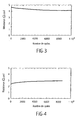
- FIG. 4 is shown the evolution of the surface resistance of the cell (in ohm. Square centimeter) as a function of the number of cycles. In this case, the surface resistance of the cell stabilizes at a value of 3 ohm.cm 2 .
- the electrodes were made in using an aluminum collector which was first pickled mechanically by abrasion using silicon carbide (SiC) papers grade between 100 and 800, then chemically pickled first by immersion in a 5 M potash solution, followed rinsing with permuted water, then by immersion in a 25% solution in volume of nitric acid (HNO3) and 18 g / l of potassium fluoride (KF), followed by rinsing with deionized water.
- SiC silicon carbide
- HNO3 nitric acid
- KF potassium fluoride
- the support thus treated is painted with a paint based on epoxy (HIM DEP 1213 for example), loaded with 50% black acetylene (ACB).
- HIM DEP 1213 for example
- AVB 50% black acetylene
- the paste of active ingredient was laminated on the collector in order to prepare new supercapacitor electrodes.
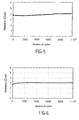
- FIG. 5 is shown the evolution of the surface resistance of the cell (in ohm. square centimeter) as a function of the number of cycles.
- the surface resistance of the cell tends towards a value of 4 ohm.cm2. This value, obtained in a reproducible manner, still shows a marked improvement over example 2.
- the electrodes were produced using an aluminum collector which was first mechanically etched by abrasion using silicon carbide (SiC) papers of grade between 100 and 800, then etched chemically first by immersion in a 5 M potash solution, followed by rinsing with deionized water, then by immersion in a 25% by volume solution of nitric acid (HNO 3 ) and 18 g / l potassium fluoride (KF), followed by rinsing with deionized water.
- SiC silicon carbide
- HNO 3 nitric acid
- KF 18 g / l potassium fluoride
- the support thus treated is painted using a mixture containing 50% by mass of epoxy-based paint (HIM DEP 1213 by example) and 50% by mass of polyurethane-based paint (HIM DEP 1214 for example).
- This mixture of paint is loaded with 50% black acetylene (ACB).
- the support thus prepared is then introduced into a oven at 200 ° C, and left for seven days.
- the paste of active ingredient was laminated on the collector in order to prepare new supercapacitor electrodes.
- Adopting a mixture of epoxy and polyurethane paint gives the protective layer an especially electrical behavior advantageous.
- the inventors were also able to discover that a layer of epoxy has the advantage of giving better behavior in terms mechanical and physicochemical stability during cycles in the case epoxy.
- a mixture of epoxide and polyurethane gives the layer both the benefits of epoxy and polyurethane, i.e. low electrical resistance and good resistance during cycles in terms of stability.
- the evolution of potential in function of time during galvanostatic cycling is also very linear.
- the electrodes were produced using an aluminum collector which was first mechanically etched by abrasion using silicon carbide (SiC) papers of grade between 100 and 800, then etched chemically first by immersion in a 5 M potash solution, followed by rinsing with deionized water, then by immersion in a 25% by volume solution of nitric acid (HNO 3 ) and 18 g / l potassium fluoride (KF), followed by rinsing with deionized water.
- SiC silicon carbide
- HNO 3 nitric acid
- KF 18 g / l potassium fluoride
- the support thus treated is painted with a paint based on polyurethane (HIM DEP 1214 for example) filled to 50% (in mass) in aluminum powder.
- the support thus prepared is then introduced in an oven at 50 ° C, and left for seven days.
- the paste of active ingredient was laminated on the collector in order to prepare new supercapacitor electrodes.
- the electrodes were made using an aluminum collector, first mechanically etched by abrasion using silicon carbide (SiC) papers of grade between 100 and 800, followed by rinsing with deionized water (without chemical pickling).
- SiC silicon carbide
- the support thus treated is painted using a polyurethane paint (HIM DEP 1214 for example), loaded with 50% acetylene black (ACB).
- HIM DEP 1214 for example
- ACB 50% acetylene black
- the paste of active material was laminated on the collector in order to prepare new supercapacitor electrodes.
- FIG. 8 is shown the evolution of the surface resistance of the cell (in ohm. Square centimeter) as a function of the number of cycles. We can notice that in this case, the surface resistance of the cell stabilizes at a value of less than 2 ohm.cm 2 .
- Electrodes in using an aluminum collector which we first stripped mechanically by abrasion using silicon carbide (SiC) papers grade between 100 and 800, then chemically pickled by immersion in a 5 M potash solution, followed by rinse with deionized water.
- SiC silicon carbide
- the support thus treated is painted using a polyurethane paint (HIM DEP 1214 for example), loaded with 50% acetylene black (ACB).
- HIM DEP 1214 for example
- ACB 50% acetylene black
- the support thus prepared is then introduced into an oven at 40 ° C, and left for seven days.
- the paste of active material is laminated on the collector in order to prepare supercapacitor electrodes.
- FIG. 9 is shown the evolution of the surface resistance of the cell (in ohm. Square centimeter) as a function of the number of cycles. In this case, the surface resistance of the cell tends towards a value of 2 ohm.cm 2 .
- the present invention makes collectors, especially collectors made of aluminum, usable in supercapacitors operating in organic medium. This treatment makes it possible to produce collectors, reliable and effective for supercapacitor electrodes having carbonaceous active materials or electronic conductive polymers.
- these electrodes can be easily combined into bundles of electrodes to form performance supercapacitors improved.
- the present invention will be particularly interesting in the case electrochemical double layer supercapacitors.
- the invention is also of great advantage in the realization of cathodes for lithium batteries (lithium-ion or lithium-polymer for example).
Landscapes
- Engineering & Computer Science (AREA)
- Power Engineering (AREA)
- Microelectronics & Electronic Packaging (AREA)
- Chemical & Material Sciences (AREA)
- Materials Engineering (AREA)
- Electric Double-Layer Capacitors Or The Like (AREA)
- Battery Electrode And Active Subsutance (AREA)
Claims (9)
- Verfahren zu Herstellung einer Elektrode der Art, die insbesondere einen Stromkollektor und ein mit dem Kollektor assoziiertes elektrochemisch aktives Material umfasst, wobei das Verfahren den Schritt umfasst, der darin besteht, eine Anstrichschicht, die leitende Teilchen einschließt, zwischen dem Kollektor und dem elektrochemisch aktiven Material anzuordnen, das Verfahren nach dem Schritt der Auftragung des Anstrichs den Schritt umfasst, der darin besteht, eine Wärmebehandlung des Anstrichs bei einer Temperatur oberhalb von Umgebung durchzuführen, wobei das Verfahren dadurch gekennzeichnet ist, dass der Anstrich ein Epoxid und ein Polyurethan umfasst, wobei der Anteil des Epoxids zwischen 20 und 80 Gew.% einschließlich beträgt, der Rest im Wesentlichen aus Polyurethan zusammengesetzt ist.
- Verfahren nach Anspruch 1, dadurch gekennzeichnet, dass der Gehalt an Epoxid zwischen 30 und 70 Gew.% einschließlich liegt, wobei der Rest im Wesentlichen aus Polyurethan zusammengesetzt ist.
- Verfahren nach Anspruch 1 oder Anspruch 2, dadurch gekennzeichnet, dass der Schritt der Wärmebehandlung bei einer Temperatur zwischen 40 °C und 200 °C einschließlich durchgeführt wird.
- Verfahren nach irgendeinem der vorangehenden Ansprüche, dadurch gekennzeichnet, dass der Anstrich ein Anstrich auf der Basis von Epoxid ist.
- Verfahren nach irgendeinem der Ansprüche 1 bis 3, dadurch gekennzeichnet, dass der Abstrich ein Anstrich auf der Basis von Polyurethan ist.
- Verfahren nach irgendeinem der vorangehenden Ansprüche, dadurch gekennzeichnet, dass der Kollektor aus Aluminium ist.
- Verfahren zur Herstellung eines elektrischen Generators, der einen Elektrolyten und mindestens zwei Elektroden umfasst, wobei mindestens eine Elektrode einen Stromkollektor und einen gesonderten Teil aus elektrochemisch aktivem Material einschließt, das mit dem Kollektor assoziiert ist, dadurch gekennzeichnet, dass es das Verfahren zur Elektrodenherstellung nach irgendeinem der Ansprüche 1 bis 6 einschließt.
- Verfahren zur Herstellung eines elektrischen Generators nach Anspruch 7, dadurch gekennzeichnet, dass der Generator ein Superkondensator ist.
- Verfahren zur Herstellung eines elektrischen Generators nach Anspruch 7, dadurch gekennzeichnet, dass der Generator ein Lithiurnakkumulator ist.
Applications Claiming Priority (3)
| Application Number | Priority Date | Filing Date | Title |
|---|---|---|---|
| FR0106000A FR2824418B1 (fr) | 2001-05-04 | 2001-05-04 | Realisation de collecteurs de courant pour generateurs electrochimiques en milieu organique |
| FR0106000 | 2001-05-04 | ||
| PCT/FR2002/001512 WO2002091407A2 (fr) | 2001-05-04 | 2002-05-02 | Realisation de collecteurs de courant pour generateurs electrochimiques en milieu organique |
Publications (2)
| Publication Number | Publication Date |
|---|---|
| EP1384239A2 EP1384239A2 (de) | 2004-01-28 |
| EP1384239B1 true EP1384239B1 (de) | 2004-10-20 |
Family
ID=8862996
Family Applications (1)
| Application Number | Title | Priority Date | Filing Date |
|---|---|---|---|
| EP02730380A Expired - Lifetime EP1384239B1 (de) | 2001-05-04 | 2002-05-02 | Herstellung von stromkollektoren für elektrochemische generatoren in einem organischen medium |
Country Status (6)
| Country | Link |
|---|---|
| EP (1) | EP1384239B1 (de) |
| AT (1) | ATE280431T1 (de) |
| AU (1) | AU2002302703A1 (de) |
| DE (1) | DE60201675T2 (de) |
| FR (1) | FR2824418B1 (de) |
| WO (1) | WO2002091407A2 (de) |
Families Citing this family (3)
| Publication number | Priority date | Publication date | Assignee | Title |
|---|---|---|---|---|
| EP2207188B1 (de) * | 2007-09-28 | 2015-09-23 | Nippon Chemi-Con Corporation | Polarisierbare elektrode für elektrischen doppelschichtkondensator und elektrischer doppelschichtkondensator damit |
| FR2977364B1 (fr) | 2011-07-01 | 2015-02-06 | Hutchinson | Collecteur de courant et procede de fabrication correspondant |
| FR3028088B1 (fr) | 2014-11-03 | 2016-12-23 | Hutchinson | Electrodes conductrices et leur procede de fabrication |
Family Cites Families (4)
| Publication number | Priority date | Publication date | Assignee | Title |
|---|---|---|---|---|
| JP2913885B2 (ja) * | 1991-03-29 | 1999-06-28 | 東洋インキ製造株式会社 | リチウム・マンガンペーパー電池およびそれに用いる導電性塗料組成物 |
| JPH0582396A (ja) * | 1991-09-24 | 1993-04-02 | Isuzu Motors Ltd | 電気二重層コンデンサの製造方法 |
| JPH05304050A (ja) * | 1992-04-27 | 1993-11-16 | Isuzu Motors Ltd | 電気2重層コンデンサ |
| US6341057B1 (en) * | 1997-11-05 | 2002-01-22 | Danionics A/S | Double layer capacitor and its manufacturing method |
-
2001
- 2001-05-04 FR FR0106000A patent/FR2824418B1/fr not_active Expired - Fee Related
-
2002
- 2002-05-02 AU AU2002302703A patent/AU2002302703A1/en not_active Abandoned
- 2002-05-02 EP EP02730380A patent/EP1384239B1/de not_active Expired - Lifetime
- 2002-05-02 DE DE60201675T patent/DE60201675T2/de not_active Expired - Fee Related
- 2002-05-02 AT AT02730380T patent/ATE280431T1/de not_active IP Right Cessation
- 2002-05-02 WO PCT/FR2002/001512 patent/WO2002091407A2/fr not_active Ceased
Also Published As
| Publication number | Publication date |
|---|---|
| DE60201675T2 (de) | 2005-10-20 |
| FR2824418B1 (fr) | 2005-05-27 |
| EP1384239A2 (de) | 2004-01-28 |
| ATE280431T1 (de) | 2004-11-15 |
| WO2002091407A2 (fr) | 2002-11-14 |
| FR2824418A1 (fr) | 2002-11-08 |
| DE60201675D1 (de) | 2004-11-25 |
| AU2002302703A1 (en) | 2002-11-18 |
| WO2002091407A3 (fr) | 2003-01-16 |
Similar Documents
| Publication | Publication Date | Title |
|---|---|---|
| CA2914039C (fr) | Anode pour batteries a haute energie | |
| EP0159937B1 (de) | Dichte Anoden aus Lithiumlegierungen für feste Batterien | |
| EP1573834B1 (de) | MIT EINEM LiFePO4 UND WASSERLÖSLICHEN BINDEMITTEL ENTHALTENDEN FILM BESCHICHTETE KATHODE, HERSTELLUNGSVERFAHREN DAFÜR UND ELEKTROCHEMISCHES SYSTEM | |
| US7446998B2 (en) | Current collector for a double electric layer capacitor | |
| EP3050140B1 (de) | Verfahren zur herstellung einer elektrode für eine lithium-ionen-batterie | |
| EP2729984B1 (de) | Wirkstoff für elektrode für eine natriumionenbatterie | |
| FR2564248A1 (fr) | Procede de production d'une cathode composite pour element de batterie electrochimique | |
| EP3365937B1 (de) | Verfahren zur herstellung einer natrium-ionen-batterien | |
| EP2260526A2 (de) | Verfahren zur herstellung einer elektrode auf siliciumbasis, elektrode auf siliciumbasis und lithiumbatterie mit derartiger elektrode | |
| KR101654047B1 (ko) | 리튬 이차전지용 음극, 이의 제조방법 및 이를 포함하는 리튬 이차전지 | |
| FR3042914A1 (fr) | Procede de fabrication d'un accumulateur du type lithium-ion | |
| JP5400451B2 (ja) | リチウム一次電池用負極およびリチウム一次電池 | |
| EP3591750A1 (de) | Stromkollektor mit gitter, und entsprechende vorrichtungen und verfahren | |
| EP2718944B1 (de) | Verfahren zur montage von eines hybriden lithiumsuperkondensators | |
| CA2622552C (fr) | Dispositif de stockage d'energie electrique comprenant une couche barriere de protection du collecteur | |
| EP1384239B1 (de) | Herstellung von stromkollektoren für elektrochemische generatoren in einem organischen medium | |
| CN103370826A (zh) | 制造电极的方法 | |
| Yang et al. | Performance of carbon-nickel composite coatings on laser surface roughened aluminum foils for supercapacitor current collectors | |
| FR3068832A1 (fr) | Procede de fabrication d'un accumulateur du type lithium-ion | |
| EP2525377A1 (de) | Stromkollektor und Verfahren zu dessen Herstellung | |
| KR102801846B1 (ko) | 고전압 전기이중층커패시터의 제조방법 | |
| CH720397A2 (fr) | Anode au lithium metallique comprenant une couche de protection | |
| GB2628616A (en) | Method |
Legal Events
| Date | Code | Title | Description |
|---|---|---|---|
| PUAI | Public reference made under article 153(3) epc to a published international application that has entered the european phase |
Free format text: ORIGINAL CODE: 0009012 |
|
| 17P | Request for examination filed |
Effective date: 20031124 |
|
| AK | Designated contracting states |
Kind code of ref document: A2 Designated state(s): AT BE CH CY DE DK ES FI FR GB GR IE IT LI LU MC NL PT SE TR |
|
| AX | Request for extension of the european patent |
Extension state: AL LT LV MK RO SI |
|
| GRAP | Despatch of communication of intention to grant a patent |
Free format text: ORIGINAL CODE: EPIDOSNIGR1 |
|
| GRAS | Grant fee paid |
Free format text: ORIGINAL CODE: EPIDOSNIGR3 |
|
| GRAA | (expected) grant |
Free format text: ORIGINAL CODE: 0009210 |
|
| AK | Designated contracting states |
Kind code of ref document: B1 Designated state(s): AT BE CH CY DE DK ES FI FR GB GR IE IT LI LU MC NL PT SE TR |
|
| PG25 | Lapsed in a contracting state [announced via postgrant information from national office to epo] |
Ref country code: TR Free format text: LAPSE BECAUSE OF FAILURE TO SUBMIT A TRANSLATION OF THE DESCRIPTION OR TO PAY THE FEE WITHIN THE PRESCRIBED TIME-LIMIT Effective date: 20041020 Ref country code: FI Free format text: LAPSE BECAUSE OF FAILURE TO SUBMIT A TRANSLATION OF THE DESCRIPTION OR TO PAY THE FEE WITHIN THE PRESCRIBED TIME-LIMIT Effective date: 20041020 Ref country code: IE Free format text: LAPSE BECAUSE OF FAILURE TO SUBMIT A TRANSLATION OF THE DESCRIPTION OR TO PAY THE FEE WITHIN THE PRESCRIBED TIME-LIMIT Effective date: 20041020 |
|
| REG | Reference to a national code |
Ref country code: GB Ref legal event code: FG4D Free format text: NOT ENGLISH |
|
| REG | Reference to a national code |
Ref country code: CH Ref legal event code: EP |
|
| REG | Reference to a national code |
Ref country code: IE Ref legal event code: FG4D Free format text: FRENCH |
|
| REF | Corresponds to: |
Ref document number: 60201675 Country of ref document: DE Date of ref document: 20041125 Kind code of ref document: P |
|
| PG25 | Lapsed in a contracting state [announced via postgrant information from national office to epo] |
Ref country code: DK Free format text: LAPSE BECAUSE OF FAILURE TO SUBMIT A TRANSLATION OF THE DESCRIPTION OR TO PAY THE FEE WITHIN THE PRESCRIBED TIME-LIMIT Effective date: 20050120 Ref country code: GR Free format text: LAPSE BECAUSE OF FAILURE TO SUBMIT A TRANSLATION OF THE DESCRIPTION OR TO PAY THE FEE WITHIN THE PRESCRIBED TIME-LIMIT Effective date: 20050120 Ref country code: SE Free format text: LAPSE BECAUSE OF FAILURE TO SUBMIT A TRANSLATION OF THE DESCRIPTION OR TO PAY THE FEE WITHIN THE PRESCRIBED TIME-LIMIT Effective date: 20050120 |
|
| PG25 | Lapsed in a contracting state [announced via postgrant information from national office to epo] |
Ref country code: ES Free format text: LAPSE BECAUSE OF FAILURE TO SUBMIT A TRANSLATION OF THE DESCRIPTION OR TO PAY THE FEE WITHIN THE PRESCRIBED TIME-LIMIT Effective date: 20050131 |
|
| REG | Reference to a national code |
Ref country code: CH Ref legal event code: NV Representative=s name: MICHELI & CIE INGENIEURS-CONSEILS |
|
| GBT | Gb: translation of ep patent filed (gb section 77(6)(a)/1977) |
Effective date: 20050203 |
|
| LTIE | Lt: invalidation of european patent or patent extension |
Effective date: 20041020 |
|
| PG25 | Lapsed in a contracting state [announced via postgrant information from national office to epo] |
Ref country code: CY Free format text: LAPSE BECAUSE OF FAILURE TO SUBMIT A TRANSLATION OF THE DESCRIPTION OR TO PAY THE FEE WITHIN THE PRESCRIBED TIME-LIMIT Effective date: 20050502 |
|
| REG | Reference to a national code |
Ref country code: IE Ref legal event code: FD4D |
|
| PLBE | No opposition filed within time limit |
Free format text: ORIGINAL CODE: 0009261 |
|
| STAA | Information on the status of an ep patent application or granted ep patent |
Free format text: STATUS: NO OPPOSITION FILED WITHIN TIME LIMIT |
|
| 26N | No opposition filed |
Effective date: 20050721 |
|
| PGFP | Annual fee paid to national office [announced via postgrant information from national office to epo] |
Ref country code: AT Payment date: 20060531 Year of fee payment: 5 Ref country code: MC Payment date: 20060531 Year of fee payment: 5 Ref country code: NL Payment date: 20060531 Year of fee payment: 5 |
|
| PGFP | Annual fee paid to national office [announced via postgrant information from national office to epo] |
Ref country code: LU Payment date: 20060608 Year of fee payment: 5 |
|
| PGFP | Annual fee paid to national office [announced via postgrant information from national office to epo] |
Ref country code: CH Payment date: 20060619 Year of fee payment: 5 |
|
| PGFP | Annual fee paid to national office [announced via postgrant information from national office to epo] |
Ref country code: GB Payment date: 20060620 Year of fee payment: 5 |
|
| PGFP | Annual fee paid to national office [announced via postgrant information from national office to epo] |
Ref country code: BE Payment date: 20060712 Year of fee payment: 5 |
|
| BERE | Be: lapsed |
Owner name: CONSERVATOIRE NATIONAL DES ARTS ET METIERS *CNAM Effective date: 20070531 |
|
| PG25 | Lapsed in a contracting state [announced via postgrant information from national office to epo] |
Ref country code: PT Free format text: LAPSE BECAUSE OF NON-PAYMENT OF DUE FEES Effective date: 20050320 |
|
| REG | Reference to a national code |
Ref country code: CH Ref legal event code: PL |
|
| GBPC | Gb: european patent ceased through non-payment of renewal fee |
Effective date: 20070502 |
|
| PG25 | Lapsed in a contracting state [announced via postgrant information from national office to epo] |
Ref country code: MC Free format text: LAPSE BECAUSE OF NON-PAYMENT OF DUE FEES Effective date: 20070531 Ref country code: NL Free format text: LAPSE BECAUSE OF NON-PAYMENT OF DUE FEES Effective date: 20071201 |
|
| NLV4 | Nl: lapsed or anulled due to non-payment of the annual fee |
Effective date: 20071201 |
|
| PG25 | Lapsed in a contracting state [announced via postgrant information from national office to epo] |
Ref country code: LI Free format text: LAPSE BECAUSE OF NON-PAYMENT OF DUE FEES Effective date: 20070531 Ref country code: AT Free format text: LAPSE BECAUSE OF NON-PAYMENT OF DUE FEES Effective date: 20070502 Ref country code: CH Free format text: LAPSE BECAUSE OF NON-PAYMENT OF DUE FEES Effective date: 20070531 |
|
| PG25 | Lapsed in a contracting state [announced via postgrant information from national office to epo] |
Ref country code: BE Free format text: LAPSE BECAUSE OF NON-PAYMENT OF DUE FEES Effective date: 20070531 |
|
| PG25 | Lapsed in a contracting state [announced via postgrant information from national office to epo] |
Ref country code: GB Free format text: LAPSE BECAUSE OF NON-PAYMENT OF DUE FEES Effective date: 20070502 |
|
| PGFP | Annual fee paid to national office [announced via postgrant information from national office to epo] |
Ref country code: IT Payment date: 20080530 Year of fee payment: 7 |
|
| PG25 | Lapsed in a contracting state [announced via postgrant information from national office to epo] |
Ref country code: LU Free format text: LAPSE BECAUSE OF NON-PAYMENT OF DUE FEES Effective date: 20070502 |
|
| PGFP | Annual fee paid to national office [announced via postgrant information from national office to epo] |
Ref country code: DE Payment date: 20090629 Year of fee payment: 8 |
|
| PGFP | Annual fee paid to national office [announced via postgrant information from national office to epo] |
Ref country code: FR Payment date: 20100609 Year of fee payment: 9 |
|
| PG25 | Lapsed in a contracting state [announced via postgrant information from national office to epo] |
Ref country code: IT Free format text: LAPSE BECAUSE OF NON-PAYMENT OF DUE FEES Effective date: 20090502 |
|
| PG25 | Lapsed in a contracting state [announced via postgrant information from national office to epo] |
Ref country code: DE Free format text: LAPSE BECAUSE OF NON-PAYMENT OF DUE FEES Effective date: 20101201 |
|
| REG | Reference to a national code |
Ref country code: FR Ref legal event code: ST Effective date: 20120131 |
|
| PG25 | Lapsed in a contracting state [announced via postgrant information from national office to epo] |
Ref country code: FR Free format text: LAPSE BECAUSE OF NON-PAYMENT OF DUE FEES Effective date: 20110531 |