EP1380134B1 - Verfahren und system zur verwaltung von konfigurationsänderungen in einem datenverarbeitungssystem - Google Patents
Verfahren und system zur verwaltung von konfigurationsänderungen in einem datenverarbeitungssystem Download PDFInfo
- Publication number
- EP1380134B1 EP1380134B1 EP02727480A EP02727480A EP1380134B1 EP 1380134 B1 EP1380134 B1 EP 1380134B1 EP 02727480 A EP02727480 A EP 02727480A EP 02727480 A EP02727480 A EP 02727480A EP 1380134 B1 EP1380134 B1 EP 1380134B1
- Authority
- EP
- European Patent Office
- Prior art keywords
- configuration
- reference model
- target
- destination
- target configuration
- Prior art date
- Legal status (The legal status is an assumption and is not a legal conclusion. Google has not performed a legal analysis and makes no representation as to the accuracy of the status listed.)
- Expired - Lifetime
Links
Images


Classifications
-
- G—PHYSICS
- G06—COMPUTING OR CALCULATING; COUNTING
- G06F—ELECTRIC DIGITAL DATA PROCESSING
- G06F15/00—Digital computers in general; Data processing equipment in general
-
- G—PHYSICS
- G06—COMPUTING OR CALCULATING; COUNTING
- G06F—ELECTRIC DIGITAL DATA PROCESSING
- G06F8/00—Arrangements for software engineering
- G06F8/60—Software deployment
- G06F8/61—Installation
Definitions
- the present invention relates to a method and system for managing configuration changes in a data processing system.
- Managing configuration changes in a data processing system is a time consuming activity, particularly when the system includes a great number of destination units on which new configurations must be enforced.
- a typical example is that of a large network with hundreds of workstations where software products and/or hardware features are periodically upgraded in order to be abreast of the information technology development.
- US Patent 5,889,953 discloses a method for determining an enforceable policy applicable to one or more destination units with conflict resolution rules to realise a simplified configuration changes of network related parameters.
- the configuration changes involve an upgrading or a change in the software products installed on the destination units (e.g. with software distribution applications), existing solutions are not satisfactory.
- the administrator is faced with the burden of manually defining the packages to be distributed to the client workstations. Moreover, the administrator cannot rely on information provided by the software distribution application for deciding which software products must be installed and/or removed and on which client workstations the new configurations must be enforced. As a consequence, the process of managing the configuration changes is very complex and error-prone.
- the present invention provides a of managing configuration changes in a data processing system having a plurality of destination units, the method including the steps of: providing a plurality of reference models defining configuration information for the destination units, each reference model including at least one record defining a configuration element and one record indicating a desired target status of a corresponding configuration element, the plurality of reference models being arranged in a tree structure starting from a root reference model; associating each destination unit with a reference model; determining a target configuration for the destination units associated with a selected reference model according to the configuration information of the reference models in a path from the root reference model to the selected reference model; providing an inventory storing an indication of a current configuration of each destination unit; determining a list of actions for reaching the target configuration on each destination unit associated with the selected reference model according to a comparison between the target configuration and the corresponding current configuration; causing each destination unit associated with the selected reference model to be updated according to the target configuration.
- the present invention also provides a computer program for performing the method, a product storing the program, and a corresponding data processing system.
- a networking system 100 such as a WAN (Wide Area Network) used in a large company.
- the networking system 100 if formed by a plurality of workstations 105, typically consisting of PCs (Personal Computers).
- the workstations 105 are clustered around corresponding concentrators 110 (such as routers/hubs); the concentrators 110 are installed at distributed sites and are connectable by a telephone line 115.
- the networking system 100 has a client/server architecture, wherein one or more of the workstations 105 (generally consisting of powerful computers) manage network resources, such as shared files and devises; the other workstations 105 operate as clients on which end-users run applications relying on server resources.
- Each workstation 105 includes several units, which are connected in parallel to a communication bus 120.
- a central processing unit (CPU) 125 controls operation of the workstation 105
- a working memory 130 (typically a DRAM) is used directly by the CPU 125
- a read-only memory (ROM) 135 stores a basic program for starting the workstation 105.
- Various peripheral units are further connected to the bus 120 (by means of respective interfaces).
- a bulk memory consists of a hard-disk 140 and of a driver unit (DRV) 145 for reading CD-ROMs 150; the workstation 105 further includes an input unit (IN) 155, which consists for example of a keyboard and a mouse, and an output unit (OUT) 160, which consists for example of a monitor.
- a network interface card (NIC) 165 is used to connect the workstation 105 to the concentrator 110.
- the networking system is associated with a department of the company (or with any other entity), if the networking system has a different topology, if the networking system consists of a LAN (Local Area Network), if the networking system includes different components (such as one or more switches), if each workstation has a different structure (for example with a multi-processor architecture), and the like.
- LAN Local Area Network
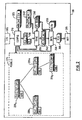
- FIG.2 there is shown a partial content of the working memory 130 of a workstation operating as a software distribution server; the information (programs and data) is typically stored on the hard-disk and loaded (at least partially) into the working memory 130 when the programs are running, together with an operating system and other application programs (not shown in the figure).
- the programs are initially installed onto the hard disk of the server workstation from CD-ROM.
- the working memory 130 includes an input/output interface (I/O) 205 for exchanging information with the peripheral units of the server workstation.
- the input/output interface 205 communicates with a change configuration management module (CONFIG) 210.
- CONFIG change configuration management module
- the configuration module 210 controls a repository (MODELS) 215 of reference models, each one defining a profile with configuration information specific for the corresponding client workstations.
- the repository 215 includes an enterprise model 220e, a secretary model 220s, a manager model 220m and a developer model 220d.
- the configuration module 215 further accesses a company database 225.
- a generic reference model includes one or more records defining respective configuration elements.
- Each record consists of a field ELE identifying the configuration element, such as a software product or a hardware feature.
- a field TGT denotes a desired target status of the configuration element; for example, the target status for a software product indicates that the software product is to be installed, removed, or installed/removed in an undoable manner, while the target status for a hardware feature indicates a hard-disk size, a CPU model, or a working memory capacity.
- a further field DPD includes dependency information indicating logic relations between the configuration elements; for example, the filed DPD contains the configuration elements required for running a software product (pre-requisites), the configuration elements in conflict with the software product (ex-requisites), or the configuration elements to be installed in a certain order together with the software product (co-requisites).
- the reference model further includes a field SBS, which is used to associate the reference model with one or more client workstations (subscribers); the association is carried out statically and/or dynamically.
- the field SBS simply contains a list of the client workstations; conversely, when the subscribers are defined dynamically, the field SBS contains a query to be run on the company data base 225, whose result provides the list of the client workstations.
- the reference models are hierarchically arranged in a tree.
- the enterprise model 220e defines a root of the tree; the secretary model 220s and the manager model 220m depend on the enterprise model 220e, and in turn the developer model 230d depends on the manager model 220m.
- each child reference model 220s, 220m and 220d inherits the configuration information of all the reference models in a path from the root reference model 220e to the child reference model.
- the inheritance mechanism does not implement an "is-a" semantic; for example, a developer is not a manager, but all the configuration elements (not the subscribers) belonging to the manager model 220m are inherited by the developer model 220d.
- the company database 225 defines an organisation chart of the company and consists of a relational table formed by a record for each employee.
- the record is composed of a field INFO containing information about the employee, such as his or her name, telephone and facsimile numbers, e-mail address, department, position, manager and subordinate persons (if any), and the like.
- a field WS identifies the client workstation assigned to the employee, for example its type, serial number, location, and IP address.
- a flag EX indicates that the client workstation assigned to the employee is to be excluded from the result of the query (when asserted).
- the configuration module 210 generates a memory structure 230 indicating a target configuration for the client workstations associated with a selected reference model.
- the target configuration 230 includes one or more configuration elements, each one defined by the respective fields ELE and TGT (indicating the configuration element and its target status, respectively), and the list of the client workstations associated with the selected reference model, each one identified by the respective field WS.
- the target configuration 230 is supplied to a synchronisation engine (SYNC) 235, which accesses an inventory 240 storing a current configuration of the client workstations.
- the configuration inventory 240 includes a record for each client workstation; the record consists of the respective field WS (identifying the client workstation) and a field CURR denoting the hardware features of the client workstation and the software products installed thereon.
- the synchronisation engine 235 further accesses a state transition table 243.
- the state transition table 243 consists of a lookup table, wherein each record has a key formed by a field STSs and a field STSe; the fields STSs and STSe indicate a starting status and an ending status, respectively, of a generic configuration element belonging to a corresponding category (such as hardware feature or software product).
- the key STSs,STSe is associated with an attribute consisting of a field ACT indicating an action to be performed for reaching the ending status STSe from the starting status STSs (for example installing a software product, removing a software product, upgrading the CPU, increasing the size of the hard-disk, and so on).
- the synchronisation engine 235 generates a memory structure 245 defining a list of actions to be performed on each client workstation associated with the selected reference model for reaching the target configuration.
- the action list 245 includes a series of records, each one consisting of the field WS identifying the client workstation, the field ELE identifying the configuration element involved, and the field ACT indicating the corresponding action to be carried out on the client workstation.
- the action list 245 is provided to a deployment agent (DEPL) 250, which accesses a repository (SW) 255 of the software products.
- the deployment agent 250 builds a distribution package (PCK) 260 for each client workstation; the distribution package 260 consists of one or more files containing the software products to be installed on the client workstation and instructions for automatically executing the actions (relating to software products) indicated in the corresponding records of the action list 245 (such as installing the software products included in the package or removing other software products).
- the deployment agent 250 further controls the updating of information stored in the configuration inventory 240.
- the distribution packages 260 are provided to a network interface (NET) 265, which sends the packages to the corresponding client workstations according to a plan scheduled by the deployment agent 250.
- the network interface 265 is also connected to the deployment agent 250 directly for supplying messages received from the client workstations.
- the synchronisation engine 235 and the deployment agent 250 further communicate with the configuration module 210 for receiving commands and providing return codes indicative of a result of the corresponding operations.
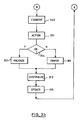
- a whole software distribution application consisting of the configuration module, the synchronisation engine and the deployment agent performs a method 300 when running on the server workstation.
- the method 300 starts at block 303 and then passes to block 306, wherein a menu with a series of possible choices is displayed to a system administrator on the monitor of the server workstation.
- the method executes the operations corresponding to the choice selected by the administrator.
- the blocks 309-318 are carried out, while if the administrator has selected the function of deploying a new configuration to the corresponding client workstations the blocks 320-375 are carried out; conversely, if the administrator has chosen to exit the software distribution application, the method ends at the final block 378.
- the administrator deletes a selected reference model (restructuring the tree accordingly), inserts a new reference model into the tree, or selects a reference model to be updated.
- the method continues to block 312, wherein if a reference model has been selected for updating the administrator deletes a configuration element, creates a new configuration element, or updates the target status of a selected configuration element.
- the administrator edits the dependency information for the selected configuration element (pre-requisites, ex-requisites or co-requisites), for example adding, updating or deleting items.
- the administrator modifies the subscribers assigned to the selected reference model; particularly, the identifier of a client workstation is deleted from the corresponding list, the identifier of a new client workstation is inserted, or the query dynamically defining the list of the client workstations is created or updated.
- the method then returns to block 306 waiting for a new command by the administrator.
- block 320 deployment function
- the administrator selects one of the reference models to be enforced.
- the method descends into block 321, wherein all the configuration elements of the root reference model are added to the target configuration (empty at the beginning).
- the configuration module than checks at block 324 whether the selected reference model has been reached (and completely processed). If so, the method passes to block 325 (described in the following). On the contrary, the method proceeds to block 330, wherein a new configuration element of the reference models down the tree along a path from the root reference model to the selected reference model is considered (staring from the first configuration element in the child reference model depending from the root reference model directly).
- the method continues to block 333, wherein the current configuration element is added to the target configuration; conversely, the method continues to block 336, wherein the target status and the dependency information of the (previous) configuration element in the target configuration are replaced with the corresponding fields of the current configuration element. In both cases, the method returns to block 324 for processing a next configuration element of the same reference model or the first configuration element of a next reference model.
- the target configuration is updated according to the corresponding dependency information, in order to resolve all the logic relations between the configuration elements. For example, configuration elements corresponding to the pre-requisite products and the co-requisite products to be installed are added, the configuration elements are rearranged for meeting the required order of installation, or configuration elements corresponding to the ex-requisite products to be removed are inserted.
- the method then passes to block 338, wherein the configuration module verifies whether the subscribers are defined statically or dynamically in the selected reference model.
- the list of the client workstations included in the selected reference model is added to the target configuration at block 339, and the method then descends into block 342 (described in the following).
- the subscribers are defined dynamically the corresponding query included in the selected reference model is run on the company database at block 345 in order to extract the list of the client workstations.
- the list is pruned at block 348 of the client workstations to be excluded from the deployment of the new configuration according to the corresponding flag.
- the method then passes to block 342.
- the current configuration of the client workstations associated with the selected reference model is extracted from the configuration inventory.
- the synchronisation engine then generates at block 351 the action list for each client workstation by comparing the target configuration with the corresponding current configuration. Particularly, if the current status of each configuration element (software product or hardware feature) meets the desired target status, no action is performed; conversely, the action required to reach the target status of the configuration element from its current status is extracted from the state transition table and added to the list.
- the method proceeds to block 354, wherein the deployment agent verifies whether a current hardware structure of the client workstations associated with the selected reference model meets the hardware pre-requisites of the target configuration.
- the corresponding distribution package is built at block 357; more specifically, the deployment agent inserts each software product to be installed into the distribution package, and add instructions for performing the required actions.
- an error condition is entered at block 366; particularly, a warning is provided to the administrator and the deployment of the target configuration to these client workstations is aborted.
- the method continues to block 372, wherein the packages (if any) are sent to the respective client workstations through the network.
- Each package is received on the client workstation; the instructions embedded in the package are executed in order to install or remove the corresponding software products.
- a return code message is sent back from each client workstation to the server workstation for reporting the result of the configuration change; the deployment agent updates the configuration inventory accordingly at block 375.
- the method then returns to block 306 waiting for a new command by the administrator.
- the present invention provides a method of managing configuration changes in a data processing system having a plurality of destination units.
- the method includes the steps of providing a plurality of reference models arranged in a tree starting from a root reference model, and associating each destination unit with a reference model including configuration information specific for the corresponding destination units; the method further includes the steps of determining a target configuration for the destination units associated with a selected reference model according to the configuration information of the reference models in a path from the root reference model to the selected reference model, and causing each destination unit associated with the selected reference model to be updated according to the target configuration.
- the devised solution provides a scalable and flexible way of specifying the target configuration of each destination unit.
- the reference models allow the destination units to be arranged into logical, functional groups according to the role that each destination unit plays in the system. Therefore, any profile or organisational change can be automatically reflected on the destination units involved simply modifying the corresponding reference models. In this way, a large system with a great number of destination units can be managed as a small system, by handling all the destination units associated with each reference model as a single entity.
- the hierarchical structure of the reference models greatly simplifies the modelling of the destination units, by allowing a step-by-step definition of the target configuration of each destination unit; in fact, the configuration elements common to all the destination units are defined only in the root reference model, and the configuration elements specific for each functional group are defined moving down the tree. In this way, the number of reference models needed to describe the whole system is greatly reduced; moreover, each change to a reference model is automatically reflected into the target configuration of all the destination units associated with its child reference models.
- the solution according to the present invention simplifies the deployment of new configurations in the system. As a consequence, the process of managing frequent configuration changes to different groups of destination units is made more reliable.
- the algorithm proposed for determining the target configuration from the corresponding reference models along the path from the root reference model to the selected reference model is particular simple and effective.
- This solution allows any reference model to inherit all the configuration elements of the parent reference models; at the same time, each reference model can override the target status or block the installation/removal of any configuration element defined in the parent reference models.
- the target configuration is determined in a different manner, for example without the possibility of overriding and/or blocking the configuration elements defined in the parent reference models.
- the dependency information inserted in the reference models prevents definition and enforcement of incorrect configurations.
- the verification of the current hardware structure of each destination unit ensures that each destination unit is at a level allowing all the software products to be installed to run correctly.
- the dependency information is used in a different manner for determining the target configuration, if the method only verifies compliance of the target configuration with the corresponding dependency information (without modifying the target configuration but simply entering an error condition if the result of the verification is negative), if the dependency information is not defined in the reference models but in a distinct memory structure that is accessed by the configuration module each time a reference model must be enforced, if the package is sent to the client workstations in any case (even if an error condition has been entered), and so on.
- the solution according to the present invention leads itself to be carried out even without the possibility of defining any dependency information for the configuration elements or any hardware feature in the reference models.
- the dynamic definition of the subscribers associated with each reference model makes it possible to evaluate the destination units to which the configuration changes must be enforced when the new configuration is actually deployed. Moreover, the possibility of excluding some destination unit from the result of the query allows these destination units to be left temporary unchanged without modifying the field defining the subscribers in the corresponding reference model.
- the destination units are associated with each reference model in a different manner, for example defining groups of destination units (such as the client workstations attached to a specified router), the whole result of the query is always employed (without the possibility of excluding any destination unit), the subscribers are defined only statically or dynamically, and the like.
- the inventory storing the current configuration of each destination unit allows a level of the configuration elements present on the client workstations to be efficiently tracked. For example, the administrator can easily decide where to distribute a new software product already installed on a subset of the client workstations and now to be installed on all the client workstations of the system, or where to distribute a new version of a software product already installed on a subset of the client workstations.
- the method described above is particularly advantageous for a software distribution application used in a large network, wherein the new configurations are automatically deployed from the server workstation to a great number of client workstations.
- the proposed solution leads itself to be implemented even without any configuration inventory (for example collecting the information indicative of the current configuration of each client workstation dynamically by the server workstation); moreover, the method of the invention is also suitable to be used in a different data processing system (even with the destination units not connected to each other in a network, for example copying the packages onto CD-ROMs that are manually distributed), or for controlling only hardware configurations.
- the method proposed by the present invention is implemented with a computer program, which is provided on CD-ROM.
- the program is provided on floppy-disk, is pre-loaded onto the hard-disk, or is stored on any other computer readable medium, is sent to the computer through the network, is broadcast, or more generally is provided in any other form directly loadable into a working memory of a computer.
- the method according to the present invention leads itself to be carried out even with a hardware structure installed on the server workstation, for example integrated in a chip of semiconductor material.
Landscapes
- Engineering & Computer Science (AREA)
- Theoretical Computer Science (AREA)
- General Engineering & Computer Science (AREA)
- Software Systems (AREA)
- Physics & Mathematics (AREA)
- General Physics & Mathematics (AREA)
- Computer Hardware Design (AREA)
- Information Transfer Between Computers (AREA)
- Stored Programmes (AREA)
- Hardware Redundancy (AREA)
- Multi Processors (AREA)
- Computer And Data Communications (AREA)
- Cereal-Derived Products (AREA)
- Pharmaceuticals Containing Other Organic And Inorganic Compounds (AREA)
Claims (10)
- Verfahren (300) zur Verwaltung von Konfigurationsänderungen in einem Datenverarbeitungssystem mit einer Vielzahl von Zieleinheiten, wobei das Verfahren die folgenden Schritte beinhaltet:- Bereitstellen (309 bis 318) einer Vielzahl von Referenzmodellen, die Konfigurationsinformationen für die Zieleinheiten definieren, wobei jedes Referenzmodell mindestens einen Datensatz, der ein Konfigurationselement definiert, und einen Datensatz beinhaltet, der einen gewünschten Zielstatus eines entsprechenden Konfigurationselements anzeigt, wobei die Vielzahl der Referenzmodelle in einer Baumstruktur angeordnet sind, die von einem Stammreferenzmodell ausgeht;- Zuweisen (338, 339, 345 bis 348) jeder Zieleinheit zu einem Referenzmodells;- Festlegen (320 bis 336) einer Zielkonfiguration für die einem ausgewählten Referenzmodell zugewiesenen Zieleinheiten entsprechend der Konfigurationsinformation der Referenzmodelle in einem Pfad vom Stammreferenzmodell bis zum ausgewählten Referenzmodell;- Bereitstellen (342) einer Bestandsliste zum Speichern eines Hinweises auf eine aktuelle Konfiguration jeder Zieleinheit;- Festlegen (351) einer Liste von Aktionen zum Erreichen der Zielkonfiguration in jeder dem ausgewählten Referenzmodell zugewiesenen Zieleinheit entsprechend einem Vergleich zwischen der Zielkonfiguration und der entsprechenden aktuellen Konfiguration;- Veranlassen (342 bis 357), dass jede dem ausgewählten Referenzmodell zugewiesene Zieleinheit entsprechend der Zielkonfiguration aktualisiert wird.
- Verfahren (300) nach Anspruch 1, bei dem der Schritt (320 bis 336) des Festlegens der Zielkonfiguration für jeden aktuellen Datensatz der Referenzmodelle entlang dem Pfad folgende Schritte beinhaltet:- Prüfen (330), ob die Zielkonfiguration einen vorhergehenden Datensatz für das Konfigurationselement des aktuellen Datensatzes beinhaltet, und- Hinzufügen (333) des aktuellen Datensatzes zur Zielkonfiguration, wenn das Prüfergebnis negativ ist, oder Ersetzen (336) des Zielstatus des vorhergehenden Datensatzes durch den Zielstatus des aktuellen Datensatzes, wenn das Prüfergebnis positiv ist.
- Verfahren (300) nach Anspruch 2, das ferner den Schritt des Bereitstellens (315) einer Abhängigkeitsinformation beinhaltet, welche logische Beziehungen zwischen den Konfigurationselementen anzeigt, wobei die Zielkonfiguration ferner entsprechend der Abhängigkeitsinformation der entsprechenden Konfigurationselemente festgelegt (325) wird.
- Verfahren (300) nach einem der Ansprüche 1 bis 3, bei dem die Konfigurationsinformation einen Hinweis auf mindestens eine Hardware-Voraussetzung beinhaltet und das Verfahren ferner den Schritt des Prüfens (351 bis 360) beinhaltet, ob eine aktuelle Hardwarestruktur jeder dem ausgewählten Referenzmodell zugewiesenen Zieleinheit die Hardware-Voraussetzung der Zielkonfiguration erfüllt.
- Verfahren (300) nach einem der Ansprüche 1 bis 4, das ferner den Schritt des Ausführens (345) einer Abfrage einer Speicherstruktur beinhaltet, um dynamisch eine Liste der dem ausgewählten Referenzmodell zugewiesenen Zieleinheiten zu entnehmen.
- Verfahren (300) nach Anspruch 5, das ferner den Schritt des Ausschließens (348) jeder Zieleinheit aus der Liste beinhaltet, wenn in der Speicherstruktur eine entsprechende Markierung nachgewiesen wird.
- Verfahren (300) nach einem der vorhergehenden Ansprüche, bei dem die Konfigurationsinformation einen Hinweis auf mindestens ein digital codiertes Produkt beinhaltet, das installiert oder entfernt werden soll, und bei dem das Datenverarbeitungssystem aus einem Netzwerk mit einem Server-Arbeitsplatzrechner und einer Vielzahl von Client-Arbeitsplatzrechnern besteht, die jeweils mindestens einer Zieleinheit zugewiesen sind, wobei das Verfahren für jede dem ausgewählten Referenzmodell zugewiesene Zieleinheit ferner die folgenden Schritte beinhaltet:- Erstellen (357) eines Pakets unter der Steuerung durch die Server-Arbeitsplatzrechner, wobei das Paket jedes Produkt der zu installierenden Zielkonfiguration und Anweisungen zur automatischen Ausführung der Liste von Aktionen beinhaltet;- Verteilen (372) des Pakets an den der Zieleinheit zugewiesenen Client-Arbeitsplatzrechner durch das Netzwerk, und- Aktualisieren (375) der Bestandsliste entsprechend den in dem Client-Arbeitsplatzrechner ausgeführten Aktionen.
- Computerprogramm (210, 235, 250), das direkt in einen Arbeitsspeicher (130) eines Computers (105) geladen werden kann, um jeden Schritt des Verfahrens nach einem der Schritte 1 bis 7 auszuführen, wenn das Programm in dem Computer ausgeführt wird.
- Computerprogrammprodukt (150), das ein computerlesbares Medium beinhaltet, auf welchen das Programm (210, 235, 250) nach Anspruch 8 gespeichert ist.
- Datenverarbeitungssystem (100), das ein Mittel beinhaltet, das zum Ausführen jedes Schrittes nach einem der Ansprüche 1 bis 7 geeignet ist.
Applications Claiming Priority (3)
| Application Number | Priority Date | Filing Date | Title |
|---|---|---|---|
| GB0109618 | 2001-04-19 | ||
| GB0109618A GB2374687A (en) | 2001-04-19 | 2001-04-19 | Managing configuration changes in a data processing system |
| PCT/EP2002/003363 WO2002086696A2 (en) | 2001-04-19 | 2002-03-05 | A method and system for managing configuration changes in a data processing system |
Publications (2)
| Publication Number | Publication Date |
|---|---|
| EP1380134A2 EP1380134A2 (de) | 2004-01-14 |
| EP1380134B1 true EP1380134B1 (de) | 2008-07-09 |
Family
ID=9913062
Family Applications (1)
| Application Number | Title | Priority Date | Filing Date |
|---|---|---|---|
| EP02727480A Expired - Lifetime EP1380134B1 (de) | 2001-04-19 | 2002-03-05 | Verfahren und system zur verwaltung von konfigurationsänderungen in einem datenverarbeitungssystem |
Country Status (10)
| Country | Link |
|---|---|
| US (2) | US7370323B2 (de) |
| EP (1) | EP1380134B1 (de) |
| JP (1) | JP2004536381A (de) |
| KR (1) | KR100550758B1 (de) |
| AT (1) | ATE400938T1 (de) |
| AU (1) | AU2002257717A1 (de) |
| CA (1) | CA2442559A1 (de) |
| DE (1) | DE60227496D1 (de) |
| GB (1) | GB2374687A (de) |
| WO (1) | WO2002086696A2 (de) |
Families Citing this family (101)
| Publication number | Priority date | Publication date | Assignee | Title |
|---|---|---|---|---|
| US5694546A (en) | 1994-05-31 | 1997-12-02 | Reisman; Richard R. | System for automatic unattended electronic information transport between a server and a client by a vendor provided transport software with a manifest list |
| US6832346B2 (en) * | 2001-04-13 | 2004-12-14 | Lockheed Martin Corporation | System and method for managing and communicating state changes of a complex system |
| GB2374687A (en) * | 2001-04-19 | 2002-10-23 | Ibm | Managing configuration changes in a data processing system |
| US7181512B1 (en) * | 2002-05-06 | 2007-02-20 | Accenture Global Services Gmbh | Workstation deployment |
| US7076696B1 (en) * | 2002-08-20 | 2006-07-11 | Juniper Networks, Inc. | Providing failover assurance in a device |
| US8122106B2 (en) | 2003-03-06 | 2012-02-21 | Microsoft Corporation | Integrating design, deployment, and management phases for systems |
| US20070174113A1 (en) * | 2003-04-29 | 2007-07-26 | Marc Rowen | Enterprise incentive management |
| JP5323028B2 (ja) * | 2003-09-30 | 2013-10-23 | 株式会社富士通ソーシアルサイエンスラボラトリ | コンピュータシステム管理のプログラム,コンピュータ及び各コンピュータにおける管理方法 |
| US20050246529A1 (en) * | 2004-04-30 | 2005-11-03 | Microsoft Corporation | Isolated persistent identity storage for authentication of computing devies |
| US7987445B2 (en) * | 2005-01-13 | 2011-07-26 | National Instruments Corporation | Comparing a configuration diagram to an actual system |
| US7987444B2 (en) * | 2005-01-13 | 2011-07-26 | National Instruments Corporation | Determining and merging differences between configuration diagrams |
| US7703027B2 (en) * | 2005-01-13 | 2010-04-20 | National Instruments Corporation | Merging graphical programs |
| US8051148B2 (en) * | 2005-01-13 | 2011-11-01 | National Instruments Corporation | Determining differences between configuration diagrams |
| EP1849069B1 (de) * | 2005-01-13 | 2017-06-14 | National Instruments Corporation | Bestimmen und zusammenführen von unterschieden zwischen konfigurationsdiagrammen |
| US7797147B2 (en) * | 2005-04-15 | 2010-09-14 | Microsoft Corporation | Model-based system monitoring |
| US7802144B2 (en) * | 2005-04-15 | 2010-09-21 | Microsoft Corporation | Model-based system monitoring |
| US8413134B2 (en) * | 2005-05-10 | 2013-04-02 | International Business Machines Corporation | Method, system and computer program for installing software products based on package introspection |
| US8549513B2 (en) | 2005-06-29 | 2013-10-01 | Microsoft Corporation | Model-based virtual system provisioning |
| ATE475266T1 (de) * | 2005-07-08 | 2010-08-15 | Tag Networks Inc | Videospielsystem mit vorcodierten makroblöcken |
| US8074248B2 (en) | 2005-07-26 | 2011-12-06 | Activevideo Networks, Inc. | System and method for providing video content associated with a source image to a television in a communication network |
| US7941309B2 (en) | 2005-11-02 | 2011-05-10 | Microsoft Corporation | Modeling IT operations/policies |
| GB2432992B (en) * | 2005-11-18 | 2008-09-10 | Cramer Systems Ltd | Network planning |
| GB2433675B (en) | 2005-12-22 | 2008-05-07 | Cramer Systems Ltd | Communications circuit design |
| US7694117B2 (en) | 2005-12-30 | 2010-04-06 | Sap Ag | Virtualized and adaptive configuration of a system |
| US8201189B2 (en) | 2005-12-30 | 2012-06-12 | Sap Ag | System and method for filtering components |
| US7779389B2 (en) | 2005-12-30 | 2010-08-17 | Sap Ag | System and method for dynamic VM settings |
| US7954087B2 (en) | 2005-12-30 | 2011-05-31 | Sap Ag | Template integration |
| US7870538B2 (en) | 2005-12-30 | 2011-01-11 | Sap Ag | Configuration inheritance in system configuration |
| US8849894B2 (en) | 2005-12-30 | 2014-09-30 | Sap Ag | Method and system using parameterized configurations |
| US8843918B2 (en) | 2005-12-30 | 2014-09-23 | Sap Ag | System and method for deployable templates |
| US20070257715A1 (en) * | 2005-12-30 | 2007-11-08 | Semerdzhiev Krasimir P | System and method for abstract configuration |
| US7797522B2 (en) | 2005-12-30 | 2010-09-14 | Sap Ag | Meta attributes of system configuration elements |
| US7506145B2 (en) | 2005-12-30 | 2009-03-17 | Sap Ag | Calculated values in system configuration |
| US8271769B2 (en) | 2005-12-30 | 2012-09-18 | Sap Ag | Dynamic adaptation of a configuration to a system environment |
| US9038023B2 (en) * | 2005-12-30 | 2015-05-19 | Sap Se | Template-based configuration architecture |
| US7793087B2 (en) | 2005-12-30 | 2010-09-07 | Sap Ag | Configuration templates for different use cases for a system |
| US8838750B2 (en) | 2005-12-30 | 2014-09-16 | Sap Ag | System and method for system information centralization |
| WO2007122030A1 (en) * | 2006-04-20 | 2007-11-01 | International Business Machines Corporation | Method, system and computer program for the centralized system management on endpoints of a distributed data processing system |
| US20080040455A1 (en) * | 2006-08-08 | 2008-02-14 | Microsoft Corporation | Model-based deployment and configuration of software in a distributed environment |
| US8224930B2 (en) * | 2006-09-19 | 2012-07-17 | The Invention Science Fund I, Llc | Signaling partial service configuration changes in appnets |
| US9826197B2 (en) | 2007-01-12 | 2017-11-21 | Activevideo Networks, Inc. | Providing television broadcasts over a managed network and interactive content over an unmanaged network to a client device |
| WO2008088741A2 (en) | 2007-01-12 | 2008-07-24 | Ictv, Inc. | Interactive encoded content system including object models for viewing on a remote device |
| KR20100027104A (ko) * | 2007-04-05 | 2010-03-10 | 인터내셔널 비지네스 머신즈 코포레이션 | 방화벽을 구축하는 방법, 시스템 및 컴퓨터 프로그램 |
| US8407688B2 (en) * | 2007-11-27 | 2013-03-26 | Managelq, Inc. | Methods and apparatus for storing and transmitting historical configuration data associated with information technology assets |
| US8677342B1 (en) * | 2008-10-17 | 2014-03-18 | Honeywell International Inc. | System, method and apparatus for replacing wireless devices in a system |
| US20100175060A1 (en) * | 2009-01-06 | 2010-07-08 | International Business Machines Corporation | Simplifying Selection of Targets for Installation of Composite Applications |
| US8990368B2 (en) * | 2009-02-27 | 2015-03-24 | Red Hat, Inc. | Discovery of network software relationships |
| US8418140B2 (en) * | 2009-05-20 | 2013-04-09 | Microsoft Corporation | Serviceability and configuration management |
| US20110035738A1 (en) * | 2009-08-10 | 2011-02-10 | Telefonaktiebolaget Lm Ericsson (Publ) | Method for generating an upgrade campaign for a system |
| US9223946B1 (en) * | 2009-10-29 | 2015-12-29 | Hewlett Packard Enterprise Development Lp | Specification and configuration of management intent |
| US8572565B2 (en) * | 2009-11-30 | 2013-10-29 | Sap Ag | Central configuration and transport supporting software lifecycles |
| US8326978B2 (en) * | 2010-02-05 | 2012-12-04 | International Business Machines Corporation | Automatic updates to fabric alert definitions for fabric segmentation, fabric merge, and fabric principal switch changes |
| US9292343B2 (en) * | 2010-06-30 | 2016-03-22 | Oracle International Corporation | Method and system for performing deployment management |
| KR20130138263A (ko) | 2010-10-14 | 2013-12-18 | 액티브비디오 네트웍스, 인코포레이티드 | 케이블 텔레비전 시스템을 이용하는 비디오 장치들 간의 디지털 비디오의 스트리밍 |
| WO2012138660A2 (en) | 2011-04-07 | 2012-10-11 | Activevideo Networks, Inc. | Reduction of latency in video distribution networks using adaptive bit rates |
| US8914794B2 (en) | 2011-06-30 | 2014-12-16 | Rockwell Automation Technologies, Inc. | Multiple deployment of applications with multiple configurations in an industrial automation environment |
| US10409445B2 (en) | 2012-01-09 | 2019-09-10 | Activevideo Networks, Inc. | Rendering of an interactive lean-backward user interface on a television |
| US8713152B2 (en) | 2012-03-02 | 2014-04-29 | Microsoft Corporation | Managing distributed applications using structural diagrams |
| US9229771B2 (en) | 2012-03-08 | 2016-01-05 | Microsoft Technology Licensing, Llc | Cloud bursting and management of cloud-bursted applications |
| US9800945B2 (en) | 2012-04-03 | 2017-10-24 | Activevideo Networks, Inc. | Class-based intelligent multiplexing over unmanaged networks |
| US9123084B2 (en) | 2012-04-12 | 2015-09-01 | Activevideo Networks, Inc. | Graphical application integration with MPEG objects |
| US9444896B2 (en) | 2012-12-05 | 2016-09-13 | Microsoft Technology Licensing, Llc | Application migration between clouds |
| US10275128B2 (en) | 2013-03-15 | 2019-04-30 | Activevideo Networks, Inc. | Multiple-mode system and method for providing user selectable video content |
| WO2014197879A1 (en) | 2013-06-06 | 2014-12-11 | Activevideo Networks, Inc. | Overlay rendering of user interface onto source video |
| US9294785B2 (en) | 2013-06-06 | 2016-03-22 | Activevideo Networks, Inc. | System and method for exploiting scene graph information in construction of an encoded video sequence |
| US9219922B2 (en) | 2013-06-06 | 2015-12-22 | Activevideo Networks, Inc. | System and method for exploiting scene graph information in construction of an encoded video sequence |
| US9690564B2 (en) * | 2013-09-10 | 2017-06-27 | International Business Machines Corporation | Runtime detection of software configurations and upgrades |
| US9230041B2 (en) | 2013-12-02 | 2016-01-05 | Qbase, LLC | Search suggestions of related entities based on co-occurrence and/or fuzzy-score matching |
| JP6284643B2 (ja) | 2013-12-02 | 2018-02-28 | キューベース リミテッド ライアビリティ カンパニー | 非構造化テキストにおける特徴の曖昧性除去方法 |
| US9542477B2 (en) | 2013-12-02 | 2017-01-10 | Qbase, LLC | Method of automated discovery of topics relatedness |
| KR20160124743A (ko) | 2013-12-02 | 2016-10-28 | 큐베이스 엘엘씨 | 클러스터링된 인-메모리 데이터베이스의 고안 및 구현 |
| US9201744B2 (en) | 2013-12-02 | 2015-12-01 | Qbase, LLC | Fault tolerant architecture for distributed computing systems |
| US9025892B1 (en) | 2013-12-02 | 2015-05-05 | Qbase, LLC | Data record compression with progressive and/or selective decomposition |
| US9355152B2 (en) | 2013-12-02 | 2016-05-31 | Qbase, LLC | Non-exclusionary search within in-memory databases |
| WO2015084726A1 (en) | 2013-12-02 | 2015-06-11 | Qbase, LLC | Event detection through text analysis template models |
| US9336280B2 (en) | 2013-12-02 | 2016-05-10 | Qbase, LLC | Method for entity-driven alerts based on disambiguated features |
| US9544361B2 (en) | 2013-12-02 | 2017-01-10 | Qbase, LLC | Event detection through text analysis using dynamic self evolving/learning module |
| US9424294B2 (en) | 2013-12-02 | 2016-08-23 | Qbase, LLC | Method for facet searching and search suggestions |
| US9619571B2 (en) | 2013-12-02 | 2017-04-11 | Qbase, LLC | Method for searching related entities through entity co-occurrence |
| US9223833B2 (en) | 2013-12-02 | 2015-12-29 | Qbase, LLC | Method for in-loop human validation of disambiguated features |
| US9424524B2 (en) | 2013-12-02 | 2016-08-23 | Qbase, LLC | Extracting facts from unstructured text |
| US9984427B2 (en) | 2013-12-02 | 2018-05-29 | Qbase, LLC | Data ingestion module for event detection and increased situational awareness |
| US9547701B2 (en) | 2013-12-02 | 2017-01-17 | Qbase, LLC | Method of discovering and exploring feature knowledge |
| US9208204B2 (en) | 2013-12-02 | 2015-12-08 | Qbase, LLC | Search suggestions using fuzzy-score matching and entity co-occurrence |
| US9177262B2 (en) | 2013-12-02 | 2015-11-03 | Qbase, LLC | Method of automated discovery of new topics |
| US9348573B2 (en) * | 2013-12-02 | 2016-05-24 | Qbase, LLC | Installation and fault handling in a distributed system utilizing supervisor and dependency manager nodes |
| US9223875B2 (en) | 2013-12-02 | 2015-12-29 | Qbase, LLC | Real-time distributed in memory search architecture |
| US9922032B2 (en) | 2013-12-02 | 2018-03-20 | Qbase, LLC | Featured co-occurrence knowledge base from a corpus of documents |
| US9659108B2 (en) | 2013-12-02 | 2017-05-23 | Qbase, LLC | Pluggable architecture for embedding analytics in clustered in-memory databases |
| US9317565B2 (en) | 2013-12-02 | 2016-04-19 | Qbase, LLC | Alerting system based on newly disambiguated features |
| US9182966B2 (en) * | 2013-12-31 | 2015-11-10 | International Business Machines Corporation | Enabling dynamic software installer requirement dependency checks |
| US9361317B2 (en) | 2014-03-04 | 2016-06-07 | Qbase, LLC | Method for entity enrichment of digital content to enable advanced search functionality in content management systems |
| TWI509456B (zh) * | 2014-03-31 | 2015-11-21 | Ibm | 電腦裝置以及與電腦裝置通訊連結的安全性管理裝置 |
| TW201537378A (zh) | 2014-03-31 | 2015-10-01 | Ibm | 電腦裝置以及與電腦裝置通訊連結的安全性管理裝置 |
| US9788029B2 (en) | 2014-04-25 | 2017-10-10 | Activevideo Networks, Inc. | Intelligent multiplexing using class-based, multi-dimensioned decision logic for managed networks |
| JP6661409B2 (ja) * | 2016-03-01 | 2020-03-11 | キヤノン株式会社 | 自動設置システム、情報処理装置、情報処理装置の制御方法、及びプログラム |
| JP6709910B2 (ja) * | 2016-10-17 | 2020-06-17 | 株式会社クロスビート | システム管理装置及びシステム管理プログラム |
| WO2018230352A1 (ja) * | 2017-06-14 | 2018-12-20 | 日本電気株式会社 | 変更手順生成装置、変更手順生成方法および変更手順生成プログラム |
| US20190095187A1 (en) * | 2017-09-28 | 2019-03-28 | Trillium Incorporated | Incremental updates in static libraries |
| US10915309B2 (en) * | 2018-12-06 | 2021-02-09 | Sap Se | Technical configuration delta-driven update and decoupling |
| US11550925B2 (en) | 2021-03-24 | 2023-01-10 | Bank Of America Corporation | Information security system for identifying potential security threats in software package deployment |
Family Cites Families (9)
| Publication number | Priority date | Publication date | Assignee | Title |
|---|---|---|---|---|
| EP0501613A3 (en) * | 1991-02-28 | 1993-09-01 | Hewlett-Packard Company | Heterogeneous software configuration management apparatus |
| US5717950A (en) * | 1994-01-11 | 1998-02-10 | Hitachi, Ltd. | Input/output device information management system for multi-computer system |
| US5889953A (en) | 1995-05-25 | 1999-03-30 | Cabletron Systems, Inc. | Policy management and conflict resolution in computer networks |
| DE69601149T2 (de) * | 1995-07-03 | 1999-08-05 | Sun Microsystems, Inc., Mountain View, Calif. 94043-1100 | Systen und Verfahren zum Implementieren einer hierarchischen Politik für die Administration eines Computersystems |
| JP3671759B2 (ja) | 1999-08-26 | 2005-07-13 | 株式会社日立製作所 | ソフトウェア配布方法およびシステム |
| WO2001093020A2 (en) * | 2000-06-01 | 2001-12-06 | Aduva Inc. | Virtual system configurator server for linux |
| GB2374687A (en) * | 2001-04-19 | 2002-10-23 | Ibm | Managing configuration changes in a data processing system |
| US7080355B2 (en) * | 2001-07-06 | 2006-07-18 | Logiclibrary, Inc. | Targeted asset capture, identification, and management |
| JP2003091416A (ja) * | 2001-09-17 | 2003-03-28 | Toshiba Corp | 業務アプリケーションシステムの機能構成定義方法 |
-
2001
- 2001-04-19 GB GB0109618A patent/GB2374687A/en not_active Withdrawn
-
2002
- 2002-03-05 KR KR1020037012194A patent/KR100550758B1/ko not_active Expired - Fee Related
- 2002-03-05 DE DE60227496T patent/DE60227496D1/de not_active Expired - Lifetime
- 2002-03-05 EP EP02727480A patent/EP1380134B1/de not_active Expired - Lifetime
- 2002-03-05 US US10/472,651 patent/US7370323B2/en not_active Expired - Fee Related
- 2002-03-05 CA CA002442559A patent/CA2442559A1/en not_active Abandoned
- 2002-03-05 WO PCT/EP2002/003363 patent/WO2002086696A2/en not_active Ceased
- 2002-03-05 AU AU2002257717A patent/AU2002257717A1/en not_active Abandoned
- 2002-03-05 JP JP2002584150A patent/JP2004536381A/ja active Pending
- 2002-03-05 AT AT02727480T patent/ATE400938T1/de not_active IP Right Cessation
-
2008
- 2008-01-21 US US12/017,083 patent/US8099728B2/en not_active Expired - Fee Related
Also Published As
| Publication number | Publication date |
|---|---|
| DE60227496D1 (de) | 2008-08-21 |
| KR20030090680A (ko) | 2003-11-28 |
| US7370323B2 (en) | 2008-05-06 |
| US20080215558A1 (en) | 2008-09-04 |
| GB0109618D0 (en) | 2001-06-06 |
| WO2002086696A2 (en) | 2002-10-31 |
| GB2374687A (en) | 2002-10-23 |
| ATE400938T1 (de) | 2008-07-15 |
| AU2002257717A1 (en) | 2002-11-05 |
| US8099728B2 (en) | 2012-01-17 |
| WO2002086696A3 (en) | 2003-10-16 |
| EP1380134A2 (de) | 2004-01-14 |
| CA2442559A1 (en) | 2002-10-31 |
| JP2004536381A (ja) | 2004-12-02 |
| US20040153869A1 (en) | 2004-08-05 |
| KR100550758B1 (ko) | 2006-02-08 |
Similar Documents
| Publication | Publication Date | Title |
|---|---|---|
| EP1380134B1 (de) | Verfahren und system zur verwaltung von konfigurationsänderungen in einem datenverarbeitungssystem | |
| JP3466193B2 (ja) | 企業のデスクトップ管理のための方法及び装置 | |
| US7970746B2 (en) | Declarative management framework | |
| JP3590688B2 (ja) | アプリケーションを導入するための導入計画オブジェクトを構築する方法、及びそのシステム | |
| US8122106B2 (en) | Integrating design, deployment, and management phases for systems | |
| US8930942B2 (en) | Capability model for deploying componentized applications | |
| US8667482B2 (en) | Automated application modeling for application virtualization | |
| US8869111B2 (en) | Method and system for generating test cases for a software application | |
| US20090019138A1 (en) | Repository-Independent System and Method for Asset Management and Reconciliation | |
| US20050262501A1 (en) | Software distribution method and system supporting configuration management | |
| US20070022023A1 (en) | Method and apparatus for populating a software catalogue with software knowledge gathering | |
| EP2696555B1 (de) | Verfahren und system zur identifizierung einer speichervorrichtung | |
| US20070169167A1 (en) | Control device and control method information system | |
| CN100426293C (zh) | 目标集成管理系统 | |
| US6266661B1 (en) | Method and apparatus for maintaining multi-instance database management systems with hierarchical inheritance and cross-hierarchy overrides | |
| CN109684028A (zh) | 一种操作系统与用户数据分离的方法、装置及设备 | |
| US20070220509A1 (en) | System and method for deploying software based on matching provisioning requirements and capabilities | |
| US9235437B2 (en) | Method and integration component for integrating OSGi environments into a Service-oriented Architecture | |
| US7685147B2 (en) | Automatic management method and system with category-based correlations | |
| CN119311306A (zh) | 基于ota的车辆软件升级方法、装置和计算机设备 | |
| US12242441B1 (en) | Data lineage tracking | |
| US7743008B2 (en) | Adaptive management method with workflow control | |
| WO2007145680A1 (en) | Declarative management framework | |
| GB2394570A (en) | Installing software components according to component characteristics | |
| CN116776023A (zh) | 应用管理方法及装置、设备、存储介质 |
Legal Events
| Date | Code | Title | Description |
|---|---|---|---|
| PUAI | Public reference made under article 153(3) epc to a published international application that has entered the european phase |
Free format text: ORIGINAL CODE: 0009012 |
|
| 17P | Request for examination filed |
Effective date: 20030909 |
|
| AK | Designated contracting states |
Kind code of ref document: A2 Designated state(s): AT BE CH CY DE DK ES FI FR GB GR IE IT LI LU MC NL PT SE TR |
|
| AX | Request for extension of the european patent |
Extension state: AL LT LV MK RO SI |
|
| 17Q | First examination report despatched |
Effective date: 20071105 |
|
| GRAP | Despatch of communication of intention to grant a patent |
Free format text: ORIGINAL CODE: EPIDOSNIGR1 |
|
| GRAS | Grant fee paid |
Free format text: ORIGINAL CODE: EPIDOSNIGR3 |
|
| GRAA | (expected) grant |
Free format text: ORIGINAL CODE: 0009210 |
|
| AK | Designated contracting states |
Kind code of ref document: B1 Designated state(s): AT BE CH CY DE DK ES FI FR GB GR IE IT LI LU MC NL PT SE TR |
|
| REG | Reference to a national code |
Ref country code: GB Ref legal event code: FG4D |
|
| REG | Reference to a national code |
Ref country code: CH Ref legal event code: EP |
|
| REF | Corresponds to: |
Ref document number: 60227496 Country of ref document: DE Date of ref document: 20080821 Kind code of ref document: P |
|
| REG | Reference to a national code |
Ref country code: IE Ref legal event code: FG4D |
|
| REG | Reference to a national code |
Ref country code: GB Ref legal event code: 746 Effective date: 20080828 |
|
| NLV1 | Nl: lapsed or annulled due to failure to fulfill the requirements of art. 29p and 29m of the patents act | ||
| PG25 | Lapsed in a contracting state [announced via postgrant information from national office to epo] |
Ref country code: NL Free format text: LAPSE BECAUSE OF FAILURE TO SUBMIT A TRANSLATION OF THE DESCRIPTION OR TO PAY THE FEE WITHIN THE PRESCRIBED TIME-LIMIT Effective date: 20080709 Ref country code: PT Free format text: LAPSE BECAUSE OF FAILURE TO SUBMIT A TRANSLATION OF THE DESCRIPTION OR TO PAY THE FEE WITHIN THE PRESCRIBED TIME-LIMIT Effective date: 20081209 Ref country code: ES Free format text: LAPSE BECAUSE OF FAILURE TO SUBMIT A TRANSLATION OF THE DESCRIPTION OR TO PAY THE FEE WITHIN THE PRESCRIBED TIME-LIMIT Effective date: 20081020 |
|
| PG25 | Lapsed in a contracting state [announced via postgrant information from national office to epo] |
Ref country code: FI Free format text: LAPSE BECAUSE OF FAILURE TO SUBMIT A TRANSLATION OF THE DESCRIPTION OR TO PAY THE FEE WITHIN THE PRESCRIBED TIME-LIMIT Effective date: 20080709 Ref country code: AT Free format text: LAPSE BECAUSE OF FAILURE TO SUBMIT A TRANSLATION OF THE DESCRIPTION OR TO PAY THE FEE WITHIN THE PRESCRIBED TIME-LIMIT Effective date: 20080709 |
|
| PG25 | Lapsed in a contracting state [announced via postgrant information from national office to epo] |
Ref country code: BE Free format text: LAPSE BECAUSE OF FAILURE TO SUBMIT A TRANSLATION OF THE DESCRIPTION OR TO PAY THE FEE WITHIN THE PRESCRIBED TIME-LIMIT Effective date: 20080709 |
|
| PG25 | Lapsed in a contracting state [announced via postgrant information from national office to epo] |
Ref country code: DK Free format text: LAPSE BECAUSE OF FAILURE TO SUBMIT A TRANSLATION OF THE DESCRIPTION OR TO PAY THE FEE WITHIN THE PRESCRIBED TIME-LIMIT Effective date: 20080709 |
|
| PLBE | No opposition filed within time limit |
Free format text: ORIGINAL CODE: 0009261 |
|
| STAA | Information on the status of an ep patent application or granted ep patent |
Free format text: STATUS: NO OPPOSITION FILED WITHIN TIME LIMIT |
|
| 26N | No opposition filed |
Effective date: 20090414 |
|
| PG25 | Lapsed in a contracting state [announced via postgrant information from national office to epo] |
Ref country code: IT Free format text: LAPSE BECAUSE OF FAILURE TO SUBMIT A TRANSLATION OF THE DESCRIPTION OR TO PAY THE FEE WITHIN THE PRESCRIBED TIME-LIMIT Effective date: 20080709 |
|
| PG25 | Lapsed in a contracting state [announced via postgrant information from national office to epo] |
Ref country code: MC Free format text: LAPSE BECAUSE OF NON-PAYMENT OF DUE FEES Effective date: 20090331 |
|
| REG | Reference to a national code |
Ref country code: CH Ref legal event code: PL |
|
| PG25 | Lapsed in a contracting state [announced via postgrant information from national office to epo] |
Ref country code: CH Free format text: LAPSE BECAUSE OF NON-PAYMENT OF DUE FEES Effective date: 20090331 Ref country code: IE Free format text: LAPSE BECAUSE OF NON-PAYMENT OF DUE FEES Effective date: 20090305 Ref country code: LI Free format text: LAPSE BECAUSE OF NON-PAYMENT OF DUE FEES Effective date: 20090331 Ref country code: SE Free format text: LAPSE BECAUSE OF FAILURE TO SUBMIT A TRANSLATION OF THE DESCRIPTION OR TO PAY THE FEE WITHIN THE PRESCRIBED TIME-LIMIT Effective date: 20081009 |
|
| PG25 | Lapsed in a contracting state [announced via postgrant information from national office to epo] |
Ref country code: GR Free format text: LAPSE BECAUSE OF FAILURE TO SUBMIT A TRANSLATION OF THE DESCRIPTION OR TO PAY THE FEE WITHIN THE PRESCRIBED TIME-LIMIT Effective date: 20081010 |
|
| PG25 | Lapsed in a contracting state [announced via postgrant information from national office to epo] |
Ref country code: LU Free format text: LAPSE BECAUSE OF NON-PAYMENT OF DUE FEES Effective date: 20090305 |
|
| PG25 | Lapsed in a contracting state [announced via postgrant information from national office to epo] |
Ref country code: TR Free format text: LAPSE BECAUSE OF FAILURE TO SUBMIT A TRANSLATION OF THE DESCRIPTION OR TO PAY THE FEE WITHIN THE PRESCRIBED TIME-LIMIT Effective date: 20080709 |
|
| PG25 | Lapsed in a contracting state [announced via postgrant information from national office to epo] |
Ref country code: CY Free format text: LAPSE BECAUSE OF FAILURE TO SUBMIT A TRANSLATION OF THE DESCRIPTION OR TO PAY THE FEE WITHIN THE PRESCRIBED TIME-LIMIT Effective date: 20080709 |
|
| PGFP | Annual fee paid to national office [announced via postgrant information from national office to epo] |
Ref country code: FR Payment date: 20120406 Year of fee payment: 11 |
|
| REG | Reference to a national code |
Ref country code: FR Ref legal event code: ST Effective date: 20131129 |
|
| PG25 | Lapsed in a contracting state [announced via postgrant information from national office to epo] |
Ref country code: FR Free format text: LAPSE BECAUSE OF NON-PAYMENT OF DUE FEES Effective date: 20130402 |
|
| PGFP | Annual fee paid to national office [announced via postgrant information from national office to epo] |
Ref country code: GB Payment date: 20180329 Year of fee payment: 17 |
|
| PGFP | Annual fee paid to national office [announced via postgrant information from national office to epo] |
Ref country code: DE Payment date: 20190308 Year of fee payment: 18 |
|
| GBPC | Gb: european patent ceased through non-payment of renewal fee |
Effective date: 20190305 |
|
| PG25 | Lapsed in a contracting state [announced via postgrant information from national office to epo] |
Ref country code: GB Free format text: LAPSE BECAUSE OF NON-PAYMENT OF DUE FEES Effective date: 20190305 |
|
| REG | Reference to a national code |
Ref country code: DE Ref legal event code: R119 Ref document number: 60227496 Country of ref document: DE |
|
| PG25 | Lapsed in a contracting state [announced via postgrant information from national office to epo] |
Ref country code: DE Free format text: LAPSE BECAUSE OF NON-PAYMENT OF DUE FEES Effective date: 20201001 |