EP1369437A1 - Hydrogenated styrene polymer, process for producing the same, and molded object obtained therefrom - Google Patents
Hydrogenated styrene polymer, process for producing the same, and molded object obtained therefrom Download PDFInfo
- Publication number
- EP1369437A1 EP1369437A1 EP02710300A EP02710300A EP1369437A1 EP 1369437 A1 EP1369437 A1 EP 1369437A1 EP 02710300 A EP02710300 A EP 02710300A EP 02710300 A EP02710300 A EP 02710300A EP 1369437 A1 EP1369437 A1 EP 1369437A1
- Authority
- EP
- European Patent Office
- Prior art keywords
- styrene polymer
- hydrogenated styrene
- polymer
- hydrogenated
- solution
- Prior art date
- Legal status (The legal status is an assumption and is not a legal conclusion. Google has not performed a legal analysis and makes no representation as to the accuracy of the status listed.)
- Withdrawn
Links
Classifications
-
- C—CHEMISTRY; METALLURGY
- C08—ORGANIC MACROMOLECULAR COMPOUNDS; THEIR PREPARATION OR CHEMICAL WORKING-UP; COMPOSITIONS BASED THEREON
- C08F—MACROMOLECULAR COMPOUNDS OBTAINED BY REACTIONS ONLY INVOLVING CARBON-TO-CARBON UNSATURATED BONDS
- C08F8/00—Chemical modification by after-treatment
- C08F8/04—Reduction, e.g. hydrogenation
-
- G—PHYSICS
- G11—INFORMATION STORAGE
- G11B—INFORMATION STORAGE BASED ON RELATIVE MOVEMENT BETWEEN RECORD CARRIER AND TRANSDUCER
- G11B7/00—Recording or reproducing by optical means, e.g. recording using a thermal beam of optical radiation by modifying optical properties or the physical structure, reproducing using an optical beam at lower power by sensing optical properties; Record carriers therefor
- G11B7/24—Record carriers characterised by shape, structure or physical properties, or by the selection of the material
- G11B7/241—Record carriers characterised by shape, structure or physical properties, or by the selection of the material characterised by the selection of the material
- G11B7/252—Record carriers characterised by shape, structure or physical properties, or by the selection of the material characterised by the selection of the material of layers other than recording layers
- G11B7/253—Record carriers characterised by shape, structure or physical properties, or by the selection of the material characterised by the selection of the material of layers other than recording layers of substrates
- G11B7/2533—Record carriers characterised by shape, structure or physical properties, or by the selection of the material characterised by the selection of the material of layers other than recording layers of substrates comprising resins
-
- Y—GENERAL TAGGING OF NEW TECHNOLOGICAL DEVELOPMENTS; GENERAL TAGGING OF CROSS-SECTIONAL TECHNOLOGIES SPANNING OVER SEVERAL SECTIONS OF THE IPC; TECHNICAL SUBJECTS COVERED BY FORMER USPC CROSS-REFERENCE ART COLLECTIONS [XRACs] AND DIGESTS
- Y10—TECHNICAL SUBJECTS COVERED BY FORMER USPC
- Y10S—TECHNICAL SUBJECTS COVERED BY FORMER USPC CROSS-REFERENCE ART COLLECTIONS [XRACs] AND DIGESTS
- Y10S525/00—Synthetic resins or natural rubbers -- part of the class 520 series
- Y10S525/94—Hydrogenation of a polymer
Definitions
- the present invention relates to a hydrogenated styrene polymer; a process for producing same; etc.
- a hydrogenated styrene polymer that has excellent transparency, can be used suitably for an optical application such as an optical disk substrate, and has excellent stability, transparency in a hot and humid environment, and heat resistance ; and also relates to a process for producing same; etc.
- Hydrogenated styrene polymers can generally be produced by hydrogenating a styrene polymer, and there have been a large number of proposals for the application of hydrogenated styrene polymers to optical disks such as compact disk (CD) and digital versatile disk (DVD) by utilizing the optical characteristics of the hydrogenated styrene polymers.
- CD compact disk
- DVD digital versatile disk
- JP-B-7-114030 JP-B denotes a Japanese examined patent application publication discloses an optical disk comprising a substrate formed from a hydrogenated polystyrene resin having a vinyl cyclohexane content of 80 wt % or higher. It is described therein that, as an optical disk material, this resin has desirable properties since it has high light transmittance, and the birefringence and the water absorption thereof are very low compared with a polycarbonate resin.
- JP-A-6-199950 JP-A denotes a Japanese unexamined patent application publication discloses a hydrogenated styrene polymer having a low content of low molecular weight components, and the utilization thereof in medical equipment, electrically insulating materials, and electronic component processing equipment.
- JP-A-61-90345 discloses that, in an optical application, the content of fine particulate foreign matter having a size of 0.5 ⁇ m or more should not exceed a certain specific range.
- WO 99/05210 discloses that a composition comprising a hydrogenated styrene polymer and an organic high molecular weight compound or an alcoholic ether or ester compound, which are incompatible with the polymer, can suppress cloudiness even in a hot and humid environment.
- a composition comprising a hydrogenated styrene polymer and an organic high molecular weight compound or an alcoholic ether or ester compound, which are incompatible with the polymer, can suppress cloudiness even in a hot and humid environment.
- an organic high molecular weight compound or an alcoholic ether or ester compound which are incompatible with the polymer
- next-generation high-density optical disks employing blue lasers have been intensively developed.
- the pit and land/groove sizes of these substrates are smaller still than those of the conventional CD, DVD, etc. More particularly, in the case of CD-ROM, a 780 nm laser is used and the track pitch is 1.6 ⁇ m, in the case of DVD-ROM, a 650 nm laser is used and the track pitch is 0.8 ⁇ m, and in the case of a next-generation high-density ROM type optical disk, a laser on the order of 400 nm is used and the track pitch is 0.4 ⁇ m or less.
- the conventional optical disk substrates only require the control of foreign matter with a size of on the order of 0.5 ⁇ m or more, but in the case of the high-density optical disks for blue lasers, it is expected that foreign matter that is smaller than the above value will greatly affect the S/N ratio, etc. of a signal.
- the present inventors have found that, when a molding formed from a hydrogenated styrene polymer is used in a high temperature and high humidity atmosphere, spots on the order of a few ⁇ m to a few of tens of ⁇ m (here, called 'crazing spots' due to the appearance of the spots) appear in the entire body of the molding, and seem to be attributable to a decomposed polymer and/or a decomposed stabilizer.
- An object of the present invention is to provide a hydrogenated styrene polymer that has excellent heat resistance and is stable in a hot and humid environment and, in particular, in which the occurrence of crazing spots, which cause degradation of transparency in a hot and humid environment, is suppressed; a process for producing the hydrogenated styrene polymer; etc.
- Another object of the present invention is to provide a hydrogenated styrene polymer that is suitable for use in an optical application such as an optical disk substrate and, in particular, an optical disk substrate for a blue laser, a container for food or medical use, a film, and a molding such as an electric/electronic component; a process for producing the hydrogenated styrene polymer; etc.
- the present invention is a hydrogenated styrene polymer having a hydrogenated polymerized styrene unit content of at least 70 wt %, a content of fine particulate foreign matter having a particle size of 0.2 ⁇ m or more and less than 0.5 ⁇ m of at most 1 x 10 6 particles per g of the hydrogenated styrene polymer, and a phosphorus atom content of at most 0.01 parts by weight in 100 parts by weight of the hydrogenated styrene polymer.
- the present invention is a molding obtained by melt molding such a hydrogenated styrene polymer.
- the present invention is a process for producing a hydrogenated styrene polymer comprising filtering, with a filter having a pore size of 0.3 ⁇ m or less, a hydrogenated styrene polymer having a hydrogenated polymerized styrene unit content of at least 70 wt %, at a temperature at which the solution viscosity thereof is at most 10 Pa ⁇ sec (100 poise) at a shear rate of 1 (1/s), and then removing a solvent from the filtrate thus obtained.
- the hydrogenated styrene polymer of the present invention has an aromatic ring-hydrogenated polymerized styrene unit content of at least 70 wt %.
- the 'styrene polymer' referred to in the present invention means a styrene homopolymer and a styrene copolymer
- the 'hydrogenated styrene polymer' referred to in the present invention means a hydrogenated styrene homopolymer and a hydrogenated styrene copolymer.
- the hydrogenated styrene polymer of the present invention is in a broader sense a hydrogenated vinyl aromatic hydrocarbon polymer.
- the vinyl aromatic hydrocarbon referred to here means a compound obtained by substituting, with a vinyl group or an ethylenically unsaturated group, one hydrogen atom bonded to an aromatic ring of an aromatic hydrocarbon (benzene, naphthalene, etc.), which may have a substituent (an alkyl group having 1 to 4 carbons, an aryl group having 6 to 10 carbons, etc.).
- the styrene polymer used for aromatic ring hydrogenation include a vinyl aromatic hydrocarbon polymer formed from polystyrene, ⁇ -methylstyrene, 4-methylstyrene, 3-methylstyrene, 2-methylstyrene, etc., either singly or as a mixture of two or more types.
- these polymers one in which, using a polystyrene component, the polymerized styrene unit content after hydrogenation is at least 70 wt % and at most 99 wt % is preferred in terms of polymer physical properties after hydrogenation and cost.
- the content is particularly preferably at least 80 wt % and at most 97 wt %, and more preferably at least 82 wt % and at most 96 wt%.
- the content of the vinyl aromatic hydrocarbons in the hydrogenated styrene polymer is defined as the wt % of the entire amount of the hydrogenated vinyl aromatic hydrocarbon polymer.
- a hydrogenated conjugated diene polymer for example, a hydrogenated polymer of isoprene, 1,3-butadiene, 2,3-dimethyl-1,3-butadiene, 1,3-pentadiene, 1,3-hexadiene, 1,3-cyclohexadiene, etc.
- a hydrogenated polymer of isoprene or 1,3-butadiene is preferred in terms of polymerizability and economy. They can be used singly or in a combination of two or more types.
- such a hydrogenated conjugated diene polymer is preferably contained in the hydrogenated styrene polymer at at least 1 wt % and at most 30 wt % in order to prevent crazing spots from being generated. It is surmised that introduction of such a copolymer component improves the toughness of the hydrogenated styrene polymer, thus preventing crazing spots from being generated.
- the content of the copolymer component is more preferably at least 3 wt % and at most 20 wt % as the proportion by weight after hydrogenation, and yet more preferably at least 4 wt % and at most 18 wt %.
- the hydrogenated styrene polymer can have a straight-chain structure without branches or a star-shaped branched structure formed from a core and branched chains extending as straight chains from the core.
- a structure in which a hydrogenated diene polymer component (b) is sandwiched by hydrogenated polymerized styrene units (a) (a-b-a structure) is preferred in terms of maintaining the transparency.
- a phase separation of the wavelength of light or less can be easily realized.
- a process for producing a copolymer having the straight-chain structure a conventionally known production process can be employed, and it can be produced by carrying out living anionic polymerization of the polymerized styrene unit (a), the conjugated diene polymer component (b), and the polymerized styrene unit (a) in that order, then stopping the reaction, and carrying out a hydrogenation reaction.
- the copolymer having the star-shaped branched structure formed from a core and branched chains extending as straight chains from the core referred to here has at least three straight-chain polymers bonded to the core site via one end group of each of the polymers.
- the number of branched chains extending from the core depends on the type of core used and is at least three, and one having four branched chains can be used desirably in terms of synthesis and physical properties. It is of course possible in theory to obtain a star-shaped polymer having more branched chains by using a core having a higher functionality, but in general the larger the number of branched chains, the harder it is to synthesize.
- the hydrogenated styrene polymer preferably has a reduced viscosity (this refers to the reduced viscosity in toluene, 0.5 g/dL, 30°C; the same applies below) of at least 0.2 dL/g and at most 3.0 dL/g.
- a reduced viscosity this refers to the reduced viscosity in toluene, 0.5 g/dL, 30°C; the same applies below
- the reduced viscosity is less than 0.2 dL/g, the toughness of the molding is insufficient, and crazing spots are easily generated.
- the reduced viscosity exceeds 3.0 dL/g, the flowability is too low and it is difficult to produce a good molding.
- the reduced viscosity is therefore preferably at least 0.25 dL/g and at most 1.0 dL/g, and more preferably at least 0.30 dL/g and at most 0.7 dL/g.
- the hydrogenated styrene polymer of the present invention preferably has a glass transition temperature of 110°C or higher. Because of this, in the case of the hydrogenated styrene polymer containing the hydrogenated diene polymer component, the content of the hydrogenated conjugated diene polymer is preferably at most 20 wt %.
- the above glass transition temperature is mainly attributable to the hydrogenated styrene polymer component.
- the glass transition temperature is lower than 110°C, the heat resistance is not sufficient, distortion might be caused when removing an injection-molded material from a mold, and when it is used as an optical disk substrate, the heat resistance might be undesirably insufficient.
- the higher the glass transition temperature the more preferable; a temperature of 120°C or higher is preferable, and a temperature of 130°C or higher is more preferable.
- the content of fine particulate foreign matter having a particle size of 0.2 ⁇ m or more and less than 0.5 ⁇ m is at most 1 x 10 6 particles per g of the hydrogenated styrene polymer.
- a foreign matter content is a value obtained using a light scattering particle counter in accordance with JIS B 9925.
- Such a measurement can usually be carried out by dissolving a polymer in a solvent that can dissolve the polymer and measuring the scattering intensity due to the polymer and the scattering intensity due to the foreign matter.
- the measurement is preferably carried out by dissolving it in a hydrocarbon solvent such as toluene or cyclohexane.
- a hydrocarbon solvent such as toluene or cyclohexane.
- the foreign matter include external contaminant foreign matter, catalyst residue, degraded polymer material, and degraded additive. Such foreign matter causes crazing spots to be generated in a hot and humid environment.
- the size of the foreign matter is a value that is expressed as a particle size in the above-mentioned measurement, and the absolute value of the size itself can vary slightly depending on the measurement principle and the device, but it is necessary for foreign matter having a size in the range of 0.2 ⁇ m or more and less than 0.5 ⁇ m to be at most 1 x 10 6 particles per g of the polymer.
- the content of foreign matter in the range of 0.2 ⁇ m or more and less than 0.5 ⁇ m exceeds 1 x 10 6 particles per g of the hydrogenated styrene-polymer, a large number of crazing spots are generated, and the hydrogenated styrene polymer cannot be used in a hot and humid environment.
- the foreign matter content is preferably at most 5 x 10 5 particles per g of the hydrogenated styrene polymer, more preferably at most 1 x 10 5 particles, yet more preferably at most 8 x 10 4 particles, and yet more preferably at most 5 x 10 4 particles.
- foreign matter having a size of 0.5 ⁇ m or more it is also preferable for foreign matter having a size of 0.5 ⁇ m or more to be present at most 1 x 10 5 particles per g of the hydrogenated styrene polymer, but if the content of the foreign matter in the range of 0.2 ⁇ m or more and less than 0.5 ⁇ m can be made to be at most 1 x 10 6 particles per g of the hydrogenated styrene polymer, it is possible to make the foreign matter having a size of 0.5 ⁇ m or more be at most 1 x 10 5 particles per g of the hydrogenated styrene polymer.
- the hydrogenated styrene polymer of the present invention is used in melt molding, in order to prevent coloration of the polymer during molding, it is desirable to minimize a residual catalyst metal component in the polymer.
- the amount of such residual catalyst metal is preferably at most 1 x 10 -3 parts by weight as a metal atom relative to 100 parts by weight of the hydrogenated styrene polymer, and more preferably at most 1 x 10 -4 parts by weight.
- the hydrogenated styrene polymer of the present invention is produced by anionic polymerization
- a compound of a metal of group I or II in the periodic table such as lithium or sodium, originating from a polymerization initiator might remain in the polymer, and in this case the residual metal component is preferably at most 2 x 10 -5 parts by weight relative to 100 parts by weight of the hydrogenated styrene polymer.
- a phenolic hydroxyl group-containing stabilizer which will be described later, and the residual metal compound undesirably react with each other.
- the reaction of the phenolic hydroxyl group with the metal compound causes coloration, resulting in a reduction in light transmittance and, in particular, light transmittance in a short wavelength region.
- the residual metal compound is preferably at most 1.5 x 10 -5 parts by weight as the metal atom, and more preferably at most 1 x 10 -5 parts by weight.
- the phosphorus atom content is at most 0.01 parts by weight in 100 parts by weight of the hydrogenated styrene polymer of the present invention. Since a phosphorus compound is often polar, the compound itself aggregates in the polymer causing crazing spots, and there is a high possibility that the compound, together with trace amounts of the above-mentioned foreign matter remaining in the polymer, accelerate the generation of crazing spots under hot and humid conditions.
- the hydrogenated styrene polymer resin of the present invention is preferably produced in the sequence: polymerization of a styrene polymer, hydrogenation reaction, removal of hydrogenation catalyst and foreign matter, and removal of solvent.
- the production process of the present invention is now sequentially explained in detail, but the production steps can of course be replaced by conventionally known, equivalent production steps corresponding to each thereof.
- a method for polymerizing a styrene polymer in the case of a styrene polymer such as polystyrene, which is formed from the aforementioned vinyl aromatic hydrocarbon polymer alone, it can be produced by a conventionally known radical, cationic, or anionic polymerization method.
- polymerization can be carried out by a known method such as an anionic polymerization method.
- metals of groups I or II in the periodic table and organometallic compounds thereof include lithium, sodium, potassium, rubidium, cesium, francium, magnesium, calcium, strontium, barium, radium, methyllithium, ethyllithium, n -propyllithium, iso -propyllithium, n -butyllithium, iso -butyllithium, sec -butyllithium, cyclopentadienyllithium, phenyllithium, cyclohexyllithium, methylsodium, ethylsodium, n -propylsodium, iso -propylsodium, n -butylsodium, cyclopentadienylsodium, dimethylmagnesium, bis(cyclopentadienyl)magnes
- an electron-donating compound When carrying out anionic polymerization, an electron-donating compound can be added in order to further activate the above-mentioned initiator, thus increasing the reaction rate and the molecular weight and preventing deactivation of anions.
- the electron-donating compound is a compound that can donate an electron to the metal of the initiator without impairing the function of the initiator, and is a compound containing an oxygen atom, a nitrogen atom, or a sulfur atom.
- ethers such as furan, tetrahydrofuran, diethyl ether, anisole, diphenyl ether, methyl t-butyl ether, dioxane, dioxolane, dimethoxyethane, and diethoxyethane
- tertiary amines such as trimethylamine, triethylamine, tributylamine, tetramethylmethylenediamine, tetramethylethylenediamine, tetraethylmethylenediamine, tetraethylethylenediamine, tetramethyl-1,3-propanediamine, tetramethylphenylenediamine, and diazabicyclo[2,2,2]octane
- thioethers such as dimethylsulfide, thiophene, and tetrahydrothiophene
- metal alkoxides such as sodium t -butoxide, sodium phenoxide, potassium t -
- tetrahydrofuran dimethoxyethane
- tetramethylethylenediamine tetramethylethylenediamine
- diazabicyclo[2,2,2]octane are particularly preferred. They can be used singly or in a combination of two or more types.
- the amount of electron-donating compound added depends on the type of initiator and the type of electron-donating compound, it is 0.1 to 100 mol relative to 1 mol of the initiator, preferably 0.2 to 50 mol, and more preferably 0.3 to 10 mol.
- the amount thereof added is too small, the activation effect cannot be obtained, and when the amount thereof added is too large, the electron-donating compound is only wasted undesirably without enhancing the activation effect.
- the electron-donating compound is used as a solvent, this does not always apply.
- the styrene polymer of the present invention can be synthesized by a solution polymerization method or a bulk polymerization method.
- the solvent used for synthesis by solution polymerization is not particularly limited as long as it can dissolve the polymer and does not deactivate the active ends during polymerization.
- Preferred examples include C4-12 aliphatic hydrocarbons such as butane, n -pentane, n -hexane, and n -heptane; C4-12 alicyclic hydrocarbons such as cyclobutane, cyclopentane, methylcyclopentane, cyclohexane, methylcyclohexane, cycloheptane, cyclooctane, and decalin; C6-12 aromatic hydrocarbons such as benzene, toluene, xylene, mesitylene, ethylbenzene, diethylbenzene, cumene, tetralin, and naphthalene; and C4-12 ethers such as diethyl ether, tetrahydrofuran, and methyl t -butyl ether.
- C4-12 aliphatic hydrocarbons such as butane, n -pentane, n
- the aliphatic hydrocarbons, the alicyclic hydrocarbons, and the ethers are preferred, and cyclohexane, methylcyclohexane, and methyl t-butyl ether are particularly preferred.
- the reaction temperature is usually -100°C to 200°C, preferably -80°C to 150°C, and more preferably -50°C to 100°C.
- the reaction time is usually 5 minutes to 20 hours, preferably 10 minutes to 15 hours, and more preferably 20 minutes to 10 hours.
- an anionic polymerization method since the active ends can be very susceptible to water, oxygen, etc. during polymerization, it is preferably carried out under an atmosphere of an inert gas such as nitrogen or argon while sufficiently dehydrating the reagents, the solvent, and the inert gas.
- Examples of the coupling agent used here include halosilanes such as dimethyldichlorosilane, methyltrichlorosilane, tetrachlorosilane, and tetrabromosilane, alkoxysilanes and aryloxysilanes such as dimethyldimethoxysilane, methyltrimethoxysilane, tetramethoxysilane, bis(trimethoxysilyl)methane, bis(trimethoxysilyl)ethane, dimethyldiethoxysilane, methyltriethoxysilane, tetraethoxysilane, bis(triethoxysilyl)methane, bis(triethoxysilyl)ethane, and tetraphenoxysilane, halides such as ⁇ , ⁇ '-dichloroxylene, ⁇ , ⁇ '-dibromoxylene, tetrakis(chloromethyl)benzene, and t
- Such a styrene polymer is subjected to a hydrogenation reaction in the presence of a hydrogenation catalyst so as to hydrogenate the aromatic rings and the carbon-carbon double bonds contained in the polymer, thereby giving a hydrogenated styrene polymer.
- the hydrogenation catalyst used in the hydrogenation reaction is not particularly limited, and a known catalyst that can hydrogenate the rings of an aromatic ring and a carbon-carbon double bond can be used.
- a known catalyst that can hydrogenate the rings of an aromatic ring and a carbon-carbon double bond can be used.
- Specific examples include solid catalysts in which a noble metal such as nickel, palladium, platinum, cobalt, ruthenium, or rhodium, or a compound such as an oxide thereof, a salt thereof, or a complex thereof, is supported on a porous support such as carbon, alumina, silica, silica-alumina, or diatomaceous earth.
- Such catalysts those in which nickel, palladium, or platinum is supported on alumina, silica, silica-alumina, or diatomaceous earth are preferably used because of their high activity.
- Such a hydrogenation catalyst is preferably used in the range of 0.5 to 40 wt % relative to the styrene polymer, although it depends on the catalytic activity.
- the hydrogenation reaction is usually carried out in the presence of a solvent.
- the hydrogenation reaction may be carried out after isolating the polymer from the polymerization reaction, but when the polymerization is carried out by the solution polymerization method, the hydrogenation reaction may be carried out using the polymerization solution as it is or by adding a further necessary solvent.
- Such a solvent is preferably selected while taking into consideration the function of the hydrogenation catalyst, the presence of side reactions such as molecular chain cleavage, the solubility of the polymer before and after the hydrogenation reaction, etc., and specific examples thereof include C4-C12 aliphatic hydrocarbons such as butane, n -pentane, n -hexane, and n -heptane; C4-C12 alicyclic hydrocarbons such as cyclobutane, cyclopentane, methylcyclopentane, cyclohexane, methylcyclohexane, cycloheptane, cyclooctane, and decalin; and C4-C12 ethers such as diethyl ether, tetrahydrofuran, and methyl t -butyl ether.
- C4-C12 aliphatic hydrocarbons such as butane, n -pentane, n -
- cyclohexane, methylcyclohexane, and methyl t-butyl ether are particularly preferred, depending on the type of catalyst.
- a polar solvent such as an ester or an alcohol may be added to the above-mentioned solvent in a range that does not interfere with the solubility of the polymer.
- the hydrogenation reaction is preferably carried out such that the concentration of the styrene polymer used in the reaction is in the range of 3 to 50 wt %.
- concentration of the polymer is less than 3 wt %, it is undesirable from the viewpoint of productivity and economy, and when it is 50 wt % or more, the viscosity of the solution is too high, and it is undesirable from the viewpoint of handling and reactivity.
- the reaction is usually carried out at a hydrogen pressure of 3 to 25 MPa and a reaction temperature of 70°C to 250°C.
- a hydrogen pressure 3 to 25 MPa
- a reaction temperature 70°C to 250°C.
- the reaction temperature is too low, it is difficult for the reaction to proceed, and when the reaction temperature is too high, the molecular weight is easily decreased by cleavage of the molecular chains.
- the conditions of such a hydrogenation reaction are preferably such that the degree of hydrogenation of the aromatic rings in the styrene polymer is at least 80%.
- the degree of hydrogenation of the aromatic rings in the styrene polymer is preferably at least 90%, and more preferably at least 99%.
- the reaction mixture thus obtained is subjected to centrifugation, mechanical filtration, filtration using a filter having a charge trapping function, a liquid cyclone, etc. to remove the majority of the catalyst.
- the solution of the hydrogenated styrene polymer thus obtained is preferably filtered using a filter having a pore size of at most 0.3 ⁇ m at a temperature at which the viscosity of the solution is at most 10 Pa ⁇ sec (100 poise) at a shear rate of 1 (1/s).
- the pore size of the filter used the smaller the better, and it is preferably at most 0.2 ⁇ m, and more preferably at most 0.1 ⁇ m.
- the viscosity exceeds 10 Pa ⁇ sec (100 poise), it takes too long to filter and the load on the filter is too large, which is undesirable.
- the viscosity is more preferably at most 5 Pa ⁇ sec (50 poise), and yet more preferably at most 2 Pa ⁇ sec (20 poise).
- the concentration of the polymer in the polymer solution greatly depends on the degree of polymerization, but it is approximately 1 wt % to 40 wt %.
- the temperature at which the filtration is carried out is a temperature at which the viscosity after filtration is at most 10 Pa ⁇ sec (100 poise) at a shear rate of 1 (1/s), but it is carried out in general in the range of 10°C to 200°C.
- the pressure at which the filtration is carried out is preferably in the range of 0.105 MPa to 2.0 MPa. If the pressure is less than 0.105 MPa, then the filtration takes too long, which is undesirable, and if the pressure is higher than 2.0 MPa, then the load on the filter is too large, which is undesirable.
- the pressure is more preferably 0.15 MPa to 1.0 MPa, and yet more preferably 0.2 MPa to 0.4 MPa.
- the residual catalyst metal and the compounds of metals of group I and II in the periodic table originating from the initiator are preferably present at no more than the above-mentioned contents, but if such a metal and a metal compound are present at contents exceeding the upper limits, it is preferable to carry out an operation to remove the metal components.
- a method for removing the metal components there can be cited as examples a method in which the metal components are removed by bringing the solution of the hydrogenated styrene polymer into contact with an incompatible solvent, and a method in which they are removed using an adsorbent.
- examples of the incompatible solvent include water and an alcoholic solvent such as methanol.
- the incompatible solvent and the solution of the hydrogenated styrene polymer are stirred well, and after the metal components move to the incompatible solvent side, the liquid phases are separated.
- an adsorbent When an adsorbent is used, it is possible to use a powder or particles that can easily adsorb the residual metal components and are substantially unable to dissolve in the solution of the hydrogenated styrene polymer.
- the adsorbent that can be suitably used in such a case include diatomaceous earth, silicic acid, a clay mineral, a metal hydroxide, a hydrated metal oxide, a metal salt, cellulose, perlite, bentonite, zeolite, alumina, silica, silica-alumina, an ion-exchange resin, and carbon.
- adsorbents those having a large surface area per unit weight (specific surface area) are preferably used from the viewpoint of the adsorptivity for the metal components.
- the specific surface area is preferably at least 30 m 2 /g, more preferably at least 50 m 2 /g, and yet more preferably at least 100 m 2 /g. From the viewpoint of a practical adsorbent, the specific surface area is preferably at most 1000 m2/g, more preferably at most 800 m 2 /g, and yet more preferably at most 600 m 2 /g.
- the solvent can be removed by heating the polymer at a reduced pressure. Since the hydrogenated styrene polymer is easily degraded by such heating, it is preferable to dissolve a thermal stabilizer, which will be described later, in advance in the polymer solution.
- the solvent is removed by evaporation or steam stripping.
- a method for removing the solvent it is possible to employ a thin film evaporation method using an 'Exeva' manufactured by Shinko Pantec Co., Ltd., etc. or a direct solvent removal method employing a vent-equipped twin screw extruder, etc.
- the hydrogenated styrene polymer obtained after removing the solvent is preferably handled in an environment having extremely low levels of foreign matter, such as in a clean room, in order to prevent contamination by foreign matter of external origin.
- a stabilizer prior to carrying out removal of the solvent as described above, it is preferable to add a stabilizer to the solution of the hydrogenated styrene polymer.
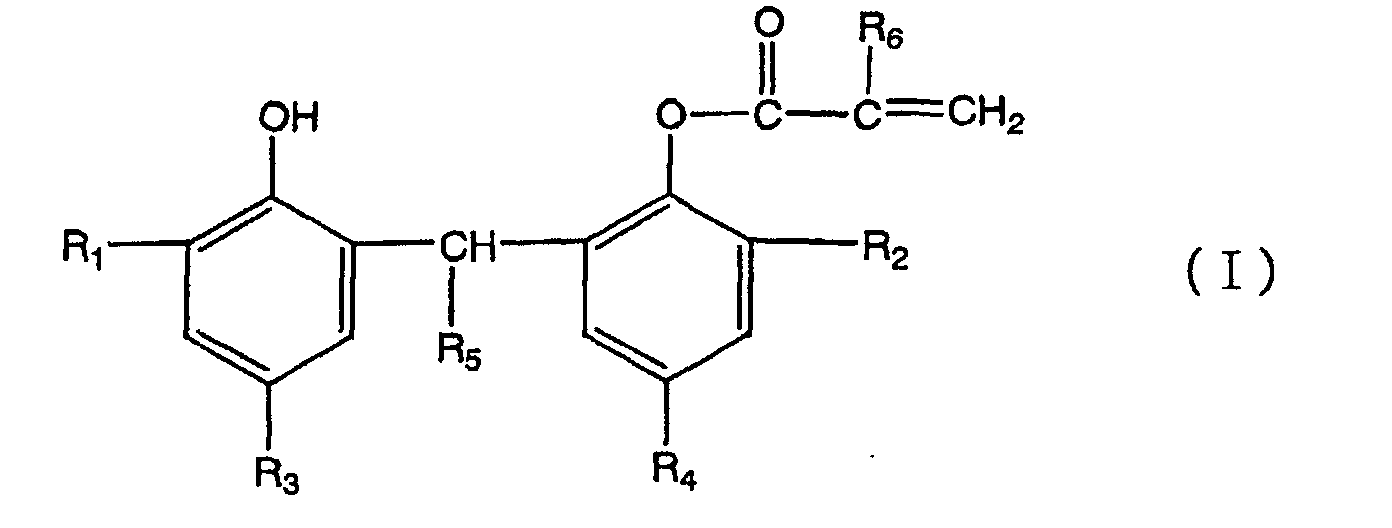
- a stabilizer include standard hindered phenol types such as Irganox 1010, 1076 (manufactured by Ciba Specialty Chemicals), benzofuranone types such as HP136 (manufactured by Ciba Specialty Chemicals), and partially acrylated hindered phenol types represented by formula (I) below, and they can be used in combination.
- a partially acrylated hindered phenol type stabilizer represented by formula (I) below, from the viewpoint of preventing a reduction in the degree of polymerization of the hydrogenated styrene polymer and preventing crazing spots from being generated in a hot and humid environment.
- R 1 to R 5 are identical to or different from each other and denote hydrogen atoms or alkyl groups having 1 to 10 carbons, and R 6 denotes a hydrogen atom or a methyl group.
- alkyl groups in the compound represented by formula (I) above are selected while taking into consideration the effect as a stabilizer and the ease of production.
- Specific examples of the alkyl groups having 1 to 10 carbons for R 1 to R 5 include methyl, ethyl, n -propyl, isopropyl, n -butyl, sec -butyl, isobutyl, tert -butyl, and 1,1-dimethylpropyl.
- R 1 and R 2 are preferably bulky alkyl groups having large steric hindrance, such as isopropyl, sec -butyl, tert -butyl, and 1,1-dimethylpropyl, from the viewpoint of the stabilization effect and ease of production.
- R 3 and R 4 are preferably tert -butyl, or 1,1-dimethylpropyl when taking into consideration the prevention of a reaction that generates a quinoid structure accompanying the abstraction of hydrogen.
- R 5 is preferably methyl, ethyl, n -propyl, or n -butyl.
- the amount of such a stabilizer added is preferably adjusted such that at least 0.01 parts by weight and at most 5 parts by weight thereof remains relative to 100 parts by weight of the hydrogenated styrene polymer.
- the amount thereof remaining in the hydrogenated styrene polymer is less than 0.01 parts by weight, the degree of polymerization of the hydrogenated styrene polymer decreases markedly, and it is difficult to obtain a molding having desired physical properties.
- the amount thereof remaining in the hydrogenated styrene polymer exceeds 5 parts by weight, it causes mold contamination during molding and coloration of the molding. Since the stabilizer contributes to thermal stability while forming a molding of the present invention, it is preferable for it to be in the above-mentioned range.
- the range of the amount thereof remaining in the hydrogenated styrene polymer is more preferably at least 0.05 parts by weight and at most 3 parts by weight, and yet more preferably at least 0.1 parts by weight and at most 2 parts by weight.
- Such a stabilizer is partially lost in the step for removing a solvent used in the above-mentioned hydrogenation reaction.
- the proportion of stabilizer remaining greatly depends on the conditions of the solvent removal, but in order to realize the above-mentioned amount thereof remaining in the hydrogenated styrene polymer, it is usually necessary to add an amount that is on the order of 1.1 times to 3 times the desired residual amount of the stabilizer to the solution of the hydrogenated styrene polymer.
- an additive such as an ester-based mold-release agent, for example, glycerol monostearate, a silicon-based mold-release agent, for example, dimethylsiloxane, a lubricant, a plasticizer, a UV absorber, a coloring agent, or an antistatic agent.
- an additive such as an ester-based mold-release agent, for example, glycerol monostearate, a silicon-based mold-release agent, for example, dimethylsiloxane, a lubricant, a plasticizer, a UV absorber, a coloring agent, or an antistatic agent.
- the optical disk substrate which is a molding of the present invention, is an optical disk substrate substantially formed from the above-mentioned hydrogenated styrene polymer, and the number of crazing spots contained in 1 cm 2 at any position on the substrate surface after exposing the optical disk substrate to an atmosphere with a temperature of 80°C and a relative humidity of 85% for 500 hours is at most 10, and preferably at most 5.
- the number of crazing spots is counted by microscopy using an optical microscope having a magnification of 50 times, measurement is carried out three times for each substrate, and an average value is obtained.
- An information recording medium using an optical disk substrate having very few crazing spots can store and reproduce information well at high temperature and high humidity, and can be used as the substrate for various types of optical disks such as CD, MO, MD, and DVD.
- a molding can be obtained by melt molding the hydrogenated styrene polymer of the present invention.
- the hydrogenated styrene polymer of the present invention can be easily molded by a conventionally known injection molding or injection compression molding method into an optical component such as an optical disk substrate, a food or medical container, a film, an electric/electronic member, etc.
- the cylinder temperature during molding of the hydrogenated styrene polymer of the present invention depends on the intended use, but is preferably in the range of 250°C to 350°C. If it is 250°C or less, then the flowability degrades and it is difficult to obtain a good molding, and if it is 350°C or more, then the heat resistance of the resin decreases and thermal decomposition undesirably occurs.
- the cylinder temperature is preferably at least 280°C and at most 340°C.
- the mold temperature during molding is preferably 70°C to 150°C.
- the mold temperature is preferably at least 80°C and at most 140°C.
- the hydrogenated styrene polymer of the present invention has excellent durability in a hot and humid environment and has stability at high temperature and high humidity and, in particular, the generation of crazing, which causes degradation in the transparency, is suppressed, it can be suitably used in the formation of a molding, for example, an optical component such as an optical disk substrate, a food or medical container, a film, or an electric/electronic member.
- Solution viscosity viscosity was measured at 30°C using a B type viscometer.
- Glass transition temperature (Tg) measured using a model 2920 DSC manufactured by TA Instruments at a rate of temperature increase of 20°C/min.
- Reduced viscosity the reduced viscosity ⁇ sp/C at 30°C was measured as a 0.5 g/dL toluene solution.
- Residual inorganic element concentration quantified by ICP emission spectroscopy.
- Measurement of foreign matter measured using a KL-26 particle counter manufactured by Rion Co., Ltd.
- Total light transmittance a UV-240 UV-VIS spectrometer manufactured by Shimadzu Corporation was used. The wavelength dispersion of the transmittance from 380 nm to 780 nm was measured, the visibility was corrected according to a standard visibility V ( ⁇ ) determined at every 10 nm by the International Commission on Illumination (CIE), and the value thus obtained was defined as the total light transmittance.
- V standard visibility
- the suspension (slurry) thus obtained was filtered using a membrane filter having a pore diameter of 0.1 ⁇ m ('Fluoropore' manufactured by Sumitomo Electric Industries, Ltd.) at 30°C under a pressure of 0.6 MPa to give a transparent, colorless solution (solution A).
- the solution viscosity of this solution was 0.14 Pa ⁇ sec (1.4 poise).
- the polymer thus obtained was used to prepare a 1 wt % toluene solution, the foreign matter content was measured, and it was found that there were 6.5 x 10 4 particles, per g of the polymer, of foreign matter having a size of 0.2 ⁇ m or more and less than 0.5 ⁇ m, and 8.3 x 10 3 particles, per g of the polymer, of foreign matter having a size of 0.5 ⁇ m or more.
- the degree of hydrogenation of this polymer was quantitatively determined by 1 H-NMR and was 99.3%.
- the reduced viscosity ⁇ sp/C at 30°C obtained using a 0.5 g/dL toluene solution thereof was 0.47 dL/g.
- the residual metal in the polymer obtained by ICP emission spectroscopy was 0.23 ppm for Ni, 0.30 ppm for Al, 0.19 ppm for Si, and 15 ppb for Li, none of which exceeded 1 ppm.
- the concentration of phosphorus did not exceed 0.1 ppm.
- the glass transition temperature measured by DSC was 149°C.
- Granules for molding were then prepared using the hydrogenated styrene polymer.
- the granules thus obtained were subjected to injection molding using a stamper for a blue laser at a resin temperature of 330°C and a mold temperature of 120°C to give a transparent, colorless optical disk substrate (diameter: 12 cm, thickness: 0.6 mm).
- the water absorption of this optical disk substrate was 0.01% or less, which was extremely low, and the total light transmittance was 91%, which indicated high transparency.
- the number of crazing spots were counted by inspection using a microscope. The result was that the number of crazing spots within the substrate was 1 per cm 2 .
- the polymer thus obtained was used to prepare a 1 wt % toluene solution, the foreign matter content was measured, and it was found that there were 5.8 x 10 4 particles, per g of the polymer, of foreign matter having a size of. 0.2 ⁇ m or more and less than 0.5 ⁇ m, and 9.5 x 10 3 particles, per g of the polymer, of foreign matter having a size of 0.5 ⁇ m or more.
- the degree of hydrogenation of this polymer was quantitatively determined by 1 H-NMR and was 99.3%.
- the reduced viscosity ⁇ sp/C at 30°C obtained using a 0.5 g/dL toluene solution thereof was 0.47 dL/g.
- the residual metal in the polymer obtained by ICP emission spectroscopy was 0.25 ppm for Ni, 0.38 ppm for Al, 0.53 ppm for Si, and 18 ppb for Li, none of which exceeded 1 ppm.
- the concentration of phosphorus was 180 ppm.
- the glass transition temperature measured by DSC was 149°C.
- the number of crazing spots were counted by inspection using a microscope. The result was that the number of crazing spots within the substrate was 100 or more per cm 2 .
- the suspension (slurry) thus obtained was filtered using a membrane filter having a pore diameter of 0.5 ⁇ m ('Fluoropore' manufactured by Sumitomo Electric Industries, Ltd.) at 30°C under a pressure of 0.6 MPa to give a transparent, colorless solution (solution A).
- the solution viscosity of this solution was 0.14 Pa ⁇ sec (1.4 poise).
- the polymer thus obtained was used to prepare a 0.05 wt % toluene solution, the foreign matter content was measured, and it was found that there were 3.2 x 10 6 particles, per g of the polymer, of foreign matter having a size of 0.2 ⁇ m or more and less than 0.5 ⁇ m, and 4.7 x 10 4 particles, per g of the polymer, of foreign matter having a size of 0.5 ⁇ m or more.
- the degree of hydrogenation of this polymer was quantitatively determined by 1 H-NMR and was 99.5%.
- the reduced viscosity ⁇ sp/C at 30°C obtained using a 0.5 g/dL toluene solution thereof was 0.46 dL/g.
- the residual metal in the polymer obtained by ICP emission spectroscopy was 0.71 ppm for Ni, 0.89 ppm for Al, 1.8 ppm for Si, and 82 ppb for Li.
- the concentration of phosphorus did not exceed 0.1 ppm.
- the glass transition temperature measured by DSC was 149°C.
- Granules for molding were then prepared using the hydrogenated styrene polymer.
- the granules thus obtained were subjected to injection molding using a stamper for a blue laser at a resin temperature of 330°C and a mold temperature of 120°C to give a transparent, colorless optical disk substrate (diameter: 12 cm, thickness: 0.6 mm).
- the water absorption of this optical disk substrate was 0.01% or less, which was extremely low, and the total light transmittance was 91%, which indicated high transparency.
- the number of crazing spots were counted by inspection using a microscope. The result was that the number of crazing spots within the substrate was 100 or more per cm 2 .
- the suspension thus obtained was taken out of the autoclave and subjected to pressure filtration using a membrane filter having a pore diameter of 0.1 ⁇ m ('Fluoropore' manufactured by Sumitomo Electric Industries, Ltd.) at 30°C under a pressure of 0.6 MPa to give a transparent, colorless solution.
- the solution viscosity of this solution was 0.13 Pa ⁇ sec (1.3 poise).
- the copolymer thus obtained was used to prepare a 1 wt % toluene solution, the foreign matter content was measured, and it was found that there were 7.3 x 10 4 particles, per g of the copolymer, of foreign matter having a size of 0.2 ⁇ m or more and less than 0.5 ⁇ m, and 8.5 x 10 3 particles, per g of the copolymer, of foreign matter having a size of 0.5 ⁇ m or more.
- the styrene/isoprene ratio by weight of this hydrogenated copolymer was determined by 1 H-NMR and was 90.2/9.8, and the degree of hydrogenation was 99.3%.
- the reduced viscosity ⁇ sp/C at 30°C obtained using a 0.5 g/dL toluene solution of the copolymer thus obtained was 0.44 dL/g.
- the residual metal in the copolymer obtained by ICP emission spectroscopy was 0.25 ppm for Ni, 0.12 ppm for Al, and 20 ppb for Li.
- the concentration of phosphorus did not exceed 0.1 ppm.
- the glass transition temperature measured by DSC was 147°C.
- the number of crazing spots were counted by inspection using a microscope. The result was that the number of crazing spots within the substrate was 2 per cm 2 .
- Example 2 The suspension obtained by the hydrogenation reaction in Example 2 was filtered using a membrane filter having a pore diameter of 0.1 ⁇ m ('Fluoropore' manufactured by Sumitomo Electric Industries, Ltd.) at 30°C under a pressure of 0.25 MPa to give a transparent, colorless solution.
- the solution viscosity of this solution was 0.13 Pa ⁇ sec (1.3 poise).
- the copolymer thus obtained was used to prepare a 1 wt % toluene solution, the foreign matter content was measured, and it was found that there were 4.3 x 10 3 particles, per g of the copolymer, of foreign matter having a size of 0.2 ⁇ m or more and less than 0.5 ⁇ m, and 4.0 x 10 2 particles, per g of the copolymer, of foreign matter having a size of 0.5 ⁇ m or more.
- the styrene/isoprene ratio by weight of this hydrogenated copolymer was determined by 1 H-NMR and was 90.2/9.8, and the degree of hydrogenation was 99.3%.
- the reduced viscosity ⁇ ) sp/C at 30°C obtained using a 0.5 g/dL toluene solution of the copolymer was 0.44 dL/g.
- the residual metal in the copolymer obtained by ICP emission spectroscopy was 0.18 ppm for Ni, 0.10 ppm for Al, and 25 ppb for Li. The concentration of phosphorus did not exceed 0.1 ppm.
- the glass transition temperature measured by DSC was 147°C.
- the number of crazing spots were counted by inspection using a microscope. The result was that the number of crazing spots within the substrate was 0 per cm 2 .
- a stainless autoclave dried well and flushed with nitrogen was charged with 266 g of styrene and 2,500 g of cyclohexane. After the solution had been heated to 40°C, 3.5 mL of a 1.0M hexane solution of n-butyllithium was added thereto, it was heated to 50°C and reacted for 2 hours. 60 g of isoprene was then added as a cyclohexane solution and reacted for a further 2 hours. 266 g of styrene and 700 g of cyclohexane were then added and reacted for a further 2 hours.
- the copolymer thus obtained was used to prepare a 1 wt % toluene solution, the foreign matter content was measured, and it was found that there were 8.4 x 10 4 particles, per g of the copolymer, of foreign matter having a size of 0.2 ⁇ m or more and less than 0.5 ⁇ m, and 9.6 x 10 3 particles, per g of the copolymer, of foreign matter having a size of 0.5 ⁇ m or more.
- the styrene/isoprene ratio by weight of this hydrogenated copolymer was determined by 1 H-NMR and was 90.0/10.0, and the degree of hydrogenation was 99.5%.
- the reduced viscosity ⁇ sp/C at 30°C obtained using a 0.5 g/dL toluene solution of the copolymer thus obtained was 0.42 dL/g.
- the residual metal in the copolymer obtained by ICP emission spectroscopy was 0.29 ppm for Ni, 0.32 ppm for Al, 0.42 ppm for Si, and 18 ppb for Li.
- the concentration of phosphorus did not exceed 0.1 ppm.
- the glass transition temperature measured by DSC was 145°C.
- the number of crazing spots were counted by inspection using a microscope. The result was that the number of crazing spots within the substrate was 0 per cm 2 .
Landscapes
- Chemical & Material Sciences (AREA)
- General Chemical & Material Sciences (AREA)
- Health & Medical Sciences (AREA)
- Chemical Kinetics & Catalysis (AREA)
- Medicinal Chemistry (AREA)
- Polymers & Plastics (AREA)
- Organic Chemistry (AREA)
- Addition Polymer Or Copolymer, Post-Treatments, Or Chemical Modifications (AREA)
Abstract
Description
Claims (6)
- A hydrogenated styrene polymer having a hydrogenated polymerized styrene unit content of at least 70 wt %, the polymer comprising:a content of fine particulate foreign matter having a particle size of 0.2 µm or more and less than 0.5 µm of at most 1 x 10⁶ per g of the hydrogenated styrene polymer; anda phosphorus atom content of at most 0.01 parts by weight in 100 parts by weight of the hydrogenated styrene polymer.
- The hydrogenated styrene polymer according to Claim 1 wherein it further comprises at least 1 wt % and at most 30 wt % of a hydrogenated conjugated diene polymer component as a copolymerized component.
- A molding obtained by melt molding of the hydrogenated styrene polymer according to Claim 1.
- The molding according to Claim 3, the molding being for an optical disk substrate.
- The molding according to Claim 3, the molding being for an optical disk substrate for a blue laser.
- A process for producing a hydrogenated styrene polymer as claimed in Claim 1 comprising: filtering, with a filter having a pore size of 0.3 µm or less, a hydrogenated styrene polymer having a hydrogenated polymerized styrene unit content of at least 70 wt %, at a temperature at which the solution viscosity thereof is at most 10 Pa·sec (100 poise) at a shear rate of 1 (1/s); and then removing a solvent from the filtrate thus obtained.
Applications Claiming Priority (3)
| Application Number | Priority Date | Filing Date | Title |
|---|---|---|---|
| JP2001008424 | 2001-01-17 | ||
| JP2001008424 | 2001-01-17 | ||
| PCT/JP2002/000217 WO2002057324A1 (en) | 2001-01-17 | 2002-01-16 | Hydrogenated styrene polymer, process for producing the same, and molded object obtained therefrom |
Publications (2)
| Publication Number | Publication Date |
|---|---|
| EP1369437A1 true EP1369437A1 (en) | 2003-12-10 |
| EP1369437A4 EP1369437A4 (en) | 2005-01-12 |
Family
ID=18876045
Family Applications (1)
| Application Number | Title | Priority Date | Filing Date |
|---|---|---|---|
| EP02710300A Withdrawn EP1369437A4 (en) | 2001-01-17 | 2002-01-16 | HYDROGEN STYRENE POLYMER; METHOD FOR MANUFACTURING AND PRODUCING A MOLDED OBJECT |
Country Status (4)
| Country | Link |
|---|---|
| US (1) | US6806322B2 (en) |
| EP (1) | EP1369437A4 (en) |
| JP (1) | JPWO2002057324A1 (en) |
| WO (1) | WO2002057324A1 (en) |
Cited By (2)
| Publication number | Priority date | Publication date | Assignee | Title |
|---|---|---|---|---|
| EP2206732A1 (en) * | 2008-12-30 | 2010-07-14 | TSRC Corporation | Method for manufacturing hydrogenated block copolymers |
| WO2023078998A1 (en) * | 2021-11-03 | 2023-05-11 | Sabic Global Technologies B.V. | Improved hydrogenated poly(vinylcyclohexane) (pvch) polymer |
Families Citing this family (5)
| Publication number | Priority date | Publication date | Assignee | Title |
|---|---|---|---|---|
| JP2008208147A (en) * | 2005-06-17 | 2008-09-11 | Denki Kagaku Kogyo Kk | Styrenic resin and optical resin molding comprising the same |
| US7831364B2 (en) | 2006-08-11 | 2010-11-09 | Clark Equipment Company | “Off-board” control for a power machine or vehicle |
| JP2009004335A (en) * | 2007-06-25 | 2009-01-08 | Hitachi Cable Ltd | Insulated wire and manufacturing method thereof |
| CN104619485B (en) * | 2012-09-28 | 2017-06-09 | 日本瑞翁株式会社 | Composite choke laminated body and its manufacture method and combination electrode |
| EP4565624B1 (en) * | 2022-08-02 | 2026-02-18 | SABIC Global Technologies B.V. | Method for the hydrogenation of styrenic polymers |
Family Cites Families (12)
| Publication number | Priority date | Publication date | Assignee | Title |
|---|---|---|---|---|
| JPS6190345A (en) | 1984-10-09 | 1986-05-08 | Matsushita Electric Ind Co Ltd | optical disc |
| JPH0794496B2 (en) * | 1987-11-18 | 1995-10-11 | 日本合成ゴム株式会社 | Optical material |
| US4911966A (en) * | 1988-12-02 | 1990-03-27 | Mitsubishi Monsanto Chemical Company | Optical disk substrate |
| JP2930979B2 (en) * | 1989-08-04 | 1999-08-09 | 花王株式会社 | Polymer purification method |
| JP3360335B2 (en) | 1992-12-28 | 2002-12-24 | 日本ゼオン株式会社 | Molding material composed of vinylated cyclic hydrocarbon polymer |
| JPH07114030A (en) | 1993-10-19 | 1995-05-02 | Optrex Corp | Liquid crystal display device |
| EP0989417A4 (en) * | 1997-06-06 | 2001-10-17 | Nippon Zeon Co | MOLDING MATERIAL FOR PLASTIC LENSES |
| EP1413601B1 (en) | 1997-07-28 | 2005-03-16 | Nippon Zeon Co., Ltd. | Resin composition and molded or formed product comprising vinyl cyclic hydrocarbon polymer |
| DE19756368A1 (en) * | 1997-12-18 | 1999-07-01 | Bayer Ag | Vinylcyclohexane based polymers |
| JPH11181018A (en) * | 1997-12-22 | 1999-07-06 | Nippon Steel Chem Co Ltd | Method for producing transparent resin for optical materials |
| EP1193274B1 (en) * | 1998-12-04 | 2006-05-31 | Nippon Zeon Co., Ltd. | Resin composition comprising hydrogenated polymers and process for producing substrate for information-recording medium |
| WO2000077053A1 (en) * | 1999-06-11 | 2000-12-21 | The Dow Chemical Company | Hydrogenated block copolymers and optical media discs produced therefrom |
-
2002
- 2002-01-16 EP EP02710300A patent/EP1369437A4/en not_active Withdrawn
- 2002-01-16 WO PCT/JP2002/000217 patent/WO2002057324A1/en not_active Ceased
- 2002-01-16 US US10/466,278 patent/US6806322B2/en not_active Expired - Fee Related
- 2002-01-16 JP JP2002558394A patent/JPWO2002057324A1/en active Pending
Cited By (3)
| Publication number | Priority date | Publication date | Assignee | Title |
|---|---|---|---|---|
| EP2206732A1 (en) * | 2008-12-30 | 2010-07-14 | TSRC Corporation | Method for manufacturing hydrogenated block copolymers |
| US8058356B2 (en) | 2008-12-30 | 2011-11-15 | Tsrc Corporation | Method for manufacturing hydrogenated block copolymer |
| WO2023078998A1 (en) * | 2021-11-03 | 2023-05-11 | Sabic Global Technologies B.V. | Improved hydrogenated poly(vinylcyclohexane) (pvch) polymer |
Also Published As
| Publication number | Publication date |
|---|---|
| JPWO2002057324A1 (en) | 2004-05-20 |
| WO2002057324A1 (en) | 2002-07-25 |
| US20040054094A1 (en) | 2004-03-18 |
| US6806322B2 (en) | 2004-10-19 |
| EP1369437A4 (en) | 2005-01-12 |
Similar Documents
| Publication | Publication Date | Title |
|---|---|---|
| AU752141B2 (en) | Vinylcyclohexane-based block copolymers | |
| US6806322B2 (en) | Hydrogenated styrene polymer, process for producing the same, and molded object obtained therefrom | |
| WO2001023437A1 (en) | Optical material comprising star-shaped hydrogenated polystyrene block copolymer, process for producing the same, and substrate for optical disk | |
| JP3857234B2 (en) | Improved hydrogenated styrene-conjugated diene-styrene block copolymer and process for producing the same | |
| JP2001163934A (en) | Optical material comprising star-branched hydrogenated polystyrene block copolymer, method for producing the same, and optical disk substrate | |
| JP2730053B2 (en) | Substrate forming material for optical disks | |
| JP2006283010A (en) | Optical film | |
| CN100426396C (en) | High data density optical media discs | |
| PT2272588E (en) | Catalyst for the hydrogenaton of unsaturated compounds | |
| JP2002201213A (en) | Hydrogenated styrene copolymers and optical materials | |
| JP2008239861A (en) | Hydrogenated styrene resin composition | |
| US6299802B1 (en) | Method of producing optical media discs from hydrogenated block copolymers | |
| JP2002060447A (en) | Hydrogenated styrene-based aromatic hydrocarbon-conjugated diene block copolymer, composition thereof and optical molding material | |
| JP5978713B2 (en) | Terminal-modified vinyl alicyclic hydrocarbon polymer hydride | |
| JP2002025108A (en) | Optical disc substrate made of alicyclic polyolefin | |
| JP2002308923A (en) | Isotactic polystyrene-based polymer, hydride thereof, and production method thereof | |
| JP2002308927A (en) | Hydrogenated styrene-conjugated diene copolymer and optical material | |
| JP2002047310A (en) | Hydrogenated cyclic conjugated diene polymer and optical disk substrate | |
| JPWO2006106929A1 (en) | Resin composition and molded body | |
| JP2002047311A (en) | Hydrogenated styrene copolymers and optical materials | |
| JP2003138078A (en) | Hydrogenated styrene polymer resin composition and method for producing the same | |
| JPWO2003029347A1 (en) | Hydrogenated styrene polymer resin composition and optical component | |
| JP2002060448A (en) | Hydrogenated styrene-based aromatic hydrocarbon-conjugated diene block copolymer, composition thereof and optical molding material | |
| JPWO2001036539A1 (en) | Thermoplastic resin composition containing a thermoplastic polymer containing an alicyclic group and molded article | |
| TW201005025A (en) | B-pinene polymer composition and molded object obtained by using the same |
Legal Events
| Date | Code | Title | Description |
|---|---|---|---|
| PUAI | Public reference made under article 153(3) epc to a published international application that has entered the european phase |
Free format text: ORIGINAL CODE: 0009012 |
|
| 17P | Request for examination filed |
Effective date: 20030730 |
|
| AK | Designated contracting states |
Kind code of ref document: A1 Designated state(s): AT BE CH CY DE DK ES FI FR GB GR IE IT LI LU MC NL PT SE TR |
|
| AX | Request for extension of the european patent |
Extension state: AL LT LV MK RO SI |
|
| RBV | Designated contracting states (corrected) |
Designated state(s): AT BE CH CY DE ES FR GB LI NL |
|
| RAP1 | Party data changed (applicant data changed or rights of an application transferred) |
Owner name: BAYER MATERIALSCIENCE AG Owner name: TEIJIN LIMITED |
|
| A4 | Supplementary search report drawn up and despatched |
Effective date: 20041129 |
|
| STAA | Information on the status of an ep patent application or granted ep patent |
Free format text: STATUS: THE APPLICATION HAS BEEN WITHDRAWN |
|
| 18W | Application withdrawn |
Effective date: 20050207 |