EP1368465B1 - Rekombinant vektor, der ein infektiöses humanes cytomegalovirus genom mit konserviertem wildtyp-charakteristika klinisher isolate enthält - Google Patents
Rekombinant vektor, der ein infektiöses humanes cytomegalovirus genom mit konserviertem wildtyp-charakteristika klinisher isolate enthält Download PDFInfo
- Publication number
- EP1368465B1 EP1368465B1 EP02716799A EP02716799A EP1368465B1 EP 1368465 B1 EP1368465 B1 EP 1368465B1 EP 02716799 A EP02716799 A EP 02716799A EP 02716799 A EP02716799 A EP 02716799A EP 1368465 B1 EP1368465 B1 EP 1368465B1
- Authority
- EP
- European Patent Office
- Prior art keywords
- hcmv
- virus
- recombinant vector
- dna
- bac
- Prior art date
- Legal status (The legal status is an assumption and is not a legal conclusion. Google has not performed a legal analysis and makes no representation as to the accuracy of the status listed.)
- Expired - Lifetime
Links
- 241000701024 Human betaherpesvirus 5 Species 0.000 title claims abstract description 130
- 239000013598 vector Substances 0.000 title claims abstract description 51
- 208000015181 infectious disease Diseases 0.000 title claims abstract description 36
- 230000002458 infectious effect Effects 0.000 title claims abstract description 26
- 241000700605 Viruses Species 0.000 claims abstract description 68
- 108090000623 proteins and genes Proteins 0.000 claims abstract description 28
- 210000002889 endothelial cell Anatomy 0.000 claims abstract description 23
- 238000010367 cloning Methods 0.000 claims abstract description 20
- 238000004519 manufacturing process Methods 0.000 claims abstract description 20
- 230000001580 bacterial effect Effects 0.000 claims abstract description 17
- 108020004414 DNA Proteins 0.000 claims description 49
- 210000004027 cell Anatomy 0.000 claims description 49
- 230000003612 virological effect Effects 0.000 claims description 21
- 229960005486 vaccine Drugs 0.000 claims description 18
- 241000588724 Escherichia coli Species 0.000 claims description 12
- 238000000034 method Methods 0.000 claims description 12
- 238000011161 development Methods 0.000 claims description 11
- 238000000338 in vitro Methods 0.000 claims description 8
- 239000000463 material Substances 0.000 claims description 8
- 238000012216 screening Methods 0.000 claims description 8
- 230000006801 homologous recombination Effects 0.000 claims description 6
- 238000002744 homologous recombination Methods 0.000 claims description 6
- 108020005202 Viral DNA Proteins 0.000 claims description 5
- 108700005077 Viral Genes Proteins 0.000 claims description 5
- 230000005100 tissue tropism Effects 0.000 claims description 5
- 230000002103 transcriptional effect Effects 0.000 claims description 5
- 238000002360 preparation method Methods 0.000 claims description 4
- 239000000126 substance Substances 0.000 claims description 4
- 108091028043 Nucleic acid sequence Proteins 0.000 claims description 3
- 229940079593 drug Drugs 0.000 claims description 3
- 239000003814 drug Substances 0.000 claims description 3
- 238000003780 insertion Methods 0.000 claims description 3
- 230000037431 insertion Effects 0.000 claims description 3
- 150000003384 small molecules Chemical class 0.000 claims description 3
- 230000000840 anti-viral effect Effects 0.000 claims description 2
- 238000012258 culturing Methods 0.000 claims description 2
- 230000006870 function Effects 0.000 abstract description 9
- 210000000224 granular leucocyte Anatomy 0.000 description 30
- 230000010415 tropism Effects 0.000 description 23
- 230000002068 genetic effect Effects 0.000 description 20
- 230000012010 growth Effects 0.000 description 11
- 206010011831 Cytomegalovirus infection Diseases 0.000 description 10
- 101150090644 UL132 gene Proteins 0.000 description 10
- 230000005101 cell tropism Effects 0.000 description 10
- 210000002950 fibroblast Anatomy 0.000 description 10
- 238000012546 transfer Methods 0.000 description 10
- 238000004458 analytical method Methods 0.000 description 9
- 230000018109 developmental process Effects 0.000 description 9
- 238000001727 in vivo Methods 0.000 description 9
- 241000282414 Homo sapiens Species 0.000 description 7
- 239000002299 complementary DNA Substances 0.000 description 7
- 230000006698 induction Effects 0.000 description 7
- 230000010076 replication Effects 0.000 description 7
- 101001128138 Homo sapiens NACHT, LRR and PYD domains-containing protein 2 Proteins 0.000 description 6
- 102100031897 NACHT, LRR and PYD domains-containing protein 2 Human genes 0.000 description 6
- 239000003550 marker Substances 0.000 description 6
- 239000006144 Dulbecco’s modified Eagle's medium Substances 0.000 description 5
- 206010061598 Immunodeficiency Diseases 0.000 description 5
- 239000012634 fragment Substances 0.000 description 5
- 230000010354 integration Effects 0.000 description 5
- 230000008506 pathogenesis Effects 0.000 description 5
- 239000013612 plasmid Substances 0.000 description 5
- 230000000717 retained effect Effects 0.000 description 5
- 238000012360 testing method Methods 0.000 description 5
- 210000001519 tissue Anatomy 0.000 description 5
- LFQSCWFLJHTTHZ-UHFFFAOYSA-N Ethanol Chemical compound CCO LFQSCWFLJHTTHZ-UHFFFAOYSA-N 0.000 description 4
- 238000002105 Southern blotting Methods 0.000 description 4
- 239000011543 agarose gel Substances 0.000 description 4
- 210000004436 artificial bacterial chromosome Anatomy 0.000 description 4
- 238000004113 cell culture Methods 0.000 description 4
- 230000000120 cytopathologic effect Effects 0.000 description 4
- 210000004443 dendritic cell Anatomy 0.000 description 4
- 229930027917 kanamycin Natural products 0.000 description 4
- 229960000318 kanamycin Drugs 0.000 description 4
- SBUJHOSQTJFQJX-NOAMYHISSA-N kanamycin Chemical compound O[C@@H]1[C@@H](O)[C@H](O)[C@@H](CN)O[C@@H]1O[C@H]1[C@H](O)[C@@H](O[C@@H]2[C@@H]([C@@H](N)[C@H](O)[C@@H](CO)O2)O)[C@H](N)C[C@@H]1N SBUJHOSQTJFQJX-NOAMYHISSA-N 0.000 description 4
- 229930182823 kanamycin A Natural products 0.000 description 4
- 230000035772 mutation Effects 0.000 description 4
- 210000000822 natural killer cell Anatomy 0.000 description 4
- 239000002245 particle Substances 0.000 description 4
- 230000007918 pathogenicity Effects 0.000 description 4
- 108090000765 processed proteins & peptides Proteins 0.000 description 4
- 102000004196 processed proteins & peptides Human genes 0.000 description 4
- 239000000047 product Substances 0.000 description 4
- 102000004169 proteins and genes Human genes 0.000 description 4
- 238000012163 sequencing technique Methods 0.000 description 4
- 238000001890 transfection Methods 0.000 description 4
- 230000003321 amplification Effects 0.000 description 3
- 229960005091 chloramphenicol Drugs 0.000 description 3
- WIIZWVCIJKGZOK-RKDXNWHRSA-N chloramphenicol Chemical compound ClC(Cl)C(=O)N[C@H](CO)[C@H](O)C1=CC=C([N+]([O-])=O)C=C1 WIIZWVCIJKGZOK-RKDXNWHRSA-N 0.000 description 3
- 238000012217 deletion Methods 0.000 description 3
- 230000037430 deletion Effects 0.000 description 3
- 238000009510 drug design Methods 0.000 description 3
- 238000002474 experimental method Methods 0.000 description 3
- 230000001900 immune effect Effects 0.000 description 3
- 230000001939 inductive effect Effects 0.000 description 3
- 210000002540 macrophage Anatomy 0.000 description 3
- 230000007246 mechanism Effects 0.000 description 3
- 239000002609 medium Substances 0.000 description 3
- 210000001616 monocyte Anatomy 0.000 description 3
- 238000003199 nucleic acid amplification method Methods 0.000 description 3
- 210000000056 organ Anatomy 0.000 description 3
- 230000001717 pathogenic effect Effects 0.000 description 3
- 239000000523 sample Substances 0.000 description 3
- 238000002864 sequence alignment Methods 0.000 description 3
- 238000010186 staining Methods 0.000 description 3
- 239000006228 supernatant Substances 0.000 description 3
- LRFVTYWOQMYALW-UHFFFAOYSA-N 9H-xanthine Chemical compound O=C1NC(=O)NC2=C1NC=N2 LRFVTYWOQMYALW-UHFFFAOYSA-N 0.000 description 2
- 108020005544 Antisense RNA Proteins 0.000 description 2
- HEDRZPFGACZZDS-UHFFFAOYSA-N Chloroform Chemical compound ClC(Cl)Cl HEDRZPFGACZZDS-UHFFFAOYSA-N 0.000 description 2
- 206010010356 Congenital anomaly Diseases 0.000 description 2
- 101710185016 Proteasome-activating nucleotidase 1 Proteins 0.000 description 2
- 239000006146 Roswell Park Memorial Institute medium Substances 0.000 description 2
- FAPWRFPIFSIZLT-UHFFFAOYSA-M Sodium chloride Chemical compound [Na+].[Cl-] FAPWRFPIFSIZLT-UHFFFAOYSA-M 0.000 description 2
- 230000000692 anti-sense effect Effects 0.000 description 2
- 230000006907 apoptotic process Effects 0.000 description 2
- 238000013459 approach Methods 0.000 description 2
- 230000002238 attenuated effect Effects 0.000 description 2
- 238000012512 characterization method Methods 0.000 description 2
- 239000003184 complementary RNA Substances 0.000 description 2
- 238000013461 design Methods 0.000 description 2
- 238000007877 drug screening Methods 0.000 description 2
- 230000000694 effects Effects 0.000 description 2
- 238000001415 gene therapy Methods 0.000 description 2
- 238000009396 hybridization Methods 0.000 description 2
- 238000011534 incubation Methods 0.000 description 2
- 239000000543 intermediate Substances 0.000 description 2
- 238000013507 mapping Methods 0.000 description 2
- 239000000203 mixture Substances 0.000 description 2
- 238000004806 packaging method and process Methods 0.000 description 2
- 230000000069 prophylactic effect Effects 0.000 description 2
- 230000007420 reactivation Effects 0.000 description 2
- 230000004044 response Effects 0.000 description 2
- 108091008146 restriction endonucleases Proteins 0.000 description 2
- 239000002356 single layer Substances 0.000 description 2
- 210000000130 stem cell Anatomy 0.000 description 2
- 108091032973 (ribonucleotides)n+m Proteins 0.000 description 1
- 208000030507 AIDS Diseases 0.000 description 1
- 101100347635 Acanthamoeba castellanii MIC gene Proteins 0.000 description 1
- 229920001817 Agar Polymers 0.000 description 1
- 229920000936 Agarose Polymers 0.000 description 1
- 241000894006 Bacteria Species 0.000 description 1
- 108020004635 Complementary DNA Proteins 0.000 description 1
- 208000032170 Congenital Abnormalities Diseases 0.000 description 1
- 108010051219 Cre recombinase Proteins 0.000 description 1
- 230000004543 DNA replication Effects 0.000 description 1
- 206010061818 Disease progression Diseases 0.000 description 1
- KCXVZYZYPLLWCC-UHFFFAOYSA-N EDTA Chemical compound OC(=O)CN(CC(O)=O)CCN(CC(O)=O)CC(O)=O KCXVZYZYPLLWCC-UHFFFAOYSA-N 0.000 description 1
- 108010014173 Factor X Proteins 0.000 description 1
- 102100028972 HLA class I histocompatibility antigen, A alpha chain Human genes 0.000 description 1
- 102100028970 HLA class I histocompatibility antigen, alpha chain E Human genes 0.000 description 1
- 102100028967 HLA class I histocompatibility antigen, alpha chain G Human genes 0.000 description 1
- 108010075704 HLA-A Antigens Proteins 0.000 description 1
- 108010024164 HLA-G Antigens Proteins 0.000 description 1
- 241000282412 Homo Species 0.000 description 1
- 101000986085 Homo sapiens HLA class I histocompatibility antigen, alpha chain E Proteins 0.000 description 1
- 239000006391 Luria-Bertani Medium Substances 0.000 description 1
- 241000710118 Maize chlorotic mottle virus Species 0.000 description 1
- 241000699666 Mus <mouse, genus> Species 0.000 description 1
- JOCBASBOOFNAJA-UHFFFAOYSA-N N-tris(hydroxymethyl)methyl-2-aminoethanesulfonic acid Chemical compound OCC(CO)(CO)NCCS(O)(=O)=O JOCBASBOOFNAJA-UHFFFAOYSA-N 0.000 description 1
- 102000003992 Peroxidases Human genes 0.000 description 1
- ISWSIDIOOBJBQZ-UHFFFAOYSA-N Phenol Chemical compound OC1=CC=CC=C1 ISWSIDIOOBJBQZ-UHFFFAOYSA-N 0.000 description 1
- 102000007982 Phosphoproteins Human genes 0.000 description 1
- 108010089430 Phosphoproteins Proteins 0.000 description 1
- 101150093191 RIR1 gene Proteins 0.000 description 1
- 238000002123 RNA extraction Methods 0.000 description 1
- 208000035415 Reinfection Diseases 0.000 description 1
- 108091081024 Start codon Proteins 0.000 description 1
- 210000001744 T-lymphocyte Anatomy 0.000 description 1
- 239000007994 TES buffer Substances 0.000 description 1
- 239000007983 Tris buffer Substances 0.000 description 1
- 101150048066 UL45 gene Proteins 0.000 description 1
- 108010067390 Viral Proteins Proteins 0.000 description 1
- 238000009825 accumulation Methods 0.000 description 1
- 230000001464 adherent effect Effects 0.000 description 1
- 239000008272 agar Substances 0.000 description 1
- 238000012197 amplification kit Methods 0.000 description 1
- 239000000427 antigen Substances 0.000 description 1
- 102000036639 antigens Human genes 0.000 description 1
- 108091007433 antigens Proteins 0.000 description 1
- 239000003443 antiviral agent Substances 0.000 description 1
- 210000003719 b-lymphocyte Anatomy 0.000 description 1
- 210000003578 bacterial chromosome Anatomy 0.000 description 1
- 230000008827 biological function Effects 0.000 description 1
- 230000033228 biological regulation Effects 0.000 description 1
- 230000015572 biosynthetic process Effects 0.000 description 1
- 230000007698 birth defect Effects 0.000 description 1
- 210000001185 bone marrow Anatomy 0.000 description 1
- 230000007910 cell fusion Effects 0.000 description 1
- 239000013553 cell monolayer Substances 0.000 description 1
- 230000005859 cell recognition Effects 0.000 description 1
- 108091092356 cellular DNA Proteins 0.000 description 1
- 230000036755 cellular response Effects 0.000 description 1
- 238000005119 centrifugation Methods 0.000 description 1
- 239000003153 chemical reaction reagent Substances 0.000 description 1
- 230000000973 chemotherapeutic effect Effects 0.000 description 1
- 210000001612 chondrocyte Anatomy 0.000 description 1
- 150000001875 compounds Chemical class 0.000 description 1
- 231100000433 cytotoxic Toxicity 0.000 description 1
- 210000001151 cytotoxic T lymphocyte Anatomy 0.000 description 1
- 230000001472 cytotoxic effect Effects 0.000 description 1
- 230000007547 defect Effects 0.000 description 1
- 230000007812 deficiency Effects 0.000 description 1
- 230000002950 deficient Effects 0.000 description 1
- 238000001514 detection method Methods 0.000 description 1
- 201000010099 disease Diseases 0.000 description 1
- 230000005750 disease progression Effects 0.000 description 1
- 208000037265 diseases, disorders, signs and symptoms Diseases 0.000 description 1
- 238000007876 drug discovery Methods 0.000 description 1
- 230000013020 embryo development Effects 0.000 description 1
- 210000003038 endothelium Anatomy 0.000 description 1
- 238000000605 extraction Methods 0.000 description 1
- 210000003754 fetus Anatomy 0.000 description 1
- 230000004927 fusion Effects 0.000 description 1
- 238000012252 genetic analysis Methods 0.000 description 1
- 230000003394 haemopoietic effect Effects 0.000 description 1
- 210000000442 hair follicle cell Anatomy 0.000 description 1
- 210000002443 helper t lymphocyte Anatomy 0.000 description 1
- 210000002865 immune cell Anatomy 0.000 description 1
- 230000037451 immune surveillance Effects 0.000 description 1
- 238000010166 immunofluorescence Methods 0.000 description 1
- 230000001771 impaired effect Effects 0.000 description 1
- 230000005764 inhibitory process Effects 0.000 description 1
- 230000003993 interaction Effects 0.000 description 1
- 230000002452 interceptive effect Effects 0.000 description 1
- 239000010410 layer Substances 0.000 description 1
- 238000009630 liquid culture Methods 0.000 description 1
- 230000004807 localization Effects 0.000 description 1
- 239000006166 lysate Substances 0.000 description 1
- 239000011159 matrix material Substances 0.000 description 1
- 108020004999 messenger RNA Proteins 0.000 description 1
- HPNSFSBZBAHARI-UHFFFAOYSA-N micophenolic acid Natural products OC1=C(CC=C(C)CCC(O)=O)C(OC)=C(C)C2=C1C(=O)OC2 HPNSFSBZBAHARI-UHFFFAOYSA-N 0.000 description 1
- 238000002703 mutagenesis Methods 0.000 description 1
- 231100000350 mutagenesis Toxicity 0.000 description 1
- HPNSFSBZBAHARI-RUDMXATFSA-N mycophenolic acid Chemical compound OC1=C(C\C=C(/C)CCC(O)=O)C(OC)=C(C)C2=C1C(=O)OC2 HPNSFSBZBAHARI-RUDMXATFSA-N 0.000 description 1
- 229960000951 mycophenolic acid Drugs 0.000 description 1
- 210000004940 nucleus Anatomy 0.000 description 1
- 244000039328 opportunistic pathogen Species 0.000 description 1
- 230000008520 organization Effects 0.000 description 1
- 230000037361 pathway Effects 0.000 description 1
- 239000008188 pellet Substances 0.000 description 1
- 210000005259 peripheral blood Anatomy 0.000 description 1
- 239000011886 peripheral blood Substances 0.000 description 1
- 108040007629 peroxidase activity proteins Proteins 0.000 description 1
- 239000002243 precursor Substances 0.000 description 1
- 230000035935 pregnancy Effects 0.000 description 1
- 230000002265 prevention Effects 0.000 description 1
- 230000000644 propagated effect Effects 0.000 description 1
- 230000001902 propagating effect Effects 0.000 description 1
- 229940021993 prophylactic vaccine Drugs 0.000 description 1
- 230000001681 protective effect Effects 0.000 description 1
- 230000004850 protein–protein interaction Effects 0.000 description 1
- 238000000746 purification Methods 0.000 description 1
- 230000006798 recombination Effects 0.000 description 1
- 238000005215 recombination Methods 0.000 description 1
- 230000002829 reductive effect Effects 0.000 description 1
- 238000011160 research Methods 0.000 description 1
- 230000028327 secretion Effects 0.000 description 1
- 210000002966 serum Anatomy 0.000 description 1
- 210000000329 smooth muscle myocyte Anatomy 0.000 description 1
- 239000011780 sodium chloride Substances 0.000 description 1
- 239000007787 solid Substances 0.000 description 1
- 239000000243 solution Substances 0.000 description 1
- 238000001228 spectrum Methods 0.000 description 1
- 230000007480 spreading Effects 0.000 description 1
- 238000003892 spreading Methods 0.000 description 1
- 238000006467 substitution reaction Methods 0.000 description 1
- 229940031626 subunit vaccine Drugs 0.000 description 1
- 208000024891 symptom Diseases 0.000 description 1
- 208000011580 syndromic disease Diseases 0.000 description 1
- 238000003786 synthesis reaction Methods 0.000 description 1
- 230000008685 targeting Effects 0.000 description 1
- 230000001225 therapeutic effect Effects 0.000 description 1
- 229940021747 therapeutic vaccine Drugs 0.000 description 1
- 230000009466 transformation Effects 0.000 description 1
- 230000014599 transmission of virus Effects 0.000 description 1
- LENZDBCJOHFCAS-UHFFFAOYSA-N tris Chemical compound OCC(N)(CO)CO LENZDBCJOHFCAS-UHFFFAOYSA-N 0.000 description 1
- 210000002993 trophoblast Anatomy 0.000 description 1
- 210000003606 umbilical vein Anatomy 0.000 description 1
- 238000011144 upstream manufacturing Methods 0.000 description 1
- 238000002255 vaccination Methods 0.000 description 1
- 210000003462 vein Anatomy 0.000 description 1
- 230000029812 viral genome replication Effects 0.000 description 1
- 230000009385 viral infection Effects 0.000 description 1
- 230000007919 viral pathogenicity Effects 0.000 description 1
- 230000001018 virulence Effects 0.000 description 1
- 239000000304 virulence factor Substances 0.000 description 1
- XLYOFNOQVPJJNP-UHFFFAOYSA-N water Substances O XLYOFNOQVPJJNP-UHFFFAOYSA-N 0.000 description 1
- 229940075420 xanthine Drugs 0.000 description 1
Images





























Classifications
-
- C—CHEMISTRY; METALLURGY
- C12—BIOCHEMISTRY; BEER; SPIRITS; WINE; VINEGAR; MICROBIOLOGY; ENZYMOLOGY; MUTATION OR GENETIC ENGINEERING
- C12N—MICROORGANISMS OR ENZYMES; COMPOSITIONS THEREOF; PROPAGATING, PRESERVING, OR MAINTAINING MICROORGANISMS; MUTATION OR GENETIC ENGINEERING; CULTURE MEDIA
- C12N15/00—Mutation or genetic engineering; DNA or RNA concerning genetic engineering, vectors, e.g. plasmids, or their isolation, preparation or purification; Use of hosts therefor
- C12N15/09—Recombinant DNA-technology
- C12N15/63—Introduction of foreign genetic material using vectors; Vectors; Use of hosts therefor; Regulation of expression
- C12N15/79—Vectors or expression systems specially adapted for eukaryotic hosts
- C12N15/85—Vectors or expression systems specially adapted for eukaryotic hosts for animal cells
- C12N15/86—Viral vectors
-
- A—HUMAN NECESSITIES
- A61—MEDICAL OR VETERINARY SCIENCE; HYGIENE
- A61K—PREPARATIONS FOR MEDICAL, DENTAL OR TOILETRY PURPOSES
- A61K39/00—Medicinal preparations containing antigens or antibodies
- A61K39/12—Viral antigens
-
- A—HUMAN NECESSITIES
- A61—MEDICAL OR VETERINARY SCIENCE; HYGIENE
- A61K—PREPARATIONS FOR MEDICAL, DENTAL OR TOILETRY PURPOSES
- A61K39/00—Medicinal preparations containing antigens or antibodies
- A61K39/12—Viral antigens
- A61K39/245—Herpetoviridae, e.g. herpes simplex virus
-
- C—CHEMISTRY; METALLURGY
- C12—BIOCHEMISTRY; BEER; SPIRITS; WINE; VINEGAR; MICROBIOLOGY; ENZYMOLOGY; MUTATION OR GENETIC ENGINEERING
- C12N—MICROORGANISMS OR ENZYMES; COMPOSITIONS THEREOF; PROPAGATING, PRESERVING, OR MAINTAINING MICROORGANISMS; MUTATION OR GENETIC ENGINEERING; CULTURE MEDIA
- C12N7/00—Viruses; Bacteriophages; Compositions thereof; Preparation or purification thereof
-
- A—HUMAN NECESSITIES
- A61—MEDICAL OR VETERINARY SCIENCE; HYGIENE
- A61K—PREPARATIONS FOR MEDICAL, DENTAL OR TOILETRY PURPOSES
- A61K48/00—Medicinal preparations containing genetic material which is inserted into cells of the living body to treat genetic diseases; Gene therapy
-
- C—CHEMISTRY; METALLURGY
- C12—BIOCHEMISTRY; BEER; SPIRITS; WINE; VINEGAR; MICROBIOLOGY; ENZYMOLOGY; MUTATION OR GENETIC ENGINEERING
- C12N—MICROORGANISMS OR ENZYMES; COMPOSITIONS THEREOF; PROPAGATING, PRESERVING, OR MAINTAINING MICROORGANISMS; MUTATION OR GENETIC ENGINEERING; CULTURE MEDIA
- C12N2710/00—MICROORGANISMS OR ENZYMES; COMPOSITIONS THEREOF; PROPAGATING, PRESERVING, OR MAINTAINING MICROORGANISMS; MUTATION OR GENETIC ENGINEERING; CULTURE MEDIA dsDNA viruses
- C12N2710/00011—Details
- C12N2710/16011—Herpesviridae
- C12N2710/16111—Cytomegalovirus, e.g. human herpesvirus 5
- C12N2710/16132—Use of virus as therapeutic agent, other than vaccine, e.g. as cytolytic agent
-
- C—CHEMISTRY; METALLURGY
- C12—BIOCHEMISTRY; BEER; SPIRITS; WINE; VINEGAR; MICROBIOLOGY; ENZYMOLOGY; MUTATION OR GENETIC ENGINEERING
- C12N—MICROORGANISMS OR ENZYMES; COMPOSITIONS THEREOF; PROPAGATING, PRESERVING, OR MAINTAINING MICROORGANISMS; MUTATION OR GENETIC ENGINEERING; CULTURE MEDIA
- C12N2710/00—MICROORGANISMS OR ENZYMES; COMPOSITIONS THEREOF; PROPAGATING, PRESERVING, OR MAINTAINING MICROORGANISMS; MUTATION OR GENETIC ENGINEERING; CULTURE MEDIA dsDNA viruses
- C12N2710/00011—Details
- C12N2710/16011—Herpesviridae
- C12N2710/16111—Cytomegalovirus, e.g. human herpesvirus 5
- C12N2710/16134—Use of virus or viral component as vaccine, e.g. live-attenuated or inactivated virus, VLP, viral protein
-
- C—CHEMISTRY; METALLURGY
- C12—BIOCHEMISTRY; BEER; SPIRITS; WINE; VINEGAR; MICROBIOLOGY; ENZYMOLOGY; MUTATION OR GENETIC ENGINEERING
- C12N—MICROORGANISMS OR ENZYMES; COMPOSITIONS THEREOF; PROPAGATING, PRESERVING, OR MAINTAINING MICROORGANISMS; MUTATION OR GENETIC ENGINEERING; CULTURE MEDIA
- C12N2710/00—MICROORGANISMS OR ENZYMES; COMPOSITIONS THEREOF; PROPAGATING, PRESERVING, OR MAINTAINING MICROORGANISMS; MUTATION OR GENETIC ENGINEERING; CULTURE MEDIA dsDNA viruses
- C12N2710/00011—Details
- C12N2710/16011—Herpesviridae
- C12N2710/16111—Cytomegalovirus, e.g. human herpesvirus 5
- C12N2710/16141—Use of virus, viral particle or viral elements as a vector
- C12N2710/16143—Use of virus, viral particle or viral elements as a vector viral genome or elements thereof as genetic vector
-
- C—CHEMISTRY; METALLURGY
- C12—BIOCHEMISTRY; BEER; SPIRITS; WINE; VINEGAR; MICROBIOLOGY; ENZYMOLOGY; MUTATION OR GENETIC ENGINEERING
- C12N—MICROORGANISMS OR ENZYMES; COMPOSITIONS THEREOF; PROPAGATING, PRESERVING, OR MAINTAINING MICROORGANISMS; MUTATION OR GENETIC ENGINEERING; CULTURE MEDIA
- C12N2710/00—MICROORGANISMS OR ENZYMES; COMPOSITIONS THEREOF; PROPAGATING, PRESERVING, OR MAINTAINING MICROORGANISMS; MUTATION OR GENETIC ENGINEERING; CULTURE MEDIA dsDNA viruses
- C12N2710/00011—Details
- C12N2710/16011—Herpesviridae
- C12N2710/16111—Cytomegalovirus, e.g. human herpesvirus 5
- C12N2710/16161—Methods of inactivation or attenuation
Definitions
- the present invention is concerned with recombinant vectors containing infectious genome sequences of human cytomegalovirus (HCMV) retaining phenotypic characteristics of the clinical virus isolate including the ability to grow on endothelial cells, to induce microfusion events and to spread viral material from HUVEC to PMNL. Further, the invention concerns the use of such recombinant vectors for the production of reconstituted HCMV virus with the mentioned characteristics as well as the use of reconstituted infectious HCMV virus for the production of vaccines and/or antibodies against the virus. Further embodiments of the invention are the use of reconstituted virus for the screening of drugs, the use of the recombinant vector and/or the reconstituted virus for studying genes and function of genes, as well as other uses.
- HCMV human cytomegalovirus
- HCMV virus mutants in which the region UL130 to UL132 is either deleted or mutated in such a way that the ability to induce microfusion events is lost or in which the region UL128 to UL132 is deleted or mutated in such a way that PMNL (polymorphonuclear leukocytes) and/or HUVEC (human umbilical vein endothelial cells) tropism is reduced or lost.
- PMNL polymorphonuclear leukocytes
- HUVEC human umbilical vein endothelial cells
- HCMV is a leading cause of birth defects when infection is acquired by HCMV-seronegative women during pregnancy (refs 1,2,3).
- HCMV represents one of the major opportunistic pathogens in immunocompromised individuals, such as bone marrow and solid organs transplant recipients and patients with primary or acquired (AIDS) immune deficiency.
- AIDS primary or acquired
- HCMV has been demonstrated to be able to infect in vivo several tissues and a number of cell types (refs 1,4), providing a wide spectrum of symptomatic diseases and organ localizations in immunocompromised individuals (refs 5,6) or inducing defects in multiple organs during embryogenesis which can be summarized as "congenital HCMV syndrome".
- a striking in vivo characteristic of primary HCMV infection in immunocompetent individuals (ref 7) and of active HCMV infection in immunocompromised patients (ref 8) is the presence of infectious virus and viral materials in circulating polymorphonuclear leukocytes (PMNL) (refs 9,10).
- PMNL polymorphonuclear leukocytes
- HCMV-positive PMNL are a powerful vehicle for viral dissemination.
- DE 197 33 364 describes methods for cloning large virus genomes, in particular the genome of mouse or human cytomegalovirus (MCMV and HCMV, respectively), which do retain their ability to replicate in appropriate environment. These virus genomes are cloned by transfecting the DNA into artificial bacterial chromosomes (BACs) using homologous recombination.
- BACs artificial bacterial chromosomes
- Revello et al. disclose various HCMV isolates from different clinical sources that do show loss of microfusion and endothelial cell tropism. This loss of transfer capacity is not directly related to the loss of a major fragment of the ULb' region of the HCMV genome that could be seen in one of the used HCMV transfer-deficient isolates. It rather relates to changes of the virus properties due to extended passaging.
- HCMV laboratory-adapted reference strains (AD169, Towne, Davis and Toledo) (refs 12,13) lost phenotypic characteristics thought to be important for pathogenicity " in vivo ".
- pathogenic characteristics of clinical isolates are: i) preferential cell-to-cell spread, ii) tropism for a broad spectrum of tissues, iii) ability to transfer infectious virus to PMNL.
- Laboratory-adapted strains lost these biologic characteristics during propagation in standard cell culture (human embryonic fibroblasts, HEF).
- reference strains show a different genome organization with respect to clinical strains. In fact, clinical strains have 13.5 kb of additional genome sequence which present a particular orientation in clinical strains.
- the generation of mutants for studying different phenotypic characteristics is extremely cumbersome and time consuming.
- a first subject of the present invention is a recombinant vector containing DNA sequences of human cytomegalovirus (HCMV) retaining phenotypic characteristics of a clinical virus isolate including the ability to grow on endothelial cells, to induce microfusion events and to spread viral material from HUVEC to PMNL, such recombinant vector being characterized in that it is obtainable by inserting the infectious genome from a low passage clinical isolate of HCMV virus into a bacterial cloning vehicle.
- HCMV human cytomegalovirus
- HCMV virus in the so-called BAC system ( WO99/06582 ) provides for the first time the possibility to in vitro produce HCMV virus that shows at least the most important characteristics of HCMV virus. These are above all the ability to grow on endothelial cells and to induce microfusion events to promote transfer of viral particles between cells. From the standpoint of the present knowledge about HCMV infection, these two characteristics seem to be most important for the infectivity of wild-type virus.
- a recombinant vector according to the present invention provides the possibility to in vitro produce a new reference strain for genetic analysis of HCMV strains circulating in vivo.
- the vector according to the present invention provides a genetic background encoding phenotypic characteristics crucial for HCMV pathogenesis in vivo .
- the recombinant vector according to the invention apart from providing the possibility to produce infectious virus in vitro , also represents a unique reagent for identifying viral genes and viral gene functions, which are crucial for HCMV pathogenesis. In fact, it retains the complete gene structure of HCMV strains present in vivo and virus produced therefrom retains key known pathogenetic characteristics, namely endothelial cell tropism and microfusion phenotype and most likely others like Nk-cell resistance and infection of broncho-epithelial cells and chondrocytes as well as dendritic cells, monocytes and/or macrophages. Maintainance and replication of the recombinant vector including the viral genome is dissociated from replication of the virus in cell culture, but is preserved by replication of the viral DNA in the bacterial system. This provides a solution to obtaining standard genetic material for biological studies.
- the recombinant vector contains the complete infectious genome of HCMV and lacks only genes US2-US6 which are not required for virus replication nor for HUVEC or PMNL tropism.
- virus mutants can be produced specifically by deleting or substituting parts of the DNA. This allows to study and map the gene functions of HCMV easily.
- any bacterial cloning system can be used to insert HCMV DNA, as long as it retains the ability for DNA replication in suitable host cells and is able to coreplicate the viral DNA. It is preferred to use cloning vehicles that are present with a low copy number in the host cell to achieve better stability of the viral sequences in the recombinant vector.
- the recombinant vector according to the invention is produced using a bacterial cloning vehicle that contains DNA sequences which are homologous to the HCMV DNA and insertion is effected by homologous recombination.
- the bacterial cloning vehicle is a BAC system vector, as described in WO99/06582 , which is already mentioned above. It is referred to the disclosure of WO99/06582 , especially as far as it relates to the preparation of vectors and insertion of viral genome.
- FIX-Bac-7 An especially preferred recombinant vector is designated FIX-Bac-7 and has been deposited as described in the following. This recombinant vector is especially useful for studying functions of HCMV virus or producing HCMV virus, since it contains an infectious HCMV virus genome with preserved wildtype characteristics stably integrated into a BAC system vector. FIX-Bac-7-vector can be propagated like a normal recombinant vector and does not lose the viral DNA or functions.
- a further subject of the present invention is a bacterial culture which contains a recombinant vector according to the invention.
- a bacterial culture is able to reproduce recombinant vector and preferably such a bacterial culture is an E.coli cell line, especially E.coli DH10B.
- E.coli DH10B an E.coli cell line, especially E.coli DH10B.
- such bacterial culture according to the invention contains at least one copy of FIX-Bac-7, and is designated FIX-Bac-7-E.coli
- DH10B This cell line has been deposited with the Deutsche Sammlung von Mikroorganismen und Zellkulturen GmbH-DSZM as DSM 13958 on December 14, 2000.
- recombinant vector according to the invention uses of the recombinant vector according to the invention.
- One preferred use is the production of reconstituted HCMV virus retaining the phenotypic characteristics of a parental clinical isolate including the ability to grow on endothelial cells and to induce microfusion.
- HCMV virus For the production of reconstituted HCMV virus it is preferred to transfect the recombinant vector into a suitable eukaryotic host cell and collect the reconstituted infectious virus after culturing of the cells.
- a suitable eukaryotic host cell is a permissive cell which allows the virus to replicate and virus particles being formed.
- the reconstituted infectious HCMV virus obtained according to the present invention can e.g. be used for the production of vaccines and/or antibodies. It can also be used for the screening of drugs for their antiviral activity as well as generally for other potential uses of virus. Such uses are further subjects of the present invention. It has been observed that in some cases the packaging of the virus particles is impaired, obviously due to the presence of vector sequences in addition to virus genome. In such a case it is preferred to remove the sequences of the cloning vehicle from the recombinant vector prior to replication and packaging.
- a cloning vehicle that contains flanking sequences which are homologous to sequences of the virus to allow the removal of at least part of the cloning vehicle by homologous recombination or to flank the Bac vector with loxP sites for removal with cre recombinase.
- flanking sequences which are homologous to sequences of the virus
- Still further subjects of the present invention are the use of recombinant vectors according to the present invention for vaccine development and/or for the development and/or screening of substances which inhibit viral gene production on transcriptional and/or translational level.
- target specific antiviral drugs can be achieved in different ways:
- a recombinant vector or a reconstituted HCMV virus for the development and/or screening of substances which inhibit viral gene production on transcriptional and/or translational level are preferred embodiments of the present invention.
- a virus mutant which is deleted or mutated in this region of the viral genome in such a way that the ability to induce microfusion or HUVEC tropism is lost, is further disclosed.
- Such virus can easily be produced using the recombinant vector according to the present invention and deleting or mutating the mentioned region by methods that are known to the man in the art (see also Example 5). It is especially preferred to completely delete this region, however, partially deleting or mutating the region is also possible as long as the resulting mutant does not show microfusion induction or HUVEC tropism.
- the recombinant vector according to the present invention it will be easily possible for the man in the art to track down the minimal mutation or deletion that is necessary to prevent induction of microfusion events or HUVEC tropism of a respective HCMV mutant.
- the region UL128 to UL132 of HCMV virus is responsible for PMNL and/or HUVEC tropism.
- the genetic region spanning UL131 to UL128 seems to confer PMNL tropism, whereas HUVEC tropism is encoded within the genetic region of UL132 to UL128 genes.
- Mutants that contain deletions or mutations within this UL128 to UL132 region of HCMV virus are therefore also disclosed. Also for these mutants it is either possible to delete the complete region or to just partially delete or mutate the region and thereby reduce or prevent PMNL and/or HUVEC tropism.
- Such HCMV virus mutants in comparison with RV-FIX-7 can advantageously be used for studying pathogenicity and its genetic basis. Especially studying interaction of adherent cells with wild-type virus in comparison with mutant virus will reveal further mechanisms of infection by HCMV virus. Such use of the mutants and RV-FIX-7 therefore are further disclosed.
- the HCMV virus mutants which affect the genetic region UL132-128, lacking the ability to induce microfusion, also have lost the ability to grow on endothelial cells. The cell tropism of this mutant is also changed. The virus mutant seems to indicate a potentially novel mechanism of HCMV infection by a cell to cell infection pathway not through the natural receptor but through cell fusion events.
- these mutants and RV-FIX-7 are targets for the development of vaccines and/or antibodies or the design of small molecules and peptides. Such vaccines and antibodies will provide at least some protection against HCMV virus infection.
- HCMV virus mutants and RV-FIX-7 are use in diagnostics, for drug screening, as attenuation marker, for the development of modified vectors, for the development of peptides or antisense genes or antisense RNA, which block the activity of the microfusion gene and wild-type virus and/or for the screening for such peptides, antisense genes or antisense RNA.
- a still further use is the studying of innate as well as adapted immune surveillance and immune counterstrategies as e.g. NK-cell resistance of virally infected target cells, cytotoxic and helper T-cell recognition, impact of tissue tropism on HCMV latency and reactivation.
- HLA-A,B,C classic and non classic (HLA-E, HLA-G, MIC A/B) MHC regulation on infected target cells (fibroblasts, endothelial cells, dendritic cells, trophoblasts, bronchoepithelial cells, smooth muscle cells) as well as induction or prevention of apoptosis and cell suicide.
- target cells fibroblasts, endothelial cells, dendritic cells, trophoblasts, bronchoepithelial cells, smooth muscle cells
- the examples contain disclosure on several different mutants and transcriptional analyses that were used to track down the genetic regions responsible for microfusion as well as cell tropism.
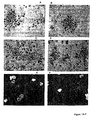
- HUVECs were infected with low MOI (1A-B) or high MOI (1C-D) with either clinical wild-type isolate VR1814 (1A-C) or bac-cloned and reconstituted virus RV-FIX-7 (1B-D). Staining was done with an ie1/2 mab as primary antibody and an anti-mouse peroxidase labelled mab as secondary antibody (1 A-D).
- VR1814 (1E) or RV-FIX-7 (1F) infected HUVECs were cocultivated with peripheral blood polymorphonuclear leukocytes (PMNL) and the lower matrix phosphoprotein (pp65) was detected in the nuclei of PMNL by indirect immunofluorescence.
- PMNL peripheral blood polymorphonuclear leukocytes
- pp65 lower matrix phosphoprotein
- Figures 1E-F demonstrate that RV-FIX-7 (1F) retained the capability to infect HUVECs and induce microfusion as compared to WT virus VR1814 (1E).
- the pp65 staining was performed as described in Journal of Microbiology 36, 3585-3589, 1998 .
- DNA derived from individually grown FIX-Bac-7 clones (lane 1 and 6) or FIX-Bac-7 mutant clones ⁇ -ULB' (lanes 2-3 and lanes 7-8) or ⁇ ULB130-132 (lanes 4-5 and lanes 9-10) was digested with either Hindlll (lanes 1-5) or BglII (6-10), respectively, and run on a 0.5% agarose gel.
- a novel band at around 6.5 kb arises in both mutant clones in the HindIII restriction cut.
- An additional band at around 4.7 kb arises in the ⁇ -ULB' clones in the HindIII cut as compared to the parallel clone FIX-Bac-7.
- M molecular weight marker 1 kb ladder.
- the predicted bands can be detected by Southern Blot hybridization in the HindIII digest ( Figure 5b ): a 6.5 kb and 4.7 kb band in ⁇ -UL/b' (lane 2), a 6.5 kb and 1.3 kb band in ⁇ -UL130-132 (lane 3), a 7.5 kb and 1.3 kb band in ⁇ -UL132 (lane 4), a 7.0 kb and 2.2 kb band in ⁇ -UL131 (lane 5), a 6.0 kb and 2.8 kb band in ⁇ -UL130 (lane 6), a 6.0 kb and 2.8 kb band in ⁇ -UL130K (lane 7), a 5.2 kb and 3.6 kb band in ⁇ -UL128 (lane 8) and a 5.3 kb and 3.8 kb band in ⁇ -UL128K (lane 9).
- Figure 7 shows fast sequence alignment
- HCMV virus strain VR1814 was isolated from cervical secretions and passaged in HEF 43 times. Before BAC cloning, VR 1814 was cultured in HUVEC for 2 months. HUVEC (human umbelical vein endothelial cell)-tropism and PMNL-tropism of VR1814 were determined by: i) propagating VR1814 in primary HUVEC cultures ( Revello et al., J. Gen. Virol. , submitted) and ii) coculturing purified PMNL with HUVEC infected with VR1814, following by immunologic staining of positive PMNL ( Revello, J. Clin. Invest. 1998 ; Gerna et al.)( Fig. 1A-E ).
- Example 2 Cloning of the clinical HCMV isolate VR1814 as FIX (fusion inducing factor X)-Bac (bacterial artificial chromosome) in E.coli. Generation of the FIX recombinant containing the bac vector.
- FIX fusion inducing factor X
- Bac bacterial artificial chromosome
- the HCMV recombinant virus was generated by homologous recombination in cell culture.
- the plasmid pEB 1997 Borst et al., J. Virol 73, 8320-8329, 1999 ) was linearized with the restriction enzyme XcmI.
- pEB1997 contains a tk-gpt-bac-cassette flanked with HCMV homologous sequences of US1-US2 (nt 192648 to 193360) on the right side and US6-US7 (nt 195705-197398) on the left side of the cassette.
- HFF cells human forescin fibroblasts (1 x 10 7 cells) were transfected with 35 ⁇ g of linearized plasmid pEB1997 using a Gene Pulser II (Biorad). Conditions of transfection were 960 ⁇ F, 220V. Cells were seeded in a T25 tissue culture flask and cultured overnight in DMEM supplemented with 5% FCS. After 24 h the monolayer was washed once with PBS and infected with an MOI 5 (moiety of infection) using the HUVEC grown clinical isolate VR1814 from Example 1 for 6 h. Cells were washed after infection and DMEM 5% FCS was added. Cells were cultured for 2 weeks until 100% CPE (cytopathogenic effect) was reached.
- Infected cells and supernatant were used to infect a new flask of a confluent monolayer of HF cells for 6 hours. Cells were washed carefully with PBS and selection medium was applied containing (100 ⁇ M xanthine and 25 ⁇ M mycophenolic acid). After 3 weeks when 100% CPE was reached, cells and supernatant were used for two successive rounds of infection and selection in tissue culture.
- the cell monolayer was washed with ice cold PBS and cells were lysed in 1 ml TES-buffer (10 mM Tris CI pH 7.4, 10 mM EDTA pH 8.0, 0.6% SDS).
- TES-buffer 10 mM Tris CI pH 7.4, 10 mM EDTA pH 8.0, 0.6% SDS.
- a modified HIRT extraction was applied. The sticky lysate was poured into a 2 ml eppendorf vial and 0.3 ml 5 M NaCl was added and carefully mixed. After 24 h of incubation at 4°C cellular DNA and proteins was pelleted out by centrifugation at 14.000 rpm for 30 min.
- the supernatant containing the circular intermediates was phenol/chloroform extracted once and subsequently precipitated in 2 1/2 volumes of 95% ethanol and 0.1 x 3 M Na-actetate (pH 5.2) for 24 h at -20°C.
- DNA was pelleted at 14000 rpm at 4°C for 30 min and washed with 70% ethanol.
- the dry DNA pellet was resuspended in 100 ⁇ l destilled water and allowed to dissolve for 24 h.
- Twenty-five ⁇ l of viral DNA was electroporated into E.coli DH10B using a Gene Pulser II (Biorad). Conditions were 200 Ohm, 25 ⁇ F, 2.3 kV.
- Figure 1 shows the EcoRI and Bgl II restriction pattern of 5 representative clones of FIX-Bac compared to WT-virus. Since the unit long (UL) and unit short (US) region of HCMV can flip relatively to each other, two isomeric forms can be observed in E.coli. Additional polymorphism is added by the number of "a" sequence repeats in the terminal and internal repeat region which vary in individual clones.
- Example 4a Reconstitution of infectious virus from FIX-Bac
- DNA was prepared using Nucleobond columns as previously described (ref 31). 1 ⁇ g of DNA was added to 10 ⁇ l Superfect (Gibco) and 80 ⁇ l of RPMI and incubated for 30 min to allow DNA complexes to form. A subconfluent layer of MRC-5 fibroblast in a 6 well dish seeded for 24 h was serum starved for 30 min.in RPMI. Medium was completely removed after 30 min and replaced with 1 ml DMEM 5% FCS over 6 well. The DNA transfection mix was diluted with 100 ⁇ l of DMEM 5% FCS and added to the cells of a 6 well. After 4 h the transfection mix was removed and 2 ml of fresh DMEM 5% FCS was added per well. After 1 week cells were split into a new flask (T25) and cultured until 100% CPE is achieved.
- RV-FIX-1, RV-FIX-6, RV-FIX-7, RV-FIX-11 and RV-FIX-14, respectively Reconstituted viruses (RV) were then assayed for HUVEC-tropism and PMNL-tropism as reported. All RV-FIX-Bac derived viruses retained the phenotype observed in the parental VR1814 isolate (Fig. 2).
- the mutant viruses were reconstituted in MRC-5 cells as described under Example 4a. Testing of the Delta-ULb' and Delta-UL130-132 mutants for capacity to induce microfusion or efficiently infect endothelial cells reveiled a loss of both phenotypes.
- the genetic region UL130-132 is inducing both microfusion and endothelial cell tropism and the deletion of the region in the clinical isolate leads to the loss of phenotype described.
- PCR primers used for generation of this mutant were:
- the capacity to induce microfusion may reflect a novel mechanism of HCMV to spread its genome from cell to cell and infect cells which do not express the as yet elusive natural receptor of HCMV. Consequently, the genetic region UL130-132 is a crucial determinant for tissue tropism and pathogenesis of HCMV.
- Fig. 3 shows HindIII and BglII restriction patterns of the FIX-Bac mutant clones in comparison to the parental clone (FIX-7).
- Phoebe-Bac, Powers-Bac and TB40E-Bac were deposited with the Deutsche Sammlung für Mikroorganismen und Zellkulturen (DSZM), under DSM 14358 (Phoebe-Bac), DSM 14359 (Powers-Bac) and DSM 14360 (TB40E-Bac). Analyses of the bacmids are shown in Fig. 4 .
- a linear PCR fragment was generated using the kanamycin resistance gene from plasmid pAcyc177 (New England Biolabs) as a template.
- the primers used for generation of the linear PCR fragments have about 60 bp HCMV homolgous sequence on the 5' and 3' ends, respectively, and were designed as follows:
- PCR was performed using the plasmid pAcyc177 as a template.
- FIX-bac-7 mutants were generated in a recombinant proficient E.coli strain by transformation of the respective purified PCR product into the FIX-bac-7 containing E.coli strain.
- the mutant clones were selected on chloramphenicol (12.5 ⁇ g/ml) and kanamycin (50 ⁇ g/ml) containing agarose plates. Subsequently, individual clones were picked and grown in Luria Bertani medium supplemented with chloramphenicol (12.5 ⁇ g/ml) and kanamycin (50 ⁇ g/ml). DNA of the resulting bacmid clones was analysed by restriction enzyme analyses and Southern Blot hybridization.
- RV-FIX (reconstituted virus-FIX) mutant viruses were reconstituted from FIX-bac-7 mutant clones as previously described. Phenotypical testing for PMNL tropism and HUVEC tropism was also performed as previously described. Table 1 provides a summary of the virus mutant phenotypes. As a conclusion of phenotypical testing the mutant viruses we confer that PMNL tropism and induction of microfuesion events is encoded within the genetic region spanning UL131-UL128 genes and HUVEC tropism is encoded within the genetic region of UL-132-128 genes.
- UL131-128 abrogates both HUVEC and PMN tropism phenotype and consequently the genetic region between UL131 and UL128 is essentially required for PMNL tropism and induction of microfusion events of clinical HCMV isolates. Additionally UL132 gene is contributing to the HUVEC phenotype of clinical isolates of HCMV. Taken together we have identified a genetic region (UL132-128) within clinical isolates of HCMV which encodes important pathogenicity features of clinical isolates.
- the same region may also provide important pathogenicity factors for growth of clinical isolates in other cell types like dendritic cells, monocytes, macrophages, stem cells and may confer the resistance of clinical isolates of HCMV to NK cell recognition by coding for chemokine-like or cytokine-like factors.
- the genetic region of UL132-128 identified in FIX-bac-7 is therefore an important target for drug design, gene therapy and vaccine development against HCMV.
- AD169 will confer HUVEC tropism, PMNL tropism and microfusion phenotype characteristics to the fibroblast adapted AD169 laboratory strain or any other virus strain.
- Table 1 Testing of PMNL- and HUVEC-tropism of RV-FIX mutant viruses experiment 1 a PMNL-tropism experiment 2 HUVEC-tropism RV-FIX WT positive growth on HUVEC RV-FIX D-UL/b' negative no growth at passage 4 RV-FIX D-UL130 negative no growth at passage 4 RV-FIX D-UL131 negative no growth at passage 4 RV-FIX D-UL132 positive no growth at passage 4 RV-FIX D-UL130-132 negative no growth at passage 4 RV-FIX D-UL130K negative no growth at passage 4 RV-FIX D-UL128 negative no growth at passage 4 RV-FIX D-UL128K negative no growth at passage 4 RV-FIX D-UL45 positive growth on HUVEC a Two independent experiments are shown.
- Example 9 Transcript mapping and sequencing of the FIX-bac UL/b' region
- Gene Specific RACE Primers were as follows:
- PCR products were subsequently cloned into pT-Adv vector using the AdvanTAgeTMPCR Cloning Kit (Clontech) according to the manufacturers' guidance. Individual clones were screened for cDNA inserts by DNA preparation and EcoRI restriction cut. Insert containing clones were sequenced using M13 sequencing primers.
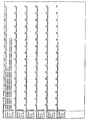
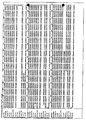
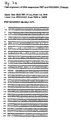
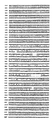
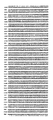
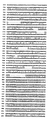
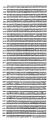
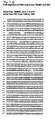
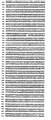
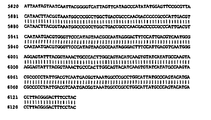
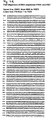
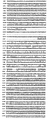
- FIG. 6 A comparison of the FIX-Bac genomic sequence (designated VR) and individual RACE clones is depicted in figure 6 :
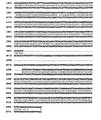
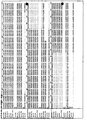
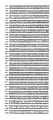
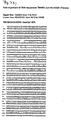
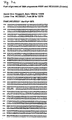
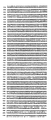
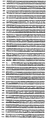
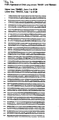
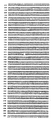
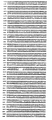
- the genomic sequence of the UL/b' region of a clinical bacmid clone PAN 1 is attached as sequence file (Seq Id No.2). Parts of the genomic sequence of the UL/b' region of FIX7-Bac (Seq Id No. 1), TB40E1-Bac (Seq Id No.3) and TB40-E4-Bac (Seq Id No. 4) were also determined and are attached as sequencing files. In figure 7 the genomic sequences of PAN-Bac, FIX-Bac and TB40E-Bac were compared in a sequence alignment to the published genomic sequence of Toledo (gb:HCU 33331) and to each other using DNAman software:
- RACE PCR analyses have identified several novel transcripts within the UL132 to UL128 region of FIX-bac.
- Two transcripts (RACE clone 3-10, RACE clone1 and RACE clone 3'-4) are of particular interest. They show that one major transcript of about 2.0 kb is covering the whole UL131-128 region (see figure 6a-c ).
- RACE clone1, RACE clone 3'-4 and RACE clone 3-10 have a ployA tail and are spliced at the 3' end (position 1721 nt to 1845 nt referred to figure 6e ).
- Both, RACE clone 1 and RACE clone 3'-4 have an additional splice at the 5' end (position 331 nt to 440 nt referred to figure 6e ).
- the ATG start codon of these transcripts is at position nt 96 to nt 98 referred to figure 6e ).
- the predicted 5' end of these three transcripts is presumably 10-50 bp upstream of the sequenced end of the clones (nt 50 to nt 100 referred to figure 6e ).
- the genetic region of UL132 to UL128 is the genetic determinant for induction of microfusion, HUVEC and PMN tropism
- the identified transcripts running through this region are candidates for therapeutic intervention, drug design, vaccine development, attenuation of virus virulence, spread and antigenicity of the virus, latency and reactivation as well as immunological control of HCMV by immune cells (NK cells, T-cells, B-cells, dendritic cells, endothelial cells and monocytes, macrophages, hematopoietic precursors and stem cells).
- Ectopic transfer of the genetic region UL132-128 of FIX-Bac-7 or the respective identified cDNAs into a fibroblast adapted HCMV virus will confer microfusion characteristics, cell to cell spread of virus material, HUVEC and PMNL tropism and possibly other pathogenicity features to the respective virus.
Landscapes
- Health & Medical Sciences (AREA)
- Life Sciences & Earth Sciences (AREA)
- Chemical & Material Sciences (AREA)
- Genetics & Genomics (AREA)
- Virology (AREA)
- Engineering & Computer Science (AREA)
- Bioinformatics & Cheminformatics (AREA)
- Organic Chemistry (AREA)
- General Health & Medical Sciences (AREA)
- Zoology (AREA)
- Wood Science & Technology (AREA)
- Microbiology (AREA)
- Medicinal Chemistry (AREA)
- Biomedical Technology (AREA)
- Immunology (AREA)
- General Engineering & Computer Science (AREA)
- Biotechnology (AREA)
- Animal Behavior & Ethology (AREA)
- Veterinary Medicine (AREA)
- Biochemistry (AREA)
- Public Health (AREA)
- Epidemiology (AREA)
- Mycology (AREA)
- Pharmacology & Pharmacy (AREA)
- Physics & Mathematics (AREA)
- Plant Pathology (AREA)
- Molecular Biology (AREA)
- Biophysics (AREA)
- Micro-Organisms Or Cultivation Processes Thereof (AREA)
- Medicines Containing Antibodies Or Antigens For Use As Internal Diagnostic Agents (AREA)
- Measuring Or Testing Involving Enzymes Or Micro-Organisms (AREA)
Claims (18)
- Rekombinanter Vektor, der das infektiöse Genom des humanen Cytomegalovirus (HCMV) enthält, wobei die phänotypischen Eigenschaften des klinischen Virus-Isolats, einschließlich der Fähigkeit, auf Endothelzellen zu wachsen, Mikrofusion zu induzieren und virales Material von HUVEC zu PMNL zu streuen, beibehalten werden, dadurch gekennzeichnet, dass er durch Einfügen von DNA aus einem klinischen HCMV-Virus-Isolat geringer Passage in ein bakterielles Klonierungsvehikel erhältlich ist.
- Rekombinanter Vektor nach Anspruch 1, der die komplette infektiöse DNA von HCMV enthält.
- Rekombinanter Vektor nach Anspruch 1 oder 2, dadurch gekennzeichnet, dass das bakterielle Klonierungsvehikel DNA-Sequenzen enthält, die homolog zur HCMV-DNA sind und das Einfügen durch homologe Rekombination erfolgt.
- Rekombinanter Vektor nach einem der Ansprüche 1 bis 3, wobei das bakterielle Klonierungsvehikel ein BAC-System-Vektor ist.
- Bakterienzelllinie, die einen rekombinanten Vektor nach einem der Ansprüche 1 bis 4 enthält.
- Bakterienzelllinie nach Anspruch 5, die eine E.coli-Zelllinie ist.
- Bakterienzelllinie nach Ansprüchen 5 oder 6, die als FIX-Bac-7-E.coli DH10B bezeichnet wird und als DSM 13958 hinterlegt ist, enthaltend mindestens eine Kopie von FIX-Bac-7.
- Verwendung eines rekombinanten Vektors nach einem der Ansprüche 1 bis 4 zur Herstellung von wiederhergestelltem HCMV-Virus, das die phänotypischen Eigenschaften eines parentalen klinischen Isolats, einschließlich der Fähigkeit, auf Endothelzellen zu wachsen, Mikrofusion zu induzieren und virales Material von HUVEC zu PMNL zu streuen, beibehält.
- Verwendung einer Bakterienzelllinie nach einem der Ansprüche 5 bis 7 zur Herstellung von wiederhergestelltem HCMV-Virus, das die phänotypischen Eigenschaften eines parentalen klinischen Isolats, einschließlich der Fähigkeit, auf Endothelzellen zu wachsen, Mikrofusion zu induzieren und virales Material von HUVEC zu PMNL zu streuen, beibehält.
- Verfahren zur Herstellung von wiederhergestelltem HCMV-Virus, das die phänotypischen Eigenschaften eines parentalen klinischen Isolats, einschließlich der Fähigkeit, auf Endothelzellen zu wachsen, Mikrofusion zu induzieren und virales Material von HUVEC zu PMNL zu streuen, beibehält, wobei ein rekombinanter Vektor nach einem der Ansprüche 1 bis 4 in geeignete eukaryotische Wirtszellen transfiziert wird und wiederhergestelltes infektiöses Virus nach der Kultivierung der Zellen gesammelt wird.
- Verfahren nach Anspruch 10, wobei das wiederhergestellte HCMV-Virus weiterhin HUVEC- und/oder PMNL-Tropismus eines parentalen klinischen Virus-Isolats beibehält.
- Verwendung von wiederhergestelltem infektiösem HCMV-Virus, das nach dem Verfahren nach Anspruch 10 oder 11 hergestellt wurde, für die Herstellung von Impfstoffen und/oder Antikörpern gegen HCMV-Virus in vitro.
- Verwendung von wiederhergestelltem infektiösem HCMV-Virus, das nach dem Verfahren nach Anspruch 10 oder 11 hergestellt wurde, zum Screening von Medikamenten oder kleinen Molekülen auf ihre antivirale Aktivität.
- Verwendung eines rekombinanten Vektors nach einem der Ansprüche 1 bis 4 zur Untersuchung von Genen und Genfunktionen von HCMV-Virus.
- Verwendung eines rekombinanten Vektors nach einem der Ansprüche 1 bis 4 zur Herstellung von Virus-Mutanten durch Modifizieren, Deletieren, randomisiertes Deletieren oder Substituieren von Teilen der viralen DNA.
- Verwendung nach Anspruch 15, wobei die Gene, die für die Mikrofusion und/oder den Gewebetropismus verantwortlich sind, modifiziert werden.
- Verwendung eines rekombinanten Vektors nach einem der Ansprüche 1 bis 4 zur Entwicklung von Impfstoffen gegen HCMV-Virus.
- Verwendung eines rekombinanten Vektors nach einem der Ansprüche 1 bis 4 zur Entwicklung und/oder zum Screening von Substanzen, die die virale Genproduktion auf Transkriptions- und/oder Translations-Ebene inhibieren.
Priority Applications (1)
| Application Number | Priority Date | Filing Date | Title |
|---|---|---|---|
| EP02716799A EP1368465B1 (de) | 2001-02-21 | 2002-02-21 | Rekombinant vektor, der ein infektiöses humanes cytomegalovirus genom mit konserviertem wildtyp-charakteristika klinisher isolate enthält |
Applications Claiming Priority (6)
| Application Number | Priority Date | Filing Date | Title |
|---|---|---|---|
| EP01104171 | 2001-02-21 | ||
| EP01104171 | 2001-02-21 | ||
| EP01116044 | 2001-07-02 | ||
| EP01116044 | 2001-07-02 | ||
| PCT/EP2002/001867 WO2002066629A2 (en) | 2001-02-21 | 2002-02-21 | Recombinant vector containing infectious human cytomegalovirus genome with preserved wild-type characteristics of clinical isolates |
| EP02716799A EP1368465B1 (de) | 2001-02-21 | 2002-02-21 | Rekombinant vektor, der ein infektiöses humanes cytomegalovirus genom mit konserviertem wildtyp-charakteristika klinisher isolate enthält |
Publications (2)
| Publication Number | Publication Date |
|---|---|
| EP1368465A2 EP1368465A2 (de) | 2003-12-10 |
| EP1368465B1 true EP1368465B1 (de) | 2010-11-17 |
Family
ID=26076487
Family Applications (1)
| Application Number | Title | Priority Date | Filing Date |
|---|---|---|---|
| EP02716799A Expired - Lifetime EP1368465B1 (de) | 2001-02-21 | 2002-02-21 | Rekombinant vektor, der ein infektiöses humanes cytomegalovirus genom mit konserviertem wildtyp-charakteristika klinisher isolate enthält |
Country Status (7)
| Country | Link |
|---|---|
| US (3) | US20040087001A1 (de) |
| EP (1) | EP1368465B1 (de) |
| AT (1) | ATE488583T1 (de) |
| AU (1) | AU2002247733B2 (de) |
| CA (1) | CA2438322A1 (de) |
| DE (1) | DE60238309D1 (de) |
| WO (1) | WO2002066629A2 (de) |
Families Citing this family (18)
| Publication number | Priority date | Publication date | Assignee | Title |
|---|---|---|---|---|
| CA2654563A1 (en) | 2006-06-07 | 2007-12-21 | The Trustees Of Princeton University | Cytomegalovirus surface protein complex for use in vaccines and as a drug target |
| EP3399025B1 (de) * | 2007-03-23 | 2025-05-07 | Wisconsin Alumni Research Foundation | Neuprogrammierung von körperzellen |
| PT3009449T (pt) | 2008-07-16 | 2018-09-28 | Inst Res Biomedicine | Anticorpos neutralizantes de citomegalovírus humano e utilização destes |
| EA201270662A1 (ru) | 2009-12-23 | 2013-01-30 | 4-Антибоди Аг | Связывающие элементы для человеческого цитамегаловируса |
| WO2011119920A2 (en) | 2010-03-25 | 2011-09-29 | Oregon Health & Science University | Cmv glycoproteins and recombinant vectors |
| EP3333265B1 (de) | 2010-05-14 | 2020-02-05 | Oregon Health & Science University | Rekombinante hcmv- und rhcmv-vektoren die ein heterologes antigen aus dem hepatitis b virus kodieren und deren verwendungen |
| SMT201800284T1 (it) | 2011-06-10 | 2018-07-17 | Univ Oregon Health & Science | Glicoproteine cmv e vettori ricombinanti |
| EP2766385A2 (de) * | 2011-10-12 | 2014-08-20 | Novartis AG | Cmv-antigene und verwendungen davon |
| SI2964769T1 (sl) * | 2013-03-05 | 2018-12-31 | Oregon Health & Sccience University | Citomegalovirusni vektorji, ki omogočajo krmiljenje ciljanja T-celic |
| KR102205348B1 (ko) | 2014-07-16 | 2021-01-20 | 오레곤 헬스 앤드 사이언스 유니버시티 | 외인성 항원을 포함하는 인간 시토메갈로바이러스 |
| CN114317611A (zh) | 2015-02-10 | 2022-04-12 | 俄勒冈健康与科学大学 | 可用于产生非典型cd8+t细胞应答的方法和组合物 |
| AU2016355468B2 (en) * | 2015-11-20 | 2022-12-15 | Oregon Health & Science University | CMV vectors comprising microRNA recognition elements |
| US10611800B2 (en) | 2016-03-11 | 2020-04-07 | Pfizer Inc. | Human cytomegalovirus gB polypeptide |
| US20200182884A1 (en) | 2016-06-27 | 2020-06-11 | Juno Therapeutics, Inc. | Method of identifying peptide epitopes, molecules that bind such epitopes and related uses |
| CN110036112B (zh) | 2016-10-18 | 2024-05-10 | 俄勒冈健康与科学大学 | 引发受主要组织相容性复合体e分子限制的t细胞的巨细胞病毒载体 |
| US10577763B2 (en) * | 2017-04-25 | 2020-03-03 | MZC Foundation, Inc. | Apparatus, system, and method for smart roadway stud control and signaling |
| US11629172B2 (en) | 2018-12-21 | 2023-04-18 | Pfizer Inc. | Human cytomegalovirus gB polypeptide |
| US11857622B2 (en) | 2020-06-21 | 2024-01-02 | Pfizer Inc. | Human cytomegalovirus GB polypeptide |
Family Cites Families (1)
| Publication number | Priority date | Publication date | Assignee | Title |
|---|---|---|---|---|
| DE19733364A1 (de) * | 1997-08-01 | 1999-02-04 | Koszinowski Ulrich H Prof | Verfahren zur Klonierung eines großen Virusgenoms |
-
2002
- 2002-02-21 AT AT02716799T patent/ATE488583T1/de not_active IP Right Cessation
- 2002-02-21 CA CA002438322A patent/CA2438322A1/en not_active Abandoned
- 2002-02-21 EP EP02716799A patent/EP1368465B1/de not_active Expired - Lifetime
- 2002-02-21 AU AU2002247733A patent/AU2002247733B2/en not_active Ceased
- 2002-02-21 WO PCT/EP2002/001867 patent/WO2002066629A2/en not_active Ceased
- 2002-02-21 US US10/275,287 patent/US20040087001A1/en not_active Abandoned
- 2002-02-21 DE DE60238309T patent/DE60238309D1/de not_active Expired - Lifetime
-
2005
- 2005-07-13 US US11/180,000 patent/US7700350B2/en not_active Expired - Fee Related
-
2009
- 2009-12-11 US US12/636,431 patent/US20100267121A1/en not_active Abandoned
Also Published As
| Publication number | Publication date |
|---|---|
| US7700350B2 (en) | 2010-04-20 |
| WO2002066629A8 (en) | 2003-02-27 |
| AU2002247733B2 (en) | 2007-12-13 |
| CA2438322A1 (en) | 2002-08-29 |
| ATE488583T1 (de) | 2010-12-15 |
| DE60238309D1 (de) | 2010-12-30 |
| US20100267121A1 (en) | 2010-10-21 |
| WO2002066629A3 (en) | 2003-10-09 |
| US20060019369A1 (en) | 2006-01-26 |
| US20040087001A1 (en) | 2004-05-06 |
| EP1368465A2 (de) | 2003-12-10 |
| WO2002066629A2 (en) | 2002-08-29 |
| WO2002066629A9 (en) | 2004-01-15 |
Similar Documents
| Publication | Publication Date | Title |
|---|---|---|
| US20100267121A1 (en) | Recombinant vector containing infectious human cytomegalovirus genome with preserved wild-type characteristics of clinical isolates | |
| Revello et al. | Human cytomegalovirus tropism for endothelial/epithelial cells: scientific background and clinical implications | |
| Manning et al. | Cytomegalovirus determinant of replication in salivary glands | |
| AU2002247733A1 (en) | Recombinant vector containing infectious human cytomegalovirus genome with preserved wild-type characteristics of clinical isolates | |
| EP2566957B1 (de) | Impfstoff gegen infektion mit beta-herpesviren und verwendung davon | |
| Gerna et al. | Lack of transmission to polymorphonuclear leukocytes and human umbilical vein endothelial cells as a marker of attenuation of human cytomegalovirus | |
| Hahn et al. | Cloning of the genomes of human cytomegalovirus strains Toledo, TownevarRIT3, and Townelong as BACs and site-directed mutagenesis using a PCR-based technique | |
| McVoy et al. | Repair of a mutation disrupting the guinea pig cytomegalovirus pentameric complex acquired during fibroblast passage restores pathogenesis in immune-suppressed guinea pigs and in the context of congenital infection | |
| CN102151333A (zh) | 抗宿主细胞伴随疱疹病毒的免疫接种 | |
| Blondeau et al. | A full UL13 open reading frame in Marek’s disease virus (MDV) is dispensable for tumor formation and feather follicle tropism and cannot restore horizontal virus transmission of rRB-1B in vivo | |
| EP1100925B1 (de) | Attenuierte pferdeherpesvirus | |
| CN105713866B (zh) | 人巨细胞病毒感染性克隆及其构建方法和应用 | |
| ES2699828T3 (es) | Vacuna contra el herpesvirus bovino | |
| EP1394258A1 (de) | Nicht-menschliche Herpesviren als Vektoren | |
| US7589071B1 (en) | Large capacity viral amplicon using a minimal orilyt from human cytomegalovirus | |
| Holak | Investigation of murine cytomegalovirus US22 gene family members m139 and m142 | |
| AU2013204991A1 (en) | Viral gene products and methods for vaccination to prevent viral associated diseases | |
| Adhikary | Investigation of the T helper cell response against Epstein-Barr virus | |
| McVoy et al. | JVI Accepted Manuscript Posted Online 15 June 2016 J. Virol. doi: 10.1128/JVI. 00320-16 Copyright© 2016, American Society for Microbiology. All Rights Reserved. | |
| Clambey | Genetic analysis of gammaherpesvirus 68 latency and reactivation | |
| Gerna | Human cytomegalovirus does not replicate in polymorphomuclear leukocytes harboring infectious virus and viral pp65, DNA and mRNAs | |
| Oxford et al. | JVI Accepts, published online ahead of print on 9 March 2011 | |
| Koszinowski et al. | Gabriele Hahn, Hanna Khan, Fausto Baldanti, Ulrich H. | |
| Brune | Rapid identification of essential and nonessential cytomegalovirus genes by direct transposon mutagenesis | |
| Cham | Further Analysis of the ORF73 and ORF74 Genes of the Murid Herpesvirus 4 in the Natural Host |
Legal Events
| Date | Code | Title | Description |
|---|---|---|---|
| PUAI | Public reference made under article 153(3) epc to a published international application that has entered the european phase |
Free format text: ORIGINAL CODE: 0009012 |
|
| 17P | Request for examination filed |
Effective date: 20030814 |
|
| AK | Designated contracting states |
Kind code of ref document: A2 Designated state(s): AT BE CH CY DE DK ES FI FR GB GR IE IT LI LU MC NL PT SE TR |
|
| AX | Request for extension of the european patent |
Extension state: AL LT LV MK RO SI |
|
| 17Q | First examination report despatched |
Effective date: 20040420 |
|
| RAP1 | Party data changed (applicant data changed or rights of an application transferred) |
Owner name: THE WISTAR INSTITUTE OF ANATOMY AND BIOLOGY |
|
| RIN1 | Information on inventor provided before grant (corrected) |
Inventor name: HAHN, GABRIELE |
|
| GRAP | Despatch of communication of intention to grant a patent |
Free format text: ORIGINAL CODE: EPIDOSNIGR1 |
|
| GRAS | Grant fee paid |
Free format text: ORIGINAL CODE: EPIDOSNIGR3 |
|
| GRAA | (expected) grant |
Free format text: ORIGINAL CODE: 0009210 |
|
| AK | Designated contracting states |
Kind code of ref document: B1 Designated state(s): AT BE CH CY DE DK ES FI FR GB GR IE IT LI LU MC NL PT SE TR |
|
| REG | Reference to a national code |
Ref country code: GB Ref legal event code: FG4D |
|
| REG | Reference to a national code |
Ref country code: CH Ref legal event code: EP |
|
| REG | Reference to a national code |
Ref country code: IE Ref legal event code: FG4D |
|
| REF | Corresponds to: |
Ref document number: 60238309 Country of ref document: DE Date of ref document: 20101230 Kind code of ref document: P |
|
| REG | Reference to a national code |
Ref country code: NL Ref legal event code: T3 |
|
| REG | Reference to a national code |
Ref country code: CH Ref legal event code: NV Representative=s name: BOHEST AG |
|
| PG25 | Lapsed in a contracting state [announced via postgrant information from national office to epo] |
Ref country code: SE Free format text: LAPSE BECAUSE OF FAILURE TO SUBMIT A TRANSLATION OF THE DESCRIPTION OR TO PAY THE FEE WITHIN THE PRESCRIBED TIME-LIMIT Effective date: 20101117 Ref country code: AT Free format text: LAPSE BECAUSE OF FAILURE TO SUBMIT A TRANSLATION OF THE DESCRIPTION OR TO PAY THE FEE WITHIN THE PRESCRIBED TIME-LIMIT Effective date: 20101117 Ref country code: CY Free format text: LAPSE BECAUSE OF FAILURE TO SUBMIT A TRANSLATION OF THE DESCRIPTION OR TO PAY THE FEE WITHIN THE PRESCRIBED TIME-LIMIT Effective date: 20101117 Ref country code: FI Free format text: LAPSE BECAUSE OF FAILURE TO SUBMIT A TRANSLATION OF THE DESCRIPTION OR TO PAY THE FEE WITHIN THE PRESCRIBED TIME-LIMIT Effective date: 20101117 Ref country code: PT Free format text: LAPSE BECAUSE OF FAILURE TO SUBMIT A TRANSLATION OF THE DESCRIPTION OR TO PAY THE FEE WITHIN THE PRESCRIBED TIME-LIMIT Effective date: 20110317 |
|
| PG25 | Lapsed in a contracting state [announced via postgrant information from national office to epo] |
Ref country code: GR Free format text: LAPSE BECAUSE OF FAILURE TO SUBMIT A TRANSLATION OF THE DESCRIPTION OR TO PAY THE FEE WITHIN THE PRESCRIBED TIME-LIMIT Effective date: 20110218 |
|
| PG25 | Lapsed in a contracting state [announced via postgrant information from national office to epo] |
Ref country code: ES Free format text: LAPSE BECAUSE OF FAILURE TO SUBMIT A TRANSLATION OF THE DESCRIPTION OR TO PAY THE FEE WITHIN THE PRESCRIBED TIME-LIMIT Effective date: 20110228 Ref country code: BE Free format text: LAPSE BECAUSE OF FAILURE TO SUBMIT A TRANSLATION OF THE DESCRIPTION OR TO PAY THE FEE WITHIN THE PRESCRIBED TIME-LIMIT Effective date: 20101117 |
|
| PG25 | Lapsed in a contracting state [announced via postgrant information from national office to epo] |
Ref country code: DK Free format text: LAPSE BECAUSE OF FAILURE TO SUBMIT A TRANSLATION OF THE DESCRIPTION OR TO PAY THE FEE WITHIN THE PRESCRIBED TIME-LIMIT Effective date: 20101117 |
|
| PLBE | No opposition filed within time limit |
Free format text: ORIGINAL CODE: 0009261 |
|
| STAA | Information on the status of an ep patent application or granted ep patent |
Free format text: STATUS: NO OPPOSITION FILED WITHIN TIME LIMIT |
|
| PG25 | Lapsed in a contracting state [announced via postgrant information from national office to epo] |
Ref country code: MC Free format text: LAPSE BECAUSE OF NON-PAYMENT OF DUE FEES Effective date: 20110228 |
|
| 26N | No opposition filed |
Effective date: 20110818 |
|
| REG | Reference to a national code |
Ref country code: DE Ref legal event code: R097 Ref document number: 60238309 Country of ref document: DE Effective date: 20110818 |
|
| PG25 | Lapsed in a contracting state [announced via postgrant information from national office to epo] |
Ref country code: LU Free format text: LAPSE BECAUSE OF NON-PAYMENT OF DUE FEES Effective date: 20110221 |
|
| PG25 | Lapsed in a contracting state [announced via postgrant information from national office to epo] |
Ref country code: TR Free format text: LAPSE BECAUSE OF FAILURE TO SUBMIT A TRANSLATION OF THE DESCRIPTION OR TO PAY THE FEE WITHIN THE PRESCRIBED TIME-LIMIT Effective date: 20101117 |
|
| REG | Reference to a national code |
Ref country code: CH Ref legal event code: PCAR Free format text: NEW ADDRESS: HOLBEINSTRASSE 36-38, 4051 BASEL (CH) |
|
| REG | Reference to a national code |
Ref country code: FR Ref legal event code: PLFP Year of fee payment: 14 |
|
| REG | Reference to a national code |
Ref country code: FR Ref legal event code: PLFP Year of fee payment: 15 |
|
| REG | Reference to a national code |
Ref country code: FR Ref legal event code: PLFP Year of fee payment: 16 |
|
| REG | Reference to a national code |
Ref country code: FR Ref legal event code: PLFP Year of fee payment: 17 |
|
| PGFP | Annual fee paid to national office [announced via postgrant information from national office to epo] |
Ref country code: NL Payment date: 20190218 Year of fee payment: 18 |
|
| PGFP | Annual fee paid to national office [announced via postgrant information from national office to epo] |
Ref country code: DE Payment date: 20181130 Year of fee payment: 18 Ref country code: GB Payment date: 20190218 Year of fee payment: 18 Ref country code: IT Payment date: 20190225 Year of fee payment: 18 Ref country code: IE Payment date: 20190222 Year of fee payment: 18 Ref country code: CH Payment date: 20190218 Year of fee payment: 18 |
|
| PGFP | Annual fee paid to national office [announced via postgrant information from national office to epo] |
Ref country code: FR Payment date: 20190219 Year of fee payment: 18 |
|
| REG | Reference to a national code |
Ref country code: DE Ref legal event code: R119 Ref document number: 60238309 Country of ref document: DE |
|
| REG | Reference to a national code |
Ref country code: CH Ref legal event code: PL |
|
| REG | Reference to a national code |
Ref country code: NL Ref legal event code: MM Effective date: 20200301 |
|
| GBPC | Gb: european patent ceased through non-payment of renewal fee |
Effective date: 20200221 |
|
| PG25 | Lapsed in a contracting state [announced via postgrant information from national office to epo] |
Ref country code: CH Free format text: LAPSE BECAUSE OF NON-PAYMENT OF DUE FEES Effective date: 20200229 Ref country code: LI Free format text: LAPSE BECAUSE OF NON-PAYMENT OF DUE FEES Effective date: 20200229 |
|
| PG25 | Lapsed in a contracting state [announced via postgrant information from national office to epo] |
Ref country code: NL Free format text: LAPSE BECAUSE OF NON-PAYMENT OF DUE FEES Effective date: 20200301 |
|
| PG25 | Lapsed in a contracting state [announced via postgrant information from national office to epo] |
Ref country code: IE Free format text: LAPSE BECAUSE OF NON-PAYMENT OF DUE FEES Effective date: 20200221 Ref country code: FR Free format text: LAPSE BECAUSE OF NON-PAYMENT OF DUE FEES Effective date: 20200229 Ref country code: GB Free format text: LAPSE BECAUSE OF NON-PAYMENT OF DUE FEES Effective date: 20200221 Ref country code: DE Free format text: LAPSE BECAUSE OF NON-PAYMENT OF DUE FEES Effective date: 20200901 |
|
| PG25 | Lapsed in a contracting state [announced via postgrant information from national office to epo] |
Ref country code: IT Free format text: LAPSE BECAUSE OF NON-PAYMENT OF DUE FEES Effective date: 20200221 |