EP1361731A2 - Universelles System und Verfahren zur Speicherung von anrufbezogenen Daten für ein Heimtelefonnetz - Google Patents
Universelles System und Verfahren zur Speicherung von anrufbezogenen Daten für ein Heimtelefonnetz Download PDFInfo
- Publication number
- EP1361731A2 EP1361731A2 EP03251917A EP03251917A EP1361731A2 EP 1361731 A2 EP1361731 A2 EP 1361731A2 EP 03251917 A EP03251917 A EP 03251917A EP 03251917 A EP03251917 A EP 03251917A EP 1361731 A2 EP1361731 A2 EP 1361731A2
- Authority
- EP
- European Patent Office
- Prior art keywords
- call
- log
- endpoint
- gateway
- calls
- Prior art date
- Legal status (The legal status is an assumption and is not a legal conclusion. Google has not performed a legal analysis and makes no representation as to the accuracy of the status listed.)
- Granted
Links
Images
Classifications
-
- H—ELECTRICITY
- H04—ELECTRIC COMMUNICATION TECHNIQUE
- H04M—TELEPHONIC COMMUNICATION
- H04M15/00—Arrangements for metering, time-control or time indication ; Metering, charging or billing arrangements for voice wireline or wireless communications, e.g. VoIP
- H04M15/41—Billing record details, i.e. parameters, identifiers, structure of call data record [CDR]
-
- H—ELECTRICITY
- H04—ELECTRIC COMMUNICATION TECHNIQUE
- H04M—TELEPHONIC COMMUNICATION
- H04M1/00—Substation equipment, e.g. for use by subscribers
- H04M1/56—Arrangements for indicating or recording the called number at the calling subscriber's set
-
- H—ELECTRICITY
- H04—ELECTRIC COMMUNICATION TECHNIQUE
- H04M—TELEPHONIC COMMUNICATION
- H04M1/00—Substation equipment, e.g. for use by subscribers
- H04M1/57—Arrangements for indicating or recording the number of the calling subscriber at the called subscriber's set
-
- H—ELECTRICITY
- H04—ELECTRIC COMMUNICATION TECHNIQUE
- H04M—TELEPHONIC COMMUNICATION
- H04M1/00—Substation equipment, e.g. for use by subscribers
- H04M1/71—Substation extension arrangements
- H04M1/715—Substation extension arrangements using two or more extensions per line
-
- H—ELECTRICITY
- H04—ELECTRIC COMMUNICATION TECHNIQUE
- H04M—TELEPHONIC COMMUNICATION
- H04M1/00—Substation equipment, e.g. for use by subscribers
- H04M1/72—Mobile telephones; Cordless telephones, i.e. devices for establishing wireless links to base stations without route selection
- H04M1/725—Cordless telephones
-
- H—ELECTRICITY
- H04—ELECTRIC COMMUNICATION TECHNIQUE
- H04M—TELEPHONIC COMMUNICATION
- H04M15/00—Arrangements for metering, time-control or time indication ; Metering, charging or billing arrangements for voice wireline or wireless communications, e.g. VoIP
- H04M15/04—Recording calls, or communications in printed, perforated or other permanent form
- H04M15/06—Recording class or number of calling, i.e. A-party or called party, i.e. B-party
-
- H—ELECTRICITY
- H04—ELECTRIC COMMUNICATION TECHNIQUE
- H04M—TELEPHONIC COMMUNICATION
- H04M15/00—Arrangements for metering, time-control or time indication ; Metering, charging or billing arrangements for voice wireline or wireless communications, e.g. VoIP
- H04M15/53—Arrangements for metering, time-control or time indication ; Metering, charging or billing arrangements for voice wireline or wireless communications, e.g. VoIP using mediation
-
- H—ELECTRICITY
- H04—ELECTRIC COMMUNICATION TECHNIQUE
- H04M—TELEPHONIC COMMUNICATION
- H04M3/00—Automatic or semi-automatic exchanges
- H04M3/22—Arrangements for supervision, monitoring or testing
- H04M3/2218—Call detail recording
-
- H—ELECTRICITY
- H04—ELECTRIC COMMUNICATION TECHNIQUE
- H04M—TELEPHONIC COMMUNICATION
- H04M7/00—Arrangements for interconnection between switching centres
- H04M7/006—Networks other than PSTN/ISDN providing telephone service, e.g. Voice over Internet Protocol (VoIP), including next generation networks with a packet-switched transport layer
- H04M7/0066—Details of access arrangements to the networks
- H04M7/0069—Details of access arrangements to the networks comprising a residential gateway, e.g. those which provide an adapter for POTS or ISDN terminals
-
- H—ELECTRICITY
- H04—ELECTRIC COMMUNICATION TECHNIQUE
- H04M—TELEPHONIC COMMUNICATION
- H04M1/00—Substation equipment, e.g. for use by subscribers
- H04M1/253—Telephone sets using digital voice transmission
- H04M1/2535—Telephone sets using digital voice transmission adapted for voice communication over an Internet Protocol [IP] network
-
- H—ELECTRICITY
- H04—ELECTRIC COMMUNICATION TECHNIQUE
- H04M—TELEPHONIC COMMUNICATION
- H04M2215/00—Metering arrangements; Time controlling arrangements; Time indicating arrangements
- H04M2215/01—Details of billing arrangements
- H04M2215/0164—Billing record, e.g. Call Data Record [CDR], Toll Ticket[TT], Automatic Message Accounting [AMA], Call Line Identifier [CLI], details, i.e. parameters, identifiers, structure
-
- H—ELECTRICITY
- H04—ELECTRIC COMMUNICATION TECHNIQUE
- H04M—TELEPHONIC COMMUNICATION
- H04M2215/00—Metering arrangements; Time controlling arrangements; Time indicating arrangements
- H04M2215/01—Details of billing arrangements
- H04M2215/0172—Mediation, i.e. device or program to reformat CDRS from one or more switches in order to adapt to one or more billing programs formats
Definitions
- This invention generally relates to Home Network telephony and, more particularly, to a system and method for managing a universal call-log for a Home Network telephone system.
- call-logs Some of the problem with the conventional call-logs are:phones have a somewhat limited memory space for call-log entries, typically between 30 and 100 numbers incoming and one number dialed; if the user has many phones in the home, the call-log is not necessarily available on every phone, for example, dialed numbers on one phone are not available on another phone; call-logs are typically stored in less-costly volatile memories, which results in them being lost forever if the power fails.
- the present invention discloses a single, universal call-log for the home, which can be accessed by any of the telephony devices in a Home Network.
- VoIP voice over Home Network
- VoIP voice over Home Network
- This present invention system is designed to operate with any potential Home Network technology, not just cordless telephone interfaces (which are optimized for voice). While conventional systems are typically limited to logging no more than 30 numbers, the gateway memory permits a virtually unlimited amount of numbers to be logged.
- a system of the present invention is a Home Network telephone system is characterized by comprising: a gateway having a port for transceiving calls on at least one external telephone line and a port for bridging calls; at least one endpoint having a port connected to the gateway for bridging calls; and a call-log logging the calls bridged between the gateway and the endpoints, in order to maintain a universal call-log.
- the system of the present invention it is possible to store a more number of entries in the call-logs by storing the call-logs in the gateway, and even if the power failed. or even if a battery of a receiver of an endpoint deteriorated, the call-logs would not be lost.
- universally managing the call-logs within the Home Network telephone system realizes sharing of the call-logs among all endpoints in the Home Network telephone system, and accessing to the call-logs from all the endpoints. This enables accessing and editing of the entries in the call-logs by using input/output devices such as keyboards for personal computers. Thus, it is possible to perform the accessing and editing of the call-logs more easily than using ten keys of telephones. Further, it is possible to print out the entries of the call-logs by using a personal computer and a printer in the Home Network telephone system.
- a method for maintaining a universal call-log in a Home Network telephone system.
- the method comprises: transceiving calls on at least one external telephone line; and bridging calls to a plurality Home Network endpoints, the method characterized by further comprising logging the bridged calls; and maintaining the call-log as a universal call-log in the Home Network endpoints
- Bridging calls to a plurality Home Network endpoints includes initiating an outgoing call from an endpoint. Then, the outgoing calls initiated from endpoints are logged. Likewise. incoming calls received on an external telephone line addressed to an endpoint are bridged and logged.
- Logging the bridged calls includes cross-referencing entries such as call time, the call duration, the type of call, the external telephone line telephone number from which an incoming call is received, the external telephone line involved in the call, the external telephone number to which an outgoing call is addressed, the endpoint to which an incoming call is addressed, and the endpoint initiating an outgoing call.
- the method further comprises establishing a gateway for transceiving calls.
- the gateway communicates call information on the external telephone line in a first format and converts between the first format and a digital Home Network format.
- bridging calls to the plurality of Home Network endpoints includes using the gateway to establish traffic channels to communicate information to the endpoints in the Home Network format, and to establish a control channel for managing the universal call-log.
- establishing the gateway includes logging calls at the gateway and storing a universal call-log at the gateway.
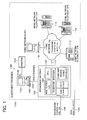
- Fig. 1 is a schematic block diagram of a present invention system for maintaining a universal call-log in a Home Network telephone system.
- the universal phonebook system (hereinafter, referred to as the system) 100 comprises a gateway (GW), or broadband gateway 102 having an input to transceive calls on external communication medium.
- the gateway 102 transceives calls on external communication medium that communicate call information in a first format that generally includes voice over broadband (VoBB) and legacy services.
- VoBB is defined herein to be voice over cable modem (VoCM), voice over Digital Subscriber Line (VoDSL), voice over Internet protocol (VoIP), fixed wireless access (FWA), or fibre to the home (FTTH), and voice over Asynchronous Transfer Mode (VoATM).
- the legacy services are the integrated service digital network (ISDN(Trademark)) and plain old telephone service (POTS).
- the external telephone line 104 is for POTS and ISDN (Trademark) service and external telephone line 106 is for VoBB.
- the present invention is not limited to any particular number of lines or specific telephone services.
- the gateway 102 acts as a communications bridge between the external telephone lines 104 and 106, and a Home Network port on line 110.
- Line 110 represents transmission medium such as wireless, convention telephone line, AC powerline, and dedicated hardline connections.
- the Home Network transmission medium will be referred to hereafter as line 110.
- the system 100 permits a fallback to basic line-powered, legacy analog POTS operation.
- This support for "lifeline" telephony provides access to telephone service in the case of power failure, or broadband service failure.
- the gateway 102 integrates DSL as the broadband access, the POTS service can enter the gateway 102 via the same physical connector as the VoBB service in which case external telephone lines 104 and 106 are the same. Otherwise, an additional jack for incoming POTS is required (as shown). Likewise, an additional jack for ISDN (Trademark) services may be supported.
- the gateway 102 can implement an analog POTS client and voice over broadband clients. This allows the gateway 102 to answer an analog call or broadband network call, and bridge this to voice over Home Network (VoHN) service inside the home.
- VoHN Voice over Home Network
- the gateway 102 acts as a router/firewall between the broadband access connection to the Internet service provider (ISP) and Internet and in-home data devices on the Home Network.
- the Home Network technology is also capable of transmitting high-quality voice traffic.
- the system 100 uses protocol enhancement on top of the basic Home Network technology, which is referred to herein as VoHN protocol.
- VoHN protocol For example, the home phoneline network alliance (HomePNA) system uses Voice over HomePNA (VoHPNA) to support voice traffic.
- HomePNA home phoneline network alliance
- VoIP Voice over HomePNA
- the gateway 102 is able to bridge telephony between the external line telephone service on the access system (including VoBB, POTS, and ISDN (Trademark)) and the VoHN transport in the Home Network. This allows the endpoint communication devices, typically referred to as endpoints, to access the VoBB services to make and receive VoBB telephone calls, even though they do not implement a VoBB client directly.
- the access system including VoBB, POTS, and ISDN (Trademark)
- endpoints typically referred to as endpoints, to access the VoBB services to make and receive VoBB telephone calls, even though they do not implement a VoBB client directly.
- a universal call-log (UCL; hereinafter, referred 10 as a "call-cal” where appropriate) 108 logs the calls bridged between the gateway 102 and the endpoints 112-118 (the Home Network telephones CPE (Customer Premises Equipment) 112-116 and the Home Network PC 118) .
- the endpoint devices are telephones, but they can also be fax machines, multifunction peripherals (MFPs), video-telephones, or computers.
- MFPs multifunction peripherals
- wireless or hardwired devices regardless of their function, can be connected in the system 100 as endpoints. Although four endpoints are depicted, the present invention system 100 is not limited to any particular number of endpoints.
- the call-log typically resides in the gateway 102, however, it can also reside in an independent memory (not shown) in communication with the gateway 102.
- an endpoint for example endpoint 112
- the call-log 108 logs the outgoing calls initiated from the endpoint.
- the gateway 102 bridges an incoming call received on an external telephone line 104/106 addressed to an endpoint, for example endpoint 112
- the call-log 108 logs the incoming call. Calls initiated by one endpoint to another endpoint in the system 100 can also be logged.
- the call-log 108 is a universal call-log (UCL) that cross-references entries such as the call time, the call duration, the type of call, the external telephone line involved in the call, the telephone number from which an incoming call is received, the telephone number to which an outgoing call is addressed, the endpoint(s) to which an incoming call is addressed, and the endpoint initiating an outgoing call.
- the call-log 108 is typically an integral part of the gateway 102, forming a centralized universal call-log to maintain entries for each endpoint.
- the gateway 102 includes a nonvolatile memory and the call-log 108 resides in the gateway nonvolatile memory.
- the gateway 102 communicates call information on the external telephone line 104/106 in a first format, converts between the first format and a digital Home Network format, establishes traffic channels to communicate information to the endpoints in the Home Network format, and establishes a control channel for managing the universal call-log.
- the gateway receives calling line ID (CLID) information on the external telephone lines 104/106 to identify the telephone number of calling parties. Then, the call-log 108 logs the telephone numbers of calling parties in response to the gateway receiving the calling line ID information.
- the gateway 102 has a record of the dialed numbers for every outgoing call that is made, since the gateway receives the external dialed digits from the calling endpoint as part of the process of establishing an outgoing call.
- the endpoints 112-118 communicate with the gateway 102 to access the universal call-log 108.
- the call-log 108 cross-references call-log entries to endpoint actions such as answering a call addressed to an endpoint, not answering (missing) a call addressed to an endpoint, and dialing a call from an endpoint.
- the gateway 102 attempts to bridge an incoming call received on an external telephone line 104/106 by ringing the addressed endpoint, for example endpoint 112.
- the call-log cross-references call-log entries to the addressed endpoint, for example endpoint 112.
- the call-log 108 cross-references the related call-log entry to the addressed endpoint that answered the call, in this case the endpoint 112, and indicated the call type as "Answered".
- the call-log 108 cross-references the related call-log entry to the addressed endpoint, in this case endpoint 112, indicating the call type as "Missed” or "Not Answered".
- the gateway 102 attempts to bridge an incoming call received on an external telephone line 104/106 by ringing a plurality of endpoints, such as a first and second endpoint.
- the first and second endpoints can be two extension phones 112 and 114 addressed by the same telephone number.
- the first endpoint 112 answers the call in response to the gateway ringing, but the second endpoint 114 does not answer the call.
- the call-log 108 cross-references call-log entries to the first endpoint 112 answering the call and the second endpoint 114 not answering the call.
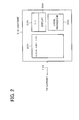
- Fig. 2 is a schematic block diagram of the endpoint 112 from Fig. 1 in greater detail.
- the (first) endpoint 112 is representative of the other endpoints 114-118 in the system.
- the endpoint includes a local call-log 200 that can be used in the event that the universal call-log (108, see Fig. 1) cannot be accessed via line 110. Alternately, the user may be permitted to manually select between the universal call-log and the local call-log, even at times when the universal call-log is available.
- the system 100 further comprises an input/output (I/O) device 140 having a port connected to the gateway 102 on line 142 for accessing and downloading (a copy of) the universal call-log 108, or portions of the call-log 108.
- the I/O device 140 can be a personal computer (PC) or a web browser to interface with a gateway web server.
- the connection to gateway can be a USB (Universal Serial Bus), parallel port, or Ethernet (Trademark) connection, to name a few possibilities.
- the I/O device can be a computer endpoint, such as endpoint 118. which accesses the universal call-log in the gateway via a port on the Home Network 110.
- An I/O device interface such as a display 144 or a printer 146, has a port connected to the I/O device 140 for displaying the downloaded call-log.
- the I/O device 140 has a user interface to accept user commands.
- the interface can be a keyboard 148 or an application to process audio commands, to name a couple of examples.
- the I/O device 140 supplies the user commands in communications with call-log 108.
- the call-log 108 accepts the user commands from the I O device 140 and displays or edits entries in the universal call-log 108 in response to the user commands.
- the editing of the UCL involves deleting or resetting entries, although it would also be possible to modify existing entries in the call-log.
- the I/O device 140 has a memory (not shown) for saving a copy of the downloaded call-log.
- the I/O device 140 supplies user commands to query the size of the call-log 108, and the call-log 108 supplies a call-log size to the I/O device 140 in response to the query.
- the call-log size can be measured as the number of entries in the call-log or the total number of bytes residing in the call-log (the number of bytes in the call-log entries).
- the I/O device 140 includes a statistics application (not shown).
- the I/O device 140 uses the statistics application to analyze the downloaded universal call-log.
- the call-log entries can be analyzed to create statistical summaries for the total number of calls, the average call length, and rankings by call length, to name but a few possible examples.
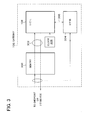
- Fig. 3 is a schematic block diagram illustrating the sentry feature of the system.
- the gateway 102 further includes a sentry circuit 300 having a port connected to the call-log on line 302.
- the sentry circuit 300 establishes a call-log security protocol to enable access the universal call-log 108.
- the sentry circuit 300 blocks access to the universal call-log 108 until the security protocol is passed.
- the security protocol could require a communication endpoint or I/O device to submit a password, or some other indicator that access should be permitted.
- the sentry circuit 300 can be a hardware block, but is more likely to be enabled as a software application.
- the gateway 102 further includes a phonebook, or universal phonebook (UPB) 304 having a port on line 306 to supply descriptors cross-referenced to external telephone line telephone numbers.
- the call-log 108 accesses the phonebook 304 and identifies universal call-log entries using descriptors from the phonebook 104. Using the phonebook entries, the call-log 108 can identify endpoint entries in the call-log with a descriptor, such as a full name, a nickname, a location, or a purpose (for example. "work" phone).
- the phonebook is also accessible from the endpoints and the input/output (I/O) device connected to the gateway 102. In some aspects of the system not shown in Fig. 5, the endpoints and/or I/O device must access the UP3 via the sentry 300.
- each endpoint also includes a local phonebook 202 that cross-references descriptors to external telephone line telephone numbers. Both the local phonebook 202 and the local call-log 200 are accessible to the host endpoint in the event that the endpoint cannot access the universal phonebook or universal call-log in the gateway, or if the user manually selects to use either the local call-log or local phonebook.
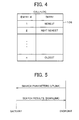
- Fig. 4 is a diagram illustrating a call-log 108 with a predetermined number of possible entries.
- the call-log 108 can be formed with a predetermined fixed number of entries.
- the data in an entry can include the time a call was initiated (or received), the call type, the call duration, the telephone number initiating (or receiving) the call, or the endpoint receiving (or initiating) the call.
- the fixed number is equal to n.
- the call-log 108 overwrites the older entries with newer entries when the call-log 108 entries exceed the fixed number n. For example, the next-to-oldest entry overwrites the oldest entry.
- the number n is so large that the older entries in the call-log will never realistically be overwritten. In other aspects, the number n increases to match to total number of entries.
- the gateway further includes a clock 308 for referencing a predetermined time threshold. Then, the call-log 108 discards entries in the universal call-log older than the time threshold. For example, if the threshold is set to 10- days, all entries in the call-log 108 older than 30-days are discarded.
- Fig. 5 is a diagram illustrating control channel communications between the gateway and an endpoint.
- the gateway establishes an out-of-band control channel between the gateway and each endpoint to which a call is bridged.
- the endpoint accesses the universal call-log by communicating an uplink out-of-band message to the gateway specifying universal call-log search parameters.
- the gateway communicates a downlink out-of-band message to the endpoint returning the results of the universal call-log search.
- the endpoint communicates an uplink out-of- band message to the gateway specifying universal call-log entry parameters.
- the entry can be calls made to the first endpoint or calls originated by the second endpoint.
- the gateway communicates a downlink out-of-band message to the endpoint that returns at least one call-log entry cross-referenced to the selected search parameter, unless there are no entries in the call-log or no entries that match the search criteria. For example, in response to the query, "list calls addressed to the first endpoint?". the response might be the entry "4". Of course, additional associated entries can be returned with the number 4, such as the time of day the calls were received, the date of the calls, or the length of the calls, to name but a few possible entries.
- an endpoint When an endpoint transmits an out-of-band message to the gateway requesting universal call-log (UCL) entries. information is also sent related to the endpoint's memory capacity, and the gateway returns a list of entries constrained it fit in the endpoint's memory capacity. That is, the returned list is tailored to "fit" in the endpoint's memory.
- the endpoint may communicate memory capacity information, prior to a request to access the UCL. using a separate out-of-band message.
- the user can enter the name or the telephone number for an entry they are seeking, using the alphabetic entry capabilities of the numeric keypad on the endpoint.
- the user can enter the whole name. only the first few characters, or a subset of the name related to the sought telephone number.
- a user can search for calls involving "Dave Smith" by only entering "Smi”.
- the endpoint communications device determines that enough characters have been entered (the device can be set to automatically send the string after 3 or 4 characters are entered, to speed the process)
- the device sends an out-of-band message to the gateway requesting a search of the universal call-log.
- the search string and the maximum number of entries (“Max”) to retrieve are returned.
- the parameter "Max" is needed to avoid the endpoint communications device memory capacity limitations.
- the gateway searches the database to find all the entries that match.
- the gateway searches in an intelligent way that allows Dave Smith's number to be located even if it were stored as "Smith, Dave", or "Dave Smith", or any other logical combination.
- the GW returns the found entry in another out-of-band message to the endpoint. This message shows the number of matches and lists then.
- the GW finds more matching entries than the endpoint can accept, it will not be able to return all of the matching entries. In such a case, the GW can select which of the entries to return in some arbitrary manner, and may also indicate to the endpoint that more entries exist than could be returned. This information may be indicated to the user on the display of the endpoint so that they are not surprised if an expected entry is not found. In such a case, the user would need to re-enter their search with more specific search string, or resort to scrolling the UCL.
- the retrieved entries are displayed to the user at the endpoint.
- the user can easily scroll through the retrieved list and select the desired entry.
- the first endpoint communications device transmits one entry character per out-of-band message and the gateway refines the full descriptor search results in response to the number of characters in the search parameter. For example, in response to entering the character "5", the gateway returns entries beginning with "5", in response to entering the second character "m”, the gateway returns names beginning with "Sm'. ", in response to entering the third character i", the gateway returns names beginning with "Smi”.
- the user may open the UCL for remote scrolling.
- the user simply opens the UCL from an endpoint for scrolling, and manually scrolls through the entire list in alphabetic or numeric order, until the user reaches the desired entry.
- the gateway transfers portions of the UCL to the endpoint in one or more out-of-band signaling messages for display on the user interface of the endpoint device.
- the scrolling mechanism operates as follows:
- Steps 1-7 can be used to retrieve and present call-log entries in alphabetical order of the called or calling party.
- a call-log will typically store entries such as "Date/Time”, “Phone number”, “call type”, and "call duration”. Table 1 exemplifies one possible list of entries in a call-log.
- Call Type typically indicates one of three options: 1) dialed (originating) calls; 2) answered calls; 3) missed calls. Date/Time Number External Call Type Line Used Duration 08/12/01 23:15:03 3607778987 Office(VoBB) Dialed 11:21 08/13/01 08:12:03 5672337233 Office(VoBB) Missed 0 08/13/01 09:45:53 8008887463 Personal Answered (POTS) 5:03
- Table 2 illustrates another exemplary call-log.
- the universal call-log stores "Time”, “Number”, “Endpoint”, “Call type”, “Duration”.
- Endpoint simply indicates all the endpoints that are involved with the call. Typically, only one endpoint is involved in a dialed call, but more than one can be involved in an incoming or answered call. Duration" indicates the length of the call, if applicable.
- Each entry in the log has a Date/Time stamp, the dialed number (which can readily be used to get an associated name, from the UPB), the endpoints that were involved, the external lines used, the type of call, and the call duration. If an answered call involved more than one endpoint, the table indicates which endpoint actually answered the call, for example by listing this endpoint first in the list of-associated endpoints.
- This list is created entirely automatically, without direct user intervention.
- a user can view and print the list. They can also delete the list or copy any number from it to the phonebook, where they will have to add a meaningful descriptor to be associated with the number, using the PC keyboard. This can be done by basic cut and paste, or done in a more automatic way, for example clicking the number initiates an "add-to- phonebook" process.
- the user can view the entire list by time, number, name, call-type or involved endpoints.
- the interface will display the ASCII name for each number, by cross-referencing numbers to descriptors in the phonebook. They can also choose to look only at portions of the call-log filtered by some user selected criteria. For example, the user can choose to display only calls that were missed, or only calls made by endpoint 1, or only calls that used the external POTS line, etc.
- the browser interface also provides some statistical summary data for the call log, including figures such as: total calls; average call length: longest call: etc.
- the user can configure the management of the call list operate as either: 1) entries older than a threshold are discarded; 2) the list size is fixed (size specified by user) and new entries overwrite old entries once the list is full.
- the user can turn on/off criteria that control the logging process. For example, the logging process of outgoing calls can be turned off. As another example, the logging of calls made on a particular external line can be turned off.
- Communications between the I/O device and the gateway are conducted in a manner equivalent to the communications between the gateway and an endpoint mentioned above in the description of Fig. 5.
- the details of using an I/O device to submit a search parameter to access the call-log are essentially the same as accessing the call-log from an endpoint.
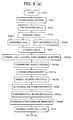
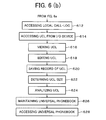
- Figs. 6a and 6b are flowcharts illustrating the present invention method for maintaining a universal call-log in a Home Network telephone system. Although the method is depicted as a sequence of numbered steps for clarity, no order should be inferred from the numbering unless explicitly stated. It should be understood that some of these steps may be skipped, performed in parallel, or performed without the requirement of maintaining a strict order of sequence.
- the method starts at Step 600.
- Step 602 transceives calls on at least one external telephone line.
- Step 604 bridges calls to a plurality of Home Network endpoints.
- Step 606 logs the bridged calls.
- Step 608 accesses the universal call-log from any of the plurality of endpoints.
- Bridging calls to a plurality of Home Network endpoints in Step 604 includes initiating an outgoing call from an endpoint. Then, logging the bridged calls in Step 606 includes logging outgoing calls initiated from endpoints, likewise, bridging calls to a plurality of Home Network endpoints in Step 604 includes bridging incoming calls received on an external telephone line addressed to an endpoint. Then, logging the bridged calls in Step 606 includes logging incoming calls received on the external telephone lines addressed to the endpoints. In some aspects, calls between endpoints are logged.
- logging the bridged calls includes forming a universal call-log that cross-references entries such as the call time, the call duration, the type of call, the external telephone line involved, the external telephone number from which an incoming call is received, the external telephone line telephone number to which an outgoing call is addressed, the endpoint(s) to which an incoming call is addressed, and the endpoint initiating an outgoing call.
- the method comprises the further step, Step 601, of establishing a gateway.
- transceiving calls on at least one external telephone line in Step 602 includes using the gateway for communicating call information on the external telephone line in a first format and converging between the first format and a digital Home Network format.
- Bridging calls to the plurality of Home Network endpoints includes using the gateway for establishing traffic channels to communicate information to the endpoints in the Home Network format and for establishing a control channel to manage the universal call-log.
- Establishing a control channel for communications with the universal call-log in Step 602 includes establishing an out-of-band control channel between the gateway and each endpoint to which a call is bridged.
- Accessing the universal call-log (UCL) from any of the plurality of endpoints in Step 608 includes substeps.
- Step 608a communicates an uplink out-of-band message from an endpoint to the gateway specifying universal call-log search parameters.
- Step 608b communicates a downlink out-of-band message from the gateway to the endpoint returning the results of the universal call-log search.
- communicating a downlink out-of-band message from the gateway to the endpoint in Step 608b includes returning at least one call-log entry cross-referenced to the selected search parameter, if an entry is available that matches the search parameter.
- communicating uplink and downlink messages in Steps 608a and 608b, respectively includes iteratively exchanging uplink and downlink out-of-band messages to refine the search. These steps also include using a display and an endpoint local interface to scroll through the cross-referenced entries in response to iterative communications between the endpoint and the gateway.
- communicating an out-of-band message in Step 608a, from an endpoint to the gateway, with a search parameter includes communicating a search parameter fragment. Then, communicating an out-of-band message in Step 608b, from the gateway to the endpoint, includes returning universal call-log entries containing the search parameter fragment.
- logging the bridged calls in Step 606 includes using the gateway to form a centralized universal call-log to maintain entries for each endpoint.
- the universal call-log is formed in nonvolatile gateway memory.
- transceiving calls on the at least one external telephone line in Step 602 includes receiving calling line ID (CLID) information to identify the telephone number of calling parties.
- logging the bridged calls in Step 606 includes logging the telephone numbers of calling parties in response to receiving the calling line ID information.
- CLID calling line ID
- forming a universal call-log in Step 606 includes logging the type of call from endpoint actions selected from the group including "missed”, “answered”, and "dialed” calls.
- bridging incoming calls in Step 604, received on an external telephone line addressed to an endpoint includes ringing a plurality of endpoints including a first endpoint and a second endpoint.
- Step 605a the call is answered at the first endpoint.
- Step 605b the call is not answered at the second endpoint.
- forming a call-log in Step 606 further includes making an "answered call" entry for the first endpoint and "missed call" entry for the second endpoint.
- Step 610 forms a local call-log at each endpoint.
- Step 612 accesses the local call-log in response to manual selection by the user or the inaccessibility of the universal call-log.
- Step 614 accesses the universal call-log from an input/output (I/O) device connected to the gateway.
- Step 616 views the universal call-log using an I/O device interface such as a display or a printer.
- Step 618 uses the I/O device to edit entries in the universal call-log.
- Step 620 saves a record of the universal call-log at the I/O device.
- Step 622 uses the I/O device to determine the size of the call-log, where the size is a measurement of the number of entries or the number of bytes.
- Step 624 on response to accessing the universal call-log, analyzes the call-log entries to create statistical summaries such as the total number of calls, the average call length, and rankings by call length.
- Step 626 maintains a phonebook cross-referencing descriptors to external telephone line telephone numbers.
- Step 628 accesses the phonebook.
- Step 630 identifies universal call-log entries using descriptors from the phonebook.
- Step 632 identifies entries in the call-log representing endpoints with a descriptor.
- accessing the phonebook in Step 628 includes accessing the phonebook from a source such as an endpoint or an input/output (I/O) device connected to the gateway.
- maintaining a phonebook cross-referencing descriptors to external telephene line telephone numbers in Step 626 includes maintaining a phonebook at a destination such as a universal phonebook stored at the gateway or a local phonebooks stored at each corresponding endpoint.
- Step 607a establishes a call-log security protocol to enable access the universal call-log.
- Step 607b prior to accessing to the universal call-log, passes the security protocol.
- logging the bridged calls in Step 606 includes substeps.
- Step 606a forms a universal call-log with a predetermined fixed number of entries.
- Step 606b overwrites older entries with a newer entry when the call-log entries exceed the fixed number.
- logging the bridged calls includes other substeps.
- Step 606c forms a predetermined time threshold.
- Step 606d discards entries in the universal call-log having an age greater than the time threshold.
- a system and method for managing a call-log in a Home Network telephone system has been provided.
- This invention applies to telephones as well as all other possible communications devices with similar, Home Network architecture, such as a fax, modem, or video telephone.
- HomePNA home Packet Access
- Another implementation of the present invention not discussed above could simply store the call-log separately for each endpoint, rather than implementing a universal call-log. However, this approach would not use memory as efficiently.
- Specific examples have been given as to call-log entry fields and as to how the call-log can be organized. However, many other entry fields and organizations could be equally well described by the invention. Other variations and embodiments of the invention will occur to those skilled in the art.
Landscapes
- Engineering & Computer Science (AREA)
- Signal Processing (AREA)
- Computer Networks & Wireless Communication (AREA)
- Telephonic Communication Services (AREA)
- Sub-Exchange Stations And Push- Button Telephones (AREA)
- Telephone Function (AREA)
Applications Claiming Priority (2)
| Application Number | Priority Date | Filing Date | Title |
|---|---|---|---|
| US10/112,909 US6882714B2 (en) | 2002-03-27 | 2002-03-27 | Universal call-log system and method for a home network telephone |
| US112909 | 2002-03-27 |
Publications (3)
| Publication Number | Publication Date |
|---|---|
| EP1361731A2 true EP1361731A2 (de) | 2003-11-12 |
| EP1361731A3 EP1361731A3 (de) | 2005-06-08 |
| EP1361731B1 EP1361731B1 (de) | 2009-05-27 |
Family
ID=28453456
Family Applications (1)
| Application Number | Title | Priority Date | Filing Date |
|---|---|---|---|
| EP03251917A Expired - Lifetime EP1361731B1 (de) | 2002-03-27 | 2003-03-27 | Universelles System und Verfahren zur Speicherung von anrufbezogenen Daten für ein Heimtelefonnetz |
Country Status (4)
| Country | Link |
|---|---|
| US (2) | US6882714B2 (de) |
| EP (1) | EP1361731B1 (de) |
| JP (1) | JP2003289399A (de) |
| DE (1) | DE60327726D1 (de) |
Cited By (4)
| Publication number | Priority date | Publication date | Assignee | Title |
|---|---|---|---|---|
| WO2006116916A1 (en) | 2005-04-30 | 2006-11-09 | Huawei Technologies Co., Ltd. | A method for managing a home network and a home network management system |
| EP2144398A1 (de) * | 2008-07-09 | 2010-01-13 | General Instrument Corporation | Verfahren und Vorrichtung zur Überwachung und Protokollierung von Kommunikationssitzungen in einem Heimnetzwerk |
| GB2480552A (en) * | 2010-05-19 | 2011-11-23 | Avaya Inc | Providing call disposition information for outgoing calls |
| WO2018060187A1 (en) * | 2016-09-28 | 2018-04-05 | Thomson Licensing | Method and apparatus for building favorite telephone list for multiple devices |
Families Citing this family (84)
| Publication number | Priority date | Publication date | Assignee | Title |
|---|---|---|---|---|
| US6480510B1 (en) | 1998-07-28 | 2002-11-12 | Serconet Ltd. | Local area network of serial intelligent cells |
| US6549616B1 (en) | 2000-03-20 | 2003-04-15 | Serconet Ltd. | Telephone outlet for implementing a local area network over telephone lines and a local area network using such outlets |
| IL135744A (en) | 2000-04-18 | 2008-08-07 | Mosaid Technologies Inc | Telephone communication system over a single telephone line |
| US8467502B2 (en) | 2001-02-27 | 2013-06-18 | Verizon Data Services Llc | Interactive assistant for managing telephone communications |
| US8774380B2 (en) | 2001-02-27 | 2014-07-08 | Verizon Patent And Licensing Inc. | Methods and systems for call management with user intervention |
| US8873730B2 (en) * | 2001-02-27 | 2014-10-28 | Verizon Patent And Licensing Inc. | Method and apparatus for calendared communications flow control |
| US6976017B1 (en) | 2001-02-27 | 2005-12-13 | Verizon Data Services Inc. | Method and apparatus for context based querying |
| US8472428B2 (en) * | 2001-02-27 | 2013-06-25 | Verizon Data Services Llc | Methods and systems for line management |
| US8750482B2 (en) * | 2001-02-27 | 2014-06-10 | Verizon Data Services Llc | Methods and systems for preemptive rejection of calls |
| US8503639B2 (en) * | 2001-02-27 | 2013-08-06 | Verizon Data Services Llc | Method and apparatus for adaptive message and call notification |
| US7903796B1 (en) | 2001-02-27 | 2011-03-08 | Verizon Data Services Llc | Method and apparatus for unified communication management via instant messaging |
| US8503650B2 (en) * | 2001-02-27 | 2013-08-06 | Verizon Data Services Llc | Methods and systems for configuring and providing conference calls |
| US8488761B2 (en) * | 2001-02-27 | 2013-07-16 | Verizon Data Services Llc | Methods and systems for a call log |
| US8798251B2 (en) | 2001-02-27 | 2014-08-05 | Verizon Data Services Llc | Methods and systems for computer enhanced conference calling |
| US8472606B2 (en) * | 2001-02-27 | 2013-06-25 | Verizon Data Services Llc | Methods and systems for directory information lookup |
| US8751571B2 (en) * | 2001-02-27 | 2014-06-10 | Verizon Data Services Llc | Methods and systems for CPN triggered collaboration |
| US8761363B2 (en) | 2001-02-27 | 2014-06-24 | Verizon Data Services Llc | Methods and systems for automatic forwarding of communications to a preferred device |
| US8488766B2 (en) | 2001-02-27 | 2013-07-16 | Verizon Data Services Llc | Methods and systems for multiuser selective notification |
| US7912193B2 (en) | 2001-02-27 | 2011-03-22 | Verizon Data Services Llc | Methods and systems for call management with user intervention |
| US8494135B2 (en) | 2001-02-27 | 2013-07-23 | Verizon Data Services Llc | Methods and systems for contact management |
| US7418090B2 (en) | 2002-11-25 | 2008-08-26 | Telesector Resources Group Inc. | Methods and systems for conference call buffering |
| IL144158A (en) | 2001-07-05 | 2011-06-30 | Mosaid Technologies Inc | Socket for connecting an analog telephone to a digital communications network that carries digital voice signals |
| US20030041030A1 (en) * | 2001-08-14 | 2003-02-27 | Carl Mansfield | System and method for a home network telephone universal phonebook |
| US6750897B1 (en) | 2001-08-16 | 2004-06-15 | Verizon Data Services Inc. | Systems and methods for implementing internet video conferencing using standard phone calls |
| IL161190A0 (en) | 2001-10-11 | 2004-08-31 | Serconet Ltd | Outlet with analog signal adapter, method for use thereof and a network using said outlet |
| US6882714B2 (en) * | 2002-03-27 | 2005-04-19 | Sharp Laboratories Of America, Inc. | Universal call-log system and method for a home network telephone |
| US9392120B2 (en) | 2002-02-27 | 2016-07-12 | Verizon Patent And Licensing Inc. | Methods and systems for call management with user intervention |
| JP4117160B2 (ja) * | 2002-07-17 | 2008-07-16 | Necインフロンティア株式会社 | 内部情報共有システム、呼接続制御サーバ、ワイヤレスlan電話端末装置及びそれらの内部情報共有方法 |
| US7088805B1 (en) * | 2002-09-24 | 2006-08-08 | Bellsouth Intellectual Property Corporation | Method for polling a call log |
| US7606156B2 (en) * | 2003-10-14 | 2009-10-20 | Delangis Eric M | Residential communications gateway (RCG) for broadband communications over a plurality of standard POTS lines, with dynamic allocation of said bandwidth, that requires no additional equipment or modifications to the associated class 5 offices or the PSTN at large |
| US7346071B2 (en) * | 2003-01-13 | 2008-03-18 | Bareis Bernard F | Broadband multi-drop local network, interface and method for multimedia access |
| US7194249B2 (en) | 2003-01-31 | 2007-03-20 | Qwest Communications International Inc. | Methods, systems and apparatus for providing urgent public information |
| US7240361B2 (en) | 2003-01-31 | 2007-07-03 | Qwest Communications International Inc. | Systems and methods for controlled transmittance in a telecommunication system |
| US8537814B2 (en) * | 2003-01-31 | 2013-09-17 | Qwest Communications International Inc. | Configurable network interface device and systems and methods for its use |
| US8713617B2 (en) * | 2003-01-31 | 2014-04-29 | Qwest Communications International Inc. | Systems and methods for providing television signals using a network interface device |
| US7454006B2 (en) * | 2003-01-31 | 2008-11-18 | Qwest Communications International Inc. | Systems, methods and apparatus for providing a plurality of telecommunication services |
| US8490129B2 (en) | 2003-01-31 | 2013-07-16 | Qwest Communications International Inc. | Methods, systems and apparatus for selectively distributing urgent public information |
| US10142023B2 (en) | 2003-01-31 | 2018-11-27 | Centurylink Intellectual Property Llc | Antenna system and methods for wireless optical network termination |
| US7180988B2 (en) * | 2003-01-31 | 2007-02-20 | Qwest Communications International Inc. | Packet network interface device and systems and methods for its use |
| US7921443B2 (en) | 2003-01-31 | 2011-04-05 | Qwest Communications International, Inc. | Systems and methods for providing video and data services to a customer premises |
| US20040150750A1 (en) * | 2003-01-31 | 2004-08-05 | Qwest Communications International Inc. | Systems and methods for monitoring visual information |
| IL154921A (en) | 2003-03-13 | 2011-02-28 | Mosaid Technologies Inc | A telephone system that includes many separate sources and accessories for it |
| US7711106B2 (en) * | 2003-06-30 | 2010-05-04 | Comverse, Ltd. | Telephone based method and system for adding contacts to a personal network address book |
| US7656860B2 (en) * | 2003-07-22 | 2010-02-02 | Phillips Bruce A | Personal communication service network interface device |
| US8112449B2 (en) | 2003-08-01 | 2012-02-07 | Qwest Communications International Inc. | Systems and methods for implementing a content object access point |
| WO2005027485A1 (en) * | 2003-09-12 | 2005-03-24 | Nokia Corporation | Method and device for handling missed calls in a mobile communications environment |
| IL159838A0 (en) | 2004-01-13 | 2004-06-20 | Yehuda Binder | Information device |
| WO2005096583A2 (en) * | 2004-04-01 | 2005-10-13 | Matsushita Electric Industrial Co., Ltd. | Packet relay apparatus with qos switch (on/off) |
| US20050239445A1 (en) * | 2004-04-16 | 2005-10-27 | Jeyhan Karaoguz | Method and system for providing registration, authentication and access via broadband access gateway |
| US7536177B2 (en) * | 2004-04-16 | 2009-05-19 | Broadcom Corporation | Enhanced caller ID information based on access device information via a broadband access gateway |
| EP1587290B1 (de) * | 2004-04-16 | 2013-07-10 | Broadcom Corporation | Automatische Formatumwandlung über einen Zugangsgateway in einer Wohnung |
| US8463872B2 (en) * | 2004-07-02 | 2013-06-11 | Broadsoft Casabi, Llc | Method and apparatus for a family center |
| ES2499265T3 (es) * | 2004-07-02 | 2014-09-29 | Broadsoft, Inc. | Procedimiento y aparato para teléfono sin hilos y otros servicios de telecomunicaciones |
| US20070294336A1 (en) * | 2004-07-02 | 2007-12-20 | Greg Pounds | Proxy-based communications architecture |
| KR100621748B1 (ko) * | 2004-07-06 | 2006-09-19 | 주식회사 팬택 | 이동 통신 단말기의 발신 전화 번호 저장 방법 |
| US7280652B2 (en) | 2004-09-13 | 2007-10-09 | Research In Motion Limited | Handheld electronic device having improved phone call log, and associated method |
| US20060100980A1 (en) * | 2004-10-27 | 2006-05-11 | Bellsouth Intellectual Property Corporation | Methods and systems for delivering yellow pages content to a media delivery device |
| US7873058B2 (en) | 2004-11-08 | 2011-01-18 | Mosaid Technologies Incorporated | Outlet with analog signal adapter, a method for use thereof and a network using said outlet |
| EP1662764A1 (de) * | 2004-11-30 | 2006-05-31 | Alcatel | Zusammengelegtes Anrufsprotokoll |
| US20060187915A1 (en) * | 2005-02-18 | 2006-08-24 | Rami Caspi | Method and apparatus for updating a wireless telephone |
| US7580513B2 (en) | 2005-03-22 | 2009-08-25 | At&T Intellectual Property I, L.P. | Telephone call log email |
| US20060227956A1 (en) * | 2005-03-30 | 2006-10-12 | Sbc Knowledge Ventures, L.P. | System and method for providing a missed calls log in a messaging service |
| DE102006018549B4 (de) * | 2005-04-22 | 2010-06-17 | Logitech Europe S.A. | Fernbedienung mit virtuellem Speicher |
| US8654943B2 (en) * | 2006-04-14 | 2014-02-18 | At&T Intellectual Property I, L.P. | System and method of enhanced caller-ID display using a personal address book |
| WO2009046169A1 (en) * | 2007-10-02 | 2009-04-09 | Ascendent Telecommunications, Inc. | Method, apparatus and system for intelligent call routing |
| US20100046731A1 (en) * | 2007-10-02 | 2010-02-25 | Douglas Gisby | Method, apparatus and system for use of presence and location information in intelligent call routing |
| JP4623109B2 (ja) * | 2008-02-28 | 2011-02-02 | ブラザー工業株式会社 | 電話装置 |
| US8537992B2 (en) | 2008-03-26 | 2013-09-17 | At&T Intellectual Property I, L.P. | System and method for recording communication activities |
| JP5256883B2 (ja) * | 2008-06-26 | 2013-08-07 | 富士通モバイルコミュニケーションズ株式会社 | 通信機器 |
| KR20100061254A (ko) * | 2008-11-28 | 2010-06-07 | 삼성전자주식회사 | 통신 이력 제공 방법 |
| US8869290B2 (en) * | 2010-06-04 | 2014-10-21 | Broadcom Corporation | Method and system for secure content distribution by a broadband gateway |
| US8943437B2 (en) * | 2009-06-15 | 2015-01-27 | Nuance Communications, Inc. | Disambiguation of USSD codes in text-based applications |
| US9191498B2 (en) * | 2010-04-29 | 2015-11-17 | Telefonaktiebolaget L M Ericsson (Publ) | Method and apparatus for handling anonymous calls |
| US9697051B2 (en) * | 2011-06-27 | 2017-07-04 | Nokia Technologies Oy | Method and apparatus for providing services via cloud-based analytics |
| US9380480B2 (en) | 2011-08-25 | 2016-06-28 | Kyocera Corporation | Minimization drive test with reduced wireless device memory usage |
| US8798248B2 (en) | 2011-12-09 | 2014-08-05 | Avaya Inc. | Intelligent call log and schedule integration |
| US9462092B2 (en) | 2012-04-19 | 2016-10-04 | Mark P. Taylor | Smarter business thinking mobile device |
| US9392641B2 (en) | 2012-07-05 | 2016-07-12 | Centurylink Intellectual Property Llc | Multi-service provider wireless access point |
| US9497800B2 (en) | 2012-07-05 | 2016-11-15 | Centurylink Intellectual Property Llc | Multi-service provider wireless access point |
| US9763079B2 (en) * | 2014-07-24 | 2017-09-12 | Vonage Business Inc. | System and method for communication history reconciliation amongst linked devices |
| WO2016060706A1 (en) * | 2014-10-14 | 2016-04-21 | CallFire, Inc. | Method and system for generating digital events for analog phone systems |
| US9665585B2 (en) * | 2015-01-23 | 2017-05-30 | International Business Machines Corporation | Preserving high value entries in an event log |
| US10320971B2 (en) * | 2015-12-15 | 2019-06-11 | Avaya Inc. | Call log management for multiple communication devices using the same address of record |
| US11228676B1 (en) | 2020-11-04 | 2022-01-18 | The Fifth Lab Inc. | System and method for providing telephone event data |
Family Cites Families (19)
| Publication number | Priority date | Publication date | Assignee | Title |
|---|---|---|---|---|
| US5023868A (en) * | 1988-12-29 | 1991-06-11 | At&T Bell Laboratories | Automated call handling apparatus |
| US5396548A (en) * | 1993-03-08 | 1995-03-07 | At&T Corp. | Communication system utilizing information received during a silent interval between ringing signals |
| WO1997028631A1 (en) * | 1996-02-01 | 1997-08-07 | Northern Telecom Limited | Telecommunications functions management system |
| US5838777A (en) * | 1997-02-28 | 1998-11-17 | Inventec Corporation | Apparatus for auto-detecting dialing of a parallel communication device |
| US6308062B1 (en) * | 1997-03-06 | 2001-10-23 | Ericsson Business Networks Ab | Wireless telephony system enabling access to PC based functionalities |
| US6134308A (en) * | 1998-06-05 | 2000-10-17 | Lucent Technologies Inc. | Caller ID logging: entry storage on a per line basis |
| US6324270B1 (en) * | 1998-07-13 | 2001-11-27 | Qwest Communications Int'l., Inc. | System for coordination of electronic devices |
| CA2278972A1 (en) * | 1998-08-31 | 2000-02-29 | Syed S. Ali | Telephone status information for customer premises equipment |
| US6683939B1 (en) * | 1999-04-20 | 2004-01-27 | Microsoft Corporation | Method and apparatus for logging DTMF phone symbols dialed from an extension |
| EP1281264B1 (de) * | 2000-05-08 | 2012-12-12 | Broadcom Corporation | System und verfahren zur unterstützung von mehreren sprachkanälen |
| US6920615B1 (en) * | 2000-11-29 | 2005-07-19 | Verizon Corporate Services Group Inc. | Method and system for service-enablement gateway and its service portal |
| US6665388B2 (en) * | 2000-12-20 | 2003-12-16 | Bellsouth Intellectual Property Corporation | System and method for monitoring incoming communications to a telecommunications device |
| US6693996B2 (en) * | 2001-08-14 | 2004-02-17 | Sharp Laboratories Of America, Inc. | System and method for data backup in a home network telephone |
| US7023975B2 (en) * | 2001-08-14 | 2006-04-04 | Sharp Laboratories Of America, Inc. | Privacy mode system and method for home network telephone |
| US7142560B2 (en) * | 2001-08-14 | 2006-11-28 | Sharp Laboratories Of America, Inc. | System and method for virtual multiline telephony in a home-network telephone |
| US20030041030A1 (en) * | 2001-08-14 | 2003-02-27 | Carl Mansfield | System and method for a home network telephone universal phonebook |
| US7162013B2 (en) * | 2002-01-31 | 2007-01-09 | Sharp Laboratories Of America, Inc. | Home network telephone answering system and method for same |
| US7085357B2 (en) * | 2002-01-31 | 2006-08-01 | Sharp Laboratories Of America, Inc. | System and method for external voice mail notification by a home network telephone answering device |
| US6882714B2 (en) * | 2002-03-27 | 2005-04-19 | Sharp Laboratories Of America, Inc. | Universal call-log system and method for a home network telephone |
-
2002
- 2002-03-27 US US10/112,909 patent/US6882714B2/en not_active Expired - Fee Related
-
2003
- 2003-02-19 JP JP2003041793A patent/JP2003289399A/ja not_active Withdrawn
- 2003-03-27 DE DE60327726T patent/DE60327726D1/de not_active Expired - Lifetime
- 2003-03-27 EP EP03251917A patent/EP1361731B1/de not_active Expired - Lifetime
-
2004
- 2004-12-20 US US11/019,139 patent/US7236579B2/en not_active Expired - Fee Related
Cited By (7)
| Publication number | Priority date | Publication date | Assignee | Title |
|---|---|---|---|---|
| WO2006116916A1 (en) | 2005-04-30 | 2006-11-09 | Huawei Technologies Co., Ltd. | A method for managing a home network and a home network management system |
| EP1879328A4 (de) * | 2005-04-30 | 2008-05-14 | Huawei Tech Co Ltd | Verfahren zum verwalten eines heimnetzwerkes und heimnetzwerk-verwaltungssystem |
| EP2144398A1 (de) * | 2008-07-09 | 2010-01-13 | General Instrument Corporation | Verfahren und Vorrichtung zur Überwachung und Protokollierung von Kommunikationssitzungen in einem Heimnetzwerk |
| GB2480552A (en) * | 2010-05-19 | 2011-11-23 | Avaya Inc | Providing call disposition information for outgoing calls |
| US9020122B2 (en) | 2010-05-19 | 2015-04-28 | Avaya Inc. | Method and apparatus for tagging outgoing telephony calls |
| GB2480552B (en) * | 2010-05-19 | 2018-01-31 | Avaya Inc | Method and apparatus for tagging outgoing telephony calls |
| WO2018060187A1 (en) * | 2016-09-28 | 2018-04-05 | Thomson Licensing | Method and apparatus for building favorite telephone list for multiple devices |
Also Published As
| Publication number | Publication date |
|---|---|
| US20030185365A1 (en) | 2003-10-02 |
| JP2003289399A (ja) | 2003-10-10 |
| EP1361731A3 (de) | 2005-06-08 |
| US20050141487A1 (en) | 2005-06-30 |
| EP1361731B1 (de) | 2009-05-27 |
| DE60327726D1 (de) | 2009-07-09 |
| US6882714B2 (en) | 2005-04-19 |
| US7236579B2 (en) | 2007-06-26 |
Similar Documents
| Publication | Publication Date | Title |
|---|---|---|
| US6882714B2 (en) | Universal call-log system and method for a home network telephone | |
| US20030041030A1 (en) | System and method for a home network telephone universal phonebook | |
| US6883023B1 (en) | Method apparatus and communications system for companion information and network appliances | |
| US7221748B1 (en) | Method for linking call log information to address book entries and replying using medium of choice | |
| US9112953B2 (en) | Internet telephony unit and software for enabling internet telephone access from traditional telephone interface | |
| AU719201C (en) | Methods of and apparatus for providing telephone call control and information | |
| US6278532B1 (en) | Apparatus and method for reception and transmission of information using different protocols | |
| EP1662764A1 (de) | Zusammengelegtes Anrufsprotokoll | |
| US20060239438A1 (en) | Tandem Access Controller Within the Public Switched Telephone Network | |
| EP2116033B1 (de) | Verfahren und vorrichtung zur ereignisbasierten synchronisation von daten zwischen kommunikationsgeräten | |
| US7536000B2 (en) | Communication method for real-time caller information broadcasting by integrating network with telephone switch | |
| US7088805B1 (en) | Method for polling a call log | |
| KR100966937B1 (ko) | 디렉토리 전달 시스템 및 디지털 가입자 라인 모뎀용 방법 | |
| US5774531A (en) | Telecommunications system and method for automatic call processing according foregoing inbound and outbound calls to arbitrary delegates | |
| CN1628451B (zh) | 在以集成方式支持语音和数据传输的局域网上处理电话通信的方法以及相关设备 | |
| US7624191B2 (en) | Transmission of call-related data in a communications system | |
| CN100550952C (zh) | 在呈现业务中实现普通电话点击拨号的方法及系统 | |
| JP3351380B2 (ja) | 電話通話とWebページ閲覧との連携による通信の方法及びそのシステム並びに情報記録媒体 | |
| US8391298B2 (en) | Phone directory in a voice over IP telephone system | |
| JPH05300206A (ja) | タッチパネル電話機 | |
| KR20030063063A (ko) | Ip-pbx를 이용한 전화 통화 경로 설정 방법 및 장치 | |
| KR200407251Y1 (ko) | 유선전화 관리 시스템 | |
| JP3828021B2 (ja) | データ転送方法ならびに装置 | |
| CN1167300C (zh) | 快速拨打电话号码装置及方法 | |
| JP2004118464A (ja) | データ通信装置 |
Legal Events
| Date | Code | Title | Description |
|---|---|---|---|
| PUAI | Public reference made under article 153(3) epc to a published international application that has entered the european phase |
Free format text: ORIGINAL CODE: 0009012 |
|
| AK | Designated contracting states |
Kind code of ref document: A2 Designated state(s): AT BE BG CH CY CZ DE DK EE ES FI FR GB GR HU IE IT LI LU MC NL PT RO SE SI SK TR |
|
| AX | Request for extension of the european patent |
Extension state: AL LT LV MK |
|
| PUAL | Search report despatched |
Free format text: ORIGINAL CODE: 0009013 |
|
| AK | Designated contracting states |
Kind code of ref document: A3 Designated state(s): AT BE BG CH CY CZ DE DK EE ES FI FR GB GR HU IE IT LI LU MC NL PT RO SE SI SK TR |
|
| AX | Request for extension of the european patent |
Extension state: AL LT LV MK |
|
| RIC1 | Information provided on ipc code assigned before grant |
Ipc: 7H 04M 1/56 A Ipc: 7H 04M 1/57 B Ipc: 7H 04M 1/725 B Ipc: 7H 04M 1/723 B Ipc: 7H 04M 15/06 B |
|
| 17P | Request for examination filed |
Effective date: 20050824 |
|
| AKX | Designation fees paid |
Designated state(s): DE FR GB |
|
| 17Q | First examination report despatched |
Effective date: 20060113 |
|
| GRAP | Despatch of communication of intention to grant a patent |
Free format text: ORIGINAL CODE: EPIDOSNIGR1 |
|
| GRAS | Grant fee paid |
Free format text: ORIGINAL CODE: EPIDOSNIGR3 |
|
| GRAA | (expected) grant |
Free format text: ORIGINAL CODE: 0009210 |
|
| AK | Designated contracting states |
Kind code of ref document: B1 Designated state(s): DE FR GB |
|
| REG | Reference to a national code |
Ref country code: GB Ref legal event code: FG4D |
|
| REF | Corresponds to: |
Ref document number: 60327726 Country of ref document: DE Date of ref document: 20090709 Kind code of ref document: P |
|
| PLBE | No opposition filed within time limit |
Free format text: ORIGINAL CODE: 0009261 |
|
| STAA | Information on the status of an ep patent application or granted ep patent |
Free format text: STATUS: NO OPPOSITION FILED WITHIN TIME LIMIT |
|
| 26N | No opposition filed |
Effective date: 20100302 |
|
| PGFP | Annual fee paid to national office [announced via postgrant information from national office to epo] |
Ref country code: DE Payment date: 20130320 Year of fee payment: 11 Ref country code: FR Payment date: 20130325 Year of fee payment: 11 Ref country code: GB Payment date: 20130327 Year of fee payment: 11 |
|
| REG | Reference to a national code |
Ref country code: DE Ref legal event code: R119 Ref document number: 60327726 Country of ref document: DE |
|
| GBPC | Gb: european patent ceased through non-payment of renewal fee |
Effective date: 20140327 |
|
| REG | Reference to a national code |
Ref country code: FR Ref legal event code: ST Effective date: 20141128 |
|
| REG | Reference to a national code |
Ref country code: DE Ref legal event code: R119 Ref document number: 60327726 Country of ref document: DE Effective date: 20141001 |
|
| PG25 | Lapsed in a contracting state [announced via postgrant information from national office to epo] |
Ref country code: DE Free format text: LAPSE BECAUSE OF NON-PAYMENT OF DUE FEES Effective date: 20141001 Ref country code: GB Free format text: LAPSE BECAUSE OF NON-PAYMENT OF DUE FEES Effective date: 20140327 Ref country code: FR Free format text: LAPSE BECAUSE OF NON-PAYMENT OF DUE FEES Effective date: 20140331 |