EP1349059B1 - Method and apparatus for verifying data in a storage system - Google Patents
Method and apparatus for verifying data in a storage system Download PDFInfo
- Publication number
- EP1349059B1 EP1349059B1 EP03003689A EP03003689A EP1349059B1 EP 1349059 B1 EP1349059 B1 EP 1349059B1 EP 03003689 A EP03003689 A EP 03003689A EP 03003689 A EP03003689 A EP 03003689A EP 1349059 B1 EP1349059 B1 EP 1349059B1
- Authority
- EP
- European Patent Office
- Prior art keywords
- data
- storage
- host computer
- storage controller
- area
- Prior art date
- Legal status (The legal status is an assumption and is not a legal conclusion. Google has not performed a legal analysis and makes no representation as to the accuracy of the status listed.)
- Expired - Lifetime
Links
Images



Classifications
-
- G—PHYSICS
- G06—COMPUTING OR CALCULATING; COUNTING
- G06F—ELECTRIC DIGITAL DATA PROCESSING
- G06F11/00—Error detection; Error correction; Monitoring
- G06F11/07—Responding to the occurrence of a fault, e.g. fault tolerance
- G06F11/0703—Error or fault processing not based on redundancy, i.e. by taking additional measures to deal with the error or fault not making use of redundancy in operation, in hardware, or in data representation
- G06F11/0751—Error or fault detection not based on redundancy
-
- G—PHYSICS
- G06—COMPUTING OR CALCULATING; COUNTING
- G06F—ELECTRIC DIGITAL DATA PROCESSING
- G06F11/00—Error detection; Error correction; Monitoring
- G06F11/07—Responding to the occurrence of a fault, e.g. fault tolerance
- G06F11/0703—Error or fault processing not based on redundancy, i.e. by taking additional measures to deal with the error or fault not making use of redundancy in operation, in hardware, or in data representation
- G06F11/0706—Error or fault processing not based on redundancy, i.e. by taking additional measures to deal with the error or fault not making use of redundancy in operation, in hardware, or in data representation the processing taking place on a specific hardware platform or in a specific software environment
- G06F11/0727—Error or fault processing not based on redundancy, i.e. by taking additional measures to deal with the error or fault not making use of redundancy in operation, in hardware, or in data representation the processing taking place on a specific hardware platform or in a specific software environment in a storage system, e.g. in a DASD or network based storage system
-
- G—PHYSICS
- G06—COMPUTING OR CALCULATING; COUNTING
- G06F—ELECTRIC DIGITAL DATA PROCESSING
- G06F3/00—Input arrangements for transferring data to be processed into a form capable of being handled by the computer; Output arrangements for transferring data from processing unit to output unit, e.g. interface arrangements
- G06F3/06—Digital input from, or digital output to, record carriers, e.g. RAID, emulated record carriers or networked record carriers
- G06F3/0601—Interfaces specially adapted for storage systems
- G06F3/0602—Interfaces specially adapted for storage systems specifically adapted to achieve a particular effect
- G06F3/0614—Improving the reliability of storage systems
- G06F3/0619—Improving the reliability of storage systems in relation to data integrity, e.g. data losses, bit errors
-
- G—PHYSICS
- G06—COMPUTING OR CALCULATING; COUNTING
- G06F—ELECTRIC DIGITAL DATA PROCESSING
- G06F3/00—Input arrangements for transferring data to be processed into a form capable of being handled by the computer; Output arrangements for transferring data from processing unit to output unit, e.g. interface arrangements
- G06F3/06—Digital input from, or digital output to, record carriers, e.g. RAID, emulated record carriers or networked record carriers
- G06F3/0601—Interfaces specially adapted for storage systems
- G06F3/0628—Interfaces specially adapted for storage systems making use of a particular technique
- G06F3/0638—Organizing or formatting or addressing of data
-
- G—PHYSICS
- G06—COMPUTING OR CALCULATING; COUNTING
- G06F—ELECTRIC DIGITAL DATA PROCESSING
- G06F3/00—Input arrangements for transferring data to be processed into a form capable of being handled by the computer; Output arrangements for transferring data from processing unit to output unit, e.g. interface arrangements
- G06F3/06—Digital input from, or digital output to, record carriers, e.g. RAID, emulated record carriers or networked record carriers
- G06F3/0601—Interfaces specially adapted for storage systems
- G06F3/0668—Interfaces specially adapted for storage systems adopting a particular infrastructure
- G06F3/067—Distributed or networked storage systems, e.g. storage area networks [SAN], network attached storage [NAS]
-
- G—PHYSICS
- G06—COMPUTING OR CALCULATING; COUNTING
- G06F—ELECTRIC DIGITAL DATA PROCESSING
- G06F3/00—Input arrangements for transferring data to be processed into a form capable of being handled by the computer; Output arrangements for transferring data from processing unit to output unit, e.g. interface arrangements
- G06F3/06—Digital input from, or digital output to, record carriers, e.g. RAID, emulated record carriers or networked record carriers
- G06F3/0601—Interfaces specially adapted for storage systems
- G06F3/0668—Interfaces specially adapted for storage systems adopting a particular infrastructure
- G06F3/0671—In-line storage system
- G06F3/0683—Plurality of storage devices
- G06F3/0689—Disk arrays, e.g. RAID, JBOD
-
- G—PHYSICS
- G06—COMPUTING OR CALCULATING; COUNTING
- G06F—ELECTRIC DIGITAL DATA PROCESSING
- G06F3/00—Input arrangements for transferring data to be processed into a form capable of being handled by the computer; Output arrangements for transferring data from processing unit to output unit, e.g. interface arrangements
- G06F3/06—Digital input from, or digital output to, record carriers, e.g. RAID, emulated record carriers or networked record carriers
- G06F3/0601—Interfaces specially adapted for storage systems
Definitions
- the present invention relates to a method for verifying data in a storage system, a host computer and a storage controller in a storage system.
- US 6,295,575 discloses a data storage subsystem providing data storage to host processors in which a process of configuration defines a subset of the data storage that each host may access.
- a vector specification is al convenient mechanism for specifying a set of storage volumes that a host may access. For example, for each host processor, there is stored in memory of the data storage subsystem a list of contiguous ranges or vectors of the storage volumes that the host may access. To determine whether or not a specified logical volume number is included in the vector, a modulus of the stride of the vector is computed from the difference between the address of the specified logical volume and the beginning address of the vector, and the modulus is compared to zero.
- a storage system in which a host computer and a storage controller such as a disk array device are interconnected via a SAN (Storage Area Network) or other networks for intensive storage operation or other similar have been attracting considerable attention.
- Storage system configured as above are now being operated at IDCs (Internet Data Centers) and many other places.
- IDCs Internet Data Centers
- NAS Network Attached Storage
- the data suitability may be lost depending on the SAN or other communication path for connecting a host computer to a storage controller or due to an internal process performed by the storage controller. Further, the storage controller is frequently shared by a plurality of host computers. In such a situation, the data suitability may be impaired if, for instance, an application program running on one host computer inadvertently accesses the data of an application program running on another host computer.
- the storage controller will not be able to recognize such a loss of data suitability and will automatically store the unsuitable data.
- the application program will not recognize the loss of data suitability until it reads the data later. If there is a long time lag between the instant at which the data is written and the instant at which the data is read, data recovery may be difficult to achieve.
- the storage controller is configured to verify the data.
- data stored in the storage controller by an application program is generally provided with additional information such as information added by an operating system (hereinafter referred to as the "OS") running on a host computer and information about volumes having been logically organized by a host computer.
- OS operating system
- the data stored in the storage controller by an application program is not arranged in a manner in which the data on a host computer is arranged for reference by the application program.
- the storage controller would not be able to get hold of the above-mentioned information and arrangement. That is, as far as the traditional storage system scheme is used, the data verification process performed by an application program cannot be performed by the storage controller. If it were to allow the storage controller to accomplish such data verification, it would be necessary to establish a scheme that would enable the storage controller to acquire relevant information from an application program, OS, and volume management program.
- Japanese Patent Application Laid-open Publication No. 8-263223 discloses a mechanism in which the CPU generates RAS data when an I/O operation is performed by an application program and attaches the RAS data to data to be written onto a magnetic disk, in order to enable a magnetic disk input/output channel and magnetic disk controller to conduct a data check.
- the present invention is made to solve the foregoing and other problems, and it is an object of the present invention to provide a data verification method for verifying and assuring data suitability in a storage system with increased accuracy and, more particularly, to offer a method for carrying out, in a storage system, data verification demanded by an application program.
- a method for verifying data is a method for verifying data in a storage system, the storage system including a host computer and a storage controller, the storage controller being connected to the host computer for communication therewith, being capable of receiving an input/output request transmitted from the host computer, and, according to the request, being capable of performing a data input/output process to a storage device, comprising the steps of: the host computer executing an application program for organizing and managing data to be stored in the storage controller in accordance with a predefined specification; the host computer transmitting area management data to the storage controller, wherein the area management data is for specifying a range of a storage area that is provided in the storage device to be used by the application program; the storage controller receiving the area management data; and the storage controller receiving a data input/output request that is transmitted from the host computer caused by a process performed by the application program, and verifying whether data that is to be processed according to the received data input/output request and to be input/output to/from the storage area used by the
- the "input/output request transmitted from the host computer” is, for instance, a data write request or data read request for the above-mentioned storage device such as a disk drive included in a storage controller or externally connected to the storage controller.
- the "area management data” is the data registered in an area management table, which is described later.
- the data verification method according to the present invention verifies, also in the storage controller, whether the data handled by application programs are organized in accordance with a predefined specification. This ensures that the data suitability can be verified and assured with increased accuracy.
- the data verification method mentioned above may comprise the steps of: the storage controller storing a plurality of algorithms, wherein each of the algorithms is for performing the verification for each of a plurality of application programs running on the host computer; the storage controller specifying storage areas used by each of the application programs in accordance with the area management data transmitted from the host computer; the storage controller receiving a data input/output request transmitted from the host computer caused by a process performed by one of the application programs, and specifying the application program relating to the received data input/output request in accordance with the area management data; and the storage controller verifying, using the algorithm provided for the specified application program, whether data that is to be processed according to the received data input/output request and to be input/output to/from the storage area, which is specified in accordance with the area management data, is organized in accordance with the predefined specification.
- the data verification method described above may comprise the steps of: the host computer transmitting the algorithm from the host computer to the storage controller; and the storage controller receiving and storing the algorithm.
- the data verification method described above may comprise the step of the host computer transmitting, when a change has been made in the range of the storage area, the area management data reflecting the change to the storage controller. Accordingly, it becomes possible to ensure that also the storage controller can get hold of the latest information about the storage area of the storage device for use by an application program.
- the storage area in the storage device used by the application program may be an area excluding an area used by control information added by software other than the application program running on the host computer.
- the area management data may include data for designating a range of the storage area that is provided for the application program as a volume having been logically organized using the storage area of the storage device.
- the volume may be organized by managing the storage area of the storage device according to a RAID method.
- the storage device may be provided integrally with the storage controller. Further, the data indicating the result of the verification may be transmitted to the host computer.
- the storage area may be provided as a logical storage device that is organized in a physical storage region provided by at least one physical storage device.
- the predefined specification means, for example, that prescribed data is inserted into a prescribed position of the data.
- the storage controller may be connected to the host computer for communication therewith via a communication line conforming to the SCSI standard, via a SAN, or via a LAN.
- an alternative configuration may be used so that the transmission of the area management data from the host computer to the storage controller is performed via a communication path other than a communication path for connecting the storage controller and the host computer.
- the use of such an alternative configuration will enable, for instance, communication load distribution.
- FIG. 1 shows the configuration of a storage system according to an embodiment of the present invention.
- a storage controller 10 shown in this figure is a disk array device and a host computer 20 is a mainframe computer or a personal computer that uses the storage controller 10 as a storage resource.
- the storage controller 10 is connected to the host computer 20 via a communications means 40.
- the communications means 40 is a communication line conforming to the SCSI interface standard, a LAN (Local Area Network), or a SAN (Storage Area Network).
- the storage controller 10 may include the following: a CPU 11 for controlling the various parts and functions in the storage controller 10 and executing and controlling various processing programs; a control memory 12 for storing various information; physical devices (not shown), such as disk drives, that serve as “storage devices”; a host interface 13, which may serve as "means for receiving area management data” and/or “means for receiving a data input/output request", for connecting to the host computer 20 ; a data controller 14 for controlling the data input/output to/from the physical device in accordance with a data input/output request received from the host computer 20; a cache memory 15; a data buffer 16 for temporarily storing the data to be registered in the cache memory 15; and a disk interface 17 for controlling the physical devices in accordance with the instructions from the data controller 14.
- the host interface 13 is equipped with one or more connection ports 131.
- An external interface 26 of the host computer 20 is, for instance, a Host Bus Adapter that serves as a channel interface and may function as "means for transmitting area management data".
- one or more logical devices 18 are organized in physical storage regions provided by the physical devices. Each organized logical device is assigned a unique logical device ID that can be used when the host computer 20 designates a storage area of the storage controller 10. In the present embodiment, it is assumed that five logical devices 18 are organized in the storage controller 10, each of which being designated by logical device IDs are A, A', B, C, and X.
- An OS 21 runs on the host computer 20.
- a logical volume management program 22, application programs 23, and an area management program 24 run.
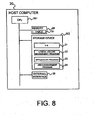
- FIG. 8 is a block diagram that shows the configuration of the host computer 20.
- the host computer 20 comprises at least a CPU (Central Processing Unit) 201, a memory 28, a storage device 202, and the above-mentioned external interface 26.
- CPU Central Processing Unit
- the CPU 201 takes charge of the overall control of the host computer 20 and realizes various functions according to the present example by executing various programs stored in the memory 28.
- the storage device 202 can store various programs and data. For example, hard disk devices and the like may be used for the storage device 202.
- the storage device 202 stores the OS 21, the logical volume management program 22, the application programs 23, and the area management program 24, details of which being explained later on.
- the logical volume management program 22 organizes one or more logical volumes 27 in the logical storage regions of the logical devices 18 in the storage controller 10, and provides storage areas specified by the logical volumes 27 to the application programs 23.
- An example of the logical volume management program 22 may be a so-called SoftRAID program, which manages the storage areas provided by the logical devices of the storage controller 10 according to the RAID (Redundant Array of Independent Disks) method based on software and offers the resulting organized logical volumes 27 to the application programs 23.
- RAID Redundant Array of Independent Disks
- each application program 23 is a database software, which is provided with a scheme for organizing and managing the data to be stored in the storage controller 10 in accordance with a predefined specification, that is, a mechanism for verifying the suitability of the data.
- Each application program 23 is also provided with an algorithm for checking whether the data to be processed is organized in accordance with a predefined specification, that is, for verifying whether the data is suitable.
- the area management program 24 manages an area management table 25 stored in a memory 28 of the host computer 20. Details on the area management table 25 are explained below.
- the area management program 24 is capable of transmitting the area management table 25 to the storage controller 10 at an appropriate timing. This will be described in detail later.
- FIG. 2 shows an example of an area management table 25.
- the area management table 25 is generated for each logical volume 27, which is organized by the logical volume management program 22.
- the area management program 24 updates the area management table 25 as necessary in accordance with the information acquired from the logical volume management program 22, the application programs 23 and the like.
- a logical volume ID 210 is a unique identifier that is assigned to each logical volume 27.
- the logical volume ID indicates which logical volume 27 the area management table 25 corresponds to.
- An OS control information offset 211 and OS control information size 212 indicate the storage location in a logical device 18 for storing OS control information that is given by the OS 21 to manage the logical devices 18 and logical volumes 27.
- An example of the OS control information may be file control information.
- a logical volume control information offset 213 and logical volume control information size 214 indicate the storage location in a logical device 18 for storing the logical volume control information that is generated by the logical volume management program 22 to manage the logical volumes 27.
- the logical volume control information is the information used by the logical volume management program 22 to manage the logical devices 18.
- An example of the logical volume control information may be stripe configuration information that is necessary when the logical volume management program 22 operates the logical devices 18 according to the RAID method.
- a logical device ID 215 is an ID of a logical device 18 that composes a logical volume 27, and an application ID 216 is an ID of an application program 23 that uses that logical volume 27.
- a user may register an application ID by operating the user interface of the host computer 20.
- An application handling data size 217 is the size of data handled when an application program 23, which uses the logical volume 27, performs a data input/output operation to a logical volume 27.
- a stripe size 218 is the data size to be adopted when the logical volume management program 22 writes data on a logical device 18 by striping the data according to the RAID method.
- a whole data size 219 is the total storage capacity of the logical volume 27.
- the area management table 25 is transmitted from the host computer 20 to the storage controller 10 by the area management program 24 at an appropriate timing.
- An "appropriate timing" for such transmission may be, for example, when the host computer 20 is started up or when the area management table 25 is updated, or at a time that has been set to a scheduling function of the area management program 24.
- the storage controller 10 Upon receipt of an area management table 25 from the host computer 20, the storage controller 10 stores the table in a logical device 18.
- the area management table 25 is stored in a logical device 18 having a logical device ID "X"
- the area management table 25 may instead be stored in the control memory 12 or the like.
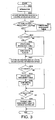
- FIG. 3 is a flowchart depicting processing steps that are followed when the host computer transmits an area management table 25 to the storage controller 10. These processing steps can roughly be divided into two processes: a process in which the area management program 24 acquires an area management table 25 indicative of the latest position; and a process in which the program transmits the acquired area management table 25.
- the area management program 24 initializes the contents of flags and other items to be used during processing (S310), requests the OS 21 to hand over the latest OS control information offset 211 and OS control information size 212, and acquires such information (S311).
- the area management program 24 checks whether the area management table 25 exists in the memory 28 of the host computer 20 (S312).
- the area management program 24 If the area management table 25 is not found in the memory 28, the area management program 24 generates an area management table 25 in the memory 28 (S313). If, on the other hand, the area management table 25 is found in the memory 28, the area management program 24 compares the OS control information offset 211 and OS control information size 212 in the area management table 25 with the acquired OS control information offset 211 and OS control information size 212 (S314). If the contents of the acquired information differ from those in the area management table 25, the area management program 24 updates the table 25 to register the acquired information (S315). After such an update, the area management program 24 turns ON an update flag (S316).
- the area management program 24 acquires also the logical volume control information offset 213 and logical volume control information size 214 from the OS 21 and performs a comparison process similar to that for the OS control information. That is, the acquired information and the contents of the area management table 25 in the memory are compared (S317, 318), and if the contents of the acquired information are found to be different from those in the area management table 25, the area management program 24 updates the area management table 25 so as to reflect the acquired information (S319), and turns ON the update flag after such an update (S320).
- the area management table 25 representing the latest state is generated in the memory 28.
- the area management program 24 checks the update flag (S321). When the update flag is ON, the area management program 24 transmits the contents of the area management table 25 stored in the memory 28 to the storage controller 10 (S322). Upon receipt of the area management table 25, the storage controller 10 stores the table in logical device X.
- the above-described process for transmitting the area management table 25 from the host computer 20 to the storage controller 10 is performed as necessary, for instance, at the time of starting up the OS 21 in the case where there has been a change in the OS control information or logical volume control information or in the case where the configuration of logical volumes 27 has been changed, for example, if there has been a change in the number of logical devices 18 that compose the logical volumes 27. This ensures that the area management table 25 indicative of the latest status will always be set in the storage controller 10.
- a logical device management table 121 In the control memory 12 of the storage controller 10 is stored a logical device management table 121.
- An example of a logical device management table is shown in FIG. 4 .
- this table manages, for example, the following: a LUN (Logical Unit Number) 412, which is unique to each logical device ID 411; a storage capacity 413 of each logical device 18; and a port ID 414, which is the ID of a port 131 of the host interface 13 to which each logical device 18 is connected.
- the contents of the logical device management table 121 are maintained up-to-date. For example, they are manually updated by an operator with a management terminal (not shown) connected to the storage controller 10 or automatically updated according to, for example, the information stored in the storage controller 10 or transmitted from the host computer 20.
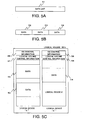
- FIG. 5A illustrates a data unit that is used when an application program 23 performs a data input/output operation to a logical volume 27.
- the data size of the data unit 51 is equal to the handling data size of the application program shown in FIG. 2 .
- FIG. 5B shows how the logical volume management program 22 divides a data unit 51, which is shown in FIG. 5A , when performing an input/output operation to the storage controller 10.
- the data unit 51 is divided into three sections: data 52, data 53, and data 54.
- FIG. 5C shows how data 52, data 53, and data 54 are stored in the logical devices 18.
- This figure shows an example where a logical volume 27 having a logical volume ID 210 of "001h", which is designated by an application program 23, is formed by a logical device 18 having a logical device ID 215 of "A” and a logical device 18 having a logical device ID 215 of "A"'.
- the divided data 52 and 53 are stored in the logical device 18 having the logical device ID 215 of "A”; the divided data 54 is stored in the logical device 18 having the logical device ID 215 of "A"'.
- the fixed areas of these logical devices 18 store the aforementioned OS control information 55, 56 and logical volume control information 57, 58.
- FIG. 6A illustrates a data unit, as shown in FIG. 5A , in a data format complying with the SCSI standard.
- FIG. 6B illustrates the data presented in FIG. 5B in a SCSI data format.
- a command indicating the type of process requested is set.
- a write command is set.
- the logical device ID 215 or LUN (Logical Unit Number) to be the target of process is set.
- LUN Logical Unit Number
- "0001h” is set in LUN fields 621 and 622 and "0002h” is set in LUN field 623.
- To logical address fields 631 to 633 are set the addresses corresponding to the storage-start location (i.e., a location at which storage'is to start) in a logical device 18 onto which data 52 to 54 are to be written.
- To data length fields 641 to 643 are set the data lengths corresponding to the write data 52 to 54 in the respective command frames.
- a read command will be set to each of the above-mentioned opcode fields 611 to 613, the addresses for designating the data read start location (i.e., a location at which reading of data is to be started) in a logical device 18 will be set to the logical address fields 631 to 633, and the size of the data to be read will be set to each of the data length fields.
- the data verification process which is performed by the storage controller 10 when the host computer 20 transmits SCSI data to the storage controller 10, will now be explained.
- the data verification process is performed by executing a data verification program 122 (algorithm) that the storage controller 10 stores in its control memory 12. This program thus may serve as "means for verification".
- the data verification program 122 is prepared for each application program 23 that runs on the host computer 20.
- the data verification program 122 comprises a function for verifying, before performing processing of target data (i.e., data to be processed), whether the target data complies with a predefined specification, the function performing processing equivalent or superior to the aforementioned algorithm that the application program 23 running on the host computer 20 comprises.
- the data verification program 122 is stored in the control memory 12, for instance, through transmission from the host computer 20 or manual operation of an operator working with a management terminal (not shown) for the storage controller 10. To each data verification program 122 to be stored is assigned an ID of the associated application program 23.
- the data verification process is for checking whether or not the target data conforms to a predefined specification required by an application program 23. For this reason, among the entire data that has been stored in the storage region of a logical device 18, only the area for storing the data that is input from or output to the application program 23 has to be subjected to the data verification process. Therefore, prior to the data verification process, a process for excluding such an area is performed, as described later.
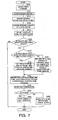
- the storage controller 10 Upon receipt of a command frame carrying a write command from the host computer 20 (S711), the storage controller 10 stores the command frame in a data buffer 16 (S712). The storage controller 10 then refers to an area management table 25 stored in a logical device 18 having a logical device ID of "X" to acquire the OS control information offset 211, the OS control information size 212, the logical volume control information offset 213, and the logical volume control information size 214 for the logical device ID that is set in the received data write request (S713). Further, the storage controller 10 refers to a logical device management table 121 to acquire the storage capacity 413 of the logical device 18 corresponding to the above-mentioned logical device ID (S714).
- the storage controller 10 stores the addresses (e.g., at least one start address and end address) for designating, among the whole storage region of the logical device 18 corresponding to the above-mentioned logical device ID, an area or areas except for the areas designated by the above-mentioned OS control information offset 211, the OS control information size 212, the logical volume control information offset 213, and the logical volume control information size 214 (S715).
- the storage area having been designated by the above addresses is hereinafter referred to as the candidate area for verification.
- the storage controller 10 compares the above-mentioned candidate area for verification designated by the addresses with the address that is set in the logical address field 631 to 633 of the received command frame (S716). If the address that is set in the logical address field is not in the candidate area for verification, the data verification process is ended (S717). If, on the other hand, the address is contained in the candidate area for verification, the storage controller 10 further checks whether the whole storage area, which is defined by the address set in the logical address field and the data length set in the data length field 641 to 643 of the received command frame and designated to be the write destination into which the write data is to be written, falls in the candidate area for verification (S718).
- the storage controller 10 sets the whole storage area, which has been designated as the write destination, as the target area for data verification, and then stores the addresses for defining such an area (e.g., the start and end addresses defining the area) (S719).
- the storage controller 10 sets the area starting from the above-mentioned logical address contained in the command frame up to the end address of the candidate area for verification as the target area for data verification, and stores the addresses for defining such an area (e.g., the start and end addresses defining the area) (S720).
- the storage controller 10 After the target area for data verification is set as described above, the storage controller 10 obtains the application program ID that is associated with the logical device 18 to be written. It should be noted that the storage controller 10 stores the correspondence indicative of a relation between application IDs and data verification programs 122 provided for each of the application programs 23. Therefore, the storage controller 10 starts the data verification program 122 that is associated with the obtained application program ID (S721).
- the storage controller 10 Upon starting the data verification program 122, the storage controller 10 gives the above-mentioned addresses, which designate the target area for data verification, to the data verification program 122. The data verification program 122 then starts to perform a data verification process in relation to the storage area of the logical device 18 that is designated by the above-mentioned addresses (S722).
- the storage controller 10 transmits a message indicative of such error (e.g., a message indicating an illegal request or write error) to the host computer 20 (S724). If no error is detected, the storage controller 10 transmits the write data in the command frame, which is presently stored in the data buffer 16, to the cache memory 15, and writes the data onto the logical device 18 (S725).
- a message indicative of such error e.g., a message indicating an illegal request or write error
- the above description deals with a case where the storage controller 10 receives a data write request from the host computer 20. Howsver, when a data read request is received, instead of verifying the data in the command frame, data to be read is read out from a storage device, stored in the data buffer 16, and verified by performing the same process as that for the write command. That is, even when a data read request has been received, the data verification process will be performed and, if any error is detected, the associated error message will be sent to the host computer 20. Accordingly, for example, an application program 23 can be notified of data unsuitability (i.e., that the "suitability" of the data is not assured) before the read data is handed over to the application program 23. It is therefore possible to prevent any data loss and damages in data, and also prevent the application program 23 from performing erratic operations.
- data unsuitability i.e., that the "suitability" of the data is not assured
- the storage controller 10 can also acquire information necessary for data verification. Therefore, the data verification process which is usually performed by an application program 23 can also be performed by the storage controller 10. Since the storage controller 10 also verifies the data suitability demanded by an application program 23, it becomes possible to further enhance data management accuracy.
- the logical volume management program 22 is not necessarily an essential structural component.
- the entire contents of the area management table 25 does not always have to be transmitted from the host computer 20 to the storage controller 10; it may be configured so that only differential data indicative of differences occuring due to changes in data is transmitted.
- the area management program 24 When the area management program 24 is to be executed for the first time, nothing is written in the area management table 25 of the host computer 20. In such an instance, it may be configured so that the area management table 25 is transmitted to the storage controller 10 on the assumption that, for instance, some changes have benn applied to the area management table 25. Further, by connecting the host computer 20' to the storage controller 10 with a LAN or like network to transmit the area management table 25 via the LAN, the area management table transmission from the host computer 20 to the storage controller 10 can also be performed with high speed.
Landscapes
- Engineering & Computer Science (AREA)
- Theoretical Computer Science (AREA)
- Physics & Mathematics (AREA)
- General Engineering & Computer Science (AREA)
- General Physics & Mathematics (AREA)
- Human Computer Interaction (AREA)
- Quality & Reliability (AREA)
- Computer Security & Cryptography (AREA)
- Information Retrieval, Db Structures And Fs Structures Therefor (AREA)
- Debugging And Monitoring (AREA)
- Storage Device Security (AREA)
Priority Applications (1)
| Application Number | Priority Date | Filing Date | Title |
|---|---|---|---|
| EP07002280A EP1785867B1 (en) | 2002-03-28 | 2003-02-18 | Method and apparatus for verifying data in a storage system |
Applications Claiming Priority (2)
| Application Number | Priority Date | Filing Date | Title |
|---|---|---|---|
| JP2002092685 | 2002-03-28 | ||
| JP2002092685A JP4080227B2 (ja) | 2002-03-28 | 2002-03-28 | データ検証方法およびディスクアレイ装置 |
Related Child Applications (2)
| Application Number | Title | Priority Date | Filing Date |
|---|---|---|---|
| EP07002280A Division EP1785867B1 (en) | 2002-03-28 | 2003-02-18 | Method and apparatus for verifying data in a storage system |
| EP07002280.1 Division-Into | 2007-02-02 |
Publications (3)
| Publication Number | Publication Date |
|---|---|
| EP1349059A2 EP1349059A2 (en) | 2003-10-01 |
| EP1349059A3 EP1349059A3 (en) | 2007-09-12 |
| EP1349059B1 true EP1349059B1 (en) | 2010-07-14 |
Family
ID=27800528
Family Applications (2)
| Application Number | Title | Priority Date | Filing Date |
|---|---|---|---|
| EP03003689A Expired - Lifetime EP1349059B1 (en) | 2002-03-28 | 2003-02-18 | Method and apparatus for verifying data in a storage system |
| EP07002280A Expired - Lifetime EP1785867B1 (en) | 2002-03-28 | 2003-02-18 | Method and apparatus for verifying data in a storage system |
Family Applications After (1)
| Application Number | Title | Priority Date | Filing Date |
|---|---|---|---|
| EP07002280A Expired - Lifetime EP1785867B1 (en) | 2002-03-28 | 2003-02-18 | Method and apparatus for verifying data in a storage system |
Country Status (5)
| Country | Link |
|---|---|
| US (3) | US6842793B2 (enExample) |
| EP (2) | EP1349059B1 (enExample) |
| JP (1) | JP4080227B2 (enExample) |
| CN (1) | CN1241098C (enExample) |
| DE (2) | DE60334037D1 (enExample) |
Families Citing this family (20)
| Publication number | Priority date | Publication date | Assignee | Title |
|---|---|---|---|---|
| US6886160B1 (en) * | 2000-11-29 | 2005-04-26 | Hyung Sup Lee | Distribution of mainframe data in the PC environment |
| US6968479B2 (en) * | 2002-03-06 | 2005-11-22 | Hewlett-Packard Development Company, L.P. | Verifying data in a data storage device |
| JP2003330762A (ja) * | 2002-05-09 | 2003-11-21 | Hitachi Ltd | ストレージシステムの制御方法、ストレージシステム、スイッチ、及びプログラム |
| US7062605B2 (en) * | 2003-04-28 | 2006-06-13 | Lsi Logic Corporation | Methods and structure for rapid background initialization of a RAID logical unit |
| US7082447B2 (en) * | 2004-06-16 | 2006-07-25 | Hitachi, Ltd. | Method and apparatus for archive data validation in an archive system |
| JP2006227856A (ja) * | 2005-02-17 | 2006-08-31 | Hitachi Ltd | アクセス制御装置及びそれに搭載されるインターフェース |
| KR100777282B1 (ko) * | 2005-12-15 | 2007-11-20 | 엘지전자 주식회사 | 방송 프로그램 저장방법 및 장치 |
| JP2007179156A (ja) * | 2005-12-27 | 2007-07-12 | Hitachi Ltd | 記憶制御装置及び方法 |
| JP2008040842A (ja) * | 2006-08-07 | 2008-02-21 | Hitachi Ltd | 記憶システム及びデータ管理設定方法 |
| US20100180182A1 (en) * | 2009-01-09 | 2010-07-15 | Seagate Technology Llc | Data memory device and controller with interface error detection and handling logic |
| US8214621B2 (en) * | 2009-04-29 | 2012-07-03 | Microsoft Corporation | Storage optimization across media with differing capabilities |
| TWI408688B (zh) * | 2009-10-12 | 2013-09-11 | Phison Electronics Corp | 用於快閃記憶體的資料寫入方法及其控制器與儲存系統 |
| KR101833464B1 (ko) * | 2010-02-02 | 2018-02-28 | 시게이트 테크놀로지 인터내셔날 | 디스크 장치와 외부 저장 매체 사이의 데이터 전송 방법 및 그 방법을 이용하는 시스템 |
| TWI455144B (zh) | 2010-07-22 | 2014-10-01 | Silicon Motion Inc | 使用於快閃記憶體的控制方法與控制器 |
| US8874696B1 (en) * | 2010-12-17 | 2014-10-28 | Emc Corporation | Common cache service |
| US9069719B2 (en) * | 2012-02-11 | 2015-06-30 | Samsung Electronics Co., Ltd. | Method and system for providing a smart memory architecture |
| US10078541B2 (en) | 2013-09-23 | 2018-09-18 | Hewlett Packard Enterprise Development Lp | Validate written data |
| WO2017054182A1 (zh) * | 2015-09-30 | 2017-04-06 | 华为技术有限公司 | 一种数据校验方法和装置 |
| CN110134572B (zh) * | 2018-02-02 | 2023-08-08 | 伊姆西Ip控股有限责任公司 | 验证存储系统中的数据 |
| US10846190B2 (en) * | 2019-03-29 | 2020-11-24 | Lenovo (Singapore) Pte. Ltd. | Connected device activation |
Family Cites Families (49)
| Publication number | Priority date | Publication date | Assignee | Title |
|---|---|---|---|---|
| US617036A (en) * | 1899-01-03 | John mitchell | ||
| JPS6361320A (ja) | 1986-09-02 | 1988-03-17 | Nec Corp | 事前検証機構付き補助記憶処理装置 |
| US5155845A (en) * | 1990-06-15 | 1992-10-13 | Storage Technology Corporation | Data storage system for providing redundant copies of data on different disk drives |
| US5285456A (en) | 1991-05-15 | 1994-02-08 | International Business Machines Corporation | System and method for improving the integrity of control information |
| JP2855019B2 (ja) * | 1992-02-10 | 1999-02-10 | 富士通株式会社 | 外部記憶装置のデータ保証方法及び外部記憶装置 |
| US5548788A (en) | 1994-10-27 | 1996-08-20 | Emc Corporation | Disk controller having host processor controls the time for transferring data to disk drive by modifying contents of the memory to indicate data is stored in the memory |
| JPH08263223A (ja) | 1995-03-23 | 1996-10-11 | Toshiba Corp | 計算機システム |
| JPH08272625A (ja) | 1995-03-29 | 1996-10-18 | Toshiba Corp | マルチプログラム実行制御装置及び方法 |
| US5870537A (en) | 1996-03-13 | 1999-02-09 | International Business Machines Corporation | Concurrent switch to shadowed device for storage controller and device errors |
| US5867736A (en) | 1996-03-29 | 1999-02-02 | Lsi Logic Corporation | Methods for simplified integration of host based storage array control functions using read and write operations on a storage array control port |
| US6185634B1 (en) | 1996-09-27 | 2001-02-06 | Emc Corporation | Address triggered DMA controller with an indicative signal including circuitry for calculating a new trigger address value based on the sum of the current trigger address and the descriptor register data with a trigger address register |
| US6073209A (en) | 1997-03-31 | 2000-06-06 | Ark Research Corporation | Data storage controller providing multiple hosts with access to multiple storage subsystems |
| US6157485A (en) * | 1997-07-18 | 2000-12-05 | Cheng; Yihao | Lens arrangement for enhancing the coupling of light shifted by an optical element |
| US5951658A (en) | 1997-09-25 | 1999-09-14 | International Business Machines Corporation | System for dynamic allocation of I/O buffers for VSAM access method based upon intended record access where performance information regarding access is stored in memory |
| US6167485A (en) | 1997-12-31 | 2000-12-26 | Emc Corporation | On-line data verification and repair in redundant storage systems |
| US6195761B1 (en) | 1997-12-31 | 2001-02-27 | Emc Corporation | Method and apparatus for identifying and repairing mismatched data |
| US6360330B1 (en) | 1998-03-31 | 2002-03-19 | Emc Corporation | System and method for backing up data stored in multiple mirrors on a mass storage subsystem under control of a backup server |
| US6151685A (en) | 1998-05-15 | 2000-11-21 | International Business Machines Corporation | System and method for recovering a segment directory for a log structured array |
| US6295575B1 (en) * | 1998-06-29 | 2001-09-25 | Emc Corporation | Configuring vectors of logical storage units for data storage partitioning and sharing |
| US7165152B2 (en) | 1998-06-30 | 2007-01-16 | Emc Corporation | Method and apparatus for managing access to storage devices in a storage system with access control |
| US6393540B1 (en) | 1998-06-30 | 2002-05-21 | Emc Corporation | Moving a logical object from a set of source locations to a set of destination locations using a single command |
| US6883063B2 (en) | 1998-06-30 | 2005-04-19 | Emc Corporation | Method and apparatus for initializing logical objects in a data storage system |
| JP4252139B2 (ja) | 1998-12-16 | 2009-04-08 | 株式会社日立製作所 | 記憶装置システム |
| US6311240B1 (en) | 1998-12-17 | 2001-10-30 | Compaq Computer Corporation | Hardware assisted formatted data transfer system having a source storage controller and a formatting storage controller receiving on-media structure definition and a data definition |
| JP2000267254A (ja) | 1999-03-17 | 2000-09-29 | Fujitsu Ltd | パターンデータ検証方法及び記憶媒体 |
| US6467023B1 (en) | 1999-03-23 | 2002-10-15 | Lsi Logic Corporation | Method for logical unit creation with immediate availability in a raid storage environment |
| JP2000287254A (ja) | 1999-03-31 | 2000-10-13 | Matsushita Electric Ind Co Ltd | 無線通信装置および無線通信方法 |
| US6629199B1 (en) | 1999-08-20 | 2003-09-30 | Emc Corporation | Digital data storage system including directory for efficiently providing formatting information for stored records and utilization of a check value for verifying that a record is from a particular storage location |
| JP2001167040A (ja) * | 1999-12-14 | 2001-06-22 | Hitachi Ltd | 記憶サブシステム及び記憶制御装置 |
| US6629273B1 (en) | 2000-01-24 | 2003-09-30 | Hewlett-Packard Development Company, L.P. | Detection of silent data corruption in a storage system |
| JP2001331323A (ja) | 2000-05-18 | 2001-11-30 | Canon Inc | ダウンロード方法、装置およびシステム |
| US6766430B2 (en) * | 2000-07-06 | 2004-07-20 | Hitachi, Ltd. | Data reallocation among storage systems |
| US6715036B1 (en) | 2000-08-01 | 2004-03-30 | International Business Machines Corporation | Method, system, and data structures for transferring blocks of data from a storage device to a requesting application |
| JP4611502B2 (ja) | 2000-09-19 | 2011-01-12 | サンデン株式会社 | 紙幣識別装置 |
| US7020835B2 (en) | 2000-10-19 | 2006-03-28 | Oracle International Corporation | Enhancements to data integrity verification mechanism |
| JP4068798B2 (ja) | 2000-10-31 | 2008-03-26 | 株式会社日立製作所 | 記憶サブシステム及びi/oインタフェースの制御方法ならびに情報処理システム |
| JP3435400B2 (ja) * | 2000-12-08 | 2003-08-11 | 株式会社東芝 | ディスクアレイ装置におけるデータ修復方法及びディスクアレイコントローラ |
| US6886171B2 (en) * | 2001-02-20 | 2005-04-26 | Stratus Technologies Bermuda Ltd. | Caching for I/O virtual address translation and validation using device drivers |
| JP4105398B2 (ja) * | 2001-02-28 | 2008-06-25 | 株式会社日立製作所 | 情報処理システム |
| US6928578B2 (en) | 2001-05-10 | 2005-08-09 | International Business Machines Corporation | System, method, and computer program for selectable or programmable data consistency checking methodology |
| US6718447B2 (en) | 2001-06-28 | 2004-04-06 | Hewlett-Packard Development Company, L.P. | Method and system for providing logically consistent logical unit backup snapshots within one or more data storage devices |
| JP4144727B2 (ja) * | 2001-07-02 | 2008-09-03 | 株式会社日立製作所 | 情報処理システム、記憶領域提供方法、およびデータ保持管理装置 |
| JP4060552B2 (ja) * | 2001-08-06 | 2008-03-12 | 株式会社日立製作所 | 記憶装置システム、および、記憶装置システムの構成方法 |
| US6728855B2 (en) | 2001-09-27 | 2004-04-27 | Seagate Technology Llc | Method and system for data path verification |
| US6772289B1 (en) * | 2001-12-17 | 2004-08-03 | Lsi Logic Corporation | Methods and apparatus for managing cached CRC values in a storage controller |
| JP3526452B2 (ja) | 2001-12-18 | 2004-05-17 | 株式会社東芝 | ディスクアレイ装置及びデータバックアップ方法 |
| JP3702231B2 (ja) | 2002-01-31 | 2005-10-05 | 株式会社東芝 | ディスクアレイ装置及び同装置における動的記憶容量拡張方法 |
| US6687799B2 (en) * | 2002-01-31 | 2004-02-03 | Hewlett-Packard Development Company, L.P. | Expedited memory dumping and reloading of computer processors |
| US6968479B2 (en) | 2002-03-06 | 2005-11-22 | Hewlett-Packard Development Company, L.P. | Verifying data in a data storage device |
-
2002
- 2002-03-28 JP JP2002092685A patent/JP4080227B2/ja not_active Expired - Fee Related
-
2003
- 2003-02-18 EP EP03003689A patent/EP1349059B1/en not_active Expired - Lifetime
- 2003-02-18 DE DE60334037T patent/DE60334037D1/de not_active Expired - Lifetime
- 2003-02-18 EP EP07002280A patent/EP1785867B1/en not_active Expired - Lifetime
- 2003-02-18 DE DE60333322T patent/DE60333322D1/de not_active Expired - Lifetime
- 2003-02-28 US US10/377,898 patent/US6842793B2/en not_active Expired - Fee Related
- 2003-03-28 CN CN03107743.9A patent/CN1241098C/zh not_active Expired - Fee Related
-
2004
- 2004-12-28 US US11/025,471 patent/US20050122788A1/en not_active Abandoned
-
2008
- 2008-07-15 US US12/173,650 patent/US7725611B2/en not_active Expired - Fee Related
Also Published As
| Publication number | Publication date |
|---|---|
| CN1448827A (zh) | 2003-10-15 |
| US20030188058A1 (en) | 2003-10-02 |
| US6842793B2 (en) | 2005-01-11 |
| US20050122788A1 (en) | 2005-06-09 |
| DE60334037D1 (de) | 2010-10-14 |
| DE60333322D1 (de) | 2010-08-26 |
| US7725611B2 (en) | 2010-05-25 |
| EP1349059A2 (en) | 2003-10-01 |
| CN1241098C (zh) | 2006-02-08 |
| EP1349059A3 (en) | 2007-09-12 |
| US20080288829A1 (en) | 2008-11-20 |
| EP1785867B1 (en) | 2010-09-01 |
| JP4080227B2 (ja) | 2008-04-23 |
| JP2003288270A (ja) | 2003-10-10 |
| EP1785867A2 (en) | 2007-05-16 |
| EP1785867A3 (en) | 2007-08-29 |
Similar Documents
| Publication | Publication Date | Title |
|---|---|---|
| US7725611B2 (en) | Method and apparatus for verifying data in a storage system | |
| US6968425B2 (en) | Computer systems, disk systems, and method for controlling disk cache | |
| US10007466B1 (en) | Tracking copy sessions | |
| US6073209A (en) | Data storage controller providing multiple hosts with access to multiple storage subsystems | |
| US6499075B2 (en) | Computer system including a device with a plurality of identifiers | |
| US11422907B2 (en) | Disconnected operation for systems utilizing cloud storage | |
| US6408369B1 (en) | Internal copy for a storage controller | |
| EP0405926A2 (en) | Method and apparatus for managing a shadow set of storage media | |
| US6728791B1 (en) | RAID 1 read mirroring method for host adapters | |
| US8856400B1 (en) | I/O performance quotas | |
| US9262344B2 (en) | Local locking in a bi-directional synchronous mirroring environment | |
| US6105076A (en) | Method, system, and program for performing data transfer operations on user data | |
| US20150234600A1 (en) | Selective copying of track data through peer-to-peer remote copy | |
| US20050050244A1 (en) | Method for controlling data transfer unit, data transfer unit, channel control unit, and storage device control unit | |
| US7366870B2 (en) | System and method for accessing an offline storage unit through an online storage unit | |
| US20050160307A1 (en) | Method, system, and program for generating parity data | |
| US7421547B2 (en) | Storage system and storage control method without requiring formatting of storage device | |
| US8006049B2 (en) | Export of logical volumes by pools | |
| US7596639B2 (en) | Skip mask table automated context generation | |
| US20050223180A1 (en) | Accelerating the execution of I/O operations in a storage system | |
| US6701385B1 (en) | Raid 1 write mirroring method for host adapters | |
| US10216652B1 (en) | Split target data transfer | |
| US20060277326A1 (en) | Data transfer system and method |
Legal Events
| Date | Code | Title | Description |
|---|---|---|---|
| PUAI | Public reference made under article 153(3) epc to a published international application that has entered the european phase |
Free format text: ORIGINAL CODE: 0009012 |
|
| AK | Designated contracting states |
Kind code of ref document: A2 Designated state(s): AT BE BG CH CY CZ DE DK EE ES FI FR GB GR HU IE IT LI LU MC NL PT SE SI SK TR |
|
| AX | Request for extension of the european patent |
Extension state: AL LT LV MK RO |
|
| 17P | Request for examination filed |
Effective date: 20060331 |
|
| PUAL | Search report despatched |
Free format text: ORIGINAL CODE: 0009013 |
|
| AK | Designated contracting states |
Kind code of ref document: A3 Designated state(s): AT BE BG CH CY CZ DE DK EE ES FI FR GB GR HU IE IT LI LU MC NL PT SE SI SK TR |
|
| AX | Request for extension of the european patent |
Extension state: AL LT LV MK RO |
|
| RIC1 | Information provided on ipc code assigned before grant |
Ipc: G06F 11/00 20060101ALI20070803BHEP Ipc: G06F 3/06 20060101ALI20070803BHEP Ipc: G06F 11/10 20060101AFI20070803BHEP |
|
| 17Q | First examination report despatched |
Effective date: 20080410 |
|
| AKX | Designation fees paid |
Designated state(s): DE FR GB IE |
|
| GRAP | Despatch of communication of intention to grant a patent |
Free format text: ORIGINAL CODE: EPIDOSNIGR1 |
|
| GRAS | Grant fee paid |
Free format text: ORIGINAL CODE: EPIDOSNIGR3 |
|
| GRAA | (expected) grant |
Free format text: ORIGINAL CODE: 0009210 |
|
| AK | Designated contracting states |
Kind code of ref document: B1 Designated state(s): DE FR GB IE |
|
| REG | Reference to a national code |
Ref country code: GB Ref legal event code: FG4D |
|
| REG | Reference to a national code |
Ref country code: IE Ref legal event code: FG4D |
|
| REF | Corresponds to: |
Ref document number: 60333322 Country of ref document: DE Date of ref document: 20100826 Kind code of ref document: P |
|
| PLBE | No opposition filed within time limit |
Free format text: ORIGINAL CODE: 0009261 |
|
| STAA | Information on the status of an ep patent application or granted ep patent |
Free format text: STATUS: NO OPPOSITION FILED WITHIN TIME LIMIT |
|
| 26N | No opposition filed |
Effective date: 20110415 |
|
| REG | Reference to a national code |
Ref country code: DE Ref legal event code: R097 Ref document number: 60333322 Country of ref document: DE Effective date: 20110415 |
|
| REG | Reference to a national code |
Ref country code: FR Ref legal event code: ST Effective date: 20111102 |
|
| REG | Reference to a national code |
Ref country code: IE Ref legal event code: MM4A |
|
| PG25 | Lapsed in a contracting state [announced via postgrant information from national office to epo] |
Ref country code: FR Free format text: LAPSE BECAUSE OF NON-PAYMENT OF DUE FEES Effective date: 20110228 Ref country code: IE Free format text: LAPSE BECAUSE OF NON-PAYMENT OF DUE FEES Effective date: 20110218 |
|
| PGFP | Annual fee paid to national office [announced via postgrant information from national office to epo] |
Ref country code: DE Payment date: 20150210 Year of fee payment: 13 |
|
| PGFP | Annual fee paid to national office [announced via postgrant information from national office to epo] |
Ref country code: GB Payment date: 20150218 Year of fee payment: 13 |
|
| REG | Reference to a national code |
Ref country code: DE Ref legal event code: R119 Ref document number: 60333322 Country of ref document: DE |
|
| GBPC | Gb: european patent ceased through non-payment of renewal fee |
Effective date: 20160218 |
|
| PG25 | Lapsed in a contracting state [announced via postgrant information from national office to epo] |
Ref country code: DE Free format text: LAPSE BECAUSE OF NON-PAYMENT OF DUE FEES Effective date: 20160901 Ref country code: GB Free format text: LAPSE BECAUSE OF NON-PAYMENT OF DUE FEES Effective date: 20160218 |