EP1345393A1 - USB-Telefon, sowie Verfahren und Bildschirmmaske zur Bedienung eines solchen Telefons - Google Patents
USB-Telefon, sowie Verfahren und Bildschirmmaske zur Bedienung eines solchen Telefons Download PDFInfo
- Publication number
- EP1345393A1 EP1345393A1 EP02005614A EP02005614A EP1345393A1 EP 1345393 A1 EP1345393 A1 EP 1345393A1 EP 02005614 A EP02005614 A EP 02005614A EP 02005614 A EP02005614 A EP 02005614A EP 1345393 A1 EP1345393 A1 EP 1345393A1
- Authority
- EP
- European Patent Office
- Prior art keywords
- operating
- usb
- display
- telephone
- usb telephone
- Prior art date
- Legal status (The legal status is an assumption and is not a legal conclusion. Google has not performed a legal analysis and makes no representation as to the accuracy of the status listed.)
- Granted
Links
Images
Classifications
-
- H—ELECTRICITY
- H04—ELECTRIC COMMUNICATION TECHNIQUE
- H04M—TELEPHONIC COMMUNICATION
- H04M1/00—Substation equipment, e.g. for use by subscribers
- H04M1/247—Telephone sets including user guidance or feature selection means facilitating their use
- H04M1/2473—Telephone terminals interfacing a personal computer, e.g. using an API (Application Programming Interface)
-
- G—PHYSICS
- G06—COMPUTING OR CALCULATING; COUNTING
- G06F—ELECTRIC DIGITAL DATA PROCESSING
- G06F3/00—Input arrangements for transferring data to be processed into a form capable of being handled by the computer; Output arrangements for transferring data from processing unit to output unit, e.g. interface arrangements
- G06F3/01—Input arrangements or combined input and output arrangements for interaction between user and computer
- G06F3/048—Interaction techniques based on graphical user interfaces [GUI]
- G06F3/0481—Interaction techniques based on graphical user interfaces [GUI] based on specific properties of the displayed interaction object or a metaphor-based environment, e.g. interaction with desktop elements like windows or icons, or assisted by a cursor's changing behaviour or appearance
Definitions
- the invention relates to a USB telephone and a method and a screen mask for operating a telephone by means of a CTI application.
- USB phones are phones with a USB interface Connect to a computer, usually using a computer the computer running CTI application are operated, the Computer is connected to a network, but the USB telephone is not directly.
- Such telephones and CTI applications are already known.
- a USB interface is suitable for the transmission of both digital voice signals as well as an electrical supply current. This allows to carry out an AD and DA conversion of the voice signals in the USB telephone and only transfer digital data to the computer. Thereby you can get interference from the interaction of the external phone with the computer due to differently configured Avoid hardware.
- a state-of-the-art USB telephone has a handset and a base part that has a USB interface, and is used together with a computer with an input device for operating a CTI application.
- the base part has one Speakers for call display, but no keyboard.
- a CTI application according to the prior art comprises a screen mask, the buttons distributed under a title bar Has operation of the phone. The screen mask can be used as Total windows are reduced to a button or symbol, then the telephone operating functions can no longer be clicked through callable.
- USB telephones have the disadvantage that that there are many controls that are only partial Can be operated both on an input device and on the terminal are, in part, also from the operating status of the phone or depends on the screen mask. This makes it difficult to use and can attract a new prospect from using a Hold the USB telephone.
- the screen masks according to the state of the Technology occupy a large space on the screen surface, which leaves little space for other applications.
- the invention is therefore based on the object, the operation of a USB telephone and to make the screen mask smaller.
- a key motivation of the invention is a USB phone to create the few selected display and control elements has, but both in appropriate places the phone as well as on the screen mask. According to the invention recognized that there are only a few phone functions that make it efficient Use and convenient work displayed on the base part become and should also be operable. This includes, for example the adjustment of the reception volume.
- buttons and one Display for use with a computer with an input device to operate a CTI application, can the control operating functions of the USB telephone optionally activated by the keys or the input device, and An operating status of the USB telephone is shown on the display as well as displayed on a computer screen.
- buttons are hand-operated by the user Understand buttons for operating functions and include a fork switch Not. These control buttons are in a preferred Embodiment of the invention also elements of the display for the operating status related to the respective operating function.
- the base unit does not assign any number keys to USB telephones Dial on because dialing is via the computer's input device he follows.
- the USB telephone is supported by an inventive one Screen mask for operating the USB telephone using a CTI application.
- This screen mask can be reduced to a title bar and buttons in a reduced screen mask state has the possible operating functions depending on the operating state display of the USB telephone and via these operating functions via PC input options, e.g. Can be operated with a mouse click are.
- a method according to the invention for operating a USB telephones can optionally use the operating functions of the USB telephone activated by the buttons or the input device and An operating status of the USB telephone is shown on the display as well as displayed on a computer screen.
- the Operating functions are preferably offered depending on the operating status and / or displayed.
- telephone is widely understood here and also includes telephones which e.g. only from one to one Computer connected headset or headset exist.
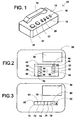
- Fig. 1 shows a schematic representation of a USB phone 10 with a handset 12 and a base part 14, the a USB interface, keys 16, 18, display keys 20, 22, one optical display 24 and a speaker 26.
- the key 16 is used to increase and the button 18 to reduce the volume.
- Keys 16, 18 have control functions, but none Display function.
- a headset (headset) is attached to the USB telephone 10 connected.
- the display key 20 serves as a key with an operating function switching between handset 12 and headset and as a display of the status display of the operating status, whether that Headset is turned on instead of the handset 12.
- About the Display key 22 is the key with the operating function "Mute2" operating handset microphone 12 or of the headset on or off, and as an indication of the operating status "Mute" - if active - is displayed. Via the visual display 24 and the loudspeaker 26 incoming calls are reported.
- the USB telephone 10 has no number keys for dialing.
- the base part 14 has a fork switch.
- the USB telephone 10 is used together with a (not shown) Computer with an input device for operating a CTI application.
- the USB telephone 10 has a controller, so that the operating functions of the USB telephone can be selected using the buttons or the input device can be activated and an operating state of the USB telephone both on the display and on is displayed on a computer screen.
- the computer is on Connected to the network, but the USB telephone 10 is not directly.
- FIG. 2 schematically shows a screen 30 with several Windows 32, 36, of which window 32 is a screen mask 38 from display a CTI application of a USB telephone and window 36 relates to another computer application.
- the screen mask 38 is used to control a USB telephone such as the USB telephone 10 according to of the invention and will be described in connection with this.
- the screen mask 38 for controlling the USB telephone 10 described.
- the screen mask 38 has a title bar 42 with buttons 44, 46 for determining the window size. With button 44, the window 32 is reduced to the size of the Window 34, and the button 46 closes the CTI application.
- the screen mask 38 also has a work field Controls and indicators on. These include buttons 50, 52, 54, 56, which the keys 16, 18 and display keys 20, 22 of the USB phone 10 correspond functionally, and the display panel 58, which corresponds to the optical display 24 of the USB telephone 10. Additional buttons 60, 62, 64 with display and / or operating functions are part of the CTI application and are only available via To operate input devices of the computer.
- the use of the USB telephone 10 with the screen mask 38 is based on an incoming call with the handset 12 explained.
- the incoming call is answered simultaneously via the visual display 24 and the speaker 26 on the USB phone 10 as well as on the Display field 58 is displayed in the screen mask.
- the call will accepted by lifting the handset 12, the fork switch is actuated in the base part 14. Now the volume can a loudspeaker in the handset 12 via the keys 16, 18 or the corresponding buttons 50, 52 are changed. It could also the current volume in a display element on the screen can be represented analogously. If now the microphone signals from this side should be suppressed, the display key 22 or the corresponding button 56 operated by mouse click become. Then the display button 22 lights up and the button 56 lights up or flashes to indicate the activity of the "Mute” function. The "Mute" function can be activated by pressing the display button again 22 or the corresponding button 56 is switched off which will also reset their ads.
- the call is ended by hanging up the handset 12.
- the call can be used as an alternative to the handset 12 by pressing the display key 20 or the corresponding buttons 54 on the screen mask 38 by mouse click be accepted. Then the display button 20 and lights up the button 54 lights up or flashes to indicate the activity of the headset display. The phone call would then be repeated the display key 20 or the corresponding button 54 hand over to handset 12 when it is lifted off or on-hook Handset 12 ended.
- the handset can be used first 12 removed from the base part 14 or a phone number entered or selected, which is displayed in button 64. In any case When the handset is removed, the outgoing call triggered. After the call has been accepted by the called party the further operation of the USB telephone 10 takes place as with incoming call described.
- the operating functions of the display buttons 20, 22 are therefore from Operating status of the USB telephone 10 depends.
- the screen mask 38 for operating the USB telephone 10 by means of a CTI application can be reduced by pressing the button 44.
- FIG. 3 schematically shows a screen 30 with several Windows 34, 36, of which window 34 is a screen mask 40 from a CTI application of a USB telephone in a reduced state represents and window 36 another computer application concerns.
- the screen mask 40 is from the screen mask 38 from FIG. 2 emerged by pressing the button 44.
- the Screen mask 40 is a screen-saving mask that only essential functions for controlling the USB phone 10 for has an incoming call. Therefore, the to choose and Buttons 60, 62, 64 of the screen mask provided for comfort 38.
- the buttons 70, 72, 74, 76 correspond to the screen mask 40 the keys 50, 52, 54, 56 of the screen mask 38, and correspond thus the keys 16, 18 and display keys 20, 22 of the USB telephone 10 functional.
- Buttons 70, 72, 74, 76 show possible operating functions depending on the operating status of the USB telephone and can be operated with a click of the mouse using these operating functions.
- operating functions of the USB telephone can be selected using the buttons or the input device can be activated and an operating state of the USB phone is shown on the display as well displayed on a computer screen.
- field 78 the current set volume is displayed. With button 80 the big one Screen mask 38 can be restored and with button 82 the CTI application can be ended.
Landscapes
- Engineering & Computer Science (AREA)
- General Engineering & Computer Science (AREA)
- Theoretical Computer Science (AREA)
- Human Computer Interaction (AREA)
- General Physics & Mathematics (AREA)
- Physics & Mathematics (AREA)
- Signal Processing (AREA)
- Computer Vision & Pattern Recognition (AREA)
- Telephonic Communication Services (AREA)
- Telephone Function (AREA)
- User Interface Of Digital Computer (AREA)
- Medicines Containing Antibodies Or Antigens For Use As Internal Diagnostic Agents (AREA)
- Polysaccharides And Polysaccharide Derivatives (AREA)
- Input Circuits Of Receivers And Coupling Of Receivers And Audio Equipment (AREA)
Abstract
Description
Claims (15)
- USB-Telefon (10) mit einem Handapparat (12) und einem Basisteil (14), das eine USB-Schnittstelle aufweist, zur Benutzung mit einem Computer mit einer Eingabeeinrichtung zur Bedienung einer CTI-Applikation, gekennzeichnet durch eine Steuerung, eine Anzeige (20, 22, 24, 26) und Tasten (16, 18, 20, 22) im Basisteil derart, dass Bedienfunktionen des USB-Telefons wahlweise durch die Tasten oder die Eingabeeinrichtung aktiviert werden können und ein Bedien-Zustand des USB-Telefons sowohl auf der Anzeige als auch auf einem Computerbildschirm (30) angezeigt wird.
- USB-Telefon nach Anspruch 1, dadurch gekennzeichnet, dass das Basisteil (14) einen Lautsprecher (26) aufweist.
- USB-Telefon nach Anspruch 1 oder 2, dadurch gekennzeichnet, dass das Basisteil (14) keine Zifferntasten zum Wählen aufweist.
- USB-Telefon nach einem der Ansprüche 1 bis 3, dadurch gekennzeichnet, dass das Basisteil (14) einen Anschluss für ein Headset, eine Taste zum Schalten des Headsets und eine Anzeige zum Anzeigen eines Schalt-Zustands des Headsets aufweist.
- USB-Telefon nach einem der Ansprüche 1 bis 4, dadurch gekennzeichnet, dass das Basisteil (14) eine Anzeige (24, 26) zum Anzeigen eines eingehenden Rufs aufweist.
- USB-Telefon nach Anspruch 5, dadurch gekennzeichnet, dass die Anzeige (24) zum Anzeigen eines eingehenden Rufs eine optische Anzeige ist.
- USB-Telefon nach einem der Ansprüche 1 bis 6, dadurch gekennzeichnet, dass die Tasten (20, 22, 24, 26) eine vom Bedien-Zustand abhängige Bedienfunktion aktivieren können.
- USB-Telefon nach einem der Ansprüche 1 bis 7, dadurch gekennzeichnet, dass Tasten (24, 26) Elemente der Anzeige sind für den auf die jeweilige Bedienfunktion bezogenen Bedien-Zustand.
- USB-Telefon nach einem der Ansprüche 1 bis 8, dadurch gekennzeichnet, dass das Basisteil (14)einen Gabelumschalter aufweist.
- Bildschirmmaske (40) zur Bedienung eines USB-Telefons (10) mittels einer CTI-Applikation, dadurch gekennzeichnet, dass die Bildschirmmaske auf eine Titelleiste (68) reduzierbar ist und in einem reduzierten Bildschirmmasken-Zustand Buttons aufweist, die mögliche Bedienfunktionen abhängig vom Bedien-Zustand des USB-Telefons anzeigen, und über die diese Bedienfunktionen mittels einer Eingabeeinrichtung betätigbar sind.
- Verfahren zur Bedienung eines USB-Telefons (10) mit einem Handapparat (12) und einem Basisteil (14), einer USB-Schnittstelle, Tasten (16, 18, 20, 22) und einer Anzeige (20, 22, 24, 26), zur Benutzung mit einem Computer mit einer Eingabeeinrichtung mittels einer CTI-Applikation, dadurch gekennzeichnet, dass Bedienfunktionen des USB-Telefons wahlweise durch die Tasten oder die Eingabeeinrichtung aktiviert werden können und ein Bedien-Zustand des USB-Telefons sowohl auf der Anzeige als auch auf einem Computerbildschirm angezeigt wird.
- Verfahren nach Anspruch 11, dadurch gekennzeichnet, dass die Bedienfunktionen abhängig vom Bedien-Zustand angeboten werden.
- Verfahren nach einem der Ansprüche 11 oder 12, dadurch gekennzeichnet, dass die Bedienfunktionen abhängig vom Bedien-Zustand angezeigt werden.
- Verfahren zur Bedienung einer CTI-Applikation, dadurch gekennzeichnet, dass auf einem Computerbildschirm zur Bedienung eines Telefons (10) eine Bildschirmmaske (40) auf eine Titelleiste reduziert wird und im reduzierten Bildschirmmasken-Zustand Buttons (70, 72, 74, 76) aufweist, die mögliche Bedienfunktionen abhängig vom Bedien-Zustand des Telefons anzeigen, und über die diese Bedienfunktionen mittels einer Eingabeeinrichtung betätigbar sind.
- Verfahren nach Anspruch 14, dadurch gekennzeichnet, dass das Telefon (10) ein USB-Telefon ist.
Priority Applications (6)
| Application Number | Priority Date | Filing Date | Title |
|---|---|---|---|
| AT04020700T ATE341149T1 (de) | 2002-03-12 | 2002-03-12 | Usb-telefon, sowie verfahren und bildschirmmaske zur bedienung eines solchen telefons |
| DE50208293T DE50208293D1 (de) | 2002-03-12 | 2002-03-12 | USB-Telefon, sowie Verfahren und Bildschirmmaske zur Bedienung eines solchen Telefons |
| AT02005614T ATE319260T1 (de) | 2002-03-12 | 2002-03-12 | Usb-telefon, sowie verfahren und bildschirmmaske zur bedienung eines solchen telefons |
| DE50205894T DE50205894D1 (de) | 2002-03-12 | 2002-03-12 | USB-Telefon, sowie Verfahren und Bildschirmmaske zur Bedienung eines solchen Telefons |
| EP04020700A EP1482716B1 (de) | 2002-03-12 | 2002-03-12 | USB-Telefon, sowie Verfahren und Bildschirmmaske zur Bedienung eines solchen Telefons |
| EP02005614A EP1345393B1 (de) | 2002-03-12 | 2002-03-12 | USB-Telefon, sowie Verfahren und Bildschirmmaske zur Bedienung eines solchen Telefons |
Applications Claiming Priority (1)
| Application Number | Priority Date | Filing Date | Title |
|---|---|---|---|
| EP02005614A EP1345393B1 (de) | 2002-03-12 | 2002-03-12 | USB-Telefon, sowie Verfahren und Bildschirmmaske zur Bedienung eines solchen Telefons |
Related Child Applications (1)
| Application Number | Title | Priority Date | Filing Date |
|---|---|---|---|
| EP04020700A Division EP1482716B1 (de) | 2002-03-12 | 2002-03-12 | USB-Telefon, sowie Verfahren und Bildschirmmaske zur Bedienung eines solchen Telefons |
Publications (2)
| Publication Number | Publication Date |
|---|---|
| EP1345393A1 true EP1345393A1 (de) | 2003-09-17 |
| EP1345393B1 EP1345393B1 (de) | 2006-03-01 |
Family
ID=27763365
Family Applications (2)
| Application Number | Title | Priority Date | Filing Date |
|---|---|---|---|
| EP02005614A Expired - Lifetime EP1345393B1 (de) | 2002-03-12 | 2002-03-12 | USB-Telefon, sowie Verfahren und Bildschirmmaske zur Bedienung eines solchen Telefons |
| EP04020700A Expired - Lifetime EP1482716B1 (de) | 2002-03-12 | 2002-03-12 | USB-Telefon, sowie Verfahren und Bildschirmmaske zur Bedienung eines solchen Telefons |
Family Applications After (1)
| Application Number | Title | Priority Date | Filing Date |
|---|---|---|---|
| EP04020700A Expired - Lifetime EP1482716B1 (de) | 2002-03-12 | 2002-03-12 | USB-Telefon, sowie Verfahren und Bildschirmmaske zur Bedienung eines solchen Telefons |
Country Status (3)
| Country | Link |
|---|---|
| EP (2) | EP1345393B1 (de) |
| AT (2) | ATE319260T1 (de) |
| DE (2) | DE50208293D1 (de) |
Families Citing this family (1)
| Publication number | Priority date | Publication date | Assignee | Title |
|---|---|---|---|---|
| DE102017116002A1 (de) | 2017-03-28 | 2018-10-04 | Riedel Communications International GmbH | Belt-Pack |
Citations (4)
| Publication number | Priority date | Publication date | Assignee | Title |
|---|---|---|---|---|
| DE19743459A1 (de) * | 1996-10-01 | 1998-04-16 | Mitel Corp | Rechnerunterstütztes Fernsprechsystem |
| US5890178A (en) * | 1994-04-21 | 1999-03-30 | Sharp Kabushiki Kaisha | Display of data files indicated by pasting instructing data indicating pasting of a data file in a displayed data file |
| US6091803A (en) * | 1995-09-15 | 2000-07-18 | Mitel Corporation | Architecture for robust voice CTI |
| DE10020424A1 (de) * | 2000-04-26 | 2001-10-31 | Tedas Ges Fuer Telekommunikati | Sprechgarnitur und Verfahren zum Betreiben der Sprechgarnitur |
-
2002
- 2002-03-12 EP EP02005614A patent/EP1345393B1/de not_active Expired - Lifetime
- 2002-03-12 AT AT02005614T patent/ATE319260T1/de not_active IP Right Cessation
- 2002-03-12 DE DE50208293T patent/DE50208293D1/de not_active Expired - Lifetime
- 2002-03-12 DE DE50205894T patent/DE50205894D1/de not_active Expired - Lifetime
- 2002-03-12 AT AT04020700T patent/ATE341149T1/de not_active IP Right Cessation
- 2002-03-12 EP EP04020700A patent/EP1482716B1/de not_active Expired - Lifetime
Patent Citations (4)
| Publication number | Priority date | Publication date | Assignee | Title |
|---|---|---|---|---|
| US5890178A (en) * | 1994-04-21 | 1999-03-30 | Sharp Kabushiki Kaisha | Display of data files indicated by pasting instructing data indicating pasting of a data file in a displayed data file |
| US6091803A (en) * | 1995-09-15 | 2000-07-18 | Mitel Corporation | Architecture for robust voice CTI |
| DE19743459A1 (de) * | 1996-10-01 | 1998-04-16 | Mitel Corp | Rechnerunterstütztes Fernsprechsystem |
| DE10020424A1 (de) * | 2000-04-26 | 2001-10-31 | Tedas Ges Fuer Telekommunikati | Sprechgarnitur und Verfahren zum Betreiben der Sprechgarnitur |
Also Published As
| Publication number | Publication date |
|---|---|
| DE50205894D1 (de) | 2006-04-27 |
| DE50208293D1 (de) | 2006-11-09 |
| EP1482716A1 (de) | 2004-12-01 |
| EP1345393B1 (de) | 2006-03-01 |
| ATE319260T1 (de) | 2006-03-15 |
| EP1482716B1 (de) | 2006-09-27 |
| ATE341149T1 (de) | 2006-10-15 |
Similar Documents
| Publication | Publication Date | Title |
|---|---|---|
| DE19548456A1 (de) | Kommunikationssystem | |
| EP2716040A1 (de) | Verfahren zum austausch von signalen zwischen einer hauskommunikationsanlage und einer nicht zu der hauskommunikationsanlage gehörenden kommunikationseinrichtung | |
| EP1482716B1 (de) | USB-Telefon, sowie Verfahren und Bildschirmmaske zur Bedienung eines solchen Telefons | |
| EP0517942A1 (de) | Verfahren zum Beeinflussen einer in einem Kommunikationsendgerät implementierten Signalisierungsprozedur | |
| DE10392561B4 (de) | Websitegesteuerter Aufbau von Telefonverbindung | |
| DE3616585A1 (de) | Fernsprechapparat | |
| EP0975182B1 (de) | Telekommunikationsgerät mit Schnittstelle zu einem Fernsehgerät als Monitor für Telekommunikations-Anwendungen | |
| DE2736045A1 (de) | Verfahren zur herstellung einer verbindung ueber ein fernsprechwaehlnetz | |
| DE19716316B4 (de) | Telekommunikationseinrichtung und Verfahren zu ihrem Betrieb | |
| DE102006018634A1 (de) | Hörvorrichtung mit Quellentrennung und entsprechendes Verfahren | |
| WO1999013663A1 (de) | Dezentrale ausführung von funktionen/diensten eines mobilfunksystems | |
| DE19526981C2 (de) | Mit einem Personalcomputer kombinierte Telefoneinheit | |
| DE19753853C1 (de) | Benutzeroberfläche mit programmierbaren Funktionstasten | |
| DE2543029B2 (de) | Schaltungsanordnung fuer ein eine vielzahl von funktionen steuerndes, an einer fernsprechanlage anschaltbares endgeraet | |
| DE19651833A1 (de) | Verfahren zum Einstellen und Durchführen frei programmierbarer Funktionen eines Fernmeldeendgeräts, sowie ein solches Fernmeldeendgerät | |
| DE844308C (de) | Schaltungsanordnung fuer Teilnehmeranschluesse in Fernsprechanlagen mit Waehlerbetrieb und wahlweiser Anschaltung einer von zwei Verkehrsrichtungen | |
| DE8816833U1 (de) | Diktiergerät mit einer abgesetzten Sprech- und Steuereinrichtung | |
| DE3308986C2 (de) | Schaltungsanordnung für eine digitale Fernsprechstation | |
| EP1230782A2 (de) | Telekommunikations-endgerät, multifunktions-bedienteil und verfahren zum herstellen einer fernsprechverbindung | |
| DE4408324C2 (de) | Kompakt-Fernsprechendgerät | |
| EP0860968B1 (de) | Funkgerät | |
| DE10113439B4 (de) | Verfahren und Vorrichtung zum Aufbau zweier Sprachverbindungen zu einem CTI-Arbeitsplatz | |
| DE8437641U1 (de) | Kommunikations-terminal | |
| EP0982912B1 (de) | Telefon mit Bedienerführung für analoge Anschlussleitungen | |
| DE10218454A1 (de) | Telekommunikationsanlage und Verfahren zum Betreiben einer Türfreisprecheinrichtung an einer Telekommunikationsanlage |
Legal Events
| Date | Code | Title | Description |
|---|---|---|---|
| PUAI | Public reference made under article 153(3) epc to a published international application that has entered the european phase |
Free format text: ORIGINAL CODE: 0009012 |
|
| AK | Designated contracting states |
Kind code of ref document: A1 Designated state(s): AT BE CH CY DE DK ES FI FR GB GR IE IT LI LU MC NL PT SE TR |
|
| AX | Request for extension of the european patent |
Extension state: AL LT LV MK RO SI |
|
| 17P | Request for examination filed |
Effective date: 20040317 |
|
| 17Q | First examination report despatched |
Effective date: 20040419 |
|
| AKX | Designation fees paid |
Designated state(s): AT BE CH CY DE DK ES FI FR GB GR IE IT LI LU MC NL PT SE TR |
|
| GRAP | Despatch of communication of intention to grant a patent |
Free format text: ORIGINAL CODE: EPIDOSNIGR1 |
|
| GRAS | Grant fee paid |
Free format text: ORIGINAL CODE: EPIDOSNIGR3 |
|
| GRAA | (expected) grant |
Free format text: ORIGINAL CODE: 0009210 |
|
| AK | Designated contracting states |
Kind code of ref document: B1 Designated state(s): AT BE CH CY DE DK ES FI FR GB GR IE IT LI LU MC NL PT SE TR |
|
| PG25 | Lapsed in a contracting state [announced via postgrant information from national office to epo] |
Ref country code: IT Free format text: LAPSE BECAUSE OF FAILURE TO SUBMIT A TRANSLATION OF THE DESCRIPTION OR TO PAY THE FEE WITHIN THE PRESCRIBED TIME-LIMIT;WARNING: LAPSES OF ITALIAN PATENTS WITH EFFECTIVE DATE BEFORE 2007 MAY HAVE OCCURRED AT ANY TIME BEFORE 2007. THE CORRECT EFFECTIVE DATE MAY BE DIFFERENT FROM THE ONE RECORDED. Effective date: 20060301 Ref country code: NL Free format text: LAPSE BECAUSE OF FAILURE TO SUBMIT A TRANSLATION OF THE DESCRIPTION OR TO PAY THE FEE WITHIN THE PRESCRIBED TIME-LIMIT Effective date: 20060301 Ref country code: IE Free format text: LAPSE BECAUSE OF FAILURE TO SUBMIT A TRANSLATION OF THE DESCRIPTION OR TO PAY THE FEE WITHIN THE PRESCRIBED TIME-LIMIT Effective date: 20060301 Ref country code: FI Free format text: LAPSE BECAUSE OF FAILURE TO SUBMIT A TRANSLATION OF THE DESCRIPTION OR TO PAY THE FEE WITHIN THE PRESCRIBED TIME-LIMIT Effective date: 20060301 |
|
| REG | Reference to a national code |
Ref country code: GB Ref legal event code: FG4D Free format text: NOT ENGLISH |
|
| PG25 | Lapsed in a contracting state [announced via postgrant information from national office to epo] |
Ref country code: AT Free format text: LAPSE BECAUSE OF NON-PAYMENT OF DUE FEES Effective date: 20060312 |
|
| REG | Reference to a national code |
Ref country code: CH Ref legal event code: EP |
|
| PG25 | Lapsed in a contracting state [announced via postgrant information from national office to epo] |
Ref country code: LI Free format text: LAPSE BECAUSE OF NON-PAYMENT OF DUE FEES Effective date: 20060331 Ref country code: BE Free format text: LAPSE BECAUSE OF NON-PAYMENT OF DUE FEES Effective date: 20060331 Ref country code: CH Free format text: LAPSE BECAUSE OF NON-PAYMENT OF DUE FEES Effective date: 20060331 Ref country code: MC Free format text: LAPSE BECAUSE OF NON-PAYMENT OF DUE FEES Effective date: 20060331 |
|
| REG | Reference to a national code |
Ref country code: IE Ref legal event code: FG4D Free format text: LANGUAGE OF EP DOCUMENT: GERMAN |
|
| REF | Corresponds to: |
Ref document number: 50205894 Country of ref document: DE Date of ref document: 20060427 Kind code of ref document: P |
|
| PG25 | Lapsed in a contracting state [announced via postgrant information from national office to epo] |
Ref country code: DK Free format text: LAPSE BECAUSE OF FAILURE TO SUBMIT A TRANSLATION OF THE DESCRIPTION OR TO PAY THE FEE WITHIN THE PRESCRIBED TIME-LIMIT Effective date: 20060601 Ref country code: SE Free format text: LAPSE BECAUSE OF FAILURE TO SUBMIT A TRANSLATION OF THE DESCRIPTION OR TO PAY THE FEE WITHIN THE PRESCRIBED TIME-LIMIT Effective date: 20060601 |
|
| PG25 | Lapsed in a contracting state [announced via postgrant information from national office to epo] |
Ref country code: ES Free format text: LAPSE BECAUSE OF FAILURE TO SUBMIT A TRANSLATION OF THE DESCRIPTION OR TO PAY THE FEE WITHIN THE PRESCRIBED TIME-LIMIT Effective date: 20060612 |
|
| GBT | Gb: translation of ep patent filed (gb section 77(6)(a)/1977) |
Effective date: 20060612 |
|
| PG25 | Lapsed in a contracting state [announced via postgrant information from national office to epo] |
Ref country code: PT Free format text: LAPSE BECAUSE OF FAILURE TO SUBMIT A TRANSLATION OF THE DESCRIPTION OR TO PAY THE FEE WITHIN THE PRESCRIBED TIME-LIMIT Effective date: 20060801 |
|
| NLV1 | Nl: lapsed or annulled due to failure to fulfill the requirements of art. 29p and 29m of the patents act | ||
| ET | Fr: translation filed | ||
| REG | Reference to a national code |
Ref country code: CH Ref legal event code: PL Ref country code: IE Ref legal event code: FD4D |
|
| PLBE | No opposition filed within time limit |
Free format text: ORIGINAL CODE: 0009261 |
|
| STAA | Information on the status of an ep patent application or granted ep patent |
Free format text: STATUS: NO OPPOSITION FILED WITHIN TIME LIMIT |
|
| 26N | No opposition filed |
Effective date: 20061204 |
|
| BERE | Be: lapsed |
Owner name: TENOVIS G.M.B.H. & CO. KG Effective date: 20060331 |
|
| PG25 | Lapsed in a contracting state [announced via postgrant information from national office to epo] |
Ref country code: GR Free format text: LAPSE BECAUSE OF FAILURE TO SUBMIT A TRANSLATION OF THE DESCRIPTION OR TO PAY THE FEE WITHIN THE PRESCRIBED TIME-LIMIT Effective date: 20060602 |
|
| PG25 | Lapsed in a contracting state [announced via postgrant information from national office to epo] |
Ref country code: LU Free format text: LAPSE BECAUSE OF NON-PAYMENT OF DUE FEES Effective date: 20060312 Ref country code: TR Free format text: LAPSE BECAUSE OF FAILURE TO SUBMIT A TRANSLATION OF THE DESCRIPTION OR TO PAY THE FEE WITHIN THE PRESCRIBED TIME-LIMIT Effective date: 20060301 |
|
| PG25 | Lapsed in a contracting state [announced via postgrant information from national office to epo] |
Ref country code: CY Free format text: LAPSE BECAUSE OF FAILURE TO SUBMIT A TRANSLATION OF THE DESCRIPTION OR TO PAY THE FEE WITHIN THE PRESCRIBED TIME-LIMIT Effective date: 20060301 |
|
| PGFP | Annual fee paid to national office [announced via postgrant information from national office to epo] |
Ref country code: GB Payment date: 20130318 Year of fee payment: 12 Ref country code: FR Payment date: 20130329 Year of fee payment: 12 Ref country code: DE Payment date: 20130322 Year of fee payment: 12 |
|
| REG | Reference to a national code |
Ref country code: DE Ref legal event code: R119 Ref document number: 50205894 Country of ref document: DE |
|
| GBPC | Gb: european patent ceased through non-payment of renewal fee |
Effective date: 20140312 |
|
| REG | Reference to a national code |
Ref country code: FR Ref legal event code: ST Effective date: 20141128 |
|
| REG | Reference to a national code |
Ref country code: DE Ref legal event code: R119 Ref document number: 50205894 Country of ref document: DE Effective date: 20141001 |
|
| PG25 | Lapsed in a contracting state [announced via postgrant information from national office to epo] |
Ref country code: DE Free format text: LAPSE BECAUSE OF NON-PAYMENT OF DUE FEES Effective date: 20141001 Ref country code: FR Free format text: LAPSE BECAUSE OF NON-PAYMENT OF DUE FEES Effective date: 20140331 Ref country code: GB Free format text: LAPSE BECAUSE OF NON-PAYMENT OF DUE FEES Effective date: 20140312 |