EP1318175A1 - Polycarbonat-Styrolcopolymer-Blends mit verminderter Delaminationsneigung - Google Patents
Polycarbonat-Styrolcopolymer-Blends mit verminderter Delaminationsneigung Download PDFInfo
- Publication number
- EP1318175A1 EP1318175A1 EP02025162A EP02025162A EP1318175A1 EP 1318175 A1 EP1318175 A1 EP 1318175A1 EP 02025162 A EP02025162 A EP 02025162A EP 02025162 A EP02025162 A EP 02025162A EP 1318175 A1 EP1318175 A1 EP 1318175A1
- Authority
- EP
- European Patent Office
- Prior art keywords
- weight
- styrene
- molding compositions
- graft
- alkyl
- Prior art date
- Legal status (The legal status is an assumption and is not a legal conclusion. Google has not performed a legal analysis and makes no representation as to the accuracy of the status listed.)
- Withdrawn
Links
- 239000000203 mixture Substances 0.000 title claims abstract description 101
- 229920001577 copolymer Polymers 0.000 title claims abstract description 31
- 230000032798 delamination Effects 0.000 title claims abstract description 29
- 229920000515 polycarbonate Polymers 0.000 title claims abstract description 26
- 239000004417 polycarbonate Substances 0.000 title claims abstract description 26
- 238000000465 moulding Methods 0.000 claims abstract description 66
- PPBRXRYQALVLMV-UHFFFAOYSA-N Styrene Natural products C=CC1=CC=CC=C1 PPBRXRYQALVLMV-UHFFFAOYSA-N 0.000 claims abstract description 59
- -1 polyphenylene Polymers 0.000 claims abstract description 28
- YMWUJEATGCHHMB-UHFFFAOYSA-N Dichloromethane Chemical compound ClCCl YMWUJEATGCHHMB-UHFFFAOYSA-N 0.000 claims abstract description 23
- 229920000578 graft copolymer Polymers 0.000 claims abstract description 22
- 238000000034 method Methods 0.000 claims abstract description 20
- 238000004519 manufacturing process Methods 0.000 claims abstract description 19
- ZMXDDKWLCZADIW-UHFFFAOYSA-N N,N-Dimethylformamide Chemical compound CN(C)C=O ZMXDDKWLCZADIW-UHFFFAOYSA-N 0.000 claims abstract description 17
- 239000000945 filler Substances 0.000 claims abstract description 13
- 150000002825 nitriles Chemical class 0.000 claims abstract description 12
- 229920000642 polymer Polymers 0.000 claims abstract description 11
- 150000003440 styrenes Chemical class 0.000 claims abstract description 11
- 125000003118 aryl group Chemical group 0.000 claims abstract description 10
- 230000008569 process Effects 0.000 claims abstract description 10
- 229920001169 thermoplastic Polymers 0.000 claims abstract description 10
- 239000004416 thermosoftening plastic Substances 0.000 claims abstract description 10
- 125000005250 alkyl acrylate group Chemical group 0.000 claims abstract description 9
- 238000009757 thermoplastic moulding Methods 0.000 claims abstract description 9
- 238000002156 mixing Methods 0.000 claims abstract description 7
- NIXOWILDQLNWCW-UHFFFAOYSA-N 2-Propenoic acid Natural products OC(=O)C=C NIXOWILDQLNWCW-UHFFFAOYSA-N 0.000 claims abstract description 6
- 239000000654 additive Substances 0.000 claims abstract description 6
- 150000001993 dienes Chemical class 0.000 claims abstract description 6
- 230000009477 glass transition Effects 0.000 claims abstract description 6
- SMZOUWXMTYCWNB-UHFFFAOYSA-N 2-(2-methoxy-5-methylphenyl)ethanamine Chemical compound COC1=CC=C(C)C=C1CCN SMZOUWXMTYCWNB-UHFFFAOYSA-N 0.000 claims abstract description 5
- CERQOIWHTDAKMF-UHFFFAOYSA-N Methacrylic acid Chemical compound CC(=C)C(O)=O CERQOIWHTDAKMF-UHFFFAOYSA-N 0.000 claims abstract description 5
- HQQADJVZYDDRJT-UHFFFAOYSA-N ethene;prop-1-ene Chemical group C=C.CC=C HQQADJVZYDDRJT-UHFFFAOYSA-N 0.000 claims abstract description 5
- 150000007524 organic acids Chemical class 0.000 claims abstract description 4
- NLHHRLWOUZZQLW-UHFFFAOYSA-N Acrylonitrile Chemical compound C=CC#N NLHHRLWOUZZQLW-UHFFFAOYSA-N 0.000 claims description 18
- 239000000835 fiber Substances 0.000 claims description 15
- 239000000178 monomer Substances 0.000 claims description 13
- 125000004432 carbon atom Chemical group C* 0.000 claims description 8
- 239000011888 foil Substances 0.000 claims description 7
- 229920001955 polyphenylene ether Polymers 0.000 claims description 6
- UFHFLCQGNIYNRP-UHFFFAOYSA-N Hydrogen Chemical compound [H][H] UFHFLCQGNIYNRP-UHFFFAOYSA-N 0.000 claims description 5
- 238000004132 cross linking Methods 0.000 claims description 5
- 239000012765 fibrous filler Substances 0.000 claims description 5
- 229910052698 phosphorus Inorganic materials 0.000 claims description 5
- 239000011574 phosphorus Substances 0.000 claims description 5
- 125000005907 alkyl ester group Chemical group 0.000 claims description 4
- 239000012764 mineral filler Substances 0.000 claims description 4
- 229910052739 hydrogen Inorganic materials 0.000 claims description 3
- 239000001257 hydrogen Substances 0.000 claims description 3
- 125000002947 alkylene group Chemical group 0.000 claims 1
- 150000002148 esters Chemical class 0.000 abstract description 11
- 150000003018 phosphorus compounds Chemical class 0.000 abstract description 2
- 125000000217 alkyl group Chemical group 0.000 abstract 4
- 229920000265 Polyparaphenylene Polymers 0.000 abstract 2
- KPUWHANPEXNPJT-UHFFFAOYSA-N disiloxane Chemical class [SiH3]O[SiH3] KPUWHANPEXNPJT-UHFFFAOYSA-N 0.000 abstract 1
- 230000002401 inhibitory effect Effects 0.000 abstract 1
- 239000002245 particle Substances 0.000 description 34
- 238000012360 testing method Methods 0.000 description 22
- XLYOFNOQVPJJNP-UHFFFAOYSA-N water Chemical compound O XLYOFNOQVPJJNP-UHFFFAOYSA-N 0.000 description 19
- 239000004816 latex Substances 0.000 description 15
- 229920000126 latex Polymers 0.000 description 15
- 239000000243 solution Substances 0.000 description 14
- CQEYYJKEWSMYFG-UHFFFAOYSA-N butyl acrylate Chemical compound CCCCOC(=O)C=C CQEYYJKEWSMYFG-UHFFFAOYSA-N 0.000 description 13
- 150000001875 compounds Chemical class 0.000 description 12
- 238000009826 distribution Methods 0.000 description 12
- 239000000049 pigment Substances 0.000 description 12
- 239000002253 acid Substances 0.000 description 10
- KRKNYBCHXYNGOX-UHFFFAOYSA-N citric acid Chemical compound OC(=O)CC(O)(C(O)=O)CC(O)=O KRKNYBCHXYNGOX-UHFFFAOYSA-N 0.000 description 10
- IISBACLAFKSPIT-UHFFFAOYSA-N bisphenol A Chemical compound C=1C=C(O)C=CC=1C(C)(C)C1=CC=C(O)C=C1 IISBACLAFKSPIT-UHFFFAOYSA-N 0.000 description 9
- 150000007513 acids Chemical class 0.000 description 8
- 239000006185 dispersion Substances 0.000 description 8
- 239000003063 flame retardant Substances 0.000 description 8
- 239000000463 material Substances 0.000 description 8
- KAKZBPTYRLMSJV-UHFFFAOYSA-N Butadiene Chemical compound C=CC=C KAKZBPTYRLMSJV-UHFFFAOYSA-N 0.000 description 7
- GWEVSGVZZGPLCZ-UHFFFAOYSA-N Titan oxide Chemical compound O=[Ti]=O GWEVSGVZZGPLCZ-UHFFFAOYSA-N 0.000 description 7
- 229920001971 elastomer Polymers 0.000 description 7
- 239000003365 glass fiber Substances 0.000 description 7
- 239000000047 product Substances 0.000 description 7
- 239000000454 talc Substances 0.000 description 7
- 229910052623 talc Inorganic materials 0.000 description 7
- MVPPADPHJFYWMZ-UHFFFAOYSA-N chlorobenzene Chemical compound ClC1=CC=CC=C1 MVPPADPHJFYWMZ-UHFFFAOYSA-N 0.000 description 6
- 230000000052 comparative effect Effects 0.000 description 6
- JOXIMZWYDAKGHI-UHFFFAOYSA-N toluene-4-sulfonic acid Chemical compound CC1=CC=C(S(O)(=O)=O)C=C1 JOXIMZWYDAKGHI-UHFFFAOYSA-N 0.000 description 6
- 239000005995 Aluminium silicate Substances 0.000 description 5
- RRHGJUQNOFWUDK-UHFFFAOYSA-N Isoprene Chemical compound CC(=C)C=C RRHGJUQNOFWUDK-UHFFFAOYSA-N 0.000 description 5
- GYCMBHHDWRMZGG-UHFFFAOYSA-N Methylacrylonitrile Chemical compound CC(=C)C#N GYCMBHHDWRMZGG-UHFFFAOYSA-N 0.000 description 5
- 235000012211 aluminium silicate Nutrition 0.000 description 5
- 239000011362 coarse particle Substances 0.000 description 5
- 125000001495 ethyl group Chemical group [H]C([H])([H])C([H])([H])* 0.000 description 5
- NLYAJNPCOHFWQQ-UHFFFAOYSA-N kaolin Chemical compound O.O.O=[Al]O[Si](=O)O[Si](=O)O[Al]=O NLYAJNPCOHFWQQ-UHFFFAOYSA-N 0.000 description 5
- 125000002496 methyl group Chemical group [H]C([H])([H])* 0.000 description 5
- 229920002959 polymer blend Polymers 0.000 description 5
- 239000005060 rubber Substances 0.000 description 5
- YIVJZNGAASQVEM-UHFFFAOYSA-N Lauroyl peroxide Chemical compound CCCCCCCCCCCC(=O)OOC(=O)CCCCCCCCCCC YIVJZNGAASQVEM-UHFFFAOYSA-N 0.000 description 4
- VVQNEPGJFQJSBK-UHFFFAOYSA-N Methyl methacrylate Chemical compound COC(=O)C(C)=C VVQNEPGJFQJSBK-UHFFFAOYSA-N 0.000 description 4
- NBIIXXVUZAFLBC-UHFFFAOYSA-N Phosphoric acid Chemical compound OP(O)(O)=O NBIIXXVUZAFLBC-UHFFFAOYSA-N 0.000 description 4
- XYLMUPLGERFSHI-UHFFFAOYSA-N alpha-Methylstyrene Chemical compound CC(=C)C1=CC=CC=C1 XYLMUPLGERFSHI-UHFFFAOYSA-N 0.000 description 4
- 238000007334 copolymerization reaction Methods 0.000 description 4
- 239000010949 copper Substances 0.000 description 4
- 229910052736 halogen Inorganic materials 0.000 description 4
- 150000002367 halogens Chemical class 0.000 description 4
- 239000003973 paint Substances 0.000 description 4
- 229920003023 plastic Polymers 0.000 description 4
- 239000004033 plastic Substances 0.000 description 4
- USHAGKDGDHPEEY-UHFFFAOYSA-L potassium persulfate Chemical compound [K+].[K+].[O-]S(=O)(=O)OOS([O-])(=O)=O USHAGKDGDHPEEY-UHFFFAOYSA-L 0.000 description 4
- 239000002904 solvent Substances 0.000 description 4
- NIXOWILDQLNWCW-UHFFFAOYSA-M Acrylate Chemical compound [O-]C(=O)C=C NIXOWILDQLNWCW-UHFFFAOYSA-M 0.000 description 3
- YGYAWVDWMABLBF-UHFFFAOYSA-N Phosgene Chemical compound ClC(Cl)=O YGYAWVDWMABLBF-UHFFFAOYSA-N 0.000 description 3
- UIIMBOGNXHQVGW-UHFFFAOYSA-M Sodium bicarbonate Chemical compound [Na+].OC([O-])=O UIIMBOGNXHQVGW-UHFFFAOYSA-M 0.000 description 3
- YXFVVABEGXRONW-UHFFFAOYSA-N Toluene Chemical compound CC1=CC=CC=C1 YXFVVABEGXRONW-UHFFFAOYSA-N 0.000 description 3
- 229920002877 acrylic styrene acrylonitrile Polymers 0.000 description 3
- 229910000147 aluminium phosphate Inorganic materials 0.000 description 3
- 238000010276 construction Methods 0.000 description 3
- 239000000975 dye Substances 0.000 description 3
- 239000006082 mold release agent Substances 0.000 description 3
- QIQXTHQIDYTFRH-UHFFFAOYSA-N octadecanoic acid Chemical compound CCCCCCCCCCCCCCCCCC(O)=O QIQXTHQIDYTFRH-UHFFFAOYSA-N 0.000 description 3
- 238000010422 painting Methods 0.000 description 3
- ISWSIDIOOBJBQZ-UHFFFAOYSA-N phenol group Chemical group C1(=CC=CC=C1)O ISWSIDIOOBJBQZ-UHFFFAOYSA-N 0.000 description 3
- 229920002285 poly(styrene-co-acrylonitrile) Polymers 0.000 description 3
- 238000006116 polymerization reaction Methods 0.000 description 3
- 229920002223 polystyrene Polymers 0.000 description 3
- 238000003756 stirring Methods 0.000 description 3
- 239000000725 suspension Substances 0.000 description 3
- MYRTYDVEIRVNKP-UHFFFAOYSA-N 1,2-Divinylbenzene Chemical compound C=CC1=CC=CC=C1C=C MYRTYDVEIRVNKP-UHFFFAOYSA-N 0.000 description 2
- GOXQRTZXKQZDDN-UHFFFAOYSA-N 2-Ethylhexyl acrylate Chemical compound CCCCC(CC)COC(=O)C=C GOXQRTZXKQZDDN-UHFFFAOYSA-N 0.000 description 2
- SDDLEVPIDBLVHC-UHFFFAOYSA-N Bisphenol Z Chemical compound C1=CC(O)=CC=C1C1(C=2C=CC(O)=CC=2)CCCCC1 SDDLEVPIDBLVHC-UHFFFAOYSA-N 0.000 description 2
- UXVMQQNJUSDDNG-UHFFFAOYSA-L Calcium chloride Chemical compound [Cl-].[Cl-].[Ca+2] UXVMQQNJUSDDNG-UHFFFAOYSA-L 0.000 description 2
- OKTJSMMVPCPJKN-UHFFFAOYSA-N Carbon Chemical compound [C] OKTJSMMVPCPJKN-UHFFFAOYSA-N 0.000 description 2
- ZAMOUSCENKQFHK-UHFFFAOYSA-N Chlorine atom Chemical compound [Cl] ZAMOUSCENKQFHK-UHFFFAOYSA-N 0.000 description 2
- RYGMFSIKBFXOCR-UHFFFAOYSA-N Copper Chemical compound [Cu] RYGMFSIKBFXOCR-UHFFFAOYSA-N 0.000 description 2
- VGGSQFUCUMXWEO-UHFFFAOYSA-N Ethene Chemical compound C=C VGGSQFUCUMXWEO-UHFFFAOYSA-N 0.000 description 2
- VZCYOOQTPOCHFL-OWOJBTEDSA-N Fumaric acid Chemical compound OC(=O)\C=C\C(O)=O VZCYOOQTPOCHFL-OWOJBTEDSA-N 0.000 description 2
- QIGBRXMKCJKVMJ-UHFFFAOYSA-N Hydroquinone Chemical compound OC1=CC=C(O)C=C1 QIGBRXMKCJKVMJ-UHFFFAOYSA-N 0.000 description 2
- UQSXHKLRYXJYBZ-UHFFFAOYSA-N Iron oxide Chemical compound [Fe]=O UQSXHKLRYXJYBZ-UHFFFAOYSA-N 0.000 description 2
- OAICVXFJPJFONN-UHFFFAOYSA-N Phosphorus Chemical compound [P] OAICVXFJPJFONN-UHFFFAOYSA-N 0.000 description 2
- 239000004793 Polystyrene Substances 0.000 description 2
- JUJWROOIHBZHMG-UHFFFAOYSA-N Pyridine Chemical compound C1=CC=NC=C1 JUJWROOIHBZHMG-UHFFFAOYSA-N 0.000 description 2
- 235000021355 Stearic acid Nutrition 0.000 description 2
- KKEYFWRCBNTPAC-UHFFFAOYSA-N Terephthalic acid Chemical compound OC(=O)C1=CC=C(C(O)=O)C=C1 KKEYFWRCBNTPAC-UHFFFAOYSA-N 0.000 description 2
- WYURNTSHIVDZCO-UHFFFAOYSA-N Tetrahydrofuran Chemical compound C1CCOC1 WYURNTSHIVDZCO-UHFFFAOYSA-N 0.000 description 2
- 239000012963 UV stabilizer Substances 0.000 description 2
- XLOMVQKBTHCTTD-UHFFFAOYSA-N Zinc monoxide Chemical compound [Zn]=O XLOMVQKBTHCTTD-UHFFFAOYSA-N 0.000 description 2
- XECAHXYUAAWDEL-UHFFFAOYSA-N acrylonitrile butadiene styrene Chemical compound C=CC=C.C=CC#N.C=CC1=CC=CC=C1 XECAHXYUAAWDEL-UHFFFAOYSA-N 0.000 description 2
- 229920000122 acrylonitrile butadiene styrene Polymers 0.000 description 2
- 239000004676 acrylonitrile butadiene styrene Substances 0.000 description 2
- WPYMKLBDIGXBTP-UHFFFAOYSA-N benzoic acid Chemical compound OC(=O)C1=CC=CC=C1 WPYMKLBDIGXBTP-UHFFFAOYSA-N 0.000 description 2
- 235000010233 benzoic acid Nutrition 0.000 description 2
- 239000006229 carbon black Substances 0.000 description 2
- 239000000460 chlorine Substances 0.000 description 2
- 229910052801 chlorine Inorganic materials 0.000 description 2
- 239000003086 colorant Substances 0.000 description 2
- 238000004040 coloring Methods 0.000 description 2
- 229910052802 copper Inorganic materials 0.000 description 2
- 239000000806 elastomer Substances 0.000 description 2
- 239000000839 emulsion Substances 0.000 description 2
- 238000001704 evaporation Methods 0.000 description 2
- 230000008020 evaporation Effects 0.000 description 2
- 238000010528 free radical solution polymerization reaction Methods 0.000 description 2
- 238000005227 gel permeation chromatography Methods 0.000 description 2
- 238000010559 graft polymerization reaction Methods 0.000 description 2
- 150000004820 halides Chemical class 0.000 description 2
- 239000012760 heat stabilizer Substances 0.000 description 2
- 238000010438 heat treatment Methods 0.000 description 2
- IPCSVZSSVZVIGE-UHFFFAOYSA-N hexadecanoic acid Chemical compound CCCCCCCCCCCCCCCC(O)=O IPCSVZSSVZVIGE-UHFFFAOYSA-N 0.000 description 2
- 238000002347 injection Methods 0.000 description 2
- 239000007924 injection Substances 0.000 description 2
- 238000001746 injection moulding Methods 0.000 description 2
- XEEYBQQBJWHFJM-UHFFFAOYSA-N iron Substances [Fe] XEEYBQQBJWHFJM-UHFFFAOYSA-N 0.000 description 2
- QQVIHTHCMHWDBS-UHFFFAOYSA-N isophthalic acid Chemical compound OC(=O)C1=CC=CC(C(O)=O)=C1 QQVIHTHCMHWDBS-UHFFFAOYSA-N 0.000 description 2
- 239000004922 lacquer Substances 0.000 description 2
- 239000000314 lubricant Substances 0.000 description 2
- NUJOXMJBOLGQSY-UHFFFAOYSA-N manganese dioxide Chemical compound O=[Mn]=O NUJOXMJBOLGQSY-UHFFFAOYSA-N 0.000 description 2
- 238000005259 measurement Methods 0.000 description 2
- XJRBAMWJDBPFIM-UHFFFAOYSA-N methyl vinyl ether Chemical compound COC=C XJRBAMWJDBPFIM-UHFFFAOYSA-N 0.000 description 2
- GLDOVTGHNKAZLK-UHFFFAOYSA-N octadecan-1-ol Chemical compound CCCCCCCCCCCCCCCCCCO GLDOVTGHNKAZLK-UHFFFAOYSA-N 0.000 description 2
- OQCDKBAXFALNLD-UHFFFAOYSA-N octadecanoic acid Natural products CCCCCCCC(C)CCCCCCCCC(O)=O OQCDKBAXFALNLD-UHFFFAOYSA-N 0.000 description 2
- 230000035515 penetration Effects 0.000 description 2
- 230000005501 phase interface Effects 0.000 description 2
- 229920000058 polyacrylate Polymers 0.000 description 2
- 238000012545 processing Methods 0.000 description 2
- GHMLBKRAJCXXBS-UHFFFAOYSA-N resorcinol Chemical compound OC1=CC=CC(O)=C1 GHMLBKRAJCXXBS-UHFFFAOYSA-N 0.000 description 2
- 210000003660 reticulum Anatomy 0.000 description 2
- 150000003839 salts Chemical class 0.000 description 2
- 235000012239 silicon dioxide Nutrition 0.000 description 2
- VYPSYNLAJGMNEJ-UHFFFAOYSA-N silicon dioxide Inorganic materials O=[Si]=O VYPSYNLAJGMNEJ-UHFFFAOYSA-N 0.000 description 2
- 159000000000 sodium salts Chemical class 0.000 description 2
- 239000007787 solid Substances 0.000 description 2
- 239000003381 stabilizer Substances 0.000 description 2
- 239000008117 stearic acid Substances 0.000 description 2
- 239000004408 titanium dioxide Substances 0.000 description 2
- ARCGXLSVLAOJQL-UHFFFAOYSA-N trimellitic acid Chemical compound OC(=O)C1=CC=C(C(O)=O)C(C(O)=O)=C1 ARCGXLSVLAOJQL-UHFFFAOYSA-N 0.000 description 2
- RIOQSEWOXXDEQQ-UHFFFAOYSA-N triphenylphosphine Chemical compound C1=CC=CC=C1P(C=1C=CC=CC=1)C1=CC=CC=C1 RIOQSEWOXXDEQQ-UHFFFAOYSA-N 0.000 description 2
- 239000010456 wollastonite Substances 0.000 description 2
- 229910052882 wollastonite Inorganic materials 0.000 description 2
- JIAARYAFYJHUJI-UHFFFAOYSA-L zinc dichloride Chemical compound [Cl-].[Cl-].[Zn+2] JIAARYAFYJHUJI-UHFFFAOYSA-L 0.000 description 2
- BHHYHSUAOQUXJK-UHFFFAOYSA-L zinc fluoride Chemical compound F[Zn]F BHHYHSUAOQUXJK-UHFFFAOYSA-L 0.000 description 2
- HCNUDMZUISFCKU-UHFFFAOYSA-N (2,3,4-triphenylphenyl) dihydrogen phosphate Chemical class C=1C=CC=CC=1C1=C(C=2C=CC=CC=2)C(OP(O)(=O)O)=CC=C1C1=CC=CC=C1 HCNUDMZUISFCKU-UHFFFAOYSA-N 0.000 description 1
- MHDGBPDMOXKKOK-UHFFFAOYSA-N (2,4-dibenzyl-3,5-diphenylphenyl) dihydrogen phosphate Chemical compound C=1C=CC=CC=1C1=C(CC=2C=CC=CC=2)C(OP(O)(=O)O)=CC(C=2C=CC=CC=2)=C1CC1=CC=CC=C1 MHDGBPDMOXKKOK-UHFFFAOYSA-N 0.000 description 1
- VXQYYCAYEIGMKW-UHFFFAOYSA-N (2-benzylphenyl) diphenyl phosphate Chemical compound C=1C=CC=CC=1OP(OC=1C(=CC=CC=1)CC=1C=CC=CC=1)(=O)OC1=CC=CC=C1 VXQYYCAYEIGMKW-UHFFFAOYSA-N 0.000 description 1
- YFVPSVILXHJMEY-UHFFFAOYSA-N (2-ethyl-4-methyl-3,5-diphenylphenyl) dihydrogen phosphate Chemical compound CCC1=C(OP(O)(O)=O)C=C(C=2C=CC=CC=2)C(C)=C1C1=CC=CC=C1 YFVPSVILXHJMEY-UHFFFAOYSA-N 0.000 description 1
- XMNDMAQKWSQVOV-UHFFFAOYSA-N (2-methylphenyl) diphenyl phosphate Chemical compound CC1=CC=CC=C1OP(=O)(OC=1C=CC=CC=1)OC1=CC=CC=C1 XMNDMAQKWSQVOV-UHFFFAOYSA-N 0.000 description 1
- QBYIENPQHBMVBV-HFEGYEGKSA-N (2R)-2-hydroxy-2-phenylacetic acid Chemical compound O[C@@H](C(O)=O)c1ccccc1.O[C@@H](C(O)=O)c1ccccc1 QBYIENPQHBMVBV-HFEGYEGKSA-N 0.000 description 1
- BGGGMYCMZTXZBY-UHFFFAOYSA-N (3-hydroxyphenyl) phosphono hydrogen phosphate Chemical compound OC1=CC=CC(OP(O)(=O)OP(O)(O)=O)=C1 BGGGMYCMZTXZBY-UHFFFAOYSA-N 0.000 description 1
- KOMNUTZXSVSERR-UHFFFAOYSA-N 1,3,5-tris(prop-2-enyl)-1,3,5-triazinane-2,4,6-trione Chemical compound C=CCN1C(=O)N(CC=C)C(=O)N(CC=C)C1=O KOMNUTZXSVSERR-UHFFFAOYSA-N 0.000 description 1
- 150000005208 1,4-dihydroxybenzenes Chemical class 0.000 description 1
- VSIKJPJINIDELZ-UHFFFAOYSA-N 2,2,4,4,6,6,8,8-octakis-phenyl-1,3,5,7,2,4,6,8-tetraoxatetrasilocane Chemical compound O1[Si](C=2C=CC=CC=2)(C=2C=CC=CC=2)O[Si](C=2C=CC=CC=2)(C=2C=CC=CC=2)O[Si](C=2C=CC=CC=2)(C=2C=CC=CC=2)O[Si]1(C=1C=CC=CC=1)C1=CC=CC=C1 VSIKJPJINIDELZ-UHFFFAOYSA-N 0.000 description 1
- RNFJDJUURJAICM-UHFFFAOYSA-N 2,2,4,4,6,6-hexaphenoxy-1,3,5-triaza-2$l^{5},4$l^{5},6$l^{5}-triphosphacyclohexa-1,3,5-triene Chemical compound N=1P(OC=2C=CC=CC=2)(OC=2C=CC=CC=2)=NP(OC=2C=CC=CC=2)(OC=2C=CC=CC=2)=NP=1(OC=1C=CC=CC=1)OC1=CC=CC=C1 RNFJDJUURJAICM-UHFFFAOYSA-N 0.000 description 1
- IRVZFACCNZRHSJ-UHFFFAOYSA-N 2,4,6,8-tetramethyl-2,4,6,8-tetraphenyl-1,3,5,7,2,4,6,8-tetraoxatetrasilocane Chemical compound O1[Si](C)(C=2C=CC=CC=2)O[Si](C)(C=2C=CC=CC=2)O[Si](C)(C=2C=CC=CC=2)O[Si]1(C)C1=CC=CC=C1 IRVZFACCNZRHSJ-UHFFFAOYSA-N 0.000 description 1
- BJELTSYBAHKXRW-UHFFFAOYSA-N 2,4,6-triallyloxy-1,3,5-triazine Chemical compound C=CCOC1=NC(OCC=C)=NC(OCC=C)=N1 BJELTSYBAHKXRW-UHFFFAOYSA-N 0.000 description 1
- KAIRTVANLJFYQS-UHFFFAOYSA-N 2-(3,5-dimethylheptyl)phenol Chemical compound CCC(C)CC(C)CCC1=CC=CC=C1O KAIRTVANLJFYQS-UHFFFAOYSA-N 0.000 description 1
- LVXMAGKUEQAWCM-UHFFFAOYSA-N 2-bis(2,6-dimethylphenyl)phosphoryl-1,3-dimethylbenzene Chemical compound CC1=CC=CC(C)=C1P(=O)(C=1C(=CC=CC=1C)C)C1=C(C)C=CC=C1C LVXMAGKUEQAWCM-UHFFFAOYSA-N 0.000 description 1
- KRAZTKBNQDVYPR-UHFFFAOYSA-N 2h-benzo[e]benzotriazole;3-phenylchromen-2-one Chemical class C1=CC2=CC=CC=C2C2=NNN=C21.O=C1OC=2C=CC=CC=2C=C1C1=CC=CC=C1 KRAZTKBNQDVYPR-UHFFFAOYSA-N 0.000 description 1
- WUIXKCAQYNQNHC-UHFFFAOYSA-N 2h-benzotriazole;3-phenylchromen-2-one Chemical class C1=CC=CC2=NNN=C21.O=C1OC=2C=CC=CC=2C=C1C1=CC=CC=C1 WUIXKCAQYNQNHC-UHFFFAOYSA-N 0.000 description 1
- ZDWSNKPLZUXBPE-UHFFFAOYSA-N 3,5-ditert-butylphenol Chemical compound CC(C)(C)C1=CC(O)=CC(C(C)(C)C)=C1 ZDWSNKPLZUXBPE-UHFFFAOYSA-N 0.000 description 1
- FLOHJZGQYUPDAI-UHFFFAOYSA-N 3-phenylchromen-2-one;triazine Chemical class C1=CN=NN=C1.O=C1OC=2C=CC=CC=2C=C1C1=CC=CC=C1 FLOHJZGQYUPDAI-UHFFFAOYSA-N 0.000 description 1
- CUAUDSWILJWDOD-UHFFFAOYSA-N 4-(3,5-dimethylheptyl)phenol Chemical compound CCC(C)CC(C)CCC1=CC=C(O)C=C1 CUAUDSWILJWDOD-UHFFFAOYSA-N 0.000 description 1
- KJWMCPYEODZESQ-UHFFFAOYSA-N 4-Dodecylphenol Chemical compound CCCCCCCCCCCCC1=CC=C(O)C=C1 KJWMCPYEODZESQ-UHFFFAOYSA-N 0.000 description 1
- UMPGNGRIGSEMTC-UHFFFAOYSA-N 4-[1-(4-hydroxyphenyl)-3,3,5-trimethylcyclohexyl]phenol Chemical compound C1C(C)CC(C)(C)CC1(C=1C=CC(O)=CC=1)C1=CC=C(O)C=C1 UMPGNGRIGSEMTC-UHFFFAOYSA-N 0.000 description 1
- NIRYBKWMEWFDPM-UHFFFAOYSA-N 4-[3-(4-hydroxyphenyl)-3-methylbutyl]phenol Chemical compound C=1C=C(O)C=CC=1C(C)(C)CCC1=CC=C(O)C=C1 NIRYBKWMEWFDPM-UHFFFAOYSA-N 0.000 description 1
- FXTXRXXCMFFRTL-UHFFFAOYSA-N 4-ethyl-2-methylideneoctanoic acid Chemical compound CCCCC(CC)CC(=C)C(O)=O FXTXRXXCMFFRTL-UHFFFAOYSA-N 0.000 description 1
- IGFHQQFPSIBGKE-UHFFFAOYSA-N 4-nonylphenol Chemical compound CCCCCCCCCC1=CC=C(O)C=C1 IGFHQQFPSIBGKE-UHFFFAOYSA-N 0.000 description 1
- ISAVYTVYFVQUDY-UHFFFAOYSA-N 4-tert-Octylphenol Chemical compound CC(C)(C)CC(C)(C)C1=CC=C(O)C=C1 ISAVYTVYFVQUDY-UHFFFAOYSA-N 0.000 description 1
- QHPQWRBYOIRBIT-UHFFFAOYSA-N 4-tert-butylphenol Chemical compound CC(C)(C)C1=CC=C(O)C=C1 QHPQWRBYOIRBIT-UHFFFAOYSA-N 0.000 description 1
- 239000005711 Benzoic acid Substances 0.000 description 1
- LSNNMFCWUKXFEE-UHFFFAOYSA-M Bisulfite Chemical compound OS([O-])=O LSNNMFCWUKXFEE-UHFFFAOYSA-M 0.000 description 1
- YAAQEISEHDUIFO-UHFFFAOYSA-N C=CC#N.OC(=O)C=CC=CC1=CC=CC=C1 Chemical compound C=CC#N.OC(=O)C=CC=CC1=CC=CC=C1 YAAQEISEHDUIFO-UHFFFAOYSA-N 0.000 description 1
- OYPRJOBELJOOCE-UHFFFAOYSA-N Calcium Chemical class [Ca] OYPRJOBELJOOCE-UHFFFAOYSA-N 0.000 description 1
- 229920000049 Carbon (fiber) Polymers 0.000 description 1
- XMSXQFUHVRWGNA-UHFFFAOYSA-N Decamethylcyclopentasiloxane Chemical compound C[Si]1(C)O[Si](C)(C)O[Si](C)(C)O[Si](C)(C)O[Si](C)(C)O1 XMSXQFUHVRWGNA-UHFFFAOYSA-N 0.000 description 1
- FEWJPZIEWOKRBE-JCYAYHJZSA-N Dextrotartaric acid Chemical compound OC(=O)[C@H](O)[C@@H](O)C(O)=O FEWJPZIEWOKRBE-JCYAYHJZSA-N 0.000 description 1
- 239000004641 Diallyl-phthalate Substances 0.000 description 1
- IUMSDRXLFWAGNT-UHFFFAOYSA-N Dodecamethylcyclohexasiloxane Chemical compound C[Si]1(C)O[Si](C)(C)O[Si](C)(C)O[Si](C)(C)O[Si](C)(C)O[Si](C)(C)O1 IUMSDRXLFWAGNT-UHFFFAOYSA-N 0.000 description 1
- LFQSCWFLJHTTHZ-UHFFFAOYSA-N Ethanol Chemical compound CCO LFQSCWFLJHTTHZ-UHFFFAOYSA-N 0.000 description 1
- 235000002918 Fraxinus excelsior Nutrition 0.000 description 1
- 241000295146 Gallionellaceae Species 0.000 description 1
- DGAQECJNVWCQMB-PUAWFVPOSA-M Ilexoside XXIX Chemical compound C[C@@H]1CC[C@@]2(CC[C@@]3(C(=CC[C@H]4[C@]3(CC[C@@H]5[C@@]4(CC[C@@H](C5(C)C)OS(=O)(=O)[O-])C)C)[C@@H]2[C@]1(C)O)C)C(=O)O[C@H]6[C@@H]([C@H]([C@@H]([C@H](O6)CO)O)O)O.[Na+] DGAQECJNVWCQMB-PUAWFVPOSA-M 0.000 description 1
- PWHULOQIROXLJO-UHFFFAOYSA-N Manganese Chemical compound [Mn] PWHULOQIROXLJO-UHFFFAOYSA-N 0.000 description 1
- 239000006057 Non-nutritive feed additive Substances 0.000 description 1
- 229910019142 PO4 Inorganic materials 0.000 description 1
- 235000021314 Palmitic acid Nutrition 0.000 description 1
- 239000004721 Polyphenylene oxide Substances 0.000 description 1
- IWYDHOAUDWTVEP-UHFFFAOYSA-N R-2-phenyl-2-hydroxyacetic acid Natural products OC(=O)C(O)C1=CC=CC=C1 IWYDHOAUDWTVEP-UHFFFAOYSA-N 0.000 description 1
- 241001620634 Roger Species 0.000 description 1
- 241000872198 Serjania polyphylla Species 0.000 description 1
- YSMRWXYRXBRSND-UHFFFAOYSA-N TOTP Chemical compound CC1=CC=CC=C1OP(=O)(OC=1C(=CC=CC=1)C)OC1=CC=CC=C1C YSMRWXYRXBRSND-UHFFFAOYSA-N 0.000 description 1
- FEWJPZIEWOKRBE-UHFFFAOYSA-N Tartaric acid Natural products [H+].[H+].[O-]C(=O)C(O)C(O)C([O-])=O FEWJPZIEWOKRBE-UHFFFAOYSA-N 0.000 description 1
- ATJFFYVFTNAWJD-UHFFFAOYSA-N Tin Chemical compound [Sn] ATJFFYVFTNAWJD-UHFFFAOYSA-N 0.000 description 1
- 229910000004 White lead Inorganic materials 0.000 description 1
- HCHKCACWOHOZIP-UHFFFAOYSA-N Zinc Chemical class [Zn] HCHKCACWOHOZIP-UHFFFAOYSA-N 0.000 description 1
- 239000005083 Zinc sulfide Substances 0.000 description 1
- CKJRLNDQXVTZED-UHFFFAOYSA-N [3,5-diphenyl-2,4-bis(1-phenylethyl)phenyl] dihydrogen phosphate Chemical compound C1(=CC=CC=C1)C=1C(=C(C(=C(C=1)OP(O)(O)=O)C(C)C1=CC=CC=C1)C1=CC=CC=C1)C(C)C1=CC=CC=C1 CKJRLNDQXVTZED-UHFFFAOYSA-N 0.000 description 1
- 125000005396 acrylic acid ester group Chemical group 0.000 description 1
- 230000009471 action Effects 0.000 description 1
- 238000005054 agglomeration Methods 0.000 description 1
- 230000002776 aggregation Effects 0.000 description 1
- 125000001931 aliphatic group Chemical group 0.000 description 1
- 229910052782 aluminium Chemical class 0.000 description 1
- XAGFODPZIPBFFR-UHFFFAOYSA-N aluminium Chemical class [Al] XAGFODPZIPBFFR-UHFFFAOYSA-N 0.000 description 1
- 150000001408 amides Chemical class 0.000 description 1
- 238000004458 analytical method Methods 0.000 description 1
- FAWGZAFXDJGWBB-UHFFFAOYSA-N antimony(3+) Chemical compound [Sb+3] FAWGZAFXDJGWBB-UHFFFAOYSA-N 0.000 description 1
- GHPGOEFPKIHBNM-UHFFFAOYSA-N antimony(3+);oxygen(2-) Chemical compound [O-2].[O-2].[O-2].[Sb+3].[Sb+3] GHPGOEFPKIHBNM-UHFFFAOYSA-N 0.000 description 1
- 239000003963 antioxidant agent Substances 0.000 description 1
- 239000004760 aramid Substances 0.000 description 1
- 229920006231 aramid fiber Polymers 0.000 description 1
- 150000004945 aromatic hydrocarbons Chemical class 0.000 description 1
- 239000002956 ash Substances 0.000 description 1
- OZJDKMBIEWVOEH-UHFFFAOYSA-N benzene-1,4-diol;phosphono dihydrogen phosphate Chemical compound OC1=CC=C(O)C=C1.OP(O)(=O)OP(O)(O)=O OZJDKMBIEWVOEH-UHFFFAOYSA-N 0.000 description 1
- 150000001559 benzoic acids Chemical class 0.000 description 1
- 239000012965 benzophenone Substances 0.000 description 1
- 150000008366 benzophenones Chemical class 0.000 description 1
- 150000001565 benzotriazoles Chemical class 0.000 description 1
- 230000002902 bimodal effect Effects 0.000 description 1
- 229910052626 biotite Inorganic materials 0.000 description 1
- DUYBDYAAZCCXIH-UHFFFAOYSA-N bis(2-benzylphenyl) phenyl phosphate Chemical compound C=1C=CC=C(CC=2C=CC=CC=2)C=1OP(OC=1C(=CC=CC=1)CC=1C=CC=CC=1)(=O)OC1=CC=CC=C1 DUYBDYAAZCCXIH-UHFFFAOYSA-N 0.000 description 1
- ZPOLOEWJWXZUSP-AATRIKPKSA-N bis(prop-2-enyl) (e)-but-2-enedioate Chemical compound C=CCOC(=O)\C=C\C(=O)OCC=C ZPOLOEWJWXZUSP-AATRIKPKSA-N 0.000 description 1
- ZPOLOEWJWXZUSP-WAYWQWQTSA-N bis(prop-2-enyl) (z)-but-2-enedioate Chemical compound C=CCOC(=O)\C=C/C(=O)OCC=C ZPOLOEWJWXZUSP-WAYWQWQTSA-N 0.000 description 1
- QUDWYFHPNIMBFC-UHFFFAOYSA-N bis(prop-2-enyl) benzene-1,2-dicarboxylate Chemical compound C=CCOC(=O)C1=CC=CC=C1C(=O)OCC=C QUDWYFHPNIMBFC-UHFFFAOYSA-N 0.000 description 1
- 238000007664 blowing Methods 0.000 description 1
- 150000001649 bromium compounds Chemical class 0.000 description 1
- 238000012662 bulk polymerization Methods 0.000 description 1
- 239000006227 byproduct Substances 0.000 description 1
- 239000011575 calcium Substances 0.000 description 1
- 229910052791 calcium Inorganic materials 0.000 description 1
- 235000012241 calcium silicate Nutrition 0.000 description 1
- 238000003490 calendering Methods 0.000 description 1
- 239000004917 carbon fiber Substances 0.000 description 1
- 150000004649 carbonic acid derivatives Chemical class 0.000 description 1
- 238000006243 chemical reaction Methods 0.000 description 1
- 239000007795 chemical reaction product Substances 0.000 description 1
- 239000003795 chemical substances by application Substances 0.000 description 1
- 150000001805 chlorine compounds Chemical class 0.000 description 1
- 229910001919 chlorite Inorganic materials 0.000 description 1
- 229910052619 chlorite group Inorganic materials 0.000 description 1
- QBWCMBCROVPCKQ-UHFFFAOYSA-N chlorous acid Chemical compound OCl=O QBWCMBCROVPCKQ-UHFFFAOYSA-N 0.000 description 1
- 229910052804 chromium Inorganic materials 0.000 description 1
- HAURRGANAANPSQ-UHFFFAOYSA-N cis-2,4,6-Trimethyl-2,4,6-triphenylcyclotrisiloxane Chemical compound O1[Si](C)(C=2C=CC=CC=2)O[Si](C)(C=2C=CC=CC=2)O[Si]1(C)C1=CC=CC=C1 HAURRGANAANPSQ-UHFFFAOYSA-N 0.000 description 1
- IVMYJDGYRUAWML-UHFFFAOYSA-N cobalt(ii) oxide Chemical compound [Co]=O IVMYJDGYRUAWML-UHFFFAOYSA-N 0.000 description 1
- 238000001816 cooling Methods 0.000 description 1
- 150000001879 copper Chemical class 0.000 description 1
- 239000013078 crystal Substances 0.000 description 1
- OIWOHHBRDFKZNC-UHFFFAOYSA-N cyclohexyl 2-methylprop-2-enoate Chemical compound CC(=C)C(=O)OC1CCCCC1 OIWOHHBRDFKZNC-UHFFFAOYSA-N 0.000 description 1
- 125000000113 cyclohexyl group Chemical group [H]C1([H])C([H])([H])C([H])([H])C([H])(*)C([H])([H])C1([H])[H] 0.000 description 1
- 238000000354 decomposition reaction Methods 0.000 description 1
- 230000002950 deficient Effects 0.000 description 1
- 239000008367 deionised water Substances 0.000 description 1
- 229910021641 deionized water Inorganic materials 0.000 description 1
- QDOXWKRWXJOMAK-UHFFFAOYSA-N dichromium trioxide Chemical compound O=[Cr]O[Cr]=O QDOXWKRWXJOMAK-UHFFFAOYSA-N 0.000 description 1
- 230000004069 differentiation Effects 0.000 description 1
- NJLLQSBAHIKGKF-UHFFFAOYSA-N dipotassium dioxido(oxo)titanium Chemical compound [K+].[K+].[O-][Ti]([O-])=O NJLLQSBAHIKGKF-UHFFFAOYSA-N 0.000 description 1
- YGANSGVIUGARFR-UHFFFAOYSA-N dipotassium dioxosilane oxo(oxoalumanyloxy)alumane oxygen(2-) Chemical compound [O--].[K+].[K+].O=[Si]=O.O=[Al]O[Al]=O YGANSGVIUGARFR-UHFFFAOYSA-N 0.000 description 1
- 238000000635 electron micrograph Methods 0.000 description 1
- 239000003480 eluent Substances 0.000 description 1
- 238000007720 emulsion polymerization reaction Methods 0.000 description 1
- 238000011156 evaluation Methods 0.000 description 1
- 238000001125 extrusion Methods 0.000 description 1
- 239000010433 feldspar Substances 0.000 description 1
- SZVJSHCCFOBDDC-UHFFFAOYSA-N ferrosoferric oxide Chemical compound O=[Fe]O[Fe]O[Fe]=O SZVJSHCCFOBDDC-UHFFFAOYSA-N 0.000 description 1
- 239000010419 fine particle Substances 0.000 description 1
- 239000006081 fluorescent whitening agent Substances 0.000 description 1
- 239000001530 fumaric acid Substances 0.000 description 1
- 239000011521 glass Substances 0.000 description 1
- 239000008187 granular material Substances 0.000 description 1
- KCNOEZOXGYXXQU-UHFFFAOYSA-N heptatriacontan-19-one Chemical compound CCCCCCCCCCCCCCCCCCC(=O)CCCCCCCCCCCCCCCCCC KCNOEZOXGYXXQU-UHFFFAOYSA-N 0.000 description 1
- HTDJPCNNEPUOOQ-UHFFFAOYSA-N hexamethylcyclotrisiloxane Chemical compound C[Si]1(C)O[Si](C)(C)O[Si](C)(C)O1 HTDJPCNNEPUOOQ-UHFFFAOYSA-N 0.000 description 1
- 150000004677 hydrates Chemical class 0.000 description 1
- 125000002887 hydroxy group Chemical group [H]O* 0.000 description 1
- 238000007654 immersion Methods 0.000 description 1
- 239000012535 impurity Substances 0.000 description 1
- 239000003112 inhibitor Substances 0.000 description 1
- 150000004694 iodide salts Chemical class 0.000 description 1
- 229910052742 iron Inorganic materials 0.000 description 1
- 125000000959 isobutyl group Chemical group [H]C([H])([H])C([H])(C([H])([H])[H])C([H])([H])* 0.000 description 1
- 125000001449 isopropyl group Chemical group [H]C([H])([H])C([H])(*)C([H])([H])[H] 0.000 description 1
- 150000002576 ketones Chemical class 0.000 description 1
- 238000004898 kneading Methods 0.000 description 1
- 239000011133 lead Substances 0.000 description 1
- 239000003446 ligand Substances 0.000 description 1
- 229910052744 lithium Inorganic materials 0.000 description 1
- 150000004668 long chain fatty acids Chemical class 0.000 description 1
- ZLNQQNXFFQJAID-UHFFFAOYSA-L magnesium carbonate Chemical compound [Mg+2].[O-]C([O-])=O ZLNQQNXFFQJAID-UHFFFAOYSA-L 0.000 description 1
- 239000001095 magnesium carbonate Substances 0.000 description 1
- 229910000021 magnesium carbonate Inorganic materials 0.000 description 1
- 229960002510 mandelic acid Drugs 0.000 description 1
- 229910052748 manganese Inorganic materials 0.000 description 1
- 239000011572 manganese Substances 0.000 description 1
- 239000000155 melt Substances 0.000 description 1
- 229910052751 metal Inorganic materials 0.000 description 1
- 239000002184 metal Substances 0.000 description 1
- 150000002739 metals Chemical class 0.000 description 1
- 239000010445 mica Substances 0.000 description 1
- 229910052618 mica group Inorganic materials 0.000 description 1
- 238000012986 modification Methods 0.000 description 1
- 230000004048 modification Effects 0.000 description 1
- 229910052627 muscovite Inorganic materials 0.000 description 1
- WQEPLUUGTLDZJY-UHFFFAOYSA-N n-Pentadecanoic acid Natural products CCCCCCCCCCCCCCC(O)=O WQEPLUUGTLDZJY-UHFFFAOYSA-N 0.000 description 1
- 125000004108 n-butyl group Chemical group [H]C([H])([H])C([H])([H])C([H])([H])C([H])([H])* 0.000 description 1
- GOQYKNQRPGWPLP-UHFFFAOYSA-N n-heptadecyl alcohol Natural products CCCCCCCCCCCCCCCCCO GOQYKNQRPGWPLP-UHFFFAOYSA-N 0.000 description 1
- 125000000740 n-pentyl group Chemical group [H]C([H])([H])C([H])([H])C([H])([H])C([H])([H])C([H])([H])* 0.000 description 1
- 125000004123 n-propyl group Chemical group [H]C([H])([H])C([H])([H])C([H])([H])* 0.000 description 1
- HMMGMWAXVFQUOA-UHFFFAOYSA-N octamethylcyclotetrasiloxane Chemical compound C[Si]1(C)O[Si](C)(C)O[Si](C)(C)O[Si](C)(C)O1 HMMGMWAXVFQUOA-UHFFFAOYSA-N 0.000 description 1
- 239000003921 oil Substances 0.000 description 1
- 235000005985 organic acids Nutrition 0.000 description 1
- 239000003960 organic solvent Substances 0.000 description 1
- 150000002903 organophosphorus compounds Chemical class 0.000 description 1
- 230000003647 oxidation Effects 0.000 description 1
- 238000007254 oxidation reaction Methods 0.000 description 1
- MPQXHAGKBWFSNV-UHFFFAOYSA-N oxidophosphanium Chemical class [PH3]=O MPQXHAGKBWFSNV-UHFFFAOYSA-N 0.000 description 1
- 239000012188 paraffin wax Substances 0.000 description 1
- WXZMFSXDPGVJKK-UHFFFAOYSA-N pentaerythritol Chemical compound OCC(CO)(CO)CO WXZMFSXDPGVJKK-UHFFFAOYSA-N 0.000 description 1
- 230000000737 periodic effect Effects 0.000 description 1
- 150000002989 phenols Chemical class 0.000 description 1
- XRMJAXWFNYILRP-UHFFFAOYSA-N phenyl 1,1,2-triphenylpropan-2-yl hydrogen phosphate Chemical compound C1(=CC=CC=C1)OP(OC(C(C1=CC=CC=C1)C1=CC=CC=C1)(C1=CC=CC=C1)C)(O)=O XRMJAXWFNYILRP-UHFFFAOYSA-N 0.000 description 1
- 125000001997 phenyl group Chemical group [H]C1=C([H])C([H])=C(*)C([H])=C1[H] 0.000 description 1
- 235000021317 phosphate Nutrition 0.000 description 1
- AQSJGOWTSHOLKH-UHFFFAOYSA-N phosphite(3-) Chemical class [O-]P([O-])[O-] AQSJGOWTSHOLKH-UHFFFAOYSA-N 0.000 description 1
- XRBCRPZXSCBRTK-UHFFFAOYSA-N phosphonous acid Chemical class OPO XRBCRPZXSCBRTK-UHFFFAOYSA-N 0.000 description 1
- 150000003013 phosphoric acid derivatives Chemical class 0.000 description 1
- 239000004014 plasticizer Substances 0.000 description 1
- 229920001485 poly(butyl acrylate) polymer Polymers 0.000 description 1
- 239000002861 polymer material Substances 0.000 description 1
- 238000012673 precipitation polymerization Methods 0.000 description 1
- UMJSCPRVCHMLSP-UHFFFAOYSA-N pyridine Natural products COC1=CC=CN=C1 UMJSCPRVCHMLSP-UHFFFAOYSA-N 0.000 description 1
- 239000010453 quartz Substances 0.000 description 1
- 238000010526 radical polymerization reaction Methods 0.000 description 1
- 230000009467 reduction Effects 0.000 description 1
- 239000012779 reinforcing material Substances 0.000 description 1
- 230000000717 retained effect Effects 0.000 description 1
- 238000005096 rolling process Methods 0.000 description 1
- 150000003873 salicylate salts Chemical class 0.000 description 1
- 238000006748 scratching Methods 0.000 description 1
- 230000002393 scratching effect Effects 0.000 description 1
- 150000003336 secondary aromatic amines Chemical class 0.000 description 1
- 238000004062 sedimentation Methods 0.000 description 1
- 238000005029 sieve analysis Methods 0.000 description 1
- 150000004760 silicates Chemical class 0.000 description 1
- RMAQACBXLXPBSY-UHFFFAOYSA-N silicic acid Chemical compound O[Si](O)(O)O RMAQACBXLXPBSY-UHFFFAOYSA-N 0.000 description 1
- 229910052814 silicon oxide Inorganic materials 0.000 description 1
- 238000005245 sintering Methods 0.000 description 1
- 239000011734 sodium Substances 0.000 description 1
- 229910052708 sodium Inorganic materials 0.000 description 1
- 235000017557 sodium bicarbonate Nutrition 0.000 description 1
- 229910000030 sodium bicarbonate Inorganic materials 0.000 description 1
- FQENQNTWSFEDLI-UHFFFAOYSA-J sodium diphosphate Chemical compound [Na+].[Na+].[Na+].[Na+].[O-]P([O-])(=O)OP([O-])([O-])=O FQENQNTWSFEDLI-UHFFFAOYSA-J 0.000 description 1
- 229940048086 sodium pyrophosphate Drugs 0.000 description 1
- YIVJSMIYMAOVSJ-UHFFFAOYSA-N sodium;phosphono dihydrogen phosphate Chemical compound [Na+].OP(O)(=O)OP(O)(O)=O YIVJSMIYMAOVSJ-UHFFFAOYSA-N 0.000 description 1
- 239000011877 solvent mixture Substances 0.000 description 1
- 229910052596 spinel Inorganic materials 0.000 description 1
- 239000011029 spinel Substances 0.000 description 1
- 125000005504 styryl group Chemical group 0.000 description 1
- 239000000126 substance Substances 0.000 description 1
- 239000000758 substrate Substances 0.000 description 1
- 150000003460 sulfonic acids Chemical class 0.000 description 1
- 239000004094 surface-active agent Substances 0.000 description 1
- 238000010557 suspension polymerization reaction Methods 0.000 description 1
- 235000002906 tartaric acid Nutrition 0.000 description 1
- 239000011975 tartaric acid Substances 0.000 description 1
- 125000000999 tert-butyl group Chemical group [H]C([H])([H])C(*)(C([H])([H])[H])C([H])([H])[H] 0.000 description 1
- YLQBMQCUIZJEEH-UHFFFAOYSA-N tetrahydrofuran Natural products C=1C=COC=1 YLQBMQCUIZJEEH-UHFFFAOYSA-N 0.000 description 1
- 235000019818 tetrasodium diphosphate Nutrition 0.000 description 1
- 239000001577 tetrasodium phosphonato phosphate Substances 0.000 description 1
- 238000005979 thermal decomposition reaction Methods 0.000 description 1
- VZCYOOQTPOCHFL-UHFFFAOYSA-N trans-butenedioic acid Natural products OC(=O)C=CC(O)=O VZCYOOQTPOCHFL-UHFFFAOYSA-N 0.000 description 1
- 238000005809 transesterification reaction Methods 0.000 description 1
- KNXVOGGZOFOROK-UHFFFAOYSA-N trimagnesium;dioxido(oxo)silane;hydroxy-oxido-oxosilane Chemical compound [Mg+2].[Mg+2].[Mg+2].O[Si]([O-])=O.O[Si]([O-])=O.[O-][Si]([O-])=O.[O-][Si]([O-])=O KNXVOGGZOFOROK-UHFFFAOYSA-N 0.000 description 1
- XZZNDPSIHUTMOC-UHFFFAOYSA-N triphenyl phosphate Chemical compound C=1C=CC=CC=1OP(OC=1C=CC=CC=1)(=O)OC1=CC=CC=C1 XZZNDPSIHUTMOC-UHFFFAOYSA-N 0.000 description 1
- FIQMHBFVRAXMOP-UHFFFAOYSA-N triphenylphosphane oxide Chemical compound C=1C=CC=CC=1P(C=1C=CC=CC=1)(=O)C1=CC=CC=C1 FIQMHBFVRAXMOP-UHFFFAOYSA-N 0.000 description 1
- QLORRTLBSJTMSN-UHFFFAOYSA-N tris(2,6-dimethylphenyl) phosphate Chemical compound CC1=CC=CC(C)=C1OP(=O)(OC=1C(=CC=CC=1C)C)OC1=C(C)C=CC=C1C QLORRTLBSJTMSN-UHFFFAOYSA-N 0.000 description 1
- WOYIYFOFUCRZLF-UHFFFAOYSA-N tris(2-benzylphenyl) phosphate Chemical compound C=1C=CC=C(CC=2C=CC=CC=2)C=1OP(OC=1C(=CC=CC=1)CC=1C=CC=CC=1)(=O)OC1=CC=CC=C1CC1=CC=CC=C1 WOYIYFOFUCRZLF-UHFFFAOYSA-N 0.000 description 1
- LIPMRGQQBZJCTM-UHFFFAOYSA-N tris(2-propan-2-ylphenyl) phosphate Chemical compound CC(C)C1=CC=CC=C1OP(=O)(OC=1C(=CC=CC=1)C(C)C)OC1=CC=CC=C1C(C)C LIPMRGQQBZJCTM-UHFFFAOYSA-N 0.000 description 1
- GXZLXDRFEDHOAU-UHFFFAOYSA-N tris(4-phenylphenyl) phosphate Chemical compound C=1C=C(C=2C=CC=CC=2)C=CC=1OP(OC=1C=CC(=CC=1)C=1C=CC=CC=1)(=O)OC(C=C1)=CC=C1C1=CC=CC=C1 GXZLXDRFEDHOAU-UHFFFAOYSA-N 0.000 description 1
- 239000011701 zinc Chemical class 0.000 description 1
- 229910052725 zinc Inorganic materials 0.000 description 1
- 239000011592 zinc chloride Substances 0.000 description 1
- 235000005074 zinc chloride Nutrition 0.000 description 1
- 239000011787 zinc oxide Substances 0.000 description 1
- 229910052984 zinc sulfide Inorganic materials 0.000 description 1
- DXZMANYCMVCPIM-UHFFFAOYSA-L zinc;diethylphosphinate Chemical compound [Zn+2].CCP([O-])(=O)CC.CCP([O-])(=O)CC DXZMANYCMVCPIM-UHFFFAOYSA-L 0.000 description 1
- DRDVZXDWVBGGMH-UHFFFAOYSA-N zinc;sulfide Chemical compound [S-2].[Zn+2] DRDVZXDWVBGGMH-UHFFFAOYSA-N 0.000 description 1
Classifications
-
- C—CHEMISTRY; METALLURGY
- C08—ORGANIC MACROMOLECULAR COMPOUNDS; THEIR PREPARATION OR CHEMICAL WORKING-UP; COMPOSITIONS BASED THEREON
- C08L—COMPOSITIONS OF MACROMOLECULAR COMPOUNDS
- C08L51/00—Compositions of graft polymers in which the grafted component is obtained by reactions only involving carbon-to-carbon unsaturated bonds; Compositions of derivatives of such polymers
- C08L51/04—Compositions of graft polymers in which the grafted component is obtained by reactions only involving carbon-to-carbon unsaturated bonds; Compositions of derivatives of such polymers grafted on to rubbers
-
- C—CHEMISTRY; METALLURGY
- C08—ORGANIC MACROMOLECULAR COMPOUNDS; THEIR PREPARATION OR CHEMICAL WORKING-UP; COMPOSITIONS BASED THEREON
- C08L—COMPOSITIONS OF MACROMOLECULAR COMPOUNDS
- C08L69/00—Compositions of polycarbonates; Compositions of derivatives of polycarbonates
-
- C—CHEMISTRY; METALLURGY
- C08—ORGANIC MACROMOLECULAR COMPOUNDS; THEIR PREPARATION OR CHEMICAL WORKING-UP; COMPOSITIONS BASED THEREON
- C08L—COMPOSITIONS OF MACROMOLECULAR COMPOUNDS
- C08L25/00—Compositions of, homopolymers or copolymers of compounds having one or more unsaturated aliphatic radicals, each having only one carbon-to-carbon double bond, and at least one being terminated by an aromatic carbocyclic ring; Compositions of derivatives of such polymers
- C08L25/02—Homopolymers or copolymers of hydrocarbons
- C08L25/04—Homopolymers or copolymers of styrene
- C08L25/08—Copolymers of styrene
- C08L25/12—Copolymers of styrene with unsaturated nitriles
-
- C—CHEMISTRY; METALLURGY
- C08—ORGANIC MACROMOLECULAR COMPOUNDS; THEIR PREPARATION OR CHEMICAL WORKING-UP; COMPOSITIONS BASED THEREON
- C08L—COMPOSITIONS OF MACROMOLECULAR COMPOUNDS
- C08L51/00—Compositions of graft polymers in which the grafted component is obtained by reactions only involving carbon-to-carbon unsaturated bonds; Compositions of derivatives of such polymers
- C08L51/06—Compositions of graft polymers in which the grafted component is obtained by reactions only involving carbon-to-carbon unsaturated bonds; Compositions of derivatives of such polymers grafted on to homopolymers or copolymers of aliphatic hydrocarbons containing only one carbon-to-carbon double bond
-
- C—CHEMISTRY; METALLURGY
- C08—ORGANIC MACROMOLECULAR COMPOUNDS; THEIR PREPARATION OR CHEMICAL WORKING-UP; COMPOSITIONS BASED THEREON
- C08L—COMPOSITIONS OF MACROMOLECULAR COMPOUNDS
- C08L55/00—Compositions of homopolymers or copolymers, obtained by polymerisation reactions only involving carbon-to-carbon unsaturated bonds, not provided for in groups C08L23/00 - C08L53/00
- C08L55/02—ABS [Acrylonitrile-Butadiene-Styrene] polymers
Definitions
- the invention further relates to a method for manufacturing of the molding compositions, the use of the molding compositions for the production of Moldings, fibers and foils, as well as these moldings, fibers and foils. Finally, the invention relates to a method for Reduction or avoidance of delamination of molded articles.
- Polymer blends made of polycarbonate and styrene polymers such as ABS (acrylonitrile-butadiene-styrene polymers) or ASA (acrylonitrile-styrene-acrylate polymers) are characterized by excellent mechanical properties; Find details the expert e.g. in L. Bottenbruch (ed.), plastic manual, Volume 3/2 "Technical polymer blends", Hanser-Verlag, Kunststoff 1993. Therefore, these molding compounds can be found in a wide variety of areas Use, such as in automotive engineering, in the construction sector, for office machines, as well as in electrical devices and household appliances.
- ABS acrylonitrile-butadiene-styrene polymers
- ASA acrylonitrile-styrene-acrylate polymers
- a low thermal is required for the production of large-area molded parts Expansion coefficient (CTE) desirable.
- a cut of the coefficient of thermal expansion can be determined by adding Fillers or reinforcing materials for thermoplastic molding compounds possible.
- Polymer blends can be added by - especially halogen-free - flame retardants are made flame retardant, so that fire testing according to the Underwriters' UL-94 standard Laboratories Inc. (Melville, Long Island, New York 11746, USA) in In terms of fire times.
- Particularly suitable Flame retardants are organophosphorus compounds such as Phosphoric esters or phosphine oxides. With these flame retardants finished molding compounds are from many patent applications, such as. EP-A documents 522 397, 103 230, 174 493, 206 058, 363 608 and 558 266.
- a styrene-acrylonitrile copolymer is used with a viscosity number of 100 ml / g, and a polycarbonate with an intrinsic viscosity of 1.3 ml / g.
- Latter was added to a 0.5 wt .-% solution in methylene chloride 23 ° C measured and corresponds to a viscosity number VZ of the polycarbonate of 60 ml / g.
- PPE Polyphenylene ether
- the polymer blends have a high dimensional stability, good Toughness and high fluidity. It is also required a high surface quality over the entire molded part away, which is retained even when the parts are painted.
- the task was to remedy the disadvantages described.
- the high surface quality and the reduced delamination should over the entire molded body, especially in its Sprue area.
- the good surface quality should also after painting of the molded body are preserved.
- thermoplastic molding compositions defined at the outset, their manufacturing process and use for manufacturing of moldings, fibers and foils, as well as these moldings, Fibers and foils found.
- the invention also relates to a Process for reducing or avoiding delamination of Moldings.
- the molding compositions according to the invention differ from the molding compositions of the prior art in particular in that they contain no polyphenylene ethers and in that the viscosity numbers - and thus the molecular weights - of components A (polycarbonate) and C (copolymer of styrene compound and unsaturated nitrile), are in selected, narrow and precisely defined number ranges. Only when the viscosity numbers of A and C are in these selected narrow ranges, do the molding compositions have the improved properties mentioned.
- Component A is in one in the molding compositions according to the invention Amount from 1 to 98, preferably 10 to 95, in particular 20 to 94 wt .-% included.
- Halogen-free polycarbonates are preferably used as component A. Suitable halogen-free polycarbonates are, for example, those based on diphenols of the general formula II wherein X is a single bond, a C 1 to C 3 alkylene, a C 2 to C 3 alkylidene, a C 3 to C 6 cycloalkylidene group, and - S - or -SO 2 -.
- Preferred diphenols of the formula II are, for example, hydroquinone, Resorcinol, 4,4'-dihydroxyphenyl, 2,2-bis (4-hydroxyphenyl) propane, 2,4-bis (4-hydroxyphenyl) -2-methylbutane, 1,1-bis (4-hydroxyphenyl) -cyclohexane.
- 2,2-bis (4-hydroxyphenyl) propane and 1,1-bis (4-hydroxyphenyl) cyclohexane 1,1-bis (4-hydroxyphenyl) -3,3,5-trimethylcyclohexane.
- both homopolycarbonates and copolycarbonates are components A is suitable, in addition to bisphenol A, homopolycarbonate is preferred the copolycarbonates of bisphenol A.
- the suitable polycarbonates can be branched in a known manner be, preferably by incorporating 0.05 to 2.0 mol%, based on the total of the diphenols used at least trifunctional compounds, for example those with three or more than three phenolic OH groups.
- the aromatic polycarbonates A have a viscosity number VZ A of 60 to 63 ml / g, determined according to DIN 53727 on a 0.5% strength by weight solution in methylene chloride at 23 ° C.
- VZ A from 60 to 63 ml / g corresponds to relative viscosities h rel from 1.30 to 1.315, or it corresponds to average molecular weights (weight average) M w from 46,000 to 50,000 g / mol.
- the diphenols of the general formula II are known per se or can be produced by known processes.
- the polycarbonates can be produced, for example, by reaction of diphenols with phosgene using the phase interface method or with phosgene using the homogeneous phase method (the so-called pyridine process), the respective Viscosity number to be set (and thus the molecular weight) in a known manner by a corresponding amount of known Chain breakers is achieved.
- Suitable chain terminators are, for example, phenol, p-t-butylphenol but also long-chain alkylphenols such as 4- (1,3-tetramethylbutylbutyl) phenol, according to DE-A 28 42 005 or monoalkylphenols or dialkylphenols with a total of 8 to 20 carbon atoms in the alkyl substituents according to DE-A 35 06 472, such as p-nonylphenol, 3,5-dit-butylphenol, p-t-octylphenol, p-dodecylphenol, 2- (3,5-dimethylheptyl) phenol and 4- (3,5-dimethylheptyl) phenol.
- alkylphenols such as 4- (1,3-tetramethylbutylbutyl) phenol, according to DE-A 28 42 005 or monoalkylphenols or dialkylphenols with a total of 8 to 20 carbon atoms in the alkyl substituents according to
- Halogen-free polycarbonates in the sense of the present invention means that the polycarbonates from halogen-free diphenols, halogen-free Chain terminators and halogen-free if necessary Branch are built, the content of subordinate ppm amounts of saponifiable chlorine, resulting for example from the production of the polycarbonates with phosgene using the phase interface process, not as containing halogen in the sense of the invention can be seen.
- Such polycarbonates with ppm contents saponifiable chlorine means halogen-free polycarbonates of the present invention.
- Component B is in one in the molding compositions according to the invention Amount from 1 to 98, preferably 1.5 to 50, in particular 2 to Contain 45 wt .-%. Component B is preferably halogen-free.
- Polymers whose glass transition temperature is below 10 ° C., preferably below 0 ° C., particularly preferably below -20 ° C., are suitable for the graft base B1.
- These are, for example, elastomers based on C 1 to C 8 alkyl esters of acrylic acid, which may optionally contain further comonomers, on the basis of ethylene / propylene, on the basis of dienes such as butadiene or on the basis of siloxanes.
- ASA, AES, ABS or polysiloxane rubbers then result as graft rubbers.
- Suitable C 1-8 alkyl acrylates are in particular n-butyl acrylate and 2-ethylhexyl acrylate. Butadiene and isoprene are particularly suitable as dienes.
- Suitable siloxanes are, for example, hexamethylcyclotrisiloxane, octamethylcyclotetrasiloxane, decamethylcyclopentasiloxane, dodecamethylcyclohexasiloxane, trimethyltriphenylcyclotrisiloxane, tetramethyltetraphenylcyclotetrasiloxane and octaphenylcyclotetrasiloxane 53, see 54 DE-2.
- bi- or polyfunctional crosslinking monomers are suitable, preferably two, optionally also three or more ethylenic double bonds capable of copolymerization included that are not conjugated in the 1,3 positions are.
- Suitable crosslinking monomers are, for example, divinylbenzene, Diallyl maleate, diallyl fumarate, diallyl phthalate, Triallyl cyanurate or triallyl isocyanurate.
- the crosslinking monomer is the acrylic acid ester of tricyclodecenyl alcohol proven (see. DE-A 12 60 135).
- graft pads B2 preference is given to those in which B21 Styrene or a-methylstyrene or mixtures thereof and B22 acrylonitrile or methacrylonitrile.
- preferred monomer mixtures are mainly styrene and acrylonitrile or a-methylstyrene and acrylonitrile.
- Grafting pads B2 are available by copolymerization of components B21 and B22 in the presence the graft bases B1.
- the graft base B1 of the graft polymers B which consists of the components B11, possibly B12 and B13 is also built referred to as ASA rubber. Their manufacture is known per se and for example in DE-A 28 26 925, the DE-A 31 49 358 and DE-A 34 14 118 are described.
- the graft polymers B can be prepared, for example, according to the method described in DE-C 12 60 135.
- the structure of the graft pad (graft shell) of the graft polymers can be done in one or two stages.
- the graft shell is a mixture of the monomers B21 and B22 in the desired weight ratio in the range from 95: 5 to 50:50, preferably from 90:10 to 65:35 in the presence of the elastomer B1, in a manner known per se (cf. e.g. DE-A 28 26 925), preferably in emulsion, polymerized.
- the first stage In the case of a two-stage construction of the graft cover B2, the first stage generally 20 to 70 wt .-%, preferably 25 to 50% by weight, based on B2. They are preferred for their manufacture only styrene or substituted styrenes or their mixtures B21 used.
- the second stage of the graft shell makes in general 30 to 80 wt .-%, in particular 50 to 75 wt .-%, each related to B2, from. They are preferred for their production Mixtures of the monomers B21 and the nitriles B22 in a weight ratio B21 / B22 from generally 90:10 to 60:40, in particular 80:20 to 70:30 applied.
- the conditions of the graft polymerization are preferably chosen so that particle sizes of 50 to 700 nm (d 50 value of the integral mass distribution) result. Measures for this are known and described, for example, in DE-A 28 26 925.
- a coarse-particle rubber dispersion can be produced directly using the seed latex process.
- the particles of the rubber are enlarged in a known manner, for example by agglomeration, so that the latex is bimodal (d 50 about 50 to 180 nm and 200 to 700 nm).
- a mixture of two graft polymers with particle diameters (d 50 value of the integral mass distribution) of 50 to 180 nm or 200 to 700 nm in a weight ratio of 70:30 to 30:70 is used.
- the chemical structure of the two graft polymers is preferably the same, although the shell of the coarse-particle graft polymer can in particular also be constructed in two stages.
- Mixtures of components A and B, the latter being a coarse has a finely divided graft polymer, e.g. in the DE-A 36 15 607 described.
- Mixtures of component A and B, the latter having a two-stage graft shell, are made of EP-A-0 111 260 is known.
- Component C is in one in the molding compositions according to the invention Amount from 1 to 98, preferably 3.5 to 50, in particular 4 to Contain 40 wt .-%. It is preferably halogen-free.
- the copolymers C are resinous, thermoplastic and rubber-free. Particularly preferred copolymers C are those of Styrene and acrylonitrile, from a-methylstyrene and acrylonitrile or made of styrene, a-methylstyrene and acrylonitrile. You can also have several of the copolymers described can be used simultaneously.
- Such copolymers are often formed in the graft polymerization for the production of component B as by-products, especially then when large amounts of monomers on small amounts of rubber be grafted.
- the copolymers C have a viscosity number VZ C of 90 to 120 ml / g, determined according to DIN 53727 on a 0.5% strength by weight solution in N, N-dimethylformamide (DMF) at 23 ° C.
- VZ C mentioned from 90 to 120 ml / g corresponds to average molecular weights (weight average) M w from 220,000 to 280,000 g / mol.
- the copolymers C preferably have a viscosity number VZ C of 95 to 110 ml, determined as previously defined. This corresponds to weight average molecular weights M w of 230,000 to 260,000 g / mol.
- copolymers are known per se and can be prepared, for example, by free-radical polymerization, in particular emulsion, suspension, solution, bulk and precipitation polymerization. Details of these processes are given, for example, by R. Vieweg and G. Daumiller (ed.), Kunststoff-Handbuch, Volume V "Polystyrol", p. 118ff, Hanser-Verlag, Kunststoff 1969.
- the molding compositions according to the invention have the improved advantageous property profile - high dimensional stability, good toughness, high flowability, high surface quality over the entire molded part even after painting, and reduced delamination (reduced tendency to delamination) - only if both viscosity numbers VZ A and VZ C are in the selected narrow areas.
- VZ A and VZ C are defined and are determined as described above, i.e. in different solvents (and not under identical conditions, e.g. in the same solvent).
- Component D is in one in the molding compositions according to the invention Amount from 0 to 25, preferably 0 to 20, in particular 0 to Contain 17 wt .-%.
- Component D is a filler. Coming in particular particulate mineral fillers D1 and fibrous Fillers D2 into consideration. One can be particulate mineral fillers D1 alone, or fibrous fillers Use D2 alone. However, the component is preferably used D of the molding compositions according to the invention mixtures of D1 and D2.
- the proportion of component D1 in the mixtures is preferably 5 to 95 and in particular 5 to 90 wt .-%, the proportion of Component D2 preferably 5 to 95 and in particular 10 to 95% by weight, based on component D.
- Amorphous mineral fillers D1 are suitable as particulate Silicic acid, carbonates such as magnesium carbonate (chalk), powdered Quartz, mica, various silicates such as clays, muscovite, Biotite, suzoite, tin maletite, talc, chlorite, phlogophite, Feldspar, calcium silicates such as wollastonite or kaolin, especially calcined kaolin.
- they are particulate Fillers are used, of which at least 95% by weight is preferred at least 98% by weight of the particles have a diameter (largest extension), determined on the finished product, less have than 45, preferably less than 40 micrometers and their so-called aspect ratio, preferably in the range from 1 to 25, is preferably in the range from 2 to 20, determined on the finished product Product, i.e. usually an injection molded part.
- the aspect ratio is the ratio of particle diameter to thickness (greatest extent to smallest extent).
- the particle diameters can e.g. be determined by that electron micrographs of thin sections of the Polymer mixture added and at least 25, preferably at least 50 filler particles can be used for the evaluation. Likewise, the determination of the particle diameter via sedimentation analysis take place, according to Transactions of ASAE, page 491 (1983). The weight fraction of the fillers, their diameter is less than 40 microns can also be done using sieve analysis be measured.
- Particularly preferred particulate fillers are D1 talc, Kaolin, such as calcined kaolin or wollastonite or mixtures from two or all of these fillers.
- Talc with a share of at least 95% by weight of particles a diameter of less than 40 microns and an aspect ratio from 1.5 to 25, each determined on the finished product, particularly preferred.
- Kaolin preferably has a content of at least 95% by weight of particles with a diameter of less than 20 microns and an aspect ratio of 1.2 to 20, each determined on the finished product.
- component D2 fibrous fillers such as carbon fibers, Potassium titanate whiskers, aramid fibers or preferably glass fibers used
- at least 50 wt .-% of the fibrous Fillers (glass fibers) a length of more than 50 microns exhibit.
- the (glass) fibers used can preferably be one Diameters of up to 25, particularly preferably 5 to 13 micrometers exhibit.
- at least 70% by weight of the glass fibers have a length of more than 60 microns.
- Particularly preferred is the average length of the glass fibers in the finished molded part 0.08 to 0.5 mm.
- the length of the glass fibers refers to a finished molded part, for example after injection molding is obtained.
- the glass fibers can already the molding compounds in the correspondingly cut shape or in the form of endless strands (Rovings) can be added.
- Component E is in the molding compositions according to the invention in one Amount of 0 to 10, preferably 0 to 5 wt .-% used.
- the high molecular weight copolymers E are composed of at least two different alkyl esters, aromatic or alkyl aromatic Esters of acrylic acid or methacrylic acid or their mixtures built.
- the esters have 1 to 10, preferably 1 to 8, carbon atoms in the alkyl radical.
- the alkyl radical can be both linear and also be branched.
- the alkyl radicals include methyl, ethyl, n-propyl, i-propyl, n-butyl, i-butyl, t-butyl, n-pentyl, 2-ethylhexyl or cyclohexyl. Methyl methacrylate, cyclohexyl methacrylate, n-Butyl acrylate or 2-ethylhexyl acrylate used.
- Aromatic esters include 6 to 18 carbon atoms preferred, including in particular phenyl.
- Especially copolymers E which are from 70 to 99, in particular, are preferred from 80 to 93% by weight of methyl methacrylate and from 1 to 30, in particular contain from 7 to 20% by weight of n-butyl acrylate.
- the polymers E have a high molecular weight. As a rule, they have molecular weights (weight average M w ) of at least 1,000,000 g / mol (measured by means of gel permeation chromatography in tetrahydrofuran against a polystyrene standard). Preferred copolymers E have molecular weights M w of 1,000,000 g / mol or more, for example at least 1,200,000 g / mol. In general, the copolymers E have a glass transition temperature in the range from 40 to 125, preferably 70 to 120 ° C. (determined by means of DSC measurements, at a heating rate of 10 K / min, second cycle after heating to 175 ° C. and cooling to room temperature) ,
- Component F is in one in the molding compositions according to the invention Amount from 0 to 2, preferably 0 to 1.8, in particular 0 (at Are present 0.1) to 1.5 wt .-%.
- Component F is a - preferably low molecular weight halogen-free - organic acid.
- the acids are preferably halogen free, i.e. contained in the molecular No halogens. Acids, the slight halogen-containing On the other hand, have impurities, according to the invention includes. Acids in the sense of the invention also include their hydrates Roger that.
- Acids are advantageously used which are at the processing temperatures are not or only slightly volatile or at Temperatures up to about 320 ° C no or only slight tendency to decompose demonstrate.
- the acids can be one, two or more, for example up to contain ten acid groups.
- Organic acids are preferably used. Both come aromatic as well as aliphatic acids. You can also aliphatic-aromatic acids can be used.
- the preferred Acids include mono-, di- and polycarboxylic acids, e.g. Palmitic acid, stearic acid, benzoic acid and substituted benzoic acids, Isophthalic acid, terephthalic acid, trimellitic acid, sulfonic acids such as p-toluenesulfonic acid and aliphatic sulfonic acids, Fumaric acid, citric acid, mandelic acid or tartaric acid.
- Citric acid or p-toluenesulfonic acid are particularly preferred or their mixtures used.
- the Weight fraction of citric acid from 1 to 99, preferably from 10 to 90% and that of p-toluenesulfonic acid correspondingly from 1 to 99, preferably from 10 to 90%.
- Component G is in the molding compositions according to the invention in one Quantity from 0 to 25, preferably 0 to 20, in particular 0 (at Are present 0.2) to 15 wt .-%.
- Component G is a halogen-free phosphorus compound.
- Flame retardants are used. Preferred are those in the DE-A-40 34 336 and / or those listed in EP-A 0 522 397 Flame retardants used. Examples are tri (2,6-dimethylphenyl) phosphate, Triphenyl phosphate, tricresyl phosphate, diphenyl-2-ethyl-cresyl phosphate, Diphenyl cresyl phosphate, tri (isopropylphenyl) phosphate and phosphoric acid bis-phenyl- (4-phenylphenyl) esters, Phosphoric-phenyl-bis- (4-phenylphenyl) ester, Phosphoric acid tris (4-phenylphenyl) ester, phosphoric acid bis-phenyl (benzylphenyl) ester, Phosphoric acid phenyl bis (benzylphenyl) ester, Phosphoric acid tris (benzylphen
- resorcinol diphosphate and the like are flame retardants higher oligomers, hydroquinone diphosphate and the like higher oligomers preferred.
- EP-A-0 103 230 EP-A-0 174 493, EP-A-0 206 058, EP-A-0 363 608 and EP-A-0 558 266 Reference phosphorus compounds.
- Component H is used in amounts of 0 to 45, preferably 0 to 20, in particular 0 (in the case of 0.4) to 10% by weight.
- Component H are other additives.
- Processing aids are further additives, Stabilizers and antioxidants, agents against Thermal decomposition and decomposition by ultraviolet light, sliding and Mold release agents, flame retardants, dyes and pigments and to call plasticizers.
- Their share is generally 0 to 45, preferably 0 to 20, in particular 0 (if 0.2 is present) up to 10 wt .-%, based on the total weight of the composition.
- Pigments and dyes are generally preferred in amounts of 0 to 4 0 to 3.5 and in particular 0 (if 0.5 is present) to 3 wt .-% included.
- the pigments for coloring thermoplastics are generally known, see, for example, R. Gumbleter and H. Müller, Taschenbuch der Kunststoffadditive, Carl Hanser Verlag, 1983, pp. 494 to 510.
- the first preferred group of pigments are white pigments such as zinc oxide and zinc sulfide , Lead white (2 PbCO 3 .Pb (OH) 2 ), lithopone, antimony white and titanium dioxide.
- white pigments such as zinc oxide and zinc sulfide , Lead white (2 PbCO 3 .Pb (OH) 2 ), lithopone, antimony white and titanium dioxide.
- the rutile form is used in particular for the white coloring of the molding compositions according to the invention.
- Black color pigments which can be used according to the invention are iron oxide black (Fe 3 O 4 ), spinel black (Cu (Cr, Fe) 2 O 4 ), manganese black (mixture of manganese dioxide, silicon oxide and iron oxide), cobalt black and antimony black and particularly preferably carbon black, which is mostly used in the form of furnace or gas black (see G. Benzing, Pigments for Paints, Expert Verlag (1988), p. 78ff).
- inorganic can be used to adjust certain shades
- Colored pigments such as chrome oxide green or organic colored pigments such as azo pigments and phthalocyanines used according to the invention become. Pigments of this type are generally commercially available.
- coloring agents are, for example th ed in R. Gumbleter and H. Müller (eds.), Plastics Additives Handbook, 4., 1993, Reprint Nov. 1996, as Hanser Verlag Kunststoff, described on page 647-676.
- Fluorescent whitening agents should also be mentioned, e.g. Bisbenzoxazoles, Triazine-phenylcoumarins, benzotriazole-phenylcoumarins, Naphthotriazole phenylcoumarins, bis (styryl) bisphenyls. Further The book by Gumbleter and Müller (4th edition 1993) on pp. 779-785.
- thermoplastic Masses can be added according to the invention e.g. Group I metals of the Periodic Table, e.g. Sodium, lithium halides, possibly in combination with copper (I) halides, e.g. Chlorides, bromides and iodides.
- the Halides, especially copper, can also be electron-rich contain p ligands.
- copper complexes be Cu halide complexes with e.g. triphenylphosphine called.
- Zinc fluoride and zinc chloride can also be used become.
- Sterically hindered phenols hydroquinones, substituted representatives of this group, secondary aromatic Amines, optionally in combination with phosphorus-containing Acids or their salts, and mixtures of these compounds, preferably in concentrations up to 1% by weight, based on the weight the mixture, can be used.
- UV stabilizers are various substituted ones Resorcins, salicylates, benzotriazoles and benzophenones, which in the generally used in amounts up to 2 wt .-%.
- Lubricants and mold release agents usually in quantities up to 1% by weight of the thermoplastic composition are added, are stearic acid, Stearyl alcohol, alkyl stearates and amides and Esters of pentaerythritol with long chain fatty acids. It can also salts of calcium, zinc or aluminum of steric acid as well as dialkyl ketones, e.g. Distearyl ketone. Furthermore, ethylene oxide-propylene oxide copolymers can also be used as Lubricants and mold release agents are used.
- UV and heat stabilizers are particularly advantageous for polycarbonate and styrene copolymers.
- Stabilizers are also listed in DE-A-44 19 897.
- Transesterification inhibitors such as phosphates and phosphites can also be used or phosphonites may be included.
- thermoplastic molding compositions according to the invention takes place according to known methods by mixing the Components. It can be advantageous to premix individual components. Also mixing the components in solution with removal the solvent is possible. Suitable organic solvents are, for example, chlorobenzene, mixtures of chlorobenzene and methylene chloride or mixtures of chlorobenzene and aromatic Hydrocarbons such as toluene. Preferably without chlorinated solvents worked. Evaporation of the solvent mixtures can be done for example in evaporation extruders.
- the mixing of, for example, dry components A to C and optionally D to H can be carried out by all known methods. Mixing is preferably carried out at temperatures of 200 up to 320 ° C by extruding, kneading or rolling the Components, where the components may previously from the solution obtained in the polymerization or from the aqueous Dispersion have been isolated.
- a method for producing the invention was also Molding compounds by mixing the dry components A to C and optionally D to H found at 200 to 320 ° C.
- thermoplastic molding compositions according to the invention can processed the known methods of thermoplastic processing are, for example, by extrusion, injection molding, calendering, Hollow body blowing or sintering.
- the molding compositions according to the invention can be used to produce moldings, Fibers and foils are used. They can also used particularly preferably for the production of body parts become.
- the molding compositions for the production of body parts Suitable in the automotive sector particularly preferred for large areas Exterior parts of the body such as fenders, tailgates, bonnets, Etc.
- the invention accordingly also relates to corresponding shaped bodies, fibers or foils as well as body parts.
- the molding compositions according to the invention as well as moldings, fibers and films are characterized by high dimensional stability, good Toughness, high fluidity, high surface quality entire molded part even after painting, and reduced delamination (reduced tendency to delamination).
- the mean particle size and the particle size distribution were determined from the integral mass distribution on an ashes and ultrasound-dispersed sample.
- the mean particle sizes are the weight-average of the particle sizes, as determined by means of an analytical ultracentrifuge according to the method of W. Scholtan and H. Lange, Kolloid-Z, and Z.-Polymer 250 (1972), pages 782 to 796 were determined.
- the ultracentrifuge measurement provides the integral mass distribution of the particle diameter of a sample. From this it can be seen what percentage by weight of the particles have a diameter equal to or smaller than a certain size.
- the mean particle diameter which is also referred to as the d 50 value of the integral mass distribution, is defined here as the particle diameter at which 50% by weight of the particles have a smaller diameter than the diameter which corresponds to the d 50 value. Likewise, 50% by weight of the particles then have a larger diameter than the d 50 value.
- d 10 - and d 90 -values used to characterize the breadth of the particle size distribution of the rubber particles in addition to the d50 value (median particle diameter) which are selected from the integral mass distribution.
- the d 10 or d 90 value of the integral mass distribution is defined in accordance with the d 50 value with the difference that they are based on 10 or 90% by weight of the particles.
- the quotient Q (d 90 -d 10 ) / d 50 represents a measure of the distribution width of the particle size.
- Components A to H were on a twin-screw extruder (ZSK 30 from Werner & Pfleiderer) mixed at 250 to 280 ° C, the The mixture is discharged as a strand, cooled and granulated.
- ZSK 30 from Werner & Pfleiderer
- the dried granules were injection molded at 260 to 280 ° C Standard small bars, ISO test specimens, plates 60 x 60 x 3 mm and Sheets 1200 x 300 x 3 mm processed.
- the tool surface temperature was 80 ° C in all cases.
- the heat resistance Vicat B of the samples was determined using the Vicat softening temperature determined.
- the Vicat softening temperature was developed according to DIN 53 460, method B, with a force of 49.05 N and a temperature increase of 50 K per hour Standard small bars determined.
- the flowability of the molding compounds was called the melt volume index (MVI) according to DIN 53 735 at a temperature of 260 ° C and 5 kg load certainly.
- the fracture behavior was tested as damage work W s on small plates 60x60x3 mm by means of the puncture test according to DIN 53 443 at -30 ° C (puncture work).
- the notched impact strength a K was tested according to ISO 179 leA at 23 ° C on ISO test specimens.
- V means for comparison, means not available or not determined.
- ⁇ VZ VZ C - VZ A
- Composition of the molding compositions [% by weight] example ⁇ V1 V2 V3 4 V5 V6 7 V8 9 A 60 60 60 60 60 60 60 60 B1 7.5 7.5 7.5 7.5 7.5 10 10 - - B2 7.5 7.5 7.5 7.5 10 10 15 15 C1 24.5 - - - - 9.3 - 24.5 - C2 - 24.5 - - - - - - - C3 - - - 24.5 - - - - - - C4 - - - - 24.5 - - 9.3 - 24.5 C5 - - - - - 24.5 - - - - - D1 - - - - - 9.5 - - D2 - - - - - - - 0.5 0.5
- Examples V1 to V5 relate to unfilled molding compositions each containing one or copolymers C1 to C5; otherwise the composition was identical.
- styrene-acrylonitrile copolymers with viscosity numbers VZ C below 90 ml / g were not used according to the invention (components C1 to C3 with VZ C from 72 to 87 ml / g, comparative examples V1 to V3), the puncture work W S with approximately 30 Nm was comparative low, and the surface quality poor or the delamination test and the steam jet test failed.
- Examples V6 and 7 relate to filler-containing molding compositions which also differ in component C.
- Examples V8 and 9 relate to molding compositions which, in contrast to Examples V1 to 7, contained only coarse-particle graft polymer B2 (instead of fine and coarse-particle graft copolymers). Again, the examples V8 and 9 differed only in component C. If C1 according to the invention was not used with VZ A 72 ml / g, the surface was defective and the delamination and steam jet tests were not passed. Comparative Example V8. When using C4 with VZ A 100 ml / g according to the invention, a good surface quality was obtained and both tests were passed.
Landscapes
- Chemical & Material Sciences (AREA)
- Health & Medical Sciences (AREA)
- Chemical Kinetics & Catalysis (AREA)
- Medicinal Chemistry (AREA)
- Polymers & Plastics (AREA)
- Organic Chemistry (AREA)
- Compositions Of Macromolecular Compounds (AREA)
Abstract
Thermoplastische Formmassen, enthaltend A) 1 bis 98 Gew.-% mindestens eines aromatischen Polycarbonats A mit einer Viskositätszahl VZA von 60 bis 63 ml/g, B) 1 bis 98 Gew.-% mindestens eines Pfropfpolymerisats B aus b1) 40 bis 80 Gew.-% einer Pfropfgrundlage aus einem kautschukelastischen Polymeren B1 auf der Basis von Alkylacrylaten mit 1 bis 8 C-Atomen im Alkylrest, Ethylen/Propylen, Dienen oder Siloxanen und mit einer Glasübergangstemperatur von unter 0°C, b2) 20 bis 60 Gew.-% einer Pfropfauflage B2 aus, b21) 60 bis 95 Gew.-% Styrol oder substituierten Styrolen B21, b22 5 bis 40 Gew.-% mindestens eines ungesättigten Nitrils B22, C) 1 bis 98 Gew.-% mindestens eines thermoplastischen Copolymerisats C mit einer Viskositätszahl VZc von 90 bis 120 ml/g, c1) 60 bis 85 Gew.-% Styrol oder substituierten Styrolen C1 und C2) 15 bis 40 Gew.-% mindestens eines ungesättigten Nitrils C2, D) 0 bis 25 Gew.-% mindestens eines Füllstoffs D, E) 0 bis 10 Gew.-% mindestens eines nochmolekularen Copolymers E aus mindestens zwei unterschiedlichen Alkylestern, aromatischen oder Alkylaromatischen Estern der Acrylsäure oder der Methacrylsäure, F) 0 bis 2 Gew.-% mindestens einer organischen Säure F, G) 0 bis 25 Gew.-% mindestens einer halogenfreien Phosphorverbindung G, H) 0 bis 45 Gew.-% weiterer Zusatzstoffe H. wobei die Formmassen keine Polyphenylenether enthalten.
Description
Die Erfindung betrifft thermoplastische Formmassen, enthaltend
die Komponenten A, B und C sowie gegebenenfalls D, E, F, G und H,
deren Summe 100 Gew.-% ergibt,
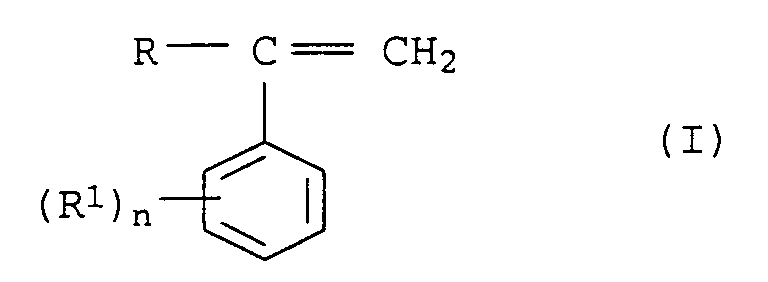
Weiterhin betrifft die Erfindung ein Verfahren zur Herstellung
der Formmassen, die Verwendung der Formmassen zur Herstellung von
Formkörpern, Fasern und Folien, sowie diese Formkörper, Fasern
und Folien. Schließlich betrifft die Erfindung ein Verfahren zur
Verminderung oder Vermeidung der Delamination von Formkörpern.
Polymerblends aus Polycarbonat und Styrolpolymeren, wie beispielsweise
ABS (Acrylnitril-Butadien-Styrol-Polymerisate) oder
ASA (Acrylnitril-Styrol-Acrylat-Polymerisate) zeichnen sich durch
hervorragende mechanische Eigenschaften aus; Einzelheiten findet
der Fachmann z.B. in L. Bottenbruch (Hg.), Kunststoff-Handbuch,
Band 3/2 "Technische Polymer-Blends", Hanser-Verlag, München
1993. Daher finden diese Formmassen in den verschiedensten Bereichen
Verwendung, wie beispielsweise im Automobilbau, im Bausektor,
für Büromaschinen, sowie in elektrischen Geräten und Haushaltsgeräten.
Zur Herstellung großflächiger Formteile ist ein geringer thermischer
Ausdehnungskoeffizient (CTE) wünschenswert. Eine Senkung
des thermischen Ausdehnungskoeffizienten ist durch Zusatz von
Füll- oder Verstärkungsstoffen zu thermoplastischen Formmassen
möglich.
Polymerblends können durch Zusatz von - insbesondere halogenfreien
- Flammschutzmitteln flammwidrig ausgerüstet werden, so
daß die Brandprüfung nach dem Standard UL-94 der Underwriters'
Laboratories Inc. (Melville, Long Island, New York 11746, USA) in
Bezug auf die Brandzeiten erfüllt wird. Besonders geeignete
Flammschutzmittel sind phosphororganische Verbindungen, wie beispielsweise
Phosphorester oder Phosphinoxide. Mit diesen Flammschuztmitteln
ausgerüstete Formmassen sind aus vielen Patentanmeldungen,
wie z.B. den EP-A-Schriften 522 397, 103 230, 174 493,
206 058, 363 608 und 558 266 bekannt.
Weitere Formmassen auf Basis von Polycarbonat und Styrolcopolymeren
werden in den DE-A-Schriften 42 11 061, 40 34 336, 42 00 247,
195 40 312, 196 21 733, 199 59 420, 196 26 156, 196 32 675 und
199 59 410 beschrieben.
In den Beispielen DE-A 42 00 247 wird ein Styrol-Acrylnitril-Copolymerisat
mit einer Viskositätszahl von 100 ml/g, und ein Polycarbonat
mit einer Grenzviskosität von 1,3 ml/g, verwendet. Letztere
wurde an einer 0,5 gew.-%igen Lösung in Methylenchlorid bei
23°C gemessen und entspricht einer Viskositätszahl VZ des Polycarbonats
von 60 ml/g. Jedoch ist in den Formmassen dieser Schrift
Polyphenylenether (PPE) erfindungswesentlich vorhanden, d.h. PPE
fehlt in den Vergleichsbeispielen.
Insbesondere für großflächige Formkörper, z.B. Karosserieteile
für Kraftfahrzeuge (Kotflügel, Heckklappen, Fronthauben, etc.)
müssen die Polymerblends eine hohe Dimensionsbeständigkeit, gute
Zähigkeit und hohe Fließfähigkeit aufweisen. Erforderlich ist außerdem
eine hohe Oberflächenqualität über das gesamte Formteil
hinweg, die auch bei einer Lackierung der Teile erhalten bleibt.
Bei großflächigen Formkörpern aus den genannten Polycarbonat-Styrolcopolymer-Blends
beobachtet man in vielen Fällen eine Delamination
(Abplatzen von Polymermaterial), insbesondere im Bereich
des Angusses.
Bei lackierten Teilen führt die Delamination zu Lackabplatzungen,
was das Formteil unbrauchbar macht.
Die in den zum Stand der Technik genannten Dokumenten beschriebenen
Formmassen erfüllen zwar jeweils eine oder mehrere der genannten
erforderlichen Eigenschaften, jedoch erzielen sie die erforderliche
Kombination von hoher Oberflächenqualität und verminderter
Neigung zur Delamination in einem nicht für alle Anwendungen
ausreichenden Maße.
Es bestand die Aufgabe, den geschilderten Nachteilen abzuhelfen.
Insbesondere bestand die Aufgabe, Polycarbonat-Styrolcopolymer-Blends
bereitzustellen, die neben guter Dimensionsbeständigkeit,
Zähigkeit und Fließfähigkeit zusätzlich eine hohe Qualität der
Oberfläche, und eine verminderte Delamination (reduzierte Delaminationsneigung)
aufweisen.
Die hohe Oberflächenqualität und die verminderte Delamination
sollte über den gesamten Formkörper, insbesondere auch in dessen
Angußbereich, gewährleistet sein.
Weiterhin sollte die gute Oberflächenqualität auch nach Lackierung
des Formkörpers erhalten bleiben.
Demgemäß wurden die eingangs definierten thermoplastischen Formmassen,
deren Herstellungsverfahren und Verwendung zur Herstellung
von Formkörpern, Fasern und Folien, sowie diese Formkörper,
Fasern und Folien gefunden. Außerdem betrifft die Erfindung ein
Verfahren zur Verminderung oder Vermeidung der Delamination von
Formkörpern.
Bevorzugte Ausführungsformen sind den Unteransprüchen zu entnehmen.
Von den Formmassen des Standes der Technik unterscheiden sich die
erfindungsgemäßen Formmassen insbesondere dadurch, daß sie keine
Polyphenylenether enthalten, und dadurch, daß die Viskositätszahlen
- und damit die Molekulargewichte - der Komponenten A (Polycarbonat)
und C (Copolymerisat aus Styrolverbindung und ungesättigtem
Nitril), in ausgewählten, engen und genau definierten Zahlenbereichen
liegen. Nur wenn die Viskositätszahlen von A und von
C in diesen ausgewählten engen Bereichen liegen, weisen die Formmassen
die genannten verbesserten Eigenschaften auf.
Nachstehend werden die bevorzugten Komponenten A bis H erläutert.
Die Komponente A ist in den erfindungsgemäßen Formmassen in einer
Menge von 1 bis 98, vorzugsweise 10 bis 95, insbesondere 20 bis
94 Gew.-% enthalten.
Bevorzugt werden als Komponente A halogenfreie Polycarbonate eingesetzt.
Geeignete halogenfreie Polycarbonate sind beispielsweise
solche auf Basis von Diphenolen der allgemeinen Formel II
 worin X eine Einfachbindung, eine C1- bis C3-Alkylen-, eine C2-bis
C3-Alkyliden-, eine C3- bis C6- Cycloalkylidengruppe, sowie
- S- oder -SO2- bedeutet.
worin X eine Einfachbindung, eine C1- bis C3-Alkylen-, eine C2-bis
C3-Alkyliden-, eine C3- bis C6- Cycloalkylidengruppe, sowie
- S- oder -SO2- bedeutet.
Bevorzugte Diphenole der Formel II sind beispielsweise Hydrochinon,
Resorcin, 4,4'-Dihydroxyphenyl, 2,2-Bis-(4-hydroxyphenyl)-propan,
2,4-Bis-(4-hydroxyphenyl)-2-methylbutan,
1,1-Bis-(4-hydroxyphenyl)-cyclohexan. Besonders bevorzugt sind
2,2-Bis-(4-hydroxyphenyl)-propan und 1,1-Bis-(4-hydroxyphenyl)-cyclohexan,
sowie 1,1-Bis-(4-hydroxyphenyl)-3,3,5-trimethylcyclohexan.
Sowohl Homopolycarbonate als auch Copolycarbonate sind als Komponente
A geeignet, bevorzugt sind neben dem Bisphenol A-Homopolycarbonat
die Copolycarbonate von Bisphenol A.
Die geeigneten Polycarbonate können in bekannter Weise verzweigt
sein, und zwar vorzugsweise durch den Einbau von 0,05 bis
2,0 mol-%, bezogen auf die Summe der eingesetzten Diphenole, an
mindestens trifunktionellen Verbindungen, beispielsweise solchen
mit drei oder mehr als drei phenolischen OH-Gruppen.
Erfindungsgemäß weisen die aromatischen Polycarbonate A eine Viskositätszahl
VZA von 60 bis 63 ml/g auf, bestimmt nach DIN 53727
an einer 0,5 gew.-%igen Lösung in Methylenchlorid bei 23°C.
Der genannte Bereich für VZA von 60 bis 63 ml/g entspricht relativen
Viskositäten hrel von 1,30 bis 1,315, bzw. er entspricht mittleren
Molekulargewichten (Gewichtsmittel) Mw von 46.000 bis 50.000
g/mol.
Die Diphenole der allgemeinen Formel II sind an sich bekannt oder
nach bekannten Verfahren herstellbar.
Die Herstellung der Polycarbonate kann beispielsweise durch Umsetzung
der Diphenole mit Phosgen nach dem Phasengrenzflächenverfahren
oder mit Phosgen nach dem Verfahren in homogener Phase
(dem sogenannten Pyridinverfahren) erfolgen, wobei die jeweils
einzustellende Viskositätszahl (und damit das Molekulargewicht)
in bekannter Weise durch eine entsprechende Menge an bekannten
Kettenabbrechern erzielt wird.
Bezüglich polydiorganosiloxanhaltigen Polycarbonaten siehe beispielsweise
DE-A 33 34 782.
Geeignete Kettenabbrecher sind beispielsweise Phenol, p-t-Butylphenol
aber auch langkettige Alkylphenole wie 4-(1,3-Tetramethylbutylbutyl)-phenol,
gemäß DE-A 28 42 005 oder Monoalkylphenole
oder Dialkylphenole mit insgesamt 8 bis 20 C-Atomen in den Alkylsubstituenten
gemäß DE-A 35 06 472, wie p-Nonylphenol, 3.5-dit-Butylphenol,
p-t-Octylphenol, p-Dodecylphenol, 2-(3,5-dimethylheptyl)-phenol
und 4-(3,5-Dimethylheptyl)-phenol.
Halogenfreie Polycarbonate im Sinne der vorliegenden Erfindung
bedeutet, daß die Polycarbonate aus halogenfreien Diphenolen, halogenfreien
Kettenabbrechern und gegebenenfalls halogenfreien
Verzweigern aufgebaut sind, wobei der Gehalt an untergeordneten
ppm-Mengen an verseifbarem Chlor, resultierend beispielsweise aus
der Herstellung der Polycarbonate mit Phosgen nach dem Phasengrenzflächenverfahren,
nicht als halogenhaltig im Sinne der Erfindung
anzusehen ist. Derartige Polycarbonate mit ppm-Gehalten
an verseifbarem Chlor sind halogenfreie Polycarbonate im Sinne
der vorliegenden Erfindung.
Die Komponente B ist in den erfindungsgemäßen Formmassen in einer
Menge von 1 bis 98, vorzugsweise 1,5 bis 50, insbesondere 2 bis
45 Gew.-% enthalten. Die Komponente B ist vorzugsweise halogenfrei.
Die Pfropfpolymerisate B sind aufgebaut aus
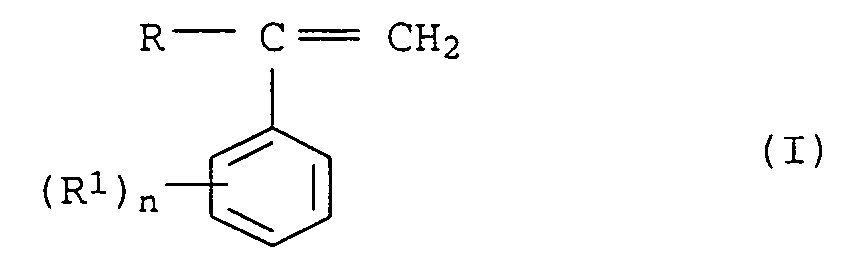
Für die Pfropfgrundlage B1 kommen Polymerisate in Betracht, deren
Glasübergangstemperatur unterhalb von 10°C, vorzugsweise unterhalb
von 0°C, besonders bevorzugt unterhalb von -20°C liegt. Dies sind
z.B. Elastomere auf der Basis von C1- bis C8-Alkylestern der
Acrylsäure, die gegebenenfalls weitere Comonomere enthalten können,
auf der Basis von Ethylen/Propylen, auf der Basis von Dienen
wie Butadien oder auf der Basis von Siloxanen. Als Pfropfkautschuk
ergeben sich dann ASA-, AES-, ABS- bzw. Polysiloxankautschuke.
Es versteht sich, daß zur Herstellung der Pfropfgrundlage B1 auch
Mischungen der genannten Monomere C1-8-Alkylacrylate, Ethylen/Propylen,
Diene und Siloxane verwendet werden können.
Geeignete C1-8-Alkylacrylate sind insbesondere n-Butylacrylat und
2-Ethylhexylacrylat. Als Diene sind insbesondere Butadien und
Isopren geeignet. Geeignete Siloxane sind z.B Hexamethylcyclotrisiloxan,
Octamethylcyclotetrasiloxan, Decamethylcyclopentasiloxan,
Dodecamethylcyclohexasiloxan, Trimethyltriphenylcyclotrisiloxan,
Tetramethyltetraphenylcyclotetrasiloxan und Octaphenylcyclotetrasiloxan,
siehe die DE-A 197 53 542.
Bevorzugt sind Pfropfgrundlagen B1, die aufgebaut sind aus
Als solche bi- oder polyfunktionellen Vernetzungsmonomeren B13
eignen sich Monomere, die vorzugsweise zwei, gegebenenfalls auch
drei oder mehr, zur Copolymerisation befähigte ethylenische Doppelbindungen
enthalten, die nicht in den 1,3-Stellungen konjugiert
sind. Geeignete Vernetzungsmonomere sind beispielsweise Divinylbenzol,
Diallylmaleat, Diallylfumarat, Diallylphthalat,
Triallylcyanurat oder Triallylisocyanurat. Als besonders günstiges
Vernetzungsmonomeres hat sich der Acrylsäureester des Tricyclodecenylalkohols
erwiesen (vgl. DE-A 12 60 135).
Diese Art von Pfropfgrundlagen ist an sich bekannt und in der Literatur
beschrieben, beispielsweise in der DE-A 31 49 358.
Von den Pfropfauflagen B2 sind diejenigen bevorzugt, in denen B21
Styrol oder a-Methylstyrol oder deren Mischungen und B22 Acrylnitril
oder Methacrylnitril bedeutet. Als bevorzugte Monomeren-Gemische
werden vor allem Styrol und Acrylnitril oder a-Methylstyrol
und Acrylnitril eingesetzt. Die Pfropfauflagen B2 sind erhältlich
durch Copolymerisation der Komponenten B21 und B22 in Gegenwart
der Pfropfgrundlagen B1.
Die Pfropfgrundlage B1 der Pfropfpolymerisate B, die aus den Komponenten
B11, gegebenenfalls B12 und B13 aufgebaut ist, wird auch
als ASA-Kautschuk bezeichnet. Ihre Herstellung ist an sich bekannt
und beispielsweise in der DE-A 28 26 925, der
DE-A 31 49 358 und der DE-A 34 14 118 beschrieben.
Die Herstellung der Propfpolymerisate B kann beispielsweise nach
der in der DE-C 12 60 135 beschriebenen Methode erfolgen.
Der Aufbau der Pfropfauflage (Pfropfhülle) der Propfpolymerisate
kann ein- oder zweistufig erfolgen. Im Falle des einstufigen Aufbaus
der Pfropfhülle wird ein Gemisch der Monomeren B21 und B22 in
dem gewünschten Gew.-Verhältnis im Bereich von 95:5 bis 50:50,
vorzugsweise von 90:10 bis 65:35 in Gegenwart des Elastomeren B1,
in an sich bekannter Weise (vgl. z.B. DE-A 28 26 925), vorzugsweise
in Emulsion, polymerisiert.
Im Falle eines zweistufigen Aufbaus der Pfropfhülle B2 macht die
erste Stufe im allgemeinen 20 bis 70 Gew.-%, vorzugsweise 25 bis
50 Gew.-%, bezogen auf B2, aus. Zu ihrer Herstellung werden vorzugsweise
nur Styrol oder substituierte Styrole oder deren Mischungen
B21 verwendet. Die zweite Stufe der Pfropfhülle macht im
allgemeinen 30 bis 80 Gew.-%, insbesondere 50 bis 75 Gew.-%, jeweils
bezogen auf B2, aus. Zu ihrer Herstellung werden bevorzugt
Mischungen aus den Monomeren B21 und den Nitrilen B22 im Gewichtsverhältnis
B21/B22 von im allgemeinen 90:10 bis 60:40, insbesondere
80:20 bis 70:30 angewendet.
Die Bedingungen der Pfropfpolymerisation werden vorzugsweise so
gewählt, daß Teilchengrößen von 50 bis 700 nm (d50-Wert der integralen
Massenverteilung) resultieren. Maßnahmen hierzu sind bekannt
und z.B in der DE-A 28 26 925 beschrieben. Durch das Saatlatex-Verfahren
kann direkt eine grobteilige Kautschukdispersion
hergestellt werden.
Um möglichst zähe Produkte zu erzielen, ist es häufig von Vorteil,
eine Mischung mindestens zweier Pfropfpolymerisate mit unterschiedlicher
Teilchengröße zu verwenden. Um dies zu erreichen,
werden die Teilchen des Kautschuks in bekannter Weise, z.B. durch
Agglomeration, vergrößert, so daß der Latex bimodal (d50 etwa 50
bis 180 nm und 200 bis 700 nm) aufgebaut ist.
In einer bevorzugten Ausführungsform wird eine Mischung aus zwei
Pfropfpolymerisaten mit Teilchendurchmessern (d50-Wert der integralen
Massenverteilung) von 50 bis 180 nm bzw. 200 bis 700 nm im
Gewichtsverhältnis 70:30 bis 30:70 eingesetzt. Der chemische Aufbau
der beiden Pfropfpolymerisate ist vorzugsweise derselbe, obwohl
die Hülle des grobteiligen Pfropfpolymerisates insbesondere
auch zweistufig aufgebaut werden kann.
Mischungen aus der Komponente A und B, wobei letztere ein grobund
ein feinteiliges Pfropfpolymerisat aufweist, sind z.B. in der
DE-A 36 15 607 beschrieben. Mischungen aus der Komponente A und
B, wobei letztere eine zweistufige Pfropfhülle aufweist, sind aus
EP-A-0 111 260 bekannt.
Die Komponente C ist in den erfindungsgemäßen Formmassen in einer
Menge von 1 bis 98, vorzugsweise 3,5 bis 50, insbesondere 4 bis
40 Gew.-% enthalten. Sie ist vorzugsweise halogenfrei.
Die Copolymerisate C sind erfindungsgemäß aus
Die Copolymerisate C sind harzartig, thermoplastisch und kautschukfrei.
Besonders bevorzugte Copolymerisate C sind solche aus
Styrol und Acrylnitril, aus a-Methylstyrol und Acrylnitril oder
aus Styrol, a-Methylstyrol und Acrylnitril. Es können auch mehrere
der beschriebenen Copolymere gleichzeitig eingesetzt werden.
Solche Copolymerisate entstehen häufig bei der Pfropfpolymerisation
zur Herstellung der Komponente B als Nebenprodukte, besonders
dann, wenn große Mengen Monomere auf kleine Mengen Kautschuk
gepfropft werden.
Erfindungsgemäß weisen die Copolymerisate C eine Viskositätszahl
VZC von 90 bis 120 ml/g auf, bestimmt nach DIN 53727 an einer
0,5 gew.-%igen Lösung in N,N-Dimethylformamid (DMF) bei 23°C.
Der genannte Bereich VZC von 90 bis 120 ml/g entspricht mittleren
Molekulargewichten (Gewichtsmittel) Mw von 220.000 bis 280.000 g/mol.
Bevorzugt haben die Copolymerisate C eine Viskositätszahl VZC von
95 bis 110 ml, bestimmt wie zuvor definiert. Dies entspricht gewichtsmittleren
Molekulargewichten Mw von 230.000 bis 260.000 g/mol.
Die Copolymerisate sind an sich bekannt und lassen sich z.B.
durch radikalische Polymerisation, insbesondere Emulsions-, Suspensions-,
Lösungs-, Masse- und Fällungspolymerisation herstellen.
Einzelheiten dieser Verfahren nennt z.B. R. Vieweg und
G. Daumiller (Hg.), Kunststoff-Handbuch, Band V "Polystyrol",
S. 118ff, Hanser-Verlag, München 1969.
Wie eingangs bereits erwähnt, weisen die erfindungsgemäßen Formmassen das verbesserte vorteilhafte Eigenschaftsprofil - hohe Dimensionsbeständigkeit, gute Zähigkeit, hohe Fließfähigkeit, hohe Oberflächenqualität über das gesamte Formteil auch nach Lackierung, und verminderte Delamination (reduzierte Delaminationsneigung) - nur dann auf, wenn beide Viskositätszahlen VZA und VZC in den ausgewählten engen Bereichen liegen.
Wie eingangs bereits erwähnt, weisen die erfindungsgemäßen Formmassen das verbesserte vorteilhafte Eigenschaftsprofil - hohe Dimensionsbeständigkeit, gute Zähigkeit, hohe Fließfähigkeit, hohe Oberflächenqualität über das gesamte Formteil auch nach Lackierung, und verminderte Delamination (reduzierte Delaminationsneigung) - nur dann auf, wenn beide Viskositätszahlen VZA und VZC in den ausgewählten engen Bereichen liegen.
In einer besonders bevorzugten Ausführungsform weisen die erfindungsgemäßen
Formmassen eine bestimmte Differenz ΔVZ der Viskositätszahlen
VZA und VZC auf: besonders bevorzugt beträgt die Differenz
VZ der Viskositätszahlen, berechnet nach der Formel
ΔVZ = VZC - VZA
27 bis 60 Einheiten [ml/g], insbesondere 32 bis 40 Einheiten
[ml/g].
Dabei sind VZA und VZC definiert und werden bestimmt wie oben beschrieben,
also in verschiedenen Lösungsmitteln (und nicht etwa
unter identischen Bedingungen, z.B. im gleichen Lösungsmittel).
Die Komponente D ist in den erfindungsgemäßen Formmassen in einer
Menge von 0 bis 25, vorzugsweise 0 bis 20, insbesondere 0 bis
17 Gew.-% enthalten.
Bei der Komponente D handelt es sich um Füllstoffe. Es kommen
insbesondere teilchenförmige mineralische Füllstoffe D1 und faserförmige
Füllstoffe D2 in Betracht. Man kann teilchenförmige
mineralische Füllstoffe D1 alleine, oder faserförmige Füllstoffe
D2 alleine, verwenden. Bevorzugt verwendet man jedoch als Komponente
D der erfindungsgemäßen Formmassen Mischungen von D1 und
D2.
In den Mischungen beträgt der Anteil der Komponente D1 vorzugsweise
5 bis 95 und insbesondere 5 bis 90 Gew.-%, der Anteil der
Komponente D2 vorzugsweise 5 bis 95 und insbesondere 10 bis
95 Gew.-%, bezogen auf die Komponente D.
Als teilchenförmige mineralische Füllstoffe D1 eignen sich amorphe
Kieselsäure, Carbonate wie Magnesiumcarbonat (Kreide), gepulverter
Quarz, Glimmer, unterschiedlichste Silikate wie Tone, Muskovit,
Biotit, Suzoit, Zinnmaletit, Talkum, Chlorit, Phlogophit,
Feldspat, Calciumsilikate wie Wollastonit oder Kaolin, besonders
kalzinierter Kaolin.
Nach einer besonders bevorzugten Ausführungsform werden teilchenförmige
Füllstoffe verwendet, von denen mindestens 95 Gew.-%, bevorzugt
mindestens 98 Gew.-% der Teilchen einen Durchmesser
(größte Ausdehnung), bestimmt am fertigen Produkt, von weniger
als 45, bevorzugt weniger als 40 Mikrometer aufweisen und deren
sogenanntes Apektverhältnis vorzugsweise im Bereich von 1 bis 25,
bevorzugt im Bereich von 2 bis 20 liegt, bestimmt am fertigen
Produkt, d.h. in der Regel einem Spritzgußformteil. Das Aspektverhältnis
ist das Verhältnis von Teilchendurchmesser zu Dicke
(größter Ausdehnung zu kleinster Ausdehnung).
Die Teilchendurchmesser können dabei z.B. dadurch bestimmt werden,
daß elektronenmikroskopische Aufnahmen von Dünnschnitten der
Polymermischung aufgenommen und mindestens 25, bevorzugt mindestens
50 Füllstoffteilchen für die Auswertung herangezogen werden.
Ebenso kann die Bestimmung der Teilchendurchmesser über Sedimentationsanalyse
erfolgen, gemäß Transactions of ASAE, Seite
491 (1983). Der Gewichtsanteil der Füllstoffe, deren Durchmesser
weniger als 40 Mikrometer beträgt, kann auch mittels Siebanalyse
gemessen werden.
Besonders bevorzugt werden als teilchenförmige Füllstoffe D1 Talkum,
Kaolin, wie calcinierter Kaolin oder Wollastonit oder Mischungen
aus zwei oder allen dieser Füllstoffe. Darunter wird
Talkum mit einem Anteil von mindestens 95 Gew.-% an Teilchen mit
einem Durchmesser von kleiner als 40 Mikrometer und einem Aspektverhältnis
von 1,5 bis 25, jeweils bestimmt am fertigen Produkt,
besonders bevorzugt. Kaolin hat bevorzugt einen Anteil von mindestens
95 Gew.-% an Teilchen mit einem Durchmesser von kleiner als
20 Mikrometer und einem Aspektverhältnis von 1,2 bis 20, jeweils
bestimmt am fertigen Produkt.
Als Komponente D2 werden faserförmige Füllstoffe wie Kohlenstofffasern,
Kaliumtitanat-Whisker, Aramidfasern oder bevorzugt Glasfasern
eingesetzt, wobei mindestens 50 Gew.-% der faserförmigen
Füllstoffe (Glasfasern) eine Länge von mehr als 50 Mikrometer
aufweisen. Die verwendeten (Glas)fasern können vorzugsweise einen
Durchmesser von bis zu 25, besonders bevorzugt 5 bis 13 Mikrometer
aufweisen. Vorzugsweise weisen mindestens 70 Gew.-% der Glasfasern
eine Länge von mehr als 60 Mikrometer auf. Besonders bevorzugt
betragt im fertigen Formteil die mittlere Länge der Glasfasern
0,08 bis 0,5 mm. Die Länge der Glasfasern bezieht sich auf
ein fertiges Formteil, das beispielsweise nach dem Spritzgießen
erhalten wird. Dabei können die Glasfasern den Formmassen bereits
in der entsprechend abgelängten Form oder auch in Form von Endlossträngen
(Rovings) zugesetzt werden.
Die Komponente E wird in den erfindungsgemäßen Formmassen in einer
Menge von 0 bis 10, vorzugsweise 0 bis 5 Gew.-% eingesetzt.
Die hochmolekularen Copolymeren E sind erfindungsgemäß aus mindestens
zwei unterschiedlichen Alkylestern, aromatischen oder alkylaromatischen
Estern der Acrylsäure oder der Methacrylsäure oder
deren Mischungen aufgebaut.
Im allgemeinen haben die Ester 1 bis 10, bevorzugt 1 bis 8 Kohlenstoffatome
im Alkylrest. Der Alkylrest kann sowohl linear als
auch verzweigt sein. Zu den Alkylresten zählt Methyl, Ethyl, n-Propyl,
i-Propyl, n-Butyl, i-Butyl, t-Butyl, n-Pentyl, 2-Ethylhexyl
oder Cyclohexyl. Bevorzugt werden Methylmethacrylat, Cyclohexylmethacrylat,
n-Butylacrylat oder 2-Ethylhexylacrylat verwendet.
Unter den aromatischen Estern sind Ester mit 6 bis 18 Kohlenstoffatomen
bevorzugt, darunter insbesondere Phenyl. Besonders
bevorzugt werden Copolymere E, die von 70 bis 99, insbesondere
von 80 bis 93 Gew.-% Methylmethacrylat und von 1 bis 30, insbesondere
von 7 bis 20 Gew.-% n-Butylacrylat enthalten.
Erfindungsgemäß haben die Polymeren E ein hohes Molekulargewicht.
In der Regel weisen sie Molekulargewichte (Gewichtsmittelwert Mw)
von mindestens 1.000.000 g/mol (gemessen mittels Gelpermeationschromatographie
in Tetrahydrofuran gegen einen Polystyrolstandard)
auf. Bevorzugte Copolymere E haben Molekulargewichte Mw von
1.000.000 g/mol oder darüber, beispielsweise mindestens
1.200.000 g/mol. Im allgemeinen haben die Copolymeren E eine
Glasübergangstemperatur im Bereich von 40 bis 125, bevorzugt 70
bis 120°C (bestimmt mittels DSC-Messungen, bei einer Aufheizrate
von 10 K/min, zweiter Cyclus nach Aufheizen auf 175°C und Abkühlen
auf Raumtemperatur).
Die Komponente F ist in den erfindungsgemäßen Formmassen in einer
Menge von 0 bis 2, vorzugsweise 0 bis 1,8, insbesondere 0 (bei
Vorliegen 0,1) bis 1,5 Gew.-% enthalten.
Komponente F ist eine - bevorzugt niedermolekulare halogenfreie -
organische Säure.
Unter niedermolekular im Sinne der vorliegenden Erfindung werden
bis zu mehrkernige, beispielsweise bis zu fünfkernige Verbindungen,
insbesondere monomolekulare Verbindungen verstanden.
Die Säuren sind bevorzugt halogenfrei, d.h. enthalten im molekularen
Gerüst keine Halogene. Säuren, die geringfügige halogenhaltige
Verunreinigungen aufweisen, sind dagegen erfindungsgemäß mit
umfaßt. Unter Säuren in Sinne der Erfindung werden auch deren Hydrate
verstanden.
Vorteilhafterweise werden Säuren eingesetzt, die bei den Verarbeitungstemperaturen
nicht oder nur gering flüchtig sind bzw. bei
Temperaturen von bis zu etwa 320°C keine oder nur geringe Zersetzungsneigung
zeigen.
Die Säuren können eine, zwei oder mehrere, beispielsweise bis zu
zehn Säuregruppen enthalten.
Bevorzugt werden organische Säuren eingesetzt. Es kommen sowohl
aromatische als auch aliphatische Säuren in Betracht. Ebenso können
aliphatisch-aromatische Säuren verwendet werden. Zu den bevorzugten
Säuren zählen Mono-, Di- und Polycarbonsäuren, z.B.
Palmitinsäure, Stearinsäure, Benzoesäure und substituierte Benzoesäuren,
Isophthalsäure, Terephthalsäure, Trimellithsäure, Sulfonsäuren
wie p-Toluolsulfonsäure und aliphatische Sulfonsäuren,
Fumarsäure, Zitronensäure, Mandelsäure oder Weinsäure.
Besonders bevorzugt werden Zitronensäure oder p-Toluolsulfonsäure
oder deren Mischungen eingesetzt. Beispielsweise kann darin der
Gewichtsanteil der Zitronensäure von 1 bis 99, bevorzugt von 10
bis 90 % und der der p-Toluolsulfonsäure entsprechend von 1 bis
99, bevorzugt von 10 bis 90 % betragen.
Komponente G ist in den erfindungsgemäßen Formmassen in einer
Menge von 0 bis 25, vorzugsweise 0 bis 20, insbesondere 0 (bei
Vorliegen 0,2) bis 15 Gew.-% enthalten.
Komponente G ist eine halogenfreie Phosphorverbindung.
Als Komponente G können alle bekannten üblichen phosphorhaltigen
Flammschutzmittel eingesetzt werden. Bevorzugt werden die in der
DE-A-40 34 336 und/oder die in der EP-A 0 522 397 aufgeführten
Flammschutzmittel eingesetzt. Beispiele sind Tri-(2,6- dimethylphenyl)phosphat,
Triphenylphosphat, Tricresylphosphat, Diphenyl-2-ethyl-cresylphosphat,
Diphenyl-cresylphosphat, Tri(isopropylphenyl)phosphat
sowie Phosphorsäure-bis-phenyl-(4-phenylphenyl)-ester,
Phosphorsäure-phenyl-bis-(4-phenylphenyl)-ester,
Phosphorsäure-tris-(4-phenylphenyl)-ester, Phosphorsäure-bis-phenyl-(benzylphenyl)-ester,
Phosphorsäure-phenyl-bis-(benzylphenyl)-ester,
Phosphorsäure-tris-(benzylphenyl)-ester, Phosphorsäure-bis-phenyl-(1-phenylethyl)-phenyl)-ester,
Phosphorsäurephenyl-bis-(1-phenylethyl)-phenyl)-ester,
Phosphorsäuretris-(1-phenylethyl)-phenyl)-ester,
Phosphorsäure-bis-phenyl-(1-methyl-1-phenylethyl)-phenyl-ester,
Phosphorsäure-phenylbis-(1-methyl-1-phenylethyl)-phenyl-ester,
Phosphorsäuretris-((1-methyl-1-phenylethyl)-phenyl)-ester,
Phosphorsäurephenyl-bis-(4-(1-phenylethyl)-2,6-dimethylphenyl)-ester,
Phosphorsäure-bis-phenyl-2,4-di-benzylphenylester,
Phosphorsäure-bis-phenyl-2,4-di(1-phenylethyl)-phenylester
und Phosphorsäure-bis-phenyl-2,4-di-(1-methyl-1-phenylethyl)-phenylester.
Sie können auch
im Gemisch mit Triphenylphosphinoxid oder Tri-(2,6-dimethylphenyl)phosphinoxid
eingesetzt werden.
Zudem sind als Flammschutzmittel Resorcinoldiphosphat und entsprechend
höhere Oligomere, Hydrochinondiphosphat und entsprechende
höhere Oligomere bevorzugt.
Außerdem wird auf die in EP-A-0 103 230, EP-A-0 174 493,
EP-A-0 206 058, EP-A-0 363 608 und EP-A-0 558 266 genannten
Phosphorverbindungen verwiesen.
Komponente H wird in Mengen von 0 bis 45, vorzugsweise 0 bis 20,
insbesondere 0 (bei Vorliegen 0,4) bis 10 Gew.-% eingesetzt.
Komponente H sind weitere Zusatzstoffe.
Als weitere Zusatzstoffe sind beispielsweise Verarbeitungshilfsmittel,
Stabilisatoren und Oxidationsverzögerer, Mittel gegen
Wärmezersetzung und Zersetzung durch ultraviolettes Licht, Gleitund
Entformungsmittel, Flammschutzmittel, Farbstoffe und Pigmente
und Weichmacher zu nennen. Deren Anteil beträgt im allgemeinen 0
bis 45, vorzugsweise 0 bis 20, insbesondere 0 (bei Vorliegen 0,2)
bis 10 Gew.-%, bezogen auf das Gesamtgewicht der Zusammensetzung.
Pigmente und Farbstoffe sind allgemein in Mengen von 0 bis 4, bevorzugt
0 bis 3,5 und insbesondere 0 (bei Vorliegen 0,5) bis
3 Gew.-% enthalten.
Die Pigmente zur Einfärbung von Thermoplasten sind allgemein bekannt,
siehe z.B. R. Gächter und H. Müller, Taschenbuch der
Kunststoffadditive, Carl Hanser Verlag, 1983, S. 494 bis 510. Als
erste bevorzugte Gruppe von Pigmenten sind Weißpigmente zu nennen
wie Zinkoxid, Zinksulfid, Bleiweiß (2 PbCO3.Pb(OH)2), Lithopone,
Antimonweiß und Titandioxid. Von den beiden gebräuchlichsten Kristallmodifikationen
(Rutil- und Anatas-Typ) des Titandioxids wird
insbesondere die Rutilform zur Weißfärbung der erfindungsgemäßen
Formmassen verwendet.
Schwarze Farbpigmente, die erfindungsgemäß eingesetzt werden können,
sind Eisenoxidschwarz (Fe3O4), Spinellschwarz (Cu(Cr,Fe)2O4),
Manganschwarz (Mischung aus Mangandioxid, Siliciumoxid und Eisenoxid),
Kobaltschwarz und Antimonschwarz sowie besonders bevorzugt
Ruß, der meist in Form von Furnace- oder Gasruß eingesetzt wird
(siehe hierzu G. Benzing, Pigmente für Anstrichmittel, Expert-Verlag
(1988), S. 78ff).
Selbstverständlich können zur Einstellung bestimmter Farbtöne anorganische
Buntpigmente wie Chromoxidgrün oder organische Buntpigmente
wie Azopigmente und Phthalocyanine erfindungsgemäß eingesetzt
werden. Derartige Pigmente sind allgemein im Handel üblich.
Weiterhin kann es von Vorteil sein, die genannten Pigmente bzw.
Farbstoffe in Mischung einzusetzen, z.B. Ruß mit Kupferphthalocyaninen,
da allgemein die Farbdispergierung im Thermoplasten erleichtert
wird.
Weitere geeignete Farbmittel sind z.B. in R. Gächter und H. Müller
(Hg.), Plastics Additives Handbook, 4th ed. 1993, Reprint
Nov. 1996, Hanser Verlag München, auf S. 647 bis 676 beschrieben.
Außerdem sind fluoreszierende Weißmacher zu nennen, z.B. Bis-benzoxazole,
Triazin-phenylcumarine, Benzotriazol-phenylcumarine,
Naphthotriazol-phenylcumarine, Bis-(styryl)bisphenyle. Weitere
Beispiele nennt das erwähnte Buch von Gächter und Müller (4. Auflage
1993) auf S. 779-785.
Oxidationsverzögerer und Wärmestabilisatoren, die den thermoplastischen
Massen gemäß der Erfindung zugesetzt werden können, sind
z.B. Halogenide von Metallen der Gruppe I des Periodensystems,
z.B. Natrium-, Lithium-Halogenide, ggf. in Verbindung mit Kupfer-(I)-Halogeniden,
z.B. Chloriden, Bromiden und Iodiden. Die
Halogenide, insbesondere des Kupfers, können auch noch elektronenreiche
p-Liganden enthalten. Als Beispiel für derartige Kupferkomplexe
seien Cu-Halogenid-Komplexe mit z.B. Triphenylphosphin
genannt. Weiterhin können Zinkfluorid und Zinkchlorid verwendet
werden. Ferner sind sterisch gehinderte Phenole, Hydrochinone,
substituierte Vertreter dieser Gruppe, sekundäre aromatische
Amine, gegebenenfalls in Verbindung mit phosphorhaltigen
Säuren bzw. deren Salze, und Mischungen dieser Verbindungen, vorzugsweise
in Konzentrationen bis zu 1 Gew.-%, bezogen auf das Gewicht
der Mischung, einsetzbar.
Beispiele für UV-Stabilisatoren sind verschiedene substituierte
Resorcine, Salicylate, Benzotriazole und Benzophenone, die im
allgemeinen in Mengen bis zu 2 Gew.-% eingesetzt werden.
Gleit- und Entformungsmittel, die in der Regel in Mengen bis zu
1 Gew.-% der thermoplastischen Masse zugesetzt werden, sind Stearinsäure,
Stearylalkohol, Stearinsäurealkylester und -amide sowie
Ester des Pentaerythrits mit langkettigen Fettsäuren. Es können
auch Salze des Calciums, Zinks oder Aluminiums der Sterainsäure
sowie Dialkylketone, z.B. Distearylketon, eingesetzt werden.
Weiterhin können auch Ethylenoxid-Propylenoxid-Copolymere als
Gleit- und Entformungsmittel verwendet werden.
Insbesondere vorteilhaft ist der Einsatz von UV- und Wärmestabilisatoren
für Polycarbonat und Styrolcopolymere. Beispiele geeigneter
Stabilisatoren sind zudem in DE-A-44 19 897 aufgeführt.
Weiterhin können Umesterungsinhibitoren, wie Phosphate, Phosphite
oder Phosphonite enthalten sein.
Die Herstellung der erfindungsgemäßen thermoplastischen Formmassen
erfolgt nach an sich bekannten Verfahren durch Mischen der
Komponenten. Es kann vorteilhaft sein, einzelne Komponenten vorzumischen.
Auch das Mischen der Komponenten in Lösung unter Entfernen
der Lösungsmittel ist möglich. Geeignete organische Lösungsmittel
sind beispielsweise Chlorbenzol, Gemische von Chlorbenzol
und Methylenchlorid oder Gemische von Chlorbenzol und aromatischen
Kohlenwasserstoffen wie Toluol. Vorzugsweise wird ohne
chlorhaltige Lösungsmittel gearbeitet. Das Eindampfen der Lösungsmittelgemische
kann beispielsweise in Eindampfextrudern erfolgen.
Das Mischen der beispielsweise trockenen Komponenten A bis C und
gegebenenfalls D bis H kann nach allen bekannten Methoden erfolgen.
Vorzugsweise geschieht das Mischen bei Temperaturen von 200
bis 320°C durch gemeinsames Extrudieren, Kneten oder Verwalzen der
Komponenten, wobei die Komponenten gegebenenfalls zuvor aus der
bei der Polymerisation erhaltenen Lösung oder aus der wäßrigen
Dispersion isoliert worden sind.
Demnach wurde auch ein Verfahren zur Herstellung der erfindungsgemäßen
Formmassen durch Mischen der trockenen Komponenten A
bis C und gegebenenfalls D bis H bei 200 bis 320°C gefunden.
Die erfindungsgemäßen thermoplastischen Formmassen können nach
den bekannten Verfahren der Thermoplastverarbeitung verarbeitet
werden, beispielsweise durch Extrudieren, Spritzgießen, Kalandrieren,
Hohlkörperblasen oder Sintern.
Die erfindungsgemäßen Formmassen können zur Herstellung von Formkörpern,
Fasern und Folien eingesetzt werden. Zudem können sie
besonders bevorzugt zur Herstellung von Karosserieteilen eingesetzt
werden.
Insbesondere sind die Formmassen zur Herstellung von Karosserieteilen
im Automobilsektor geeignet, besonders bevorzugt für großflächige
Karosserieaußenteile wie Kotflügel, Heckklappen, Fronthauben,
etc.
Die Erfindung betrifft demnach auch entsprechende Formkörper, Fasern
oder Folien sowie Karosserieteile.
Die erfindungsgemäßen Formmassen sowie Formkörper, Fasern und Folien
zeichnen sich aus durch hohe Dimensionsbeständigkeit, gute
Zähigkeit, hohe Fließfähigkeit, hohe Oberflächenqualität über das
gesamte Formteil auch nach Lackierung, und verminderte Delamination
(reduzierte Delaminationsneigung).
Die Erfindung wird durch die nachfolgenden Beispiele näher erläutert.
Die mittlere Teilchengröße und die Teilchengrößenverteilung wurden
aus der integralen Massenverteilung an einer veraschten und
mittels Ultraschall dispergierten Probe bestimmt. Bei den mittleren
Teilchengrößen handelt es sich in allen Fällen um das Gewichtsmittel
der Teilchengrößen, wie sie mittels einer analytischen
Ultrazentrifuge entsprechend der Methode von W. Scholtan
und H. Lange, Kolloid-Z, und Z.-Polymere 250 (1972), Seiten 782
bis 796 bestimmt wurden. Die Ultrazentrifugenmessung liefert die
integrale Massenverteilung des Teilchendurchmessers einer Probe.
Hieraus läßt sich entnehmen, wieviel Gewichtsprozent der Teilchen
einen Durchmesser gleich oder kleiner einer bestimmten Größe haben.
Der mittlere Teilchendurchmesser, der auch als d50-Wert der
integralen Massenverteilung bezeichnet wird, ist dabei als der
Teilchendurchmesser definiert, bei dem 50 Gew.-% der Teilchen einen
kleineren Durchmesser haben als der Durchmesser, der dem
d50-Wert entspricht. Ebenso haben dann 50 Gew.-% der Teilchen einen
größeren Durchmesser als der d50-Wert. Zur Charakterisierung
der Breite der Teilchengrößenverteilung der Kautschukteilchen
werden neben dem d50-Wert (mittlerer Teilchendurchmesser) die sich
aus der integralen Massenverteilung ergebenden d10- und d90-Werte
herangezogen. Der d10- bzw. d90-Wert der integralen Massenverteilung
ist dabei entsprechend dem d50-Wert definiert mit dem Unterschied,
daß sie auf 10 bzw. 90 Gew.-% der Teilchen bezogen sind.
Der Quotient Q = (d90-d10)/d50 stellt ein Maß für die Verteilungsbreite
der Teilchengröße dar.
Die Komponenten A bis H wurden auf einem Zweiwellenextruder
(ZSK 30 von Werner & Pfleiderer) bei 250 bis 280°C gemischt, die
Mischung als Strang ausgetragen, gekühlt und granuliert.
Das getrocknete Granulat wurde im Spritzguß bei 260 bis 280°C zu
Normkleinstäben, ISO-Prüfkörpern, Platten 60 x 60 x 3 mm und
Platten 1200 x 300 x 3 mm verarbeitet. Die Werkzeugoberflächentemperatur
betrug in allen Fällen 80°C.
Die Wärmeformbeständigkeit Vicat B der Proben wurde mittels der
Vicat-Erweichungstemperatur ermittelt. Die Vicat-Erweichungstemperatur
wurde nach DIN 53 460, Methode B, mit einer Kraft von
49,05 N und einer Temperatursteigerung von 50 K je Stunde an
Normkleinstäben ermittelt.
Die Fließfähigkeit der Formmassen wurde als Melt Volume Index
(MVI) nach DIN 53 735 bei einer Temperatur von 260°C und 5 kg Belastung
bestimmt.
Das Bruchverhalten wurde als Schädigungsarbeit Ws an kleinen Platten
60x60x3 mm mittels des Durchstoßtests nach DIN 53 443 bei
-30°C geprüft (Durchstoßarbeit).
Die Kerbschlagzähigkeit aK wurde nach ISO 179 leA bei 23°C an ISO-Prüfkörpern
geprüft.
Die Oberflächenqualität der Probekörper wurde an großen Platten
(1200x300x3 mm) visuell beurteilt, wobei folgende Abkürzungen
verwendet wurden:
Delaminationstest : die Delaminationsneigung der Formkörper wurde
mit einem Delaminationstest geprüft. Dazu wurden aus der großen
Platte (1200x300x3 mm) in der Nähe des Angusses durch Aussägen
kleine Platten (60x60x3 mm) entnommen. Diese kleinen Platten wurden
mit einem Schraubenzieher manuell angeritzt und das erhaltene
Erscheinungsbild wurde qualitativ beurteilt. Dabei bedeuten:
Dampfstrahltest: lackierte Probekörper wurden mit einem Dampfstrahltest
auf Delaminiation geprüft. Dazu wurden wiederum aus
der großen Platte (1200x300x3 mm) in der Nähe des Angusses kleine
Platten (60x60x3 mm) ausgesägt. Diese kleinen Platten wurden mit
einem off-line Lacksystem (Primer 78566, Basislack 75803 und
Klarlack 76562, alle von Fa. Wörwag, Stuttgart) in üblicher Weise
lackiert. Der Dampfstrahltest erfolgte nach der DaimlerChrysler-Norm
DBL 5416, indem zunächst die lackierten kleinen Platten mit
einem Schraubenzieher kreuzförmig angeritzt wurden. Der auf diese
Weise eingebrachte Riss ging durch die Lackschicht hindurch bis
in das Kunststoff Substrat hinein. Danach wurde mit einem Dampfstrahlgerät
ein fächerförmiger Wasserstrahl von 60°C Wassertemperatur
und 60 bar Wasserdruck 60 sec lang auf den Riss gerichtet.
Der Abstand zwischen der lackierten Platte und dem Düsenkopf des
Dampfstrahlgerätes betrug 10 cm. Der Test galt als bestanden,
wenn die durch die Einwirkung des Wasserstrahls verursachte seitliche
Ausweitung des Risses in jede Richtung kleiner als 1 mm
war. Es bedeuten:
- D:
- Delamination von 1 mm oder mehr, d.h. Material und/oder Lack platzte ab
- iO:
- in Ordnung, d.h. keine Abplatzungen von Material und Lack, oder kleiner als 1 mm.
Die Zusammensetzungen und Eigenschaften oder Formmassen sind der
nachfolgenden Tabellen zu entnehmen. V bedeutet zum Vergleich,-bedeutet
nicht vorhanden bzw. nicht bestimmt. Berechnetes
ΔVZ = VZC - VZA .
| Zusammensetzung der Formmassen [Gew.-%] | |||||||||
| Beispiel → | V1 | V2 | V3 | 4 | V5 | V6 | 7 | V8 | 9 |
| A | 60 | 60 | 60 | 60 | 60 | 60 | 60 | 60 | 60 |
| B1 | 7,5 | 7,5 | 7,5 | 7,5 | 7,5 | 10 | 10 | - | - |
| B2 | 7,5 | 7,5 | 7,5 | 7,5 | 7,5 | 10 | 10 | 15 | 15 |
| C1 | 24,5 | - | - | - | - | 9,3 | - | 24,5 | - |
| C2 | - | 24,5 | - | - | - | - | - | - | - |
| C3 | - | - | 24,5 | - | - | - | - | - | - |
| C4 | - | - | - | 24,5 | - | - | 9,3 | - | 24,5 |
| C5 | - | - | - | - | 24,5 | - | - | - | - |
| D1 | - | - | - | - | - | 9,5 | 9,5 | - | - |
| D2 | - | - | - | - | - | 0,5 | 0,5 | - | - |
| F | - | - | - | - | - | 0,2 | 0,2 | - | - |
| H | 0,5 | 0,5 | 0,5 | 0,5 | 0,5 | 0,5 | 0,5 | 0,5 | 0,5 |
| ΔVZ | 10,7 | 18,7 | 25,7 | 38,7 | 62,7 | 10,7 | 38,7 | 10,7 | 38,7 |
| Eigenschaften der Formmassen | |||||||||
| Beispiel | V1 | V2 | V3 | 4 | V5 | V6 | 7 | V8 | 9 |
| Vicat B [°C] | 121 | 121 | 121 | 121 | 121 | 127 | 127 | 121 | 121 |
| Durchstoßarbeit WS bei-30°C [Nm] | 28 | 31 | 33 | 49 | 35 | 51 | 59 | 41 | 43 |
| MVI [ml/10 min] | 19 | 19 | 18 | 17 | 9 | 11 | 10 | 19 | 18 |
| Kerbschlagzähig-keit aK[kJ/m2] | 67 | 66 | 64 | 68 | 56 | 32 | 34 | 64 | 66 |
| Oberflächenqualität | SA | SA | iO | iO | iO | iO | iO | SA | iO |
| Deliminationstest | D | D | D | iO | iO | D | iO | D | iO |
| Dampfstrahltest | - | - | D | iO | iO | D | iO | D | iO |
Die Beispiele V1 bis V5 betreffen ungefüllte Formmassen enthaltend
je eines oder Copolymere C1 bis C5; ansonsten war die Zusammensetzung
identisch. Bei nicht erfindungsgemäßer Verwendung von
Styrol-Acrylnitril-Copolymeren mit Viskositätszahlen VZC unter
90 ml/g (Komponenten C1 bis C3 mit VZC von 72 bis 87 ml/g, Vergleichsbeispielen
V1 bis V3) war die Durchstoßarbeit WS mit etwa
30 Nm vergleichsweise gering, und die Oberflächenqualität mangelhaft
bzw. der Delaminationstest und der Dampfstrahltest wurden
nicht bestanden.
Verwendete man hingegen erfindungsgemäß Styrol-Acrylnitril-Copolymere
C4 mit VZC von 90 bis 120 ml/g (hier: Beispiel 4 mit VZA
100 ml/g), war die Durchstoßarbeit WS 49 Nm, also deutlich verbessert.
Außerdem war die Oberflächenqualität gut und sowohl Delaminationstest
als auch Dampfstrahltest wurden bestanden (keine
Delamination).
Bei nicht erfindungsgemäßer Verwendung eines Copolymeren C5 im
mit VZC über 120 ml/g (hier: Vergleichsbeispiel V5 mit VZC
124 ml/g) war zwar die Oberfläche in Ordnung und die Delaminations
-und Dampfstrahlstests wurden bestanden, jedoch waren die
mechanischen Eigenschaften deutlich verschlechtert: Durchstoßarbeit
WS 35 statt erfindungsgemäß 49 Nm, Kerbschlagzähigkeit 56
statt erfindungsgemäß 68 kJ/m2. Außerdem sank die Fließfähigkeit
stark ab: MVI 9 statt erfindungsgemäß 17 ml/10 min.
Die Beispiele V6 und 7 betreffen füllstoffhaltige Formmassen, die
sich ebenfalls in der Komponente C unterschieden. Die nicht erfindungsgemäße
Verwendung von C1 mit VZC 72 ml/g, Vergleichsbeispiel
V6, ergab schlechtere mechanische Eigenschaften und Delaminations
-und Dampfstrahltests wurden nicht bestanden. Dagegen
wiesen erfindungsgemäße Formmassen, Beispiel 7, enthaltend C4,
verbesserte mechanische Eigenschaften auf: WS 59 statt 51 Nm, und
sie bestanden die Delaminations- und Dampfstrahltests.
Die Beispiele V8 und 9 betreffen Formmassen, die im Gegensatz zu
den Beispielen V1 bis 7 nur grobteiliges Pfropfpolymerisat B2
(anstelle von fein - und grobteiligem Pfropfcopolymerisaten) enthielten.
Wiederum unterschieden sich die Beispiel V8 und 9 nur in
der Komponente C. Verwendete man nicht erfindungsgemäß C1 mit
VZA 72 ml/g, war die Oberfläche mangelhaft, und die Delaminationsund
Dampfstrahltests wurden nicht bestanden. Vergleichsbeispiel
V8. Bei erfindungsgemäßer Verwendung von C4 mit VZA 100 ml/g erhielt
man eine gute Oberflächenqualität, und beide Tests wurden
bestanden.
Die Beispiele zeigen, daß nur die erfindungsgemäße Zusammensetzung
das vorteilhafte, verbesserte Eigenschaftsprofil der Formmassen
gewährleistet.
Claims (13)
- Thermoplastische Formmassen, enthaltend die Komponenten A, B und C sowie gegebenenfalls D, E, F, G und H, deren Summe 100 Gew.-% ergibt,wobei die Formmassen keine Polyphenylenether enthalten.A) 1 bis 98 Gew.-% mindestens eines aromatischen Polycarbonats A mit einer Viskositätszahl VZA von 60 bis 63 ml/g, bestimmt nach DIN 53727 an einer 0,5 gew.-%igen Lösung in Methylenchlorid bei 23°C,B) 1 bis 98 Gew.-% mindestens eines Pfropfpolymerisats B ausb1) 40 bis 80 Gew.-% einer Pfropfgrundlage aus einem kautschukelastischen Polymeren B1 auf der Basis von Alkylacrylaten mit 1 bis 8 C-Atomen im Alkylrest, Ethylen/Propylen, Dienen oder Siloxanen und mit einer Glasübergangstemperatur von unter 0°C,b2) 20 bis 60 Gew.-% einer Pfropfauflage B2 ausb21) 60 bis 95 Gew.-% Styrol oder substituierten Styrolen B21 der allgemeinen Formel Iworin R einen C1-8-Alkylrest oder Wasserstoff und R1 einen C1-8-Alkylrest bedeutet und n den Wert 1, 2 oder 3 hat, oder deren Mischungen und
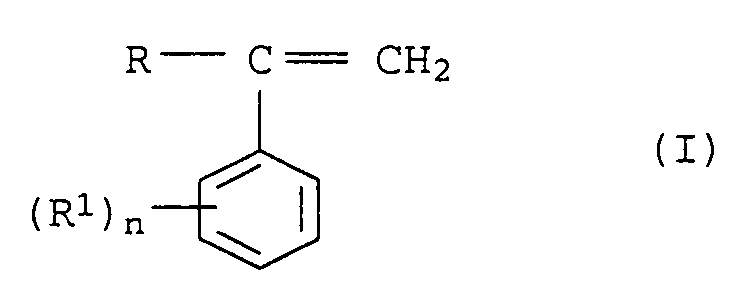 b22) 5 bis 40 Gew.-% mindestens eines ungesättigten Nitrils B22,C) 1 bis 98 Gew.-% mindestens eines thermoplastischen Copolymerisats C mit einer Viskositätszahl VZC von 90 bis 120 ml/g, bestimmt nach DIN 53727 an einer 0,5 gew.-igen Lösung in Dimethylformamid bei 23°C,c1) 60 bis 85 Gew.-% Styrol oder substituierten Styrolen C1 der allgemeinen Formel I oder deren Mischungen undc2) 15 bis 40 Gew.-% mindestens eines ungesättigten Nitrils C2,D) 0 bis 25 Gew.-% mindestens eines Füllstoffs D,E) 0 bis 10 Gew.-% mindestens eines hochmolekularen Copolymers E aus mindestens zwei unterschiedlichen Alkylestern, aromatischen oder Alkylaromatischen Estern der Acrylsäure oder der Methacrylsäure,F) 0 bis 2 Gew.-% mindestens einer organischen Säure F,G) 0 bis 25 Gew.-% mindestens einer halogenfreien Phosphorverbindung G,H) 0 bis 45 Gew.-% weiterer Zusatzstoffe H,
 - Formmassen nach Anspruch 1, wobei die Viskositätszahl VZC des Copolymerisats C 95 bis 110 ml/g beträgt.
- Formmassen nach den Ansprüchen 1 bis 2, wobei die Differenz ΔVZ der Viskositätszahlen, VZA und VZC, berechnet nach der Gleichung ΔVZ = VZC - VZA , 27 bis 60 Einheiten [ml/g] beträgt.
- Formmassen nach den Ansprüchen 1 bis 3, wobei die Polycarbonate A auf Diphenolen der allgemeinen Formel IIbasieren, worin X eine Einfachbindung, eine C1-3-Alkylen-, eine C2-C3-Alkyliden-, eine C3-6-Cycloalkyliden-Gruppe, sowie - S- oder -SO2- bedeutet.

- Formmassen nach den Ansprüchen 1 bis 4, wobei die Pfropfgrundlage B1 des Pfropfcopolymerisats B aufgebaut ist auswobei die Gesamtmenge der Komponenten B11, B12 und B13 100 Gew.-% ergibt.b11) 70 bis 99,9 Gew.-% mindestens eines Alkylacrylates B11 mit 1 bis 8 C-Atomen im Alkylrest,b12) 0 bis 30 Gew.-% eines weiteren copolymerisierbaren monoethylenisch ungesättigten Monomeren B12 oder deren Mischungen, undb13) 0,1 bis 5 Gew.-% eines copolymerisierbaren, polyfunktionellen, die Vernetzung bewirkenden Monomeren B13,
- Formmassen nach den Ansprüchen 1 bis 5, wobei das Copolymerisat C aus 70 bis 83 Gew.-% Styrol und 17 bis 30 Gew.-% Acrylnitril aufgebaut ist.
- Formmassen nach den Ansprüchen 1 bis 6, wobei der Füllstoff D ausgewählt ist aus teilchenförmigen mineralischen Füllstoffen, faserförmigen Füllstoffen oder deren Mischungen.
- Verfahren zur Herstellung von Formmassen nach den Ansprüchen 1 bis 7 durch Mischen der trockenen Komponenten A bis C und gegebenenfalls D bis H bei 200 bis 320°C.
- Verwendung von Formmassen nach dem Ansprüchen 1 bis 7 zur Herstellung von Formkörpern, Fasern und Folien.
- Verwendung nach Anspruch 9 zur Herstellung von Karosserieteilen.
- Formkörper, Fasern und Folien aus einer Formmasse gemäß den Ansprüchen 1 bis 7.
- Formkörper nach Anspruch 11 in Form von Karosserieteilen.
- Verfahren zur Verminderung oder Vermeidung der Delamination von Formkörpern aus Formmassen enthaltend Polycarbonate, Pfropfpolymerisate und Styrolcopolymerisate, dadurch gekennzeichnet, daß man zur Herstellung der Formkörper die Formmassen gemäß den Ansprüchen 1 bis 7 verwendet.
Applications Claiming Priority (2)
| Application Number | Priority Date | Filing Date | Title |
|---|---|---|---|
| DE10159316 | 2001-12-04 | ||
| DE2001159316 DE10159316A1 (de) | 2001-12-04 | 2001-12-04 | Polycarbonat-Styrolcopolymer-Blends mit verminderter Delaminationsneigung |
Publications (1)
| Publication Number | Publication Date |
|---|---|
| EP1318175A1 true EP1318175A1 (de) | 2003-06-11 |
Family
ID=7707869
Family Applications (1)
| Application Number | Title | Priority Date | Filing Date |
|---|---|---|---|
| EP02025162A Withdrawn EP1318175A1 (de) | 2001-12-04 | 2002-11-11 | Polycarbonat-Styrolcopolymer-Blends mit verminderter Delaminationsneigung |
Country Status (2)
| Country | Link |
|---|---|
| EP (1) | EP1318175A1 (de) |
| DE (1) | DE10159316A1 (de) |
Cited By (3)
| Publication number | Priority date | Publication date | Assignee | Title |
|---|---|---|---|---|
| WO2018134371A1 (de) * | 2017-01-23 | 2018-07-26 | Covestro Deutschland Ag | GRAPHIT-HALTIGE POLYCARBONAT-ZUSAMMENSETZUNGEN ENTHALTEND EIN NEUARTIGES FLIEßHILFSMITTEL |
| CN113462142A (zh) * | 2021-06-28 | 2021-10-01 | 武汉金发科技有限公司 | 一种高耐候pc/aes合金及其制备方法 |
| CN117143443A (zh) * | 2023-09-27 | 2023-12-01 | 金发科技股份有限公司 | 一种阻燃聚碳酸酯组合物及其制备方法和应用 |
Citations (6)
| Publication number | Priority date | Publication date | Assignee | Title |
|---|---|---|---|---|
| EP0244856A1 (de) * | 1986-05-09 | 1987-11-11 | BASF Aktiengesellschaft | Thermoplastische Formmasse auf Basis von Polycarbonat, ASA und Vinylaromaten/AN enthaltenden Copolymerisaten |
| EP0483628A2 (de) * | 1990-10-29 | 1992-05-06 | BASF Aktiengesellschaft | Chlor- und bromfreie, flammfeste thermoplastische Formmassen auf der Basis von Polycarbonaten und Styrol/Acrylnitril-Copolymerisaten |
| DE4200247A1 (de) * | 1992-01-08 | 1993-07-15 | Basf Ag | Thermoplastische polycarbonatformmassen |
| DE19621733A1 (de) * | 1996-05-30 | 1997-12-04 | Basf Ag | Thermoplastische Formmassen auf Basis von Polycarbonaten und Styrol/Acrylnitrilpolymerisaten, die zur Verbesserung ihrer Eigenschaften Copolymerisate auf Alkyl(meth)acrylat-Basis enthalten |
| DE19846202A1 (de) * | 1998-10-07 | 2000-04-13 | Basf Ag | Formkörper für den Bausektor im Innenbereich |
| DE19959420A1 (de) * | 1999-12-09 | 2001-06-13 | Basf Ag | Isotrope thermoplastische Formmassen auf Basis von Polycarbonat und Styrolcopolymeren |
-
2001
- 2001-12-04 DE DE2001159316 patent/DE10159316A1/de not_active Withdrawn
-
2002
- 2002-11-11 EP EP02025162A patent/EP1318175A1/de not_active Withdrawn
Patent Citations (6)
| Publication number | Priority date | Publication date | Assignee | Title |
|---|---|---|---|---|
| EP0244856A1 (de) * | 1986-05-09 | 1987-11-11 | BASF Aktiengesellschaft | Thermoplastische Formmasse auf Basis von Polycarbonat, ASA und Vinylaromaten/AN enthaltenden Copolymerisaten |
| EP0483628A2 (de) * | 1990-10-29 | 1992-05-06 | BASF Aktiengesellschaft | Chlor- und bromfreie, flammfeste thermoplastische Formmassen auf der Basis von Polycarbonaten und Styrol/Acrylnitril-Copolymerisaten |
| DE4200247A1 (de) * | 1992-01-08 | 1993-07-15 | Basf Ag | Thermoplastische polycarbonatformmassen |
| DE19621733A1 (de) * | 1996-05-30 | 1997-12-04 | Basf Ag | Thermoplastische Formmassen auf Basis von Polycarbonaten und Styrol/Acrylnitrilpolymerisaten, die zur Verbesserung ihrer Eigenschaften Copolymerisate auf Alkyl(meth)acrylat-Basis enthalten |
| DE19846202A1 (de) * | 1998-10-07 | 2000-04-13 | Basf Ag | Formkörper für den Bausektor im Innenbereich |
| DE19959420A1 (de) * | 1999-12-09 | 2001-06-13 | Basf Ag | Isotrope thermoplastische Formmassen auf Basis von Polycarbonat und Styrolcopolymeren |
Cited By (5)
| Publication number | Priority date | Publication date | Assignee | Title |
|---|---|---|---|---|
| WO2018134371A1 (de) * | 2017-01-23 | 2018-07-26 | Covestro Deutschland Ag | GRAPHIT-HALTIGE POLYCARBONAT-ZUSAMMENSETZUNGEN ENTHALTEND EIN NEUARTIGES FLIEßHILFSMITTEL |
| US11279812B2 (en) | 2017-01-23 | 2022-03-22 | Covestro Deutschland Ag | Graphite-containing polycarbonate compositions containing a new type of flow promoter |
| CN113462142A (zh) * | 2021-06-28 | 2021-10-01 | 武汉金发科技有限公司 | 一种高耐候pc/aes合金及其制备方法 |
| CN113462142B (zh) * | 2021-06-28 | 2022-08-30 | 武汉金发科技有限公司 | 一种高耐候pc/aes合金及其制备方法 |
| CN117143443A (zh) * | 2023-09-27 | 2023-12-01 | 金发科技股份有限公司 | 一种阻燃聚碳酸酯组合物及其制备方法和应用 |
Also Published As
| Publication number | Publication date |
|---|---|
| DE10159316A1 (de) | 2003-06-12 |
Similar Documents
| Publication | Publication Date | Title |
|---|---|---|
| EP1240250B1 (de) | Füllstoffhaltige thermoplastische formmassen auf basis von polycarbonat und styrolcopolymeren | |
| EP0201795B1 (de) | Flammwidrige, schlagzähe Polycarbonat-Formmassen | |
| DE69912687T2 (de) | Flammhemmende Polycarbonat/ABS-Mischung | |
| DE19753541A1 (de) | Polycarbonatformmassen | |
| EP0534297A2 (de) | Flammwidrig ausgerüstete Formmasse | |
| DE19734661A1 (de) | Flammwidrige, spannungsrißbeständige Polycarbonat ABS-Formmassen | |
| DE10027333A1 (de) | Flammwidrige und anti-elektrostatische Polycarbonat-Formmassen | |
| DE4121975A1 (de) | Thermoplastische formmassen auf der basis von polycarbonaten, styrol/acrylnitril-polymerisaten und polyolefinen | |
| EP0482451B1 (de) | Lichtalterungsbeständige, flammwidrige Polycarbonat-, Polyestercarbonat- oder Polyarylat-Formmassen | |
| EP0463467B1 (de) | Thermoplastische Polycarbonatformmassen mit flammwidrigen Eigenschaften | |
| EP1497371B1 (de) | Polycarbonat-styrolcopolymer-blends mit verbesserten eigenschaften | |
| EP0432581B1 (de) | Thermoplastische Polycarbonatformmassen mit flammwidrigen Eigenschaften | |
| EP0780438A2 (de) | Formmassen auf der Basis von Polycarbonaten | |
| EP1051445B1 (de) | Polycarbonatformmassen | |
| EP1373408B1 (de) | Flammwidrige polycarbonat-zusammensetzungen mit erhöhter chemikalienbeständigkeit | |
| EP0922073B1 (de) | Formmassen aus einer polycarbonatmischung und einem siloxannetzwerkkautschuk | |
| EP0534293A2 (de) | Flammwidrig ausgerüstete chlor- und bromfreie Formmasse | |
| DE19626156A1 (de) | Flammwidrige, thermoplastische Formmassen | |
| DE19842713A1 (de) | Thermoplastische Harzzusammensetzung | |
| EP1318175A1 (de) | Polycarbonat-Styrolcopolymer-Blends mit verminderter Delaminationsneigung | |
| EP0869150A2 (de) | Flammwidrige thermoplastische Polycarbonatformmassen mit guter Fliessfähigkeit | |
| EP0534238B1 (de) | Flammwidrig ausgerüstete, chlor- und bromfreie Polycarbonat-ABS-Formmassen | |
| EP1151031B1 (de) | Polycarbonat formmassen mit antistatischen eingenschaften | |
| WO2001042361A2 (de) | Isotrope thermoplastische formmassen auf basis von polycarbonat und styrolcopolymeren | |
| DE4115607A1 (de) | Chlor- und bromfreie, flammfeste thermoplastische formmassen auf der basis von polycarbonaten und styrol/acrylinitril-copolymerisaten |
Legal Events
| Date | Code | Title | Description |
|---|---|---|---|
| PUAI | Public reference made under article 153(3) epc to a published international application that has entered the european phase |
Free format text: ORIGINAL CODE: 0009012 |
|
| STAA | Information on the status of an ep patent application or granted ep patent |
Free format text: STATUS: THE APPLICATION HAS BEEN WITHDRAWN |
|
| AK | Designated contracting states |
Designated state(s): AT BE BG CH CY CZ DE DK EE ES FI FR GB GR IE IT LI LU MC NL PT SE SK TR |
|
| AX | Request for extension of the european patent |
Extension state: AL LT LV MK RO SI |
|
| 18W | Application withdrawn |
Effective date: 20030515 |