EP1309597B1 - Polymorphs of an epothilone analog - Google Patents
Polymorphs of an epothilone analog Download PDFInfo
- Publication number
- EP1309597B1 EP1309597B1 EP01959536A EP01959536A EP1309597B1 EP 1309597 B1 EP1309597 B1 EP 1309597B1 EP 01959536 A EP01959536 A EP 01959536A EP 01959536 A EP01959536 A EP 01959536A EP 1309597 B1 EP1309597 B1 EP 1309597B1
- Authority
- EP
- European Patent Office
- Prior art keywords
- solution
- hours
- mixture
- formula
- accordance
- Prior art date
- Legal status (The legal status is an assumption and is not a legal conclusion. Google has not performed a legal analysis and makes no representation as to the accuracy of the status listed.)
- Expired - Lifetime
Links
- 229930013356 epothilone Natural products 0.000 title claims abstract description 35
- 150000003883 epothilone derivatives Chemical class 0.000 title claims abstract description 33
- 239000000203 mixture Substances 0.000 claims abstract description 36
- 238000000034 method Methods 0.000 claims abstract description 21
- XEKOWRVHYACXOJ-UHFFFAOYSA-N Ethyl acetate Chemical compound CCOC(C)=O XEKOWRVHYACXOJ-UHFFFAOYSA-N 0.000 claims description 89
- 239000013078 crystal Substances 0.000 claims description 38
- 239000002002 slurry Substances 0.000 claims description 34
- 239000000243 solution Substances 0.000 claims description 33
- XDTMQSROBMDMFD-UHFFFAOYSA-N Cyclohexane Chemical compound C1CCCCC1 XDTMQSROBMDMFD-UHFFFAOYSA-N 0.000 claims description 20
- 206010028980 Neoplasm Diseases 0.000 claims description 14
- 208000037265 diseases, disorders, signs and symptoms Diseases 0.000 claims description 11
- 238000000634 powder X-ray diffraction Methods 0.000 claims description 10
- YXFVVABEGXRONW-UHFFFAOYSA-N Toluene Chemical compound CC1=CC=CC=C1 YXFVVABEGXRONW-UHFFFAOYSA-N 0.000 claims description 9
- 238000001816 cooling Methods 0.000 claims description 9
- 201000010099 disease Diseases 0.000 claims description 9
- 230000008569 process Effects 0.000 claims description 9
- 238000003756 stirring Methods 0.000 claims description 8
- XLYOFNOQVPJJNP-UHFFFAOYSA-N water Substances O XLYOFNOQVPJJNP-UHFFFAOYSA-N 0.000 claims description 7
- 238000000354 decomposition reaction Methods 0.000 claims description 6
- 238000002844 melting Methods 0.000 claims description 6
- 230000008018 melting Effects 0.000 claims description 6
- 230000002062 proliferating effect Effects 0.000 claims description 6
- 238000001237 Raman spectrum Methods 0.000 claims description 5
- 239000008194 pharmaceutical composition Substances 0.000 claims description 5
- 201000011510 cancer Diseases 0.000 claims description 4
- 238000010438 heat treatment Methods 0.000 claims description 4
- 239000003814 drug Substances 0.000 claims description 3
- 239000000244 polyoxyethylene sorbitan monooleate Substances 0.000 claims description 3
- 235000010482 polyoxyethylene sorbitan monooleate Nutrition 0.000 claims description 3
- 229920000053 polysorbate 80 Polymers 0.000 claims description 3
- 229940068968 polysorbate 80 Drugs 0.000 claims description 3
- 239000002178 crystalline material Substances 0.000 claims description 2
- 239000011369 resultant mixture Substances 0.000 claims 3
- 239000007864 aqueous solution Substances 0.000 claims 2
- 239000004480 active ingredient Substances 0.000 claims 1
- 238000010009 beating Methods 0.000 claims 1
- 239000003085 diluting agent Substances 0.000 claims 1
- 239000003937 drug carrier Substances 0.000 claims 1
- 238000004519 manufacturing process Methods 0.000 claims 1
- 239000000546 pharmaceutical excipient Substances 0.000 claims 1
- 239000002552 dosage form Substances 0.000 abstract 1
- 238000002560 therapeutic procedure Methods 0.000 abstract 1
- 235000019439 ethyl acetate Nutrition 0.000 description 23
- YMWUJEATGCHHMB-UHFFFAOYSA-N Dichloromethane Chemical compound ClCCl YMWUJEATGCHHMB-UHFFFAOYSA-N 0.000 description 17
- ZMANZCXQSJIPKH-UHFFFAOYSA-N Triethylamine Chemical compound CCN(CC)CC ZMANZCXQSJIPKH-UHFFFAOYSA-N 0.000 description 14
- 150000001875 compounds Chemical class 0.000 description 14
- 238000004128 high performance liquid chromatography Methods 0.000 description 12
- 239000007787 solid Substances 0.000 description 12
- WYURNTSHIVDZCO-UHFFFAOYSA-N Tetrahydrofuran Chemical compound C1CCOC1 WYURNTSHIVDZCO-UHFFFAOYSA-N 0.000 description 10
- 210000004027 cell Anatomy 0.000 description 9
- ZMXDDKWLCZADIW-UHFFFAOYSA-N N,N-Dimethylformamide Chemical compound CN(C)C=O ZMXDDKWLCZADIW-UHFFFAOYSA-N 0.000 description 7
- VYPSYNLAJGMNEJ-UHFFFAOYSA-N Silicium dioxide Chemical compound O=[Si]=O VYPSYNLAJGMNEJ-UHFFFAOYSA-N 0.000 description 6
- LZWPOLSJFGLQCE-UHFFFAOYSA-N heptadecane-5,9-dione Chemical compound CCCCCCCCC(=O)CCCC(=O)CCCC LZWPOLSJFGLQCE-UHFFFAOYSA-N 0.000 description 6
- VLKZOEOYAKHREP-UHFFFAOYSA-N n-Hexane Chemical compound CCCCCC VLKZOEOYAKHREP-UHFFFAOYSA-N 0.000 description 6
- 125000000391 vinyl group Chemical group [H]C([*])=C([H])[H] 0.000 description 6
- NLXLAEXVIDQMFP-UHFFFAOYSA-N Ammonia chloride Chemical compound [NH4+].[Cl-] NLXLAEXVIDQMFP-UHFFFAOYSA-N 0.000 description 5
- 230000015572 biosynthetic process Effects 0.000 description 5
- HESCAJZNRMSMJG-HGYUPSKWSA-N epothilone A Natural products O=C1[C@H](C)[C@H](O)[C@H](C)CCC[C@H]2O[C@H]2C[C@@H](/C(=C\c2nc(C)sc2)/C)OC(=O)C[C@H](O)C1(C)C HESCAJZNRMSMJG-HGYUPSKWSA-N 0.000 description 5
- 238000001914 filtration Methods 0.000 description 5
- 238000002360 preparation method Methods 0.000 description 5
- YLQBMQCUIZJEEH-UHFFFAOYSA-N tetrahydrofuran Natural products C=1C=COC=1 YLQBMQCUIZJEEH-UHFFFAOYSA-N 0.000 description 5
- QXRSDHAAWVKZLJ-OXZHEXMSSA-N Epothilone B Natural products O=C1[C@H](C)[C@H](O)[C@@H](C)CCC[C@@]2(C)O[C@H]2C[C@@H](/C(=C\c2nc(C)sc2)/C)OC(=O)C[C@H](O)C1(C)C QXRSDHAAWVKZLJ-OXZHEXMSSA-N 0.000 description 4
- 239000003480 eluent Substances 0.000 description 4
- QXRSDHAAWVKZLJ-PVYNADRNSA-N epothilone B Chemical compound C/C([C@@H]1C[C@@H]2O[C@]2(C)CCC[C@@H]([C@@H]([C@@H](C)C(=O)C(C)(C)[C@@H](O)CC(=O)O1)O)C)=C\C1=CSC(C)=N1 QXRSDHAAWVKZLJ-PVYNADRNSA-N 0.000 description 4
- 239000013014 purified material Substances 0.000 description 4
- 239000000741 silica gel Substances 0.000 description 4
- 229910002027 silica gel Inorganic materials 0.000 description 4
- LFQSCWFLJHTTHZ-UHFFFAOYSA-N Ethanol Chemical compound CCO LFQSCWFLJHTTHZ-UHFFFAOYSA-N 0.000 description 3
- KDLHZDBZIXYQEI-UHFFFAOYSA-N Palladium Chemical compound [Pd] KDLHZDBZIXYQEI-UHFFFAOYSA-N 0.000 description 3
- 238000002441 X-ray diffraction Methods 0.000 description 3
- 230000006907 apoptotic process Effects 0.000 description 3
- 206010003246 arthritis Diseases 0.000 description 3
- HEDRZPFGACZZDS-UHFFFAOYSA-N chloroform Substances ClC(Cl)Cl HEDRZPFGACZZDS-UHFFFAOYSA-N 0.000 description 3
- 230000000694 effects Effects 0.000 description 3
- HESCAJZNRMSMJG-KKQRBIROSA-N epothilone A Chemical class C/C([C@@H]1C[C@@H]2O[C@@H]2CCC[C@@H]([C@@H]([C@@H](C)C(=O)C(C)(C)[C@@H](O)CC(=O)O1)O)C)=C\C1=CSC(C)=N1 HESCAJZNRMSMJG-KKQRBIROSA-N 0.000 description 3
- 239000000463 material Substances 0.000 description 3
- 208000015122 neurodegenerative disease Diseases 0.000 description 3
- 239000002904 solvent Substances 0.000 description 3
- YWWDBCBWQNCYNR-UHFFFAOYSA-N trimethylphosphine Chemical compound CP(C)C YWWDBCBWQNCYNR-UHFFFAOYSA-N 0.000 description 3
- FPQQSJJWHUJYPU-UHFFFAOYSA-N 3-(dimethylamino)propyliminomethylidene-ethylazanium;chloride Chemical compound Cl.CCN=C=NCCCN(C)C FPQQSJJWHUJYPU-UHFFFAOYSA-N 0.000 description 2
- 208000024893 Acute lymphoblastic leukemia Diseases 0.000 description 2
- 208000014697 Acute lymphocytic leukaemia Diseases 0.000 description 2
- 208000032467 Aplastic anaemia Diseases 0.000 description 2
- IJGRMHOSHXDMSA-UHFFFAOYSA-N Atomic nitrogen Chemical compound N#N IJGRMHOSHXDMSA-UHFFFAOYSA-N 0.000 description 2
- 201000008808 Fibrosarcoma Diseases 0.000 description 2
- 208000032612 Glial tumor Diseases 0.000 description 2
- 206010018338 Glioma Diseases 0.000 description 2
- 206010025323 Lymphomas Diseases 0.000 description 2
- 241001465754 Metazoa Species 0.000 description 2
- 206010029260 Neuroblastoma Diseases 0.000 description 2
- 208000006664 Precursor Cell Lymphoblastic Leukemia-Lymphoma Diseases 0.000 description 2
- 201000004681 Psoriasis Diseases 0.000 description 2
- 201000010208 Seminoma Diseases 0.000 description 2
- 208000036142 Viral infection Diseases 0.000 description 2
- 230000004075 alteration Effects 0.000 description 2
- 235000019270 ammonium chloride Nutrition 0.000 description 2
- 239000003054 catalyst Substances 0.000 description 2
- 239000013058 crude material Substances 0.000 description 2
- 208000035475 disorder Diseases 0.000 description 2
- 239000000706 filtrate Substances 0.000 description 2
- 201000005787 hematologic cancer Diseases 0.000 description 2
- 208000024200 hematopoietic and lymphoid system neoplasm Diseases 0.000 description 2
- 239000001257 hydrogen Substances 0.000 description 2
- 229910052739 hydrogen Inorganic materials 0.000 description 2
- 208000017169 kidney disease Diseases 0.000 description 2
- 201000001441 melanoma Diseases 0.000 description 2
- 201000006417 multiple sclerosis Diseases 0.000 description 2
- 210000002346 musculoskeletal system Anatomy 0.000 description 2
- 229910052757 nitrogen Inorganic materials 0.000 description 2
- 239000003921 oil Substances 0.000 description 2
- BWHMMNNQKKPAPP-UHFFFAOYSA-L potassium carbonate Chemical compound [K+].[K+].[O-]C([O-])=O BWHMMNNQKKPAPP-UHFFFAOYSA-L 0.000 description 2
- 239000000047 product Substances 0.000 description 2
- 239000011541 reaction mixture Substances 0.000 description 2
- 238000000926 separation method Methods 0.000 description 2
- 241000894007 species Species 0.000 description 2
- 238000003786 synthesis reaction Methods 0.000 description 2
- 208000001608 teratocarcinoma Diseases 0.000 description 2
- 210000001685 thyroid gland Anatomy 0.000 description 2
- 230000009385 viral infection Effects 0.000 description 2
- CYPYTURSJDMMMP-WVCUSYJESA-N (1e,4e)-1,5-diphenylpenta-1,4-dien-3-one;palladium Chemical compound [Pd].[Pd].C=1C=CC=CC=1\C=C\C(=O)\C=C\C1=CC=CC=C1.C=1C=CC=CC=1\C=C\C(=O)\C=C\C1=CC=CC=C1.C=1C=CC=CC=1\C=C\C(=O)\C=C\C1=CC=CC=C1 CYPYTURSJDMMMP-WVCUSYJESA-N 0.000 description 1
- LMDZBCPBFSXMTL-UHFFFAOYSA-N 1-Ethyl-3-(3-dimethylaminopropyl)carbodiimide Substances CCN=C=NCCCN(C)C LMDZBCPBFSXMTL-UHFFFAOYSA-N 0.000 description 1
- BHKKSKOHRFHHIN-MRVPVSSYSA-N 1-[[2-[(1R)-1-aminoethyl]-4-chlorophenyl]methyl]-2-sulfanylidene-5H-pyrrolo[3,2-d]pyrimidin-4-one Chemical compound N[C@H](C)C1=C(CN2C(NC(C3=C2C=CN3)=O)=S)C=CC(=C1)Cl BHKKSKOHRFHHIN-MRVPVSSYSA-N 0.000 description 1
- 208000030507 AIDS Diseases 0.000 description 1
- 206010065040 AIDS dementia complex Diseases 0.000 description 1
- 208000031261 Acute myeloid leukaemia Diseases 0.000 description 1
- 208000036762 Acute promyelocytic leukaemia Diseases 0.000 description 1
- 208000024827 Alzheimer disease Diseases 0.000 description 1
- BSYNRYMUTXBXSQ-UHFFFAOYSA-N Aspirin Chemical compound CC(=O)OC1=CC=CC=C1C(O)=O BSYNRYMUTXBXSQ-UHFFFAOYSA-N 0.000 description 1
- 206010003571 Astrocytoma Diseases 0.000 description 1
- 201000001320 Atherosclerosis Diseases 0.000 description 1
- 208000023275 Autoimmune disease Diseases 0.000 description 1
- 208000003950 B-cell lymphoma Diseases 0.000 description 1
- 208000032791 BCR-ABL1 positive chronic myelogenous leukemia Diseases 0.000 description 1
- 201000004569 Blindness Diseases 0.000 description 1
- 206010058019 Cancer Pain Diseases 0.000 description 1
- 241000282472 Canis lupus familiaris Species 0.000 description 1
- 201000009030 Carcinoma Diseases 0.000 description 1
- 201000003883 Cystic fibrosis Diseases 0.000 description 1
- 241000282326 Felis catus Species 0.000 description 1
- 206010018364 Glomerulonephritis Diseases 0.000 description 1
- 208000017604 Hodgkin disease Diseases 0.000 description 1
- 208000021519 Hodgkin lymphoma Diseases 0.000 description 1
- 208000010747 Hodgkins lymphoma Diseases 0.000 description 1
- 241000282412 Homo Species 0.000 description 1
- 241000701044 Human gammaherpesvirus 4 Species 0.000 description 1
- UFHFLCQGNIYNRP-UHFFFAOYSA-N Hydrogen Chemical compound [H][H] UFHFLCQGNIYNRP-UHFFFAOYSA-N 0.000 description 1
- 208000022559 Inflammatory bowel disease Diseases 0.000 description 1
- 206010023347 Keratoacanthoma Diseases 0.000 description 1
- 201000003793 Myelodysplastic syndrome Diseases 0.000 description 1
- 208000033761 Myelogenous Chronic BCR-ABL Positive Leukemia Diseases 0.000 description 1
- 208000033776 Myeloid Acute Leukemia Diseases 0.000 description 1
- 208000015914 Non-Hodgkin lymphomas Diseases 0.000 description 1
- 208000001132 Osteoporosis Diseases 0.000 description 1
- 229930012538 Paclitaxel Natural products 0.000 description 1
- 208000018737 Parkinson disease Diseases 0.000 description 1
- 238000001069 Raman spectroscopy Methods 0.000 description 1
- 206010063837 Reperfusion injury Diseases 0.000 description 1
- 208000007014 Retinitis pigmentosa Diseases 0.000 description 1
- 241000710960 Sindbis virus Species 0.000 description 1
- 206010042971 T-cell lymphoma Diseases 0.000 description 1
- 208000027585 T-cell non-Hodgkin lymphoma Diseases 0.000 description 1
- 206010067584 Type 1 diabetes mellitus Diseases 0.000 description 1
- 201000006083 Xeroderma Pigmentosum Diseases 0.000 description 1
- 230000002159 abnormal effect Effects 0.000 description 1
- 229960001138 acetylsalicylic acid Drugs 0.000 description 1
- 239000002253 acid Substances 0.000 description 1
- 230000009471 action Effects 0.000 description 1
- 230000001154 acute effect Effects 0.000 description 1
- 206010002026 amyotrophic lateral sclerosis Diseases 0.000 description 1
- 208000007502 anemia Diseases 0.000 description 1
- 230000033115 angiogenesis Effects 0.000 description 1
- 239000004037 angiogenesis inhibitor Substances 0.000 description 1
- 230000003527 anti-angiogenesis Effects 0.000 description 1
- 230000005775 apoptotic pathway Effects 0.000 description 1
- 230000006793 arrhythmia Effects 0.000 description 1
- 206010003119 arrhythmia Diseases 0.000 description 1
- 150000001540 azides Chemical class 0.000 description 1
- 210000003719 b-lymphocyte Anatomy 0.000 description 1
- 239000012964 benzotriazole Substances 0.000 description 1
- 230000037396 body weight Effects 0.000 description 1
- 210000000481 breast Anatomy 0.000 description 1
- 239000012267 brine Substances 0.000 description 1
- 239000006172 buffering agent Substances 0.000 description 1
- 238000007707 calorimetry Methods 0.000 description 1
- 230000030833 cell death Effects 0.000 description 1
- 230000001413 cellular effect Effects 0.000 description 1
- 210000003169 central nervous system Anatomy 0.000 description 1
- 208000025434 cerebellar degeneration Diseases 0.000 description 1
- 210000003679 cervix uteri Anatomy 0.000 description 1
- 238000006243 chemical reaction Methods 0.000 description 1
- 239000003638 chemical reducing agent Substances 0.000 description 1
- 239000003795 chemical substances by application Substances 0.000 description 1
- 210000001072 colon Anatomy 0.000 description 1
- 239000010779 crude oil Substances 0.000 description 1
- 238000002425 crystallisation Methods 0.000 description 1
- 230000008025 crystallization Effects 0.000 description 1
- 230000001472 cytotoxic effect Effects 0.000 description 1
- 230000037213 diet Effects 0.000 description 1
- 235000005911 diet Nutrition 0.000 description 1
- IJKVHSBPTUYDLN-UHFFFAOYSA-N dihydroxy(oxo)silane Chemical compound O[Si](O)=O IJKVHSBPTUYDLN-UHFFFAOYSA-N 0.000 description 1
- 239000000890 drug combination Substances 0.000 description 1
- IIEWJVIFRVWJOD-UHFFFAOYSA-N ethyl cyclohexane Natural products CCC1CCCCC1 IIEWJVIFRVWJOD-UHFFFAOYSA-N 0.000 description 1
- 230000029142 excretion Effects 0.000 description 1
- 230000003325 follicular Effects 0.000 description 1
- 230000036541 health Effects 0.000 description 1
- 208000014951 hematologic disease Diseases 0.000 description 1
- 230000013632 homeostatic process Effects 0.000 description 1
- 125000004435 hydrogen atom Chemical group [H]* 0.000 description 1
- 230000003463 hyperproliferative effect Effects 0.000 description 1
- 230000028993 immune response Effects 0.000 description 1
- 230000002757 inflammatory effect Effects 0.000 description 1
- 208000037906 ischaemic injury Diseases 0.000 description 1
- 210000003734 kidney Anatomy 0.000 description 1
- 239000010410 layer Substances 0.000 description 1
- 230000003902 lesion Effects 0.000 description 1
- 208000032839 leukemia Diseases 0.000 description 1
- 210000004185 liver Anatomy 0.000 description 1
- 208000019423 liver disease Diseases 0.000 description 1
- 210000004072 lung Anatomy 0.000 description 1
- 239000003120 macrolide antibiotic agent Substances 0.000 description 1
- 230000007246 mechanism Effects 0.000 description 1
- 230000001404 mediated effect Effects 0.000 description 1
- 230000002503 metabolic effect Effects 0.000 description 1
- 239000012046 mixed solvent Substances 0.000 description 1
- 208000017445 musculoskeletal system disease Diseases 0.000 description 1
- 208000010125 myocardial infarction Diseases 0.000 description 1
- 208000007538 neurilemmoma Diseases 0.000 description 1
- 239000012044 organic layer Substances 0.000 description 1
- 201000008968 osteosarcoma Diseases 0.000 description 1
- 210000001672 ovary Anatomy 0.000 description 1
- 229960001592 paclitaxel Drugs 0.000 description 1
- 229910052763 palladium Inorganic materials 0.000 description 1
- 210000000496 pancreas Anatomy 0.000 description 1
- 230000008506 pathogenesis Effects 0.000 description 1
- 210000001428 peripheral nervous system Anatomy 0.000 description 1
- 229910000027 potassium carbonate Inorganic materials 0.000 description 1
- 230000003389 potentiating effect Effects 0.000 description 1
- 239000000843 powder Substances 0.000 description 1
- 238000000746 purification Methods 0.000 description 1
- 239000013557 residual solvent Substances 0.000 description 1
- 208000037803 restenosis Diseases 0.000 description 1
- 230000004276 retinal vascularization Effects 0.000 description 1
- 206010039073 rheumatoid arthritis Diseases 0.000 description 1
- 239000000377 silicon dioxide Substances 0.000 description 1
- 201000009890 sinusitis Diseases 0.000 description 1
- 210000003491 skin Anatomy 0.000 description 1
- HPALAKNZSZLMCH-UHFFFAOYSA-M sodium;chloride;hydrate Chemical compound O.[Na+].[Cl-] HPALAKNZSZLMCH-UHFFFAOYSA-M 0.000 description 1
- 239000012265 solid product Substances 0.000 description 1
- 239000011877 solvent mixture Substances 0.000 description 1
- 238000001228 spectrum Methods 0.000 description 1
- 208000002320 spinal muscular atrophy Diseases 0.000 description 1
- 206010041823 squamous cell carcinoma Diseases 0.000 description 1
- 239000003381 stabilizer Substances 0.000 description 1
- 210000002784 stomach Anatomy 0.000 description 1
- 239000000725 suspension Substances 0.000 description 1
- 201000000596 systemic lupus erythematosus Diseases 0.000 description 1
- RCINICONZNJXQF-MZXODVADSA-N taxol Chemical compound O([C@@H]1[C@@]2(C[C@@H](C(C)=C(C2(C)C)[C@H](C([C@]2(C)[C@@H](O)C[C@H]3OC[C@]3([C@H]21)OC(C)=O)=O)OC(=O)C)OC(=O)[C@H](O)[C@@H](NC(=O)C=1C=CC=CC=1)C=1C=CC=CC=1)O)C(=O)C1=CC=CC=C1 RCINICONZNJXQF-MZXODVADSA-N 0.000 description 1
- RCINICONZNJXQF-XAZOAEDWSA-N taxol® Chemical compound O([C@@H]1[C@@]2(CC(C(C)=C(C2(C)C)[C@H](C([C@]2(C)[C@@H](O)C[C@H]3OC[C@]3(C21)OC(C)=O)=O)OC(=O)C)OC(=O)[C@H](O)[C@@H](NC(=O)C=1C=CC=CC=1)C=1C=CC=CC=1)O)C(=O)C1=CC=CC=C1 RCINICONZNJXQF-XAZOAEDWSA-N 0.000 description 1
- DZLFLBLQUQXARW-UHFFFAOYSA-N tetrabutylammonium Chemical class CCCC[N+](CCCC)(CCCC)CCCC DZLFLBLQUQXARW-UHFFFAOYSA-N 0.000 description 1
- GMRIOAVKKGNMMV-UHFFFAOYSA-N tetrabutylazanium;azide Chemical compound [N-]=[N+]=[N-].CCCC[N+](CCCC)(CCCC)CCCC GMRIOAVKKGNMMV-UHFFFAOYSA-N 0.000 description 1
- 230000008719 thickening Effects 0.000 description 1
- 239000003053 toxin Substances 0.000 description 1
- 231100000765 toxin Toxicity 0.000 description 1
- 108700012359 toxins Proteins 0.000 description 1
- 210000004881 tumor cell Anatomy 0.000 description 1
- 230000004614 tumor growth Effects 0.000 description 1
- 241000701161 unidentified adenovirus Species 0.000 description 1
- 241001529453 unidentified herpesvirus Species 0.000 description 1
- 210000003932 urinary bladder Anatomy 0.000 description 1
- 238000005292 vacuum distillation Methods 0.000 description 1
Images






Classifications
-
- C—CHEMISTRY; METALLURGY
- C07—ORGANIC CHEMISTRY
- C07D—HETEROCYCLIC COMPOUNDS
- C07D417/00—Heterocyclic compounds containing two or more hetero rings, at least one ring having nitrogen and sulfur atoms as the only ring hetero atoms, not provided for by group C07D415/00
- C07D417/14—Heterocyclic compounds containing two or more hetero rings, at least one ring having nitrogen and sulfur atoms as the only ring hetero atoms, not provided for by group C07D415/00 containing three or more hetero rings
-
- C—CHEMISTRY; METALLURGY
- C07—ORGANIC CHEMISTRY
- C07D—HETEROCYCLIC COMPOUNDS
- C07D491/00—Heterocyclic compounds containing in the condensed ring system both one or more rings having oxygen atoms as the only ring hetero atoms and one or more rings having nitrogen atoms as the only ring hetero atoms, not provided for by groups C07D451/00 - C07D459/00, C07D463/00, C07D477/00 or C07D489/00
- C07D491/02—Heterocyclic compounds containing in the condensed ring system both one or more rings having oxygen atoms as the only ring hetero atoms and one or more rings having nitrogen atoms as the only ring hetero atoms, not provided for by groups C07D451/00 - C07D459/00, C07D463/00, C07D477/00 or C07D489/00 in which the condensed system contains two hetero rings
- C07D491/04—Ortho-condensed systems
-
- A—HUMAN NECESSITIES
- A61—MEDICAL OR VETERINARY SCIENCE; HYGIENE
- A61P—SPECIFIC THERAPEUTIC ACTIVITY OF CHEMICAL COMPOUNDS OR MEDICINAL PREPARATIONS
- A61P35/00—Antineoplastic agents
-
- C—CHEMISTRY; METALLURGY
- C07—ORGANIC CHEMISTRY
- C07D—HETEROCYCLIC COMPOUNDS
- C07D417/00—Heterocyclic compounds containing two or more hetero rings, at least one ring having nitrogen and sulfur atoms as the only ring hetero atoms, not provided for by group C07D415/00
- C07D417/02—Heterocyclic compounds containing two or more hetero rings, at least one ring having nitrogen and sulfur atoms as the only ring hetero atoms, not provided for by group C07D415/00 containing two hetero rings
- C07D417/06—Heterocyclic compounds containing two or more hetero rings, at least one ring having nitrogen and sulfur atoms as the only ring hetero atoms, not provided for by group C07D415/00 containing two hetero rings linked by a carbon chain containing only aliphatic carbon atoms
Definitions
- the present invention relates to crystalline polymorphic forms of a highly potent epothilone analog that is characterized by enhanced properties.
- Epothilones are macrolide compounds that find utility in the pharmaceutical field.
- Epothilones A and B having the structures:
- a particularly advantageous epothilone analog that has been found to have advantageous activity is [1S-[1R*,3R*(E),7R*,10S*,11R*,12R*,16S*]]-7,11-Dihydroxy-8,8,10,12,16-pentamethyl-3-[1-methyl-2-(2-methyl-4-thiazolyl)ethenyl]-4-aza-17-oxabicyclo[14.1.0]heptadecane-5,9-dione.
- two crystal forms of the subject epothilone analog are provided. These polymorphs, which have been designated as Forms A and B, respectively, are novel crystal forms and are identified hereinbelow.
- crystalline polymorphs of the epothilone analog represented by formula I Two crystalline polymorphs of the epothilone analog represented by formula I.
- One of these polymorphs, designated Form A, has been found to have particularly advantageous properties.
- the present invention is directed to crystalline polymorphs Form A and Form B as well as mixtures thereof.
- the present invention further pertains to the use of these crystalline forms in the treatment of cancers and other proliferating diseases and pharmaceutical formulations containing them.
- the epothilone analog represented by formula I chemically is [1S-[1R*,3R*(E),7R*,10S*,11R*,12R*,16S*]]-7,11-Dihydroxy-8, 8,10,12,16-pentamethyl-3-[1-methyl-2-(2-methyl-4-thiazolyl)ethenyl]-4-aza-17-oxabicyclo[14.1.0]heptadecane-5,9-dione.
- This analog and the preparation thereof are described in U.S. patent application Serial No. 09/170,582, filed October 13, 1998 , the disclosure of which is incorporated herein by reference.
- the polymorphs of the analog represented by formula I above are microtubule-stabilizing agents. They are thus useful in the provision of medicaments for the treatment of a variety of cancers and other proliferative diseases including, but not limited to, the following;
- the subject polymorphs will also inhibit angiogenesis, thereby affecting the growth of tumors and providing treatment of tumors and tumor-related disorders.
- anti-angiogenesis properties will also be useful in the treatment of other conditions responsive to anti-angiogenesis agents including, but not limited to, certain forms of blindness related to retinal vascularization, arthritis, especially inflammatory arthritis, multiple sclerosis, restinosis and psoriasis.
- the polymorphs of the analog represented by formula I will induce or inhibit apoptosis, a physiological cell death process critical for normal development and homeostasis. Alterations of apoptotic pathways contribute to the pathogenesis of a variety of human diseases.
- the subject polymorphs, as modulators of apoptosis, will be useful in the treatment of a variety of human diseases with aberrations in apoptosis including, but not limited to, cancer and precancerous lesions, immune response related diseases, viral infections, degenerative diseases of the musculoskeletal system and kidney disease.
- the such crystalline forms of the epothilone analog represented by formula I may also be used in the provision of medicaments to treat conditions other than cancer or other proliferative diseases.
- Such conditions include, but are not limited to viral infections such as herpesvirus, poxvirus, Epstein-Barr virus, Sindbis virus and adenovirus; autoimmune diseases such as systemic lupus erythematosus, immune mediated glomerulonephritis, rheumatoid arthritis, psoriasis, inflammatory bowel diseases and autoimmune diabetes mellitus; neurodegenerative disorders such as Alzheimer's disease, AIDS-related dementia, Parkinson's disease, amyotrophic lateral sclerosis, retinitis pigmentosa, spinal muscular atrophy and cerebellar degeneration; AIDS; myelodysplastic syndromes; aplastic anemia; ischemic injury associated myocardial infarctions; stroke and reperfusion injury; restenosis;
- the effective amount of the subject polymorphs, particularly Form A may be determined by one of ordinary skill in the art, and includes exemplary dosage amounts for a human of from 0.05 to 200 mg/kg/day, which may be administered in a single dose or in the form of individual divided doses, such as from 1 to 4 times per day.
- the subject polymorphs are administered in a dosage of less than 100 mg/kg/day, in a single dose or in 2 to 4 divided doses.
- the specific dose level and frequency of dosage for any particular subject may be varied and will depend upon a variety of factors including the activity of the specific compound employed, the metabolic stability and length of action of that compound, the species, age, body weight, general health, sex and diet of the subject, the mode and time of administration, rate of excretion, drug combination, and severity of the particular condition.
- the subject polymorphs are preferably administered parenterally, however, other routes of administration are contemplated herein as are recognized by those skill in the oncology arts.
- Preferred subjects for treatment include animals, most preferably mammalian species such as humans, and domestic animals such as dogs, cats and the like, subject to the aforementioned disorders.
- this analog in its crystalline form, consists of a mixture of Forms A and B as fully described herein.
- the amorphous form of the epothilone analog represented by formula I can be taken up in a suitable solvent, preferably a mixed solvent such as ethyl acetate/dichloromethane/triethylamine, purified such as by silica gel pad filtration, and crystallized by cooling to a temperature of about 5°C to form a crystalline material that is a mixture of Form A and Form B.
- a suitable solvent preferably a mixed solvent such as ethyl acetate/dichloromethane/triethylamine
- purified such as by silica gel pad filtration
- crystallized by cooling to a temperature of about 5°C to form a crystalline material that is a mixture of Form A and Form B.
- the purification step using a solvent mixture containing a component such as dichloromethane removes residual solvents from the synthesis that could
- Form A Generally, taking the purified material in a limited amount of ethyl acetate and heating the resultant slurry to 75-80°C will cause the formation of Form A.
- limited amount is meant from 8 to 16 mL, preferably from 8 to 12 mL, of ethyl acetate per gram of purified material.
- a thin slurry forms which has been found to be predominately Form B.
- the sluny undergoes a material thickening which has been found to be the formation of Form A.
- the slurry is held at 75-80°C for about an hour to assure completion of the formation of Form A at which time cyclohexane is added to the slurry in a ratio to ethyl acetate of from 1:2 to 2:2, preferably 1:2, and the mixture is allowed to cool to ambient temperature at which it is maintained with stirring for a period of from 12 to 96 hours.
- the mixture is then cooled to about 5°C over about two hours after which the crystals of Form A of the subject epothilone analog are recovered.
- Form A is afforded in good yield and purity.
- Alternate procedures for the preparation of Form A involve the addition of seed crystals.
- seed crystals of Form A were used, but seed crystals of Form B, or mixtures thereof can be used as well.
- the purified material is taken up in a limited amount of ethyl acetate as described above and heated to about 75°C, seed crystals are added and the mixture maintained for about 30 minutes.
- An amount of cyclohexane as described above is then added dropwise maintaining the temperature at about 70°C.
- the mixture is thereafter cooled to 20°C and held with stirring for 18 hours after which it is cooled to 5°C and the white crystals of Form A recovered by physical separation, e.g. filtration.
- the initial solution of material in ethyl acetate is heated to 75°C for at least an hour until a solution is produced.
- the solution is cooled to about 50°C over the course of about two hours adding seed crystals of Form A when the temperature reaches about 60°C. Crystals begin to appear at about 55°C.
- the temperature is again reduced to about 20°C over a further two hours during one hour of which an amount of cyclohexane as described above is added dropwise.
- the final slurry is further cooled over two hours to -10°C and held at that temperature for an additional hour.
- the slurry is then filtered to afford white crystals of Form A.
- the material is taken up in a larger amount, i.e. at least about 40 mL/g of ethyl acetate and the resultant slurry heated to about 80 °C until a solution is formed which is then cooled to about 70°C over the course of about one hour.
- Seed crystals of Form A are added when the solution temperature reaches about 70°C.
- the temperature is then reduced to about 30°C over a further three hours. Crystals begin to appear at about 65°C.
- the temperature is reduced to -10°C over an additional three hours during a thirty minute period thereof a quantity of cyclohexane as described above is added dropwise.
- the temperature is maintained at -10°C for a further hour.
- the final slurry is filtered to afford white crystals of Form A.
- the yield and purity of Form A by these procedures is considered very good.
- Form B of the subject epothilone analogs represented by Formula I above is obtained by forming a slurry of the crude material in a larger quantity of ethyl acetate, i.e. from 40 to 50 mL per g., and heating at 70°C to 80°C for an hour to form a solution which is then held at temperature for about thirty minutes.
- the solution is cooled to about 30°C over the course of about two hours, crystals beginning to appear at about 38°C.
- the temperature is further reduced to about -10°C over one hour during which a quantity of cyclohexane as described above is added dropwise over a period of thirty minutes.
- the final slurry is held at -10°C over a further two hours and filtered to afford white crystals of Form B.
- the crude material is slurried with a like quantity of ethyl acetate and heated to about 78°C to form a solution that is then held at temperature for about thirty minutes.
- the solution is cooled to about 10°C over the course of about two hours and seed crystals of Form A are added when the temperature reaches about 10°C.
- the temperature is again reduced over a further two hours to -10°C during a thirty minute period thereof an amount of cyclohexane as described above is added dropwise.
- the temperature is maintained at -10°C for two hours.
- the final slurry is filtered to afford white crystals of Form B.
- the purified material is taken up in another solvent, preferably toluene, in an amount between about 10 and 20 mL per g., and heated to 75°C to 80°C for 30 minutes and then allowed to cool to 20°C and maintained for 18 hours with stirring.
- White crystals of Form B are recovered from the slurry by physical separation. The yield and purity of Form B by these procedures is considered very good.
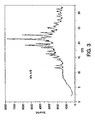
- FIGs 1 through 3 are powder x-ray diffraction patterns of Forms A, B and a mixture thereof, respectively, of the subject analog.
- FIG. 4 is a comparison of powder x-ray diffraction patterns simulated from the single crystal structures for Forms A and B with the actual pattern for each.
- FIGs 1-4 as well as in Tables 1 and 2 below which contain the data in summary form, the differences clearly establish that Forms A and B of the subject epothilone analog possess different crystalline structures.
- Peak Intensities of from 1 to 12 are classified as very weak, from 13 to 32 as weak, from 33 to 64 as average, from 65 to 87 as strong and from 88 to 100 as very strong.
- Table 1 Values for Form A Peak Position (two theta) (CuK ⁇ ⁇ 1.5406 ⁇ at room temperature) Relative Peak Intensity Peak Position (two theta) Relative Peak Intensity 5.69 Very weak 21.06 Very strong 6.76 Very weak 21.29 Weak 8.38 Very weak 22.31 Weak 11.43 Weak 23.02 Weak 12.74 Very weak 23.66 Weak 13.62 Very weak 24.18 Very weak 14.35 Very weak 24.98 Weak 15.09 Very weak 25.50 Weak 15.66 Weak 26.23 Very weak 16.43 Very weak 26.46 Very weak 17.16 Very weak 27.59 Very weak 17.66 Very weak 28.89 Very weak 18.31 Weak 29.58 Very weak 19.03 Weak 30.32 Very weak 19.54 Average 31.08 Very weak 20.57 Weak 31.52 Very weak Table 2 Values
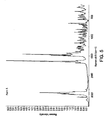
- FIGs 5 through 7 are the results of Raman spectroscopy of Forms A, B and a mixture thereof, respectively, of the subject analog.
- the spectra also demonstrate two distinct crystal forms, in particular the bands at 3130 cm-1 and 3115 cm-1.
- Form A and Form B of the epothilone analogs represented by formula I above can be further characterized by unit cell parameters obtained from single crystal X-ray crystallographic analysis as set forth below. A detailed account of unit cells can be found in Chapter 3 of Stout & Jensen, X-Ray structure Determination: A Practical Guide , MacMillian Co., New York, NY (1968).
- Unit Cell Parameters of Form B Cell dimensions a 16.675 (2)
- ⁇ b 28.083(4)
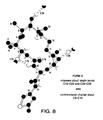
- Forms A and B of the subject epothilone analog are further illustrated by the solid state conformations of each as illustrated in FIG. 8 and FIG. 9, respectively, based on the fractional atomic coordinates listed in Tables 4 through 7 below.
- Forms A and B are unique crystalline entities.
- the filtrate contained ( ⁇ S, ⁇ R, ⁇ S, ⁇ S, 2R, 3S)-3-[(2S, 3E)-2-amino-3-methyl-4-(2-methyl-4-thiazolyl)-3-butenyl]- ⁇ , ⁇ -dihydroxy- ⁇ , ⁇ , ⁇ , ⁇ , 2-pentamethyl- ⁇ -oxooxiraneundecanoic acid, tetrabutylammonium salt (1:1) with a HPLC area of 94.1%.
- Vacuum distillation was then applied to the reaction mixture to reduce the volume thereof to about 80 mL.
- the resulting solution was partitioned between 100 mL of ethyl acetate and 100 mL of water.
- the aqueous layer was then back-extracted with 100 ml ethyl acetate.
- the combined organic layers were extracted with 50 ml water and then 20 mL brine.
- the resulting product solution was filtered through a Zeta Plus® pad and then stripped to an oil.
- the crude oil was dissolved in dichloromethane (20 mL) and washed with water to remove final traces of synthesis solvents and stripped to a solid.
- the crude solid was chromatographed on silica gel 60 (35 ml silica per gram of theoretical product) with an eluent comprised of 88% dichloromethane (CH 2 Cl 2 ), 10%-30% ethyl acetate (EtOAc) and 2% triethylamine (Et 3 N).
- the fractions were analyzed by HPLC, the purest of which were combined and stripped to give the purified solid.
- the resulting solid approx. 2 g, was slurried in ethyl acetate (32 ml) for 40 minutes at 75°C, then cyclohexane (C 6 H 12 ) (16 ml) was slowly added, and the mixture cooled to 5°C.
- the purified solid was collected on filter paper, washed with cold ethyl acetate/cyclohexane, and dried.
- the yield was 1.72 g (38% yield) of the white solid product, [1S-[1R*,3R*(E),7R*,10S*,11R*,12R*,16S*]]-7,11-dihydroxy-8,8,10,12,16-pentamethyl-3-[1-methyl-2-(2-methyl-4-thiazolyl)ethenyl]-4-aza-17-oxabicyclo[14.1.0]heptadecane-5,9-dione, with a HPLC area of 99.2%.
- a 5-mL Wheaton bottle was charged with 250 mg of the title compound that had not been purified as in Example 2 and toluene (3.75 mL, 15 mL/g.) and the resultant slurry heated to 75°C and held for 30 minutes. The resultant suspension was allowed to cool to 20°C and maintained at that temperature for 18 hours with stirring. The slurry was filtered and the afforded white crystals dried to give 150 mg. of the title compound, Form B, in 60% yield with an HPLC area of 99.2.
Landscapes
- Chemical & Material Sciences (AREA)
- Organic Chemistry (AREA)
- Health & Medical Sciences (AREA)
- Life Sciences & Earth Sciences (AREA)
- General Health & Medical Sciences (AREA)
- Medicinal Chemistry (AREA)
- Nuclear Medicine, Radiotherapy & Molecular Imaging (AREA)
- Pharmacology & Pharmacy (AREA)
- Chemical Kinetics & Catalysis (AREA)
- Animal Behavior & Ethology (AREA)
- General Chemical & Material Sciences (AREA)
- Public Health (AREA)
- Veterinary Medicine (AREA)
- Pharmaceuticals Containing Other Organic And Inorganic Compounds (AREA)
- Heterocyclic Carbon Compounds Containing A Hetero Ring Having Oxygen Or Sulfur (AREA)
- Plural Heterocyclic Compounds (AREA)
- Steroid Compounds (AREA)
- Nitrogen Condensed Heterocyclic Rings (AREA)
- Organic Low-Molecular-Weight Compounds And Preparation Thereof (AREA)
Abstract
Description
- The present invention relates to crystalline polymorphic forms of a highly potent epothilone analog that is characterized by enhanced properties.
- Epothilones are macrolide compounds that find utility in the pharmaceutical field. For example, Epothilones A and B having the structures:

- Epothilone A
- R=H
- Epothilone B
- R=Me
- Various epothilone analogs have been synthesized and may be used to treat a variety of cancers and other abnormal proliferative diseases. Such analogs are disclosed in Hofle et al., Id.; Nicolaou, K.C., et al., Angew Chem. Int. Ed. Engl., Vol. 36, No. 19, 2097-2103 (1997); and Su, D.-S., et al., Angew Chem. Int. Ed. Engl., Vol. 36, No. 19, 2093-2097 (1997).
- A particularly advantageous epothilone analog that has been found to have advantageous activity is [1S-[1R*,3R*(E),7R*,10S*,11R*,12R*,16S*]]-7,11-Dihydroxy-8,8,10,12,16-pentamethyl-3-[1-methyl-2-(2-methyl-4-thiazolyl)ethenyl]-4-aza-17-oxabicyclo[14.1.0]heptadecane-5,9-dione. In accordance with the present invention, two crystal forms of the subject epothilone analog are provided. These polymorphs, which have been designated as Forms A and B, respectively, are novel crystal forms and are identified hereinbelow.
- FIG. 1 is a powder x-ray diffraction pattern (CuKα λ=1.5406 Å at room temperature) of Form A of the subject epothilone analog.
- FIG. 2 is a powder x-ray diffraction pattern of Form B (Cu Kα λ=1.5406 Å at room temperature) of the subject epothilone analog.
- FIG. 3 is a powder x-ray diffraction pattern of a mixture of Forms A and B (Cu Kα λ=1.5406 Å at room temperature) of the subject epothilone analog.
- FIG. 4 is a comparison of the simulated and actual powder x-ray diffraction patterns of Forms A and B of the subject epothilone analog.
- FIG. 5 is a Raman spectrum of Form A of the subject epothilone analog.
- FIG. 6 is a Raman spectrum of Form B of the subject epothilone analog.
- FIG. 7 is a Raman spectrum of a mixture of Forms A and B of the subject epothilone analog.
- FIG. 8 depicts the solid state conformation in Form A of the subject epothilone analog.
- FIG. 9 depicts the solid state conformation in Form B of the subject epothilone analog.
- In accordance with the present invention, there are provided two crystalline polymorphs of the epothilone analog represented by formula I.

- In accordance with the present invention, there are provided polymorphs of an epothilone analog represented by formula I below

- The epothilone analog represented by formula I chemically is [1S-[1R*,3R*(E),7R*,10S*,11R*,12R*,16S*]]-7,11-Dihydroxy-8, 8,10,12,16-pentamethyl-3-[1-methyl-2-(2-methyl-4-thiazolyl)ethenyl]-4-aza-17-oxabicyclo[14.1.0]heptadecane-5,9-dione. This analog and the preparation thereof are described in
U.S. patent application Serial No. 09/170,582, filed October 13, 1998 - carcinoma, including that of the bladder, breast, colon, kidney, liver, lung, ovary, pancreas, stomach, cervix, thyroid and skin, including squamous cell carcinoma;
- hematopoietic tumors of lymphoid lineage, including leukemia, acute lymphocytic leukemia, acute lymphoblastic leukemia, B-cell lymphoma, T-cell lymphoma, Hodgkins lymphoma, non-Hodgkins lymphoma, hairy cell lymphoma and Burketts lymphoma;
- hematopoietic tumors of myeloid lineage, including acute and chronic myelogenous leukemias and promyelocytic leukemia;
- tumors of mesenchymal origin, including fibrosarcoma and rhabdomyoscarcoma;
- other tumors, including melanoma, seminoma, teratocarcinoma, neuroblastoma and glioma;
- tumors of the central and peripheral nervous system, including astrocytoma, neuroblastoma, glioma, and schwannomas;
- tumors of mesenchymal origin, including fibrosarcoma, rhabdomyoscaroma, and osteosarcoma; and
- other tumors, including melanoma, xeroderma pigmentosum, keratoacanthoma, seminoma, thyroid follicular cancer and teratocarcinoma.
- The subject polymorphs will also inhibit angiogenesis, thereby affecting the growth of tumors and providing treatment of tumors and tumor-related disorders. Such anti-angiogenesis properties will also be useful in the treatment of other conditions responsive to anti-angiogenesis agents including, but not limited to, certain forms of blindness related to retinal vascularization, arthritis, especially inflammatory arthritis, multiple sclerosis, restinosis and psoriasis.
- The polymorphs of the analog represented by formula I will induce or inhibit apoptosis, a physiological cell death process critical for normal development and homeostasis. Alterations of apoptotic pathways contribute to the pathogenesis of a variety of human diseases. The subject polymorphs, as modulators of apoptosis, will be useful in the treatment of a variety of human diseases with aberrations in apoptosis including, but not limited to, cancer and precancerous lesions, immune response related diseases, viral infections, degenerative diseases of the musculoskeletal system and kidney disease.
- Without wishing to be bound to any mechanism or morphology, the such crystalline forms of the epothilone analog represented by formula I may also be used in the provision of medicaments to treat conditions other than cancer or other proliferative diseases. Such conditions include, but are not limited to viral infections such as herpesvirus, poxvirus, Epstein-Barr virus, Sindbis virus and adenovirus; autoimmune diseases such as systemic lupus erythematosus, immune mediated glomerulonephritis, rheumatoid arthritis, psoriasis, inflammatory bowel diseases and autoimmune diabetes mellitus; neurodegenerative disorders such as Alzheimer's disease, AIDS-related dementia, Parkinson's disease, amyotrophic lateral sclerosis, retinitis pigmentosa, spinal muscular atrophy and cerebellar degeneration; AIDS; myelodysplastic syndromes; aplastic anemia; ischemic injury associated myocardial infarctions; stroke and reperfusion injury; restenosis; arrhythmia; atherosclerosis; toxin-induced or alcohol induced liver diseases; hematological diseases such as chronic anemia and aplastic anemia; degenerative diseases of the musculoskeletal system such as osteoporosis and arthritis; aspirin-sensitive rhinosinusitis; cystic fibrosis; multiple sclerosis; kidney diseases; and cancer pain.
- The effective amount of the subject polymorphs, particularly Form A, may be determined by one of ordinary skill in the art, and includes exemplary dosage amounts for a human of from 0.05 to 200 mg/kg/day, which may be administered in a single dose or in the form of individual divided doses, such as from 1 to 4 times per day. Preferably, the subject polymorphs are administered in a dosage of less than 100 mg/kg/day, in a single dose or in 2 to 4 divided doses. It will be understood that the specific dose level and frequency of dosage for any particular subject may be varied and will depend upon a variety of factors including the activity of the specific compound employed, the metabolic stability and length of action of that compound, the species, age, body weight, general health, sex and diet of the subject, the mode and time of administration, rate of excretion, drug combination, and severity of the particular condition. The subject polymorphs are preferably administered parenterally, however, other routes of administration are contemplated herein as are recognized by those skill in the oncology arts. Preferred subjects for treatment include animals, most preferably mammalian species such as humans, and domestic animals such as dogs, cats and the like, subject to the aforementioned disorders.
- The preparation of the epothilone analogs represented by formula I described in
U.S. patent application Serial No. 09/170,582 produced the subject epothilone analog as an oil that can be chromatographed and purified to yield an amorphous powder. A preferred preparation is described in a continuing application under SerialNo. 09/528,526 filed on March 20, 2000 
- Generally, taking the purified material in a limited amount of ethyl acetate and heating the resultant slurry to 75-80°C will cause the formation of Form A. By limited amount is meant from 8 to 16 mL, preferably from 8 to 12 mL, of ethyl acetate per gram of purified material. As the solution is heated, a thin slurry forms which has been found to be predominately Form B. At about 75°C the sluny undergoes a material thickening which has been found to be the formation of Form A. The slurry is held at 75-80°C for about an hour to assure completion of the formation of Form A at which time cyclohexane is added to the slurry in a ratio to ethyl acetate of from 1:2 to 2:2, preferably 1:2, and the mixture is allowed to cool to ambient temperature at which it is maintained with stirring for a period of from 12 to 96 hours. The mixture is then cooled to about 5°C over about two hours after which the crystals of Form A of the subject epothilone analog are recovered. Form A is afforded in good yield and purity.
- Alternate procedures for the preparation of Form A involve the addition of seed crystals. In the descriptions that follow, seed crystals of Form A were used, but seed crystals of Form B, or mixtures thereof can be used as well. In one such procedure, the purified material is taken up in a limited amount of ethyl acetate as described above and heated to about 75°C, seed crystals are added and the mixture maintained for about 30 minutes. An amount of cyclohexane as described above is then added dropwise maintaining the temperature at about 70°C. The mixture is thereafter cooled to 20°C and held with stirring for 18 hours after which it is cooled to 5°C and the white crystals of Form A recovered by physical separation, e.g. filtration.
- In a second procedure, the initial solution of material in ethyl acetate is heated to 75°C for at least an hour until a solution is produced. The solution is cooled to about 50°C over the course of about two hours adding seed crystals of Form A when the temperature reaches about 60°C. Crystals begin to appear at about 55°C. The temperature is again reduced to about 20°C over a further two hours during one hour of which an amount of cyclohexane as described above is added dropwise. The final slurry is further cooled over two hours to -10°C and held at that temperature for an additional hour. The slurry is then filtered to afford white crystals of Form A.
- In a further alternate procedure, the material is taken up in a larger amount, i.e. at least about 40 mL/g of ethyl acetate and the resultant slurry heated to about 80 °C until a solution is formed which is then cooled to about 70°C over the course of about one hour. Seed crystals of Form A are added when the solution temperature reaches about 70°C. The temperature is then reduced to about 30°C over a further three hours. Crystals begin to appear at about 65°C. The temperature is reduced to -10°C over an additional three hours during a thirty minute period thereof a quantity of cyclohexane as described above is added dropwise. The temperature is maintained at -10°C for a further hour. The final slurry is filtered to afford white crystals of Form A. The yield and purity of Form A by these procedures is considered very good.
- Form B of the subject epothilone analogs represented by Formula I above is obtained by forming a slurry of the crude material in a larger quantity of ethyl acetate, i.e. from 40 to 50 mL per g., and heating at 70°C to 80°C for an hour to form a solution which is then held at temperature for about thirty minutes. The solution is cooled to about 30°C over the course of about two hours, crystals beginning to appear at about 38°C. The temperature is further reduced to about -10°C over one hour during which a quantity of cyclohexane as described above is added dropwise over a period of thirty minutes. The final slurry is held at -10°C over a further two hours and filtered to afford white crystals of Form B.
- In an alternative preparation to that above, the crude material is slurried with a like quantity of ethyl acetate and heated to about 78°C to form a solution that is then held at temperature for about thirty minutes. The solution is cooled to about 10°C over the course of about two hours and seed crystals of Form A are added when the temperature reaches about 10°C. The temperature is again reduced over a further two hours to -10°C during a thirty minute period thereof an amount of cyclohexane as described above is added dropwise. The temperature is maintained at -10°C for two hours. The final slurry is filtered to afford white crystals of Form B.
- In a further alternate procedure, the purified material is taken up in another solvent, preferably toluene, in an amount between about 10 and 20 mL per g., and heated to 75°C to 80°C for 30 minutes and then allowed to cool to 20°C and maintained for 18 hours with stirring. White crystals of Form B are recovered from the slurry by physical separation. The yield and purity of Form B by these procedures is considered very good.
- FIGs 1 through 3 are powder x-ray diffraction patterns of Forms A, B and a mixture thereof, respectively, of the subject analog. FIG. 4 is a comparison of powder x-ray diffraction patterns simulated from the single crystal structures for Forms A and B with the actual pattern for each. X-ray diffraction patterns were generated from a Philips Xpert with a generator source of 44kV and 40 mA and a CuKα filament of λ= 1.5406 Å at room temperature. In the results shown in FIGs 1-4, as well as in Tables 1 and 2 below which contain the data in summary form, the differences clearly establish that Forms A and B of the subject epothilone analog possess different crystalline structures. In the Tables, Peak Intensities of from 1 to 12 are classified as very weak, from 13 to 32 as weak, from 33 to 64 as average, from 65 to 87 as strong and from 88 to 100 as very strong.
Table 1 Values for Form A Peak Position
(two theta)
(CuKα λ=1.5406 Å at room temperature)Relative Peak Intensity Peak Position
(two theta)Relative Peak Intensity 5.69 Very weak 21.06 Very strong 6.76 Very weak 21.29 Weak 8.38 Very weak 22.31 Weak 11.43 Weak 23.02 Weak 12.74 Very weak 23.66 Weak 13.62 Very weak 24.18 Very weak 14.35 Very weak 24.98 Weak 15.09 Very weak 25.50 Weak 15.66 Weak 26.23 Very weak 16.43 Very weak 26.46 Very weak 17.16 Very weak 27.59 Very weak 17.66 Very weak 28.89 Very weak 18.31 Weak 29.58 Very weak 19.03 Weak 30.32 Very weak 19.54 Average 31.08 Very weak 20.57 Weak 31.52 Very weak Table 2 Values for Form B Peak Position
(two theta)
(CuKα λ=1.5406 Å at room temperature)Relative Peak Intensity Peak Position
(two theta)Relative Peak Intensity 6.17 Very weak 21.73 Average 10.72 Very weak 22.48 Very strong 12.33 Weak 23.34 Average 14.17 Weak 23.93 Average 14.93 Average 24.78 Average 15.88 Average 25.15 Weak 16.17 Average 25.90 Weak 17.11 Average 26.63 Average 17.98 Weak 27.59 Very weak 19.01 Very strong 28.66 Weak 19.61 Average 29.55 Weak 20.38 Average 30.49 Weak 21.55 Average 31.22 Weak - FIGs 5 through 7 are the results of Raman spectroscopy of Forms A, B and a mixture thereof, respectively, of the subject analog. The spectra also demonstrate two distinct crystal forms, in particular the bands at 3130 cm-1 and 3115 cm-1.
- Distinguishing physical characteristics of the two polymorph forms are shown in Table 3 below. Solution calorimetry was determined using a Thermometrics Microcalorimeter in ethanol at 25°C. The solubilities were likewise determined at 25°C. It is further evident from certain of the data, particularly the heat of solution, that Form A is the more stable and, therefore, Form A is preferred.
Table 3 Characteristic Form A Form B Solubility in Water 0.1254 0.1907 Solubility in 3% Polysorbate 80 (Aqueous) 0.2511 0.5799 Heat of Solution 20.6 kJ/mol 9.86 kJ/mol - Form A and Form B of the epothilone analogs represented by formula I above can be further characterized by unit cell parameters obtained from single crystal X-ray crystallographic analysis as set forth below. A detailed account of unit cells can be found in
Chapter 3 of Stout & Jensen, X-Ray structure Determination: A Practical Guide, MacMillian Co., New York, NY (1968).Unit Cell Parameters of Form A Cell dimensions a = 14.152(6) Å b = 30.72(2) Å c = 6.212(3) Å Volume = 2701(4) A3 Space group P2 12121 Orthorhombic Molecules/ unit cell 4 Density (calculated) (g/cm3) 1.247 Melting point 182-185° C (decomposition) Unit Cell Parameters of Form B Cell dimensions a = 16.675 (2) Å b = 28.083(4) Å c = 6.054(1)Å Volume = 2835(1) A3 Space group P2 12121 Orthorhombic Molecules/ unit cell 4 Density (calculated) (g/cm3) 1.187 Melting point 191-199° C (decomposition) - The differences between Forms A and B of the subject epothilone analog are further illustrated by the solid state conformations of each as illustrated in FIG. 8 and FIG. 9, respectively, based on the fractional atomic coordinates listed in Tables 4 through 7 below.


Table 5 Hydrogen Positions: Form A Atom X Y Z U*10E2 H21 0.2475( 0) 0.4114( 0) 0.5659( 0) 4.86( 0) H22 0.2576( 0) 0.4663( 0) 0.4871( 0) 4.86( 0) H31 0.3056( 0) 0.3905( 0) 0.2005( 0) 4.59( 0) H3 0.3433( 0) 0.4414( 0) -0.0241( 0) 5.55( 0) H61 0.1951( 0) 0.3304( 0) 0.0646( 0) 5.55( 0) H71 0.0960( 0) 0.2932( 0) 0.4607( 0) 5.80( 0) H7 0.1332( 0) 0.2276( 0) 0.3158( 0) 7.23( 0) H81 0.2588( 0) 0.3266( 0) 0.5107( 0) 5.85( 0) H91 0.3274( 0) 0.3037( 0) 0.1672( 0) 6.41( 0) H92 0.3217( 0) 0.2491( 0) 0.2527( 0) 6.41( 0) H101 0.4802( 0) 0.2743( 0) 0.3130( 0) 6.34( 0) H102 0.4253( 0) 0.2697( 0) 0.5663( 0) 6.34( 0) H111 0.4687( 0) 0.3519( 0) 0.3132( 0) 5.60( 0) H112 0.3823( 0) 0.3519( 0) 0.5172( 0) 5.60( 0) H131 0.6275( 0) 0.3905( 0) 0.7410( 0) 5.60( 0) H141 0.6837( 0) 0.4117( 0) 0.3814( 0) 5.88( 0) H142 0.5803( 0) 0.3901( 0) 0.2659( 0) 5.88( 0) H151 0.5638( 0) 0.4542( 0) 0.6281( 0) 5.35( 0) H16 0.4353( 0) 0.4447( 0) 0.2429( 0) 4.88( 0) H171 0.1722( 0) 0.4437( 0) -0.1367( 0) 6.90( 0) H172 0.1919( 0) 0.3871( 0) -0.1308( 0) 6.90( 0) H173 0.0763( 0) 0.4077( 0) -0.1076( 0) 6.90( 0) H181 0.1273( 0) 0.4835( 0) 0.1956( 0) 6.31( 0) H182 0.0295( 0) 0.4491( 0) 0.2355( 0) 6.31( 0) H183 0.1123( 0) 0.4566( 0) 0.4436( 0) 6.31( 0) H191 0.0370( 0) 0.2923( 0) -0.0226( 0) 8.78( 0) H192 -0.0186( 0) 0.3233( 0) 0.1794( 0) 8.78( 0) H193 0.0259( 0) 0.3491( 0) -0.0525( 0) 8.78( 0) H201 0.3050( 0) 0.2635( 0) 0.7355( 0) 8.17( 0) H202 0.1828( 0) 0.2733( 0) 0.7536( 0) 8.17( 0) H203 0.2252( 0) 0.2304( 0) 0.5923( 0) 8.17( 0) H2.11 0.4260( 0) 0.3415( 0) 0.8951( 0) 6.84( 0) H212 0.4998( 0) 0.2955( 0) 0.8754( 0) 6.84( 0) 


Table 7 Hydrogen Posi tions: Form B Atom X Y Z U*10E2 H21 0.1283( 0) 0.0616( 0) 0.7084( 0) 4.86( 0) H22 0.2159( 0) 0.0306( 0) 0.7857( 0) 4.86( 0) H31 0.1272( 0) 0.0969( 0) 1.0910( 0) 4.51( 0) H3 0.2243( 0) 0.0785( 0) 1.3075( 0) 6.11( 0) H61 -0.0043( 0) 0.0983( 0) 1.2199( 0) 4.99( 0) H71 -0.1059( 0) 0.0964( 0) 0.8057( 0) 5.69( 0) H7 -0.1609( 0) 0.1655( 0) 0.9542( 0) 7.62( 0) H81 0.0313( 0) 0.1244( 0) 0.7484( 0) 5.58( 0) H91 -0.0180( 0) 0.2062( 0) 1.0453( 0) 6.10( 0) H92 0.0520( 0) 0.1619( 0) 1.1189( 0) 6.10( 0) H101 0.1365( 0) 0.1874( 0) 0.7953( 0) 7.47( 0) H102 0.0691( 0) 0.2349( 0) 0.7527( 0) 7.47( 0) H111 0.0976( 0) 0.2651( 0) 1.1204( 0) 7.74( 0) H112 0.1633( 0) 0.2170( 0) 1.1686( 0) 7.74( 0) H131 0.3308( 0) 0.2613( 0) 0.8107( 0) 7.31( 0) H141 0.3779( 0) 0.2094( 0) 1.1016( 0) 7.61( 0) H142 0.2780( 0) 0.1920( 0) 1.1530( 0) 7.61( 0) H151 0.3046( 0) 0.1836( 0) 0.6859( 0) 5.74( 0) H16 0.2693( 0) 0.1161( 0) 1.0487( 0) 5.71( 0) H171 0.0304( 0) -0.0088( 0) 1.3753( 0) 6.33( 0) H172 0.1318( 0) 0.0064( 0) 1.4171( 0) 6.33( 0) H173 0.0577( 0) 0.0512( 0) 1.4165( 0) 6.33( 0) H181 0.0633( 0) -0.0501( 0) 1.0184( 0) 5.58( 0) H182 0.1192( 0) -0.0207( 0) 0.8122( 0) 5.58( 0) H183 0.1655( 0) -0.0370( 0) 1.0628( 0) 5.58( 0) H191 -0.1481( 0) 0.0774( 0) 1.3099( 0) 8.04( 0) H192 -0.1459( 0) 0.0330( 0) 1.1036( 0) 8.04( 0) H193 -0.0849( 0) 0.0274( 0) 1.3402( 0) 8.04( 0) H201 -0.0094( 0) 0.1955( 0) 0.5429( 0) 7.89( 0) H202 -0.0763( 0) 0.1475( 0) 0.5059( 0) 7.89( 0) H203 -0.1024( 0) 0.1951( 0) 0.6816( 0) 7.89( 0) H211 0.1596( 0) 0.2886( 0) 0.6259( 0) 11.47( 0) H212 0.1382( 0) 0.3292( 0) 0.8404( 0) 11.47( 0) H213 0.2355( 0) 0.3265( 0) 0.7267( 0) 11.47( 0) H231 0.5051( 0) 0.1602( 0) 1.0559( 0) 6.57( 0) H291 0.5291( 0) 0.0702( 0) 1.2584( 0) 7.73( 0) H301 0.7003( 0) 0.0920( 0) 0.4744( 0) 13.05( 0) H302 0.7623( 0) 0.1165( 0) 0.6811( 0) 13.05( 0) H303 0.7525( 0) 0.0542( 0) 0.6572( 0) 13.05( 0) - Based on the foregoing data, it is concluded that Forms A and B are unique crystalline entities.
- The following examples serve to illustrate the practice of the invention.
- To a jacketed 125 mL round bottom flask, fitted with a mechanical stirrer, there was combined epothilone-B (5.08 g), tetrabutylammonium azide (Bu4NN3) (3.55 g, 1.25 equivalents), ammonium chloride (1.07g, 2 eq), water (1.8 ml, 10 equivalents), tetrahydrofuran (THF) (15 ml), and N,N-dimethylformamide (DMF) (15 ml). The mixture was inerted by sparging nitrogen subsurface for 15 minutes. In a second flask was charged tetrahydrofuran (70 ml), followed by trimethylphosphine (PMe3) (1.56 ml, 1.5 equivalents), then tris(dibenzilideneacetone)-dipalladium(0)-chloroform adduct (Pd2(dba)3·CHCl3)(0.259 g, 0.025 equivalents). The catalyst mixture was stirred for 20 minutes at ambient temperature, then added to the epothilone-B mixture. The combined mixture was stirred for 4.5 hours at 30 °C. The completed reaction mixture was then filtered to remove solid ammonium chloride (NH4Cl). The filtrate contained (βS, εR, ζS, ηS, 2R, 3S)-3-[(2S, 3E)-2-amino-3-methyl-4-(2-methyl-4-thiazolyl)-3-butenyl]- β, ζ-dihydroxy-γ, γ, ε, η, 2-pentamethyl-δ-oxooxiraneundecanoic acid, tetrabutylammonium salt (1:1) with a HPLC area of 94.1%.
- In a 500 mL flask there was combined 1-[3-(dimethylamino)propyl]-3-ethylcarbodiimide hydrochloride (EDCI) (3.82 g, 2 equivalents), 1-hydroxy-7-benzotriazole hydrate (HOBt) (1.68 g, 1.1 equivalents), potassium carbonate (1.38 g, 1 equivalent), N, N-dimethylfomiamide (DMF) (40 ml) and tetrahydrofuran (THF) (160 ml). The mixture was warmed to 35°C and the filtrate from above was added thereto, dropwise over a period of three hours. This mixture was then stirred for an additional 1 hour at 35 °C. Vacuum distillation was then applied to the reaction mixture to reduce the volume thereof to about 80 mL. The resulting solution was partitioned between 100 mL of ethyl acetate and 100 mL of water. The aqueous layer was then back-extracted with 100 ml ethyl acetate. The combined organic layers were extracted with 50 ml water and then 20 mL brine. The resulting product solution was filtered through a Zeta Plus® pad and then stripped to an oil. The crude oil was dissolved in dichloromethane (20 mL) and washed with water to remove final traces of synthesis solvents and stripped to a solid. The crude solid was chromatographed on silica gel 60 (35 ml silica per gram of theoretical product) with an eluent comprised of 88% dichloromethane (CH2Cl2), 10%-30% ethyl acetate (EtOAc) and 2% triethylamine (Et3N). The fractions were analyzed by HPLC, the purest of which were combined and stripped to give the purified solid. The resulting solid, approx. 2 g, was slurried in ethyl acetate (32 ml) for 40 minutes at 75°C, then cyclohexane (C6H12) (16 ml) was slowly added, and the mixture cooled to 5°C. The purified solid was collected on filter paper, washed with cold ethyl acetate/cyclohexane, and dried. The yield was 1.72 g (38% yield) of the white solid product, [1S-[1R*,3R*(E),7R*,10S*,11R*,12R*,16S*]]-7,11-dihydroxy-8,8,10,12,16-pentamethyl-3-[1-methyl-2-(2-methyl-4-thiazolyl)ethenyl]-4-aza-17-oxabicyclo[14.1.0]heptadecane-5,9-dione, with a HPLC area of 99.2%.
- A 250 mL three-neck flask was charged with 0.61 g of the title compound that had been purified (silica gel pad filtration with EtOAc/hexane/Et3N as the eluent, HPLC area of 96.88) and ethyl acetate (28 mL, 46 ml/1 g). The resultant slurry was heated to 75°C. All of solids were dissolved after the slurry was stirred at 75°C for 60 minutes. The afforded solution was cooled from 75°C to 50°C over 120 minutes, seed crystals of Form A being added at 60°C. Crystals appeared at 55°C. The temperature was thereafter cooled to 20°C over 120 minutes, while cyclohexane (35 mL, 57 mL/1 g) was added dropwise to the mixture over a period of 60 minutes. The obtained slurry was cooled to -10°C over 120 minutes, and maintained for an additional 60 minutes. The slurry was filtered and the afforded white crystals were dried to give 0.514 g of the title compound, Form A, in 84.3% yield with an HPLC area of 99.4.
- A 250 mL three-neck flask was charged with 0.51 g of the title compound that had been purified (silica gel pad filtration with EtOAc/hexane/Et3N as the eluent, HPLC area of 96) and ethyl acetate (8.5 mL, 16.7 ml/1 g). The resultant slurry was heated to 80°C. The afforded solution was cooled from 80°C to 70°C over 60 minutes, seed crystals of Form A being added at 70°C. The temperature was thereafter cooled to 30°C over 180 minutes. Crystals appeared at 65°C. The solution was further cooled to -10°C over 180 minutes, while cyclohexane (10.2 mL, 20 mL/1 g) was added dropwise to the mixture over a period of 30 minutes. The obtained slurry was cooled maintained for an additional 60 minutes. The slurry was filtered and the afforded white crystals were dried to give 0.43 g of the title compound, Form A, in 84.3% yield with an HPLC area of 99.7.
- A 500 mL three-neck flask was charged with 18.3 g of a mixture of Forms A and B that had been purified (silica gel pad filtration with EtOAc/dichloromethane/Et3N as the eluent, HPLC area of 99) and ethyl acetate (183 mL, 10 ml/1 g). The resultant slurry was heated to 75°C, seed crystals of Form A were added and the temperature was maintained for 30 minutes. Cyclohexane (90.2 mL, 5 mL/1 g) was added dropwise to the mixture keeping the temperature at 70°C. After completion of the addition, the temperature was lowered to 20°C and the mixture maintained with stirring for a further 18 hours. The temperature was thereafter lowered to 5°C and maintain for 5 hours. The slurry was filtered and the afforded white crystals were dried to give 16.1 g of the title compound, Form A, in 88% yield with an HPLC area of 99.49.
- A 250 mL three-neck flask was charged with 0.108 g of the title compound that had not been purified as in Example 2, N,N-dimethyl formamide (0.0216 g) and ethyl acetate (5 mL, 46 ml/1 g). The resultant slurry was heated to 80°C and stirred for 30 minutes to dissolve all solids. The afforded solution was cooled from 80°C to 30°C over 120 minutes, crystals appearing at 38°C. Cyclohexane (7.5 mL, 69.5 mL/1 g) was added dropwise to the mixture over a period of 30 minutes while the temperature was cooled to -10°C over 60 minutes, and maintained for an additional 120 minutes. The slurry was filtered and the afforded white crystals were dried to give 0.082g of the title compound, Form B, in 76% yield with an HPLC area of 99.6.
- A 250 mL three-neck flask was charged with 0.458 g of the title compound that had not been purified as in Example 2 and contained about 6% ofN,N-dimethyl formamide and ethyl acetate (10 mL, 21.8 ml/1 g). The resultant slurry was heated to 78°C and stirred for 30 minutes to dissolve all solids. The afforded solution was cooled from 78°C to 10°C over 120 minutes. Seed crystals of Form A were added at 10°C. Cyclohexane (20 mL, 43.7 mL/1 g) was added dropwise to the mixture over a period of 60 minutes while the temperature was cooled to -10°C over 120 minutes, and maintained for an additional 120 minutes. The slurry was filtered and the afforded white crystals were dried to give 0.315g of the title compound, Form B, in 68.8% yield with an HPLC area of 98.2.
- A 5-mL Wheaton bottle was charged with 250 mg of the title compound that had not been purified as in Example 2 and toluene (3.75 mL, 15 mL/g.) and the resultant slurry heated to 75°C and held for 30 minutes. The resultant suspension was allowed to cool to 20°C and maintained at that temperature for 18 hours with stirring. The slurry was filtered and the afforded white crystals dried to give 150 mg. of the title compound, Form B, in 60% yield with an HPLC area of 99.2.
Claims (21)
- A crystalline polymorph of an epothilone analog represented by the formula
 unit cell parameters approximately equal to the following:characteristic peaks in the powder x-ray diffraction pattern at values of two theta (CuKα λ=1.5406 Å at 22°C): 5.69, 6.76, 8.38, 11.43, 12.74, 13.62, 14.35, 15.09, 15.66, 16.43, 17.16, 17.66, 18.31, 19.03, 19.54, 20.57, 21.06, 21.29, 22.31, 23.02, 23.66, 24.18, 14.98, 25.50, 26.23, 26.23, 26.46, 27.59, 28.89, 29.58, 30.32, 31.08 and 31.52; or
Cell dimensions a = 14.152(6) Å b = 30.72(2) Å c = 6.212(3) Å Volume = 2701(4) A3 Space group P212121 Orthorhombic Molecules/unit cell 4 Density (calculated) (g/cm3) 1.247 Melting point 182-185° C (decomposition); and
Form B is characterized by:unit cell parameters approximately equal to the following:characteristic peaks in the powder x-ray diffraction pattern at values of two theta (CuKα λ=1.5406 Å at 22°C): 6.17, 10.72, 12.33, 14.17, 14.93, 15.88, 16.17, 17.11, 17.98, 19.01, 19.61, 20.38, 21.55, 21.73, 22.48, 23.34, 23.93, 24.78, 25.15, 25.90, 26.63, 27.59, 28.66, 29.55, 30.49 and 31.22.Cell dimensions a = 16.675 (2) Å b = 28.083(4) Å c = 6.054(1) Å Volume = 2835(1) A3 Space group P212121 Orthorhombic Molecules/unit cell 4 Density (calculated) (g/cm3) 1.187 Melting point 191-199° C decomposition; and - A crystalline polymorph of an epothilone analog represented by the formula

characterized by powder x-ray diffraction substantially as shown in FIG. 2 below and a Raman spectrum substantially as shown in FIG. 6 below:

- A crystalline polymorph of an epothilone analog represented by the formula

- A crystalline polymorph in accordance with Claims 1, 2 or 3, wherein said polymorph is Form A.
- A crystalline polymorph in accordance with Claims 1, 2 or 3, wherein said polymorph is Form B.
- A crystalline material comprising a mixture of Form A and Form B in accordance with Claim1, 2 or 3.
- A process for producing a crystalline polymorph that is Form A of the epothilone analog represented by formula I in Claim 1 comprising heating a slurry of said analog represented by formula I in from 8 to 16 mL of ethyl acetate per gram of said analog to about 75°C maintaining the temperature for about one hour, adding an amount of cyclohexane in a ratio to the amount of ethyl acetate of from 1:2 to 2:2, allowing the mixture to cool to ambient temperature, maintain the mixture with stirring from 12 to 96 hours, further cooling it to about 5°C over about two hours and recovering the crystalline Form A therefrom.
- A process in accordance with Claim 7 wherein the amount of cyclohexane added is in a 1:2 ratio to the amount of ethyl acetate utilized to form said slurry.
- A process in accordance with Claim 7, wherein said slurry of said analog represented by formula I in ethyl acetate is heated to about 75°C seed crystals are added thereto and the mixture is maintained for about 30 minutes after which said amount of cyclohexane is added thereto while maintaining the mixture at about 70°C, cooling the mixture to ambient temperature, maintain the mixture with stirring for about 18 hours, further cooling it to about 5°C over about two hours and recovering the crystalline Form A therefrom.
- A process in accordance with Claim 7, wherein said slurry of said analog represented by formula I in ethyl acetate is heated to about 75°C for at least an hour until a solution is formed, cooling said solution to about 50°C over about two hours, adding said seed crystals thereto when the temperature reaches about 60°C, cooling the solution to about 30°C over about three hours, further reducing the temperature of the solution to -10°C over about three hours during one hour of which said amount of cyclohexane is added thereto dropwise, maintaining the resultant mixture at -10°C for about one hour and recovering the crystalline Form A therefrom.
- A process for producing a crystalline polymorph that is Form B of the epothilone analog represented by formula I in Claim 1 comprising heating a slurry of said analog represented by formula I in from 40 to 50 mL of ethyl acetate per gram of said analog to 75°C to 80°C, maintaining the temperature for about one hour thereby forming a solution, maintaining the solution at temperature for about 30 minutes, cooling the solution to about 30°C over about two hours, further reducing the temperature of the solution to -10°C over about one hour during which an amount of cyclohexane in a ratio to the amount of ethyl acetate of from 1:2 to 2:2 is added thereto dropwise over a period of about thirty minutes, maintaining the resultant mixture at -10°C for about two hours and recovering the crystalline Form B therefrom.
- A process in accordance with Claim 11, wherein said slurry of said analog represented by formula I in ethyl acetate is heated to about 78°C thereby forming a solution, cooling the solution to about 10°C over about two hours, adding seed crystals when the temperature reaches 10°C, further reducing the temperature of the solution to -10°C over about two hours during which said amount of cyclohexane is added thereto dropwise over a period of about thirty minutes, maintaining the resultant mixture at -10°C for about two hours and recovering the crystalline Form B therefrom.
- A process for producing a crystalline polymorph that is Form B of the epothilone analog represented by formula I in Claim 1 comprising beating a slurry of said analog represented by formula I in from 10 to 20 mL of toluene per gram of said analog to 75°C to 80°C, maintaining the temperature for about 30 minutes, cooling the mixture to about 20°C, maintaining the temperature for about 18 hours with stirring and recovering the crystalline Form B therefrom.
- A pharmaceutical composition which comprises as an active ingredient an effective amount of a crystalline polymorph as claimed in Claims 1, 2 or 3 and one or more pharmaceutically acceptable carriers, excipients or diluents thereof.
- A pharmaceutical composition in accordance with Claim 14, wherein said crystalline polymorph is Form A.
- A pharmaceutical composition in accordance with Claim 14, wherein said crystalline polymorph is Form B.
- A pharmaceutical composition in accordance with Claim 14, wherein said crystalline polymorph is a mixture of Form A and Form B.
- Use of a crystalline polymorph as claimed in Claims 1, 2 or 3 for the manufacture of a medicament for treating cancer or other proliferative diseases.
- Use in accordance with Claim 18, wherein said crystalline polymorph is Form A.
- Use in accordance with Claim 18, wherein said crystalline polymorph is Form B.
- Use in accordance with Claim 18, wherein said crystalline polymorph is administered parenterally.
Priority Applications (1)
| Application Number | Priority Date | Filing Date | Title |
|---|---|---|---|
| CY20071101304T CY1107758T1 (en) | 2000-08-16 | 2007-10-11 | POLYMORPHONE OF AN ETHINOLOGICAL ANALOG |
Applications Claiming Priority (3)
| Application Number | Priority Date | Filing Date | Title |
|---|---|---|---|
| US22559000P | 2000-08-16 | 2000-08-16 | |
| US225590P | 2000-08-16 | ||
| PCT/US2001/024540 WO2002014323A2 (en) | 2000-08-16 | 2001-08-01 | Polymorphs of an epothilone analog |
Publications (2)
| Publication Number | Publication Date |
|---|---|
| EP1309597A2 EP1309597A2 (en) | 2003-05-14 |
| EP1309597B1 true EP1309597B1 (en) | 2007-07-11 |
Family
ID=22845469
Family Applications (1)
| Application Number | Title | Priority Date | Filing Date |
|---|---|---|---|
| EP01959536A Expired - Lifetime EP1309597B1 (en) | 2000-08-16 | 2001-08-01 | Polymorphs of an epothilone analog |
Country Status (41)
| Country | Link |
|---|---|
| US (4) | US6689802B2 (en) |
| EP (1) | EP1309597B1 (en) |
| JP (1) | JP5046467B2 (en) |
| KR (1) | KR100810342B1 (en) |
| CN (1) | CN1269821C (en) |
| AR (1) | AR034259A1 (en) |
| AT (1) | ATE366735T1 (en) |
| AU (2) | AU2001281082B2 (en) |
| BG (1) | BG66132B1 (en) |
| BR (1) | BR0113234A (en) |
| CA (1) | CA2418109C (en) |
| CY (1) | CY1107758T1 (en) |
| CZ (1) | CZ305523B6 (en) |
| DE (1) | DE60129334T2 (en) |
| DK (1) | DK1309597T3 (en) |
| EE (1) | EE05273B1 (en) |
| ES (1) | ES2288518T3 (en) |
| GE (1) | GEP20053495B (en) |
| HR (1) | HRP20030190B1 (en) |
| HU (1) | HU229314B1 (en) |
| IL (2) | IL153993A0 (en) |
| IS (1) | IS2845B (en) |
| LT (1) | LT5138B (en) |
| LV (1) | LV13032B (en) |
| MX (1) | MXPA03001431A (en) |
| MY (1) | MY134129A (en) |
| NO (1) | NO328500B1 (en) |
| NZ (1) | NZ523722A (en) |
| PE (1) | PE20020290A1 (en) |
| PL (1) | PL205628B1 (en) |
| PT (1) | PT1309597E (en) |
| RO (1) | RO123296B1 (en) |
| RU (1) | RU2272039C2 (en) |
| SI (1) | SI21100B (en) |
| SK (1) | SK287876B6 (en) |
| TW (1) | TWI320040B (en) |
| UA (1) | UA75365C2 (en) |
| UY (1) | UY26886A1 (en) |
| WO (1) | WO2002014323A2 (en) |
| YU (1) | YU12103A (en) |
| ZA (1) | ZA200300522B (en) |
Families Citing this family (56)
| Publication number | Priority date | Publication date | Assignee | Title |
|---|---|---|---|---|
| US20050043376A1 (en) * | 1996-12-03 | 2005-02-24 | Danishefsky Samuel J. | Synthesis of epothilones, intermediates thereto, analogues and uses thereof |
| US6242469B1 (en) | 1996-12-03 | 2001-06-05 | Sloan-Kettering Institute For Cancer Research | Synthesis of epothilones, intermediates thereto, analogues and uses thereof |
| US6605599B1 (en) | 1997-07-08 | 2003-08-12 | Bristol-Myers Squibb Company | Epothilone derivatives |
| US6194181B1 (en) * | 1998-02-19 | 2001-02-27 | Novartis Ag | Fermentative preparation process for and crystal forms of cytostatics |
| US20020058286A1 (en) * | 1999-02-24 | 2002-05-16 | Danishefsky Samuel J. | Synthesis of epothilones, intermediates thereto and analogues thereof |
| US6518421B1 (en) * | 2000-03-20 | 2003-02-11 | Bristol-Myers Squibb Company | Process for the preparation of epothilone analogs |
| EP1353667A1 (en) * | 2001-01-25 | 2003-10-22 | Bristol-Myers Squibb Company | Parenteral formulations containing epothilone analogs |
| PL207720B1 (en) * | 2001-01-25 | 2011-01-31 | Bristol Myers Squibb Co | Methods of administering epothilone analogs for the treatment of cancer |
| WO2002066038A1 (en) | 2001-02-20 | 2002-08-29 | Bristol-Myers Squibb Company | Treatment of refractory tumors using epothilone derivatives |
| CA2440555A1 (en) * | 2001-03-14 | 2002-09-19 | Bristol-Myers Squibb Company | Combination of epothilone analogs and chemotherapeutic agents for the treatment of proliferative diseases |
| RU2341260C2 (en) * | 2002-03-08 | 2008-12-20 | Новартис Аг | Combinations including epothilone derivatives and alkylating agents |
| US6921769B2 (en) | 2002-08-23 | 2005-07-26 | Sloan-Kettering Institute For Cancer Research | Synthesis of epothilones, intermediates thereto and analogues thereof |
| WO2004018478A2 (en) * | 2002-08-23 | 2004-03-04 | Sloan-Kettering Institute For Cancer Research | Synthesis of epothilones, intermediates thereto, analogues and uses thereof |
| US7649006B2 (en) | 2002-08-23 | 2010-01-19 | Sloan-Kettering Institute For Cancer Research | Synthesis of epothilones, intermediates thereto and analogues thereof |
| US20050171167A1 (en) * | 2003-11-04 | 2005-08-04 | Haby Thomas A. | Process and formulation containing epothilones and analogs thereof |
| ITMI20032144A1 (en) * | 2003-11-07 | 2005-05-08 | Alfa Wassermann Spa | REFLEXIMINE POLIMORPHIC FORMS, PROCESSES TO OBTAIN THEM AND |
| US20090004277A1 (en) * | 2004-05-18 | 2009-01-01 | Franchini Miriam K | Nanoparticle dispersion containing lactam compound |
| EP1640004A1 (en) * | 2004-09-24 | 2006-03-29 | Schering Aktiengesellschaft | Use of epothilones in the treatment of bone metastases and bone tumors or cancers |
| MX2007005763A (en) | 2004-11-18 | 2007-07-20 | Squibb Bristol Myers Co | Enteric coated bead comprising ixabepilone, and preparation thereof. |
| EP1824458A1 (en) * | 2004-11-18 | 2007-08-29 | Bristol-Myers Squibb Company | Enteric coated bead comprising epothilone or an epothilone analog, and preparation and administration thereof |
| US20060121511A1 (en) | 2004-11-30 | 2006-06-08 | Hyerim Lee | Biomarkers and methods for determining sensitivity to microtubule-stabilizing agents |
| EP1674098A1 (en) | 2004-12-23 | 2006-06-28 | Schering Aktiengesellschaft | Stable and tolerable parental formulations of highly reactive organic drug substances with low or no solubility in water |
| JP2008536479A (en) | 2005-02-11 | 2008-09-11 | ユニバーシティ オブ サザン カリフォルニア | Expression method of protein having disulfide bridge |
| SI1698630T1 (en) * | 2005-03-03 | 2015-01-30 | Alfa Wassermann S.P.A. | New polymorphous forms of rifaximin, processes for their production and use thereof in the medicinal preparations |
| JP4954983B2 (en) | 2005-05-18 | 2012-06-20 | ファーマサイエンス・インコーポレイテッド | BIR domain binding compound |
| US7693596B2 (en) | 2005-12-14 | 2010-04-06 | Dell Products L.P. | System and method for configuring information handling system integrated circuits |
| US7919108B2 (en) * | 2006-03-10 | 2011-04-05 | Cook Incorporated | Taxane coatings for implantable medical devices |
| US20080286325A1 (en) * | 2006-01-05 | 2008-11-20 | Med Institute, Inc. | Cyclodextrin elution media for medical device coatings comprising a taxane therapeutic agent |
| US7875284B2 (en) * | 2006-03-10 | 2011-01-25 | Cook Incorporated | Methods of manufacturing and modifying taxane coatings for implantable medical devices |
| JP2009532035A (en) | 2006-03-31 | 2009-09-10 | ブリストル−マイヤーズ スクイブ カンパニー | Biomarkers and methods for determining sensitivity to microtubule stabilizers |
| US8008256B2 (en) * | 2006-05-01 | 2011-08-30 | University Of Southern California | Combination therapy for treatment of cancer |
| SG10201407457UA (en) | 2006-05-16 | 2014-12-30 | Pharmascience Inc | Iap bir domain binding compounds |
| MY148355A (en) * | 2006-08-16 | 2013-03-29 | Novartis Ag | Crystal form of epothilone b and use in pharmaceutical compositions |
| US8463852B2 (en) * | 2006-10-06 | 2013-06-11 | Oracle International Corporation | Groupware portlets for integrating a portal with groupware systems |
| US20110124690A1 (en) * | 2007-02-23 | 2011-05-26 | Danishefsky Samuel J | Compositions and methods for treating cancer or a neurotrophic disorder |
| EP2065054A1 (en) | 2007-11-29 | 2009-06-03 | Bayer Schering Pharma Aktiengesellschaft | Combinations comprising a prostaglandin and uses thereof |
| EP2070521A1 (en) | 2007-12-10 | 2009-06-17 | Bayer Schering Pharma Aktiengesellschaft | Surface-modified nanoparticles |
| DE102007059752A1 (en) | 2007-12-10 | 2009-06-18 | Bayer Schering Pharma Aktiengesellschaft | Functionalized solid polymer nanoparticles containing epothilones |
| US8802394B2 (en) | 2008-11-13 | 2014-08-12 | Radu O. Minea | Method of expressing proteins with disulfide bridges with enhanced yields and activity |
| EP2210584A1 (en) | 2009-01-27 | 2010-07-28 | Bayer Schering Pharma Aktiengesellschaft | Stable polymeric composition comprising an epothilone and an amphiphilic block copolymer |
| MX340870B (en) | 2010-02-12 | 2016-07-27 | Pharmascience Inc | Iap bir domain binding compounds. |
| IT1398550B1 (en) | 2010-03-05 | 2013-03-01 | Alfa Wassermann Spa | RIFAXIMINA COMPREHENSIVE FORMULATIONS USEFUL TO OBTAIN A PROLONGED EFFECT IN TIME |
| KR20130086534A (en) * | 2010-06-01 | 2013-08-02 | 플러스 케미칼스, 에스.에이. | Solid state forms of ixabepilone |
| AU2012356894B2 (en) | 2011-12-23 | 2018-01-18 | Araris Biotech Ltd. | Enzymatic conjugation of polypeptides |
| ITBO20120368A1 (en) | 2012-07-06 | 2014-01-07 | Alfa Wassermann Spa | COMPOSITIONS INCLUDING RIFAXIMINA AND AMINO ACIDS, RIFAXIMINE CRYSTALS DERIVING FROM SUCH COMPOSITIONS AND THEIR USE. |
| WO2014009426A2 (en) | 2012-07-13 | 2014-01-16 | Innate Pharma | Screening of conjugated antibodies |
| EP2916872B1 (en) | 2012-11-09 | 2019-02-27 | Innate Pharma | Recognition tags for tgase-mediated conjugation |
| CN103183681B (en) * | 2013-03-06 | 2016-01-13 | 浙江海正药业股份有限公司 | New crystal of ipsapirone and preparation method thereof |
| WO2014140300A1 (en) | 2013-03-15 | 2014-09-18 | Innate Pharma | Solid phase tgase-mediated conjugation of antibodies |
| WO2014202773A1 (en) | 2013-06-20 | 2014-12-24 | Innate Pharma | Enzymatic conjugation of polypeptides |
| JP6744212B2 (en) | 2013-06-21 | 2020-08-19 | イナート・ファルマ・ソシエテ・アノニムInnate Pharma Pharma S.A. | Enzymatic binding of polypeptides |
| WO2019092148A1 (en) | 2017-11-10 | 2019-05-16 | Innate Pharma | Antibodies with functionalized glutamine residues |
| US20230062248A1 (en) | 2020-01-31 | 2023-03-02 | Allarity Therapeutics Europe ApS | Methods for predicting ixabepilone responsiveness in cancer patients |
| CN112375085A (en) * | 2020-11-30 | 2021-02-19 | 湖北宏中药业股份有限公司 | High-yield high-purity processing method of ixabepilone reaction solution |
| CN112457320A (en) * | 2020-11-30 | 2021-03-09 | 湖北宏中药业股份有限公司 | Method for improving ixabepilone synthesis reaction rate |
| CN112409366A (en) * | 2020-11-30 | 2021-02-26 | 湖北宏中药业股份有限公司 | High-yield preparation method of ixabepilone dimer |
Family Cites Families (49)
| Publication number | Priority date | Publication date | Assignee | Title |
|---|---|---|---|---|
| GB1000809A (en) * | 1960-11-02 | 1965-08-11 | James Oakes & Company Riddings | Pipe manufacture |
| DE2308418B2 (en) * | 1972-06-21 | 1976-04-08 | Petzetakis, Aristovoulos George, Moschaton, Piräus (Griechenland) | METHOD AND DEVICE FOR MANUFACTURING AN IN PARTICULAR LARGE-CALIBRATED TUBE FROM THERMOPLASTIC PLASTIC |
| JPS5240337B2 (en) * | 1973-01-29 | 1977-10-12 | ||
| SE386365B (en) * | 1973-07-25 | 1976-08-09 | L Brendling | CONTAINERS OF PLASTIC, RUBBER OR OTHER FLEXIBLE MATERIAL, SPEC. INTENDED FOR COLLECTION OF URINE AND / OR FECALS |
| JPS6398413A (en) * | 1986-10-15 | 1988-04-28 | Smc Corp | Double pipe and its continuous manufacture |
| DE3927569A1 (en) * | 1989-08-21 | 1991-02-28 | Fritz Egger Gmbh | Conductive plastic forms electrofilter collector tubes - has ioniser wires surrounded by impure flowing gas |
| DE3939714A1 (en) * | 1989-12-01 | 1991-06-06 | Baedje K H Meteor Gummiwerke | TUBE |
| AU6431790A (en) * | 1990-01-05 | 1991-08-05 | Orscheln Co. | Flexible synthetic plastic conduit |
| DE4138042C2 (en) | 1991-11-19 | 1993-10-14 | Biotechnolog Forschung Gmbh | Epothilones, their production processes and agents containing these compounds |
| DE4206096A1 (en) * | 1992-02-27 | 1993-09-02 | Wolf Woco & Co Franz J | COAXIAL TUBE |
| DE19639456A1 (en) | 1996-09-25 | 1998-03-26 | Biotechnolog Forschung Gmbh | New epothilone derivatives |
| ATE218556T1 (en) | 1995-11-17 | 2002-06-15 | Biotechnolog Forschung Gmbh | EPOTHILONE DERIVATIVES AND THEIR PRODUCTION |
| DE19542986A1 (en) | 1995-11-17 | 1997-05-22 | Biotechnolog Forschung Gmbh | New epothilone derivatives useful as cytostatics |
| DE19636343C1 (en) | 1996-08-30 | 1997-10-23 | Schering Ag | New (di:methyl)-dioxanyl-methyl-pentanone and related compounds |
| DE19645362A1 (en) | 1996-10-28 | 1998-04-30 | Ciba Geigy Ag | Production of epothilone compounds with taxol-like activity |
| DE19645361A1 (en) | 1996-08-30 | 1998-04-30 | Ciba Geigy Ag | Production of epothilone compounds with taxol-like activity |
| AU716610B2 (en) | 1996-08-30 | 2000-03-02 | Novartis Ag | Method for producing epothilones, and intermediate products obtained during the production process |
| JP4274583B2 (en) * | 1996-11-18 | 2009-06-10 | ゲゼルシャフト・フュア・ビオテクノロギッシェ・フォルシュンク・ミット・ベシュレンクテル・ハフツング(ゲー・ベー・エフ) | Epothilone C, D, E and F, manufacturing and drugs |
| US6515016B2 (en) | 1996-12-02 | 2003-02-04 | Angiotech Pharmaceuticals, Inc. | Composition and methods of paclitaxel for treating psoriasis |
| US6242469B1 (en) | 1996-12-03 | 2001-06-05 | Sloan-Kettering Institute For Cancer Research | Synthesis of epothilones, intermediates thereto, analogues and uses thereof |
| US6204388B1 (en) | 1996-12-03 | 2001-03-20 | Sloan-Kettering Institute For Cancer Research | Synthesis of epothilones, intermediates thereto and analogues thereof |
| US6441186B1 (en) | 1996-12-13 | 2002-08-27 | The Scripps Research Institute | Epothilone analogs |
| DE19701758A1 (en) | 1997-01-20 | 1998-07-23 | Wessjohann Ludgar A Dr | New beta-keto-alcohol derivatives |
| EP1201666A3 (en) | 1997-02-25 | 2003-03-05 | Gesellschaft für biotechnologische Forschung mbH (GBF) | Epothilones with a modified side chain |
| DE19713970B4 (en) | 1997-04-04 | 2006-08-31 | R&D-Biopharmaceuticals Gmbh | Epothilone Synthesis Building Blocks II - Prenyl Derivatives |
| EP0975622B1 (en) | 1997-04-18 | 2002-10-09 | Studiengesellschaft Kohle mbH | Selective olefin metathesis of bifunctional or polyfunctional substrates in compressed carbon dioxide as reaction medium |
| DE19720312A1 (en) | 1997-05-15 | 1998-11-19 | Hoechst Ag | Preparation with increased in vivo tolerance |
| DE19821954A1 (en) | 1997-05-15 | 1998-11-19 | Biotechnolog Forschung Gmbh | Preparation of epothilone derivatives |
| DE19726627A1 (en) | 1997-06-17 | 1998-12-24 | Schering Ag | New intermediates for epothilone |
| US6605599B1 (en) | 1997-07-08 | 2003-08-12 | Bristol-Myers Squibb Company | Epothilone derivatives |
| ES2184307T3 (en) | 1997-07-16 | 2003-04-01 | Schering Ag | DERIVATIVES OF TIAZOL, PROCEDURE FOR ITS PREPARATION AND ITS USE. |
| CA2299608A1 (en) | 1997-08-09 | 1999-02-18 | Schering Aktiengesellschaft | New epothilone derivatives, method for producing same and their pharmaceutical use |
| DE19747580A1 (en) | 1997-10-28 | 1999-04-29 | Siemens Ag | Patch board arrangement with multi-point terminal block e.g. for connection of data lines in switch cabinet |
| US6365749B1 (en) * | 1997-12-04 | 2002-04-02 | Bristol-Myers Squibb Company | Process for the preparation of ring-opened epothilone intermediates which are useful for the preparation of epothilone analogs |
| MY125921A (en) | 1998-02-05 | 2006-08-30 | Novartis Ag | Compositions containing organic compounds |
| US6194181B1 (en) | 1998-02-19 | 2001-02-27 | Novartis Ag | Fermentative preparation process for and crystal forms of cytostatics |
| DE19807505A1 (en) | 1998-02-21 | 1999-08-26 | Roland Man Druckmasch | Rotary sheet printer for multicolored printing |
| JP2002504540A (en) | 1998-02-25 | 2002-02-12 | スローン−ケッタリング インスティトゥート フォア キャンサー リサーチ | Synthesis of epothilone, its intermediates and analogs |
| FR2775187B1 (en) | 1998-02-25 | 2003-02-21 | Novartis Ag | USE OF EPOTHILONE B FOR THE MANUFACTURE OF AN ANTIPROLIFERATIVE PHARMACEUTICAL PREPARATION AND A COMPOSITION COMPRISING EPOTHILONE B AS AN IN VIVO ANTIPROLIFERATIVE AGENT |
| WO2000000485A1 (en) | 1998-06-30 | 2000-01-06 | Schering Aktiengesellschaft | Epothilon derivatives, their preparation process, intermediate products and their pharmaceutical use |
| WO2000009317A1 (en) * | 1998-08-12 | 2000-02-24 | Proteus Inc. | Ribbed core dual wall structure |
| AU2795000A (en) | 1998-12-22 | 2000-07-12 | Novartis Ag | Epothilone derivatives and their use as antitumor agents |
| RU2242229C2 (en) * | 1999-01-19 | 2004-12-20 | Новартис Аг | Applying epotilones for cancer treatment |
| PE20010116A1 (en) | 1999-04-30 | 2001-02-15 | Schering Ag | 6-ALKENYL-, 6-ALKINYL- AND 6-EPOXY-EPOTILONE DERIVATIVES, PROCEDURES FOR THEIR PREPARATION |
| US6605559B1 (en) * | 1999-09-29 | 2003-08-12 | Daihatsu Motor Co., Ltd. | Dimethyl ether reforming catalyst |
| US6518421B1 (en) | 2000-03-20 | 2003-02-11 | Bristol-Myers Squibb Company | Process for the preparation of epothilone analogs |
| EP1353667A1 (en) * | 2001-01-25 | 2003-10-22 | Bristol-Myers Squibb Company | Parenteral formulations containing epothilone analogs |
| CZ20032021A3 (en) | 2001-01-25 | 2004-05-12 | Bristol@Myersásquibbácompany | Methods of administering epothilone analogs in the treatment of cancer |
| US9317043B2 (en) | 2013-12-19 | 2016-04-19 | Google Inc. | Path based power generation control for an aerial vehicle |
-
2001
- 2001-01-08 UA UA2003032259A patent/UA75365C2/en unknown
- 2001-07-26 MY MYPI20013545 patent/MY134129A/en unknown
- 2001-08-01 DE DE60129334T patent/DE60129334T2/en not_active Expired - Lifetime
- 2001-08-01 CN CNB018170641A patent/CN1269821C/en not_active Expired - Lifetime
- 2001-08-01 SI SI200120055A patent/SI21100B/en not_active IP Right Cessation
- 2001-08-01 JP JP2002519462A patent/JP5046467B2/en not_active Expired - Fee Related
- 2001-08-01 EP EP01959536A patent/EP1309597B1/en not_active Expired - Lifetime
- 2001-08-01 CZ CZ2003-418A patent/CZ305523B6/en not_active IP Right Cessation
- 2001-08-01 ES ES01959536T patent/ES2288518T3/en not_active Expired - Lifetime
- 2001-08-01 KR KR1020037002256A patent/KR100810342B1/en not_active Expired - Fee Related
- 2001-08-01 PL PL365610A patent/PL205628B1/en unknown
- 2001-08-01 YU YU12103A patent/YU12103A/en unknown
- 2001-08-01 MX MXPA03001431A patent/MXPA03001431A/en active IP Right Grant
- 2001-08-01 BR BR0113234-2A patent/BR0113234A/en active Search and Examination
- 2001-08-01 EE EEP200300063A patent/EE05273B1/en not_active IP Right Cessation
- 2001-08-01 SK SK134-2003A patent/SK287876B6/en not_active IP Right Cessation
- 2001-08-01 NZ NZ523722A patent/NZ523722A/en not_active IP Right Cessation
- 2001-08-01 HR HR20030190A patent/HRP20030190B1/en not_active IP Right Cessation
- 2001-08-01 DK DK01959536T patent/DK1309597T3/en active
- 2001-08-01 WO PCT/US2001/024540 patent/WO2002014323A2/en not_active Ceased
- 2001-08-01 RU RU2003106431/04A patent/RU2272039C2/en active
- 2001-08-01 AT AT01959536T patent/ATE366735T1/en active
- 2001-08-01 HU HU0300826A patent/HU229314B1/en not_active IP Right Cessation
- 2001-08-01 AU AU2001281082A patent/AU2001281082B2/en not_active Ceased
- 2001-08-01 PT PT01959536T patent/PT1309597E/en unknown
- 2001-08-01 AU AU8108201A patent/AU8108201A/en active Pending
- 2001-08-01 IL IL15399301A patent/IL153993A0/en unknown
- 2001-08-01 GE GE5091A patent/GEP20053495B/en unknown
- 2001-08-01 RO ROA200300114A patent/RO123296B1/en unknown
- 2001-08-01 CA CA2418109A patent/CA2418109C/en not_active Expired - Lifetime
- 2001-08-09 US US09/925,112 patent/US6689802B2/en not_active Ceased
- 2001-08-10 TW TW090119585A patent/TWI320040B/en not_active IP Right Cessation
- 2001-08-15 AR ARP010103901A patent/AR034259A1/en not_active Application Discontinuation
- 2001-08-15 UY UY26886A patent/UY26886A1/en not_active Application Discontinuation
- 2001-08-16 PE PE2001000818A patent/PE20020290A1/en not_active Application Discontinuation
-
2003
- 2003-01-16 IL IL153993A patent/IL153993A/en not_active IP Right Cessation
- 2003-01-16 BG BG107467A patent/BG66132B1/en unknown
- 2003-01-20 ZA ZA200300522A patent/ZA200300522B/en unknown
- 2003-02-11 IS IS6714A patent/IS2845B/en unknown
- 2003-02-14 NO NO20030707A patent/NO328500B1/en not_active IP Right Cessation
- 2003-02-25 LT LT2003017A patent/LT5138B/en not_active IP Right Cessation
- 2003-03-07 LV LVP-03-28A patent/LV13032B/en unknown
-
2004
- 2004-02-06 US US10/773,819 patent/US6982276B2/en not_active Expired - Lifetime
-
2005
- 2005-03-09 US US11/076,589 patent/USRE39251E1/en not_active Expired - Lifetime
- 2005-11-10 US US11/271,456 patent/US7153879B2/en not_active Expired - Lifetime
-
2007
- 2007-10-11 CY CY20071101304T patent/CY1107758T1/en unknown
Also Published As
Similar Documents
| Publication | Publication Date | Title |
|---|---|---|
| USRE39251E1 (en) | Polymorphs of an epothilone analog | |
| AU2001281082A1 (en) | Polymorphs of an epothilone analog | |
| DE69933287T2 (en) | 12,13-MODIFIED EPOTHILON DERIVATIVES | |
| DE69832294T2 (en) | epothilone | |
| JP2003522722A (en) | Method for producing ring-opened epothilone intermediate useful for producing epothilone derivatives | |
| IL302878A (en) | Bicyclic heterocyclyl derivatives as irak4 inhibitors | |
| WO2008015265A1 (en) | Anthracen derivatives and their use for the treatment of benign and malignant tumorous diseases | |
| HK1052010B (en) | Polymorphs of an epothilone analog | |
| SK181799A3 (en) | Epothilone derivatives |
Legal Events
| Date | Code | Title | Description |
|---|---|---|---|
| PUAI | Public reference made under article 153(3) epc to a published international application that has entered the european phase |
Free format text: ORIGINAL CODE: 0009012 |
|
| 17P | Request for examination filed |
Effective date: 20030310 |
|
| AK | Designated contracting states |
Designated state(s): AT BE CH CY DE DK ES FI FR GB GR IE IT LI LU MC NL PT SE TR |
|
| AX | Request for extension of the european patent |
Extension state: AL LT LV MK RO SI |
|
| 17Q | First examination report despatched |
Effective date: 20040914 |
|
| GRAP | Despatch of communication of intention to grant a patent |
Free format text: ORIGINAL CODE: EPIDOSNIGR1 |
|
| GRAS | Grant fee paid |
Free format text: ORIGINAL CODE: EPIDOSNIGR3 |
|
| GRAA | (expected) grant |
Free format text: ORIGINAL CODE: 0009210 |
|
| AK | Designated contracting states |
Kind code of ref document: B1 Designated state(s): AT BE CH CY DE DK ES FI FR GB GR IE IT LI LU MC NL PT SE TR |
|
| REG | Reference to a national code |
Ref country code: GB Ref legal event code: FG4D |
|
| REG | Reference to a national code |
Ref country code: CH Ref legal event code: EP |
|
| REG | Reference to a national code |
Ref country code: PT Ref legal event code: SC4A Free format text: AVAILABILITY OF NATIONAL TRANSLATION Effective date: 20070809 |
|
| REF | Corresponds to: |
Ref document number: 60129334 Country of ref document: DE Date of ref document: 20070823 Kind code of ref document: P |
|
| REG | Reference to a national code |
Ref country code: IE Ref legal event code: FG4D |
|
| REG | Reference to a national code |
Ref country code: SE Ref legal event code: TRGR |
|
| REG | Reference to a national code |
Ref country code: DK Ref legal event code: T3 |
|
| REG | Reference to a national code |
Ref country code: CH Ref legal event code: NV Representative=s name: KIRKER & CIE S.A. |
|
| REG | Reference to a national code |
Ref country code: GR Ref legal event code: EP Ref document number: 20070403057 Country of ref document: GR |
|
| ET | Fr: translation filed | ||
| REG | Reference to a national code |
Ref country code: ES Ref legal event code: FG2A Ref document number: 2288518 Country of ref document: ES Kind code of ref document: T3 |
|
| REG | Reference to a national code |
Ref country code: HK Ref legal event code: GR Ref document number: 1052010 Country of ref document: HK |
|
| PLBE | No opposition filed within time limit |
Free format text: ORIGINAL CODE: 0009261 |
|
| STAA | Information on the status of an ep patent application or granted ep patent |
Free format text: STATUS: NO OPPOSITION FILED WITHIN TIME LIMIT |
|
| 26N | No opposition filed |
Effective date: 20080414 |
|
| REG | Reference to a national code |
Ref country code: FR Ref legal event code: PLFP Year of fee payment: 15 |
|
| PGFP | Annual fee paid to national office [announced via postgrant information from national office to epo] |
Ref country code: NL Payment date: 20150809 Year of fee payment: 15 |
|
| PGFP | Annual fee paid to national office [announced via postgrant information from national office to epo] |
Ref country code: FI Payment date: 20150810 Year of fee payment: 15 Ref country code: DK Payment date: 20150811 Year of fee payment: 15 Ref country code: PT Payment date: 20150803 Year of fee payment: 15 Ref country code: ES Payment date: 20150713 Year of fee payment: 15 Ref country code: CY Payment date: 20150713 Year of fee payment: 15 Ref country code: IE Payment date: 20150810 Year of fee payment: 15 Ref country code: MC Payment date: 20150709 Year of fee payment: 15 Ref country code: GB Payment date: 20150729 Year of fee payment: 15 |
|
| PGFP | Annual fee paid to national office [announced via postgrant information from national office to epo] |
Ref country code: SE Payment date: 20150811 Year of fee payment: 15 Ref country code: AT Payment date: 20150727 Year of fee payment: 15 Ref country code: GR Payment date: 20150722 Year of fee payment: 15 Ref country code: FR Payment date: 20150629 Year of fee payment: 15 |
|
| PGFP | Annual fee paid to national office [announced via postgrant information from national office to epo] |
Ref country code: BE Payment date: 20150811 Year of fee payment: 15 |
|
| PG25 | Lapsed in a contracting state [announced via postgrant information from national office to epo] |
Ref country code: BE Free format text: LAPSE BECAUSE OF NON-PAYMENT OF DUE FEES Effective date: 20160831 |
|
| REG | Reference to a national code |
Ref country code: DK Ref legal event code: EBP Effective date: 20160831 |
|
| REG | Reference to a national code |
Ref country code: SE Ref legal event code: EUG |
|
| PG25 | Lapsed in a contracting state [announced via postgrant information from national office to epo] |
Ref country code: MC Free format text: LAPSE BECAUSE OF NON-PAYMENT OF DUE FEES Effective date: 20160831 |
|
| REG | Reference to a national code |
Ref country code: NL Ref legal event code: MM Effective date: 20160901 |
|
| REG | Reference to a national code |
Ref country code: AT Ref legal event code: MM01 Ref document number: 366735 Country of ref document: AT Kind code of ref document: T Effective date: 20160801 |
|
| GBPC | Gb: european patent ceased through non-payment of renewal fee |
Effective date: 20160801 |
|
| PG25 | Lapsed in a contracting state [announced via postgrant information from national office to epo] |
Ref country code: FI Free format text: LAPSE BECAUSE OF NON-PAYMENT OF DUE FEES Effective date: 20160801 Ref country code: GR Free format text: LAPSE BECAUSE OF NON-PAYMENT OF DUE FEES Effective date: 20170309 Ref country code: SE Free format text: LAPSE BECAUSE OF NON-PAYMENT OF DUE FEES Effective date: 20160802 |
|
| PGFP | Annual fee paid to national office [announced via postgrant information from national office to epo] |
Ref country code: TR Payment date: 20161103 Year of fee payment: 16 |
|
| REG | Reference to a national code |
Ref country code: GR Ref legal event code: ML Ref document number: 20070403057 Country of ref document: GR Effective date: 20170309 |
|
| REG | Reference to a national code |
Ref country code: FR Ref legal event code: ST Effective date: 20170428 |
|
| PG25 | Lapsed in a contracting state [announced via postgrant information from national office to epo] |
Ref country code: AT Free format text: LAPSE BECAUSE OF NON-PAYMENT OF DUE FEES Effective date: 20160801 Ref country code: CY Free format text: LAPSE BECAUSE OF NON-PAYMENT OF DUE FEES Effective date: 20160801 Ref country code: PT Free format text: LAPSE BECAUSE OF NON-PAYMENT OF DUE FEES Effective date: 20170201 |
|
| REG | Reference to a national code |
Ref country code: IE Ref legal event code: MM4A |
|
| PG25 | Lapsed in a contracting state [announced via postgrant information from national office to epo] |
Ref country code: NL Free format text: LAPSE BECAUSE OF NON-PAYMENT OF DUE FEES Effective date: 20160901 |
|
| PG25 | Lapsed in a contracting state [announced via postgrant information from national office to epo] |
Ref country code: IE Free format text: LAPSE BECAUSE OF NON-PAYMENT OF DUE FEES Effective date: 20160801 Ref country code: GB Free format text: LAPSE BECAUSE OF NON-PAYMENT OF DUE FEES Effective date: 20160801 Ref country code: FR Free format text: LAPSE BECAUSE OF NON-PAYMENT OF DUE FEES Effective date: 20160831 Ref country code: DK Free format text: LAPSE BECAUSE OF NON-PAYMENT OF DUE FEES Effective date: 20160831 |
|
| PG25 | Lapsed in a contracting state [announced via postgrant information from national office to epo] |
Ref country code: ES Free format text: LAPSE BECAUSE OF NON-PAYMENT OF DUE FEES Effective date: 20160802 |
|
| PGFP | Annual fee paid to national office [announced via postgrant information from national office to epo] |
Ref country code: LU Payment date: 20180821 Year of fee payment: 18 |
|
| PGFP | Annual fee paid to national office [announced via postgrant information from national office to epo] |
Ref country code: DE Payment date: 20180824 Year of fee payment: 18 Ref country code: IT Payment date: 20180824 Year of fee payment: 18 |
|
| REG | Reference to a national code |
Ref country code: DE Ref legal event code: R082 Ref document number: 60129334 Country of ref document: DE Representative=s name: SCHOPPE, ZIMMERMANN, STOECKELER, ZINKLER, SCHE, DE Ref country code: DE Ref legal event code: R081 Ref document number: 60129334 Country of ref document: DE Owner name: R-PHARM US OPERATING LLC (N.D.GES.D. STAATES D, US Free format text: FORMER OWNER: BRISTOL-MYERS SQUIBB CO., 08543-4000 PRINCETON, N.J., US |
|
| REG | Reference to a national code |
Ref country code: LU Ref legal event code: PD Owner name: R-PHARM US OPERATING, LLC; US Free format text: FORMER OWNER: BRISTOL-MYERS SQUIBB COMPANY Effective date: 20181001 |
|
| REG | Reference to a national code |
Ref country code: ES Ref legal event code: FD2A Effective date: 20181128 |
|
| PGFP | Annual fee paid to national office [announced via postgrant information from national office to epo] |
Ref country code: CH Payment date: 20180831 Year of fee payment: 18 |
|
| REG | Reference to a national code |
Ref country code: CH Ref legal event code: NV Representative=s name: FREI PATENTANWALTSBUERO AG, CH Ref country code: CH Ref legal event code: PUE Owner name: R-PHARM US OPERATING LLC, US Free format text: FORMER OWNER: BRISTOL-MYERS SQUIBB COMPANY, US |
|
| REG | Reference to a national code |
Ref country code: DE Ref legal event code: R119 Ref document number: 60129334 Country of ref document: DE |
|
| PG25 | Lapsed in a contracting state [announced via postgrant information from national office to epo] |
Ref country code: CH Free format text: LAPSE BECAUSE OF NON-PAYMENT OF DUE FEES Effective date: 20190831 Ref country code: LU Free format text: LAPSE BECAUSE OF NON-PAYMENT OF DUE FEES Effective date: 20190801 Ref country code: LI Free format text: LAPSE BECAUSE OF NON-PAYMENT OF DUE FEES Effective date: 20190831 |
|
| PG25 | Lapsed in a contracting state [announced via postgrant information from national office to epo] |
Ref country code: DE Free format text: LAPSE BECAUSE OF NON-PAYMENT OF DUE FEES Effective date: 20200303 |
|
| PG25 | Lapsed in a contracting state [announced via postgrant information from national office to epo] |
Ref country code: IT Free format text: LAPSE BECAUSE OF NON-PAYMENT OF DUE FEES Effective date: 20190801 |
|
| PG25 | Lapsed in a contracting state [announced via postgrant information from national office to epo] |
Ref country code: TR Free format text: LAPSE BECAUSE OF NON-PAYMENT OF DUE FEES Effective date: 20170801 |