EP1303350B9 - Verfahren zur herstellung von kohlenwasserstoffen aus einem synthesegas - Google Patents
Verfahren zur herstellung von kohlenwasserstoffen aus einem synthesegas Download PDFInfo
- Publication number
- EP1303350B9 EP1303350B9 EP01954235A EP01954235A EP1303350B9 EP 1303350 B9 EP1303350 B9 EP 1303350B9 EP 01954235 A EP01954235 A EP 01954235A EP 01954235 A EP01954235 A EP 01954235A EP 1303350 B9 EP1303350 B9 EP 1303350B9
- Authority
- EP
- European Patent Office
- Prior art keywords
- catalyst
- catalyst support
- support
- precursor
- impregnation
- Prior art date
- Legal status (The legal status is an assumption and is not a legal conclusion. Google has not performed a legal analysis and makes no representation as to the accuracy of the status listed.)
- Expired - Lifetime
Links
- 230000015572 biosynthetic process Effects 0.000 title claims description 32
- 238000003786 synthesis reaction Methods 0.000 title claims description 28
- 229930195733 hydrocarbon Natural products 0.000 title claims description 11
- 150000002430 hydrocarbons Chemical class 0.000 title claims description 11
- 238000004519 manufacturing process Methods 0.000 title description 2
- 239000003054 catalyst Substances 0.000 claims abstract description 165
- 238000000034 method Methods 0.000 claims abstract description 48
- 229910052710 silicon Inorganic materials 0.000 claims abstract description 38
- 239000002243 precursor Substances 0.000 claims abstract description 37
- 239000007864 aqueous solution Substances 0.000 claims abstract description 20
- 238000001354 calcination Methods 0.000 claims abstract description 17
- 229910052726 zirconium Inorganic materials 0.000 claims abstract description 16
- 229910052719 titanium Inorganic materials 0.000 claims abstract description 14
- 239000011260 aqueous acid Substances 0.000 claims abstract description 13
- 230000007935 neutral effect Effects 0.000 claims abstract description 13
- 229910052788 barium Inorganic materials 0.000 claims abstract description 5
- 229910052802 copper Inorganic materials 0.000 claims abstract description 5
- 229910052748 manganese Inorganic materials 0.000 claims abstract description 5
- 229910052725 zinc Inorganic materials 0.000 claims abstract description 5
- 229910052776 Thorium Inorganic materials 0.000 claims abstract description 4
- 229910052770 Uranium Inorganic materials 0.000 claims abstract description 4
- 125000002252 acyl group Chemical group 0.000 claims abstract description 4
- 125000000217 alkyl group Chemical group 0.000 claims abstract description 4
- 229910052787 antimony Inorganic materials 0.000 claims abstract description 4
- 229910052804 chromium Inorganic materials 0.000 claims abstract description 4
- 229910052733 gallium Inorganic materials 0.000 claims abstract description 4
- 229910052735 hafnium Inorganic materials 0.000 claims abstract description 4
- 229910052749 magnesium Inorganic materials 0.000 claims abstract description 4
- 229910052758 niobium Inorganic materials 0.000 claims abstract description 4
- 229910052700 potassium Inorganic materials 0.000 claims abstract description 4
- 229910052712 strontium Inorganic materials 0.000 claims abstract description 4
- 229910052715 tantalum Inorganic materials 0.000 claims abstract description 4
- 229910052721 tungsten Inorganic materials 0.000 claims abstract description 4
- 229910052720 vanadium Inorganic materials 0.000 claims abstract description 4
- PNEYBMLMFCGWSK-UHFFFAOYSA-N aluminium oxide Inorganic materials [O-2].[O-2].[O-2].[Al+3].[Al+3] PNEYBMLMFCGWSK-UHFFFAOYSA-N 0.000 claims description 62
- 238000005470 impregnation Methods 0.000 claims description 39
- 238000001035 drying Methods 0.000 claims description 33
- 239000010703 silicon Substances 0.000 claims description 32
- XUIMIQQOPSSXEZ-UHFFFAOYSA-N Silicon Chemical group [Si] XUIMIQQOPSSXEZ-UHFFFAOYSA-N 0.000 claims description 29
- 239000002002 slurry Substances 0.000 claims description 29
- 239000000243 solution Substances 0.000 claims description 28
- 239000002904 solvent Substances 0.000 claims description 19
- 239000012018 catalyst precursor Substances 0.000 claims description 16
- 125000004429 atom Chemical group 0.000 claims description 13
- 239000000203 mixture Substances 0.000 claims description 13
- 238000009835 boiling Methods 0.000 claims description 12
- -1 zirconium alkoxide Chemical class 0.000 claims description 12
- 239000007789 gas Substances 0.000 claims description 11
- 229910002091 carbon monoxide Inorganic materials 0.000 claims description 10
- 229910052739 hydrogen Inorganic materials 0.000 claims description 9
- 239000001257 hydrogen Substances 0.000 claims description 9
- BOTDANWDWHJENH-UHFFFAOYSA-N Tetraethyl orthosilicate Chemical compound CCO[Si](OCC)(OCC)OCC BOTDANWDWHJENH-UHFFFAOYSA-N 0.000 claims description 8
- 239000002245 particle Substances 0.000 claims description 8
- 150000003377 silicon compounds Chemical class 0.000 claims description 8
- UGFAIRIUMAVXCW-UHFFFAOYSA-N Carbon monoxide Chemical compound [O+]#[C-] UGFAIRIUMAVXCW-UHFFFAOYSA-N 0.000 claims description 7
- UFHFLCQGNIYNRP-UHFFFAOYSA-N Hydrogen Chemical compound [H][H] UFHFLCQGNIYNRP-UHFFFAOYSA-N 0.000 claims description 7
- QCWXUUIWCKQGHC-UHFFFAOYSA-N Zirconium Chemical group [Zr] QCWXUUIWCKQGHC-UHFFFAOYSA-N 0.000 claims description 7
- BASFCYQUMIYNBI-UHFFFAOYSA-N platinum Chemical compound [Pt] BASFCYQUMIYNBI-UHFFFAOYSA-N 0.000 claims description 7
- 230000008569 process Effects 0.000 claims description 7
- XLYOFNOQVPJJNP-UHFFFAOYSA-N water Substances O XLYOFNOQVPJJNP-UHFFFAOYSA-N 0.000 claims description 7
- 238000006243 chemical reaction Methods 0.000 claims description 6
- 238000010438 heat treatment Methods 0.000 claims description 6
- KDLHZDBZIXYQEI-UHFFFAOYSA-N Palladium Chemical compound [Pd] KDLHZDBZIXYQEI-UHFFFAOYSA-N 0.000 claims description 5
- 238000002156 mixing Methods 0.000 claims description 5
- 239000002019 doping agent Substances 0.000 claims description 4
- 230000009467 reduction Effects 0.000 claims description 4
- LFQCEHFDDXELDD-UHFFFAOYSA-N tetramethyl orthosilicate Chemical compound CO[Si](OC)(OC)OC LFQCEHFDDXELDD-UHFFFAOYSA-N 0.000 claims description 4
- 230000004913 activation Effects 0.000 claims description 3
- 239000003795 chemical substances by application Substances 0.000 claims description 3
- 239000002253 acid Substances 0.000 claims description 2
- 230000003213 activating effect Effects 0.000 claims description 2
- 230000002708 enhancing effect Effects 0.000 claims description 2
- 125000002887 hydroxy group Chemical group [H]O* 0.000 claims description 2
- 229910052763 palladium Inorganic materials 0.000 claims description 2
- 229910052697 platinum Inorganic materials 0.000 claims description 2
- 150000003839 salts Chemical class 0.000 claims description 2
- 229910052716 thallium Inorganic materials 0.000 claims description 2
- 125000004435 hydrogen atom Chemical class [H]* 0.000 claims 1
- GWEVSGVZZGPLCZ-UHFFFAOYSA-N Titan oxide Chemical compound O=[Ti]=O GWEVSGVZZGPLCZ-UHFFFAOYSA-N 0.000 description 31
- 239000010941 cobalt Substances 0.000 description 27
- 229910017052 cobalt Inorganic materials 0.000 description 27
- GUTLYIVDDKVIGB-UHFFFAOYSA-N cobalt atom Chemical group [Co] GUTLYIVDDKVIGB-UHFFFAOYSA-N 0.000 description 27
- 239000000047 product Substances 0.000 description 18
- 239000010936 titanium Substances 0.000 description 13
- 238000004090 dissolution Methods 0.000 description 11
- 230000004048 modification Effects 0.000 description 8
- 238000012986 modification Methods 0.000 description 8
- 238000012360 testing method Methods 0.000 description 8
- 238000011068 loading method Methods 0.000 description 7
- LFQSCWFLJHTTHZ-UHFFFAOYSA-N Ethanol Chemical compound CCO LFQSCWFLJHTTHZ-UHFFFAOYSA-N 0.000 description 6
- RTAQQCXQSZGOHL-UHFFFAOYSA-N Titanium Chemical compound [Ti] RTAQQCXQSZGOHL-UHFFFAOYSA-N 0.000 description 6
- 230000000694 effects Effects 0.000 description 5
- KFZMGEQAYNKOFK-UHFFFAOYSA-N Isopropanol Chemical compound CC(C)O KFZMGEQAYNKOFK-UHFFFAOYSA-N 0.000 description 4
- CPLXHLVBOLITMK-UHFFFAOYSA-N Magnesium oxide Chemical compound [Mg]=O CPLXHLVBOLITMK-UHFFFAOYSA-N 0.000 description 4
- AZDRQVAHHNSJOQ-UHFFFAOYSA-N alumane Chemical group [AlH3] AZDRQVAHHNSJOQ-UHFFFAOYSA-N 0.000 description 4
- 239000004411 aluminium Substances 0.000 description 4
- 229910052782 aluminium Inorganic materials 0.000 description 4
- UFMZWBIQTDUYBN-UHFFFAOYSA-N cobalt dinitrate Chemical compound [Co+2].[O-][N+]([O-])=O.[O-][N+]([O-])=O UFMZWBIQTDUYBN-UHFFFAOYSA-N 0.000 description 4
- QGUAJWGNOXCYJF-UHFFFAOYSA-N cobalt dinitrate hexahydrate Chemical compound O.O.O.O.O.O.[Co+2].[O-][N+]([O-])=O.[O-][N+]([O-])=O QGUAJWGNOXCYJF-UHFFFAOYSA-N 0.000 description 4
- 229910001981 cobalt nitrate Inorganic materials 0.000 description 4
- 229910052593 corundum Inorganic materials 0.000 description 4
- 239000000463 material Substances 0.000 description 4
- 239000011148 porous material Substances 0.000 description 4
- JMXKSZRRTHPKDL-UHFFFAOYSA-N titanium ethoxide Chemical compound [Ti+4].CC[O-].CC[O-].CC[O-].CC[O-] JMXKSZRRTHPKDL-UHFFFAOYSA-N 0.000 description 4
- 229910001845 yogo sapphire Inorganic materials 0.000 description 4
- 239000010949 copper Substances 0.000 description 3
- 239000007788 liquid Substances 0.000 description 3
- 238000005406 washing Methods 0.000 description 3
- 239000011701 zinc Substances 0.000 description 3
- CSCPPACGZOOCGX-UHFFFAOYSA-N Acetone Chemical compound CC(C)=O CSCPPACGZOOCGX-UHFFFAOYSA-N 0.000 description 2
- OKTJSMMVPCPJKN-UHFFFAOYSA-N Carbon Chemical compound [C] OKTJSMMVPCPJKN-UHFFFAOYSA-N 0.000 description 2
- 229910002651 NO3 Inorganic materials 0.000 description 2
- VYPSYNLAJGMNEJ-UHFFFAOYSA-N Silicium dioxide Chemical compound O=[Si]=O VYPSYNLAJGMNEJ-UHFFFAOYSA-N 0.000 description 2
- XLOMVQKBTHCTTD-UHFFFAOYSA-N Zinc monoxide Chemical compound [Zn]=O XLOMVQKBTHCTTD-UHFFFAOYSA-N 0.000 description 2
- XAGFODPZIPBFFR-UHFFFAOYSA-N aluminium Chemical compound [Al] XAGFODPZIPBFFR-UHFFFAOYSA-N 0.000 description 2
- 239000012736 aqueous medium Substances 0.000 description 2
- 229910001593 boehmite Inorganic materials 0.000 description 2
- 238000011109 contamination Methods 0.000 description 2
- 230000001186 cumulative effect Effects 0.000 description 2
- 230000003247 decreasing effect Effects 0.000 description 2
- 239000012153 distilled water Substances 0.000 description 2
- 238000011066 ex-situ storage Methods 0.000 description 2
- 238000001914 filtration Methods 0.000 description 2
- FAHBNUUHRFUEAI-UHFFFAOYSA-M hydroxidooxidoaluminium Chemical compound O[Al]=O FAHBNUUHRFUEAI-UHFFFAOYSA-M 0.000 description 2
- 230000006872 improvement Effects 0.000 description 2
- 239000011572 manganese Substances 0.000 description 2
- 238000005259 measurement Methods 0.000 description 2
- 125000000962 organic group Chemical group 0.000 description 2
- 239000002244 precipitate Substances 0.000 description 2
- ZGSOBQAJAUGRBK-UHFFFAOYSA-N propan-2-olate;zirconium(4+) Chemical compound [Zr+4].CC(C)[O-].CC(C)[O-].CC(C)[O-].CC(C)[O-] ZGSOBQAJAUGRBK-UHFFFAOYSA-N 0.000 description 2
- 239000013557 residual solvent Substances 0.000 description 2
- 238000000926 separation method Methods 0.000 description 2
- 239000007787 solid Substances 0.000 description 2
- YJLUBHOZZTYQIP-UHFFFAOYSA-N 2-[5-[2-(2,3-dihydro-1H-inden-2-ylamino)pyrimidin-5-yl]-1,3,4-oxadiazol-2-yl]-1-(2,4,6,7-tetrahydrotriazolo[4,5-c]pyridin-5-yl)ethanone Chemical compound C1C(CC2=CC=CC=C12)NC1=NC=C(C=N1)C1=NN=C(O1)CC(=O)N1CC2=C(CC1)NN=N2 YJLUBHOZZTYQIP-UHFFFAOYSA-N 0.000 description 1
- 229910002706 AlOOH Inorganic materials 0.000 description 1
- 239000004215 Carbon black (E152) Substances 0.000 description 1
- 229910002516 Co6Al2 Inorganic materials 0.000 description 1
- GRYLNZFGIOXLOG-UHFFFAOYSA-N Nitric acid Chemical compound O[N+]([O-])=O GRYLNZFGIOXLOG-UHFFFAOYSA-N 0.000 description 1
- 238000004458 analytical method Methods 0.000 description 1
- 239000012298 atmosphere Substances 0.000 description 1
- 125000004432 carbon atom Chemical group C* 0.000 description 1
- 238000005229 chemical vapour deposition Methods 0.000 description 1
- 229910001429 cobalt ion Inorganic materials 0.000 description 1
- XLJKHNWPARRRJB-UHFFFAOYSA-N cobalt(2+) Chemical compound [Co+2] XLJKHNWPARRRJB-UHFFFAOYSA-N 0.000 description 1
- 150000002431 hydrogen Chemical class 0.000 description 1
- 230000001788 irregular Effects 0.000 description 1
- 238000009533 lab test Methods 0.000 description 1
- 239000000395 magnesium oxide Substances 0.000 description 1
- 239000003607 modifier Substances 0.000 description 1
- 238000012544 monitoring process Methods 0.000 description 1
- 229910052759 nickel Inorganic materials 0.000 description 1
- PXHVJJICTQNCMI-UHFFFAOYSA-N nickel Substances [Ni] PXHVJJICTQNCMI-UHFFFAOYSA-N 0.000 description 1
- KBJMLQFLOWQJNF-UHFFFAOYSA-N nickel(ii) nitrate Chemical compound [Ni+2].[O-][N+]([O-])=O.[O-][N+]([O-])=O KBJMLQFLOWQJNF-UHFFFAOYSA-N 0.000 description 1
- 229910017604 nitric acid Inorganic materials 0.000 description 1
- 239000003960 organic solvent Substances 0.000 description 1
- CLSUSRZJUQMOHH-UHFFFAOYSA-L platinum dichloride Chemical compound Cl[Pt]Cl CLSUSRZJUQMOHH-UHFFFAOYSA-L 0.000 description 1
- 238000002360 preparation method Methods 0.000 description 1
- BDERNNFJNOPAEC-UHFFFAOYSA-N propan-1-ol Chemical compound CCCO BDERNNFJNOPAEC-UHFFFAOYSA-N 0.000 description 1
- YBCAZPLXEGKKFM-UHFFFAOYSA-K ruthenium(iii) chloride Chemical compound [Cl-].[Cl-].[Cl-].[Ru+3] YBCAZPLXEGKKFM-UHFFFAOYSA-K 0.000 description 1
- VSZWPYCFIRKVQL-UHFFFAOYSA-N selanylidenegallium;selenium Chemical group [Se].[Se]=[Ga].[Se]=[Ga] VSZWPYCFIRKVQL-UHFFFAOYSA-N 0.000 description 1
- 239000000377 silicon dioxide Substances 0.000 description 1
- 238000001228 spectrum Methods 0.000 description 1
- 239000012798 spherical particle Substances 0.000 description 1
- 239000007921 spray Substances 0.000 description 1
- 239000004408 titanium dioxide Substances 0.000 description 1
- 238000012546 transfer Methods 0.000 description 1
- 230000009466 transformation Effects 0.000 description 1
Images

Classifications
-
- B—PERFORMING OPERATIONS; TRANSPORTING
- B01—PHYSICAL OR CHEMICAL PROCESSES OR APPARATUS IN GENERAL
- B01J—CHEMICAL OR PHYSICAL PROCESSES, e.g. CATALYSIS OR COLLOID CHEMISTRY; THEIR RELEVANT APPARATUS
- B01J37/00—Processes, in general, for preparing catalysts; Processes, in general, for activation of catalysts
- B01J37/02—Impregnation, coating or precipitation
-
- B—PERFORMING OPERATIONS; TRANSPORTING
- B01—PHYSICAL OR CHEMICAL PROCESSES OR APPARATUS IN GENERAL
- B01J—CHEMICAL OR PHYSICAL PROCESSES, e.g. CATALYSIS OR COLLOID CHEMISTRY; THEIR RELEVANT APPARATUS
- B01J31/00—Catalysts comprising hydrides, coordination complexes or organic compounds
- B01J31/02—Catalysts comprising hydrides, coordination complexes or organic compounds containing organic compounds or metal hydrides
- B01J31/0272—Catalysts comprising hydrides, coordination complexes or organic compounds containing organic compounds or metal hydrides containing elements other than those covered by B01J31/0201 - B01J31/0255
- B01J31/0274—Catalysts comprising hydrides, coordination complexes or organic compounds containing organic compounds or metal hydrides containing elements other than those covered by B01J31/0201 - B01J31/0255 containing silicon
-
- B—PERFORMING OPERATIONS; TRANSPORTING
- B01—PHYSICAL OR CHEMICAL PROCESSES OR APPARATUS IN GENERAL
- B01J—CHEMICAL OR PHYSICAL PROCESSES, e.g. CATALYSIS OR COLLOID CHEMISTRY; THEIR RELEVANT APPARATUS
- B01J21/00—Catalysts comprising the elements, oxides, or hydroxides of magnesium, boron, aluminium, carbon, silicon, titanium, zirconium, or hafnium
- B01J21/12—Silica and alumina
-
- B—PERFORMING OPERATIONS; TRANSPORTING
- B01—PHYSICAL OR CHEMICAL PROCESSES OR APPARATUS IN GENERAL
- B01J—CHEMICAL OR PHYSICAL PROCESSES, e.g. CATALYSIS OR COLLOID CHEMISTRY; THEIR RELEVANT APPARATUS
- B01J23/00—Catalysts comprising metals or metal oxides or hydroxides, not provided for in group B01J21/00
- B01J23/70—Catalysts comprising metals or metal oxides or hydroxides, not provided for in group B01J21/00 of the iron group metals or copper
- B01J23/89—Catalysts comprising metals or metal oxides or hydroxides, not provided for in group B01J21/00 of the iron group metals or copper combined with noble metals
- B01J23/8913—Cobalt and noble metals
-
- B—PERFORMING OPERATIONS; TRANSPORTING
- B01—PHYSICAL OR CHEMICAL PROCESSES OR APPARATUS IN GENERAL
- B01J—CHEMICAL OR PHYSICAL PROCESSES, e.g. CATALYSIS OR COLLOID CHEMISTRY; THEIR RELEVANT APPARATUS
- B01J37/00—Processes, in general, for preparing catalysts; Processes, in general, for activation of catalysts
- B01J37/02—Impregnation, coating or precipitation
- B01J37/0201—Impregnation
- B01J37/0207—Pretreatment of the support
-
- B—PERFORMING OPERATIONS; TRANSPORTING
- B01—PHYSICAL OR CHEMICAL PROCESSES OR APPARATUS IN GENERAL
- B01J—CHEMICAL OR PHYSICAL PROCESSES, e.g. CATALYSIS OR COLLOID CHEMISTRY; THEIR RELEVANT APPARATUS
- B01J37/00—Processes, in general, for preparing catalysts; Processes, in general, for activation of catalysts
- B01J37/02—Impregnation, coating or precipitation
- B01J37/0201—Impregnation
- B01J37/0209—Impregnation involving a reaction between the support and a fluid
-
- B—PERFORMING OPERATIONS; TRANSPORTING
- B01—PHYSICAL OR CHEMICAL PROCESSES OR APPARATUS IN GENERAL
- B01J—CHEMICAL OR PHYSICAL PROCESSES, e.g. CATALYSIS OR COLLOID CHEMISTRY; THEIR RELEVANT APPARATUS
- B01J37/00—Processes, in general, for preparing catalysts; Processes, in general, for activation of catalysts
- B01J37/02—Impregnation, coating or precipitation
- B01J37/03—Precipitation; Co-precipitation
- B01J37/031—Precipitation
- B01J37/033—Using Hydrolysis
-
- C—CHEMISTRY; METALLURGY
- C10—PETROLEUM, GAS OR COKE INDUSTRIES; TECHNICAL GASES CONTAINING CARBON MONOXIDE; FUELS; LUBRICANTS; PEAT
- C10G—CRACKING HYDROCARBON OILS; PRODUCTION OF LIQUID HYDROCARBON MIXTURES, e.g. BY DESTRUCTIVE HYDROGENATION, OLIGOMERISATION, POLYMERISATION; RECOVERY OF HYDROCARBON OILS FROM OIL-SHALE, OIL-SAND, OR GASES; REFINING MIXTURES MAINLY CONSISTING OF HYDROCARBONS; REFORMING OF NAPHTHA; MINERAL WAXES
- C10G2/00—Production of liquid hydrocarbon mixtures of undefined composition from oxides of carbon
- C10G2/30—Production of liquid hydrocarbon mixtures of undefined composition from oxides of carbon from carbon monoxide with hydrogen
- C10G2/32—Production of liquid hydrocarbon mixtures of undefined composition from oxides of carbon from carbon monoxide with hydrogen with the use of catalysts
- C10G2/33—Production of liquid hydrocarbon mixtures of undefined composition from oxides of carbon from carbon monoxide with hydrogen with the use of catalysts characterised by the catalyst used
-
- B—PERFORMING OPERATIONS; TRANSPORTING
- B01—PHYSICAL OR CHEMICAL PROCESSES OR APPARATUS IN GENERAL
- B01J—CHEMICAL OR PHYSICAL PROCESSES, e.g. CATALYSIS OR COLLOID CHEMISTRY; THEIR RELEVANT APPARATUS
- B01J2231/00—Catalytic reactions performed with catalysts classified in B01J31/00
- B01J2231/60—Reduction reactions, e.g. hydrogenation
- B01J2231/64—Reductions in general of organic substrates, e.g. hydride reductions or hydrogenations
- B01J2231/641—Hydrogenation of organic substrates, i.e. H2 or H-transfer hydrogenations, e.g. Fischer-Tropsch processes
- B01J2231/648—Fischer-Tropsch-type reactions
-
- B—PERFORMING OPERATIONS; TRANSPORTING
- B01—PHYSICAL OR CHEMICAL PROCESSES OR APPARATUS IN GENERAL
- B01J—CHEMICAL OR PHYSICAL PROCESSES, e.g. CATALYSIS OR COLLOID CHEMISTRY; THEIR RELEVANT APPARATUS
- B01J23/00—Catalysts comprising metals or metal oxides or hydroxides, not provided for in group B01J21/00
- B01J23/70—Catalysts comprising metals or metal oxides or hydroxides, not provided for in group B01J21/00 of the iron group metals or copper
- B01J23/74—Iron group metals
- B01J23/75—Cobalt
-
- B—PERFORMING OPERATIONS; TRANSPORTING
- B01—PHYSICAL OR CHEMICAL PROCESSES OR APPARATUS IN GENERAL
- B01J—CHEMICAL OR PHYSICAL PROCESSES, e.g. CATALYSIS OR COLLOID CHEMISTRY; THEIR RELEVANT APPARATUS
- B01J37/00—Processes, in general, for preparing catalysts; Processes, in general, for activation of catalysts
- B01J37/02—Impregnation, coating or precipitation
- B01J37/0201—Impregnation
- B01J37/0205—Impregnation in several steps
-
- C—CHEMISTRY; METALLURGY
- C10—PETROLEUM, GAS OR COKE INDUSTRIES; TECHNICAL GASES CONTAINING CARBON MONOXIDE; FUELS; LUBRICANTS; PEAT
- C10G—CRACKING HYDROCARBON OILS; PRODUCTION OF LIQUID HYDROCARBON MIXTURES, e.g. BY DESTRUCTIVE HYDROGENATION, OLIGOMERISATION, POLYMERISATION; RECOVERY OF HYDROCARBON OILS FROM OIL-SHALE, OIL-SAND, OR GASES; REFINING MIXTURES MAINLY CONSISTING OF HYDROCARBONS; REFORMING OF NAPHTHA; MINERAL WAXES
- C10G2300/00—Aspects relating to hydrocarbon processing covered by groups C10G1/00 - C10G99/00
- C10G2300/70—Catalyst aspects
- C10G2300/703—Activation
Definitions
- THIS INVENTION relates to the production of hydrocarbons from a synthesis gas, and to catalysts therefor. It relates in particular to a method of treating an untreated catalyst support to form a protected modified catalyst support, to a protected modified catalyst support thus formed, to a method of forming a catalyst from the protected modified catalyst support, to a catalyst thus obtained, to a process for producing hydrocarbons, and to hydrocarbons thus produced.
- WO 99/42214 discloses a method of treating a catalyst support comprising the introduction onto and/or into an untreated catalyst support which is partially soluble in an aqueous acid solution and/or a natural aqueous solution, Si, Zr, Cu, Zn, Mn, Ba, Co, Ni and/or La an a modifying component. Calcination after support modification is necessary to decompare organic groups and to obtain the protected modified support.
- a method of treating an untreated catalyst support which method includes contacting an untreated catalyst support which is partially soluble in an aqueous acid solution and/or in a neutral aqueous solution with a modifying component precursor of the formula Me(OR) x where Me is a modifying component selected from Si, Zr, Ti, Cu, Zn, Mn, Ba, Co, Ni, Na, K, Ca, Sn, Cr, Fe, Li, Tl, Mg, Sr, Ga, Sb, V, Hf, Th, Ce, Ge, U, Nb, Ta, and W, R is an alkyl or acyl group, and x is an integer having a value of from 1 to 5, thereby to introduce the modifying component onto and/or into the catalyst support and to form a protected modified catalyst support which is less soluble or more inert in the aqueous acid solution and/or the neutral aqueous solution, than the untreated catalyst support, with no calcination of the catalyst support,
- the untreated catalyst support may, in particular, be in particulate form.
- the modifying component is thus present, in the protected modified catalyst support particles, on the particle surfaces, i.e. the modifying component is chemically bonded to the particle surfaces.
- the modifying compohent may be chemically bonded to OH (hydroxyl groups) on the support surfaces.
- calcination is meant treatment of a catalyst support at an elevated temperature of at least 100°C to decompose organic groups of the modifying component in air, as well as to remove any residual solvent used for impregnation of the modifying component into or onto the catalyst support as hereinafter described.
- the present invention is characterized thereby that the protected modified catalyst support is not subjected to heat treatment at 100°C or higher. This naturally does not exclude possibly subjecting the protected modified catalyst support to heat treatment in excess of 100°C during subsequent transformation of the protected modified support into a catalyst precursor or into a catalyst, as hereinafter described.
- the modifying component is thus capable, when present on the catalyst support, of suppressing the solubility of the untreated catalyst support in the aqueous acid solution and/or the neutral aqueous solution.
- any commercially available dried, eg spray-dried, untreated catalyst support that is partially soluble in an aqueous acid solution and/or in a neutral aqueous solution can be used.
- untreated catalyst supports that can be used are alumina (Al 2 O 3 ), titania (TiO 2 ), magnesia (MgO) and zinc oxide (ZnO).
- the catalyst support is alumina
- any suitable alumina support can, in principle, be used.
- the alumina support may be that obtainable under the trademark Puralox SCCa 2/150 from SASOL Germany GmbH.
- Puralox SCCa 2/150 (trademark) is a spray-dried alumina support.
- any suitable titania support can, in principle, be used.
- the titania support may be that obtainable under the trademark Degussa P25.
- 'untreated' in relation to the catalyst support is meant a catalyst support that is partially soluble in an aqueous acid solution and/or in a neutral aqueous solution.
- the contacting of the untreated catalyst support with the modifying component precursor may be by means of impregnation or chemical vapour deposition; however, impregnation is preferred.
- the modifying component precursor may be a silicon-based modifying component precursor or an organic silicon compound, eg a silicon alkoxide, so that the modifying component is silicon (Si).
- the organic silicon compound may then be tetra ethoxy silane ('TEOS', i.e. Si(OC 2 H 5 ) 4 ) or tetra methoxy silane ('TMOS', i.e. Si(OCH 3 ) 4 ).
- a silicon-based modifying component precursor When a silicon-based modifying component precursor is used with an alumina catalyst support, it may then be used in a quantity such that the silicon level in the resultant protected modified catalyst support is at least 0.06 Si atoms/nm 2 of the untreated support, preferably at least 0.13 Si atoms/nm 2 of the untreated support, and more preferably at least 0.26 Si atoms/nm 2 of the untreated support.
- the upper limit of the modifying component, eg silicon, in the protected modified catalyst support may be set by parameters such as the porosity of the protected modified catalyst support and/or by the average pore diameter of the protected modified catalyst support.
- the average pore diameter of the protected modified catalyst support as hereinafter described is at least 12nm, as disclosed in ZA 96/2759, which is hence incorporated herein by reference thereto.
- an objective is to obtain, from the protected modified catalyst support, a catalyst having a composition of 30g Co/100g Al 2 O 3 , the untreated Al 2 O 3 catalyst support, and also the protected modified catalyst support, must have a pore volume of at least 0.43ml/g, as described in US 5733839, WO 99/42214 and/or WO 00/20116.
- the upper limit of the modifying component, e.g. Si, in the protected modified catalyst support is thus to be selected in such a manner that the geometry, e.g. the average pore diameter and porosity, of the protected modified catalyst support is not detrimentally effected to an appreciable extent.
- the maximum amount of silicon that can be added to the untreated catalyst support in one impregnation step is 2.8 Si atoms/nm 2 of untreated catalyst support.
- the organic silicon compound When the contacting of the catalyst support with the silicon-based modifying component precursor or organic silicon compound is effected by way of impregnation, the organic silicon compound will be dissolved in an impregnation solvent having a boiling point, at atmospheric pressure, of less than 100°C.
- the impregnation solvent is typically an organic solvent capable of dissolving the silicon compound, such as ethanol, acetone or propanol.
- the untreated catalyst support may then be admixed with the resultant solution to form a treatment mixture, and the treatment mixture maintained at an elevated temperature for a period of time to impregnate the modifying agent into and/or onto the catalyst support.
- the elevated temperature may be at or near the boiling point of the impregnation solvent.
- the impregnation may be effected at atmospheric pressure, and the period of time for which the impregnation is effected may be from 1 minute to 20 hours, preferably from 1 minute to 5 hours.
- the excess solvent or solution is then removed, ie the impregnated support is dried, to obtain the protected modified catalyst support.
- the drying may be effected under a drying pressure or vacuum of 0.01 to 1 bar(a), more preferably 0.01 to 0.3 bar(a), and at a temperature equal to the boiling point of the solvent at the drying pressure, eg using known drier equipment, fitted with a mixing device, and of which the jacket temperature is thus higher than the solvent boiling point.
- the drying temperature will be lower than 100°C.
- the modifying component precursor may be a zirconium alkoxide, eg zirconium isopropoxide (Zr(OCH(CH 3 ) 2 ) 4 , so that the modifying component is zirconium (Zr).
- Zr(OCH(CH 3 ) 2 ) 4 zirconium isopropoxide
- the contacting of the untreated catalyst support with the zirconium alkoxide may then be effected in similar fashion to the contacting hereinbefore described for the silicon-based modifying component precursor.
- a method of treating an untreated catalyst support which method includes admixing an untreated catalyst support which is partially soluble in an aqueous acid solution and/or in a neutral aqueous solution, with a solution of a modifying component precursor of the formula Me(OR) x where Me is a modifying component selected from Si, Zr, Ti, Cu, Zn, Mn, Ba, Co, Ni, Na, K, Ca, Sn, Cr, Fe, Li, Ti, Mg, Sr, Ga, Sb, V, Hf, Th, Ce, Ge, U, Nb, Ta, and W, R is an alkyl or acyl group, and x is an integer having a value of from 1 to 5, in an impregnation solvent having a boiling point, at atmospheric pressure, of less than 100°C, to form a treatment mixture; maintaining the treatment mixture at or near the boiling point of the impregnated solvent for from 1 minute to 20 hours, to impregnate the catalyst support
- the method may include washing the protected modified catalyst support to remove any residual solvent, with a slurry comprising the washed catalyst support and washing liquid being formed, and drying the slurry.
- the washing may be effected with an aqueous solution, and may be effected at a temperature of about 60°C for a period of time, eg for about 1 hour.
- the drying of the slurry may be effected at a temperature of about 95°C, and under a vacuum of between 0.03 bar(a) and 0.2 bar(a).
- the invention extends to a protected modified catalyst support, when obtained by the method as hereinbefore described.
- a method of forming a catalyst precursor comprises mixing a protected modified catalyst support as hereinbefore described, with an aqueous solution of an active catalyst component or its precursor, to form a slurry, and impregnating the protected modified catalyst support with the active catalyst component or its precursor, to form the catalyst precursor.
- the active catalyst component precursor may be cobalt nitrate so that the active catalyst component in and on the catalyst is cobalt.
- the untreated catalyst support may, as hereinbefore described, be alumina.
- the method of forming the catalyst precursor may be in accordance with that described in US 5733839, WO 99/42214, and/or WO 00/20116.
- the mixing of the protected modified catalyst support and the active catalyst component or its precursor aqueous solution, and the impregnating may comprise subjecting a slurry of the protected modified catalyst support or carrier, water and the active catalyst component or its precursor to a sub-atmospheric pressure environment, drying the resultant impregnated carrier under a sub-atmospheric pressure environment, and calcining the dried impregnated carrier, to obtain the catalyst precursor, ie to obtain a Fischer-Tropsch catalyst in unreduced form.
- a second or even a third impregnation, drying and calcination step may thereafter be carried out after the first impregnation, drying and calcination step hereinbefore described.
- a water, soluble precursor salt of platinum (Pt) or palladium (Pd) may be added, as a dopant capable of enhancing the reducibility of the active component.
- the mass proportion of this dopant, when used, to active catalyst component may be between 0.01:100 and 0.3:100.
- the invention extends also to a catalyst precursor, when obtained by the method as hereinbefore described.
- catalyst precursor is thus in unreduced form, and requires reduction or activation before it can be used, ie it requires reduction or activation to be converted to a catalyst.
- This may be effected by subjecting the precursor to heat treatment under the influence of a reducing gas such as hydrogen, to obtain the catalyst.
- a method of forming a catalyst which includes reducing or activating a catalyst precursor as hereinbefore described.
- the invention thus extends also to a catalyst, when obtained by the method as hereinbefore described.
- a process for producing hydrocarbons which includes contacting a synthesis gas comprising hydrogen and carbon monoxide at an elevated temperature between 180°C and 250°C and an elevated pressure between 10 and 40 bar with a catalyst as hereinbefore described, to obtain hydrocarbons, by means of a slurry phase Fischer-Tropsch reaction of the hydrogen with the carbon monoxide.
- the invention extends also to hydrocarbons, when produced by the process as hereinbefore described.
- an alumina supported cobalt based slurry phase Fischer-Tropsch catalyst produces a wax product when used in a Fischer-Tropsch reaction of a synthesis gas, comprising hydrogen and carbon monoxide.
- Such catalysts have hitherto preferably been' produced by slurry impregnation of an alumina support using an aqueous cobalt nitrate precursor solution, of which the pH can vary between 1 and 6.
- the alumina support partially dissolves in aqueous acid, as well as neutral aqueous solutions. After dissolution, the aluminium ions can, in the presence of cobalt ions:
- cobalt nitrate will also deposit on the loosely bonded re-precipitated aluminium structures.
- These cobalt on loosely bonded re-precipitated aluminium structures can, dislodge during extended Fischer-Tropsch synthesis runs, possibly aggravated by the hydrothermal nature of a realistic synthesis environment, and contaminate the wax product (hydrocarbon product that is a liquid at the applied Fischer-Tropsch synthesis conditions and withdrawn as such from the reactor) with cobalt rich ultra fines of a sub-micron nature.
- a spray-dried Puralox SCCa 2/150 (trademark) alumina support in the form of spherical particles, obtainable from SASOL Germany GmbH of Matterseering 40, 22297, Hamburg, Germany, was used.
- the support was thus an untreated support.
- the surfaces of the support particles were modified with silicon.
- An impregnation method was used to achieve the modification.
- silicon in the form of TEOS (tetra ethoxy silane) as precursor, was added to ethanol at 60°C. Ethanol was thus used as the impregnation solvent.
- the particulate alumina support was added to this solution, which was then kept at 50°C-75°C for 1 hour.
- An untreated or fresh particulate titanium dioxide (Degussa P25 (trademark)) support was calcined at 650°C for 16 hours, spray dried and classified to 75-150 micron.
- the support had a rutile content of 80% and a surface area of 27m 2 /g.
- This support was modified in the same fashion as described in Example 1 by addition of TEOS and drying at 95°C, to obtain a protected silicon modifier titania support. No calcination was employed after the drying. The aimed for silicon content was 4.5 Si atoms/nm 2 untreated resh support.
- Zirconium in the form of zirconium isopropoxide as precursor, was added under an inert atmosphere to isopropanol. Isopropanol was thus used as the impregnation solvent.
- a particulate alumina support (which was the same as that used in Example 1) was added to this solution, and the mixture stirred at 60°C for 1 hour. The solvent was then removed under a vacuum of 0.03-0.2bar(a) with a jacket temperature of the drier equipment at 95°C. No calcination was employed after the drying. A protected zirconium modified alumina support was thus obtained. The aimed for amount of modifying component was 0.1 Zr atoms per square nanometer untreated support.
- a particulate alumina support was modified in the same fashion as described in Example 1, using TEOT (tetra ethyl ortho titanate) as the precursor rather than TEOS, with drying at 95°C. No calcination was employed after the drying. A protected titanium modified alumina support was thus obtained. The aimed for titanium content was 2.5 Ti atoms/nm 2 untreated support.
- TEOT tetra ethyl ortho titanate
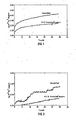
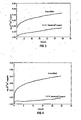
- Alumina and titania dissolve in an aqueous medium at low pH.
- the dissolution of alumina or titania results in the formation of aluminium ions or titanium ions respectively.
- concentration of aluminium or titanium ions increases with time.
- the increase of aluminium or titanium ions with time was followed by monitoring the conductivity at a constant pH of 2. The pH was kept constant by automated addition of a 10% nitric acid solution.
- a supported cobalt catalyst precursor was prepared on a protected silicon modified alumina support as prepared in Example 1.
- a solution of 17.4kg of Co(NO 3 ) 2 .6H 2 O, 9.6g of (NH 3 ) 4 Pt(NO 3 ) 2 , and 11kg of distilled water was mixed with 20.0kg of a silicon modified alumina support, by adding the support to the solution.
- the slurry was added to a conical vacuum drier and continuously mixed. The temperature of this slurry was increased to 60°C after which a pressure of 20kPa(a) was applied.
- the catalyst was heated from 75°C to 250°C, using a heating rate of 0.5°C/min and an air space velocity of 1.0 m 3 n /kg Co(NO 3 ) 2 .6H 2 O/h, and kept at 250°C for 6 hours.
- a second impregnation/drying/calcination step was performed.
- a solution of 9.4kg of Co(NO 3 ) 2 .6H 2 O, 15.7g of (NH 3 ) 4 Pt(NO 3 ) 2 , and 15.1 kg of distilled water was mixed with 20.0kg of the ex first impregnated and calcined intermediate, by adding this material to the solution.
- the slurry was added to a conical vacuum drier and continuously mixed.
- the temperature of this slurry was increased to 60°C after which a pressure of 20kPa(a) was applied.
- the temperature was increased slowly and reached 95°C after the 3 hours.
- the pressure was decreased to 3-15kPa(a), and a drying rate of 2.5m%/h at the point of incipient wetness was used.
- the impregnation and drying took 9 hours to complete, after which the catalyst support was immediately and directly loaded into the fluidized bed calciner.
- the temperature of the dried impregnated intermediate material was about 75°C at the time of loading into the calciner.
- the loading took about 1 to 2 minutes, and the temperature inside the calciner remained at its set point of about 75°C.
- the impregnated and dried material was heated from 75°C to 250°C, using a heating rate of 0.5°C/min and an air space velocity of 1.0 m 3 n /kg Co(NO 3 ) 2 .6H 2 O/h, and kept at 250°C for 6 hours.
- a supported cobalt catalyst precursor was prepared in a similar manner to that described hereinbefore for Catalyst A, except that the catalyst precursor was prepared on an untreated alumina support.
- the wax product produced in the Fischer-Tropsch synthesis test run was thus subjected to a primary solids separation step, and thereafter to secondary ex-situ filtration through Whatmans 42 (trademark) filter paper, to obtain the secondary filtered wax product.
- Cobalt catalyst precursors were reduced prior to Fischer-Tropsch synthesis in a tubular reactor at a hydrogen space velocity of 200ml n hydrogen/g catalyst/h and atmospheric pressure. The temperature was increased to 425 °C at 1°C/min, after which isothermal conditions were maintained for 16 hours.
- r FT k FT ⁇ P H ⁇ 2 ⁇ P CO / 1 + K P CO 2 the Arrhenius derived pre-exponential factor of k FT was estimated for each of the reported runs.
- the relative intrinsic Fischer-Tropsch activity is (pre-exponential factor of catalyst X after reduction test)/(pre-exponential factor of catalyst B), where X is catalyst A or B, the intrinsic Fischer-Tropsch activities of the cobalt catalysts could be compared.
- the initial relative intrinsic Fischer-Tropsch activity is determined after 15 hours on line, as given in Table 1.
- the catalyst of the present invention obtained by impregnating a protected modified catalyst support according to the invention, was found to have excellent Fischer-Tropsch synthesis behaviour, resulting in high activity and selectivity. It was surprisingly found that the modified support material does not have to be calcined, after impregnation with the modifying component precursor and subsequent drying, to have the required inertness in aqueous media. These protected modified supports thus have an increased inertness towards an aqueous attack during subsequent slurry phase impregnation. Using catalysts prepared on these protected modified supports has resulted in a dramatic decrease in, the formation of active phase-containing ultrafine particulates during slurry phase Fischer-Tropsch synthesis.
- a slurry phase Fischer-Tropsch process using the modified supported catalyst, produced a secondary filtered wax product containing less than 50ppm active phase ultra fines throughout extended slurry phase Fischer-Tropsch synthesis runs, thus reducing the cost for the catalyst used in the slurry phase Fischer-Tropsch process substantially. Due to the extreme difficulty with which separation of submicron particulates from wax product is achieved, the problem of removing solids from this wax product has thus been alleviated considerably.
Landscapes
- Chemical & Material Sciences (AREA)
- Engineering & Computer Science (AREA)
- Organic Chemistry (AREA)
- Chemical Kinetics & Catalysis (AREA)
- Materials Engineering (AREA)
- Oil, Petroleum & Natural Gas (AREA)
- General Chemical & Material Sciences (AREA)
- Catalysts (AREA)
- Organic Low-Molecular-Weight Compounds And Preparation Thereof (AREA)
- Low-Molecular Organic Synthesis Reactions Using Catalysts (AREA)
Claims (20)
- Eine Methode zur Behandlung eines unbehandelten Katalysatorträgers und zur Verminderung dessen Löslichkeit in neutraler und/oder saurer, wässriger Lösung, wobei die Methode die Kontaktierung eines unbehandelten Katalysatorträgers, der teilweise in einer wässrigen, sauren Lösung und/oder in einer neutralen, wässrigen Lösung löslich ist, mit einer modifizierenden Vorstufenkomponente der Formel Me(OR)x beinhaltet, wobei Me eine modifizierende Komponente ausgewählt aus Si, Zr, Ti, Cu, Zn, Mn, Ba, Co, Ni, Na, K, Ca, Sn, Cr, Fe, Li, TI, Mg, Sr, Ga, Sb, V, Hf, Th, Ce, Ge, U, Nb, Ta und W ist, R eine Alkyl- oder Acylgruppe ist, und x eine ganze Zahl im Bereich von 1 bis 5 ist, um dadurch die modifizierende Komponente auf und/oder in den Katalysatorträger einzubringen und um einen geschützt modifizierten Katalysatorträger herzustellen, der weniger löslich oder mehr inert in der wässrigen, sauren Lösung und/oder der neutralen, wässrigen Lösung ist, als der unbehandelte Katalysatorträger, wobei keinerlei Kalzinierung des Katalysatorträgers, nach Behandlung davon mit der modifizierenden Vorstufenkomponente, erfolgt.
- Eine Methode gemäß Anspruch 1, wobei der unbehandelte Katalysatorträger in Form eines Feststoffes vorliegt, und die modifizierende Komponente, in den Partikeln des geschützt modifizierten Katalysatorträgers, auf den Oberflächen der Partikel, chemisch an die Partikeloberflächen gebunden, vorhanden ist.
- Eine Methode gemäß Anspruch 2, wobei die modifizierende Komponente chemisch an die Hydroxylgruppen auf den Partikeloberflächen des Trägers gebunden ist.
- Eine Methode gemäß jedwedem Anspruch von Anspruch 1 bis einschließlich 3, wobei das Kontaktieren des unbehandelten Katalysatorträgers mit der modifizierenden Vorstufenkomponente durch Imprägnierung erfolgt.
- Eine Methode gemäß Anspruch 4, wobei die modifizierende Vorstufenkomponente eine organische Silikonverbindung ist, so dass die modifizierende Komponente Silikon ist.
- Eine Methode gemäß Anspruch 5, wobei die organische Silikonkomponente Tetraethoxysilan oder Tetramethoxysilan ist.
- Eine Methode gemäß Anspruch 5 oder Anspruch 6, wobei der unbehandelte Katalysatorträger ein Aluminiumoxid-Katalysatorträger ist, während die auf Silikon basierende, modifizierende Vorstufenkomponente in einer Menge verwendet wird, dass der Silikongehalt in dem resultierenden, geschützt modifizierten Katalysatorträger mindestens 0,06 Si Atome/nm2 des unbehandelten Katalysatorträgers ist.
- Eine Methode gemäß jedwedem Anspruch von Anspruch 5 bis einschließlich 7, wobei die organische Silikonverbindung in einer Imprägnierungslösung mit einem Siedepunkt von weniger als 100°C bei Atmosphärendruck gelöst ist, und der Katalysatorträger mit der resultierenden Lösung vermischt wird, um ein Behandlungsgemisch herzustellen, und das Behandlungsgemisch bei einer erhöhten Temperatur beim oder in der Nähe des Siedepunktes des Imprägnierungslösungsmittels für einen Zeitraum gehalten wird, um das modifizierende Agens in und/oder auf den Katalysatorträger zu imprägnieren.
- Eine Methode gemäß Anspruch 8, wobei die Imprägnierung bei Atmosphärendruck erfolgt, und der Zeitraum, während dem die Imprägnierung erfolgt, von 1 Minute bis 20 Stunden dauert.
- Eine Methode gemäß Anspruch 8 oder 9, wobei der imprägnierte Träger getrocknet wird, um den geschützt modifizierten Katalysatorträger zu erhalten, und das Trocknen unter einem Trocknungsdruck oder Vakuum von 0,01 bis 1 bar (a) und bei einer Temperatur gleich dem Siedepunkt des Lösungsmittels beim Trocknungsdruck erfolgt.
- Eine Methode gemäß Anspruch 4, wobei die modifizierende Vorstufenkomponente ein Zirkoniumalkoxid ist, so dass die modifizierende Komponente Zirkonium ist.
- Eine Methode gemäß Anspruch 11, wobei das Zirkoniumalkoxid in einem lmprägnierungslösungsmittel mit einem Siedepunkt von weniger als 100°C bei Atmosphärendruck gelöst ist, und der Katalysatorträger mit der resultierenden Lösung vermischt wird, um ein Behandlungsgemisch herzustellen, und das Behandlungsgemisch bei einer erhöhten Temperatur beim oder in der Nähe des Siedepunktes des Imprägnierungslösungsmittels für einen Zeitraum gehalten wird, um das modifizierende Agens in und/oder auf den Katalysatorträger zu imprägnieren.
- Eine Methode gemäß Anspruch 12, wobei die Imprägnierung bei Atmosphärendruck erfolgt, und der Zeitraum, während dem die Imprägnierung erfolgt, von 1 Minute bis 20 Stunden dauert.
- Eine Methode gemäß Anspruch 12 oder 13, wobei der imprägnierte Träger getrocknet wird, um den geschützt modifizierten Katalysatorträger zu erhalten, und das Trocknen unter einem Trocknungsdruck oder Vakuum von 0,01 bis 1 bar (a) und bei einer Temperatur gleich dem Siedepunkt des Lösungsmittels beim Trocknungsdruck erfolgt.
- Eine Methode zur Herstellung einer Katalysatorvorstufe, wobei die Methode das Mischen eines geschützt modifizierten Katalysatorträgers, der nach einer Methode aus jedwedem Anspruch von Anspruch 1 bis einschließlich 15 hergestellt wurde, mit einer wässrigen Lösung einer aktiven Katalysatorkomponente oder deren Vorstufe umfasst, um einen Brei zu formen, und die Imprägnierung des geschützt modifizierten Katalysatorträgers mit der aktiven Katalysatorkomponente oder dessen Vorstufe, um die Katalysatorvorstufe zu bilden.
- Eine Methode gemäß Anspruch 15, wobei das Mischen des geschützt modifizierten Katalysatorträgers und der aktiven Katalysatorkomponente oder dessen Vorstufe, einer wässrigen Lösung, und die Imprägnierung davon einschließen, dass ein Brei des geschützt modifizierten Katalysatorträgers oder eines Trägers, Wasser und die aktive Katalysatorkomponente oder deren Vorstufe einer Umgebung mit einem Druck unter dem Atmosphärendruck ausgesetzt werden, der resultierende, imprägnierte Träger in einer Umgebung mit einem Druck unterhalb des Atmosphärendrucks getrocknet wird, und der getrocknete, imprägnierte Träger kalziniert wird, und wahlweise die Imprägnierungstrocknung und Kalzination wiederholt wird, falls eine höhere aktive Hauptkatalysatorkomponente benötigt wird, um dabei die Katalysatorvorstufe zu erhalten.
- Eine Methode gemäß Anspruch 15 oder Anspruch 16, wobei während der Imprägnierung ein wasserlösliches Vorstufensalz aus Platin oder Palladium als Dotiersubstanz zugefügt wird, welche das Reduziervermögen der aktiven Komponente verstärken kann, mit einem Massenanteil der Dotiersubstanz zur aktiven Katalysatorkomponente zwischen 0,01:100 und 0,3:100.
- Eine Methode zur Herstellung eines Katalysators, die das Reduzieren oder die Aktivierung einer Katalysatorvorstufe durch eine Methode aus jedwedem Anspruch von Anspruch 15 bis 17 beinhaltet.
- Eine Methode gemäß Anspruch 18, wobei die Reduzierung oder Aktivierung dadurch erreicht wird, dass die Vorstufe einer Hitzebehandlung unter dem Einfluss eines reduzierenden Gases unterzogen wird, um den Katalysator zu erhalten.
- Ein Prozess zur Herstellung von Kohlenwasserstoffen, der die Kontaktierung eines Synthesegases, einschließlich Wasserstoff (H2) und Kohlenstoffmonoxid (CO), bei einer erhöhten Temperatur zwischen 180°C und 250°C und einem erhöhten Druck zwischen 10 und 40 bar mit einem Katalysator beinhaltet, der durch die Methode aus Anspruch 18 oder Anspruch 19 hergestellt wurde, um Kohlenwasserstoffe, mit Hilfe einer Brei-Phase Fischer-Tropsch-Reaktion des Wasserstoffs mit dem Kohlenstoffmonoxid, zu erhalten.
Applications Claiming Priority (3)
| Application Number | Priority Date | Filing Date | Title |
|---|---|---|---|
| US22076900P | 2000-07-24 | 2000-07-24 | |
| US220769P | 2000-07-24 | ||
| PCT/IB2001/001310 WO2002007883A2 (en) | 2000-07-24 | 2001-07-23 | Production of hydrocarbons from a synthesis gas |
Publications (4)
| Publication Number | Publication Date |
|---|---|
| EP1303350A2 EP1303350A2 (de) | 2003-04-23 |
| EP1303350B1 EP1303350B1 (de) | 2006-10-04 |
| EP1303350B9 true EP1303350B9 (de) | 2007-05-30 |
| EP1303350B2 EP1303350B2 (de) | 2010-01-27 |
Family
ID=22824889
Family Applications (1)
| Application Number | Title | Priority Date | Filing Date |
|---|---|---|---|
| EP01954235A Expired - Lifetime EP1303350B2 (de) | 2000-07-24 | 2001-07-23 | Verfahren zur herstellung von kohlenwasserstoffen aus einem synthesegas |
Country Status (17)
| Country | Link |
|---|---|
| US (1) | US6875720B2 (de) |
| EP (1) | EP1303350B2 (de) |
| JP (1) | JP4949594B2 (de) |
| KR (1) | KR20030040374A (de) |
| CN (1) | CN1444507A (de) |
| AT (1) | ATE341396T1 (de) |
| AU (2) | AU2001276578B2 (de) |
| BR (1) | BRPI0112706B1 (de) |
| DE (1) | DE60123621T3 (de) |
| EG (1) | EG22794A (de) |
| ES (1) | ES2271051T5 (de) |
| MY (1) | MY136085A (de) |
| NO (1) | NO327405B1 (de) |
| PE (1) | PE20020250A1 (de) |
| RU (1) | RU2299763C2 (de) |
| WO (1) | WO2002007883A2 (de) |
| ZA (1) | ZA200300567B (de) |
Families Citing this family (49)
| Publication number | Priority date | Publication date | Assignee | Title |
|---|---|---|---|---|
| ATE339484T1 (de) | 2001-07-27 | 2006-10-15 | Sasol Tech Pty Ltd | Verfahren zur herstellung von fischer-tropsch- wachsen |
| ATE298630T1 (de) * | 2001-10-25 | 2005-07-15 | Sasol Tech Pty Ltd | Verfahren zur aktivierung von cobaltkatalysatoren |
| US7341976B2 (en) | 2002-10-16 | 2008-03-11 | Conocophillips Company | Stabilized boehmite-derived catalyst supports, catalysts, methods of making and using |
| CA2500646C (en) | 2002-10-16 | 2010-12-14 | Conocophillips Company | Fischer-tropsch processes and catalysts using stabilized supports |
| AU2003301247A1 (en) | 2002-10-16 | 2004-05-04 | Conocophillips Company | Fischer-tropsch processes and catalysts made from a material comprising boehmite |
| WO2004035194A2 (en) * | 2002-10-16 | 2004-04-29 | Conocophillips Company | High hydrothermal stability catalyst support |
| US7176160B2 (en) | 2002-10-16 | 2007-02-13 | Conocophillips Company | Method for forming a Fischer-Tropsch catalyst using a boehmite support |
| US7402612B2 (en) | 2002-10-16 | 2008-07-22 | Conocophillips Company | Stabilized transition alumina catalyst support from boehmite and catalysts made therefrom |
| WO2004043583A2 (en) | 2002-11-11 | 2004-05-27 | Conocophillips Company | Improved supports for high surface area catalysts |
| US8022108B2 (en) | 2003-07-02 | 2011-09-20 | Chevron U.S.A. Inc. | Acid treatment of a fischer-tropsch derived hydrocarbon stream |
| US7150823B2 (en) | 2003-07-02 | 2006-12-19 | Chevron U.S.A. Inc. | Catalytic filtering of a Fischer-Tropsch derived hydrocarbon stream |
| US7163963B2 (en) | 2003-09-08 | 2007-01-16 | Conocophillips Company | Chemically and thermally stabilized alumina for Fischer-Tropsch catalysts |
| US7186757B2 (en) | 2003-10-16 | 2007-03-06 | Conocophillips Company | Silica-alumina catalyst support with bimodal pore distribution, catalysts, methods of making and using same |
| WO2005046855A2 (en) | 2003-10-16 | 2005-05-26 | Conocophillips Company | Silica-alumina catalyst support, catalysts made therefrom and methods of making and using same |
| US7348293B2 (en) | 2003-12-05 | 2008-03-25 | Chevron U.S.A. Inc. | Homogeneous modified-alumina Fischer-Tropsch catalyst supports |
| US7332073B2 (en) | 2004-03-31 | 2008-02-19 | Chevron U.S.A. Inc. | Process for removing contaminants from Fischer-Tropsch feed streams |
| DE102005019103B4 (de) | 2004-04-26 | 2023-09-21 | Sasol Technology (Proprietary) Ltd. | Verfahren zur Herstellung eines auf Cobalt basierenden Katalysators für die Fischer-Tropsch-Synthese und Verfahren zur Herstellung eines Fischer-Tropsch-Kohlenwasserstoffproduktes |
| GB2430442B (en) * | 2004-07-06 | 2009-04-15 | Sasol Technology | Method of treatment of Fischer-Tropsch hydrocarbons |
| RU2383581C2 (ru) * | 2004-07-06 | 2010-03-10 | Сэйзол Текнолоджи (Пти) Лтд | Способ обработки углеводородов, полученных методом фишера-тропша |
| WO2006053350A1 (en) * | 2004-11-10 | 2006-05-18 | Sasol Technology (Pty) Ltd | Treatment of high molar mass hydrocarbon streams |
| EP2081680B1 (de) * | 2006-10-06 | 2016-01-06 | W.R. Grace & Co.-Conn. | Verfahren zur herstellung eines schwefeltoleranten aluminiumoxidkatalysatorträgers |
| CA2665997C (en) * | 2006-10-06 | 2016-11-08 | W.R. Grace & Co.-Conn. | Sulfur tolerant alumina catalyst support |
| WO2008066103A1 (en) * | 2006-11-29 | 2008-06-05 | Tokyo Electron Limited | Substrate processing apparatus |
| WO2008139407A2 (en) | 2007-05-11 | 2008-11-20 | Sasol Technology (Proprietary) Limited | Catalysts |
| US20090098032A1 (en) * | 2007-10-11 | 2009-04-16 | Basf Catalysts Llc | Methods of making aluminosilicate coated alumina |
| WO2009084716A1 (en) | 2007-12-28 | 2009-07-09 | Canon Kabushiki Kaisha | Surface-modified inorganic pigment, colored surface-modified inorganic pigment, recording medium and production processes thereof, and image forming method and recorded image |
| KR20120084732A (ko) | 2009-10-08 | 2012-07-30 | 더블유.알. 그레이스 앤드 캄파니-콘. | 내황성 알루미나 촉매 지지체 |
| US20120122670A1 (en) * | 2010-11-16 | 2012-05-17 | Rhodia Operations | Sulfur tolerant alumina catalyst support |
| EP2673081B1 (de) | 2011-02-09 | 2014-12-24 | Sasol Technology (Proprietary) Limited | Verfahren zur herstellung eines katalysatorvorläufers, verfahren zur herstellung eines katalysators und verfahren zur kohlenwasserstoffsynthese |
| FR2978682B1 (fr) | 2011-06-01 | 2016-01-01 | Sicat Llc | Procede catalytique pour la conversion d'un gaz de synthese en hydrocarbures |
| PE20141329A1 (es) | 2011-12-14 | 2014-10-16 | Sasol Tech Pty Ltd | Catalizadores |
| WO2014001697A1 (fr) | 2012-06-26 | 2014-01-03 | Sicat Llc | Supports de catalyseur à base de carbure de silicium recouvert de TiO2 pour la synthèse de Fischer-Tropsch |
| EP2879787B3 (de) * | 2012-08-02 | 2017-04-26 | Sasol Technology (Proprietary) Limited | Methode zum Herstellen eines Katalysatorvorläufers, Methode zum Herstellen eines Katalysators, und Kohlenwasserstoffsynthese mit diesem Katalysator |
| US9289750B2 (en) | 2013-03-09 | 2016-03-22 | Brigham Young University | Method of making highly porous, stable aluminum oxides doped with silicon |
| WO2015104056A1 (en) | 2014-01-09 | 2015-07-16 | Statoil Petroleum As | Catalyst support and catalyst for fischer-tropsch synthesis |
| US9233360B1 (en) | 2014-09-10 | 2016-01-12 | Chevron U.S.A. Inc. | Stable support for Fischer-Tropsch catalyst |
| US9192921B1 (en) | 2014-09-10 | 2015-11-24 | Chevron U.S.A. Inc. | Support for Fischer-Tropsch catalyst having improved activity |
| WO2016039896A1 (en) | 2014-09-10 | 2016-03-17 | Chevron U.S.A. Inc. | Stable support for fischer-tropsch catalyst |
| US9168512B1 (en) | 2014-09-10 | 2015-10-27 | Chevron U.S.A. Inc. | Stable support for Fischer-Tropsch catalyst |
| US9233358B1 (en) | 2014-09-10 | 2016-01-12 | Chevron U.S.A. Inc. | Stable support for Fischer-Tropsch catalyst |
| US9687826B2 (en) | 2014-09-10 | 2017-06-27 | Chevron U.S.A. Inc. | Support for fischer-tropsch catalyst having improved activity |
| CN104607223A (zh) * | 2015-02-04 | 2015-05-13 | 厦门大学 | 一种含钌钴基费托合成催化剂及其制备方法 |
| CN106140226B (zh) * | 2015-03-27 | 2018-06-19 | 中国石油化工股份有限公司 | 一种制烯烃的催化剂及其制备方法与应用 |
| US9725381B2 (en) * | 2015-07-07 | 2017-08-08 | King Fahd University Of Petroleum And Minerals | Fluidizable catalysts for oxidative dehydrogenation of hydrocarbons |
| EP3344725B1 (de) * | 2015-09-04 | 2024-12-18 | Clariant International Ltd | Katalysatorträgermaterialien und katalysatormaterialien für fischer-tropsch-verfahren |
| CN106588526B (zh) * | 2015-10-20 | 2019-07-23 | 中国石油化工股份有限公司 | 一种以煤和炼厂干气为原料制烯烃的系统以及制烯烃的方法 |
| CN109304174B (zh) * | 2017-07-26 | 2021-08-10 | 国家能源投资集团有限责任公司 | 制备费托合成钴基催化剂的方法 |
| CN109289865A (zh) * | 2018-09-30 | 2019-02-01 | 中国科学院山西煤炭化学研究所 | 一种合成气制低碳混合醇的含硅催化剂及制法和应用 |
| CN112391191B (zh) * | 2020-10-30 | 2022-09-02 | 山西潞安煤基清洁能源有限责任公司 | 一种防止费托合成工艺中催化剂凝结结垢的方法以及催化剂和应用 |
Family Cites Families (28)
| Publication number | Priority date | Publication date | Assignee | Title |
|---|---|---|---|---|
| US2722504A (en) † | 1950-12-04 | 1955-11-01 | Union Oil Co | Silicone coated catalyst and use thereof |
| US3274120A (en) * | 1964-02-20 | 1966-09-20 | Cabot Corp | Catalyst composition having increased hydroxyl groups bound thereto and method for producing same |
| US4032550A (en) † | 1975-11-26 | 1977-06-28 | Emery Industries, Inc. | Process for the production of esters |
| US4086261A (en) † | 1975-12-08 | 1978-04-25 | Mobil Oil Corporation | Methanation over synthetic amorphous silicas |
| DE3365337D1 (en) * | 1982-11-22 | 1986-09-18 | Shell Int Research | Process for the preparation of a fischer-tropsch catalyst, a catalyst so prepared and use of this catalyst in the preparation of hydrocarbons |
| FR2553430B1 (fr) * | 1983-10-14 | 1986-02-21 | Shell Int Research | Procede pour l'hydro-isomerisation de cires de petrole |
| US4748145A (en) * | 1983-12-30 | 1988-05-31 | The Dow Chemical Company | Catalysts having alkoxide-modified supports and method of increasing the catalytic activity of a catalytic metal |
| ATE54065T1 (de) † | 1984-11-02 | 1990-07-15 | Shell Int Research | Katalysatorherstellung. |
| US4681867A (en) * | 1985-06-05 | 1987-07-21 | Air Products And Chemicals, Inc. | Supported fischer-tropsch catalyst and method of making the catalyst |
| EP0206172B1 (de) † | 1985-06-17 | 1991-07-24 | Idemitsu Petrochemical Co. Ltd. | Verfahren zur Herstellung von Polyolefinen |
| CA1270002A (en) † | 1986-01-27 | 1990-06-05 | Max P. Mcdaniel | Ethylene dimerization and polymerization |
| US5169821A (en) † | 1991-11-14 | 1992-12-08 | Exxon Research And Engineering Company | Method for stabilizing titania supported cobalt catalyst and the catalyst for use in Fischer-Tropsch process |
| FR2688149B1 (fr) † | 1992-03-06 | 1994-04-29 | Total Raffinage Distribution | Nouvelle solution aqueuse pour l'impregnation de supports de catalyseur, catalyseurs prepares a partir de cette solution et applications de ces catalyseurs. |
| BE1007148A3 (fr) * | 1993-05-17 | 1995-04-11 | Solvay | Support pour catalyseurs, procede pour la fabrication d'un gel precurseur d'un support pour catalyseurs, procede de preparation d'un support pour catalyseurs, catalyseur pour la polymerisation d'olefines et procede pour la polymerisation d'olefines au moyen de ce catalyseur. |
| DE19506843A1 (de) † | 1995-02-28 | 1996-08-29 | Studiengesellschaft Kohle Mbh | Mikroporöse amorphe Mischmetalloxide für formselektive Katalyse |
| DZ2013A1 (fr) | 1995-04-07 | 2002-10-23 | Sastech Ltd | Catalyseurs. |
| DE19545042A1 (de) † | 1995-12-02 | 1997-06-05 | Studiengesellschaft Kohle Mbh | Amorphe mikroporöse Mischoxidkatalysatoren mit kontrollierter Oberflächenpolarität für die selektive heterogene Katalyse Adsorption und Stofftrennung |
| EP0888183A1 (de) * | 1996-03-14 | 1999-01-07 | Celanese International Corporation | Kolloidale palladium-goldlegierung als katalysator für die herstellung von vinylacetat |
| FR2746672B1 (fr) * | 1996-04-02 | 1998-04-24 | Atochem Elf Sa | Composante catalytique et son utilisation en polymerisation des olefines |
| US6207128B1 (en) * | 1997-05-05 | 2001-03-27 | Akzo Nobel N.V. | Method of producing a catalyst |
| NZ504988A (en) * | 1997-12-30 | 2001-08-31 | Shell Int Research | Cobalt and titania based fisher-tropsch catalyst |
| DZ2724A1 (fr) * | 1998-02-20 | 2003-09-01 | Sasol Tech Pty Ltd | Procédé pour la production d'hydrocarbures à partir d'un gaz de synthèse et leurs catalyseurs. |
| DE19828364A1 (de) † | 1998-06-25 | 1999-12-30 | Degussa | Hydrophobe Fällungskieselsäure |
| DE19831804A1 (de) † | 1998-07-15 | 2000-01-27 | Univ Bayreuth | Heterogene Katalysatorsysteme mit Kaolin als Träger für die Olefinpolymerisation |
| DE69909112T2 (de) * | 1998-10-05 | 2003-12-24 | Sasol Technology (Proprietary) Ltd., Johannesburg | Tränkungsverfahren für katalysatoren |
| EG22489A (en) * | 1999-02-05 | 2003-02-26 | Sasol Technology | Process for producing liquid and optionally gaseous products from gaseous reactants |
| US6313062B1 (en) * | 1999-10-29 | 2001-11-06 | Exxon Reserach And Engineering Company | Process for the preparation of high activity carbon monoxide hydrogenation catalysts; the catalyst composition, use of the catalysts for conducting such reactions, and the products of such reactions |
| FR2804689B1 (fr) * | 2000-02-08 | 2002-03-15 | Inst Francais Du Petrole | Procede de synthese d'hydrocarbures en presence d'un catalyseur comprenant un metal du groupe viii supporte sur silice-alumine |
-
2001
- 2001-07-23 EP EP01954235A patent/EP1303350B2/de not_active Expired - Lifetime
- 2001-07-23 RU RU2003104989/04A patent/RU2299763C2/ru active
- 2001-07-23 DE DE60123621T patent/DE60123621T3/de not_active Expired - Lifetime
- 2001-07-23 CN CN01813314A patent/CN1444507A/zh active Pending
- 2001-07-23 PE PE2001000741A patent/PE20020250A1/es not_active Application Discontinuation
- 2001-07-23 WO PCT/IB2001/001310 patent/WO2002007883A2/en not_active Ceased
- 2001-07-23 AT AT01954235T patent/ATE341396T1/de not_active IP Right Cessation
- 2001-07-23 ES ES01954235T patent/ES2271051T5/es not_active Expired - Lifetime
- 2001-07-23 KR KR10-2003-7001020A patent/KR20030040374A/ko not_active Withdrawn
- 2001-07-23 AU AU2001276578A patent/AU2001276578B2/en not_active Expired
- 2001-07-23 JP JP2002513610A patent/JP4949594B2/ja not_active Expired - Fee Related
- 2001-07-23 AU AU7657801A patent/AU7657801A/xx active Pending
- 2001-07-23 BR BRPI0112706A patent/BRPI0112706B1/pt not_active IP Right Cessation
- 2001-07-24 EG EG20010805A patent/EG22794A/xx active
- 2001-07-24 MY MYPI20013506A patent/MY136085A/en unknown
-
2003
- 2003-01-21 ZA ZA200300567A patent/ZA200300567B/en unknown
- 2003-01-22 US US10/349,330 patent/US6875720B2/en not_active Expired - Lifetime
- 2003-01-23 NO NO20030346A patent/NO327405B1/no not_active IP Right Cessation
Also Published As
| Publication number | Publication date |
|---|---|
| US6875720B2 (en) | 2005-04-05 |
| NO327405B1 (no) | 2009-06-22 |
| ATE341396T1 (de) | 2006-10-15 |
| EG22794A (en) | 2003-08-31 |
| EP1303350B1 (de) | 2006-10-04 |
| JP4949594B2 (ja) | 2012-06-13 |
| MY136085A (en) | 2008-08-29 |
| EP1303350A2 (de) | 2003-04-23 |
| US20030162849A1 (en) | 2003-08-28 |
| WO2002007883A2 (en) | 2002-01-31 |
| NO20030346L (no) | 2003-03-24 |
| WO2002007883A3 (en) | 2002-10-31 |
| CN1444507A (zh) | 2003-09-24 |
| NO20030346D0 (no) | 2003-01-23 |
| BR0112706A (pt) | 2003-07-01 |
| RU2299763C2 (ru) | 2007-05-27 |
| AU7657801A (en) | 2002-02-05 |
| DE60123621D1 (de) | 2006-11-16 |
| BRPI0112706B1 (pt) | 2016-01-19 |
| DE60123621T2 (de) | 2007-01-11 |
| ZA200300567B (en) | 2004-07-14 |
| JP2004504136A (ja) | 2004-02-12 |
| PE20020250A1 (es) | 2002-04-24 |
| KR20030040374A (ko) | 2003-05-22 |
| EP1303350B2 (de) | 2010-01-27 |
| DE60123621T3 (de) | 2010-07-01 |
| AU2001276578B2 (en) | 2005-11-03 |
| ES2271051T5 (es) | 2010-05-07 |
| ES2271051T3 (es) | 2007-04-16 |
Similar Documents
| Publication | Publication Date | Title |
|---|---|---|
| EP1303350B9 (de) | Verfahren zur herstellung von kohlenwasserstoffen aus einem synthesegas | |
| AU2001276578A1 (en) | Catalyst Supports, Catalyst Precursors and Catalysts | |
| EP1058580B2 (de) | Verfahren zur herstellung von fischer-tropsch katalysatoren | |
| EP1432778B1 (de) | Verfahren zur herstellung von fischer-tropsch-wachsen | |
| US7365040B2 (en) | Catalysts | |
| AU2002321689A1 (en) | Production of Fischer-Tropsch synthesis produced wax | |
| RU2584915C2 (ru) | Катализаторы | |
| EP3496856B1 (de) | Eine cobalt enthaltende zusammensetzung | |
| EP2879787B3 (de) | Methode zum Herstellen eines Katalysatorvorläufers, Methode zum Herstellen eines Katalysators, und Kohlenwasserstoffsynthese mit diesem Katalysator | |
| DE DK et al. | VERFAHREN ZUR HERSTELLUNG VON KOHLENWASSERSTOFFEN AUS EINEM SYNTHESEGAS PRODUCTION D’HYDROCARBURES A PARTIR D’UN GAZ DE SYNTHESE | |
| AU2012215108B2 (en) | Catalysts | |
| NZ613645B2 (en) | Method of preparing a catalyst precursor |
Legal Events
| Date | Code | Title | Description |
|---|---|---|---|
| PUAI | Public reference made under article 153(3) epc to a published international application that has entered the european phase |
Free format text: ORIGINAL CODE: 0009012 |
|
| 17P | Request for examination filed |
Effective date: 20030123 |
|
| AK | Designated contracting states |
Designated state(s): AT BE CH CY DE DK ES FI FR GB GR IE IT LI LU MC NL PT SE TR |
|
| AX | Request for extension of the european patent |
Extension state: AL LT LV MK RO SI |
|
| 17Q | First examination report despatched |
Effective date: 20030520 |
|
| GRAP | Despatch of communication of intention to grant a patent |
Free format text: ORIGINAL CODE: EPIDOSNIGR1 |
|
| GRAS | Grant fee paid |
Free format text: ORIGINAL CODE: EPIDOSNIGR3 |
|
| GRAA | (expected) grant |
Free format text: ORIGINAL CODE: 0009210 |
|
| AK | Designated contracting states |
Kind code of ref document: B1 Designated state(s): AT BE CH CY DE DK ES FI FR GB GR IE IT LI LU MC NL PT SE TR |
|
| PG25 | Lapsed in a contracting state [announced via postgrant information from national office to epo] |
Ref country code: LI Free format text: LAPSE BECAUSE OF FAILURE TO SUBMIT A TRANSLATION OF THE DESCRIPTION OR TO PAY THE FEE WITHIN THE PRESCRIBED TIME-LIMIT Effective date: 20061004 Ref country code: AT Free format text: LAPSE BECAUSE OF FAILURE TO SUBMIT A TRANSLATION OF THE DESCRIPTION OR TO PAY THE FEE WITHIN THE PRESCRIBED TIME-LIMIT Effective date: 20061004 Ref country code: BE Free format text: LAPSE BECAUSE OF FAILURE TO SUBMIT A TRANSLATION OF THE DESCRIPTION OR TO PAY THE FEE WITHIN THE PRESCRIBED TIME-LIMIT Effective date: 20061004 Ref country code: CH Free format text: LAPSE BECAUSE OF FAILURE TO SUBMIT A TRANSLATION OF THE DESCRIPTION OR TO PAY THE FEE WITHIN THE PRESCRIBED TIME-LIMIT Effective date: 20061004 Ref country code: FI Free format text: LAPSE BECAUSE OF FAILURE TO SUBMIT A TRANSLATION OF THE DESCRIPTION OR TO PAY THE FEE WITHIN THE PRESCRIBED TIME-LIMIT Effective date: 20061004 |
|
| REG | Reference to a national code |
Ref country code: GB Ref legal event code: FG4D |
|
| REG | Reference to a national code |
Ref country code: CH Ref legal event code: EP |
|
| REG | Reference to a national code |
Ref country code: IE Ref legal event code: FG4D |
|
| REF | Corresponds to: |
Ref document number: 60123621 Country of ref document: DE Date of ref document: 20061116 Kind code of ref document: P |
|
| PG25 | Lapsed in a contracting state [announced via postgrant information from national office to epo] |
Ref country code: SE Free format text: LAPSE BECAUSE OF FAILURE TO SUBMIT A TRANSLATION OF THE DESCRIPTION OR TO PAY THE FEE WITHIN THE PRESCRIBED TIME-LIMIT Effective date: 20070104 Ref country code: DK Free format text: LAPSE BECAUSE OF FAILURE TO SUBMIT A TRANSLATION OF THE DESCRIPTION OR TO PAY THE FEE WITHIN THE PRESCRIBED TIME-LIMIT Effective date: 20070104 |
|
| PG25 | Lapsed in a contracting state [announced via postgrant information from national office to epo] |
Ref country code: PT Free format text: LAPSE BECAUSE OF FAILURE TO SUBMIT A TRANSLATION OF THE DESCRIPTION OR TO PAY THE FEE WITHIN THE PRESCRIBED TIME-LIMIT Effective date: 20070316 |
|
| REG | Reference to a national code |
Ref country code: CH Ref legal event code: PL |
|
| REG | Reference to a national code |
Ref country code: ES Ref legal event code: FG2A Ref document number: 2271051 Country of ref document: ES Kind code of ref document: T3 |
|
| ET | Fr: translation filed | ||
| PLBI | Opposition filed |
Free format text: ORIGINAL CODE: 0009260 |
|
| 26 | Opposition filed |
Opponent name: SHELL INTERNATIONALE RESEARCH MAATSCHAPPIJ B.V. Effective date: 20070703 |
|
| PLAX | Notice of opposition and request to file observation + time limit sent |
Free format text: ORIGINAL CODE: EPIDOSNOBS2 |
|
| NLR1 | Nl: opposition has been filed with the epo |
Opponent name: SHELL INTERNATIONALE RESEARCH MAATSCHAPPIJ B.V. |
|
| PLBB | Reply of patent proprietor to notice(s) of opposition received |
Free format text: ORIGINAL CODE: EPIDOSNOBS3 |
|
| PLAF | Information modified related to communication of a notice of opposition and request to file observations + time limit |
Free format text: ORIGINAL CODE: EPIDOSCOBS2 |
|
| PLAS | Information related to reply of patent proprietor to notice(s) of opposition deleted |
Free format text: ORIGINAL CODE: EPIDOSDOBS3 |
|
| PLAF | Information modified related to communication of a notice of opposition and request to file observations + time limit |
Free format text: ORIGINAL CODE: EPIDOSCOBS2 |
|
| PG25 | Lapsed in a contracting state [announced via postgrant information from national office to epo] |
Ref country code: GR Free format text: LAPSE BECAUSE OF FAILURE TO SUBMIT A TRANSLATION OF THE DESCRIPTION OR TO PAY THE FEE WITHIN THE PRESCRIBED TIME-LIMIT Effective date: 20070105 Ref country code: MC Free format text: LAPSE BECAUSE OF NON-PAYMENT OF DUE FEES Effective date: 20070731 |
|
| PLAF | Information modified related to communication of a notice of opposition and request to file observations + time limit |
Free format text: ORIGINAL CODE: EPIDOSCOBS2 |
|
| PLBB | Reply of patent proprietor to notice(s) of opposition received |
Free format text: ORIGINAL CODE: EPIDOSNOBS3 |
|
| PG25 | Lapsed in a contracting state [announced via postgrant information from national office to epo] |
Ref country code: IE Free format text: LAPSE BECAUSE OF NON-PAYMENT OF DUE FEES Effective date: 20070723 |
|
| PG25 | Lapsed in a contracting state [announced via postgrant information from national office to epo] |
Ref country code: LU Free format text: LAPSE BECAUSE OF NON-PAYMENT OF DUE FEES Effective date: 20070723 Ref country code: CY Free format text: LAPSE BECAUSE OF FAILURE TO SUBMIT A TRANSLATION OF THE DESCRIPTION OR TO PAY THE FEE WITHIN THE PRESCRIBED TIME-LIMIT Effective date: 20061004 |
|
| PG25 | Lapsed in a contracting state [announced via postgrant information from national office to epo] |
Ref country code: TR Free format text: LAPSE BECAUSE OF FAILURE TO SUBMIT A TRANSLATION OF THE DESCRIPTION OR TO PAY THE FEE WITHIN THE PRESCRIBED TIME-LIMIT Effective date: 20061004 |
|
| PUAH | Patent maintained in amended form |
Free format text: ORIGINAL CODE: 0009272 |
|
| STAA | Information on the status of an ep patent application or granted ep patent |
Free format text: STATUS: PATENT MAINTAINED AS AMENDED |
|
| 27A | Patent maintained in amended form |
Effective date: 20100127 |
|
| AK | Designated contracting states |
Kind code of ref document: B2 Designated state(s): AT BE CH CY DE DK ES FI FR GB GR IE IT LI LU MC NL PT SE TR |
|
| NLR2 | Nl: decision of opposition |
Effective date: 20100127 |
|
| REG | Reference to a national code |
Ref country code: NL Ref legal event code: T3 |
|
| PGFP | Annual fee paid to national office [announced via postgrant information from national office to epo] |
Ref country code: ES Payment date: 20130628 Year of fee payment: 13 |
|
| PGFP | Annual fee paid to national office [announced via postgrant information from national office to epo] |
Ref country code: IT Payment date: 20130718 Year of fee payment: 13 |
|
| PG25 | Lapsed in a contracting state [announced via postgrant information from national office to epo] |
Ref country code: IT Free format text: LAPSE BECAUSE OF NON-PAYMENT OF DUE FEES Effective date: 20140723 |
|
| REG | Reference to a national code |
Ref country code: ES Ref legal event code: FD2A Effective date: 20150828 |
|
| PG25 | Lapsed in a contracting state [announced via postgrant information from national office to epo] |
Ref country code: ES Free format text: LAPSE BECAUSE OF NON-PAYMENT OF DUE FEES Effective date: 20140724 |
|
| REG | Reference to a national code |
Ref country code: FR Ref legal event code: PLFP Year of fee payment: 16 |
|
| REG | Reference to a national code |
Ref country code: FR Ref legal event code: PLFP Year of fee payment: 17 |
|
| REG | Reference to a national code |
Ref country code: FR Ref legal event code: PLFP Year of fee payment: 18 |
|
| PGFP | Annual fee paid to national office [announced via postgrant information from national office to epo] |
Ref country code: GB Payment date: 20200501 Year of fee payment: 20 |
|
| PGFP | Annual fee paid to national office [announced via postgrant information from national office to epo] |
Ref country code: NL Payment date: 20200729 Year of fee payment: 20 |
|
| PGFP | Annual fee paid to national office [announced via postgrant information from national office to epo] |
Ref country code: DE Payment date: 20200723 Year of fee payment: 20 Ref country code: FR Payment date: 20200727 Year of fee payment: 20 |
|
| REG | Reference to a national code |
Ref country code: DE Ref legal event code: R071 Ref document number: 60123621 Country of ref document: DE |
|
| REG | Reference to a national code |
Ref country code: NL Ref legal event code: MK Effective date: 20210722 |
|
| REG | Reference to a national code |
Ref country code: GB Ref legal event code: PE20 Expiry date: 20210722 |
|
| PG25 | Lapsed in a contracting state [announced via postgrant information from national office to epo] |
Ref country code: GB Free format text: LAPSE BECAUSE OF EXPIRATION OF PROTECTION Effective date: 20210722 |