EP1303166A2 - Verfahren zum Betrieb eines Hörgerätes und Anordung mit einem Hörgerät - Google Patents
Verfahren zum Betrieb eines Hörgerätes und Anordung mit einem Hörgerät Download PDFInfo
- Publication number
- EP1303166A2 EP1303166A2 EP02013149A EP02013149A EP1303166A2 EP 1303166 A2 EP1303166 A2 EP 1303166A2 EP 02013149 A EP02013149 A EP 02013149A EP 02013149 A EP02013149 A EP 02013149A EP 1303166 A2 EP1303166 A2 EP 1303166A2
- Authority
- EP
- European Patent Office
- Prior art keywords
- hearing aid
- unit
- reference person
- hearing
- identification unit
- Prior art date
- Legal status (The legal status is an assumption and is not a legal conclusion. Google has not performed a legal analysis and makes no representation as to the accuracy of the status listed.)
- Granted
Links
Images
Classifications
-
- H—ELECTRICITY
- H04—ELECTRIC COMMUNICATION TECHNIQUE
- H04R—LOUDSPEAKERS, MICROPHONES, GRAMOPHONE PICK-UPS OR LIKE ACOUSTIC ELECTROMECHANICAL TRANSDUCERS; ELECTRIC HEARING AIDS; PUBLIC ADDRESS SYSTEMS
- H04R25/00—Electric hearing aids
- H04R25/40—Arrangements for obtaining a desired directivity characteristic
- H04R25/407—Circuits for combining signals of a plurality of transducers
-
- G—PHYSICS
- G01—MEASURING; TESTING
- G01S—RADIO DIRECTION-FINDING; RADIO NAVIGATION; DETERMINING DISTANCE OR VELOCITY BY USE OF RADIO WAVES; LOCATING OR PRESENCE-DETECTING BY USE OF THE REFLECTION OR RERADIATION OF RADIO WAVES; ANALOGOUS ARRANGEMENTS USING OTHER WAVES
- G01S3/00—Direction-finders for determining the direction from which infrasonic, sonic, ultrasonic or electromagnetic waves, or particle emission, not having a directional significance, are being received
- G01S3/80—Direction-finders for determining the direction from which infrasonic, sonic, ultrasonic or electromagnetic waves, or particle emission, not having a directional significance, are being received using ultrasonic, sonic or infrasonic waves
- G01S3/802—Systems for determining direction or deviation from predetermined direction
-
- H—ELECTRICITY
- H04—ELECTRIC COMMUNICATION TECHNIQUE
- H04R—LOUDSPEAKERS, MICROPHONES, GRAMOPHONE PICK-UPS OR LIKE ACOUSTIC ELECTROMECHANICAL TRANSDUCERS; ELECTRIC HEARING AIDS; PUBLIC ADDRESS SYSTEMS
- H04R2225/00—Details of deaf aids covered by H04R25/00, not provided for in any of its subgroups
- H04R2225/41—Detection or adaptation of hearing aid parameters or programs to listening situation, e.g. pub, forest
-
- H—ELECTRICITY
- H04—ELECTRIC COMMUNICATION TECHNIQUE
- H04R—LOUDSPEAKERS, MICROPHONES, GRAMOPHONE PICK-UPS OR LIKE ACOUSTIC ELECTROMECHANICAL TRANSDUCERS; ELECTRIC HEARING AIDS; PUBLIC ADDRESS SYSTEMS
- H04R25/00—Electric hearing aids
- H04R25/50—Customised settings for obtaining desired overall acoustical characteristics
- H04R25/505—Customised settings for obtaining desired overall acoustical characteristics using digital signal processing
Definitions
- the present invention relates to a method for Operation of a hearing aid and an arrangement with a Hearing aid.
- Hearing aids are primarily used to compensate for Hearing damage used so that a normal hearing of a Person is restored.
- From DE 100 48 341 C1 is an operating method for a Hearing aid and an arrangement with a hearing aid known, where to avoid misinterpretation of current listening situations a series of stationary Transmitting units are provided which in the range of are positioned acoustic signal sources and which permanently or periodically a signal source-specific Send out signal.
- An existing in the hearing aid Receiving unit knows the of the signal sources sent out information, and it chooses due to the received information a best suited hearing program in Hearing aid. For example, to detect the Hearing situation "office” a transmitting unit, which is an office detection signal sent out, positioned at the workplace. Is the hearing aid wearer at or in the vicinity his workplace, so will the office detection signal received by the hearing aid. As a result, in the hearing aid the hearing program "office" set, bringing the in an office usually existing acoustic environment situation Account is taken.
- the known teaching is therefore essentially one Aids to the acoustic environment situation too detect. It may therefore be the general one Hearing of the hearing aid wearer in the corresponding Improve the environment. To the specific Improvement of the hearing, in particular to a Caregiver, however, the known teaching is not suitable.
- German patent application DE 199 43 872 A1 discloses a device for voice control, wherein with Help of directional microphones the interesting acoustic Signals are taken to control a device.
- the Characteristics of the directional microphones is determined by means of Infrared motion detectors set by the Direction from which the interesting acoustic Signals come from, with which motion detectors are determined and then by the characteristics of the microphones is set.
- the known teaching only works then perfect, if only a single, moving acoustic source is present. For several acoustic Sources fail this solution.
- EP-0 472 356 B1 Speech recognition device used in a vehicle for Use comes and usually performed manually Operations triggered by the acoustic signal Operations replaced.
- the system is by means of a Direction-dependent microphones designed so that it Acoustic commands of the passenger ignored while Commands of the driver are accepted. Due to the fixed, pre-known position of the commands issuing Person this is a pre-configured System without modification options.
- the invention has the following advantages: Information about the direction of a caregiver in relation be processed on the hearing aid in the hearing aid is created the opportunity to communicate in everyday life, especially in the living area, i. in particular between Hearing aid wearer and caregiver to improve significantly.
- the invention allows a caregiver, at any time and from all positions communicating with the Record and guide hearing aid wearers, and the Caregiver does not need to be in one for one first currently selected hearing program favorable position in relation to to bring the hearing aid wearer, thus a conversation at all can be included.
- caregivers in the Family circle which is often the impetus to procure have given a hearing aid, are so far with the Problem of conversation has been faced. thanks to the Invention were obtained here significant improvements.
- hearing aid both hearing aids, which Kirby Correction or compensation of hearing damage used equipment, such as radios, fall. Also, the invention described extends to all types of hearing aids, such as BTE (behind-the-ear), in the Ear or implanted devices.
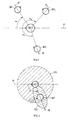
- FIG. 1 shows a plan view of a hearing aid wearer HGT with a medial plane M corresponding to the body symmetry plane, and various reference persons BP 1 to BP i , which can move around the hearing aid wearer HGT in any desired manner.
- the reference persons BP 1 to BP i are in this case, seen from the hearing aid wearer HGT, in instantaneous reference person directions R 1 to R i , which are at an angle ⁇ 1 to ⁇ i to the reference plane, ie to the medial plane M of the hearing aid wearer HGT. How a caregiver BP 1 to BP i is aligned with regard to the hearing aid wearer HGT is initially irrelevant.
- the inventive method now is characterized in that, in order to improve the communication between the hearing device user HGT and one or more caregivers BP 1 to BP i, namely to each other regardless of the current position, the reference person direction R 1 intended to R i and a transmission function in the hearing device is changed as a function of the reference person direction R 1 to R i .
- the inventive method steps are explained in detail.
- FIG. 2 again shows a hearing aid wearer HGT.
- BP reference person
- FIG. 2 again shows a hearing aid wearer HGT.
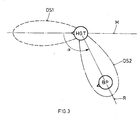
- the Medialebene M of the hearing aid wearer HGT closes with the Reference person direction R while an angle ⁇ .
- the Possibility created the acoustic behavior of the Hearing to change such that the acoustic signals the reference person direction R preferred or at least with increased importance to be processed. In other words will change the transfer function of the hearing aid through of the transfer function determining parameters in adjusted accordingly.
- Fig. 2 is the hearing aid of the hearing aid HGT in a so-called "omni signal" mode OS.
- OS will be any acoustic signals, no matter which one Direction they come, treated the same, ie. all Acoustic signals are weighted equally in the hearing aid.
- Fig. 2 this is the dash-lined Hearing aid characteristic shown. Become accordingly all acoustic signals recorded with a microphone after any processing in the hearing aid in the Auditory canal of the hearing aid wearer HGT passed.
- the "Directional Signal” mode DS is characterized by a receiving or Amplifier characteristic, as shown in Fig. 2 with a Dash-dotted line is shown.
- the first method is that means in the hearing aid provided for recognizing the voice of a caregiver become. If the reference person's voice is recognized, then the Direction from which it originates, and the Parameter set in the hearing aid can according to a desired directional characteristic, as they are based on the Figures 2 and 3 has been explained.
- Speaker recognition is mostly based on extraction of LPC (Linear Prediction Coefficients) methods and their regression coefficients.
- the classification usually takes place for text-dependent systems by means of "Dynamic Time Warping” or “Hidden Markov Models” (HMM), for text-independent systems using vector quantization, “Gaussian Mixture Models", HMMs or neural networks. Further information can be found, for example, in the publication entitled “Discrete-Time Processing of Speech Signals "by J.R. Deller, J.H.L. Hansen and J.G. Proakis (IEEE Press, 2000).
- This first method is characterized by that the entire processing effort in the hearing aid itself is made. Accessories are, neither in Hearing aid wearer still in the caregivers, not necessary.
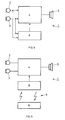
- FIG. 4 is a block diagram of a hearing aid 1 illustrated, in particular for the application of the first Method is suitable.
- 2 and 3 are called microphones, with Help these acoustic signals in electrical signals be transformed in the episode of both a Processing unit 4 as well as a Direction identification unit 6 are acted upon.
- the Direction identification unit 6 is with the Signal processing unit 4 operatively connected. That in the Signal processing unit 4 and optionally in the Direction Identification Unit 6 is processed signal finally an electro / acoustic transducer unit 5, also referred to as listeners, charged.
- an additional transmitting unit hereinafter also referred to as user unit, used with a receiving unit in the hearing aid permanently or as needed.
- the caregiver carries the user unit on it, with which the hearing aid or the in this integrated receiving unit the direction in who is the caregiver can determine.
- Possible implementations are in particular the FM (Frequency Modulation) technology.
- This second method is characterized in particular by that the user unit of another caregiver can be passed on without requiring a learning phase Train the recognition algorithms to go through, as required by the first method.
- a third method is close to the second method ajar by replacing an active user unit, which sends out corresponding signals, a passive one User unit in the form of a so-called transponder for Use comes.
- a transponder is characterized by that on a stimulation signal with a certain frequency Response signal is generated in the user unit. A Power supply of such a user unit is therefore not required, which is a significant advantage over the second method is to be evaluated.
- Fig. 5 is a block diagram of an inventive Arrangement shown with a hearing aid 1, which is in particular for the use of the second and the third Method is suitable.
- the hearing aid 1 is next to the two Microphones 2 and 3 turn from the Signal processing unit 4 and the Direction identification unit 6, however, are in Difference to Fig. 4 now the output signals of Microphones 2 and 3 only the signal processing unit 4 charged and not even the Direction Identification Unit 6.
- 8 is a User unit referred to in application of the second Method an active transmitting unit and a receiving unit includes. Between the user unit 8 and the Direction identification unit 6 is a wireless Connection 9 exists, for example, with FM (frequency modulation) technology is realized. Other Technologies like infrared are also conceivable.
- the User unit 8 realized purely passive, wherein For example, the known per se transponder technology is used.
Landscapes
- Health & Medical Sciences (AREA)
- General Health & Medical Sciences (AREA)
- Neurosurgery (AREA)
- Otolaryngology (AREA)
- Physics & Mathematics (AREA)
- Engineering & Computer Science (AREA)
- Acoustics & Sound (AREA)
- Signal Processing (AREA)
- Measurement Of The Respiration, Hearing Ability, Form, And Blood Characteristics Of Living Organisms (AREA)
- Telephone Set Structure (AREA)
- Circuit For Audible Band Transducer (AREA)
Abstract
Description
- Fig. 1,
- in Draufsicht, ein Hörgerätträger und verschiedene Bezugspersonen in schematischer Darstellung,
- Fig. 2 und 3,
- wiederum in Draufsicht und in schematischer Darstellung, ein Hörgerätträger und eine Bezugsperson,
- Fig. 4
- ein Blockdiagramm einer ersten Ausführungsform eines erfindungsgemässen Hörgerätes und
- Fig. 5
- ein Blockdiagramm einer zweiten Ausführungsform des erfindungsgemässen Hörgerätes.
Claims (11)
- Verfahren zum Betrieb eines Hörgerätes mit einer über einen Parametersatz einstellbaren Übertragungsfunktion, bei dem die Kommunikation zwischen einem eine Referenzebene (M) aufweisenden Hörgerätträger (HGT) und mindestens einer Bezugsperson (BP; BP1, ..., BPi) auch bei sich ändernden Positionen von Hörgeräteträger (HGT) und/oder Bezugspersonen (BP; BP1, ..., BPi) gewährleistet ist, wobei das Verfahren darin besteht,wobei die Bezugspersonrichtung (R; R1, ..., Ri) einen Winkel (α; α1, ..., αi) mit der Referenzebene (M) des Hörgerätträgers (HGT) einschliesst.dass die Übertragungsfunktion des Hörgerätes (1) in Abhängigkeit von mindestens einer momentanen Bezugspersonrichtung (R; R1, ..., Ri) durch ändern des Parametersatzes der Übertragungsfunktion eingestellt wird,
- Verfahren nach Anspruch 1, dadurch gekennzeichnet, dass eine momentane Bezugspersonrichtung (R; R1, ..., Ri) mit Hilfe einer Sprechererkennungsmethode bestimmt wird.
- Verfahren nach Anspruch 1, dadurch gekennzeichnet, dass die Bezugsperson (BP; BP1, ..., BPi) eine Benutzereinheit (8) trägt, welche ein vorgegebenes Referenzsignal aussendet, und dass im Hörgerät eine Richtungsidentifikationseinheit (6) vorgesehen ist zum Empfangen des vorgegebenen Referenzsignals, wobei im Hörgerät (1) aufgrund der Richtungs-sensiblen Informationen der Richtungsidentifikationseinheit (8) die gewünschte Bezugspersonrichtung (BP; BP1, ..., BPi) ermittelt wird.
- Verfahren nach Anspruch 1, dadurch gekennzeichnet, dass im Hörgerät (1) ein vordefiniertes Stimulationssignal erzeugt und ausgesendet wird, welches eine bei der Bezugsperson (BP; BP1, ..., BPi) vorhandene Transpondereinheit zur Erzeugung eines Antwortsignals anregt, und dass im Hörgerät (1) eine Richtungsidentifikationseinheit (6) vorgesehen ist, welche das Antwortsignal empfängt, wobei im Hörgerät (1) aufgrund der Richtungs-sensiblen Informationen der Richtungsidentifikationseinheit (6) die gewünschte Bezugspersonrichtung (R; R1, ..., Ri) ermittelt wird.
- Verfahren nach Anspruch 2, dadurch gekennzeichnet, dass die Sprechererkennung über einzelne, vordefinierte Codeworte erfolgt.
- Verfahren nach einem der vorangehenden Ansprüche, dadurch gekennzeichnet, dass als Referenzebene (M) eine Medialebene des Hörgeräteträgers verwendet wird.
- Anordnung mit einem Hörgerät (1) mit mindestens zwei Mikrophonen (2, 3), einer Signalverarbeitungseinheit (4) und einem Hörer (5), wobei sowohl die Mikrophone (2, 3) als auch der Hörer (5) mit der Signalverarbeitungseinheit (4) verbunden sind, dadurch gekennzeichnet, dass eine Richtungsidentifikationseinheit (6) vorgesehen ist, die mit der Signalverarbeitungseinheit (4) wirkverbunden ist.
- Anordnung nach Anspruch 7, dadurch gekennzeichnet, dass die Richtungsidentifikationseinheit (6) mit den Mikrophonen (3, 4) wirkverbunden ist.
- Anordnung nach Anspruch 7, dadurch gekennzeichnet, dass die Richtungsidentifikationseinheit (6) eine Empfangseinheit aufweist und dass eine Bezugsperson (BP; BP1, ..., BPi) eine Sendeeinheit aufweist, wobei die in der Sendeeinheit erzeugten Signale in der Empfangseinheit empfangbar sind.
- Anordnung nach Anspruch 7, dadurch gekennzeichnet, dass die Richtungsidentifikationseinheit (6) sowohl eine Sendeals auch eine Empfangseinheit aufweist und dass im Bereich einer Bezugsperson (BP; BP1, ..., BPi) eine Benutzereinheit (8) angeordnet ist.
- Anordnung nach einem der Ansprüche 7 bis 10, dadurch gekennzeichnet, dass die Richtungsidentifikationseinheit (6) im Hörgerät (1) integriert oder mit diesem lösbar gekoppelt ist.
Priority Applications (6)
| Application Number | Priority Date | Filing Date | Title |
|---|---|---|---|
| EP07119563A EP1881738B1 (de) | 2002-06-14 | 2002-06-14 | Verfahren zum Betrieb eines Hörgerätes und Anordnung mit einem Hörgerät |
| EP20020013149 EP1303166B1 (de) | 2002-06-14 | 2002-06-14 | Verfahren zum Betrieb eines Hörgerätes und Anordung mit einem Hörgerät |
| DK07119563T DK1881738T3 (da) | 2002-06-14 | 2002-06-14 | Fremgangsmåde til drift af et höreapparat og en anordning med et höreapparat |
| DE50211390T DE50211390D1 (de) | 2002-06-14 | 2002-06-14 | Verfahren zum Betrieb eines Hörgerätes und Anordung mit einem Hörgerät |
| DE50213400T DE50213400D1 (de) | 2002-06-14 | 2002-06-14 | Verfahren zum Betrieb eines Hörgerätes und Anordnung mit einem Hörgerät |
| DK02013149T DK1303166T3 (da) | 2002-06-14 | 2002-06-14 | Fremgangsmåde til at drive et höreapparat og indretning med et höreapparat |
Applications Claiming Priority (1)
| Application Number | Priority Date | Filing Date | Title |
|---|---|---|---|
| EP20020013149 EP1303166B1 (de) | 2002-06-14 | 2002-06-14 | Verfahren zum Betrieb eines Hörgerätes und Anordung mit einem Hörgerät |
Related Child Applications (1)
| Application Number | Title | Priority Date | Filing Date |
|---|---|---|---|
| EP07119563A Division EP1881738B1 (de) | 2002-06-14 | 2002-06-14 | Verfahren zum Betrieb eines Hörgerätes und Anordnung mit einem Hörgerät |
Publications (3)
| Publication Number | Publication Date |
|---|---|
| EP1303166A2 true EP1303166A2 (de) | 2003-04-16 |
| EP1303166A3 EP1303166A3 (de) | 2003-06-18 |
| EP1303166B1 EP1303166B1 (de) | 2007-12-19 |
Family
ID=8185464
Family Applications (2)
| Application Number | Title | Priority Date | Filing Date |
|---|---|---|---|
| EP20020013149 Expired - Lifetime EP1303166B1 (de) | 2002-06-14 | 2002-06-14 | Verfahren zum Betrieb eines Hörgerätes und Anordung mit einem Hörgerät |
| EP07119563A Expired - Lifetime EP1881738B1 (de) | 2002-06-14 | 2002-06-14 | Verfahren zum Betrieb eines Hörgerätes und Anordnung mit einem Hörgerät |
Family Applications After (1)
| Application Number | Title | Priority Date | Filing Date |
|---|---|---|---|
| EP07119563A Expired - Lifetime EP1881738B1 (de) | 2002-06-14 | 2002-06-14 | Verfahren zum Betrieb eines Hörgerätes und Anordnung mit einem Hörgerät |
Country Status (3)
| Country | Link |
|---|---|
| EP (2) | EP1303166B1 (de) |
| DE (2) | DE50213400D1 (de) |
| DK (2) | DK1881738T3 (de) |
Cited By (8)
| Publication number | Priority date | Publication date | Assignee | Title |
|---|---|---|---|---|
| EP1912474A1 (de) | 2006-10-10 | 2008-04-16 | Siemens Audiologische Technik GmbH | Verfahren zum Betreiben einer Hörhilfe, sowie Hörhilfe |
| EP1933594A1 (de) * | 2006-12-11 | 2008-06-18 | Siemens Audiologische Technik GmbH | Hörvorrichtung mit Transpondererkennung und entsprechendes Steuerverfahren |
| EP1670285A3 (de) * | 2004-12-09 | 2008-08-20 | Phonak Ag | Verfahren zur Parameterneinstellung einer Übertragungsfunktion eines Hörhilfegerätes sowie Hörhilfegerät |
| WO2011015675A2 (en) | 2010-11-24 | 2011-02-10 | Phonak Ag | Hearing assistance system and method |
| US8605924B2 (en) | 2006-12-11 | 2013-12-10 | Siemens Audiologische Technik Gmbh | Hearing apparatus including transponder detection and corresponding control method |
| EP1530402B2 (de) † | 2003-11-05 | 2016-08-24 | Sivantos GmbH | Verfahren zur Adaption eines Hörgeräts unter Berücksichtigung der Kopfposition und entsprechendes Hörgerät |
| WO2021023771A1 (en) * | 2019-08-08 | 2021-02-11 | Gn Hearing A/S | A bilateral hearing aid system and method of enhancing speech of one or more desired speakers |
| EP3873108A1 (de) * | 2020-02-26 | 2021-09-01 | Sivantos Pte. Ltd. | Hörsystem mit mindestens einem im oder am ohr des nutzers getragenen hörinstrument sowie verfahren zum betrieb eines solchen hörsystems |
Families Citing this family (1)
| Publication number | Priority date | Publication date | Assignee | Title |
|---|---|---|---|---|
| US9508343B2 (en) | 2014-05-27 | 2016-11-29 | International Business Machines Corporation | Voice focus enabled by predetermined triggers |
Family Cites Families (9)
| Publication number | Priority date | Publication date | Assignee | Title |
|---|---|---|---|---|
| IT1022984B (it) * | 1974-10-17 | 1978-04-20 | Philips Spa | Unita autonoma monoblocca atta a svoloere la duplice funzione di elemento attivo e passivo di una apparecchiatura per l individuazione e la ricerca di persone sepolte |
| FR2687496B1 (fr) * | 1992-02-18 | 1994-04-01 | Alcatel Radiotelephone | Procede de reduction de bruit acoustique dans un signal de parole. |
| DE4307490A1 (de) * | 1993-03-10 | 1994-09-15 | Joerg Cohausz | Stereophone oder quadrophonische Anlage |
| DE4419901C2 (de) * | 1994-06-07 | 2000-09-14 | Siemens Audiologische Technik | Hörhilfegerät |
| FR2731521B1 (fr) * | 1995-03-06 | 1997-04-25 | Rockwell Collins France | Appareil personnel de goniometrie |
| US6154552A (en) * | 1997-05-15 | 2000-11-28 | Planning Systems Inc. | Hybrid adaptive beamformer |
| DE19810043A1 (de) * | 1998-03-09 | 1999-09-23 | Siemens Audiologische Technik | Hörgerät mit einem Richtmikrofon-System |
| DE19948907A1 (de) * | 1999-10-11 | 2001-02-01 | Siemens Audiologische Technik | Verfahren zur Signalverarbeitung in einer Hörhilfe sowie Hörhilfe |
| WO2000068703A2 (de) * | 2000-08-11 | 2000-11-16 | Phonak Ag | Verfahren zur richtungsortung und ortungsanordnung |
-
2002
- 2002-06-14 EP EP20020013149 patent/EP1303166B1/de not_active Expired - Lifetime
- 2002-06-14 EP EP07119563A patent/EP1881738B1/de not_active Expired - Lifetime
- 2002-06-14 DE DE50213400T patent/DE50213400D1/de not_active Expired - Lifetime
- 2002-06-14 DK DK07119563T patent/DK1881738T3/da active
- 2002-06-14 DE DE50211390T patent/DE50211390D1/de not_active Expired - Lifetime
- 2002-06-14 DK DK02013149T patent/DK1303166T3/da active
Cited By (16)
| Publication number | Priority date | Publication date | Assignee | Title |
|---|---|---|---|---|
| EP1530402B2 (de) † | 2003-11-05 | 2016-08-24 | Sivantos GmbH | Verfahren zur Adaption eines Hörgeräts unter Berücksichtigung der Kopfposition und entsprechendes Hörgerät |
| EP1670285A3 (de) * | 2004-12-09 | 2008-08-20 | Phonak Ag | Verfahren zur Parameterneinstellung einer Übertragungsfunktion eines Hörhilfegerätes sowie Hörhilfegerät |
| US8194900B2 (en) | 2006-10-10 | 2012-06-05 | Siemens Audiologische Technik Gmbh | Method for operating a hearing aid, and hearing aid |
| EP1912474A1 (de) | 2006-10-10 | 2008-04-16 | Siemens Audiologische Technik GmbH | Verfahren zum Betreiben einer Hörhilfe, sowie Hörhilfe |
| CN101163354B (zh) * | 2006-10-10 | 2013-01-02 | 西门子测听技术有限责任公司 | 用于运行助听器的方法以及助听器 |
| US8605924B2 (en) | 2006-12-11 | 2013-12-10 | Siemens Audiologische Technik Gmbh | Hearing apparatus including transponder detection and corresponding control method |
| EP1933594A1 (de) * | 2006-12-11 | 2008-06-18 | Siemens Audiologische Technik GmbH | Hörvorrichtung mit Transpondererkennung und entsprechendes Steuerverfahren |
| WO2011015675A2 (en) | 2010-11-24 | 2011-02-10 | Phonak Ag | Hearing assistance system and method |
| US9215535B2 (en) | 2010-11-24 | 2015-12-15 | Sonova Ag | Hearing assistance system and method |
| WO2021023771A1 (en) * | 2019-08-08 | 2021-02-11 | Gn Hearing A/S | A bilateral hearing aid system and method of enhancing speech of one or more desired speakers |
| US12063479B2 (en) | 2019-08-08 | 2024-08-13 | Gn Hearing A/S | Bilateral hearing aid system and method of enhancing speech of one or more desired speakers |
| US12563353B2 (en) | 2019-08-08 | 2026-02-24 | Gn Hearing A/S | Bilateral hearing aid system and method of enhancing speech of one or more desired speakers |
| EP3873108A1 (de) * | 2020-02-26 | 2021-09-01 | Sivantos Pte. Ltd. | Hörsystem mit mindestens einem im oder am ohr des nutzers getragenen hörinstrument sowie verfahren zum betrieb eines solchen hörsystems |
| CN113395647A (zh) * | 2020-02-26 | 2021-09-14 | 西万拓私人有限公司 | 具有至少一个听力设备的听力系统及运行听力系统的方法 |
| CN113395647B (zh) * | 2020-02-26 | 2023-03-07 | 西万拓私人有限公司 | 具有至少一个听力设备的听力系统及运行听力系统的方法 |
| EP3873108B1 (de) | 2020-02-26 | 2025-04-16 | Sivantos Pte. Ltd. | Hörsystem mit mindestens einem im oder am ohr des nutzers getragenen hörinstrument sowie verfahren zum betrieb eines solchen hörsystems |
Also Published As
| Publication number | Publication date |
|---|---|
| EP1303166A3 (de) | 2003-06-18 |
| EP1303166B1 (de) | 2007-12-19 |
| EP1881738A2 (de) | 2008-01-23 |
| DE50211390D1 (de) | 2008-01-31 |
| DK1881738T3 (da) | 2009-06-29 |
| EP1881738B1 (de) | 2009-03-25 |
| DK1303166T3 (da) | 2008-04-28 |
| EP1881738A3 (de) | 2008-03-05 |
| DE50213400D1 (de) | 2009-05-07 |
Similar Documents
| Publication | Publication Date | Title |
|---|---|---|
| EP3451705B1 (de) | Verfahren und vorrichtung zum schnellen erkennen der eigenen stimme | |
| DE69431037T2 (de) | Hörgerät mit mikrofonumschaltungssystem | |
| DE60120949T2 (de) | Eine hörprothese mit automatischer hörumgebungsklassifizierung | |
| EP2180726B1 (de) | Richtungshören bei binauraler Hörgeräteversorgung | |
| DE102019206743A1 (de) | Hörgeräte-System und Verfahren zur Verarbeitung von Audiosignalen | |
| EP1360870A2 (de) | Verfahren zum betrieb eines hörgerätesystems sowie hörgerätesystem | |
| DE102017214164B3 (de) | Verfahren zum Betrieb eines Hörgeräts und Hörgerät | |
| EP3873108B1 (de) | Hörsystem mit mindestens einem im oder am ohr des nutzers getragenen hörinstrument sowie verfahren zum betrieb eines solchen hörsystems | |
| DE102019200954A1 (de) | Signalverarbeitungseinrichtung, System und Verfahren zur Verarbeitung von Audiosignalen | |
| WO2001020965A2 (de) | Verfahren zur bestimmung einer momentanen akustischen umgebungssituation, anwendung des verfharens und ein hörgerät | |
| DE102011087984A1 (de) | Hörvorrichtung mit Sprecheraktivitätserkennung und Verfahren zum Betreiben einer Hörvorrichtung | |
| DE102008004659A1 (de) | Verfahren und Vorrichtung zur Konfiguration von Einstellmöglichkeiten an einem Hörgerät | |
| DE102019200956A1 (de) | Signalverarbeitungseinrichtung, System und Verfahren zur Verarbeitung von Audiosignalen | |
| EP3386215B1 (de) | Verfahren zum betrieb einer hörvorrichtung und hörvorrichtung | |
| EP1453356A2 (de) | Verfahren zum Einstellen eines Hörsystems und entsprechendes Hörsystem | |
| EP3836139B1 (de) | Verfahren, bei welchem zwei hörgeräte miteinander gekoppelt werden, sowie hörgerät | |
| EP1303166B1 (de) | Verfahren zum Betrieb eines Hörgerätes und Anordung mit einem Hörgerät | |
| DE102007035174A1 (de) | Hörvorrichtung gesteuert durch ein perzeptives Modell und entsprechendes Verfahren | |
| EP2200341A1 (de) | Verfahren zum Betrieb eines Hörhilfegerätes sowie Hörhilfegerät mit einer Quellentrennungseinrichtung | |
| EP1432282A2 (de) | Verfahren zum Anpassen eines Hörgerätes an eine momentane akustische Umgebungssituation und Hörgerätesystem | |
| EP1503612A2 (de) | Hörhilfegerät sowie Verfahren zum Betrieb eines Hörhilfegerätes mit einem Mikrofonsystem, bei dem unterschiedliche Richtcharakteristiken einstellbar sind | |
| DE10114101A1 (de) | Verfahren zum Verarbeiten eines Eingangssignals in einer Signalverarbeitungseinheit eines Hörgerätes sowie Schaltung zur Durchführung des Verfahrens | |
| DE102006047983A1 (de) | Verarbeitung eines Eingangssignals in einem Hörgerät | |
| EP2658289B1 (de) | Verfahren zum Steuern einer Richtcharakteristik und Hörsystem | |
| DE102019210934A1 (de) | System zur Verbesserung des Hörens für hörgeschädigte Personen |
Legal Events
| Date | Code | Title | Description |
|---|---|---|---|
| PUAI | Public reference made under article 153(3) epc to a published international application that has entered the european phase |
Free format text: ORIGINAL CODE: 0009012 |
|
| AK | Designated contracting states |
Designated state(s): AT BE CH CY DE DK ES FI FR GB GR IE IT LI LU MC NL PT SE TR |
|
| AX | Request for extension of the european patent |
Extension state: AL LT LV MK RO SI |
|
| PUAL | Search report despatched |
Free format text: ORIGINAL CODE: 0009013 |
|
| AK | Designated contracting states |
Designated state(s): AT BE CH CY DE DK ES FI FR GB GR IE IT LI LU MC NL PT SE TR |
|
| AX | Request for extension of the european patent |
Extension state: AL LT LV MK RO SI |
|
| 17P | Request for examination filed |
Effective date: 20030724 |
|
| AKX | Designation fees paid |
Designated state(s): CH DE DK LI |
|
| 17Q | First examination report despatched |
Effective date: 20040504 |
|
| 17Q | First examination report despatched |
Effective date: 20040504 |
|
| GRAP | Despatch of communication of intention to grant a patent |
Free format text: ORIGINAL CODE: EPIDOSNIGR1 |
|
| GRAS | Grant fee paid |
Free format text: ORIGINAL CODE: EPIDOSNIGR3 |
|
| GRAA | (expected) grant |
Free format text: ORIGINAL CODE: 0009210 |
|
| AK | Designated contracting states |
Kind code of ref document: B1 Designated state(s): CH DE DK LI |
|
| REG | Reference to a national code |
Ref country code: CH Ref legal event code: NV Representative=s name: TROESCH SCHEIDEGGER WERNER AG Ref country code: CH Ref legal event code: EP |
|
| REF | Corresponds to: |
Ref document number: 50211390 Country of ref document: DE Date of ref document: 20080131 Kind code of ref document: P |
|
| REG | Reference to a national code |
Ref country code: DK Ref legal event code: T3 |
|
| PLBE | No opposition filed within time limit |
Free format text: ORIGINAL CODE: 0009261 |
|
| STAA | Information on the status of an ep patent application or granted ep patent |
Free format text: STATUS: NO OPPOSITION FILED WITHIN TIME LIMIT |
|
| 26N | No opposition filed |
Effective date: 20080922 |
|
| PGFP | Annual fee paid to national office [announced via postgrant information from national office to epo] |
Ref country code: CH Payment date: 20110614 Year of fee payment: 10 |
|
| PGFP | Annual fee paid to national office [announced via postgrant information from national office to epo] |
Ref country code: DK Payment date: 20110610 Year of fee payment: 10 |
|
| REG | Reference to a national code |
Ref country code: DK Ref legal event code: EBP |
|
| REG | Reference to a national code |
Ref country code: CH Ref legal event code: PL |
|
| REG | Reference to a national code |
Ref country code: CH Ref legal event code: PL |
|
| PG25 | Lapsed in a contracting state [announced via postgrant information from national office to epo] |
Ref country code: LI Free format text: LAPSE BECAUSE OF NON-PAYMENT OF DUE FEES Effective date: 20120630 Ref country code: CH Free format text: LAPSE BECAUSE OF NON-PAYMENT OF DUE FEES Effective date: 20120630 |
|
| PG25 | Lapsed in a contracting state [announced via postgrant information from national office to epo] |
Ref country code: DK Free format text: LAPSE BECAUSE OF NON-PAYMENT OF DUE FEES Effective date: 20120702 |
|
| REG | Reference to a national code |
Ref country code: DE Ref legal event code: R084 Ref document number: 50211390 Country of ref document: DE |
|
| PGFP | Annual fee paid to national office [announced via postgrant information from national office to epo] |
Ref country code: DE Payment date: 20190627 Year of fee payment: 18 |
|
| REG | Reference to a national code |
Ref country code: DE Ref legal event code: R119 Ref document number: 50211390 Country of ref document: DE |
|
| PG25 | Lapsed in a contracting state [announced via postgrant information from national office to epo] |
Ref country code: DE Free format text: LAPSE BECAUSE OF NON-PAYMENT OF DUE FEES Effective date: 20210101 |