EP1293375A1 - Procédé de commande des électrovannes de selection et d'embrayage d'une transmission automatisée - Google Patents
Procédé de commande des électrovannes de selection et d'embrayage d'une transmission automatisée Download PDFInfo
- Publication number
- EP1293375A1 EP1293375A1 EP02292252A EP02292252A EP1293375A1 EP 1293375 A1 EP1293375 A1 EP 1293375A1 EP 02292252 A EP02292252 A EP 02292252A EP 02292252 A EP02292252 A EP 02292252A EP 1293375 A1 EP1293375 A1 EP 1293375A1
- Authority
- EP
- European Patent Office
- Prior art keywords
- solenoid valve
- short circuit
- control method
- engagement
- gear
- Prior art date
- Legal status (The legal status is an assumption and is not a legal conclusion. Google has not performed a legal analysis and makes no representation as to the accuracy of the status listed.)
- Granted
Links
- 230000005540 biological transmission Effects 0.000 title claims abstract description 36
- 238000000034 method Methods 0.000 title claims abstract description 16
- 230000004913 activation Effects 0.000 claims description 3
- 230000007935 neutral effect Effects 0.000 description 6
- 230000015556 catabolic process Effects 0.000 description 5
- 230000003100 immobilizing effect Effects 0.000 description 3
- 238000013475 authorization Methods 0.000 description 2
- 241000287107 Passer Species 0.000 description 1
- 238000011217 control strategy Methods 0.000 description 1
- 230000009849 deactivation Effects 0.000 description 1
- 238000010586 diagram Methods 0.000 description 1
- 229940082150 encore Drugs 0.000 description 1
Images


Classifications
-
- B—PERFORMING OPERATIONS; TRANSPORTING
- B60—VEHICLES IN GENERAL
- B60W—CONJOINT CONTROL OF VEHICLE SUB-UNITS OF DIFFERENT TYPE OR DIFFERENT FUNCTION; CONTROL SYSTEMS SPECIALLY ADAPTED FOR HYBRID VEHICLES; ROAD VEHICLE DRIVE CONTROL SYSTEMS FOR PURPOSES NOT RELATED TO THE CONTROL OF A PARTICULAR SUB-UNIT
- B60W30/00—Purposes of road vehicle drive control systems not related to the control of a particular sub-unit, e.g. of systems using conjoint control of vehicle sub-units
- B60W30/18—Propelling the vehicle
-
- B—PERFORMING OPERATIONS; TRANSPORTING
- B60—VEHICLES IN GENERAL
- B60W—CONJOINT CONTROL OF VEHICLE SUB-UNITS OF DIFFERENT TYPE OR DIFFERENT FUNCTION; CONTROL SYSTEMS SPECIALLY ADAPTED FOR HYBRID VEHICLES; ROAD VEHICLE DRIVE CONTROL SYSTEMS FOR PURPOSES NOT RELATED TO THE CONTROL OF A PARTICULAR SUB-UNIT
- B60W10/00—Conjoint control of vehicle sub-units of different type or different function
- B60W10/02—Conjoint control of vehicle sub-units of different type or different function including control of driveline clutches
-
- B—PERFORMING OPERATIONS; TRANSPORTING
- B60—VEHICLES IN GENERAL
- B60W—CONJOINT CONTROL OF VEHICLE SUB-UNITS OF DIFFERENT TYPE OR DIFFERENT FUNCTION; CONTROL SYSTEMS SPECIALLY ADAPTED FOR HYBRID VEHICLES; ROAD VEHICLE DRIVE CONTROL SYSTEMS FOR PURPOSES NOT RELATED TO THE CONTROL OF A PARTICULAR SUB-UNIT
- B60W10/00—Conjoint control of vehicle sub-units of different type or different function
- B60W10/10—Conjoint control of vehicle sub-units of different type or different function including control of change-speed gearings
-
- B—PERFORMING OPERATIONS; TRANSPORTING
- B60—VEHICLES IN GENERAL
- B60W—CONJOINT CONTROL OF VEHICLE SUB-UNITS OF DIFFERENT TYPE OR DIFFERENT FUNCTION; CONTROL SYSTEMS SPECIALLY ADAPTED FOR HYBRID VEHICLES; ROAD VEHICLE DRIVE CONTROL SYSTEMS FOR PURPOSES NOT RELATED TO THE CONTROL OF A PARTICULAR SUB-UNIT
- B60W30/00—Purposes of road vehicle drive control systems not related to the control of a particular sub-unit, e.g. of systems using conjoint control of vehicle sub-units
- B60W30/18—Propelling the vehicle
- B60W30/1819—Propulsion control with control means using analogue circuits, relays or mechanical links
-
- F—MECHANICAL ENGINEERING; LIGHTING; HEATING; WEAPONS; BLASTING
- F16—ENGINEERING ELEMENTS AND UNITS; GENERAL MEASURES FOR PRODUCING AND MAINTAINING EFFECTIVE FUNCTIONING OF MACHINES OR INSTALLATIONS; THERMAL INSULATION IN GENERAL
- F16H—GEARING
- F16H61/00—Control functions within control units of change-speed- or reversing-gearings for conveying rotary motion ; Control of exclusively fluid gearing, friction gearing, gearings with endless flexible members or other particular types of gearing
- F16H61/12—Detecting malfunction or potential malfunction, e.g. fail safe ; Circumventing or fixing failures
-
- F—MECHANICAL ENGINEERING; LIGHTING; HEATING; WEAPONS; BLASTING
- F16—ENGINEERING ELEMENTS AND UNITS; GENERAL MEASURES FOR PRODUCING AND MAINTAINING EFFECTIVE FUNCTIONING OF MACHINES OR INSTALLATIONS; THERMAL INSULATION IN GENERAL
- F16H—GEARING
- F16H61/00—Control functions within control units of change-speed- or reversing-gearings for conveying rotary motion ; Control of exclusively fluid gearing, friction gearing, gearings with endless flexible members or other particular types of gearing
- F16H61/12—Detecting malfunction or potential malfunction, e.g. fail safe ; Circumventing or fixing failures
- F16H2061/1224—Adapting to failures or work around with other constraints, e.g. circumvention by avoiding use of failed parts
-
- F—MECHANICAL ENGINEERING; LIGHTING; HEATING; WEAPONS; BLASTING
- F16—ENGINEERING ELEMENTS AND UNITS; GENERAL MEASURES FOR PRODUCING AND MAINTAINING EFFECTIVE FUNCTIONING OF MACHINES OR INSTALLATIONS; THERMAL INSULATION IN GENERAL
- F16H—GEARING
- F16H61/00—Control functions within control units of change-speed- or reversing-gearings for conveying rotary motion ; Control of exclusively fluid gearing, friction gearing, gearings with endless flexible members or other particular types of gearing
- F16H61/12—Detecting malfunction or potential malfunction, e.g. fail safe ; Circumventing or fixing failures
- F16H2061/124—Limiting the input power, torque or speed
-
- F—MECHANICAL ENGINEERING; LIGHTING; HEATING; WEAPONS; BLASTING
- F16—ENGINEERING ELEMENTS AND UNITS; GENERAL MEASURES FOR PRODUCING AND MAINTAINING EFFECTIVE FUNCTIONING OF MACHINES OR INSTALLATIONS; THERMAL INSULATION IN GENERAL
- F16H—GEARING
- F16H61/00—Control functions within control units of change-speed- or reversing-gearings for conveying rotary motion ; Control of exclusively fluid gearing, friction gearing, gearings with endless flexible members or other particular types of gearing
- F16H61/12—Detecting malfunction or potential malfunction, e.g. fail safe ; Circumventing or fixing failures
- F16H2061/1244—Keeping the current state
-
- F—MECHANICAL ENGINEERING; LIGHTING; HEATING; WEAPONS; BLASTING
- F16—ENGINEERING ELEMENTS AND UNITS; GENERAL MEASURES FOR PRODUCING AND MAINTAINING EFFECTIVE FUNCTIONING OF MACHINES OR INSTALLATIONS; THERMAL INSULATION IN GENERAL
- F16H—GEARING
- F16H61/00—Control functions within control units of change-speed- or reversing-gearings for conveying rotary motion ; Control of exclusively fluid gearing, friction gearing, gearings with endless flexible members or other particular types of gearing
- F16H61/12—Detecting malfunction or potential malfunction, e.g. fail safe ; Circumventing or fixing failures
- F16H2061/1256—Detecting malfunction or potential malfunction, e.g. fail safe ; Circumventing or fixing failures characterised by the parts or units where malfunctioning was assumed or detected
- F16H2061/126—Detecting malfunction or potential malfunction, e.g. fail safe ; Circumventing or fixing failures characterised by the parts or units where malfunctioning was assumed or detected the failing part is the controller
- F16H2061/1268—Electric parts of the controller, e.g. a defect solenoid, wiring or microprocessor
-
- F—MECHANICAL ENGINEERING; LIGHTING; HEATING; WEAPONS; BLASTING
- F16—ENGINEERING ELEMENTS AND UNITS; GENERAL MEASURES FOR PRODUCING AND MAINTAINING EFFECTIVE FUNCTIONING OF MACHINES OR INSTALLATIONS; THERMAL INSULATION IN GENERAL
- F16H—GEARING
- F16H2300/00—Determining of new ratio
- F16H2300/14—Selecting a state of operation, e.g. depending on two wheel or four wheel drive mode
-
- F—MECHANICAL ENGINEERING; LIGHTING; HEATING; WEAPONS; BLASTING
- F16—ENGINEERING ELEMENTS AND UNITS; GENERAL MEASURES FOR PRODUCING AND MAINTAINING EFFECTIVE FUNCTIONING OF MACHINES OR INSTALLATIONS; THERMAL INSULATION IN GENERAL
- F16H—GEARING
- F16H61/00—Control functions within control units of change-speed- or reversing-gearings for conveying rotary motion ; Control of exclusively fluid gearing, friction gearing, gearings with endless flexible members or other particular types of gearing
- F16H61/02—Control functions within control units of change-speed- or reversing-gearings for conveying rotary motion ; Control of exclusively fluid gearing, friction gearing, gearings with endless flexible members or other particular types of gearing characterised by the signals used
- F16H61/0202—Control functions within control units of change-speed- or reversing-gearings for conveying rotary motion ; Control of exclusively fluid gearing, friction gearing, gearings with endless flexible members or other particular types of gearing characterised by the signals used the signals being electric
- F16H61/0248—Control units where shifting is directly initiated by the driver, e.g. semi-automatic transmissions
-
- F—MECHANICAL ENGINEERING; LIGHTING; HEATING; WEAPONS; BLASTING
- F16—ENGINEERING ELEMENTS AND UNITS; GENERAL MEASURES FOR PRODUCING AND MAINTAINING EFFECTIVE FUNCTIONING OF MACHINES OR INSTALLATIONS; THERMAL INSULATION IN GENERAL
- F16H—GEARING
- F16H61/00—Control functions within control units of change-speed- or reversing-gearings for conveying rotary motion ; Control of exclusively fluid gearing, friction gearing, gearings with endless flexible members or other particular types of gearing
- F16H61/68—Control functions within control units of change-speed- or reversing-gearings for conveying rotary motion ; Control of exclusively fluid gearing, friction gearing, gearings with endless flexible members or other particular types of gearing specially adapted for stepped gearings
- F16H61/682—Control functions within control units of change-speed- or reversing-gearings for conveying rotary motion ; Control of exclusively fluid gearing, friction gearing, gearings with endless flexible members or other particular types of gearing specially adapted for stepped gearings with interruption of drive
-
- F—MECHANICAL ENGINEERING; LIGHTING; HEATING; WEAPONS; BLASTING
- F16—ENGINEERING ELEMENTS AND UNITS; GENERAL MEASURES FOR PRODUCING AND MAINTAINING EFFECTIVE FUNCTIONING OF MACHINES OR INSTALLATIONS; THERMAL INSULATION IN GENERAL
- F16H—GEARING
- F16H63/00—Control outputs from the control unit to change-speed- or reversing-gearings for conveying rotary motion or to other devices than the final output mechanism
- F16H63/40—Control outputs from the control unit to change-speed- or reversing-gearings for conveying rotary motion or to other devices than the final output mechanism comprising signals other than signals for actuating the final output mechanisms
- F16H63/46—Signals to a clutch outside the gearbox
Definitions
- the present invention relates to the control of transmissions automated. More specifically, it relates to the control of the solenoid valves an automated transmission in a failure situation.
- Its subject is a method for controlling the solenoid valves. controlling the opening and closing of the input clutch, selection and the engagement of the reports of an automated transmission having a automatic mode and manual mode.
- This invention finds application in transmissions consisting of an input clutch and a shafted gearbox parallel and portable, actuated by an electro-hydraulic assembly of command placed under the control of a computer, and having a mode manual and automatic mode selectable by the driver.
- the electro-hydraulic assembly performs clutch and declutching functions (closing and opening the input clutch), selection, and passage of speeds. These functions are then performed by hydraulic actuators, controlled by solenoid valves.
- the present invention aims to avoid immobilizing failures in the event failure of an automated transmission control solenoid valve.
- the failure of one of the solenoid valves requires manual transmission by allowing the driver to engage the remaining available reports.
- the solenoid valve supply short-circuit reverse gear engagement and even rank reports while a odd rank report is engaged may cause temporary activation of the odd-row gear engagement solenoid valve to allow recall in selection before the engagement of a report of even rank.
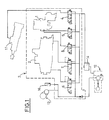
- Block 3 contains a gear line selection cylinder 1, a gear engagement cylinder 2, and five solenoid valves 4, 6, 7, 8 and 9 (EV0, EV1, EV2, EV3, EV4), piloted by example in this order the clutch, the engagement of first of third and fifth, the second, fourth and reverse engagement, the selection of line 1-2, and selection of line 5-MAR.
- the solenoid valves allow the selective communication of actuators with accumulator 13. At rest, the solenoid valves receive the accumulator 13 pressure, but do not transmit it to the actuators 1, 2, 11. When excited, they selectively establish the communication between the accumulator and the actuators, so as to put these last under pressure according to the instructions of the transmission computer (not shown).
- the two valves of selection EV3 and EV4, 8, 9, can be of the all or nothing type, both engagement valves EV1 and EV2, 6, 7 of the proportional type controlled by pressure, and the clutch control valve EV0, 4, of the type proportional flow controlled.
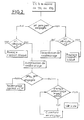
- FIG. 2 presenting a simplified mode degraded transmission control, applicable in the event of a short circuit to the earth (or disconnection) of one or other of the solenoid valves EV1 or EV2 speed engagement, we see that if the vehicle is moving (speed of the vehicle not zero), the transmission remains blocked on the report already engaged.
- the strategy implemented depends on the ratio engaged at the time of the breakdown.
- transmission is first in second or third, and the vehicle stopped on one of these three reports he has permission to get back on the road ("permission to "vehicle" restart).
- the start is made normally ; in second or third, it is only allowed if the energy passing through the clutch is less than an allowed threshold, and in the case otherwise the clutch is automatically opened.
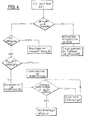
- the solenoid valve EV1 is temporarily activated, so as to temporarily keep the neutral to let the return spring in selection possibly spread the transmission of the fifth line / reverse gear, then EV1 is deactivated, and EV2 is allowed to engage the second or reverse gear depending on the case. If the vehicle is running, the transmission then remains blocked on this new report. Otherwise, the vehicle is authorized to restart only in second (not in fourth). This authorization is however subject to provided that the amount of energy dissipated in the clutch is less at a threshold, otherwise the clutch is automatically opened so to prohibit restarting.
- the vehicle can restart in third, provided that the energy dissipated in the clutch is less than a threshold, because otherwise the clutch is open.
- the engaged report is blocked.
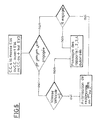
- the vehicle will be authorized to restart in third gear provided that the threshold of energy dissipated in the clutch is not reached. However, if the neutral is not required, the vehicle can restart first or second without special conditions.
- degraded mode three, four, five, reverse gear is implemented, with third start in some cases, and on a request for passage three-two, the transmission remains in third.
- degraded three-four-five-step mode rear is set up thanks to the solicitation of EV3 which returns to line three-four, and the calculator authorizes exceptionally the third start.
- the invention provides another strategy in the event of a short circuit to the ground or disconnection of EV4, or short-circuit of supply of EV3 (cf. figure 6).
- a degraded one-two-three-four mode is set up, on a request to move to fifth, the transmission remains in fourth, while stopped, the vehicle is authorized to restart in first or second.
Landscapes
- Engineering & Computer Science (AREA)
- Mechanical Engineering (AREA)
- Transportation (AREA)
- Chemical & Material Sciences (AREA)
- Combustion & Propulsion (AREA)
- Automation & Control Theory (AREA)
- General Engineering & Computer Science (AREA)
- Control Of Transmission Device (AREA)
Abstract
Description
- la figure 1 décrit un schéma hydraulique de commande de transmission automatisée, non limitatif de l'application de l'invention, et
- les figures 2 à 6 illustrent différentes stratégies de commande proposées par l'invention.
- dans tous les cas de défaillance d'électrovanne où tous les rapports ne sont plus disponibles, on interdit l'accès au mode automatique.
- si la transmission est en mode automatique au moment de la panne, elle passe en mode manuel dès la détection de la panne (en autorisant les rapports encore accessibles)
- si la transmission est en mode manuel au moment de la panne, la transmission reste en mode manuel, et le conducteur perd la possibilité de passer en mode automatique.
Claims (13)
- Procédé de commande des électrovannes (4, 6, 7, 8, 9) pilotant l'ouverture et la fermeture de l'embrayage d'entrée, la sélection et l'engagement des rapports d'une transmission automatisée disposant d'un mode automatique et d'un mode manuel, caractérisé en ce que la défaillance d'une des électrovannes impose à la transmission le mode manuel en autorisant le conducteur à engager les rapports restant disponibles.
- Procédé de commande selon la revendication 1, caractérisé en ce que le court circuit à la masse ou la déconnexion d'une des électrovannes d'engagement de rapport (6, 7) en roulage, provoque le blocage de la transmission sur le rapport engagé.
- Procédé de commande selon la revendication 1 ou 2, caractérisé en ce que le court-circuit d'alimentation de l'électrovanne d'engagement de la marche arrière et des rapports de rang pair (7) alors qu'un rapport de rang impair est engagé, provoque l'activation temporaire de l'électrovanne d'engagement des rapports de rang impair (6), pour permettre le rappel en sélection avant l'engagement d'un rapport de rang pair.
- Procédé de commande selon la revendication 3, caractérisé en ce que l'activation temporaire de l'électrovanne d'engagement des rapports de rang impair (6), interdit le passage direct en marche arrière à partir du rapport de marche avant situé sur la même ligne que celle-ci.
- Procédé de commande selon l'une des revendications précédentes, caractérisé en ce que le court-circuit d'alimentation de l'électrovanne d'engagement des rapports de rang impair (6) provoque l'activation temporaire de l'électrovanne d'engagement des rapports de rang pair (7) pour permettre le rappel en sélection avant l'engagement d'un autre rapport de rang impair.
- Procédé de commande selon l'une des revendications précédentes, caractérisé en ce que le court circuit à la masse ou la déconnexion de l'électrovanne de sélection des deux premiers rapports de marche avant (8) ou le court-circuit d'alimentation de l'électrovanne de sélection de la ligne de marche arrière (9) provoque l'adoption d'un mode dégradé trois-quatre-cinq-marche arrière.
- Procédé de commande selon l'une des revendications précédentes, caractérisé en ce que le court-circuit à la masse ou la déconnexion de l'électrovanne de sélection de la ligne de marche arrière (9) ou le court-circuit d'alimentation de l'électrovanne de sélection des deux premiers rapports de marche avant (8) provoque l'adoption d'un mode dégradé un-deux-trois-quatre.
- Procédé de commande selon la revendication 6, caractérisé en ce que si le court circuit à la masse ou la déconnexion de l'électrovanne de sélection des deux premiers rapports de marche avant (8) ou le court-circuit d'alimentation de l'électrovanne de sélection de la ligne de marche arrière (9) intervient lorsque le véhicule roule en première ou en seconde, la transmission reste bloquée sur le rapport engagé.
- Procédé de commande selon la revendication 2, caractérisé en ce que si le véhicule est à l'arrêt lors du court circuit à la masse ou de la déconnexion d'une des électrovannes d'engagement de rapport (6, 7), le redémarrage du véhicule est interdit en quatrième et en cinquième, et autorisé en seconde, ou en troisième sous réserve que la quantité d'énergie dissipée dans l'embrayage soit inférieure à un seuil.
- Procédé de commande selon la revendication 3 ou 4, caractérisé en ce si le véhicule est à l'arrêt lors du court-circuit d'alimentation de l'électrovanne d'engagement de la marche arrière et des rapports de rang pair (7), le redémarrage est autorisé en seconde ou en marche arrière si la quantité d'énergie dissipée dans l'embrayage est inférieure à un seuil.
- Procédé de commande selon la revendication 5, caractérisé en ce que si le véhicule est à l'arrêt lors du court-circuit d'alimentation de l'électrovanne d'engagement des rapports de rang impair (6), le redémarrage en première ou en troisième est autorisé si la quantité d'énergie dissipée dans l'embrayage est inférieure à un seuil.
- Procédé de commande selon la revendication 6, caractérisé en ce que si le véhicule est à l'arrêt lors du court circuit à la masse ou la déconnexion de l'électrovanne de sélection des deux premiers rapports de marche avant (8) ou du court-circuit d'alimentation de l'électrovanne de sélection de la ligne de marche arrière (9), le redémarrage est toujours autorisé en première ou en seconde, et en troisième si la quantité d'énergie dissipée dans l'embrayage est inférieure à un seuil.
- Procédé de commande selon la revendication 7, caractérisé en ce que si le véhicule est à l'arrêt lors du court-circuit à la masse ou la déconnexion de l'électrovanne de sélection de la ligne de marche arrière (9) ou du court-circuit d'alimentation de l'électrovanne de sélection des deux premiers rapports de marche avant (8), le redémarrage est autorisé en première ou en seconde.
Applications Claiming Priority (2)
| Application Number | Priority Date | Filing Date | Title |
|---|---|---|---|
| FR0111912A FR2829822B1 (fr) | 2001-09-14 | 2001-09-14 | Procede de commande des electrovannes d'une transmission automatisee |
| FR0111912 | 2001-09-14 |
Publications (2)
| Publication Number | Publication Date |
|---|---|
| EP1293375A1 true EP1293375A1 (fr) | 2003-03-19 |
| EP1293375B1 EP1293375B1 (fr) | 2010-08-11 |
Family
ID=8867287
Family Applications (1)
| Application Number | Title | Priority Date | Filing Date |
|---|---|---|---|
| EP02292252A Expired - Lifetime EP1293375B1 (fr) | 2001-09-14 | 2002-09-13 | Procédé de commande des électrovannes de sélection et d'embrayage d'une transmission automatisée |
Country Status (4)
| Country | Link |
|---|---|
| EP (1) | EP1293375B1 (fr) |
| DE (1) | DE60237267D1 (fr) |
| ES (1) | ES2350195T3 (fr) |
| FR (1) | FR2829822B1 (fr) |
Cited By (1)
| Publication number | Priority date | Publication date | Assignee | Title |
|---|---|---|---|---|
| EP1205690A3 (fr) * | 2000-11-13 | 2004-06-16 | Fuji Jukogyo Kabushiki Kaisha | Système de contrôle pour transmission manuelle automatisée |
Citations (6)
| Publication number | Priority date | Publication date | Assignee | Title |
|---|---|---|---|---|
| JPS60143142A (ja) * | 1983-12-30 | 1985-07-29 | Isuzu Motors Ltd | 電子制御による車両の非常時制御装置 |
| JPH0399947A (ja) * | 1989-09-13 | 1991-04-25 | Zexel Corp | 自動変速装置 |
| US5251733A (en) * | 1992-07-31 | 1993-10-12 | Deere & Company | Transmission control with limp-home function |
| FR2727488A1 (fr) * | 1994-11-24 | 1996-05-31 | Siemens Ag | Dispositif de commande pour vehicule automobile |
| US5790969A (en) * | 1996-01-03 | 1998-08-04 | Case Corporation | Switch activated limp-home circuit for a power transmission |
| FR2788243A1 (fr) * | 1999-01-08 | 2000-07-13 | Luk Getriebe Systeme Gmbh | Vehicule automobile |
-
2001
- 2001-09-14 FR FR0111912A patent/FR2829822B1/fr not_active Expired - Fee Related
-
2002
- 2002-09-13 DE DE60237267T patent/DE60237267D1/de not_active Expired - Lifetime
- 2002-09-13 ES ES02292252T patent/ES2350195T3/es not_active Expired - Lifetime
- 2002-09-13 EP EP02292252A patent/EP1293375B1/fr not_active Expired - Lifetime
Patent Citations (6)
| Publication number | Priority date | Publication date | Assignee | Title |
|---|---|---|---|---|
| JPS60143142A (ja) * | 1983-12-30 | 1985-07-29 | Isuzu Motors Ltd | 電子制御による車両の非常時制御装置 |
| JPH0399947A (ja) * | 1989-09-13 | 1991-04-25 | Zexel Corp | 自動変速装置 |
| US5251733A (en) * | 1992-07-31 | 1993-10-12 | Deere & Company | Transmission control with limp-home function |
| FR2727488A1 (fr) * | 1994-11-24 | 1996-05-31 | Siemens Ag | Dispositif de commande pour vehicule automobile |
| US5790969A (en) * | 1996-01-03 | 1998-08-04 | Case Corporation | Switch activated limp-home circuit for a power transmission |
| FR2788243A1 (fr) * | 1999-01-08 | 2000-07-13 | Luk Getriebe Systeme Gmbh | Vehicule automobile |
Non-Patent Citations (2)
| Title |
|---|
| PATENT ABSTRACTS OF JAPAN vol. 009, no. 307 (M - 435) 4 December 1985 (1985-12-04) * |
| PATENT ABSTRACTS OF JAPAN vol. 015, no. 283 (M - 1137) 18 July 1991 (1991-07-18) * |
Cited By (1)
| Publication number | Priority date | Publication date | Assignee | Title |
|---|---|---|---|---|
| EP1205690A3 (fr) * | 2000-11-13 | 2004-06-16 | Fuji Jukogyo Kabushiki Kaisha | Système de contrôle pour transmission manuelle automatisée |
Also Published As
| Publication number | Publication date |
|---|---|
| FR2829822B1 (fr) | 2003-12-05 |
| DE60237267D1 (de) | 2010-09-23 |
| FR2829822A1 (fr) | 2003-03-21 |
| ES2350195T3 (es) | 2011-01-20 |
| EP1293375B1 (fr) | 2010-08-11 |
Similar Documents
| Publication | Publication Date | Title |
|---|---|---|
| FR2829073A1 (fr) | Dispositif de commande d'un embrayage a prise de vehicules et son procede de commande | |
| FR2838798A1 (fr) | Appareil de commande pour une transmission | |
| FR2834323A1 (fr) | Procede et dispositif pour actionner un blocage de stationnement d'une boite de vitesses automatisee | |
| FR2843434A1 (fr) | Dispositif et procede de commande de pression hydraulique destines a une transmission automatique de vehicule | |
| US10641393B2 (en) | Automatic transmission | |
| FR2724704A1 (fr) | Dispositif pour commander un dispositif de changement de vitesse automatique d'une boite de vitesses d'un vehicule automobile. | |
| US9267597B2 (en) | System for adjusting fluid volume in a transmission and method thereof | |
| US10724608B2 (en) | Transmission control device and automatic transmission including the same | |
| EP1293375B1 (fr) | Procédé de commande des électrovannes de sélection et d'embrayage d'une transmission automatisée | |
| FR2798173A1 (fr) | Systeme de transmission automatique | |
| JP2007278435A (ja) | 原動機停止システム | |
| US7780572B2 (en) | Control valve arrangement for controlling a starting clutch of an automatic transmission | |
| US10563735B2 (en) | Automatic transmission | |
| US10823261B2 (en) | Automatic transmission | |
| JP3657648B2 (ja) | 自動変速機の変速制御装置 | |
| FR2759441A3 (fr) | Dispositif de commande pour une transmission automatique d'un vehicule utilitaire | |
| FR2834034A1 (fr) | Procede de commande d'une transmission automatisee a rapports etages | |
| FR2682171A1 (fr) | Dispositif automatique de commutation d'une boite de vitesses a trains planetaires. | |
| FR2733814A1 (fr) | Systeme de securite pour engagement en marche avant et en marche arriere d'une transmission automatique | |
| US9759316B2 (en) | Transmission hydraulics controller | |
| FR2464851A1 (fr) | Commande d'arbre auxiliaire pour vehicule de ramassage des ordures menageres | |
| JPH01303349A (ja) | 自動変速機のセレクトショック軽減装置 | |
| FR2805876A1 (fr) | Systeme de manoeuvre hydraulique | |
| EP2360398B1 (fr) | Boite de vitesse a double embrayage | |
| EP3402707A1 (fr) | Procede de traitement du bruit de grenaille pour une boite de vitesses a double embrayage |
Legal Events
| Date | Code | Title | Description |
|---|---|---|---|
| PUAI | Public reference made under article 153(3) epc to a published international application that has entered the european phase |
Free format text: ORIGINAL CODE: 0009012 |
|
| AK | Designated contracting states |
Kind code of ref document: A1 Designated state(s): AT BE BG CH CY CZ DE DK EE ES FI FR GB GR IE IT LI LU MC NL PT SE SK TR |
|
| AX | Request for extension of the european patent |
Extension state: AL LT LV MK RO SI |
|
| 17P | Request for examination filed |
Effective date: 20030911 |
|
| AKX | Designation fees paid |
Designated state(s): BE DE ES GB IT |
|
| RIC1 | Information provided on ipc code assigned before grant |
Ipc: B60W 10/10 20060101ALN20091222BHEP Ipc: B60W 50/02 20060101AFI20091222BHEP Ipc: B60W 30/18 20060101ALN20091222BHEP Ipc: F16H 61/12 20100101ALI20091222BHEP Ipc: B60W 10/02 20060101ALN20091222BHEP |
|
| GRAP | Despatch of communication of intention to grant a patent |
Free format text: ORIGINAL CODE: EPIDOSNIGR1 |
|
| GRAJ | Information related to disapproval of communication of intention to grant by the applicant or resumption of examination proceedings by the epo deleted |
Free format text: ORIGINAL CODE: EPIDOSDIGR1 |
|
| GRAP | Despatch of communication of intention to grant a patent |
Free format text: ORIGINAL CODE: EPIDOSNIGR1 |
|
| GRAS | Grant fee paid |
Free format text: ORIGINAL CODE: EPIDOSNIGR3 |
|
| GRAA | (expected) grant |
Free format text: ORIGINAL CODE: 0009210 |
|
| AK | Designated contracting states |
Kind code of ref document: B1 Designated state(s): BE DE ES GB IT |
|
| REG | Reference to a national code |
Ref country code: GB Ref legal event code: FG4D Free format text: NOT ENGLISH |
|
| REF | Corresponds to: |
Ref document number: 60237267 Country of ref document: DE Date of ref document: 20100923 Kind code of ref document: P |
|
| REG | Reference to a national code |
Ref country code: ES Ref legal event code: FG2A Effective date: 20110110 |
|
| BERE | Be: lapsed |
Owner name: RENAULT S.A.S. Effective date: 20100930 |
|
| PLBE | No opposition filed within time limit |
Free format text: ORIGINAL CODE: 0009261 |
|
| STAA | Information on the status of an ep patent application or granted ep patent |
Free format text: STATUS: NO OPPOSITION FILED WITHIN TIME LIMIT |
|
| 26N | No opposition filed |
Effective date: 20110512 |
|
| PG25 | Lapsed in a contracting state [announced via postgrant information from national office to epo] |
Ref country code: BE Free format text: LAPSE BECAUSE OF NON-PAYMENT OF DUE FEES Effective date: 20100930 |
|
| REG | Reference to a national code |
Ref country code: DE Ref legal event code: R097 Ref document number: 60237267 Country of ref document: DE Effective date: 20110512 |
|
| PGFP | Annual fee paid to national office [announced via postgrant information from national office to epo] |
Ref country code: DE Payment date: 20150922 Year of fee payment: 14 Ref country code: GB Payment date: 20150917 Year of fee payment: 14 Ref country code: ES Payment date: 20150928 Year of fee payment: 14 |
|
| PGFP | Annual fee paid to national office [announced via postgrant information from national office to epo] |
Ref country code: IT Payment date: 20150924 Year of fee payment: 14 |
|
| REG | Reference to a national code |
Ref country code: DE Ref legal event code: R119 Ref document number: 60237267 Country of ref document: DE |
|
| GBPC | Gb: european patent ceased through non-payment of renewal fee |
Effective date: 20160913 |
|
| PG25 | Lapsed in a contracting state [announced via postgrant information from national office to epo] |
Ref country code: DE Free format text: LAPSE BECAUSE OF NON-PAYMENT OF DUE FEES Effective date: 20170401 Ref country code: GB Free format text: LAPSE BECAUSE OF NON-PAYMENT OF DUE FEES Effective date: 20160913 |
|
| PG25 | Lapsed in a contracting state [announced via postgrant information from national office to epo] |
Ref country code: IT Free format text: LAPSE BECAUSE OF NON-PAYMENT OF DUE FEES Effective date: 20160913 |
|
| PG25 | Lapsed in a contracting state [announced via postgrant information from national office to epo] |
Ref country code: ES Free format text: LAPSE BECAUSE OF NON-PAYMENT OF DUE FEES Effective date: 20160914 |
|
| REG | Reference to a national code |
Ref country code: ES Ref legal event code: FD2A Effective date: 20181126 |