EP1292674B1 - Nukleotidsequenzen, die an erhöhung oder verringerung von der ovulationsgeschwindigkeit in säugertieren beteiligt sind - Google Patents
Nukleotidsequenzen, die an erhöhung oder verringerung von der ovulationsgeschwindigkeit in säugertieren beteiligt sind Download PDFInfo
- Publication number
- EP1292674B1 EP1292674B1 EP01934660A EP01934660A EP1292674B1 EP 1292674 B1 EP1292674 B1 EP 1292674B1 EP 01934660 A EP01934660 A EP 01934660A EP 01934660 A EP01934660 A EP 01934660A EP 1292674 B1 EP1292674 B1 EP 1292674B1
- Authority
- EP
- European Patent Office
- Prior art keywords
- gdf
- nucleic acid
- polypeptide
- mutated
- dna
- Prior art date
- Legal status (The legal status is an assumption and is not a legal conclusion. Google has not performed a legal analysis and makes no representation as to the accuracy of the status listed.)
- Expired - Lifetime
Links
Images




Classifications
-
- C—CHEMISTRY; METALLURGY
- C07—ORGANIC CHEMISTRY
- C07K—PEPTIDES
- C07K14/00—Peptides having more than 20 amino acids; Gastrins; Somatostatins; Melanotropins; Derivatives thereof
- C07K14/435—Peptides having more than 20 amino acids; Gastrins; Somatostatins; Melanotropins; Derivatives thereof from animals; from humans
- C07K14/475—Growth factors; Growth regulators
- C07K14/495—Transforming growth factor [TGF]
-
- A—HUMAN NECESSITIES
- A61—MEDICAL OR VETERINARY SCIENCE; HYGIENE
- A61P—SPECIFIC THERAPEUTIC ACTIVITY OF CHEMICAL COMPOUNDS OR MEDICINAL PREPARATIONS
- A61P15/00—Drugs for genital or sexual disorders; Contraceptives
-
- A—HUMAN NECESSITIES
- A61—MEDICAL OR VETERINARY SCIENCE; HYGIENE
- A61P—SPECIFIC THERAPEUTIC ACTIVITY OF CHEMICAL COMPOUNDS OR MEDICINAL PREPARATIONS
- A61P15/00—Drugs for genital or sexual disorders; Contraceptives
- A61P15/08—Drugs for genital or sexual disorders; Contraceptives for gonadal disorders or for enhancing fertility, e.g. inducers of ovulation or of spermatogenesis
-
- A—HUMAN NECESSITIES
- A61—MEDICAL OR VETERINARY SCIENCE; HYGIENE
- A61P—SPECIFIC THERAPEUTIC ACTIVITY OF CHEMICAL COMPOUNDS OR MEDICINAL PREPARATIONS
- A61P15/00—Drugs for genital or sexual disorders; Contraceptives
- A61P15/18—Feminine contraceptives
-
- C—CHEMISTRY; METALLURGY
- C07—ORGANIC CHEMISTRY
- C07K—PEPTIDES
- C07K14/00—Peptides having more than 20 amino acids; Gastrins; Somatostatins; Melanotropins; Derivatives thereof
- C07K14/435—Peptides having more than 20 amino acids; Gastrins; Somatostatins; Melanotropins; Derivatives thereof from animals; from humans
- C07K14/475—Growth factors; Growth regulators
-
- A—HUMAN NECESSITIES
- A61—MEDICAL OR VETERINARY SCIENCE; HYGIENE
- A61K—PREPARATIONS FOR MEDICAL, DENTAL OR TOILETRY PURPOSES
- A61K38/00—Medicinal preparations containing peptides
Definitions
- the present invention relates to nucleotide sequences which are involved in increasing or decreasing mammalian ovulation rate.
- the invention broadly concerns novel mutations in a gene which is involved in increasing the ovulation rate in heterozygous female mammals; these mutations cause sterility in homozygous female mammals.
- Knowledge of the mutated gene sequence can be applied to a test for identifying heterozygous or homozygous female and male mammals carrying the mutated gene. This knowledge of the biological function of the gene and its mutations can also be utilised to increase or decrease the ovulation rate of female mammals, or to induce sterility or reduced fertility in female mammals.
- the Inverdale high fecundity gene (FecX I ) is a major gene for prolificacy in sheep, which was first identified in a Romney flock (Inverdale) consisting of descendants of Romney ewe (A281) all of which had consistently high litter sizes. Segregation studies showed that the gene is carried on the X-chromosome (Davis et al., 1991). A single copy of the gene in heterozygous I+ ewes increases ovulation rate by about one extra egg, and litter size by about 0.6 lambs per ewe lambing. However, homozygous II ewes carrying two copies of the gene have small, non-functional ovaries, and are infertile (Davis et al ., 1992).
- the inventors have constructed a genetic linkage map of the sheep X-chromosome (Galloway et al ., 1996), and localised the Inverdale gene to a 10 cM region flanked by microsatellite markers (Galloway et al ., 1999). Localisation of the gene to the sheep X-chromosome narrows the search for candidates to those genes which map to other mammalian X-chromosomes, because, almost without exception, genes on the X-chromosome of one mammal are also present on the X-chromosomes of other mammalian species (Ohno, 1973).
- Inheritance of the Inverdale gene on the X-chromosome provides a convenient means of producing prolific single copy Inverdale carrier ewes, because all daughters of an Inverdale carrier ram will inherit the gene.
- the breeder of the rams uses a genetic marker test to identify carrier rams for sale, and commercial breeders purchase these rams to generate prolific ewes, which are subsequently mated to a terminal sire to produce progeny for slaughter.
- Commercial use of the Inverdale gene has been shown to be highly beneficial in an existing terminal sire mating system, with an added value over a normal ram of $1760 per Inverdale ram purchased (Amer et al ., 1998). Production of elite rams carrying the gene requires the ability to distinguish between non-carriers (++ females or +Y males) and single copy carriers (I+ females or IY males).
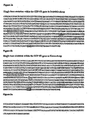
- a genetic marker test was developed on the basis of inheritance of flanking microsatellite markers around the gene (i.e. a haplotype test) (Galloway et al ., 1999); this is illustrated in Figure 1 .
- a haplotype test can only identify those animals which have inherited the Inverdale haplotype from a known carrier, and is not 100% accurate, because it does not detect the Inverdale gene itself.
- GDF-9 transforming growth factor beta
- TGF- ⁇ transforming growth factor beta
- TGF- ⁇ transforming growth factor beta
- GDF-9 messenger RNA is synthesised only in the oocyte, from the primordial/primary one-layer follicular stage until after ovulation, and female GDF-9 knockout mice are infertile due to a block in follicular development at this primary one-layer follicle stage.
- Animals homozygous for the Inverdale gene are infertile, with a similar phenotype to the GDF-9 knockout mouse (McNatty et al ., 1995b).
- GDF-9 was subsequently mapped to sheep chromosome 5, and therefore could not be responsible for the Inverdale phenotype (Sadighi et al ., 1998).
- GDF-9B also called BMP 15
- BMP15 was mapped to the X-chromosome in mice, close to Fscl (Dube et al ., 1998).
- Fscl fibrous sheath component
- Akap4 A kinase anchor protein 4
- MMD Manton Genome Database
- GDF-9B GDF-9B mRNA is expressed in oocytes of primary but not primordial follicles, and that expression of this mRNA within the ovary is exclusive to oocytes (Galloway et al 2000.
- the GDF-9B coding region is contained within two exons separated by an intron of 4.2 kb (human) and 3.5 kb (mouse) (Dube et al ., 1998).
- the full-length 1176 bp coding sequence produces a 392 amino acid prepropeptide, the first 17 amino acids of which correspond to a secretory signal.
- the full-length prepropeptide in human and mouse includes the processing site for proteolytic cleavage to release a 125 amino acid mature active C-terminal peptide and an N-terminal propeptide product (Laitinen et al ., 1998, Dube et al ., 1998).
- the intron sequence lies within the propeptide domain, so that the entire mature coding region is found within exon 2.
- the sequence of the human BMP15 (GDF-9B) wild type gene is disclosed in US 5,728,679 and US 5,635,372 .
- the wild type protein is disclosed as being useful in the treatment of bone and cartilage and/or other connective tissue defects, and in wound healing and tissue repair.
- the inventors have now identified a mutated form of the sheep GDF-9B gene in sheep expressing the Inverdale or Hanna phenotype, and discovered for the first time that this mutated form of GDF-9B is responsible for the enhanced ovulation seen in these sheep and for the sterility seen in homozygous sheep.
- the present invention is broadly directed to the mutated sequence and its corresponding encoded protein.
- the present invention provides an isolated mutated GDF-9B nucleic acid molecule encoding a polypeptide capable of modulating the ovulation rate of a female mammal, comprising a nucleotide sequence selected from the group consisting of:
- the nucleic acid molecule may be an RNA, cRNA, genomic DNA or cDNA molecule, and may be single- or double-stranded.
- the nucleic acid molecule may also optionally comprise one or more synthetic, non-natural or altered nucleotide bases, or combinations thereof.
- the present invention further provides a method of identifying a mammal which carries a mutated GDF-9B nucleic acid molecule, said method comprising the steps of:
- amplication step (iv) may be performed by any convenient method, such as the polymerase chain reaction, or ligase chain reaction.
- a genetic marker for DNA- assisted selection for enhanced ovulation or sterility in a mammal comprising a nucleic acid molecule which specifically hybridises under stringent conditions to a nucleotide sequence according to the first aspect of the invention, or to genomic DNA encoding the mutated GDF-9B nucleic acid molecule.
- the mammal may be a human, or a domestic, companion, zoo or feral mammal.
- the mammal is selected from humans, sheep, cattle, goats, deer, horses, camelids, possums, pigs, mice, rats, weasels, rabbits, hares, ferrets, cats and dogs.
- the present invention provides an isolated polypeptide encoded by a nucleic acid molecule having a sequence set out in one of (a)-(b) above.
- the polypeptide has an amino acid sequence selected from the group consisting of SEQ ID NO: 2, SEQ ID NO: 4 or SEQ ID NO: 6.
- the invention provides an isolated nucleic acid molecule which encodes a polypeptide substantially as described above.
- the ovulation rate of a female mammal is modulated by an effective amount of a mutated GDF-9B polypeptide.
- the ovulation rate of a female mammal which does not carry a mutated GDF-9B nucleic acid molecule may be increased by an effective amount of a mutated GDF- 9B polypeptide or a functional variant or fragment thereof which is capable of modulating the ovulation rate of a female mammal.
- the invention provides an agent for increasing or reducing the ovulation rate, or for inducing sterility in a female mammal, consisting of
- the invention provides a composition comprising an effective amount of a mutated GDF-9B polypeptide, together with a pharmaceutically or veterinarily acceptable carrier or diluent.
- the invention provides a composition comprising an effective amount of an agent selected from the group consisting of
- the invention provides a construct or vector comprising a nucleic acid molecule substantially as described above.
- the present invention also provides a host cell transformed with a vector or construct comprising a nucleic acid molecule of the invention.
- the invention provides an isolated nucleic acid molecule comprising a nucleotide sequence selected from the group consisting of SEQ ID NO:12 or SEQ ID NO: 14.
- the invention also provides an isolated polypeptide comprising an amino acid sequence of SEQ ID NO: 13.
- isolated means substantially separated or purified away from contaminating sequences in the cell or organism in which the nucleic acid naturally occurs, and includes nucleic acids purified by standard purification techniques as well as nucleic acids prepared by recombinant technology, including PCR technology, and nucleic acids which have been synthesised.
- the nucleic acid molecule is isolated from the genomic DNA of sheep expressing the Inverdale or Hanna phenotype.
- modulation of ovulation means increasing or decreasing the rate of ovulation compared to the rate observed in an untreated mammal.
- ligand refers to any molecule which can bind to another molecule such as a polypeptide or peptide, and should be taken to include, but not be limited to, antibodies and phage display molecules.
- probe and primers used in this method also form a part of this invention.
- Said probes and primers may comprise a fragment of the nucleic acid molecule of the invention capable of hybridising under stringent conditions to a mutated GDF-9B gene sequence.
- Such probes and primers are also useful, in studying the structure and function of the mutated gene and for obtaining homologs of the gene from mammals other than sheep expressing the Inverdale or Hanna phenotype.
- Nucleic acid probes and primers can be prepared based on nucleic acids according to the present invention.
- a "probe” comprises an isolated nucleic acid attached to a detectable label or reporter molecule. Typical labels include radioactive isotopes, ligands, chemiluminescent or fluorescent agents, and enzymes.
- a “fragment” of a nucleic acid is a portion of the nucleic acid that is less than full length, and comprises at least a minimum sequence capable of hybridising specifically with a nucleic acid molecule according to the invention, or a sequence complementary thereto, under stringent conditions as defined below.
- a “fragment” of a polypeptide is a portion of the polypeptide which is less than full length, but which still retains the biological function of either increasing or decreasing the ovulation rate of a mammal, or causing sterility in a mammal.
- a fragment according to the invention has at least one of the biological activities of the nucleic acid or polypeptide of the invention.
- Primer pairs are short nucleic acids, preferably DNA oligonucleotides 15 nucleotides or more in length, which are annealed to a complementary target DNA strand by nucleic acid hybridisation to form a hybrid between the primer and the target DNA strand, then extended along the target DNA strand by a polymerase, preferably a DNA polymerase.
- Primer pairs can be used for amplification of a nucleic acid sequence, e.g. by the polymerase chain reaction (PCR) or other nucleic acid amplification methods well known in the art.
- PCR-primer pairs can be derived from the sequence of a nucleic acid according to the present invention, for example, by using computer programs intended for that purpose such as Primer (Version 0.5 ⁇ 1991, Whitehead Institute for Biomedical Research, Cambridge, MA).
- Probes or primers can be free in solution or covalently or noncovalently attached to a solid support by standard means.
- “Stringent conditions” for the amplification of a target nucleic acid sequence are conditions that permit the primer pair to hybridise only to the target nucleic acid sequence to which a primer having the corresponding wild type sequence (or its complement) would bind.
- Nucleic acid hybridisation is affected by such conditions as salt concentration, temperature, or organic solvents, in addition to the base composition, length of the complementary strands, and the number of nucleotide base mismatches between the hybridising nucleic acids, as will be readily appreciated by those skilled in the art.
- the term "specific for (a target sequence)" indicates that the probe or primer hybridises under stringent conditions only to the target sequence in a given sample comprising the target sequence.
- the invention provides a genetic marker for DNA-assisted selection of animals for increased ovulation or sterility in sheep, goats, cattle, deer, mice, rats or any other commercially important mammal.
- the invention provides a means of using a nucleic acid molecule containing sequence derived from the mutated GDF-9B DNA sequence, to identify sequence variants in individual animals that are associated with increased ovulation or sterility of that animal. Although these variants may not necessarily give rise to the increased ovulation or sterility trait directly, they will be closely enough associated with it to predict the trait.
- sequence variants are identified in the art, and include, but are not limited to, restriction fragment length polymorphism (RFLP), AFLP, direct sequencing of DNA within or associated with the mutated GDF-9B gene, or identification and characterisation of variable number of tandem repeats (VNTR), or microsatellite polymorphisms (di-or tri-nucleotide repeats), detection and characterisation of single nucleotide polymorphisms (SNP's).
- RFLP restriction fragment length polymorphism
- AFLP direct sequencing of DNA within or associated with the mutated GDF-9B gene
- VNTR variable number of tandem repeats
- microsatellite polymorphisms di-or tri-nucleotide repeats
- SNP's single nucleotide polymorphisms
- polypeptide may be produced by expression of a suitable vector comprising the nucleic acid molecule of the invention or a functional variant or fragment thereof, in a suitable host cell as would be understood by a person skilled in the art.
- the cloning vector may be selected according to the host or host cell to be used.
- Useful vectors will generally have the following characteristics:
- vectors Two major types of vector possessing these characteristics are plasmids and bacterial viruses (bacteriophages or phages).
- Presently preferred vectors may include the following: the pUC, pBlueScript, pGEM, PGEX, pBK-CMV, lambda ZAP, lambda GEM and pSP series. However, this list should not be seen as limiting the scope of the present invention.
- the DNA molecules of the invention may be expressed by placing them in operable linkage with suitable control sequences in a replicable expression vector.
- Control sequences may include origins of replication, a promoter, enhancer and transcriptional terminator sequences amongst others.
- the selection of the control sequence to be included in the expression vector is dependent on the type of host or host cell intended to be used for expressing the DNA.
- procaryotic, yeast or mammalian cells are useful hosts.
- plasmid vectors include E. coli , Bacillus species and various species of Pseudomonas .
- Commonly used promoters such as ⁇ -lactamase (penicillinase) and lactose (lac) promoter systems are all well known in the art. Any available promoter system compatible with the host of choice can be used.
- Vectors used in yeast are also available and well known. A suitable example is the 2 micron origin of replication plasmid.
- vectors for use in mammalian cells are also well known.
- Such vectors include well known derivatives of SV-40, adenovirus, retrovirus-derived DNA sequences, Herpes simplex viruses, and vectors derived from a combination of plasmid and phage DNA.
- the expression vectors useful in the present invention contain at least one expression control sequence that is operatively linked to the DNA sequence or fragment to be expressed.
- the control sequence is inserted in the vector in order to control and to regulate the expression of the cloned DNA sequence.
- useful expression control sequences are the lac system, the trp system, the tac system, the trc system, major operator and promoter regions of phage lambda, the glycolytic promoters of yeast acid phosphatase, e.g. Pho5, the promoters of the yeast alpha-mating factors, and promoters derived from polyoma, adenovirus, retrovirus, and simian virus, e.g. the early and late promoters of SV40, and other sequences known to control the expression of genes of prokaryotic and eucaryotic cells and their viruses or combinations thereof.
- the vector In the construction of a vector it is also an advantage to be able to distinguish the vector incorporating the foreign DNA from unmodified vectors by a convenient and rapid assay.
- Reporter systems useful in such assays include reporter genes, and other detectable labels which produce measurable colour changes, antibiotic resistance and the like.
- the ⁇ -galactosidase reporter gene is used, which gene is detectable by clones exhibiting a blue phenotype on X-gal plates. This facilitates selection.
- the ⁇ -galactosidase gene may be replaced by a polyhedrin-encoding gene; which gene is detectable by clones exhibiting a white phenotype when stained with X-gal. This blue-white color selection can serve as a useful marker for detecting recombinant vectors.
- the vectors may be isolated from the culture using routine procedures such as freeze-thaw extraction followed by purification.
- vectors containing the DNA of the invention and control signals are inserted or transformed into a host or host cell.
- Some useful expression host cells include well-known prokaryotic and eucaryotic cells.
- Some suitable prokaryotic hosts include, for example, E.coli, such as E. coli , S G-936, E. coli HB 101, E. coli W3110, E.coli X1776, E. coli , X2282, E. coli , DHT, and E. coli , MR01, Pseudomonas, Bacillus, such as Bacillus subtilis, and Streptomyces .
- Suitable eucaryotic cells include yeast and other fungi, insect, animal cells, such as COS cells and CHO cells, human cells in tissue culture.
- transformation is performed according to standard techniques appropriate to such cells.
- the calcium treatment process Cohen, S N Proceedings, National Academy of Science, USA 69 2110 (1972 )
- the calcium phosphate precipitation method of Graeme and Van Der Eb, Virology 52:546 (1978 ) is preferred. Transformations in yeast according to the method of Van Solingen et al. J.Bact. 130: 946 (1977 ) and Hsiao et al. Proceedings, National Academy of Science, 76: 3829 (1979 ).
- polypeptide or peptide encoded can be produced, often in the form of fusion protein, by culturing the host cells.
- the polypeptide or peptide of the invention may be detected by rapid assays as indicated above.
- the polypeptide or peptide is then recovered and purified as necessary. Recovery and purification can be achieved using any of those procedures known in the art, for example by absorption onto and elution from an anion exchange resin. This method of producing a polypeptide or peptide of the invention constitutes a further aspect of the present invention.
- Host cells transformed with the vectors of the invention also form a further aspect of the invention.
- nucleotides .and peptides having substantial identity to the nucleotide and amino acid sequences of the invention can also be employed in preferred embodiments.
- substantially identity means that two sequences, when optimally aligned such as by the programs GAP or BESTFIT (nucleotides and peptides) using default gap weights, or as measured by computer algorithm BLASTP (peptides) or BLAST X (nucleotides), share at least 60%, preferably 75%, and most preferably 90-95% sequence identity.
- residue positions which are not identical differ by conservative amino acid substitutions.
- substitution of amino acids having similar chemical properties such as charge or polarity are not likely to effect the properties of a protein. Examples include glutamine for asparagine or glutamic acid for aspartic acid.
- variant includes nucleic acid molecules and polypeptides and peptides having "substantial identity" to the sequences of the invention.
- the variant may result from modification of the native nucleotide or amino acid sequence by such modifications as insertion, substitution or deletion of one or more nucleotides or amino acids or it may be a naturally-occurring variant.
- variant also includes homologous sequences which hybridise to the sequences of the invention under standard hybridisation conditions defined as 2 x SSC at 65°C, or preferably under stringent hybridisation conditions defined as 6 x SCC at 55°C, provided that the variant is capable modulating the ovulation rate of a female mammal.
- the nucleotide sequence of the native DNA is altered appropriately. This alteration can be effected by synthesis of the DNA or by modification of the native DNA, for example, by site-specific or cassette mutagenesis. Preferably, where portions of cDNA or genomic DNA require sequence modifications, site-specific primer directed mutagenesis is employed, using techniques standard in the art.
- protein or polypeptide refers to a protein encoded by the nucleic acid molecule of the invention, including fragments, mutations and homologues having the same biological activity i.e. ovulation modulating activity.
- the protein or polypeptide of the invention can be isolated from a natural source, produced by the expression of a recombinant nucleic acid molecule, or chemically synthesised.
- the invention provides the use of the mutated GDF-9B polypeptide, which has the amino acid sequence set out in figure 3a or 3b in a method of modulating the ovulation rate of a mammal.
- the method comprises administering to said mammal an effective amount of mutated GDF-9B.
- the modulation of the ovulation rate may comprise inducing sterility in the female mammal by an antibody to mutated GDF-9B to reduce the level of endogenous mutated GDF-9B.
- Ligands which bind to polypeptides of the invention may be antibodies. It should be appreciated that the term “antibody” encompasses fragments or analogues of antibodies which retain the ability to bind to a polypeptide of the invention, including but not limited to Fv, F(ab) 2 fragments, ScFv molecules and the like.
- the antibody may be polyclonal or monoclonal, but is preferably monoclonal.
- composition comprising at least the polypeptide of the invention and a pharmaceutically or veterinarily acceptable carrier or diluent. More than one polypeptide of the invention can of course, be included in the composition.
- kits for identifying male and female mammals which carry a single (heterozygous) copy and/or females carrying two (homozygous) copies of a mutated GDF-9B nucleic acid molecule of the invention, comprising:
- the invention also provides a kit for detecting circulating mutated GDF-9B protein in a mammal.
- a kit may comprise a standard ELISA or enzyme immunoassay format kit familiar to those skilled in the art; for example the kit may contain specific antibody directed to the mutated GDF-9B protein, and standard secondary antibody amplification components to enhance the signal.
- the antibodies may be conjugated to a fluorescent or radioactive or chemiluminescent label, or the secondary antibody may be labelled. Appropriate solutions, controls, buffers, instructions and protocols may also be supplied.
- the animals tested in this study were from AgResearch Inverdale breeding flocks located at the Invermay Agricultural Centre and Woodlands Research Station, and from the commercial flocks of Mr Arnold Gray, Orawia, Southland (Gray and Davis, 1995). All Inverdale carrier animals were descendants of the original Inverdale ewe (A281) in which the Inverdale gene was first detected.
- Carrier status of ewes was determined by laparoscopy to identify infertile II ewes, or ovulation rate to distinguish I+ carriers from ++ non-carriers.
- Carrier status of rams was either assigned on the basis of ovulation rates of their daughters. Following the discovery of infertile ovaries in II ewes, a faster method for progeny testing of rams was employed by mating each ram to seven to ten I+ ewes and carrying out laparoscopy of the daughters at 6 months. Any resulting infertile II offspring confirm the sire as a carrier. The aim was to produce five daughters per ram, as the probability of an IY ram having no daughters with streak ovaries in a sample of five daughters is only 0.031 (Davis et al . 1994).
- DNA was purified from the white blood cells present in 5 to 10 ml of whole blood from each animal (Montgomery and Sise, 1990). Sequencing of all subclones and PCR products was carried out by the commercial service operated by the University of Otago Centre for Gene Research (ABI 373 automated sequencer).
- Microsatellite (dinucleotide repeat) markers which amplified DNA from sheep were developed within the AgResearch Molecular Biology Unit as previously described (Galloway et al ., 1996), or were from the cattle and sheep genetic mapping literature. New markers were mapped on to the sheep X-chromosome as previously described (Galloway et al ., 1996).
- PCR Polymerase Chain Reaction
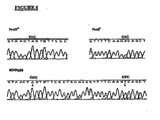
- PCR fragments encoding the entire mature peptide were sequenced from Inverdale and Hanna genomic DNA. The sequenced region also included most of the propeptide in exon 2 (from 70 bases 3' to the human/mouse intron/exon boundary to 30 bases beyond the tga stop codon ). Sequence from these two sheep lines was compared with the wildtype sheep sequence for GDF-9B. Sequence data revealed two distinct single base substitutions within the mature GDF-9B peptide, one segregating within the Inverdale pedigree and one within the Hanna pedigree ( Figure 2 ).
- a restriction enzyme search revealed that the Hanna base substitution produced a SpeI enzyme cleavage site (a/ctagt) and removed a BsrSI (actg/gn) site around that substitution. These cleavage sites were confirmed by demonstrating that the enzyme Spel was able to cleave a 541bp PCR fragment spanning this region into 476bp and 65bp fragments in HY and HH animals, but not in IY and +Y animals. In a sheep carrying one copy of both the Inverdale and the Hanna genes (HI), both the 541bp and 476bp fragments were identified.
- PCR fragments from 2 HY, 1 HH, 2 +Y and 3 ++ animals were not cleaved by Xba1, while fragments from 36 II and 12 IY animals were cleaved.
- One HI and 47 I+ animals showed a mixture of cleaved and uncleaved fragments, as expected for heterozygotes.
- sheep GDF-9B gene sequences from cDNA and genomic DNA, using primers designed from human, mouse and sheep sequences (Galloway et al., 2000).
- the sheep gene is similar to human, mouse and rat (Laitinen et al., 1998; Dube et al ., 1998; Aaltonen et al., 1999; Jaatinen et al., 1999), with gene features typical of other members of the TGF ⁇ superfamily.
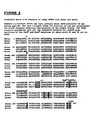
- the full-length 1179 bp sequence encodes a 393 amino acid prepropeptide ( Figure 4 ) spanning two exons separated by an intron of approximately 5.4 kb.
- the sheep coding region is 82.9% homologous with human, 78.8% with mouse and 78.4% with rat at the nucleotide level.
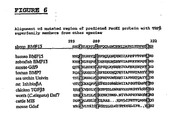
- the mutation substitutes the valine (V) with aspartic acid (D) at residue 31 (residue 299 of unprocessed protein).
- the FecX I mutation is a non-conservative change in a highly conserved region of the protein. All other members of the TGF ⁇ superfamily from a wide range of species contain only the conserved hydrophobic amino acids valine, isoleucine or leucine at this position ( Figure 6 ).
- GDF-9B maps to human Xp11.2 and to a syntenic region of the mouse X-chromosome (Dube et al ., 1998; Aaltonen et al ., 1999).
- E . coli -derived mature protein of GDF-9B comprising a wildtype sequence as set out in SEQ ID No: 10 was chemically conjugated to the protein Keyhole Limpet Haemocyanin (KLH), and this antigen in Freund's Complete Adjuvant (FCA) was injected subcutaneously (sc) into 10 anoestrous Romney ewes (0.4 mg/ewe). A further 9 anoestrous Romney ewes were injected with KLH alone (sc) in FCA to serve as controls (0.4 mg/ewe). Thereafter all animals were injected at monthly intervals with booster antigen (.
- KLH Keyhole Limpet Haemocyanin
- FCA Freund's Complete Adjuvant
- the KLH-GDF-9B animals showed a highly significant increase in ovulation rate compared to the KLH control animals (p ⁇ 0.001) ANOVA.
- Antibody levels were measured by an ELISA procedure after the sheep plasmas were diluted 1:5000.
- the ELISA method involved coating a 96-well plate with 100 ng/well of an E . coli expressed full-length GDF-9B and incubation with 100 ⁇ l of diluted sheep plasma and 100 ⁇ l of assay buffer, after appropriate blocking treatment and successive washes. After incubation with the sheep plasma and several washes, rabbit anti-sheep-HRP was added for 1 h at 37°C. The wells were then washed and developed with o-phenylenediamine plus hydrogen peroxide with development being stopped with sulphuric acid.
- the number of preantral follicles in the GDF9B treated animals was significantly lower than that in the bovine ⁇ -lactalbumin treated mice, p ⁇ 0.005 (ANOVA). There were no significant differences between the treatment groups with respect to the number of antral follicles.
- Antibody levels were measured by an ELISA procedure as summarised for Table 4.
- Sequence variants in the gene for GDF-9B can be determined by a variety of methods, well known to researchers skilled in the art, which are specifically designed to identify differences between alleles of the gene. In particular these methods can be used to identify the Inverdale ( FecX I ) and Hanna ( FecX H ) single nucleotide polymorphisms (SNPs), namely the C ⁇ T transition in FecX H carriers and the T ⁇ A transition occurs in FecX I carriers, but such methods can also be applied to other alleles of this gene which may be present in other mammals. Samples can be obtained either from DNA or directly from punches of whole blood spotted directly onto FTA® paper or from hair or wool follicles.
- One such method involves the use of restriction enzymes to cleave the DNA specifically for one allele and not the other, or to cleave t a PCR fragment containing a primer which has been designed to contain a cleavage site in combination with one allele or the other.
- FecX H C ⁇ T substitution results in loss of a Bsr SI restriction site (actg/gn) and gain of a SpeI site (a/ctagt).
- We confirmed this base substitution by demonstrating SpeI cleavage of a 541 bp PCR product spanning this region into 476 and 65 bp fragments in FecX H lFecX H females and FecX H / Y males, but not in FecX I and wildtype animals.
- sheep carrying a copy of each allele FecX I / FecX H
- all three fragments were identified (541, 476 and 65bp).
- BsrSI cleaved fragments from FecX I and wildtype animals but not FecX H carriers.
- Another SNP detection method includes the use of fluoroescently-labelled primers in conjunction with the forced RFLP method above, and visualising the products on a sequencing machine such as the ABI377.
- the Taqman allelic discrimination employs a probe technology that exploits the 5'-3' nuclease activity of AmpliTaq Gold® DNA polymerase to allow direct detection of the PCR product by the release of a fluorescent reporter as a result of PCR. Two probes are used in the allelic discrimination assay, one probe for each allele, with each probe containing a different reporter dye.
- the SnaPshot system is based on the dideoxy single nucleotide (fluoroescently labelled) extension of an unlabelled oligonucleotide primer for the detection of single nucleotide polymorphisms (SNPs).
- SNP detection method employs mass spectrometry whereby the region around the SNP or mutation is amplified by PCR and an oligonucleotide primer is extended through the SNP or mutation in the presence of dideoxynucleotides. SNP variants are detected on the basis of mass difference.
Landscapes
- Health & Medical Sciences (AREA)
- Chemical & Material Sciences (AREA)
- Life Sciences & Earth Sciences (AREA)
- Organic Chemistry (AREA)
- Medicinal Chemistry (AREA)
- General Health & Medical Sciences (AREA)
- Proteomics, Peptides & Aminoacids (AREA)
- Toxicology (AREA)
- Molecular Biology (AREA)
- Genetics & Genomics (AREA)
- Reproductive Health (AREA)
- Biophysics (AREA)
- Biochemistry (AREA)
- Gastroenterology & Hepatology (AREA)
- Zoology (AREA)
- Animal Behavior & Ethology (AREA)
- Engineering & Computer Science (AREA)
- Public Health (AREA)
- Bioinformatics & Cheminformatics (AREA)
- General Chemical & Material Sciences (AREA)
- Endocrinology (AREA)
- Pharmacology & Pharmacy (AREA)
- Nuclear Medicine, Radiotherapy & Molecular Imaging (AREA)
- Chemical Kinetics & Catalysis (AREA)
- Veterinary Medicine (AREA)
- Gynecology & Obstetrics (AREA)
- Pregnancy & Childbirth (AREA)
- Micro-Organisms Or Cultivation Processes Thereof (AREA)
- Peptides Or Proteins (AREA)
- Measuring Or Testing Involving Enzymes Or Micro-Organisms (AREA)
- Medicines That Contain Protein Lipid Enzymes And Other Medicines (AREA)
- Medicines Containing Antibodies Or Antigens For Use As Internal Diagnostic Agents (AREA)
- Pharmaceuticals Containing Other Organic And Inorganic Compounds (AREA)
- Preparation Of Compounds By Using Micro-Organisms (AREA)
Claims (27)
- Isoliertes mutiertes GDF-9B-Nukleinsäuremolekül, das ein mutiertes Polypeptid kodiert, das in der Lage ist, die Ovulationsrate eines weiblichen Säugetiers zu modulieren, wobei das Nukleinsäuremolekül eine Nukleotidsequenz umfasst, die ausgewählt ist aus der Gruppe bestehend aus:a) SEQ-ID-NR: 1, SEQ-ID-NR. 3, SEQ-ID-NR. 5 oder SEQ-ID-NR: 7; undb) einer zu dem/den in a) definierten Molekül(en) komplementäre Sequenz.
- Vektor umfassend (ein) Nukleinsäuremolekül(e) nach Anspruch 1.
- Konstrukt umfassend das/die Nukleinsäuremolekül(e) nach Anspruch 1.
- Wirtszelle, die durch einen Vektor oder ein Konstrukt nach Anspruch 2 oder 3 transformiert wurde.
- Isoliertes mutiertes Polypeptid, das in der Lage ist, die Ovulationsrate eines weiblichen Säugetiers zu modulieren, wobei das Polypeptid durch ein Nukleinsäuremolekül nach Anspruch 1 codiert ist.
- Isoliertes mutiertes Polypeptid, das in der Lage ist, die Ovulationsrate eines weiblichen Säugetiers zu modulieren, umfassend eine Aminosäuresequenz der SEQ-ID-NR: 2 oder SEQ-ID-NR: 6.
- Isoliertes mutiertes Polypeptid, das in der Lage ist, die Ovulationsrate eines weiblichen Säugetiers zu modulieren, bestehend aus der Sequenz SEQ-ID-NR: 4.
- Isoliertes Nukleinsäuremolekül, das ein Polypeptid nach Anspruch 6 oder 7 codiert.
- Verfahren zur Identifikation eines Säugetiers, welches ein mutiertes Nukleinsäuremolekül trägt, das GDF-9B codiert, wobei das Verfahren die Schritte umfasst:(i) Isolieren von DNA aus Gewebe oder einer Blutprobe eines Säugetiers; und optional(ii) Isolieren der GDF-9B-DNA aus der in Schritt (i) erhaltenen DNA;(iii) Sondieren der DNA mit einer zu der mutierten GDF-9B-DNA nach Anspruch 1a) oder 8 komplementären Sonde;(iv) Amplifizieren der Menge an mutierter GDF-9B-DNA; und/oder(v) Bestimmen, ob die in Schritt (iv) erhaltene GDF-9B-Sequenz-DNA eine mit Sterilität oder erhöhter oder verringerter Ovulation in Verbindung stehende Mutation trägt.
- Verfahren nach Anspruch 9, wobei das Säugetier männlich oder weiblich ist und eine einzige Kopie des mutierten GDF-9B-Nukleinsäuremoleküls trägt.
- Verfahren nach Anspruch 10, wobei das Säugetier weiblich ist und zwei Kopien des mutierten GDF-9B-Nukleinsäuremoleküls trägt.
- Polypeptid nach Anspruch 6 oder 7 zur Verwendung als ein Medikament.
- Polypeptid nach Anspruch 6 oder 7 zur Verwendung zur Erhöhung der Ovulationsrate eines weiblichen Säugetiers, welches kein mutiertes GDF-9B-Nukleinsäuremolekül trägt.
- Mittel umfassend eine zur Immunisierung wirksame Menge eines mutierten GDF-9B-Polypeptids umfassend eine Aminosäuresequenz nach Anspruch 6 oder 7 zur Verwendung zur Erhöhung oder Verringerung der Ovulationsrate oder zur Auslösung von Sterilität in einem weiblichen Säugetier durch Inhibieren der biologischen Aktivität des mutierten GDF-9B-Polypeptids.
- Zusammensetzung umfassend eine wirksame Menge eines Polypeptids nach Anspruch 6 oder 7 zusammen mit einem pharmazeutisch oder veterinärmedizinisch verträglichen Träger oder Verdünnungsmittel.
- Zusammensetzung enthaltend eine wirksame Menge eines Mittels, das ein eine Aminosäuresequenz nach Anspruch 6 oder 7 umfassendes mutiertes GDF-9B-Polypeptid umfasst, zusammen mit einem pharmazeutisch oder veterinärmedizinisch verträglichen Träger oder Verdünnungsmittel.
- Verwendung eines Nukleinsäuremoleküls nach Anspruch 1 zur Identifikation von Sequenzvarianten in einem einzelnen Säugetier, die mit erhöhter Ovulation, reduzierter Ovulation oder der Sterilität des Säugetiers in Verbindung stehen.
- Kit zur Identifikation von Säugetieren, welche die mutierten GDF-9B-Nukleinsäuremoleküle nach Anspruch 1 tragen, wobei das Kit umfasst:a) Primerpaare zur Amplifikation des entsprechenden Bereichs für GDF-9B; und optional eines oder mehrere der folgendenb) Pufferlösung für die DNA-Amplifikation;c) ein Gemisch von Desoxynukleotiden;d) Mittel zur DNA-Amplifikation;e) Kontroll-DNA von der zu testenden Spezies;f) geeignete Standards;g) und ein Erfassungssystem.
- Isoliertes Nukleinsäuremolekül, das ein mutiertes Polypeptid codiert, das in der Lage ist, die Ovulationsrate eines weiblichen Säugetiers zu modulieren, wobei das Nukleinsäuremolekül eine in SEQ-ID-NR: 12 oder SEQ-ID-NR: 14 dargestellte Nukleinsäuresequenz umfasst.
- Isoliertes mutiertes Polypeptid, das in der Lage ist, die Ovulationsrate eines weiblichen Säugetiers zu modulieren, umfassend die in SEQ-ID-NR: 13 dargestellte Sequenz.
- Nukleinsäure nach Anspruch 19 oder Polypeptid nach Anspruch 20 zur Verwendung als ein Medikament.
- Nukleinsäure nach Anspruch 19 oder Polypeptid nach Anspruch 20 zur Verwendung zur Modulierung der Ovulationsrate eines weiblichen Säugetiers.
- Verwendung eines Polypeptids nach Anspruch 6 oder 7 in der Herstellung eines Medikaments zur Modulierung der Ovulationsrate eines weiblichen Säugetiers mit einem entsprechenden Bedarf.
- Verwendung eines Polypeptids nach Anspruch 6 oder 7 in der Herstellung eines Medikaments zur Erhöhung der Ovulationsrate eines weiblichen Säugetiers mit einem entsprechenden Bedarf, wobei das weibliche Säugetier kein mutiertes GDF-9B-Nukleinsäuremolekül trägt.
- Verwendung eines mutierten GDF-9B-Polypeptids umfassend eine Aminosäuresequenz nach Anspruch 6 oder 7 in der Herstellung eines Medikaments zur Erhöhung oder Verringerung der Ovulationsrate oder zur Auslösung der Sterilität in einem weiblichen Säugetier.
- Verwendung eines isolierten GDF-9B-Nukleinsäuremoleküls nach Anspruch 1 in der Herstellung eines Medikaments zur Modulierung der Ovulationsrate eines weiblichen Säugetiers.
- Verwendung nach einem Ansprüche 23 bis 26, wobei das weibliche Säugetier ausgewählt ist aus der Gruppe bestehend aus: Menschen, Schafen, Rindern, Ziegen, Hirschen, Pferden, Kamelen, Possums, Schweinen, Mäusen, Ratten, Kaninchen, Hasen, Wieseln, Frettchen, Katzen und Hunden.
Applications Claiming Priority (3)
| Application Number | Priority Date | Filing Date | Title |
|---|---|---|---|
| NZ500844A NZ500844A (en) | 2000-05-05 | 2000-05-05 | Nucleotide sequences (mutated GDF-9B polypeptides) involved in increasing and decreasing mammalian ovulation rate |
| NZ50084400 | 2000-05-05 | ||
| PCT/NZ2001/000073 WO2001085926A2 (en) | 2000-05-05 | 2001-05-04 | Nucleotide sequences involved in increasing or decreasing mammalian ovulation rate |
Publications (2)
| Publication Number | Publication Date |
|---|---|
| EP1292674A2 EP1292674A2 (de) | 2003-03-19 |
| EP1292674B1 true EP1292674B1 (de) | 2008-07-16 |
Family
ID=19927611
Family Applications (1)
| Application Number | Title | Priority Date | Filing Date |
|---|---|---|---|
| EP01934660A Expired - Lifetime EP1292674B1 (de) | 2000-05-05 | 2001-05-04 | Nukleotidsequenzen, die an erhöhung oder verringerung von der ovulationsgeschwindigkeit in säugertieren beteiligt sind |
Country Status (15)
| Country | Link |
|---|---|
| US (1) | US20040092007A1 (de) |
| EP (1) | EP1292674B1 (de) |
| JP (1) | JP2003532414A (de) |
| CN (1) | CN1436237A (de) |
| AR (1) | AR028411A1 (de) |
| AT (1) | ATE401403T1 (de) |
| AU (2) | AU2001260821B2 (de) |
| BR (1) | BR0110616A (de) |
| CA (1) | CA2408051A1 (de) |
| DE (1) | DE60134852D1 (de) |
| MX (1) | MXPA02010868A (de) |
| NZ (1) | NZ500844A (de) |
| RU (1) | RU2283866C2 (de) |
| WO (1) | WO2001085926A2 (de) |
| ZA (1) | ZA200208963B (de) |
Families Citing this family (11)
| Publication number | Priority date | Publication date | Assignee | Title |
|---|---|---|---|---|
| NZ502796A (en) * | 2000-06-15 | 2003-02-28 | Agres Ltd | Nucleotide and amino acid sequences of oocyte factors related to GDF-9B or GDF-9 |
| NZ519330A (en) * | 2002-05-30 | 2004-12-24 | George Henry Davis | New sequences for altering mammalian ovarian function and ovulation rate |
| BRPI0518900A2 (pt) * | 2004-12-02 | 2008-12-16 | Agres Ltd | modulaÇço de ovulaÇço |
| US20100203502A1 (en) * | 2005-09-13 | 2010-08-12 | Moron Francisco J | Method for the in Vitro Detection of a Predisposition to the Development of Alterations in Ovarian Function |
| ES2338960B1 (es) * | 2007-11-23 | 2011-04-19 | Carnes Oviaragon S.C.L. | Procedimiento de mejora de la productividad en ganado ovino. |
| CN105210981B (zh) * | 2015-09-15 | 2018-09-28 | 中国科学院生物物理研究所 | 建立可应用于人类疾病研究的雪貂模型的方法及其应用 |
| CN105941325A (zh) * | 2016-06-17 | 2016-09-21 | 安徽省农业科学院畜牧兽医研究所 | 小尾寒羊母羊与澳洲白公羊杂交生产澳寒杂交母羊的方法 |
| CN106614366A (zh) * | 2016-12-29 | 2017-05-10 | 李振民 | 一种无抗生猪养殖方法 |
| CN108753835A (zh) * | 2018-05-30 | 2018-11-06 | 中山大学 | 一种利用CRISPR/Cas9编辑猪BMP15基因的方法 |
| CN111500744A (zh) * | 2020-04-27 | 2020-08-07 | 内蒙古大学 | 一种基于gdf9基因编码区突变的蒙古羊繁殖力提高方法 |
| CN111440879A (zh) * | 2020-04-27 | 2020-07-24 | 内蒙古大学 | 一种利用gdf9基因提高蒙古羊繁殖力的方法 |
Family Cites Families (1)
| Publication number | Priority date | Publication date | Assignee | Title |
|---|---|---|---|---|
| US5635372A (en) * | 1995-05-18 | 1997-06-03 | Genetics Institute, Inc. | BMP-15 compositions |
-
2000
- 2000-05-05 NZ NZ500844A patent/NZ500844A/xx not_active IP Right Cessation
-
2001
- 2001-05-04 MX MXPA02010868A patent/MXPA02010868A/es unknown
- 2001-05-04 EP EP01934660A patent/EP1292674B1/de not_active Expired - Lifetime
- 2001-05-04 AT AT01934660T patent/ATE401403T1/de not_active IP Right Cessation
- 2001-05-04 BR BR0110616-3A patent/BR0110616A/pt not_active IP Right Cessation
- 2001-05-04 RU RU2002132655/13A patent/RU2283866C2/ru not_active IP Right Cessation
- 2001-05-04 US US10/275,503 patent/US20040092007A1/en not_active Abandoned
- 2001-05-04 CA CA002408051A patent/CA2408051A1/en not_active Abandoned
- 2001-05-04 JP JP2001582515A patent/JP2003532414A/ja active Pending
- 2001-05-04 AR ARP010102128A patent/AR028411A1/es unknown
- 2001-05-04 AU AU2001260821A patent/AU2001260821B2/en not_active Ceased
- 2001-05-04 DE DE60134852T patent/DE60134852D1/de not_active Expired - Fee Related
- 2001-05-04 AU AU6082101A patent/AU6082101A/xx active Pending
- 2001-05-04 CN CN01811320A patent/CN1436237A/zh active Pending
- 2001-05-04 WO PCT/NZ2001/000073 patent/WO2001085926A2/en not_active Ceased
-
2002
- 2002-11-06 ZA ZA200208963A patent/ZA200208963B/en unknown
Also Published As
| Publication number | Publication date |
|---|---|
| DE60134852D1 (de) | 2008-08-28 |
| EP1292674A2 (de) | 2003-03-19 |
| RU2283866C2 (ru) | 2006-09-20 |
| JP2003532414A (ja) | 2003-11-05 |
| AU2001260821B2 (en) | 2006-04-13 |
| NZ500844A (en) | 2003-06-30 |
| MXPA02010868A (es) | 2004-09-06 |
| CN1436237A (zh) | 2003-08-13 |
| WO2001085926A2 (en) | 2001-11-15 |
| AR028411A1 (es) | 2003-05-07 |
| ATE401403T1 (de) | 2008-08-15 |
| ZA200208963B (en) | 2004-07-26 |
| AU6082101A (en) | 2001-11-20 |
| US20040092007A1 (en) | 2004-05-13 |
| WO2001085926A3 (en) | 2002-08-08 |
| CA2408051A1 (en) | 2001-11-15 |
| BR0110616A (pt) | 2004-04-06 |
Similar Documents
| Publication | Publication Date | Title |
|---|---|---|
| US5693757A (en) | Huntingtin DNA, protein and uses thereof | |
| US20030153035A1 (en) | Mutated bmp1b receptor as regulator of ovulation rate | |
| AU733722B2 (en) | Novel LDL-receptor | |
| EP1697533B1 (de) | Verfahren zur Bestimmung des relativen genetischen Risikos für Autismus | |
| EP1292674B1 (de) | Nukleotidsequenzen, die an erhöhung oder verringerung von der ovulationsgeschwindigkeit in säugertieren beteiligt sind | |
| JP2003529315A (ja) | 病気の診断および治療のための成分および方法 | |
| Ballabio et al. | Deletions of the steroid sulphatase gene in “classical” X-linked ichthyosis and in X-linked ichthyosis associated with Kallmann syndrome | |
| AU2001260821A1 (en) | Nucleotide sequences involved in increasing or decreasing mammalian ovulation rate | |
| US7244577B2 (en) | Method of screening for modulator of LRP5 activity | |
| AU2003235525B2 (en) | New GDF-9 and GDF-9B (BMP-15) sequences for altering mammalian ovarian function and ovulation rate | |
| Pearce et al. | Polymorphism in the mouse Tap-1 gene. Association with abnormal CD8+ T cell development in the nonobese nondiabetic mouse. | |
| US20020081592A1 (en) | Reproduction-specific genes | |
| US6555670B1 (en) | Testis-specific gene | |
| EP0711833A2 (de) | Motorneuronlebenserhaltungsgen: ein Gen für spinale Muskelatrophie | |
| Yamashita et al. | Mapping of A gene responsible for cataract formation and its modifier in the UPL rat | |
| Kamei et al. | Solh, the mouse homologue of the Drosophila melanogaster small optic lobes gene: organization, chromosomal mapping, and localization of gene product to the olfactory bulb | |
| WO1998014462A1 (en) | cDNA FOR FANCONI ANEMIA COMPLEMENTATION GROUP A | |
| Guo et al. | Association of a single codon deletion in bone morphogenetic protein 15 gene with prolificacy in Small Tail Han sheep | |
| US7122328B2 (en) | Gene involved in mineral deposition and uses thereof | |
| CA2528692C (en) | Mutations in the slc40a1 gene associated to impaired iron homeostasis | |
| KR100236465B1 (ko) | 캐치-22 증후군에 대한 표식 유전자 및 이를 이용한 캐치-22 증후군 진단용 키트 | |
| WO2000011016A1 (en) | Dysferlin mutations | |
| ZA200410311B (en) | New GDF-9 and GDF-9B (BMP-15) sequences for altering mammalian ovarian function and ovulation rate | |
| Gupta | Sex Chromosomal Proteins and Autosomal Homologues | |
| Thiele et al. | MONO (ADP-RIBOSYL) TRANSFERASE RT6 |
Legal Events
| Date | Code | Title | Description |
|---|---|---|---|
| PUAI | Public reference made under article 153(3) epc to a published international application that has entered the european phase |
Free format text: ORIGINAL CODE: 0009012 |
|
| 17P | Request for examination filed |
Effective date: 20021127 |
|
| AK | Designated contracting states |
Kind code of ref document: A2 Designated state(s): AT BE CH CY DE DK ES FI FR GB GR IE IT LI LU MC NL PT SE TR |
|
| AX | Request for extension of the european patent |
Extension state: AL LT LV MK RO SI |
|
| 17Q | First examination report despatched |
Effective date: 20040325 |
|
| RAP1 | Party data changed (applicant data changed or rights of an application transferred) |
Owner name: OVITA LIMITED Owner name: BIOTECHVISIONS LTD. |
|
| 17Q | First examination report despatched |
Effective date: 20040325 |
|
| RAP1 | Party data changed (applicant data changed or rights of an application transferred) |
Owner name: BIOTECHVISIONS LTD. Owner name: AGRESEARCH LIMITED |
|
| GRAP | Despatch of communication of intention to grant a patent |
Free format text: ORIGINAL CODE: EPIDOSNIGR1 |
|
| GRAS | Grant fee paid |
Free format text: ORIGINAL CODE: EPIDOSNIGR3 |
|
| GRAA | (expected) grant |
Free format text: ORIGINAL CODE: 0009210 |
|
| AK | Designated contracting states |
Kind code of ref document: B1 Designated state(s): AT BE CH CY DE DK ES FI FR GB GR IE IT LI LU MC NL PT SE TR |
|
| REG | Reference to a national code |
Ref country code: GB Ref legal event code: FG4D |
|
| REG | Reference to a national code |
Ref country code: CH Ref legal event code: EP |
|
| REF | Corresponds to: |
Ref document number: 60134852 Country of ref document: DE Date of ref document: 20080828 Kind code of ref document: P |
|
| REG | Reference to a national code |
Ref country code: IE Ref legal event code: FG4D |
|
| NLV1 | Nl: lapsed or annulled due to failure to fulfill the requirements of art. 29p and 29m of the patents act | ||
| PG25 | Lapsed in a contracting state [announced via postgrant information from national office to epo] |
Ref country code: PT Free format text: LAPSE BECAUSE OF FAILURE TO SUBMIT A TRANSLATION OF THE DESCRIPTION OR TO PAY THE FEE WITHIN THE PRESCRIBED TIME-LIMIT Effective date: 20081216 Ref country code: ES Free format text: LAPSE BECAUSE OF FAILURE TO SUBMIT A TRANSLATION OF THE DESCRIPTION OR TO PAY THE FEE WITHIN THE PRESCRIBED TIME-LIMIT Effective date: 20081027 Ref country code: NL Free format text: LAPSE BECAUSE OF FAILURE TO SUBMIT A TRANSLATION OF THE DESCRIPTION OR TO PAY THE FEE WITHIN THE PRESCRIBED TIME-LIMIT Effective date: 20080716 |
|
| PG25 | Lapsed in a contracting state [announced via postgrant information from national office to epo] |
Ref country code: FI Free format text: LAPSE BECAUSE OF FAILURE TO SUBMIT A TRANSLATION OF THE DESCRIPTION OR TO PAY THE FEE WITHIN THE PRESCRIBED TIME-LIMIT Effective date: 20080716 Ref country code: AT Free format text: LAPSE BECAUSE OF FAILURE TO SUBMIT A TRANSLATION OF THE DESCRIPTION OR TO PAY THE FEE WITHIN THE PRESCRIBED TIME-LIMIT Effective date: 20080716 |
|
| PG25 | Lapsed in a contracting state [announced via postgrant information from national office to epo] |
Ref country code: BE Free format text: LAPSE BECAUSE OF FAILURE TO SUBMIT A TRANSLATION OF THE DESCRIPTION OR TO PAY THE FEE WITHIN THE PRESCRIBED TIME-LIMIT Effective date: 20080716 |
|
| PG25 | Lapsed in a contracting state [announced via postgrant information from national office to epo] |
Ref country code: DK Free format text: LAPSE BECAUSE OF FAILURE TO SUBMIT A TRANSLATION OF THE DESCRIPTION OR TO PAY THE FEE WITHIN THE PRESCRIBED TIME-LIMIT Effective date: 20080716 |
|
| PLBE | No opposition filed within time limit |
Free format text: ORIGINAL CODE: 0009261 |
|
| STAA | Information on the status of an ep patent application or granted ep patent |
Free format text: STATUS: NO OPPOSITION FILED WITHIN TIME LIMIT |
|
| 26N | No opposition filed |
Effective date: 20090417 |
|
| PG25 | Lapsed in a contracting state [announced via postgrant information from national office to epo] |
Ref country code: IT Free format text: LAPSE BECAUSE OF FAILURE TO SUBMIT A TRANSLATION OF THE DESCRIPTION OR TO PAY THE FEE WITHIN THE PRESCRIBED TIME-LIMIT Effective date: 20080716 |
|
| PG25 | Lapsed in a contracting state [announced via postgrant information from national office to epo] |
Ref country code: MC Free format text: LAPSE BECAUSE OF NON-PAYMENT OF DUE FEES Effective date: 20090531 |
|
| REG | Reference to a national code |
Ref country code: CH Ref legal event code: PL |
|
| PG25 | Lapsed in a contracting state [announced via postgrant information from national office to epo] |
Ref country code: CH Free format text: LAPSE BECAUSE OF NON-PAYMENT OF DUE FEES Effective date: 20090531 Ref country code: SE Free format text: LAPSE BECAUSE OF FAILURE TO SUBMIT A TRANSLATION OF THE DESCRIPTION OR TO PAY THE FEE WITHIN THE PRESCRIBED TIME-LIMIT Effective date: 20081016 Ref country code: LI Free format text: LAPSE BECAUSE OF NON-PAYMENT OF DUE FEES Effective date: 20090531 |
|
| REG | Reference to a national code |
Ref country code: FR Ref legal event code: ST Effective date: 20100129 |
|
| REG | Reference to a national code |
Ref country code: IE Ref legal event code: MM4A |
|
| PG25 | Lapsed in a contracting state [announced via postgrant information from national office to epo] |
Ref country code: IE Free format text: LAPSE BECAUSE OF NON-PAYMENT OF DUE FEES Effective date: 20090504 Ref country code: FR Free format text: LAPSE BECAUSE OF NON-PAYMENT OF DUE FEES Effective date: 20090602 |
|
| PG25 | Lapsed in a contracting state [announced via postgrant information from national office to epo] |
Ref country code: DE Free format text: LAPSE BECAUSE OF NON-PAYMENT OF DUE FEES Effective date: 20091201 |
|
| PG25 | Lapsed in a contracting state [announced via postgrant information from national office to epo] |
Ref country code: GR Free format text: LAPSE BECAUSE OF FAILURE TO SUBMIT A TRANSLATION OF THE DESCRIPTION OR TO PAY THE FEE WITHIN THE PRESCRIBED TIME-LIMIT Effective date: 20081017 |
|
| PGFP | Annual fee paid to national office [announced via postgrant information from national office to epo] |
Ref country code: GB Payment date: 20100505 Year of fee payment: 10 |
|
| PG25 | Lapsed in a contracting state [announced via postgrant information from national office to epo] |
Ref country code: LU Free format text: LAPSE BECAUSE OF NON-PAYMENT OF DUE FEES Effective date: 20090504 |
|
| PG25 | Lapsed in a contracting state [announced via postgrant information from national office to epo] |
Ref country code: TR Free format text: LAPSE BECAUSE OF FAILURE TO SUBMIT A TRANSLATION OF THE DESCRIPTION OR TO PAY THE FEE WITHIN THE PRESCRIBED TIME-LIMIT Effective date: 20080716 |
|
| PG25 | Lapsed in a contracting state [announced via postgrant information from national office to epo] |
Ref country code: CY Free format text: LAPSE BECAUSE OF FAILURE TO SUBMIT A TRANSLATION OF THE DESCRIPTION OR TO PAY THE FEE WITHIN THE PRESCRIBED TIME-LIMIT Effective date: 20080716 |
|
| GBPC | Gb: european patent ceased through non-payment of renewal fee |
Effective date: 20110504 |
|
| PG25 | Lapsed in a contracting state [announced via postgrant information from national office to epo] |
Ref country code: GB Free format text: LAPSE BECAUSE OF NON-PAYMENT OF DUE FEES Effective date: 20110504 |