EP1270553A2 - Acid generator, sulfonic acid, sulfonic acid derivatives and radiation-sensitive resin composition - Google Patents
Acid generator, sulfonic acid, sulfonic acid derivatives and radiation-sensitive resin composition Download PDFInfo
- Publication number
- EP1270553A2 EP1270553A2 EP02014416A EP02014416A EP1270553A2 EP 1270553 A2 EP1270553 A2 EP 1270553A2 EP 02014416 A EP02014416 A EP 02014416A EP 02014416 A EP02014416 A EP 02014416A EP 1270553 A2 EP1270553 A2 EP 1270553A2
- Authority
- EP
- European Patent Office
- Prior art keywords
- group
- acid
- carbon atoms
- compound
- resin
- Prior art date
- Legal status (The legal status is an assumption and is not a legal conclusion. Google has not performed a legal analysis and makes no representation as to the accuracy of the status listed.)
- Granted
Links
- 0 CC(C1)C2C3=C(CC4**S(C)(=O)=O)CC4C3C1C2 Chemical compound CC(C1)C2C3=C(CC4**S(C)(=O)=O)CC4C3C1C2 0.000 description 14
- YQOYZYQNBMPTSU-UHFFFAOYSA-N CC(C(OC1(C(C2)CC3C2C11)[O]1C3=O)=O)=C Chemical compound CC(C(OC1(C(C2)CC3C2C11)[O]1C3=O)=O)=C YQOYZYQNBMPTSU-UHFFFAOYSA-N 0.000 description 1
- AOTDFBRXNDOION-UHFFFAOYSA-N CC(C)(C)C(CCN)C1CCCCC1 Chemical compound CC(C)(C)C(CCN)C1CCCCC1 AOTDFBRXNDOION-UHFFFAOYSA-N 0.000 description 1
- KRSVOWSVBJTQGK-UHFFFAOYSA-N CC(C)(C1=C(C2)C(C3CC4CC3)C4C2C1)O Chemical compound CC(C)(C1=C(C2)C(C3CC4CC3)C4C2C1)O KRSVOWSVBJTQGK-UHFFFAOYSA-N 0.000 description 1
- UMSGIWAAMHRVQI-UHFFFAOYSA-N CCc(cc1)ccc1-c1ccc(CC)cc1 Chemical compound CCc(cc1)ccc1-c1ccc(CC)cc1 UMSGIWAAMHRVQI-UHFFFAOYSA-N 0.000 description 1
- JYQDISVZGRVVJP-UHFFFAOYSA-N COc(cc1)ccc1[IH]c(cc1)ccc1OC Chemical compound COc(cc1)ccc1[IH]c(cc1)ccc1OC JYQDISVZGRVVJP-UHFFFAOYSA-N 0.000 description 1
- APAAIUVDVYPLIO-UHFFFAOYSA-N Cc(cc1)ccc1/S(/c1ccccc1)=C1\C=CC=CC1 Chemical compound Cc(cc1)ccc1/S(/c1ccccc1)=C1\C=CC=CC1 APAAIUVDVYPLIO-UHFFFAOYSA-N 0.000 description 1
- JPFPGJNJPGLJCZ-UHFFFAOYSA-N Cc(cc1)ccc1S(c1ccc(C)cc1)c1ccc(C)cc1 Chemical compound Cc(cc1)ccc1S(c1ccc(C)cc1)c1ccc(C)cc1 JPFPGJNJPGLJCZ-UHFFFAOYSA-N 0.000 description 1
- WBOHFXQCVYKVPY-UHFFFAOYSA-N Cc(cc1)ccc1S(c1ccccc1)c1ccc(C)cc1 Chemical compound Cc(cc1)ccc1S(c1ccccc1)c1ccc(C)cc1 WBOHFXQCVYKVPY-UHFFFAOYSA-N 0.000 description 1
- YHPFOGAYTUICRN-UHFFFAOYSA-N Cc1ccccc1S(C)(c1ccccc1)c1ccccc1 Chemical compound Cc1ccccc1S(C)(c1ccccc1)c1ccccc1 YHPFOGAYTUICRN-UHFFFAOYSA-N 0.000 description 1
Images









Classifications
-
- C—CHEMISTRY; METALLURGY
- C07—ORGANIC CHEMISTRY
- C07C—ACYCLIC OR CARBOCYCLIC COMPOUNDS
- C07C309/00—Sulfonic acids; Halides, esters, or anhydrides thereof
- C07C309/01—Sulfonic acids
- C07C309/02—Sulfonic acids having sulfo groups bound to acyclic carbon atoms
- C07C309/23—Sulfonic acids having sulfo groups bound to acyclic carbon atoms of an unsaturated carbon skeleton containing rings other than six-membered aromatic rings
-
- G—PHYSICS
- G03—PHOTOGRAPHY; CINEMATOGRAPHY; ANALOGOUS TECHNIQUES USING WAVES OTHER THAN OPTICAL WAVES; ELECTROGRAPHY; HOLOGRAPHY
- G03F—PHOTOMECHANICAL PRODUCTION OF TEXTURED OR PATTERNED SURFACES, e.g. FOR PRINTING, FOR PROCESSING OF SEMICONDUCTOR DEVICES; MATERIALS THEREFOR; ORIGINALS THEREFOR; APPARATUS SPECIALLY ADAPTED THEREFOR
- G03F7/00—Photomechanical, e.g. photolithographic, production of textured or patterned surfaces, e.g. printing surfaces; Materials therefor, e.g. comprising photoresists; Apparatus specially adapted therefor
- G03F7/004—Photosensitive materials
-
- C—CHEMISTRY; METALLURGY
- C07—ORGANIC CHEMISTRY
- C07C—ACYCLIC OR CARBOCYCLIC COMPOUNDS
- C07C309/00—Sulfonic acids; Halides, esters, or anhydrides thereof
- C07C309/01—Sulfonic acids
- C07C309/02—Sulfonic acids having sulfo groups bound to acyclic carbon atoms
- C07C309/03—Sulfonic acids having sulfo groups bound to acyclic carbon atoms of an acyclic saturated carbon skeleton
- C07C309/17—Sulfonic acids having sulfo groups bound to acyclic carbon atoms of an acyclic saturated carbon skeleton containing carboxyl groups bound to the carbon skeleton
-
- C—CHEMISTRY; METALLURGY
- C07—ORGANIC CHEMISTRY
- C07C—ACYCLIC OR CARBOCYCLIC COMPOUNDS
- C07C309/00—Sulfonic acids; Halides, esters, or anhydrides thereof
- C07C309/01—Sulfonic acids
- C07C309/02—Sulfonic acids having sulfo groups bound to acyclic carbon atoms
- C07C309/19—Sulfonic acids having sulfo groups bound to acyclic carbon atoms of a saturated carbon skeleton containing rings
-
- C—CHEMISTRY; METALLURGY
- C07—ORGANIC CHEMISTRY
- C07C—ACYCLIC OR CARBOCYCLIC COMPOUNDS
- C07C381/00—Compounds containing carbon and sulfur and having functional groups not covered by groups C07C301/00 - C07C337/00
- C07C381/12—Sulfonium compounds
-
- C—CHEMISTRY; METALLURGY
- C07—ORGANIC CHEMISTRY
- C07D—HETEROCYCLIC COMPOUNDS
- C07D333/00—Heterocyclic compounds containing five-membered rings having one sulfur atom as the only ring hetero atom
- C07D333/02—Heterocyclic compounds containing five-membered rings having one sulfur atom as the only ring hetero atom not condensed with other rings
- C07D333/46—Heterocyclic compounds containing five-membered rings having one sulfur atom as the only ring hetero atom not condensed with other rings substituted on the ring sulfur atom
-
- C—CHEMISTRY; METALLURGY
- C07—ORGANIC CHEMISTRY
- C07D—HETEROCYCLIC COMPOUNDS
- C07D333/00—Heterocyclic compounds containing five-membered rings having one sulfur atom as the only ring hetero atom
- C07D333/50—Heterocyclic compounds containing five-membered rings having one sulfur atom as the only ring hetero atom condensed with carbocyclic rings or ring systems
- C07D333/78—Heterocyclic compounds containing five-membered rings having one sulfur atom as the only ring hetero atom condensed with carbocyclic rings or ring systems condensed with rings other than six-membered or with ring systems containing such rings
-
- C—CHEMISTRY; METALLURGY
- C07—ORGANIC CHEMISTRY
- C07D—HETEROCYCLIC COMPOUNDS
- C07D335/00—Heterocyclic compounds containing six-membered rings having one sulfur atom as the only ring hetero atom
- C07D335/02—Heterocyclic compounds containing six-membered rings having one sulfur atom as the only ring hetero atom not condensed with other rings
-
- C—CHEMISTRY; METALLURGY
- C07—ORGANIC CHEMISTRY
- C07D—HETEROCYCLIC COMPOUNDS
- C07D347/00—Heterocyclic compounds containing rings having halogen atoms as ring hetero atoms
-
- G—PHYSICS
- G03—PHOTOGRAPHY; CINEMATOGRAPHY; ANALOGOUS TECHNIQUES USING WAVES OTHER THAN OPTICAL WAVES; ELECTROGRAPHY; HOLOGRAPHY
- G03F—PHOTOMECHANICAL PRODUCTION OF TEXTURED OR PATTERNED SURFACES, e.g. FOR PRINTING, FOR PROCESSING OF SEMICONDUCTOR DEVICES; MATERIALS THEREFOR; ORIGINALS THEREFOR; APPARATUS SPECIALLY ADAPTED THEREFOR
- G03F7/00—Photomechanical, e.g. photolithographic, production of textured or patterned surfaces, e.g. printing surfaces; Materials therefor, e.g. comprising photoresists; Apparatus specially adapted therefor
- G03F7/004—Photosensitive materials
- G03F7/0045—Photosensitive materials with organic non-macromolecular light-sensitive compounds not otherwise provided for, e.g. dissolution inhibitors
-
- C—CHEMISTRY; METALLURGY
- C07—ORGANIC CHEMISTRY
- C07C—ACYCLIC OR CARBOCYCLIC COMPOUNDS
- C07C2602/00—Systems containing two condensed rings
- C07C2602/36—Systems containing two condensed rings the rings having more than two atoms in common
- C07C2602/42—Systems containing two condensed rings the rings having more than two atoms in common the bicyclo ring system containing seven carbon atoms
-
- C—CHEMISTRY; METALLURGY
- C07—ORGANIC CHEMISTRY
- C07C—ACYCLIC OR CARBOCYCLIC COMPOUNDS
- C07C2603/00—Systems containing at least three condensed rings
- C07C2603/56—Ring systems containing bridged rings
- C07C2603/86—Ring systems containing bridged rings containing four rings
-
- G—PHYSICS
- G03—PHOTOGRAPHY; CINEMATOGRAPHY; ANALOGOUS TECHNIQUES USING WAVES OTHER THAN OPTICAL WAVES; ELECTROGRAPHY; HOLOGRAPHY
- G03F—PHOTOMECHANICAL PRODUCTION OF TEXTURED OR PATTERNED SURFACES, e.g. FOR PRINTING, FOR PROCESSING OF SEMICONDUCTOR DEVICES; MATERIALS THEREFOR; ORIGINALS THEREFOR; APPARATUS SPECIALLY ADAPTED THEREFOR
- G03F7/00—Photomechanical, e.g. photolithographic, production of textured or patterned surfaces, e.g. printing surfaces; Materials therefor, e.g. comprising photoresists; Apparatus specially adapted therefor
- G03F7/004—Photosensitive materials
- G03F7/039—Macromolecular compounds which are photodegradable, e.g. positive electron resists
- G03F7/0392—Macromolecular compounds which are photodegradable, e.g. positive electron resists the macromolecular compound being present in a chemically amplified positive photoresist composition
-
- G—PHYSICS
- G03—PHOTOGRAPHY; CINEMATOGRAPHY; ANALOGOUS TECHNIQUES USING WAVES OTHER THAN OPTICAL WAVES; ELECTROGRAPHY; HOLOGRAPHY
- G03F—PHOTOMECHANICAL PRODUCTION OF TEXTURED OR PATTERNED SURFACES, e.g. FOR PRINTING, FOR PROCESSING OF SEMICONDUCTOR DEVICES; MATERIALS THEREFOR; ORIGINALS THEREFOR; APPARATUS SPECIALLY ADAPTED THEREFOR
- G03F7/00—Photomechanical, e.g. photolithographic, production of textured or patterned surfaces, e.g. printing surfaces; Materials therefor, e.g. comprising photoresists; Apparatus specially adapted therefor
- G03F7/004—Photosensitive materials
- G03F7/075—Silicon-containing compounds
- G03F7/0757—Macromolecular compounds containing Si-O, Si-C or Si-N bonds
-
- Y—GENERAL TAGGING OF NEW TECHNOLOGICAL DEVELOPMENTS; GENERAL TAGGING OF CROSS-SECTIONAL TECHNOLOGIES SPANNING OVER SEVERAL SECTIONS OF THE IPC; TECHNICAL SUBJECTS COVERED BY FORMER USPC CROSS-REFERENCE ART COLLECTIONS [XRACs] AND DIGESTS
- Y10—TECHNICAL SUBJECTS COVERED BY FORMER USPC
- Y10S—TECHNICAL SUBJECTS COVERED BY FORMER USPC CROSS-REFERENCE ART COLLECTIONS [XRACs] AND DIGESTS
- Y10S430/00—Radiation imagery chemistry: process, composition, or product thereof
- Y10S430/1053—Imaging affecting physical property or radiation sensitive material, or producing nonplanar or printing surface - process, composition, or product: radiation sensitive composition or product or process of making binder containing
- Y10S430/1055—Radiation sensitive composition or product or process of making
- Y10S430/114—Initiator containing
-
- Y—GENERAL TAGGING OF NEW TECHNOLOGICAL DEVELOPMENTS; GENERAL TAGGING OF CROSS-SECTIONAL TECHNOLOGIES SPANNING OVER SEVERAL SECTIONS OF THE IPC; TECHNICAL SUBJECTS COVERED BY FORMER USPC CROSS-REFERENCE ART COLLECTIONS [XRACs] AND DIGESTS
- Y10—TECHNICAL SUBJECTS COVERED BY FORMER USPC
- Y10S—TECHNICAL SUBJECTS COVERED BY FORMER USPC CROSS-REFERENCE ART COLLECTIONS [XRACs] AND DIGESTS
- Y10S430/00—Radiation imagery chemistry: process, composition, or product thereof
- Y10S430/1053—Imaging affecting physical property or radiation sensitive material, or producing nonplanar or printing surface - process, composition, or product: radiation sensitive composition or product or process of making binder containing
- Y10S430/1055—Radiation sensitive composition or product or process of making
- Y10S430/114—Initiator containing
- Y10S430/115—Cationic or anionic
Definitions
- the present invention relates to an acid generator, sulfonic acid, sulfonic acid derivative, and radiation-sensitive resin composition. More particularly, the present invention relates to a photoacid generator suitable for use in a radiation-sensitive resin composition which is used as a chemically amplified resist for microfabrication utilizing various types of radiation, for example, deep ultraviolet rays such as a KrF excimer laser, ArF excimer laser, F 2 excimer laser, or EUV (extreme ultraviolet), X-rays such as synchrotron radiation, or charged particle rays such as electron beams, to a sulfonic acid generated from said acid generator, a sulfonic acid derivative useful as a raw material or intermediate for synthesizing said acid generator, and a positive-tone or negative-tone radiation-sensitive resin composition containing said acid generator.
- deep ultraviolet rays such as a KrF excimer laser, ArF excimer laser, F 2 excimer laser, or EUV (extreme ultraviolet)
- a conventional lithographic process utilizes near ultraviolet rays such as i-line radiation. It is known in the art that microfabrication with a line width of a sub-quarter micron order using near ultraviolet rays is very difficult.
- a radiation-sensitive resin composition applicable to shorter wavelength radiation a number of compositions utilizing a chemical amplification effect between a component having an acid-cleavable functional group and a photoacid generator which generates an acid upon irradiation (hereinafter called "exposure") has been proposed.
- Exposure a number of compositions utilizing a chemical amplification effect between a component having an acid-cleavable functional group and a photoacid generator which generates an acid upon irradiation.
- Japanese Patent Publication No. 27660/1990 discloses a composition comprising a polymer containing a t-butyl ester group of carboxylic acid or a t-butylcarbonate group of phenol and a photoacid generator.
- This composition utilizes the effect of the polymer to release a t-butyl ester group or t-butyl carbonate group by the action of an acid generated upon exposure to form an acidic group such as a carboxylic group or a phenolic hydroxyl group, which renders an exposed area on a resist coating readily soluble in an alkaline developer.
- diffusion length As characteristics demanded of a photoacid generator for a chemically-amplified radiation-sensitive composition, superior transparency to radiation, high quantum yield, and capability of producing an acid which has strong acidity, high boiling point, and a suitable diffusion distance in a resist coating (hereinafter referred as diffusion length) can be given.
- the structure of an anionic moiety in the ionic photoacid generator and the structure of a sulfonyl moiety in the nonionic photoacid generator comprising a sulfonyl structure or a sulfonic acid ester structure are important.
- the photoacid generator has a trifluoromethanesulfonyl structure, for example, even though a sufficiently strong acid to ensure adequate resolution performance of a photoresist is generated, there is a drawback of a high mask dependency due to the low boiling point and long diffusion length of the generated acid.
- the photoacid generator has a sulfonyl structure with a large organic group such as a 10-camphorsulfonyl structure, even though the mask dependency is low due to the high boiling point and short diffusion length of the generated acid, the resolution performance as a photoresist is insufficient due to the poor acidity.
- photoacid generators having a perfluoroalkylsulfonyl structure such as perfluoro-n-octane sulfonic acid (PFOS) have been given attention in recent years due to the adequate acidity, boiling point of the acid, and diffusion length.
- PFOS perfluoro-n-octane sulfonic acid
- the object of the present invention is to provide a novel photoacid generator which, when used as a photoacid generator sensitive to radiations or heat, exhibits high transparency to deep ultraviolet rays such as a KrF excimer laser, ArF excimer laser, F 2 excimer laser, or EUV, and electron beams, exhibits comparatively high combustibility and no bioaccumulation, and produces an acid exhibiting high acidity, high boiling point, moderately short diffusion length in the resist coating, and low dependency to mask pattern density; a sulfonic acid generated from the photoacid generator; a sulfonic acid derivative useful as a raw material or intermediate for synthesizing the photoacid generator; and a positive-tone or negative-tone radiation-sensitive resin composition containing the photoacid generator.
- deep ultraviolet rays such as a KrF excimer laser, ArF excimer laser, F 2 excimer laser, or EUV
- electron beams exhibits comparatively high combustibility and no bioaccumulation, and produces an acid exhibiting high acidity
- the present invention provides an acid generator (hereinafter referred to as “acid generator (I)”) which is a compound containing a structure represented by the following formula (I) (hereinafter referred to as “structure (I)”), wherein R represents a monovalent organic group with a fluorine content of 50 wt% or less, a nitro group, a cyano group, or a hydrogen atom, and Z 1 and Z 2 are individually a fluorine atom or a linear or branched perfluoroalkyl group having 1-10 carbon atoms.
- the present invention provides a sulfonic acid represented by the following formula (I-a) (hereinafter referred to as "sulfonic acid (I-a)”), wherein R represents a monovalent organic group with a fluorine content of 50 wt% or less, a nitro group, a cyano group, or a hydrogen atom, and Z 1 and Z 2 are individually a fluorine atom or a linear or branched perfluoroalkyl group having 1-10 carbon atoms.
- R represents a monovalent organic group with a fluorine content of 50 wt% or less, a nitro group, a cyano group, or a hydrogen atom
- Z 1 and Z 2 are individually a fluorine atom or a linear or branched perfluoroalkyl group having 1-10 carbon atoms.
- the present invention provides a sulfonate represented by the following formula (1C) (hereinafter referred to as "sulfonate (1C)”), wherein R represents a monovalent organic group with a fluorine content of 50 wt% or less, a nitro group, a cyano group, or a hydrogen atom, Z 1 and Z 2 are individually a fluorine atom or a linear or branched perfluoroalkyl group having 1-10 carbon atoms, and M is an Na, K, or Li.
- R represents a monovalent organic group with a fluorine content of 50 wt% or less, a nitro group, a cyano group, or a hydrogen atom
- Z 1 and Z 2 are individually a fluorine atom or a linear or branched perfluoroalkyl group having 1-10 carbon atoms
- M is an Na, K, or Li.
- the present invention provides a sulfonyl halide compound represented by the following formula (4A) (hereinafter referred to as "sulfonyl halide compound (4A)”), wherein R represents a monovalent organic group with a fluorine content of 50 wt% or less, a nitro group, a cyano group, or a hydrogen atom, Z 1 and Z 2 are individually a fluorine atom or a linear or branched perfluoroalkyl group having 1-10 carbon atoms, and A is a halogen atom.
- R represents a monovalent organic group with a fluorine content of 50 wt% or less, a nitro group, a cyano group, or a hydrogen atom
- Z 1 and Z 2 are individually a fluorine atom or a linear or branched perfluoroalkyl group having 1-10 carbon atoms
- A is a halogen atom.
- the present invention provides a positive-tone radiation-sensitive resin composition
- a positive-tone radiation-sensitive resin composition comprising: (a) the acid generator (I) and (b) an alkali soluble or alkali low soluble resin comprising an acid-cleavable group that becomes soluble in alkali when the acid-cleavable group dissociates.
- the present invention provides a positive-tone radiation-sensitive resin composition
- a positive-tone radiation-sensitive resin composition comprising: (a) the acid generator (I), (b) an alkali soluble resin, and (c) an alkali solubility control agent.
- the present invention provides a negative-tone radiation-sensitive resin composition
- a negative-tone radiation-sensitive resin composition comprising: (a) the acid generator (I), (b) an alkali soluble resin, and (c) a compound that cross-links an alkali soluble resin in the presence of an acid.
- the acid generator (I) is a component that generates a sulfonic acid (I-a) when subjected to exposure or heating.
- the acid generator (I) can produce an acid with high acidity such as sulfonic acid and the like.
- the acid produced is difficult to sublimate during a photolithography process due to a high boiling point and has a moderately short acid diffusion length in the resist coating.
- the amount of fluorine in the produced acid is less than the amount of fluorine in perfluoroalkyl sulfonic acid, combustibility is comparatively high and accumulation in the human body is low.
- the monovalent organic group with a fluorine content of 50 wt% or less for R in the formula (I) examples of the monovalent organic group with a fluorine content of 50 wt% or less for R in the formula (I), -R 11 , -CO-R 11 , -COO-R 11 , -CON(R 11 ) (R 12 ), -S-R 11 , -SO-R 11 , -SO 2 -R 11 (wherein R 11 and R 12 individually represent a substituted or unsubstituted linear, branched, or cyclic monovalent hydrocarbon group with 1-30 carbon atoms, a substituted or unsubstituted alyl group with 6-30 carbon atoms, or a substituted or unsubstituted monovalent heterocyclic organic group with 4-30 carbon atoms), and the like can be given.
- a methyl group, ethyl group, n-propyl group, i-propyl group, n-butyl group, t-butyl group, n-pentyl group, i-pentyl group, n-hexyl group, i-hexyl group, n-octyl group, i-octyl group, 2-ethylhexyl group, n-dodecyl group, cyclopropyl group, cyclopentyl group, cyclohexyl group, groups with a norbornene structure, groups with a norbornane structure, groups with a tricyclodecane structure, groups with a tetracyclododecane structure, and the like can be given.
- an aryl group, alkenyl group, an organic group-containing a hetero atom such as halogen, oxygen, nitrogen, sulfur, phosphorus, silicon and the like can be given.
- a benzyl group methoxymethyl group, methylthiomethyl group, ethoxymethyl group, phenoxymethyl group, methoxycarbonylmethyl group, ethoxycarbonylmethyl group, acetylmethyl group, fluoromethyl group, trifluoromethyl group, chloromethyl group, trichloromethyl group, 2-fluoropropyl group, trifluoroacetylmethyl group, trichloroacetylmethyl group, pentafluorobenzoylmethyl group, aminomethyl group, cyclohexylaminomethyl group, diphenylphosphino methyl group, trimethylsilylmethyl group, 2-phenylethyl group, 3-phenylpropyl group, and 2-aminoethyl group can be given.
- a phenyl group, 1-naphthyl group, 2-naphthyl group, 1-anthryl group, 1-phenanthryl group, and the like can be given.
- a furyl group As examples of the monovalent heterocyclic organic group having 4-30 carbon atoms for R 11 and R 12 , a furyl group, thienyl group, pyranyl group, pyrrolyl group, thianthrenyl group, pyrazolyl group, iso-thiazolyl group, iso-oxazolyl group, pyrazinyl group, pyrimidinyl group, pyridazinyl group, and the like can be given.
- an alkyl group, an organic group-containing a hetero atom such as halogen, oxygen, nitrogen, sulfur, phosphorus, silicon and the like can be given.
- a o-tolyl group, m-tolyl group, p-tolyl group, p-methoxyphenyl group, mesityl group, o-cumenyl group, 2,3-xylyl group, p-fluorophenyl group, p-trifluoromethylphenyl group, p-bromophenyl group, p-chlorophenyl group, p-iodophenyl group, and the like can be given.
- substituted monovalent heterocyclic organic group having 4-30 carbon atoms examples include a 2-bromofuryl group, 3-methoxythienyl group, and the like.
- hydrocarbon groups such as a methyl group, ethyl group, n-butyl group, cyclohexyl group, phenyl group, 1-naphthyl group, and groups having a norbornene, norbornane, tricyclodecane structures, or tetracyclododecane structures
- R 11 is a hydrocarbon group such as a methyl group, ethyl group, n-butyl group, cyclohexyl group, or phenyl group
- perfluoroalkyl group having 1-10 carbon atoms for Z 1 and Z 2 in the formula (I) examples of the perfluoroalkyl group having 1-10 carbon atoms for Z 1 and Z 2 in the formula (I), a trifluoromethyl group, pentafluoroethyl group, heptafluoro-n-propyl group, nonafluoro-n-butyl group, and the like can be given.
- divalent group for Y 1 , -O-, -S-, carbonyl group, sulfinyl group, sulfonyl group, methylene group, 1,1-ethylene group, 1,2-ethylene group, propylene group, 1-methylpropylene group, 1-ethylpropylene group, trimethylene group, difluoromethylene group, tetrafluoro-1,2-ethylene group, 1,2-phenylene group, 1,3-phenylene group, 1,4-phenylene group, and the like can be given.
- a carbonyl group, methylene group, difluoromethylene group, and tetrafluoro-1,2-ethylene group are preferable.
- linear or the branched alkyl group having 1-10 carbon atoms are a methyl group, ethyl group, n-propyl group, i-propyl group, n-butyl group, t-butyl group, n-pentyl group, n-hexyl group, n-heptyl group, n-octyl group, n-nonyl group, n-decyl group, and the like.
- linear or branched vinylidene group having 1-10 carbon atoms are a carbenyl group, 1,1-ethylidenyl group, propylidenyl group, 1-methylpropylidenyl group, 1-ethylpropylidenyl group, and the like.
- the monovalent cyclic organic group having 1-12 carbon atoms are a cyclopentyl group, cyclohexyl group, adamantyl group, norbornyl group, campholoyl group, and the like.
- aryl group having 6-20 carbon atoms are a phenyl group, o-tolyl group, m-tolyl group, p-tolyl group, p-hydroxyphenyl group, 1-naphthyl group, 1-anthracenyl group, benzyl group, and the like.
- linear or branched alkoxyl group having 1-10 carbon atoms are a methoxy group, ethoxy group, n-propoxy group, i-propoxy group, n-butoxy group, t-butoxy group, and the like.
- aryloxy group having 6-20 carbon atoms are a phenoxy group, p-hydroxyphenoxy group, o-tolyloxy group, m-tolyloxy group, p-tolyloxy group, and the like.
- linear or branched alkylcarbonyl group having 2-10 carbon atoms are a methylcarbonyl group, ethylcarbonyl group, n-propylcarbonyl group, i-propylcarbonyl group, n-butylcarbonyl group, t-butylcarbonyl group, and the like.
- arylcarbonyl group having 7-20 carbon atoms are a phenylcarbonyl group, benzylcarbonyl group, and the like.
- linear or branched alkoxycarbonyl group having 2-10 carbon atoms are a methoxycarbonyl group, ethoxycarbonyl group, n-propoxycarbonyl group, i-propoxycarbonyl group, n-butoxycarbonyl group, t-butoxycarbonyl group, and the like.
- aryloxycarbonyl group having 7-20 carbon atoms are a phenoxycarbonyl group, benzyloxycarbonyl group, and the like. These substituents may have any substituents, for example, one or more of the above-mentioned substituents.
- R' may bond with any of the carbon atoms that form the norbornene ring or norbornane ring.
- R' groups, if two or more are present, may be either the same or different.
- Y 1 is preferably a single bond, methylene group, or carbonyl group, k is preferably 0, and n is preferably 0 or 1.
- an onium sulfonate compound of the following formula (1) (hereinafter referred to as "onium sulfonate compound (1)”) can be given.
- the onium sulfonate compound (1) is a compound wherein the sulfonyl group of the structure (I) binds with an oxygen anion to form a sulfonic acid anion.
- R, Z 1 , and Z 2 are the same as defined for the formula (I) and M + is a monovalent onium cation.
- M + examples of the monovalent onium cation for M + , O, S, Se, N, P, As, Sb, Cl, Br, I, and the like can be given. Of these onium cations, S and I are preferable.
- the monovalent onium cation moiety of M + can be produced by a known method, for example, the method described in "J. V. Crivello, Advances in Polymer Science 62, 49, 1984".
- the sulfonium cations shown by the following formulas (i-1) to (i-64) and the iodonium cations shown by the following formulas (ii-1) to (ii-39) can be given.
- the sulfonium cations shown by the formulas (i-1), (i-2), (i-6), (i-8), (i-13), (i-19), (i-25), (i-27), (i-29), (i-51), and (i-54), and the iodonium cations shown by the formulas (ii-1) and (ii-11) are preferable.
- onium sulfonate compound (1) compounds of the following formulas (1-A) or (1-B) can be given. wherein Z 1 and Z 2 are as defined in formula (I), Y 1 , R', k, and n are as defined in formulas (I-A) and (I-B), and M + is as defined in formula (1).
- N-sulfonyloximide compound (2) As a nonionic compound for the acid generator (I), an N-sulfonyloximide compound of the following formula (2) (hereinafter referred to as "N-sulfonyloximide compound (2)”) can be given.
- R, Z 1 , and Z 2 are as defined for formula (I)
- R 6 and R 7 individually represent a hydrogen atom or a substituted or unsubstituted monovalent organic group, or R 6 and R 7 may form a ring together with the carbon atoms to which either the group R 6 or R 7 combine, and Y 2 is a single bond, double bond, or a divalent organic group.
- N-sulfonyloximide compound (2) compounds of the following formulas (2-A) or (2-B) can be given. wherein Z 1 and Z 2 are as defined in formula (I), Y 1 , R', k, and n are as defined in formulas (I-A) and (I-B), and R 6 , R 7 , and Y 2 are as defined in formula (2).
- the onium sulfonate compound (1) can be manufactured using known methods such as a method of D. D. Des Marteau (Inorganic Chemistry, Vol. 32, 5007, 1993) or a method of J. V. Crivello (Advances in Polymer Science 62, 49, 1984).
- the onium sulfonate compound (1) is manufactured by causing a precursor (1a) to react with sodium dithionite in the presence of an inorganic base to produce a sulfinate (1b), oxidizing the sulfinate (1b) using an oxidizing agent such as hydrogen peroxide or the like to produce a sulfonate (1c), and then conducting an ion-exchange reaction using a counter-ion-exchange precursor M + X - .
- X is a releasable monovalent group and X - is a monovalent anion.
- halogen atoms such as a chlorine, bromine, and iodine
- a methanesulfonate group, p-toluenesulfonate group, and the like can be given, with bromine and iodine atoms being preferable.
- the molar ratio of sodium dithionite to the precursor (1a) is usually 0.01-100 and preferably 1.0-10.
- lithium carbonate, sodium carbonate, potassium carbonate, lithium hydrogencarbonate, sodium hydrogencarbonate, potassium hydrogencarbonate, and the like can be given, with sodium hydrogencarbonate and potassium hydrogencarbonate being preferable.
- the molar ratio of the inorganic base to the sodium dithionite is usually 1.0-10.0 and preferably 2.0-4.0.
- This reaction is preferably carried out in a mixed solvent of an organic solvent and water.
- organic solvent solvents having a high mutual solubility with water such as lower alcohols, tetrahydrofuran, N,N-dimethylformamide, N,N-dimethylacetoamide, acetonitrile, dimethylsulfoxide, and the like can be given as preferable examples, with N,N-dimethylacetoamide, acetonitrile, and dimethylsulfoxide being more preferable, and acetonitrile being particularly preferable.
- the amount of the organic solvent used is usually 5-100 parts by weight, preferably 10-100 parts by weight, and particularly preferably 20-90 parts by weight for 100 parts by weight of the total amount of the organic solvent and water.
- the reaction is carried out at a temperature of usually 40-200°C, and preferably 60-120°C for usually 0.5-72 hours, and preferably 2-24 hours. If the reaction temperature used is higher than the boiling point of the organic solvent or water, a pressure vessel such as an autoclave is used.
- oxidizer used in the oxidation reaction of the sulfinate (1b) in addition to hydrogen peroxide, methachloroperbenzoic acid, t-butyl hydroperoxide, potassium peroxysulfate, potassium permanganate, sodium perborate, sodium metaiodate, chromic acid, sodium dichromate, halogen, iodobenzene dichloride, iodobenzene diacetate, osmium oxide (VII), ruthenium oxide (VII), sodium hypochlorite, sodium chlorite, oxygen gas, ozone gas, and the like can be given, with hydrogen peroxide, methachloroperbenzoic acid, and t-butyl hydroperoxide being preferable.
- the molar ratio of the oxidizer to the sulfinate (1b) is usually 1.0-10.0 and preferably 1.5-4.0.
- a transition metal catalyst may be used together with the above-mentioned oxidizer.
- transition metal catalyst disodium tungstate, iron (III) chloride, ruthenium (III) chloride, and selenium (IV) oxide can be given, with disodium tungstate being preferable.
- the molar ratio of the transition metal catalyst to the sulfinate (1b) is usually 0.001-2.0, preferably 0.01-1.0, and particularly preferably 0.03-0.5.
- a buffer agent may be used for controlling the pH of the reaction solution.
- the buffer agent disodium hydrogenphosphate, sodium dihydrogenphosphate, dipotassium hydrogenphosphate, potassium dihydrogenphosphate, and the like can be given.
- the molar ratio of the buffer agent to the sulfinate (1b) is usually 0.01-2.0, preferably 0.03-1.0, and particularly preferably 0.05-0.5.
- reaction is usually carried out in a reaction solvent.
- a reaction solvent water, organic solvents such as lower alcohols, tetrahydrofuran, N,N-dimethylformamide, N,N-dimethylacetoamide, acetonitrile, dimethylsulfoxide, acetic acid, trifluoroacetic acid, and the like can be given as preferable examples, with methanol, N,N-dimethylacetoamide, acetonitrile, and dimethylsulfoxide being more preferable, and methanol being particularly preferable.
- the amount of the reaction solvent used is usually 5-100 parts by weight, preferably 10-100 parts by weight, and particularly preferably 20-50 parts by weight for 100 parts by weight of the sulfinate (1b). If necessary, the above-mentioned organic solvent may be used with water. In this case, the amount of the organic solvent used is usually 5-100 parts by weight, preferably 10-100 parts by weight, and particularly preferably 20-90 parts by weight.
- the reaction is carried out at a temperature of usually 0-100°C, preferably 5-60°C, and particularly preferably 5-40°C for usually 0.5-72 hours, and preferably 2-24 hours.
- a known method may be used for the ion exchange reaction of sulfonate (1c), for example the method described in "J. V. Crivello, Advances in Polymer Science 62, 49, 1984".
- a method such as ion exchange chromatography may be used during the above-mentioned ion exchange reaction.
- the molar ratio of the counter-ion exchange precursor to the sulfonate (1c) is usually 0.1-10.0, preferably 0.3-4.0, and particularly preferably 0.7-2.0.
- reaction is usually carried out in a reaction solvent.
- a reaction solvent water, organic solvents such as lower alcohols, tetrahydrofuran, N,N-dimethylformamide, N,N-dimethylacetoamide, acetonitrile, dimethylsulfoxide, and the like can be given as preferable examples, with water, methanol, N,N-dimethylacetoamide, acetonitrile, and dimethylsulfoxide being more preferable, and water being particularly preferable.
- the amount of the reaction solvent used is usually 5-100 parts by weight, preferably 10-100 parts by weight, and particularly preferably 20-50 parts by weight for 100 parts by weight of the counter-ion exchange precursor. If necessary, water may be used with an organic solvent. In this case, the amount of the organic solvent used is usually 5-100 parts by weight, preferably 10-100 parts by weight, and particularly preferably 20-90 parts by weight for 100 parts by weight of the total amount of the organic solvent and water.
- the reaction is usually carried out at a temperature of 0-80°C, and preferably 5-30°C for usually 10 minutes to 6 hours, and preferably 30 minutes to 2 hours.
- the onium sulfonate compound (1) obtained in this manner can also be purified by extraction using an organic solvent.
- organic solvents that do not mix with water are preferable.
- examples include esters such as ethyl acetate and n-butyl acetate, ethers such as diethyl ether, and halogenated alkyls such as methylene chloride and chloroform.
- the onium sulfonate compound (1) shown by the formula (1-A) is obtained by the reaction of a norbornene derivative (2b), which is obtained by the Diels-Alder reaction of an ethylene derivative (2a) and a cyclopentadiene compound in accordance with the following reaction formula (2), or a norbornene derivative (3b), which is obtained by the Diels-Alder reaction of a cyclopentadiene compound and the norbornene derivative (2b) obtained in the reaction formula (3), in accordance with the reaction formula (1).
- a norbornene derivative (2b) which is obtained by the Diels-Alder reaction of an ethylene derivative (2a) and a cyclopentadiene compound in accordance with the following reaction formula (2)
- a norbornene derivative (3b) which is obtained by the Diels-Alder reaction of a cyclopentadiene compound and the norbornene derivative (2b) obtained in the reaction formula (3), in accordance with the reaction formula (1).
- the onium sulfonate compound (1) having three or more norbornene or norbornane rings can be produced by synthesizing a polycyclic norbornene derivative by repeatedly conducting the procedure shown in the reaction formula (3), then following the above-mentioned procedure.
- Z 1 and Z 2 are the same as defined in formula (I)
- Y 1 is the same as defined in formula (I-A) and (I-B)
- X is the same as defined in reaction formula (1).
- Z 1 and Z 2 are the same as defined in formula (I), Y 1 is the same as defined in formula (I-A) and (I-B), and X is the same as defined in reaction formula (1).
- reaction formulas (2) and (3) will now be described in more detail.
- Diels-Alder reaction in reaction formulas (2) and (3) a known method such as that described in "Comprehensive Organic Synthesis, B.M. Trost & I. Fleming, Pergamon Press, New York, 1991, Vol. V, pp 315" may be used.
- the molar ratio of the ethylene derivative (2a) to the cyclopentadiene compound and the molar ratio of the cyclopentadiene compound to the norbornene derivative (2b) are usually 0.01-100 and preferably 0.1-10.
- This reaction may be conducted without the presence of a solvent, or in a reaction solvent such as toluene, xylene, N,N,-dimethylformamide, tetrahydrofuran, 1,2-dichloroethane, or the like.
- a solvent such as toluene, xylene, N,N,-dimethylformamide, tetrahydrofuran, 1,2-dichloroethane, or the like.
- the reaction is carried out at a temperature of usually 20-250°C, and preferably 80-180°C for usually 0.5-24 hours, and preferably 4-12 hours. If the reaction temperature used is higher than the boiling point of the reaction raw materials or reaction solvent, a pressure vessel such as an autoclave is used.
- the onium sulfonate compound (1) shown by the formula (1-B) can be produced by causing a norbornene derivative (for example the norbornene derivatives (2b) or (3b) obtained in the manner shown by the reaction formulas (2) or (3)) to come in contact with hydrogen gas in a reaction solvent in the presence of a hydrogenation catalyst.
- a norbornene derivative for example the norbornene derivatives (2b) or (3b) obtained in the manner shown by the reaction formulas (2) or (3)
- transition metal catalysts such as Raney nickel, palladium-carbon, platinum (IV) oxide, rhodium-carbon, rhodium-alumina, ruthenium-carbon, tris-(triphenylphosphine)chlororhodium (I), and the like can be given.
- the weight ratio of the transition metal catalyst to each of the norbornene derivatives is usually 0.001-1 and preferably 0.01-0.2.
- the pressure of the hydrogen gas during the hydrogenation reaction is usually 1-120 atm, preferably 1-100 atm, and particularly preferably 1-50 atm.
- reaction solvent organic solvents such as methanol, ethanol, ethyl acetate, toluene, xylene, tetrahydrofuran, 1,2-dichloroethane, and the like can be given.
- the weight ratio of the reaction solvent to each of the norbornene derivatives is usually 1-100, preferably 5-100, and particularly preferably 10-80.
- the reaction is carried out at a temperature of usually 20-200°C, preferably 20-150°C, and particularly preferably 20-100°C for usually 0.5-24 hours, and preferably 4-12 hours. If the reaction temperature used is higher than the boiling point of the reaction raw materials or reaction solvent or if the pressure of the hydrogen gas used exceeds 1 atm, a pressure vessel such as an autoclave is used.
- N-sulfonyloxyimide compound (2) is manufactured by, for example, using the sulfinate (1b) or sulfonate (1c) shown in the reaction formula (1).
- a sulfinate (1b) is converted into a sulfonyl halide compound (4A) such as a sulfonyl chloride (4a) using a halogenating agent such as chlorine gas.
- the sulfonyl halide compound (4A) is reacted with an N-hydroxyimide compound in a reaction solvent in the presence of a base catalyst to produce the N-sulfonyloxyimide compound (2).
- a method of bubbling chlorine gas into the reaction solution may be used for the reaction.
- reaction is usually carried out in a reaction solvent.
- a reaction solvent water, organic solvents such as tetrahydrofuran, N,N-dimethylformamide, N,N-dimethylacetoamide, acetonitrile, dimethylsulfoxide, and the like can be given as preferable examples, with water, methanol, N,N-dimethylacetoamide, acetonitrile, and dimethylsulfoxide being more preferable, and water being particularly preferable.
- the amount of the reaction solvent used is usually 5-100 parts by weight, preferably 10-100 parts by weight, and particularly preferably 20-50 parts by weight for 100 parts by weight of the sulfinate (1b). If necessary, the above-mentioned organic solvent may be used together with water. In this case, the amount of the organic solvent used is usually 5-100 parts by weight, preferably 10-100 parts by weight, and particularly preferably 20-90 parts by weight for 100 parts by weight of the total amount of water and the organic solvent.
- the reaction is carried out at a temperature of usually 0-100°C, preferably 5-60°C, and particularly preferably 5-40°C for usually 5 minutes to 12 hours, and preferably 10 minutes to 5 hours.
- the molar ratio of N-hydroxyimide compound to sulfonyl chloride (4a) is usually 0.1-10.0, preferably 0.3-5.0, and particularly preferably 0.5-2.0.
- This reaction is usually carried out in a reaction solvent.
- a reaction solvent acetonitrile, dimethyl formamide, tetrahydrofuran, dimethyl sulfoxide, methylene chloride, methylene bromide, and chloroform can be given as preferable examples, with acetonitrile, tetrahydrofuran, and methylene chloride being particularly preferable.
- the amount of the reaction solvent used is usually 5-100 parts by weight, preferably 10-100 parts by weight, and particularly preferably 20-50 parts by weight for 100 parts by weight of the sulfonyl chloride (4a).
- triethylamine, pyridine, N,N-diisopropylethylamine, 2,6-lutidine, N,N-diethylaniline, 4-dimethylaminopyridine, and diazabicycloundecene can be given as preferable examples, with triethylamine and 4-dimethylaminopyridine being particularly preferable.
- the molar ratio of the base catalyst to the sulfonyl chloride (4a) is usually 1.0-10.0, preferably 1.5-5.0, and particularly preferably 1.5-3.0.
- the reaction is usually carried out at a temperature of 0-80°C, and preferably 5-30°C for usually 5 minutes to 6 hours, and preferably 10 minutes to 2 hours.
- the N-sulfonyloxyimide compound (2) of the formulas (2-A) or (2-B) can be manufactured by preparing a sulfinate (1b) from a norbornene derivative such as a norbornene derivative (2b) or (3b) or the hydrogenation derivative thereof, previously described relating to the method of manufacturing the onium sulfonate compound (1) of the formulas (1-A) or (1-B), using the procedure shown in the reaction formula (1), then following the procedure shown in the reaction formula (4).
- the acid generator (I) other than the onium sulfonate compound (1) and the N-sulfonyloxyimide compound (2) a sulfone compound, sulfonate compound, disulfonyl diazomethane compound, disulfonyl methane compound, oxime sulfonate compound, hydrazinesulfonate compound, and the like can be given.
- sulfone compounds ⁇ -ketosulfone, ⁇ -sulfonylsulfone, and ⁇ -diazo compounds of these compounds can be given.
- sulfone compounds include the compounds of the following formulas (3-1) and (3-2): wherein R, Z 1 , and Z 2 are the same as defined in the formula (I), the two R, Z 1 , and Z 2 groups in the formula (3-2) being either identical or different.
- alkyl sulfonate alkyl sulfonate, haloalkyl sulfonate, aryl sulfonate, and imino sulfonate can be given.
- sulfonate compounds include the compound of the following formula (4): wherein R, Z 1 , and Z 2 are the same as defined in the formula (I), when two or more R, Z 1 , and Z 2 groups are present, such groups may be either identical or different; A represents a j-valent organic residue originating from pyrogallol, ⁇ -methylol benzoin, and the like; and j is an integer from 1-3.
- compounds of the following formula (6) can be given: wherein R, Z 1 , and Z 2 are the same as defined in the formula (I), the two R, Z 1 , and Z 2 groups being either identical or different; V and W individually represent an aryl group, a hydrogen atom, a linear or branched monovalent aliphatic hydrocarbon group, or a monovalent organic group having a hetero atom, provided that at least one of V or W is an aryl group, or V and W may combine to form a monocyclic or polycyclic structure containing at least one unsaturated bond, or a group of the following formula (7): wherein V' and W' individually represent a hydrogen atom, halogen atom, alkyl group, cycloalkyl group, aryl group, or aralkyl group, or V' and W', each combining with the same or different carbon atoms, combine to form a monocyclic carbon structure, and a is an integer from 2
- oxime sulfonate compounds compounds of the following formulas (8-1) or (8-2) can be given: wherein R, Z 1 , and Z 2 are the same as defined in the formula (I), the two R, Z 1 , and Z 2 groups in the formula (8-2) being either identical or different, and R 8 and R 9 individually represent a monovalent organic group.
- hydrazine sulfonate compounds compounds of the following formulas (9-1) or (9-2) can be given: wherein R, Z 1 , and Z 2 are the same as defined in the formula (I), the two R, Z 1 , and Z 2 groups in the formula (9-2) being either identical or different.
- the positive-tone radiation-sensitive resin composition of the present invention is a composition comprising either: (i)(a) the acid generator (I) and (b) an acid-cleavable group-containing resin which is insoluble or scarcely soluble in alkali and becomes alkali soluble when the acid-cleavable group dissociates (hereinafter referred to as "acid-cleavable group-containing resin")(hereinafter referred to as "positive-tone radiation-sensitive resin composition (i)"); or (ii) (a) the acid generator (I), (c) an alkali-soluble resin, and (d) an alkali-soluble control agent (hereinafter referred to as "positive-tone radiation-sensitive resin composition (it)").
- acid generator (I) used in these positive-tone radiation-sensitive resin compositions acid generators having heat and chemical stability are preferable.
- the acid generator (I) may be used either individually or in combination of two or more.
- the amount of the acid generator (I) used in the positive-tone radiation-sensitive resin composition (i) and positive-tone radiation-sensitive resin composition (ii) varies depending on the type of the acid generator (I) or other acid generators which are optionally used. Such an amount is usually 0.1-20 parts by weight, preferably 0.1-15 parts by weight, and particularly preferably 0.2-12 parts by weight for 100 parts by weight of the acid-cleavable group-containing resin or alkali-soluble resin. If the amount of acid generator (I) is less than 0.1 part by weight, it is difficult to achieve the intended effect of the present invention; if more than 20 parts by weight, transparency to radiation, pattern shape, and heat resistance tends to decrease.
- a resin, insoluble or scarcely soluble in alkali by itself and becomes alkali-soluble when the acid-cleavable group dissociates obtainable from a resin containing one or more oxygen containing functional groups such as a phenolic hydroxyl group, alcoholic hydroxyl group, or carboxyl group by substituting the hydrogen atoms in the oxygen containing functional groups with one or more acid-cleavable groups through disassociation in the presence of an acid can be given.
- the acid-cleavable group in the acid-cleavable group-containing resin a substituted methyl group, 1-substituted ethyl group, 1-substituted n-propyl group, 1-branched alkyl group, silyl group, germyl group, alkoxycarbonyl group, acyl group, cyclic acid-cleavable group, and the like can be given.
- a substituted methyl group a methoxymethyl group, methylthiomethyl group, ethoxymethyl group, ethylthiomethyl group, methoxyethoxymethyl group, benzyloxymethyl group, benzylthiomethyl group, phenacylgroup, 4-bromophenacyl group, 4-methoxyphenacyl group, 4-methylthiophenacyl group, ⁇ -methylphenacyl group, cyclopropylmethyl group, benzyl group, diphenylmethyl group, triphenylmethyl group, adamantylmethyl group, 4-bromobenzyl group, 4-nitrobenzyl group, 4-methoxybenzyl group, 4-methylthiobenzyl group, 4-ethoxybenzyl group, 4-ethylthiobenzyl group, piperonyl group, methoxycarbonylmethyl group, ethoxycarbonylmethyl group, n-propoxycarbonylmethyl group, 1-propoxycarbonylmethyl group, n-butoxy
- a 1-substituted ethyl group a 1-methoxyethyl group, 1-methylthioethyl group, 1,1-dimethoxyethyl group, 1-ethoxyethyl group, 1-ethylthioethyl group, 1,1-diethoxyethyl group, 1-phenoxyethyl group, 1-phenylthioethyl group, 1,1-diphenoxyethyl group, 1-benzyloxyethyl group, 1-benzylthioethyl group, 1-cyclopropyloxyethyl group, 1-cyclohexyloxyethyl group, 1-phenylethyl group, 1,1-diphenylethyl group, 1-methoxycarbonylethyl group, 1-ethoxycarbonylethyl group, 1-n-propoxycarbonylethyl group, 1-i-propoxycarbonylethyl group, 1-n-butoxycarbonylethyl group,
- n-propyl group a 1-methoxy-n-propyl group, 1-ethoxy-n-propyl group, and the like can be given.
- 1-branched alkyl group an i-propyl group, sec-butyl group, t-butyl group, 1,1-dimethylpropyl group, 1-methylbutyl group, 1,1-dimethylbutyl group, and the like can be given.
- silyl groups a trimethylsilyl group, ethyldimethylsilyl group, methyldiethylsilyl group, triethylsilyl group, i-propyldimethylsilyl group, methyldi-i-propylsilyl group, tri-i-propylsilyl group, t-butyldimethylsilyl group, methyldi-t-butylsilyl group, tri-t-butylsilyl group, phenyldimethylsilyl group, methyldiphenylsilyl group, triphenylsilyl group, and the like can be given.
- a trimethylgermyl group ethyldimethylgermyl group, methyldiethylgermyl group, triethylgermyl group, i-propyldimethylgermyl group, methyldi-i-propylgermyl group, tri-i-propylgermyl group, t-butyldimethylgermyl group, methyldi-t-butylgermyl group, tri-t-butylgermyl group, phenyldimethylgermyl group, methyldiphenylgermyl group, triphenylgermyl group, and the like can be given.
- alkoxycarbonyl groups a methoxycarbonyl group, ethoxycarbonyl group, i-propoxycarbonyl group, t-butoxycarbonyl group, and the like can be given.
- cyclic acid-cleavable group examples include cyclopropyl group, cyclopentyl group, cyclohexyl group, 4-t-butyl cyclohexyl group, 4-methoxy cyclohexyl group, cyclohexenyl group, norbornyl group, isobornyl group, tricyclodecanyl group, adamantyl group, tetrahydropyranyl group, tetrahydrofuranyl group, tetrahydrothiopyranyl group, tetrahydrothiofuranyl group, 3-bromotetrahydropyranyl group, 4-methoxy tetrahydropyranyl group, 4-methoxy tetrahydrothiopyranyl group, 3-tetrahydrothiophene-1,1-dioxide group, methyl adamantyl group, ethyl adamantyl group, methyl tricyclodecanyl group,
- -C(R 10 ) 3 group 1-(2-norbornyl)-1-methylethyl group, 1-(5-hydroxy-2-norbornyl)-1-methylethyl group, 1-(3-tetracyclodecanyl)-1-methylethyl group, 1-(8-hydroxy-3-tetracyclodecanyl)-1-methylethyl group, 1-(1-adamantyl)-1-methylethyl group, 1-(3-hydroxy-1-adamantyl)-1-methylethyl group, 2-methyl-2-norbornyl group, 2-methyl-5-hydroxy-2-norbornyl group, 3-methyl-3-tetracyclodecanyl group, 3-methyl-8-hydroxy-3-tetracyclodecanyl group, 2-methyl-2-adamantyl group, 2-methyl-7-hydroxy-2-adamantyl group, and the like can be given.
- the amount of the acid-cleavable group introduced into the acid-cleavable group-containing resin is preferably 10-100%, and still more preferably 15-100%, although the amount varies depending on types of acid-cleavable group and the alkali-soluble resin into which the acid-cleavable group is introduced.
- the polystyrene-reduced weight average molecular weight (hereinafter referred to as "Mw") of the acid-cleavable group-containing resin (A) determined by gel permeation chromatography is preferably 1,000-500,000, more preferably 1,000-300,000, and particularly preferably 3,000-300,000.
- the ratio of Mw to the polystyrene-reduced number average molecular weight (hereinafter referred to as "Mn") determined by gel permeation chromatography (Mw/Mn) of the acid-cleavable group-containing resin is usually 1-10, and preferably 1-5.
- These acid-cleavable group-containing resins may be used either individually or in combination of two or more.
- a resin insoluble or scarcely soluble in alkali comprising one or more recurring units of the following formula (10) and one or more recurring units containing an acid-cleavable group is preferable (this resin is hereinafter referred to as "resin (B1)").
- the resin (B1) is also suitable for use in a positive-tone radiation-sensitive resin composition (i) using an ArF excimer laser, F 2 excimer laser, electron beams, or the like.
- R 11 represents a hydrogen atom or a monovalent organic group
- e and f are integers from 1-3, satisfying the formula (e+f) ⁇ 5.
- units obtainable by cleavage of a polymerizable unsaturated bond of a compound such as 4-hydroxystyrene, 3-hydroxystyrene, 2-hydroxystyrene, 4-hydroxy- ⁇ -methylstyrene, 3-methyl-4-hydroxystyrene, 2-methyl-4-hydroxystyrene, 2-methyl-3-hydroxystyrene, 4-methyl-3-hydroxystyrene, 5-methyl-3-hydroxystyrene, 3,4-dihydroxystyrene, and 2,4,6-trihydroxystyrene can be given.
- a compound such as 4-hydroxystyrene, 3-hydroxystyrene, 2-hydroxystyrene, 4-hydroxy- ⁇ -methylstyrene, 3-methyl-4-hydroxystyrene, 2-methyl-4-hydroxystyrene, 2-methyl-3-hydroxystyrene, 4-methyl-3-hydroxystyrene, 5-methyl-3-hydroxystyrene, 3,4-dihydroxystyrene,
- units obtainable by cleavage of a polymerizable unsaturated bond of 4-hydroxystyrene, 3-hydroxystyrene, 2-hydroxystyrene, or 4-hydroxy- ⁇ -methylstyrene are preferable.
- recurring units having the above-mentioned acid-cleavable group recurring units having one or more types of acid functional group such as a phenolic hydroxyl group and carboxyl group can be given, with the recurring units shown by the formula (10) or recurring units obtained by cleavage of the polymerizable unsaturated bond of a (meth) acrylic acid wherein the hydrogen atom of a phenolic hydroxyl group or carboxyl group is replaced by the above-mentioned acid-cleavable groups being preferable.
- Particularly preferable groups are recurring units obtained by the cleavage of a polymerizable unsaturated bond of a 4-t-butoxystyrene, 4-t-butoxycarbonyloxystyrene, 4-t-butoxycarbonylmethyloxystyrene, 4-tetrahydrofuranyloxystyrene, 4-tetrahydropyranyloxystyrene, 2-ethoxyethoxystyrene, 2-cyclopentyloxyethoxystyrene, 2-cyclohexyloxyethoxystyrene, t-butyl(meth)acrylate, methyladamantyl(meth)acrylate, ethyladamantyl(meth)acrylate, methylcyclopentyl(meth)acrylate, ethylcyclopentyl(meth)acrylate, methylcyclohexyl(meth)acrylate, ethylcyclohexyl(meth)
- the resin (B1) can comprise one or more recurring units other than the above-mentioned recurring units (hereinafter referred to as "other recurring units (b1)").
- units obtained by the cleavage of an polymerizable unsaturated bond of the following compounds can be given: vinyl aromatic compounds such as styrenes such as styrene, ⁇ -methylstyrene, 2-methylstyrene, 3-methylstyrene, 4-methylstyrene, 2-methoxystyrene, 3-methoxystyrene, 4-methoxystyrene, and 4-(2-t-butoxycarbonylethyloxy)styrene; (meth)acrylates such as methyl (meth)acrylate, ethyl (meth)acrylate, n-propyl (meth)acrylate, n-butyl (meth)acrylate, i-butyl (meth)acrylate, n-pentyl (meth)acrylate, n-hexyl (meth) acrylate, 2-ethylhexyl (meth)acryl
- units obtainable by cleavage of a polymerizable unsaturated bond in the compound such as ⁇ -methylstyrene, 4-(2-t-butoxycarbonylethyloxy)styrene, a monomer of the formula (11), or a monomer of the formula (12) are preferable.
- acid-cleavable group-containing resins for the positive-tone radiation-sensitive resin composition (i) using a KrF excimer laser a resin wherein the hydrogen atom of a phenolic hydroxyl group of a cresol novolac resin is replaced by the acid-cleavable group can be suitably used.
- a resin wherein the hydrogen atom of a phenolic hydroxyl group of a cresol novolac resin is replaced by the acid-cleavable group can be suitably used.
- preferable acid-cleavable groups for this resin an ethoxyethyl group, t-butyl group, t-butoxycarbonyl group, t-butoxycarbonylmethyl group, and the like can be given.
- a resin insoluble or. scarcely soluble in alkali comprising one or more recurring units of the following formula (14) and/or one or more recurring units of the following formula (15) is preferable (this resin is hereinafter referred to as "resin (B2)").
- the resin (B2) is also suitable for use in a positive-tone radiation-sensitive resin composition (i) using a KrF excimer laser, ArF eximer laser, F 2 excimer laser, electron beams, or the like.
- B individually represent a hydrogen atom or an acid-cleavable group, at least one of B being the acid-cleavable group, D individually represent a hydrogen atom or a linear or branched monovalent alkyl group having 1-4 carbon atoms, and x is an integer of 0 to 2.
- R 12 represents a hydrogen atom, methyl group, hydroxyalkyl group or perfluoroalkyl group and R 10 individually represents a linear or branched alkyl group having 1-4 carbon atoms or a substituted or unsubstituted monovalent alicyclic hydrocarbon group having 4-20 carbon atoms, or any two of R 10 groups form in combination a substituted or unsubstituted divalent alicyclic hydrocarbon group having 4-20 carbon atoms, with the remaining R 10 group being a substituted or unsubstituted linear or branched alkyl group having 1-4 carbon atoms or a substituted or unsubstituted monovalent alicyclic hydrocarbon group having 4-20 carbon atoms.
- units having a norbornene skeleton obtainable by cleavage of a polymerizable unsaturated bond of the following monomers, for example, 5-t-butoxycarbonylbicyclo[2.2.1]hept-2-ene, 5-(4-t-butylcyclohexyloxy)carbonylbicyclo[2.2.1]hept-2-ene, 5-(1-ethoxyethoxy)carbonylbicyclo[2.2.1]hept-2-ene, 5-(1-cyclohexyloxyethoxy)carbonylbicyclo[2.2.1]hept-2-ene, 5-t-butoxycarbonylmethoxycarbonylbicyclo[2.2.1]hept-2-ene, 5-tetrahydrofuranyloxycarbonylbicyclo[2.2.1]hept-2-ene, 5-tetrahydropyranyloxycarbonylbicyclo[2.2.1]hept-2-ene, 8-t-butoxycarbon
- the preferable recurring units of the formula (15) units obtained by the cleavage of a polymerizable unsaturated bond of t-butyl(meth)acrylate, 2-methyl-2-adamantyl(meth)acrylate, 2-ethyl-2-adamantyl(meth)acrylate, 2-methylcyclopentyl(meth)acrylate, 2-ethylcyclopentyl(meth)acrylate, 2-methylcyclohexyl(meth)acrylate, 2-ethocyclohexyl(meth)acrylate, and the units of the following formulas (15-1)-(15-12) can be given.
- the resin (B2) can comprise one or more recurring units other than the above-mentioned recurring units (hereinafter referred to as "other recurring units (b2)").
- units obtained by the cleavage of a polymerizable unsaturated bond of monomers having a norbornene skeleton such as norbornene(bicyclo[2.2.1]hept-2-ene, 5-methylbicyclo[2.2.1]hept-2-ene, 5-ethylbicyclo[2.2.1]hept-2-ene, 5-hydroxybicyclo[2.2.1]hept-2-ene, 5-fluorobicyclo[2.2.1]hept-2-ene, tetracyclo[4.4.0.1 2,5 .1 7,10 ]dodec-3-ene, 8-methyltetracyclo [4.4.0.1 2,5 .1 7,10 ] dodec-3-ene, 8-ethyltetracyclo [4.4.0.1 2,5 .1 7,10 ] dodec-3-ene, 8-hydroxytetracyclo[4.4.0.1 2,5 .1 7,10 ]dodec-3-ene, 8-fluorotetra
- the resin (B2) has the recurring units of the above formula (14), the recurring units originating from maleic anhydride are preferable as the other recurring units (b2).
- a polysiloxane, insoluble or scarcely soluble in alkali comprising one or more structural units of the following formula (17) and/or one or more structural units of the following formula (18) can be given (this resin is hereinafter referred to as "resin (B3)").
- the resin (B3) preferably contains a structural unit of the formula (17).
- the resin (B3) is also suitable for use in a positive-tone radiation-sensitive resin composition (i) using a KrF excimer laser, ArF excimer laser, electron beams, or the like.
- E individually represents a monovalent organic group-containing an acid-cleavable group
- R 14 represents a substituted or unsubstituted linear, branched, or cyclic monovalent hydrocarbon group having 1-20 carbon atoms.
- alicyclic hydrocarbon groups such as a cycloalkyl group, norbornyl group, tricyclodecanyl group, tetracyclodecanyl group, and adamantyl group
- alicyclic hydrocarbon groups such as a cycloalkyl group, norbornyl group, tricyclodecanyl group, tetracyclodecanyl group, and adamantyl group
- alicyclic hydrocarbon groups such as a cycloalkyl group, norbornyl group, tricyclodecanyl group, tetracyclodecanyl group, and adamantyl group
- halogenated aromatic hydrocarbon groups having an acid-cleavable group
- structural units of the formula (17) for the resin (B3) structural units of the following formulas (17-1) to (17-4) can be given.
- the resin (B3) can comprise one or more structural units other than the above-mentioned structural units (hereinafter referred to as "other structural units (b3)").
- structural units (b3) structural units produced by hydrolysis and condensation of alkylalkoxysilanes such as methyltrimethoxysilane, methyltriethoxysilane, ethyltrimethoxysilane, ethyltriethoxysilane, and the like; and the structural units shown by the following formulas (18-1)-(18-4) can be given.
- the resin (B3) can be produced by the (co)polycondensation of a silane compound having a monovalent organic group with an acid-cleavable group, or by the introduction of an acid-cleavable group and/or monovalent organic group having an acid-cleavable group into a previously prepared organic polysiloxane.
- the silane compound having a monovalent organic compound with an acid-cleavable group it is preferable to use an acidic catalyst as the catalyst, and particularly preferable to react the silane compound by polycondensation in the presence of an acidic catalyst, and to continue the reaction with an addition of a base catalyst.
- inorganic acids such as hydrochloric acid, sulfuric acid, nitric acid, boric acid, phosphoric acid, titanium tetrachloride, zinc chloride and aluminium chloride
- organic acids such as formic acid, acetic acid, n-propionic acid, butyric acid, valeric acid, oxalic acid, malonic acid, succinic acid, maleic acid, fumaric acid, adipic acid, phthalic acid, terephthalic acid, acetic anhydride, maleic anhydride, citric acid, benzene sulfonic acid, p-toluenesulfonic acid, and methane sulfonic acid can be given.
- hydrochloric acid sulfuric acid, acetic acid, oxalic acid, malonic acid, maleic acid, fumaric acid, acetic anhydride, and maleic anhydride are particularly preferable.
- inorganic bases such as lithium hydroxide, sodium hydroxide, potassium hydroxide, calcium hydroxide, barium hydroxide, sodium hydrogencarbonate, potassium hydrogencarbonate, sodium carbonate, and potassium carbonate; organic bases such as triethylamine, tri-n-propylamine, tri-n-butylamine, and pyridine can be given.
- the alkali-soluble resin used in the positive-tone radiation-sensitive resin composition (ii) is a resin having one or more functional groups exihibiting affinity with an alkaline developing solution, for example, an oxygen-containing functional group such as a phenolic hydroxyl group, alcoholic hydroxyl group, or carboxyl group.
- an addition polymerization resin having one or more recurring units of the following formulas (19) to (21), and a polycondensation resin having one or more recurring units of the following formula (22) can be given.
- R 15 and R 17 individually represent a hydrogen atom or a methyl group
- R 16 represents a hydroxyl group, a carboxyl group
- R 19 individually represent a hydrogen atom or a linear or branched alkyl group having 1-4 carbon atoms.
- the alkali-soluble resin is an addition polymerization resin
- such a resin may be formed only from the recurring units of the formulas (19) to (21), or may further contain one or more other recurring units (hereinafter referred to as "other recurring units (c1)") inasmuch as the resin is soluble in an alkaline developer.
- the other recurring units (c1) the other recurring units (b1) for the resin (B1) and the like can be given.
- the alkali-soluble resin is a polycondensation resin
- such a resin may be formed only from the recurring units of the formula (22), or may further contain one or more other recurring units (hereinafter referred to as "other recurring units (c2)") inasmuch as the resin is soluble in an alkaline developer.
- the content of the recurring units of the formulas (19) to (22) in the alkali-soluble resin cannot be generically specified and varies according to the types of the other recurring units (c1) or other recurring units (c2), such a content is preferably 10-100 mol%, and more preferably 20-10.0 mol%.
- the alkali soluble resin may be used as the hydrogenate when the resin has a recurring unit which contains a carbon-carbon unsaturated bond such as a recurring unit of the formulas (19) and (22), for example.
- the hydrogenation degree is usually 70% or less, preferably 50% or less, and still more preferably 40% or less of the total amount of the carbon-carbon unsaturated bonds in the recurring units of the formulas (19), (22), and the other similar recurring units. If the hydrogenation degree is more than 70%, developability of the alkali-soluble resin by an alkaline developer may decrease.
- a resin containing poly(4-hydroxystyrene), 4-hydroxystyrene/4-hydroxy- ⁇ -methylstyrene copolymer, 4-hydroxystyrene/styrene copolymer, or the like as a major component is particularly preferable.
- Mw of the alkali-soluble resin varies according to the characteristics desired for the positive-tone radiation-sensitive resin composition (ii), a preferable range is 1,000-150,000, with the range of 3,000-100,000 being more preferable.
- alkali-soluble resins may be used either individually or in combination of two or more.
- alkali solubility control agent in the positive-tone radiation-sensitive resin composition (ii), compounds in which a hydrogen atom in the acidic functional group such as a phenolic hydroxyl group and a carboxyl group is replaced by an acid-cleavable group or t-butoxycarbonylmethyl group can be given.
- the same acid-cleavable groups as mentioned in connection with the acid-cleavable group-containing resin such as a substituted methyl group, 1-substituted ethyl group, 1-substituted n-propyl group, 1-branched alkyl group, silyl group, germyl group, alkoxycarbonyl group, acyl group, cyclic acid-cleavable group, and the like, can be given.
- the alkali solubility control agent may be either a low molecular weight compound or a high molecular weight compound.
- the low molecular weight compound the compounds of the following formulas (23) to (27): wherein R 20 individually represent an acid-cleavable group or a t-butoxycarbonylmethyl group, R 21 individually represent a linear or branched alkyl group, phenyl group, or 1-naphtyl group having 1-4 carbon atoms, R 22 individually represent a hydrogen atom, a linear or branched alkyl group having 1-4 carbon atoms, or a phenyl group, Q represents a single bond, -O-, -S-, -CO-, -COO-, -SO-, -SO 2 -, -C(R 23 )(R 24 )-(wherein R 23 and R 24 individually represent a hydrogen atom, a linear or branched alkyl group having 1-6 carbon atoms, a linear or branched
- the above-described acid-cleavable group-containing resins for example, can be used.
- alkali solubility control agents for the positive-tone radiation-sensitive resin composition (ii) steroids (bile acids) such as cholic acid, deoxycholic acid, and lithocholic acid, compounds containing an alicyclic ring or aromatic ring such as adamantane carbonic acid or adamantane dicarbonic acid, wherein the hydrogen atom of the carboxyl group in the carbonic acid compound is replaced by the above-mentioned acid-cleavable group or t-butoxycarbonylmethyl group, and the like can be given.
- steroids bile acids
- cholic acid cholic acid
- deoxycholic acid deoxycholic acid
- lithocholic acid compounds containing an alicyclic ring or aromatic ring such as adamantane carbonic acid or adamantane dicarbonic acid, wherein the hydrogen atom of the carboxyl group in the carbonic acid compound is replaced by the above-mentioned acid-cleavable group or t-butoxycarbonyl
- alkali solubility control agents may be used either individually or in combination of two or more.
- the negative-tone radiation-sensitive resin composition of the present invention (hereinafter referred to as “negative-tone radiation-sensitive resin composition (iii)") comprises: (A) the acid generator (I), (C) an alkali soluble resin, and (E) a compound that cross-links an alkali soluble resin in the presence of an acid (hereinafter referred to as “crosslinking agent (E)").
- acid generator (I) used in the negative-tone radiation-sensitive resin composition (iii) acid generators having heat and chemical stability are preferable.
- the resins given for the positive-tone radiation-sensitive resin composition (ii) can be given.
- a resin containing poly(4-hydroxystyrene), 4-hydroxystyrene/4-hydroxy- ⁇ -methylstyrene copolymer, 4-hydroxystyrene/styrene copolymer, or the like as a major component is preferable.
- Mw of the alkali-soluble resin varies according to the characteristics desired for the negative-tone radiation-sensitive resin composition (iii), a preferable range is 1,000-150,000, with the range of 3,000-100,000 being more preferable.
- alkali-soluble resins may be used either individually or in combination of two or more.
- crosslinking agent (E) for the negative-tone radiation-sensitive resin composition (iii) a compound having one or more functional groups (hereinafter referred to as "crosslinkable functional group") which exhibit crosslinking reactivity with the alkali-soluble resin can be given.
- crosslinkable functional group a glycidyl ether group, glycidyl ester group, glycidyl amino group, methoxymethyl group, ethoxymethyl group, benzyloxymethyl group, acetoxymethyl group, benzoiloxy methyl group, formyl group, acetyl group, vinyl group, iso-propenyl group, (dimethylamino)methyl group, (diethylamino)methyl group, (dimethylolamino)methyl group, (diethylolamino)methyl group, morpholinomethyl group, and the like can be given.
- crosslinking agent (E) a bisphenol A epoxy compound, bisphenol F epoxy compound, bisphenol S epoxy compound, novolac resin epoxy compound, resol resin epoxy compound, poly(hydroxystyrene) epoxy compound, methylol group-containing melamine compound, methylol group-containing benzoguanamine compound, methylol group-containing urea compound, methylol group-containing phenol compound, alkoxyalkyl group-containing melamine compound, alkoxyalkyl group-containing benzoguanamine compound, alkoxyalkyl group-containing urea compound, alkoxyalkyl group-containing phenol compound, carboxymethyl group-containing melamine resin, carboxymethyl group-containing benzoguanamine resin, carboxymethyl group-containing urea resin, carboxymethyl group-containing phenol resin, carboxymethyl group-containing melamine compound, carboxymethyl group-containing benzoquanamine compound, carboxymethyl group-containing urea compound, carboxymethyl group-containing phenol compound, and the
- crosslinking agents (E) a methylol group-containing phenol compound, methoxymethyl group-containing melamine compound, methoxymethyl group-containing phenol compound, methoxymethyl group-containing glycoluril compound, methoxymethyl group-containing urea compound, and acetoxymethyl group-containing phenol compound are preferable, with particularly preferable compounds being a methoxymethyl group-containing melamine compound (for example, hexamethoxymethylmelamine), methoxymethyl group-containing glycoluril compound, methoxymethyl group-containing urea compound, and the like.
- methoxymethyl group-containing melamine compound for example, hexamethoxymethylmelamine
- Methoxymethyl group-containing melamine compounds are commercially available under the trademarks CYMEL300, CYMEL301, CYMEL303, and CYMEL305 (manufactured by Mitsui Cyanamid Co., Ltd.), methoxymethyl group-containing glycoluril compounds are commercially available under the trademark CYMEL 1174 (manufactured by Mitsui Cyanamid Co., Ltd.) and the like; and methoxymethyl group-containing urea compounds are commercially available under the trademark MX290 (manufactured by Sanwa Chemical Co., Ltd.) and the like.
- a resin provided with crosslinking agent characteristics by replacing a hydrogen atom of an oxygen containing functional group in an alkali-soluble resin with the above-mentioned crosslinkable functional group can also be suitably used as the crosslinking agent (E).
- the amount of the crosslinkable functional group introduced is usually 5-60 mol%, preferably 10-50 mol%, and still more preferably 15-40 mol% of the total oxygen containing functional groups in the alkali-soluble resin, although the specific percentage may vary depending on types of crosslinkable functional group and the alkali-soluble resin into which the crosslinkable functional group is introduced.
- the amount of crosslinkable functional group less than 5 mol% may decrease the rate of residual coatings and tends to induce meandering and swelling of the patterns. If the amount exceeds 60 mol%, developability of exposed areas tends to decrease.
- Methoxymethyl group-containing compounds such as dimethoxymethyl urea and tetramethoxymethyl glycoluril are preferable as the crosslinking agent (E) for the negative-tone radiation-sensitive resin composition (iii).
- the crosslinking agent (E) may be used either individually or in combination of two or more.
- the positive-tone radiation-sensitive resin composition (i), positive-tone radiation-sensitive resin composition (ii), and negative-tone radiation-sensitive resin composition (iii) may contain acid generators other than the acid generator (I) as required (hereinafter referred to as "other acid generators").
- sulfonimide compounds As examples of the other acid generators, sulfonimide compounds, onium salt compounds, sulfone compounds, sulfonate compounds, disulfonyl diazomethane compounds, disulfonyl methane compounds, oxime sulfonate compounds, hydrazinesulfonate compounds, and the like can be given.
- sulfonimide compounds include:
- onium salt compounds examples include iodonium salts, sulfonium salts (including thiophenium salts), phosphonium salts, diazonium salts, ammonium salts, and pyridinium salts can be given.
- onium salts include:
- sulfone compounds b-ketosulfone, b-sulfonylsulfone, and a-diazo compounds of these compounds can be given.
- sulfone compounds phenacylphenylsulfone, mesitylphenacylsulfone, bis(phenylsulfonyl)methane, and 4-trisphenacylsulfone can be given.
- alkyl sulfonate alkyl sulfonate, haloalkyl sulfonate, aryl sulfonate, and imino sulfonate can be given.
- sulfonate compounds benzointosylate, pyrogallol methanetrisulfonate, nitrobenzyl-9,10-diethoxyanthracene-2-sulfonate, a-methylolbenzointosylate, a-methylolbenzoin trifluoromethanesulfonate, a-methylolbenzoin n-octanesulfonate, a-methylolbenzoin dodecylsulfonate, and the like can be given.
- disulfonyldiazomethane compounds a compound shown by the following formula (29) and the like can be given: wherein R 27 individually represents a monovalent group such as an alkyl group, aryl group, halogenated alkyl group, and halogenated aryl group.
- a compound shown by the following formula (30) and the like can be given: wherein R 28 individually represent a linear or branched monovalent aliphatic hydrocarbon group, a cycloalkyl group, aryl group, aralkyl group, or other monovalent organic groups having a hetero atom, V and W individually represent an aryl group, a hydrogen atom, a linear or branched monovalent aliphatic hydrocarbon group, or other monovalent organic groups having a hetero atom, provided that at least one of V and W represents an aryl group, or V and W bond to form a monocyclic or polycyclic ring having at least one unsaturated bond, or V and W bond to form a group shown by the following formula (31): wherein V' and W' individually represent a hydrogen atom, halogen atom, an alkyl group, cycloalkyl group, aryl group, or aralkyl group, or V' and W' each bonded to
- oxime sulfonate compounds compounds of the following formulas (32-1) or (32-2) can be given: wherein R 29 and R 30 individually represent a monovalent organic group, and when two R 29 and R 30 groups are present, such groups may be identical or different.
- R 29 in the formula (32-1) and (32-2) a methyl group, ethyl group, n-propyl group, phenyl group, tosyl group, and the like can be given.
- R 30 in the formula (32-1) and (32-2) a phenyl group, tosyl group, naphthyl group, and the like can be given.
- the proportion of the other acid generators to be used is preferably 90 wt% or less, and particularly preferably 80 wt% or less for 100 wt% of the total amount of the acid generator (I) and other acid generators.
- the proportion of the components in the positive-tone radiation-sensitive resin composition (i), positive-tone radiation-sensitive resin composition (ii), and the negative-tone radiation-sensitive resin composition (iii) varies according to the characteristics desired for the resist, a preferable proportion is as follows.
- the amount of the acid generator (I) to be added is preferably 0.01-70 parts by weight, still more preferably 0.1-50 parts by weight, and particularly preferably 0.5-20 parts by weight for 100 parts by weight of the acid-cleavable group-containing resin or alkali-soluble resin.
- the amount of the acid generator (I) less than 0.01 part by weight may impair sensitivity and resolution. If the amount exceeds 70 parts by weight, resist coating properties and pattern configuration tend to be adversely affected.
- the amount of the alkali solubility control agent to be added is preferably 5-150 parts by weight, still more preferably 5-100 parts by weight, and particularly preferably 5-50 parts by weight for 100 parts by weight of the alkali-soluble resin.
- the amount of alkali solubility control agent less than 5 parts by weight may decrease the rate of residual coatings and induce swelling of patterns. If the amount exceeds 150 parts by weight, coating surface roughening and decrease in the coating surface strength tends to occur.
- the amount of the acid generator (I) to be added is preferably 0.01-70 parts by weight, still more preferably 0.1-50 parts by weight, and particularly preferably 0.5-20 parts by weight for 100 parts by weight of the alkali-soluble resin.
- the amount of the acid generator (I) less than 0.01 part by weight may impair sensitivity and resolution. If the amount exceeds 70 parts by weight, resist coating properties and pattern configuration tend to be adversely affected.
- the amount of the crosslinking agent (E) to be added is preferably 5-95 parts by weight, still more preferably 15-85 parts by weight, and particularly preferably 20-75 parts by weight for 100 parts by weight of the alkali-soluble resin.
- the amount of the crosslinking agent (E) less than 5 parts by weight may decrease the rate of residual coatings and tends to induce meandering and swelling of the patterns. If the amount exceeds 95 parts by weight, developability of exposed areas tends to decrease.
- an acid diffusion controller to the positive-tone radiation-sensitive resin composition (i), positive-tone radiation-sensitive resin composition (ii), and negative-tone radiation-sensitive resin composition (iii).
- the acid diffusion controller controls diffusion of an acid generated from the acid generator upon exposure in the resist coating to hinder unfavorable chemical reactions in the unexposed area.
- the addition of the acid diffusion controller improves storage stability of the composition and resolution as a resist. Moreover, the addition of the acid diffusion controller prevents the line width of the resist pattern from changing due to variation of post-exposure delay (PED) from exposure to post-exposure heat treatment, whereby a composition with remarkably superior process stability can be obtained.
- PED post-exposure delay
- organic compounds containing nitrogen of which the basicity does not change during exposure or heating for forming a resist pattern are preferable.
- nitrogen-containing organic compounds a compound shown by the following formula (33) (hereinafter called "nitrogen-containing compound ( ⁇ )"), wherein R 31 individually represents a hydrogen atom, alkyl group, aryl group, or aralkyl group which are either unsubstituted or substituted by a functional group such as a hydroxy group.
- a diamino compound having two nitrogen atoms in the molecule (hereinafter referred to as "nitrogen-containing compound ( ⁇ )"), a diamino polymer having three or more nitrogen atoms in the molecule (hereinafter referred to as “nitrogen-containing compound ( ⁇ )”), an amide group-containing compound, urea compound, and nitrogen-containing heterocyclic compound can be given.
- nitrogen-containing compound ( ⁇ ) examples include monoalkylamines such as n-hexylamine, n-heptylamine, n-octylamine, n-nonylamine, and n-decylamine; dialkylamines such as di-n-butylamine, di-n-pentylamine, di-n-hexylamine, di-n-heptylamine, di-n-octylamine, di-n-nonylamine, and di-n-decylamine; trialkylamines such as triethylamine, tri-n-propylamine, tri-n-butylamine, tri-n-pentylamine, tri-n-hexylamine, tri-n-heptylamine, tri-n-octylamine, tri-n-nonylamine, and tri-n-decylamine; and aromatic amines such as aniline, N-methylaniline, N
- nitrogen-containing compounds ( ⁇ ) examples include ethylenediamine, N,N,N',N'-tetramethylethylenediamine, N,N,N',N'-tetrakis(2-hydroxypropyl)ethylenediamine, tetramethylenediamine, hexamethylenediamine, 4,4'-diaminodiphenylmethane, 4,4'-diaminodiphenyl ether, 4,4'-diaminobenzophenone, 4,4'-diaminodiphenylamine, 2,2'-bis(4-aminophenyl)propane, 2-(3-aminophenyl)-2-(4-aminophenyl)propane, 2-(4-aminophenyl)-2-(3-hydroxyphenyl)propane, 2-(4-aminophenyl)-2-(4-hydroxyphenyl)propane, 1,4-bis[1-(4-aminophenyl
- nitrogen-containing compounds ( ⁇ ) examples include polyethyleneimine, polyallylamine, a polymer of dimethylaminoethylacrylamide, and the like.
- Examples of compounds containing an amide group include formamide, N-methylformamide, N,N-dimethylformamide, acetamide, N-methylacetamide, N,N-dimethylacetamide, propionamide, benzamide, pyrrolidone, and N-methylpyrrolidone.
- urea compounds include urea, methylurea, 1,1-dimethylurea, 1,3-dimethylurea, 1,1,3,3-tetramethylurea, 1,3-diphenylurea, and tributylthiourea.
- nitrogen-containing heterocyclic compounds examples include imidazoles such as imidazole, 4-methylimidazole, 4-methyl-2-phenylimidazole, benzimidazole and 2-phenylbenzimidazole; pyridines such as pyridine, 2-methylpyridine, 4-methylpyridine, 2-ethylpyridine, 4-ethylpyridine, 2-phenylpyridine, 4-phenylpyridine, N-methyl-4-phenylpyridine, nicotine, nicotinic acid, nicotinamide, quinoline, 8-oxyquinoline, and acridine; pyrazine, pyrazole, pyridazine, quinoxaline, purine, pyrrolidine, piperidine, morpholine, 4-methylmorpholine, piperazine, 1,4-dimethylpiperazine, 1,4-diazabicyclo[2.2.2]octane, phenanthroline, and the like.
- imidazoles such as imidazole,
- a nitrogen-containing compound having an acid-cleavable group can also be used as a nitrogen-containing organic compound.
- nitrogen-containing compound having an acid-cleavable group N-(t-butoxycarbonyl)piperidine, N-(t-butoxycarbonyl)imidazole, N-(t-butoxycarbonyl)benzimidazole, N-(t-butoxycarbonyl)-2-phenylbenzimidazole, N-(t-butoxycarbonyl)dioctylamine, N-(t-butoxycarbonyl)diethanolamine, N-(t-butoxycarbonyl)dicyclohexylamine, N-(t-butoxycarbonyl)diphenylamine, and the like can be given.
- nitrogen-containing organic compounds the nitrogen-containing compounds ( ⁇ ), nitrogen-containing compounds ( ⁇ ), nitrogen-containing heterocyclic compound, and nitrogen-containing compounds having an acid-cleavable group and the like are preferable.
- the acid diffusion controller may be used either individually or in combination of two or more.
- the amount of the acid diffusion controller to be added is usually 15 parts by weight or less, preferably 0.001-10 parts by weight, and still more preferably 0.005-5 parts by weight for 100 parts by weight of the acid-cleavable group-containing resin or alkali-soluble resin. If the proportion of the acid diffusion controller exceeds 15 parts by weight, sensitivity as a resist and developability of the exposed area tend to decrease. If the amount is less than 0.001 part by weight, the pattern shape or dimensional accuracy as a resist may decrease depending on the processing conditions.
- alkali-soluble resin (hereinafter referred to as “alkali-soluble resin (c)" can be optionally added to the positive-tone radiation-sensitive resin composition. (i).
- alkali-soluble resin (c) poly(4-hydroxystyrene), partially hydrogenated poly(4-hydroxystyrene), poly(3-hydroxystyrene), partially hydrogenated poly(3-hydroxystyrene), 4-hydroxystyrene/3-hydroxystyrene copolymer, 4-hydroxystyrene/styrene copolymer, novolac resin, polyvinyl alcohol, polyacrytic acid, and the like can be given.
- Mw of the alkali-soluble resin (c) is 1,000-1,000,000, and preferably 2,000-100,000.
- alkali-soluble resins (c) may be used either individually or in combination of two or more.
- the amount of alkali-soluble resins (c) to be added is preferably 30 parts by weight or less for 100 parts by weight of the acid-cleavable group-containing resin.
- Surfactants exhibiting an action of improving the applicability or striation of the composition and developability as a resist may be added to the positive-tone radiation-sensitive resin composition (i), positive-tone radiation-sensitive resin composition (ii), and negative-tone radiation-sensitive resin composition (iii).
- surfactants examples include polyoxyethylene lauryl ether, polyoxyethylene stearyl ether, polyoxyethylene oleyl ether, polyoxyethylene n-octyl phenol ether, polyoxyethylene n-nonyl phenol ether, polyethylene glycol dilaurate, polyethylene glycol distearate; and commercially available products such as FTOP EF301, EF303, EF352 (manufactured by TOHKEM PRODUCTS CORPORATION), MEGAFAC F171, F173 (manufactured by Dainippon Ink and Chemicals, Inc.), Fluorad FC430, FC431 (manufactured by Sumitomo 3M Ltd.), Asahi Guard AG710, Surflon S-382, SC-101, SC-102, SC-103, SC-104, SC-105, SC-106 (manufactured by Asahi Glass Co., Ltd.), KP341 (manufactured by Shin-Et
- surfactants may be used either individually or in combination of two or more.
- the amount of the surfactant to be added is preferably 2 parts by weight or less for 100 parts by weight of the acid-cleavable group-containing resin or alkali-soluble resin.
- a photosensitizer may be added to the positive-tone radiation-sensitive resin composition (i), positive-tone radiation-sensitive resin composition (ii), and negative-tone radiation-sensitive resin composition (iii).
- photosensitizers carbazoles, benzophenones, rose bengals, anthracenes, and the like can be given.
- sensitizers may be used either individually or in combinations of two or more.
- the amount of the photosensitizer to be added is preferably 50 parts by weight or less for 100 parts by weight of the acid-cleavable group-containing resin or alkali-soluble resin.
- a dye and/or a pigment may be added to visualize latent images of exposed areas and to reduce the effect of halation during exposure.
- An adhesion adjuvant may be added to improve adhesion to the substrate.
- halation inhibitors such as 4-hydroxy-4'-methylchalcone, form improvers, preservation stabilizers, antifoaming agents, and the like can be added.
- the positive-tone radiation-sensitive resin composition (i), positive-tone radiation-sensitive resin composition (ii), and negative-tone radiation-sensitive resin composition (iii) are used as a composition solution.
- a composition solution is prepared by homogeneously dissolving the composition in a solvent so that the total solid concentration is 0.1-50 wt%, and preferably 1-40 wt%, and filtering the solution through a filter with a pore diameter of about 0.2 mm.
- solvents used for preparation of the composition solution include:
- solvents may be used either individually or in combinations of two or more.
- a resist pattern is formed from the positive-tone radiation-sensitive resin composition (i), positive-tone radiation-sensitive resin composition (ii), and negative-tone radiation-sensitive resin composition (iii) by applying the composition solution prepared as mentioned above to substrates such as a silicon wafer or a wafer covered with aluminum using an appropriate application method such as rotational coating, cast coating, and roll coating to form a resist coating.
- the resist coating is then optionally prebaked at a temperature of about 70-160°C (hereinafter referred to as "PB") and exposed to light through a predetermined mask pattern.
- PB 70-160°C
- deep ultraviolet rays such as ultraviolet rays, KrF excimer laser (wavelength: 248 nm), ArF excimer laser (wavelength: 193 nm), F 2 excimer laser (wavelength: 157 nm), or EUV (extreme ultraviolet, wavelength: 13 nm), charged particle rays such as electron beams, and X-rays such as synchrotron radiation can be given, with deep ultraviolet rays and electron beams being preferable.
- the exposure conditions such as the amount of exposure are appropriately determined depending on the composition of the radiation-sensitive resin composition, types of additives, and the like.
- PEB post-exposure bake
- a desired resist pattern is obtained by developing the resist using an alkaline developer at 10-50°C for 10-200 seconds, preferably at 15-30°C for 15-100 seconds, and still more preferably at 20-25°C for 15-90 seconds.
- an alkaline aqueous solution prepared by dissolving an alkali such as an alkali metal hydroxide, aqueous ammonia, mono-, di-, or tri-alkylamine, mono-, di-, or tri-alkanolamine, heterocyclic amine, tetraalkylammonium hydroxide, choline, 1,8-diazabicyclo[5.4.0]-7-undecene, or 1,5-diazabicyclo[4.3.0]-5-nonene to a concentration of 1-10 wt%, preferably 1-5 wt%, and particularly preferably 1-3 wt% can be used.
- an alkali such as an alkali metal hydroxide, aqueous ammonia, mono-, di-, or tri-alkylamine, mono-, di-, or tri-alkanolamine, heterocyclic amine, tetraalkylammonium hydroxide, choline, 1,8-diazabicyclo[
- a water-soluble organic solvent such as methanol and ethanol or a surfactant can be added to the developer comprising the above alkaline aqueous solution.
- a protective film may be provided on the resist coating in order to prevent an adverse effect of basic impurities and the like which are present in the environmental atmosphere. Also, an antireflection film may be provided on the lower or upper layer.
- part(s) and % refer to part(s) by weight and wt% unless otherwise indicated.
- A-1 acid generator (A-1)
- A-2 This compound is referred to as "acid generator (A-2)".
- a 2 liter eggplant flask was charged with a solution of 20 g of diphenyliodonium chloride dissolved in 1 liter of water.
- a 500 ml aqueous solution containing 20 g of the compound (1-c) was added by dripping at room temperature and the mixture was stirred for 15 minutes.
- the deposited crystals were filtered through a glass filter, sufficiently washed with water, and dried under reduced pressure to obtain 12 g of diphenyliodonium 1,1,2,2-tetrafluoro-2-(norbornan-2-yl)ethane sulfonate.
- A-3 This compound is referred to as "acid generator (A-3)".
- Fig. 10 shows the 1 H-NMR analysis results of this compound.
- A-4 This compound is referred to as "acid generator (A-4)".
- reaction product was purified by distillation under reduced pressure at 85°C and 0.1 mmHg to obtain 226 g of 1-bromo-1,1,2,2-tetrafluoro-2-(tetracyclo[4.4.0.1 2,5 .1 7,10 ]dodec-3-en-8-yl)ethane as a clear liquid (hereinafter referred to as "compound (5-a)").
- reaction solution was extracted with ethyl acetate and the organic layer was washed three times using water.
- A-5 This compound is referred to as "acid generator (A-5)".
- A-6 This compound is referred to as "acid generator (A-6)".
- a 2 liter eggplant flask was charged with a solution of 20 g of 1-(4-hydroxy-3,5-dimethylphenyl) tetrahydrothiophenium methanesulfonate dissolved in 500 ml of water.
- a 500 ml aqueous solution containing 20 g of the compound (1-c) was added by dripping at room temperature and the mixture was stirred for 15 minutes.
- the precipitated crystals were filtered through a glass filter and dissolved in methylene chloride.
- the solution was added to hexane by dripping to obtain a white precipitate.
- the resulting precipitate was again filtered through a glass filter and collected.
- Fig. 16 shows the 1 H-NMR analysis results of this compound.
- A-7 This compound is referred to as "acid generator (A-7)".
- a 2 liter eggplant flask was charged with a solution of 20 g of the compound (1-c) dissolved in 1,000 ml of a methanol/water(70/30) mixed solvent. While stirring the solution at room temperature, a solution of 36 g of bis(4-t-butylphenyl)iodonium hydrogensulfate dissolved in 1 liter of methanol was added by dripping. Then, the mixture was stirred for an additional 1 hour at room temperature and left to stand for one day. The organic substance in the reaction solution was extracted with methylene chloride. The organic layer was washed with water and dried over anhydrous magnesium sulfate.
- A-8 This compound is referred to as "acid generator (A-8)".
- the resin was found to have Mw and Mw/Mn of 16,000 and 1.7 respectively.
- the result of 13 C-NMR analysis confirmed that the copolymerization molar ratio of 4-hydroxystyrene, styrene, and 4-t-butoxystyrene of the copolymer was 72:5:23.
- This resin is referred to as a "resin (B-1)".
- Mw and Mn of the resin (B-1) and the following resins (B-2) through (B-13) were measured by gel permeation chromatography (GPC) using GPC columns (manufactured by Tosoh Corp., G2000HXL x 2, G3000HXL x 1, G4000HXL x 1) under the following conditions. Flow rate: 1.0 ml/minute, eluate: tetrahydrofuran, column temperature: 40°C, standard reference material: monodispersed polystyrene.
- the resin was found to have Mw and Mw/Mn of 11,500 and 1.6 respectively.
- the result of 13 C-NMR analysis confirmed that the copolymerization molar ratio of 4-hydroxystyrene, t-butyl acrylate, and styrene of the copolymer was 61:19:20.
- This resin is referred to as a "resin (B-2)".
- the Mw and Mw/Mn of this resin were 10,400 and 1.10, respectively.
- 13 C-NMR analysis confirmed that only part of t-butyl group in the poly(4-t-butoxystyrene) had a hydrolyzed structure and the molar ratio of 4-t-butoxystyrene and 4-hydroxystyrene was 68:32.
- This resin is referred to as a "resin (B-3)".
- Mw and Mw/Mn of this resin were respectively 13,000 and 1.01.
- the resin was found to have a structure in which 23 mol% of hydrogen atoms of the phenolic hydroxyl group in poly(4-hydroxystyrene) was replaced by ethoxyethyl groups, and 10 mol% by t-butyl groups.
- This resin is referred to as a "resin (B-4)".
- This resin is referred to as a "resin (B-5)".
- Nitrogen gas was bubbled through a one liter three-necked flask containing 100 g of 2-butanone for 30 minutes. The temperature was increased to 80°C while stirring. The above monomer solution was added by dripping at a rate of 10 ml/5 minutes, and the mixture was polymerized for 5 hours. The reaction solution was cooled to 30°C or less and poured into 2,000 g of methanol. White precipitate produced was collected by filtration, mixed with 400 g of methanol, and washed twice. The white precipitate was filtrated and dried for 17 hours at 50°C to obtain a resin.
- This resin is referred to as a "resin (B-6)".
- Nitrogen gas was bubbled through a one liter three-necked flask containing 100 g of 2-butanone for 30 minutes. The temperature was increased to 80°C while stirring. The above monomer solution was added by dripping at a rate of 10 ml/5 minutes, and the mixture was polymerized for 5 hours. The reaction solution was cooled to 30°C or less and poured into 2,000 g of methanol. White precipitate produced was collected by filtration, mixed with 400 g of methanol, and washed twice. The white precipitate was filtrated and dried for 17 hours at 50°C to obtain a resin.
- This resin is referred to as a "resin (B-7)".
- Nitrogen gas was bubbled through a one liter three-necked flask containing 100 g of 2-butanone for 30 minutes. The temperature was increased to 80°C while stirring. The above monomer solution was added by dripping at a rate of 10 ml/5 minutes, and the mixture was polymerized for 5 hours. The reaction solution was cooled to 30°C or less and poured into 2,000 g of methanol. White precipitate produced was collected by filtration, mixed with 400 g of methanol, and washed twice. The white precipitate was filtrated and dried for 17 hours at 50°C to obtain a resin.
- This resin is referred to as a "resin (B-8)".
- Nitrogen gas was bubbled through a one liter three-necked flask containing 100 g of 2-butanone for 30 minutes. The temperature was increased to 80°C while stirring. The above monomer solution was added by dripping at a rate of 10 ml/5 minutes, and the mixture was polymerized for 5 hours. The reaction solution was cooled to 30°C or less and poured into 2,000 g of methanol. White precipitate produced was collected by filtration, mixed with 400 g of methanol, and washed twice. The white precipitant was filtrated and dried for 17 hours at 50°C to obtain a resin.
- This resin is referred to as a "resin (B-9)".
- Nitrogen gas was bubbled through a one liter three-necked flask containing 100 g of 2-butanone for 30 minutes. The temperature was increased to 80°C while stirring. The above monomer solution was added by dripping at a rate of 10 ml/5 minutes, and the mixture was polymerized for 5 hours. The reaction solution was cooled to 30°C or less and poured into 2,000 g of methanol. White precipitate produced was collected by filtration, mixed with 400 g of methanol, and washed twice. The white precipitate was filtrated and dried for 17 hours at 50°C to obtain a resin.
- This resin is referred to as a "resin (B-10)".
- Nitrogen gas was bubbled through a one liter three-necked flask containing 100 g of 2-butanone for 30 minutes. The temperature was increased to 80°C while stirring. The above monomer solution was added by dripping at a rate of 10 ml/5 minutes, and the mixture was polymerized for 5 hours. The reaction solution was cooled to 30°C or less and poured into 2,000 g of methanol. White precipitate produced was collected by filtration, mixed with 400 g of methanol, and washed twice. The white precipitate was filtrated and dried for 17 hours at 50°C to obtain a resin.
- This resin is referred to as a "resin (B-11)".
- Nitrogen gas was bubbled through a one liter three-necked flask containing 100 g of 2-butanone for 30 minutes. The temperature was increased to 80°C while stirring. The above monomer solution was added by dripping at a rate of 10 ml/5 minutes, and the mixture was polymerized for 5 hours. The reaction solution was cooled to 30°C or less and poured into 2,000 g of methanol. White precipitate produced was collected by filtration, mixed with 400 g of methanol, and washed twice. The white precipitant was filtrated and dried for 17 hours at 50°C to obtain a resin.
- This resin is referred to as a "resin (B-12)".
- a three-necked flask was charged with 1.52 g of the silane compound of formula (35), 1.57 g of the silane compound of formula (36), 1.91 g of methyltriethoxysilane, 15 g of 4-methyl-2-pentanone, and 1.31 g of a 1.75% aqueous solution of oxalic acid.
- the mixture was reacted for six hours at 80°C while stirring, followed by cooling with ice to terminate the reaction.
- the reaction mixture was poured into a separating funnel to remove the water layer.
- the organic layer was washed with ion-exchanged water until the reaction solution becomes neutral.
- the organic layer was evaporated under reduced pressure to obtain a resin.
- the Mw of the resin was 2,500.
- This resin is referred to as a "resin (B-13)".
- Mw and Mw/Mn of this resin were respectively 9,200 and 1.8.
- the resin was found to have a structure in which 30 mol% of hydrogen atoms of a phenolic hydroxyl group in poly(4-hydroxystyrene) was replaced by t-butoxycarbonyl groups.
- This resin is referred to as a "resin (B-14)".
- Nitrogen gas was bubbled through a one liter three-necked flask containing 100 g of 2-butanone for 30 minutes. The temperature was increased to 80°C while stirring. The above monomer solution was added by dripping at a rate of 10 ml/5 minutes, and the mixture was polymerized for 5 hours. The reaction solution was cooled to 30°C or less and poured into 2,000 g of methanol. White precipitate produced was collected by filtration, mixed with 400 g of methanol, and washed twice. The white precipitant was filtrated and dried for 17 hours at 50°C to obtain a resin.
- This resin is referred to as a "resin (B-15)".
- composition solutions shown in Table 1 were mixed to prepare homogeneous solutions.
- the solutions were filtered through a membrane filter with a pore diameter of 0.2 ⁇ m to obtain composition solutions.
- the solution compositions were spin-coated on silicon wafers.
- PB was then performed under the conditions shown in Table 2 to form resist coatings with the thickness shown in Table 2.
- a stepper NSR 2205 EX 12B (numerical aperture: 0.55), manufactured by Nikon Corporation, was used as the KrF excimer laser (indicated by "KrF” in Table 2) ; an ArF excimer laser exposure apparatus (numerical aperture: 0.55), manufactured by Nikon Corporation, was used as the ArF excimer laser (indicated by "ArF” in Table 1); an F 2 excimer laser exposure apparatus XLS (numerical aperture: 0.60), manufactured by Ultratech Stepper, Inc., was used as the F 2 excimer laser (indicated by "F 2 " in Table 1); a direct-write electron-beam lithography machine HL-700 (an apparatus wherein the acceleration voltage was improved to a range of 30 KeV to 50 KeV), manufactured by Hitachi, Ltd., was used as the electron beam. After conducting exposure in accordance with the conditions of Table 2, PEB was conducted in accordance with the conditions of Table 2.
- the resist patterns were developed at 23°C for 1 minute by a paddle method using a 2.38 wt% tetramethylammonium hydroxide aqueous solution.
- the resist coatings were then washed with purified water and dried to form resist patterns.
- the results of the evaluation of each resist are shown in Table 3.
- composition solutions shown in Table 4 were mixed to prepare homogeneous solutions.
- the solutions were filtered through a membrane filter with a pore diameter of 0.2 ⁇ m to obtain composition solutions.
- the solution compositions were spin-coated on silicon wafers.
- PB was then performed under the conditions shown in Table 5 to form resist coatings with the thickness shown in Table 5.
- the resist coatings were exposed with a KrF excimer laser using a stepper NSR2205 EX12B (manufactured by Nikon Corp., numerical aperture: 0.55) and baked (PEB) under the conditions shown in Table 5.
- the resist patterns were developed at 23°C for 1 minute by a paddle method using a 2.38 wt% tetramethylammonium hydroxide aqueous solution.
- the resist coatings were then washed with purified water and dried to form resist patterns. The results of the evaluation of each resist are shown in Table 6.
- Sensitivity was evaluated based on an optimum exposure dose which is a dose capable of forming a 1:1 line and space pattern (1L1S) with a line width of 0.22 ⁇ m, when a resist coating formed on a silicon wafer substrate is exposed to light, immediately followed by PEB, alkaline development, washing with water, and drying.
- an optimum dose capable of forming a 0.16 ⁇ m line-and-space pattern (1L1S) with a 1:1 line width was used.
- Resist coatings providing line patterns with a line width exceeding 70% of the designed line width for a 0.22 ⁇ m 1L10S pattern (0.22 ⁇ m line/2.2 ⁇ m space) upon exposure using an optimum dose were indicated by "good", otherwise the resist coatings were indicated by "poor”.
- resist coatings providing line patterns with a line width exceeding 70% of the designed line width for a 0.16 ⁇ m 1L10S pattern (0.16 ⁇ m line/1.6 ⁇ m space) upon exposure using an optimum dose were indicated by "good”, otherwise the resist coatings were indicated by "poor”.
- a composition solution was applied to a quartz plate by spin coating and post-baked on a hot plate at 130°C for 60 seconds to obtain a resist coating with a thickness of 0.34 ⁇ m.
- the radiation transmittance of the resist coating was calculated from the absorbance at a wavelength of 193 nm and was employed as a standard for transparency in the deep UV ray region.
- a solution composition was applied to a silicon wafer (ARC25) with a 820 ⁇ thickness ARC25 film (manufactured by Brewer Science Corp.) coated on the surface by spin coating and post-baked on a hot plate under the conditions shown in Table 8 to obtain a resist coating with a thickness of 0.34 ⁇ m.
- the coating was exposed to radiation through a mask pattern using an ArF excimer laser exposure apparatus (manufactured by Nikon Corp., lens numerical aperture: 0.55).
- the resist coating was developed at 25°C for 80 seconds in a 2.38 wt% tetramethylammonium hydroxide aqueous solution, washed with water, and dried to form a positive-tone resist pattern.
- An optimum dose capable of forming a 0.16 ⁇ m line-and-space pattern (1L1S) with a 1:1 line width was taken as sensitivity.
- Defective development was evaluated using a KLA 2112 or KLA 2351 defect inspection apparatus (manufactured by KLA-Tencor Corporation) in accordance with the following method.
- the wafer for defect inspection was prepared in the following manner.
- a solution composition was applied to a silicon wafer with an 820 ⁇ thickness ARC25 film (manufactured by Brewer Science Corp.) coated on the surface to obtain a dried thickness of 0.30 ⁇ m.
- This silicon wafer was post-baked at 130°C for 90 seconds.
- the entire surface of the wafer was exposed to a 5 mm x 5 mm blank exposure using a full field exposure machine (manufactured by Nikon Corp.; S203B when KrF excimer laser was used and S306C when ArF excimer laser was used).
- the resist coatings were developed in a 2.38 wt% tetramethylammonium hydroxide aqueous solution at 25°C for 30 seconds, washed with water, and dried to form an inspection wafer.
- the inspection wafer was inspected for the number of exposure defects of 0.15 ⁇ m or more in the exposed area using a KLA 2112 or KLA 2351 defect inspection apparatus (manufactured by KLA-Tencor Corporation).
- the total number of defective clusters and unclusters extracted from the difference caused by superposing the pixels and a reference image was detected by observing at an array mode.
- the acid generator (I) of the present invention exhibits comparatively high combustibility and no bioaccumulation, and produces an acid exhibiting high acidity and a high boiling point.
- the acid generator exhibits high transparency to deep ultraviolet rays such as a KrF excimer laser, ArF excimer laser, F 2 excimer laser, or EUV, and electron beams, and produces the sulfonic acid (I-a) either as a photoacid generator in response to the above radiations or as a heat-sensitive acid generator in response to heat.
- the acid generator can be suitably used as a photoacid generator in a radiation-sensitive resin composition that is useful for chemically amplified resists.
- the sulfonic acid (I-a) of the present invention is useful as a component for forming an anti-reflection film on the upper or lower layer provided during the formation of a resist pattern.
- the sulfonate (1C) and sulfonyl halide compound (4A) of the present invention are useful as a reaction intermediate material for synthesizing the acid generator (I).
- the sulfonic acid (I-a), sulfonate (1C), and sulfonyl halide compound (4A) are useful as raw materials for the synthesis of the sulfonic acid derivatives.
- the radiation-sensitive resin composition of the present invention containing the acid generator (I) is responsive to deep ultraviolet rays such as a KrF excimer laser, ArF excimer laser, F 2 excimer laser, or EUV, and electron beams, is highly sensitive to radiation, has a moderately short diffusion length in the resist coating, displays excellent resolution, low dependency to mask pattern density, and can be suitably used in the field of microfabrication represented by the production of integrated circuits, which is expected to become more and more minute.
- deep ultraviolet rays such as a KrF excimer laser, ArF excimer laser, F 2 excimer laser, or EUV
- electron beams is highly sensitive to radiation, has a moderately short diffusion length in the resist coating, displays excellent resolution, low dependency to mask pattern density, and can be suitably used in the field of microfabrication represented by the production of integrated circuits, which is expected to become more and more minute.
- a novel photoacid generator containg a structure of the following formula (I), wherein R is a monovalent organic group with a fluorine content of 50 wt% or less, a nitro group, a cyano group, or a hydrogen atom, and Z 1 and Z 2 are individually a fluorine atom or a linear or branched perfluoroalkyl group having 1-10 carbon atoms, is provided.
- the photoacid generator When used in a chemically amplified radiation-sensitive resin composition, the photoacid generator exhibits high transparency, comparatively high combustibility, and no bioaccumulation, and produces an acid exhibiting high acidity, high boiling point, moderately short diffusion length in the resist coating, and low dependency to mask pattern density.
Landscapes
- Chemical & Material Sciences (AREA)
- Organic Chemistry (AREA)
- Physics & Mathematics (AREA)
- General Physics & Mathematics (AREA)
- Spectroscopy & Molecular Physics (AREA)
- Materials For Photolithography (AREA)
- Organic Low-Molecular-Weight Compounds And Preparation Thereof (AREA)
- Compositions Of Macromolecular Compounds (AREA)
Abstract

Description


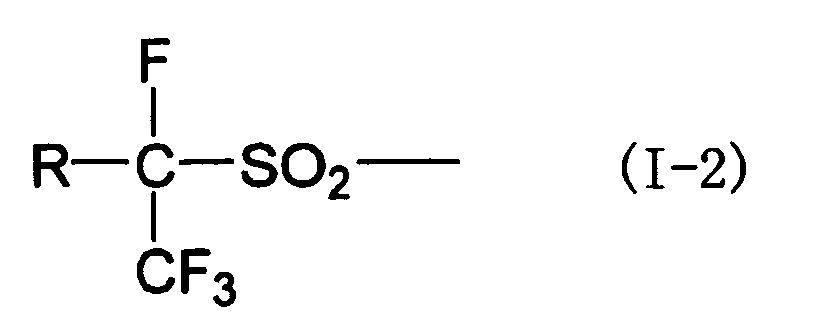
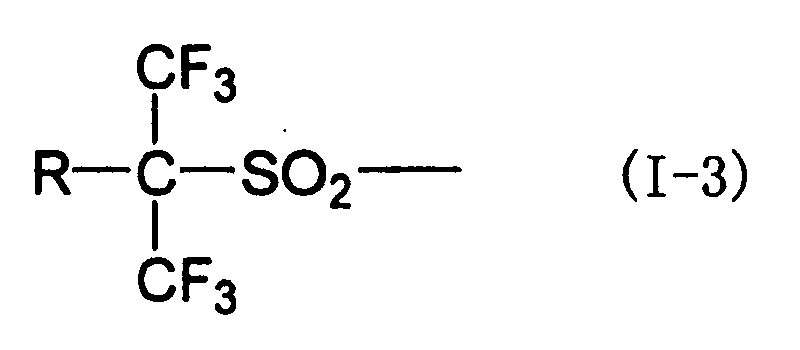


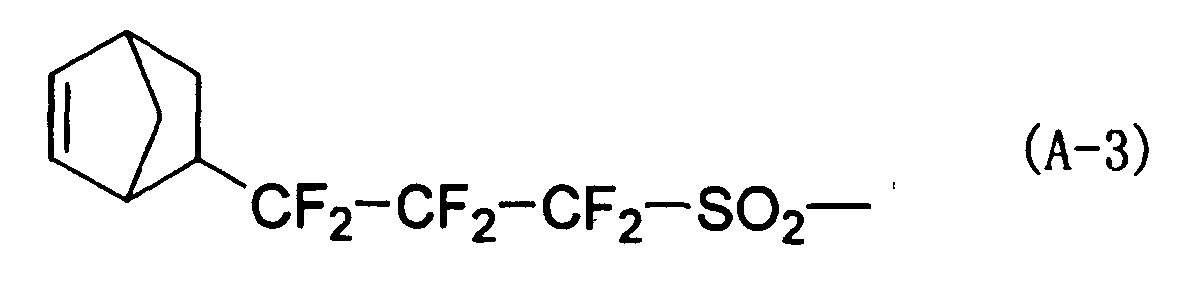
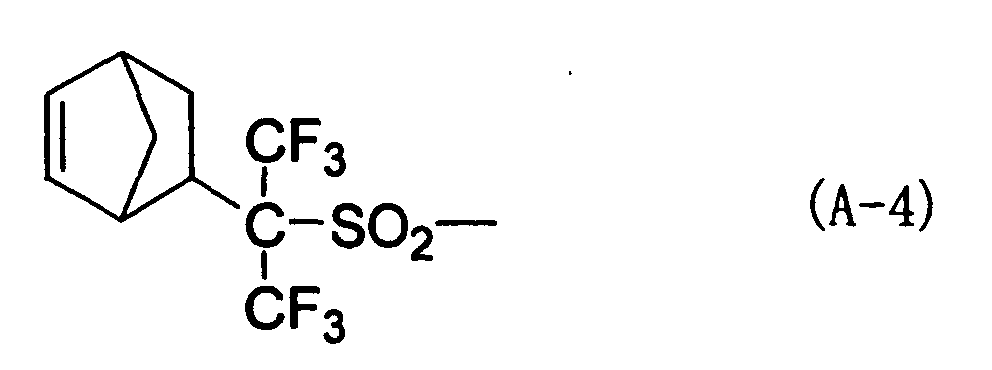

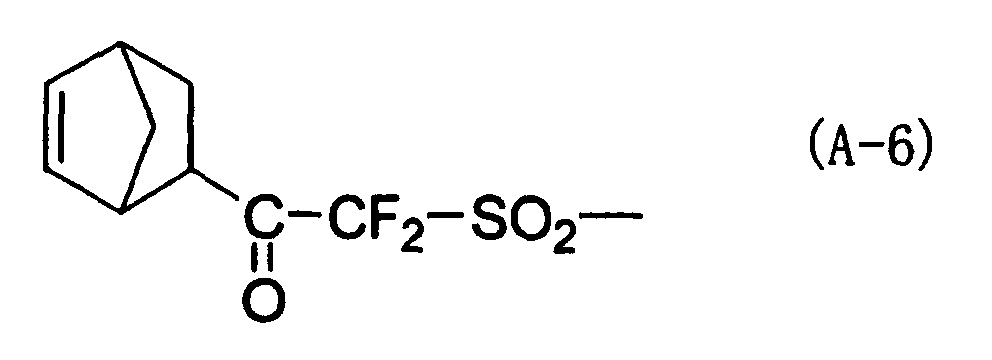
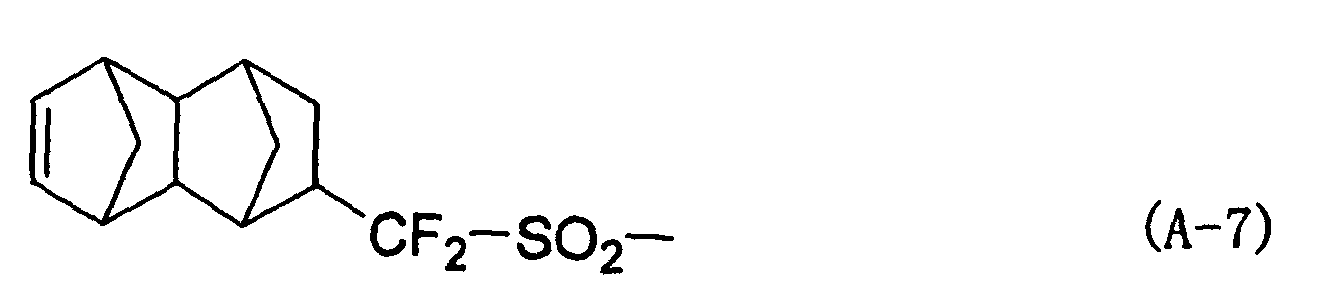

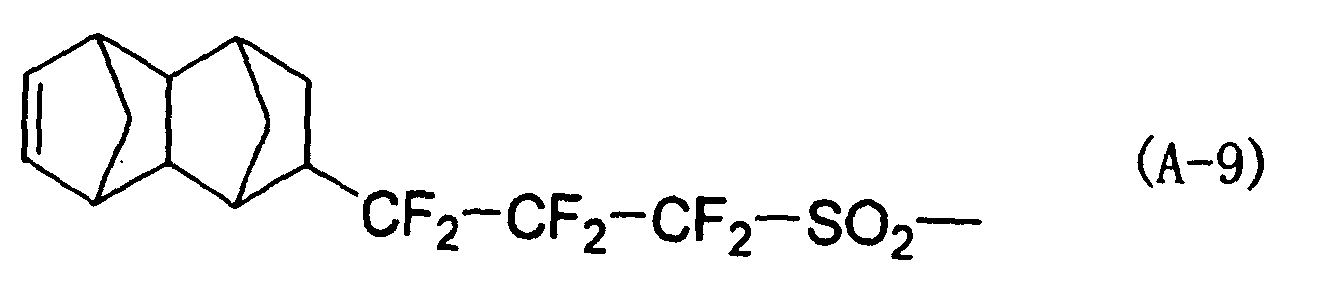
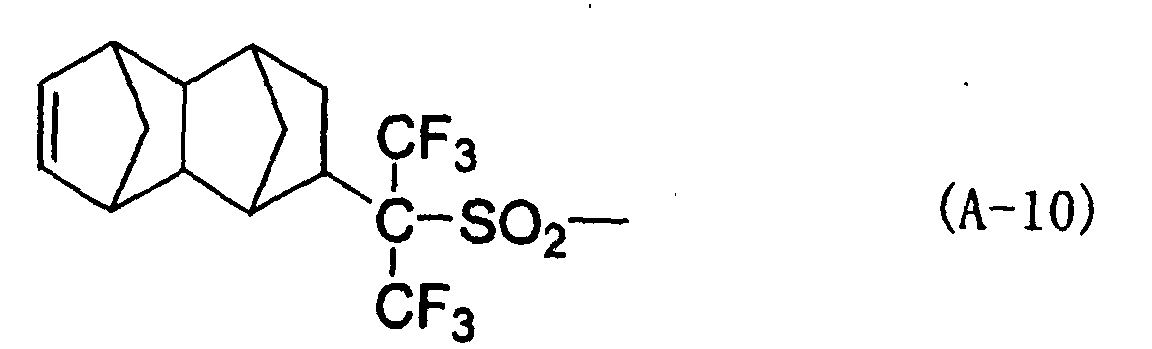


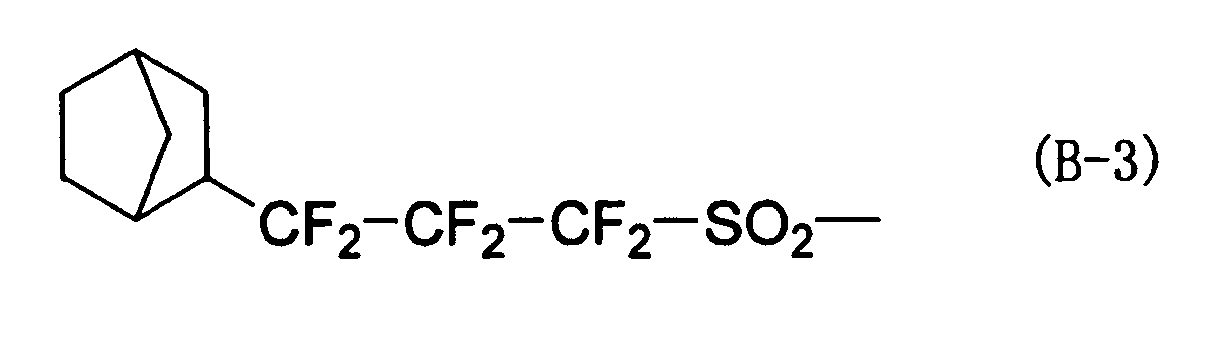
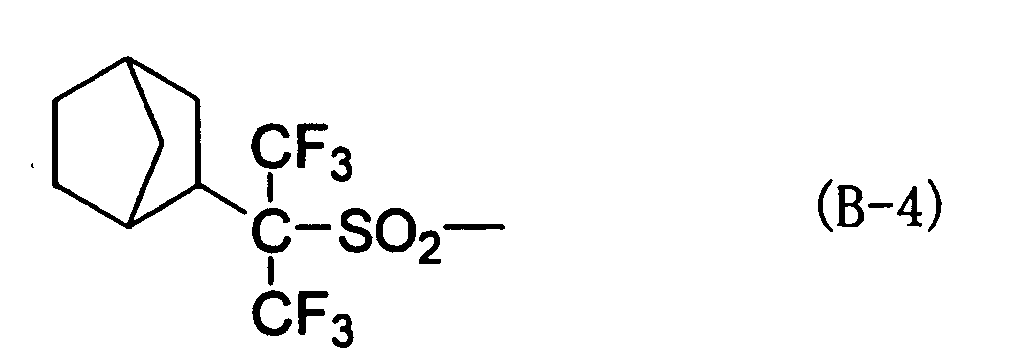

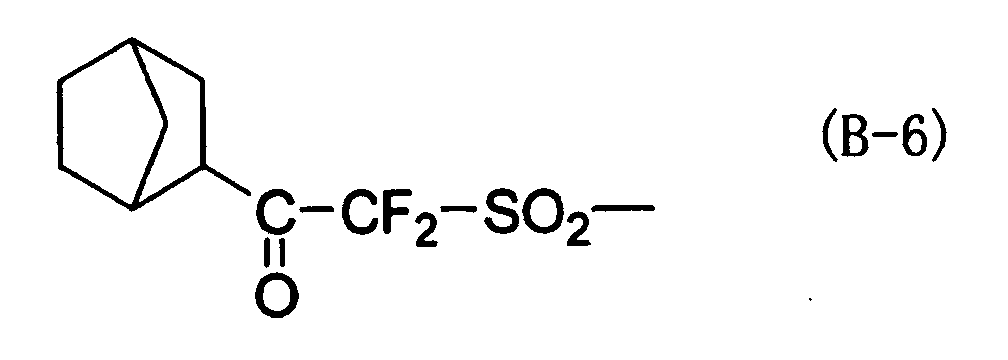


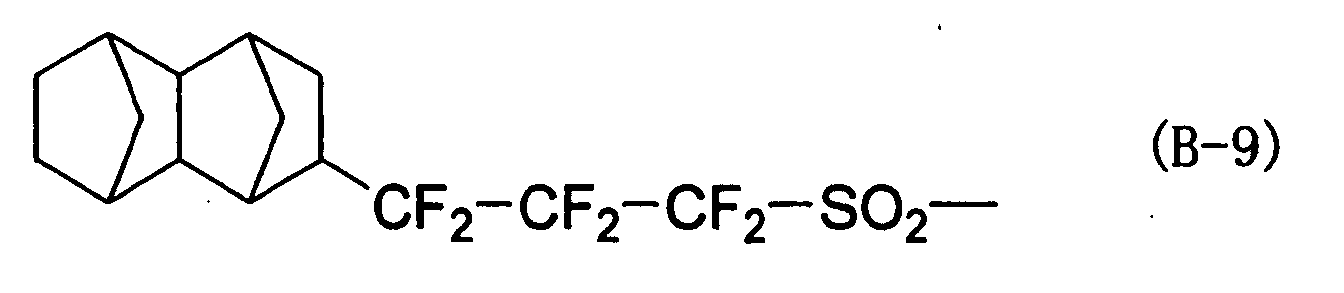


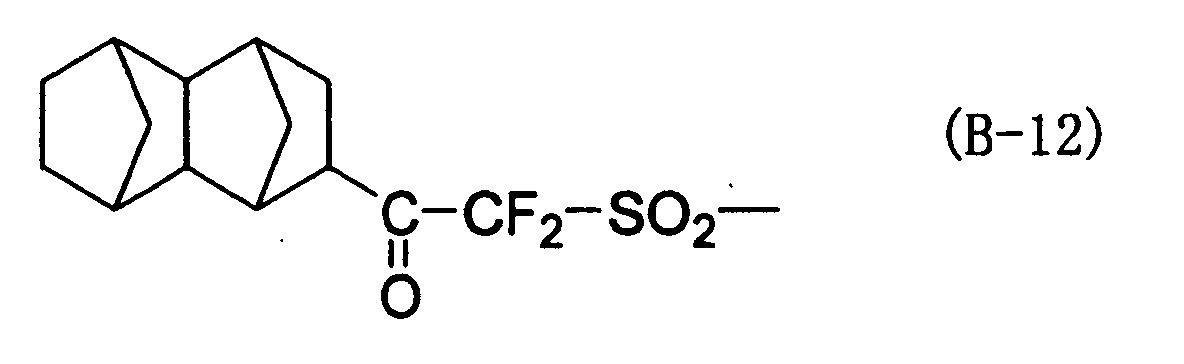
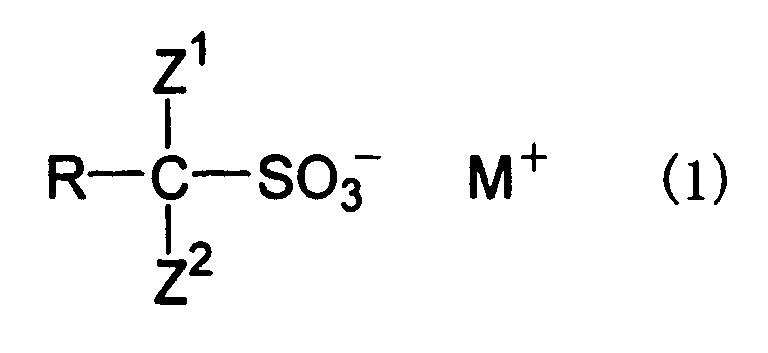
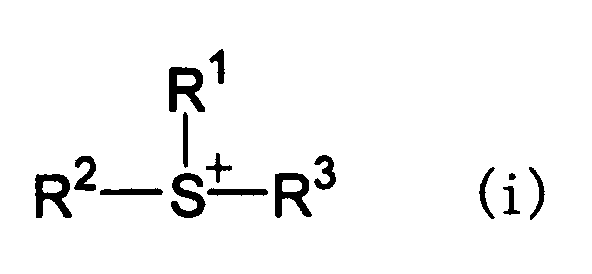


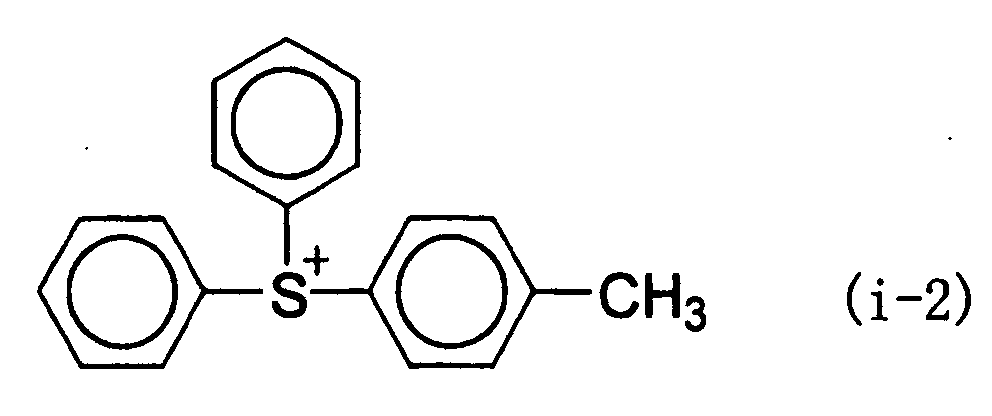
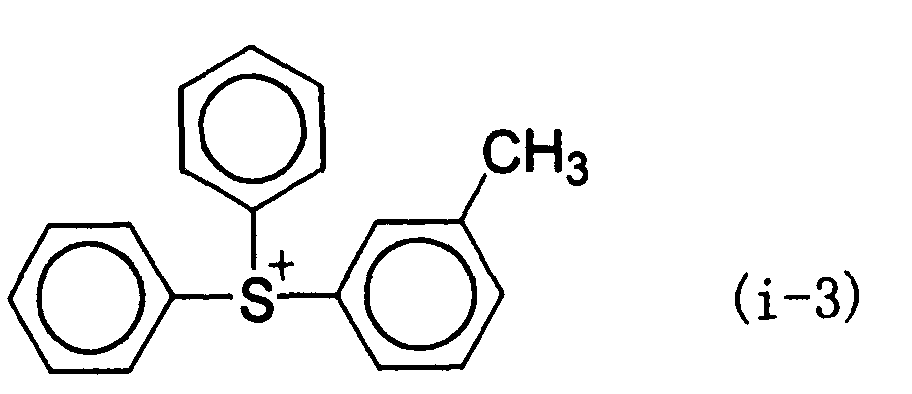


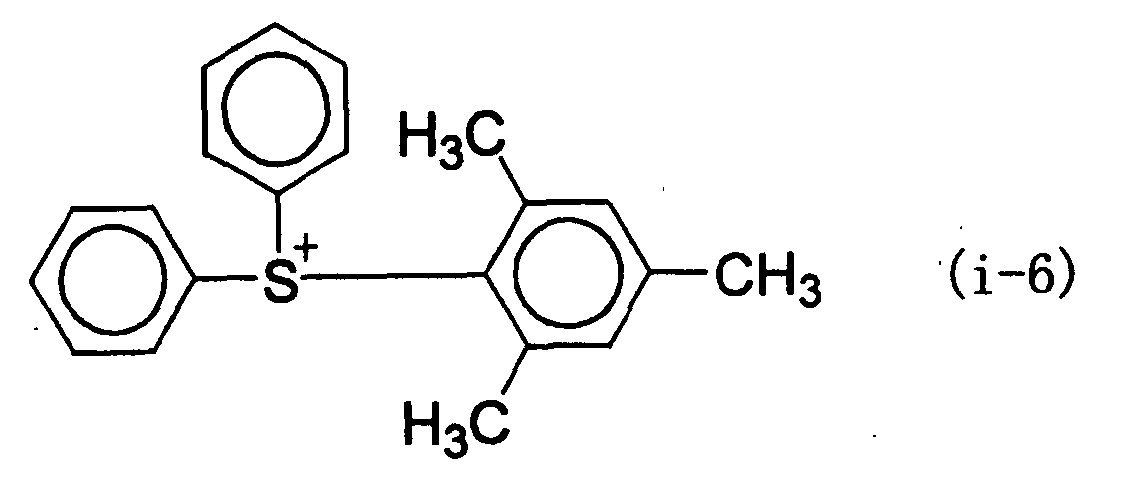
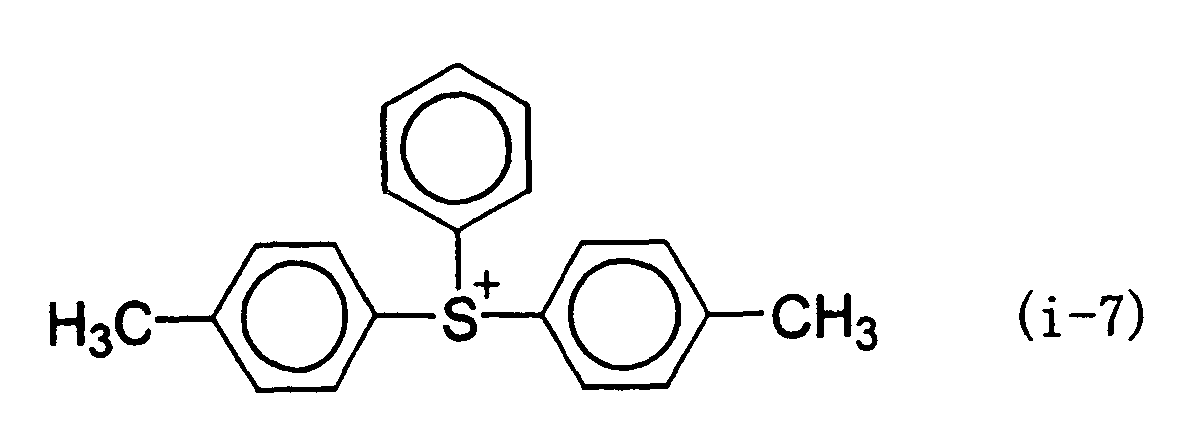
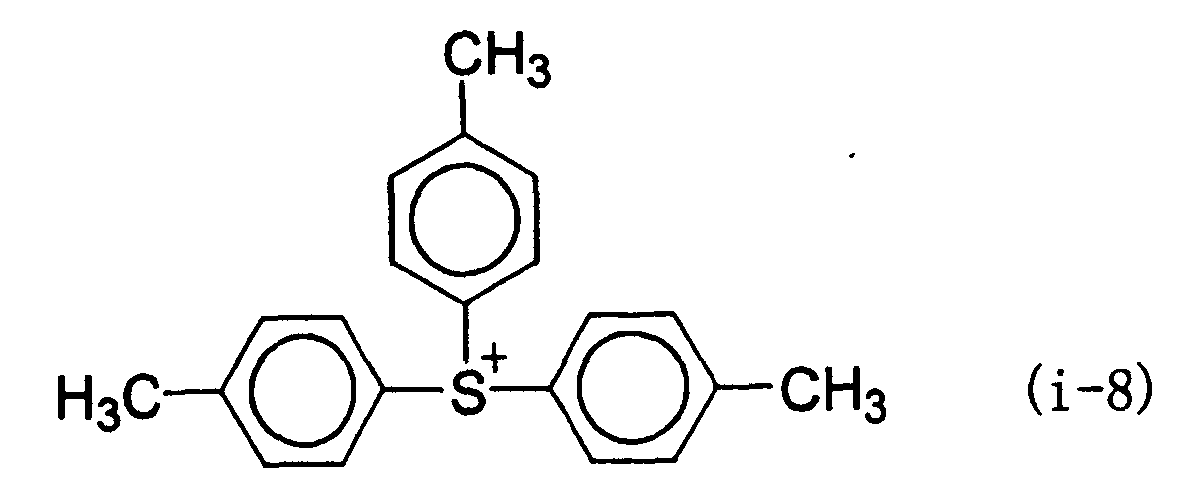
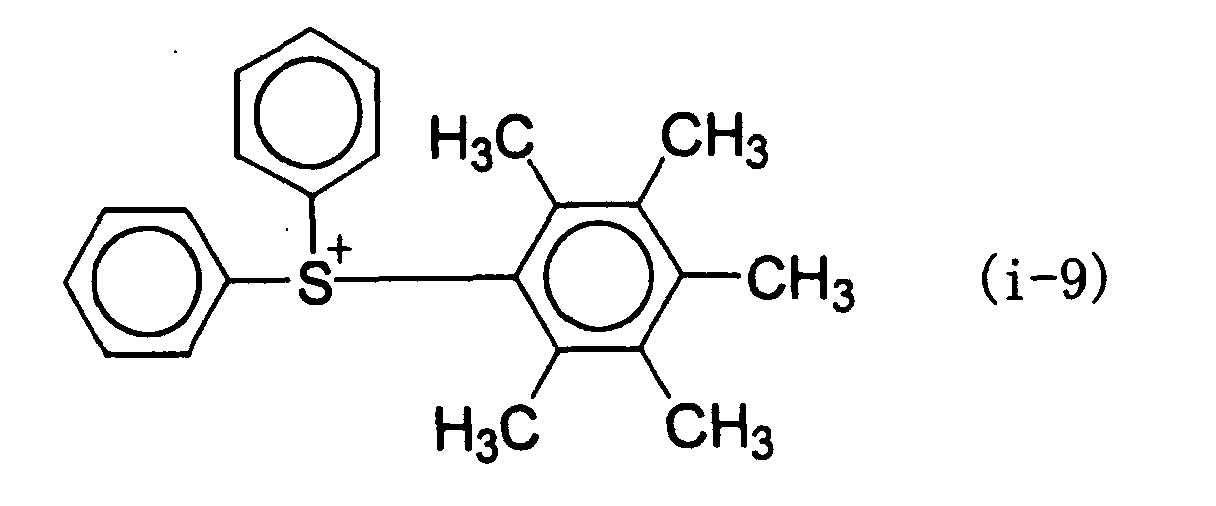
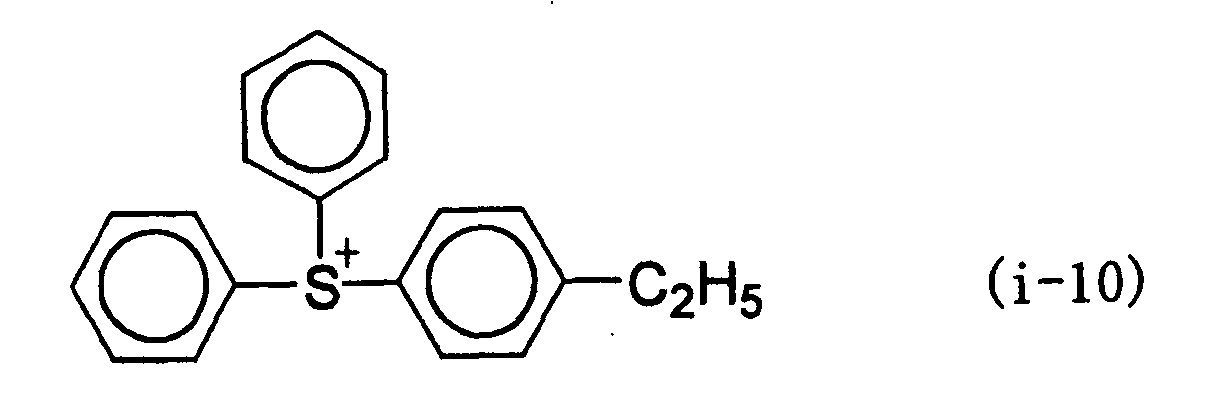


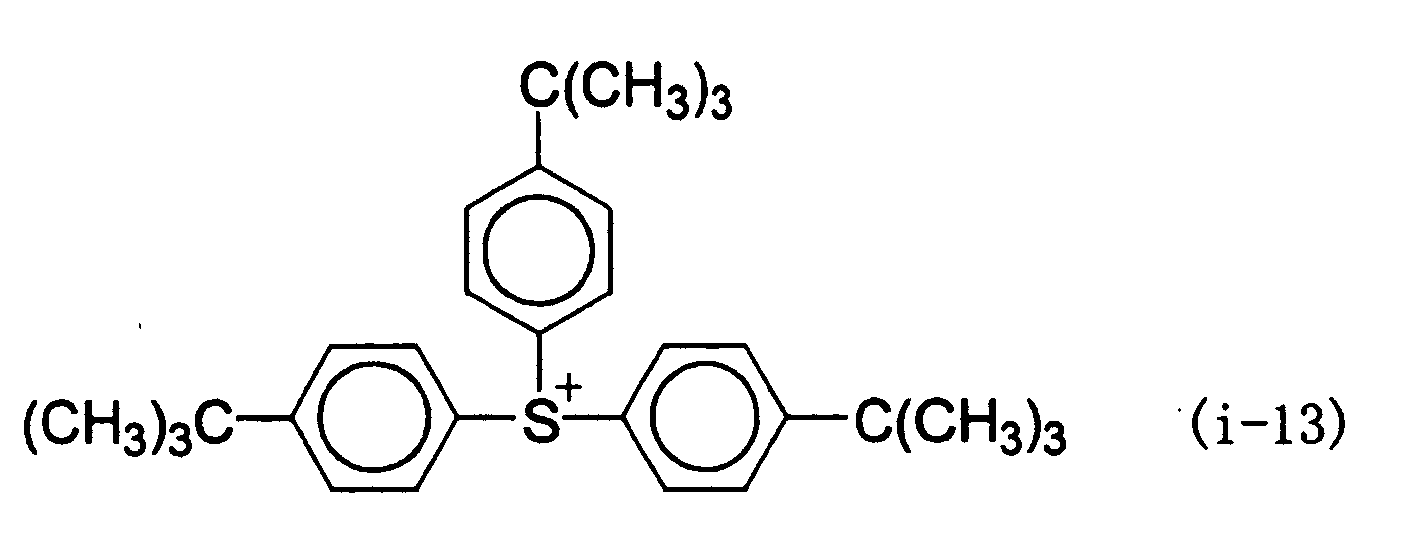
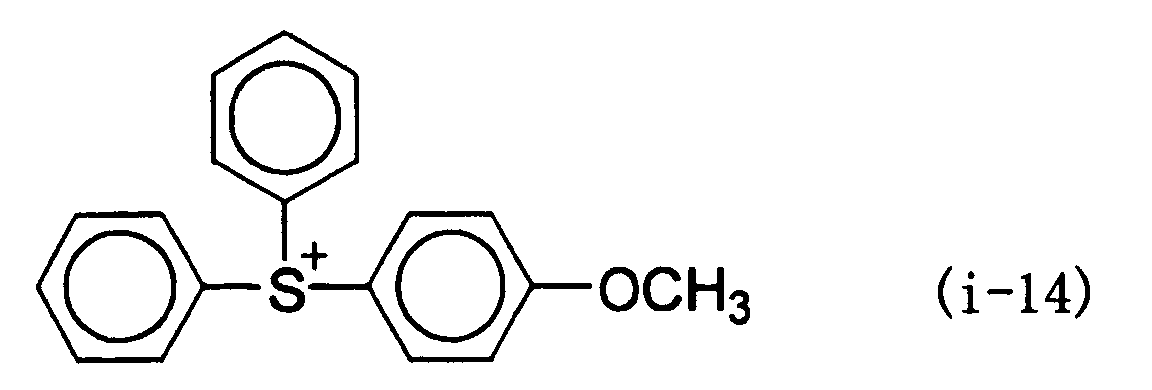

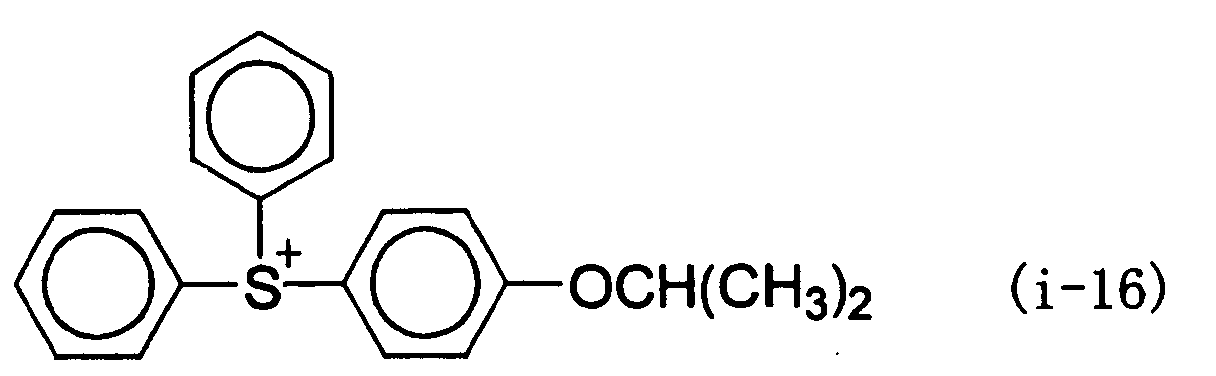
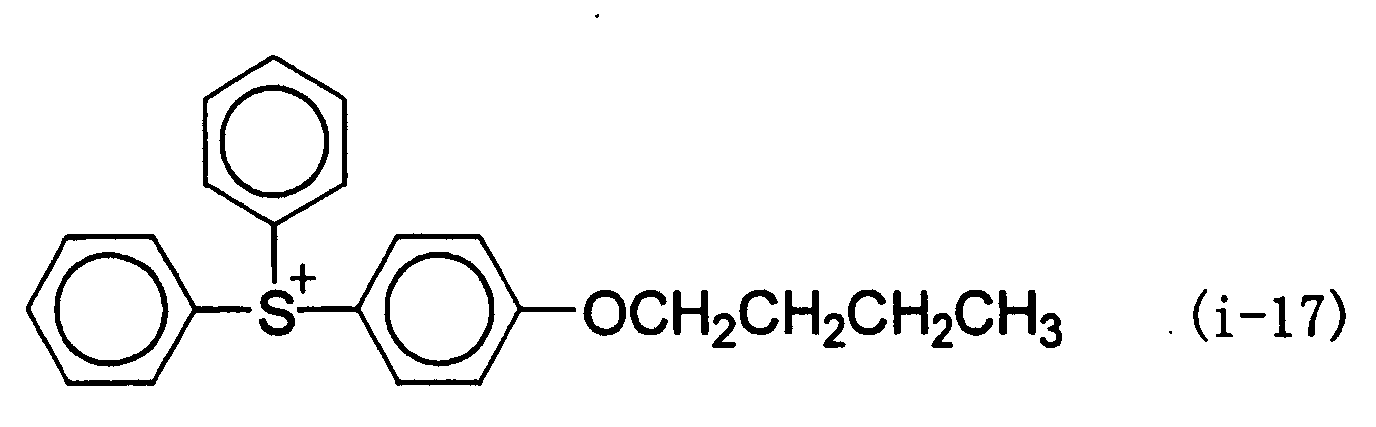
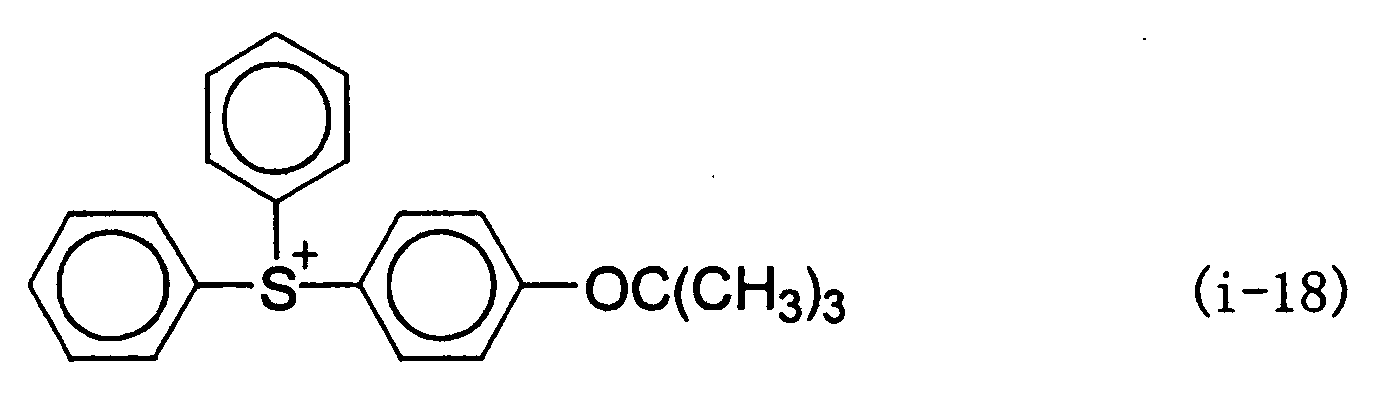

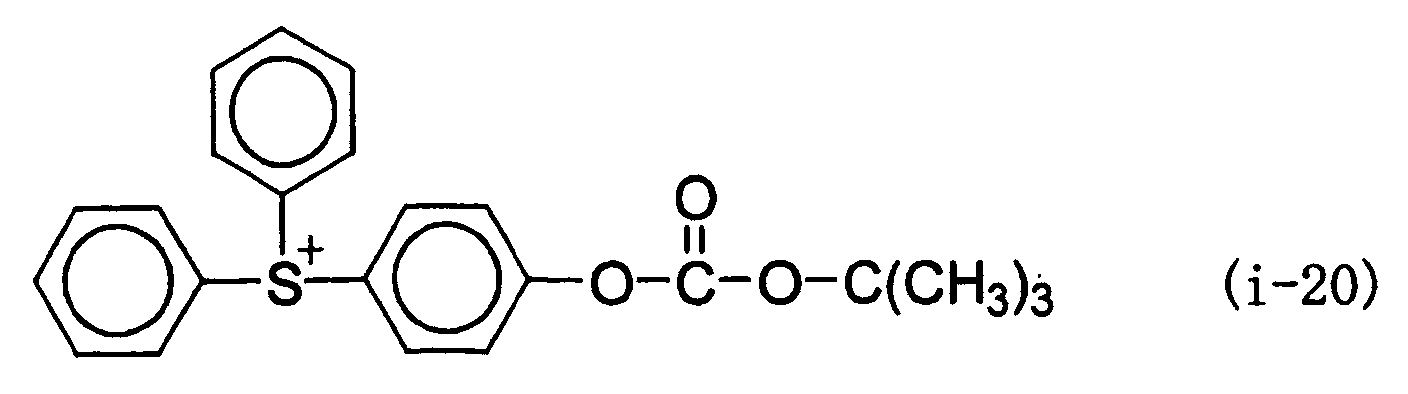


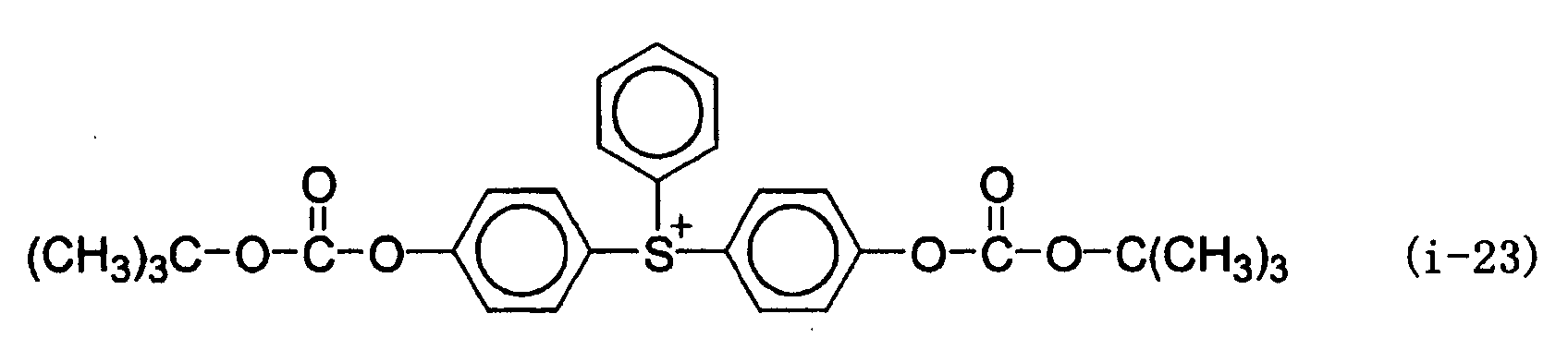
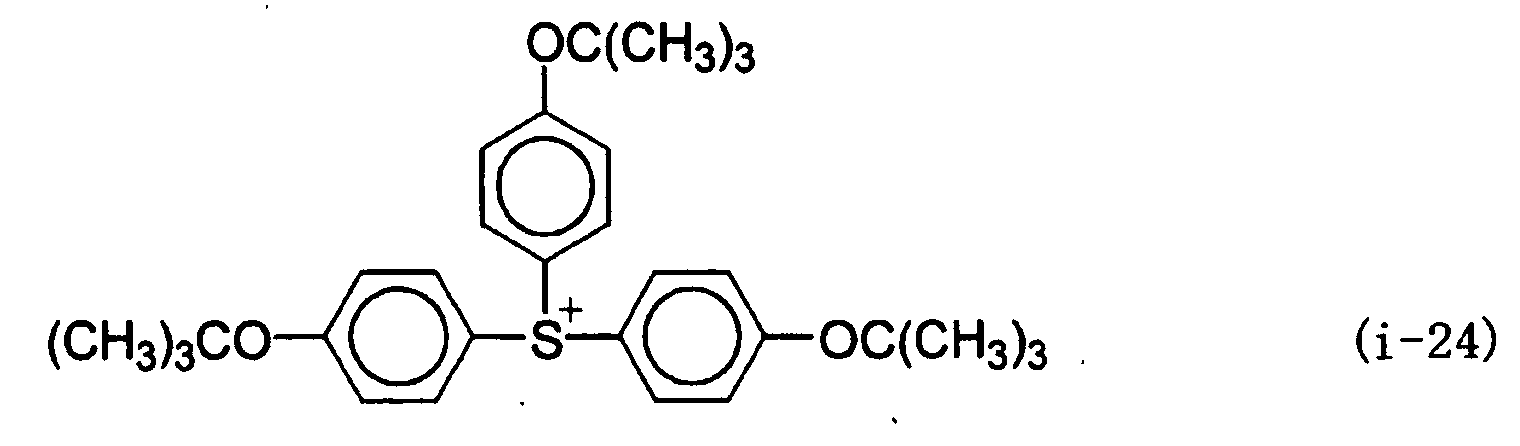
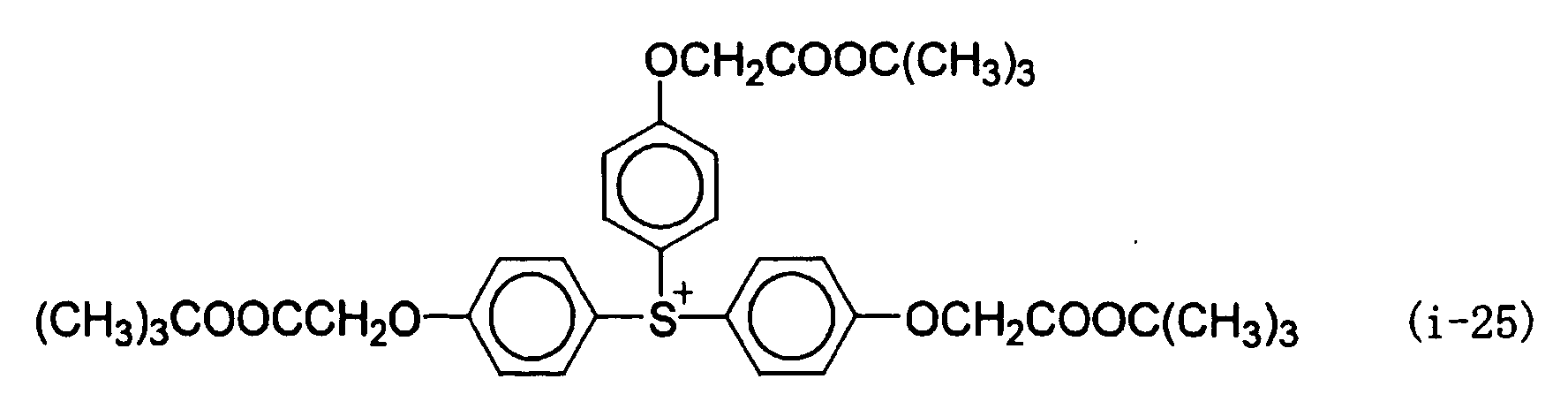
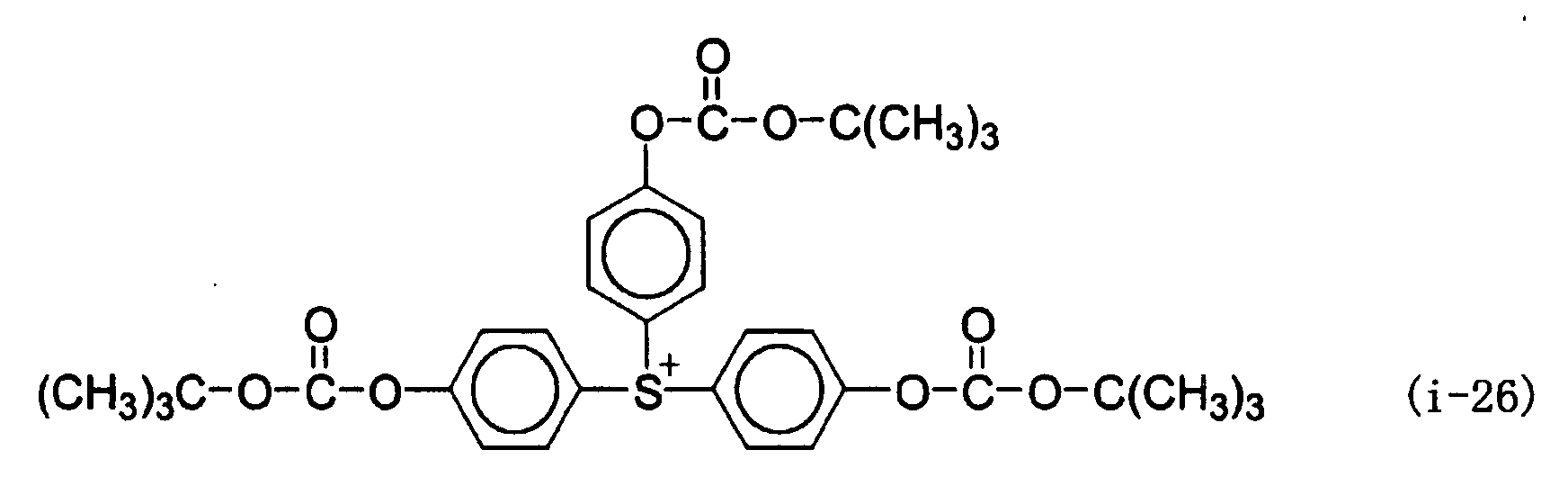
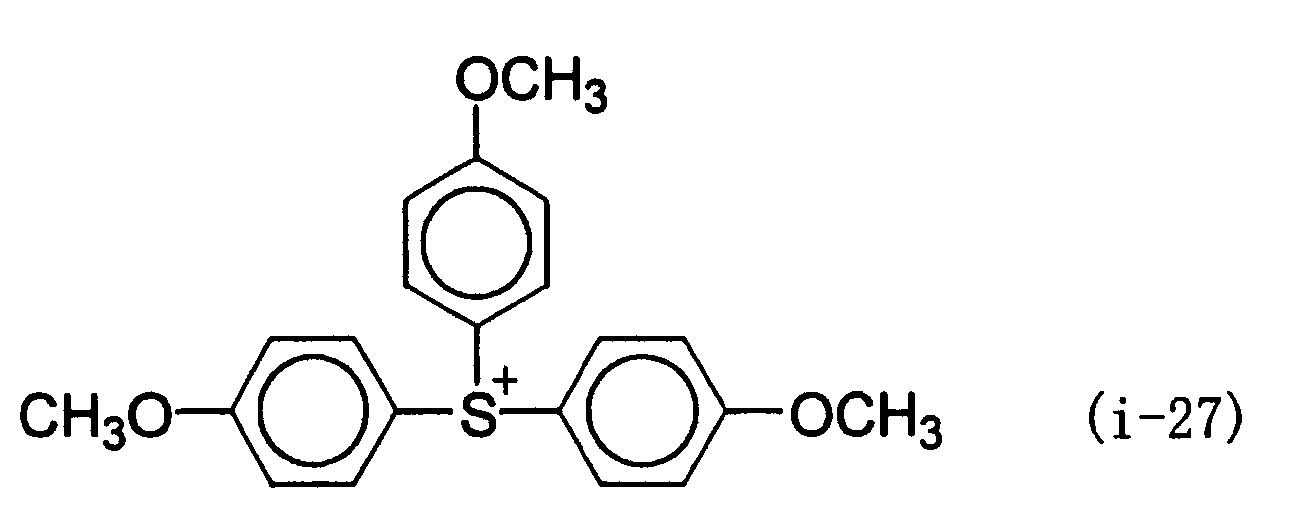
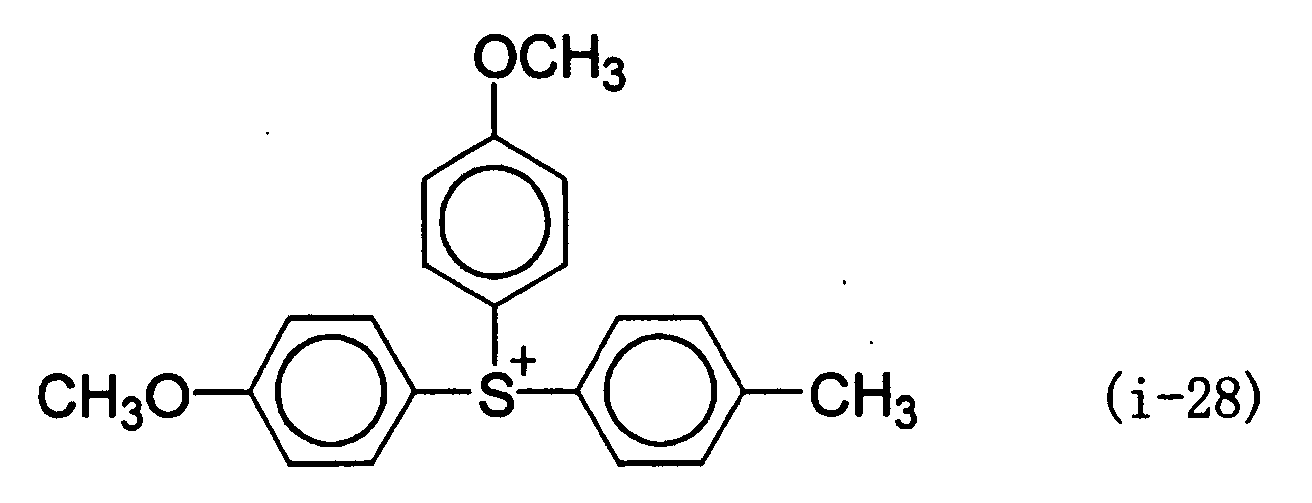

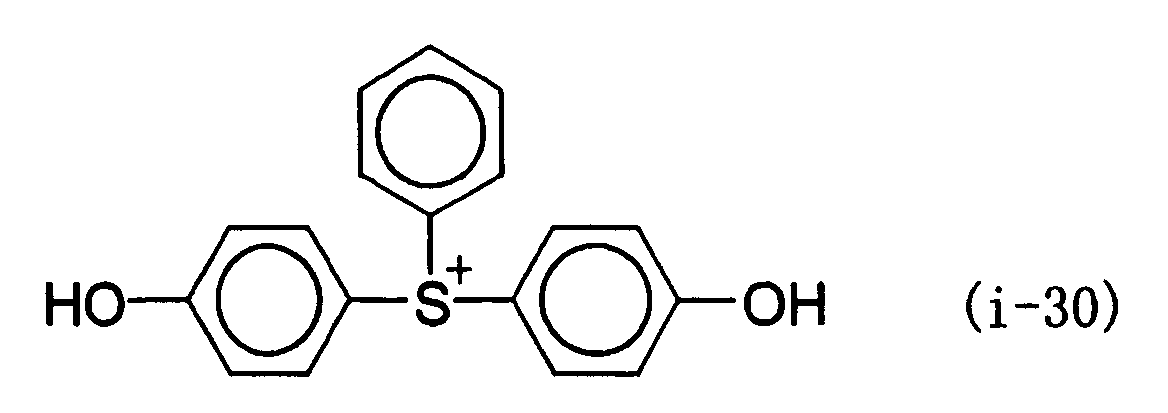
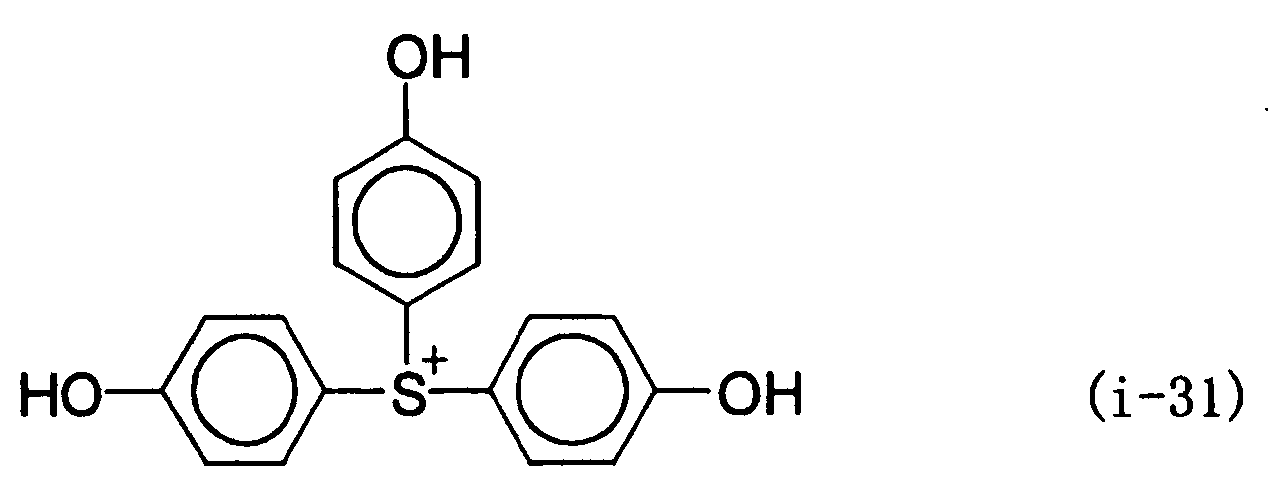
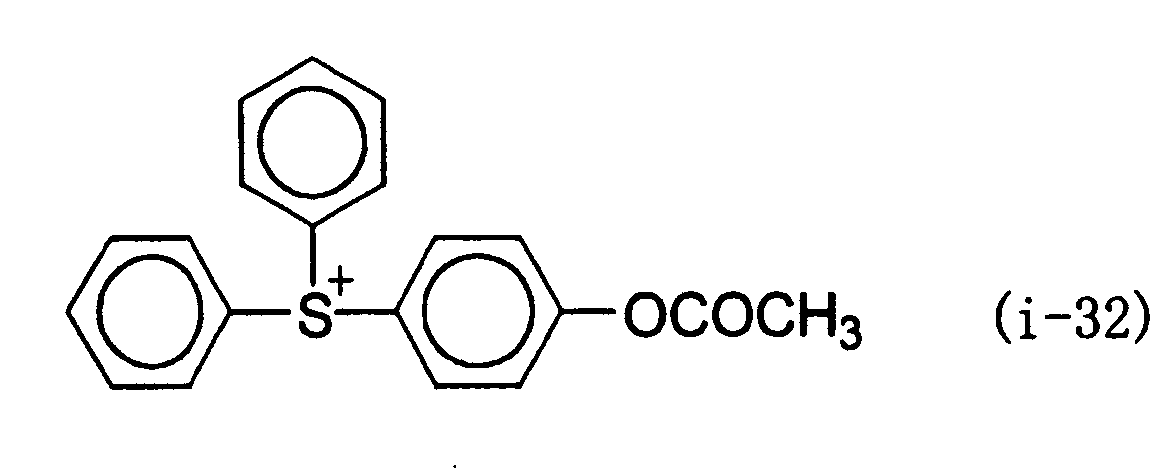


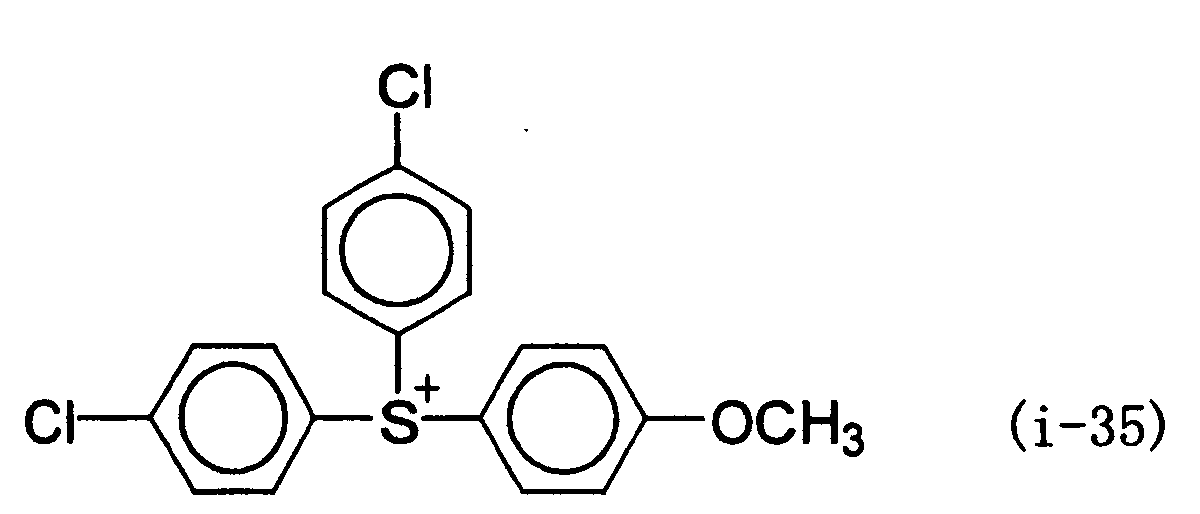

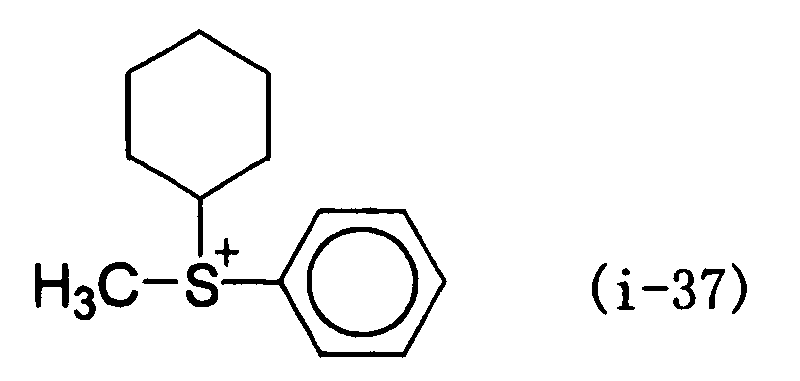

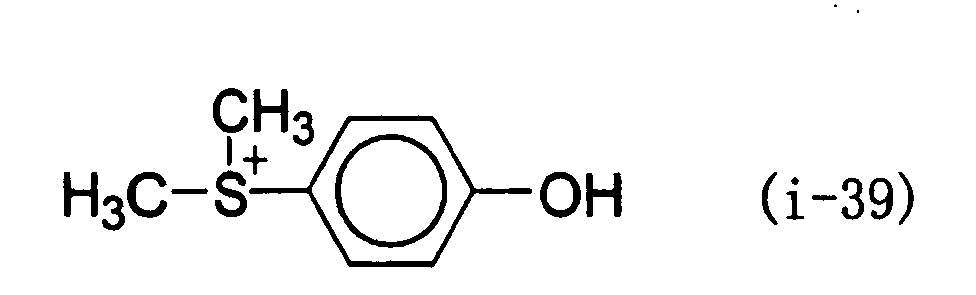
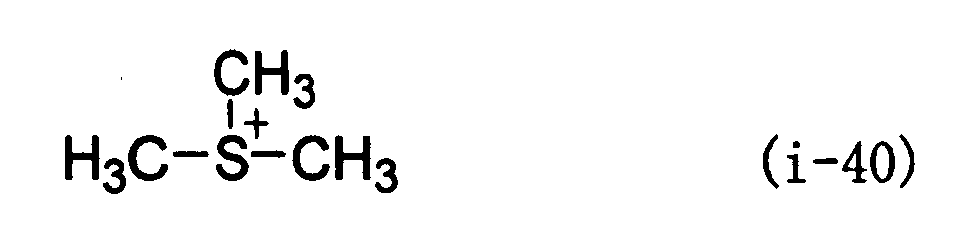


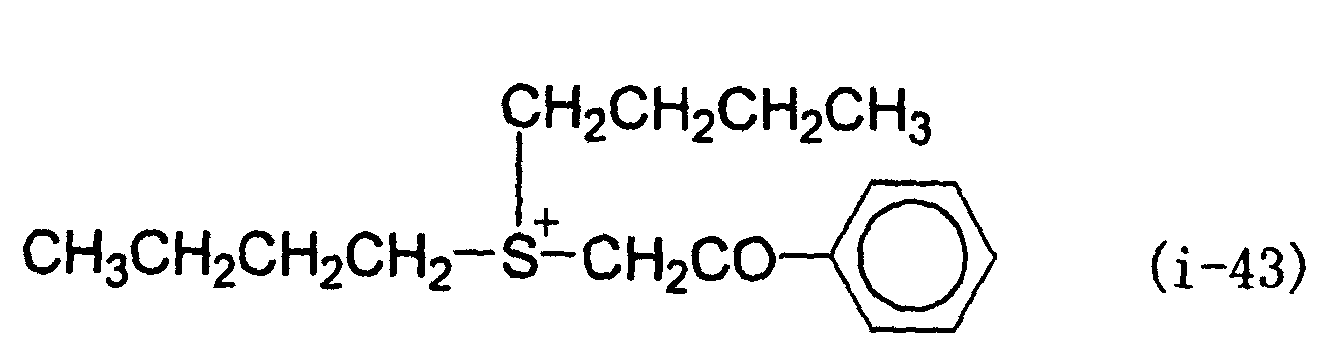


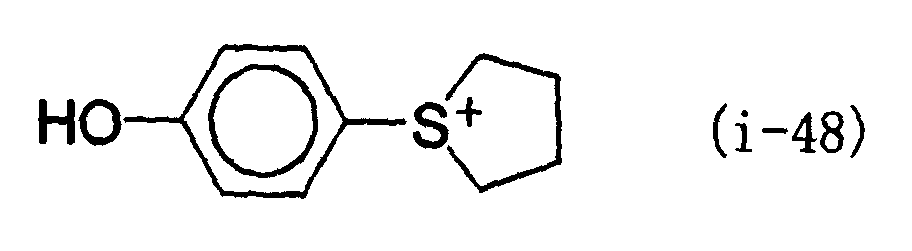

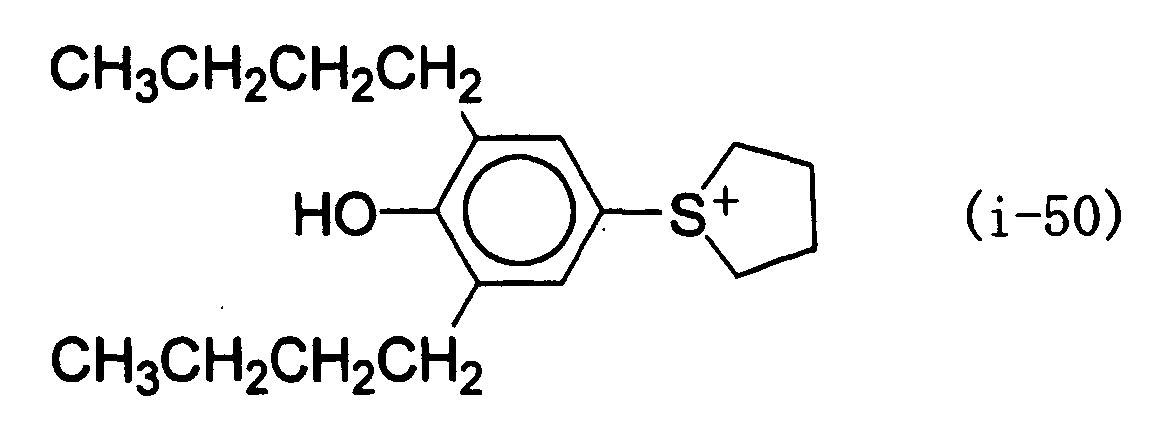
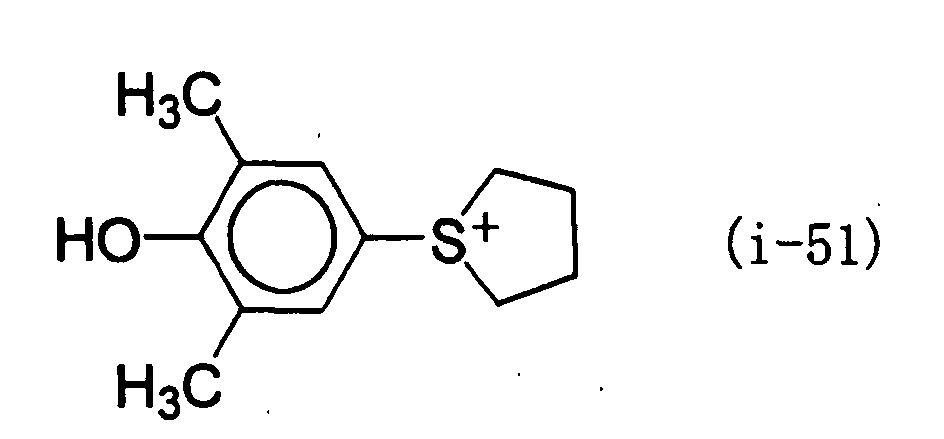

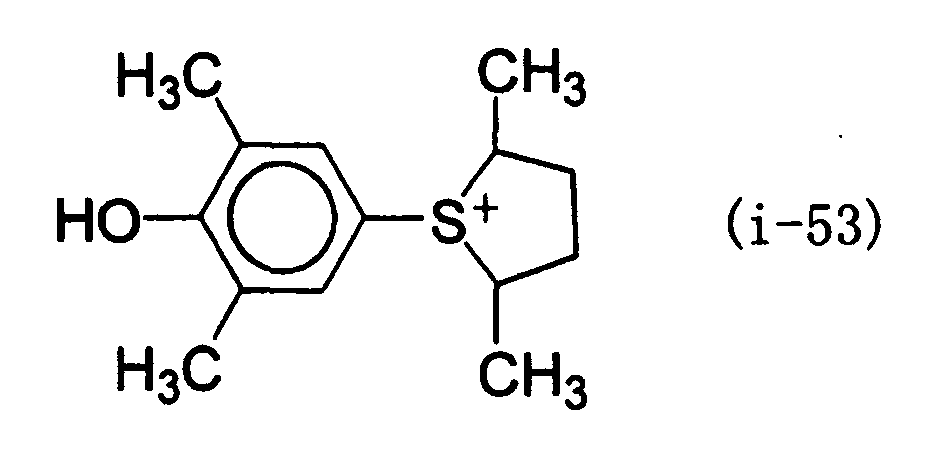
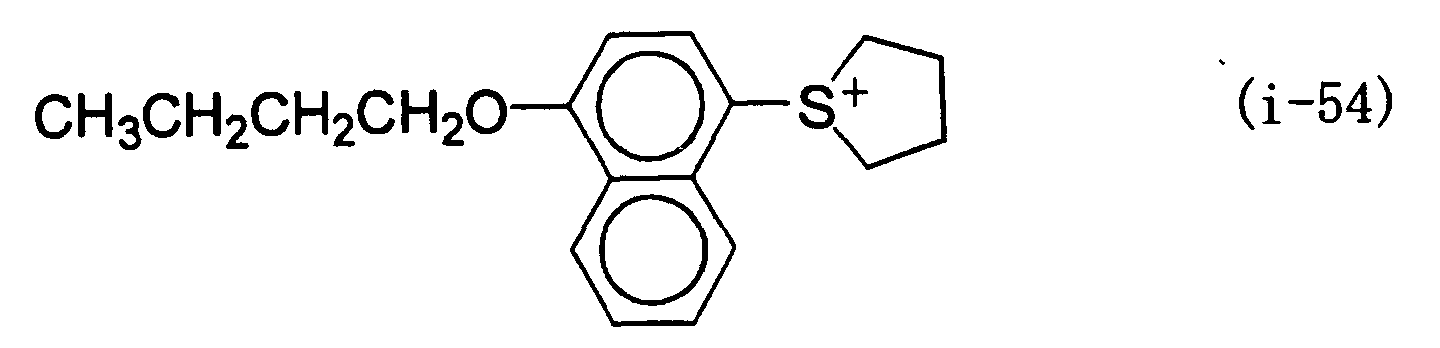
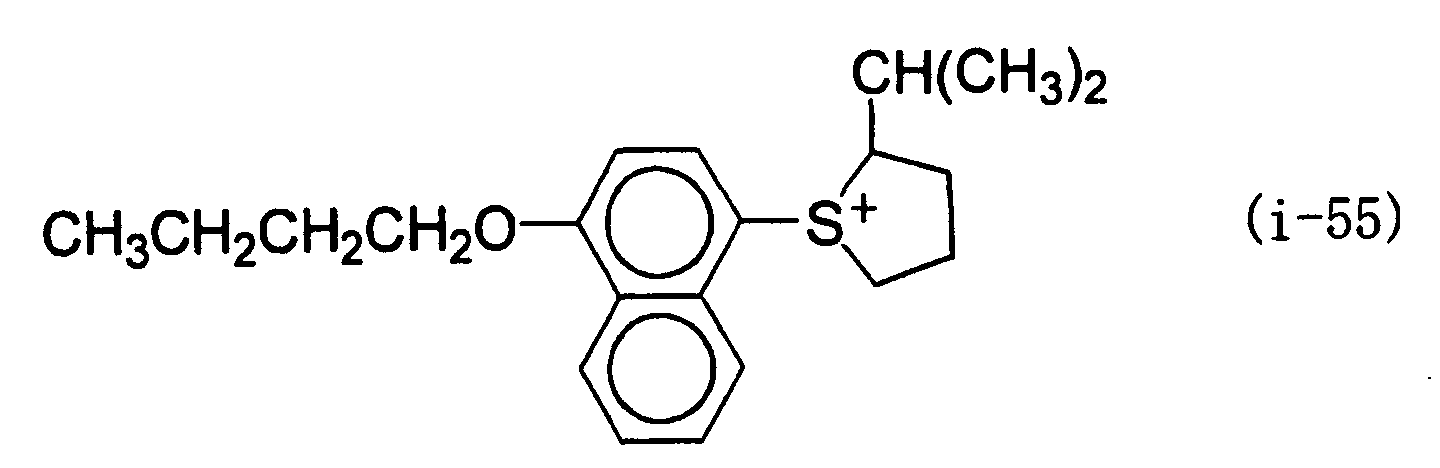





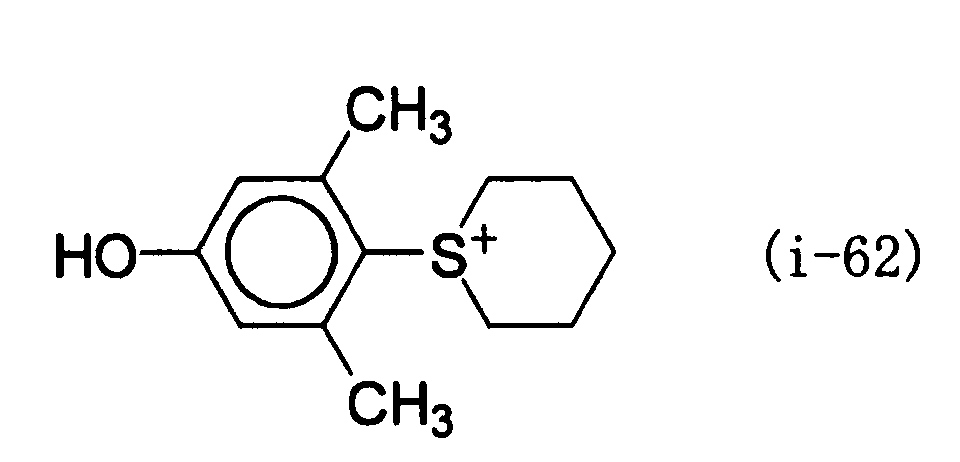
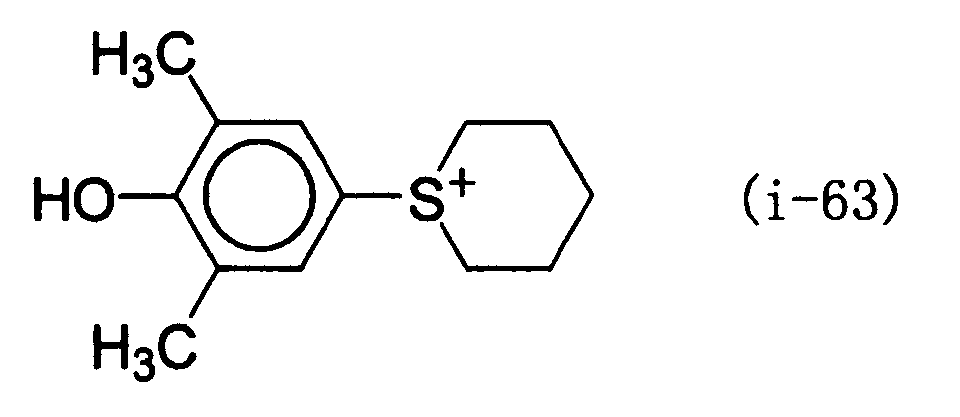
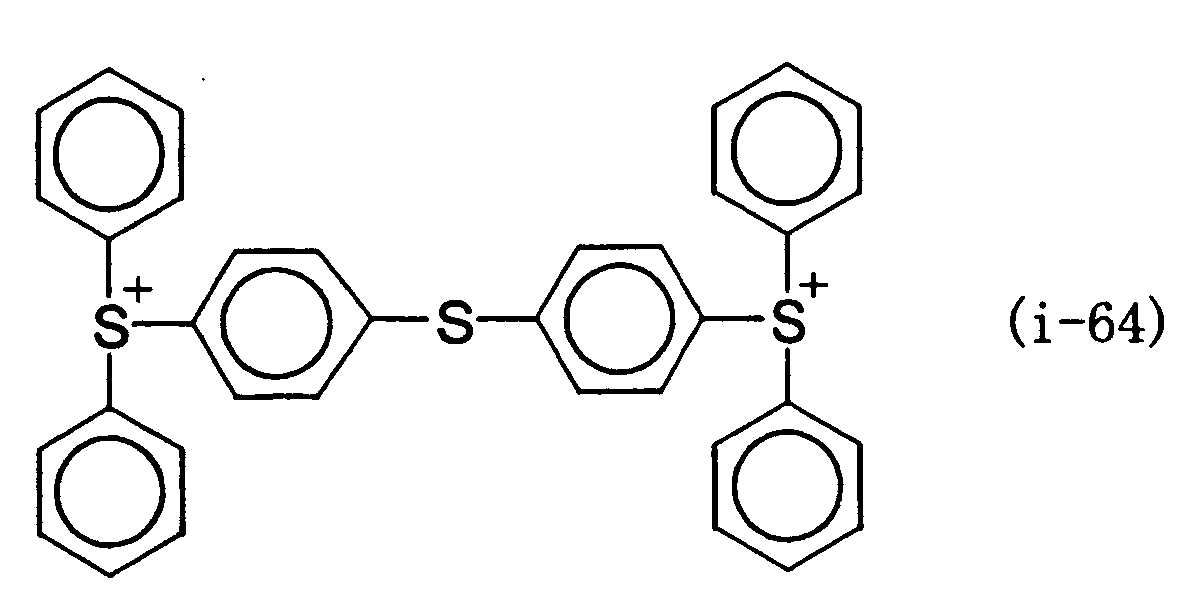



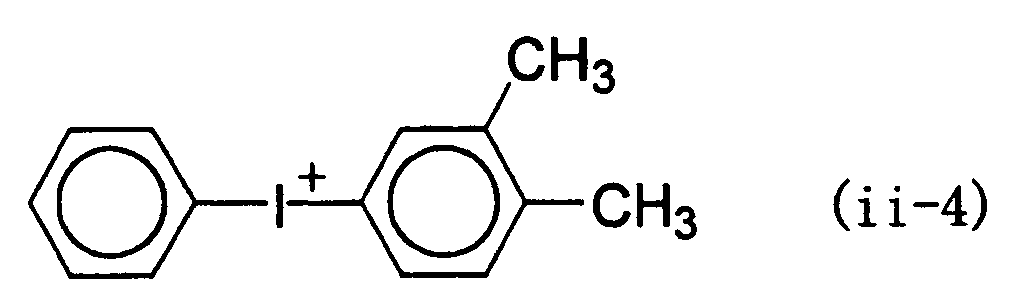


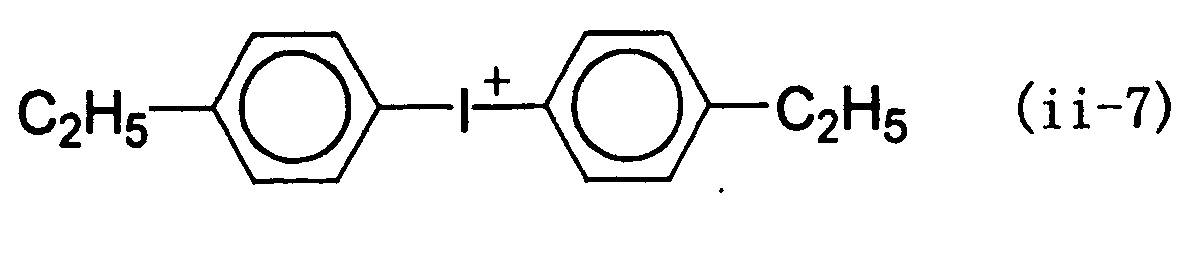
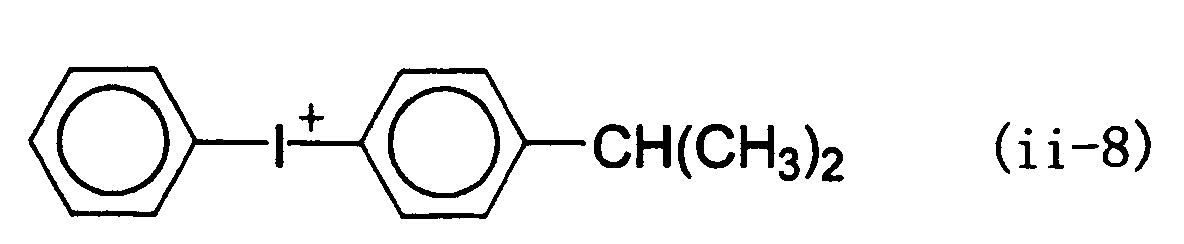




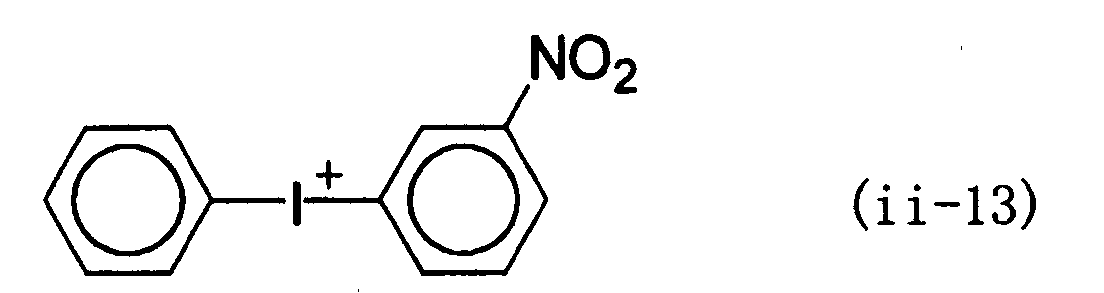
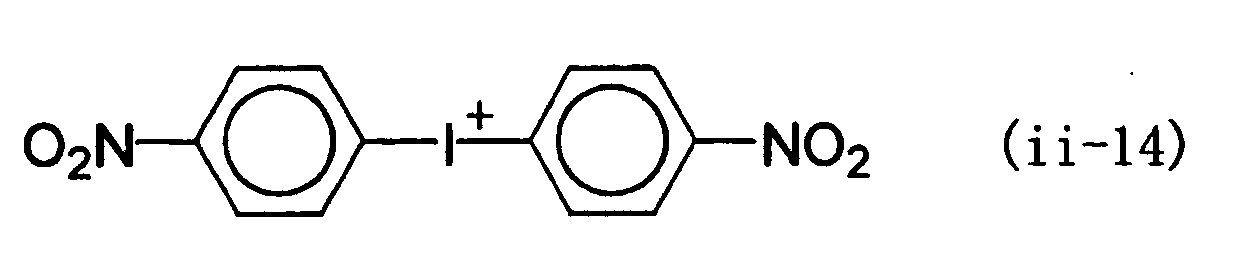




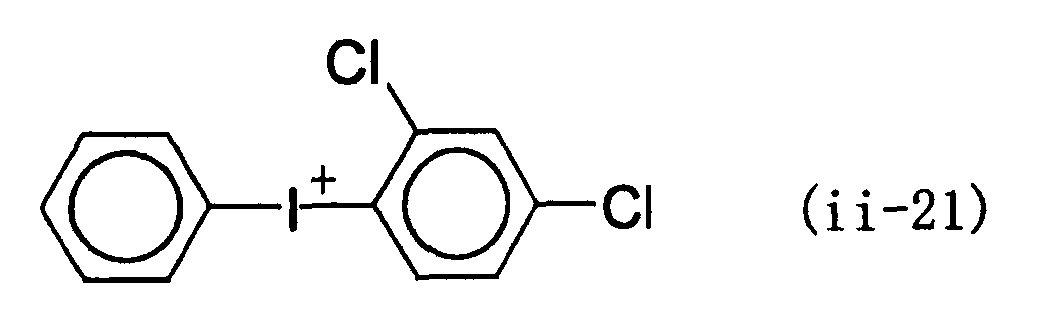
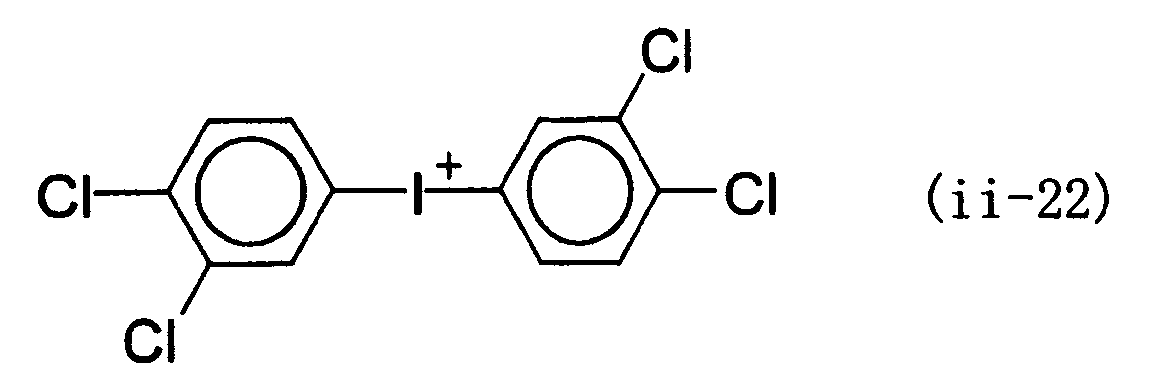








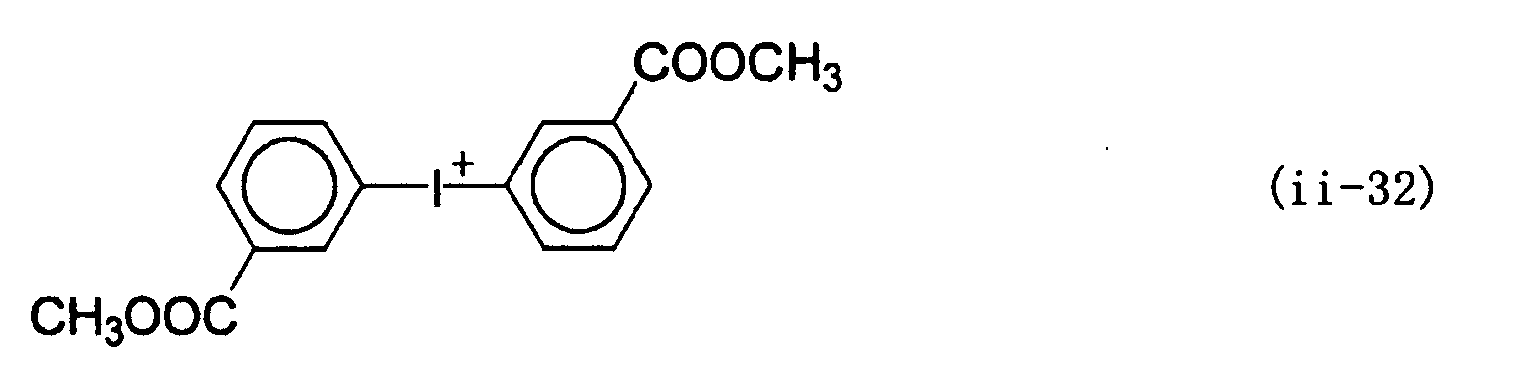




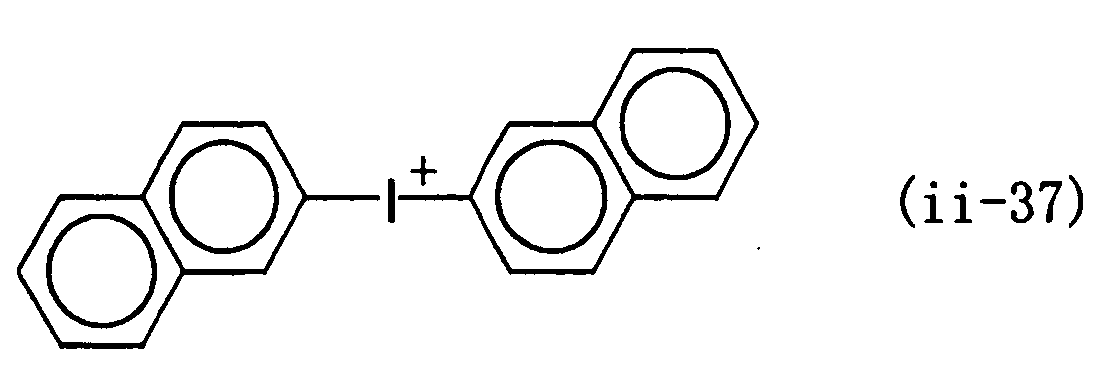
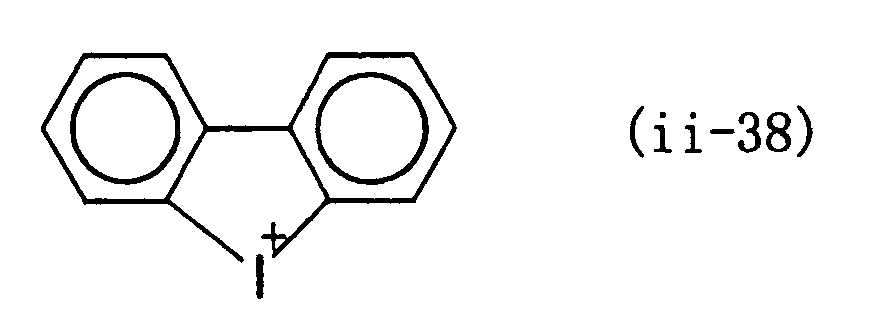
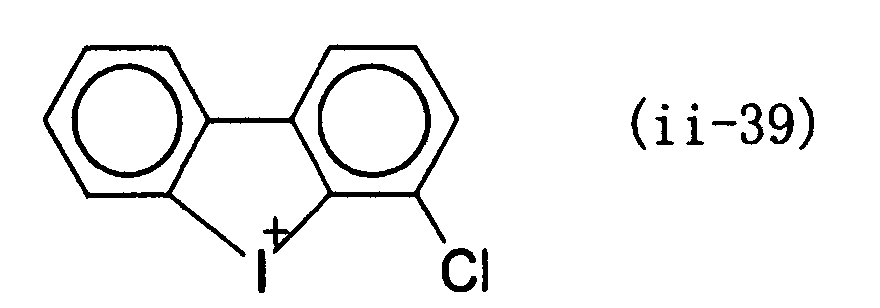
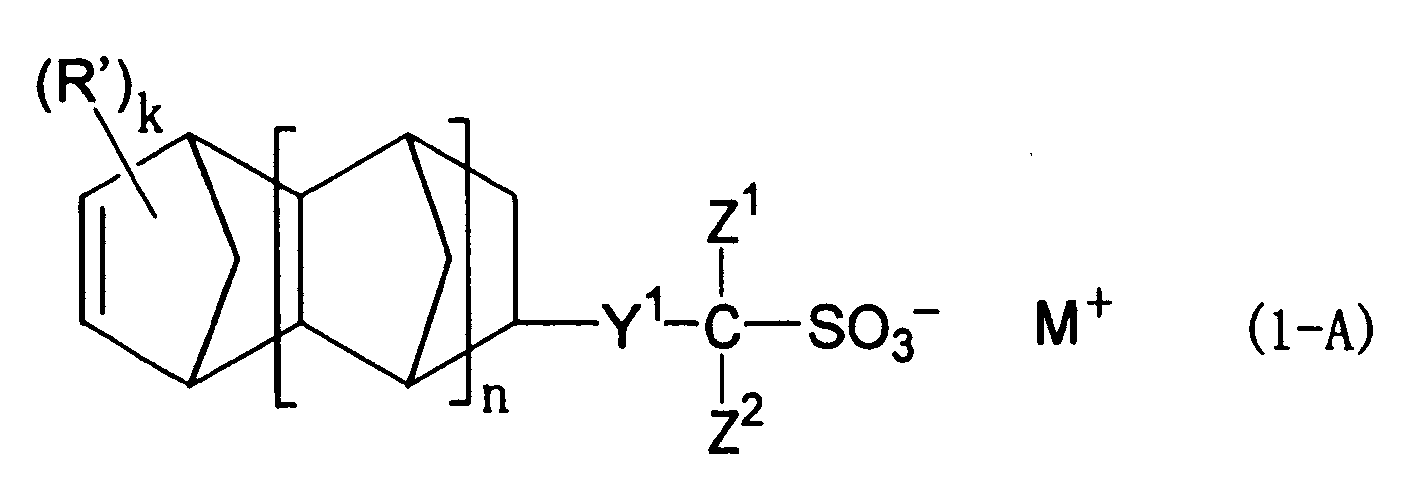
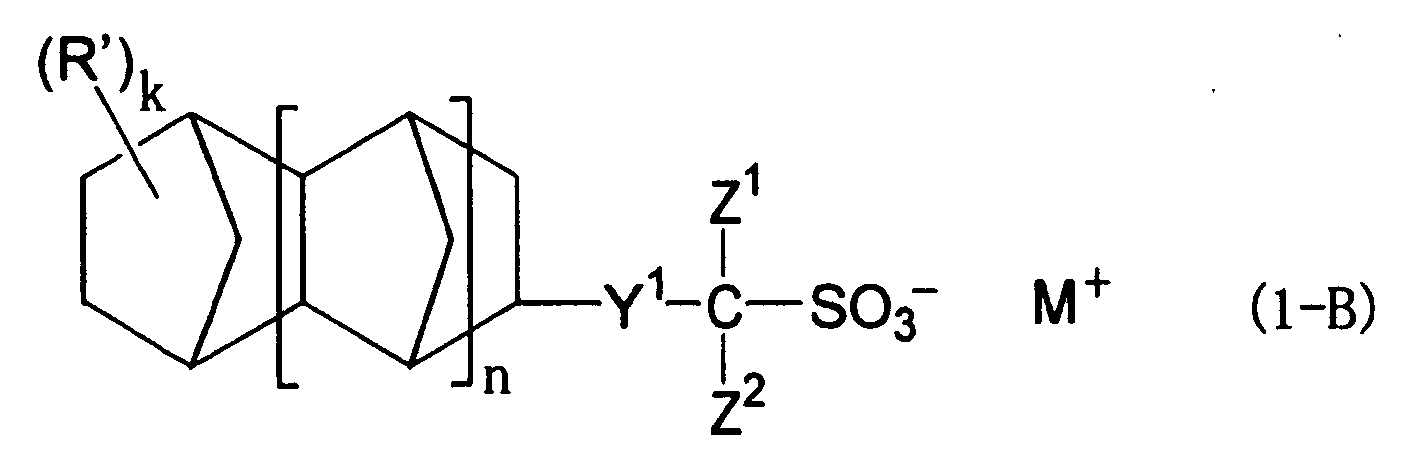

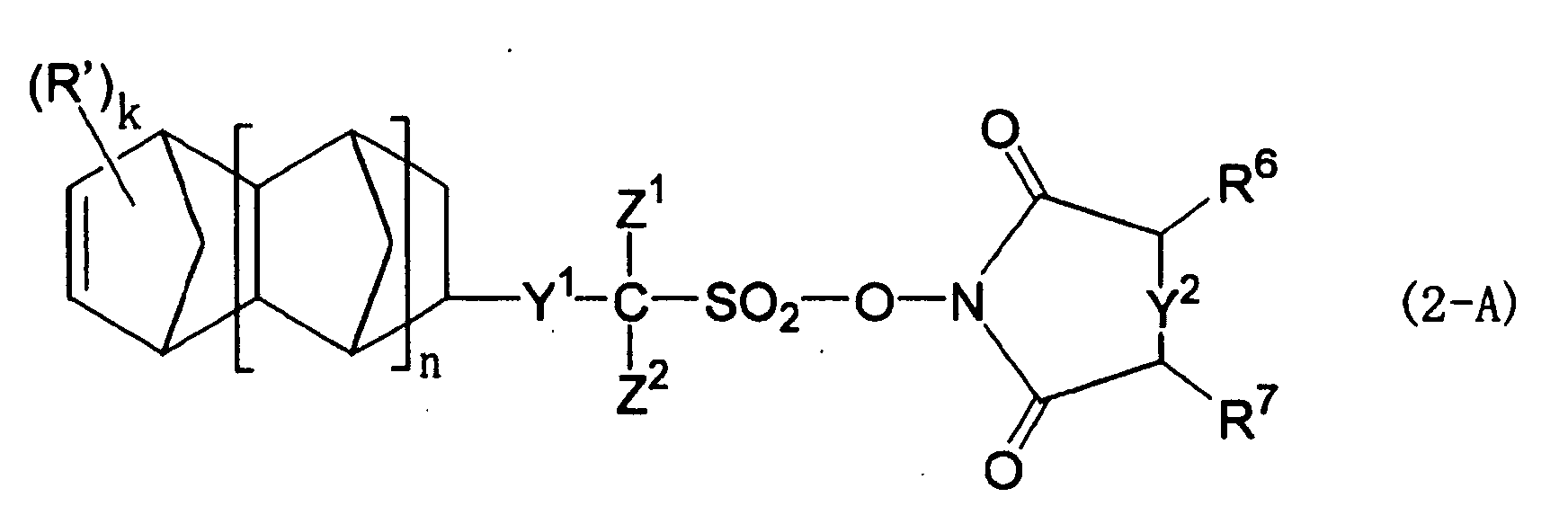


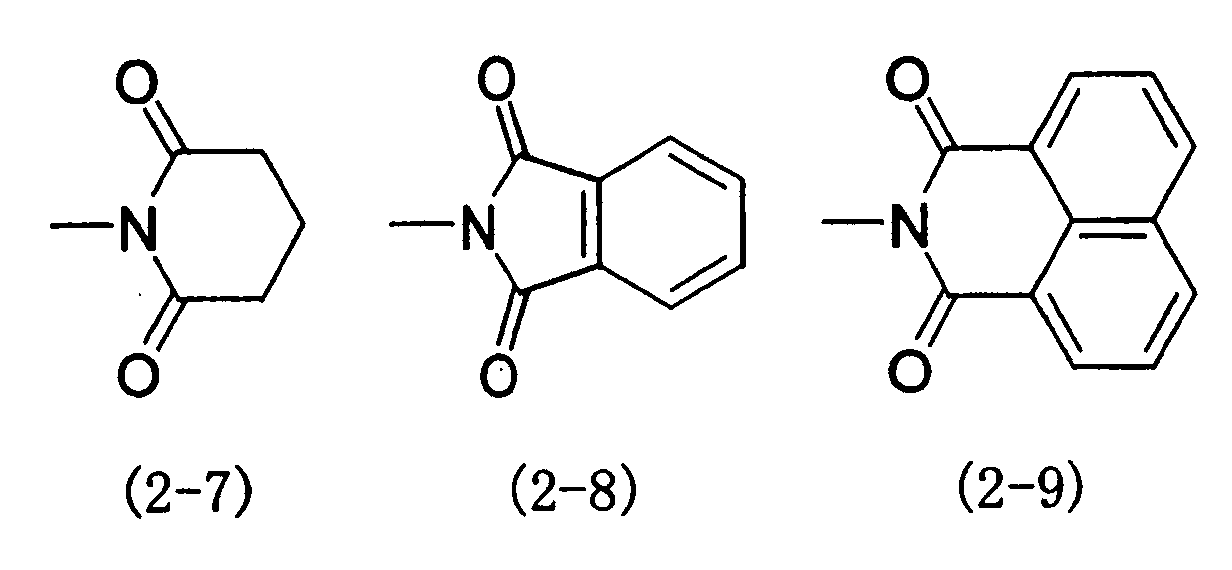

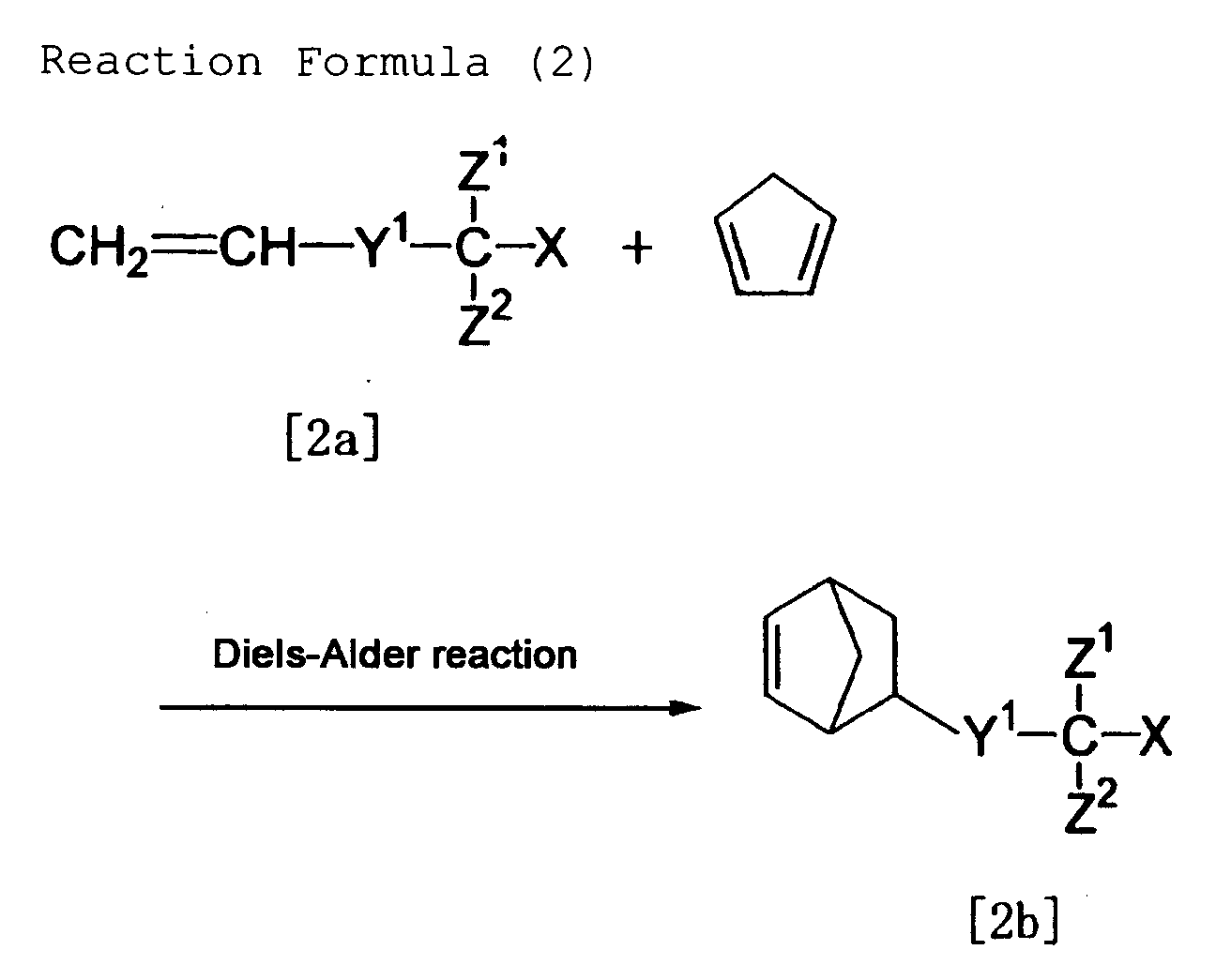
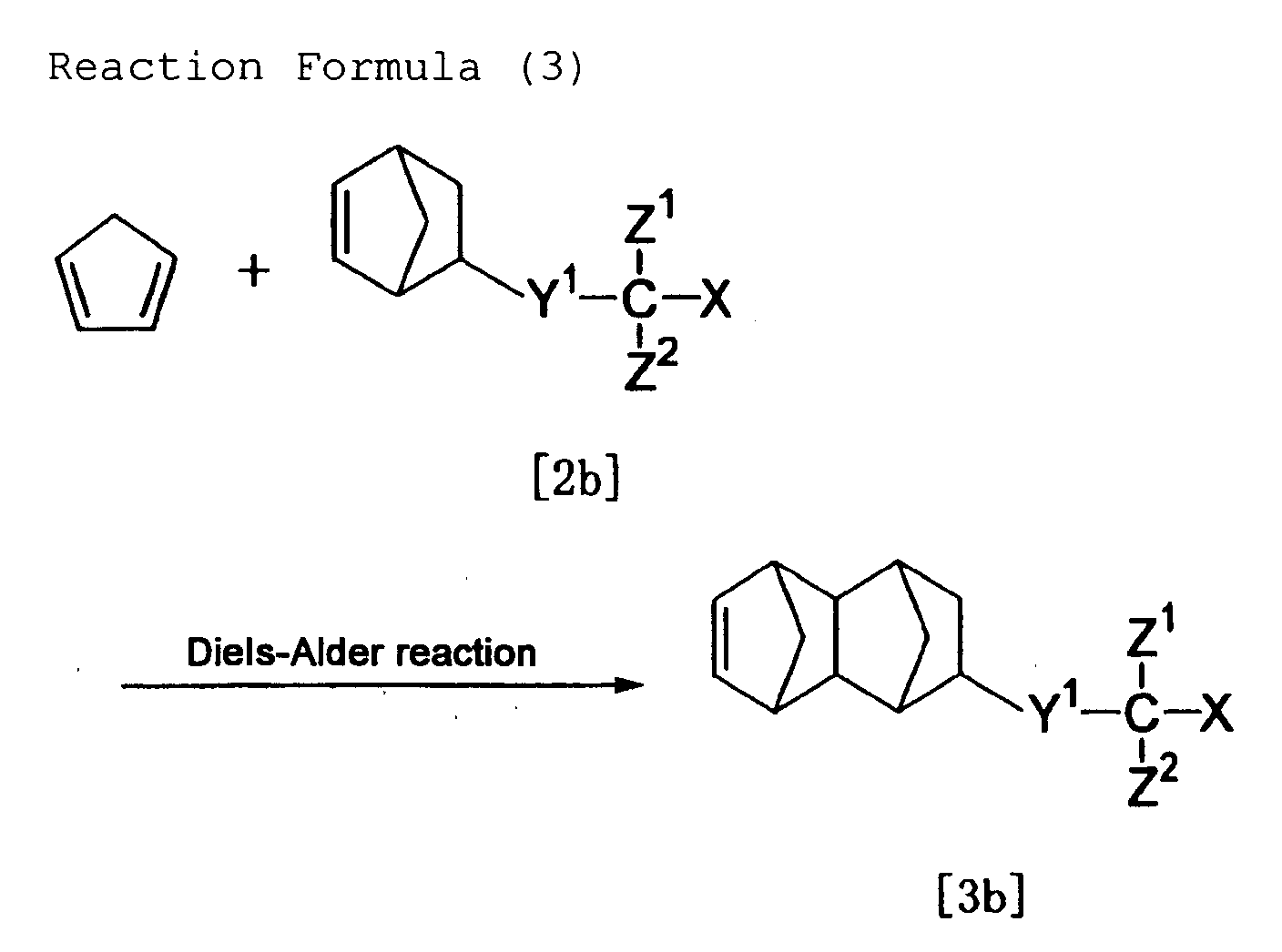


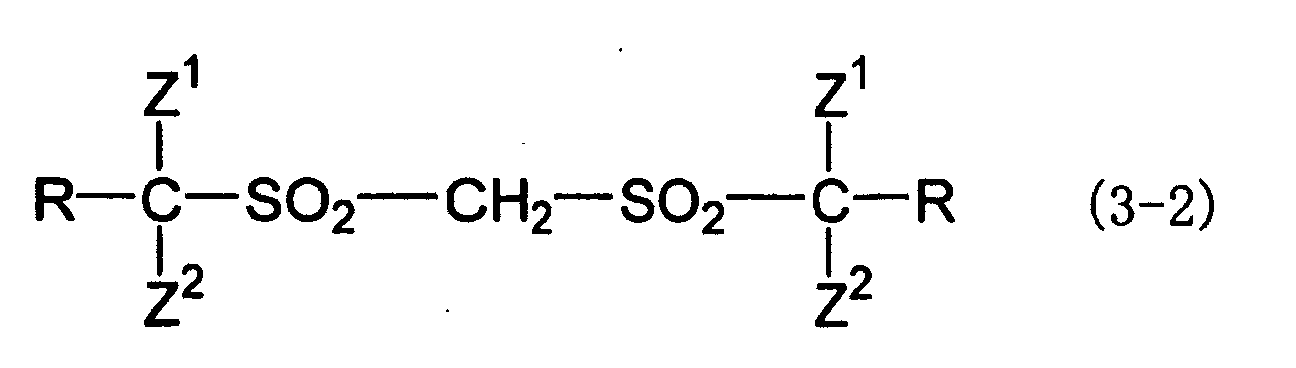


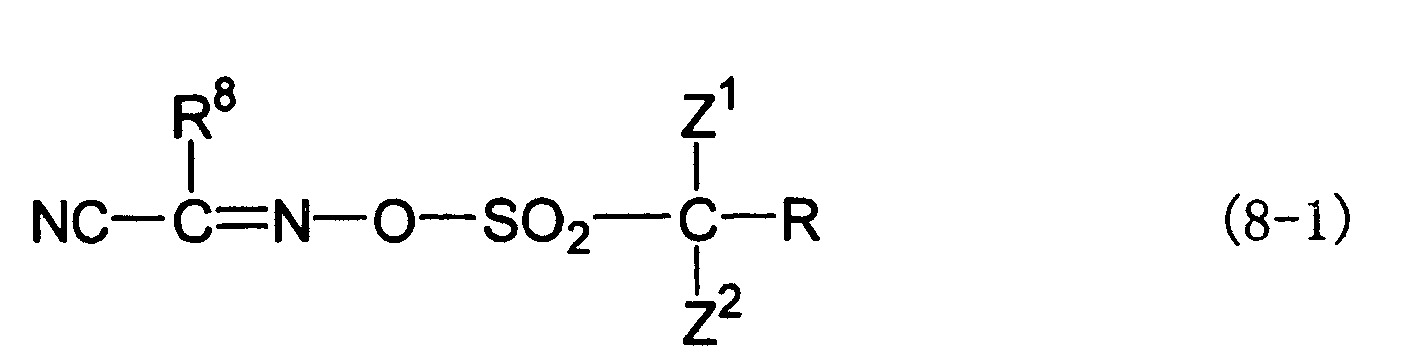


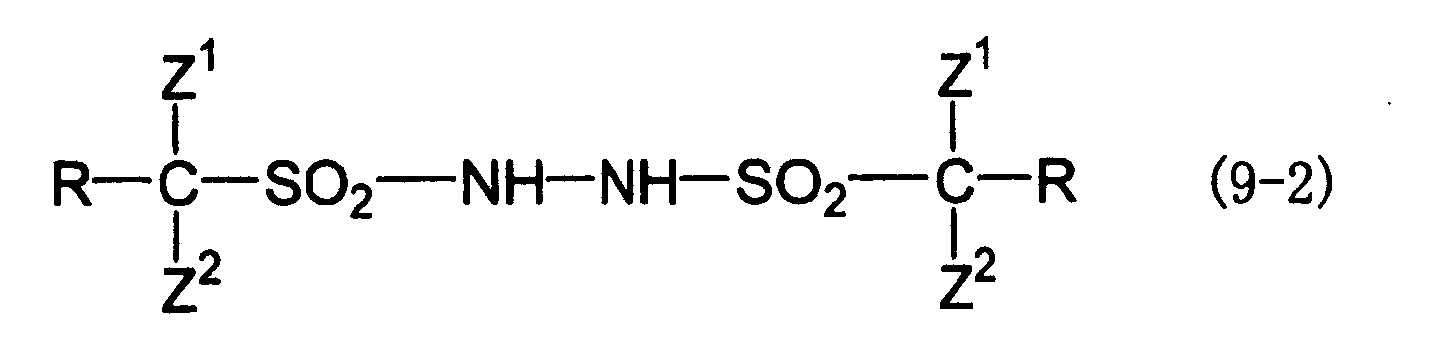
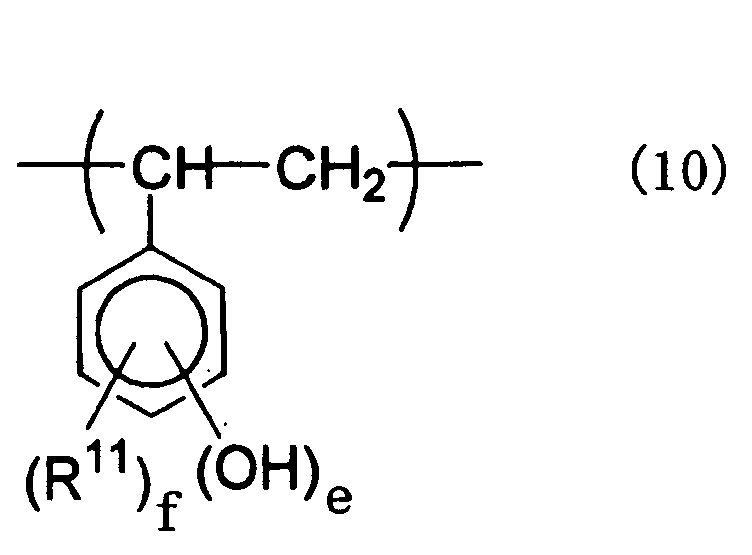
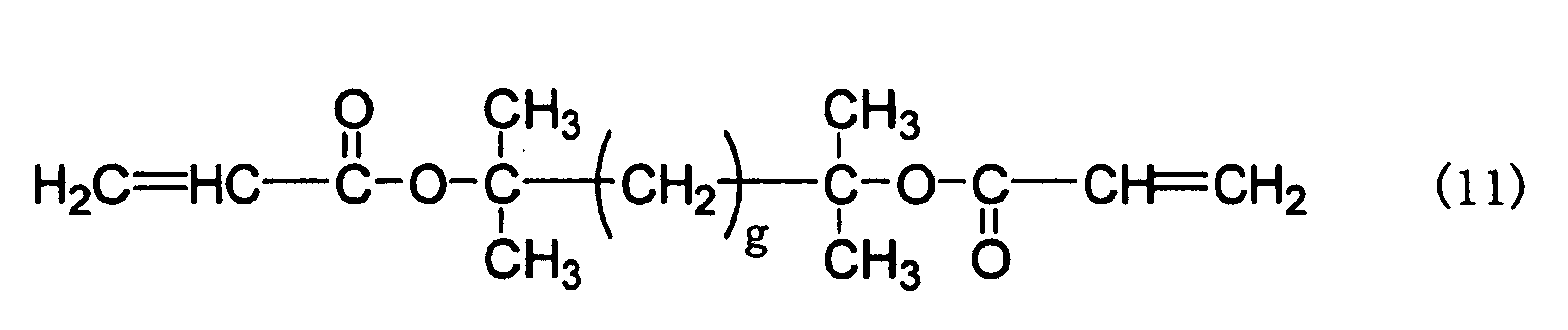


unsaturated carboxylic acids such as (meth)acrylic acid, crotonic acid, maleic acid, fumaric acid, and cinnamic acid;
carboxyalkyl esters of unsaturated carboxylic acids such as 2-carboxyethyl (meth)acrylate, 2-carboxypropyl (meth)acrylate, and 3-carboxypropyl (meth)acrylate;
unsaturated nitryl compounds such as (meth)acrylonitrile, α-chloroacrylonitrile, crotonitrile, maleinitrile, and fumaronitrile;
unsaturated amide compounds such as (meth)acrylamide, N,N-dimethyl(meth)acrylamide, crotonamide, maleinamide, and fumaramide;
unsaturated imide compounds such as maleimide, N-phenylmaleimide, and N-cyclohexylmaleimide;
and other nitrogen-containing vinyl compounds such as N-vinyl-ε-caprolactam, N-vinylpyrrolidone, 2-vinylpyridine, 3-vinylpyridine, 4-vinylpyridine, 2-vinylimidazole, and 4-vinylimidazole.


5-t-butoxycarbonylbicyclo[2.2.1]hept-2-ene,
5-(4-t-butylcyclohexyloxy)carbonylbicyclo[2.2.1]hept-2-ene,
5-(1-ethoxyethoxy)carbonylbicyclo[2.2.1]hept-2-ene,
5-(1-cyclohexyloxyethoxy)carbonylbicyclo[2.2.1]hept-2-ene,
5-t-butoxycarbonylmethoxycarbonylbicyclo[2.2.1]hept-2-ene,
5-tetrahydrofuranyloxycarbonylbicyclo[2.2.1]hept-2-ene,
5-tetrahydropyranyloxycarbonylbicyclo[2.2.1]hept-2-ene,
8-t-butoxycarbonyltetracyclo[4.4.0.12,5.17,10]dodec-3-ene,
8-(4-t-butylcyclohexyloxy)carbonyltetracyclo [4.4.0.12,5.17,10]dodec-3-ene,
8-(1-ethoxyethoxy)carbonyltetracyclo[4.4.0.12,5.17,10] dodec-3-ene,
8-(1-cyclohexyloxyethoxy)carbonyltetracyclo [4.4.0.12,5.17,10] dodec-3-ene,
8-t-butoxycarbonylmethoxycarbonyltetracyclo [4.4.0.12,5.17,10] dodec-3-ene,
8-tetrahydrofuranyloxycarbonyltetracyclo [4.4.0.12,5.17,10] dodec-3-ene, and
8-tetrahydropyranyloxycarbonyltetracyclo[4.4.0.12,5.17,10] dodec-3-ene can be given.
2-methyl-2-adamantyl(meth)acrylate,
2-ethyl-2-adamantyl(meth)acrylate,
2-methylcyclopentyl(meth)acrylate,
2-ethylcyclopentyl(meth)acrylate,
2-methylcyclohexyl(meth)acrylate,
2-ethocyclohexyl(meth)acrylate, and the units of the following formulas (15-1)-(15-12) can be given.

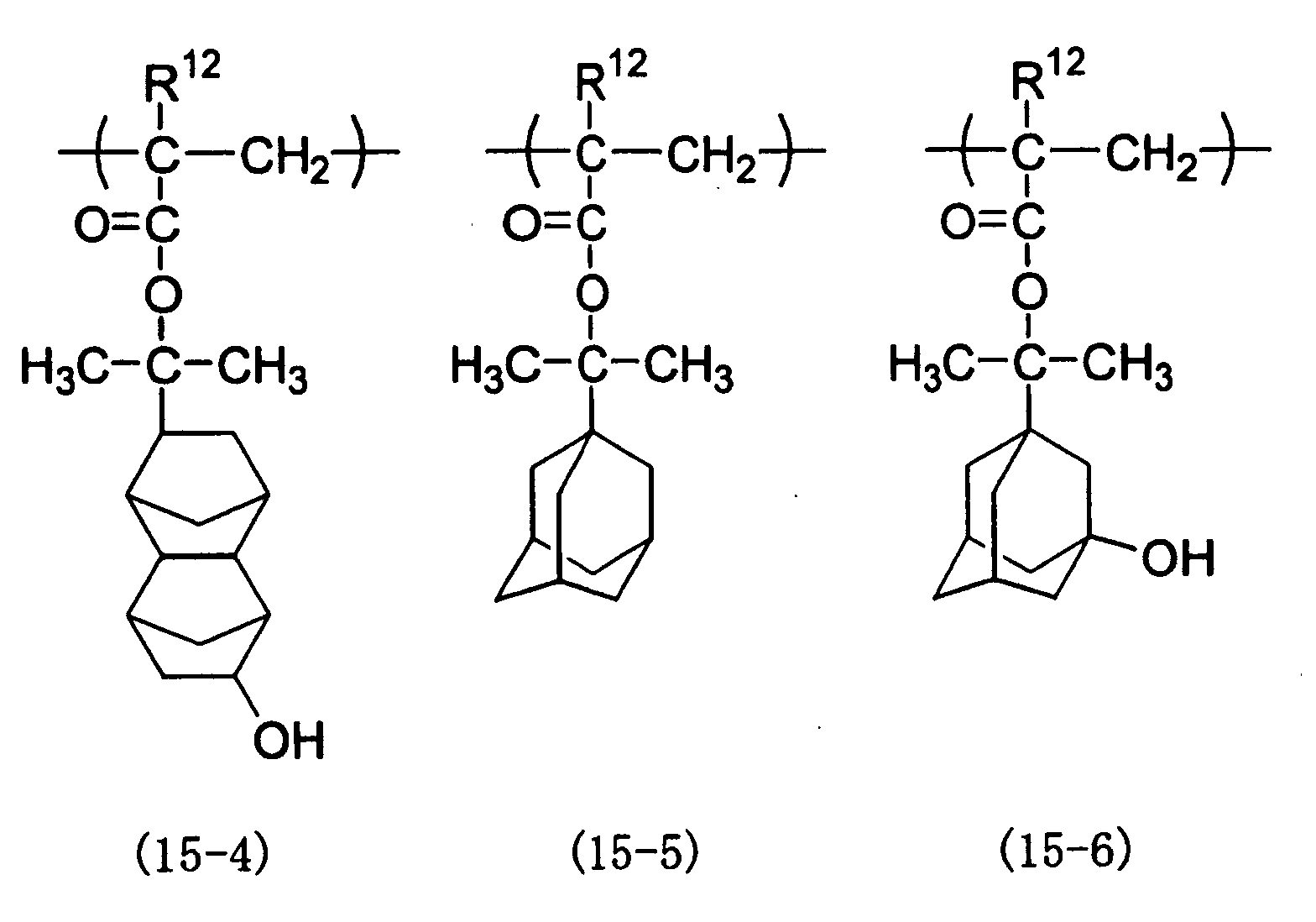
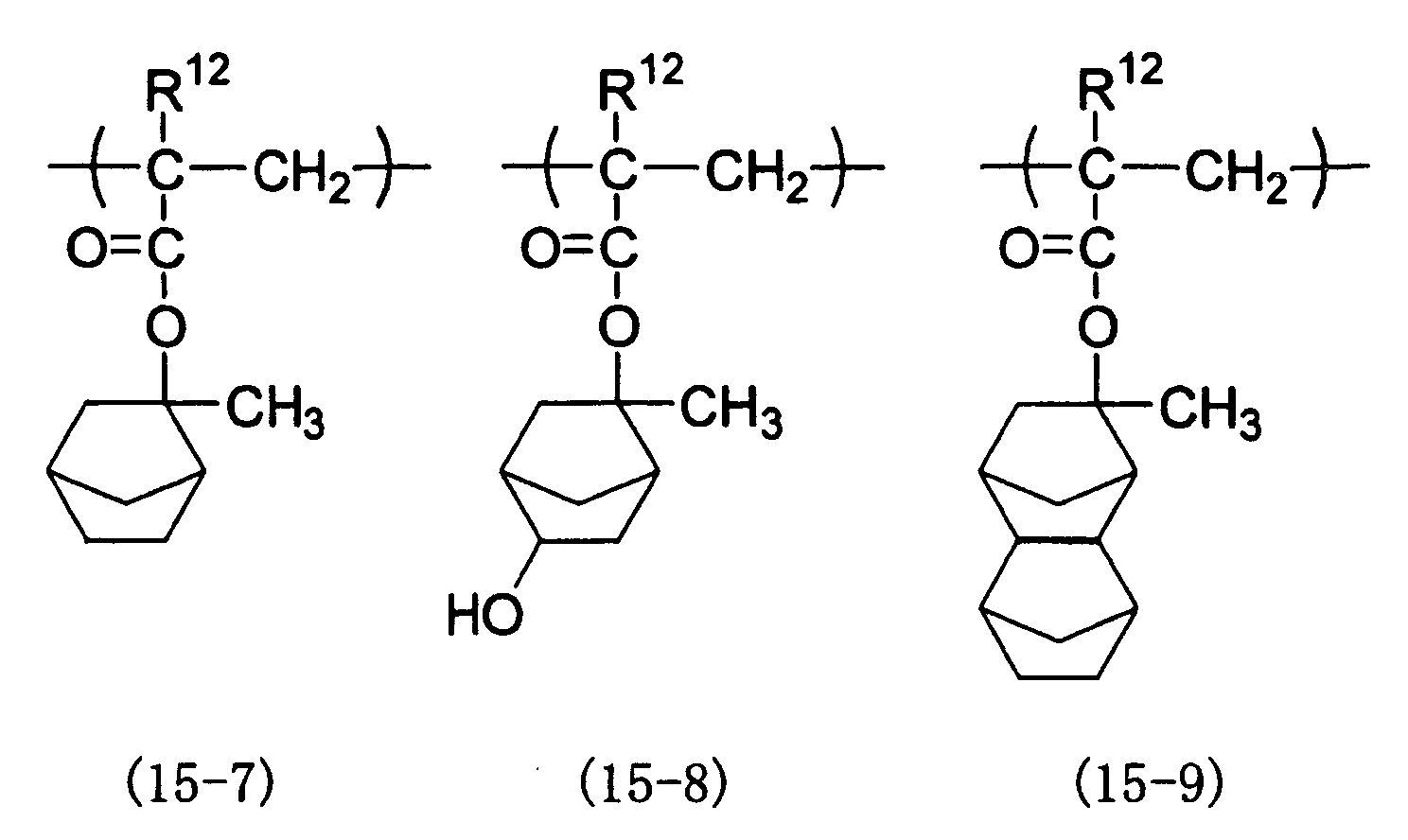

5-methylbicyclo[2.2.1]hept-2-ene,
5-ethylbicyclo[2.2.1]hept-2-ene,
5-hydroxybicyclo[2.2.1]hept-2-ene,
5-fluorobicyclo[2.2.1]hept-2-ene,
tetracyclo[4.4.0.12,5.17,10]dodec-3-ene,
8-methyltetracyclo [4.4.0.12,5.17,10] dodec-3-ene,
8-ethyltetracyclo [4.4.0.12,5.17,10] dodec-3-ene,
8-hydroxytetracyclo[4.4.0.12,5.17,10]dodec-3-ene,
8-fluorotetracyclo [4.4.0.12,5.17,10] dodec-3-ene;
unsaturated carboxylic acid anhydrides such as maleic anhydride and itaconic anhydride;
the (meth)acrylates previously given as examples of the other recurring units (b1) for the resin (B1);
3-hydroxy-1-adamantyl(meth)acrylate, the (meth)acrylate shown by the following formula (16):

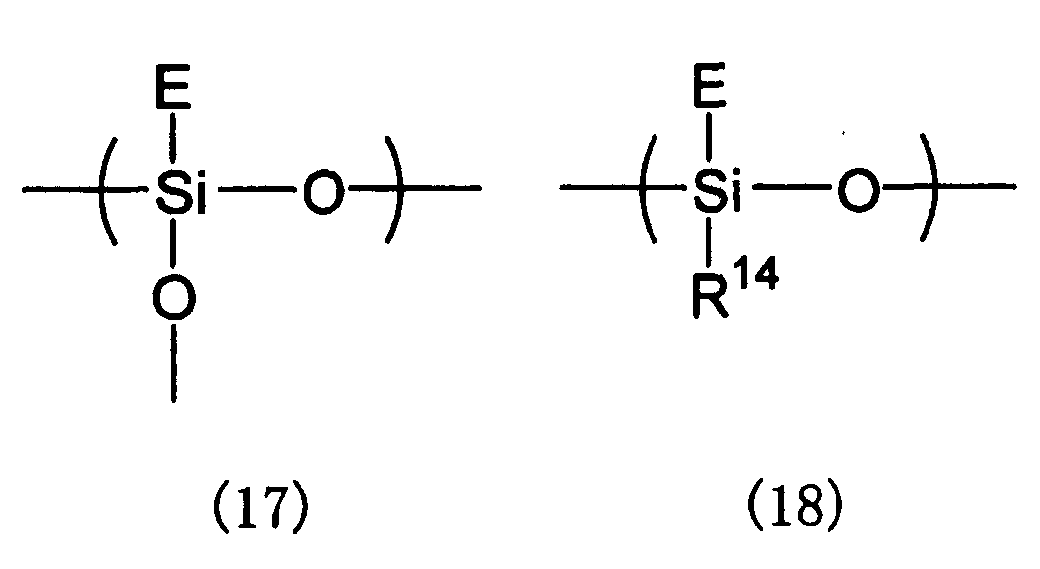


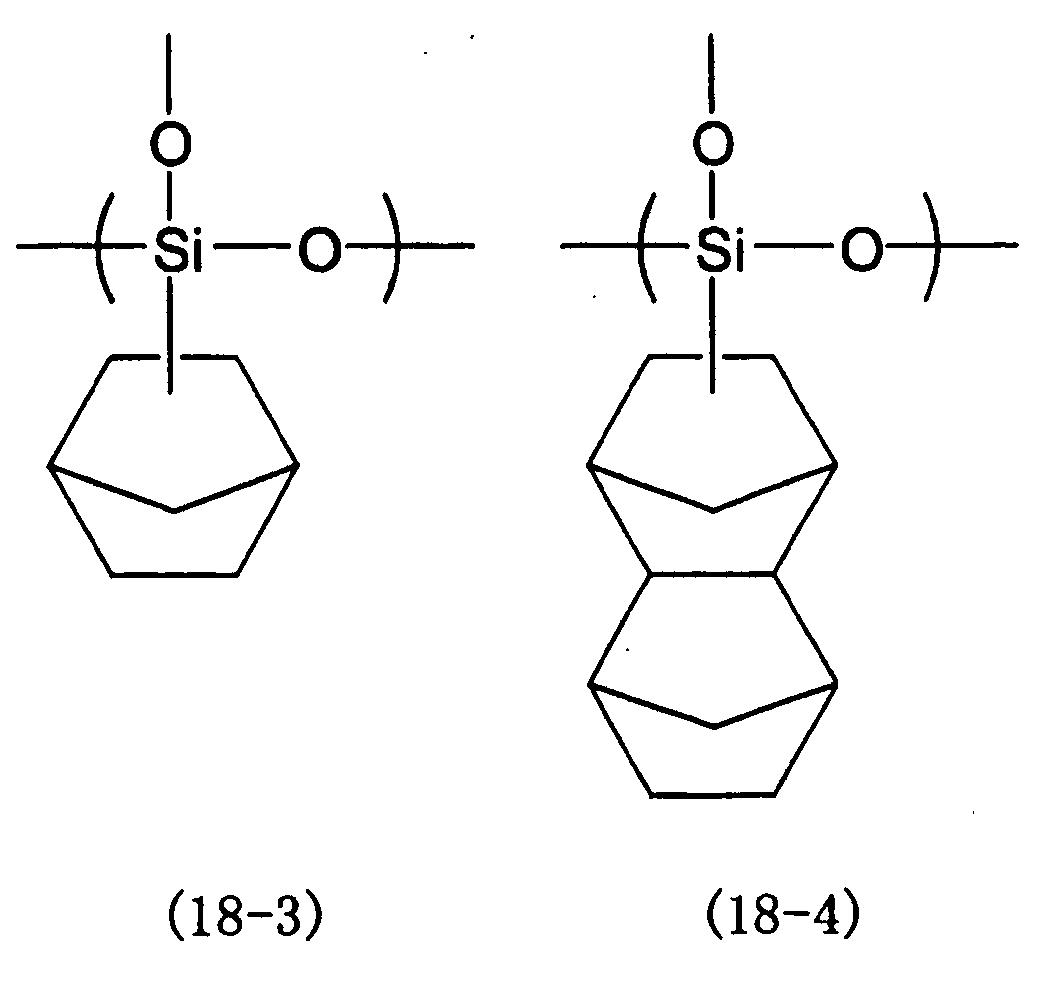


4-hydroxystyrene/4-hydroxy-α-methylstyrene copolymer,
4-hydroxystyrene/styrene copolymer, or the like as a major component is particularly preferable.


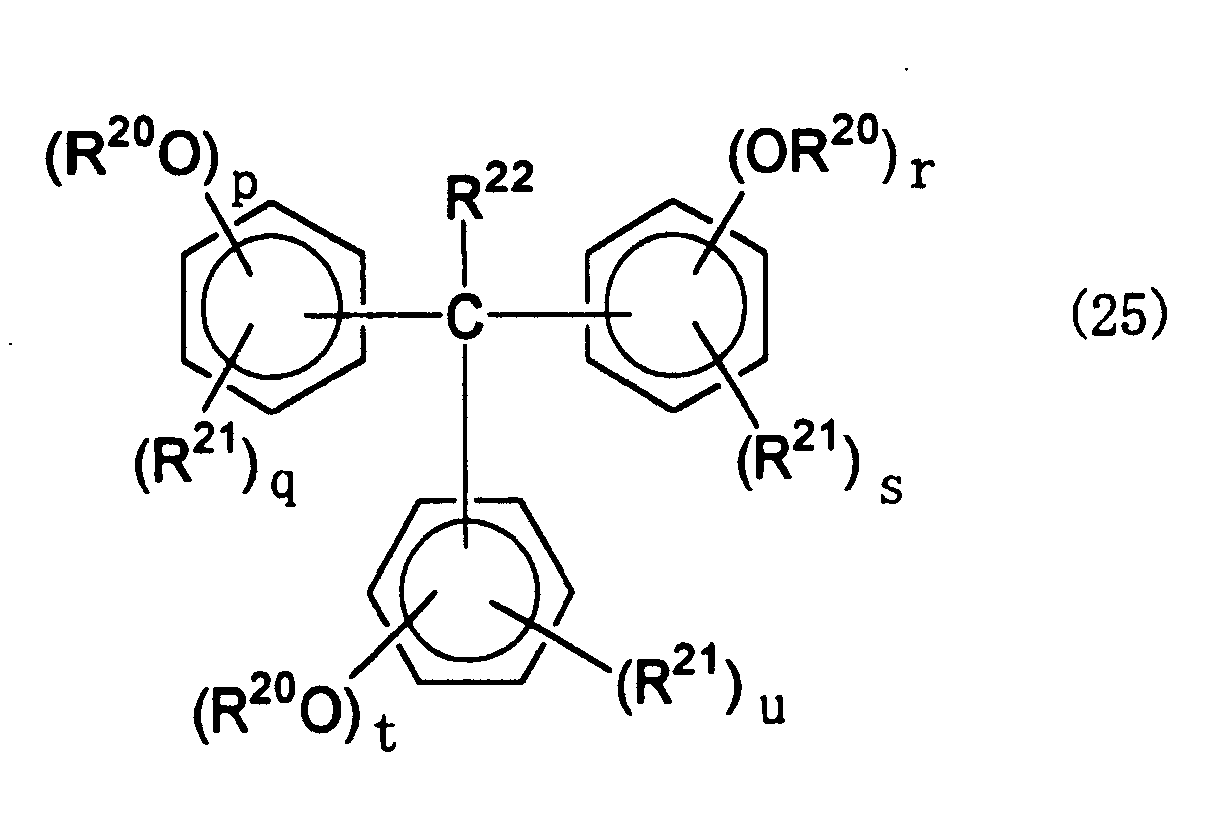
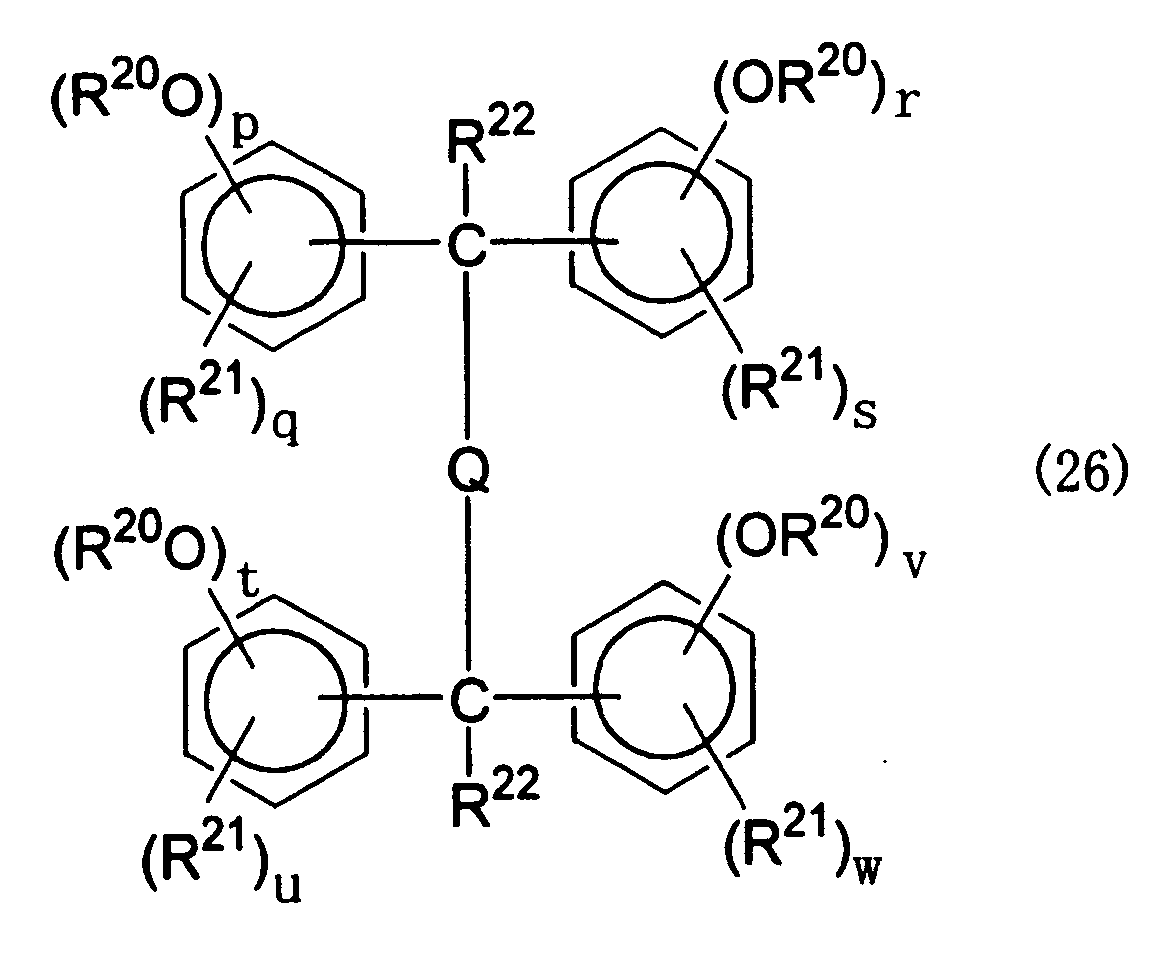

4-hydroxystyrene/4-hydroxy-α-methylstyrene copolymer,
4-hydroxystyrene/styrene copolymer, or the like as a major component is preferable.
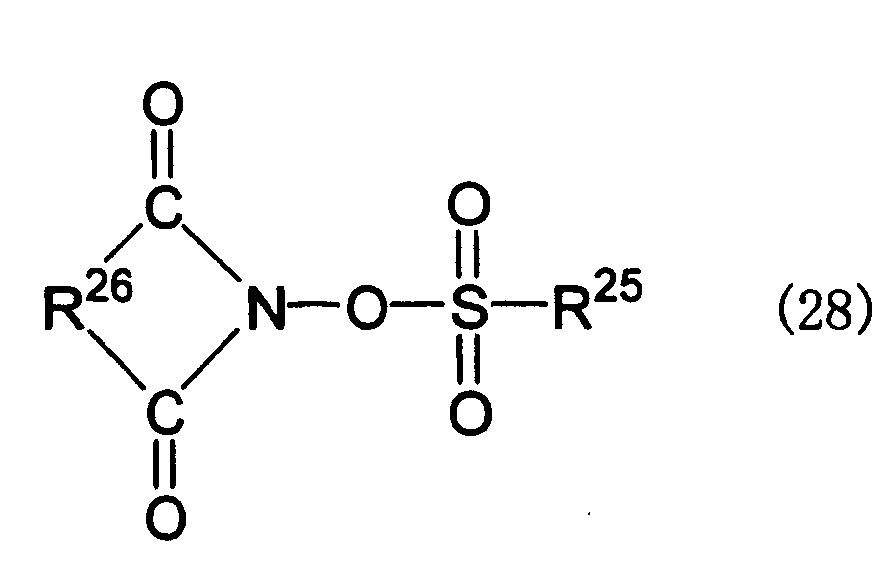

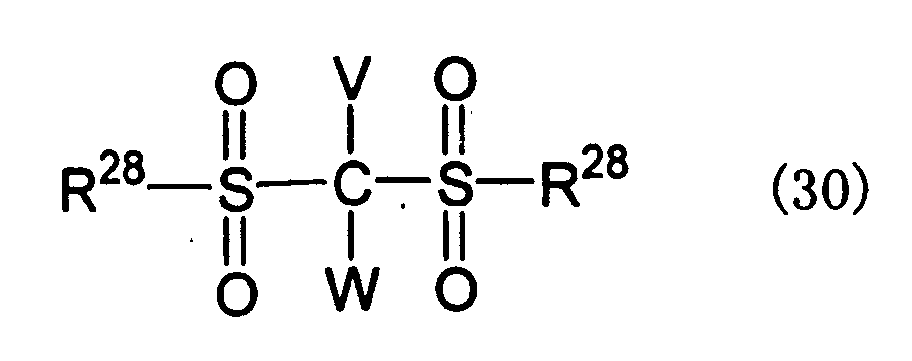

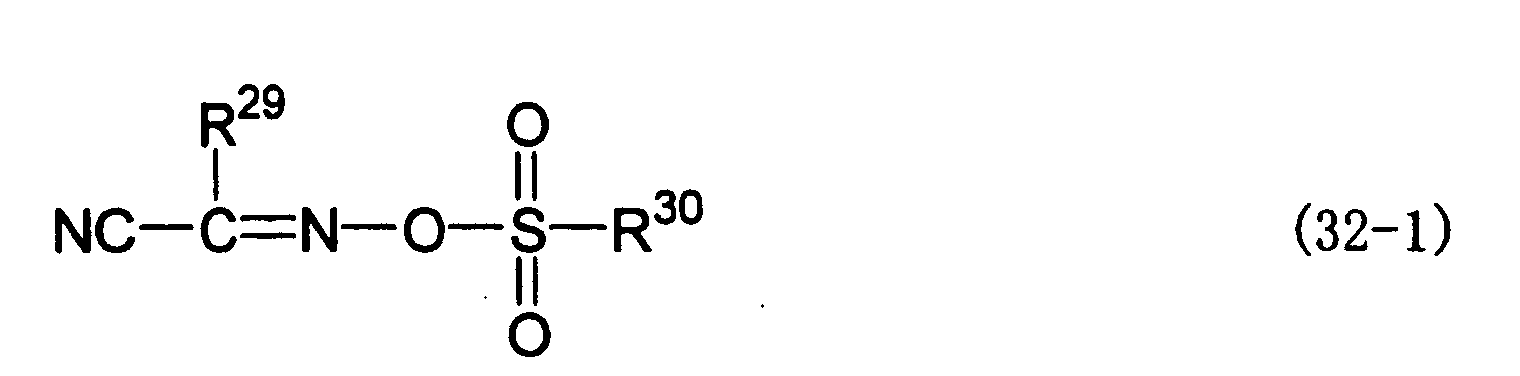
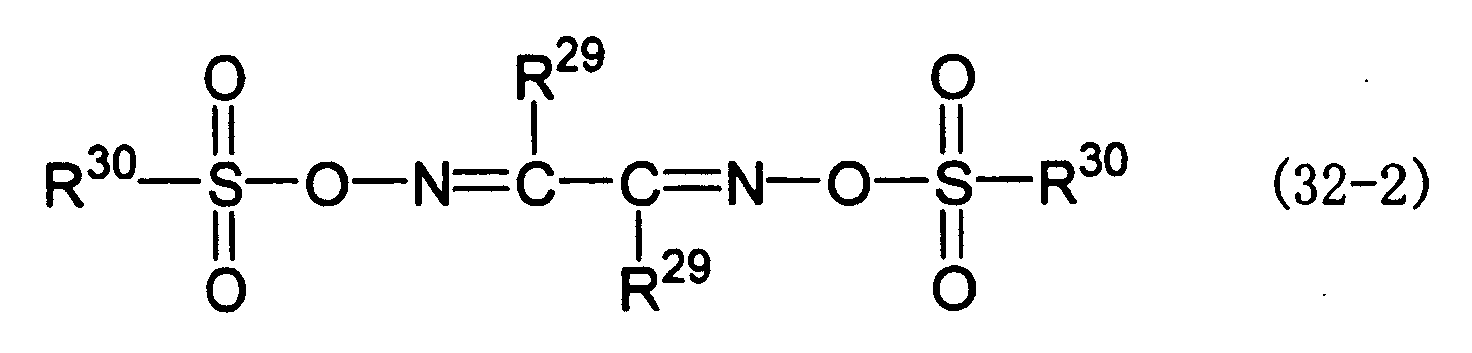


- a-1:
- N-(trifluoromethylsulfonyloxy)bicyclo[2.2.1] hept-5-ene-2,3-dicarboxyimide
- a-2:
- Triphenylsulfonium trifluoromethanesulfonate
- a-3:
- Bis(cyclohexylsulfonyl)diazomethane
- a-4:
- 1- (4-n-butoxynaphthalen-1-yl) tetrahydrothiophenium nonafluoro-n-butanesulfonate
- C-1:
- 4-Hydroxystyrene/styrene copolymer (copolymerization ratio: 78:22, Mw=3,100, Mw/Mn=1.13; VPS3020 (manufactured by Nippon Soda Co., Ltd.)<0)
- D-1:
- tri-n-octylamine
- D-2:
- triethanolamine
- D-3:
- 2-phenylbenzimidazole
- D-4:
- 2,6-dimethylaminopyridine
- D-5:
- N-t-butoxycarbonyl-2-phenylbenzimidazole
- E-1:
- N,N,N,N-tetra(methoxymethyl)glycoluril
- F-1:
- t-butyl deoxycholate
- F-2:
- t-butoxycarbonylmethyl deoxycholate
- F-3:
- t-butoxycarbonylmethyl lithocholate
- G-1:
- ethyl lactate
- G-2:
- ethyl 3-ethoxypropionate
- G-3:
- propylene glycol monomethyl ether acetate
- G-4:
- 2-Heptanone
- G-5:
- Cyclohexanone
- G-6:
- γ-Butyrolacton
| Unit in parenthesis: parts by weight | ||||||
| Acid generator | Resin | Acid diffusion controller | Crosslinking agent | Other additives | Solvent | |
| Example 1 | A-1 (3) | B-1 (100) | D-3 (0.1) | - | - | G-1 (800) |
| Example 2 | A-2 (3) | B-1 (100) | D-2 (0.1) | - | - | G-1 (800) |
| Example 3 | A-3 (3) | B-1 (100) | D-4 (0.3) | - | - | G-1 (800) |
| Example 4 | A-4 (3) | B-1 (100) | D-3 (0.1) | - | - | G-1 (800) |
| Example 5 | A-3 (1) a-1 (6) |
B-1 (100) | D-5 (0.2) | - | - | G-1 (400) G-3 (400) |
| Example 6 | A-3 (2) | B-2 (100) | D-2 (0.1) | - | - | G-1 (400) G-2 (400) |
| Example 7 | A-3 (2) | B-3 (100) | D-3 (0.1) | - | - | G-1 (400) G-3 (400) |
| Example 8 | A-2 (2) | B-4 (100) | D-1 (0.1) | - | - | G-1 (400) G-3 (400) |
| Example 9 | A-1 (2) | B-5 (90) | D-3 (0.1) | - | F-1 (10) | G-4 (700) G-5 (300) |
| Example 10 | A-1 (5) | B-6 (92) | D-3 (0.4) | - | F-2 (8) | G-3 (700) G-6 (50) |
| Example 11 | A-2 (2) | B-13(100) | D-3 (0.1) | - | - | G-3 (1200) |
| Example 12 | A-2 (3) | B-1 (100) | D-3 (0.1) | - | - | G-1 (800) |
| Example 13 | A-2 (3) | C-1 (97) B-4 (3) |
D-1 (0.1) | E-1 (7) | - | G-1 (550) G-2 (250) |
| Example 14 | A-1 (4) A-2 (1) |
B-7 (90) B-11 (10) |
D-3 (0.4) | - | - | G-4 (250) G-6 (550) |
| Example 15 | A-1 (4) A-5 (1) |
B-7 (90) B-11 (10) |
D-3 (0.3) | - | - | G-4 (250) G-6 (550) |
| Example 16 | A-1 (5) | B-8 (60) B-10 (40) |
D-3 (0.4) | - | - | G-4 (800) |
| Example 17 | A-1 (5) | B-9 (100) | D-3 (0.4) | - | - | G-4 (800) |
| Example 18 | A-1 (4) A-2 (1) |
B-12(100) | D-3 (0.4) | - | - | G-4 (800) |
| Example 19 | A-1 (4) A-5 (1) |
B-12(100) | D-3 (0.3) | - | - | G-4 (800) |
| Comparative Example 1 | a-1 (3) | B-1 (100) | D-3 (0.1) | - | - | G-1 (400) G-3 (400) |
| Thickness (Å) | PB | Radiation | PEB | |||
| Temp (°C) | Time (sec) | Temp (°C) | Time (sec) | |||
| Example 1 | 5,000 | 120 | 90 | KrF excimer laser | 130 | 90 |
| Example 2 | 5,000 | 120 | 90 | KrF excimer laser | 130 | 90 |
| Example 3 | 5,000 | 120 | 90 | KrF excimer laser | 130 | 90 |
| Example 4 | 5,000 | 120 | 90 | KrF excimer laser | 130 | 90 |
| Example 5 | 5,000 | 120 | 90 | KrF excimer laser | 130 | 90 |
| Example 6 | 5,000 | 140 | 90 | KrF excimer laser | 140 | 90 |
| Example 7 | 5,000 | 130 | 90 | KrF excimer laser | 130 | 90 |
| Example 8 | 5,000 | 100 | 90 | KrF excimer laser | 100 | 90 |
| Example 9 | 3,000 | 140 | 90 | ArF excimer laser | 140 | 90 |
| Example 10 | 3,300 | 130 | 90 | ArF excimer laser | 130 | 90 |
| Example 11 | 1,000 | 130 | 90 | F2 excimer laser | 110 | 90 |
| Example 12 | 3,000 | 120 | 90 | Electron beam | 130 | 90 |
| Example 13 | 5,000 | 90 | 60 | KrF excimer laser | 110 | 90 |
| Example 14 | 3,300 | 130 | 90 | ArF excimer laser | 130 | 90 |
| Example 15 | 3,300 | 130 | 90 | ArF excimer laser | 130 | 90 |
| Example 16 | 3,300 | 130 | 90 | ArF excimer laser | 110 | 90 |
| Example 17 | 3,300 | 130 | 90 | ArF excimer laser | 130 | 90 |
| Example 18 | 3,300 | 130 | 90 | ArF excimer laser | 110 | 90 |
| Example 19 | 3,300 | 130 | 90 | ArF excimer laser | 110 | 90 |
| Comparative Example 1 | 5,000 | 120 | 90 | KrF excimer laser | 130 | 90 |
| Resolution | Sensitivity | Mask pattern dependency | |
| Example 1 | 0.21 µm | 360 J/m2 | Good |
| Example 2 | 0.21 µm | 320 J/m2 | Good |
| Example 3 | 0.20 µm | 300 J/m2 | Good |
| Example 4 | 0.20 µm | 350 J/m2 | Good |
| Example 5 | 0.20 µm | 320 J/m2 | Good |
| Example 6 | 0.21 µm | 390 J/m2 | Good |
| Example 7 | 0.21 µm | 360 J/m2 | Good |
| Example 8 | 0.20 µm | 380 J/m2 | Good |
| Example 9 | 0.17 µm | 800 J/m2 | Good |
| Example 10 | 0.15 µm | 300 J/m2 | Good |
| Example 11 | 0.17 µm | 200 J/m2 | Good |
| Example 12 | 0.16 µm | 4 µC | Good |
| Example 13 | 0.20 µm | 260 J/m2 | Good |
| Example 14 | 0.15 µm | 260 J/m2 | Good |
| Example 15 | 0.15 µm | 280 J/m2 | Good |
| Example 16 | 0.15 µm | 320 J/m2 | Good |
| Example 17 | 0.15 µm | 280 J/m2 | Good |
| Example 18 | 0.15 µm | 240 J/m2 | Good |
| Example 19 | 0.15 µm | 270 J/m2 | Good |
| Comparative Example 1 | 0.21 µm | 320 J/m2 | Poor |
| Unit in parenthesis: parts by weight | ||||
| Acid generator | Resin | Acid diffusion controller | Solvent | |
| Example 20 | A-6 (2) | B-1 (100) | D-3 (0.2) | G-1 (400) |
| a-1 (6) | G-3 (400) | |||
| Example 21 | A-6 (2) | B-2 (100) | D-3 (0.2) | G-1 (400) |
| a-1 (6) | G-3 (400) | |||
| Example 22 | A-6 (2) | B-14(100) | D-3 (0.2) | G-1 (400) |
| a-1 (6) | G-3 (400) | |||
| Example 23 | A-6 (2) | B-4 (100) | D-2 (0.2) | G-1 (400) |
| a-3 (6) | G-3 (400) |
| Thickness (Å) | PB | Radiation | PEB | |||
| Temp (°C) | Time (sec) | Temp (°C) | Time (sec) | |||
| Example 20 | 5,000 | 120 | 90 | KrF excimer laser | 130 | 90 |
| Example 21 | 5,000 | 120 | 90 | KrF excimer laser | 130 | 90 |
| Example 22 | 5,000 | 90 | 90 | KrF excimer laser | 100 | 90 |
| Example 23 | 5,000 | 100 | 90 | KrF excimer laser | 100 | 90 |
| Resolution | Sensitivity | Mask pattern fidelity | |
| Example 20 | 0.18 µm | 310 J/m2 | 10 |
| Example 21 | 0.20 µm | 330 J/m2 | 12 |
| Example 22 | 0.20 µm | 290 J/m2 | 8 |
| Example 23 | 0.18 µm | 300 J/m2 | 4 |
| Unit in parenthesis: parts by weight | |||||
| Acid generator | Resin | Acid diffusion controller | Other additives | Solvent | |
| Example 24 | A-8 (5) | B-8 (92) | D-3 (0.10) | F-2 (8) | G-3(700) |
| Example 25 | A-8 (5) | B-8 (92) | D-3 (0.10) | F-2 (8) | G-3(700) |
| Example 26 | A-2 (5) | B-8 (92) | D-3 (0.30) | F-3 (8) | G-3(700) |
| Example 27 | A-1 (5) | B-8 (92) | D-3 (0.30) | F-3 (8) | G-3(700) |
| Example 28 | A-1 (5) | B-8 (92) | D-3 (0.30) | F-2 (8) | G-3(700) |
| Example 29 | A-7 (5) | B-8 (92) | D-3 (0.15) | F-2 (8) | G-3(700) |
| Example 30 | A-4 (5) | B-8 (92) | D-3 (0.10) | F-2 (8) | G-3(700) |
| Example 31 | A-1 (5.5) | B-7 (65.8) B-15(28.2) |
D-5 (0.43) | F-2 (6) | G-4(500) G-5(200) |
| Example 32 | A-1 (5.5) | B-7 (65.8) B-15(28.2) |
D-5 (0.43) | F-2 (6) | G-4(500) G-5(200) |
| Example 33 | A-1 (5.5) | B-7 (28.2) B-15(65.8) |
D-5 (0.43) | F-2 (6) | G-3(470) G-4(200) G-5(30) |
| Example 34 | A-1 (5.5) | B-7 (28.2) B-15(65.8) |
D-5 (0.43) | F-2 (6) | G-3(470) G-4(200) G-5(30) |
| Comparative example 2 | a-4 (5) | B-8 (92) | D-3 (0.30) | F-2 (8) | G-3(700) |
| Resist coating thickness (µm) | Substrate | PB | PEB | |||
| Temperature (°C) | Time (sec) | Temperature (°C) | Time (sec) | |||
| Example 24 | 0.34 | ARC25 | 130 | 90 | 130 | 90 |
| Example 25 | 0.34 | ARC25 | 130 | 90 | 130 | 90 |
| Example 26 | 0.34 | ARC25 | 130 | 90 | 130 | 90 |
| Example 27 | 0.34 | ARC25 | 130 | 90 | 130 | 90 |
| Example 28 | 0.34 | ARC25 | 130 | 90 | 130 | 90 |
| Example 29 | 0.34 | ARC25 | 130 | 90 | 130 | 90 |
| Example 30 | 0.34 | ARC25 | 130 | 90 | 130 | 90 |
| Example 31 | 0.34 | ARC25 | 130 | 90 | 130 | 90 |
| Example 32 | 0.34 | ARC25 | 130 | 90 | 130 | 90 |
| Example 33 | 0.34 | ARC25 | 130 | 90 | 130 | 90 |
| Example 34 | 0.34 | ARC25 | 130 | 90 | 130 | 90 |
| Comparative example 2 | 0.34 | ARC25 | 130 | 90 | 130 | 90 |
| Radiation transmittance (%) | Serisitivity (J/m2) | Resolution (µm) | Pattern shape | Developing defects | |||
| Amount | Exposure machine | Defect inspection apparatus | |||||
| Example 24 | 71 | 238 | 0.13 | Good | 0 | S203B | KLA2115 |
| Example 25 | 71 | 238 | 0.13 | Good | 0 | S306C | KLA2351 |
| Example 26 | 69 | 232 | 0.13 | Good | 12 | S203B | KLA2115 |
| Example 27 | 70 | 229 | 0.13 | Good | 0 | S203B | KLA2115 |
| Example 28 | 70 | 229 | 0.13 | Good | 0 | S306C | KLA2351 |
| Example 29 | 72 | 249 | 0.13 | Good | 4 | S203B | KLA2115 |
| Example 30 | 70 | 283 | 0.13 | Good | 1 | S203B | KLA2115 |
| Example 31 | 71 | 252 | 0.13 | Good | 0 | S203B | KLA2115 |
| Example 32 | 71 | 252 | 0.13 | Good | 0 | S306C | KLA2351 |
| Example 33 | 70 | 254 | 0.13 | Good | 0 | S203B | KLA2115 |
| Example 34 | 70 | 254 | 0.13 | Good | 0 | S306C | KLA2351 |
| Comparative example 2 | 70 | 224 | 0.13 | Good | 526 | S203B | KLA2115 |
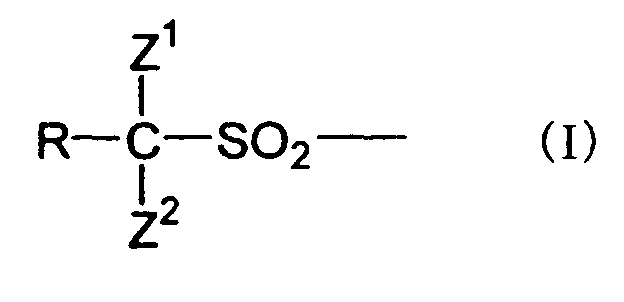
Claims (15)
- An acid generator having a structure of the following formula (I),wherein R is a monovalent organic group with a fluorine content of 50 wt% or less, a nitro group, a cyano group, or a hydrogen atom and Z1 and Z2 individually represent a fluorine atom or a linear or branched perfluoroalkyl group having 1-10 carbon atoms.
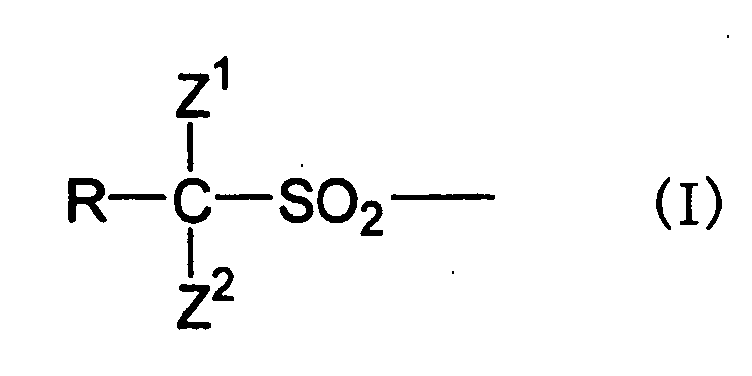
- An acid generator having a structure of the following formula (I-1), (I-2), or (I-3),
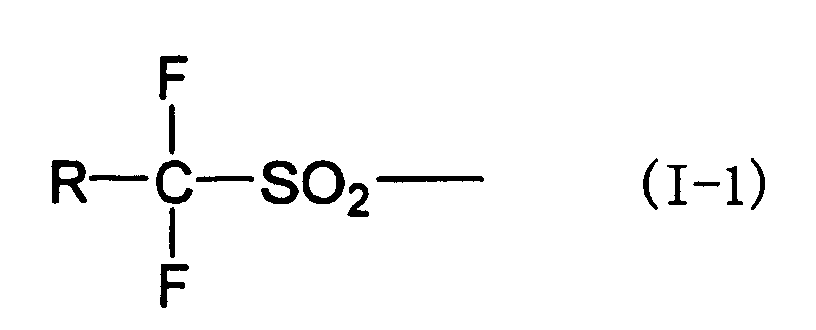
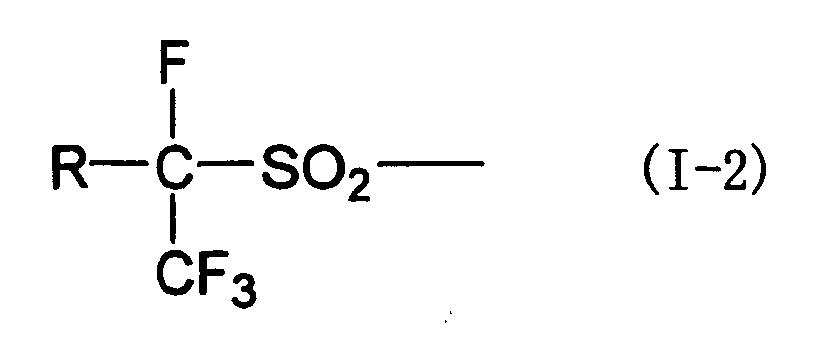 wherein R individually represents a monovalent organic group with a fluorine content of 50 wt% or less, a nitro group, a cyano group, or a hydrogen atom.
- An acid generator having a structure of the following formula (I-A) or (I-B),
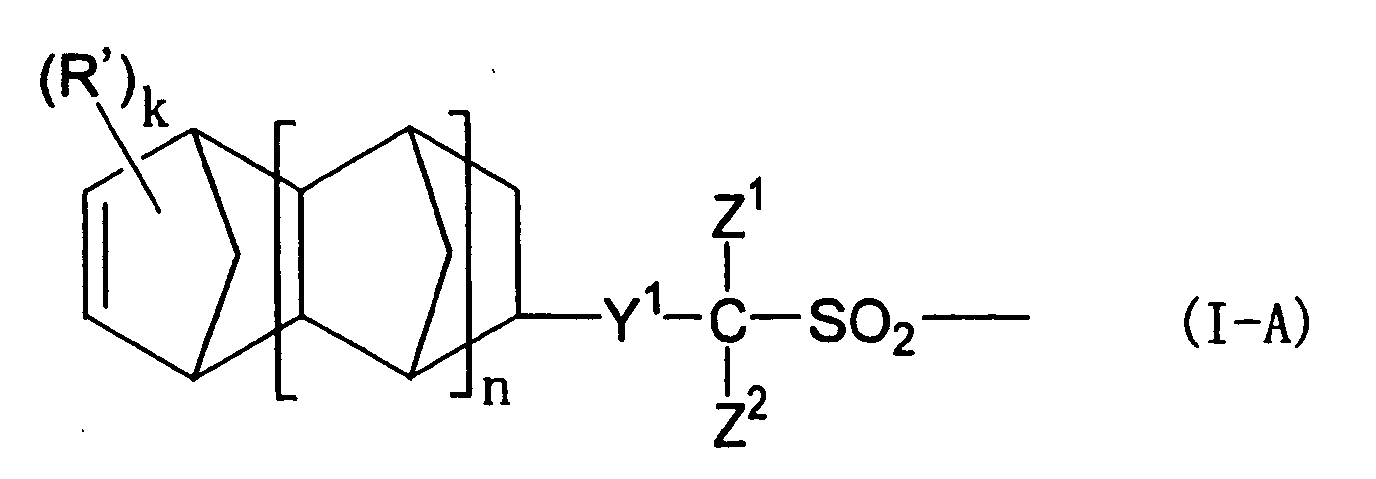 wherein Z1 and Z2 individually represent a fluorine atom or a linear or branched perfluoroalkyl group having 1-10 carbon atoms, Y1 represents a single-bond or divalent group, R' represents a monovalent or divalent substituent, k is an integer of 0 or more, and n is an integer from 0-5.
- An acid generator which is an onium sulfonate compound shown by the following formula (1),wherein R is a monovalent organic group with a fluorine content of 50 wt% or less, a nitro group, a cyano group, or a hydrogen atom, Z1 and Z2 individually represent a fluorine atom or a linear or branched perfluoroalkyl group having 1-10 carbon atoms, and M+ is a monovalent onium cation.

- An acid generator which is an onium sulfonate compound shown by the following formula (1-A) or (1-B),
 wherein Z1 and Z2 individually represent a fluorine atom or a linear or branched perfluoroalkyl group having 1-10 carbon atoms, Y1 represents a single-bond or divalent group, R' represents a monovalent or divalent substituent, k is an integer of 0 or more, n is an integer from 0-5, and M+ is a monovalent onium cation.
- The acid generator according to any one of claims 4-5, wherein M+ is a sulfonium cation shown by the following formula (i),wherein R1, R2, and R3 individually represents a substituted or unsubstituted, linear or branched alkyl group having 1-10 carbon atoms, a substituted or unsubstituted aryl group having 6-18 carbon atoms, or two or more of the groups R1, R2, and R3 form a ring together with the sulfur atom in the formula.

- The acid generator according to any one of claims 4-5, wherein M+ is an iodonium cation of the following formula (ii),wherein R4 and R5 individually represent a substituted or unsubstituted, linear or branched alkyl group having 1-10 carbon atoms, a substituted or unsubstituted aryl group having 6-18 carbon atoms, or R4 and R5 form a ring together with the iodine atom in the formula.
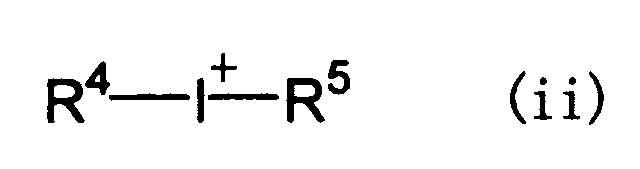
- An acid generator which is an N-sulfonyloxyimide compound of the following formula (2),wherein R is a monovalent organic group with a fluorine content of 50 weight% or less, a nitro group, a cyano group, or a hydrogen atom, Z1 and Z2 individually represent a fluorine atom or a linear or branched perfluoroalkyl group having 1-10 carbon atoms, R6 and R7 individually represent a hydrogen atom or a substituted or unsubstituted monovalent organic group, or R6 and R7 form a ring together with the carbon atoms, each bonding to either the group R6 or R7, and Y2 is a single bond, a double bond, or a divalent organic group.

- An acid generator which is an N-sulfonyloxyimide compound of the following formula (2-A) or (2-B),
 wherein Z1 and Z2 individually represent a fluorine atom or a linear or branched perfluoroalkyl group having 1-10 carbon atoms, Y1 represents a single-bond or divalent group, R' represents a monovalent or divalent substituent, k is an integer of 0 or more, n is an integer from 0-5, R6 and R7 individually represent a hydrogen atom or a substituted or unsubstituted monovalent organic group, or R6 and R7 form a ring together with the carbon atoms, each bonding to either the group R6 or R7, and Y2 is a single bond, a double bond, or a divalent organic group.
- A sulfonic acid of the following formula (I-a),wherein R is a monovalent organic group with a fluorine content of 50 wt% or less, a nitro group, a cyano group, or a hydrogen atom and Z1 and Z2 individually represent a fluorine atom or a linear or branched perfluoroalkyl group having 1-10 carbon atoms.

- A sulfonate of the following formula (1C),wherein R is a monovalent organic group with a fluorine content of 50 wt% or less, a nitro group, a cyano group, or a hydrogen atom, Z1 and Z2 are individually a fluorine atom or a linear or branched perfluoroalkyl group having 1-10 carbon atoms, and M is an Na, K, or Li.
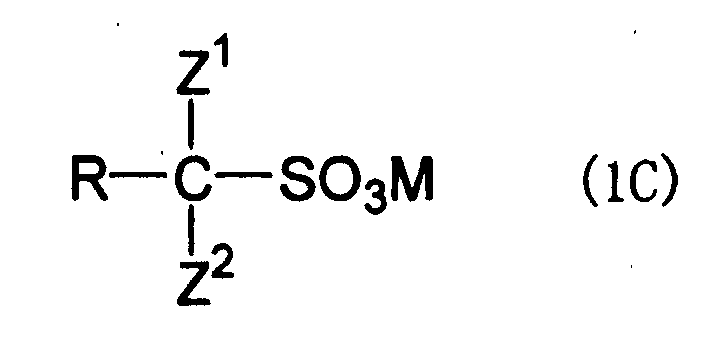
- A sulfonyl halide compound of the following formula (4A),wherein R represents a monovalent organic group with a fluorine content of 50 wt% or less, a nitro group, a cyano group, or a hydrogen atom, Z1 and Z2 are individually a fluorine atom or a linear or branched perfluoroalkyl group having 1-10 carbon atoms, and A is a halogen atom.

- A positive-tone radiation-sensitive resin composition comprising: (A) the acid generator of claim 1 and (B) an alkali soluble or alkali low soluble resin comprising an acid-cleavable group that becomes soluble in alkali when the acid-cleavable group dissociates.
- A positive-tone radiation-sensitive resin composition comprising: (A) the acid generator of claim 1, (C) an alkali soluble resin, and (D) an alkali solubility control agent.
- A negative-tone radiation-sensitive resin composition comprising (A) the acid generator according to claim 1, (C) an alkali soluble resin, and (E) a compound which can crosslink an alkali soluble resin in the presence of an acid.
Applications Claiming Priority (6)
| Application Number | Priority Date | Filing Date | Title |
|---|---|---|---|
| JP2001200154 | 2001-06-29 | ||
| JP2001200154 | 2001-06-29 | ||
| JP2001371311A JP3826777B2 (en) | 2001-12-05 | 2001-12-05 | Radiation sensitive resin composition |
| JP2001371311 | 2001-12-05 | ||
| JP2002081235 | 2002-03-22 | ||
| JP2002081235 | 2002-03-22 |
Publications (3)
| Publication Number | Publication Date |
|---|---|
| EP1270553A2 true EP1270553A2 (en) | 2003-01-02 |
| EP1270553A3 EP1270553A3 (en) | 2004-04-21 |
| EP1270553B1 EP1270553B1 (en) | 2009-11-18 |
Family
ID=27347065
Family Applications (1)
| Application Number | Title | Priority Date | Filing Date |
|---|---|---|---|
| EP02014416A Expired - Lifetime EP1270553B1 (en) | 2001-06-29 | 2002-06-28 | Acid generator, sulfonic acid, sulfonic acid derivatives and radiation-sensitive resin composition |
Country Status (6)
| Country | Link |
|---|---|
| US (1) | US6908722B2 (en) |
| EP (1) | EP1270553B1 (en) |
| KR (1) | KR100863119B1 (en) |
| CN (2) | CN1916760B (en) |
| DE (1) | DE60234409D1 (en) |
| SG (1) | SG120873A1 (en) |
Cited By (11)
| Publication number | Priority date | Publication date | Assignee | Title |
|---|---|---|---|---|
| WO2004078703A1 (en) | 2003-03-05 | 2004-09-16 | Jsr Corporation | Acid generators, sulfonic acids, sulfonyl halides, and radiation-sensitive resin compositions |
| US7122294B2 (en) | 2003-05-22 | 2006-10-17 | 3M Innovative Properties Company | Photoacid generators with perfluorinated multifunctional anions |
| US7393627B2 (en) | 2004-03-16 | 2008-07-01 | Cornell Research Foundation, Inc. | Environmentally friendly photoacid generators (PAGs) with no perfluorooctyl sulfonates (PFOS) |
| US7449573B2 (en) | 2004-02-16 | 2008-11-11 | Fujifilm Corporation | Photosensitive composition, compound for use in the photosensitive composition, and method of pattern formation with the photosensitive composition |
| US7824839B2 (en) | 2006-04-21 | 2010-11-02 | Cornell Research Foundation, Inc. | Photoacid generator compounds and compositions |
| US8163461B2 (en) | 2008-04-09 | 2012-04-24 | Cornell Research Foundation, Inc. | Photoacid generator compounds and compositions |
| EP2631253A2 (en) | 2012-02-27 | 2013-08-28 | Shin-Etsu Chemical Co., Ltd. | Preparation of polymer, resulting polymer, resist composition, and patterning process |
| EP2664633A1 (en) | 2012-02-27 | 2013-11-20 | Shin-Etsu Chemical Co., Ltd. | Polymer, making method, resist composition, and patterning process |
| WO2013156509A3 (en) * | 2012-04-19 | 2014-01-23 | Basf Se | Sulfonium compounds, their preparation and use |
| US8940471B2 (en) | 2009-09-30 | 2015-01-27 | Fujifilm Corporation | Actinic-ray- or radiation-sensitive resin composition and method of forming pattern using the composition |
| US11505524B2 (en) * | 2020-05-21 | 2022-11-22 | Sumitomo Chemical Company, Limited | Salt, acid generator, resist composition and method for producing resist pattern |
Families Citing this family (138)
| Publication number | Priority date | Publication date | Assignee | Title |
|---|---|---|---|---|
| DE19840943A1 (en) * | 1998-09-08 | 2000-03-09 | Aventis Res & Tech Gmbh & Co | Process for the preparation of derivatives of 4-alkylsulfinylmethylarylenemethanol |
| JP4838437B2 (en) * | 2000-06-16 | 2011-12-14 | Jsr株式会社 | Radiation sensitive resin composition |
| US6749987B2 (en) * | 2000-10-20 | 2004-06-15 | Fuji Photo Film Co., Ltd. | Positive photosensitive composition |
| JP3826777B2 (en) * | 2001-12-05 | 2006-09-27 | Jsr株式会社 | Radiation sensitive resin composition |
| KR100944140B1 (en) * | 2002-03-20 | 2010-02-24 | 스미또모 가가꾸 가부시끼가이샤 | Positive resist composition |
| TWI314943B (en) * | 2002-08-29 | 2009-09-21 | Radiation-sensitive resin composition | |
| JP3937996B2 (en) * | 2002-10-08 | 2007-06-27 | Jsr株式会社 | Radiation sensitive resin composition |
| US6841333B2 (en) * | 2002-11-01 | 2005-01-11 | 3M Innovative Properties Company | Ionic photoacid generators with segmented hydrocarbon-fluorocarbon sulfonate anions |
| US7371503B2 (en) * | 2003-01-22 | 2008-05-13 | Jsr Corporation | Sulfonium salt compound, photoacid generator, and positive-tone radiation-sensitive resin composition |
| JP4083053B2 (en) * | 2003-03-31 | 2008-04-30 | 富士フイルム株式会社 | Positive resist composition |
| KR101020164B1 (en) | 2003-07-17 | 2011-03-08 | 허니웰 인터내셔날 인코포레이티드 | Planarization films for advanced microelectronic applications, and apparatus and methods for making same |
| WO2005007730A1 (en) * | 2003-07-18 | 2005-01-27 | Oji Paper Co., Ltd. | Foamed product in a sheet form and method for production thereof |
| JP4192068B2 (en) * | 2003-10-07 | 2008-12-03 | 信越化学工業株式会社 | Radiation sensitive resin composition and pattern forming method using the same |
| US6939664B2 (en) * | 2003-10-24 | 2005-09-06 | International Business Machines Corporation | Low-activation energy silicon-containing resist system |
| JP4355917B2 (en) * | 2003-10-29 | 2009-11-04 | 信越化学工業株式会社 | Nitrogen-containing organic compound, resist material, and pattern forming method |
| JP4443898B2 (en) * | 2003-11-13 | 2010-03-31 | 富士フイルム株式会社 | Photosensitive composition and pattern forming method using the same |
| US8053159B2 (en) * | 2003-11-18 | 2011-11-08 | Honeywell International Inc. | Antireflective coatings for via fill and photolithography applications and methods of preparation thereof |
| US20050106494A1 (en) * | 2003-11-19 | 2005-05-19 | International Business Machines Corporation | Silicon-containing resist systems with cyclic ketal protecting groups |
| JP2005215112A (en) * | 2004-01-28 | 2005-08-11 | Tokyo Ohka Kogyo Co Ltd | Negative resist composition and method for forming resist pattern |
| JP4448705B2 (en) * | 2004-02-05 | 2010-04-14 | 富士フイルム株式会社 | Photosensitive composition and pattern forming method using the photosensitive composition |
| JPWO2005101129A1 (en) * | 2004-04-16 | 2008-03-06 | Jsr株式会社 | Radiation sensitive resin composition |
| JP4488215B2 (en) * | 2004-08-19 | 2010-06-23 | 信越化学工業株式会社 | Resist composition and pattern forming method using the same |
| US20060046183A1 (en) * | 2004-08-26 | 2006-03-02 | Wang Yueh | Photoresist formulation with surfactant additive |
| JP2006106311A (en) * | 2004-10-05 | 2006-04-20 | Shin Etsu Chem Co Ltd | Silicon-containing resist composition and pattern forming method using the same |
| JP4452632B2 (en) * | 2005-01-24 | 2010-04-21 | 富士フイルム株式会社 | Photosensitive composition, compound used for photosensitive composition, and pattern formation method using the photosensitive composition |
| US7579497B2 (en) * | 2005-03-30 | 2009-08-25 | Sumitomo Chemical Company, Limited | Salt suitable for an acid generator and a chemically amplified resist composition containing the same |
| TWI394004B (en) * | 2005-03-30 | 2013-04-21 | 住友化學股份有限公司 | Salt suitable as an acid generator and chemically amplified photoresist composition containing the same |
| TWI332122B (en) * | 2005-04-06 | 2010-10-21 | Shinetsu Chemical Co | Novel sulfonate salts and derivatives, photoacid generators, resist compositions and patterning process |
| JP4626758B2 (en) * | 2005-07-07 | 2011-02-09 | 信越化学工業株式会社 | Silicon compound and silicone resin having fluorine-containing cyclic structure, resist composition using the same, and pattern forming method |
| US7521170B2 (en) * | 2005-07-12 | 2009-04-21 | Az Electronic Materials Usa Corp. | Photoactive compounds |
| KR20070045980A (en) * | 2005-10-28 | 2007-05-02 | 스미또모 가가꾸 가부시키가이샤 | Suitable salts for acid generators and chemically amplified resist compositions containing them |
| EP1780198B1 (en) * | 2005-10-31 | 2011-10-05 | Shin-Etsu Chemical Co., Ltd. | Novel fluorosulfonyloxyalkyl sulfonate salts and derivatives, photoacid generators, resist compositions, and patterning process |
| EP1780199B1 (en) * | 2005-10-31 | 2012-02-01 | Shin-Etsu Chemical Co., Ltd. | Novel fluorohydroxyalkyl sulfonate salts and derivatives, photoacid generators, resist compositions, and patterning process |
| US7678528B2 (en) * | 2005-11-16 | 2010-03-16 | Az Electronic Materials Usa Corp. | Photoactive compounds |
| KR101334631B1 (en) * | 2005-11-21 | 2013-11-29 | 스미또모 가가꾸 가부시키가이샤 | Salt suitable for an acid generator and a chemically amplified resist composition containing the same |
| JP4421566B2 (en) * | 2005-12-26 | 2010-02-24 | チェイル インダストリーズ インコーポレイテッド | Hard mask composition for photoresist underlayer film and method of manufacturing semiconductor integrated circuit device using the same |
| CN1991585B (en) * | 2005-12-27 | 2011-06-01 | 住友化学株式会社 | Salt suitable for an acid generator and a chemically amplified corrosion resistant composition containing the same |
| US7932334B2 (en) * | 2005-12-27 | 2011-04-26 | Sumitomo Chemical Company, Limited | Resin suitable for an acid generator |
| JP4687898B2 (en) * | 2006-03-14 | 2011-05-25 | 信越化学工業株式会社 | Fluorine-containing silicon compound, silicone resin, resist composition using the same, and pattern forming method |
| US7300741B2 (en) * | 2006-04-25 | 2007-11-27 | International Business Machines Corporation | Advanced chemically amplified resist for sub 30 nm dense feature resolution |
| JP4548616B2 (en) | 2006-05-15 | 2010-09-22 | 信越化学工業株式会社 | Thermal acid generator, resist underlayer film material containing the same, and pattern formation method using this resist underlayer film material |
| JP5124806B2 (en) * | 2006-06-27 | 2013-01-23 | 信越化学工業株式会社 | Photoacid generator, resist material and pattern forming method using the same |
| JP5124805B2 (en) * | 2006-06-27 | 2013-01-23 | 信越化学工業株式会社 | Photoacid generator, resist material and pattern forming method using the same |
| JP4718390B2 (en) * | 2006-08-01 | 2011-07-06 | 信越化学工業株式会社 | Resist underlayer film material, resist underlayer film substrate using the same, and pattern forming method |
| US7862980B2 (en) * | 2006-08-02 | 2011-01-04 | Sumitomo Chemical Company, Limited | Salt suitable for an acid generator and a chemically amplified positive resist composition containing the same |
| TWI412888B (en) * | 2006-08-18 | 2013-10-21 | Sumitomo Chemical Co | A salt suitable for an acid generator and a chemically amplified positive resist composition containing the same |
| TWI402249B (en) * | 2006-08-22 | 2013-07-21 | Sumitomo Chemical Co | A salt suitable for an acid generator and a chemically amplified positive resist composition containing the same |
| US7598302B2 (en) * | 2006-08-30 | 2009-10-06 | Veyance Technologies, Inc | Adhesion promoter for bonding fluoropolymer layers in a multi-layered article |
| US7491482B2 (en) * | 2006-12-04 | 2009-02-17 | Az Electronic Materials Usa Corp. | Photoactive compounds |
| US7390613B1 (en) * | 2006-12-04 | 2008-06-24 | Az Electronic Materials Usa Corp. | Photoactive compounds |
| US7741007B2 (en) * | 2006-12-06 | 2010-06-22 | Sumitomo Chemical Company, Limited | Chemicallly amplified resist composition |
| TWI437364B (en) * | 2006-12-14 | 2014-05-11 | Sumitomo Chemical Co | Chemically amplified resist composition |
| US20080187868A1 (en) * | 2007-02-07 | 2008-08-07 | Munirathna Padmanaban | Photoactive Compounds |
| US8642246B2 (en) | 2007-02-26 | 2014-02-04 | Honeywell International Inc. | Compositions, coatings and films for tri-layer patterning applications and methods of preparation thereof |
| CN101256362B (en) * | 2007-02-28 | 2010-07-21 | 上海华虹Nec电子有限公司 | Method for establishing equivalent diffusion model of chemistry amplitude photoresist |
| US20100086493A1 (en) * | 2007-03-15 | 2010-04-08 | Taiko Pharmaceutical Co., Ltd. | Pure chlorine dioxide solution, and gel-like composition and foaming composition each comprising the same |
| TW200918495A (en) * | 2007-10-15 | 2009-05-01 | Jsr Corp | Sulfone compound, sulfonate and radiation-sensitive resin composition |
| TWI391781B (en) * | 2007-11-19 | 2013-04-01 | Tokyo Ohka Kogyo Co Ltd | Resist composition, method of forming resist pattern, novel compound, and acid generator |
| US7655379B2 (en) * | 2008-01-08 | 2010-02-02 | International Business Machines Corporation | Ionic, organic photoacid generators for DUV, MUV and optical lithography based on peraceptor-substituted aromatic anions |
| JP4513989B2 (en) | 2008-01-18 | 2010-07-28 | 信越化学工業株式会社 | Positive resist material and pattern forming method |
| JP4844761B2 (en) * | 2008-01-18 | 2011-12-28 | 信越化学工業株式会社 | Positive resist material and pattern forming method |
| JP4513990B2 (en) * | 2008-01-18 | 2010-07-28 | 信越化学工業株式会社 | Positive resist material and pattern forming method |
| CN102089709B (en) * | 2008-07-14 | 2013-10-30 | Jsr株式会社 | Radiation-sensitive resin composition |
| TWI490199B (en) * | 2009-03-11 | 2015-07-01 | Sumitomo Chemical Co | Compound and chemically amplified positive photoresist composition |
| JP5544212B2 (en) * | 2009-04-27 | 2014-07-09 | 東京応化工業株式会社 | Resist composition, resist pattern forming method, compound and method for producing the same, acid generator |
| US8557877B2 (en) | 2009-06-10 | 2013-10-15 | Honeywell International Inc. | Anti-reflective coatings for optically transparent substrates |
| JP5645459B2 (en) * | 2009-07-10 | 2014-12-24 | 富士フイルム株式会社 | Actinic ray-sensitive or radiation-sensitive resin composition and pattern forming method using the same |
| US9023579B2 (en) | 2009-07-10 | 2015-05-05 | Fujifilm Corporation | Actinic-ray- or radiation-sensitive resin composition, compound and method of forming pattern using the composition |
| JP5645510B2 (en) * | 2009-07-10 | 2014-12-24 | 富士フイルム株式会社 | Actinic ray-sensitive or radiation-sensitive resin composition and pattern forming method using the same |
| JP5658932B2 (en) * | 2009-07-14 | 2015-01-28 | 住友化学株式会社 | Novel compound, resist composition and pattern forming method |
| JP5580674B2 (en) * | 2009-07-14 | 2014-08-27 | 住友化学株式会社 | Novel compound, resist composition and pattern forming method |
| US8580478B2 (en) * | 2010-02-24 | 2013-11-12 | Basf Se | Latent acids and their use |
| WO2011104127A1 (en) | 2010-02-24 | 2011-09-01 | Basf Se | Latent acids and their use |
| KR20120001609A (en) * | 2010-06-29 | 2012-01-04 | 후지필름 가부시키가이샤 | Resist composition for semiconductor and resist film and pattern formation method using this composition |
| US8461378B2 (en) | 2010-09-10 | 2013-06-11 | E.I. Du Pont De Nemours And Company | Purification of fluoroalkanesulfonate salts |
| WO2012049919A1 (en) | 2010-10-15 | 2012-04-19 | Jsr株式会社 | Method for forming resist pattern and radiation-sensitive resin composition |
| US9081280B2 (en) * | 2011-02-24 | 2015-07-14 | Taiwan Semiconductor Manufacturing Company, Ltd. | Photoresist having improved extreme-ultraviolet lithography imaging performance |
| JP5846957B2 (en) * | 2011-02-28 | 2016-01-20 | 富士フイルム株式会社 | Pattern forming method, actinic ray-sensitive or radiation-sensitive resin composition, and resist film |
| EP2527918A2 (en) | 2011-05-27 | 2012-11-28 | Rohm and Haas Electronic Materials LLC | Photoresist composition |
| US8864898B2 (en) | 2011-05-31 | 2014-10-21 | Honeywell International Inc. | Coating formulations for optical elements |
| JP5501318B2 (en) * | 2011-09-22 | 2014-05-21 | 富士フイルム株式会社 | Actinic ray-sensitive or radiation-sensitive resin composition, and resist film, pattern forming method, electronic device manufacturing method, and electronic device using the same |
| JP5618958B2 (en) | 2011-09-22 | 2014-11-05 | 富士フイルム株式会社 | Pattern forming method, actinic ray-sensitive or radiation-sensitive resin composition, resist film, method for producing electronic device, and electronic device |
| DE102012202377A1 (en) | 2011-10-21 | 2013-04-25 | Tesa Se | Adhesive, in particular for encapsulating an electronic device |
| DE102012206273A1 (en) | 2012-04-17 | 2013-10-17 | Tesa Se | Crosslinkable adhesive with hard and soft blocks as permeant barrier |
| KR20150018608A (en) | 2012-06-04 | 2015-02-23 | 메르크 파텐트 게엠베하 | Photoactivated etching paste and its use |
| JP6020347B2 (en) | 2012-06-04 | 2016-11-02 | 信越化学工業株式会社 | Polymer compound, resist material, and pattern forming method |
| DE102012222056A1 (en) | 2012-12-03 | 2014-06-05 | Tesa Se | Lamination of rigid substrates with thin adhesive tapes |
| JP5790631B2 (en) | 2012-12-10 | 2015-10-07 | 信越化学工業株式会社 | Sulfonium salt and polymer compound, resist material, pattern forming method, and method for producing the polymer compound |
| EP2759514A1 (en) | 2013-01-29 | 2014-07-30 | tesa SE | Adhesive mass containing a connected nanoparticle network, process for its preparation and utilisation of the same |
| JP5812030B2 (en) | 2013-03-13 | 2015-11-11 | 信越化学工業株式会社 | Sulfonium salt and polymer compound, resist material and pattern forming method |
| JP6471535B2 (en) * | 2014-03-03 | 2019-02-20 | 住友化学株式会社 | Resist composition, method for producing resist pattern and compound |
| EP3212725B1 (en) | 2014-10-29 | 2024-03-06 | tesa SE | Oled-compatible adhesive masses having silane water scavengers |
| BR112017008003A2 (en) | 2014-10-29 | 2017-12-19 | Tesa Se | adhesive masses comprising water sequestering multifunctional siloxanes |
| US20170327717A1 (en) | 2014-10-29 | 2017-11-16 | Tesa Se | Adhesive compounds containing getter materials that can be activated |
| JP2018508622A (en) | 2015-02-06 | 2018-03-29 | テーザ・ソシエタス・ヨーロピア | Adhesive compounds with reduced yellowness index |
| WO2016167892A1 (en) | 2015-04-13 | 2016-10-20 | Honeywell International Inc. | Polysiloxane formulations and coatings for optoelectronic applications |
| DE102015217860A1 (en) | 2015-05-05 | 2016-11-10 | Tesa Se | Adhesive tape with adhesive with continuous polymer phase |
| EP3091059B1 (en) | 2015-05-05 | 2020-09-09 | tesa SE | Adhesive tape with adhesive mass with continuous polymer phase |
| DE102015222027A1 (en) | 2015-11-09 | 2017-05-11 | Tesa Se | Barrier adhesive with polymeric getter material |
| WO2017174303A1 (en) | 2016-04-04 | 2017-10-12 | Tesa Se | Radiation-activatable pressure-sensitive adhesive tape having a dark reaction and use thereof |
| DE102016207550A1 (en) | 2016-05-02 | 2017-11-02 | Tesa Se | Functionalized (co) polymers for adhesive systems and adhesive tapes |
| DE102016207540A1 (en) | 2016-05-02 | 2017-11-02 | Tesa Se | Water-vapor-blocking adhesive with highly functionalized poly (meth) acrylate |
| KR101877029B1 (en) * | 2016-05-13 | 2018-07-11 | 영창케미칼 주식회사 | Chemical amplified type negative resist composition |
| DE102016213911A1 (en) | 2016-07-28 | 2018-02-01 | Tesa Se | OLED compatible adhesives with cyclic azasilane water scavengers |
| US11747725B2 (en) | 2017-04-17 | 2023-09-05 | Jsr Corporation | Radiation-sensitive resin composition and method for forming resist pattern |
| JP7192775B2 (en) * | 2017-09-29 | 2022-12-20 | 日本ゼオン株式会社 | Positive radiation-sensitive resin composition |
| DE102017221072A1 (en) | 2017-11-24 | 2019-05-29 | Tesa Se | Process for the preparation of pressure-sensitively adhesive tapes |
| US10297370B1 (en) | 2017-12-14 | 2019-05-21 | Tesa Se | Forming a rigid cable harness with a curable sleeve |
| DE102018202545A1 (en) | 2018-02-20 | 2019-08-22 | Tesa Se | Composition for producing an adhesive, in particular for encapsulating an electronic device |
| KR102871189B1 (en) | 2018-09-05 | 2025-10-14 | 메르크 파텐트 게엠베하 | Positive working photosensitive material |
| DE102018216868A1 (en) | 2018-10-01 | 2020-04-02 | Tesa Se | Latent reactive adhesive film |
| DE102019103120A1 (en) | 2019-02-08 | 2020-08-13 | Tesa Se | UV-curable adhesive tape and method for sheathing elongated material, in particular cables |
| DE102019103123A1 (en) | 2019-02-08 | 2020-08-13 | Tesa Se | Thermally softenable adhesive tape and method for sheathing elongated goods, in particular cables |
| DE102019103122A1 (en) | 2019-02-08 | 2020-08-13 | Tesa Se | Moisture-curable adhesive tape and method for sheathing elongated goods, in particular cables |
| DE102019207550A1 (en) | 2019-05-23 | 2020-11-26 | Tesa Se | Process for the production of pressure-sensitive adhesive reactive adhesive tapes |
| DE102020208059A1 (en) | 2020-06-29 | 2021-12-30 | Tesa Se | STORAGE-STABLE REACTIVE ADHESIVE TAPE |
| US12140866B2 (en) * | 2020-12-31 | 2024-11-12 | Rohm And Haas Electronic Materials Llc | Photoacid generators, photoresist compositions, and pattern formation methods |
| DE102021201094A1 (en) | 2021-02-05 | 2022-08-11 | Tesa Se | Polyvinylaromatic-polydiene block copolymer-based pressure-sensitive adhesives with increased thermal shear strength |
| DE102021126466A1 (en) | 2021-10-13 | 2023-04-13 | Tesa Se | Adhesive tape and method for wrapping elongate goods, in particular cables |
| DE102021133426A1 (en) | 2021-12-16 | 2023-06-22 | Tesa Se | Process for the sheathing of strand-shaped elements |
| DE102022105185A1 (en) | 2022-03-04 | 2023-09-07 | Tesa Se | Releasable laminate and method for breaking permanent structural bonds |
| DE102022105737A1 (en) | 2022-03-11 | 2023-09-14 | Tesa Se | Curable adhesive with improved die-cutability and improved shock properties |
| DE102022105738A1 (en) | 2022-03-11 | 2023-09-14 | Tesa Se | Curable adhesive with improved die-cutability |
| DE102022111036A1 (en) | 2022-05-04 | 2023-11-09 | Tesa Se | Light-curing adhesive with iodonium photoinitiators |
| DE102022117183A1 (en) | 2022-07-11 | 2024-01-11 | Tesa Se | Uncrosslinked polyepoxide and adhesive composition comprising this polyepoxide |
| DE102022124903A1 (en) | 2022-09-28 | 2024-03-28 | Tesa Se | Cationically curable adhesive with defined color when cured |
| DE102022124902A1 (en) | 2022-09-28 | 2024-03-28 | Tesa Se | Cationically curable adhesive with indication of holding strength |
| DE102022124904A1 (en) | 2022-09-28 | 2024-03-28 | Tesa Se | Curable pressure-sensitive adhesive with improved adhesive properties |
| DE102022124905A1 (en) | 2022-09-28 | 2024-03-28 | Tesa Se | Method for covering a battery cell |
| CN121079290A (en) * | 2023-04-27 | 2025-12-05 | 默克专利股份有限公司 | Photoactive compounds |
| DE102023111055A1 (en) | 2023-04-28 | 2024-10-31 | Tesa Se | Chemical-resistant, reactive pressure-sensitive adhesive tape |
| DE102023111054A1 (en) | 2023-04-28 | 2024-10-31 | Tesa Se | Cationically curable adhesive, especially for bonding metallic substrates |
| DE102023135599A1 (en) | 2023-12-18 | 2025-06-18 | Tesa Se | Curable pressure-sensitive adhesive with high bond strength and good adhesive strength when cured |
| CN120230493A (en) | 2023-12-28 | 2025-07-01 | 德莎欧洲股份公司 | Curable electrical insulating tape |
| DE102024107753A1 (en) | 2024-03-19 | 2025-09-25 | Tesa Se | Reactive adhesive tape |
| DE102024107751A1 (en) | 2024-03-19 | 2025-09-25 | Tesa Se | Chemical-resistant, reactive-curing adhesive and tape |
| DE102025103676A1 (en) | 2025-01-31 | 2026-08-06 | Tesa Se | Electrically removable adhesive tape made from a reactive curing adhesive compound |
| DE102025103677A1 (en) | 2025-01-31 | 2026-08-06 | Tesa Se | Electrically removable adhesive tape made from a reactive curing adhesive compound |
Family Cites Families (20)
| Publication number | Priority date | Publication date | Assignee | Title |
|---|---|---|---|---|
| DE295421C (en) * | ||||
| US2913377A (en) * | 1956-06-11 | 1959-11-17 | Udylite Res Corp | Aqueous electrolytic process |
| US2852554A (en) * | 1956-07-12 | 1958-09-16 | Du Pont | Alpha-sulfopolyfluoromonocarboxylic acids and derivatives hydrolyzable thereto |
| JPS5346811B2 (en) * | 1971-08-26 | 1978-12-16 | ||
| US4371710A (en) * | 1979-06-06 | 1983-02-01 | Sagami Chemical Research Center | Perfluoroalkyl compounds and process for preparing the same |
| US4650913A (en) * | 1984-11-29 | 1987-03-17 | E. I. Du Pont De Nemours And Company | Sulfinate-initiated addition of perfluorinated iodides to olefins |
| JPH03209346A (en) * | 1989-11-22 | 1991-09-12 | Minnesota Mining & Mfg Co <3M> | Fluorinated aliphatic group substituted ester and preparation thereof |
| JPH03231592A (en) | 1990-02-06 | 1991-10-15 | Canon Inc | Projection type display device |
| JP3261819B2 (en) * | 1993-08-27 | 2002-03-04 | 三菱化学株式会社 | Low surface tension sulfuric acid composition |
| JP3422111B2 (en) * | 1994-12-22 | 2003-06-30 | ジェイエスアール株式会社 | Radiation-sensitive resin composition |
| JP3587325B2 (en) * | 1996-03-08 | 2004-11-10 | 富士写真フイルム株式会社 | Positive photosensitive composition |
| US6187504B1 (en) * | 1996-12-19 | 2001-02-13 | Jsr Corporation | Radiation sensitive resin composition |
| TWI250379B (en) * | 1998-08-07 | 2006-03-01 | Az Electronic Materials Japan | Chemical amplified radiation-sensitive composition which contains onium salt and generator |
| JP4281152B2 (en) * | 1999-05-14 | 2009-06-17 | Jsr株式会社 | Sulphonic acid onium salt compound and radiation-sensitive resin composition |
| SG92753A1 (en) | 1999-11-09 | 2002-11-19 | Jsr Corp | N-sulfornyloxyimide compound and radiation-sensitive resin composition using the same |
| EP1179750B1 (en) * | 2000-08-08 | 2012-07-25 | FUJIFILM Corporation | Positive photosensitive composition and method for producing a precision integrated circuit element using the same |
| US6749987B2 (en) * | 2000-10-20 | 2004-06-15 | Fuji Photo Film Co., Ltd. | Positive photosensitive composition |
| JP2002139838A (en) * | 2000-10-31 | 2002-05-17 | Fuji Photo Film Co Ltd | Positive type resist composition |
| US6849374B2 (en) * | 2000-11-03 | 2005-02-01 | Shipley Company, L.L.C. | Photoacid generators and photoresists comprising same |
| JP3841399B2 (en) * | 2002-02-21 | 2006-11-01 | 富士写真フイルム株式会社 | Positive resist composition |
-
2002
- 2002-06-28 CN CN2006101267015A patent/CN1916760B/en not_active Expired - Fee Related
- 2002-06-28 SG SG200203901A patent/SG120873A1/en unknown
- 2002-06-28 US US10/183,441 patent/US6908722B2/en not_active Expired - Lifetime
- 2002-06-28 EP EP02014416A patent/EP1270553B1/en not_active Expired - Lifetime
- 2002-06-28 DE DE60234409T patent/DE60234409D1/en not_active Expired - Lifetime
- 2002-06-28 KR KR1020020036602A patent/KR100863119B1/en not_active Expired - Lifetime
- 2002-06-28 CN CNB021606439A patent/CN1276303C/en not_active Expired - Fee Related
Cited By (17)
| Publication number | Priority date | Publication date | Assignee | Title |
|---|---|---|---|---|
| CN1780813B (en) * | 2003-03-05 | 2010-09-22 | Jsr株式会社 | Acid generator, sulfonic acid, sulfonyl halide, and radiation-sensitive resin composition |
| JPWO2004078703A1 (en) * | 2003-03-05 | 2006-06-08 | Jsr株式会社 | Acid generator, sulfonic acid, sulfonyl halide compound and radiation-sensitive resin composition |
| WO2004078703A1 (en) | 2003-03-05 | 2004-09-16 | Jsr Corporation | Acid generators, sulfonic acids, sulfonyl halides, and radiation-sensitive resin compositions |
| US8043786B2 (en) | 2003-03-05 | 2011-10-25 | Jsr Corporation | Acid generators, sulfonic acids, sulfonyl halides, and radiation sensitive resin compositions |
| US7122294B2 (en) | 2003-05-22 | 2006-10-17 | 3M Innovative Properties Company | Photoacid generators with perfluorinated multifunctional anions |
| US8158326B2 (en) | 2004-02-16 | 2012-04-17 | Fujifilm Corporation | Photosensitive composition, compound for use in the photosensitive composition, and method of pattern formation with the photosensitive composition |
| US7449573B2 (en) | 2004-02-16 | 2008-11-11 | Fujifilm Corporation | Photosensitive composition, compound for use in the photosensitive composition, and method of pattern formation with the photosensitive composition |
| US7393627B2 (en) | 2004-03-16 | 2008-07-01 | Cornell Research Foundation, Inc. | Environmentally friendly photoacid generators (PAGs) with no perfluorooctyl sulfonates (PFOS) |
| US7824839B2 (en) | 2006-04-21 | 2010-11-02 | Cornell Research Foundation, Inc. | Photoacid generator compounds and compositions |
| US8268531B2 (en) | 2006-04-21 | 2012-09-18 | Cornell Research Foundation, Inc. | Photoacid generator compounds and compositions |
| US8163461B2 (en) | 2008-04-09 | 2012-04-24 | Cornell Research Foundation, Inc. | Photoacid generator compounds and compositions |
| US8940471B2 (en) | 2009-09-30 | 2015-01-27 | Fujifilm Corporation | Actinic-ray- or radiation-sensitive resin composition and method of forming pattern using the composition |
| EP2631253A2 (en) | 2012-02-27 | 2013-08-28 | Shin-Etsu Chemical Co., Ltd. | Preparation of polymer, resulting polymer, resist composition, and patterning process |
| EP2664633A1 (en) | 2012-02-27 | 2013-11-20 | Shin-Etsu Chemical Co., Ltd. | Polymer, making method, resist composition, and patterning process |
| WO2013156509A3 (en) * | 2012-04-19 | 2014-01-23 | Basf Se | Sulfonium compounds, their preparation and use |
| US9631048B2 (en) | 2012-04-19 | 2017-04-25 | Basf Se | Sulfonium compounds, their preparation and use |
| US11505524B2 (en) * | 2020-05-21 | 2022-11-22 | Sumitomo Chemical Company, Limited | Salt, acid generator, resist composition and method for producing resist pattern |
Also Published As
| Publication number | Publication date |
|---|---|
| CN1916760A (en) | 2007-02-21 |
| US20030113658A1 (en) | 2003-06-19 |
| DE60234409D1 (en) | 2009-12-31 |
| EP1270553A3 (en) | 2004-04-21 |
| SG120873A1 (en) | 2006-04-26 |
| KR20030023462A (en) | 2003-03-19 |
| EP1270553B1 (en) | 2009-11-18 |
| CN1276303C (en) | 2006-09-20 |
| CN1916760B (en) | 2010-10-13 |
| CN1432873A (en) | 2003-07-30 |
| US6908722B2 (en) | 2005-06-21 |
| KR100863119B1 (en) | 2008-10-14 |
Similar Documents
| Publication | Publication Date | Title |
|---|---|---|
| EP1270553B1 (en) | Acid generator, sulfonic acid, sulfonic acid derivatives and radiation-sensitive resin composition | |
| JP4110319B2 (en) | Radiation sensitive acid generator and radiation sensitive resin composition | |
| US8043786B2 (en) | Acid generators, sulfonic acids, sulfonyl halides, and radiation sensitive resin compositions | |
| JP5407866B2 (en) | Sulfone compound, sulfonate and radiation-sensitive resin composition | |
| JP4103523B2 (en) | Resist composition | |
| JP2005084365A (en) | Radiation sensitive resin composition | |
| JP4910238B2 (en) | Chemically amplified radiation sensitive resin composition | |
| US6821705B2 (en) | Radiation-sensitive resin composition | |
| JP4103585B2 (en) | Acid generator, sulfonic acid and its derivatives, and halogen-containing norbornane compounds | |
| JP4577354B2 (en) | Positive radiation-sensitive resin composition and negative radiation-sensitive resin composition | |
| JP4360264B2 (en) | Positive radiation sensitive resin composition | |
| JP4924256B2 (en) | Radiation sensitive resin composition | |
| JP4120437B2 (en) | Compound having sulfonyl structure, radiation-sensitive acid generator, positive-type radiation-sensitive resin composition, and negative-type radiation-sensitive resin composition using the same | |
| JPWO2009078335A1 (en) | Novel sulfonate and radiation-sensitive resin composition | |
| JP2006322988A (en) | Radiation sensitive resin composition | |
| JP2003327560A (en) | Novel anthracene derivative and radiation-sensitive resin composition | |
| JP4102923B2 (en) | Positive-type radiation-sensitive resin composition for semiconductor device manufacturing | |
| JP4626093B2 (en) | Radiation sensitive resin composition | |
| JP5240255B2 (en) | Radiation sensitive resin composition | |
| JP2008189668A (en) | Sulfonic acid and sulfonic acid derivatives | |
| JP2004012798A (en) | Radiation-sensitive resin composition | |
| JP2013083998A (en) | Radiation-sensitive resin composition |
Legal Events
| Date | Code | Title | Description |
|---|---|---|---|
| PUAI | Public reference made under article 153(3) epc to a published international application that has entered the european phase |
Free format text: ORIGINAL CODE: 0009012 |
|
| AK | Designated contracting states |
Kind code of ref document: A2 Designated state(s): AT BE CH CY DE DK ES FI FR GB GR IE IT LI LU MC NL PT SE TR |
|
| AX | Request for extension of the european patent |
Free format text: AL;LT;LV;MK;RO;SI |
|
| PUAL | Search report despatched |
Free format text: ORIGINAL CODE: 0009013 |
|
| RAP1 | Party data changed (applicant data changed or rights of an application transferred) |
Owner name: JSR CORPORATION |
|
| AK | Designated contracting states |
Kind code of ref document: A3 Designated state(s): AT BE CH CY DE DK ES FI FR GB GR IE IT LI LU MC NL PT SE TR |
|
| AX | Request for extension of the european patent |
Extension state: AL LT LV MK RO SI |
|
| RIC1 | Information provided on ipc code assigned before grant |
Ipc: 7C 07D 333/46 B Ipc: 7C 07D 209/48 B Ipc: 7C 07C 309/17 B Ipc: 7G 03F 7/004 B Ipc: 7C 07C 25/00 B Ipc: 7C 07C 309/19 A Ipc: 7C 07C 381/12 B |
|
| 17P | Request for examination filed |
Effective date: 20041020 |
|
| AKX | Designation fees paid |
Designated state(s): DE FR GB IT NL |
|
| 17Q | First examination report despatched |
Effective date: 20050622 |
|
| 17Q | First examination report despatched |
Effective date: 20050622 |
|
| GRAP | Despatch of communication of intention to grant a patent |
Free format text: ORIGINAL CODE: EPIDOSNIGR1 |
|
| GRAS | Grant fee paid |
Free format text: ORIGINAL CODE: EPIDOSNIGR3 |
|
| GRAA | (expected) grant |
Free format text: ORIGINAL CODE: 0009210 |
|
| AK | Designated contracting states |
Kind code of ref document: B1 Designated state(s): DE FR GB IT NL |
|
| REG | Reference to a national code |
Ref country code: GB Ref legal event code: FG4D |
|
| REF | Corresponds to: |
Ref document number: 60234409 Country of ref document: DE Date of ref document: 20091231 Kind code of ref document: P |
|
| REG | Reference to a national code |
Ref country code: NL Ref legal event code: VDEP Effective date: 20091118 |
|
| PG25 | Lapsed in a contracting state [announced via postgrant information from national office to epo] |
Ref country code: NL Free format text: LAPSE BECAUSE OF FAILURE TO SUBMIT A TRANSLATION OF THE DESCRIPTION OR TO PAY THE FEE WITHIN THE PRESCRIBED TIME-LIMIT Effective date: 20091118 |
|
| PLBE | No opposition filed within time limit |
Free format text: ORIGINAL CODE: 0009261 |
|
| STAA | Information on the status of an ep patent application or granted ep patent |
Free format text: STATUS: NO OPPOSITION FILED WITHIN TIME LIMIT |
|
| 26N | No opposition filed |
Effective date: 20100819 |
|
| GBPC | Gb: european patent ceased through non-payment of renewal fee |
Effective date: 20100628 |
|
| PG25 | Lapsed in a contracting state [announced via postgrant information from national office to epo] |
Ref country code: GB Free format text: LAPSE BECAUSE OF NON-PAYMENT OF DUE FEES Effective date: 20100628 |
|
| REG | Reference to a national code |
Ref country code: FR Ref legal event code: PLFP Year of fee payment: 14 |
|
| PGFP | Annual fee paid to national office [announced via postgrant information from national office to epo] |
Ref country code: FR Payment date: 20150619 Year of fee payment: 14 |
|
| REG | Reference to a national code |
Ref country code: FR Ref legal event code: ST Effective date: 20170228 |
|
| PG25 | Lapsed in a contracting state [announced via postgrant information from national office to epo] |
Ref country code: FR Free format text: LAPSE BECAUSE OF NON-PAYMENT OF DUE FEES Effective date: 20160630 |
|
| PGFP | Annual fee paid to national office [announced via postgrant information from national office to epo] |
Ref country code: IT Payment date: 20190624 Year of fee payment: 18 Ref country code: DE Payment date: 20190619 Year of fee payment: 18 |
|
| REG | Reference to a national code |
Ref country code: DE Ref legal event code: R119 Ref document number: 60234409 Country of ref document: DE |
|
| PG25 | Lapsed in a contracting state [announced via postgrant information from national office to epo] |
Ref country code: DE Free format text: LAPSE BECAUSE OF NON-PAYMENT OF DUE FEES Effective date: 20210101 |
|
| PG25 | Lapsed in a contracting state [announced via postgrant information from national office to epo] |
Ref country code: IT Free format text: LAPSE BECAUSE OF NON-PAYMENT OF DUE FEES Effective date: 20200628 |