EP1267867B1 - Use of prostanoid ep4 receptor antagonists for the treatment of headache and assays for such antagonists - Google Patents
Use of prostanoid ep4 receptor antagonists for the treatment of headache and assays for such antagonists Download PDFInfo
- Publication number
- EP1267867B1 EP1267867B1 EP00912807A EP00912807A EP1267867B1 EP 1267867 B1 EP1267867 B1 EP 1267867B1 EP 00912807 A EP00912807 A EP 00912807A EP 00912807 A EP00912807 A EP 00912807A EP 1267867 B1 EP1267867 B1 EP 1267867B1
- Authority
- EP
- European Patent Office
- Prior art keywords
- receptor
- pge
- human
- receptors
- antagonists
- Prior art date
- Legal status (The legal status is an assumption and is not a legal conclusion. Google has not performed a legal analysis and makes no representation as to the accuracy of the status listed.)
- Expired - Lifetime
Links
Images


Classifications
-
- G—PHYSICS
- G01—MEASURING; TESTING
- G01N—INVESTIGATING OR ANALYSING MATERIALS BY DETERMINING THEIR CHEMICAL OR PHYSICAL PROPERTIES
- G01N33/00—Investigating or analysing materials by specific methods not covered by groups G01N1/00 - G01N31/00
- G01N33/48—Biological material, e.g. blood, urine; Haemocytometers
- G01N33/50—Chemical analysis of biological material, e.g. blood, urine; Testing involving biospecific ligand binding methods; Immunological testing
- G01N33/5005—Chemical analysis of biological material, e.g. blood, urine; Testing involving biospecific ligand binding methods; Immunological testing involving human or animal cells
- G01N33/5008—Chemical analysis of biological material, e.g. blood, urine; Testing involving biospecific ligand binding methods; Immunological testing involving human or animal cells for testing or evaluating the effect of chemical or biological compounds, e.g. drugs, cosmetics
-
- A—HUMAN NECESSITIES
- A61—MEDICAL OR VETERINARY SCIENCE; HYGIENE
- A61K—PREPARATIONS FOR MEDICAL, DENTAL OR TOILETRY PURPOSES
- A61K31/00—Medicinal preparations containing organic active ingredients
-
- A—HUMAN NECESSITIES
- A61—MEDICAL OR VETERINARY SCIENCE; HYGIENE
- A61K—PREPARATIONS FOR MEDICAL, DENTAL OR TOILETRY PURPOSES
- A61K31/00—Medicinal preparations containing organic active ingredients
- A61K31/33—Heterocyclic compounds
- A61K31/395—Heterocyclic compounds having nitrogen as a ring hetero atom, e.g. guanethidine or rifamycins
- A61K31/41—Heterocyclic compounds having nitrogen as a ring hetero atom, e.g. guanethidine or rifamycins having five-membered rings with two or more ring hetero atoms, at least one of which being nitrogen, e.g. tetrazole
- A61K31/4164—1,3-Diazoles
- A61K31/4174—Arylalkylimidazoles, e.g. oxymetazolin, naphazoline, miconazole
-
- A—HUMAN NECESSITIES
- A61—MEDICAL OR VETERINARY SCIENCE; HYGIENE
- A61K—PREPARATIONS FOR MEDICAL, DENTAL OR TOILETRY PURPOSES
- A61K31/00—Medicinal preparations containing organic active ingredients
- A61K31/33—Heterocyclic compounds
- A61K31/395—Heterocyclic compounds having nitrogen as a ring hetero atom, e.g. guanethidine or rifamycins
- A61K31/41—Heterocyclic compounds having nitrogen as a ring hetero atom, e.g. guanethidine or rifamycins having five-membered rings with two or more ring hetero atoms, at least one of which being nitrogen, e.g. tetrazole
- A61K31/42—Oxazoles
- A61K31/421—1,3-Oxazoles, e.g. pemoline, trimethadione
-
- A—HUMAN NECESSITIES
- A61—MEDICAL OR VETERINARY SCIENCE; HYGIENE
- A61K—PREPARATIONS FOR MEDICAL, DENTAL OR TOILETRY PURPOSES
- A61K31/00—Medicinal preparations containing organic active ingredients
- A61K31/33—Heterocyclic compounds
- A61K31/395—Heterocyclic compounds having nitrogen as a ring hetero atom, e.g. guanethidine or rifamycins
- A61K31/41—Heterocyclic compounds having nitrogen as a ring hetero atom, e.g. guanethidine or rifamycins having five-membered rings with two or more ring hetero atoms, at least one of which being nitrogen, e.g. tetrazole
- A61K31/425—Thiazoles
- A61K31/426—1,3-Thiazoles
-
- A—HUMAN NECESSITIES
- A61—MEDICAL OR VETERINARY SCIENCE; HYGIENE
- A61K—PREPARATIONS FOR MEDICAL, DENTAL OR TOILETRY PURPOSES
- A61K31/00—Medicinal preparations containing organic active ingredients
- A61K31/33—Heterocyclic compounds
- A61K31/395—Heterocyclic compounds having nitrogen as a ring hetero atom, e.g. guanethidine or rifamycins
- A61K31/535—Heterocyclic compounds having nitrogen as a ring hetero atom, e.g. guanethidine or rifamycins having six-membered rings with at least one nitrogen and one oxygen as the ring hetero atoms, e.g. 1,2-oxazines
- A61K31/5375—1,4-Oxazines, e.g. morpholine
-
- A—HUMAN NECESSITIES
- A61—MEDICAL OR VETERINARY SCIENCE; HYGIENE
- A61P—SPECIFIC THERAPEUTIC ACTIVITY OF CHEMICAL COMPOUNDS OR MEDICINAL PREPARATIONS
- A61P25/00—Drugs for disorders of the nervous system
- A61P25/06—Antimigraine agents
-
- G—PHYSICS
- G01—MEASURING; TESTING
- G01N—INVESTIGATING OR ANALYSING MATERIALS BY DETERMINING THEIR CHEMICAL OR PHYSICAL PROPERTIES
- G01N33/00—Investigating or analysing materials by specific methods not covered by groups G01N1/00 - G01N31/00
- G01N33/48—Biological material, e.g. blood, urine; Haemocytometers
- G01N33/50—Chemical analysis of biological material, e.g. blood, urine; Testing involving biospecific ligand binding methods; Immunological testing
- G01N33/5005—Chemical analysis of biological material, e.g. blood, urine; Testing involving biospecific ligand binding methods; Immunological testing involving human or animal cells
- G01N33/5008—Chemical analysis of biological material, e.g. blood, urine; Testing involving biospecific ligand binding methods; Immunological testing involving human or animal cells for testing or evaluating the effect of chemical or biological compounds, e.g. drugs, cosmetics
- G01N33/502—Chemical analysis of biological material, e.g. blood, urine; Testing involving biospecific ligand binding methods; Immunological testing involving human or animal cells for testing or evaluating the effect of chemical or biological compounds, e.g. drugs, cosmetics for testing non-proliferative effects
-
- G—PHYSICS
- G01—MEASURING; TESTING
- G01N—INVESTIGATING OR ANALYSING MATERIALS BY DETERMINING THEIR CHEMICAL OR PHYSICAL PROPERTIES
- G01N33/00—Investigating or analysing materials by specific methods not covered by groups G01N1/00 - G01N31/00
- G01N33/48—Biological material, e.g. blood, urine; Haemocytometers
- G01N33/50—Chemical analysis of biological material, e.g. blood, urine; Testing involving biospecific ligand binding methods; Immunological testing
- G01N33/68—Chemical analysis of biological material, e.g. blood, urine; Testing involving biospecific ligand binding methods; Immunological testing involving proteins, peptides or amino acids
-
- G—PHYSICS
- G01—MEASURING; TESTING
- G01N—INVESTIGATING OR ANALYSING MATERIALS BY DETERMINING THEIR CHEMICAL OR PHYSICAL PROPERTIES
- G01N2500/00—Screening for compounds of potential therapeutic value
- G01N2500/02—Screening involving studying the effect of compounds C on the interaction between interacting molecules A and B (e.g. A = enzyme and B = substrate for A, or A = receptor and B = ligand for the receptor)
Definitions
- the present invention relates to an assay method for agents for the treatment of primary headache disorders and drug-induced headaches in humans and other mammals.
- migraine headache originates from abnormally distended blood vessels in the cerebral vasculature. Dilatation in cerebral blood vessels, would cause local pressure resulting in the activation of local sensory pathways and pain. This can be the case also for the other aforementioned primary headache disorders and certain drug-induced headaches.
- 5-hydroxytryptamine 5-hydroxytryptamine
- NSAIDs e.g. ergot alkaloids
- ketanserin e.g. ketanserin
- 5-HT 1D receptor agonists are well known to cause vasoconstriction in the cerebral vasculature which supports the vasodilatation theory [ Humphrey, P.P.A., Feniuk, W., Motevalian, M., Parsons A.A. and Whalley, E.T., 'The vasoconstrictor action of sumatriptan on human dura mater in 'Serotonin: Molecular Biology, Receptors and Functional Effects' ed. Fozard, J. and Saxena, P.R., Birkhauser Verlag, Basel, 1991 ].
- Thromboxane A 2 (TXA 2 ), an active metabolite of arachidonic acid in human platelets, is a potent constrictor of vascular smooth muscle and aggregator of platelets.
- the compounds AH22191 and AH23848 (see below) and related compounds antagonise the actions of TXA 2 and therefore inhibit platelet aggregation and bronchoconstriction. Hence these compounds have been claimed for use in the treatment of asthma and as anti-thrombotic agents in cardiovascular disorders.
- GB Patent 2,028,805 and US Patent 4,342,756 describe AH22921 and AH23848 , respectively. These compounds have the following structures:
- both AH22921 and AH23848 have also been shown to be weak antagonists of PGE 2 - induced relaxation of piglet saphenous vein (pA 2 values 5.3 and 5.4, respectively) through blockade of EP 4 receptors [ Coleman, R.A., Grix, S.P., Head, S.A., Louttit, J.B., Mallett, A. and Sheldrick, R.L.G. (1994) Prostaglandins 47, 151-168 ; Coleman, R.A., Mallett, A. and Sheldrick, R.L.G. (1995) Advances in Prostaglandin, Thromboxane and Leukotriene Research, 23, 241-246 ] but have no effect on other EP receptor subtypes EP 1 , EP 2 and EP 3 .
- PGE 2 antagonists include oxazole derivatives, such as those disclosed in WO98/55468 , dibenzoxazepine derivatives such as those of EP-A-0512399 , EP-A-0512400 , EP-A-0539977 , WO93/09104 , WO93/13082 , WO94/25456 and WO95/12600 , 1,2-diarylcyclopentenyl compounds such as those of US-A-5,344,991 , and carboxylic acids and acylsulphonamides such as those of WO99/47497 .
- oxazole derivatives such as those disclosed in WO98/55468
- dibenzoxazepine derivatives such as those of EP-A-0512399 , EP-A-0512400 , EP-A-0539977 , WO93/09104 , WO93/13082 , WO94/25456 and WO95/12600
- EP 4 receptor antagonists particularly selective EP 4 antagonists, are useful in preventing the relaxation of such arteries.
- an EP 4 receptor antagonist particularly a selective EP 4 receptor antagonist, may provide a novel and effective anti-migraine agent with advantages over existing therapies, especially NSAIDS.
- an EP 4 receptor antagonist should exhibit greater efficacy than an NSAID because an NSAID would eliminate both the detrimental vasodilator and beneficial vasoconstrictor effects on cerebral vasculature caused by endogenous prostaglandins.
- an EP 4 receptor antagonist should only inhibit the detrimental vasodilator effect.
- EP 4 receptor-mediated dilatation of cereberal blood vessels is a major pathway in the induction of primary headache disorders provides novel assay methods for the identification and validation of therapeutic agents.
- an assay for an agent which is an EP4 receptor antagonist for the treatment of a primary headache disorder or drug-induced headache which assay comprises:
- the EP4 receptor may be either a recombinant human EP4 receptor or an EP4 receptor on isolated vasculature from post-mortem human sources.
- primary headache disorder includes migraine, tension-type headache, cluster headache, analgesic rebound headache, chronic paroxysmal hemicrania and headache associated with vascular disorders.
- the invention relates to an assay for agents for treating migraine.
- Migraine attacks are classified as migraine with- or migraine without aura. Although diagnostic criteria are somewhat different the (drug) treatment is the same.
- Migraine without aura is described as: idiopathic, recurring headache disorder, manifesting in attacks lasting 4-72 hours, in which headaches are typically unilateral, throbbing, of moderate to severe intensity, aggravated by routine physical activity, and accompanied by nausea and intolerance to brightness and noise.
- Migraine with aura is described as: idiopathic, recurring disorder manifesting with attacks of neurological symptoms unequivocally localisable to cerebral cortex or brain stem, usually developing over 5-20 minutes and lasting less than 60 minutes, and followed or accompanied by migraine headache and its associated features.
- Drug-induced headache is a common problem in migraine treatment.
- Some case reports suggest that even the new serotonergic antimigraine drugs such as sumatriptan can lead to overuse and subsequent drug-induced headache.
- an EP 4 receptor antagonist is any compound, agent or mixture showing antagonist activity at EP 4 receptors, including and especially antagonist activity against PGE 2 induced relaxation of human isolated cerebral blood vessels.
- the EP 4 receptor antagonist is a chemical entity that blocks the activity of PGE 2 at the (human) EP, receptor or better, any chemical entity that competes with PGE 2 , or any other EP 4 receptor ligand, for the EP 4 receptor binding site (preferably in a competitive manner) and does not exert any activity itself at the EP 4 receptor.
- a medicament suitable for use in the treatment of primary headache disorders or drug induced headaches may be an oxazole compound of formula (1): wherein R 1 is lower alkyl substituted with hydroxy, protected carboxy or carboxy; carboxy; protected carboxy; carbamyol; a heterocyclic group; cyano; hydroxy; halo(lower)alkylsulfonyloxy; lower alkoxy optionally substituted with hydroxy or carbamoyl; aryl substituted with carboxy, protected carboxy, carbamoyl or a heterocyclic group; or amino optionally substituted with protected carboxy or lower alkylsulfonyl, R 2 is hydrogen or lower alkyl, R 3 is aryl optionally substituted with halogen, R 4 is aryl optionally substituted with halogen, Q is in which -A 1 - is a single bond or lower alkylene, is cyclo (C 5 -C 9 ) alkane, bicyclo (C 6 -C 9 )
- the compounds of formula (I) may contain one or more asymmetric centres and thus they can exist as enantiomers or diastereoisomers. Furthermore certain compounds of formula (I) which contain alkenyl groups may exist as cis- or trans-isomers. In each instance, mixtures and separate individual isomers may be prepared.
- the compounds of the formula (I) may also exist in tautomeric forms and the invention includes both mixtures and separate individual tautomers.
- the compound of the formula (I) and its salt can be in a form of a solvate, which is included within the scope of the present invention.
- the solvate preferably include a hydrate and an ethanolate.
- Suitable "lower alkyl” and lower alkyl moiety in the term “halo(lower)alkylsulfonyl” and “lower alkysulfonyl” may include straight or branched one having 1 to 6 carbon atom(s), such as methyl, ethyl, propyl, isopropyl, butyl, isobutyl, sec-butyl, t-butyl, pentyl, t-pentyl, hexyl or the like, preferably one having 1 to 4 carbon atom(s).
- Suitable "lower alkylene” may include straight or branched one having 1 to 6 carbon atom(s), such as methylene, ethylene, trimethylene, tetramethylene, pentamethylene and hexamethylene, preferably one having 1 to 3 carbon atoms(s), more preferably methylene.
- Suitable "cyclo(C 3 -C 9 )alkane” may include cyclopropane, cyclopentane, cyclohexane, cycloheptane, cyclooctane, or the like, preferably one having 5 to 7 carbon atoms.
- Suitable "cyclo(C 5 -C 9 )alkene” may include cyclopentene, cyclohexene, cycloheptene, cyclooctene, or the like, preferably one having 5 to 7 carbon atoms.
- Suitable "bicyclo(C 5 -C 9 )alkane” may include bicycloheptane (e.g., bicyclo[2.2.1]heptane, etc.), bicyclooctene (e.g., bicyclo[3.2.1]octane, etc.), or the like.
- Suitable "bicyclo(C 6 -C 9 )alkene” may include bicycloheptene (e.g., bicyclo[2.2.1]hept-2-ene, etc.), bicyclooctene (e.g., bicyclo[3.2.1]oct-2-ene, etc.), or the like.
- Suitable "aryl” may include phenyl, lower alkylphenyl' (e.g., tolyl, ethylphenyl, propylphenyl, etc.), naphthyl or the like.
- Suitable "heterocyclic group” may include one containing at least one hetero atom selected from nitrogen, sulfur and oxygen atom, and may include saturated or unsaturated, monocyclic or polycyclic group, and preferably one may be heterocyclic group such as 3 to 6-membered heteromonocyclic group containing 1 to 4 nitrogen atoms, for example, pyrrolyl, pyrolinyl, imidazolyl, pyrazolyl, pyridyl, pyrimidinyl, pyrazinyl, pyridazinyl, triazolyl (e.g., 4H-1,2,4-triazolyl, 1H-1,2,3-triazolyl, 2H-1,2,3-triazolyl, etc.), tetrazolyl (e.g., 1H-tetrazolyl, 2H-tetrazolyl, etc.), or the like, more preferably tetrazolyl.
- heterocyclic group may include one containing at least one
- Suitable "lower alkoxy” may include methoxy, ethoxy propoxy, isopropoxy, butoxy, isobutoxy, t-butoxy, pentyloxy, t-pentyloxy, hexyloxy, or the like, preferably methoxy.
- Suitable "protected carboxy” may include esterified carboxy or the like.
- ester moeity of an esterified carboxy may be the ones such as lower alkyl (e.g., methyl, ethyl, propyl, isopropyl, butyl, isobutyl, tert-butyl, pentyl, hexyl, etc.) which may have at least one suitable substituent(s), for example, lower alkanoyloxy(lower)alkyl [e.g., acetoxymethyl, butyryloxymethyl, valeryloxymethyl, pivaloyloxymethyl, etc.], halo(lower)alkyl (e.g., 2-iodoethyl, 2,2,2-trichloroethyl, etc.); lower alkenyl (e.g., vinyl, allyl, etc.); lower alkynyl (e.g., ethynyl, propynyl, etc.); ar(lower)alkyl which may have at least one suitable substituent(s), for
- halo(lower)alkylsulfonyl may include fluoro, chloro, bromo, iodo, or the like.
- Suitable "halo(lower)alkylsulfonyloxy” may include trifluoromethanesulfonyloxy, or the like.
- Preferred embodiments of the azole compounds (I) are as follows:
- a compound of the formula (I) is 3-([2-(4,5-diphenyloxazol-2-yl)-2-cyclohexen-1-yl]methyl)benzoate, or a salt thereof, particularly the sodium salt.
- Suitable salts of the compound of formula (I) are pharmaceutically acceptable conventional non-toxic salts and include a metal salt such as an alkali metal salt (e.g. a sodium or potassium salt) and an alkaline earth metal salt (e.g. a calcium or magnesium salt), an ammonium salt, an organic base salt (e.g., a trimethylamine salt, triethylamine salt, pyridine salt, picoline salt or a dicyclohexylamine salt), an organic acid salt (e.g., an acetate, maleate, tartrate, methanesulfonate, benzenesulfonate, formate, toluenesulfonate or trifluoroacetate salt), an inorganic acid salt (e.g., a hydrochloride, hydrobromide sulfate or phosphate), or a salt with an amino acid (e.g., arginine, aspartic acid or glutamic acid).
- a metal salt such as an
- the assay of the invention is suitable for identification of a selective EP 4 receptor antagonist.
- the antagonist has a binding affinity for the EP 4 receptor which is at least 10-fold higher than for the receptors EP 1 , EP 2 and EP 3 .
- EP 3 we have also found that PGE 2 causes contraction of cerebral arteries via interaction with SP 3 receptors.
- the binding of an antagonist to the EP 4 receptor may be determined by competition against PGE 2 .
- the EP 4 receptor may be provided as a recombinantly produced receptor expressed in human cell lines.
- the murine and human EP 4 receptors have been cloned ( Honda et al J. Biol. Chem., 1993, 268; 7759-7762 ; and An et al, Biochem. Biophys. Res. Commun., 1993, 197; 263-270 ), although these were initially characterised in error as EP 2 receptors (see review by Coleman, R. A., Prostanoid Receptors, Classification, Characterisation and Therapeutic Relevance, in Eicosanoids: From Biotechnology to Therapeutic Applications, eds. Folco, Samuelsson, Maclouf & Velo., 1996, Plenum Press, New York, pages 137-154 ), the text of which is also imported herein by reference and forms an integral part of this disclosure.
- EP 4 receptor antagonists may be characterised by providing a natural source of the receptors, such as piglet saphenous vein. Sections of vein from freshly killed animals may be cut into rings of 4-5 mm width and suspended in an organ bath in Krebs solution. Changes in vessel tension in response to test compounds may be determined by isometric transducers connected to a suitable recording device. The tissue may be contracted, e.g. with phenyleprine, and the relaxant effect of increasing concentrations of PGE 2 determined. The relaxant effect may be determined in the presence or absence of potential antagonists, with a shift in the concentration of PGE 2 required to provide an specified degree of relaxation being indicative of an antagonistic effect.
- a natural source of the receptors such as piglet saphenous vein. Sections of vein from freshly killed animals may be cut into rings of 4-5 mm width and suspended in an organ bath in Krebs solution. Changes in vessel tension in response to test compounds may be determined by isometric transducers connected to a suitable recording device. The tissue may be contracted, e.g. with
- EP 4 receptor antagonists may be characterised using sections of cerebral artery. This is because we have found that this is the predominant PGE 2 relaxant receptor in this blood vessel. Sections of cerebral artery are removed from different regions of preparations of human cerebral vasculature containing an intact circle of Willis. Intact rings of this cerebral artery, 2-3mm in length, are set up under isometric conditions in 10 ml organ baths under an initial tension of lg. All tissues are maintained at 37°C and gassed constantly with 95% O 2 / 5% CO 2 . Following a 90 min equilibration period all tissues are challenged with phenylephrine (1 ⁇ M), to determine tissue viability. Once a stable contraction is obtained, tissues are exposed to a range of prostanoid receptor agonists, in the absence or presence of receptor antagonists, to determine the functional role of prostanoid receptors in maintaining arterial tone.
- EP 4 receptor antagonists selected by an assay of the invention may, if desired, be used in combination with one or more other therapeutic agents.
- the other therapeutic agent(s) may be an agent active against a primary headache disorder, or an agent whose side-effects may induce a primary headache disorder, such as a chemotherapeutic agent.
- Agents for the treatment of a primary headache disorder include an ergot derivative, for example dihydroergotamine, a 5-HT 2 receptor antagonist, for example ketanserin, or a 5-HT 1D receptor agonist, for example sumatriptan, naratriptan or zolmitriptan, a ⁇ -blocker for example propranolol, or a non-steroidal anit-inflammatory drug, such as asprin, paracetamol (acetaminophen) or ibuprofen.
- an ergot derivative for example dihydroergotamine
- a 5-HT 2 receptor antagonist for example ketanserin
- a 5-HT 1D receptor agonist for example sumatriptan, naratriptan or zolmitriptan
- a ⁇ -blocker for example propranolol
- a non-steroidal anit-inflammatory drug such as asprin, paracetamol (acetaminophen) or ibuprofen.
- the invention provides an assay method for an agent for the treatment of a primary headache disorder or drug-induced headache, which assay is as defined herein above.
- the mode of interaction of the agent with the EP 4 receptor will be determined according to the format of the assay, which may be varied within the routine skill and knowledge of those of skill in the art.
- the assay may simply determine the binding of the agent to the EP 4 receptor.
- the receptor may be provided on a solid support, and the binding of the agent determined in a competitive assay in which the agent, or a competitor (e.g. PGE 2 or a known EP 4 receptor antagonist) is labelled, so that the displacement of the competitor by the agent may be determined as an indication of binding.
- Other binding formats for example in which the receptor is labelled, may be provided within the ordinary skill and knowledge of those in the art.
- the assay may be one in which the response of EP 4 receptors in a biological system is determined.
- the receptors may be provided on tissue which naturally expresses these receptors.
- the receptor may be provided on isolated vasculature, such as cerebral arteries.
- the vasculature may be isolated from any suitable source, e.g. post-mortem human sources, or animal sources, such as pigs, rats, rabbits and the like.
- the receptor may be provided by recombinant expression from an EP 4 receptor cDNA in a suitable host cell expression system,
- the biological response to the agent may be determined, e.g. to see if the agent antagonises the response to PGE 2 or the like.
- the EP 4 receptor is provided in step (a) together with at least one other receptor selected from the group of EP 1, EP 2 , EP 3 , TP, IP and DP receptors,
- the assay is run in parallel or sequential to (either before or after) with an assay to determine the interaction of the agent to one of these other prostanoid receptors.
- the determining step may include a comparison of the activity or affinity of the agent against the other EP or other prostanoid receptor types so as to determine whether or not the antagonist is a selective EP 4 receptor antagonist.
- the affinity of the putative EP 4 receptor antagonist to the EP 3 receptor is determined in the presence of a preparation of EP 3 receptors.
- the affinity of binding of an EP 4 receptor antagonist to the EP 3 receptor may be determined using a selective radioligand to the EP 3 receptor.
- the test selected as an EP 4 receptor antagonist will show lower affinity to the EP 3 receptor than to the EP 4 receptor.
- Agents selected by the assays of the invention may then be subject to one or more of the following steps:
- receptors are used in assays according to the invention, these may also be supplied in recombinant form. The cloning of these receptors are described in the following citations, the disclosures of which are incorporated herein by reference.
- the EP 4 receptor is provided together with, or in parallel with, at least one other EP receptor, preferably at least the EP 3 receptor.
- the other receptor(s) may be provided in the various forms (e.g. isolated on a solid support, in tissue on which it occurs naturally or recombinantly) mentioned above.
- the assay is performed on vasculature which contains the EP 4 receptor together with any other desired receptor.
- Compounds of the formula (I) as defined above may be used in assays of the invention in order to select an agent which is a selective EP 4 receptor antagonist.
- Other agents which may be used in performing assays of the invention include other compounds such as PGE 2 antagonists described in the patent applications cited above.
- libraries of small molecules are commercially available and such libraries may be used in assays of the invention.
- EP 4 receptor antagonists may be administered as the raw chemical but the active ingredients are preferably presented as a pharmaceutical formulation. Suitable pharmaceutical formulations are described in the above referenced patent specifications.
- the EP 4 antagonists may be formulated for oral, buccal, parenteral, topical, depot or rectal administration or in a form suitable for administration by inhalation or insufflation (either through the mouth or nose). Oral and parenteral formulations are preferred.
- the pharmaceutical compositions may take the form of, for example, tablets or capsules prepared by conventional means with pharmaceutically acceptable excipients such as binding agents (e.g. pregelatinised maize starch, polyvinylpyrrolidone or hydroxypropyl methylcellulose); filters (e.g. lactose, microcrystalline cellulose or calcium hydrogen phosphate); lubricants (e.g. magnesium stearate, talc or silica); disintegrants (e.g. potato starch or sodium starch glycollate); or wetting agents (e.g. sodium lauryl sulphate).
- binding agents e.g. pregelatinised maize starch, polyvinylpyrrolidone or hydroxypropyl methylcellulose
- filters e.g. lactose, microcrystalline cellulose or calcium hydrogen phosphate
- lubricants e.g. magnesium stearate, talc or silica
- disintegrants e.g. potato starch or sodium starch glycollate
- Liquid preparations for oral administration may take the form of, for example, solutions, syrups or suspensions, or they may be presented as a dry product for constitution with water or other suitable vehicle before use.
- Such liquid preparations may be prepared by conventional means with pharmaceutically acceptable additives such as suspending agents (e.g. sorbitol syrup, cellulose derivatives or hydrogenated edible fats); emulsifying agents (e.g. lecithin or acacia); non-aqueous vehicles (e.g. almond oil, oily esters, ethyl alcohol or fractionated vegetable oils); and preservatives (e.g. methyl or propyl-p-hydroxbenzoates or sorbic acid).
- the preparations may also contain buffer salts, flavouring, colouring and sweetening agents as appropriate.
- Preparations for oral administration may be suitably formulated to give controlled release of the active compound.
- composition may take the form of tablets or lozenges formulated in conventional manner.
- the EP 4 antagonists may be formulated for parenteral administration by bolus injection or continuous infusion.
- Formulations for injection may be presented in unit dosage form, e.g. in ampoules or in multi-dose containers, with an added preservative.
- the compositions may take such forms as suspensions, solutions or emulsions in oily or aqueous vehicles, and may contain formulatory agents such as suspending, stabilising and/or dispersing agents.
- the active ingredient may be in powder form for constitution with a suitable vehicle, e.g. sterile pyrogen-free water, before use.
- the EP 4 antagonists may be formulated for topical administration in the form of ointments, creams, gels, lotions, pessaries, aerosols or drops (e.g. eye, ear or nose drops).
- Ointments and creams may, for example, be formulated with an aqueous or oily base with the addition of suitable thickening and/or gelling agents.
- Lotions may be formulated with an aqueous or oily base and will in general also contain one or more emulsifying agents, stabilising agents, dispersing agents, suspending agents, thickening agents, or colouring agents. Drops may be formulated with an aqueous or non-aqueous base also comprising one or more dispersing agents, stabilising agents, solubilising agents or suspending agents. They may also contain a preservative.
- the EP 4 antagonists may also be formulated in rectal compositions such as suppositories or retention enemas, e.g. containing conventional suppository bases such as cocoa butter or other glycerides.
- the EP 4 antagonists may also be formulated as depot preparations. Such long acting formulations may be administered by implantation (for example subcutaneously or intramuscularly) or by intramuscular injection.
- the compounds of the invention may be formulated with suitable polymeric or hydrophobic materials (for example as an emulsion in an acceptable oil) or ion exchange resins, or as sparingly soluble derivatives, for example, as a sparingly soluble salt.
- the EP 4 antagonists may be formulated as solutions for administration via a suitable metered or unit dose device or alternatively as a powder mix with a suitable carrier for administration using a suitable delivery device.
- Suitable dose ranges may be calculated by those skilled in the art in light of toxicological data. It will be appreciated that it may be necessary to make routine variations to the dosage, depending on the age and condition of the patient, and the precise dosage will be ultimately at the discretion of the attendant physician or veterinarian. The dosage will also depend on the route of administration and the particular compound selected.
- a suitable dose range is, for example, 0.01 to 100 mg/kg, such as from 0.01 to about 50mg/kg bodyweight, 1 to 4 times per day.
- the invention is illustrated by the following examples, which shows that small cerebral arteries have EP 4 receptors.
- PGE 2 causes dilatation of middle and anterior cerebral arteries in vitro, via interaction with EP 4 receptors.
- Sections of cerebral artery were removed from different regions of preparations of human cerebral vasculature containing an intact circle of Willis. Intact rings of this cerebral artery, 2-3mm in length, were set up under isometric conditions in 10 ml organ baths under an initial tension of 1g. All tissues were maintained at 37°C and gassed constantly with 95% O 2 / 5% CO 2 . Following a 90 min equilibration period all tissues were challenged with phenylephrine (1 ⁇ M), to determine tissue viability. Once a stable contraction had been obtained, tissues were exposed to a range of prostanoid receptor agonists, in the absence or presence of receptor antagonists, to determine the functional role of prostanoid receptors in maintaining arterial tone.
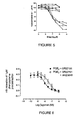
- PGE 2 was shown to induce maximal or near maximal relaxation of cerebral artery rings pre-contracted with the TP receptor agonist U46619 (11 ⁇ ,9 ⁇ -epoxymethano-PGH 2 ), (100nM) or 5-hydroxytryptamine (5-HT), (300nM and 1 ⁇ M). This is shown in Figure 2 , in which is shown the cumulative concentration-effect curves to the relaxant effects of PGE 2 on human cerebral artery rings pre-contracted with: (A) U46619 (100nM); (B) 5-HT (300nM) and (C) 5-HT (1 ⁇ M). Each curve represents a different tissue.
- FIG. 3 shows the cumulative concentration-effect curves to PGD 2 (open symbols) and PGF 2 ⁇ (closed symbols) on human cerebral artery rings contracted with phenylephrine (1 ⁇ M).
- GR32191 (4-heptenoic acid, 7-[5-([1,1'-biphenyl]-4-ylmethoxy)-3-hydroxy-2-(1-piperidinyl)-cyclopentyl]-,hydrochloride, [1R[1.alpha. (Z), 2.beta., 3.beta., 5.alpha.]]), (1 ⁇ M), was present in bathing solution to block prostanoid TP-receptors. Each curve represents a different tissue.
- Butaprost and AH13205 ( trans -2-(4-[1-hydroxyhexyl]phenyl)-5-oxocyclopentaneheptanoate) are recognised as selective EP 2 agonists and thus their effect on human cerebral artery rings contracted with phenylephrine (1 ⁇ M) was determined.
- Figure 5 shows the cumulative concentration-effect curves to PGE 2 (closed circles), AH13205 (open circles) and butaprost (closed triangles).
- GR32191 (1 ⁇ M) was present in the bathing solution to block prostanoid TP-receptors.
- tone was induced with U-46619 (10-100nM) in pulmonary artery or either phenylephrine (1-10 ⁇ M) or endothelin-1 (-7M) in coronary artery.
- U-46619 (10-100nM) in pulmonary artery or either phenylephrine (1-10 ⁇ M) or endothelin-1 (-7M) in coronary artery.
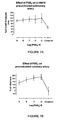
- tissues received a cumulative concentration effect curve to PGE 2 , at log dose intervals, with at least 3 minutes at each concentration. After a maximum response had been obtained, all tissues were treated with cicaprost (0.1-1 ⁇ M), to induce relaxation.
Landscapes
- Health & Medical Sciences (AREA)
- Life Sciences & Earth Sciences (AREA)
- Engineering & Computer Science (AREA)
- Chemical & Material Sciences (AREA)
- Medicinal Chemistry (AREA)
- Biomedical Technology (AREA)
- General Health & Medical Sciences (AREA)
- Immunology (AREA)
- Molecular Biology (AREA)
- Hematology (AREA)
- Public Health (AREA)
- Veterinary Medicine (AREA)
- Animal Behavior & Ethology (AREA)
- Urology & Nephrology (AREA)
- Pharmacology & Pharmacy (AREA)
- Epidemiology (AREA)
- Biochemistry (AREA)
- Cell Biology (AREA)
- Biotechnology (AREA)
- Microbiology (AREA)
- Food Science & Technology (AREA)
- Physics & Mathematics (AREA)
- Analytical Chemistry (AREA)
- Bioinformatics & Cheminformatics (AREA)
- General Physics & Mathematics (AREA)
- Pathology (AREA)
- Tropical Medicine & Parasitology (AREA)
- Toxicology (AREA)
- Pain & Pain Management (AREA)
- Proteomics, Peptides & Aminoacids (AREA)
- Neurology (AREA)
- Neurosurgery (AREA)
- Chemical Kinetics & Catalysis (AREA)
- General Chemical & Material Sciences (AREA)
- Nuclear Medicine, Radiotherapy & Molecular Imaging (AREA)
- Organic Chemistry (AREA)
- Pharmaceuticals Containing Other Organic And Inorganic Compounds (AREA)
- Medicines That Contain Protein Lipid Enzymes And Other Medicines (AREA)
- Measuring Or Testing Involving Enzymes Or Micro-Organisms (AREA)
- Heterocyclic Carbon Compounds Containing A Hetero Ring Having Nitrogen And Oxygen As The Only Ring Hetero Atoms (AREA)
Applications Claiming Priority (1)
| Application Number | Priority Date | Filing Date | Title |
|---|---|---|---|
| PCT/GB2000/001138 WO2001072302A1 (en) | 2000-03-24 | 2000-03-24 | Use of prostanoid ep4 receptor antagonists for the treatment of headache and assays for such antagonists |
Publications (2)
| Publication Number | Publication Date |
|---|---|
| EP1267867A1 EP1267867A1 (en) | 2003-01-02 |
| EP1267867B1 true EP1267867B1 (en) | 2008-05-14 |
Family
ID=9883925
Family Applications (1)
| Application Number | Title | Priority Date | Filing Date |
|---|---|---|---|
| EP00912807A Expired - Lifetime EP1267867B1 (en) | 2000-03-24 | 2000-03-24 | Use of prostanoid ep4 receptor antagonists for the treatment of headache and assays for such antagonists |
Country Status (8)
| Country | Link |
|---|---|
| EP (1) | EP1267867B1 (https=) |
| JP (1) | JP2003528144A (https=) |
| AT (1) | ATE395058T1 (https=) |
| AU (2) | AU3445100A (https=) |
| CA (1) | CA2402099C (https=) |
| DE (1) | DE60038902D1 (https=) |
| DK (1) | DK1267867T3 (https=) |
| WO (1) | WO2001072302A1 (https=) |
Families Citing this family (11)
| Publication number | Priority date | Publication date | Assignee | Title |
|---|---|---|---|---|
| JP2005511562A (ja) * | 2001-10-31 | 2005-04-28 | メディカル リサーチ カウンシル | 月経困難症及び月経過多の治療のためのプロスタグランジンレセプターep2及び/又はep4のアンタゴニスト |
| GB0302094D0 (en) | 2003-01-29 | 2003-02-26 | Pharmagene Lab Ltd | EP4 receptor antagonists |
| GB0324269D0 (en) | 2003-10-16 | 2003-11-19 | Pharmagene Lab Ltd | EP4 receptor antagonists |
| CA2679175C (en) * | 2007-02-26 | 2015-01-13 | Merck Frosst Canada Ltd. | Indole and indoline cyclopropyl amide derivatives as ep4 receptor antagonists |
| US20150126573A1 (en) | 2012-05-09 | 2015-05-07 | Inserm (Institut National De La Sante Et De La Recherche Medicale) | Methods and pharmaceutical compositions for prevention or treatment of chronic obstructive pulmonary disease |
| CR20180323A (es) | 2015-11-20 | 2018-08-06 | Idorsia Pharmaceuticals Ltd | Derivados de indol n-sustituídos como moduladores de los receptores de pge2 |
| TWI768043B (zh) | 2017-05-18 | 2022-06-21 | 瑞士商愛杜西亞製藥有限公司 | N-取代吲哚衍生物 |
| US11839613B2 (en) | 2017-05-18 | 2023-12-12 | Idorsia Pharmaceuticals Ltd | Pyrimidine derivatives as PGE2 receptor modulators |
| PE20191814A1 (es) | 2017-05-18 | 2019-12-27 | Idorsia Pharmaceuticals Ltd | Derivados de pirimidina como moduladores del receptor de pge2 |
| TW201900179A (zh) | 2017-05-18 | 2019-01-01 | 瑞士商愛杜西亞製藥有限公司 | 作為pge2受體調節劑之苯并呋喃及苯并噻吩衍生物 |
| KR102612140B1 (ko) | 2017-05-18 | 2023-12-08 | 이도르시아 파마슈티컬스 리미티드 | 피리미딘 유도체 |
Family Cites Families (4)
| Publication number | Priority date | Publication date | Assignee | Title |
|---|---|---|---|---|
| CN1046714C (zh) * | 1993-12-20 | 1999-11-24 | 藤泽药品工业株式会社 | 二芳基噁唑衍生物及其制法、应用和药物组合物 |
| AUPO713297A0 (en) * | 1997-06-02 | 1997-06-26 | Fujisawa Pharmaceutical Co., Ltd. | Oxazole compound |
| GB9720270D0 (en) * | 1997-09-25 | 1997-11-26 | Pharmagene Lab Limited | Medicaments for the treatment of migraine |
| AU6836200A (en) * | 1999-08-10 | 2001-03-05 | Glaxo Group Limited | Use of ep4 receptor ligands in the treatment of, inter alia, neuropathic pain and colon cancer |
-
2000
- 2000-03-24 CA CA2402099A patent/CA2402099C/en not_active Expired - Fee Related
- 2000-03-24 AT AT00912807T patent/ATE395058T1/de not_active IP Right Cessation
- 2000-03-24 AU AU3445100A patent/AU3445100A/xx active Pending
- 2000-03-24 WO PCT/GB2000/001138 patent/WO2001072302A1/en not_active Ceased
- 2000-03-24 JP JP2001570263A patent/JP2003528144A/ja active Pending
- 2000-03-24 AU AU2000234451A patent/AU2000234451B2/en not_active Ceased
- 2000-03-24 DE DE60038902T patent/DE60038902D1/de not_active Expired - Lifetime
- 2000-03-24 DK DK00912807T patent/DK1267867T3/da active
- 2000-03-24 EP EP00912807A patent/EP1267867B1/en not_active Expired - Lifetime
Non-Patent Citations (1)
| Title |
|---|
| R. A. COLEMAN, S. P. GRIX, S. A. HEAD, J. B. LOUTTIT, A. MALLETT AND R. L. G. SHELDRICK: "A novel inhibitory prostanoid receptor in piglet saphenous vein", PROSTAGLANDINS, vol. 47, February 1994 (1994-02-01), pages 151 - 168 * |
Also Published As
| Publication number | Publication date |
|---|---|
| CA2402099A1 (en) | 2001-10-04 |
| JP2003528144A (ja) | 2003-09-24 |
| ATE395058T1 (de) | 2008-05-15 |
| WO2001072302A1 (en) | 2001-10-04 |
| AU3445100A (en) | 2001-10-08 |
| EP1267867A1 (en) | 2003-01-02 |
| AU2000234451B2 (en) | 2005-09-29 |
| DE60038902D1 (de) | 2008-06-26 |
| CA2402099C (en) | 2011-04-26 |
| DK1267867T3 (da) | 2008-08-25 |
Similar Documents
| Publication | Publication Date | Title |
|---|---|---|
| US8513027B2 (en) | Method of identifying an inhibitor of the prostanoid EP4 receptor | |
| Di Marzo et al. | Highly selective CB1 cannabinoid receptor ligands and novel CB1/VR1 vanilloid receptor “hybrid” ligands | |
| Davis et al. | EP4 prostanoid receptor‐mediated vasodilatation of human middle cerebral arteries | |
| EP1267867B1 (en) | Use of prostanoid ep4 receptor antagonists for the treatment of headache and assays for such antagonists | |
| Foudi et al. | Vasorelaxation induced by prostaglandin E2 in human pulmonary vein: role of the EP4 receptor subtype | |
| JP4410553B2 (ja) | Mifアンタゴニスト活性を有するイソオキサゾリン化合物 | |
| AU2000234451A1 (en) | Use of prostanoid EP4 receptor antagonists for the treatment of headache and assays for such antagonists | |
| SK5522001A3 (en) | 5ht1 receptor agonists and metoclopramide for the treatment of migraine | |
| US5969137A (en) | Benzylamidine derivatives with serotonin receptor binding activity | |
| JP2004510705A (ja) | 方法 | |
| JP2017507930A (ja) | IKKε/TBK1阻害剤とベータアドレナリン作動性アゴニストまたは交感神経系活性化剤との組合せ | |
| EP1047413B1 (fr) | Composition pharmaceutique comprenant un inhibiteur spécifique de l'aminopeptidase a, en particulier l'ec33, pour diminuer la pression artérielle | |
| AU2005218937B2 (en) | Use of antagonists of the CB1 receptor for the manufacture of a composition useful for the treatment of hepatic diseases | |
| US20030158240A1 (en) | Methods for the treatment of primary headache disorders using prostanoid EP4 receptor antagonists, and assays for agents for such treatment | |
| US7109245B2 (en) | Vasoconstrictor cannabinoid analogs | |
| WO2002028388A2 (en) | Use of mek1 inhibitors as protective agents against damage due to ischemia | |
| Centurión et al. | The GR127935‐sensitive 5‐HT1 receptors mediating canine internal carotid vasoconstriction: resemblance to the 5‐HT1B, but not to the 5‐HT1D or 5‐ht1F, receptor subtype | |
| Kim et al. | Relaxation of rabbit middle cerebral arteries in vitro by H1 histaminergic agonists is inhibited by indomethacin and tranylcypromine | |
| Centurión et al. | Evidence for 5‐HT1B/1D and 5‐HT2A receptors mediating constriction of the canine internal carotid circulation | |
| Kuo et al. | NP‐313, 2‐acetylamino‐3‐chloro‐1, 4‐naphthoquinone, a novel antithrombotic agent with dual inhibition of thromboxane A2 synthesis and calcium entry | |
| US6265429B1 (en) | Method for treating congestive heart failure | |
| US20130324545A1 (en) | Methods for the regulation of the prostaglandin f synthase (pgfs) activity of akr1b1 and uses thereof | |
| Rademacher et al. | FINAL ACCEPTED VERSION | |
| JP2010047583A (ja) | 原発性頭痛障害の治療のためのプロスタノイドアンタゴニストの使用 | |
| Van Gelderen et al. | The significance of β-carbolines in psychiatry |
Legal Events
| Date | Code | Title | Description |
|---|---|---|---|
| PUAI | Public reference made under article 153(3) epc to a published international application that has entered the european phase |
Free format text: ORIGINAL CODE: 0009012 |
|
| 17P | Request for examination filed |
Effective date: 20021023 |
|
| AK | Designated contracting states |
Kind code of ref document: A1 Designated state(s): AT BE CH CY DE DK ES FI FR GB GR IE IT LI LU MC NL PT SE |
|
| AX | Request for extension of the european patent |
Free format text: AL;LT;LV;MK;RO;SI |
|
| 17Q | First examination report despatched |
Effective date: 20040116 |
|
| RAP1 | Party data changed (applicant data changed or rights of an application transferred) |
Owner name: ASTERAND UK LIMITED |
|
| 17Q | First examination report despatched |
Effective date: 20040116 |
|
| GRAP | Despatch of communication of intention to grant a patent |
Free format text: ORIGINAL CODE: EPIDOSNIGR1 |
|
| GRAS | Grant fee paid |
Free format text: ORIGINAL CODE: EPIDOSNIGR3 |
|
| GRAA | (expected) grant |
Free format text: ORIGINAL CODE: 0009210 |
|
| AK | Designated contracting states |
Kind code of ref document: B1 Designated state(s): AT BE CH CY DE DK ES FI FR GB GR IE IT LI LU MC NL PT SE |
|
| REG | Reference to a national code |
Ref country code: GB Ref legal event code: FG4D |
|
| REG | Reference to a national code |
Ref country code: CH Ref legal event code: EP |
|
| REG | Reference to a national code |
Ref country code: IE Ref legal event code: FG4D Free format text: LANGUAGE OF EP DOCUMENT: FRENCH |
|
| REF | Corresponds to: |
Ref document number: 60038902 Country of ref document: DE Date of ref document: 20080626 Kind code of ref document: P |
|
| REG | Reference to a national code |
Ref country code: CH Ref legal event code: NV Representative=s name: KIRKER & CIE S.A. |
|
| REG | Reference to a national code |
Ref country code: DK Ref legal event code: T3 |
|
| REG | Reference to a national code |
Ref country code: SE Ref legal event code: TRGR |
|
| PG25 | Lapsed in a contracting state [announced via postgrant information from national office to epo] |
Ref country code: FI Free format text: LAPSE BECAUSE OF FAILURE TO SUBMIT A TRANSLATION OF THE DESCRIPTION OR TO PAY THE FEE WITHIN THE PRESCRIBED TIME-LIMIT Effective date: 20080514 Ref country code: ES Free format text: LAPSE BECAUSE OF FAILURE TO SUBMIT A TRANSLATION OF THE DESCRIPTION OR TO PAY THE FEE WITHIN THE PRESCRIBED TIME-LIMIT Effective date: 20080825 |
|
| PG25 | Lapsed in a contracting state [announced via postgrant information from national office to epo] |
Ref country code: AT Free format text: LAPSE BECAUSE OF FAILURE TO SUBMIT A TRANSLATION OF THE DESCRIPTION OR TO PAY THE FEE WITHIN THE PRESCRIBED TIME-LIMIT Effective date: 20080514 |
|
| PG25 | Lapsed in a contracting state [announced via postgrant information from national office to epo] |
Ref country code: PT Free format text: LAPSE BECAUSE OF FAILURE TO SUBMIT A TRANSLATION OF THE DESCRIPTION OR TO PAY THE FEE WITHIN THE PRESCRIBED TIME-LIMIT Effective date: 20081014 |
|
| PLBE | No opposition filed within time limit |
Free format text: ORIGINAL CODE: 0009261 |
|
| STAA | Information on the status of an ep patent application or granted ep patent |
Free format text: STATUS: NO OPPOSITION FILED WITHIN TIME LIMIT |
|
| 26N | No opposition filed |
Effective date: 20090217 |
|
| PG25 | Lapsed in a contracting state [announced via postgrant information from national office to epo] |
Ref country code: MC Free format text: LAPSE BECAUSE OF NON-PAYMENT OF DUE FEES Effective date: 20090331 |
|
| PG25 | Lapsed in a contracting state [announced via postgrant information from national office to epo] |
Ref country code: GR Free format text: LAPSE BECAUSE OF FAILURE TO SUBMIT A TRANSLATION OF THE DESCRIPTION OR TO PAY THE FEE WITHIN THE PRESCRIBED TIME-LIMIT Effective date: 20080815 |
|
| PG25 | Lapsed in a contracting state [announced via postgrant information from national office to epo] |
Ref country code: LU Free format text: LAPSE BECAUSE OF NON-PAYMENT OF DUE FEES Effective date: 20090324 |
|
| PG25 | Lapsed in a contracting state [announced via postgrant information from national office to epo] |
Ref country code: CY Free format text: LAPSE BECAUSE OF FAILURE TO SUBMIT A TRANSLATION OF THE DESCRIPTION OR TO PAY THE FEE WITHIN THE PRESCRIBED TIME-LIMIT Effective date: 20080514 |
|
| PGFP | Annual fee paid to national office [announced via postgrant information from national office to epo] |
Ref country code: FR Payment date: 20120319 Year of fee payment: 13 Ref country code: CH Payment date: 20120313 Year of fee payment: 13 Ref country code: IE Payment date: 20120312 Year of fee payment: 13 |
|
| PGFP | Annual fee paid to national office [announced via postgrant information from national office to epo] |
Ref country code: SE Payment date: 20120313 Year of fee payment: 13 Ref country code: DK Payment date: 20120312 Year of fee payment: 13 Ref country code: BE Payment date: 20120328 Year of fee payment: 13 Ref country code: GB Payment date: 20120321 Year of fee payment: 13 Ref country code: IT Payment date: 20120317 Year of fee payment: 13 |
|
| PGFP | Annual fee paid to national office [announced via postgrant information from national office to epo] |
Ref country code: NL Payment date: 20120321 Year of fee payment: 13 Ref country code: DE Payment date: 20120411 Year of fee payment: 13 |
|
| REG | Reference to a national code |
Ref country code: GB Ref legal event code: 732E Free format text: REGISTERED BETWEEN 20121025 AND 20121031 Ref country code: NL Ref legal event code: SD Effective date: 20121114 |
|
| REG | Reference to a national code |
Ref country code: DE Ref legal event code: R081 Ref document number: 60038902 Country of ref document: DE Owner name: ASTERAND UK ACQUISITION LIMITED, GB Free format text: FORMER OWNER: ASTERAND UK LTD., ROYSTON, HERTFORDSHIRE, GB Effective date: 20121011 Ref country code: DE Ref legal event code: R081 Ref document number: 60038902 Country of ref document: DE Owner name: ASTERAND UK ACQUISITION LIMITED, GB Free format text: FORMER OWNER: ASTERAND UK LTD., ROYSTON, GB Effective date: 20121011 Ref country code: DE Ref legal event code: R082 Ref document number: 60038902 Country of ref document: DE Representative=s name: WUESTHOFF & WUESTHOFF PATENT- UND RECHTSANWAEL, DE Effective date: 20121011 |
|
| REG | Reference to a national code |
Ref country code: FR Ref legal event code: TP Owner name: ASTERAND UK AQUISITION LIMITED, GB Effective date: 20121126 |
|
| BERE | Be: lapsed |
Owner name: ASTERAND UK LTD Effective date: 20130331 |
|
| REG | Reference to a national code |
Ref country code: NL Ref legal event code: V1 Effective date: 20131001 |
|
| REG | Reference to a national code |
Ref country code: DK Ref legal event code: EBP Ref country code: DK Ref legal event code: EBP Effective date: 20130331 |
|
| REG | Reference to a national code |
Ref country code: SE Ref legal event code: EUG |
|
| PG25 | Lapsed in a contracting state [announced via postgrant information from national office to epo] |
Ref country code: SE Free format text: LAPSE BECAUSE OF NON-PAYMENT OF DUE FEES Effective date: 20130325 |
|
| REG | Reference to a national code |
Ref country code: CH Ref legal event code: PL |
|
| GBPC | Gb: european patent ceased through non-payment of renewal fee |
Effective date: 20130324 |
|
| REG | Reference to a national code |
Ref country code: FR Ref legal event code: ST Effective date: 20131129 |
|
| REG | Reference to a national code |
Ref country code: IE Ref legal event code: MM4A |
|
| REG | Reference to a national code |
Ref country code: DE Ref legal event code: R119 Ref document number: 60038902 Country of ref document: DE Effective date: 20131001 |
|
| PG25 | Lapsed in a contracting state [announced via postgrant information from national office to epo] |
Ref country code: GB Free format text: LAPSE BECAUSE OF NON-PAYMENT OF DUE FEES Effective date: 20130324 Ref country code: IE Free format text: LAPSE BECAUSE OF NON-PAYMENT OF DUE FEES Effective date: 20130324 Ref country code: BE Free format text: LAPSE BECAUSE OF NON-PAYMENT OF DUE FEES Effective date: 20130331 Ref country code: FR Free format text: LAPSE BECAUSE OF NON-PAYMENT OF DUE FEES Effective date: 20130402 Ref country code: LI Free format text: LAPSE BECAUSE OF NON-PAYMENT OF DUE FEES Effective date: 20130331 Ref country code: DE Free format text: LAPSE BECAUSE OF NON-PAYMENT OF DUE FEES Effective date: 20131001 Ref country code: CH Free format text: LAPSE BECAUSE OF NON-PAYMENT OF DUE FEES Effective date: 20130331 |
|
| PG25 | Lapsed in a contracting state [announced via postgrant information from national office to epo] |
Ref country code: IT Free format text: LAPSE BECAUSE OF NON-PAYMENT OF DUE FEES Effective date: 20130324 Ref country code: NL Free format text: LAPSE BECAUSE OF NON-PAYMENT OF DUE FEES Effective date: 20131001 |
|
| PG25 | Lapsed in a contracting state [announced via postgrant information from national office to epo] |
Ref country code: DK Free format text: LAPSE BECAUSE OF NON-PAYMENT OF DUE FEES Effective date: 20130331 |