EP1260588A2 - Methods of producing agmatine and arginine decarboxylase - Google Patents
Methods of producing agmatine and arginine decarboxylase Download PDFInfo
- Publication number
- EP1260588A2 EP1260588A2 EP02009802A EP02009802A EP1260588A2 EP 1260588 A2 EP1260588 A2 EP 1260588A2 EP 02009802 A EP02009802 A EP 02009802A EP 02009802 A EP02009802 A EP 02009802A EP 1260588 A2 EP1260588 A2 EP 1260588A2
- Authority
- EP
- European Patent Office
- Prior art keywords
- recombinant
- arginine decarboxylase
- arginine
- agmatine
- gene
- Prior art date
- Legal status (The legal status is an assumption and is not a legal conclusion. Google has not performed a legal analysis and makes no representation as to the accuracy of the status listed.)
- Withdrawn
Links
- 101000798222 Homo sapiens Antizyme inhibitor 2 Proteins 0.000 title claims abstract description 110
- 102100032252 Antizyme inhibitor 2 Human genes 0.000 title claims abstract description 66
- QYPPJABKJHAVHS-UHFFFAOYSA-N Agmatine Natural products NCCCCNC(N)=N QYPPJABKJHAVHS-UHFFFAOYSA-N 0.000 title claims abstract description 64
- QYPPJABKJHAVHS-UHFFFAOYSA-P agmatinium(2+) Chemical compound NC(=[NH2+])NCCCC[NH3+] QYPPJABKJHAVHS-UHFFFAOYSA-P 0.000 title claims abstract description 57
- 238000000034 method Methods 0.000 title claims description 72
- 239000004475 Arginine Substances 0.000 claims abstract description 20
- ODKSFYDXXFIFQN-UHFFFAOYSA-N arginine Natural products OC(=O)C(N)CCCNC(N)=N ODKSFYDXXFIFQN-UHFFFAOYSA-N 0.000 claims abstract description 20
- 239000000463 material Substances 0.000 claims abstract description 9
- 108090000623 proteins and genes Proteins 0.000 claims description 51
- 238000006243 chemical reaction Methods 0.000 claims description 35
- 241000588724 Escherichia coli Species 0.000 claims description 29
- 244000005700 microbiome Species 0.000 claims description 29
- 239000013612 plasmid Substances 0.000 claims description 27
- KIDHWZJUCRJVML-UHFFFAOYSA-N putrescine Chemical compound NCCCCN KIDHWZJUCRJVML-UHFFFAOYSA-N 0.000 claims description 14
- 108020004414 DNA Proteins 0.000 claims description 13
- 108020004511 Recombinant DNA Proteins 0.000 claims description 12
- 239000013598 vector Substances 0.000 claims description 11
- 102000004169 proteins and genes Human genes 0.000 claims description 10
- NGVDGCNFYWLIFO-UHFFFAOYSA-N pyridoxal 5'-phosphate Chemical compound CC1=NC=C(COP(O)(O)=O)C(C=O)=C1O NGVDGCNFYWLIFO-UHFFFAOYSA-N 0.000 claims description 8
- 239000005700 Putrescine Substances 0.000 claims description 7
- 230000000911 decarboxylating effect Effects 0.000 claims description 7
- 101000652415 Homo sapiens Agmatinase, mitochondrial Proteins 0.000 claims description 6
- 101000711499 Thermococcus kodakarensis (strain ATCC BAA-918 / JCM 12380 / KOD1) N(1)-aminopropylagmatine ureohydrolase Proteins 0.000 claims description 6
- 238000012258 culturing Methods 0.000 claims description 6
- 230000002950 deficient Effects 0.000 claims description 6
- 102000011229 agmatinase Human genes 0.000 claims description 4
- 235000007682 pyridoxal 5'-phosphate Nutrition 0.000 claims description 4
- 239000011589 pyridoxal 5'-phosphate Substances 0.000 claims description 4
- 229960001327 pyridoxal phosphate Drugs 0.000 claims description 4
- 230000001105 regulatory effect Effects 0.000 claims description 4
- 238000010353 genetic engineering Methods 0.000 abstract 1
- 210000004027 cell Anatomy 0.000 description 38
- 102000004190 Enzymes Human genes 0.000 description 34
- 108090000790 Enzymes Proteins 0.000 description 34
- 229940088598 enzyme Drugs 0.000 description 34
- 239000012634 fragment Substances 0.000 description 21
- 239000002609 medium Substances 0.000 description 20
- 239000000243 solution Substances 0.000 description 19
- 235000009697 arginine Nutrition 0.000 description 15
- 238000003752 polymerase chain reaction Methods 0.000 description 14
- 241000196324 Embryophyta Species 0.000 description 13
- -1 acyl agmatine Chemical compound 0.000 description 11
- 101150101115 speB gene Proteins 0.000 description 11
- LXNHXLLTXMVWPM-UHFFFAOYSA-N pyridoxine Chemical compound CC1=NC=C(CO)C(CO)=C1O LXNHXLLTXMVWPM-UHFFFAOYSA-N 0.000 description 10
- AVKUERGKIZMTKX-NJBDSQKTSA-N ampicillin Chemical compound C1([C@@H](N)C(=O)N[C@H]2[C@H]3SC([C@@H](N3C2=O)C(O)=O)(C)C)=CC=CC=C1 AVKUERGKIZMTKX-NJBDSQKTSA-N 0.000 description 9
- 229960000723 ampicillin Drugs 0.000 description 9
- 230000015572 biosynthetic process Effects 0.000 description 9
- ODKSFYDXXFIFQN-BYPYZUCNSA-N L-arginine Chemical compound OC(=O)[C@@H](N)CCCN=C(N)N ODKSFYDXXFIFQN-BYPYZUCNSA-N 0.000 description 8
- 229930064664 L-arginine Natural products 0.000 description 8
- 235000014852 L-arginine Nutrition 0.000 description 8
- 235000018102 proteins Nutrition 0.000 description 8
- 239000006142 Luria-Bertani Agar Substances 0.000 description 7
- 241001415395 Spea Species 0.000 description 7
- 238000004519 manufacturing process Methods 0.000 description 7
- 102000016928 DNA-directed DNA polymerase Human genes 0.000 description 6
- 108010014303 DNA-directed DNA polymerase Proteins 0.000 description 6
- 230000000694 effects Effects 0.000 description 6
- 150000001413 amino acids Chemical class 0.000 description 5
- 238000004458 analytical method Methods 0.000 description 5
- 239000007788 liquid Substances 0.000 description 5
- 230000008569 process Effects 0.000 description 5
- 238000010186 staining Methods 0.000 description 5
- 239000000758 substrate Substances 0.000 description 5
- 238000003786 synthesis reaction Methods 0.000 description 5
- 229940011671 vitamin b6 Drugs 0.000 description 5
- IJGRMHOSHXDMSA-UHFFFAOYSA-N Atomic nitrogen Chemical compound N#N IJGRMHOSHXDMSA-UHFFFAOYSA-N 0.000 description 4
- CURLTUGMZLYLDI-UHFFFAOYSA-N Carbon dioxide Chemical compound O=C=O CURLTUGMZLYLDI-UHFFFAOYSA-N 0.000 description 4
- 102000053602 DNA Human genes 0.000 description 4
- 102000012410 DNA Ligases Human genes 0.000 description 4
- 108010061982 DNA Ligases Proteins 0.000 description 4
- 108700005126 Ornithine decarboxylases Proteins 0.000 description 4
- FAPWRFPIFSIZLT-UHFFFAOYSA-M Sodium chloride Chemical compound [Na+].[Cl-] FAPWRFPIFSIZLT-UHFFFAOYSA-M 0.000 description 4
- 235000001014 amino acid Nutrition 0.000 description 4
- 239000013611 chromosomal DNA Substances 0.000 description 4
- 238000010276 construction Methods 0.000 description 4
- 239000013613 expression plasmid Substances 0.000 description 4
- 210000003000 inclusion body Anatomy 0.000 description 4
- 230000004048 modification Effects 0.000 description 4
- 238000012986 modification Methods 0.000 description 4
- 230000035772 mutation Effects 0.000 description 4
- 238000006386 neutralization reaction Methods 0.000 description 4
- 229920000768 polyamine Polymers 0.000 description 4
- 235000008160 pyridoxine Nutrition 0.000 description 4
- 239000011677 pyridoxine Substances 0.000 description 4
- 239000000126 substance Substances 0.000 description 4
- WEVYAHXRMPXWCK-UHFFFAOYSA-N Acetonitrile Chemical compound CC#N WEVYAHXRMPXWCK-UHFFFAOYSA-N 0.000 description 3
- 241001244729 Apalis Species 0.000 description 3
- 241000588722 Escherichia Species 0.000 description 3
- WQZGKKKJIJFFOK-GASJEMHNSA-N Glucose Natural products OC[C@H]1OC(O)[C@H](O)[C@@H](O)[C@@H]1O WQZGKKKJIJFFOK-GASJEMHNSA-N 0.000 description 3
- PEDCQBHIVMGVHV-UHFFFAOYSA-N Glycerine Chemical compound OCC(O)CO PEDCQBHIVMGVHV-UHFFFAOYSA-N 0.000 description 3
- OKKJLVBELUTLKV-UHFFFAOYSA-N Methanol Chemical compound OC OKKJLVBELUTLKV-UHFFFAOYSA-N 0.000 description 3
- 102000052812 Ornithine decarboxylases Human genes 0.000 description 3
- 241000607142 Salmonella Species 0.000 description 3
- 230000002378 acidificating effect Effects 0.000 description 3
- 150000001412 amines Chemical class 0.000 description 3
- 238000005119 centrifugation Methods 0.000 description 3
- 210000000349 chromosome Anatomy 0.000 description 3
- KRKNYBCHXYNGOX-UHFFFAOYSA-N citric acid Chemical compound OC(=O)CC(O)(C(O)=O)CC(O)=O KRKNYBCHXYNGOX-UHFFFAOYSA-N 0.000 description 3
- 238000010367 cloning Methods 0.000 description 3
- 239000000284 extract Substances 0.000 description 3
- 230000006870 function Effects 0.000 description 3
- 239000008103 glucose Substances 0.000 description 3
- 230000006801 homologous recombination Effects 0.000 description 3
- 238000002744 homologous recombination Methods 0.000 description 3
- 230000002779 inactivation Effects 0.000 description 3
- 101150109249 lacI gene Proteins 0.000 description 3
- 230000007246 mechanism Effects 0.000 description 3
- 238000002360 preparation method Methods 0.000 description 3
- 239000000047 product Substances 0.000 description 3
- 230000010076 replication Effects 0.000 description 3
- 108091008146 restriction endonucleases Proteins 0.000 description 3
- 239000012138 yeast extract Substances 0.000 description 3
- FWMNVWWHGCHHJJ-SKKKGAJSSA-N 4-amino-1-[(2r)-6-amino-2-[[(2r)-2-[[(2r)-2-[[(2r)-2-amino-3-phenylpropanoyl]amino]-3-phenylpropanoyl]amino]-4-methylpentanoyl]amino]hexanoyl]piperidine-4-carboxylic acid Chemical compound C([C@H](C(=O)N[C@H](CC(C)C)C(=O)N[C@H](CCCCN)C(=O)N1CCC(N)(CC1)C(O)=O)NC(=O)[C@H](N)CC=1C=CC=CC=1)C1=CC=CC=C1 FWMNVWWHGCHHJJ-SKKKGAJSSA-N 0.000 description 2
- QGZKDVFQNNGYKY-UHFFFAOYSA-N Ammonia Chemical compound N QGZKDVFQNNGYKY-UHFFFAOYSA-N 0.000 description 2
- NLXLAEXVIDQMFP-UHFFFAOYSA-N Ammonia chloride Chemical compound [NH4+].[Cl-] NLXLAEXVIDQMFP-UHFFFAOYSA-N 0.000 description 2
- VHUUQVKOLVNVRT-UHFFFAOYSA-N Ammonium hydroxide Chemical compound [NH4+].[OH-] VHUUQVKOLVNVRT-UHFFFAOYSA-N 0.000 description 2
- OKTJSMMVPCPJKN-UHFFFAOYSA-N Carbon Chemical compound [C] OKTJSMMVPCPJKN-UHFFFAOYSA-N 0.000 description 2
- HEDRZPFGACZZDS-UHFFFAOYSA-N Chloroform Chemical compound ClC(Cl)Cl HEDRZPFGACZZDS-UHFFFAOYSA-N 0.000 description 2
- RGHNJXZEOKUKBD-SQOUGZDYSA-N D-gluconic acid Chemical compound OC[C@@H](O)[C@@H](O)[C@H](O)[C@@H](O)C(O)=O RGHNJXZEOKUKBD-SQOUGZDYSA-N 0.000 description 2
- SRBFZHDQGSBBOR-IOVATXLUSA-N D-xylopyranose Chemical compound O[C@@H]1COC(O)[C@H](O)[C@H]1O SRBFZHDQGSBBOR-IOVATXLUSA-N 0.000 description 2
- VZCYOOQTPOCHFL-OWOJBTEDSA-N Fumaric acid Chemical compound OC(=O)\C=C\C(O)=O VZCYOOQTPOCHFL-OWOJBTEDSA-N 0.000 description 2
- 206010071602 Genetic polymorphism Diseases 0.000 description 2
- CSNNHWWHGAXBCP-UHFFFAOYSA-L Magnesium sulfate Chemical compound [Mg+2].[O-][S+2]([O-])([O-])[O-] CSNNHWWHGAXBCP-UHFFFAOYSA-L 0.000 description 2
- 108020005038 Terminator Codon Proteins 0.000 description 2
- XSQUKJJJFZCRTK-UHFFFAOYSA-N Urea Chemical compound NC(N)=O XSQUKJJJFZCRTK-UHFFFAOYSA-N 0.000 description 2
- 238000009825 accumulation Methods 0.000 description 2
- 230000006518 acidic stress Effects 0.000 description 2
- 235000011114 ammonium hydroxide Nutrition 0.000 description 2
- 230000003321 amplification Effects 0.000 description 2
- PYMYPHUHKUWMLA-UHFFFAOYSA-N arabinose Natural products OCC(O)C(O)C(O)C=O PYMYPHUHKUWMLA-UHFFFAOYSA-N 0.000 description 2
- SRBFZHDQGSBBOR-UHFFFAOYSA-N beta-D-Pyranose-Lyxose Natural products OC1COC(O)C(O)C1O SRBFZHDQGSBBOR-UHFFFAOYSA-N 0.000 description 2
- 229940041514 candida albicans extract Drugs 0.000 description 2
- 229910052799 carbon Inorganic materials 0.000 description 2
- 239000001569 carbon dioxide Substances 0.000 description 2
- 229910002092 carbon dioxide Inorganic materials 0.000 description 2
- 230000002759 chromosomal effect Effects 0.000 description 2
- 239000005515 coenzyme Substances 0.000 description 2
- 230000007812 deficiency Effects 0.000 description 2
- 238000005516 engineering process Methods 0.000 description 2
- 230000002255 enzymatic effect Effects 0.000 description 2
- 238000004128 high performance liquid chromatography Methods 0.000 description 2
- 230000001939 inductive effect Effects 0.000 description 2
- 239000013462 industrial intermediate Substances 0.000 description 2
- 238000003780 insertion Methods 0.000 description 2
- 230000037431 insertion Effects 0.000 description 2
- 230000002934 lysing effect Effects 0.000 description 2
- 238000010369 molecular cloning Methods 0.000 description 2
- 210000003097 mucus Anatomy 0.000 description 2
- 229910052757 nitrogen Inorganic materials 0.000 description 2
- 238000003199 nucleic acid amplification method Methods 0.000 description 2
- 230000035790 physiological processes and functions Effects 0.000 description 2
- 238000001556 precipitation Methods 0.000 description 2
- 238000012545 processing Methods 0.000 description 2
- 238000000746 purification Methods 0.000 description 2
- 238000011084 recovery Methods 0.000 description 2
- 239000000523 sample Substances 0.000 description 2
- 238000000926 separation method Methods 0.000 description 2
- 239000011780 sodium chloride Substances 0.000 description 2
- ATHGHQPFGPMSJY-UHFFFAOYSA-N spermidine Chemical compound NCCCCNCCCN ATHGHQPFGPMSJY-UHFFFAOYSA-N 0.000 description 2
- KDYFGRWQOYBRFD-UHFFFAOYSA-N succinic acid Chemical compound OC(=O)CCC(O)=O KDYFGRWQOYBRFD-UHFFFAOYSA-N 0.000 description 2
- 239000004094 surface-active agent Substances 0.000 description 2
- 230000002194 synthesizing effect Effects 0.000 description 2
- 230000009466 transformation Effects 0.000 description 2
- 238000013519 translation Methods 0.000 description 2
- 239000012137 tryptone Substances 0.000 description 2
- 238000009281 ultraviolet germicidal irradiation Methods 0.000 description 2
- HDTRYLNUVZCQOY-UHFFFAOYSA-N α-D-glucopyranosyl-α-D-glucopyranoside Natural products OC1C(O)C(O)C(CO)OC1OC1C(O)C(O)C(O)C(CO)O1 HDTRYLNUVZCQOY-UHFFFAOYSA-N 0.000 description 1
- 108091032973 (ribonucleotides)n+m Proteins 0.000 description 1
- NWUYHJFMYQTDRP-UHFFFAOYSA-N 1,2-bis(ethenyl)benzene;1-ethenyl-2-ethylbenzene;styrene Chemical compound C=CC1=CC=CC=C1.CCC1=CC=CC=C1C=C.C=CC1=CC=CC=C1C=C NWUYHJFMYQTDRP-UHFFFAOYSA-N 0.000 description 1
- HMUNWXXNJPVALC-UHFFFAOYSA-N 1-[4-[2-(2,3-dihydro-1H-inden-2-ylamino)pyrimidin-5-yl]piperazin-1-yl]-2-(2,4,6,7-tetrahydrotriazolo[4,5-c]pyridin-5-yl)ethanone Chemical compound C1C(CC2=CC=CC=C12)NC1=NC=C(C=N1)N1CCN(CC1)C(CN1CC2=C(CC1)NN=N2)=O HMUNWXXNJPVALC-UHFFFAOYSA-N 0.000 description 1
- OWEGMIWEEQEYGQ-UHFFFAOYSA-N 100676-05-9 Natural products OC1C(O)C(O)C(CO)OC1OCC1C(O)C(O)C(O)C(OC2C(OC(O)C(O)C2O)CO)O1 OWEGMIWEEQEYGQ-UHFFFAOYSA-N 0.000 description 1
- WZFUQSJFWNHZHM-UHFFFAOYSA-N 2-[4-[2-(2,3-dihydro-1H-inden-2-ylamino)pyrimidin-5-yl]piperazin-1-yl]-1-(2,4,6,7-tetrahydrotriazolo[4,5-c]pyridin-5-yl)ethanone Chemical compound C1C(CC2=CC=CC=C12)NC1=NC=C(C=N1)N1CCN(CC1)CC(=O)N1CC2=C(CC1)NN=N2 WZFUQSJFWNHZHM-UHFFFAOYSA-N 0.000 description 1
- WTLKTXIHIHFSGU-UHFFFAOYSA-N 2-nitrosoguanidine Chemical compound NC(N)=NN=O WTLKTXIHIHFSGU-UHFFFAOYSA-N 0.000 description 1
- GUBGYTABKSRVRQ-XLOQQCSPSA-N Alpha-Lactose Chemical compound O[C@@H]1[C@@H](O)[C@@H](O)[C@@H](CO)O[C@H]1O[C@@H]1[C@@H](CO)O[C@H](O)[C@H](O)[C@H]1O GUBGYTABKSRVRQ-XLOQQCSPSA-N 0.000 description 1
- 239000004254 Ammonium phosphate Substances 0.000 description 1
- 102000004031 Carboxy-Lyases Human genes 0.000 description 1
- 108090000489 Carboxy-Lyases Proteins 0.000 description 1
- FBPFZTCFMRRESA-FSIIMWSLSA-N D-Glucitol Natural products OC[C@H](O)[C@H](O)[C@@H](O)[C@H](O)CO FBPFZTCFMRRESA-FSIIMWSLSA-N 0.000 description 1
- FBPFZTCFMRRESA-KVTDHHQDSA-N D-Mannitol Chemical compound OC[C@@H](O)[C@@H](O)[C@H](O)[C@H](O)CO FBPFZTCFMRRESA-KVTDHHQDSA-N 0.000 description 1
- FBPFZTCFMRRESA-JGWLITMVSA-N D-glucitol Chemical compound OC[C@H](O)[C@@H](O)[C@H](O)[C@H](O)CO FBPFZTCFMRRESA-JGWLITMVSA-N 0.000 description 1
- RGHNJXZEOKUKBD-UHFFFAOYSA-N D-gluconic acid Natural products OCC(O)C(O)C(O)C(O)C(O)=O RGHNJXZEOKUKBD-UHFFFAOYSA-N 0.000 description 1
- HMFHBZSHGGEWLO-SOOFDHNKSA-N D-ribofuranose Chemical compound OC[C@H]1OC(O)[C@H](O)[C@@H]1O HMFHBZSHGGEWLO-SOOFDHNKSA-N 0.000 description 1
- 241001646716 Escherichia coli K-12 Species 0.000 description 1
- 241001302584 Escherichia coli str. K-12 substr. W3110 Species 0.000 description 1
- 229930091371 Fructose Natural products 0.000 description 1
- RFSUNEUAIZKAJO-ARQDHWQXSA-N Fructose Chemical compound OC[C@H]1O[C@](O)(CO)[C@@H](O)[C@@H]1O RFSUNEUAIZKAJO-ARQDHWQXSA-N 0.000 description 1
- 239000005715 Fructose Substances 0.000 description 1
- 244000068988 Glycine max Species 0.000 description 1
- 235000010469 Glycine max Nutrition 0.000 description 1
- AVXURJPOCDRRFD-UHFFFAOYSA-N Hydroxylamine Chemical compound ON AVXURJPOCDRRFD-UHFFFAOYSA-N 0.000 description 1
- AHLPHDHHMVZTML-BYPYZUCNSA-N L-Ornithine Chemical compound NCCC[C@H](N)C(O)=O AHLPHDHHMVZTML-BYPYZUCNSA-N 0.000 description 1
- GUBGYTABKSRVRQ-QKKXKWKRSA-N Lactose Natural products OC[C@H]1O[C@@H](O[C@H]2[C@H](O)[C@@H](O)C(O)O[C@@H]2CO)[C@H](O)[C@@H](O)[C@H]1O GUBGYTABKSRVRQ-QKKXKWKRSA-N 0.000 description 1
- GUBGYTABKSRVRQ-PICCSMPSSA-N Maltose Natural products O[C@@H]1[C@@H](O)[C@H](O)[C@@H](CO)O[C@@H]1O[C@@H]1[C@@H](CO)OC(O)[C@H](O)[C@H]1O GUBGYTABKSRVRQ-PICCSMPSSA-N 0.000 description 1
- 229930195725 Mannitol Natural products 0.000 description 1
- 102000016943 Muramidase Human genes 0.000 description 1
- 108010014251 Muramidase Proteins 0.000 description 1
- 108010062010 N-Acetylmuramoyl-L-alanine Amidase Proteins 0.000 description 1
- IOVCWXUNBOPUCH-UHFFFAOYSA-N Nitrous acid Chemical compound ON=O IOVCWXUNBOPUCH-UHFFFAOYSA-N 0.000 description 1
- AHLPHDHHMVZTML-UHFFFAOYSA-N Orn-delta-NH2 Natural products NCCCC(N)C(O)=O AHLPHDHHMVZTML-UHFFFAOYSA-N 0.000 description 1
- UTJLXEIPEHZYQJ-UHFFFAOYSA-N Ornithine Natural products OC(=O)C(C)CCCN UTJLXEIPEHZYQJ-UHFFFAOYSA-N 0.000 description 1
- 108091005804 Peptidases Proteins 0.000 description 1
- 102000035195 Peptidases Human genes 0.000 description 1
- 102000009661 Repressor Proteins Human genes 0.000 description 1
- 108010034634 Repressor Proteins Proteins 0.000 description 1
- PYMYPHUHKUWMLA-LMVFSUKVSA-N Ribose Natural products OC[C@@H](O)[C@@H](O)[C@@H](O)C=O PYMYPHUHKUWMLA-LMVFSUKVSA-N 0.000 description 1
- 229920002472 Starch Polymers 0.000 description 1
- 239000004098 Tetracycline Substances 0.000 description 1
- HDTRYLNUVZCQOY-WSWWMNSNSA-N Trehalose Natural products O[C@@H]1[C@@H](O)[C@@H](O)[C@@H](CO)O[C@@H]1O[C@@H]1[C@H](O)[C@@H](O)[C@@H](O)[C@@H](CO)O1 HDTRYLNUVZCQOY-WSWWMNSNSA-N 0.000 description 1
- 230000009471 action Effects 0.000 description 1
- 238000007792 addition Methods 0.000 description 1
- 150000001298 alcohols Chemical class 0.000 description 1
- HDTRYLNUVZCQOY-LIZSDCNHSA-N alpha,alpha-trehalose Chemical compound O[C@@H]1[C@@H](O)[C@H](O)[C@@H](CO)O[C@@H]1O[C@@H]1[C@H](O)[C@@H](O)[C@H](O)[C@@H](CO)O1 HDTRYLNUVZCQOY-LIZSDCNHSA-N 0.000 description 1
- HMFHBZSHGGEWLO-UHFFFAOYSA-N alpha-D-Furanose-Ribose Natural products OCC1OC(O)C(O)C1O HMFHBZSHGGEWLO-UHFFFAOYSA-N 0.000 description 1
- WQZGKKKJIJFFOK-PHYPRBDBSA-N alpha-D-galactose Chemical compound OC[C@H]1O[C@H](O)[C@H](O)[C@@H](O)[C@H]1O WQZGKKKJIJFFOK-PHYPRBDBSA-N 0.000 description 1
- 235000019270 ammonium chloride Nutrition 0.000 description 1
- 229910000148 ammonium phosphate Inorganic materials 0.000 description 1
- 235000019289 ammonium phosphates Nutrition 0.000 description 1
- 150000003863 ammonium salts Chemical class 0.000 description 1
- BFNBIHQBYMNNAN-UHFFFAOYSA-N ammonium sulfate Chemical compound N.N.OS(O)(=O)=O BFNBIHQBYMNNAN-UHFFFAOYSA-N 0.000 description 1
- 229910052921 ammonium sulfate Inorganic materials 0.000 description 1
- 235000011130 ammonium sulphate Nutrition 0.000 description 1
- 210000004102 animal cell Anatomy 0.000 description 1
- PYMYPHUHKUWMLA-WDCZJNDASA-N arabinose Chemical compound OC[C@@H](O)[C@@H](O)[C@H](O)C=O PYMYPHUHKUWMLA-WDCZJNDASA-N 0.000 description 1
- 230000001580 bacterial effect Effects 0.000 description 1
- 230000037429 base substitution Effects 0.000 description 1
- 239000011324 bead Substances 0.000 description 1
- 230000008901 benefit Effects 0.000 description 1
- WQZGKKKJIJFFOK-VFUOTHLCSA-N beta-D-glucose Chemical compound OC[C@H]1O[C@@H](O)[C@H](O)[C@@H](O)[C@@H]1O WQZGKKKJIJFFOK-VFUOTHLCSA-N 0.000 description 1
- GUBGYTABKSRVRQ-QUYVBRFLSA-N beta-maltose Chemical compound OC[C@H]1O[C@H](O[C@H]2[C@H](O)[C@@H](O)[C@H](O)O[C@@H]2CO)[C@H](O)[C@@H](O)[C@@H]1O GUBGYTABKSRVRQ-QUYVBRFLSA-N 0.000 description 1
- 230000003570 biosynthesizing effect Effects 0.000 description 1
- 230000000903 blocking effect Effects 0.000 description 1
- 238000009395 breeding Methods 0.000 description 1
- 230000001488 breeding effect Effects 0.000 description 1
- 239000001506 calcium phosphate Substances 0.000 description 1
- 229910000389 calcium phosphate Inorganic materials 0.000 description 1
- 235000011010 calcium phosphates Nutrition 0.000 description 1
- 239000004202 carbamide Substances 0.000 description 1
- 239000003054 catalyst Substances 0.000 description 1
- 239000003093 cationic surfactant Substances 0.000 description 1
- 238000003776 cleavage reaction Methods 0.000 description 1
- 238000004440 column chromatography Methods 0.000 description 1
- 238000011109 contamination Methods 0.000 description 1
- 238000002425 crystallisation Methods 0.000 description 1
- 230000008025 crystallization Effects 0.000 description 1
- 210000004748 cultured cell Anatomy 0.000 description 1
- 230000034994 death Effects 0.000 description 1
- 238000000354 decomposition reaction Methods 0.000 description 1
- 238000012217 deletion Methods 0.000 description 1
- 230000037430 deletion Effects 0.000 description 1
- 238000001514 detection method Methods 0.000 description 1
- MNNHAPBLZZVQHP-UHFFFAOYSA-N diammonium hydrogen phosphate Chemical compound [NH4+].[NH4+].OP([O-])([O-])=O MNNHAPBLZZVQHP-UHFFFAOYSA-N 0.000 description 1
- 235000014113 dietary fatty acids Nutrition 0.000 description 1
- 238000001962 electrophoresis Methods 0.000 description 1
- 239000003623 enhancer Substances 0.000 description 1
- 230000002708 enhancing effect Effects 0.000 description 1
- 238000011156 evaluation Methods 0.000 description 1
- 239000013604 expression vector Substances 0.000 description 1
- 229930195729 fatty acid Natural products 0.000 description 1
- 239000000194 fatty acid Substances 0.000 description 1
- 150000004665 fatty acids Chemical class 0.000 description 1
- 230000001605 fetal effect Effects 0.000 description 1
- 238000001914 filtration Methods 0.000 description 1
- 239000001530 fumaric acid Substances 0.000 description 1
- 229930182830 galactose Natural products 0.000 description 1
- 238000012215 gene cloning Methods 0.000 description 1
- 239000011521 glass Substances 0.000 description 1
- 239000000174 gluconic acid Substances 0.000 description 1
- 235000012208 gluconic acid Nutrition 0.000 description 1
- 230000012010 growth Effects 0.000 description 1
- 230000006872 improvement Effects 0.000 description 1
- 230000006698 induction Effects 0.000 description 1
- 238000009776 industrial production Methods 0.000 description 1
- 230000002401 inhibitory effect Effects 0.000 description 1
- 229910001410 inorganic ion Inorganic materials 0.000 description 1
- 239000003456 ion exchange resin Substances 0.000 description 1
- 229920003303 ion-exchange polymer Polymers 0.000 description 1
- XEEYBQQBJWHFJM-UHFFFAOYSA-N iron Substances [Fe] XEEYBQQBJWHFJM-UHFFFAOYSA-N 0.000 description 1
- 229910052742 iron Inorganic materials 0.000 description 1
- 239000008101 lactose Substances 0.000 description 1
- 229960000274 lysozyme Drugs 0.000 description 1
- 239000004325 lysozyme Substances 0.000 description 1
- 235000010335 lysozyme Nutrition 0.000 description 1
- 229910052943 magnesium sulfate Inorganic materials 0.000 description 1
- 235000019341 magnesium sulphate Nutrition 0.000 description 1
- 238000012423 maintenance Methods 0.000 description 1
- 230000014759 maintenance of location Effects 0.000 description 1
- 229910001437 manganese ion Inorganic materials 0.000 description 1
- 239000000594 mannitol Substances 0.000 description 1
- 235000010355 mannitol Nutrition 0.000 description 1
- 239000003550 marker Substances 0.000 description 1
- 230000037353 metabolic pathway Effects 0.000 description 1
- 230000000813 microbial effect Effects 0.000 description 1
- 238000002703 mutagenesis Methods 0.000 description 1
- 231100000350 mutagenesis Toxicity 0.000 description 1
- 239000003471 mutagenic agent Substances 0.000 description 1
- 231100000707 mutagenic chemical Toxicity 0.000 description 1
- 230000003505 mutagenic effect Effects 0.000 description 1
- FEMOMIGRRWSMCU-UHFFFAOYSA-N ninhydrin Chemical compound C1=CC=C2C(=O)C(O)(O)C(=O)C2=C1 FEMOMIGRRWSMCU-UHFFFAOYSA-N 0.000 description 1
- 108020004707 nucleic acids Proteins 0.000 description 1
- 102000039446 nucleic acids Human genes 0.000 description 1
- 150000007523 nucleic acids Chemical class 0.000 description 1
- 235000015097 nutrients Nutrition 0.000 description 1
- 150000007524 organic acids Chemical class 0.000 description 1
- 235000005985 organic acids Nutrition 0.000 description 1
- 125000001477 organic nitrogen group Chemical group 0.000 description 1
- 229960003104 ornithine Drugs 0.000 description 1
- 238000010979 pH adjustment Methods 0.000 description 1
- 239000008363 phosphate buffer Substances 0.000 description 1
- 229920002401 polyacrylamide Polymers 0.000 description 1
- 235000019833 protease Nutrition 0.000 description 1
- RADKZDMFGJYCBB-UHFFFAOYSA-N pyridoxal hydrochloride Natural products CC1=NC=C(CO)C(C=O)=C1O RADKZDMFGJYCBB-UHFFFAOYSA-N 0.000 description 1
- 125000001453 quaternary ammonium group Chemical group 0.000 description 1
- 230000009467 reduction Effects 0.000 description 1
- 230000007017 scission Effects 0.000 description 1
- 239000002453 shampoo Substances 0.000 description 1
- 239000007974 sodium acetate buffer Substances 0.000 description 1
- AJPJDKMHJJGVTQ-UHFFFAOYSA-M sodium dihydrogen phosphate Chemical compound [Na+].OP(O)([O-])=O AJPJDKMHJJGVTQ-UHFFFAOYSA-M 0.000 description 1
- 238000002415 sodium dodecyl sulfate polyacrylamide gel electrophoresis Methods 0.000 description 1
- 229910000162 sodium phosphate Inorganic materials 0.000 description 1
- 239000002904 solvent Substances 0.000 description 1
- 239000000600 sorbitol Substances 0.000 description 1
- 229940063673 spermidine Drugs 0.000 description 1
- 239000008107 starch Substances 0.000 description 1
- 235000019698 starch Nutrition 0.000 description 1
- 239000007858 starting material Substances 0.000 description 1
- 230000004936 stimulating effect Effects 0.000 description 1
- 238000003756 stirring Methods 0.000 description 1
- 238000012916 structural analysis Methods 0.000 description 1
- 239000001384 succinic acid Substances 0.000 description 1
- 235000000346 sugar Nutrition 0.000 description 1
- 150000008163 sugars Chemical class 0.000 description 1
- 239000006228 supernatant Substances 0.000 description 1
- 238000012360 testing method Methods 0.000 description 1
- 229960002180 tetracycline Drugs 0.000 description 1
- 229930101283 tetracycline Natural products 0.000 description 1
- 235000019364 tetracycline Nutrition 0.000 description 1
- 150000003522 tetracyclines Chemical class 0.000 description 1
- 238000004809 thin layer chromatography Methods 0.000 description 1
- 230000001988 toxicity Effects 0.000 description 1
- 231100000419 toxicity Toxicity 0.000 description 1
- VZCYOOQTPOCHFL-UHFFFAOYSA-N trans-butenedioic acid Natural products OC(=O)C=CC(O)=O VZCYOOQTPOCHFL-UHFFFAOYSA-N 0.000 description 1
- 230000005030 transcription termination Effects 0.000 description 1
- QORWJWZARLRLPR-UHFFFAOYSA-H tricalcium bis(phosphate) Chemical compound [Ca+2].[Ca+2].[Ca+2].[O-]P([O-])([O-])=O.[O-]P([O-])([O-])=O QORWJWZARLRLPR-UHFFFAOYSA-H 0.000 description 1
- 101150019416 trpA gene Proteins 0.000 description 1
- 108700026220 vif Genes Proteins 0.000 description 1
- 229940088594 vitamin Drugs 0.000 description 1
- 235000013343 vitamin Nutrition 0.000 description 1
- 239000011782 vitamin Substances 0.000 description 1
- 229930003231 vitamin Natural products 0.000 description 1
- 235000019158 vitamin B6 Nutrition 0.000 description 1
- 239000011726 vitamin B6 Substances 0.000 description 1
- 238000005406 washing Methods 0.000 description 1
- 210000005253 yeast cell Anatomy 0.000 description 1
Images


Classifications
-
- C—CHEMISTRY; METALLURGY
- C12—BIOCHEMISTRY; BEER; SPIRITS; WINE; VINEGAR; MICROBIOLOGY; ENZYMOLOGY; MUTATION OR GENETIC ENGINEERING
- C12P—FERMENTATION OR ENZYME-USING PROCESSES TO SYNTHESISE A DESIRED CHEMICAL COMPOUND OR COMPOSITION OR TO SEPARATE OPTICAL ISOMERS FROM A RACEMIC MIXTURE
- C12P13/00—Preparation of nitrogen-containing organic compounds
- C12P13/001—Amines; Imines
-
- C—CHEMISTRY; METALLURGY
- C12—BIOCHEMISTRY; BEER; SPIRITS; WINE; VINEGAR; MICROBIOLOGY; ENZYMOLOGY; MUTATION OR GENETIC ENGINEERING
- C12P—FERMENTATION OR ENZYME-USING PROCESSES TO SYNTHESISE A DESIRED CHEMICAL COMPOUND OR COMPOSITION OR TO SEPARATE OPTICAL ISOMERS FROM A RACEMIC MIXTURE
- C12P13/00—Preparation of nitrogen-containing organic compounds
-
- C—CHEMISTRY; METALLURGY
- C12—BIOCHEMISTRY; BEER; SPIRITS; WINE; VINEGAR; MICROBIOLOGY; ENZYMOLOGY; MUTATION OR GENETIC ENGINEERING
- C12N—MICROORGANISMS OR ENZYMES; COMPOSITIONS THEREOF; PROPAGATING, PRESERVING, OR MAINTAINING MICROORGANISMS; MUTATION OR GENETIC ENGINEERING; CULTURE MEDIA
- C12N9/00—Enzymes; Proenzymes; Compositions thereof; Processes for preparing, activating, inhibiting, separating or purifying enzymes
- C12N9/88—Lyases (4.)
-
- C—CHEMISTRY; METALLURGY
- C12—BIOCHEMISTRY; BEER; SPIRITS; WINE; VINEGAR; MICROBIOLOGY; ENZYMOLOGY; MUTATION OR GENETIC ENGINEERING
- C12Y—ENZYMES
- C12Y401/00—Carbon-carbon lyases (4.1)
- C12Y401/01—Carboxy-lyases (4.1.1)
- C12Y401/01019—Arginine decarboxylase (4.1.1.19)
Definitions
- This invention relates to a method of producing agmatine enzymatically (i.e. by enzyme raction) from arginine as one of amino acids as a starting material. More particularly, this invention relates to a method of producing agmatine at a practical level by using a recombinant that has amplified and expressed arginine decarboxylase gene.
- acyl agmatine attracts attention as an intermediate for production of acyl agmatine having various fatty acids added thereto.
- the acyl agmatine is found to have an excellent surfactant action, and used particularly for use in a shampoo or the like because it is superior in flexibility and moisture retention after washing compared to general-purpose quaternary ammonium type cationic surfactants.
- arginine decarboxylase produced by microorganisms is known to produce agmatine from arginine which is one of amino acids as one substrate, as shown in the following reaction formula.
- microorganisms producing arginine decarboxylase the genus Escherichia including E. coli and the genus Salmonella (J. Bacteriol., 177, 4097-4104 (1995)) and plants (Mol. Gen. Genet., 224, 431-436 (1990), Plant Physiol., 100, 146-152 (1992), Plant Physiol., 103, 829-834 (1993), Plant Cell Physiol., 35, 1245-1249 (1994)) are known.
- the present inventors attempted to create a recombinant Escherichia coli microorganism by cloning the arginine decarboxylase gene (adi) from Escherichia coli (E. coli) and introducing it into E. coli.
- arginine decarboxylase can be expressed in a large amount, thus arriving at this invention.
- the method of producing agmatine by decarboxylating arginine uses a recombinant that has expressed the amplified arginine decarboxylase gene, or arginine decarboxylase or an arginine decarboxylase-containing material obtained from the recombinant.
- the method of producing arginine decarboxylase according to another aspect of the present invention comprises culturing in a medium a recombinant that has expressed the amplified arginine decarboxylase gene, and accumulating arginine decarboxylase in any one or more of the medium and cells.
- Arginine decarboxylase catalyzes the reaction of forming agmatine and carbon dioxide from arginine which is one of amino acids.
- An amplified expressed gene referred to herein means that an expression of the gene has been amplified, that is, an amount of expressed protein coded by the gene has been increased.
- a recombinant expressing an increased amount of the arginine decarboxylase is prepared to secure the amount of the enzyme necessary for the reaction of decarboxylating arginine.
- a regulatory region for the arginine decarboxylase gene may be modified. Modification of the regulatory region refers to, e.g. insertion of a new strong promoter, introduction of mutation in a promoter thereby enhancing the promoter function, or inactivation of, e.g. a repressor protein bound to the regulatory region, whereby the transcribed amount of the downstream arginine decarboxylase gene is increased.
- the arginine decarboxylase gene is ligated to a multicopy vector to construct a recombinant DNA, and the recombinant DNA is harbored in microorganisms.
- a necessary gene region is amplified and obtained, for example, by amplification with PCR (polymerase chain reaction) on the basis of information of the known gene in arginine decarboxylase-producing microorganisms such as E. coli etc., and then carried on a vector such as a plasmid to transform host cells.
- Fig. 1 is a flowchart of the process for producing a recombinant that has amplified and expressed arginine decarboxylase gene.
- a DNA coding for arginine decarboxylase in this invention is prepared (step S1).
- the prepared arginine decarboxylase gene is then ligated to a vector DNA to prepare a recombinant DNA (step S2), and host cells are transformed to prepare a transformant (i.e. a recombinant) (step S3). Subsequently, the transformant is cultured in a medium, and arginine decarboxylase is formed and accumulated in the medium and/or cells (step S4).
- step S5 the formed arginine decarboxylase is recovered and purified, whereby arginine decarboxylase is produced in a large amount.
- step S6 the arginine decarboxylase prepared in step 5 or the medium in which arginine decarboxylase was accumulated therein in step 4 is used to decarboxylate arginine, whereby agmatine is produced in a large amount (step S6).
- a method of producing a recombinant that has amplified and expressed arginine decarboxylase gene by recombinant DNA technique is described in detail in the following order.
- the arginine decarboxylase gene can be obtained without any particular limitation from known microorganisms producing arginine decarboxylase, such as the genus Escherichia including E. coli and the genus Salmonella (J. Bacteriol., 177, 4097-4104 (1995)) and plants (Mol. Gen. Genet., 224, 431-436 (1990), Plant Physiol., 100, 146-152 (1992), Plant Physiol., 103, 829-834 (1993), Plant Cell Physiol., 35, 1245-1249 (1994)).
- known microorganisms producing arginine decarboxylase such as the genus Escherichia including E. coli and the genus Salmonella (J. Bacteriol., 177, 4097-4104 (1995)) and plants (Mol. Gen. Genet., 224, 431-436 (1990), Plant Physiol., 100, 146-152 (1992), Plant Physiol., 103,
- speA forms an operon
- speB coding for an enzyme forming putrescine and urea from agmatine are known to be present (J. Bacteriol., 174, 758-764 (1992)).
- This enzyme system is noninducible, which together with ornithine decarboxylase decarboxylating ornithine to form putrescine, is understood to be a metabolic pathway necessary for the microorganism in biosynthesizing polyamines such as putrescine, spermidine etc. (Proc. Natl. Acad. Sci. U.S.A., 80, 5181-5184 (1983), J.
- mutant strains deficient in the ornithine decarboxylase gene and deficient in the agmatinase gene (speB) ,have been created to analyze the physiological functions of polyamines in the microorganisms (J. Bacteriol., 101, 725-730 (1970), J. Biol. Chem., 254, 12419-12426 (1979), Biochem., J., 234, 617-622 (1986), Proc. Natl. Acad. Sci. U.S.A., 84, 4423-4427 (1987)).
- amines such as agmatine are volatile in the alkaline side, are stimulative to the skin and mucus and are absorbed into the body via the skin and mucus. Their toxicity to the microorganisms is not evident, but amines are alkaline, and when present at high concentration without neutralization, they are considered fatal to the microorganisms.
- the adi gene derived from E. coli is used particularly preferably as the arginine decarboxylase gene.
- speA is also a gene coding for arginine decarboxylase, but the arginine decarboxylase encoded by adi (J. Biol. Chem., 243, 1671-1677 (1968)) is advantageous over the arginine decarboxylase encoded by speA (J. Biol. Chem., 248, 1687-1695 (1973)) in respect of high specific activity etc.
- adi that is a gene coding for arginine decarboxylase may be cloned by PCR from chromosomal DNA in, e.g. W3110 strain (ATCC27325) of E. coli K12. Specifically, an about 30 base pairs of DNA molecule is synthesized on the basis of the sequence information of the known adi gene, and used as a probe which isolates the gene from an E. coli chromosomal gene library.
- the chromosomal DNA used may be derived from any strains as long as it is of E. coli.
- a method of synthesizing the DNA molecule is disclosed in Tetrahedron Letters, 22, 1859 (1981). Further, the DNA can be synthesized by use of a synthesizer produced by Applied Biosystems. The DNA molecule can be utilized not only as a probe which isolates the E. coli-derived full-length adi gene from an E. coli chromosomal gene library but also as a primer which amplifies the E. coli-derived adi gene by PCR method.
- the adi gene used in this invention includes mutants due to genetic polymorphism.
- the genetic polymorphism refers to the phenomenon where the amino acid sequence of a protein is partially changed due to natural mutation on a gene.
- the structural gene itself for arginine decarboxylase may be mutated to increase the activity of the enzyme itself.
- a site specific mutation method (Kramer, W. and Frits, H. J., Methods Enzymol., 154, 350 (1987)), a recombinant PCR method (PCR Technology, Stockton Press (1989)), a method of chemically synthesizing a specific part of DNA, a method of treating with hydroxylamine, a method of treating a strain harboring the gene with UV irradiation or a method of chemically treating the gene with chemicals such as nitrosoguanidine or nitrous acid.
- the recombinant DNA in this invention is the one having the above-described arginine decarboxylase gene (adi etc.) ligated as a passenger to a vector such as plasmid or phage DNA.
- the vector is preferably the so-called multicopy type, and a plasmid having an origin of replication derived from Col E1, for example a pUC series plasmid or a pBR 322 series plasmid, or a derivative thereof.
- the "derivative" means that which has been modified to a plasmid by base substitution, deletion, insertion, addition or inversion.
- the modification mentioned here includes modification by mutagenesis with a mutagen or UV irradiation or by natural mutation.
- a transposon (Berg, D. E. and Berg, C. M., Bio/Technol., 1, 417 (1983)) and Mu phage (JP-A H2-109985) can also be used.
- the number of copies can also be increased by integrating the gene into the chromosome in the method of using a plasmid for homologous recombination.
- lac promoter trp promoter, tac promoter, trc promoter, PL promoter or other promoter functioning in microorganisms is preferably used.
- a transcription termination sequence i.e. a terminator is ligated to a site downstream of the gene coding for the protein.
- This terminator includes a T7 terminator, a fd phage terminator, a T4 terminator, a terminator for tetracycline resistance gene, a terminator for E. coli trpA gene etc.
- the amount transcribed of the gene may be increased by newly introducing an enhancer.
- the vector preferably has a marker such as ampicillin resistant gene etc.
- a marker such as ampicillin resistant gene etc.
- an expression vectors having a strong promoter for example pUC series (product of Takara Shuzo Co., Ltd.), pPROK series (product of Clontech), pKK233-2 (product of Clontech) etc. are commercially available.
- host cells are transformed by introducing the recombinant DNA having the arginine decarboxylase gene (adi etc.) ligated to a vector such as plasmid or phase DNA.
- rganisms where the gene coding for arginine decarboxylase is expressed for example, bacterial cells, actinomycetous cells, yeast cells, mold cells, plant cells, animal cells etc. can be used. Competent cells of preferably Enterobactera, more preferably Escherichia coli, particularly preferably E. coli JM109 etc. are used.
- the recombinant DNA described above is used to transform host cells.
- methods described in Molecular Cloning, 2nd edition, Cold Spring Harbor press (1989) etc. can be applied.
- the recombinant transformed with the recombinant DNA containing the arginine decarboxylase gene (adi etc.), obtained in the method described above, is cultured to form and accumulate the desired enzyme.
- the method of culturing the recombinant that has acquired an ability to express the arginine decarboxylase gene at high levels is described below.
- an LB medium (1 % Bacto-tryptone, 0.5 % Yeast extract, 1 % NaCl, 0.1 % Glucose, pH 7.0) is often used, but a usual medium containing a carbon source, a nitrogen source, inorganic ions and when necessary other organic components can be used.
- sugars such as glucose, lactose, galactose, fructose, arabinose, maltose, xylose, trehalose, ribose, starch hydrolyzates etc.
- alcohols such as glycerol, mannitol, sorbitol etc.
- organic acids such as gluconic acid, fumaric acid, citric acid, succinic acid etc.
- inorganic ammonium salts such as ammonium sulfate, ammonium chloride, ammonium phosphate etc., organic nitrogen such as soybean hydrolyzates etc., ammonia gas, ammonia water etc.
- organic trace nutrients requisite substances such as various amino acids, vitamins such as vitamin B6 etc., nucleic acids such as RNA etc., or yeast extracts etc. are desirably contained in a suitable amount.
- Culture is conducted preferably under aerobic conditions for about 12 to 72 hours, and preferably the culture temperature is controlled at 20 to 45°C and the culture pH at 5 to 8.
- the culture temperature is controlled at 20 to 45°C and the culture pH at 5 to 8.
- pH adjustment inorganic or organic, acidic or alkaline substances, ammonia gas etc. can be used.
- the arginine decarboxylase When the expressed amount expressed of the arginine decarboxylase in the recombinant is greater than 10 % of the proteins in the microorganism, the arginine decarboxylase may have formed an inclusion body which may lower the activity of the arginine decarboxylase, but formation of the inclusion body can be disturbed by culturing the recombinant at 30°C or less.
- Separation and recovery of the microorganism from the culture solution and preparation of the enzyme solution can be carried out usually by a combination of known methods such as centrifugation, ultrasonic disruption, an ion-exchange resin method, a precipitation method, etc.
- L-arginine is enzymatically decarboxylated using the arginine decarboxylase formed and accumulated in the recombinant that has amplified and expressed the arginine decarboxylase gene.
- the method of allowing the arginine decarboxylase to act on L-arginine is not particularly limited, and for example, L-arginine may be added directly to the culture solution while the recombinant that has amplified and expressed the arginine decarboxylase gene is cultured, or the microorganism separated from the culture solution, the washed microorganism or the like may also be used. Alternatively, a cell extract obtained by disrupting or lysing the cell can be used as it is, or arginine decarboxylase may be recovered from the cell extract and used as a crude enzyme solution. Further, the arginine decarboxylase may be purified and used.
- the purified enzyme and all the enzyme-containing materials can be used insofar as they are fractions having the activity of arginine decarboxylase.
- the "enzyme-containing materials” may be those containing the enzyme and include, specifically, the cultured material, the cultured microorganism, the washed microorganism, the cell extract obtained by disrupting and lysing the cell, the crude enzyme, the purified enzyme, etc. From the viewpoint of reducing the cost for producing agmatine by simplifying the process, the method of reaction by adding the substrate directly to the culture solution is most preferable.
- the reaction of forming agmatine When the reaction of forming agmatine is allowed to proceedby adding L-arginine directly to the culture solution while culturing the transformant which has amplified and expressed the arginine decarboxylase gene, the reaction is conducted in a stationary state or with gentle stirring.
- the reaction temperature is controlled at 10 to 60°C, preferably 25°C to 45°C, and the pH at 3 to 8, preferably pH 4.5 to 6.
- pyridoxal phosphate which is a coenzyme is preferably added.
- the substrate L-arginine may be added, and when necessary, can be reacted in a necessary amount for a necessary time.
- the cultured microorganism is recovered by the operation of centrifugation etc., and then the cells are disrupted or lysed to prepare a crude enzyme solution containing arginine decarboxylase.
- a method such as ultrasonic disruption, French press disruption, glass bead disruption or the like can be used, while to lyse the cells, a method such as treatment with albumen lysozyme or peptidase or with a suitable combination of such is used.
- the crude enzyme solution containing arginine decarboxylase is purified by usual techniques such as precipitation, filtration, column chromatography etc. In this instance, a method of purifying using an antibody to arginine decarboxylase can also be used.
- reaction of forming agmatine is allowed to proceed by use of the crude enzyme solution or purified enzyme containing arginine decarboxylase
- the reaction is allowed to proceed while a reaction solution containing the substrate L-arginine and the crude enzyme solution or purified enzyme is controlled at 10°C to 60°C, preferably 25°C to 45°C, and the pH at 3 to 8, preferably pH 4.5 to 6.
- a reaction solution containing the substrate L-arginine and the crude enzyme solution or purified enzyme is controlled at 10°C to 60°C, preferably 25°C to 45°C, and the pH at 3 to 8, preferably pH 4.5 to 6.
- pyridoxal phosphate which is a coenzyme is preferably added.
- the substrate L-arginine maybe added, and when necessary, can be reacted in a necessary amount for a necessary time.
- coli Gene Bank and Pyrobest DNA polymerase (Takara Shuzo Co., Ltd.) were subjected to PCR (94 °C, 30 sec., 55°C, 1 min., 72°C, 2 min., 30 cycles, Gene Amp PCR System Model 19600 (Perkin Elmer)), whereby the adi structural gene region of about 2.3 kb fragment covering the region between ATG and the translation termination codon, or SD-ATG and the translation termination codon was amplified, and the former fragment was digested with NcoI and BamHI and inserted into between NcoI and BamHI sites in pTrc99A (Pharmacia Co., Ltd.).
- This expression plasmid is designated pTrcadi1 (Fig. 2).
- the latter fragment was digested with PstI and BamHI, and inserted into between PstI and BamHI sites in pUC19 (Takara Shuzo Co., Ltd.).
- This expression plasmid is designated pUCadi.
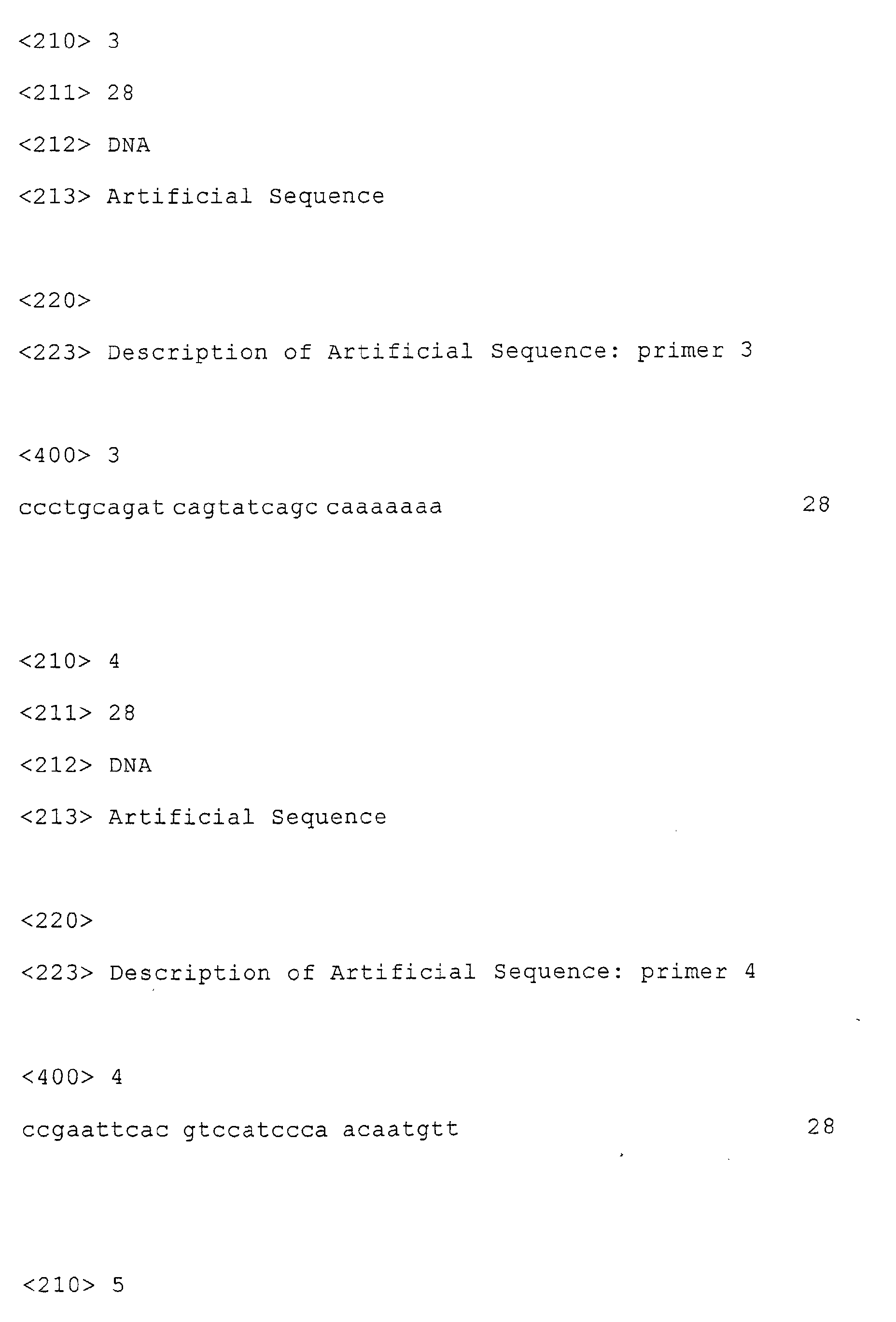
- the NcoI site is designed in SEQ ID NO:1, the BamHI site in SEQ ID NO:2, and the PstI site in SEQ ID NO:3.
- the cloned adi is expressed under the control of a trc promoter in pTrc99A vector or under the control of a lac promoter in pUC19 vector, and translated into arginine decarboxylase.
- recombinants derived from E. coli JM109 by transformation with these plasmids pTrcadi1 and pUCadi were cultured in LB liquid medium (1 % Bacto-tryptone, 0.5 % Yeast extract, 1 % NaCl, 0.1 % Glucose, pH 7.0) containing 50 mg/L ampicillin and 10 mg/L pyridoxine, and 1 mM IPTG (isopropyl-1-thio- ⁇ -D-galatoside) was added to induce expression, and the microorganisms were cultured for about 16 hours, and the cells were collected from 4 ml broth.
- LB liquid medium (1 % Bacto-tryptone, 0.5 % Yeast extract, 1 % NaCl, 0.1 Glucose, pH 7.0
- IPTG isopropyl-1-thio- ⁇ -D-galatoside
- pTrcadil/JM109 and pUCadi/JM109 induced with 1 mM IPTG were lysed with 1 % SDS solution and analyzed by SDS polyacrylamide electrophoresis (SDS-PAGE)-Coomassie Brilliant Blue (CBB) staining, and as a result, a significant band of about 85 kDa corresponding to the molecular weight of a subunit of arginine decarboxylase was found in the pTrcadi1/JM109 This accounted for about 10 % or more of the proteins in the reconbinant. In the pUCadi/JM109 and the pTrcadis/JM109 not induced with IPTG, a band that was significant as compared with that of the control could not be found at 85 kDa.
- pTrcadi1/JM109 i.e. E. coli AJ13839 strain has been deposited as FERM P-18285 with International Patent Organism Depository (IPOD), National Institute of Advanced Industrial Science and Technology (AIST), Japan (Tsukuba City, Higashi 1-1-1, Ibaraki Prefecture, Japan) on April 2, 2001. Later, on Februaby 28, 2002, the same strain has been deposited as FERM BP-7931 based on Budapest convention.
- a gene coding for a repressor called lacI q is carried on the same plasmid to usually suppress expression thereof under the control of the trc promoter.
- lacI q a gene coding for a repressor called lacI q is carried on the same plasmid to usually suppress expression thereof under the control of the trc promoter.
- 1 to 2 mM IPTG is added during culture.
- inactivation of the repressor was at tempted by partially processing the lacI q gene of pTrcadil, in order to permit the arginine decarboxylase gene (adi) to be expressed even in the absence of IPTG.
- adi arginine decarboxylase gene
- two methods that is, a method of losing a restriction enzyme site ApaI site on lacI q and a method of deleting between Van91I and EcoRV sites were used. That is, in the former method, pTrcadi1 was digested with ApaI, and the cohesive end of ApaI was blunt-ended with T4 DNA polymerase and self-ligated by T4 DNA ligase.
- pTrcadi2 The plasmid that turned to be incapable of cleavage with ApaI was designated pTrcadi2 (Fig. 2).
- pTrcadi1 was digested with Van91I and EcoRV, and the cohesive end of Van91I was blunt-ended with T4 DNA polymerase, and an about 6 kb DNA fragment cleaved with Van91I and EcoRV, from which small fragment had been removed, was self-ligated by T4 DNA ligase.
- the resultant plasmid was designated pTrcadi3 (Fig. 2).
- pTrcadi2/JM109 and pTrcadi3/JM109 transformed pTrcadi2 and pTrcadi3 respectively were cultured in LB liquid medium containing 50 mg/L ampicillin and 10 mg/L pyridoxine for about 16 hours without adding IPTG, and the cells were collected from 4 ml broth.
- agmatine was formed in almost 100 % conversion for both instances.
- pTrcadi2/JM109 and pTrcadi3/JM109 cells not induced with IPTG were lysed with 1 % SDS and analyzed by SDS-PAGE-Coomassie Brilliant Blue (CBB) staining, and as a result, a significant band of about 85 kDa corresponding to the molecular weight of a subunit of arginine decarboxylase was found in both pTrcadi2/JM109 and pTrcadi3/JM109, and accounted for about 5 % or more of the proteins in the cells.
- CBB SDS-PAGE-Coomassie Brilliant Blue
- trc promoter and the adi gene region in pTrcadi3 were attempted to be carried on plasmid pUC19, in order to permit the arginine decarboxylase gene (adi) to be expressed at higher levels even in the absence of IPTG. It is said that plasmid pUC19 can attain the number of copies nearly 10 times as much as that by pTrc99A (whose replication function is derived from pBR322) .
- pTrcadi3 was digested with restriction enzyme ApaLI (to generate 4 fragments), and the cohesive end of ApaLI was blunt-ended with T4 DNA polymerase, and an about 3.2 kb ApaLI fragment was separated and prepared.
- pUC19 was digested with PvuII (to generate 2 fragments), and the resultant about 2.4 kb fragment was separated and prepared.
- the 3.2 kb and 2.4 kb fragments were ligated by T4 DNA ligase.
- the about 5.6 kb plasmid thus obtained was designated pUCTrcadi (Fig. 2).
- E. coli JM109 transformed with pUCTrcadi (pUCTrcadi/JM109) was used and cultured in LB liquid medium containing 50 mg/L ampicillin and 10 mg/L pyridoxine for about 16 hours without adding IPTG, and the cells were collected from 0.4 ml broth.
- pUCTrcadi/JM109 E. coli JM109 transformed with pUCTrcadi
- pUCTrcadi/JM109 E. coli JM109 transformed with pUCTrcadi
- pUCTrcadi/JM109 E. coli JM109 transformed with pUCTrcadi/JM109
- the cultured cells of the pUCTrcadi/JM109 not induced with IPTG were lysed with 1 % SDS solution and analyzed by SDS-PAGE-Coomassie Brilliant Blue (CBB) staining, and as a result, a significant band of about 85 kDa corresponding to the molecular weight of a subunit of arginine decarboxylase was found in the pUCTrcadi/JM109 strain. This accounted for 20 % or more of the proteins in the cell, and formation of the inclusion body was observed in some cells.
- CBB SDS-PAGE-Coomassie Brilliant Blue
- Formation of the inclusion body can be inhibited by culturing the pUCTrcadi/JM109 at a temperature of 30°C or less, and the arginine decarboxylase could be confirmed to account for about 20 % of the proteins in this cell.
- coli Gene Bank and Pyrobest DNA polymerase (Takara Shuzo Co., Ltd.) were subjected to PCR (94°C, 30 sec., 55°C, 1 min., 72°C, 2 min., 30 cycles, Gene Amp PCR System Model 9600 (Perkin Elmer)), whereby an about 1.9 kb fragment of a partial gene region in speAB was amplified, and this fragment was digested with EcoRI and SphI and inserted into between EcoRI site and SphI site in pUC19 (Takara Shuzo Co., Ltd.). This expression plasmid was designated pUCspeAB.
- the EcoRI site is designed in SEQ ID NO: 4 and the SphI site in SEQ ID NO: 5.
- pUC ⁇ speB was cleaved with EcoRI and SphI, to give an about 1.7 kb fragment containing speAB, and this fragment was inserted into between EcoRI site and SphI site in pMAN997 (WO99/03988) i.e. a homologous recombination vector having a temperature sensitive origin of replication (tsori), to obtain the desired plasmid.
- This plasmid was designated pMAN ⁇ speB (Fig. 3).
- pMAN997 was constructed by exchanging a HindIII-VspI fragment not containing the side of tsori in pMAN031 (S. Matsuyama, et al., J. Bacteriol., 162, 1196-1202 (1985)) with a HindIII-VspI fragment not containing the side of ori in pUC19.
- pMAN ⁇ speB was transformed into E. coli W3110 (wild strain), and the resultant transformant was plated onto LB agar medium containing 50 mg/L ampicillin, and then cultured at 30°C overnight.
- these cultured transformants were plated onto LB agar medium containing 50 mg/L ampicillin so as to form each single colony, to obtain colonies growing at 42°C.
- the operation of obtaining each single colony growing at 42 °C was repeated to select a clone having the whole of the plasmid integrated via homologous recombination into the chromosome thereof. It was confirmed that this clone does not have the plasmid in its cell sap.
- some of the clones were plated onto LB agar medium, then cultured at 30°C overnight, successively inoculated into 3 ml LB liquid medium/test tube, and subjected to shake culture at 42°C for 3 to 4 hours.
- This culture solution was suitably diluted (10 -5 to 10 -6 ) so as to obtain each single colony, plated onto LB agar medium and cultured at 42°C overnight to obtain colonies. From the appeared colonies, 100 colonies were picked up at random and allowed to grow in both of LB agar medium only and LB agar medium containing 50 mg/L ampicillin, and ampicillin-sensitive clones growing in the LB agar medium only were selected. Out of these sensitive clones, several clones were used to prepare chromosomal DNA which was then subjected to PCR (under the same conditions as above) with the primers in SEQ ID NOS: 4 & 5, to amplify an about 1.7 kb or about 2 kb fragment of speAB.
- the arginine decarboxylase gene (adi)-expressing plasmid pTrcadi2 constructed in Example 2 was introduced into the speB-deficient strain to create pTrcadi2/speB - strain.' Using this transformant, it was cultured in LB liquid medium containing 50 mg/L ampicillin and 10 mg/L pyridoxine, and cultured in the absence of IPTG for about 16 hours, and then the cells were collected from 4 ml broth. As a result of analysis of the degree of conversion of arginine into agmatine in the same reaction system as in Example 1, agmatine was formed in almost 100 % conversion.
- the pTrcadi2/speB - strain not induced with IPTG was lysed with 1 % SDS solution and analyzed with by SDS-PAGE-Coomassie Brilliant Blue (CBB) staining, and as a result, a significant band of about 85 kDa corresponding to the molecular weight of a subunit of arginine decarboxylase was found. This accounted for about 5 % of the proteins in the cells, but the feature of instable maintenance of the plasmid during culture was also found.
- CBB SDS-PAGE-Coomassie Brilliant Blue
- the arginine decarboxylase gene could be expressed stably in a large amount in hosts such as E. coli.
- such transformants could be used for efficiently producing agmatine useful as an industrial intermediate material, from arginine produced relatively inexpensively.
- agmatine obtained by the production method of this invention is used as an intermediate for production of acyl agmatine, whereby the complicated chemical synthesis process necessary for synthesis of acyl agmatine can be partially simplified to reduce the cost of acyl agmatine useful as a surfactant.
Landscapes
- Chemical & Material Sciences (AREA)
- Organic Chemistry (AREA)
- Life Sciences & Earth Sciences (AREA)
- Engineering & Computer Science (AREA)
- Zoology (AREA)
- Wood Science & Technology (AREA)
- Health & Medical Sciences (AREA)
- Genetics & Genomics (AREA)
- Bioinformatics & Cheminformatics (AREA)
- General Health & Medical Sciences (AREA)
- Biochemistry (AREA)
- General Engineering & Computer Science (AREA)
- Microbiology (AREA)
- Biotechnology (AREA)
- Chemical Kinetics & Catalysis (AREA)
- General Chemical & Material Sciences (AREA)
- Proteomics, Peptides & Aminoacids (AREA)
- Medicinal Chemistry (AREA)
- Molecular Biology (AREA)
- Biomedical Technology (AREA)
- Enzymes And Modification Thereof (AREA)
- Micro-Organisms Or Cultivation Processes Thereof (AREA)
- Preparation Of Compounds By Using Micro-Organisms (AREA)
Abstract
Description



Claims (13)
- A method of producing agmatine by decarboxylating arginine, the method comprising using a recombinant that has amplified and expressed arginine decarboxylase gene, or arginine decarboxylase or an arginine decarboxylase-containing material obtained from the recombinant.
- The method of producing agmatine according to claim 1, wherein the recombinant that has amplified and expressed arginine decarboxylase gene is used.
- The method of producing agmatine according to claim 1, wherein the amount of arginine decarboxylase expressed in the recombinant is greater than 5 % of the proteins in the recombinant.
- The method of producing agmatine according to claim 1, wherein the arginine decarboxylase gene is an adi gene derived from Escherichia coli.
- The method of producing agmatine according to claim 1, wherein the recombinant is a microorganism transformed using a recombinant DNA obtained by ligating a vector DNA derived from a pUC series plasmid, a pBR322 series plasmid or a derivative thereof to the arginine decarboxylase gene.
- The method of producing agmatine according to claim 5, wherein the recombinant DNA harbors a trc promoter.
- The method of producing agmatine according to claim 1, wherein the recombinant has Escherichia coli as a host.
- The method of producing agmatine according to claim 7, wherein the recombinant is FERM BP-7931 strain.
- The method of producing agmatine according to claim 7, wherein the recombinant is Escherichia coli deficient in agmatinase catalyzing conversion of agmatine into putrescine.
- The method of producing agmatine according to claim 1, wherein the pH in the reaction system for the reaction of converting arginine into agmatine is regulated to be less than pH 6.
- The method of producing agmatine according to claim 1, wherein pyridoxal phosphate is added to the reaction system for the reaction of converting arginine into agmatine.
- The method of producing agmatine according to claim 1, comprising:culturing a recombinant that has amplified and expressed arginine decarboxylase gene at a temperature of less than 30 degree centigrade thereby accumulating arginine decarboxylase in the recombinant; anddecarboxylating arginine using the recombinant that has amplified and expressed arginine decarboxylase gene, or arginine decarboxylase or an arginine decarboxylase-containing material obtained from the recombinant to produce agmatine.
- A method of producing arginine decarboxylase, wherein a recombinant that has amplified and expressed arginine decarboxylase gene is cultured in a medium, and arginine decarboxylase is accumulated in any one or more of the medium and cells.
Applications Claiming Priority (2)
| Application Number | Priority Date | Filing Date | Title |
|---|---|---|---|
| JP2001157833 | 2001-05-25 | ||
| JP2001157833A JP2002345496A (en) | 2001-05-25 | 2001-05-25 | Method for producing agmatine and method for producing arginine decarboxylase |
Publications (2)
| Publication Number | Publication Date |
|---|---|
| EP1260588A2 true EP1260588A2 (en) | 2002-11-27 |
| EP1260588A3 EP1260588A3 (en) | 2003-04-23 |
Family
ID=19001634
Family Applications (1)
| Application Number | Title | Priority Date | Filing Date |
|---|---|---|---|
| EP02009802A Withdrawn EP1260588A3 (en) | 2001-05-25 | 2002-04-30 | Methods of producing agmatine and arginine decarboxylase |
Country Status (4)
| Country | Link |
|---|---|
| US (1) | US20040086985A1 (en) |
| EP (1) | EP1260588A3 (en) |
| JP (1) | JP2002345496A (en) |
| KR (1) | KR20020090161A (en) |
Cited By (7)
| Publication number | Priority date | Publication date | Assignee | Title |
|---|---|---|---|---|
| WO2006005603A1 (en) * | 2004-07-15 | 2006-01-19 | Dsm Ip Assets B.V. | Biochemical synthesis of 1,4-butanediamine |
| WO2011009859A1 (en) | 2009-07-24 | 2011-01-27 | Dsm Ip Assets B.V. | Process for the preparation of 1,4-butanediamine via n-acyl or n-guanidyl protected 1,4-butanediamine precursors |
| CN104152478A (en) * | 2014-07-31 | 2014-11-19 | 洛阳华荣生物技术有限公司 | Method for coproducing D-arginine and gamatine through biotransformation |
| CN104911223A (en) * | 2015-06-15 | 2015-09-16 | 长兴制药有限公司 | Biological preparation method of agmatine sulfate |
| CN105713938A (en) * | 2015-03-30 | 2016-06-29 | 江汉大学 | Biotransformation method of agmatine sulfate |
| CN105861529A (en) * | 2016-05-27 | 2016-08-17 | 江南大学 | Arginine decarboxylase and application thereof |
| CN106278954A (en) * | 2016-08-18 | 2017-01-04 | 精晶药业股份有限公司 | A kind of method extracting agmatine |
Families Citing this family (5)
| Publication number | Priority date | Publication date | Assignee | Title |
|---|---|---|---|---|
| ID25613A (en) * | 1997-07-18 | 2000-10-19 | Ajinomoto Kk | METHOD TO PRODUCE PURIN NUCLEOSIDE BY FERMENTATION |
| EP2100962A1 (en) | 2008-03-12 | 2009-09-16 | Biogemma | Plants having improved resistance to pathogens |
| KR101101835B1 (en) | 2009-05-27 | 2012-01-05 | 연세대학교 산학협력단 | Composition for improving stem cell viability and proliferation |
| JP2017158434A (en) * | 2014-07-22 | 2017-09-14 | 協同乳業株式会社 | Method for producing putrescine by bacterial mixed culture |
| CN113913417A (en) * | 2021-09-30 | 2022-01-11 | 新泰市佳禾生物科技有限公司 | Method for separating and purifying arginine decarboxylase from fermentation liquor |
Family Cites Families (1)
| Publication number | Priority date | Publication date | Assignee | Title |
|---|---|---|---|---|
| JPS57206388A (en) * | 1981-06-11 | 1982-12-17 | Amano Pharmaceut Co Ltd | Preparation of agmatine oxidase by microorganism |
-
2001
- 2001-05-25 JP JP2001157833A patent/JP2002345496A/en active Pending
-
2002
- 2002-04-30 EP EP02009802A patent/EP1260588A3/en not_active Withdrawn
- 2002-05-03 US US10/137,282 patent/US20040086985A1/en not_active Abandoned
- 2002-05-24 KR KR1020020028981A patent/KR20020090161A/en not_active Ceased
Non-Patent Citations (1)
| Title |
|---|
| MULLIGAN ET AL: "Characterization in vitro of the effect of spacer length on the activity of Escherichia coli RNA polymerase at the TAC promoter", JOURNAL OF BIOLOGICAL CHEMISTRY, vol. 260, no. 6, 25 March 1986 (1986-03-25) * |
Cited By (16)
| Publication number | Priority date | Publication date | Assignee | Title |
|---|---|---|---|---|
| EA010179B1 (en) * | 2004-07-15 | 2008-06-30 | ДСМ АйПи АССЕТС Б.В. | Biochemical synthesis of 1.4-butanediamine |
| US8497098B2 (en) | 2004-07-15 | 2013-07-30 | Dsm Ip Assets B.V. | Biochemical synthesis of 1,4-butanediamine |
| WO2006005603A1 (en) * | 2004-07-15 | 2006-01-19 | Dsm Ip Assets B.V. | Biochemical synthesis of 1,4-butanediamine |
| EP2949755A1 (en) * | 2004-07-15 | 2015-12-02 | DSM IP Assets B.V. | Biochemical synthesis of 1,4-butanediamine |
| WO2011009859A1 (en) | 2009-07-24 | 2011-01-27 | Dsm Ip Assets B.V. | Process for the preparation of 1,4-butanediamine via n-acyl or n-guanidyl protected 1,4-butanediamine precursors |
| CN102471789A (en) * | 2009-07-24 | 2012-05-23 | 帝斯曼知识产权资产管理有限公司 | Process for the preparation of 1,4-butanediamine via N-acyl or N-guanidino-protected 1,4-butanediamine precursors |
| US8999680B2 (en) | 2009-07-24 | 2015-04-07 | Dsm Ip Assets B.V. | Preparation of 1,4-diaminobutane |
| CN102471789B (en) * | 2009-07-24 | 2015-08-19 | 帝斯曼知识产权资产管理有限公司 | Process for the preparation of 1,4-butanediamine via N-acyl or N-guanidino-protected 1,4-butanediamine precursors |
| CN105132486A (en) * | 2009-07-24 | 2015-12-09 | 帝斯曼知识产权资产管理有限公司 | Process for the preparation of 1,4-butanediamine via n-acyl or n-guanidyl protected 1,4-butanediamine precursors |
| CN104152478A (en) * | 2014-07-31 | 2014-11-19 | 洛阳华荣生物技术有限公司 | Method for coproducing D-arginine and gamatine through biotransformation |
| CN105713938B (en) * | 2015-03-30 | 2019-06-21 | 江汉大学 | A kind of biotransformation method of agmatine sulfate |
| CN105713938A (en) * | 2015-03-30 | 2016-06-29 | 江汉大学 | Biotransformation method of agmatine sulfate |
| CN104911223A (en) * | 2015-06-15 | 2015-09-16 | 长兴制药有限公司 | Biological preparation method of agmatine sulfate |
| CN105861529A (en) * | 2016-05-27 | 2016-08-17 | 江南大学 | Arginine decarboxylase and application thereof |
| CN106278954A (en) * | 2016-08-18 | 2017-01-04 | 精晶药业股份有限公司 | A kind of method extracting agmatine |
| CN106278954B (en) * | 2016-08-18 | 2018-06-01 | 精晶药业股份有限公司 | A kind of method for extracting agmatine |
Also Published As
| Publication number | Publication date |
|---|---|
| JP2002345496A (en) | 2002-12-03 |
| EP1260588A3 (en) | 2003-04-23 |
| US20040086985A1 (en) | 2004-05-06 |
| KR20020090161A (en) | 2002-11-30 |
Similar Documents
| Publication | Publication Date | Title |
|---|---|---|
| US7098019B2 (en) | DNA for encoding D-hydantoin hydrolases, DNA for encoding N-carbamyl-D-amino acid hydrolases, recombinant DNA containing the genes, cells transformed with the recombinant DNA, methods for producing proteins utilizing the transformed cells and methods for producing D-amino acids | |
| KR101188432B1 (en) | Variant Microorganism Having Putrescine Producing Ability and Method for Preparing Putrescine Using the Same | |
| KR20010021986A (en) | Process for producing purine nucleosides via fermentation | |
| JP2004000114A (en) | Method for producing cadaverine | |
| US8460902B1 (en) | DNA encoding hydantoinase, DNA encoding N-carbamyl-L-amino acid hydrolase, recombinant DNA, transformed cell, method of producing protein, and method of producing optically active amino acid | |
| US20040086985A1 (en) | Methods of producing agmatine and arginine decarboxylace | |
| Liu et al. | Food-grade expression of an iron-containing acid urease in Bacillus subtilis | |
| EA010179B1 (en) | Biochemical synthesis of 1.4-butanediamine | |
| Reisinger et al. | Enzymatic hydrolysis of cyanohydrins with recombinant nitrile hydratase and amidase from hodococcus erythropolis | |
| EP1616945B1 (en) | Process for producing D-N-carbamoyl-alpha-amino acids | |
| US7060485B2 (en) | DNA for encoding D-hydantoin hydrolases, DNA for encoding N-carbamyl-D-amino acid hydrolases, recombinant DNA containing the genes, cells transformed with the recombinant DNA, methods for producing proteins utilizing the transformed cells and methods for producing D-amino acids | |
| JP2019030314A (en) | Recombinant microorganism producing quinolinic acid and method for producing quinolinic acid using the same | |
| JP5754084B2 (en) | Microorganism in which amidase gene and / or nitrilase gene is deleted or inactivated | |
| JP4941990B2 (en) | Nε-acyl-L-lysine specific aminoacylase | |
| JP6156442B2 (en) | Microorganisms that have replaced the nitrile hydratase gene | |
| US7655450B2 (en) | Polypeptide having amidase activity and gene thereof | |
| JP4561021B2 (en) | 5-substituted hydantoin racemase, DNA encoding the same, recombinant DNA, transformed cell, and method for producing optically active amino acid | |
| JP6048716B2 (en) | Rhodococcus bacteria with deleted or inactivated urease gene | |
| JP2003040853A (en) | Method for producing amide group-containing guanidine derivative and salt thereof | |
| JP2005348605A (en) | Method for producing 6-bromonicotinic acid | |
| JP2004033163A (en) | Method for producing L-amino acid |
Legal Events
| Date | Code | Title | Description |
|---|---|---|---|
| PUAI | Public reference made under article 153(3) epc to a published international application that has entered the european phase |
Free format text: ORIGINAL CODE: 0009012 |
|
| AK | Designated contracting states |
Kind code of ref document: A2 Designated state(s): AT BE CH CY DE DK ES FI FR GB GR IE IT LI LU MC NL PT SE TR |
|
| AX | Request for extension of the european patent |
Free format text: AL;LT;LV;MK;RO;SI |
|
| PUAL | Search report despatched |
Free format text: ORIGINAL CODE: 0009013 |
|
| AK | Designated contracting states |
Designated state(s): AT BE CH CY DE DK ES FI FR GB GR IE IT LI LU MC NL PT SE TR |
|
| AX | Request for extension of the european patent |
Extension state: AL LT LV MK RO SI |
|
| RIC1 | Information provided on ipc code assigned before grant |
Ipc: 7C 12N 9/88 B Ipc: 7C 12R 1/19 B Ipc: 7C 12P 13/00 A |
|
| 17P | Request for examination filed |
Effective date: 20031021 |
|
| AKX | Designation fees paid |
Designated state(s): DE FR GB |
|
| 17Q | First examination report despatched |
Effective date: 20040204 |
|
| STAA | Information on the status of an ep patent application or granted ep patent |
Free format text: STATUS: THE APPLICATION IS DEEMED TO BE WITHDRAWN |
|
| 18D | Application deemed to be withdrawn |
Effective date: 20041116 |