EP1258152B1 - Verfahren zur rufkontrolle um verzögerungen beim starten von multimedia- oder sprachrufen in einem paketvermittelten funkkommunikationsnetz zu minimieren - Google Patents
Verfahren zur rufkontrolle um verzögerungen beim starten von multimedia- oder sprachrufen in einem paketvermittelten funkkommunikationsnetz zu minimieren Download PDFInfo
- Publication number
- EP1258152B1 EP1258152B1 EP01904712A EP01904712A EP1258152B1 EP 1258152 B1 EP1258152 B1 EP 1258152B1 EP 01904712 A EP01904712 A EP 01904712A EP 01904712 A EP01904712 A EP 01904712A EP 1258152 B1 EP1258152 B1 EP 1258152B1
- Authority
- EP
- European Patent Office
- Prior art keywords
- call
- cscf
- routed
- sgsn
- network
- Prior art date
- Legal status (The legal status is an assumption and is not a legal conclusion. Google has not performed a legal analysis and makes no representation as to the accuracy of the status listed.)
- Expired - Lifetime
Links
- 238000000034 method Methods 0.000 title claims abstract description 40
- 230000001934 delay Effects 0.000 title claims abstract description 8
- 230000008569 process Effects 0.000 description 6
- 239000003795 chemical substances by application Substances 0.000 description 5
- 238000007726 management method Methods 0.000 description 5
- 239000010752 BS 2869 Class D Substances 0.000 description 4
- 238000010586 diagram Methods 0.000 description 4
- 230000009467 reduction Effects 0.000 description 4
- 101000845005 Macrovipera lebetina Disintegrin lebein-2-alpha Proteins 0.000 description 3
- 238000001994 activation Methods 0.000 description 3
- 238000000926 separation method Methods 0.000 description 3
- 230000004913 activation Effects 0.000 description 2
- 238000013459 approach Methods 0.000 description 2
- 230000002457 bidirectional effect Effects 0.000 description 2
- 230000000694 effects Effects 0.000 description 2
- 238000005457 optimization Methods 0.000 description 2
- 230000011664 signaling Effects 0.000 description 2
- 238000012546 transfer Methods 0.000 description 2
- 101000946124 Homo sapiens Lipocalin-1 Proteins 0.000 description 1
- 101001023833 Homo sapiens Neutrophil gelatinase-associated lipocalin Proteins 0.000 description 1
- 102100034724 Lipocalin-1 Human genes 0.000 description 1
- 102100035405 Neutrophil gelatinase-associated lipocalin Human genes 0.000 description 1
- 230000005540 biological transmission Effects 0.000 description 1
- 238000004891 communication Methods 0.000 description 1
- 238000010276 construction Methods 0.000 description 1
- 238000013461 design Methods 0.000 description 1
- 230000006872 improvement Effects 0.000 description 1
- 230000000977 initiatory effect Effects 0.000 description 1
- 230000002452 interceptive effect Effects 0.000 description 1
- 238000010295 mobile communication Methods 0.000 description 1
- 238000012986 modification Methods 0.000 description 1
- 230000004048 modification Effects 0.000 description 1
- 230000000644 propagated effect Effects 0.000 description 1
- 238000011084 recovery Methods 0.000 description 1
- 230000004044 response Effects 0.000 description 1
Images

Classifications
-
- H—ELECTRICITY
- H04—ELECTRIC COMMUNICATION TECHNIQUE
- H04L—TRANSMISSION OF DIGITAL INFORMATION, e.g. TELEGRAPHIC COMMUNICATION
- H04L45/00—Routing or path finding of packets in data switching networks
- H04L45/12—Shortest path evaluation
- H04L45/121—Shortest path evaluation by minimising delays
-
- H—ELECTRICITY
- H04—ELECTRIC COMMUNICATION TECHNIQUE
- H04L—TRANSMISSION OF DIGITAL INFORMATION, e.g. TELEGRAPHIC COMMUNICATION
- H04L12/00—Data switching networks
- H04L12/28—Data switching networks characterised by path configuration, e.g. LAN [Local Area Networks] or WAN [Wide Area Networks]
- H04L12/46—Interconnection of networks
- H04L12/4633—Interconnection of networks using encapsulation techniques, e.g. tunneling
-
- H—ELECTRICITY
- H04—ELECTRIC COMMUNICATION TECHNIQUE
- H04L—TRANSMISSION OF DIGITAL INFORMATION, e.g. TELEGRAPHIC COMMUNICATION
- H04L45/00—Routing or path finding of packets in data switching networks
-
- H—ELECTRICITY
- H04—ELECTRIC COMMUNICATION TECHNIQUE
- H04Q—SELECTING
- H04Q3/00—Selecting arrangements
- H04Q3/0016—Arrangements providing connection between exchanges
- H04Q3/0025—Provisions for signalling
-
- H—ELECTRICITY
- H04—ELECTRIC COMMUNICATION TECHNIQUE
- H04W—WIRELESS COMMUNICATION NETWORKS
- H04W40/00—Communication routing or communication path finding
-
- H—ELECTRICITY
- H04—ELECTRIC COMMUNICATION TECHNIQUE
- H04W—WIRELESS COMMUNICATION NETWORKS
- H04W76/00—Connection management
- H04W76/10—Connection setup
- H04W76/12—Setup of transport tunnels
-
- H—ELECTRICITY
- H04—ELECTRIC COMMUNICATION TECHNIQUE
- H04W—WIRELESS COMMUNICATION NETWORKS
- H04W40/00—Communication routing or communication path finding
- H04W40/02—Communication route or path selection, e.g. power-based or shortest path routing
-
- H—ELECTRICITY
- H04—ELECTRIC COMMUNICATION TECHNIQUE
- H04W—WIRELESS COMMUNICATION NETWORKS
- H04W40/00—Communication routing or communication path finding
- H04W40/24—Connectivity information management, e.g. connectivity discovery or connectivity update
- H04W40/246—Connectivity information discovery
-
- H—ELECTRICITY
- H04—ELECTRIC COMMUNICATION TECHNIQUE
- H04W—WIRELESS COMMUNICATION NETWORKS
- H04W80/00—Wireless network protocols or protocol adaptations to wireless operation
Definitions
- This invention relates to radio telecommunication systems and, more particularly, to a method of call control to minimize delays in launching multimedia or voice calls in a packet-switched radio telecommunications network.
- the mobile stations launch multicast discovery messages for either a Class-D H.323 gatekeeper at IP address 224.0.1.41 or a Session Initiation Protocol (SIP) proxy server at address 224.0.1.75.
- SIP Session Initiation Protocol
- “Third generation” is the terminology used for launching multimedia or voice calls over packet-switched mobile access systems such as the General Packet Radio Service (GPRS) and the Universal Mobile Telecommunication System (UMTS), the wideband Code Division Multiple Access (CDMA) technique utilized on GPRS.
- GPRS General Packet Radio Service
- UMTS Universal Mobile Telecommunication System
- CDMA Wideband Code Division Multiple Access
- the path traversed by the media stream can be very random, and could involve multiple Gateway GPRS Service Nodes (GGSNs) and Internet Service Providers (ISPs)/Public Internet Protocol (IP) networks.
- GGSNs Gateway GPRS Service Nodes
- ISPs Internet Service Providers
- IP Public Internet Protocol
- the delay induced in the core network and the ISPs could vary from 10ms to hundreds of milliseconds depending on the actual path taken by the Packet Data Unit (PDU).
- ITU-T International Telecommunications Union-Telecommunications Standardization Sector
- G.114 and G.131 ITU-T Recommendations G.114 and G.131
- EP1054569 represents prior art according to EPC Art. 54(3) and relates to a method of establishing a telephone conversation between a first and a second terminal over an IP network.
- the call is routed from the first terminal to a service switching point (SSP) that triggers a service control point (SCP) to determine a number of a Voice over IP (VOIP) gateway.
- SSP service switching point
- SCP service control point
- VOIP Voice over IP
- GB 2331197 relates to Internet telephony.
- a calling subscriber indicates that he wishes a particular call to be routed over the Internet, he is allocated an Internet address for the duration of the call.
- His local telephone exchange determines which local exchange serves the called party and establishes an Internet connection thereto.
- the local exchange of the called party allocates an Internet address to the called party for the duration of the call. This address is returned to the calling party's exchange thus allowing establishment of a connection over the Internet between the calling and called parties.
- a calling IVXS's GGSN will route a voice or multimedia call to the MS's ISP where the MS-to-MS call is diverted into the public Internet, This leads to inordinate delays and the actual expiration of call control timers. Therefore, it would be advantageous to have a method of call control that minimizes delays in launching multimedia or voice calls over packet-switched mobile access systems.
- the present invention provides such a method.
- the present invention is a method of call control in a packet-switched radio telecommunication network that minimizes delays in launching a voice call from a first Internet Protocol (IP)-based mobile station (MS) to a second IP-based MS.
- the method includes the steps of preventing voice traffic from being routed to an Internet Service Provider (ISP), and setting up an optimized path for voice traffic from the first MS to the second MS.
- the optimized path may be set up by creating a shortest route tunnel between a first service node serving the first MS and a second service node serving the second MS.
- the tunnel may be established between a first Serving GPRS service node (SGSN1) serving the first MS and a second SGSN (SGSN2) serving the second MS.
- the tunnel may be established between the base station controllers (BSCs) of each MS's serving radio base station in the case of UMTS or CDMA2000 where packet-based inter-BSC links have been defined.
- BSCs base station controllers
- the present invention is a method of call control that optimizes a call case involving two third generation IP-based (3G.IP) mobile stations (MS1 and MS2).
- 3G.IP IP-based
- MS1 and MS2 third generation IP-based mobile stations
- “Third generation” is the terminology used for launching multimedia or voice calls over packet-switched mobile access systems such as GPRS, UMTS, and CDMA2000.
- the call control protocol used in many of these applications is either H.323 or SIP running over the IP-based PDP context.
- the present invention modifies and utilizes the Call State Control Function (CSCF) that is part of the 3G.IP baseline network reference model.
- CSCF Call State Control Function
- the major function performed by the CSCF is to serve as either an H.323 gatekeeper or a SIP proxy server.
- the present invention sets up an optimized tunnel for the voice payload in one of two ways.
- the tunnel may be set up between the Serving GPRS Service Nodes (SGSNs) serving each MS.
- SGSNs Serving GPRS Service Nodes
- I UR Inter-BSC interface
- I U BSC-to-SGSN interface
- BSCs base station controllers
- RBSs radio base stations
- a multicast gatekeeper discovery message is sent from the MS to a Proxy Agent (PA), and the call control method must ensure that only the operator in the Public Land Mobile Network (PLMN) services the multicast gatekeeper discovery message, thus guaranteeing call control by the PLMN operator.
- Proxy Agent PA
- the Proxy Agent (PA) is utilized in the present invention to guarantee that the discovery message is only received and acted upon by the PLMN-based CSCF.
- the present invention implements a methodology to minimize the delay in call cases between two third generation IP-based MSs running 3G Voice-Over-Internet-Protocol (VoIP) call control protocols such as H.323 or SIP, in the description herein, only H.323 is covered in detail as an illustration of the signaling involved. It should be understood that the same methodology applies to SIP-based call control as well.
- the conventional access design philosophy of GPRS requires the IP PDU carrying the voice payload to be pushed up to at least the GGSN before being routed back.
- the PDU is automatically sent to the Internet Service Providers (ISPs) involved, and then the ISPs route the call back through the public IP network.
- ISPs Internet Service Providers
- the present invention provides safeguards to prevent voice PDUs from being diverted into the public Internet or from traversing the core network and the ISP/Public IP network in a random fashion, and to ensure that a clear path be provided for the PDU.
- CGW Charging Gateway
- the present invention utilizes a functional entity called a Proxy Agent (PA) to convey required Mobility Management (MM) information to the CSCF during the CSCF discovery process.
- PA Proxy Agent
- the multicast gatekeeper discovery message from the MS to the PA passes an MM information element to the CSCF which indicates the serving SGSN for the particular MS that is in the discovery process.
- the MS's SGSN, International Mobile Station Identity (IMSI), and IP address are pre-registered during the discovery process. This enables the MS to transparently register with the PLMN CSCF during registration without the aid of a proxy agent. It also enables the CSCF to create a record that includes (1) the MS-ISDN (the called B-number or the E.164 of the MS today), (2) the IP address assigned to the MS during PDP Context Activation, and (3) the serving SGSN IP and/or SS7 point code.
- all CSCF records for H.323-registered clients include an IP address, the E.164, the SGSN address, and optionally the IMSI for enhanced tracking of MS activities.
- a Q.931 Fast Connect message with fast start parameters containing the Real Time Protocol (RTP)/media socket for the calling party is transmitted to the serving CSCF.
- the called party's RTP/media sockets are similarly transmitted back to the calling party in any of the Q.931 reply messages including and up to the Connect message.
- the RTP/media sockets are only exchanged during the H.245 open logical channel message exchange (LCN).
- LCN logical channel message exchange
- the CSCF optionally performs a B-number (called number) analysis to determine whether the B-number belongs to either the CSCF's PLMN or to another PLMN domain.
- a B-number called number
- This provides the basis for a more intelligent form of Location Analysis multicasts (LRQ/LCF).
- LRQ/LCF Location Analysis multicasts
- the CSCF queries the Home Location Register (HLR) of the respective MS to determine its location and status. This option helps in cases where multicasting is not propagated by the PLMN operator or serving ISP.
- the two CSCFs also utilize their knowledge of the media channels/sockets opened up for the voice payload, along with their knowledge of the respective SGSNs involved, to create a direct tunnel between the two SGSNs for those two pairs of media sockets.
- the two CSCFs also generate charging records and transport them towards a Charging Gateway (CGW).
- CGW integrates both sets of charging records and ensures that proper billing occurs for the MS-to-MS call case.
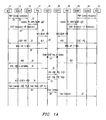
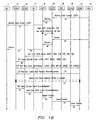
- FIGS. 1A-1B are a message flow diagram illustrating the flow of messages between the nodes of a packet-switched mobile access system when establishing an optimized tunnel in accordance with a first embodiment of the method of the present invention. Illustrated in FIGS. 1A-1B are a first Mobile Station (MS1) 11 and a second Mobile Station (MS2) 12, a first SGSN (SGSN1) 13 serving MS1 and a second SGSN (SGSN2) 14 serving MS2, a first GGSN (GGSN1) 15 and a second GGSN (GGSN2) 16, a first PA (PA1) 17 and a second PA (PA2) 18, and a first CSCF (CSCF1) 19 and a second CSCF (CSCF2) 20.
- MS1 and MS2 register to two different CSCFs (CSCF1 and CSCF2) via two different proxy agent entities. Where appropriate, the steps are described for access by MS1, but are also performed for MS2 by the appropriate even-numbered nodes 14-20.
- the PDP context is created in the serving GGSN1 15, and includes the associated SGSN address (S-number), mobile station IMSI, and the IP address assigned to MSI.
- the GGSNI informs PAI of the IMSI, S-number, and IP address of MSI during this PDP Context Activation process. This takes place in a new message called the Update PA message.
- PA1 intercepts and redirects the discovery message 24 sent by MS1 to a selected PLMN-owned CSCF.
- the PA appends an information element to the redirected discovery message 25 containing the IMSI, S-number, and IP address of MS1.
- the CSCF then creates a pre-register record for MS1 containing the IMSI, IP address, and the MS's location (SGSN address S-number), and returns an acknowledgment 26 to PA1.
- PA1 then sends the unicast IP address of CSCF1 to MS1 at 27.
- the H.323 call control protocol sends a registration request (RRQ) message from MS1 directly to the CSCF's unicast address which was obtained during the discovery process, and includes MS1's MS-ISDN (E.164) and its IP address.
- the CSCF checks its database to determine whether pre-registration occurred, and if so, enhances its record for MS 1 to include the MS IP, E.164 (MS-ISDN) with the serving SGSN's IP address. This enables the CSCF to keep track of MS1 by location as well.
- the CSCF optionally informs MS1's HLR of the registration.
- MS I makes the call to MS2 by sending an Admission Request (ARQ) message 31 containing the E.164 of MS2 to CSCF1.
- CSCF1 optionally performs a B-number analysis to determine the PLMN operator to which the called number belongs.
- a Location Request (LRQ) 32 is then routed from CSCF1 to CSCF2, and may also be unicast to the HLR.
- the CSCF may optionally send a traditional LRQ multicast to all gatekeepers with Class-D addresses, or may multicast the LRQ to a smaller subset of gatekeepers such as a special group comprising PLMN-owned gatekeepers. Multicasting to a smaller subset is more efficient than multicasting to the original Class-D group of all gatekeepers worldwide.
- the LRQ includes MSI's serving SGSN address (S1-number) in the nonStandardData information element of the message.
- CSCF2 Since MS2 is registered with CSCF2, CSCF2 responds to the LRQ with a Location Confirm (LCF) message 33 that includes the E.164 and the CSCF2 transport address. This maintains the gatekeeper-routed model of call control.
- the LCF includes the serving SGSN address (S2-number) in the nonStandardData field. The two CSCF's record the other MS's SGSN address in a new Call in Progress information element within the database. CFCF1 then returns an Admission Confirm (ACF) message 34 containing its transport address and other particulars to MS 1.
- ACF Admission Confirm
- MS1 sends a Q.931 Setup Fast Connect message 35 to CSCF1 containing a sequence of openLogicalChannel structures describing the media channels on which MS1 proposes to send and receive media to the serving CSCF (CSCF1) for H.323v2 or better.
- CSCF1 waits for the completion of H.245 Open Logical Channel messages to determine the sockets used by MS1 for transmission and reception of media.
- CSCF1 forwards the Q.931 Setup Fast Connect message to CSCF2, and at 37, CSCF2 forwards the Setup Fast Connect message to MS2. The method then moves to FIG. 1B.
- MS2 initiates an Admission Request (ARQ)/Admission Confirm (ACF) exchange with CSCF2 for H.323v2 or better.
- MS2 sends a fastStart message to CSCF2 in either Q.931 Alerting or Connect, selecting a media channel from the proposals sent by MS1.
- CSCF2 forwards this message to CSCF1 at 42 and then to MS1 at 43.
- both CSCFs record the media channels utilized by the two MSs in H. 245 open logical channel messages.
- the calling party's gatekeeper, CFCF1 becomes the anchor for an optimized tunnel set up between the two SGSNs.
- Each of the CSCFs then knows the Logical channels (LCNs) over which redirection will flow, as indicated at 44.
- MS2 then sends a connect message to CSCF2 at 45 which forwards the message to CSCF1 at 46 and to MS1 at 47.
- CSCF1 then sends a new message called the Open Inter-SGSN Tunnel message 48 to GGSN1
- the information elements contained in this message include the MS's media channels for the voice payload for both MS I and MS2 (LCN1 and LCN2), along with the SGSN1 number, SGSN2 number, IMSI, and IP address.
- CSCF1 looks up the Call in Progress information element to determine the SGSN2 number.
- GGSN1 verifies the PDP context status based on the IMSI. If valid, GGSN1 creates a new GTP signaling message called the Create Optimal Tunnel message 49 using a message type such as a decimal value between 38 to 47, as described in GSM 09.60.
- the information elements contained in the Open Inter-SGSN Tunnel message are forwarded to the serving SGSN in the GTP message as private extension information elements as described in GSM 09.60. At a minimum, the information elements include the IMSIs of the two MSs, the media port numbers, and the address of SGSN2.
- SGSN1 verifies the existence of an MM context and a PDP context, and then creates a new GTP message called the Real Time Tunnel Build Request message 51 containing the media channel numbers, IMSIs, and PDP context.
- the Real Time Tunnel Build Request message is then sent to SGSN2.
- SGSN2 veri fies that the MM context and the PDP context related to MS2 exist, and if so, sends a Real Time Tunnel Build Request Acknowledgment message 52 back to SGSN1.
- a bidirectional tunnel is then created at 53 between SGSN 1 and SGSN2 for the direct routing of any payload from the RTP media sockets for MS1 and MS2.
- the anchor SGSN1 sends a GTP Create Optimal Tunnel Acknowledgment message 54 to GGSN1 confirming that the tunnel is now created.
- GGSN1 then sends an Open Inter-SGSN Tunnel Acknowledgment message 55 to CSCF1 confirming the optimized tunnel.
- CSCF1 informs CSCF2 of the creation of the tunnel at 56 which, in turn, informs GGSN2 at 57 and SGSN2 at 58.
- Charging CDR's can now be generated by both of the SGSNs or the CSCFs and sent towards a Charging Gateway (not shown). All other traffic from MS 1 and MS2 is forwarded to their respective GGSNs.
- the SGSN Context transfer from the old SGSN to the new SGSN includes information elements to create a new tunnel. For example, if MS1 moves from a first SGSN such as SGSN1 to a second SGSN such as SGSN3, while MS2 remains at SGSN2, then all media port information is also transferred from SGSN1 to SGSN3, and SGSN3 becomes the anchor for creating a new tunnel with SGSN2 in order to optimize media routing.
- the tunnel remains active until either party sends a Disconnect Request (DRQ) message to one of the CSCFs. At that time, signals are sent to both GGSNs, SGSNs, and the Charging Gateway to stop the optimized forwarding of PDUs and charging for this special path.
- DRQ Disconnect Request
- FIG. 2 is a message flow diagram illustrating the flow of messages between the nodes of a packet-switched mobile access system when establishing an optimized tunnel in accordance with a second embodiment of the method of the present invention.
- the procedures are the same as those shown in FIGS. 1 A and 1B for steps 21-49.
- SGSN1 utilizes UMTS procedures to set up a tunnel directly between the base station controller serving MS I (BSC1) 61 and the base station controller serving MS2 (BSC2) 62.
- BSC1 base station controller serving MS I
- BSC2 base station controller serving MS2
- the BSCs use an Inter-BSC interface (I UR ) and a BSC-to-SGSN interface (I U ) to establish the inter-BSC tunnel.
- I UR Inter-BSC interface
- I U BSC-to-SGSN interface
- SGSN1 sends an I U Create Optimal Tunnel message to BSC1.
- BSC1 then sends an I UR Real Time Tunnel Build Request message 64 to BSC2.
- BSC2 returns an acknowledgment at 65, and the bidirectional tunnel between the BSCs is established at 66. This provides for further optimization and reduction in call setup delay.
- BSC1 then sends an I U Create Optimal Tunnel Acknowledgment message 67 to SGSN1.
- SGSN1 sends a GTP Create Optimal Tunnel Acknowledgment message 68 to GGSN1 confirming that the tunnel is now created.
- GGSN1 then sends an Open Inter-SGSN Tunnel Acknowledgment message 69 to CSCF1 confirming the optimized tunnel.
- CSCF1 informs CSCF2 of the creation of the tunnel at 71 which, in turn, informs GGSN2 at 72 and SGSN2 at 73.
- the present intention enables the separation of control and user planes for all third generation call cases, thus enabling the setting up of an optimized path just for voice.
- the invention provides for the reduction in delay and full control over charging and call control by the PLMN operator.
Landscapes
- Engineering & Computer Science (AREA)
- Computer Networks & Wireless Communication (AREA)
- Signal Processing (AREA)
- Mobile Radio Communication Systems (AREA)
- Data Exchanges In Wide-Area Networks (AREA)
- Communication Control (AREA)
Claims (12)
- Verfahren zur Anrufsteuerung in einem Funktelekommunikationsnetz mit einem paketvermittelten Mobilfunkanschlusssystem, umfassend eine erste Funkbasisstation (Radio Base Station) RBS mit einer ersten Basisstationssteuerung (Base Station Controller) BSC (61), die eine erste Internetprotokoll-(IP)-basierte Mobilstation MS (11) bedient, und eine zweite RBS mit einer zweiten BSC (62), die eine zweite IP-basierte MS (12) bedient, und wobei paketbasierte Inter-BSC-Links definiert sind und das Verfahren zur Anrufsteuerung, welches Verzögerungen beim Starten eines Fernsprechrufes von der ersten MS (11) an die zweite MS (12) minimiert, gekennzeichnet ist durch die Schritte:Verhindern, dass Sprechverkehr an einen Internetdiensteanbieter (Internet Service Provider) ISP geroutet wird; undAufbauen eines optimierten Pfades für Sprechverkehr von der ersten MS (11) an die zweite MS (12) durch Erzeugen (66') eines kürzesten Routetunnels zwischen der ersten BSC (61) und der zweiten BSC (62), der verhindert, dass der Anruf auf zufällige Art und Weise vom ISP geroutet wird.
- Verfahren zur Anrufsteuerung in einem Funktelekommunikationsnetz mit einem paketvermittelten Mobilfunkanschlusssystem, umfassend einen ersten bedienenden GPRS-(General Packet Radio Service)-Diensteknoten (service node) SGSN (13), der eine erste Internetprotokoll-(IP)-basierte Mobilstation MS (11) bedient, und einen zweiten SGSN (14), der eine zweite IP-basierte MS (12) bedient, wobei das Verfahren zur Anrufsteuerung, welches Verzögerungen beim Starten eines Fernsprechrufes von der ersten MS (11) an die zweite MS (12) minimiert, gekennzeichnet ist durch die Schritte:Verhindern, dass Sprechverkehr an einen Internetdiensteanbieter ISP geroutet wird; undAufbauen eines optimierten Pfades für Sprechverkehr von der ersten MS (11) an die zweite MS (12) durch Erzeugen (53') eines kürzesten Routetunnels zwischen dem ersten SGSN (13) und dem zweiten SGSN (14), der verhindert, dass der Anruf auf zufällige Art und Weise vom ISP geroutet wird.
- Verfahren zur Anrufsteuerung nach Anspruch 2, wobei der Schritt des Verhinderns, dass Sprechverkehr an einen ISP geroutet wird, die Schritte umfasst:Implementieren in dem Funktelekommunikationsnetz einer Verbindungszustandsteuerfunktion (Call State Control Function) CSCF, die jeder MS zugeordnet ist, um als ein Gatekeeper zu dienen;Umleiten einer Entdeckungsnachricht, die von der ersten MS (11) an einen Gateway-GPRS-Diensteknoten GGSN gesendet wird, an die CSCF;Übermitteln einer Mobilitätsmanagementinformation für die erste MS (11) an deren zugeordnete CSCF; undÜbermitteln einer Sprechnutzlastmedienkanalinformation zwischen der CSCF, die der ersten MS (11) zugeordnet ist, und der CSCF, die der zweiten MS (12) zugeordnet ist, so dass die Sprechnutzlast nicht an den GGSN geroutet wird.
- Verfahren zur Anrufsteuerung nach Anspruch 3, weiterhin umfassend die Schrittte:Erzeugen von Sätzen von Abrechnungsaufzeichnungen durch die ersten und zweiten CSCFs;Transportieren der Abrechnungsaufzeichnungen zu einem Abrechnungsgateway CGW;Integrieren, durch den CGW, beider Sätze von Abrechnungsaufzeichnungen zur Sicherstellung einer ordnungsgemäßen Gebührenverrechnung für den MS-zu-MS-Anruf.
- Verfahren zur Anrufsteuerung nach Anspruch 3, weiterhin umfassend den Schritt des Durchführens durch die CSCF einer Analyse der gerufenen Nummer, um zu bestimmen, ob die gerufene Nummer dem eigenen Netz der CSCF oder einem anderen Netz angehört.
- Verfahren zur Anrufsteuerung nach Anspruch 5, wobei der Schritt des Durchführens einer Analyse der gerufenen Nummer das Senden einer Aufenthaltsortabfrage an die Heimatdatei (Home Location Register) HLR der gerufenen MS umfasst.
- Funktelekommunikationsnetz mit einem paketvermittelten Mobilfunkanschlusssystem, umfassend:eine erste Funkbasisstation RBS, die ausgestaltet ist, eine erste Internetprotokoll-(IP)-basierte Mobilstation MS (11) zu bedienen;eine erste Basisstationssteuerung BSC (61), die ausgestaltet ist, die erste RBS zu steuern;eine zweite RBS, die ausgestaltet ist, eine zweite IP-basierte Mobilstation MS (12) zu bedienen; undeine zweite BSC (62), die ausgestaltet ist, die zweite RBS zu steuern; und wobei paketbasierte Inter-BSC-Links definiert sind;dadurch gekennzeichnet, dass
das Netz ausgestaltet ist zu verhindern, dass Sprechverkehr eines Anrufes zwischen der ersten MS (11) und der zweiten MS (12) an einen Internetdiensteanbieter ISP geroutet wird, durch Aufbauen eines optimierten Pfades für Sprechverkehr von der ersten MS (11) an die zweite MS (12) durch Erzeugen eines kürzesten Routetunnels zwischen der ersten BSC (61) und der zweiten BSC (62), wobei der Tunnel ausgestaltet ist zu verhindern, dass der Anruf auf zufällige Art und Weise vom ISP geroutet wird. - Funktelekommunikationsnetz mit einem paketvermittelten Mobilfunkanschlusssystem, umfassend:einen ersten bedienenden GPRS-Diensteknoten SGSN (13), der ausgestaltet ist, eine erste Internetprotokoll-(IP)-basierte Mobilstation MS (11) zu bedienen; undund einen zweiten SGSN (14), der ausgestaltet ist, eine zweite IP-basierte MS (12) zu bedienen;dadurch gekennzeichnet, dass
das Netz ausgestaltet ist zu verhindern, dass Sprechverkehr eines Anrufes zwischen der ersten MS (11) und der zweiten MS (12) an einen Internetdiensteanbieter ISP geroutet wird, durch Aufbauen eines optimierten Pfades für Sprechverkehr von der ersten MS (11) an die zweite MS (12) durch Erzeugen eines kürzesten Routetunnels zwischen dem ersten SGSN (13) und dem zweiten SGSN (14), wobei der Tunnel ausgestaltet ist zu verhindern, dass der Anruf auf zufällige Art und Weise vom ISP geroutet wird. - Funktelekommunikationsnetz nach Anspruch 8, weiterhin umfassend:eine erste Verbindungszustandsteuerfunktion CSCF, die der ersten MS (11) zugeordnet ist; undeine zweite CSCF, die der zweiten MS (12) zugeordnet ist; undwobei die ersten und zweiten CSCFs als Gatekeeper dienen; und
wobei das Netz zum Verhindern, dass der Sprechverkehr an einen ISP geroutet wird, ausgestaltet ist, eine Entdeckungsnachricht, die von der ersten MS (11) an einen Gateway-GPRS-Diensteknoten GGSN gesendet wird, an die erste CSCF umzuleiten, wobei das Netz ausgestaltet ist, eine Mobilitätsmanagementinformation für die erste MS (11) an die erste CSCF zu übertragen, und wobei die erste CSCF ausgestaltet ist,
Sprechnutzlastmedienkanalinformation an die zweite CSCF zu senden, so dass die Sprechnutzlast nicht an den GGSN geroutet wird. - Funktelekommunikationsnetz nach Anspruch 9, weiterhin umfassend:einen Abrechnungsgateway;wobei die ersten und zweiten CSCFs jeweils ausgestaltet sind, mindestens einen Satz von Abrechnungsaufzeichnungen zu erzeugen und die Sätze von Abrechnungsaufzeichnungen an den CGW zu übertragen, der ausgestaltet ist, die Sätze von Abrechnungsaufzeichnungen von der ersten und zweiten CSCF zu integrieren, um eine ordnungsgemäße Gebührenverrechnung für den MS-zu-MS-Anruf sicherzustellen.
- Funktelekommunikationsnetz nach Anspruch 9, wobei eine der ersten und zweiten CSCFs ausgestaltet ist, eine Analyse der gerufenen Nummer durchzuführen, um zu bestimmen, ob eine gerufene Nummer des Anrufes derjenigen des eigenen Netzes der ersten und zweiten CSCFs oder eines anderen Netzes angehört.
- Funktelekommunikationsnetz nach Anspruch 11, wobei zum Durchführen der Analyse der gerufenen Nummer die CSCF ausgestaltet ist, eine Aufenthaltsortabfrage an die Heimatdatei HLR der gerufenen MS zu senden.
Applications Claiming Priority (3)
| Application Number | Priority Date | Filing Date | Title |
|---|---|---|---|
| US09/510,964 US6707813B1 (en) | 2000-02-21 | 2000-02-21 | Method of call control to minimize delays in launching multimedia or voice calls in a packet-switched radio telecommunications network |
| US510964 | 2000-02-21 | ||
| PCT/SE2001/000219 WO2001063947A1 (en) | 2000-02-21 | 2001-02-06 | Method of call control to minimize delays in launching multimedia or voice calls in a packet-switched radio telecommunications network |
Publications (2)
| Publication Number | Publication Date |
|---|---|
| EP1258152A1 EP1258152A1 (de) | 2002-11-20 |
| EP1258152B1 true EP1258152B1 (de) | 2007-04-11 |
Family
ID=24032911
Family Applications (1)
| Application Number | Title | Priority Date | Filing Date |
|---|---|---|---|
| EP01904712A Expired - Lifetime EP1258152B1 (de) | 2000-02-21 | 2001-02-06 | Verfahren zur rufkontrolle um verzögerungen beim starten von multimedia- oder sprachrufen in einem paketvermittelten funkkommunikationsnetz zu minimieren |
Country Status (6)
| Country | Link |
|---|---|
| US (1) | US6707813B1 (de) |
| EP (1) | EP1258152B1 (de) |
| AT (1) | ATE359679T1 (de) |
| AU (1) | AU2001232540A1 (de) |
| DE (1) | DE60127815T2 (de) |
| WO (1) | WO2001063947A1 (de) |
Families Citing this family (53)
| Publication number | Priority date | Publication date | Assignee | Title |
|---|---|---|---|---|
| US6944150B1 (en) * | 2000-02-28 | 2005-09-13 | Sprint Communications Company L.P. | Method and system for providing services in communications networks |
| US20020131447A1 (en) * | 2000-03-27 | 2002-09-19 | Shridhar Krishnamurthy | System and method for wireless packet data content switch |
| US8295269B1 (en) * | 2000-04-10 | 2012-10-23 | Nokia Corporation | Technique for informing network of voice traffic |
| US7298697B2 (en) * | 2000-04-10 | 2007-11-20 | Nokia Corporation | Setting a communication channel |
| NO20002565L (no) * | 2000-05-19 | 2001-11-20 | Ericsson Telefon Ab L M | Meldingsoverföring i H.323 nett ved anropsoppsett |
| DE10025270C2 (de) * | 2000-05-22 | 2002-12-12 | Siemens Ag | Verfahren und System zum Anmelden einer Teilnehmer-Station an der Paketdienst-Dienstezustands-Steuerfunktion CSCF in einem Kommunikationssystem |
| US8699472B2 (en) * | 2000-05-24 | 2014-04-15 | Nokia Corporation | Common charging identifier for communication networks |
| US7126939B2 (en) * | 2000-07-24 | 2006-10-24 | Nortel Networks Limited | Packet-based calls in a wireless network |
| ATE484906T1 (de) * | 2000-08-04 | 2010-10-15 | Alcatel Lucent | Verfahren für echtzeit daten-kommunikation |
| KR100693394B1 (ko) * | 2000-08-10 | 2007-03-12 | 노키아 코포레이션 | Umts에서의 로밍 지원 방법 및 시스템 |
| US7283521B1 (en) * | 2000-10-26 | 2007-10-16 | Nortel Networks Limited | System and method for reporting communication related information in a packet mode communication |
| US6917613B1 (en) * | 2000-11-14 | 2005-07-12 | Telefonaktiebolaget L M Ericsson (Publ) | Method of delivering data and real-time media utilizing a packet-switched network and a circuit-switched network |
| US6865167B2 (en) * | 2001-02-02 | 2005-03-08 | Telcordia Technologies, Inc. | Method and system for soft handoff in wireless code division multiple access (CDMA) internet protocol (IP) networks |
| JP2002232934A (ja) * | 2001-02-05 | 2002-08-16 | Nec Corp | 移動体パケット通信システム |
| US7769374B2 (en) | 2001-03-12 | 2010-08-03 | Son Phan-Anh | Recovery techniques in mobile networks |
| GB0108041D0 (en) * | 2001-03-30 | 2001-05-23 | Nokia Networks Oy | Presence service in IP multimedia |
| US7054945B2 (en) * | 2001-04-09 | 2006-05-30 | Nokia Corporation | Technique for providing announcements in mobile-originated calls |
| GB0112202D0 (en) * | 2001-05-18 | 2001-07-11 | Nokia Corp | Charging in communication networks |
| ATE313193T1 (de) * | 2001-10-31 | 2005-12-15 | Nokia Corp | Eine methode für handhabung von meldungen zwischen einem terminal und einem datennetz |
| EP1315389A1 (de) * | 2001-11-16 | 2003-05-28 | Telefonaktiebolaget Lm Ericsson | Verfahren zur Bestimmung eines Empfängers für Lokalisationsinformationen |
| US7822423B2 (en) * | 2001-11-19 | 2010-10-26 | Nokia Corporation | Provision of location information |
| US8644797B2 (en) * | 2001-12-26 | 2014-02-04 | Apple Inc. | Content-based billing service for wireless prepaid subscribers |
| US7624266B2 (en) * | 2002-03-22 | 2009-11-24 | Nokia Corporation | System and method using temporary identity for authentication with session initiation protocol |
| GB0213255D0 (en) * | 2002-06-10 | 2002-07-17 | Nokia Corp | Charging in communication networks |
| AU2003271017A1 (en) * | 2002-10-28 | 2004-05-13 | Huawei Technologies Co., Ltd | A communication method for calling on the circuit switched domain of core networks of gsm/wcdma |
| US20040125770A1 (en) * | 2002-12-31 | 2004-07-01 | Pitt Randall Evans | Method and apparatus for transferring state information between communication networks |
| US7668541B2 (en) | 2003-01-31 | 2010-02-23 | Qualcomm Incorporated | Enhanced techniques for using core based nodes for state transfer |
| GB2398458B (en) * | 2003-02-15 | 2005-05-25 | Ericsson Telefon Ab L M | Conversational bearer negotiation |
| US7739395B1 (en) | 2003-04-25 | 2010-06-15 | At&T Intellectual Property Ii, L.P. | Call signaling in an IP network |
| US7330453B1 (en) * | 2003-05-31 | 2008-02-12 | 3Com Corporation | System and method for integrating call control and data network access components |
| US20050111409A1 (en) * | 2003-11-25 | 2005-05-26 | Spear Stephen L. | Method and apparatus for mobile station registration in a cellular communication system |
| KR100596401B1 (ko) * | 2004-04-07 | 2006-07-03 | 한국전자통신연구원 | 이동노드의 mip 설정 방법 및 핸드오프 수행 방법 |
| CN100438687C (zh) * | 2004-09-01 | 2008-11-26 | 华为技术有限公司 | 保证通用无线分组业务支持节点间业务连续性的方法 |
| US7512967B2 (en) * | 2004-12-29 | 2009-03-31 | Alcatel-Lucent Usa Inc. | User authentication in a conversion system |
| US7558291B2 (en) * | 2005-02-24 | 2009-07-07 | Cisco Technology, Inc. | Device and mechanism to manage consistent delay across multiple participants in a multimedia experience |
| DE102005013544B3 (de) * | 2005-03-23 | 2006-07-13 | Siemens Ag | Verfahren zum Aufbauen einer Nutzdatenverbindung zwischen Endeinrichtungen |
| US8983468B2 (en) | 2005-12-22 | 2015-03-17 | Qualcomm Incorporated | Communications methods and apparatus using physical attachment point identifiers |
| US9736752B2 (en) | 2005-12-22 | 2017-08-15 | Qualcomm Incorporated | Communications methods and apparatus using physical attachment point identifiers which support dual communications links |
| US9066344B2 (en) * | 2005-09-19 | 2015-06-23 | Qualcomm Incorporated | State synchronization of access routers |
| US8982778B2 (en) | 2005-09-19 | 2015-03-17 | Qualcomm Incorporated | Packet routing in a wireless communications environment |
| US9078084B2 (en) | 2005-12-22 | 2015-07-07 | Qualcomm Incorporated | Method and apparatus for end node assisted neighbor discovery |
| US8982835B2 (en) | 2005-09-19 | 2015-03-17 | Qualcomm Incorporated | Provision of a move indication to a resource requester |
| US9083355B2 (en) | 2006-02-24 | 2015-07-14 | Qualcomm Incorporated | Method and apparatus for end node assisted neighbor discovery |
| US9155008B2 (en) | 2007-03-26 | 2015-10-06 | Qualcomm Incorporated | Apparatus and method of performing a handoff in a communication network |
| US9094173B2 (en) | 2007-06-25 | 2015-07-28 | Qualcomm Incorporated | Recovery from handoff error due to false detection of handoff completion signal at access terminal |
| US8599768B2 (en) * | 2009-08-24 | 2013-12-03 | Intel Corporation | Distributing group size indications to mobile stations |
| US8615241B2 (en) | 2010-04-09 | 2013-12-24 | Qualcomm Incorporated | Methods and apparatus for facilitating robust forward handover in long term evolution (LTE) communication systems |
| US8521858B2 (en) * | 2010-06-07 | 2013-08-27 | Verizon Patent Licensing Inc. | Selection of a policy and charging rules function device |
| CN103200638B (zh) | 2012-01-05 | 2018-09-04 | 中兴通讯股份有限公司 | 一种用户面数据的本地转出方法、系统及本地网关 |
| US10021578B2 (en) | 2012-01-05 | 2018-07-10 | Zte Corporation | Local forwarding method and system for user plane data, and local gateway |
| US9621735B2 (en) * | 2014-06-25 | 2017-04-11 | Textnow, Inc. | Mobile electronic communications combining voice-over-IP and mobile network services |
| US9838108B2 (en) * | 2015-06-18 | 2017-12-05 | International Business Machines Corporation | IP based real-time communications over a mobile network |
| US10750028B2 (en) | 2017-06-29 | 2020-08-18 | Textnow, Inc. | Mobile communications with quality of service |
Family Cites Families (16)
| Publication number | Priority date | Publication date | Assignee | Title |
|---|---|---|---|---|
| USH1641H (en) * | 1993-11-30 | 1997-04-01 | Gte Mobile Communications Service Corporation | Connection of mobile devices to heterogenous networks |
| US5729544A (en) * | 1994-05-09 | 1998-03-17 | Motorola, Inc. | Method for transmitting data packets based on message type |
| US6154445A (en) | 1996-04-18 | 2000-11-28 | Bell Atlantic Network Services, Inc. | Telephony communication via varied redundant networks |
| US5883891A (en) | 1996-04-30 | 1999-03-16 | Williams; Wyatt | Method and apparatus for increased quality of voice transmission over the internet |
| US6137792A (en) * | 1996-06-14 | 2000-10-24 | International Discount Telecommunications Corp. | Method and apparatus for enabling transmission of data packets over a bypass circuit-switched public telephone connection |
| US6064653A (en) * | 1997-01-07 | 2000-05-16 | Bell Atlantic Network Services, Inc. | Internetwork gateway to gateway alternative communication |
| CA2286338A1 (en) | 1997-04-22 | 1998-10-29 | Telcordia Technologies, Inc. | Apparatus and method for internet telephony routing |
| WO1999012329A1 (en) * | 1997-09-04 | 1999-03-11 | British Telecommunications Public Limited Company | Telecommunications system |
| GB2331197B (en) | 1997-11-11 | 2002-10-02 | Ericsson Telefon Ab L M | Method of handling a telephone call |
| US6522627B1 (en) * | 1998-11-12 | 2003-02-18 | Nortel Networks Limited | Managing internet protocol connection oriented services |
| US6507577B1 (en) * | 1998-11-12 | 2003-01-14 | Nortel Networks Limited | Voice over internet protocol network architecture |
| US6452920B1 (en) * | 1998-12-30 | 2002-09-17 | Telefonaktiebolaget Lm Ericsson | Mobile terminating L2TP using mobile IP data |
| EP1054569A1 (de) | 1999-05-19 | 2000-11-22 | Alcatel | Verfahren zur Verbindungsherstellung über ein Telefonnetzwerk und ein IP-Netzwerk |
| US6466544B1 (en) * | 1999-12-22 | 2002-10-15 | Nortel Networks Limited | GPRS MAC procedures to support real-time services |
| US6546247B1 (en) * | 2000-09-08 | 2003-04-08 | Telefonaktiebolaget L M Ericsson (Publ) | Home location server and call processing method in a hybrid second/third generation radio telecommunications network |
| US6545992B2 (en) * | 2001-04-30 | 2003-04-08 | Winphoria Networks, Inc. | System and method of selecting GGSN in a mobile communications network |
-
2000
- 2000-02-21 US US09/510,964 patent/US6707813B1/en not_active Expired - Lifetime
-
2001
- 2001-02-06 AT AT01904712T patent/ATE359679T1/de not_active IP Right Cessation
- 2001-02-06 EP EP01904712A patent/EP1258152B1/de not_active Expired - Lifetime
- 2001-02-06 AU AU2001232540A patent/AU2001232540A1/en not_active Abandoned
- 2001-02-06 WO PCT/SE2001/000219 patent/WO2001063947A1/en not_active Ceased
- 2001-02-06 DE DE60127815T patent/DE60127815T2/de not_active Expired - Lifetime
Also Published As
| Publication number | Publication date |
|---|---|
| EP1258152A1 (de) | 2002-11-20 |
| AU2001232540A1 (en) | 2001-09-03 |
| DE60127815D1 (de) | 2007-05-24 |
| ATE359679T1 (de) | 2007-05-15 |
| US6707813B1 (en) | 2004-03-16 |
| WO2001063947A1 (en) | 2001-08-30 |
| DE60127815T2 (de) | 2007-12-27 |
Similar Documents
| Publication | Publication Date | Title |
|---|---|---|
| US6707813B1 (en) | Method of call control to minimize delays in launching multimedia or voice calls in a packet-switched radio telecommunications network | |
| CN1444824B (zh) | 用于协调通信网络内的计费信息的方法 | |
| US6490451B1 (en) | System and method for providing packet-switched telephony | |
| CN100542165C (zh) | 提供地址转换以及消息相关的方法和系统 | |
| EP1472836B1 (de) | Paketbasierter konversationsdienst für eine multimedia-sitzung in einem mobilkommunikationssystem | |
| CN100556032C (zh) | 对话承载协商 | |
| US7058042B2 (en) | One-to-one communication | |
| KR101311588B1 (ko) | 인터넷 프로토콜 멀티미디어 서브시스템 기반 통신 시스템에서의 베어러 경로의 라우팅을 위한 방법 및 장치 | |
| JP4571618B2 (ja) | 会話型ベアラの交渉 | |
| AU2001262396B2 (en) | Charging in telecommunications network | |
| US20040109459A1 (en) | Packet filter provisioning to a packet data access node | |
| KR101332993B1 (ko) | 사용자 개시 핸드오프에 기초한 세션 개시 프로토콜(sip) | |
| CN101217542A (zh) | 通信网中的策略协调 | |
| JP4664987B2 (ja) | 移動通信加入者に私設音声呼サービスを提供する方法及びシステム並びにこのための無線ソフトスイッチ装置 | |
| US7225238B1 (en) | Method and system for providing services for wireless data calls | |
| CA2385478A1 (en) | System and method for call routing in an integrated telecommunications network having a packet-switched network portion and a circuit-switched network portion | |
| CN100502358C (zh) | 一种多媒体广播/组播业务中建立gtp隧道的方法 | |
| US7742450B2 (en) | Method for efficient bearer traffic routing in a communication system | |
| US8483206B2 (en) | Method and system for providing a multimedia call model | |
| KR100488258B1 (ko) | Wcdma망과 cdma2000 1xev-do망 사이의화상전화 연동 방법 | |
| CN101146339B (zh) | 跨sgsn的切换方法及移动通信网络 | |
| EP1832042B1 (de) | Verfahren zur bereitstellung eines trägerdienstes für eine mobilstation in einem telekommunikationssystem | |
| KR20030071400A (ko) | 통합 인터넷 프로토콜망에서 접속 설정 프로토콜을 적용한핸드오프 방법 | |
| Pang et al. | GSM‐IP: A VoIP service for mobile networks |
Legal Events
| Date | Code | Title | Description |
|---|---|---|---|
| PUAI | Public reference made under article 153(3) epc to a published international application that has entered the european phase |
Free format text: ORIGINAL CODE: 0009012 |
|
| 17P | Request for examination filed |
Effective date: 20020816 |
|
| AK | Designated contracting states |
Kind code of ref document: A1 Designated state(s): AT BE CH CY DE DK ES FI FR GB GR IE IT LI LU MC NL PT SE TR |
|
| AX | Request for extension of the european patent |
Free format text: AL;LT;LV;MK;RO;SI |
|
| RAP1 | Party data changed (applicant data changed or rights of an application transferred) |
Owner name: TELEFONAKTIEBOLAGET LM ERICSSON (PUBL) |
|
| GRAP | Despatch of communication of intention to grant a patent |
Free format text: ORIGINAL CODE: EPIDOSNIGR1 |
|
| GRAS | Grant fee paid |
Free format text: ORIGINAL CODE: EPIDOSNIGR3 |
|
| RIN1 | Information on inventor provided before grant (corrected) |
Inventor name: HASAN, SUHAIL Inventor name: SAVOLI, SHOHREH |
|
| GRAA | (expected) grant |
Free format text: ORIGINAL CODE: 0009210 |
|
| AK | Designated contracting states |
Kind code of ref document: B1 Designated state(s): AT BE CH CY DE DK ES FI FR GB GR IE IT LI LU MC NL PT SE TR |
|
| PG25 | Lapsed in a contracting state [announced via postgrant information from national office to epo] |
Ref country code: CH Free format text: LAPSE BECAUSE OF FAILURE TO SUBMIT A TRANSLATION OF THE DESCRIPTION OR TO PAY THE FEE WITHIN THE PRESCRIBED TIME-LIMIT Effective date: 20070411 Ref country code: LI Free format text: LAPSE BECAUSE OF FAILURE TO SUBMIT A TRANSLATION OF THE DESCRIPTION OR TO PAY THE FEE WITHIN THE PRESCRIBED TIME-LIMIT Effective date: 20070411 Ref country code: FI Free format text: LAPSE BECAUSE OF FAILURE TO SUBMIT A TRANSLATION OF THE DESCRIPTION OR TO PAY THE FEE WITHIN THE PRESCRIBED TIME-LIMIT Effective date: 20070411 |
|
| REG | Reference to a national code |
Ref country code: GB Ref legal event code: FG4D |
|
| REG | Reference to a national code |
Ref country code: CH Ref legal event code: EP |
|
| REG | Reference to a national code |
Ref country code: IE Ref legal event code: FG4D |
|
| REF | Corresponds to: |
Ref document number: 60127815 Country of ref document: DE Date of ref document: 20070524 Kind code of ref document: P |
|
| PG25 | Lapsed in a contracting state [announced via postgrant information from national office to epo] |
Ref country code: SE Free format text: LAPSE BECAUSE OF FAILURE TO SUBMIT A TRANSLATION OF THE DESCRIPTION OR TO PAY THE FEE WITHIN THE PRESCRIBED TIME-LIMIT Effective date: 20070711 |
|
| PG25 | Lapsed in a contracting state [announced via postgrant information from national office to epo] |
Ref country code: ES Free format text: LAPSE BECAUSE OF FAILURE TO SUBMIT A TRANSLATION OF THE DESCRIPTION OR TO PAY THE FEE WITHIN THE PRESCRIBED TIME-LIMIT Effective date: 20070722 |
|
| PG25 | Lapsed in a contracting state [announced via postgrant information from national office to epo] |
Ref country code: PT Free format text: LAPSE BECAUSE OF FAILURE TO SUBMIT A TRANSLATION OF THE DESCRIPTION OR TO PAY THE FEE WITHIN THE PRESCRIBED TIME-LIMIT Effective date: 20070911 |
|
| ET | Fr: translation filed | ||
| NLV1 | Nl: lapsed or annulled due to failure to fulfill the requirements of art. 29p and 29m of the patents act | ||
| REG | Reference to a national code |
Ref country code: CH Ref legal event code: PL |
|
| PG25 | Lapsed in a contracting state [announced via postgrant information from national office to epo] |
Ref country code: AT Free format text: LAPSE BECAUSE OF FAILURE TO SUBMIT A TRANSLATION OF THE DESCRIPTION OR TO PAY THE FEE WITHIN THE PRESCRIBED TIME-LIMIT Effective date: 20070411 |
|
| PG25 | Lapsed in a contracting state [announced via postgrant information from national office to epo] |
Ref country code: BE Free format text: LAPSE BECAUSE OF FAILURE TO SUBMIT A TRANSLATION OF THE DESCRIPTION OR TO PAY THE FEE WITHIN THE PRESCRIBED TIME-LIMIT Effective date: 20070411 |
|
| PG25 | Lapsed in a contracting state [announced via postgrant information from national office to epo] |
Ref country code: DK Free format text: LAPSE BECAUSE OF FAILURE TO SUBMIT A TRANSLATION OF THE DESCRIPTION OR TO PAY THE FEE WITHIN THE PRESCRIBED TIME-LIMIT Effective date: 20070411 Ref country code: NL Free format text: LAPSE BECAUSE OF FAILURE TO SUBMIT A TRANSLATION OF THE DESCRIPTION OR TO PAY THE FEE WITHIN THE PRESCRIBED TIME-LIMIT Effective date: 20070411 |
|
| PLBE | No opposition filed within time limit |
Free format text: ORIGINAL CODE: 0009261 |
|
| STAA | Information on the status of an ep patent application or granted ep patent |
Free format text: STATUS: NO OPPOSITION FILED WITHIN TIME LIMIT |
|
| 26N | No opposition filed |
Effective date: 20080114 |
|
| PG25 | Lapsed in a contracting state [announced via postgrant information from national office to epo] |
Ref country code: GR Free format text: LAPSE BECAUSE OF FAILURE TO SUBMIT A TRANSLATION OF THE DESCRIPTION OR TO PAY THE FEE WITHIN THE PRESCRIBED TIME-LIMIT Effective date: 20070712 Ref country code: IT Free format text: LAPSE BECAUSE OF FAILURE TO SUBMIT A TRANSLATION OF THE DESCRIPTION OR TO PAY THE FEE WITHIN THE PRESCRIBED TIME-LIMIT Effective date: 20070411 |
|
| PG25 | Lapsed in a contracting state [announced via postgrant information from national office to epo] |
Ref country code: MC Free format text: LAPSE BECAUSE OF NON-PAYMENT OF DUE FEES Effective date: 20080228 |
|
| PG25 | Lapsed in a contracting state [announced via postgrant information from national office to epo] |
Ref country code: IE Free format text: LAPSE BECAUSE OF NON-PAYMENT OF DUE FEES Effective date: 20080206 |
|
| PG25 | Lapsed in a contracting state [announced via postgrant information from national office to epo] |
Ref country code: CY Free format text: LAPSE BECAUSE OF FAILURE TO SUBMIT A TRANSLATION OF THE DESCRIPTION OR TO PAY THE FEE WITHIN THE PRESCRIBED TIME-LIMIT Effective date: 20070411 |
|
| PG25 | Lapsed in a contracting state [announced via postgrant information from national office to epo] |
Ref country code: LU Free format text: LAPSE BECAUSE OF NON-PAYMENT OF DUE FEES Effective date: 20080206 |
|
| PG25 | Lapsed in a contracting state [announced via postgrant information from national office to epo] |
Ref country code: TR Free format text: LAPSE BECAUSE OF FAILURE TO SUBMIT A TRANSLATION OF THE DESCRIPTION OR TO PAY THE FEE WITHIN THE PRESCRIBED TIME-LIMIT Effective date: 20070411 |
|
| REG | Reference to a national code |
Ref country code: FR Ref legal event code: PLFP Year of fee payment: 16 |
|
| PGFP | Annual fee paid to national office [announced via postgrant information from national office to epo] |
Ref country code: DE Payment date: 20160226 Year of fee payment: 16 |
|
| PGFP | Annual fee paid to national office [announced via postgrant information from national office to epo] |
Ref country code: GB Payment date: 20160226 Year of fee payment: 16 Ref country code: FR Payment date: 20160217 Year of fee payment: 16 |
|
| REG | Reference to a national code |
Ref country code: DE Ref legal event code: R119 Ref document number: 60127815 Country of ref document: DE |
|
| GBPC | Gb: european patent ceased through non-payment of renewal fee |
Effective date: 20170206 |
|
| REG | Reference to a national code |
Ref country code: FR Ref legal event code: ST Effective date: 20171031 |
|
| PG25 | Lapsed in a contracting state [announced via postgrant information from national office to epo] |
Ref country code: FR Free format text: LAPSE BECAUSE OF NON-PAYMENT OF DUE FEES Effective date: 20170228 Ref country code: DE Free format text: LAPSE BECAUSE OF NON-PAYMENT OF DUE FEES Effective date: 20170901 |
|
| PG25 | Lapsed in a contracting state [announced via postgrant information from national office to epo] |
Ref country code: GB Free format text: LAPSE BECAUSE OF NON-PAYMENT OF DUE FEES Effective date: 20170206 |