EP1246280A2 - Electrode-forming compositions and electrode members - Google Patents
Electrode-forming compositions and electrode members Download PDFInfo
- Publication number
- EP1246280A2 EP1246280A2 EP02252266A EP02252266A EP1246280A2 EP 1246280 A2 EP1246280 A2 EP 1246280A2 EP 02252266 A EP02252266 A EP 02252266A EP 02252266 A EP02252266 A EP 02252266A EP 1246280 A2 EP1246280 A2 EP 1246280A2
- Authority
- EP
- European Patent Office
- Prior art keywords
- mol
- electrode
- composition
- polyimide silicone
- epoxy compound
- Prior art date
- Legal status (The legal status is an assumption and is not a legal conclusion. Google has not performed a legal analysis and makes no representation as to the accuracy of the status listed.)
- Granted
Links
- UHOVQNZJYSORNB-UHFFFAOYSA-N c1ccccc1 Chemical compound c1ccccc1 UHOVQNZJYSORNB-UHFFFAOYSA-N 0.000 description 2
- 0 CCC(*)(CC)N(C)* Chemical compound CCC(*)(CC)N(C)* 0.000 description 1
- LNWYAWRXSBUTQA-UHFFFAOYSA-N Cc(c(C)c1)ccc1S(=O)=O Chemical compound Cc(c(C)c1)ccc1S(=O)=O LNWYAWRXSBUTQA-UHFFFAOYSA-N 0.000 description 1
Classifications
-
- C—CHEMISTRY; METALLURGY
- C08—ORGANIC MACROMOLECULAR COMPOUNDS; THEIR PREPARATION OR CHEMICAL WORKING-UP; COMPOSITIONS BASED THEREON
- C08G—MACROMOLECULAR COMPOUNDS OBTAINED OTHERWISE THAN BY REACTIONS ONLY INVOLVING UNSATURATED CARBON-TO-CARBON BONDS
- C08G73/00—Macromolecular compounds obtained by reactions forming a linkage containing nitrogen with or without oxygen or carbon in the main chain of the macromolecule, not provided for in groups C08G12/00 - C08G71/00
- C08G73/06—Polycondensates having nitrogen-containing heterocyclic rings in the main chain of the macromolecule
- C08G73/10—Polyimides; Polyester-imides; Polyamide-imides; Polyamide acids or similar polyimide precursors
- C08G73/1039—Polyimides; Polyester-imides; Polyamide-imides; Polyamide acids or similar polyimide precursors comprising halogen-containing substituents
-
- C—CHEMISTRY; METALLURGY
- C08—ORGANIC MACROMOLECULAR COMPOUNDS; THEIR PREPARATION OR CHEMICAL WORKING-UP; COMPOSITIONS BASED THEREON
- C08G—MACROMOLECULAR COMPOUNDS OBTAINED OTHERWISE THAN BY REACTIONS ONLY INVOLVING UNSATURATED CARBON-TO-CARBON BONDS
- C08G73/00—Macromolecular compounds obtained by reactions forming a linkage containing nitrogen with or without oxygen or carbon in the main chain of the macromolecule, not provided for in groups C08G12/00 - C08G71/00
- C08G73/06—Polycondensates having nitrogen-containing heterocyclic rings in the main chain of the macromolecule
- C08G73/10—Polyimides; Polyester-imides; Polyamide-imides; Polyamide acids or similar polyimide precursors
- C08G73/1057—Polyimides containing other atoms than carbon, hydrogen, nitrogen or oxygen in the main chain
- C08G73/106—Polyimides containing other atoms than carbon, hydrogen, nitrogen or oxygen in the main chain containing silicon
-
- C—CHEMISTRY; METALLURGY
- C08—ORGANIC MACROMOLECULAR COMPOUNDS; THEIR PREPARATION OR CHEMICAL WORKING-UP; COMPOSITIONS BASED THEREON
- C08G—MACROMOLECULAR COMPOUNDS OBTAINED OTHERWISE THAN BY REACTIONS ONLY INVOLVING UNSATURATED CARBON-TO-CARBON BONDS
- C08G73/00—Macromolecular compounds obtained by reactions forming a linkage containing nitrogen with or without oxygen or carbon in the main chain of the macromolecule, not provided for in groups C08G12/00 - C08G71/00
- C08G73/06—Polycondensates having nitrogen-containing heterocyclic rings in the main chain of the macromolecule
- C08G73/10—Polyimides; Polyester-imides; Polyamide-imides; Polyamide acids or similar polyimide precursors
- C08G73/1057—Polyimides containing other atoms than carbon, hydrogen, nitrogen or oxygen in the main chain
- C08G73/1064—Polyimides containing other atoms than carbon, hydrogen, nitrogen or oxygen in the main chain containing sulfur
-
- C—CHEMISTRY; METALLURGY
- C08—ORGANIC MACROMOLECULAR COMPOUNDS; THEIR PREPARATION OR CHEMICAL WORKING-UP; COMPOSITIONS BASED THEREON
- C08G—MACROMOLECULAR COMPOUNDS OBTAINED OTHERWISE THAN BY REACTIONS ONLY INVOLVING UNSATURATED CARBON-TO-CARBON BONDS
- C08G73/00—Macromolecular compounds obtained by reactions forming a linkage containing nitrogen with or without oxygen or carbon in the main chain of the macromolecule, not provided for in groups C08G12/00 - C08G71/00
- C08G73/06—Polycondensates having nitrogen-containing heterocyclic rings in the main chain of the macromolecule
- C08G73/10—Polyimides; Polyester-imides; Polyamide-imides; Polyamide acids or similar polyimide precursors
- C08G73/1067—Wholly aromatic polyimides, i.e. having both tetracarboxylic and diamino moieties aromatically bound
-
- C—CHEMISTRY; METALLURGY
- C08—ORGANIC MACROMOLECULAR COMPOUNDS; THEIR PREPARATION OR CHEMICAL WORKING-UP; COMPOSITIONS BASED THEREON
- C08G—MACROMOLECULAR COMPOUNDS OBTAINED OTHERWISE THAN BY REACTIONS ONLY INVOLVING UNSATURATED CARBON-TO-CARBON BONDS
- C08G73/00—Macromolecular compounds obtained by reactions forming a linkage containing nitrogen with or without oxygen or carbon in the main chain of the macromolecule, not provided for in groups C08G12/00 - C08G71/00
- C08G73/06—Polycondensates having nitrogen-containing heterocyclic rings in the main chain of the macromolecule
- C08G73/10—Polyimides; Polyester-imides; Polyamide-imides; Polyamide acids or similar polyimide precursors
- C08G73/1067—Wholly aromatic polyimides, i.e. having both tetracarboxylic and diamino moieties aromatically bound
- C08G73/1071—Wholly aromatic polyimides containing oxygen in the form of ether bonds in the main chain
-
- H—ELECTRICITY
- H01—ELECTRIC ELEMENTS
- H01G—CAPACITORS; CAPACITORS, RECTIFIERS, DETECTORS, SWITCHING DEVICES, LIGHT-SENSITIVE OR TEMPERATURE-SENSITIVE DEVICES OF THE ELECTROLYTIC TYPE
- H01G11/00—Hybrid capacitors, i.e. capacitors having different positive and negative electrodes; Electric double-layer [EDL] capacitors; Processes for the manufacture thereof or of parts thereof
- H01G11/22—Electrodes
- H01G11/30—Electrodes characterised by their material
- H01G11/32—Carbon-based
- H01G11/38—Carbon pastes or blends; Binders or additives therein
-
- H—ELECTRICITY
- H01—ELECTRIC ELEMENTS
- H01M—PROCESSES OR MEANS, e.g. BATTERIES, FOR THE DIRECT CONVERSION OF CHEMICAL ENERGY INTO ELECTRICAL ENERGY
- H01M4/00—Electrodes
- H01M4/02—Electrodes composed of, or comprising, active material
- H01M4/13—Electrodes for accumulators with non-aqueous electrolyte, e.g. for lithium-accumulators; Processes of manufacture thereof
-
- H—ELECTRICITY
- H01—ELECTRIC ELEMENTS
- H01M—PROCESSES OR MEANS, e.g. BATTERIES, FOR THE DIRECT CONVERSION OF CHEMICAL ENERGY INTO ELECTRICAL ENERGY
- H01M4/00—Electrodes
- H01M4/02—Electrodes composed of, or comprising, active material
- H01M4/62—Selection of inactive substances as ingredients for active masses, e.g. binders, fillers
- H01M4/621—Binders
-
- H—ELECTRICITY
- H01—ELECTRIC ELEMENTS
- H01M—PROCESSES OR MEANS, e.g. BATTERIES, FOR THE DIRECT CONVERSION OF CHEMICAL ENERGY INTO ELECTRICAL ENERGY
- H01M4/00—Electrodes
- H01M4/02—Electrodes composed of, or comprising, active material
- H01M4/62—Selection of inactive substances as ingredients for active masses, e.g. binders, fillers
- H01M4/621—Binders
- H01M4/622—Binders being polymers
-
- H—ELECTRICITY
- H01—ELECTRIC ELEMENTS
- H01G—CAPACITORS; CAPACITORS, RECTIFIERS, DETECTORS, SWITCHING DEVICES, LIGHT-SENSITIVE OR TEMPERATURE-SENSITIVE DEVICES OF THE ELECTROLYTIC TYPE
- H01G11/00—Hybrid capacitors, i.e. capacitors having different positive and negative electrodes; Electric double-layer [EDL] capacitors; Processes for the manufacture thereof or of parts thereof
- H01G11/22—Electrodes
- H01G11/26—Electrodes characterised by their structure, e.g. multi-layered, porosity or surface features
- H01G11/28—Electrodes characterised by their structure, e.g. multi-layered, porosity or surface features arranged or disposed on a current collector; Layers or phases between electrodes and current collectors, e.g. adhesives
-
- H—ELECTRICITY
- H01—ELECTRIC ELEMENTS
- H01G—CAPACITORS; CAPACITORS, RECTIFIERS, DETECTORS, SWITCHING DEVICES, LIGHT-SENSITIVE OR TEMPERATURE-SENSITIVE DEVICES OF THE ELECTROLYTIC TYPE
- H01G11/00—Hybrid capacitors, i.e. capacitors having different positive and negative electrodes; Electric double-layer [EDL] capacitors; Processes for the manufacture thereof or of parts thereof
- H01G11/84—Processes for the manufacture of hybrid or EDL capacitors, or components thereof
- H01G11/86—Processes for the manufacture of hybrid or EDL capacitors, or components thereof specially adapted for electrodes
-
- H—ELECTRICITY
- H01—ELECTRIC ELEMENTS
- H01M—PROCESSES OR MEANS, e.g. BATTERIES, FOR THE DIRECT CONVERSION OF CHEMICAL ENERGY INTO ELECTRICAL ENERGY
- H01M10/00—Secondary cells; Manufacture thereof
- H01M10/05—Accumulators with non-aqueous electrolyte
- H01M10/052—Li-accumulators
- H01M10/0525—Rocking-chair batteries, i.e. batteries with lithium insertion or intercalation in both electrodes; Lithium-ion batteries
-
- Y—GENERAL TAGGING OF NEW TECHNOLOGICAL DEVELOPMENTS; GENERAL TAGGING OF CROSS-SECTIONAL TECHNOLOGIES SPANNING OVER SEVERAL SECTIONS OF THE IPC; TECHNICAL SUBJECTS COVERED BY FORMER USPC CROSS-REFERENCE ART COLLECTIONS [XRACs] AND DIGESTS
- Y02—TECHNOLOGIES OR APPLICATIONS FOR MITIGATION OR ADAPTATION AGAINST CLIMATE CHANGE
- Y02E—REDUCTION OF GREENHOUSE GAS [GHG] EMISSIONS, RELATED TO ENERGY GENERATION, TRANSMISSION OR DISTRIBUTION
- Y02E60/00—Enabling technologies; Technologies with a potential or indirect contribution to GHG emissions mitigation
- Y02E60/10—Energy storage using batteries
-
- Y—GENERAL TAGGING OF NEW TECHNOLOGICAL DEVELOPMENTS; GENERAL TAGGING OF CROSS-SECTIONAL TECHNOLOGIES SPANNING OVER SEVERAL SECTIONS OF THE IPC; TECHNICAL SUBJECTS COVERED BY FORMER USPC CROSS-REFERENCE ART COLLECTIONS [XRACs] AND DIGESTS
- Y02—TECHNOLOGIES OR APPLICATIONS FOR MITIGATION OR ADAPTATION AGAINST CLIMATE CHANGE
- Y02E—REDUCTION OF GREENHOUSE GAS [GHG] EMISSIONS, RELATED TO ENERGY GENERATION, TRANSMISSION OR DISTRIBUTION
- Y02E60/00—Enabling technologies; Technologies with a potential or indirect contribution to GHG emissions mitigation
- Y02E60/13—Energy storage using capacitors
-
- Y—GENERAL TAGGING OF NEW TECHNOLOGICAL DEVELOPMENTS; GENERAL TAGGING OF CROSS-SECTIONAL TECHNOLOGIES SPANNING OVER SEVERAL SECTIONS OF THE IPC; TECHNICAL SUBJECTS COVERED BY FORMER USPC CROSS-REFERENCE ART COLLECTIONS [XRACs] AND DIGESTS
- Y10—TECHNICAL SUBJECTS COVERED BY FORMER USPC
- Y10T—TECHNICAL SUBJECTS COVERED BY FORMER US CLASSIFICATION
- Y10T428/00—Stock material or miscellaneous articles
- Y10T428/31504—Composite [nonstructural laminate]
- Y10T428/31511—Of epoxy ether
-
- Y—GENERAL TAGGING OF NEW TECHNOLOGICAL DEVELOPMENTS; GENERAL TAGGING OF CROSS-SECTIONAL TECHNOLOGIES SPANNING OVER SEVERAL SECTIONS OF THE IPC; TECHNICAL SUBJECTS COVERED BY FORMER USPC CROSS-REFERENCE ART COLLECTIONS [XRACs] AND DIGESTS
- Y10—TECHNICAL SUBJECTS COVERED BY FORMER USPC
- Y10T—TECHNICAL SUBJECTS COVERED BY FORMER US CLASSIFICATION
- Y10T428/00—Stock material or miscellaneous articles
- Y10T428/31504—Composite [nonstructural laminate]
- Y10T428/31511—Of epoxy ether
- Y10T428/31529—Next to metal
-
- Y—GENERAL TAGGING OF NEW TECHNOLOGICAL DEVELOPMENTS; GENERAL TAGGING OF CROSS-SECTIONAL TECHNOLOGIES SPANNING OVER SEVERAL SECTIONS OF THE IPC; TECHNICAL SUBJECTS COVERED BY FORMER USPC CROSS-REFERENCE ART COLLECTIONS [XRACs] AND DIGESTS
- Y10—TECHNICAL SUBJECTS COVERED BY FORMER USPC
- Y10T—TECHNICAL SUBJECTS COVERED BY FORMER US CLASSIFICATION
- Y10T428/00—Stock material or miscellaneous articles
- Y10T428/31504—Composite [nonstructural laminate]
- Y10T428/31678—Of metal
- Y10T428/31681—Next to polyester, polyamide or polyimide [e.g., alkyd, glue, or nylon, etc.]
Definitions
- This invention relates to electrode-forming compositions having heat resistant adhesion and to electrode members, and more particularly, to electrode-forming compositions and electrode members suitable for use in lithium ion batteries and electrical double-layer capacitors.
- Electrode-forming compositions or adhesive compositions and electrode members are generally constructed of an electrically conductive component such as carbonaceous materials (e.g., activated carbon or carbon black) and fine particles of conductive metal oxides and a binder component capable of bonding to or forming a surface layer on a current collector of aluminum or the like. They are utilized as electrically conductive electrodes in rechargeable lithium ion batteries and electrical double-layer capacitors.
- an electrically conductive component such as carbonaceous materials (e.g., activated carbon or carbon black) and fine particles of conductive metal oxides and a binder component capable of bonding to or forming a surface layer on a current collector of aluminum or the like. They are utilized as electrically conductive electrodes in rechargeable lithium ion batteries and electrical double-layer capacitors.
- the binder components known in the art include resinous binders such as cellulose, and inorganic binders such as water glass.
- the resinous binders are less resistant to heat and organic electrolyte solutions whereas the inorganic binders are less adhesive to current collectors.
- JP-A 9-270370 proposes the use of polyimide resins and polyamide imide resins as the binder component capable of overcoming these drawbacks.
- the polyimide resins and polyamide imide resins are generally diluted with high-boiling solvents such as N-methyl-2-pyrrolidone, which requires high-temperature treatment in order to evaporate off the solvent and form a resin coating.
- polyimide resins and polyamide imide resins are less adhesive to metals and less flexible.
- An object herein is to provide new and useful electrode-forming compositions of the heat curing type, which preferably can form an electrically conductive electrode at relatively low temperatures and have improved chemical resistance, heat resistant adhesion to current collectors, and flexibility.
- Another aspect of the present invention is to provide an electrode member obtained using such electrode-forming compositions.
- an electrically conductive composition comprising an electrically conductive material and a binder component
- a solvent-soluble polyimide silicone and an epoxy compound as the binder component leads to an electrode-forming composition of the heat curing type from which an electrically conductive electrode can be formed at relatively low temperatures and which has improved chemical resistance, heat resistant adhesion to current collectors, and flexibility.
- the present invention provides an electrode-forming composition
- the binder component used in the electrode-forming composition and the electrode member according to the invention includes a solvent-soluble polyimide silicone and an epoxy compound.
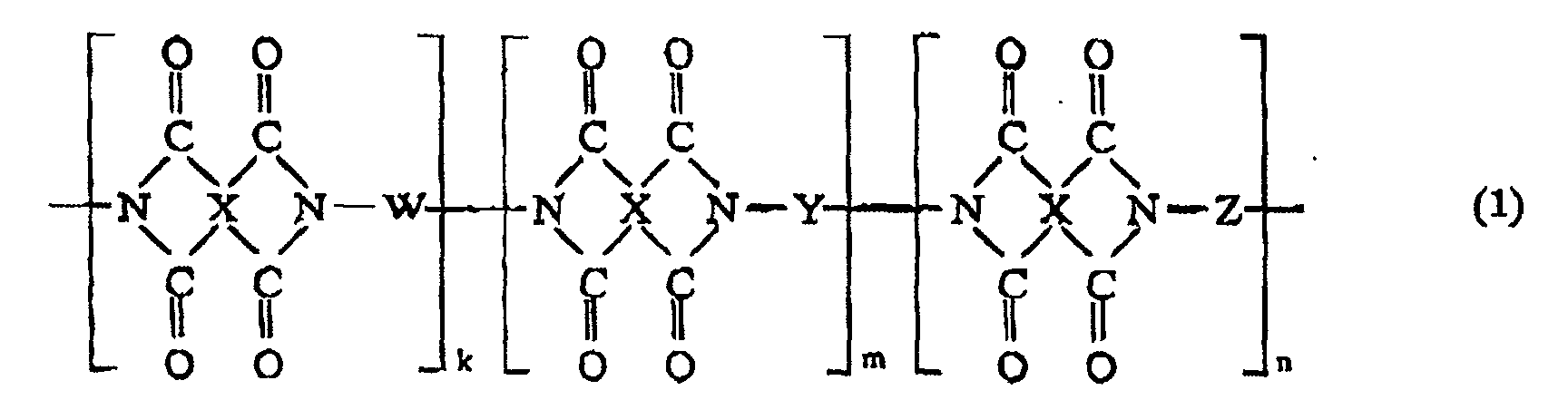
- the polyimide silicone used herein preferably has a structure represented by the following general formula (1).
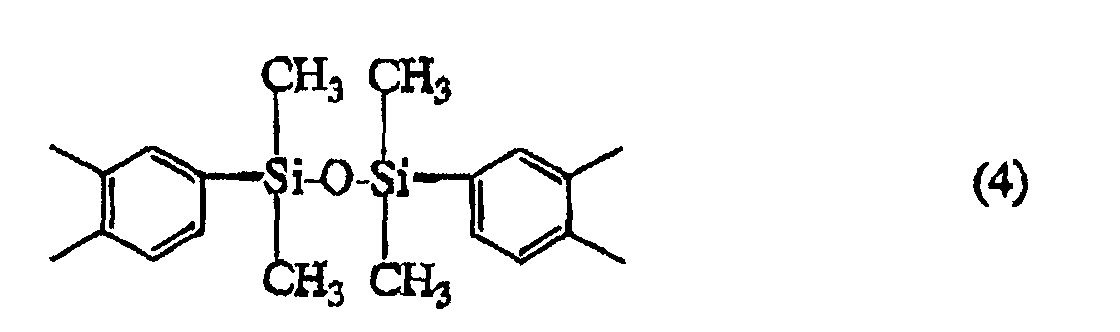
- X is at least one tetravalent organic group of the following formula (2), (3) or (4).
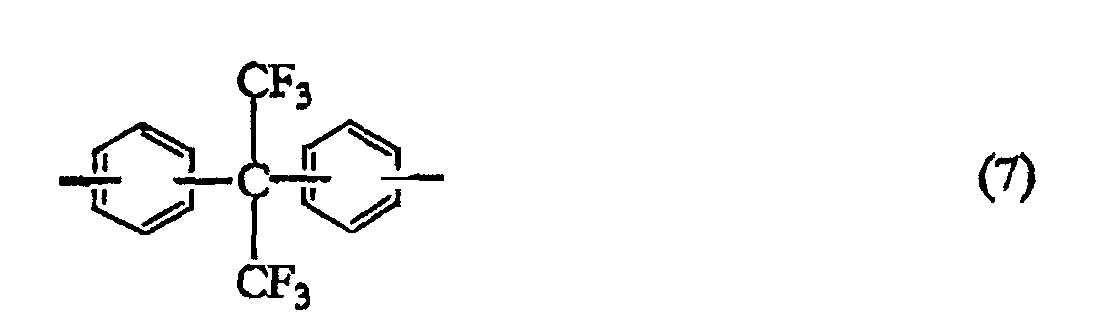
- W is a divalent organic group of the following general formula (5): wherein B is a group of the following formula (6), (7) or (8).
- Y is a divalent organic group of the following general formula (9): wherein D is CH 2 , (CH 3 ) 2 C or (CF 3 ) 2 C, and "a" is 0 or 1.
- Z is a divalent siloxane residue of the following general formula (10): wherein R is independently a monovalent hydrocarbon group of 1 to 8 carbon atoms, and "b" is 0 to 30.
- k is a number corresponding to 3 to 40 mol%
- m is a number corresponding to 40 to 90 mol%
- n is a number corresponding to 1 to 40 mol%, of the respective units.
- R are independently selected from monovalent hydrocarbon groups of 1 to 8 carbon atoms, preferably 1 to 6 carbon atoms, for example, alkyl groups such as methyl, ethyl, propyl, pentyl and hexyl, cycloalkyl groups such as cyclohexyl, alkenyl groups such as vinyl, and aryl groups such as phenyl. Of these, methyl, phenyl and vinyl are preferred from the standpoint of availability of a corresponding reactant.
- the R groups may be the same or different.
- the letter "b" representative of the number of recurring siloxane units is preferably in the range of 1 to 30, and more preferably 5 to 20.
- the units with subscript k account for 3 to 40 mol%, and preferably 10 to 30 mol% in formula (1). With k below the range, solvent solubility may be lost. Beyond the range, chemical resistance may become poor.
- the units with subscript m account for 40 to 90 mol%, and preferably 60 to 85 mol% in formula (1). With m below the range, chemical resistance may sometimes be lost. Beyond the range, the compound may become solvent insoluble.
- n 1 to 40 mol%, preferably 5 to 20 mol% in formula (1).
- n the resulting electrode member may not be so flexible.
- the compound may have a lower glass transition temperature and poor heat resistance.
- polyimide recurring units may be included additionally in this polyimide silicone, subject to the stated requirements.
- other polyimide silicones may be used if solvent-soluble, and may use any units as proposed above and/or preparation methods as proposed below.
- units including phenolic hydroxyl groups are desirable.
- any well-known method may be used.
- a tetracarboxylic dianhydride, an aromatic diamine, a diamine having a phenolic hydroxyl group, and a diaminosiloxane are dissolved in a suitable solvent such as cyclohexanone, and reacted at a low temperature of about 20 to 50° C to synthesize a polyamic acid which is a polyimide silicone precursor.
- the total amount of diamine components combined relative to the tetracarboxylic dianhydride component is determined as appropriate depending on the molecular weight of the polyimide silicone to be adjusted, and is usually in a molar ratio of from 0.95 to 1.05, preferably from 0.98 to 1.02. It is noted that a monofunctional reactant such as phthalic anhydride or aniline can be added for the purpose of adjusting the molecular weight of the polyimide silicone. When added, the amount of the monofunctional reactant is up to 2 mol% based on the amount of the polyimide silicone.
- the polyamic acid solution is heated at a temperature usually in the range of 80 to 200°C, preferably 140 to 180°C, to induce dehydration/ring closure reaction in the acid amide moiety of the polyamic acid.
- the polyimide silicone is then obtainable in solution form.
- an acetic anhydride/pyridine mixture is added to the polyamic acid solution, and the resulting solution is heated at about 50°C for imidization.
- tetracarboxylic dianhydride examples include 3,3',4,4'-diphenylsulfonetetracarboxylic dianhydride, 4,4'-hexafluoropropylidene bisphthalic dianhydride, and 1,3-bis(3,4-dicarboxyphenyl)-1,1,3,3-tetramethyldisiloxane.
- aromatic diamine examples include 2,2-bis[4-(4-aminophenoxy)phenyl]propane, 2,2-bis(4-aminophenoxyphenyl)hexafluoropropane, and bis[4-(4-aminophenoxy)-phenyl]sulfone.
- phenolic hydroxyl-bearing diamine examples include 3,3'-dihydroxy-4,4'-diaminobiphenyl, 2,2-bis(3-amino-4-hydroxyphenyl)hexafluoropropane, and 2,2-bis(3-hydroxy-4-aminophenyl)propane.
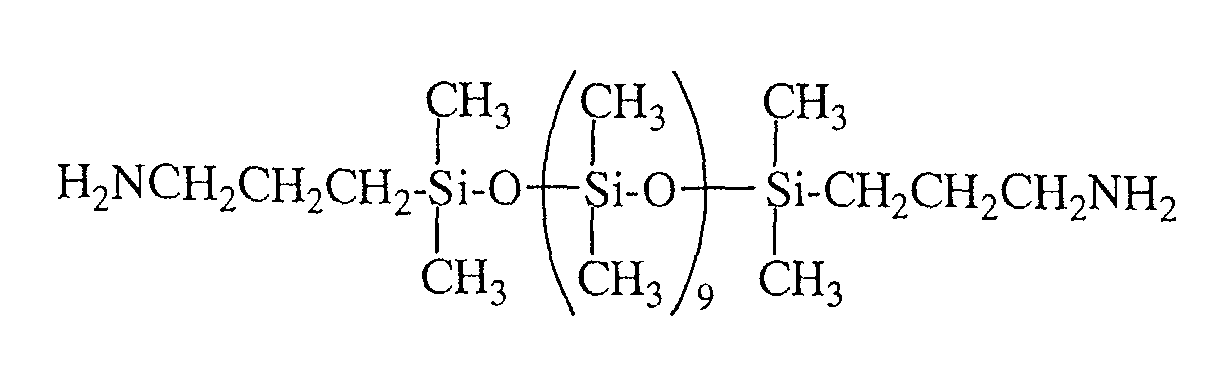
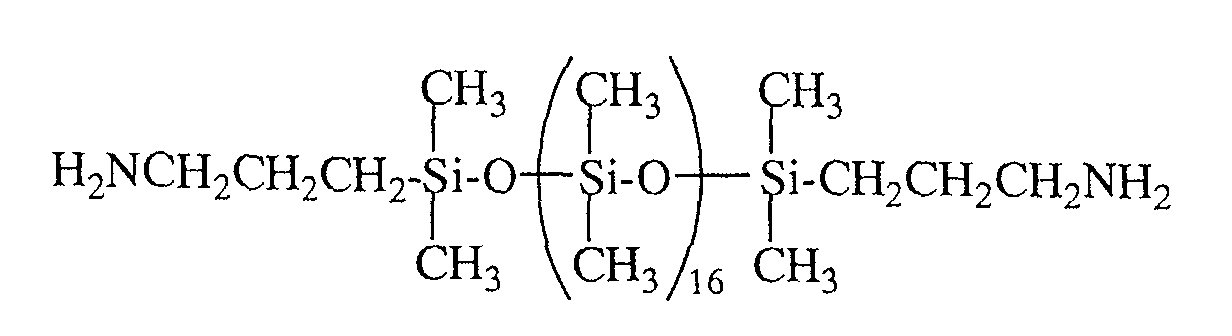
- the diaminosiloxane is preferably selected from those of the following general formula (11).
- R is independently a monovalent hydrocarbon group of 1 to 8 carbon atoms
- b is an integer of 0 to 30.
- the definition of R and b in formula (11) is the same as in formula (10), with their preferred examples or range being also the same. Typical examples of the diaminosiloxane of formula (11) are given below.
- the polyimide silicone used herein preferably has a weight average molecular weight of about 5,000 to 500,000, and more preferably about 8,000 to 350,000.
- the epoxy compound used herein is not critical as long as it is miscible with the polyimide silicone.
- the epoxy compound should have at least two epoxy groups per molecule.
- Exemplary of the epoxy compound having at least two epoxy groups per molecule are diglycidyl ether derivatives of bisphenol A, bisphenol F, resorcinol, etc. More preferred are epoxy compounds having at least three epoxy groups per molecule and an epoxy equivalent of up to 200 g/mol.
- Such epoxy compounds are, for example, N,N-diglycidyl-4-glycidyloxyaniline and 4,4'-methylene-bis(N,N-diglycidylaniline).
- Epoxy compounds with an epoxy equivalent in excess of 200 g/mol may provide the binder with a lower crosslinked density and hence, less chemical resistance, and are less preferred.
- the polyimide silicone and the epoxy compound are mixed in such a proportion that the ratio of the moles of epoxy groups in the epoxy compound to the moles of phenolic hydroxyl groups in the polyimide silicone is desirably from 1/1 to 3/1 and more desirably from 1.2/1 to 2/1. Outside the range, the binder component may have a lower crosslinked density and hence, less solvent resistance.
- the other component in the electrode-forming composition of the invention is an electrically conductive material which may be selected from conductive materials well known in the art for use as the electrode constituent in secondary batteries, electrical double-layer capacitors and the like. Examples include activated carbon powder, carbon black, and fine particles of conductive metal oxides.
- the binder component (including polyimide silicone and epoxy compound) and the conductive material are preferably mixed in such amounts that the composition may contain 5 to 70%, more preferably 10 to 60%, most preferably 20 to 50% by weight of the binder component and 30 to 95%, more preferably 40 to 90%, most preferably 50 to 80% by weight of the conductive material, the total amount of the binder component and the conductive material being 100% by weight. If the proportion of the binder component is less than 10 wt%, the composition may become less adherent to current collectors so that the resulting electrode has decreased strength. If the proportion of the binder component is more than 70 wt%, the resulting electrode may have an increased electrical resistivity above the practical level.
- the composition of the invention is preferably diluted with a solvent so that the binder component is dissolved therein.
- the solvent used herein include ethers such as tetrahydrofuran and anisole; ketones such as cyclohexanone, 2-butanone, methyl isobutyl ketone, 2-heptanone, 2-octanone and acetophenone; esters such as ethyl acetate, butyl acetate, methyl benzoate and ⁇ -butyrolactone; cellosolves such as butyl cellosolve acetate and propylene glycol monomethyl ether acetate; and amides such as N-methyl-2-pyrrolidone, N,N-dimethylformamide and N,N-dimethylacetamide.
- ketones, esters and cellosolves are preferred, and most preference is given to cyclohexanone, 2-butanone, ethyl acetate, methyl isobutyl ketone and N-methyl-2-pyrrolidone.
- the solvents may be used alone or in admixture.
- a catalyst may be added to the composition for promoting the reaction of phenolic groups in the polyimide silicone with epoxy groups in the epoxy compound.
- Any of well-known catalysts such as imidazoles, amines and acid anhydrides may be used in a conventional catalytic amount.
- the electrode-forming composition is applied to a current collector and heat cured thereto, forming an electrode member.
- the current collector used herein may be any e.g. well-known current collectors, e.g. of metal such as aluminum, copper, nickel, stainless steel, for or in electronic/electric devices e.g. secondary batteries, electrical double-layer capacitors.
- the thickness of the coating of the composition (i.e., electrode thickness) is selected as appropriate and is usually about 5 to 500 ⁇ m, and especially about 10 to 200 ⁇ m.
- the heat curing conditions include a temperature of about 150 to 230°C, especially about 170 to 200°C and a time of about 5 to 60 minutes, especially about 10 to 30 minutes.
- the use/method of making an electrode is an aspect of the invention.
- Synthesis Examples, Examples and Comparative Examples are given below for illustrating the present invention although the invention is not limited thereto.
- the compounds used in Synthesis Examples, Examples and Comparative Examples are abbreviated as follows. All parts are by weight.
- DSDA 3,3',4,4'-diphenylsulfonetetracarboxylic dianhydride 6FDA: 4,4'-hexafluoropropylidene bisphthalic anhydride
- BAPS bis[4-(4-aminophenoxy)phenyl]sulfone
- BAPP 2,2-bis[4-(4-aminophenoxy)phenyl]propane
- HAB 3,3'-dihydroxy-4,4'-diaminobiphenyl
- HFP 2,2-bis(3-amino-4-hydroxyphenyl)hexafluoropropane
- HAP 2,2-bis(3-hydroxy-4-aminophenyl)propane
- DPE 4,4'-diaminophen
- the resin was measured to have a weight average molecular weight of 10,000 on a polystyrene standard. It had a phenol equivalent of 454 g/mol.
- This resin designated Polyimide Silicone Resin II was used in Example.
- the resin was measured to have a weight average molecular weight of 11,000 on a polystyrene standard. It had a phenol equivalent of 461 g/mol.
- This resin designated Polyimide Silicone Resin III was used in Example.
- Bend-following adhesion was examined by bending the sample around a mandrel having a diameter of 2 mm and visually observing the state thereof. As a result, stripping of the coating from the aluminum foil and cracking of the coating were not found before and after the aging test, indicating satisfactory heat resistant adhesion.
- electric conductivity the resistivity of the electrode was measured by a tester.
- Chemical resistance was examined by immersing the samples in propylene carbonate, tetrahydrofuran, N-methyl-2-pyrrolidone, 2-butanone, toluene and 2-propanol at 25°C for 96 hours and carrying out a cross-hatch strip test (JIS K5400) for observing the adhesion. No stripping was found, indicating excellent chemical resistance. The results are shown in Tables 2 and 3.
- a composition was prepared under the same conditions as in Comparative Example 1. It was coated on an aluminum foil of 0.1 mm thick and heat treated at 150°C for 3 hours, thereby heat curing the composition to the aluminum foil. The sample thus obtained was examined for bend-following adhesion, electric conductivity and chemical resistance before and after a 240°C/240 hour aging test, as in Example 1. The results are shown in Tables 2 and 3.
- compositions embodying the invention were cured and bonded to a current collector at a relatively low temperature and had excellent adhesion and chemical resistance, facilitating the manufacture of lithium ion batteries and electrical double-layer capacitors of various shapes other than cylindrical and rectangular shapes which have been difficult to manufacture so far.
Landscapes
- Chemical & Material Sciences (AREA)
- Chemical Kinetics & Catalysis (AREA)
- Medicinal Chemistry (AREA)
- Polymers & Plastics (AREA)
- Organic Chemistry (AREA)
- Health & Medical Sciences (AREA)
- Engineering & Computer Science (AREA)
- Electrochemistry (AREA)
- General Chemical & Material Sciences (AREA)
- Power Engineering (AREA)
- Materials Engineering (AREA)
- Microelectronics & Electronic Packaging (AREA)
- Battery Electrode And Active Subsutance (AREA)
- Epoxy Resins (AREA)
- Adhesives Or Adhesive Processes (AREA)
- Electric Double-Layer Capacitors Or The Like (AREA)
- Compositions Of Macromolecular Compounds (AREA)
Abstract
Description

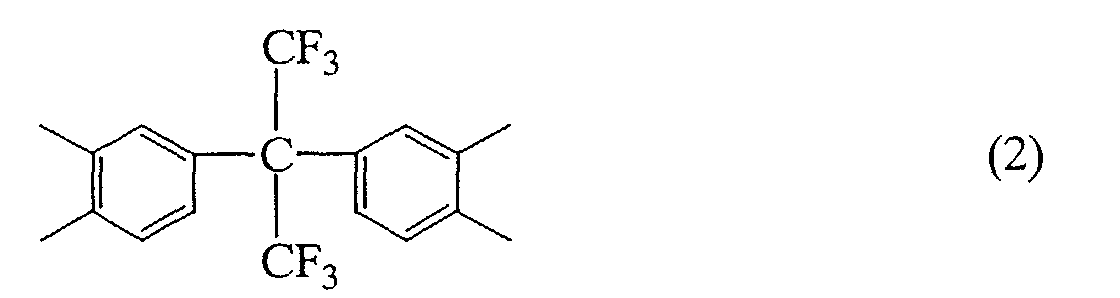




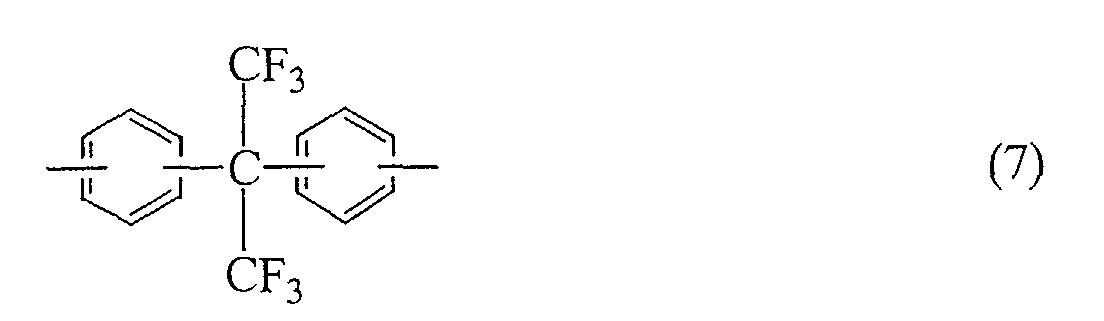


Z is a divalent siloxane residue of the following general formula (10):



DSDA: 3,3',4,4'-diphenylsulfonetetracarboxylic dianhydride
6FDA: 4,4'-hexafluoropropylidene bisphthalic anhydride
BAPS: bis[4-(4-aminophenoxy)phenyl]sulfone
BAPP: 2,2-bis[4-(4-aminophenoxy)phenyl]propane
HAB: 3,3'-dihydroxy-4,4'-diaminobiphenyl
HFP: 2,2-bis(3-amino-4-hydroxyphenyl)hexafluoropropane
HAP: 2,2-bis(3-hydroxy-4-aminophenyl)propane
DPE: 4,4'-diaminophenyl ether
GGA: N,N-diglycidyl-4-glycidyloxyaniline
MBGA: 4,4'-methylenebis(N,N-diglycidylaniline)

| Resin | Parts | Epoxy compound | Parts | Activated carbon, parts | |
| Example 1 | I | 20 | GGA | 2.4 | 52.3 |
| Example 2 | I | 20 | MBGA | 2.8 | 53.2 |
| Example 3 | II | 20 | MBGA | 7 | 63.0 |
| Example 4 | II | 20 | MBGA | 13.9 | 79.1 |
| Example 5 | III | 20 | GGA | 4 | 56.0 |
| Example 6 | III | 20 | GGA | 8 | 65.3 |
| Comparative Example 1 | IV | 100 | 72.8 | ||
| Comparative Example 2 | IV | 100 | 72.8 |
| Bend-following adhesion | Conductivity (resistivity) | |||
| Initial | 240°C/240 hr | Initial | 240°C/240 hr | |
| Example 1 | Good | Good | 0.52 | 0.54 |
| Example 2 | Good | Good | 0.52 | 0.53 |
| Example 3 | Good | Good | 0.5 | 0.53 |
| Example 4 | Good | Good | 0.54 | 0.55 |
| Example 5 | Good | Good | 0.51 | 0.52 |
| Example 6 | Good | Good | 0.52 | 0.52 |
| Comparative Example 1 | Stripped | Stripped | 0.5 | 0.52 |
| Comparative Example 2 | Stripped | Stripped | 0.7 | 0.55 |
| Chemical resistance | ||||||
| toluene | ||||||
| Example 1 | 0/100 | 0/100 | 0/100 | 0/100 | 0/100 | 0/100 |
| Example 2 | 0/100 | 0/100 | 0/100 | 0/100 | 0/100 | 0/100 |
| Example 3 | 0/100 | 0/100 | 0/100 | 0/100 | 0/100 | 0/100 |
| Example 4 | 0/100 | 0/100 | 0/100 | 0/100 | 0/100 | 0/100 |
| Example 5 | 0/100 | 0/100 | 0/100 | 0/100 | 0/100 | 0/100 |
| Example 6 | 0/100 | 0/100 | 0/100 | 0/100 | 0/100 | 0/100 |
| Comparative Example 1 | 0/100 | 0/100 | 0/100 | 0/100 | 0/100 | 0/100 |
| Comparative Example 2 | 44/100 | 65/100 | 70/100 | 15/100 | 1/100 | 1/100 |
Claims (6)
- An electrode-forming composition comprising
a binder component containing a solvent-soluble polyimide silicone and an epoxy compound, and
an electrically conductive material. - The composition of claim 1 wherein said polyimide silicone has the structure represented by the following general formula (1):wherein X is at least one tetravalent organic group of the following formula (2), (3) or (4):
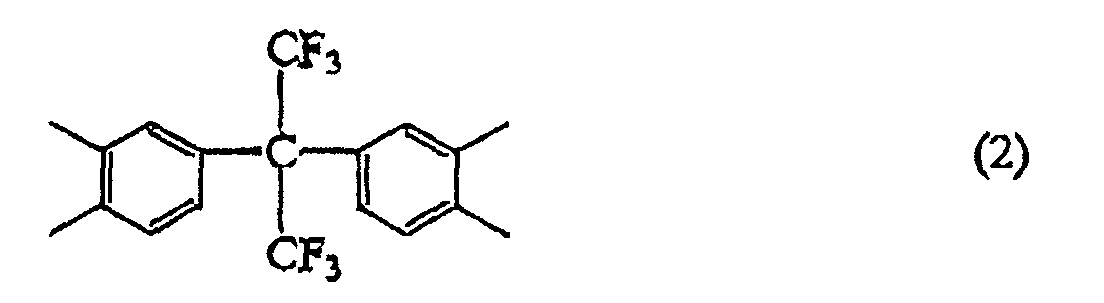
 W is a divalent organic group of the following general formula (5);
 wherein B is a group of the following formula (6), (7) or (8):

 Y is a divalent organic group of the following general formula (9):
 wherein D is CH2, (CH3)2C or (CF3)2C, and "a" is 0 or 1, and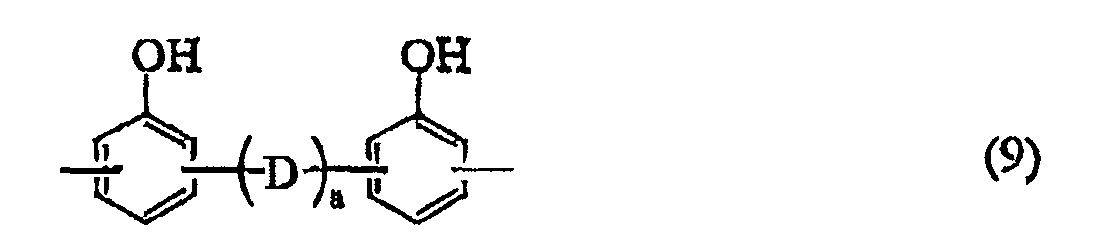
Z is a divalent siloxane residue of the following general formula (10):wherein R is independently a monovalent hydrocarbon group of 1 to 8 carbon atoms, and "b" is a positive number of 0 to 30,
the letters k, m and n are numbers corresponding to 3 to 40 mol%, 40 to 90 mol%, and 1 to 40 mol%, respectively. - A composition according to claim 1 or claim 2 in which the proportions of the polyimide silicone and the epoxy compound in the binder component are such that the ratio of the moles of epoxy groups in the epoxy compound to moles of phenolic hydroxyl groups in the polyimide silicone is from 1/1 to 3/1.
- A composition according to any one of claims 1 to 3 wherein said epoxy compound contains at least three epoxy groups in the molecule and has an epoxy equivalent of up to 200 g/mol.
- An electrode member obtained or obtainable by applying a composition of any one of claims 1 to 4 to a current collector and heat curing.
- A method of making an electrode member, comprising applying a composition of any one of claims 1 to 4 to a current collector and heat curing.
Applications Claiming Priority (2)
| Application Number | Priority Date | Filing Date | Title |
|---|---|---|---|
| JP2001089667 | 2001-03-27 | ||
| JP2001089667A JP3669429B2 (en) | 2001-03-27 | 2001-03-27 | Electrode composition and electrode material |
Publications (3)
| Publication Number | Publication Date |
|---|---|
| EP1246280A2 true EP1246280A2 (en) | 2002-10-02 |
| EP1246280A3 EP1246280A3 (en) | 2006-06-21 |
| EP1246280B1 EP1246280B1 (en) | 2010-12-15 |
Family
ID=18944566
Family Applications (1)
| Application Number | Title | Priority Date | Filing Date |
|---|---|---|---|
| EP02252266A Expired - Lifetime EP1246280B1 (en) | 2001-03-27 | 2002-03-27 | Electrode-forming compositions and electrode members |
Country Status (4)
| Country | Link |
|---|---|
| US (1) | US6723432B2 (en) |
| EP (1) | EP1246280B1 (en) |
| JP (1) | JP3669429B2 (en) |
| DE (1) | DE60238576D1 (en) |
Cited By (17)
| Publication number | Priority date | Publication date | Assignee | Title |
|---|---|---|---|---|
| WO2006052313A1 (en) * | 2004-11-08 | 2006-05-18 | 3M Innovative Properties Company | Polyimide electrode binders |
| EP1928047A1 (en) | 2006-11-27 | 2008-06-04 | Samsung SDI Co., Ltd. | Negative electrode for a rechargeable lithium battery and material compostion for fabrication the same |
| EP2159247A1 (en) * | 2008-08-27 | 2010-03-03 | Shin-Etsu Chemical Co., Ltd. | Solvent-free polymide silicone resin compositions and cured products thereof |
| EP2267824A4 (en) * | 2008-04-18 | 2012-08-01 | Toyota Jidoshokki Kk | Negative electrode for lithium ion secondary battery, and method for production thereof |
| JP2013069466A (en) * | 2011-09-21 | 2013-04-18 | Toray Ind Inc | Binder for lithium ion battery positive electrode, paste for lithium ion battery positive electrode containing the same, and method for manufacturing lithium ion battery positive electrode |
| US9627722B1 (en) | 2013-09-16 | 2017-04-18 | American Lithium Energy Corporation | Positive temperature coefficient film, positive temperature coefficient electrode, positive temperature coefficient separator, and battery comprising the same |
| WO2017143274A1 (en) | 2016-02-19 | 2017-08-24 | American Lithium Energy Corporation | Dual function current collector |
| US9905836B2 (en) | 2014-11-25 | 2018-02-27 | American Lithium Energy Corporation | Rechargable battery with internal current limiter and interrupter |
| US10020545B2 (en) | 2014-11-25 | 2018-07-10 | American Lithium Energy Corporation | Rechargeable battery with resistive layer for enhanced safety |
| US10020487B2 (en) | 2014-11-25 | 2018-07-10 | American Lithium Energy Corporation | Rechargeable battery with voltage activated current interrupter |
| CN110010848A (en) * | 2014-01-28 | 2019-07-12 | 株式会社Lg化学 | Surface-coated positive electrode active material, method for preparing same, and positive electrode and lithium secondary battery comprising same |
| US10424791B2 (en) | 2007-08-10 | 2019-09-24 | Arakawa Chemical Industries, Ltd | Process for manufacturing electrode for secondary battery |
| US10818906B2 (en) | 2017-05-01 | 2020-10-27 | American Lithium Energy Corporation | Negative thermal expansion current interrupter |
| US10923727B2 (en) | 2017-07-28 | 2021-02-16 | American Lithium Energy Corporation | Anti-corrosion for battery current collector |
| US11916257B2 (en) | 2014-11-25 | 2024-02-27 | American Lithium Energy Corporation | Rechargeable battery with internal current limiter and interrupter |
| US12230844B2 (en) | 2018-06-25 | 2025-02-18 | American Lithium Energy Corporation | Safety layer for battery cells |
| US12633629B2 (en) | 2024-01-23 | 2026-05-19 | American Lithium Energy Corporation | Rechargeable battery with internal current limiter and interrupter |
Families Citing this family (28)
| Publication number | Priority date | Publication date | Assignee | Title |
|---|---|---|---|---|
| JP4235808B2 (en) * | 2003-09-19 | 2009-03-11 | 信越化学工業株式会社 | Adhesive composition and adhesive film |
| JP4395350B2 (en) * | 2003-10-09 | 2010-01-06 | 信越化学工業株式会社 | Curable resin composition and conductive adhesive |
| JP4530125B2 (en) * | 2003-10-17 | 2010-08-25 | 信越化学工業株式会社 | Adhesive composition, adhesive film, and adhesive tape for dicing and die bonding |
| JP4530126B2 (en) * | 2003-10-17 | 2010-08-25 | 信越化学工業株式会社 | Adhesive composition and adhesive film |
| JP4490866B2 (en) * | 2005-05-09 | 2010-06-30 | 信越化学工業株式会社 | Electrode for electrochemical capacitor, composition used therefor, method for producing the electrode, and electrochemical capacitor using the electrode |
| WO2007046405A1 (en) * | 2005-10-21 | 2007-04-26 | Nippon Kayaku Kabushiki Kaisha | Thermosetting resin composition and use thereof |
| JP2008021635A (en) * | 2006-06-14 | 2008-01-31 | Nissan Motor Co Ltd | Non-aqueous electrolyte secondary battery electrode and non-aqueous electrolyte secondary battery using the same |
| CN101454377A (en) * | 2006-06-20 | 2009-06-10 | 日本化药株式会社 | Copper foil with primer resin layer and laminate using the same |
| JP2008007623A (en) * | 2006-06-29 | 2008-01-17 | Chisso Corp | Nanoimprinting composition |
| WO2009037834A1 (en) | 2007-09-20 | 2009-03-26 | Nippon Kayaku Kabushiki Kaisha | Primer resin for semiconductor device, and semiconductor device |
| KR101576694B1 (en) * | 2007-10-26 | 2015-12-10 | 시온 파워 코퍼레이션 | Primer for battery electrode |
| JP4448535B2 (en) | 2007-12-18 | 2010-04-14 | 株式会社 日立ディスプレイズ | Display device |
| JP5129007B2 (en) * | 2008-04-18 | 2013-01-23 | 株式会社豊田自動織機 | Negative electrode for lithium ion secondary battery and method for producing the same |
| JP5305503B2 (en) * | 2008-05-22 | 2013-10-02 | 株式会社ピーアイ技術研究所 | Conductive agent for battery electrode, electrode including the same and battery |
| JP5334021B2 (en) * | 2009-03-31 | 2013-11-06 | 信越化学工業株式会社 | LITHIUM SECONDARY BATTERY, METHOD FOR PRODUCING THE LITHIUM SECONDARY BATTERY, AND LITHIUM SECONDARY BATTERY negative electrode binder precursor solution used therein |
| US8871894B2 (en) * | 2009-04-23 | 2014-10-28 | Nissan Chemical Industries, Ltd. | Production method of polyhydroxyimide |
| JP5478233B2 (en) * | 2009-12-14 | 2014-04-23 | 日本化薬株式会社 | Battery electrode forming binder and electrode mixture |
| WO2011142083A1 (en) * | 2010-05-12 | 2011-11-17 | 株式会社豊田自動織機 | Electrode for lithium ion secondary battery and method for producing same |
| US8886106B2 (en) * | 2011-03-02 | 2014-11-11 | Konica Minolta Business Technologies, Inc. | Intermediate transfer belt and method for producing the same |
| TWI460203B (en) * | 2011-12-30 | 2014-11-11 | Eternal Materials Co Ltd | Electrolyte material formulation, electrolyte material composition formed therefrom and use thereof |
| KR20130134917A (en) * | 2012-05-31 | 2013-12-10 | 삼성에스디아이 주식회사 | Binder for electrode of lithium battery, and electrode and lithium battery containing the binder |
| KR101325952B1 (en) * | 2013-04-01 | 2013-11-07 | 한국기계연구원 | High performance functionalized activated carbon supercapacitor by using curable polymer binder |
| WO2017073766A1 (en) * | 2015-10-30 | 2017-05-04 | ユニチカ株式会社 | Polyimide solution for electricity storage element electrodes, method for producing electricity storage element electrode, and electricity storage element electrode |
| CN106683912A (en) * | 2016-12-14 | 2017-05-17 | 益阳艾华富贤电子有限公司 | Method for producing low leakage winding type solid electrolytic capacitor |
| US11345606B2 (en) | 2017-02-17 | 2022-05-31 | David Brown | Deposition particles and a method and apparatus for producing the same |
| CN110066396A (en) * | 2018-03-20 | 2019-07-30 | 南方科技大学 | Flexible chain modified polyimide precursor, preparation method thereof and lithium ion battery |
| CN113328088B (en) * | 2021-05-17 | 2022-06-07 | 湘潭大学 | A controllable method to realize surface modification of electrode materials |
| WO2024036469A1 (en) * | 2022-08-16 | 2024-02-22 | 宁德时代新能源科技股份有限公司 | Modified negative electrode material and preparation method therefor, negative electrode plate, secondary battery and electric device |
Family Cites Families (9)
| Publication number | Priority date | Publication date | Assignee | Title |
|---|---|---|---|---|
| JPS6170742A (en) * | 1984-09-14 | 1986-04-11 | Hitachi Ltd | Resin mold type semiconductor device |
| JP2643518B2 (en) * | 1989-02-10 | 1997-08-20 | 東レ株式会社 | Prepreg |
| US5492586A (en) * | 1993-10-29 | 1996-02-20 | Martin Marietta Corporation | Method for fabricating encased molded multi-chip module substrate |
| US5700398A (en) * | 1994-12-14 | 1997-12-23 | International Business Machines Corporation | Composition containing a polymer and conductive filler and use thereof |
| JP3243963B2 (en) * | 1995-03-17 | 2002-01-07 | 宇部興産株式会社 | Polyimide siloxane composition |
| JP3846930B2 (en) | 1996-03-29 | 2006-11-15 | 旭硝子株式会社 | Manufacturing method of electric double layer capacitor |
| JP3719018B2 (en) * | 1998-11-20 | 2005-11-24 | 宇部興産株式会社 | Underfill material |
| US20020005247A1 (en) * | 1999-02-08 | 2002-01-17 | Teresita Ordonez Graham | Electrically conductive paste materials and applications |
| JP2002012666A (en) * | 2000-06-29 | 2002-01-15 | Shin Etsu Chem Co Ltd | Polyimide silicone resin, its production method and its composition |
-
2001
- 2001-03-27 JP JP2001089667A patent/JP3669429B2/en not_active Expired - Lifetime
-
2002
- 2002-03-26 US US10/105,263 patent/US6723432B2/en not_active Expired - Lifetime
- 2002-03-27 EP EP02252266A patent/EP1246280B1/en not_active Expired - Lifetime
- 2002-03-27 DE DE60238576T patent/DE60238576D1/en not_active Expired - Lifetime
Cited By (35)
| Publication number | Priority date | Publication date | Assignee | Title |
|---|---|---|---|---|
| US7972725B2 (en) | 2004-11-08 | 2011-07-05 | 3M Innovative Properties Company | Polyimide electrode binders |
| WO2006052313A1 (en) * | 2004-11-08 | 2006-05-18 | 3M Innovative Properties Company | Polyimide electrode binders |
| EP1928047A1 (en) | 2006-11-27 | 2008-06-04 | Samsung SDI Co., Ltd. | Negative electrode for a rechargeable lithium battery and material compostion for fabrication the same |
| US8148008B2 (en) | 2006-11-27 | 2012-04-03 | Samsung Sdi Co., Ltd. | Negative active material composition for a rechargeable lithium battery, a negative electrode for a rechargeable lithium battery, and a rechargeable lithium battery including same |
| US10424791B2 (en) | 2007-08-10 | 2019-09-24 | Arakawa Chemical Industries, Ltd | Process for manufacturing electrode for secondary battery |
| EP2267824A4 (en) * | 2008-04-18 | 2012-08-01 | Toyota Jidoshokki Kk | Negative electrode for lithium ion secondary battery, and method for production thereof |
| EP2159247A1 (en) * | 2008-08-27 | 2010-03-03 | Shin-Etsu Chemical Co., Ltd. | Solvent-free polymide silicone resin compositions and cured products thereof |
| US8053533B2 (en) | 2008-08-27 | 2011-11-08 | Shin-Etsu Chemical Co., Ltd. | Phenolic OH-containing polyimide silicone, epoxy resin and curing agent |
| JP2013069466A (en) * | 2011-09-21 | 2013-04-18 | Toray Ind Inc | Binder for lithium ion battery positive electrode, paste for lithium ion battery positive electrode containing the same, and method for manufacturing lithium ion battery positive electrode |
| US11056726B2 (en) | 2013-09-16 | 2021-07-06 | American Lithium Energy Corporation | Positive temperature coefficient film, positive temperature coefficient electrode, positive temperature coefficient separator, and battery comprising the same |
| US11605837B2 (en) | 2013-09-16 | 2023-03-14 | American Lithium Energy Corporation | Positive temperature coefficient film, positive temperature coefficient electrode, positive temperature coefficient separator, and battery comprising the same |
| US9627722B1 (en) | 2013-09-16 | 2017-04-18 | American Lithium Energy Corporation | Positive temperature coefficient film, positive temperature coefficient electrode, positive temperature coefficient separator, and battery comprising the same |
| US9806382B1 (en) | 2013-09-16 | 2017-10-31 | American Lithium Energy Corporation | Positive temperature coefficient film, positive temperature coefficient electrode, positive temperature coefficient separator, and battery comprising the same |
| US10326173B2 (en) | 2013-09-16 | 2019-06-18 | American Lithium Energy Corporation | Positive temperature coefficient film, positive temperature coefficient electrode, positive temperature coefficient separator, and battery comprising the same |
| CN110010848A (en) * | 2014-01-28 | 2019-07-12 | 株式会社Lg化学 | Surface-coated positive electrode active material, method for preparing same, and positive electrode and lithium secondary battery comprising same |
| US10388940B2 (en) | 2014-11-25 | 2019-08-20 | American Lithium Energy Corporation | Rechargeable battery with interrupter for interrupting internal current flow |
| US10020545B2 (en) | 2014-11-25 | 2018-07-10 | American Lithium Energy Corporation | Rechargeable battery with resistive layer for enhanced safety |
| US10396341B2 (en) | 2014-11-25 | 2019-08-27 | American Lithium Energy Corporation | Rechargeable battery with internal current limiter and interrupter |
| US11916257B2 (en) | 2014-11-25 | 2024-02-27 | American Lithium Energy Corporation | Rechargeable battery with internal current limiter and interrupter |
| US11728523B2 (en) | 2014-11-25 | 2023-08-15 | American Lithium Energy Corporation | Rechargeable battery with resistive layer for enhanced safety |
| US10734633B2 (en) | 2014-11-25 | 2020-08-04 | American Lithium Energy Corporation | Rechargeable battery with voltage activated current interrupter |
| US9905836B2 (en) | 2014-11-25 | 2018-02-27 | American Lithium Energy Corporation | Rechargable battery with internal current limiter and interrupter |
| US10840560B2 (en) | 2014-11-25 | 2020-11-17 | American Lithium Energy Corporation | Rechargeable battery with resistive layer for enhanced safety |
| US11121438B2 (en) | 2014-11-25 | 2021-09-14 | American Lithium Energy Corporation | Rechargeable battery with internal current limiter and interrupter |
| US10020487B2 (en) | 2014-11-25 | 2018-07-10 | American Lithium Energy Corporation | Rechargeable battery with voltage activated current interrupter |
| US11189819B2 (en) | 2016-02-19 | 2021-11-30 | American Lithium Energy Corporation | Dual function current collector |
| US11575114B2 (en) | 2016-02-19 | 2023-02-07 | American Lithium Energy Corporation | Dual function current collector |
| US10483523B2 (en) * | 2016-02-19 | 2019-11-19 | American Lithium Energy Corporation | Dual function current collector |
| WO2017143274A1 (en) | 2016-02-19 | 2017-08-24 | American Lithium Energy Corporation | Dual function current collector |
| US10818906B2 (en) | 2017-05-01 | 2020-10-27 | American Lithium Energy Corporation | Negative thermal expansion current interrupter |
| US11842868B2 (en) | 2017-05-01 | 2023-12-12 | American Lithium Energy Corporation | Negative thermal expansion current interrupter |
| US10923727B2 (en) | 2017-07-28 | 2021-02-16 | American Lithium Energy Corporation | Anti-corrosion for battery current collector |
| US11688857B2 (en) | 2017-07-28 | 2023-06-27 | American Lithium Energy Corporation | Anti-corrosion for battery current collector |
| US12230844B2 (en) | 2018-06-25 | 2025-02-18 | American Lithium Energy Corporation | Safety layer for battery cells |
| US12633629B2 (en) | 2024-01-23 | 2026-05-19 | American Lithium Energy Corporation | Rechargeable battery with internal current limiter and interrupter |
Also Published As
| Publication number | Publication date |
|---|---|
| US6723432B2 (en) | 2004-04-20 |
| US20030040578A1 (en) | 2003-02-27 |
| DE60238576D1 (en) | 2011-01-27 |
| JP3669429B2 (en) | 2005-07-06 |
| EP1246280B1 (en) | 2010-12-15 |
| JP2002289196A (en) | 2002-10-04 |
| EP1246280A3 (en) | 2006-06-21 |
Similar Documents
| Publication | Publication Date | Title |
|---|---|---|
| US6723432B2 (en) | Electrode-forming compositions and electrode members | |
| EP1184403B1 (en) | Polyimide silicone resin, process for its production, and polyimide silicone resin composition | |
| EP1447214B1 (en) | Polyimide-metal layered products and polyamideimide-metal layered product | |
| EP0459809B1 (en) | Polyimidosiloxane resin and composition thereof and method of applying same | |
| JP5276324B2 (en) | Thermosetting resin composition and use thereof | |
| US20080020231A1 (en) | Epoxy Resin Composition | |
| JPH10182820A (en) | Polyimide precursor composition and polyimide film | |
| US20010031828A1 (en) | Film-type adhesive for electronic components, and electronic components bonded therewith | |
| EP0424805A2 (en) | Copolyimide ODPA/BPDA/4,4'-ODA/p-PDA | |
| JP4174274B2 (en) | Polyamideimide resin, resin composition containing the same, coating material for electronic parts, and adhesive for electronic parts | |
| KR20180098289A (en) | Resin composition | |
| KR100884511B1 (en) | Resin composition for composite dielectric and composite dielectric, electric circuit board using the dielectric | |
| JPH10195278A (en) | Thermosetting resin composition | |
| JP4589471B2 (en) | Polyimide precursor solution and production method thereof, coating film obtained therefrom and production method thereof | |
| CA1283746C (en) | Polyimide modified epoxy resins in aqueous emulsions for lamination and electrodeposition | |
| US20030220455A1 (en) | Heat resistant resin composition and adhesive film | |
| JP2619515B2 (en) | Silicon polyimide precursor composition | |
| JP5000074B2 (en) | Method for producing polyamideimide | |
| KR101141910B1 (en) | An Electrode for an Electrochemical Capacitor, a Composition used for the Electrode, a Method of Manufacturing the Electrode, and an Electrochemical Capacitor using the Electrode | |
| JP3588263B2 (en) | Epoxy resin composition | |
| EP0317205B1 (en) | Imido group-containing silicon oligomers and cured product thereof, and their preparation | |
| JPH08120040A (en) | Heat-resistant electrical insulating material and production of heat-resistant electrical insulating film from the same | |
| JP3714435B2 (en) | Heat resistant resin composition and adhesive sheet using the same | |
| JPH09106711A (en) | Insulated wire | |
| JP2003147051A (en) | Resin composition, method for producing the same, and prepreg for printed wiring board using the same |
Legal Events
| Date | Code | Title | Description |
|---|---|---|---|
| PUAI | Public reference made under article 153(3) epc to a published international application that has entered the european phase |
Free format text: ORIGINAL CODE: 0009012 |
|
| AK | Designated contracting states |
Kind code of ref document: A2 Designated state(s): AT BE CH CY DE DK ES FI FR GB GR IE IT LI LU MC NL PT SE TR |
|
| AX | Request for extension of the european patent |
Free format text: AL;LT;LV;MK;RO;SI |
|
| PUAL | Search report despatched |
Free format text: ORIGINAL CODE: 0009013 |
|
| AK | Designated contracting states |
Kind code of ref document: A3 Designated state(s): AT BE CH CY DE DK ES FI FR GB GR IE IT LI LU MC NL PT SE TR |
|
| AX | Request for extension of the european patent |
Extension state: AL LT LV MK RO SI |
|
| 17P | Request for examination filed |
Effective date: 20060807 |
|
| AKX | Designation fees paid |
Designated state(s): DE FR GB |
|
| 17Q | First examination report despatched |
Effective date: 20070628 |
|
| GRAP | Despatch of communication of intention to grant a patent |
Free format text: ORIGINAL CODE: EPIDOSNIGR1 |
|
| RIC1 | Information provided on ipc code assigned before grant |
Ipc: C08G 73/10 20060101ALI20100527BHEP Ipc: H01M 4/62 20060101AFI20100527BHEP Ipc: H01M 4/13 20100101ALI20100527BHEP Ipc: H01G 9/00 20060101ALI20100527BHEP |
|
| RIN1 | Information on inventor provided before grant (corrected) |
Inventor name: SUGO, MICHIHIRO,C/O SILICONE-ELECTRONICS MATERIALS Inventor name: KATO, HIDETO,C/O NEW FUNCTIONAL MATERIALS RESEARCH |
|
| GRAS | Grant fee paid |
Free format text: ORIGINAL CODE: EPIDOSNIGR3 |
|
| GRAA | (expected) grant |
Free format text: ORIGINAL CODE: 0009210 |
|
| AK | Designated contracting states |
Kind code of ref document: B1 Designated state(s): DE FR GB |
|
| REG | Reference to a national code |
Ref country code: GB Ref legal event code: FG4D |
|
| REF | Corresponds to: |
Ref document number: 60238576 Country of ref document: DE Date of ref document: 20110127 Kind code of ref document: P |
|
| PLBE | No opposition filed within time limit |
Free format text: ORIGINAL CODE: 0009261 |
|
| STAA | Information on the status of an ep patent application or granted ep patent |
Free format text: STATUS: NO OPPOSITION FILED WITHIN TIME LIMIT |
|
| 26N | No opposition filed |
Effective date: 20110916 |
|
| REG | Reference to a national code |
Ref country code: DE Ref legal event code: R097 Ref document number: 60238576 Country of ref document: DE Effective date: 20110916 |
|
| REG | Reference to a national code |
Ref country code: FR Ref legal event code: PLFP Year of fee payment: 15 |
|
| REG | Reference to a national code |
Ref country code: FR Ref legal event code: PLFP Year of fee payment: 16 |
|
| REG | Reference to a national code |
Ref country code: FR Ref legal event code: PLFP Year of fee payment: 17 |
|
| PGFP | Annual fee paid to national office [announced via postgrant information from national office to epo] |
Ref country code: GB Payment date: 20180321 Year of fee payment: 17 Ref country code: DE Payment date: 20180313 Year of fee payment: 17 |
|
| PGFP | Annual fee paid to national office [announced via postgrant information from national office to epo] |
Ref country code: FR Payment date: 20180223 Year of fee payment: 17 |
|
| REG | Reference to a national code |
Ref country code: DE Ref legal event code: R119 Ref document number: 60238576 Country of ref document: DE |
|
| GBPC | Gb: european patent ceased through non-payment of renewal fee |
Effective date: 20190327 |
|
| PG25 | Lapsed in a contracting state [announced via postgrant information from national office to epo] |
Ref country code: DE Free format text: LAPSE BECAUSE OF NON-PAYMENT OF DUE FEES Effective date: 20191001 Ref country code: GB Free format text: LAPSE BECAUSE OF NON-PAYMENT OF DUE FEES Effective date: 20190327 |
|
| PG25 | Lapsed in a contracting state [announced via postgrant information from national office to epo] |
Ref country code: FR Free format text: LAPSE BECAUSE OF NON-PAYMENT OF DUE FEES Effective date: 20190331 |