EP1242671B1 - Enzymes useful for changing the properties of polyester - Google Patents
Enzymes useful for changing the properties of polyester Download PDFInfo
- Publication number
- EP1242671B1 EP1242671B1 EP20000972044 EP00972044A EP1242671B1 EP 1242671 B1 EP1242671 B1 EP 1242671B1 EP 20000972044 EP20000972044 EP 20000972044 EP 00972044 A EP00972044 A EP 00972044A EP 1242671 B1 EP1242671 B1 EP 1242671B1
- Authority
- EP
- European Patent Office
- Prior art keywords
- polyester
- polyesterase
- enzyme
- fabric
- buffer
- Prior art date
- Legal status (The legal status is an assumption and is not a legal conclusion. Google has not performed a legal analysis and makes no representation as to the accuracy of the status listed.)
- Expired - Lifetime
Links
Images


Classifications
-
- D—TEXTILES; PAPER
- D06—TREATMENT OF TEXTILES OR THE LIKE; LAUNDERING; FLEXIBLE MATERIALS NOT OTHERWISE PROVIDED FOR
- D06M—TREATMENT, NOT PROVIDED FOR ELSEWHERE IN CLASS D06, OF FIBRES, THREADS, YARNS, FABRICS, FEATHERS OR FIBROUS GOODS MADE FROM SUCH MATERIALS
- D06M16/00—Biochemical treatment of fibres, threads, yarns, fabrics, or fibrous goods made from such materials, e.g. enzymatic
-
- D—TEXTILES; PAPER
- D06—TREATMENT OF TEXTILES OR THE LIKE; LAUNDERING; FLEXIBLE MATERIALS NOT OTHERWISE PROVIDED FOR
- D06M—TREATMENT, NOT PROVIDED FOR ELSEWHERE IN CLASS D06, OF FIBRES, THREADS, YARNS, FABRICS, FEATHERS OR FIBROUS GOODS MADE FROM SUCH MATERIALS
- D06M16/00—Biochemical treatment of fibres, threads, yarns, fabrics, or fibrous goods made from such materials, e.g. enzymatic
- D06M16/003—Biochemical treatment of fibres, threads, yarns, fabrics, or fibrous goods made from such materials, e.g. enzymatic with enzymes or microorganisms
-
- D—TEXTILES; PAPER
- D06—TREATMENT OF TEXTILES OR THE LIKE; LAUNDERING; FLEXIBLE MATERIALS NOT OTHERWISE PROVIDED FOR
- D06M—TREATMENT, NOT PROVIDED FOR ELSEWHERE IN CLASS D06, OF FIBRES, THREADS, YARNS, FABRICS, FEATHERS OR FIBROUS GOODS MADE FROM SUCH MATERIALS
- D06M2101/00—Chemical constitution of the fibres, threads, yarns, fabrics or fibrous goods made from such materials, to be treated
- D06M2101/16—Synthetic fibres, other than mineral fibres
- D06M2101/30—Synthetic polymers consisting of macromolecular compounds obtained otherwise than by reactions only involving carbon-to-carbon unsaturated bonds
- D06M2101/32—Polyesters
-
- Y—GENERAL TAGGING OF NEW TECHNOLOGICAL DEVELOPMENTS; GENERAL TAGGING OF CROSS-SECTIONAL TECHNOLOGIES SPANNING OVER SEVERAL SECTIONS OF THE IPC; TECHNICAL SUBJECTS COVERED BY FORMER USPC CROSS-REFERENCE ART COLLECTIONS [XRACs] AND DIGESTS
- Y10—TECHNICAL SUBJECTS COVERED BY FORMER USPC
- Y10T—TECHNICAL SUBJECTS COVERED BY FORMER US CLASSIFICATION
- Y10T442/00—Fabric [woven, knitted, or nonwoven textile or cloth, etc.]
- Y10T442/20—Coated or impregnated woven, knit, or nonwoven fabric which is not [a] associated with another preformed layer or fiber layer or, [b] with respect to woven and knit, characterized, respectively, by a particular or differential weave or knit, wherein the coating or impregnation is neither a foamed material nor a free metal or alloy layer
Definitions
- the present invention relates to the field of the modification of synthetic polyester used in the production of fibers, yarns, fabrics, films, resins and other objects used for the production of plastics, fabrics, textiles, rugs and other consumer items. More specifically, the present invention relates to a new class of enzymes which have the ability to modify the surface of polyester resins and fibers and articles produced therewith.
- Polyesters are manufactured synthetic compositions comprising any long chain synthetic polymer composed of at least 85% by weight of an ester of a substituted aromatic carboxylic acid, including but not restricted to substituted terephthalate units and parasubstituted hydroxybenzoate units.
- the polyester may take the form of a fiber, yarn, fabric, film, resin or powder.
- Many chemical derivatives have been developed, for example, polyethylene terephthalate (PET), polytrimethylene terephthalate (PTT), polybutylene terephthalate (PBT) and polyethylene naphthalate (PEN).
- PET is the most common linear polymer produced and accounts for a majority of the polyester applied in industry today.
- Thermoplastic polyester can be selectively engineered in any of the basic processing steps of polymerization and fiber formation. This flexibility and range of properties allows for a wide range of products to be made from polyester for markets such as the apparel, home fumishing, upholstery, film, rigid and flexible container, non-woven fabric, tire and carpet industries. As a result, polyester has become the dominant reinforcement fiber in the United States.
- polyester has begun to take on increased significance. Moreover, polyester has reached a higher level of consumer acceptance due to recognition of its strength and the increasing quality and variety of fabrics that can be made using such fibers. Other polyester markets such as fiber-fill and non-woven articles continue to grow.
- polyester has certain key advantages including high strength, soft hand, stretch resistance, stain resistance, machine washability, wrinkle resistance and abrasion resistance.
- polyester is not so optimal in terms of its hydrophobicity, pilling, static, dyeability, inactive surface as a medium for adhering, i.e., softening or wettability enhancing compounds, lack of breathability and undesirable high shine or luster appearance.
- polyester textiles suffered from poor consumer perception and was synonymous with the phrase"cheaply made”and derided for the horrendous colors with which polyester was associated. This latter problem is due in large part to the unavailability of a large selection of dyes which are compatible with polyester. To combat this perception, the industry has made strong efforts to improve the characteristics of polyester.
- polyester is very resistant to uptake of polar or charged compositions, i. e., fabric softeners, finishes and dyes.
- Another problem with polyester relates to the difficulty of removing oily and/or hydrophobic stains. These stains often adhere strongly to the fabric or fiber and cause a permanent stain.
- GB 2296011 A discloses enzymes naturally produced by a fungus of the species Fusarium solanii var. minus T. 92. 637/1, including a cutinase of isoelectric point 7. 2 and mol. wt. 22 kDa. which are useful in detergent compositions for removing fatty acid-based dirt and stains.
- US 5512203 discloses cleaning compositions comprising a cutinase enzyme and a cutinase compatible surfactant.
- the microbial cutinase is from Pseudomonas mendocina and is used in an improved method for enzymatically cleaning a material having a cutin or cutin-like stain.
- PCT Publication No. WO 97/43014 (Bayer AG) describes the enzymatic degradation of polyesteramide by treatment with an aqueous solution comprising an esterase, lipase or protease.
- JP 5344897 A (Amano Pharmaceutical KK) describes a commercial lipase composition which is dissolved in solution with an aliphatic polyester with the result that the fiber texture is improved without losing strength.
- Polymers of aliphatic polyethylene are also disclosed which can be degraded by lipase from Pseudomonas spp.
- PCT Publication No. 97/33001 discloses a method for improving the wettability and absorbency of a polyester fabric by treating with a lipase.
- PCT Publication No. WO 99/01604 (Novo Nordisk) describes a method for depilling a polyester fiber or fabric and for color clarification in detergents of such fabrics by reacting with an enzyme which has hydrolytic activity on either ethyleneglycol dibenzyl ester (BEB) and/or terephthalic acid diethyl ester (ETE) subunit components.
- BEB ethyleneglycol dibenzyl ester
- ETE terephthalic acid diethyl ester
- WO97/27237 describes a process for enzymatic hydrolysis of cyclic oligomers of poly (ethylene terephthalate) which give a grayish appearance to the final fabric.
- such improvement may relate to pilling prevention, depilling during manufacture, increase in desirable hand and feel and appearance, improved static resistance, increased ability to uptake hydrophilic substances, improved more natural luster and improved oily stain resistance.
- a method for modifying an aromatic polyester resin, film, fibre, yarn or fabric during manufacture so as to provide a modified property selected from the group consisting of pilling, pilling prevention, weight, and feel comprising treating said aromatic polyester resin, film, fibre, yarn or fabric during manufacture with a polyesterase enzyme derived from Pseudomonas spp., the treatment occurring prior to the application of a finish and for a time and under conditions sufficient to modify the properties of said aromatic polyester.
- the treated polyester components i. e., fibers, yarns, fabrics
- the treated polyester components may be incorporated into a textile product through standard methods for producing polyester textiles, thus conferring the modifications to the finished textile product.
- the textile properties of the fiber, yarn or fabric are modified.
- a method for modifying an aromatic polyester resin, film, fibre, yarn or fabric during manufacture so as to provide a modified property selected from the group consisting of pilling, pilling prevention, weight, and feel comprising treating said aromatic polyester resin, film, fibre, yarn or fabric during manufacture with a polyesterase enzyme derived from Pseudomonas spp., the treatment occurring prior to the application of a finish and for a time and under conditions sufficient to modify the properties of said aromatic polyester.
- the purpose of this embodiment of the present invention is not to provide for a method of laundering stains from polyester fabrics, but instead, to provide for a mechanism to modify the textile characteristics of a polyester comprising textile.
- the treated polyester components i. e., fibers, yarns, fabrics
- the treated polyester components may be incorporated into a textile product through standard methods for producing polyester textiles, e. g., processes such as weaving, sewing and cutting and stitching, thus conferring the modifications to the finished textile product.
- the method is for treating a polyester resin or film
- the treated polyester may be a finished resin or film product or may be incorporated into a product through, for example, mechanical construction, thus conferring the modifications to the finished textile product.
- the polyesterase solution as provided herein is contacted with the polyester fiber, yarn, fabric or textile which comprises such fiber, yarn or fabric under conditions suitable for the enzyme to exhibit polyester modification.
- the present invention is directed to the use of the polyesterase in the manufacture of the textile product, prior to the application of a finish.
- the application of the polyesterase to the polyester article occurs prior to spinning of the fiber into a yarn, prior to the incorporation of the yarn into a fabric and/or prior to the construction of the textile product which comprises the polyester.
- treatment of the completed textile product with the polyesterase identified herein.
- Polymeric molecule containing in-chain ester groups and which are derived from the condensation of a diacid with a diol or from the polymerization of hydroxy acids.
- the present invention applies to both aliphatic and aromatic polyesters.
- aromatic polyester articles which are used to produce fiber and resin and that comprise a synthetically produced long chain polymer comprising at least 85%, preferably at least 90% and most preferably at least 95%, by weight of an ester of a substituted aromatic carboxylic acid, such as substituted terephthalic acid or parasubstituted hydroxybenzoate.
- Other useful polyester articles include those made of bulk polymer, yarns, fabrics, films, resins and powders.
- polyesters in industrial usage include polyethylene terephthalate (PET), tetramethylene terephthalate (PTMT), polybutylene terphthalate (PBT), polytrimethylene terephthalate (PTT) and polyethylene naphthalate (PEN), polycyclohexanedimethylene terephthalate (CHDMT), poly(ethylene-4-oxybenzoate) A-Tell, polyglycolide, PHBA and 2GN.
- PET polyethylene terephthalate
- PTMT tetramethylene terephthalate
- PBT polybutylene terphthalate
- PTT polytrimethylene terephthalate
- PEN polyethylene naphthalate
- CHDMT polycyclohexanedimethylene terephthalate
- A-Tell polyglycolide
- PHBA polyglycolide
- 2GN polyglycolide
- Polyesterase means an enzyme that has significant capability to catalyze the hydrolysis and/or surface modification of PET. Specifically, Applicants have discovered that enzymes which have hydrolytic activity against PET under the conditions provided in the UV and MB assays provided in Example 1 (a) and 1 (b) (referred to herein as the "UV Assay” and the “MB Assay” respectively) are useful in the treatment of polyester resins, films, fibers, yarns and fabrics to modify the properties thereof. Accordingly, the assays provided in Example 1 (a) and 1 (b) may be used to isolate polyesterase enzymes and/or determine the polyesterase activity of an enzyme.
- enzymes according to the present invention represent a subclass of enzymes which have significant activity against polyester and are capable of producing improved surface modification effects.
- enzymes defined by prior art assays appear to be more general and to have a greater instance of false positive results.
- Assays designed to measure hydrolysis of mono- and di-ester units such as the assays measuring ETE and BEB hydrolysis described in WO 99/01604 , are useful in identifying a large number of enzymes, some of which may fortuitously have useful polyesterase activity.
- these assays are based on hydrolysis of mono- and di-ester molecules. As a consequence, these results are often not predictive of the likelihood that a specific enzyme will successfully modify the surface of long chain polyesters.
- Example 1 (d) shows that assays designed on small molecule hydrolysis will broadly include enzymes which are useful against the mono- and di-ester molecules while not predicting with accuracy whether such enzymes have activity against large repeating polymer fibers such as long chain polyesters.
- the polyesterase enzymes of the present invention will produce a positive result according to one or both of the polyesterase assays described herein.
- the activity of the enzymes of the invention in solution will produce an absorbance of at least 10% above the control blank, preferably 50% and most preferably 100% greater than the control blank.
- the polyesterase enzymes of the invention will produce a positive result in both assays which is at least double the increase in absorbance reading of the blank sample.
- polyesterases are derived from Pseudomonas spp.; including P. mendocina and P. putida.
- “Textile” means any fabric or yarn or product which incorporates a fabric or yarn.
- textiles which may be treated with the present invention include clothing, footwear, upholstery, draperies, carpets, outdoor gear, ropes and rope based products.
- textile includes non-woven fabrics used in, for example, the medical industry.
- Bio material means any composition which is derived from biological origin, including, but not limited to, cells, vectors, DNA, protein, cell membranes, cellular components, RNA or any mixture comprising such materials.
- Textil properties means the properties of a textile comprising a polyester fiber, yarn or fabric that are critical to the appearance, feel or comfort of the article.
- textile properties includes depilling, antipilling, improvement of hand, improvement of feel, improvement of appearance such as luster and drape, improving the wettability or absorbency, decreasing static cling, decreasing oily soil attraction and improving soil release properties or otherwise creating a unique appearance by physical modification of the polyester in a manner so as to improve the textile in manner that provides unique features to the textile.
- “Treatment” means with respect to treatment with polyesterase comprises the process of applying the polyesterase to the polyester article such that the enzyme is capable of reacting with the surface of the polyester article to such an extent that the properties of the article are significantly improved. Generally, this means that the polyesterase is mixed with the polyester article in an environment that facilitates the enzymatic action of the polyesterase. Such conditions may be readily determined through routine testing by the skilled enzymologist. In the context of fibers, yarns or fabrics used in the production of a textile, in a preferred embodiment the textile properties are modified. In the context of a resin or a film, the surface characteristics of the polyester film or resin are modified to, e.g., modify the hydrophilicity of the surface of its ability to adhere charged coatings or other substances to the surface.
- Texttile finish means sizing agents, lubricants, defoaming agents, anti-static agents and other compositions added to polyester fibers, yarns or fabrics during the manufacture of consumer or industrial products.
- Treating according to the instant invention may comprise preparing an aqueous solution (or organic solvent or mixtures of organic compounds) that contains an effective amount of a polyesterase or a combination of polyesterases together with other optional ingredients including, for example, a buffer or a surfactant.
- An effective amount of a polyesterase enzyme composition is a concentration of polyesterase enzyme sufficient for its intended purpose.
- an "effective amount" of polyesterase in a composition intended to produce depilling over a series of washes according to the present invention is that amount which will provide the desired effect, e.g., to improve the textile properties of the polyester containing textile article in comparison with a similar method not using polyesterase or to improve the surface properties of a film or resin.
- the amount of polyesterase employed is also dependent on the equipment employed, the process parameters employed, e.g., the temperature of the polyesterase treatment solution, the exposure time to the polyesterase solution, and the polyesterase activity (e.g., a particular solution will require a lower concentration of polyesterase where a more active polyesterase composition is used as compared to a less active polyesterase composition).
- concentration of polyesterase in the treatment solution can be readily determined by the skilled artisan based on the above factors as well as the desired result. However, it has been observed by the inventors herein that the benefit disclosed herein requires a relatively rigorous polyesterase treatment.
- a buffer may be employed in the treating composition such that the concentration of buffer is sufficient to maintain the pH of the solution within the range wherein the employed polyesterase exhibits the desired activity.
- the pH at which the polyesterase exhibits activity depends on the nature of the polyesterase employed. The exact concentration of buffer employed will depend on several factors which the skilled artisan can readily take into account.
- the buffer as well as the buffer concentration are selected so as to maintain the pH of the final polyesterase solution within the pH range required for optimal polyesterase activity.
- the determination of the optimal pH range of the polyesterase of the invention can be ascertained according to well known techniques. Suitable buffers at pH within the activity range of the polyesterase are also well known to those skilled in the art in the field.
- the treating composition may contain a surfactant, i.e., a cationic, nonionic or anionic surfactant.
- Suitable surfactants include any surfactant compatible with the polyesterase being utilized and the fabric including, for example, anionic, non-ionic and ampholytic surfactants.
- Suitable anionic surfactants include, but are not limited to, linear or branched alkylbenzenesulfonates; alkyl or alkenyl ether sulfates having linear or branched alkyl groups or alkenyl groups; alkyl or alkenyl sulfates; olefinsulfonates; alkanesulfonates and the like.
- Suitable counter ions for anionic surfactants include, but are not limited to, alkali metal ions such as sodium and potassium; alkaline earth metal ions such as calcium and magnesium; ammonium ion; and alkanolamines having 1 to 3 alkanol groups of carbon number 2 or 3.
- Ampholytic surfactants include, e.g., quaternary ammonium salt sulfonates, and betaine-type ampholytic surfactants. Such ampholytic surfactants have both the positive and negative charged groups in the same molecule.
- Nonionic surfactants generally comprise polyoxyalkylene ethers, as well as higher fatty acid alkanolamides or alkylene oxide adduct thereof, and fatty acid glycerine monoesters. Mixtures of surfactants can also be employed in manners known to those skilled in the art.
- glycerol ethylene glycol or polypropylene glycol
- ethylene glycol or polypropylene glycol
- defoaming agents and/or lubricants such as Mazu® have a desirable effect on the activity of the polyesterase.
- the pH can be adjusted at certain time points to extinguish the activity of the polyesterase and prevent undesirable excessive degradation.
- other art recognized methods of extinguishing enzyme activity may be implemented, e.g., protease treatment and/or heat treatment.
- the present invention is useful in the preparation of laundry detergents.
- a cationic laundry adjuvant i.e., a fabric softener or other such compounds which improve the feel, appearance or comfort of laundered fabrics.
- the present invention will provide for methods to modify the polyester during the wash cycle so as to encourage the uptake of the advantageous adjuvant.
- This Example provides for two assays which identify polyesterase activity in a potential enzyme candidate.
- the enzyme will show polyester hydrolysis activity in both assays.
- This assay monitors the release of terephthalate and its esters resulting from the enzymatic hydrolysis of polyester and measures the hydrolysis product by subjecting the sample to the UV spectrum and measuring absorbance.
- Enzyme reaction buffer 100 mM Tris, pH 8, optionally containing 0.1 % Brij ® -35
- This assay utilizes the binding of methylene blue, a cationic dye, to the free carboxylate groups generated by hydrolysis of polyester.
- This spectrophotometric assay monitors the change in the UV spectrum of DET which accompanies its hydrolysis.
- DET has a characteristic absorbance peak around 244 nm ⁇ M ⁇ 10,000).
- the ester hydrolysis products have a lower absorbance, and the peak is shifted to 240 nm. Consequently, the hydrolysis of DET can be monitored by measuring the decrease in absorbance at 250 nm.
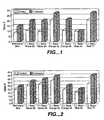
- Enzymes having esterase and/or lipase activity were obtained from numerous sources and tested according to the assays described in Examples 1 (a), 1 (b) and 1 (c). The relative results are tabulated in Table I with the hydrolysis product absorbance of P . mendocina cutinase being calculated as 1.0 under the conditions used.
- the swatches were treated with protease. After the polyesterase treatments, 5/8 inch disks were cut from the treated swatches. Then the disks were incubated with 5 ppm subtilisin and 0.1 % non-ionic surfactant (Triton X-100) to remove proteins bound onto polyester. The levels of bound proteins were examined using coomassie blue staining to ensure that minimal protein remained bound to the fabric.
- the disks were dyed in 12 well microtiter plate under the following conditions:
- Basic Orange 48 (Azo) 10.92 21.41 20.30 26.15 C.I. Basic Blue 45 (Anthraquinone) 10.18 10.27 17.06 21.21 C.I. Basic Blue 77 (Triarylmethane) 20.53 27.59 28.81 40.89
- polyesterase significantly effects the ability of the polyester fabrics to take up and adhere a range of cationic dyes.
- the swatches were rinsed with DI water, and then transferred into autoclaved Launder-Ometer canisters with fresh solution.
- NaOH treated swatches (Exp.1) exhibited clear de-pilling effect after 5th cycle, and the experiment was stopped. After each cycle, absorbance of treated liquor at 250 nM were measured to quantify PET hydrolysis.
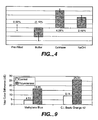
- polyesterase treated and NaOH treated swatches showed significant weight loss compared to the buffer control and pre-pilled swatches (p ⁇ 0.05).
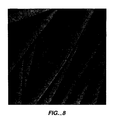
- PET fibers incubated with 1) buffer and 2) buffer + P. mendocina cutinase for a month at 40°C were photographed using scanning electron microscopy. The results are provided in Figures 5-8 .
Landscapes
- Life Sciences & Earth Sciences (AREA)
- Chemical & Material Sciences (AREA)
- Biochemistry (AREA)
- Microbiology (AREA)
- Engineering & Computer Science (AREA)
- General Chemical & Material Sciences (AREA)
- Chemical Kinetics & Catalysis (AREA)
- Textile Engineering (AREA)
- Chemical Or Physical Treatment Of Fibers (AREA)
- Polyesters Or Polycarbonates (AREA)
- Detergent Compositions (AREA)
- Treatments For Attaching Organic Compounds To Fibrous Goods (AREA)
- Artificial Filaments (AREA)
Applications Claiming Priority (3)
| Application Number | Priority Date | Filing Date | Title |
|---|---|---|---|
| US435461 | 1999-11-05 | ||
| US09/435,461 US6933140B1 (en) | 1999-11-05 | 1999-11-05 | Enzymes useful for changing the properties of polyester |
| PCT/US2000/027917 WO2001034899A1 (en) | 1999-11-05 | 2000-10-10 | Enzymes useful for changing the properties of polyester |
Publications (2)
| Publication Number | Publication Date |
|---|---|
| EP1242671A1 EP1242671A1 (en) | 2002-09-25 |
| EP1242671B1 true EP1242671B1 (en) | 2011-05-25 |
Family
ID=23728506
Family Applications (1)
| Application Number | Title | Priority Date | Filing Date |
|---|---|---|---|
| EP20000972044 Expired - Lifetime EP1242671B1 (en) | 1999-11-05 | 2000-10-10 | Enzymes useful for changing the properties of polyester |
Country Status (12)
| Country | Link |
|---|---|
| US (2) | US6933140B1 (cg-RX-API-DMAC7.html) |
| EP (1) | EP1242671B1 (cg-RX-API-DMAC7.html) |
| JP (1) | JP4996027B2 (cg-RX-API-DMAC7.html) |
| KR (1) | KR20020059691A (cg-RX-API-DMAC7.html) |
| AT (1) | ATE510957T1 (cg-RX-API-DMAC7.html) |
| AU (1) | AU1076101A (cg-RX-API-DMAC7.html) |
| CA (1) | CA2389913A1 (cg-RX-API-DMAC7.html) |
| DK (1) | DK1242671T3 (cg-RX-API-DMAC7.html) |
| ES (1) | ES2365207T3 (cg-RX-API-DMAC7.html) |
| NO (1) | NO20021550L (cg-RX-API-DMAC7.html) |
| PT (1) | PT1242671E (cg-RX-API-DMAC7.html) |
| WO (1) | WO2001034899A1 (cg-RX-API-DMAC7.html) |
Families Citing this family (68)
| Publication number | Priority date | Publication date | Assignee | Title |
|---|---|---|---|---|
| US20030199068A1 (en) * | 2002-03-05 | 2003-10-23 | Bott Richard R. | High throughput mutagenesis screening method |
| JP2006511725A (ja) * | 2002-12-23 | 2006-04-06 | ノボザイムス ノース アメリカ,インコーポレイティド | ポリエステル布の処理方法 |
| JP4997397B2 (ja) * | 2005-09-08 | 2012-08-08 | 学校法人立命館 | 糸状菌およびこれを用いた樹脂の分解方法 |
| CN101473032B (zh) | 2006-06-21 | 2013-08-21 | 诺维信北美公司 | 脱浆和煮炼方法 |
| CN101473036B (zh) * | 2006-06-23 | 2012-12-12 | 丹尼斯科美国公司 | 利用用于工程改造多种性质的位点评价文库对序列和活性关系进行系统评价 |
| BRPI0722093A2 (pt) | 2006-12-21 | 2014-04-01 | Danisco Us Inc Genencor Div | Composições e usos para um polipeptídeo de alfa-amilase da espécie bacillus 195 |
| BRPI0808513A2 (pt) | 2007-03-09 | 2014-08-19 | Danisco Us Inc Genencor Div | Variantes de alfa-amilase de espécies de bacillus alcalifílico, composições compreendendo variantes de alfa-amilase e métodos de uso |
| AU2009212526A1 (en) | 2008-02-04 | 2009-08-13 | Danisco Us Inc. | TS23 alpha-amylase variants with altered properties |
| US20110097778A1 (en) | 2008-04-30 | 2011-04-28 | Power Scott D | Chimeric alpha-amylase variants |
| MX364987B (es) | 2008-06-06 | 2019-05-17 | Danisco Us Inc | Alfa-amilasas variantes de bacillus subtilis y metodos de uso de las mismas. |
| BRPI0913378A2 (pt) | 2008-06-06 | 2015-09-01 | Danisco Us Inc | Produção de glicose a partir do amido usando alfa-amilase do bacillus subtilis |
| CA2726631A1 (en) | 2008-06-06 | 2009-12-10 | Danisco Us Inc. | Saccharification enzyme composition and method of saccharification thereof |
| EP2406373B1 (en) | 2009-03-10 | 2014-05-28 | Danisco US Inc. | Bacillus megaterium strain dsm90-related alpha-amylases, and methods of use, thereof |
| EP2414515A2 (en) | 2009-04-01 | 2012-02-08 | Danisco US Inc. | Cleaning system comprising an alpha-amylase and a protease |
| WO2010117511A1 (en) | 2009-04-08 | 2010-10-14 | Danisco Us Inc. | Halomonas strain wdg195-related alpha-amylases, and methods of use, thereof |
| CA2778471A1 (en) | 2009-10-23 | 2011-04-28 | Danisco Us Inc. | Methods for reducing blue saccharide |
| EP2501792A2 (en) | 2009-12-29 | 2012-09-26 | Novozymes A/S | Gh61 polypeptides having detergency enhancing effect |
| MX2012008389A (es) | 2010-01-22 | 2012-08-15 | Dupont Nutrition Biosci Aps | Metodos para producir compuestos glicolipidos sustituidos con aminas. |
| US8815559B2 (en) | 2010-02-18 | 2014-08-26 | Danisco Us Inc. | Amylase from nesterenkonia and methods of use, thereof |
| CA2830579A1 (en) | 2011-04-08 | 2012-10-11 | Danisco Us Inc. | Compositions |
| EP4345161A3 (en) | 2011-10-28 | 2024-06-12 | Danisco Us Inc | Variant maltohexaose-forming alpha-amylase variants |
| BR112014014410A2 (pt) | 2011-12-22 | 2019-09-24 | Danisco Us Inc | composições e métodos que compreendem uma variante de enzima lipolítica |
| US20140342431A1 (en) | 2011-12-22 | 2014-11-20 | Danisco Us Inc. | Variant Alpha-Amylases and Methods of Use, Thereof |
| MX2014013402A (es) | 2012-05-11 | 2014-11-26 | Danisco Inc | Uso de alfa-amilasa de aspergillus clavatus para sacarificacion. |
| DK4026902T3 (da) | 2012-06-08 | 2025-07-14 | Danisco Us Inc | Variante alfa-amylaser med øget aktivitet på stivelsespolymerer |
| EP2875179B1 (en) | 2012-07-18 | 2018-02-21 | Novozymes A/S | Method of treating polyester textile |
| CN104540991A (zh) * | 2012-07-18 | 2015-04-22 | 诺维信公司 | 处理聚酯纺织品的方法 |
| MX2015001818A (es) | 2012-08-16 | 2015-05-07 | Danisco Inc | Proceso para producir glucosa a partir de almidon con el uso de la alfa-amilasa de aspergillus clavatus y una pululanasa. |
| US20180112203A1 (en) | 2012-11-20 | 2018-04-26 | Danisco Us Inc. | Amylase with maltogenic properties |
| CA2893270C (en) | 2012-12-11 | 2024-01-02 | Danisco Us Inc. | Trichoderma reesei host cells expressing a glucoamylase from aspergillus fumigatus and methods of use thereof |
| WO2014093125A1 (en) | 2012-12-14 | 2014-06-19 | Danisco Us Inc. | Method of using alpha-amylase from aspergillus fumigatus and isoamylase for saccharification |
| US20160010128A1 (en) | 2012-12-20 | 2016-01-14 | Danisco Us Inc. | Method of using alpha-amylase from aspergillus terreus and pullulanase for saccharification |
| WO2014099525A1 (en) | 2012-12-21 | 2014-06-26 | Danisco Us Inc. | Paenibacillus curdlanolyticus amylase, and methods of use, thereof |
| CN104884614A (zh) | 2012-12-21 | 2015-09-02 | 丹尼斯科美国公司 | α-淀粉酶变体 |
| ES2676895T5 (es) | 2013-03-11 | 2022-04-27 | Danisco Us Inc | Variantes combinatorias de alfa-amilasa |
| WO2014200658A1 (en) | 2013-06-13 | 2014-12-18 | Danisco Us Inc. | Alpha-amylase from promicromonospora vindobonensis |
| WO2014200656A1 (en) | 2013-06-13 | 2014-12-18 | Danisco Us Inc. | Alpha-amylase from streptomyces umbrinus |
| WO2014200657A1 (en) | 2013-06-13 | 2014-12-18 | Danisco Us Inc. | Alpha-amylase from streptomyces xiamenensis |
| EP3011020A1 (en) | 2013-06-17 | 2016-04-27 | Danisco US Inc. | Alpha-amylase from bacillaceae family member |
| EP3696264B1 (en) | 2013-07-19 | 2023-06-28 | Danisco US Inc. | Compositions and methods comprising a lipolytic enzyme variant |
| WO2015050724A1 (en) | 2013-10-03 | 2015-04-09 | Danisco Us Inc. | Alpha-amylases from a subset of exiguobacterium, and methods of use, thereof |
| US20160160199A1 (en) | 2013-10-03 | 2016-06-09 | Danisco Us Inc. | Alpha-amylases from exiguobacterium, and methods of use, thereof |
| MX2016006489A (es) | 2013-11-20 | 2016-08-03 | Danisco Us Inc | Alfa-amilasas variantes que tienen susceptibilidad reducida a la escision por proteasas y metodos de uso. |
| PT3080254T (pt) | 2013-12-11 | 2024-07-30 | Novozymes As | Variantes cutinase e polinucleótidos que codificam o mesmo |
| KR20160099629A (ko) | 2013-12-16 | 2016-08-22 | 이 아이 듀폰 디 네모아 앤드 캄파니 | 점도 조절제로서의 폴리 알파-1,3-글루칸 에테르의 사용 |
| ES2835703T3 (es) | 2013-12-18 | 2021-06-23 | Nutrition & Biosciences Usa 4 Inc | Eteres de poli alfa-1,3-glucano catiónicos |
| WO2015094809A1 (en) | 2013-12-19 | 2015-06-25 | Danisco Us Inc. | Chimeric fungal alpha-amylases comprising carbohydrate binding module and the use thereof |
| WO2015123323A1 (en) | 2014-02-14 | 2015-08-20 | E. I. Du Pont De Nemours And Company | Poly-alpha-1,3-1,6-glucans for viscosity modification |
| EP3116914B8 (en) | 2014-03-11 | 2021-04-21 | E. I. du Pont de Nemours and Company | Oxidized poly alpha-1,3-glucan as detergent builder |
| DE102014204374A1 (de) * | 2014-03-11 | 2015-09-17 | Henkel Ag & Co. Kgaa | PET-Esterasen und deren Verwendung |
| US9714403B2 (en) | 2014-06-19 | 2017-07-25 | E I Du Pont De Nemours And Company | Compositions containing one or more poly alpha-1,3-glucan ether compounds |
| EP3158043B1 (en) | 2014-06-19 | 2021-03-10 | Nutrition & Biosciences USA 4, Inc. | Compositions containing one or more poly alpha-1,3-glucan ether compounds |
| CN108064306B (zh) | 2014-12-23 | 2022-11-01 | 营养与生物科学美国4公司 | 酶促产生的纤维素 |
| CN107109780A (zh) | 2014-12-31 | 2017-08-29 | 诺维信公司 | 处理聚酯纺织品的方法 |
| WO2016133734A1 (en) | 2015-02-18 | 2016-08-25 | E. I. Du Pont De Nemours And Company | Soy polysaccharide ethers |
| EP3374401B1 (en) | 2015-11-13 | 2022-04-06 | Nutrition & Biosciences USA 4, Inc. | Glucan fiber compositions for use in laundry care and fabric care |
| WO2017083226A1 (en) | 2015-11-13 | 2017-05-18 | E. I. Du Pont De Nemours And Company | Glucan fiber compositions for use in laundry care and fabric care |
| JP7045313B2 (ja) | 2015-11-13 | 2022-03-31 | ニュートリション・アンド・バイオサイエンシーズ・ユーエスエー・フォー,インコーポレイテッド | 洗濯ケアおよび織物ケアにおいて使用するためのグルカン繊維組成物 |
| US11920170B2 (en) | 2015-12-09 | 2024-03-05 | Danisco Us Inc. | Alpha-amylase combinatorial variants |
| WO2017173324A2 (en) | 2016-04-01 | 2017-10-05 | Danisco Us Inc. | Alpha-amylases, compositions & methods |
| WO2017173190A2 (en) | 2016-04-01 | 2017-10-05 | Danisco Us Inc. | Alpha-amylases, compositions & methods |
| EP3601553B1 (en) | 2017-03-31 | 2025-12-03 | Danisco US Inc. | Alpha-amylase combinatorial variants |
| EP3668973A2 (en) | 2017-08-18 | 2020-06-24 | Danisco US Inc. | Alpha-amylase variants |
| EP3830231A1 (en) | 2018-07-31 | 2021-06-09 | Danisco US Inc. | Variant alpha-amylases having amino acid substitutions that lower the pka of the general acid |
| BR112021006967A2 (pt) | 2018-10-12 | 2021-07-13 | Danisco Us Inc. | alfa-amilases com mutações que melhoram a estabilidade na presença de quelantes |
| BR112022007697A2 (pt) | 2019-10-24 | 2022-07-12 | Danisco Us Inc | Alfa-amilase variante que forma maltopentaose/maltohexaose |
| EP4363565A1 (en) * | 2021-06-30 | 2024-05-08 | Danisco US Inc. | Variant lipases and uses thereof |
| EP4448747A2 (en) | 2021-12-16 | 2024-10-23 | Danisco US Inc. | Variant maltopentaose/maltohexaose-forming alpha-amylases |
Family Cites Families (21)
| Publication number | Priority date | Publication date | Assignee | Title |
|---|---|---|---|---|
| US3018272A (en) | 1955-06-30 | 1962-01-23 | Du Pont | Sulfonate containing polyesters dyeable with basic dyes |
| US3057827A (en) | 1959-12-21 | 1962-10-09 | Du Pont | Sulfinate containing polyesters dyeable with basic dyes |
| US3381058A (en) | 1966-08-26 | 1968-04-30 | Eastman Kodak Co | Poly(1, 4-cyclohexylenedimethylene terephthalate) fiber having nonfiberforming polyester dispersed therein |
| US3950277A (en) | 1973-07-25 | 1976-04-13 | The Procter & Gamble Company | Laundry pre-soak compositions |
| JPS5282774A (en) | 1975-12-26 | 1977-07-11 | Agency Of Ind Science & Technol | Decomposition of polyesters |
| JPS5282773A (en) | 1975-12-26 | 1977-07-11 | Agency Of Ind Science & Technol | Polyester decomposing agenc |
| DK154572C (da) | 1985-08-07 | 1989-04-24 | Novo Industri As | Enzymatisk detergentadditiv, detergent og fremgangsmaade til vask af tekstiler |
| US5512203A (en) | 1987-05-29 | 1996-04-30 | Genencor International, Inc. | Cutinase cleaning compositions |
| WO1990009446A1 (en) | 1989-02-17 | 1990-08-23 | Plant Genetic Systems N.V. | Cutinase |
| ATE153059T1 (de) | 1990-09-14 | 1997-05-15 | Clorox Co | Lipase-oberflächenkomplex und dessen methoden zur bildung und gebrauch |
| ES2152246T3 (es) | 1991-12-20 | 2001-02-01 | Novo Nordisk As | Eliminacion de esteres hidrofobicos de los tejidos. |
| JP3194792B2 (ja) | 1992-06-12 | 2001-08-06 | 天野エンザイム株式会社 | 酵素を用いた脂肪族ポリエステルの分解法 |
| ATE201243T1 (de) | 1994-10-28 | 2001-06-15 | Novozymes As | Verfahren zur chemischen ausrüstung von unlöslichen polymerfasern |
| GB2296011B (en) | 1994-12-13 | 1999-06-16 | Solvay | Novel fusarium isolate and lipases, cutinases and enzyme compositions derived therefrom |
| GB2307695A (en) * | 1995-11-30 | 1997-06-04 | Unilever Plc | Detergent compositions containing soil release polymers |
| KR100311696B1 (ko) | 1996-01-22 | 2001-12-17 | 피아 스타르 | 환식올리고머의효소적가수분해 |
| WO1997033001A1 (en) | 1996-03-06 | 1997-09-12 | The Regents Of The University Of California | Enzyme treatment to enhance wettability and absorbency of textiles |
| DE19619236A1 (de) | 1996-05-13 | 1997-11-20 | Bayer Ag | Abbau von biologisch abbaubaren Polyesteramiden mit Enzymen |
| EP0996785B1 (en) | 1997-07-04 | 2004-01-21 | Novozymes A/S | A method of treating polyester fabrics |
| WO2000034450A1 (en) | 1998-12-04 | 2000-06-15 | Novozymes A/S | Cutinase variants |
| US6254645B1 (en) * | 1999-08-20 | 2001-07-03 | Genencor International, Inc. | Enzymatic modification of the surface of a polyester fiber or article |
-
1999
- 1999-11-05 US US09/435,461 patent/US6933140B1/en not_active Expired - Lifetime
-
2000
- 2000-10-10 ES ES00972044T patent/ES2365207T3/es not_active Expired - Lifetime
- 2000-10-10 WO PCT/US2000/027917 patent/WO2001034899A1/en not_active Ceased
- 2000-10-10 PT PT00972044T patent/PT1242671E/pt unknown
- 2000-10-10 CA CA 2389913 patent/CA2389913A1/en not_active Abandoned
- 2000-10-10 AT AT00972044T patent/ATE510957T1/de active
- 2000-10-10 JP JP2001536812A patent/JP4996027B2/ja not_active Expired - Fee Related
- 2000-10-10 EP EP20000972044 patent/EP1242671B1/en not_active Expired - Lifetime
- 2000-10-10 KR KR1020027005810A patent/KR20020059691A/ko not_active Withdrawn
- 2000-10-10 DK DK00972044T patent/DK1242671T3/da active
- 2000-10-10 AU AU10761/01A patent/AU1076101A/en not_active Abandoned
-
2002
- 2002-04-02 NO NO20021550A patent/NO20021550L/no not_active Application Discontinuation
- 2002-09-04 US US10/234,574 patent/US20030082755A1/en not_active Abandoned
Also Published As
| Publication number | Publication date |
|---|---|
| ES2365207T3 (es) | 2011-09-26 |
| NO20021550D0 (no) | 2002-04-02 |
| EP1242671A1 (en) | 2002-09-25 |
| DK1242671T3 (da) | 2011-08-01 |
| AU1076101A (en) | 2001-06-06 |
| PT1242671E (pt) | 2011-08-03 |
| US6933140B1 (en) | 2005-08-23 |
| NO20021550L (no) | 2002-05-27 |
| JP2003514138A (ja) | 2003-04-15 |
| WO2001034899A1 (en) | 2001-05-17 |
| KR20020059691A (ko) | 2002-07-13 |
| JP4996027B2 (ja) | 2012-08-08 |
| ATE510957T1 (de) | 2011-06-15 |
| CA2389913A1 (en) | 2001-05-17 |
| US20030082755A1 (en) | 2003-05-01 |
Similar Documents
| Publication | Publication Date | Title |
|---|---|---|
| EP1242671B1 (en) | Enzymes useful for changing the properties of polyester | |
| US6254645B1 (en) | Enzymatic modification of the surface of a polyester fiber or article | |
| EP0885311B1 (en) | Enzyme treatment to enhance wettability and absorbency of textiles | |
| EP1290129A1 (en) | Redeposition or backstain inhibition during stonewashing process | |
| US20060042019A1 (en) | Method of treating polyester fabrics | |
| AU1590899A (en) | Cellulase producing by actinomycete and method of producing same | |
| WO1992018683A1 (en) | Process for bleaching of dyed textiles | |
| CN101517156A (zh) | 使用来自枯草杆菌的果胶酸裂合酶酶促处理纺织品 | |
| Hoque et al. | Enzymatic wet processing | |
| US20070134779A1 (en) | Enzymes useful for changing the properties of polyester | |
| KR20170100495A (ko) | 폴리에스테르 직물의 처리 방법 | |
| Kalantzi et al. | Improved properties of cotton fabrics treated with lipase and its combination with pectinase | |
| WO1993017174A1 (en) | Methods of enhancing printing quality of pigment compositions onto cotton fabrics | |
| US20140007356A1 (en) | Color modification of sized fabric | |
| WO2001092453A1 (en) | Redeposition or backstain inhibition during stonewashing process | |
| Chaudhary et al. | Speciality chemicals, enzymes and finishes | |
| EP0628106B1 (en) | Methods of enhancing printing quality of dye compositions onto cotton fabrics | |
| Islam | Enzymatic Wet Processing | |
| Kiumarsi | Biohydrolysis of nylon 6, 6 fiber with different proteolytic enzymes | |
| Rahman | Application of Enzymes in the Textile Industry: A Review | |
| HK1179313A (en) | Treatment of keratinous fibers with an enzyme having perhydrolase activity |
Legal Events
| Date | Code | Title | Description |
|---|---|---|---|
| PUAI | Public reference made under article 153(3) epc to a published international application that has entered the european phase |
Free format text: ORIGINAL CODE: 0009012 |
|
| 17P | Request for examination filed |
Effective date: 20020429 |
|
| AK | Designated contracting states |
Kind code of ref document: A1 Designated state(s): AT BE CH CY DE DK ES FI FR GB GR IE IT LI LU MC NL PT SE |
|
| AX | Request for extension of the european patent |
Free format text: AL;LT;LV;MK;RO;SI |
|
| 17Q | First examination report despatched |
Effective date: 20061212 |
|
| GRAP | Despatch of communication of intention to grant a patent |
Free format text: ORIGINAL CODE: EPIDOSNIGR1 |
|
| RIC1 | Information provided on ipc code assigned before grant |
Ipc: D06M 16/00 20060101AFI20101124BHEP |
|
| GRAS | Grant fee paid |
Free format text: ORIGINAL CODE: EPIDOSNIGR3 |
|
| GRAA | (expected) grant |
Free format text: ORIGINAL CODE: 0009210 |
|
| AK | Designated contracting states |
Kind code of ref document: B1 Designated state(s): AT BE CH CY DE DK ES FI FR GB GR IE IT LI LU MC NL PT SE |
|
| REG | Reference to a national code |
Ref country code: GB Ref legal event code: FG4D |
|
| REG | Reference to a national code |
Ref country code: CH Ref legal event code: EP |
|
| REG | Reference to a national code |
Ref country code: IE Ref legal event code: FG4D |
|
| REG | Reference to a national code |
Ref country code: DE Ref legal event code: R096 Ref document number: 60046018 Country of ref document: DE Effective date: 20110707 |
|
| REG | Reference to a national code |
Ref country code: DK Ref legal event code: T3 |
|
| REG | Reference to a national code |
Ref country code: NL Ref legal event code: T3 Ref country code: PT Ref legal event code: SC4A Free format text: AVAILABILITY OF NATIONAL TRANSLATION Effective date: 20110727 |
|
| REG | Reference to a national code |
Ref country code: ES Ref legal event code: FG2A Ref document number: 2365207 Country of ref document: ES Kind code of ref document: T3 Effective date: 20110926 |
|
| PG25 | Lapsed in a contracting state [announced via postgrant information from national office to epo] |
Ref country code: SE Free format text: LAPSE BECAUSE OF FAILURE TO SUBMIT A TRANSLATION OF THE DESCRIPTION OR TO PAY THE FEE WITHIN THE PRESCRIBED TIME-LIMIT Effective date: 20110525 |
|
| PG25 | Lapsed in a contracting state [announced via postgrant information from national office to epo] |
Ref country code: CY Free format text: LAPSE BECAUSE OF FAILURE TO SUBMIT A TRANSLATION OF THE DESCRIPTION OR TO PAY THE FEE WITHIN THE PRESCRIBED TIME-LIMIT Effective date: 20110525 Ref country code: GR Free format text: LAPSE BECAUSE OF FAILURE TO SUBMIT A TRANSLATION OF THE DESCRIPTION OR TO PAY THE FEE WITHIN THE PRESCRIBED TIME-LIMIT Effective date: 20110826 |
|
| PLBE | No opposition filed within time limit |
Free format text: ORIGINAL CODE: 0009261 |
|
| STAA | Information on the status of an ep patent application or granted ep patent |
Free format text: STATUS: NO OPPOSITION FILED WITHIN TIME LIMIT |
|
| 26N | No opposition filed |
Effective date: 20120228 |
|
| PG25 | Lapsed in a contracting state [announced via postgrant information from national office to epo] |
Ref country code: MC Free format text: LAPSE BECAUSE OF NON-PAYMENT OF DUE FEES Effective date: 20111031 |
|
| REG | Reference to a national code |
Ref country code: DE Ref legal event code: R097 Ref document number: 60046018 Country of ref document: DE Effective date: 20120228 |
|
| REG | Reference to a national code |
Ref country code: IE Ref legal event code: MM4A |
|
| PG25 | Lapsed in a contracting state [announced via postgrant information from national office to epo] |
Ref country code: IE Free format text: LAPSE BECAUSE OF NON-PAYMENT OF DUE FEES Effective date: 20111010 |
|
| PG25 | Lapsed in a contracting state [announced via postgrant information from national office to epo] |
Ref country code: LU Free format text: LAPSE BECAUSE OF NON-PAYMENT OF DUE FEES Effective date: 20111010 |
|
| REG | Reference to a national code |
Ref country code: FR Ref legal event code: PLFP Year of fee payment: 16 |
|
| PGFP | Annual fee paid to national office [announced via postgrant information from national office to epo] |
Ref country code: FR Payment date: 20150908 Year of fee payment: 16 |
|
| PGFP | Annual fee paid to national office [announced via postgrant information from national office to epo] |
Ref country code: DK Payment date: 20151012 Year of fee payment: 16 |
|
| PGFP | Annual fee paid to national office [announced via postgrant information from national office to epo] |
Ref country code: GB Payment date: 20151007 Year of fee payment: 16 Ref country code: DE Payment date: 20151006 Year of fee payment: 16 Ref country code: FI Payment date: 20151012 Year of fee payment: 16 Ref country code: IT Payment date: 20151026 Year of fee payment: 16 Ref country code: CH Payment date: 20151012 Year of fee payment: 16 |
|
| PGFP | Annual fee paid to national office [announced via postgrant information from national office to epo] |
Ref country code: AT Payment date: 20150928 Year of fee payment: 16 Ref country code: NL Payment date: 20151012 Year of fee payment: 16 Ref country code: PT Payment date: 20151007 Year of fee payment: 16 Ref country code: BE Payment date: 20151012 Year of fee payment: 16 |
|
| PGFP | Annual fee paid to national office [announced via postgrant information from national office to epo] |
Ref country code: ES Payment date: 20160915 Year of fee payment: 17 |
|
| PG25 | Lapsed in a contracting state [announced via postgrant information from national office to epo] |
Ref country code: BE Free format text: LAPSE BECAUSE OF NON-PAYMENT OF DUE FEES Effective date: 20161031 |
|
| REG | Reference to a national code |
Ref country code: DE Ref legal event code: R119 Ref document number: 60046018 Country of ref document: DE |
|
| REG | Reference to a national code |
Ref country code: DK Ref legal event code: EBP Effective date: 20161031 |
|
| REG | Reference to a national code |
Ref country code: CH Ref legal event code: PL |
|
| REG | Reference to a national code |
Ref country code: NL Ref legal event code: MM Effective date: 20161101 |
|
| REG | Reference to a national code |
Ref country code: AT Ref legal event code: MM01 Ref document number: 510957 Country of ref document: AT Kind code of ref document: T Effective date: 20161010 |
|
| GBPC | Gb: european patent ceased through non-payment of renewal fee |
Effective date: 20161010 |
|
| REG | Reference to a national code |
Ref country code: FR Ref legal event code: ST Effective date: 20170630 |
|
| PG25 | Lapsed in a contracting state [announced via postgrant information from national office to epo] |
Ref country code: FI Free format text: LAPSE BECAUSE OF NON-PAYMENT OF DUE FEES Effective date: 20161010 Ref country code: DE Free format text: LAPSE BECAUSE OF NON-PAYMENT OF DUE FEES Effective date: 20170503 Ref country code: LI Free format text: LAPSE BECAUSE OF NON-PAYMENT OF DUE FEES Effective date: 20161031 Ref country code: CH Free format text: LAPSE BECAUSE OF NON-PAYMENT OF DUE FEES Effective date: 20161031 Ref country code: FR Free format text: LAPSE BECAUSE OF NON-PAYMENT OF DUE FEES Effective date: 20161102 Ref country code: GB Free format text: LAPSE BECAUSE OF NON-PAYMENT OF DUE FEES Effective date: 20161010 |
|
| PG25 | Lapsed in a contracting state [announced via postgrant information from national office to epo] |
Ref country code: NL Free format text: LAPSE BECAUSE OF NON-PAYMENT OF DUE FEES Effective date: 20161101 Ref country code: AT Free format text: LAPSE BECAUSE OF NON-PAYMENT OF DUE FEES Effective date: 20161010 Ref country code: PT Free format text: LAPSE BECAUSE OF NON-PAYMENT OF DUE FEES Effective date: 20170410 |
|
| PG25 | Lapsed in a contracting state [announced via postgrant information from national office to epo] |
Ref country code: IT Free format text: LAPSE BECAUSE OF NON-PAYMENT OF DUE FEES Effective date: 20161010 |
|
| PG25 | Lapsed in a contracting state [announced via postgrant information from national office to epo] |
Ref country code: DK Free format text: LAPSE BECAUSE OF NON-PAYMENT OF DUE FEES Effective date: 20161031 |
|
| REG | Reference to a national code |
Ref country code: BE Ref legal event code: MM Effective date: 20161031 |
|
| REG | Reference to a national code |
Ref country code: ES Ref legal event code: FD2A Effective date: 20181220 |
|
| PG25 | Lapsed in a contracting state [announced via postgrant information from national office to epo] |
Ref country code: ES Free format text: LAPSE BECAUSE OF NON-PAYMENT OF DUE FEES Effective date: 20171011 |