EP1240902A1 - Carbonyl-stress mildernde substanzen - Google Patents
Carbonyl-stress mildernde substanzen Download PDFInfo
- Publication number
- EP1240902A1 EP1240902A1 EP00981764A EP00981764A EP1240902A1 EP 1240902 A1 EP1240902 A1 EP 1240902A1 EP 00981764 A EP00981764 A EP 00981764A EP 00981764 A EP00981764 A EP 00981764A EP 1240902 A1 EP1240902 A1 EP 1240902A1
- Authority
- EP
- European Patent Office
- Prior art keywords
- carbonyl
- glyoxalase
- activity
- compounds
- enzyme
- Prior art date
- Legal status (The legal status is an assumption and is not a legal conclusion. Google has not performed a legal analysis and makes no representation as to the accuracy of the status listed.)
- Granted
Links
Images


Classifications
-
- A—HUMAN NECESSITIES
- A61—MEDICAL OR VETERINARY SCIENCE; HYGIENE
- A61K—PREPARATIONS FOR MEDICAL, DENTAL OR TOILETRY PURPOSES
- A61K38/00—Medicinal preparations containing peptides
- A61K38/16—Peptides having more than 20 amino acids; Gastrins; Somatostatins; Melanotropins; Derivatives thereof
- A61K38/43—Enzymes; Proenzymes; Derivatives thereof
-
- A—HUMAN NECESSITIES
- A61—MEDICAL OR VETERINARY SCIENCE; HYGIENE
- A61M—DEVICES FOR INTRODUCING MEDIA INTO, OR ONTO, THE BODY; DEVICES FOR TRANSDUCING BODY MEDIA OR FOR TAKING MEDIA FROM THE BODY; DEVICES FOR PRODUCING OR ENDING SLEEP OR STUPOR
- A61M1/00—Suction or pumping devices for medical purposes; Devices for carrying-off, for treatment of, or for carrying-over, body-liquids; Drainage systems
- A61M1/14—Dialysis systems; Artificial kidneys; Blood oxygenators ; Reciprocating systems for treatment of body fluids, e.g. single needle systems for hemofiltration or pheresis
- A61M1/28—Peritoneal dialysis ; Other peritoneal treatment, e.g. oxygenation
- A61M1/287—Dialysates therefor
-
- A—HUMAN NECESSITIES
- A61—MEDICAL OR VETERINARY SCIENCE; HYGIENE
- A61K—PREPARATIONS FOR MEDICAL, DENTAL OR TOILETRY PURPOSES
- A61K38/00—Medicinal preparations containing peptides
- A61K38/16—Peptides having more than 20 amino acids; Gastrins; Somatostatins; Melanotropins; Derivatives thereof
- A61K38/43—Enzymes; Proenzymes; Derivatives thereof
- A61K38/51—Lyases (4)
-
- A—HUMAN NECESSITIES
- A61—MEDICAL OR VETERINARY SCIENCE; HYGIENE
- A61P—SPECIFIC THERAPEUTIC ACTIVITY OF CHEMICAL COMPOUNDS OR MEDICINAL PREPARATIONS
- A61P13/00—Drugs for disorders of the urinary system
- A61P13/12—Drugs for disorders of the urinary system of the kidneys
-
- A—HUMAN NECESSITIES
- A61—MEDICAL OR VETERINARY SCIENCE; HYGIENE
- A61P—SPECIFIC THERAPEUTIC ACTIVITY OF CHEMICAL COMPOUNDS OR MEDICINAL PREPARATIONS
- A61P39/00—General protective or antinoxious agents
- A61P39/02—Antidotes
-
- A—HUMAN NECESSITIES
- A61—MEDICAL OR VETERINARY SCIENCE; HYGIENE
- A61P—SPECIFIC THERAPEUTIC ACTIVITY OF CHEMICAL COMPOUNDS OR MEDICINAL PREPARATIONS
- A61P43/00—Drugs for specific purposes, not provided for in groups A61P1/00-A61P41/00
-
- A—HUMAN NECESSITIES
- A61—MEDICAL OR VETERINARY SCIENCE; HYGIENE
- A61P—SPECIFIC THERAPEUTIC ACTIVITY OF CHEMICAL COMPOUNDS OR MEDICINAL PREPARATIONS
- A61P7/00—Drugs for disorders of the blood or the extracellular fluid
- A61P7/08—Plasma substitutes; Perfusion solutions; Dialytics or haemodialytics; Drugs for electrolytic or acid-base disorders, e.g. hypovolemic shock
-
- A—HUMAN NECESSITIES
- A61—MEDICAL OR VETERINARY SCIENCE; HYGIENE
- A61M—DEVICES FOR INTRODUCING MEDIA INTO, OR ONTO, THE BODY; DEVICES FOR TRANSDUCING BODY MEDIA OR FOR TAKING MEDIA FROM THE BODY; DEVICES FOR PRODUCING OR ENDING SLEEP OR STUPOR
- A61M1/00—Suction or pumping devices for medical purposes; Devices for carrying-off, for treatment of, or for carrying-over, body-liquids; Drainage systems
- A61M1/36—Other treatment of blood in a by-pass of the natural circulatory system, e.g. temperature adaptation, irradiation ; Extra-corporeal blood circuits
- A61M1/3687—Chemical treatment
Definitions
- the present invention relates to carbonyl stress-ameliorating agents.
- Maillard reported this reaction in 1912, focusing on a phenomenon of brown coloration arising upon heating a mixture consisting of amino acid and reducing sugar (Maillard, L. C., Compt. Rend. Soc. Biol., 72: 599, 1912).
- the Maillard reaction is involved in brown coloration, generation of aromatic components, taste, protein denaturation, and such reactions during heating or storage of foods. Therefore, this reaction has been mainly studied in the field of food chemistry.
- HbA1c glycated hemoglobin
- AGE advanced glycation end products
- peritoneal dialysate with high osmotic pressure (dialysate containing glucose, icodextrin, amino acids, etc.) accumulate highly reactive carbonyl compounds via peritoneum into the peritoneal dialysate in peritoneal cavity. This results in an increase in the carbonyl compound concentration within the peritoneal dialysate, thereby causing a carbonyl stress state.
- peritoneal function is lowered, due to the modification of intraperitoneal proteins with carbonyl; this reaction, in turn, is presumed to be involved in the impairment of water-removing ability and ingravescence of peritoneal sclerosis (Miyata, T. et al., Kidney Int., 58:425-435, 2000; Inagi R., et al., FEBS Lett., 463:260-264, 1999; Ueda, Y., et al., Kidney Int. (in press); Combet, S., et al., J. Am. Soc. Nephrol., 11:717-728, 2000).
- VEGF vascular endothelial growth factor
- Carbonyl compounds such as methylglyoxal and glyoxal, react non-enzymatically with thiol group of GSH and are eventually metabolized by glyoxalase.
- NAD(P)H activates glutathione reductase to increase the GSH level. Therefore, decrease of GSH and NAD(P)H by an imbalance in intracellular redox mechanisms blocks the carbonyl compound-elimination system and leads to the accumulation of AGE.
- blood GSH levels in patients with diabetes mellitus is reported to be reduced, whereas the levels of the carbonyl compound, methylglyoxal, in these patients are reported to be elevated.
- the object of the present invention is to provide carbonyl stress-ameliorating agents that can rapidly eliminate carbonyl compounds.
- the present inventor extensively studied to develop an effective method for eliminating and detoxifying carbonyl compounds in solutions, and focused on a detoxification system for carbonyl compounds called "glyoxalase system.”
- the glyoxalase system is a detoxification reaction system composed of two enzymes, glyoxalase I (lactoyl GSH lyase) and glyoxalase II (hydroxy acyl GSH hydrase).
- the carbonyl compound, methylglyoxal has been known to be converted to lactic acid in the presence of GSH through the detoxification reaction.
- the present inventor discovered that methylglyoxal can be rapidly eliminated by additionally introducing glyoxalase I to the reaction solution of the methylglyoxal-trapping reaction with glutathione. Finally, the present inventor proved that in the presence of both glutathione and glyoxalase I other carbonyl compounds as well as methylglyoxal in the peritoneal dialysate were rapidly eliminated.
- the present invention relates to carbonyl stress-ameliorating agents and peritoneal dialysates using the agents as follows:
- the present invention relates to the use of enzymes having the glyoxalase I activity and carbonyl compound-reducing agents to produce the carbonyl stress-ameliorating agents.
- the present invention also relates to the use of carriers, on which an enzyme having the glyoxalase I activity has been immobilized, to produce carbonyl-compound adsorbents.
- a carbonyl stress-ameliorating agent of the present invention contains, as active ingredients, an enzyme having glyoxalase I activity and a carbonyl compound-reducing agent.
- amelioration of carbonyl stress refers to eliminating carbonyl compounds in a medium which is contacted with living bodies, and thus, alleviating protein modification.
- "Elimination of carbonyl compounds” indicates irreversible elimination of the reactivity of carbonyl groups.
- the term “medium contacted with living body” specifically refers to peritoneal dialysate (hereinafter abbreviated as "CAPD solution”), blood, and other body fluids.
- CAPD solution peritoneal dialysate
- a carbonyl compound-reducing agent that can be used in the present invention refers to a compound that reduces carbonyl compound to a compound that serves as a substrate for enzymes having glyoxalase I activity.
- Arbitrary compounds can be used as the carbonyl compound-reducing agent of the invention so long as they fulfill the above requirement.
- Such compounds include, for example, reduced glutathione (GSH) and derivatives thereof. These compounds may be pharmacologically acceptable salts.
- GSH reduced glutathione
- reduced GSH binds to methylglyoxal, a carbonyl compound, to produce hemithioacetal. This reaction is a non-enzymatic reaction.
- the hemithioacetal thus produced serves as a substrate for enzymes having glyoxalase I activity.
- any glutathione derivative can be used according to the present invention so long as it produces a carbonyl compound, which serves as a substrate for enzymes having glyoxalase I activity.
- the glutathione derivatives are those, which have thiol groups reacting with carbonyl compounds to produce thiolester compounds.
- glutathione derivatives include, for example, acetylglutathione, aspartathion, isoglutathione, etc.
- a carbonyl compound-reducing agent should be used at a concentration that ensures the elimination of carbonyl compounds in the reaction.
- the GSH can be used at a final concentration of 0.1 to 50 mM, more preferably 1 to 10 mM, in the medium (herein, the CAPD solution) from which the carbonyl compounds are to be eliminated.
- the CAPD solution the medium from which the carbonyl compounds are to be eliminated.
- concentration of GSH within this range, carbonyl compounds in a typical CAPD solution can be converted nearly completely and rapidly to substrates for enzymes having glyoxalase I activity.
- GSH can be used at a higher ensuring concentration.
- the term "enzymes having glyoxalase I activity” refers to enzymes having a catalytic activity functionally equivalent to that of glyoxalase I.
- Glyoxalase I is also called lactoyl GSH lyase (EC.4.4.1.5), which uses, as substrate, compounds wherein a carbonyl compound-reducing agent, such as reduced glutathione, is linked to the aldehyde group of keto-aldehyde (2-oxoaldehyde) compound.
- a representative substrate compound for glyoxalase I is, for example, hemimercaptal (hemithioacetal), which consists of methylglyoxal linked to reduced glutathione.
- Enzymes having glyoxalase I activity catalyze such reactions wherein such substrate compounds are converted to thiolester compounds.
- Any enzymes and reducing agents can be used in the present invention, so long as they can convert the aldehyde group of a keto-aldehyde compound to a thiolester in the presence of a carbonyl compound-reducing agent.
- the scheme of the enzyme reaction is as follows:
- the reaction formula indicates that hemithioacetal, which is produced through the binding of a carbonyl compound, methylglyoxal, with GSH, is converted and detoxified to S-lactoyl glutathione by an enzyme having glyoxalase I activity.
- This reaction is an irreversible reaction.
- the nontoxic S-lactoyl glutathione is stable and a reverse reaction producing methylglyoxal substantially does not proceed.
- the present inventor discovered that a wide variety of substances, including methylglyoxalase which produce carbonyl stress state in vivo , can be rapidly eliminated via the combined use of GSH and enzyme having glyoxalase I activity, thereby supporting the effectiveness of the combination as an carbonyl stress-ameliorating agent.
- Enzymes known to possess glyoxalase I activity are derived from various sources as follows:
- human glyoxalase I are expected to be safe when administered to human patients.
- Methods for purifying the glyoxalase I enzymes are well known in the art.
- An enzyme having glyoxalase I activity used in the present invention may be a native enzyme or a genetic recombinant.
- the structure of the human glyoxalase I gene has been elucidated (J. Biol. chem. 268, 11217-11221, 1993). Therefore, a recombinant protein thereof can be readily obtained using this known gene.
- the enzymes having glyoxalase I activity of the present invention can be (other than those enzymes having the same amino acid sequence as the native enzyme) those where mutations are introduced to improve their stability, activity, etc.
- Methods for artificially introducing mutations into amino acid sequences are known in the art. For example, codons in nucleotide sequences can be partially modified according to site-specific mutagenesis (Mark, D. F. et al. Proc. Natl. Acad. Sci. U.S.A. 81,5662 (1984)) using synthetic oligonucleotide primers that encode the desired mutated amino acids.
- an enzyme having glyoxalase I activity of the present invention may be chemically modified.
- binding to polyethylene glycol has been known to improve enzyme stability in some cases.
- a method of immobilizing enzyme proteins on solid-phase carriers is also commonly used for the convenience of enzyme protein recovery.
- Such chemical modification methods can be applied to enzymes having glyoxalase I activity according to the present invention.
- An enzyme having glyoxalase I activity is used at a concentration that ensures rapid elimination of substrate compounds produced through the reaction between carbonyl compounds and carbonyl compound-reducing agents.
- the rapid elimination of carbonyl compound can be achieved by 10 to 10 4 U glyoxalase I, preferably 10 to 10 3 U glyoxalase I, per 1L of CAPD solution.
- 1U of glyoxalase I is defined as a quantity of enzyme required for producing 1 ⁇ mol S-lactoyl glutathione from methylglyoxal and reduced glutathione in 1 minute.
- Enzymes having glyoxalase II activity can also be formulated into a carbonyl stress-ameliorating agent of the present invention.
- Glyoxalase II is a hydrolytic enzyme, which is also called hydroxy acyl GSH hydrase (EC.3.1.2.6) . In vivo, this enzyme catalysis the hydrolysis of S-D-lactoyl glutathione, (which is produced by the action of glyoxalase I) to produce lactic acid and the regeneration of reduced glutathione.
- the glyoxalase system composed of glyoxalase I, glutathione (GSH), and glyoxalase II is described below.
- Glyoxalase II enzymes including the human-derived enzyme (J. Biol. Chem. 271, 319-323, 1996) has also been isolated. Any of the known glyoxalase II enzymes can be used in the present invention. Like enzymes having glyoxalase I activity, native form or genetic recombinant enzymes having glyoxalase II activity can be used in the present invention. Further, enzymes comprising mutations in the amino acid sequence can also be utilized in the present invention.
- an enzyme having glyoxalase II activity When an enzyme having glyoxalase II activity is used in combination with a carbonyl stress-ameliorating agent of the present invention, the two can be formulated by combining them prior to use or contacting them at the time of use. Further, when enzymes having glyoxalase I activity are used as immobilized enzymes, the enzyme having glyoxalase II activity can also be used in an immobilized form.
- the immobilization of enzymes can be achieved by either of the two methods: (1) the enzymes may be mixed and then immobilized together; or (2) the enzymes are separately immobilized and then are combined together.
- the enzymes having glyoxalase II activity are preferably used at a concentration ensuring rapid elimination of the reaction products of an enzyme having glyoxalase I activity.
- the amount of the enzymes having glyoxalase II activity is preferably 0.5 to 10 U, more preferably 1 to 5 U.
- 1 U of glyoxalase II is defined as a quantity of the enzymes required for the production of 1 ⁇ mol lactic acid from S-D-lactoyl glutathione in 1 minute.
- carbonyl compounds containing oxoaldehyde (R-CO-CHO) as a fundamental structure that generates carbonyl stress in living bodies are to be eliminated.
- Such compounds include, for example, compounds, which accumulate in blood of renal failure patients in response to oxidative stress, as follows:
- a carbonyl stress-ameliorating agent of the present invention can be applied to living bodies affected with carbonyl stress.
- the agent can be administered parenterally, or into the circuit of hemodialysis or peritoneal dialysis.
- a carbonyl stress-ameliorating agent of the present invention may be added prior to CAPD solution.
- a carbonyl stress-ameliorating agent of the present invention should be aseptically added to the heat-sterilized CAPD solution.
- a carbonyl stress-ameliorating agent of the present invention can also be added at the time of use.
- a carbonyl stress-ameliorating agent can be added aseptically by aseptically filling a conventional multi-compartment container or pre-filled syringe with the carbonyl stress-ameliorating agent and mixing at the time of use.
- Exemplary multi-compartment containers are: fractionated-bag container wherein the compartments can be connected; kit containers comprising communicating means, such as double-ended needle; and so on.
- One compartment of a multi-compartment container is filled with peritoneal dialysate while the other compartment is filled with a carbonyl stress-ameliorating agent of the present invention. The compartments are connected at the time of use.
- CAPD solution contains immobilized enzyme (having glyoxalase I activity of the present invention) and a carbonyl compound-reducing agent, such as reduced GSH; and hereinafter, unless otherwise specified, the term "CAPD solution” refers to a solution comprising a carbonyl compound-reducing agent.
- carbonyl compounds that are produced and accumulated during storage in CAPD solution for peritoneal dialysis can be eliminated by placing the solution in a container wherein enzymes having glyoxalase I activity are immobilized on the inner surface or in a container containing enzymes having glyoxalase I activity immobilized on carriers, such as bead or fiber.
- the insoluble carriers can be removed from the peritoneal dialysate by filtration.
- a cartridge for eliminating carbonyl compounds can be prepared by filling a column with bead-shaped or fibrous carriers, on which the enzyme having glyoxalase I activity has been immobilized.
- the CAPD solution can be introduced into the peritoneal cavity after contacting the solution with this cartridge.
- the carbonyl compound-reducing agent required for eliminating carbonyl compounds may be added prior to the CAPD solution.
- carbonyl compounds derived from the patient that accumulated during dialysis cannot be removed but those existing in the dialysate can be removed.
- peritoneal dialysis when peritoneal dialysis is conducted by circulating peritoneal dialysate in a closed circuit with a small circulating pump, carbonyl compounds that accumulate in peritoneal cavity during dialysis can be removed, as well as those in the peritoneal dialysate by placing the above-mentioned cartridge for eliminating carbonyl compounds, which contains the immobilized carbonyl stress-ameliorating agent, in the circuit.
- an enzyme having glyoxalase II activity When combining an enzyme having glyoxalase II activity into a carbonyl stress-ameliorating agent of the present invention, it can be previously formulated with an enzyme having glyoxalase I activity.
- an immobilized enzyme when used as the enzyme having glyoxalase I activity, the enzyme having glyoxalase II activity can also be used in an immobilized form.
- a mixed column containing both enzymes having the glyoxalase I activity and glyoxalase II activity may be used, or the enzyme having glyoxalase II activity can be placed downstream to the enzyme having glyoxalase I activity.
- the elimination of carbonyl compounds can be achieved by a system wherein either one of the enzymes is immobilized while the other is in a free state.
- the method for removing carbonyl compounds according to the present invention is applicable to methods for ameliorating carbonyl stress, which comprises contacting with blood, dialysate, and such outside living bodies. Enzymes having glyoxalase I activity are advantageously immobilized for such methods.
- the carrier that is used for immobilizing an enzyme having glyoxalase I activity of the present invention, as long as the carrier is harmless to humans and is sufficiently safe and stable as to be in direct contact with blood or dialysate.
- Such materials include, for example, synthetic or natural organic macro-molecular compounds; inorganic materials, such as glass bead, silica gel, alumina, and active charcoal; and materials coated with polysaccharide(s), synthetic polymer(s), etc.; and so on.
- a carrier consisting of macromolecular compounds include, for example, polymethyl methacrylate polymer, polyacrylonitrile polymer, polysulfone polymer, vinyl polymer, polyolefin polymer, fluorine polymer, polyester polymer, polyamide polymer, polyimide polymer, polyurethane polymer, polyacrylic polymer, polystyrene polymer, polyketone polymer, silicon polymer, cellulose polymer, chitosan polymer, etc.
- carriers are exemplified by polysaccharides, such as agarose, cellulose, chitin, chitosan, sepharose, dextran, etc., and derivatives thereof; polyester, polyvinyl chloride, polystyrene, polysulfone, polyether sulfone, polypropylene, polyvinyl alcohol, polyallylehter sulfone, polyacrylic acid ester, polymethacrylic acid ester, polycarbonate, acetylated cellulose, polyacrylonitrile, polyethylene terephthalate, polyamide, silicon resin, fluororesin, polyurethane, polyether urethane, polyacrylamide, and derivatives thereof; and so on.
- polysaccharides such as agarose, cellulose, chitin, chitosan, sepharose, dextran, etc.
- polyester polyvinyl chloride, polystyrene, polysulfone, polyether sulfone, polypropylene,
- the macromolecular materials can be used alone or in combination of two or more kinds of macromolecules.
- an enzyme having glyoxalase I activity of the present invention is immobilized on at least one of the macromolecules.
- an enzyme having glyoxalase I activity may be immobilized alone on a carrier, or in combination with an enzyme having glyoxalase II activity on the carrier.
- the carrier can be membranous, fibrous, granular-shaped, hollow fiber-like, non-woven fabric-like, porous, honeycomb-shaped, and so on.
- the area of the carrier, to be contacted with blood or peritoneal dialysate, can be controlled by changing the thickness, surface area, diameter, length, shape, and/or size of the carrier.
- An enzyme having glyoxalase I activity of the present invention can be immobilized on the above-mentioned carrier using well known methods, such as physical adsorption, a specific biochemical binding reaction, ion binding, covalent bonding, grafting, etc.
- spacers can be inserted between carrier and enzyme having glyoxalase I activity.
- a carrier and an enzyme having glyoxalase I activity are bound by covalent bonds so as to minimize the amount of enzyme released.
- Functional groups on the carrier are utilized for covalently binding an enzyme having glyoxalase I activity thereto.
- the functional groups include, for example, hydroxyl group, amino group, aldehyde group, carboxyl group, thiol group, silanol group, amide group, epoxy group, succinylimide group, etc.
- the functional groups of the present invention are not limited to these groups.
- the covalent bonds are exemplified by ester linkage, ether linkage, amino linkage, amid linkage, sulfide linkage, imino linkage, disulfide linkage, and so on.
- the carrier with an enzyme having glyoxalase I activity of the present invention immobilized on it can be sterilized via conventional sterilization methods.
- sterilization methods include gamma-ray irradiation, gas sterilization, and so on.
- Carriers immobilized with an enzyme having glyoxalase I activity of the present invention can be contacted with blood in various ways. Examples thereof include: a method of eliminating carbonyl compounds in patient blood by infusing the blood collected from the patient into a blood bag filled with carriers, on which an enzyme having glyoxalase I activity has been immobilized; a method where blood is circulated in a cartridge column filled with bead carriers or fiber carriers, or the like, on which an enzyme having glyoxalase I activity has been immobilized.
- blood plasma may also be treated according to the method. The treated blood may be returned to the patient or, if required, may be stored in a blood bag or the like.
- Carbonyl compounds that generate and/or accumulate during storage can also be eliminated by adding carriers immobilized with enzymes having glyoxalase I activity into the blood bags.
- the contact between blood, carbonyl compound-reducing agents, and carriers, on which an enzyme having glyoxalase I activity of the present invention has been immobilized can be carried out during the blood purification step, including hemodialysis, blood filtration, blood filtration dialysis, blood adsorption and blood plasma separation.
- both hemodialysis and elimination of carbonyl compounds can be carried out simultaneously in hemodialysis patients by placing carriers on which an enzyme having glyoxalase I activity of the present invention has been immobilized in the hemodialysis circuit, and conduct dialysis in the presence of carbonyl compound-reducing agents.
- an enzyme having glyoxalase I activity of the present invention is preferably immobilized on the hemodialysis membrane.
- dialysis membranes can be used as carriers.
- Examples include: cellulose derivatives, such as regenerated cellulose, and cellulose triacetate; polymethyl methacrylate; polyolefin; polysulfone; polyacrylonitrile (PAN); polyamide; polyimide; polyether nylon; silicon; polyester copolymers; and so on; however, the present invention is not limited thereto.
- a dialysis membrane as a carrier
- a column filled with carriers, on which an enzyme having glyoxalase I activity of the present invention has been immobilized may indeed be placed in the hemodialysis circuit as described above.
- Anticoagulants may be combined to prevent blood-clotting during extra corporeal circulation.
- Such anticoagulants include, for example, heparin, low-molecular-weight heparin, Futhan (Nafamostat mesilate), and so on. They may also be immobilized on carriers.
- the dose of a carbonyl stress-ameliorating agent can be adjusted by altering the quantity of an enzyme having glyoxalase I activity immobilized on the carriers, or alternately, the dose of carriers on which the enzyme having glyoxalase I activity has been immobilized.
- a carbonyl stress-ameliorating agent of the present invention can be formulated in combination with physiologically acceptable carriers, excipients, diluents, etc., to be administered parenterally as a pharmaceutical composition.
- Dosage forms for parenteral drug include injections, drops, and so on.
- injection encompasses subcutaneous injection, intramuscular injection, intraperitoneal injection, etc.
- An injection can be prepared by dissolving a carbonyl compound-reducing agent and an enzyme having glyoxalase I activity as the main ingredients together with an appropriate dispersant, dissolving or dispersing the agent and enzyme in a dispersion medium.
- the dosage form can be an aqueous solution or an oleaginous solution.
- Dispersion media used to prepare aqueous solutions includes distilled water, physiological saline, Ringer solutions, and so on.
- Various vegetable oils, propyleneglycol, and the like can be used as the dispersion media for preparing an oleaginous solution.
- preservatives, such as paraben can also be added as needed.
- known isotonizing agents such as sodium chloride, and glucose can be added to the injection.
- soothing agents such as benzalkonium chloride or procaine hydrochloride can be added to the injection.
- the dose of a carbonyl stress-ameliorating agent of the present invention is selected depending on the type of administration method (dosage form), and condition of subjects (weight, age, sex, symptom, etc.). Generally, in the case of oral administration, a dose of typically 0.001 to 10 mg, more preferably 0.01 to 1 mg/day/kg body weight (human adult) is administered to gain a carbonyl stress-ameliorating effect.
- the frequency of administration can be selected properly, for example, from a range of 1 to 5 times a day.
- the effect of a carbonyl stress-ameliorating agent of the present invention can be confirmed by monitoring the concentration of carbonyl compounds or AGE in blood.
- the in vivo effect can be assessed by comparing blood AGE levels between a control group and a group wherein a carbonyl stress-ameliorating agent of the present invention has been administered.
- the control group may be an untreated group or a group wherein physiological saline or a control agent (consisting of the ameliorating agent without the main ingredient, i.e., carbonyl stress-ameliorating agent) has been administered.
- Glyoxal (GO), methylglyoxal (MGO), 3-deoxyglucosone (3DG), and the like can be used as indices of carbonyl compounds.
- the levels of these carbonyl compounds can be readily determined by HPLC or the like as shown in the Examples (Ohmori S. et al. J. Chromatogr. 414:149-155, 1987; Yamada H., J. Biol. Chem. 269:20275-20280, 1994).
- the levels of the carbonyl compounds can be determined by reacting them with 2,4-dinitrophenylhydrazine (2,4-DNPH) under an acidic condition, and measuring the optical density of colored products of the reaction at 360 nm.
- pentosidine or the like can be used as an index of AGE.
- a method for quantifying pentosidine with reverse-phase HPLC is already known in the art(Miyata T, et al. J Am Soc Nephrol 7: 1198-1206, 1996).
- the concentration of carbonyl compounds and AGE in blood or dialysate is detected to assess the effect of a carbonyl stress-ameliorating agent of the present invention outside the living body.
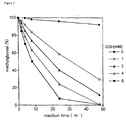
- Methylglyoxal-containing PBS(-) solution and glutathione-containing PBS(-) solution were combined to prepare solutions containing 400 ⁇ M methylglyoxal and 0, 1, 2, 4, or 8 mM glutathione. The solutions were incubated at 37°C. Samples were taken after 0, 2, 4, 8, and 24 hours; and 40 ⁇ l of 2 M perchlorate, 40 ⁇ l of 1% o-phenylenediamine, and 100 ⁇ l of 200 ⁇ M glyoxal were added to 100 ⁇ l of each sample. The mixtures were stirred, and then incubated at 25°C for one hour.
- Methylglyoxal was trapped by glutathione depending on the concentration of glutathione and incubation time at 37°C ( Figure 1).
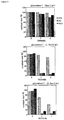
- PBS(-) solutions were prepared, whose methylglyoxal concentration were 400 ⁇ M, glutathione concentration 4 mM, and the concentration of an enzyme having glyoxalase I activity were 8, 16, 40, and 80 unit/ml, respectively.
- the solutions were incubated at 37°C.
- a commercially available enzyme (Sigma) derived from yeast was used as the glyoxalase I. Samples were taken after 1 hour, and then methylglyoxal was quantified by the same method as in Example 1.
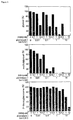
- Glutathione and glyoxalase I were added to CAPD solution (Baxter Ltd.; PD-4, 1.5) to prepare solutions containing 0, 1, or 4 mM glutathione and 0, 1.3, or 5.2 unit/ml glyoxalase I.
- the solutions were incubated at 37°C. Samples were taken after 1 hour; 40 ⁇ l of 2M perchlorate, 40 ⁇ l of 1% o -phenylenediamine, and 100 ⁇ l of 20 ⁇ M 2,3-butanedione were added to a 100- ⁇ l aliquot of each sample. The mixtures were stirred, and then incubated at 25°C for one hour.
- dicarbonyl compounds such as 3-deoxyglucosone, glyoxal, and methylglyoxal, were eliminated from the CAPD solutions ( Figure 3).
- dicarbonyl compounds can be effectively removed from CAPD solutions by adding glyoxalase I and glutathione.
- PBS(-) solutions (pH7.4) were prepared, whose concentrations of glyoxal, methylglyoxal, and 3-deoxyglucosone were all 200 ⁇ M, glutathione concentration were 0, 0.5, 1, or 5 mM, and glyoxalase I concentration were 0, 0.05, 0.1, 0.5, 1, or 2 unit/ml.
- the solutions were incubated at 37°C for 1 hour.
- PBS(-) solutions (pH 7.4) were prepared, whose glyoxal concentration were 100 ⁇ M, glutathione concentration 0, 0.1, 1, or 10 mM, and glyoxalase I concentration 0, 0.01, 0.1, 1, or 10 unit/ml. The solutions were incubated at 37°C for 1 hour. 40 ⁇ l of 2M perchlorate, 40 ⁇ l of 1% o-phenylenediamine, and 100 ⁇ l of 50 ⁇ M 2,3-butanedione as an internal standard were added to a 100- ⁇ l aliquot of each sample; the mixtures were stirred and incubated at 25°C for 1 hour.
- the concentrations of dicarbonyl compounds decreased with the addition of glyoxalase I to solutions containing glyoxal, methylglyoxal, or 3-deoxyglucosone, and to solutions containing glutathione. Furthermore, depending on the increase of glutathione and glyoxalase I concentrations, the rate of dicarbonyl compound elimination increased ( Figure 5). The elimination of each carbonyl compound was more rapid when the respective compounds were incubated alone than when combined in the reaction solution.
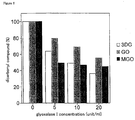
- Glutathione and glyoxalase I were added to CAPD effluents (PD-4, 1.5 from Baxter Ltd.; dwelling time, 1 hour, in peritoneal cavity) collected from peritoneal dialysis patients with admission to prepared solutions containing glutathione at a concentration of 5 mM, and glyoxalase I at a concentration of 0, 5, 10, or 20 unit/ml. The solutions were incubated at 37°C for 1 hour. Samples were taken after 1 hour.
- a carbonyl stress-ameliorating agent of the present invention rapid elimination of carbonyl compounds can be achieved by a carbonyl stress-ameliorating agent of the present invention.
- the agents are not only effective in eliminating methylglyoxal but are also effective on other major carbonyl compounds, including, 3-deoxyglucosone and glyoxal.
- the significance of the present invention is that the possibility to rapidly eliminate major carbonyl compounds causing carbonyl stress to living bodies was confirmed and which enabled its application as carbonyl stress-ameliorating agents. Since the carbonyl stress-ameliorating agents of the present invention use a reaction of enzymes originally functioning in vivo , they are expected to be highly safe even if delivered via a CAPD solution and such directly into living bodies.
- a carbonyl stress-ameliorating agent of the present invention preferentially eliminates carbonyl compounds with higher reactivities. Specifically, under the coexistence of methylglyoxal, 3-deoxyglucosone, and glyoxal, first, methylglyoxal which greatly affects living bodies is eliminated, and then the other compounds are eliminated. Thus, the carbonyl stress-ameliorating agents of the present invention are excellent not only in the elimination rate of carbonyl compounds but also reacting in a rational way for ameliorating carbonyl-stress state.
Landscapes
- Health & Medical Sciences (AREA)
- Life Sciences & Earth Sciences (AREA)
- Veterinary Medicine (AREA)
- Public Health (AREA)
- General Health & Medical Sciences (AREA)
- Animal Behavior & Ethology (AREA)
- Engineering & Computer Science (AREA)
- Pharmacology & Pharmacy (AREA)
- Medicinal Chemistry (AREA)
- Chemical & Material Sciences (AREA)
- Bioinformatics & Cheminformatics (AREA)
- Urology & Nephrology (AREA)
- Organic Chemistry (AREA)
- Nuclear Medicine, Radiotherapy & Molecular Imaging (AREA)
- General Chemical & Material Sciences (AREA)
- Chemical Kinetics & Catalysis (AREA)
- Heart & Thoracic Surgery (AREA)
- Emergency Medicine (AREA)
- Gastroenterology & Hepatology (AREA)
- Immunology (AREA)
- Epidemiology (AREA)
- Proteomics, Peptides & Aminoacids (AREA)
- Hematology (AREA)
- Anesthesiology (AREA)
- Biomedical Technology (AREA)
- Vascular Medicine (AREA)
- Toxicology (AREA)
- Diabetes (AREA)
- Medicines That Contain Protein Lipid Enzymes And Other Medicines (AREA)
- Enzymes And Modification Thereof (AREA)
- Acyclic And Carbocyclic Compounds In Medicinal Compositions (AREA)
- Medicinal Preparation (AREA)
Applications Claiming Priority (3)
| Application Number | Priority Date | Filing Date | Title |
|---|---|---|---|
| JP36047999 | 1999-12-20 | ||
| JP36047999 | 1999-12-20 | ||
| PCT/JP2000/008911 WO2001045733A1 (en) | 1999-12-20 | 2000-12-15 | Carbonyl stress-ameliorating agents |
Publications (3)
| Publication Number | Publication Date |
|---|---|
| EP1240902A1 true EP1240902A1 (de) | 2002-09-18 |
| EP1240902A4 EP1240902A4 (de) | 2009-08-26 |
| EP1240902B1 EP1240902B1 (de) | 2013-02-13 |
Family
ID=18469585
Family Applications (1)
| Application Number | Title | Priority Date | Filing Date |
|---|---|---|---|
| EP00981764A Expired - Lifetime EP1240902B1 (de) | 1999-12-20 | 2000-12-15 | Carbonyl-stress mildernde substanzen |
Country Status (8)
| Country | Link |
|---|---|
| US (1) | US7029906B2 (de) |
| EP (1) | EP1240902B1 (de) |
| JP (2) | JP4812996B2 (de) |
| KR (1) | KR20020072557A (de) |
| CN (1) | CN100355452C (de) |
| AU (1) | AU780067B2 (de) |
| CA (1) | CA2394938C (de) |
| WO (1) | WO2001045733A1 (de) |
Families Citing this family (11)
| Publication number | Priority date | Publication date | Assignee | Title |
|---|---|---|---|---|
| EP2070535B1 (de) | 1998-08-24 | 2015-07-08 | Kurokawa, Kiyoshi | Wirkstoffe zur Minderung von Carbonylstress und Peritonealdialysaten |
| US20050256055A1 (en) * | 2004-05-12 | 2005-11-17 | Hausheer Frederick H | Compounds and methods for reducing undesired toxicity of chemotherapeutic agents |
| US7384558B2 (en) * | 2004-07-26 | 2008-06-10 | Baxter International Inc. | Compositions capable of inhibiting reactive oxygen and carbonyl species |
| MX2011012742A (es) * | 2009-05-29 | 2012-05-22 | Univ Ruprecht Karls Heidelberg | Compuestos depuradores de metilglioxal y su uso para la prevencion y tratamiento de dolor y/o hiperalgesia. |
| JP2011241174A (ja) * | 2010-05-18 | 2011-12-01 | Jms Co Ltd | アミロイド形成抑制物質を含有する溶液組成物 |
| EP2813546A4 (de) * | 2012-02-07 | 2015-09-16 | Univ Tsukuba | Hybrider organisch-anorganischer komplex aus einer hochmolekularen nitroxidverbindung und anorganischem partikel |
| EP2664606B1 (de) | 2012-04-25 | 2016-09-14 | Ueno Fine Chemicals Industry, Ltd. | Hemmer der Produktion von fortgeschrittenen Glykierungsendprodukten |
| US11077238B2 (en) * | 2013-06-07 | 2021-08-03 | Allena Pharmaceuticals, Inc. | Compositions, methods, and devices for dialysis |
| JP6183832B2 (ja) * | 2013-06-19 | 2017-08-23 | 扶桑薬品工業株式会社 | 酸化ストレス抑制型透析用剤およびその調製方法 |
| CN111979206B (zh) * | 2019-05-24 | 2021-08-17 | 深圳瑞德林生物技术有限公司 | 固定化融合酶及用其制备谷胱甘肽的方法 |
| CN110624422A (zh) * | 2019-08-19 | 2019-12-31 | 广西医科大学 | 一种用于清除羰基化蛋白的透析膜及其制备方法 |
Family Cites Families (7)
| Publication number | Priority date | Publication date | Assignee | Title |
|---|---|---|---|---|
| DE3167008D1 (en) * | 1980-02-13 | 1984-12-13 | Sorin Biomedica Spa | Method of immobilizing an enzyme in a bundle of cellulosic fibres for a fibre-bundle dialyzer for purifying blood |
| GB8702062D0 (en) * | 1987-01-30 | 1987-03-04 | Amersham Int Plc | Metal complexes for diagnosis & therapy |
| JPH05105633A (ja) | 1991-10-14 | 1993-04-27 | Shimizu Seiyaku Kk | ブドウ糖製剤及びその製造方法 |
| AU7575298A (en) | 1997-05-14 | 1998-12-08 | Redox, Inc. | Use of d-arginine and/or l-arginine to protect the amino groups of biological substances from damage, inactivation, or modification by toxic carbonyls and/or dicarbonyls |
| EP2070535B1 (de) | 1998-08-24 | 2015-07-08 | Kurokawa, Kiyoshi | Wirkstoffe zur Minderung von Carbonylstress und Peritonealdialysaten |
| AU1458300A (en) * | 1998-10-30 | 2000-05-22 | Metrex Research Corporation | Simultaneous cleaning and decontaminating compositions and methods |
| JP4526192B2 (ja) | 1999-05-12 | 2010-08-18 | 学校法人東海大学 | 血中カルボニル化合物トラップ剤 |
-
2000
- 2000-12-15 WO PCT/JP2000/008911 patent/WO2001045733A1/ja not_active Ceased
- 2000-12-15 AU AU18919/01A patent/AU780067B2/en not_active Ceased
- 2000-12-15 JP JP2001546672A patent/JP4812996B2/ja not_active Expired - Fee Related
- 2000-12-15 US US10/168,695 patent/US7029906B2/en not_active Expired - Fee Related
- 2000-12-15 EP EP00981764A patent/EP1240902B1/de not_active Expired - Lifetime
- 2000-12-15 CA CA2394938A patent/CA2394938C/en not_active Expired - Fee Related
- 2000-12-15 KR KR1020027007919A patent/KR20020072557A/ko not_active Ceased
- 2000-12-15 CN CNB008187207A patent/CN100355452C/zh not_active Expired - Fee Related
-
2011
- 2011-04-21 JP JP2011094578A patent/JP2011173904A/ja active Pending
Non-Patent Citations (3)
| Title |
|---|
| M. SHINOHARA ET AL: "Overexpression of Glyoxalase-I in Bovine Endothelial Cells Inhibits Intracellular Advanced Glycation Endproduct Formation and Prevents Hyperglycemia-inducedIncreases in Macromolecular Endocytosis", J CLIN INVEST, vol. 101, 1998, pages 1142-1147, USA * |
| R. INAGI ET AL.: "Efficient in vitro lowering of carbonyl stress by the glyoxalase system in conventional glucose peritoneal dialysis fluid." KIDNEY INTERNATIONAL AUG 2002, vol. 62, no. 2, August 2002 (2002-08), pages 679-687, XP002536078 ISSN: 0085-2538 * |
| See also references of WO0145733A1 * |
Also Published As
| Publication number | Publication date |
|---|---|
| AU1891901A (en) | 2001-07-03 |
| US20030143215A1 (en) | 2003-07-31 |
| CA2394938C (en) | 2012-01-31 |
| CN100355452C (zh) | 2007-12-19 |
| CA2394938A1 (en) | 2001-06-28 |
| JP2011173904A (ja) | 2011-09-08 |
| US7029906B2 (en) | 2006-04-18 |
| WO2001045733A1 (en) | 2001-06-28 |
| KR20020072557A (ko) | 2002-09-16 |
| EP1240902A4 (de) | 2009-08-26 |
| EP1240902B1 (de) | 2013-02-13 |
| AU780067B2 (en) | 2005-02-24 |
| JP4812996B2 (ja) | 2011-11-09 |
| CN1433320A (zh) | 2003-07-30 |
Similar Documents
| Publication | Publication Date | Title |
|---|---|---|
| CA2339879C (en) | Carbonyl-stress improving agent and peritoneal dialysate | |
| JP2011173904A (ja) | カルボニルストレス改善剤 | |
| Makita et al. | Reactive glycosylation endproducts in diabetic uraemia and treatment of renal failure | |
| JPWO2000010606A1 (ja) | カルボニルストレス状態改善剤、および腹膜透析液 | |
| JPWO2001045733A1 (ja) | カルボニルストレス改善剤 | |
| US7169407B1 (en) | Carbonyl stress-decreasing agent | |
| AU778462B2 (en) | Blood carbonyl compound-trapping agent | |
| JPWO2001024790A1 (ja) | カルボニルストレス改善剤 | |
| JP2006305345A (ja) | カルボニルストレス状態改善剤、および腹膜透析液 | |
| Hörl et al. | Plasma levels of pancreatic secretory trypsin inhibitor in relation to amylase and lipase in patients with acute and chronic renal failure | |
| JPWO2002047677A1 (ja) | カルボニルストレスの改善剤 |
Legal Events
| Date | Code | Title | Description |
|---|---|---|---|
| PUAI | Public reference made under article 153(3) epc to a published international application that has entered the european phase |
Free format text: ORIGINAL CODE: 0009012 |
|
| 17P | Request for examination filed |
Effective date: 20020715 |
|
| AK | Designated contracting states |
Kind code of ref document: A1 Designated state(s): AT BE CH CY DE DK ES FI FR GB GR IE IT LI LU MC NL PT SE TR |
|
| AX | Request for extension of the european patent |
Free format text: AL;LT;LV;MK;RO;SI |
|
| RAP1 | Party data changed (applicant data changed or rights of an application transferred) |
Owner name: MIYATA, TOSHIO Owner name: KUROKAWA, KIYOSHI |
|
| RAP1 | Party data changed (applicant data changed or rights of an application transferred) |
Owner name: KUROKAWA, KIYOSHI Owner name: MIYATA, TOSHIO Owner name: TOKAI UNIVERSITY EDUCATIONAL SYSTEM |
|
| A4 | Supplementary search report drawn up and despatched |
Effective date: 20090729 |
|
| 17Q | First examination report despatched |
Effective date: 20091228 |
|
| GRAP | Despatch of communication of intention to grant a patent |
Free format text: ORIGINAL CODE: EPIDOSNIGR1 |
|
| GRAS | Grant fee paid |
Free format text: ORIGINAL CODE: EPIDOSNIGR3 |
|
| RIN1 | Information on inventor provided before grant (corrected) |
Inventor name: MIYATA, TOSHIO |
|
| RAP1 | Party data changed (applicant data changed or rights of an application transferred) |
Owner name: TOKAI UNIVERSITY EDUCATIONAL SYSTEM Owner name: MIYATA, TOSHIO Owner name: KUROKAWA, KIYOSHI |
|
| GRAA | (expected) grant |
Free format text: ORIGINAL CODE: 0009210 |
|
| AK | Designated contracting states |
Kind code of ref document: B1 Designated state(s): AT BE CH CY DE DK ES FI FR GB GR IE IT LI LU MC NL PT SE TR |
|
| REG | Reference to a national code |
Ref country code: GB Ref legal event code: FG4D |
|
| REG | Reference to a national code |
Ref country code: AT Ref legal event code: REF Ref document number: 596108 Country of ref document: AT Kind code of ref document: T Effective date: 20130215 |
|
| REG | Reference to a national code |
Ref country code: IE Ref legal event code: FG4D |
|
| REG | Reference to a national code |
Ref country code: DE Ref legal event code: R096 Ref document number: 60047827 Country of ref document: DE Effective date: 20130411 |
|
| REG | Reference to a national code |
Ref country code: AT Ref legal event code: MK05 Ref document number: 596108 Country of ref document: AT Kind code of ref document: T Effective date: 20130213 |
|
| REG | Reference to a national code |
Ref country code: NL Ref legal event code: VDEP Effective date: 20130213 |
|
| PG25 | Lapsed in a contracting state [announced via postgrant information from national office to epo] |
Ref country code: AT Free format text: LAPSE BECAUSE OF FAILURE TO SUBMIT A TRANSLATION OF THE DESCRIPTION OR TO PAY THE FEE WITHIN THE PRESCRIBED TIME-LIMIT Effective date: 20130213 Ref country code: CY Free format text: LAPSE BECAUSE OF FAILURE TO SUBMIT A TRANSLATION OF THE DESCRIPTION OR TO PAY THE FEE WITHIN THE PRESCRIBED TIME-LIMIT Effective date: 20130213 Ref country code: ES Free format text: LAPSE BECAUSE OF FAILURE TO SUBMIT A TRANSLATION OF THE DESCRIPTION OR TO PAY THE FEE WITHIN THE PRESCRIBED TIME-LIMIT Effective date: 20130524 Ref country code: SE Free format text: LAPSE BECAUSE OF FAILURE TO SUBMIT A TRANSLATION OF THE DESCRIPTION OR TO PAY THE FEE WITHIN THE PRESCRIBED TIME-LIMIT Effective date: 20130213 |
|
| PG25 | Lapsed in a contracting state [announced via postgrant information from national office to epo] |
Ref country code: FI Free format text: LAPSE BECAUSE OF FAILURE TO SUBMIT A TRANSLATION OF THE DESCRIPTION OR TO PAY THE FEE WITHIN THE PRESCRIBED TIME-LIMIT Effective date: 20130213 Ref country code: PT Free format text: LAPSE BECAUSE OF FAILURE TO SUBMIT A TRANSLATION OF THE DESCRIPTION OR TO PAY THE FEE WITHIN THE PRESCRIBED TIME-LIMIT Effective date: 20130613 Ref country code: BE Free format text: LAPSE BECAUSE OF FAILURE TO SUBMIT A TRANSLATION OF THE DESCRIPTION OR TO PAY THE FEE WITHIN THE PRESCRIBED TIME-LIMIT Effective date: 20130213 Ref country code: GR Free format text: LAPSE BECAUSE OF FAILURE TO SUBMIT A TRANSLATION OF THE DESCRIPTION OR TO PAY THE FEE WITHIN THE PRESCRIBED TIME-LIMIT Effective date: 20130514 |
|
| PG25 | Lapsed in a contracting state [announced via postgrant information from national office to epo] |
Ref country code: DK Free format text: LAPSE BECAUSE OF FAILURE TO SUBMIT A TRANSLATION OF THE DESCRIPTION OR TO PAY THE FEE WITHIN THE PRESCRIBED TIME-LIMIT Effective date: 20130213 Ref country code: NL Free format text: LAPSE BECAUSE OF FAILURE TO SUBMIT A TRANSLATION OF THE DESCRIPTION OR TO PAY THE FEE WITHIN THE PRESCRIBED TIME-LIMIT Effective date: 20130213 |
|
| PLBE | No opposition filed within time limit |
Free format text: ORIGINAL CODE: 0009261 |
|
| STAA | Information on the status of an ep patent application or granted ep patent |
Free format text: STATUS: NO OPPOSITION FILED WITHIN TIME LIMIT |
|
| PG25 | Lapsed in a contracting state [announced via postgrant information from national office to epo] |
Ref country code: IT Free format text: LAPSE BECAUSE OF FAILURE TO SUBMIT A TRANSLATION OF THE DESCRIPTION OR TO PAY THE FEE WITHIN THE PRESCRIBED TIME-LIMIT Effective date: 20130213 |
|
| 26N | No opposition filed |
Effective date: 20131114 |
|
| PGFP | Annual fee paid to national office [announced via postgrant information from national office to epo] |
Ref country code: DE Payment date: 20131220 Year of fee payment: 14 Ref country code: GB Payment date: 20131219 Year of fee payment: 14 |
|
| REG | Reference to a national code |
Ref country code: DE Ref legal event code: R097 Ref document number: 60047827 Country of ref document: DE Effective date: 20131114 |
|
| PGFP | Annual fee paid to national office [announced via postgrant information from national office to epo] |
Ref country code: FR Payment date: 20131220 Year of fee payment: 14 |
|
| REG | Reference to a national code |
Ref country code: CH Ref legal event code: PL |
|
| PG25 | Lapsed in a contracting state [announced via postgrant information from national office to epo] |
Ref country code: MC Free format text: LAPSE BECAUSE OF FAILURE TO SUBMIT A TRANSLATION OF THE DESCRIPTION OR TO PAY THE FEE WITHIN THE PRESCRIBED TIME-LIMIT Effective date: 20130213 Ref country code: LU Free format text: LAPSE BECAUSE OF FAILURE TO SUBMIT A TRANSLATION OF THE DESCRIPTION OR TO PAY THE FEE WITHIN THE PRESCRIBED TIME-LIMIT Effective date: 20131215 |
|
| REG | Reference to a national code |
Ref country code: IE Ref legal event code: MM4A |
|
| PG25 | Lapsed in a contracting state [announced via postgrant information from national office to epo] |
Ref country code: LI Free format text: LAPSE BECAUSE OF NON-PAYMENT OF DUE FEES Effective date: 20131231 Ref country code: CH Free format text: LAPSE BECAUSE OF NON-PAYMENT OF DUE FEES Effective date: 20131231 Ref country code: IE Free format text: LAPSE BECAUSE OF NON-PAYMENT OF DUE FEES Effective date: 20131215 |
|
| PG25 | Lapsed in a contracting state [announced via postgrant information from national office to epo] |
Ref country code: TR Free format text: LAPSE BECAUSE OF FAILURE TO SUBMIT A TRANSLATION OF THE DESCRIPTION OR TO PAY THE FEE WITHIN THE PRESCRIBED TIME-LIMIT Effective date: 20130213 |
|
| REG | Reference to a national code |
Ref country code: DE Ref legal event code: R119 Ref document number: 60047827 Country of ref document: DE |
|
| GBPC | Gb: european patent ceased through non-payment of renewal fee |
Effective date: 20141215 |
|
| REG | Reference to a national code |
Ref country code: FR Ref legal event code: ST Effective date: 20150831 |
|
| PG25 | Lapsed in a contracting state [announced via postgrant information from national office to epo] |
Ref country code: DE Free format text: LAPSE BECAUSE OF NON-PAYMENT OF DUE FEES Effective date: 20150701 Ref country code: GB Free format text: LAPSE BECAUSE OF NON-PAYMENT OF DUE FEES Effective date: 20141215 |
|
| PG25 | Lapsed in a contracting state [announced via postgrant information from national office to epo] |
Ref country code: FR Free format text: LAPSE BECAUSE OF NON-PAYMENT OF DUE FEES Effective date: 20141231 |