EP1237582B1 - Methods for introducing genes into mammalian subjects - Google Patents
Methods for introducing genes into mammalian subjects Download PDFInfo
- Publication number
- EP1237582B1 EP1237582B1 EP00984241A EP00984241A EP1237582B1 EP 1237582 B1 EP1237582 B1 EP 1237582B1 EP 00984241 A EP00984241 A EP 00984241A EP 00984241 A EP00984241 A EP 00984241A EP 1237582 B1 EP1237582 B1 EP 1237582B1
- Authority
- EP
- European Patent Office
- Prior art keywords
- skin
- tissue
- hair follicles
- gfp
- hair
- Prior art date
- Legal status (The legal status is an assumption and is not a legal conclusion. Google has not performed a legal analysis and makes no representation as to the accuracy of the status listed.)
- Expired - Lifetime
Links
- 238000000034 method Methods 0.000 title claims abstract description 28
- 108090000623 proteins and genes Proteins 0.000 title abstract description 19
- 210000003780 hair follicle Anatomy 0.000 claims abstract description 90
- 210000001519 tissue Anatomy 0.000 claims abstract description 52
- 102000029816 Collagenase Human genes 0.000 claims abstract description 38
- 108060005980 Collagenase Proteins 0.000 claims abstract description 38
- 229960002424 collagenase Drugs 0.000 claims abstract description 38
- 210000004027 cell Anatomy 0.000 claims description 34
- 239000013598 vector Substances 0.000 claims description 18
- 108020004707 nucleic acids Proteins 0.000 claims description 17
- 102000039446 nucleic acids Human genes 0.000 claims description 17
- 150000007523 nucleic acids Chemical class 0.000 claims description 17
- 238000011282 treatment Methods 0.000 claims description 15
- 238000004806 packaging method and process Methods 0.000 claims description 10
- 239000013603 viral vector Substances 0.000 claims description 7
- 230000001177 retroviral effect Effects 0.000 claims description 6
- 210000004207 dermis Anatomy 0.000 claims description 5
- 239000006228 supernatant Substances 0.000 claims description 4
- 238000001638 lipofection Methods 0.000 claims description 3
- 230000003612 virological effect Effects 0.000 claims description 3
- 210000002751 lymph Anatomy 0.000 claims 1
- 230000002463 transducing effect Effects 0.000 claims 1
- 238000012239 gene modification Methods 0.000 abstract description 8
- 230000005017 genetic modification Effects 0.000 abstract description 8
- 235000013617 genetically modified food Nutrition 0.000 abstract description 8
- 230000004048 modification Effects 0.000 abstract description 6
- 238000012986 modification Methods 0.000 abstract description 6
- 238000012384 transportation and delivery Methods 0.000 abstract description 6
- 210000003491 skin Anatomy 0.000 description 74
- 239000005090 green fluorescent protein Substances 0.000 description 52
- 108010043121 Green Fluorescent Proteins Proteins 0.000 description 48
- 102000004144 Green Fluorescent Proteins Human genes 0.000 description 48
- XUMBMVFBXHLACL-UHFFFAOYSA-N Melanin Chemical compound O=C1C(=O)C(C2=CNC3=C(C(C(=O)C4=C32)=O)C)=C2C4=CNC2=C1C XUMBMVFBXHLACL-UHFFFAOYSA-N 0.000 description 22
- 108060008724 Tyrosinase Proteins 0.000 description 18
- 230000003698 anagen phase Effects 0.000 description 16
- 102000003425 Tyrosinase Human genes 0.000 description 14
- 230000014509 gene expression Effects 0.000 description 14
- 108091032973 (ribonucleotides)n+m Proteins 0.000 description 12
- 241000699670 Mus sp. Species 0.000 description 12
- 210000004209 hair Anatomy 0.000 description 12
- 239000000047 product Substances 0.000 description 11
- 230000000694 effects Effects 0.000 description 9
- 238000003757 reverse transcription PCR Methods 0.000 description 9
- 108020004684 Internal Ribosome Entry Sites Proteins 0.000 description 8
- 241000700605 Viruses Species 0.000 description 8
- 238000002513 implantation Methods 0.000 description 8
- 239000000427 antigen Substances 0.000 description 7
- 108091007433 antigens Proteins 0.000 description 7
- 102000036639 antigens Human genes 0.000 description 7
- 238000011534 incubation Methods 0.000 description 7
- 239000002609 medium Substances 0.000 description 7
- 238000010361 transduction Methods 0.000 description 7
- 230000026683 transduction Effects 0.000 description 7
- 210000004919 hair shaft Anatomy 0.000 description 6
- 208000015181 infectious disease Diseases 0.000 description 6
- 238000011580 nude mouse model Methods 0.000 description 6
- 239000002953 phosphate buffered saline Substances 0.000 description 6
- 108091003079 Bovine Serum Albumin Proteins 0.000 description 5
- 206010061598 Immunodeficiency Diseases 0.000 description 5
- 241000699660 Mus musculus Species 0.000 description 5
- 238000003501 co-culture Methods 0.000 description 5
- 238000004925 denaturation Methods 0.000 description 5
- 230000036425 denaturation Effects 0.000 description 5
- 230000002500 effect on skin Effects 0.000 description 5
- 239000012091 fetal bovine serum Substances 0.000 description 5
- 238000001727 in vivo Methods 0.000 description 5
- 239000011159 matrix material Substances 0.000 description 5
- 239000000203 mixture Substances 0.000 description 5
- 102000004169 proteins and genes Human genes 0.000 description 5
- 230000003797 telogen phase Effects 0.000 description 5
- 238000011144 upstream manufacturing Methods 0.000 description 5
- 101000756628 Mus musculus Actin, cytoplasmic 1 Proteins 0.000 description 4
- 108091061960 Naked DNA Proteins 0.000 description 4
- 108091028043 Nucleic acid sequence Proteins 0.000 description 4
- 238000006243 chemical reaction Methods 0.000 description 4
- 230000035617 depilation Effects 0.000 description 4
- 238000002474 experimental method Methods 0.000 description 4
- 239000012634 fragment Substances 0.000 description 4
- 239000001963 growth medium Substances 0.000 description 4
- 108020004999 messenger RNA Proteins 0.000 description 4
- 239000002773 nucleotide Substances 0.000 description 4
- 125000003729 nucleotide group Chemical group 0.000 description 4
- 238000010839 reverse transcription Methods 0.000 description 4
- 239000000243 solution Substances 0.000 description 4
- 241000282412 Homo Species 0.000 description 3
- 241000699666 Mus <mouse, genus> Species 0.000 description 3
- 239000012980 RPMI-1640 medium Substances 0.000 description 3
- 238000000137 annealing Methods 0.000 description 3
- 230000000692 anti-sense effect Effects 0.000 description 3
- 238000010367 cloning Methods 0.000 description 3
- 239000002299 complementary DNA Substances 0.000 description 3
- 238000001962 electrophoresis Methods 0.000 description 3
- 230000002068 genetic effect Effects 0.000 description 3
- 238000003306 harvesting Methods 0.000 description 3
- 239000005556 hormone Substances 0.000 description 3
- 229940088597 hormone Drugs 0.000 description 3
- 238000002649 immunization Methods 0.000 description 3
- 230000003053 immunization Effects 0.000 description 3
- 238000000338 in vitro Methods 0.000 description 3
- 241000282472 Canis lupus familiaris Species 0.000 description 2
- 102000008186 Collagen Human genes 0.000 description 2
- 108010035532 Collagen Proteins 0.000 description 2
- 108091035707 Consensus sequence Proteins 0.000 description 2
- 108020004414 DNA Proteins 0.000 description 2
- 241000283086 Equidae Species 0.000 description 2
- 101150066002 GFP gene Proteins 0.000 description 2
- 229930182566 Gentamicin Natural products 0.000 description 2
- CEAZRRDELHUEMR-URQXQFDESA-N Gentamicin Chemical compound O1[C@H](C(C)NC)CC[C@@H](N)[C@H]1O[C@H]1[C@H](O)[C@@H](O[C@@H]2[C@@H]([C@@H](NC)[C@@](C)(O)CO2)O)[C@H](N)C[C@@H]1N CEAZRRDELHUEMR-URQXQFDESA-N 0.000 description 2
- 239000012981 Hank's balanced salt solution Substances 0.000 description 2
- 102100034343 Integrase Human genes 0.000 description 2
- WTDRDQBEARUVNC-UHFFFAOYSA-N L-Dopa Natural products OC(=O)C(N)CC1=CC=C(O)C(O)=C1 WTDRDQBEARUVNC-UHFFFAOYSA-N 0.000 description 2
- 241001465754 Metazoa Species 0.000 description 2
- 241001529936 Murinae Species 0.000 description 2
- 206010028980 Neoplasm Diseases 0.000 description 2
- 108700026244 Open Reading Frames Proteins 0.000 description 2
- 108010092799 RNA-directed DNA polymerase Proteins 0.000 description 2
- 238000010240 RT-PCR analysis Methods 0.000 description 2
- 238000002835 absorbance Methods 0.000 description 2
- 239000003242 anti bacterial agent Substances 0.000 description 2
- 229940088710 antibiotic agent Drugs 0.000 description 2
- 238000000339 bright-field microscopy Methods 0.000 description 2
- 239000000872 buffer Substances 0.000 description 2
- 239000003153 chemical reaction reagent Substances 0.000 description 2
- 229920001436 collagen Polymers 0.000 description 2
- 150000001875 compounds Chemical class 0.000 description 2
- 238000010276 construction Methods 0.000 description 2
- 238000012258 culturing Methods 0.000 description 2
- 238000010586 diagram Methods 0.000 description 2
- 238000001415 gene therapy Methods 0.000 description 2
- 230000004077 genetic alteration Effects 0.000 description 2
- 231100000118 genetic alteration Toxicity 0.000 description 2
- 239000008187 granular material Substances 0.000 description 2
- 230000031774 hair cycle Effects 0.000 description 2
- 210000000442 hair follicle cell Anatomy 0.000 description 2
- 230000003779 hair growth Effects 0.000 description 2
- 208000002672 hepatitis B Diseases 0.000 description 2
- 230000028993 immune response Effects 0.000 description 2
- 230000002163 immunogen Effects 0.000 description 2
- 229960003444 immunosuppressant agent Drugs 0.000 description 2
- 239000003018 immunosuppressive agent Substances 0.000 description 2
- 239000007943 implant Substances 0.000 description 2
- 230000001976 improved effect Effects 0.000 description 2
- 230000001939 inductive effect Effects 0.000 description 2
- 210000002510 keratinocyte Anatomy 0.000 description 2
- 239000002502 liposome Substances 0.000 description 2
- 210000003563 lymphoid tissue Anatomy 0.000 description 2
- 239000006166 lysate Substances 0.000 description 2
- 230000008520 organization Effects 0.000 description 2
- 206010033675 panniculitis Diseases 0.000 description 2
- 108090000765 processed proteins & peptides Proteins 0.000 description 2
- 230000001105 regulatory effect Effects 0.000 description 2
- 210000004304 subcutaneous tissue Anatomy 0.000 description 2
- 230000001225 therapeutic effect Effects 0.000 description 2
- 241000701161 unidentified adenovirus Species 0.000 description 2
- RSWGJHLUYNHPMX-UHFFFAOYSA-N Abietic-Saeure Natural products C12CCC(C(C)C)=CC2=CCC2C1(C)CCCC2(C)C(O)=O RSWGJHLUYNHPMX-UHFFFAOYSA-N 0.000 description 1
- 108010085238 Actins Proteins 0.000 description 1
- 102000007469 Actins Human genes 0.000 description 1
- APKFDSVGJQXUKY-KKGHZKTASA-N Amphotericin-B Natural products O[C@H]1[C@@H](N)[C@H](O)[C@@H](C)O[C@H]1O[C@H]1C=CC=CC=CC=CC=CC=CC=C[C@H](C)[C@@H](O)[C@@H](C)[C@H](C)OC(=O)C[C@H](O)C[C@H](O)CC[C@@H](O)[C@H](O)C[C@H](O)C[C@](O)(C[C@H](O)[C@H]2C(O)=O)O[C@H]2C1 APKFDSVGJQXUKY-KKGHZKTASA-N 0.000 description 1
- 241000894006 Bacteria Species 0.000 description 1
- 241000283690 Bos taurus Species 0.000 description 1
- 102000055006 Calcitonin Human genes 0.000 description 1
- 108060001064 Calcitonin Proteins 0.000 description 1
- 108090000565 Capsid Proteins Proteins 0.000 description 1
- 241000282693 Cercopithecidae Species 0.000 description 1
- 108090000695 Cytokines Proteins 0.000 description 1
- 102000004127 Cytokines Human genes 0.000 description 1
- 239000006144 Dulbecco’s modified Eagle's medium Substances 0.000 description 1
- 239000006145 Eagle's minimal essential medium Substances 0.000 description 1
- 101000925662 Enterobacteria phage PRD1 Endolysin Proteins 0.000 description 1
- 241000282326 Felis catus Species 0.000 description 1
- 102000002265 Human Growth Hormone Human genes 0.000 description 1
- 108010000521 Human Growth Hormone Proteins 0.000 description 1
- 239000000854 Human Growth Hormone Substances 0.000 description 1
- 102000015696 Interleukins Human genes 0.000 description 1
- 108010063738 Interleukins Proteins 0.000 description 1
- 108010025815 Kanamycin Kinase Proteins 0.000 description 1
- YQEZLKZALYSWHR-UHFFFAOYSA-N Ketamine Chemical compound C=1C=CC=C(Cl)C=1C1(NC)CCCCC1=O YQEZLKZALYSWHR-UHFFFAOYSA-N 0.000 description 1
- WTDRDQBEARUVNC-LURJTMIESA-N L-DOPA Chemical compound OC(=O)[C@@H](N)CC1=CC=C(O)C(O)=C1 WTDRDQBEARUVNC-LURJTMIESA-N 0.000 description 1
- OUYCCCASQSFEME-QMMMGPOBSA-N L-tyrosine Chemical compound OC(=O)[C@@H](N)CC1=CC=C(O)C=C1 OUYCCCASQSFEME-QMMMGPOBSA-N 0.000 description 1
- 208000001913 Lamellar ichthyosis Diseases 0.000 description 1
- 241000124008 Mammalia Species 0.000 description 1
- 108700011259 MicroRNAs Proteins 0.000 description 1
- 241000713869 Moloney murine leukemia virus Species 0.000 description 1
- 241000714177 Murine leukemia virus Species 0.000 description 1
- 101000608782 Mus musculus Tyrosinase Proteins 0.000 description 1
- 108091034117 Oligonucleotide Proteins 0.000 description 1
- 241000283973 Oryctolagus cuniculus Species 0.000 description 1
- 101800000989 Oxytocin Proteins 0.000 description 1
- 102400000050 Oxytocin Human genes 0.000 description 1
- XNOPRXBHLZRZKH-UHFFFAOYSA-N Oxytocin Natural products N1C(=O)C(N)CSSCC(C(=O)N2C(CCC2)C(=O)NC(CC(C)C)C(=O)NCC(N)=O)NC(=O)C(CC(N)=O)NC(=O)C(CCC(N)=O)NC(=O)C(C(C)CC)NC(=O)C1CC1=CC=C(O)C=C1 XNOPRXBHLZRZKH-UHFFFAOYSA-N 0.000 description 1
- 241001494479 Pecora Species 0.000 description 1
- 241000700159 Rattus Species 0.000 description 1
- 206010038997 Retroviral infections Diseases 0.000 description 1
- KHPCPRHQVVSZAH-HUOMCSJISA-N Rosin Natural products O(C/C=C/c1ccccc1)[C@H]1[C@H](O)[C@@H](O)[C@@H](O)[C@@H](CO)O1 KHPCPRHQVVSZAH-HUOMCSJISA-N 0.000 description 1
- 238000011579 SCID mouse model Methods 0.000 description 1
- 241000187747 Streptomyces Species 0.000 description 1
- 241000186988 Streptomyces antibioticus Species 0.000 description 1
- 101000773104 Streptomyces antibioticus Tyrosinase Proteins 0.000 description 1
- 241000282887 Suidae Species 0.000 description 1
- ZMZDMBWJUHKJPS-UHFFFAOYSA-M Thiocyanate anion Chemical compound [S-]C#N ZMZDMBWJUHKJPS-UHFFFAOYSA-M 0.000 description 1
- 102000011923 Thyrotropin Human genes 0.000 description 1
- 108010061174 Thyrotropin Proteins 0.000 description 1
- 102000003978 Tissue Plasminogen Activator Human genes 0.000 description 1
- 108090000373 Tissue Plasminogen Activator Proteins 0.000 description 1
- 108700019146 Transgenes Proteins 0.000 description 1
- 102000004142 Trypsin Human genes 0.000 description 1
- 108090000631 Trypsin Proteins 0.000 description 1
- APKFDSVGJQXUKY-INPOYWNPSA-N amphotericin B Chemical compound O[C@H]1[C@@H](N)[C@H](O)[C@@H](C)O[C@H]1O[C@H]1/C=C/C=C/C=C/C=C/C=C/C=C/C=C/[C@H](C)[C@@H](O)[C@@H](C)[C@H](C)OC(=O)C[C@H](O)C[C@H](O)CC[C@@H](O)[C@H](O)C[C@H](O)C[C@](O)(C[C@H](O)[C@H]2C(O)=O)O[C@H]2C1 APKFDSVGJQXUKY-INPOYWNPSA-N 0.000 description 1
- 229960003942 amphotericin b Drugs 0.000 description 1
- 238000010171 animal model Methods 0.000 description 1
- 238000003556 assay Methods 0.000 description 1
- 201000000751 autosomal recessive congenital ichthyosis Diseases 0.000 description 1
- 230000001580 bacterial effect Effects 0.000 description 1
- 102000005936 beta-Galactosidase Human genes 0.000 description 1
- 108010005774 beta-Galactosidase Proteins 0.000 description 1
- 239000001058 brown pigment Substances 0.000 description 1
- BBBFJLBPOGFECG-VJVYQDLKSA-N calcitonin Chemical compound N([C@H](C(=O)N[C@@H](CC(C)C)C(=O)NCC(=O)N[C@@H](CCCCN)C(=O)N[C@@H](CC(C)C)C(=O)N[C@@H](CO)C(=O)N[C@@H](CCC(N)=O)C(=O)N[C@@H](CCC(O)=O)C(=O)N[C@@H](CC(C)C)C(=O)N[C@@H](CC=1NC=NC=1)C(=O)N[C@@H](CCCCN)C(=O)N[C@@H](CC(C)C)C(=O)N[C@@H](CCC(N)=O)C(=O)N[C@@H]([C@@H](C)O)C(=O)N[C@@H](CC=1C=CC(O)=CC=1)C(=O)N1[C@@H](CCC1)C(=O)N[C@@H](CCCNC(N)=N)C(=O)N[C@@H]([C@@H](C)O)C(=O)N[C@@H](CC(N)=O)C(=O)N[C@@H]([C@@H](C)O)C(=O)NCC(=O)N[C@@H](CO)C(=O)NCC(=O)N[C@@H]([C@@H](C)O)C(=O)N1[C@@H](CCC1)C(N)=O)C(C)C)C(=O)[C@@H]1CSSC[C@H](N)C(=O)N[C@@H](CO)C(=O)N[C@@H](CC(N)=O)C(=O)N[C@@H](CC(C)C)C(=O)N[C@@H](CO)C(=O)N[C@@H]([C@@H](C)O)C(=O)N1 BBBFJLBPOGFECG-VJVYQDLKSA-N 0.000 description 1
- 229960004015 calcitonin Drugs 0.000 description 1
- 238000004113 cell culture Methods 0.000 description 1
- 238000005119 centrifugation Methods 0.000 description 1
- 230000000295 complement effect Effects 0.000 description 1
- 230000001276 controlling effect Effects 0.000 description 1
- 238000012937 correction Methods 0.000 description 1
- 210000004748 cultured cell Anatomy 0.000 description 1
- 230000003247 decreasing effect Effects 0.000 description 1
- 230000007547 defect Effects 0.000 description 1
- 230000002950 deficient Effects 0.000 description 1
- 230000029087 digestion Effects 0.000 description 1
- MHUWZNTUIIFHAS-CLFAGFIQSA-N dioleoyl phosphatidic acid Chemical compound CCCCCCCC\C=C/CCCCCCCC(=O)OCC(COP(O)(O)=O)OC(=O)CCCCCCC\C=C/CCCCCCCC MHUWZNTUIIFHAS-CLFAGFIQSA-N 0.000 description 1
- LOKCTEFSRHRXRJ-UHFFFAOYSA-I dipotassium trisodium dihydrogen phosphate hydrogen phosphate dichloride Chemical compound P(=O)(O)(O)[O-].[K+].P(=O)(O)([O-])[O-].[Na+].[Na+].[Cl-].[K+].[Cl-].[Na+] LOKCTEFSRHRXRJ-UHFFFAOYSA-I 0.000 description 1
- 239000003814 drug Substances 0.000 description 1
- 238000004520 electroporation Methods 0.000 description 1
- 238000005516 engineering process Methods 0.000 description 1
- 210000002615 epidermis Anatomy 0.000 description 1
- 239000013604 expression vector Substances 0.000 description 1
- 210000003195 fascia Anatomy 0.000 description 1
- 238000009472 formulation Methods 0.000 description 1
- 239000000499 gel Substances 0.000 description 1
- 238000002695 general anesthesia Methods 0.000 description 1
- 239000011521 glass Substances 0.000 description 1
- 230000012010 growth Effects 0.000 description 1
- 230000003648 hair appearance Effects 0.000 description 1
- 230000037308 hair color Effects 0.000 description 1
- ZMZDMBWJUHKJPS-UHFFFAOYSA-N hydrogen thiocyanate Natural products SC#N ZMZDMBWJUHKJPS-UHFFFAOYSA-N 0.000 description 1
- 206010021198 ichthyosis Diseases 0.000 description 1
- 238000011065 in-situ storage Methods 0.000 description 1
- 238000013383 initial experiment Methods 0.000 description 1
- 238000002347 injection Methods 0.000 description 1
- 239000007924 injection Substances 0.000 description 1
- 229940047122 interleukins Drugs 0.000 description 1
- 230000016507 interphase Effects 0.000 description 1
- 229960003299 ketamine Drugs 0.000 description 1
- 229960004502 levodopa Drugs 0.000 description 1
- 150000002632 lipids Chemical class 0.000 description 1
- 210000004962 mammalian cell Anatomy 0.000 description 1
- 238000004519 manufacturing process Methods 0.000 description 1
- 230000007246 mechanism Effects 0.000 description 1
- 230000036564 melanin content Effects 0.000 description 1
- 230000008099 melanin synthesis Effects 0.000 description 1
- 210000002752 melanocyte Anatomy 0.000 description 1
- QSHDDOUJBYECFT-UHFFFAOYSA-N mercury Chemical compound [Hg] QSHDDOUJBYECFT-UHFFFAOYSA-N 0.000 description 1
- 229910052753 mercury Inorganic materials 0.000 description 1
- 230000004060 metabolic process Effects 0.000 description 1
- 238000000386 microscopy Methods 0.000 description 1
- 230000035772 mutation Effects 0.000 description 1
- 230000037311 normal skin Effects 0.000 description 1
- 210000000056 organ Anatomy 0.000 description 1
- 238000006395 oxidase reaction Methods 0.000 description 1
- 229960001723 oxytocin Drugs 0.000 description 1
- XNOPRXBHLZRZKH-DSZYJQQASA-N oxytocin Chemical compound C([C@H]1C(=O)N[C@H](C(N[C@@H](CCC(N)=O)C(=O)N[C@@H](CC(N)=O)C(=O)N[C@@H](CSSC[C@H](N)C(=O)N1)C(=O)N1[C@@H](CCC1)C(=O)N[C@@H](CC(C)C)C(=O)NCC(N)=O)=O)[C@@H](C)CC)C1=CC=C(O)C=C1 XNOPRXBHLZRZKH-DSZYJQQASA-N 0.000 description 1
- 244000052769 pathogen Species 0.000 description 1
- 230000001717 pathogenic effect Effects 0.000 description 1
- 230000002688 persistence Effects 0.000 description 1
- DCWXELXMIBXGTH-QMMMGPOBSA-N phosphonotyrosine Chemical compound OC(=O)[C@@H](N)CC1=CC=C(OP(O)(O)=O)C=C1 DCWXELXMIBXGTH-QMMMGPOBSA-N 0.000 description 1
- 210000004694 pigment cell Anatomy 0.000 description 1
- 239000013612 plasmid Substances 0.000 description 1
- 230000005855 radiation Effects 0.000 description 1
- 230000004044 response Effects 0.000 description 1
- 230000002441 reversible effect Effects 0.000 description 1
- 210000004761 scalp Anatomy 0.000 description 1
- 210000001732 sebaceous gland Anatomy 0.000 description 1
- 210000002107 sheath cell Anatomy 0.000 description 1
- 230000000392 somatic effect Effects 0.000 description 1
- 238000010561 standard procedure Methods 0.000 description 1
- 229960005322 streptomycin Drugs 0.000 description 1
- 239000000126 substance Substances 0.000 description 1
- 239000000758 substrate Substances 0.000 description 1
- 230000008093 supporting effect Effects 0.000 description 1
- 238000001356 surgical procedure Methods 0.000 description 1
- 239000000725 suspension Substances 0.000 description 1
- 230000001360 synchronised effect Effects 0.000 description 1
- 238000012385 systemic delivery Methods 0.000 description 1
- 230000009885 systemic effect Effects 0.000 description 1
- 229940124597 therapeutic agent Drugs 0.000 description 1
- 210000001541 thymus gland Anatomy 0.000 description 1
- 229960000187 tissue plasminogen activator Drugs 0.000 description 1
- KHPCPRHQVVSZAH-UHFFFAOYSA-N trans-cinnamyl beta-D-glucopyranoside Natural products OC1C(O)C(O)C(CO)OC1OCC=CC1=CC=CC=C1 KHPCPRHQVVSZAH-UHFFFAOYSA-N 0.000 description 1
- 238000012546 transfer Methods 0.000 description 1
- 230000009261 transgenic effect Effects 0.000 description 1
- 238000002054 transplantation Methods 0.000 description 1
- 239000012588 trypsin Substances 0.000 description 1
- OUYCCCASQSFEME-UHFFFAOYSA-N tyrosine Natural products OC(=O)C(N)CC1=CC=C(O)C=C1 OUYCCCASQSFEME-UHFFFAOYSA-N 0.000 description 1
- 238000002255 vaccination Methods 0.000 description 1
- 229960005486 vaccine Drugs 0.000 description 1
- 239000003981 vehicle Substances 0.000 description 1
- 230000000007 visual effect Effects 0.000 description 1
Images
Classifications
-
- C—CHEMISTRY; METALLURGY
- C12—BIOCHEMISTRY; BEER; SPIRITS; WINE; VINEGAR; MICROBIOLOGY; ENZYMOLOGY; MUTATION OR GENETIC ENGINEERING
- C12N—MICROORGANISMS OR ENZYMES; COMPOSITIONS THEREOF; PROPAGATING, PRESERVING, OR MAINTAINING MICROORGANISMS; MUTATION OR GENETIC ENGINEERING; CULTURE MEDIA
- C12N9/00—Enzymes; Proenzymes; Compositions thereof; Processes for preparing, activating, inhibiting, separating or purifying enzymes
- C12N9/0004—Oxidoreductases (1.)
- C12N9/0055—Oxidoreductases (1.) acting on diphenols and related substances as donors (1.10)
- C12N9/0057—Oxidoreductases (1.) acting on diphenols and related substances as donors (1.10) with oxygen as acceptor (1.10.3)
- C12N9/0059—Catechol oxidase (1.10.3.1), i.e. tyrosinase
-
- C—CHEMISTRY; METALLURGY
- C12—BIOCHEMISTRY; BEER; SPIRITS; WINE; VINEGAR; MICROBIOLOGY; ENZYMOLOGY; MUTATION OR GENETIC ENGINEERING
- C12N—MICROORGANISMS OR ENZYMES; COMPOSITIONS THEREOF; PROPAGATING, PRESERVING, OR MAINTAINING MICROORGANISMS; MUTATION OR GENETIC ENGINEERING; CULTURE MEDIA
- C12N15/00—Mutation or genetic engineering; DNA or RNA concerning genetic engineering, vectors, e.g. plasmids, or their isolation, preparation or purification; Use of hosts therefor
-
- A—HUMAN NECESSITIES
- A61—MEDICAL OR VETERINARY SCIENCE; HYGIENE
- A61P—SPECIFIC THERAPEUTIC ACTIVITY OF CHEMICAL COMPOUNDS OR MEDICINAL PREPARATIONS
- A61P1/00—Drugs for disorders of the alimentary tract or the digestive system
- A61P1/16—Drugs for disorders of the alimentary tract or the digestive system for liver or gallbladder disorders, e.g. hepatoprotective agents, cholagogues, litholytics
-
- A—HUMAN NECESSITIES
- A61—MEDICAL OR VETERINARY SCIENCE; HYGIENE
- A61P—SPECIFIC THERAPEUTIC ACTIVITY OF CHEMICAL COMPOUNDS OR MEDICINAL PREPARATIONS
- A61P17/00—Drugs for dermatological disorders
- A61P17/14—Drugs for dermatological disorders for baldness or alopecia
-
- A—HUMAN NECESSITIES
- A61—MEDICAL OR VETERINARY SCIENCE; HYGIENE
- A61P—SPECIFIC THERAPEUTIC ACTIVITY OF CHEMICAL COMPOUNDS OR MEDICINAL PREPARATIONS
- A61P31/00—Antiinfectives, i.e. antibiotics, antiseptics, chemotherapeutics
- A61P31/04—Antibacterial agents
-
- A—HUMAN NECESSITIES
- A61—MEDICAL OR VETERINARY SCIENCE; HYGIENE
- A61P—SPECIFIC THERAPEUTIC ACTIVITY OF CHEMICAL COMPOUNDS OR MEDICINAL PREPARATIONS
- A61P31/00—Antiinfectives, i.e. antibiotics, antiseptics, chemotherapeutics
- A61P31/12—Antivirals
-
- A—HUMAN NECESSITIES
- A61—MEDICAL OR VETERINARY SCIENCE; HYGIENE
- A61P—SPECIFIC THERAPEUTIC ACTIVITY OF CHEMICAL COMPOUNDS OR MEDICINAL PREPARATIONS
- A61P31/00—Antiinfectives, i.e. antibiotics, antiseptics, chemotherapeutics
- A61P31/12—Antivirals
- A61P31/20—Antivirals for DNA viruses
-
- A—HUMAN NECESSITIES
- A61—MEDICAL OR VETERINARY SCIENCE; HYGIENE
- A61P—SPECIFIC THERAPEUTIC ACTIVITY OF CHEMICAL COMPOUNDS OR MEDICINAL PREPARATIONS
- A61P33/00—Antiparasitic agents
- A61P33/02—Antiprotozoals, e.g. for leishmaniasis, trichomoniasis, toxoplasmosis
-
- A—HUMAN NECESSITIES
- A61—MEDICAL OR VETERINARY SCIENCE; HYGIENE
- A61P—SPECIFIC THERAPEUTIC ACTIVITY OF CHEMICAL COMPOUNDS OR MEDICINAL PREPARATIONS
- A61P37/00—Drugs for immunological or allergic disorders
- A61P37/02—Immunomodulators
- A61P37/04—Immunostimulants
-
- A—HUMAN NECESSITIES
- A61—MEDICAL OR VETERINARY SCIENCE; HYGIENE
- A61P—SPECIFIC THERAPEUTIC ACTIVITY OF CHEMICAL COMPOUNDS OR MEDICINAL PREPARATIONS
- A61P43/00—Drugs for specific purposes, not provided for in groups A61P1/00-A61P41/00
-
- A—HUMAN NECESSITIES
- A61—MEDICAL OR VETERINARY SCIENCE; HYGIENE
- A61P—SPECIFIC THERAPEUTIC ACTIVITY OF CHEMICAL COMPOUNDS OR MEDICINAL PREPARATIONS
- A61P5/00—Drugs for disorders of the endocrine system
-
- A—HUMAN NECESSITIES
- A61—MEDICAL OR VETERINARY SCIENCE; HYGIENE
- A61P—SPECIFIC THERAPEUTIC ACTIVITY OF CHEMICAL COMPOUNDS OR MEDICINAL PREPARATIONS
- A61P5/00—Drugs for disorders of the endocrine system
- A61P5/06—Drugs for disorders of the endocrine system of the anterior pituitary hormones, e.g. TSH, ACTH, FSH, LH, PRL, GH
-
- A—HUMAN NECESSITIES
- A61—MEDICAL OR VETERINARY SCIENCE; HYGIENE
- A61P—SPECIFIC THERAPEUTIC ACTIVITY OF CHEMICAL COMPOUNDS OR MEDICINAL PREPARATIONS
- A61P5/00—Drugs for disorders of the endocrine system
- A61P5/10—Drugs for disorders of the endocrine system of the posterior pituitary hormones, e.g. oxytocin, ADH
-
- A—HUMAN NECESSITIES
- A61—MEDICAL OR VETERINARY SCIENCE; HYGIENE
- A61P—SPECIFIC THERAPEUTIC ACTIVITY OF CHEMICAL COMPOUNDS OR MEDICINAL PREPARATIONS
- A61P5/00—Drugs for disorders of the endocrine system
- A61P5/18—Drugs for disorders of the endocrine system of the parathyroid hormones
- A61P5/22—Drugs for disorders of the endocrine system of the parathyroid hormones for decreasing, blocking or antagonising the activity of calcitonin
-
- A—HUMAN NECESSITIES
- A61—MEDICAL OR VETERINARY SCIENCE; HYGIENE
- A61P—SPECIFIC THERAPEUTIC ACTIVITY OF CHEMICAL COMPOUNDS OR MEDICINAL PREPARATIONS
- A61P7/00—Drugs for disorders of the blood or the extracellular fluid
- A61P7/02—Antithrombotic agents; Anticoagulants; Platelet aggregation inhibitors
-
- A—HUMAN NECESSITIES
- A61—MEDICAL OR VETERINARY SCIENCE; HYGIENE
- A61P—SPECIFIC THERAPEUTIC ACTIVITY OF CHEMICAL COMPOUNDS OR MEDICINAL PREPARATIONS
- A61P7/00—Drugs for disorders of the blood or the extracellular fluid
- A61P7/06—Antianaemics
-
- C—CHEMISTRY; METALLURGY
- C07—ORGANIC CHEMISTRY
- C07K—PEPTIDES
- C07K14/00—Peptides having more than 20 amino acids; Gastrins; Somatostatins; Melanotropins; Derivatives thereof
- C07K14/195—Peptides having more than 20 amino acids; Gastrins; Somatostatins; Melanotropins; Derivatives thereof from bacteria
- C07K14/36—Peptides having more than 20 amino acids; Gastrins; Somatostatins; Melanotropins; Derivatives thereof from bacteria from Actinomyces; from Streptomyces (G)
-
- C—CHEMISTRY; METALLURGY
- C12—BIOCHEMISTRY; BEER; SPIRITS; WINE; VINEGAR; MICROBIOLOGY; ENZYMOLOGY; MUTATION OR GENETIC ENGINEERING
- C12N—MICROORGANISMS OR ENZYMES; COMPOSITIONS THEREOF; PROPAGATING, PRESERVING, OR MAINTAINING MICROORGANISMS; MUTATION OR GENETIC ENGINEERING; CULTURE MEDIA
- C12N5/00—Undifferentiated human, animal or plant cells, e.g. cell lines; Tissues; Cultivation or maintenance thereof; Culture media therefor
- C12N5/06—Animal cells or tissues; Human cells or tissues
- C12N5/0602—Vertebrate cells
- C12N5/0625—Epidermal cells, skin cells; Cells of the oral mucosa
- C12N5/0627—Hair cells
-
- A—HUMAN NECESSITIES
- A61—MEDICAL OR VETERINARY SCIENCE; HYGIENE
- A61K—PREPARATIONS FOR MEDICAL, DENTAL OR TOILETRY PURPOSES
- A61K35/00—Medicinal preparations containing materials or reaction products thereof with undetermined constitution
- A61K35/12—Materials from mammals; Compositions comprising non-specified tissues or cells; Compositions comprising non-embryonic stem cells; Genetically modified cells
-
- A—HUMAN NECESSITIES
- A61—MEDICAL OR VETERINARY SCIENCE; HYGIENE
- A61K—PREPARATIONS FOR MEDICAL, DENTAL OR TOILETRY PURPOSES
- A61K48/00—Medicinal preparations containing genetic material which is inserted into cells of the living body to treat genetic diseases; Gene therapy
-
- C—CHEMISTRY; METALLURGY
- C12—BIOCHEMISTRY; BEER; SPIRITS; WINE; VINEGAR; MICROBIOLOGY; ENZYMOLOGY; MUTATION OR GENETIC ENGINEERING
- C12N—MICROORGANISMS OR ENZYMES; COMPOSITIONS THEREOF; PROPAGATING, PRESERVING, OR MAINTAINING MICROORGANISMS; MUTATION OR GENETIC ENGINEERING; CULTURE MEDIA
- C12N2509/00—Methods for the dissociation of cells, e.g. specific use of enzymes
Definitions
- the invention relates to modifying mammalian subjects to contain heterologous genes. More particularly the invention concerns treating histocultured tissue, including hair follicles, ex vivo and re-implanting tissue or hair follicles into a recipient.
- adenoviral vectors containing a desired gene can be used directly to infect tissues and organs in situ . More typically, perhaps, cell cultures or suspensions of cells are modified ex vivo and then returned to the intact subject via the bloodstream.
- RDO RNA-DNA oligonucleotide designed to correct the albino point mutation in the mouse tyrosinase gene was able to correct this condition in cultured albino melanocytes ( Alexeed, D., et al., Nature Biotechnol (1998) 16:1343-1346 ).
- the invention resides in the discovery that histocultured tissues, including tissues containing hair follicles, can be successfully modified genetically ex vivo and then transplanted successfully into an intact mammalian subject.
- the success of the modification is enhanced by treating the histocultured tissues with collagenase prior to genetic modification.
- the invention is directed to a method to deliver a nucleic acid to a tissue which method comprises treating a histoculture of said tissue with said nucleic acid, preceded by the step of treating said tissue with collagenase.
- a preferred tissue is tissue containing hair follicles.
- Also disclosed herein is a method which comprises transplanting into the dermis of said subject at least one hair follicle that has been modified ex vivo to contain the nucleic acid molecule, or transplanting into the corresponding tissue of the subject a histocultured tissue that has been modified ex vivo to contain the nucleic acid molecule.
- the histoculture is treated with collagenase prior to the step of modifying with the desired nucleic acid.
- histocultured tissue as the substrate for genetic modification has several advantages over direct in vivo application and over ex vivo modification of individually cultured cells for subsequent transplant in vivo .
- the tissue retains its three-dimensional integrity and is thus more readily reconstituted when transplanted into the recipient.
- the level of genetic modification can be controlled and success measured prior to invasive treatment of the subject.
- it is advantageous to treat the cultured tissue with collagenase in order to enhance the ability of the tissue to accept heterologous nucleic acids the treatment is not so severe as to destroy completely the integrity of the three-dimensional array.
- the three-dimensional histoculture can be assembled from any tissue, including skin, especially skin containing hair follicles, lymphoid tissue, or tumor tissue.
- tissue including skin, especially skin containing hair follicles, lymphoid tissue, or tumor tissue.
- the choice of tissue will depend on the nature of the treatment contemplated.
- the histoculture maintains the organization of the tissue sample which is provided as an intact fragment.
- intact is meant that the three-dimensional organization of the tissue is preserved in the histoculture both before and after modifying the cells to contain a heterologous nucleic acid.
- the histoculture is treated with collagenase prior to supplying the appropriate nucleic acid containing vector or formulation containing the nucleic acid.
- the treatment with collagenase must be sufficiently mild to preserve the essential elements of organisation.
- tissue, or “intact” fragment is meant the fragment of tissue as obtained from a donor subject both before and after treatment with collagenase according to the method of the invention.
- hair follicles are useful recipients of genes intended to affect the growth or quality of hair, but also are able to produce immunogens and other products that may be useful to the organism taken as a whole. Immunization for example, through modifying the hair follicles to produce the required antigen is consistent with the observation, reported above, that only skin containing hair follicles is able to accept DNA for eliciting an immune response against an antigen, whereas skin devoid of hair follicles is incapable of doing so.
- hair follicles or skin containing hair follicles would be removed from a non-critical area of a subject to be treated and cultured in vitro.
- the skin containing hair follicles would be histocultured.
- the histocultured skin is then treated with collagenase in an amount and for a time sufficient to enhance the ability of the hair follicles to take up heterologous nucleic acid, but the treatment is regulated so as not to result in disintegration of the histoculture.
- the intact hair follicles in culture or in histoculture are then treated with a suitable vector to deliver desired nucleic acids.
- Such vectors include viral vectors such as adenoviral vectors or retroviral vectors or the supernatants from packaging cells.
- the invention relates to the use of hair follicles as a delivery system for gene expression vectors or for naked DNA.
- proper methods to harvest and treat the hair follicles should be employed; various means are available to modify the hair follicles; the follicles can then be re-implanted into the recipient.
- the hair follicles For harvesting the hair follicles, preferably skin containing the follicles is removed in small pieces from a suitable donor. If the follicles are already in anagen phase, they can directly be histocultured. However, if the donor contains hair follicles that are not in anagen phase, they can be resynchronized by depilating the skin using, for example, a wax procedure, and then removing the hair follicle-containing skin pieces at an appropriate later time when anagen has been established. Typically, this is after 3-10 days, more preferably 5-7 days, and most preferably 6 days in murine subjects; other mammalian subjects will exhibit varying time periods to reestablish anagen. An optimum waiting period can readily be determined.
- the skin containing hair follicles in anagen phase is then embedded in a three-dimensional matrix, typically collagen based. It has been found by the present inventors that subsequent modification with the desired heterologous gene is improved if the histoculture is then treated with collagenase or other appropriate lytic enzyme to facilitate infection or transduction.
- the treatment with collagenase should be sufficient to enhance the subsequent genetic modification, but not so severe as to destroy the integrity of the histoculture.
- the extent of collagenase digestion can be regulated by controlling the concentration of collagenase, the temperature of incubation, and the time of incubation. These are interdependent factors and optimum levels can readily be determined empirically. Typical suitable conditions are about 2 mg/ml collagenase solution for 1-2 hours at 37°C.
- the histoculture is in an appropriate condition to accept genetic alteration.
- the factors to be considered in this step are the nature of the method of modification - i.e. the vector system or methodology used and the nature of the genes to be inserted.
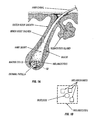
- Figure 1 shows a diagram of a typical hair follicle. As seen, the hair canal is coupled to a sebaceous gland which secretes lipids. It has been found by applicants herein that selective delivery of compositions in general to the hair follicle can be accomplished using liposomal compositions. See, for example, U.S. Patent 5,914,126 , incorporated herein by reference. Thus, in the histocultured sample, treated with collagenase, selective delivery to the hair follicle of nucleic acids intended for hair follilo-specific effects can be accomplished.
- a histocultured sample of the dermis or other tissue of the subject can be used. In this instance, selective delivery is not required.
- Suitable techniques for histoculturing samples generally are well known; those disclosed, for example, in U.S. Patent 5,849,579 , and U.S. Patent 5,726,009 .
- the genes to be inserted inserted can be prided operably linked to their own control sequences or naked DNA may be supplied which will co-opt promoters endogenous to the hair follicle cells.
- the control sequences typically include promoter which may be a constitutive or inducible that are compatible with mammalian cells. Such promoters include, but are not limited to, the CMV promoter, the HSV promoter, the LTR from adenovirus, and the motallothionine promoter.
- Suitable nucleotide open reading frames include those encoding proteins which elicit immune responses, regulate hair growth, modify hair color, or which are hormones or therapeutic compounds.
- the choice of nucleotide sequence will depend on the circumstances and the desired result. Thus, for example, if the end result desired is to supply the recipient with hair having certain characteristics of color and density, nucleotide open reading frames encoding proteins such as tyrosinase which participate in the generation of melanin might be included; also included might be nucleotide sequences encoding proteins that stimulate hair growth.
- the suitable method in this case would include implantation of hair follicles which had been modified according to the method of the invention into the dermis of the recipient.
- an appropriate immunogen such as hepatitis B surface antigen, a viral coat protein, a peptide subunit of bacterial or protozoal surface antigen, or other peptide based immunogen would be encoded by the nucleotide sequence.
- an appropriate immunogen such as hepatitis B surface antigen, a viral coat protein, a peptide subunit of bacterial or protozoal surface antigen, or other peptide based immunogen.
- a histocultured tissue sample generally could be employed.
- the histocultured sample could include, in addition to skin, lymphoid tissue or tumor tissue.
- hormones or therapeutic agents such as FSH, LH, human growth hormone, thyroid stimulating hormone, oxytocin, calcitonin, tissue plasminogen activator, erythopoietin, various cytokines such as the interleukins and the like by providing nucleotide sequences that encode them. Both a local and systemic effect will result. Either implantation of modified hair follicles or histocultured sections in general may be used.
- the nucleotide sequences encoding the desired proteins may be provided as naked DNA; however, it is preferable to provide these nucleotide sequences in the form of constructs which provide control sequences for expression.
- the constructs may further provide the mechanism for transduction of the cells in the hair follicle or tissue sample by infection such as realized with viral vectors or alternative means to transduce the target cells, such as lipofection, use of liposomes, electroporation and the like may also be employed.
- the hair follicles or tissue have been modified to contain the genetic constructs described above, these are then implanted into a suitable recipient.
- Techniques for implantation of hair follicles and implantation of tissue, including tissue containing hair follicles, into recipient subjects are well known in the art.
- the hair follicle or tissue which has been histocultured are provided as intact, organized implants.
- the subjects that are the recipients of the implants are mammalian subjects.
- the recipient be syngeneic with the donor of the hair follicle or cultured tissue, or that the recipient be immunocompromised.
- Implantation of hair follicles in allograft settings in humans is well known.
- the individual's own dermal tissue for example, is the clearly preferred selection for genetic modification prior to reimplantation into the same subject. If, however, for some reason, the dermis of the same individual cannot be employed, the implantation of tissue from another donor would be, as is conventional, accompanied by administration of immunosuppressants.
- nucleic acid constructs which will produce immunogens, hormones or therapeutic compounds.
- the implantation techniques are useful in generating modified subjects such that the effect of the proteins introduced by this gene therapy method can be evaluated.
- the technique produces a transgenic subject which can then be used as an experimental model to evaluate the effects of administering other substances to the model system.
- the tissue modified may be derived from the same or syngeneic subject, or an immunocompromised recipient such as a SCID mouse or nude mouse can be used as a recipient for tissue derived from an arbitrary source.
- other mammals can be immunocompromised by radiation or immunosuppressants as has been described, for example, in horses by Hodgin, E.C., et al., M.J. Vet. Res.
- any mammalian subject is appropriate as a recipient of the transplanted modified organized tissue or hair follicle.
- Subjects can include, in addition to humans, veterinary subjects such as horses, cows, pigs, sheep, dogs and cats, as well as laboratory animals such as rabbits, mice and rats.
- one of the advantages of the present invention is that by using dermal tissue and/or hair follicles as vehicles for delivery of genetic constructs, it is frequently possible to utilize an allograft. This bypasses the complications that might otherwise accompany efforts at immunocompromise.
- the number of hair follicles and GFP-positive hair follicles was determined under bright-field microscopy and fluorescent-field microscopy. The calculations were based on average number of hairs from 5 randomly chosen microscopic fields covering an area of 0.581 mm 2 (1 field of 200x magnification). At least 500 hairs per group were counted to generate the percentage of GFP-positive hair follicles. Hair follicles in which GFP was visualized anywhere in the hair bulb or shaft were scored as GFP positive.
- a Nikon (Tokyo, Japan) fluorescent microscope and a Leica fluorescence stereo microscope model LZ12 (Leica Inc., Deerfield, IL) equipped with a mercury 50W lamp power supply were used. Emitted fluorescence was collected through a long-pass filter GG475 (Chroma Technology, Brattleboro, VT) on a Hamamatsu C5810 3-chip cooled color CCD camera (Hamamatsu Photonics Systems, Bridgewater, NJ).
- Pieces of histocultured skin or skin grafts were incubated in a 2 mg/ml type I collagenase solution in culture medium for 2 hr at 37° C, and rinsed in culture medium in order to release hair follicles.
- pieces of histocultured skin or skin grafts were stored -80° C. Frozen specimens were sectioned on a cryostat (Hacker Instruments, Inc., Fairfield, NJ) and collected onto glass slides (Fisher Scientific, Pittsburgh, PA).
- Mouse ⁇ -actin mRNA was used as the standard.
- mouse ⁇ -actin (514 bp) was amplified by the RT-PCR in extracted RNA from both the GFP-positive and -negative skin.
- the sequence of the GFP upstream primer was 5'-ATG GCT AGC AAA GGA GAA GAA CT-3'.
- the downstream primer was 5'-TCA GTT GTA CAG TTC ATC ACT G-3'.
- the PCR conditions for both GFP and ⁇ -actin were as follows: first denaturation at 97° C for 30 seconds; annealing at 55° C for 30 seconds; and extension at 72° C for 45 seconds; then a final extension at 72° C for 10 minutes.
- mice C57BL/10 and albino mice were used in this study.
- the hair follicles when modified were in anagen phase.
- the hair follicles of six-day-old mice used in the study were naturally in anagen phase.
- Eight-week-old mice used in the study, judged to be in telogen by their pink color, were anesthetized and treated to place the hair follicles in synchronized anagen by depilation with wax in a 3 x 5 cm dorsal area; i.e., the hair follicles in eight-week-old mice were natively in telogen phase, but converted to anagen phase six days after depilation from the dorsal area.
- subcutaneous tissue was removed and cut into pieces of 1 mm x 2 mm.
- the skin pieces were histocultured.
- Some of the histocultured specimens were treated with collagenase by incubating in 2 mg/ml collagenase solution in culture medium (RPMI 1640, 10% FBS) for 1-2 hours at 37°C.
- the histocultures treated with collagenase were then rinsed in PBS.
- mice were sacrificed by cervical dislocation on the 6 th day after depilation.
- the back skin was dissected at the level of the subcuitis.
- Subcutaneous tissue was removed and the skin was rinsed in calcium- and magnesium-free phosphate buffered saline (CMF-PBS, pH 7.4).
- CMF-PBS calcium- and magnesium-free phosphate buffered saline
- the skin samples were cut into small pieces (1 mm ⁇ 1 mm ⁇ 2 cm ⁇ 2 cm).
- a fraction of the specimens were directly used as untreated controls cultured in RPMI 1640 containing 10% fetal bovine serum (FBS).
- the remainder of the specimens were incubated in a 2 mg/ml type I collagenase (Sigma, St. Louis, MO) solution in medium from 45 min to 3 hr 45 min at 37° C and rinsed in CMF-PBS.
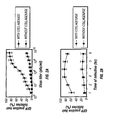
- the number of GFP-positive hair follicles increased with the time of collagenase treatment of skin histocultures for up to 1 hr 30 min, after which the number decreased with time.
- GFP was visualized in hair matrix cells of histocultured skin on day-1 after adenoviral-GFP treatment.
- hair follicles were isolated from histocultured skin to determine the location of GFP fluorescence.
- GFP was extensively visualized in the majority of the cells in the hair bulbs and dermal papillae.
- GFP was visualized in hair shafts of histocultured skin. See Figure 3A .
- GFP-positive and negative hair shafts and partially GFP-positive hair shafts were clearly distinguished by the specific GFP fluorescence, on day-3 after ex-vivo adenoviral-GFP gene treatment, GFP fluorescence was visualized in 79% of the hair follicles in collagenase-treated histocultured skin. In contrast, only 12% of hair follicles had GFP fluorescence in the untreated histocultured skin. See Figure 3A . High GFP fluorescence was maintained in hair follicles for at least 35 days in histoculture.
- RT-PCR analysis was used to detect GFP-specific mRNA in the adenoviral-GFP gene transduced histocultured skin at day-3, -6, -9, -12, -15, and -17.
- the RT-PCR products demonstrated that the GFP cDNA was specifically amplified from the total RNA at the above time points.
- Electrophoretic analysis demonstrated that amplified products from the adenoviral-GFP-transduced histocultured skin had the predicted size of 720 bp.
- RT-PCR with total RNA extracted from uninfected histocultured skin did not amplify this sequence.
- histocultured skin was grafted to nude mice or C57BL/10 mice after viral GFP transduction. Histocultured specimens were grafted within 24 hrs of harvest. Grafting surgery was performed in a laminar-flow hood using steirle procedures. Mice were anesthetized with Ketamine. 1 ⁇ 1 cm pieces of skin were grafted to a bed of similar size that was prepared by removing recipient mouse skin down to the fascia. Skin grafts were fixed in place with 6-0 nonabsorbable monofilament sutures.
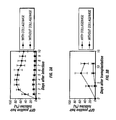
- GFP fluorescence of hair follicles was visualized in the collagenase-treated histocultured skin after grafting than in untreated skin.
- GFP was visualized in 75% of hair follicles in the area of maximum fluorescence in the skin graft.
- the percentage of hair follicles with GFP fluorescence in collagenase-treated skin was 5.7 times greater than in hair follicles of untreated skin. See Figure 3B .
- GFP was visualized for similar time periods at similar efficiencies in GFP-adenoviral treated skin grafted to immune-competent C57BL10 mice as described above for skin grafted to immuno-deficient nude mice.
- RT-PCR was performed at day-6, -8, and -10 on GFP-transduced grafted skin.
- GFP-specific mRNA was amplified at each point as well.
- Oligomers for PCR amplification were designed according to the sequence of S. antibioticus tyrosinase gene and ORF-438 cDNA. Bernan, V., et al., Gene, (1985) 37:101-110 .
- the ORF-438 and tyrosinase-gene TGA termination codons were altered to TAA.
- the Kozak consensus sequence, GCCGCCACC was added upstream, immediately preceding the ATG initiator codon in each case to facilitate translation efficiency.
- the sequence of the ORF-438 upstream primer, which included the Kozak consensus sequence was 5'-CGGAATTCGCCGCCACCATGCCGGAACTCACCCGTC-3'.
- the downstream primer sequence was 5'-GGCTGATCATTAGTTGGAGGGGAAGGGGAGGAGC-3'.
- the sequence of the tyrosinase upstream primer, which includes the Kozak consensus sequence was 5'-CTCGAGGCCGCCGCCATGACCGTCCGCAAGAACCA-3'.
- the downstream primer sequence was 5'-GGATCCTTAGACGTCGAAGGTGTAGTGC-3'.
- the PCR reaction conditions for both ORF-438 and tyrosinase were as follows: first denaturation at 97 °C for 10 min.; then 10 cycles of denaturation at 97°C for 30 s; annealing at 66°C for 30 s; and extension at 72 °C for 45 s; then a final extension at 72°C for 10 min.
- PCR oligomers were designed according to the sequence of the internal ribosome entry site (IRES) contained in the retroviral vector pLISN, obtained from Clonetech (Palo Alto, CA).
- the sequence of the upstream primer was 5'-GGCTGATCATTCGCCCCTCTCCCTCCCC-3'.
- the downstream primer sequence was 5'-AGCGGCCATTATCATCGTGTTTTTCAAAGG-3'.
- the IRES gene was amplified by PCR from pLXIN as the template.
- the PCR reaction conditions were as follows: first denaturation at 96°C for 10 min; then 30 cycles of denaturation at 94 °C for 30 s; annealing at 50°C for 30 s; and extension at 72 °C for 45 s; then a final extension at 72 °C for 10 min.
- Retroviral vector pLXSN (Clonetech, Palo Alto, CA) is a murine leukemia virus-based vector containing two promoters: the 5'-long terminal repeat (5'-LTR) to control the inserted genes and the SV40 promoter to control neomycin phosphotransferase (neoR).
- the 800-bp tyrosinase PCR product was digested by XhoI and inserted into the HapI/XhoI cloning site of pLXSN to obtain pLtyrSN.
- ORF-438 and IRES PCR products were ligated at the Bcl I site and then inserted into the EcoRI/XhoI cloning site of pLtyrSN to obtain pL mel SN.
- Both the ORF-438 and tyrosinase genes are driven by the Moloney murine leukemia virus 5'-LTR in pL mel SN.
- the bicistronic sequence containing the ORF-438, IRES and tyrosinase genes under control of the 5'-LTR promoter is present in the vector.
- pL mel SN was transfected into the PT67 packaging cell line using lipoTAXI (Clonetech, Palo Alto, CA; Stratagene, San Diego, CA).
- the transfected PT67 cell line was selected in DMEM medium containing 0.4 mg/ml G418 (Gibco BRL).
- the G418-resistant cells were cloned and expanded. After two weeks of selective culturing with G418, positive transfected cells, PT67- mel , were obtained.
- RT-PCR analysis was used to detect their mRNA in the transfected packaging cells.
- the RT-PCR products demonstrated that the tyrosinase and ORF-438 genes from S. antibioticus were specifically amplified products from the total RNA of pL mel SN-transduced PT7-cells.
- mouse ⁇ -actin from both PT67- mel and PT67 cells was amplified by the RT-PCR.
- Electrophoretic analysis demonstrated that the amplified products from PT67 -mel cells had the predicted sizes of 800 bp and 438 bp for tyrosinase and ORF-438, respectively.
- the RT-PCR reaction with total RNA from uninfected PT67 cells did not amplify these fragments.
- the transfected packaging cells were screened for the expression of active tyrosinase protein by measuring tyrosinase activity in the lysates of clones of G418-resistant packaging cells. Tyrosinase activity was assessed by the method described by Nakajima et al. Pigment Cell Res (1998) 11:12-17 .
- the pL mel SN-infected PT67 packaging cells were plated at a density of 2,000 cells/well in 96 well plates. After 24 hours of culture, the packaging cells were washed with PBS and lysed with 1% Triton-100 (45 ⁇ l/well). After mixing the lysates by shaking, 5 ⁇ l of 10 mM L-DOPA were added to each well. Following incubation of the culture at 37 °C for 30 min., the absorbance was spectrophotometrically measured at 490 nm.
- the DOPA-oxidase reaction was also used to detect melanin production in intact transfected PT67 cells.
- the cells were incubated with 1 mg/ml of DOPA and 2 mg/ml of tyrosine in PBS (pH 7.4) for 12 hr at 37 °C as previously described. See Kugelman, T. et al. J. Invest Dermatol (1961) 37:66-73 .
- FIG. 3 shows PT67 clones 1-4 gentrate more melanin than control PT67.
- the tyrosinase-positive cells were identified by production of brown-colored melanin granules observed with brightfield microscopy. The brown pigment granules were observed only in pL mel SN-transfected cells.
- mice C57BL/6J-Tyrosinase (c-2J), 8 week old, were purchased from the Jackson Laboratory.
- the growth phase of the hair cycle (anagen) was induced in the back skin, which had all follicles in the resting phase of the hair cycle (telogen).
- telogen follicles in the resting phase of the hair cycle
- a warm wax/rosin mixture was applied and then peeled off the skin, depilating all telogen hair shafts and thereby inducing the follicles to enter anagen. See Schilli J Invest Dermatol (1998) 111:598-604 .
- mice On day-6 post-depilation, when all hair follicles were in anagen, back skins of the mice were collected after sacrifice. Small pieces of the mouse skin (2 x 5 x 2 mm) were cut with a scissors, and washed three times in HBSS. The harvested skin was incubated at 37 °C in MEM with antibiotics (100 ⁇ g gentamycin per ml, 10 ⁇ g ciprofroxacin per ml, 2.5 ⁇ g amphotericin-B per ml, 100 IU-100 ⁇ g penicillin-streptomycin per ml) for 30 min. (Sigma).
- antibiotics 100 ⁇ g gentamycin per ml, 10 ⁇ g ciprofroxacin per ml, 2.5 ⁇ g amphotericin-B per ml, 100 IU-100 ⁇ g penicillin-streptomycin per ml
- the skins were washed three times with HBSS medium to remove residual antibiotics and put into collagen-containing gels for histoculture in Eagle's minimum essential medium (MEM) supplemented with 10% fetal bovine serum and gentamycin. Cultures were maintained at 37 °C in a gassed incubator with 5% CO 2 .
- MEM Eagle's minimum essential medium
- Example 7 The histocultured albino-mouse skin of Example 7 was co-cultured with PT67- mel cells as follows:
- a time-course experiment was then carried out to determine if longer incubation times of the co-cultures of the albino skin and PT67- mel increased the efficiency of tyrosinase infection.
- the efficiency of infection of the histocultured skin was significantly increased with time of co-culture. After 12 hours co-culture, 7% (2 of 30 pieces) of skin produced melanin, and 15% of hair follicles (6 of 40) produced melanin. After 24 hours co-culture, 25% of skin pieces (5 of 20) produced melanin, as did 35% (28 of 80) of hair follicles. After 72 hours co-culture, 60% of skin pieces (12 of 20) produced melanin as did 53% (42 of 80) of hair follicles.
Landscapes
- Health & Medical Sciences (AREA)
- Life Sciences & Earth Sciences (AREA)
- Chemical & Material Sciences (AREA)
- Organic Chemistry (AREA)
- Engineering & Computer Science (AREA)
- General Health & Medical Sciences (AREA)
- Bioinformatics & Cheminformatics (AREA)
- Medicinal Chemistry (AREA)
- Veterinary Medicine (AREA)
- Chemical Kinetics & Catalysis (AREA)
- Pharmacology & Pharmacy (AREA)
- General Chemical & Material Sciences (AREA)
- Animal Behavior & Ethology (AREA)
- Public Health (AREA)
- Nuclear Medicine, Radiotherapy & Molecular Imaging (AREA)
- Genetics & Genomics (AREA)
- Biomedical Technology (AREA)
- Zoology (AREA)
- Wood Science & Technology (AREA)
- Biotechnology (AREA)
- Biochemistry (AREA)
- General Engineering & Computer Science (AREA)
- Diabetes (AREA)
- Molecular Biology (AREA)
- Microbiology (AREA)
- Endocrinology (AREA)
- Communicable Diseases (AREA)
- Gastroenterology & Hepatology (AREA)
- Immunology (AREA)
- Biophysics (AREA)
- Dermatology (AREA)
- Oncology (AREA)
- Virology (AREA)
- Proteomics, Peptides & Aminoacids (AREA)
- Cell Biology (AREA)
- Hematology (AREA)
- Tropical Medicine & Parasitology (AREA)
- Physics & Mathematics (AREA)
- Plant Pathology (AREA)
- Medicines Containing Material From Animals Or Micro-Organisms (AREA)
Applications Claiming Priority (3)
| Application Number | Priority Date | Filing Date | Title |
|---|---|---|---|
| US17016699P | 1999-12-10 | 1999-12-10 | |
| US170166P | 1999-12-10 | ||
| PCT/US2000/033645 WO2001042449A2 (en) | 1999-12-10 | 2000-12-11 | Methods for introducing genes into mammalian subjects |
Publications (2)
| Publication Number | Publication Date |
|---|---|
| EP1237582A2 EP1237582A2 (en) | 2002-09-11 |
| EP1237582B1 true EP1237582B1 (en) | 2011-09-14 |
Family
ID=22618826
Family Applications (1)
| Application Number | Title | Priority Date | Filing Date |
|---|---|---|---|
| EP00984241A Expired - Lifetime EP1237582B1 (en) | 1999-12-10 | 2000-12-11 | Methods for introducing genes into mammalian subjects |
Country Status (8)
| Country | Link |
|---|---|
| US (1) | US7067496B2 (enExample) |
| EP (1) | EP1237582B1 (enExample) |
| JP (2) | JP2004500809A (enExample) |
| KR (1) | KR100809312B1 (enExample) |
| AT (1) | ATE524198T1 (enExample) |
| AU (1) | AU784884B2 (enExample) |
| CA (1) | CA2383001A1 (enExample) |
| WO (1) | WO2001042449A2 (enExample) |
Families Citing this family (15)
| Publication number | Priority date | Publication date | Assignee | Title |
|---|---|---|---|---|
| US20030152909A1 (en) * | 1994-11-16 | 2003-08-14 | Mitrani Eduardo N. | In vitro micro-organs, and uses related thereto |
| US7687057B2 (en) | 1998-01-09 | 2010-03-30 | Yissum Research Development Company Of The Hebrew University Of Jerusalem | In vitro micro-organs, and uses related thereto |
| US20060127366A1 (en) * | 1999-06-25 | 2006-06-15 | Mitrani Eduardo N | Method and device for inducing biological processes by micro-organs |
| US8501396B2 (en) | 2001-11-05 | 2013-08-06 | Medgenics Medical Israel Ltd. | Dermal micro-organs, methods and apparatuses for producing and using the same |
| US7468242B2 (en) | 2001-11-05 | 2008-12-23 | Medgenics, Inc. | Dermal micro organs, methods and apparatuses for producing and using the same |
| US8088568B2 (en) | 2001-11-05 | 2012-01-03 | Medgentics, Inc. | Dermal micro-organs, methods and apparatuses for producing and using the same |
| WO2004078916A2 (en) * | 2003-03-03 | 2004-09-16 | Yissum Research Development Company Of The Hebrew University Of Jerusalem | In vitro micro-organs, and uses related thereto |
| EP2377404A1 (en) | 2003-05-01 | 2011-10-19 | Medgenics, Inc. | A dermal micro-organ which is an explant of living tissue |
| KR101024904B1 (ko) * | 2003-08-14 | 2011-03-31 | 엘지전자 주식회사 | 기록매체, 기록방법, 기록장치 및 기록재생시스템 |
| US20050244967A1 (en) * | 2004-05-03 | 2005-11-03 | Pearlman Andrew L | Closed automated system for tissue based therapy |
| US9127084B2 (en) | 2006-09-14 | 2015-09-08 | Medgenics Medical Israel Ltd. | Long lasting drug formulations |
| KR101470472B1 (ko) | 2006-09-14 | 2014-12-09 | 메드제닉스 메디칼 이스라엘 리미티드 | 장기 지속형 약물 제형 |
| US8454948B2 (en) | 2006-09-14 | 2013-06-04 | Medgenics Medical Israel Ltd. | Long lasting drug formulations |
| US8871194B2 (en) | 2008-01-24 | 2014-10-28 | Kao Corporation | Method for transforming a hair follicle |
| US20100179492A1 (en) * | 2009-01-14 | 2010-07-15 | Aderans Research Institute, Inc., | Methods for increasing trichogenicity of dermal cells |
Family Cites Families (12)
| Publication number | Priority date | Publication date | Assignee | Title |
|---|---|---|---|---|
| US5266480A (en) | 1986-04-18 | 1993-11-30 | Advanced Tissue Sciences, Inc. | Three-dimensional skin culture system |
| US5641508A (en) * | 1994-01-13 | 1997-06-24 | Anticancer, Inc. | Method for delivering melanin to hair follicles |
| WO1994022468A1 (en) * | 1993-04-02 | 1994-10-13 | Anticancer, Inc. | Method for delivering beneficial compositions to hair follicles |
| ES2152753B1 (es) | 1993-03-29 | 2001-09-01 | Ct Investig Energeticas Ciemat | Animales transgenicos para la determinacion de agentes que estimulan o reprimen la hiperproliferacion epidermica y el crecimiento del pelo |
| US5643890A (en) | 1995-01-31 | 1997-07-01 | The Board Of Regents Of The University Of Nebraska | Synthetic oligonucleotides which mimic telomeric sequences for use in treatment of cancer and other diseases |
| EP1323824A3 (en) | 1995-02-14 | 2004-01-21 | Human Genome Sciences, Inc. | Use of human keratinocyte growth factor-2 for the preparation of pharmaceutical compositions |
| IT1277025B1 (it) | 1995-12-04 | 1997-11-04 | Cooperativa Centro Ricerche Po | Classe di oligonucleotidi fosfodiesterici ad attivita' citotossica composizioni farmaceutiche che li contengono e loro uso |
| US5672508A (en) * | 1996-01-23 | 1997-09-30 | Mitotix, Inc. | Inhibitors of cell-cycle progression, and uses related thereto |
| CA2271783C (en) | 1996-11-20 | 2013-04-16 | Yale University | Survivin, a protein that inhibits cellular apoptosis, and its modulation |
| WO1998046208A1 (en) * | 1997-04-17 | 1998-10-22 | The Regents Of The University Of Michigan | Hair follicle dna delivery system |
| DE19740092A1 (de) * | 1997-09-12 | 1999-03-18 | Ulrich Dr Med Hengge | Liposomen und Verfahren zur Transfektion von Zellen |
| US6171821B1 (en) * | 1998-07-24 | 2001-01-09 | Apoptogen, Inc. | XIAP IRES and uses thereof |
-
2000
- 2000-12-11 AT AT00984241T patent/ATE524198T1/de not_active IP Right Cessation
- 2000-12-11 WO PCT/US2000/033645 patent/WO2001042449A2/en not_active Ceased
- 2000-12-11 KR KR1020027007394A patent/KR100809312B1/ko not_active Expired - Lifetime
- 2000-12-11 CA CA002383001A patent/CA2383001A1/en not_active Abandoned
- 2000-12-11 AU AU20895/01A patent/AU784884B2/en not_active Ceased
- 2000-12-11 US US09/734,786 patent/US7067496B2/en not_active Expired - Fee Related
- 2000-12-11 EP EP00984241A patent/EP1237582B1/en not_active Expired - Lifetime
- 2000-12-11 JP JP2001544325A patent/JP2004500809A/ja active Pending
-
2012
- 2012-05-10 JP JP2012108670A patent/JP5717689B2/ja not_active Expired - Fee Related
Also Published As
| Publication number | Publication date |
|---|---|
| WO2001042449A3 (en) | 2002-02-07 |
| KR20020063588A (ko) | 2002-08-03 |
| KR100809312B1 (ko) | 2008-03-04 |
| WO2001042449A2 (en) | 2001-06-14 |
| EP1237582A2 (en) | 2002-09-11 |
| ATE524198T1 (de) | 2011-09-15 |
| US20020012661A1 (en) | 2002-01-31 |
| JP2004500809A (ja) | 2004-01-15 |
| JP5717689B2 (ja) | 2015-05-13 |
| JP2012157365A (ja) | 2012-08-23 |
| US7067496B2 (en) | 2006-06-27 |
| AU784884B2 (en) | 2006-07-20 |
| CA2383001A1 (en) | 2001-06-14 |
| AU2089501A (en) | 2001-06-18 |
Similar Documents
| Publication | Publication Date | Title |
|---|---|---|
| JP5717689B2 (ja) | 移植用皮膚組織材料 | |
| JP2703893B2 (ja) | 外来遺伝子物質を発現する上皮細胞 | |
| US4980286A (en) | In vivo introduction and expression of foreign genetic material in epithelial cells | |
| JP2018075016A (ja) | 多能性成体幹細胞およびそれを単離する方法 | |
| US5032407A (en) | Gene transfer using transformed, neodetermined, embryonic cells | |
| Khavari | Therapeutic gene delivery to the skin | |
| TW202219271A (zh) | 產生誘導型多能幹細胞之方法、誘導型多能幹細胞以及使用誘導型多能幹細胞之方法 | |
| US20030198646A1 (en) | Compositions and methods for inducing new hair follicle formation and hair growth in a desired orientation | |
| Hoffman | Gene and stem cell therapy of the hair follicle | |
| Christensen et al. | Cutaneous gene therapy–an update | |
| AU2006227752B2 (en) | Skin substitutes with improved purity | |
| Wissel et al. | Fibroblast-mediated delivery of GDNF induces neuronal-like outgrowth in PC12 cells | |
| US20020006660A1 (en) | Genetically-modified neural progenitors and uses thereof | |
| Somani et al. | Gene therapy and dermatology: more than just skin deep | |
| Andree et al. | Transfection of human keratinocytes in vitro with the particle mediated gene transfer and the liposome-mediated gene transfer method | |
| O'Malley Jr et al. | DNA‐and viral‐mediated gene transfer in follicular cells: Progress toward gene therapy of the thyroid | |
| Cooley | Cell-Based TreaTmenTs: Tissue engineering N | |
| Koya et al. | 61. Higher In Vivo Maintenance, Biodistribution and Immunopotency of Dendritic Cell Vaccines Self-Differentiated through Lentiviral Vector Programming | |
| Supp et al. | Cutaneous gene therapy with cultured skin substitutes | |
| Buckle | Stem cells down to a T: Generation of human T lymphocytes from bone marrow CD34+ cells in vitro Freedman, AR et al.(1996) Nat. Med. 2, 46–51 | |
| Supp et al. | Shriners Hospital for Children, Cincinnati Burns Hospital, and The University of Cincinnati College of Medicine Cincinnati, Ohio, USA | |
| Martin | Tissue regeneration enhanced by PDGF-A: Genetically modified human epidermis overexpressing PDGF-A directs the development of a cellular and vascular connective tissue stroma when transplanted to athymic mice—implications for the use of genetically modified keratinocytes to modulate dermal regeneration Eming, SA et al.(1995) J. Invest. Dermatol. 105, 7562-763 |
Legal Events
| Date | Code | Title | Description |
|---|---|---|---|
| PUAI | Public reference made under article 153(3) epc to a published international application that has entered the european phase |
Free format text: ORIGINAL CODE: 0009012 |
|
| 17P | Request for examination filed |
Effective date: 20020705 |
|
| AK | Designated contracting states |
Kind code of ref document: A2 Designated state(s): AT BE CH CY DE DK ES FI FR GB GR IE IT LI LU MC NL PT SE TR |
|
| RIN1 | Information on inventor provided before grant (corrected) |
Inventor name: ZHAO, MING Inventor name: SAITO, NORIMITSU |
|
| 17Q | First examination report despatched |
Effective date: 20030701 |
|
| 17Q | First examination report despatched |
Effective date: 20030701 |
|
| GRAP | Despatch of communication of intention to grant a patent |
Free format text: ORIGINAL CODE: EPIDOSNIGR1 |
|
| GRAS | Grant fee paid |
Free format text: ORIGINAL CODE: EPIDOSNIGR3 |
|
| GRAA | (expected) grant |
Free format text: ORIGINAL CODE: 0009210 |
|
| AK | Designated contracting states |
Kind code of ref document: B1 Designated state(s): AT BE CH CY DE DK ES FI FR GB GR IE IT LI LU MC NL PT SE TR |
|
| REG | Reference to a national code |
Ref country code: GB Ref legal event code: FG4D |
|
| REG | Reference to a national code |
Ref country code: CH Ref legal event code: EP |
|
| REG | Reference to a national code |
Ref country code: CH Ref legal event code: NV Representative=s name: E. BLUM & CO. AG PATENT- UND MARKENANWAELTE VSP |
|
| REG | Reference to a national code |
Ref country code: IE Ref legal event code: FG4D |
|
| REG | Reference to a national code |
Ref country code: DE Ref legal event code: R096 Ref document number: 60046437 Country of ref document: DE Effective date: 20111103 |
|
| REG | Reference to a national code |
Ref country code: NL Ref legal event code: VDEP Effective date: 20110914 |
|
| PG25 | Lapsed in a contracting state [announced via postgrant information from national office to epo] |
Ref country code: SE Free format text: LAPSE BECAUSE OF FAILURE TO SUBMIT A TRANSLATION OF THE DESCRIPTION OR TO PAY THE FEE WITHIN THE PRESCRIBED TIME-LIMIT Effective date: 20110914 Ref country code: FI Free format text: LAPSE BECAUSE OF FAILURE TO SUBMIT A TRANSLATION OF THE DESCRIPTION OR TO PAY THE FEE WITHIN THE PRESCRIBED TIME-LIMIT Effective date: 20110914 |
|
| PG25 | Lapsed in a contracting state [announced via postgrant information from national office to epo] |
Ref country code: CY Free format text: LAPSE BECAUSE OF FAILURE TO SUBMIT A TRANSLATION OF THE DESCRIPTION OR TO PAY THE FEE WITHIN THE PRESCRIBED TIME-LIMIT Effective date: 20110914 Ref country code: AT Free format text: LAPSE BECAUSE OF FAILURE TO SUBMIT A TRANSLATION OF THE DESCRIPTION OR TO PAY THE FEE WITHIN THE PRESCRIBED TIME-LIMIT Effective date: 20110914 Ref country code: GR Free format text: LAPSE BECAUSE OF FAILURE TO SUBMIT A TRANSLATION OF THE DESCRIPTION OR TO PAY THE FEE WITHIN THE PRESCRIBED TIME-LIMIT Effective date: 20111215 |
|
| REG | Reference to a national code |
Ref country code: AT Ref legal event code: MK05 Ref document number: 524198 Country of ref document: AT Kind code of ref document: T Effective date: 20110914 |
|
| PGFP | Annual fee paid to national office [announced via postgrant information from national office to epo] |
Ref country code: BE Payment date: 20111229 Year of fee payment: 12 |
|
| PG25 | Lapsed in a contracting state [announced via postgrant information from national office to epo] |
Ref country code: IT Free format text: LAPSE BECAUSE OF FAILURE TO SUBMIT A TRANSLATION OF THE DESCRIPTION OR TO PAY THE FEE WITHIN THE PRESCRIBED TIME-LIMIT Effective date: 20110914 Ref country code: NL Free format text: LAPSE BECAUSE OF FAILURE TO SUBMIT A TRANSLATION OF THE DESCRIPTION OR TO PAY THE FEE WITHIN THE PRESCRIBED TIME-LIMIT Effective date: 20110914 Ref country code: PT Free format text: LAPSE BECAUSE OF FAILURE TO SUBMIT A TRANSLATION OF THE DESCRIPTION OR TO PAY THE FEE WITHIN THE PRESCRIBED TIME-LIMIT Effective date: 20120116 |
|
| PLBE | No opposition filed within time limit |
Free format text: ORIGINAL CODE: 0009261 |
|
| STAA | Information on the status of an ep patent application or granted ep patent |
Free format text: STATUS: NO OPPOSITION FILED WITHIN TIME LIMIT |
|
| PG25 | Lapsed in a contracting state [announced via postgrant information from national office to epo] |
Ref country code: DK Free format text: LAPSE BECAUSE OF FAILURE TO SUBMIT A TRANSLATION OF THE DESCRIPTION OR TO PAY THE FEE WITHIN THE PRESCRIBED TIME-LIMIT Effective date: 20110914 Ref country code: MC Free format text: LAPSE BECAUSE OF NON-PAYMENT OF DUE FEES Effective date: 20111231 |
|
| 26N | No opposition filed |
Effective date: 20120615 |
|
| REG | Reference to a national code |
Ref country code: IE Ref legal event code: MM4A |
|
| REG | Reference to a national code |
Ref country code: DE Ref legal event code: R097 Ref document number: 60046437 Country of ref document: DE Effective date: 20120615 |
|
| PG25 | Lapsed in a contracting state [announced via postgrant information from national office to epo] |
Ref country code: IE Free format text: LAPSE BECAUSE OF NON-PAYMENT OF DUE FEES Effective date: 20111211 |
|
| PG25 | Lapsed in a contracting state [announced via postgrant information from national office to epo] |
Ref country code: ES Free format text: LAPSE BECAUSE OF FAILURE TO SUBMIT A TRANSLATION OF THE DESCRIPTION OR TO PAY THE FEE WITHIN THE PRESCRIBED TIME-LIMIT Effective date: 20111225 |
|
| PG25 | Lapsed in a contracting state [announced via postgrant information from national office to epo] |
Ref country code: LU Free format text: LAPSE BECAUSE OF NON-PAYMENT OF DUE FEES Effective date: 20111211 |
|
| BERE | Be: lapsed |
Owner name: ANTICANCER, INC. Effective date: 20121231 |
|
| PGFP | Annual fee paid to national office [announced via postgrant information from national office to epo] |
Ref country code: CH Payment date: 20130612 Year of fee payment: 13 Ref country code: DE Payment date: 20130530 Year of fee payment: 13 Ref country code: GB Payment date: 20130628 Year of fee payment: 13 |
|
| PG25 | Lapsed in a contracting state [announced via postgrant information from national office to epo] |
Ref country code: BE Free format text: LAPSE BECAUSE OF NON-PAYMENT OF DUE FEES Effective date: 20121231 Ref country code: TR Free format text: LAPSE BECAUSE OF FAILURE TO SUBMIT A TRANSLATION OF THE DESCRIPTION OR TO PAY THE FEE WITHIN THE PRESCRIBED TIME-LIMIT Effective date: 20110914 |
|
| PGFP | Annual fee paid to national office [announced via postgrant information from national office to epo] |
Ref country code: FR Payment date: 20130724 Year of fee payment: 13 |
|
| REG | Reference to a national code |
Ref country code: DE Ref legal event code: R119 Ref document number: 60046437 Country of ref document: DE |
|
| REG | Reference to a national code |
Ref country code: CH Ref legal event code: PL |
|
| GBPC | Gb: european patent ceased through non-payment of renewal fee |
Effective date: 20131211 |
|
| REG | Reference to a national code |
Ref country code: FR Ref legal event code: ST Effective date: 20140829 |
|
| REG | Reference to a national code |
Ref country code: DE Ref legal event code: R119 Ref document number: 60046437 Country of ref document: DE Effective date: 20140701 |
|
| PG25 | Lapsed in a contracting state [announced via postgrant information from national office to epo] |
Ref country code: DE Free format text: LAPSE BECAUSE OF NON-PAYMENT OF DUE FEES Effective date: 20140701 Ref country code: LI Free format text: LAPSE BECAUSE OF NON-PAYMENT OF DUE FEES Effective date: 20131231 Ref country code: CH Free format text: LAPSE BECAUSE OF NON-PAYMENT OF DUE FEES Effective date: 20131231 |
|
| PG25 | Lapsed in a contracting state [announced via postgrant information from national office to epo] |
Ref country code: FR Free format text: LAPSE BECAUSE OF NON-PAYMENT OF DUE FEES Effective date: 20131231 Ref country code: GB Free format text: LAPSE BECAUSE OF NON-PAYMENT OF DUE FEES Effective date: 20131211 |