EP1237389A2 - Method and system for avoiding location update by mobile terminals being in a train and corresponding location information providing system - Google Patents
Method and system for avoiding location update by mobile terminals being in a train and corresponding location information providing system Download PDFInfo
- Publication number
- EP1237389A2 EP1237389A2 EP02004308A EP02004308A EP1237389A2 EP 1237389 A2 EP1237389 A2 EP 1237389A2 EP 02004308 A EP02004308 A EP 02004308A EP 02004308 A EP02004308 A EP 02004308A EP 1237389 A2 EP1237389 A2 EP 1237389A2
- Authority
- EP
- European Patent Office
- Prior art keywords
- information
- location
- server
- mobile
- identifying information
- Prior art date
- Legal status (The legal status is an assumption and is not a legal conclusion. Google has not performed a legal analysis and makes no representation as to the accuracy of the status listed.)
- Granted
Links
Images




Classifications
-
- H—ELECTRICITY
- H04—ELECTRIC COMMUNICATION TECHNIQUE
- H04W—WIRELESS COMMUNICATION NETWORKS
- H04W60/00—Affiliation to network, e.g. registration; Terminating affiliation with the network, e.g. de-registration
-
- G—PHYSICS
- G06—COMPUTING OR CALCULATING; COUNTING
- G06Q—INFORMATION AND COMMUNICATION TECHNOLOGY [ICT] SPECIALLY ADAPTED FOR ADMINISTRATIVE, COMMERCIAL, FINANCIAL, MANAGERIAL OR SUPERVISORY PURPOSES; SYSTEMS OR METHODS SPECIALLY ADAPTED FOR ADMINISTRATIVE, COMMERCIAL, FINANCIAL, MANAGERIAL OR SUPERVISORY PURPOSES, NOT OTHERWISE PROVIDED FOR
- G06Q30/00—Commerce
- G06Q30/02—Marketing; Price estimation or determination; Fundraising
- G06Q30/0241—Advertisements
- G06Q30/0251—Targeted advertisements
- G06Q30/0257—User requested
-
- H—ELECTRICITY
- H04—ELECTRIC COMMUNICATION TECHNIQUE
- H04W—WIRELESS COMMUNICATION NETWORKS
- H04W8/00—Network data management
- H04W8/02—Processing of mobility data, e.g. registration information at HLR [Home Location Register] or VLR [Visitor Location Register]; Transfer of mobility data, e.g. between HLR, VLR or external networks
- H04W8/08—Mobility data transfer
- H04W8/14—Mobility data transfer between corresponding nodes
-
- H—ELECTRICITY
- H04—ELECTRIC COMMUNICATION TECHNIQUE
- H04W—WIRELESS COMMUNICATION NETWORKS
- H04W64/00—Locating users or terminals or network equipment for network management purposes, e.g. mobility management
- H04W64/006—Locating users or terminals or network equipment for network management purposes, e.g. mobility management with additional information processing, e.g. for direction or speed determination
-
- H—ELECTRICITY
- H04—ELECTRIC COMMUNICATION TECHNIQUE
- H04W—WIRELESS COMMUNICATION NETWORKS
- H04W68/00—User notification, e.g. alerting and paging, for incoming communication, change of service or the like
- H04W68/04—User notification, e.g. alerting and paging, for incoming communication, change of service or the like multi-step notification using statistical or historical mobility data
-
- H—ELECTRICITY
- H04—ELECTRIC COMMUNICATION TECHNIQUE
- H04W—WIRELESS COMMUNICATION NETWORKS
- H04W8/00—Network data management
- H04W8/02—Processing of mobility data, e.g. registration information at HLR [Home Location Register] or VLR [Visitor Location Register]; Transfer of mobility data, e.g. between HLR, VLR or external networks
- H04W8/08—Mobility data transfer
-
- H—ELECTRICITY
- H04—ELECTRIC COMMUNICATION TECHNIQUE
- H04W—WIRELESS COMMUNICATION NETWORKS
- H04W84/00—Network topologies
- H04W84/005—Moving wireless networks
Definitions
- the present invention relates to a method and a wireless communication system for managing information on locations of mobile stations and a location information providing system.
- a device for managing location of a plurality of mobile stations to store information about which area (called “location area” ) each of mobile stations is located.
- location area information about which area (called "location area” ) each of mobile stations is located.
- the device identifies the location area.
- the device generates paging signal to transmit to the mobile station via a switch covering the location area and one of the base stations belonging to the switch.
- a mobile station receives information on location area. Secondly, the mobile station transmits a number to identify the mobile station and the location area information, via the base station and the switch.
- a location management system of a mobile station in a train In such a system, a communication device is provided in a train, to collectively manage location registration of all mobile stations in the train (reference will be made to Japanese Patent Application No. H11-355835).
- a location of a mobile station can be tracked in real-time.
- such information on future location cannot be provided.
- the present invention as its object, provides a wireless communication system at a low cost, in which locations of mobile stations moving together with an object such as trains and buses are tracked accurately and efficiently.
- the present invention provides a communication system for providing a future location of a mobile station to a third party.
- a method of the present invention for managing location information on a mobile station in an object by a server on a mobile network comprising the steps of:
- a method for communication in a communication system of the present invention having a server on a mobile network for communication with a mobile station and a traffic control device for controlling an object comprises the steps of:
- the traffic control device upon detecting a movement change of the object, the traffic control device generates movement information, transmits to the server the object identifying information and generated movement information. And the server receives the movement information, converts received movement information into location area information about an area within which the mobile station is located and stores the object identifying information and the location area information correspondingly.
- the server retrieves the location area information corresponding to the mobile identifying information and pages the mobile station on the basis of the location area information.
- the location server keeps the latest location area information on a mobile station. Therefore, the location server does not necessarily request movement information to the traffic control device, when a call for a mobile station is issued. Thus, identifying the mobile station to transmit a paging signal can be done quickly.
- a communication system of the present invention has a traffic control device for controlling movement of an object and a mobile network.
- the mobile network comprises a mobile station, a base station for communicating with the mobile station, a switch for communicating with the base station, a location server for communicating with the switch, and an object information server for communicating with the location server and the traffic control device.
- the mobile station comprises means for receiving object identifying information for identifying the object and transmitting to the base station received object identifying information and mobile identifying information for identifying the mobile station.
- the location server comprises means for storing the object identifying information and the mobile identifying information correspondingly, both of which sent from the mobile station, means for retrieving and transmitting to the location server the object identifying information corresponding to the mobile identifying information, when receiving from the switch an inquiry of location area information on the mobile station including the mobile identifying information and means for receiving from the object information server and transmitting to the switch the location area information on the object identified by the object identifying information.
- the object information server comprises means for receiving from the location server and transmitting to the traffic control device the object identifying information, means for receiving from the traffic control device movement information on the object identified by the object identifying information, means for converting received movement information into the location area information and means for transmitting converted location area information to the location server.
- the traffic control device comprises means for receiving from the object information server the object identifying information and generating the movement information on the basis of received object identifying information and means for transmitting generated movement information to the object information sever.
- the traffic control device comprises means for detecting movement change of the object and generating movement information representing movement of the object and means for transmitting to the object information server the object identifying information and the movement information.
- the object information server comprises means for receiving from the traffic control device the object identifying information and the movement information and converting received movement information into location area information representing an area within which the mobile station is located and means for transmitting to the location server the object identifying information and the location area information.
- the location server comprises a first storing means for receiving from the object information server and storing correspondingly the object identifying information and the location area information, a second storing means for storing correspondingly the object identifying information and the mobile identifying information, both of which sent from the mobile station and means for retrieving from the second storing means the object identifying information corresponding to the mobile identifying information, when receiving from the switch an inquiry of the location area information including the mobile identifying information.
- the mobile station transmits to the location server updated location information on the mobile station and the mobile identifying information.
- the location server stores to the second storing means the mobile identifying information and the updated location area information correspondingly, instead of the object identifying information.
- An information providing system of the present invention for providing location information on a mobile station in a mobile network to a terminal comprises a location server in the mobile network for managing location of the mobile station and a location information server for carrying out communication with the terminal.
- the mobile station Upon receiving from a transmitting device provided in an object identifying information for identifying an object, the mobile station transmits to the location server the mobile identifying information for identifying the mobile station and received object identifying information.
- the location server receives and stores correspondingly the object identifying information and the mobile identifying information sent from the mobile station.
- the location information server judges whether the object identifying information corresponding to the mobile identifying information is stored in the location server. If the object identifying information is stored, transmits to the terminal boarding information representing that the mobile station is in the object.
- the location information server further comprises means for identifying the mobile station using the mobile identifying information, carrying out communication with the mobile station, and obtaining from the mobile station the location information and transmitting to the terminal the boarding information and the location information.
- the information providing system further comprises an object information server for carrying out communication with a traffic control device which controls movement of the object.
- the location information server Upon receiving from the terminal an inquiry of location information including the mobile identifying information, the location information server transmits the mobile identifying information to the location server. Also, upon obtaining from the location server the location information, the location information server transmits to the terminal the boarding information and the location information.
- the location server Upon receiving from the location information server the mobile identifying information, the location server transmits to the object information server the object identifying information corresponding to the mobile identifying information.
- the object information server obtains from the traffic control device the movement information on the object corresponding to the object identifying information, converts obtained movement information into the location information, and transmits the location information to the location information server via the location server.
- the location information server when receiving from the terminal an inquiry of the location information on the mobile station, the location information server generates, on the basis of the movement information, estimated location information representing a future location on the mobile station and transmits the estimated location information to the terminal.
- the object information server stores the movement information obtained from the traffic control device and the object identifying information correspondingly.
- the object information server When receiving from the location server the object identifying information, the object information server generates the location information on the object identified by the object identifying information on the basis of stored movement information on the object
- a method of the present invention for providing location information of a mobile station in a mobile network to a terminal comprises the steps of:
- the server stores the object identifying information and the mobile identifying information correspondingly.
- the server retrieves the object identifying information corresponding to the mobile identifying information, obtains movement information on the object identified by the object identifying information, converts obtained movement information into the location information and transmits the location information to the terminal.
- the server when receiving the movement information, the server generates, on the basis of the movement information, estimated location information representing a future location of the mobile station and transmits the estimated location information to the terminal.
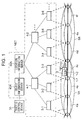
- Fig.1 illustrates a wireless communication system based on the first embodiment of the invention.
- the system comprises a mobile network NET, a moving object 2, and a traffic control device 30.
- Object 2 is, for example, a train, a bus, and other means of transportation. It will now be described assuming that Moving object is a train. In the figure only a moving object 2 is illustrated but in actuality, many trains 2 exist in the system.
- Traffic control device 30 manages movements of the trains. Traffic controls device 30 keeps track of each train, specifically, has present location, train schedule, and other information related to the train such as delay. Also, Traffic control device 30 generates movement information INFx, which is the latest information on a movement of an object, to transmit other devices.
- INFx movement information
- Movement information INFx includes object location information INF1 on a location of Object 2 and related information INF2 for the movement Specifically, a form of location information INF1 takes a form of "Longitude, Latitude” or “Name of line, Distance from neighboring station, Direction” . For example, the detail of Location information INF1 is "Long. 136° 15' E., 35° 45' N.”, or " Tokaido line, 2km from Shinagawa, to Yokohama” .
- Related information INF2 includes a name of a train such as "Hikari No.10" and a delay or suspension.
- Mobile communication network NET has a plurality of base stations 3-1, 3-2, ...; a plurality of switches 4-1,4-2, ...; object information server 40A; and location server 50A.
- Location server 50A manages location area information of all mobile stations it covers.
- Each of base stations 3-1, 3-2, ... is provided at a certain distance from neighboring one and covers a base station areas 4s each lettered " 4a" through “ 4f” as shown in Fig.1.
- each of base stations can carry out radio communication with mobile stations within one of base station areas 4 it covers.
- each of base stations 3-1 through 3-6 covers each of Base station areas 4a through 4f.
- Each Location area 5 lettered 5A and 5B is a compilation of base station areas 4s.
- Object 2 has a transmitting device TD and moves on a railroad L.
- Railroad L extends across boundaries of Location areas 5.
- Transmitting device transmits an object ID number IDt by radio.
- Each of Objects 2 has a unique object ID number IDt.
- Each of Mobile stations 1 stores a unique mobile ID number IDm to identify a mobile station uniquely.
- Mobile ID number is, for example, a phone number.
- Mobile station 1 When a user of Mobile station 1 is not in a train, Mobile station 1 receives and stores Location area information INF from Base station 3. When Mobile station 1 moves into another Location area 1, Mobile station 1 notifies Location information INF and Mobile ID number IDm to mobile communication network NET via Base station 3. When a user of Mobile station 1 gets aboard Object 2, Mobile station 1 receives Mobile ID number IDm from Transmitting device TD and notifies Mobile ID number IDm and received Object ID number IDt to mobile communication network NET via Base station 3.
- Mobile station 1 keeps watching on reception of Object ID number IDt. Only when Mobile station receives Object ID number IDt, Mobile ID number IDm and Object ID number IDt are transmitted to Mobile communication network NET. In other words, Location area information INF is not transmitted during the ride. This results in a reduction of frequency of transmission of information on location about a mobile station that is necessary for a registration.
- Location server 50A has a control unit 51 and a location table TBL.
- Control unit 51 reads from or writes to Location table TBL data.
- Control unit 51 carries out communication with Object information server 40A and Switch 4, to manage locations of all Mobile stations 1 in Mobile communication network NET.
- Location server 50A generates paging signal when an incoming call for Mobile station 1 is issued.
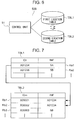
- Fig.3 shows information stored in Location table TBL.
- Location table TBL has a plurality of records Rb1, Rb2, ..., in each of which a Mobile ID number IDm and location information of a mobile station are stored.
- the location information is either Location information INF or an Object ID number. Specifically, when a Mobile station 1 is in a train Object ID number IDt is stored, while when not in a train Location area information INF is stored.
- Fig.4 is a schematic diagram of Object information server 40A.
- Location information server has a control unit 41 and a convert unit 42.
- Control unit 41 carries out communication with Traffic control device 30 and Location server 50A as well serves as nerve center of Object information server 40A.
- Convert unit 42 converts Object location information INF1 included in Movement information INFx sent from Traffic control device 30 into Location area information INF.
- Convert unit 42 has a first table for storing Location area information INF and locations represented by latitude and longitude correspondingly; and a second table for information on routes of trains and Location area information INF.
- Convert unit 42 Upon obtaining Movement information INF1 in a "Latitude, Longitude” form, Convert unit 42 retrieves from the first table Location area and outputs to Control unit 41 information corresponding to object location information INF. In case of reception of Movement information INF1 in a "Line name, Distance from neighboring station, Direction" form, Convert unit 42 retrieves from the second table and outputs to Control unit 41 a present location of Object 2 corresponding to the Object location information INF1.
- Object location information INF1 could take various forms, conversion of any types of Location area information INF1 can be effected by Convert unit 42.
- Fig.5 is a sequence diagram of the communication system.
- the Mobile station 1 receives an Object ID number IDt sent from Transmitting device TD (step S1) and transmits to Location server 50A registration request including the Object ID number IDt and a Mobile ID number IDm via Base station 3 and Switch 4 (not shown) (step S2).
- Location server 50A receives the registration request, the Object ID number IDt and the Mobile ID number IDm are extracted from the request and stored in Location table TBL (step S3).
- the Mobile station 1 does not transmit Location area information as long as the Mobile station 1 is in an object thereby keeps receiving Object ID number IDt.
- Step S4 When one of Switches 4 receives a call for Mobile station 1, the Switch 4 issues a location request REQ1 to Location server 50A (step S4).
- REQ1 includes Mobile ID number IDm of the Mobile station 1.
- Location server receives Location request REQ1
- Control unit 51 retrieves from Location table location information corresponding to the Mobile ID number (step S5). Control unit 51 judges whether received location information is Location area information INF or Object ID number IDt.
- Control unit 51 retrieves Location information INF, Control unit 51 transmits retrieved Location information INF to the Switch 4. In this case, Location server 50A generates and transmits to Object information server 40A location request REQ2 (step 6).
- Object information server 40A generates and transmits to Traffic control device 30 a movement request REQ3 including the Object ID number IDt (step S7).
- Traffic control device 30 firstly converts received Object ID number IDt into a certain number available for Traffic device 30 and secondly generates Movement information INFx.
- Traffic control device 30 transmits Movement response RES3 including the Object ID number IDt and the Movement information INFx to Object information server 40A (step S8).
- Object information server firstly 40A converts Object location information INF1 included in received Movement information INFx into Location area information INF (step S9) and next transmits a location area response RES2 including the location area information INF and the Object ID number IDt to Location server 50A (step S10).
- Location server 50A After the reception of Location area response RES2, Location server 50A transmits to Switch 4 a location area response RES1 including the location area information INF and the Object ID number IDt (step S 11).
- Switch 4 issues a paging request including the Mobile ID number to Base stations 3 within a location area designated by the Location area information INF. When the Mobile station answers, the connection is established.
- a mobile station does not notify location area information to any nodes in a mobile network during the ride. Therefore, the load on the network is reduced thereby improves system performance.
- a communication device capable of registering many mobile stations in a train at one time is not necessarily introduced. The only device provided in a train is one for transmitting an ID number by radio. Therefore, this system can be established at a low cost.
- Convert unit is introduced to convert Movement information INFx into Location area information INF, information on location of a train can be managed regardless of data format of object location information which a traffic control device has.
- a wireless communication system based on the second embodiment is similar to that of the first embodiment, except that a location server 50B is introduced instead of Location server 50A.
- Fig.6 is a schematic block diagram of Location server 50B.
- Location server 50B has a control unit 51, first location table TBL1, and second location table TBL2.
- Second location table TBL2 is the same as Location table of the first embodiment
- Fig.7 shows details of the First location table and Second location table.
- First location table TBL1 has a plurality of records Ra1, Ra2,..., each storing Object ID number IDt and location area information INF correspondingly. It is noted that the records and Objects 2 are same in number.
- Traffic control device 30 transmits the updated information to Object information server 40A.
- Object information server 40A firstly converts received information INFx into Location area information INF and secondly transmits the converted information INF to Location server 50B.
- Location server 50B receives and stores to First location table TBL1 the Movement information INFx. In this way information stored in First location table TBL1 is updated.
- Information stored in Second location table TBL2 is updated by notification from Mobile station 1, as described in the first embodiment.
- steps S1 through S3 are the same as those of first embodiment.
- Traffic control device 30 updates Movement information INFx
- Traffic control device 30 transmits a movement notice N1 including a Mobile ID number and updated information INFx to Object information server 40A (step S21).
- Object information server 40A converts Object location information INF1 included in the Movement information INFx into Location area information INF (step S22).
- Object information server 40A generates and transmits to Location server 50B an Area notice N2 (step S23).
- Object 2 is "Tokaido Line" moving from Shinagawa station to Yokohama station and Shinagawa and Yokohama station are located within “5A” and "5B", respectively.
- Traffic control device 30 When the train arrives at Yokohama station, Traffic control device 30 generates Object location information INF1 indicating a stop of the train at Yokohama station. Next, Traffic control device 30 transmits Movement notice N1 including the information INF1.
- Object information server 40A receives Movement notice N1.
- Convert unit 42 converts INF1 into Location area information INF.
- Control unit 41 generates and transmits to Location server 50B Area notice N2 including an Object ID number IDt and the location area information INF.
- Location server 50B receives the Area notice N2 and updates location area information INF corresponding to the Object ID number IDt stored in First location table TBL1 (step S24). Specifically, if Object ID number IDt is "A01234", Location area information INF in record Ra1 is updated from "5A” to "5B” shown in Fig.7. In this way First table TBL1 has the latest information on movement.
- Object information server 40A does not ask Traffic control device for movement information when a call for Mobile station 1 in Object 2 is issued. Therefore, Location server 50B is able to obtain location area information on the mobile station quickly, thereby Switch 4 is able to route incoming calls effectively.
- An information providing system based on the third embodiment is an application of the system based on the second embodiment.
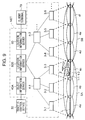
- Fig.9 is a schematic diagram of the system of this embodiment This system differs from that of the second embodiment only in having a Location information server 60, Client terminal 70, and Mobile station 1A instead of Mobile station 1.
- Client terminal 70 is, for example, a Personal Computer (PC), Personal Digital Assistants (PDA), mobile phone, and other communication devices, which carry out communication with Location information server 60.
- PC Personal Computer
- PDA Personal Digital Assistants
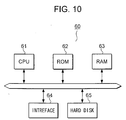
- Fig.10 is a schematic block diagram of Location information server 60.
- Location server has a Central Processing Unit (CPU) 61, Read Only Memory (ROM) 62, Random Access Memory (ROM) 63, Interface 64, and Hard disk 65.
- Location information server 60 provides location information of Mobile station 1A responsive to a request from Client terminal 70.
- CPU61 controls all the functions of all devices in Location information server 60 and executes applications.
- ROM62 stores, for example, a boot program.
- RAM 63 temporarily stores data or application programs for CPU61.
- Hard disk 65 stores application programs, which are a communication program for the communication with Client terminal 70 and Location server 50B, an estimation program for the estimation of a future location of Object 2, and a call program for calling Mobile station 1 on the basis of Location area information INF.
- Bus 150 links all devices.
- Mobile station 1A differs form Mobile station 1 in having functions of generation and transmittance of location information.
- Fig.11 is a schematic diagram of Mobile station 1A.
- Mobile station 1A has a control unit 100, Global Positioning Systems (GPS) receiver 110, radio device 120, input device 130, Liquid Crystal Display (LCD) 140, and Bus 150.
- GPS receiver 110 receives radio wave sent by a satellite and generates information on the present location of Mobile station 1A including the longitude and latitude.
- Radio device 120 carries out radio communication with Base station 3 under control of CPU61.
- Input device 130 has buttons including Push Button (PB) and cursor keys and sends information on a user' s direction into Control unit 100.
- LCD 140 displays information.
- PB Push Button
- Control unit 100 has a CPU 111, ROM 112, RAM 113, and EEPROM 114; and controls all the functions of all devices in Mobile station 1A.
- ROM 112 has application programs for the control of devices, communication with Location information server 60, and generation of related information.
- the related information includes, for example, a direction and velocity of Object 2.
- RAM 113 temporarily stores data and application programs for CPU 111.
- EEPROM 114 nonvolatile memory and stores updated application programs.
- Bus 150 electrically connects all devices.
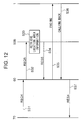
- Fig.12 is a sequence diagram of the information providing system. It is noted that this system carries out procedures for updating location area information INF, which is the same as that in the second embodiment.
- a user operates Client terminal 70 with Input device 130 to access Location information server 60.
- Client terminal 70 displays in LCD 140 direction for input of Mobile ID number.
- a Mobile ID number IDm phone umber, for example
- Client terminal 70 transmits to Location information server 60 location request REQ 4 including the Mobile ID number IDm (step S31).
- Location information server 60 Upon receiving location request REQ 4, Location information server 60 transmits location request REQ 5 including the Mobile ID number to Location server 50B (step S32).
- Location server 50B receives location request REQ5 and retrieves location area information INF corresponding to the Mobile ID number IDm from First location table TBL1 and Second location table TBL2 (step S33). Furthermore, if Object ID number IDt is stored in Second Location table TBL2, Location server set a flag FLG to "1". If Object ID number IDt is not stored, the flag FLG is set to "0" (step S33).
- Location server 50 transmits to Location information server 60 a location request RES 5 including the Location area information INF and Flag FLG (step S34).
- Location information server 60 receives Location request RES 5 and executes the estimation program, to page Mobile station 1A (step S35). Specifically, Location information server pages, via a Switch, Base stations 3 located within an area identified by the Location area information INF, by sending a paging signal including Mobile ID number,
- Flag FLG is set to "1”
- Location information server 60 generates boarding information indicating whether a user of Mobile station 1A takes on a train. If Flag FLG is set to "0", the boarding information is not generated.
- Mobile station 1A Upon receiving the paging signal, Mobile station 1A generates and transmits to Location information server 60 location information on the present location and related information including a direction and velocity (step S36).
- Location information server 60 receives the location information and the related information from Mobile station 1A and transmits the location information, related information, and the boarding information to Client terminal 70 (step 37). For example, a user of a mobile station 1A aboard a train which is located at Long.136° 15' E., 35° 45' N. and heading toward South at a velocity of 46 Kilometers/hour. In this case, Location information "Long. 136° 15' E., 35° 45' N.” , related information "46Km/h, South” , and boarding information "Now boarding” are transmitted to Client terminal 70.
- Location information server 60 does not transmit the boarding information since Flag FLG in location request RES 5 is set to "0". As described above, people are able to obtain boarding information as well as location information of Mobile station 1A by operating Client terminal 70 in this system.
- the system of the third embodiment is comprised by adding the system of the second embodiment to Location server 60 and Client terminal 70.
- Location server and Client terminal 70 are added to the system of the first embodiment
- Location server 50A when Location server 50A receives Location request REQ 5 from Location information server 60, steps S5 through S10 shown in Fig.5 are carried out In this way Location server 50A obtains and transmits to Location information server 60 Location area information INF. Next, Location information server 60 pages Mobile station 1A, on the basis of the Location area information INF, similarly to the third embodiment.
- An information providing system based on the fourth embodiment is the same as that of the third embodiment except for detailed function of Traffic control device 30 and use of an object information server 40B instead of 40A and Mobile station 1 instead of 1A.
- Traffic control device 30 transmits Movement information INFx only when receiving a request from Object information server 40B, similarly to the first embodiment.
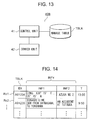
- Object information server 40B has a management table TBLk as shown in Fig.13, differing from Object information server 40A.
- Fig.14 shows an example of information stored in Management table TBLk.
- Management table TBLk has a plurality of records Rc1, Rc2,..., each storing an Object ID number IDt, Movement information INFx, and timestamp T. Timestamp T represents the time when Movement information INFx is stored. Specifically, upon storing Movement information INFx, Control unit 51 obtains time from a timer not shown in the figure and writes the time to Management table TBLk. For one example, Record Rc1 indicates that Object location information INF1 "Long. 136° 15' E., 35° 45' N.” is stored corresponding to Object ID number "A01234" at 13:00.
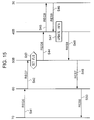
- Fig.15 is a sequence diagram of the system. Steps S41 and S42 is the same as steps S31 and S32 as described above, respectively.
- Location server 50B accesses Second location table TBL2. If Object ID number IDt is stored corresponding to a Mobile ID number, Location sever 50B sets the flag FLG to "1". If the Object ID number is not stored, FLG is set to "0" (step S43). If Object ID number IDt is stored, Location server 50B transmits movement request REQ 8 including the Object ID number IDt to Object information server 40B (step S44).
- Object information server 40B receives the Movement request REQ 8 and retrieves from Management table TBLk Movement information INFx and Timestamp T, each corresponding to the Object ID number IDt. If Movement information INFx is not stored in Management table TBLk or a predetermined time has elapsed since the time represented by Timestamp T, Object information server 40B transmits a movement request REQ 9 to Traffic control device 30 (step S45).
- Traffic control device 30 generates Movement information INFx about an Object 2 identified by the received Object ID number IDt and transmits to Object information server 40B a movement response RES 9 including the INFx (step S47).
- Object information server 40B transmits to Location server 50B a movement response RES 8 including the Movement information INFx (step S48).
- Movement information INFx is stored in Management table TBLk and a predetermined time has not elapsed since time T, Object information server 40B skips steps S45 through S47 and transmits a movement response RES 8 to Location server 50B (step S48).
- Location server 50B transmits a movement response RES 7 including the Movement information INFx to Location information server 60 (step S49).
- Location information server 60 receives Movement response RES7 and extracts INF2 from the Movement information INFx included in Movement response RES 7 to estimate a future location of Object 2.
- a specific way of estimation is as follows:
- Location information server 60 receives a location request REQ6 from Client terminal 70, steps S42 through S49 are carried out as described above. As a result, Location information server 60 obtains Related information INF2 "Azusa No.2" . Next, Location information server 60 estimates a future location of the train referring to timetable data stored in Hard disk 65. The estimated location information generated by Location information server 60 includes, for example, " arrive at Kofu in 18 minutes” .
- Location information server 60 transmits to Client terminal 70 a location response RES6 including Object location information INF1, Related information INF2, and Boarding information (step S50). Specifically, INF1 "Long. 136° 15' E., 35° 45' N.” , INF2 "Azusa No.2" , and Estimated location information " This train will arrive at Kofu in 18 minutes” , and Boarding information "Now boarding " is transmitted to Client terminal 70.
- a person is able to obtain the present and future location of a mobile station by inputting a Mobile ID number to Client terminal 70.
- location information of a Mobile station can be obtained, even if the mobile station in Object 2 cannot carry out radio communication with Base stations because Object 2 is moving through a tunnel, for example.
- Object information sever 40B checks Timestamp T, to judge whether to obtain the information from Traffic control device 30. In other words, the information is obtained efficiently and precisely.
- Traffic control device 30 transmits the latest Movement information INFx to Movement information server 40B every time the information INFx is updated.
- Location server is able to obtain the latest information on Object 2 and needs not to refer to Timestamp T.
- a person uses Client terminal 70, to designate the detailed future location of a Mobile station. For example, a user inputs the desired time (an hour later, for example) in addition to Mobile ID number. After reception of Object location information INF1, Related information INF2, and Estimated location information, the Location information server 60 retrieves the estimated location of "Azusa No.2" (near Matsumoto station, for example) referring to the schedule stored Hard disk 65. Retrieved information is transmitted to Client terminal 70.
- Mobile station 1 when a user of Mobile station 1 gets aboard a train, Mobile station 1 receives Mobile ID number IDm from Transmitting device TD and notifies Mobile ID number IDm and received Object ID number IDt to Mobile communication network NET via Base station 3.
- a device provided in Object 2 transmits Mobile ID numbers IDms each of which is sent from Mobile station 1 and Object ID number IDt, to mobile communication network NET.
- the device has the function of receiving Object ID number IDt and Mobile ID number IDm.
- Transmitting device TD may have the function. The point is that Object ID number IDt and Mobile ID number IDm are transmitted together to Mobile communication network NET, when a user gets aboard.
Landscapes
- Engineering & Computer Science (AREA)
- Business, Economics & Management (AREA)
- Finance (AREA)
- Strategic Management (AREA)
- Computer Networks & Wireless Communication (AREA)
- Signal Processing (AREA)
- Accounting & Taxation (AREA)
- Development Economics (AREA)
- Physics & Mathematics (AREA)
- Game Theory and Decision Science (AREA)
- Entrepreneurship & Innovation (AREA)
- Economics (AREA)
- Marketing (AREA)
- General Business, Economics & Management (AREA)
- General Physics & Mathematics (AREA)
- Theoretical Computer Science (AREA)
- Databases & Information Systems (AREA)
- Probability & Statistics with Applications (AREA)
- Mobile Radio Communication Systems (AREA)
- Telephonic Communication Services (AREA)
Abstract
Description
In another preferable embodiment, the information providing system further comprises an object information server for carrying out communication with a traffic control device which controls movement of the object. Upon receiving from the terminal an inquiry of location information including the mobile identifying information, the location information server transmits the mobile identifying information to the location server. Also, upon obtaining from the location server the location information, the location information server transmits to the terminal the boarding information and the location information. Upon receiving from the location information server the mobile identifying information, the location server transmits to the object information server the object identifying information corresponding to the mobile identifying information. Upon receiving the object identifying information from the location server, the object information server obtains from the traffic control device the movement information on the object corresponding to the object identifying information, converts obtained movement information into the location information, and transmits the location information to the location information server via the location server.
In another preferable embodiment, the object information server stores the movement information obtained from the traffic control device and the object identifying information correspondingly. When receiving from the location server the object identifying information, the object information server generates the location information on the object identified by the object identifying information on the basis of stored movement information on the object
A method of the present invention for providing location information of a mobile station in a mobile network to a terminal comprises the steps of:
Fig.3 shows information stored in Location table TBL. Location table TBL has a plurality of records Rb1, Rb2, ..., in each of which a Mobile ID number IDm and location information of a mobile station are stored. The location information is either Location information INF or an Object ID number. Specifically, when a
In one example,
In addition, a communication device capable of registering many mobile stations in a train at one time is not necessarily introduced. The only device provided in a train is one for transmitting an ID number by radio. Therefore, this system can be established at a low cost In addition, since Convert unit is introduced to convert Movement information INFx into Location area information INF, information on location of a train can be managed regardless of data format of object location information which a traffic control device has.
Fig.6 is a schematic block diagram of
Next,
Claims (21)
- A method for managing location information on a mobile station on an object by a server on a mobile network comprising the steps of:said server obtaining and storing correspondingly object identifying information for identifying said object and mobile identifying information for identifying said mobile station;obtaining, from a traffic control device which controls movement of said object, object movement information of said object identified by the object identifying information;converting said movement information into a location area information; andmanaging location of said mobile station on the basis of said location area information.
- A method for managing location information on a mobile station on an object by a server on a mobile network comprising the steps of:upon receiving object identifying information for identifying said object from a transmitting device provided in said object, said mobile station transmitting to said server received object identifying information and mobile identifying information for identifying said mobile station;said server receiving and storing correspondingly said object identifying information and said mobile identifying information;obtaining, from a traffic control device which controls movement of said object, object movement information of said object identified by the object identifying information;converting said movement information into a location area information; andmanaging location of said mobile station on the basis of said location area information.
- The method of claim 2, wherein upon receiving a call for said mobile station, said server inquires about said movement information for said traffic control device.
- The method of claim 2, wherein upon detecting movement of said object, said traffic control device notifies said server of said movement information.
- A method for communication in a communication system comprising: a server on a mobile network for communication with a mobile station; and a traffic control device for controlling an object comprising the steps of:said server obtaining mobile identifying information for identifying said object and object identifying information for identifying said mobile station;storing said mobile identifying information and said object identifying information correspondingly;when receiving a call for said mobile station identified by said mobile identifying information, retrieving said object identifying information corresponding to the mobile identifying information; andtransmitting retrieved object identifying information to said traffic control device; andsaid traffic control device generating movement information on said object identified by the object identifying information; andtransmitting generated movement information to said server; andsaid server converting received movement information into location area information; andpaging the mobile station on the basis of said location area information.
- A method for communication in a communication system comprising: a server on a mobile network for communication with a mobile station; and a traffic control device for controlling an object comprising the steps of:upon receiving an object identifying information for identifying said object from a transmitting device provided in said object, said mobile station transmitting to said server mobile identifying information for identifying said mobile station and received object identifying information; andsaid server obtaining said mobile identifying information and said object identifying information;storing said mobile identifying information and said object identifying information correspondingly;when receiving a call for said mobile station identified by said mobile identifying information, retrieving said object identifying information corresponding to the mobile identifying information; andtransmitting retrieved object identifying information to said traffic control device; andsaid traffic control device generating movement information on said object identified by the object identifying information; andtransmitting generated movement information to said server; andsaid server converting received movement information into location area information; andpaging the mobile station on the basis of said location area information.
- A method for communication in a communication system comprising: a server on a mobile network for communication with a mobile station; and a traffic control device for controlling movement of an object comprising the steps of:said server obtaining mobile identifying information for identifying said object and object identifying information for identifying said object; andupon detecting a movement change of said object, said traffic control device generating movement information, transmitting to said server said object identifying information and generated movement information; andsaid server receiving said movement information;converting received movement information into location area information about an area within which said mobile station is located;storing said object identifying information and said location area information correspondingly;when receiving a call for said mobile station including said mobile identifying information, retrieving said location area information corresponding to the mobile identifying information; andpaging the mobile station on the basis of said location area information.
- A method for communication in a communication system comprising: a server on a mobile network for communication with a mobile station; and a traffic control device for controlling movement of an object comprising the steps of:upon receiving object identifying information for identifying said object from a transmitting device provided in said object, said mobile station transmitting mobile identifying information for identifying said mobile station and received object identifying information to said server; andsaid server receiving said mobile identifying information and said object identifying information; andupon detecting a movement change of said object, said traffic control device generating movement information, transmitting to said server said object identifying information and generated movement information; andsaid server receiving said movement information;converting received movement information into location area information about an area within which said mobile station is located;storing said object identifying information and said location area information correspondingly;when receiving a call for said mobile station including said mobile identifying information, retrieving said location area information corresponding to the mobile identifying information; andpaging the mobile station on the basis of said location area information.
- A communication system comprising:a traffic control device for controlling movement of an object; anda mobile network; andsaid mobile network comprising:a mobile station;a base station for communicating with said mobile station;a switch for communicating with said base station;a location server for communicating with said switch; andan object information server for communicating with said location server and said traffic control device; andsaid mobile station comprises means for receiving object identifying information for identifying said object and transmitting to said base station received object identifying information and mobile identifying information for identifying said mobile station;said location server comprising:means for storing said object identifying information and said mobile identifying information correspondingly, both of which sent from said mobile station;means for retrieving and transmitting to said location server said object identifying information corresponding to said mobile identifying information ,when receiving from said switch an inquiry of location area information on said mobile station including the mobile identifying information; andmeans for receiving from said object information server and transmitting to said switch said location area information on said object identified by the object identifying information; andsaid object information server comprising:means for receiving from said location server and transmitting to said traffic control device said object identifying information;means for receiving from said traffic control device movement information on said object identified by the object identifying information;means for converting received movement information into said location area information; andmeans for transmitting converted location area information to said location server; and said traffic control device comprising:means for receiving from said object information server said object identifying information and generating said movement information on the basis of received object identifying information; andmeans for transmitting generated movement information to said object information sever.
- A communication system comprising:a traffic control device for controlling movement of an object; anda mobile network; andsaid mobile network comprising:a mobile station;a base station for communicating with said mobile station;a switch for communicating with said base station;a location server for communicating with said switch; andan object information server for communicating with said location server and said traffic control device; andsaid mobile station comprises means for receiving object identifying information for identifying said object and transmitting received object identifying information and mobile identifying information for identifying said mobile station; andsaid traffic control device comprising:means for detecting movement change of said object and generating movement information representing movement of the object; andmeans for transmitting to said object information server the object identifying information and the movement information; andsaid object information server comprising:means for receiving from said traffic control device said object identifying information and said movement information and converting received movement information into location area information representing an area within which said mobile station is located; andmeans for transmitting to said location server said object identifying information and the location area information;said location server comprising:a first storing means for receiving from said object information server and storing correspondingly said object identifying information and said location area information;a second storing means for storing correspondingly said object identifying information and said mobile identifying information, both of which sent from said mobile station; andmeans for retrieving from said second storing means said object identifying information corresponding to said mobile identifying information, when receiving from said switch an inquiry of said location area information including the mobile identifying information.
- The communication system of claim 10, wherein when not receiving from said transmitting device said object identifying information and moving into another location area, said mobile station transmits to said location server updated location information on the mobile station and said mobile identifying information; and
when receiving said location area information and said mobile identifying information sent from said mobile station, said location server stores to said second storing means the mobile identifying information and the updated location area information correspondingly, instead of said object identifying information. - An information providing system for providing location information on a mobile station in a mobile network to a terminal comprising:a location server in said mobile network for managing location of said mobile station; anda location information server for carrying out communication with said terminal; andupon receiving from a transmitting device provided in an object identifying information for identifying an object, said mobile station transmits to said location server said mobile identifying information for identifying said mobile station and received object identifying information; andsaid location server receives and stores correspondingly said object identifying information and said mobile identifying information sent from said mobile station; andupon receiving from said terminal an inquiry of location information on said mobile station including said mobile identifying information, said location information server judges whether said object identifying information corresponding to the mobile identifying information is stored in said location server; and if the object identifying information is stored, transmits to said terminal boarding information representing that said mobile station is in the object.
- The information providing system of claim 12, wherein said location information server further comprises means for identifying said mobile station using said mobile identifying information, carrying out communication with the mobile station, and obtaining from the mobile station said location information; and transmitting to said terminal said boarding information and the location information.
- The information providing system of claim 12 further comprising an object information server for carrying out communication with a traffic control device which controls movement of said object; and
wherein upon receiving from said terminal an inquiry of location information including said mobile identifying information, said location information server transmits the mobile identifying information to said location server; and upon obtaining from said location server said location information, transmits to said terminal said boarding information and said location information; and
upon receiving from said location information server said mobile identifying information, said location server transmits to said object information server said object identifying information corresponding to the mobile identifying information; and
upon receiving said object identifying information from said location server, said object information server obtains from said traffic control device said movement information on said object corresponding to the object identifying information; converts obtained movement information into said location information; and transmits the location information to said location information server via said location server. - The information providing system of claim 14, wherein said object information server stores said movement information obtained from said traffic control device and said object identifying information correspondingly; and
when receiving from said location server said object identifying information, generates said location information on said object identified by the object identifying information on the basis of stored movement information on the object - The information providing system of claim 15, wherein upon detecting a movement change of said object, said traffic control device updates and notifies to said object information server of said movement information; and
said object information server receives the movement information and generates said location information on the basis the movement information. - The information providing system of claim 14, wherein when receiving from said terminal an inquiry of said location information on said mobile station, said location information server generates, on the basis of said movement information, estimated location information representing a future location on said mobile station and transmits said estimated location information to said terminal.
- A method for providing location information of a mobile station in a mobile network to a terminal comprising the steps of:said mobile station receiving, from a transmitting device provided in an object, object identifying information for identifying said object; transmitting to a server in said mobile network said object identifying information and mobile identifying information for identifying said mobile station;said server storing said object identifying information and said mobile identifying information correspondingly;when receiving from said terminal an inquiry of location information on said mobile station including the mobile identifying information, judging whether said object identifying information corresponding to the mobile identifying information is stored in said server; andif the object identifying information is stored, generating and transmitting to said terminal boarding information representing that said mobile station is in said object.
- A method for providing location information on a mobile station in a mobile network to a terminal comprising the steps of:said server obtaining and storing correspondingly object identifying information for identifying an object and mobile identifying information for identifying said mobile station;when receiving from said terminal an inquiry of location information on said mobile station including the mobile identifying information, retrieving said object identifying information corresponding to the mobile identifying information;obtaining movement information on said object identified by the object identifying information;converting obtained movement information into said location information; andtransmitting said location information to said terminal.
- A method for providing location information on a mobile station in a mobile network to a terminal comprising the steps of:upon receiving, from transmitting device provided in an object, object identifying information for identifying said object, said mobile station transmitting mobile identifying information for identifying said mobile station and said object identifying information to a server in said mobile network;said server storing said object identifying information and said mobile identifying information correspondingly;when receiving from said terminal an inquiry of location information on said mobile station including the mobile identifying information, retrieving said object identifying information corresponding to the mobile identifying information;obtaining movement information on said object identified by the object identifying information;converting obtained movement information into said location information; andtransmitting said location information to said terminal.
- The method of claim 20, wherein when receiving said movement information, said server generates, on the basis of the movement information, estimated location information representing a future location of said mobile station and transmits said estimated location information to said terminal.
Priority Applications (1)
| Application Number | Priority Date | Filing Date | Title |
|---|---|---|---|
| EP03006297A EP1328132B1 (en) | 2001-02-28 | 2002-02-28 | Method and system for providing location information of a mobile terminal being in a train |
Applications Claiming Priority (4)
| Application Number | Priority Date | Filing Date | Title |
|---|---|---|---|
| JP2001055819 | 2001-02-28 | ||
| JP2001055819 | 2001-02-28 | ||
| JP2001110325 | 2001-04-09 | ||
| JP2001110325A JP3949902B2 (en) | 2001-02-28 | 2001-04-09 | Location management method, communication system, and information providing system |
Related Child Applications (1)
| Application Number | Title | Priority Date | Filing Date |
|---|---|---|---|
| EP03006297A Division EP1328132B1 (en) | 2001-02-28 | 2002-02-28 | Method and system for providing location information of a mobile terminal being in a train |
Publications (3)
| Publication Number | Publication Date |
|---|---|
| EP1237389A2 true EP1237389A2 (en) | 2002-09-04 |
| EP1237389A3 EP1237389A3 (en) | 2002-11-06 |
| EP1237389B1 EP1237389B1 (en) | 2005-01-12 |
Family
ID=26610373
Family Applications (2)
| Application Number | Title | Priority Date | Filing Date |
|---|---|---|---|
| EP03006297A Expired - Lifetime EP1328132B1 (en) | 2001-02-28 | 2002-02-28 | Method and system for providing location information of a mobile terminal being in a train |
| EP02004308A Expired - Lifetime EP1237389B1 (en) | 2001-02-28 | 2002-02-28 | Method and system for avoiding location update by mobile terminals being in a train and corresponding location information providing system |
Family Applications Before (1)
| Application Number | Title | Priority Date | Filing Date |
|---|---|---|---|
| EP03006297A Expired - Lifetime EP1328132B1 (en) | 2001-02-28 | 2002-02-28 | Method and system for providing location information of a mobile terminal being in a train |
Country Status (9)
| Country | Link |
|---|---|
| US (3) | US7574222B2 (en) |
| EP (2) | EP1328132B1 (en) |
| JP (1) | JP3949902B2 (en) |
| KR (1) | KR100427207B1 (en) |
| CN (1) | CN1234082C (en) |
| AU (1) | AU775765C (en) |
| CA (1) | CA2372844C (en) |
| DE (2) | DE60202544T2 (en) |
| SG (2) | SG107095A1 (en) |
Cited By (10)
| Publication number | Priority date | Publication date | Assignee | Title |
|---|---|---|---|---|
| EP1443793A1 (en) * | 2003-01-30 | 2004-08-04 | NTT DoCoMo, Inc. | Mobile communication system, location manager and routing manager |
| EP1460869A1 (en) * | 2003-01-24 | 2004-09-22 | NTT DoCoMo, Inc. | Local location manager, home location manager and mobile communication system |
| EP1631095A1 (en) * | 2004-08-30 | 2006-03-01 | Fujitsu Limited | Mobile communication network with location information of the traveling route |
| WO2010049595A1 (en) * | 2008-10-27 | 2010-05-06 | Siemens Transportation Systems Sas | Method for routing data between at least one guided vehicle and a ground network |
| US8150417B2 (en) | 2004-05-21 | 2012-04-03 | Actix Limited | Mobile device location systems and methods |
| EP2811444A1 (en) * | 2013-06-07 | 2014-12-10 | Scheidt & Bachmann GmbH | Method and device for determining the use of a service of a means of public transport |
| EP2736277A4 (en) * | 2011-07-20 | 2014-12-24 | China Academy Of Telecomm Tech | METHOD AND DEVICE FOR TRANSMITTING LOCATION INFORMATION CONCERNING USER EQUIPMENT |
| EP2153550A4 (en) * | 2007-06-14 | 2015-01-07 | Intel Corp | Location support in wireless networks |
| EP2843997A1 (en) | 2013-08-30 | 2015-03-04 | Swisscom AG | Communication system and method with a mobile virtual base station |
| US10178590B2 (en) | 2013-08-30 | 2019-01-08 | Swisscom Ag | Communications with a mobile virtual base station |
Families Citing this family (73)
| Publication number | Priority date | Publication date | Assignee | Title |
|---|---|---|---|---|
| US6456234B1 (en) * | 2000-06-07 | 2002-09-24 | William J. Johnson | System and method for proactive content delivery by situation location |
| KR100551754B1 (en) * | 2000-11-16 | 2006-02-13 | 엔티티 도꼬모 인코퍼레이티드 | Wireless mobile communication control method, location registration method of mobile communication terminal, and mobile communication system |
| JP3949902B2 (en) * | 2001-02-28 | 2007-07-25 | 株式会社エヌ・ティ・ティ・ドコモ | Location management method, communication system, and information providing system |
| US8977284B2 (en) | 2001-10-04 | 2015-03-10 | Traxcell Technologies, LLC | Machine for providing a dynamic data base of geographic location information for a plurality of wireless devices and process for making same |
| JP4199671B2 (en) * | 2002-03-15 | 2008-12-17 | 富士通株式会社 | Regional information retrieval method and regional information retrieval apparatus |
| US8918073B2 (en) | 2002-03-28 | 2014-12-23 | Telecommunication Systems, Inc. | Wireless telecommunications location based services scheme selection |
| US20030186699A1 (en) * | 2002-03-28 | 2003-10-02 | Arlene Havlark | Wireless telecommunications location based services scheme selection |
| US6799097B2 (en) * | 2002-06-24 | 2004-09-28 | Modular Mining Systems, Inc. | Integrated railroad system |
| EP1605718A1 (en) * | 2003-03-14 | 2005-12-14 | Fujitsu Limited | Parent mobile device, child mobile device, home location register device, and mobile switching center |
| CN1214666C (en) * | 2003-04-07 | 2005-08-10 | 华为技术有限公司 | Method for limiting position information request flow rate in position service |
| AU2004243288B2 (en) * | 2003-05-22 | 2010-02-18 | Ge Global Sourcing Llc | Method and system for controlling locomotives |
| EP1515574A1 (en) * | 2003-09-15 | 2005-03-16 | BRITISH TELECOMMUNICATIONS public limited company | Telecommunications system which includes two networks |
| KR100619830B1 (en) * | 2004-02-27 | 2006-09-12 | 엘지전자 주식회사 | Mobile terminal area information providing device and system and transmission / reception method |
| JP4355599B2 (en) * | 2004-03-17 | 2009-11-04 | 富士通株式会社 | Broadband road-to-vehicle communication system |
| CN100391306C (en) * | 2004-12-20 | 2008-05-28 | 华为技术有限公司 | Classified Area Location Method in Wireless Communication System |
| JP2006194769A (en) * | 2005-01-14 | 2006-07-27 | Nippon Signal Co Ltd:The | Human position detection device |
| US7353034B2 (en) | 2005-04-04 | 2008-04-01 | X One, Inc. | Location sharing and tracking using mobile phones or other wireless devices |
| JP4718236B2 (en) * | 2005-05-13 | 2011-07-06 | 株式会社エヌ・ティ・ティ・ドコモ | POSITION INFORMATION PROVIDING DEVICE, MOBILE TERMINAL, POSITION INFORMATION PROVIDING SYSTEM, AND POSITION INFORMATION PROVIDING METHOD |
| US8660573B2 (en) | 2005-07-19 | 2014-02-25 | Telecommunications Systems, Inc. | Location service requests throttling |
| US8311845B2 (en) * | 2006-02-07 | 2012-11-13 | Groupon, Inc. | Pay-for-visit advertising based on visits to physical locations |
| JP2007240325A (en) * | 2006-03-08 | 2007-09-20 | Nec Corp | Position detection system, position detection method, and program |
| KR100817413B1 (en) * | 2006-03-20 | 2008-03-27 | 주식회사 케이티프리텔 | Traffic Information Measurement Method and System Using Synchronous CDMA Network |
| JP4992308B2 (en) | 2006-06-14 | 2012-08-08 | 日本電気株式会社 | Communication system, operation control method, location management server, and program |
| US7640028B2 (en) | 2006-06-30 | 2009-12-29 | Nokia Corporation | Apparatus, method and computer program product providing enhanced location update scheme for mobile station in a relay-based network |
| EP2052499B1 (en) * | 2006-08-18 | 2016-11-02 | Wifi Rail, Inc. | System and method of wirelessly communicating with mobile devices |
| US8204684B2 (en) | 2007-06-28 | 2012-06-19 | Apple Inc. | Adaptive mobile device navigation |
| US8108144B2 (en) | 2007-06-28 | 2012-01-31 | Apple Inc. | Location based tracking |
| US8762056B2 (en) | 2007-06-28 | 2014-06-24 | Apple Inc. | Route reference |
| US8774825B2 (en) | 2007-06-28 | 2014-07-08 | Apple Inc. | Integration of map services with user applications in a mobile device |
| US8175802B2 (en) | 2007-06-28 | 2012-05-08 | Apple Inc. | Adaptive route guidance based on preferences |
| US8275352B2 (en) | 2007-06-28 | 2012-09-25 | Apple Inc. | Location-based emergency information |
| US9109904B2 (en) | 2007-06-28 | 2015-08-18 | Apple Inc. | Integration of map services and user applications in a mobile device |
| US8332402B2 (en) | 2007-06-28 | 2012-12-11 | Apple Inc. | Location based media items |
| US8290513B2 (en) | 2007-06-28 | 2012-10-16 | Apple Inc. | Location-based services |
| US8385946B2 (en) | 2007-06-28 | 2013-02-26 | Apple Inc. | Disfavored route progressions or locations |
| US8311526B2 (en) | 2007-06-28 | 2012-11-13 | Apple Inc. | Location-based categorical information services |
| US9066199B2 (en) | 2007-06-28 | 2015-06-23 | Apple Inc. | Location-aware mobile device |
| US8862710B2 (en) * | 2007-09-11 | 2014-10-14 | Telecommunication Systems, Inc. | Dynamic configuration of mobile station location services |
| US8977294B2 (en) | 2007-10-10 | 2015-03-10 | Apple Inc. | Securely locating a device |
| CN101471935B (en) * | 2007-12-29 | 2013-03-13 | 日电(中国)有限公司 | Data transmission method and system as well as terminal equipment and server |
| US8355862B2 (en) | 2008-01-06 | 2013-01-15 | Apple Inc. | Graphical user interface for presenting location information |
| US9250092B2 (en) | 2008-05-12 | 2016-02-02 | Apple Inc. | Map service with network-based query for search |
| US8644843B2 (en) | 2008-05-16 | 2014-02-04 | Apple Inc. | Location determination |
| US7903587B2 (en) | 2008-05-30 | 2011-03-08 | Telecommunication Systems, Inc. | Wireless emergency services protocols translator between ansi-41 and VoIP emergency services protocols |
| US8369867B2 (en) | 2008-06-30 | 2013-02-05 | Apple Inc. | Location sharing |
| US8359643B2 (en) | 2008-09-18 | 2013-01-22 | Apple Inc. | Group formation using anonymous broadcast information |
| US9285239B2 (en) | 2008-10-07 | 2016-03-15 | Telecommunication Systems, Inc. | User interface for content channel HUD (heads-up display) and channel sets for location-based maps |
| US8762519B2 (en) * | 2008-10-28 | 2014-06-24 | Andrew Llc | System and method for providing location services for multiple access networks from a single location server |
| US8260320B2 (en) | 2008-11-13 | 2012-09-04 | Apple Inc. | Location specific content |
| US8670748B2 (en) | 2009-05-01 | 2014-03-11 | Apple Inc. | Remotely locating and commanding a mobile device |
| US8666367B2 (en) | 2009-05-01 | 2014-03-04 | Apple Inc. | Remotely locating and commanding a mobile device |
| US8660530B2 (en) | 2009-05-01 | 2014-02-25 | Apple Inc. | Remotely receiving and communicating commands to a mobile device for execution by the mobile device |
| US8649967B1 (en) * | 2009-06-15 | 2014-02-11 | The F3M3 Companies, Inc. | Unified address enhanced locator system and method for providing commuter information |
| WO2011037642A1 (en) * | 2009-09-28 | 2011-03-31 | Telecommunication Systems, Inc. | Automatic short messaging system and/or call suspension for wireless devices in motion |
| KR101090602B1 (en) * | 2010-01-29 | 2011-12-08 | 주식회사 팬택 | Method and Apparatus for managing paging area |
| US8838154B1 (en) * | 2010-10-15 | 2014-09-16 | Sprint Spectrum L.P. | Method and system of paging an access terminal |
| KR101105243B1 (en) | 2010-11-08 | 2012-01-13 | 숭실대학교산학협력단 | Group Location Management System and Method for Public Transportation System |
| US8688087B2 (en) | 2010-12-17 | 2014-04-01 | Telecommunication Systems, Inc. | N-dimensional affinity confluencer |
| US8942743B2 (en) | 2010-12-17 | 2015-01-27 | Telecommunication Systems, Inc. | iALERT enhanced alert manager |
| KR101731406B1 (en) | 2011-02-07 | 2017-04-28 | 숭실대학교산학협력단 | System and method for managing a group location for multi interface mobile station |
| JP5847451B2 (en) * | 2011-06-21 | 2016-01-20 | 株式会社東芝 | Ground control device, ground control method, and communication method in train control system |
| US9264537B2 (en) | 2011-12-05 | 2016-02-16 | Telecommunication Systems, Inc. | Special emergency call treatment based on the caller |
| US9208346B2 (en) | 2012-09-05 | 2015-12-08 | Telecommunication Systems, Inc. | Persona-notitia intellection codifier |
| WO2014095029A1 (en) * | 2012-12-20 | 2014-06-26 | Amadeus S.A.S. | Determining real-time delay of transportation means |
| JP6096042B2 (en) * | 2013-04-18 | 2017-03-15 | 株式会社日立製作所 | POSITION INFORMATION ACQUISITION SYSTEM AND POSITION INFORMATION ACQUISITION METHOD |
| CN105659639B (en) * | 2013-07-26 | 2019-09-06 | 艾纳高格有限公司 | Associating an external device to a vehicle and said associated application |
| JP6095785B2 (en) * | 2013-08-20 | 2017-03-15 | 株式会社日立製作所 | Wireless communication system, control method therefor, and base station apparatus |
| WO2016029476A1 (en) | 2014-08-29 | 2016-03-03 | Motorola Solutions, Inc. | Method, device, and system for transmitting short data during call hang time hold off period |
| WO2016113866A1 (en) * | 2015-01-14 | 2016-07-21 | 株式会社日立製作所 | Wireless communication system, wireless communication method, and control apparatus |
| JP2017135507A (en) * | 2016-01-26 | 2017-08-03 | 富士通株式会社 | Mobile management system and base station |
| US11014586B2 (en) * | 2018-09-14 | 2021-05-25 | Aktiebolaget Skf | Method of linking alarm data from physically disassociated wireless sensors to a train in motion |
| JP6840304B2 (en) * | 2019-01-18 | 2021-03-10 | 三菱電機株式会社 | Wireless repeater, control circuit and storage medium |
| CN110401561B (en) * | 2019-06-26 | 2022-05-24 | 苏州浪潮智能科技有限公司 | Server positioning method, system, equipment and computer readable storage medium |
Family Cites Families (46)
| Publication number | Priority date | Publication date | Assignee | Title |
|---|---|---|---|---|
| HU193852B (en) * | 1986-03-28 | 1987-12-28 | Magyar Allamvasutak | Railway-service data processing and car informing system |
| JPS6354030A (en) | 1986-08-25 | 1988-03-08 | Fujitsu Ltd | Group tracing system |
| DE4032192C2 (en) * | 1990-10-08 | 1994-05-26 | Michael Kising | Device for heating an ultrasonic soldering or welding head |
| DE4032198C2 (en) | 1990-10-11 | 1995-10-19 | Daimler Benz Aerospace Ag | Transport monitoring method and arrangement for carrying out the method |
| JPH0555991A (en) | 1991-08-23 | 1993-03-05 | Nippon Telegr & Teleph Corp <Ntt> | Location registration method |
| FI95186C (en) | 1992-10-06 | 1995-12-27 | Nokia Telecommunications Oy | Cellular radio network and location update and call connection procedures in a cellular radio network |
| JPH06205457A (en) | 1993-01-08 | 1994-07-22 | Nec Corp | Mobile location registration method |
| JPH06244780A (en) | 1993-02-16 | 1994-09-02 | N T T Idou Tsuushinmou Kk | Mobile communication control system and mobile station device |
| US6363323B1 (en) * | 1993-05-18 | 2002-03-26 | Global Research Systems, Inc. | Apparatus and method for monitoring travel of a mobile vehicle |
| JPH0730962A (en) | 1993-07-07 | 1995-01-31 | Nippon Telegr & Teleph Corp <Ntt> | Location registration method |
| DE4417779C1 (en) * | 1994-05-20 | 1995-12-07 | Siemens Ag | Mobile radio system |
| US5559865A (en) * | 1994-07-08 | 1996-09-24 | Qualcomm Incorporated | Airborne radiotelephone communications system |
| US5572221A (en) * | 1994-10-26 | 1996-11-05 | Telefonaktiebolaget Lm Ericsson | Method and apparatus for detecting and predicting motion of mobile terminals |
| JP3134682B2 (en) | 1994-11-14 | 2001-02-13 | 松下電器産業株式会社 | Mobile communication system |
| JPH08214370A (en) | 1995-02-02 | 1996-08-20 | Hitachi Denshi Ltd | Terminal equipment calling method for multi-channel access communication system |
| EP0756433B1 (en) * | 1995-02-07 | 2005-05-11 | NTT DoCoMo, Inc. | Mobile communication system and communication network |
| US5657487A (en) | 1995-06-05 | 1997-08-12 | Airnet Communications Corporation | Mobile telephone location process making use of handoff data |
| US5724660A (en) * | 1995-06-07 | 1998-03-03 | At&T Wireless Services, Inc. | Method and apparatus for locating a mobile station by comparing calculated location area with GPS coordinates |
| EP0862840A4 (en) * | 1995-06-28 | 2000-11-08 | Mci Communications Corp | Method and apparatus for improved call connectivity in an intelligent wireless network |
| US6658250B1 (en) * | 1996-01-05 | 2003-12-02 | Hughes Electronics Corporation | System and method for a wide area wireless personal communication system incorporating advanced messaging |
| JP2865043B2 (en) * | 1996-02-02 | 1999-03-08 | 日本電気株式会社 | Mobile radio telephone equipment |
| JPH09327057A (en) | 1996-06-06 | 1997-12-16 | Hitachi Ltd | Mobile communication system and communication control method thereof |
| DE19647461C2 (en) * | 1996-11-16 | 2000-05-25 | Deutsche Bahn Ag | Device for the detection of railway vehicles |
| JP3308837B2 (en) | 1996-12-06 | 2002-07-29 | 松下電器産業株式会社 | PHS terminal device and data collection system using the same |
| US5970408A (en) * | 1997-05-02 | 1999-10-19 | Telefonaktiebolaget L/M Ericsson (Publ) | Communication control circuitry and method for a group of commonly-moving mobile transceiver units |
| JP3713281B2 (en) * | 1997-06-24 | 2005-11-09 | 株式会社エヌ・ティ・ティ・ドコモ | COMMUNICATION SYSTEM, COMMUNICATION CONTROL METHOD, AND COMMUNICATION CONTROL DEVICE |
| JPH1146380A (en) * | 1997-07-28 | 1999-02-16 | Nec Corp | Cellular mobile communication system |
| US6707421B1 (en) * | 1997-08-19 | 2004-03-16 | Siemens Vdo Automotive Corporation | Driver information system |
| US6097942A (en) * | 1997-09-18 | 2000-08-01 | Telefonaktiebolaget Lm Ericsson | Method and apparatus for defining and updating mobile services based on subscriber groups |
| JPH11298945A (en) * | 1998-04-08 | 1999-10-29 | Oki Electric Ind Co Ltd | MOBILE BODY, MOBILE BODY REGISTRATION DEVICE, AND MOBILE COMMUNICATION SYSTEM |
| JP3252825B2 (en) | 1998-04-17 | 2002-02-04 | 日本電気株式会社 | Automatic radio wave output restriction system for mobile phones |
| JP3903231B2 (en) * | 1998-05-08 | 2007-04-11 | 富士通株式会社 | Mobile communication system |
| SE9801630L (en) * | 1998-05-11 | 1999-11-12 | Ericsson Telefon Ab L M | Method and apparatus of a communication network |
| JP3127957B2 (en) | 1998-06-09 | 2001-01-29 | 日本電気株式会社 | Location registration method in mobile communication system |
| DE19831086C2 (en) * | 1998-07-10 | 2001-10-18 | Ericsson Telefon Ab L M | Telecommunication system |
| US6160804A (en) * | 1998-11-13 | 2000-12-12 | Lucent Technologies Inc. | Mobility management for a multimedia mobile network |
| US6466788B1 (en) * | 1998-12-21 | 2002-10-15 | Telefonaktiebolaget Lm Ericsson (Publ) | Methods and apparatus for transferring position data between terminals in wireless communications systems |
| JP4035803B2 (en) * | 1999-02-19 | 2008-01-23 | 富士通株式会社 | Mobile packet communication system |
| FI112433B (en) * | 2000-02-29 | 2003-11-28 | Nokia Corp | Location-related services |
| US7796998B1 (en) * | 2000-08-01 | 2010-09-14 | At&T Intellectual Property, I, L.P. | Method and system for delivery of a calling party's location |
| JP3964616B2 (en) * | 2000-11-10 | 2007-08-22 | 株式会社エヌ・ティ・ティ・ドコモ | Incoming request transmission apparatus, incoming request transmission method, and mobile communication network |
| KR100551754B1 (en) * | 2000-11-16 | 2006-02-13 | 엔티티 도꼬모 인코퍼레이티드 | Wireless mobile communication control method, location registration method of mobile communication terminal, and mobile communication system |
| US6847823B2 (en) * | 2000-12-20 | 2005-01-25 | Nokia Corporation | System and method for accessing local services with a mobile terminal |
| US6456207B1 (en) * | 2001-02-20 | 2002-09-24 | John Yen | Intelligent taxi total service system |
| JP3949902B2 (en) | 2001-02-28 | 2007-07-25 | 株式会社エヌ・ティ・ティ・ドコモ | Location management method, communication system, and information providing system |
| BRPI0418696A (en) * | 2004-04-02 | 2007-06-12 | Qualcomm Inc | methods and equipment for signaling assisted position determination systems |
-
2001
- 2001-04-09 JP JP2001110325A patent/JP3949902B2/en not_active Expired - Fee Related
-
2002
- 2002-02-21 CA CA002372844A patent/CA2372844C/en not_active Expired - Fee Related
- 2002-02-21 SG SG200200906A patent/SG107095A1/en unknown
- 2002-02-21 SG SG200401897A patent/SG129283A1/en unknown
- 2002-02-25 US US10/082,797 patent/US7574222B2/en not_active Expired - Fee Related
- 2002-02-26 AU AU18709/02A patent/AU775765C/en not_active Ceased
- 2002-02-28 DE DE60202544T patent/DE60202544T2/en not_active Expired - Lifetime
- 2002-02-28 EP EP03006297A patent/EP1328132B1/en not_active Expired - Lifetime
- 2002-02-28 EP EP02004308A patent/EP1237389B1/en not_active Expired - Lifetime
- 2002-02-28 KR KR10-2002-0011022A patent/KR100427207B1/en not_active Expired - Fee Related
- 2002-02-28 DE DE60203875T patent/DE60203875T2/en not_active Expired - Lifetime
- 2002-02-28 CN CNB021066434A patent/CN1234082C/en not_active Expired - Fee Related
-
2008
- 2008-03-14 US US12/048,979 patent/US20080188238A1/en not_active Abandoned
-
2009
- 2009-04-24 US US12/429,609 patent/US7917158B2/en not_active Expired - Fee Related
Cited By (19)
| Publication number | Priority date | Publication date | Assignee | Title |
|---|---|---|---|---|
| EP1460869A1 (en) * | 2003-01-24 | 2004-09-22 | NTT DoCoMo, Inc. | Local location manager, home location manager and mobile communication system |
| CN100385990C (en) * | 2003-01-24 | 2008-04-30 | 株式会社Ntt都科摩 | Home location manager, home location manager and mobile communication system |
| US7643829B2 (en) | 2003-01-24 | 2010-01-05 | Ntt Docomo, Inc. | Local location manager, home location manager and mobile communication system |
| US7519025B2 (en) | 2003-01-30 | 2009-04-14 | Ntt Docomo, Inc. | Mobile communication system, location manager and routing manager |
| EP1443793A1 (en) * | 2003-01-30 | 2004-08-04 | NTT DoCoMo, Inc. | Mobile communication system, location manager and routing manager |
| US8150417B2 (en) | 2004-05-21 | 2012-04-03 | Actix Limited | Mobile device location systems and methods |
| EP1631095A1 (en) * | 2004-08-30 | 2006-03-01 | Fujitsu Limited | Mobile communication network with location information of the traveling route |
| US7599700B2 (en) | 2004-08-30 | 2009-10-06 | Fujitsu Limited | Mobile communication network |
| US8081977B2 (en) | 2004-08-30 | 2011-12-20 | Fujitsu Limited | Mobile communication network |
| EP2153550A4 (en) * | 2007-06-14 | 2015-01-07 | Intel Corp | Location support in wireless networks |
| CN102264591A (en) * | 2008-10-27 | 2011-11-30 | 西门子有限公司 | Method for routing data between at least one guided vehicle and a ground network |
| US8681773B2 (en) | 2008-10-27 | 2014-03-25 | Siemens S.A.S. | Method for routing data between at least one guided vehicle and a ground network |
| WO2010049595A1 (en) * | 2008-10-27 | 2010-05-06 | Siemens Transportation Systems Sas | Method for routing data between at least one guided vehicle and a ground network |
| EP2736277A4 (en) * | 2011-07-20 | 2014-12-24 | China Academy Of Telecomm Tech | METHOD AND DEVICE FOR TRANSMITTING LOCATION INFORMATION CONCERNING USER EQUIPMENT |
| US9591439B2 (en) | 2011-07-20 | 2017-03-07 | China Academy Of Telecommunications Technology | Method and device for transmitting location information of user equipment |
| EP2811444A1 (en) * | 2013-06-07 | 2014-12-10 | Scheidt & Bachmann GmbH | Method and device for determining the use of a service of a means of public transport |
| EP2843997A1 (en) | 2013-08-30 | 2015-03-04 | Swisscom AG | Communication system and method with a mobile virtual base station |
| US10178590B2 (en) | 2013-08-30 | 2019-01-08 | Swisscom Ag | Communications with a mobile virtual base station |
| US10687259B2 (en) | 2013-08-30 | 2020-06-16 | Swisscom Ag | Communications with a mobile virtual base station |
Also Published As
| Publication number | Publication date |
|---|---|
| AU1870902A (en) | 2002-08-29 |
| US7574222B2 (en) | 2009-08-11 |
| SG129283A1 (en) | 2007-02-26 |
| DE60202544T2 (en) | 2005-12-22 |
| DE60203875T2 (en) | 2006-01-19 |
| US7917158B2 (en) | 2011-03-29 |
| US20080188238A1 (en) | 2008-08-07 |
| JP3949902B2 (en) | 2007-07-25 |
| KR100427207B1 (en) | 2004-04-14 |
| DE60203875D1 (en) | 2005-06-02 |
| AU775765C (en) | 2006-05-25 |
| EP1328132B1 (en) | 2005-04-27 |
| CN1373426A (en) | 2002-10-09 |
| AU775765B2 (en) | 2004-08-12 |
| JP2002330463A (en) | 2002-11-15 |
| EP1237389A3 (en) | 2002-11-06 |
| SG107095A1 (en) | 2004-11-29 |
| EP1328132A1 (en) | 2003-07-16 |
| US20020147023A1 (en) | 2002-10-10 |
| US20090270112A1 (en) | 2009-10-29 |
| EP1237389B1 (en) | 2005-01-12 |
| CA2372844C (en) | 2005-11-22 |
| KR20020070648A (en) | 2002-09-10 |
| CA2372844A1 (en) | 2002-08-28 |
| CN1234082C (en) | 2005-12-28 |
| DE60202544D1 (en) | 2005-02-17 |
Similar Documents
| Publication | Publication Date | Title |
|---|---|---|
| EP1328132B1 (en) | Method and system for providing location information of a mobile terminal being in a train | |
| US8929915B2 (en) | Providing information to a computing device based on known location and user information | |
| JPH1094028A (en) | Mobile terminal and mobile communication system | |
| US20030129994A1 (en) | Position information notifying method and device | |
| US20020028681A1 (en) | Method for collecting information and providing information service based on locational and geographical information | |
| JP2008177684A (en) | Congestion information providing system, mobile terminal, server, congestion information providing method and program | |
| CN1954628A (en) | Mobile terminal, server, information providing system, communication method of mobile terminal, communication method of server, and information providing method of information providing system | |
| CN101212774A (en) | System and method for obtaining location of public transit facility with personal handheld telephone system | |
| JP2019012301A (en) | Matching device, user terminal, driver terminal, information processing method, and program | |
| JP2003296887A (en) | Taxi dispatch method, taxi dispatch system and taxi dispatch web server | |
| JPH05102906A (en) | Mobile communication system | |
| JP4755031B2 (en) | Location management method, communication method, communication system, and location information providing system | |
| JP3745676B2 (en) | Navigation service provision system using place attributes | |
| CA2489700C (en) | Method and system for location management and location information providing system | |
| KR20040009512A (en) | System and Method for Providing Movable Courses Including Time Information | |
| KR100454839B1 (en) | Method for offering traffic information | |
| JP2003061123A (en) | Mobile station, service providing device | |
| JP2013054002A (en) | Position estimation device and method, and computer program | |
| JP2002236996A (en) | Bus operation information display system | |
| JP2002329293A (en) | Bus operation information acquisition system and bus operation information acquisition method | |
| JP2007258824A (en) | Mobile communication system having transfer time notification function | |
| JPH08212496A (en) | Mobile approach notification system | |
| JP2003242216A (en) | Time management system and mobile terminal | |
| JP2003143300A (en) | User movement support method and system by user terminal | |
| JPH10285242A (en) | Method and apparatus for providing information for mobile objects |
Legal Events
| Date | Code | Title | Description |
|---|---|---|---|
| PUAI | Public reference made under article 153(3) epc to a published international application that has entered the european phase |
Free format text: ORIGINAL CODE: 0009012 |
|
| 17P | Request for examination filed |
Effective date: 20020228 |
|
| AK | Designated contracting states |
Kind code of ref document: A2 Designated state(s): AT BE CH CY DE DK ES FI FR GB GR IE IT LI LU MC NL PT SE TR |
|
| AX | Request for extension of the european patent |
Free format text: AL;LT;LV;MK;RO;SI |
|
| PUAL | Search report despatched |
Free format text: ORIGINAL CODE: 0009013 |
|
| AK | Designated contracting states |
Kind code of ref document: A3 Designated state(s): AT BE CH CY DE DK ES FI FR GB GR IE IT LI LU MC NL PT SE TR |
|
| AX | Request for extension of the european patent |
Free format text: AL;LT;LV;MK;RO;SI |
|
| 17Q | First examination report despatched |
Effective date: 20021107 |
|
| AKX | Designation fees paid |
Designated state(s): DE FR GB IT |
|
| GRAP | Despatch of communication of intention to grant a patent |
Free format text: ORIGINAL CODE: EPIDOSNIGR1 |
|
| GRAS | Grant fee paid |
Free format text: ORIGINAL CODE: EPIDOSNIGR3 |
|
| GRAA | (expected) grant |
Free format text: ORIGINAL CODE: 0009210 |
|
| AK | Designated contracting states |
Kind code of ref document: B1 Designated state(s): DE FR GB IT |
|
| REG | Reference to a national code |
Ref country code: GB Ref legal event code: FG4D |
|
| REF | Corresponds to: |
Ref document number: 60202544 Country of ref document: DE Date of ref document: 20050217 Kind code of ref document: P |
|
| REG | Reference to a national code |
Ref country code: IE Ref legal event code: FG4D |
|
| ET | Fr: translation filed | ||
| PLBE | No opposition filed within time limit |
Free format text: ORIGINAL CODE: 0009261 |
|
| STAA | Information on the status of an ep patent application or granted ep patent |
Free format text: STATUS: NO OPPOSITION FILED WITHIN TIME LIMIT |
|
| 26N | No opposition filed |
Effective date: 20051013 |
|
| REG | Reference to a national code |
Ref country code: FR Ref legal event code: PLFP Year of fee payment: 15 |
|
| REG | Reference to a national code |
Ref country code: FR Ref legal event code: PLFP Year of fee payment: 16 |
|
| REG | Reference to a national code |
Ref country code: FR Ref legal event code: PLFP Year of fee payment: 17 |
|
| PGFP | Annual fee paid to national office [announced via postgrant information from national office to epo] |
Ref country code: FR Payment date: 20190111 Year of fee payment: 18 Ref country code: IT Payment date: 20190221 Year of fee payment: 18 Ref country code: DE Payment date: 20190212 Year of fee payment: 18 Ref country code: GB Payment date: 20190227 Year of fee payment: 18 |
|
| REG | Reference to a national code |
Ref country code: DE Ref legal event code: R119 Ref document number: 60202544 Country of ref document: DE |
|
| GBPC | Gb: european patent ceased through non-payment of renewal fee |
Effective date: 20200228 |
|
| PG25 | Lapsed in a contracting state [announced via postgrant information from national office to epo] |
Ref country code: GB Free format text: LAPSE BECAUSE OF NON-PAYMENT OF DUE FEES Effective date: 20200228 Ref country code: DE Free format text: LAPSE BECAUSE OF NON-PAYMENT OF DUE FEES Effective date: 20200901 Ref country code: FR Free format text: LAPSE BECAUSE OF NON-PAYMENT OF DUE FEES Effective date: 20200229 |
|
| PG25 | Lapsed in a contracting state [announced via postgrant information from national office to epo] |
Ref country code: IT Free format text: LAPSE BECAUSE OF NON-PAYMENT OF DUE FEES Effective date: 20200228 |