EP1237000B1 - Method for detecting and controlling hydrate formation at every point along a pipe in which polyphasic petroleum fluids flow - Google Patents
Method for detecting and controlling hydrate formation at every point along a pipe in which polyphasic petroleum fluids flow Download PDFInfo
- Publication number
- EP1237000B1 EP1237000B1 EP02290415A EP02290415A EP1237000B1 EP 1237000 B1 EP1237000 B1 EP 1237000B1 EP 02290415 A EP02290415 A EP 02290415A EP 02290415 A EP02290415 A EP 02290415A EP 1237000 B1 EP1237000 B1 EP 1237000B1
- Authority
- EP
- European Patent Office
- Prior art keywords
- pipe
- hydrate
- mixture
- petroleum fluids
- fluids
- Prior art date
- Legal status (The legal status is an assumption and is not a legal conclusion. Google has not performed a legal analysis and makes no representation as to the accuracy of the status listed.)
- Expired - Lifetime
Links
- 239000012530 fluid Substances 0.000 title claims description 45
- 230000015572 biosynthetic process Effects 0.000 title claims description 32
- 238000000034 method Methods 0.000 title claims description 20
- 239000003208 petroleum Substances 0.000 title claims description 20
- 239000000203 mixture Substances 0.000 claims description 72
- 238000010494 dissociation reaction Methods 0.000 claims description 34
- 230000005593 dissociations Effects 0.000 claims description 34
- 239000000470 constituent Substances 0.000 claims description 7
- 238000010438 heat treatment Methods 0.000 claims description 4
- 238000001514 detection method Methods 0.000 claims description 3
- 238000012546 transfer Methods 0.000 claims description 3
- 239000003112 inhibitor Substances 0.000 claims description 2
- XLYOFNOQVPJJNP-UHFFFAOYSA-N water Substances O XLYOFNOQVPJJNP-UHFFFAOYSA-N 0.000 description 49
- 150000004677 hydrates Chemical class 0.000 description 42
- 239000012071 phase Substances 0.000 description 37
- 238000004364 calculation method Methods 0.000 description 16
- 238000004088 simulation Methods 0.000 description 16
- 229930195733 hydrocarbon Natural products 0.000 description 15
- 150000002430 hydrocarbons Chemical class 0.000 description 15
- 239000007789 gas Substances 0.000 description 14
- VNWKTOKETHGBQD-UHFFFAOYSA-N methane Chemical compound C VNWKTOKETHGBQD-UHFFFAOYSA-N 0.000 description 14
- CURLTUGMZLYLDI-UHFFFAOYSA-N Carbon dioxide Chemical compound O=C=O CURLTUGMZLYLDI-UHFFFAOYSA-N 0.000 description 12
- 238000004519 manufacturing process Methods 0.000 description 12
- ATUOYWHBWRKTHZ-UHFFFAOYSA-N Propane Chemical compound CCC ATUOYWHBWRKTHZ-UHFFFAOYSA-N 0.000 description 10
- NNPPMTNAJDCUHE-UHFFFAOYSA-N isobutane Chemical compound CC(C)C NNPPMTNAJDCUHE-UHFFFAOYSA-N 0.000 description 10
- IJGRMHOSHXDMSA-UHFFFAOYSA-N Atomic nitrogen Chemical compound N#N IJGRMHOSHXDMSA-UHFFFAOYSA-N 0.000 description 9
- 239000007788 liquid Substances 0.000 description 9
- 239000000126 substance Substances 0.000 description 9
- 239000004215 Carbon black (E152) Substances 0.000 description 8
- 229920000297 Rayon Polymers 0.000 description 8
- 239000008346 aqueous phase Substances 0.000 description 8
- 238000002347 injection Methods 0.000 description 8
- 239000007924 injection Substances 0.000 description 8
- 239000002964 rayon Substances 0.000 description 8
- OTMSDBZUPAUEDD-UHFFFAOYSA-N Ethane Chemical compound CC OTMSDBZUPAUEDD-UHFFFAOYSA-N 0.000 description 6
- 230000006399 behavior Effects 0.000 description 5
- 229910002092 carbon dioxide Inorganic materials 0.000 description 5
- 239000001569 carbon dioxide Substances 0.000 description 5
- 239000013078 crystal Substances 0.000 description 5
- 238000010586 diagram Methods 0.000 description 5
- 230000000694 effects Effects 0.000 description 5
- 230000003993 interaction Effects 0.000 description 5
- 239000001282 iso-butane Substances 0.000 description 5
- 235000013847 iso-butane Nutrition 0.000 description 5
- 239000001294 propane Substances 0.000 description 5
- RWSOTUBLDIXVET-UHFFFAOYSA-N Dihydrogen sulfide Chemical compound S RWSOTUBLDIXVET-UHFFFAOYSA-N 0.000 description 4
- 230000004907 flux Effects 0.000 description 4
- 230000004048 modification Effects 0.000 description 4
- 238000012986 modification Methods 0.000 description 4
- 229910052757 nitrogen Inorganic materials 0.000 description 4
- 239000003921 oil Substances 0.000 description 4
- 238000001179 sorption measurement Methods 0.000 description 4
- WSNMPAVSZJSIMT-UHFFFAOYSA-N COc1c(C)c2COC(=O)c2c(O)c1CC(O)C1(C)CCC(=O)O1 Chemical compound COc1c(C)c2COC(=O)c2c(O)c1CC(O)C1(C)CCC(=O)O1 WSNMPAVSZJSIMT-UHFFFAOYSA-N 0.000 description 3
- 241000897276 Termes Species 0.000 description 3
- 150000001875 compounds Chemical class 0.000 description 3
- 238000012937 correction Methods 0.000 description 3
- -1 cyclic alkenes Chemical class 0.000 description 3
- 230000014509 gene expression Effects 0.000 description 3
- 230000001936 parietal effect Effects 0.000 description 3
- 238000009491 slugging Methods 0.000 description 3
- 230000005514 two-phase flow Effects 0.000 description 3
- 230000009471 action Effects 0.000 description 2
- 235000021183 entrée Nutrition 0.000 description 2
- 230000007717 exclusion Effects 0.000 description 2
- 238000009413 insulation Methods 0.000 description 2
- 239000007791 liquid phase Substances 0.000 description 2
- 238000012544 monitoring process Methods 0.000 description 2
- IJDNQMDRQITEOD-UHFFFAOYSA-N n-butane Chemical compound CCCC IJDNQMDRQITEOD-UHFFFAOYSA-N 0.000 description 2
- 239000003345 natural gas Substances 0.000 description 2
- 230000001052 transient effect Effects 0.000 description 2
- 101100322245 Caenorhabditis elegans des-2 gene Proteins 0.000 description 1
- 238000004510 Lennard-Jones potential Methods 0.000 description 1
- 238000002940 Newton-Raphson method Methods 0.000 description 1
- 241001080024 Telles Species 0.000 description 1
- 238000002441 X-ray diffraction Methods 0.000 description 1
- 239000000654 additive Substances 0.000 description 1
- 150000001298 alcohols Chemical class 0.000 description 1
- 150000001335 aliphatic alkanes Chemical class 0.000 description 1
- 229910052799 carbon Inorganic materials 0.000 description 1
- 230000008859 change Effects 0.000 description 1
- 238000004140 cleaning Methods 0.000 description 1
- 230000000052 comparative effect Effects 0.000 description 1
- 229910003460 diamond Inorganic materials 0.000 description 1
- 239000010432 diamond Substances 0.000 description 1
- 238000005553 drilling Methods 0.000 description 1
- 238000005516 engineering process Methods 0.000 description 1
- 238000011156 evaluation Methods 0.000 description 1
- 239000006260 foam Substances 0.000 description 1
- 238000009472 formulation Methods 0.000 description 1
- 230000005484 gravity Effects 0.000 description 1
- 230000002706 hydrostatic effect Effects 0.000 description 1
- 229910052500 inorganic mineral Inorganic materials 0.000 description 1
- 238000003780 insertion Methods 0.000 description 1
- 230000037431 insertion Effects 0.000 description 1
- 238000002955 isolation Methods 0.000 description 1
- 244000239634 longleaf box Species 0.000 description 1
- 239000011159 matrix material Substances 0.000 description 1
- 238000005259 measurement Methods 0.000 description 1
- 238000010946 mechanistic model Methods 0.000 description 1
- 239000002184 metal Substances 0.000 description 1
- 239000011707 mineral Substances 0.000 description 1
- 238000002156 mixing Methods 0.000 description 1
- QJGQUHMNIGDVPM-UHFFFAOYSA-N nitrogen group Chemical group [N] QJGQUHMNIGDVPM-UHFFFAOYSA-N 0.000 description 1
- 230000008520 organization Effects 0.000 description 1
- 238000005192 partition Methods 0.000 description 1
- 229910052698 phosphorus Inorganic materials 0.000 description 1
- 238000005381 potential energy Methods 0.000 description 1
- 238000005086 pumping Methods 0.000 description 1
- 238000003303 reheating Methods 0.000 description 1
- 230000000717 retained effect Effects 0.000 description 1
- 238000012502 risk assessment Methods 0.000 description 1
- 150000003839 salts Chemical class 0.000 description 1
- 238000000926 separation method Methods 0.000 description 1
- 239000007787 solid Substances 0.000 description 1
- 239000000243 solution Substances 0.000 description 1
- 230000006641 stabilisation Effects 0.000 description 1
- 238000011105 stabilization Methods 0.000 description 1
- 238000003860 storage Methods 0.000 description 1
- 238000012876 topography Methods 0.000 description 1
- 230000003827 upregulation Effects 0.000 description 1
- 238000010200 validation analysis Methods 0.000 description 1
- 239000001993 wax Substances 0.000 description 1
Images



Classifications
-
- E—FIXED CONSTRUCTIONS
- E21—EARTH OR ROCK DRILLING; MINING
- E21B—EARTH OR ROCK DRILLING; OBTAINING OIL, GAS, WATER, SOLUBLE OR MELTABLE MATERIALS OR A SLURRY OF MINERALS FROM WELLS
- E21B49/00—Testing the nature of borehole walls; Formation testing; Methods or apparatus for obtaining samples of soil or well fluids, specially adapted to earth drilling or wells
-
- G—PHYSICS
- G01—MEASURING; TESTING
- G01N—INVESTIGATING OR ANALYSING MATERIALS BY DETERMINING THEIR CHEMICAL OR PHYSICAL PROPERTIES
- G01N33/00—Investigating or analysing materials by specific methods not covered by groups G01N1/00 - G01N31/00
- G01N33/26—Oils; Viscous liquids; Paints; Inks
- G01N33/28—Oils, i.e. hydrocarbon liquids
- G01N33/2823—Raw oil, drilling fluid or polyphasic mixtures
-
- Y—GENERAL TAGGING OF NEW TECHNOLOGICAL DEVELOPMENTS; GENERAL TAGGING OF CROSS-SECTIONAL TECHNOLOGIES SPANNING OVER SEVERAL SECTIONS OF THE IPC; TECHNICAL SUBJECTS COVERED BY FORMER USPC CROSS-REFERENCE ART COLLECTIONS [XRACs] AND DIGESTS
- Y10—TECHNICAL SUBJECTS COVERED BY FORMER USPC
- Y10T—TECHNICAL SUBJECTS COVERED BY FORMER US CLASSIFICATION
- Y10T436/00—Chemistry: analytical and immunological testing
- Y10T436/11—Automated chemical analysis
Definitions
- the present invention relates to a method for detecting and controlling the formation of hydrates at any point in a pipe in which multiphase petroleum fluids circulate.
- Late detection of the presence of hydrates can lead to costly production problems: complete blockage of production lines and / or transport. It is therefore important for the operator, to have means of risk assessment of any kind, so as to set up regulation and intervention techniques and thus to ensure a good flow of fluids in circulation.
- the flow patterns of multiphase fluids in tubes are extremely varied and complex.
- the two-phase flows for example, can be stratified, the liquid phase flowing in the lower part of the pipe, or intermittent with a succession of liquid and gaseous plugs, or even dispersed, the liquid being entrained in the form of fine droplets .
- the flow mode and the slip between the phases vary in particular with the inclination of the pipes with respect to the horizontal and depend on the flow rate, the temperature, etc.
- the numerical scheme is conservative and not dissipative. It provides a good balance of mass and energy at all points of the drive and at all times.
- An implicit / explicit mixed scheme is used to optimize the calculation time and the ability to track the edges of vacuum rate waves, which is particularly important in the case where the configuration of the terrain followed by the pipeline or its own configuration, promotes the formation of liquid plugs with propagation of vacuum waves in the two opposite directions of the pipeline, phenomena that specialists commonly refer to as “slugging” or "severe slugging”.
- the so-called flash module provides precise tracking of the composition of fluids both in space and in time, throughout the simulation.
- compositional monitoring makes the TACITE code particularly suitable for accurately predicting the risk of hydrate formation, as will be seen later.
- the hydrodynamic module calculates the flow regime, the slip speed between phases and the friction terms.
- the method according to the invention makes it possible to continuously detect at any point in a pipe in which a multiphase mixture of petroleum fluids circulates, the thermodynamic conditions for the formation of hydrates. It involves the use of a mechanistic hydrodynamic module and an integrated compositional thermodynamic module to define the properties of the phases and the resolution of mass conservation equations, conservation of momentum and energy transfer. within the mixture, considering that the mixture of fluids is substantially at equilibrium at each instant, that the composition of the multiphase mixture is variable throughout the pipe and that the mass of each constituent of the mixture is defined globally by a conservation equation of the mass regardless of its phase state. Petroleum fluids are grouped into a limited number of pseudo-components, each grouping together certain hydrocarbon fractions.
- thermodynamic conditions of hydrate formation are detected after having carried out a particular grouping of the petroleum fluids into pseudo-components so as to isolate the hydrate-forming components, with definition for each of them of a mass fraction and a certain number of characteristic physical quantities, and one applies to the thermodynamic and hydrodynamic modules, data relating to these pseudo-components selected so as to determine in all points the temperature (Td) of dissociation of the hydrates .
- the invention also relates to a method for continuously monitoring at any point in a pipe in which multiphase petroleum fluids circulate, the formation of hydrates. It comprises the detection of the thermodynamic hydrate formation conditions as defined above, the use of a control member to compare the temperature of the petroleum fluids at this temperature of dissociation (Td) and the application commissioned by this body of control, of measures intended to combat the formation of hydrates.
- Td temperature of dissociation
- heating means associated with the pipe are used to raise the temperature of the petroleum fluids above the dissociation temperature.
- the pipe is included with at least a second conduit in a tube isolated from the outside environment, the second conduit is used to circulate a hot fluid.
- hydrate inhibitors are injected into the pipe.
- Hydrates are solid compounds consisting of hydrocarbon molecules (methane, ethane, carbon dioxide etc.) trapped at high pressure and low temperature inside approximately spherical cages formed by a three-dimensional crystal lattice of water molecules. This structure is metastable in the absence of hydrocarbons and requires a minimum filling rate to ensure its stabilization. Unlike the ice crystal lattice, the hydrate lattice can remain stable above 0 ° C.
- W ( r ) is the potential energy of interaction between the water molecules forming the cavity and the gas molecule at a distance r from the center of the cavity.
- There are several forms of potential, the most used are Lennard-Jones potential, Kihara potential and square well potential.
- ⁇ water aqueous P T ⁇ water 0 P T + RT ln ⁇ x , where ⁇ is the water activity coefficient, x the molar fraction of water in the aqueous phase and ⁇ water 0 P T the chemical potential of pure water. It is in this calculation of the activity of water in aqueous phase that the effects of salts and alcohols are taken into account, among other things.
- the different hydrate prediction modules are all based on the formalism described above. These modules will essentially differentiate in the choice of the water-hydrocarbon interaction potential, in the choice of the state equation used for the calculation of the fugacities as well as in the calculation module of the water activity. liquid phase. In what follows, we present more precisely the module that we adapted for the needs of TACITE.
- the hydrate prediction module implemented in TACITE is inspired by the Munck module as described by Munck, J. et al, "Computations of the formation of gas hydrates", Chem. Eng. Sci 43, 2661 (1988) ). It makes it possible to calculate the dissociation temperature of hydrates at pressure given in the case of a gas, a liquid or a two - phase gas - liquid mixture in contact with liquid water.
- the fugacities of the various constituents present in the mixture, hydrate formers or not, are calculated using the Soave-Redlich-Kwong state equation already mentioned. Such a calculation is done by the call to the fixed pressure and temperature flash module integrated in TACITE.
- ⁇ 0 H 0 is the corresponding difference in enthalpy .DELTA.C p the difference in heat capacity and ⁇ V the difference in volume.
- the modulus used gives excellent predictions of equilibrium hydrate conditions. For 99% of the points, the temperature is predicted at ⁇ 1 ° C. In all cases, the maximum difference between the calculated and measured dissociation temperatures does not exceed 1.6 ° C.
- the histogram concerning the data of mixtures of hydrocarbons, natural gases or oils, is presented on the Fig.12 .
- the experimental data used to calculate this histogram come from eight different mixtures, six of natural gas type and two oils. A very good description of the behavior of these systems is again observed by the prediction module used.
- This file contains as many lines as pseudo-components defined in the ".PVT” file and the component information takes into account the order in which the components are stored in the ".PVT” file.
- the i th line concerns the identifier of the nature of the i th component.
- a first mode of action is to heat the circulating fluids to bring them above the hydrate dissociation temperature that has been predicted, at least at the points of the pipe where the risk has occurred.
- Oil pipes for deep-sea marine production are generally included with other lines in a metal pipe T coated externally with an insulating layer.
- This set of lines (referred to as "bundies" by those skilled in the art) is often divided into several beams such as F1, F2 (cf. Fig.4 ).
- Each beam generally comprises one or more transport lines 1, 2, 3 for monophasic or multiphase fluids that can be collected in a common tube 4 possibly itself covered externally with an insulating layer.
- the interior of each tube 4 is filled most often with a monophasic fluid.
- the interior space of the pipe T, between the different beams F1, F2 is filled for example with a thermally insulating foam 5.
- One of the transport lines 2, 3 can be used for example to circulate if necessary. , a heating fluid.
- a second mode of action consists in injecting into the fluids inhibiting additives of known type that oppose the formation of hydrates.
- compositional code such as the TACITE code allows at any point of the pipeline, an exact calculation, at the computed pressure of the fluid and for the local composition calculated during simulation, the dissociation temperature of the hydrates, and consequently a much better simulation of the risks of appearance of hydrates than codes where the composition is supposed fixed, corresponding to that which one injects at the entry of the pipe. It has been verified, for example, that the injection of gas at the foot of a "riser” (a technique well known to those skilled in the art), modified the local thermodynamic conditions of a given mixture of petroleum fluids, to the point that the formation of hydrates could be predicted, whereas assuming a fixed composition of the mixture, this risk was not detected at all.
- the simulation is carried out considering that the initial mixture was modified by an injection at the bottom of the riser, of methane favoring the formation of hydrates.
Landscapes
- Life Sciences & Earth Sciences (AREA)
- Engineering & Computer Science (AREA)
- Chemical & Material Sciences (AREA)
- Geology (AREA)
- Mining & Mineral Resources (AREA)
- Health & Medical Sciences (AREA)
- Physics & Mathematics (AREA)
- Fluid Mechanics (AREA)
- Medicinal Chemistry (AREA)
- General Chemical & Material Sciences (AREA)
- Analytical Chemistry (AREA)
- Biochemistry (AREA)
- General Health & Medical Sciences (AREA)
- General Physics & Mathematics (AREA)
- Immunology (AREA)
- Environmental & Geological Engineering (AREA)
- Pathology (AREA)
- Oil, Petroleum & Natural Gas (AREA)
- Chemical Kinetics & Catalysis (AREA)
- Food Science & Technology (AREA)
- General Life Sciences & Earth Sciences (AREA)
- Geochemistry & Mineralogy (AREA)
- Pipeline Systems (AREA)
- Organic Low-Molecular-Weight Compounds And Preparation Thereof (AREA)
- Production Of Liquid Hydrocarbon Mixture For Refining Petroleum (AREA)
- Loading And Unloading Of Fuel Tanks Or Ships (AREA)
- Management, Administration, Business Operations System, And Electronic Commerce (AREA)
Description
La présente invention concerne une méthode pour détecter et contrôler la formation d'hydrates en tout point d'une conduite où circulent des fluides pétroliers polyphasiques.The present invention relates to a method for detecting and controlling the formation of hydrates at any point in a pipe in which multiphase petroleum fluids circulate.
Produire des hydrocarbures depuis des gisements en eaux profondes (1500 - 3000 m) soulève un grand nombre de difficultés, essentiellement à cause des pressions élevées et des températures basses qui y règnent. Ces difficultés se rencontrent dans tous les domaines du savoir-faire pétrolier: le forage et les interventions sur puits, les installations de traitement (FPSO, FWHP, etc.) et leurs ancrages, les technologies sous-marines (pompage polyphasique, séparation sous-marine des phases des fluides pétroliers), les risers et ombilicaux ou le « flow assurance ».Producing hydrocarbons from deep-water deposits (1500 - 3000 m) raises a number of difficulties, mainly because of the high pressures and low temperatures that prevail there. These difficulties are encountered in all fields of oil know-how: drilling and well interventions, treatment facilities (FPSO, FWHP, etc.) and their anchorages, submarine technologies (multiphase pumping, sub-separation). marine phases of petroleum fluids), risers and umbilicals or "flow insurance".
Dans le domaine de la production proprement dit, l'exploitant est tenu de garantir le bon écoulement malgré de nombreux obstacles comme la formation de bouchons de fluide ou «slugging», les dépôts minéraux et organiques ou bien encore la formation d'hydrates. En offshore profond les pressions plus élevées et les températures plus basses favorisent la formation d'hydrates. Les interruptions de production durant lesquelles les fluides refroidissent accroissent encore les risques de formation d'hydrates.In the field of production proper, the operator is required to ensure good flow despite numerous obstacles such as the formation of fluid plugs or "slugging", mineral and organic deposits or the formation of hydrates. In deep offshore, higher pressures and lower temperatures favor the formation of hydrates. Interruptions in production during which the fluids cool further increase the risk of hydrate formation.
Une détection tardive de la présence d'hydrates notamment par méconnaissance des conditions de leur formation dans les conduites, peut entraîner des problèmes de production coûteux : blocage complet des conduites de production et/ou de transport. Il est donc important pour l'exploitant, de disposer de moyens d'évaluation des risques de toute nature, de façon à mettre en place des techniques de régulation et d'intervention et ainsi de pouvoir garantir un bon écoulement des fluides en circulation.Late detection of the presence of hydrates, especially by lack of knowledge of the conditions of their formation in the pipes, can lead to costly production problems: complete blockage of production lines and / or transport. It is therefore important for the operator, to have means of risk assessment of any kind, so as to set up regulation and intervention techniques and thus to ensure a good flow of fluids in circulation.
Pour protéger et isoler thermiquement les conduites sous-marines, on les enferme dans un tube extérieur résistant à la pression hydrostatique (« souvent désigné par « bundles » par les gens de l'art). Le plus souvent, on regroupe plusieurs conduites pour former des faisceaux. Ces conduites regroupées ont souvent des fonctions différentes. Elles servent à la production d'hydrocarbures, à l'injection de fluides dans le gisement ou réservoir, à l'injection de gaz dans les conduites (« gas lift »), à la circulation de fluide de réchauffage, etc. Dans l'espace entre elles, on interpose par exemple un calorifugeage à faible conductivité thermique laissé à la pression atmosphérique ou mis sous vide, avec des cloisonnements placés à intervalles réguliers pour des raisons de sécurité.To protect and thermally insulate the subsea pipes, they are enclosed in an outer tube resistant to hydrostatic pressure ("often referred to as" bundles "by those skilled in the art). Most often, we group together several pipes to form bundles. These grouped behaviors often have different functions. They are used for the production of hydrocarbons, the injection of fluids into the reservoir or tank, the injection of gas into the pipes ("gas lift"), the circulation of heating fluid, etc. In the space between them is interposed, for example heat insulation low thermal conductivity at atmospheric pressure or evacuated, with partitions placed at regular intervals for reasons of safety.
Avec un outil efficace d'évaluation en continu des risques de formation d'hydrates et autres dépôts, l'exploitant peut intervenir soit par le biais d'un réchauffage des conduites soit par l'injection d'additifs. Cependant un tel outil est difficile à mettre en place et coûteux en temps de calcul surtout si on doit tenir compte de la composition détaillée des fluides pétroliers. Pour étudier plus facilement leur comportement, il est connu de les décrire comme une combinaison d'un nombre de composants ou pseudo composants beaucoup plus réduit que le nombre réel de constituants. On parle alors d'une composition regroupée par opposition à une composition détaillée.With an effective tool for continuous evaluation of the risks of hydrate formation and other deposits, the operator can intervene either by reheating the pipes or by injecting additives. However, such a tool is difficult to implement and expensive in terms of computation time especially if one must take into account the detailed composition of petroleum fluids. To study their behavior more easily, it is known to describe them as a combination of a number of components or pseudo components much smaller than the actual number of constituents. This is called a grouped composition as opposed to a detailed composition.
Par les
Différents logiciels de simulation existent sur le marché permettant de modéliser le comportement de fluides polyphasiques en circulation dans des pipelines.Various simulation software is available on the market to model the behavior of multiphase fluids circulating in pipelines.
Par les brevets ou demandes de brevet suivants :
- Faille I. et Heintzé E., " A rough finite volume scheme for modeling two-phase flow in a pipeline", Computers & Fluids 28 (1999), et
- Pauchon C. et al, "TACITE: a comprehensive mechanistic model for two-phase flow", 6th BHRG Multiphase International Conference, Cannes, France, June (1993),
- Fault I. and Heintze E., "A rough finite volume scheme for modeling two-phase flow in a pipeline", Computers & Fluids 28 (1999), and
- Pauchon C. et al, "TACITE: a comprehensive mechanistic model for two-phase flow", 6th BHRG Multiphase International Conference , Cannes, France, June (1993),
Les modes d'écoulement de fluides polyphasiques dans des tubes sont extrêmement variés et complexes. Les écoulements diphasiques, par exemple, peuvent être stratifiés, la phase liquide s'écoulant dans la partie inférieure de la conduite, ou intermittents avec une succession de bouchons liquides et gazeux, ou bien encore dispersés, le liquide étant entraîné sous forme de fines gouttelettes. Le mode d'écoulement et le glissement entre les phases varient notamment avec l'inclinaison des conduites par rapport à l'horizontale et dépendent du débit, de la température etc.The flow patterns of multiphase fluids in tubes are extremely varied and complex. The two-phase flows, for example, can be stratified, the liquid phase flowing in the lower part of the pipe, or intermittent with a succession of liquid and gaseous plugs, or even dispersed, the liquid being entrained in the form of fine droplets . The flow mode and the slip between the phases vary in particular with the inclination of the pipes with respect to the horizontal and depend on the flow rate, the temperature, etc.
Le code TACITE, on le rappelle, est adapté à suivre les variations de la composition des mélanges d'hydrocarbures. Comme déjà décrit dans les brevets précités du demandeur, il y a une équation de conservation de masse pour chaque pseudo-composant. Il y a aussi une équation de quantité de mouvement et une équation pour l'énergie du mélange. Les équations correspondantes sont rappelées ci-après, après une définition des symboles et notations:
- V vitesse absolue de phase ;
- U vitesse superficielle ;
- R fraction volumétrique par phase ;
- ρ densité de phase ;
- H enthalpie de phase ;
- E énergie interne ;
- P pression du mélange ;
- Tw frottement pariétal ;
- Qw flux de chaleur pariétal entre le pipeline et le milieu environnant ;
- θ inclinaison du pipeline ;
- g gravité ;
- S section du pipeline ;
- x fraction massique du composant dans une phase donnée ;
- p nombre de phases (de 1 à 3) ;
- N nombre de composants ;
- k indice de phase ;
- i indice de composant ;
- m indice de mélange.
- L'équation d'équilibre de masse pour chaque composant est :

- L'équation d'équilibre de la quantité de mouvement du mélange est :

- L'équation d'équilibre d'énergie du mélange est :

- V absolute phase velocity;
- Superficial velocity U;
- R volumetric fraction per phase;
- ρ phase density;
- H phase enthalpy;
- E internal energy;
- P pressure of the mixture;
- T w parietal friction;
- Q w parietal heat flux between the pipeline and the surrounding environment;
- θ inclination of the pipeline;
- g gravity;
- S section of the pipeline;
- x mass fraction of the component in a given phase;
- p number of phases (from 1 to 3);
- N number of components;
- k phase index;
- i component index;
- m mixing index.
- The equilibrium equation for each component is:
- The equation of equilibrium of the momentum of the mixture is:
- The equilibrium equation of energy of the mixture is:
Le schéma numérique est conservatif et non dissipatif. Il fournit un bon bilan de masse et d'énergie en tout point de la conduite et à tout instant. Un schéma mixte implicite/explicite est utilisé pour optimiser le temps de calcul et la capacité de suivi des fronts des ondes de taux de vide, ce qui est particulièrement important dans le cas où la configuration du terrain suivi par le pipeline ou sa configuration propre, favorise la formation de bouchons de liquide avec propagation d'ondes de vide dans les deux directions opposées du pipeline, phénomènes que les spécialistes désignent couramment par "terrain slugging" ou "severe slugging".The numerical scheme is conservative and not dissipative. It provides a good balance of mass and energy at all points of the drive and at all times. An implicit / explicit mixed scheme is used to optimize the calculation time and the ability to track the edges of vacuum rate waves, which is particularly important in the case where the configuration of the terrain followed by the pipeline or its own configuration, promotes the formation of liquid plugs with propagation of vacuum waves in the two opposite directions of the pipeline, phenomena that specialists commonly refer to as "slugging" or "severe slugging".
Le code de simulation TACITE comporte un "flash" thermodynamique intégré i.e. un sous-programme intégré de calcul des propriétés thermodynamiques (équilibre liquide-vapeur, composition de chacune des phases) à l'aide d'une équation d'état. Ce flash réalise des calculs d'équilibre thermodynamique di et tri-phasiques pour des mélanges d'hydrocarbures incluant de l'eau. Les équations d'état cubiques de Peng-Robinson (1) et de Soave-Redlich-Kwong (2) sont utilisées pour modéliser les propriétés thermodynamiques à l'équilibre des phases. Ces équations sont définies dans les publications suivantes :
-
D.-Y. Peng D.Y. et al, "A new two-constant equation of state", Ind. Eng. Chem. Fund. 15, 59 (1976 -
Soave G., "Equilibrium constants from a modified Redlich-Kwong equation of state", Chem. Eng. Sci. 27, 1197 (1972
-
D.-Y. Peng DY et al, "A new two-constant equation of state", Ind. Eng. Chem. Fund. 15, 59 (1976) -
Soave G., "Equilibrium constants from a modified Redlich-Kwong equation of state", Chem. Eng. Sci. 27, 1197 (1972
Dans les deux cas, les volumes moléculaires peuvent être corrigés par la méthode de Péneloux décrite dans la publication suivante :
Le module dit flash assure un suivi précis de la composition des fluides aussi bien dans l'espace que dans le temps, durant toute la simulation.The so-called flash module provides precise tracking of the composition of fluids both in space and in time, throughout the simulation.
Ce suivi compositionnel rend le code TACITE particulièrement apte à prédire avec précision le risque de la formation d'hydrates, comme on le verra par la suite.This compositional monitoring makes the TACITE code particularly suitable for accurately predicting the risk of hydrate formation, as will be seen later.
Le module hydrodynamique calcule le régime d'écoulement, la vitesse de glissement entre phases et les termes de frottement.The hydrodynamic module calculates the flow regime, the slip speed between phases and the friction terms.
La méthode selon l'invention permet de détecter en continu en tout point d'une conduite où circule un mélange polyphasique de fluides pétroliers, les conditions thermodynamiques de formation d'hydrates. Elle comporte l'utilisation d'un module hydrodynamique mécanistique et d'un module thermodynamique compositionnel intégré pour définir les propriétés des phases et la résolution d'équations de conservation de la masse, de conservation de la quantité de mouvement et de transfert d'énergie au sein du mélange, en considérant que le mélange de fluides est sensiblement à l'équilibre à chaque instant, que la composition du mélange polyphasique est variable tout le long de la conduite et que la masse de chaque constituant du mélange est définie globalement par une équation de conservation de la masse sans considération de son état de phase. Les fluides pétroliers sont regroupés en un nombre limité de pseudo-composants regroupant chacun certaines fractions d'hydrocarbures.The method according to the invention makes it possible to continuously detect at any point in a pipe in which a multiphase mixture of petroleum fluids circulates, the thermodynamic conditions for the formation of hydrates. It involves the use of a mechanistic hydrodynamic module and an integrated compositional thermodynamic module to define the properties of the phases and the resolution of mass conservation equations, conservation of momentum and energy transfer. within the mixture, considering that the mixture of fluids is substantially at equilibrium at each instant, that the composition of the multiphase mixture is variable throughout the pipe and that the mass of each constituent of the mixture is defined globally by a conservation equation of the mass regardless of its phase state. Petroleum fluids are grouped into a limited number of pseudo-components, each grouping together certain hydrocarbon fractions.
La méthode est caractérisée en ce que l'on détecte les conditions thermodynamiques de formation d'hydrates après avoir opéré un regroupement particulier des fluides pétroliers en pseudo-composants de façon à isoler les composants formateurs d'hydrates, avec définition pour chacun d'eux d'une fraction massique et d'un certain nombre de grandeurs physiques caractéristiques, et on applique aux modules thermodynamique et hydrodynamique, des données relatives à ces pseudo-composants sélectionnés de manière à déterminer en tout point la température (Td) de dissociation des hydrates.The method is characterized in that the thermodynamic conditions of hydrate formation are detected after having carried out a particular grouping of the petroleum fluids into pseudo-components so as to isolate the hydrate-forming components, with definition for each of them of a mass fraction and a certain number of characteristic physical quantities, and one applies to the thermodynamic and hydrodynamic modules, data relating to these pseudo-components selected so as to determine in all points the temperature (Td) of dissociation of the hydrates .
L'invention concerne aussi une méthode pour contrôler en continu et en tout point d'une conduite où circulent des fluides pétroliers polyphasiques, la formation d'hydrates. Elle comporte la détection des conditions thermodynamiques de formation des hydrates comme défini ci-dessus, l'utilisation d'un organe de contrôle pour comparer la température des fluides pétroliers à cette température de dissociation (Td) et l'application commandée par cet organe de contrôle, de mesures destinées à combattre la formation des hydrates.The invention also relates to a method for continuously monitoring at any point in a pipe in which multiphase petroleum fluids circulate, the formation of hydrates. It comprises the detection of the thermodynamic hydrate formation conditions as defined above, the use of a control member to compare the temperature of the petroleum fluids at this temperature of dissociation (Td) and the application commissioned by this body of control, of measures intended to combat the formation of hydrates.
Suivant un premier mode de mise en oeuvre, on utilise des moyens de chauffage associés à la conduite pour élever la température des fluides pétroliers au-dessus de la température de dissociation. Dans le cas où la conduite est incluse avec au moins un deuxième conduit dans un tube isolé du milieu extérieur, on utilise le deuxième conduit pour y faire circuler un fluide chaud.In a first embodiment, heating means associated with the pipe are used to raise the temperature of the petroleum fluids above the dissociation temperature. In the case where the pipe is included with at least a second conduit in a tube isolated from the outside environment, the second conduit is used to circulate a hot fluid.
Suivant un deuxième mode de mise en oeuvre, sur commande de l'organe de contrôle (C), on injecte des inhibiteurs d'hydrates dans la conduite.According to a second mode of implementation, on order of the control member (C), hydrate inhibitors are injected into the pipe.
D'autres caractéristiques et avantages de la méthode selon l'invention, apparaîtront à la lecture de la description ci-après d'un exemple non limitatif de réalisation, en se référant aux dessins annexés où :
- la
Fig.1 montre un organigramme comparé des opérations de simulation dans le cadre de l'application du code TACITE selon que l'on étudie ou non le risque de formation d'hydrates ; - la
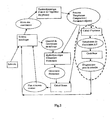
Fig.2 montre un organigramme de déroulement des opérations de simulation qui se répètent en tous les points d'un maillage de pipeline ; - la
Fig.3 montre schématiquement un mode de contrôle que l'on peut appliquer pour mettre en oeuvre toute intervention visant à combattre la formation d'hydrates ; - la
Fig.4 montre la section transversale d'un tube le long duquel courent plusieurs ensembles de tubes ou lignes de circulation de fluides ; - la
Fig.5 montre une comparaison des températures de dissociation d'hydrates calculées aux températures expérimentales dans le cas du méthane. L'histogramme est établi à partir de 158 points expérimentaux ; - la
Fig.6 montre une comparaison des températures de dissociation d'hydrates calculées aux températures expérimentales dans le cas de l'éthane. L'histogramme est établi à partir de 126 points expérimentaux ; - la
Fig.7 montre une comparaison des températures de dissociation d'hydrates calculées aux températures expérimentales dans le cas du propane. L'histogramme est établi à partir de 93 points expérimentaux ; - la
Fig.8 montre une comparaison des températures de dissociation d'hydrates calculées aux températures expérimentales dans le cas de l'isobutane. L'histogramme est établi à partir de 43 points expérimentaux ; - la
Fig.9 montre une comparaison des températures de dissociation d'hydrates calculées aux températures expérimentales dans le cas du dioxyde de carbone. L'histogramme est établi à partir de 102 points expérimentaux ; - la
Fig.10 montre une comparaison des températures de dissociation d'hydrates calculées aux températures expérimentales dans le cas de l'azote. L'histogramme est établi à partir de 57 points expérimentaux ; - la
Fig.11 montre une comparaison des températures de dissociation d'hydrates calculées aux températures expérimentales dans le cas du sulfure d'hydrogène. L'histogramme est établi à partir de 64 points expérimentaux ; - la
Fig. 12 montre une comparaison des températures de dissociation d'hydrates calculées aux températures expérimentales dans le cas de mélanges d'hydrocarbures. L'histogramme est établi à partir de 55 points expérimentaux provenant de 8 mélanges différents ; - la
Fig.13 montre schématiquement un exemple de raccordement d'un pipeline avec un riser avec un point d'injection de gaz (pour gas lift) ; - la
Fig.14 montre dans un diagramme bidimensionnel longueur de conduite-temps, un exemple de domaine que l'on peut calculer par la méthode d'apparition d'hydrates dans l'agencement de laFig.13 ;et - la
Fig.15 montre dans un diagramme bidimensionnel pression-température deux courbes locales d'apparition d'hydrates dans les conduites, selon que l'on tient compte ou non d'une modification de la composition du mélange en circulation.
- the
Fig.1 shows a comparative flowchart of simulation operations in the context of the application of the TACITE code according to whether the risk of hydrate formation is studied or not; - the
Fig.2 shows a flow chart of simulation workflows that are repeated at all points of a pipeline mesh; - the
Fig.3 schematically shows a mode of control that can be applied to implement any intervention to combat the formation of hydrates; - the
Fig.4 shows the cross-section of a tube along which several sets of tubes or fluid circulation lines run; - the
Fig.5 shows a comparison of hydrate dissociation temperatures calculated at experimental temperatures in the case of methane. The histogram is established from 158 experimental points; - the
Fig.6 shows a comparison of hydrate dissociation temperatures calculated at experimental temperatures in the case of ethane. The histogram is established from 126 experimental points; - the
Fig.7 shows a comparison of hydrate dissociation temperatures calculated at experimental temperatures in the case of propane. The histogram is established from 93 experimental points; - the
Fig.8 shows a comparison of hydrate dissociation temperatures calculated at experimental temperatures in the case of isobutane. The histogram is established from 43 experimental points; - the
Fig.9 shows a comparison of hydrate dissociation temperatures calculated at experimental temperatures in the case of carbon dioxide. The histogram is established from 102 experimental points; - the
Fig.10 shows a comparison of hydrate dissociation temperatures calculated at experimental temperatures in the case of nitrogen. The histogram is established from 57 experimental points; - the
Fig.11 shows a comparison of hydrate dissociation temperatures calculated at experimental temperatures in the case of hydrogen sulphide. The histogram is established from 64 experimental points; - the
Fig. 12 shows a comparison of hydrate dissociation temperatures calculated at experimental temperatures in the case of hydrocarbon mixtures. The histogram is established from 55 experimental points from 8 different mixtures; - the
Fig.13 schematically shows an example of connection of a pipeline with a riser with a gas injection point (for gas lift); - the
Fig.14 shows in a two-dimensional diagram length of driving-time, an example of a domain that can be calculated by the method of appearance of hydrates in the arrangement of theFig.13 ;and - the
fig.15 shows in a two-dimensional pressure-temperature diagram two local curves of appearance of hydrates in the pipes, according to whether or not a modification of the composition of the circulating mixture is taken into account.
Les hydrates sont des composés solides constitués de molécules d'hydrocarbures (méthane, éthane, dioxyde de carbone etc.) piégées à haute pression et basse température à l'intérieur de cages approximativement sphériques formées par un réseau cristallin tridimensionnel de molécules d'eau. Cette structure est métastable en l'absence d'hydrocarbures et nécessite un taux de remplissage minimal pour assurer sa stabilisation. A la différence du réseau cristallin de la glace, celui des hydrates peut demeurer stable au-dessus de 0°C.Hydrates are solid compounds consisting of hydrocarbon molecules (methane, ethane, carbon dioxide etc.) trapped at high pressure and low temperature inside approximately spherical cages formed by a three-dimensional crystal lattice of water molecules. This structure is metastable in the absence of hydrocarbons and requires a minimum filling rate to ensure its stabilization. Unlike the ice crystal lattice, the hydrate lattice can remain stable above 0 ° C.
Des mesures par diffraction aux rayons X réalisées dans les années 50 ont permis de mettre en évidence deux structures cristallines des hydrates selon la nature des molécules d'insertion présentes. Dans les deux cas, il s'agit de structures cubiques organisées en réseaux de petites et grandes cavités. Le tableau ci-après montre l'occupation possible des différentes cavités selon la nature des molécules formatrices d'hydrates mises en jeu (+ : occupation possible de la cavité par la molécule ; - : taille de la cavité insuffisante pour contenir la molécule).
Le réseau de la structure I est de type cubique face centrée. Chaque maille contient 46 molécules d'eau organisées en :
- 2 petites cavités de 3,95 Å de rayon,
- 6 grandes cavités de 4,33 Å de rayon.
- 2 small cavities with a radius of 3.95 Å,
- 6 large cavities with a radius of 4.33 Å.
Le cristal de la structure II a le réseau du diamant. Une maille contient 136 molécules d'eau et 24 cavités :
- 16 petites cavités de rayon 3,91 Å,
- 8 grandes cavités de rayon 4,73 Å.
- 16 small cavities with a radius of 3.91 Å,
- 8 large cavities with a radius of 4.73 Å.
Une troisième structure, la structure H, a été également identifiée. Son réseau cristallin, de type hexagonal, est constitué de 34 molécules d'eau et de 6 cavités :
- 2 petites cavités de 3,91 Å de rayon,
- 3 cavités intermédiaires d'un rayon de 4,06 Å,
- 1 grande cavité de 5,71 Å de rayon.
- 2 small cavities with a radius of 3.91 Å,
- 3 intermediate cavities with a radius of 4.06 Å,
- 1 large cavity of 5.71 Å radius.
Cette structure est beaucoup plus rare que les deux précédentes, elle se rencontre principalement dans le cas d'alcanes ou d'alcènes cycliques.This structure is much rarer than the two preceding ones, it is found mainly in the case of alkanes or cyclic alkenes.
Tout calcul de prédiction d'hydrates est basé sur le critère d'équilibre de l'eau en phase hydrate et en phase aqueuse, c'est-à-dire sur l'égalité du potentiel chimique de l'eau dans la phase hydrate et du potentiel chimique de l'eau dans la phase aqueuse :
Selon la théorie statistique de Van Der Waals et Platteeuw décrite dans la publication suivante :Van der Waals, J.H., et al., "Clathrate Solutions", Adv. Chem. Phys., 2, 1, (1959),
le potentiel chimique de l'eau dans la phase hydrate peut s'écrire :
-

- νi : rapport du nombre de cavités de type i (petite ou grande) sur le nombre de molécules d'eau dans un monocristal,
- θ ik : probabilité pour qu'une cavité de type i soit occupée par une molécule hydrocarbonée de type k. D'après la théorie de l'adsorption de Langmuir, cette probabilité peut se calculer par :

the chemical potential of water in the hydrate phase can be written:
-
- ν i : ratio of the number of type i cavities (large or small) on the number of water molecules in a single crystal,
- θ ik : probability for a type i cavity to be occupied by a k- type hydrocarbon molecule. According to the Langmuir adsorption theory, this probability can be calculated by:
Les coefficients de Langmuir peuvent être exprimés à partir du potentiel d'interaction entre les molécules d'eau et les molécules de gaz incluses dans les cavités de la structure cristalline d'hydrate :
Le potentiel de Lennard-Jones entre deux molécules s'écrit :
- ε: profondeur du puits,
- r : distance entre les centres des molécules,
- σ : diamètre d'exclusion, r tel que W(σ) = 0.
- ε: depth of the well,
- r: distance between the centers of the molecules,
- σ: exclusion diameter, r such that W (σ) = 0.
Le potentiel de Kihara est identique à celui de Lennard-Jones, mais les molécules sont considérées comme des sphères de rayon non nul. Son expression analytique est la suivante : 

- ε : profondeur du puits,
- σ : tel que W(σ+2a) = 0,
- a : rayon moyen des 2 molécules,
- r : distance entre les centres des molécules.
- ε: depth of the well,
- σ: such that W (σ + 2a) = 0,
- a : mean radius of the two molecules,
- r : distance between the centers of the molecules.
Enfin, le potentiel à puits carré est donné par :
Les différents paramètres figurant dans les expressions de ces potentiels sont ajustés sur des données expérimentales d'équilibre d'hydrates.The various parameters appearing in the expressions of these potentials are adjusted on experimental hydrate equilibrium data.
Le potentiel chimique de l'eau dans la phase aqueuse s'écrit :

En égalisant les équations (2) et (8), la condition d'équilibre recherchée (1) s'écrit : 
En fixant la pression, cette équation nous permet d'accéder à la température d'équilibre ou inversement, en fixant la température nous obtenons la pression d'équilibre.By setting the pressure, this equation allows us to access the equilibrium temperature or vice versa, by setting the temperature we obtain the equilibrium pressure.
Les différents modules de prédiction d'hydrates sont tous basés sur le formalisme décrit ci-dessus. Ces modules vont essentiellement se différencier dans le choix du potentiel d'interaction eau - hydrocarbure, dans le choix de l'équation d'état utilisée pour le calcul des fugacités ainsi que dans le module de calcul de l'activité de l'eau en phase liquide. Dans ce qui suit, nous présentons plus précisément le module que nous avons adapté pour les besoins de TACITE.The different hydrate prediction modules are all based on the formalism described above. These modules will essentially differentiate in the choice of the water-hydrocarbon interaction potential, in the choice of the state equation used for the calculation of the fugacities as well as in the calculation module of the water activity. liquid phase. In what follows, we present more precisely the module that we adapted for the needs of TACITE.
Le module de prédiction d'hydrates implémenté dans TACITE s'inspire du module de Munck tel que décrit par
Ce module utilise un potentiel W(r) de type puits carré, ce qui conduit à une expression de la constante de Langmuir du composé k dans une cavité de type i sous la forme :
Les fugacités des différents constituants présents dans le mélange, formateurs d'hydrates ou non, sont calculées à l'aide de l'équation d'état de Soave-Redlich-Kwong déjà citée. Un tel calcul se fait par l'appel au module de flash à pression et température fixées intégré dans TACITE.The fugacities of the various constituents present in the mixture, hydrate formers or not, are calculated using the Soave-Redlich-Kwong state equation already mentioned. Such a calculation is done by the call to the fixed pressure and temperature flash module integrated in TACITE.
Le module de Munck néglige la solubilité dans la phase aqueuse des hydrocarbures, de l'azote et du sulfure d'hydrogène. En revanche, la solubilité du dioxyde de carbone dans l'eau ne peut être négligée et est calculée à l'aide de la constante de Henry du CO2 dans l'eau :

Les valeurs des coefficients utilisés pour le calcul de la constante de Henry du CO2 figurent dans le tableau ci-après.
La différence de potentiel chimique entre l'eau liquide pure et l'eau dans la phase hydrate vide (premier membre de l'équation 9), peut s'écrire, moyennant quelques approximations :
Dans cette équation, Δµ0 représente la différence de potentiel chimique de l'eau dans le réseau hydrate vide et dans l'eau liquide à T 0 = 273,15 K. ΔH 0 est la différence d'enthalpie correspondante, ΔCp la différence de capacité calorifique et ΔV la différence de volume. La pression P 0 est la pression de vapeur à T 0 ; étant donné que P 0 est très petit comparé à P, on utilise P 0 = 0.In this equation, Δ μ 0 represents the difference in the chemical potential of water in the vacuum network hydrate and liquid water at T = 273.15 K. Δ 0 H 0 is the corresponding difference in enthalpy .DELTA.C p the difference in heat capacity and Δ V the difference in volume. The pressure P 0 is the vapor pressure at T 0 ; since P 0 is very small compared to P , P 0 = 0 is used.
La dépendance en température du terme PV est moyennée par :
La combinaison des équations (9) et (13) donne l'équation finale (15) :
Dans cette équation les inconnues sont la pression et la température. Nous avons arbitrairement choisi de fixer la pression et de calculer la température d'équilibre des hydrates correspondante. La recherche de cette température, c'est-à-dire la résolution de l'équation (15), s'effectue de manière itérative par une méthode de Newton-Raphson partant d'une température initiale arbitrairement fixée à 0°C. Nous avons vérifié que la valeur de cette initialisation n'influe pas sur le résultat obtenu.In this equation the unknowns are pressure and temperature. We arbitrarily chose to set the pressure and calculate the corresponding hydrate equilibrium temperature. The search for this temperature, that is to say the resolution of equation (15), is carried out iteratively by a Newton-Raphson method starting from an initial temperature arbitrarily set at 0 ° C. We have verified that the value of this initialization does not affect the result obtained.
Nous avons validé le programme sur un ensemble de 700 points d'équilibre expérimentaux issus de 36 références bibliographiques différentes. Les résultats sont présentés sous forme d'histogrammes où figurent en abscisse, l'écart entre la température de dissociation calculée et celle mesurée, et en ordonnée, le pourcentage de points pour lesquels ces écarts de température sont compris entre les limites indiquées en abscisse. Les points expérimentaux utilisés pour réaliser ces histogrammes correspondent à différents couples pression - température.We validated the program on a set of 700 experimental equilibrium points from 36 different bibliographic references. The results are presented in the form of histograms on the abscissa, the difference between the calculated dissociation temperature and that measured, and on the ordinate, the percentage of points for which these temperature differences are between the limits indicated on the abscissa. The experimental points used to make these histograms correspond to different pressure - temperature pairs.
Sur les
Nous constatons que sur l'ensemble des corps purs étudiés, le module utilisé donne d'excellentes prédictions des conditions d'équilibre des hydrates. Pour 99% des points, la température est prédite à ±1°C. Dans tous les cas, l'écart maximal entre les températures de dissociation calculées et mesurées ne dépasse pas 1,6°C.We find that on all the pure bodies studied, the modulus used gives excellent predictions of equilibrium hydrate conditions. For 99% of the points, the temperature is predicted at ± 1 ° C. In all cases, the maximum difference between the calculated and measured dissociation temperatures does not exceed 1.6 ° C.
L'histogramme concernant les données de mélanges d'hydrocarbures, gaz naturels ou huiles, est présenté sur la
L'impact se situe au niveau du regroupement des composants de base (lumping). Dans le cas standard, on cherche à en optimiser le nombre de façon à réduire le temps de calcul tout en gardant une bonne représentation des propriétés d'équilibre et des propriétés des phases. Dans le cas où l'on cherche à prédire les hydrates, il faut pouvoir suivre la composition des composants appelés formateurs d'hydrates et donc, ces composants ne doivent pas être regroupés avec d'autres.The impact lies in the grouping of the basic components (lumping). In the standard case, we try to optimize the number so as to reduce the calculation time while keeping a good representation of the equilibrium properties and properties of the phases. In the case where one seeks to predict the hydrates, it must be possible to follow the composition of the components called hydrate formers and therefore, these components must not be grouped with others.
Outre les données se situant dans les fichiers de type « .PVT », « .MAS » et « .TYP » décrits précisément ci-après, les différentes données d'entrée de TACITE sont regroupées dans 6 fichiers (cf.
- « .SCE » : description du scénario, c'est à dire de l'évolution dans le temps de la valeur des différentes conditions aux limites (débit d'entrée, pression de sortie, ouverture de vanne,...);
- « .TOP » : description de la topographie de la conduite (élévation de la conduite en fonction de la longueur) ;
- « .GEO»: description de la géométrie de la conduite (diamètre, longueur, porosité) ;
- « .THE » : description des isolations thermiques de la conduite ;
- « .MSH » : description du maillage ;
- « .STO » : description du type de fichier de résultats et de la fréquence de stockage des résultats.
- ".SCE": description of the scenario, ie the evolution over time of the value of the different boundary conditions (input flow, outlet pressure, valve opening, ...);
- ".TOP": description of the topography of the pipeline (elevation of the pipe as a function of length);
- ".GEO": description of the geometry of the pipe (diameter, length, porosity);
- ".THE": description of the thermal insulation of the pipe;
- ".MSH": description of the mesh;
- ".STO": description of the result file type and the storage frequency of the results.
Le fichier «.PVT» contient autant de lignes que de données thermodynamiques du fluide à indiquer, respectivement :
- un entier qui définit le type d'équation d'état utilisée : 3 pour Peng-
Robinson ou 4 pour Soave-Redlich-Kwong. - un entier qui définit le nombre de phases ; il est mis à 1 et c'est le flash qui détermine leur nombre.
- le nombre de composants.
- Boucle sur les composants avec indication, pour chacun d'eux, de leur :
- masse molaire [kg/mol].
- température critique [K].
- pression critique [Pa].
- volume critique [m3/mol].
- facteur acentrique [-].
- parachor [((N/m)1/4m3/mol)].
- volume molaire standard (inutilisé).
- facteur de correction volumique [m3/mol].
- coefficients d'enthalpie idéale (tableau de 7 coefficients décrits ci-dessous).
- Fin de la boucle.
- la matrice des coefficients d'interaction binaire [-].
- la température de calage 1 [K], Température de calage 2 [K].
- la viscosité cinématique à la température 1 [m2/s], Viscosité cinématique à la température 2 [m2/s].
- an integer that defines the type of state equation used: 3 for Peng-Robinson or 4 for Soave-Redlich-Kwong.
- an integer that defines the number of phases; it is set to 1 and it is the flash that determines their number.
- the number of components.
- Loop on the components with indication for each one of them:
- molar mass [kg / mol].
- critical temperature [K].
- critical pressure [Pa].
- critical volume [m 3 / mol].
- acentric factor [-].
- parachor [((N / m) 1/4 m 3 / mol)].
- standard molar volume (unused).
- volume correction factor [m 3 / mol].
- ideal enthalpy coefficients (table of 7 coefficients described below).
- End of the loop.
- the matrix of the binary interaction coefficients [-].
- setting temperature 1 [K], setting temperature 2 [K].
- kinematic viscosity at temperature 1 [m 2 / s], kinematic viscosity at temperature 2 [m 2 / s].
Ce fichier comporte également un certain nombre de lignes pour indiquer :
- le nombre de composants initiaux.
- la liste du numéro du groupe dans lequel le composant initial correspondant a été mis. L'ordre est celui dans lequel se trouvaient les composants dans le fichier «.INP ».
- le nombre de pseudo-composants.
- les différentes fractions massiques des composants, ordonnées comme dans le fichier «.PVT».
- the number of initial components.
- the list of the number of the group in which the corresponding initial component was put. The order is the one in which the components were in the ".INP" file.
- the number of pseudo-components.
- the different mass fractions of the components, ordered as in the ".PVT" file.
Ce fichier contient autant de lignes que de pseudo-composants définis dans le fichier «.PVT» et les informations sur les composants tiennent compte de l'ordre dans lequel les composants sont rangés dans le fichier «.PVT».This file contains as many lines as pseudo-components defined in the ".PVT" file and the component information takes into account the order in which the components are stored in the ".PVT" file.
La ième ligne concerne l'identificateur de la nature du ième composant.The i th line concerns the identifier of the nature of the i th component.
La convention suivante est retenue :
- Si le composant est ni l'eau, ni un formateur d'hydrates, son type est mis à 0.
- Si le composant est le sulfure d'hydrogène, son type est mis à 1.
- Si le composant est l'azote, son type est mis à 2.
- Si le composant est le dioxyde de carbone, son type est mis 3.
- Si le composant est le méthane, son type est mis à 4.
- Si le composant est l'éthane, son type est mis à 5.
- Si le composant est le propane, son type est mis à 6.
- Si le composant est l'iso-butane, son type est mis à 7.
- Si le composant est le n-butane, son type est mis à 8.
- Si le composant est l'eau, son type est mis à 9.
- If the component is neither water nor a hydrate trainer, its type is set to 0.
- If the component is hydrogen sulphide, its type is set to 1.
- If the component is nitrogen, its type is set to 2.
- If the component is carbon dioxide, its type is put 3.
- If the component is methane, its type is set to 4.
- If the component is ethane, its type is set to 5.
- If the component is propane, its type is set to 6.
- If the component is iso-butane, its type is set to 7.
- If the component is n-butane, its type is set to 8.
- If the component is water, its type is set to 9.
Le code de simulation TACITE utilise une méthode de résolution numérique de type à volumes finis pour simuler les écoulements dans les installations de production, les conduites étant discrétisées par exemple selon la méthode de maillage décrite dans la demande de brevet
A tout instant, en tout point du maillage, les calculs de modélisation sont conduits selon l'organigramme de la
- Le schéma numérique est alimenté par la donnée des termes de flux et les termes source, la modification des conditions aux limites (scénario).

- Le schéma numérique fournit les masses des constituants, la quantité de mouvement du mélange, l'énergie interne du mélange (non-isotherme).

- La connaissance des masses et de l'énergie fournit, grâce au flash thermodynamique, la pression, la température et la composition massique des phases à l'équilibre.

- Connaissant la pression et la composition massique, il est possible, si l'utilisateur le souhaite (voir partie entourée d'un trait en pointillés), de :

- calculer précisément grâce au module de prédiction d'hydrates, la température Td de dissociation des hydrates (température au-dessous de laquelle si des hydrates se sont formés, ils ne peuvent se dissocier) ;
- d'utiliser un contrôleur C de type PID (
Fig.3 ) pour comparer la température calculée du fluide (Tfluide) à cette température Td de dissociation ; et - d'agir si cette température de fluide est inférieure à la température de dissociation majorée d'un petit écart (pour anticiper le problème éventuel) sur l'un des moyens de contrôle prévu .
- Indépendamment de ce contrôle éventuel, le calcul continue, la connaissance de l'équilibre du mélange et des propriétés des phases, associée à la connaissance de la quantité de mouvement du mélange permet, grâce au module hydrodynamique, de fournir le glissement entre les phases et les frottements pariétaux et interfaciaux.

- Il est alors possible de calculer les termes sources et les flux pour le prochain calcul.

At any moment, at any point in the mesh, the modeling calculations are conducted according to the organization chart of the
- The numerical scheme is fed by the data of the flow terms and the source terms, the modification of the boundary conditions (scenario).
- The numerical diagram gives the masses of the constituents, the quantity of movement of the mixture, the internal energy of the mixture (non-isothermal).
- The knowledge of masses and energy provides, thanks to thermodynamic flash, the pressure, the temperature and the mass composition of the phases at equilibrium.
- Knowing the pressure and the mass composition, it is possible, if the user wishes (see part surrounded by a dashed line), to:
- calculate precisely by means of the hydrate prediction module, the hydrate dissociation temperature Td (temperature below which, if hydrates have formed, they can not dissociate);
- to use a PID type C controller (
Fig.3 ) to compare the calculated fluid temperature (Tfluid) with this dissociation temperature Td; and - to act if this fluid temperature is lower than the dissociation temperature plus a small difference (to anticipate the possible problem) on one of the control means provided.
- Independently of this possible control, the continuous calculation, the knowledge of the equilibrium of the mixture and the properties of the phases, associated with the knowledge of the momentum of the mixture makes it possible, thanks to the hydrodynamic modulus, to provide the slip between the phases and parietal and interfacial friction.
- It is then possible to calculate the source terms and flows for the next calculation.
Les opérations de lutte contre la formation d'hydrates sont généralement très coûteuses. La modélisation fine permise par la méthode selon l'invention, permet à l'exploitant de connaître à tout instant les conditions thermodynamiques régnant tout le long du pipeline et donc de déterminer les endroits où les hydrates sont susceptibles de se former. Il est en mesure quand le besoin s'en fait sentir et seulement à ces moments-là, de mettre en oeuvre des actions pour combattre les dépôts d'hydrates. Les nécessités d'intervention sont plus particulièrement critiques en cas d'arrêt momentané de la production ou quand on procède à des injections de gaz dans le mélange en circulation (aux emplacements de « gas lift ») par exemple.Operations to combat hydrate formation are usually very expensive. The fine modeling allowed by the method according to the invention allows the operator to know at all times the thermodynamic conditions prevailing all along the pipeline and thus to determine the places where the hydrates are likely to form. It is able when the need arises and only at these times, to implement actions to combat hydrate deposits. The intervention needs are more particularly critical in the event of a temporary shutdown of production or when gas is injected into the circulating mixture (at "gas lift" locations) for example.
Un premier mode d'action consiste à réchauffer les fluides en circulation de manière à les amener au-dessus de la température de dissociation d'hydrates que l'on a prédite, au moins aux endroits de la conduite où le risque est apparu. Les conduites pétrolières pour la production marine par grands fonds sont généralement incluses avec d'autres lignes dans une conduite métallique T revêtue extérieurement d'une couche isolante. Cet ensemble de lignes (désigné par « bundies » par les gens de l'art) est réparti souvent en plusieurs faisceaux tels que F1, F2 (cf.
Pour modéliser les transferts thermiques entre les conduites pétrolières de l'ensemble de lignes et leur environnement (autres lignes, milieu extérieur) en tenant compte des moyens d'isolation thermique intercalés, on peut se reporter par exemple à la publication suivante :
-
Duret, E. et al, "Pipeline bundles model implemented into a multiphase flow model", SPE 62948, SPE Annual Technical Conference and Exhibition, Dallas, Texas, 1-4 October (2000
-
Duret, E. et al, "Pipeline bundles model implemented in a multiphase flow model", SPE 62948, SPE Annual Technical Conference and Exhibition, Dallas, Texas, 1-4 October (2000)
Un deuxième mode d'action consiste à injecter dans les fluides des additifs inhibiteurs de type connu s'opposant à la formation d'hydrates.A second mode of action consists in injecting into the fluids inhibiting additives of known type that oppose the formation of hydrates.
Il s'agit d'un système de contrôle basé, non pas sur une mesure fournie par un capteur réel, mais sur une mesure fournie par un capteur dit « logiciel ».It is a control system based, not on a measurement provided by a real sensor, but on a measurement provided by a so-called "software" sensor.
L'utilisation d'un code compositionnel tel que le code TACITE permet en tout point du pipeline, un calcul exact, à la pression calculée du fluide et pour la composition locale calculée en cours de simulation, de la température de dissociation des hydrates, et par conséquent une bien meilleure simulation des risques d'apparition d'hydrates que des codes où la composition est supposée fixe, correspondant à celle que l'on injecte à l'entrée de la conduite. On a pu vérifier par exemple que l'injection de gaz au pied d'un « riser » (technique bien connue des gens de l'art), modifiait les conditions thermodynamiques locales d'un mélange donné de fluides pétroliers, au point que l'on pouvait prédire la formation d'hydrates, alors qu'en supposant une composition fixe du mélange, ce risque n'était aucunement détecté. Nous illustrons ce point avec la simulation effectuée d'une injection de gaz au pied d'un riser se raccordant à un pipeline tel que celui schématisé sur la
La simulation est effectuée en considérant que le mélange initial a été modifié par une injection en bas du riser, de méthane favorisant la formationd'hydrates.The simulation is carried out considering that the initial mixture was modified by an injection at the bottom of the riser, of methane favoring the formation of hydrates.
Dans un diagramme longueur de conduite-temps, le domaine d'apparition d'hydrates que l'on obtient est schématisé à la
On a calculé et représenté sur le diagramme bidimensionnel pression-temps de la
On vérifie aisément sur la
Claims (5)
- A method intended for continuous detection, at any point of a pipe carrying a multiphase mixture of petroleum fluids, of thermodynamic hydrate formation conditions using a mechanistic hydrodynamic module and an integrated compositional thermodynamic module to define the phase properties, and mass conservation and momentum conservation equations, as well as equations of energy transfer in the mixture are applied, considering that the mixture of fluids is substantially continuously at equilibrium, that the composition of the multiphase mixture is variable all along the pipe and that the mass of each constituent of the mixture is globally defined by a mass conservation equation regardless of its phase state, and the petroleum fluids are lumped together into a limited number of pseudo-components, characterized in that the thermodynamic hydrate formation conditions are detected :- by carrying out a particular lumping of the petroleum fluids into pseudo-components so as to isolate the hydrate forming components, with definition for each one of a mass fraction and of a certain number of characteristic physical quantities, and- by applying to said modules data relative to these particular fractions so as to determine at any point the hydrate dissociation temperature (Td).
- A method intended for continuous control of hydrate formation at any point of a pipe carrying a multiphase mixture of petroleum fluids, using a mechanistic hydrodynamic module and an integrated compositional thermodynamic module to define the phase properties, and mass conservation and momentum conservation equations, as well as equations of energy transfer in the mixture are applied, considering that the mixture of fluids is substantially continuously at equilibrium, that the composition of the multiphase mixture is variable all along the pipe and that the mass of each constituent of the mixture is globally defined by a mass conservation equation regardless of its phase state, and the petroleum fluids are lumped together into a limited number of pseudo-components, characterized in that :a) the thermodynamic hydrate formation conditions are detected by :- carrying out a particular lumping of the petroleum fluids into pseudo-components so as to isolate the hydrate forming components, with definition for each one of a mass fraction and of a certain number of characteristic physical quantities, and- by applying to said modules data relative to these particular fractions so as to determine the hydrate dissociation temperature (Td) ;b) a control device (C) is used to compare the temperature of the petroleum fluids with this dissociation temperature (Td) ; andc) measures intended to fight hydrate formation are applied under the control of this control device (C).
- A method as claimed in claim 2, characterized in that heating means associated with pipe (1) are used to raise the temperature of the petroleum fluids above the dissociation temperature.
- A method as claimed in claim 3, characterized in that, pipe (1) being included with at least a second pipe (2, 3) in a tube (T) isolated from the outside medium, second pipe (2, 3) is used for circulation of a warm fluid.
- A method as claimed in claim 2, characterized in that hydrate inhibitors are injected into pipe (1) under the control of control device (C).
Applications Claiming Priority (2)
| Application Number | Priority Date | Filing Date | Title |
|---|---|---|---|
| FR0102842A FR2821675B1 (en) | 2001-03-01 | 2001-03-01 | METHOD FOR DETECTING AND CONTROLLING THE FORMATION OF HYDRATES AT ANY POINT IN A PIPELINE OR CIRCULATING POLYPHASIC OIL FLUIDS |
| FR0102842 | 2001-03-01 |
Publications (2)
| Publication Number | Publication Date |
|---|---|
| EP1237000A1 EP1237000A1 (en) | 2002-09-04 |
| EP1237000B1 true EP1237000B1 (en) | 2010-04-14 |
Family
ID=8860642
Family Applications (1)
| Application Number | Title | Priority Date | Filing Date |
|---|---|---|---|
| EP02290415A Expired - Lifetime EP1237000B1 (en) | 2001-03-01 | 2002-02-21 | Method for detecting and controlling hydrate formation at every point along a pipe in which polyphasic petroleum fluids flow |
Country Status (7)
| Country | Link |
|---|---|
| US (1) | US6871118B2 (en) |
| EP (1) | EP1237000B1 (en) |
| BR (1) | BR0200499A (en) |
| CA (1) | CA2374089C (en) |
| DE (1) | DE60235933D1 (en) |
| FR (1) | FR2821675B1 (en) |
| NO (1) | NO322148B1 (en) |
Families Citing this family (25)
| Publication number | Priority date | Publication date | Assignee | Title |
|---|---|---|---|---|
| US6853921B2 (en) | 1999-07-20 | 2005-02-08 | Halliburton Energy Services, Inc. | System and method for real time reservoir management |
| US7584165B2 (en) * | 2003-01-30 | 2009-09-01 | Landmark Graphics Corporation | Support apparatus, method and system for real time operations and maintenance |
| US20050065660A1 (en) * | 2003-09-16 | 2005-03-24 | Jostein Aleksandersen | Method for repairing an oil or gas pipeline |
| US20050076085A1 (en) * | 2003-09-18 | 2005-04-07 | Vulcan Portals Inc. | Method and system for managing email attachments for an electronic device |
| WO2005038409A2 (en) * | 2003-10-17 | 2005-04-28 | Invensys Systems, Inc. | Flow assurance monitoring |
| US7676352B1 (en) | 2004-04-19 | 2010-03-09 | Invensys Systems, Inc. | System and method for efficient computation of simulated thermodynamic property and phase equilibrium characteristics using comprehensive local property models |
| US20050283276A1 (en) * | 2004-05-28 | 2005-12-22 | Prescott Clifford N | Real time subsea monitoring and control system for pipelines |
| CN1310026C (en) * | 2004-10-12 | 2007-04-11 | 中国科学院广州能源研究所 | Method and device for in-site measuring gas hydrate and deposit sediment heat stability containing hydrate |
| GB0425180D0 (en) * | 2004-11-16 | 2004-12-15 | Univ Heriot Watt | Methods for monitoring hydrate inhibition an early warning system for hydrate formation |
| US20070032994A1 (en) * | 2005-08-02 | 2007-02-08 | Kimminau Stephen J | System and method of flow assurance in a well |
| BRPI0706580A2 (en) * | 2006-01-20 | 2011-03-29 | Landmark Graphics Corp | dynamic production system management |
| FR2917170B1 (en) * | 2007-06-07 | 2009-07-24 | Inst Francais Du Petrole | METHOD FOR DETERMINING THE VISCOSITY OF A PETROLEUM EFFLUENT IN CIRCULATION IN A DRIVE UNDER CONDITIONS OF FORMATION OF HYDRATES |
| EP2179338A1 (en) * | 2007-08-14 | 2010-04-28 | Shell Internationale Research Maatschappij B.V. | System and methods for continuous, online monitoring of a chemical plant or refinery |
| US8469090B2 (en) * | 2009-12-01 | 2013-06-25 | Schlumberger Technology Corporation | Method for monitoring hydrocarbon production |
| WO2012011831A1 (en) | 2010-07-20 | 2012-01-26 | Siemens Aktiengesellschaft | System and method for determination of desposits in multi-phase fluid flow |
| WO2013025420A2 (en) * | 2011-08-16 | 2013-02-21 | Schlumberger Canada Limited | Hydrocarbon recovery employing an injection well and a production well having multiple tubing strings with active feedback control |
| BR112015013691A2 (en) * | 2012-12-27 | 2020-10-20 | Halliburton Energy Services, Inc. | optical device and method for predicting and attenuating hydrate formation using an integrated computational element |
| CN104462684A (en) * | 2014-12-02 | 2015-03-25 | 辽宁石油化工大学 | Method for predicting generation of hydrate in nature gas pipeline |
| WO2016154160A1 (en) * | 2015-03-23 | 2016-09-29 | Schlumberger Technology Corporation | Extended isenthalpic and/or isothermal flash calculation for hydrocarbon components that are soluble in oil, gas and water |
| NO342457B1 (en) * | 2015-06-22 | 2018-05-22 | Future Subsea As | Wax and / or hydrate inhibitor injection system in subsea, oil and gas facilities |
| CN109996987B (en) | 2016-09-09 | 2021-06-18 | 恩文特服务有限责任公司 | Automatic Remelting Control System |
| CN111157510A (en) * | 2020-01-03 | 2020-05-15 | 浙江工业大学 | In-situ online CO determination2Method and apparatus for solubility in alkanes |
| WO2024196416A1 (en) * | 2023-03-21 | 2024-09-26 | Chevron U.S.A. Inc. | Systems and methods for measuring hydrate deposition within a pipeline |
| CN119849340B (en) * | 2025-03-20 | 2025-07-15 | 中国石油大学(华东) | Three-phase flash evaporation calculation method based on machine learning phase identification model |
| CN121838901B (en) * | 2026-03-13 | 2026-05-08 | 中国石油大学(华东) | A method for extrapolating hydrate dissociation time under high methane concentration conditions |
Family Cites Families (9)
| Publication number | Priority date | Publication date | Assignee | Title |
|---|---|---|---|---|
| FR2687223B1 (en) * | 1992-02-12 | 1995-04-07 | Inst Francais Du Petrole | DEVICE AND METHOD FOR MONITORING VARIATIONS IN THE CONSISTENCY OF A MIXTURE. |
| FR2697264B1 (en) * | 1992-10-23 | 1994-12-30 | Inst Francais Du Petrole | Method for reducing the tendency for hydrates to agglomerate in production effluents. |
| US5550761A (en) * | 1994-02-08 | 1996-08-27 | Institut Francais Du Petrole | Method for modelling multiphase flows in pipelines |
| FR2733056B1 (en) * | 1995-04-13 | 1997-05-23 | Inst Francais Du Petrole | APPARATUS FOR DYNAMICALLY MEASURING THE PROPERTIES OF AN EVOLVING FLUID |
| FR2756044B1 (en) * | 1996-11-18 | 1998-12-24 | Inst Francais Du Petrole | METHOD FOR CONSTITUTING A REPRESENTATIVE MODEL OF POLYPHASIC FLOWS IN OIL PRODUCTION PIPES |
| FR2756045B1 (en) * | 1996-11-18 | 1998-12-24 | Inst Francais Du Petrole | METHOD FOR FORMING A SIMULATION MODEL OF TRANSIENT DIPHASIC FLOWS IN CONDUITS |
| GB9706991D0 (en) * | 1997-04-05 | 1997-05-21 | Univ Heriot Watt | Clathrate hydrate dissociation point detection and measurement |
| US6155102A (en) * | 1998-08-06 | 2000-12-05 | Alberta Research Council | Method and apparatus for use in determining a property of a multiphase fluid |
| WO2001003514A1 (en) * | 1999-07-12 | 2001-01-18 | Halliburton Energy Services, Inc. | Method for reducing solids buildup in hydrocarbon streams produced from wells |
-
2001
- 2001-03-01 FR FR0102842A patent/FR2821675B1/en not_active Expired - Fee Related
-
2002
- 2002-02-21 DE DE60235933T patent/DE60235933D1/en not_active Expired - Lifetime
- 2002-02-21 EP EP02290415A patent/EP1237000B1/en not_active Expired - Lifetime
- 2002-02-25 US US10/080,682 patent/US6871118B2/en not_active Expired - Fee Related
- 2002-02-26 CA CA2374089A patent/CA2374089C/en not_active Expired - Fee Related
- 2002-02-28 NO NO20020993A patent/NO322148B1/en not_active IP Right Cessation
- 2002-03-01 BR BR0200499-2A patent/BR0200499A/en not_active Application Discontinuation
Also Published As
| Publication number | Publication date |
|---|---|
| CA2374089A1 (en) | 2002-09-01 |
| FR2821675B1 (en) | 2003-06-20 |
| FR2821675A1 (en) | 2002-09-06 |
| NO322148B1 (en) | 2006-08-21 |
| BR0200499A (en) | 2002-12-31 |
| US20020166818A1 (en) | 2002-11-14 |
| NO20020993L (en) | 2002-09-02 |
| US6871118B2 (en) | 2005-03-22 |
| DE60235933D1 (en) | 2010-05-27 |
| NO20020993D0 (en) | 2002-02-28 |
| EP1237000A1 (en) | 2002-09-04 |
| CA2374089C (en) | 2011-01-11 |
Similar Documents
| Publication | Publication Date | Title |
|---|---|---|
| CA2374089C (en) | Method for detecting and controlling the formation of hydrates at any point in a line in which polyphasic petroleum fluids circulate | |
| Haghighi et al. | Methane and water phase equilibria in the presence of single and mixed electrolyte solutions using the cubic-plus-association equation of state | |
| Yan et al. | Application of the CPA equation of state to reservoir fluids in presence of water and polar chemicals | |
| Cheng et al. | Experimental study on the morphology and memory effect of methane hydrate reformation | |
| Miri | Effects of CO2-Brine-Rock interactions on CO2 injectivity–implications for CCS | |
| Khosharay | Linear gradient theory for modeling investigation on the surface tension of (CH4+ H2O),(N2+ H2O) and (CH4+ N2)+ H2O systems | |
| Rashid et al. | Evolving a robust approach for accurate prediction of methane hydrate formation temperature in the presence of salt inhibitor | |
| Argo et al. | Commercial deployment of low-dosage hydrate inhibitors in a Southern North Sea 69 km wet-gas subsea pipeline | |
| Adeniyi et al. | Hydrate decomposition conditions for liquid water and propane | |
| Sansot et al. | Modeling high‐pressure wax formation in petroleum fluids | |
| Mohammadi et al. | Development of Predictive Techniques for Estimating Liquid Water‐Hydrate Equilibrium of Water‐Hydrocarbon System | |
| Wu et al. | Risk prediction of natural gas hydrate formation in subsea wet gas pipelines with monoethylene glycol injection | |
| Peat et al. | Laboratory Testing to Assess Suitability of Geological Storage Prospects and the Associated Risks of CO2 Hydrates During CO2Injection (III)–Assessment of Thermal Hydrate Inhibitors | |
| Javanmardi et al. | Methane hydrate dissociation conditions in the presence of triethanolamine aqueous solution: experimental measurement and thermodynamic modeling | |
| Naseh et al. | Investigation of ethane hydrate formation during isobaric and isothermal conditions | |
| Favero et al. | Simulating the displacement of a heavy oil by a lighter oil in an offshore production line | |
| Navaneetha Kannan et al. | Gas Hydrate Formation Assessment in Deadlegs and Jumpers: A Comprehensive Review and Field Case Study Analysis | |
| Harun et al. | Managing hydrate risks for a black oil long subsea tie-back when water cut predictions exceed original design | |
| Odutola et al. | Hydrate Risk Management and Evaluation for Gas-Dominated Systems Using Machine Learning | |
| Volk | Displacement & Mixing in Subsea Jumpers–Experimental Data & CFD Simulations | |
| Bruinsma et al. | Methanol losses to the hydrocarbon phases in offshore pipelines and its effect on economics | |
| Cicchini et al. | Comparing equations of state for their prediction of physical properties and pressure rise in confined water–MEG subsea systems | |
| Razavizadeh et al. | Experimental and modeling investigation of gas hydrate phase equilibrium for methane/propane/n-heptane (MPH) ternary hydrates | |
| Ratnakar et al. | Effect of GOR on Gas Diffusivity in Reservoir Fluid Systems | |
| Ayirala et al. | Application of a new mechanistic parachor model to predict dynamic gas-oil miscibility in reservoir crude oil-solvent systems |
Legal Events
| Date | Code | Title | Description |
|---|---|---|---|
| PUAI | Public reference made under article 153(3) epc to a published international application that has entered the european phase |
Free format text: ORIGINAL CODE: 0009012 |
|
| AK | Designated contracting states |
Kind code of ref document: A1 Designated state(s): AT BE CH CY DE DK ES FI FR GB GR IE IT LI LU MC NL PT SE TR |
|
| AX | Request for extension of the european patent |
Free format text: AL;LT;LV;MK;RO;SI |
|
| 17P | Request for examination filed |
Effective date: 20030304 |
|
| AKX | Designation fees paid |
Designated state(s): DE GB IT NL |
|
| 17Q | First examination report despatched |
Effective date: 20090622 |
|
| GRAP | Despatch of communication of intention to grant a patent |
Free format text: ORIGINAL CODE: EPIDOSNIGR1 |
|
| GRAS | Grant fee paid |
Free format text: ORIGINAL CODE: EPIDOSNIGR3 |
|
| GRAA | (expected) grant |
Free format text: ORIGINAL CODE: 0009210 |
|
| AK | Designated contracting states |
Kind code of ref document: B1 Designated state(s): DE GB IT NL |
|
| REG | Reference to a national code |
Ref country code: GB Ref legal event code: FG4D Free format text: NOT ENGLISH |
|
| REG | Reference to a national code |
Ref country code: NL Ref legal event code: T3 |
|
| REF | Corresponds to: |
Ref document number: 60235933 Country of ref document: DE Date of ref document: 20100527 Kind code of ref document: P |
|
| PLBE | No opposition filed within time limit |
Free format text: ORIGINAL CODE: 0009261 |
|
| STAA | Information on the status of an ep patent application or granted ep patent |
Free format text: STATUS: NO OPPOSITION FILED WITHIN TIME LIMIT |
|
| 26N | No opposition filed |
Effective date: 20110117 |
|
| PGFP | Annual fee paid to national office [announced via postgrant information from national office to epo] |
Ref country code: IT Payment date: 20110219 Year of fee payment: 10 Ref country code: DE Payment date: 20110315 Year of fee payment: 10 Ref country code: NL Payment date: 20110228 Year of fee payment: 10 |
|
| REG | Reference to a national code |
Ref country code: DE Ref legal event code: R081 Ref document number: 60235933 Country of ref document: DE Owner name: IFP ENERGIES NOUVELLES, FR Free format text: FORMER OWNER: INSTITUT FRANCAIS DU PETROLE, RUEIL-MALMAISON, FR Effective date: 20110331 Ref country code: DE Ref legal event code: R081 Ref document number: 60235933 Country of ref document: DE Owner name: IFP ENERGIES NOUVELLES, FR Free format text: FORMER OWNER: INSTITUT FRANCAIS DU PETROLE, RUEIL-MALMAISON, HAUTS-DE-SEINE, FR Effective date: 20110331 |
|
| PGFP | Annual fee paid to national office [announced via postgrant information from national office to epo] |
Ref country code: GB Payment date: 20110224 Year of fee payment: 10 |
|
| REG | Reference to a national code |
Ref country code: NL Ref legal event code: V1 Effective date: 20120901 |
|
| GBPC | Gb: european patent ceased through non-payment of renewal fee |
Effective date: 20120221 |
|
| PG25 | Lapsed in a contracting state [announced via postgrant information from national office to epo] |
Ref country code: IT Free format text: LAPSE BECAUSE OF NON-PAYMENT OF DUE FEES Effective date: 20120221 |
|
| REG | Reference to a national code |
Ref country code: DE Ref legal event code: R119 Ref document number: 60235933 Country of ref document: DE Effective date: 20120901 |
|
| PG25 | Lapsed in a contracting state [announced via postgrant information from national office to epo] |
Ref country code: GB Free format text: LAPSE BECAUSE OF NON-PAYMENT OF DUE FEES Effective date: 20120221 Ref country code: NL Free format text: LAPSE BECAUSE OF NON-PAYMENT OF DUE FEES Effective date: 20120901 |
|
| PG25 | Lapsed in a contracting state [announced via postgrant information from national office to epo] |
Ref country code: DE Free format text: LAPSE BECAUSE OF NON-PAYMENT OF DUE FEES Effective date: 20120901 |