EP1221237B1 - Satisfaction de demandes de donnees dans un systeme de telecommunication - Google Patents
Satisfaction de demandes de donnees dans un systeme de telecommunication Download PDFInfo
- Publication number
- EP1221237B1 EP1221237B1 EP00958924A EP00958924A EP1221237B1 EP 1221237 B1 EP1221237 B1 EP 1221237B1 EP 00958924 A EP00958924 A EP 00958924A EP 00958924 A EP00958924 A EP 00958924A EP 1221237 B1 EP1221237 B1 EP 1221237B1
- Authority
- EP
- European Patent Office
- Prior art keywords
- data
- request
- telecommunications
- target address
- unit
- Prior art date
- Legal status (The legal status is an assumption and is not a legal conclusion. Google has not performed a legal analysis and makes no representation as to the accuracy of the status listed.)
- Expired - Lifetime
Links
- 238000004891 communication Methods 0.000 claims abstract description 27
- 230000001413 cellular effect Effects 0.000 claims description 23
- 230000004044 response Effects 0.000 claims description 10
- 230000005540 biological transmission Effects 0.000 claims description 5
- 238000000034 method Methods 0.000 claims description 4
- 238000012546 transfer Methods 0.000 claims description 2
- 238000013459 approach Methods 0.000 description 3
- 238000010295 mobile communication Methods 0.000 description 2
- 230000009471 action Effects 0.000 description 1
- 230000004913 activation Effects 0.000 description 1
- 238000007796 conventional method Methods 0.000 description 1
- 238000012937 correction Methods 0.000 description 1
- 238000010586 diagram Methods 0.000 description 1
- 238000012986 modification Methods 0.000 description 1
- 230000004048 modification Effects 0.000 description 1
- 230000008569 process Effects 0.000 description 1
- 230000011664 signaling Effects 0.000 description 1
- 230000000007 visual effect Effects 0.000 description 1
Images
Classifications
-
- H—ELECTRICITY
- H04—ELECTRIC COMMUNICATION TECHNIQUE
- H04W—WIRELESS COMMUNICATION NETWORKS
- H04W4/00—Services specially adapted for wireless communication networks; Facilities therefor
-
- H—ELECTRICITY
- H04—ELECTRIC COMMUNICATION TECHNIQUE
- H04L—TRANSMISSION OF DIGITAL INFORMATION, e.g. TELEGRAPHIC COMMUNICATION
- H04L67/00—Network arrangements or protocols for supporting network services or applications
- H04L67/01—Protocols
- H04L67/04—Protocols specially adapted for terminals or networks with limited capabilities; specially adapted for terminal portability
-
- H—ELECTRICITY
- H04—ELECTRIC COMMUNICATION TECHNIQUE
- H04L—TRANSMISSION OF DIGITAL INFORMATION, e.g. TELEGRAPHIC COMMUNICATION
- H04L67/00—Network arrangements or protocols for supporting network services or applications
- H04L67/14—Session management
-
- H—ELECTRICITY
- H04—ELECTRIC COMMUNICATION TECHNIQUE
- H04L—TRANSMISSION OF DIGITAL INFORMATION, e.g. TELEGRAPHIC COMMUNICATION
- H04L9/00—Cryptographic mechanisms or cryptographic arrangements for secret or secure communications; Network security protocols
- H04L9/40—Network security protocols
-
- H—ELECTRICITY
- H04—ELECTRIC COMMUNICATION TECHNIQUE
- H04L—TRANSMISSION OF DIGITAL INFORMATION, e.g. TELEGRAPHIC COMMUNICATION
- H04L1/00—Arrangements for detecting or preventing errors in the information received
- H04L1/12—Arrangements for detecting or preventing errors in the information received by using return channel
- H04L1/16—Arrangements for detecting or preventing errors in the information received by using return channel in which the return channel carries supervisory signals, e.g. repetition request signals
- H04L1/18—Automatic repetition systems, e.g. Van Duuren systems
-
- H—ELECTRICITY
- H04—ELECTRIC COMMUNICATION TECHNIQUE
- H04L—TRANSMISSION OF DIGITAL INFORMATION, e.g. TELEGRAPHIC COMMUNICATION
- H04L69/00—Network arrangements, protocols or services independent of the application payload and not provided for in the other groups of this subclass
- H04L69/30—Definitions, standards or architectural aspects of layered protocol stacks
- H04L69/32—Architecture of open systems interconnection [OSI] 7-layer type protocol stacks, e.g. the interfaces between the data link level and the physical level
- H04L69/322—Intralayer communication protocols among peer entities or protocol data unit [PDU] definitions
- H04L69/329—Intralayer communication protocols among peer entities or protocol data unit [PDU] definitions in the application layer [OSI layer 7]
-
- H—ELECTRICITY
- H04—ELECTRIC COMMUNICATION TECHNIQUE
- H04W—WIRELESS COMMUNICATION NETWORKS
- H04W76/00—Connection management
- H04W76/10—Connection setup
-
- H—ELECTRICITY
- H04—ELECTRIC COMMUNICATION TECHNIQUE
- H04W—WIRELESS COMMUNICATION NETWORKS
- H04W8/00—Network data management
- H04W8/26—Network addressing or numbering for mobility support
Definitions
- This invention relates to a telecommunications system having means for attempting to satisfy requests for data.
- the telecommunications system could, for example, be a cellular telephone system.
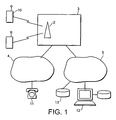
- FIG. 1 is a simplified schematic diagram of a cellular telephone system.
- a cellular telephone 1 can communicate by radio with a base station 2 of a cellular network indicated at 3.
- the cellular network is connected to other telecommunications networks such as a circuit switched public telephone network 4 and a packet switched network such as the internet 5.
- the cellular telephone can communicate with other telecommunications units such as another cellular telephone 10, a land-line telephone 11 or a terminal 12 connected to the internet.
- the terminal 12 could communicate with the cellular telephone 1 for any available packet data service such as e-mail or supply of world-wide web (WWW) pages.
- WWW world-wide web
- a terminal such as cellular telephone 1 may request a WWW page from WWW server 13 connected to the internet.
- the server 13 may transmit another request for the data.
- Such re-requesting may be provided as a feature of data software such as a web-browser operating on the terminal 1, in a similar manner to such features on personal computers with wire-line links to the internet.
- the inventors of the present invention have recognised that the approach described above for re-requesting data can have several disadvantages in a system in which the requesting terminal is connected by radio to the network via which the data is to be provided.
- the radio message carrying the repeated request from the requesting terminal generates additional radio traffic which may cause additional radio interference with other users - especially in a system such as the proposed W-CDMA system in which more than one local user can transmit on the same radio frequency at the same time.
- the requesting terminal remains connected by radio so as to make those requests - this again increases network traffic, and may also mean that the user's phone bill is increased.
- a telecommunications system for receiving from a telecommunications unit a request for data from a target network address, the system comprising: request means for receiving the first request and transmitting a request for the data to the target address; and response means for, on receiving the data from the target address, transmitting the data to the telecommunications unit; and characterised in that the request means comprises completion means for, if it is determined that the request to the target address is not satisfied: attempting to establish communication with the target address, and if it is determined that such communication is possible transmitting an indication to the telecommunications unit.
- the system could be arranged so that the request completion means is not automatically activated when a request is made by the telecommunications unit.
- the request completion means could be activated only if the request is not satisfied. If a request is not satisfied the telecommunications unit could inquire of its user (for example in response to a message from the telecommunications system) whether the request completion means is to be activated.
- the telecommunications system could comprise a buffer for storing the said data until the telecommunications unit is available to receive it.
- a radio telecommunications network comprising the steps of:
- the transmitting of the said request to the target address may involve a message generated by the telecommunications unit being forwarded to the target address or may involve another message generated by the system being forwarded to the target address.
- the said attempting to establish communication with the target address may involve polling the target address to determine whether it is capable of data communication to meet the request or may involve repeating the request.
- the said indication may be an indication that the target address (or a terminal at that address) is capable of data communication, or may be an indication comprising the requested data or substitute data. If the requested data is to be transmitted to the telecommunications unit, especially if it is to be transmitted after an attempt to establish communication as mentioned above, then it may be pushed by the system to the telecommunications unit, for example by means of the "push" facility of the wireless application protocol (WAP).
- WAP wireless application protocol
- the request could be queued at a terminal or associated equipment at the target address.
- the data could then be provided by when its turn arises in the corresponding queue.
- the said attempting to establish communication comprises repeating the transmission of the request to the target address.
- the said determination that such communication is possible may be made on receipt of the said data from the target address and the said transmitting of an indication comprises transmitting the data to the telecommunications unit.
- the said attempting to establish communication may comprises polling the target address to determine whether communication can be made with the target address.
- an internet protocol link can be supported between the telecommunications unit and the target address.
- a terminal addressable by means of the target address is preferably adapted for packet data communication by means of the target address.
- Such a terminal may be a world-wide web server or other data server.
- Such a terminal may comprise a store capable of storing data for transmission over a packet link.
- an internet protocol link adapted for use over a radio link can be supported between the telecommunications system and the telecommunications unit.
- the telecommunications unit is suitably capable of communicating by radio with the telecommunications system.
- the telecommunications unit may be a mobile telephone.
- the telecommunications system is preferably a cellular telecommunications system.
- the said data preferably comprises hypertext transfer protocol data.
- the said target address is preferably a universal resource locator address.
- the completion means is preferably capable of re-establishing a connection with the telecommunications unit in order for the said indication to be carried to the telecommunications unit.
- the mobile unit may, for example, be a radio telephone.
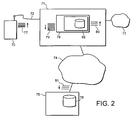
- FIG. 2 illustrates a mobile station 70 in connection with a cellular telephone network 71 via a radio link 72.
- the cellular telephone network is connected to other networks 73, 74.
- network 73 is a circuit switched (CS) network such as a public switched telephone network (PSTN)
- network 74 is a packet switched (PS) network such as the internet.
- the cellular telephone network 71 may be capable of providing the mobile station with a connection to a terminal in the CS network or the PS network so that the mobile station can exchange CS data (such as conventional voice traffic) or PS data (such as data packets) with the terminal.
- CS circuit switched
- PSTN public switched telephone network
- PS packet switched
- the cellular telephone network 71 may be capable of providing the mobile station with a connection to a terminal in the CS network or the PS network so that the mobile station can exchange CS data (such as conventional voice traffic) or PS data (such as data packets) with the terminal.
- CS data such as conventional voice traffic
- PS data
- a terminal 75 is connected to the packet switched network 74.
- the terminal 75 is accessible by means of its address in the network, which may suitably be an IP address or URL.
- the terminal 75 suitably includes a storage means 76 such as a hard disc or other electronic storage medium that stores data.
- the terminal 75 may be configured to transmit data from the storage means to another location in response to a request for that data.
- One example of such a system is for the terminal 75 to represent a world-wide web (WWW) server and for the storage means 76 to store web pages. Then requests for web pages that are addressed to the server 75 and that specify the address of an originating terminal may be routed to the server 75 by the network 74.
- WWW world-wide web
- the server On receiving a request the server generates a response message that is addressed to the originating terminal and that contains the requested page and transmits that message towards the originating terminal over the network 74.
- the response message is directed by the network 74 to the originating terminal which then decodes the message and displays or otherwise processes the page data.
- the mobile station 70 may be capable of supporting a PS network protocol stack such as TCP/IP (transmission control protocol / internet protocol) by means of which it may be able to establish a connection via the cellular telephone network 71 to the PS network 74, and communicate with the web server 75.
- the protocol stack supported by the mobile station may be a conventional protocol stack such as standard TCP/IP or may be a protocol stack that is enhanced for use over radio links such as link 72 by tolerating higher error rates and/or longer gaps in communications than are normally tolerated for fixed data links.
- the enhanced stack is used at the mobile station (at 77) and runs to a gateway unit 78 in the cellular network which operates the enhanced stack (at 79) for its communications with the mobile station and a conventional stack (at 80) for its communications with the PS network 74.
- a communicating unit connected to the PS network (such as server 75) correspondingly uses the conventional stack (at 81).
- TCP/IP any suitable network protocols or protocol stacks could be used.
- the mobile station 70 may make a request for data to a unit such as server 75 in the PS network. If the server 75 or a link to it is busy then the request may be rejected or not answered, and the data will not be supplied to the mobile station 70. As explained above, it would be desirable for there to be a means for such a request to be satisfied.
- Cellular network 71 includes a request completion unit 82.
- the request completion unit 82 is illustrated as a distinct unit in figure 2 but it could in practice be integrated with another network unit and/or provided by means of suitable software rather than dedicated hardware.
- the purpose of the request completion unit is to attempt completion of unanswered requests for packet data by the mobile station 70. If the mobile station 70 requests data (e.g. a web page) from an object terminal (e.g. server 76) that cannot satisfy the request, for example because it is down (inoperative), busy or unreachable the request completion unit repeats the request automatically. It is hoped that the requested data will be provided in response to that request, whereupon that data can be forwarded to the mobile station 70 so as to meet its request for the data. If the data is still not provided the request completion unit may repeat the request again.
- data e.g. a web page
- object terminal e.g. server 76
- the request completion unit may determine that a request has not been satisfied by means of one or both of:
- the request completion unit In order for the request completion unit to perform its function it should be aware of request messages from the mobile station 70 and responses to those messages, and/or of return messages indicating that requests from the mobile station cannot be satisfied.
- the network 71 is preferably configured so that when the mobile station 70 issues a request for packet data (for example a request for a web page), that request is transmitted to the request completion unit 82.
- the request completion unit 82 may then either:
- the request completion unit could poll the address to which the request was directed to determine when the unit at that address was again accessible, and then notify the mobile station 70, which generated the request, that the unit was accessible. The mobile station 70 could then repeat the request itself if necessary.
- the user could be given an altering message, for example as a visual message, a beep or a ringing tone, when the data has been or can be received by the terminal.
- the terminal could be capable of displaying a list of addresses from which data had been unsuccessfully requested but which are now available for providing data.
- the system described above has significant advantages over other approaches, such as relying on the mobile station 70 to repeat requests for the wanted data. If the mobile station 70 repeats requests for the wanted data, that involves increased traffic over the air interface to the cellular network 70. That causes increased signalling load in the network and, in a system in which radio communication by the mobile station 70 may interfere with transmissions of other mobile stations (as in the proposed wideband code division multiple access (W-CDMA) system) increased inter-user interference.
- W-CDMA wideband code division multiple access
- the request completion unit may provide additional functionality, especially in a system that included the general packet radio service (GPRS) or the like. For instance, if there is a delay before the requested data can be provided or before the request completion unit is able to indicate that the object terminal is able to accept requests, the user terminal 70 may have dropped its traffic connection with the network 71. In that case the request completion unit may be able to reestablish that connection, for example by means of a mobile terminated PDP context activation procedure.
- GPRS general packet radio service
- the cellular network could be operable according to any suitable protocol, for example the GSM (Global System for Mobile Communications) system, the proposed W-CDMA system or derivatives thereof.
- GSM Global System for Mobile Communications
- W-CDMA Wideband Code Division Multiple Access
- the mobile station could be a mobile telephone - which could be provided with software to support web browsing or the like, or could be connected to a personal computer to provide that device with radio network connectivity.
- the mobile telephone could have mobile data communicator functionality.
- the present invention may include any feature or combination of features disclosed herein either implicitly or explicitly or any generalisation thereof, irrespective of whether it relates to the presently claimed invention.
Landscapes
- Engineering & Computer Science (AREA)
- Computer Networks & Wireless Communication (AREA)
- Signal Processing (AREA)
- Computer Security & Cryptography (AREA)
- Mobile Radio Communication Systems (AREA)
- Communication Control (AREA)
- Computer And Data Communications (AREA)
- Selective Calling Equipment (AREA)
- Data Exchanges In Wide-Area Networks (AREA)
- Telephonic Communication Services (AREA)
- Management, Administration, Business Operations System, And Electronic Commerce (AREA)
Claims (15)
- Système de télécommunications pour recevoir d'une unité de télécommunications (70) une demande de données provenant d'une adresse réseau cible, le système comprenant :un moyen de demande pour recevoir la première demande et transmettre une demande des données à l'adresse cible ; etun moyen de réponse pour, à la réception des données de l'adresse cible, transmettre les données à l'unité de télécommunications (70) ; etcaractérisé en ce que le moyen de demande comprend un moyen d'exécution (82) pour, s'il est déterminé que la demande à l'adresse cible n'est pas satisfaite :(i) tenter d'établir une communication avec l'adresse cible, et(ii) s'il est déterminé qu'une telle communication est possible, transmettre une indication à l'unité de télécommunications (70).
- Système de télécommunications selon la revendication 1, dans lequel ladite tentative d'établir une communication comprend de répéter la transmission de la demande à l'adresse cible.
- Système de télécommunications selon la revendication 2, dans lequel ladite détermination qu'une telle communication est possible est effectuée à la réception desdites données de l'adresse cible et ladite transmission d'une indication comprend de transmettre les données à l'unité de télécommunications (70).
- Système de télécommunications selon la revendication 1, dans lequel ladite tentative d'établir une communication comprend d'inviter l'adresse cible à émettre pour déterminer si une communication peut être effectuée avec l'adresse cible.
- Système de télécommunications selon une quelconque revendication précédente, dans lequel une liaison sous protocole Internet peut être supportée entre l'unité de télécommunications (70) et l'adresse cible.
- Système de télécommunications selon la revendication 5, dans lequel une liaison sous protocole Internet adaptée à une utilisation sur une liaison radio (72) peut être supportée entre le système de télécommunications (71) et l'unité de télécommunications (70).
- Système de télécommunications selon une quelconque revendication précédente, dans lequel l'unité de télécommunications (70) est apte à communiquer par radio avec le système de télécommunications (71).
- Système de télécommunications selon la revendication 7, dans lequel l'unité de télécommunications (70) est un téléphone mobile.
- Système de télécommunications selon une quelconque revendication précédente, dans lequel le système de télécommunications (71) est un système de télécommunications cellulaire.
- Système de télécommunications selon une quelconque revendication précédente, dans lequel les données comprennent des données de protocole de transfert hypertexte.
- Système de télécommunications selon une quelconque revendication précédente, dans lequel l'adresse cible est une adresse Internet.
- Système de télécommunications selon une quelconque revendication précédente, dans lequel le moyen d'exécution (82) est apte à rétablir une connexion avec l'unité de télécommunications (70) pour que ladite indication soit envoyée à l'unité de télécommunications (70).
- Système de télécommunications selon une quelconque revendication précédente, dans lequel ladite indication est envoyée au moyen d'un service de pousser de données.
- Système de télécommunications selon une quelconque revendication précédente, dans lequel l'unité de télécommunications (70) est apte à alerter un utilisateur du terminal que lesdites données sont disponibles.
- Procédé d'exploitation d'un réseau de télécommunications radio, comprenant les étapes de :réception par radio d'une unité de télécommunications (70) d'une demande de données provenant d'une adresse réseau cible ;transmission d'une demande des données à l'adresse cible ;à la réception des données de l'adresse cible, transmission des données à l'unité de télécommunications (70) ; etcaractérisé en ce que, s'il est déterminé que la demande à l'adresse cible n'est pas satisfaite :(i) tenter d'établir une communication avec l'adresse cible, et(ii) s'il est déterminé qu'une telle communication est possible, transmettre une indication à l'unité de télécommunications (70).
Applications Claiming Priority (3)
| Application Number | Priority Date | Filing Date | Title |
|---|---|---|---|
| GB9921583 | 1999-09-13 | ||
| GB9921583A GB2359959B (en) | 1999-09-13 | 1999-09-13 | Satisfying data requests in a telecommunications system |
| PCT/IB2000/001322 WO2001020873A1 (fr) | 1999-09-13 | 2000-09-05 | Satisfaction de demandes de donnees dans un systeme de telecommunication |
Publications (2)
| Publication Number | Publication Date |
|---|---|
| EP1221237A1 EP1221237A1 (fr) | 2002-07-10 |
| EP1221237B1 true EP1221237B1 (fr) | 2010-04-14 |
Family
ID=10860801
Family Applications (1)
| Application Number | Title | Priority Date | Filing Date |
|---|---|---|---|
| EP00958924A Expired - Lifetime EP1221237B1 (fr) | 1999-09-13 | 2000-09-05 | Satisfaction de demandes de donnees dans un systeme de telecommunication |
Country Status (9)
| Country | Link |
|---|---|
| US (1) | US7333499B1 (fr) |
| EP (1) | EP1221237B1 (fr) |
| JP (1) | JP2003509971A (fr) |
| AT (1) | ATE464725T1 (fr) |
| AU (1) | AU7033000A (fr) |
| DE (1) | DE60044197D1 (fr) |
| ES (1) | ES2344500T3 (fr) |
| GB (1) | GB2359959B (fr) |
| WO (1) | WO2001020873A1 (fr) |
Family Cites Families (8)
| Publication number | Priority date | Publication date | Assignee | Title |
|---|---|---|---|---|
| JPH08307852A (ja) | 1995-04-27 | 1996-11-22 | Nippon Telegr & Teleph Corp <Ntt> | サービスアクセス方法及びシステム |
| JPH0918056A (ja) | 1995-06-27 | 1997-01-17 | Toshiba Corp | 半導体発光素子 |
| JPH0918956A (ja) | 1995-07-03 | 1997-01-17 | Nec Corp | 無線データ通信システム |
| US5809415A (en) * | 1995-12-11 | 1998-09-15 | Unwired Planet, Inc. | Method and architecture for an interactive two-way data communication network |
| AUPN955096A0 (en) | 1996-04-29 | 1996-05-23 | Telefonaktiebolaget Lm Ericsson (Publ) | Telecommunications information dissemination system |
| US5878397A (en) | 1996-07-10 | 1999-03-02 | Telefonaktiebolaget L M Ericsson (Publ) | Method for transporting short messages in a wireless telecommunications system |
| JPH10312351A (ja) | 1997-03-10 | 1998-11-24 | N T T Data:Kk | データ通信システム及び方法並びに同システムのための代行サーバ |
| US6178331B1 (en) | 1997-06-17 | 2001-01-23 | Bulletin.Net, Inc. | System and process for allowing wireless messaging |
-
1999
- 1999-09-13 GB GB9921583A patent/GB2359959B/en not_active Expired - Fee Related
-
2000
- 2000-09-05 ES ES00958924T patent/ES2344500T3/es not_active Expired - Lifetime
- 2000-09-05 JP JP2001524327A patent/JP2003509971A/ja active Pending
- 2000-09-05 WO PCT/IB2000/001322 patent/WO2001020873A1/fr not_active Ceased
- 2000-09-05 US US10/070,837 patent/US7333499B1/en not_active Expired - Fee Related
- 2000-09-05 AT AT00958924T patent/ATE464725T1/de not_active IP Right Cessation
- 2000-09-05 EP EP00958924A patent/EP1221237B1/fr not_active Expired - Lifetime
- 2000-09-05 AU AU70330/00A patent/AU7033000A/en not_active Abandoned
- 2000-09-05 DE DE60044197T patent/DE60044197D1/de not_active Expired - Lifetime
Also Published As
| Publication number | Publication date |
|---|---|
| JP2003509971A (ja) | 2003-03-11 |
| GB9921583D0 (en) | 1999-11-17 |
| EP1221237A1 (fr) | 2002-07-10 |
| US7333499B1 (en) | 2008-02-19 |
| ATE464725T1 (de) | 2010-04-15 |
| AU7033000A (en) | 2001-04-17 |
| ES2344500T3 (es) | 2010-08-30 |
| DE60044197D1 (de) | 2010-05-27 |
| GB2359959A (en) | 2001-09-05 |
| GB2359959B (en) | 2004-01-07 |
| WO2001020873A1 (fr) | 2001-03-22 |
Similar Documents
| Publication | Publication Date | Title |
|---|---|---|
| US6549776B1 (en) | System, method, and apparatus for pushing data in a direct digital call environment | |
| US8649314B2 (en) | Peer-to-peer mobile data transfer method and device | |
| EP1082648B1 (fr) | Procede de transmission de messages multimedia et systeme de communication de messages multimedia | |
| AU671186B2 (en) | A method for starting a short message transmission in a mobile telephone network | |
| EP1234424B1 (fr) | Appareil permettant de fournir des services d'informations a un utilisateur de dispositif de telecommunication | |
| CN1082773C (zh) | 蜂窝通信系统中启动短消息的发送 | |
| JPH1127290A5 (fr) | ||
| CA2469581A1 (fr) | Operations d'interface utilisateur avancees dans un appareil sans fil bimodal | |
| JPH08501669A (ja) | 短メッセージの送信開始方法 | |
| US20040048629A1 (en) | Server and method for short message service in private wireless network interworkig with public land mobile network | |
| WO2003030471A1 (fr) | Messagerie vocale paquetisee | |
| KR100610039B1 (ko) | 모바일 무선 통신 시스템에서 통합된 서비스들을 제공하는방법 및 시스템 | |
| US7139588B2 (en) | Method of switching communication mode to voice communication in response to voice communication request during data communication in mobile station and system for managing service using the same | |
| WO2001020929A1 (fr) | Procede et appareil permettant la transmission de messages courts entre une ligne fixe et des reseaux telephoniques cellulaires | |
| US20030045310A1 (en) | Status enquiry in a wireless communication system | |
| US7333499B1 (en) | Satisfying data requests in a telecommunications system | |
| EP1444856B1 (fr) | Itinerance en environnement mms | |
| US7940730B1 (en) | Network-initiated method and system for establishing data communication using IP with a wireless terminal | |
| KR100529462B1 (ko) | 사용자 부재시 위치정보 제공 방법 | |
| US7228153B2 (en) | Apparatus for providing information services to a telecommunication device user | |
| KR20050071723A (ko) | 이동통신시스템에서 상대 단말기의 상태를 알려주기 위한방법 | |
| CN1802863B (zh) | 移动业务的通信方法 | |
| KR20030008902A (ko) | 이동 단말기와 고정 단말기간 양방향 통신 방법 | |
| KR200404225Y1 (ko) | 무선랜을 통해 멀티미디어 메시지 서비스를 설정하기 위한무선 통신 시스템 | |
| KR20030010253A (ko) | 단문 메시지 자동 전환 방법 |
Legal Events
| Date | Code | Title | Description |
|---|---|---|---|
| PUAI | Public reference made under article 153(3) epc to a published international application that has entered the european phase |
Free format text: ORIGINAL CODE: 0009012 |
|
| 17P | Request for examination filed |
Effective date: 20020411 |
|
| AK | Designated contracting states |
Kind code of ref document: A1 Designated state(s): AT BE CH CY DE DK ES FI FR GB GR IE IT LI LU MC NL PT SE |
|
| AX | Request for extension of the european patent |
Free format text: AL;LT;LV;MK;RO;SI |
|
| 17Q | First examination report despatched |
Effective date: 20061129 |
|
| RAP1 | Party data changed (applicant data changed or rights of an application transferred) |
Owner name: NOKIA SIEMENS NETWORKS OY |
|
| GRAP | Despatch of communication of intention to grant a patent |
Free format text: ORIGINAL CODE: EPIDOSNIGR1 |
|
| RIN1 | Information on inventor provided before grant (corrected) |
Inventor name: NIEMINEN, MARI,C/O NOKIA NETWORKS OY Inventor name: TUDOSE, LUCIA,C/O NOKIA NETWORKS OY Inventor name: LEPPANEN, EVA MARIA,C/O NOKIA NETWORKS OY Inventor name: USKELA, SAMI,C/O NOKIA NETWORKS OY Inventor name: RAUTIAINEN, AAPO,C/O NOKIA NETWORKS OY |
|
| GRAS | Grant fee paid |
Free format text: ORIGINAL CODE: EPIDOSNIGR3 |
|
| GRAA | (expected) grant |
Free format text: ORIGINAL CODE: 0009210 |
|
| AK | Designated contracting states |
Kind code of ref document: B1 Designated state(s): AT BE CH CY DE DK ES FI FR GB GR IE IT LI LU MC NL PT SE |
|
| REG | Reference to a national code |
Ref country code: GB Ref legal event code: FG4D |
|
| REG | Reference to a national code |
Ref country code: CH Ref legal event code: EP |
|
| REG | Reference to a national code |
Ref country code: IE Ref legal event code: FG4D |
|
| REF | Corresponds to: |
Ref document number: 60044197 Country of ref document: DE Date of ref document: 20100527 Kind code of ref document: P |
|
| REG | Reference to a national code |
Ref country code: NL Ref legal event code: T3 |
|
| REG | Reference to a national code |
Ref country code: ES Ref legal event code: FG2A Ref document number: 2344500 Country of ref document: ES Kind code of ref document: T3 |
|
| PG25 | Lapsed in a contracting state [announced via postgrant information from national office to epo] |
Ref country code: SE Free format text: LAPSE BECAUSE OF FAILURE TO SUBMIT A TRANSLATION OF THE DESCRIPTION OR TO PAY THE FEE WITHIN THE PRESCRIBED TIME-LIMIT Effective date: 20100414 |
|
| PG25 | Lapsed in a contracting state [announced via postgrant information from national office to epo] |
Ref country code: FI Free format text: LAPSE BECAUSE OF FAILURE TO SUBMIT A TRANSLATION OF THE DESCRIPTION OR TO PAY THE FEE WITHIN THE PRESCRIBED TIME-LIMIT Effective date: 20100414 Ref country code: AT Free format text: LAPSE BECAUSE OF FAILURE TO SUBMIT A TRANSLATION OF THE DESCRIPTION OR TO PAY THE FEE WITHIN THE PRESCRIBED TIME-LIMIT Effective date: 20100414 |
|
| PG25 | Lapsed in a contracting state [announced via postgrant information from national office to epo] |
Ref country code: GR Free format text: LAPSE BECAUSE OF FAILURE TO SUBMIT A TRANSLATION OF THE DESCRIPTION OR TO PAY THE FEE WITHIN THE PRESCRIBED TIME-LIMIT Effective date: 20100715 Ref country code: CY Free format text: LAPSE BECAUSE OF FAILURE TO SUBMIT A TRANSLATION OF THE DESCRIPTION OR TO PAY THE FEE WITHIN THE PRESCRIBED TIME-LIMIT Effective date: 20100414 |
|
| PG25 | Lapsed in a contracting state [announced via postgrant information from national office to epo] |
Ref country code: PT Free format text: LAPSE BECAUSE OF FAILURE TO SUBMIT A TRANSLATION OF THE DESCRIPTION OR TO PAY THE FEE WITHIN THE PRESCRIBED TIME-LIMIT Effective date: 20100816 Ref country code: DK Free format text: LAPSE BECAUSE OF FAILURE TO SUBMIT A TRANSLATION OF THE DESCRIPTION OR TO PAY THE FEE WITHIN THE PRESCRIBED TIME-LIMIT Effective date: 20100414 |
|
| PLBE | No opposition filed within time limit |
Free format text: ORIGINAL CODE: 0009261 |
|
| STAA | Information on the status of an ep patent application or granted ep patent |
Free format text: STATUS: NO OPPOSITION FILED WITHIN TIME LIMIT |
|
| PG25 | Lapsed in a contracting state [announced via postgrant information from national office to epo] |
Ref country code: BE Free format text: LAPSE BECAUSE OF FAILURE TO SUBMIT A TRANSLATION OF THE DESCRIPTION OR TO PAY THE FEE WITHIN THE PRESCRIBED TIME-LIMIT Effective date: 20100414 |
|
| 26N | No opposition filed |
Effective date: 20110117 |
|
| PG25 | Lapsed in a contracting state [announced via postgrant information from national office to epo] |
Ref country code: IT Free format text: LAPSE BECAUSE OF FAILURE TO SUBMIT A TRANSLATION OF THE DESCRIPTION OR TO PAY THE FEE WITHIN THE PRESCRIBED TIME-LIMIT Effective date: 20100414 |
|
| PG25 | Lapsed in a contracting state [announced via postgrant information from national office to epo] |
Ref country code: MC Free format text: LAPSE BECAUSE OF NON-PAYMENT OF DUE FEES Effective date: 20100930 |
|
| REG | Reference to a national code |
Ref country code: CH Ref legal event code: PL |
|
| GBPC | Gb: european patent ceased through non-payment of renewal fee |
Effective date: 20100905 |
|
| REG | Reference to a national code |
Ref country code: DE Ref legal event code: R119 Ref document number: 60044197 Country of ref document: DE Effective date: 20110401 |
|
| PG25 | Lapsed in a contracting state [announced via postgrant information from national office to epo] |
Ref country code: LI Free format text: LAPSE BECAUSE OF NON-PAYMENT OF DUE FEES Effective date: 20100930 Ref country code: CH Free format text: LAPSE BECAUSE OF NON-PAYMENT OF DUE FEES Effective date: 20100930 Ref country code: IE Free format text: LAPSE BECAUSE OF NON-PAYMENT OF DUE FEES Effective date: 20100905 Ref country code: DE Free format text: LAPSE BECAUSE OF NON-PAYMENT OF DUE FEES Effective date: 20110401 |
|
| PG25 | Lapsed in a contracting state [announced via postgrant information from national office to epo] |
Ref country code: GB Free format text: LAPSE BECAUSE OF NON-PAYMENT OF DUE FEES Effective date: 20100905 |
|
| PG25 | Lapsed in a contracting state [announced via postgrant information from national office to epo] |
Ref country code: LU Free format text: LAPSE BECAUSE OF NON-PAYMENT OF DUE FEES Effective date: 20100905 |
|
| PGFP | Annual fee paid to national office [announced via postgrant information from national office to epo] |
Ref country code: ES Payment date: 20120926 Year of fee payment: 13 |
|
| REG | Reference to a national code |
Ref country code: ES Ref legal event code: FD2A Effective date: 20141014 |
|
| PGFP | Annual fee paid to national office [announced via postgrant information from national office to epo] |
Ref country code: FR Payment date: 20140919 Year of fee payment: 15 |
|
| REG | Reference to a national code |
Ref country code: FR Ref legal event code: CD Owner name: NOKIA SOLUTIONS AND NETWORKS OY, FI Effective date: 20141201 |
|
| PG25 | Lapsed in a contracting state [announced via postgrant information from national office to epo] |
Ref country code: ES Free format text: LAPSE BECAUSE OF NON-PAYMENT OF DUE FEES Effective date: 20130906 |
|
| REG | Reference to a national code |
Ref country code: NL Ref legal event code: TD Effective date: 20150126 |
|
| PGFP | Annual fee paid to national office [announced via postgrant information from national office to epo] |
Ref country code: NL Payment date: 20140918 Year of fee payment: 15 |
|
| REG | Reference to a national code |
Ref country code: NL Ref legal event code: MM Effective date: 20151001 |
|
| REG | Reference to a national code |
Ref country code: FR Ref legal event code: ST Effective date: 20160531 |
|
| PG25 | Lapsed in a contracting state [announced via postgrant information from national office to epo] |
Ref country code: FR Free format text: LAPSE BECAUSE OF NON-PAYMENT OF DUE FEES Effective date: 20150930 Ref country code: NL Free format text: LAPSE BECAUSE OF NON-PAYMENT OF DUE FEES Effective date: 20151001 |