EP1217536A2 - Méthode de conversion de documents avec codages nationaux différents - Google Patents
Méthode de conversion de documents avec codages nationaux différents Download PDFInfo
- Publication number
- EP1217536A2 EP1217536A2 EP01303004A EP01303004A EP1217536A2 EP 1217536 A2 EP1217536 A2 EP 1217536A2 EP 01303004 A EP01303004 A EP 01303004A EP 01303004 A EP01303004 A EP 01303004A EP 1217536 A2 EP1217536 A2 EP 1217536A2
- Authority
- EP
- European Patent Office
- Prior art keywords
- information
- converting
- original
- document
- identifying
- Prior art date
- Legal status (The legal status is an assumption and is not a legal conclusion. Google has not performed a legal analysis and makes no representation as to the accuracy of the status listed.)
- Ceased
Links
Images




Classifications
-
- G—PHYSICS
- G06—COMPUTING OR CALCULATING; COUNTING
- G06F—ELECTRIC DIGITAL DATA PROCESSING
- G06F40/00—Handling natural language data
- G06F40/40—Processing or translation of natural language
- G06F40/58—Use of machine translation, e.g. for multi-lingual retrieval, for server-side translation for client devices or for real-time translation
-
- G—PHYSICS
- G06—COMPUTING OR CALCULATING; COUNTING
- G06F—ELECTRIC DIGITAL DATA PROCESSING
- G06F40/00—Handling natural language data
- G06F40/10—Text processing
- G06F40/12—Use of codes for handling textual entities
- G06F40/151—Transformation
- G06F40/16—Automatic learning of transformation rules, e.g. from examples
Definitions
- the present invention relates to a converting method, a device, a program, and a storing medium storing the program for converting document data, which is generated based on a predetermined display rule into data having a display form of a different display rule.
- an operator is required to search out an input page or document data that is generated for the locale to which the user belongs.
- the converting method includes the steps of identifying original locale information of an original document, identifying original item information of the original document, determining a converting process based on the original locale information and further on subject locale information of a subject document, and converting data contents of the original information by the converting process.
- the converting program includes the programs of identifying original locale information of an original document, identifying original item information of the original document, determining a converting process based on the original locale information and further on subject locale information of a subject document, and converting data contents of the original information by the converting process.
- a converting device including identifying means for identifying original locale information and original item information of an original document, determining means for determining a converting process based on the original locale information and further on subject locale information of a subject document, and converting means for converting data contents of the original information by the converting process.
- the document file includes specific data that is specific to a document application and subject data that is subject to a converting process.
- a specific data region there are stored display control data, document control data, and other data.
- the display control data is used for displaying the subject data, for example.
- the document control data is unrelated to the converting process.
- the other data is unnecessary to be converted.
- a subject data region there are stored the subject data itself and also an information required for the converting process. It should be noted that the specific data and the subject data can alternatively be stored in two different files.
- the files are linked to each other by including link information to the specific data, by a predetermined rule which is determined based both on storing locations and names of the files, or any other linking method.
- the specific data may be data stored in a general-purpose format, such as a style sheet.
- the document file can include the subject data only, without including the specific data.
- the original document includes information including a form identification (ID), a locale ID, an item ID, an item attribute, and item data.
- ID a form identification
- the information may be stored in a document file in any format. However, in a following example, it is assumed that the information is stored in a tag format in the document file in order to simplify explanation.
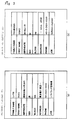
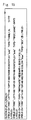
- Fig. 3(a) shows how the information in the tag format is displayed
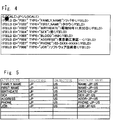
- Fig. 4 shows the contents of the document file.
- the information may be directly retrieved in accordance with the specification of the format of the opened document file. Alternatively, the information may be retrieved via an API which is provided by a driver software or a filter software.
- the driver software and the filter software provide a read-and-write interface for each document file format.
- ruled lines define a right side column and a left side column.
- Data listed in the left side column (simply referred to as “left column data” hereinafter) and the ruled lines are handled as the specific data of the document file.
- Data listed in the right side column (simply referred to as “right column data” hereinafter) in Fig. 3(a) is handled as the subject data (details will be described later).
- a locale to which the original document is converted (referred to as "objective locale") is specified in accordance with a command from an operator.
- object locale a locale to which the original document is converted
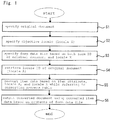
- a form data file is specified based on the form ID of the original document and the objective locale, i.e., the locale "US" in the present example.
- the form data file is specified by using an index file of the form data file.
- the index file includes a form ID, a locale ID, and a file name.
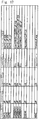
- the form data file includes, as shown in Fig. 2(c), an item ID, an item attribute, item location information, ruled-line information, and the like.
- a locale ID of the original document is retrieved by searching through a LOCALE tag.
- a locale "JP" is retrieved in S4.
- the item data of the original document is converted based on all of the item attribute, the locale "JP", and the locale "US”, while referring to a converting process table shown in Fig. 5.
- the converting process table includes columns for ATTRIBUTE, ORIGINAL LOCALE, OBJECTIVE LOCALE, and PROCESS NAME. Listed in the ATTRIBUTE column are "FAMILY NAME”, “FIRST NAME”, “BIRTHDATE”, “SEX”, “ADDRESS”, "PHONE”, and “JOB”. "JP” is set in the ORIGINAL LOCALE column, and "US” in the OBJECTIVE LOCALE column. Module names to execute are written in the FILE NAME column.
- the converting process table may be configured in a manner shown in Fig. 6 instead.
- the converting process table is referred to in a manner described next.
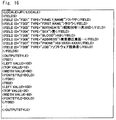
- a portion of data sandwiched between a FIELD tag, a start tag ⁇ FIELD> and an end tag ⁇ /FIELD> is retrieved and set as data value.
- the converting process table retrieves a converting process module name, which is specified by the attribute, the original locale, and the objective locale.
- a process is executed by a "NAME-JP-US” module for the field F001. That is, "NAME-JP-US” module is retrieved for the data value of "tsubasa(in Japanese)", and a data value of "tsubasa” is received a resultant value.
- the resultant value can be received throuth stack, a memory, a file, or standard output.
- Katakana characters are simply converted to alphabetical characters.
- Chinese characters may also be converted into alphabetical characters by the "NAME-JP-US" module referring to a biographical dictionary provided thereto.
- objective locale information included in the converting process table (Fig. 3) may be automatically retrieved from an OS which is currently driving, without receiving a command from the operator.
- a resultant file shown in Fig. 7 is output along with the specific information, i.e., the ruled lines and the left column data, and is displayed by a viewer software in a manner shown in Fig. 3(b). Then, the present routine is ended.
- Fig. 8 corresponds to Fig. 4 of the first embodiment. Any other configurations of the second embodiment is the same as that of the first embodiment, so description for these configurations will be omitted here in order to avoid duplication in explanation.
- the left column data is handled as the specific information.
- the left column data is handled as a field, which is indicated in the third and fifth lines of Fig. 8. That is, the item names are also subject to the locale conversion.
- a document file includes form identification information in addition to the contents of the document file shown in Fig. 4 of the above-described first embodiment. Accordingly, the form identification information also is subject to the converting process.
- the converting software retrieves the form identification information also. Because processes other than an output process for outputting converted resultant data are all the same as those described for the above first embodiment, description will be provided only for the output process, and description for any other processes will be omitted here. The output process will be described below.
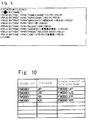
- the converted data When outputting the converted data, it is determined locale-classified form data (Fig. 11) corresponding to the objective locale and the form identification information while referring to an index (Fig. 10) of form data. Then, the converted data is output based on the locale-classified form data (Fig. 11).
- Fig. 12 shows an example of when a FIELD tag is output with information on the form data appended thereto (see underlined part in Fig. 12).
- Form data other than FIELD-type form data may be output along with FIELD-type data while specifying a predetermined tag (Fig. 13).
- the form data other than FIELD-type form data may be output as the specific data of the document application.
- Some fields may exist in an original document, but not in objective form data. In this case, it is preferable to output such fields with an option parameter appended thereto.
- the option parameter indicates a hidden attribute (Fig. 14). Field information appended with the hidden attribute "HIDDEN" is ignored during displaying and printing, and is handled as a normal field during conversion.
- a format enabling desirable display of the document is set for each of locales. Accordingly, a converted document can be displayed in a desirable and proper manner.
- a form of a converted document is determined based on the form identification information of the original document
- the form may be determined in accordance with an input command from the operator.
- the original document can be converted into a document in a various different formats. For example, when the operator wishes to obtain a document for the elderly, an original document may be converted into a document with a relatively large font size.
- the converting process software retrieves output-attribute information of each field, such as an output location, an output width, and the like, from an original document.
- output-attribute information of each field such as an output location, an output width, and the like.
- the output-attribute information may be included in each tag of the subject data.
- the output attributes of the field may be defined outside the subject data. This method is called style sheet.
- the information may be recorded as a part of the specific information of the document application.
- the output attribute information can be stored in any storing location as long as the converting software is capable of retrieving the output attributes by referring to the field name.
- a converting process table according to the fifth embodiment includes columns for ATTRIBUTE, ORIGINAL LOCALE, OBJECTIVE LOCALE, INTERFACE, and PROCESS NAME.
- Attributes written in the ATTRIBUTE column are "DATE”, “CURRENCY”, “PHONE”, and “MISCELLANEOUS".
- JP "US”, "FR”, and the like are written in the ORIGINAL LOCALE column and the OBJECTIVE LOCALE column.
- Internal "DLL”, “Java”, “Macro”, “Application”, and the like can be written in the INTERFACE column.
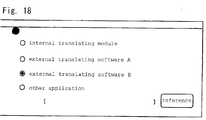
- a software selection list shown in Fig. 18 is displayed so as to enabling the operator to select or set a desired converting process.
- the operator can select a desired software from a various translation software available on the market in a simple and easy manner.
- the software selection list is displayed in a manner shown in Fig. 18.
- the software selection list may be either a predetermined selection list or generated each time when displayed. In latter case, translation software installed are detected when displayed, thereby generating the software selection list listing the detected software.
- "external translation software A" and the like may be replaced by an actual name of software.
- the operator finds no desired translation software in the software selection list, then the operator either selects "other applications” or clicks on a reference button.
- “other applications” is selected, an input box is displayed. The user inputs the name of a desired software in the input box.
- a file list is displayed, from which the operator selects the desired one.
- the display of Fig. 18 may be displayed, so that the operator can update the software selection list as desired and set the same as default.
- the above embodiments are described for when two languages have substantially a different structure.
- the present invention may also be adopted for a time difference, a weight-and-measuring difference, and the like. In these cases, a converting process is performed, rather than the translating process.
- a hidden attribute "HIDDEN” is appended as field information.
- an option attribute indicating whether or not to execute a process, such as translation, conversion, and the like, may be appended.
- document data is converted based on locales such that the document data is properly displayed in a locale different from an original locale. Also, the document data that has been once converted can be further converted for other locale.
- form data is prepared for each of locales. This enables conversion of the documents without undesirably changing a ruled-line position, a display width of each item, and the like.
- a single set of data can be expressed in a various different manners. Accordingly, the data can be converted into data in a plurality of different locales.
- a document conversion and a document display can be customized as the operator desires.
Landscapes
- Engineering & Computer Science (AREA)
- Theoretical Computer Science (AREA)
- Audiology, Speech & Language Pathology (AREA)
- Health & Medical Sciences (AREA)
- Computational Linguistics (AREA)
- General Health & Medical Sciences (AREA)
- Physics & Mathematics (AREA)
- General Engineering & Computer Science (AREA)
- General Physics & Mathematics (AREA)
- Artificial Intelligence (AREA)
- Document Processing Apparatus (AREA)
- Machine Translation (AREA)
- Information Retrieval, Db Structures And Fs Structures Therefor (AREA)
- Information Transfer Between Computers (AREA)
Applications Claiming Priority (2)
| Application Number | Priority Date | Filing Date | Title |
|---|---|---|---|
| JP2000388736 | 2000-12-21 | ||
| JP2000388736A JP2002189627A (ja) | 2000-12-21 | 2000-12-21 | 文書データの変換方法 |
Publications (2)
| Publication Number | Publication Date |
|---|---|
| EP1217536A2 true EP1217536A2 (fr) | 2002-06-26 |
| EP1217536A3 EP1217536A3 (fr) | 2003-05-21 |
Family
ID=18855424
Family Applications (1)
| Application Number | Title | Priority Date | Filing Date |
|---|---|---|---|
| EP01303004A Ceased EP1217536A3 (fr) | 2000-12-21 | 2001-03-29 | Méthode de conversion de documents avec codages nationaux différents |
Country Status (5)
| Country | Link |
|---|---|
| US (1) | US20020083100A1 (fr) |
| EP (1) | EP1217536A3 (fr) |
| JP (1) | JP2002189627A (fr) |
| KR (1) | KR20020052142A (fr) |
| CA (1) | CA2342068A1 (fr) |
Cited By (1)
| Publication number | Priority date | Publication date | Assignee | Title |
|---|---|---|---|---|
| US8862976B1 (en) * | 2010-04-12 | 2014-10-14 | Google Inc. | Methods and systems for diagnosing document formatting errors |
Families Citing this family (10)
| Publication number | Priority date | Publication date | Assignee | Title |
|---|---|---|---|---|
| US7373598B2 (en) * | 2003-01-14 | 2008-05-13 | Oracle International Corporation | Method and apparatus for facilitating globalization of voice applications |
| US7360155B2 (en) * | 2003-01-14 | 2008-04-15 | Oracle International Corp. | Structured datatype expansion framework |
| US20040268218A1 (en) * | 2003-06-30 | 2004-12-30 | International Business Machines Corporation | Method and apparatus for transmitting locale objects |
| US7401288B2 (en) * | 2003-06-30 | 2008-07-15 | International Business Machines Corporation | Method and apparatus for transmitting accessibility requirements to a server |
| US7536634B2 (en) * | 2005-06-13 | 2009-05-19 | Silver Creek Systems, Inc. | Frame-slot architecture for data conversion |
| JP4979414B2 (ja) | 2007-02-28 | 2012-07-18 | インターナショナル・ビジネス・マシーンズ・コーポレーション | 複数ロケール混在環境におけるプロビジョニング用の管理サーバ、コンピュータプロブラム、及び方法 |
| US20090265624A1 (en) * | 2008-04-18 | 2009-10-22 | Reiji Fukuda | Electronic forms preparing and managing system, electronic forms preparing and managing program, and program storing memory media |
| KR20150076846A (ko) * | 2013-12-27 | 2015-07-07 | 기아자동차주식회사 | 전자제어유닛의 데이터 수집 시스템 및 방법 |
| JP6379676B2 (ja) * | 2014-05-28 | 2018-08-29 | 富士通株式会社 | 出力プログラム、出力装置、および出力方法 |
| US20250165695A1 (en) * | 2023-11-16 | 2025-05-22 | UiPath, Inc. | Automatic data transformation during copying and past operations |
Family Cites Families (17)
| Publication number | Priority date | Publication date | Assignee | Title |
|---|---|---|---|---|
| JPH0833806B2 (ja) * | 1989-03-13 | 1996-03-29 | 富士通株式会社 | データ処理装置における多国語変換処理方式 |
| US5175684A (en) * | 1990-12-31 | 1992-12-29 | Trans-Link International Corp. | Automatic text translation and routing system |
| US5338976A (en) * | 1991-06-20 | 1994-08-16 | Ricoh Company, Ltd. | Interactive language conversion system |
| JP3176654B2 (ja) * | 1991-07-26 | 2001-06-18 | 松下電器産業株式会社 | 言語変換装置 |
| US5587402A (en) * | 1992-04-09 | 1996-12-24 | Wisconsin Alumni Research Foundation | Regression of mammalian leukemia cell tumors |
| JP3220560B2 (ja) * | 1992-05-26 | 2001-10-22 | シャープ株式会社 | 機械翻訳装置 |
| US5377280A (en) * | 1993-04-19 | 1994-12-27 | Xerox Corporation | Method and apparatus for automatic language determination of European script documents |
| JPH06348750A (ja) * | 1993-06-11 | 1994-12-22 | Matsushita Electric Ind Co Ltd | 文書作成支援装置 |
| US5812964A (en) * | 1996-04-29 | 1998-09-22 | Informix Software, Inc. | Multi-valued localized strings |
| US6157905A (en) * | 1997-12-11 | 2000-12-05 | Microsoft Corporation | Identifying language and character set of data representing text |
| US6623529B1 (en) * | 1998-02-23 | 2003-09-23 | David Lakritz | Multilingual electronic document translation, management, and delivery system |
| US6526426B1 (en) * | 1998-02-23 | 2003-02-25 | David Lakritz | Translation management system |
| US7020601B1 (en) * | 1998-05-04 | 2006-03-28 | Trados Incorporated | Method and apparatus for processing source information based on source placeable elements |
| US6275978B1 (en) * | 1998-11-04 | 2001-08-14 | Agilent Technologies, Inc. | System and method for term localization differentiation using a resource bundle generator |
| JP2000276467A (ja) * | 1999-03-29 | 2000-10-06 | Hitachi Ltd | 変換装置 |
| US6490547B1 (en) * | 1999-12-07 | 2002-12-03 | International Business Machines Corporation | Just in time localization |
| AU2001268642A1 (en) * | 2000-06-23 | 2002-01-08 | Advisortech Corporation | Apparatus and method of providing multilingual content in an online environment |
-
2000
- 2000-12-21 JP JP2000388736A patent/JP2002189627A/ja active Pending
-
2001
- 2001-03-27 CA CA002342068A patent/CA2342068A1/fr not_active Abandoned
- 2001-03-29 US US09/820,368 patent/US20020083100A1/en not_active Abandoned
- 2001-03-29 EP EP01303004A patent/EP1217536A3/fr not_active Ceased
- 2001-04-19 KR KR1020010021000A patent/KR20020052142A/ko not_active Withdrawn
Cited By (1)
| Publication number | Priority date | Publication date | Assignee | Title |
|---|---|---|---|---|
| US8862976B1 (en) * | 2010-04-12 | 2014-10-14 | Google Inc. | Methods and systems for diagnosing document formatting errors |
Also Published As
| Publication number | Publication date |
|---|---|
| JP2002189627A (ja) | 2002-07-05 |
| EP1217536A3 (fr) | 2003-05-21 |
| US20020083100A1 (en) | 2002-06-27 |
| CA2342068A1 (fr) | 2002-06-21 |
| KR20020052142A (ko) | 2002-07-02 |
Similar Documents
| Publication | Publication Date | Title |
|---|---|---|
| US6573906B1 (en) | Method and system for delivering integrated user assistance information and traditional help from the same source | |
| US4970678A (en) | System for providing context-sensitive on-line documentation in a data processor | |
| US7733509B2 (en) | Method and apparatus for printing XML directly using a formatting template | |
| US7406664B1 (en) | System for integrating HTML Web site views into application file dialogs | |
| EP1517248A2 (fr) | Dispositif de traitement d'information, sa méthode de commande, et logiciel | |
| JP2004265402A (ja) | コンピュータ・ソフトウェア・アプリケーションのペースト機能を拡張するための方法およびシステム | |
| US7543246B2 (en) | Image displaying program product and an image displaying apparatus | |
| CN116627986B (zh) | 可动态配置展示与搜索的表格实现方法及系统 | |
| JP2003308200A (ja) | 情報処理装置およびファイル処理方法およびコンピュータが読み取り可能な記憶媒体およびプログラム | |
| US20020083100A1 (en) | Converting method for converting documents between different locales | |
| US6175843B1 (en) | Method and system for displaying a structured document | |
| EP0384986A2 (fr) | Méthode d'affichage d'information en ligne | |
| US6600498B1 (en) | Method, means, and device for acquiring user input by a computer | |
| US7620893B2 (en) | Aiding a user in using a software application | |
| US7496835B1 (en) | Document generation from web pages | |
| US6405189B1 (en) | Method and apparatus for amplifying design information into software products | |
| US8332745B2 (en) | Electronic filing system and electronic filing method | |
| JP2012150638A (ja) | コンテンツ推奨装置、コンテンツ推奨方法及びプログラム | |
| Currie et al. | KAPPA—Kernel Application Package | |
| KR20050106559A (ko) | 문서 양식지 출력 방법 | |
| JP2000322439A (ja) | 情報検索装置、及び情報検索プログラムが記憶された記憶媒体 | |
| US20020087302A1 (en) | Processing system, processing method and recording medium | |
| JP5228543B2 (ja) | 印刷ジョブ処理システムおよび印刷ジョブ処理方法 | |
| JP2000020296A (ja) | プログラム変更支援装置 | |
| JP2001306550A (ja) | 表示情報処理装置 |
Legal Events
| Date | Code | Title | Description |
|---|---|---|---|
| PUAI | Public reference made under article 153(3) epc to a published international application that has entered the european phase |
Free format text: ORIGINAL CODE: 0009012 |
|
| AK | Designated contracting states |
Kind code of ref document: A2 Designated state(s): AT BE CH CY DE DK ES FI FR GB GR IE IT LI LU MC NL PT SE TR |
|
| AX | Request for extension of the european patent |
Free format text: AL;LT;LV;MK;RO;SI |
|
| PUAL | Search report despatched |
Free format text: ORIGINAL CODE: 0009013 |
|
| AK | Designated contracting states |
Designated state(s): AT BE CH CY DE DK ES FI FR GB GR IE IT LI LU MC NL PT SE TR |
|
| AX | Request for extension of the european patent |
Extension state: AL LT LV MK RO SI |
|
| RIC1 | Information provided on ipc code assigned before grant |
Ipc: 7G 06F 17/22 B Ipc: 7G 06F 17/28 A |
|
| 17P | Request for examination filed |
Effective date: 20031117 |
|
| AKX | Designation fees paid |
Designated state(s): DE FR GB |
|
| 17Q | First examination report despatched |
Effective date: 20040123 |
|
| RAP1 | Party data changed (applicant data changed or rights of an application transferred) |
Owner name: WINGARC TECHNOLOGIES CO., LTD |
|
| STAA | Information on the status of an ep patent application or granted ep patent |
Free format text: STATUS: THE APPLICATION HAS BEEN REFUSED |
|
| 18R | Application refused |
Effective date: 20050313 |