BACKGROUND OF THE INVENTION
1. Field of the Invention
-
The present invention relates to a jade extractant and a preparation method thereof,
and more particularly, to a jade extractant for obtaining a nephrite-jade distilled solution by
mixing pure distilled water and nephrite jade of very fine combination weave fibrous
microstructure of cryptocrystalline tremolite type, exploited from a nephrite jade mine
(Chuncheon, Korea), to be distilled, and converting the temperature of nephrite jade vapor
generated thereat.
2. Description of the Related Art
-
As is generally known, jade is largely divided into jadeite and nephrite jade, and
jadeite belongs to pyroxene family and has monoclinic system comprising silicic acid,
aluminum oxide and soda. It is an intimate mass, and the hardness is comparable to that of
crystal. It is transparent or translucent of black, blue green or green color. People usually
say the jadeite as "jade". Nephrite jade is an inorganic material having monoclinic system
of inosilicates. The quality of nephrite jade is determined by the fine structure, and the finer
the fiber, the better is the quality (RESOURCES PROMOTION 1993, Korea Resources
Corporation).
-
According to a German literature Mauda Palmer Die Verborgene, "KRAFF der
KRISTALLE und der EDELSTEINE", the two different ores, jadeite and nephrite jade, both
comprises silicon and oxygen, as most of other jewels, consists of lots of crystals and
aggregates of microparticles having elements, Ca, Fe and Mg, which are good for human
body, while jadeite comprises sodium and aluminum component. Thus, it has been recently
reported that nephrite jade, when attached to the body, provides a considerable effect to the
treatment of hypertension, diabetes, circulation system disorder, heart disease and kidney
disorder.
-
A classic of traditional oriental medicine, "Treasures in oriental medicine" describes
that if jade is added to black rice liquor to alter the liquor to watery and intake of jade powder
in a size like sesame seed is good for the discharge of the waste material. Also, it describes
that when jade powder (1 part by volume), rice (1 part by volume) and white dew (1 part by
volume) are cooked to rice in a copper vessel, the jade powder becomes water (so called jade-liquor,
the "divine jade water"). "Plants of Divine Agriculture", "Plants of Tang Age" and
"List of Basic Plants" describe that intake of jade powder in a size like sesame seed enriches
five viscera and six entrails and completely discharges the waste materials. In addition, it is
effective to digestive system by removing heat from stomach, and it is good for the treatment
of bronchus asthma, body fever and heavy feeling in the chest as well as thirst. When jade
powder is taken for a long time, body becomes easy and light, function of lung is enhanced,
making voice by vocal cords becomes easier. Also, it is good for throat, nutrition of hair,
functions of five viscera and six entrails and treatment of nervous diseases such as stress.
-
Besides, the components of nephrite jade reveal excellent functions to the body
without side effect. For example, intake of white jade powder is good for the tension or
cramps in the muscles and rubbing with nephrite jade on the hurt skin for several days
removes the scar.
-
However, as nephrite jade does not exist in a large amount in the nature, the use
thereof is restricted to jewel personal ornaments such as necklace, ring, bracelet, or the like in
spite of the well known excellent medical functions. In addition, the processing of nephrite
requires delicate efforts of experts having much experiences, and nephrite jade is
economically disadvantageous having very high price, so that the development as a general
practical goods using nephrite jade are intensively needed.
-
Having paid attention to the above-described excellent medical effects of nephrite
jade, the applicant of the present invention intensively studied for'many years and gained
several patents in Korea and foreign countries, including Korean Patent No. 112812, entitled
"Glass products containing nephrite jade powder and preparation method thereof"
SUMMARY OF THE INVENTION
-
Therefore, it is an object of the present invention to provide a jade extractant for
obtaining a nephrite-jade distilled solution by mixing pure distilled water and jade ore (of
very fine combination weave fibrous microstructure of cryptocrystalline tremolite type) at an
evaporator in a mixture ratio of approximately 1:4 to heat the mixture at a high temperature,
and heat-exchanging the vapor generated herein to convert the same into nephrite jade
distilled solution which is a jade extractant, thereby showing medical effects of treating
pathological symptoms (headache, numb feeling, indigestion, insomnia, or the like) and
promoting the growth of plants and animals, and a preparation method thereof.
-
To accomplish the above object of the present invention, there is provided a jade
extractant for obtaining a nephrite-jade distilled solution such that nephrite jade ore pre-processed
by pulverizing, sorting and cleaning, and sterile distilled water, are mixed at an
evaporator in a mixture ratio of 1:4, the mixture is heated at a high temperature of 100° C or
higher, components eluted from the jade ores into the distilled water while being boiled, are
vaporized with the distilled water, and the vapor is converted into a distilled solution through
heat exchange.
-
According to another aspect of the present invention, there is provided a process for
preparing a jade extractant comprising the steps of pulverizing jade ore into a predetermined
size, sorting and cleaning the same to complete a pre-processing step, preparing distilled
water, mixing the pre-processed jade ore and distilled water in an evaporator in a mixture
ratio of 1:4, heating the same at a high temperature of 100° C or higher, to allow the jade ore
containing materials eluted into the distilled water to be evaporated with the distilled water,
and converting the vapor having jade ore containing materials generated in the evaporating
step into a distilled solution through heat exchange.
-
Here, the jade ore is cryptocrystalline tremolite of a negative value of σ
18O, having a
composition shown as follows.
| <Semi-quantitative Analysis of the Nephrite Jade Powder used in the Present Invention (%)> |
| Silicon | 34 | Tin | 0.024 |
| Magnesium | 10 | Beryllium | 0.00072 |
| Calcium | 4.9 | Silver | 0.0013 |
| Iron | 0.23 | Titanium | 0.0038 |
| Aluminum | 0.16 | Nickel | 0.0028 |
| Copper | 0.17 | Chromium | 0.0030 |
| Cobalt | 0.046 | Other element | 0 |
| Manganese | 0.14 |
-
Also, in view of the mixture ratio of jade ore and distilled water, the more the jade
ore is contained in the mixture, the higher the effects of jade are improved. However, the
preparation cost increases due to expensive jade ore. Thus, jade ore and distilled water are
preferably mixed in the mixture ratio of 1:4.
-
The distilled water used in the present invention is not specifically restricted but
distilled water without impurities which may restrict the property of the jade ore is suitably
used.
BRIEF DESCRIPTION OF THE DRAWINGS
-
The above object and advantages of the present invention will become more
apparent by describing in detail a preferred embodiment thereof with reference to the
attached drawings in which:
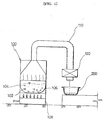
- FIG. 1 is a schematic diagram of an apparatus for preparing a jade extractant
according to the present invention;
- FIG. 2 shows crystalline structure of jade powder used in the present invention by
Scanning Electron Microscope (SEM);
- FIG. 3 is a graph illustrating far infrared radiation rates of nephrite jade used in the
present invention, measured by an FT-IR spectrometer;
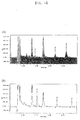
- FIGS. 4A and 4B typical chromatograms of a standard solution (A) used in the
present invention and a cryptocrystalline tremolite microstructure sample (B);
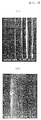
- FIG. 5 shows the structure of a probed cryptocrystalline tremolite microstructure in
the striatum used in the present invention (above) and in the nucleus accumbens (below);
- FIG. 6 is a graph illustrating the effect of a nephrite jade extractant on dopamine
release response to methamphethamine in the striatum used in the present invention; and
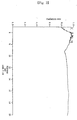
- FIG. 7 is a graph illustrating the effect of a nephrite jade extractant on dopamine
release response to nicotine in the striatum used in the present invention;
- FIG. 8 is a graph illustrating the change in the activity of control group (rats) after
drinking jade water used in the present invention;
- FIGS. 9A and 9B are SEM photographs of silk not treated with jade water used in
the present invention;
- FIGS. 9C and 9D are SEM photographs of silk not treated with jade water used in
the present invention;
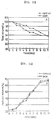
- FIG. 10 is a graph showing the volume change of the whole culture medium for
culturing Digitalis lanata;
- FIG. 11 is a graph showing the change of the cell volume of Digitalis lanata;
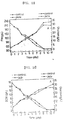
- FIG. 12 is a graph showing the change of the weight of the biological organisms of
the cell;
- FIG. 13 is a graph showing the change of the dry weight of the cells;
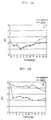
- FIG. 14 is a graph showing the change of pH in the culture medium for Digitalis
lanata;
- FIG. 15 is a graph showing the change of pH of the culture medium after adding
nephrite jade powder;
- FIG. 16 shows the condition of the analytical instrument;
- FIG. 17 shows the output of the results of the analysis;
- FIG. 18 shows the change of pH of jade necklace and jade ore in ordinary piped
water;
- FIG. 19 shows the change of pH of jade necklace and jade ore in underground
water according to the passage of time;
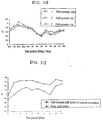
- FIG. 20 shows the change of pH of strong acid solution treated with jade powder
used in the present invention; and
- FIG. 21 shows the change of pH of strong acid solution stored in a milk bottle
containing jade powder used in the present invention and in an ordinary milk bottle according
to the passage of time.
-
DESCRIPTION OF THE PREFERRED EMBODIMENTS
-
A preferred embodiment of a jade extractant according to the present invention and a
preparing process thereof will now be described with reference to the accompanying
drawings.
-
FIG. 1 is a schematic diagram of an evaporating apparatus 100 for preparing a jade
extractant according to the present invention, and an example of preparing the jade extractant
will be described referring thereto.
-
First, nephrite jade ore available from Chuncheon, Korea, defined as
cryptocrystalline tremolite of a negative value of σ18O, is pulverized using a general
pulverizer, sorted by a sorting process and then cleaned, to complete a pre-processing step.
-
The thus pre-processed jade ores 102 and pure distilled water 104 prepared in
advance put into an evaporator 106 in a ratio of 1:4. Then, an igniting nozzle 108
disposed in the lower portion of the evaporator 106 is operated to heat the evaporator 106
consistently at a high temperature of 100° C or higher by a high heat generated by the
igniting nozzle 108. Accordingly, the contents in the evaporator 106 are violently boiled.
While boiling, components eluted from the jade ores 102 into the distilled water 104, such
as silicon, magnesium, calcium, etc., are vaporized with the distilled water 104 to then
flow through an exhaust duct 110. When passing through the exhaust duct 110, the vapor
is liquefied due to a temperature difference between the exhaust duct 110 and the inside of
the evaporator, and flows along a passage, to then be dropped into a collecting receptacle
for collection. Here, the vapor directly passing through the exhaust duct 110 is subjected
to heat exchange at the moment when it passes through an heat exchanger 120 installed in
the vicinity of a discharge end of the exhaust duct 110 to then be completely liquefied.
Here, it is necessary to refill the distilled water consistently as the evaporation time elapses.
Also, since the heat exchanger 120 has a general configuration, a detailed explanation
thereof will not be given. The jade extractant acquired as described above can be used for
promoting the metabolism of human body, treating diseases, for example, Ringers solution
such as glucose. Also, the jade extractant can be used for drinking as health (sport) ion
drinks (e.g., Gator-Ade or Pacari-Sweat), dietary fiber drinks (e.g., Miero-Fiber),
nourishing tonics (e.g., Bacchus or Wonbi-D) and other carbonated drinks, by adding the
same to a small amount of additives and pigment or other coloring. The experimental
results are shown below.
<Experimental Example 1>
-
The experimental examples shown in the following Tables 1 through 4 are to
investigate the effect of nephrite jade used in the present invention and the effect of the
nephrite jade on the living body.
| <Test for Lead Content> |
| Sample | Jade powder |
| Appearance | White powder |
| Working No. | Research institute attached to FDA of USA
IW 091394-1 |
| Experimental method | Atomic Absorption Analysis |
| Results | Not detected |
| <Test for Heavy Metals (including Pb)> |
| Sample | Jade powder |
| Appearance | White |
| Working No. | IW 080894-4 |
| Experimental method | USP 23 |
| Results | Not detected |
| <Test for Dissociation of Inorganic materials> |
| Sample | Jade powder |
| Appearance | White |
| Working No. | IW 080894-4 |
| Experimental method | Listed below |
| Results | Listed below |
-
The sample (100 g) was extracted with 1 liter of water in an autoclave, and the
extract was analyzed.
| Analyzed Material | Result (ppm) | Detection limit (ppm) |
| As | ND | 0.05 |
| Ba | ND | 0.20 |
| Cd | 0.006 | 0.005 |
| Cl | ND | | 1 |
| Cr | ND | 0.01 |
| Cu | ND | 0.05 |
| Fe | ND | 0.10 |
| Pb | ND | 0.05 |
| Mn | ND | 0.02 |
| Hg | ND | 0.0005 |
| NO3 | ND | 0.1 |
| Se | ND | 0.05 |
| Ag | ND | 0.01 |
| SO4 | 1.85 | 1 |
| Zn | ND | 0.01 |
| (ND=Not detected, or the concentration lower than the detection limit) |
-
As shown in the above experimental result, since the nephrite jade used in the
present invention does not contain any material having toxicity to human body, such as lead,
heavy metals or other materials, it is proved to be safe when it is used for plants or animals.
<Experimental Example 2>
-
The IR study of nephrite jade powder was performed in this experiment (FIG. 2).
| Sample | Nephrite jade powder |
| Appearance | White |
| Experimental method | Perkin Elmer 137 |
| Results | Described below |
-
- Phase: Tetrahydrofuran liquefied thin film
- Results: The IR spectrum appears to conform to polycarbonate resin patterns, and to
emit the electromagnetic wave having 6-52 µ of wavelength.
-
<Experimental Example 3>
-
The COD (Chemical Oxygen Demand) and BOD (Biochemical Oxygen Demand) of
the jade powder used in this experimental example were tested as shown in the following
Tables 6 and 7.
| Sample | Jade powder |
| Appearance | White |
| Experimental method | Standard methods |
| Results | Described below |
| | Water (Control) | Jade-treated |
| BOD for 5 days | 224 mg/l | 223 mg/l |
| COD | 115 mg/l | 110 mg/l |
| <Dermal Irritation Study> |
| Sample | Jade powder |
| Appearance | White powder |
| Experimental method | Described below |
| Results | Described below |
-
Methods: Federal Register, Vol. 43, No. 163
-
CTFA (The Cosmetic, Toiletry and Fragrance Association, Washington ,D.C.)
Technical Guideline Procedure: The procedure utilized a patch test technique on the abraded
and intact skin of the albino rabbit. The hair was clipped from the back and flanks. Two
areas of the back, spaced approximately 10 cm apart from each other, were designated for the
position of the patches. One area was abraded by making 4 minor epidermal incisions (2
perpendicular to the other in a "tic-tac-toe pattern) in the area of the patch. The 1-inch
square patches of surgical gauze were secured in place using thin rubber bands and adhesive
tape. The sample was introduced under the patch 0.5 ml (g) each site. The entire trunk of
the animal was then wrapped with rubberized cloth for the 24-hour period of exposure. The
animals were restrained during the exposure period. After removal of the patches, resulting
reactions at each site were evaluated on the basis of the weighted scores described below.
Evaluation of Skin Reactions
-
- Erythema and Eschar Formation
- No erythema - 0
- Very slight erythema (barely perceptible) - 1
- Well defined erythema - 2
- Moderate to severe erythema - 3
- Severe erythema (beet redness) to slight eschar formation (injuries in depth) - 4
- Edema Formation
- No edema - 0
- Very slight edema (barely perceptible) - 1
- Slight edema (edges of area well defined by raising) - 2
- Moderate edema (raised approximately 1 mm) - 3
| Rabbits |
24 Hours |
72 Hours |
| |
Intact |
Abraded |
Intact |
Abraded |
| |
ER |
ED |
ER |
ED |
ER |
ED |
ER | ED |
| # |
| 1 |
0 |
0 |
0 |
0 |
0 |
0 |
0 |
0 |
| #2 |
0 |
0 |
0 |
0 |
0 |
0 |
0 |
0 |
| #3 |
0 |
0 |
0 |
0 |
0 |
0 |
0 |
0 |
| #4 |
0 |
0 |
0 |
0 |
0 |
0 |
0 |
0 |
| #5 |
0 |
0 |
0 |
0 |
0 |
0 |
0 |
0 |
| #6 |
0 |
0 |
0 |
0 |
0 |
0 |
0 |
0 |
-
-
Conclusion: The sample is adjusted to be free from skin irritants and, thus, suitable
for cosmetic use in skin-care products.
| <Acute oral toxicity (0.5 g/100 g weight) test> |
| Sample | Jade powder |
| Appearance | White powder |
| Experimental method | Described below |
| Result | Described below in Table 11 |
| Mouse | Sex | Initial weight (g) | Dose (ml) | Later weight (g) | Toxicity |
| 1 | F | 207 | 1.0 | 219 | None |
| 2 | F | 211 | 1.1 | 226 | None |
| 3 | F | 215 | 1.1 | 225 | None |
| 4 | F | 208 | 1.0 | 217 | None |
| 5 | F | 200 | 1.0 | 213 | None |
| 6 | M | 227 | 1.1 | 235 | None |
| 7 | M | 216 | 1.1 | 224 | None |
| 8 | M | 205 | 1.0 | 218 | None |
| 9 | M | 210 | 1.1 | 224 | None |
| 10 | M | 212 | 1.1 | 221 | None |
-
Preparation of sample: The sample was extracted by boiling with sterile distilled
water for 10 minutes. The extract was administered through a cannula with an amount of
0.5 g per 100 g weight of the animal.
-
Conclusion: The sample conforms to the standard stating that it should have no oral
toxicity.
-
The following experiment (Experimental Example 4) was performed by the division
of Nuclear Medicine, Samsung Medical Center affiliated to Sungkyunkwan University
School of Medicine, Seoul, Korea, to investigate the effect of the nephrite jade water acquired
by the above embodiments, that is, a jade extractant, on the cerebration, based on the results
proved from the above-described experimental examples. The experimental methods and
results are as follows.
<Experimental Example 4>
A. Effect of jade extractant according to the present invention on dopamine release
response to methamphetamine
1) Experimental animals
-
Internal microdialysis experiments were carried out using male Sprague-Dawley
mellitus rats (280-320 g, Korea Experimental Animal Center). The animals were placed in
chambers under 12:12 light/dark conditions, with free access to food and water.
2) Internal microdialysis experiment
a) Treatment by medicine
-
To investigate the effect of a jade extractant on the dopamine release response to
Methamphetamine, 0.5 ml of jade extractant according to the present invention was
intraperitoneally injected 60 minutes before intraperitoneal injection of methamphetamine
(10 mg/kg, i.p.), and then dialysate samples were collected from the striatum.
b) Administration and microdialysis
-
The experimental animals were anesthetized with pentobarbital (50 mg/kg, i.p.), and
then a guide cannula was inserted into the striatum (Sterotaxic coordinates: AP, 1.0 and L, 3.2
with respect to bregma, H, 3.0 with respect to dura mater) in a non-invasive manner by the
atlas of Paxinos & Watson (1986) and fixed using a microthread and dental cement. After a
24-hour recovery period, a 4 mm vertical microdialysis probe (CMA-12, Carnegie-Medicine,
Stockholm, Sweden) was inserted through the guide cannula. The inlet of the microdialysis
probe is connected to a syringe mounted on a flow pump via a dual liquid rotary ring.
While delivering artificial cerebrospinal fluid containing 145 mM NaCl, 2.7 mM KCl, 1.2
mM CaCl2, 1.0 mM MgCl2, 2.0 mM Na2HPO4, pH 7.4, at a flow rate of 1.5 µ l/min, through
the microdialysis probe, dialysates were collected at 20 minute intervals using a
microfraction collector provided by Carnegie-Medicine connected to the outlet of the
microdialysis probe. The microdialysis experiment was carried out on experimental animals
that were allowed to move freely.
c) Analysis of microdialysate samples
-
Monoamines and metabolites of microdialysate samples were assayed by a HLPC-electrochemical
detection (ECD) system. The dialysate (30 µ l dose) was separated using a
reverse-phase Waters Nova-Pak C-18 column (4µ m, 150 times 3.9 mm). The mobile phase
consisted of 75 mM sodium phosphate, 0.12 mM EDTA, 1.4 mM octansulfonic acid and 10%
acetonitrile. It was adjusted with phosphoric acid to pH 3.2. The HPCL peak was
analyzed using an ESA coulochem II 5200A Electrochemical detector with a high-performance
analysis device (ESA model 5014). The potential of a working electrode was
set to +320 mV The flow rate of the system was 1.0 ml/min.
-
Typical chromatograms obtained from the standard solution and microdialysate
samples are shown in FIG. 4. Dopamine, dihydroxyphenylacetic acid (DOPAC),
homovanillic acid (HVA), 5-hydroxytrymptamine (5-HT), 5-hydroxyindoleacetic acid (5-HIAA)
were distinctly separated. The dopamine concentration of the dialysate was more
than 3 times of the minimum measurement limit, i.e., 116 pM. The baseline concentrations
of dopamine, DOPAC, HVA, 5-HT and 5-HIAA were 18.5 nM, 90.5 nM, 74.7 nM, 6.2 nM
and 45.6 nM, respectively. Since the dopamine recovery rate of the microdialysis probe,
obtained by external experimentation, was 20%, the extracellular dopamine level was
estimated to 92.5 nM. The dopamine level of the microdialysis probe was expressed as a
percent of baseline of the average dopamine concentrations of last three samples collected
immediately before experimental treatment.
d) Histological identification
-
Upon completion of experiments, the experimental animals were anesthetized by an
overdose of pentobarbital, and then decerebrated by infusion of a physiological saline
solution and a 10% formalin solution. The removed brains were stored in a 10% formalin
solution for at least 2 weeks. Then, tissues of a section where the microdialysis probe is
positioned are cut to a thickness of 50 µ m , and their exact positions were identified by
hematoxylin staining (see FIG. 5).
e) Statistical analysis
-
All measured values were expressed as mean± S.E. The statistical significance of
data was analyzed using multiple analysis of variance (drug × time) and Bonferroni method.
StarView 4.02 (Abacus Concepts, Inc., Berkely, CA, U.S.A.) as a statistics analysis software
and Macintosh computers were employed. The statistical significance was determined
based on the P level of 0.005.
3) Research results
-
FIG. 6 shows the effect of a jade extractant (distilled solution) on dopamine release
response to methamphetamine in the striatum. After injection of methamphetamine (10
mg/kg, i.p.), the extracellular concentration of dopamine gradually increased to reach a peak
in 60 minutes (433.6± 14.3% of baseline). When 0.5 ml of jade extractant was
intraperitoneally injected 60 minutes prior to methamphetamine infusion, an increase in the
extracellular concentration of dopamine in the striatum decreased upto 32.8% responsive to
methamphetamine (29.15± 11.4% of baseline). Also, the injection of jade extractant
retarded a time required to reach the maximum level of dopamine after infusion of
methamphetamine. The jade extractant according to the present invention did not affect the
extracellular concentration of dopamine in the stable striatum.
B. Effect of jade extractant according to the present invention on dopamine release
response to nicotine
1) Experimental animals
-
Internal microdialysis experiments were carried out using male Sprague-Dawley
mellitus rats (280-320 g, Korea Experimental Animal Center). The animals were placed in
chambers under 12:12 light/dark conditions, with free access to food and water.
2) Internal microdialysis experiment
a) Treatment by medicine
-
To investigate the effect of a jade extractant on the dopamine release response to
nicotine, 0.5 ml of jade extractant according to the present invention was intraperitoneally
injected 60 minutes before infusion of nicotine (0.4 mg/kg, hyperdermic injection), and then
dialysate samples were collected from the striatum.
b) Administration and microdialysis
-
The experimental animals were anesthetized with pentobarbital (50 mg/kg, i.p.), and
then a guide cannula was inserted into the striatum (Sterotaxic coordinates: AP, 1.0 and L, 3.2
with respect to bregma, H, 3.0 with respect to dura mater) in a non-invasive manner by the
atlas of Paxinos & Watson (1986) and fixed using a microthread and dental cement. After a
24-hour recovery period, a 4 mm vertical microdialysis probe (CMA-12, Carnegie-Medicine,
Stockholm, Sweden) was inserted through the guide cannula. The inlet of the microdialysis
probe is connected to a syringe mounted on a flow pump via a dual liquid rotary ring.
While delivering artificial cerebrospinal fluid containing 145 mM NaCl, 2.7 mM KCl, 1.2
mM CaCl2, 1.0 mM MgCl2, 2.0 mM Na2HPO4, pH 7.4, at a flow rate of 1.5 µ l/min, through
the microdialysis probe, dialysates were collected at 20 minute intervals using a
microfraction collector provided by Carnegie-Medicine connected to the outlet of the
microdialysis probe. The microdialysis experiment was carried out on experimental animals
allowed to freely move.
c) Analysis of microdialysate samples
-
The concentrations of microdialysate samples were assayed by a HLPC-electrochemical
detection (ECD) system. The dialysate (30 µ l dose) was separated using a
reverse-phase Waters Nova-Pak C-18 column (4µ m, 150 times 3.9 mm). The mobile phase
consisted of 75 mM sodium phosphate, 0.1 mM EDTA, 1.4 mM octansulfonic acid and 10%
acetonitrile. It was adjusted with phosphoric acid to pH 3.2. The HPCL peak was
analyzed using an ESA coulochem II 5200A Electrochemical detector with a high-performance
analysis device (ESA model 5014). The potential of a working electrode was
set to +320 mV The flow rate of the system was 1.0 ml/min. The dopamine concentration
of the dialysate was expressed as a percent of baseline of the average dopamine
concentrations of last three samples collected immediately before experimental treatment.
d) Histological identification
-
Upon completion of experiments, the experimental animals were anesthetized by an
overdose of pentobarbital, and then decerebrated by infusion of a physiological saline
solution and a 10% formalin solution. The removed brains were stored in a 10% formalin
solution for at least 2 weeks. Then, tissues of a section where the microdialysis probe is
positioned are cut to a thickness of 50 µ m , and their exact positions were identified by
hematoxylin staining.
e) Statistical analysis
-
All measured values were expressed as mean± S.E. The statistical significance of
data was analyzed using multiple analysis of variance (drug × time) and Bonferroni method.
The statistical significance was determined based on the P level of 0.005.
3) Research results
-
FIG. 7 shows the effect of jade extractant (distilled solution) on dopamine release
response to nicotine in the striatum. After infusion of nicotine (0.4 mg/kg, hypodermic
injection), the extracellular concentration of dopamine gradually increased to reach a peak in
40 minutes (403.9± 33.2% of baseline), and then decreased to be restored to the baseline
level in 120 minutes. When 0.5 ml of jade extractant was intraperitoneally injected 60
minutes prior to nicotine infusion, an increase in the extracellular dopamine concentration in
the striatum decreased upto 52.0% responsive to nicotine (193.9± 6.1% of baseline). Also,
the injection of jade extractant retarded a time required to reach the maximum level of
dopamine after infusion of nicotine (80 minutes after injection of nicotine). The jade
extractant according to the present invention did not affect the concentration of extracellular
dopamine in the stable striatum.
-
As described above, the experimental results showed that the jade extractant
according to the present invention suppressed dopamine release due to methamphetamine and
nicotine in the striatum of mellitus rats.
-
The experiment (Experimental Examples 5 and 6) is to investigate the effects of jade
extractant of the present invention, jade containing space and supernatant jade water after
precipitation of jade powder, on the reproduction and growth in mellitus rats. The
experiment was performed by Korea Food Research Institute. The details are described
below.
<Experimental Example 5>
-
To examine the relieving effect of nephrite jade on the symptoms of streptozotocin-induced
diabetic mellitus rats, the experiment was performed by the Korea Food Research
Institute. The details are described below.
-
To thirty-two (32) Sprague Dawley rats weighing 252-294 g were given
streptozotocin (35-40 mg dissolved in 0.1M citrate buffer of pH 4.0) intraperitoneally to
induce diabetes. Seven days after administration of streptozotocin, rats showing blood
glucose level higher than 250 mg/dl were selected based on uropaper (Eiken Chemical Co.,
Ltd., Japan). Four experimental groups of 5 rats each were employed for 50 days of
experimental period. Group A rats were injected with 1.0 ml of distilled jade water (pH 6.4)
intraperitoneally each day. Rats of group B were housed in cages placed with jade products
on the bottom throughout the experiment. Rats of group C were fed with supernatant jade
water after precipitation of jade powder out as a drinking water everyday. Group D rats as a
control were injected with streptozotocin only. Diets fed were commercial rat chow, and the
rats were cared according to the general practices. Rats were sacrificed on
day 50 and blood
was collected from abdominal aorta. Plasma was prepared from centrifuging blood
containing heparin at 5,000 rpm for 15 min after leaving blood at room temperature for 30
min. Organs (liver, kidney) taken out were weighed and recorded. Measurements tested in
blood plasma were HBA (plasma β -hydrroxybutyrate), FFA (free fatty acids), cholesterol,
HDL-cholesterol and triglyceride. The content of HBA is quantitatively analyzed by
measuring the increase of Absorbance (OD) of NADH, which is produced by oxidation by
β -hydrroxybutyrate dehydrogenase, at 340 nm. Lipids in blood were measured by using a
clinical kit (Eiken Chemical Co., Ltd., Japan).
| <Effects of Jade on the Body and Organ Weight Changes in Streptozotocin-Induced Diabetic Rats> |
| Group | Body weight (g) | Organ weight (g/100 g body wt.) |
| | Beginning | Ending | Liver | Kidney |
| A | 270.4± 11.3 | 271.7± 49.4 | 4.31± 0.33 | 1.02± 0.12 |
| B | 284.8± 6.1 | 279.6± 20.4 | 4.30± 0.64 | 1.01± 0.18 |
| C | 280.4± 13.2 | 315.7± 41.1 | 3.96± 0.75 | 0.87± 0.14 |
| D | 257.2± 4.2 | 194.8± 26.3 | 4.37± 0.19 | 0.78± 0.04 |
| <Effects of Jade on the Changes of Biochemical Indices in Streptozotocin-Induced Diabetic Rats> |
| Group | Glucose (mg/100 ml) | HBA (µ mol/ml) | FFA (µ eq/ml) | TC (µ mol/ml) | TG (mg/100 ml) | HDL (mg/100 ml) |
| A | 639.2± 99.0 | 0.782± 0.481 | 507.6± 226.6 | 166.2± 69.4 | 410.7± 50.1 | 32.35± 5.94 |
| B | 495.1± 228.1 | 0.527± 0.296 | 349.5± 79.2 | 161.3± 45.3 | 122.5± 43.5 | 29.49± 1.71 |
| C | 354.1± 154.2 | 0.425± 0.172 | 287.3± 71.7 | 145.4± 29.1 | 87.9± 29.2 | 30.55± 8.28 |
| D | 196.8± 16.3 | 0.276± 0.036 | 291.0± 131.2 | 158.2± 12.2 | 86.8± 3.4 | 31.37± 3.84 |
| p < 0.05 |
-
In terms of body weight, group C rats fed with jade water had shown higher body
weight than other groups, of which the body weight was reduced (B, D) or maintained (A) at
the end of the experiment. Kidney weights are generally increased in DM patients, and this
tendency was also increased too, but liver weight was the lowest in rats fed with jade water.
Concentrations of blood glucose, ketone body and FFA were higher in the order of groups A,
B, C and D. Blood plasma cholesterol and triglyceride concentration had followed the same
tendency (A>B>C>D) to the above parameters mentioned. From the result, rats fed with
jade water (group C) showed comparatively lower values of all the parameters measured
rather than the other two experimental groups, and blood cholesterol and FFA concentrations
were lower in the group C rats than in the control group rats without any jade treatment. TC
and TG concentration was in the order of A>B>C>D. The result of glycemic index by
blood sugar reaction after meal alters dependent upon the researchers. However, in the
experiment, though commercial blended feed (TMR) was fed without considering glycemic
index of cereals, the group C rats fed with jade water showed an effect for alleviating
hyperlipidemia, one of diabetic symptoms. There occurred no difference of HDL-cholesterol
concentration between the test groups. The administration of jade water to
Streptozotocin-induced diabetic rats showed effects of preventing the reduction of body
weight, preventing enlargement of kidney or liver as well as alleviating hyperlipidemia, one
of diabetic symptoms.
<Experimental Example 6>
-
Thirty male and female Sprague Dawley rats (9 week old) were assigned to each
treatment. Rats of group A were housed in the cages into which the air containing vapor-phase
nephrite jade and provided with tap water. Rats of group B were fed with supernatant
jade water after precipitation of jade powder (2 mg/ml tap water), but no vapor-phase
nephrite jade was injected into the case. The rats of group C formed as a control group (no
vapor-phase nephrite jade and no jade water). Rates were mated for nine days and then
male rats separated and sacrificed for sperm concentration and motility tests. The results are
shown in the following Table 14.
| <Effect of Jade Products on the Reproduction and Growth of Rats> |
| Group | A | B | C |
| Parturition (No. of rats) | 9 | 9 | 9 |
| Litter size (♂ /♀) | 96 (57/39) | 94 (57/37) | 102 (54/48) |
| Litter size (head/♀ rat) | 11.8± 1.9 | 10.9± 1.4 | 12.8± 2.1 |
| Body weight at birth (g) | 4.73± 1.10 | 5.79± 0.95 | 5.35± 0.35 |
| Mortality (No. of head) | 4 | 4 | 3 |
| Days from mating to parturition | 23.8± 1.4 | 25.1± 1.7 | 25.5± 3.7 |
| Body weight at weaning (g) | 43.45± 8.04 | 42.73± 8.76 | 42.07± 10.71 |
| Body weight at slaughter (g) | 294.0± 10.9 | 274.4± 8.6 | 288.4± 26.7 |
| Testis weight (g) | 3.90± 0.21 | 3.57± 0.30 | 3.99± 0.15 |
| Sperm concentration (108/ml) | 6.32± 2.4 | 4.80± 1.3 | 4.60± 1.9 |
| Sperm motility (%) | 91.0± 4.2 | 92.0± 2.7 | 88.0± 7.6 |
-
>From the findings, jade products and jade water treatments had shown better
parturition records. Parturition rates of groups A and B (90%) were higher than those of
group C (80%), although rats of group C gave birth to several more puppies. Also, a length _
of time from mating to parturition was shorter in group A rats than the other two group rats.
Besides these findings, sperm concentration and motility in both rats of group A and B were
superior to group C. However, the effects of both jade products and jade water treatments at
the same time were not investigated in this study. In conclusion, the results suggest that jade
products and jade water seem to affect the reproduction and growth. The groups injected
with jade product or treated with jade water were superior in reproduction and growth.
<Experimental Example 7>
-
This experiment is to examine the change in the activity of rats provided with jade
water added with the nephrite-jade powder used in the present invention.
-
As shown in FIG. 8, in testing the stability characteristic, the mouse in the medicated
control group began to show stability in its central nerve in 5 minutes later after having a
Chinese medicine and then was completely recovered to the normal state after 30 minutes
later. The mouse in the general control group showed an undulating change in its activity
rate, showing a decreasing tendency on the whole. The activity rate of the mouse in the jade
water drinking group was similar to that of the general control group, showing an average
activity rate slightly higher than that of the general control group, and significantly higher
than that of the mediated group.
<Experimental Example 8>
-
This experiment is to examine the effects of jade on the growth rate, sperm motility
and quantity of muscular motion when the water provided from a purifier formed of nephrite
jade used in the present invention, available from Chuncheon, Korea, and the AIN-diet stored
in a general refrigerator, are fed to test groups (white rats).
-
The tests were applied to a control group (A) fed with the water provided from a
general purifier and the AIN (American Institute of Nutrition)-diet stored from a general
refrigerator, and a jade-treated group (B) fed with the water provided from a jade purifier and
the AIN-diet stored in a refrigerator formed of a jade material. 9 white rats (10 week old)
for each test group, (3× 3 repetition), totaling 18 rats, were reared, and the growth rate, sperm
motility, sperm concentration, blood lipid concentration and quantity of motion.
| Measurement attribute | Treated group |
| | Control group (A) | Treated group (B) |
| Growth rate (g/day) | 2.33± 0.37 | 2.64± 0.41 |
| Feed intake (g/day) | 15.52± 1.30 | 14.97± 1.07 |
| Drink quantity (ml/day) | 35.8± 1.1 | 27.8± 0.9 |
| Sperm motility |
| Sperm vitality | 90.0± 0.00 | 88.3± 2.9 |
| Sperm concentration | 5.7± 1.37 | 6.9± 1.08 |
| Quantity of motion |
| Revolving club | 41.0± 1.6 | 41.5± 9.1 |
| Revolving basket | 18 | 17 |
| Swimming endurance | 10,481± 5,315 | 11,713± 3,519 |
| Blood |
| pH | 7.66± 0.10 | 7.84± 0.09 |
| TG | 171.5± 39.2 | 133.1± 33.3 |
| TC | 171.1± 62.3 | 146.6± 62.1 |
| HDL | 82.8± 10.7 | 69.3± 7.4 |
<Results>
-
- 1 ○ Two treated groups showed no difference in the parturition rate and the
blood lipid concentration as well as the growth rate.
- 2 ○ While there was no considerable difference in the sperm vitality
between two groups, the sperm concentration of the jade treated group was
approximately 17% higher than that of the control group.
- 3 ○ In measurement of the sperm motility, the swimming endurance of the
jade treated group was approximately 1,200 seconds, on the average, longer than
that of the control group.
- 4 ○ The blood pH of the jade treated group was rather higher than that of
the control group.
- 5 ○ The control group showed a rather higher HDL level in blood lipid than
the jade treated group.
-
-
As can be shown in the above results, the jade treated group is superior to the control
group in swimming endurance and sperm concentration. In particular, the jade treated group
showed significantly lower levels of TC and TG than the control group.
<Experimental Example 9>
-
As confirmed from Tables 16 and 17, in order to investigate the effects of different
kinds of water on the parturition and weaning of test groups (white rats), the tests were
assigned to 5-week-old white rats. The drinking water was divided into three groups, that is,
underground water (A), water from a general purifier (B) and jade distilled water of the
present invention (C). As test feeds, AIN-diet was equally fed to the test groups. Each 9
female white rats (♀ ) were assigned to test groups, (3× 3 repetition), totaling 27 rats, and
each 8 male white rats (♂ ) were assigned to test groups, totaling 24 rats. After being reared
for 4 weeks, the test group rats were mated for 7 days, the mating ratio being ♂ /♀ =1:3.
With the passing of 3 weeks of pregnancy, the test group rats were reared from parturition to
weaning time.
| <Effects of different kinds of water on white rats > |
| Measurement attribute | Treated group |
| | A | B | C |
| Increased weight (g/day) | 4.32± 0.26 | 4.20± 0.26 | 4.33± 0.37 |
| Feed intake (g/day) | 16.25± 0.32 | 16.51± 0.45 | 17.01± 1.06 |
| Drink quantity (ml/day) | 20.3± 1.2 | 22.00± 1.8 | 19.8± 1.1 |
| Sperm motility |
| Sperm vitality | 91.1± 2.3 | 90.5± 2.8 | 91,1± 2.8 |
| Sperm concentration (108/ml) | 4.01± 1.09 | 4.26± 0.71 | 4.87± 1.41 |
| Quantity of motion |
| Revolving basket (times, 10 min) | 57.8± 3.16 | 35.2± 19.0 | 33.3± 14.7 |
| Swimming endurance (sec) | 4,082± 813 | 5,087± 1,471 | 5,332± 445 |
| Revolving club (sec) | 39.6± 18.9 | 32.9± 9.9 | 31.5± 11.0 |
| Blood pH | 7.64± 0.09 | 7.69± 0.12 | 7.78± 0.24 |
| <Effects of different kinds of water on parturition of white rats> |
| Treated group1) | Days from mating to parturition (Days) | Parturition (No. of rats) (Parturition rate, %) | Total No. of pups | No. of pups at a litter | No. of weaned pups (♂ /♀ ) |
| A | 24.2± 1.5 | 5 (55, 6) | 56 | 11.2± 1.9 | 53 (26/27) |
| B | 25.5± 2.3 | 6 (66, 7) | 46 | 7.7± 2.9 | 39 (17/22) |
| C | 24.7± 2.3 | 7 (77,8) | 81 | 11.6± 0.5 | 69 (41/28) |
<Results>
-
- 1 ○ There was no significant difference in the growth rate, quantity of
motion and sperm motility among treated groups A, B and C.
- 2 ○ The sperm concentration of the treated group C, that is, the group
treated with nephrite jade distilled solution of the present invention, was 4.87×
108/ml, 21.4% and 14.3% higher than the other treated groups A and B, that is,
4.01× 10⁸/ml and 4.26× 10⁸/ml.
- 3 ○ The parturition rates were 55.6%, 66.7% and 77.8% in the underground
water, the water from a general purifier and the jade distilled water, respectively,
the parturition rate of the jade treated group C being rather higher than other
groups.
- 4 ○ The numbers of puppies at a litter were 11.2± 1.9, 7.7± 2.9 and 11.6±
0.5, in underground water, water from a general purifier and jade distilled
water, respectively.
- 5 ○ The numbers of puppies weaned 3 weeks after parturition were 53, 39
and 69 in the treated groups A, B and C, respectively, and the sex (♀ /♂ ) ratios
were 26/27, 17/22 and 41/28, showing that the male pups being more than the
female pups in the jade treated C group.
-
-
From the findings, the sperm concentrations of the jade treated group were 21.4%
and 14.3% higher than those of the other groups, respectively. Also, the parturition rates of
the female white rats of the jade treated group, i.e., 78%, were higher than those of the other
groups, that is, 56% and 67%, respectively. Further, in the sex ratio of weaned puppies, the
male pups of the jade treated group were higher than those of the other groups.
<Experimental Example 10>
-
The experiment was performed to investigate the effect of the jade-treated water
obtained by purifying piped water using a filter formed by nephrite jade used in the present
invention on the growth of silkworm and the quality of the produced silk (see FIG. 9).
1 ○ Materials and Methods
-
- 1. Species of silkworm: white gem silkworm
- 2. Period of growth: November to December
- 3. Method for growth: constant temperature and constant humidity leaves during all
instars
- 4. No. of silkworms:
- Control group 150 (2 repetition)
- Treated group 130 ( 2 repetition)
- 5. Treatment:
- Control group: Mulberry leaves sprayed with distilled water are fed.
- Treated group: Mulberry leaves sprayed with jade-treated water are fed.
- Time to treat the silkworms: starting from 2nd instar
| <Rearing results performed with the jade powder water treatment> |
| |
Replication |
No. of Larvae examined |
Larval period of the 5th instar |
Total larval period |
Pupation percentage |
| |
|
|
Day |
Hrs |
Day |
Hrs |
% |
Index |
| Control group |
| |
1 |
150 |
7 |
7 |
23 |
7 |
91.3 |
100 |
| 2 |
150 |
7 |
7 |
23 |
7 |
76.6 |
| Mean |
150 |
7 |
7 |
23 |
7 |
84.0 |
| Treated group |
1 |
130 |
7 |
15 |
23 |
15 |
74.1 |
85 |
| 2 |
130 |
7 |
15 |
23 |
15 |
68.2 |
| Mean |
130 |
7 |
15 |
23 |
15 |
71.3 |
| <The performance of cocoon reeling with jade powder treatment> |
| |
Cocoon filament length (m) |
Cocoon filament weight (cg) |
Silk size (d) |
Nonbroken length of Bave (m) |
Nonbroken filament weight (cg) |
Reelability (%) |
| Control group |
1,222 |
33.7 |
2.48 |
3.47 |
23.4 |
69 |
| Treated group |
1,283 |
36.3 |
2.55 |
1,005 |
28.5 |
78 |
| <The change of larval weight with jade treatment> |
| |
Weight of newly exuviated larva from the 3rd molting |
Weight of newly exuviated larva from the 4th molting |
Weight of the 3rd day of the 5th instar |
Maturated larvae |
| Control group |
0.46 |
1.85 |
20.80 |
47.4 |
| Treated group |
0.47 |
1.94 |
23.03 |
52.2 |
-
<Results>
-
- 1. The larva weight of the jade-treated group was higher than that of the control group
in every instar. In particular, in case of mature larva, the weight of the jade-treated group
was higher by 0.48 g per larva than that of the control group.
- 2. The pupation percentage of the jade-treated group was 71.2%, which was lower by
about 15% than that of the control group. The cocoon yield of the jade-treated group was
15.4 g per 10,000 larvae, which was lower by 7% than that of the control group.
- 3. The single cocoon weight of the jade-treated group was 2.14 g, which was higher
by about 6% than that of the control group. Also, the cocoon shell weight of the jade-treated
group was 44.5 cg. The cocoon shell percentage of the jade-treated group was
higher by 2% than that of the control group.
- 4. The reeling performance of the jade-treated group was generally better than that of
the control group. In particular, the jade-treated group was excellent in view of the
cocoon filament length, cocoon filament weight and reelability (higher by about 9% than
that of the control group).
- 5. In view of silk quality, the neatness point of the jade-treated group was slightly
higher than that of the control group. Also, the tenacity, elongation and raw silk percentage
of the jade-treated group were higher than those of the control group. However, the cocoon
yield of the jade-treated group was lower than that of the control group per 10,000 larvae.
- 6. No substantial difference in the surface structure between the control group and the
jade-treated group was revealed.
- 7. The crystalline structure of the treated jade was in a rod shape having a sharp tip.
-
-
The following experiment (Experimental Examples 11 through 15) is to examine the
effects of nephrite jade used in the present invention, available from Chuncheon, Korea, and
jade water prepared therefrom, on the sprouting and growth of seeds.
A. Component analysis of nephrite jade and jade water
-
The components of nephrite jade available from Chuncheon, Korea were analyzed
using a PW1,480 X RIW-Fuorescence Seguenflal Spectrometer. The analysis results
showed that the nephrite jade contained SiO2 as a main component and several trace elements
necessary for growth of plants.
B. Analysis of quality of supernatant jade water and underground water
-
The quality of supernatant jade water (underground water of a jade mine) and
underground water was analyzed. The analysis result showed that no special trace elements
were found in the underground water of a jade mine, i.e., supernatant jade water.
<Experimental Example 11>
<Comparison of the effects of supernatant jade water on sprouting of seeds>
-
- 1 ○ The sprouting experiment was performed such that 20 strong seeds of
balsam, bean, rice, radish and crown daisy, were selected, 8 sheets of toilet paper
are laid on a Schale (laboratory dish) to place seeds thereon, and then
supernatant jade water, underground water and tap water are supplied.
- 2 ○ Seeds supplied with supernatant jade water and those supplied with tap
water are spaced 50 m apart and let alone in a dark place at room temperature for
5 days, to observe the sprouting rates 5 times.
- 3 ○ To investigate the supply range of supernatant jade water, each 20 seeds
of radish and rice were supplied with jade water and underground water, the
Schales having the seeds being spaced apart by 10 m, 20 m, 30 m, 40 m and 50
m.
-
-
The experimental results are described in Tables 22 and 23.
| <Comparison of sprouting rates by supernatant jade water, underground water and tap water> |
| | Supernatant jade water | Underground water | Tap water | |
| | 2 | 3 | 4 | 5 | 2 | 3 | 4 | 5 | 2 | 3 | 4 | 5 |
| Rice | 10 | 45 | 85 | 96 | 6 | 43 | 76 | 91 | 4 | 42 | 74 | 90 |
| Radish | 27 | 78 | 90 | 96 | 26 | 73 | 87 | 94 | 24 | 72 | 86 | 94 |
| Crown Daisy | 20 | 46 | 64 | 64 | 18 | 45 | 60 | 61 | 18 | 41 | 61 | 62 |
| Pea | 9 | 23 | 48 | 51 | 9 | 21 | 47 | 51 | 8 | 20 | 43 | 52 |
| Cabbage | 28 | 79 | 91 | 91 | 24 | 73 | 90 | 90 | 23 | 71 | 90 | 90 |
-
The results suggest that supernatant jade water hastens the sprouting timings of the
five kinds of seeds listed above.
| <Comparison of sprouting rates of radish seeds when supplied with supernatant jade water and underground water> |
| | Jade water | 10 m | 20 m | 30 m | 40m | 50 m |
| 1 day | 8 | 7 | 8 | 5 | 6 | 6 |
| 2 days | 27 | 28 | 29 | 22 | 21 | 22 |
| 3 days | 78 | 79 | 77 | 75 | 74 | 73 |
| 4 days | 90 | 89 | 89 | 90 | 89 | 89 |
| 5 days | 96 | 95 | 94 | 93 | 94 | 93 |
-
The results suggest that the aura of jade water is exerted over approximately 20 m
and hastens the sprouting timing of radish seeds.
<Experimental Example 12>
Comparison of effects of the aura of jade porcelain on sprouting of seeds
-
The sprouting experiment was performed such that 20 strong seeds of balsam,
bean, rice, radish and crown daisy, were selected, 8 sheets of toilet paper are laid on 5 jade
porcelain and 25
Schales to place seeds thereon to be spaced apart by 10 m, 20 m, 30 m, 40 m
and 50 m. The sprouting results were observed at room temperature to determine the extent
of the aura (see Table 24).
- 1 ○ The seeds were let alone in a dark place at room temperature for 5 days,
to observe the sprouting rates 5 times.
- 2 ○ The statistical values are based on the total (100%) of 5 times.
| <Comparison of sprouting of seeds by jade porcelain (Number of sprouts)> |
| | Jade porcelain | 10 m | 20 m | 30 m | 40 m | 50 m |
| | 3 | 5 | 3 | 5 | 3 | 5 | 3 | 5 | 3 | 5 | 3 | 5 |
| Rice | 51 | 90 | 45 | 85 | 46 | 91 | 49 | 92 | 40 | 92 | 41 | 88 |
| Radish | 90 | 96 | 88 | 95 | 88 | 94 | 89 | 95 | 81 | 94 | 82 | 95 |
| Crown daisy | 54 | 70 | 51 | 58 | 50 | 71 | 49 | 69 | 45 | 69 | 46 | 70 |
| Pea | 25 | 60 | 24 | 61 | 24 | 58 | 23 | 60 | 20 | 59 | 19 | 58 |
| Cabbage | 74 | 93 | 72 | 95 | 74 | 96 | 71 | 94 | 69 | 94 | 68 | 93 |
-
-
The results suggest that the aura of jade water is exerted over approximately 30 m
and hastens the sprouting timings of the seeds listed above.
<Experimental Example 13>
<Comparison of effects of jade porcelain and supernatant jade water on the growth
of bean sprouts>
-
To examine the effects of jade porcelain and supernatant jade water on the growth of
plants, rooting experiments of bean sprouts and onion were carried out.
- 1 ○ Each 30 beans for bean sprouts were placed on Schales for cultivating
bean spouts and then the sprouting rates and growth rates were compared at
room temperature for 10 days, with supernatant jade water, underground water
and tap water being supplied.
- 2 ○ Each 30 beans were placed on jade porcelain, plain porcelain and plastic
container and then the sprouting rates and growth rates were compared at room
temperature for 10 days, with supernatant jade water, underground water and tap
water being supplied.
- 3 ○ onions of the same size were assigned to rooting experiments, with
supernatant jade water, underground water and tap water being supplied.
- 4 ○ Jade porcelain and supernatant jade water container are spaced 50 m
apart from Schales without jade material.
-
-
The experimental results are described below.
- 1) Growth of bean sprouts by jade porcelain
Since the aura of jade porcelain hastened the sprouting timing, it was confirmed that
the aura of jade porcelain had the effects of the growth rate of bean sprouts.
- 2) Growth of bean sprouts by supernatant jade water
Since the aura of jade water hastened the sprouting timing, it was confirmed that the
aura of the jade water had the effects of the growth of bean sprouts.
-
<Experimental Example 14>
<Comparison of freshness of plants by jade porcelain and supernatant jade water>
-
- 1 ○ The flowers of the same kind were put into jade porcelain and plain
porcelain and their freshness was compared while supplying underground water.
- 2 ○ The flowers of the same kind were put into glass cups their freshness
was compared while supplying supernatant jade water, underground water and
tap water.
- (3) The jade porcelain and supernatant jade water were spaced 50 m apart
from Schales without jade material.
- 4 ○ The flowers used were each 5 roses, carnations and chrysanthemum
plucked at the same time period and flowers of the same blooming extent were
selected for observation with the naked eye once a day.
-
-
The results are described below.
- 1) Jade porcelain and freshness of plants
The aura of jade porcelain was adjudged to slightly affect the freshness of plants.
- 2) Jade water and freshness of plants
The aura of jade water was adjudged to slightly affect the freshness of plants.
-
<Experimental Example 15>
<The effect of nephrite jade powder on the growth of plants>
-
- 1 ○ Each 3 seeds of haricot bean, pea, radish and cabbage were sowed in
pots with 50 g of nephrite jade powder and 50 g of fine sand for comparison of
growth rates of plants.
- 2 ○ Due to difficulty of fertilization, radish and cabbage were not fertilized.
However, seeds of haricot bean and pea were sowed with leaf mold and sand mixed
in the same ratio.
- 3 ○ The pots with nephrite jade powder and the plain pots were spaced 50
m apart from each other.
-
-
The results are described below.
- 1) Growth of pea
Since the aura of nephrite jade powder hastened the sprouting timing of pea, it was
adjudged to slightly affect the growth of pea.
- 2) Growth of haricot bean (m)
Since the aura of nephrite jade powder hastened the sprouting timing of haricot bean,
it was adjudged to slightly affect the growth of haricot bean.
- 3) Aquiculture of onion
The aura of jade water is adjudged to considerably affect the rooting of onion.
- 4) Growth of radish
The nephrite jade powder is adjudged to affect the sprouting timing of radish to
promote the growth of radish.
-
-
As can be confirmed from the above-described experimental examples, the
following conclusions are suggested.
- 1 ○ The nephrite jade available from Chuncheon, Korea has negative values
of δ 180 having hardness of 6-6.5, and the measured values of δ D of the nephrite
jade are controlled by a hydroxy group, the value of δ 18D of hydroxy group being
considerably lower than that of the overall mineral and being out of the range of
degenerated water, that is, δ D (%) =0∼-70.
- 2 ○ The components of nephrite jade samples are different depending on the
collection place.
- 3 ○ The effects of the aura generated from nephrite jade and jade porcelain
on the sprouting and growth of plants extend approximately 30 m.
- 4 ○ The effects of the aura of jade water on the sprouting and growth of
plants extend approximately 20-30 m, which is slightly weaker than the aura of
nephrite jade.
- 5 ○ The sprouting experiments showed that both jade water and jade
porcelain promoted the sprouting of seeds, although there was a slight difference
between the control group and the treated group.
- 6 ○ The growths of radish, pea, haricot bean and cabbage were promoted by -
nephrite jade powder, which suggests that acidified water can be improved by a new
fertilization method using nephrite jade or jade water to be used for aquiculture.
Also, the nephrite jade or jade water can be used as a neutralizer of drinking water, a
removing agent of concentrated heavy metals or a promoting agent of the growth of
plants.
-
-
The following experiment (Experimental Example 16) is to examine the effects of
jade products (jade tile, jade disk, jade powder, jade padding or the like) manufactured by
nephrite jade collected from a jade mine located in Chuncheon, Korea, like in the nephrite
jade ore used for jade extractant of the present invention, on the survival and reproduction of
marine microorganism.
<Experimental Example 16>
(1) Microorganism source
-
In this experiment, sea water available from Daecheon, Korea, which is mainly used
for manufacturing media, was used as the source of marine bacteria in a state of aged sea
water in which most organic materials are decomposed by preserving the sea water in a dark
place for 6 months. The marine photobacterium used in the experiment, that is,
photobacterium phosphoreum is a Gram-negative bacterium, and the sample thereof was used
to exhibit a luminescence intensity of 1.4× 10¹⁴ quanta/sec per each milliliter. The sample
was diluted and about 1 % of the diluted sample was taken for grafting. Then, to examine
changes of the growth of cells and the luminescence intensity over time, the adsorption of
660 nm and the luminescence intensity of 1 ml sample were measured using a
spectrophotometer (Milton-Roy MR 3000) and a luminometer, respectively.
(2) Mediums used
-
The mediums used include Zobell mediums that have been traditionally used for
cultivating marine bacteria, and sea water complete mediums, and the compositions thereof
are as follows.
| <Zobell Medium> |
| Bactotryptone | 3 g |
| Yeast extract | 1 g |
| FeCl3 | 0.1 g |
| Aged sea water | 700 ml |
| Distilled water |
| | 300 ml |
| <Sea water complete medium> |
| Bactortryptone | 5 g |
| Yeast extract | 3 g |
| Glycerol |
| | 3 ml |
| Aged sea water | 750 ml |
| Distilled water |
| | 250 ml |
| Petri-film | 3 M |
-
The petri-film as the medium used for colony forming unit (CFU) was commercially
available from 3M Innovative Properties Company. 1 ml of target sample was applied to the
film, pressed and cultivated for 3 days. Then, the number of red colonies was counted and
the colony was photographed by a digital camera (Kodak DC-120).
-
The jade tile, jade disk, jade powder, jade ore, jade padding or the like used in the
experiments were sampled from nephrite jade available from Chuncheon, Korea (produced
by Ocksanga Co., Ltd., Korea). The respective experimental groups were assigned to each
experiment after being cultivated in a 100 ml cultivation flask. The jade powder used was 1
g per 100 ml of sea water, and the jade ore used was 1 g. Also, the jade padding used was 1
g in total weight.
(3) Experimental contents
A. Change of pH
-
100 ml of sea water was used as a control group and 1 g of jade powder was added
thereto. Then, the mixture was stirred with a magnetic stirrer for 30 minutes, and
centrifugation was performed to obtain supernatant jade water. Then, the pH change of
supernatant jade water was measured by the concentration of jade powder.
B. Change of number of colonies
-
General sea water was used by diluting the same with sterile sea water.
<Solid medium>
-
- Petri film
- Zobell plate
-
<Liquid medium>
-
- Cultivated on jade tile
- Cultivated on jade disk
- Cultivated with jade ore
-
C. Change of luminescence intensity
-
The sample of photobacterium phosphoreum was used with a sea water complete
medium to exhibit a luminescence intensity of 1.4× 10¹⁴ quanta/sec per each milliliter. The
sample was diluted and about 1% of the diluted sample was taken for grafting. Then, to
examine changes of the growth of cells and the luminescence intensity over time, the
adsorption of 660 nm and the luminescence intensity of 1 ml sample were measured using a
spectrophotometer (Milton-Roy MR 3000) and a luminometer, respectively.
(4) Measurement of biomass
Measurement of biomass using firefly luciferase illumination system
-
There are various methods of measuring biomass. However, a method of
measuring the quantity of ATP's (adeonosine-5-triphosphates), the ATP being a bioindicator
since it is commonly contained in all living things, has been used for measurement of the
biomass of an invisible microorganism. ATP's are essential factors for maintaining the lives
of organisms higher than bacteria and are generated by the metabolism of various kinds of
organisms to be used as a direct fuel in cells. Since the ATP is rapidly decomposed into
ADP (adenosine-5-diphosphate) in dead organisms, it can be a good indicator for
measurement of the biomass of a living organism. On the other hand, if the biomass is
estimated by the naked eye or microscope, it is quite difficult to distinguish live and dead
organisms the case of microorganisms. In the case of microorganisms, a cultivation method
cannot be used for measurement of the biomass of a viable but non-cultural (VBNC) cell.
Also, less than 1% of marine organisms can only be cultivated by a general cultivation
method.
-
Since the extinction rate of living organisms on the surface of jade products is very
important in the samples used in the experiment of the invention, it is very important to
accurately measure the biomass. ATP measurement was done by extracting a sediment by
means of a buffer. Here, various chromatographic methods including High Performance
Liquid Chromatography (HPLC) or Thin Layer Chromatography (TLC) can be used. In this
study, a bioluminescence method for the firefly that generates light using ATP was employed.
Although the HPLC or TLC method allows accuracy in the measurement result, pretreatment
of samples is very complex, requiring much time and effort, and the detection
accuracy thereof is low due to use of UV adsorption or pigmenting dependence. A firefly
luciferase generates light of 530 nm while converting luciferin into oxyluciferin using 1M of
ATP and 1M of oxygen, and the luminescence efficiency is substantially 100%, highest
among known bioluminescence systems. Measurement of the quantity of ATO using the
firefly luciferase is recognized as the most sensitive method, excluding the method using
radioactive isotropes.
(5) Experimental results
5.1. Change of pH
-
Sea water generally exhibits weak alkaline pH, i.e., about 8.1, which becomes
gradually neutral by the metabolic activity of microorganisms contained in the sea water
when it is left intact for a long time. This is well defined by the control group of Table 21.
In the presence of jade products, a slight change of pH occurred upon addition thereof, that is,
within 1 hour. Both jade powder and jade ore showed a change of pH, approximately 7.8,
that is, weak alkaline level. This tendency is mitigated in the case of jade tile that is not in
direct contact with the sea water solution, that is, substantially similar to that of the control
group. The results suggest that materials eluted from the jade product itself to ambient
solution, representatively silica (SiO
2), changed the acidity.
| <Change of pH of sea water by jade products> |
| | 1 hour | 2 hours | 3 hours |
| Control group | 8.18 | 8.16 | 8.15 |
| Jade powder | 8.01 | 7.75 | 7.55 |
| Jade padding | 8.10 | 7.80 | 7.64 |
| Jade tile | 8.12 | 8.05 | 7.95 |
| Jade disk | 8.1 | 8.0 | 7.8 |
| Jade ore | 8.1 | 8.0 | 7.8 |
5.2. Change of number of colonies
-
100 ml of standard sea water was placed in a sterilized bottle and various jade
products were added thereto by each given amount. The bottle containing the jade products
was shaken at about 100 rpm for cultivation, and each 1 ml was taken by time to then be
grafted using a petri-film. The number colonies produced after 3 day cultivation was
counted (see Table 26).
| <Change of number of colonies in sea water by jade products> |
| | 1 day | 2 days | 3 days | 7 days |
| Control group | 324 | 336 | 328 | 319 |
| Jade powder | 284 | 272 | 243 | 217 |
| Jade padding | 274 | 265 | 232 | 204 |
| Jade tile | 283 | 274 | 281 | 295 |
| Jade disk | 272 | 261 | 255 | 275 |
| Jade ore | 269 | 261 | 253 | 282 |
-
From the findings of Table 26, all jade products showed a noticeable decrease in the
number of marine bacteria. During an early stage, jade padding and jade ore showed a high
decrease rate. After 7 day cultivation, jade powder and jade padding showed the highest
decrease rate. Jade padding, in particular, had the highest decreasing effect, approximately
64% that of the control group, after 7 days.
5.3. Change of luminescence intensity
-
In view of the change of luminescence intensity of photobacterium phosphoreum,
there was no considerable change by jade products used in the experiment. Although the
change was as weak as 10% or less, a decreasing tendency was shown in all samples. This
suggests that jade products serve to suppress the activity of marine bacteria, as shown in the
above-described experiments. The photobacterium phosphoreum is a typical bonding
bacterium that is easily bonded to organic mass present in the sea water and propagated to
exhibit luminescence, which increases the possibility of penetrating into the interior of fish
together with fish-bait (see Table 27)
| <Change of luminescence intensity of photobacterium phosphoreum by jade products> |
| | 1 hour | 2 hours | 24 hours |
| Control group |
| | 100 | 100 | 100 |
| Jade powder | 94 | 93 | 88 |
| Jade padding | 92 | 90 | 85 |
| Jade tile | 95 | 92 | 84 |
| Jade disk | 95 | 90 | 82 |
| Jade ore | 93 | 90 | 82 |
5.4. Adhesion tendency
-
It is known that bacteria in the sea water are primarily adhered to the surface of the
jade products immersed in the sea water to form a bio-film and other marine organisms are
sequentially adhered by the action of the bio-film as a basal material, to cause bio-fouling.
Although it has not yet been clarified from which the antibiotic functions of jade products
originate, the antibiotic functions have been confirmed through the above-described
experiment examples. Thus, the jade products used in the present experiment, which serve
to suppress the formation of a bio-film can be used as valuable materials.
-
The experimental results showed that the bacterial adhesion tendency was 92-95%
that of the control group, exhibiting an adhesion reducing effect of 5-8% (see Table 28).
| <Adhesion tendency of marine bacteria on the surface of jade products (1 week cultivation)> |
| | Number of bacteria adhered | Count × 105 |
| Control group | 100 | 3.2 |
| Jade tile | 95 | 3.04 |
| Jade disk | 93 | 2.97 |
| Jade ore | 92 | 2.94 |
(4) Result
-
As seen from the above-described experimental examples, injection of nephrite jade
used for jade extractant of the present invention reduced 10-40% of general bacteria from sea
water, which suggests that the present experiment is worth trying in a pilot-sized cultivation
tank. In particular, since jade tile can be used as the material of the bottom of a cultivation
tank, the experiment of the initial survival rate of fry can be performed in a tank of 2 m width,
3 m width and 1 m depth.
<Experimental Example 17>
-
To investigate the effect of nephrite jade used in the present invention, this
experiment was performed at Bio-information System Engineering Laboratory in Inha
University in Korea by applicant's request.
-
The results of the bioengineering experiment of nephrite jade will now be described.
As human body consists of 70% of water, there may be many relationships between the
change of water and influences on human body. Therefore, the effects of nephrite jade on
hard water and then, proliferation of Digitalis plant cells is examined.
A. The change of hard water
<Experiment 1>
-
50 ml of hard water (hardness: 100 ppm) artificially made was transferred to 4 flasks
respectively and nephrite jade was placed in two of these flasks for 10 minutes.
-
The titration using EDTA (factor: 2.9412) was performed to determined the change
of hardness. The buffer solution (pH 10) 1 ml and EBT as an indicator were used.
-
The change of hardness was determined by amount of EDTA used till the moment
that the color of hard water is changed by EDTA. At this time, color may be restored to
original color as time passes but in present experiment, determination was made at the
changing point.
<Result 1>
-
For hard water of 100 ppm, 1.70 ml of EDTA was used.
-
After treated with nephrite jade, 1.25 ml of EDTA was used. Thus, the hardness
was reduced from 100 ppm to 73.53 ppm. That is to say, the decreasing effect of hardness
was 26.47%.
<Experiment 2>
-
200 ml of hard water (hardness: 100 ppm) prepared in Experiment 1 was transferred
to a flask and nephrite jade was dipped thereinto.
-
After 30 minutes, water filled in the flask was divided into 3 flasks and the change
of hardness was determined. In this experiment, EDTA was dropped until there was no
more color change after the color of hard water was changed by EDTA so as to perform a
more precise experiment and hardness at that point was measured.
<Result 2>
-
The harnesses of 3 samples of hard water whose harnesses were 100 ppm before
treatment with nephrite jade were changed into 89.62 ppm, 91.19 ppm, and 89.62 ppm,
respectively, the average thereof being 90.14 ppm. Thus, the decreasing effect of hardness
was 9.9%.
<Experiment 3>
-
This experiment was performed with ordinary piped water. The piped water
contained in a container was transferred to 6 flasks and the nephrite jade was placed on the
bottom of 3 flasks among above flasks. The hardness was determined after 5 minutes.
<Result 3>
-
The hardnesses of 3 samples of piped water, which was not treated with nephrite
jade were all 97.48 ppm, and those of 3 samples of piped water, which was treated with
nephrite jade, were all 91.19 ppm. Thus, the decreasing effect of hardness was 6.5%.
B. The effect of nephrite jade on proliferation of Digitalis lanata suspended
plant cell suspension
1 ○ Effects of nephrite jade on the proliferation of Digitalis lanata cells in the
growth medium
-
FIG. 10 is a graph showing the change of medium liquor's total volume of the
cells proliferation in growth medium is observed for 11 days, and FIG. 11 is a graph showing
the volume change of the Digitalis lanata cells. Since the depletion of ingredients in
medium and evaporating of medium occur in proportion to increasing of the cells growing
with time, overall change in volume of medium liquor reflects these figures. Specifically,
the humidity and temperature of air have close relationship with evaporating of medium and
these figures also influence the rate of cell growth.
-
As shown the drawings, total volume of medium liquor in case that nephrite jade
was used was reduced little by little compared to that in control that nephrite jade was not
used. When nephrite jade was used, the rate of cell growth opposed to evaporating of
medium and depletion of nutrients was faster than that of the control and by this reason, rapid
decreasing of medium depleted could be somewhat offset. As shown FIG. 10, which
measures the volume change of packed cells only, from 4 days till 11 days after inoculation
cell volume in case of using nephrite jade continuously was observed to increase more than
that in control case of using no nephrite jade. Hence, when nephrite jade was used, the rate
of cell growth was more rapid than that wherein nephrite jade was not used. These results
are understood that reduction of total volume of medium liquor due to depletion of nutrients
and medium evaporation was offset by rapid cell growth rate in this experiment using
nephrite jade and these results in that decreasing rate of total volume of medium liquor will
be retarded compared to control. In addition, the result comparing exact volume of
proliferated cells shows the increasing tendency of cells' volume gradually after 4 days and is
also understood to support above-mentioned conclusions.
-
The full weight and dry weight of the cells are measured as a most general index for
determining the proliferating state of cells. The growth curve of every cells is generally
represented in sigmoidal curve and this sigmoidal curve will be divided into 4 phases: the lag
phase wherein there is no cell proliferation and no mass increasing, and which is an adapting
time for medium; the exponential phase which shows a steep slope because mass is increased
due to rapid proliferation rate after passing the lag phase; the stationary phase wherein cell
growth reaches at maximum to what extent and proliferation is being held and there is no
mass increasing; and the dead phase wherein overall cells' volume or mass is reduced
because cells are dead by rupture due to depletion of nutrients, secretion of toxic components
and saturation state of cell density.
-
FIGS. 12 and 13 are results of measuring full weight and dry weight of cells.
FIG. 12 follows above-mentioned 4 phases growth curve. The group using nephrite jade
shows a little rapid proliferation rate than the control group using no nephrite jade after 7
days later, and proliferation in the former tends to continue until 10 days later while that in
the latter is stopped and full weight of cells reduces. When the concentration change of
glucose, a nutrient acting as a main metabolic substrate in medium, is compared, it is notable
that cell growth in medium according to the present invention is continued at the point that
the concentration of glucose approaches to zero by virtue of depletion of such nutrient, while,
generally in the control medium (nephrite jade is not used), the proliferation is stopped and
the rate of cell growth is decreased at the point that nutrient is being exhausted. This
suggests that nephrite jade may have influences on cell growth. Such result is also shown in
FIG. 13, which is a graph of measuring the dry weight of cells. In FIG. 13, the cell growth
in medium of the present invention (nephrite jade is used) represents more rapid proliferation
rate than that in the control medium (nephrite jade is not used) after 3 days later and the same
appearance as in FIG. 12 appears since 9 days later. Therefore, the cells cultured in growth
medium being close to nephrite jade shows good effect on cell growth compared to the
control. When Digitalis lanata plant cells which have about 10 days' growth limit are
cultured using nephrite jade, above cells maintain the stable state wherein cell necrosis does
not happen without exchange with a new medium until 10 days later, and rather show the cell
proliferation. By such reasons, the method according to the present invention may be
applied for optimization of cell growth and concentration in a favorable manner as a process
for producing the useful material.
2 ○ The effect of nephrite jade on pH change of the medium
-
FIG. 14 shows the change of pH in the culture medium for cells and FIG. 15 shows
the change of pH of the culture medium after adding nephrite jade powder.
-
In detail, FIG. 14 is a graph of measuring pH change in the medium using the
nephrite jade. In control, pH tendency in the medium applied in typical plant cells also
appears and pH decreases gradually with time and then, keeps to some level. However,
when nephrite jade is used, pH tendency is similar to that of the control till 7 days later but
pH increases little by little hereafter. Such phenomenon is obviously appeared in FIG. 15
which is a graph of measuring pH change in medium wherein nephrite jade powder is
directed added. While pH value decreases continuously in the control medium wherein
nephrite jade is not added, pH value of the medium wherein nephrite jade is added tends to
maintain at some degree. It is supposed that ion reaction due to mineral ingredients
contained in the nephrite jade may act as a cause for the above result.
3 ○ The result of analysis experiment for water quality to nephrite jade
-
FIGS. 16 and 17 show the condition of the analytical instrument and the output of
the results of the analysis, and the data shown in FIGS. 16 and 17 is arranged to each sample
and the results are shown in Tables 29 through 32. In Table 29, each analysis attribute is
measured to (sample 1) 48 hours later after the addition of a lump of 20 g of nephrite jade and
there is no change in each analysis attribute and hence, there is no influence due to nephrite
jade.
-
In Table 30, each analysis attribute is measured to (sample 2) 48 hours later after a
lump of 20 g of nephrite jade is placed out of solution, and there is little change in each
analysis attribute.
-
Also, in Table 32, there is no change in each analysis attribute of this analysis
experiment wherein a lump of 20 g of nephrite jade is placed out of solution (sample 4).
However, in case of sample 3, data measuring each analysis attribute against sample passed
48 hours after addition of 20 g of nephrite jade powder into the solution are shown in Table
31. As shown in Table 31, there are many changes and these changes are as follows.
-
The amount of Cr, Pb, Ni and Co, which are harmful to human body, are changed
greatly after 48 hours. The amount of Cr before the addition of nephrite jade powder, i.e.,
before the reaction, is 45.30 mg and it becomes to zero 48 hours later after the addition of
nephrite jade. Also, Pb is completely removed from 13.76 mg to zero. The amount of Ni
decreases from 51.8 mg to 1.733 mg and the amount of Co also decreases from 52.69 mg to
11.94 mg. The amount of Co also decreases from 52.69 mg to 11. 94 mg. The amount of
Mg, one of essential ingredients for human body, increases from 48.36 mg to 55.74 mg and
this results from the binding of Mg with component of nephrite jade itself but there is no
change in hardness.
-
The hydrogen ion concentration of the distilled water appears as acidic of pH
3.5 but changes to neutral of pH 6.8, and the conductivity decreases rapidly. The adsorptive
power is about 3-4 mmol. q (equivalent) per 1 g and it is a high value in physical sense.
| <Result of analysis before and after the reaction (Sample 1: nephrite jade mass (20 g) in solution)> |
| Item | Before reaction | After reaction (48 hours) | Amount of change |
| pH | 3.5 | 3.82 | - |
| Ni | 51.8 mg | 51.75 mg | - |
| Co | 52.69 mg | 52.54 mg | - |
| Cr | 45.30 mg | 43.88 mg | - |
| Mg | 48.36 mg | 48.59 mg | - |
| Pb | 13.76 mg | 13.90 mg | - |
| <Result of analysis before and after reaction (Sample 2: nephrite jade mass (20 g) out of solution)> |
| Item | Before reaction | After reaction (48 hours) | Amount of change |
| pH | 3.5 | 3.65 | - |
| Ni | 51.8 mg | 48.92 mg | - |
| Co | 52.69 mg | 49.83 mg | - |
| Cr | 45.30 mg | 41.23 mg | - |
| Mg | 48.36 mg | 47.97 mg | - |
| Pb | 13.76mg | 15.1 mg | - |
| <Result of analysis before and after reaction (sample 3: nephrite jade powder (20 g) in solution)> |
| Item | Before reaction | After reaction (48 hours) | Amount of change |
| pH | 3.5 | 6.8 | +3.3 |
| Ni | 51.8 mg | 1.733 mg | -50.06 mg |
| Co | 52.69 mg | 11.94 mg | -40.75 mg |
| Cr | 45.30 mg | 0 mg | -45.30 mg |
| Mg | 48.36 mg | 55.74 mg | +7.38 mg |
| Pb | 13.76 mg | 0 mg | -13.76 mg |
| <Result of analysis before and after reaction (sample 4: nephrite jade powder (20 g) out of solution)> |
| Item | Before reaction | After reaction (48 hours) | Amount of change |
| pH | 3.5 | 3.7 | - |
| Ni | 51.8 mg | 51.53 mg | - |
| Co | 52.69 mg | 52.55 mg | - |
| Cr | 45.30 mg | 43.0 mg | - |
| Mg | 48.36 mg | 48.39 mg | - |
| Pb | 13.76 mg | 14.29 mg | - |
-
As described above, the proliferation of Digitalis lanata plant suspension cells which
have been cultured for a week near nephrite jade was increased by about 30% as compared to
the same cell culture without nephrite jade. The obtained result is very surprising because
the result like this has not been occurred at all in the various experiments previously
performed to examine the proliferation of Digitalis lanata plant cell for high concentration
culture. In addition, in the experiment of change of hard water, was found the fact that
nephrite jade softened the hard water even without contacting with water. In particular, in
the experiments of the elemental analysis for distilled water in which nephrite jade powder
has been precipitated, special results of increasing pH, reducing Ni and Co, removal of heavy
metals such as Cr, Pb and increasing of Mg have occurred.
-
Though the effect of nephrite jade (powder) used in the present invention has not yet
been clarified theoretically, the effects such as changing of hard water without contacting
water, increasing the proliferation of Digitalis lanata plant suspension cell by 30%, reducing
Ni and Co, and removing heavy metals such as Cr and Pb, which have human toxicity are
surely due to the emission of electromagnetic waves shown in the results of the IR study and
ionic reactions of inorganic components contained in nephrite jade. The above-described
facts can be proved by effects exhibited in the products of the present invention.
<Experimental Example 18>
-
This experiment is to examine the change in pH over time when jade ore, jade
necklace and jade powder were immersed into or added to water supplied from various
sources for 8 to 11 days (see FIGS. 18 through 21).
-
The jade materials used in the experiment were jade ores available from Chuncheon,
Korea (Oksanga Co., Ltd.) and Russia, jade necklaces produced from nephrite jade available
from Chuncheon, Korea and China, and jade powder produced from nephrite jade available
from Chuncheon, Korea. The water used for measurement of pH included water from a
general purifier, underground water and strong acidic solution (pH 3.2).
<Results>
-
- 1 ○ When jade ore and jade necklace were immersed into the water from a
general purifier and underground water, the pH levels of the jade ore and
necklace produced from the nephrite jade available from Chuncheon, Korea,
used in the present invention, were higher than those made in China and Russia.
- 2 ○ 10%, 5% and 1% of jade powder were added to a strong acidic solution
of pH 3.2 and the average pH levels measured for 10 days were 8.59± 0.10, 8.58
±0.13 and 8.57± 0.11, respectively, exhibiting little difference by percent of the
jade powder added.
- 3 ○ During the measurement period, the pH levels of the strong acidic
solution in the jade treated bottle were consistently higher than in a plain bottle.
-
-
As shown in the above findings, the jade ore, jade powder and jade necklace made
from the nephrite jade available from Chuncheon, Korea increased the pH compared
to those made in Russia and China, but there was no statistically significant
difference.
<Experimental Example 19>
-
The experiment is to examine a change in the bio-rhythm measured by a radionic
biofield analyzer, commercially under the name of OMNI-SENSE, when healthy 39 year old
male adults and 19 year old female adults were assigned to each test in which necklaces with
large beads made of nephrite jade from a nephrite jade mine located in Chuncheon, Korea,
and nephrite jade tea were taken and four typical cases were analyzed. The test results are
described in Tables 33 and 34.
| <Jade necklace (with large beads) > |
| | Male (40 years old) | Female (19 year old) |
| | Before treatment | After treatment | Before treatment | After treatment |
| Stenocardia (52071) | 21 | 43 | 43 | 45 |
| Diabetes (11009) | 32 | 35 | 37 | 54 |
| Hypertension (40520) | 31 | 44 | 45 | 44 |
| Sciatica (40228) | 12 | 24 | 53 | 54 |
| * Numbers in parentheses denote intrinsic measurement codes of radionic biofield analyzer (OMNI-SENSE). |
| <Jade tea> |
| | Male (39 years old) | Female (21 year old) |
| | Before treatment | After treatment | Before treatment | After treatment |
| Stenocardia (52071) | 53 | 64 | 35 | 44 |
| Diabetes (11009) | 47 | 53 | 42 | 43 |
| Hypertension (40520) | 48 | 57 | 33 | 41 |
| Sciatica (40228) | 43 | 61 | 23 | 52 |
-
As can be shown in the above results, there is a great difference in the measured
values before and after treatment with jade. A higher value means that the jade components
are more useful to the human body. Although the above-described experimental example
was performed on healthy adults, a greater difference in the measured value is expected to
observed in case of patients. The radionic biofield analyzer used in this experiment is a
combined analyzer of a traditional analog radionic biofield analyzer and a digital radionic
biofield analyzer. A 64 Kbytes pocket com is employed to the radio biofield analyzer used
in this experiment. Rates of about 400 basic items for determining the physical conditions
of the human body, including balance of Yin and Yang, hormone balance, metabolic problem,
deficiency of vitamins, deficiency of minerals, senses and the like, are programmed in the
pocket com.
-
The reference values of the radionic biofield analyzer and measurement conditions
thereof are summarized below.
| <Reference values of radionic biofield analyzer> |
| 0-25% | Poor |
| 25-45% | Good |
| 45-55% | Very good |
| 55-75% | Good |
| 75-100% | Poor |
-
Error tolerance: ± 5% allowed according to surrounding factor of measurement place
and analyzing person's physical condition
-
Measurement range: -100 - +100%, normally in the range of 0-100%
-
Measurement surroundings: EMI free place, optimally a place where no interference
from other strong waves occurs
-
Power: Compatible for both 220 V AC adapter and built-in batteries (A4× 4)
-
The experimental examples 20 and 21 are presented for demonstrating medical
effects of various products containing nephrite jade powder used in the present invention.
<Experimental Example 20>
-
To examine advantageous effects of various products of personal ornaments
containing nephrite jade powder prepared by the experimental examples of the present
invention, e.g., necklaces, rings, bracelets, the experiment was performed by the Chinese
Medical Center affiliated to Daejeon University.
-
To over 45-year old male and female adults wearing plain ornaments, ornaments
prepared according to the present invention had been taken for over 2 hours, and changes in
the body condition of examinees were examined, and the results are listed in the following
Tables 36 through 38.
| <Test for 45 year old male adults> |
| | Plain ornaments | Nephrite jade containing ornaments |
| HR(SaO2) | 81 BPM | 76 BPM |
| NIBP | Systole | 127 mmHg | 128 mmHg |
| Mean | 107 mmHg | 104 mmHg |
| Diastole | 80 mmHg | 76 mmHg |
| Oxygen concentration (SaO2) | 91% | 93% |
| Pulse | 81 BPM | 76 BPM |
| <Test for 55 year old male adults> |
| | Plain ornaments | Nephrite jade containing ornaments |
| HR(SaO2) | 81 BPM | 85 BPM |
| NIBP | Systole | 181 mmHg | 173 mmHg |
| Mean | 142 mmHg | 127 mmHg |
| Diastole | 111 mmHg | | 110 mmHg |
| Oxygen concentration (SaO2) | 95% | 95% |
| Pulse | 83 BPM | 85 BPM |
| <Test for 64 year old female adults> |
| | Plain ornaments | Nephrite jade containing ornaments |
| HR (SaO2) | 68 BPM | 68 BPM |
| NIBP | Systole | 185 mmHg | 176 mmHg |
| Mean |
| | 117 mmHg | 125 mmHg |
| Diastole | 104 mmHg | 105 mmHg |
| Oxygen concentration (SaO2) | 74% | 96% |
| Pulse | 68 BPM | 68 BPM |
-
As can be seen from the results shown in Tables 36 through 38, the oxygen
concentration was higher in those having worn the ornaments made by the nephrite jade of
the present invention than in those having worn the plain ornaments. Thus, the ornaments
of the present invention have excellent effects of promoting metabolism and smooth blood
circulation.
<Experimental Example 21>
-
Clinical tests were performed on patients having several symptoms, with the patients
being let to use the bed, room, sofa, chair and the like sheeted with a cloth cover made of
nephrite jade used in the present invention. The clinical test results proved that 88% of the
patients had symptom reducing effects.
o ○ Criterion and method of selecting examinees
-
Among people having been treated in the Chinese Medical Center affiliated to
Daejeon University, 25 patients suffering from headache, insomnia, dizziness, uneasiness or
numbness of hands or feet were selected for clinical tests.
o ○ Observation attributes and method
-
Patients having symptoms of headache, insomnia, dizziness, uneasiness or numbness
of hands or feet were allowed to keep the ornaments for a predetermined period (over 10
days), and then the patients' physical conditions and changes were observed.
o ○ Evaluation criterion and method
-
- A. Evaluation criterion: Conditions at the first medical examination for
observation attributes
- B. Evaluation method: Described in Table 39 below. The results are
shown in Table 40 below.
| Order |
Effect |
Evaluation (%) |
| 1 |
Negligible or no effect |
< 70% |
| 2 |
Effective |
≥ 70% |
| 3 |
Considerable effect |
≥ 80% |
| 4 |
Almost perfect cure |
≥ 90% |
| Symptom |
No effect |
Effective |
Considerable effect |
Almost perfect cure |
Total |
| |
<70% |
≥ 70% |
≥ 80% |
≥ 90% |
| Headache or dizziness |
2 |
3 |
5 |
1 |
11 |
| Insomnia |
0 |
2 |
1 |
1 |
4 |
| Uneasiness |
1 |
1 |
1 |
2 |
5 |
| Numbness of hands or feet |
0 |
1 |
1 |
1 |
3 |
| Indigestion |
0 |
0 |
2 |
0 |
2 |
| Total |
3 (12%) |
7 (28%) |
10 (40%) |
5 (20%) |
25 (100%) |
-
-
As can be shown in the above results of Table 40, most of the patients assigned to
the clinical tests had gotten better from the symptoms of headache, dizziness, insomnia,
uneasiness, numbness of hands or feet, indigestion or the like. These results fully prove the
excellent medical effects of nephrite jade.
<Experimental example 22>
-
The test cup prepared by nephrite jade used in the present invention and the control
cup made of polyethylene were filled with homogenized Grade A milk, and allowed to stand
for 48 hours at ambient temperature. Then the milk was subjected to analysis. The results
are shown in Table 41 below.
| Tests | Control cup | Test cup |
| Coliform Bacteria | Absent/ml | Absent/ml |
| Lactobacillus | 45000 cfu/ml | 37000 cfu/ml |
| Yeast & Mold Count | 310 cfu/ml | 280 cfu/ml |
| Standard Plate Count | Over 3× 10⁶ cfu/ml | Over 3x 10⁶ cfu/ml |
-
Conclusion: The number of microorganisms which are harmful to human body was
reduced.
-
In this experimental example, tests for the food decomposition rates of synthetic
resin rice-bowls made of nephrite jade powder used in the present invention were performed
as shown in Table 42.
| Sample | Jade bowl |
| Appearance | Milk-white powder |
| Experimental method | Described below |
| Results | Described below |
-
Experimental method: Five jade bowls (test group) and five plain bowl (control
group) were filled with a mixture of equal volumes of rice and sterile water and allowed to
stand at room temperature for 24 hours. The two groups were spaced approximately 1 meter
apart from each other with the lids off to be completely exposed to the air. As shown in
Table 43 below, standard plate count tests were performed.
| (Unit: cfu/ml) |
| Bowl | Control group | | 0 hour | Test group |
| # |
| 1 | 0,0 | | 0,0 |
| #2 | 0,0 | 0,0 |
| #3 | 0,0 | 0,0 |
| #4 | 0,0 | 0,0 |
| #5 | 0,0 | 0,0 |
| 18 hours |
| # |
| 1 | 721,635 | | 666,690 |
| #2 | 516,608 | 522,620 |
| #3 | 629,715 | 570,620 |
| #4 | 777,595 | 707,724 |
| #5 | 737,701 | 731,678 |
| 24 hours |
| # |
| 1 | 1036, 981 | | 1005, 890 |
| #2 | 1210,1281 | 1060,1095 |
| #3 | 1068, 889 | 951, 180 |
| #4 | 972,1050 | 1002,971 |
| #5 | 1042, 1160 | 978, 1149 |
-
Conclusion: In the decomposition of food in the test group bowls and the control
group bowls, the food decomposition rates of the test group bowls were lower than those of
the control group bowls, which suggests that the jade of the present invention has
advantageous effect on food storage.
<Experimental Example 23>
-
The experiment was performed to investigate the effect of jade bowls made of the
nephrite jade powder used in the present invention on the freshness of pork. Details are
described in Table 44.
| Temp(° C) | 0 | 4 |
| Container | Control | Jade | Control | Jade |
| Day 0 | pH | 5.83± 0.04 |
| VBN | 3.50± 0.43 |
| TBA | 0.063± 0.013 |
| Color (Δ E) | 53.70± 4.34 |
| Day 4 | Drip loss (%) | 0.14 | 0.57 | 0.54 | 0.01 |
| pH | 5.46± 0.04 | 5.42± 0.00 | 5.59± 0.01 | 5.69± 0.01 |
| VBN | 5.56± 0.20 | 4.29± 0.20 | 5.56± 0.20 | 5.42± 1.41 |
| TBA | 0.153± 0.20 | 0.104± 0.20 | 0.122± 0.006 | 0.099± 0.025 |
| Color (Δ E) | 55.80± 0.01 | 49.30± 0.11 | 54.90± 0.08 | 56.50± 0.07 |
| Day 7 | Drip loss (%) | 1.02 | 0.17 | 1.90 | 0.43 |
| pH | 5.77± 0.03 | 5.84± 0.01 | 5.56± 0.01 | 5.65± 0.01 |
| VBN | 2.36± 0.00 | 2.32± 0.00 | 3.48± 0.45 | 2.59± 0.22 |
| TBA | 0.234± 0.013 | 0.203± 0.006 66 | 52.80± 0.06 | 52.90± 0.05 |
| | Color (Δ E) | 55.50± 0.47 | 52.60± 0.75 | 52.80± 0.06 | 52.90± 0.05 |
| Day 14 | Drip loss (%) | 0.92 | 0.27 | 2.70 | 0.19 |
| pH | 5.50± 0.01 | 5.67± 0.03 | 6.71± 0.00 | 5.91± 0.02 |
| VBN | 3.00± 0.39 | 3.98± 0.18 | 6.17± 0.87 | 3.85± 0.53 |
| TBA | 0.162± 0.013 | 0.176± 0.019 | 2.406± 0.191 | 0.811± 0.089 |
| Color (Δ E) | 51.70± 0.10 | 53.80± 0.13 | 62.80± 0.00 | 56.70± 0.04 |
| Day 21 | Drip loss (%) | 1.11 | 0.35 | 0.85 | 0.25 |
| pH | 6.41± 0.01 | 6.07± 0.00 | 7.24± 0.00 | 6.69± 0.01 |
| VBN | 5.32± 0.36 | 7.35± 0.42 | 30.67± 3.31 | 15.08± 0.98 |
| TBA | 10.220± 0.230 | 6.852± 0.274 | 10.15± 0.198 | 2.298± 0.102 |
| Color (Δ E) | 52.40± 0.06 | 59.20± 0.13 | 58.20± 0.13 | 66.30± 0.33 |
| Drip loss: % |
| VBN: mg% |
| TBA: mg Mal/kg of meat |
| Color: Meat color |
-
The experiment was performed to investigate the effect of nephrite jade on a change
in the freshness of pork over time when the pork was stored in a jade bowl made of nephrite
jade (Chuncheon, Korea) used in the present invention. Pork was stored either in a jade
bowl or in a plain bowl (control) for 0, 4, 7, 14 or 21 days at 0° C or 4° C. One hundred
gram (100 g) of pork cut from ham part was kept in each container, while the drip loss, meat
color, pH, volatile basic nitrogen (VBN: protein-denaturation) and lipid oxidation (TBA)
were measured.
<Results>
-
- 1 ○ Drip loss was much less in port stored in jade bowl and tended to be
considerably reduced as time passed by, regardless of the storage temperature.
- 2 ○ As an indicator of postmortem change of muscles, a distinct pH change
is not produced by the type of the container, though pH at 4° C was higher than
at 0° C.
- 3 ○ VBN value which indicates the degree of protein denaturation was
rather high at 0° C, for Day 14 and Day 21, and was definitely low at 4° C in
pork stored in jade bowl as time passed by.
- 4 ○ TBA value which indicates the degree of lipid oxidation was kept lower
in pork stored in jade bowl regardless of the storage temperature.
-
<Experimental Example 24>
-
The experiment is to examine the effects of a jade mug which might change the taste
attributes of coffee when the coffee is served in the jade mug made of nephrite jade used in
the present invention. The experiment was performed by Department of Food & Nutrition
of Chung-Ang University and Korea Food Research Institute. The details are described
below.
1. Object of the experiment
-
To examine the change in taste, aroma, aftertaste, and/or color of coffee when it is
served in a jade mug or a plain mug (control).
2. Test method: Paired Preference Test
-
- To test preference of one sample over the other sample
- Test attributes: taste, aroma, aftertaste, color
3. Sensory panels
-
20-25 seniors majored in food & nutrition at Chung-Ang University in Korea (who
are experienced with panel test and have knowledge on the test method)
4. Test period
-
- March to June, 1996
- once a week
- 10 times in total
5. Test container and type of beverage
-
- A jade mug vs. a plain mug: Both having same appearance
- Beverage: Instant coffee
6. Sample preparation
-
1 tea spoon of coffee was mixed to 1/2 cup of hot water.
7. Statistics: T-test (p≤ 0.05)
<Results>
-
- 1. Taste: Coffee contained in jade mug imparted much less bitter taste (p≤
0.05).
- 2. Color and Aftertaste: Jade mug tended to give better color and aftertaste,
but statistically insignificant.
- 3. Aroma: Plain mug gave better coffee aroma than jade mug.
-
<Conclusion>
-
Jade mug seems to make the taste of coffee mild (which is proved to be statistically
Significant). Aftertaste and color of the coffee contained in jade mug was similar to or
better than that contained in plain mug (not statistically significant).
-
The results suggest that the nephrite jade distilled solution of the present invention
has medical effects of treating disease and promoting the metabolism of human body when it
is used for drinking and medical treatment.
-
As described above, according to the present invention, nephrite jade extractant can
be obtained nephrite jade ore collected from a nephrite jade mine, having excellent medical
effects of preventing the pathological symptoms such as headache, insomnia, numb feeling,
indigestion or the like by promoting blood circulation and metabolism.