EP1211838A1 - Rate adaptation in a wireless communication system - Google Patents
Rate adaptation in a wireless communication system Download PDFInfo
- Publication number
- EP1211838A1 EP1211838A1 EP01305051A EP01305051A EP1211838A1 EP 1211838 A1 EP1211838 A1 EP 1211838A1 EP 01305051 A EP01305051 A EP 01305051A EP 01305051 A EP01305051 A EP 01305051A EP 1211838 A1 EP1211838 A1 EP 1211838A1
- Authority
- EP
- European Patent Office
- Prior art keywords
- data
- data rate
- receiver
- rate
- packet
- Prior art date
- Legal status (The legal status is an assumption and is not a legal conclusion. Google has not performed a legal analysis and makes no representation as to the accuracy of the status listed.)
- Ceased
Links
- 230000006978 adaptation Effects 0.000 title abstract description 7
- 238000004891 communication Methods 0.000 title description 4
- 238000000034 method Methods 0.000 claims abstract description 19
- 230000005540 biological transmission Effects 0.000 claims description 42
- 101000741965 Homo sapiens Inactive tyrosine-protein kinase PRAG1 Proteins 0.000 description 12
- 102100038659 Inactive tyrosine-protein kinase PRAG1 Human genes 0.000 description 12
- 239000000969 carrier Substances 0.000 description 2
- 230000002349 favourable effect Effects 0.000 description 2
- 238000005259 measurement Methods 0.000 description 2
- 230000015572 biosynthetic process Effects 0.000 description 1
- 230000015556 catabolic process Effects 0.000 description 1
- 238000006731 degradation reaction Methods 0.000 description 1
- 230000001419 dependent effect Effects 0.000 description 1
- 238000013507 mapping Methods 0.000 description 1
- 230000004044 response Effects 0.000 description 1
Images

Classifications
-
- H—ELECTRICITY
- H04—ELECTRIC COMMUNICATION TECHNIQUE
- H04L—TRANSMISSION OF DIGITAL INFORMATION, e.g. TELEGRAPHIC COMMUNICATION
- H04L12/00—Data switching networks
- H04L12/02—Details
- H04L12/16—Arrangements for providing special services to substations
-
- H—ELECTRICITY
- H04—ELECTRIC COMMUNICATION TECHNIQUE
- H04L—TRANSMISSION OF DIGITAL INFORMATION, e.g. TELEGRAPHIC COMMUNICATION
- H04L1/00—Arrangements for detecting or preventing errors in the information received
- H04L1/0001—Systems modifying transmission characteristics according to link quality, e.g. power backoff
- H04L1/0015—Systems modifying transmission characteristics according to link quality, e.g. power backoff characterised by the adaptation strategy
- H04L1/0016—Systems modifying transmission characteristics according to link quality, e.g. power backoff characterised by the adaptation strategy involving special memory structures, e.g. look-up tables
-
- H—ELECTRICITY
- H04—ELECTRIC COMMUNICATION TECHNIQUE
- H04L—TRANSMISSION OF DIGITAL INFORMATION, e.g. TELEGRAPHIC COMMUNICATION
- H04L1/00—Arrangements for detecting or preventing errors in the information received
- H04L1/0001—Systems modifying transmission characteristics according to link quality, e.g. power backoff
- H04L1/0002—Systems modifying transmission characteristics according to link quality, e.g. power backoff by adapting the transmission rate
-
- H—ELECTRICITY
- H04—ELECTRIC COMMUNICATION TECHNIQUE
- H04L—TRANSMISSION OF DIGITAL INFORMATION, e.g. TELEGRAPHIC COMMUNICATION
- H04L1/00—Arrangements for detecting or preventing errors in the information received
- H04L1/0001—Systems modifying transmission characteristics according to link quality, e.g. power backoff
- H04L1/0006—Systems modifying transmission characteristics according to link quality, e.g. power backoff by adapting the transmission format
-
- H—ELECTRICITY
- H04—ELECTRIC COMMUNICATION TECHNIQUE
- H04L—TRANSMISSION OF DIGITAL INFORMATION, e.g. TELEGRAPHIC COMMUNICATION
- H04L1/00—Arrangements for detecting or preventing errors in the information received
- H04L1/0001—Systems modifying transmission characteristics according to link quality, e.g. power backoff
- H04L1/0009—Systems modifying transmission characteristics according to link quality, e.g. power backoff by adapting the channel coding
-
- H—ELECTRICITY
- H04—ELECTRIC COMMUNICATION TECHNIQUE
- H04L—TRANSMISSION OF DIGITAL INFORMATION, e.g. TELEGRAPHIC COMMUNICATION
- H04L1/00—Arrangements for detecting or preventing errors in the information received
- H04L1/0001—Systems modifying transmission characteristics according to link quality, e.g. power backoff
- H04L1/0023—Systems modifying transmission characteristics according to link quality, e.g. power backoff characterised by the signalling
- H04L1/0025—Transmission of mode-switching indication
-
- H—ELECTRICITY
- H04—ELECTRIC COMMUNICATION TECHNIQUE
- H04L—TRANSMISSION OF DIGITAL INFORMATION, e.g. TELEGRAPHIC COMMUNICATION
- H04L1/00—Arrangements for detecting or preventing errors in the information received
- H04L1/004—Arrangements for detecting or preventing errors in the information received by using forward error control
- H04L1/0056—Systems characterized by the type of code used
- H04L1/0064—Concatenated codes
- H04L1/0066—Parallel concatenated codes
-
- H—ELECTRICITY
- H04—ELECTRIC COMMUNICATION TECHNIQUE
- H04L—TRANSMISSION OF DIGITAL INFORMATION, e.g. TELEGRAPHIC COMMUNICATION
- H04L1/00—Arrangements for detecting or preventing errors in the information received
- H04L1/004—Arrangements for detecting or preventing errors in the information received by using forward error control
- H04L1/0056—Systems characterized by the type of code used
- H04L1/0067—Rate matching
- H04L1/0068—Rate matching by puncturing
-
- H—ELECTRICITY
- H04—ELECTRIC COMMUNICATION TECHNIQUE
- H04L—TRANSMISSION OF DIGITAL INFORMATION, e.g. TELEGRAPHIC COMMUNICATION
- H04L1/00—Arrangements for detecting or preventing errors in the information received
- H04L1/08—Arrangements for detecting or preventing errors in the information received by repeating transmission, e.g. Verdan system
-
- H—ELECTRICITY
- H04—ELECTRIC COMMUNICATION TECHNIQUE
- H04L—TRANSMISSION OF DIGITAL INFORMATION, e.g. TELEGRAPHIC COMMUNICATION
- H04L1/00—Arrangements for detecting or preventing errors in the information received
- H04L1/12—Arrangements for detecting or preventing errors in the information received by using return channel
- H04L1/16—Arrangements for detecting or preventing errors in the information received by using return channel in which the return channel carries supervisory signals, e.g. repetition request signals
-
- H—ELECTRICITY
- H04—ELECTRIC COMMUNICATION TECHNIQUE
- H04L—TRANSMISSION OF DIGITAL INFORMATION, e.g. TELEGRAPHIC COMMUNICATION
- H04L1/00—Arrangements for detecting or preventing errors in the information received
- H04L1/12—Arrangements for detecting or preventing errors in the information received by using return channel
- H04L1/16—Arrangements for detecting or preventing errors in the information received by using return channel in which the return channel carries supervisory signals, e.g. repetition request signals
- H04L1/18—Automatic repetition systems, e.g. Van Duuren systems
- H04L1/1812—Hybrid protocols; Hybrid automatic repeat request [HARQ]
-
- H—ELECTRICITY
- H04—ELECTRIC COMMUNICATION TECHNIQUE
- H04L—TRANSMISSION OF DIGITAL INFORMATION, e.g. TELEGRAPHIC COMMUNICATION
- H04L1/00—Arrangements for detecting or preventing errors in the information received
- H04L2001/0092—Error control systems characterised by the topology of the transmission link
- H04L2001/0093—Point-to-multipoint
Definitions
- the present invention relates generally to wireless communication systems and, in particular, to data transmission over wireless communication systems.
- 3G-1x EVDO voice and data services are provided using separate frequency carriers. That is, the voice and data signals are transmitted over separate forward links defined by different frequency carriers.
- Data is transmitted over a time multiplexed frequency carrier at fixed data transmit powers but at variable data rates.
- measured SIR at a receiver of a pilot signal transmitted by a base station is used to determine a data rate which can be supported by the receiver.
- the determined data rate corresponds to a maximum data rate at which a minimum level of quality of service can be achieved at the receiver.
- Higher measured SIR translates into higher data rates, wherein higher data rates involve higher order modulation and weaker coding than lower data rates. For example, if measured SIR at the receiver is 12 dB and -2dB at two different receivers, then the data rates may be 2.4 Mb/s and 38.4 Kb/s at each of the respective receivers.
- 3G-1x EVDO allows the receiver with the most favorable channel conditions, i.e., highest measured SIR, and thereby the highest associated data rate, to transmit ahead of receivers with comparatively less favorable channel conditions.
- 3G-1x EVDO utilizes a fast rate adaptation mechanism whereby the receiver, for every time slot, measures SIR, calculates a data rate using the measured SIR and reports the calculated data rate to the base station. Calculated data rates from multiple receivers are used by the base station to schedule when data transmission is to occur for a particular receiver.
- Data transmission from the base station to a particular receiver occurs when that receiver reports the highest calculated data rate to the base station.
- the following protocol is utilized in data transmissions.
- the base station transmits data to the receiver in time slot n at the calculated data rate.
- the receiver receives the data transmission and responds with an ACK/NACK message indicating to the base station whether the data transmission was successfully received, i.e., no errors, by the receiver. Specifically, if the data transmission is successfully received, the receiver responds with an acknowledgement or ACK. Otherwise the receiver responds with a negative acknowledgement or NACK.
- the ACK/NACK message is received by base station in time slot n+j, wherein j is some known time offset. Thus, the base station can determine that an ACK/NACK message was transmitted from a receiver to which data was transmitted j time slots prior to receipt of the ACK/NACK message.
- the base station If an ACK was received, the base station knows that the data transmission to the associated receiver was successful. If a NACK was, the base station knows that the data transmission to the associated receiver was unsuccessful. In response to the NACK, the base station re-transmits, at the same data rate, the same data which was earlier transmitted. Note that the term "re-transmits the same data" should be understood to describe a retransmission of the data that may or may not be identical to the data it is being compared to, i.e., data transmitted in a previous transmission, so long as the data of the retransmission may be soft combined with the data to which it is being compared. The re-transmitted data is received by the receiver in time slot n+j+k, wherein k is some known time offset.
- This prior art protocol disadvantageously utilizes the data rate of the initial transmission for re-transmissions even if the channel conditions may have changed for the associated receiver. Specifically, if the channel conditions degraded between the time of the initial transmission and the re-transmission, the re-transmission will likely suffer a higher frame error rate (FER) than the initial transmission, thereby suffering a degradation in transmission quality. Or if the channel conditions improved, then channel resources are being inefficiently utilized since a higher data rate could had been used for the re-transmission.
- FER frame error rate
- the present invention is a method of data rate adaptation based on channel conditions.
- data is initially transmitted at a first data rate based on a measured first channel condition and subsequently re-transmitted at a second data rate based on a measured second channel condition, wherein the first channel condition is measured prior in time to the second channel condition.
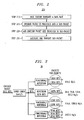
- FIG. 1 depicts a flowchart 100 illustrating the data rate adaptation technique in accordance with one embodiment of the present invention.
- a base station or transmitting equipment receives rate indication messages from a plurality of receivers to which data transmissions are intended, wherein a rate indication message may be a channel condition measurement at a receiver or a data rate calculated based on a channel condition measurement at a receiver.
- the base station selects a receiver at which to transmit data, wherein the selected receiver preferably is associated with the highest data rate.
- the base station transmits a sub-packet of data to the selected receiver at the data rate indicated by the associated rate indication message.
- the sub-packet transmitted in step 120 may be transmitted at a data rate higher than the data rate indicated in the rate indication message. The reason for doing this is to decrease the amount of time slots over which the sub-packets are to be transmitted in step 120.
- Hybrid ARQ may be used to soft combine the sub-packets transmitted in step 140 with the sub-packets transmitted in step 120. Under certain conditions, e.g. at lower data rates, when using Hybrid ARQ (soft combining) throughput efficiency of the channel can be improved through the "aggressive" use of the channel, i.e., transmitting at higher data rates than indicated by the receiver.
- the data rate at which the encoder sub-packets are transmitted may be negotiated between the base station and receiver anytime prior to the actual transmission of the encoder sub-packets.
- the receiver transmits a rate indication message to the base station indicating a data rate of 19.2 Kb/s.
- the base station wants to be aggressive with the data transmission by using a data rate of 76.8 Kb/s to transmit an encoder sub-packet to the receiver.
- the base station transmits a new rate message to the receiver indicating the new data rate at which the base station will be transmitting the encoder sub-packet to the receiver, wherein the new data rate indicated may or may not be the same as the data rate indicated in the data rate message.
- the receiver Upon receipt of the new rate message, the receiver would know the data rate to use in decoding the encoder sub-packet.
- the new data rate is based on the data rate message and the size of the encoder packet.
- Table I depicts an example lookup table which may be used in selecting a new data rate based on the data rate indicated by the receiver and the size of the encoder packet. For example, suppose the data rate message indicates a data rate of 38.4 Kb/s and the encoder packet is 1,536 bits. The new rate message would then indicate a new data rate of 153.6 Kb/s.
- step 125 the base station receives an ACK/NACK message from the selected receiver. If the message is an ACK, in step 130, flowchart 100 returns to step 110. If the message is a NACK, in step 135, the base station receives from the selected receiver another rate indication message. Additionally, when a NACK is transmitted by the receiver, the receiver stores in memory the received data which was transmitted in step 120 such that it may later be soft combined with a re-transmission of the same data.
- step 140 the base station re-transmits the sub-packet of data to the selected receiver at the data rate indicated in the second rate indication message received in step 135.
- the sub-packet may be transmitted at a data rate higher than the data rate indicated in the second rate indication message.
- the sub-packet of data transmitted in steps 120 and 140 are of the same size but the number of time slots over which the sub-packets are transmitted or modulation scheme may vary if the data rates in steps 120 and 140 are different. In another embodiment, such sub-packet are of different sizes if Hybrid ARQ may be used to soft combine the sub-packets transmitted in steps 120 and 140.
- flowchart 100 returns to step 110 from step 125.
- the re-transmission to the originally selected receiver would not occur until the selected receiver is the receiver with the highest associated data rate.
- the manner in which sub-packets are transmitted in steps 120 and 140 allows for Hybrid ARQ at different data rates.
- This embodiment is achieved by varying the size of the sub-packets, the modulation scheme and number of time slots over which the sub-packets are transmitted.
- FIG. 2 depicts a flowchart 200 illustrating a manner of varying the size of the sub-packets, the modulation scheme and number of time slots over which the sub-packets are transmitted in accordance with one embodiment of the present invention.
- the base station indicates to the receiver the data transmission rate that will be used by the base station corresponding to a rate indication message from the receiver and each of the encoder packet sizes (as shown in Table 1).
- the base station transmits a new rate message to the selected receiver indicating the new data rate at which the base station intends to transmit data to the selected receiver.
- the new rate message may be included in the header information of along with the encoder packet size indication.
- an encoder packet is processed into a specific size encoder sub-packet, wherein the encoder packet is a block of information intended for the receiver and the encoder sub-packet is a representation of the encoder packet which is transmitted to the receiver. Specifically, the encoder packet is channel coded and subsequently punctured and/or repeated to obtain a sub-packet. The size of the sub-packet being dependent on the data rate at which the sub-packet is to be transmitted and the size of the encoder packet.
- FIG. 3 depicts an example 30 of a sub-packet formation scheme in accordance with this embodiment of the present invention.
- An encoder packet comprising of 3,072 bits is turbo coded at 1/5 rate into 15,360 bits. Note that, in this example, a same channel coder is used to channel code the encoder packet regardless of the size of the sub-packet.
- the channel coded encoder packet i.e., 15,360 bits, then undergoes different puncturing and/or repetition techniques to obtain four different size encoder sub-packets, wherein the original encoder packet may be derived from each of the encoder sub-packets.
- the channel coded encoder packet is punctured and/or repeated to produce two 13,824 bit encoder sub-packets, one 24,576 bit encoder sub-packet, two 12,288 bit encoder sub-packets and/or three 6,144 bit encoder sub-packets.
- the two 13,824 bit encoder sub-packet may or may not be identical to each other.
- the two 12,288 bit encoder sub-packets and three 6,144 bit encoder sub-packets may be soft combined with each other.
- each of the encoder sub-packets are associated with different data rates. That is, the two 13,824 bit encoder sub-packets are associated with a data rate of 819.2 Kb/s; the 24,576 bit encoder sub-packet is associated with data rates of 38.4 Kb/s, 76.8 Kb/s, 153.6 Kb/s and 307.2 Kb/s; the two 12,288 bit encoder sub-packets are associated with data rates of 614.4 Kb/s and 1288.8 Kb/s; and the three 6,144 bit encoder sub-packets are associated with a data rate of 2457.6 Kb/s.
- the sub-packet size would be 24,576 bits. Note that there exists a single sub-packet format for a given data rate and encoder packet size. Although FIG. 3 depicts all eight different sub-packets being simultaneously produced, all eight of the encoder sub-packets need not be produced at the same time.
- an encoder packet size identifier is added to the encoder sub-packet, wherein the encoder packet size identifier indicates the size of the packet from which the encoder sub-packet was derived.
- the receiver can determine the format of the sub-packet such that the receiver can correctly soft combine and jointly decode the associated encoder sub-packet with a re-transmission or a prior transmission of an encoder sub-packet derived from the same encoder packet (although the latter sub-packet may be in a different format). Recall that there exists a single sub-packet format for a given data rate and encoder packet size.
- the data rate is known to receiver based on one of many alternate embodiments discussed above.
- the transmission data rate is mapped from the rate indication message from the receiver, either based on a mapping that is indicated to the receiver at connection set-up, or on a broadcast channel. Otherwise, the transmission data rate is transmitted in a message or in data header information to the receiver.
- an encoder sub-packet format identifier may be added to the encoder sub-packet in lieu of, or in conjunction with, the encoder sub-packet size identifier.
- the encoder sub-packet format identifier indicating a format of the associated encoder sub-packet such that the receiver knows how to derive the encoder packet from the encoder sub-packet.
- the encoder sub-packet is modulated and transmitted to the receiver over one or more time slots.
- the type of modulation scheme used to modulate the encoder sub-packet depends on the new data rate.
- Table II depicts an example lookup table which may be used in selecting a modulation scheme based on the new data rate. As can be seen, higher modulations (with more bits per symbol) are required to achieve the higher data rates. For example, if the new data rate is 307.2 Kb/s, then the modulation scheme used to transmit the encoder sub-packet would be QPSK.
- New Data Rate Modulation Scheme 9.6 QPSK 19.2 QPSK 38.4 QPSK 76.8 QPSK 153.6 QPSK 307.2 QPSK 614.4 QPSK 819.2 8-PSK 1228.8 QPSK/16-QAM 1536.0 16-QAM 2048.0 16-QAM 2457.6 16-QAM 3072.2 16-QAM
- the number of time slots used in the transmission of the encoder sub-packet depends on the new data rate and the size of the encoder packet (or encoder sub-packet).
- Table III depicts an example lookup table which may used in determining the number of time slots required for transmitting a particular size encoder packet at the new data rate.
- the present invention has been described in considerable detail with reference to certain embodiments, other versions are possible.
- the present invention is also applicable to encoder packets which are not 3,072 bits in size; the encoder sub-packet sizes may vary; the data rate at which particular encoder sub-packets may vary; etc. Therefore, the scope of the present invention should not be limited to the description of the embodiments contained herein.
Landscapes
- Engineering & Computer Science (AREA)
- Computer Networks & Wireless Communication (AREA)
- Signal Processing (AREA)
- Quality & Reliability (AREA)
- Mobile Radio Communication Systems (AREA)
- Communication Control (AREA)
Applications Claiming Priority (2)
| Application Number | Priority Date | Filing Date | Title |
|---|---|---|---|
| US725438 | 2000-11-29 | ||
| US09/725,438 US7221648B2 (en) | 2000-11-29 | 2000-11-29 | Rate adaptation in a wireless communication system |
Publications (1)
| Publication Number | Publication Date |
|---|---|
| EP1211838A1 true EP1211838A1 (en) | 2002-06-05 |
Family
ID=24914552
Family Applications (1)
| Application Number | Title | Priority Date | Filing Date |
|---|---|---|---|
| EP01305051A Ceased EP1211838A1 (en) | 2000-11-29 | 2001-06-11 | Rate adaptation in a wireless communication system |
Country Status (8)
| Country | Link |
|---|---|
| US (1) | US7221648B2 (enExample) |
| EP (1) | EP1211838A1 (enExample) |
| JP (1) | JP3955462B2 (enExample) |
| KR (1) | KR20020042436A (enExample) |
| CN (1) | CN100578990C (enExample) |
| AU (1) | AU9344501A (enExample) |
| BR (1) | BR0105443A (enExample) |
| CA (1) | CA2360726A1 (enExample) |
Cited By (7)
| Publication number | Priority date | Publication date | Assignee | Title |
|---|---|---|---|---|
| WO2006075928A1 (en) * | 2004-12-29 | 2006-07-20 | Intel Coproration | Decreasing a required signal-to-noise ratio using automatic repeat request with increasing data rate |
| US7327709B2 (en) | 2001-07-07 | 2008-02-05 | Samsung Electronics Co., Ltd | Data transmitting and receiving method in a mobile communication system |
| WO2008032032A1 (en) * | 2006-09-15 | 2008-03-20 | Iti Scotland Limited | Communication apparatus and method |
| WO2008047309A3 (en) * | 2006-10-16 | 2008-12-04 | Nokia Corp | Communicating protocol data unit in a radio access network |
| EP2068482A3 (en) * | 2007-12-07 | 2010-06-02 | Industrial Technology Research Institute | Methods and devices for scalable reception in wireless communication systems |
| WO2012175862A1 (fr) * | 2011-06-24 | 2012-12-27 | France Telecom | Retransmission de donnees perdues entre un emetteur et un recepteur |
| US9918307B2 (en) | 2006-12-15 | 2018-03-13 | Telefonaktiebolaget Lm Ericsson (Publ) | MAC-D multiplexing in UTRAN HSDPA wireless networks |
Families Citing this family (20)
| Publication number | Priority date | Publication date | Assignee | Title |
|---|---|---|---|---|
| US6468638B2 (en) * | 1999-03-16 | 2002-10-22 | Alien Technology Corporation | Web process interconnect in electronic assemblies |
| US6937592B1 (en) | 2000-09-01 | 2005-08-30 | Intel Corporation | Wireless communications system that supports multiple modes of operation |
| US6567387B1 (en) | 2000-11-07 | 2003-05-20 | Intel Corporation | System and method for data transmission from multiple wireless base transceiver stations to a subscriber unit |
| US6912199B1 (en) * | 2000-12-28 | 2005-06-28 | Advanced Micro Devices, Inc. | Method to select transmission rate for network device |
| US20020136287A1 (en) * | 2001-03-20 | 2002-09-26 | Heath Robert W. | Method, system and apparatus for displaying the quality of data transmissions in a wireless communication system |
| JP3892682B2 (ja) * | 2001-06-18 | 2007-03-14 | 株式会社エヌ・ティ・ティ・ドコモ | パケット伝送方法、基地局及び移動局 |
| DE60115108T2 (de) * | 2001-08-01 | 2006-07-27 | Nokia Corp. | Einrichtung und verfahren zur flusssteuerung basierend auf prioritäten in einem mobilen netzwerk |
| US7149254B2 (en) * | 2001-09-06 | 2006-12-12 | Intel Corporation | Transmit signal preprocessing based on transmit antennae correlations for multiple antennae systems |
| US20030067890A1 (en) * | 2001-10-10 | 2003-04-10 | Sandesh Goel | System and method for providing automatic re-transmission of wirelessly transmitted information |
| US7336719B2 (en) | 2001-11-28 | 2008-02-26 | Intel Corporation | System and method for transmit diversity base upon transmission channel delay spread |
| US7012978B2 (en) * | 2002-03-26 | 2006-03-14 | Intel Corporation | Robust multiple chain receiver |
| US7656899B2 (en) * | 2003-11-06 | 2010-02-02 | Interdigital Technology Corporation | Access points with selective communication rate and scheduling control and related methods for wireless local area networks (WLANs) |
| US7652995B2 (en) * | 2003-12-19 | 2010-01-26 | International Business Machines Corporation | Autonomic reassociation of clients in a wireless local area network |
| US20050227705A1 (en) * | 2004-04-08 | 2005-10-13 | Seppo Rousu | Data communication method, telecommunication system and mobile device |
| CN100388822C (zh) * | 2004-11-29 | 2008-05-14 | 中兴通讯股份有限公司 | 一种实现多种速率适配和码型变换的方法及其装置 |
| KR100969754B1 (ko) * | 2005-01-13 | 2010-07-13 | 삼성전자주식회사 | 셀룰러 무선통신 시스템에서 방송 채널 전송 방법 |
| US8825098B2 (en) * | 2005-04-01 | 2014-09-02 | Interdigital Technology Corporation | Method and apparatus for providing multi-rate broadcast services |
| US8145164B2 (en) * | 2008-02-28 | 2012-03-27 | Qualcomm Incorporated | Methods and apparatus for handling a signaling message the relates to transmission rate restrictions |
| US8794517B1 (en) * | 2013-08-07 | 2014-08-05 | Square, Inc. | Encoding data in multiple formats |
| USD905059S1 (en) | 2018-07-25 | 2020-12-15 | Square, Inc. | Card reader device |
Citations (2)
| Publication number | Priority date | Publication date | Assignee | Title |
|---|---|---|---|---|
| US4939731A (en) * | 1986-12-02 | 1990-07-03 | Plessey Overseas Limited | Data transmission system with automatic repeat request |
| EP0964534A1 (en) * | 1998-05-26 | 1999-12-15 | Alps Electric Co., Ltd. | DECT data transmitting and receiving apparatus using speech frame |
Family Cites Families (19)
| Publication number | Priority date | Publication date | Assignee | Title |
|---|---|---|---|---|
| JPS58219847A (ja) | 1982-06-14 | 1983-12-21 | Ricoh Co Ltd | 再送要求機能付データ通信方式 |
| JP2865782B2 (ja) * | 1990-03-16 | 1999-03-08 | 富士通株式会社 | 非同期伝送用codec装置 |
| JPH06303282A (ja) * | 1993-04-13 | 1994-10-28 | Hitachi Ltd | 情報伝送系における情報処理方式 |
| JP2503888B2 (ja) * | 1993-06-30 | 1996-06-05 | 日本電気株式会社 | 移動無線通信におけるデ―タ伝送方式 |
| DE69528917T2 (de) | 1994-03-18 | 2004-10-28 | Fujitsu Ltd., Kawasaki | Steuerschaltung eines optischen Halbleitermodulators |
| US5490168A (en) * | 1994-07-08 | 1996-02-06 | Motorola, Inc. | Method and system for automatic optimization of data throughput using variable packet length and code parameters |
| JPH0983600A (ja) | 1995-09-14 | 1997-03-28 | Kokusai Electric Co Ltd | 多値適応変調無線装置 |
| SE9600578L (sv) * | 1996-02-16 | 1997-03-10 | Ericsson Telefon Ab L M | Metod och anordning för kanaltilldelning i ett radiokommunikationssystem |
| US5828677A (en) * | 1996-03-20 | 1998-10-27 | Lucent Technologies Inc. | Adaptive hybrid ARQ coding schemes for slow fading channels in mobile radio systems |
| US5838267A (en) * | 1996-10-09 | 1998-11-17 | Ericsson, Inc. | Method and apparatus for encoding and decoding digital information |
| US5914959A (en) * | 1996-10-31 | 1999-06-22 | Glenayre Electronics, Inc. | Digital communications system having an automatically selectable transmission rate |
| US6208663B1 (en) * | 1997-08-29 | 2001-03-27 | Telefonaktiebolaget Lm Ericsson (Publ) | Method and system for block ARQ with reselection of FEC coding and/or modulation |
| US6574211B2 (en) * | 1997-11-03 | 2003-06-03 | Qualcomm Incorporated | Method and apparatus for high rate packet data transmission |
| BRPI9906339B1 (pt) * | 1998-04-17 | 2016-09-20 | Matsushita Electric Industrial Co Ltd | aparelho de controle de taxa de transmissão, aparelho de estação base e método de controle de taxa de transmissão |
| US6212240B1 (en) * | 1998-06-24 | 2001-04-03 | Motorola, Inc. | Method and apparatus for conveying data between communication devices |
| US6754189B1 (en) | 1999-04-08 | 2004-06-22 | Lucent Technologies Inc. | Method of queue length based burst management in wireless communication systems |
| US6519731B1 (en) * | 1999-10-22 | 2003-02-11 | Ericsson Inc. | Assuring sequence number availability in an adaptive hybrid-ARQ coding system |
| US6414938B1 (en) * | 2000-02-14 | 2002-07-02 | Motorola, Inc. | Method and system for retransmitting data packets in a communication system having variable data rates |
| US6721834B2 (en) * | 2001-02-09 | 2004-04-13 | Lucent Technologies Inc. | Rate adaptation in a wireless communication system |
-
2000
- 2000-11-29 US US09/725,438 patent/US7221648B2/en not_active Expired - Fee Related
-
2001
- 2001-06-11 EP EP01305051A patent/EP1211838A1/en not_active Ceased
- 2001-10-31 CA CA002360726A patent/CA2360726A1/en not_active Abandoned
- 2001-11-23 KR KR1020010073294A patent/KR20020042436A/ko not_active Withdrawn
- 2001-11-23 BR BR0105443-0A patent/BR0105443A/pt not_active Application Discontinuation
- 2001-11-27 AU AU93445/01A patent/AU9344501A/en not_active Abandoned
- 2001-11-27 JP JP2001361070A patent/JP3955462B2/ja not_active Expired - Fee Related
- 2001-11-29 CN CN01142477A patent/CN100578990C/zh not_active Expired - Fee Related
Patent Citations (2)
| Publication number | Priority date | Publication date | Assignee | Title |
|---|---|---|---|---|
| US4939731A (en) * | 1986-12-02 | 1990-07-03 | Plessey Overseas Limited | Data transmission system with automatic repeat request |
| EP0964534A1 (en) * | 1998-05-26 | 1999-12-15 | Alps Electric Co., Ltd. | DECT data transmitting and receiving apparatus using speech frame |
Non-Patent Citations (1)
| Title |
|---|
| ERIKSSON S ET AL: "COMPARISON OF LINK QUALITY CONTROL STRATEGIES FOR PACKET DATA SERVICES IN EDGE", 1999 IEEE 49TH. VEHICULAR TECHNOLOGY CONFERENCE. HOUSTON, TX, MAY 16 - 20, 1999, IEEE VEHICULAR TECHNOLOGY CONFERENCE, NEW YORK, NY: IEEE, US, vol. 2 CONF. 49, 16 May 1999 (1999-05-16), pages 938 - 942, XP000903185, ISBN: 0-7803-5566-0 * |
Cited By (15)
| Publication number | Priority date | Publication date | Assignee | Title |
|---|---|---|---|---|
| US7327709B2 (en) | 2001-07-07 | 2008-02-05 | Samsung Electronics Co., Ltd | Data transmitting and receiving method in a mobile communication system |
| WO2006075928A1 (en) * | 2004-12-29 | 2006-07-20 | Intel Coproration | Decreasing a required signal-to-noise ratio using automatic repeat request with increasing data rate |
| US8225161B2 (en) | 2004-12-29 | 2012-07-17 | Intel Corporation | Retransmissions of data using increased data rate |
| WO2008032032A1 (en) * | 2006-09-15 | 2008-03-20 | Iti Scotland Limited | Communication apparatus and method |
| US8442000B2 (en) | 2006-10-16 | 2013-05-14 | Nokia Corporation | Method and apparatus for communicating protocol data unit in radio access network |
| WO2008047309A3 (en) * | 2006-10-16 | 2008-12-04 | Nokia Corp | Communicating protocol data unit in a radio access network |
| EP2385738A1 (en) * | 2006-10-16 | 2011-11-09 | Nokia Corporation | Communicating protocol data unit in a radio access network |
| US8228947B2 (en) | 2006-10-16 | 2012-07-24 | Nokia Corporation | Method and apparatus for communicating protocol data unit in a radio access network |
| US9918307B2 (en) | 2006-12-15 | 2018-03-13 | Telefonaktiebolaget Lm Ericsson (Publ) | MAC-D multiplexing in UTRAN HSDPA wireless networks |
| CN101453301B (zh) * | 2007-12-07 | 2012-05-23 | 财团法人工业技术研究院 | 在无线通讯系统中进行可调适接收的方法及装置 |
| US8532012B2 (en) | 2007-12-07 | 2013-09-10 | Industrial Technology Research Institute | Methods and devices for scalable reception in wireless communication systems |
| EP2068482A3 (en) * | 2007-12-07 | 2010-06-02 | Industrial Technology Research Institute | Methods and devices for scalable reception in wireless communication systems |
| FR2977101A1 (fr) * | 2011-06-24 | 2012-12-28 | France Telecom | Retransmission de donnees perdues entre un emetteur et un recepteur |
| WO2012175862A1 (fr) * | 2011-06-24 | 2012-12-27 | France Telecom | Retransmission de donnees perdues entre un emetteur et un recepteur |
| US9571234B2 (en) | 2011-06-24 | 2017-02-14 | Orange | Retransmission of data lost between a sender and a receiver |
Also Published As
| Publication number | Publication date |
|---|---|
| KR20020042436A (ko) | 2002-06-05 |
| BR0105443A (pt) | 2002-07-09 |
| CA2360726A1 (en) | 2002-05-29 |
| JP2002198898A (ja) | 2002-07-12 |
| CN100578990C (zh) | 2010-01-06 |
| CN1356801A (zh) | 2002-07-03 |
| US7221648B2 (en) | 2007-05-22 |
| US20020097684A1 (en) | 2002-07-25 |
| AU9344501A (en) | 2002-05-30 |
| JP3955462B2 (ja) | 2007-08-08 |
Similar Documents
| Publication | Publication Date | Title |
|---|---|---|
| US6721834B2 (en) | Rate adaptation in a wireless communication system | |
| US7437654B2 (en) | Sub-packet adaptation in a wireless communication system | |
| US7221648B2 (en) | Rate adaptation in a wireless communication system | |
| US8611283B2 (en) | Method and apparatus of using a single channel to provide acknowledgement and assignment messages | |
| CA2545466C (en) | Hybrid arq method for packet data transmission | |
| US20020064167A1 (en) | Hybrid ARQ with parallel packet transmission | |
| US7532600B2 (en) | Method and system for using hybrid ARQ in communication systems that use multiple input multiple output antenna systems | |
| US8605607B2 (en) | Method for implicit conveying of uplink feedback information | |
| EP2793409A1 (en) | Implementing a physical layer automatic repeat request for a subscriber unit | |
| US8457059B2 (en) | Transmission apparatus, reception apparatus, communication system and communication method using adaptive hybrid automatic retransmission request method | |
| US20030067890A1 (en) | System and method for providing automatic re-transmission of wirelessly transmitted information | |
| JP2002527939A (ja) | 適用ハイブリッドarq手法を用いたデータ通信方法とシステム | |
| US20060221885A1 (en) | Power de-boosting on the control channel | |
| JP2005501473A (ja) | 基地局の物理層自動リピート要求の方法 | |
| RATE et al. | Das et a].(45) Date of Patent: Oct. 14, 2008 |
Legal Events
| Date | Code | Title | Description |
|---|---|---|---|
| PUAI | Public reference made under article 153(3) epc to a published international application that has entered the european phase |
Free format text: ORIGINAL CODE: 0009012 |
|
| 17P | Request for examination filed |
Effective date: 20010620 |
|
| AK | Designated contracting states |
Kind code of ref document: A1 Designated state(s): AT BE CH CY DE DK ES FI FR GB GR IE IT LI LU MC NL PT SE TR |
|
| AX | Request for extension of the european patent |
Free format text: AL;LT;LV;MK;RO;SI |
|
| AKX | Designation fees paid |
Designated state(s): AT BE CH CY DE DK ES FI FR GB GR IE IT LI LU MC NL PT SE TR |
|
| APBN | Date of receipt of notice of appeal recorded |
Free format text: ORIGINAL CODE: EPIDOSNNOA2E |
|
| APBR | Date of receipt of statement of grounds of appeal recorded |
Free format text: ORIGINAL CODE: EPIDOSNNOA3E |
|
| APAF | Appeal reference modified |
Free format text: ORIGINAL CODE: EPIDOSCREFNE |
|
| APAF | Appeal reference modified |
Free format text: ORIGINAL CODE: EPIDOSCREFNE |
|
| APBT | Appeal procedure closed |
Free format text: ORIGINAL CODE: EPIDOSNNOA9E |
|
| STAA | Information on the status of an ep patent application or granted ep patent |
Free format text: STATUS: THE APPLICATION HAS BEEN REFUSED |
|
| 18R | Application refused |
Effective date: 20080826 |